Author: Sword of Damocles
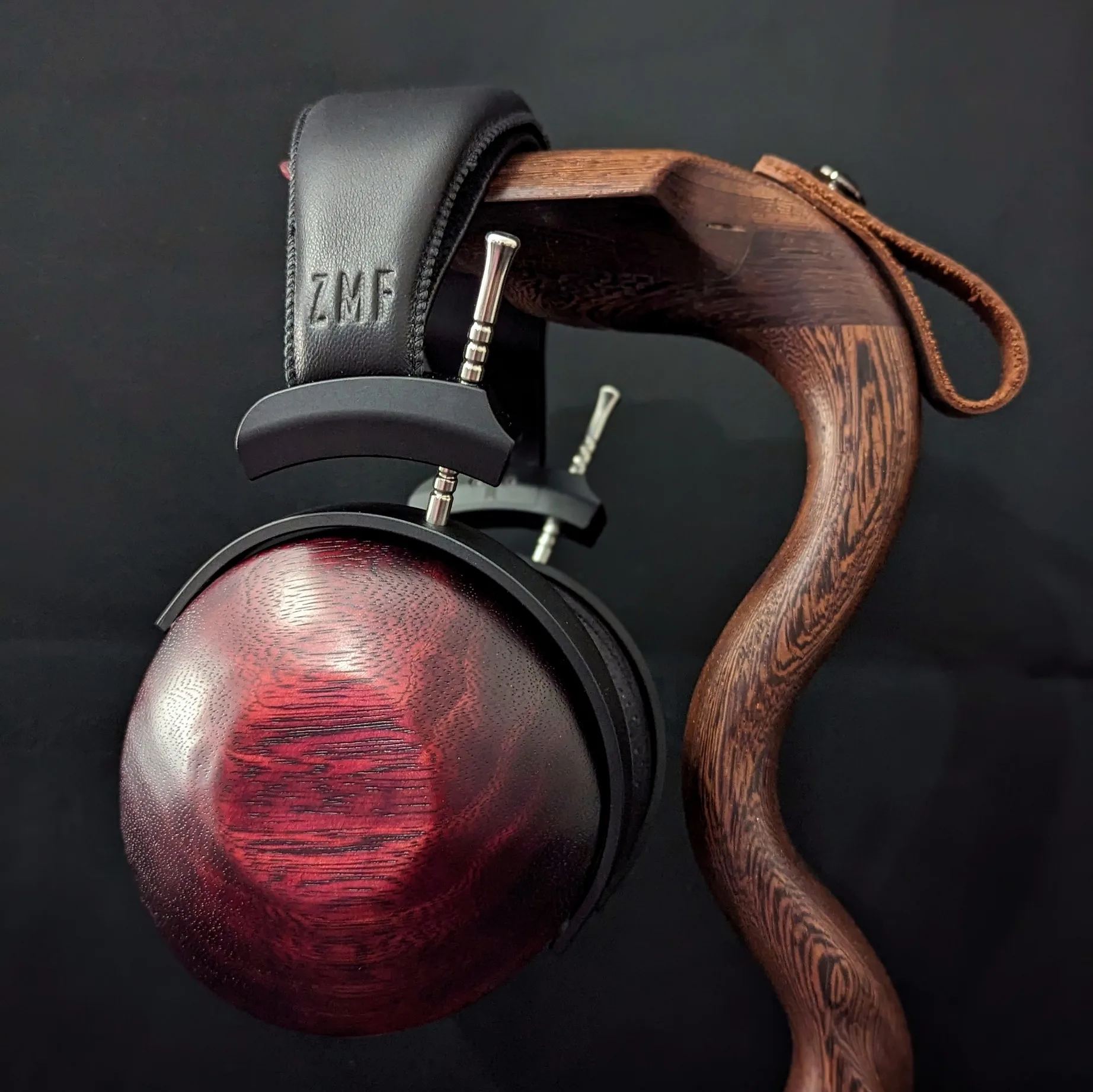
Table of Contents:
Information:
- Release year: 2023
- Country of origin: USA
- Price: 1100 USD / approx. 1300 EUR (launch offer 900 USD)
- Type: Closed, over-ear
- Dynamic 50 mm drivers: liquid crystal polymer (LCP) membrane, N52 magnets and Atrium Damping System (ADS)
- Impedance: 80 Ohm
- Sensitivity: 103 dB/mW
- Weight: 480 g ± 30 g (my own headphones 508 g)
- Connector type: 2 x 3.5 mm
- Cable: length 1.8 m / connector 4-pin-XLR, 4.4 mm or 6.35 mm
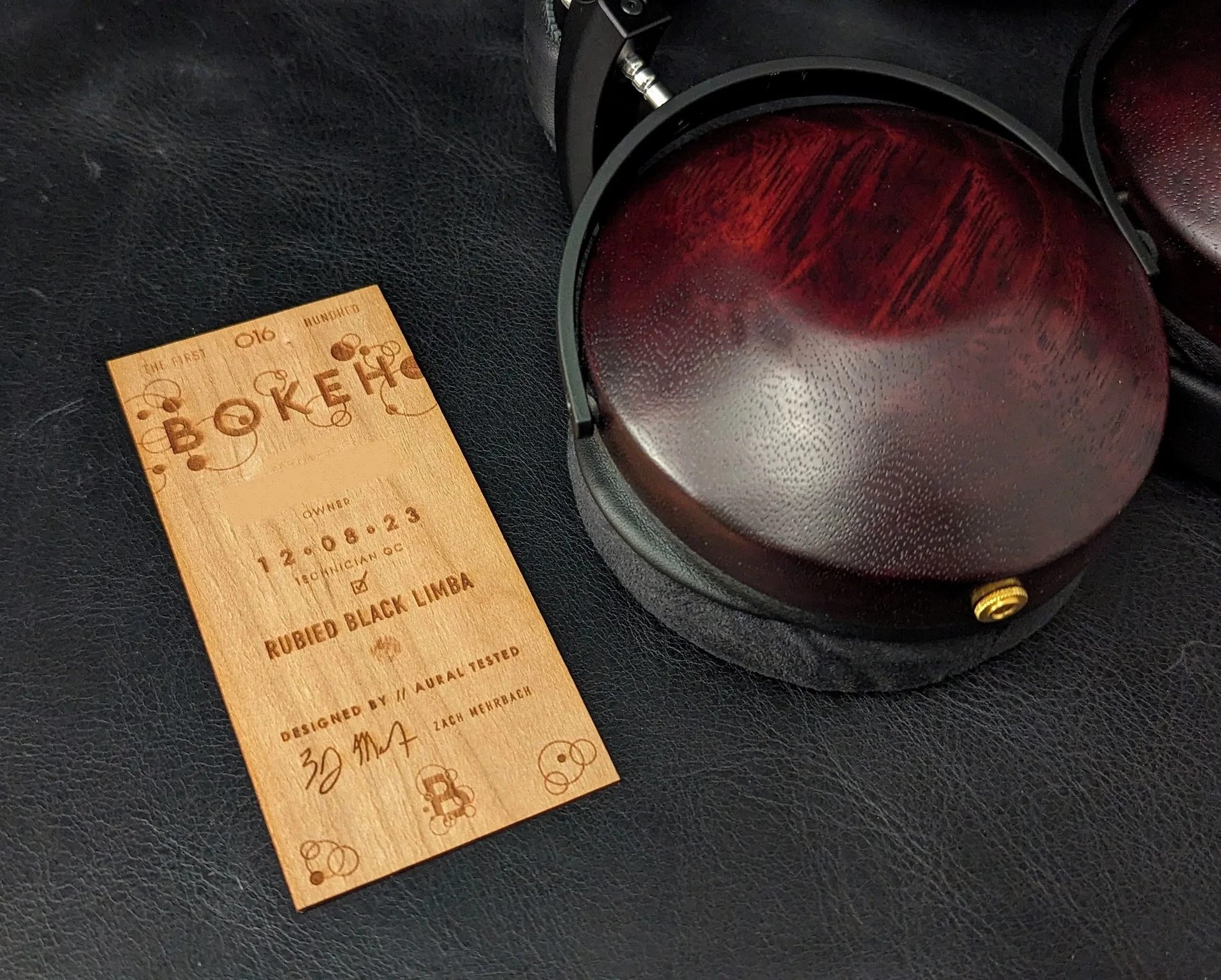
- Accessories: Cleaning cloth, cable pouch, and owner's card
- For an additional price, a tuning kit can be purchased for 150 dollars (includes two extra earpads and different titanium meshes for adjusting treble quantity) and a faux leather carrying case for 50 dollars
- Warranty: Lifetime driver warranty for the first owner + 2-year warranty for external parts
Review sample: Self-purchased product
The headphone selection of US-based ZMF has begun to expand rapidly in recent years, as the manufacturer has completed several products that have been under development for a longer time. However, the most attention-grabbing Atrium and Caldera models (the closed-back model will be released in May 2024) are out of reach for most due to their high price, nor can the Auteur Classic be considered a particularly affordable purchase. For this reason, it has been expected that ZMF would also bring cheaper alternatives to the market, especially since it had been hinting for a long time about a headphone model under 1000 dollars that would be suitable for portable use.
These closed-back headphones were finally released in December 2023 and were named Bokeh (a familiar term for photographers). The price was also kept quite tolerable despite increased production costs, as a batch of 250 headphones was sold for 900 dollars. Unfortunately, after the launch discount, the price settled at 1100 dollars, so Bokeh now costs the same as Atticus, which it will eventually replace as the manufacturer's most affordable headphone model. A version of the same headphones with an open-back design is also in the works.
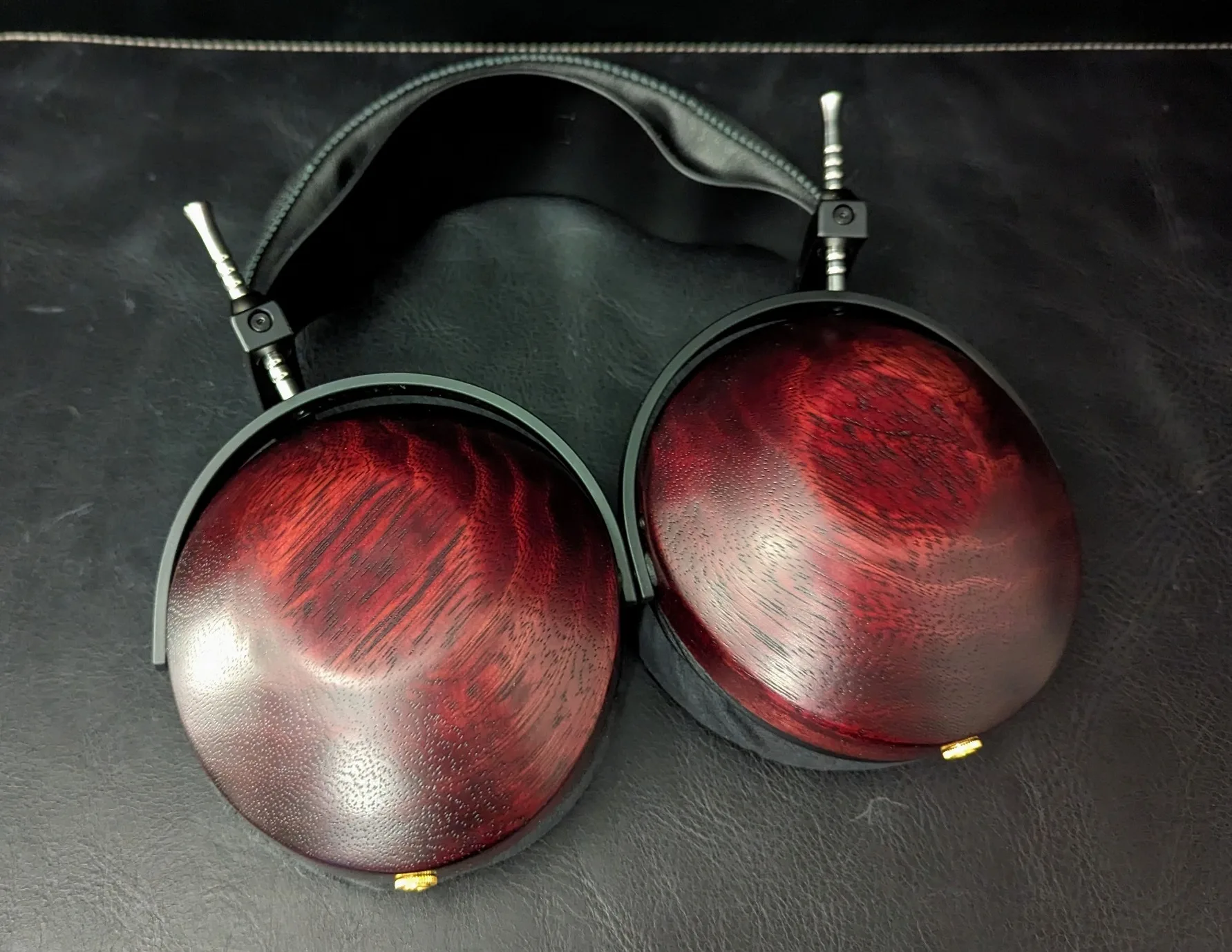
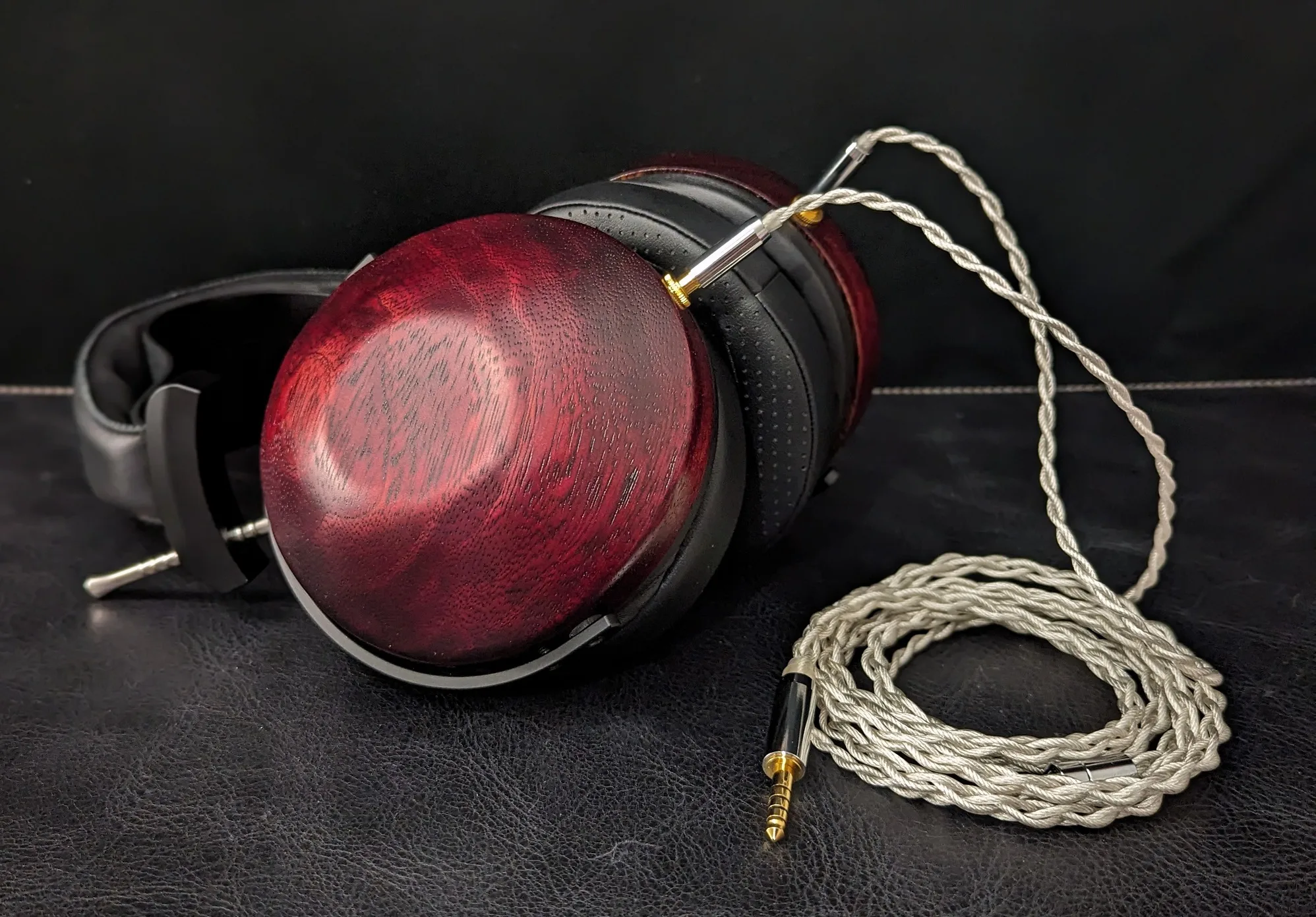
The launch discount for the Bokeh model seemed appealing, even though the final price rose to about 1250 euros after the 100-dollar tuning kit I bought, shipping costs, and VAT. For this price, however, I got beautiful ruby-red stained wooden headphones, whose appeal is enhanced by a new, more slender headband structure and 80-ohm LCP drivers, which deviate from ZMF's general style, rear-damped with the ADS system familiar from more expensive models. With the earpads included in the tuning kit and different mesh options, the headphones can also be adjusted into as many as 9 different versions, so most people should be able to find a sonically pleasing result.
Bokeh could thus be seen as a kind of playground that encourages experimenting with different options and understanding how the headphones work. On the other hand, I'm not entirely sure if ZMF itself knows what kind of headphones it wanted to make, as, for example, the earpads have already changed between two production batches. Such tricks cause unnecessary confusion among consumers. A few other solutions also seem contradictory, so there's plenty to discuss about the headphones.
Product packaging and accessories
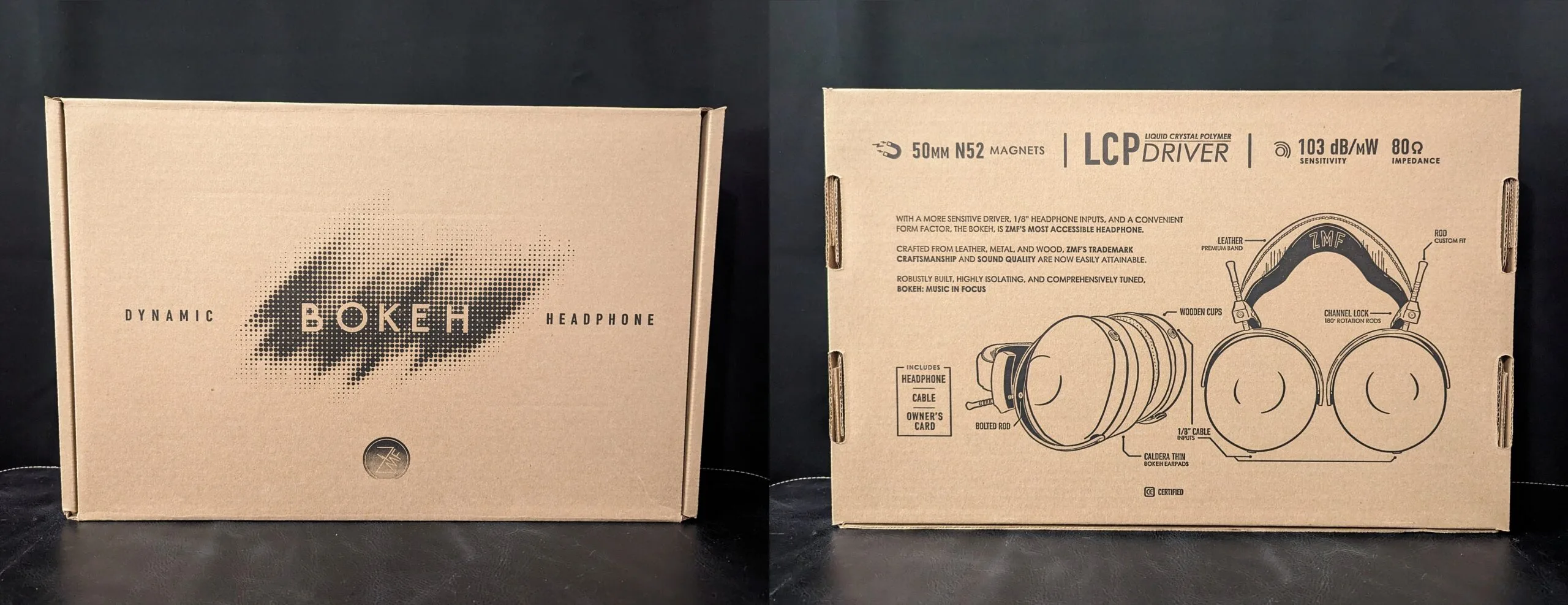
Cost cutting is first evident in the Bokeh model's product packaging, which is a more conventional brown cardboard box instead of a sturdy Seahorse case. However, I don't consider this a major drawback, as I would rarely use the case, so I wouldn't necessarily want to pay extra for it. Useful information about the headphones is printed on the outer edge of the cardboard box, so ZMF has clearly invested more in presentation than, for example, Hifiman.
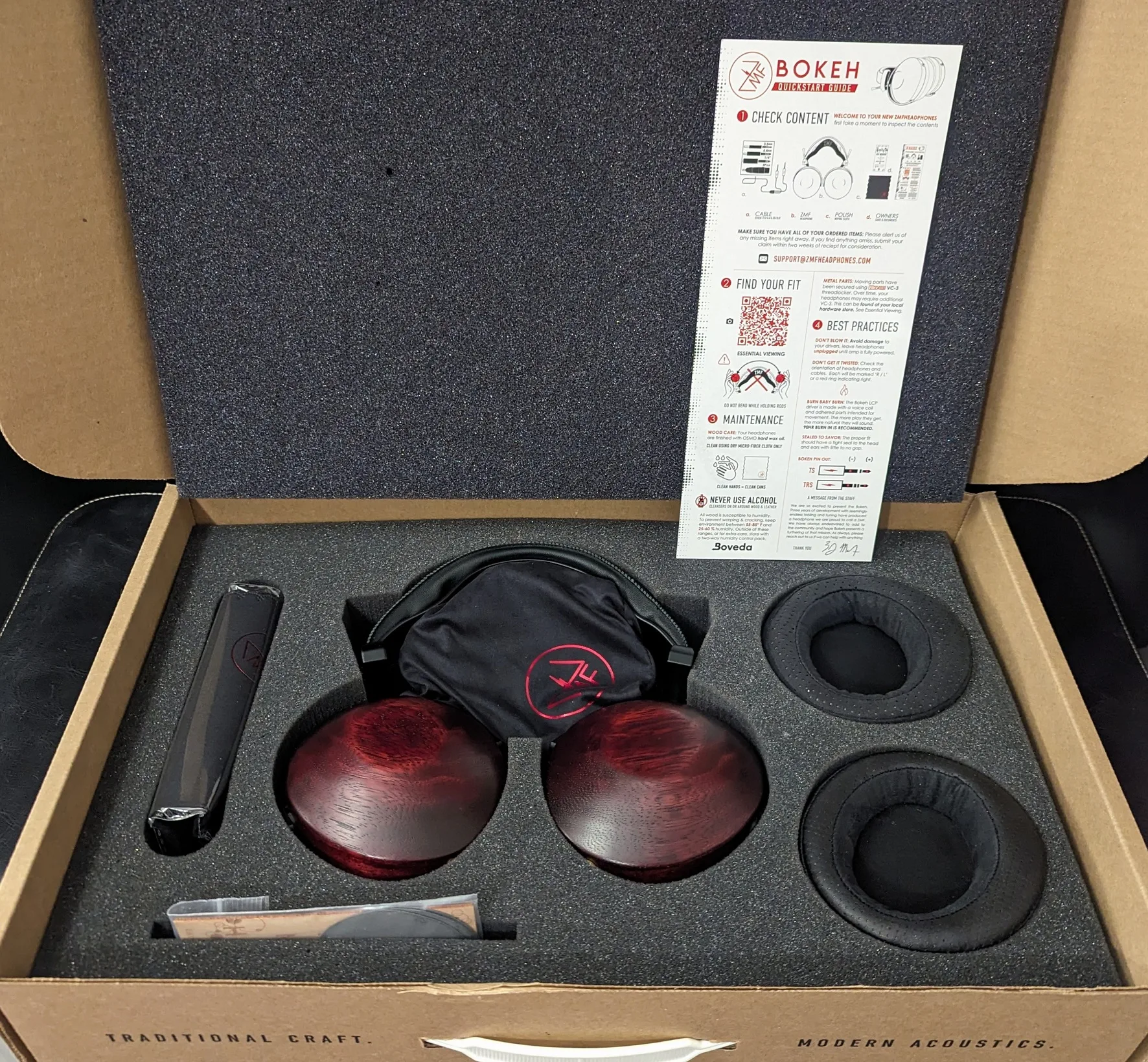
By default, the Bokeh comes with a cable chosen by the buyer, a soft cable pouch, a wooden owner's card, and a fabric cleaning cloth. Separate sections have also been prepared inside the packaging for the contents of the separately sold tuning kit, so the two extra earpads and the solid titanium meshes that screw onto the front of the driver fit right in.
Although the Bokeh model is marketed with the possibility of being reasonably easy to carry, it was not originally offered with any kind of carrying case. Nowadays, one can be purchased for an additional 50 dollars, but I would have hoped it was included directly in the package, especially after the launch discount ended. Secondly, the original release timing felt rushed, because without a case, I didn't feel the headphones were a complete product relative to their marketing.
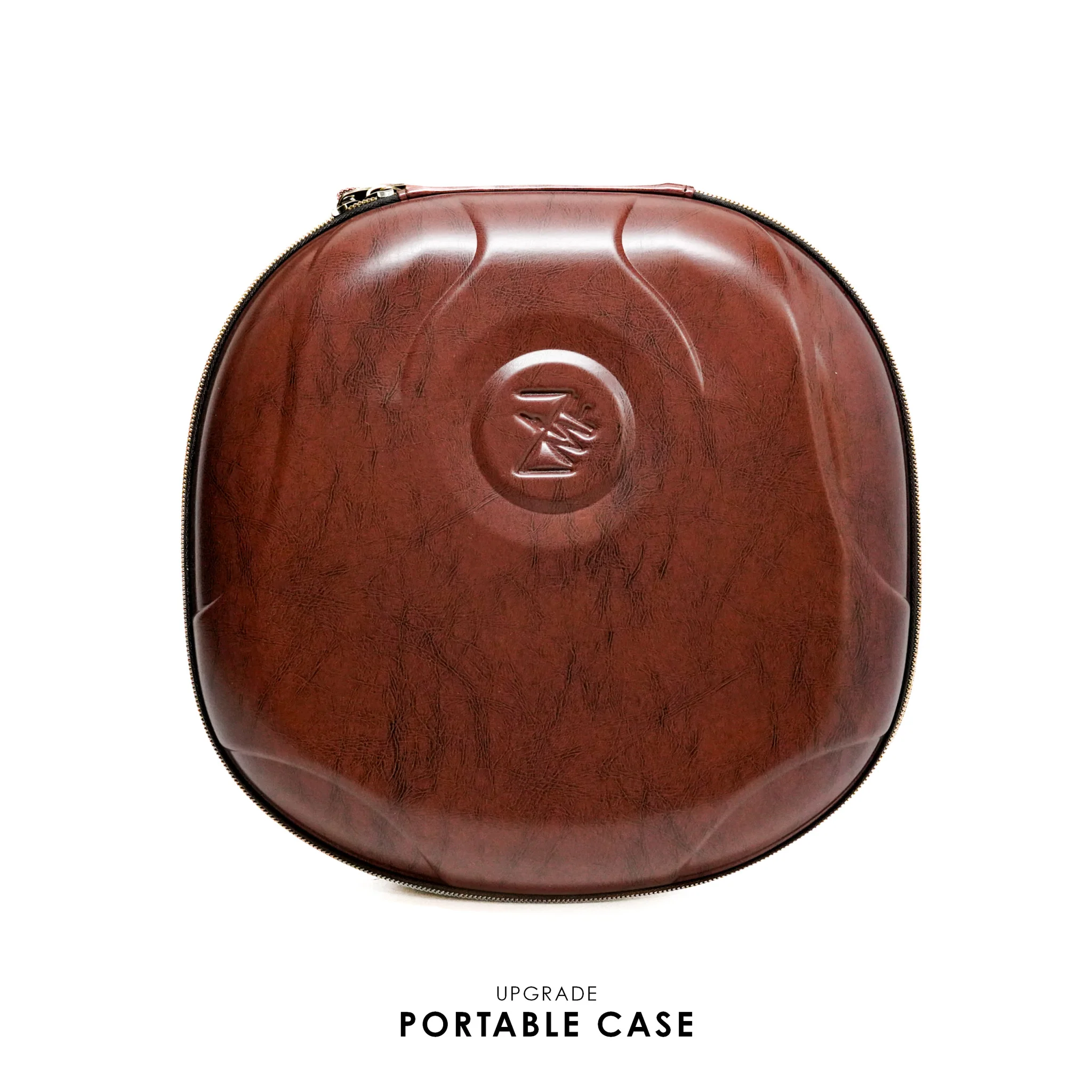
I am also annoyed that the tuning kit, which cost a reasonable 100 dollars at launch, is now priced at 150 dollars. It would, of course, be possible to buy different ear pads individually for 80 dollars, and titanium grilles would cost 20 dollars if bought separately. However, by purchasing the tuning kit at launch, one practically got a second pair of ear pads for free, whereas nowadays the saving would only be 30 dollars.
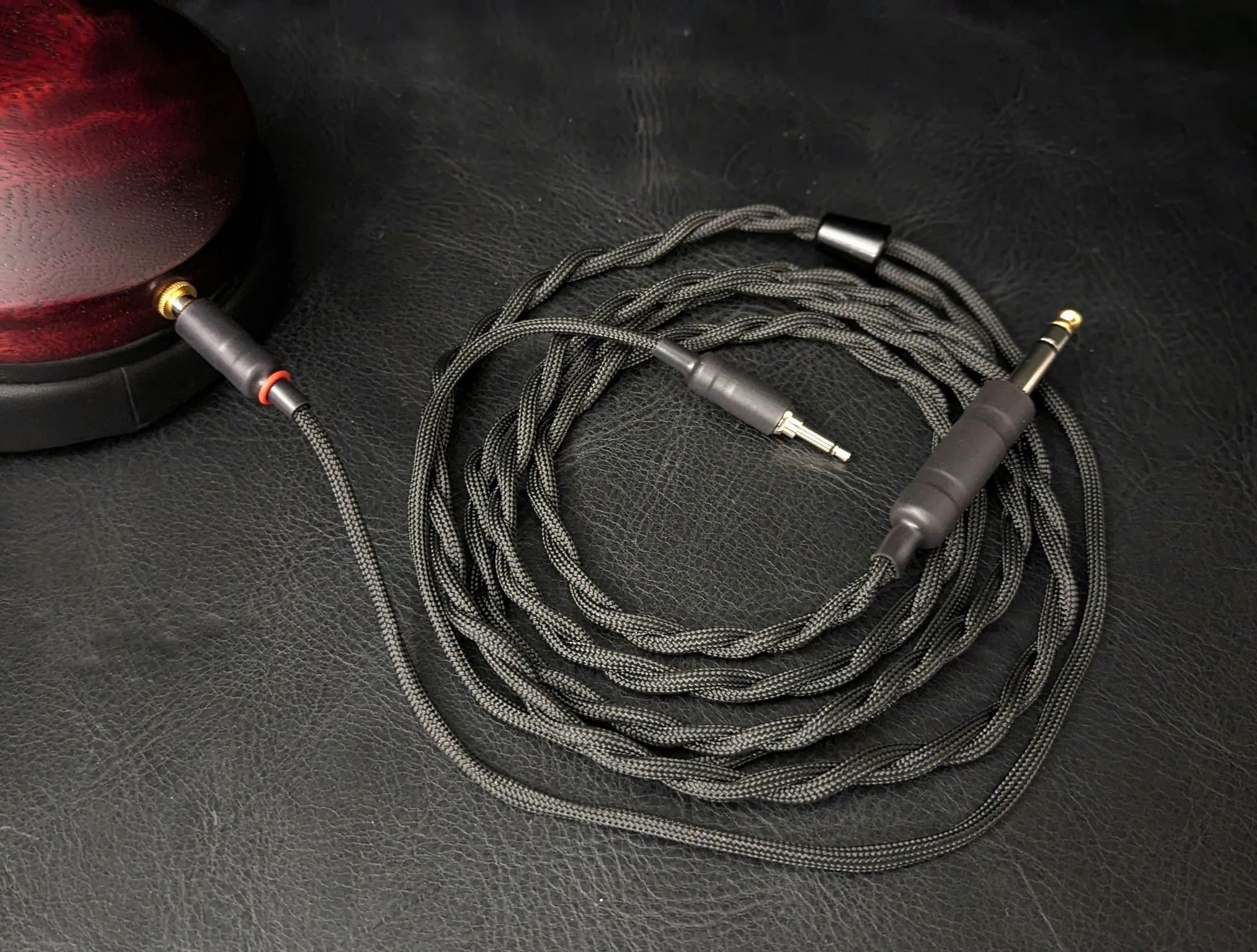
For the included cable, the buyer can choose between a 4-pin XLR, 4.4 mm, or 6.35 mm connector, but nowhere is it mentioned that the cable with a 4.4 millimeter connector would have a slightly finer sleeving than the others. I chose a 6.35 millimeter connector for my cable. In terms of usability, I would describe the cable as basically good. It doesn't bother much, but due to its coarse material, it is slightly microphonic. The 1.8-meter length of ZMF's standard cable is suitable for me, but it indicates that the manufacturer has not really optimized the Bokeh model for mobile use. However, the cable attaches to the headphones with more conventional 3.5 millimeter connectors instead of the mini-XLR connectors used in other ZMF models, so in that respect, the user experience has become smoother.
Half-kilo Bokeh
Despite its ”semi-portable” and ”back-packable” statuses, the Bokeh is still a large headphone, and its half-kilogram weight does not suggest a product designed for mobile use. To be precise, both Verite Closed– and Eikon-headphones are roughly the same size and still weigh less than the Bokeh. ZMF reportedly originally aimed for a weight of just over 400 grams, but this goal was clearly buried at some point in favor of higher quality material choices: like the more expensive models, the headphones are entirely made of wood, metal, and leather.
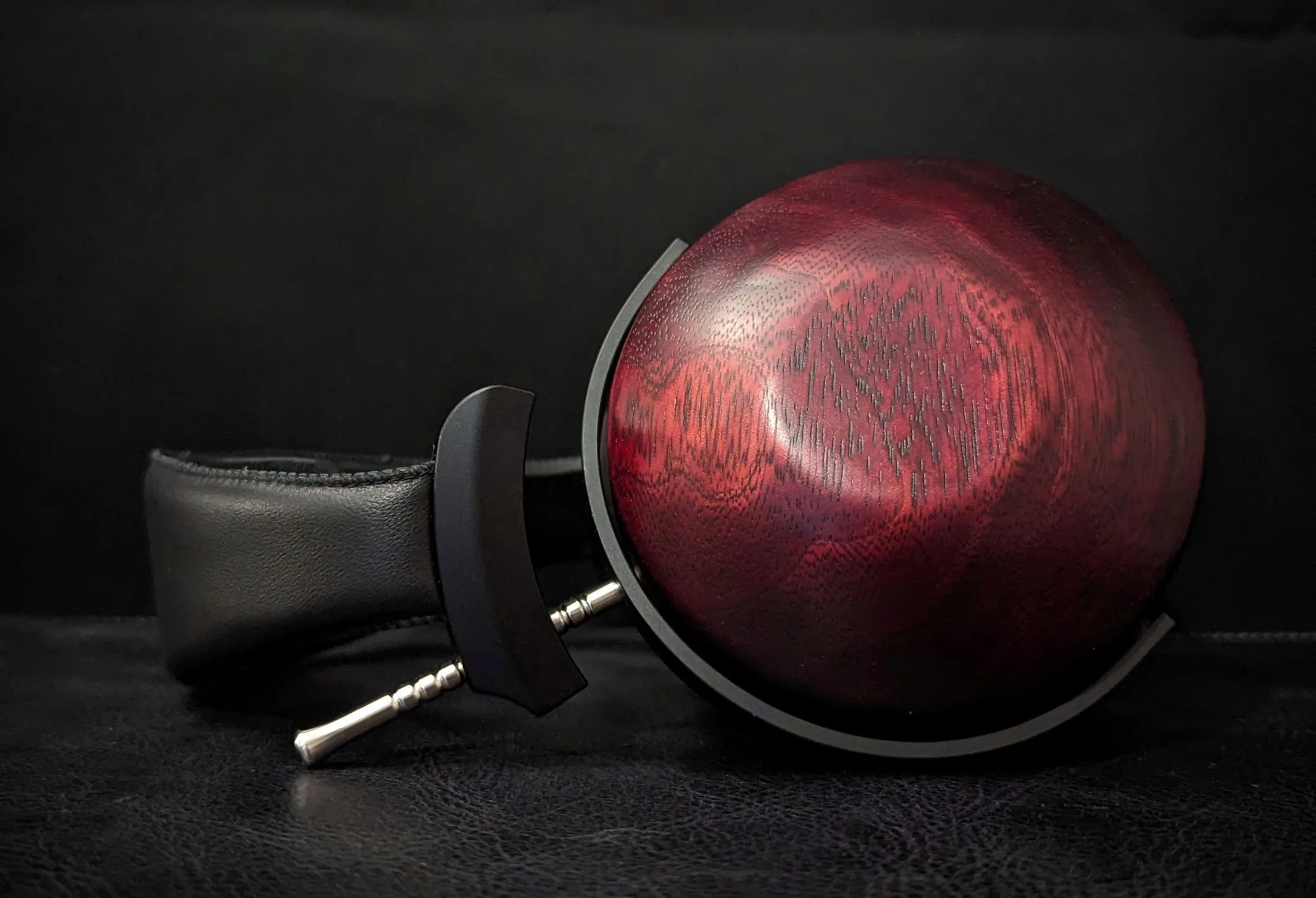
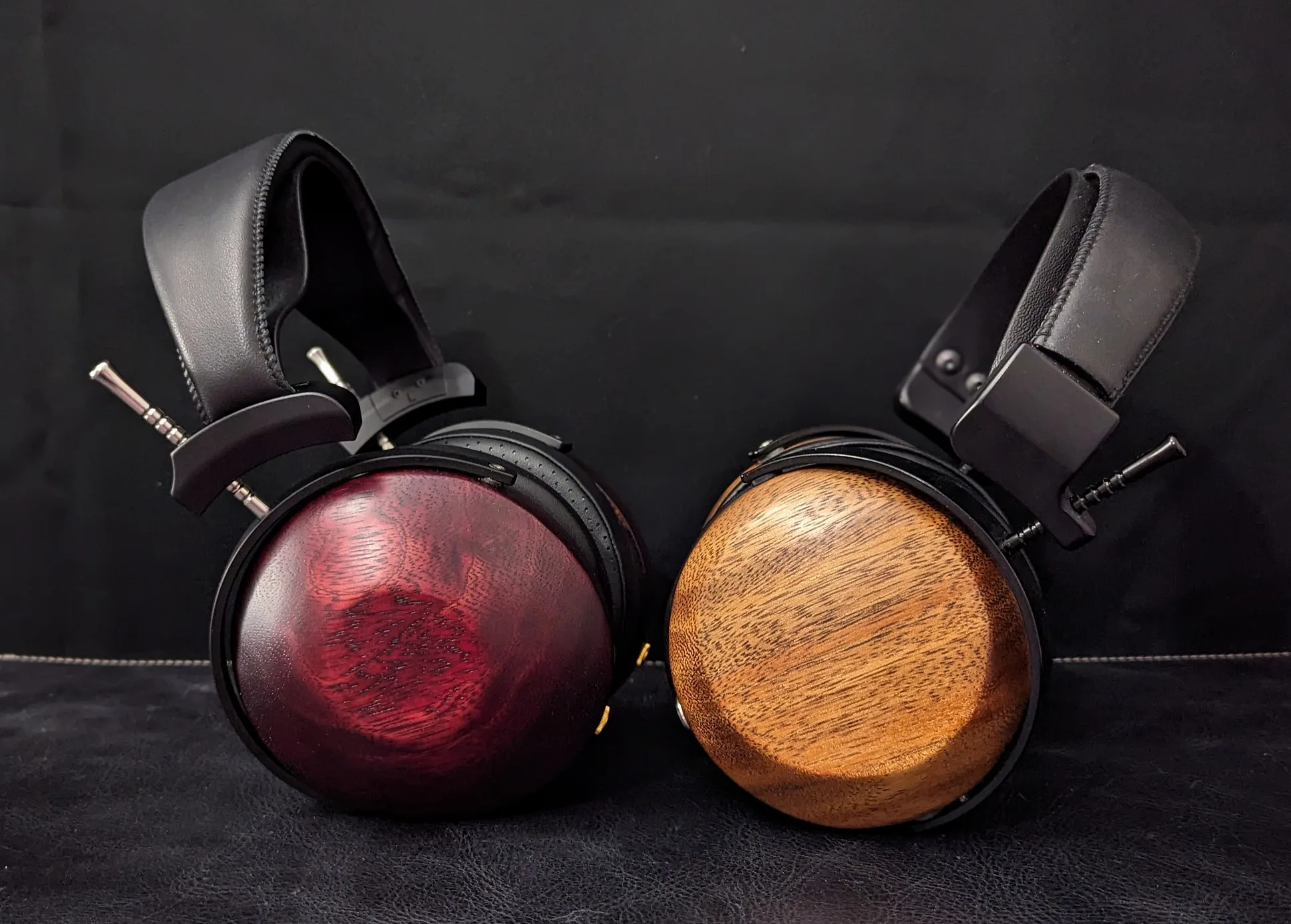
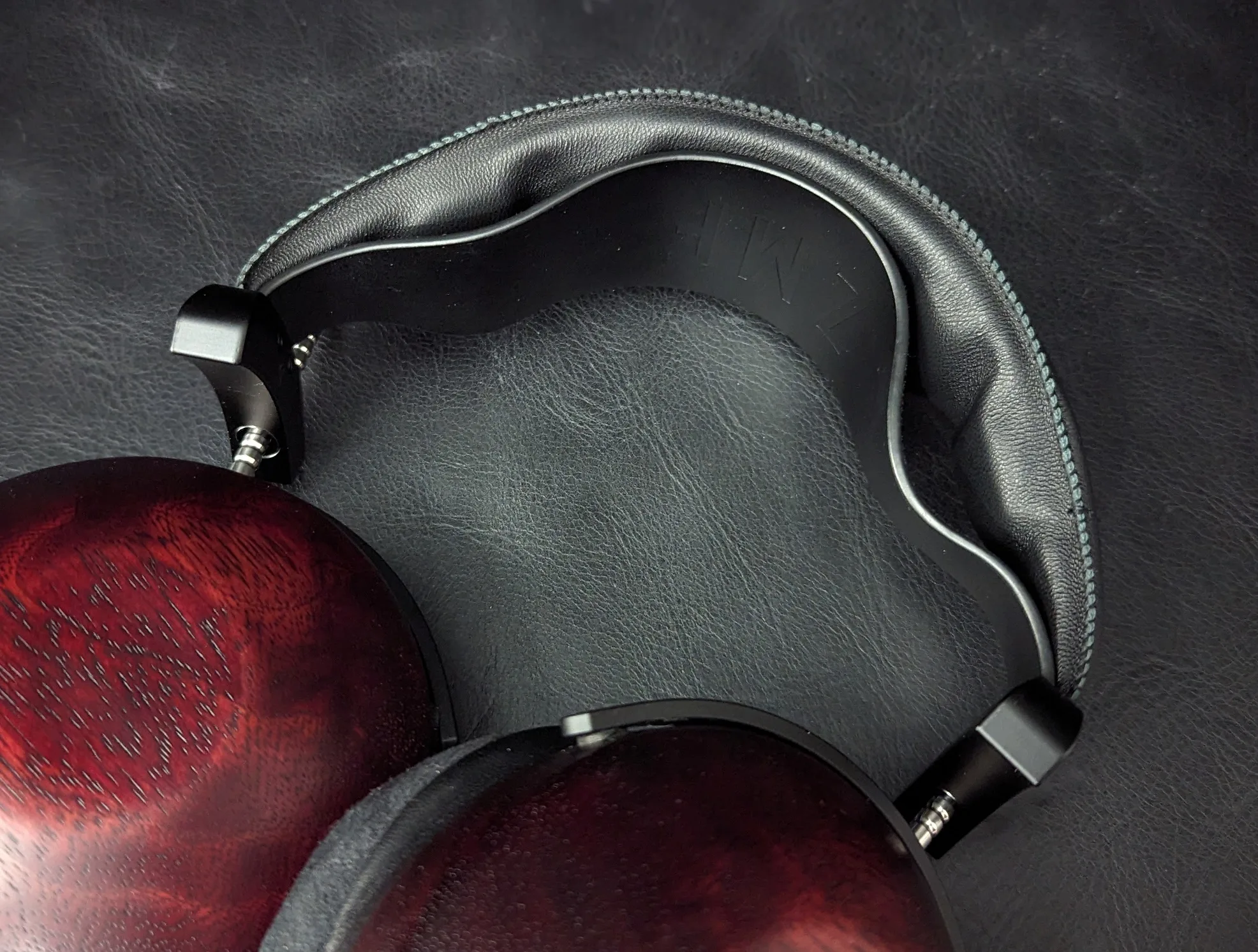
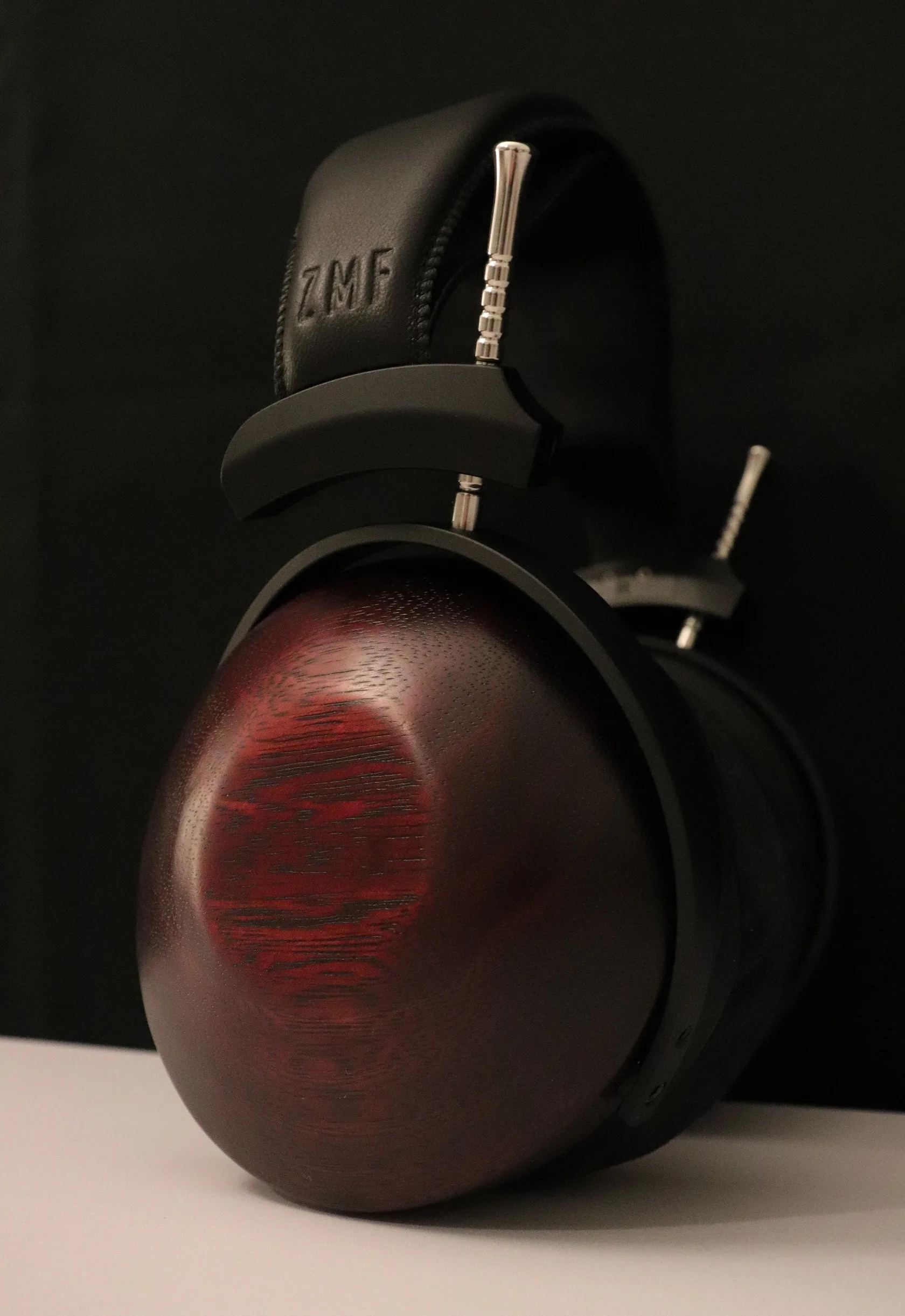
Although the Bokeh may not necessarily be suitable as a mobile headphone, it is fortunately a really fine and high-quality home headphone. The red-stained cups made of Limba wood (also known as Korina as a guitar material) look stunning, and the headband structure has been developed to be slimmer and more streamlined than before. Other positive changes include that the headband now looks less bulky on the head, the metal pins used for height adjustment are better supported, and for the first time, stoppers have been added to the rotational movement of the cups, allowing them to turn horizontally in both directions, but no longer completely around. Since the edges of the headband's leather cover are also finished more neatly than before, the overall impression of quality is already approaching, in my opinion, Meze Audio products, such as 109 Pro:s. I would even argue that despite its more affordable price, the Bokeh is ZMF's best-finished headphone model. This bodes well for future products as well.
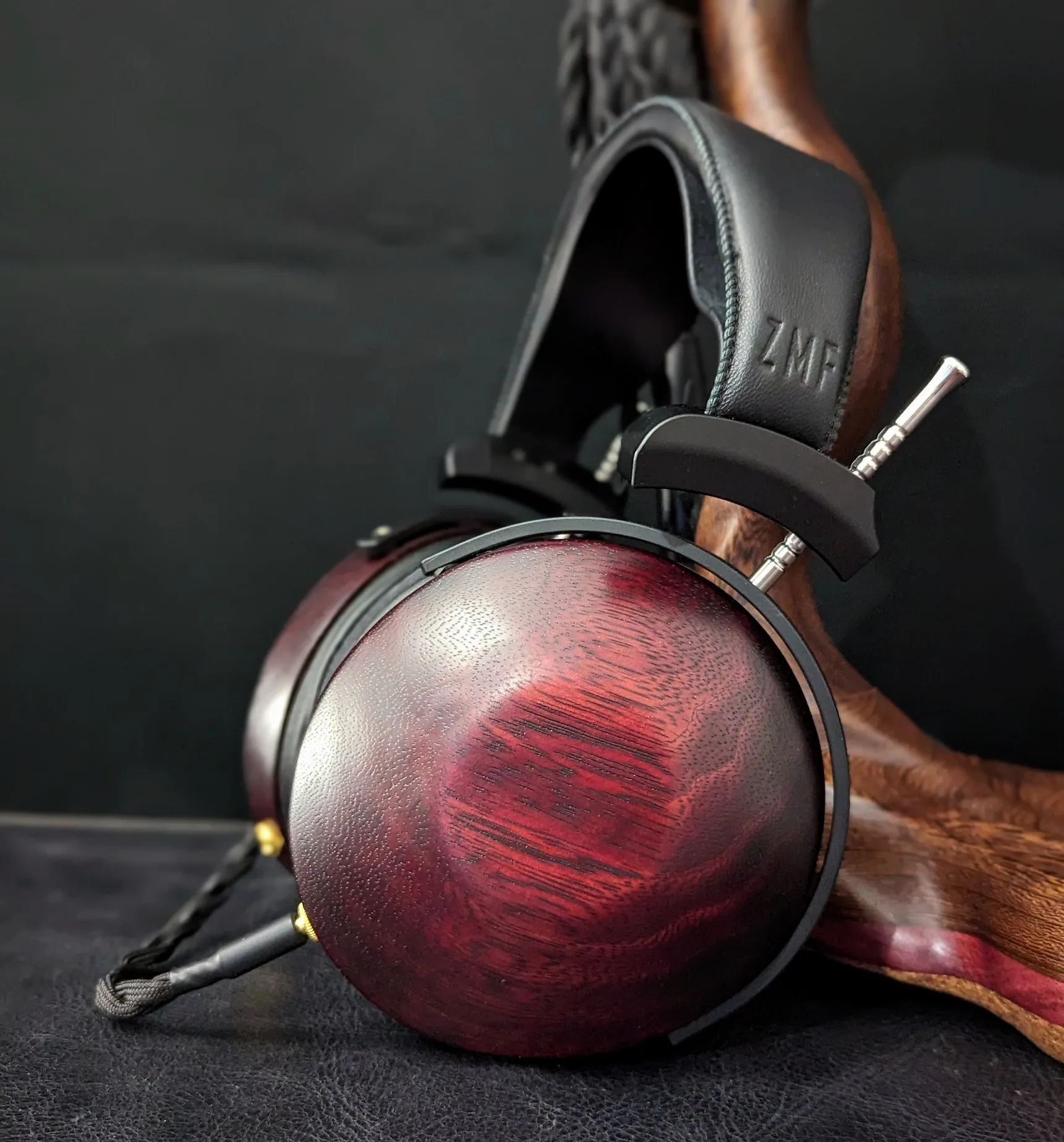
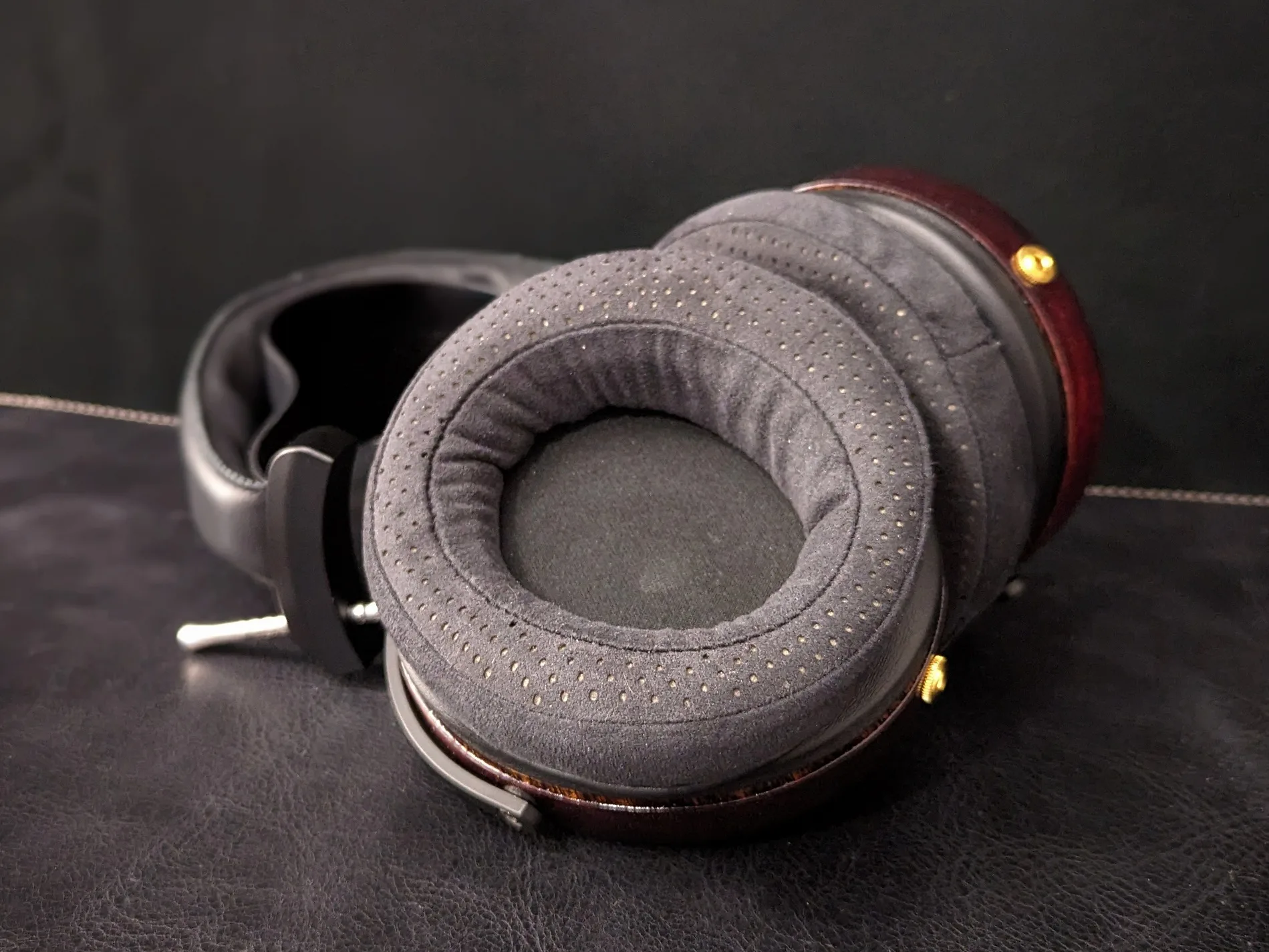
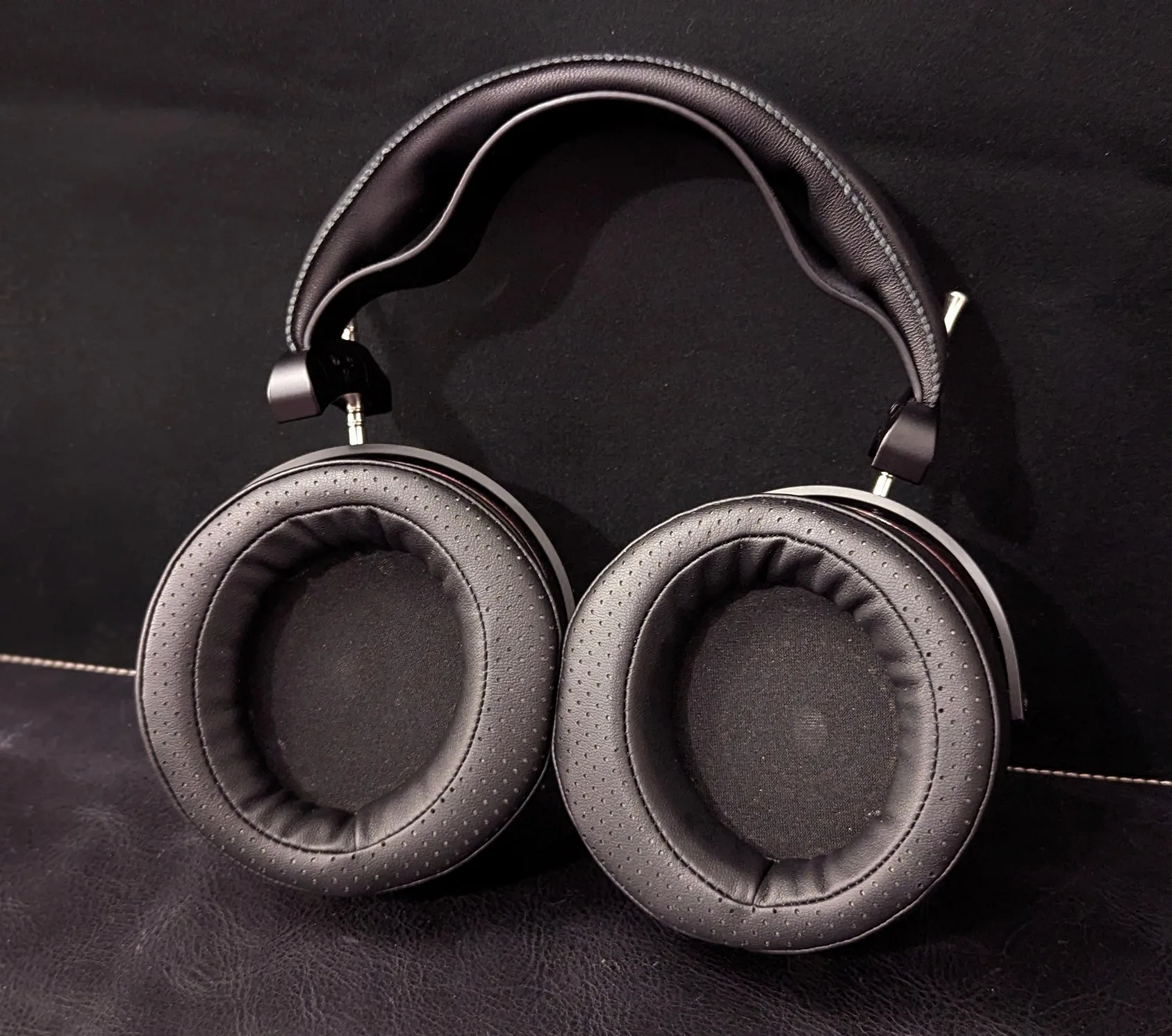
Not everything in the Bokeh is completely premium, as viewed from the front and back, the edges of its ear pads look quite clumsy, being alternately loose and overly tight. This is due to the headphone model's oval cup structure, which has not been fully considered in the design of the pads. The manufacturer justifies this by stating that, as a kind of intermediate form between round and oval, the Bokeh's pads can, if necessary, fit many other headphone models. The basic shape of the pads is essentially the same as in the Caldera and Atrium Closed, but different surface materials are available.
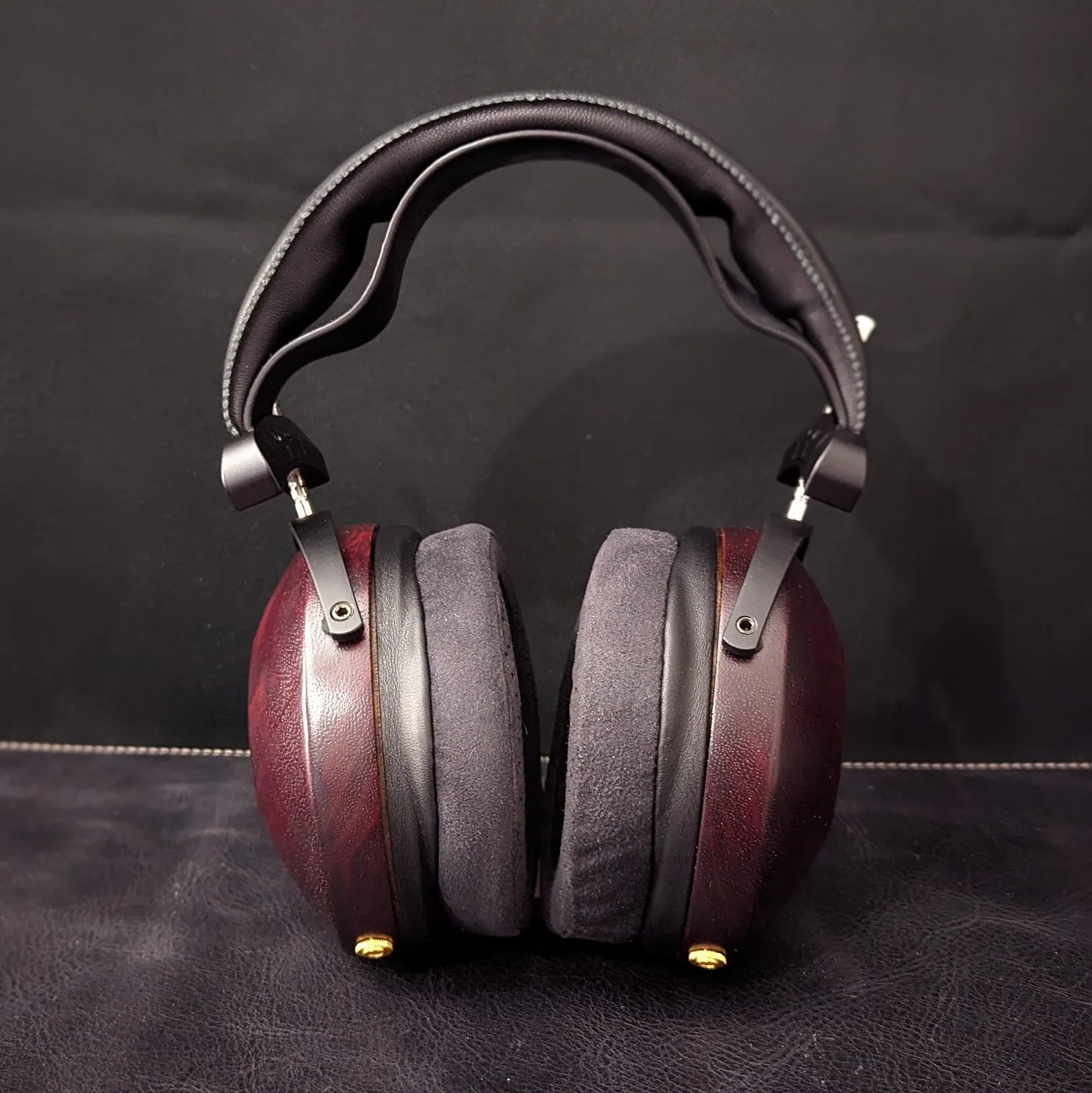
Changing and especially attaching the pads is also more difficult and annoying than usual with the Bokeh, because the rim has to be stretched very hard while the part that has been attached tries to slip out of place. I can manage all this based on previous experience, but I can only imagine how frustrating the process feels to those who have not previously owned ZMF headphones. Even the tuning kit, which encourages changing pads, suffers from the fact that one doesn't really feel like removing the pads easily. The manufacturer does offer guidance and instructional videos for reattachment, but the problems could have been avoided by simply designing more suitably shaped pads for the Bokeh. One has to live with the issue until the edges of the pads stretch enough with use to make their attachment easier.
Usability borders on perfection
This brings us to comfort, which must be counted as one of the Bokeh's greatest strengths. It would be almost impossible to distribute half a kilogram of weight on the head any more evenly and pleasantly. I cannot think of a headphone of similar size and weight that would be more comfortable than the Bokeh. After a moment of use, I can no longer distinguish where on my head the headband and ear pads make contact, as the fit is so seamless and perfectly conforms to the shape of my head.
Thanks for this goes equally to the well-padded and contoured headband, the even clamping force of the band, and the optimal thickness of the ear pads. There is just the right amount less padding in areas where more pressure would typically build up. For example, the upper and lower parts of the ears are shaped differently, taking into account the shape of the head. It would also be possible to rotate Bokeh's pads so that they fit as comfortably as possible for different users.
Between the steel arch of the headband and the leather strap, there are different sized padding nubs that distribute the weight of the headphones not only to the center of the crown but also to the sides of the head. A slightly lighter overall weight wouldn't hurt, but even so, Bokeh's wearing comfort borders on perfection for me personally. Based on comments and reviews found online, the situation appears to be largely similar for others as well.
There doesn't seem to be a major difference in wearing comfort between the three ear pad models designed for the headphones, as they only differ in their surface material. For some, pads made entirely of suede material might feel the most pleasant, whereas I personally prefer the soft lambskin of the hybrid-model pads. Faux leather pads, on the other hand, might be the most sweat-inducing in summer use, but even their head-facing part is perforated. In this respect, Bokeh's pads actually differ slightly from the Caldera model, whose head-facing part of the pads is solid and the sides are perforated. The solid side parts of Bokeh's pads likely improve sound isolation, as it is a closed-back headphone model after all. Ambient noise stays quite well outside, especially since tuning the headphones has only required minimally small air vents in the back of the wooden cups.
A new kind of element
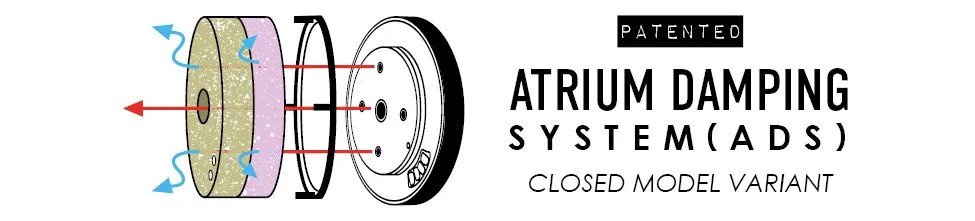
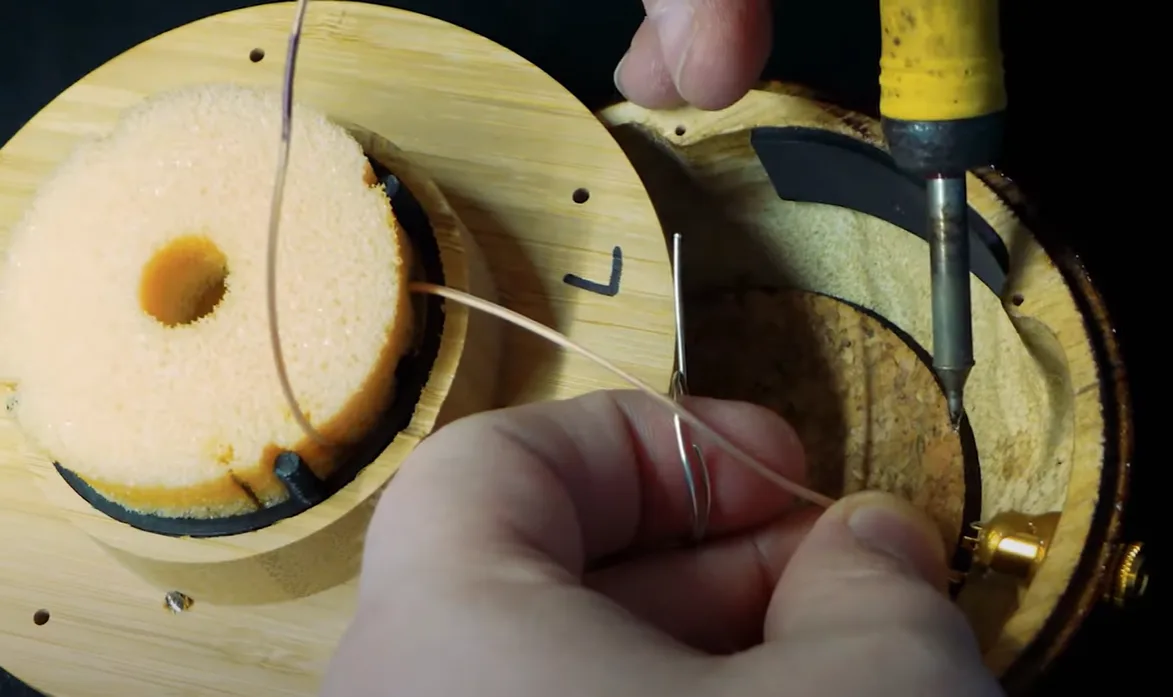
The manufacturer's dynamic headphone models have so far always used 300-ohm impedance drivers, but for Bokeh, a slightly more sensitive 80-ohm driver with a 50-millimeter LCP (Liquid Crystal Polymer) diaphragm has been chosen. This is described as being agile in its movements, especially with N52-powered magnets. Drivers of similar size and material are, of course, used in many other headphones, though usually not at 80 ohms, but below that. ZMF has also added its patented ADS (Atrium Damping System) damping system to the back of the driver, which is already found in both Atrium-models, Caldera and Auteur Classic. It is, in all its simplicity, a foam structure that dampens the back radiation of the driver and additionally controls the damping speed of different frequencies as desired. I personally perceive this as a kind of sound purification, as the back damping seems to clarify the soundstage of the latest ZMF models.
Part of Bokeh's marketing referring to mobile use is related to the fact that, due to its lower impedance and higher sensitivity (103 dB/mW) compared to other ZMF models, it should be better suited for small and low-power amplifiers. This is indeed true, but I believe the manufacturer also wanted to try something new after numerous 300-ohm headphones.
Sound quality
Notes on sound quality evaluation
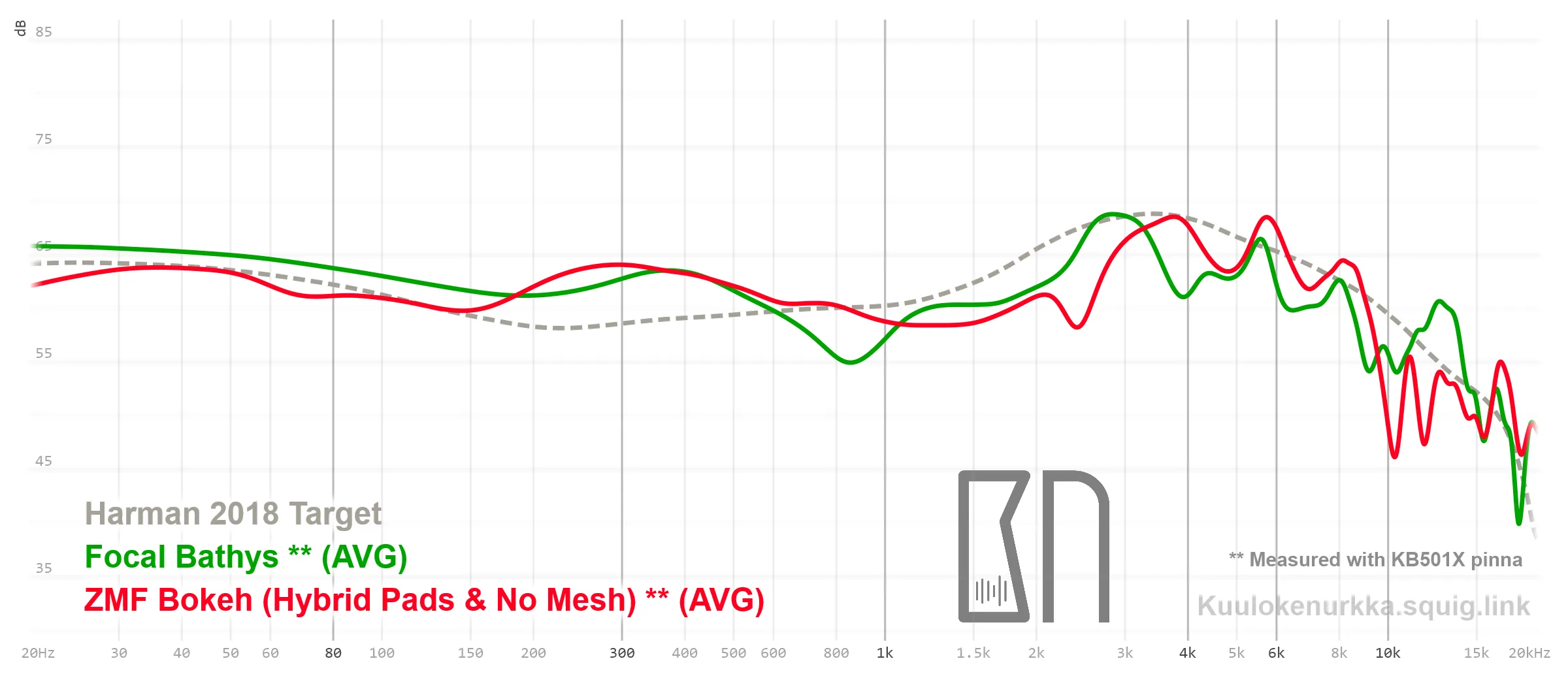
Our frequency response measurements have been made with a clone IEC-60318-4 coupler and KB501X pinnae. The Harman target curve from 2018 is used as a reference point and generalization of the headphone response that would sound good to most people. For more information on the measurements and their accuracy, see Headphone Measurements-page (recently updated to be more comprehensive). Bokeh's frequency response with different ear pad options is also comparable with other measured headphones Squiglink .
Manufacturer's conflicting pad choices
For Bokeh's first production batch, bass-heavy protein leather earpads were chosen as standard, because based on feedback from various audio shows, people liked them the most. However, a noisy exhibition environment is generally not the best option for evaluating headphones, where a greater amount of bass was certainly perceived as an advantage. Somewhat contradictorily, ZMF's Zach Mehrbach stated before Bokeh's release that he himself preferred hybrid earpads, which would make the sound most balanced and most closely follow Harman's target curve. Why then were these earpads not chosen as standard? The reason can be speculated, but arranged this way, most, like myself, ended up paying $100 more for the headphones to get the manufacturer's mentioned, objectively better, earpads. For some reason, they could not be swapped for the protein leather earpads during the ordering phase, unlike what has usually been possible with ZMF's other headphone models.
Somewhat surprisingly, however, this did not practically arouse any criticism among consumers; instead, the headphones' modifiability was perceived as an exclusively positive thing, even though one had to pay extra for it in the form of a tuning kit. In retrospect, the earpad episode unfortunately feels to me like pure extra profiteering, which may well have compensated for the headphones' launch discount. On the other hand, the manufacturer might also have been unsure about what its headphones should be like, as ZMF's core target audience seems to have a somewhat negative attitude towards Harman's target curve. Be that as it may, for the second production batch, the standard earpads were changed to a more balanced hybrid model. In my opinion, there would no longer be as great a need for a separate tuning kit, especially since its price has risen to $150. In any case, Bokeh unfortunately never truly became a sub-$1000 headphone (at least not a particularly balanced one), even though it was designed to be one.
9 different reviews of the same headphones?
The owner of Bokeh is supposed to choose their preferred combination from the available earpads and mesh options. There is indeed a wide range of choices, as acquiring the tuning kit creates 9 different versions. While the sonic differences between some options remain small, at the extremes, we are talking about very different headphones. This ultimately makes evaluating Bokeh challenging, as covering all options would be extremely laborious. Therefore, I will not delve as deeply into individual aspects this time as usual.
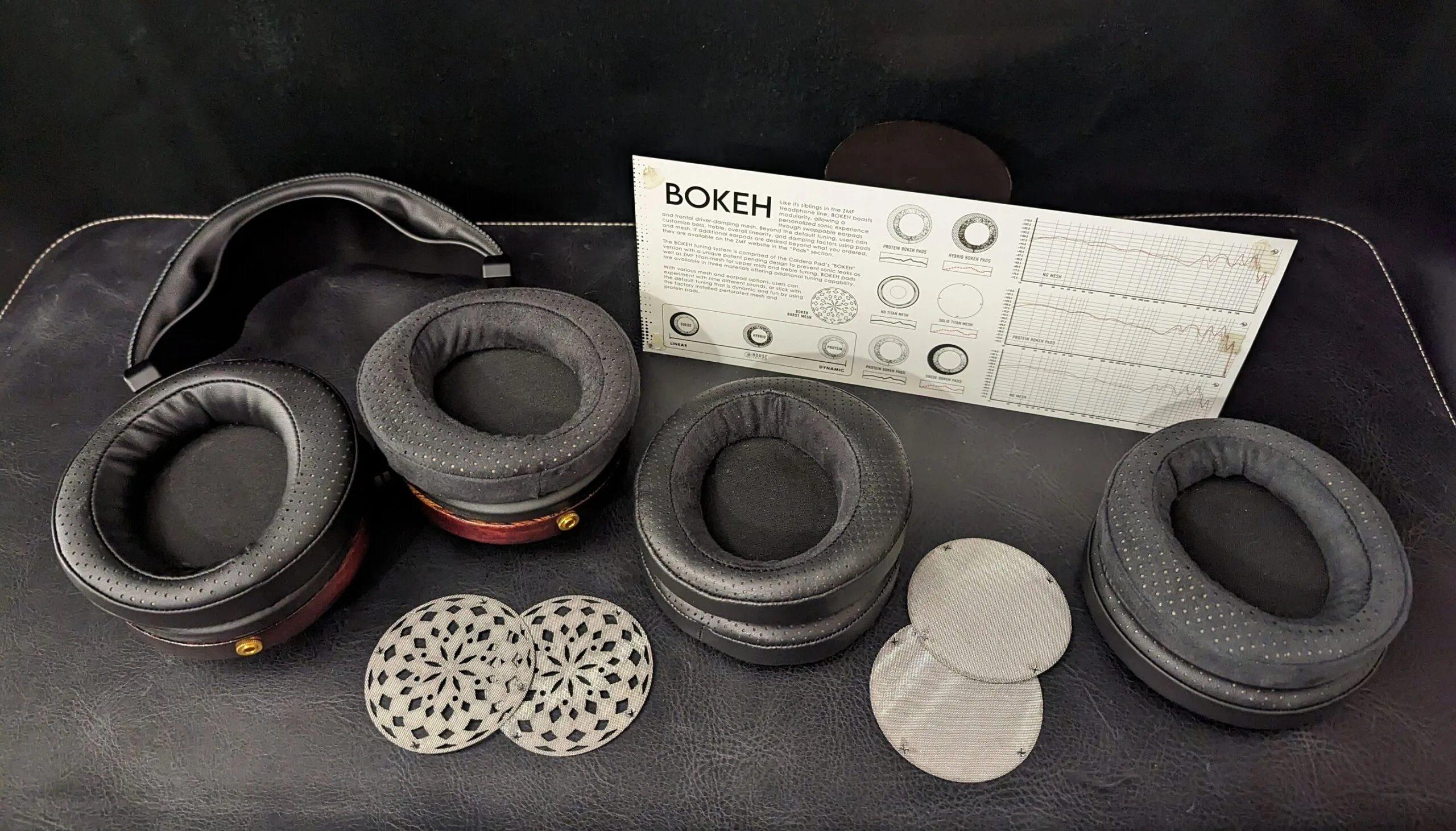
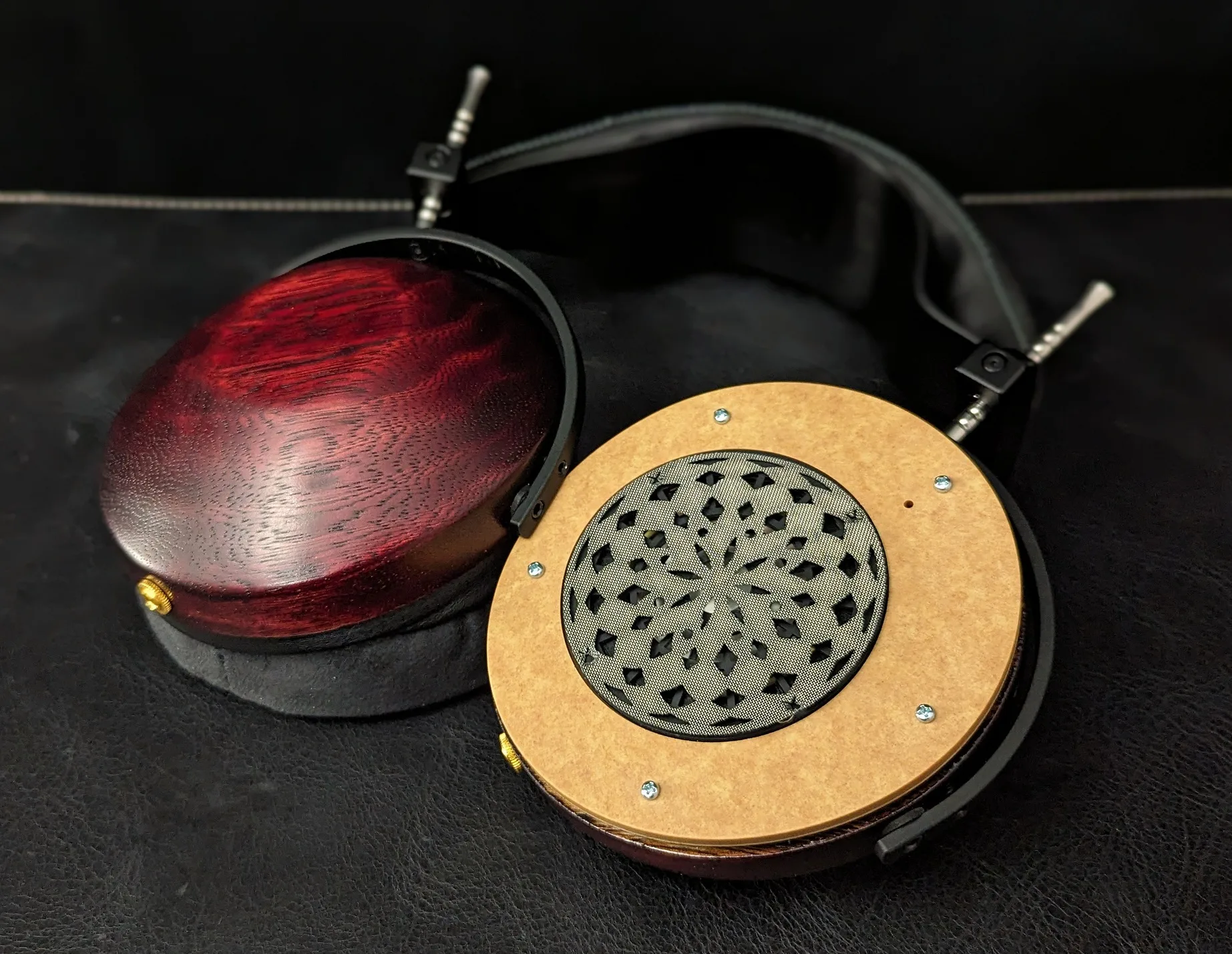
By default, a partially perforated titanium mesh (Burst Mesh) is installed in front of the headphone driver, which slightly attenuates the amount of high frequencies. Alternatively, the mesh can be completely removed to boost the treble or replaced with the solid model (Solid Mesh) included in the tuning kit, with which the high frequencies are certainly not too bright for anyone's taste. The adjustment option is interesting due to its affordability, but I'm not sure how many times the screw threads made into the wooden frame surrounding the driver will withstand mesh changes without loosening. Regarding the earpads, the protein leather pads clearly differ from the other two options, while the hybrid pads and suede pads are fundamentally quite similar. I will start the discussion with the protein leather pads, as they were the standard pads for my own headphones.
Sound quality with original standard earpads (Protein Pads)
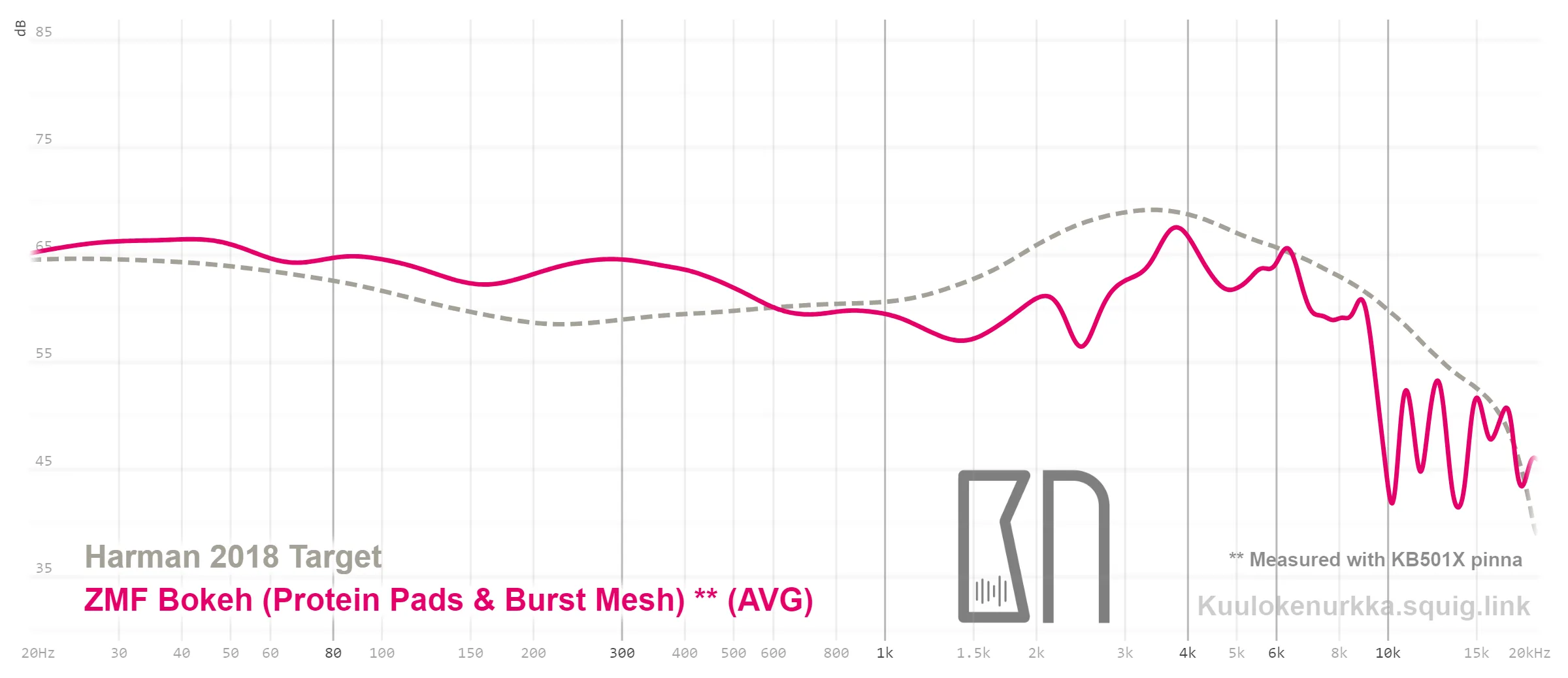
With its protein leather earpads, Bokeh offers a listening experience reminiscent of the manufacturer's Atticus headphones, with a robust bass and a rich, dark midrange. Compared to Atticus, Bokeh feels more refined, yet more distant and less engaging. The reproduction is reasonably clear thanks to a spacious soundstage and good separation, but the bass constantly rumbles strongly in the foreground, and the treble remains too tame for my taste. Bokeh clearly aims to be some kind of bass cannon resembling noise-cancelling headphones, which is not necessarily what most people would want to pay over 1000 euros for. On the other hand, bass music sounds fun and club-like, provided a tightly controlling amplifier is used. In this case, the bass pounds hard throughout, also staying sufficiently within its own territory. There is also no resonance or reverberation from the wooden cups, so they can be seen this time more as decoration than as part of the tuning.
ZMF states that the LCP-diaphragm driver is so fast and light in its fundamental sound that the unusual hump visible in frequency response measurements between 200–500 Hz does not sound the same as one might expect. This indeed seems to hold quite true, as by ear, I would estimate the emphasis to be half as small. My own measurement equipment also seems to amplify the emphasis compared to the manufacturer's published measurement results, which were made with more expensive equipment. In any case, the lower mid-frequencies are reproduced richly, which brings a pleasant weight to instruments. Vocalists also move slightly closer in the soundstage, sounding warm and, with relaxed high frequencies, simultaneously calm. It is possible to listen to the headphones comfortably for long periods, but the energy level of the mid-frequencies and treble is so low that the listening experience inevitably remains somewhat forgettable. I cannot describe the presentation as neutral in any way.
Despite everything, the protein leather earpads still bring out Bokeh's strengths. Considering their closed-back design, the headphones have a spacious and clear soundstage. Music plays in layers, and different elements remain distinctly separated in their own compartments. Thanks to this, it is surprisingly easy to pick out smaller details from the sound, even if the colored tuning does not explicitly direct attention that way. The manufacturer's headphones became more resolving immediately after the introduction of the ADS damping system, so it is likely to be thanked this time as well.
Sound quality with hybrid and suede earpads
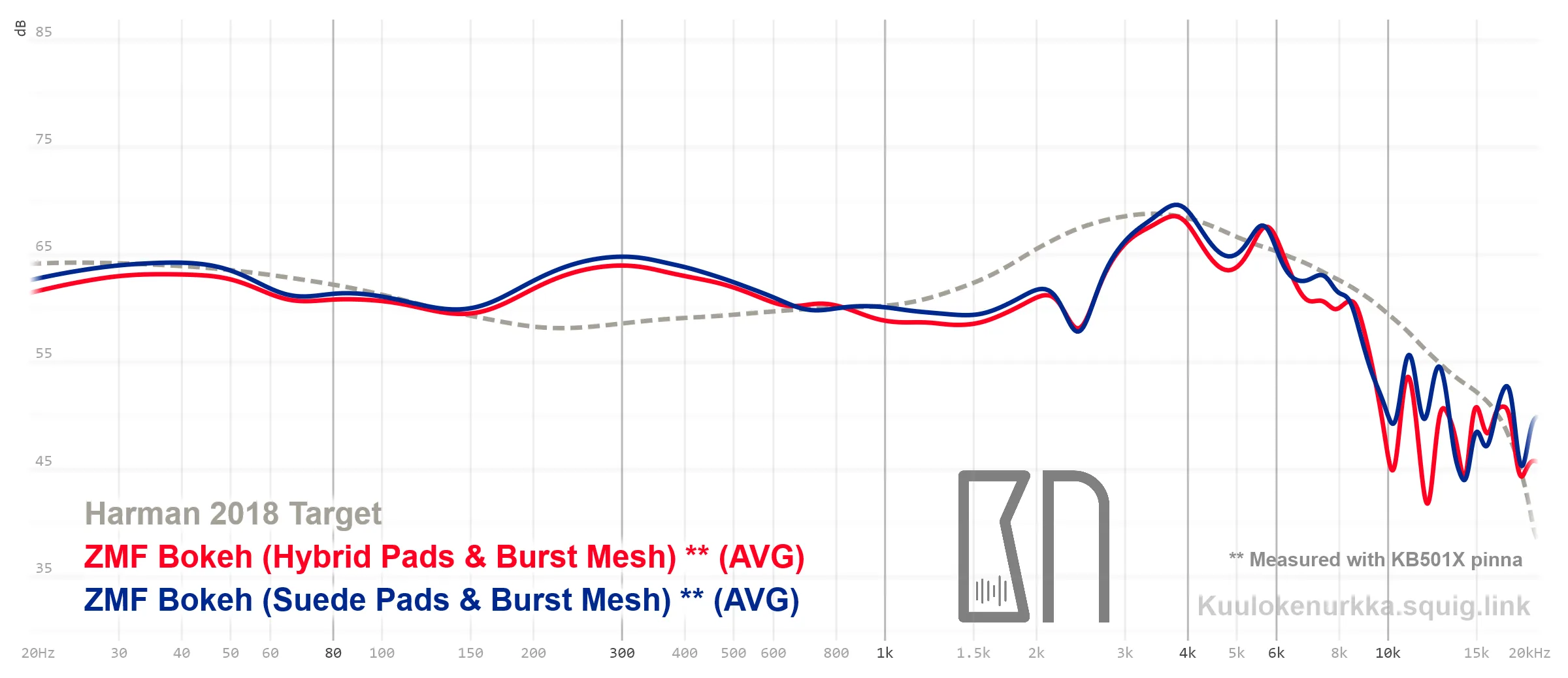
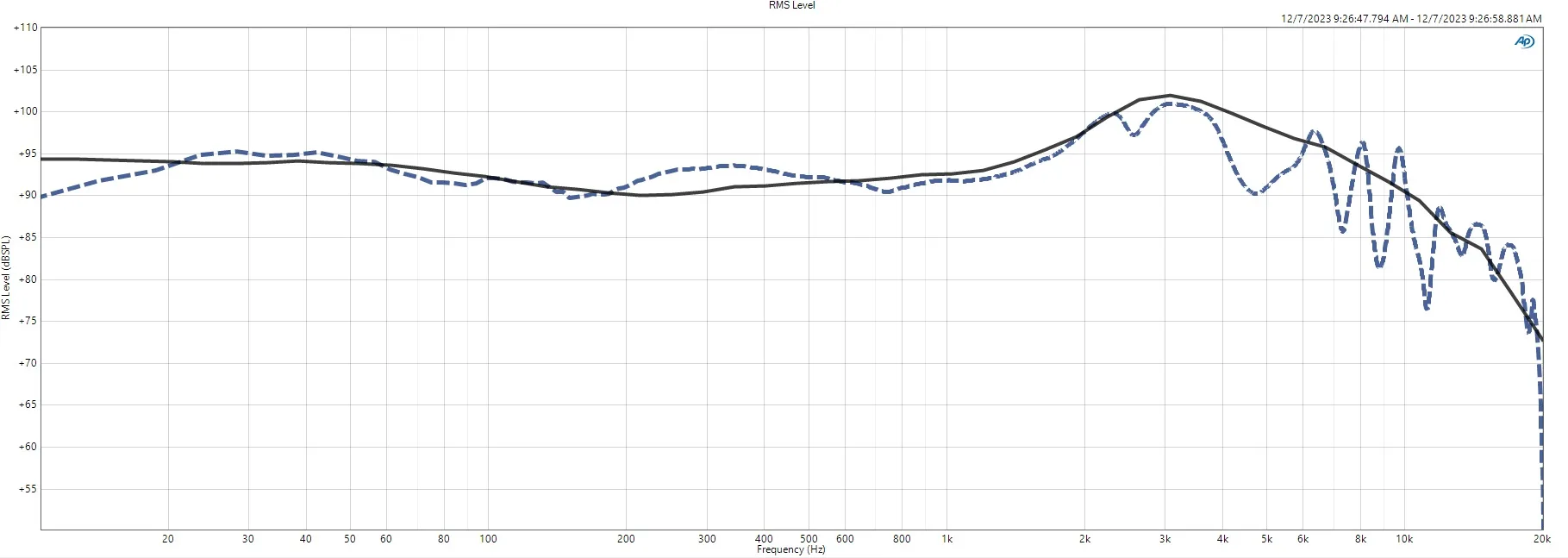
At this point, it is probably appropriate to mention that the frequency response of Bokeh measured with my own equipment generally correlates quite poorly with my subjective experience of the headphones' sound. In my view, this is due to the driver's position within its frame and the earpads shaped for a human head. With the flat metal edges surrounding the measurement device's ears, the fit does not fully correspond to what it is on my own head. For me, the driver naturally settles into a suitable position in front of the ear, whereas in the measurement device, the result of a single measurement depends significantly on how the headphones are positioned relative to the ear. The manufacturer's measurements shown below demonstrate why I consider Bokeh's mid-frequencies with hybrid earpads to be more balanced compared to my own measurements. On the other hand, I do not perceive the headphones as quite as Harman-style, so the truth might, in my case, lie somewhere between the two different sets of measurements.
Hybridi-pehmusteet:
Bokeh muuttuu hybridi-pehmusteillaan eli nykyisillä vakiopehmusteillaan normaalimmaksi ja tasapainoisemmaksi. Suurimpina muutoksina basson määrä vähenee ja yläkeskitaajuudet tulevat paremmin esille ollen jo energiatasoltaan hyvinkin luonnollisen kuuloiset keinonahkapehmusteisiin verrattuna. Diskantissa en koe valtavaa muutosta määrän osalta, mutta tyyli muuttuu jonkin verran. Jos minun tulisi nimetä hybridi-pehmusteiden suurin heikkous Burst Mesh:in kanssa, se olisi juuri diskantin lievä karkeus ja epäluonnollisuus. Kaikki taajuudet eivät ole optimaalisella tavalla balanssissa, vaan tietyt kohdat äänestä korostuvat toisia enemmän. Minkäänlaista liiallista kirkkautta tai räikeyttä ääneen ei silti muodostu, ja itseasiassa tietyillä vahvistimilla (esimerkiksi Cayin iHA-6 ja sen 10 ohmin liitin) kiinnitän epäluonnollisuuteenkin vähemmän huomiota. Hybridi-pehmusteet ovatkin täten selkeä parannus kuulokkeiden alkuperäisiin vakiopehmusteisiin nähden.
Basso toistuu hybridi-pehmusteilla tiukemmin ja kontrolloidummin, mutta sen muhkeus tekee edelleen kuuntelusta hauskaa. Elektroninen musiikki junttaa tyydyttävän voimakkaasti. Parasta on mielestäni se, ettei basso tule ihan iholle, vaan se täyttää äänikuvan mukavalla määrällä äänenpainetta. Alakeskitaajuuksien pieni korostus luultavasti auttaa tekemään äänestä tavallista painavampaa, koska myös Focal Bathysissa oli samanlaisia piirteitä.
Negatiivisena puolena rock-musiikkia kuunnellessa alakeskitaajuuksien turvonneisuus häiritsee välillä hieman, koska se pehmentää toistoa ja sen yksityiskohtaisuutta. Ylemmät keskitaajuudet eivät myöskään tuo toistoon valtavasti purevuutta, joten esitystapa on pikemminkin lämmin ja rento kuin räväkkä. Tällaista ääntä on kuitenkin mukavaa kuunnella pidempiäkin aikoja ilman, että kyllästyisin siihen. Hybridi-pehmusteilla kuvailisin Bokeh:ia ZMF:n mittapuulla varsin tavallisen kuuloiseksi, mikä ei ole huono asia, sillä nykyään yhä useammat arvostavat tasapainoista ääntä.
Luonnollisemman taajuusvasteen ansiosta pystyn keskittymään entistä paremmin kuulokkeiden tilavaan ja kerrostuneeseen äänikuvaan. Erityisesti lähellä ja kaukana kuuluvat äänet erottuvat hyvin toisistaan, mikä auttaa yksityiskohtien havainnoimisessa ja kompensoi toiston lievää pehmeyttä. Bokeh ei räjäytä millään osa-alueella pankkia, mutta se kuulostaa hyvältä ja helposti kuunneltavalta kuulokkeelta. Lopulta itseäni jää harmittamaan vain aavistuksen verhoutunut diskantti, joka tuntuu koko ajan siltä kuin sitä rajoitettaisiin tarpeettomasti. Ongelmaan löytyy kuitenkin ratkaisuja.
Mokkapehmusteet:
Jos kuulokkeista halutaan hieman ilmavammat, niihin voidaan vaihtaa tuunauskittiin sisältyvät mokkapehmusteet (suede). Ne lisäävät ääneen kivaa säihkettä, joka raikastaa esitystapaa tummempiin hybridi-pehmusteisiin verrattuna. Muutoinkin toisto on mokkapehmusteilla hieman energisempää ja vaivattomampaa ilman, että diskantti löisi vielä suuremmin yli tai olisi epäluonnollisen kirkasta. Joillakin vahvistimilla sähäkkyys voi toisinaan päästä yllättämään, mutta pääsääntöisesti sanoisin mokkapehmusteiden sopivan niille, jotka pitävät kirkkaammasta, mutta kuitenkin tasapainoisesta äänestä. Lisäkirkkautta lukuun ottamatta valtavaa eroa hybridi-pehmusteisiin ei lopulta taajuusvasteen näkökulmasta kuitenkaan synny.
Suosin lopulta itse hieman enemmän hybridi-pehmusteita niiden täsmällisemmän toiston vuoksi. Mokkapehmusteilla ääni on yleisesti ottaen hieman pehmeämpää ja sulavampaa, joten esimerkiksi basso toistuu jonkin verran löysemmin. Jos kuunnellussa kappaleessa on esimerkiksi tyyliltään paksusti toistuva bassorumpu tai -kitara, ääni alkaa kumahdella mokkapehmusteilla tavallista enemmän. Toisaalta joku voisi aivan hyvin pitää mokkapehmusteiden pyöreämmästä bassontoistosta, ja kokemus voi vaihdella jonkin verran käytössä olevasta kuuntelulaitteistosta riippuen.
Eri mesh-vaihtoehtojen vaikutus ääneen
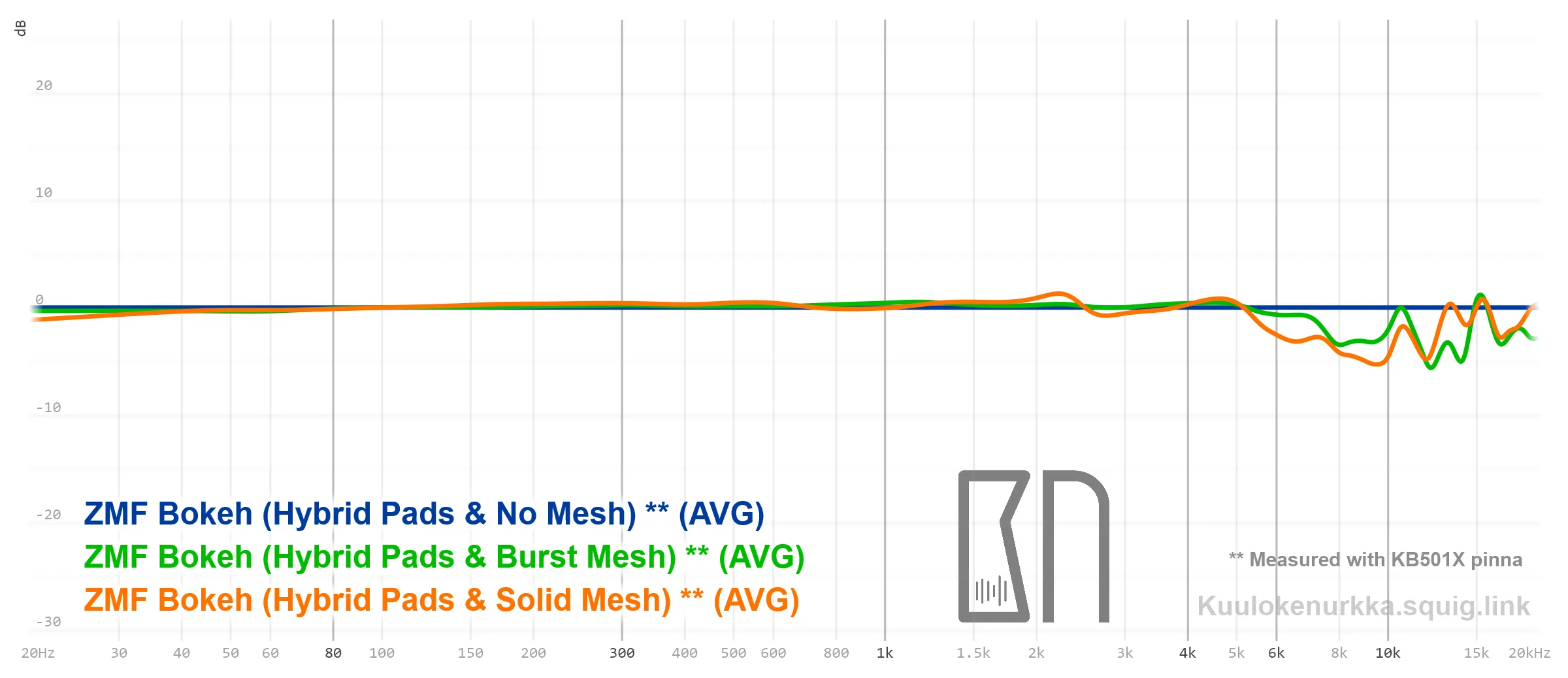
Elementtien etuvaimennuksessa hyödynnetyt titaaniverkot madaltavat ylätaajuuksien määrää 5 kHz:stä eteenpäin. Osittain rei’itettyjen Burst Mesh -verkkojen vaikutus on maltillisempi, kun taas umpinaiset verkot blokkaavat diskanttia enemmän. Etuvaimennus sopii kaikkein parhaiten kirkasäänisimmille mokkapehmusteille, mutta valmiiksi tummahkot hybridi- ja keinonahkapehmusteet muuttuvat omaan makuuni turhankin hillityiksi. Jokainen voi kuitenkin kokeilla asiaa ja todeta muutokset omin korvin. Kannattaa huomioida, että diskantin määrän muuttaminen ohjaa samalla huomiota eri tavalla muille taajuusalueille, joten lopputulos voi olla odotettua erilaisempi.
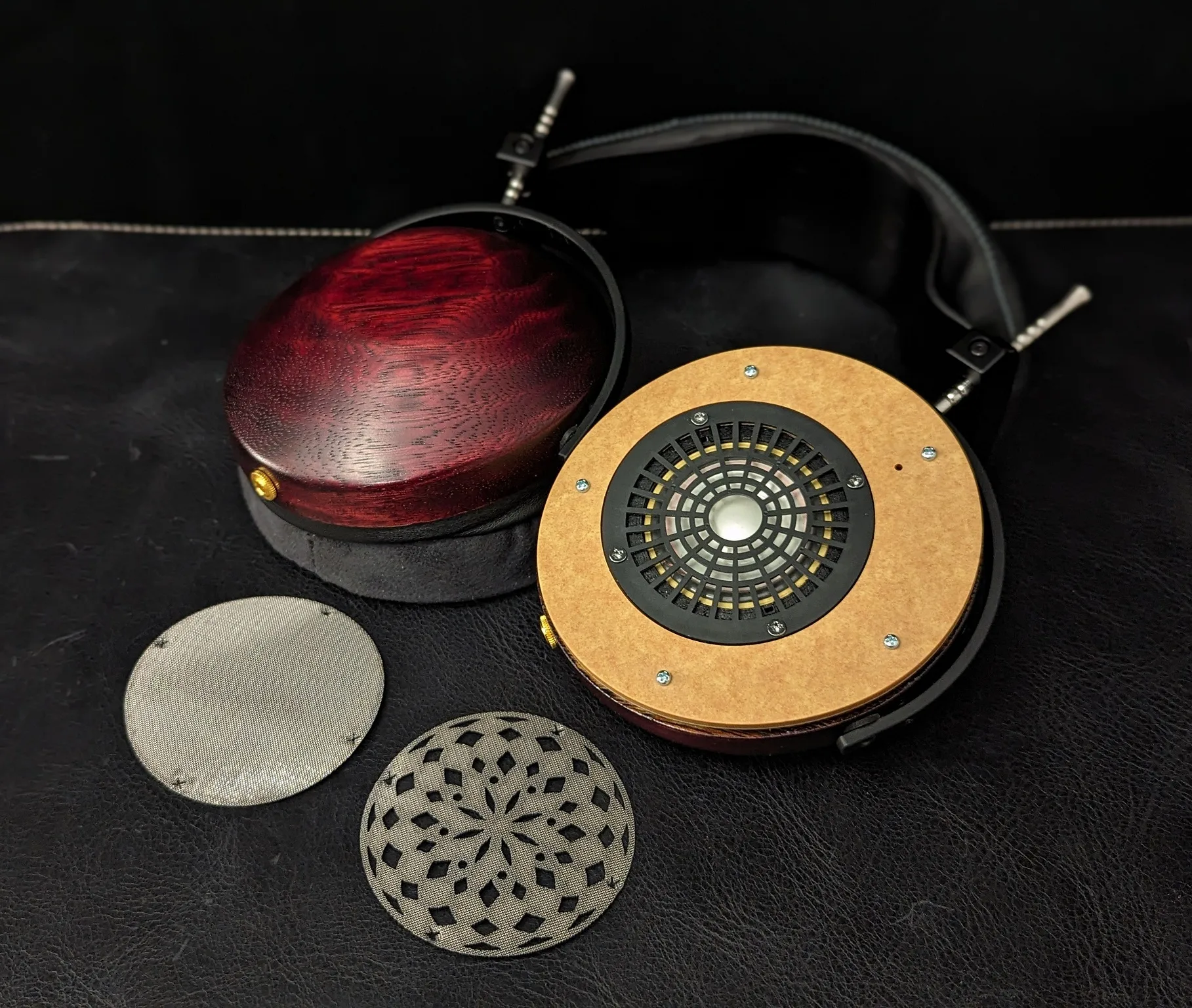
Eri verkkovaihtoehdot vaikuttaisivat olevan suunniteltu muutamien diskanttipiikkien madaltamiseen, joten olettaisin lopputuloksen vaihtelevan ihmisten välillä riippuen siitä, mille taajuuksille piikit osuvat kunkin kuuloaistin herkkyyteen nähden. Itse olen selvästi mahdollisille paikallisille korostumille melko immuuni, koska pystyn kuuntelemaan Bokeh:ia rennosti ilman titaaniverkkoja. Tässä on myös se etu, ettei diskantti vaimene turhaan laajemmalta alueelta kuin olisi tarpeellista.
Koenkin Bokeh:in ylätaajuudet kaikkein luonnollisimmiksi, kun ne saavat soida täysin vapaasti. Muutoin havaitsen kaikissa pehmuste & mesh -yhdistelmissä jonkinlaista epäluonnollisuutta ja häiritsevää verhoutuneisuutta. ZMF olisi mielestäni voinut julkaista kuulokkeet ilman etuvaimennustakin, mutta se lienee pelannut diskantin kanssa varman päälle. Oletuksena asennettu Burst Mesh on lopulta sellainen vaihtoehto, jota useimpien tuskin tarvitsee vaihtaa umpinaiseen verkkoon, ellei tavoitteena ole todella tumma diskantti. Verkkojen irrottamista sen sijaan suosittelen kokeilemaan, koska se ei maksa mitään. Täten koen itse parannuksen äänenlaadussa kaikilla eri korvapehmusteilla.
Oma suosikkini: titaaniverkot irti ja pehmusteet fiiliksen mukaan
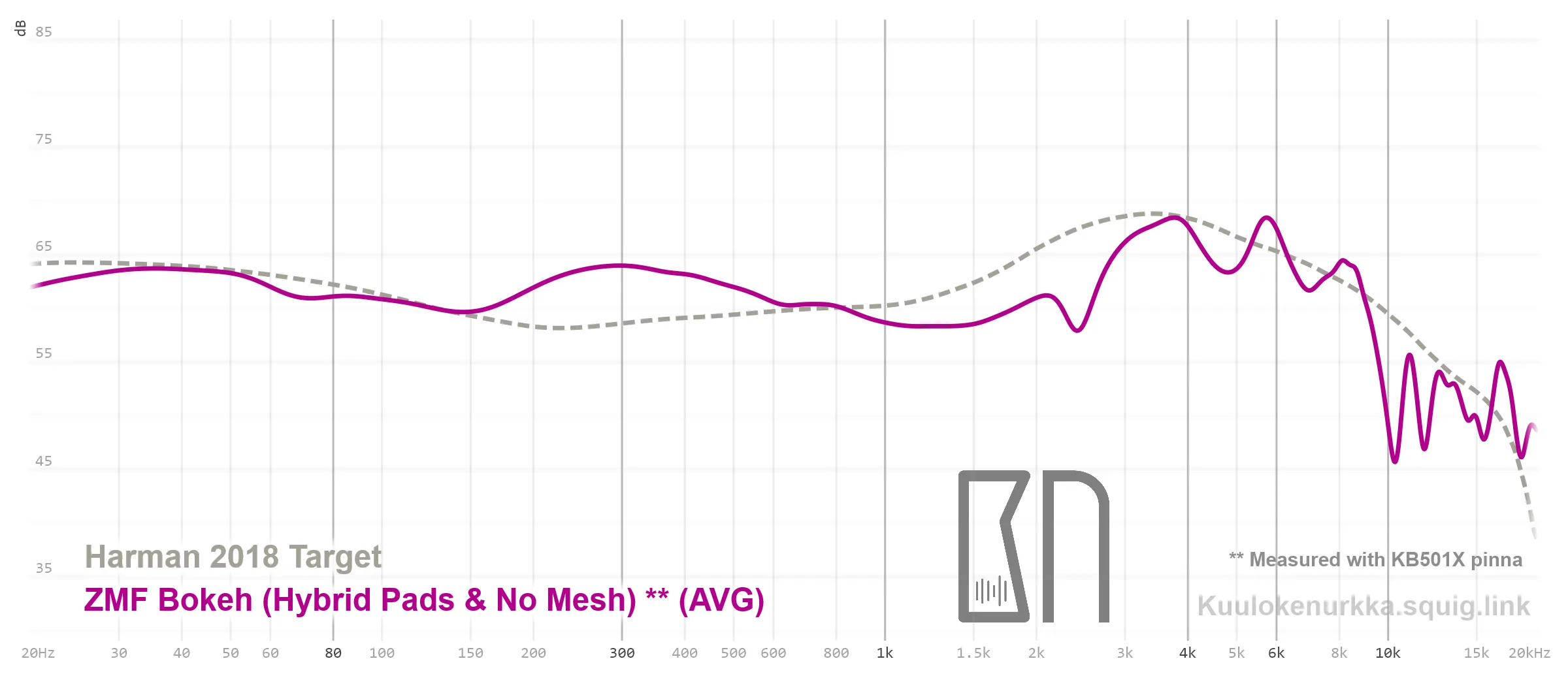
Olin jo tätä osiota ensimmäisen kerran hahmotellessani varma, että tulen kirjoittamaan ainoastaan hybridi-pehmusteista. Lopulta tajusin kuitenkin titaaniverkkojen irrottamisen tuovan selkeitä parannuksia myös muihin pehmusteisiin, jolloin aloin löytää niistä kaikista hyviä puolia. En lopulta osannutkaan päättää, miten pidän Bokeh:ista kaikkein eniten, sillä ylätaajuuksien verhoutuneisuudesta eroon päästyäni jäljelle jäi kolme hyvää pehmustevaihtoehtoa.
Ilman titaaniverkkoja mokkapehmusteet tarjoavat itselleni neutraalin kuuntelukokemuksen energisillä keski- ja ylätaajuuksilla. Diskantin sähäkkyyden ja ilmavuuden perusteella siinä voi olla jonkinlaista korostumaa, mutta samaan aikaan pehmusteiden mokkamateriaali vaikuttaisi tekevän toistosta miellyttävän sulavaa. Kutsuisinkin lopputulosta sulavan raikkaaksi. Näin Bokeh innostaa itseäni energisyydellään kaikkein eniten ilman, että ääni särähtäisi korvaan tai laulusuorituksissa olisi sibilanssia. Mokkapehmusteilla kuulokkeiden ääni on myös kaikkein yksityiskohtaisinta ja eniten avoimia kuulokemalleja muistuttavaa.
Keinonahkapehmusteet puolestaan kuulostavat titaaniverkkojen irrottamisen jälkeen edelleen rauhallisilta ja tummilta, mutta eivät enää liiaksi. Jos mokkapehmusteet ohjaavat huomiota eniten ylätaajuuksille, keinonahkapehmusteet ovat bassovoittoisimmat ja sitä myötä modernia musiikkia kuunnellessa kaikkein hauskimmat. Keskitaajuudet eivät kuitenkaan enää tunnu liian etäisiltä tai pehmeiltä, vaan toisto on tuhdista bassosta huolimatta helposti omaksuttavaa. Selkeyttä ylätaajuuksillakin piisaa riittävästi. Näin Bokeh muistuttaa mielestäni eniten vanhempia ZMF-malleja, kuten Atticusta ja Eikonia.
Hybridi-pehmusteet pysyvät eräänlaisena välimuotona kahdesta muusta pehmustemallista ollen energisemmät ja tasapainoisemmat kuin keinonahkapehmusteet, mutta rauhallisemmat kuin mokkapehmusteet. En sanoisi kuulokkeiden ääntä hybridi-pehmusteilla täysin neutraaliksi, vaan niiden etu mokkapehmusteisiin nähden on rasittamattomuus. Esimerkiksi vokalisti pysyttelee jonkin verran etäämmällä, eivätkä soittimien yksityiskohdat toistu koskaan liian terävästi. Näin Bokeh toimii erinomaisesti helposti kuunneltavana yleiskuulokkeena. Jos minun pitäisi kuunnella jotakin kuuloketta yli 10 tuntia putkeen, Bokeh olisi siihen hybridi-pehmusteilla ykkösvalintani niin ääneltään kuin käyttömukavuudeltaankin: en uupuisi, mutten myöskään kyllästyisi. Tällaisia tasaisen varmasti suoriutuvia ja turvallisia kuulokkeita ei loppujen lopuksi löydy markkinoilta liikaa.
Easy confirmation
Bokeh:in impedanssi on muita ZMF-malleja matalampi (80 ohm vs. 300 ohm) ja herkkyys hieman korkeampi (103 dB/mW vs. 96–99 dB/mW), joten valmistaja ehdottaa suhtautumaan siihen mobiilikuulokkeena. Tämä vaikuttaakin purreen, sillä monet ovat päätyneet käyttämään Bokeh:ia pienikokoisilla vahvistimilla hehkuttaen yhteensopivuutta ja helppoa toistettavuutta. Todellisuudessa ZMF:n muutkin suljetut kuulokemallit toimisivat 300 ohmin impedanssistaan huolimatta pienillä vahvistimilla hyvin, mutta eihän sellaista ole tohtinut hifiympyröissä mainita ääneen, vaan kallis putkivahvistin sen pitää olla. Toki olen samaa mieltä siitä, että 300 ohmiset kuulokkeet vaikuttaisivat pääsevän parhaiten oikeuksiinsa korkeamman lähtöimpedanssin omaavilla vahvistimilla. Siinä mielessä Bokeh hyötyy erikoisemmista laitteista vähemmän, jolloin sen voidaan ajatella saavuttavan suuremman osan potentiaalistaan perusvahvistimilla.
Bokeh on joka tapauksessa korkeahkon herkkyytensä ansiosta helposti toistettava kuuloke. Samaan aikaan 80 ohmin impedanssi tekee siitä myös melko monikäyttöisen, koska se on pitkälti immuuni heikkolaatuisempien ja ”ylitehokkaiden” vahvistimien taustakohinalle. Myös putkivahvistimilla kuuntelu onnistuu ilman, että taajuusvaste muuttuu valtavasti lämpimämpään suuntaan. Harvemmat mobiililaitteetkaan säikähtävät 80 ohmin impedanssia, joten toivoisin näkeväni enemmän tämän tyyppisiä kuulokkeita.
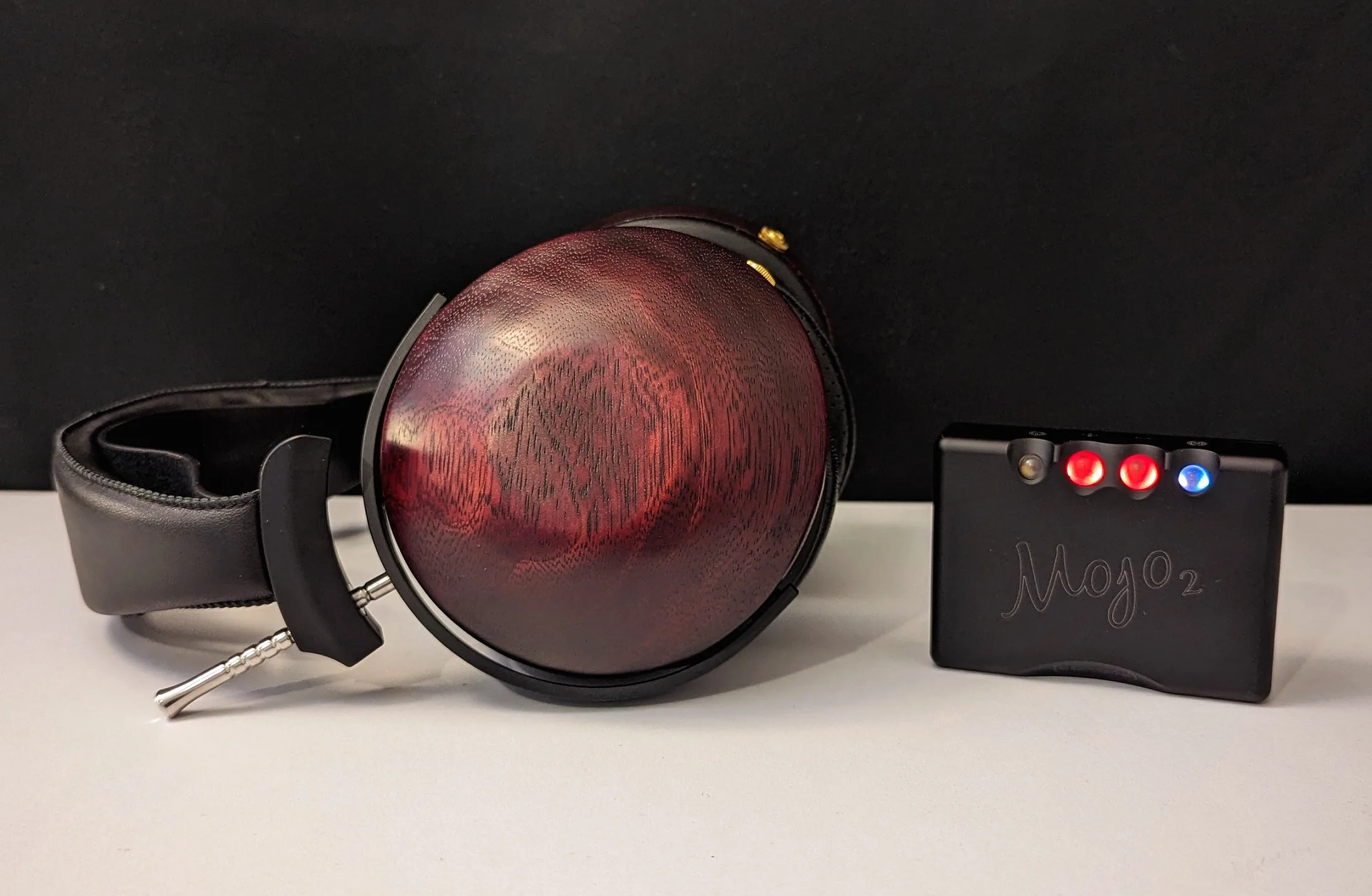
Olen kuunnellut Bokeh:ia laidasta laitaan erilaisilla vahvistimilla. Mobiilivaihtoehdoista esimerkiksi Qudelix 5K and Chord Mojo 2 sopivat kuulokkeille hyvin, ja niin ikään edullinen SMSL DL200 -yhdistelmälaite on osoittautunut toimivaksi pariksi. DL200:n pieni lisäenergisyys tekee mielestäni hyvää Bokeh:in keskitaajuuksille ja laite kontrolloi myös onnistuneen tiukasti muhkeita alakeskitaajuuksia. Yllättäen Qudelix 5K tuottaa puolestaan tummemman ja rauhallisemman kokemuksen. Suoraan Macbook Air:in kuulokeliittimestä kuunneltuna Bokeh on sen sijaan diskantiltaan tavallista kirkkaampi, mutta edelleen ihan hyvän kuuloinen. Äänenvoimakkuuttakin Macbookista irtoaa enemmän kuin tarpeeksi.
Lopulta kuuntelukokemus on kuitenkin äänikuvaltaan ja dynamiikaltaan kaikkein vaikuttavin hintavammilla D/A-muuntimillani (Schiit Audio Bifrost 2 and Matrix Audio X-Sabre 3) ja työpöytävahvistimillani (Cayin iHA-6 and Aune S17 Pro). Nämä toistavat basson iskevämmin kuin edullisemmat laitteeni. Myös tilavaikutelma on avarampi ja kerrostuneempi kuin esimerkiksi DL200:lla. Erityisesti Bifrost 2 & S17 Pro -yhdistelmällä Bokeh tarjoaa massiivista bassoa ja realistiselta tuntuvan syvän äänikuvan, kun käytän hybridi-korvapehmusteita titaaniverkot irrotettuna. Kannattaa kuitenkin huomioida, että korvapehmusteiden ja titaaniverkkojen vaihtaminen muuttaisi ääntä jopa enemmän kuin erilainen kuuntelulaitteisto. Tämän vuoksi Bokeh voisikin olla järkevintä hienosäätää omalle kuuntelulaitteistolle sopivaksi sen sijaan, että sille hankittaisiin varta vasten uusia laitteita.
Only a few relevant comparators
Mietin aikani potentiaalisia verrokkeja Bokeh:ille, mutta 1000 euron ympäristöstä löytyy yllättävän vähän suljettuja kuulokemalleja, joita pitäisin hankkimisen arvoisina. ZMF:n kuulokkeiden kattavat säätömahdollisuudet tekevät niistä lisäksi vaikeasti vertailtavia muiden valmistajien tuotteiden kanssa, sillä eroja voitaisiin pienentää esimerkiksi korvapehmusteita vaihtamalla.
Aiemmin testaamistani kuulokkeista 1400 euron hintainen Denon AH-D9200 ei mielestäni tarjoa kunnollista vastusta Bokeh:ille, ellei joku satu pitämään voimakkaasti terävöitetystä toistosta. Dan Clark Audio Aeon 2 Closed tai sen Noire-versio sen sijaan saattaisivat olla reilulla 1000 eurolla Bokeh:ille ihan hyviä vaihtoehtoja, mutta itse kyllästyisin kuulokkeiden heikkoon dynamiikkaan ja liiallisella vaimentamisella tukahdutettuihin elementteihin. Valmistajan uuden E3-kuulokemallin sen sijaan näen selkeänä äänenlaadullisena parannuksena Bokeh:iin verrattuna, mutta siitä täytyykin maksaa hulppeat 2500 euroa.
Ranskalaisen Focalin kuulokkeista pidän enemmän 1300 euron hintaisesta Radiance:sta kuin 800–1000 eurolla myytävästä Celestee-mallista. Jälkimmäinen kuulostaa omaan makuuni jokseenkin hyökkäävältä ja epäluonnolliselta, kun taas Radiance on mielestäni oikein hyvä suljettu kuuloke. Harmillisesti Bentleyn kanssa yhteistyönä tehtynä erikoismallina se vaikuttaa kuitenkin pikku hiljaa poistuvan markkinoilta, ellei valmistusta ole jopa lopetettukin. Focalin mallistosta näkisinkin lopulta parhaana vaihtoehtona 700 euron hintaiset Bathys-vastamelukuulokkeet USB-DAC:insa kautta kuunneltuna. Kuulokkeet tarjoaisivat Bokeh:ia muistuttavaa painavaa bassontoistoa ja melko rennon, mutta tasapainoisen kuuntelukokemuksen. Äänikuvan laajuudessa ja kerrostuneisuudessa Bokeh veisi silti muistikuvieni perusteella selkeähkön voiton etenkin hyvällä vahvistimella kuunneltuna.
Hifimanin epätasaisesti tuunattuja HE-R10D-kuulokkeita suosittelisin välttämään, vaikka valmistaja onkin polkenut niiden hinnan omassa verkkokaupassaan 1400 eurosta noin 400 euroon. Suuri alennus voi vaikuttaa houkuttelevalta, mutta nykyään alle 200 euroa maksava Sundara Closed voittaa mielestäni HE-R10D:n lähes jokaisella osa-alueella bassontoiston hauskuutta lukuun ottamatta. Hifimanin valikoimaan sisältyy myös tuunaukseltaan katastrofaalinen Audivina-malli, jonka hinta tippunee valmistaja tuntien pian 2300 eurosta reilusti alaspäin (saatavilla jo open-box-statuksella alle 1600 eurolla). Itse en ole Audivinaa testannut, mutta yksikään vakavasti otettava arvostelija ei ole sitä kehunut. Samaan tapaan Audio-Technican 1600 euron hintainen ATH-AWAS on tuunaukseltaan niin erikoinen, etten voi suositella sitä ZMF:n kuulokkeiden sijaan.
Audezella olisi tarjolla LCD-2 Closed (hinta 1000 €) ja LCD-XC (hinta 1500 €). Molemmat kuulostavat taajuusvasteensa osalta hieman normaalimmalta kuin avoimella rakenteella toteutetut vastineensa, mutta pienelle taajuuskorjaamiselle voi edelleen tulla tarvetta. Kyvykkäiden planaarielementtien ansiosta lopputulos lienee silti jonkin verran selkeämpi ja yksityiskohtaisempi dynaamisilla elementeillä toteutettuun Bokeh:iin nähden. Tämän vuoksi Audeze-mallit kannattaakin pitää mielessä, jos vaan oma niska kestää niiden 600–700 gramman painon.
Bokeh:in kanssa saman verran maksavaa ZMF Atticusta pidän edelleen äärimmäisen hauskana kuulokkeena, mutta sen värittyneempi tuunaus estää sitä olemasta yhtä monikäyttöinen ja yleispätevä. Tämän vuoksi minun täytyykin nostaa Bokeh sen edelle, ellei joku etsi kuulokekokoelmaansa tasapainoisemman tuotteen sijaan jotakin erikoisempaa. ZMF:n hieman kalliimman Eikon-mallin (jälleen myynnissä noin 1600 eurolla) kohdalla olen sen sijaan usein 50:50 sen osalta, kuuntelisinko mieluummin sitä vai Bokeh:ia.
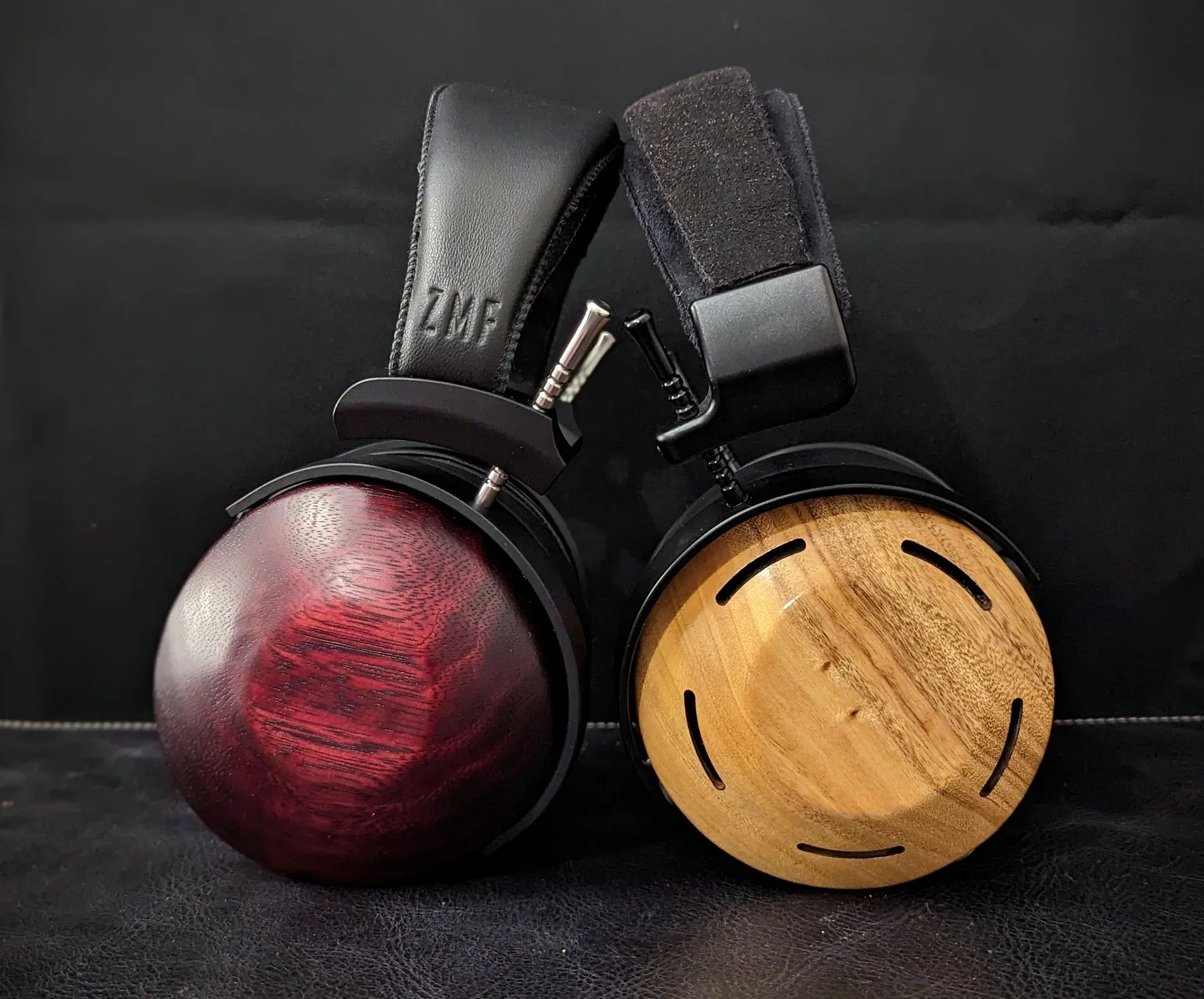
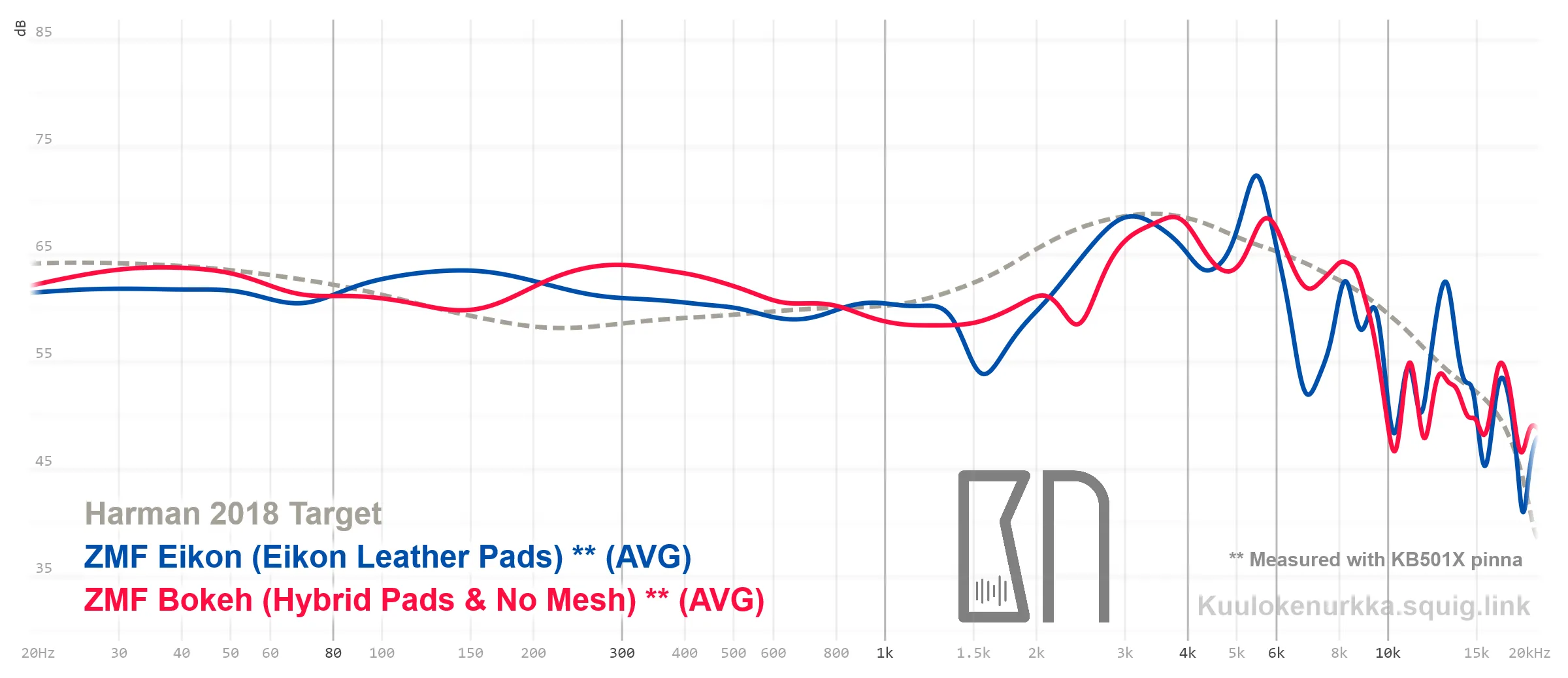
Eikon:in basso potkii tukevammin ja se on kaksikosta diskantiltaan tummempi. Bokeh kuulostaa etenkin titaaniverkot irrotettuna avarammalta ja raikkaammalta, eikä sen taajuusvasteessa ole yhtä suurta vaihtelua. Eikon saa kuitenkin minut fokusoitumaan yksittäisiin soittimiin ja vokalistiin tarkemmin, ja sitä kuunnellessa yksityiskohdat pomppaavat terävämmin ja läsnäolevammin esiin taustastaan. Bokeh:in ääni on selkeää, mutta ikään kuin hajaantuneempaa. Eikon ei kuulosta yhtä nopealta ja täsmälliseltä, mutta se lisää ääniin luonnollisen tekstuurin. Negatiivisena puolena toisto muuttuu kuitenkin Bokeh:iin nähden epäselvemmäksi nopeatempoisessa ja paljon erilaisia ääniä sisältävässä musiikissa. Eikonin keskibasso kumisee myös jonkin verran ja toisinaan taajuusvasteen epätasaisuudet herättävät turhankin paljon huomiota. Tämän vuoksi Bokeh tuntuukin hiotummalta tuotteelta, vaikkei se mielestäni olekaan parhaimpina hetkinään aivan yhtä innostava ja eloisa kuin Eikon. Molemmissa onkin omat etunsa puhumattakaan siitä, kuinka paljon kuulokkeet muuttuvat valittujen korvapehmusteiden ja kuuntelulaitteiston mukaan.
Summary
ZMF:n kuulokkeita arvioidessa minulle jää yleensä sellainen tunne, että olen sanonut paljon, mutten välttämättä kuitenkaan mitään täysin yksiselitteistä. Tunnistan tämän myös Bokeh:in kohdalla, koska kattavien säätömahdollisuuksien myötä siitä on vaikeaa sanoa äänenlaadun osalta mitään tyhjentävää. Tärkeintä lieneekin, että kuulokkeiden omistaja löytää omiin mieltymyksiinsä sopivan korvapehmuste & mesh -yhdistelmän. Tämän jälkeen Bokeh on parhaimmillaan tasapainoisen kuuloinen suljettu kuuloke hauskalla bassontoistolla sekä avaralla ja jäsentyneellä äänikuvalla. Vaikkei se lukeudukaan omalla mittapuullani mielenkiintoisimpien ZMF-mallien joukkoon, monipuolisuuden ansiosta mieleeni ei varsinaisesti tule selvästi parempiakaan suljettuja kuulokkeita reilun 1000 euron hintaluokassa.
Totuuden nimissä puhutaan silti melko kalliista kuulokemallista, joka ei tarjoa normaalilla 200 dollaria korkeammalla hinnallaan aivan yhtä hyvää hinta-laatusuhdetta kuin julkaisuhetkellään ottaen huomioon, ettei pakettiin sisälly oletuksena lisäpehmusteita tai kuljetuskoteloa. Kaikilla herkuilla Suomeen tilattuna loppuhinta kohoaa tällä hetkellä lähes 1600 euroon, mikä alkaa jo mielestäni olla auttamatta liikaa. Houkuttelevammalta paketti tuntuisi, jos 900 dollarin julkaisutarjous olisi jäänyt pysyvästi voimaan ja ostaja saisi valita kuulokkeisiinsa ilman lisämaksua kahdet haluamansa pehmusteet kolmesta eri vaihtoehdosta. Tuunauskittiä ei toki nykyään ole aivan pakollista ostaa, koska mukana tulee jo hyvät korvapehmusteet.
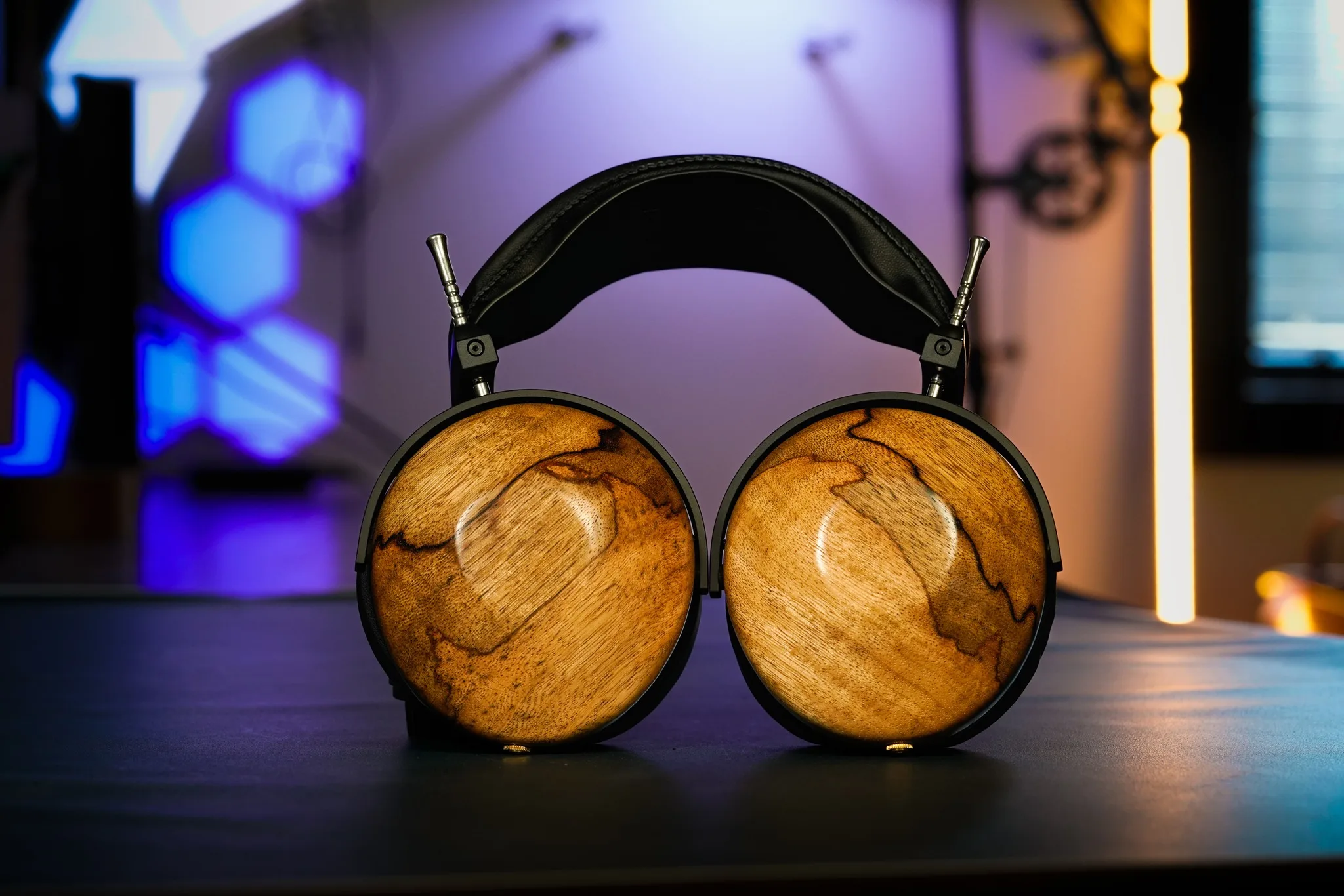
Kuulokkeiden arvoa nostavat toisaalta elinikäinen elementtitakuu, hienot puukupit (tällä hetkellä luonnollisen väristä Limba-puuta) ja uudistettu sankarakenne, josta pidän suuresti. Käyttömukavuuskin yltää erinomaiselle tasolle, ja muutamat pienet hienosäädöt tekevät Bokeh:ista ZMF:n helpoimmin lähestyttävän kuulokemallin etenkin niille, jotka eivät ole omistaneet valmistajan tuotteita aiemmin. ZMF:n tuotteista kiinnostuneille Bokeh lieneekin edelleen täydellä hinnallaan oiva hankinta, sillä se tarjoaa tasapainoisempaa ääntä kuin aiemmin edullisimman kuulokemallin virkaa hoitanut Atticus. Bokeh kilpailee myös laatuvaikutelman osalta tasaväkisesti valmistajan hintavampien kuulokemallien kanssa eli ostaja saa upean käsityönä tehdyn tuotteen, josta voi olla ylpeä pitkän aikaa – tällä on luonnollisesti oma hintansa. Päädynkin lopulta antamaan kuulokkeille varovaisen suositukseni, kunhan ostaja ymmärtää maksavansa muustakin kuin hyvästä äänenlaadusta. Samalla kannattaa myös varata runsaasti kärsivällisyyttä korvapehmusteiden vaihtamiseen ja unohtaa ajatus siitä, että Bokeh olisi mobiilikuuloke.
Pros and cons:
+ Parhaimmillaan tasapainoisen ja suhteellisen neutraalin kuuloinen
+ Hauska bassontoisto etenkin keinonahkapehmusteilla
+ Tilava ja kerrostunut äänikuva
+ Uusi käytännöllisempi ja paremmin viimeistelty sankarakenne
+ Hieno ulkonäkö
+ Erinomainen käyttömukavuus korkeasta painosta huolimatta
+ Ei tarvitse tehokasta vahvistinta, mutta hyötyy edelleen paremmista laitteista
+ 3,5 millimetrin liittimet helpottavat kaapelihankintoja
+ Lifetime driver warranty
+/- 200 dollarin julkaisutarjous oli houkutteleva, mutta nykyinen hinta tuntuu korkealta
+/- Ääni on säädettävissä oman maun mukaiseksi, mutta siitä täytyy maksaa lisää, eikä korvapehmusteita ole helppoa vaihtaa
– Diskantti kuulostaa titaaniverkkojen kanssa jokseenkin epäluonnolliselta
– Alakeskitaajuuksien täyteläisyys heikentää toiston yksityiskohtaisuutta
– Korvapehmusteiden vaihtaminen on todella hankalaa
– Korvapehmusteiden epätasaisesti asettuvat reunat näyttävät hieman rumilta
– Kuulokkeet julkaistiin keskeneräisinä ”väärillä” pehmusteilla ja ilman koteloa
 EN
EN  FI
FI