Author: Roderick

Table of Contents:
Information:
- Publication year: 2021
- Country of manufacture: France
- Price: 999 €
- Type: Closed, over-ear
- Dynamic element: 40 mm M-shape with aluminum-magnesium diaphragm
- Impedance: 35 ohm
- Sensitivity: 105 dB/mW
- Weight: 430 g
- Connector type: 2 x 3.5 mm
- Cable: 1.2 meter cable with 3.5mm connector and 6.35mm adapter
- Accessories: Carrying case
Review sample: Self-purchased product
Equipment used in the review:
- DAP: Astell & Kern SR15
- DAC/AMP combination device: IFI Micro iDSD Black Label
- DAC: Schiit Yggdrasill A1
- Headphone amplifier: SPL Phonitor 2
Focal released in 2021 Celestee replaced the Elegia model, which received a mixed reception in the French manufacturer's lineup. Critics' reviews of Focal's new model have been mainly laudatory, so the Celestee seems to be a successful upgrade compared to the previous model.
I generally like Focal headphones a lot, so naturally it was nice to acquire the Celestee for testing. I still happen to own the 3000 euro model, which cost new Stellia-model, so I was particularly interested in how close the Celestee could get to the flagship model's performance with its 1000 euro price tag.
Product packaging
The headphones' packaging is conventional, but I would have been surprised if it had matched the Stellia model's wonderfully fine presentation. Considering the Celestee's relatively high price, its packaging is still a small disappointment for me.
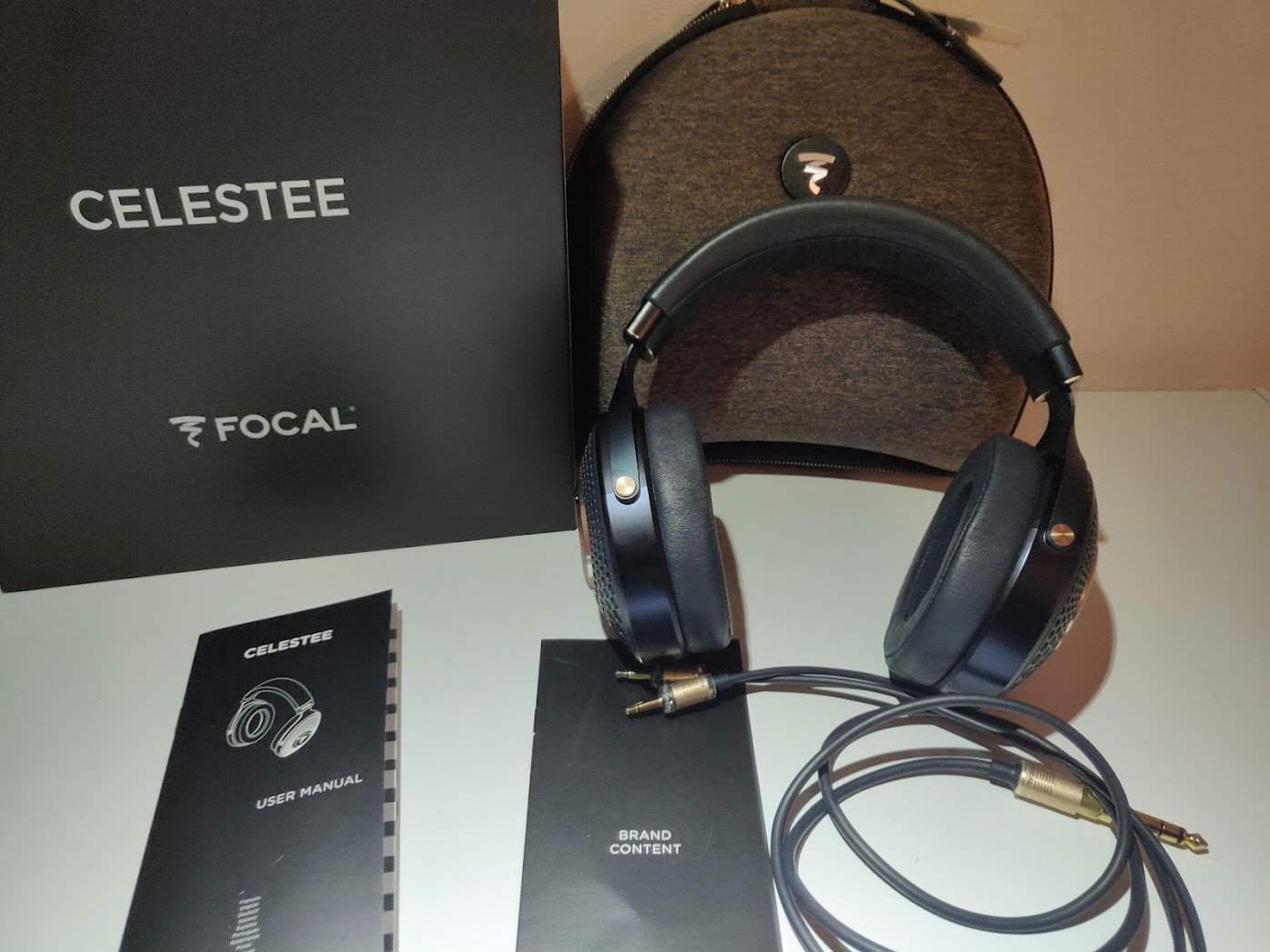
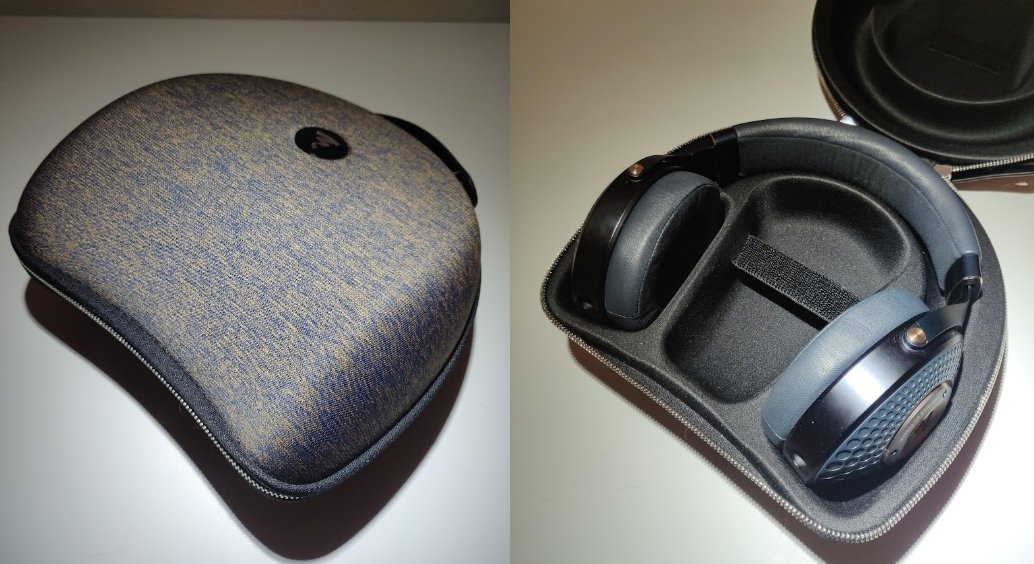
Structure and comfort
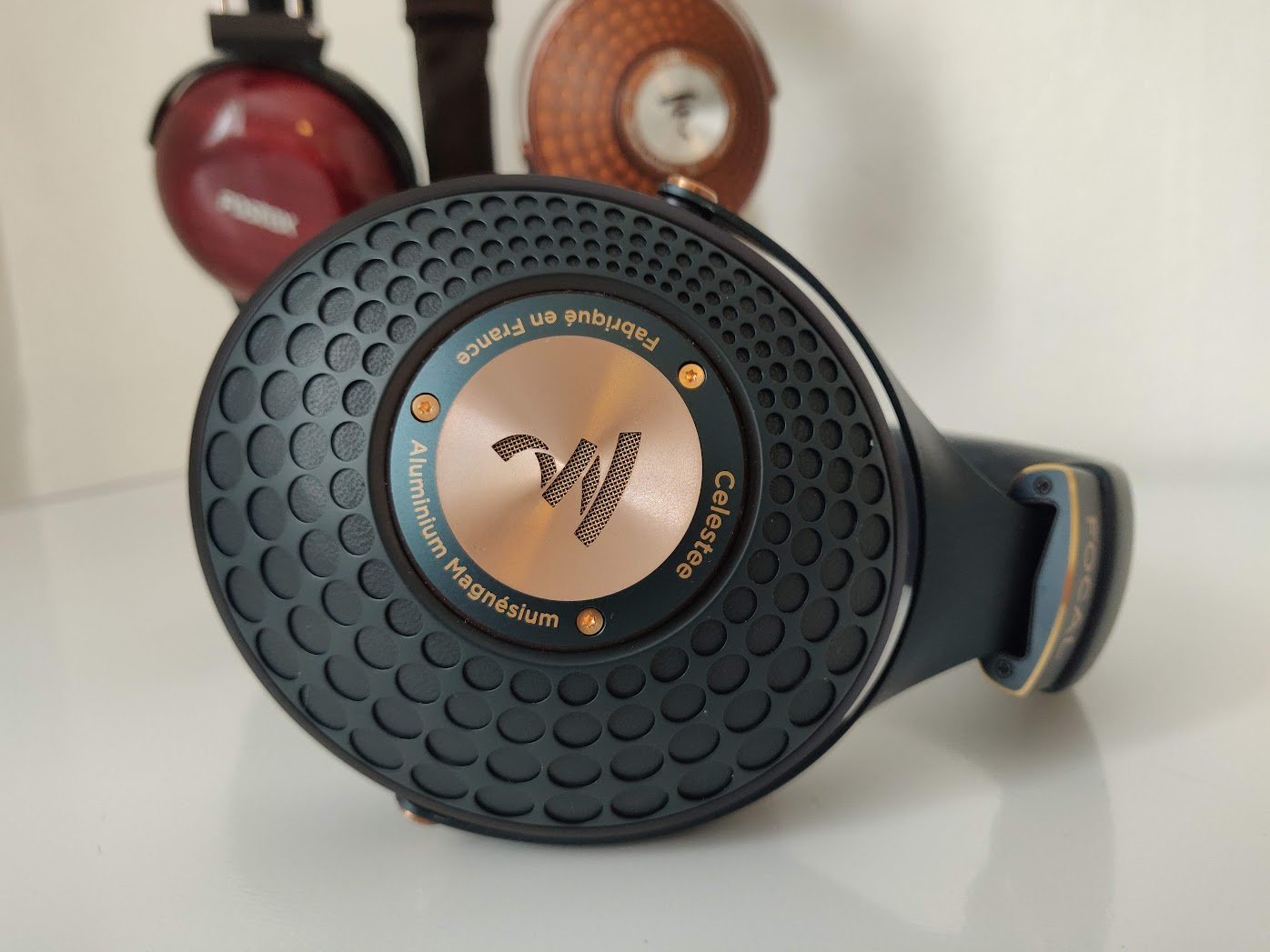
The annoyance caused by the mundane packaging quickly disappears when looking at the headphones – the navy blue Celestee is absolutely stunning! The headphones are almost identical in construction to the Stellia. Since the Stellia's appearance well matches its 3000 euro price tag, I certainly didn't expect the same exterior on the 2000 euro cheaper Celestee.
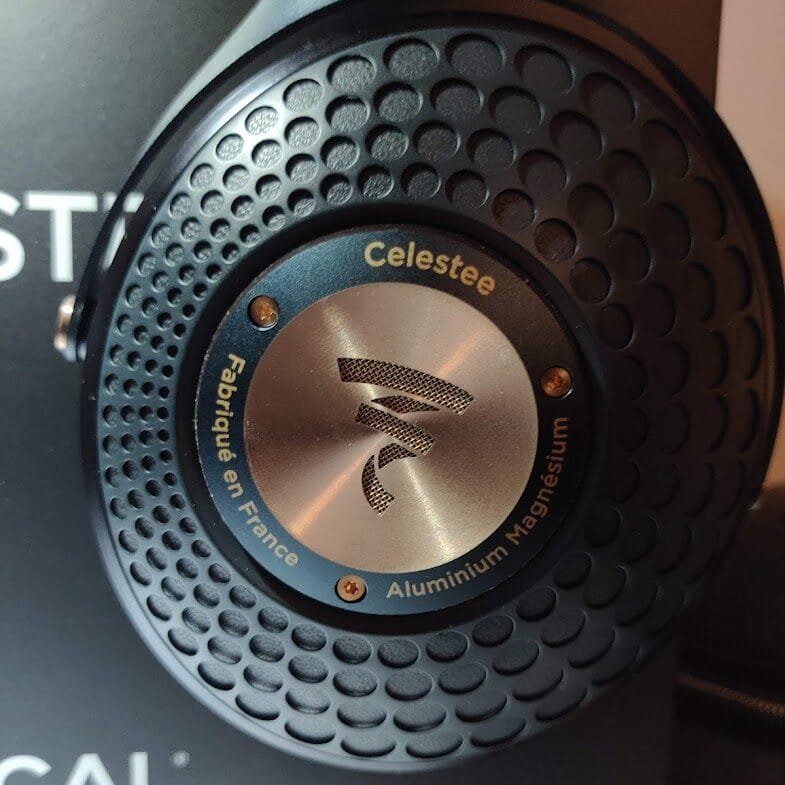
In terms of usability, the Celestee's only difference compared to the Stellia is a slightly firmer clamping force. However, the feeling of pressure in the Celestee quickly equalizes, after which the headphones almost disappear on my head. Focal headphones have not previously fit my head optimally, as the lower edge of the cups turning towards the jaw weakens contact and seal above my ears. However, the Celestee model's cups either have a different spring mechanism or their firmer clamping force works better for me, as the headphones sit on my head in a more comfortable position than other Focal models I've tested. The tighter clamping force also improves the headphones' sound isolation, which is a positive thing considering that the Celestee is clearly designed for mobile use.
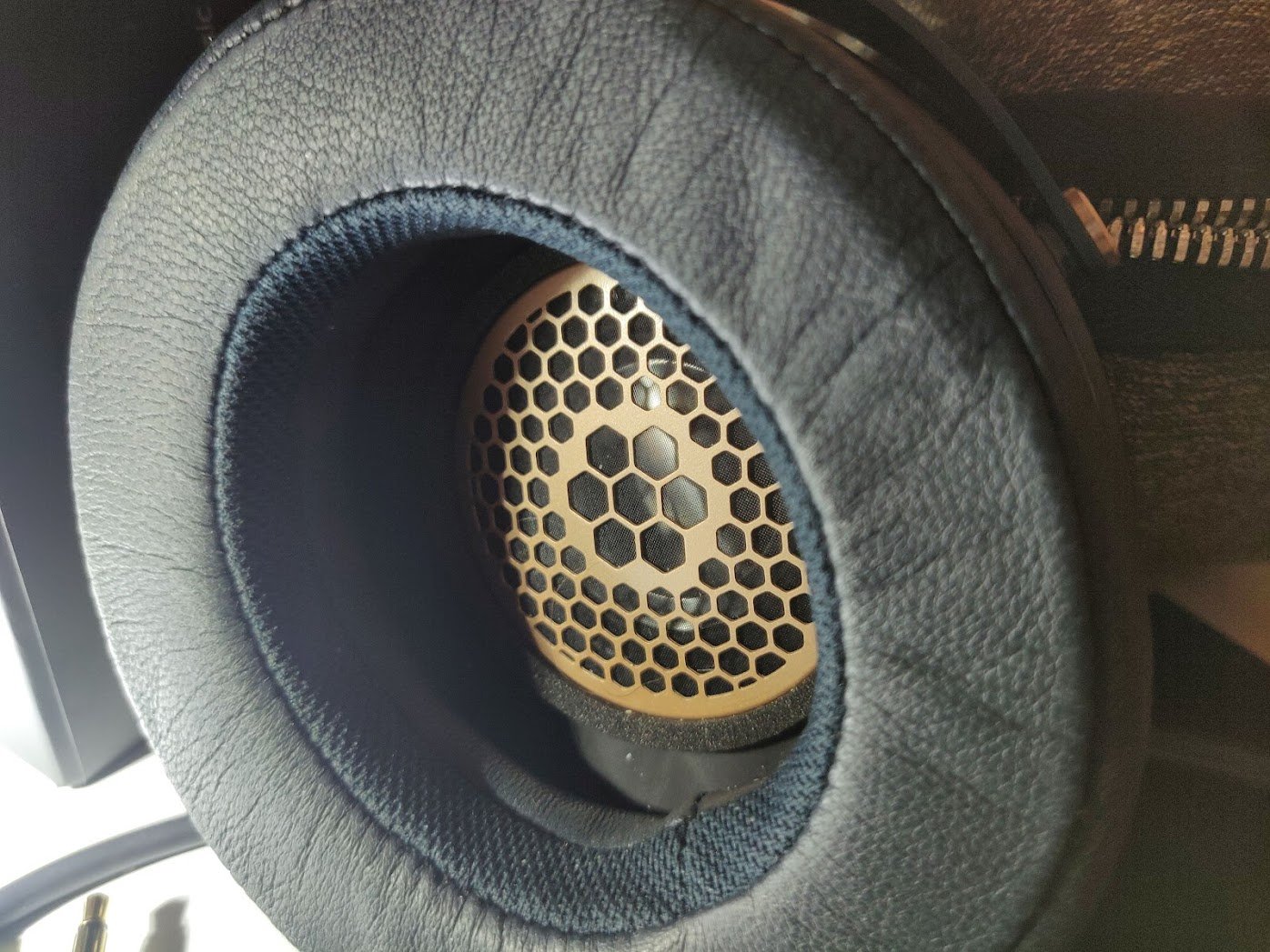
The Celestee's very high-quality ear pads are similar in size to those of other Focal headphones, so there isn't much extra space inside the pads for listeners with larger ears. However, the pads are comfortable. It's somewhat admirable that the manufacturer has included pads of comparable quality to more expensive models even in its most affordable headphone model. However, the downside to this is that replacement pads will likely cost as much as for other models. I couldn't find a price anywhere, but I would be surprised if the Celestee's pads cost less than 150 euros.
Because the earpads in Focal headphones attach with pins on the back of the pad, consumers have little opportunity to use more affordable earpads that attach in a more traditional way with the Celestee. Besides Dekoni Audio's selection, I don't know of any other earpads that would fit Focal headphones. Dekoni's earpads are indeed high quality, but they are not particularly affordable either. By changing the earpads, the sound of the headphones also tends to change, and the change often does not happen for the better. Those considering Focal headphones should keep in mind the high price of original spare parts.
Cable:
Many have been annoyed by the cable of Focal headphones, which resembles the stiffness of power cables for home appliances. Fortunately, the Celestee model comes with a more conventional rubber-coated cable, which is a bit dull in appearance but clearly better in usability than the old cables. It would still have room for improvement, as it feels cheap and tends to wriggle around.
The cable length is only 1.2 meters, so it is clearly designed for mobile use. For desktop use, it is inevitably too short, unless the amplifier happens to be directly in front of the listener's nose. It is incomprehensible that Focal has not included another longer cable with the headphones. Although the headphones are primarily intended for mobile use, few people buy thousand-euro headphones just for bus trips.
I also question the connector used in the cable, because although the 3.5 / 6.35 mm connector is a common standard, when acquiring the Celestee for mobile use, the sound source is more likely to be a mobile player (DAP) or a small headphone amplifier instead of an old phone. These usually have either a 2.5 mm or 4.4 mm balanced connection, which the Celestee cable does not fit. In my opinion, the cable is not good for home use due to its short length, nor is it optimal for mobile use due to its connector.
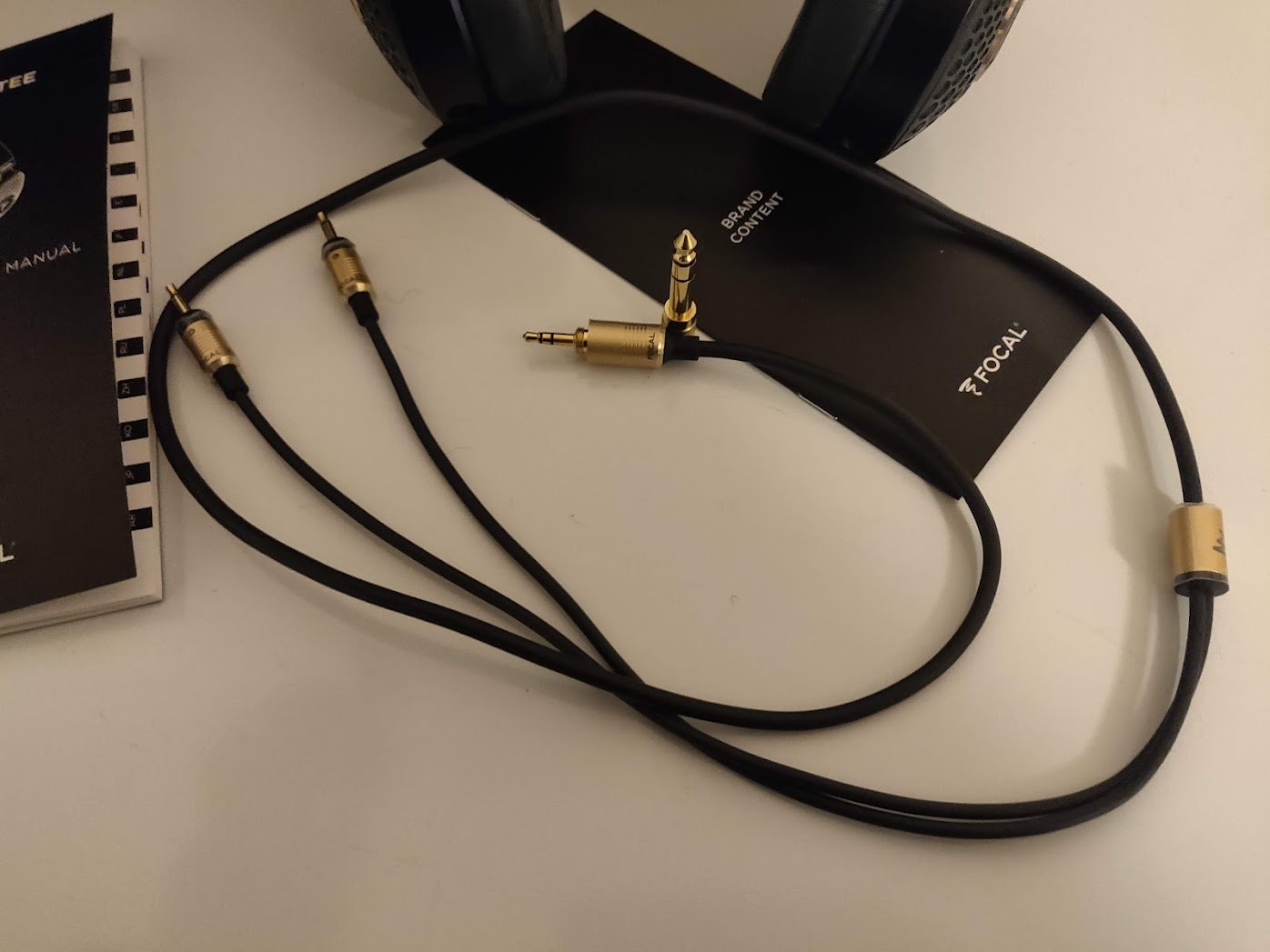
Fortunately, the too-short cable and presumably expensive spare parts remain the Celestee's only downsides. The headphones are very comfortable on the head, and their appearance is, in my opinion, by far the finest in their price range.
Sound quality
Bass:
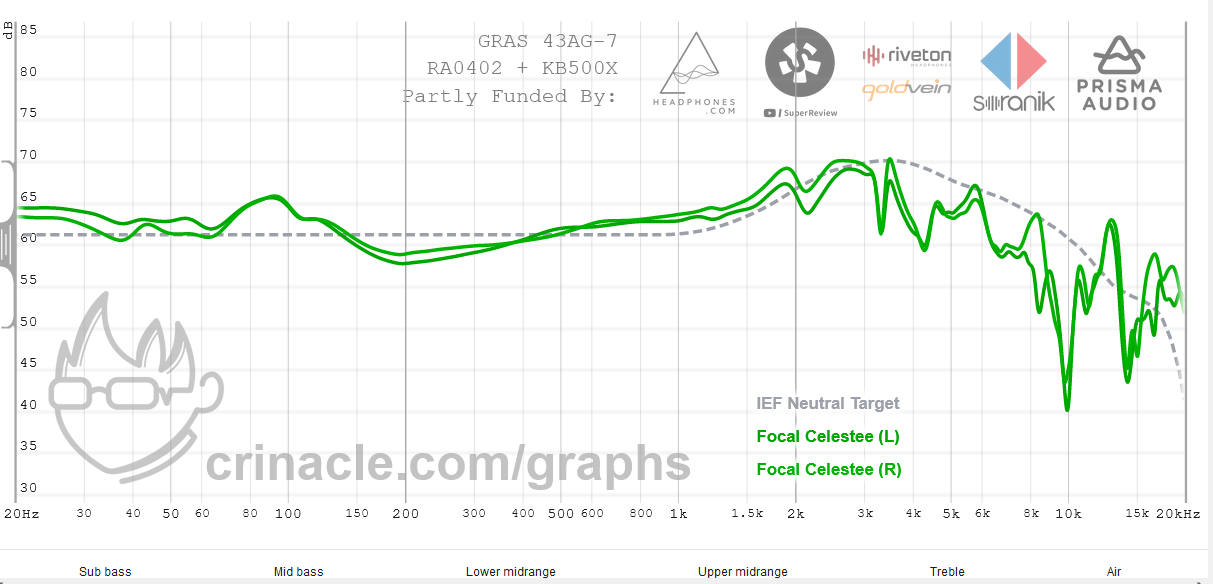
The Celestee's bass reproduction is quite balanced, and the mid-bass emphasis visible in the measurements does not stand out as strongly as one might expect. Bass notes have a pleasant weight and are reproduced in a controlled manner. It is also very difficult to get any disturbing boominess from the bass. In fact, the Celestee's bass reproduction hardly draws any attention to itself at all, so its excellence cannot even be fully appreciated unless one pays special attention to it. In this respect, the Celestee's reproduction is very similar to the Stellia.
If it were somehow possible to improve the Celestee's bass reproduction, I would wish for more power in the very lowest frequencies, and consequently a bit more impact in the reproduction. According to my memory, for example, the Focal Clear has a somewhat more impactful bass reproduction. In terms of bass impact, the Celestee is, in my opinion, a small step backward compared to other Focal models I have heard. It would be interesting to know why this is. However, I have not yet heard other headphones from the manufacturer equipped with the new aluminum-magnesium driver. Magnesium is also found, for example, in the driver of the Clear MG model.
Mid-range:
I am not particularly impressed with the Celestee's midrange reproduction. The reproduction is indeed detailed and clear, but also thin and overly aggressive in the upper midrange. Additionally, there is a somewhat peculiar veil in the sound, which could be described as a metallic gauze. Focal's sound has often been criticized for sounding metallic, but never before has it been as apparent to me as in the Celestee.
I assumed that this very issue would have been corrected with the new driver, but the change has gone in the opposite direction. With calm and simple music, the metallic quality is not very disturbing, but as the tempo of the music increases and the number of instruments grows, the reproduction becomes more chaotic, with the metallic quality simultaneously becoming even more unpleasantly prominent.
I am not particularly fond of the Stellia model's midrange tuning either, so it is regrettable to note that Focal has aimed to make the Celestee a kind of cheaper Stellia. Hopefully, the manufacturer will one day release a closed-back headphone model whose midrange tuning is closer to the Clear and Utopia.
Treble:
The Celestee also reproduces higher frequencies in a way that does not particularly please me. The frequency range between the upper midrange and lower treble sounds quite hollow, and there isn't as much airiness in the upper treble as I would wish. I cannot fault the quality of the treble itself; in fact, the Celestee's treble is close to the best in its price range in terms of quality – yet again, however, the tuning of the headphones is peculiar to my taste.
Because so many things in the headphones' frequency response are slightly off, the overall result is weaker than one might expect. Since the bass and treble in the Celestee remain somewhat in the background, attention when listening focuses mainly on the mid-frequencies, which are the most problematic area of the headphones in terms of quality.
Soundstage, Dynamics and other technicalities:
The smallness of the soundstage is a kind of fundamental characteristic of Focal headphones. This has remained unchanged in the Celestee model, whose soundstage is very narrow. However, the soundstage has a pleasant amount of depth, making it somewhat un-headphone-like in the way instruments are articulated almost as much forward as to the sides. At times, this is even pleasing to listen to, but I cannot recommend the Celestee to those who consider a large soundstage an important feature of headphones.
In terms of instrument placement, however, the Celestee is reasonably convincing. It does not reach the level of open Focal models, such as the Elex or Clear, but it is at least competitive among other closed-back headphones in its price range. Accustomed to the precise imaging of better Focals, the Celestee is still a slight disappointment for me – though I might be expecting too much from the headphones. I cannot help but constantly compare the Celestee in my mind to the significantly more expensive Stellia or the 500 euro more expensive Clear, which also has the advantage of an open-back design.
I already mentioned earlier that the Celestee is a step backward in bass impact compared to the Focal Clear. Unfortunately, the macro-dynamics of the headphones are not quite what I am used to with Focal headphones. Listening to the Utopia, Elex, Clear, and Stellia is at its best downright breathtaking, as the listener is ”beaten” with music at such an intensity that it becomes a matter of taste whether the presentation goes too far. In my opinion, the intense reproduction of Focals is pure excellence. That's why I am disappointed that the Celestee is calmer and more uniform in its dynamics than other models I have heard. Compared to ”normal” headphones, the Celestee is still among the best in its price range in terms of macro-dynamics, even if it lacks almost entirely the explosiveness familiar from other Focals.
Fortunately, the Celestee doesn't have to be solely criticized. It is definitely one of the best closed-back headphones in its price range in terms of detail retrieval, and it also offers strong competition to its open-back rivals. The Celestee is surely dazzling to listen to for those who haven't previously heard truly good headphones. Musical details and layers cascade over you in an irresistible way. It's easy to focus on listening to individual sounds or instruments within the whole. Closing your eyes, you can easily imagine a jamming band in front of you, and observe how the guitarist's fingers run along the guitar neck. If I wanted to focus solely on highlighting the positive aspects of headphones in my reviews, it would be easy to write a glowing review of the Celestee, of which the internet is already full.
Do headphones need a separate headphone amplifier?
Despite its high price, the Celestee is clearly designed for mobile use. Low impedance combined with high sensitivity makes the headphones a very easy load for an amplifier. Of course, headphones of this caliber should be paired with a quality audio source, but it doesn't have to be powerful. For example, a quality dongle solution combined with a phone works perfectly well. With these headphones, it's worth noting that OTL tube amplifiers with high output impedance might emphasize bass frequencies.
Comparison to other headphones
Focal Celestee vs. Fostex TR-X00 Purpleheart
Prices: 1000 € vs. 300–500 € (used)
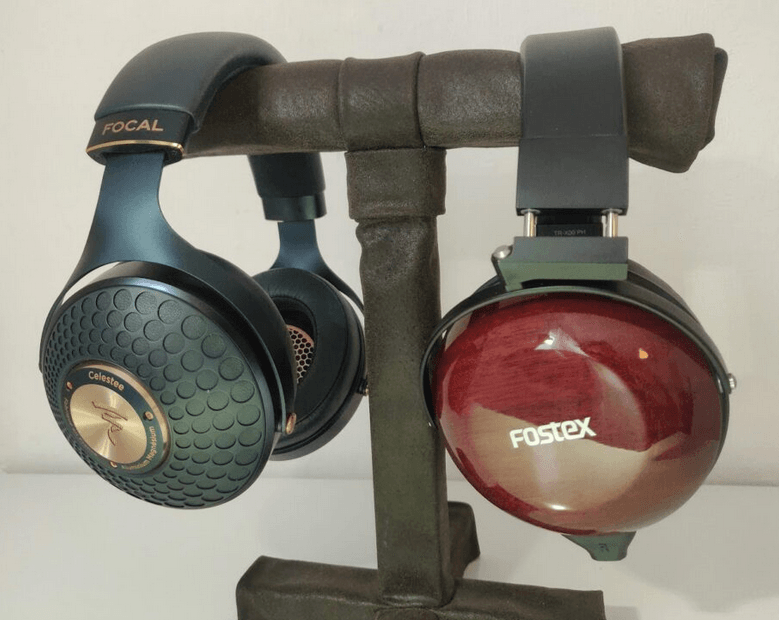
Fostex TR-X00 models are among the most highly regarded headphones in their price range, but unfortunately, they are no longer available for purchase new. Among the headphones still on sale, the closest equivalent to the TR-X00 is reportedly the Fostex TH610, which costs 629 euros new. Kuulokenurkka has already extensively covered TR-X00 Purpleheart -model, which I am now using as a comparison for the Focal Celestee.
Structure and comfort
In terms of comfort, I cannot choose a favorite, as using both headphones is truly pleasant. In terms of build quality, the Celestee is clearly the winner, because despite its rather good construction, the TR-X00 PH feels a bit flimsy. I also don't like how the Fostex cups can swing freely, clattering unpleasantly against the yokes.
Sound

Bass:
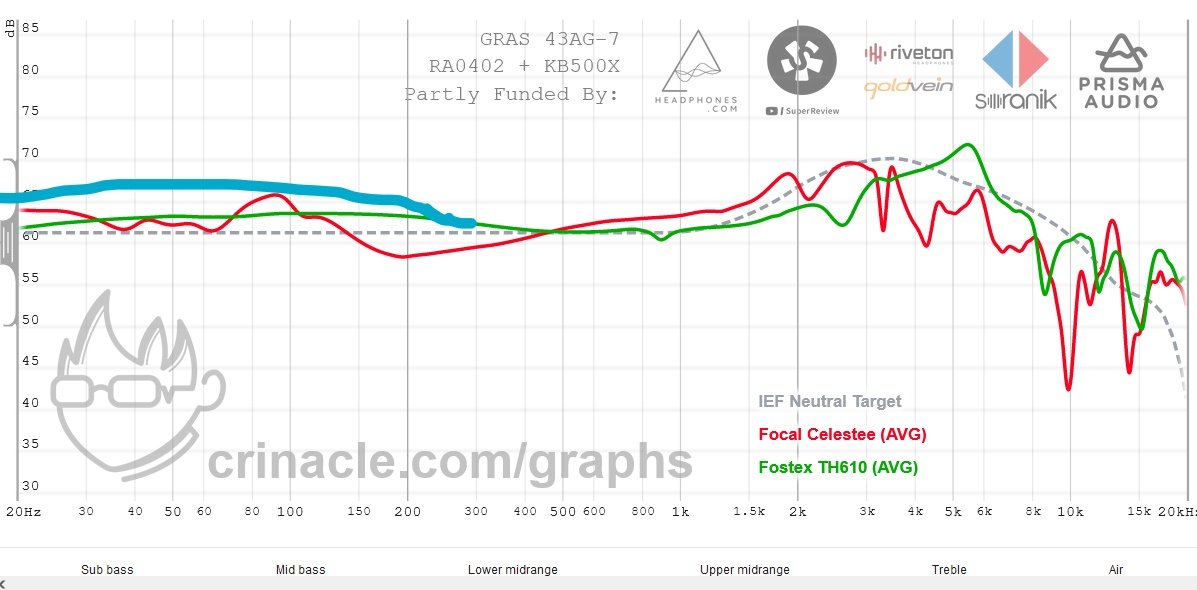
Fostex headphones are known for their excellent bass reproduction, and the TR-X00 PH is no exception. Although the Celestee is not bad in terms of bass reproduction, the TR-X00 PH is in a league of its own compared to it. The Fostex model's bass is more balanced, extending better to the very lowest frequencies. The headphones hit harder than the Celestee, and in my opinion, this is not solely due to the Fostex's more emphasized bass.
Both headphones maintain excellent control with fast bass patterns, but with the TR-X00 PH, it sounds more convincing because the bass is always more present. The TR-X00 PH clearly has more bass than measurements would suggest. The reproduction of the headphones' lower frequencies has a physicality that is clearly perceptible, even if it doesn't register very well in the measurement results.
Mid-range:
Mid-range reproduction is not the strongest area for either headphone model. The Celestee sounds too emphasized in the 2 kHz region, making the reproduction occasionally even grating. The TR-X00 PH is more relaxed in its reproduction, but it's not particularly interesting to listen to. The lower mid-range remains a bit thin, while a slight deficiency in the upper mid-range surprisingly doesn't make the reproduction soft at all – the combination is peculiar.
Sword Of Damocles wrote in his review that he experienced the mid-range of the TR-X00 PH as sibilant in places. The sibilance likely originates from an emphasis in the 6–7 kHz region. What's interesting is that I hardly perceive any sibilance myself. This is a useful indication of how individual our hearing senses are. I have mentioned in several reviews that I am not particularly bothered by an emphasis in the 5–6 kHz region. Conversely, an emphasis around 8–9 kHz spoils my listening experience very quickly.
Although the mid-range reproduction in the Fostex model is not remarkable, I still find it more pleasant than the Focal Celestee's presentation. The Celestee is occasionally grating and has a peculiar hollowness in the upper mid-frequencies.
Treble:
The treble reproduction of the duo I compared also differs quite a lot. The emphasis in the lower treble of the TR-X00 PH can be quite unpleasant to listen to, depending on the listener. This doesn't bother me much, but the Focal Celestee, thanks to its more subdued treble, is a safer choice for those who are not yet familiar with their own treble preferences.
To my taste, the Celestee's treble is already close to being too subdued. This is partly due to the fact that emphasized upper mid-frequencies like those of the Celestee would also benefit from a slightly fresher treble. As it is, the Celestee sounds a bit disjointed to me. However, in treble quality, the Celestee surpasses the TR-X00 PH, whose reproduction exhibits a slight graininess.
Soundstage, dynamics, and other technicalities:
The Fostex model has a more impressive soundstage because the Celestee's soundstage, like other Focals, is small. Usually, Focals compensate for their small soundstage with excellent precise sound placement, but as I mentioned earlier, I don't think the Celestee achieves the same in that regard as other Focal models I've heard.
The Celestee also proved to be a slight disappointment in terms of macrodynamics. It is by no means bad, but its reproduction lacks the same explosiveness as other headphones from the manufacturer I've heard. The TR-X00 PH hits really hard at the lowest frequencies, and although the Celestee sounds more impactful than the other in other frequency ranges, the difference in its favor is not so great that it could be used as a justification for the headphones' higher price.
Differences in resolution and sound ”transparency” eventually begin to emerge in favor of the Celestee. The Focal model draws clearer outlines for sounds, the vocalist sounds more like a real person singing instead of a wall, and small details emerge from the music that one wouldn't notice with the TR-X00 PH. When weighing these characteristics, the price difference between the Celestee and TR-X00 PH feels completely justified.
Final remarks
Is it worth paying almost 300 euros more for the Focal Celestee than for the Fostex TH610 model, which is the closest equivalent to the discontinued TR-X00 PH model? If we consider only the price-quality ratio, in my opinion, such a large price difference is not justified. However, if the decision emphasizes the uncolored sound and resolution, it can be difficult to be satisfied with the Fostex, especially if one has had the opportunity to compare them side-by-side with the Focal Celestee.
Otherwise, the TR-X00 PH, which was used as a comparison, not only offers better value for money but is also often more entertaining to listen to, especially if the music listened to is such that powerful bass and a wider soundstage than the Celestee come into their own. Overall, the headphones offer surprisingly tough competition for the Celestee. Since the strengths of the duo are in such different areas, I cannot even ultimately say that the Celestee is a better headphone.
Focal Celestee vs. ZMF Atticus
Prices: 1000 € vs. 1250 €
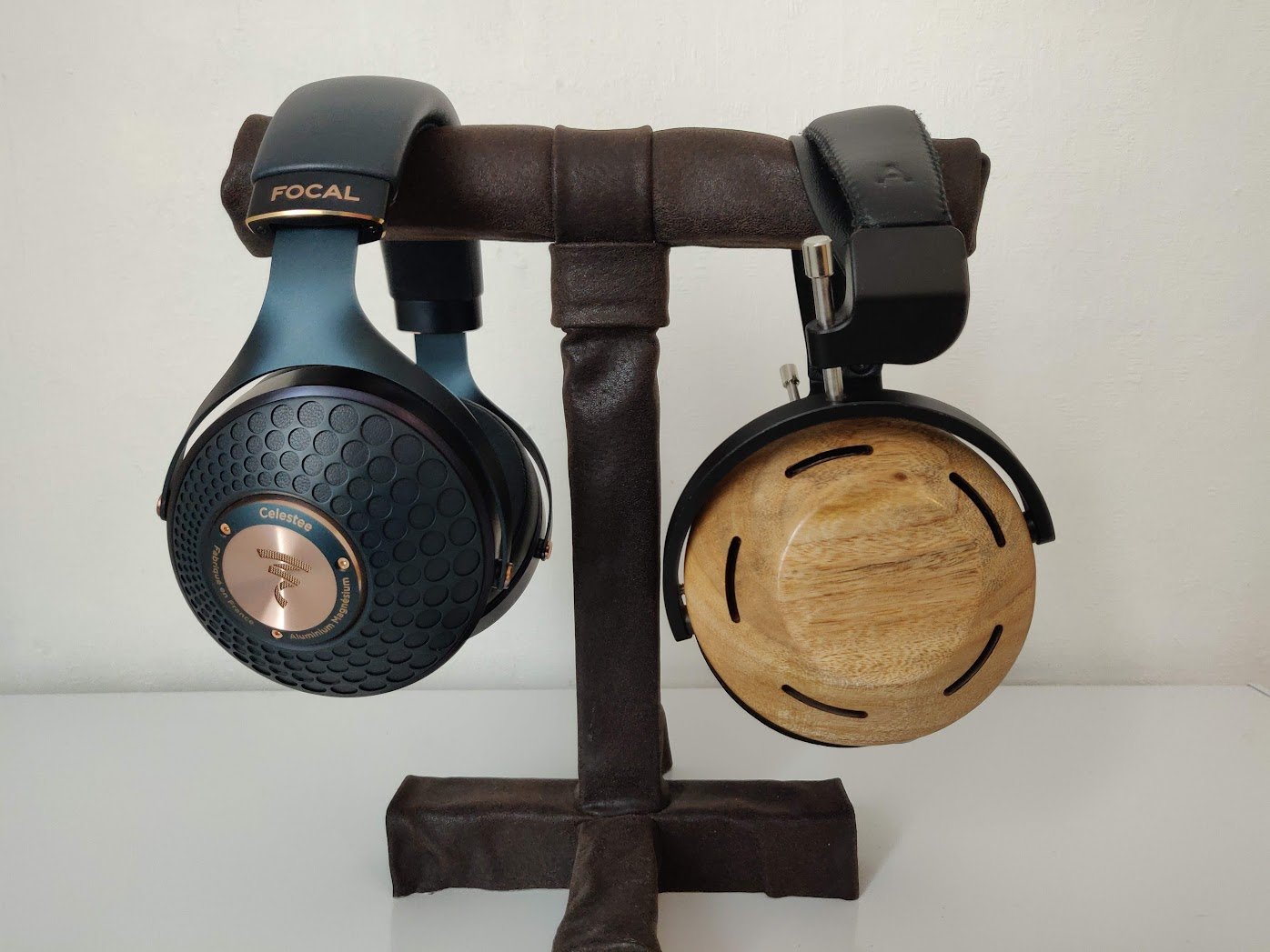
If ZMF Atticus is not familiar to you, a comprehensive review of the headphones previously published in Kuulokenurkka can be found here.
Structure and comfort
Focal Celestee is not particularly light for a closed-back headphone of its size, but its 430-gram weight is significantly less than the Atticus's 546 grams, which is made of camphor wood. The Atticus used for comparison has an old-style headband, so the headphones would be quite a bit lighter with a new headband. However, no headband solution could change the comical size of the Atticus – the headphones are enormous, and therefore can never compete in comfort with smaller headphones like the Celestee.
I also prefer the Celestee's build, as I believe it is the most stunning headphone model in its price range. Of course, it is very difficult to compare the handcrafted wooden Atticus to a headphone like the Celestee, so some others might find the Atticus to be the finer of the two.
Atticus deserves a big plus compared to Focal headphones for its earpad attachment mechanism, which allows experimenting with several different earpad models at a reasonable price. Additionally, the Atticus's cable is more suitable for its purpose, and the plastic case that comes with the headphones is more robust than the Celestee's otherwise fine carrying case.
Sound
Bass:
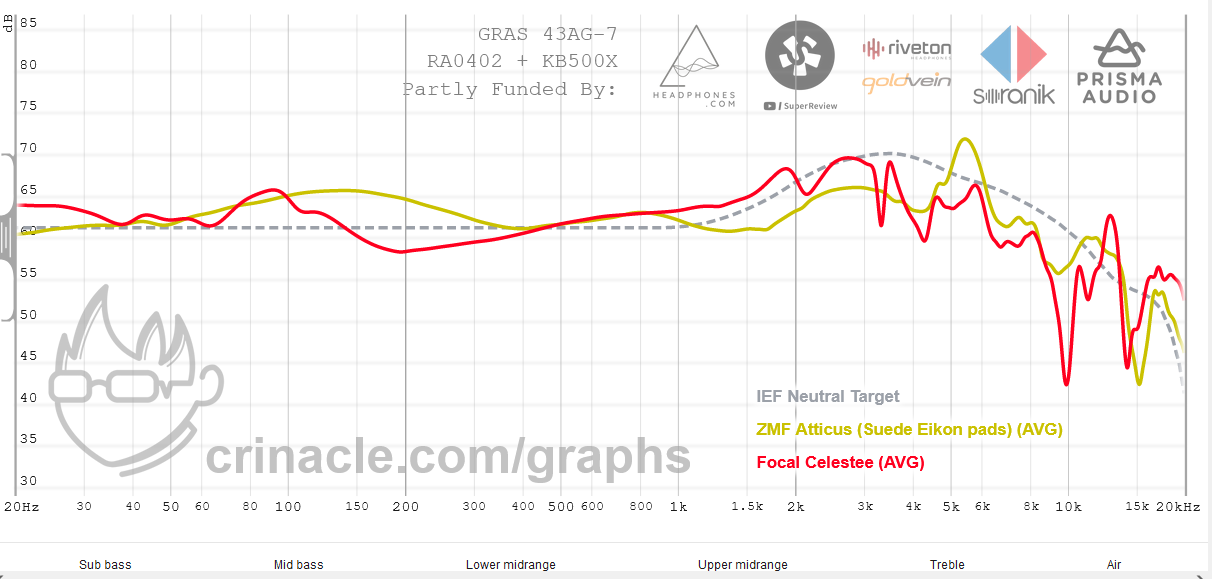
The emphasized mid-bass of the ZMF Atticus is such that you either love it or hate it. I personally don't usually like such colored reproduction, but it suits the Atticus perfectly. The Celestee's more restrained bass is more controlled, but drums are not reproduced as pleasantly as with the Atticus. However, with complex bass patterns, the Atticus tends to get a bit ”congested.” Considering the technical performance of the bass, the Celestee is clearly the better choice of the two. The Atticus, on the other hand, is better suited for those seeking a richer and more fun reproduction.
Mid-range:
The presentation of the mid-range is very different in the Atticus and Celestee. The Atticus sounds very thick in the mid-range and its sound has warmth, which is only occasionally broken by a vocalist's ”grunt” – though this would hardly bother many. To my taste, the Atticus is a bit too subdued in the upper mid-frequencies, while the Celestee overdoes it in the same frequency range.
Neither of the headphones, therefore, perfectly suits my preferences in terms of their tuning. However, the Atticus sounds more natural in the mid-range and is often clearly more pleasant than the somewhat metallic-sounding Celestee. String instruments, in particular, are reproduced excellently with the Atticus.
Treble:
The Atticus's elegantly implemented treble emphasis, located in a narrow region, nicely enlivens its otherwise dark sound. Although I generally prefer the Atticus slightly more in terms of tuning, there is a huge difference in sound purity in favor of the Celestee. This makes me clearly prefer the Celestee's way of reproducing the highest frequencies. I would say that the Celestee is several steps ahead of the Atticus in treble quality.
Soundstage, Dynamics, and other technicalities:
There is a huge difference in soundstage between the Celestee and Atticus. The Atticus's soundstage is, in my opinion, one of the largest among closed-back headphones for its size. Although the Celestee, with its narrower soundstage, is slightly more precise in instrument placement, it is nowhere near enough to compensate for the situation compared to a headphone like the Atticus.
In terms of macrodynamics, I lean slightly towards the Celestee. In bass impact, the Atticus is more convincing largely due to its emphasized mid-bass. If the Celestee had equally powerful bass, I believe it would hit harder than the Atticus. In other frequency ranges, the Celestee sounds clearly more dynamic, as the Atticus occasionally sounds a bit sluggish. This is largely due to the reflections from the cups, which make the headphones sound a bit slow. In fast-paced music, the Atticus has some difficulty keeping up, whereas the Celestee can reproduce dynamic variations regardless of the material being listened to.
I mentioned earlier that the Celestee's sound is veiled by a metallic ”haze.” Despite this, the Celestee is excellently resolving and clean-sounding. A large part of the Atticus's own veiled quality comes from its thick mid-bass, which bleeds into the mid-range. This brings a pleasant warmth and solidity to the sound, which are the Atticus's strengths. However, for pure resolution, this kind of tuning is poison, and the Atticus's strongly resonant wooden cups certainly don't improve the situation.
However, the differences between the Celestee and Atticus are not solely explained by differences in frequency response or the acoustic properties of the cups. I do not believe that the Atticus's more conventional driver can compete with the Celestee's more advanced driver in the speed of transient reproduction. This difference is clearly audible between the headphones.
The necessity of a headphone amplifier
The easy-to-drive Celestee does not need a powerful headphone amplifier; it sounds good from almost any audio source. The Atticus, on the other hand, as a 300-ohm headphone, absolutely needs an amplifier, though not necessarily a particularly powerful one. High impedance is not only a bad thing, as it gives the user more choice regarding amplifier selection.
The 35-ohm Celestee is not an ideal partner for high-output impedance tube amplifiers, unless the headphone owner specifically wants to emphasize the headphones' bass reproduction. The high-impedance Atticus, on the other hand, can be seen as designed to work best precisely with tube amplifiers.
Final remarks
I originally intended not to do the comparison, because Celestee and Atticus are headphones aiming for completely different results. Apart from their closed-back design and price range, they have almost nothing else in common – it would be difficult for me to choose between the two. With the exception of soundstage size, Atticus cannot challenge Celestee at all in technical performance. On the other hand, Atticus's natural way of presenting music combined with a wide soundstage doesn't even need top technical performance to sound good. If Celestee were stripped of its excellent resolution and speed, only a fancy shell would remain.
Focal Celestee vs. Focal Stellia
Prices: 1000 € vs. 3000 €

Structure and comfort
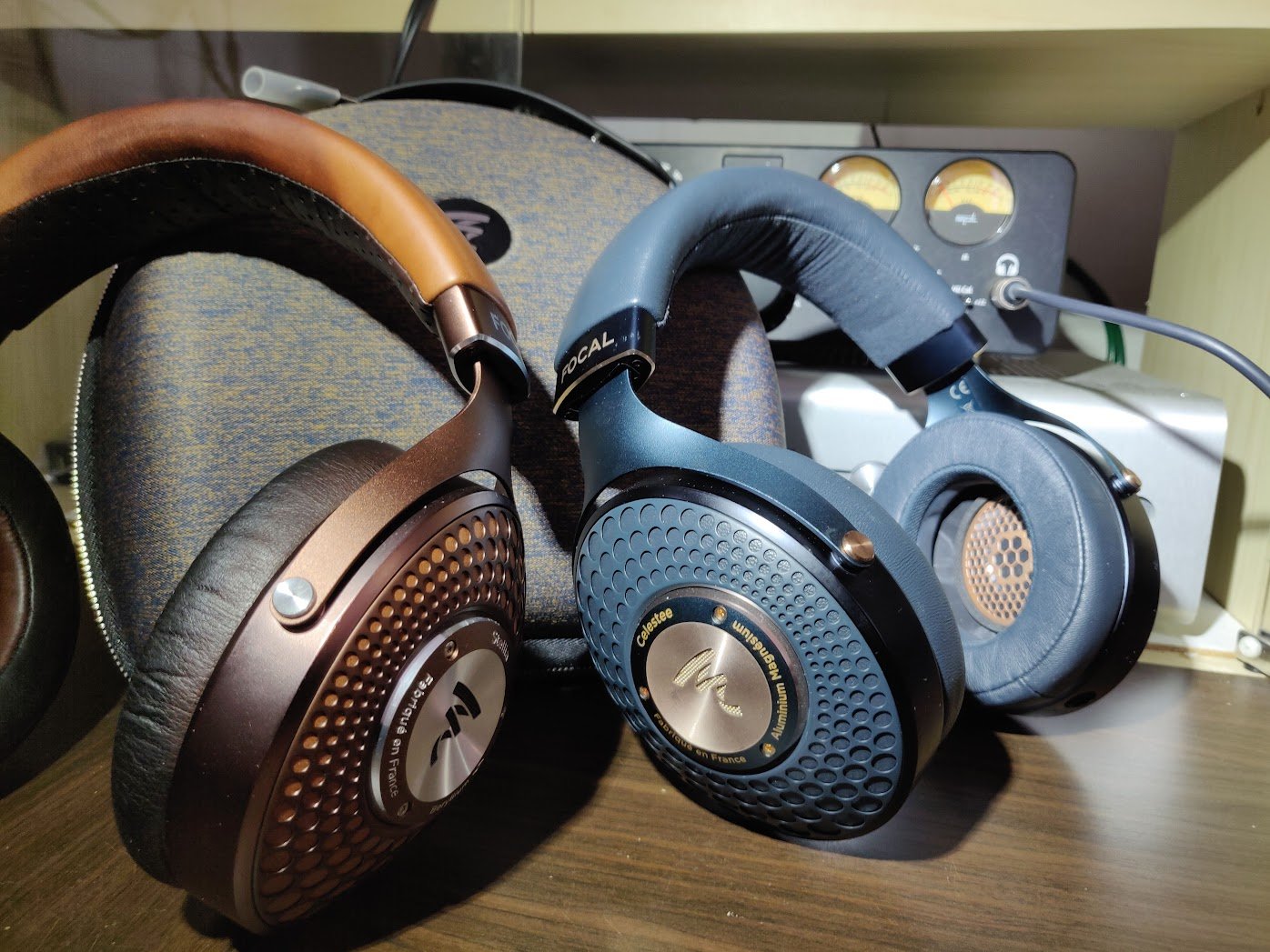
Celestee and Stellia are very similar in construction. Celestee's leather parts are semi-aniline, while in Stellia they are extremely fine aniline. Celestee's material is better in the sense that, thanks to the finishing agent, it doesn't stain (patinate) as easily as aniline – one kind of common flaw in Stellia is precisely the uneven discoloration of the headband due to use.
The ear pads in the headphones are different in structure, but both seem equally high-quality. Thanks to a stronger clamping force, Celestee sits more evenly on my head than Stellia. In the end, the significantly more expensive Stellia is distinguished from Celestee only by a fancier package and an included extra balanced cable. However, this is not a criticism of Stellia, but a compliment to Celestee and Focal in general. It's great that the manufacturer didn't intentionally make Celestee's construction weaker to justify Stellia's higher selling price.
Sound
Frequency responses:
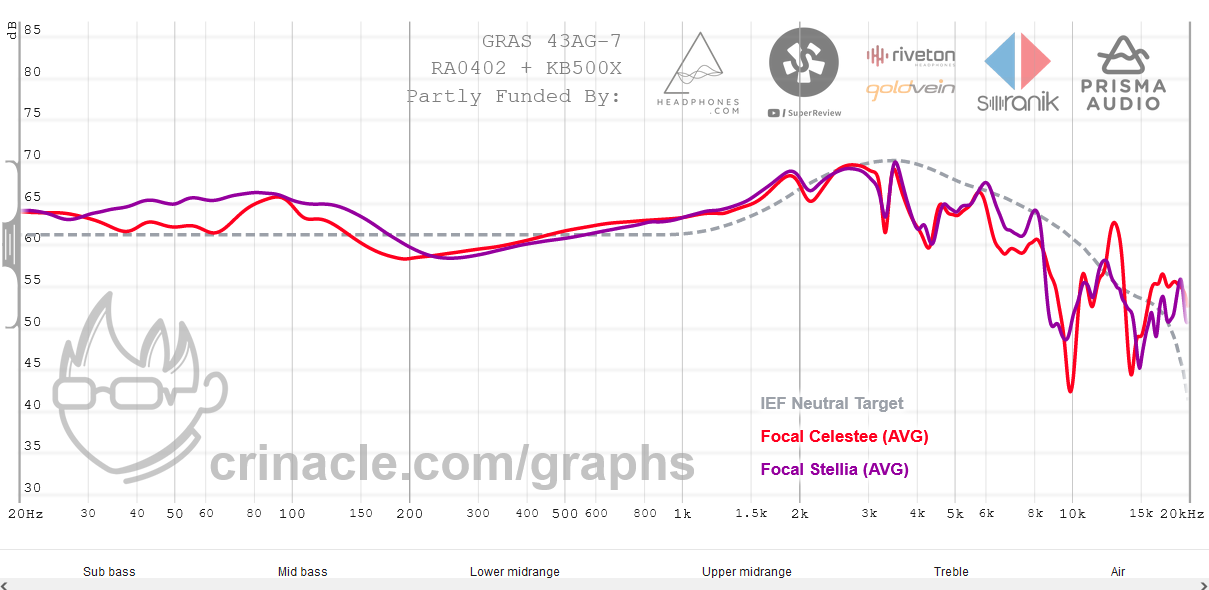
The frequency responses of Celestee and Stellia are very similar, so the question inevitably arises whether Focal has shot itself in the foot by bringing to market headphones that are similar in both external construction and sound to a significantly more expensive model. In reality, however, the manufacturer has known exactly what it is doing when pricing the headphones. Let's delve into this further.
Regarding the frequency response, the only major difference is Stellia's slightly more powerful and balanced bass reproduction. I much prefer Stellia's bolder bass to Celestee's somewhat dry presentation.
Technicalities:
Greater differences are found elsewhere than in the frequency response, with the soundstage being one of the most significant differences between the headphones. Although neither Focal model has a large soundstage, Stellia feels slightly larger and significantly more ”lively” than Celestee. Stellia reproduces the movements of sounds with dazzling accuracy, with everything falling precisely into place. Compared to this, Celestee sounds one-dimensional and flat to me.
Next, attention turns to how much ”more” music Stellia is capable of reproducing. Although, upon re-listening, all the details I noticed with Stellia are also discernible with Celestee, it doesn't bring out individual sounds as convincingly as Stellia. When listening to Stellia, one constantly feels like hearing new things for the first time.
I have already mentioned several times that Celestee has taken a step back in dynamics compared to other Focal models I've heard. When I compare Celestee directly to Stellia, the difference in dynamics is truly obvious. Stellia is excellent in dynamics, whereas Celestee doesn't manage to excite me in the same way. Nevertheless, Celestee's dynamics are still not bad compared to headphones from other manufacturers.
Final remarks
The meaningfulness of the price difference between the Focal duo depends entirely on how much money one is willing to spend on headphones. The more expensive the headphones being purchased, the smaller the sonic improvement gained for the money invested. Stellia is, in my opinion, a significantly better headphone than Celestee. However, the differences are partly such that one needs to know how to listen for them. A less experienced listener acquiring their first good headphones might not get everything out of high-end headphones like Stellia.
In order to appreciate high-end headphones and their relatively small sound quality improvements, I believe one must have prior experience with more affordable headphones as well. Otherwise, the improvements achieved with a significantly larger financial investment might go unnoticed. For those less familiar with headphones and who listen to music less critically, Celestee and Stellia might even be impossible to distinguish from each other, while a more experienced listener clearly notices the differences.
Finally, it must be stated that comparing Celestee and Stellia was truly interesting because they are very similar in construction and frequency response. Sometimes one hears it said that if headphones are physically similar and also equalized to be similar, they would no longer be distinguishable from each other. I have always strongly disagreed with this assertion, and my opinion was further strengthened when comparing the Focal models – construction and frequency response do not tell nearly the whole story.
Summary
According to some reviews, the Focal Celestee sets a new standard for closed-back headphones in its price range. I agree with this, but in a slightly different way than the matter is traditionally perceived. Celestee is, in my opinion, at least as good as a 1000-euro closed-back headphone should be. However, the headphones' frequency response is questionable, the product packaging desperately needs a longer cable, and the metallic sound or narrow soundstage do not improve the overall impression formed by Celestee.
However, Celestee also does many things well. Its resolution is top-notch, and there are no major flaws in the sound otherwise. Comfort is also good, and the external build is more than suitable for 1000 euro headphones. In my opinion, Celestee is somewhat in a similar position to the Beyerdynamic DT770 among 150 euro closed-back headphones: the headphones are fundamentally good, and most listeners won't go far wrong by acquiring them – however, those who know their own preferences might find a more suitable sound even cheaper.
Pros and cons:
+ Resolving sound
+ Good comfort
+ Build: the headphones are the finest in their price range
+ No need for a separate headphone amplifier
+/- Bass reproduction is high-quality, but rather unremarkable
+/- Treble sounds excellent, but the balance could use some refinement
+/- Good macrodynamics, but still weaker than Focal headphones generally
– Narrow soundstage
– The sound has a peculiar metallic quality
– Overly emphasized upper midrange frequencies
– Only one mediocre quality cable included, which is too short for home use
– Presumably expensive spare parts
 EN
EN  FI
FI