Author: Sword of Damocles
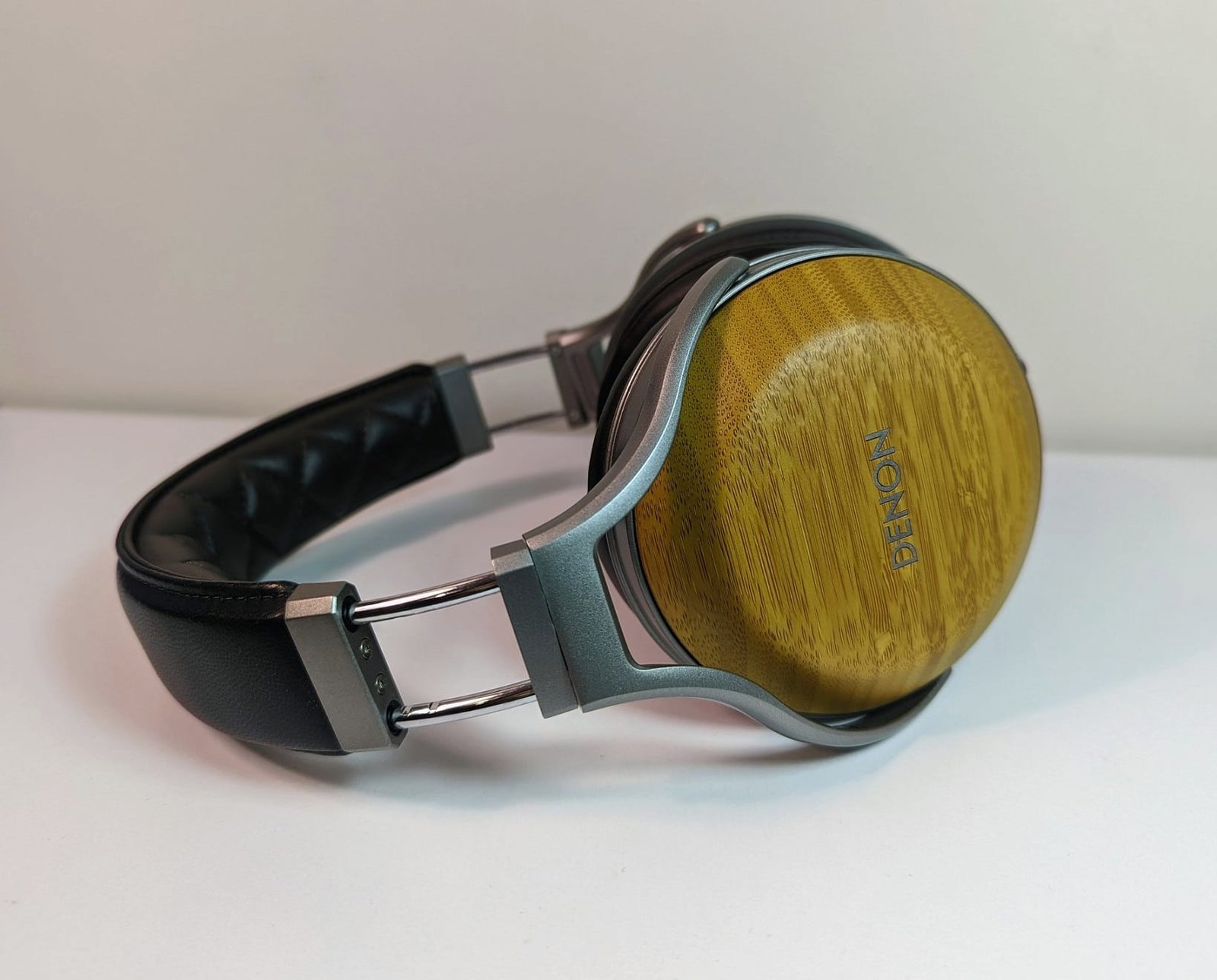
Table of Contents:
Information:
- Country of manufacture: Japan
- Release year: 2018
- Price: 1700 €
- Structure: closed, over-ear
- Dynamic driver: 50 mm Nanofiber FreeEdge
- Impedance: 24 ohm
- Sensitivity: 105 dB/mW
- Weight: 375 g
- Connector type: 2 x 3.5 mm
- Cable: two cables are included, a 3-meter one with a 6.35 mm connector and a 1.3-meter one with a 3.5 mm connector
- Included: Cleaning cloth and a 6.35 mm adapter for the shorter cable
Review unit acquisition method: Borrowed from a hobbyist
I borrowed from a headphone guy Denon's closed-back AH-D9200-flagship headphones (hereinafter D9200), priced at around 1700 €. Handcrafted in Japan, the D9200 was released in 2018 alongside the more affordable D5200 and D7200 models, after which Denon has not released new wired high-end headphones. It is difficult to conclude anything about the manufacturer's future in headphone production – it either relies on the popularity of current models or is not in a hurry to release new ones. This seems to be typical for Japanese headphone manufacturers, as Fostex has also been quiet in recent years. I personally hope to see something new from both manufacturers soon, as they have made good headphones that differ in sound from their Western competitors.
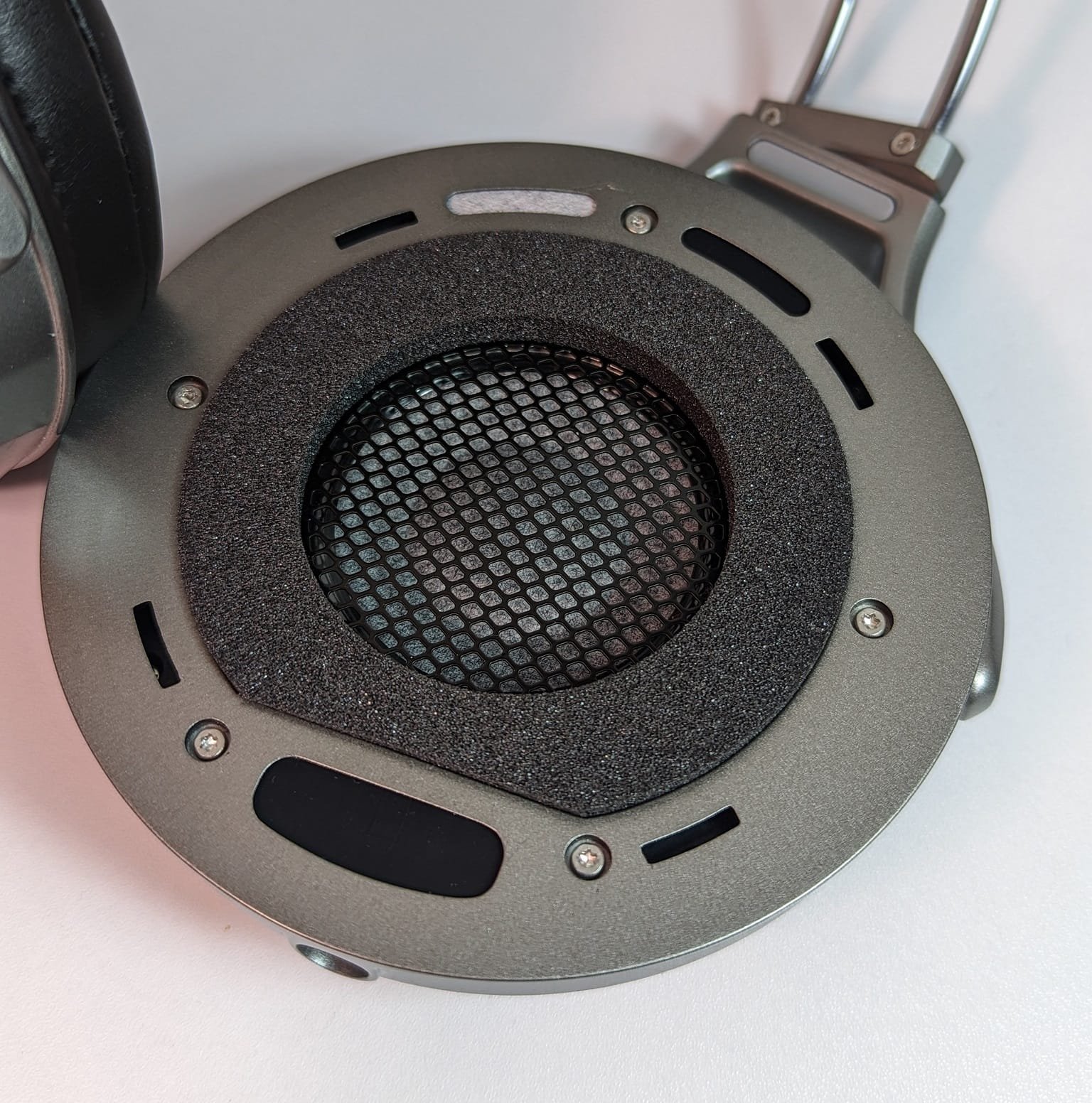
About 10 years ago, Denon still used the same Foster-made biocellulose drivers in its headphones as Fostex, but the D9200, as well as the D5200 and D7200, feature Denon's own Nanofiber FreeEdge drivers, or in plain English, nanofiber-reinforced paper drivers. These have likely been strongly influenced by earlier Foster drivers, as both sound similar in style, even though the headphones using them have different tunings.
Package contents
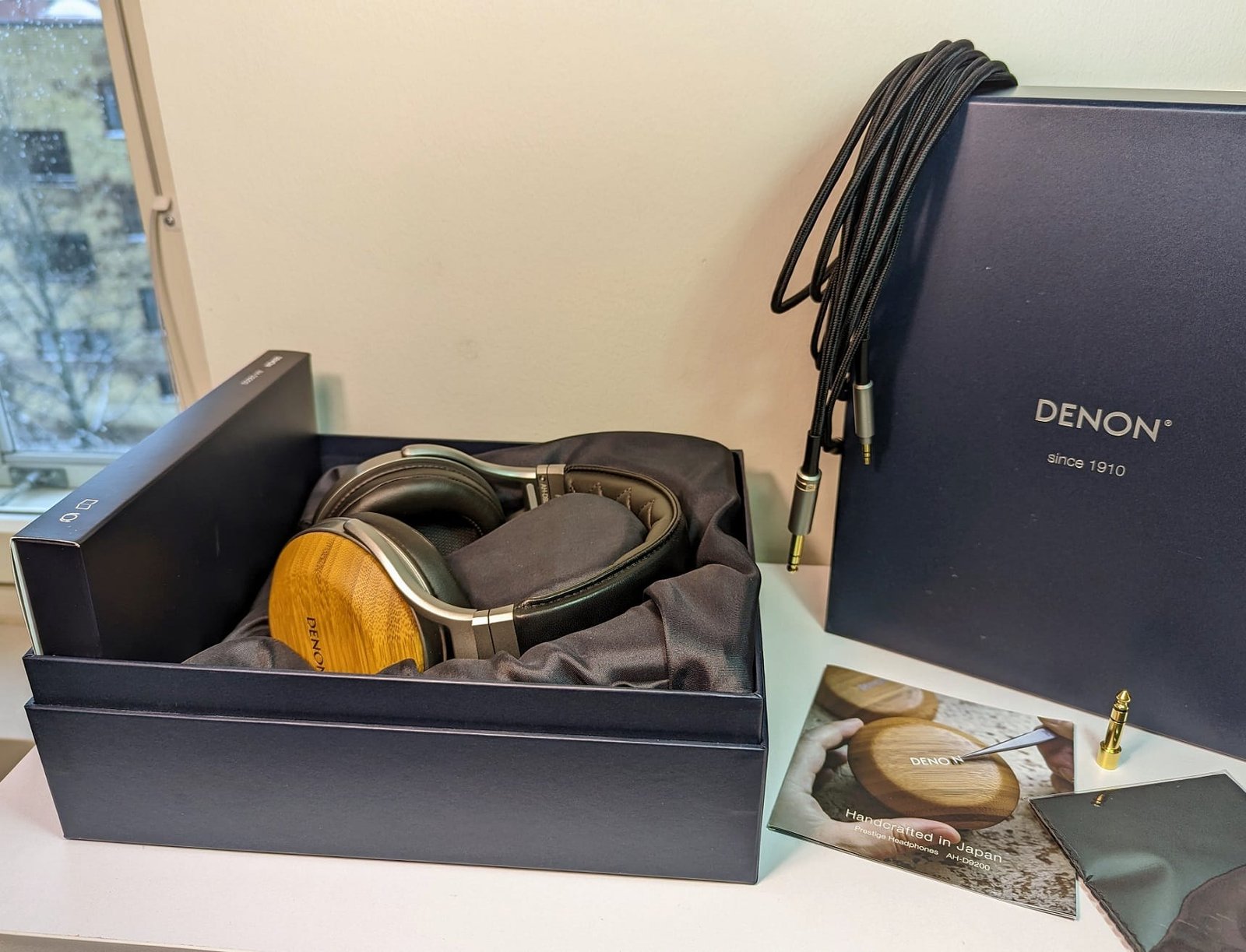
The D9200 is delivered in a sturdy cardboard box, which Denon states is a storage box. Unfortunately, no carrying case is included with the headphones. Although I don't consider the D9200 an optimal choice for mobile use, a case would be beneficial when transporting the headphones from one place to another – I could see myself using the headphones, for example, at my workplace.
On the positive side, the package does include two cables, one 3 meters long and the other 1.3 meters. The latter is well-suited for use with mobile devices due to its length and also comes with a 6.35 mm adapter. Besides the extra cable, a cleaning cloth is the only accessory, so I would have expected something more for 1700 euros. However, headphones are always meant for listening, so I won't dwell on the scarcity of accessories for too long.
Structure
The D9200's impression of quality positively surprises me. The headphones are carefully handcrafted. The metal headband structure is very sturdy, and its movements are extremely smooth. Height adjustment is implemented with two rods, which have numbered notches to easily set the same height on both sides. The adjusted height also stays firmly in place because the detents click into position exceptionally securely.
The cups rotate sufficiently both vertically and horizontally, so I would expect the fit to be good for most users. The impression of quality is further enhanced by the slight resistance in the movements, so the parts do not swing loosely from side to side when holding the headphones.
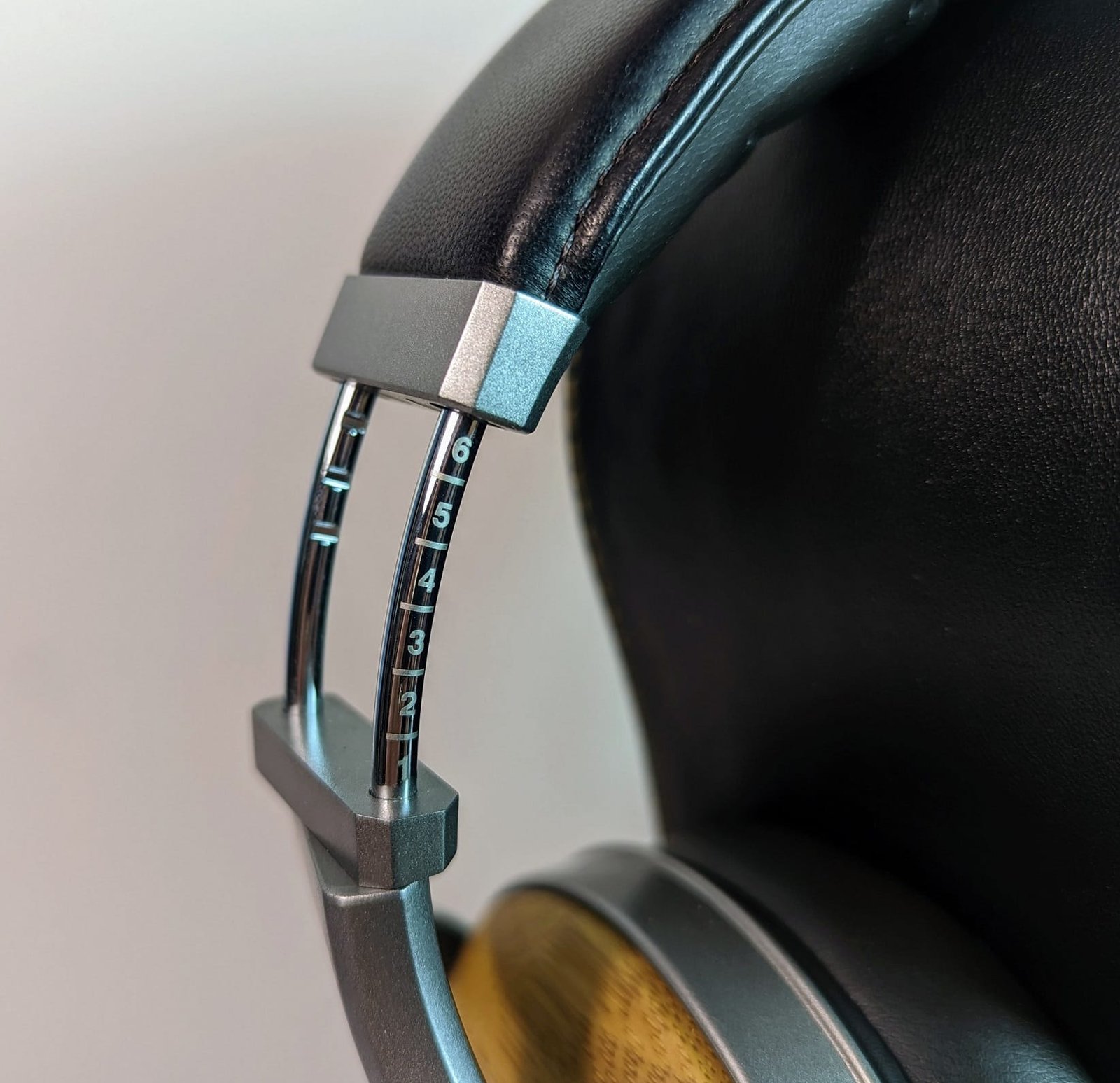
The headphones have a closed-back design, but they don't attenuate much ambient noise. The cups are made of Japanese bamboo, with the surface left rough. The light wood pairs well with the grey headband of the headphones, and the manufacturer's name embedded in the wood is a nice detail. However, in my opinion, bamboo is one of the dullest and most mundane wood materials in the world, as a lot of different trinkets are made from it nowadays. Since the choice of such a common and practical material is in a way very Japanese, it still has its own charm.
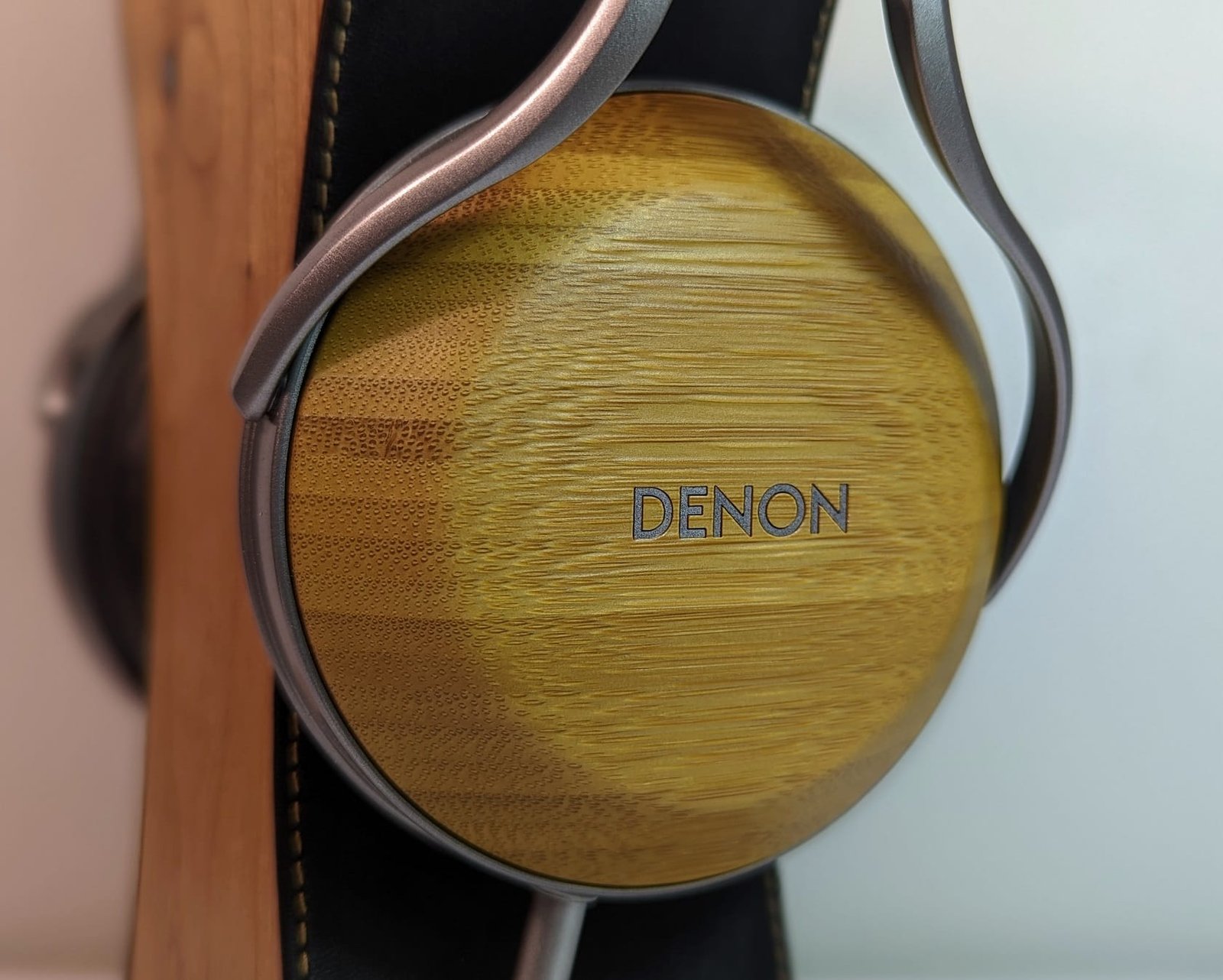
Fortunately, the D9200 also looks better in reality than in photographs. For headphones equipped with wooden cups, the appearance is quite slender, which is a nice change compared to, for example, the massive ZMF models. In addition, despite its metal construction, the D9200 weighs ”only” 375 grams, making it surprisingly light and reasonably weighted.
Comfort
The headphones' headband is covered with quality-feeling lambskin, and the ear pads are soft synthetic leather and memory foam. Unfortunately, there is only sparse padding on top of the head, and the headband is also not optimally shaped, as it remains too straight in the middle during use. An unpleasant feeling of pressure quickly forms on the top of my head.
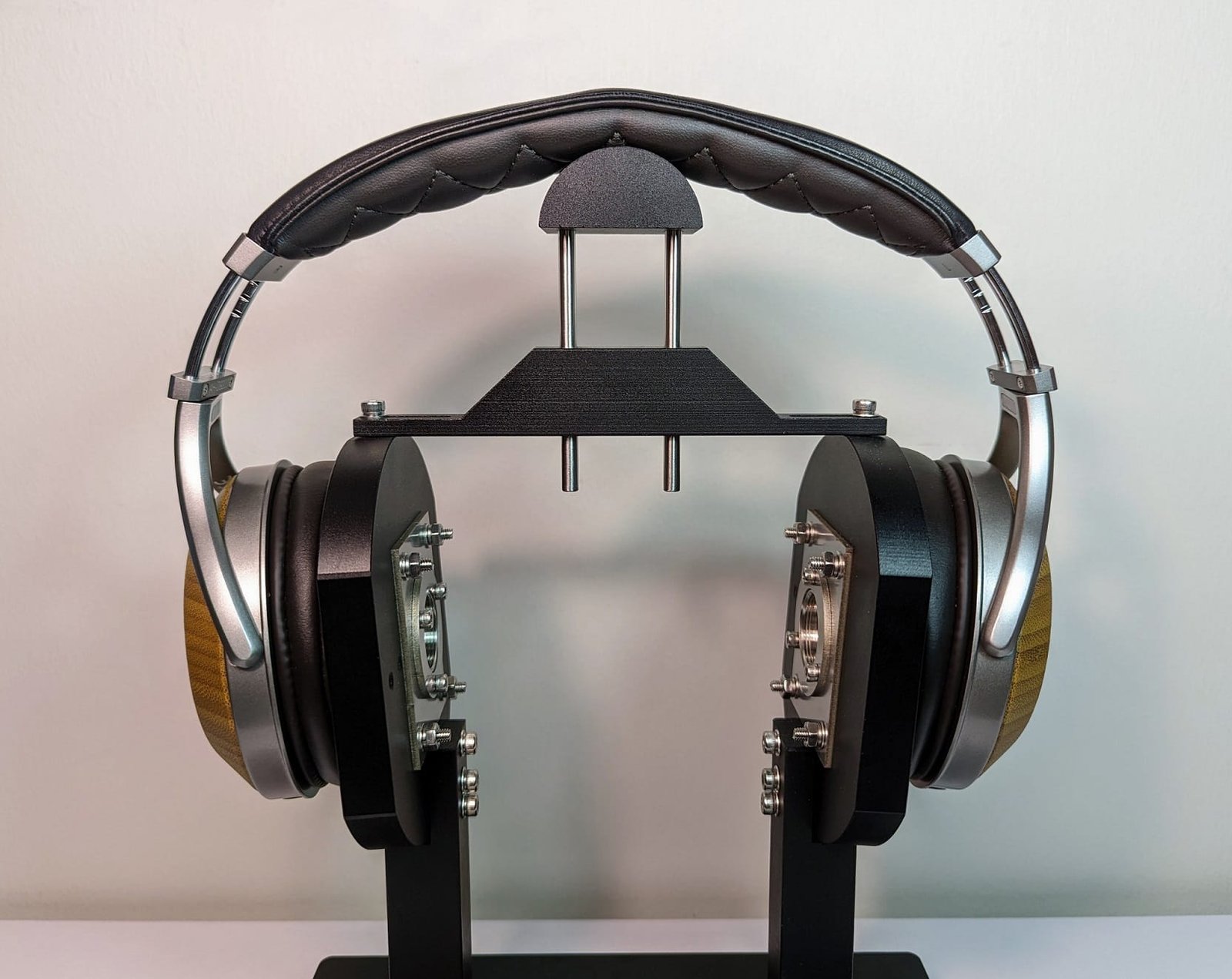
The D9200 is not infinitely uncomfortable in longer use, but somewhat bothersome. I had similar challenges with the D7200 model, so I knew in advance that Denon's headband is not the most comfortable for me. However, the reasonable overall weight is likely the D9200's salvation, because, for example, at 500 grams, I would probably have to add some extra padding around the headband. As it is, I can use the headphones for about two hours at a time, so comfort is still at a satisfactory level.
Compared to the headband, the ear pads are just right for me. They are not very deep, but my larger-than-average ears fit inside them easily. The clamping force of the headphone's headband is also pleasant for me – the D9200 stays on well, but doesn't clamp too tightly.
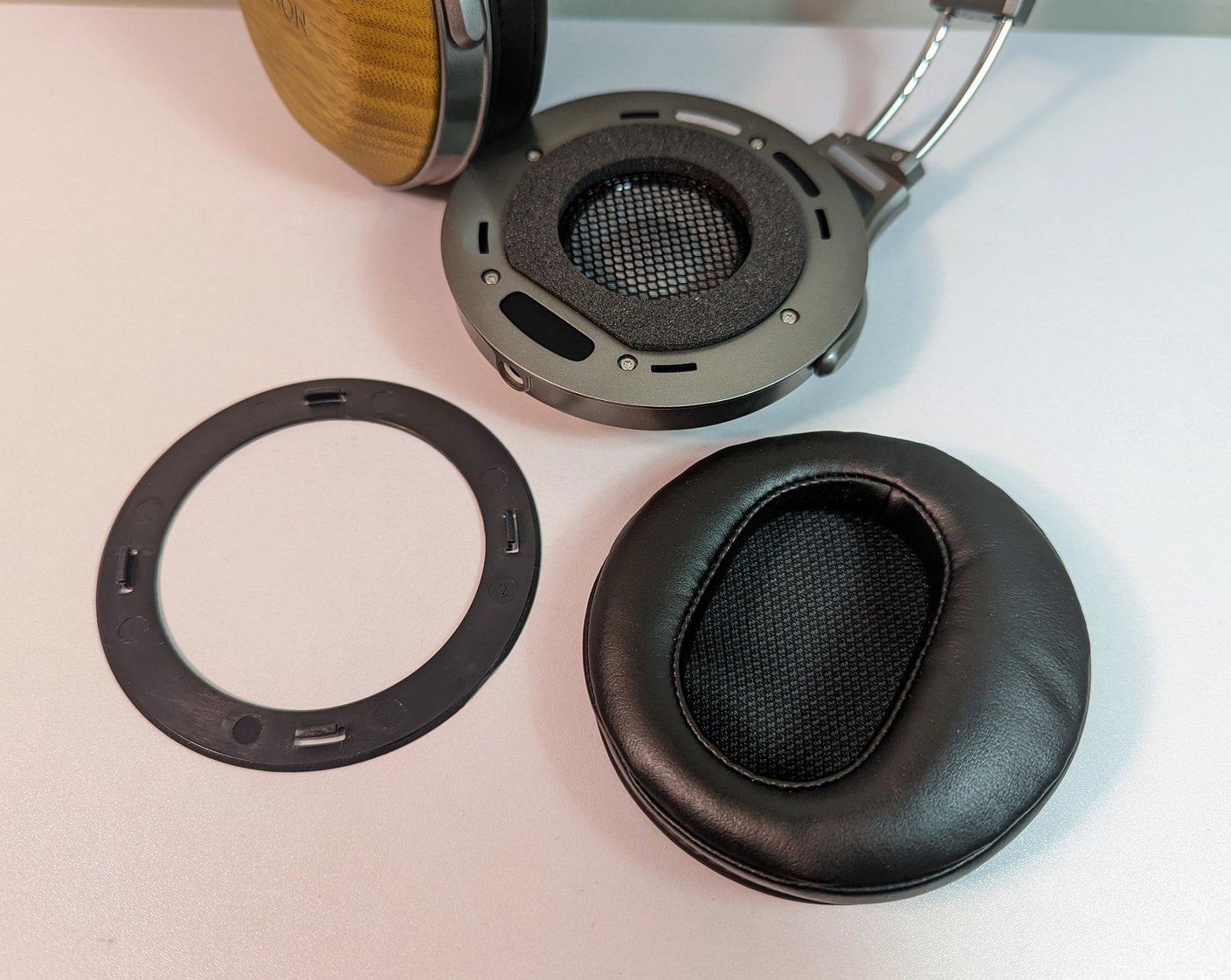
The ear pads are removable and also replaceable if needed, as Fostex-style plastic rings with hooks are used to attach them. In Fostex headphones, the pads are twisted into place, whereas in Denon models, simply pressing the pad onto the cup is sufficient. Removal is done by pressing the plastic ring inwards at the four hook points. In this respect, the attachment mechanism also resembles Hifiman headphones, with the difference that Denon has fortunately not glued the plastic rings to the pads.
Cables
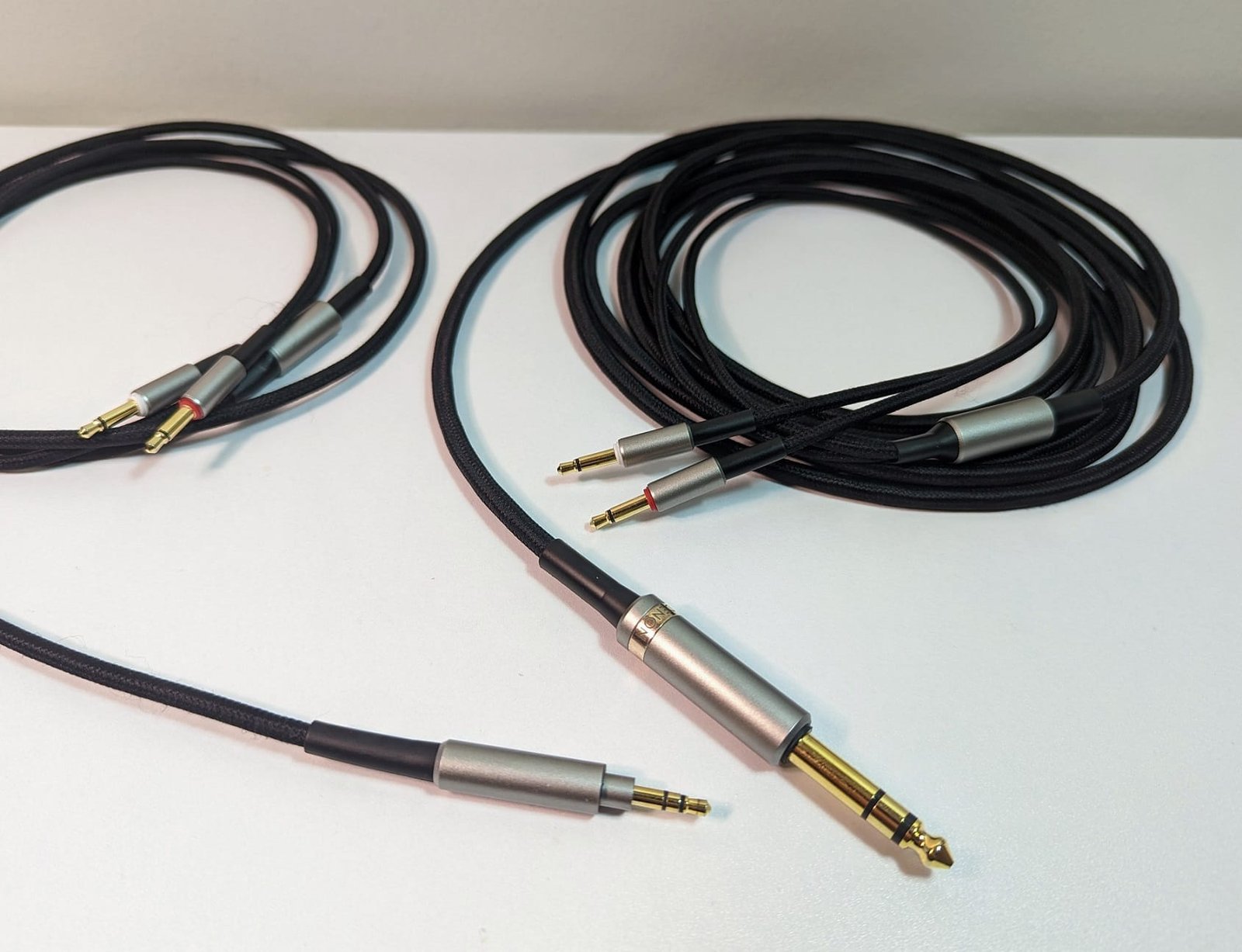
The D9200 comes with two cables. The longer one (length 3 m) is a very similar thick jump rope-like cable as in Fostex headphones. The cable's rough fabric surface is microphonic, so a rustling sound reaches the ears when it rubs against clothes. On the positive side, however, the cable has nice and high-quality connectors, so if it were a bit shorter, it could be perfectly suitable. The second cable is actually shorter (length 1.3 m), thinner, and better in usability, so I have mainly used it.
The cables attach to the headphones with standard 3.5 mm connectors, so suitable replacement cables are abundant for those who need them. The price level is also moderate compared to more exotic connectors, so Denon deserves praise from me for its normal connectors.
Sound quality
Equipment used for sound quality evaluation:
- Set 1: Schiit Audio Bifrost 2 DAC & Cayin IHA-6 amplifier
- Set 2: Topping DX1 combo device (DAC & AMP)
- Set 3: Qudelix 5K combination device (DAC & AMP) with Bluetooth connection
Headphone frequency response measurements have been performed with new IEC711-standard compliant equipment (realistic inner ear + pinna + clamping force mimicking an average human head) as raw measurements. The graphs use the Harman target curve (2018 version), based on scientific research, as a reference, which is a generalization of what kind of frequency response sound would sound good to most people.
Due to human hearing, the headphone frequency response should rise somewhat according to the Harman target curve, especially between 1–5 kHz, but headphones can sound good even if their response does not fully adhere to Harman's research results. In my opinion, the Harman target curve is the best so far, but by no means the only view on what is considered proper sound reproduction. When interpreting frequency response graphs, it is also worth noting that the Harman target curve is heavily rounded, while the headphone frequency response is treated as precisely as possible.
Furthermore, headphone measurement is still quite imprecise, so the result varies between measurement instances, different measurers, and different measuring devices. Although measuring frequency responses is useful, the results should always be approached with the understanding that they likely contain errors and do not fully convey how the headphones actually sound – on the other hand, frequency responses can help identify what kind of sound each person likes or dislikes.
AH-D9200 frequency response:
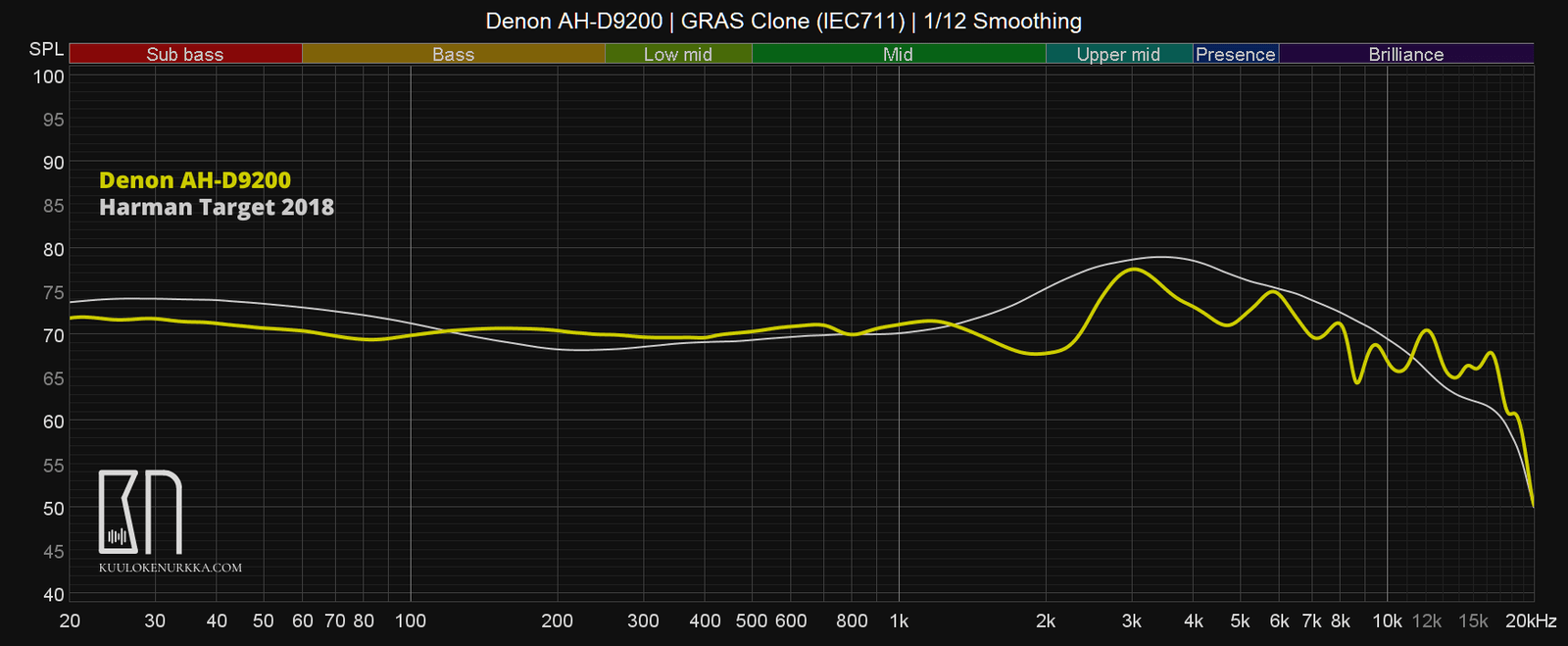
In my opinion, the D9200 sounds pleasant in its good moments, but the uneven frequency response often leads to an unpleasant and fatiguing result. I would really enjoy the headphones' excellent bass reproduction, if the reproduction wasn't usually accompanied by a blaring and sibilant vocal sound and unnaturally hissing treble.
The D9200 annoyingly emphasizes all sharp parts of the music as if trying to make the biggest possible impression on the listener. The presentation is unnatural, as it remarkably resembles a loudness effect, which is designed to maximize detail in reproduction when listening at low volume. The D9200 is indeed one of the most suitable headphones I've heard for listening at low volume. Conversely, when listening even slightly louder, the sharpness of the sound becomes downright unbearable for me, especially with a neutral listening chain.
Bass:
Despite everything, the D9200 also has good qualities, the most important of which I would see as excellent tight bass reproduction, which is almost ideal in quantity. The bass is never overemphasized; instead, it is powerfully and controllably good. Sub-bass extends completely unattenuated down to 20 hertz, similar to good planar headphones, and a slight emphasis on the upper bass frequencies does not muddy or overload the midrange reproduction in any way.
The natural style and effortlessness of the bass resemble Fostex headphones equipped with a biocellulose driver, such as the one I previously reviewed TR-X00 Purpleheart-model. The D9200 doesn't have quite as much punch or sub-bass energy, but on the positive side, the transition to the midrange is clearer and less boomy than in the Fostex model. For most listeners, the D9200 would be a really pleasant and fun experience, for example, when listening to bass music. A tasty mid-bass emphasis also makes rock and metal genres sound exciting, provided that the D9200's treble peaks don't spoil the listening experience.
Mid-frequencies:
I can't quite figure out what Denon has aimed for with the D9200's midrange. Despite the full lower midrange, the overall aggressiveness of the sound is downright poison to my hearing, except when listening at low volume.
Especially vocals sound absolutely terrible on the D9200. The sharpest part of the sound strongly emerges from vocal performances, while due to partially attenuated upper midrange frequencies, the rest of the sound remains unnaturally distant. The headphones make many singers sound blaring and sharp, and there is sibilance almost constantly in the sound.
The D9200's problems are not a complete surprise in the sense that its uneven frequency response has alternating peaks and dips. Specifically, the emphases at 1 kHz, 3 kHz, and 6 kHz, and an excessive amount of upper treble, combine into a fatiguing whole for my hearing. A good listening experience largely depends on luck and the recording method of the music listened to, as the D9200 itself is tuned to emphasize the most unpleasant characteristics of the sound.
On some recordings or when listening more quietly, the D9200 can sometimes even sound quite fun, but most often all the problems I mentioned appear simultaneously, regardless of music genre. The sound simply comes too sharply at you, so my ears are in a constant defensive state. Perhaps this presentation style appeals to some people with different hearing sensitivities, but unlike many others, I would not call the D9200 a versatile headphone at all. For classical music, however, the presentation style would seem quite suitable if the listener wants to focus on the small nuances of the sound.
Denon's more affordable D7200 model is, according to my memory, tamer and more forgettable in sound, but it does not have a similar sibilance problem or as much variation in the quality of the result. The D9200 appears remarkably clearly as if its significantly higher price was intended to be justified by a peculiar tuning that forcibly attracts attention.
Treble:
The headphones” problems also continue in the upper frequencies, which are shimmery and hissing in the wrong way. The treble has several individual peaks, and additionally, the headphones also emphasize air frequencies above 10 kHz. On the positive side, the airiness of the reproduction brings a pleasant openness to the sound, so the D9200 does not sound like a particularly closed headphone. However, the treble balance is off, so for example, the unnatural sizzle of drum cymbals constantly draws my attention in a way I don't really care for – ”tsih tsih tsih".
The treble of the D9200 is generally not easy to listen to and causes irritating sibilance. Poorly produced music sounds even worse, as at its worst, the high frequencies literally tickle my ears. I also think the headphones try to trick you into thinking they are more detailed than they actually are, because certain sounds pop out from the background more strongly than normal purely due to treble peaks. This is beneficial when listening at low volumes, so perhaps the headphones were designed with that in mind. I have to lower the volume every now and then, after which the D9200, on the other hand, no longer bothers me much. At a more normal volume for me, for example, the Sennheiser HD800 is a brighter-sounding headphone overall, but listening to it is more relaxed.
Soundstage, separation, and dynamics:
The D9200 has a evenly structured, albeit quite conventionally sized, soundstage. There are no major surprises or peculiarities in the placement of sounds, but I don't consider it a bad thing in any way. In fact, I would see the accuracy and openness of the soundstage, in addition to bass reproduction, as another strength of the headphones, even though certain frequencies come too close in the overall presentation. The presentation is in-your-face and engaging for the listener, but at the same time, the sound also spreads pleasantly around me, making it easy to perceive.
The D9200 separates sounds from each other better than average, and its somewhat sharp tuning further emphasizes the feeling that the sound is detailed. In my opinion, the headphones perform on par with, for example, the Focal Radiance and ZMF Eikon in the over 1000 euro price range, so in that respect, the 1700 euro price is somewhat justified. I am also satisfied with the headphones' dynamics, as variations in music tempo and volume are revealed in a lively way, and the reproduction is never flat. Knowing this, it is very regrettable that a large part of the headphones' capabilities is buried under a strange frequency response.
Experiments to fix the sound
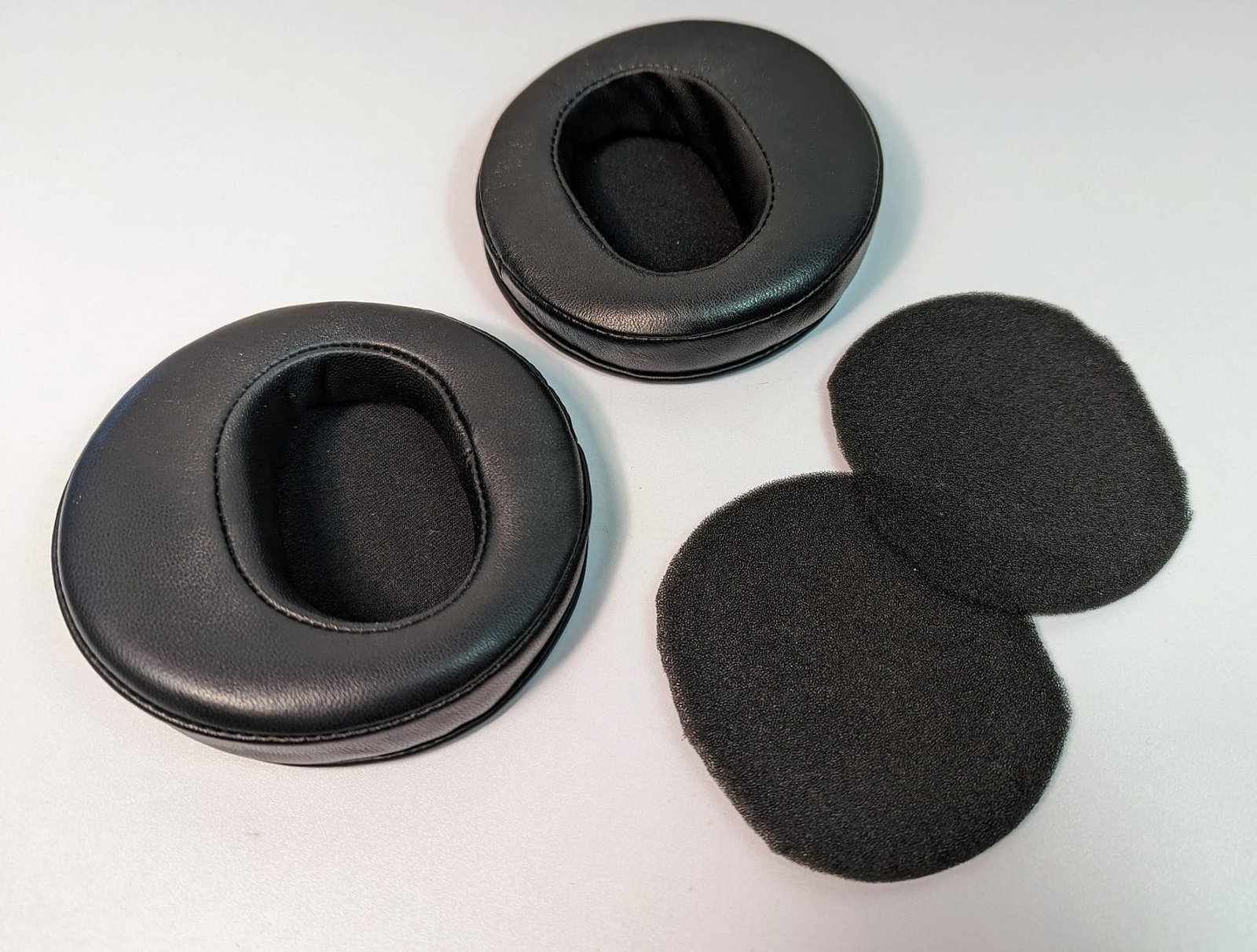
Since I strongly disagree with Denon's engineers about the D9200's tuning, and I don't consider equalizing a 1700 euro headphone a very reasonable requirement, I decided to try fine-tuning the sound using earpads. I will still mention that I also tried Oratory1990's EQ profile, found on the Qudelix 5K device, which corrected the sound very well, as long as I made a few of my own changes to it.
Thicker leather earpads
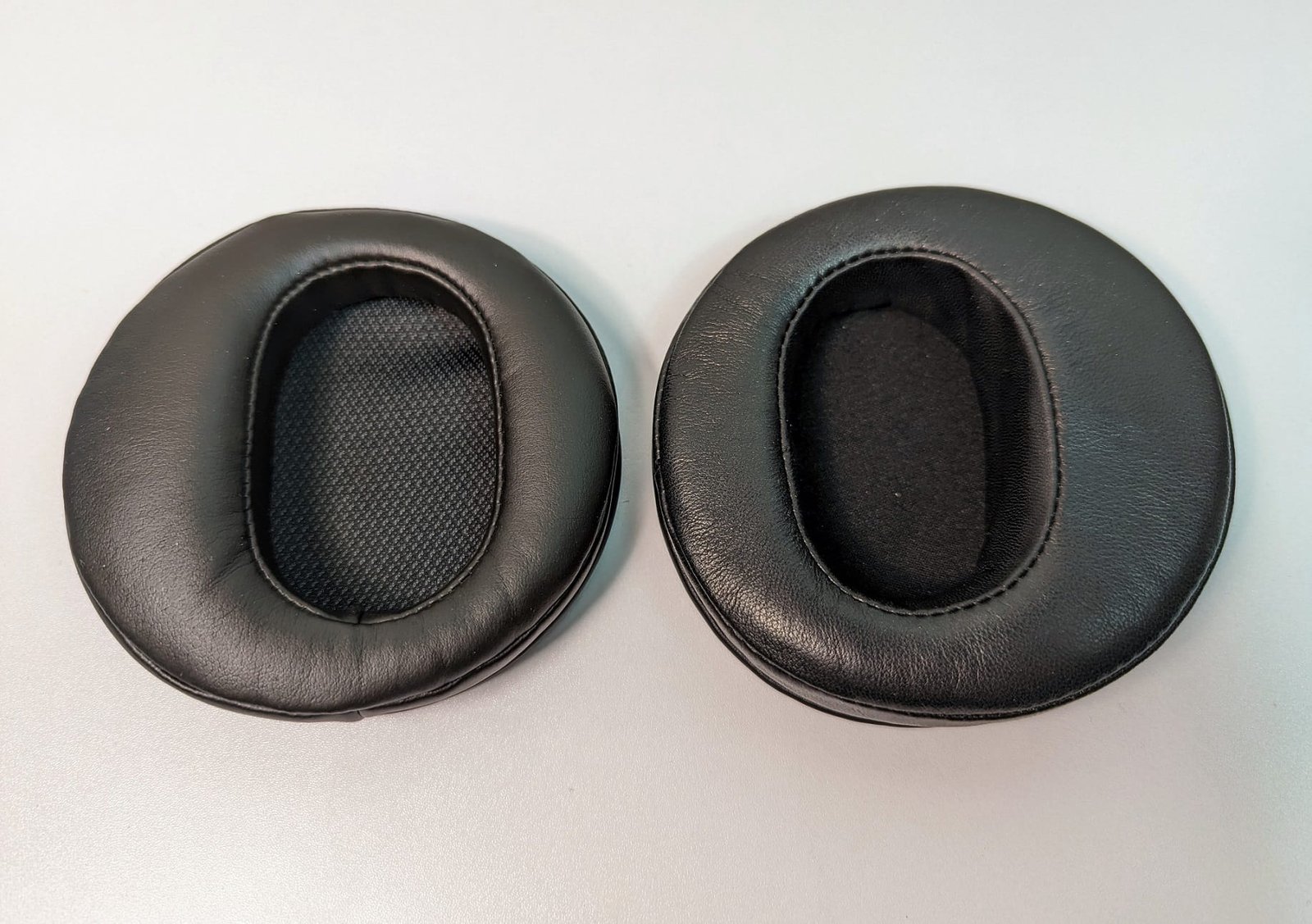
I happened to own leather earpads that were very similar in shape to Denon's pads after reviewing the Fostex TR-X00 Purpleheart (link to product page), so I decided to try how the D9200 sounds with them.
Changes in frequency response:
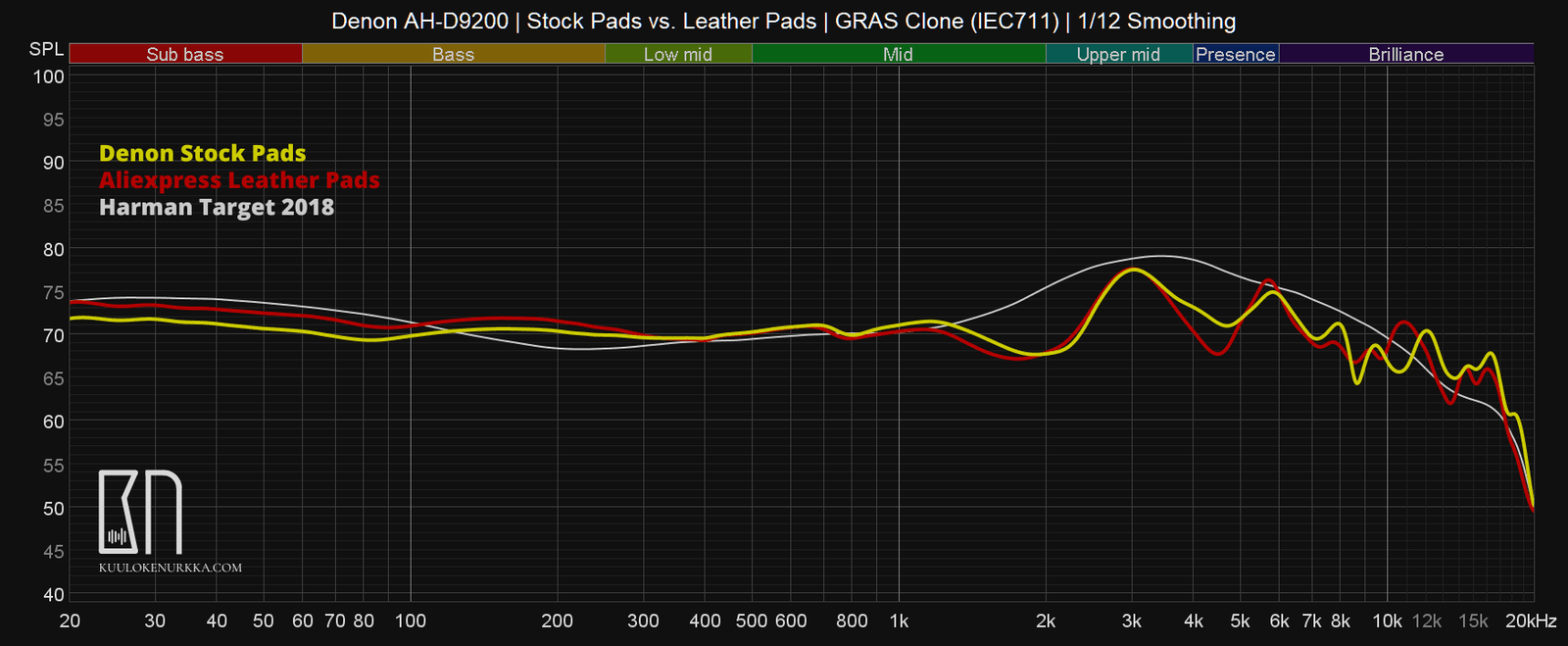
The leather earpads make the headphones' sound a tad fuller and calmer in the mid-frequencies, but also more muffled at the same time. The high frequencies both smooth out and brighten in places. The treble is in principle less unnatural, yet still slightly sibilant and sharp. The soundstage becomes wider and larger-sounding than before, which is a nice thing. However, I wouldn't call the end result significantly better with different pads. I had hoped for more energy around 2 kHz, but unfortunately, that didn't materialize, so the mid-frequencies are still uneven.
Adding foam behind the stock earpads
Since the leather earpads didn't bring significant improvements to the sound, I decided to add some kind of damping material between the ear and the driver, behind the stock earpads, hoping it would alleviate the treble emphasis. The material chosen was the foam pieces that come with Beyerdynamic DT770 earpads. I installed them on the back side of the earpads, because due to the small ear opening, it would have been difficult to stuff them inside the pads.
Changes in frequency response:
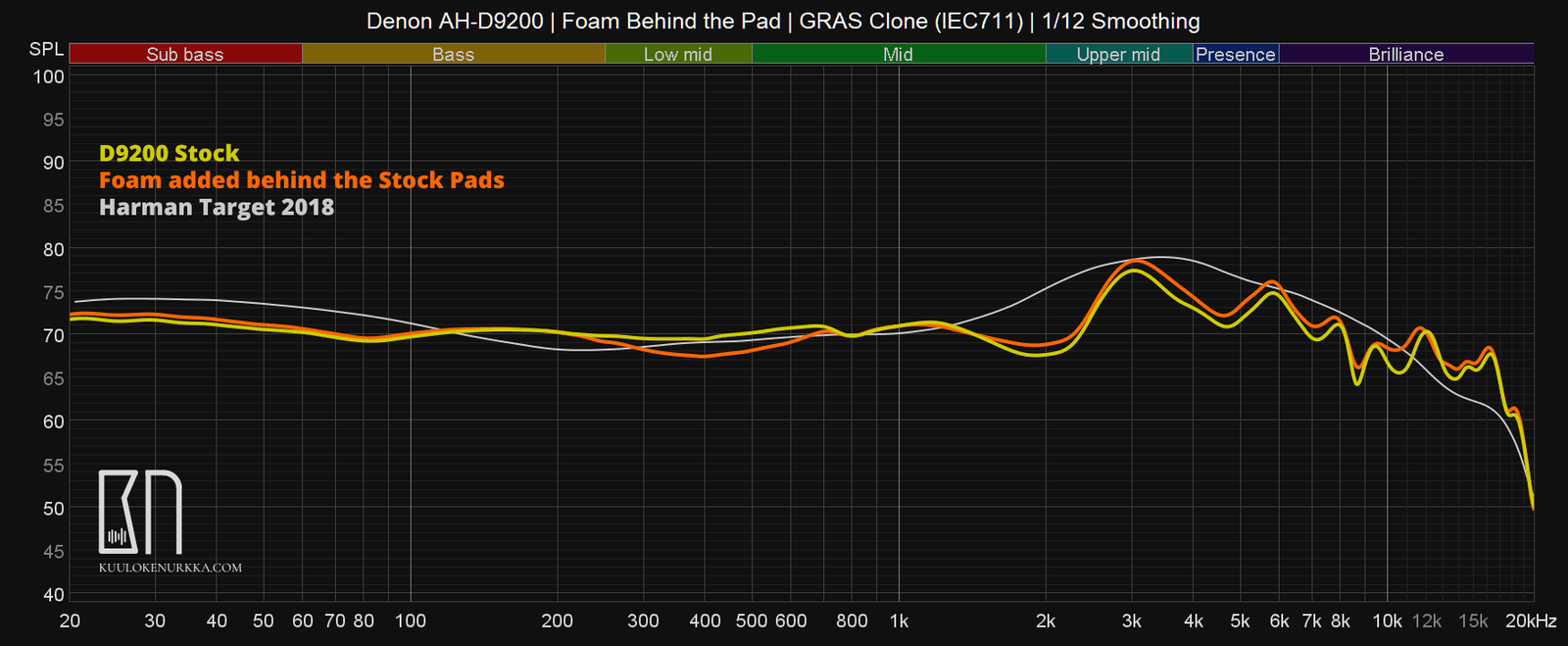
The change in frequency response wasn't exactly what I expected, but the end result was good nonetheless. Although adding foam made the D9200 sound brighter and airier than before, the treble also became more balanced. At the same time, the attenuation of lower mid-frequencies and the strengthening of upper mid-frequencies benefited the human voice. Shrillness decreased as the vocalist moved further away in the soundstage.
Several small changes fit together perfectly, so after adding foam, the D9200 sounds more like I originally hoped it would. The sound has a nice amount of energy and is easier to listen to than before. The treble has an exceptional amount of airiness for closed-back headphones, and the previous unnaturalness is gone. The end result is still a tad bright for my taste, but it stays in check with a suitable amplifier.
The soundstage also works even better than before, because the reproduction is less "in your face" and it's easier to perceive. I can now listen to the headphones at a significantly louder volume if I wish, which is a clear indication to me that the reproduction is more balanced. The change is surprisingly large even with such a small modification, because now the sound of the headphones draws me in. Simultaneous clear and powerful bass reproduction, energetic and easy-to-listen-to mid-frequencies, and the airiness of the treble are actually a rare treat in closed-back headphones, so I might be willing to own such a D9200.
The headphones seem to react strongly to mechanical changes, similar to Fostex models, so it might be fun to try and modify them to be even better. However, due to the high price of 1700 euros, the D9200 should, in my opinion, sound better and more balanced straight out of the factory, so unfortunately, I cannot give bigger cheers at this stage either. Let's go back to the starting point then.
Hardware recommendations
A modest amplifier is sufficient:
The D9200 is a headphone with high sensitivity (105 dB / mW) and low impedance (24 ohm), so it would be well suited for listening with low-power mobile devices. The headphones would probably work quite well, for example, when listened to directly with a mobile phone, but I cannot comment on the sound quality, as my own phone does not have a headphone jack.
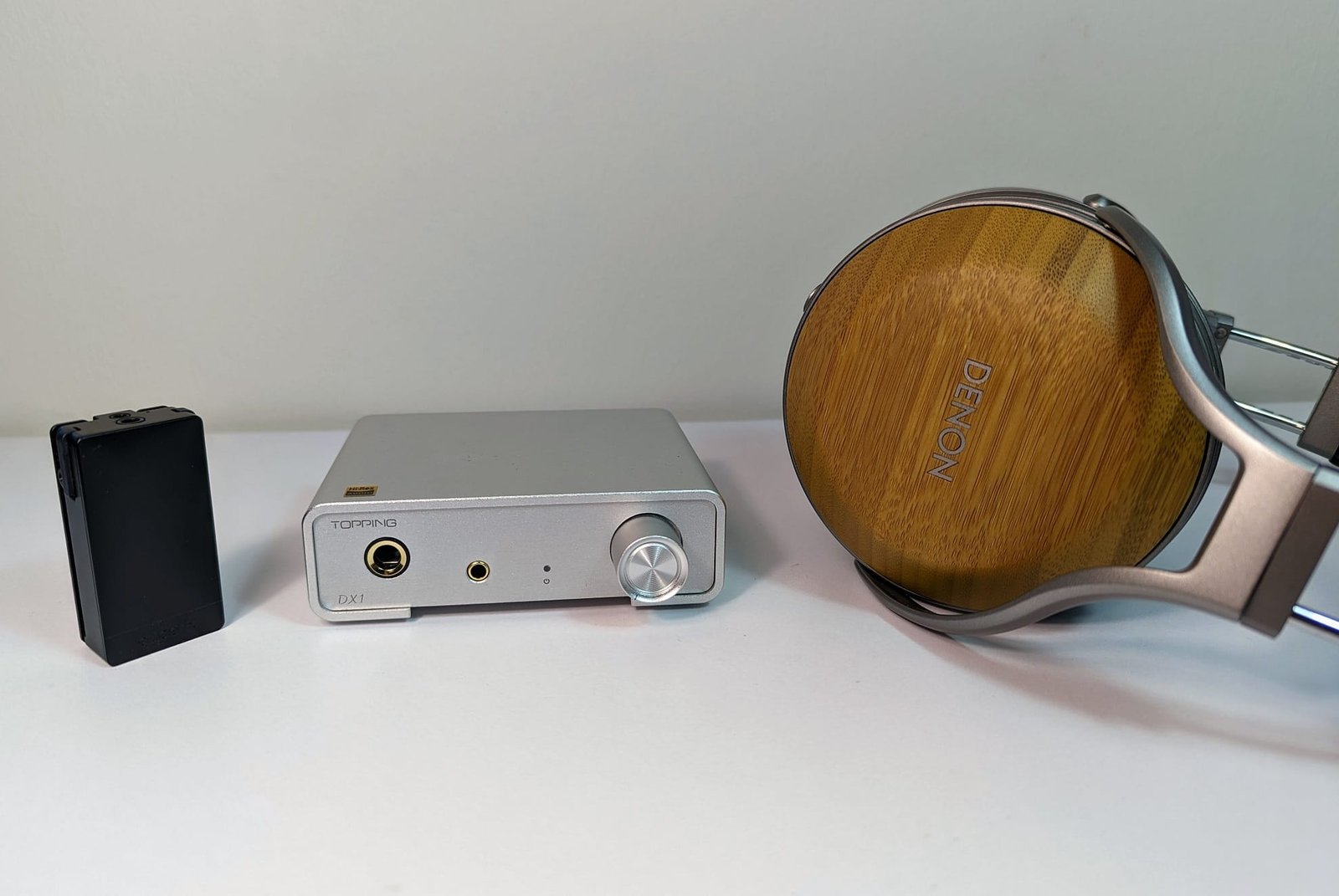
When testing the headphones, I listened to them with, among other things, the Qudelix 5K and the recently released 100-euro Topping DX1 combo device, which is a fairly direct competitor to IFI Audio's similarly priced Zen Air DAC. The D9200 sounds sufficiently good with both the 5K and the DX1, so in terms of required power, it is an easy headphone. The Qudelix 5K includes a comprehensive equalizer, so by using it, I could also correct the headphones to sound better and more "correct".
A soft-sounding amplifier is a better choice:
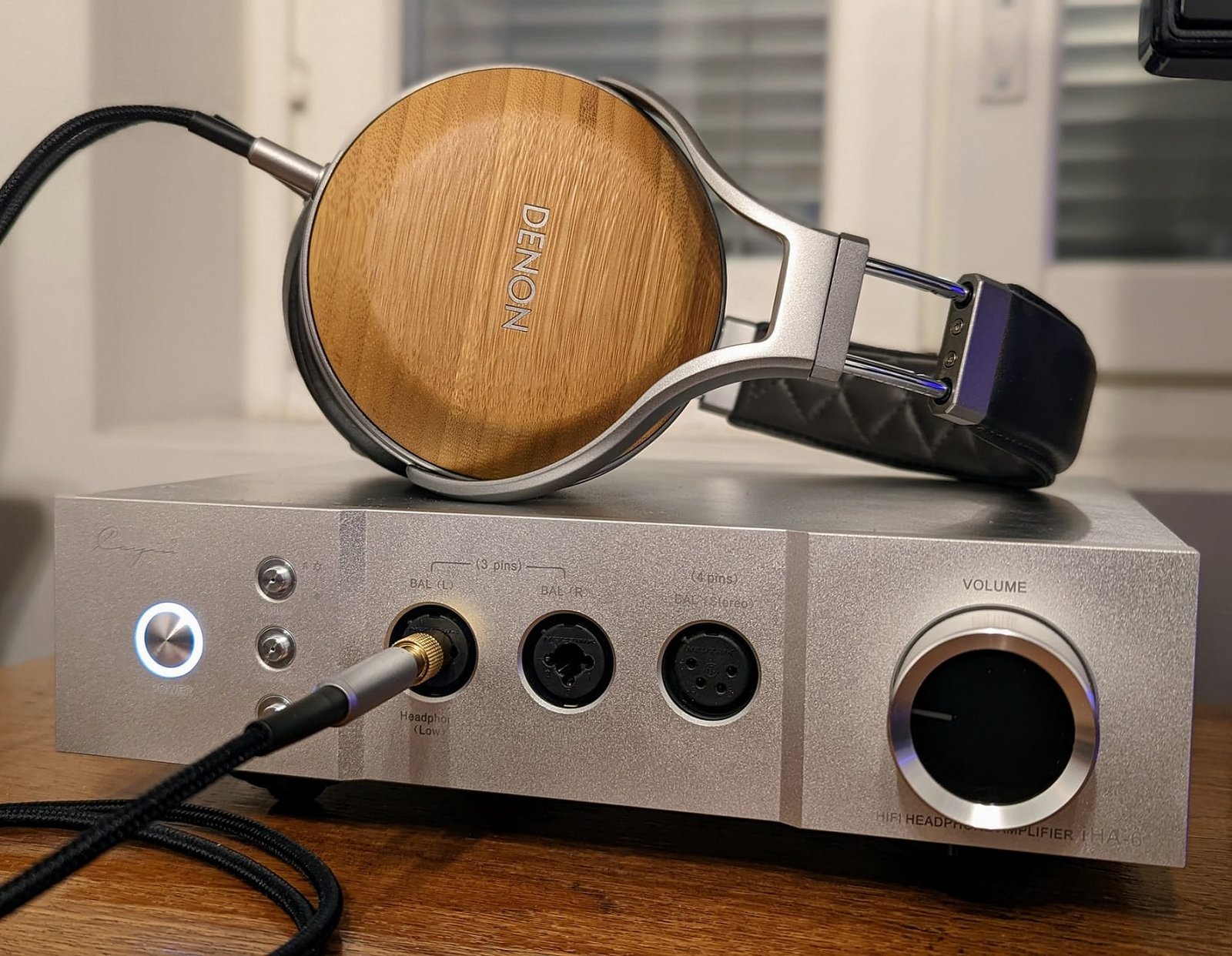
However, since it is an expensive high-end headphone, I naturally also tried it with my more expensive amplifiers, such as the Cayin IHA-6 and Burson Audio Soloist 3XP. Because the D9200, in my opinion, sounds annoyingly sharp, it almost requires an amplifier that softens and relaxes the sound. The Soloist 3XP relaxes the reproduction in the way I desired, but due to the D9200's high sensitivity, the amplifier's background noise is too strong for my taste. The Cayin IHA-6, on the other hand, is too energetic for the D9200 when balanced, but more suitable from the 6.35 mm connectors with higher output impedance.
Of these, the more moderate 10-ohm connector slightly relaxes the D9200's frequency response peaks – listening is immediately more tolerable, even though the peaks still clearly stand out. When I use the 120-ohm connector instead, the D9200 sounds really good compared to the starting situation. The reproduction is pleasantly relaxed, because all unnecessary sharpness and sibilance recedes into the background, and nothing that bothers me remains. I can listen to the headphones at a normal volume without wincing. Even somewhat surprisingly, the bass reproduction does not become too thick and emphasized for my taste, but rather resembles ZMF's closed-back headphones. The D9200 does not sound nearly as good with any of my other amplifiers.
Since the D9200 did not seem to ”break” with a high-impedance amplifier despite its low impedance, I also tried it with my Tor Audio Roger tube amplifier. It makes the headphones' soundstage pleasantly transparent, but unfortunately, the hiss and sibilance of the upper treble draw a bit too much attention. The bass reproduction also starts to be too thick in its upper frequencies. I was not completely satisfied with the end result, except for the soundstage, but since the chosen tubes have a quite significant effect on the sound, some different tubes might work better with the D9200.
In summary, I would see choosing a suitable amplifier for the D9200 as quite challenging. Based on my own testing, the headphones seem to be designed either intentionally or accidentally for soft-sounding or high-output impedance amplifiers, as these alleviate many of the sound's flaws. Since the problematic characteristics I experienced with the headphones may partly be due to my own hearing, it would be interesting to know how D9200 owners listen to them. If I owned the headphones myself, I would always listen to them from the 120-ohm connector of the Cayin IHA-6.
Denon AH-D9200 vs. ZMF Eikon
Prices: 1700 € vs. 1500 € (regular production discontinued)
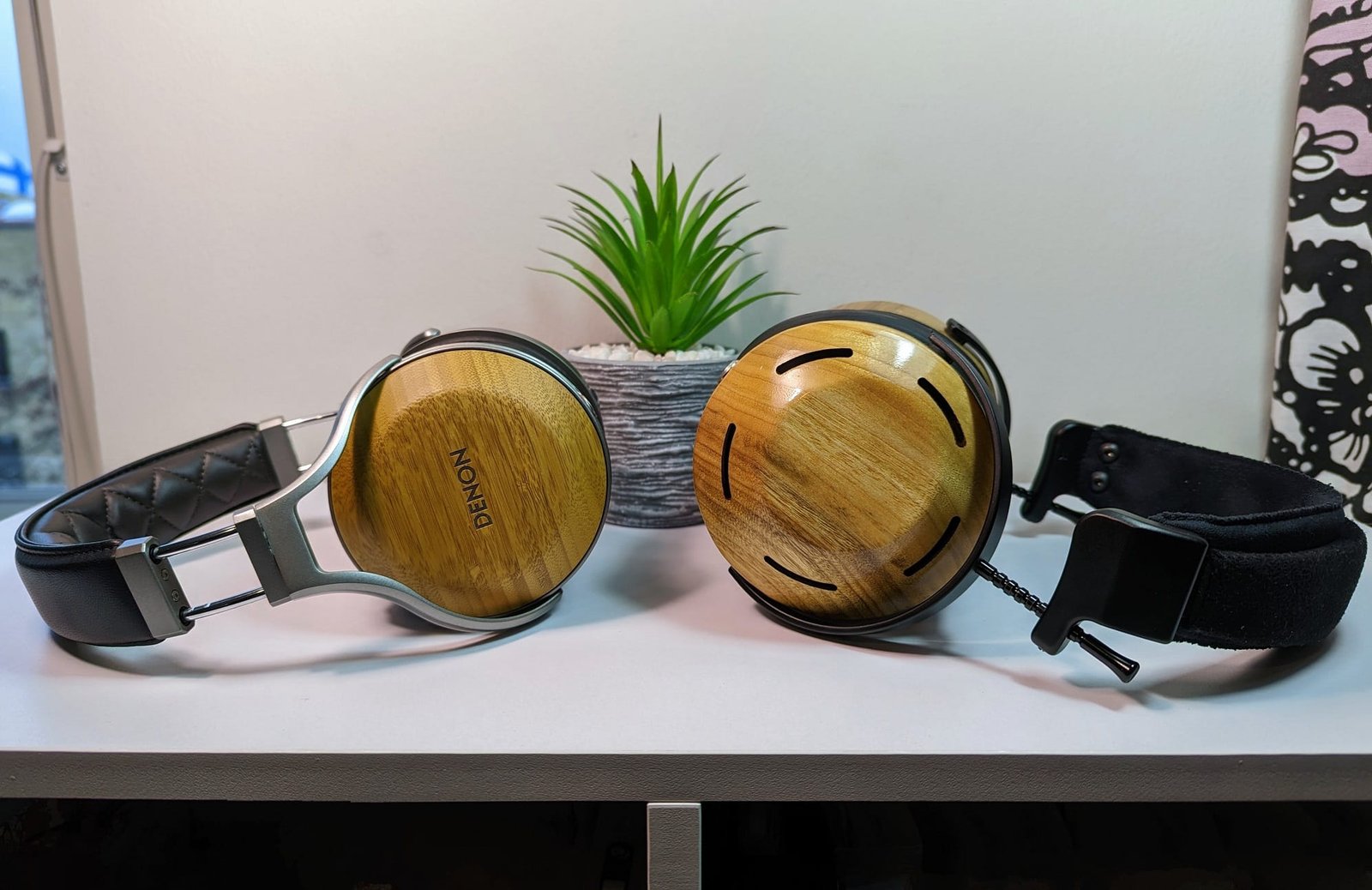
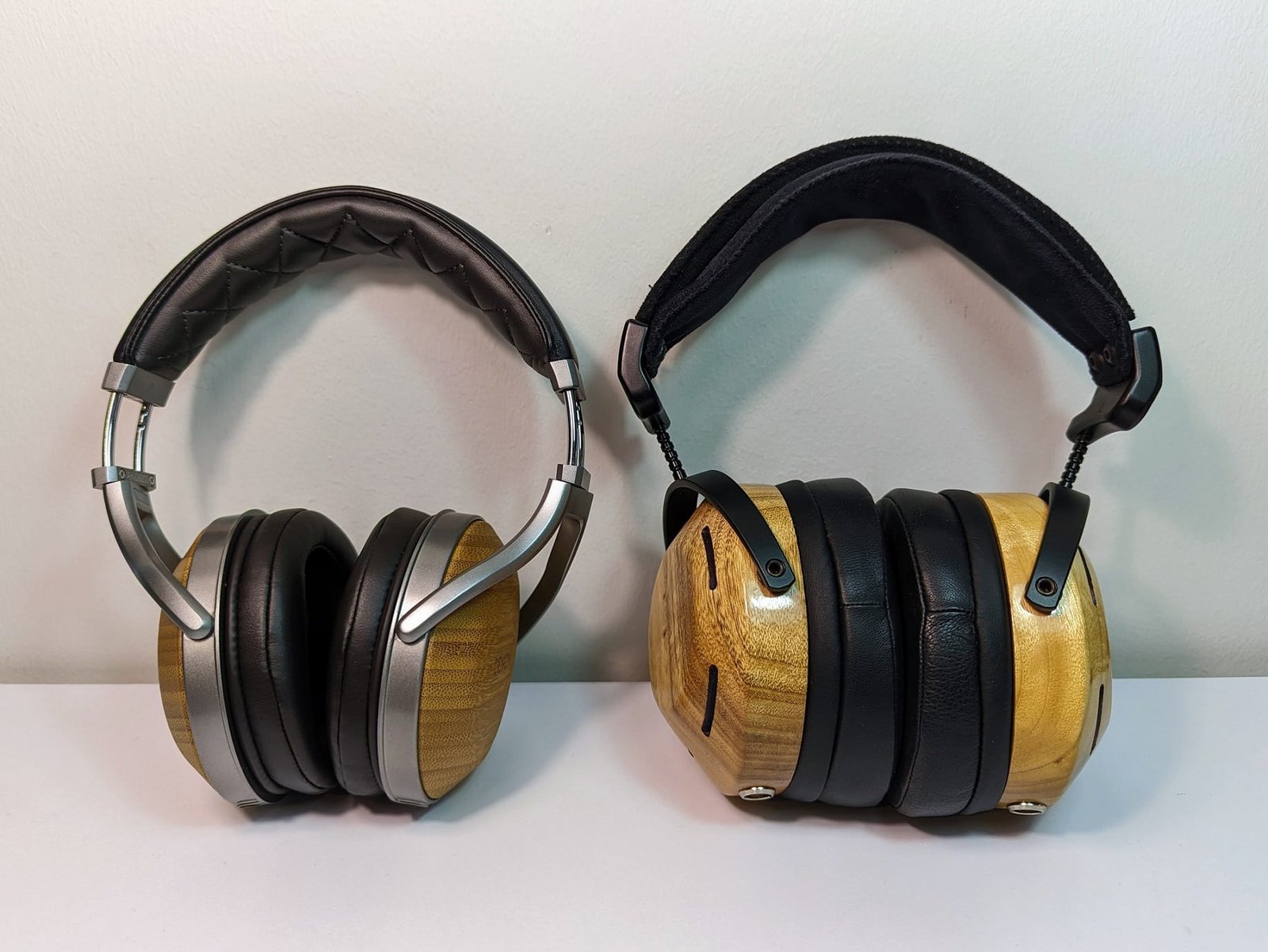
The ZMF Eikon, which I bought earlier this year, is in my opinion a fairly direct competitor to the D9200 as a closed-back wooden headphone priced at 1500 euros – or it would be, if ZMF hadn't stopped manufacturing it regularly. The headphones are still sold occasionally in smaller batches, but they are otherwise quite rare in Finland. The headphones have the same 300-ohm biocellulose driver as the Auteur model, so the Eikon is inherently better suited for tube amplifiers than the Denon model.
Both headphones are really high quality in terms of construction. Thanks to its smaller size, the D9200 feels more refined and like it was made with a larger product development budget. In the Eikon, craftsmanship is more evident, so the duo likely has its own fans aesthetically. The wooden cups of the headphones are amusingly almost the same color, as the camphor wood used in the Eikon is light, like bamboo.
The Eikon weighs about 100 grams more, but its plumper pads and better headband make it significantly more comfortable for me to wear compared to the D9200. However, the Eikon feels very large on the head, whereas the Denon model would even be quite suitable for mobile use due to its closer-to-the-head design. On the other hand, neither isolates the listener particularly well from ambient noise.
Differences in sound
I listened to both headphones with the Cayin IHA-6 amplifier from the 10-ohm connector. This solution makes the D9200 slightly more pleasant for me to listen to than usual, without the sound differing too much from how the headphones sound with a neutral amplifier. However, it should be noted in my observations that the IHA-6's more neutral-sounding balanced connector or any other amplifier I mention in this review would turn the situation more in favor of the Eikon.
Headphone frequency responses:
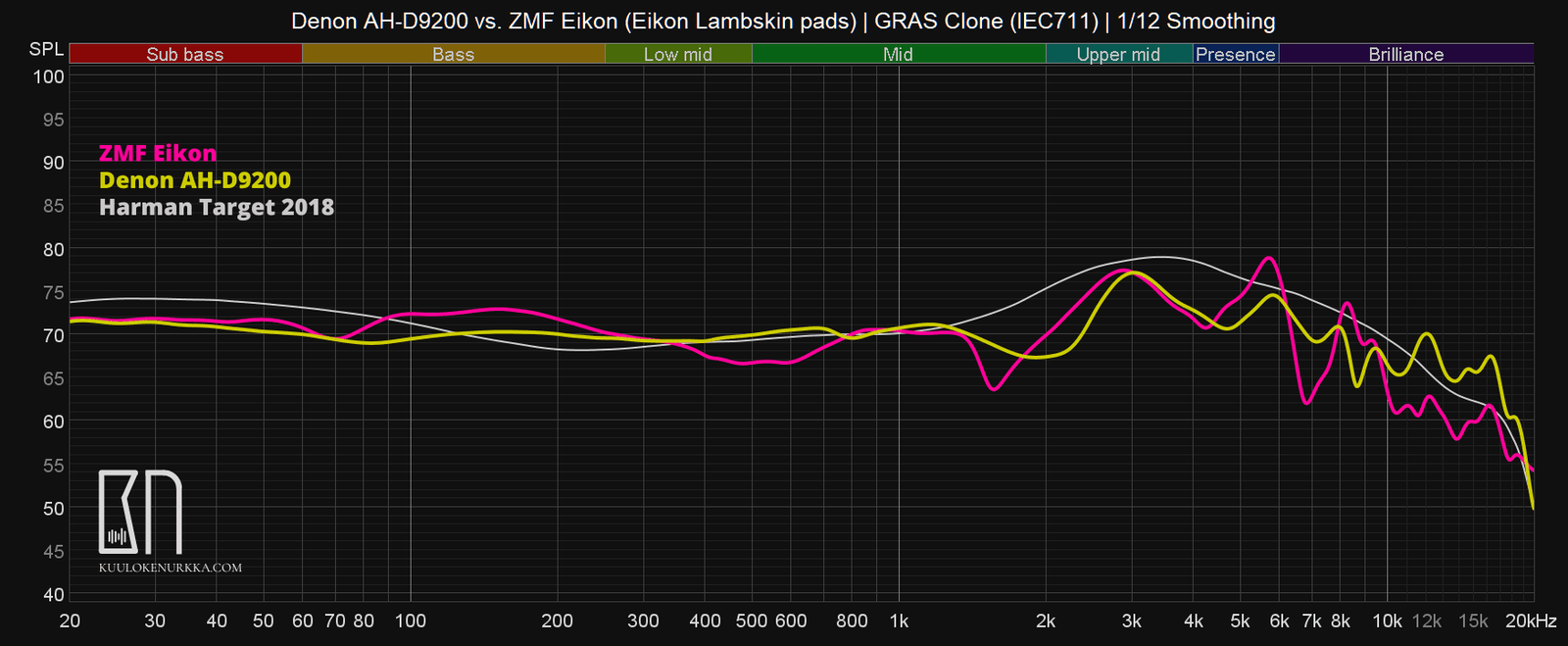
The flatness of the frequency response is not a strength of either headphone. However, Zach Mehrbach of ZMF has clearly listened to his headphones (or our preferences are the same), as the Eikon's bumpy presentation works fantastically well in my opinion. The headphones simultaneously have powerful bass reproduction, natural mid-frequencies, and a snappy, yet easily listenable treble. The headphones pound out such a rhythm that my goosebumps constantly rise. With the D9200, my attention, on the other hand, focuses on the excessive sharpness and hissing treble of the sound.
Bass:
The Eikon's bass is similar to the D9200's, but even more powerful and generates more sound pressure. The 400–800 Hz frequency range, which reproduces slightly more subdued than other mid-frequencies, also sufficiently isolates the bass from other parts of the reproduction, so the Eikon's sound is quite clear despite a robust and at times boomy mid-bass emphasis. However, the tightness and control of the bass reproduction must still be credited to the D9200. I find the Eikon's more thumping reproduction more fun and the D9200's more balanced reproduction more mature, so both headphones have excellent bass reproduction in their own way.
Mid-frequencies:
Vocals sound energetic on both headphone models, with the difference that the Eikon lacks the D9200”s shoutiness and sibilance. The Eikon's frequency response irregularities also shift singers and mid-frequencies just enough backward in the soundstage, making the headphones easy to listen to. The sound has a similar naturalness and ”woodiness” as the manufacturer's other headphone models, so the presentation immediately draws me in, especially when listening to ”real instruments." I always approach the D9200 with some reservation because it sounds wrong due to its excessive sharpness. The functionality of the Eikon's presentation also suffers to some extent from variation, but with it, the outcome is much more likely to be good for me than with the D9200.
Lest my comparison only criticize the D9200, I admit that its more aggressive sound might appeal to some in more modern music, where an energetic and aggressive presentation can be fun. The D9200 is, moreover, still quite easy to listen to at lower volumes or with a soft-sounding amplifier.
Treble:
The treble in both models has unevenness and individual peaks that may sound irritating depending on one's hearing. For me, the D9200's hissing and sibilant high frequencies do not suit at all, whereas the Eikon's lower treble clarity and snappiness are exciting without being irritating at all.
The Eikon emphasizes, for example, drumstick hits, which together with the hard-hitting bass form a very fun and physically feeling combination. The 6 kHz and 8.5 kHz peaks visible in the frequency response could be expected to sound irritating, but strangely enough, the Eikon's treble has never grated on my ears. However, I have read that some find the headphones to sound harsh, so I can only speak for myself.
My measured frequency responses show that the D9200 reproduces frequencies above 10 kHz significantly more audibly. As a result, the reproduction is pleasantly airier compared to the Eikon, but unfortunately also excessively sparkly and hissing. The Eikon sounds even and pleasant in its highest frequencies, and in my opinion, the sound does not lack too much air. For example, the D9200 is not too bright-sounding after adding foam material behind the pad, so the problems with the headphones are likely more related to the unevenness of the treble than its actual quantity.
Other observations:
The D9200 brings the sound more "in your face" compared to the Eikon, so even smaller details stand out more from the whole. This could theoretically be a pleasant feature, but in my opinion, it goes too far. A slightly calmer presentation would make the D9200 a suitably more detailed and analytical headphone than the Eikon. If the Denon model's presentation doesn't sound too heavy to someone, it is better suited of the two for observing the small nuances of music.
Although the D9200 sounds airier, its soundstage is not as magnificent and attention-grabbing as with the Eikon. The ZMF model sounds considerably larger and more spacious than average for a closed-back headphone. The separation and placement of sounds in the soundstage are also precise, even though the D9200 takes the win in fast-paced music. Eikon's biocellulose driver sounds a tad sluggish, whereas Denon's directional changes are more precise. However, there are no major technical differences between the two, as both fundamentally use a very similar dynamic driver.
Concluding remarks:
From Denon's perspective, it's regrettable that I consider the more affordable ZMF Eikon to be sonically superior in almost every aspect. The situation also doesn't vary according to the music listened to; for me, the D9200 always sounds at least slightly fatiguing, whereas with the Eikon, I enjoy listening 90 percent of the time. However, if the D9200's frequency response were a tad more balanced, it would, in my opinion, compete more evenly with the Eikon with its own presentation style, which emphasizes more details. When listened to at a lower volume or lightly equalized, it is still a perfectly good headphone. The D9200 is also lighter and smaller of the two. Nevertheless, nothing changes the fact that, in my opinion, the Eikon is a more successful product.
Summary
The Denon AH-D9200 is a very high-quality and quite fine headphone model, so I would have liked to like it more. I expected its sound to be more refined and in a way a corrected Fostex, as both manufacturers have made very similar headphones in the past. Unfortunately, however, I was surprised by how irritating the D9200 sounds, and it's not particularly comfortable on the head either. The headphones' sound simultaneously has fullness, dullness, shoutiness, and sibilance, as if they don't know what they want to be. Alone, these features might not bother me, but their combined presence is, in my opinion, unforgivable in a 1700 euro product.
All problems are related to the uneven frequency response, which causes the result to vary too much, and the D9200's suitability for a specific music genre or artist cannot be guessed in advance. Otherwise, the headphones would still have potential, because the driver developed by Denon resembles Fostex headphones in a good way. For example, I consider the D9200's bass reproduction excellent, and the soundstage is also precise.
Although I am quite harsh on the headphones, I by no means want to claim that they shouldn't be liked or that many wouldn't be satisfied with them in their own use. I myself noticed that listening at a moderate volume, equalizing, light modding, or listening with a certain type of amplifier makes the D9200 a quite good closed-back headphone. Everyone can decide for themselves whether the effort is justified for an expensive product. Although the presentation style may still work as such for some people's hearing and music preferences, I recommend test-listening the D9200 before purchasing it. An uneven frequency response always carries its own risks, which became exceptionally clear to me with these headphones.
Pros and cons:
+ Excellent bass reproduction
+ Accurate and airy soundstage for a closed-back headphone
+ Classical music sounds quite good because the small details of the instruments are emphasized
+ Very high-quality construction
+ Elegant size and reasonable weight
+ Earpads are easily replaceable
+ Doesn't require a powerful amplifier
+/- Suitable for listening at low volume, but sounds far too aggressive when listened to even slightly louder
+/- The sound can be corrected with light modding or equalization, but considering the high price, the effort feels wrong
+/- The bamboo earcups are distinctive, but quite ordinary
– Uneven frequency response makes the sound shouty and sharp, so I always feel like I'm listening to headphones, not the music itself
– There is annoying sibilance in singers' voices
– Treble sounds unnaturally hissing and sibilant
– May require an expensive or at least an unusual amplifier to sound good
– The headband's shape is too straight, causing a feeling of pressure on the top of the head
– Isolates only a little ambient noise despite its closed design
– Questionable price-quality ratio
 EN
EN  FI
FI
Hi, just out of curiosity, have you listened to the Fostex TH-900s, and if so, do you have any recollection of how they compare to these Denons? I assume that if you had a sufficiently fresh memory of the headphones or if they were available for comparison, you would have probably written about it, but I'm asking anyway out of curiosity.
Hi, I heard the TH900 quite a long time ago, so unfortunately I couldn't compare the Denon to the Fostex. I generally perceive the D9200 as a kind of more mature cousin to the TH900. The TH900's bass is probably stronger than in the Denon model, but the upper frequencies are so bright that the D9200 is presumably the more balanced and sensible-sounding of the two for most people. My own hearing probably didn't align with the irregularities in the Denon's frequency response, but the headphones would still have potential with a little tweaking. Interestingly, no single frequency range was hugely off, but usually, the overall package decides.
Hi, have you tried the cheaper versions of these, the D5200 and D7200? I've been looking at the D-5200 myself, but does it have the same problems as this model?
Hi, I've heard all three. The D7200 sounds more balanced than the D9200, and the D5200, in turn, is ”more normal” than the D7200. So, the cheapest model is essentially tuned the best, while the D9200 was probably aimed at the most unique result, which would justify its higher price. Many seem to like the D9200, so it might be that its colored sound just didn't suit my taste.