Author: Sword of Damocles
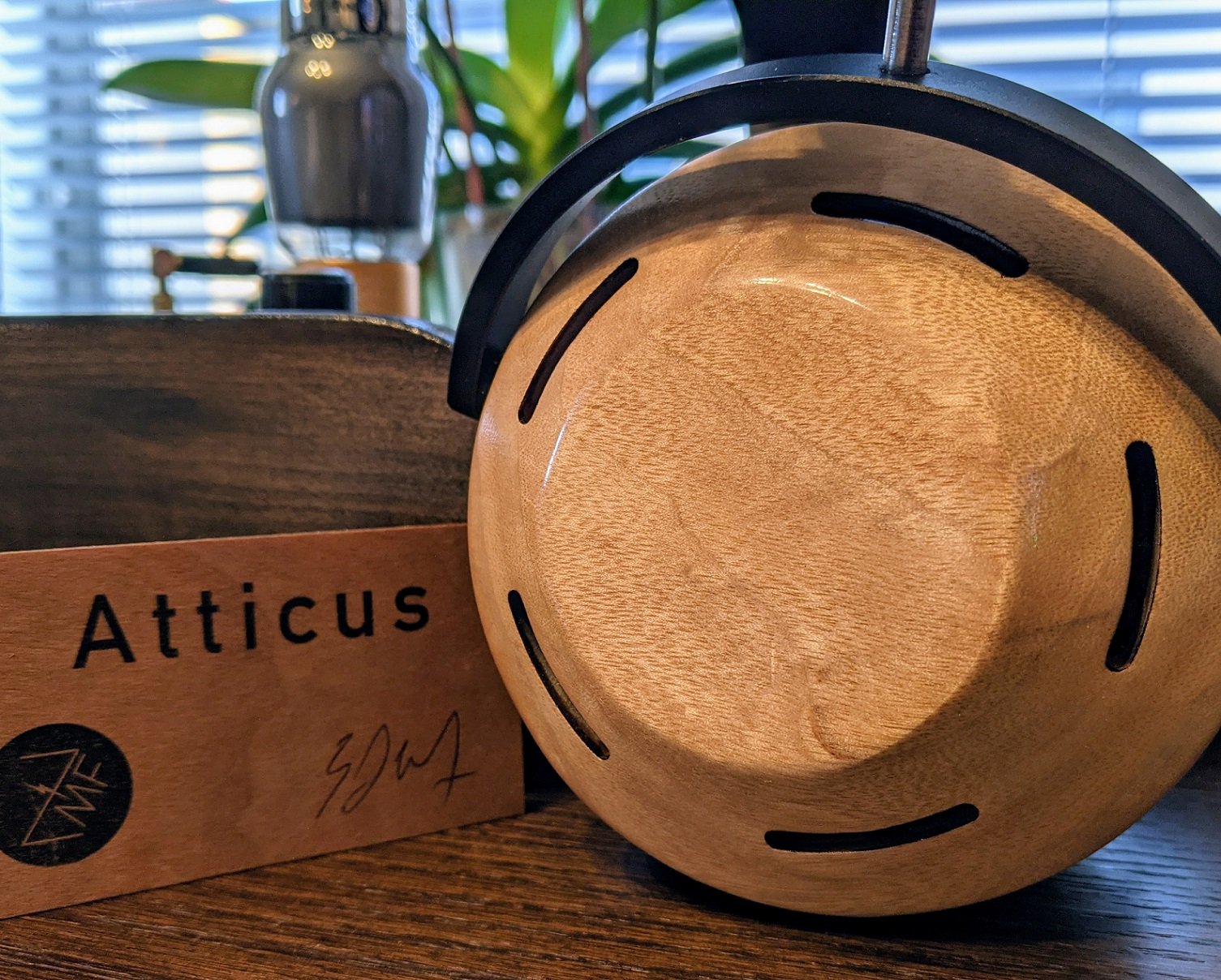
Table of Contents:
ZMF Atticus is the headphone for me that defined the direction of my hobby by showing that enjoying listening to music is more important to me than analyzing individual sounds. Since ZMF differs from many better-known headphone manufacturers, I will start by telling about the company.
ZMF (Zach Mehrbach Films) Headphones
American Zach Mehrbach was meant to end up in the film industry, and he had already founded a company under his own name for this purpose. However, in 2010, he ended up modifying Fostex T50rp planar headphones under his company's name to pay back some of his student loans. Zach was interested in guitars and banjos, so manufacturing headphones from wood became his passion. This eventually made the headphones so popular in hobby circles that from 2015 onwards ZMF Headphones it has been his full-time job.
Today, ZMF has several headphone models equipped with dynamic drivers, which have been designed from scratch in-house. Each of these has its own sound quality characteristics, so the headphone models do not compete with each other, and no model is a direct improvement over another.
The headphones are still manufactured in the USA (near Chicago) entirely by hand by a few employees. Various exotic wood types have also been retained as the material for the cups. Due to this, ZMFs are quite expensive, and one has to wait even several months for the headphones to be manufactured after ordering. However, interim updates on the manufacturing process are sent to the buyer.
The first owner of ZMF headphones always receives a lifetime warranty for the headphone drivers. In reality, service is often completely free even for buyers of used headphones. I have experienced this myself when both drivers in my used ZMF Atticus headphones were replaced completely free of charge. Zach is known as one of the nicest guys in the headphone world, and he and his wife Bevin are fully committed to customer service.
ZMF Atticus
ZMF's sound (the so-called ”house sound”) differs from many other high-end headphones, as it is tuned to sound warm and natural, and all decisions have been made with listening pleasure in mind. Many other more expensive headphones compete with each other in terms of reproduction detail, which easily leads to the sound becoming fatiguing to listen to.
Released in 2016 ZMF Atticus is, according to the manufacturer's own words, its warmest and most fun headphone, and it has the most bass. The headphones are also sonically closest to Zach's modified Fostex T50rp headphones, a kind of homage to the company's early days.
Atticus is also ZMF's cheapest headphone model at a price of approximately 1250 euros. However, it has been manufactured over the years from many different wood types, some of which have only been available for a limited time. At the time of writing the review, a special model made from bocote wood costs approximately 1450 euros, so the wood type has a significant impact on the final selling price. ZMF dealers in Europe include Hifitalo in Finland, ARK Audio in Sweden, and Headphone Company in Germany.
My own headphones are made of camphor wood, which has been the cheapest basic wood type for Atticus headphones for several years now. I bought the headphones used in the latter half of 2019 and had already sold them once because I wanted to focus more on listening to the manufacturer's other model, the Verite Closed. However, I started to miss the Atticus so much that I recently bought it back for myself.
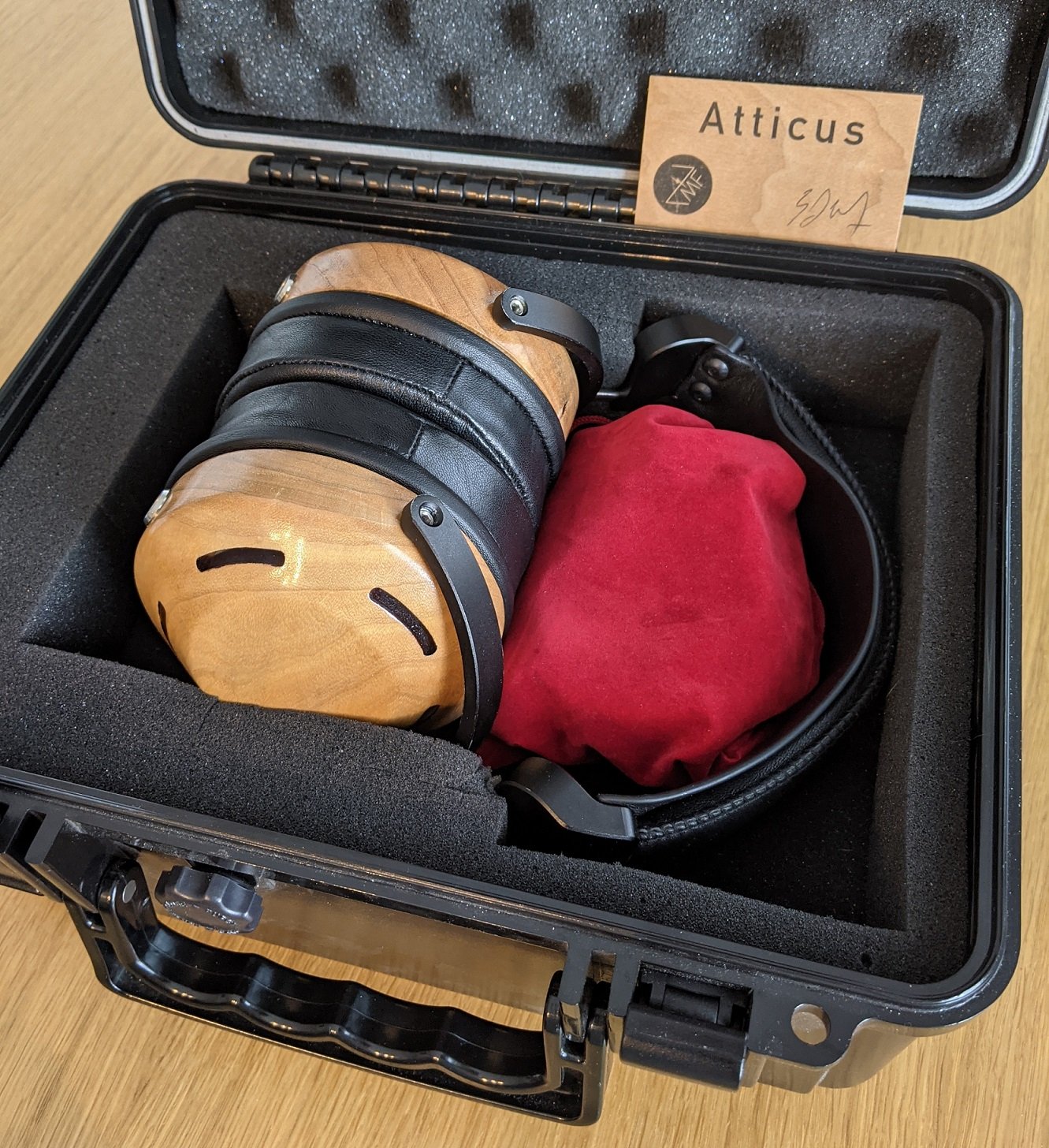
The headphones are delivered in a water and shock-resistant case, in which they travel safely from one place to another. The case has proven very useful when sending the headphones for service to the United States and when selling them on (and of course, also when getting them back). According to my calculations, my headphones have traveled approximately 24,000 kilometers in the case in total.
Structure and comfort
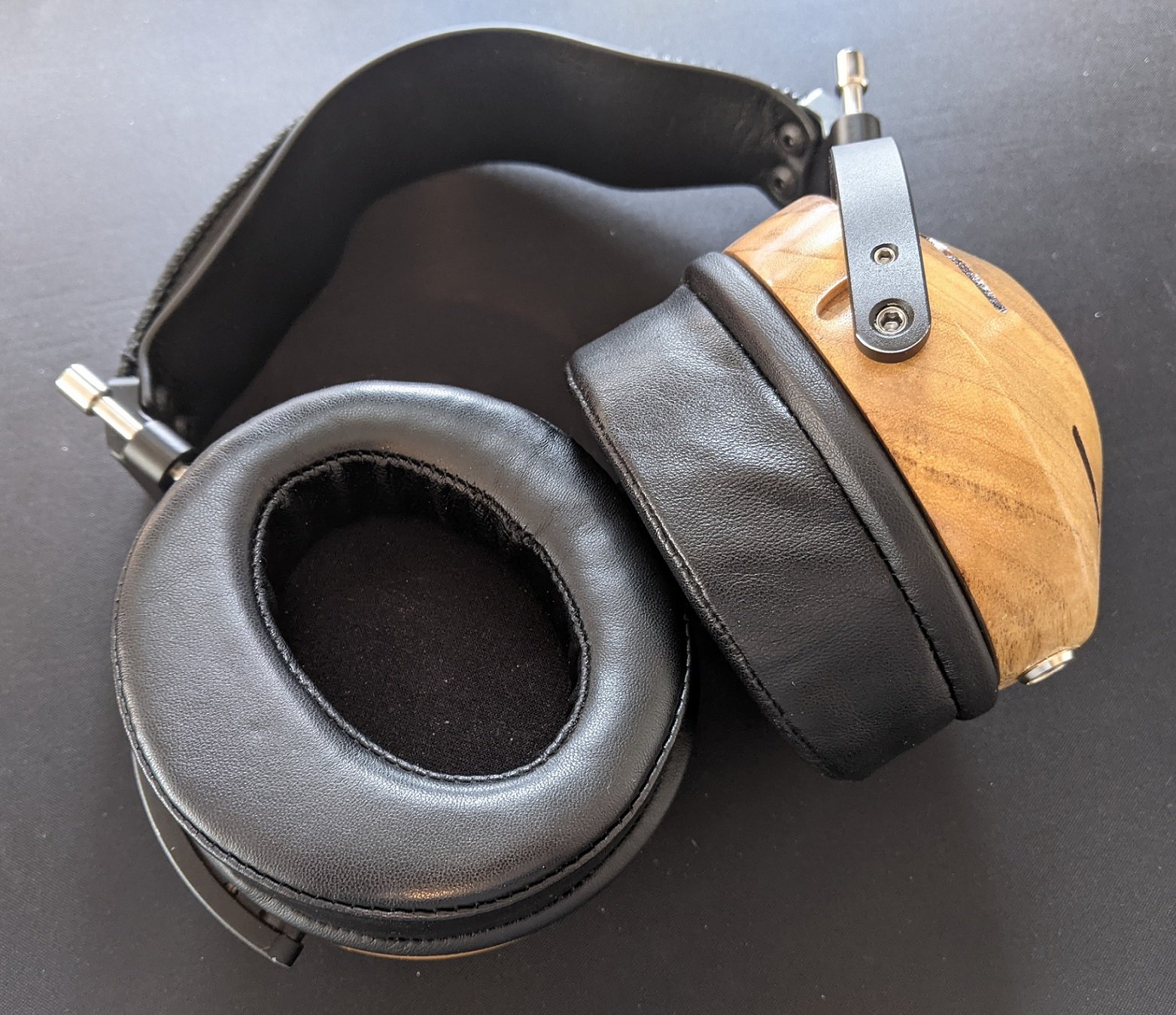
The Atticus is large in size, so its primary use is home listening. The linear grooves visible in the cups are made for tuning the headphones, but normally most of them are closed with a rubber mat. Thanks to this, the headphones are practically completely closed, and hardly any sound leaks out. They also effectively dampen ambient sounds, so in this respect, the headphones would be well suited for office use, for example.
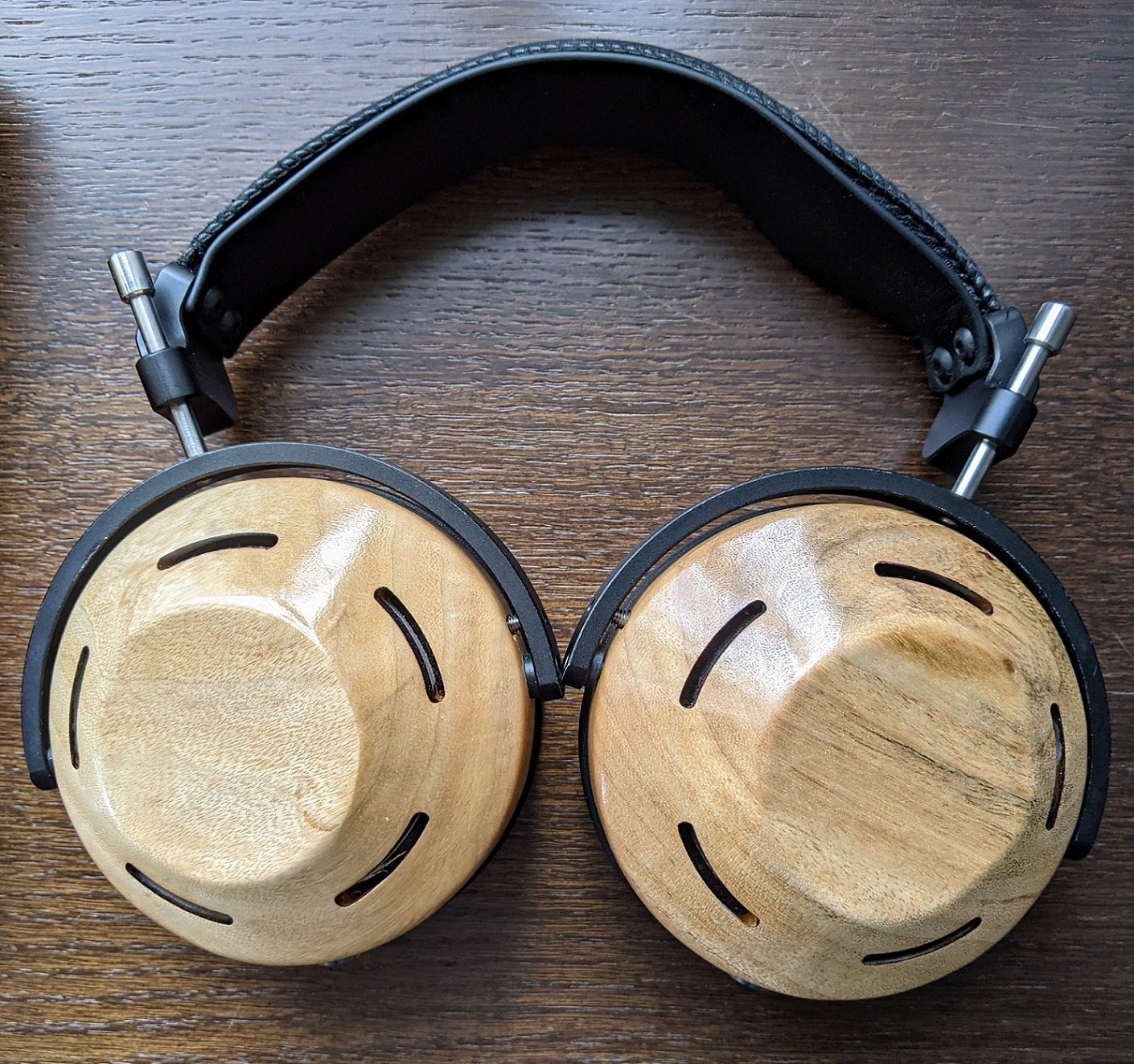
My own headphones are made of soft camphor wood, which makes them smell a bit like Vicks Vaporub (how many people smell their headphones?). The density of the wood type affects the sound of the headphones such that denser wood types tighten the reproduction, and softer wood types make the reproduction feel softer and rounder. However, the differences are minor, so the wood type should be chosen for price and aesthetic reasons. Each pair of headphones is unique, so it's a bit of luck what kind of wood cups the buyer gets, and how similar the cups look to each other. In my pair, the appearance of the cups differs slightly from each other.
The cup holders/yokes and the height adjustment parts of the headband are made of aluminum (lighter magnesium is also available as a material choice at the time of purchase for an additional 250 euros). My own headphones were manufactured on 22.6.2018, so they have the old-style headband with thicker metal parts and stepless height adjustment. The material for the headband and its padding can be chosen as either lambskin or more padded fabric – my own padding parts are leather.

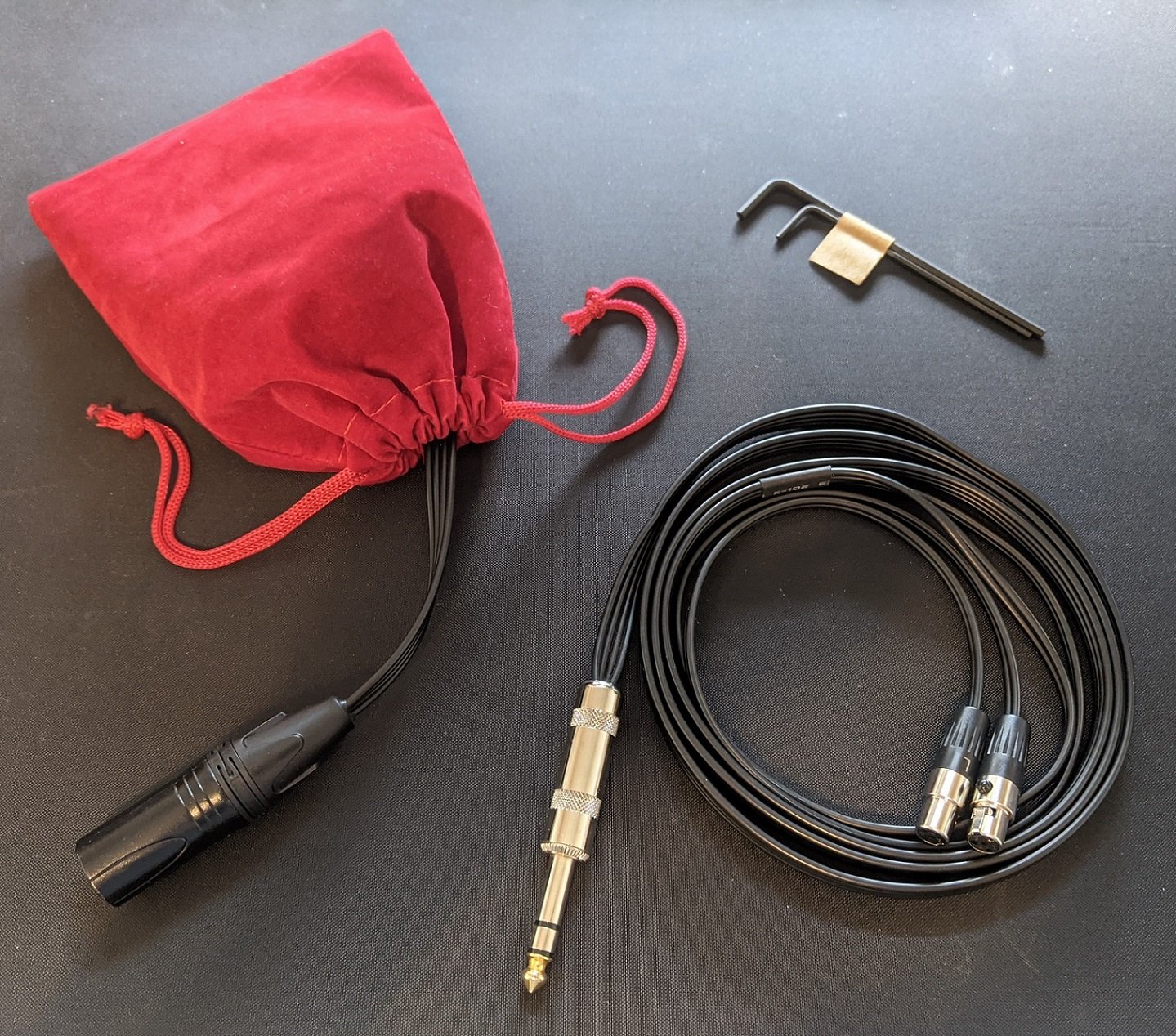
The connector type of the included cable can also be chosen during the ordering process. The headphones themselves have mini-XLR connectors, which are also used in Audeze headphones. ZMF's cable is flat and wide in shape, and although it feels cheap, it serves its purpose well. I have both an unbalanced (6.35 mm) and a balanced (XLR) standard cable, as the original owner of the headphones had acquired both. Nowadays, ZMF supplies a higher-quality looking fabric-covered cable by default.
The Atticus weighs 546 grams with camphor wood and the old headband structure – with denser wood types, the weight can exceed 600 grams. Thanks to the wide headband and thick ear pads, the headphones feel comfortable on the head despite their weight and can be worn effortlessly for several hours. Comfort can be further fine-tuned if necessary by bending the steel headband to better fit the shape of one's head.
The Ori ear pads supplied with the Atticus are made of lambskin. The pads are very thick, especially behind the ears, so the listener's ears remain far from the headphone drivers. In ZMF headphones, the thickness and material of the pads affect not only comfort but also the sound. I will evaluate the sound quality with leather pads, but I will explain later how fabric pads change the sound.
Sound quality
The ZMF Atticus is a headphone whose sound is either loved or hated. If I were to think about the headphones purely rationally, a long list of weaknesses would emerge. On the other hand, they sound so pleasant that I immediately forgive all these weaknesses. The sound could be described as more than the sum of its parts, and there isn't really a direct competitor for the Atticus on the market. Because the overall package is unique, I have to evaluate the sound quality quite verbosely. To prevent the text from becoming impossibly long, I will not make comparisons to other headphones within this review.
The headphones have a fun sound, as ZMF promises – drums hit hard, the reproduction has immense warmth and body, and instruments sound genuinely rare and authentic. At the same time, the reproduction has great spaciousness, and the sound of the headphones seems to remain at a certain distance from the listener at all times. This makes listening so easy and relaxed that I wouldn't believe I was listening to headphones, let alone closed-back ones.
The Atticus strongly encourages enjoying the listening experience, so analyzing music can be almost entirely forgotten. In my opinion, this is refreshing, but it doesn't hide the fact that, upon closer listening, the technical performance of the headphones is rather mediocre.
What does this mean?
The Atticus is not a headphone to buy for good technical performance. A slight graininess and roughness can be heard in the reproduction, especially in the mid-frequencies. This somewhat resembles the distortion produced by tube amplifiers.
Critically evaluated, the weakest aspects of the headphones are their resolution and the placement of different sounds in the soundstage. In my opinion, the driver used in the headphones is capable of bringing out even small details, but they remain somewhat hidden or easily blend together. The headphones do not do anything on behalf of the listener in this regard; one must listen actively. However, leaving the task of searching for details to the listener is in a way rewarding, as everything is still audible and distinguishable.
The headphones are also quite broad-brush in terms of sound placement. The reproduction is very spacious, but some of the space remains unused. I would describe this as different sounds often settling into the same large compartments, with fewer smaller compartments available between them than with many better headphones. This partly reinforces the Atticus's relaxed overall impression.
Despite these weaknesses, the headphones perform well enough that one often doesn't think about it while enjoying the listening experience.
Bass:
The Atticus hits really hard, especially in rock music! This is achieved by significantly emphasizing the mid and upper bass frequencies between 150–300 Hz. The bass guitar always sounds thick, and the drums hit very powerfully and naturally – one could almost acquire these headphones just for listening to drums.
The low frequencies of the headphones are not very tight and fast, but rather softly powerful and warmly resonant from the wooden cups. The very lowest bass is reproduced much more moderately, so the Atticus is not, by default, a very good choice for listening to electronic music.
Low frequencies ”leak” into the mid-frequencies, bringing a pleasant warmth to the reproduction – this, however, can also be a negative thing depending on the material being listened to. Almost all music, even that produced to be thinner, sounds fun and thick, but tracks produced with more bass can sometimes become a bit too muddy and dark.
Although the headphones' low frequencies have been intentionally emphasized quite a bit, this has been done within the bounds of good taste, and not like in many affordable fashion headphones where the bass covers all other frequencies.
Mid-frequencies:
Despite a slight roughness, the mid-frequencies are the headphones' strongest area. They manage to be calm, even, and fun all at once. Nothing ever sounds unpleasant or sharp. Yet, the tuning is such that it is well suited for listening to electric guitars and string instruments. These instruments get a significantly fuller and more enjoyable body from the low frequencies leaking into the mid-frequencies than with many other headphones. For example, Apocalyptica-style music sounds really good with Atticus.
The timbre of acoustic instruments is also very authentic and natural. The headphones themselves are a kind of instrument, as the echo caused by the wooden cups adds its own dimension to the listening experience. This, however, also causes Atticus to be quite slow in its reproduction.
If I could choose one aspect of Atticus over many of my other headphones, it would be the presentation of vocal performances. When listening to vocal-heavy music, it often feels as if the singer is singing specifically for me. The reproduction is calm and spacious, yet the singer comes to the foreground and close to the listener. This creates a strong emotional connection with the vocalist, which I find inexplicably pleasant and calming. Listening to these headphones puts me in a relaxed state, and it also feels as if my heart rate decreases.
Treble:
The headphones' treble is calm overall, but it still has sparkle. The thickly reproduced low frequencies are balanced by an emphasis in the 6 kHz and 8 kHz frequency ranges. These somewhat pronounced treble peaks make, for example, drum cymbals sound energetic. The headphones' sound also sharpens to such an extent that, despite their warm tuning, they cannot be called too dark.
Otherwise, there is nothing noteworthy in the high frequencies. They are sufficient in quantity and detail, being at a level where the listener does not feel like they are missing anything. The treble peaks can be fatiguing for more sensitive ears, but lowering them clearly darkens the headphones' sound. If necessary, changes to the high-frequency reproduction can be sought with different ear pads.
Music suitable for Atticus
Atticus is an excellent headphone for rock and heavy metal music, as well as acoustic music:
- Drum hits are powerful and the reproduction has a fun, full body
- Mid-frequencies are excellent for guitars and string instruments, yet forgiving when listening to slightly less well-produced material
- The timbre of instruments is authentic
- The headphones' sound is spacious, making it easier to listen to more tightly produced material – the spaciousness also suits string instruments
- Thanks to the high-frequency tuning choices, drum cymbals are clearly audible, and the reproduction has enough energy without fatiguing the ears
More modern pop music also works well with Atticus, but sounds different from other more balanced headphones. For electronic music, however, the headphones are not particularly good without additional adjustments, because the lowest frequencies are overshadowed by the emphasized mid-bass.
The effect of ear pads on sound
In ZMF headphones, the pads are a big part of the tuning, and they can be used to modify the headphones' sound according to one's own preferences. The manufacturer sells many different pad models with various manufacturing materials. A guide page has also been created for the pads guide page, which tells which of them are well suited for certain headphones, and what kind of changes in playback can be expected.
In addition to the Ori pads supplied with the Atticus, one of the most recommended pad models is Eikon suede (faux suede). These pads are slightly lower in height, but the biggest change to the sound comes from the different outer material.
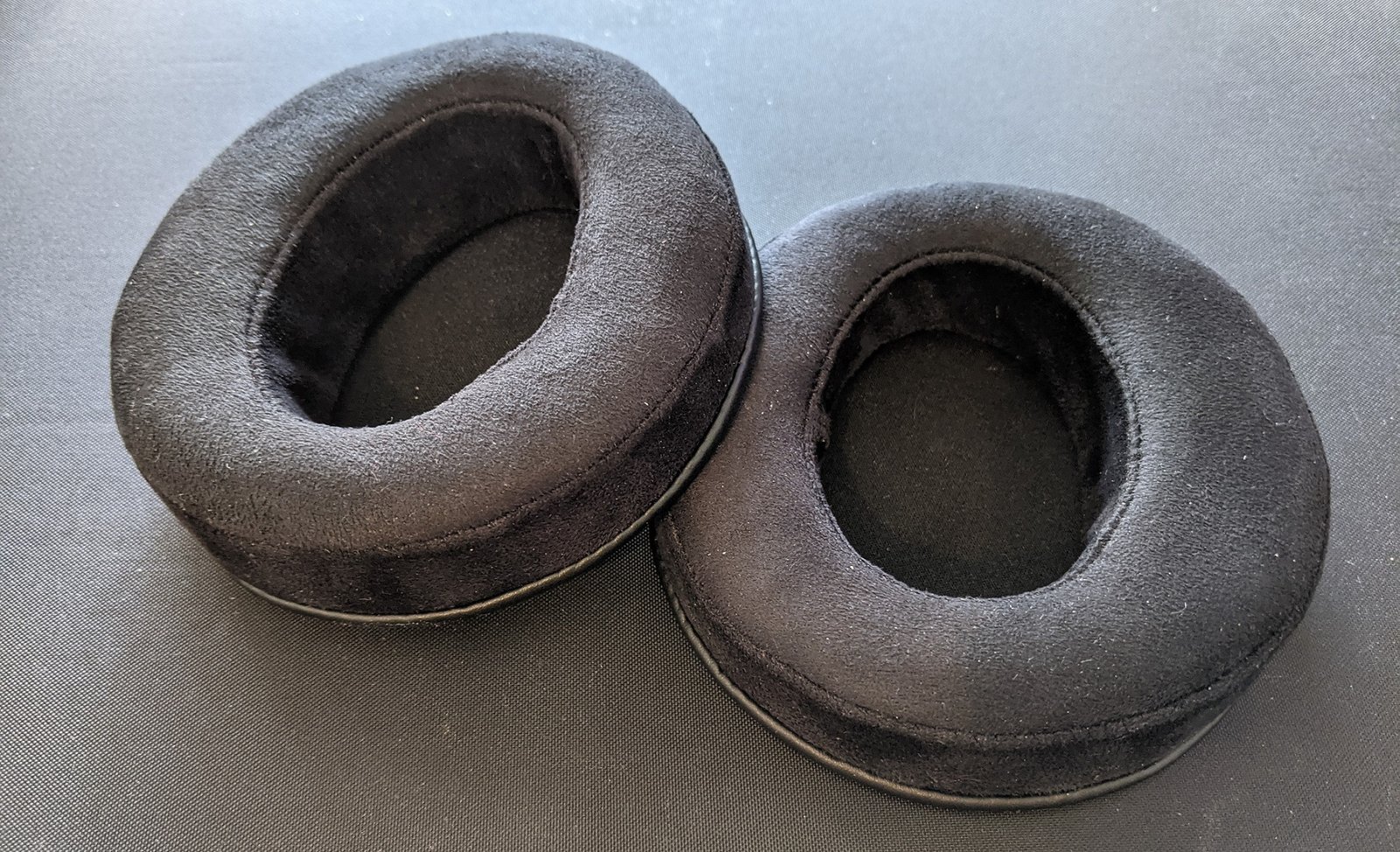
Eikon suede pads make the headphones' playback more linear, reducing the amount of mid-bass and smoothing out the reproduction of high frequencies. The headphones become slightly brighter and clearer sounding, and the mid-frequencies remain excellent. The tuning with these pads is more balanced, and the headphones could objectively be called better. However, at the same time, some of the originality is lost, which is why I originally acquired the headphones. With fabric pads, the sound is also such that Atticus begins to find similarly sounding competitors on the market with slightly better technical performance.
Both leather and fabric pads have their own advantages and fans. The best thing, however, is that thanks to the possibility of changing pads, the headphone owner, in a way, simultaneously owns several different headphones.
Power requirement and device pairing
All ZMF headphones have a high impedance of 300 ohms. However, the Atticus's sensitivity is 99 dB/mW, so in an emergency, it can be played at a sufficiently loud volume even with a mobile phone. The headphones are not too picky about device pairings; for example, traditional transistor amplifiers work well, as even more clinical devices do not destroy the pleasantly warm sound.
Low output impedance amplifiers particularly tighten the headphones' bass reproduction, making the sound feel slightly faster – impacts are stronger, but in a way, smaller in size. Conversely, with high output impedance amplifiers, more warmth is added to the low frequencies, and for example, drum hits sound massive in size.
The Atticus is well suited for listening with a tube amplifier, as tubes further emphasize the headphones' natural sound while adding their own contribution to the reproduction of spatial details. For example, with the Tor Audio Roger tube amplifier, the bass reproduction is really powerful. Tubes also bring out small details better, which normally remain somewhat hidden when listening to headphones. Although it is possible to modify the Atticus's sound with different devices, in my opinion, there is not a huge additional benefit from buying expensive devices.
Summary
The Atticus is a unique headphone model in its price range, as it has been designed from entirely subjective starting points, almost completely forgetting potential competitors. Many cheaper headphones achieve the same level of detail. For those accustomed to headphones that bring out more details, the Atticus might sound modest. The buyer should therefore know what they are buying – ZMF also relies on this.
The Atticus has become a popular headphone model precisely because it offers a change from other brighter and more listener-activating headphones. The headphones do not force details out, nor do they try to sound better than they are. Because listening proceeds entirely on the listener's terms, the Atticus is suitable for situations where one feels like listening to music, but the thought of doing so with other headphones feels too heavy. This feature is difficult to measure in monetary terms.
Surprisingly often, I have moments when I don't feel like listening to my significantly better Verite Closed headphones, but I want to relax listening to the Atticus. Often, the Atticus is also a better choice for rock-style music. The Verite is still undeniably a better headphone, but I wouldn't give up the opportunity to listen to music more casually sometimes.
Owning ZMF headphones feels special because the maker's touch is both visible and audible in them. The Atticus is simultaneously a headphone and a kind of personal decorative item that I want to keep on display. The selling price may seem high, but it's impossible to expect anything else from a product handcrafted by a small workshop, especially since the coronavirus pandemic has increased demand for headphones, stretching the order queue for some models to 3 months.
The goodness of the Atticus is ultimately very subjective. Many characteristics of the headphones, such as natural reproduction, emphasized low frequencies, and interestingly tuned mid-frequencies, are characteristic of all ZMF models. If these aspects rank high on your wish list and you also desire a slightly more energetic and detailed reproduction, you should also explore the manufacturer's other selection.
 EN
EN  FI
FI
After a little testing, they do sound great with heavy metal music, which is what I got the Atticuses for, but I'm left wondering a bit how the Aeoluses sound compared to these.
I have always leaned towards open-back headphones, and at least initially, the soundstage of these sounds really narrow.
I should find an Aeolus to test somewhere.
Have you been able to compare them side by side?
I sent a comment request to Roderick, who owned both for a while. I haven't had the chance to hear the Aeolus or other ZMF open-back headphones myself, so it would be guesswork. I can, however, indulge in that much and assume that the Aeolus 1) has a slightly, but not much, larger soundstage 2) has more emphasized mid-frequencies, as there are a couple of elevated points compared to the Atticus 3) has a more linear and better controlled bass tuning (+less warm)
Somewhat surprisingly, I found the Atticus' soundstage to be wider than the Aeolus'. The Atticus, in my opinion, creates a good sense of space with echoes generated from the cups. The Aeolus lacks this effect and is not very open in its construction for an open-back headphone. Therefore, I don't believe the Aeolus is the solution when seeking a better soundstage than the Atticus. It's a shame I haven't heard the Auteur, so I can't say if it would be a better option.
Sword Of Damocles, by the way, excellently guessed the most essential differences between the Atticus and Aeolus. The Aeolus does not have as strongly emphasized mid-bass as the Atticus, and in terms of mid-range reproduction, the Aeolus is slightly more intense. The Aeolus is more balanced across the board in its sound and sounds very natural. If I had to choose one of the two as my only headphones, I would take the Aeolus, because I think it suits almost all music better and doesn't sound as technically clumsy as the Atticus. However, the Aeolus did not offer me those ”wow feelings” as frequently as the Atticus. The Atticus, in my opinion, is better suited as a complementary solution to a headphone collection than the Aeolus.
Hey,
I’ve been reading your reviews and find them very detailed and helpful. I am now in search for closed backs or IEMs that have simillar sound signature to my favourite Arya Stealth. So far I have been offered trades for LCD-XC, Rognir Dynamic, ZMF Atticus and Monarch mk2 IEMs. I have only listened to the LCD-XC from these but I found the mids too boosted, even tiring for longer listening sessions, Arya are a lot more balanced. What is your advice, which trade should I take?
Regards,
Plamen
Hey and thanks for feedback!
From those options Monarch mk2 would be the only one to offer somewhat similar upper frequency brightness and airiness to Hifiman Arya. Monarch would have A LOT more bass, but its frequency response would be quite even and detailed sounding, which is the case with Arya too. Those closed back over-ear models are very different compared to Arya, as mids are a lot more uneven and highs have both dips and peaks. I like closed back headphones, but they cannot really match open back headphones like Arya. IEMs on the other hand can be tuned to be balanced sounding, why many probably like them when reguiring some noise isolation. I tried to think other possible closed back model similar to Arya or other open Hifimans, but unfortunately there probably aren’t any perfect ones without using EQ. Have you thought about it? I understand the LCD-XC being too mid forward. 🙂
Cheers