Author: Sword of Damocles
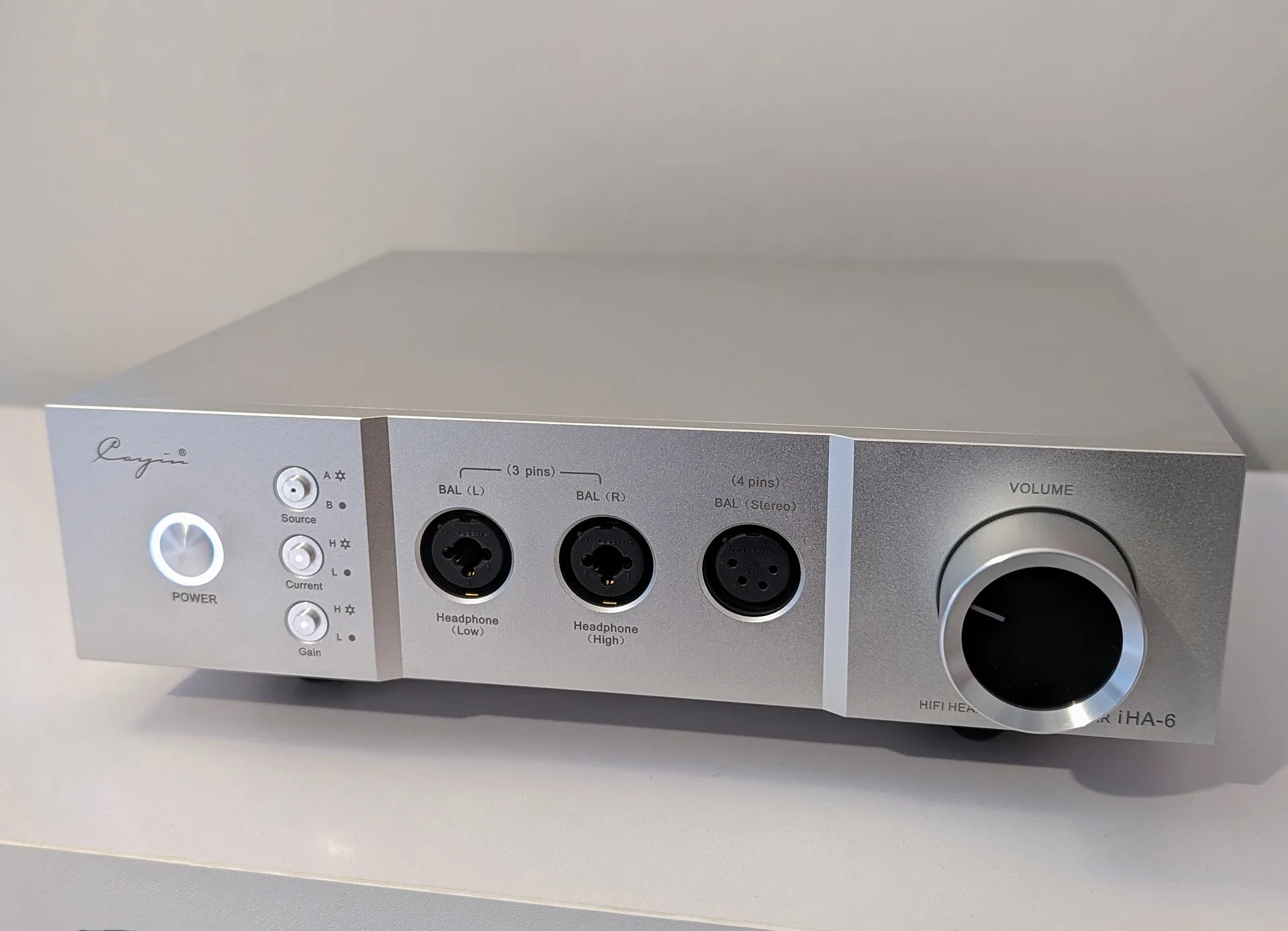
Table of Contents:
Information:
- Release year: 2016
- Country of Origin: China
- Price: 700 USD (In Europe 900 €)
- Type: Headphone amplifier (Class AB)
- Connections: XLR and RCA inputs
- Headphone connectors: 4-pin-XLR, 2 x 3-pin-XLR and 2 x 6.35 mm
- Gain levels: low/high
- Output impedance: <0.3 ohms (XLR connectors), 10 ohms (low 6.35 mm) and 120 ohms (high 6.35 mm)
- Low/High Current mode
- Unbalanced connectors output power: 1.1 W @ 32 ohm (high current) and 2.2 W @ 32 ohm (low current)
- Balanced connectors output power: 5 W @ 32 ohm (high current) and 7 W @ 32 ohm (low current)
- Dimensions (W x D x H): 240 x 252 x 60 mm
- Weight: 3.8 kg
- Accessories: White gloves
Review sample: Self-purchased product
Chinese device manufacturer Cayin just turned 30, so Kuulokenurkka's review list appropriately features two headphone amplifiers manufactured by them. I will start with the iHA-6 transistor amplifier, released in 2016 (link to the manufacturer's product page), which is still sold for $700 or €900. It is an externally very high-quality device that, with its exceptionally versatile selection of connectors, offers plenty of power for demanding planar headphones and a suitably high output impedance for, for example, 300-ohm dynamic headphones. For a slightly older amplifier, the iHA-6 has been surprisingly prominent in the last couple of years after headphone manufacturer ZMF added it to its online store's selection. I myself have had the opportunity to discuss the device on several occasions during 2023 in connection with my headphone reviews.
Regarding Cayin, I will mention that its product range includes D/A converters, digital audio players (DAP), mobile amplifiers, transistor amplifiers, and tube amplifiers. The manufacturer invests in the perceived quality of its devices, which is an excellent indication that China is capable of producing products at least as high-quality as those in Western countries. A similar impression was also formed for me by the previously reviewed Matrix Audio X-Sabre 3 -D/A converter.
Structure
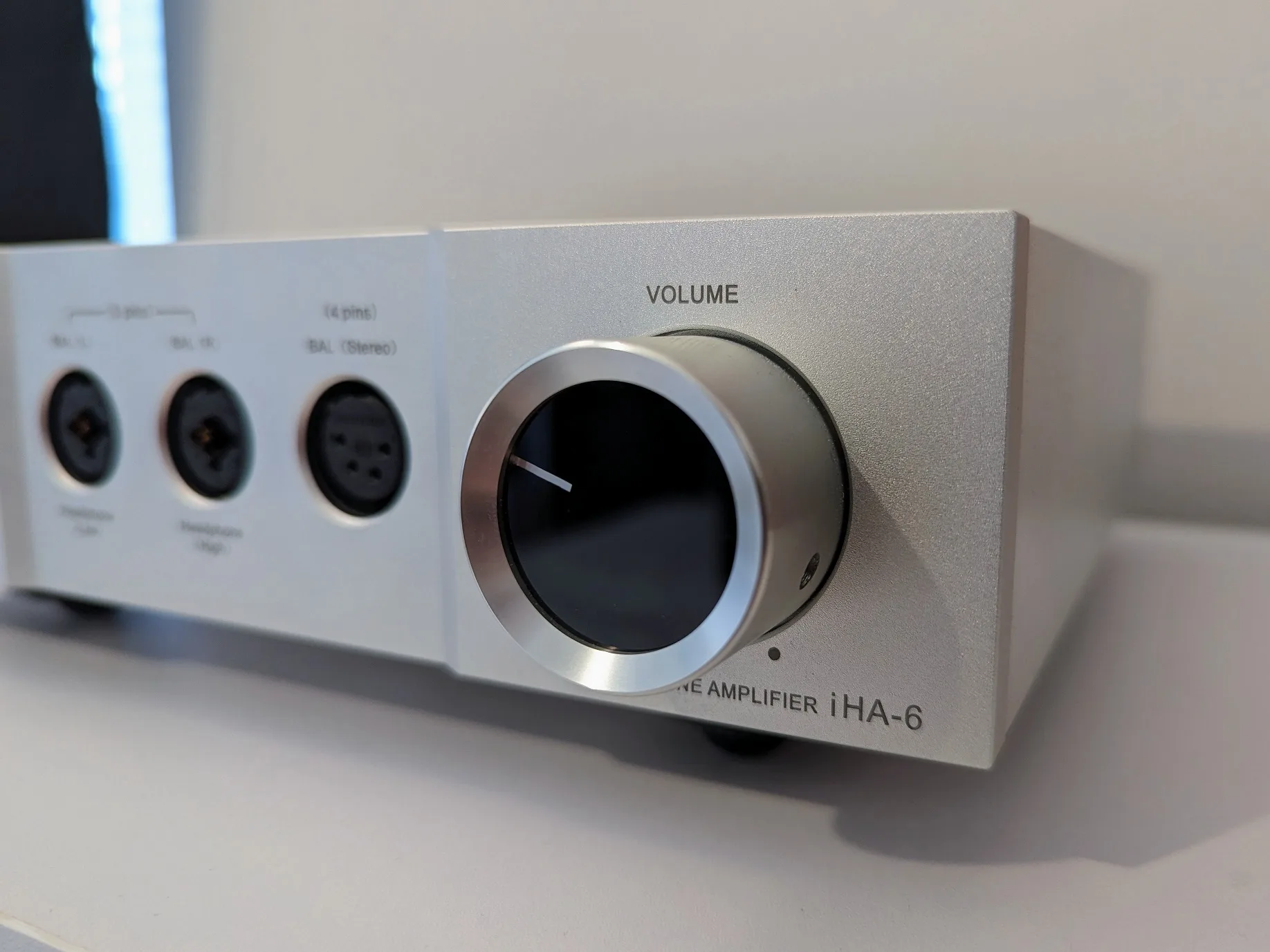
The silver-colored iHA-6 is not huge in size, but it still weighs almost 4 kilograms. In addition to thick aluminum casings, practically everything else is made of metal, including the buttons and the volume control. The fit, feel, and tolerances of the parts are flawless, so the impression of quality is really high for the price of the device. The package is further crowned by high-quality Neutrik connectors, a potentiometer with an excellently smooth movement (no looseness or wobbling whatsoever), and the pleasant-sounding clicking of relays when buttons are pressed.
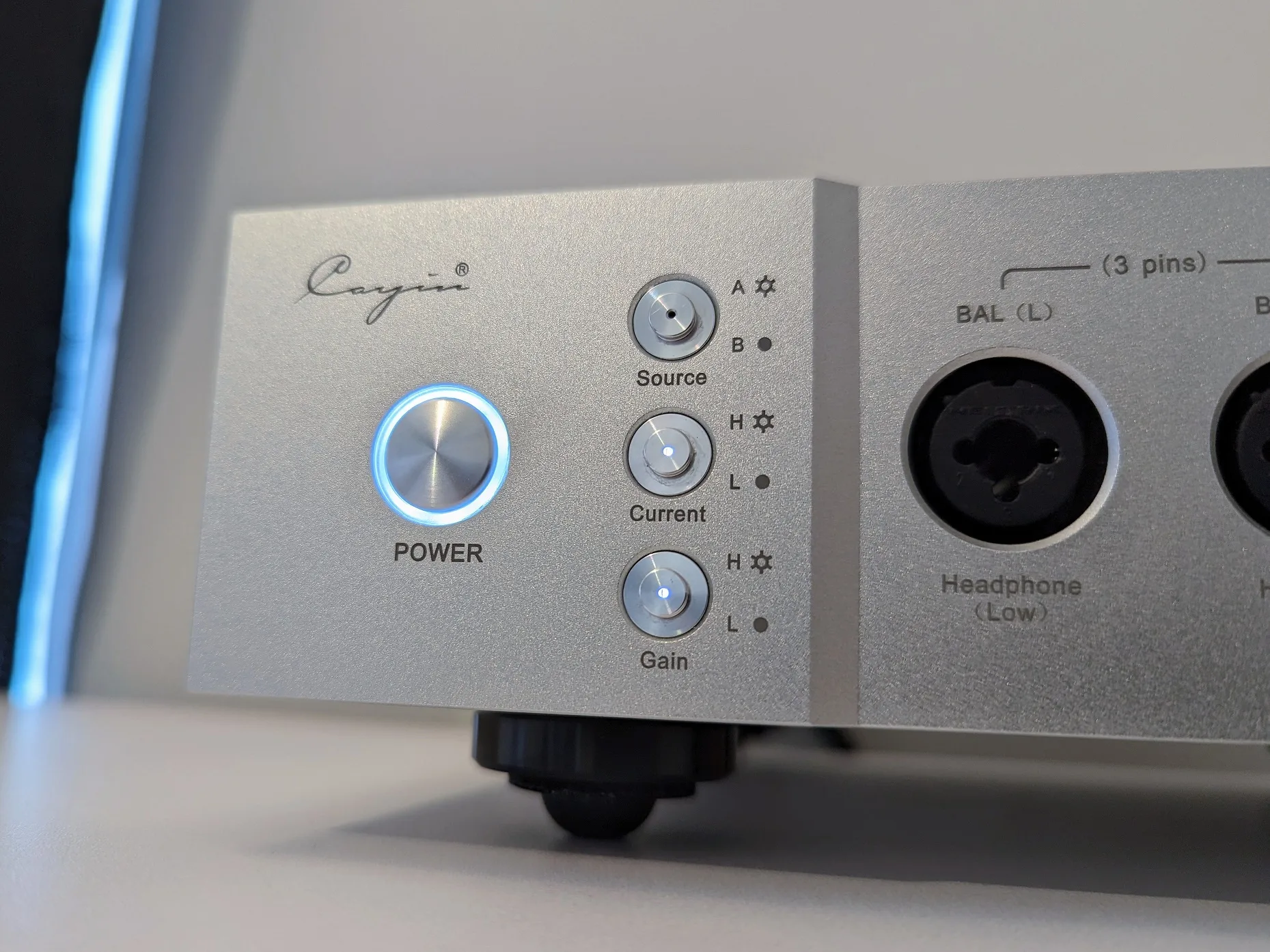
The manufacturer must be commended for placing the power button on the front edge of the device. It also has a clear white LED ring around it, so there's no need to guess if the amplifier is on. Next to the power button are three smaller buttons that, listed from top to bottom, switch the audio input (XLR/RCA), power mode (low/high), and gain level (low/high). A white light illuminates in the center of the buttons when selecting the latter option mentioned in parentheses. Information texts are also available for all functions, but they are very difficult to see on the silver front panel due to their gray font. The position of the volume control, however, is marked very clearly compared to amplifiers from many other manufacturers.
Connections
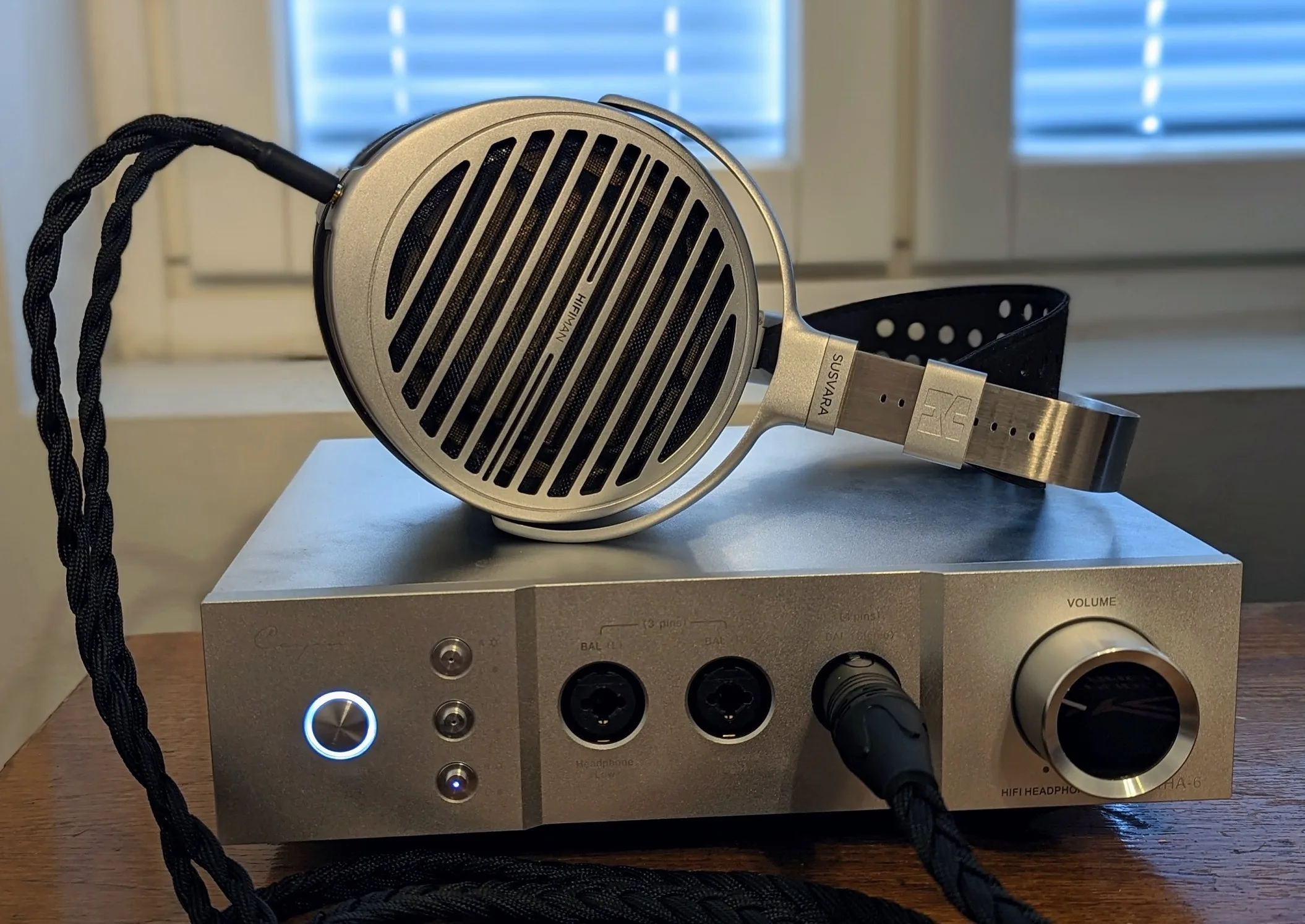
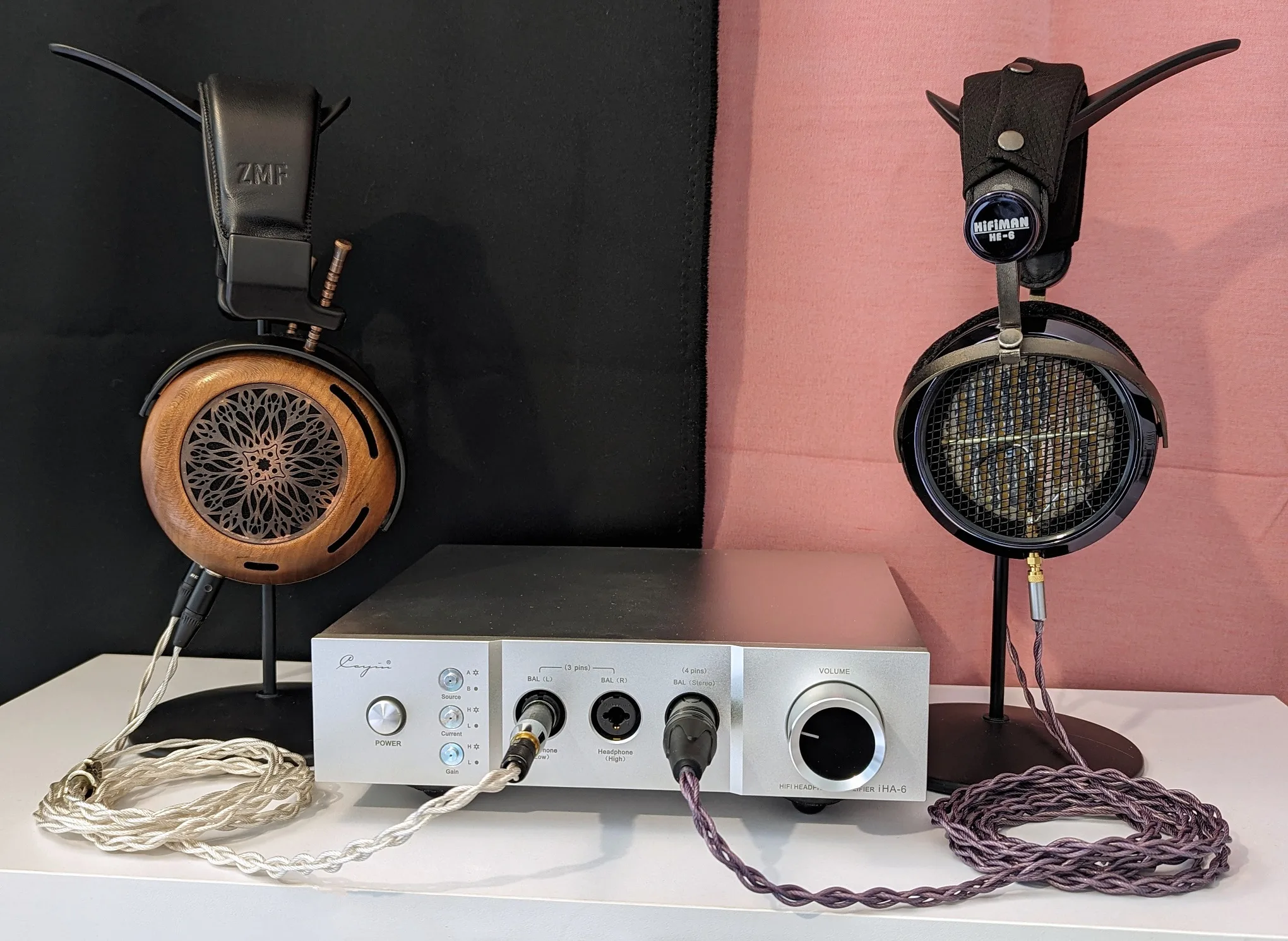
The iHA-6 includes an interestingly wide selection of headphone connections located in the center of the device. Balanced connections include a traditional 4-pin XLR and the rarer 2 x 3-pin XLR separate connectors, the use of which, to my understanding, offers no significant advantage over a normal XLR connector. Two 6.35 millimeter unbalanced connectors are found inside the 3-pin XLR connectors. The output impedance of the balanced connections is close to zero, while the impedance of the 6.35 millimeter connectors has been intentionally raised with the help of additional resistors.
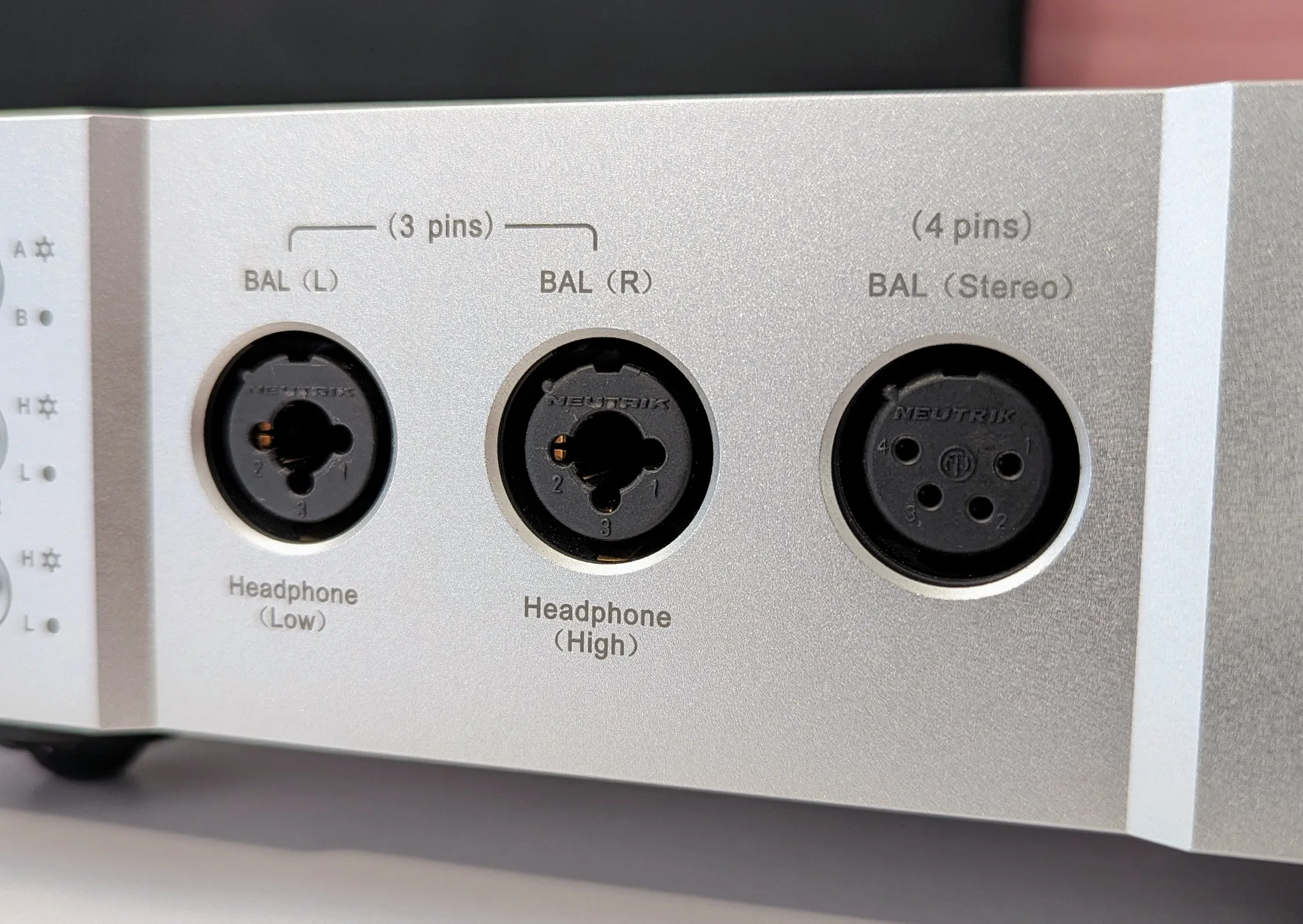
The impedance of the left low-connector is 10 ohms and the high-connector is 120 ohms, which affects the sound and even the frequency response of dynamic headphones, depending on the ohm value and the flatness of the impedance curve. The changes can be either pleasant or unpleasant, but few amplifiers offer a similar opportunity for sound adjustment. At the same time, a more normal result can still be achieved through the balanced connectors, which, of course, requires that a balanced cable exists for the headphones in use. Owning an iHA-6 can easily lead to cable shopping, which the manufacturer could have prevented by adding an unbalanced connector with an output impedance close to zero to the device. In its absence, the amplifier is also poorly suited for in-ear headphones, which react sensitively to high output impedance.
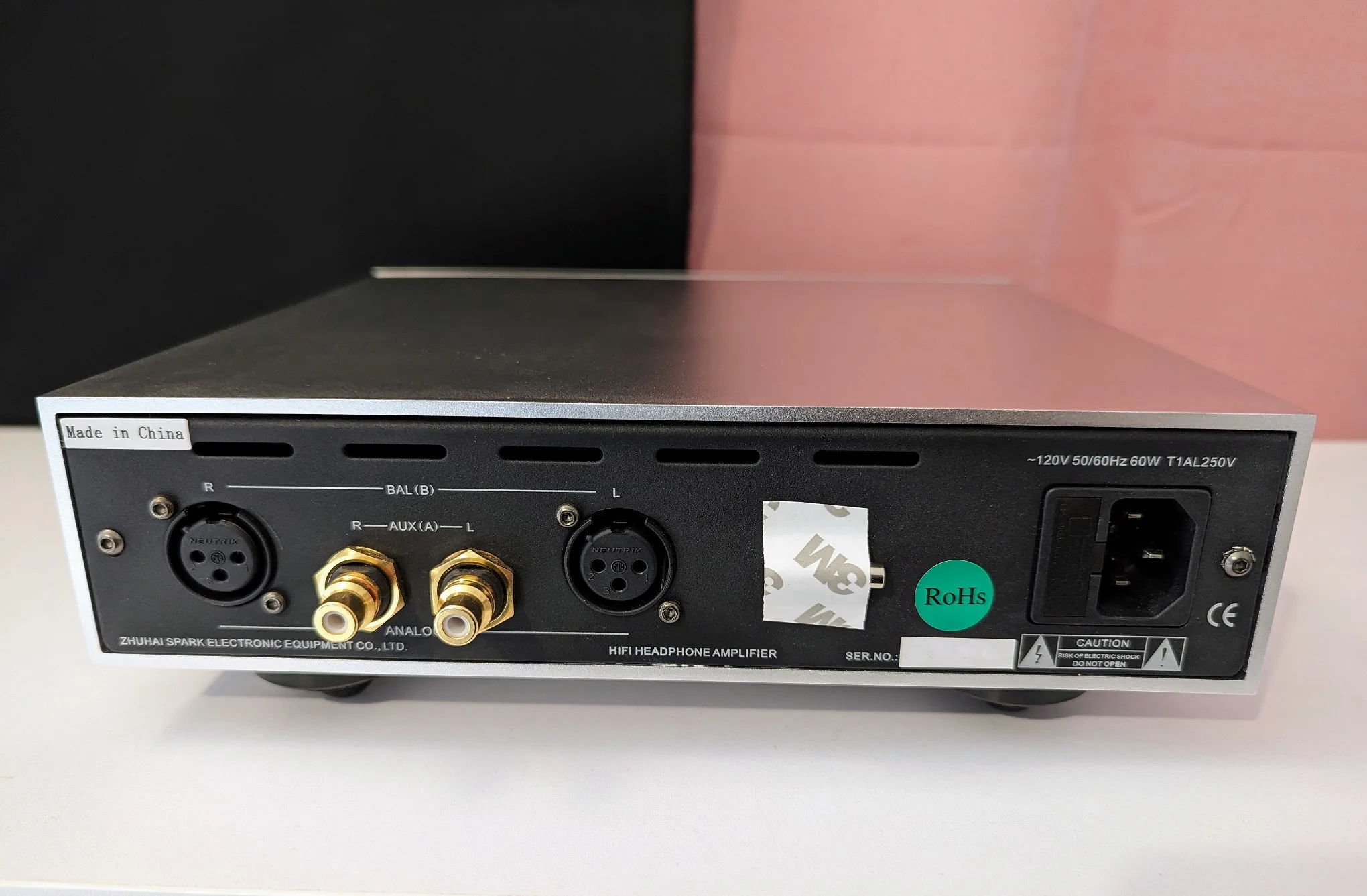
The iHA-6 is purely a headphone amplifier in terms of its other connections, as there are no output connectors on its rear for use as a preamplifier, in addition to the XLR and RCA inputs. The device has a built-in power supply, so a standard-sized power cable can be used with it. The text written on the chassis of my own device suggests it is suitable for a 120-volt electrical grid, but inside, there is actually a transformer suitable for the European electrical grid.
Features and usage considerations
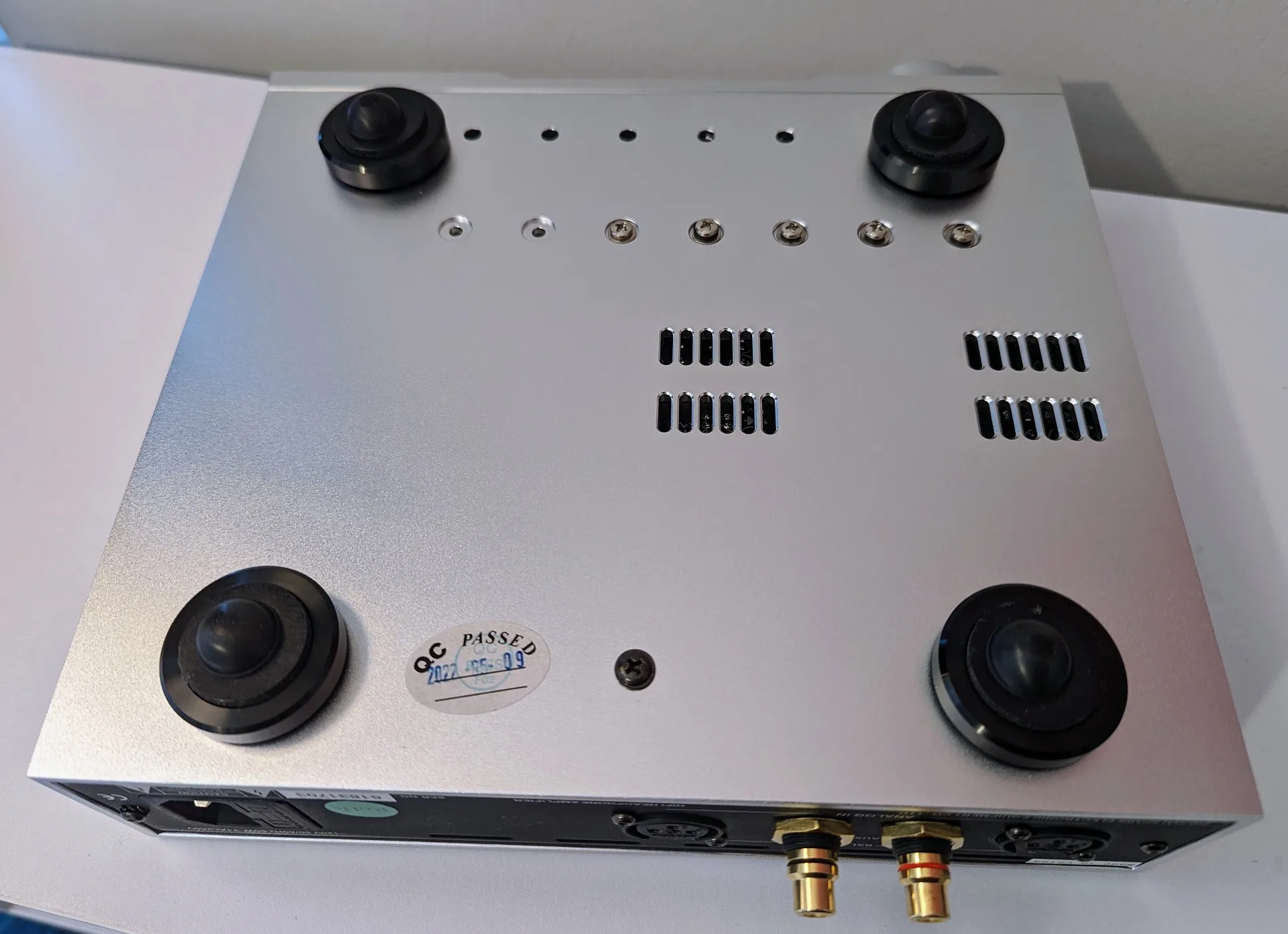
The iHA-6 is a Class AB amplifier in principle, part of its price being explained by its high-quality construction in addition to a large number of discrete components. The device warms up somewhat during use, but not to a worrying or hand-burning degree. Power consumption during use rises to over 50 watts at most and drops to about 20 watts without load.
The high-current mode, activated by the front button, adjusts the amplification balance more towards Class A, but the iHA-6 never operates fully in Class A mode. Because using the high-current setting reduces the amplifier's output power, it is not intended, despite its name, to boost amplification for headphones requiring more current. Instead, the setting changes the current supply to the transistors and the device's distortion values. The effect on sound is small at best, but at least noticeable.

The iHA-6 delivers a hefty 7 watts of power through its balanced headphone connectors to a 32-ohm load. I have found the device to perform excellently with Hifiman's HE-6 and Susvara, as well as the Abyss AB-1266, so there are currently no headphones in the world from which the iHA-6 could not extract a large part of their potential. Golden Sound's based on measurements, over 1 watt of power is available even for a 300-ohm load, so the amplifier is suitable for all types of headphones. The output power of the unbalanced connectors, however, is clearly lower, around 2 watts for a 32-ohm load. This is still more than sufficient for most headphones. In principle, I have never needed a higher gain level, but it is useful for volume control range with Hifiman Susvara and HE-6.
The iHA-6 does not ”succeed” in device measurements as well as, for example, Topping amplifiers, but there is nothing inherently wrong with it either. The distortion values, however, seem somewhat unique, as the amount of distortion increases towards both low and high frequencies, being lowest in the mid-frequencies. This may partly explain some of my observations about the device's sound quality. Attaching or detaching headphones does not cause extraneous noises or popping, so in that respect, the iHA-6 is well-designed compared to, for example, one I previously owned. Burson Audion Soloist 3X Performance -to the amplifier.
During use, no background noise is typically transmitted from the iHA-6 to the headphones, unless very sensitive in-ear headphones are used with it. Even then, the noise is quite moderate, even through the balanced connector, and there is surprisingly decent headroom left in the volume control, because the channel balance is good right at the beginning of the travel. Of over-ear headphones, only those with high impedance and sensitivity, such as Fiio FT3 does not work optimally with the iHA-6. When listening to it, the background noise when balanced is noticeable, making it more sensible to settle for the more moderate 6.35 millimeter connections in terms of output power.
As one of the special features of the iHA-6, I would also mention the tightness of the 6.35 millimeter connectors. The tip of the headphone cable connector slides very firmly into the connector, so pressing and removing the cable requires a bit of force. The combination connectors used in the device are generally quite rare, as they are more often seen as microphone connectors in products designed for professional use. In this case, they save space, as is also the case with the iHA-6 – it has been possible to fit additional 3-pin XLR connections, whether they are used or not.
Sound quality
The sound quality of the Cayin iHA-6 is not easy to summarize in a few sentences, as the device essentially offers three different outcomes depending on the chosen headphone connector. I have owned the amplifier for about a year, but it still manages to surprise. Switching certain headphones from one connector to another can reveal entirely new aspects of them. I will probably never get tired of the iHA-6; it is a true amplifier for headphone enthusiasts. I also feel it is good enough for expensive headphones, so I haven't felt the need to look towards, for example, the 2000-euro Ferrum Audio OOR or HeadAmp GS-X Mini.
I have used the amplifier with a D/A converter most of the time Schiit Audio Bifrost 2, but a more neutral and significantly more expensive Matrix Audio X-Sabre 3 has also been in my listening chain. The chosen DAC has its own minor effect on the final sound. Correspondingly, it is worth remembering that the headphones in use always have the greatest impact on the outcome. However, I have been able to compare several different amplifiers with the same DACs and headphones over the year, so I believe I have a pretty good grasp of the iHA-6's characteristic sound. Despite everything, this is still my subjective assessment, so someone else might experience the sound slightly differently, or at least use different words to describe the outcome.
iHA-6 balanced:
When the amplifier is used via a balanced XLR connector, I would describe the sound as dynamic, spacious, and controlled. At the same time, however, the edges of the sounds are reproduced slightly softened, so the iHA-6 sounds a bit more rounded and relaxed compared to, for example, more affordable, well-measuring Chinese devices. This could, at least in theory, be due to higher distortion values in the low and high frequencies.
Fortunately, the presentation is by no means dull or veiled, but rather still quite clean and energetic, as the amplifier does not reduce, for example, the amount of treble, and the bass hits very tightly. With some headphones, the sound can even be slightly aggressive and fatiguing, instead of being warm and relaxed. However, the iHA-6 ultimately sounds surprisingly ordinary in a positive sense, without the clinicality and lifelessness that plague some amplifiers. Going in the other direction, my previously owned Burson Audion Soloist 3X Performance had a softer sound and reproduced vocal performances with more presence than usual. Compared to it, the iHA-6 sounds less colored when balanced.
Although the Burson Audio amplifier also had a larger soundstage, I have generally found the iHA-6 to be more spacious and resolving compared to all transistor amplifiers cheaper than it – for example, the Topping A90, considered a neutral reference, I have yet to hear myself. Despite its spaciousness, the iHA-6's soundstage does not feel enlarged in any way, but rather that the amplifier does not diminish the recordings' own sense of space – the situation is good just as it is.
The amplifier's sound profile when balanced has been particularly well suited for planar headphones. For example, ZMF Caldera and Hifiman HE-6 sound excellently tight and controlled. Also Hifiman Susvara and Abyss AB-1266 work in such a way that I don't believe the amplifier significantly hinders their drive. In the case of Susvara, some have said that the sound improves with devices more expensive than the iHA-6, but I haven't had the chance to try this myself. When balanced, the iHA-6 is interestingly both punchy and relaxed in its sound, which I wouldn't have thought I could say about any headphone amplifier. This could also be described as listening being easygoing, but the energy level still makes your feet tap. This, of course, ultimately depends significantly on the headphones in use.
6.35 millimeter connectors with higher output impedance
The change when switching to 6.35 millimeter connectors with 10 and 120 ohm output impedance is quite noticeable, as the iHA-6 feels almost like a different amplifier. Because such a high output impedance easily changes the frequency response of dynamic headphones with low impedance, the connectors are primarily intended for high-impedance headphones, such as 300 ohm Sennheisers and ZMFs.
When used this way, the frequency response does not change; instead, the amplifier, with its higher output impedance, controls the headphone drivers just suitably less. In this case, the reproduction relaxes and, in a way, slows down. I find the less tense and analytical presentation with 300 ohm headphones more natural compared to the balanced XLR connector. On the other hand, the amplifier sounds more dynamic and fresh when balanced, and the separation of sounds is clearer. The changes can be positive or negative depending on what one is aiming for. However, the best thing about the device is that it offers various options and at a very reasonable price.
10 ohm connector:
Among the unbalanced connectors, the 10 ohm option is a good compromise between two different extremes. For example ZMF Atrium and Verite Closed and Sennheiser HD 600 sound slightly more natural and have a more credible sense of space with it, whereas the balanced connector might make them sound too controlled and tight for some tastes. The 10 ohm output impedance does not make the sound particularly fuller or more bass-heavy with these headphones, but it suitably softens the most energetic sounds while simultaneously pushing the overall sound slightly further away. The result is less listener-activating and even somewhat tube amplifier-like. Listening is pleasant and effortless without the presentation feeling particularly colored compared to the balanced connector.
Planar headphones, on the other hand, sound distinctly duller and less impactful through the 10 ohm connector, despite their flat impedance response, so the sound of unbalanced connectors differs from balanced connectors for reasons other than just the output impedance effect. After all, the 6.35 millimeter connectors are also 70 percent weaker in terms of output power. Some claim that the iHA-6 only sounds good when balanced. While I wouldn't be as absolute myself, I understand the claim when it comes to planar headphones.
The suitability of low-impedance dynamic headphones for the 10 ohm connector, in turn, depends on whether they have a flat impedance response. For example Meze Audio 109 Proits frequency response does not change much, but its treble is slightly more tolerable for me than with many other amplifiers. Focal headphones, on the other hand, have an uneven impedance response, so with a 10 ohm output impedance, there will be a slight boost in the mid-bass. However, this is not necessarily a bad thing, so it's worth boldly trying such headphones with the iHA-6's different connectors.
120 ohm connector:
The 6.35 millimeter connector with a high 120 ohm output impedance takes the changes I described earlier even further, already sounding truly relaxed. It also attenuates and softens the treble so much that lower frequencies draw more attention when listening. With Sennheisers and ZMFs, the reproduction gains more warmth and emotion, but the result, when critically evaluated, starts to be a bit unclear. Especially headphones that are already relaxed in their tuning can sound too soft, so the amplifier should control them more tightly. Therefore, in my opinion, the 10 ohm connector is often the more sensible choice of the two options.
Forgetting practicality, the 120 ohm connector, however, makes the soundstage of, for example, the ZMF Atrium and the closed Verite model fascinatingly the most realistic-sounding and immersive. For instance, the vocalist is positioned clearly closer in the overall presentation than when listening through the balanced connector. The impedance settings of the Cayin HA-3A tube amplifier interestingly affect the sound with 300 ohm headphones in a similar way: increasing the impedance adds presence and emotional charge to the reproduction. The presentation style is indeed very different between the iHA-6's 120 ohm connector and the balanced connector. I often find myself switching headphones from one connector to another based on what best suits my mood at the time. The amplifier is admirably versatile.
Effect of current setting on sound
Cayin's designed current setting adds its own spice to sound adjustment, even if there isn't a revolutionary difference between low- and high-current modes. For example, with Sennheiser HD 600 and many other dynamic headphones I've tried, the high-current mode adds a bit of warmth to the sound, as if the lower mid-frequencies shift a notch forward in the overall presentation. This is most easily noticeable when listening to a vocalist or speech in general. The human voice sounds a bit fuller and more pleasant, whereas by default in low-current mode, it remains slightly thinner and airier. The same principle applies to other sounds, but for them, the difference is practically difficult to notice.
With planar headphones, I generally observe a similar change in sound, but for example, Hifiman's HE-6 sounds more organic overall in high-current mode, as if preserving the music as a more cohesive whole. In low-current mode, the sound is fresher and more transparent, making it easier to perceive details. Despite everything, my overall impression of the amplifier would not change when switching between current modes. In both modes, the frequency response, output impedance, and volume are identical, so the difference likely remains a different distortion profile. Although it is possible to adjust the sound more by changing the headphone connector, I am sure that enthusiasts will also find their favorite among the current settings for each headphone model. Especially when using a balanced headphone connector, the high-current mode nicely shifts the presentation slightly towards the 6.35 millimeter connectors.
Summary
Thanks to its versatility, the iHA-6 is a true amplifier for headphone enthusiasts. It is almost perfectly suited for those who own power-demanding planar headphones and/or high-impedance dynamic headphones. For example, I am not surprised that ZMF Headphones sells the amplifier, as it suits the manufacturer's headphones excellently. Headphones from Sennheiser and Hifiman, among others, also sound good with the iHA-6. Furthermore, using the device is easy, and nothing about it causes frustration. Similarly, the external build quality receives nothing but praise from me, as the amplifier could very well be significantly more expensive based on its appearance.
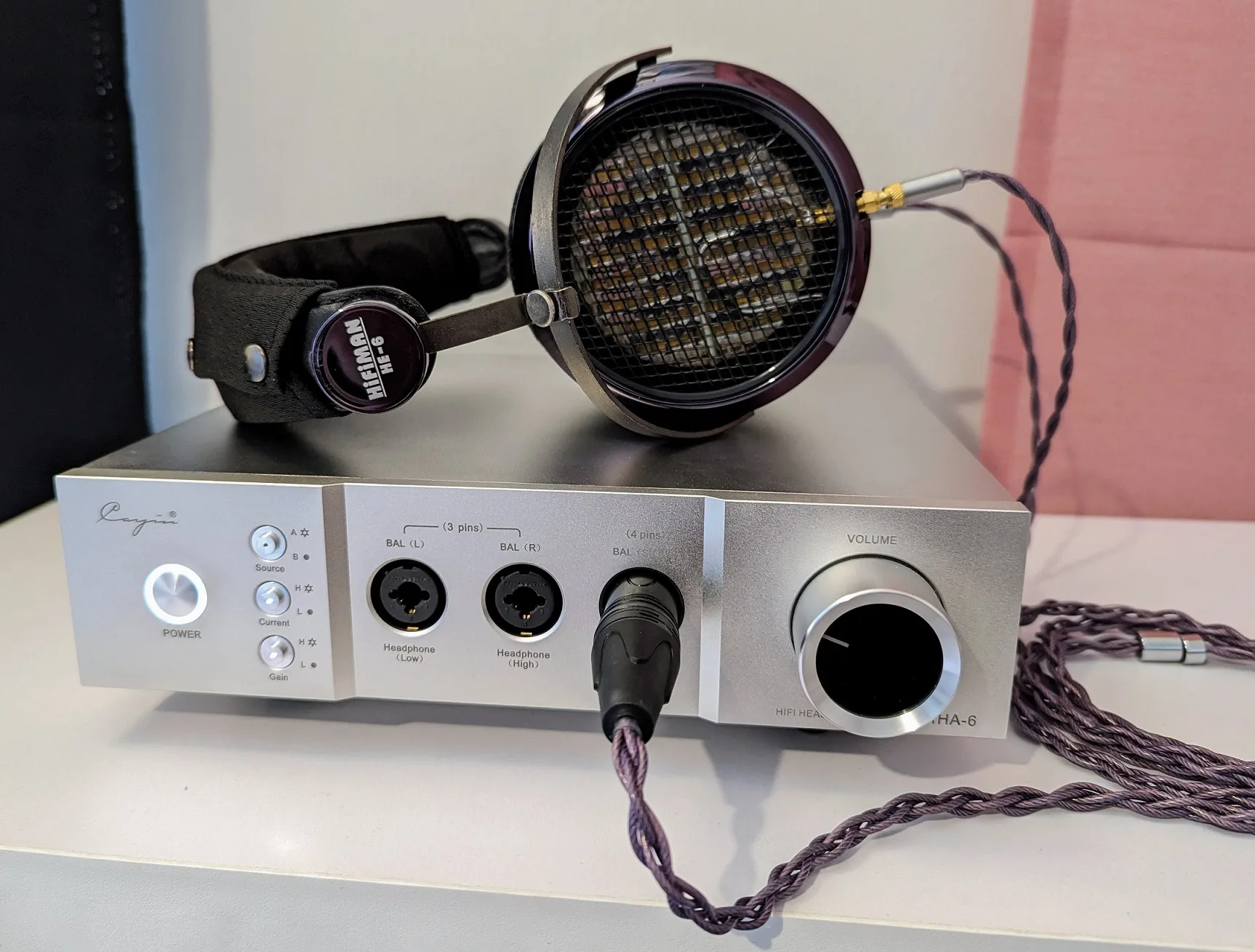
The only major noteworthy thing about the iHA-6 is that it does not have unbalanced connectors with low output impedance. For many headphones, a balanced cable will likely need to be purchased separately, as 6.35 millimeter connectors are not optimal for planar headphones or dynamic headphones with a low impedance (under 80 ohms). In-ear headphones, on the other hand, are very difficult to listen to via the XLR connector, and some noise is audible due to the high output power. For this reason, I do not see the device as very beginner-friendly; its buyer must understand what they are purchasing. However, I believe many will do so regardless of the device and its price point.
I hope my review is useful to those who have been looking for an amplifier like the iHA-6 or have considered purchasing it. Hopefully, Cayin's products will someday be available for sale in Finland too (wink wink resellers and importers), as their other products also seem really high quality. I will return to the manufacturer soon when writing about its HA-3A tube amplifier.
Pros and cons:
+ Balanced, dynamic sound without harshness or clinicality
+ Unbalanced, full and effortless sound
+ Versatile headphone connections and sound adjustment options
+ High output power via balanced connections
+ Extremely high-quality build in all respects
– No output connectors for use as a preamplifier
– No unbalanced headphone connector with low output impedance
– Poorly suited for in-ear headphones
 EN
EN  FI
FI