Author: Sword of Damocles
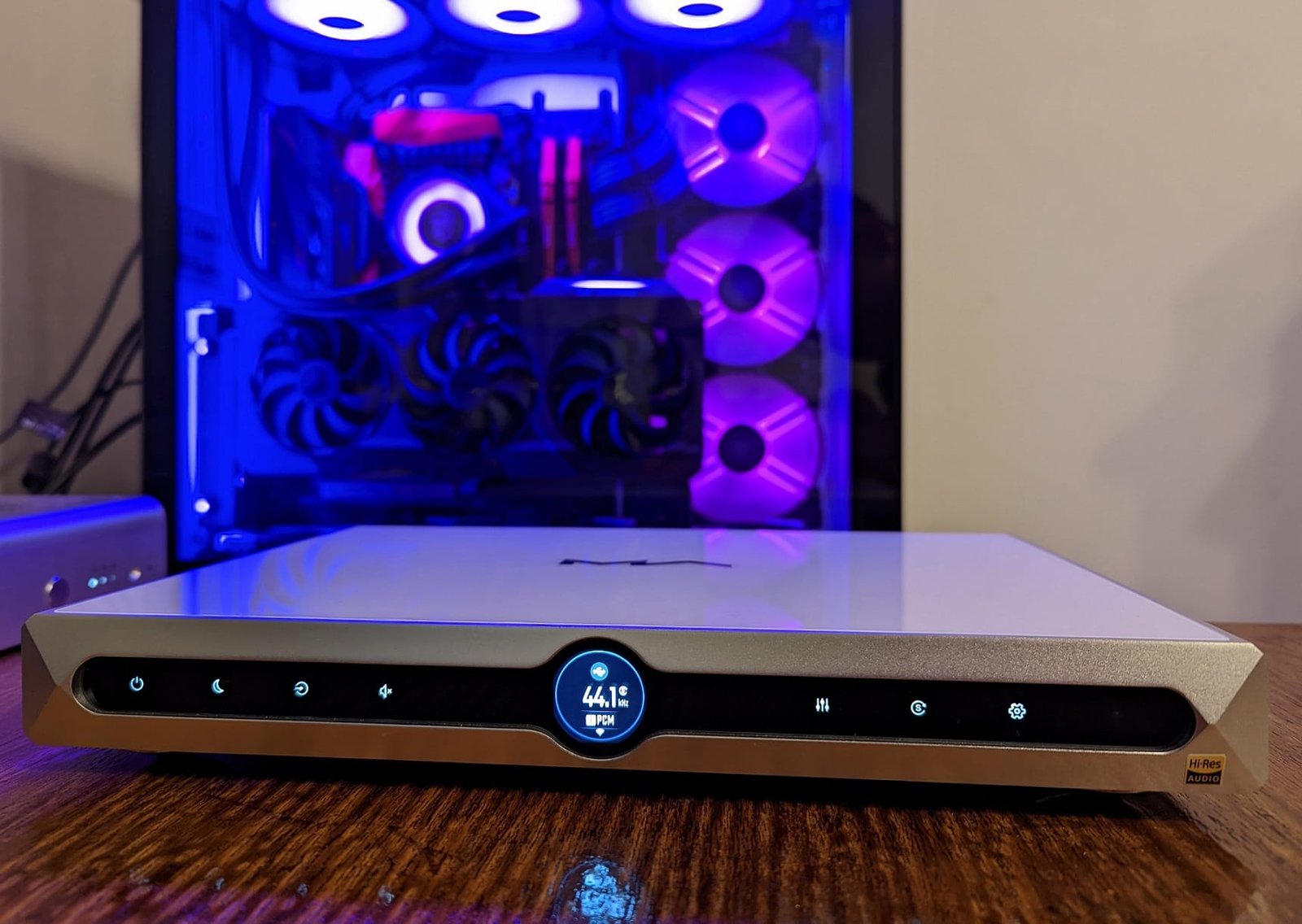
Table of Contents:
Information:
- Publication year: 2021
- Price: 3150 €
- Type: Delta-sigma DAC & network player
- DAC chip: ES9038PRO
- MQA support
- CPU: NXP i.MX 6Quad 4x Cortex-A9 @ 1.2 GHz
- Clock: Crystek CCHD-950
- Network connection: LAN 10/100/1000 Mbps & WLAN 2.4 GHz / 5 GHz (DLNA, UPnP, AirPlay)
- Input connections: USB-B, Optical, Coaxial, IIS LVDS (HDMI), RJ45
- Output connections: XLR and RCA
- Sampling rate (USB) PCM: 44.1–768 kHz (16–32 bit)
- Sampling rate (USB) MQA: 44.1–384 kHz (16–24 bit)
- Sampling rate (USB) DSD: DSD256 (DoP) & DSD512 (native)
- Sampling rate (Optical and Coaxial) PCM: 44.1–192 kHz (16–24 bit)
- Sampling rate (Optical and Coaxial) DSD: DSD64 (DoP)
- Sampling rate (IIS LVDS) PCM: 44.1–768 kHz (16–32 bit)
- Sampling rate (IIS LVDS) DSD: DSD256 (DoP) & DSD512 (native)
- Output voltage: RCA 2.4 Vrms / XLR 4.8 Vrms
- THD + N (XLR): < 0.0001% @ 1 kHz
- SNR (XLR): 134 dB
- Crosstalk (XLR): < -151 dB
- External dimensions (L x W x H): 21.8 x 31 x 4.3 cm
- Weight: 3.4 kg
- Power consumption in standby mode: < 4 W
- Maximum power consumption: < 33 W
- Included: power cable and remote control
Review unit acquisition method: Loaned from a reseller/importer
Nowadays, most electronics are manufactured in China, even if the design work has taken place, for example, in Western countries. This seems to bother only a few, but in my opinion, products from Chinese companies are still viewed with more prejudice. I have observed the same applies to audio equipment. The X-Sabre 3 device I reviewed (link to product page) and Matrix Audio, which manufactured it, are, however, an excellent example that Chinese companies have the skill to make devices with such an impressive quality feel, if they wish, that not many others can match.
The X-Sabre 3 is Matrix Audio's top-of-the-line device, which includes a D/A converter and a network player in high-quality and futuristic-looking casings. The entire package costs as much as 3150 euros, meaning its target audience is likely enthusiasts for whom money is no obstacle in pursuing the best possible sound quality. The network player would also likely benefit from regular use, as fitting it into the same chassis probably means paying a bit extra compared to a similar separate device.
The X-Sabre 3 was lent to me for testing by Hifitalo, which acts as a reseller of Matrix Audio products. We didn't specifically agree on writing a review, so my opinions will naturally be completely unbiased when doing so. All DACs I have previously used have been in the sub-1000 euro price range, so frankly, I wasn't sure beforehand what to expect from a significantly more expensive device. I have approached testing the X-Sabre 3 as a kind of challenge regarding whether I notice any significant improvements compared to more affordable DACs.
External introduction of the device
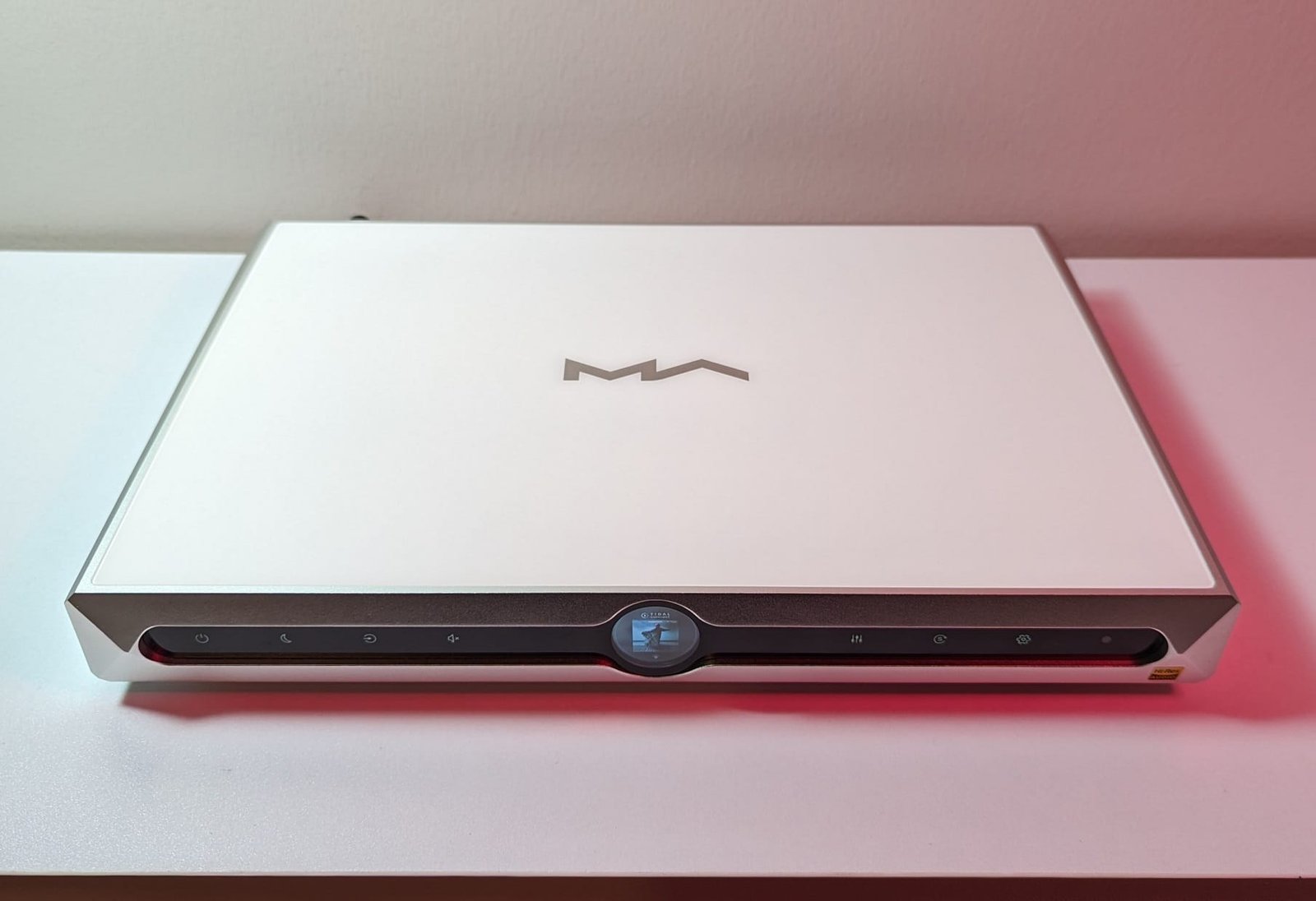
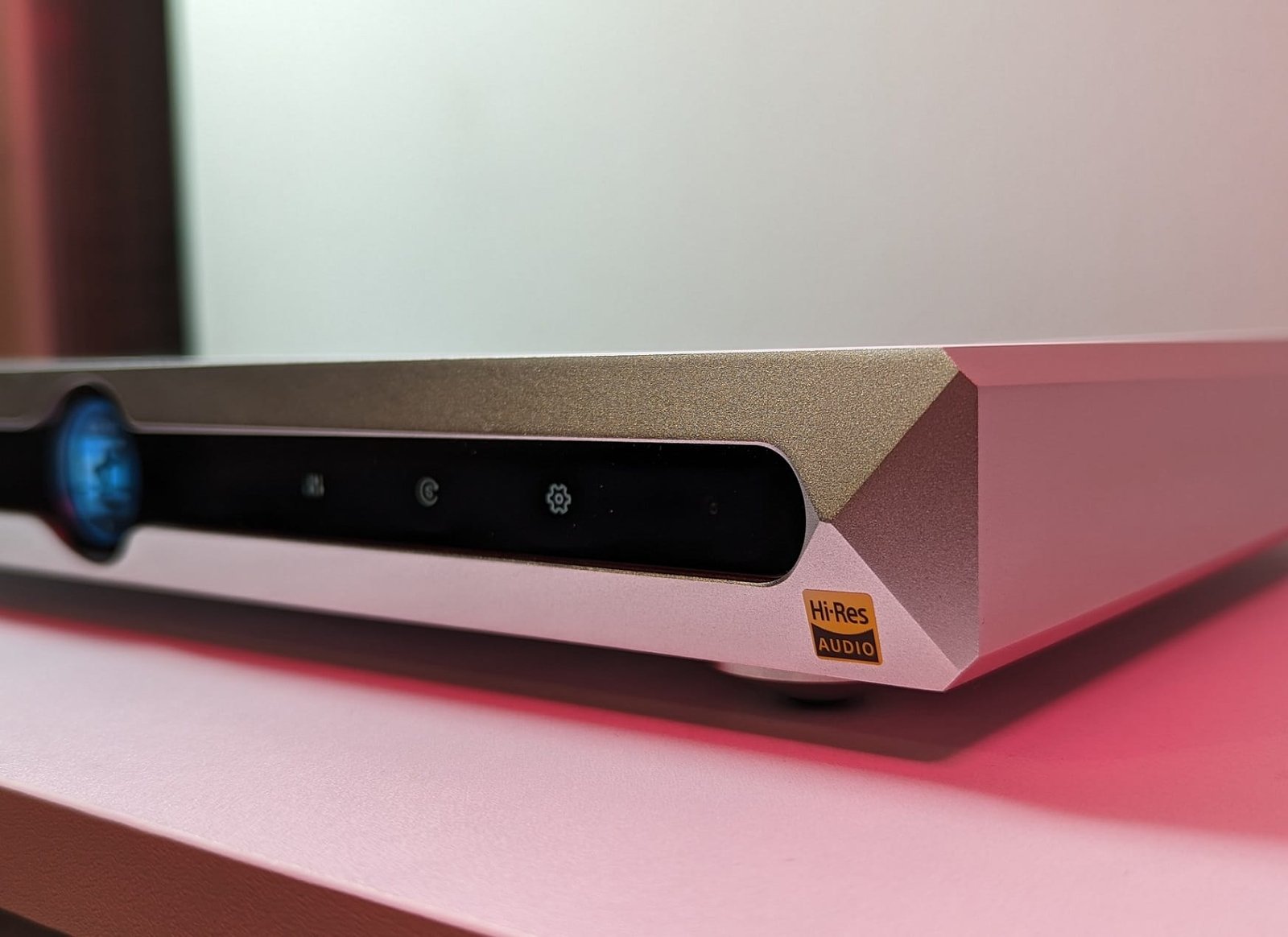
The X-Sabre 3 is an incredibly high-quality device, whose futuristic appearance matches its modern features well. Thanks to its side edges machined from a single piece of metal, the device literally feels and looks expensive and almost indestructible – the impression of quality is indescribable, so it's natural that it is also reflected in the sales price. The whole package is crowned by a glass top cover that beautifully reflects light. In the X-Sabre 3 I have on loan, the background of the glass is white, so fingerprints inevitably left on the glass are not easily visible, unlike in the black version of the device.
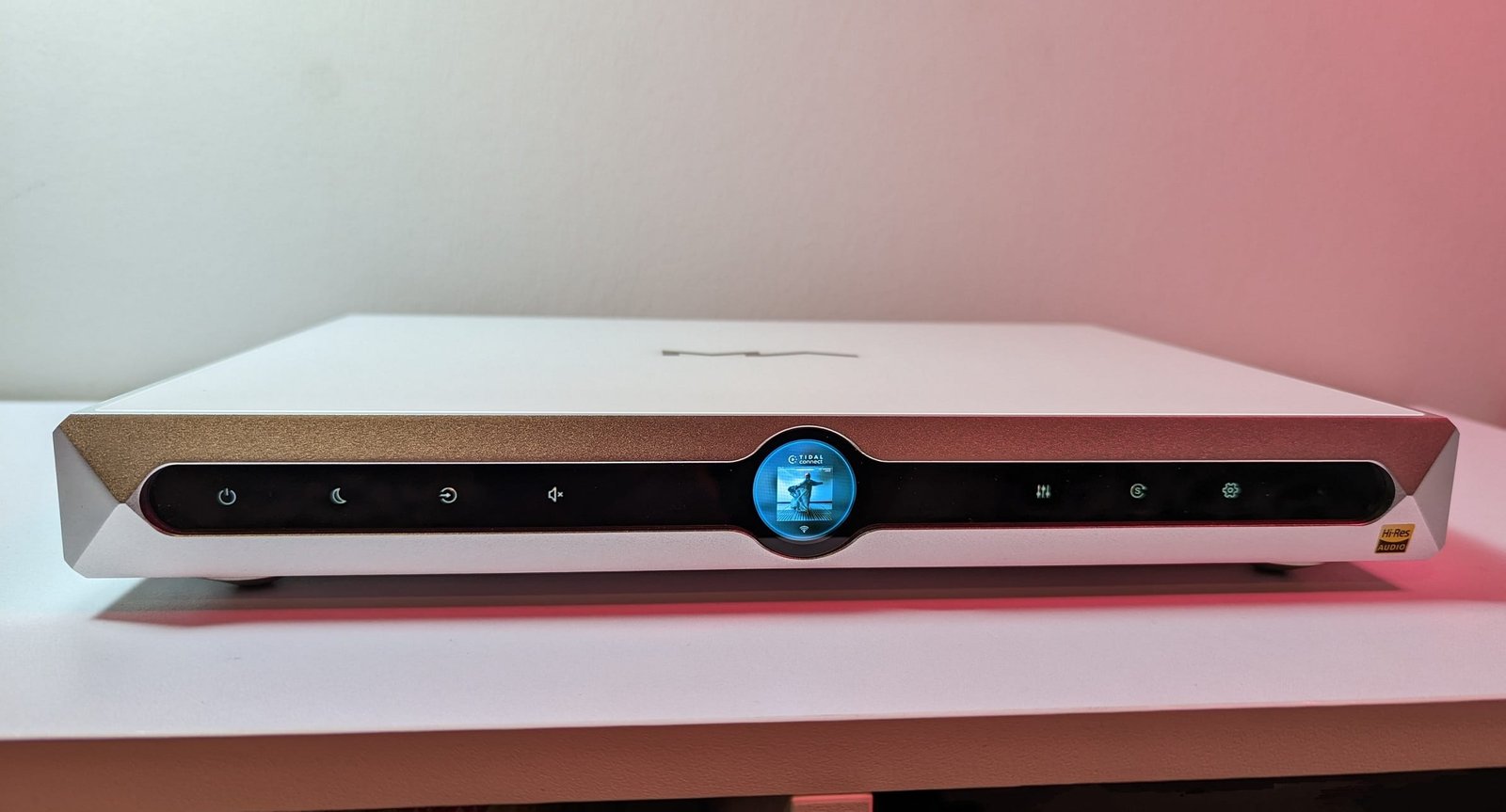
The device is quite flat in shape, but wide. Under the black glass strip running along the front edge, there is a row of touch buttons and in the middle a small coin-sized OLED display, whose font size is in places so small that it interferes with use. Installing a larger and rectangular display would have significantly altered the X-Sabre 3's spaceship dashboard-like appearance, so I understand why that path was not taken. Usability leaves a little to be desired, but externally, the impression of quality perfectly matches the 3000 euro price.
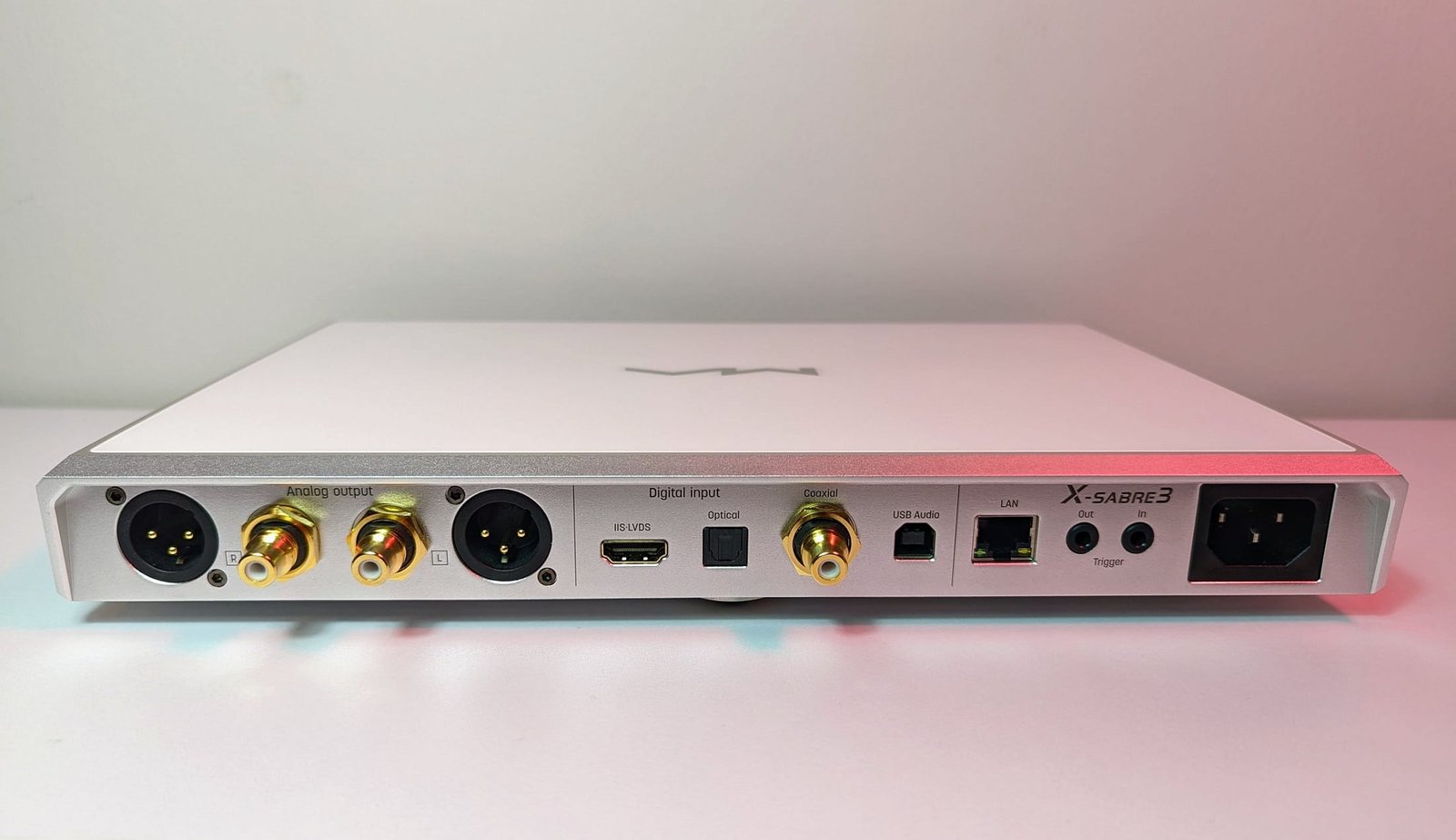
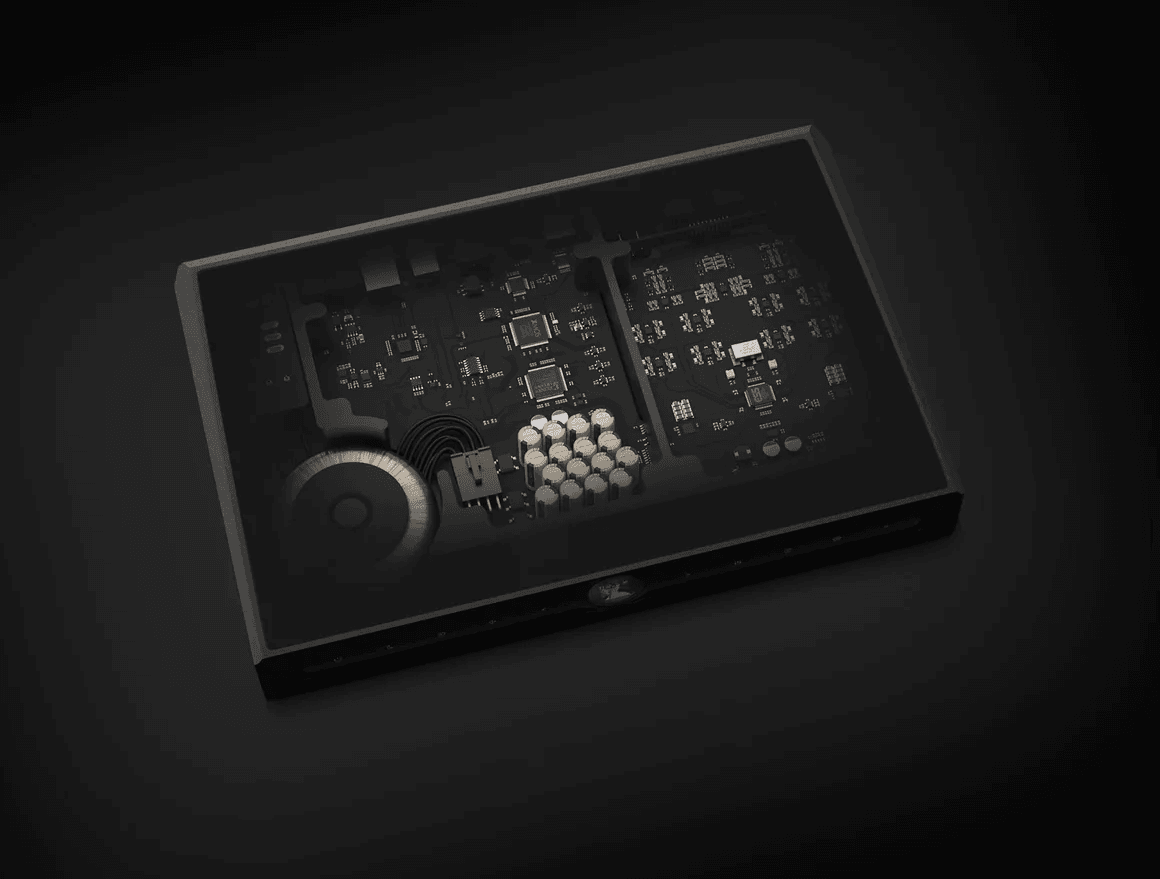
All connections are located, as usual, on the rear of the device. Despite its flatness, the X-Sabre 3 includes an internal power supply with a full-size power connector. Audio input connectors include USB-B, optical and coaxial SPDIF, and IIS LVDS, which is implemented with an HDMI connector. In addition to the D/A converter, the X-Sabre 3 includes a network player, for which there is an RJ45 network connector. The device also supports a wireless network connection via an antenna placed inside the structure. To facilitate use, inward and outward ”triggers” have also been added, so the X-Sabre 3 can be permanently integrated as part of other equipment.
Once the digital signal has been converted to analog by ESS Sabre's latest and most expensive ES9038PRO DAC chip, the signal can be forwarded via RCA connectors or balanced XLR connectors. Both connections have a slightly higher output voltage than usual, so the volume is louder compared to many other D/A converters. This should be taken into account when comparing the X-Sabre 3 with other devices. The X-Sabre 3 ultimately includes a fairly traditional set of connections, but despite the limited space, nothing important has been left out.
Features
The device has all the typical features of a modern DAC, such as very wide support for various PCM and DSD sampling rates, MQA support for Tidal users, and different audio filters provided by chip manufacturer ESS Sabre. Volume control is also possible, for example, when using active speakers. In addition, the settings menu offers the following interesting features:
- Sync/Async mode (the device's internal Crystek CCHD-950 clock is on in Async mode and off in Sync mode)
- Dither ON/OFF
- Jitter eliminator ON/OFF
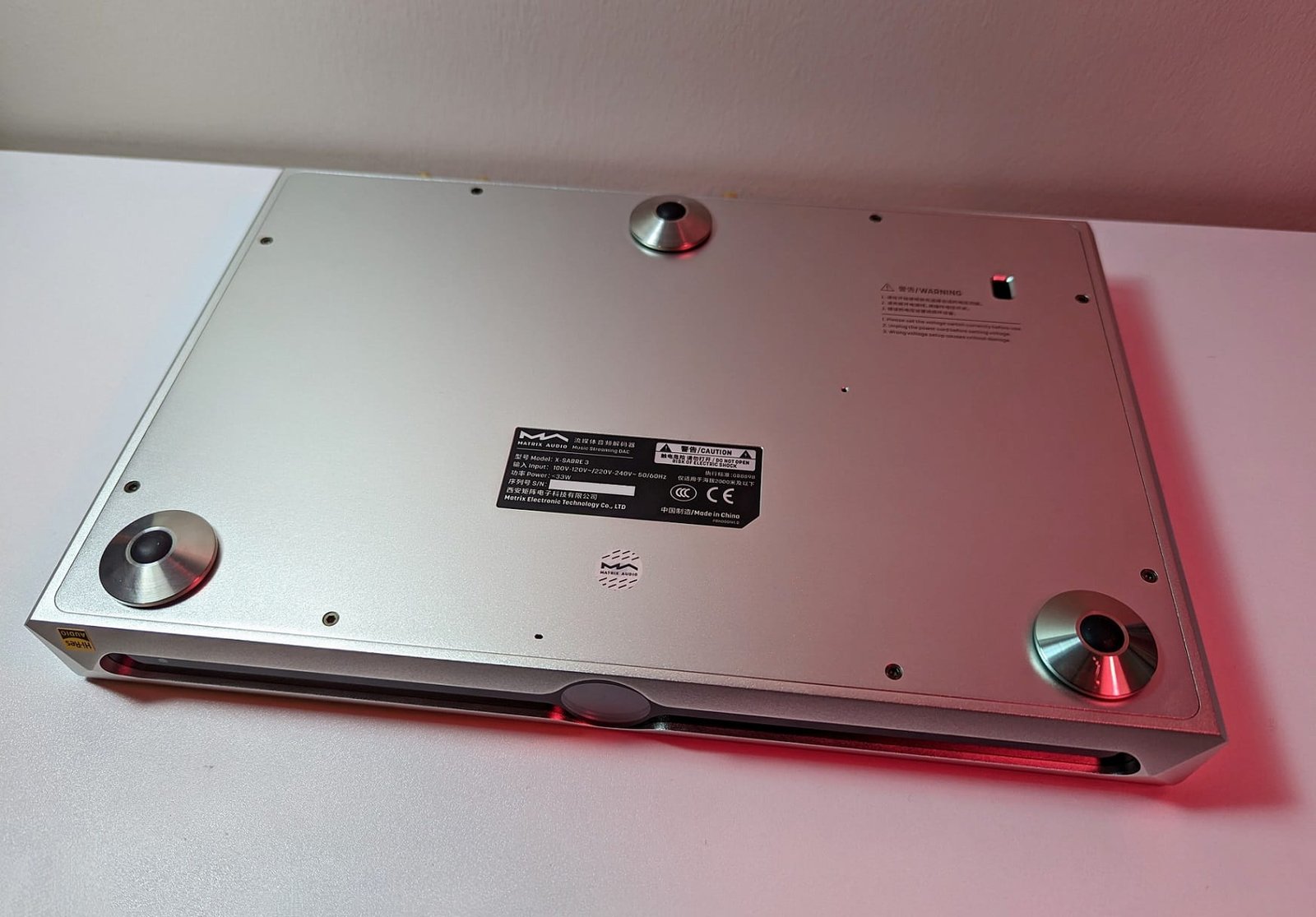
The front edge of the X-Sabre 3 has several touch buttons for changing different settings, and a separate settings button provides even more options. There are arrow buttons for navigating the menus. The user interface is somewhat clunky and slow to use, but fortunately, the device comes with a remote control for changing the most important settings, making everything much easier.
When entering commands with the remote control, the device assumes the user is further away, so for example, when changing the audio input channel, the logos appear larger than when pressing the device's own buttons – convenient! Matrix Audio has made changing settings pleasant, as changes made during listening always feature a soft fade-out and fade-in of the sound. Thus, no sudden bangs or pops reach the ears.
Due to its network player, the X-Sabre 3 contains a computer, so it always takes a moment to boot up when the power cord is plugged into the wall. Normally, the device never completely shuts off its power but goes into a kind of power-saving mode after pressing the power button, from which it wakes up quickly. As a peculiar feature, the device emits an uneven and pumping chirping sound both in power-saving mode and when powered on, as if aliens were trying to contact it. The sound is clearly audible in a quiet room, but it ultimately bothers me relatively little. When listening to music, it is not discernible at all, nor does it transfer into the audio.
Despite the background noises from the internal computer, the device measures almost perfectly (link to results), so it should please consumers who prioritize good measurement results in their device purchases. In my opinion, one should not pay too much attention to device measurements, but from an expensive and modern-looking device like the X-Sabre 3, it is nevertheless reasonable to expect good performance in terms of measurements as well. Otherwise, I would feel that all the engineering work and investment in the external structure would have been somewhat wasted. However, there is no need to worry about this, as the X-Sabre 3 meets all expectations.
Network Player
In my opinion, the network player constitutes a large part of the device's overall price and appeal. The X-Sabre 3 is promised to be compatible with Spotify, Tidal Connect, Roon, dlna, UPnP, and Airplay. I tried comparing the network player to the more affordable IFI Zen Stream device but did not notice a clear difference in either direction. It would, on the other hand, be strange if there were a significant difference in sound quality between network players, so I don't expect circus tricks from the X-Sabre 3, but rather reliable functionality and ease of use. In this regard too, everything is in order, once the device has been connected to the home network. Speaking of which, setting up the wireless network connection was quite a frustrating experience.
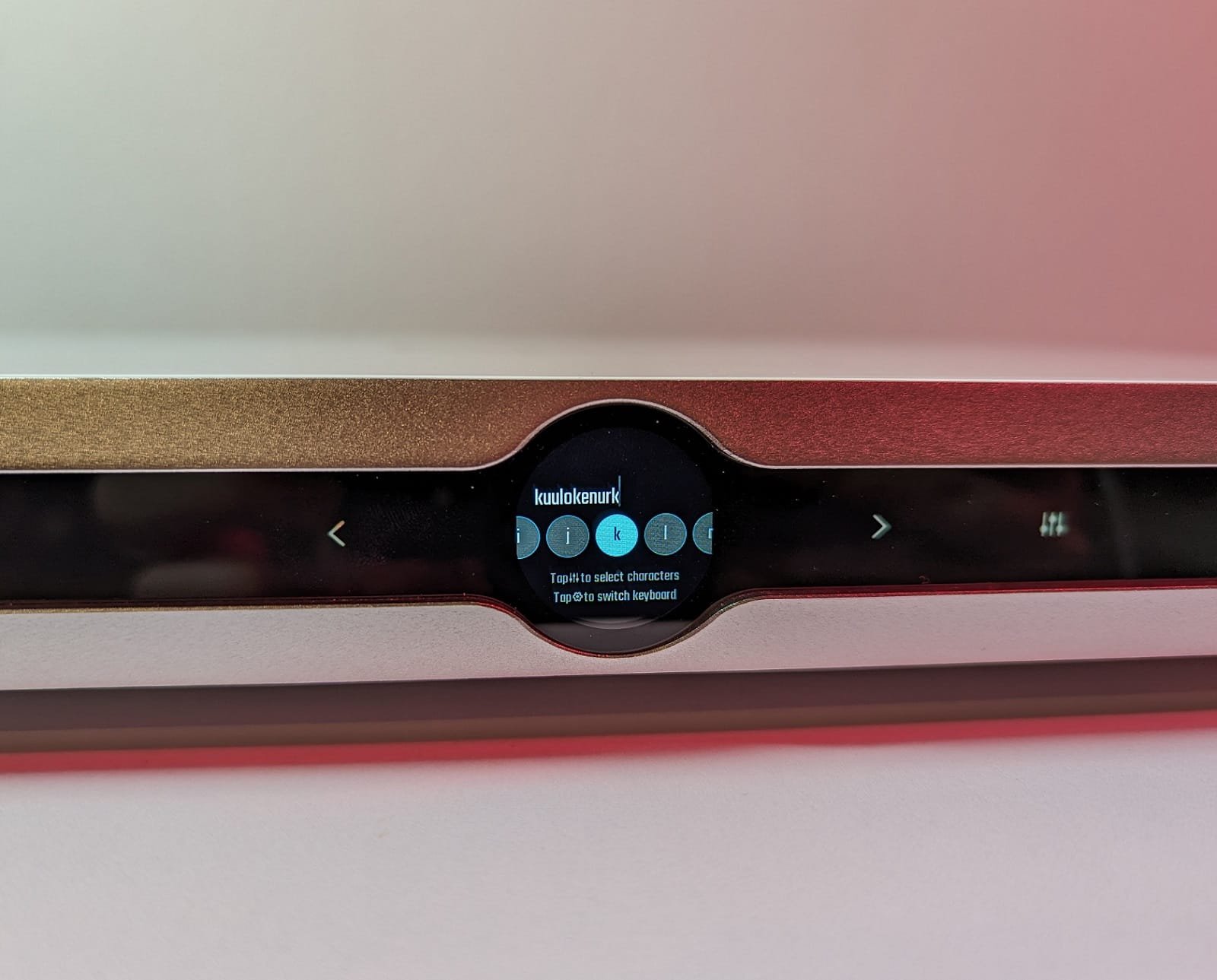
Connecting to a network always involves selecting the correct network and entering its password. With the X-Sabre 3, all this must be done using the device's small screen. Entering a longer and more complex password takes a small eternity, as each letter and special character must be selected individually with touch buttons from a list scrolling from left to right. If a character is entered incorrectly, the delete button is only found at the beginning of the list. Although the remote control offers some help with the operation, using a network cable would be significantly easier, if possible. To Matrix Audio's credit, the wireless network password only needs to be entered once, provided it always remains the same.
Mobile application
A mobile application has also been made for the device, which works on Android devices and Apple devices. Unfortunately, I personally couldn't get the application to connect, because the device refused to show the QR code required for connection, and the IP address wasn't accepted either, even though I entered it correctly. With the application called MA Remote, it would be possible to play music from your own UPnP server, control streaming services, listen to Internet radio channels, and adjust the device's internal settings.
Sound quality
Notes on sound quality evaluation
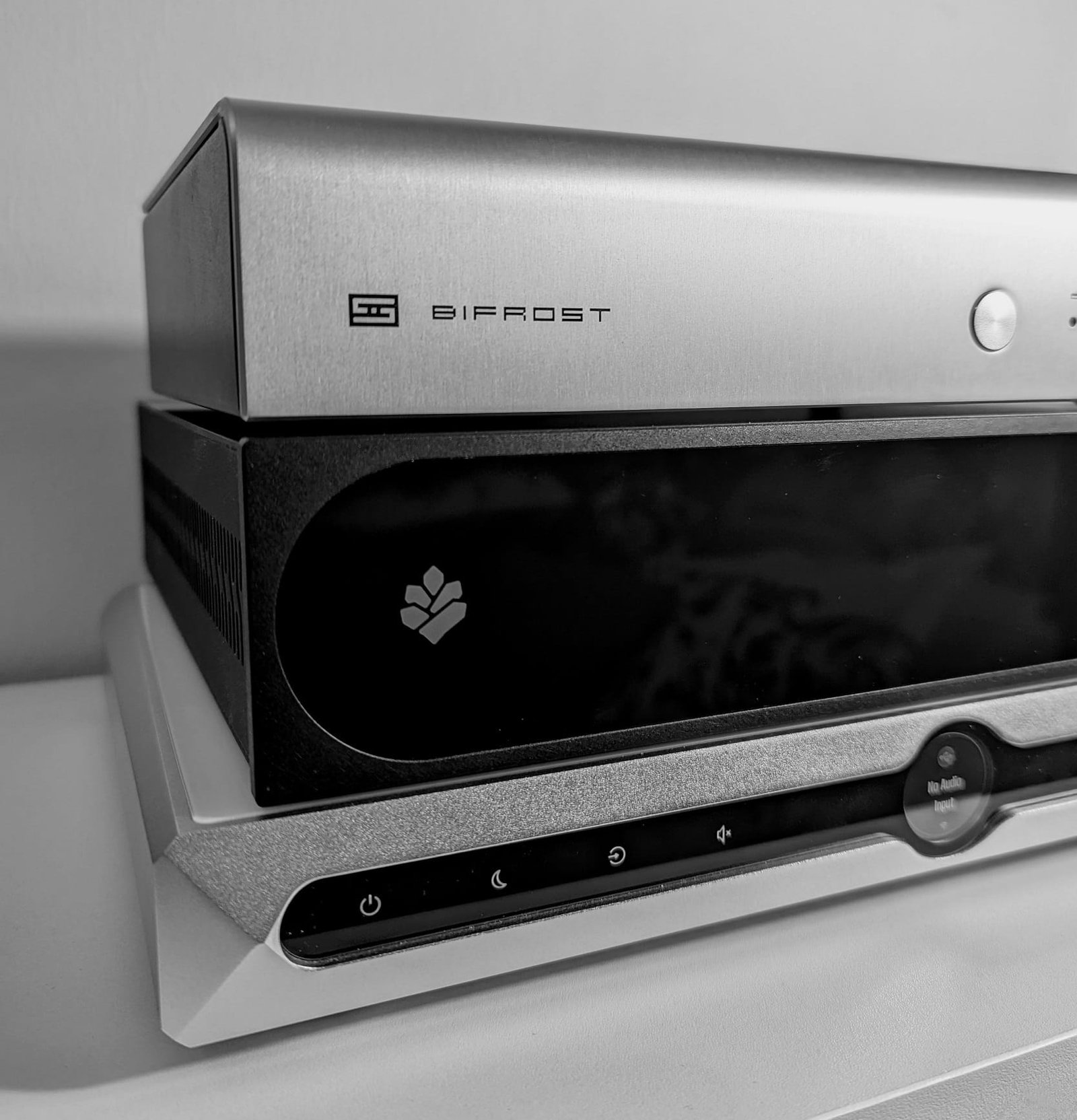
I evaluated the X-Sabre 3 with various headphones, mainly using the Cayin IHA-6 as an amplifier, from which it is possible to get different sounds depending on which connector the headphones are attached to. My goal was to find out if the X-Sabre 3 changes the sound in any direction compared to what I previously reviewed Soncoz SGD1: and Schiit Audio Bifrost 2: compared to, or if a DAC costing 3000 euros is somehow better compared to devices under 1000 euros.
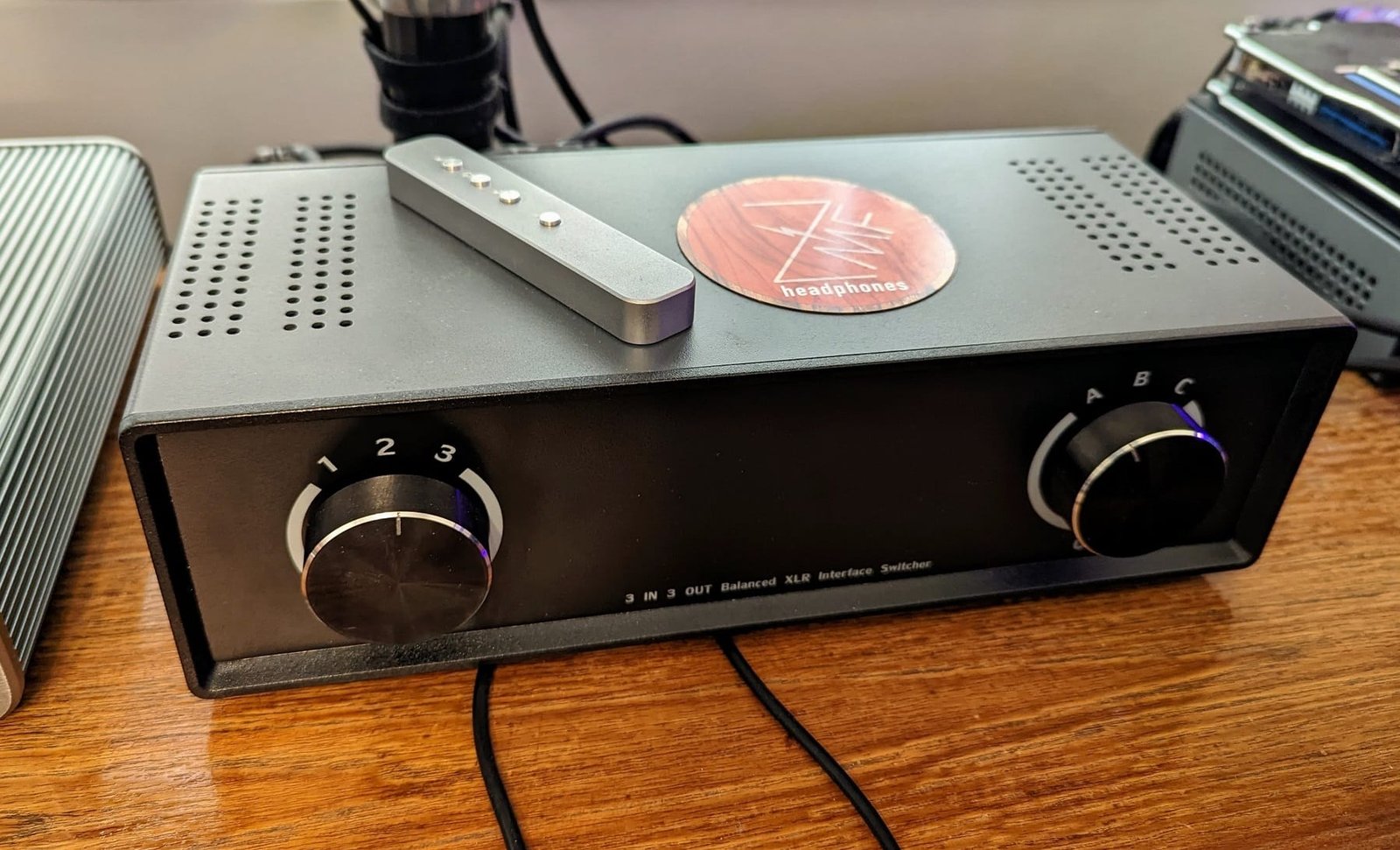
All three DACs were simultaneously connected to my computer's USB ports in the comparison situation, and the Windows sound settings were identical for each. I connected the devices with similar XLR cables to an XLR selector, by turning its lever I could ”jump” between the trio while listening to the same song. The volume on each DAC was the same, as I had leveled it with my MiniDSP EARS device.
For example, for the X-Sabre 3, the volume must be set to 90/100 in the Windows operating system to match the Schiit Audio Bifrost 2 at 100/100. This is due to the X-Sabre 3”s higher output voltage. If both devices were set to play at full volume, the X-Sabre 3 would play louder and would likely automatically sound more impressive. Even an additional 0.5–1 decibel of volume in either direction, in my opinion, easily makes one device sound ”better," even if the difference in volume is not entirely obvious. I suspect that many reviewers who equalize volumes by ear may not succeed perfectly, so conclusions can be partially erroneous.
In the comparison situation, I mainly listened to music from the Tidal streaming service, because it allows for quick switching of the active DAC while I turn the lever of the XLR selector leading to the amplifier. MQA was switched off on the X-Sabre 3, and the following settings were in use:
- Sync mode
- Dither ON
- Jitter eliminator ON
- Filter 1: Fast-roll-off minimum
What does a DAC costing over 3000 euros sound like?
I would describe the sound of the X-Sabre 3 as clean, resolving, dynamic, and activating the listener with its energy. Objectively evaluated, it's impossible to find anything to fault in the sound, as every aspect is reproduced in a very largely optimal way. Therefore, I cannot highlight any specific strengths or weaknesses from the whole, but the device convinces me that everything technically possible has been extracted from the DAC chip. However, I would see that the edgy presentation style can divide opinions and should be taken into account when considering purchasing the device. Otherwise, the X-Sabre 3 appears to be uncolored in sound, which is also supported by my more affordable comparisons.
I would summarize the sound of the three devices I compared as follows:
- The sound of the Soncoz SGD1 is the most airy in style, and it has the lightest bass reproduction in terms of impact sounds, as well as the thinnest-sounding mid-frequencies.
- Schiit Audio Bifrost 2 sounds the most peaceful, and it has the most robust bass and the most natural-sounding vocal performances. When compared side-by-side, its rich sound differs in style from the other two devices.
- The X-Sabre 3 is a kind of neutral intermediate between the two aforementioned devices; it's not as bright as the SGD1, but its bass reproduction and mid-frequencies have a natural richness similar to the Bifrost 2. However, its more energetic presentation and especially the slightly more aggressive sound of vocalists keep the listener more engaged than when listening with the Bifrost 2.
Compared to the Soncoz SGD1, I find the X-Sabre 3 to be an improvement in all areas. Especially the timbre is more natural thanks to richer mid-frequencies, and the treble feels more neutral compared to other frequency ranges than in the SGD1, which slightly emphasizes air frequencies. Additionally, the X-Sabre 3's bass has more powerful impact sounds. The SGD1 draws attention to the airiness of the sound when listening, whereas the X-Sabre 3 is more dynamic, pushing upper mid-frequencies and especially vocalists more energetically to the forefront.
The energy of the sound is also evident alongside the Bifrost 2. My original Bifrost 2 (the new version, according to many, sounds slightly more neutral) makes listening calmer and more relaxed. It also reproduces upper bass frequencies a bit more robustly, but less distinctly than the X-Sabre 3. Although both devices have a credible and authentic timbre, the vocalist sounds a bit more like a real person with the Bifrost 2, so I find listening evokes stronger emotions in me.
The X-Sabre 3, on the other hand, reproduces vocal performances slightly more sharply and is, overall, more energetic than the Bifrost 2. However, I don't find it to sound overly bright or fatiguing in any way, especially since the treble is easy to listen to. On the positive side, the X-Sabre 3 feels more detailed of the two, as, for example, all small background details, such as various hisses and clinks, are separated from each other more clearly than with the Bifrost 2. This makes music with the X-Sabre 3 more impactful in a certain way, and I feel I get more out of it. With the Bifrost 2, I, in turn, immerse myself in listening to music more relaxed for longer periods, which is still often more pleasant depending on my mood.
What is ultimately the significance of a DAC in the listening chain?
Compared to my more affordable devices, the X-Sabre 3 is, considering the overall package, a small improvement, especially because it separates individual sounds most transparently while still being close to the naturalness of the Bifrost 2 in terms of timbre. Since I cannot know what the music I listen to should truly sound like, it's possible that the device reproduces music completely truthfully, and a certain kind of extra edginess is due to the recordings themselves. As everyone defines their own pleasing sound and ”neutrality” independently, I would call the X-Sabre 3's presentation a kind of inspiring neutrality. Nevertheless, the stylistic differences between the three devices I compared ultimately remain so small that none of the devices alone determines whether the music listened to sounds good.
Music with the X-Sabre 3 sounds excellent in every respect, if not perfect depending on preferences, but in my opinion, after a certain point in the listening chain, DACs have regrettably little significance compared to headphones and amplifiers. For this reason, a 3000-euro device always brings only a small additional benefit compared to, for example, a 1000-euro device. This is by no means a criticism towards Matrix Audio, but rather a reminder that DACs are nowadays, in a way, a boring product category where it is difficult to achieve improvements that would unequivocally be worth their extra price. Without comparing devices side-by-side or actively concentrating on listening, differences can even be difficult to identify. However, I can promise that by acquiring the X-Sabre 3, a good listening experience will certainly not be limited by the DAC.
Does the sound change by altering settings?
I also quickly tested the effect of different settings on sound quality. I did not notice Dither and Jitter eliminator settings or different PCM filters changing the sound to such an extent that I could name the changes that occurred. The effects of the settings are likely minimal, if not non-existent, but someone who has used the device for a longer time might, of course, choose their favorite among them in one way or another. Regarding these settings, the X-Sabre 3 is, in any case, very much the same device regardless of what the user has activated through the menus.
However, I did notice a recognizable difference between Async and Sync modes. The former utilizes a separate Crystek CCHD-950 clock found inside the device as its clock, while the latter relies on the functionality of the rest of the equipment. Somewhat surprisingly, the Sync mode sounds more precise to me. In Async mode, the sound is subtly slower and softer, making the result feel less dynamic.
I cannot explain at a technical level where the differences might arise in my case, but Sync mode grabs me more firmly when listening. I initially suspected the volume might be slightly higher in Sync mode, but that was not the case. In longer listening sessions, the difference is easily forgotten, but by changing the setting, it is possible to fine-tune the result. Since I had already gotten used to the X-Sabre 3's energetic presentation, the sound in Async mode feels duller and thus slightly worse. However, we are not talking about a major change, so using Async mode would not alter my general opinion of the device's sound.
What kind of headphones or amplifiers does the X-Sabre 3 pair well with?
During my tests, I did not observe any limitations in pairing the device with different headphones and amplifiers, which suggests that despite its edgy presentation, the X-Sabre 3 sounds sufficiently neutral and balanced to work in all usage scenarios.
I found the device to be best suited in my own use for headphones whose upper mid-frequencies could use a little boost. For example, most of my ZMF headphones benefited from the X-Sabre 3, especially in situations where I listened to them with a higher output impedance amplifier. When using the 120-ohm connector of the Cayin IHA-6, the X-Sabre 3 excellently counteracted the amplifier's sound-softening effect, so the reproduction with ZMF headphones was just the right mix of relaxation and richness, as well as drive and distinctiveness.
Since the X-Sabre 3 reproduces mid-frequencies slightly aggressively, using it with already energetic headphones may not necessarily offer a particularly memorable listening experience, even if the result isn't too heavy to listen to. For a slightly calmer listening chain, the device instead offers the right kind of invigoration. As a general rule, however, the X-Sabre 3 blends into the overall system very unobtrusively, which is likely the desired outcome for most. If, on the other hand, the DAC is desired to change the sound more, attention should be directed towards more specialized R2R implementations or devices containing tubes.
Summary
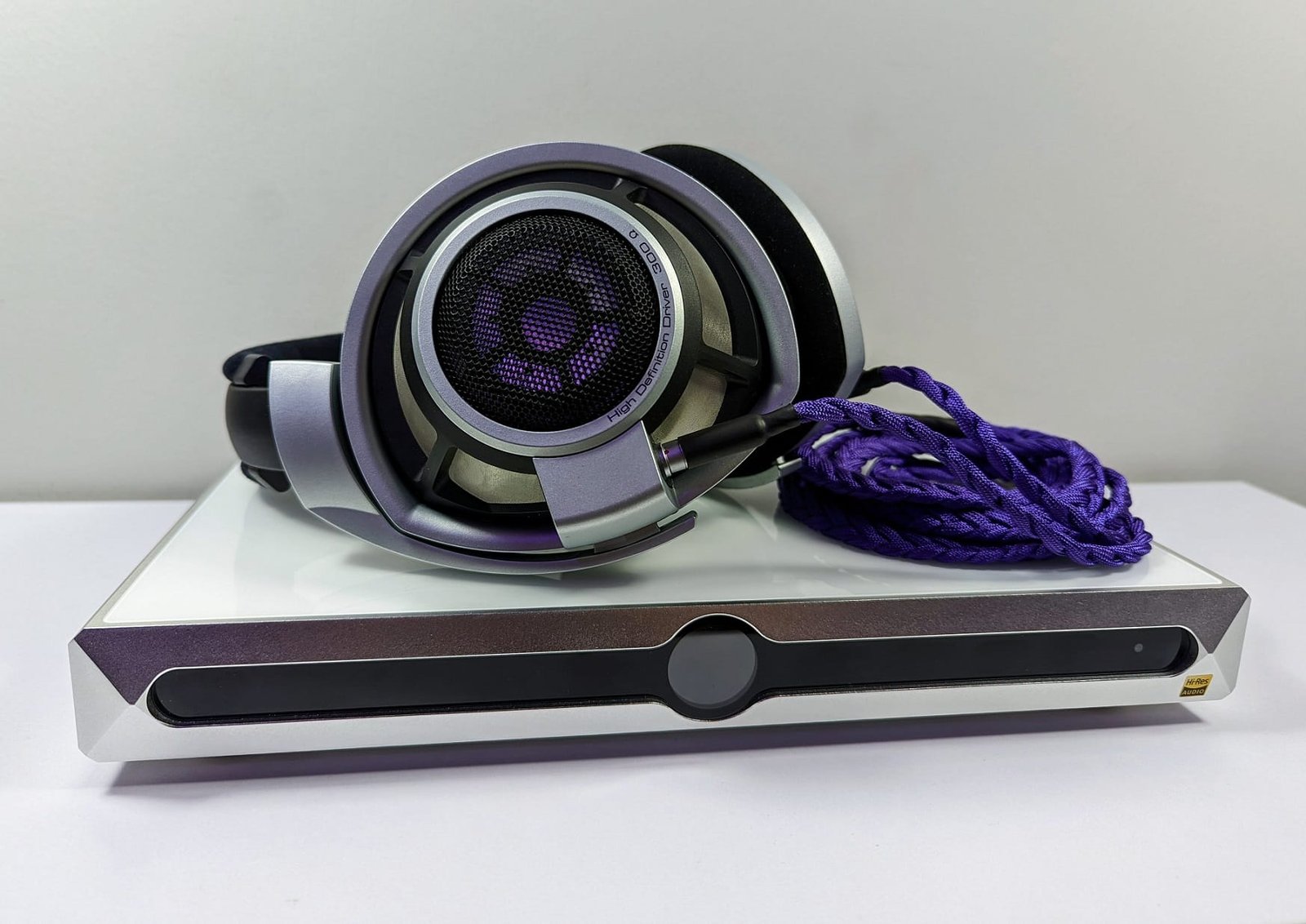
Matrix Audio's X-Sabre 3 offers superb hi-fi style sound with excellent clarity, dynamics, and separation. Since the device's external quality impression is also at an extremely high level, and it has comprehensive features and a well-functioning network player, I do not perceive the high price of over 3000 euros as a hugely negative thing. At a similar price, mainly special R2R DACs are available, which can offer a different sound, but rarely as comprehensive features. Few devices also include a network player, so Matrix Audio has found its own small market niche.
Most people will still get by with a cheaper D/A converter, but the X-Sabre 3 offers a high-quality option for those willing to pay more. I would see that the device could be ”the last DAC of life” for most people, provided that Matrix Audio offers possible updates for the network player in the future.
Unfortunately, there are also small quirks in the device's use, but nothing dramatic that I would pay attention to after a little learning. The small display and somewhat clunky user interface are Matrix Audio's own choices, but the included remote control fortunately streamlines use considerably.
I would personally be very satisfied with the X-Sabre 3 if it remained permanently on my desk. More broadly speaking, however, it is ultimately just a device whose task is to convert a digital signal to analog, so it's difficult to get overly excited about its everyday use. Although the X-Sabre 3 is overall the best DAC I have heard to date, the amplifier and headphones seem to have more significance in producing the final sound. However, Matrix Audio has done an excellent job of ensuring that its device never becomes the weakest link in the listening chain. The X-Sabre 3 contains everything one could wish for from digital listening, and externally it is almost a work of art.
Pros and cons:
+ Sound almost perfect
+ Built-in network player works well once connected to the home network
+ Contains more settings than basic devices
+ External quality impression and appearance 11/10
+ Contains everything one could wish for from digital listening nowadays
+ Excellent results in device measurements
+/- Energetic and listener-activating presentation style can divide opinions, so there is still a need for different D/A converters
+/- Sounds better than my cheaper devices, but ultimately offers only a small improvement for its extra cost
– The user interface is somewhat clunky, especially with the device's own buttons
– The phone app did not connect to the device
– The device emits a continuous chirping sound
– The price is too high for many
 EN
EN  FI
FI