Author: Sword of Damocles
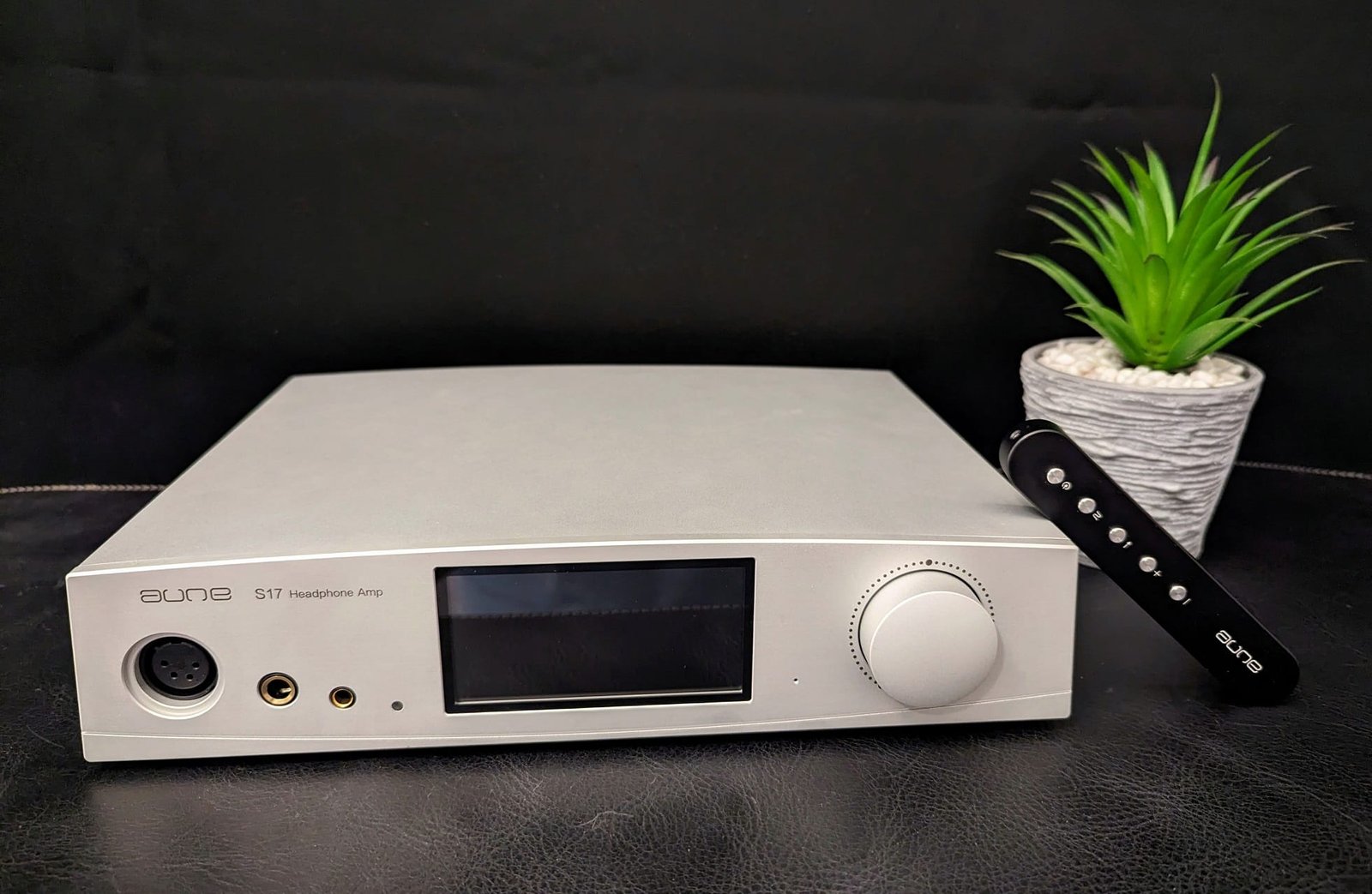
Table of Contents:
Information:
- Release year: 2023
- Country of Origin: China
- Price: 729 EUR (available for sale, for example, in the manufacturer's EU online store)
- Type: Headphone amplifier & preamplifier (Class A / Twin JFET)
- Connections: XLR and RCA inputs and corresponding outputs
- Headphone connectors: 4-pin-XLR, 4.4 mm and 6.35 mm
- Gain levels: low/high
- Headphone connector output impedance: 1 ohm
- 2 current settings: 50 mA and 100 mA
- THD+N: < 0,00016 % (1 kHz)
- SNR: > 116 dB (600 ohm)
- Crosstalk: < -110 dB (1 kHz 600 ohm)
- Output power (6.35 mm / low gain): 738 mW @ 32 ohm | 250 mW @ 100 ohm | 83 mW @ 300 ohm | 41 mW @ 600 ohm
- Output power (6.35 mm / high gain): 2020 mW @ 32 ohm | 675 mW @ 100 ohm | 228 mW @ 300 ohm | 114 mW @ 600 ohm
- Output power (XLR & 4.4 mm / low gain): 2773 mW @ 32 ohm | 968 mW @ 100 ohm | 333 mW @ 300 ohm | 166 mW @ 600 ohm
- Output power (XLR & 4.4 mm / high gain): 7507 mW @ 32 ohm | 2643 mW @ 100 ohm | 908 mW @ 300 ohm | 453 mW @ 600 ohm
- Dimensions (W x D x H): 288 x 211 x 63 mm
- Weight: approximately 3.5 kg
- Equipment: Remote control, 6.35 mm adapter and power cable
Review sample: Provided by the manufacturer
Founded in 2004, the Chinese Aune Audio (Wuhan Ao Lai Er Technology Co. Ltd) may not be a particularly well-known device and headphone manufacturer here in Finland, nor have its products been reviewed in Kuulokenurkka before. However, Aune has gained a reputation for its high-quality and interesting Class A headphone amplifiers and some of its D/A converters. Recently, the manufacturer also released its first over-ear headphones named AR5000 (price 330 €) as a result of several years of development work. However, I myself have been most interested in the S17 Pro Class A headphone amplifier, priced at around 700 euros (link to the manufacturer's product page), whose JFET implementation differs from most other amplifiers under 1000 euros. I approached the manufacturer to inquire about the possibility of getting the S17 Pro for review. We quickly reached an agreement, so the device appeared at my doorstep early in the year.
Aune Audio deserves great thanks for its willingness to cooperate with a review site that, by global standards, must be considered relatively small, at least for now. I also wrote an English-language review of the S17 Pro, somewhat exceptionally, review for the Head-FI website. However, let's stick to Kuulokenurkka for now.
Structure and connections
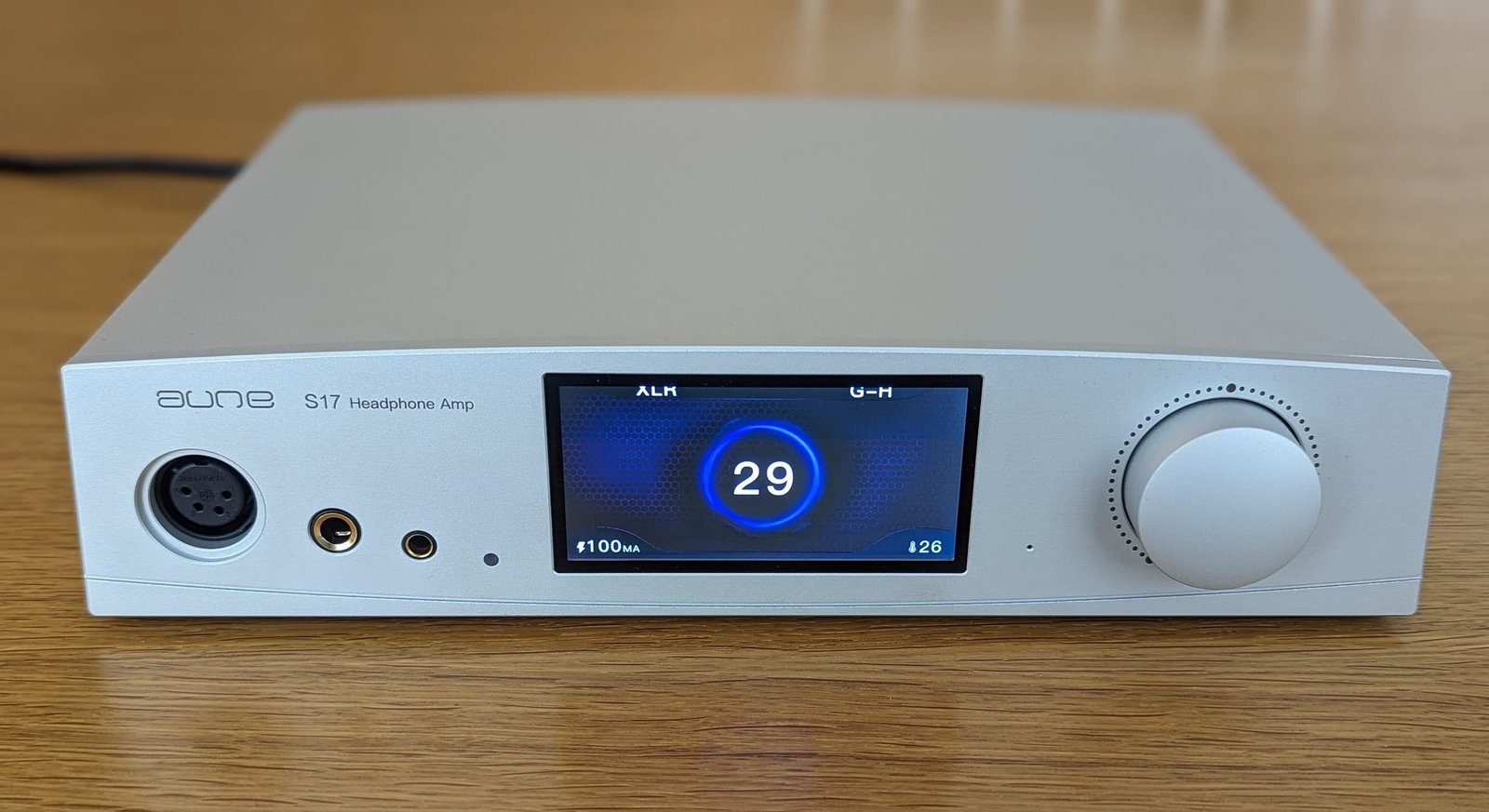
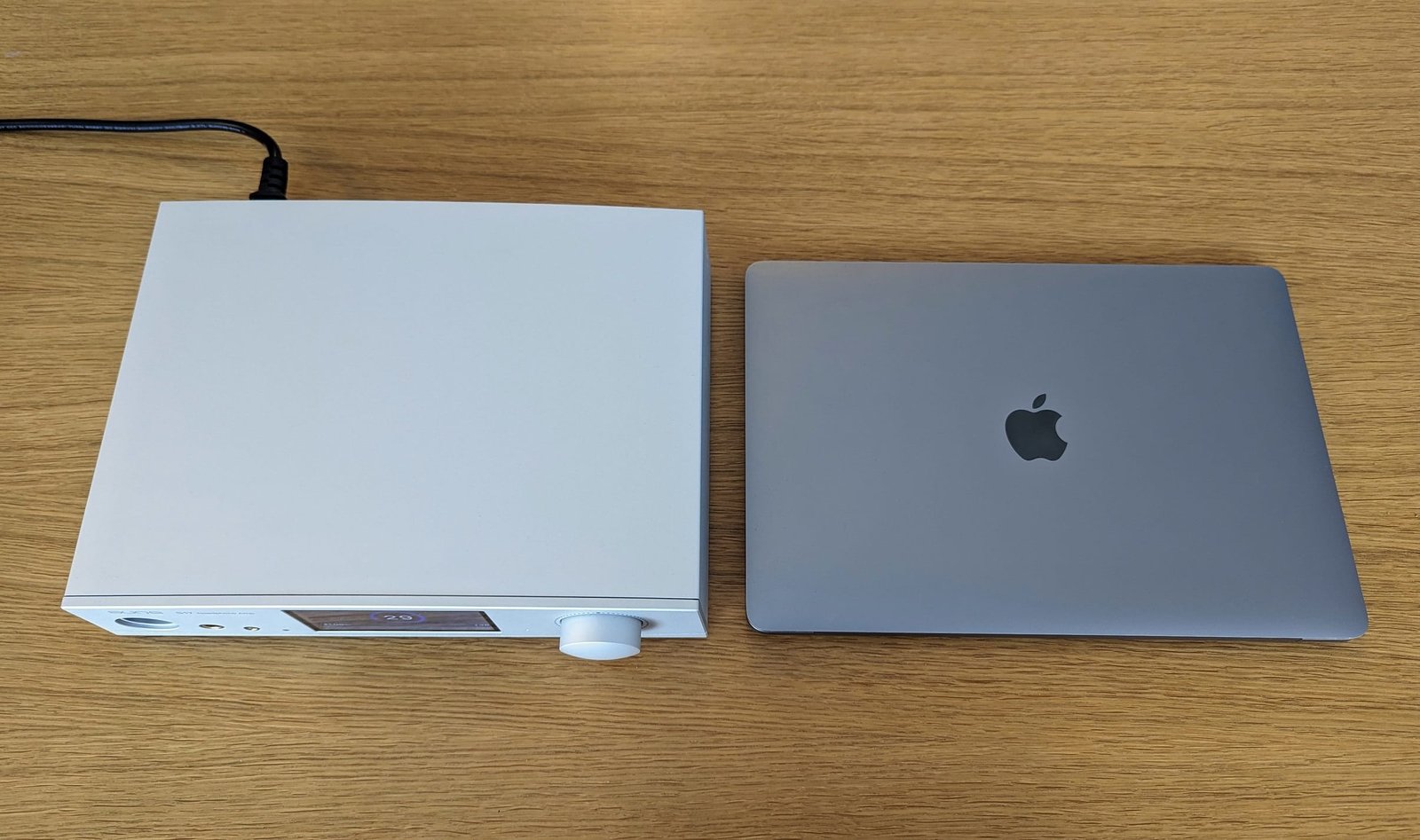
The S17 Pro is a large device, so it's advisable to reserve enough space for it at your listening station. Its robust 3.5-kilogram weight inspires confidence and communicates that this is not just an ordinary headphone amplifier. The aluminum frame feels extremely sturdy, and the overall impression of quality is high. The approximate 700-euro retail price would not be easy to guess; based on its external appearance, the device could easily cost significantly more. I like the design of the S17 Pro because the slanted sides and slightly convex top cover prevent the device from looking like a large rectangular box – on the other hand, it's difficult to place any other device on top of it. Aune sells its amplifier in both black and silver. My choice fell on the latter, as visible fingerprints do not remain on the silver surface, nor does dust stand out particularly clearly. Many have surely found the situation to be the opposite with black devices.
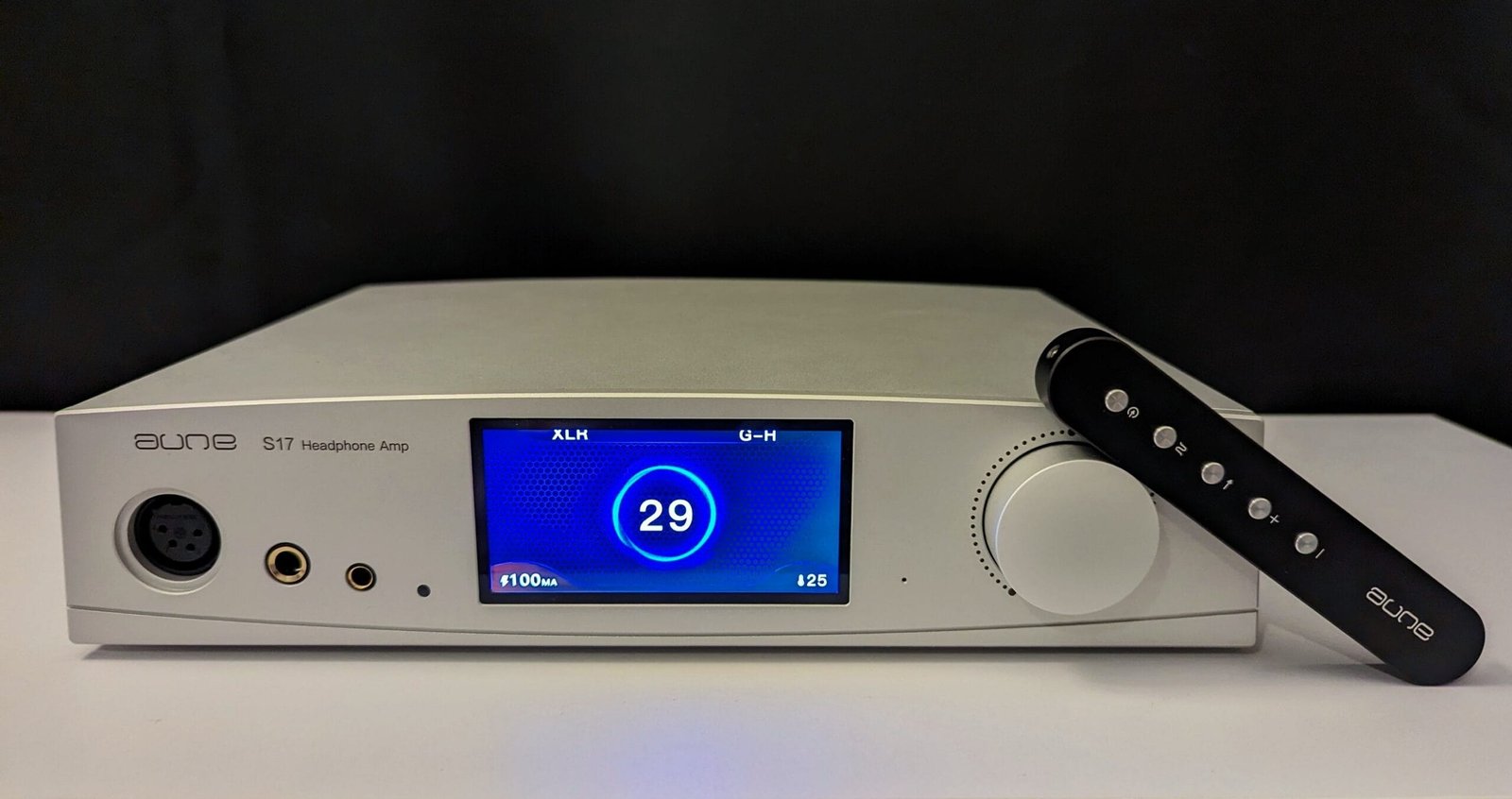
A large LCD screen is installed on the front edge of the amplifier, which indicates not only the selected volume but also the active input connector, gain level, and power setting, and interestingly, also the internal temperature of the casing. All settings can be changed both by pressing the volume knob and with the included aluminum infrared remote control. The volume control is implemented with a 63-step R2R audio circuit, so the channel balance is always perfect. As a minor drawback, however, the knob must be rolled quite a lot if the volume is to be set to zero. Since the S17 Pro does not have a mute function, this may actually be regularly needed. Fortunately, adjusting is at least a bit faster with the remote control.
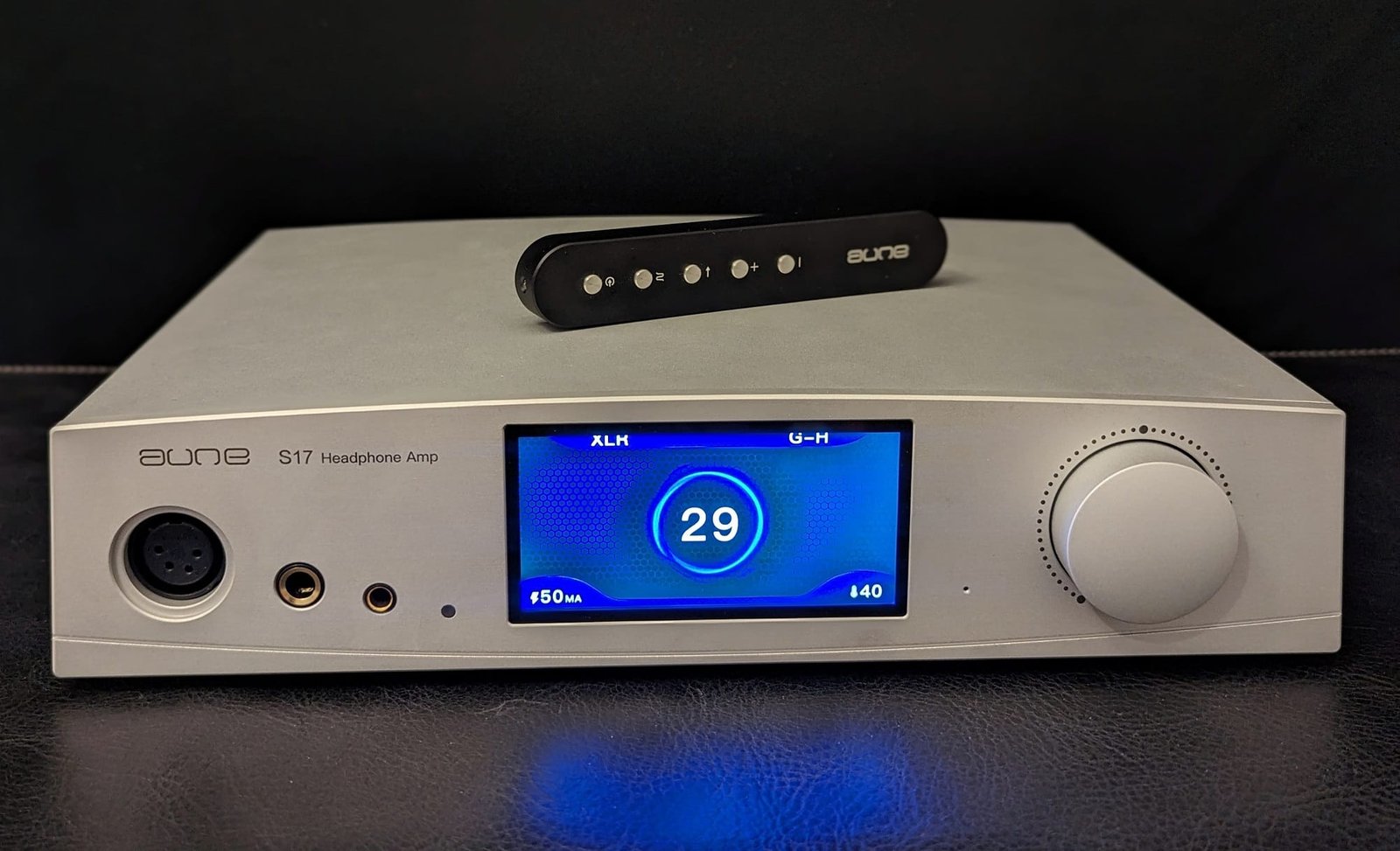
The amplifier features 4-pin XLR and 4.4-millimeter connectors as balanced headphone outputs, in addition to which a traditional 6.35-millimeter connector with lower output power is also available. Otherwise, the only noteworthy aspect of the headphone connections is the tightness of the 4.4-millimeter connector. One of my cables has slippery connector shells, making it surprisingly difficult to remove from the S17 Pro. Based on this, the contact is likely excellent. I like the 4.4-millimeter connection, but there is still significant variation in the tolerances of female connectors, in particular. As a contrasting example, the connectors in iFi's Zen series devices have been looser than usual in past years.
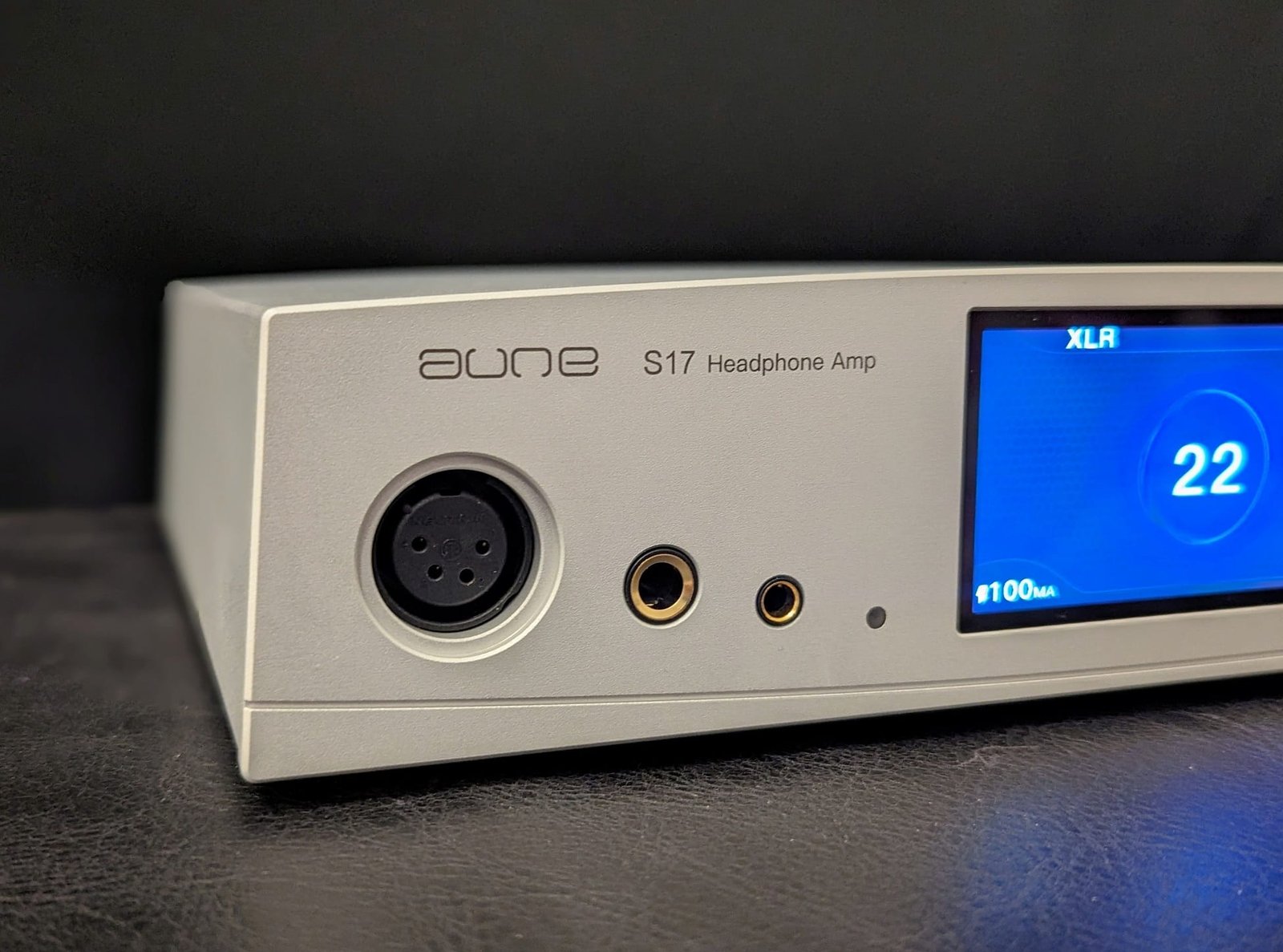
Peeking behind the S17 Pro, one finds, in addition to the power connector and button, two pairs of XLR and RCA connectors. One pair serves as input connectors, and the other as output connectors. The S17 Pro can thus also be used as a preamplifier, which could very well be an option given its high-quality volume control and the excellent sound quality I will soon confirm (apologies for the spoiler). However, a clear minus must be given for the fact that the headphone connectors and the rear output connectors are always active simultaneously. For some reason, Aune has not added a selector between them, even though one is available for the input connectors.
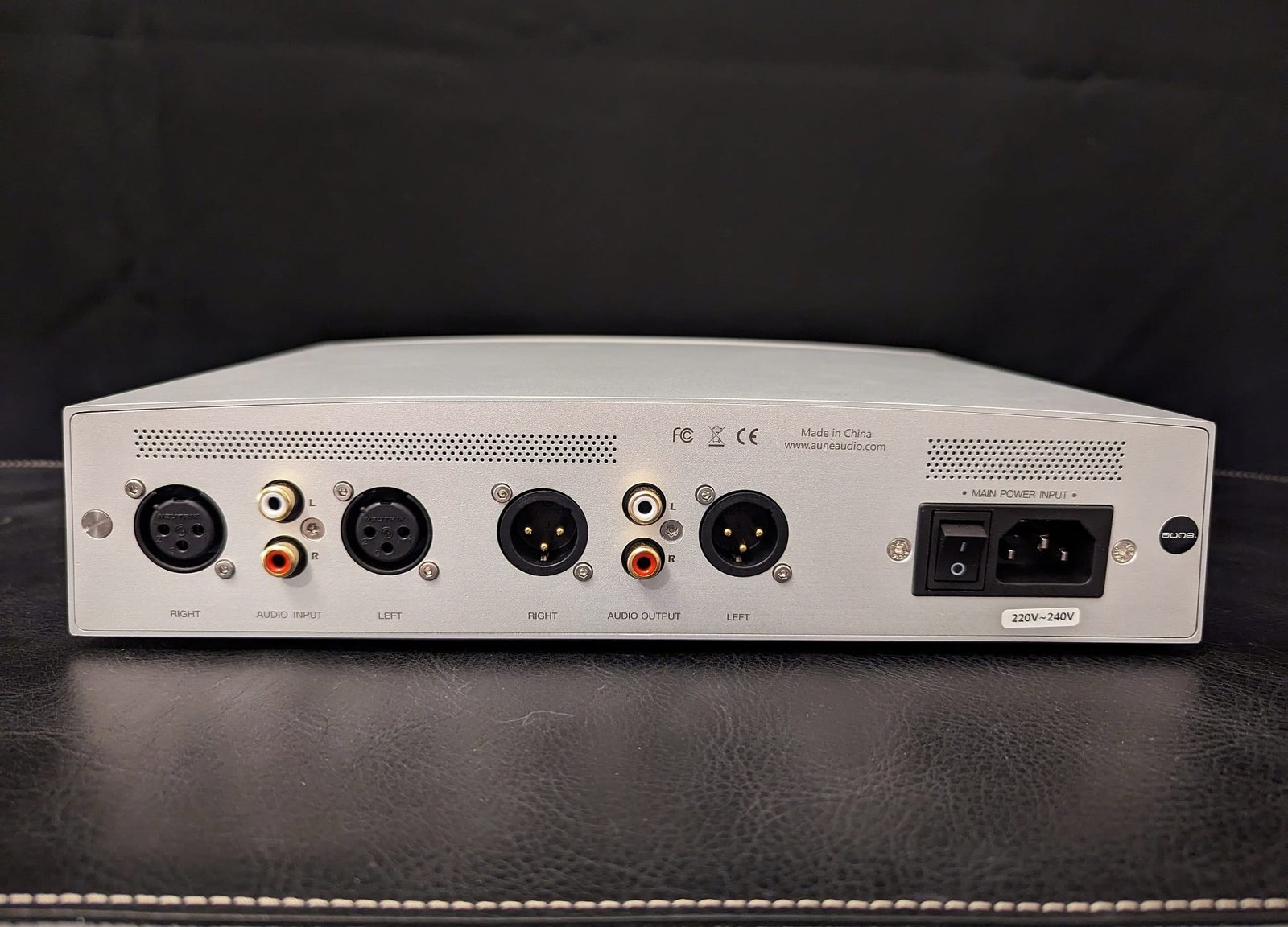
Small holes have been made at the back of the amplifier, which the manufacturer states are sufficient for cooling, despite it being a power-hungry and hot-running Class A implementation – however, we will soon find out about this. I would have preferred the power button to be located on the front edge of the device instead of having to reach for it next to the power cable. If the S17 Pro is used as a preamplifier, for example, placed in a living room equipment rack, the power button might be difficult to reach. However, in so-called desktop use, this has not bothered me significantly.
Internal implementation and functions
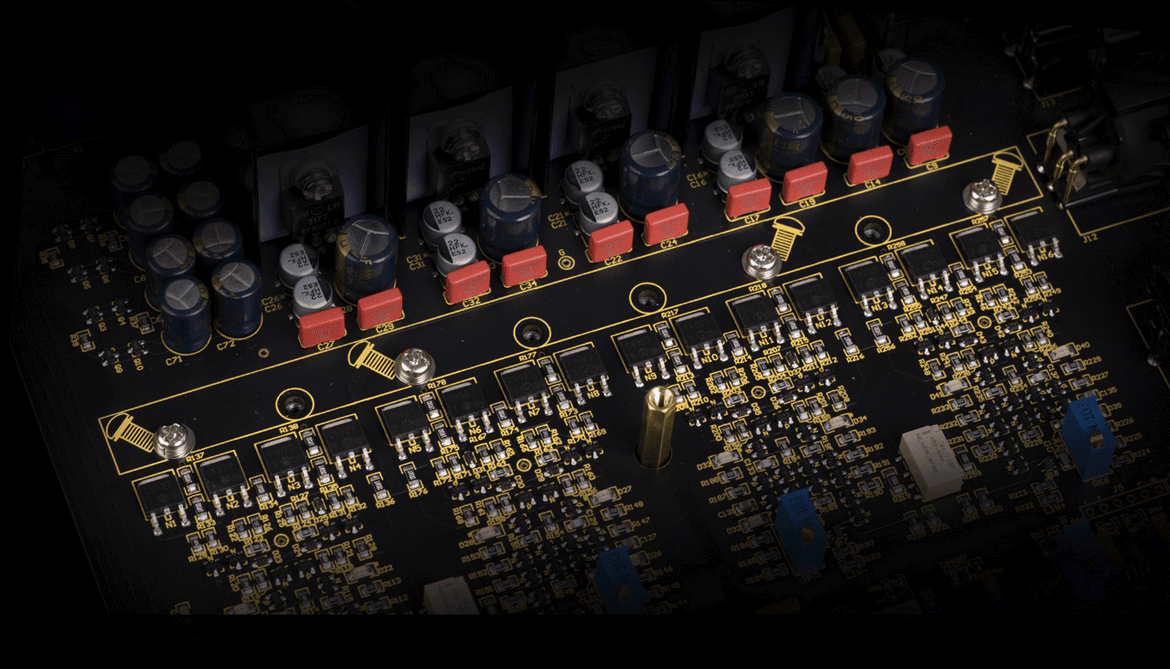
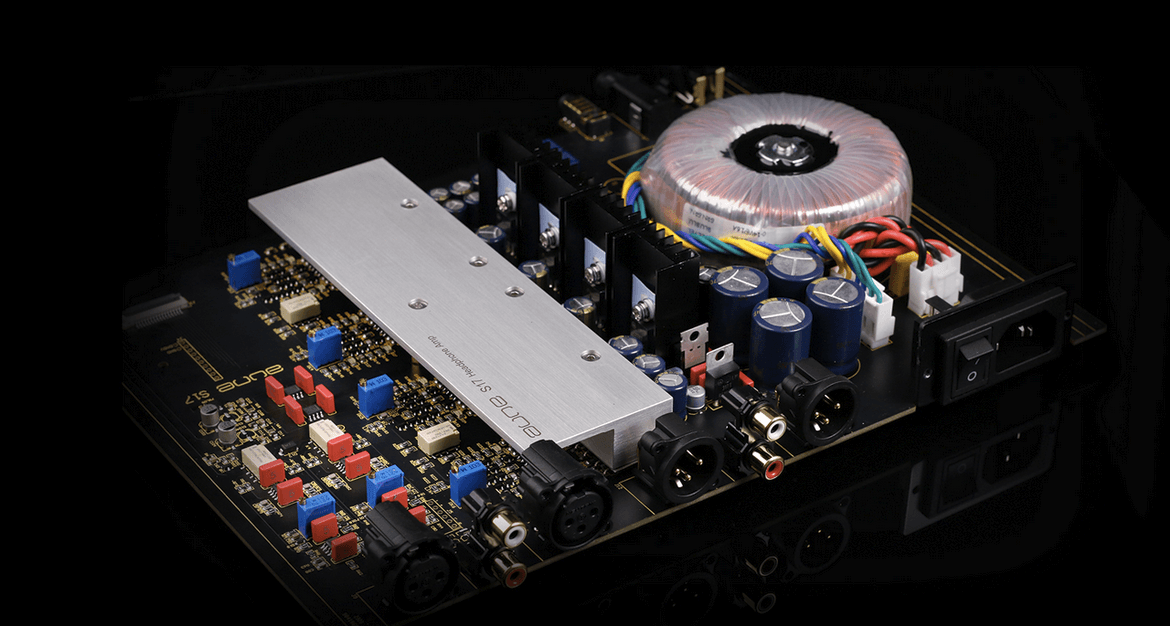
I was initially interested in the S17 Pro because its implementation differs from most transistor amplifiers in its price range. There's nothing particularly surprising about a Class A structure built entirely from discrete components, but JFET junction-gate field-effect transistors, which somewhat resemble tube amplifiers in sound, are quite rarely used in headphone amplifiers nowadays. Aune Audio's amplifier has two of these, so the manufacturer calls the solution Twin JFET. The device is also packed with numerous other transistors and features a robust 50-watt toroidal transformer. The result is a very powerful headphone amplifier that stands out from its competitors in terms of sound.
S17 Pro offers a huge output power for headphones, especially through its balanced headphone connectors and with its higher gain level. For example, the device is made for low-impedance planar headphones, with a hefty power output of 7.5 watts at 32 ohms. On the other hand, 0.45 watts is still available for a 600-ohm load. Of the two gain levels, the lower one is also perfectly sufficient for almost any headphones (2.77 W @ 32 ohm and 0.16 W @ 600 ohm). The unbalanced 6.35 millimeter connector, however, has a rather moderate power output considering the amplifier's price, but with conventional headphones requiring amplification, it is also sufficient, especially at a higher gain level. According to the manufacturer, the output impedance of the S17 Pro for headphone connections is 1 ohm, which should not affect the frequency response of the headphones.
One of the amplifier's special features is Cayin iHA-6a selectable current setting, similar to :n, which in the S17 Pro affects how much current is supplied to the parallel-mounted transistors. By default, the amplifier operates in 50 milliampere mode, but it can also be set to 100 milliampere mode by pressing a button – in this case, the edges of the display change color from blue to red. At this point, the internal thermometer I mentioned earlier becomes useful, as increasing the current causes the amplifier to heat up more. To prevent problems from this, the manufacturer has set a maximum temperature of 69 degrees, after which the S17 Pro automatically returns to 50 milliampere mode. Despite its Class A operating principle, the amplifier's distortion values are very low based on measurements, as is the background noise. Objectively speaking, the S17 Pro's somewhat old-fashioned implementation does not seem to have any obvious drawbacks, apart from higher than usual power consumption and heat generation. This brings us to the device's cooling.
Observations related to warming
The S17 Pro is the first transistor amplifier I have tested that gets so hot that touching it is unpleasant. In my opinion, the amplifier's enclosed structure has not been designed entirely optimally, as Class A amplifiers usually have plenty of cooling vents through which warm air can escape. For example, the Rebel Amp's lid is fully perforated, whereas the S17 Pro only has the minimal holes I mentioned at the back edge. Aune Audio has indeed installed a rather large heatsink on both sides of the circuit board in its amplifier, but for example, Burson Audio Soloist 3X Performancelike :n, heat could have been directed directly to the metal chassis. The feet attached to the bottom of the S17 Pro are also low, so heat cannot dissipate properly through the bottom closest to the circuit board. Based on Head-FI discussions, the amplifier also heats up differently for different users, so there may be slight variations in heatsink installation.
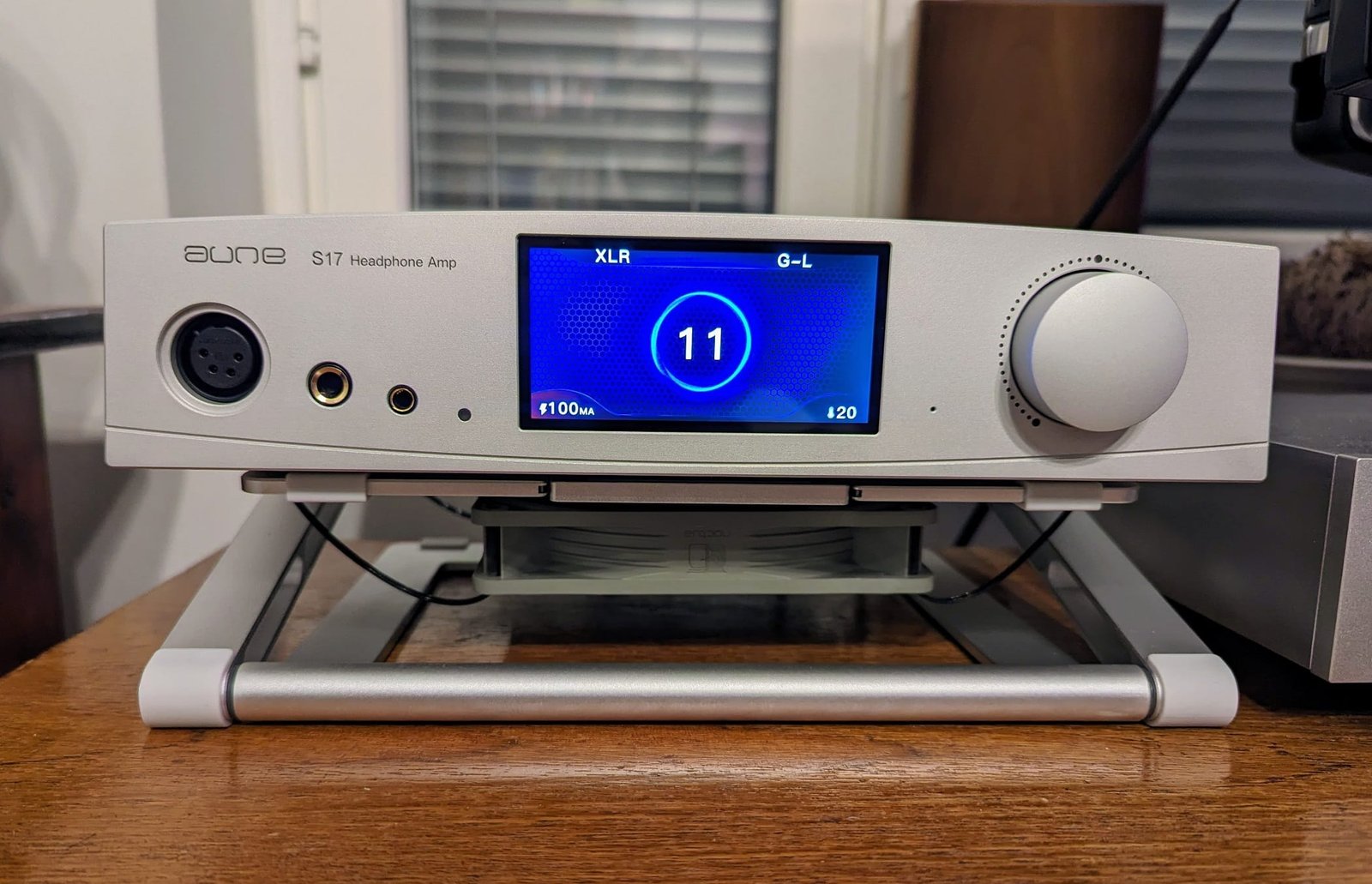
For me, the internal temperature of the device never rises too high in 50 milliampere mode, even if it exceeds 60 degrees in a couple of hours. However, this does not affect use, as the high temperature is, according to the manufacturer, a designed feature. In 100 milliampere mode, on the other hand, the upper limit of 69 degrees is exceeded for me in less than 1.5 hours of use, after which the amplifier drops its current supply back to 50 milliamperes. Unfortunately, after a certain point, the temperature hardly drops below 66 degrees, so 100 milliamperes can only be returned to temporarily for a couple of songs before the temperature rises to 69 degrees again. I often find the 100 milliampere mode slightly better in terms of sound quality, so it's a shame that the S17 Pro's cooling is not sufficient for permanent use, even in winter conditions. The heating rate does not seem to slow down even when using headphones that require less amplification power or at a more moderate volume. This is entirely expected, as Class A devices always operate at full power regardless of the load.
For some S17 Pro owners, the internal temperature never seems to rise above 60 degrees, so there are clearly some differences between individual units. Many have already developed various cooling solutions, which I also ended up doing. Since I don't want to drill holes in the chassis, I decided to install the amplifier on a laptop stand, adding a 140 millimeter PC fan with a 5-volt USB adapter (Noctua 900 RPM) underneath. This approximately 50 euro setup solves the S17 Pro's ”overheating” because the internal temperature in 100 milliampere mode stops between 55–60 degrees, depending on how close to the table surface I adjust the stand. Thus, I can use the amplifier permanently as I wish, and there is still plenty of leeway for summer heatwaves. Simply raising the amplifier from the table surface also slows down heating, allowing it to stay in 100 milliampere mode for over two hours from the device's startup.
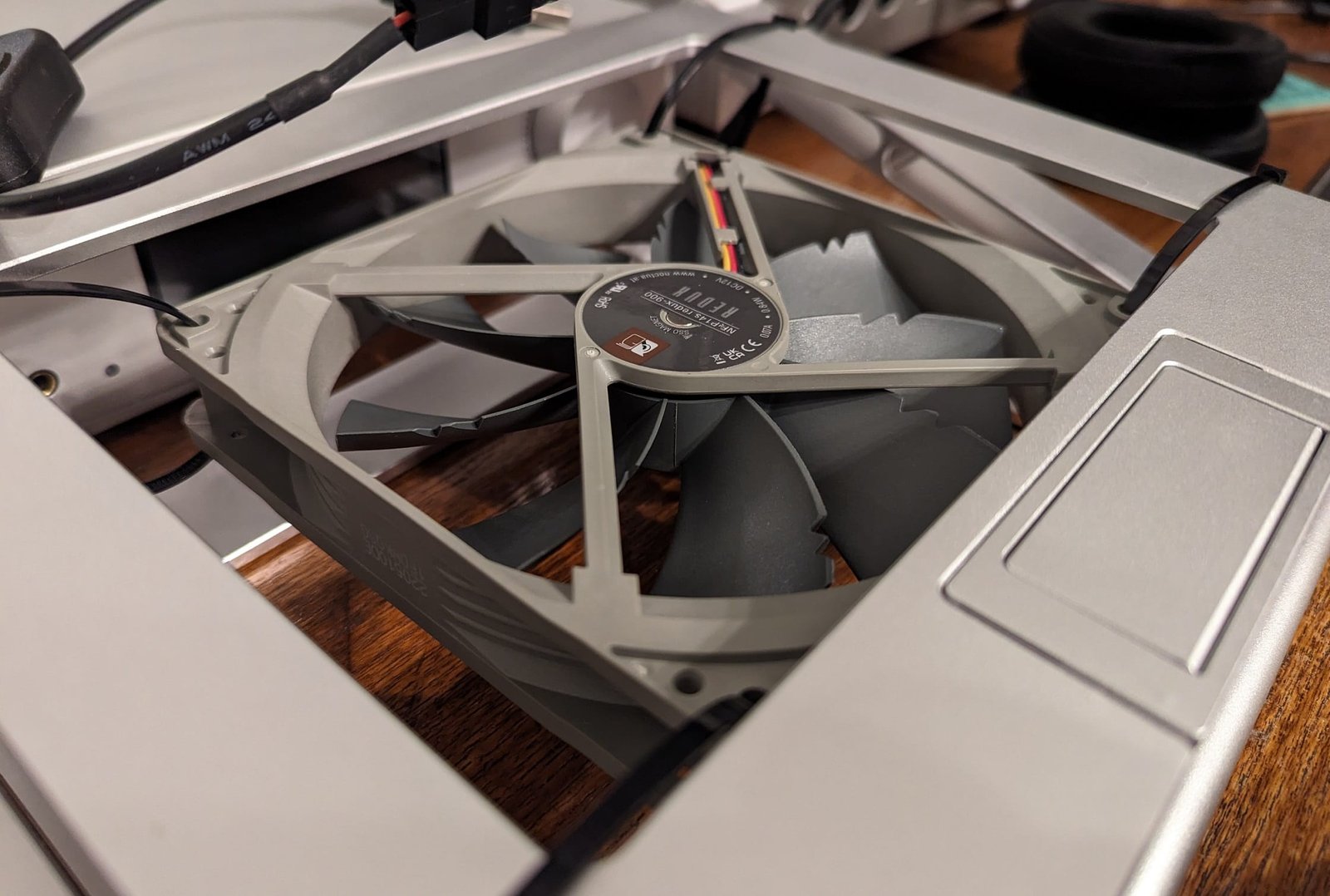
Few buyers of a 700 euro amplifier are likely willing to set up such a complex cooling solution for the device, so as an easier method, I could recommend higher device feet to slow down heating. Ready-made cooling pads with fans designed for laptops would also likely work well and wouldn't cost a fortune. If Aune Audio ever releases a new version of the S17 Pro, I believe its cooling should be improved. Since the manufacturer already sells the sports car-themed X1s GT combo device, I would suggest a grille resembling a car's air intake for the S17 Pro's lid, for example.
Other usage-related notes
Aside from the significant heating, I have no complaints about the amplifier's operation. In the device's first production batches, the volume control was apparently less linear, causing the volume to suddenly jump significantly upwards between two steps. R2R controls always need to be programmed manually, so similar teething problems were also present in Burson Audio devices. Fortunately, Aune Audio has managed to fix this so quickly, as I don't observe anything exceptional or disturbing in the operation of my own device. The adjustment is smooth, and there is sufficient adjustment range. On the other hand, with high output power, when using the most sensitive in-ear headphones, the adjustment range can be somewhat small, especially through the most appealing 4.4 millimeter connector. However, with the affordable earbuds I own, such as Moondrop Chu 2 and Tangzu Wan’er, the lower-power 6.35 millimeter connector offers surprisingly wide adjustment possibilities on the controller's scale of 1–20 when listening via the Tidal streaming service at a lower gain level. I also don't hear any background noise. Thus, in my opinion, the S17 Pro is better suited for in-ear headphones than, for example, the Cayin iHA-6.
I have noticed that it is advisable to let the amplifier warm up for a moment after starting it, as it initially sounds somewhat rough and congested. However, after about 20 minutes, the sound clarifies and opens up. This may partly be my own imagination, but the manufacturer also mentions that the sound quality is optimal after the device has warmed up. In any case, there is nothing to lose in this matter, as the suitable operating temperature is quickly reached during the listening of a few songs.
Sound quality
Notes on testing
I have compared the sound quality of the S17 Pro to the Cayin iHA-6 (balanced headphone jack only), which is an amplifier of roughly similar price and reasonably similar operating principle. As a second reference device, representing the most uncolored sound possible, I used the Topping LA90 stereo amplifier, which costs about 800 €.) The LA90 is designed for speakers, but thanks to its suitably low gain level and non-existent background noise, it is also possible to listen to headphones with it. However, this requires an adapter cable, costing at least 15 euros, which converts the speaker outputs into a balanced 4-pin XLR female connector. The LA90 reproduces headphones extremely uncolored and controlled, so in my opinion, it reveals well what kind of characteristic sound the S17 Pro has.
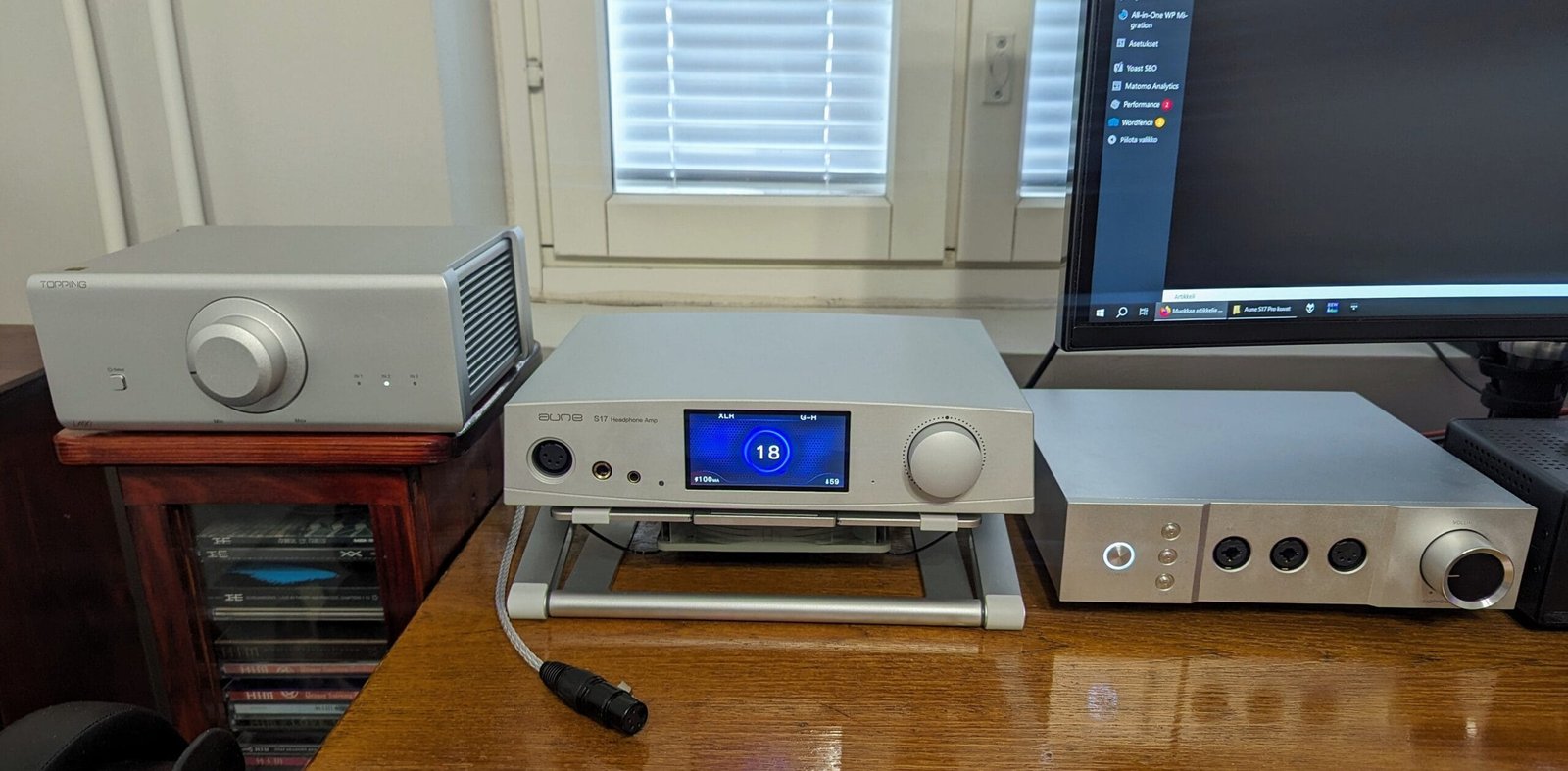
As usual, I have listened to several different headphones (including various ZMF and Hifiman models, as well as Sennheiser HD 600 and Modhouse T60RP Argon) and various music from all genres, both from the Tidal service and my computer's FLAC library. In my listening chain, I have used two different DACs from the S17 Pro's price range: the S.M.S.L VMV D1SE, which offers neutral sound, and the warm-sounding Schiit Audio Bifrost 2 (original model).
Impressively lively and warm listening experience
The S17 Pro sounds relatively ordinary in the 50 milliamp power mode, so I will focus more on the 100 milliamp mode, which I believe is the device's absolute selling point. Aune has managed to conjure a magically lively and pleasant sound from its amplifier. An impressive 3D-style soundstage combines with the feeling that the sound has plenty of warmth throughout, as if it were a separate element. My hairs easily stand on end from how authentic the vocals sound, and how present and layered the music settles around me. The presentation is full-bodied and effortless, yet truly controlled and detailed. One of the best aspects of the S17 Pro is that the warmth it adds to the sound hardly diminishes the clarity of reproduction and the separation of sounds compared to more neutral amplifiers. Listening to music is extremely captivating, as long as the warm sound signature and rather dark treble suit one's preferences.
In 100 milliamp mode, the S17 Pro reproduces bass with pronounced fullness compared to the two other amplifiers I tested simultaneously, but the low frequencies remain excellently controlled. The bass actually settles into its own layer in the soundstage. For example, if closed-back headphones, such as various ZMF models, have a somewhat boomy mid-bass, the S17 Pro brings it under control while simultaneously adding even more punch to the sound. Powerful bass brings more depth to the reproduction than usual and is generally fun to listen to. The strength of the Cayin iHA-6, on the other hand, is the tightness of its impacts and its pinpoint power, while the Topping LA90 is truly controlled, so the low frequencies do not draw as much attention away from other frequencies. The S17 Pro itself becomes lighter and more neutral-sounding in 50 milliamp mode, but curiously, the bass is still not as controlled in my opinion as in 100 milliamp mode. On the other hand, if some headphones are already full and thick-sounding, the 50 milliamp mode might suit them better.
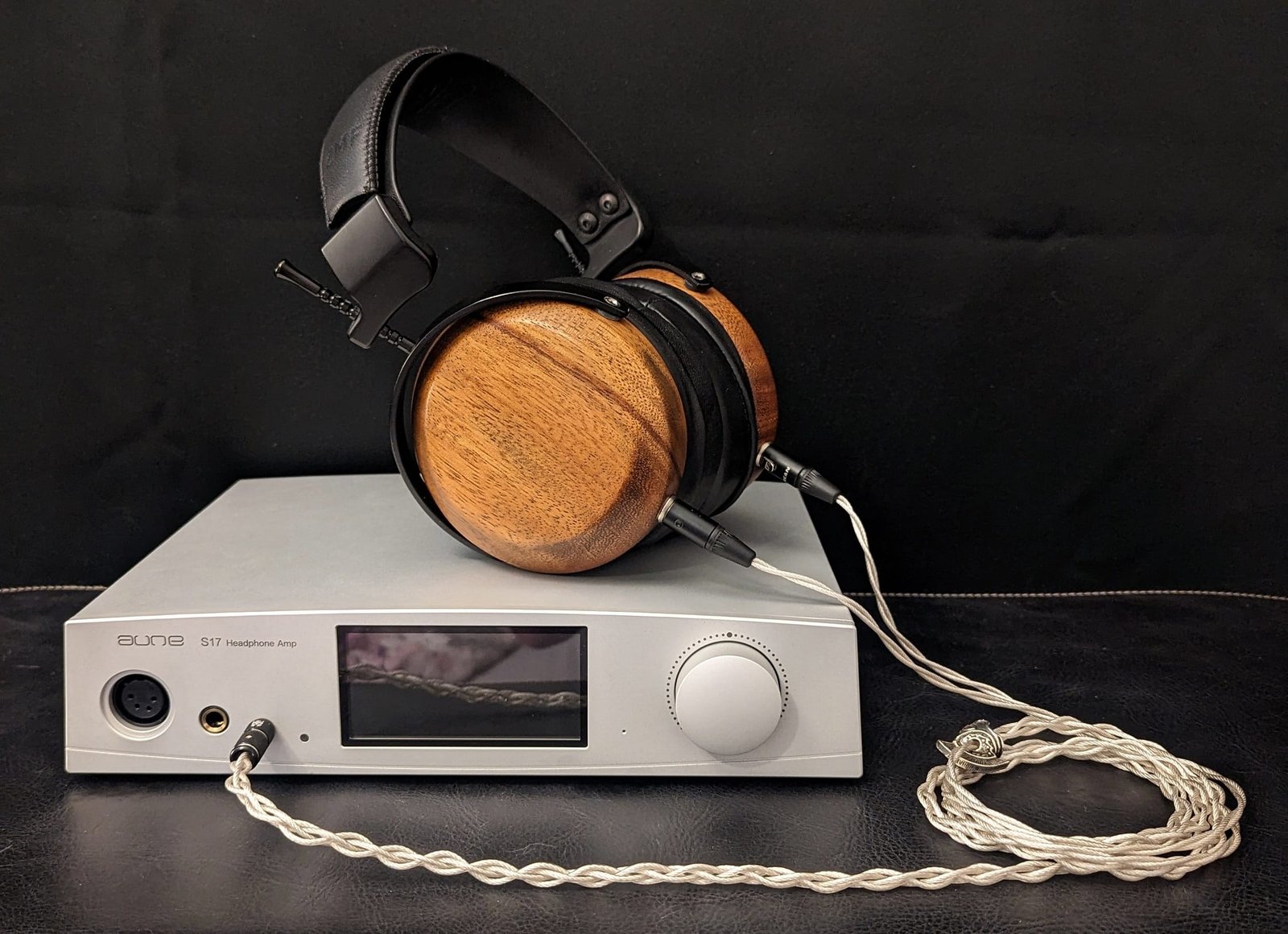
The midrange frequencies are reproduced admirably full-bodied and emotionally engaging by the amplifier. In this regard, the S17 Pro quite closely resembles warm-sounding tube amplifiers. The reproduction is very smooth and flows forward as if liquid. The presentation completely lacks the dryness and sharpness of transistor amplifiers, yet clarity is still preserved. For the same reason, I also like the Project Polaris amplifier, implemented with JFETs, which, however, sounds rather unrefined and soft compared to the S17 Pro.
Similar to bass reproduction, the midrange frequencies also lighten with the S17 Pro in 50 milliamp mode. The sound is somewhat more transparent, but it no longer evokes as strong emotions with its presence or sounds as spacious and layered. Compared to this, I actually prefer the sharper sound of the Cayin iHA-6. The Topping LA90, on the other hand, reproduces vocals, for example, as airier and more distant, so its strength is rather uncoloredness than emotional evocation. However, in my preferred 100 milliamp mode, the S17 Pro largely offers the most convincing midrange frequencies I have heard in the sub-1000 euro price range. The reproduction is pleasantly present, and each instrument is authentically delineated into its own space. The soundstage also has great depth, which makes the listening experience even more vivid.
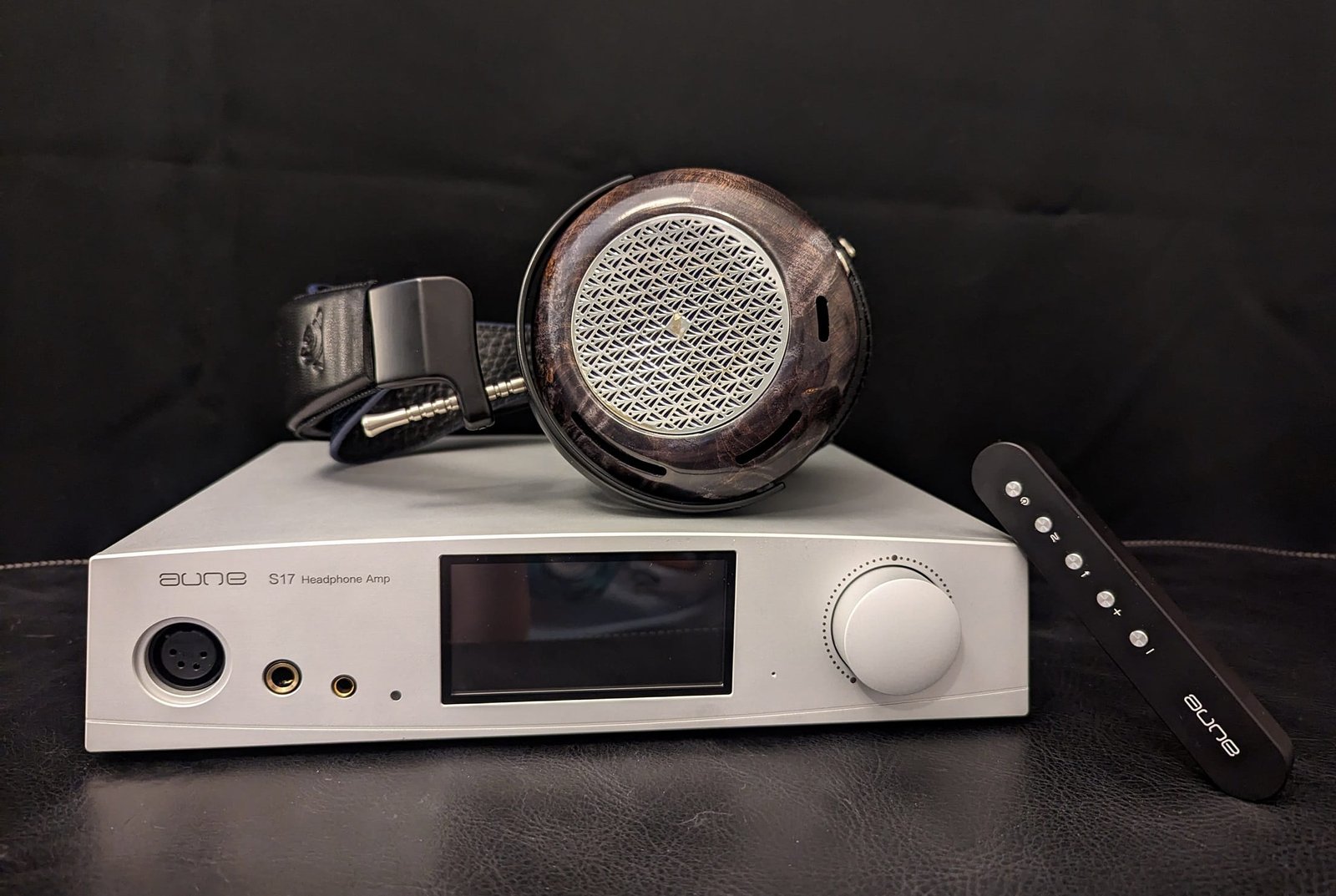
Perhaps the most polarizing feature of the Aune amplifier, however, is its treble reproduction. The high frequencies are distinctly darker and calmer in style than usual, making it possible to listen to the amplifier almost endlessly without any listening fatigue. Bright-sounding headphones, such as Hifimans, become easier to listen to, but on the other hand, lose some of their punchiness and airiness. The subdued treble does not actually diminish the detail of the sound, but the S17 Pro sounds slightly soft and rounded compared to, for example, the Cayin iHA-6. If the goal is a more energetic and thus more engaging sound, the iHA-6 might be a better option with its tighter and snappier reproduction. On the other hand, I think a DAC like the VMV D1SE, which reproduces treble airily, suits the S17 Pro well. For some headphones, I have found the Bifrost 2 to be an overly warm-sounding DAC, although it also further enhances the S17 Pro's pleasant characteristic sound and authentic spatial impression.
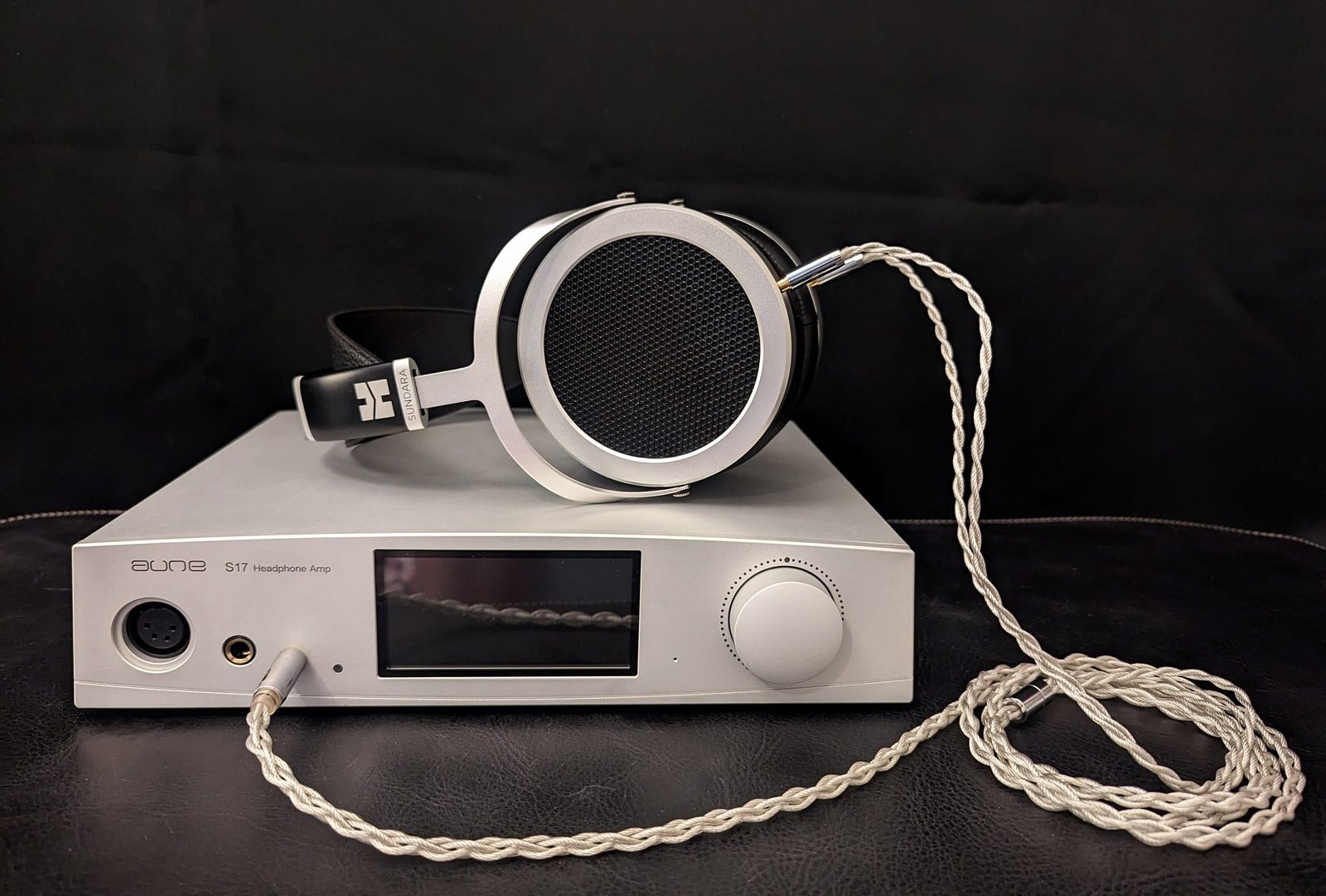
Of the three amplifiers I tested, the Topping LA90 sounds the airiest and most spacious, but its soundstage remains more one-dimensional and less layered. Interestingly, the S17 Pro in 50 milliamp mode is hardly brighter-sounding than in the 100 milliamp mode I use more often, so I would call the amplifier's sound warm and effortless regardless of the power mode. I actually perceive the beginnings of sounds to be reproduced slightly sharper in 100 milliamp mode, making the presentation feel clearer. For example, all kinds of background sounds in music are more easily delineated and distinguishable than in 50 milliamp mode. I would not have expected this, considering how much the 170 milliamp mode simultaneously warms up the sound.
The S17 Pro's full-bodied and authentic-feeling presentation ultimately suits my preferences very well, as the amplifier hardly gives its competitors any handicap in terms of reproduction accuracy. Sometimes using the device feels almost like cheating, because it makes headphones sound so much better than they are. On the other hand, the S17 Pro wouldn't really serve as a reference amplifier, because it never hides its warm characteristic sound. All headphones could be said to sound more like the amplifier and a little less like themselves. However, when enjoying music listening, this is not a problem; instead, the S17 Pro, and especially its 100 milliamp mode, is like a magic button that adds emotion to the sound and makes you forget that you are listening to headphones. In a certain way, the result resembles listening to live music more than recordings.
S17 Pro as a preamplifier
Out of curiosity, I also tried the device as a preamplifier with the neutral-sounding Topping LA90, listening to both headphones and speakers. The DAC during testing was also the neutral VMV D1SE, because I wanted to find out how much the S17 Pro might warm up the sound. I fed sound directly from the VMV D1SE to one set of XLR input connectors on the LA90, while the S17 Pro was used as a preamplifier between the DAC and the other input connectors. The observations were clear.
The S17 Pro transfers most of its characteristic sound further down the listening chain, as the Topping LA90 sounds distinctly richer and more layered through Aune's amplifier. The soundstage has more depth than before, and the warm sound signature makes everything sound pleasant. I would even say that the combination sounds more like the S17 Pro than the LA90, because the Topping device itself doesn't color the sound in any particular direction. Thus, the S17 Pro's sound can be transferred quite directly to passive speakers with a neutral stereo amplifier, and even more directly to active speakers. The combination I tried with headphones didn't really make sense, as the S17 Pro already includes a powerful headphone amplifier.
Summary
I had high expectations for the S17 Pro beforehand, but I was still surprised in the end by how lively and pleasantly smooth the sound it produces is, regardless of what headphones I listen with. The same warm, hug-like listening experience is also conveyed when used as a preamplifier. I don't really understand how Aune has managed to add so much warmth to the sound without it being a result of high distortion or significantly impairing the clarity and detail of the reproduction.
More expensive amplifiers, such as the Schiit Audio Mjolnir 3 based on what I've read, certainly take the listening experience even further, but at a price of around 700 euros, the S17 Pro offers excellent sound, being a different option compared to many of its competitors. The device also reacts quite well to different DACs in the listening chain, so its sound could be balanced to be slightly more neutral if someone finds the richness excessive. The S17 Pro's external appearance is also high quality, and its amplification power never runs out.
The device's biggest weakness, on the other hand, is its high heat output. This isn't an issue in winter, but summer use could be an interesting experience. Unfortunately, this also means that the 100 milliampere mode, which I consider better, may not be permanently usable without some kind of additional cooling. The amplifier would indeed withstand temperatures up to 80 degrees, but Aune's set maximum of 69 degrees is too low for my device, or the heatsink is poorly attached. I myself was prepared to solve the issue with additional ventilation, as I feel the S17 Pro's sound quality is definitely worth the effort. With better luck, additional cooling won't be needed, and in my opinion, consumers shouldn't even have to correct manufacturer errors. I hope Aune finds the reason why some amplifiers heat up more than others.
Smaller quirks, such as the power button located at the rear edge or the lack of an output connector selector and mute function, are not things I haven't already gotten used to with devices from other manufacturers. I wouldn't necessarily recommend the S17 Pro to beginners just yet, but knowing the potential heating-related challenges, it would be an excellent choice for those tired of clinical-sounding transistor amplifiers.
Pros and cons:
+ Lively and engaging sound in 100 milliampere mode
+ Realistic and layered soundstage
+ Impressive resolution
+ Powerful and controlled bass reproduction
+ Non-fatiguing high frequencies
+ High output power
+ No background noise
+ Build quality
+ Comprehensive connectivity
+ Large display and remote control
+ Suitable price
– The sound might be too warm in tone for some tastes
– The device body gets hot
– The 100 milliampere mode may not be available for extended periods without additional cooling
– No selector for output connectors, so all connectors are active simultaneously
– The power button is located at the back of the device
– No mute function
 EN
EN  FI
FI
apparently the problem with the headphone amplifier is the magnitude of IMD distortions, which makes the reproduction slightly impure, when I compare them to my own very low-distortion speakers, where the purity of reproduction is in a class of its own compared to headphone listening.
The headphones themselves might also be the problem, regardless of price.
Now I'm not entirely sure if you mean headphone amplifiers in general or what should be interpreted from your message. Headphone amplifiers and speakers are at least completely different product categories, so they are not comparable in any way. The purity of reproduction is also largely a subjective experience, so you clearly generally recommend speakers, and there's nothing wrong with that. However, the issue is unlikely to be due to all headphone amplifiers being faulty. Indeed, all kinds of distortions are at a minimum nowadays, unless they have been intentionally included in the device's design. There are also headphones for many purposes, so some are cleaner-sounding than others. Still, speakers and headphones should not really be compared to each other, because the listening experience is fundamentally completely different. Headphones will never become speakers, and vice versa. These are my thoughts.
Hello.
Thanks for the review.
I have a hifiman he6 (4 screw version).
I’m planning to buy aune s17. Is the amplifier powerful enough? There will be sonic synergy with my headphones.
Thank you.
Hey,
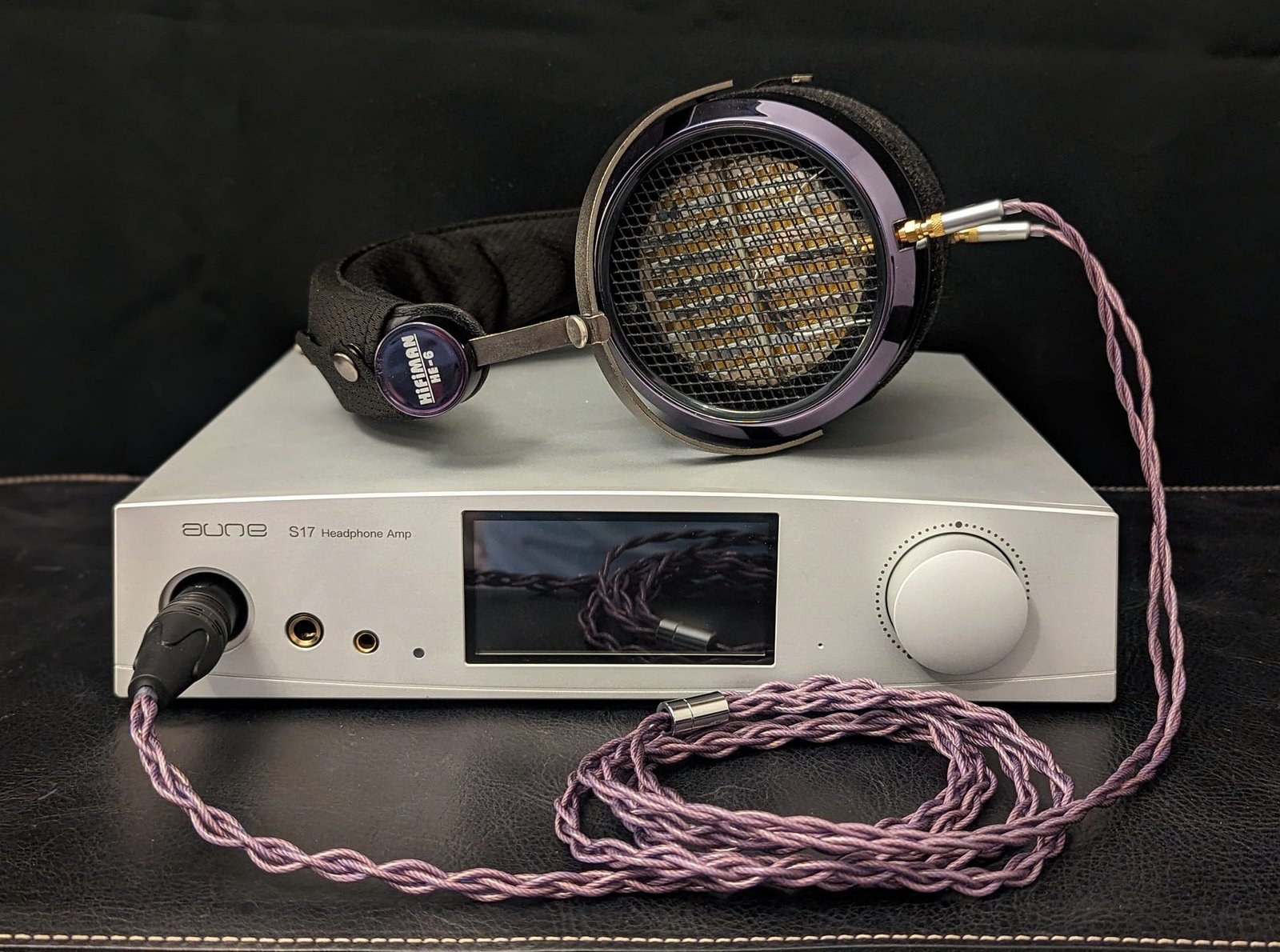
Thanks for the feedback! I have tested S17 Pro with HE-6 and it is definitely powerful enough and nice match for the headphones as well. I cannot really complain anything about the synergy, but Cayin iHA-6 is equally great for HE-6 too. Cayin also released a new iHA-8 amp, but it seems to be more expensive.
Cheers
Hello.
What would you buy from Cayin iHA-6 or Aune S17 Pro for HE-6, considering only sound quality (not other features).
And if it is not difficult, can you describe a little more details about the sound features of HE-6 on Aune S17 Pro in absolute terms and also in comparison with Cayin iHA-6.
Hello. Sure, I can describe them both to you, but please give me some time to write down some notes. I will send you email after comparing them more closely.
Thank you very much.
Stay healthy.