Author: Sword of Damocles
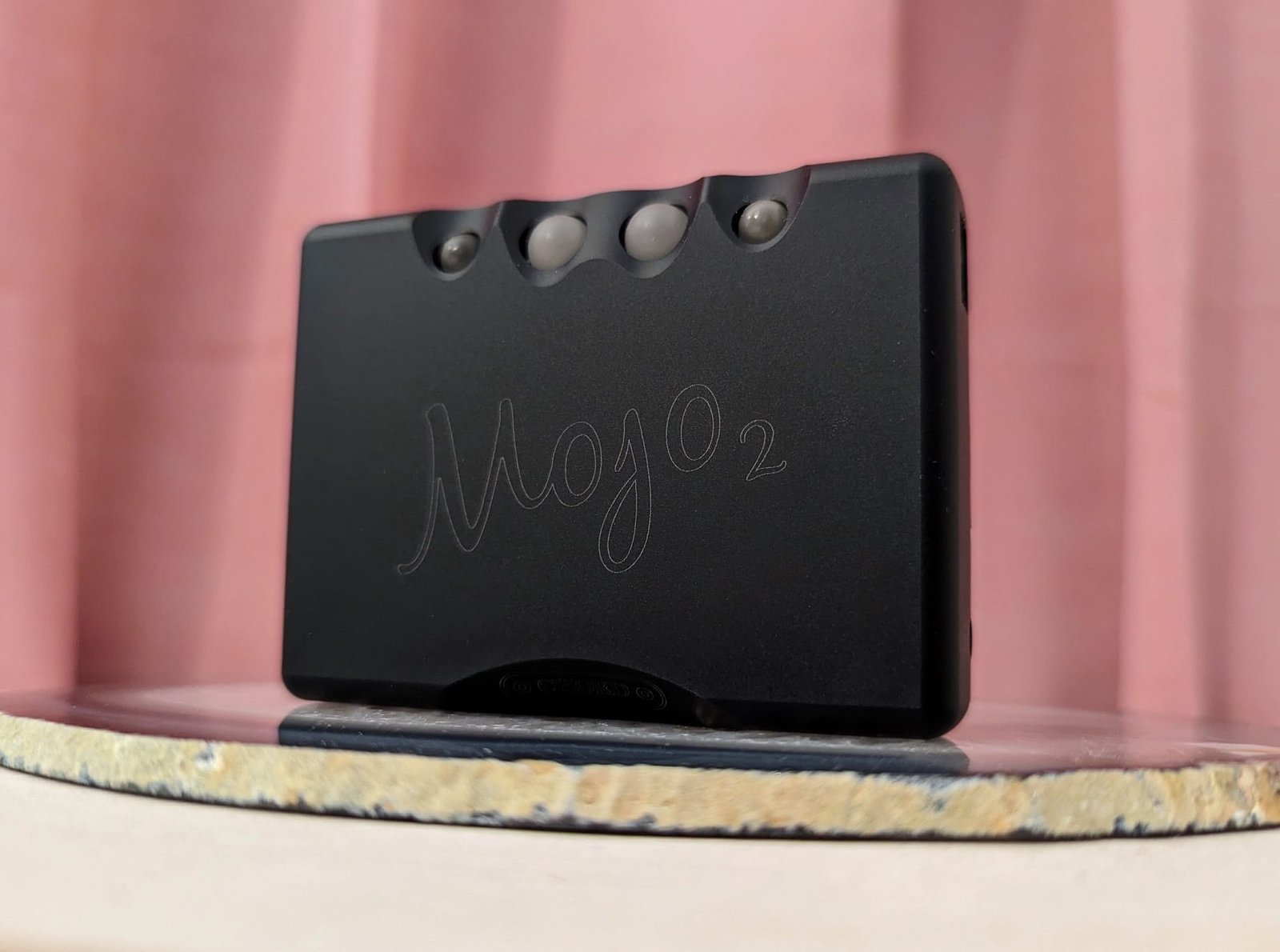
Table of Contents:
Information:
- Release year: 2022
- Country of manufacture: Great Britain
- Price: 599 € (currently available for 499 €)
- Type: DAC & headphone amplifier
- DAC chip: Chord Electronics custom coded FPGA
- Tap length: 40 960 taps
- Input connections: USB-C, Micro-USB, Optical Toslink and Coaxial 3.5 mm / Dual Data Coaxial (for Chord M-Scaler device)
- Output connections: 3.5 mm
- Headphone jacks: 2 x 3.5 mm
- Maximum supported sampling rate (PCM): 768 kHz (32 bit)
- Maximum supported sampling rate (DSD): DSD256 (native)
- Dynamic Range: 125 dB
- THD: 0.0003% @ 2.5 V / 300 ohm
- Headphone amplifier output impedance: 0.06 ohm
- Headphone amplifier stated output power: 600 mW @ 30 ohm / 90 mW @ 300 ohm
- Battery life: approximately 8 h
- Charging connector: Micro-USB
- Features: Built-in equalizer and Crossfeed
- External dimensions: 8.3 x 6.2 x 2.3 cm
- Weight: 185 g
- Equipment: Short micro-USB –> USB-A cable and quick guide
Review unit acquisition method: Loaned from a reseller
In Kuulokenurkka, we got acquainted in November 2023 with the British Chord Electronics: Qutest DAC and Anni amplifier, which are priced in the mid-range of the manufacturer's product selection and intended for home use. This time, the Mojo 2 combination device (DAC & headphone amplifier) under review, however, is Chord's most affordable product at its current price of 500 euros. Due to its small size and battery, it is aimed at mobile use (link to the manufacturer's product page). Mojo 2 was released for sale in early 2022, replacing the original Mojo, released in 2015, which was already hopelessly outdated in terms of both its connections and battery technology. When I owned Mojo 1, I was frustrated by its micro-USB connectors and extremely slow charging speed. The device also got hot, so keeping it in my pocket was not particularly pleasant. Due to these weaknesses, it seems there was a demand among consumers for the improvements that have been made to Mojo 2.
Although the new Mojo is interesting, I have not yet tested it myself, Mareksound so when one was offered to me for loan, I didn't have to hesitate for a moment. Thanks again for the cooperation! Let's see if my experiences are more positive than with the original model.
Product package content
This time too, let's start with the contents of the product package, which, however, is not much in the case of Mojo 2. The device comes with only a quick guide describing the most important functionalities and a short micro-USB charging/audio cable. This is probably intended for connection to a laptop, as its length is not sufficient for use with a charger plugged into a wall socket. The cable cannot be directly connected to a mobile phone either, due to the USB-A connector at the other end.
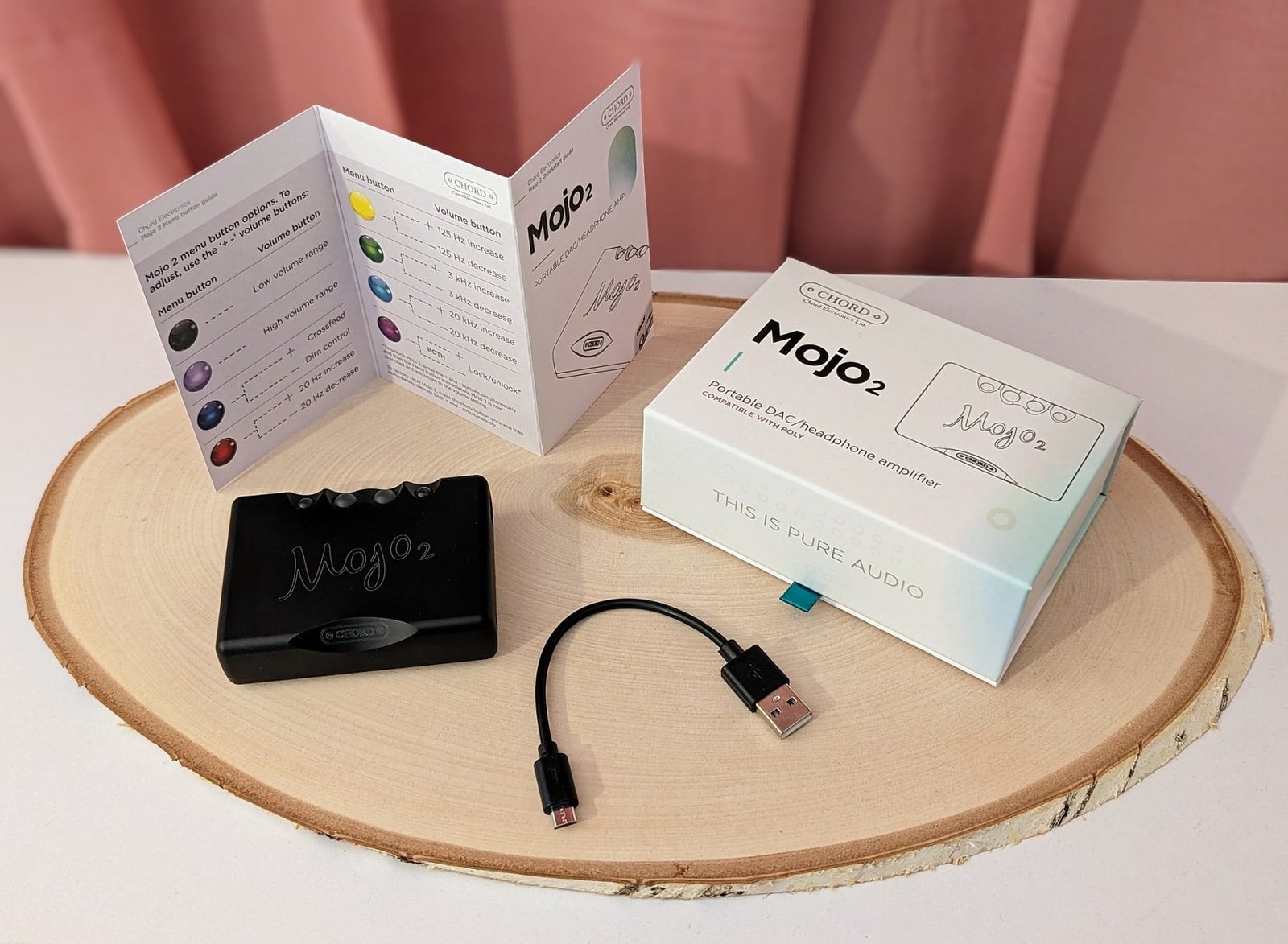
A more comprehensive user manual for Mojo 2 can be found on the manufacturer's website, and a cable for the more modern USB-C input connector must be purchased separately – a saving of a few euros for the manufacturer and a greater additional cost for the device buyer. Chord also does not supply any kind of storage pouch for Mojo 2, but a leather case priced at 90 euros can be purchased separately for the device. With the scarce equipment, at least the sales package has been kept conveniently sized.
Structure and connections
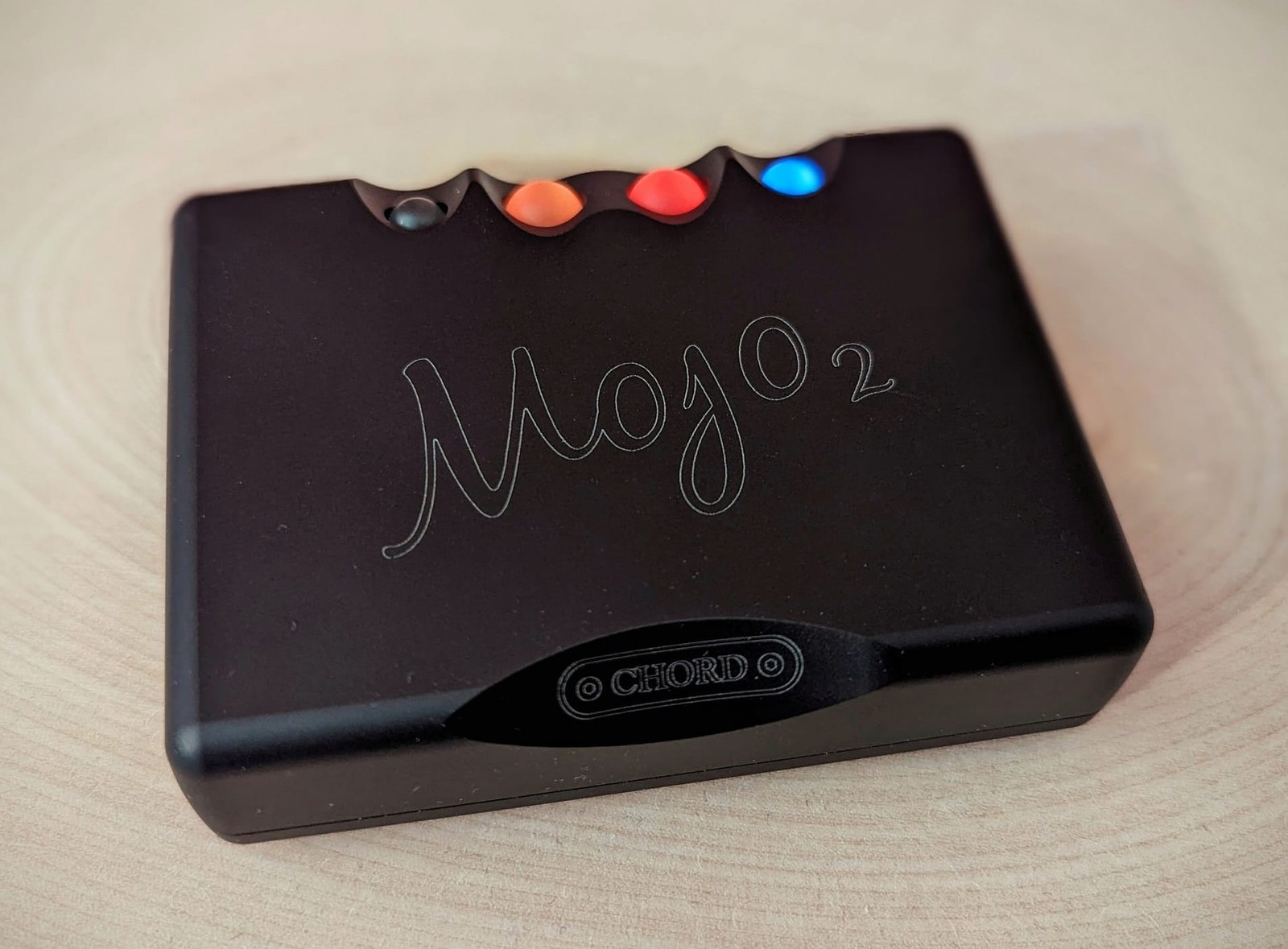
Like its predecessor, Mojo 2 is not among the smallest mobile amplifiers in terms of size, nor is its 185-gram weight among the lightest. On the positive side, however, the device's metal body is really sturdy and high-quality. Carrying it around is not difficult in the end, as Mojo 2 would still easily fit into a pocket, for example. A slightly heavier-than-usual weight becomes an advantage if the device is intended to replace a larger desktop device. For example, Qudelix 5K and many dongle devices, such as iFi Go Link, are, in my opinion, too small and light to be kept permanently on a desk, as they do not stay properly in place. Mojo 2, on the other hand, I would see as a kind of intermediate form between desktop and mobile devices. It also has suitably sticky rubber feet installed on its bottom.
Mojo 2 is capable of operating for about 8 hours on battery power, which in turn supports mobile use. In this case, however, the device must be connected to an audio source, such as a mobile phone, with a cable. Chord probably assumes people will use the long cable supplied with the phone or buy a shorter cable separately – the concept could have been clarified with more comprehensive equipment. Alternatively, wireless connections could be accessed by purchasing a 500-euro Poly streamer, which docks neatly to the side of the Mojo 2. However, this increases the price and size of the device quite significantly, so using it on the go requires a ”hifi attitude”.
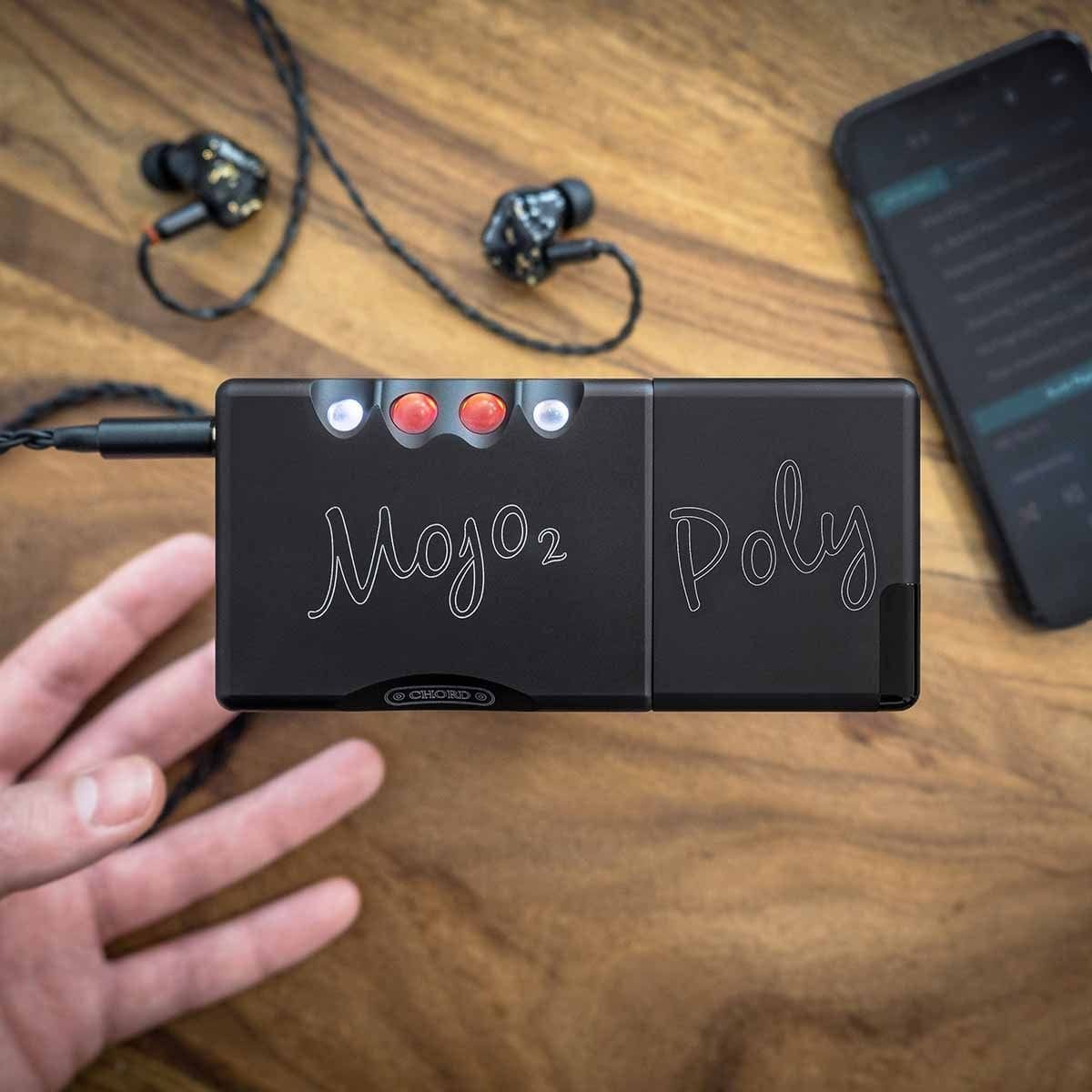
The Poly, originally designed for Mojo 1, and its two micro-USB connectors are actually the reason why Mojo 2 still uses these outdated connectors both as a charging port and as a second USB input. Fortunately, Chord has realized the need to add a newer USB-C connector to the device, so the solutions made to ensure Poly compatibility don't bother me excessively. Despite everything, the USB-C connector amusingly appears as if it's glued on, as it barely fit underneath the circuit board and has 3D-printed-like covers.
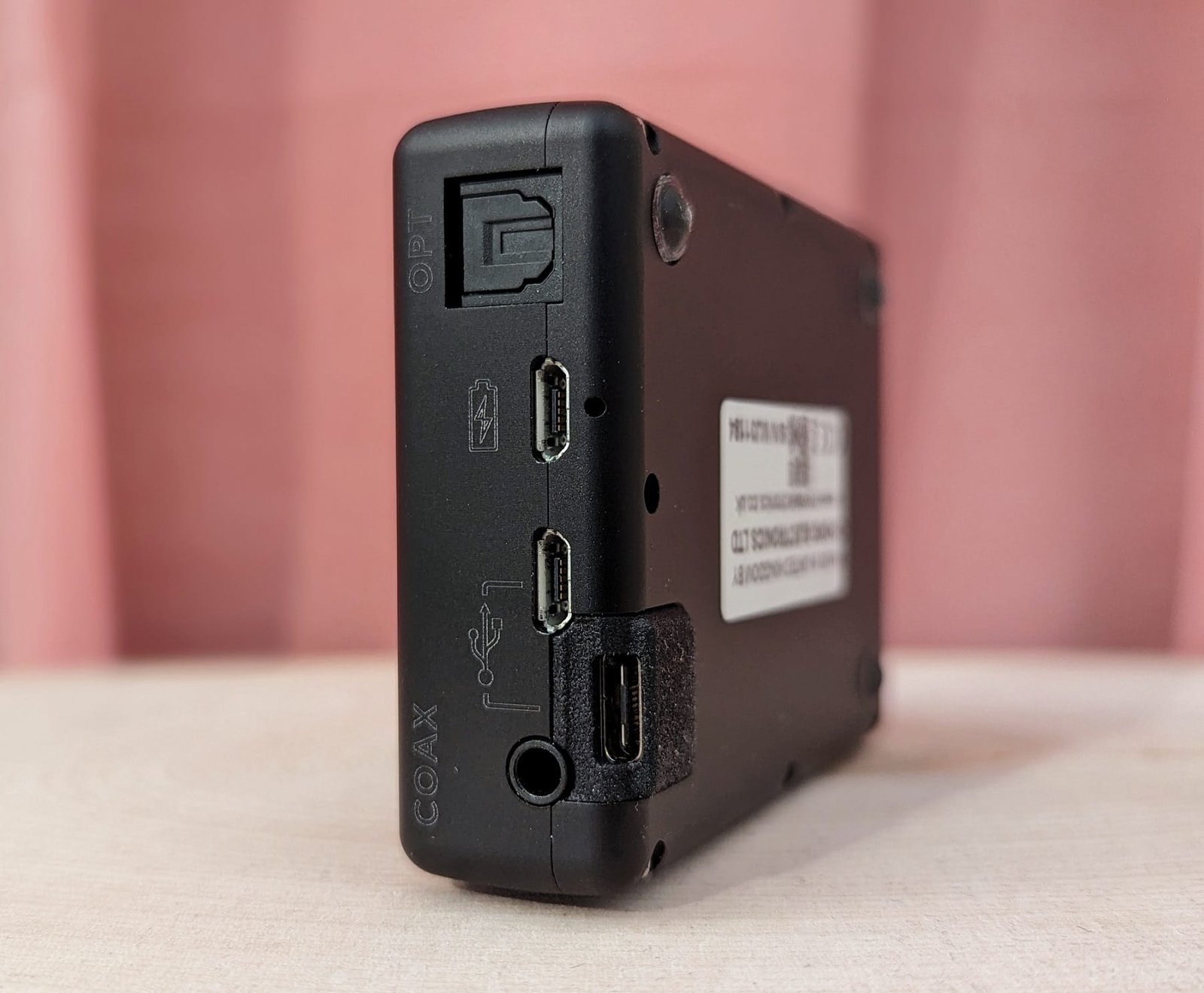
Other digital inputs include an optical Toslink connector and a 3.5-millimeter coaxial connector. The latter could be connected with a special cable to the manufacturer's M-Scaler device, for which Chord aims to provide compatibility with most of its D/A converters. Mojo 2 automatically recognizes the active input connector, prioritizing USB connections over the coaxial and Toslink connectors when multiple cables are connected simultaneously. It's also noteworthy that only one of the two USB connectors can be used at a time, with micro-USB taking precedence over USB-C.
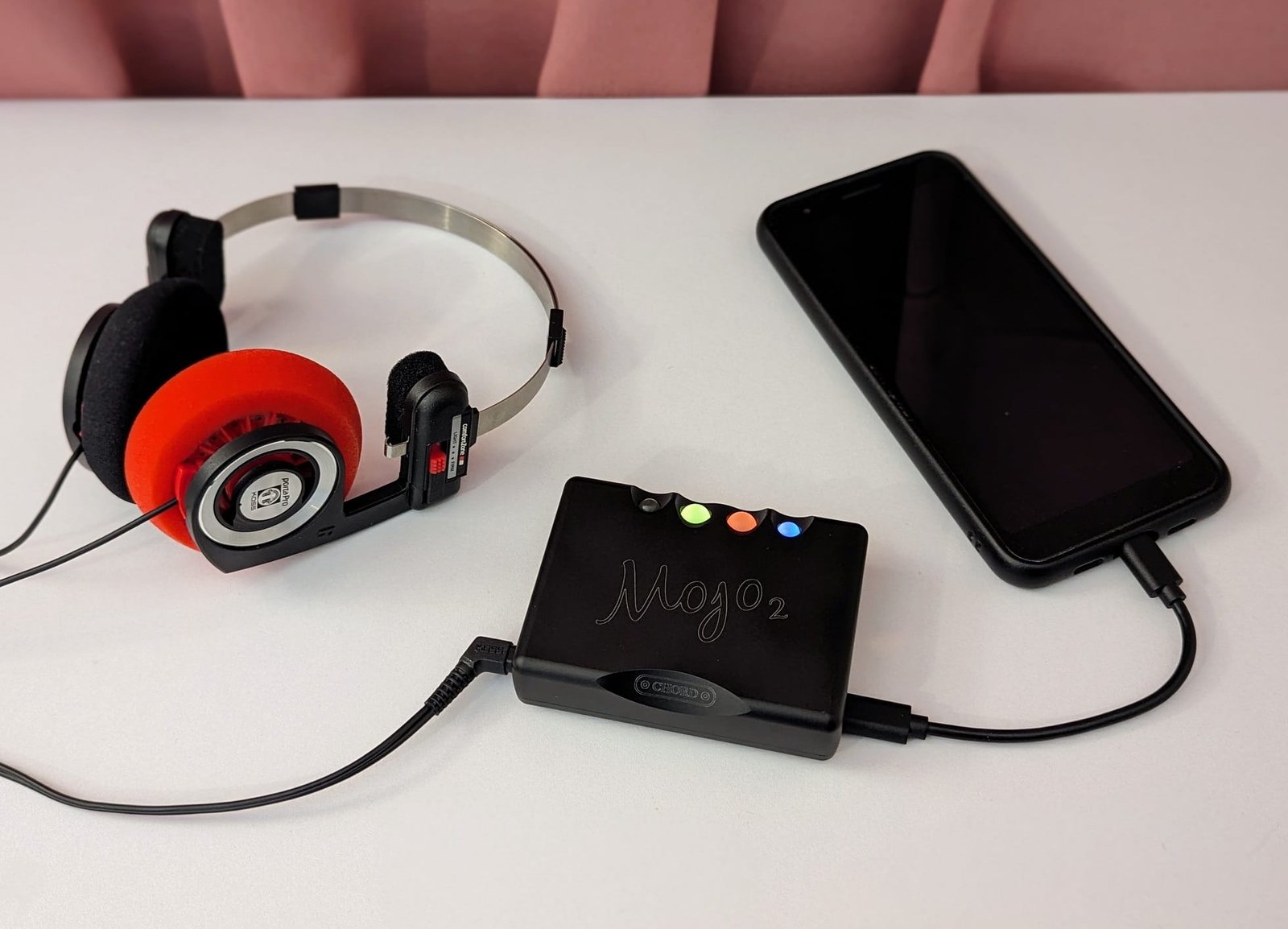
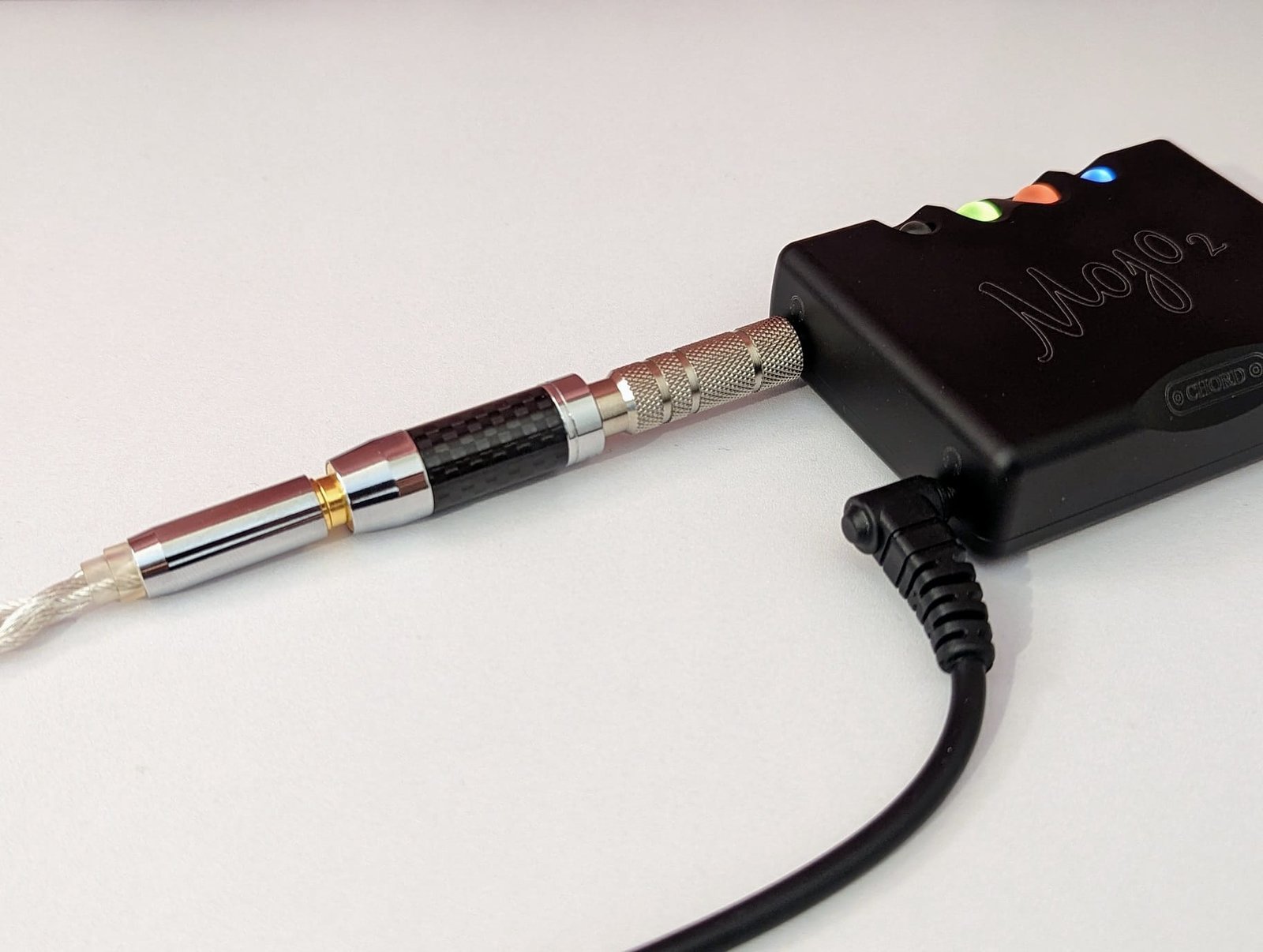
On the other side of the Mojo 2, there are two 3.5-millimeter headphone jacks, which could be used simultaneously, even though separate volume control for both is not possible. If the device is used purely as a DAC, either of the 3.5-millimeter connectors functions as an output for an amplifier. For headphones, I would have hoped to see, for example, a 4.4-millimeter option instead of one of the connectors, even if it wasn't wired for balanced output (Chord only makes single-ended amplifiers). This would have provided flexibility in cable choices, as I have recently acquired 4.4-millimeter terminated cables for several of my better headphones. I have had to resort to wild adapter setups with the Mojo 2. Chord's device ecosystem is starting to feel a bit old-fashioned because the market is moving in a different direction regarding connectors. On the other hand, this probably doesn't bother those who have owned the manufacturer's devices before.

The original Mojo could not be reasonably used as a desktop device because it constantly drained its battery, and it was not recommended to charge it during use. However, with Mojo 2, the situation has been rectified. Now, the device can be left continuously charging, after which it enters a kind of intelligent desktop mode once the battery is full, which extends battery life by regulating its use and charging. Part of the power supply is likely handled directly via the cable. The only slight drawback is that using Mojo 2 in desktop mode requires two USB cables, as power and data are separated.
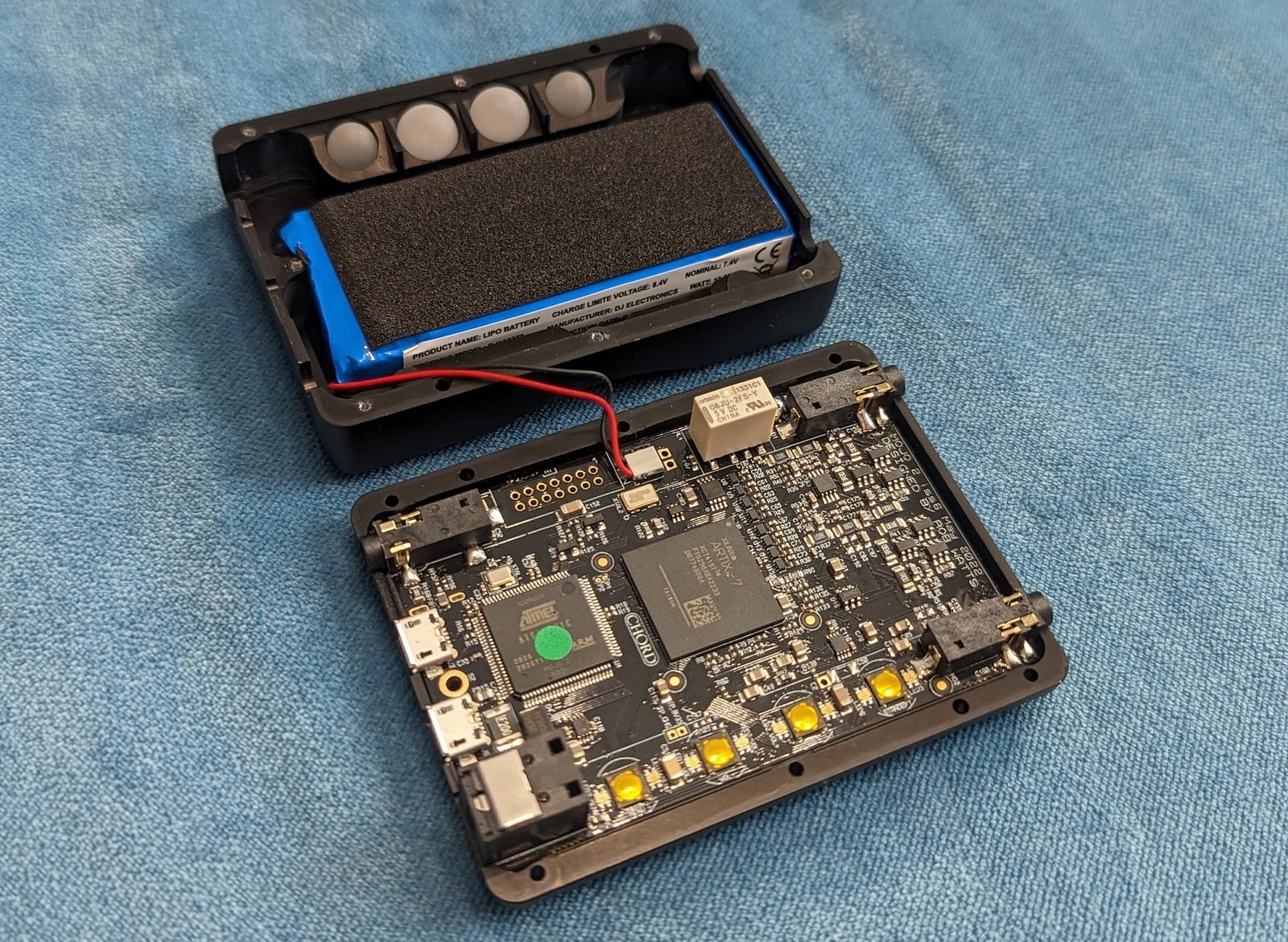
An old micro-USB is used as the 5-volt charging connector, so the device buyer will most likely have to purchase a longer cable separately, unless one happens to be found at the bottom of a box already. The battery charge level is indicated by an LED installed below the charging connector, and the charging speed by the color of the power button. I have found that charging is successful with a standard phone charger, especially if it provides 2 amps of current as per Chord's recommendations. The charging time thus settles close to 4 hours, so unfortunately, there has been little improvement in charging speed. It is quite incomprehensible that 8 hours of use in the 2020s requires 4 hours of charging. Of course, the battery does not have to be fully charged every time, and slow charging may extend its lifespan. Unlike the previous Mojo, the new model no longer heats up significantly during charging or use. Its battery also does not drain by itself in a few days if the device is not used. These are important improvements.
Buttons and features
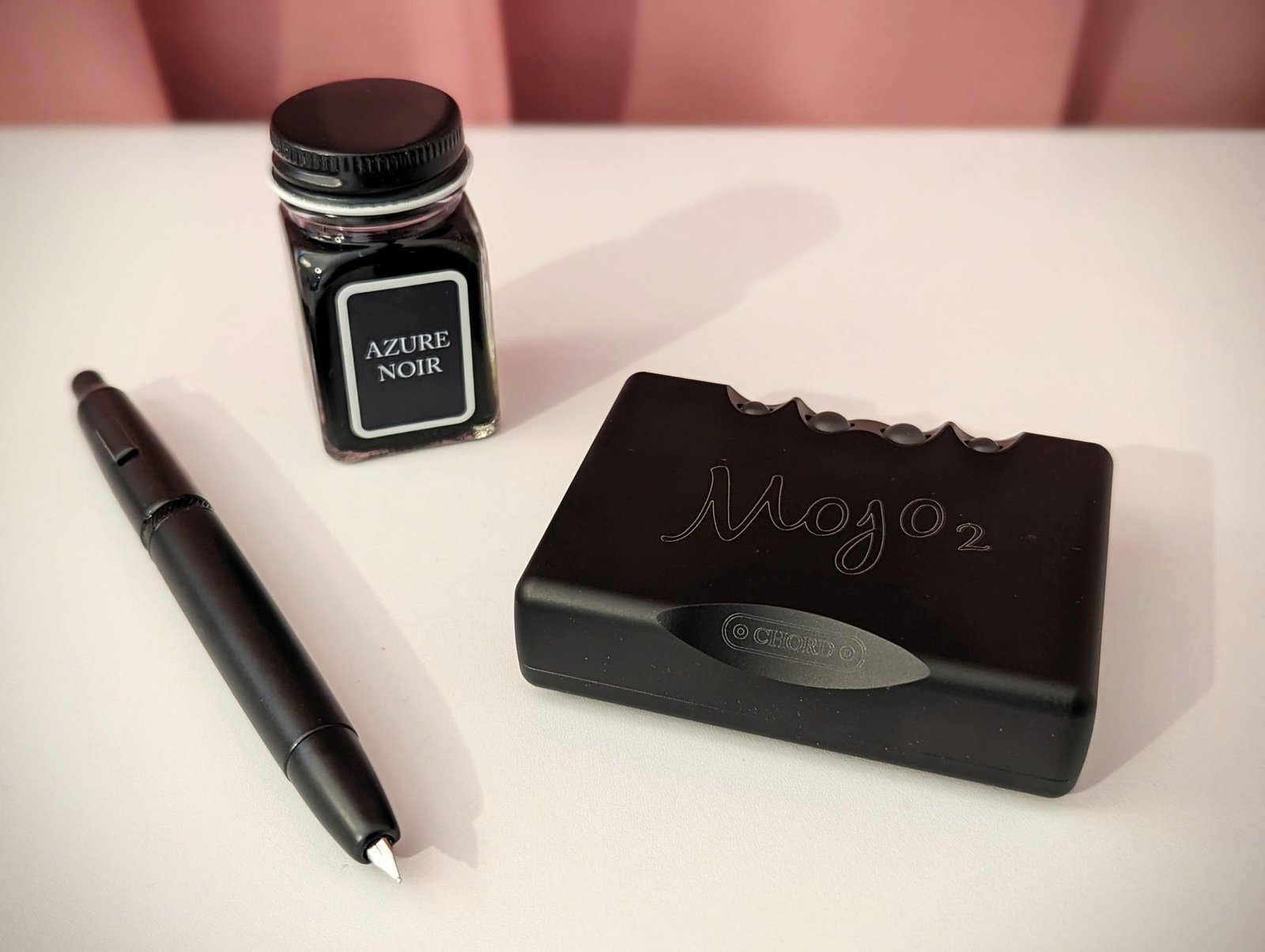
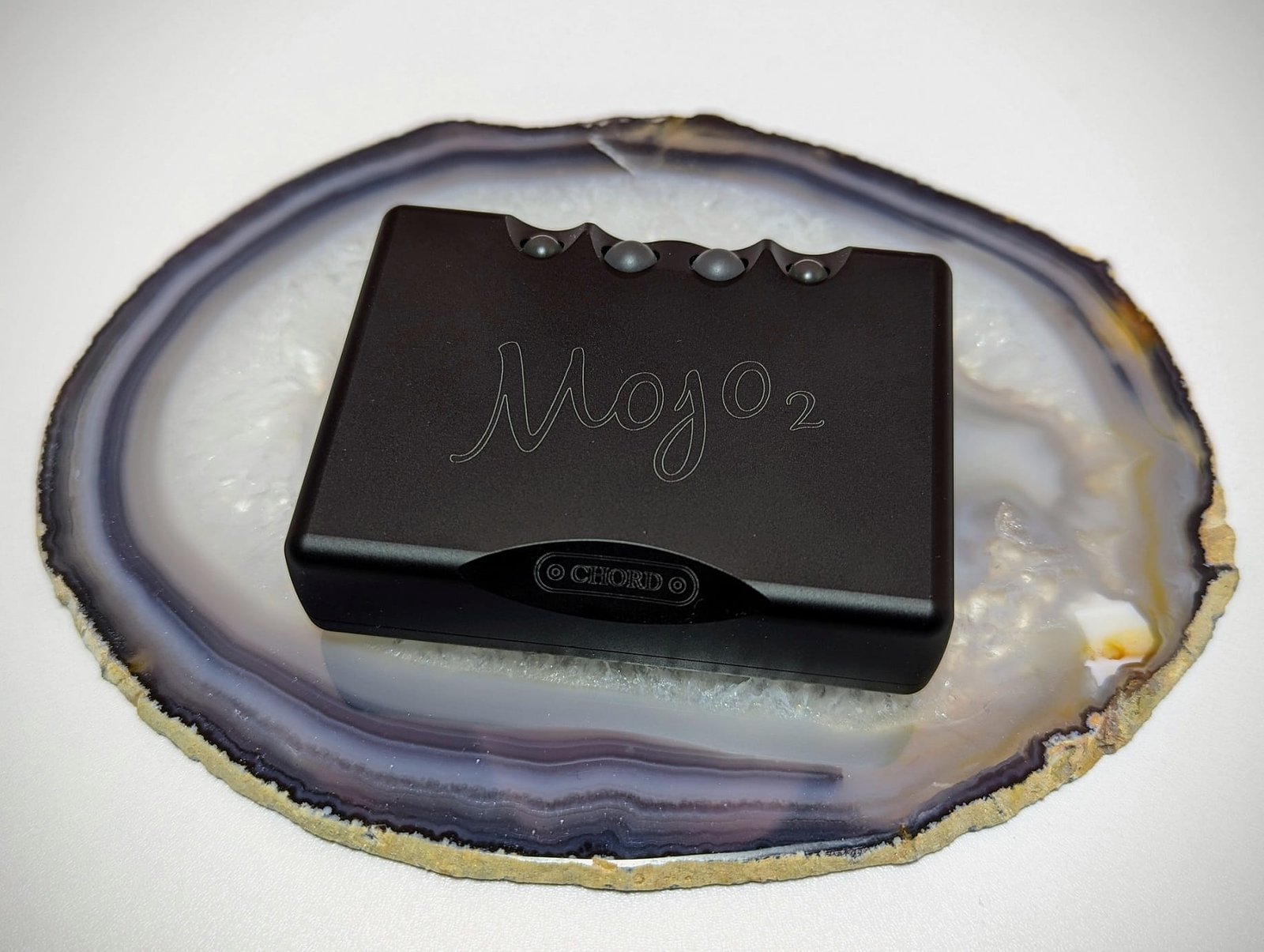
Chord Mojo's most distinctive and easily recognizable feature has always been its colorful spherical buttons. In the original model, there were three of these, and they could be rotated with fingers. In Mojo 2, the spheres no longer rotate, and their size has been reduced to accommodate a fourth button in the row. With this added menu button, the device now features new functionalities: a 4-channel equalizer and an adjustable crossfeed function.
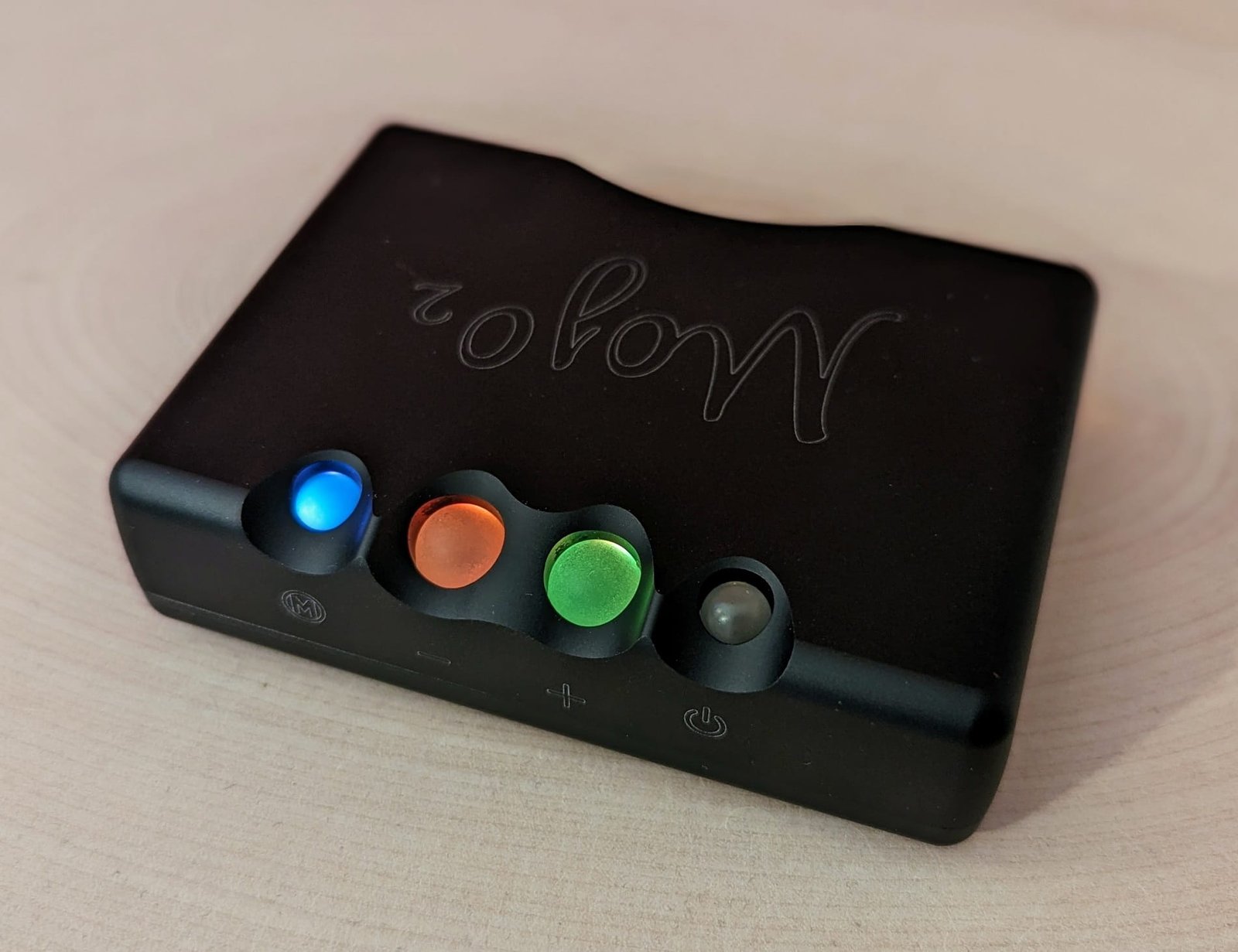
One of the buttons is purely a power button (its color indicates the sampling frequency when listening), and the two middle ones adjust the volume. The selected volume is indicated by the color of the spheres, but in reality, it's a bit of a gamble, especially if multiple different headphones are listened to alternately with the device. However, adjustment is easy, and the device can also be set to mute by pressing the two middle buttons simultaneously.
Other settings and additional features open by pressing the menu button. At this stage, the color of the different buttons must be interpreted to understand what is being adjusted, in which direction the adjustments were made, or which settings were selected. I assumed using the device would be difficult, but after reading the manual and a little practice, it has been surprisingly smooth – though colorblind people might completely disagree with me. I personally appreciate that equalization and using the crossfeed function can be done on the fly without any separate application. Other functions include dimming the device's lights and locking the buttons, so that, for example, the volume doesn't accidentally adjust when carrying the Mojo 2 in a pocket. Both useful features.
The crossfeed function offers three different strengths. Each of these mixes the left and right channels more and more into each other, as a result of which the soundstage moves more in front of the eyes and the headphones begin to resemble speakers somewhat. The smallest setting of the Mojo 2 has generally suited most headphones I've tried well, whereas larger settings begin to narrow the soundstage too much in the lateral direction. The clarity of sound separation also begins to suffer as the presentation softens. Nevertheless, I don't dismiss the possibility that even larger settings might work well with some headphones or in certain use cases. Crossfeed is, overall, a nice additional feature that is gradually becoming more common in headphone amplifiers.
The equalizer in the Mojo 2, on the other hand, is 4-channel and has been implemented excellently. Each channel can be adjusted by a maximum of 9 decibels up or down, so there is plenty of adjustment range. At the extremes, the 20 Hz and 20 kHz settings are suitable, for example, for adding sub-bass to open-back headphone models or for taming overly bright Hifimans. In addition, the 125 Hz setting can be used to shelf boost or cut the bass level if there is too much or too little of it in the headphones for one's taste. The adjustment extends gently up to 3 kHz, so it can effectively eliminate, for example, overemphasized mid-bass and thick lower mid-frequencies between 200–500 Hz in headphones. The 3 kHz setting, in turn, shelf boosts or cuts the energy level of the mid-frequencies, and its area of effect extends from 125 Hz all the way to 20 Hz.
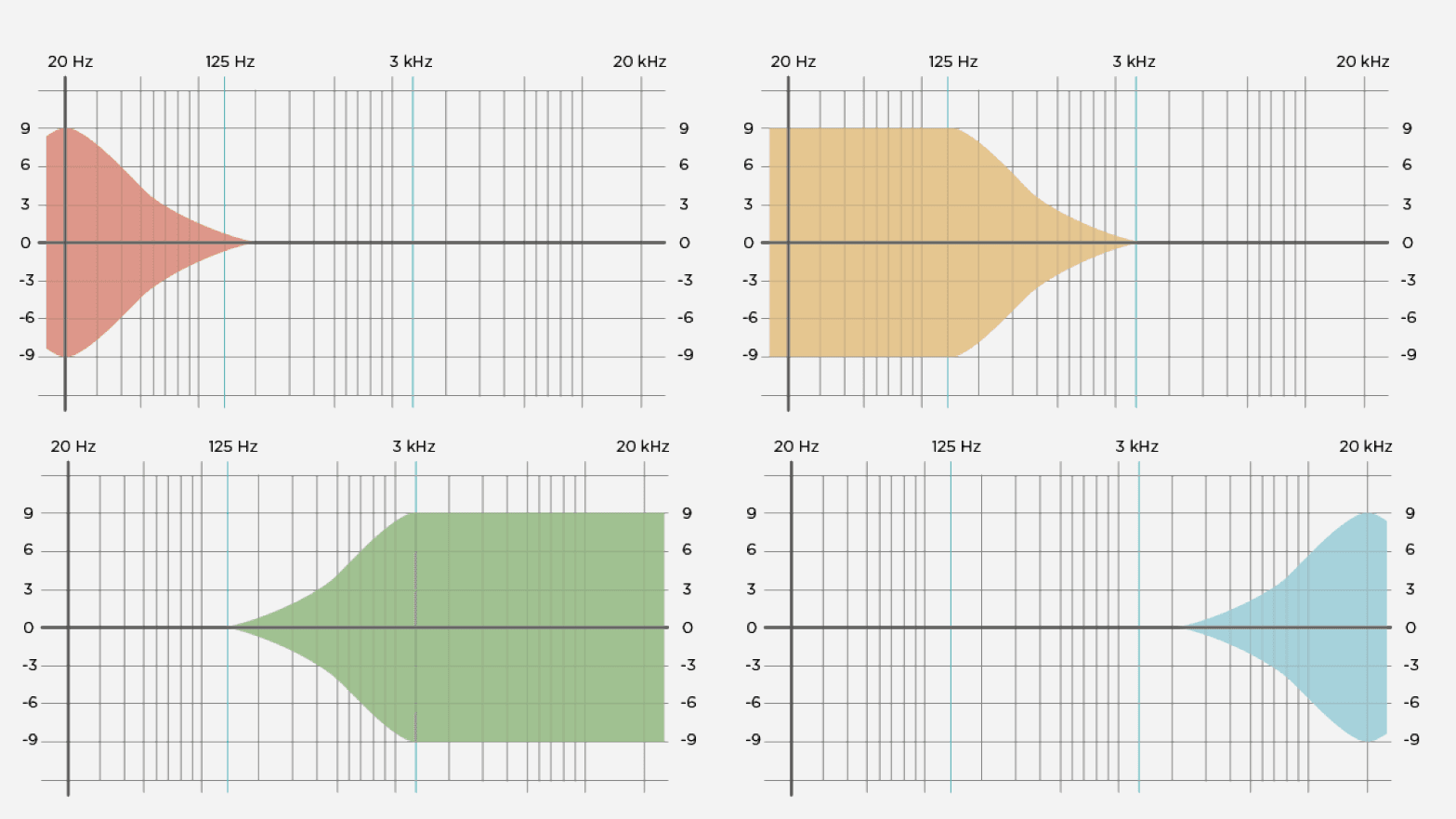
The precision of the channels is not strictly sufficient for narrow-band fine-tuning, but by using four settings together, the most common problem areas of headphones can be effectively corrected. Equalization is also easy to learn because the changes produced by each setting are easily audible without creating narrow peaks or dips in the frequency response. With bold experimentation, even beginners can quickly go far in equalization. In my opinion, this feature significantly increases the value of the device, and it is, along with the USB-C connector and desktop mode, the most significant improvement compared to the previous Mojo model.
DAC and headphone amplifier
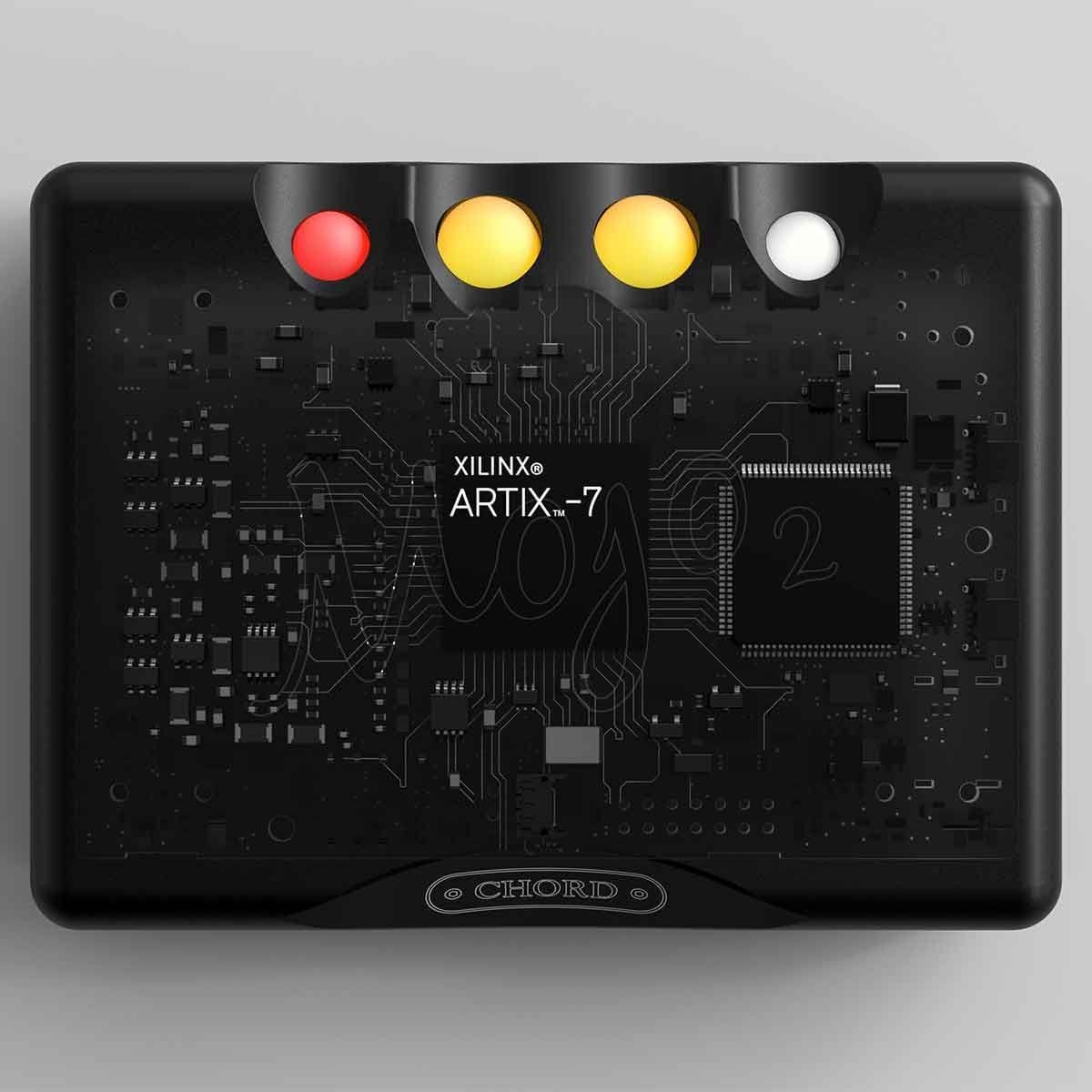
Chord utilizes an FPGA chip, i.e., a programmable microprocessor, in the implementation of the Mojo 2”s D/A converter, similar to its other devices. This provides more computational power compared to ordinary DACs, allowing digital filtering and oversampling filtering to be designed more freely, aiming for the best possible sound quality. The manufacturer typically states the number of coefficients, or ”taps,” related to digital filtering. In traditional Delta-sigma DACs, these ”taps" number at most a few hundred, whereas in Chord's devices, their number reaches tens of thousands. The tap count of the Mojo 2 is precisely 40,960, meaning about 2000 more than in the original Mojo. In the larger and more expensive Qutest DAC, the taps would be 49,152, so the number seems to increase with the price of the device. The effect of such a measurable quantity on sound quality is somewhat difficult to verify, but Chord, in any case, designs its DACs very differently from other manufacturers.
Mojo 2 supports high sampling rates in both PCM (Max 768 kHz @ 32 bit) and DSD formats (Max DSD256). Unlike the more expensive Qutest, there are no different audio filters to choose from. The Mojo's USB connections also lack a galvanic isolator to combat potential interference coming through the PC (not that I've heard any interference). Speaking of computer use, the device is automatically recognized by the Windows operating system and does not require manual driver installation. Interestingly, the name "Qutest" appears in the audio device list, so Chord likely uses the same drivers for both devices.
Considering its battery operation, the Mojo 2's headphone amplifier is quite powerful, offering an output power of 600 milliwatts for a 30-ohm load and a comfortable 90 milliwatts even for a 300-ohm load. This is easily sufficient for all kinds of dynamic headphone models, but the device has been claimed to perform slightly worse with planar headphones. I would not, as a starting point, acquire the device myself for the most demanding Hifiman models (Susvara and HE-6), Abyss AB1266or Modhouse Audio Tungsten, but with more affordable planar headphones, such as the Hifiman Sundara Silver, I don't notice anything strange in the sound quality compared to more powerful devices. At very high volumes, some kind of limit might be reached, whereas when staying at 75-90 decibels, the amplification power is perfectly sufficient. USB dongles don't reach the same level, nor does my frequently used Qudelix 5K. On the other hand, a similarly priced device to the Mojo 2, such as the iFi xDSD Gryphon would be somewhat more powerful via its balanced headphone connector.
The output impedance of the Mojo 2's headphone amplifier is close to zero, so it does not alter the frequency response of headphone models with an uneven impedance curve in one direction or another. This is generally a good and desired thing. Furthermore, the device's measurement results are excellent, indicating high-quality design. No noise or popping is heard during use, so even sensitive in-ear headphones are suitable for listening with the Mojo 2.
Sound quality
I have listened to many different headphones with the Mojo 2 for over a month, whose amplification requirements and impedance differ from each other. The selection has included several 300-ohm headphones, such as ZMFs and Sennheiser HD 600. In addition, I have used planar headphones, such as Hifiman Sundara Silver, Modhouse T60RP Argon, ZMF Caldera, and Yamaha YH-5000SE. ZMF Bokeh, Kaiku Tone, and affordable in-ear models have also received listening time. I have also compared the sound quality of the Mojo 2 to several other devices and found out how it performs in the role of a D/A converter.
Let's start discussing sound quality from the device's primary intended use, i.e., how it performs as a combined device designed for mobile use. In this regard, I have been very satisfied with what I've heard. The Mojo 2's sound profile is normal in a good way and even unobtrusively balanced. The sound has no harshness or sharpness, but also not too much warmth or softness, although the edges of the sharpest sounds are reproduced somewhat rounded. Music flows naturally, and the sense of space is pleasantly expansive given the device's power figures and character. It is precisely the spacious-feeling soundstage and a certain smoothness of reproduction that I remember best about the Mojo 2. If the listening experience is desired to be a bit more exciting, the crossfeed function and equalizer provide excellent tools for that. One might even say that due to the extensive adjustment possibilities, the Mojo 2's own sound quality ultimately doesn't matter much. However, I am happy to report that even as it is, the device sounds excellent.
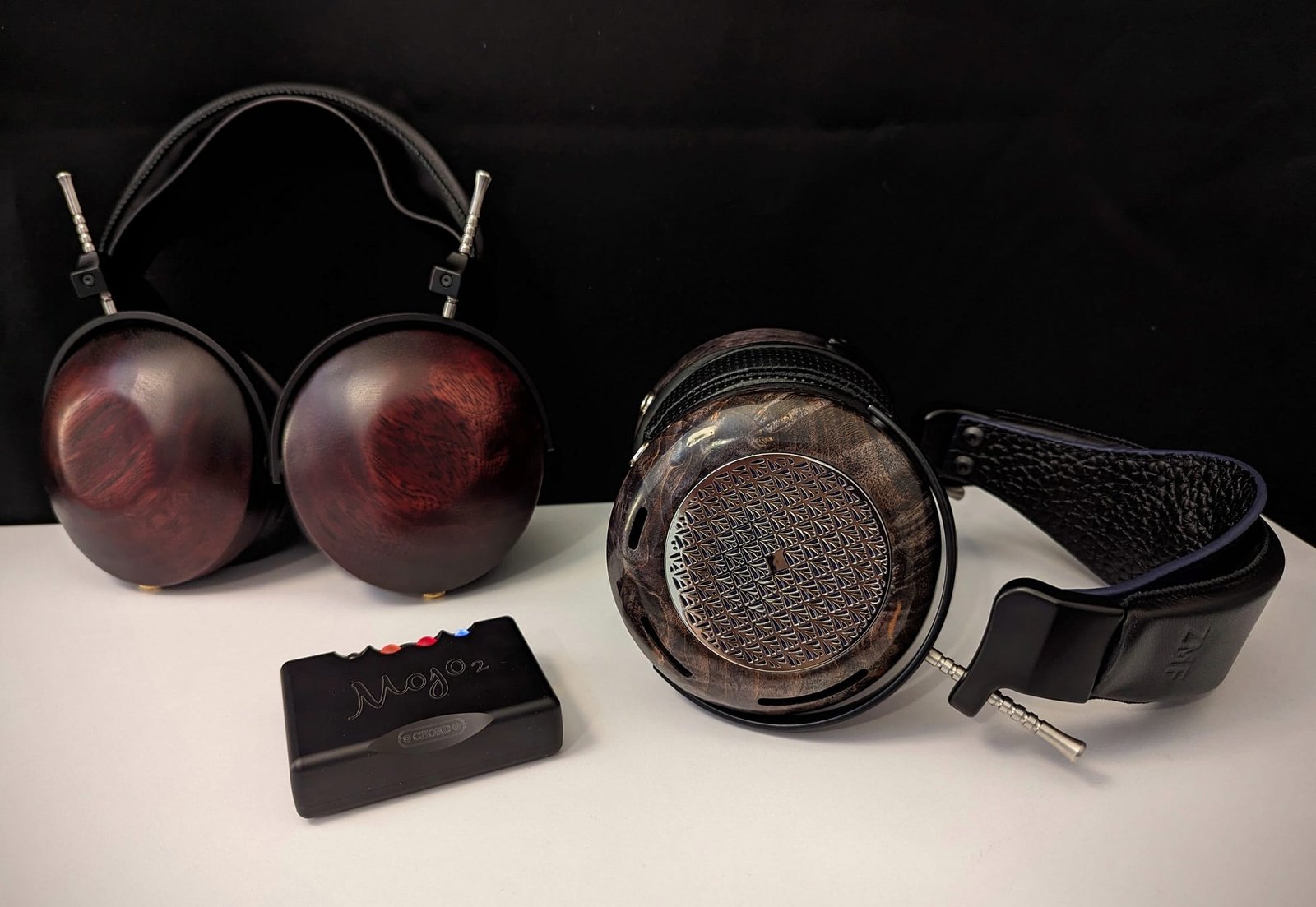
I like the Mojo 2 more than, for example, Yamaha's 4000 euro HA-L7A: which sounds clearly sharper and somewhat narrower. When compared to Cayin iHA-6 and Aune S17 Pro paired with Schiit Audio Bifrost 2 -DAC, the Mojo 2, in turn, proves to be slightly soft in sound. However, it is still slightly more neutral in overall sound, as the device combinations I mentioned produce a fuller sound. In terms of soundstage size and layering, the Mojo 2 lags somewhat, but the difference is not huge in either direction. A spacious soundstage is clearly one of the device's strong points. You shouldn't expect a particularly edgy sound, but it must be noted that this is a small mobile amplifier, which I have compared to device combinations of a completely different size class.
According to my recollections, compared to Chord's more expensive Qutest & Anni -combination, the Mojo 2's sound has more warmth and robustness, which could be due to a slightly calmer treble reproduction. At the same time, the perception of detail in the reproduction naturally decreases, but I believe many would find the Mojo 2 to sound even more balanced and fun compared to the other two Chord devices I mentioned.
Compared to my more affordable all-in-one devices, Topping DX1: (price 100 €) and SMSL DL200 (price about 200 €), the Mojo 2's presentation is, in turn, slightly more open and relaxed. The high frequencies are reproduced more smoothly and pleasantly, and the sound also has more emotion. The DL200 sounds thinner and edgier, or in a way, more clinical, whereas the DX1's sound signature resembles the Mojo 2 more, but its soundstage remains narrower. The Chord device, in my opinion, sounds the most natural and separates individual sounds most precisely from each other. For example, the singer sounds most like a real person, and there is the most empty space around the instruments, which is generally a sign of a good device. I hope for precisely these kinds of changes as the price range increases. However, it should still be noted that, described in this way, the differences between devices can easily seem greater than they actually are. Instead of obvious differences, we are talking more about nuanced differences.
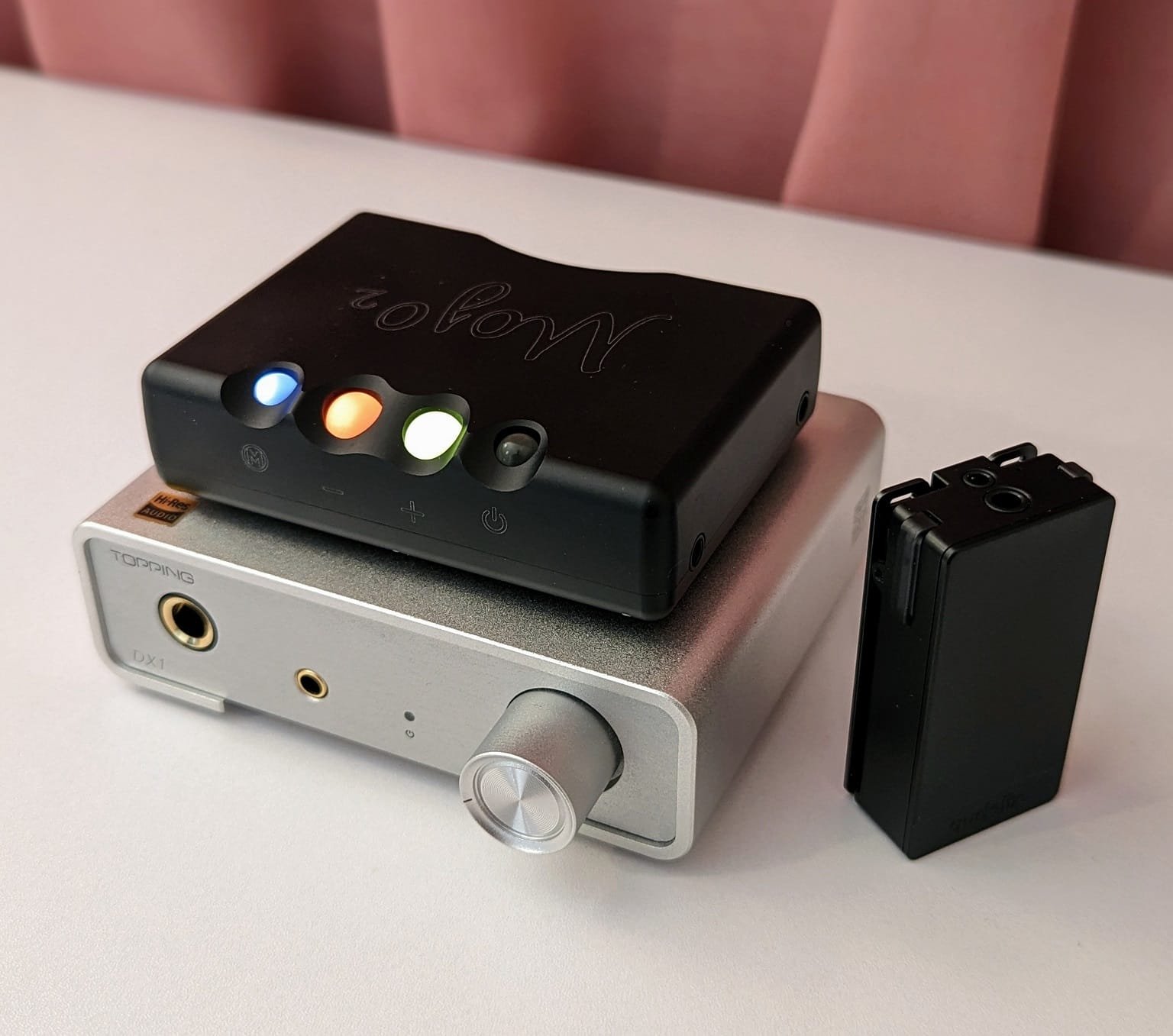
Among devices designed for mobile use, the Mojo 2 is not as versatile and handy as Qudelix 5K (no device currently beats Qudelix in features), but I have found the Chord device to sound slightly deeper and more three-dimensional in its soundstage, and more impressive in its resolution (sounds are more clearly separated from each other). Its sound is also weightier and thus more fun compared to the Qudelix. Since more amplification power is also available, the Mojo 2 could be a good choice for those looking for a slightly better mobile amplifier. On the other hand, due to its affordable price and more comprehensive equalizer, the Qudelix could be an attractive impulse purchase for those who have not previously owned a similar small device. The Mojo 2 would require a larger financial investment and probably also a clearer use case.
Overall, it is very difficult to find negative aspects of the Mojo 2's sound quality. Its sound feels balanced exactly as I believe would be optimal for most use cases. If the device's output power is sufficient for one's needs, it leaves nothing to be desired, even compared to larger desktop devices. This is probably good news for those who are hesitant to acquire an expensive mobile amplifier.
Headphones suitable for Mojo 2
Next, I will present examples of how I have found different headphones to suit the Mojo 2. Only a few headphones are so perfect that they wouldn't benefit even slightly from the device's equalizer. By utilizing this possibility, the Mojo 2 offers a better listening experience with suitable headphones compared to more expensive amplifiers that do not have an equalizer.
Among my more affordable headphones, I first noted that Hifiman Sundara Silver is a good match for the Mojo 2. The soundstage is well-proportioned, and the device slightly calms the brightness of the headphones' treble. The experience improves even further when I add a couple of clicks of sub-bass to the headphones with the equalizer and, in turn, remove a couple of clicks from the treble. The Sundara Silver also comes with a cable (a long one) that fits directly into the amplifier's 3.5-millimeter connector.
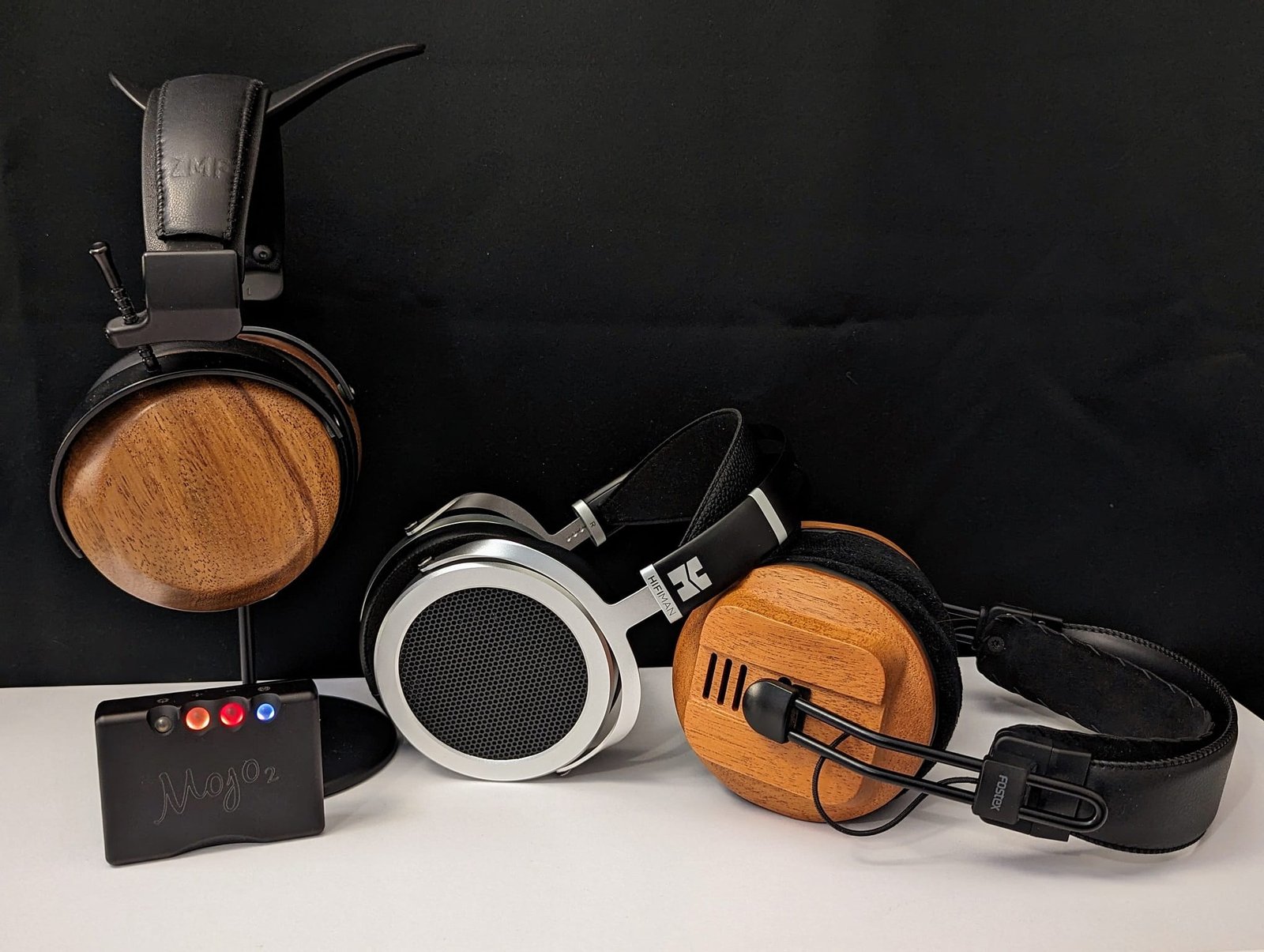
Sennheiser HD 600 ei sen sijaan tuottanut yhtä hyvää lopputulosta, koska se jää erikoisen pehmeän ja vaisun kuuloiseksi, ellen lisää keskitaajuuksiin energiaa taajuuskorjaimella. Diskanttikaan ei kuulosta erityisen erotellulta, vaan se on pikemminkin sulavaa ja hieman yhteen sulautuvaa. HD 600 osaa toisinaan olla kinkkinen vahvistettava, mutta Mojon crossfeed-toiminto sentään parantaa kuulokkeiden äänikuvaa.
Hifimanin suljetun HE-R9:n uskoin hyötyvän Mojo 2:n taajuuskorjaimesta, mikä pitikin paikkansa. Kuulokkeiden taajuusvaste on silti niin epätasainen, etten saanut siitä millään täysin normaalin kuuloista. Tällaisissa tapauksissa tarvittaisiin Qudelix 5K:n tapainen parametrinen taajuuskorjain tarkemilla säätömahdollisuuksilla.
Modhouse Audio T60RP Argonin taajuusvaste sen sijaan on tasaisempi, joten sain kuulokkeista Mojo 2:lla tasapainoisen kuuloiset. Niin kumahteleva keskibasso, aavistuksen verhoutuneet keskitaajuudet kuin lievä sibilanssikin oli korjattavissa tehokkaasti. Toisaalta kuulokkeissa on sellaisenaankin oma viehätyksensä ja ne tuntuvat paranevan tehokkaalla vahvistimella, jollainen Mojo 2 ei varsinaisesti ole. T60RP Argon ei tällä hetkellä kuulu arvostelulistalleni, mutta harkitsen kirjoittavani siitä jossakin vaiheessa.
ZMF:n Bokeh-uutuusmalli kuulostaa Mojo 2:lla sellaisenaan oikein hyvältä ja tasapainoiselta. Kuulokkeissa on melko tukeva ja lämmin ääni, joten pienistä hienosäädöistäkään ei toisaalta ole haittaa, mikäli keskitaajuuksiin halutaan lisää räväkkyyttä. Bokeh on muuhun ZMF-mallistoon nähden kooltaan hieman pienempi, joten sitä olisi mahdollista kuljettaa joten kuten mukana paikasta toiseen. Tällöin Mojo 2:n tapainen laite olisi sille lähestulkoon optimaalinen pari etenkin, kun tuotteiden välinen synergia on mielestäni toimiva.
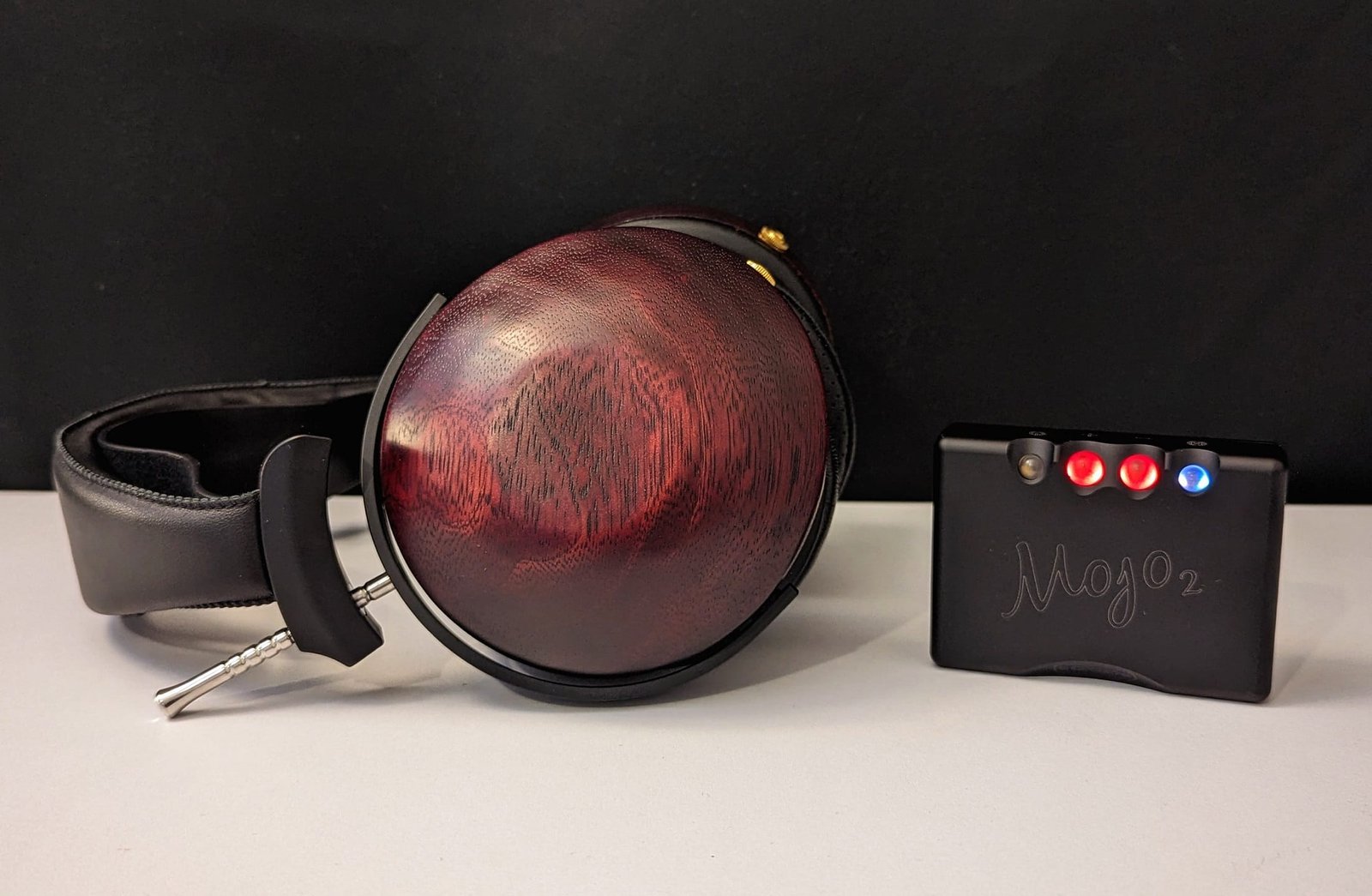
Ehkäpä laitteen mobiilikäyttöön sopivasta luonteesta johtuen olen huomannut kuuntelevani sillä enemmän suljettuja kuin avoimia kuulokkeita. Kuunteluaikaa sai testijaksoni aikana paljon myös ZMF Verite Closed, koska totesin Mojo 2:n olevan sille fantastisen hyvä pari. Laite kontrolloi erinomaisesti kuulokkeiden tuhtia bassontoistoa ja tilavaikutelma erityisesti Veriten vakiopehmusteilla (Auteur Lambskin) on mahtavan tilava ja avara. Pidän niin ikään diskantin rasittamattomuudesta ilman että se vaikuttaisi millään tapaa erottelun selkeyteen. Kuulokkeiden keskitaajuudet tuntuvat jopa tavallista elävämmiltä ja läpinäkyvimmiltä. Verite Closed on erikoinen kuuloke, koska se on selvästi värittynyt, mutta se imaisee niin voimakkaasti mukaansa, ettei sitä tulisi mieleenkään taajuuskorjata. Synergian täytyykin olla kunnossa, koska en malttaisi lopettaa kuuntelua Mojo 2:lla.
Vaikka useista eri ZMF-malleista kertominen tuntuukin jo hieman puuduttavalta, mainitsen myös Atriumista sen vuoksi, ettei se mielestäni kuulosta Mojo 2:lla kovinkaan erikoiselta. Toisto on todella pehmeää ja sulavaa jopa tylsyyteen saakka. Äänessä ei ole oikein minkäänlaista tarttumapintaa ja erottelukykykin jää puutteelliseksi. Havaitsin oikeastaan samoja asioita Sennheiser HD 600:n kohdalla, joten nämä kaksi kuuloketta eivät jostakin syystä toimi optimaalisesti Chordin laitteella, ellei tavoitteena ole kesy lopputulos.
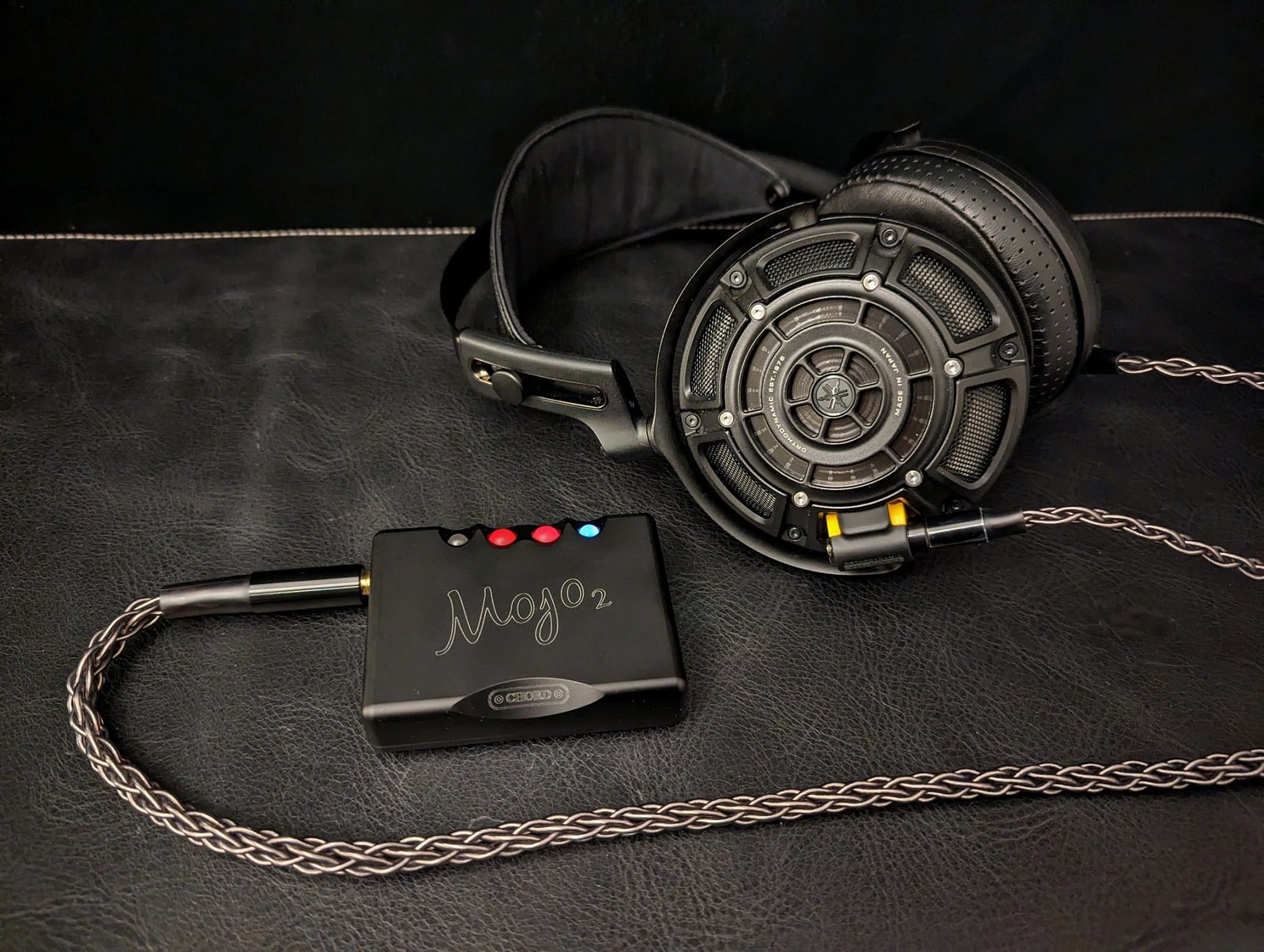
Kokeilin myös hintavampia planaarikuulokkeita, jotka eivät ole vahvistustarpeeltaan erityisen haastavia. Yamahan YH-5000SE:stä saadaan Mojon taajuuskorjaimella huomattavasti lähtötilannetta paremman kuuloinen. Ellei lopputulosta olisi mahdollista hienosäätää vieläkin tarkemmin Qudelix 5K:n parametrisella säätimellä, olisi Mojo 2 itseasiassa omasta laitevalikoimastani Yamahan kuulokkeille kaikkein sopivin vahvistin. Ilman taajuuskorjaamistakin laitteen sulava ja avara ääni lieventää hieman YH-5000SE:n heikkouksia.
Viimeiseksi mainitsen ZMF Caldera's, jonka elävät keskitaajuudet voivat paikoin lähestyä rajaa, jolla ne olisivat turhankin särmikkäät. Jos kuulokkeista halutaan kuitenkin hieman rasittamattomammat ja rennommat, Mojo 2:n tarjoama äänen sulavoitus ei ole pahitteeksi. Koen tosin Calderan erottelukyvyn ja toiston läpinäkyvyyden kärsivän, joten yhdistelmä sopisi parhaiten rennompaan fiilistelyyn. Mitään varsinaista vikaa äänessä ei silti ole, koska laite ei saa aikaan mitään sellaista, jonka kokisin ärsyttäväksi.
How suitable is Mojo 2 as a DAC for desktop devices?
Tässä osiossa käyn läpi, miten Mojo 2 toimii pelkkänä DAC:ina Cayin iHA-6 -vahvistimen kanssa (käytössä balansoitu kuulokeliitin). Verrokki-DAC:eina testausvaiheessa toimivat alkuperäinen Schiit Audio Bifrost 2 (hinta aikanaan noin 800 €) ja S.M.S.L VMV D1SE (hinta noin 750 €) siten, että äänenvoimakkuus oli tasattuna identtiseksi mittauslaitteella. Vertailutilanteessa vaihdoin aina lennossa DAC:ista toiseen käytössäni olevalla RCA-valitsinboksilla. Käytin RCA-lähtöliittimiä jokaisessa laitteessa, koska tarkastelun kohteena olleesta Mojo 2:sta saadaan ulos vain balansoimatonta signaalia. Tämän vuoksi verrokkilaitteet voisivat potentiaalisesti kuulostaa hieman erilaisilta (ehkä paremmilta?) balansoitujen ulostulojensa kautta, vaikka pääsääntöisesti liittimien väliset erot lienevätkin vähintään osittain placeboa. Testikuulokkeiksi valitsin ZMF Eikonin and Hifiman Sundara Silver. Eikonin muhkea basso, räväkän neutraalit keskitaajuudet ja aavistuksen epätasainen diskantti paljastavat hyvin eroja laitteiden välillä. Sundara Silver puolestaan reagoi hyvin äänikuvassa ja diskantin kirkkaudessa tapahtuviin muutoksiin.
Mojo 2 vs. Bifrost 2 (OG)
Mojo 2 kuulostaa DAC:ina ilahduttavasti yllättävänkin samankaltaiselta kuin pitämäni Bifrost 2, koska molempien ääni on rasittamatonta ja sulavaa. Tällä tarkoitan pääasiassa sitä, että toisto ei tunnu reunoiltaan kireältä ja terävöitetyltä, kuten joillakin tavanomaisemmilla delta-sigma-laitteilla. Bifrost 2:n tapauksessa tietynlaiseen pehmeyteen voisivat vaikuttaa tavallista korkeammat säröarvot, kun taas Mojo 2 toistaa lähinnä diskanttia hieman tavallista rennommin. Molemmat sopisivat mielestäni pitkälti samanlaiseen makuun, mutta tarkemmassa vertailussa löytyy myös joitakin eroja. Tästä eteenpäin kannattaa pitää koko ajan mielessä, että DAC:it eroavat aina toisistaan vähemmän kuin kuulokevahvistimet ja kuulokkeet.
Koen Bifrost 2:n kaksikosta aavistuksen lämpimämmän kuuloiseksi, ja basso toistuu sillä hitaammin ja paksummin muristen. Mojo 2 puolestaan on kontrolloidumpi ja neutraalimpi ja sitä myötä ääneltään läpinäkyvämpi. Sen diskantti on ilmavampaa ja se tuo muutoinkin pieniä tehosteääniä täsmällisemmin tietoisuuteeni. Esimerkiksi laulusuorituksissa on myös enemmän särmää ja vokalisti sijoittuu hieman lähemmäs. Uskaltaisin sanoa ääntä Mojo 2:n kanssa perinteisessä mielessä hieman tarkemmaksi ja yksityiskohtaisemmaksi, koska Bifrost 2 jättää diskantin soimaan rauhallisemmin taka-alalle kokonaisuudessa.
Bifrost 2 tasoittaa kuitenkin tilannetta uskottavammalla äänikuvallaan. Koen sen toistavan ääntä laajemmalle hajautettuna ja useammassa kerroksessa. Tämän myötä vokalisti rajautuu Mojo 2:ta onnistuneemmin ihmisen kokoiseksi ja muutkin musiikin elementit lokeroituvat hieman selkeämmin toisistaan erotettaviksi. Yleinen esitystapa on kuitenkin Mojo 2:een verrattuna rauhallisempi, joten ylätaajuuksia ja kaikenlaisia pienempiä ääniä täytyy kuunnella tarkemmin.
Kun unohdan kahden laitteen välillä pomppimisen ja jään kuuntelemaan vain toista, erot unohtuvat melko nopeasti. Havaitsemani erot ovat ylipäätään sellaisia, etten ole varma, kumpi DAC:eista lopulta olisi parempi. Neutraalimpaa, mutta edelleen rasittamatonta toistoa tavoitteleva valitsisi todennäköisesti Mojo 2:n, kun taas hieman vaikuttavampaa äänikuvaa ja muhkeampaa bassontoistoa arvostava pitäisi luultavasti hieman enemmän Bifrost 2:sta. Tässä kohtaa täytyy kuitenkin huomioida Mojo 2:n taajuuskorjain ja crossfeed, sillä niillä tilanne kääntyisi nopeasti sen eduksi. Koska Mojo on myös kaksikosta edullisempi ja selvästi pienikokoisempi, olen aidosti yllättynyt sen D/A-muuntimen erinomaisuudesta. Tämä kertoo varmasti myös siitä, että pidän yleisesti sen ja Bifrost 2:n tyylisestä äänestä. Kuunteluketjussa samankaltaiseen lopputulokseen päästäisiin vaihtoehtoisesti sopivan kuulokevahvistimen ja ylipäätään omien mieltymysten kanssa täsmäävien kuulokkeiden avulla, joten Mojo 2 olisi DAC:iksi hieman yleispätevämpi vaihtoehto värittäessään ääntä vähemmän kuin Bifrost 2.
Mojo 2 vs. VMV D1SE
En ole vielä kirjoittanut arvostelua S.M.S.L VMV D1SE:stä, vaikka tulin jo aiemmin vertailleeksi sitä Chord Qutest:iin. Syynä arvostelun lykkääntymiseen ovat olleet aikataulullisesti kiireellisemmät tuotearviot, mutta myös se, ettei VMV D1SE:stä olisi valtavasti kirjoitettavaa. Laite sisältää ominaisuuksien osalta kaiken tarpeellisen ja se on toteutettu ESS:n lippulaiva-DAC-sirulla. Äänenlaatukin on käytännössä täydellisen tasapainoista mahdollisimman neutraalia DAC:ia etsiville, joten häiritseviä piirteitä tai heikkouksia ei ole löydettävissä.
Chord Mojo 2 asettuu tyylillisesti Bifrost 2:n ja VMV D1SE:n välimaastoon sisältäen yhtäläisyyksiä molemmista. Suurimman eron havaitsen diskantin esitystavassa, koska VMV D1SE on hieman energisempi ja säihkyvämpi, kun taas Mojo 2 rauhoittaa toistoa siihen verrattuna. VMV D1SE on mukavan sähäkkä olematta kireän tai keinotekoisen kuuloinen, mutta huomaan sen silti olevan yleisääneltään levottomampi. Laite aktivoi aistejani kuuntelun aikana enemmän, kun taas Mojo 2:n toistossa on tietynlainen rauha, jonka myötä asiat tapahtuvan vähemmän pakotetusti. Väittäisin jopa, että äänillä on Mojo 2:lla kuunnellessa enemmän tyhjää tilaa ympärillään, vaikka VMV D1SE:n diskantin ilmavuus tekeekin sen äänikuvasta avaramman tuntuisen.
Rennomman diskantin vuoksi Mojo 2:n ääni on sävyltään hieman lämpimämpää ja pehmeämpää. Toisto ei tunnu aivan yhtä yksityiskohtaiselta ja voimakkaalta kuin VMV D1SE:llä, mutta esimerkiksi laulu kuulostaa täyteläisemmältä. VMV D1SE:n keskitaajuudet ovat sen sijaan tyyliltään hieman ohuemmat ja ilmavammat. Mojo 2:ta voisi kuvailla kärjistäen hieman luonnollisemmaksi ja rasittamattomammaksi, kun taas VMV D1SE on kaksikosta energisemmän, ja parhaimmillaan hieman vaikuttavamman, kuuloinen. Erot ovat kuitenkin jälleen kerran suhteellisen pieniä ja niitä täytyy lähestulkoon etsiä sen sijaan, että ääni muuttuisi radikaalisti DAC:ista toiseen vaihtaessa.
Vaikka VMV D1SE onkin ääneltään todella tasapainoinen ja molemmissa laitteissa on omat etunsa, moni saattaisi kokea Mojo 2:n äänen subjektiivisesti hieman miellyttävämmäksi. Toisaalta S.M.S.L:n laitteen säröprofiilia asetuksista muuttamalla senkin äänestä voidaan muokata hitusen lämpimämpää ja sulavampaa, joten lopulta merkittävimmiksi eroiksi jäävät Mojo 2:n taajuuskorjain, crossfeed ja kolmasosan edullisempi hinta. VMV D1SE puolestaan on liitännöiltään kattavampi, vaikkei se toki kuulokevahvistinta sisälläkään. Tässäkin yhteydessä voitaneen todeta, että Mojo 2 kilpailee tasaväkisesti täysikokoista työpöytä-DAC:ia vastaan. Sen pienen koon ei kannatakaan antaa hämätä.
Summary
Mojo 2 ei mielestäni tarvitse venytettyä yhteenvetoa, koska osittain vanhanaikaisia liitäntöjä ja turhauttavan pitkää latausaikaa lukuun ottamatta pidän siitä paljon. Laitteessa on hintaan nähden erinomainen DAC, mutta vahvistimenakin se kuulostaa tyyliltään pitkälti siltä kuin haluaisin hyvien vahvistimien kuulostavan. Sulavan neutraali ääni ei välttämättä voita palkintoja ensivaikutelmassa, mutta valtaosa kuulokkeistani kuulostaa miellyttävän tasapainoiselta ja avaralta. Laitteen laadukas rakenne, taajuuskorjain, crossfeed-toiminto ja tyydyttävä antoteho edesauttavat sitä, että nykyinen 500 euron hinta tuntuu perustellulta. Uusi Mojo on selkeä parannus edeltäjäänsä verrattuna.
Chord onkin tehnyt monia asioita oikein, koska sen edullisimmasta laitteesta on nyt jopa helpompaa tykätä kuin aiemmin testaamastani Qutest & Anni -yhdistelmästä. Vaikka etsinnässä olisikin mobiilivahvistimen sijaan perinteinen kuulokekuuntelulaitteisto 1000 euron budjetilla, suosittelisin silti harkitsemaan yhtenä vaihtoehtona Mojo 2:ta etenkin, kun sitä voidaan käyttää pysyvämmin myös työpöytätyyppisenä laitteena.
Vaikka Chord tuskin suomenkielisiä arvosteluita lukeekaan, mainitsen vielä valmistajalle loppuun pari asiaa, joita toivoisin näkeväni tulevaisuudessa mahdollisessa Mojo 3:ssa. Poly-striimeristä tulisi ensinnäkin ehdottomasti julkaista uusi versio, jotta kivikautisista micro-USB-liittimistä päästään lopullisesti eroon. Jos Mojon akunkestoa ei ole mahdollista parantaa, toivoisin vähintään latausajan nopeuttamista. Lisäksi käytettävyyden näkökulmasta laitteeseen olisi järkevää lisätä 4,4 millimetrin kuulokeliitin, koska balansoiduille kuulokekaapeleille on haastavaa löytää järkeviä 3,5 millimetrin adaptereja. Näiden muutosten jälkeen Mojosta tulisi omaan makuuni lähes täydellinen. Toisaalta jo tälläkin hetkellä Verite Closed -kuulokkeeni katsovat Mojo 2:ta toivoen, että ne voisivat olla kavereita jatkossakin.
Pros and cons:
+ Tasapainoinen ja avara ääni
+ Toiston tarkkuuden ja rasittamattomuuden suhde kohdallaan
+ Hintaan nähden erinomainen DAC
+ Laadukas rakenne ja sopiva koko palvellakseen sekä mobiili- että työpöytäkäyttöä
+ Reippaasti antotehoa akkukäyttöiseksi laitteeksi
+ Pieneen kokoon nähden kattavat tuloliitännät (vihdoin USB-C!)
+ Voidaan käyttää pysyvästi laturiin kiinnitettynä
+ Helppokäyttöinen taajuuskorjain ja crossfeed
+ Mitatut suoritusarvot kunnossa
+ Hinta tuntuu perustellulta
– Aavistuksen pehmennetty ääni ei välttämättä sovi kaikille kuulokkeille tai ihmisille
– Vain 3,5 millimetrin kuulokeliittimet
– Micro-USB-latausliitin
– Hidas latausaika
– Laitteen mukana ei toimiteta riittävän pitkää latauskaapelia tai matkapuhelimeen sopivaa audiokaapelia
– Käyttö vaatii jonkin verran opettelua ja voi olla hankalaa värisokeille
 EN
EN  FI
FI
Onneksi 4.4mm adaptereita Mojolle löytyy muutama ulkopuolisten toimijoiden tekeminä. Mutta tämä on kieltämättä silti haaste.
Yksi omista isoista kritiikeistäni olisi, kuinka mikään virallinen opas ei tuntunut kertovan, mille äänenvoimakkuuden tasolle Mojo 2 tulisi asettaa sen käyttämiseksi DAC:ina muiden vahvareiden kanssa. Sain eilen Earmenin suuralennuksesta tonnilla hankkimani HA-2 SE+ -vahvistimen, ja tässä oli hieman selvittelemistä. Onneksi vastaus löytyi kyllä verkosta.
Millainen tuo Kaiku Tone on muuten? Luulin, ettei Suomessa ole kuulokevalmistajia kuin kiinalaisia modaava Valco. Jos se on siis mistään kotoisin, voisi se olla kiinnostava lisäys kokoelmaan.
Kiitos viestistäsi. Mojo 2:n volumetaso DAC-käytössä oli itseasiassa hieman kysymysmerkki itsellenikin. Jo alkuperäistä Mojoa aikanaan testatessani huomasin, että liian lujalla volumella ääni alkaa säröytyä. Olisikin varmasti hyvä, jos laitteissa olisi jonkinlainen erikseen aktivoitava DAC-tila, jottei käyttäjän tarvitsisi ihmetellä asiaa. Toki pieni päivitys käyttöohjeisiinkin olisi paikallaan.
Kaiku Tonesta tulee arvostelu maaliskuun aikana, kunhan mulle saapuu siitä hieman uudempi versio täydellä myyntipakkauksella. Kuulokkeissa on hieman piilossa useita erilaisia DSP-asetuksia, joista en vielä tiennyt ensimmäistä versiota kokeillessani. Joudunkin perehtymään tuotteeseen vielä lisää, jotta osaan sanoa siitä kattavammin mitään. Oletusasetuksilla mieleeni tuli tyylillisesti Modhouse Argon mk3, mutta hieman tasapainoisempana. Bassoa oli joka tapauksessa paljon ja diskantti oli tummaa ja rauhallista. Katsellaan kuitenkin lisää arvostelussa.
Jos värisokeille käyttö on hankalaa niin sokeille se on vielä hankalampaa!
Minulla kesti aikaa havaita Mojo 2:n etu alkuperäiseen. Nyt on kumminkin selvää, että se on erittäin hyvä tuommoisenaan. Pidän siitä oikein paljon ja siirsin alkuperäisen kuulokesettiin.
Kiitos tarkasta analyysistäsi 😉
Mitä olenkin ymmärtänyt, kakkosmallin suurimmat parannukset liittynevät käytettävyyteen ja ominaisuuksiin. Mojo 1 kuulosti nimittäin jo aikanaan sitä kokeiltuani todella hyvältä. Kiva joka tapauksessa kuulla, että Mojo 2:n edut löytyivät ja kiitos kun jaksoit kommentoida. 🙂