Author: Sword of Damocles
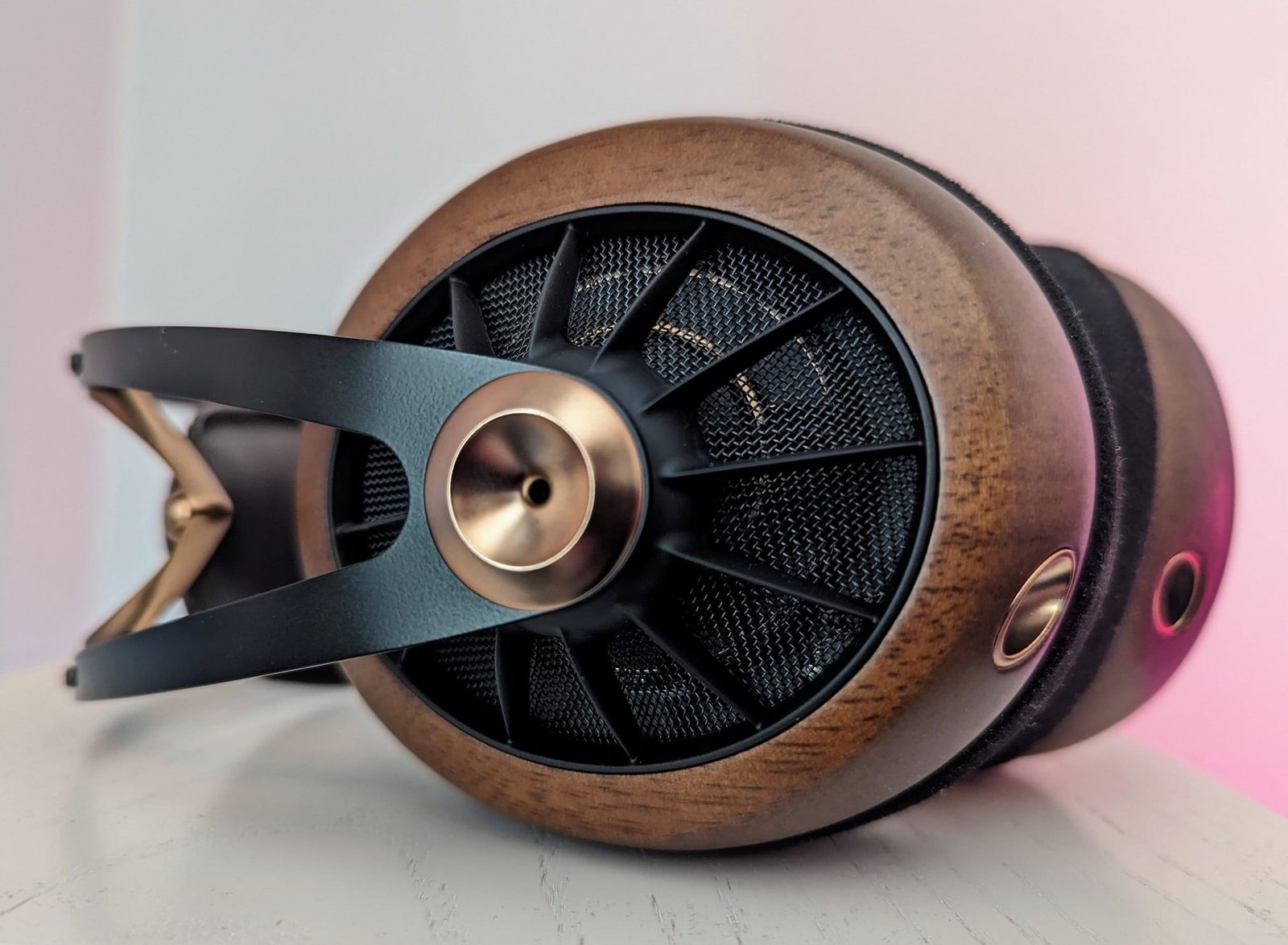
Table of Contents:
Information:
- Release year: 2022
- Country of manufacture: Romania
- Price: 800 €
- Structure: open, over-ear
- Dynamic driver: 50 mm (W-shaped diaphragm with beryllium-coated polymer surround and cellulose-carbon fiber composite dome)
- Impedance: 40 ohm
- Sensitivity: 112 dB/mW
- Weight: 375 g without cable (my own headphones 370 g)
- Connector type: 2 x 3.5 mm
- Included: Carrying case, two cables with 3.5 mm connectors (lengths 1.5 m and 3 m) and a 6.35 mm adapter
- Warranty: 2 years
The headphones were borrowed from someone who makes review videos for YouTube from a headphone guy
Kuulokenurkka had the opportunity to test Meze Audio's new open-back 109 Pro headphones from Romania (link to the manufacturer's product page), priced at 800 euros. The headphones have already received praise for their sound quality in addition to their stunning appearance. On the other hand, some have found the 109 Pro to sound somewhat bright and fatiguing. Based on my relatively short testing period, I aim to provide a general overview of what I think of the headphones.
Meze Audio has, somewhat surprisingly, become a well-known headphone manufacturer in recent years. Its products have, even in Finland, found their way through an importer into the permanent selection of many hifi stores, which is not entirely self-evident for a newer brand. While some of this could be explained by diligent marketing, the manufacturer's high-quality and aesthetically pleasing headphones easily attract people's interest on their own.
Regarding sound quality, the situation is interesting, as for example with the previously featured model in Kuulokenurkka Empyrean-model, people either really love it or outright hate it. This is largely due to Meze Audio's headphones generally having a very distinctive sound. However, the new 109 Pro model brings a change to this, as it more closely follows a generally well-regarded tuning philosophy.
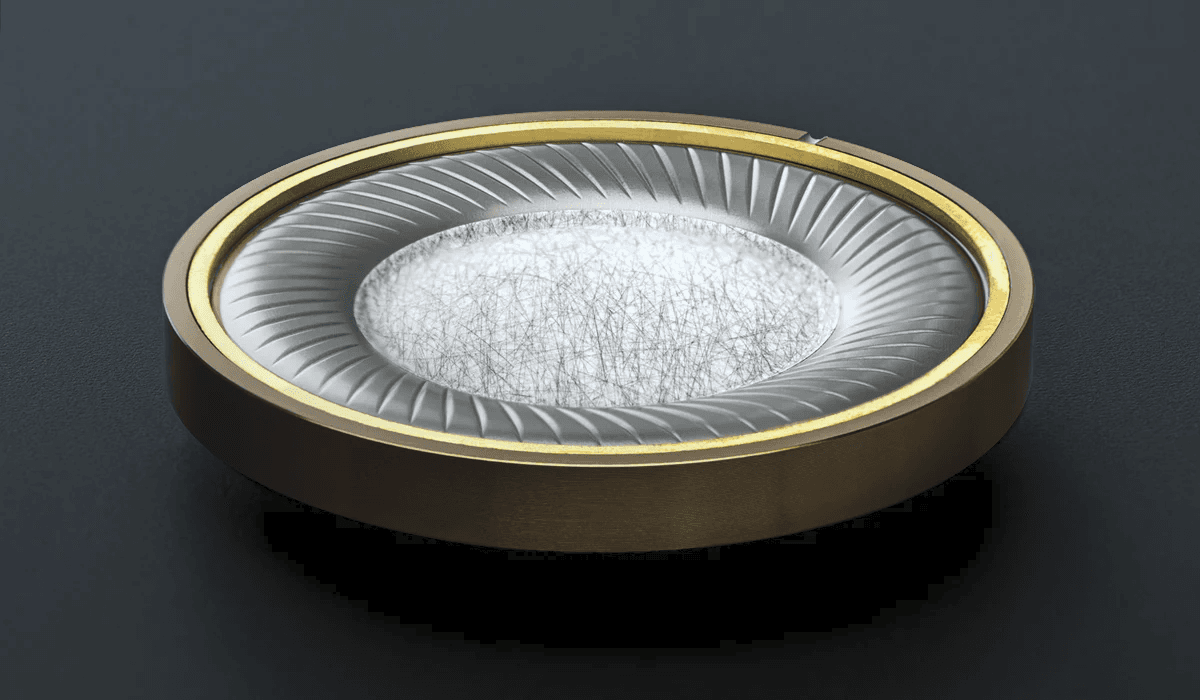
Meze Audio has developed its own dynamic driver for its new model, which appears interesting in many of its features. The driver's diaphragm is W-shaped and uses several different materials. The dome is cellulose-carbon fiber composite, and the edges are beryllium-coated polymer. The driver is tilted, so the sound reaches the ear at a more natural angle. The structure behind the driver also seems carefully considered and adjusted.
Product packaging
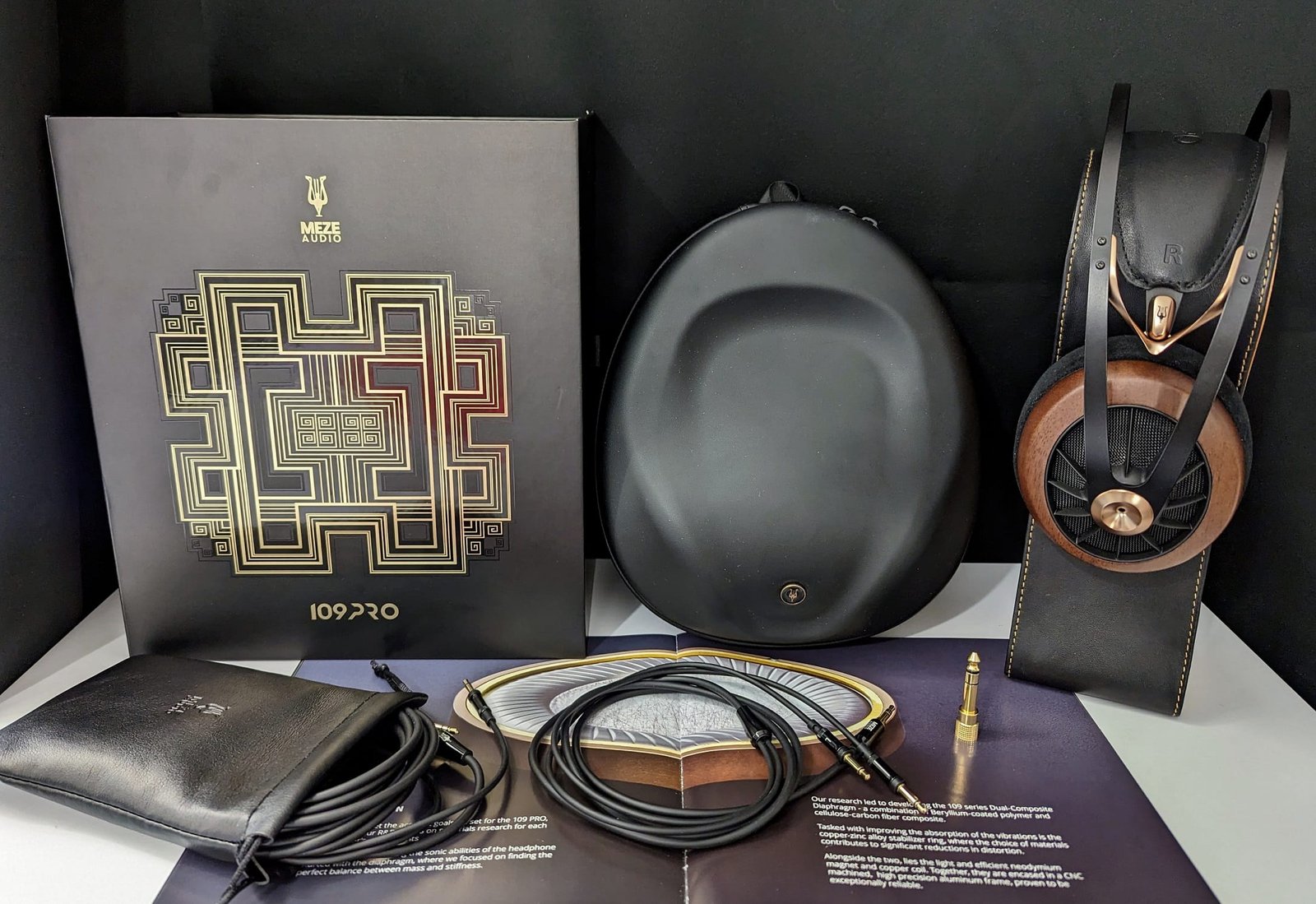
The 109 Pro's packaging immediately evokes the feeling that the credit card has been swiped for something more special than usual. A captivating golden geometric pattern is printed on the black magnet-closing cardboard box, which also increases interest in the headphones inside.
The headphones are found in a black hard-shell carrying case with a velvet interior. Two cables included in the product package are packed in a separate faux leather pouch, and in addition, the buyer also receives a rather large booklet introducing the headphones. Although the same information and fine photographs are also visible on the manufacturer's website, providing the brochure with the headphones is a nice addition.
Structure and comfort
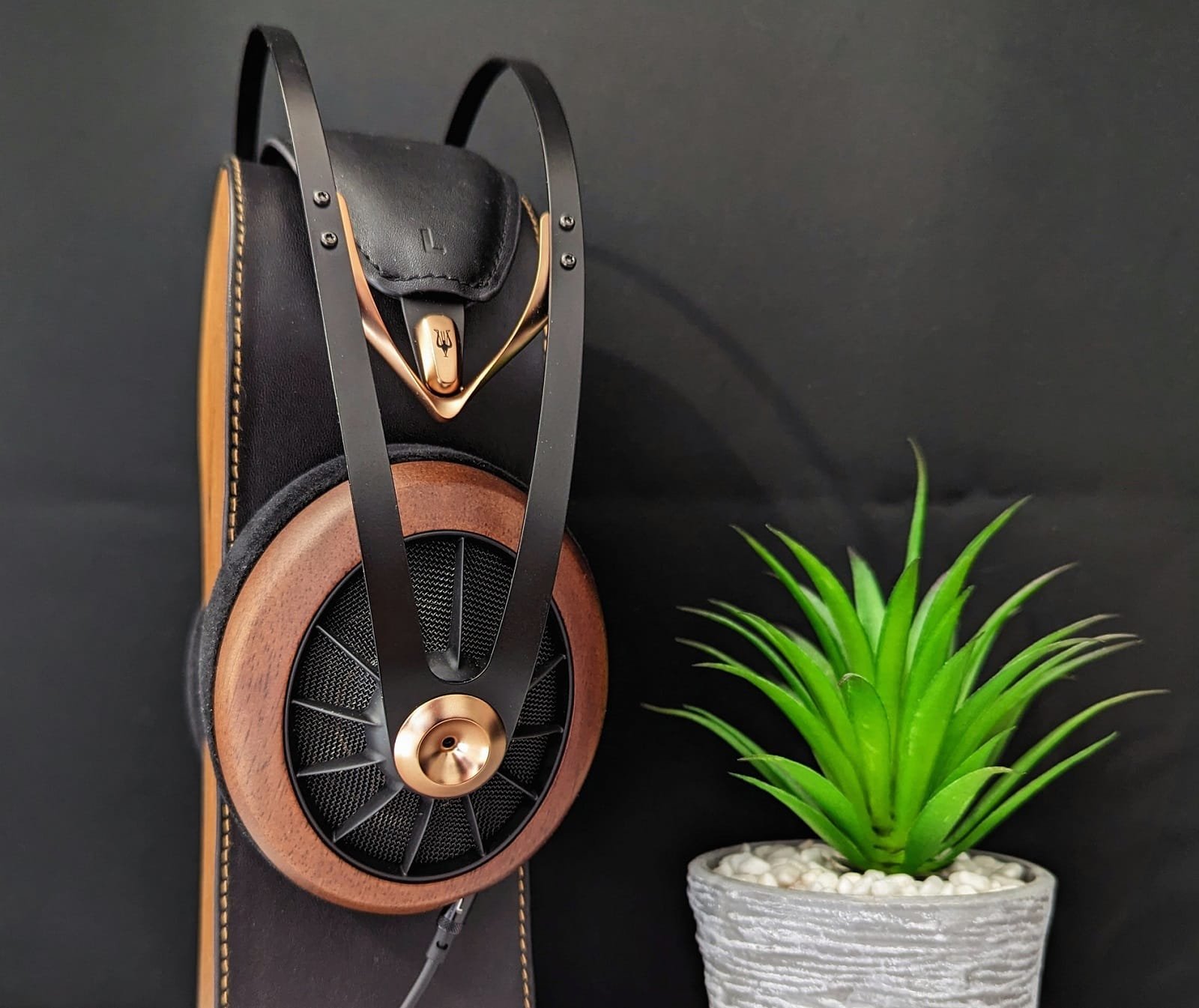
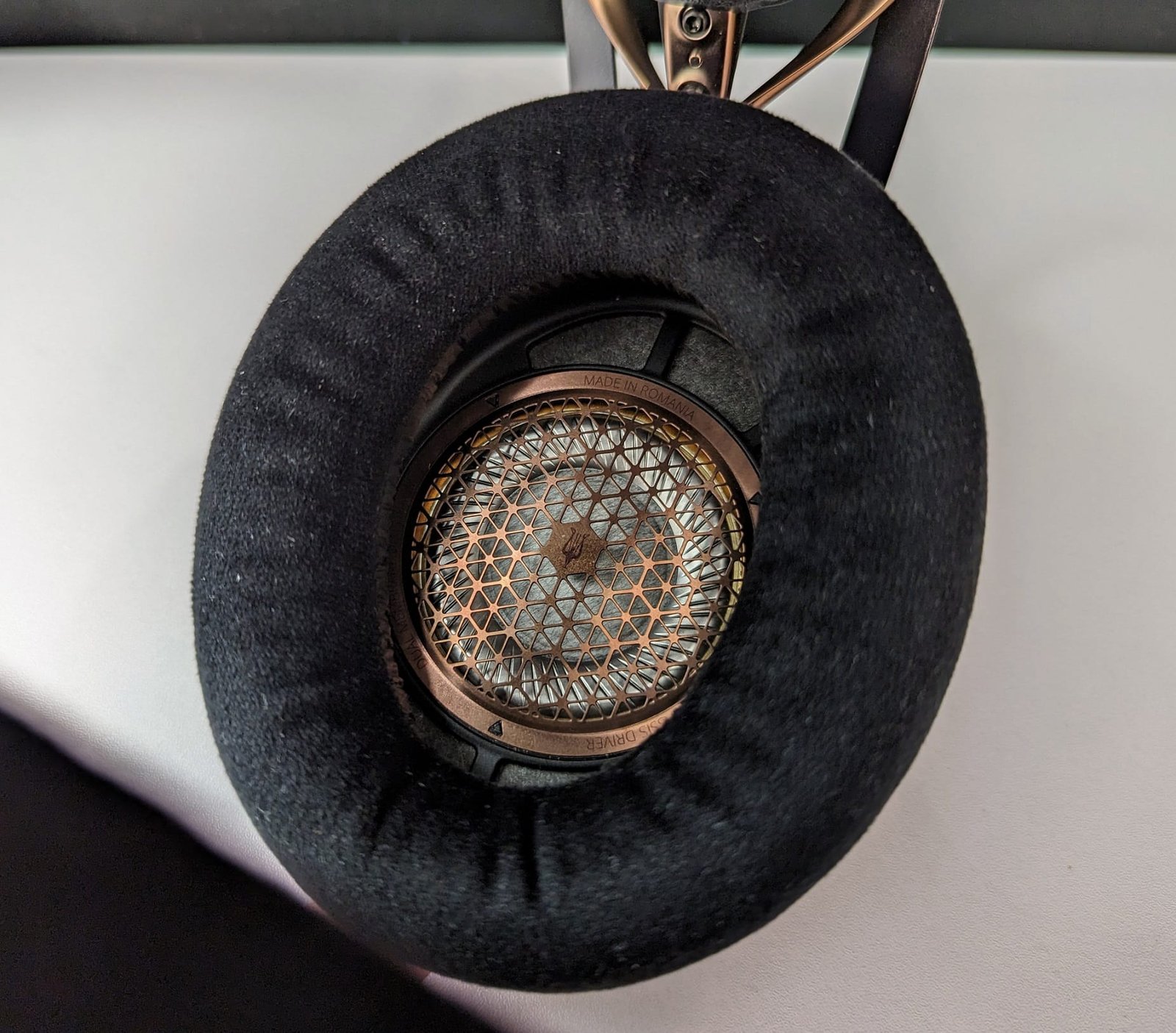
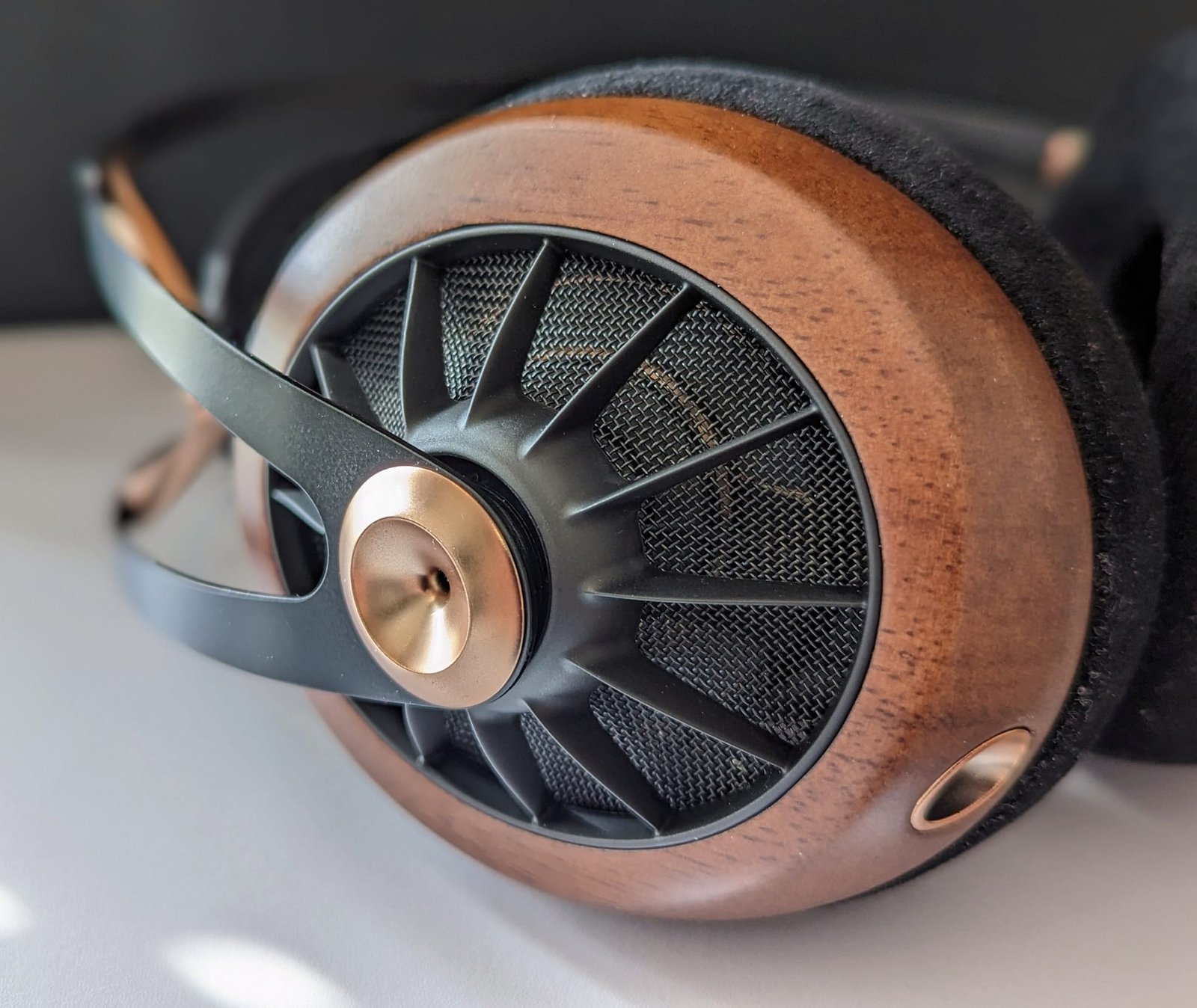
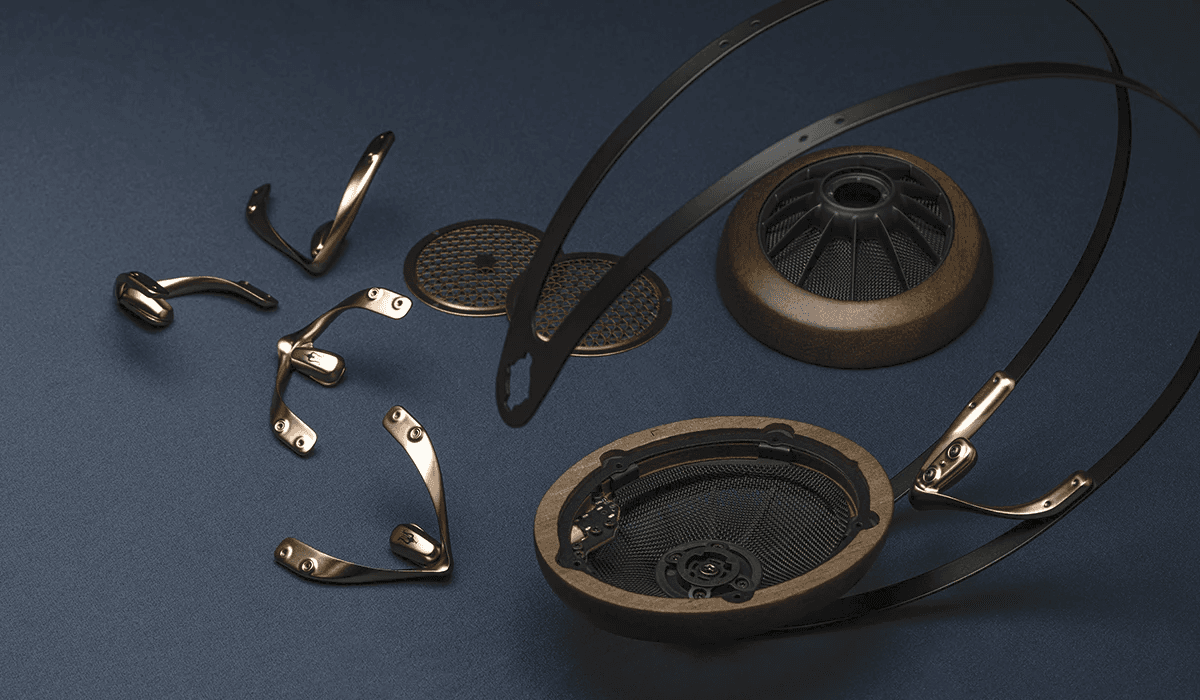
The Meze 109 Pro is an extremely stylish-looking headphone. The high-quality finished walnut wood cups seamlessly combine with a classic design language and eye-catching rose gold-toned metal parts (a special edition with black wood and black metal parts is also available). Every small detail feels carefully considered, even inside the open-back cup structure. For example, the edges of the back of the driver are metallic-sheened when viewed against the light, which is probably not a coincidence. Peeking inside the ear pad, in turn, reveals a magnificent rose gold protective grille and a unique-looking dynamic driver. The pads do not have a base fabric, so everything is intentionally left visible. There isn't a single ugly spot in the construction, and the impression of quality is a full 10/10, also regarding the materials used.
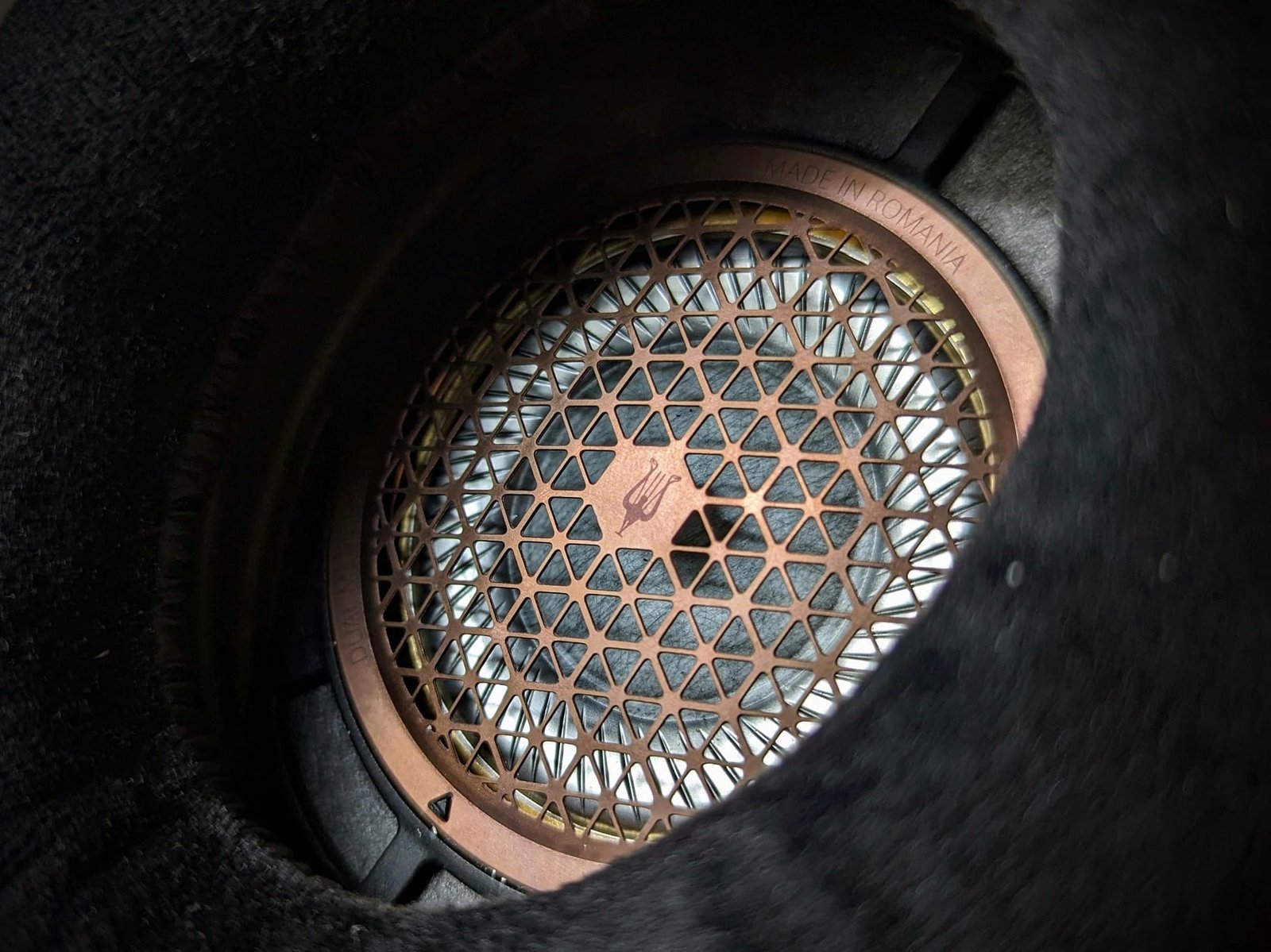
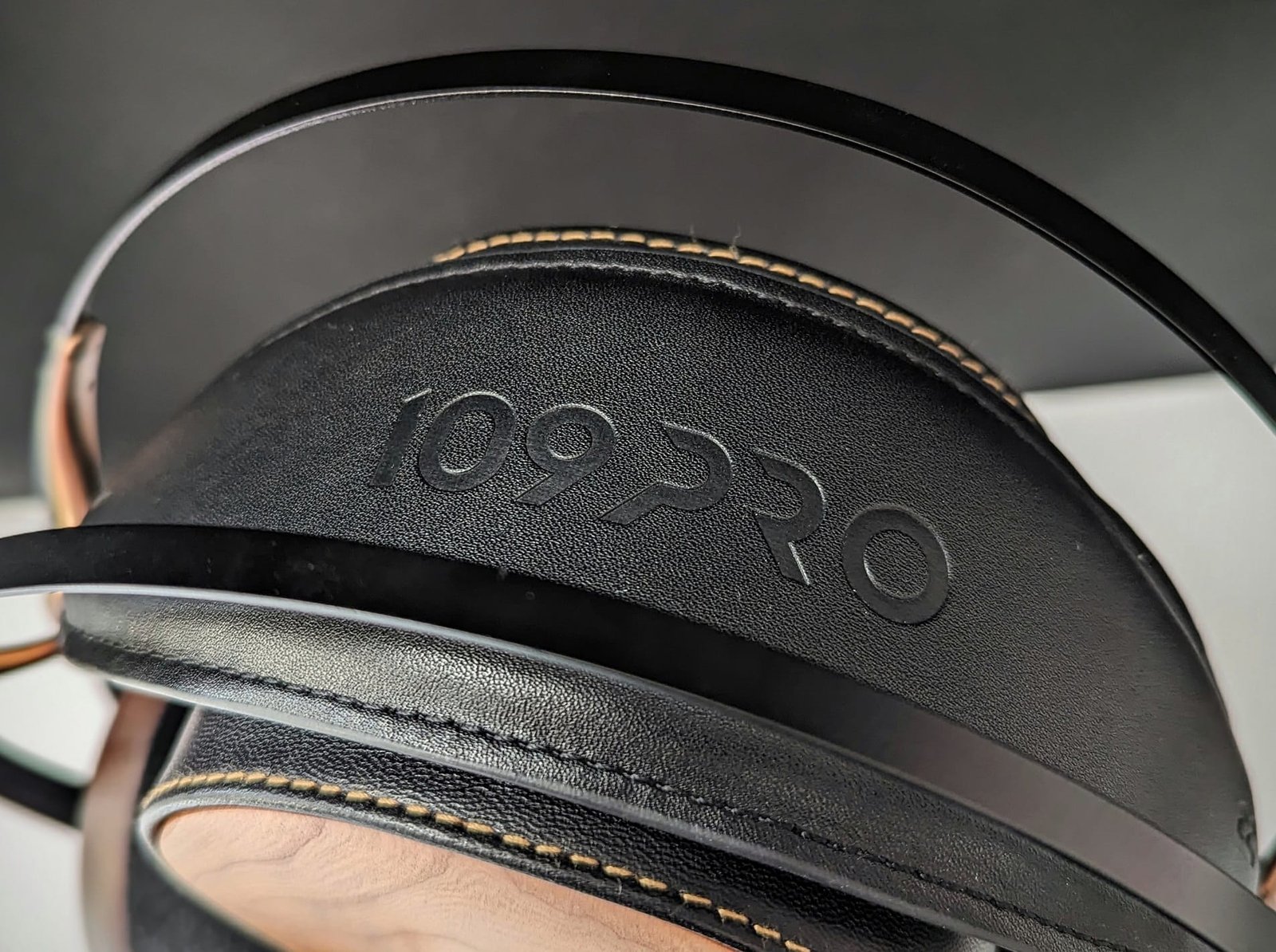
The same line continues with usability and comfort. The headphones are easy to hold in hand, and thanks to the automatically adjusting headband, they fit perfectly on my head. The metal arch of the headband is wide, so the manufacturer has been able to adjust the clamping force to be optimal. The cups attach to the yoke with ball joints that handle horizontal and vertical movement. The 109 Pro sits securely on the head while feeling gentle. Using it is so comfortable for me that I would almost want to keep it on just for fun.
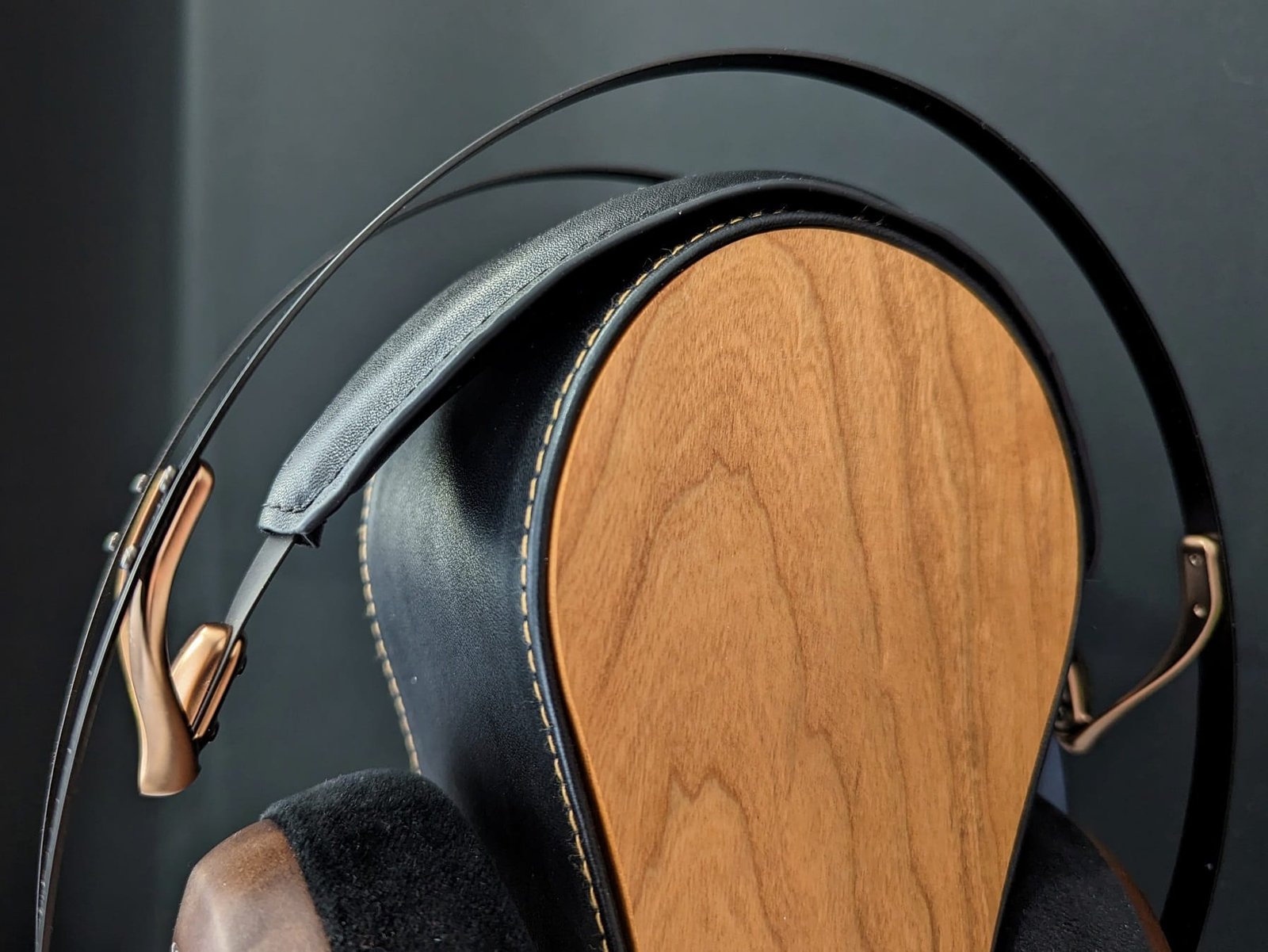
The faux leather pad resting against the head does not press or squeeze, because its stretching resistance is reasonable compared to, for example, Moondrop Venus's significantly stiffer solution. The 375-gram weight also feels appropriate in the 109 Pro because it is evenly distributed. My only complaint about the construction relates to the fact that the metal arch of the yoke clanks (produces a sound like a musical instrument) unpleasantly if the headphones are poked or tapped during use. Walking with the headphones on also causes clanking, as the thudding caused by steps resonates in the metal parts. Therefore, when listening to the headphones, it is advisable to sit still.
The ear pads, covered with soft velour fabric, are thick and feel luxurious. Thanks to the large ear opening, my ears can rest peacefully inside the pads without touching anything. The pads are removable and replaceable, but to my understanding, Meze Audio does not yet sell replacement pads for the 109 Pro model.
Included cables:
The headphones cause a slight disappointment for me regarding their two rubber-coated and rather generic cables. Both have a 3.5 mm connector and the structure is identical, so the only difference is the length. The shorter of the cables is 1.5 meters and the longer is 3 meters. A 6.35 mm adapter is included for amplifiers with a larger headphone jack.
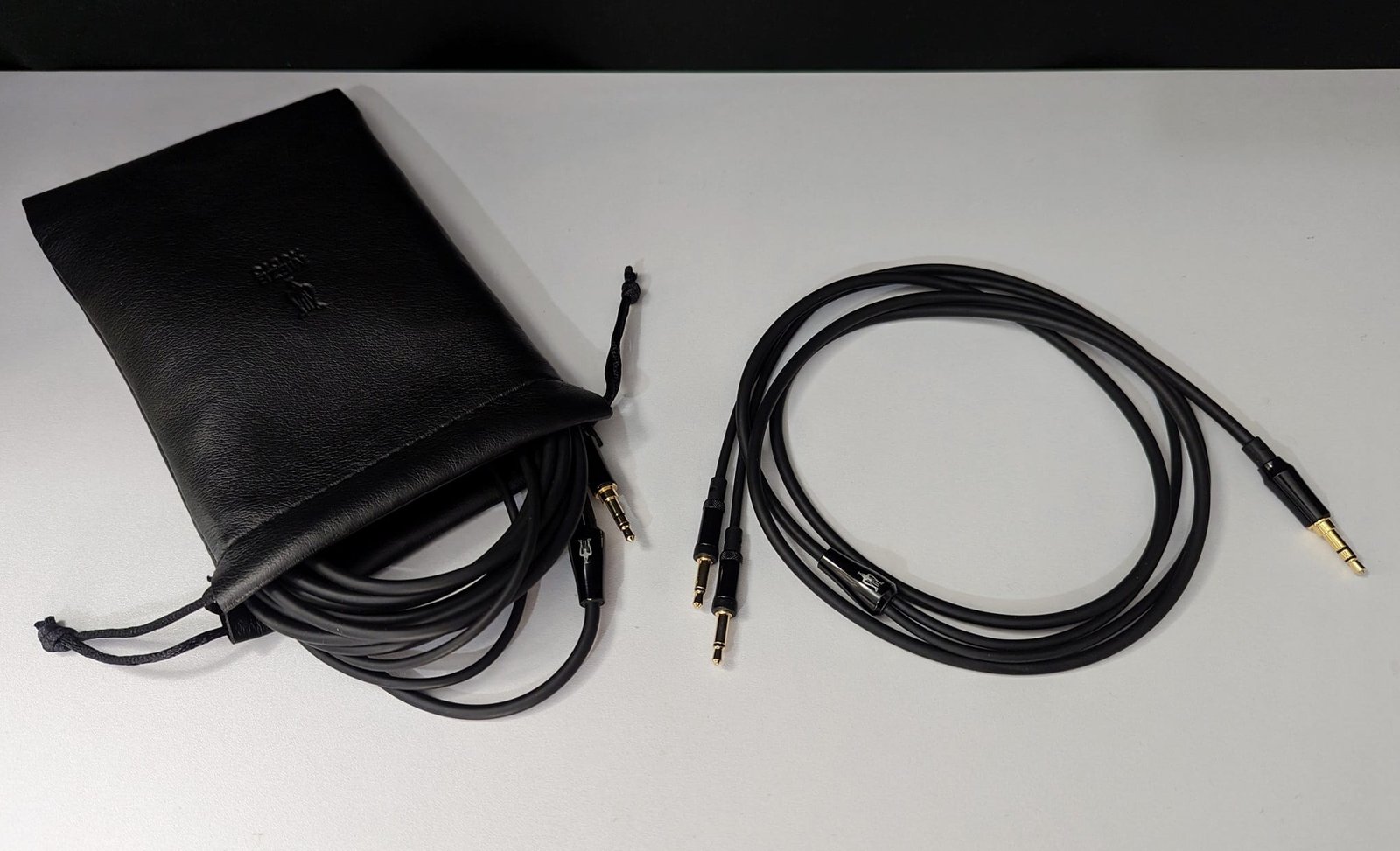
There is nothing inherently wrong with the cables aesthetically, as I like the Meze branding and metal connectors. However, there would be room for improvement in usability, as due to their light weight and elasticity, the cables tend to twist wherever they please. They cannot be neatly arranged and easily get tangled. When rubbing against clothes during use, the cables also transmit some rustling sound to the headphones. For example, Hifiman's latest cables are, in my opinion, better in terms of usability because their higher weight helps them stay in place better. Despite everything, the cables provided by Meze Audio still serve their purpose, and I still want to use the headphones with them.
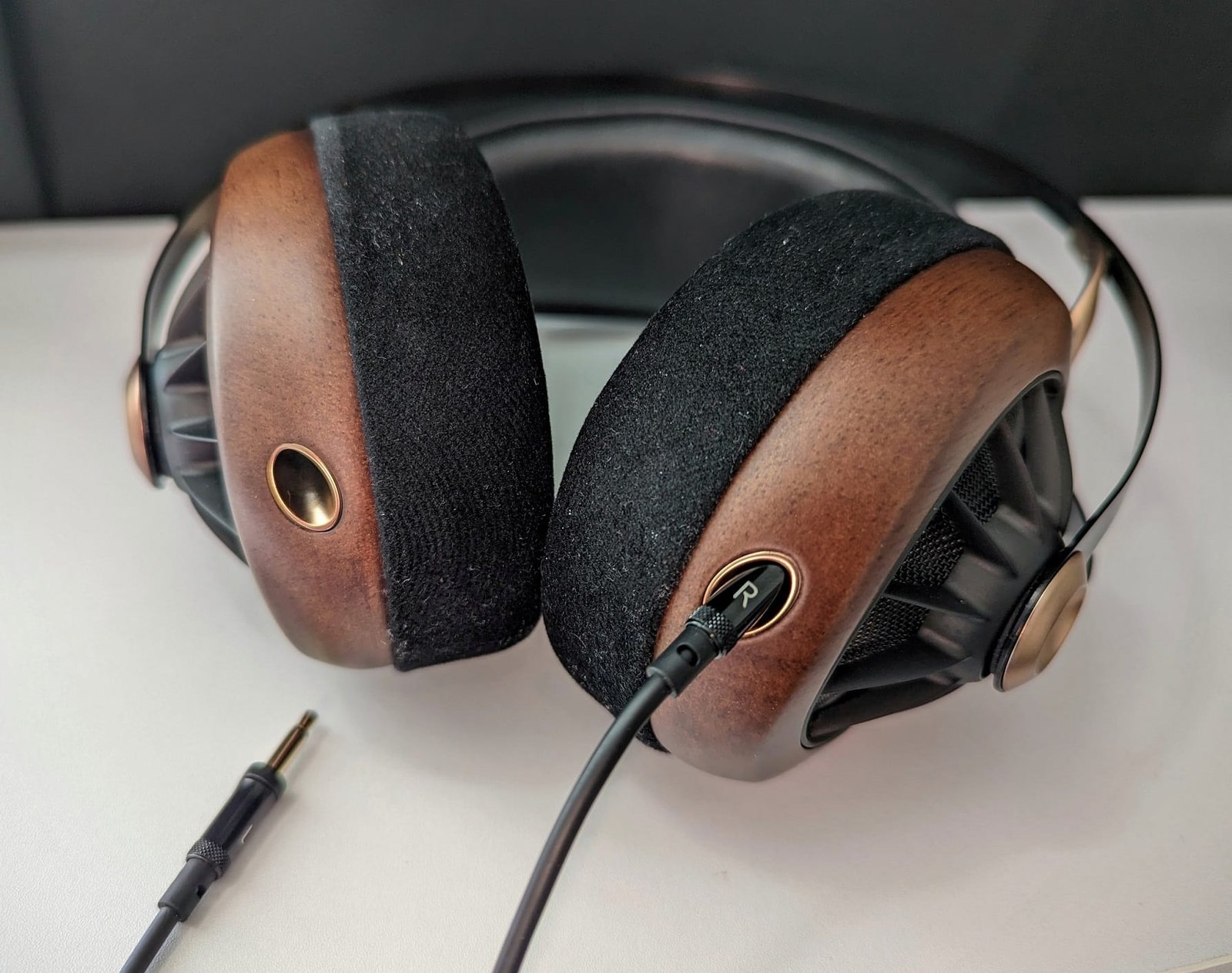
The cable attaches to the 109 Pro with two 3.5 mm connectors, so a better replacement cable could certainly be acquired quite affordably for the headphones. However, there are limitations to this, as the connectors in the cups are deeply recessed into a narrow opening, meaning 3.5 mm connectors with wider housings may not be suitable. For example, the narrow connectors of my Tripowin Granvia cable, covered with heat shrink tubing, only go all the way in by force. Meze Audio seems to have primarily considered aesthetics and the compatibility of their own cables when designing the recessed connectors of the headphones.
Sound quality
Headphone frequency response measurements have been performed with equipment compliant with the IEC711 standard. The graphs use the Harman target curve (2018 version), based on scientific research, as a reference, which is a generalization of what kind of frequency response sound would sound good to most people. More information about my measurements and their accuracy can be found Headphone Measurements-page. The 109 Pro's frequency response is also comparable with other headphones I have measured comparison tool .
Headphone frequency response:
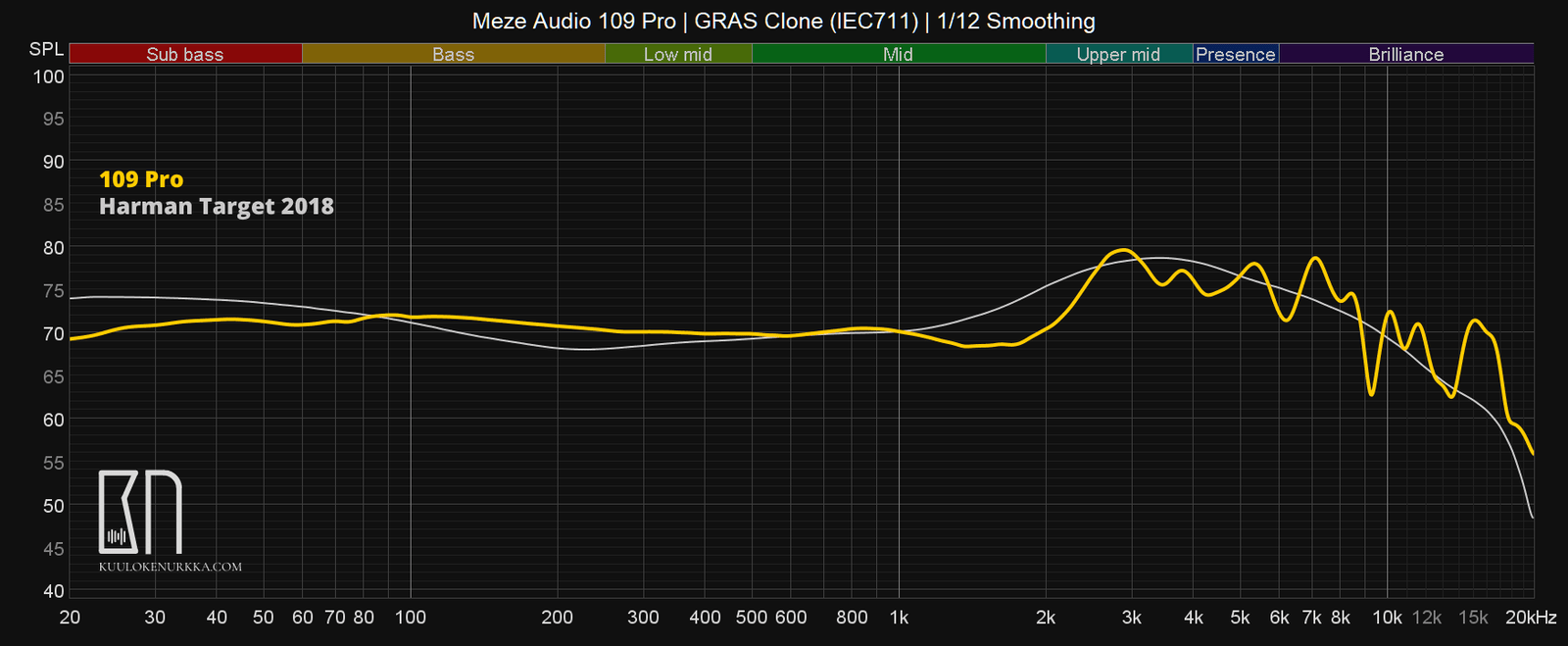
The sound of the Meze Audio 109 Pro combines rich bass reproduction, Hifiman-style spacious and clear mid-frequencies, and a bright treble that strongly draws attention to itself. The headphones have a slightly V-shaped presentation, as they emphasize both bass and high frequencies in a similar way to many headphone models aimed at larger consumer groups. Such reproduction could be characterized as fun, rather than the result being seriously neutral or as faithful as possible to recordings. Ultimately, however, the 109 Pro is still quite normal in its tuning, which is a welcome change from the manufacturer after all the more unusual headphone models. Many seem to consider the 109 Pro to be Meze Audio's best-tuned headphone.
Furthermore, because the soundstage is clearly structured and the sound separation is truly precise for a dynamic headphone model, the manufacturer was close to making excellent headphones. Unfortunately, however, the listening experience for me remains poor most of the time due to the irritatingly prominent treble. The 109 Pro sharpens the sound far too much, as if to declare itself a hi-fi headphone meant to make normal music unlistenable – I exaggerate a little, but unfortunately there is also much truth to it. Aggressive high frequencies, in my opinion, do not suit an otherwise relaxed presentation. If the listened track already has some kind of sharp high-frequency sound or even a hint of sibilance, the 109 Pro strikes these into my ears like a knife, relentlessly, not for a moment.
It is regrettable that other frequency ranges remain overshadowed by the sharp treble, as I otherwise perceive enormous potential in the headphones. To bring this out, the sound must be modified to be more balanced. Firstly, the headphones could be equalized, or different ear pads could be tried. A more permanent correction can be achieved by placing foam material (e.g., a foam piece from the AKG K-240 model) at the bottom of the pads, which absorbs some of the high frequencies in the same way as Dan Clark Audio Aeon 2 -headphones.
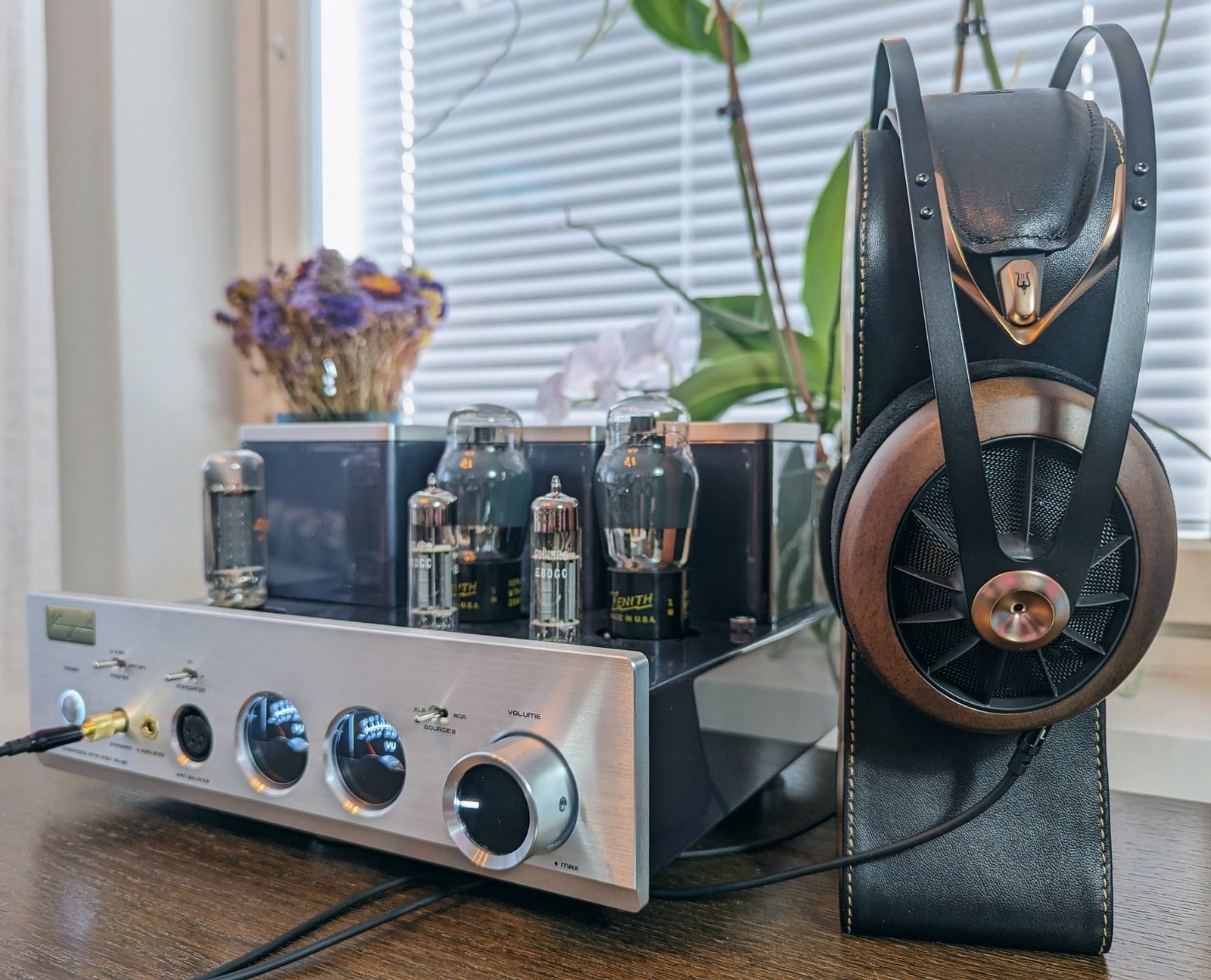
I managed to make the 109 Pro sufficiently balanced with a tube amplifier, so the sound also seems to be shapeable with equipment choices. Especially with the Cayin HA-3A amplifier and the natural-sounding VMV D1SE DAC, the headphones are, in my opinion, largely worth the hype they receive and among the best listening experiences when talking about headphones under 1000 euros that I have tested. However, I cannot completely ignore the treble issue, but must keep it in mind from now on as well.
Bass:
One of the good aspects of the headphones is the fun, rich, and weighty bass reproduction, which surprisingly closely matches in quantity ZMF Atrium. The 109 Pro typically emphasizes upper bass frequencies for dynamic headphones, but the reproduction shows hardly any negative side effects, such as muddiness, bloat, or monotony. The bass is indeed tighter and clearer than, for example, in the manufacturer's own Empyrean planar model. The 109 Pro's sub-bass also reproduces exceptionally powerfully and without attenuation, considering it is a dynamic headphone model with a truly open-back design. The performance deserves praise.
For comparison, planar headphones that do not emphasize upper bass frequencies, such as Hifiman HE6se V2 and Moondrop Venus, slightly outperform the 109 Pro in low-frequency separation and control, while the Meze model's softer presentation adds a pleasant robustness and warmth around the bass notes. The headphones' hefty bass makes my feet tap while still being high quality. Since I have been listening to a lot of planar headphones lately, the bass produced by the dynamic driver feels particularly pleasant.
Mid-frequencies:
The 109 Pro's mid-frequencies resemble Hifiman headphones, as the 1.5–2.5 kHz range is reproduced similarly slightly attenuated, yet the sound remains clear thanks to energetic upper-mids. With such tuning, a certain spaciousness and depth have been achieved in the sound, for example, like Sennheiser's HD600compared to the series. On the other hand, the details of many instruments and vocal performances are reproduced softly and slightly lacking in power. However, there is nothing particularly strange about the end result, so I believe the 109 Pro will sound easily approachable to most. Because the bass is reproduced more robustly than, for example, the Hifiman Edition XS, the 109 Pro's presentation is warmer and less clinical. Without harsh treble, the sound would, in my opinion, be relaxed and pleasant to listen to, similar to many ZMF headphones.
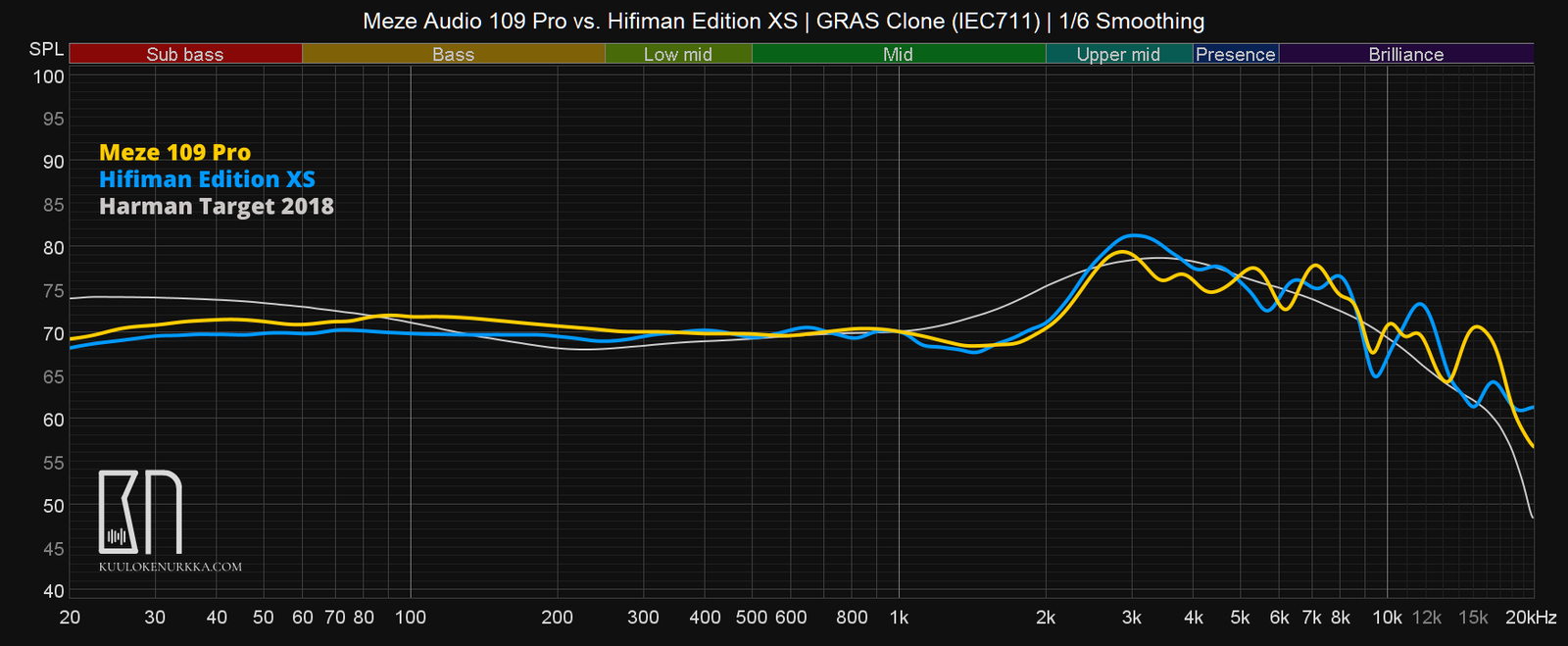
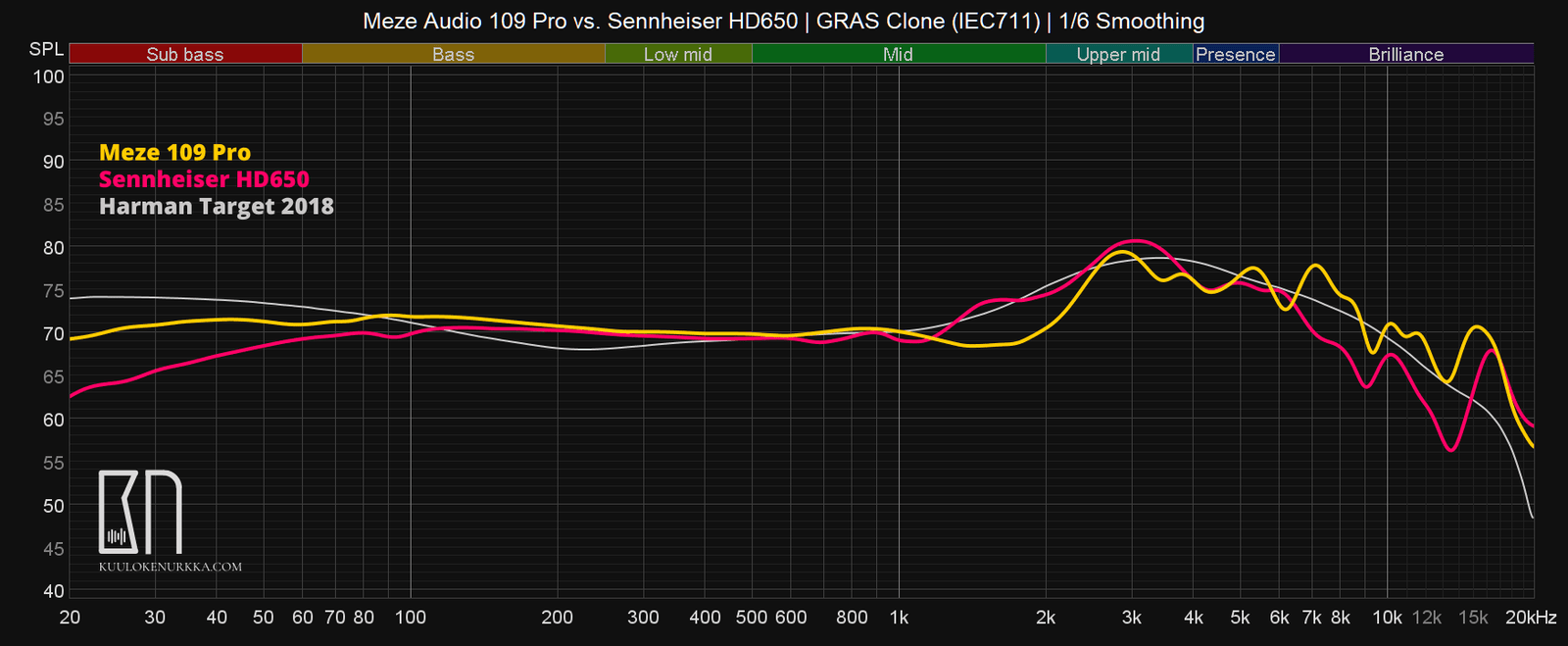
In the 109 Pro, the extra energy above 10 kHz seems to cling to the surface of the sound, making the music rough and aggressive throughout. For example, several female pop singers are almost unlistenable due to sharp sibilance. One could argue that it is intentional for poorly produced music, but a similar problem does not occur with balanced headphones. In my opinion, the amount of treble must be reduced to avoid irritating listening. For example, with a suitable tube amplifier, the treble moves further away in the soundstage, allowing the mid-frequencies to correctly draw the most attention overall. After that, I find the 109 Pro a much more exciting headphone compared to the overly safe-sounding Empyrean model.
The 109 Pro sounds relaxed, but you don't have to strain to make out the music when listening to it. Slightly emphasized low frequencies bring a pleasant fullness to the sound, which I find surprisingly grand with the spaciousness of the soundstage. In my opinion, the headphones are suitable for relaxed enjoyment of music, yet at the same time they are more fun and detailed in the high frequencies than usual – it's a shame that this only happens under suitable conditions.
Treble and balancing it:
I could euphemistically call the headphones' high frequencies fresh, airy, and lively. For me, however, they go too far in that regard. For example, drum cymbals often sound annoyingly harsh, and more energetic pop music is too coarse and aggressive to be pleasant. On the other hand, the problems are slightly less bothersome when listening to high-quality or darker-produced music, and the treble is not necessarily irritating for all ages.
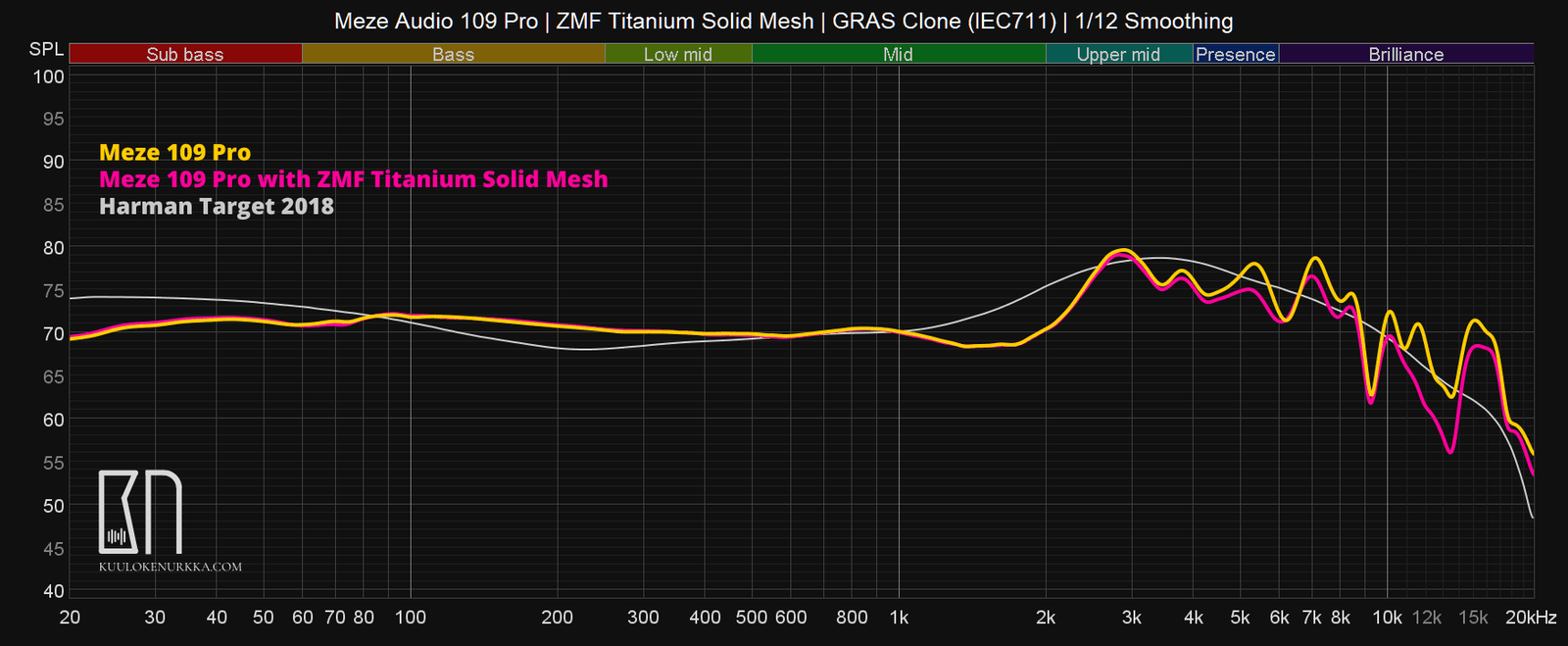
Although my measuring equipment measures treble boosts between 5–8 kHz, the problems I experience are mainly due to strong boosts above 10 kHz. Similar frequencies are also emphasized in the Empyrean model, with the difference that it sounds airy and hissy to my hearing, whereas the 109 Pro is clearly sharper. Older people may even find the amplification of the highest frequencies a good thing, while for younger people, the emphasis can be poison. I'm starting to suspect that at 33 years old, I don't belong to the target audience for these headphones.
Many others, however, seem to experience the strongly emphasized treble in the highest frequencies as a positive thing, so it may also be a matter of preference. At least the reproduction feels open and detailed, because high-frequency sounds always pop out of the whole as a separate element with sharp edges. Meze Audio has, in a way, reversed the order of importance of treble and mid-frequencies from what it normally is. Thus, a potential buyer of these headphones must like a bright reproduction.
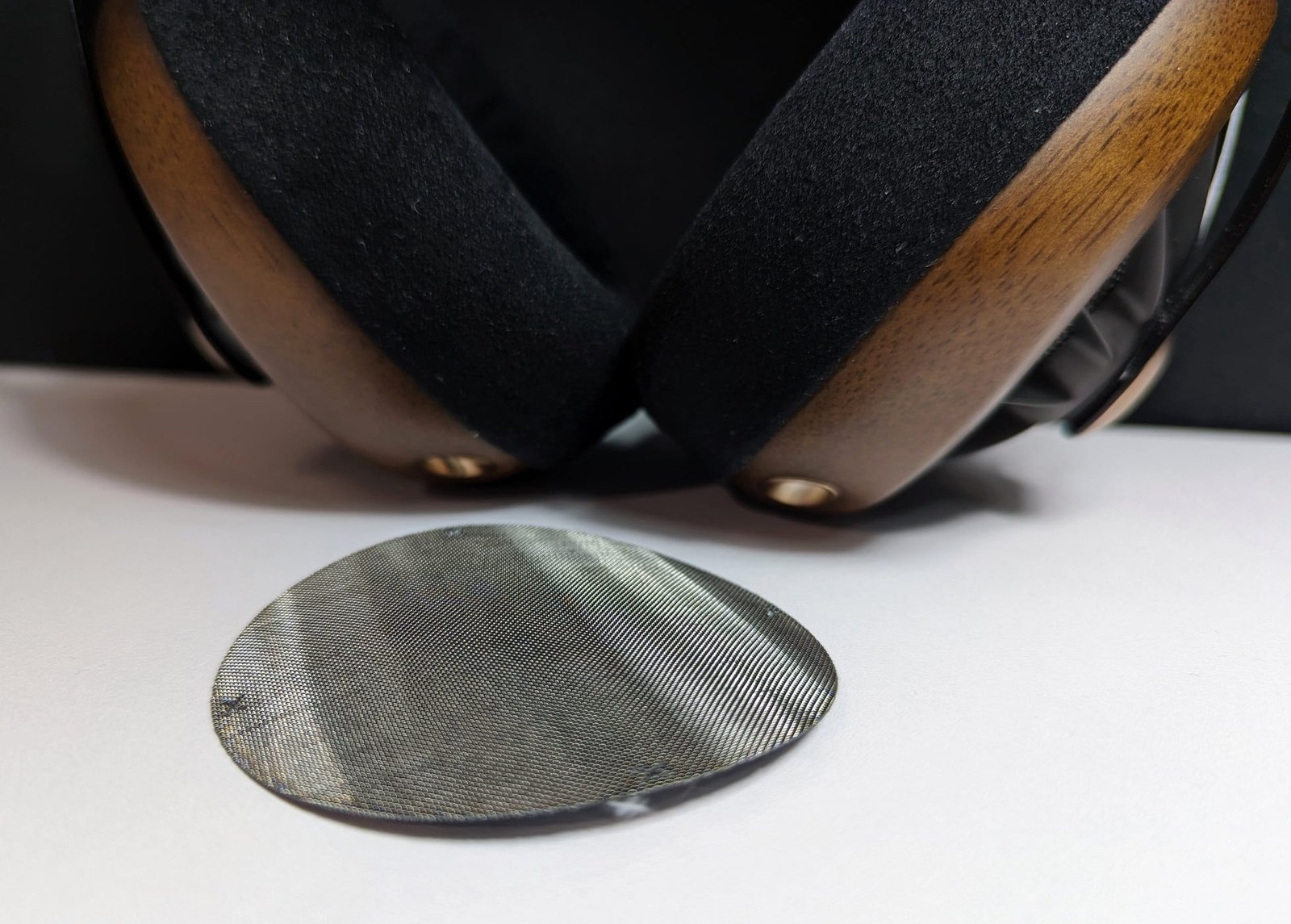
The manufacturer could have added a base fabric to its ear pads to curb the amount of treble. However, this measure would have covered the fine element grilles, so the design may have intentionally prioritized appearance. Unfortunately, I did not have suitable foam pieces to place at the bottom of the pads at the time of writing the article, but I noticed that ZMF's titanium meshes reduced the amount of treble in the 109 Pro just right without adverse effects on other frequency ranges. Annoying sibilance and harshness are removed from the sound, so I can highly recommend purchasing the titanium meshes, which cost about $20 tax-free, if you are not keen on equalizing the headphones or searching for a suitable amplifier.
Resolution and soundstage:
The 109 Pro is a capable headphone when it comes to sound separation and soundstage accuracy. The soundstage has a pleasant depth and sense of spaciousness, and sounds are precisely organized into their own compartments, audible through each other. It's easy to pick out smaller details from music and focus on listening to a single instrument at a time. Especially the center of the soundstage is very accurate compared to, for example, the Moondrop Venus, whose soundstage I find somewhat imprecise compared to similarly priced competitors. The 109 Pro's soundstage doesn't feel as large as, for example, Hifiman Edition XS:s or Sennheiser HD800, but the overall presentation is, in my opinion, more proportionate and faithful to recordings.
Although many planar headphones priced between 500–1000 euros separate sounds a bit more distinctly and sharply, the 109 Pro, as a headphone implemented with a dynamic driver, comes quite close, while its warmer sound makes it sound more natural and dynamically more engaging. For this reason, I consider the 800-euro retail price quite justified, provided that the treble issue is first resolved one way or another. After that, the 109 Pro is, in my opinion, a balanced combination of listening pleasure and reproduction detail. Among similarly priced dynamic headphones, I would only see a used Sennheiser HD800(S) and the original Focal Clear competing with Meze Audio's new model in terms of resolution and soundstage clarity.
Amplifier's effect on sound
With their high sensitivity (112 dB/mW), the headphones are designed to be easily driven. Sufficient volume is available from almost any 3.5 mm headphone jack, as long as the device behind it is roughly from this millennium. For example, a 10-euro Apple Dongle (USB-C -> 3.5 mm) provides sufficient amplification power. On the positive side, the 109 Pro's impedance is not ”ultra-low,” but 40 ohms makes it usable with slightly more powerful amplifiers without the user having to listen to loud background noise. For instance, well-measuring Topping and SMSL devices wouldn't have background noise anyway, but many might still be using an older and more noise-prone amplifier.
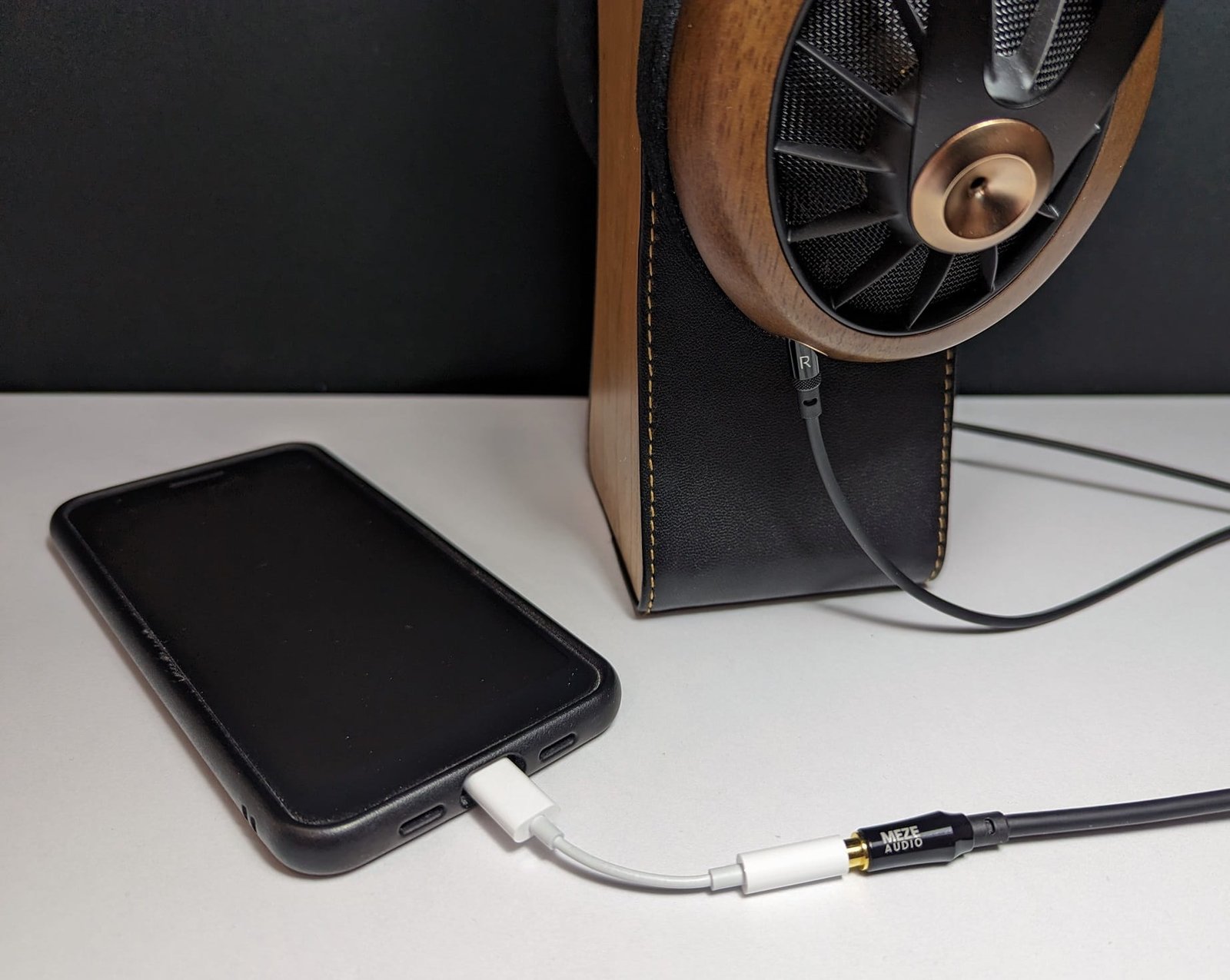
Due to the headphones' harsh treble, I haven't noticed significant differences between traditional transistor amplifiers. The sound is too bright for my taste with the Cayin IHA-6, Topping DX1, iFi Zen DAC, as well as the Qudelix 5K. In my opinion, an optimal amplifier should reproduce high frequencies in a calmer style than usual or place them further to the side in the soundstage. This seems to be achieved with tube amplifiers, based on the fact that both the Cayin HA-3A and Tor Audio Roger produce the desired outcome.
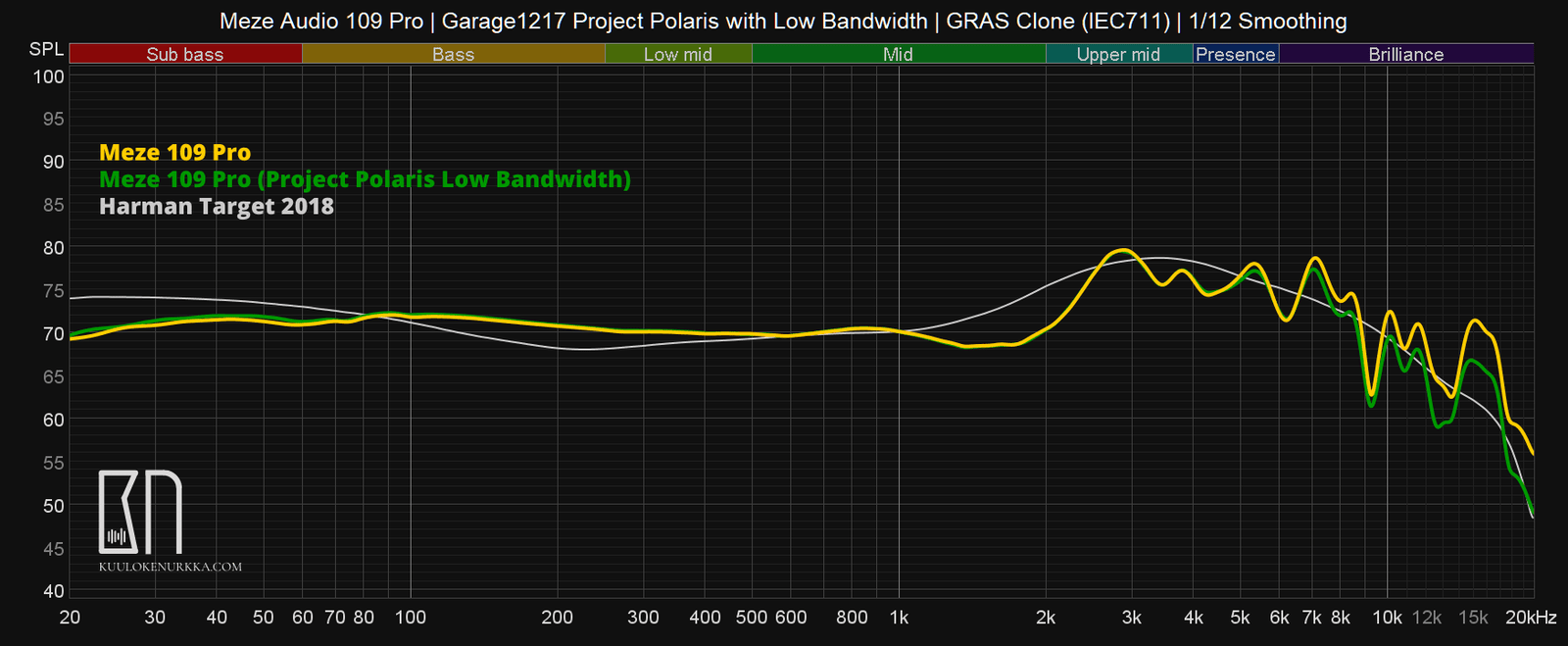
Also, the previously reviewed Garage1217 Project Polaris suits the 109 Pro well, because its Bandwidth setting can cut off the uppermost treble. After this, the reproduction is completely effortless. Since the amplifier sounds somewhat like a tube device in terms of distortion, it also adds a bit of warmth and robustness to the headphones' mid-frequencies. Although Project Polaris usually produces noise with sensitive headphones, with the 109 Pro, for some reason, it causes almost no noise at all.
The headphones have sounded best with my recently acquired smooth and effortless-sounding Cayin HA-3A tube amplifier. It corrects the treble issue surprisingly effectively, after which the reproduction is natural, spacious, and believable. The treble is still lively, but it no longer dominates or sharpens the mid-frequencies too much. The improvement is significant considering that there are no changes to the headphones' frequency response with the amplifier's lowest impedance setting. The result is as I desired, and I do not simultaneously feel the need for other measures aimed at balancing the treble. The HA-3A is indeed the only amplifier that would make me consider buying the 109 Pro. On the other hand, balancing the treble by other means is considerably more affordable.
The headphones' 40 ohm impedance appears to be consistent across different frequency ranges, because increasing the amplifier's output impedance does not significantly change the frequency response. For example, the bass does not become stronger and more emphasized with a 120 ohm device in the same way as with Focal headphones, but the 109 Pro only gets 0.5–1 decibel change. In this respect, from a frequency response perspective, the 109 Pro largely sounds like itself even with older devices, and there's no need to shy away from using tube amplifiers either.
Quick comparison to other headphones
Due to the limited duration of the test period, I didn't have time to compare the 109 Pro more thoroughly with other headphone models, especially since most of the time was spent taming the treble. I will only list a few observations I made regarding the headphones I had in use at the same time.
Meze Audio 109 Pro vs. SASH Tres (45 ohm):
- Tres's treble is significantly more relaxed and darker
- Tres's mid-frequencies are less soft
- Tres's planar driver is also slightly more resolving
- With its treble ”corrected,” the 109 Pro sounds more neutral
- The 109 Pro has a deeper and more spacious soundstage
- The 109 Pro's bass is fuller, but slightly looser
Meze Audio 109 Pro vs. Moondrop Venus:
- Venus sounds bright in a different way, but not sharp or fatiguing like the 109 Pro
- Venus brings musical details more to the forefront, but does not place them in the soundstage nearly as precisely as the 109 Pro
- The 109 Pro has a clearly more precise and structured soundstage
- The 109 Pro has a fuller and more pleasant bass
- Both have relaxed mid-frequencies, with the difference that Venus is fuller and more present, while the 109 Pro is more spacious and softer
Meze Audio 109 Pro vs. Hifiman Edition XS:
- The 109 Pro sounds warmer with its fuller bass
- The Edition XS sounds more clinical and, with reservations, more neutral
- The mid-frequencies of both models have a sense of spaciousness and softness
- The treble of both is bright and sharp, but in a slightly different way
- The Edition XS is slightly more precise and sharper in sound separation
- The soundstage of the Edition XS feels larger and more speaker-like
The Meze Audio 109 Pro is ultimately a very balanced package, and apart from its overemphasized treble, it has no real weaknesses compared to other slightly more affordable or similarly priced headphone models. For example, in my opinion, the Moondrop Venus is not as good a headphone, nor is the Hifiman Edition XS as exciting to listen to. SASH Tres (45 ohm) instead compares quite evenly with the 109 Pro, so I wouldn't be able to choose a clear winner between the two with a short listening session.
Among my other headphones, the SDR-modded Sennheiser HD800 sounds quite different due to its weaker bass and larger soundstage. The presentation is lighter and airier compared to the 109 Pro, so the headphones are suitable for different people and different uses. If I correct the 109 Pro's treble to be more balanced, I consider it the more fun and versatile headphone of the two. Both models have an accurate soundstage, so they would be well suited for gaming, for example.
Summary
The Meze Audio 109 Pro is one of the finest headphones and one of the most invested in external construction in the sub-1000 euro price range. In my opinion, it is a beautiful product that is also very comfortable to use. I also expected the sound quality to be pleasant, matching its appearance, so I was surprised by how coarse and irritating the headphones' treble is. The 109 Pro is by no means close to the brightest headphones I've heard, but it unfortunately highlights its only weakness regularly. I do not find the headphones particularly versatile unless their treble is corrected to be more balanced in the ways I suggested. On the other hand, older listeners or those listening to suitable music might not find the high frequencies too bright.
Ultimately, with minor treble adjustments, the situation becomes significantly more positive for me as well, after which listening to the headphones is relaxed and pleasant. In my opinion, this suits a product that looks like the 109 Pro well, but it is also detailed and has an accurate soundstage for its price. It's actually difficult to find anything to criticize, unless a slight softness in the sound is a negative for some.
In my opinion, Meze Audio should release ear pads that calm the treble for the headphones, so that the sound would be more versatile for different people. Even just adding a suitable base fabric to the pads might make the sound more balanced. As it is, I don't dare to generally recommend the 109 Pro, but by auditioning the headphones and finding them suitable for oneself, or at least by being aware of the risks I mentioned and seeking solutions for them, 800 euros could be spent much worse.
Since most competitor headphones also have some weaknesses, I don't think it's entirely wrong to say that the 109 Pro might even be among the best in its price range. If the 109 Pro doesn't sound irritating to someone, it offers good sound quality throughout while also being a work of art.
Pros and cons:
+ Sounds pleasant and natural with a suitable amplifier or by balancing the treble in other ways
+ Full and deep bass reproduction extending to the lowest frequencies
+ Accurate and spacious soundstage
+ Good resolution for a dynamic headphone model
+ Excellent comfort
+ Superb appearance and high-quality build
+ Can be disassembled for maintenance
+ Requires hardly any amplifier power
–/+ The included cables are not the best in terms of usability, but the inclusion of two cables in the product package is a positive thing
– Harsh treble and sibilance draw too much attention to themselves
– Mid-frequencies can be a bit soft and lacking impact for some tastes
– Sound separation is not at the level of slightly more affordable planar headphones
– The recessing of the connectors prevents the use of some cables
– The metal arch of the headband resonates easily as a result of vibration
 EN
EN  FI
FI