Author: Sword of Damocles
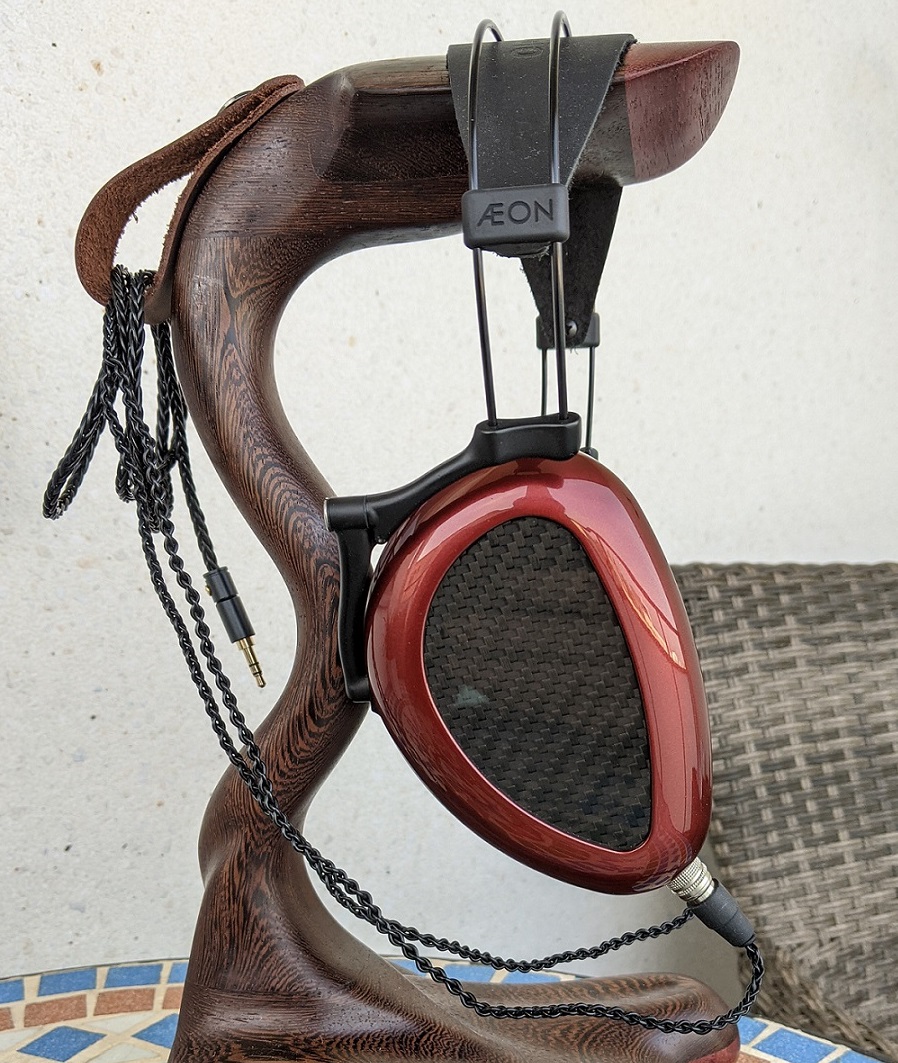
Table of Contents:
In this review, I retrospectively share my thoughts on the Dan Clark Audio Aeon 2 Closed planar headphones, which I had for a year as travel and office headphones. I already sold the headphones, so I have to settle for random photos I took of them earlier in the review.
Dan Clark Audio headphones, manufactured in the USA, are not sold in Finland, but the availability of the Aeon series is quite good in Europe. The price of the Aeon 2 Closed is 899 USD in the United States and slightly over 1000 euros in Europe.
About the manufacturer
Located in California Dan Clark Audio (DCA) is known as a manufacturer of planar headphones (the company also has the electrostatic Voce model). The company started in a somewhat similar way to what I previously introduced ZMF, because Dan Clark (the company was then called MrSpeakers) also initially modified Fostex T50rp planar headphones. When ZMF transitioned to manufacturing dynamic headphones, Dan Clark, who has an engineering background, began making headphones with planar drivers he developed himself.
DCA stands out from its competitors manufacturing planar headphones particularly due to the light weight of its headphones and modern material choices. The company's focus area is also somewhat unusually the manufacturing of closed-back planar headphones.
Structure and comfort
The Aeon 2 Closed is, as its name suggests, a closed-back headphone – there are only small air vents related to low-frequency tuning on the back edges of the cups. Thanks to the almost completely closed structure and ear pads that press tightly against the head, the headphones isolate sound very effectively.
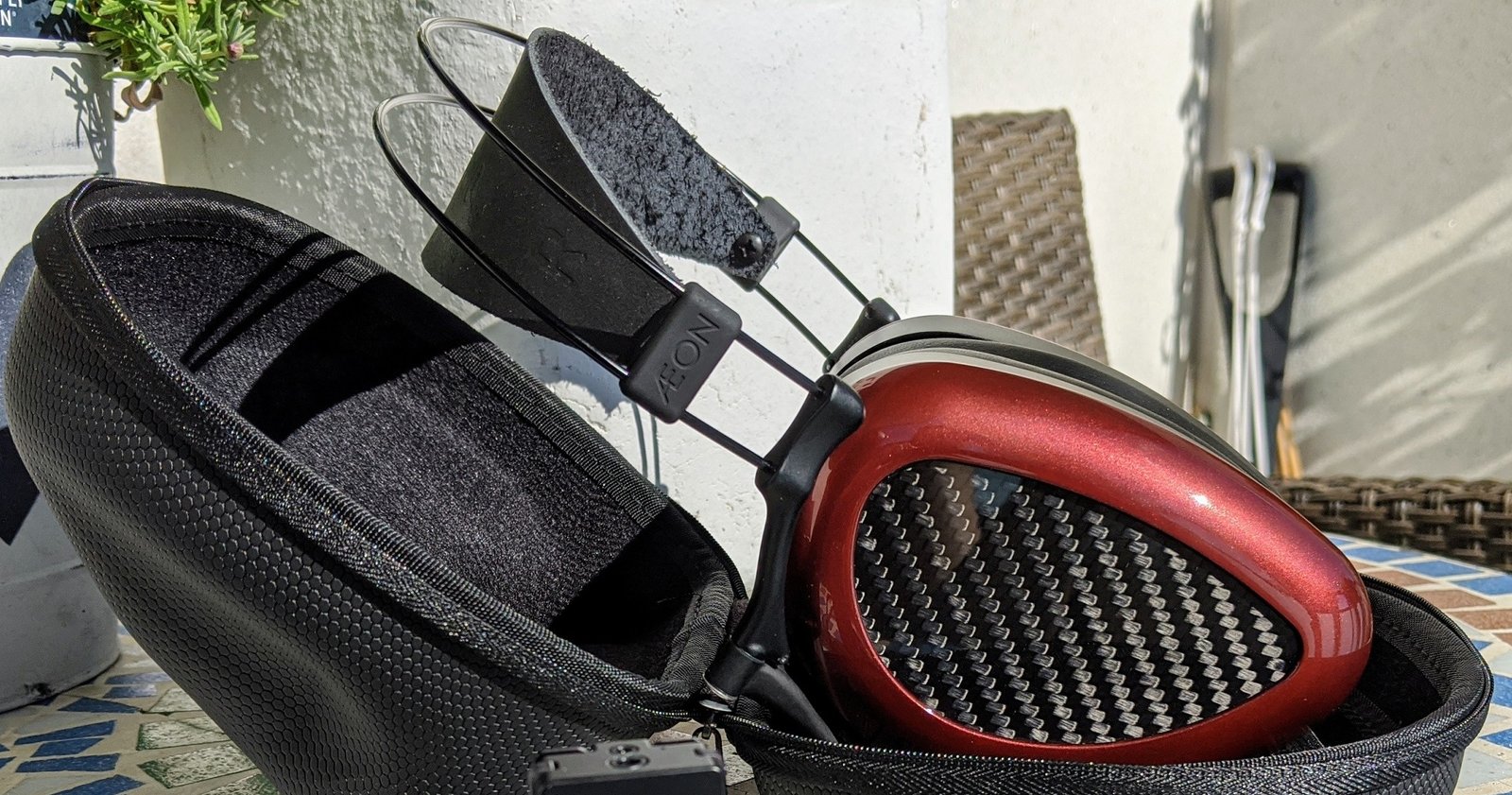
The structure of the original, ear-shaped cups is aluminum, carbon fiber, and glossy, red plastic (there is also now an all-black Noire-model). The two metal rods of the headband are made of flexible and shape-retaining nickel-titanium memory metal (trade name nitinol), which is also used to make dental braces. The rest of the headband parts are also metal, so the headphone structure feels truly high-quality and durable. In addition, the Aeon 2s weigh only 328 grams, which is an excellent achievement for closed-back planar headphones.
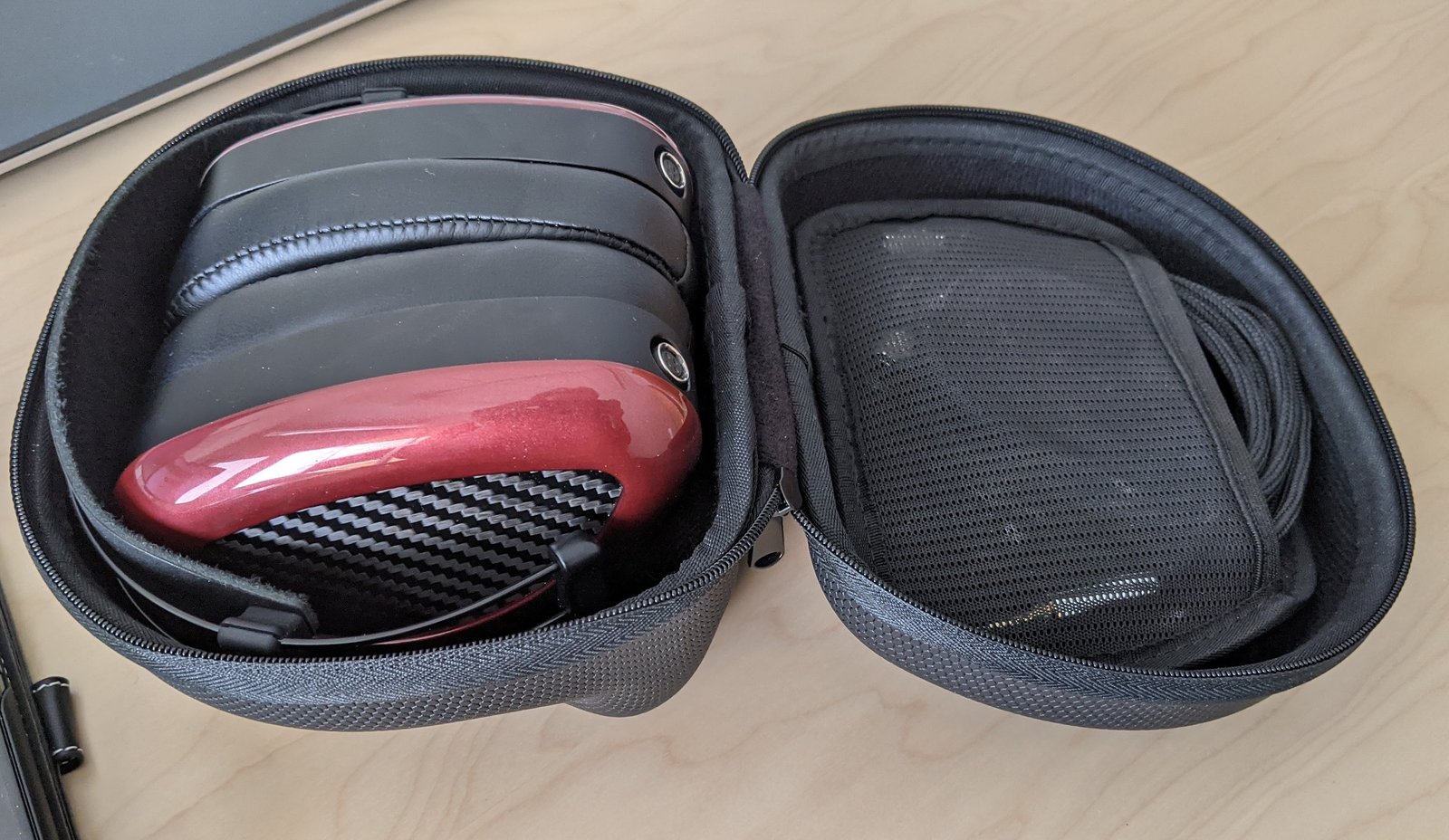
A special feature of the Aeon 2 is the ingenious design of the headband, which allows it to be folded around the cups. This way, the headphones fit into the small case they come with, making them relatively easy to carry. However, the case is quite thick and awkwardly shaped for carrying in, for example, a flat backpack or bag.
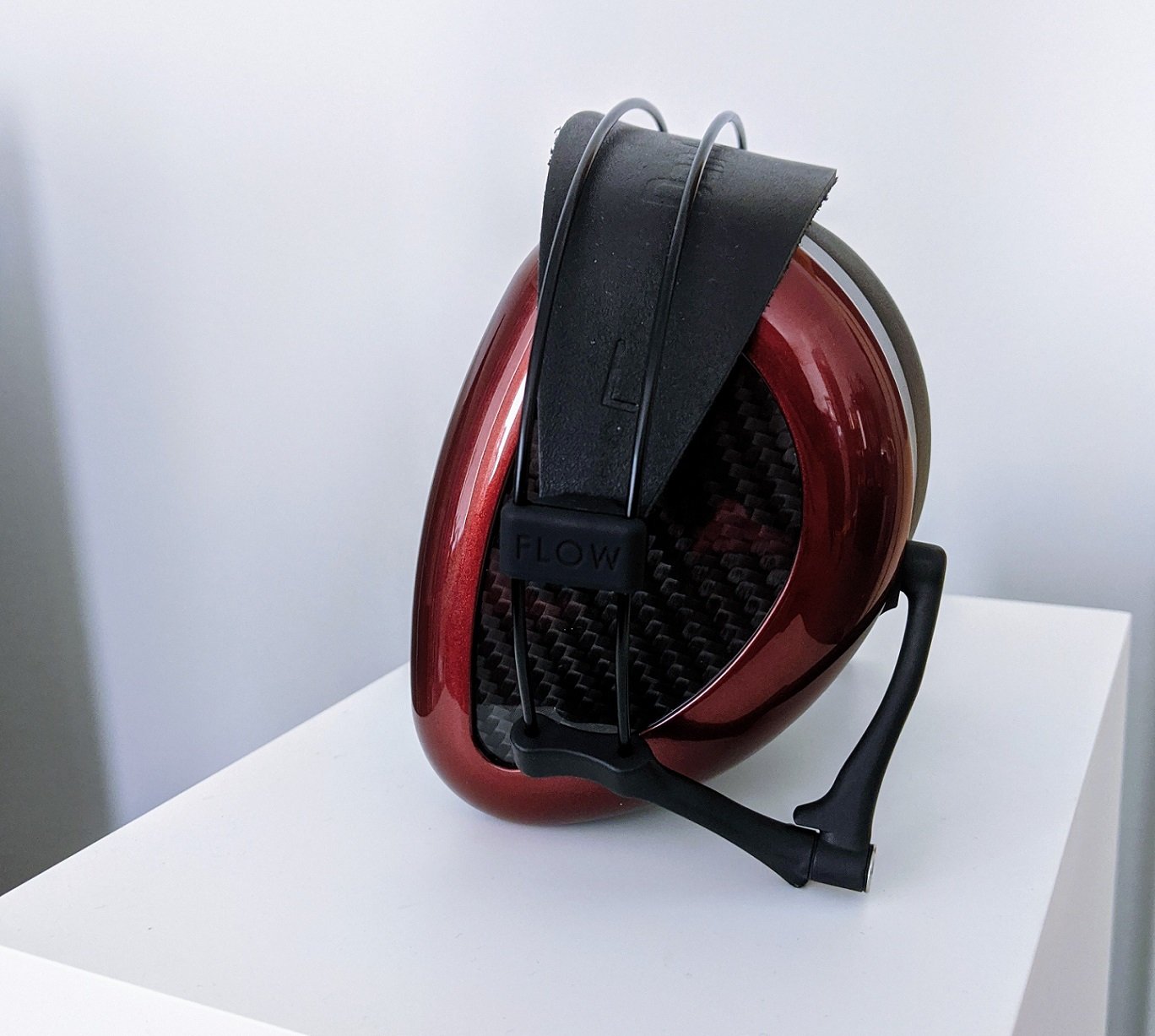
The height of the leather head cushion can be adjusted by moving it up and down along the nitinol rods. The operating principle is simple and ingeniously functional. The selected height also stays well in place once adjusted.
DCA is almost unique in the world in using locking Hirose connectors in its headphones. Fortunately, these are the same across all headphone models, making it relatively easy to buy connectors and cables. Although the connectors are mechanically excellent and sturdy, it's a bit odd why such robust connectors were chosen for headphones intended for portability.
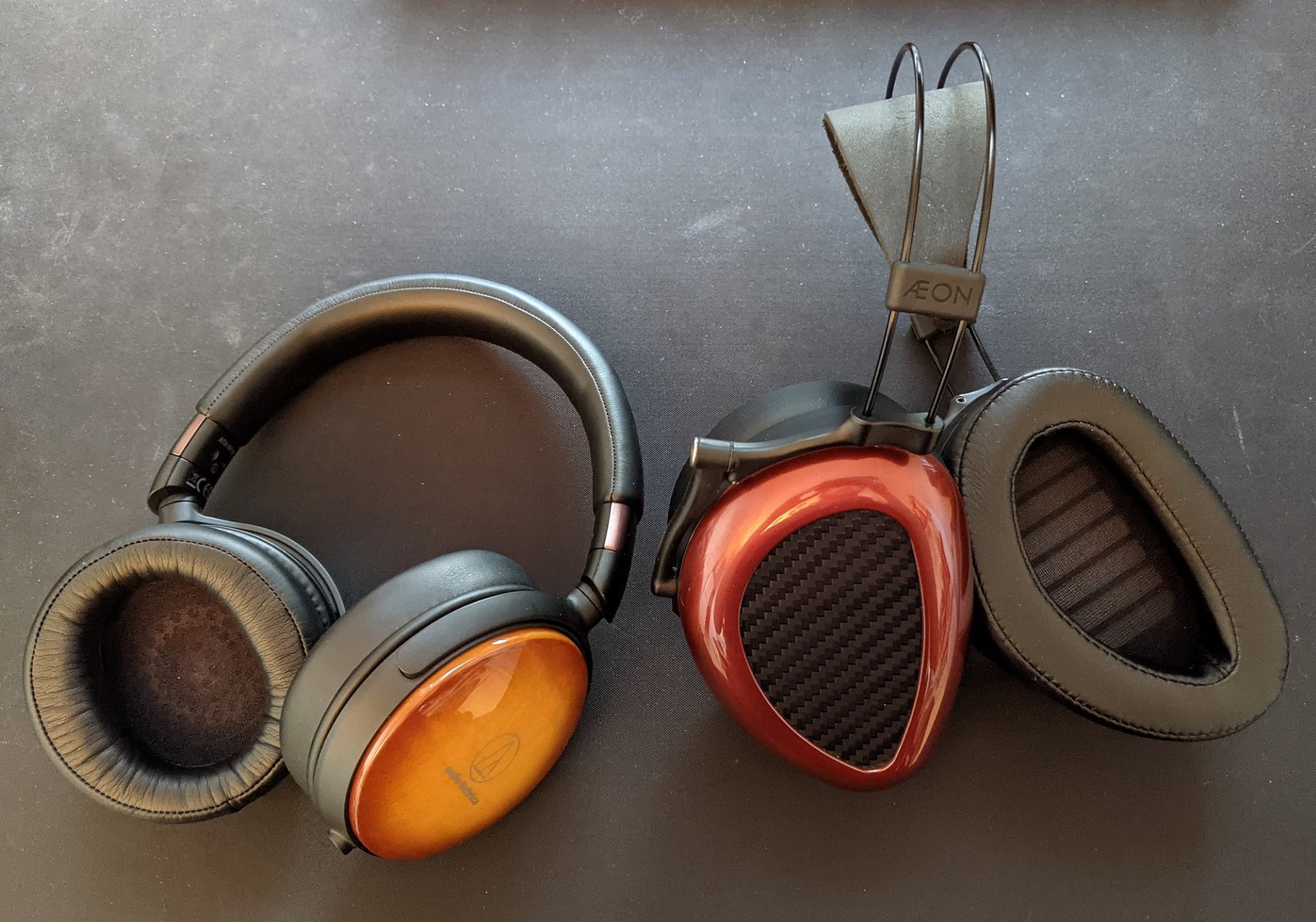
The cable that comes with the Aeon 2 also doesn't quite match this purpose, as it's long and bends everywhere due to its light weight and loose sheathing material. For this reason, I used shorter, straight-staying cables made by a Finnish headphone enthusiast (you can see one, for example, in the first picture of the review).
The headphones' soft ear pads, made of Japanese protein leather, are deep and spacious inside thanks to their ear-shaped openings. Despite the seemingly sensible shape, the lower edge of the pad sits so low on me that it presses slightly on my neck and jaw. For this reason, the headphones always need to be carefully positioned on the head at the beginning to find a comfortable fit.
This is made even more difficult by the Aeon 2's strong clamping force, which makes it hard to forget the headphones are on your head. During the first few days of use, my neck muscles became so stiff that I had to take a break from using the headphones. The clamping force did weaken slightly over time, but it remained too strong for me. Such a situation could usually be easily corrected by the user by bending the headband, but with the Aeon 2, this is not possible because nitinol completely retains its shape despite bending.

Sound quality
Engineering-like technical performance without dynamics
The Aeon 2s sound mature and, in a way, engineering-like. Objectively evaluated, the adjective ”good” immediately comes to mind. The headphones are versatile for various music genres, and their technical performance is excellent for their price range – for example, the detail retrieval is a clear step up from 500-euro headphones.
Everything sounds excellent both on paper and when listening, until the Aeon 2 needs to reproduce low frequencies. At this point, the headphones completely falter, even though it's audible that the bass is more emphasized than with many other planar headphones. The situation is confusing, as the low frequencies and their details are clearly audible, but they don't feel physically like anything. This makes the headphones sound quite powerless and soulless when subjectively evaluated.
This is officially a lack of macrodynamics, which is encountered not only in DCA headphones (Aeon and Ether series) but also in some other planars (according to what I've read, for example, the Hifiman Ananda is like this). Weak dynamics cannot be deduced from headphone measurement results, so the Aeon 2s are a good example of how not everything can yet be explained by numbers. Although what I've written sounds quite bad, I'm sure that many who enjoy listening to details would not pay any attention to the weak dynamics.
Technical performance:
The strengths of the Aeon 2 are excellent instrument and small detail separation. The reproduction is also really clear and fast, with no hint of distortion. These features make listening to different aspects and details of music truly effortless. With minor EQ fine-tuning, the headphones would be excellent monitoring headphones.
In terms of soundstage, the Aeon 2 doesn't sound particularly wide, but it's not oppressively small either. Sounds in the center are placed perfectly in the middle, but this central area is small in size and as if inside the head. Sounds placed even slightly to the side are clearly audible either on the left or right, but their lateral spaciousness remains only at an OK level. However, the headphones' good separation keeps the sounds so distinct from each other that this does not become a problem. For closed-back headphones, the Aeon 2s sound slightly wider and more open than average.
I don't usually pay much attention to headphone dynamics, but the Aeon 2s, and my previously owned Ether CXs, have shown it to be surprisingly important for my listening experience. If the Aeon 2s are excellent in reproducing small details, the same cannot be said for their macrodynamics. The headphones sound truly powerless and dead, as their bass has almost no physical impact, and all other sounds also seem to be leveled to the same intensity. This makes the music sound quite compressed.
Nevertheless, objectively evaluated, all available details are excellently presented by the Aeon 2, and dynamics do not otherwise affect the frequency response. Weak dynamics also, in their own way, enhance the distinguishability of details, because quieter sounds are heard more clearly and at a higher volume than usual with the Aeon 2. With these headphones, one can hear very clearly what the listened track technically contains.
Bass:
The weak dynamics of the Aeon 2 are most easily noticed in the reproduction of low frequencies, but at the same time, the low frequencies are fast and technically good – texture and details are clearly audible. For this reason, when evaluated separately from dynamics, the low frequencies are not bad at all in my opinion, but in places even excellent.
The headphones' low frequencies have been boosted by several decibels in a Harman-target-like manner, which was likely an attempt to compensate for weak impact. This also helps make the headphones a bit less serious and restrained. The situation is still somewhat amusing, because if this much bass had been added in the tuning to some ordinary 100-euro dynamic headphones, they would be praised as very impactful.
Mid-frequencies:
The mid-frequencies also continue with technically good and clear-sounding performance. The headphones bring the vocalist to the forefront, partly because they constantly play very centrally, as if inside the listener's head. It's easy to focus on listening, but more tightly produced music sometimes becomes a bit too oppressive as other sounds also try to occupy the same space inside the head. The Aeon 2s are well-suited for listening to live recordings, as their excellent separation clarifies the reproduction and the vocalist's voice stands out very clearly from the instruments.
The tuning of the headphones' mid-frequencies could be called quite musical, as it surprisingly resembles, for example, the Audeze LCD-2 Classics or the ones I previously reviewed ZMF Atticus. All of these are characterized by downward-sloping upper mid-frequencies and a calm reproduction. However, this is somewhat surprising for the Aeon 2, as one would expect them to aim to utilize their technical performance better in the upper mid-frequencies as well. In my opinion, a brighter tuning and additional energy might even suit the headphones' target audience better.
Treble:
The Aeon 2”s high frequencies are slightly uneven and sound very strong. This is particularly due to a prominence between the mid-frequencies and treble in the 6 kHz region, as well as a high amount of ”air frequencies" between 11–14 kHz. The latter makes the reproduction of high frequencies truly sparkling. The headphones' treble doesn't actually strain the ears, but it often emphasizes far too much. This partly obscures the fact that in terms of detail, the high frequencies are one of the Aeon 2's clearest strengths, considering their closed-back design. The separation and airiness are at a level where the headphones sometimes resemble open-back headphones in their treble reproduction.
”Effect of ”tuning pads" on sound
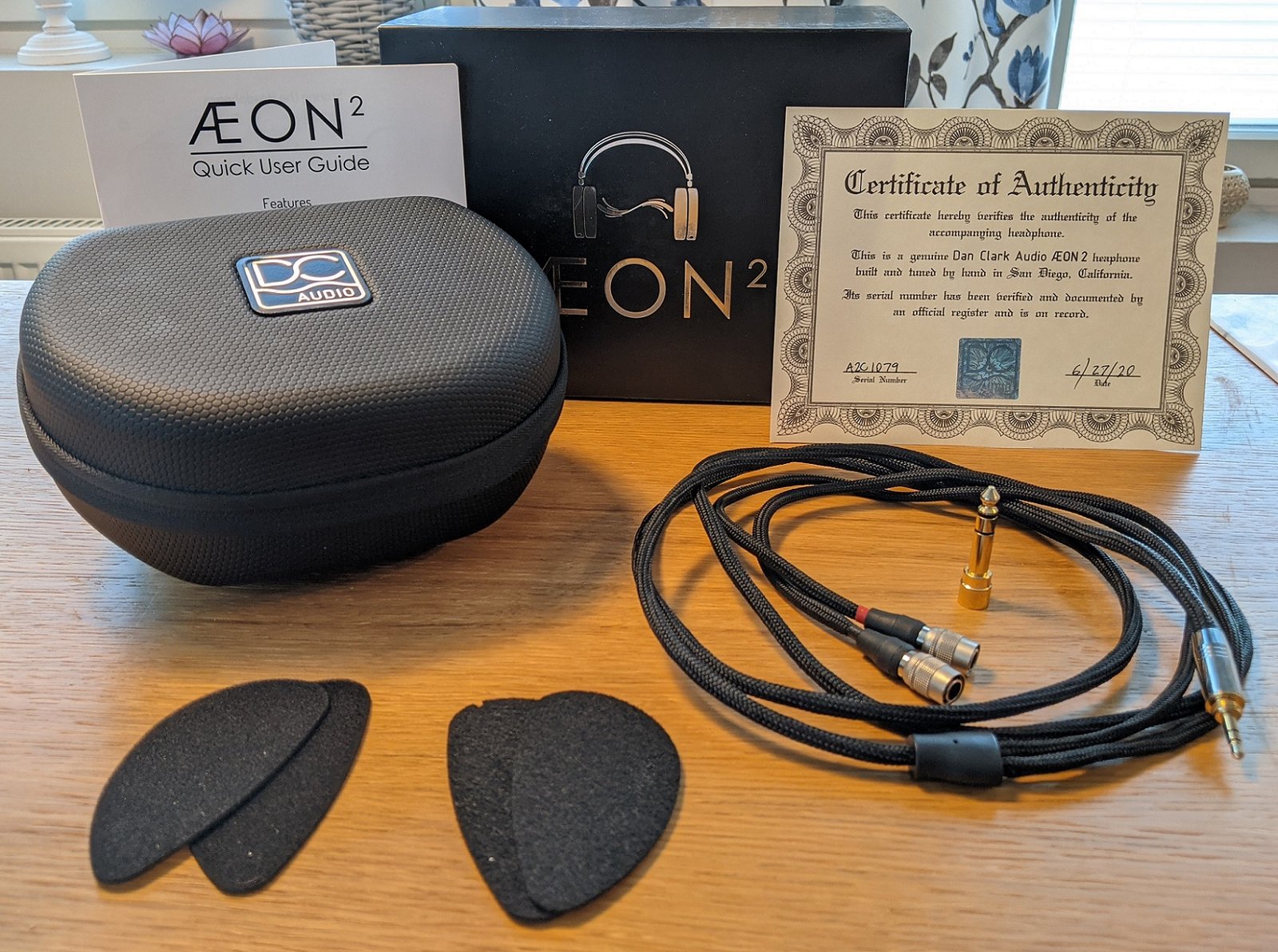
The amount of treble in the headphones, and thus also the overall balance, can be adjusted with the included ”tuning pads,” which are placed inside the cups between the driver and the ear. Each of the three pads reduces the amount of treble across a wide frequency range, making the headphones gradually sound warmer.

The thinnest black foam material changes the amount of treble very little, so they are of little benefit. The slightly thicker, hard felt-type material pad, on the other hand, makes the headphones sound somewhat strange, even though the amount of treble clearly decreases. The thickest white material makes the headphones sound warm while also making the low frequencies slightly more impactful. I ended up using the headphones either without pads or with the white pads.
The problem with the tuning pads is that they clearly degrade the Aeon 2's detail, making the headphones worse. The adjustment option is theoretically a nice extra feature, but intentionally worsening the headphones feels wrong to me. I found myself constantly switching pads to hear if a certain song sounded better with different pads. I fear that this kind of uncertainty can become an endless loop for some Aeon 2 owners. I personally ended up using an EQ tool to reduce the amount of treble.
Power Requirement and Device Pairings
The Aeon 2's impedance is very low at 13 ohms, so they require a good amount of current from a headphone amplifier. Since the sensitivity is also relatively low at 92 dB/mW, playing the headphones with a traditional mobile phone or a laptop's headphone jack is a bad idea. While the volume can be raised to a sufficient level, the headphones' sound will start to distort.
With even a slightly underpowered device, the Aeon 2s sound very flat, especially in the low frequencies. To be more enjoyable, the headphones need a powerful, dynamic, and impactful solid-state amplifier – otherwise, the amplifier can be either neutral or slightly warm in sound. The low frequencies and soundstage width, in particular, benefit from a more powerful amplifier.
Since I primarily used the headphones outside the home, I acquired a Qudelix 5k Bluetooth DAC/amplifier for this purpose, which was able to drive the Aeon 2s well via a balanced 2.5 mm connector. With a short 50 cm cable, this was an easily portable combination. I also tried the Chord Mojo for similar use, which sounded even slightly larger and fuller, but was very poor in terms of usability and battery life.

DCA Aeon 2 Closed vs. Audio Technica ATH-WP900
I compare the headphones to those I previously reviewed Audio Technica ATH-WP900 -headphones, which I decided to replace the Aeon 2s with in the role of portable headphones. Both headphones are designed for the same purpose and have a closed-back design. The WP900 has significantly easier-to-drive dynamic drivers, and they cost about 300 euros less when bought new in Europe than the Aeon 2 Closed.
The WP900s are slightly lighter, and their clamping force is also lighter. This makes them significantly more comfortable headphones on my head. The Aeon 2s can be made to fit well with precise adjustment, but you don't feel like talking with them on, as it's literally difficult to move your mouth. Thanks to the tight fit, the Aeon certainly isolates external sounds better than the WP900.
For portable use, the Aeon 2 requires significantly more power from an amplifier, whereas the WP900 can also be used directly from a phone's headphone jack if needed. This makes the WP900s more versatile and easier for travel or even office work. The Audio Technicas can also be folded into a flat case, which fits better in a backpack alongside a laptop.
In terms of technical performance, the Aeon 2 wins in almost every aspect – resolution, in particular, is significantly better. The soundstage is also slightly wider on the Aeon 2. They are more linear in their tuning, and their mid-frequencies come through better compared to the WP900's V-shaped tuning, which has a slight dip in the lower mid-frequencies.
With the Aeon 2, you hear more details in vocal performances than with the WP900. In my opinion, the treble is also more detailed, even though it is more uneven compared to the WP900. Both headphones are somewhat bright-sounding in their own way. Overall, the Aeon 2 is more technical and suitable for a wider variety of music genres.
However, the WP900s are much more fun and dynamic headphones. They are more interesting to listen to, and they also succeed in creating more emotion in the playback. The WP900”s low frequencies hit significantly harder, even though the Aeon 2”s bass tuning likely has a greater emphasis on paper. The impact of the Aeon 2 remains very modest, but the low frequencies are still more detailed and, objectively speaking, "better." However, listening to the Aeon 2 feels more like work than pleasure, especially when the headphones are constantly clamping your head.
The Aeon 2s are excellent headphones, but in comparisons like these, their somewhat weak dynamics become even clearer. In summary, I could say that the WP900 and Aeon 2 are quite different in style, and both have their own strengths. I don't need to analyze music outside the home, so with its more enjoyable playback, the WP900 won almost immediately after I heard them.
Summary
The DCA Aeon 2 Closed headphones are a good choice in their price range for those for whom listening to details and the closed-back design of the headphones are important. The headphones are versatile and suitable for almost all music genres, and their technical performance is in many respects at a level where one hardly misses anything more. I can't readily think of better closed-back planar headphones for 1000 euros, and despite the high clamping force, the comfort is probably better than with 600–700 gram heavy closed Audezes. The Aeons are also easier to take outside the home.
Instead of the red model, however, I would recommend choosing the black Noire model, which, according to what I've read, has better treble tuning thanks to slightly different ear pads. This means there's no need to use separate tuning pads, and the detail of the headphones can be kept at the highest possible level. These better pads can, of course, also be purchased separately for the red model.
The technical strengths of the Aeon 2 are easy to appreciate, but listening inevitably becomes analytical because it's not very fun in the traditional sense. As an interesting detail, the tuning of the headphones still aimed for a fun and musical sound. This is apparently partly because the preceding Aeon model was considered dull-sounding. The larger Ether CXs I previously owned were also analytical and lifeless in their reproduction. Compared to them, the Aeon 2s are more impactful and a step in the right direction.
Due to weak macro-dynamics, one tries in vain to play the Aeon 2s at a louder volume, hoping they would come alive. I myself never fully got over this lifelessness, but knew I would eventually sell the headphones. However, dynamics are not equally important to everyone, nor has their existence been definitively proven by measurements. In terms of measurable characteristics, the Aeon 2s are indeed excellent headphones. However, they should definitely be auditioned before making a purchase decision.
Different, more modest dynamics and impact are in a way a fundamental characteristic of planar headphones, so perhaps they shouldn't be directly compared to headphones equipped with dynamic drivers. Still, for example, Audeze's planars and older Hifimans hit pleasantly hard. Compared to these, DCA's headphones are inevitably a slight disappointment for a listener who values fun.
The Aeon 2 uses slightly older driver technology, so it's not at all out of the question that Dan Clark could develop hard-hitting planar drivers in the future. In that case, Aeon-type headphones would be absolutely brilliant – now they remain in my memories only as good headphones.
 EN
EN  FI
FI