Author: Sword of Damocles
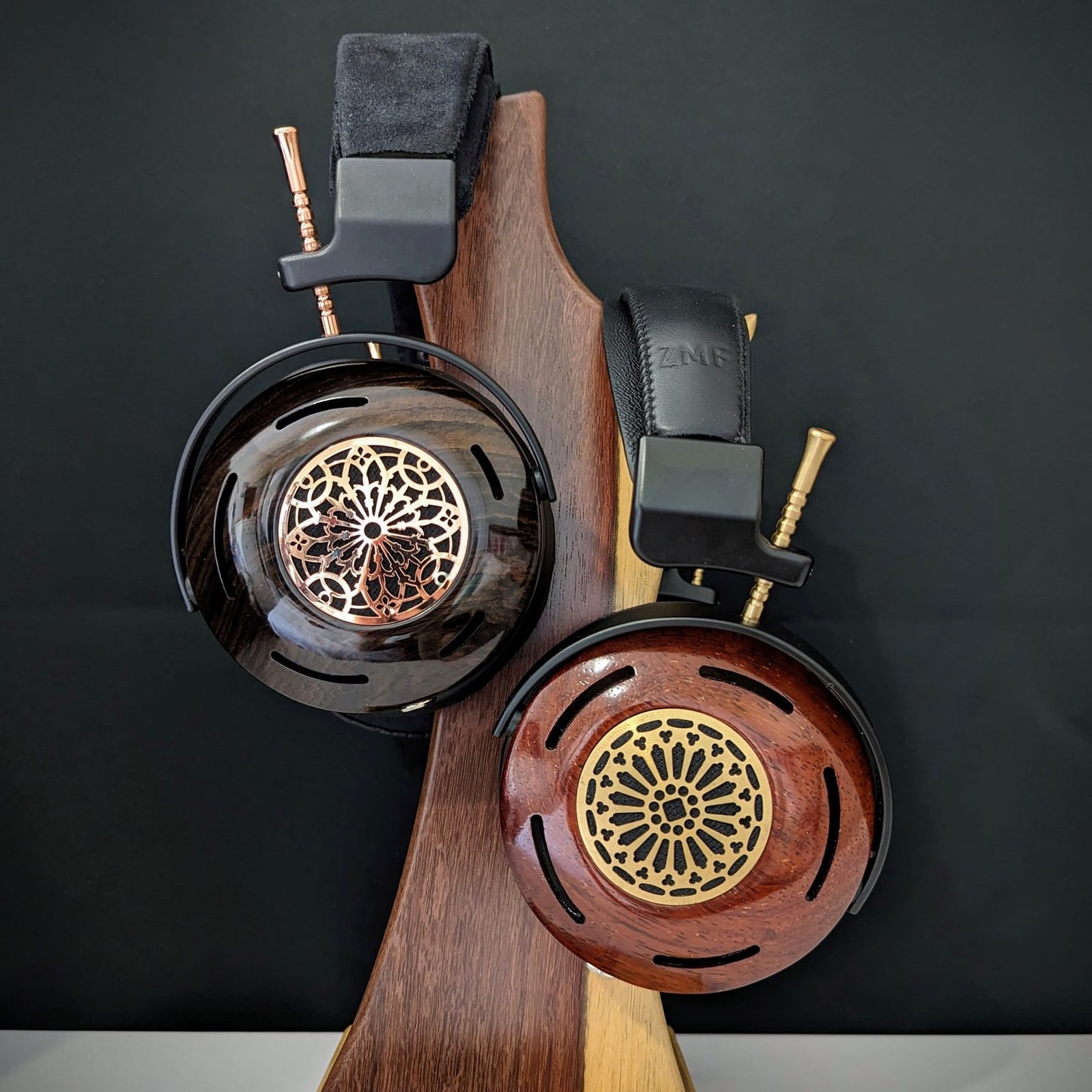
Table of Contents:
Information:
- Release year: 2022
- Country of origin: USA
- Price: starting from 1500 USD (in Finland 1880 EUR)
- Type: open, over-ear
- Driver type: Dynamic 50 mm (biocellulose diaphragm)
- Impedance: 300 ohm
- Sensitivity: 96 dB/mW
- Weight: lightest 490 g ± 30 g (my own headphones 650 g)
- Connector type: 2 x 4-pin-mini-XLR
- Cable: 1.65 meter cable, with a choice of either 4-pin-XLR or 6.35 mm connector
- Accessories: Seahorse case, cleaning cloth, cable pouch, and owner's card
- Warranty: lifetime driver warranty for the first owner and 2-year warranty for other parts
Review sample: Self-purchased product
Auteur 2.0
Approximately 6 years have passed since the release (10/2017) of ZMF's first open-back headphone model, the Auteur, which is handcrafted in the USA. I have owned two different Auteurs myself, about the first of which I wrote review less than two years ago. Nowadays, it is no longer possible to buy the headphones, as their production was discontinued in the first half of 2022. However, ZMF immediately released a revamped Auteur Classic model (link to the manufacturer's product page), which is, somewhat surprisingly, $100 cheaper than its predecessor (1500 USD vs. 1600 USD). In Finland, the Classic model is priced at 1880 euros, meaning it is an expensive headphone.
The manufacturer directly states that the reason for discontinuing the production of the original Auteur (and the closed-back Eikon) was that the drivers used in the headphones ran out – or at least the remaining ones were to be saved for potential warranty repairs in future years. A large batch of drivers was ordered at the time, which has now been used up. Instead of ordering a new batch, ZMF decided to release an improved version of the headphones, which includes new drivers and technology borrowed from the Atrium model released around the same time. The decision seems logical in every respect, as the manufacturer has certainly learned a lot since 2017, and many competitors have also released new versions of their products.
ZMF offers consumers the opportunity to upgrade an older Auteur to the new model by sending the headphones to the manufacturer for driver replacement and basic maintenance. The upgrade operation costs $400 for the first owner of the headphones and $600 for those who bought the headphones used. Since shipping costs and VAT further increase the total price, upgrading from Finland may not necessarily make sense, even though the manufacturer provides a lifetime driver warranty for the headphones in connection with it. The external structure of the headphones remains unchanged by default, so an upgraded Auteur Classic usually still looks like the original Auteur. On the other hand, aesthetically, the two models differ from each other only in the pattern of the metal grille.
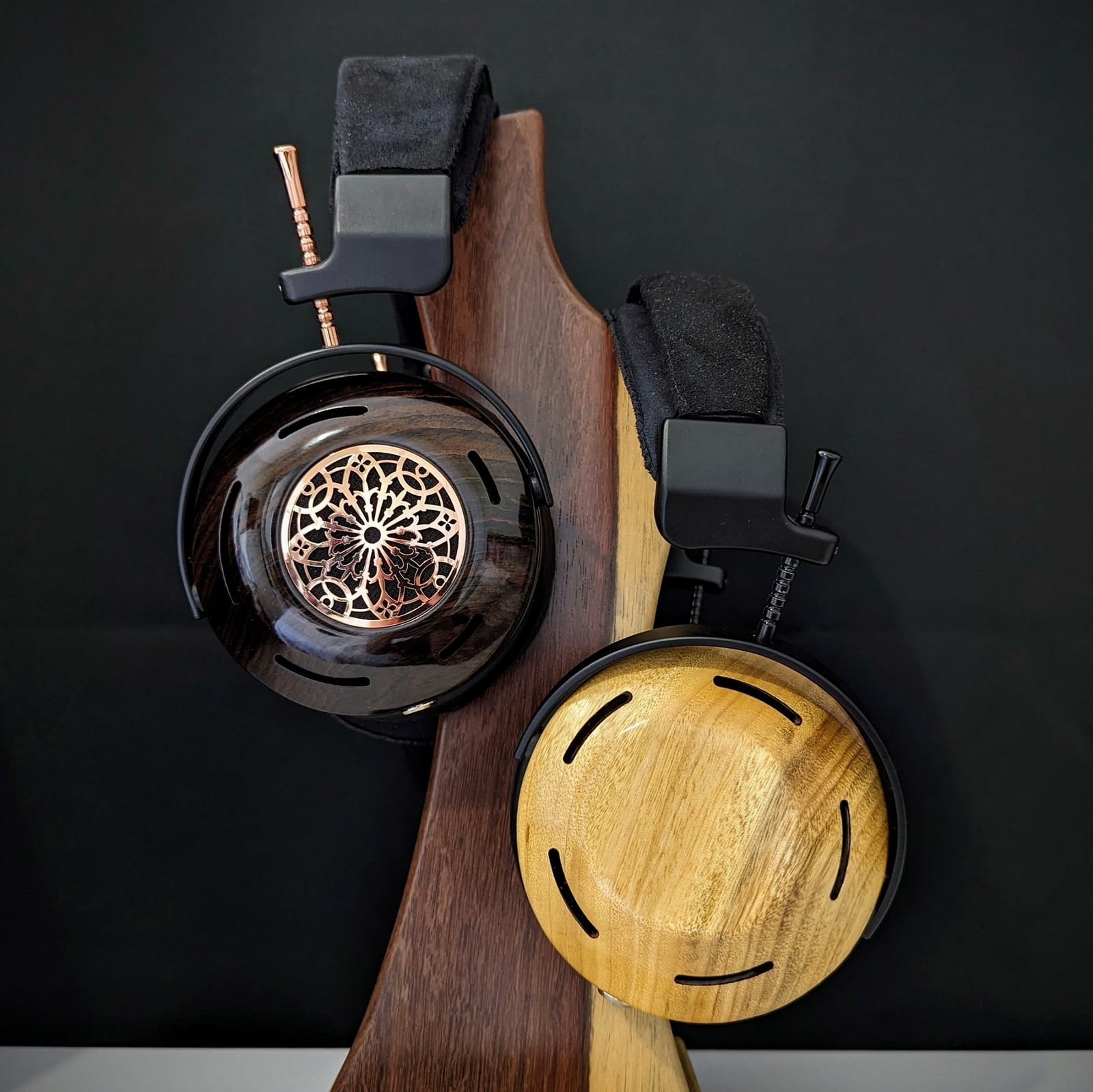
My own headphones are very exceptional. Firstly, they have been upgraded from an older Auteur model, which one wouldn't guess by looking at them. Of the original unit manufactured in 2018, only the very rare African Blackwood cups, which have also been sanded and re-lacquered, remain from that specific headphone model. Due to fortunate coincidences, the previous owner of the headphones had practically everything, including the yoke, headband, and metal parts, replaced. The customization and rebuilding must have cost quite a bit, but as a result, the headphones are one of the few Auteur Classics made from African Blackwood. They also feature stunning rose gold metal parts. A similar complete package may never come up for sale.
Equipment
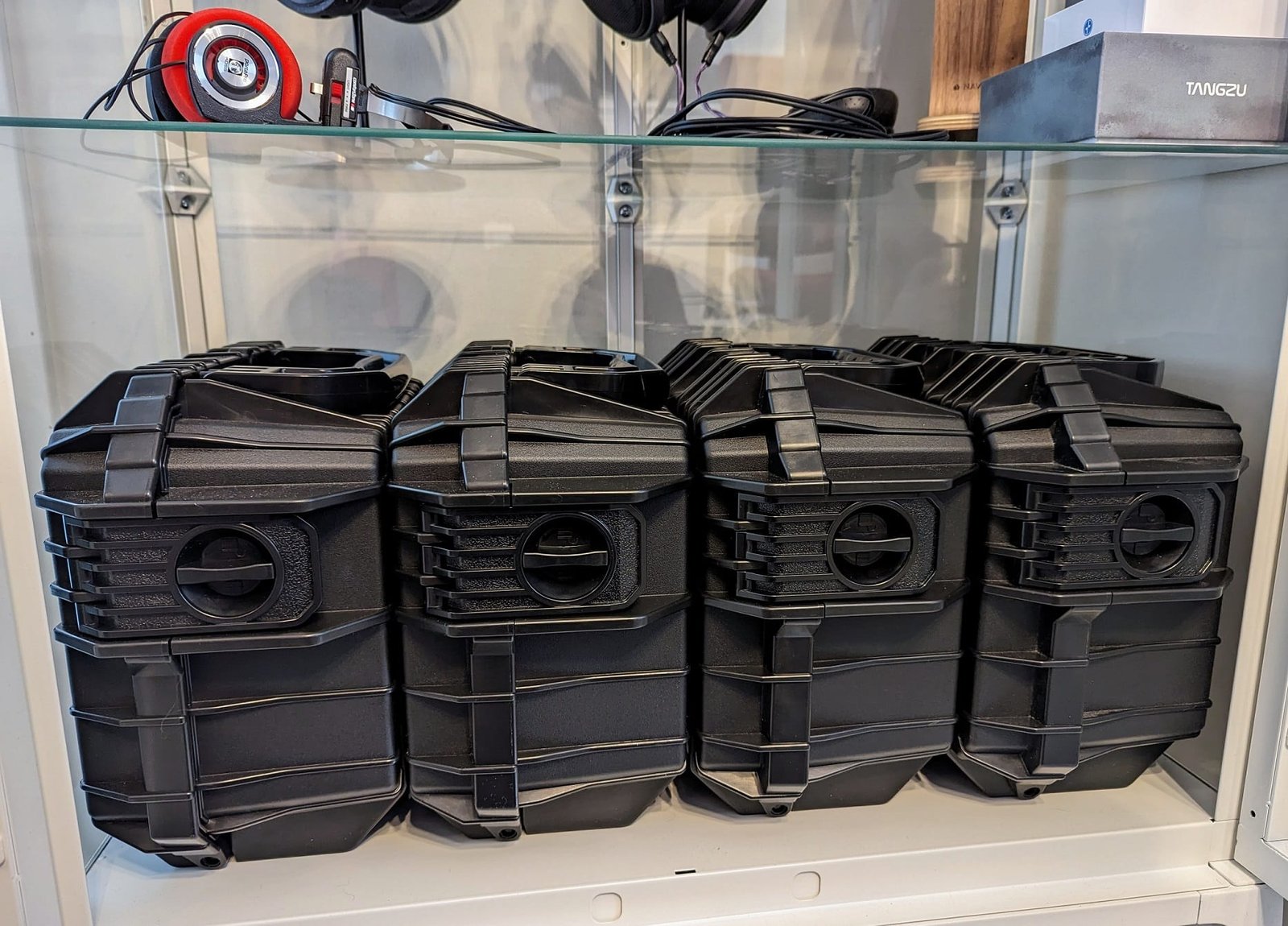
ZMF headphones are still delivered in a sturdy Seahorse plastic case or, for an additional $150, in a wooden box. Unlike the manufacturer's more expensive headphone models, the Auteur Classic comes with only one cable (connector selectable as either 4-pin-XLR or 6.35 mm) and one set of ear pads (material selectable). This might explain the $100 lower retail price, as the original Auteur came with two of each. However, in my opinion, the fabric-covered braided basic cable is better in terms of usability than the OFC add-on cable, so the buyer practically misses out on nothing. It is also possible to add basic cables to the order with different connectors for $30 each. Different ear pads, on the other hand, cost $60–70, meaning that by purchasing one extra cable and one extra set of pads, the total price will be the same as with the original Auteur.
As accessories, the Auteur Classic comes with a fabric cable pouch, a cleaning cloth, and an owner's card, as well as possibly an ear pad selection guide, pins, magnets, or other peripheral materials, which I have presented in more detail for the Atrium model review on. The accessories vary somewhat depending on the order time and headphone model, so I cannot say anything with complete certainty regarding them.
Build and comfort
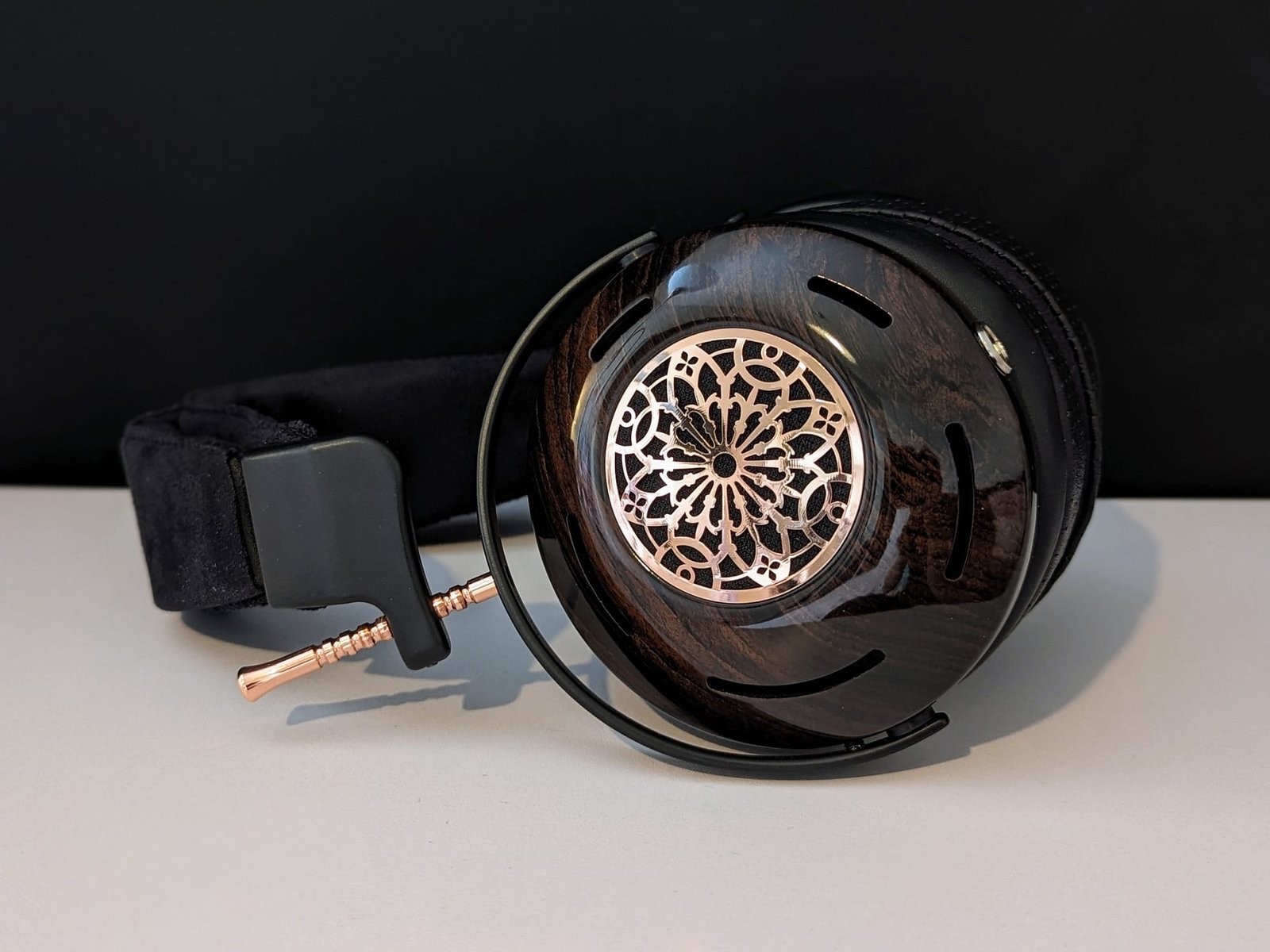
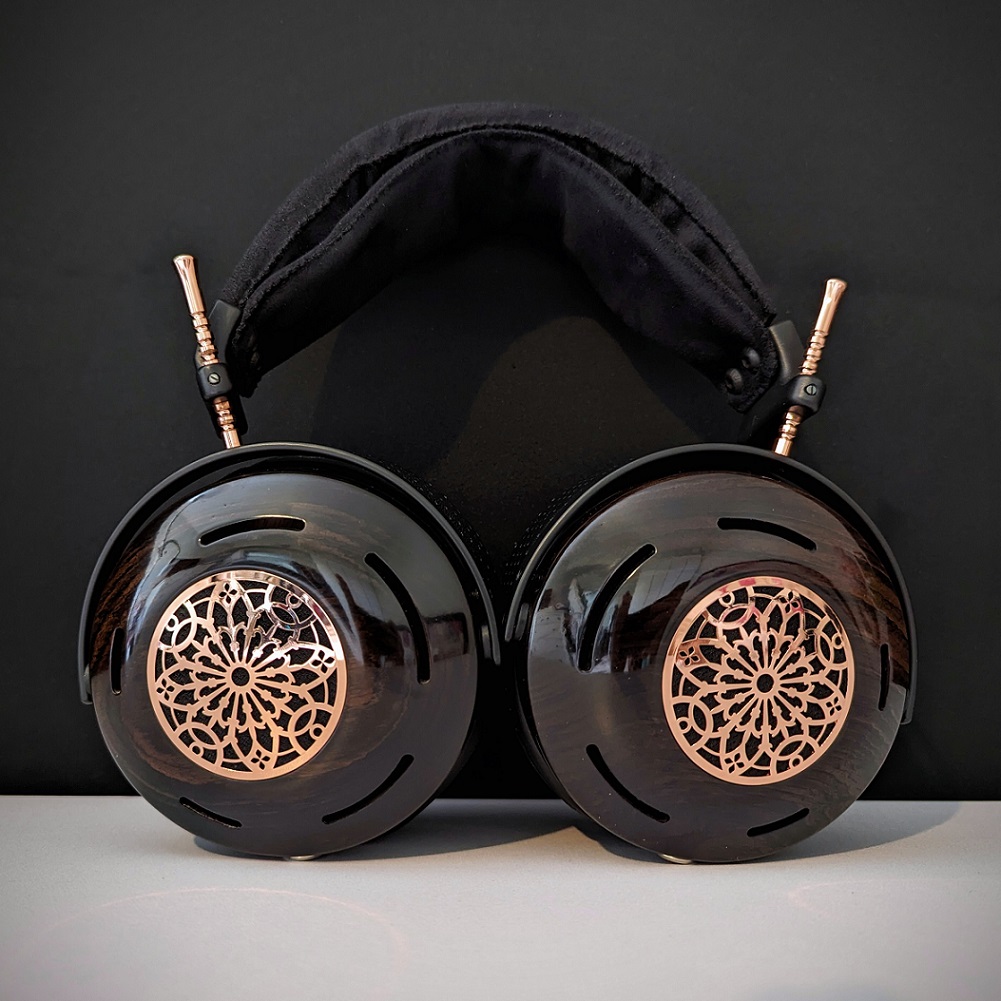
As I mentioned, the Classic version differs externally from the original Auteur only in the pattern of the metal grilles. The wooden cups are identical in shape, although there may be slight variations in the size of their linear air vents between different wood types and headphones manufactured at different times. Favoring a certain appearance is always a matter of taste, but in my opinion, the updated grilles of the Classic model look more interesting without the classic overall aesthetic changing too much. In my pair of headphones, the rose gold metal parts perfectly match the dark African wood. The black and chocolate brown wood itself looks stunning when polished to a shine.
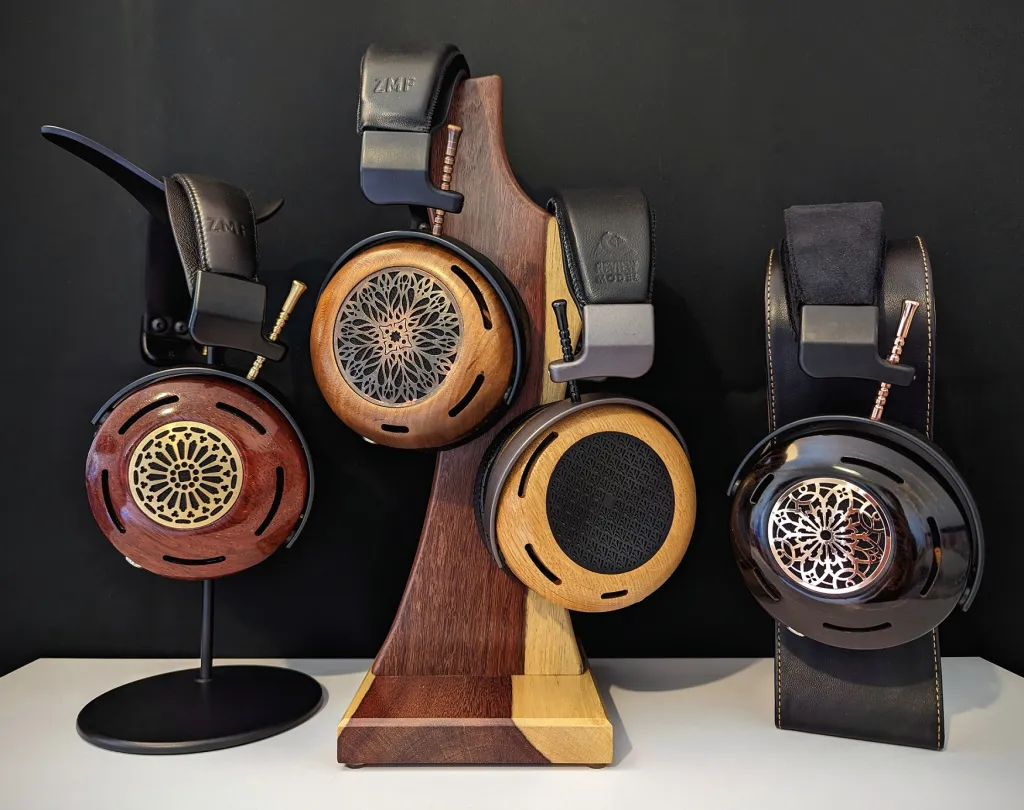
All ZMF models are generally similar in fit and comfort, so the situation is excellent with the Auteur Classic as well, thanks to extensive adjustment possibilities, thick pads, and even clamping force. The rather high weight of about 500 grams, however, might be too much for many, even though it is distributed extremely evenly across the head thanks to the good headband.
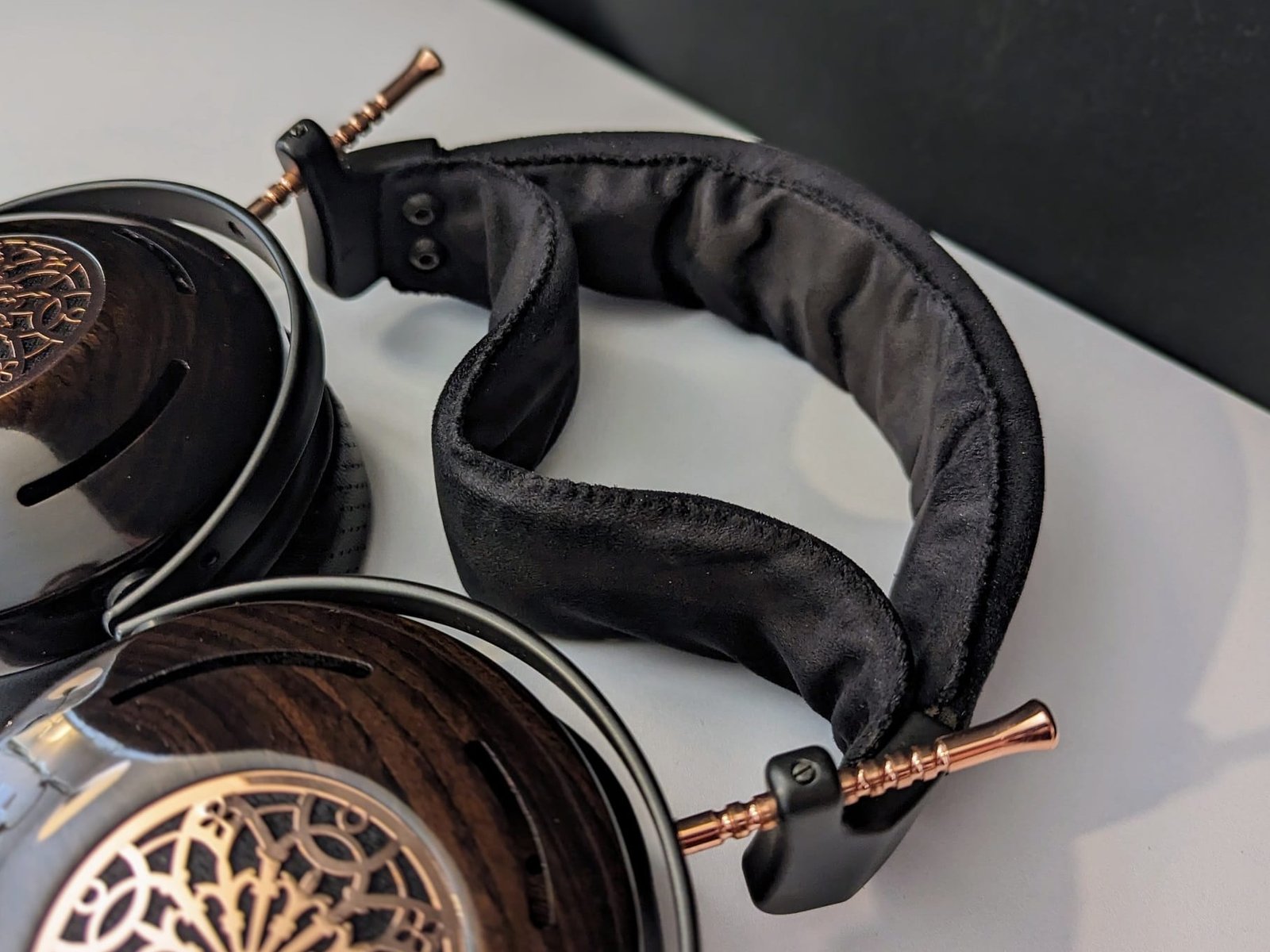
My own headphones weigh a hefty 650 grams despite the lighter magnesium headband (which increases the price of the headphones by $250), because African Blackwood is a very dense and heavy material. However, I am probably used to heavy headphones, as I do not find the immense weight problematic even during several hours of use. On the other hand, the fact that the enormous weight practically disappears on the head also says a lot about the functionality of the headphone structure. Despite everything, I recommend others to acquire headphones made from a lighter wood, especially if, for example, Audeze's LCD series headphones have previously felt too heavy.
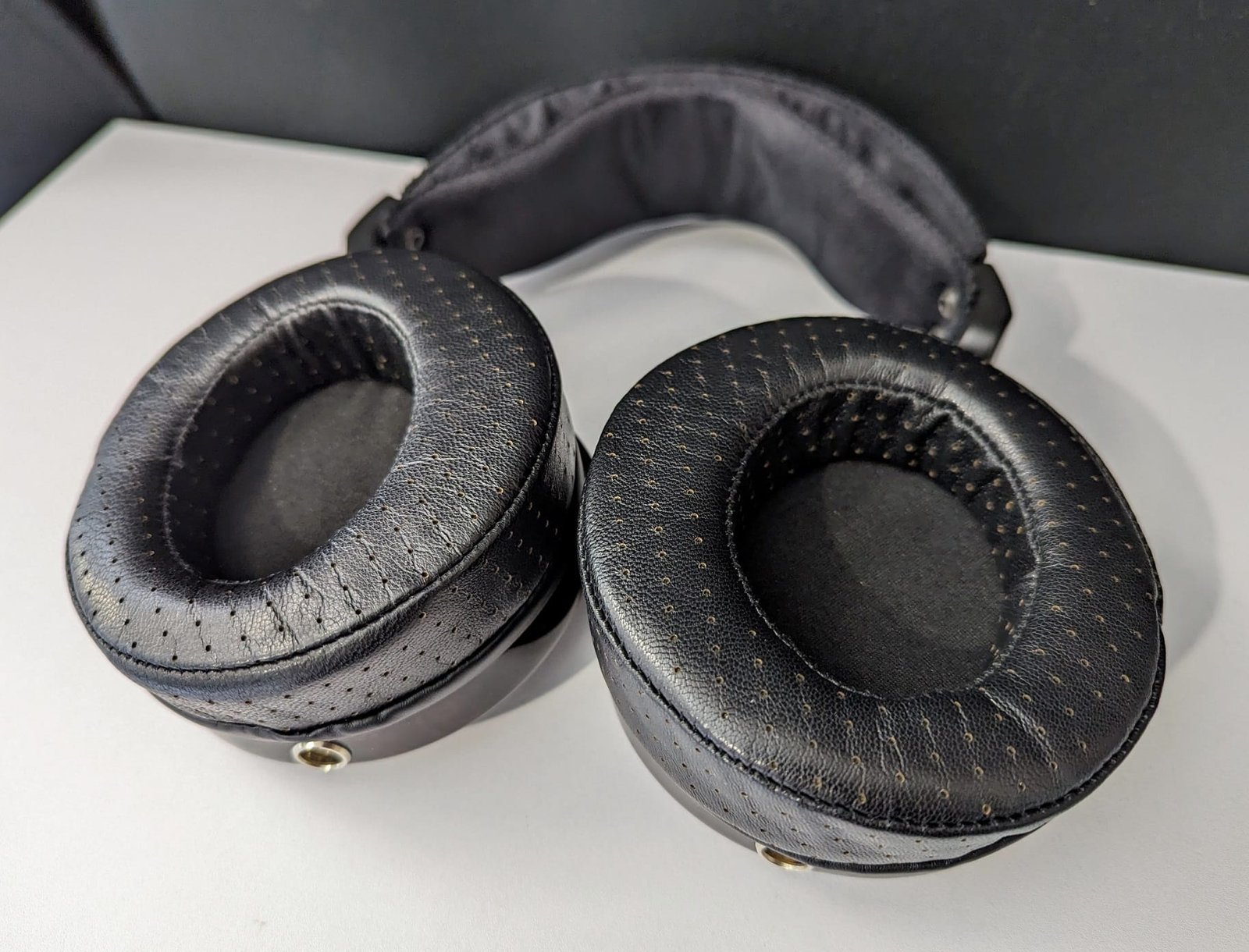
The Auteur Classic still uses the same Auteur-named ear pads, for which the material can be chosen as leather, faux suede, or a hybrid blend of both. The headband padding can also be chosen between leather and faux suede at the time of purchase, so the headphones are customizable even for those who do not wish to use animal-derived materials. In the case of ear pads, the material choice naturally also affects the headphones' frequency response and sound to some extent.
Cable matters
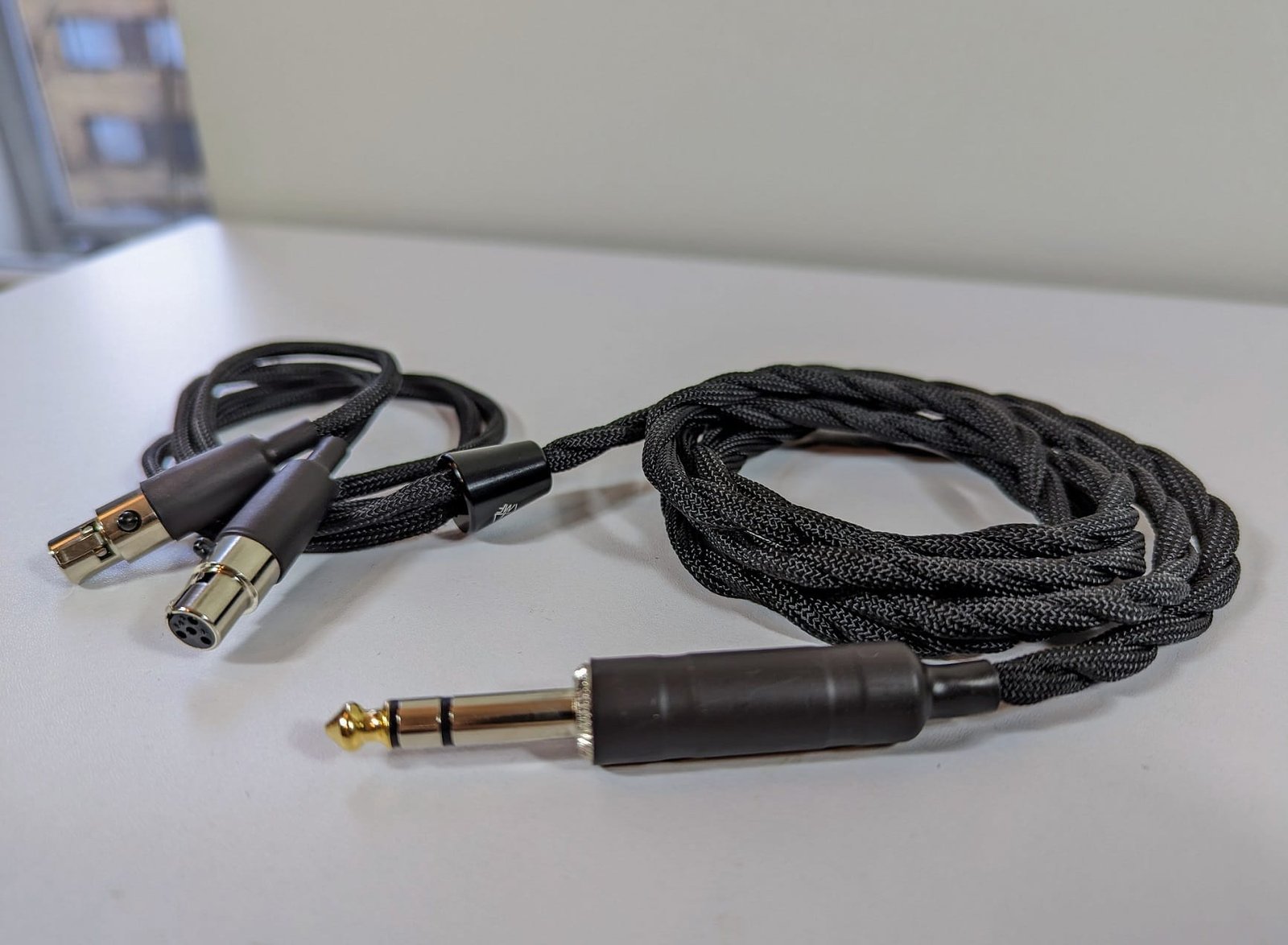
The headphone cable attaches to both cups in the usual way with a 4-pin mini-XLR connector. For example, cables designed for Audeze headphones work with ZMF headphones. The so-called standard cable supplied by ZMF is perfectly usable. It has a length of about 1.65 meters, and at the time of purchase, either a balanced 4-pin-XLR connector or an unbalanced 6.35 millimeter connector can be chosen for it. I would not feel an immediate need to buy a different cable, even though fine headphones might admittedly deserve one.
Speaking of which, I have been using an Italian-made "Japanese Monocrystalline Pure Silver Litz" cable with the Auteur Classic, which the manufacturer wanted to give me for testing and use in headphone reviews. Gladiator Cables Based on my own observations, I cannot say whether an expensive cable improves sound quality compared to, for example, a 50-euro cable, but I can definitely recommend the Gladiator cable based on usability and appearance. The braid made of a rather thick conductor looks great in white, and the cable is also very flexible and pleasantly soft to the touch on its outer sheath. The Gladiator helmet as a Y-splitter is also a fun detail.
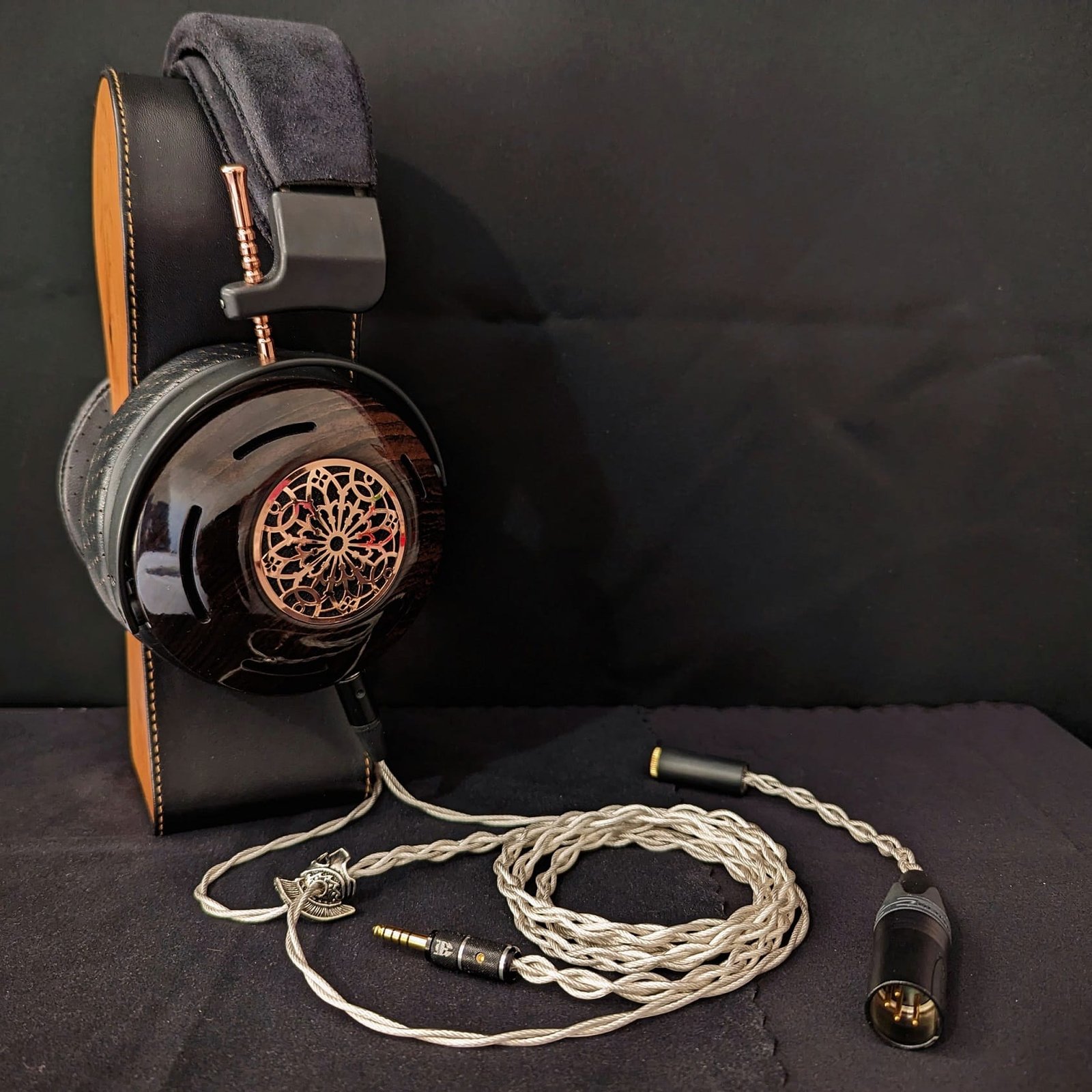
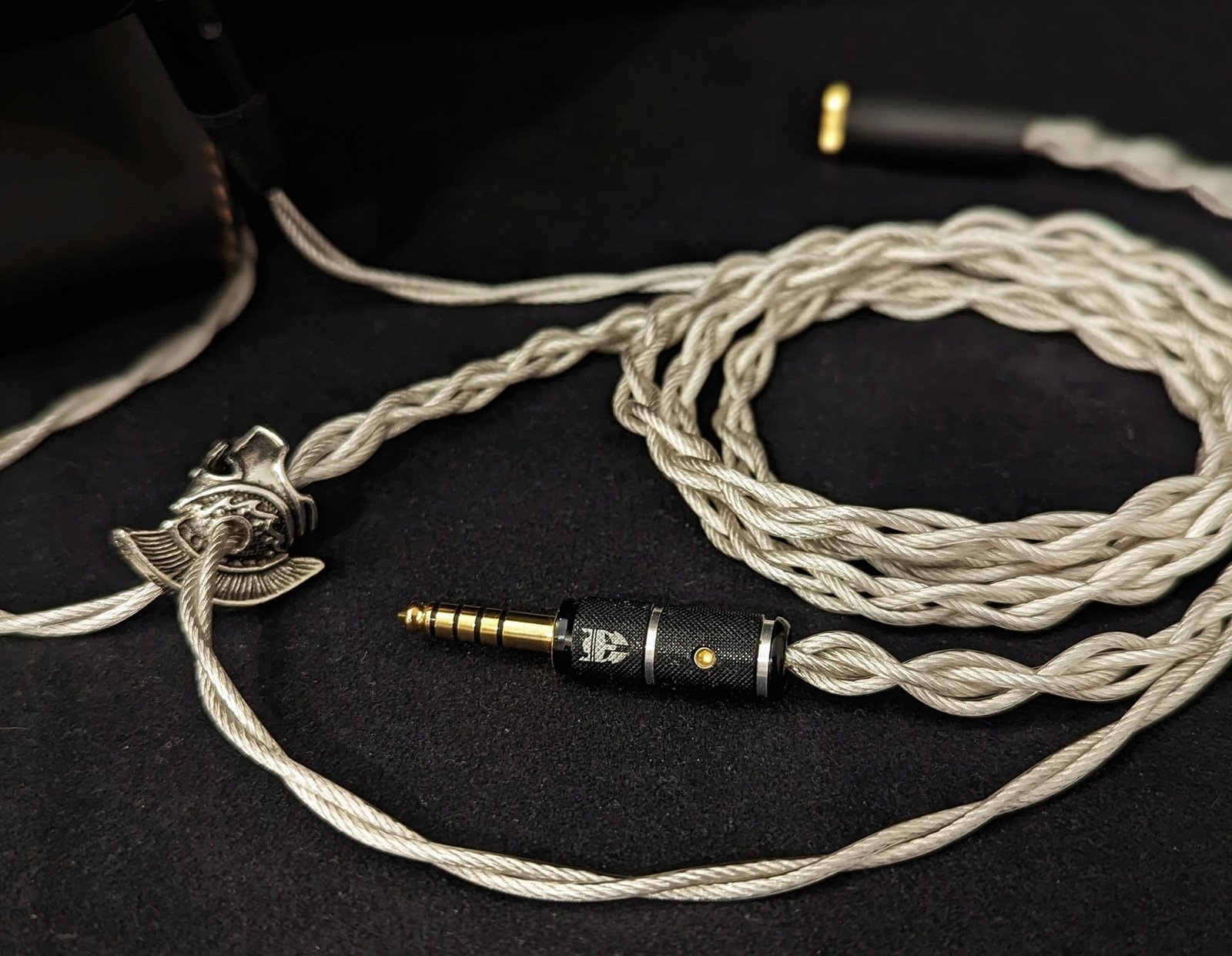
Not all Gladiator Cables products cost several hundred euros; there are also more reasonably priced and customizable cable options ranging from 50 to 70 euros. The price level is genuinely competitive in my opinion, and there are no additional costs for taxes on the cables, unlike when ordering from, for example, the United States. Let this be a small advertisement as a thank you for the cable I received, with which I have been more than satisfied.
New element
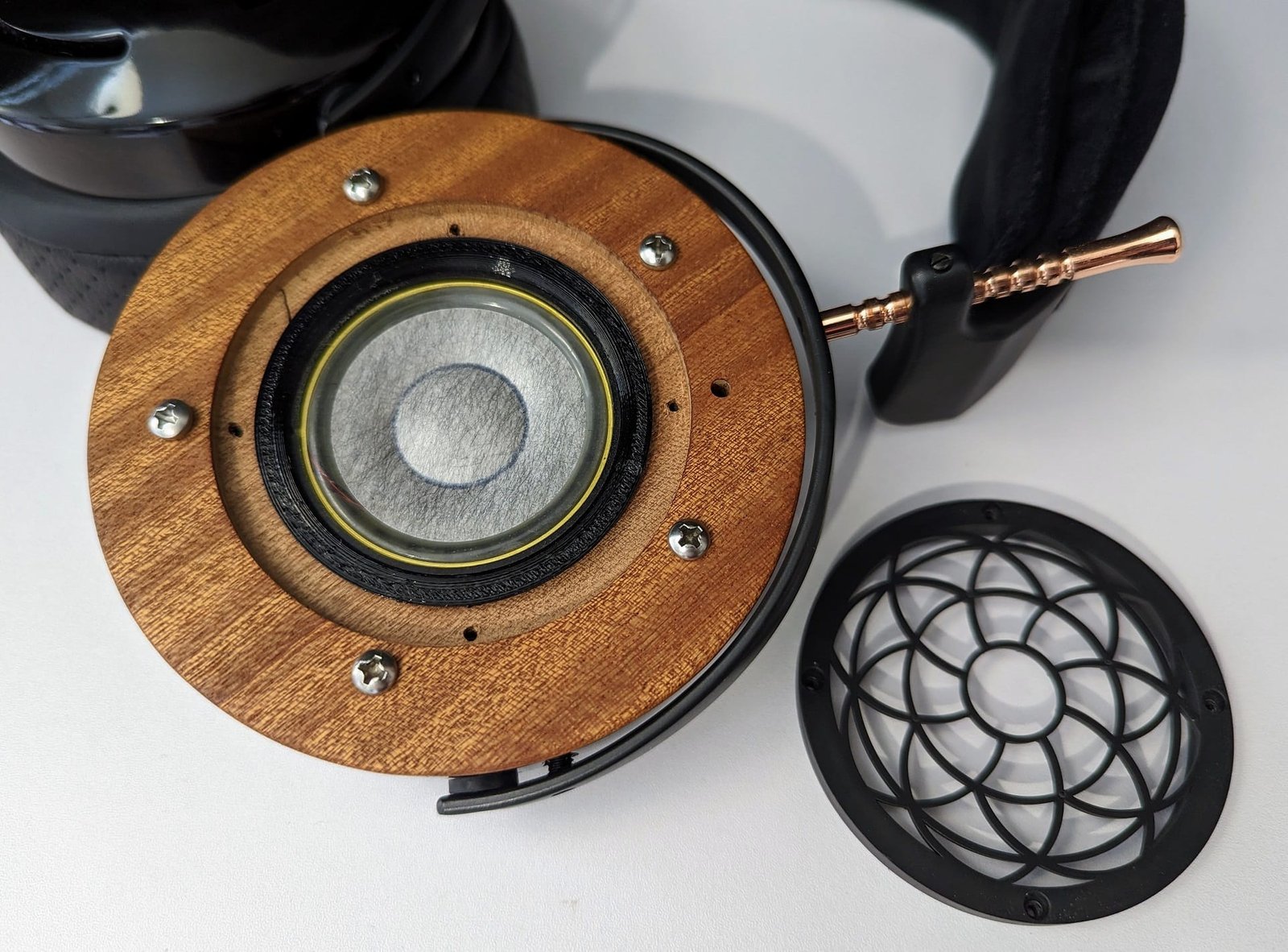
The Auteur Classic, like the previous model, uses a 300-ohm 50-millimeter biocellulose driver, to which, however, a few updates have been made. According to the manufacturer, new material choices have reduced distortion and increased magnet power. In the original Auteur, a more powerful magnet could not be used because the driver developed for the headphones was not fully suitable for it. Now, however, this has been corrected, so the N45-level magnet has probably been upgraded to an N50 or N52 magnet (unfortunately, I couldn't find precise information on this). For comparison, the magnets in the Atticus and Aeolus models are N30-level, while Verite models have N50 magnets and the Atrium has an N52 magnet. However, magnet power alone does not explain much about the final sound quality.
As a second change, behind the Auteur Classic's driver, the familiar [system] from the Atrium model has been added ADS damping system (Atrium Damping System) i.e., a foam structure that controls and dampens the driver's rear radiation in a desired way. Thanks to it, the driver has also been moved slightly further away from the ear, which has its own effect on sound quality and soundstage.

Sound quality
The headphone frequency response measurements were made using IEC711 standard equipment and new, more accurate silicone ears (KB501X). The graphs use the scientifically based Harman target curve (2018 version) as a reference, which is a generalisation of the frequency response that most people think would sound good. For more information on the measurements and their accuracy, see Headphone Measurementsfrom the -page. The Auteur Classic's frequency response is also comparable with other measured headphones comparison tool .
Configurations used in the review:
Configuration 1
- Audio source: PC (Tidal & FLAC files)
- DAC: Schiit Audio Bifrost 2
- Amplifier: Cayin IHA-6
Configuration 2
- Audio source: iFi Zen Stream (with Tidal MQA quality)
- DAC: SMLSL VMV D1SE
- Amplifier: Cayin HA-3A tube amplifier
Additional notes:
- Ear pads: Auteur Perforated Lambskin (standard headphone pads)
- Cable: Gladiator Cables Japanese Monocrystalline Pure Silver Litz cable (no discernible sound quality difference compared to the cable supplied by ZMF)
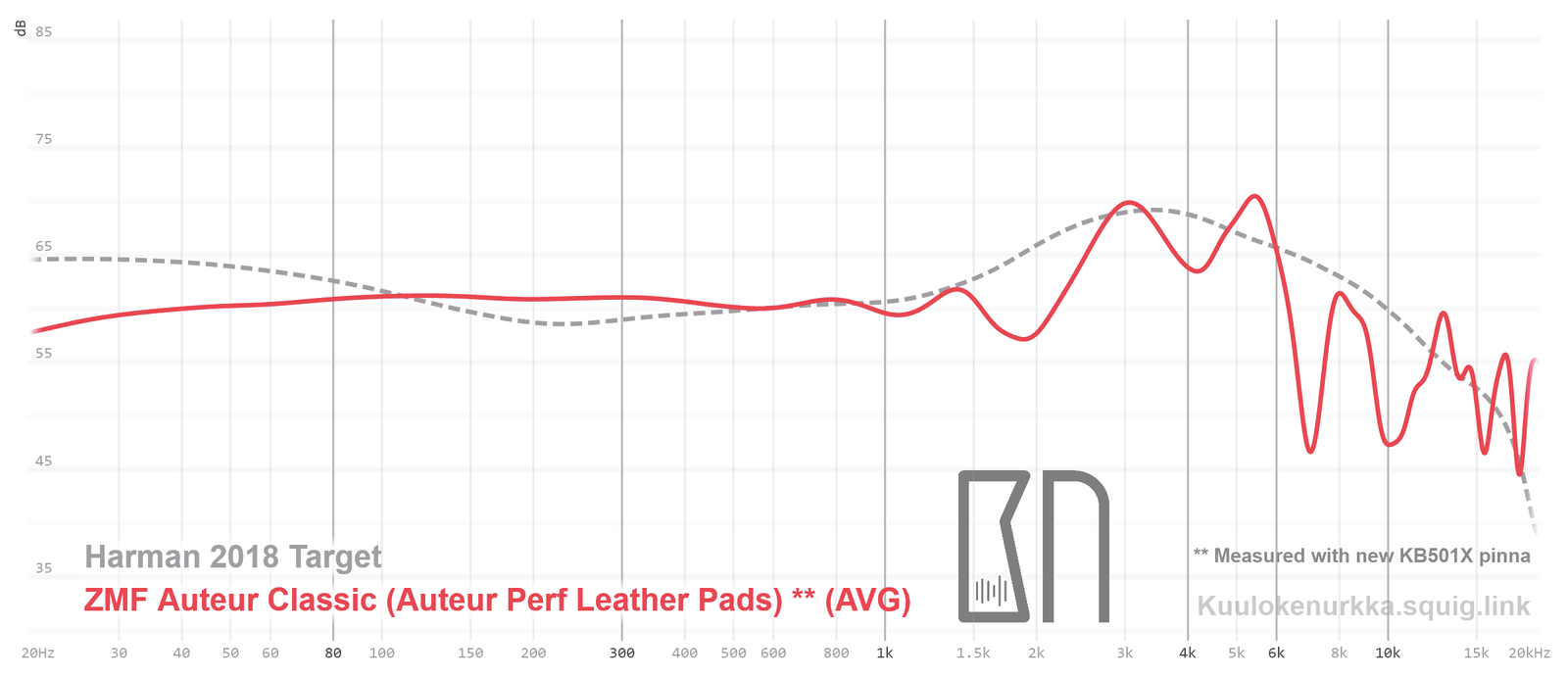
Frequency response with standard pads:
Frequency response compared to the original Auteur model:
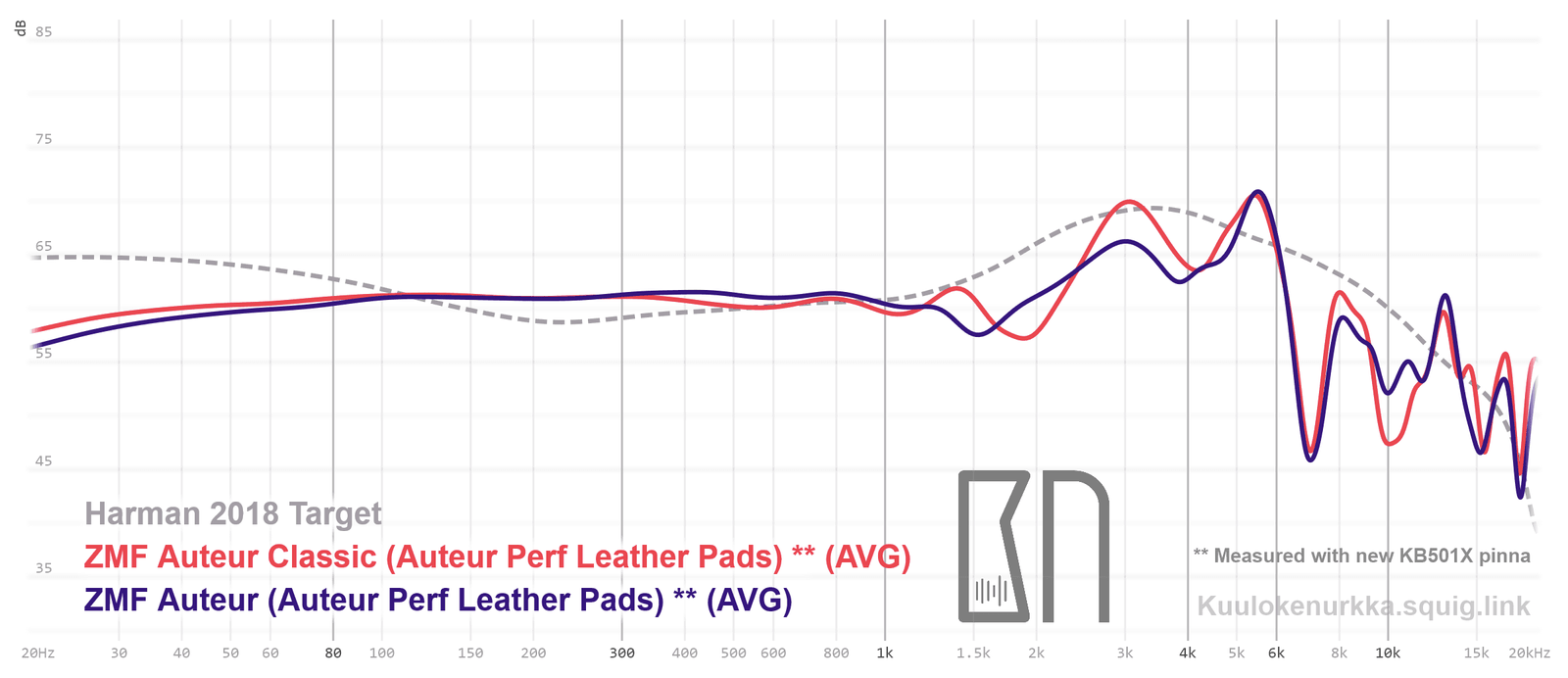
With the Classic model, the Auteur continues to maintain its position as ZMF's so-called neutral headphone. Compared to the original model, the manufacturer has made the Classic's reproduction clearer and slightly more energetic by boosting the mid-frequencies at both 1.5 kHz and 3 kHz. The low frequencies, on the other hand, still have a pleasant warmth, and the treble is reproduced even more balanced and effortlessly. The presentation is slightly mid-frequency-weighted, yet feels spacious. Some of the sound remains a bit further away because the 2 kHz region is reproduced more subdued than the surrounding frequencies. A similar tuning approach aimed at expanding the soundstage is utilized, for example, in Hifiman's planar headphones and Meze Audio 109 Pro:s.
In the Auteur Classic, the implementation works well because the headphones have a pleasantly clear sound without being too aggressive or V-shaped. For example, the vocalist does not feel as "in your face" as with Sennheiser's HD 600 series headphones or the original Auteur. Thanks to this, when listening to the Classic model, each frequency range stands out from the whole surprisingly evenly. Due to the unevenness of the mid-frequencies, the presentation is not Sennheiser-style neutral in terms of energy level, but from the perspective of frequency balance, the Auteur Classic sounds genuinely balanced and natural. Nothing ever sounds wrong, so the headphones are suitable for a very wide range of music genres. The Auteur is still a versatile headphone, which, when owned, would not really necessitate owning other headphones. The music may not always sound as fun as possible, but the result is not boring either. It is generally difficult to find anything to complain about.
Compared to the original model, the Classic is an improvement in almost all areas. It generally reproduces sound more clearly and precisely. For example, the bass is tighter in style and the separation of sounds is more distinct. The treble, on the other hand, no longer has an extra sparkle, but is more natural and higher quality than before. There has also been an improvement in the soundstage, which in the Classic is slightly more spacious and, above all, more layered and realistic. The damping system borrowed from the Atrium model is likely behind this change, as the sound of both headphones has a certain kind of infinitude. Although the manufacturer describes the two Auteur models as broadly similar, I find that with several changes, they sound surprisingly different. I will now go through the differences between the two in detail.
Bass:
ZMF states that they have shortened the decay time of the low frequencies in the Classic model, which is clearly audible compared to the original model, whose bass is softer and rounder. The Classic's bass is reproduced with higher quality and more control, and it hits tightly without significant surrounding bloom effect or loose thumping. Furthermore, the sub-bass has gained a completely new kind of power, so I was genuinely surprised how fun and physical all kinds of electronic music sounds. I do not find the original model as dynamic, so the changes in the new model are purely positive. Some, however, have felt that the amount of bass has decreased, as the added fullness caused by the original model's reverberation is now gone.
In my opinion, the amount of bass in the Classic is appropriate, as it sounds naturally weighty and punchy, like other ZMF models. Among open-back models, the Atrium is fuller and more mid-bass-heavy, while the Auteur Classic offers a clearer and faster-sounding result. Compared to headphone models from other manufacturers, the Classic's bass is more powerful than, for example, in Hifiman's open-back planar headphones or in the one I recently reviewed Sennheiser HD 660S2:s. The Meze Audio 109 Pro, on the other hand, sounds slightly fuller.
Mid-frequencies:
The Auteur Classic sounds natural and clear in its mid-frequencies. Pleasant warmth and power emanate from the lower mid-frequencies, and the energy level of the upper mid-frequencies is orthodox by current standards. However, opinions may vary regarding the more subdued 2 kHz region, which pulls the vocalist and the energy of instruments slightly further away in the overall presentation. The headphones could thus be described as slightly V-shaped, but on the other hand, there is less bass and treble than, for example, in the Meze 109 Pro. Hifiman headphones with a similar dip around 2 kHz, on the other hand, are generally thinner and brighter sounding.
The tuning of the Auteur Classic's mid-frequencies makes it sound a bit more relaxed and spacious than usual, without the result sounding unnatural in any way. The sound has a pleasant depth, so I feel like I am following the performer from a bit further away. Listening to the headphones is also extremely easy, as all kinds of aggressiveness and sharpness are absent. Furthermore, the presentation is more transparent compared to the original model, so the updates feel successful.
At this point, however, it is also worth defending the slightly fuller-sounding original Auteur, as the Classic model lacks some of its magic. The original model has more linear mid-frequencies, but their energy level remains lower, especially at 3 kHz. As a result, the lower mid-frequencies come out a bit more in the overall presentation, which makes the sound warmer in style and in a certain way more organic. In addition, the vocalist is reproduced more intimately in the foreground in the overall presentation. If someone considers the emotional connection to the vocalist important, the original Auteur is, in fact, still the better headphone of the two in my opinion.
In the Classic, vocal performances remain a bit more distant and calmer, making them less engaging. The sound is also slightly drier in style. The general clarity of the mid-frequencies and the reproduction staying better in control are still undeniable improvements, with which the new model is also more neutral, both in relation to my own observations and Harman's target curve.
Treble:
The headphones' high frequencies sound really nice, as they are just the right compromise between clarity and non-fatiguingness. The treble is clear and airy without being too sharp or piercing. The Auteur Classic also sounds more balanced compared to the original model, which has some extra sparkle at 6 kHz, i.e., in the so-called presence region. In the Classic model, I no longer detect anything similar at all; instead, when listening to it, it's easier to discern the details of the high frequencies. I have never considered the original version to have uneven treble, but next to the new model, it feels a tad raw and coarse.
The balancing of the treble is not clearly evident from my frequency response measurements, because with Auteur pads that have a large ear opening, a phase cancellation occurs at 7 kHz for both headphone models. The dip located around 10 kHz, in turn, is also a characteristic feature of IEC711-standard compliant measurement equipment, to which no further attention should be paid. Due to the varying measurement accuracy of high frequencies, it is generally difficult to properly ascertain them otherwise than by listening to the headphones oneself.
I personally perceive the Auteur Classic's treble as snappier and more forward-sounding compared to the more expensive Atrium model. Auteur and Caldera are, based on my experience, the brightest in treble among ZMF's open-back headphone models, although neither approaches a limit I would consider unpleasant in any way. Although the term "neutral" is starting to be overused at this point, it's difficult not to call the Auteur Classic such, even regarding its treble. If someone is looking for brighter reproduction in the same price range, the Hifiman Arya would be a good alternative. Meze Audio's more affordable 109 Pro would also be a brighter headphone, otherwise surprisingly similar in frequency response to the Auteur Classic.
Soundstage and Separation:
One significant change between the two Auteur models is also the sense of space. In the Classic model, the area around 2 kHz, which is reproduced more softly, inherently brings a bit more sense of spaciousness to the sound. The ADS damping system and moving the driver further from the ear are likely behind other changes. The original Auteur's soundstage is quite conventional in both size and precision. The Classic model, in turn, sounds more layered, more separating, and deeper forward. The soundstage is still not remarkably large, but it somewhat resembles the Atrium model in how naturally the sound disperses around the head without clear back boundaries. Sounds intended for close and slightly further away also pass through each other more transparently compared to the original model. Although this doesn't quite reach the level of the Atrium model, the soundstage now stylistically corresponds much more to what I expect in the Auteur Classic's price range.
The Classic model is generally an improvement over its predecessor in sound separation and the delineation of their movements. A large part of this is certainly explained by more energetic upper-mid frequencies and more balanced treble. The details of instruments are reproduced pleasantly precisely and clearly separated from each other. The reproduction is also otherwise controlled and surprisingly fast-feeling for a biocellulose driver, so the Auteur Classic also feels dynamically satisfying, even though I have simultaneously been listening to the dynamically intense Hifiman HE-6. It is difficult to find fault with the Auteur Classic in any area; instead, it performs consistently reliably in any situation.
Is Auteur Classic a more sensible purchase than the 1000 euros more expensive Atrium?
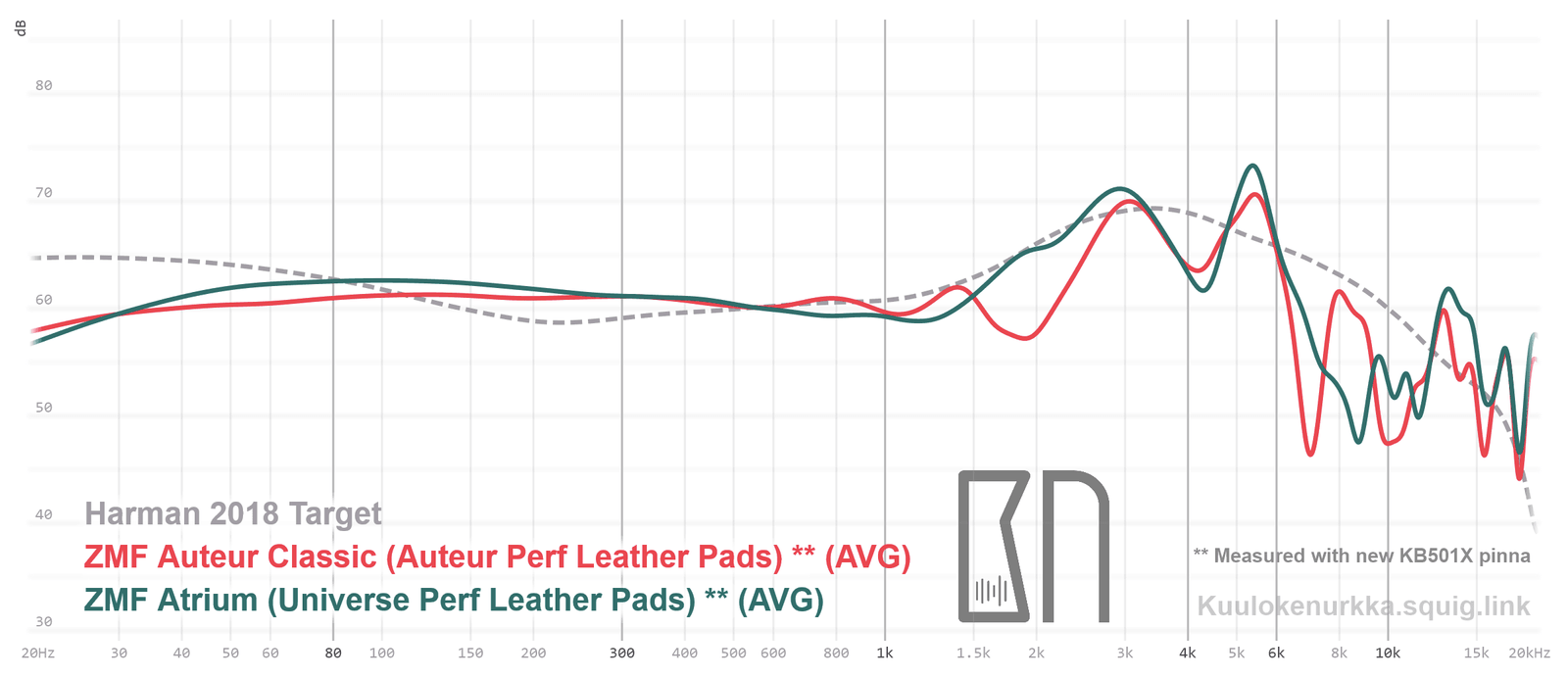
In my opinion, the Auteur Classic, with its less emphasized mid-bass and more present treble, has a more neutral overall sound than the manufacturer's Atrium. However, I find the Atrium to be a slightly more impressive and fun headphone. Its mid-frequencies have more emotion and power, whereas the Auteur presents music as lighter and airier. For me, the Atrium's more robust bass reproduction and even deeper and more authentic soundstage are improvements over the Auteur. On the other hand, the Auteur offers a more controlled and less colored reproduction for those who do not like full-bodied and robust-sounding headphones.
The ”dip” located around 2 kHz in the Auteur lightens the reproduction to such an extent that when listening to it, it is easy to focus attention on the desired frequency range. The Atrium, on the other hand, is quite mid-frequency-heavy, so for example, a vocalist automatically draws the most attention to themselves, and the treble remains further back in the overall sound. It is therefore more balanced to observe different frequency ranges when listening to the Auteur, which makes it a slightly more versatile and easily recommendable headphone for various use cases. The Atrium's full-bodied sound can be either its strength or weakness depending on the person, whereas the Auteur's more neutral presentation, in my opinion, has fewer polarizing characteristics.
Nevertheless, the Auteur could also be called a kind of mini-Atrium, as both share the same virtues, especially in the certain infinity of the soundstage edges and the naturalness of the timbre. The Auteur might even offer slightly better value for money of the two, as the Atrium costs 1000 euros more. However, in my opinion, the Atrium does everything a little better, and despite its more subdued high-frequency reproduction, it sounds more detailed and resolving. Especially the location of individual sounds and instruments becomes even clearer when listening to the Atrium. I would even argue that most people who are fond of a sound similar to the Auteur might ultimately like the Atrium even more.
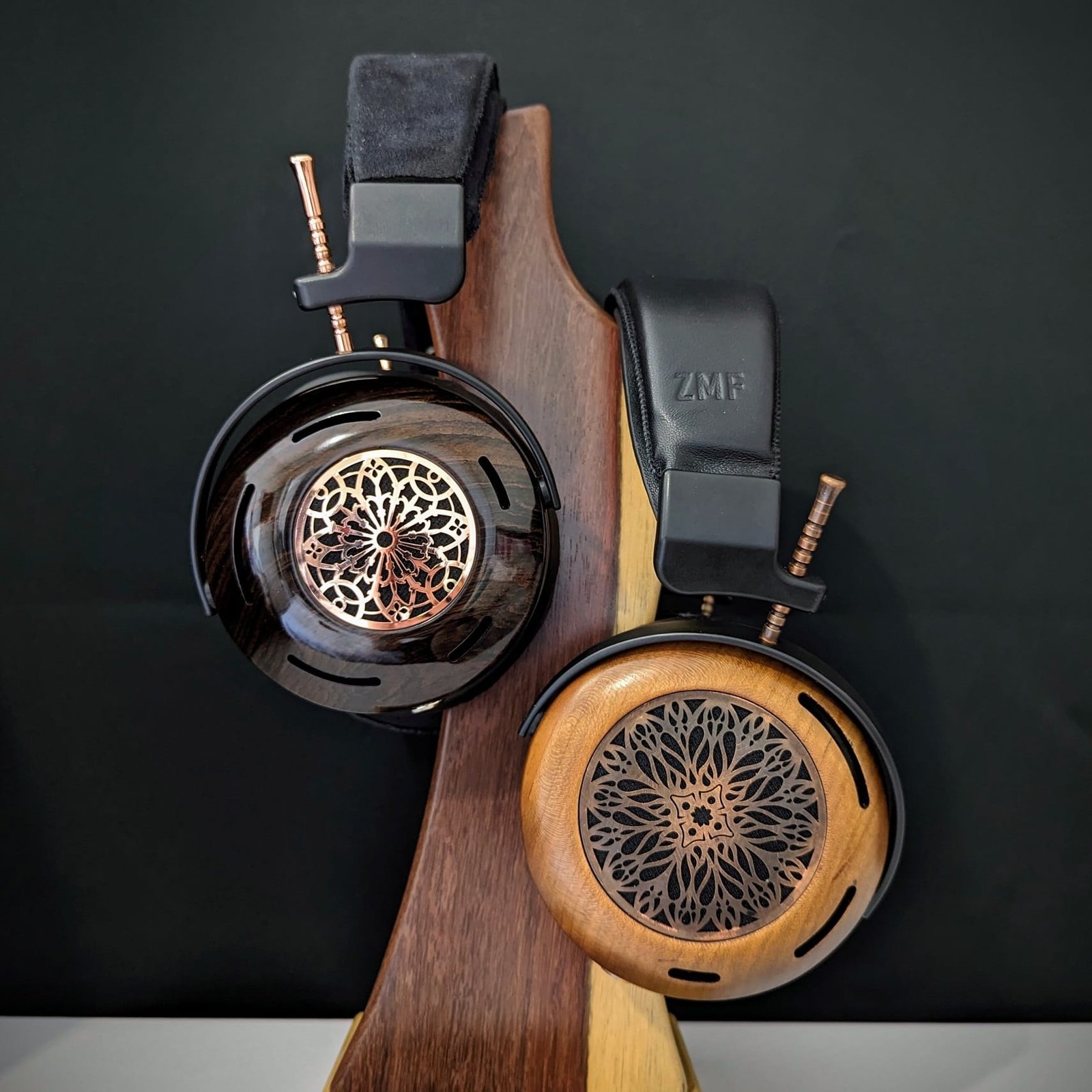
Since the Auteur itself is an expensive headphone, falling into the 1500–2000 euro price range, many who spend this much money on headphones would likely be willing to buy somewhat more expensive headphones as well. Therefore, I would recommend those interested in the Auteur to consider buying the Atrium directly, as it draws me in more strongly, at least on an emotional level and with a higher "foot-tapping factor." On the other hand, the Auteur Classic model, by many metrics, comes closer to the Atrium than the original Auteur, so logically speaking, an additional 1000 euros does not bring any world-changing improvement. Both the Auteur Classic and Atrium are pleasant headphones in their own way, which one feels like listening to for several hours straight.
How does Auteur Classic perform in its own price range?
The Auteur Classic is even more competitive against planar headphones in its price range. It offers a natural and quite neutral sound without significantly weaker sound separation. On the other hand, with current pricing, the several hundred euros cheaper Hifiman HE1000 is a more impressive headphone, especially in terms of soundstage width and the overall realism of the sound. It is, however, brighter in frequency balance, so the Auteur Classic might sound more pleasant to many. Hifiman's new Arya Organic, in turn, might be stylistically closer to the Auteur Classic if it sounds more relaxed than other Hifimans. I also haven't yet heard the Audeze MM-500 model, so the competitive situation in the 1300–2000 euro price bracket still requires some further clarification from my part. I aim to test other headphone models that have appeared in this price range as well, if possible, before drawing broader conclusions.
From more affordable headphones, I feel like mentioning the Meze Audio 109 Pro once again, as the Auteur Classic is in a certain way a similar type of headphone, just less V-shaped. The Auteur's bass is not quite as full, nor is the treble as harsh and emphasized. In the mid-frequencies of both models, however, there is a similar spaciousness and relaxedness in style, with the exception of the 109 Pro's sibilance. If the 109 Pro's treble is somehow adjusted to be more moderate, it is ultimately not a significantly worse headphone, but surprisingly comparable to the Auteur given its more affordable price. As such, however, the Auteur is clearly more balanced and pleasant to listen to for me.
Different ear cushions
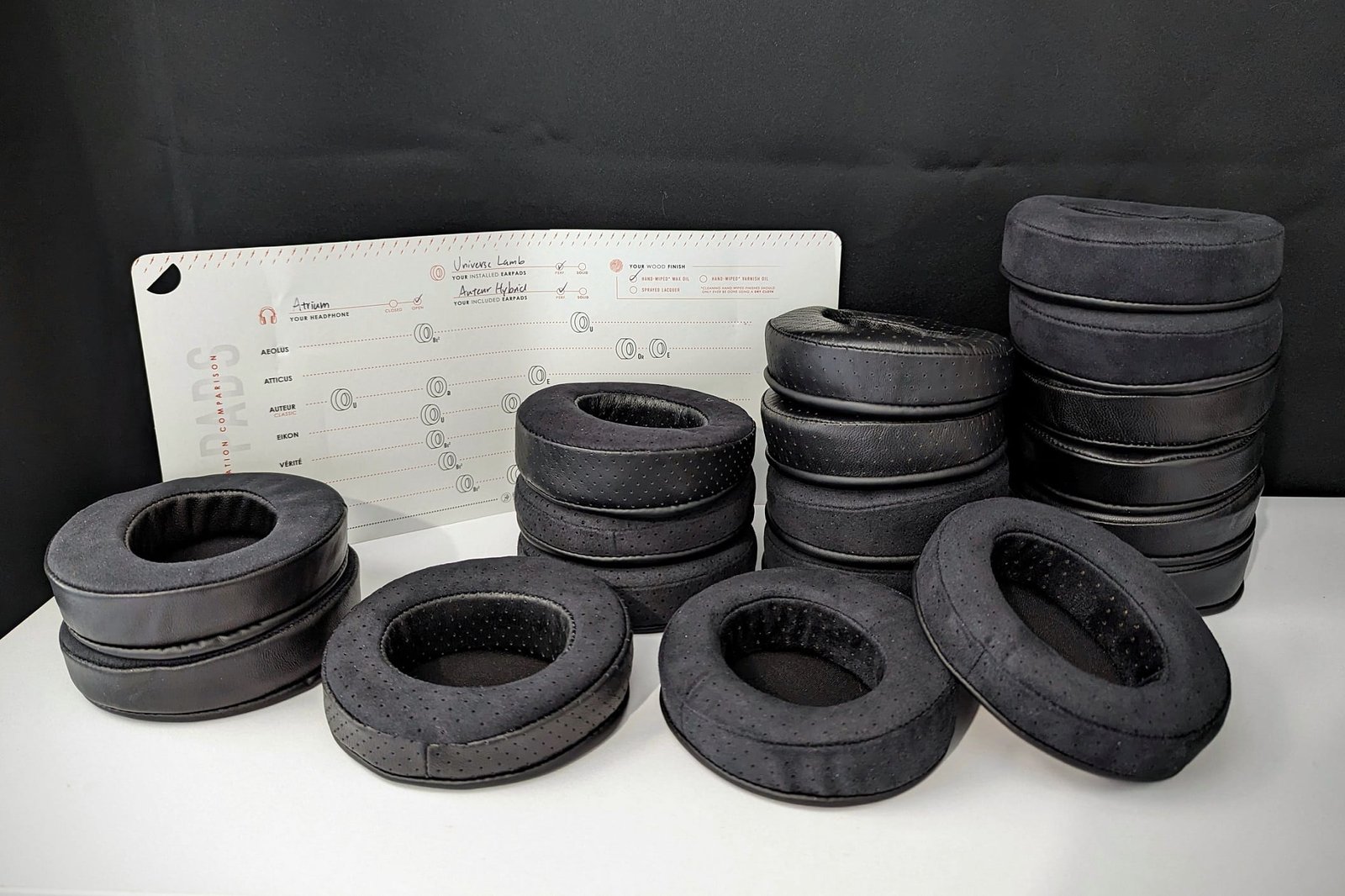
Typically for ZMF, the Auteur Classic's ear pads are easily removable and interchangeable with different types. The manufacturer has chosen optimal stock pads for each headphone model, but it also sells many different pads for those eager to experiment. There is also a rough guideline for headphones on which pad models work best with them.
I am of the opinion that both Auteur models sound best and most balanced with their leather pads, so changing them can primarily achieve a different sound. However, over the years I have accumulated a vast collection of ZMF pads, so I tried what the Auteur Classic sounds like with them. I have also performed frequency response measurements with most pads, which can also be viewed comparison tool .
Auteur Pads:
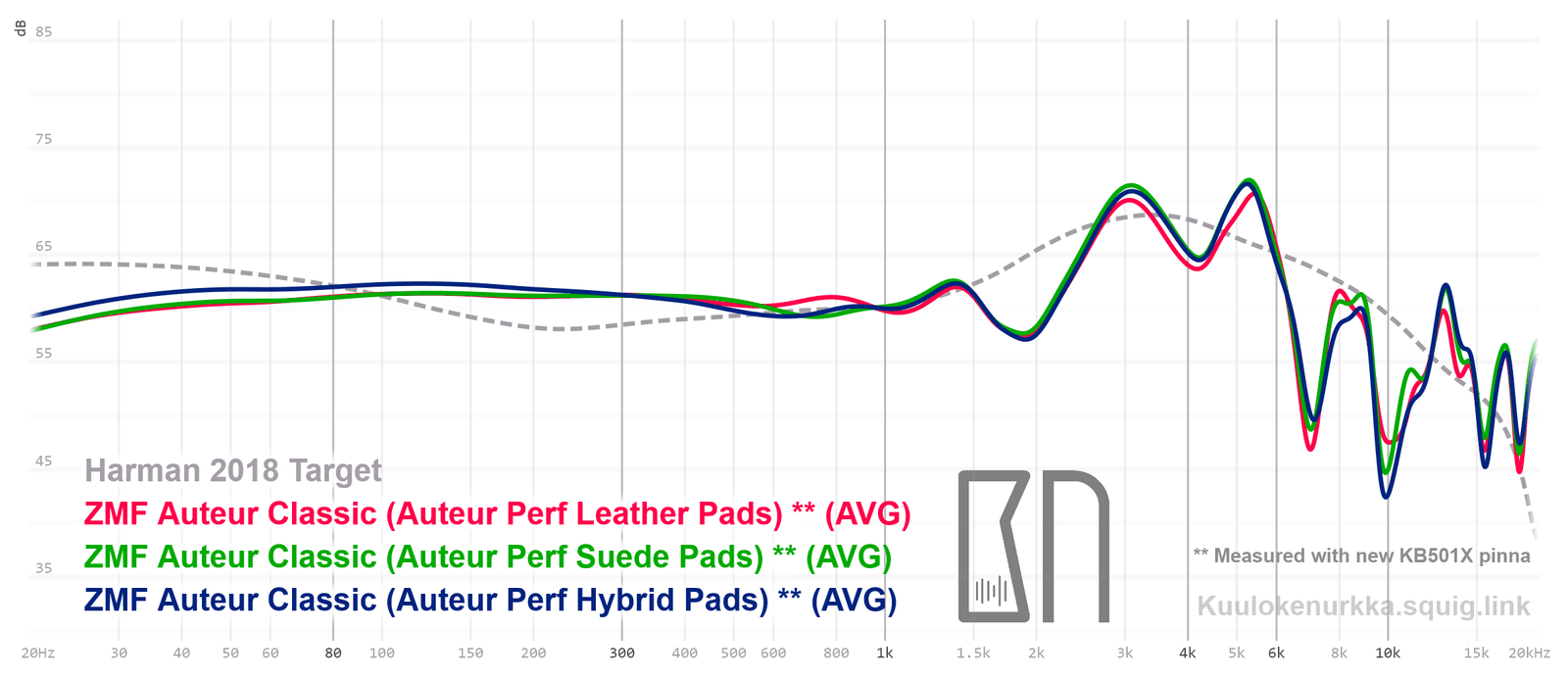
I tried the suede version of the stock pads and a hybrid model, which has leather edges and a suede part facing the face. The three Auteur pads sound very similar in main characteristics, with the difference that the suede version makes the sound slightly brighter and more rounded, while with the hybrid pads, there is a bit more bass and the treble is both calmer and airier. Pads containing suede material also slightly boost the 3–5 kHz frequency range according to frequency response measurements, so the sound may occasionally feel more aggressive compared to the leather stock pads.
I don't particularly care for suede pads, but the hybrid pads pleasantly make the sound a bit fuller and more sensitive in the high frequencies. The soundstage also feels slightly more open compared to the stock pads. The hybrid version is also a bit more comfortable to the touch compared to the all-leather stock pads. I have indeed used hybrid pads quite regularly alongside the stock pads.
Eikon Pads:
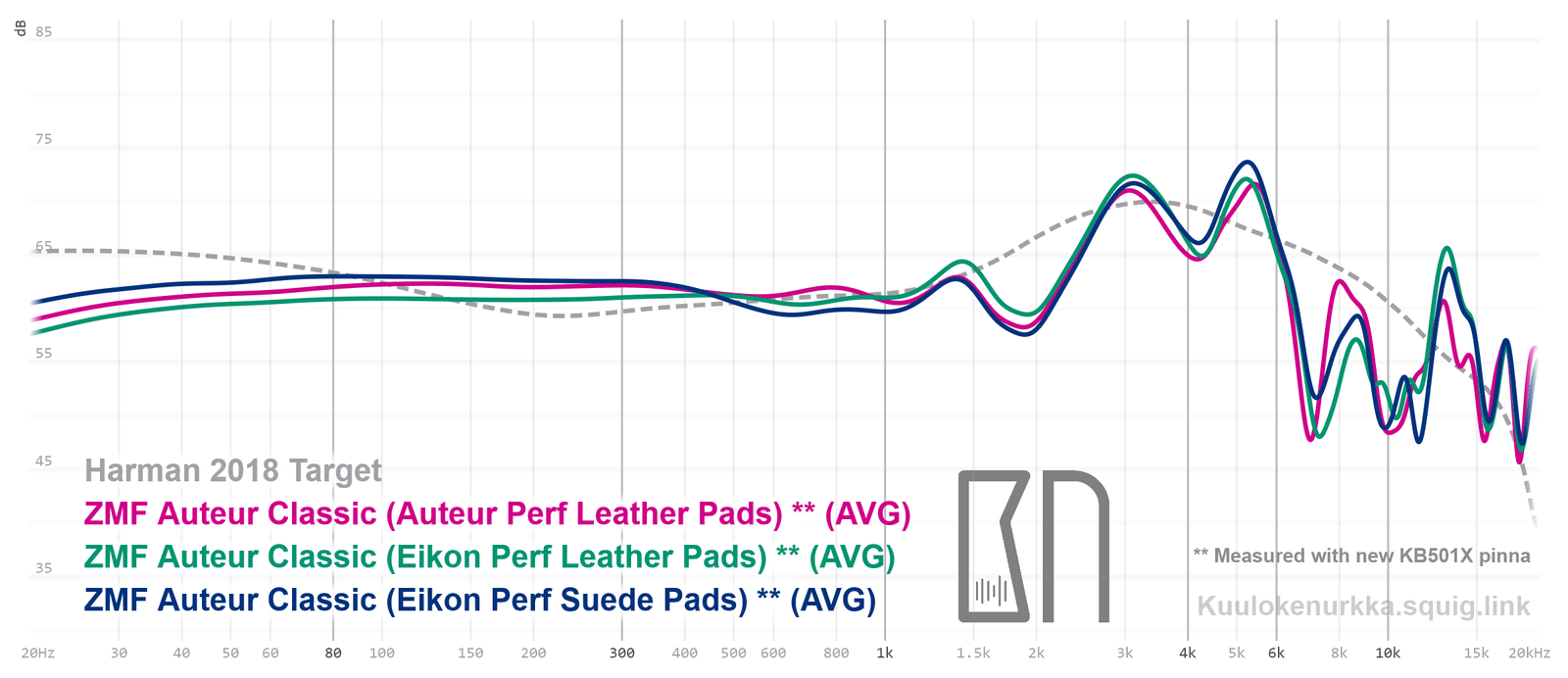
Compared to the Auteur stock pads, the Eikon pads, which are slightly thicker at the back and have a smaller ear opening, change the sound in almost all frequency ranges. The leather Eikon pads make the Auteur Classic even more mid-frequency-focused, as the amount of bass and treble decreases. At the same time, more energy is added to the mid-frequencies at both 1–2 kHz and 3–4 kHz. Since even the highest treble is boosted, I find the end result somewhat unbalanced. The Eikon leather pads are not very memorable compared to the Auteur stock pads.
Eikon suede pads, on the other hand, are quite fun because they make the bass the fullest. Energy is removed from the mid-frequencies between 500–1000 Hz, and more is added to the upper mid-frequencies. As a result, the Auteur Classic sounds more V-shaped and partly veiled, especially concerning vocal performances. The treble is also quite heavy and splashy in places due to its unevenness. Something about the overall package is still captivating, as I find the headphones pleasant to listen to with these pads. Many others also seem to like the pads, so they might be worth trying.
Universe Pads:

In my opinion, Universe pads are the least suitable for the Auteur Classic, so I haven't felt like listening to them for long. The leather pads make the headphones sound rougher and more aggressive without any clear benefits compared to the stock pads. On the other hand, if someone's hearing craves more energy in the upper mid-frequencies, Universe leather pads offer just that. Universe suede pads additionally reduce the amount of bass by about 3 decibels, making the upper mid-frequencies and treble even more prominent. With these pads, I immediately started to wince while listening to the Auteur Classic, so others might also want to avoid them.
However, regarding Universe pads, I want to mention that their leather version transforms the original Auteur into a more neutral and clearer sound, i.e., more like the Classic model. With Universe suede pads, the original model, in turn, resembles Sennheiser's HD 600 model, being closer to Harman's target curve in terms of upper mid-frequency energy level than the Classic model. The tuning of the original model is therefore a bit more versatile for modification with pads, as there is more leeway in the upper mid-frequencies. The Auteur Classic, on the other hand, easily becomes too aggressive if the pads increase its energy level.
I haven't noticed anyone mentioning that the manufacturer's closed Eikon-model sounds surprisingly similar to the Auteur Classic. With suitable pad choices, the Auteur Classic, Auteur, and Eikon are actually quite close to each other in terms of frequency response. If someone needs closed-back headphones and prefers a slightly stronger bass reproduction and a more energetic sound, the Eikon, when bought used, is a good alternative to the Auteur headphones.

A couple of words about confirmation
The Auteur Classic's 300-ohm impedance makes it a versatile headphone for listening with various amplifiers. The manufacturer's stated 96 dB/mW is not among the highest sensitivities, but sufficient volume is still easy to achieve even with relatively modest equipment. In my experience, the Auteur Classic performs and sounds good with any device, so one can choose according to their own taste.
Transistor amplifiers implemented with low output impedance make high-impedance headphones sound controlled and, in a certain way, tight. In my opinion, this is not generally a bad thing, but for some tastes, headphones like the Auteur Classic might sound better with an amplifier that controls the driver less. A higher output impedance of the device or switching to a tube amplifier clearly relaxes the sound. Many recommend a tube amplifier specifically for ZMF headphones, which, however, may also be partly due to the fact that the company's customer base is wary of transistor devices.
I myself have listened to the Auteur Classic with the two setups I mentioned at the beginning of the Sound Quality section. The Bifrost 2 DAC and Cayin IHA-6 transistor amplifier are basically my favorites because the Auteur sounds dynamic, precise, and spacious through the balanced connector. I even, somewhat surprisingly, don't feel the need to use the IHA-6's unbalanced connectors, which would relax and soften the sound due to their higher output impedance.
My second setup included the SMSL VMV D1SE DAC and the Cayin HA-3A tube amplifier. With it, I experience the reproduction as slightly smoother and more emotionally engaging in the mid-frequencies compared to the IHA-6. This is precisely what I expect from a tube device in principle. The Auteur Classic does not sound as precise with the HA-3A, but I could listen to it contentedly for several hours. However, Zenith-6V6 tubes manufactured in the 1940s made the upper mid-frequencies a bit too energetic, so the calmer Electro Harmonix tubes that came with the HA-3A worked better with the Auteur Classic, at least with the standard leather pads.

I also tried the headphones with the Tor Audio Roger amplifier, which makes the low frequencies pleasantly robust and warm. This made the Auteur sound more like the Atrium, yet it was quite soft-sounding for any more critical listening. The Auteur Classic's balanced default sound is a good basis for fine-tuning the reproduction, so with different tube devices and by changing ear pads, the headphones would certainly suit many tastes.
This time I haven't listened to the headphones more with my more affordable amplifiers, but I tested that, for example, Qudelix 5K and iFi Go Link reproduce the Auteur Classic easily without me noticing anything disturbing in the sound. With better equipment, the listening experience is, on the other hand, more impressive.
Summary
In my opinion, the Auteur Classic is an excellent headphone, for which I can practically find nothing to complain about, apart from its high price and possibly also its high weight. It may not necessarily be the most fun headphone in terms of bass reproduction or possess as rich and emotionally engaging mid-frequencies as the Sennheiser HD 650 or ZMF Atrium. The reproduction is also not quite as spacious, resolving, or transparent as in brighter-sounding planar headphones. However, this does not matter, because the Auteur Classic is a balanced and truly successful compromise of all these features. This makes it a very versatile and, in its own way, neutral headphone. Its appearance also clearly stands out from the crowd. In my opinion, the headphones clearly have the makings of a classic, so their name is not entirely silly either.
Although the Auteur became a better headphone model with the update, the Classic model still does not diminish my appreciation for the original Auteur. It is still a truly pleasant headphone that would not be necessary to upgrade to a new model. Despite their differences, the two models are also similar enough that owning both ultimately doesn't make a huge amount of sense – although headphone hobbies certainly involve more than just rational decisions. The Auteur Classic is, in my view, primarily aimed at those who have not previously owned an Auteur or ZMF headphones in general. For most, a significantly more affordable model would still suffice as general-purpose headphones, but the Auteur is a step better, and its natural and balanced sound cannot help but be admired amidst all the more colored headphone models.
Pros and cons:
+ Truly balanced and natural sound
+ Comprehensive improvement over the original Auteur model
+ Good resolution and effective soundstage
+ Robust bass response for an open-back headphone model
+ Unique appearance and craftsmanship
+ Good wearing comfort in terms of construction
+ High impedance offers options for equipment choices
+ Sounds good even with a modest amplifier
+ Lifetime driver warranty for the first owner.
+/- The price has dropped by 100 dollars, but only one set of earpads and one cable are included
– Strictly speaking, the sound is not completely neutral due to the more subdued reproduction around 2 kHz
– High weight can cause problems for some
– High price
 EN
EN  FI
FI