Author: Sword of Damocles
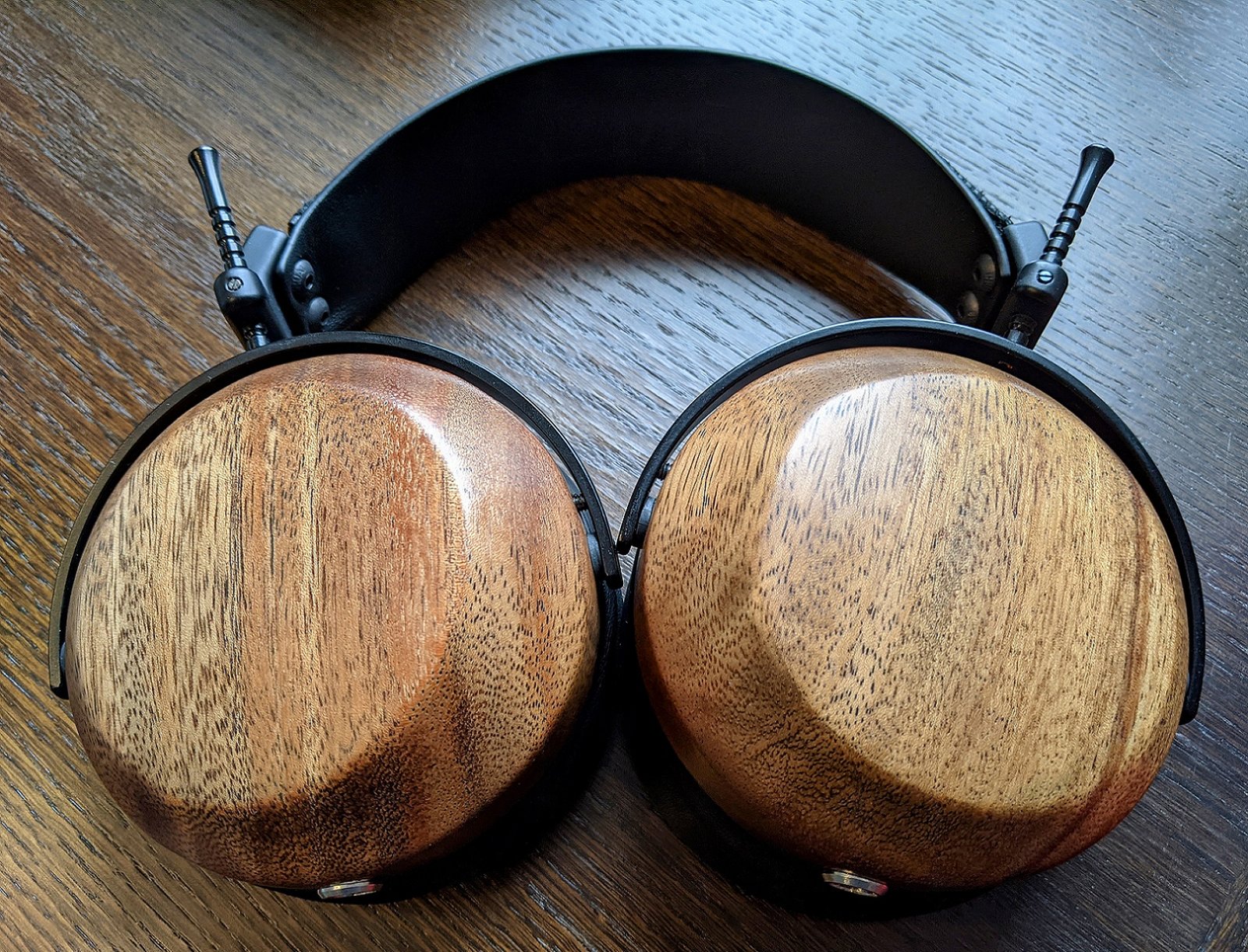
Table of Contents:
Information:
- Year of publication: 2019
- Country of origin: USA
- Price: 2700–3200 € depending on wood type
- Dynamic driver: PEN + Vapor deposed Beryllium
- Impedance: 300 ohm
- Sensitivity: 99 dB/mW
- Weight: 455 g without cable (my pair 471 g)
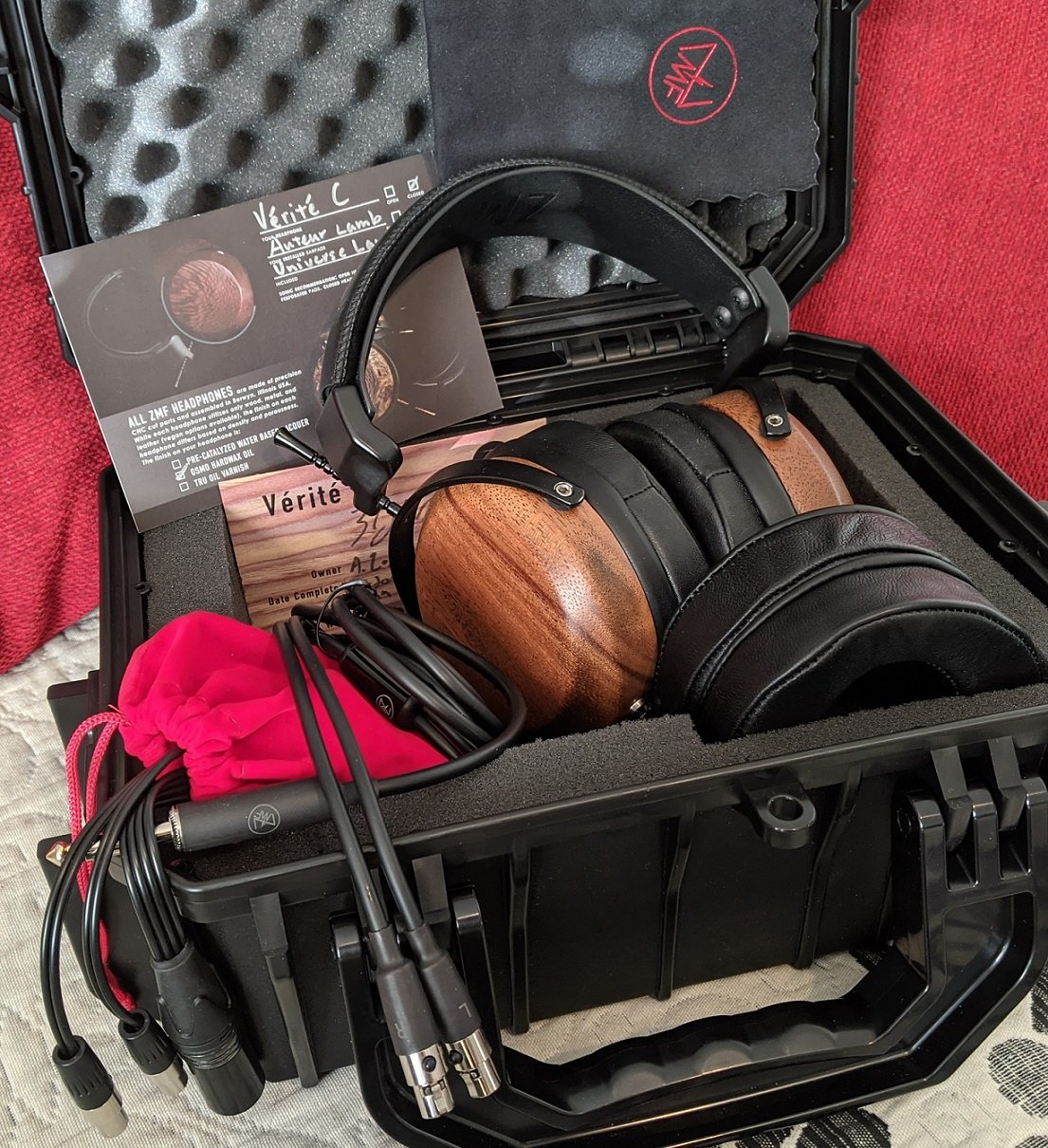
- Included: Seahorse case, 2 pairs of pads (the second pair freely selectable), 2 cables (basic cable with 6.35 mm connector and a 100 € OFC cable with a freely selectable connector)
- Warranty: lifetime driver warranty
Review sample: Self-purchased product
It's time to write about ZMF's most expensive closed-back headphone model, the Verite C (Closed), which, while listening, this review would never have been completed. Now that I've managed to keep the headphones off my head for a moment, it's probably time to start dissecting where such a positive problem arises from.
First, however, a buying tip for everyone considering ZMF headphones: the manufacturer always sells B-stock models at a reduced price during the ZMF November campaign in November-December, as well as slightly more expensive special models with more exotic wood types or special finishes. The Verite C normally costs around 2700 euros at its cheapest, but I bought my B-stock headphones, which were in almost perfect condition, for 2200 euros in December 2020.
Background
ZMF headphones aim for a relaxed and enjoyable listening experience. However, the manufacturer's headphone models costing 1200–1800 euros do not truly excel in detail, unlike the one released in September 2019 Verite Closed (as well as the Verite Open released in 2018), which competes more evenly against the best headphones on the market – this is also reflected in the headphones' starting price of 2700 euros.
A layer of beryllium has been sprayed onto Verite's dynamic PEN drivers, forming 20 percent of the diaphragm's thickness. This rarer material in headphones makes the driver stiff and light, and because it forms only part of the diaphragm, the reproduction remains natural-sounding. For comparison, diaphragms made entirely of beryllium are used in Focal Utopia and Stellia, the latter of which is a direct competitor to the Verite C in terms of price. For this review, I conveniently had the opportunity to compare my own Verite and the Stellia, which I borrowed from another writer on the site, Roderick.
Structure
The Verite C is the manufacturer's most closed headphone model, as the cups have only single air vents. With leather ear pads, the headphones' sound isolation is excellent, and they can be listened to very loudly without the person sitting next to them hearing almost anything.
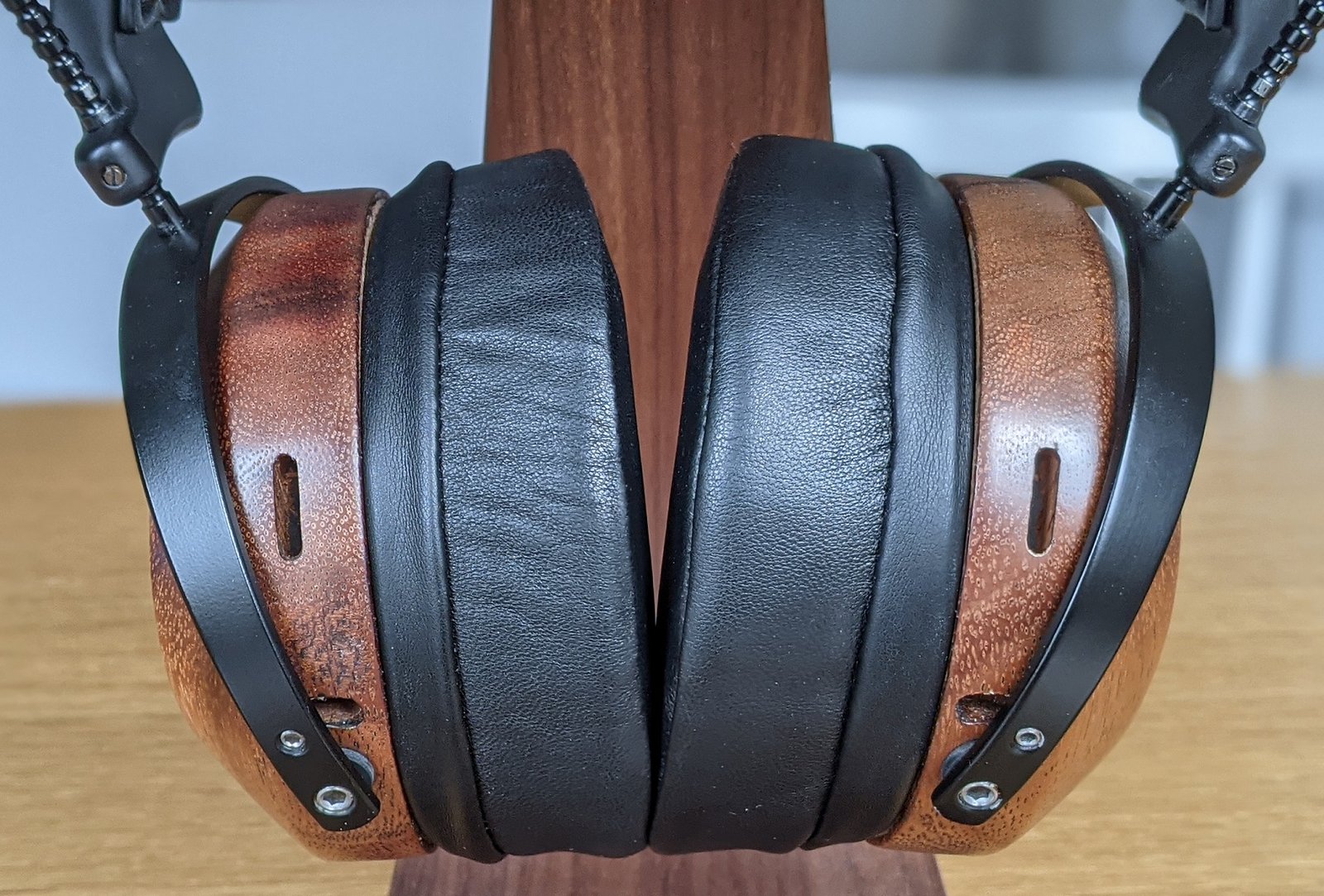
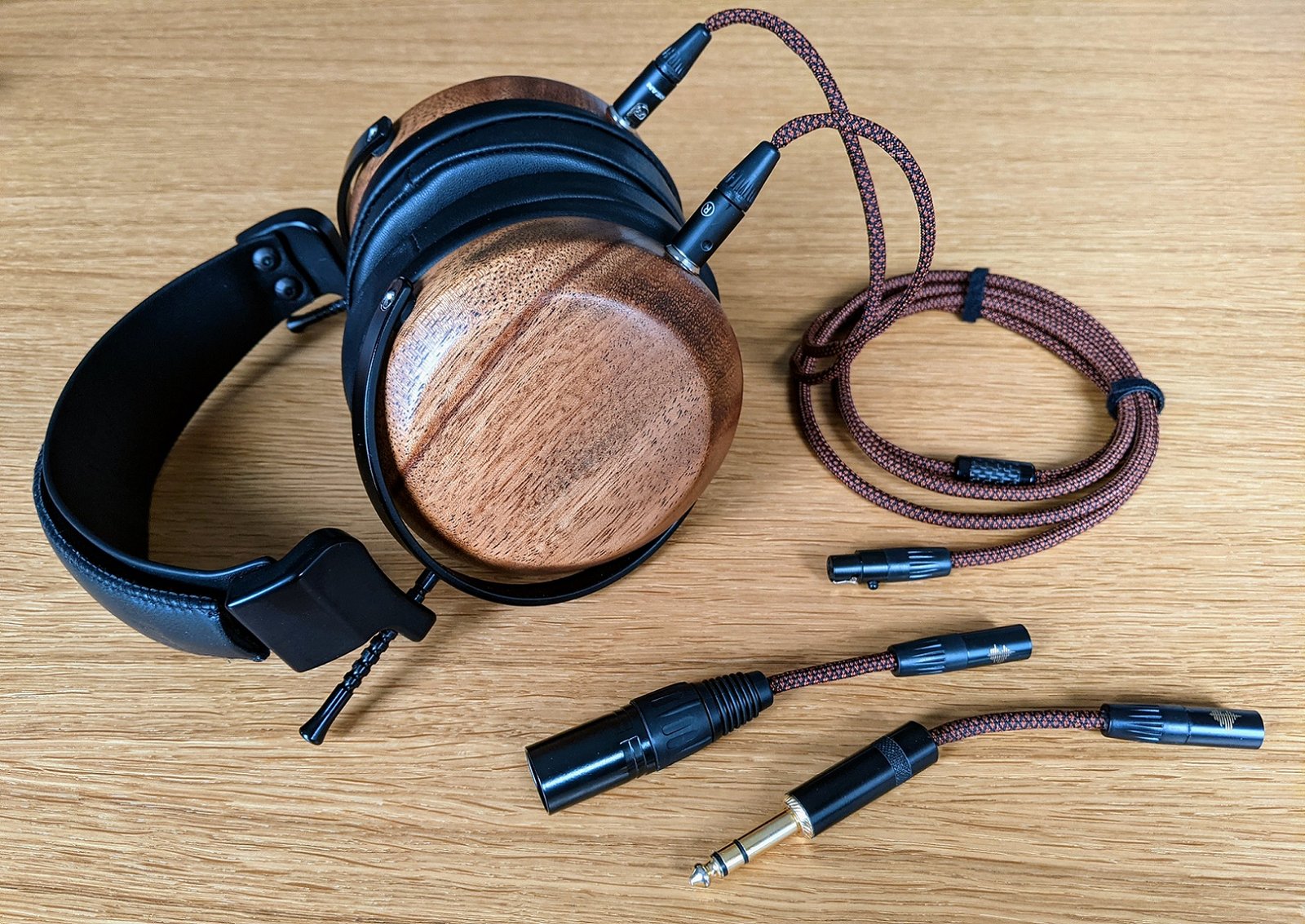
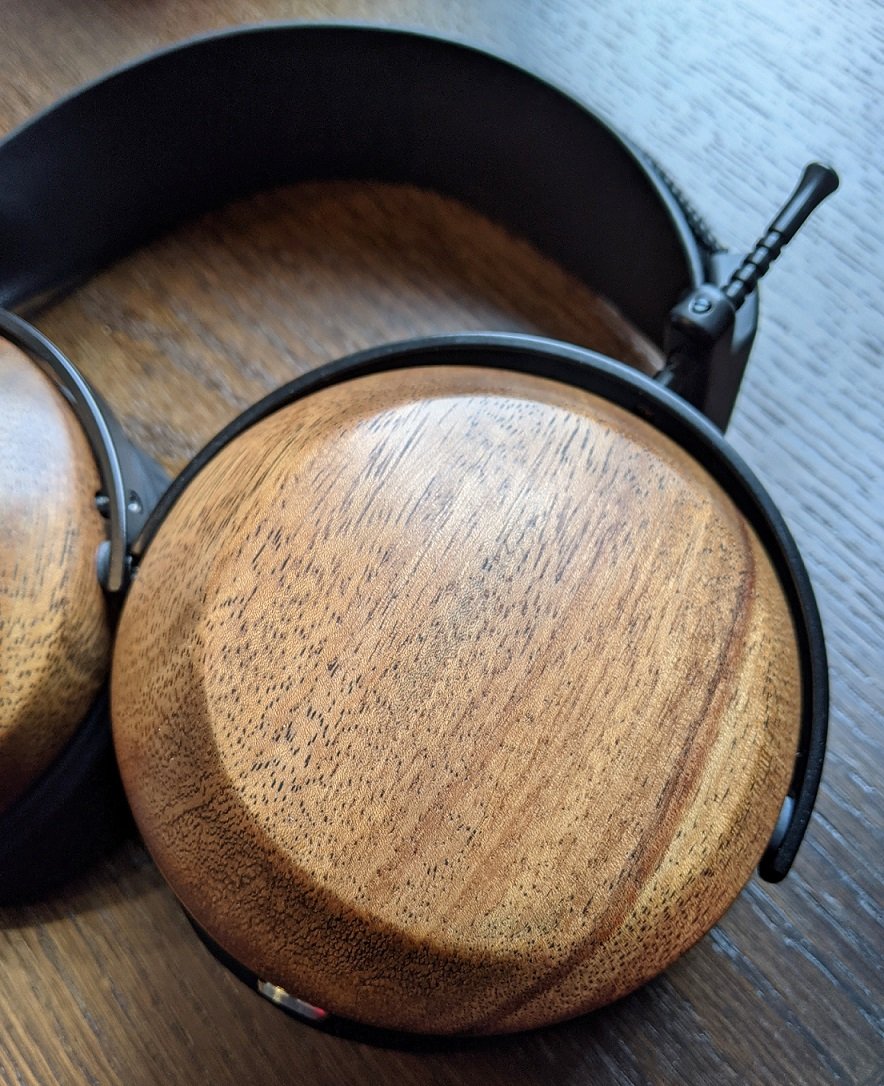
My headphones are made of soft monkeypod wood, which was ZMF's standard wood type for Verite C headphones until the summer of 2021. Since the information for the B-stock headphones I bought stated ”contains wood processing marks/cracks,” I was a bit worried about the appearance of the cups beforehand. However, the result was almost perfect – in my opinion, monkeypod is beautifully colored, and the waxed surface nicely emphasizes the porous structure of the wood. The cups look very neat because they have a uniform smooth surface.
The Verite C uses ZMF's newer headband structure, which features Audeze-style locking pins for height adjustment. Unlike the manufacturer's cheaper models, the Verite's headband is made of magnesium by default, which is lighter than aluminum. The material choice also has its weaknesses, as the black painted parts wear more easily from bumps compared to anodized aluminum. The decorative and padding parts of the headband are sheepskin, but it would have been possible to choose fabric material instead.
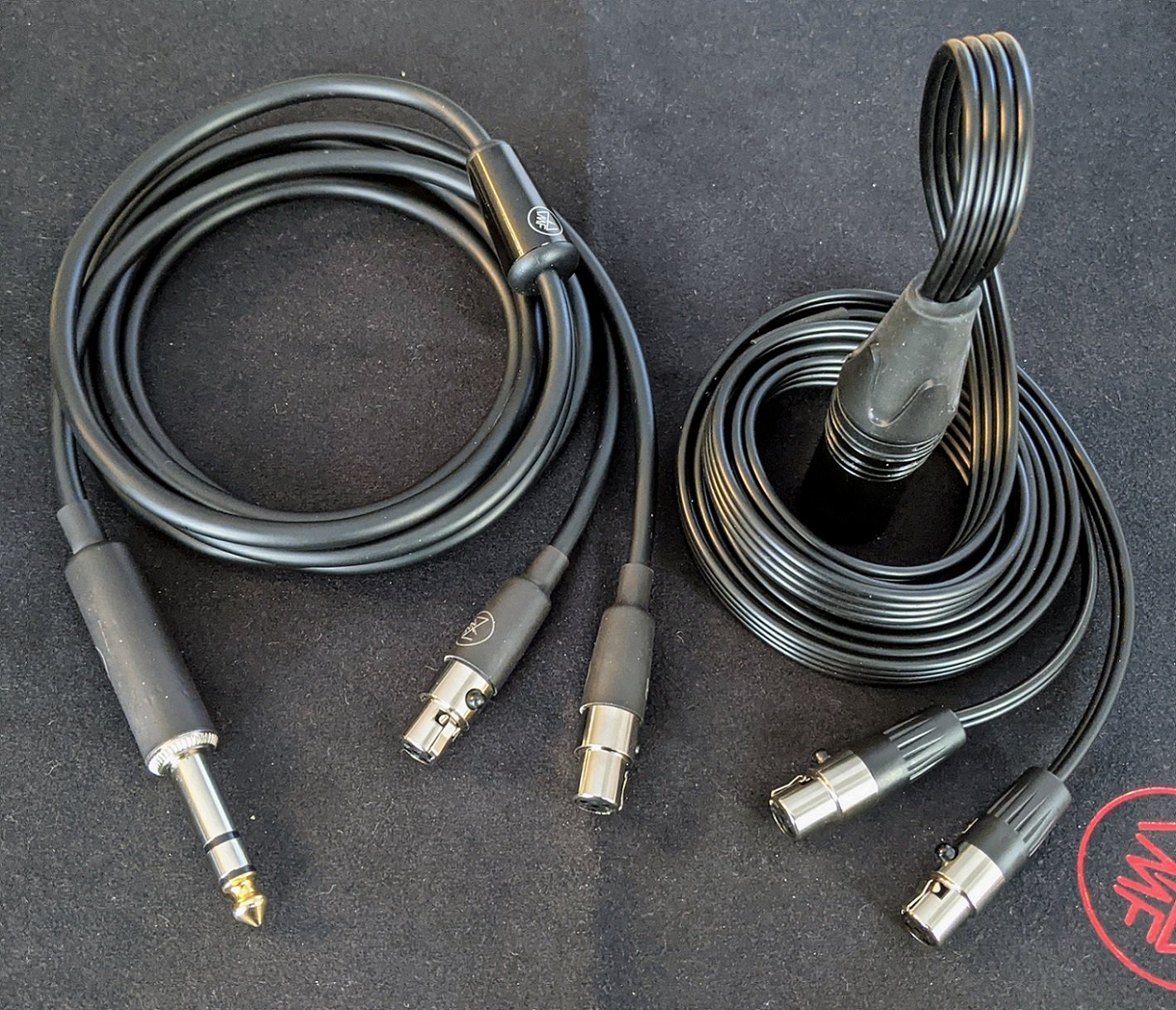
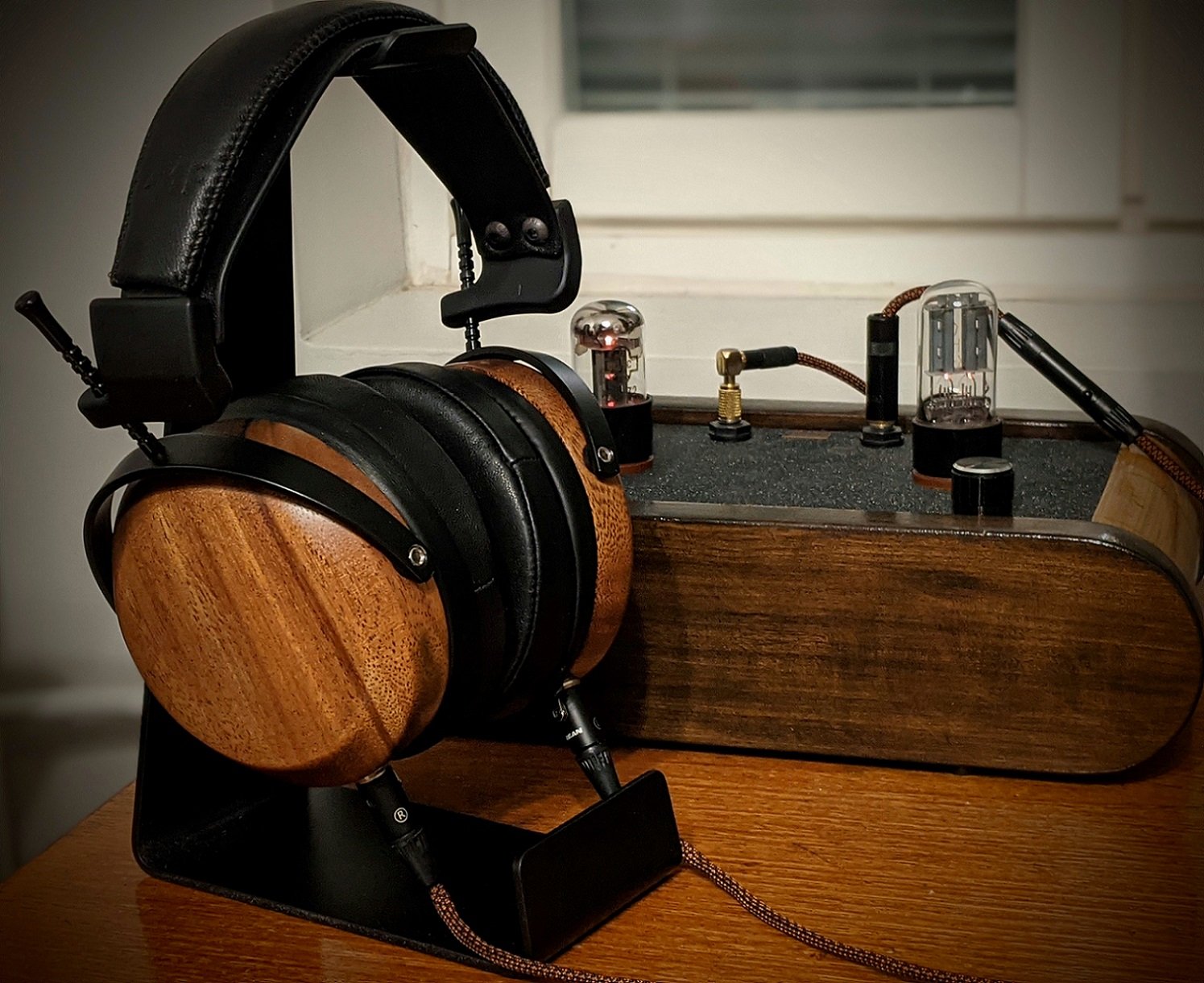
Verite comes with two cables by default: a flat and wide basic cable (nowadays a better fabric-covered cable) and a thick plastic cable with ZMF branding, also sold separately under the name OFC upgrade cable (price approx. 100 €). My basic cable has a balanced XLR connector and the OFC cable has a 6.35 mm connector – the cables attach to the headphones in the usual way with mini-XLR connectors. Both cables are somewhat poor in usability because they are heavy and stiff. Especially the power-cable-like OFC cable even feels like a downgrade compared to the basic cable. For such expensive headphones, it is definitely worth getting a more aesthetically pleasing cable!
Comfort
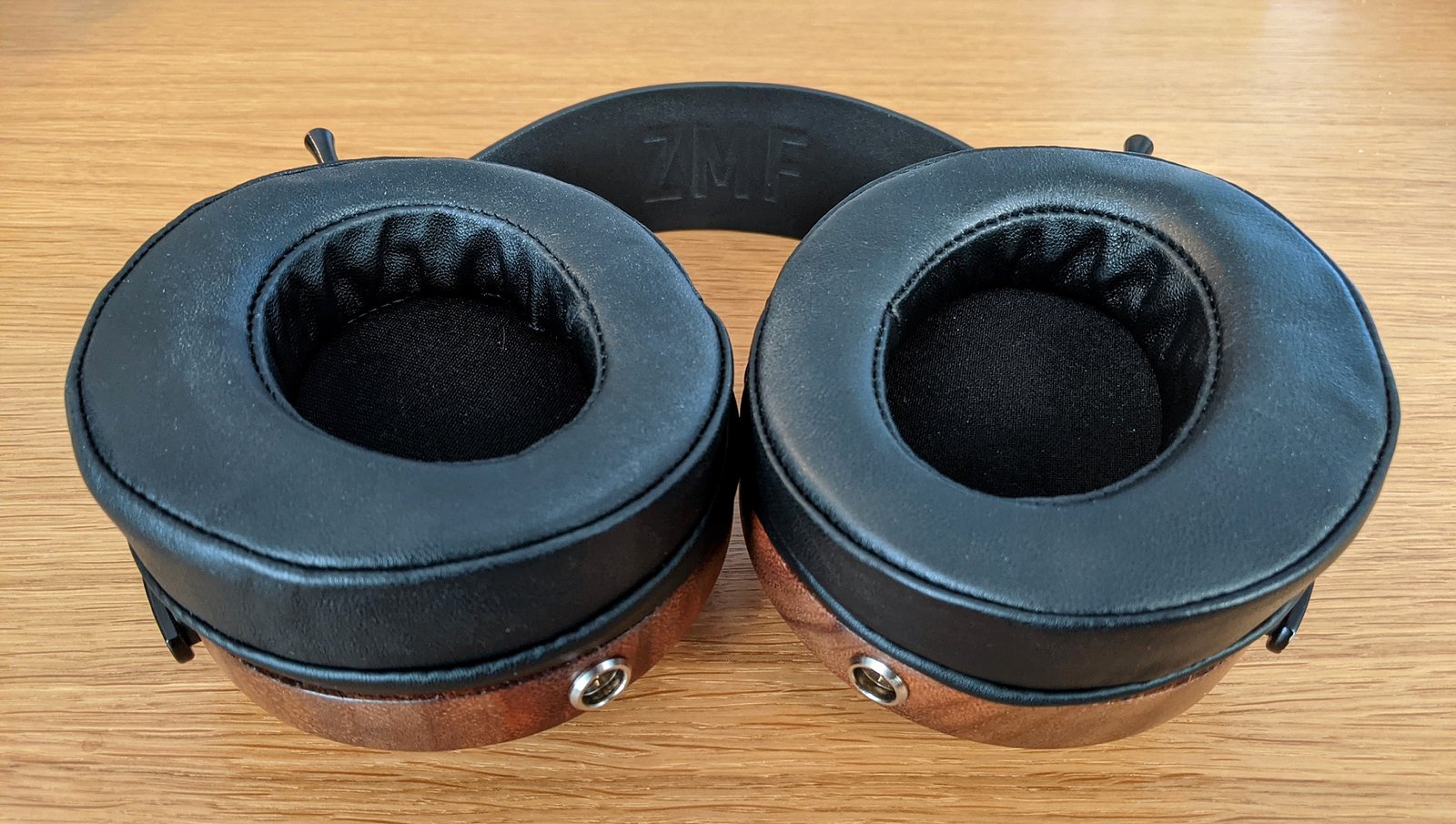
The headphones come with two sets of pads: Auteur lambskin pads and another set of optional pads (I chose Universe leather pads, which the manufacturer also recommends). I have rather large ears, which slightly touch the driver covers with the Auteur pads. These pads have a large ear opening, so the padded part sits far from the ears and does not optimally support the headphones conforming to the shape of the face.
Both pads are thick and contain rather firm foam, which in my experience withstands use well. I initially had problems with the comfort of the Verite, as the clamping force of the new headband was too great, especially above the ears and at the nape of the neck. However, by bending the headband, I got the comfort more than right, and now the headphones disappear on my head for several hours. For such large headphones, a weight of 471 grams is reasonable – in hand, the Verite C feels downright light compared to the 100 g heavier ZMF Atticus or the 200 g heavier Audeze headphones.
In summary, the Verite C has the potential to be very comfortable, but depending on the shape of the head, the owner may have to make small adjustments to achieve comfort.
Sound quality
The Verite C balances between detail and musical enjoyment in its sound. The reproduction is not entirely neutral or even realistic, but rather slightly colored in a fun way and more lively than usual – yet the style is balanced enough to suit a wide range of music genres. The headphones are also versatile in the sense that their sound can be significantly modified with ear pad and equipment choices.
My description of the headphones' sound quality is based on the following setup:
- Ear pads: Auteur leather pads (headphones are tuned for these pads)
- DAC: Schiit Bifrost 2
- Amplifier: RebelAmp Class A solid state (output impedance 0.1 ohm, rather neutral and clear in style with a slight mid-bass emphasis + wider soundstage than usual)
- Cable: Hart Audio Cables copper cable
The Verite C is recognizable as ZMF headphones due to its slightly emphasized low frequencies, robust mid-range, and easily listenable treble – the naturalness and ”music first” principle familiar from ZMF headphones are also strongly present. However, thanks to the more capable driver, the detail and speed of reproduction are significantly better than, for example, the Atticus (link to review) and Auteur (link to review) at a significantly better level.
In the reproduction of the Verite C, the most attention is drawn to the bass, lower mid-frequencies, and the presence region (5.5 kHz). The sound of the headphones is powerful and warm, as well as quite intense and present. The Verite C keeps its listener captivated at all times, making it very difficult to concentrate on anything else while listening, such as writing a headphone review. Compared to the relaxed ZMF models, the style is completely different.
The headphones were initially a bit difficult for me to get used to, as I had to learn to listen to them actively. After this learning phase, it has been difficult to let go of the headphones – I often find myself listening to them for many hours straight, even though I only intended to listen to a few songs. Whenever I plan to stop listening, I feel like listening to just one more song. The headphones are sometimes even annoyingly addictive!
Resolution, dynamics, speed:
In my opinion, the Verite C would be easy to recommend as ”endgame headphones” for the average headphone enthusiast, as they perform well and, above all, consistently in every technical aspect when subjectively evaluated – it's difficult to find any real weaknesses. The headphones separate details and sound staging very precisely; macrodynamics are at an excellent level, so the low frequencies hit downright furiously; and the reproduction and transients are fast (almost at the level of planar headphones).
Thanks to excellent resolution and fast reproduction, the sound of the headphones remains clear at all times, even though the tuning is warmer and darker than usual for such detailed headphones. Because the tuning choices have taken a slight step back from maximum detail, the Verite C does not push the very smallest details as much to the forefront as brighter headphones.
Audio description:
The most interesting feature of the Verite C is their wide and deep soundstage, which gets a pleasant, controlled resonance and echo from the wooden cups. Listening to the headphones feels a bit like there's a live gig going on inside them. Many call the Verite C's soundstage 3D-like or multi-dimensional. The spatial characteristics of the headphones are by default such that they are usually only achieved with tube amplifiers. This makes listening to the headphones really fun, but it can scare off those aiming for neutral reproduction.
The Verite C places the listener in the middle of the music, however, with plenty of space left in every direction. Listening to the headphones feels as if the sound floats largely all around the head. Some sounds are heard in a 3D-like manner in different places than usual, as if they were traveling inside the cups. The reproduction still remains controlled and clear at all times, so these resonances have been excellently integrated into the overall sound. In addition to all this, the Verite C sounds only a little like a closed-back headphone in the traditional sense.
Bass:
The low frequencies of the Verite C are among the best I have ever heard – they combine planar-like speed with the heavy, physical impact offered by a dynamic driver. The headphones manage to dig out details from the low frequencies that I haven't heard with other headphones. In a ZMF-like manner, the Verite's mid-bass has a slight emphasis, which further strengthens drum hits and makes following bass lines easy and fun. Since this emphasis is only in the order of 2–3dB, and the Verite's reproduction is fast and controlled, the low frequencies do not warm up the sound as much as, for example, in the Atticus model. The Verite C's low frequencies also extend very well to the lowest frequencies, so electronic music sounds excellent.
Mid-frequencies:
The mid-frequencies of the headphones have both good aspects and some minor criticisms regarding the tuning. The lower mid-frequencies are quite warm, which suits my taste almost perfectly. Instruments and vocal performances gain a pleasantly full body, which, for example, adds credibility to acoustic music.
The upper mid-frequencies, on the other hand, are simultaneously calm and very present in style. In the Verite C, the frequency range between 3–4 kHz plays quieter in a dip-like manner, calming the reproduction. This area is followed by a somewhat narrow peak in the presence region (5.5 kHz), which intensifies the focus on details in the reproduction and keeps the listener's attention level high at all times. Emphasizing this frequency range works well for the overall sound, but sometimes makes listening to some songs and albums a bit fatiguing, especially with brighter listening equipment.
This kind of tuning differs from other ZMF models, and critically evaluated, I consider the smoother upper mid-frequencies of the Atticus and Auteur to be slightly better in terms of tuning. However, after getting used to the Verite C, I have learned to appreciate their original, simultaneously easy-to-listen-to and intense mid-frequency tuning. The timbre of the beryllium-containing driver has been kept natural.
With the Verite C, the vocalist is reproduced slightly in the background due to the calm upper mid-frequencies – in this respect, the headphones could be described as somewhat V-shaped, especially with Auteur leather pads. Vocal performances are still one of the strengths of the headphones, as they are reproduced with great detail and are easy to focus on. There is also no sibilance, i.e., annoyingly hissing s and t sounds, in the sound. If necessary, the vocalist can be brought more to the foreground with, for example, Auteur hybrid and Universe pads.
Overall, despite their original style, the Verite C's mid-frequencies are successful, but not entirely optimal in my opinion. At times, the headphones convey a feeling that their eagerness and capability are held back a bit too much to avoid listening fatigue – for example, guitar solos remain somewhat subdued in terms of their bite for my taste, and even drum cymbal hits are not the sharpest. Part of this is also explained by the treble tuning.
Treble:
For a detailed headphone, the Verite C has a dark treble from the 5.5 kHz frequency range onwards. The treble is tuned to be easy to listen to, and it remains somewhat in the background, especially with Auteur pads. Thanks to their resolution, the headphones bring out high-frequency details excellently, but because the treble is reproduced at a relatively moderate volume, details do not attract as much attention as with brighter headphones. However, the very highest frequencies are reproduced audibly enough, so for example, drum cymbals have a pleasant amount of airiness despite their softer impact sounds.
Compared to many other high-end headphones, however, the Verite's treble with stock pads may not necessarily please those accustomed to brighter headphones and easier perception of details reproduced at high frequencies. If necessary, this can be partially remedied by replacing the stock pads with, for example, Auteur hybrid pads.
Earpad comparison
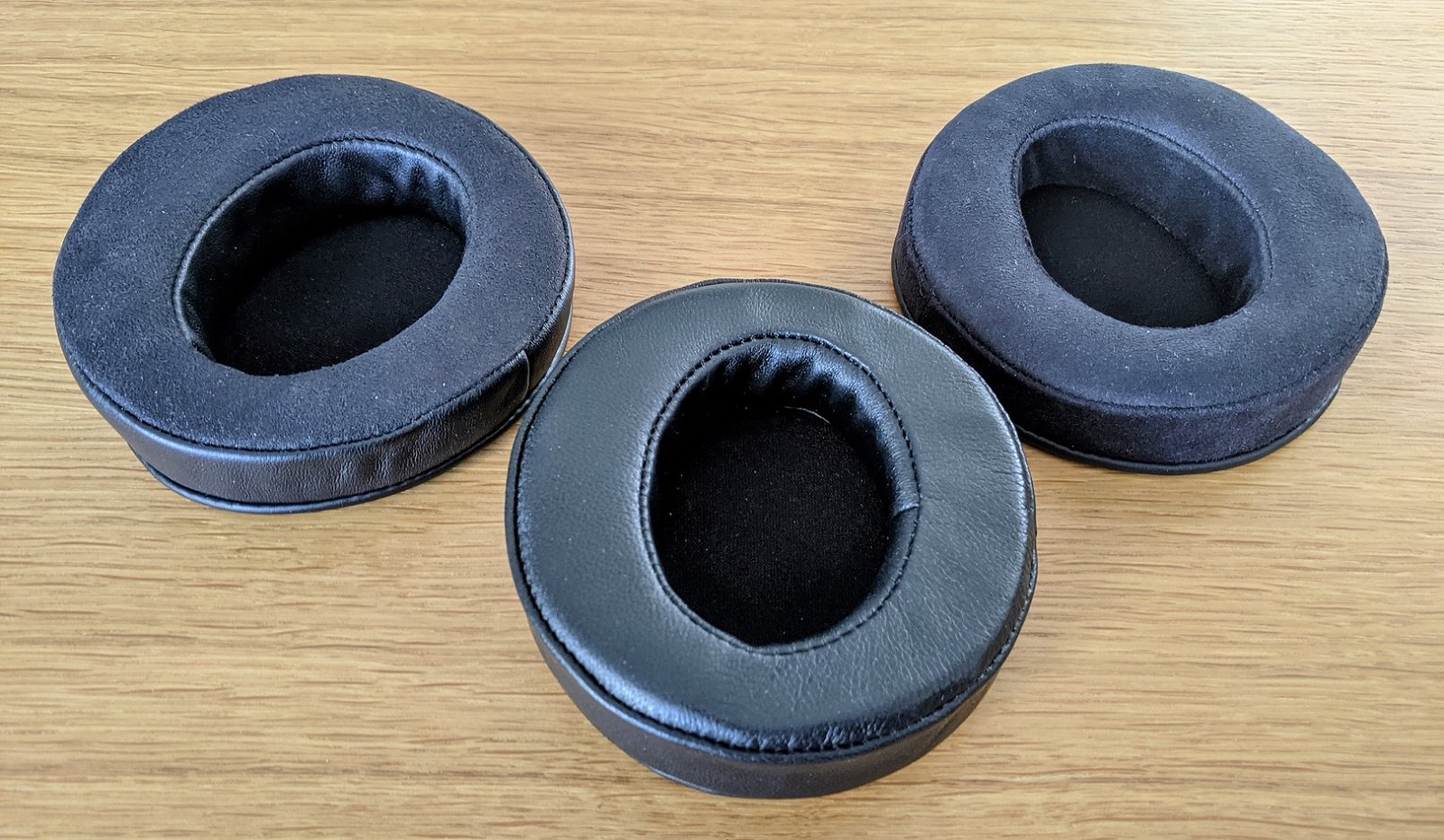
The sound of the Verite C changes quite significantly depending on which ear pads are used with them. For this review, I have listened to the headphones with four different pad models, which differ from each other in material, thickness, angle, and ear opening size. In addition to the pads I have presented, the manufacturer also has pads named Verite, with which the Verite C should become as neutral-sounding as possible – however, I have not had the chance to hear these.
Auteur-lambskin:
In my opinion, on average the best, but most uncomfortable pads. Interesting, wide and deep soundstage, as well as excellent separation and sound localization. The reproduction style is the warmest and the treble the calmest. Fun, punchy bass, although it lags behind the Universe-lambskin. Transients and dynamics are also slightly softer compared to Universe pads. A kind of compromise across different areas, so not necessarily the most impressive pads. With these pads, the emphasis in the 5.5 kHz region is reproduced more softly than with Universe pads. The sound constantly captivates the listener.
Universe-lambskin:
They best bring out the technical capability of the headphones. The soundstage is more intimate than with Auteur pads, but the separation and sound localization are a degree better. The 3D effect of the soundstage is retained, even though the presentation is more normal compared to Auteur pads. The bass hits really hard and the macro dynamics are the best among the pads. The vocalist comes more to the foreground and the vocals are reproduced most "in your face". The treble is clearer than with Auteur-lambskin, but some frequency is sometimes emphasized a bit too sharply. The most intense sound and the one that produces the most "wow" moments, but slightly more tiring to listen to for longer periods. More comfortable for me than Auteur pads, because they distribute the headband's clamping force more evenly.
Auteur-hybrid:
Sonically an intermediate form between Auteur and Universe leather pads. Still a large soundstage and good, but less emphasized bass. Most airiness and clarity due to more prominent treble. The vocalist comes more to the foreground compared to Auteur leather pads. The intensity of the reproduction decreases slightly compared to leather pads, making Verite C with hybrids more relaxed to listen to. Excellent, most tonally balanced pads, so depending on the device pairing, either my favorite or second favorite. Comfortable to wear, as the part against the head is pleasant suede material. However, sound isolation is clearly worse than with leather pads.
Eikon-suede:
The airiest, most relaxed, and softest pads in terms of presentation. Transients are reproduced loosely, and the sharpness of the reproduction decreases. The least clear separation and sound localization, which somewhat resembles the ZMF Atticus. Mid-bass impact is subdued compared to other pads, but electronic music still sounds good. An OK option for lovers of relaxed and balanced reproduction, but with suede pads, most of Verite's technical strengths are lost.
The pads bring a somewhat similar calming effect to vocal performances as the Atticus model. With suede pads, the sound most resembles open-back headphones in terms of airiness. Especially distant sounds often make me look behind me, as I think the sounds are coming from the other side of the apartment. The pads are comfortable on the head, but they weaken the headphones' sound isolation the most.
Device pairing
Although the impedance of Verite C is 300 ohms, they are easy to drive thanks to their relatively high sensitivity (99 dB/mW). Due to their closed-back design, the headphones also do not need to be listened to at high volumes to mask the sounds of the listening environment.
Verite C readily reveals differences between listening devices, so the headphones' reproduction can be finely tuned not only with ear pads but also with device choices. The headphones are unlikely to sound bad with any device, but in my experience, more detail, soundstage size, and low-frequency reproduction can be extracted with better devices.
Compared to other ZMF models, Verite's reproduction and soundstage already resemble tube amplifiers, so the headphones do not need one to sound good. Fast, tight, and neutral solid-state amplifiers suit the headphones well. I personally prefer a slightly warmer and more enjoyable reproduction, which can be achieved, for example, with Rebel Audio's RebelAmp: 1) the treble reproduction is quite bright, which is especially suitable for Auteur pads 2) bass guitar and bass lines are emphasized slightly more than usual 3) the amplifier also allows the Verite C's soundstage to remain large.
My Tor Audio Roger tube amplifier with Psvane CV181-T mk2 and Sylvania 6X5GT tubes, on the other hand, makes the headphones' reproduction so natural and pleasant that one could listen to them in the corner of the sofa all day.
Regarding DACs, I have noticed that the clarity of reproduction details decreases when listening with cheaper devices, such as Topping E30 or IFI Zen DAC. Also, with such devices, the headphones” low frequencies are more ”one mass" and the sound localization becomes less precise. In my own use, the Soncoz SGD1 was a clear improvement, and the Schiit Bifrost 2, so to speak, "blew the bank". Bifrost 2 actually suits Verite C excellently, as it is itself a kind of intermediate form between detail and listening pleasure. I will tell more about the device in a separate review.
Comparison to Focal Stellia headphones
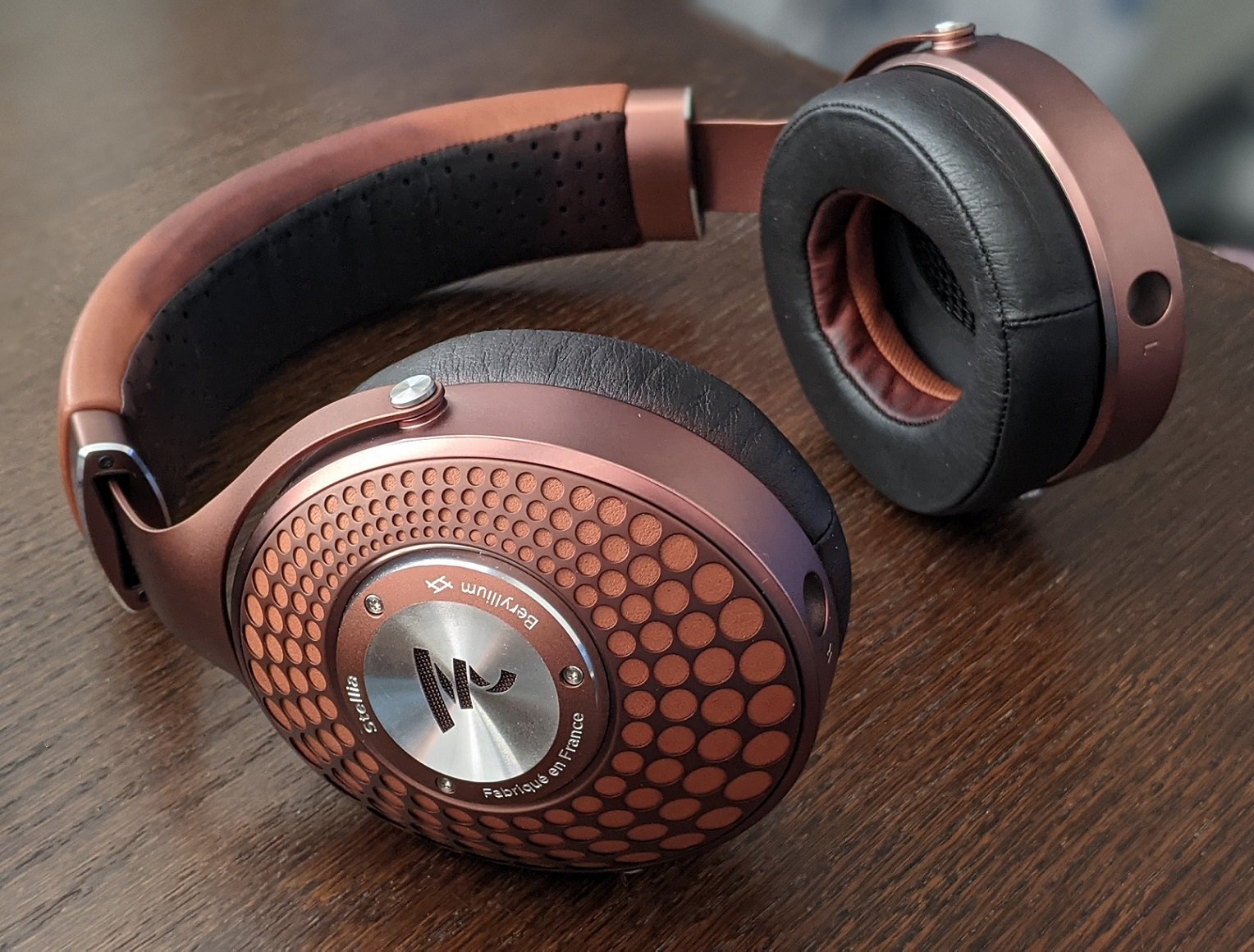
I listened to the Focal Stellia with the same equipment as the Verite C – the RebelAmp is a bit bright, and although the Stellia sounds good with it, a calmer amplifier would suit the headphones better in my opinion.
The Focal Stellia, costing 3000 euros when new, offers strong competition to the ZMF Verite C in terms of appearance, comfort, and sound quality. Both are closed-back headphones and their weight is within 40 grams of each other – there isn't a big difference in comfort either, but straight out of the box, the Stellia is slightly more comfortable because its headband doesn't need to be bent. Once the adjustments are right, both can be worn effortlessly for several hours. Regarding the Stellia, it must be specifically mentioned that its included ”fancy” cables are among the most terrible (light and stiff) in terms of usability that I have encountered.
The strengths of both headphones include playback speed, excellent dynamics, and detail resolution. The duo is tuned in a style characteristic of their manufacturer, but common to both headphones are emphasized low frequencies and moderate treble reproduction. The biggest differences, however, are found in the mid-frequencies and the size of the soundstage. Using words that highlight their strengths, the Verite C is powerful, warm, natural, lively – while the Focal Stellia is punchy, tight, fast, and energetic.
Both have very punchy and physical low frequencies. The Verite's low frequencies are fuller, warmer, and more natural, as the headphones' tuning also slightly emphasizes the lower mid-frequencies. The Stellia's lower mid-frequencies, on the other hand, are slightly recessed, keeping the bass frequencies separate from them. Because of this, the Stellia's bass often sounds surprisingly neutral despite its emphasis. The playback speed, which quickly fades the impacts, also contributes to this. However, the Stellia immediately demonstrates its capability in music with emphasized bass – for example, in electronic music, the headphones hit even tighter and harder than the Verite.
Compared to the Verite's warm and somewhat calm mid-frequencies, the Stellia clearly emphasizes the upper mid-frequencies, bringing their details to the listener's awareness more clearly and energetically than the Verite. The Stellia's strength lies in immediate details, for example, in guitar, piano, and string and percussion instruments. However, the headphones are so fast in their reproduction that sounds fade quickly, and one doesn't get to hear the airy decay properly. The Verite, on the other hand, allows, among other things, the piano and drum cymbals to ring out longer and more naturally, revealing details that are very difficult to distinguish with the Stellia.
Despite its good points, in my opinion, the Stellia's upper mid-frequencies and lower treble have too much energy compared to the headphones' thin lower mid-frequencies. The reproduction style is quite aggressive, and the sound has a cold and metallic nuance – instruments sound pleasantly clear, but at the same time unnatural. However, when listening to electronic music, this is not so significant. Although the Verite C is not the most natural-sounding ZMF model, its timbre is so much more authentic compared to the Stellia that the comparison almost feels like comparing a human and a robot.
The treble in both headphones is somewhat dark and easy to listen to with all listening material. However, the difference between the headphones is found in the very highest air frequencies, which are reproduced more audibly by the Verite, making the headphones airier and more open than the Stellia. A similar difference is also found when comparing the soundstage of the headphones.
Unfortunately, the Stellia's soundstage is very small and intimate. The headphones don't actually sound closed, but rather like a small, well-acoustically treated studio booth – the reproduction stays strictly within confined walls, even if it extends slightly outside the cups. The Stellia actually sounds as if all cup-induced resonances have been very effectively dampened. This, in turn, clarifies the details of the music, but a small soundstage combined with aggressive upper mid-frequencies is a somewhat tiring and heavy combination in even slightly more energetic tracks. The Verite C's soundstage is significantly larger, more enjoyable, and more pleasant from the perspective of listening pleasure.
In theory, the Stellia would be well-suited for portable use due to its low 35-ohm impedance and high sensitivity (106 dB/mW). However, the headphones are so large that carrying them around is not easy – I would also be afraid to carry headphones worth 3000 euros. Despite everything, the Stellia is marketed for such use, and its V-shaped tuning also appeals to larger consumer groups. In this regard, the Stellia and Verite C are aimed at quite different users. I found the Stellia to be at its best with modern mainstream music, where the unnaturalness of the upper mid-frequencies is not a disadvantage, but rather the energetic reproduction is beneficial. For everything else, I would personally still choose the Verite C, because it draws the listener in more strongly on an emotional level.
Summary
ZMF has an excellent range of flagship headphones, which are a kind of culmination of all the company's previous work. The manufacturer continues to forge its own path in that it does not imitate its competitors in its tuning, but rather implements its own proven vision of good headphones – this, in my opinion, is admirable. ZMF headphones also differ from other headphones in that their ordering phase and several months of waiting are part of a rewarding process, after which opening the carrying case feels particularly special.
The Verite C could very well be the last headphone purchase for those who appreciate both detailed and natural sound, as well as calm upper mid-frequencies. The closed design creates a unique and interesting soundstage for the headphones, and allows them to be listened to in complete peace, protected from external noise – otherwise, the headphones do not sound much like traditional closed-back headphones.
The Verite C is not the world's best or perfect in its individual characteristics, but it is consistently so close that it reveals the weaknesses of many other headphones. Although the Verite's strength is, in a way, the absence of weaknesses, the headphones' original tuning can divide opinions. I would guess that the headphones may not appeal to those who prefer brighter flagship headphones or a mid-frequency tuning that more closely follows Harman's target curve. This can also be partially corrected with different ear pads, as the headphones are designed to be modifiable with them.
In my opinion, the Verite C does not make the cheaper ZMF models ”useless,” as they still offer a more relaxed and, at times, more balanced reproduction for various listening situations. However, as an owner of the Atticus and Auteur models, I can state that the Verite C contains the best parts of both headphones, while being significantly more capable in terms of resolution, dynamics, and speed.
The headphones' direct competitor, the Focal Stellia, offers, thanks to its more energetic tuning and slightly better resonance damping capability, at times more clearly distinguishable detail. However, the Stellia's V-shaped, in my opinion unnatural, tuning and small soundstage are still weaknesses that, for me, make the headphones fall quite clearly behind the Verite C from the perspective of listening pleasure.
Compared to the headphones I previously reviewed, Audeze LCD-Rthe situation is somewhat similar, as the Verite C falls behind in resolution (Audeze manages to present the smallest details that easily blend with other sounds much more clearly and distinctly) and speed – however, when listening to the LCD-R, I particularly miss the Verite's interesting soundstage, more physically impactful low frequencies, and more natural mid-frequency timbre.
Although I would gladly buy such good headphones cheaply, the starting price of 2700 euros feels quite justified compared to, for example, the 3000 euro Focal Stellia. B-stock headphones at 2200 euros are an excellent option for those who want to get the headphones a bit cheaper.
If it hasn't become clear from the review so far, the Vérité Closed is, in my opinion, an excellent headphone regardless of whether we are talking about open or closed headphones. Unless miracles happen, the headphones will remain in my possession for a very long time. Good job ZMF!
Pros and cons:
+ Consistently strong overall package: resolution, detail, dynamics, speed
+ Warm, lively and non-fatiguing reproduction that suits all types of music
+ Excellent weighty bass reproduction
+ Interesting, large and fun 3D soundstage
+ Sound is highly customizable with earpad and equipment choices
+ Beautiful wooden earcups
+ Lifetime driver warranty
+ / – The price is high, but still reasonable compared to other high-end headphones
– Treble reproduction that is sometimes too dark with stock earpads
– Upper midrange tuning could be a bit smoother and more energetic
– A prominence in the 5.5 kHz frequency range can be fatiguing for some ears
– Not the most suitable headphones for lovers of uncolored sound
– Comfort may not be optimal before bending the headband
– / + Activates and addicts to listening for long periods
 EN
EN  FI
FI