Author: Sword of Damocles
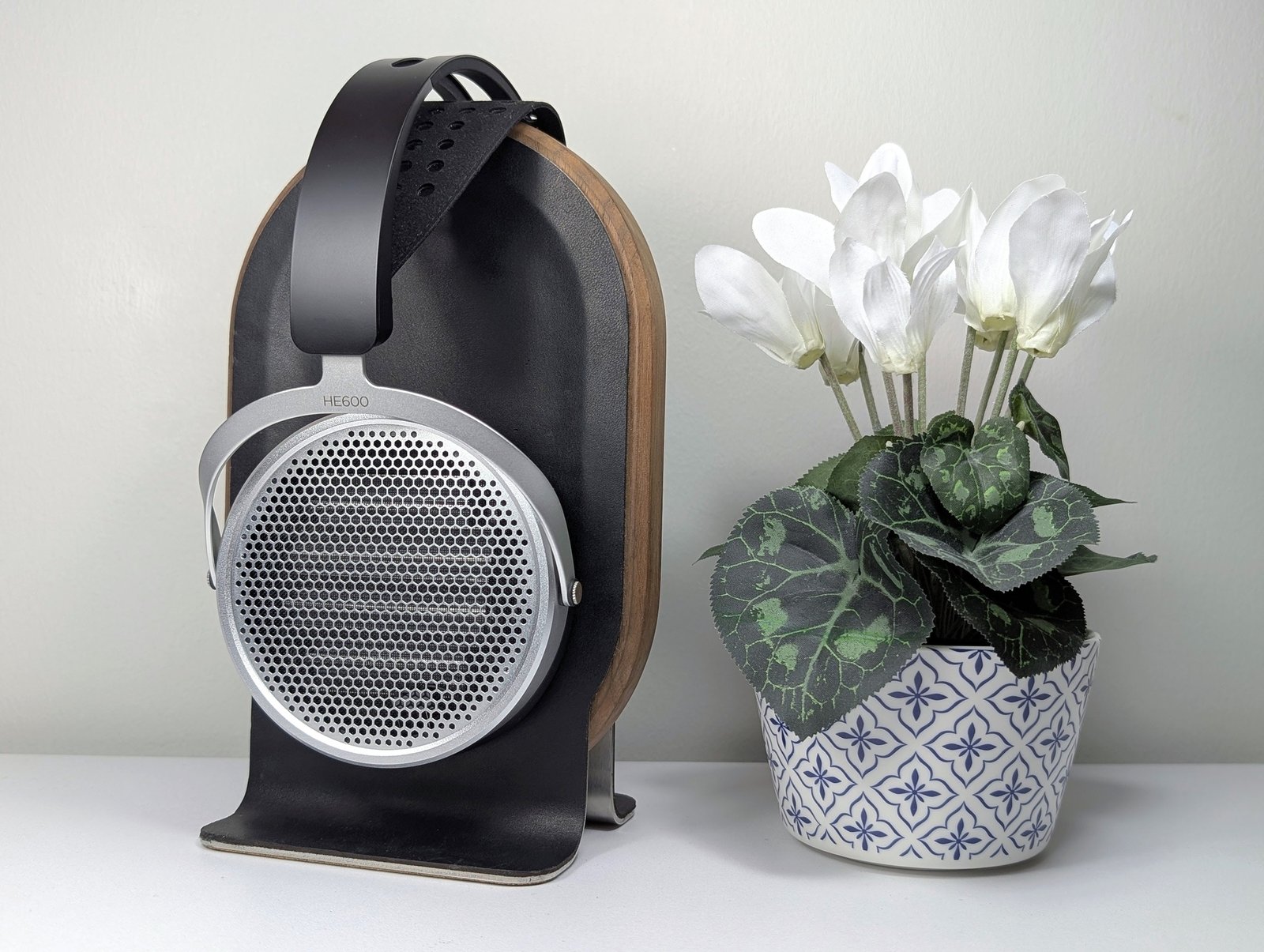
Table of Contents:
Information:
- Released: 2025
- Country of Origin: China
- Price: 829 €
- Available in Finland: Yes
- Type: open, over-ear
- Planar drivers (Enhanced Magnets, Neo Supernano Gen.2 diaphragms)
- Impedance: 28 Ohm
- Sensitivity: 95 dB/mW
- Weight: 389 g
- Connection type: 2x 3,5 mm
- Cable: Length 1.5 m | Connector 3.5 mm (+ 6.35 mm adapter)
- Accessories: ”Headphone stand”
- Warranty: 2 years
Review sample: Self-purchased product
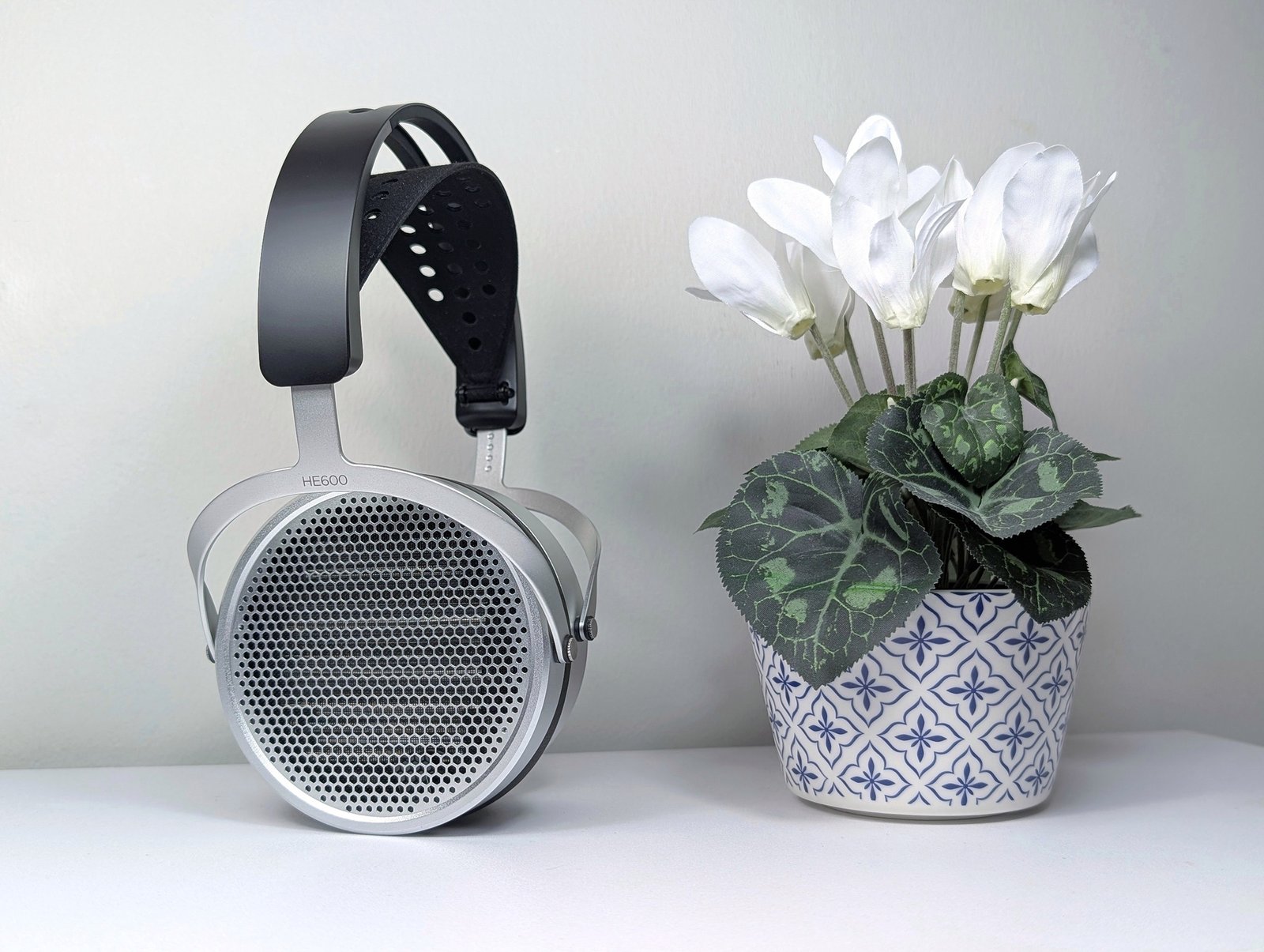
Hifiman advertises that its HE600, released in 2025, (product page) replicates the sound quality of the original HE-6 series while being a lighter and easier-to-drive planar headphone. This, if anything, immediately piques the interest of many more experienced headphone enthusiasts: has the legendary HE-6 finally been brought back in a modernized form? We will find out, even though my title largely reveals the outcome.
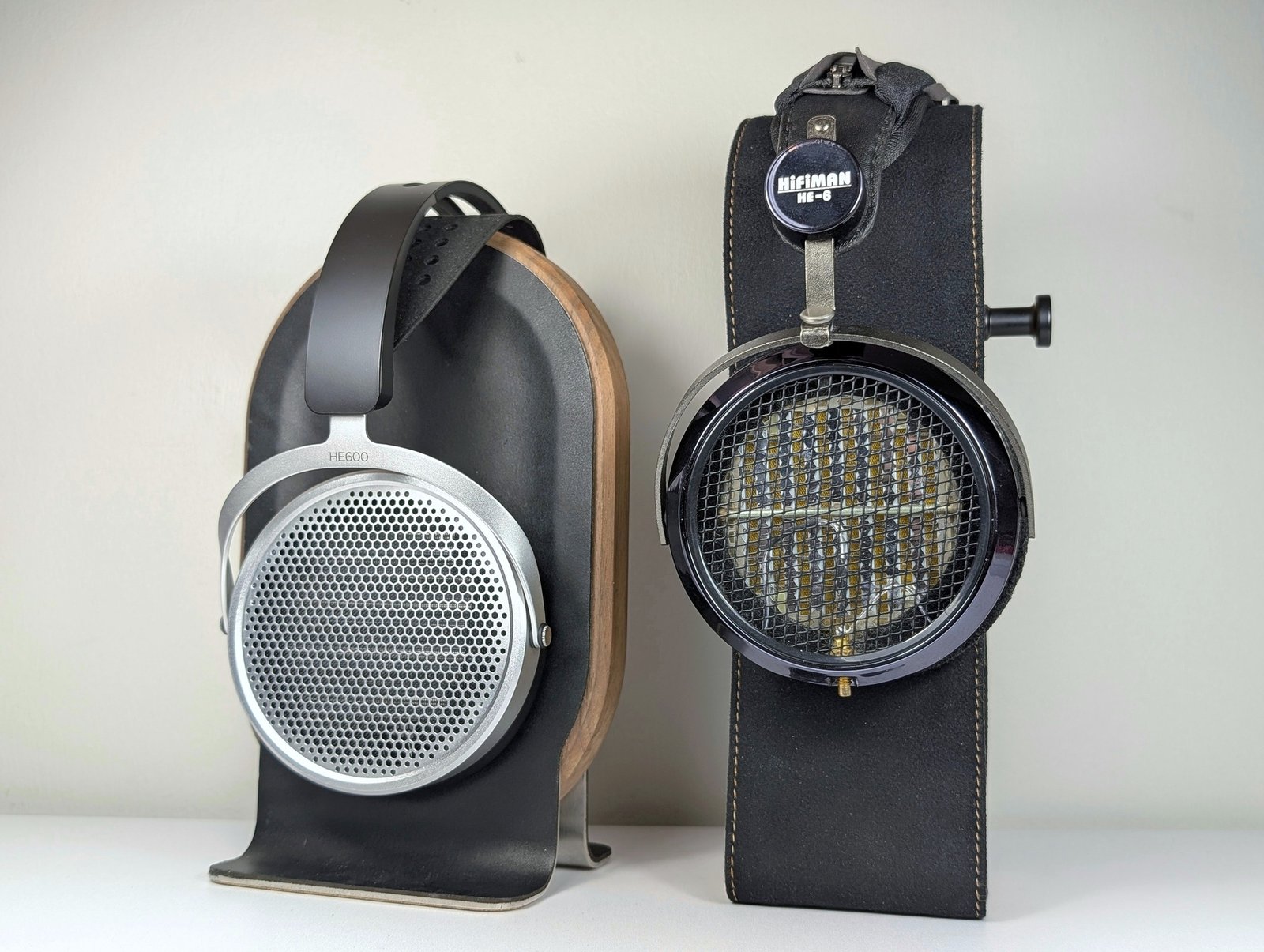
The HE600 model costs 829 euros in Finland, meaning it is currently, in any case, the most expensive open-back round-cup Hifiman headphone (I define Susvara as egg-shaped). There's hardly any need to go over the manufacturer's other selection, because it has been ridiculously extensive and unstable in terms of price for a long time. Newcomers appear continuously, with the HE600 coinciding with the same release time as my previously reviewed Edtion XV(429 €) and the as-yet-untested Ananda Unveiled (589 €). All of these feature a redesigned headband structure, which slightly improves comfort compared to the manufacturer's older products (excluding the Arya and HE1000 series). The coloring is also now a fresh silver instead of black, so the new headphone models genuinely feel new.
Our domestic Hifiman importer was already sending the HE600 for testing in 2025, but communication then suddenly stopped dead. So, I eventually acquired the headphones for testing through my own channels. Writing this review provided an excellent reason to pick up the original HE-6 again for more active use in the role of a comparison.
Packaging and accessories
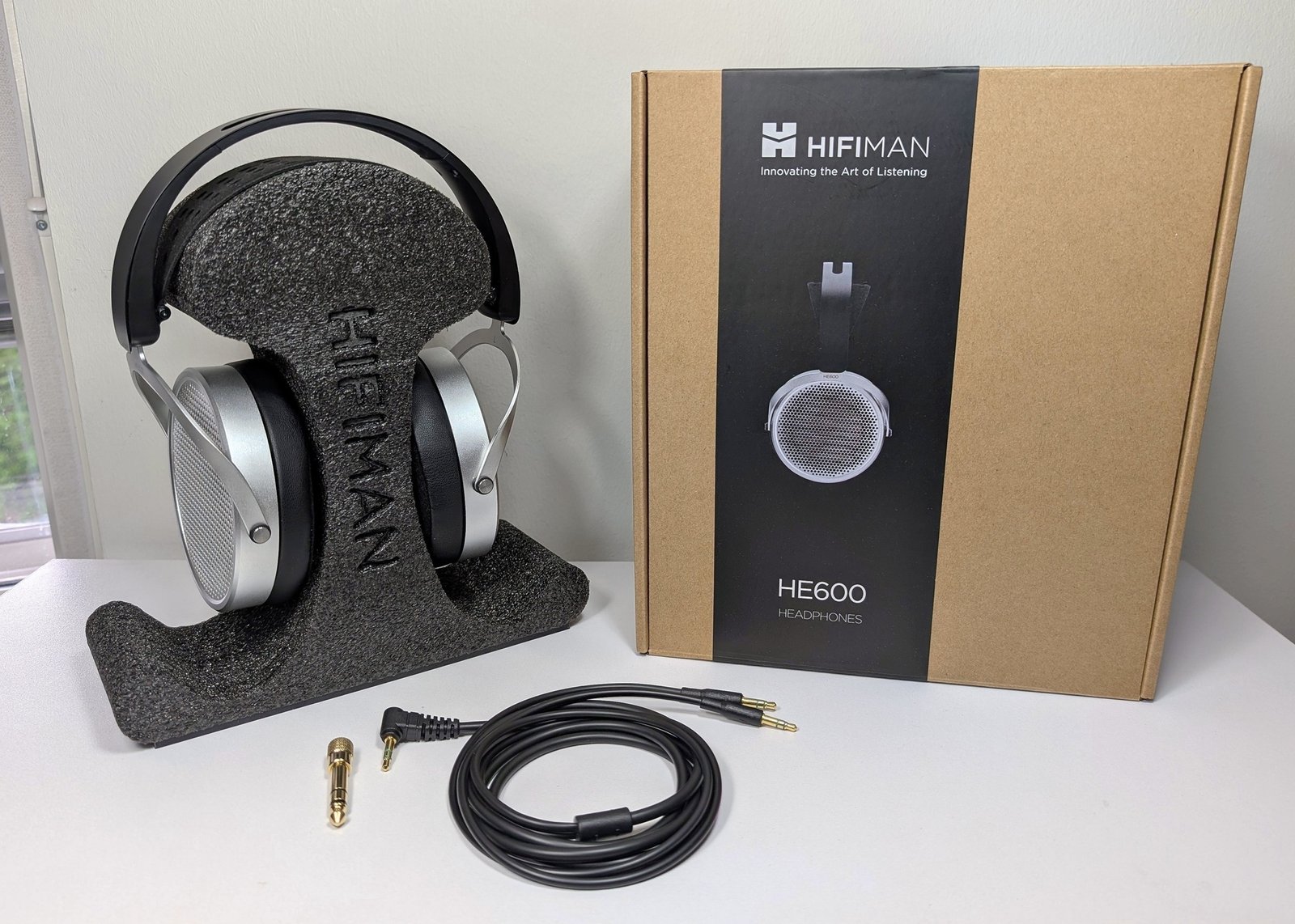
Hifiman now only offers a fine product package for its most expensive headphone models, while products like the HE600 arrive in a brown cardboard box, the foam interior of which can be utilized as a rudimentary headphone stand. Otherwise, the equipment only includes a 1.5-meter cable. All its connectors are 3.5 mm type, although with an adapter, the cable also connects to an amplifier equipped with a 6.35-millimeter connection.
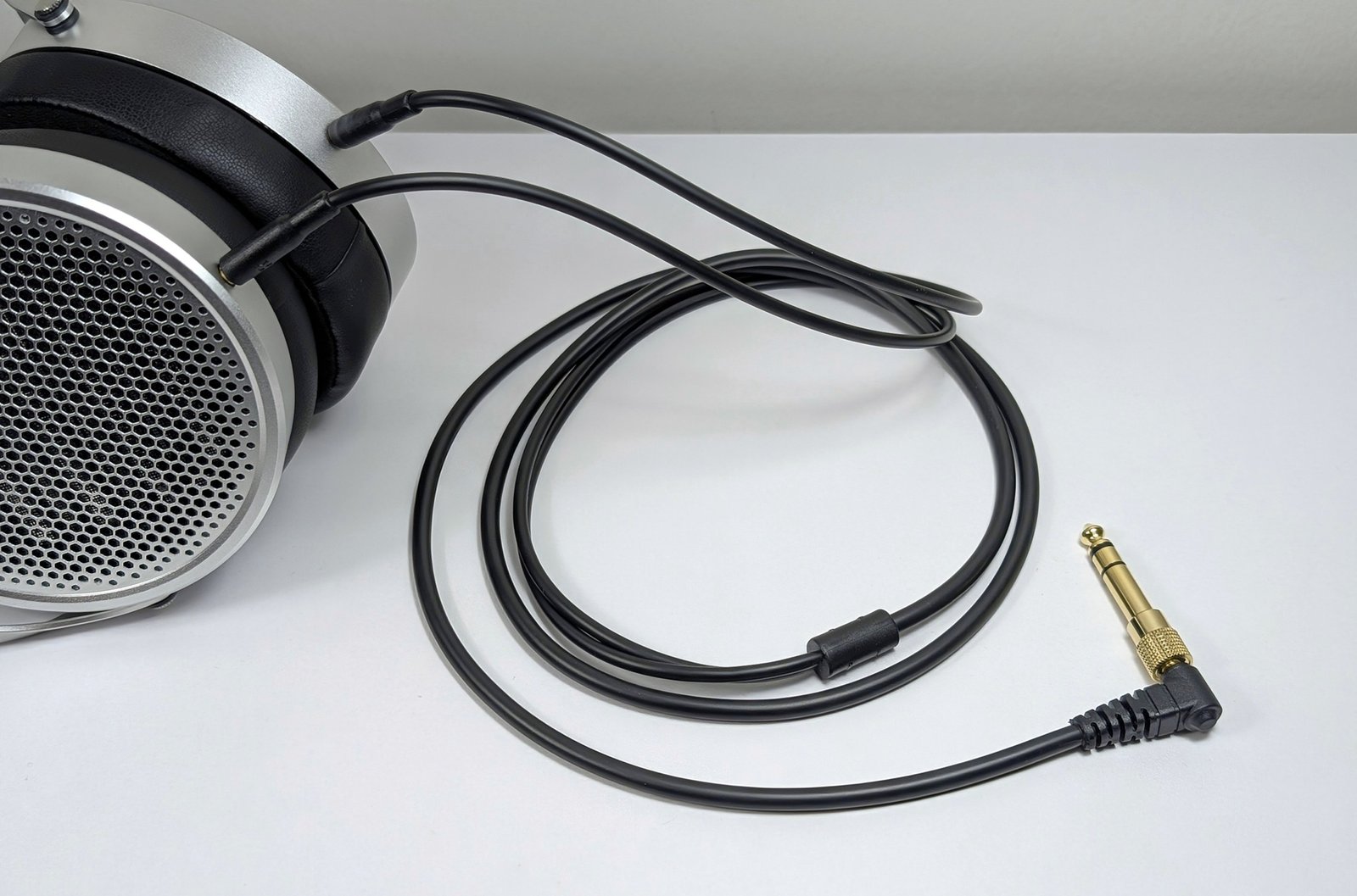
Of Hifiman's various cable options, I find this particular rubber cable model practical because it is suitably weighted and flexible. The cable also has not developed kinks from factory packaging, nor is it microphonic when rubbing against clothes. A good ordinary cable therefore does not need to be any more special than this, although I am still slightly surprised by the 90-degree angle of the connector intended to be attached to the amplifier. It is at least useful with mobile amplifiers. The female connectors of the headphone cups cleverly point forward at a 10-degree angle, so the cable does not hit the shoulders as easily during use as with connectors pointing straight downwards.
Build and comfort
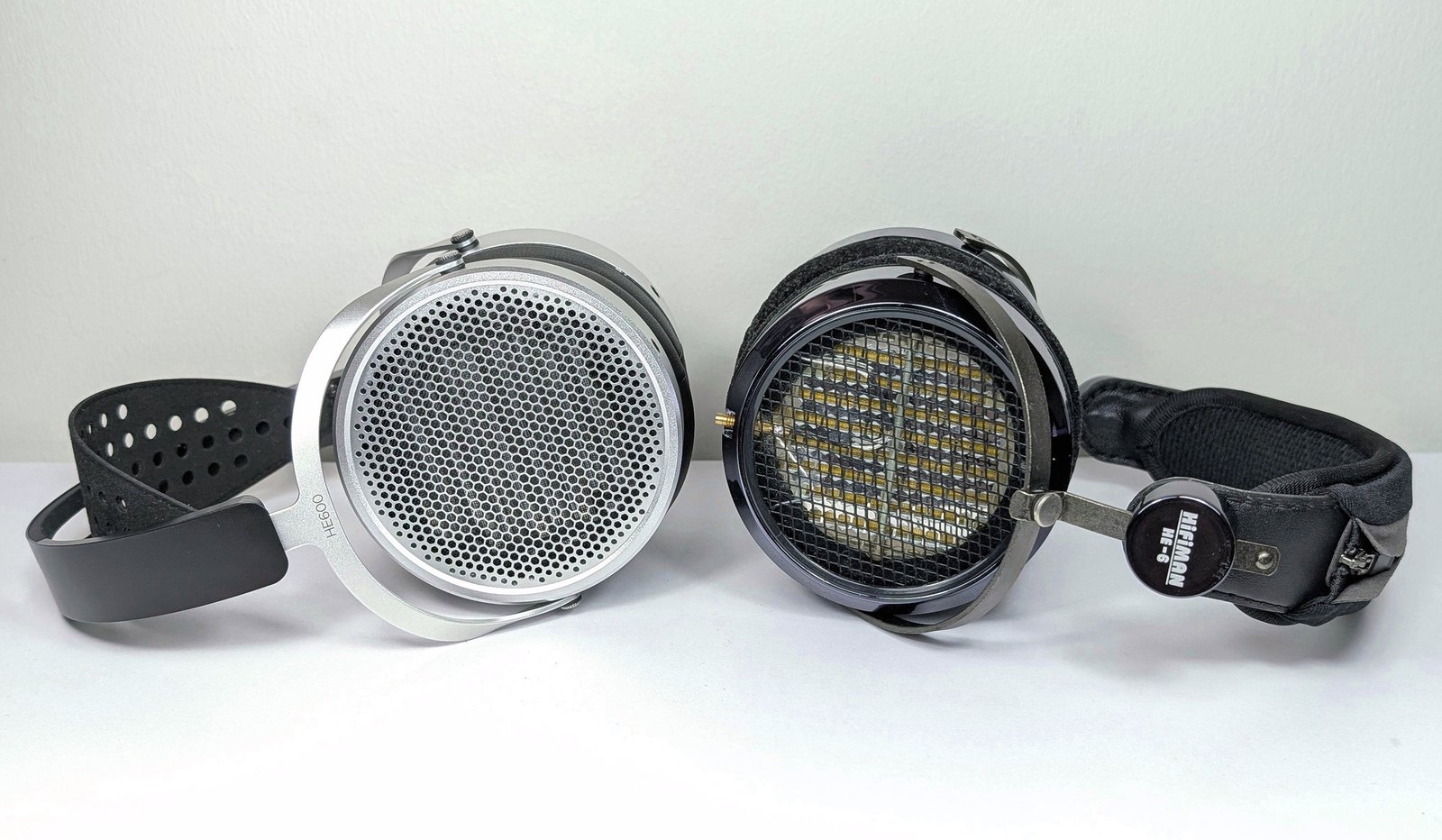
Because the original HE-6 is quite an uncomfortable headphone in its standard form, and the HE6se, especially in its V2 version, is no better, the HE600 undeniably fulfills its promise of better wearing comfort. Instead of half a kilo, it weighs less than 400 grams, which is significantly less than its predecessor.
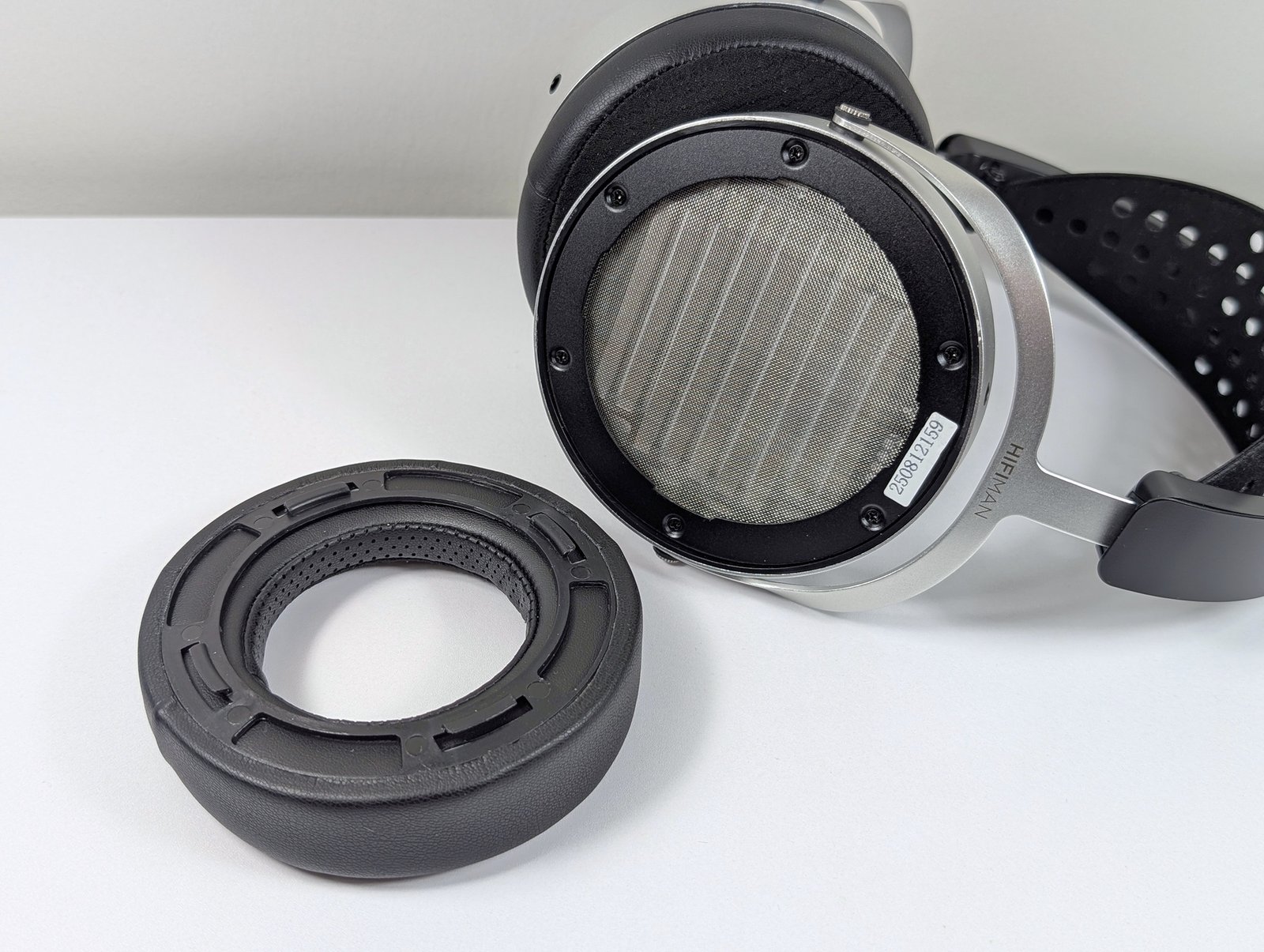
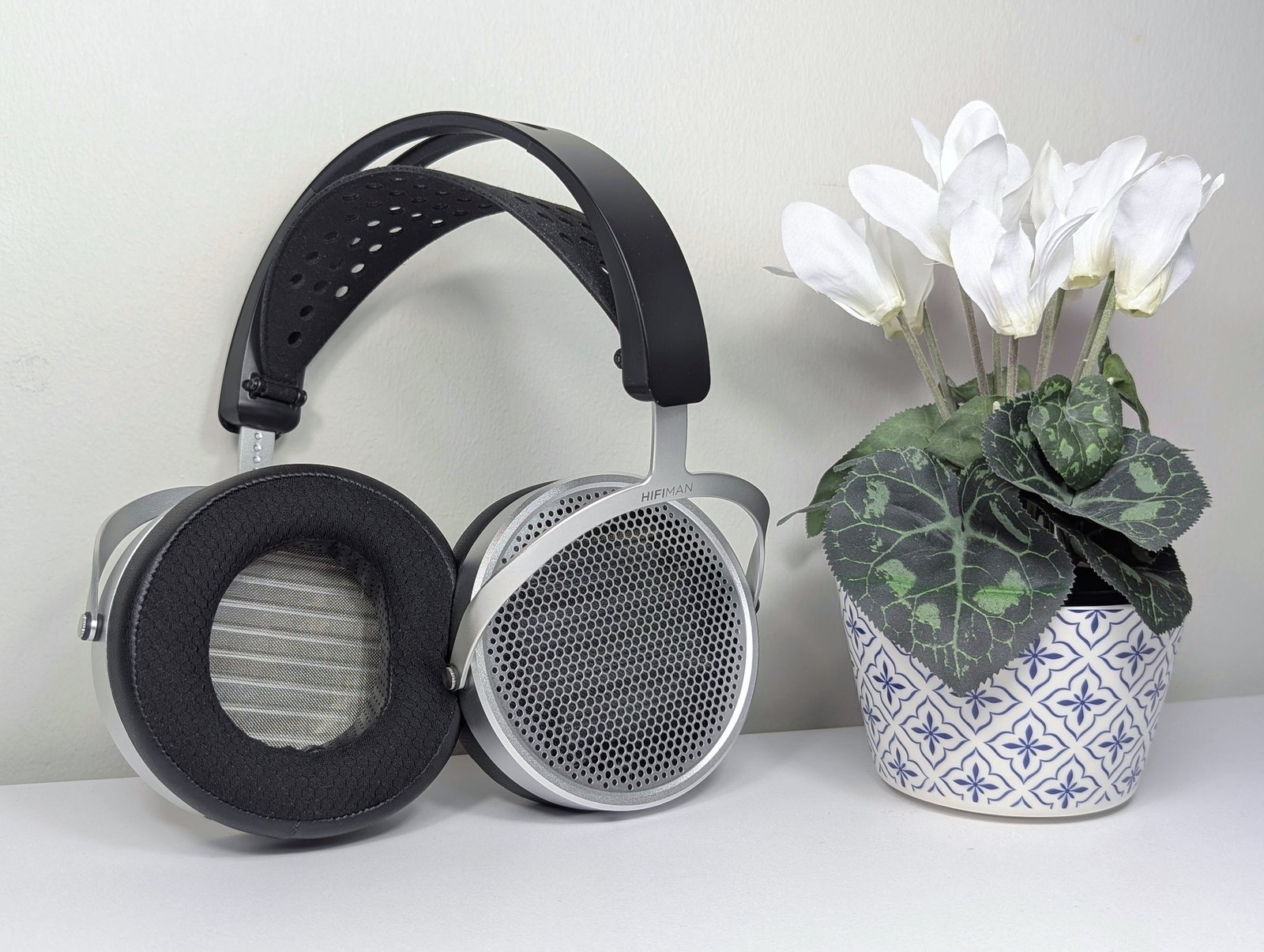
With entirely metal cups and a sturdy feel, the impression of quality most resembles Sundara, which I consider to feel more premium than, for example, Edition XSor HE6se V2. The biggest improvement over the Sundara is that the cups' range of motion has become more versatile due to the horizontal swivel movement. Adjusting the height also no longer seems to scratch the paint finish of the extension part. Edition XV(and other similar models), the method of attaching the earpads was slightly changed compared to older headphone models of the same size class, but fortunately, the HE600 still uses the same type of earpads as other round-cup Hifimans. Removing and attaching the earpads is not entirely easy due to the plastic clips, but at least it is possible.
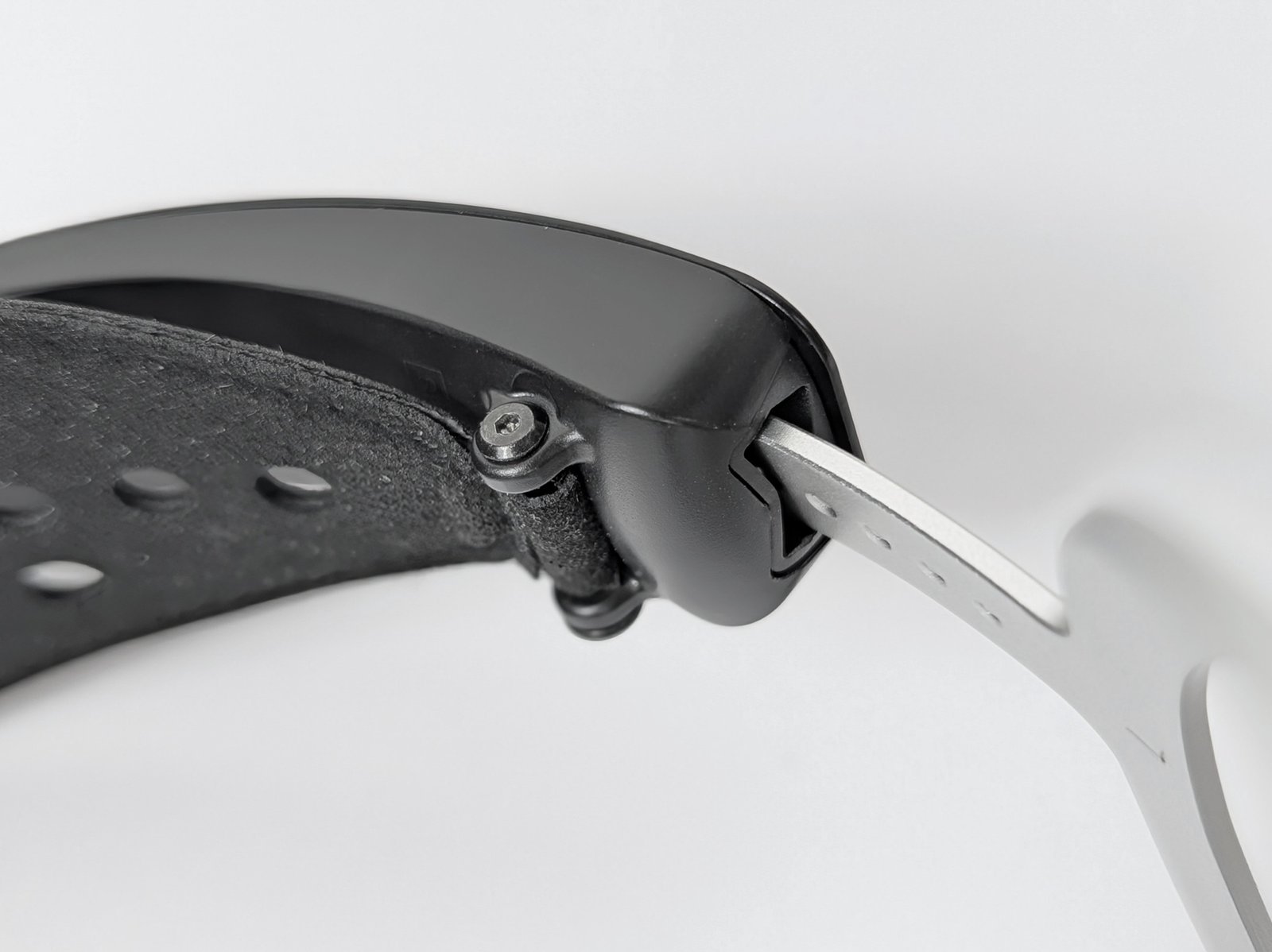
Hifiman still doesn't get a completely clean sheet for its design, because the HE600's structure, like other new models, is impractically narrow. There is plenty of empty space between the headpad and the headband's arch, but despite this, the strap has been made barely wide enough for a human head. Thus, it limits the width of the structure and increases the clamping force of the headband.
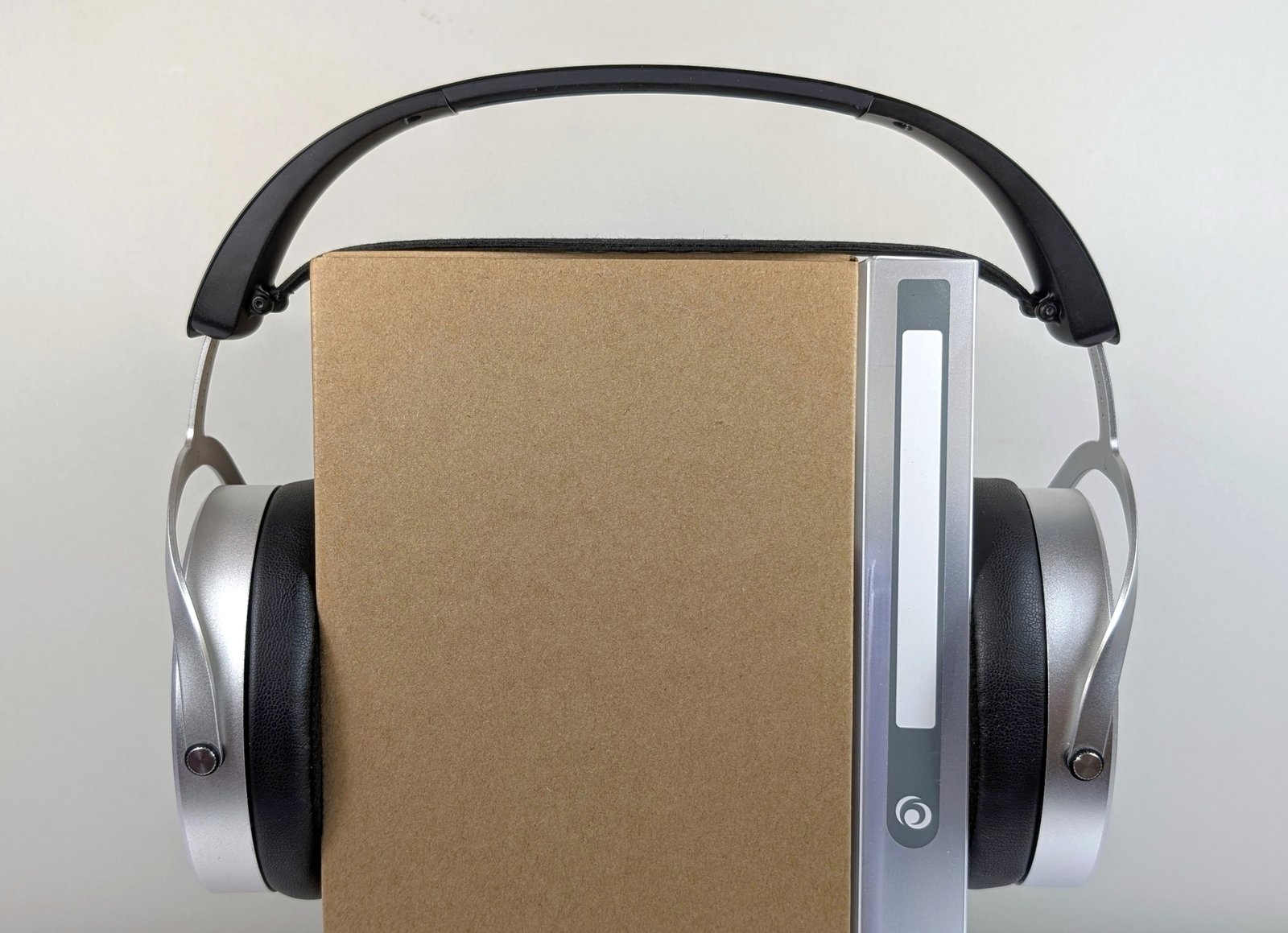
Firstly, I have to stretch the HE600 to its maximum width to fit it on my head. Secondly, I also have to adjust the height to the maximum position so that the round cups and earpads properly extend around my ears. On the other hand, due to the slightly narrow opening (diameter 58–60 mm), the earpads always touch the bottom edge of my earlobes. The short strap also still makes the fit unnecessarily tight, and when stretched straight, it does not optimally conform to the shape of the crown of the head. Many others have also reported the same problems, even to the extent that the HE600 does not fit on the head at all. What kind of product design is this?
I personally found relief for wearing comfort and usability by detaching the headpad from one edge and placing a separate ZMF Co-Pilot Pad around the hard arch. After this, using the HE600 became significantly easier and more comfortable. The headphones no longer clamp too much, and the adjustments would finally be sufficient for a larger head as well. For Hifiman, correcting the situation would be even simpler, as they could offer consumers a headpad a few centimeters longer, which could even be installed at home independently. However, I'm not holding my breath, as the headphones have already been on the market for a long time without such a correction.
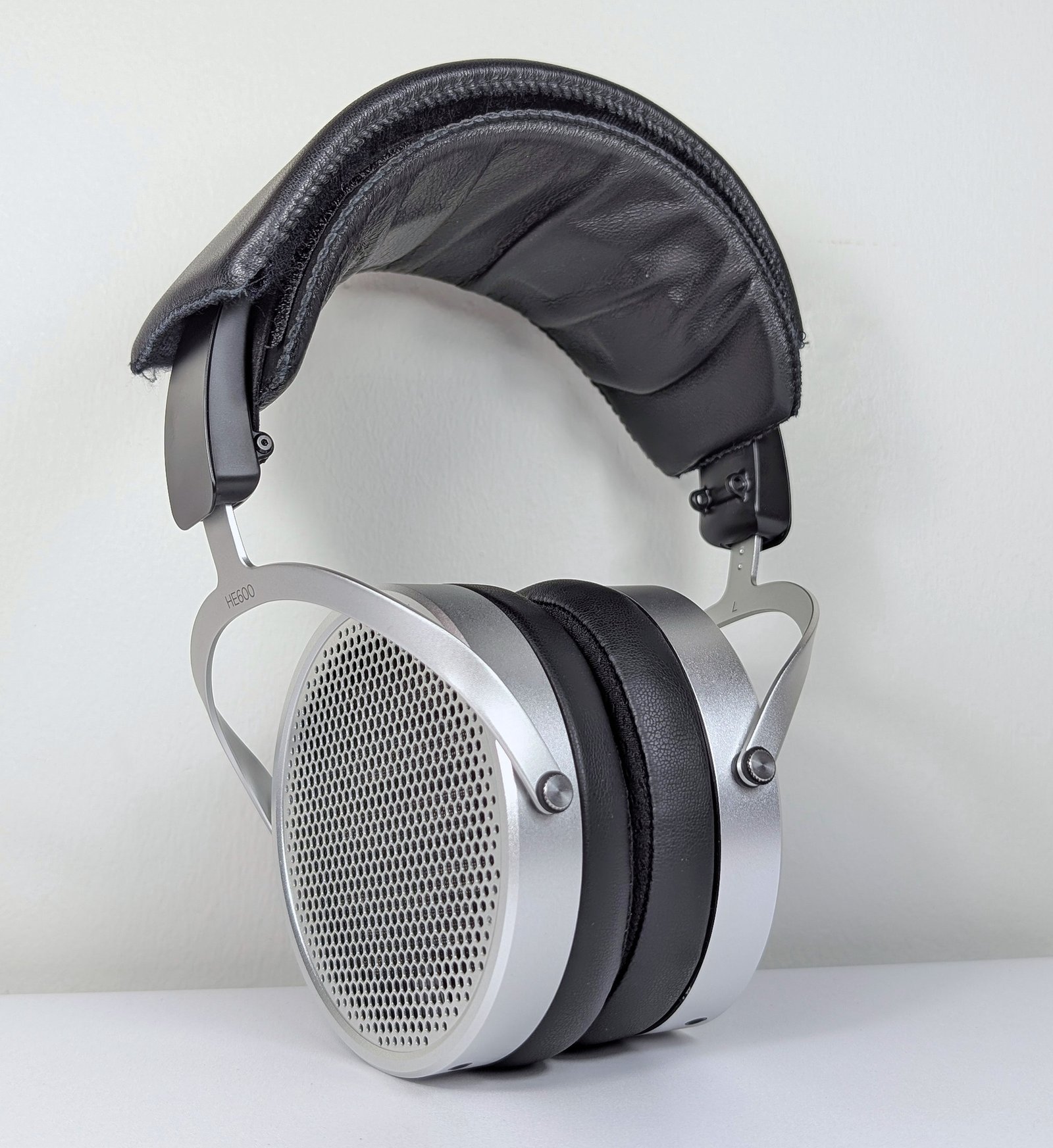
Structurally, the HE600 is thus a fairly typical Hifiman, as it still has room for improvement compared to many competitors. The basics are indeed in order, but the new headband performs worse than in the size class of the Edition XV and Ananda. On the other hand, in my opinion, the HE600 looks slightly better and more cohesive in silver than the Sundara Silver, so in that respect, the manufacturer has moved in the right direction.
Sound quality
Drivers differ from the HE-6 series
Hifiman mentions that the HE600”s Neo Supernano Gen.2 planar diaphragms are 40 percent thinner than before, but the reference headphone remains obscure. Edition XV, implemented with the same diaphragm technology, is instead compared to Edition XS, and Ananda Unveiled to the original Ananda. All new Hifiman headphone models use rare-earth-free permanent magnets (marketing term ”enhanced magnets"), which should nevertheless be as powerful as the magnets previously used by the manufacturer. The idea is to save rarer natural resources, which is fundamentally a good thing. Stealth Magnet technology is no longer advertised in product specifications, but at least the magnets installed on the back of the drivers appear rounded in the familiar way, so that sound waves pass through them as undisturbed as possible.
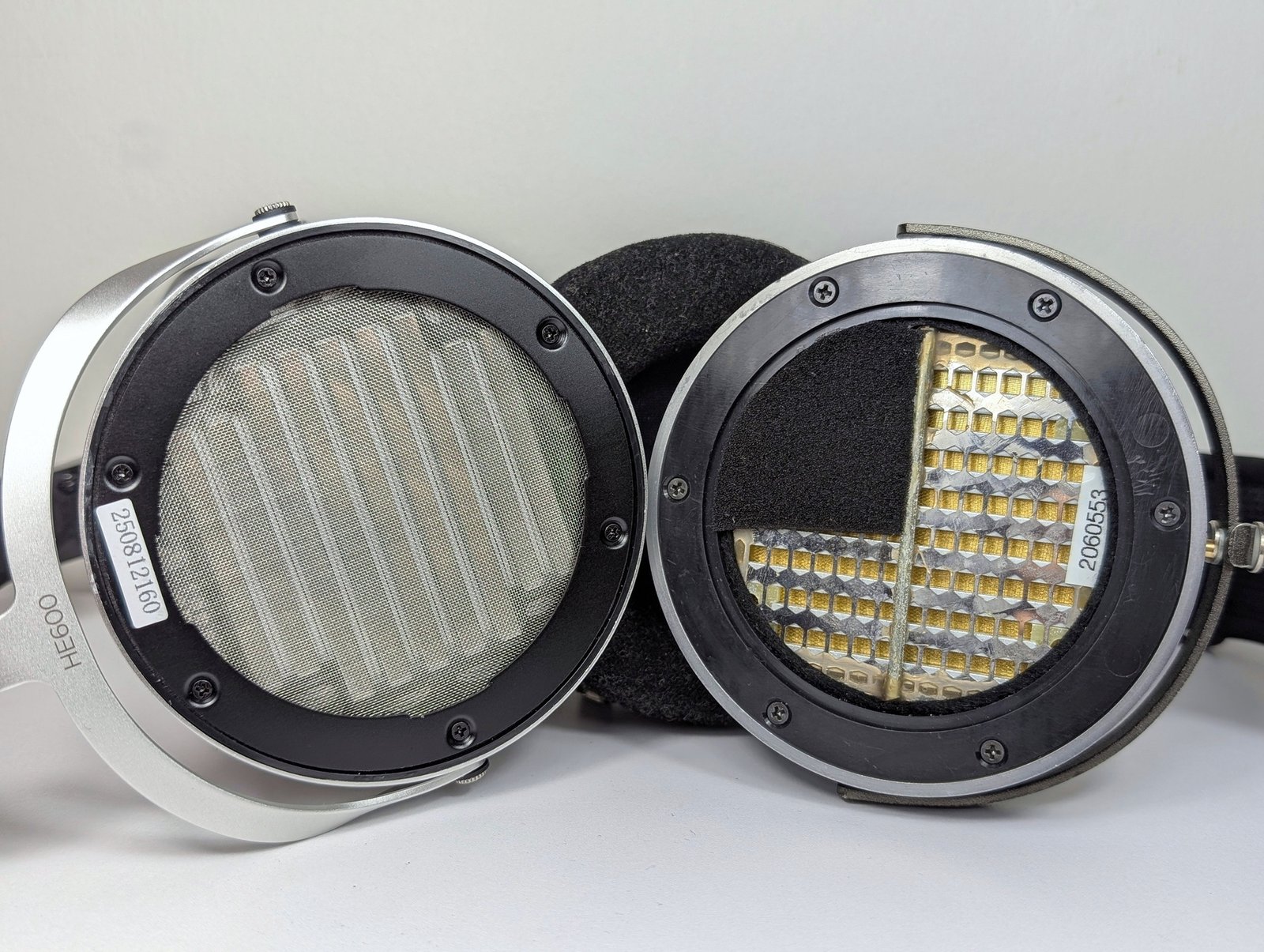
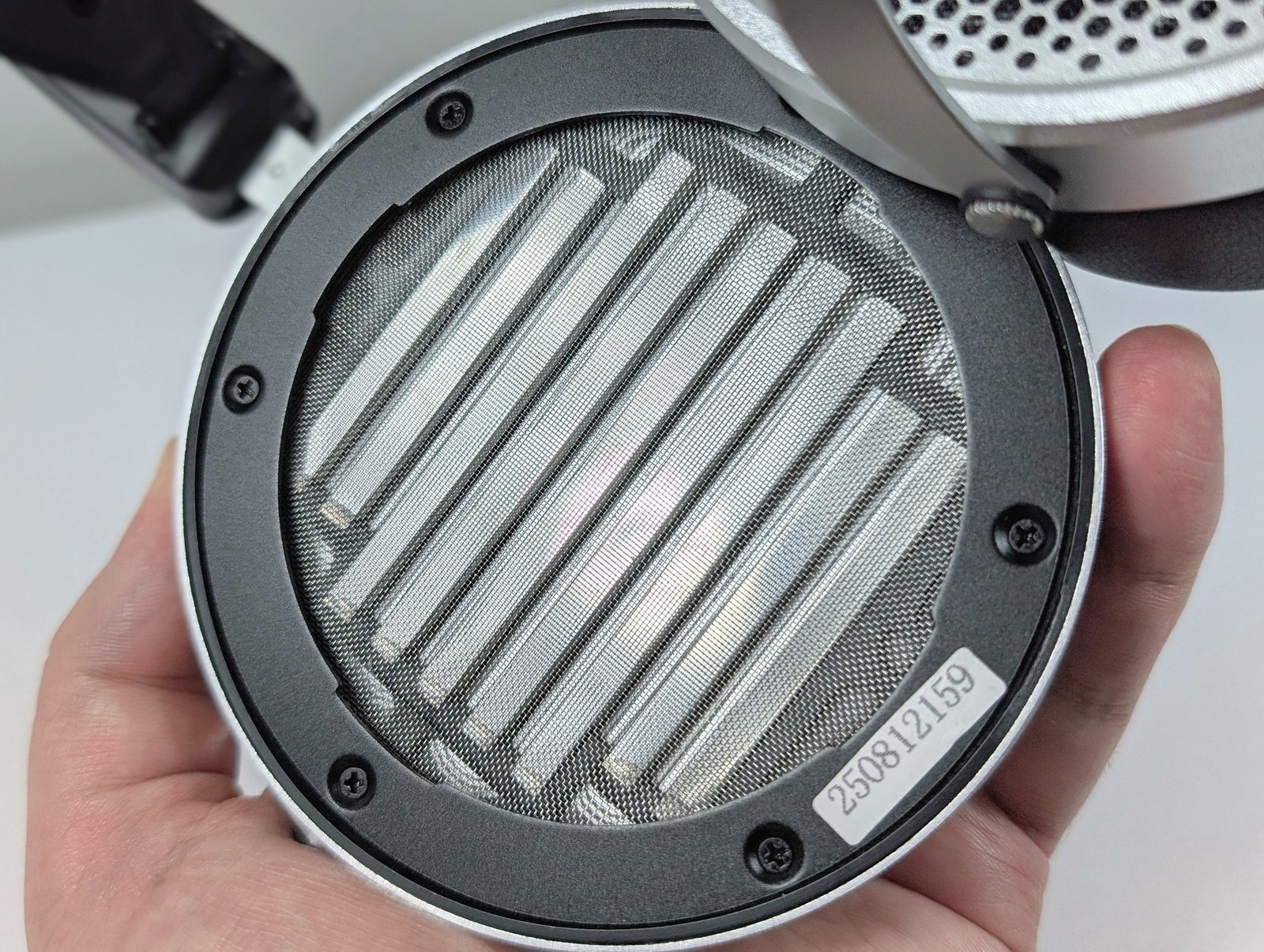
Even a quick glance reveals that the HE600's drivers no longer resemble the original HE-6 series at all, as the conductor material, diaphragm thickness, and magnet structure are completely different, or in other words, more conventional. On the other hand, all Hifiman headphones are tuned in a fairly similar way, so by stretching it, the HE600 is still quite similar. I personally consider the HE600 to be fundamentally a headphone in the Sundara class, utilizing the manufacturer's latest technologies. As a difference from Sundara, it is worth noting the double-sided magnet structure. The HE600's drivers are also protected from the inside by a loosely tensioned metal mesh, which unfortunately rattles and clatters both when pressing and moving the headphones on the ears during use. Due to its larger drivers, the Edition XV suffers even more from this.
Impedance measurements and amping requirements
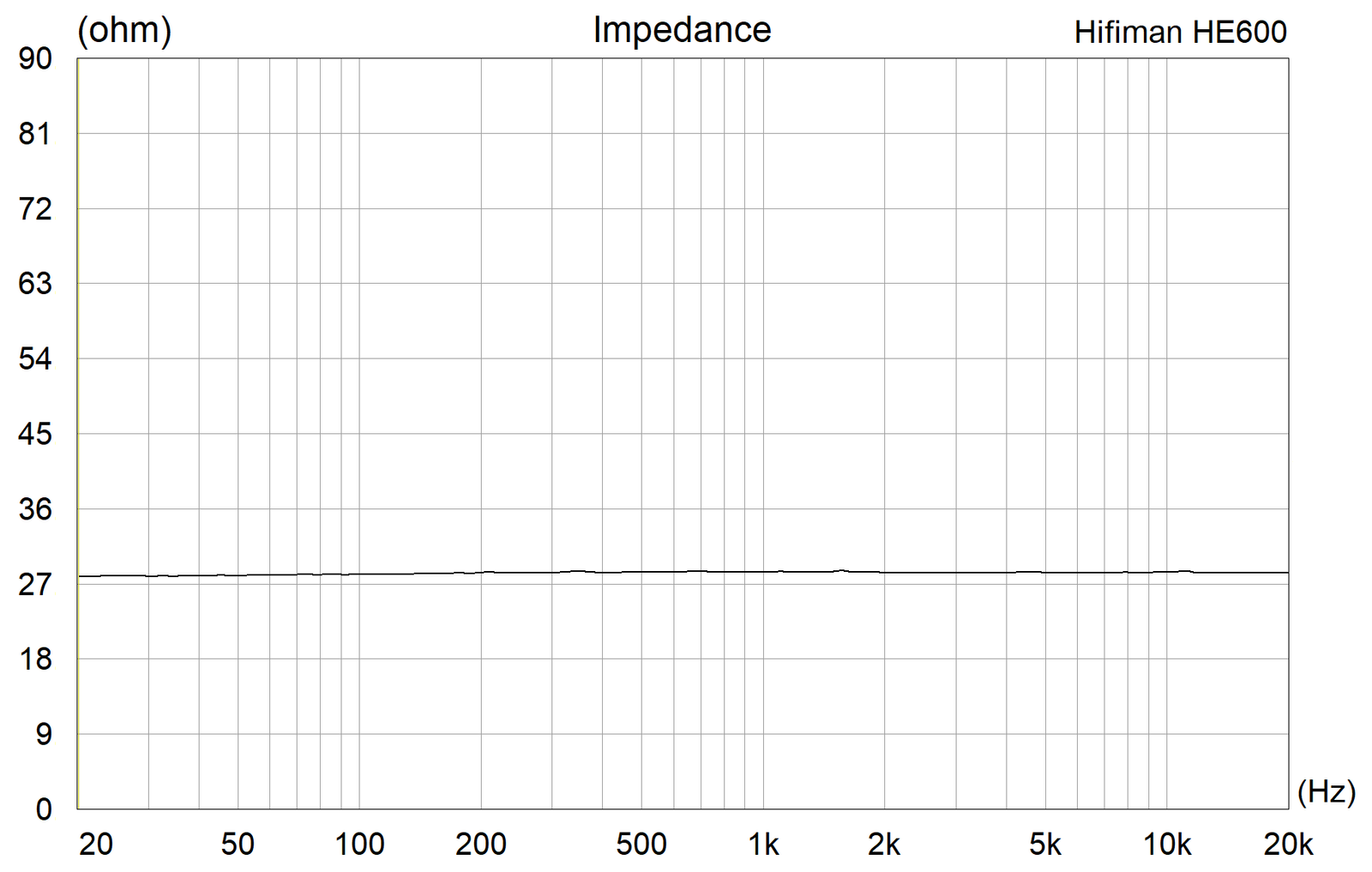
The headphones' impedance offers no surprises, adhering to Hifiman's stated 28 ohms across the entire frequency band. Based on this, the HE600's drivers resemble the Sundara series more than Hifiman's headphone models implemented with larger planar drivers or older HE-6s, whose impedance ranges between 50–70 ohms.
The HE600's sensitivity, on the other hand, is 95 dB/mW, so it surprisingly requires even less amplifier power than the Sundara. Hifiman has been striving to develop its headphones in this direction for several years now. The HE-6 and newer HE6se are power-hungry and impractical, so I appreciate the easy drivability, even if it makes expensive and powerful amplifiers somewhat redundant. Since a fairly conventional amplifier is sufficient for the Sundara, the HE600 will perform well with similar devices. Of course, different amplifiers still produce slightly different sound, so everyone should choose their favorite.
Headphone Measurements
The headphone frequency response measurements were performed with equipment compliant with the IEC711 standard and KB501X model silicone ears. The graphs use the Harman target curve (2018 version), optimized for this equipment, as a reference. This curve is a generalization, based on scientific research, of what kind of frequency response would sound good to most people and correspond to balanced loudspeakers in a well-acoustically treated room.
The Harman research was conducted with silicone ears that ”hear” sound slightly differently than the ear types sold today. For this reason, the target curve used by Kuulokenurkka is based on the diffuse field response according to the KB501X ears” own HRTF transfer function, to which, however, the core findings of the Harman research have been adapted using filters. In practice, the result still corresponds to the ideal frequency balance indicated by the Harman research, but as the equipment used by Kuulokenurkka would ”hear" it based on its characteristic acoustics. Thus, it is possible to make more precise observations of the headphones' frequency response between 2–20 kilohertz than when using the pure Harman 2018 curve as a reference.
More information about the measurement equipment can be found on the Headphone Measurementspage. The HE600's frequency response is also comparable with other measured headphones on Squiglink .
Frequency response:
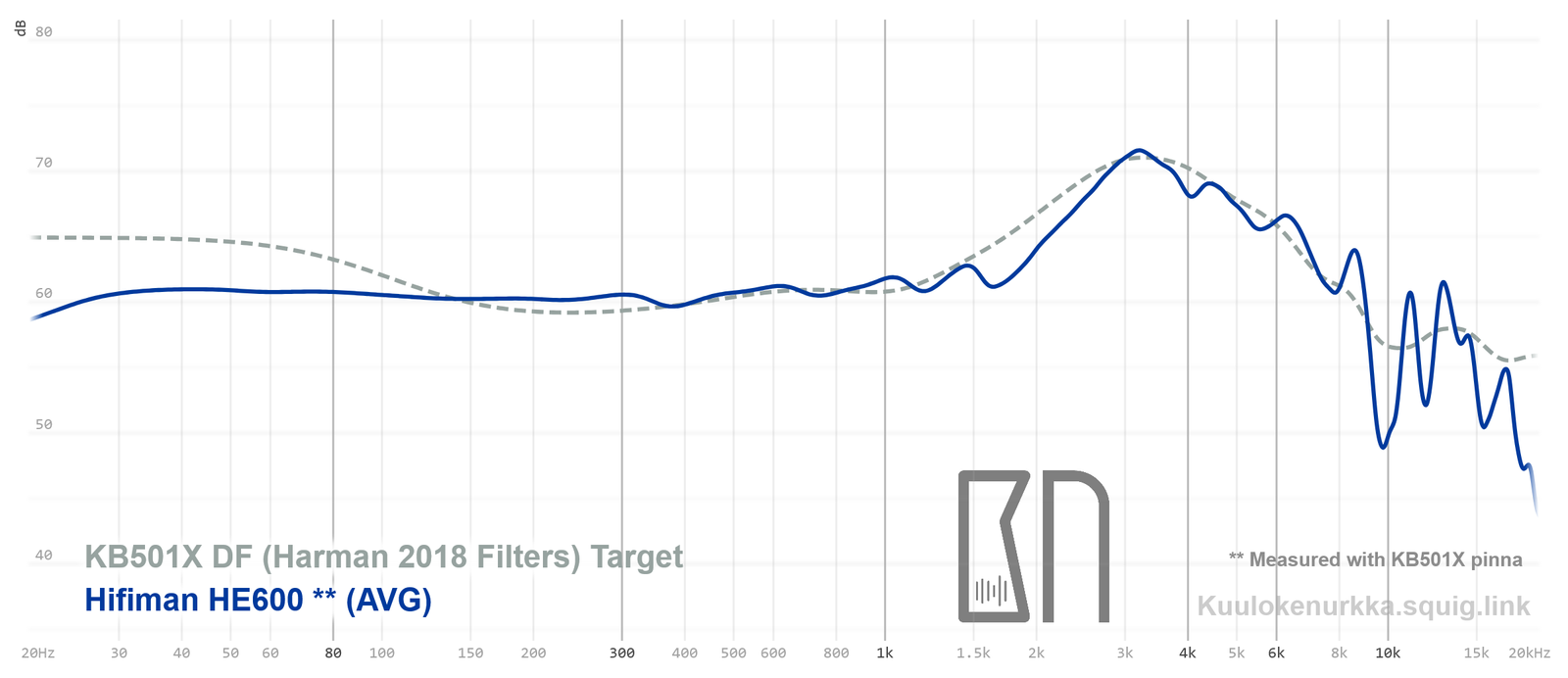
Doesn't the HE600's frequency response nicely settle on my chosen target curve, representing clear and balanced sound? In the past, typical characteristics for Hifiman headphones included a larger dip around 2 kilohertz and steeper boosts between 8–15 kilohertz. In the HE600 model, however, the frequency response has been, so to speak, tidied up to be presentable and truly orthodox. Sundara already represented the manufacturer's more balanced style, but the HE600 improves the situation a bit further. I haven't encountered a more neutral Hifiman headphone than this before. It's also great that the back of the drivers didn't need to be exposed, but such a flat response is achieved with the protective grilles.
At the same time, the flat tuning also means that the HE600 does not take inspiration from the original HE-6 series, which is known for its quite intense sound. Older HE-6s, especially with their original earpad design, reproduce the presence region (4–6 kHz) significantly more energetically, and there is also more brightness in the treble between 8–13 kilohertz.
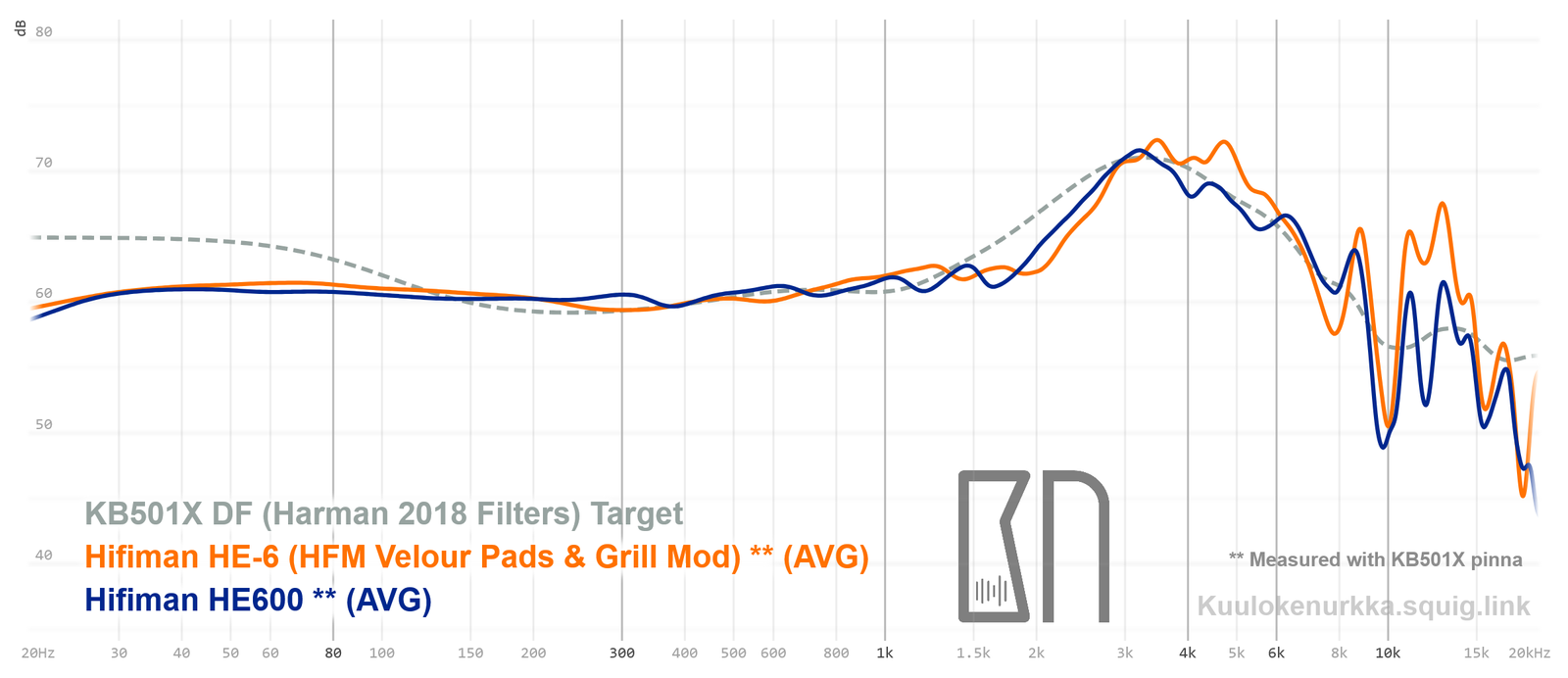
In terms of frequency response, the HE600 thus resembles the Sundara more, with the biggest improvements being a smoother treble and a slightly more linear sub-bass. A small ”calming” around 2 kilohertz further widens the soundstage, but this feature should not soften the sound significantly in any way, but rather allow for a very normal and easily adoptable presentation. Such an open acoustic design is also not very sensitive to head placement, so moving the cups on the ears mainly changes the focus areas of the uppermost treble slightly.
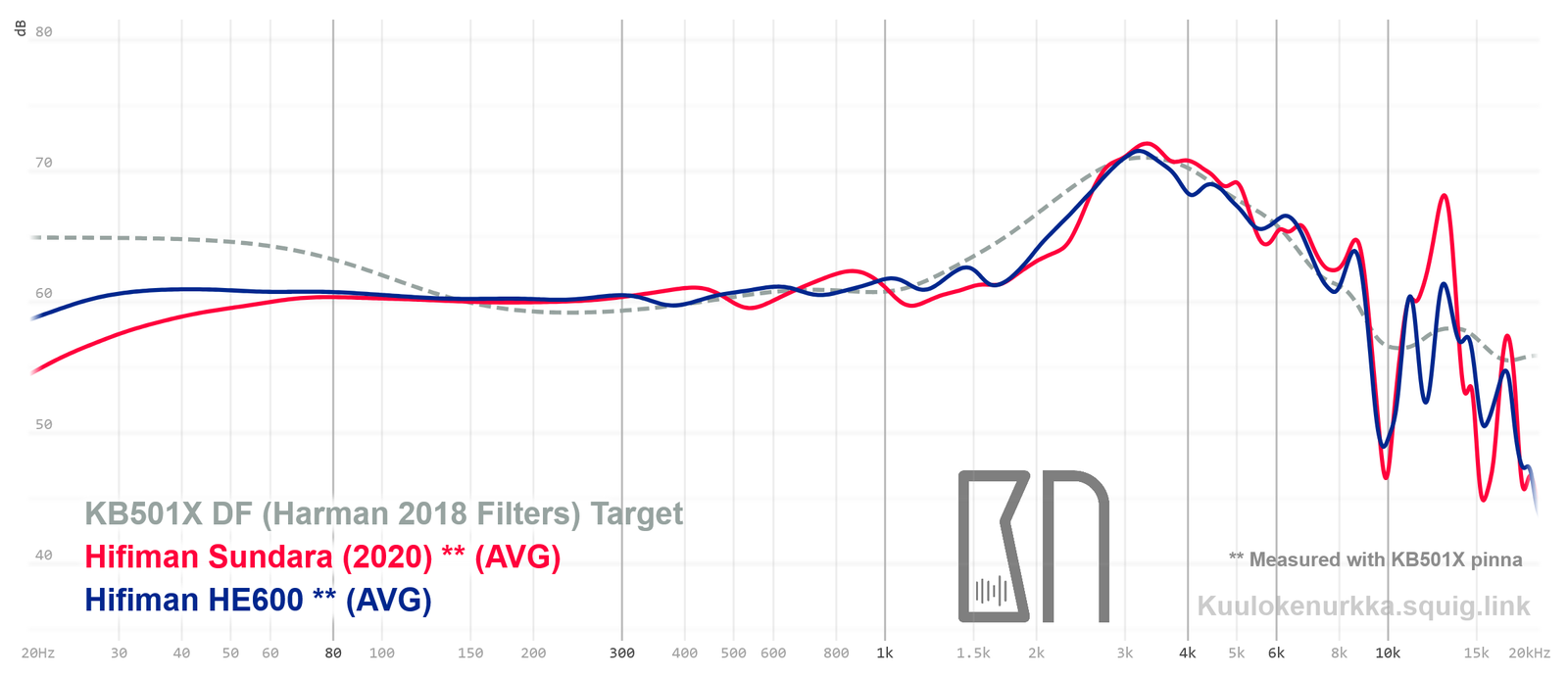
Some have measured the HE600's sub-bass dropping more sharply downwards between 20–40 hertz, similar to the Sundara, but based on my testing, this only happens if pressure escapes from under the pads. Due to the four plastic clips, the fit of the pads is quite loose, especially if they have been removed and reattached multiple times. However, if the seal is maintained, the bass would appear to reproduce quite linearly down to at least 30 hertz. Controlled bilateral leakage wouldn't even be a problem, as in that case, the bass would strengthen between 50–100 hertz.
Sound observations
Tested with Gold Note HP-10-, Cayin iHA-6 (balanced) and JDS Labs Element IV -amplifiers. With the first two mentioned, Topping Centaurus served as the DAC, while Element IV includes its own DAC. I did not observe a significant stylistic change in the sound between different devices, unless a slightly more spacious soundstage with more expensive amplifiers is counted.
The HE600 is perhaps Hifiman's most balanced performance to date in terms of neutral reproduction, so it challenges references such as Sennheiser HD 600 and HEDDphone D1. However, since Hifiman itself profiles its headphones as HE-6:s nominal successor, conflicting thoughts creep into my mind. Why am I being guided to think of the product as something other than what it is?
To my taste, this is not a particularly exciting or dynamically sounding planar, but rather the hi-fi-like precision and controlled brightness of the reproduction take center stage. Someone might possibly call the presentation somewhat analytical, but I personally like it because the biggest irregularities have now been cleaned from the treble and the bass also kicks sufficiently to make the HE600 a versatile headphone. The end result is normal in a positive sense, without any notable disturbing factors.
I never fully warmed up to the black Sundara-model, whereas the HE600 sounds suitably more natural and pleasant. Also, compared to Sundara Silver , the reproduction is more robust and less bright, meaning overall slightly more balanced. On the other hand, at the same time, the headphones don't really possess any personality, unlike the true HE-6 series or the fresh Edition XV, so in Hifiman's lineup, the HE600 feels to me primarily like a more refined Sundara. This should be seen more as a compliment than a criticism, even though I consider the HE-6 to be a better headphone overall.
Bass: Because the HE600 reproduces bass in a customarily linear fashion and the overall amount of treble has decreased compared to Hifiman models of past years, I perceive the sound as quite robust. In a way, however, the bass sounds somewhat slow and bloated in its kicks, and it doesn't stay in the tightest control. This audibly distinguishes the HE600 from the HE-6 models, whose bass is more explosive and impactful. The Edition XV, on the other hand, implements the lush style more entertainingly, because its bass sounds larger and thus more powerful. The HE600 thus falls between these headphones. Its bass comes out nicely in the overall sound, but doesn't really act as an authority. A small sub-bass shelf could help if needed, because otherwise, in my opinion, the headphones wouldn't need much equalization.
In the sub-1000 euro price range, many dynamic headphone models, such as Austrian Audio The Arranger, Focal Hadenys and Meze Audio 109 Prooffer more robust and entertaining bass. The HEDDphone D1 also kicks more lushly thanks to its slight mid-bass emphasis.
Midrange: The midrange is the HE600's strongest area in the sense that it avoids many of the pitfalls of planars. The 1 kHz region doesn't shout, and the upper midrange is not noticeably recessed or soft, which allows vocal performances to be reproduced with presence and clarity. In its lower midrange frequencies, the HE600 is even slightly fuller than the original HE-6, which brings a touch of pleasant warmth to the body of instruments. The HE-6, on the other hand, sounds clearer and even more distinct of the two, so both have their own merits.
Overall, the HE600 sounds very balanced and natural, offering a more neutral experience than the Edition XV, similar to the Sundara. On the other hand, I would guess many would appreciate that the energy of the upper midrange still doesn't push quite as much to the forefront as in the Sennheiser HD 600 series or the HEDDphone D1. Thanks to this, the soundstage feels just suitably more spacious, unless someone specifically enjoys maximum sound presence.
Treble: If one were to search for some connection between the HE600 and the HE-6, it would be the slight roughness/tightness I perceive in the presence region (not really visible in my measurements), which occasionally draws attention away from the natural midrange. In the HE-6 models, this same frequency range, on the other hand, is reproduced clearly more energetically, which in turn enhances the fun intensity of the reproduction, which some also call aggressiveness. Compared to that, the HE600 feels like a rather tame and restrained case, so I wouldn't ultimately be too worried about this characteristic. Rather, I am slightly disappointed that the rebelliousness and liveliness of the HE-6 are not more present in the HE600.
Since bright and somewhat uneven treble had become one of the hallmarks of Hifiman headphones, the HE600's more refined style might even divide opinions. The change could be examined, for example, through drum cymbals: now the focus is on the sharper initial phase of the strikes, while the airy decay of the cymbals remains more subdued than in many other headphones from the manufacturer. I personally like how the HE600 offers plenty of detail without the high frequencies jumping out in an overly emphasized manner. I have also not suffered from any sibilance; listening to the HE600 is effortless even when significantly increasing the volume. This generally tells me that there are no wild exaggerations in the treble, at least. For comparison, the HE-6 sounds heavier, but at the same time, small details and nuances are reproduced more vividly. A similar difference would also be perceptible between the HE600 and the brighter FiiO FT7.
Soundstage: When I alternately place the HE600 and HE-6 on my head, the different soundstage reinforces my perception of the duo's distinctiveness. The HE-6 sounds wonderfully layered and transparent, which I also remember perceiving in HE6se V2. Compared to such a pure and crystal-clear spatial impression, the HE600 remains hazier. Its reproduction feels more one-dimensional, and not as much empty space forms around the sounds. We are thus talking about a rather ordinary soundstage, similar to the Sundara model. All models with larger drivers and ear pads, such as the Edition XS/XV, Ananda, and Arya, in turn, sound more spacious and impressive. Nevertheless, when evaluated on its own, the HE600's sound is clear and distinct, so I am ultimately quite satisfied with what I hear in this regard. The soundstage does not draw too much attention, just like no other aspect.
In summary, the HE600 should not necessarily be compared so much to the original HE-6 series, but Hifiman itself does so. In my opinion, the new model, with its balanced tuning, is a reliable performer and an excellently successful hi-fi headphone, from which it is, however, somewhat difficult to find its ”own thing.” In terms of sound quality, there is nothing particularly special or surprising, which, on the other hand, is also a strength, unless expectations have grown too high. Now many might assume they are getting an updated HE-6, even though in reality the HE600 feels like a planar counterpart to neutral headphones like the HEDDphone D1. It may therefore be difficult to find the right audience for this Hifiman model, but the manufacturer must come up with solutions for that.
Comparison: HE600 vs. XK-Audio Fluxion
Prices: 830 € vs. 550–1000 € (depends on place of purchase)
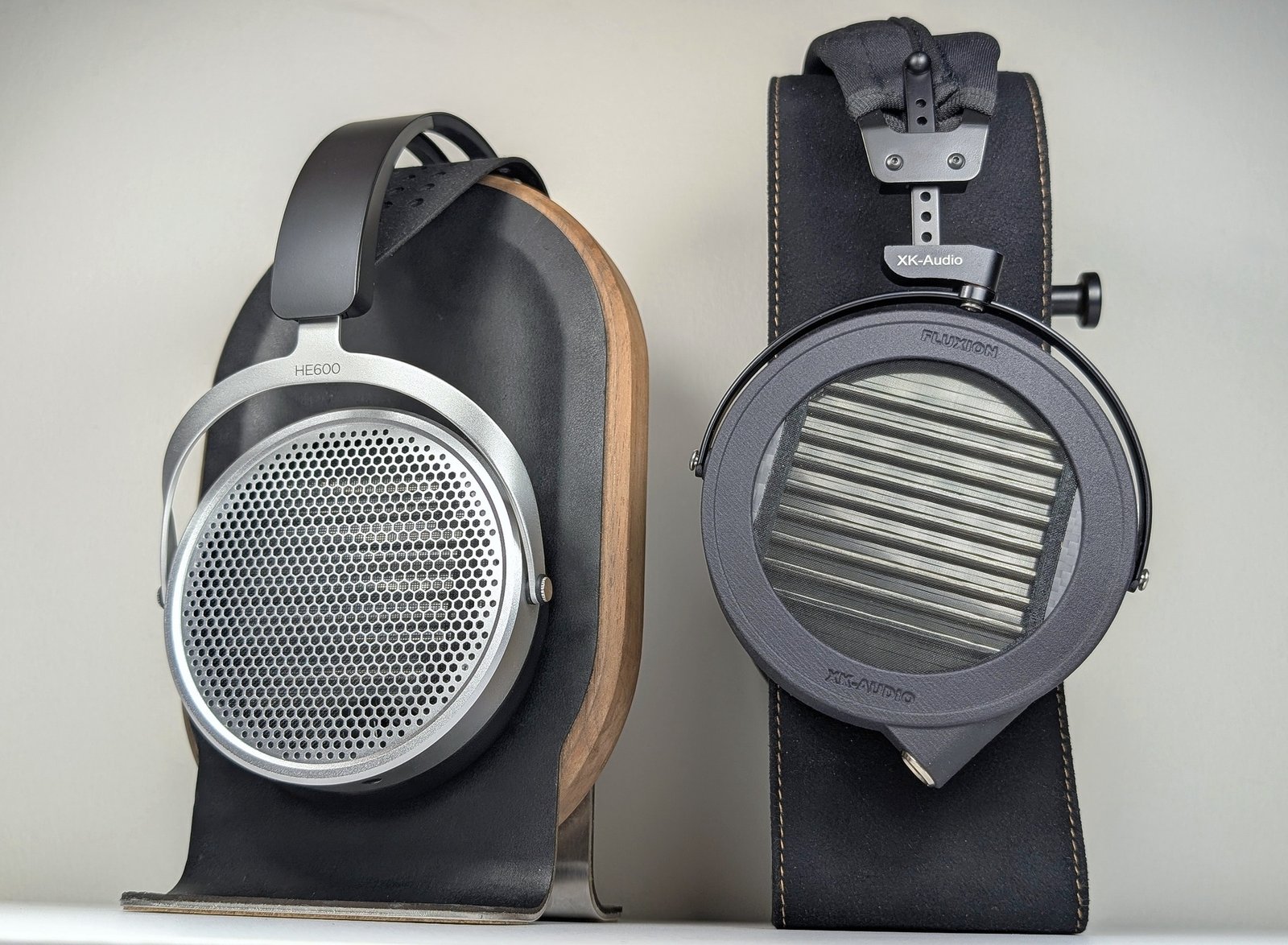
I can't help but compare the HE600 to XK-Audio's Fluxionplanar headphone model, where the outer edge of the drivers is exposed, similar to Hifiman's unveiled structure. Hifiman itself has not yet released a headphone of the same size class with exposed drivers, so XK-Audio got to do this first. The Fluxion costs somewhat less or slightly more depending on the place of purchase and tax policy.
Regarding the headband structure, the HE600 suffers from the short length of the head cushion I mentioned, while the Fluxion feels loose in the hands and needs its included extra padding for the headband. Without modification, I find the Fluxion more comfortable, especially since its ear pads are slightly more spacious. However, with ZMF's Co-Pilot Pad, the HE600 achieves quite similar comfort or even slightly better, while weighing almost 100 grams less than the Fluxion. Still, Hifiman's chosen materials feel more premium, as aluminum beats 3D-printed plastic.
In terms of amplification requirements, the duo doesn't differ much from each other, so in that sense, comparing them is meaningful.
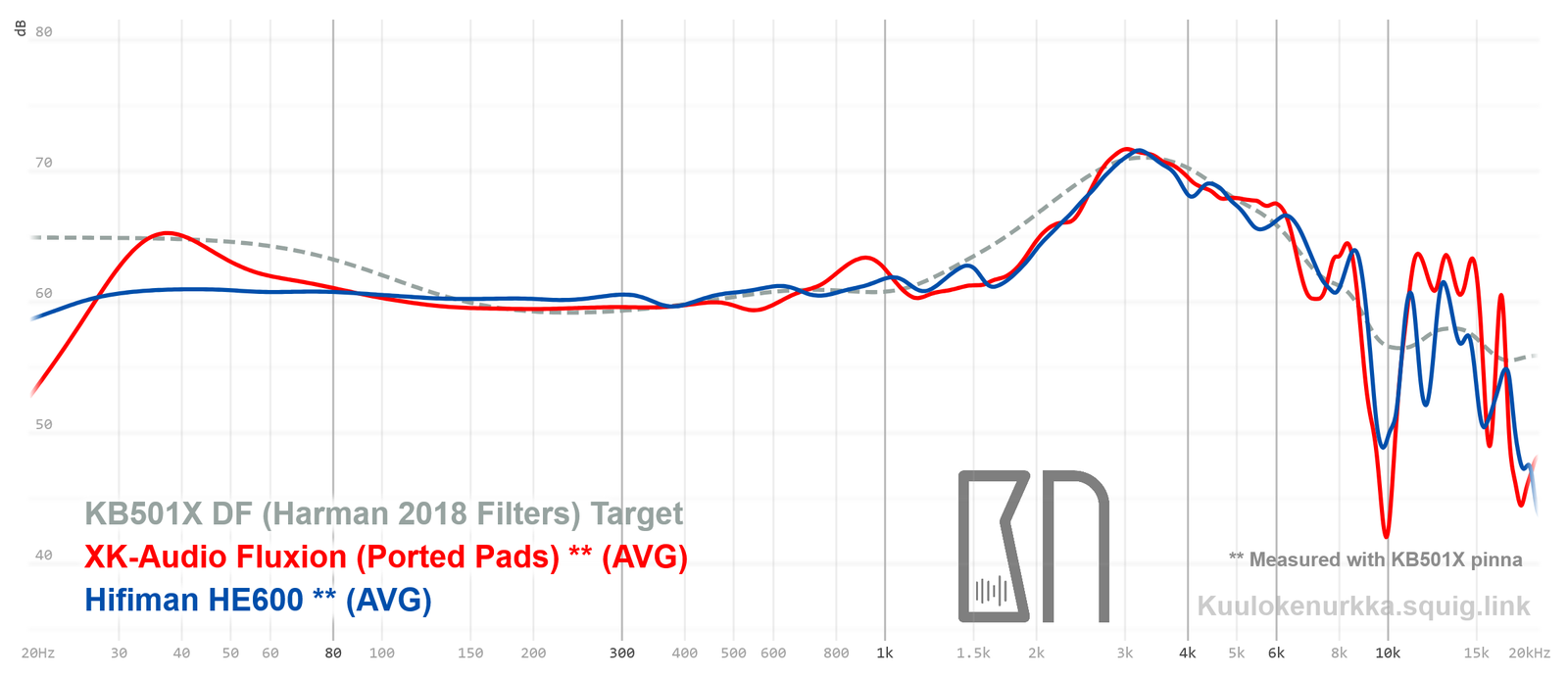
The frequency responses already reveal that these two headphones are fundamentally very similar. Still, if the HE600 is considered quite neutral, the Fluxion more strongly emphasizes the extremes of the frequency band: the sub-bass kicks harder, and the treble sparkles brighter. Since these two characteristics are not detrimental to my listening pleasure from the perspective of enjoyment, but rather the opposite, the Fluxion sounds more impressive and interesting to me.
Unfortunately, the HE600 feels like a watered-down version of a similar presentation style: the bass remains light in a comparative situation, and the treble is not effortlessly airy like the Fluxion's, but rather a bit tight. On the other hand, a slight advantage of the Hifiman model could be a slightly warmer and fuller midrange, if Fluxion's clarity and transparency do not appeal to someone.
I personally find the Fluxion more distinctive, primarily because, despite its open-back design, it can offer an entertaining bass and a transparent soundstage typical of planar headphones. Partially, a small bump around 1 kilohertz also adds more edge to the sound compared to the Hifiman model, making the overall result more memorable. The HE600, when listened to consecutively, sounds even surprisingly neutral and restrained, which is certainly not a bad thing compared to many less evenly tuned competitors. However, the Fluxion sounds so impressive that the HE600 would need something to make me interested in it. This is where it unfortunately falls a bit short.
In summary, the HE600 sounds like a good headphone, and the Fluxion even better and, above all, more special. XK-Audio has managed to make the sound feel more dynamic, more separated, and more open, allowing the Fluxion to compete more evenly with flagship headphones from other manufacturers. The Hifiman model, on the other hand, gets a bit lost in the manufacturer's own product line and doesn't stand out in the same way. Of course, Hifiman's products are structurally more refined, whereas it can be challenging for small workshops like XK-Audio to appear as a viable alternative to more established manufacturers.
Comparison: HE600 vs. Edition XV
Prices: 830 € vs. 430 €
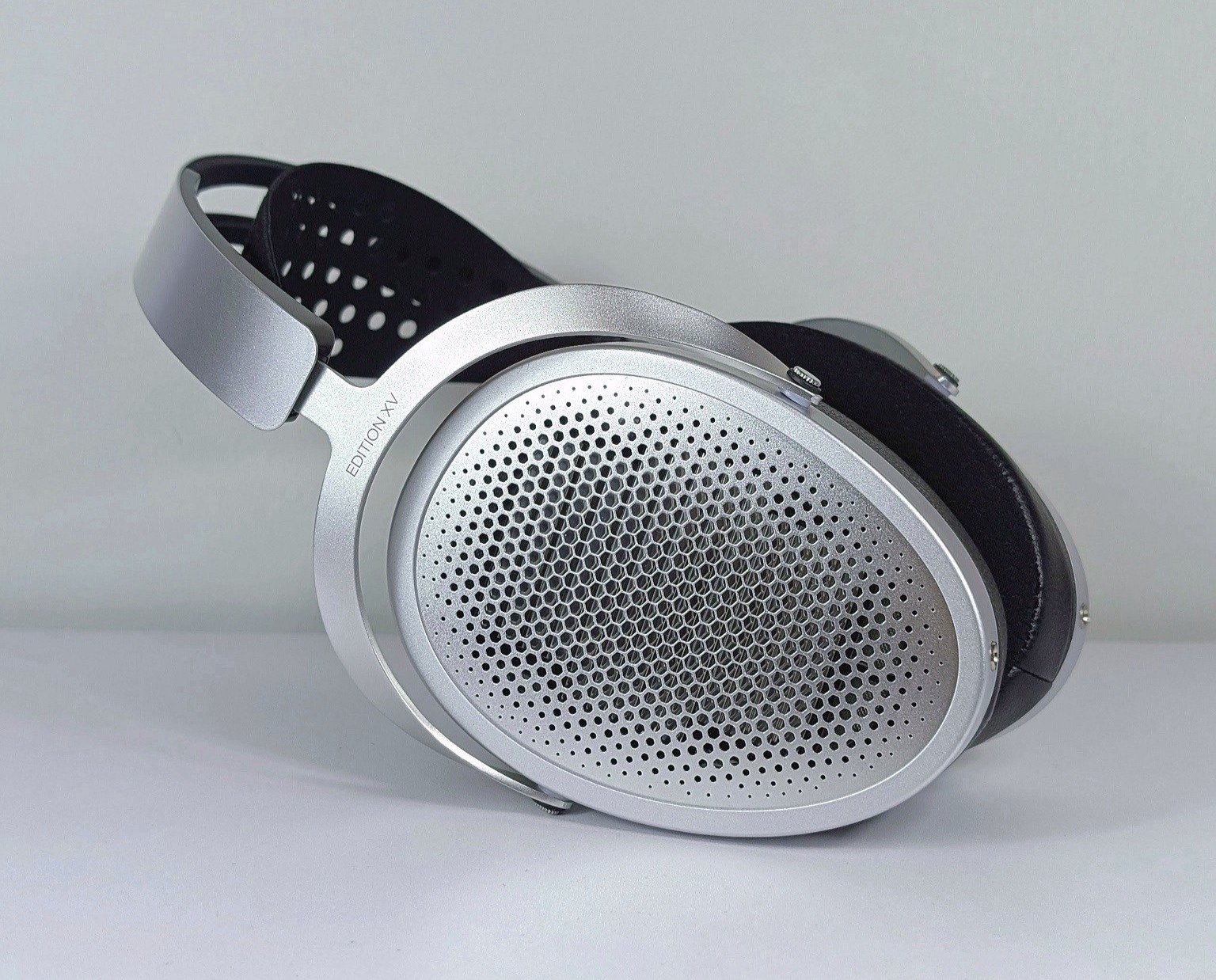
Since Hifiman's own Edition XV remained to complement my headphone collection, comparing it to the HE600 as another new model is also quite appropriate. The half-lower price makes the Edition XV feel like a more attractive purchase, especially since it has larger planar drivers based on the same technology, and the narrowness of the headband does not cause as severe fit issues as with the HE600. The Edition XV, of course, weighs 60 grams more, but at the same time, my ears fit much more spaciously inside the large pads. Since the accessories of the two Hifiman models are also identical, I don't quite understand what constitutes the additional price of the HE600. On the other hand, sound quality is considered the most important aspect of headphones, so perhaps the answer lies there.
The Edition XV is slightly less sensitive of the two and has a lower impedance, but generally, both headphones should work equally well with the same peripherals.
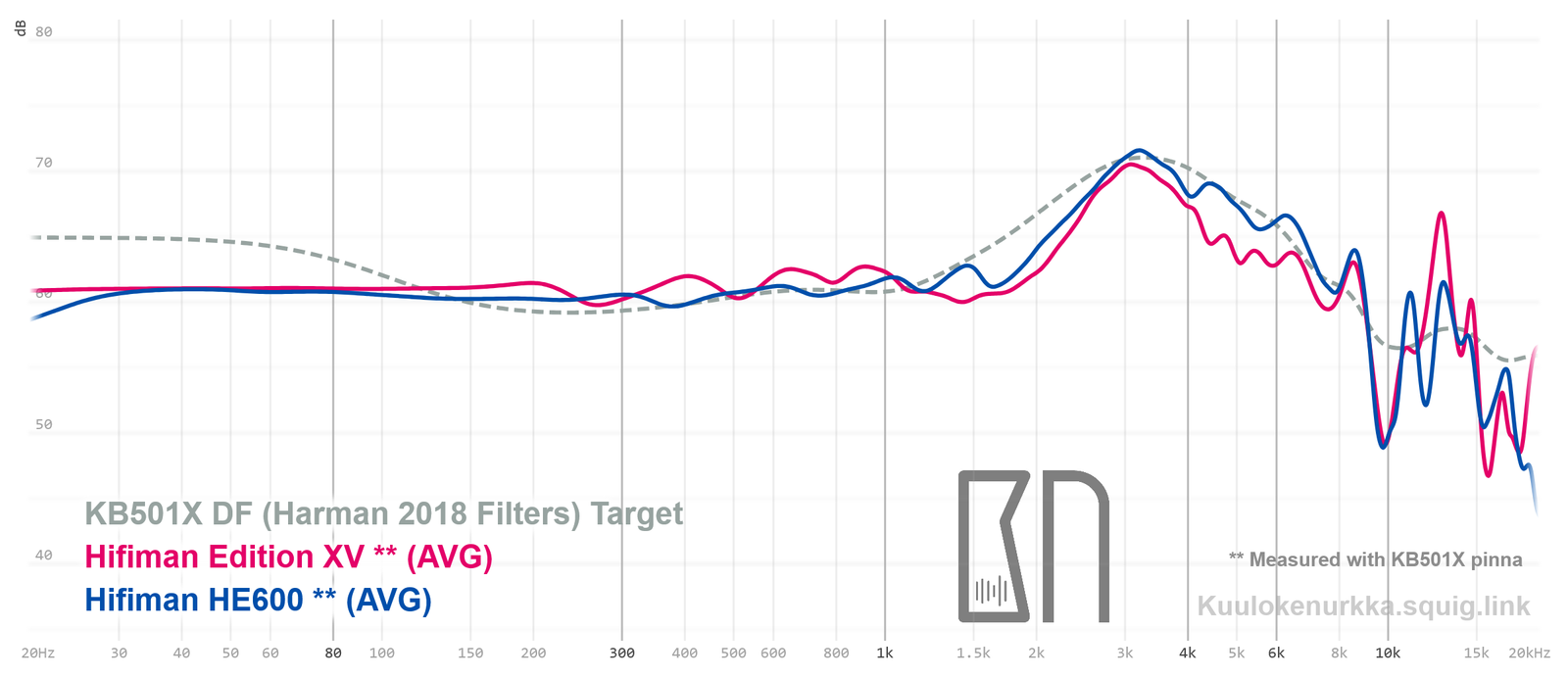
Objectively, the HE600 is the better and more balanced headphone of the two, but in my opinion, not as fun or memorable. The Edition XV is intentionally tuned to be slightly darker and fuller, making its listening enjoyable without the sound distorting too much for my taste. I also like the Edition XV's seemingly larger soundstage and, in general, its more powerful planar sound than usual. These characteristics are likely at least partly due to the larger drivers. However, if someone wants the most neutral headphones specifically made by Hifiman, the HE600 is a good candidate for that. Correspondingly, the manufacturer also offers plenty of headphone models brighter than this duo in the sub-500 euro price range.
Even regarding sound quality, the choice between the HE600 and Edition XV is strongly guided by the price difference between the headphones. Although the HE600 offers a technically more correct sound, the difference feels like a stylistic choice that is difficult to value 400 euros higher. Based on the more spacious soundstage, I might actually assume the Edition XV to be the more expensive option. On the other hand, I now perceive neutrality in headphones as a baseline for which I am not necessarily willing to pay a huge extra, for example, compared to the Sennheiser HD 600. So, if the HE600 sounded excitingly energetic and dynamic like the HE-6 series, the price difference compared to the Edition XV would be more easily acceptable. Due to the current identity crisis, I believe the Edition XV will clearly interest consumers more.
Summary
The HE600 once again proved to be another good Hifiman headphone and a versatile product, which, when aiming for neutral hi-fi sound, has hardly any weaknesses, apart from its overly narrow structure. Poor fit alone, of course, makes recommending the headphones quite difficult. The HE600 also has almost nothing to do with the original HE-6 series due to completely different drivers, even though the earcups are similarly round and the price is higher compared to, for example, the Sundara series.
Perhaps Hifiman did not want to start a completely new headphone series, but borrowed the name from the temporarily forgotten HE-6 series. On the other hand, in the past HE5XX-model was also supposed to resemble HE500, so misleading marketing is by no means a new thing for the manufacturer. I personally consider the HE600 a kind of successor to the Sundara, so when the price level eventually drops, the new model could become a similar long-standing favorite. These two models, in general, might one day compete for the same customers.
Currently, the pricing places the HE600 in an awkward position compared to Hifiman's other headphone offerings, as the HE1000, which originally cost over 3000 euros, could be bought for almost the same price. Also, the Arya Organic and Arya Stealth, with an RRP of 1500 euros, are now available even cheaper than the HE600. An even wilder situation occurs when adding Ananda Nano, Sundara Silver, and Edition XS to the shopping cart, as the combined price of this trio in Finland would be exactly the same as for the HE600. Alternatively, those interested in the HE-6 series could buy the older HE6se V2 from Hifiman's EU online store for about 350 euros (open-box & discount code) and pair it with, for example, the Edition XV, which would still save 50–100 euros compared to the HE600.
So, generally speaking, I cannot properly justify why we consumers should buy Hifiman's new headphones before they are sold at about half price, like older models. The manufacturer has cornered itself with its price dumping, from which it is difficult to escape. On the other hand, the Edition XV was surprisingly priced competitively, which is why it made a greater impression on me than the HE600.
Although the excellence of the HE600's sound quality cannot be denied, I would have hoped to see some innovations at the same time, such as a more robust sub-bass like the Fluxion headphone model. Now the situation is inevitably that Hifiman is, as it were, selling the same product again and again, slightly improved. Such headphones have been seen so many times that the novelty value remains quite small compared to, for example, the Edition XV, whose tuning deviates from the manufacturer's general line. If someone is currently choosing a balanced and reference-style headphone with a price cap of 800 euros, I would still rather recommend the HEDDphone D1, because it sounds more pleasant in its low frequencies and fits the head better.
Ultimately, the overly narrow structure prevents me from adding the HE600 to Kuulokenurkka's Wall of Fame, even though fundamentally it could belong there based on its sound quality merits. However, the headphones receive our special mention precisely for their sound quality, so we will certainly hear more about them in the future, once the price starts to drop to a more attractive level than currently.
Pros and cons:
+ Very balanced and somewhat neutral tuning
+ Smooth treble compared to many other Hifimans
+ Improved comfort compared to HE6se models
+ Cohesive appearance
+ Does not require a powerful amplifier
– The sound does not resemble the HE-6 series much
– The headphones only fit on the head when adjusted to the maximum position
– Rattling protective grilles of the drivers
– Sparse accessories
– Quite high RRP compared to Hifiman's other discounted headphone range
 EN
EN  FI
FI