Authors: Roderick (product review) & Sword of Damocles (introduction & measurement section)
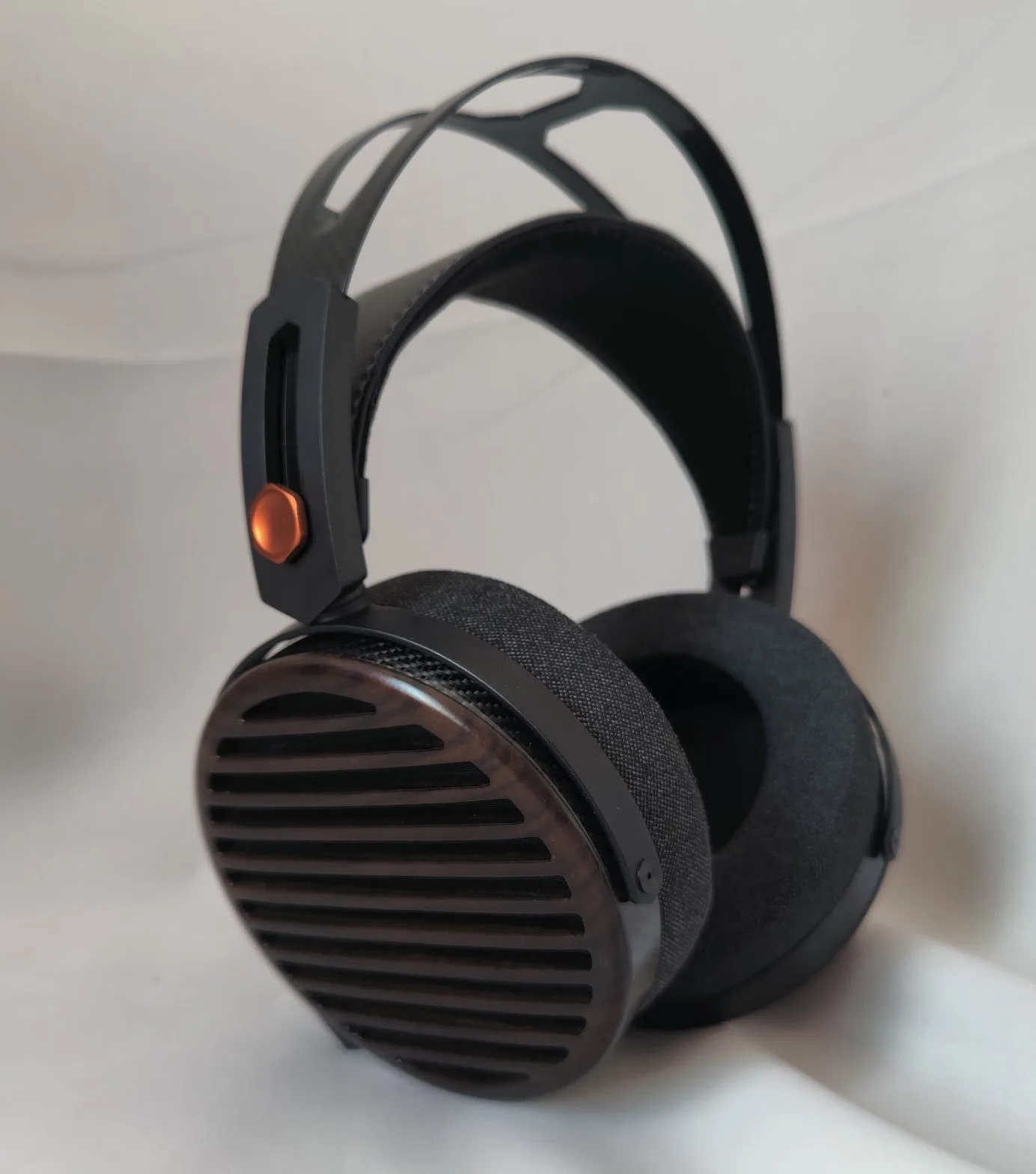
Table of Contents:
Information:
- Released: 2025
- Country of Origin: China
- Price: 749 €
- Type: open, over-ear
- 106 mm planar drivers (diaphragm thickness 1μm, gold-silver plated conductors, double-sided magnetic structure with Uniform Magnetic Field technology)
- Impedance: 25 Ohm
- Sensitivity: 94 dB/mW
- Weight: 427 g
- Connection type: 2x 3,5 mm
- Cable (Liquid Nitrogen Frozen Copper): Length 3 m / connector 4.4 mm
- Accessories: Carrying case, extra earpads, 4.4mm–6.35mm adapter and 4.4mm–XLR adapter
Review sample: Self-purchased product
Chinese Fiio has expanded its over-ear headphone selection at an accelerating pace since the release of the FT3-model. As the recently launched FT1-series focuses on lower price ranges, it is natural that the manufacturer has the enthusiasm to develop more expensive products as well. Until now, the title of Fiio's most expensive headphone model in Finland has belonged to the one costing around 550 euros, the FT5:s, but now it has been superseded by the 750-euro FT7 (manufacturer's product page), which we are reviewing this time. It is an open-back planar headphone, in line with current trends.
Fiio's marketing team has gone unnecessarily wild with the FT7, but avoiding excessive poetic language, the headphone concept consists of a lightweight plastic-carbon fiber structure, decorative grilles made of wood, large gold-silver plated planar diaphragms, and a more robust cable than usual. Quite similar planar headphones are already available in the same price range, but Hifiman Susvara -like drivers in this price range are something new. We wanted to find out if the FT7 could carve out its own niche in the highly competitive market with their help.
Packaging and accessories
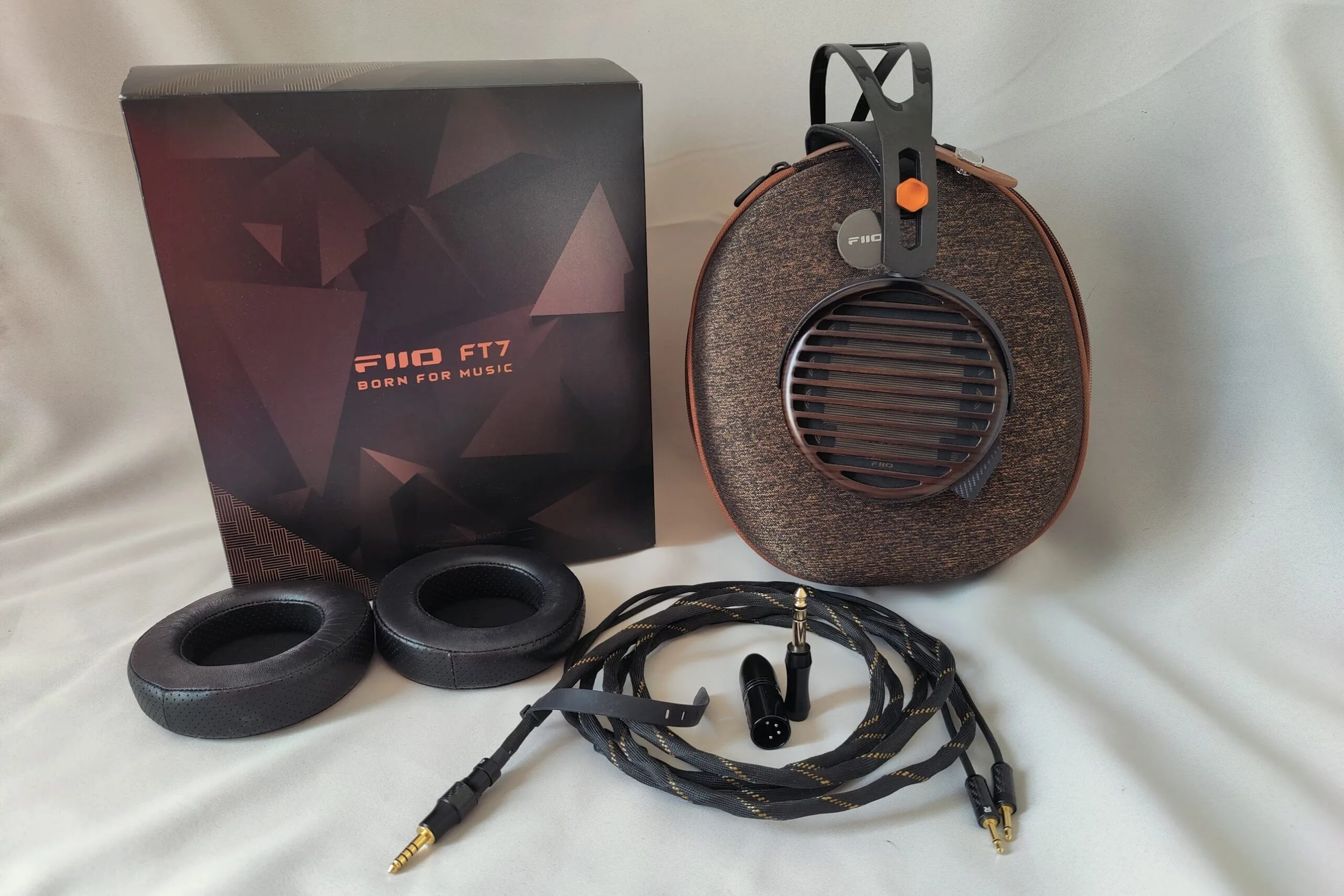
I'm used to expecting generous equipment and stylish packaging from Fiio headphones, and I wasn't disappointed this time either. There's nothing particularly special about the manufacturer's cardboard packaging, but they are nicer than some other competitors'. A similar case comes with other Fiio headphones, so it too is, as usual, very stylish.
The package also includes two different types of ear pads and a cable customizable with multiple adapters. The overall package offers good value for money, although something extra could have been included compared to the more affordable FT5 model. For example, a shorter cable would have been a useful addition.
This time too, Fiio offers a modular cable for its headphones, but slightly different from before. In the FT3 and FT5, either a 3.5 or 4.4 millimeter connector was screwed onto the end of the cable, after which a separate adapter (6.35 mm or 4-pin-XLR) could still be used if necessary. The FT7's cable comes standard with a 4.4 millimeter connector, for which the manufacturer offers 6.35 mm and 4-pin-XLR adapters. Thus, the headphones cannot be listened to from an audio source with a 3.5 millimeter connector without additional purchases. However, this connector is likely unnecessary for most in a product of this price range, so from a usability perspective, the change is positive. On the other hand, some will certainly be annoyed by this.
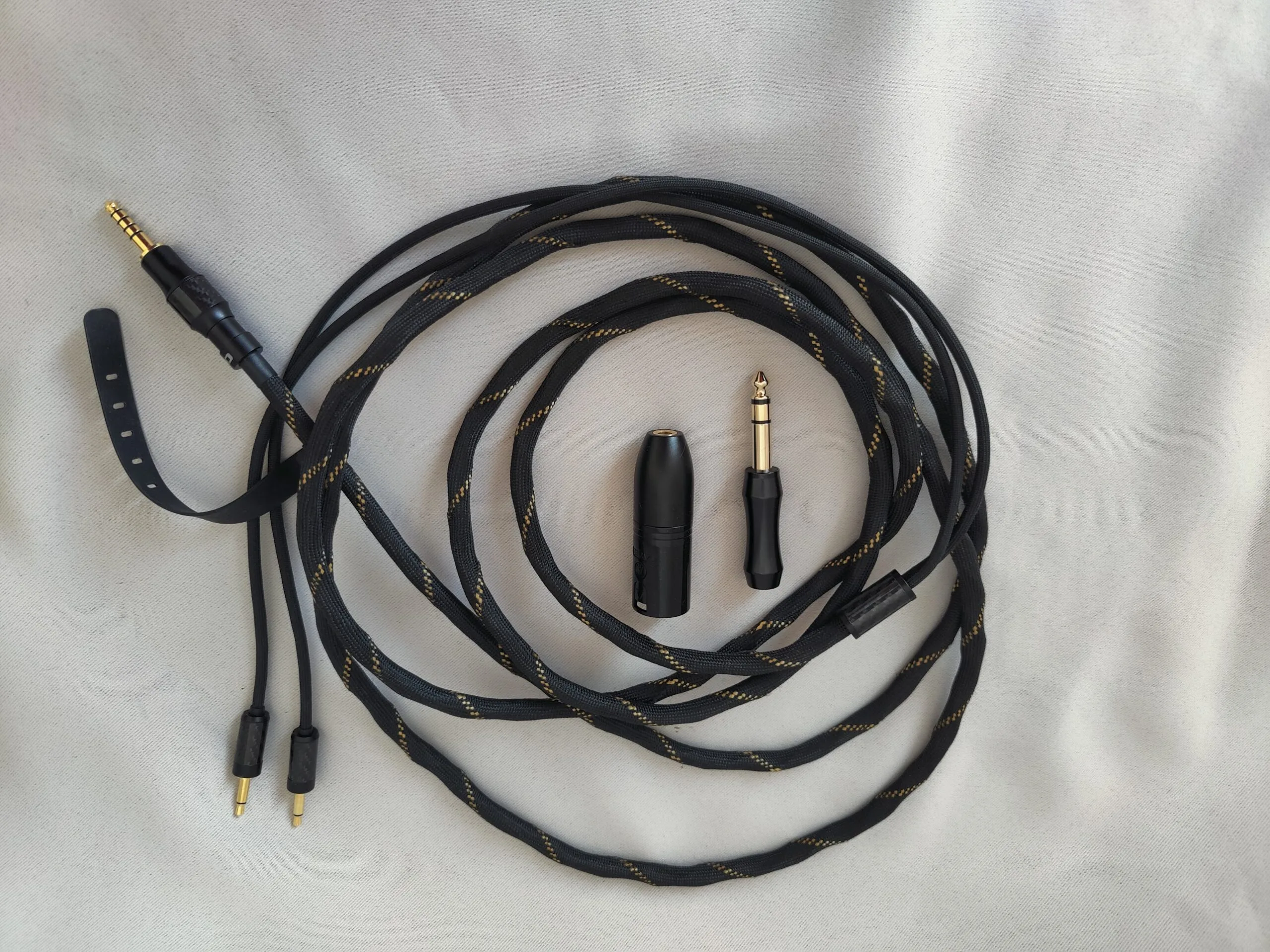
The manufacturer's chosen 6N OCC (99.9999% pure) cable is first-class in terms of materials. In addition to purity, the copper has been treated in liquid nitrogen, where it was kept at -192 ℃ for seven days. Those who like special cables might want to get the FT7 almost just for the cable itself, as bought separately, such a cable would be quite expensive.
I don't know how much the specially treated cable ultimately raises the selling price of the headphones, but in the name of truth, I think the money could have been spent more wisely. The cable is thick, stiff, and heavy. For desktop use, a three-meter length is also too much, whereas when listening to the FT7 on the sofa, it might conversely be too short to reach an amplifier on the opposite wall. I would rather have two cables of different lengths than one liquid nitrogen-treated cable, whose usability is not much to praise. As a kind of comparison, the FT7's cable quite closely resembles Sennheiser HD 800's cable.
Build and comfort
The FT7 is more slender in construction than the FT5 and FT3. The manufacturer's previous models were easily recognizable as relatives of each other, whereas in the FT7, it is difficult to see similarities to other FT-series models. The update is welcome in itself, because a lighter construction often reflects positively on user comfort. Since I assume the FT7's drivers are heavier than the FT5's, the new model's 30-gram weight reduction (427 vs. 456 g) can be considered a very good achievement.
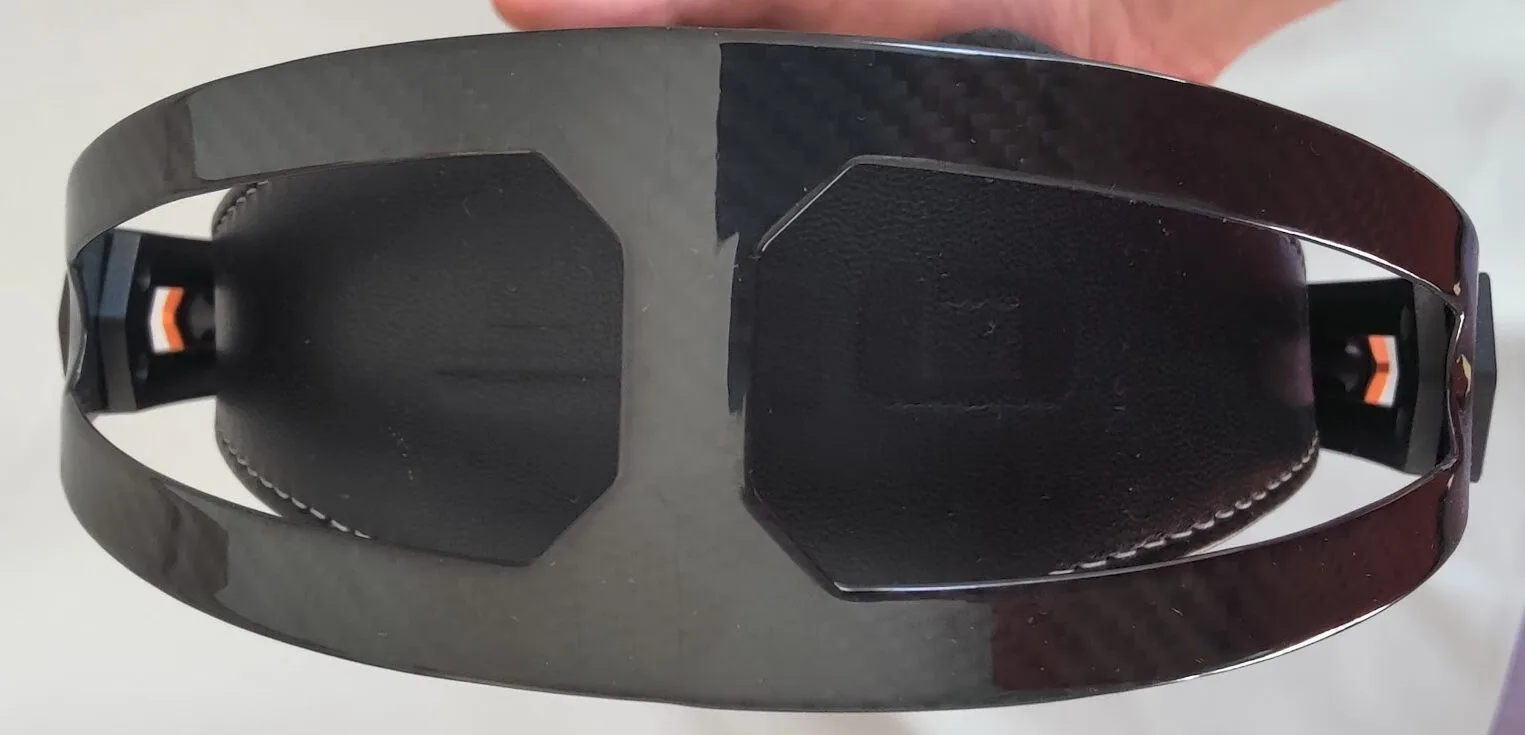
The headphone cups and the headband arch are made of carbon fiber, which is a practical material due to its lightness. At the same time, however, it is characterized by an unpleasant creaking, which inevitably lowers the product's quality impression compared to a steel arch. For example, Focal Utopian , the FT7 unfortunately creaks and rattles like a cheap toy.
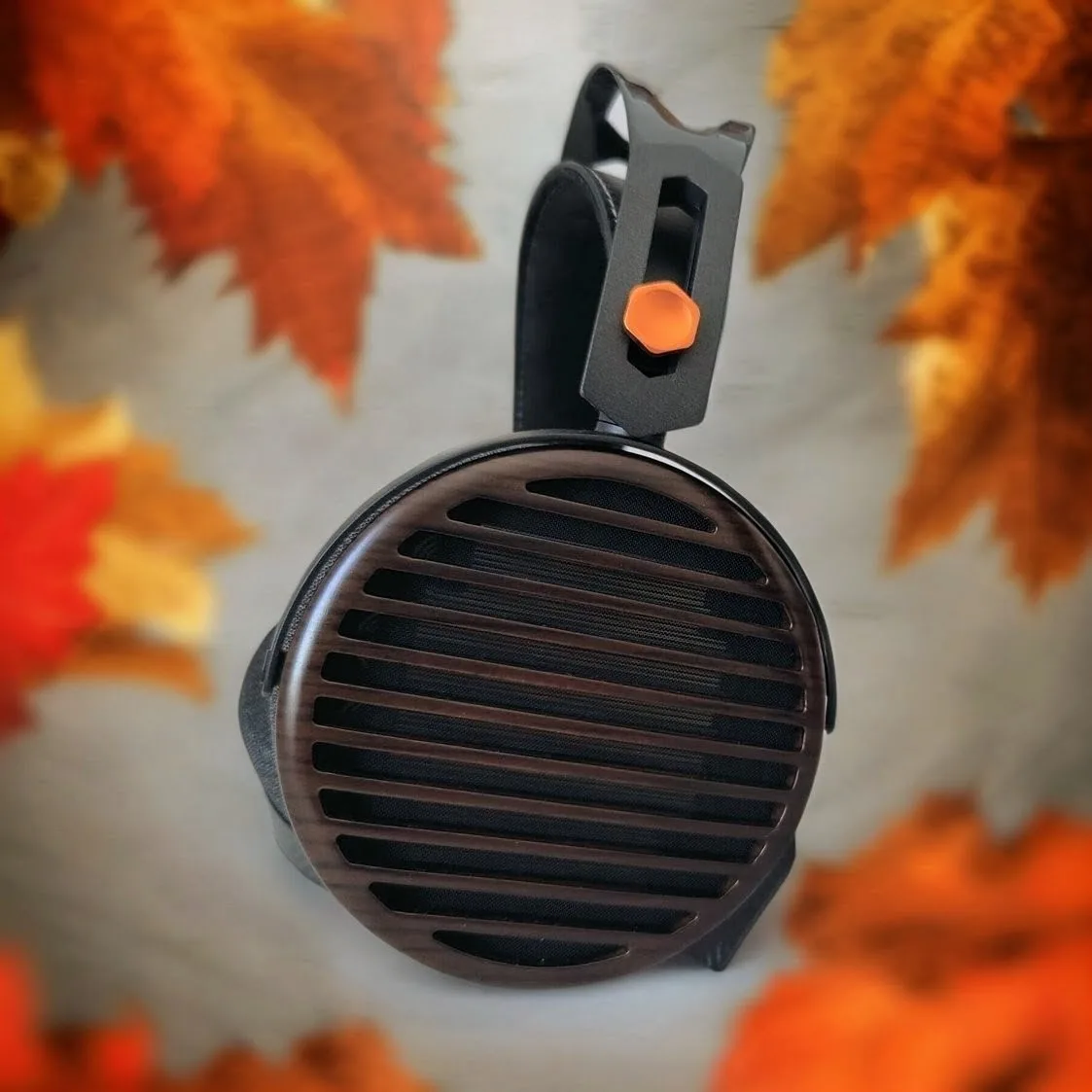
The grille protecting the drivers, on the other hand, is made of zebrawood. Although both it and carbon fiber are fine materials in themselves, to my eye they clash a bit with each other. On the other hand, the wooden grille has been treated so dark that it is not even recognizable as wood in all lighting conditions.
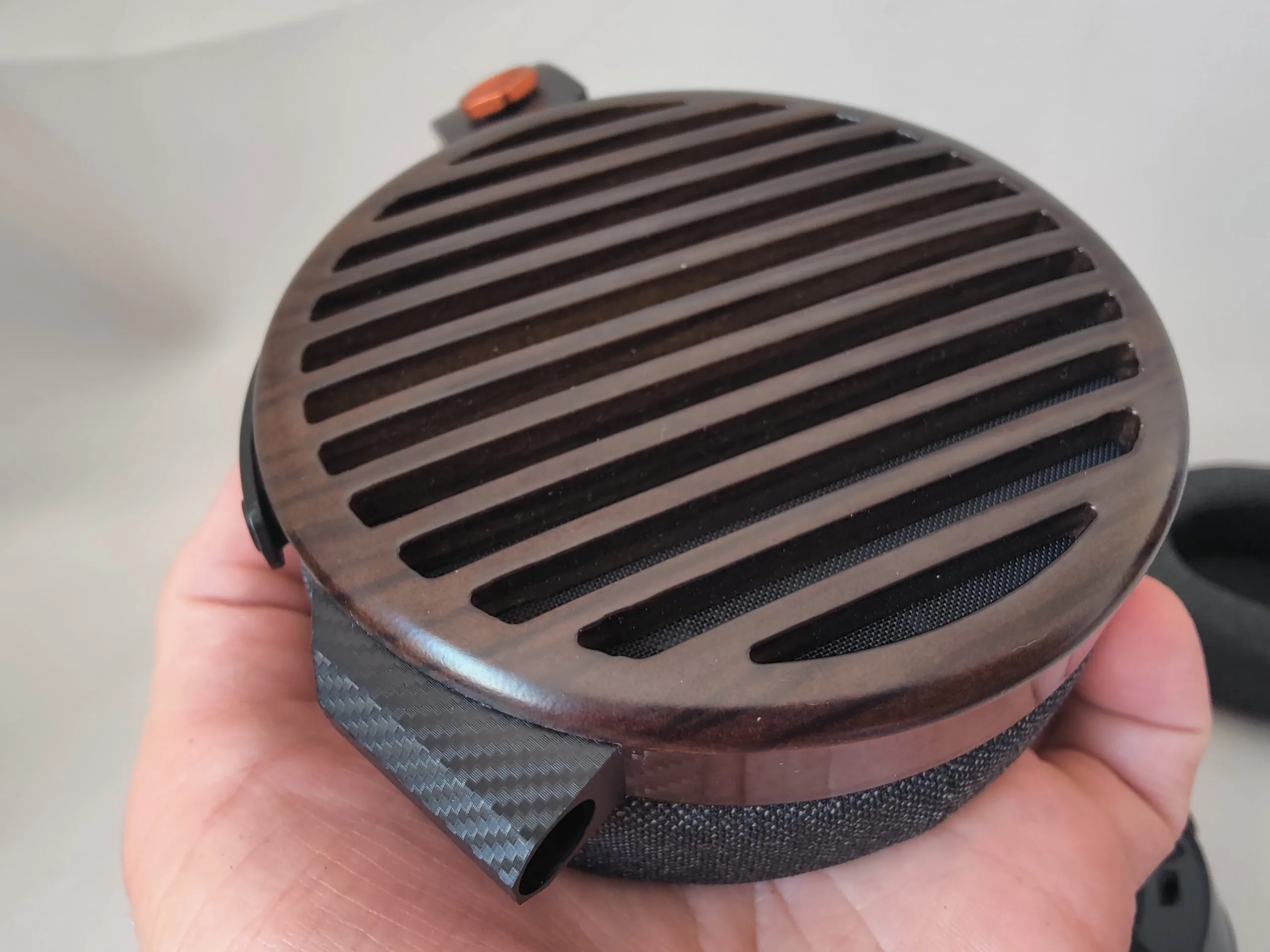
The parts responsible for height adjustment appear to be plastic. At first, I assumed they were magnesium-aluminum alloy like the FT5 due to the same colored paint finish, but upon closer inspection, the materials feel different and produce a different sound when scratched with a fingernail. The durability of the plastic parts raises some concerns, as the attachment between the fork and the headband otherwise seems quite flimsy. I also consider the orange knob, borrowed from Fosi Audio's color palette, a peculiar choice, as its appearance does not suit the FT7 at all in my opinion.
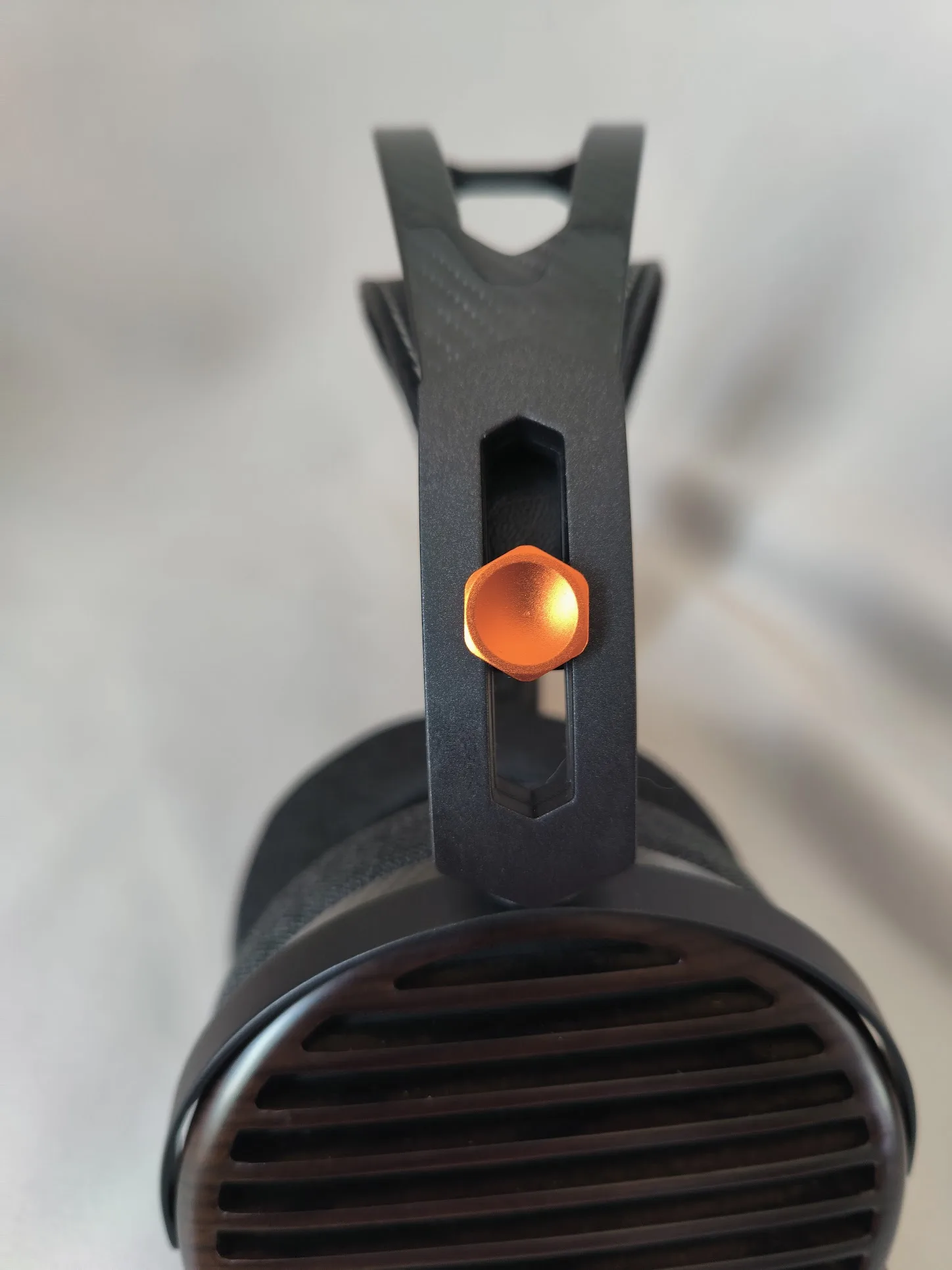
More concerning than material and aesthetic inconsistencies, however, is that Fiio once again failed in the quality control of its product release (compare FT1 Pro). In the first production batch of the FT7, the height adjustment does not work properly; when placing the headphones on the head, the headband may slide into the wrong position. The mechanism thus lacks sufficient grip. This problem has reportedly been fixed in newer production batches, although some complain about the stiffness of the mechanism in those.
It is astonishing how Fiio's quality control can be so poor that an entire batch of defective headphones ends up for sale and reaches consumers. Defective headphones can, of course, be exchanged for new ones, but that always involves some hassle. The adjustment mechanism also lacks clear markings to show whether the headband has been adjusted to the same height on both sides. The user therefore has to count clicks.
Both of the earpad options included with the FT7, however, are spacious and feel comfortable on the ears. Although the earpads are not particularly thick, a slight tilt adds more depth to them. If Hifiman headphones feel suitable, the FT7 also fits the ears excellently. Fiio's designed clip attachment also works perfectly, making earpad replacement quick, and they cannot be installed incorrectly in any way, as long as all clips are snapped into place. Due to different materials, there are differences in the sound quality of the earpads, which we will discuss further shortly.
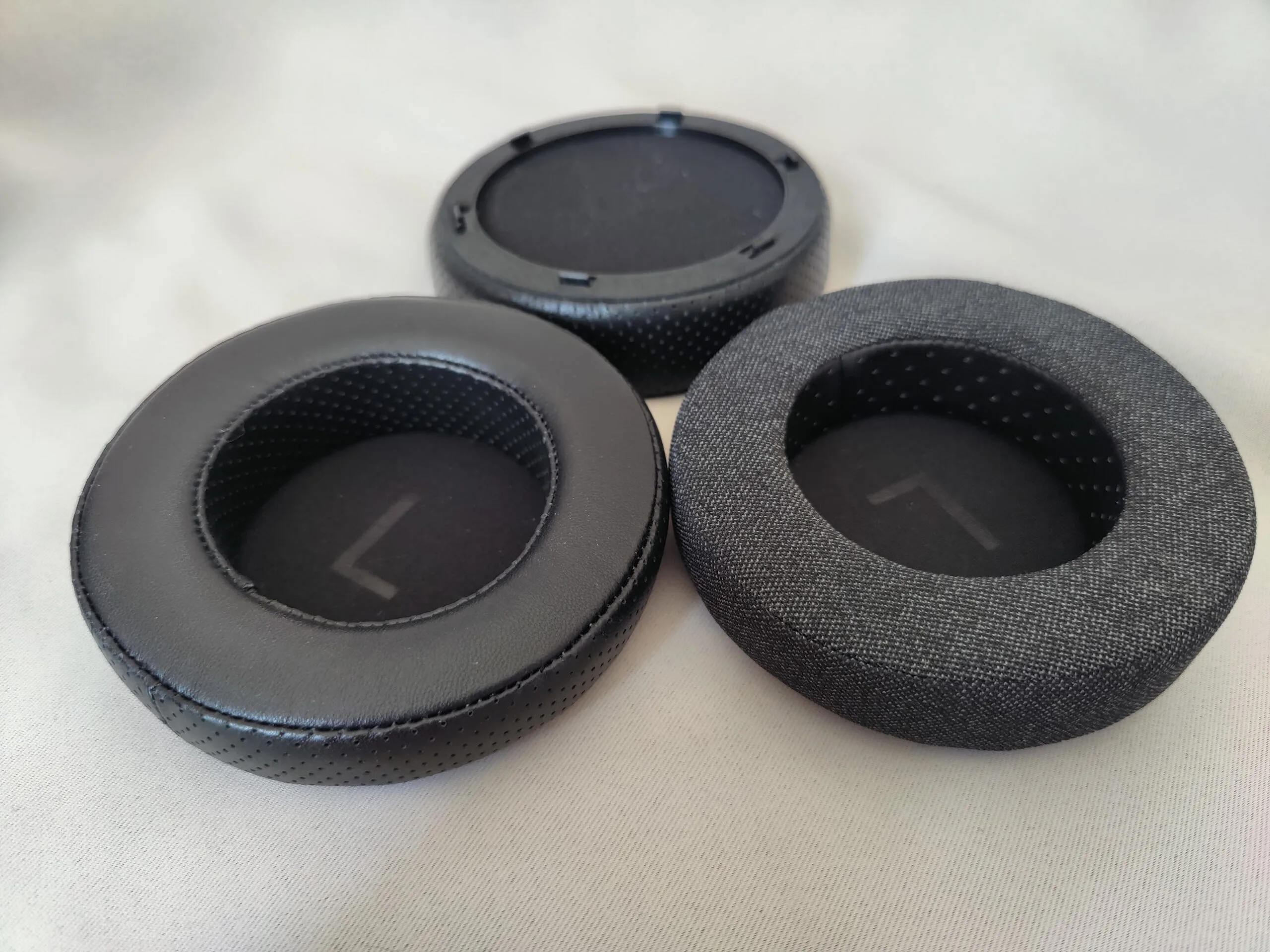
Thanks to its relatively light weight, gentle clamping force, and comfortable earpads, the FT7's wearing comfort reaches a good level, even though the heavy and stiff cable slightly detracts from the overall experience. The fit is also ultimately quite loose, so it's best to listen to the headphones while sitting still to keep them on your head. Without a shorter cable, nothing else would even come to mind, on the other hand.
Sound quality
Planar drivers influenced by high-end headphones
Fiio has developed large planar drivers for its FT7 model, which essentially incorporate all the features familiar from expensive high-end headphones. Firstly, the diaphragm thickness is 1 micrometer/micron, which is only one thousandth of a millimeter. This is not quite the smallest figure on the market, but it is close to Hifiman's ”Nanometer Grade” diaphragms and the 0.5 micron thick diaphragms of Audeze LCD-5 and Moondrop Cosmo. For the durability of the drivers, slightly thicker diaphragms might even be beneficial.
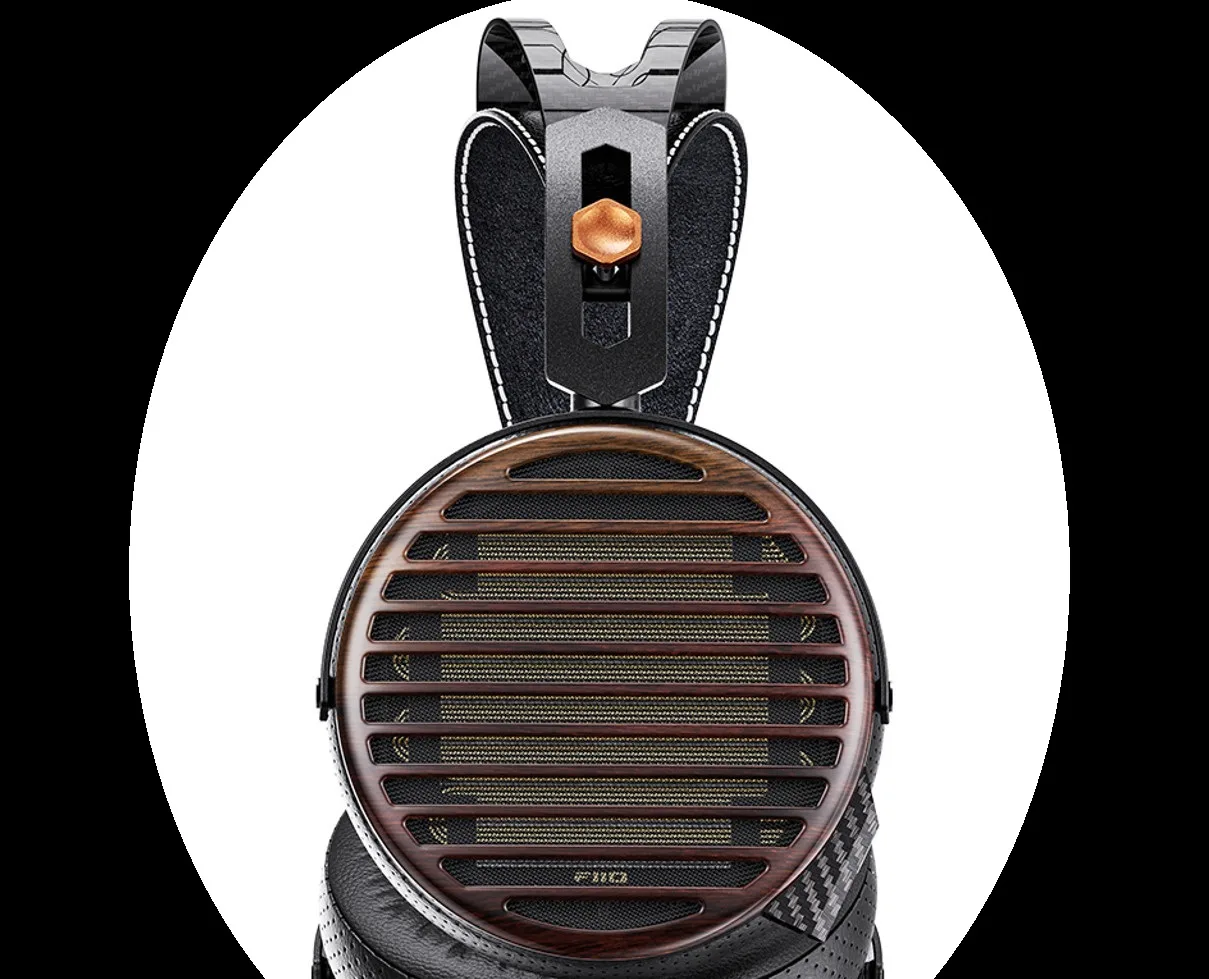
The FT7's conductors are layered with 24-carat gold and silver, so in that respect, the material choices resemble market-leading products. The drivers also look quite similar to those in the Hifiman Susvara, and they also feature a double-sided magnetic structure implemented with N52-strength magnets. In addition, like many other manufacturers (Hifiman, Moondrop, etc.), the edges of the magnet bars (18 pcs) have been slightly rounded to allow sound waves to pass between them as freely as possible. Fiio calls this Uniform Magnetic Field Design, which also includes optimizing the uniformity of the magnetic field with the help of FEA (Finite Elements Analysis) simulation. The utilization of such modern technology in the design of planar drivers is becoming more the rule than the exception.
Impedance measurements and amping requirements
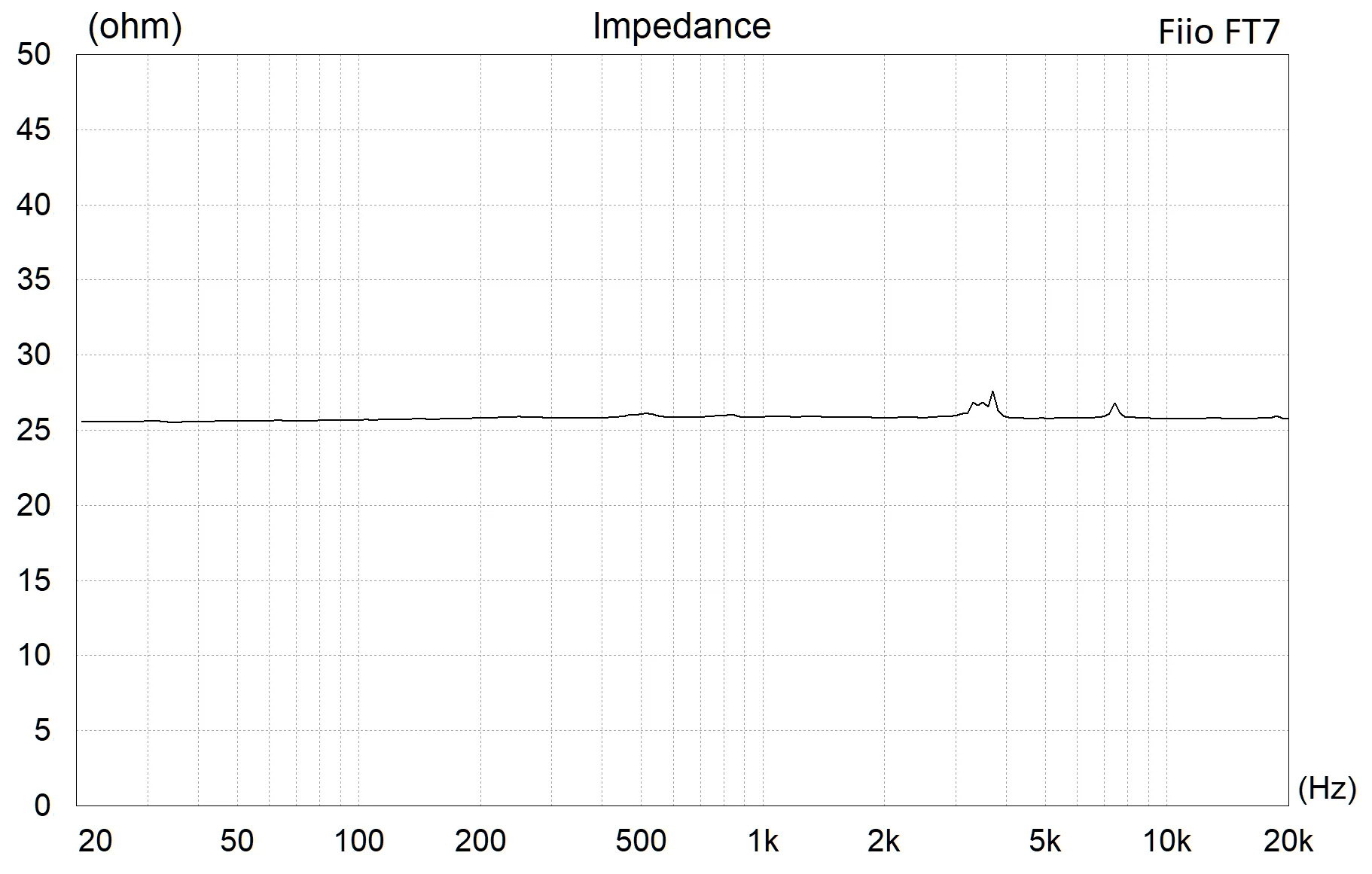
The FT7”s impedance response is typically flat for planar drivers, settling at around 25 ohms, as the manufacturer also states. A couple of ”oscillations" between 3–8 kilohertz suggest that there might still be room for improvement in the design or manufacturing process of the drivers, but this should not have practical significance.
Fiio states the headphones' sensitivity as 94 dB/mW, so their amplification requirements are similar to many Hifiman models. Thus, power is needed quite moderately to achieve a suitable volume. Perhaps listening to the FT7 with just a mobile device could not be recommended, but any modern headphone amplifier should suffice, as most devices today are optimized to provide ample current for low impedance loads.
Headphone Measurements
Our frequency response measurements have been made with a clone IEC-60318-4 coupler and KB501X pinnae. The Harman target curve from 2018 is used as a reference point and generalization of the headphone response that would sound good to most people. For more information on the measurements and their accuracy, see Headphone Measurements-page. The FT7's frequency response is also comparable with other measured headphones Squiglink .
Leather earpads vs. fabric earpads:
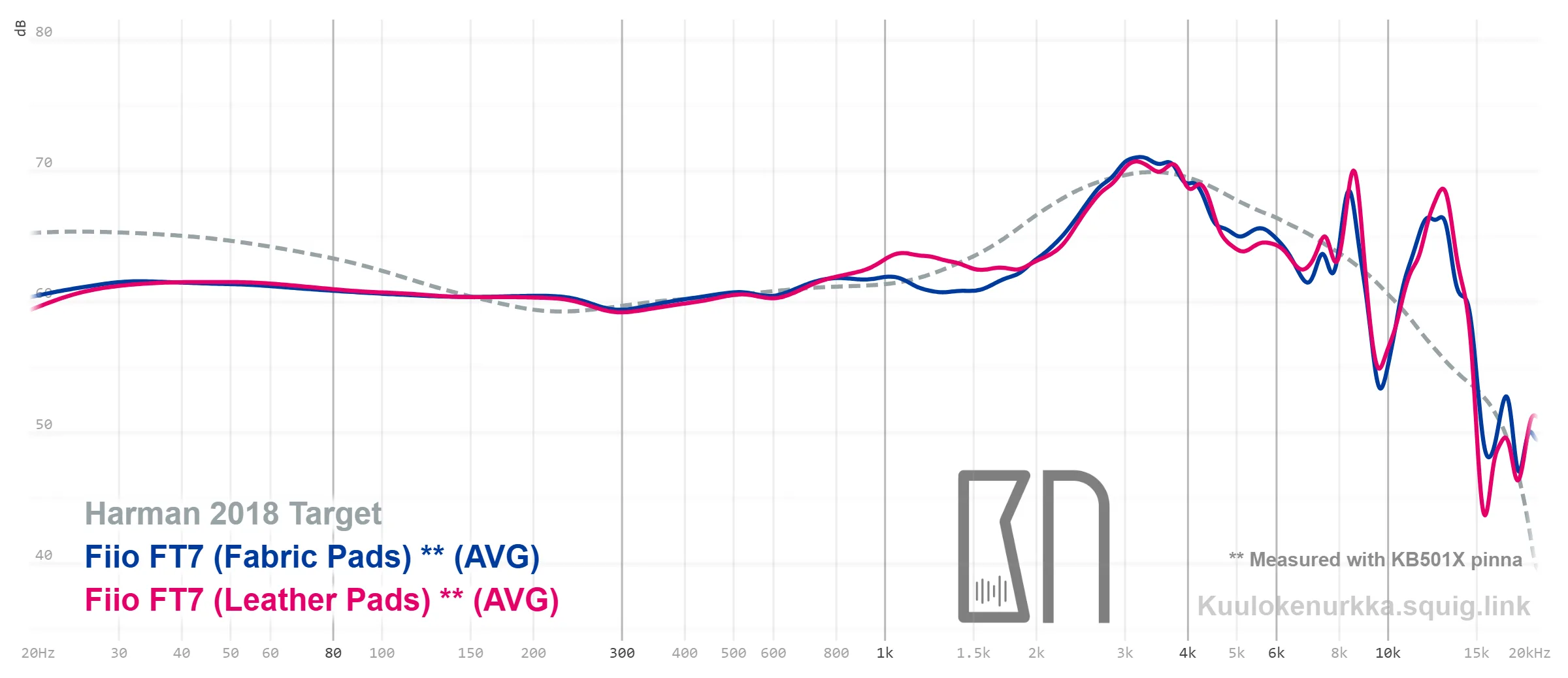
The differences between the two earpad models remain small, but are nevertheless audible between 1–1.5 kilohertz. Fabric earpads sound calmer and, objectively evaluated, more natural, while leather earpads emphasize this frequency range.
Treble peak of the right driver:
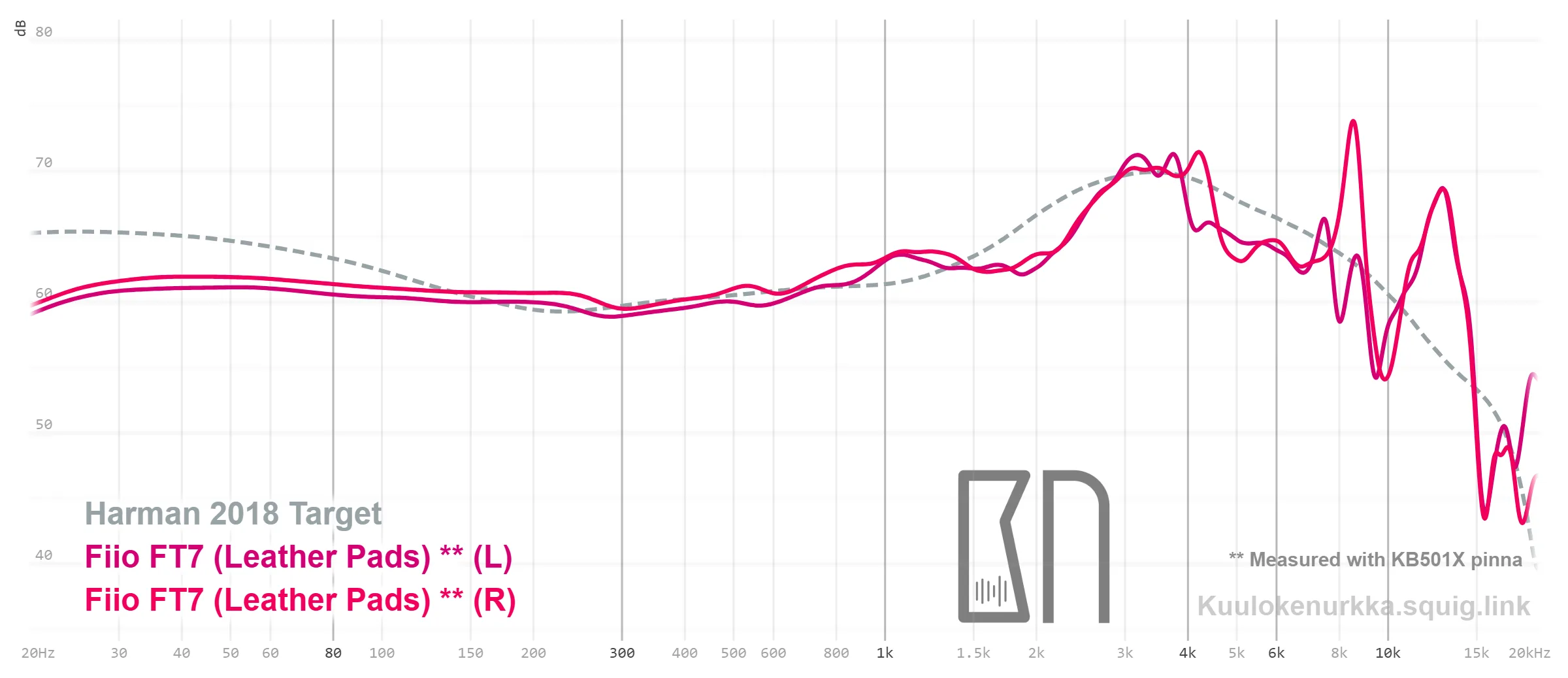
All FiiO planar headphones exhibit minor peculiarities in the high frequencies, and the FT7 is no exception in this regard. In the test headphones, the rightmost element reproduces the 8–9 kilohertz range with a strong emphasis. A similar difference between the two elements is also evident from frequency response measurements made by others, so it is likely some kind of structural resonance that the manufacturer does not eliminate during quality control. However, since the treble peak of the other element is limited to a very narrow frequency range, it is often difficult to detect, or at least it does not manage to sound particularly disturbing among other musical content.
Sound observations
During the test period, I only used fabric earpads, as their more subdued reproduction of the 1 kilohertz region calms the headphones' slightly sharp characteristic sound. This calming also brings out the bass frequencies better. With leather earpads, the FT7's sound is accentuatedly sharp, as if the headphones had been equalized to sound as accurate and resolving as possible.
The FT7 reproduces bass very typically for planar headphones. Compared to most headphones equipped with dynamic drivers, the low frequencies are therefore quite dry and lean. On the other hand, the reproduction is accurate, and with linearity, even the very lowest frequencies stand out clearly. The FT7”s bass lacks the ”rumble" style of old Audeze models, and the impact of the reproduction is nowhere near Hifiman's HE-6-model or the newer HE6se: which would be a good comparison for FiiO headphones in terms of price.
Although the FT7 doesn't boast with the power of its low frequencies, the reproduction doesn't need to be criticized either. Many competitors, such as the Hifiman Ananda, sound less impactful. In terms of the quality and impact of the low frequencies, the FT7, in my opinion, places itself in the upper mid-tier of planar headphones, somewhere between Hifiman Edition XS: and Audeze LCD-X: In addition, the FT7 deserves full marks for its distortion-free bass reproduction. When listening to my bass test tracks, the headphones are capable of a cheek-shaking experience at high volumes, where the listener's tolerance for mid-range and high frequencies is met before the drivers distort.
The clarity of the midrange is also, in my opinion, one of the FT7's strengths, as the presentation is astonishingly clean and accurate. The more affordable FT5 sounds nasal and unnatural in a direct comparison. This is, of course, no surprise, as the FT5's frequency response is clearly designed for listeners who are attracted to a slightly more peculiar presentation. On the other hand, the FT7 also sounds a bit forced, because the initial part of the sounds is emphasized, making the timbre edgy, but a tad unnatural. With leather earpads, this characteristic is even more clearly audible due to the emphasis around 1 kilohertz.
Despite its accuracy, the FT7's mid-range unfortunately fails to captivate me, neither by inspiring nor by evoking emotions. I perceive the timbre as a tad stark, which partly leaves the listening experience a bit flat. The problem actually lies in the fact that I have heard similar reproduction so many times before that the significance of minor weaknesses grows larger than reality in critical listening. So, the FT7's mid-frequency reproduction is actually quite good, but it doesn't manage to bring anything new or memorable to the table.
Like most Hifiman planar models, the FT7”s overall sound leans towards brightness. With a suitable amplifier, the situation can be somewhat balanced, but more on that in a moment. The FT7”s treble does not sound quite as clear in its air frequencies (10 kHz ->) as similarly priced Hifimans, but in terms of high-frequency resolution, it definitely reaches the best of the 500–1000 euro price range. With leather earpads, there is some extra "sibilance" in the sound, but the fabric earpads correct these problems, presumably caused by reflections from the surface material, quite admirably.
FT7 effortlessly brings out details and nuances from music that are easily missed with darker-tuned headphones with weaker resolution. The kind of transparency in reproduction is also top-tier for its price range. I don't perceive any blurriness or veil between the music and myself. For me, these characteristics determine whether headphones are worth their price: in my opinion, the FT7 passes the test with flying colors.
On the other hand, the soundstage in these headphones is somewhat problematic. As commendable features, I perceive good depth in the reproduction, and the background is ”dark,” as one would expect from headphones in this price range. In this regard, the FT7 surpasses, for example, SASH Tres SE:s and, according to my memory, also Hifiman Edition XS: and Focal Clear MG:s. At the same time, however, the soundstage forms a traditional narrow three-bubble projection, which is likely familiar to many from, for example, Sennheiser HD 600-series. In other words, expensive planar headphones like the FT7 should, in my opinion, be capable of something a little better. I can't think of a single Hifiman headphone with a smaller-feeling soundstage. Typically, Focal and Grado headphones, which have a somewhat small soundstage, compensate for the situation with their strong dynamics. On the other hand, if a Focal-style intimate soundstage is pleasing and someone happens to be looking for exactly that, I could see the FT7 as a suitable planar alternative for such a presentation.
Many who are familiar with planar headphones are certainly accustomed to somewhat deficient dynamics. Rare are Hifiman HE-6: and Abyss AB-1266-like planar headphones whose dynamics can withstand comparison with the best dynamic headphone models. Unfortunately, the FT7's dynamics place it in the middle tier of planar headphones, meaning the grip is somewhat bland and rather uninspiring. Small changes in tempo and intensity are still reproduced excellently, but large-scale bombardments fall far short of what, for example, more expensive Focal and ZMF headphones are capable of. Among planars in the FT7's price range, the Sash Tres SE, most Audeze LCD-2 variations I've heard, and the Hifiman HE6se perform clearly better. The Fiio FT5 is also more convincing in terms of macrodynamics than the FT7.
Peripheral device notes
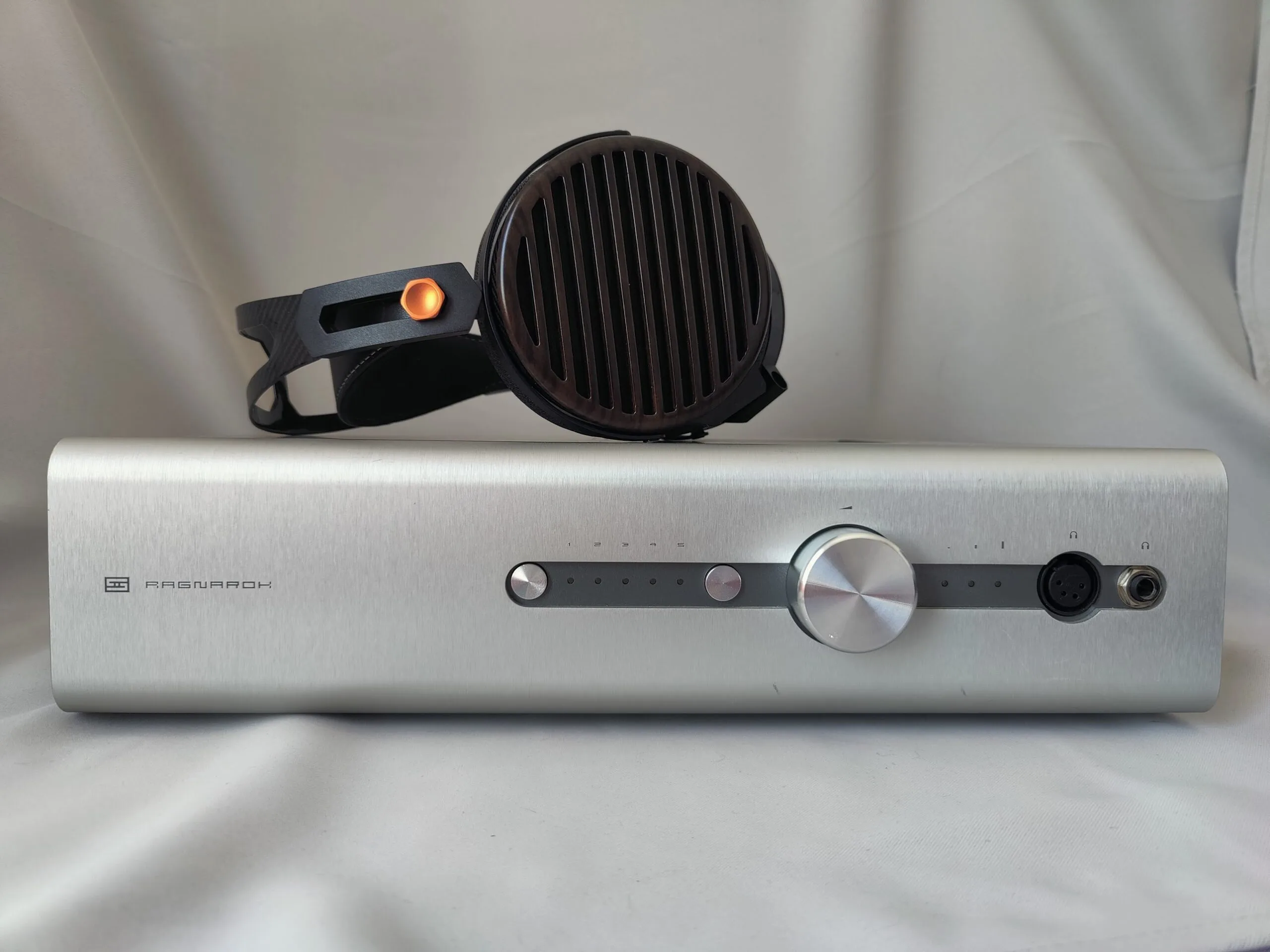
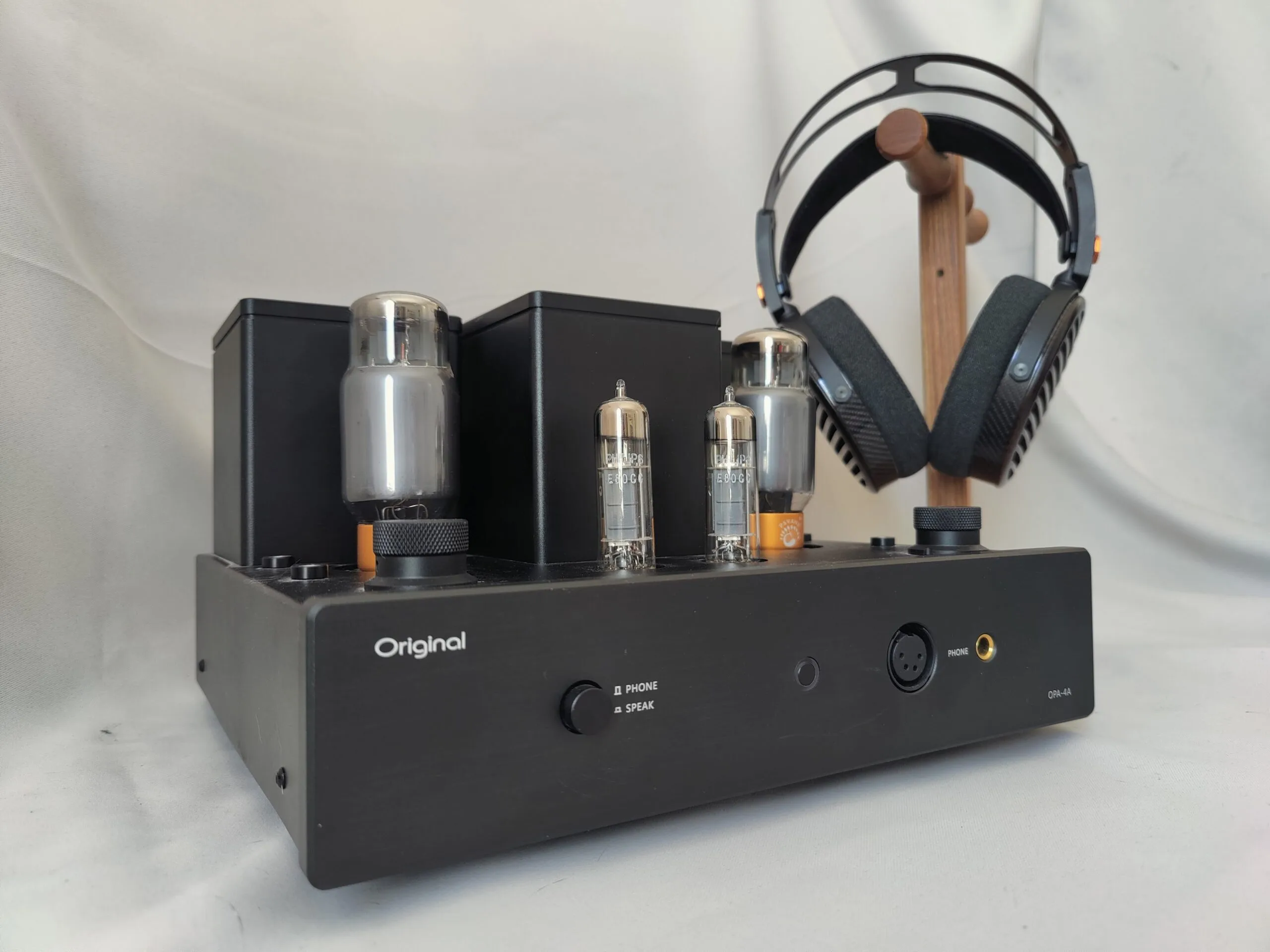
During my test period, the Soekris dac2541 served as the D/A converter for the FT7, and I also tried its headphone output. In my opinion, the device's headphone amplifier section matches the power figures and quality of typical alternatives from lower price ranges. Creative Sound Blaster X5 represented a low-power headphone amplifier, while the role of the power mill was handled by the Schiit Audio Ragnarok gen1, which, despite its age, is still one of the world's most powerful headphone amplifiers. In the name of versatile testing, I also chose the Original OPA-4A as the tube amplifier, which is the most powerful and most suitable for planar headphones among my tube-powered devices.
The relatively low-power Creative X5 reproduced the headphones effortlessly via the balanced connection. Compared to my other devices, the FT7 sounded a bit calmer, and the high frequencies were not as emphasized. The result was pleasant in itself, but I still felt that the X5 didn't do justice to Fiio's headphones. In my opinion, the darkness of the reproduction background and the resolution of details did not reach the same level as with more expensive and powerful amplifiers, although I might have subconsciously expected the cheapest device I tested to sound the worst. Generally speaking, the differences between amplifiers are actually quite small.
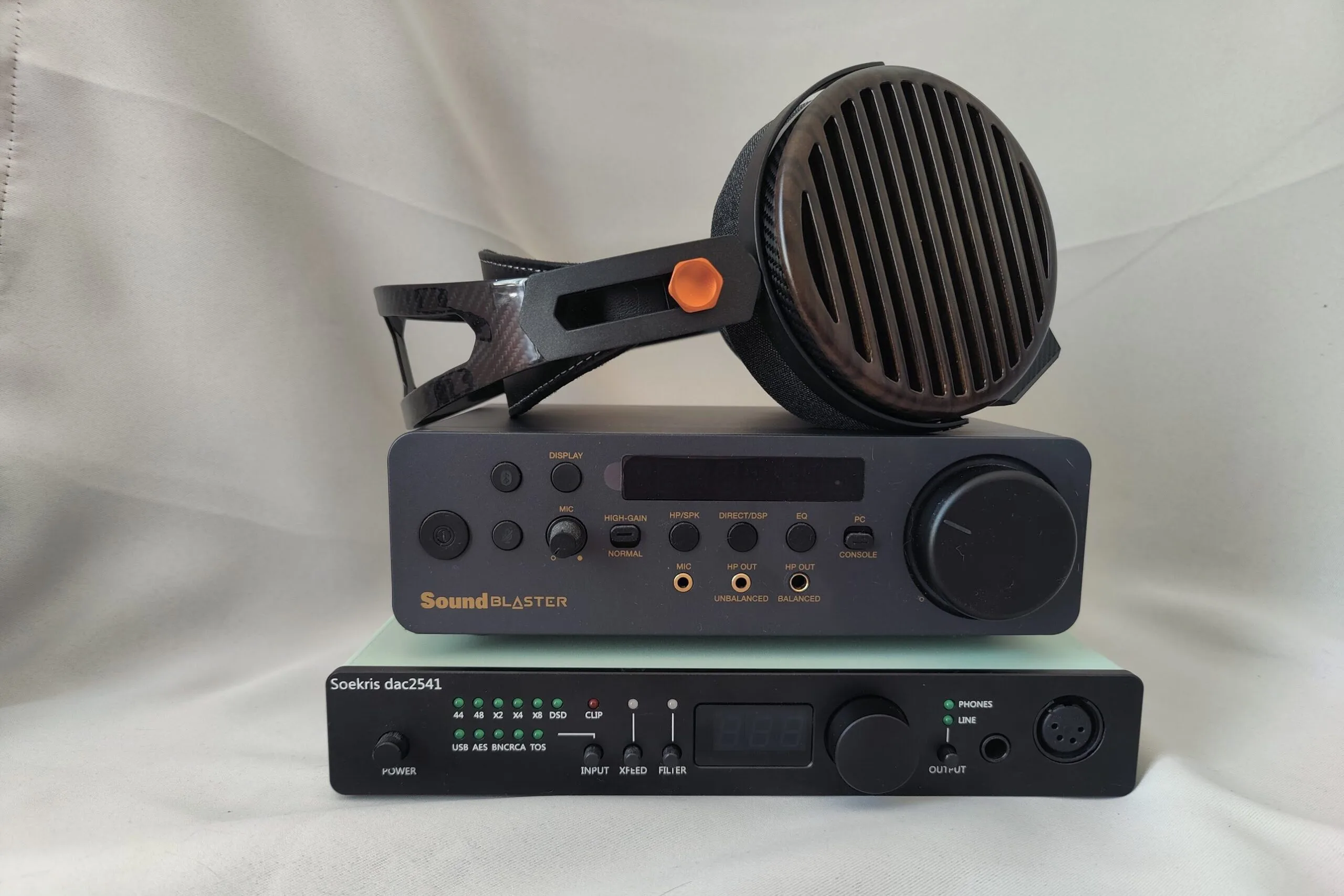
I didn't hear any significant difference between the Soekris dac2541 and the Schiit Audio Ragnarok. The Ragnarok is a considerably more powerful amplifier, but the extra power didn't seem to offer much benefit. Both devices performed admirably, even though neither truly made the FT7 sound better than average.
My favorite amplifier for FiiO headphones eventually turned out to be the Original OPA-4A. As is characteristic of a tube amplifier, the FT7's soundstage felt slightly wider, and the excessive sharpness and harshness of the sound eased. This cannot, of course, be generalized as an observation applicable to all tube amplifiers, as other types of devices may even be quite bright and punchy in sound.
In my opinion, however, those considering the FT7 should not stress too much about a suitable equipment configuration. The headphones do not require much power to achieve high volume. On the other hand, the FT7 should not be connected to just anything, as it is capable of such high-quality reproduction that lower-quality equipment might become a bottleneck for sound purity.
Comparison: Fiio FT7 vs. Focal Hadenys
Prices: 750 € vs. 700 €
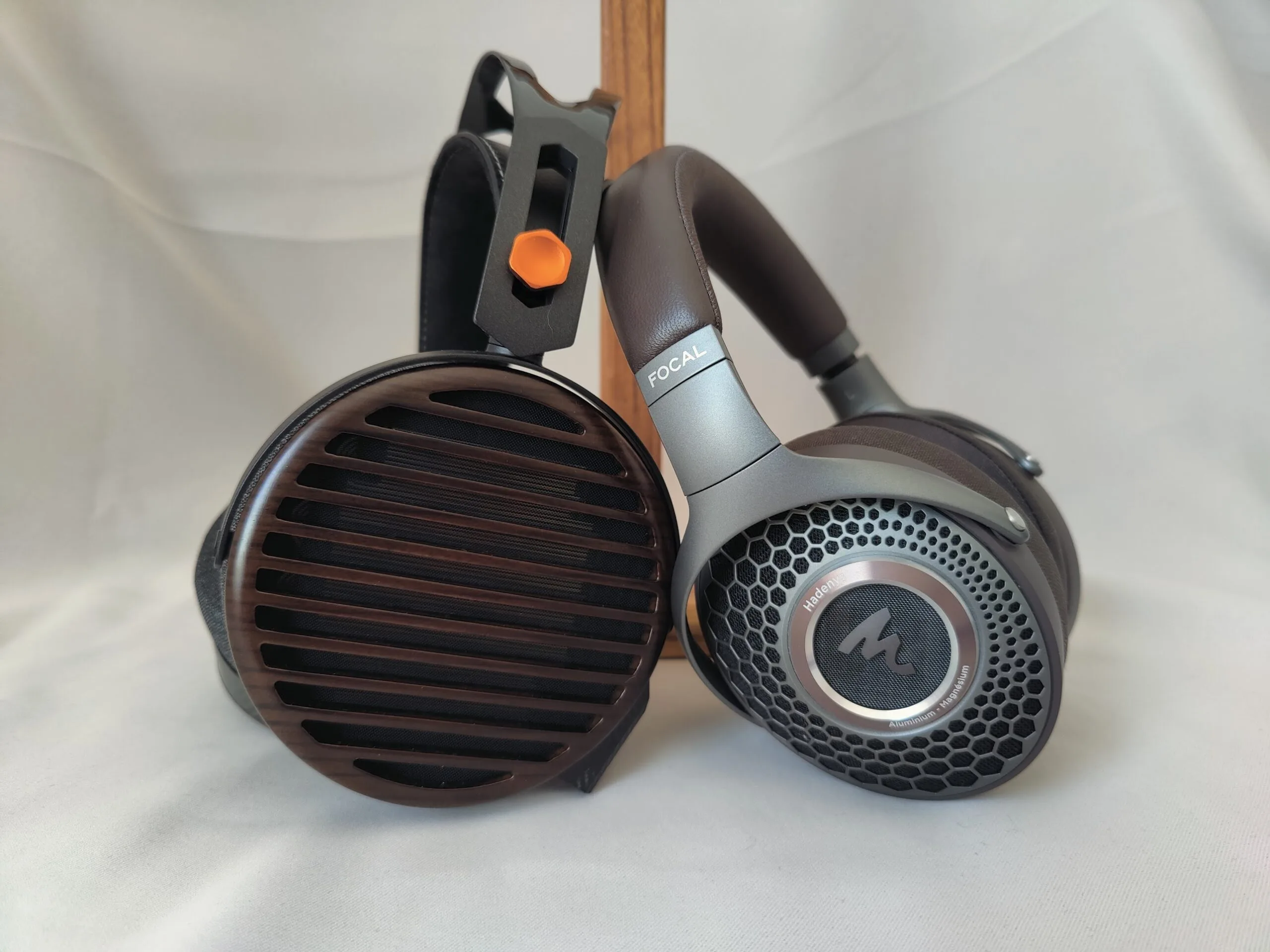
The FT7 looks slender compared to the Focal Hadenys downright enormous. Whatever one thinks of the latter's sound quality, few can deny that the French know how to design quite elegant headphones. The Hadenys is on the one hand minimalist, but on the other hand a truly beautiful headphone. The FT7, on the other hand, is quite a mishmash in appearance. Although FiiO's chosen materials are fine, the Hadenys' more robust construction inspires more confidence.
Also from the perspective of comfort, Focal's headphones are, in my opinion, a notch better. Planar drivers weigh more than traditional cone-shaped dynamic drivers, so in terms of weight, the FT7 cannot be expected to be on par with the Hadenys. The Hadenys fits my head perfectly, but those with larger ears might prefer the FT7's more spacious ear pads.
Sound quality
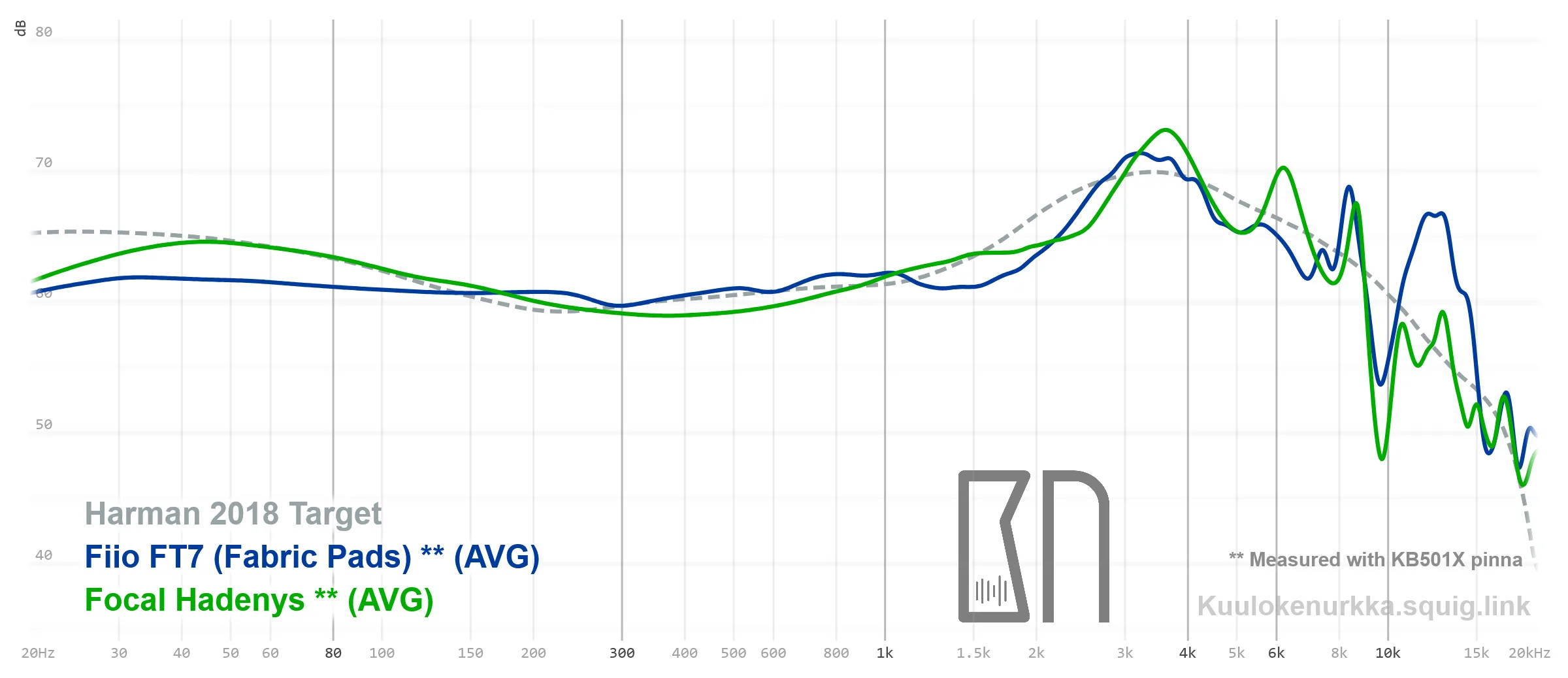
The most obvious differences between the two lie in the clarity and dynamics of the reproduction. The FT7 reproduces music clearly cleaner and more detailed, while the Hadenys sounds a bit muffled in direct comparison, as the outlines of the sounds get lost in a gray background. The FT7 is thus precise and sharp, and the Hadenys plays with a rounded sound. However, the strengths of the Focal model are ”musicality” and strong dynamics. Although the manufacturer's more expensive Clear series sounds even more dynamic, the Hadenys is in any case clearly ahead of the FiiO model in this regard.
Usually, planar headphones like the FT7 excel with their soundstage, but surprisingly, this largely fails to materialize with FiiO. Instruments do reproduce against a darker background, but there is hardly any advantage in the precision of sound placement compared to the Hadenys.
To my taste, the sound of the Focal model resonates better. The FT7 is technically a better headphone, but as a listening experience, the Hadenys is more pleasant and has a more balanced frequency response. Overall, considering both sound quality and construction, the Hadenys is such a successful headphone that it has truly earned its place on the Headphone Corner's wall of fame.
Summary
My review might give the impression that I didn't particularly like the FT7, but this isn't the whole truth. It is a highly resolving top-tier headphone, so in that respect, it offers value for money. In terms of detail resolution, the FT7 might even be the best headphone I've heard in its price range, which is no small praise from me. Apart from a somewhat small soundstage for a planar and subdued dynamics, there isn't much to fault in the headphones' sound quality, if one likes a presentation leaning towards brightness. Two sets of ear pads and a versatile cable also add value to the overall package. On the other hand, the headphones' construction has its own problems, and the appearance, composed of different materials, is not the most cohesive.
Regarding sound quality, the main problem is that the FT7 does not possess strengths that would allow it to stand out from its competitors. The headphones are quite difficult to recommend because they lack a ”unique selling point” that would make them memorable among other planar headphones with excellent detail retrieval. If Fiio had saved a bit on the structural embellishments and thus been able to push the selling price lower, the FT7 would be more easily recommendable as a somewhat more neutral alternative to the colored FT5 model. It is, of course, that now too, but with a higher price tag. Similarly, many Hifiman headphones similar to the FT7 are more affordable, so Fiio's new product is, at least for now, positioned in a somewhat difficult market niche. A potential buyer almost has to find the appearance so appealing that they are willing to pay a little extra for it.
Pros and cons:
+ Among the best in its price range for detail retrieval
+ Does not require special investments in equipment choices
+ Good comfort
+ Comprehensive features
+ Made from high-quality materials considering its price range
+/- The cable is versatile and exotic in material, but at the same time thick, stiff, and heavy
– Relatively small soundstage for planar headphones
– Somewhat subdued dynamics
– Problems with headband height adjustment in the first production batch
 EN
EN  FI
FI