Authors: Sword of Damocles & Roderick
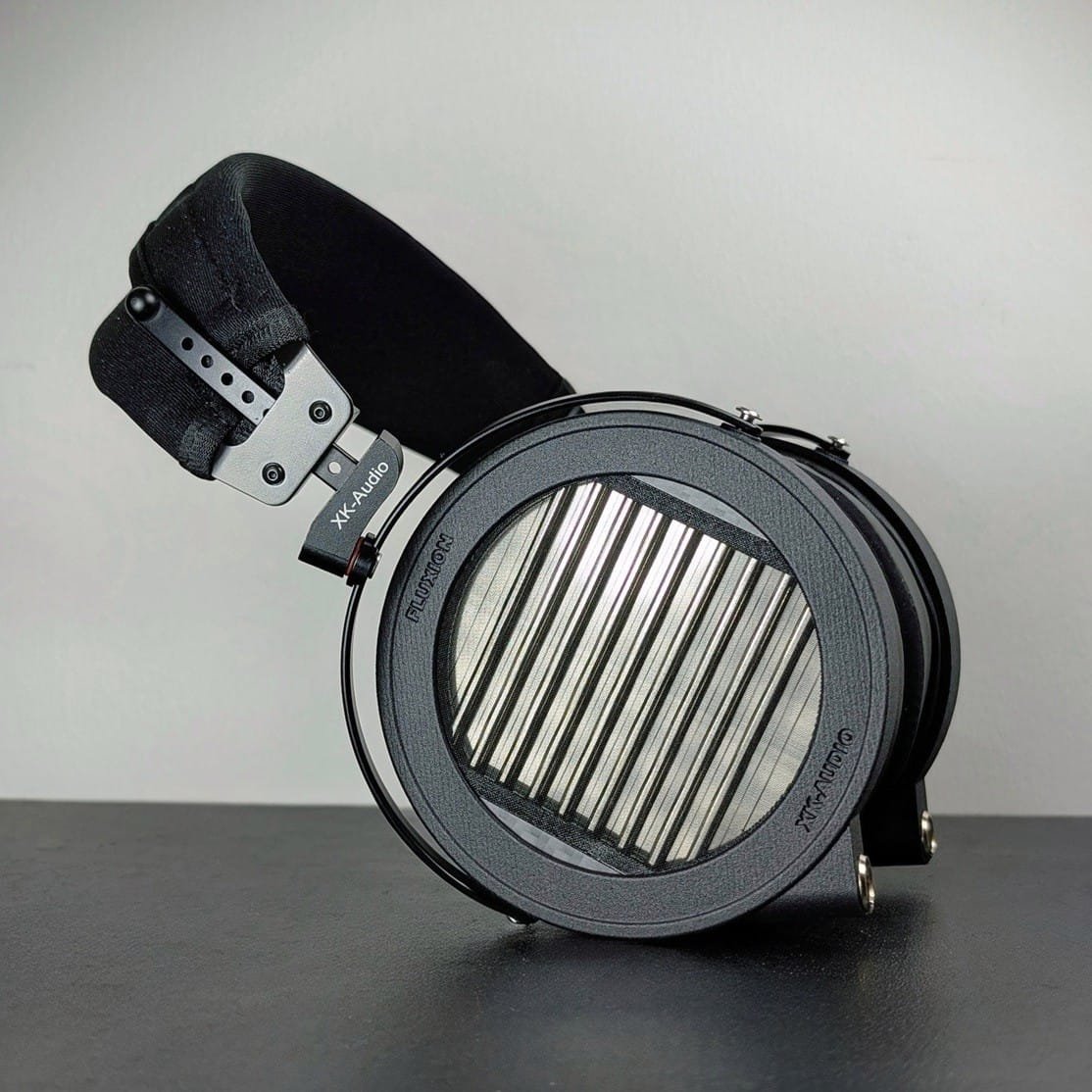
Table of Contents:
Information:
- Released: 2025
- Country of Origin: China
- Price: Taobao ~500 € / Aliexpress 700-800 €
- Type: open, over-ear
- 110 mm planar elements (diaphragm thickness 1.5μm, silver-plated conductors, tower-type N52 magnets and grill-less design)
- Impedance: 25 Ohm
- Sensitivity: 96 dB/mW
- Weight: 480 g
- Connector type: 2x 3-pin-mini-XLR
- Cable: Length 1.65 m / connector selectable at purchase
- Accessories: Carrying case, extra ear pads, extra headband padding and cleaning cloth
Review sample: Self-purchased product
Planar headphones were still quite rare a decade ago, but nowadays they could even be called fashionable among manufacturers. In my opinion, this is at least partly due to the fact that developing and manufacturing one's own planar elements is easier than dynamic cone elements – even small workshops are capable of it. There is still an exotic appeal associated with such flat-diaphragm elements, as they are often quite large in surface area. Similarly, gold or silver used as conductor material may create an image of a luxury product, even if both materials are only present in the headphones to the value of a few euros due to the thinness of the conductors.
However, no significant innovations in element technology have been seen for a while, and often open-back planar headphones reproduce a fairly similar frequency response. Certain damping solutions may achieve slightly more robust low frequencies, while high frequencies exhibit more or less unevenness. Chinese Hifiman came up with the idea of completely removing the protective grilles from the cups of its Unveiled headphone series, allowing the back radiation of the elements to escape more freely without causing harmful reflections. It was really only a matter of time before this idea would spread to competitors' products. Eventually, the first Unveiled-inspired headphones emerged from XK-Audio, which copies other manufacturers for a living or at least borrows the best ideas for its own products.
This time, however, the Fluxion headphones I'm reviewing are not actually a direct copy of any other headphone model, so I dared to acquire a pair for testing. The headphones are seen for sale on Aliexpress for 700–800 euros, while on Taobao they could be bought for just over 500 euros. With their open-back elements and silver-plated planar diaphragms, the Fluxion's kind of role model is Hifiman's 9000-euro Susvara Unveiled, which formed the basis of my clickbait title.
XK-Audio's headphone designer reportedly prefers the original Susvara, which explains why the Serene headphone model imitating it, with its gold-plated elements, costs about 500 euros more than the Fluxion. The pricing logic is thus the opposite of Hifiman's two Susvara models. The question, however, is whether the consumer gets headphones resembling the Susvara Unveiled for just over 500 euros? At worst, such DIY-spirited headphone workshops can produce great disappointment, but at best, the selection also includes real gems. Which is it in the case of Fluxion?
Packaging and accessories
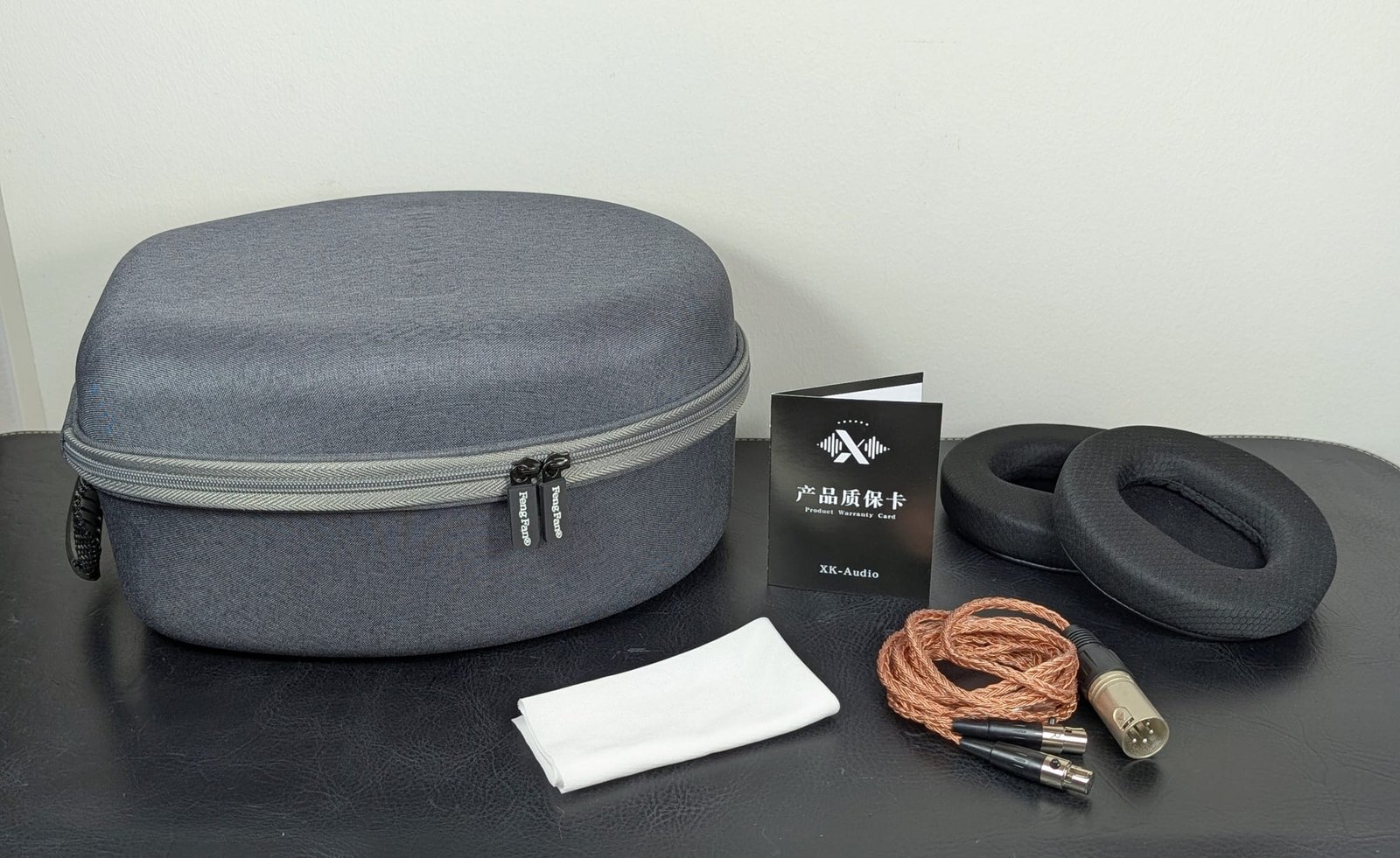
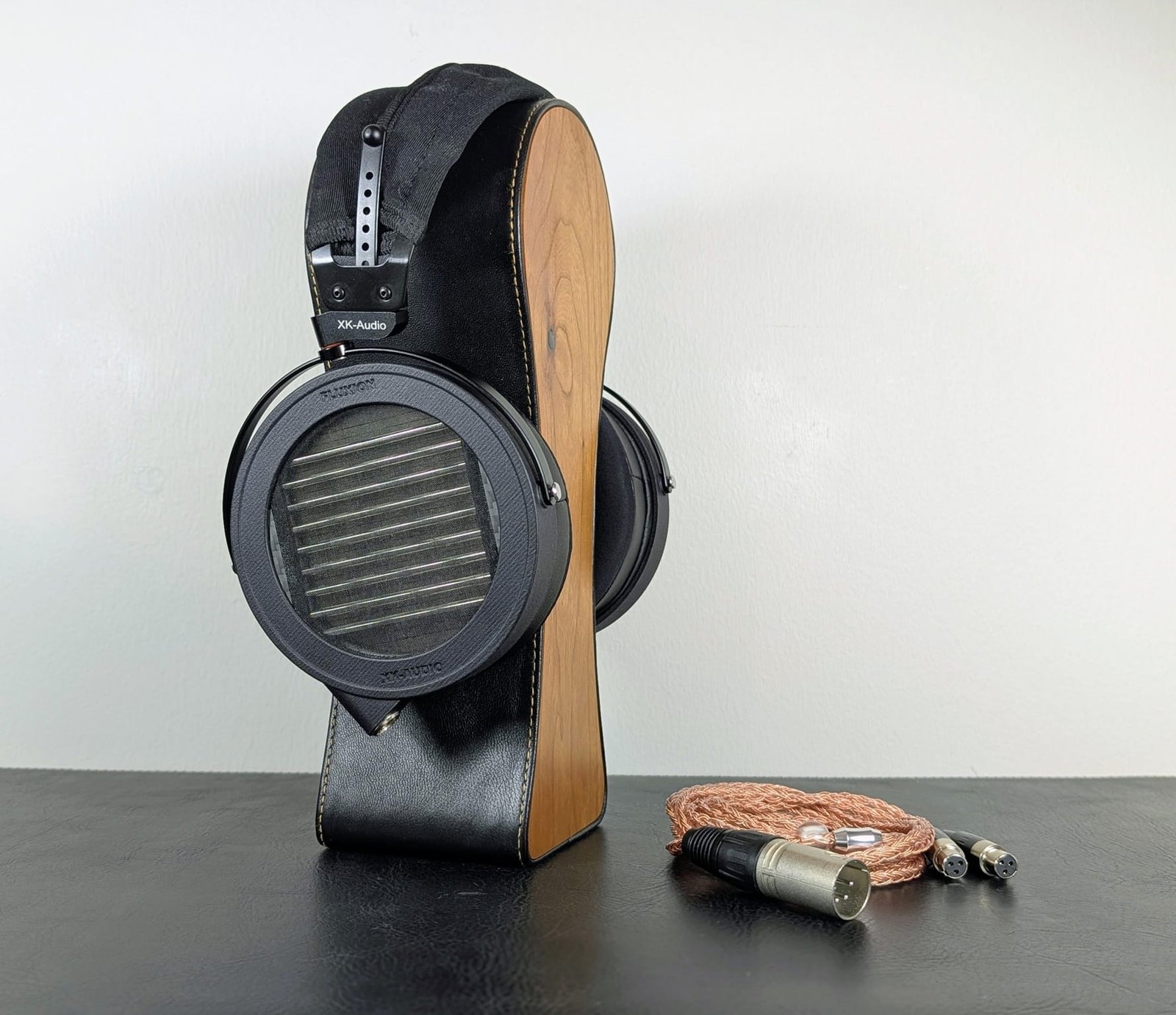
Depending on the place of purchase, Fluxion may arrive packaged differently, but the box contains a large FengFan-branded case, which can accommodate all accessories in addition to the headphones. The buyer receives a good quality copper cable, a second pair of ear pads, additional headband padding, a card indicating the manufacturing date, and for some reason, also a small cleaning cloth. According to retailers, magnetic flaps intended to protect the drivers no longer come with Fluxion, which is why I didn't receive any myself. Among unveiled-type headphones, Hifimans are therefore safer purchases, although in Fluxion, the back of the drivers is at least protected by a thin fabric mesh. However, this does not prevent any metal objects from being attracted to the strong magnets, so even one mistake can be fatal. I personally store Fluxion on a stand so that there are no cables or other headphones nearby, for example.
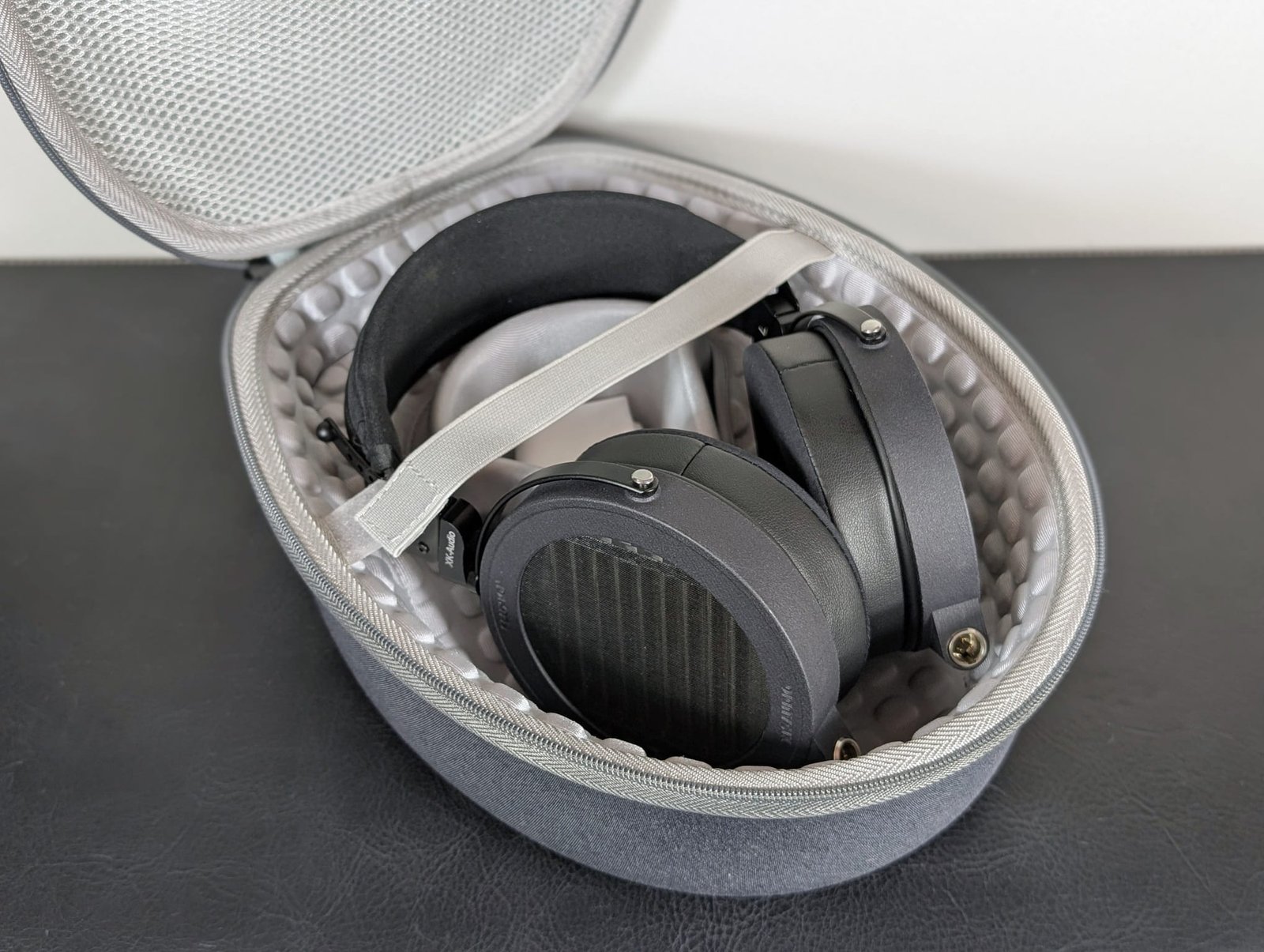
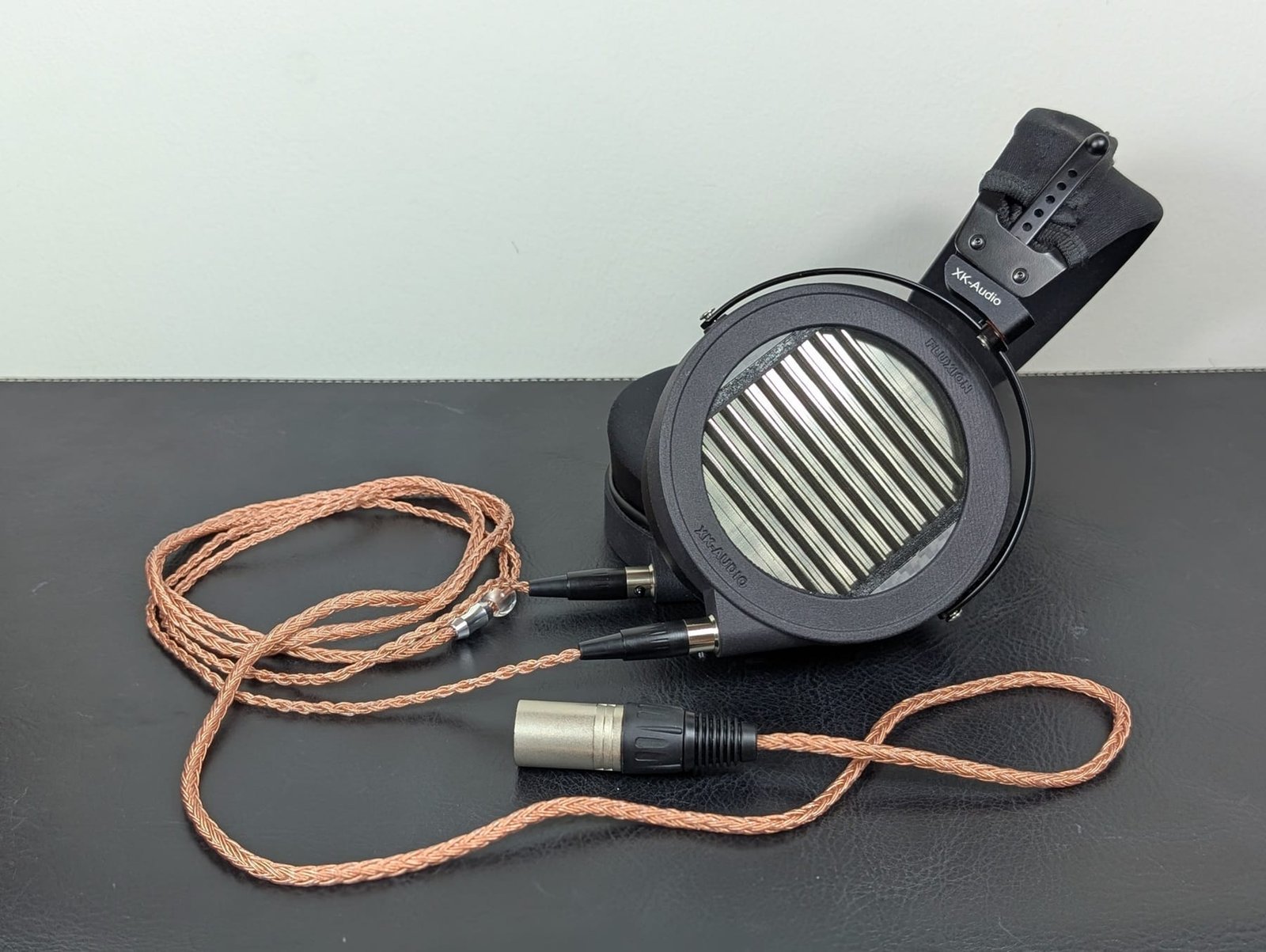
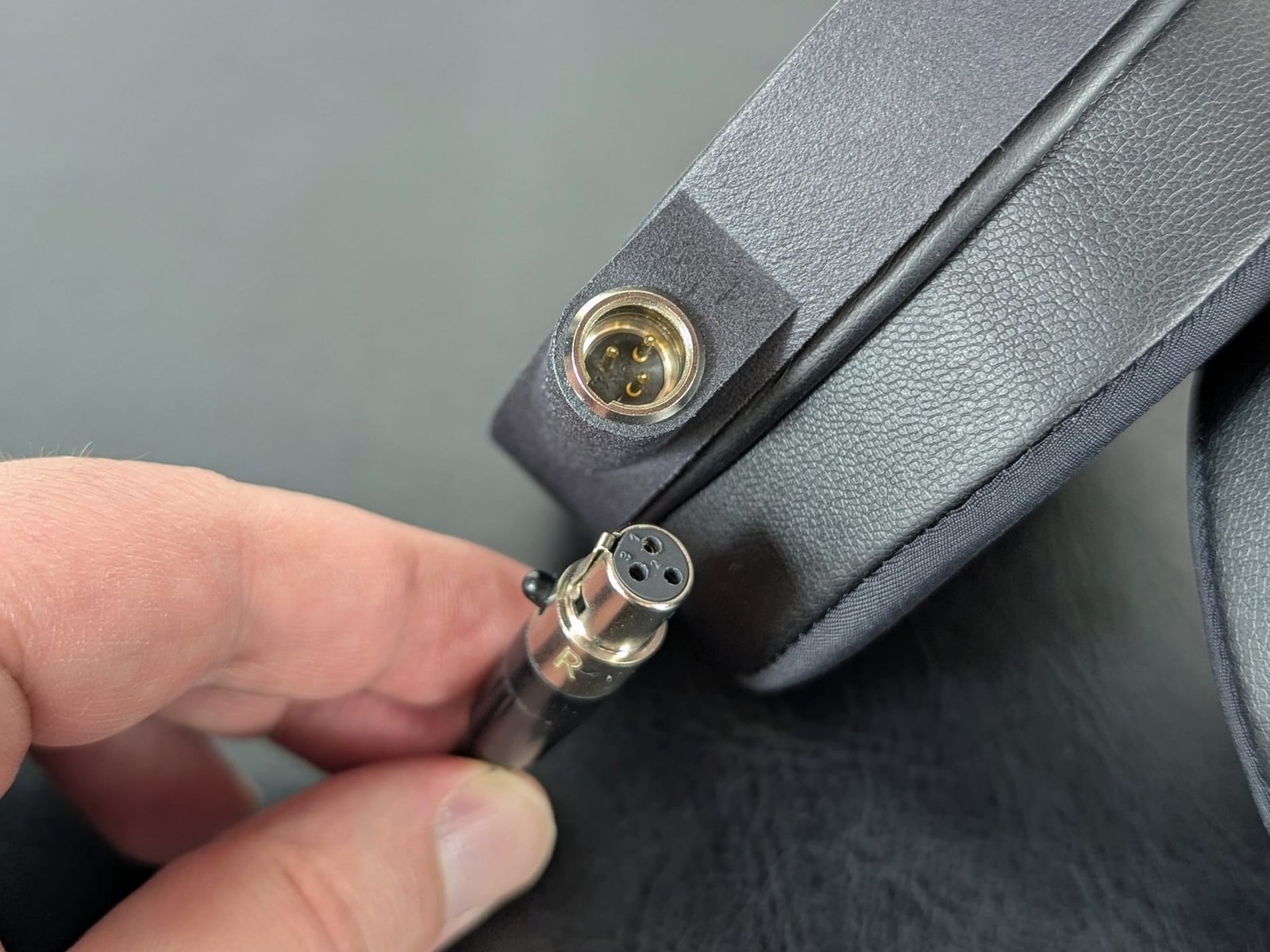
When ordering from Taobao, I was able to choose the cable connector myself, opting for a balanced XLR. Only after receiving the headphones did I realize that they do not use 4-pin mini-XLR connectors like Audeze, Meze Audio, and ZMF, but rather rarer 3-pin counterparts. Thus, Fluxion likely fits the same cables as American ABYSS headphones, meaning finding replacement cables from this part of the world is difficult. I consider the connector choice to be foolish and inconvenient for use. Fortunately, the standard cable chosen by XK-Audio is pleasantly light and flexible. Avalon mk2 -headphones actually came with a very similar cable.
Build and comfort
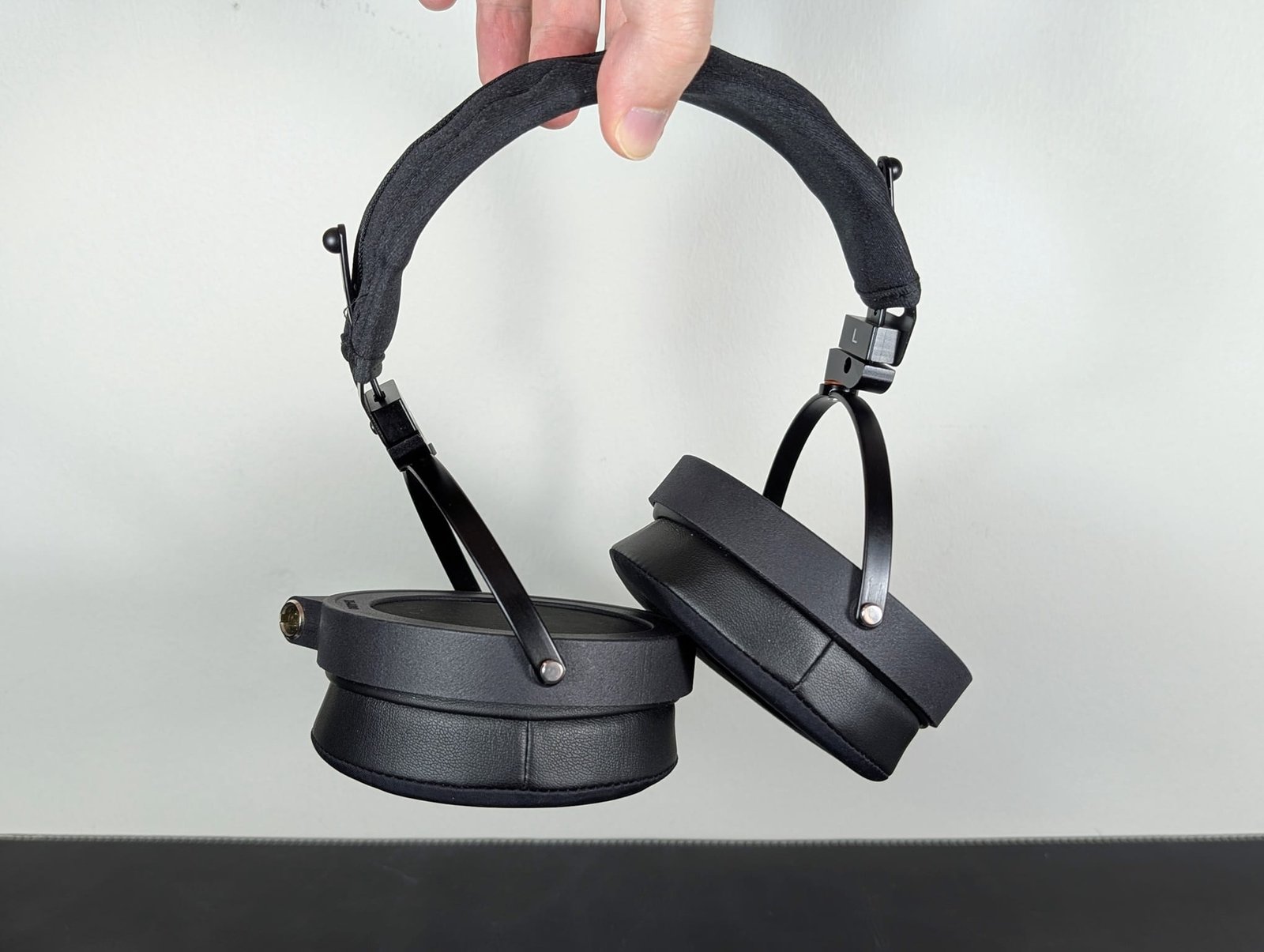
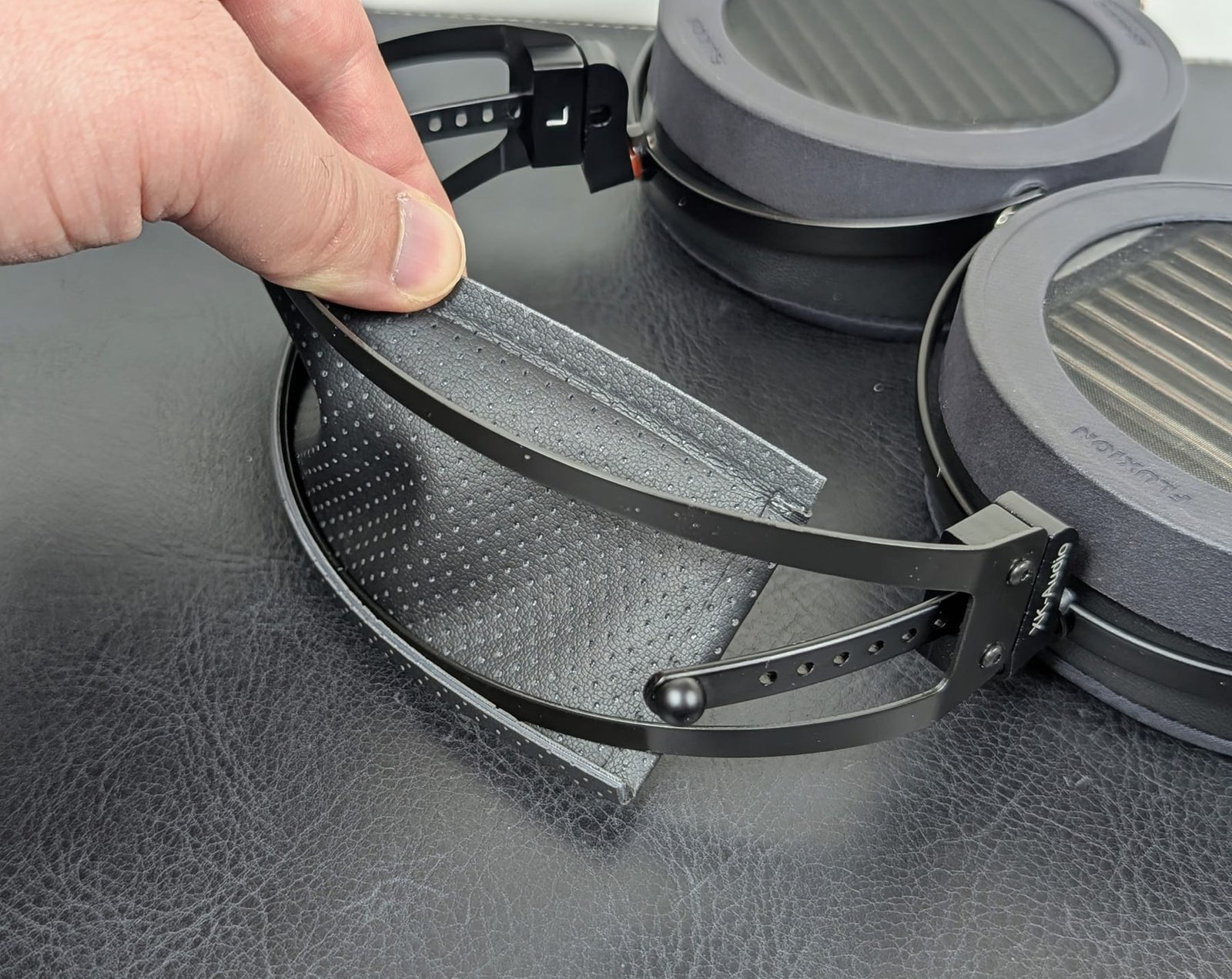
Good quality headband structures can be found in bulk from Chinese merchants, but for some reason, XK-Audio has opted for a poor solution. On the positive side, Fluxion's headband is made entirely of metal, but unfortunately, there is no resistance in the moving parts, and the cups rotate freely wherever they please when handling the headphones. The headband is Avalon mk2like also so large that I don't need to adjust its height at all. In addition, the extremely thin head padding is also puzzling, as the highest point of the crown of the head is supposed to fit between two metal rods. For me, the headband works somewhat, but I have still added the velcro-attached extra padding included in the package, which helps to distribute the 480-gram weight better on my head.
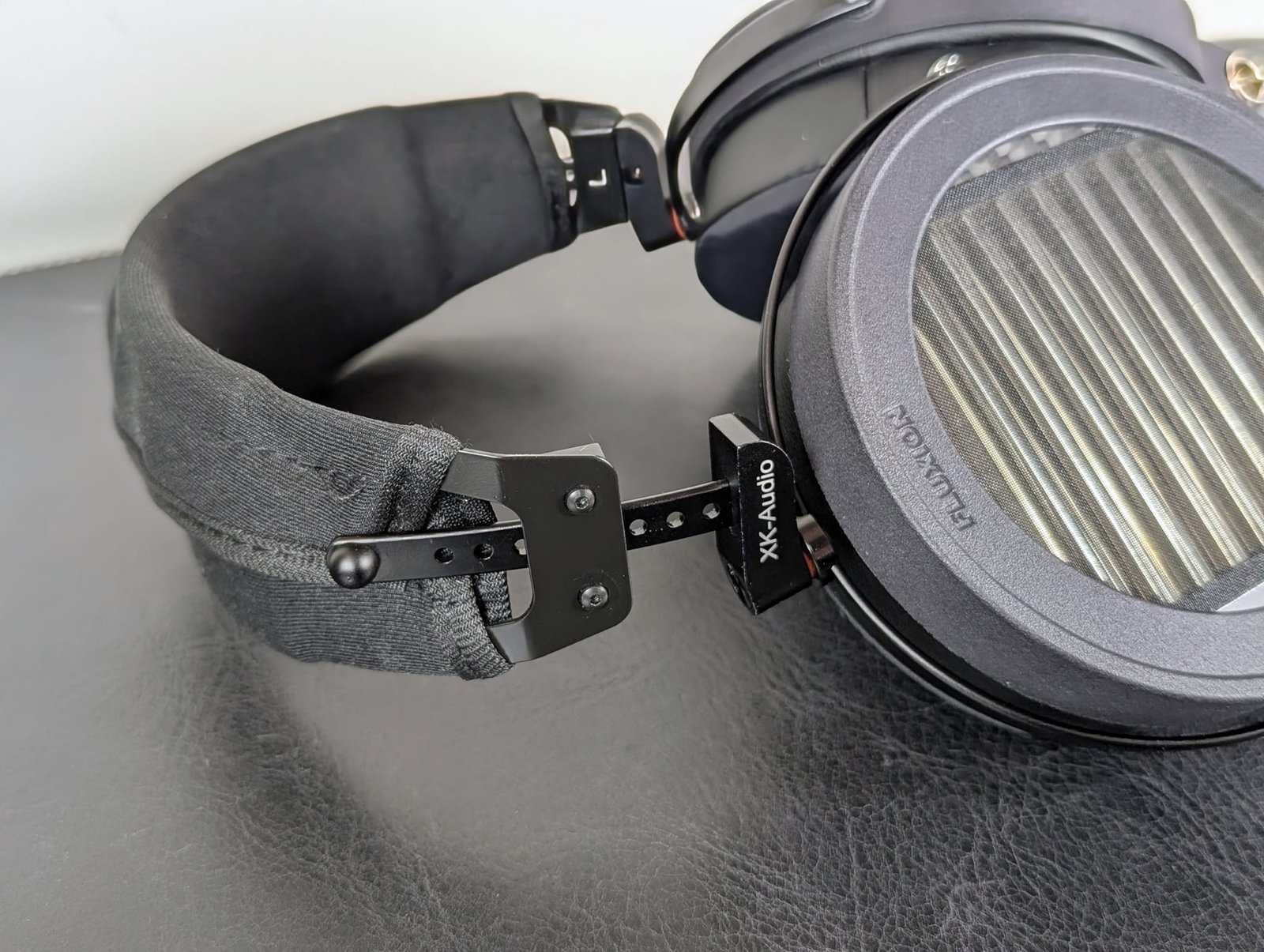
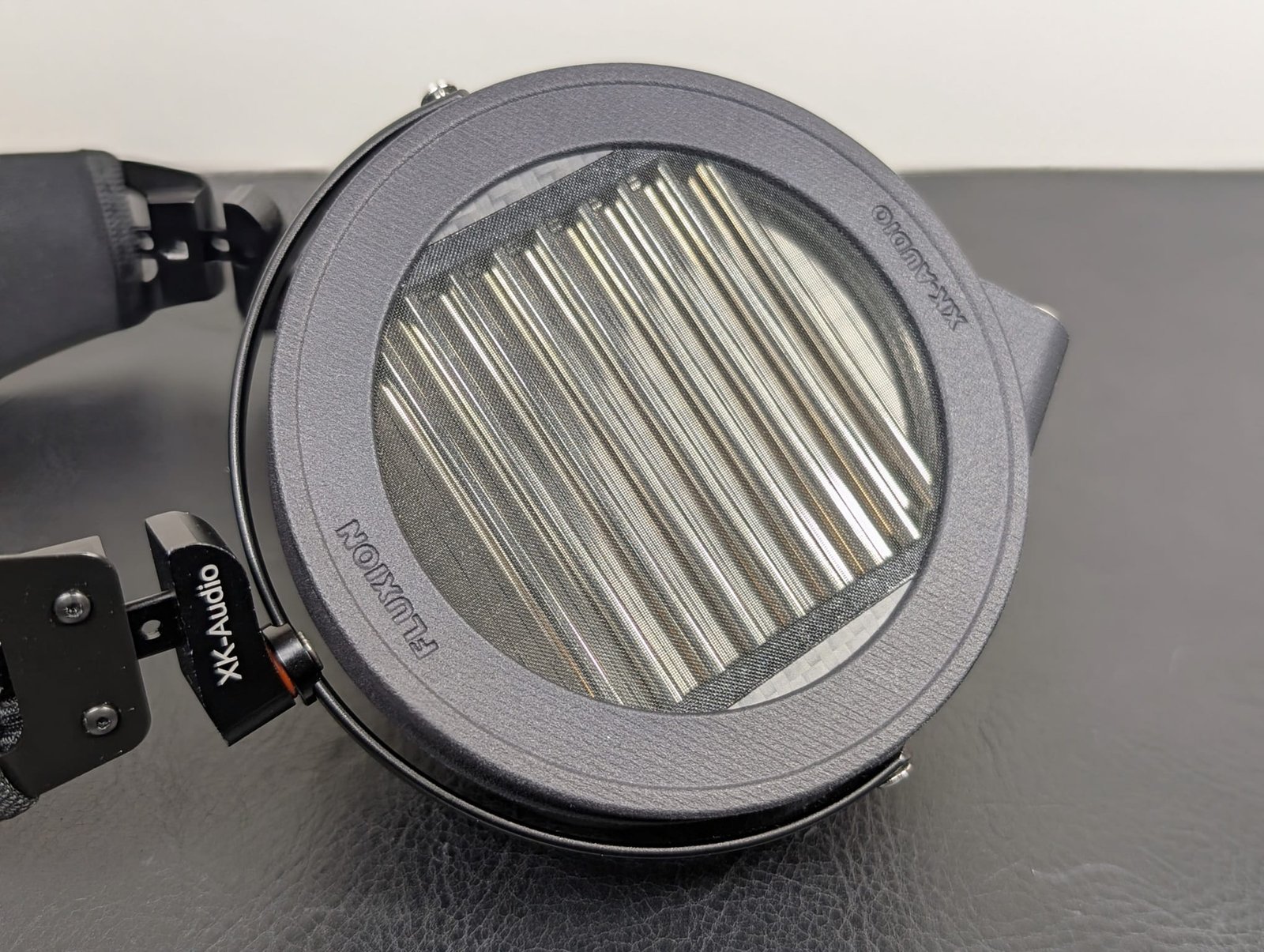
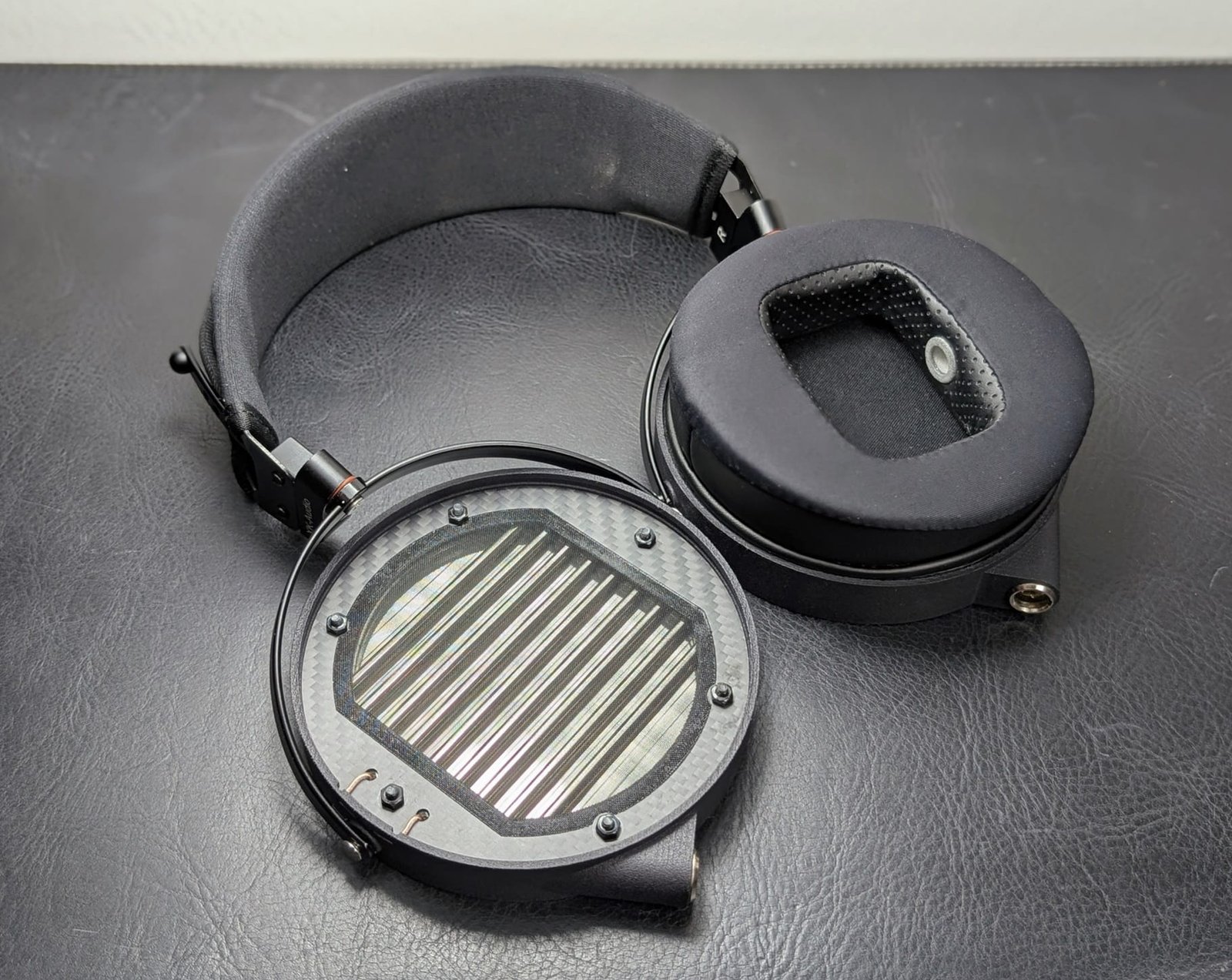
In contrast to the bulk headband, the headphone cups are 3D-printed Modhouse Audio Tungsten style. While the American craftsmanship is rough and unfinished, Fluxion's cups are pleasantly smooth. One wouldn't immediately guess them to be printed except for the manufacturing marks. The driver frame, on the other hand, is carbon fiber. The parts produced by XK-Audio themselves are thus quite high quality and give Fluxion a personal touch. No other headphone is similar, so XK-Audio has this time refrained from imitating other better-known manufacturers.
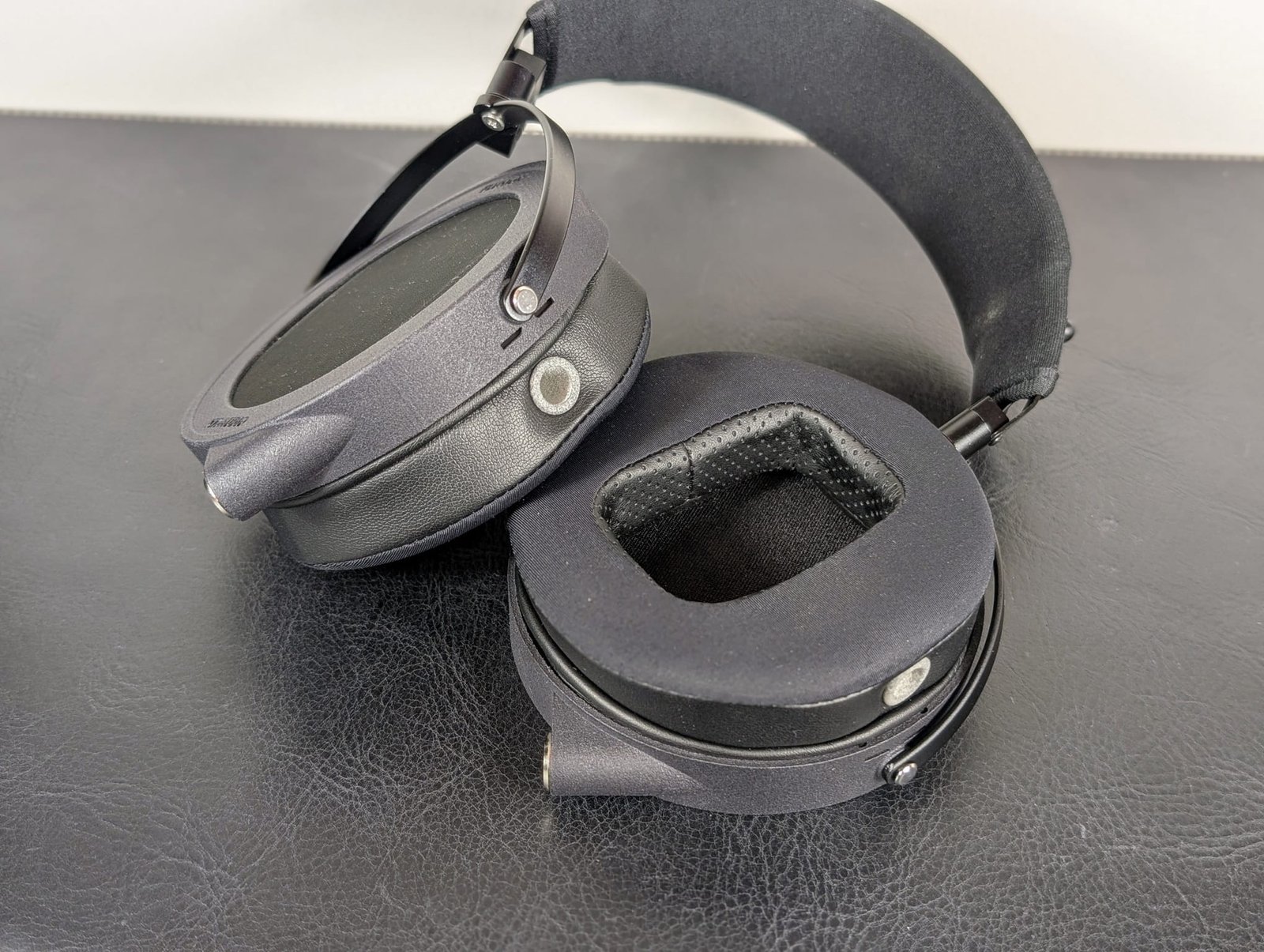
The ear pads in Fluxion are thick and spacious. A layer of some kind of cooling gel has been placed between the foam and the silk-imitating surface, which is why the manufacturer calls its standard pads "summer pads". In addition, plastic tubes have been installed in the back of these, which function as both ventilation and bass ports, amplifying the sub-bass between 30–80 hertz. However, one must be careful with these tubes so that they do not start pressing against the back of the earlobes during prolonged use. Nevertheless, the comfort of the pads does not cause any issues; I like how the Fluxion feels on my head. I actually bent the steel arch of the headband tighter to ensure a more secure fit. After this, the cups also sit closer to each other when handling the headphones, so they don't rotate from side to side quite as easily.
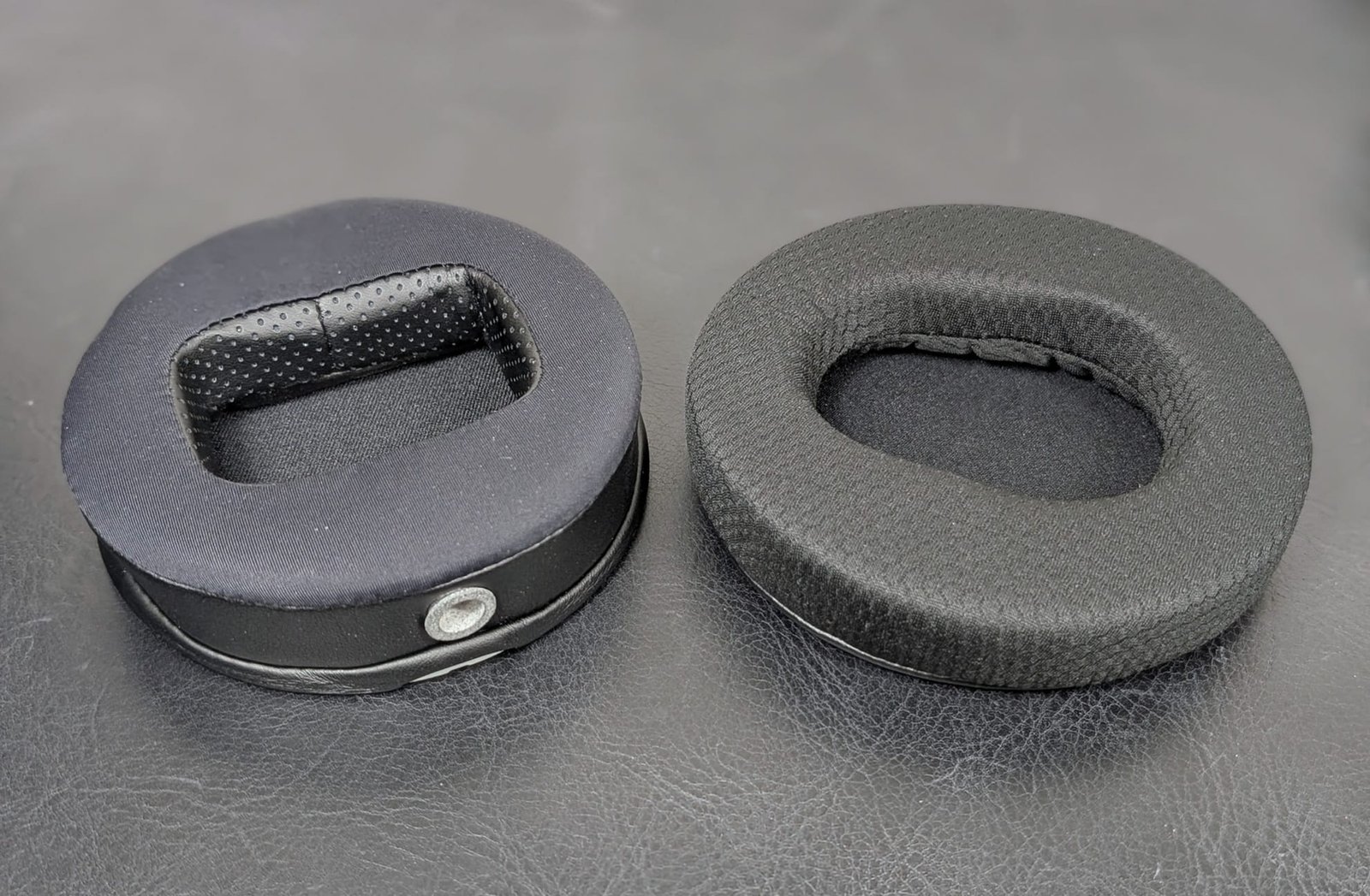
The other pads included in the package are thinner and more conventional in their foam, and they also lack bass ports. The surface material is a similar sports fabric found in smaller quantities in, for example, Hifiman and Fiio pads. However, I have not used these alternative pads with the Fluxion because their rim would need to be slightly modified for attachment. The pads are stretched around a separate plastic disc, which is then placed over the drivers, taking into account the screws and the holes made for them. The assembly, however, stays attached to the drivers mainly by friction, as the disc and the pad's rim together form a tight contact when pushed inside the cups. In some pads, the rim unfortunately covers the screw holes, making it difficult to attach the discs. However, scissors or a utility knife would solve the issue.
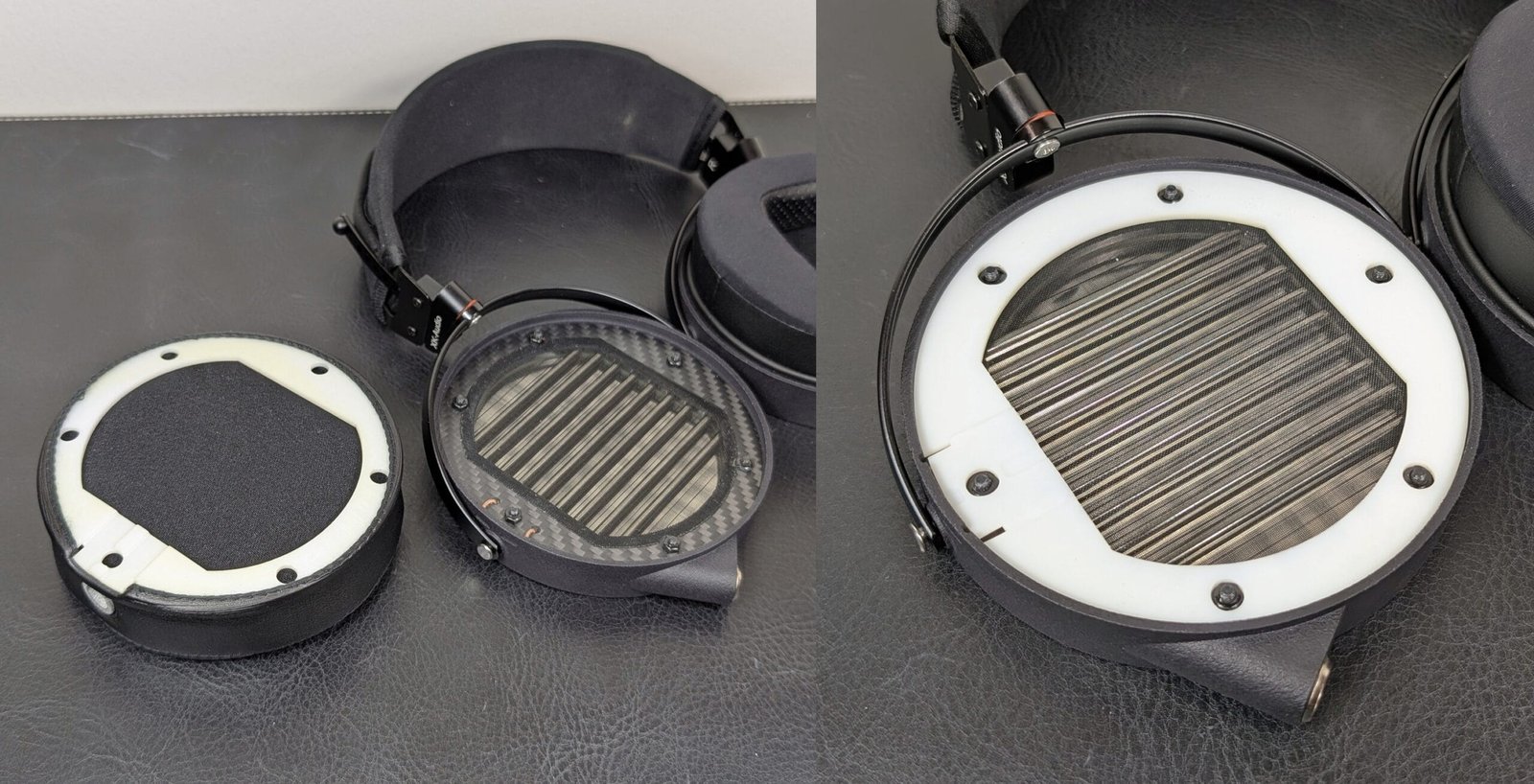
Overall, the Fluxion is more comfortable than I expected, but its headband is a bit clunky. I do, however, like XK-Audio's DIY parts, so I ultimately consider the headphones quite successful. Nothing bothers me once the headphones are on my head and I start listening to music with them.
Sound quality
”Unveiled” elements
The drivers designed by XK-Audio are quite interesting, not only because of their open-back structure but also because ANSYS modeling has been used for their magnetic structure design and COMSOL modeling for acoustic optimization. The latter is also utilized by Fiio FT7headphones. In Fluxion, nine magnet bars are installed vertically on both sides of the driver, meaning the narrower edge rests against the diaphragm, unlike most other planar headphones. Because the edges are rounded, the magnets look like towers. The diaphragms, in turn, are sputtered with a silver alloy, which was surely inspired by Hifiman Susvara Unveiled with its silver conductors. It would be difficult to guess Fluxion's relatively affordable price based on how industrially manufactured and neat its planar drivers look externally. For example, glue does not ooze from the edges, as it does in many Hifiman drivers.
Impedance measurements and amping requirements
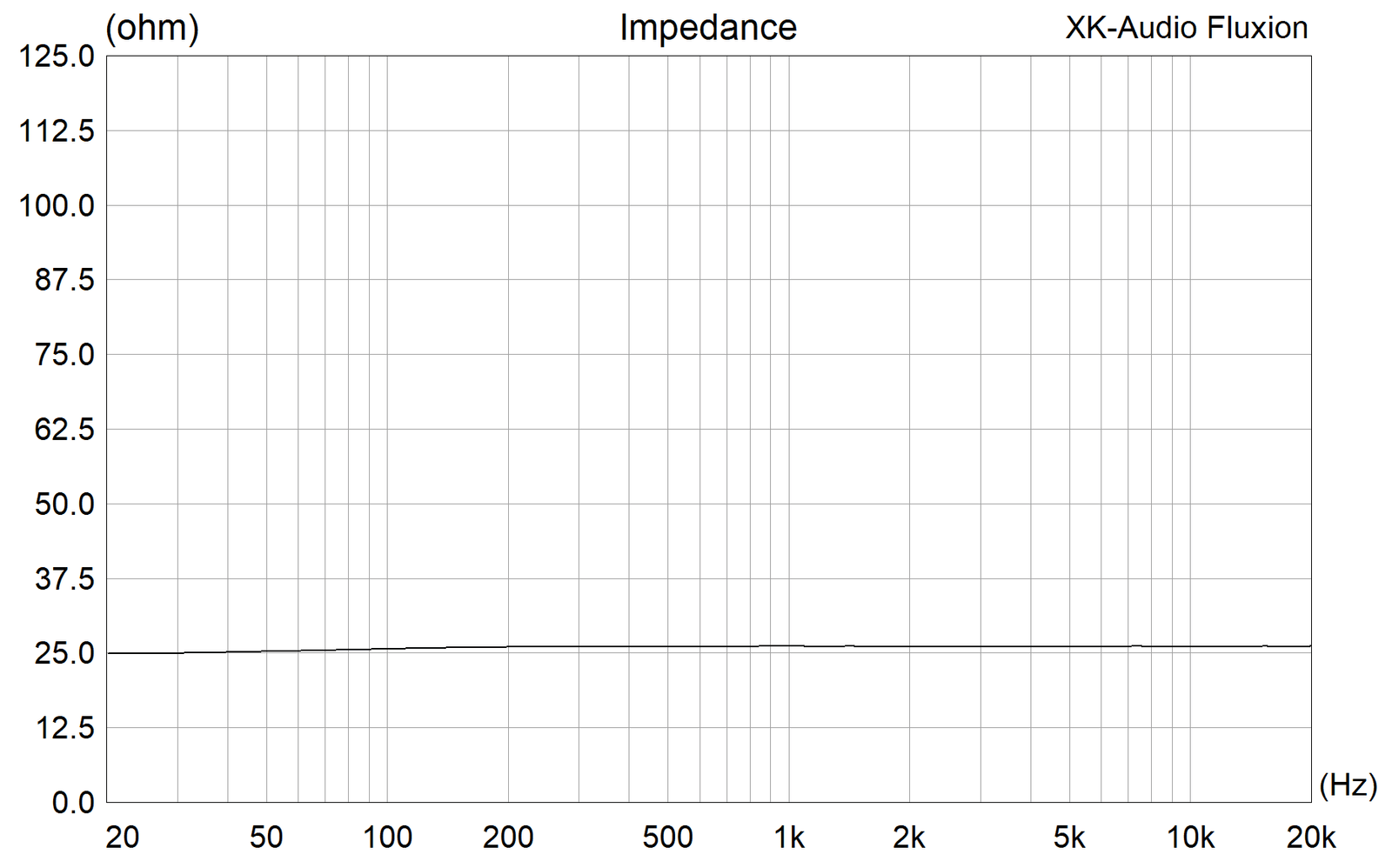
In terms of impedance, there is nothing surprising about the headphones; the entire frequency range follows the stated 25 ohms. Unlike Hifiman's most difficult-to-drive headphones, such as the HE-6 and Susvara series, the Fluxion is also sensitive (96dB/mW), making it easy to drive even with basic amplifiers. This, in my books, is a clear plus for XK-Audio.
Headphone Measurements
Our frequency response measurements have been made with a clone IEC-60318-4 coupler and KB501X pinnae. The Harman target curve from 2018 is used as a reference point and generalization of the headphone response that would sound good to most people. For more information on the measurements and their accuracy, see Headphone Measurements-page. Fluxion's frequency response is also comparable with other measured headphones Squiglink .
Standard pads:
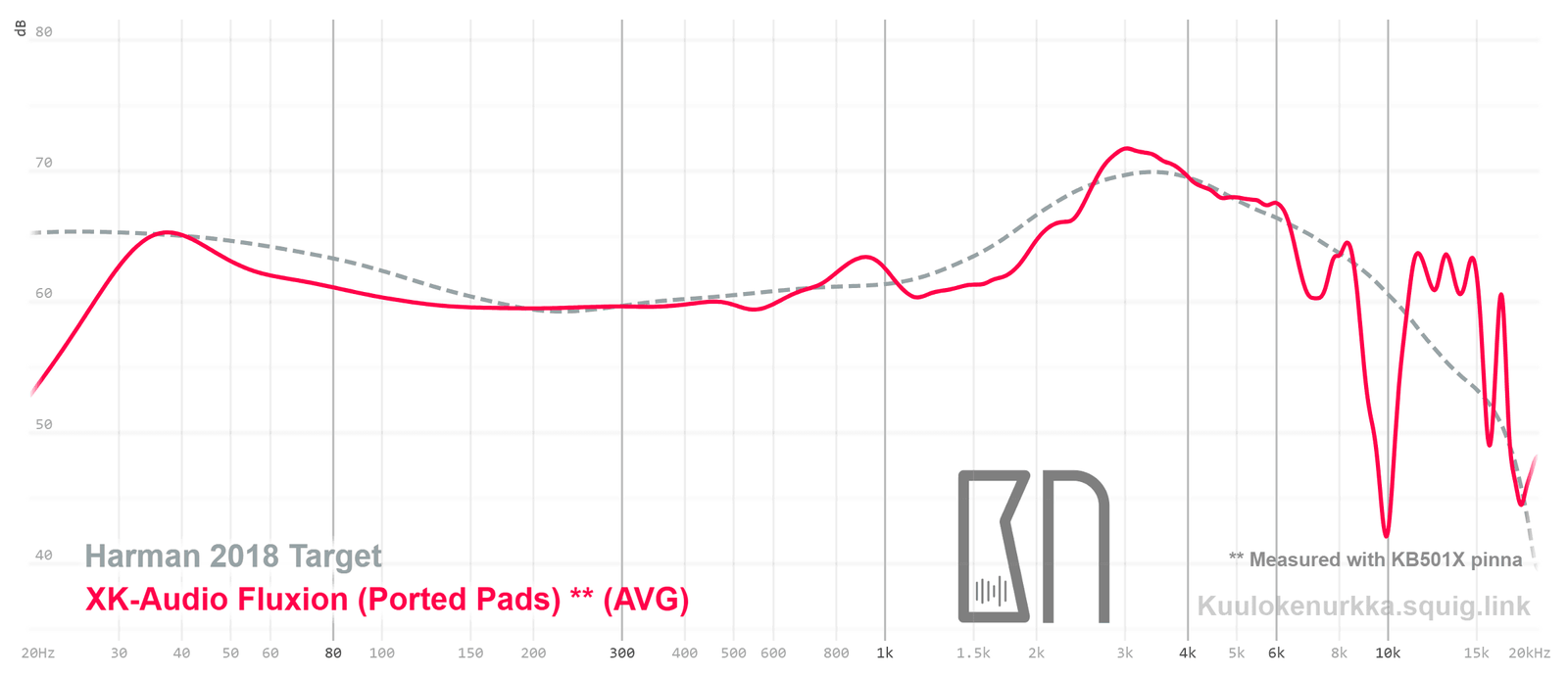
Fluxion, with its bass-ported ear pads, clearly deviates from the mainstream of open-back planar headphones. Instead of linear bass, the sub-bass between 30–80 hertz is reproduced louder than other similar headphones, rising to the level of Harman's target curve at 40 hertz. Below this, of course, a drop occurs, but with a tight fit, we are talking about a rather moderate loss of 20–30 hertz.
As another characteristic, Fluxion emphasizes the 800-1000 hertz range somewhat, while further on, a slight ”calming” between 1.5–2.5 kilohertz resembles many other planar headphones. In addition to bass, the treble is the area where the headphones stand out most favorably. The 4–10 kilohertz range is reproduced excellently evenly, and even above 10 kilohertz, the response remains better controlled than usual. Based on my measurements, Fluxion could be interpreted as smoothly airy, which my listening observations also confirm.
Fluxion vs. Hifiman Susvara Unveiled:
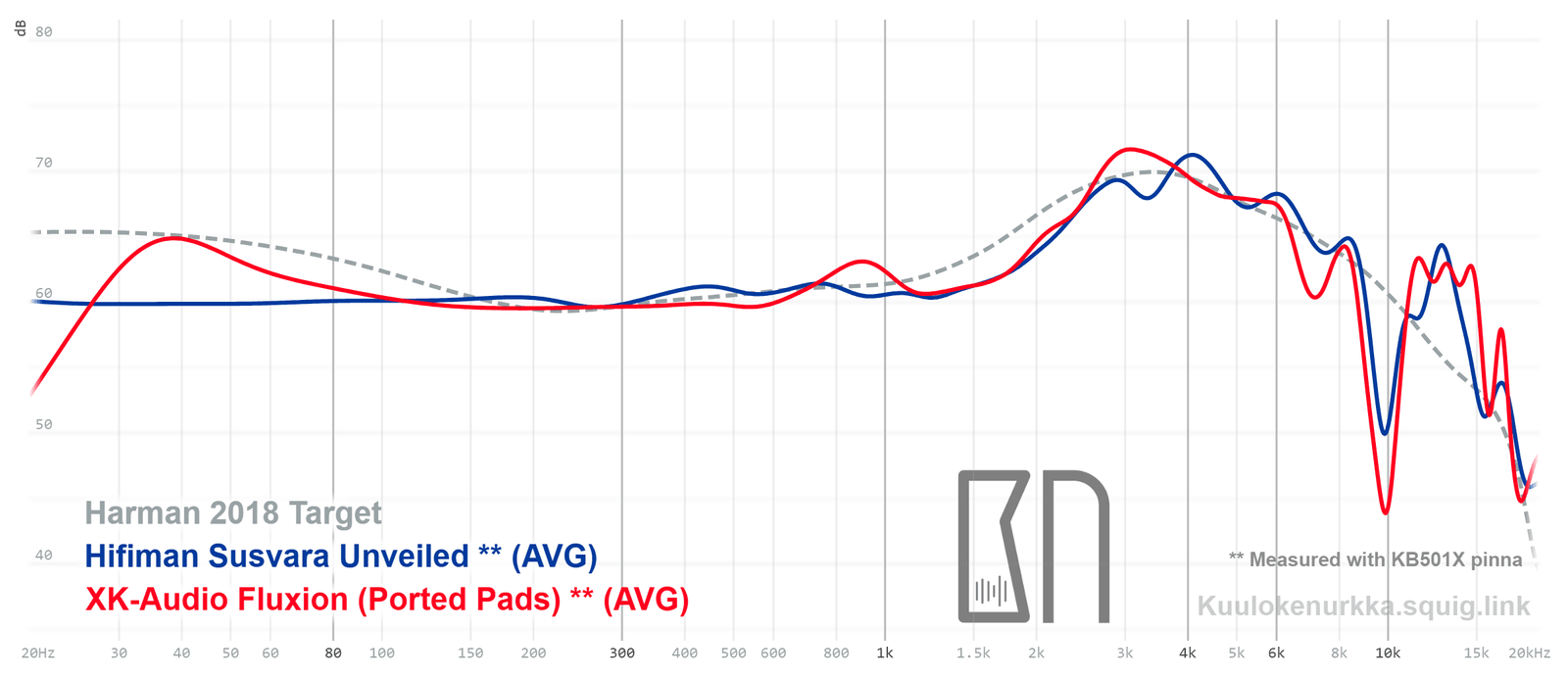
I don't have Hifiman Susvara Unveiled headphones on my shelf for this article as a comparison, but I have measured the frequency response of the demo model found on Mareksound's headphone wall. Based on that, it's evident that Fluxion, with its more robust sub-bass, doesn't aim to be a similar headphone, nor do the small boosts at 800–1000 and 3000 hertz support this. In terms of treble, however, Fluxion is even slightly more linear and thus possibly a small improvement over the Hifiman model. Susvara Unveiled, on the other hand, wins in mid-range linearity.
Sound observations
Headphones in the 500 euro price range are so good nowadays that they rarely offer bigger surprises to an avid headphone tester like myself. However, XK-Audio Fluxion manages to stand out from the crowd with its clear and inspiringly dynamic sound. It is one of the few headphones about which it is very difficult to find anything to complain about, so my observations will exceptionally be almost exclusively praises.
When considering Fluxion's presentation, I recommend imagining Hifiman's open-back planar headphones, to which a robust sub-bass has been added, and whose treble has been made smooth instead of having local peaks. Additionally, the mid-range should be perceived as clarity-focused, if not slightly thin, but with a small twist. The narrow bump between 800–1000 hertz brings its own spice to the reproduction, which I would describe as enhanced liveliness. Fluxion doesn't just offer the clearest and most separated reproduction possible, but it has punch and a slight captivating edginess that prevents the overall sound from being too refined. Thus, I effortlessly hear even the smallest nuances in the music, while the sound also evokes strong emotions in the form of goosebumps. In my opinion, only a listener who would wish for a touch more warmth and robustness in the sound would be disappointed with such a sound.
However, Fluxion does not sound light, like traditional open-back planar headphones, but with ear pads containing air vents, the sub-bass sound pressure becomes quite substantial. The headphones somewhat resemble Abyss AB1266:s, especially as in both, the upper bass remains completely in control, making the low frequencies almost more felt than heard. This brings power, dynamics, and depth to Fluxion's reproduction without me actually paying attention specifically to the bass frequencies. The headphones do not accidentally produce any kind of wrong growl or bloatedness.
Thanks to the controlled bass, the mid-range also reproduces with an impressively transparent style. The general energy level of instruments and vocal performances is just right for my taste, as the 1–2 kilohertz range doesn't sound as softened as in many Hifimans. On the other hand, the calmness of this frequency range balances the small mid-range bump, so the presentation doesn't become annoyingly aggressive, but rather punchy in a good way. Although my critical side would like to mention the evenness of the mid-range as a potential area for improvement, I nevertheless find the sound truly credible. Fluxion immediately draws me in because it doesn't actually try to emphasize its excellence, but rather allows me to focus on the musical content and the desired mood at any given moment – which is how it should be.
Fluxion's smooth and clean treble may well be due to the open-back design of the drivers. I don't recall seeing any other headphone model measure as evenly between 11–15 kilohertz; usually, such high frequencies bounce more sharply up and down due to structural reflections. Although the measurement result doesn't perfectly correspond to human hearing, for me, Fluxion's treble is unusually pleasant and non-fatiguing for its freshness. There is certainly plenty of brightness, but it feels natural because sibilance remains completely in check, and for example, drum cymbals do not exhibit excessive harshness relative to my hearing. The presentation is also airier than, say, in the Hifiman Arya Unveiled, but thanks to the evenness, I would count this as an advantage if someone specifically likes an airy sound.
The airiness also makes the headphones' soundstage wonderfully open, as it feels to me as if the sound isn't coming from the headphones, but rather I am inside it. On the other hand, the soundstage is not stretched like in Hifiman's Ananda, Arya, and HE1000 models or the Sennheiser HD 800 series, so instead of amplified grandeur, what's offered is a soundstage that largely follows the recordings themselves. At this point, a comparison to the Hifiman Susvara would not be out of place. The biggest impression Fluxion makes is the almost perfect sense of openness and precise separation of sounds, such that empty space is created around each instrument.
Usually, for about 500 euros, you don't get this kind of sound quality, where deeply impactful bass, clear mid-range, and airy treble are equally and comprehensively present in the overall package. XK-Audio has indeed managed to optimize an otherwise familiar frequency balance exceptionally well, which in my opinion would make Fluxion pass for a 3000 euro headphone, for example. In that case, its attractiveness would be limited mainly by structural aspects. However, let's still read what Kuulokenurkka's guest writer, Roderick, thinks about the headphones.
Second opinion (Roderick)
Fluxion immediately impressed me with its clean sound. In headphones of this price range, however, that alone would not be enough for them to stand out from the crowd, unless they also offer something else exceptional. The Fiio FT7, which I recently reviewed, fell short precisely in this regard. What about Fluxion then? In my opinion, it is a significantly better headphone than I expected, even though my expectations were admittedly quite high.
The headphones” resolution is the best I've heard in this price range. The frequency response is balanced, and small deviations from the Harman target curve work specifically to the headphones” advantage for my ears. I perceive the soundstage as very precise, but not exceptionally large. The presentation reminded me of the Focal Utopia, with the difference that Fluxion's sound has the "grandeur" characteristic of planars, which headphones implemented with dynamic drivers almost never achieve. Thus, the soundstage doesn't feel too cramped, as sometimes happens with the Utopia.
Fluxion reproduces the treble balanced, the bass has power and precision, and the mid-range sounds realistic, yet with a hint of pleasant coloration in the timbre. The comparison to the Hifiman Susvara presented by Sword Of Damocles is therefore not at all far-fetched in my opinion, even if it may sound wild. Regarding the low frequencies, Abyss AB-1266 Phi also came to mind, specifically the older version, not the newer TC, whose low frequencies resonate a bit too much for my taste.
Although Fluxion's sound does have its own small colorations, the Dan Clark Audio E3 also came to mind, which is a really good all-around headphone due to its balance. If the user doesn't need the sound isolation offered by the closed E3, Fluxion could, in my opinion, be a really good alternative to the E3 despite the price difference between the headphones. I haven't heard the E3 in a while, but if I had to choose between the two, I would prefer to listen to Fluxion. And I will continue to do so in the future, as I intend to order the headphones for myself.
It's really hard to find any fault with the Fluxion, apart from the floppy headband structure. However, I have nothing bad to say about its comfort of use, and I could imagine that the ported ear pads would be pleasantly airy to use in summer heat. I hope that in the future, XK-Audio's self-designed headphones will also become available directly to Western markets. The manufacturer would have a real ability to shake up the high-end headphone scene, which has long been dominated by the same names.
Peripheral device notes
As stated earlier, the Fluxion requires very little amplification power to play loudly. Fortunately, it's not particularly picky about the amplifier's other specs either, as such balanced-tuned headphones tend to remain so in all situations. Since the equipment affects the final sound quite moderately, any potential sound coloration is not enough to change the Fluxion too much in any direction.
In my own use, the impressive sound of the headphones has been best supported by the Italian Gold Note HP-10 -amplifier with its separate PSU-10 EVO power supply. As a DAC, I have been using the Topping Centaurus for some time, whose D/A conversion is based on R2R technology developed by Holo Audio. Such a setup, measured at ~4000 euros in MSRP, is of course overkill for headphones costing just over 500 euros, but we hobbyists are notoriously crazy. One of the fun features of the HP-10 amplifier with the Fluxion is the Crossfeed setting 1, which makes the soundstage slightly more speaker-like and simultaneously boosts the bass by a couple of decibels. After this, the sound has proper punch without the upper bass still becoming muddy or cluttering the clarity of the midrange.
Fortunately for owners of more affordable setups, the headphones agree to sound very good and balanced even with a device priced under 200 euros SMSL DL200:, on the basis of which other basic equipment should also be suitable. As a kind of mid-range comparison, when using Cayin iHA-6 however, makes the Fluxion sound a tad more aggressive, which sometimes has its own charm before I again find myself longing for the slightly smoother and more spacious sound of the Gold Note HP-10. Due to the headphones' XLR-terminated cable, smaller mobile devices, such as Qudelix 5K, unfortunately remained untried this time, but their amplification power should be perfectly sufficient based on how little I need to turn the potentiometer on my other amplifiers.
Positioning in the world of other planar headphones
Let's briefly examine four other planar headphones costing under 1000 euros and the Fluxion's frequency composition relative to them.
Example 1: Fiio FT7
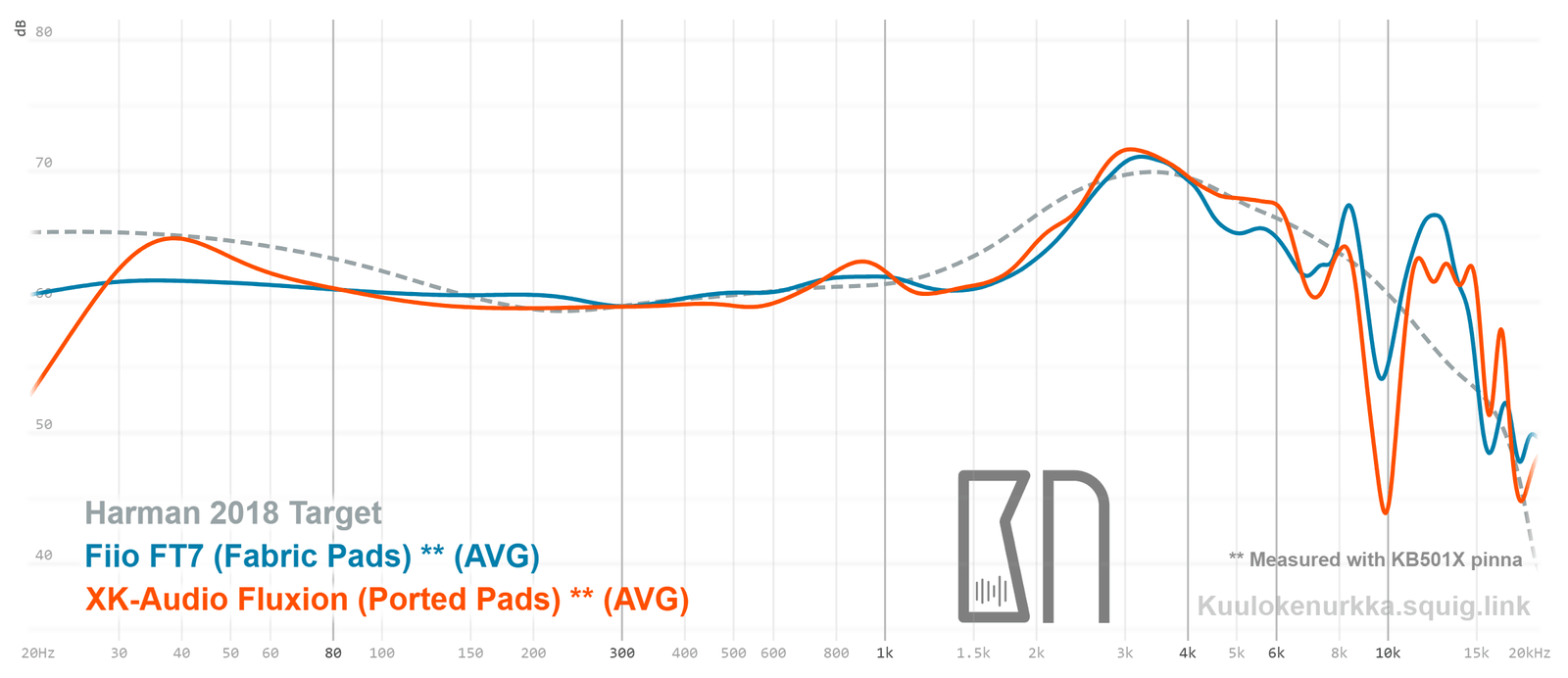
Fiio's 750 euro FT7 like the Fluxion, impresses with its clarity and detail of reproduction, so when hunting for these characteristics, the duo would resemble each other. However, the clear advantages of the Fluxion are a more robust sub-bass and a smoother treble, which have no negative aspects compared to the FT7. The narrow peaks visible in the Fiio model's frequency response make the sound more restless and rough, so the Fluxion feels like a rather automatic improvement without me feeling like I'm losing anything. Of course, depending on one's hearing, the FT7's more relaxed presentation in the presence region might better suit someone else's preferences, but generally speaking, the Fluxion should offer a more natural and thus even more impressive listening experience.
Example 4: Hifiman Ananda Nano
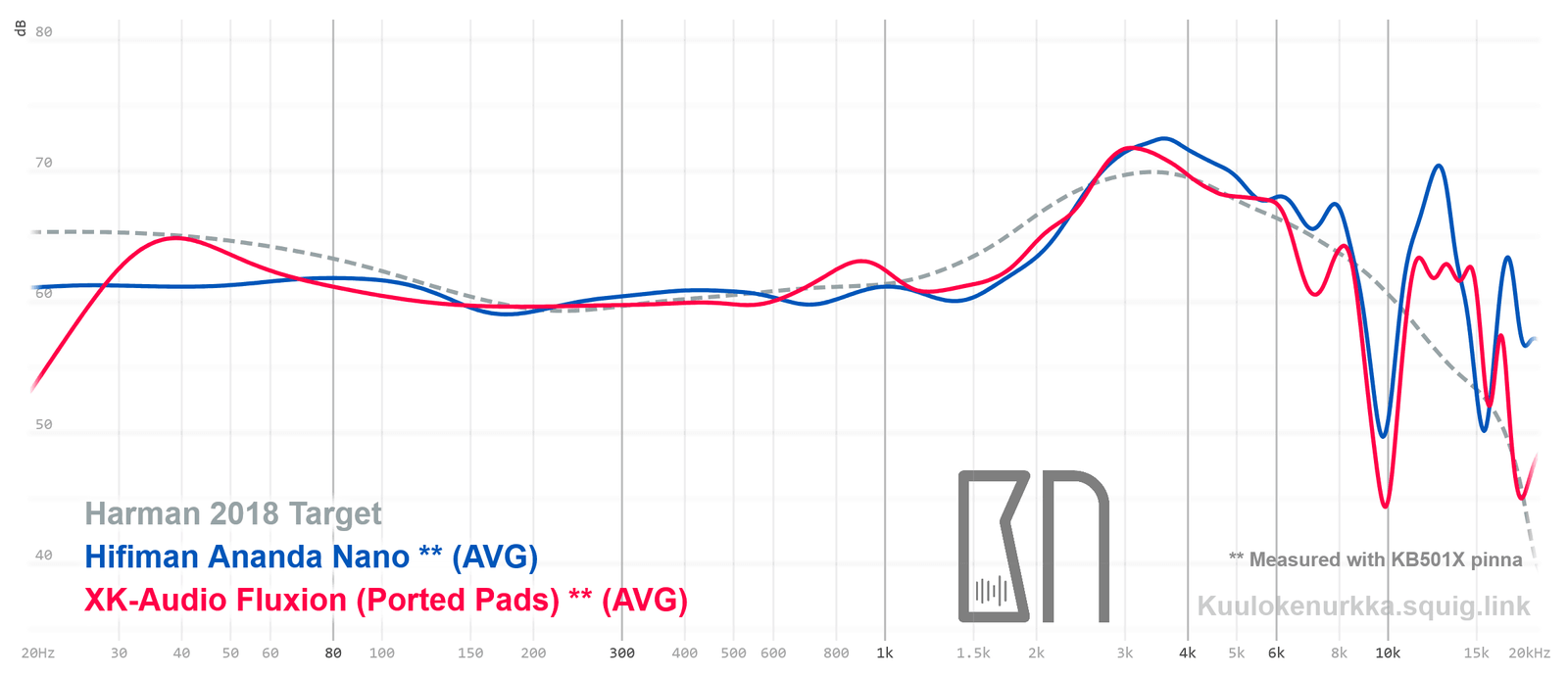
The Hifiman Ananda Nano (current price around 350 €) is brighter than the Fluxion in its upper frequencies, especially due to a strong emphasis above 10 kilohertz. Although the rest of the treble is quite smooth, like the Fluxion, the Ananda Nano is not as balanced a headphone. It is precisely these older and more splashy-sounding Hifimans that the Fluxion easily beats in my opinion, unless someone happens to prefer a brighter sound. For bass lovers, the Fluxion would also be an easy recommendation from this duo.
Example 2: Hifiman Edition XV
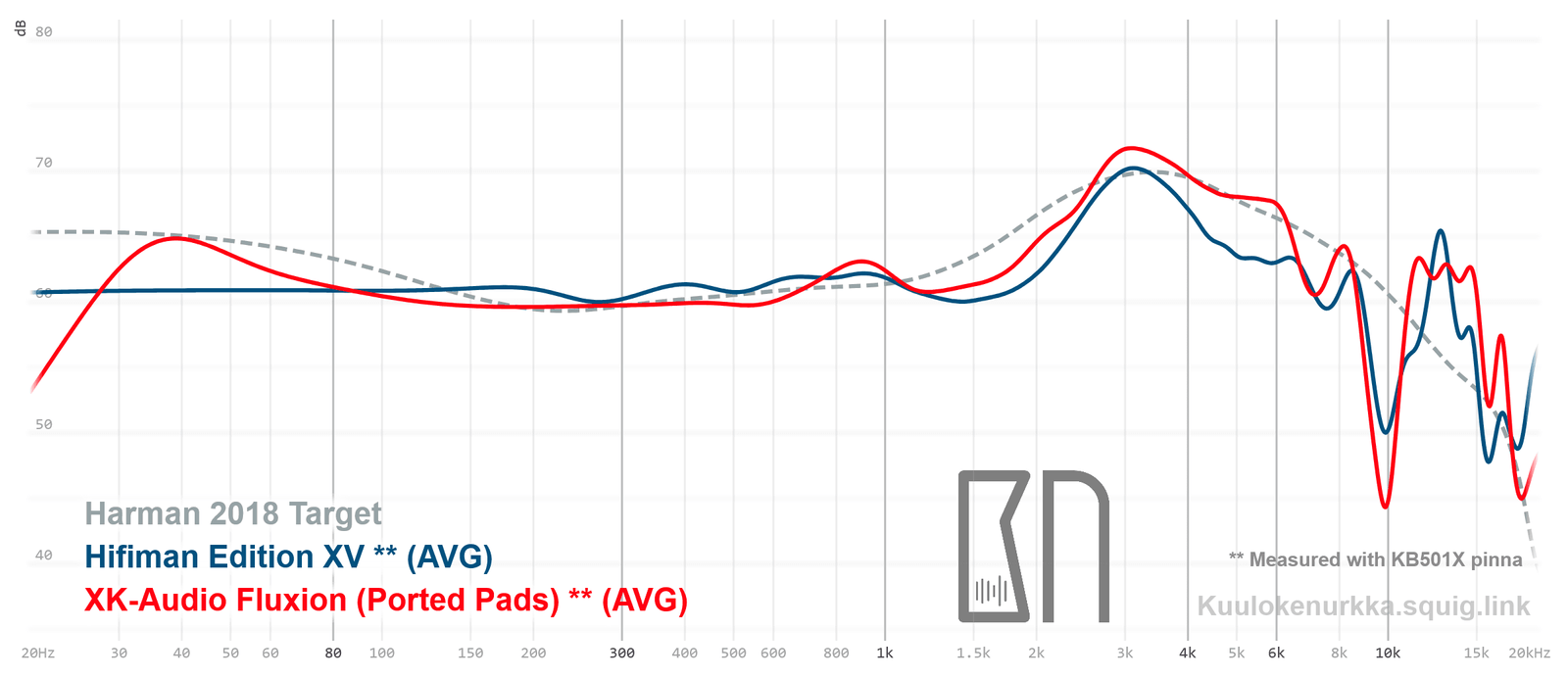
Hifiman's new Edition XV -headphone model offers for about 400 euros a kind of relaxedness and robustness that I would guess some might miss compared to Fluxion-like, quite neutral, headphones. The energy level of the Edition XV remains lower between 1.5–8 kilohertz, which increases the relative proportion of low frequencies in the overall sound to substantial levels. However, when measuring playback accuracy and detail, Fluxion is in a class of its own, so from a sound quality perspective, it is a better headphone in the traditional sense. But since the Edition XV costs less and has a smarter construction, the situation between these two is surprisingly even, depending on taste. I would actually say that the Edition XV competes equally well against headphones costing 1000–2000 euros, if someone is looking for exactly this kind of slightly more relaxed and warmer headphone reproduction.
Example 3: SASH Tres SE
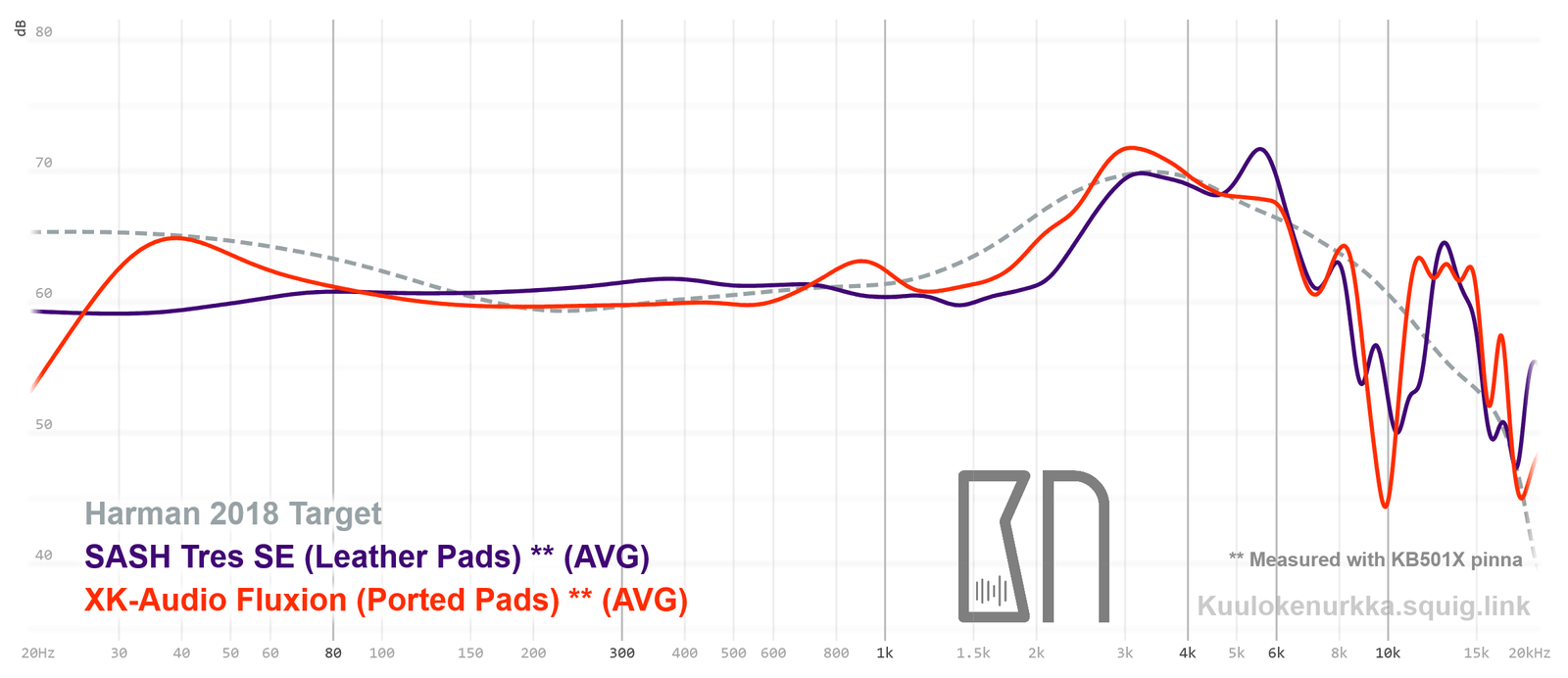
SASH Tres SE as a planar headphone at the same price as Fluxion, is quite interesting, as it offers a more robust and relaxed sound while maintaining a meticulously detailed feel to the reproduction due to its small emphasis in the presence region. Fluxion sounds more neutral and in a way more comprehensive of the two, but as a slightly more colored headphone, the Tres SE is very successful. So, if Fluxion's precise and clarity-focused reproduction doesn't appeal, the Ukrainian marvel could very well do so. On the other hand, I don't know who would necessarily want to swap Fluxion's powerful sub-bass for Tres SE's more linear reproduction, but then again, an equalizer has been invented.
Summary
The XK-Audio Fluxion is not exactly a cheap headphone, but it feels that way in this case, as based on sound quality, one could imagine the price tag rising to several thousands of euros. Even a comparison to Hifiman Susvara would not feel entirely foolish to me, as both headphones possess a similar effortless detail that never obstructs the naturalness of the reproduction. In Fluxion's own price range, one usually doesn't encounter such a realistic and impressive sound, which is why the veracity of the situation had to be further confirmed by asking for a second opinion from Kuulokenurkka's guest writer, Roderick. Since he independently arrived at very similar conclusions, we dare to declare Fluxion a minor miracle. How can a small DIY workshop conjure something like this so cheaply?
Fluxion instills belief that with various computer-aided driver modeling methods, reasonably priced headphones can be even better in the future, even when implemented passively. The fully open design has not prevented XK-Audio from achieving robust bass, and the silver-coated drivers do not even require much amplification power. Fluxion could justifiably be many people's end-game high-end headphone, if only its rugged external appearance can be tolerated. In this regard, similar technology should still be put into the hands of a manufacturer who knows how to design a structure worthy of top-notch sound quality. Although we would not easily elevate such a rarer special product to Kuulokenurkka's wall of fame, Fluxion cannot be left out. Whether the price at the time of purchase is a little over 500 euros or 700–800 euros, the deal is in any case really good from a sound quality perspective.
Pros and cons:
+ Natural frequency balance
+ Playback detail and accuracy
+ Robust and dynamic sub-bass
+ Airy, smooth, and non-fatiguing treble
+ Easy to drive
+ Low price considering the good sound quality
+/- Good comfort, but clunky headband structure
+/- Comes with different earpads, but attaching them proved difficult
– The midrange might sound a bit thin and aggressive to some tastes
– One must be careful with the elements left exposed on the back
– 3-pin XLR connectors complicate cable purchases
– Only available for purchase from China
 EN
EN  FI
FI
Hi!! How do you buy from taobao? Everything is in Chinese and changing language not so easy. Could you please share a link?
Hi! I used translation software for making an account first, as you have to log in before you can even open Taobao links or search for products. Still, I’d suggest using CSSBuy, for example, as you can use it in English and they will act as shipping agent between you and Taobao. If you search with a word ”Fluxion” on CSSBuy, you should find the XK-Audio Taobao store page for the headphones. Then you can pay for the order and the agent will take care of it. First, the package will arrive at CSSBuy warehouse and then they will ship it to you – after you pay for the shipping and service fee, of course. There are other similar agents as well, so CSSBuy is just one of them. I have some additional hints for CSSBuy at my XK-Audio Avalon mk2 review. And lastly, if you use the agent, you don’t need Taobao account at all. 🙂
Thanks. Nice explanation in the other review! i will give it a try. Are you selling this headphone or will you keep it?
You are welcome! I will definitely keep Fluxion and probably even sell some other planar headphones because of it.
It must be a really good one! A pity just the customized earpads. The pass port is clever but it’s not clear how it will perform without it, with standard pads.
I wanted to buy other ported pads but from cssbuy you are not allowed to see the xk audio store.
So I got stuck with the purchase. I wanted also to pick the best cable if possible but it’s does not seem to be..
Do you have suggestions? Maybe you managed somehow..
Unheard Lab has some additional measurements with different (more standard pads): https://sai.squig.link/?share=Harman_OE_2018_Linear_Target,Fluxion_stock_ported_pads,Fluxion_secondary_pads,Fluxion_(Para_pads)
Without the bass ports Fluxion just has more linear bass, but otherwise there shouldn’t be too much difference. The ported pads are the way to go in my opinion.
You are right that CSSBuy does not grant access to the store page. Thus, I would search for additional pads on Aliexpress if possible. Optionally, you might also want to check Superbuy, which usually has a bit better search tools for Taobao.
Hi,
Thanks for the good review once again.
When ordering from Taobao, VAT probably became payable? If you order from Aliexpress, before payment, the price is reduced by the amount of VAT.
By ordering through CSSBuy, you can choose a shipping method where you don't have to pay VAT. Of course, everyone has to decide how legal they consider such shipping to be, and whether they want to proactively contact Customs to pay the taxes. Indeed, for orders over 150 euros on Aliexpress, you have to do the customs clearance yourself in Finland, so they deduct the VAT in advance to avoid it being charged twice. From the amount of VAT deducted, you can see how much is payable during the customs clearance phase. Partially, the price difference between Taobao and Aliexpress for Fluxion is precisely due to VAT.
Thanks. I didn’t notice unheardlab measurements
They are indeed good headphones, the best when listening to one's own collection. The naturalness and effortlessness make them a bit of a ”baseline” for other headphones in my collection. Thanks for the good review that inspired me to buy them!
Great to hear and nice that you managed to order, even if it's not the easiest! 🙂