Author: Sword of Damocles
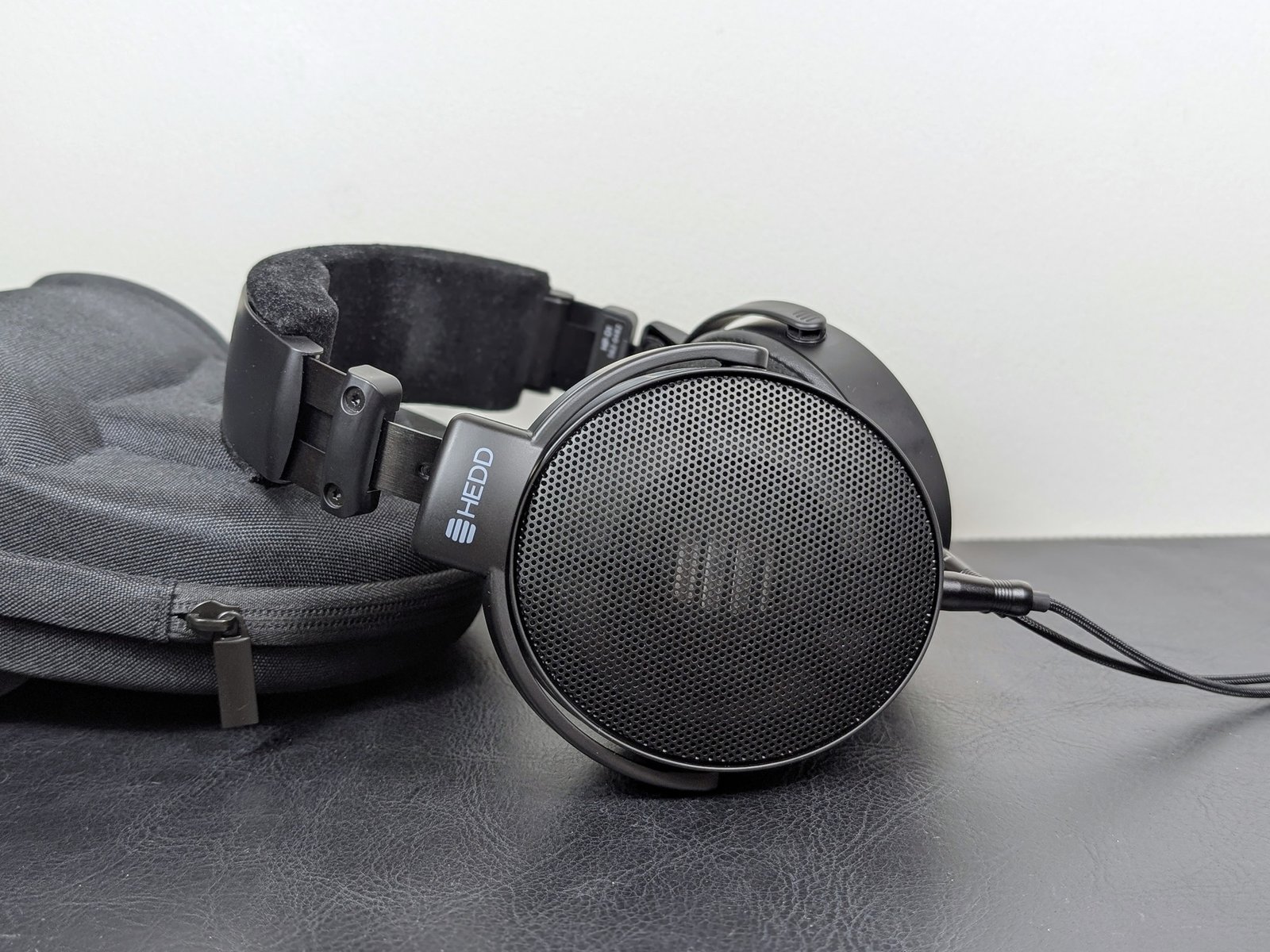
Table of Contents:
Information:
- Released: 2025
- Country of manufacture: Germany (driver diaphragms from Sweden)
- Price: 699 €
- Available in Finland: Yes
- Type: open, over-ear
- Dynamic drivers with Thin-ply Carbon diaphragms (TPCD)
- Impedance: 32 Ohm
- Sensitivity: 100 dB/mW
- Weight: 350 g
- Connection type: 2x 3,5 mm
- Cable: Length 2.2 m | Connector 3.5 mm (+ 6.35 mm adapter)
- Accessories: Carrying case
- Warranty: 5 years (requires registration)
Review unit acquisition method: Borrowed from a hobbyist
German HEDD Audio has so far relied on their self-developed AMT drivers (Air Motion Transformer) in their cleverly named HEDDphone headphones, but perhaps because of that, more affordable products have been missing from the selection. HEDDphones have also not been suitable for everyone due to their massive size, so the target audience already required expansion.
Released at the end of 2025 HEDDphone D1 fixes the gap left by its older siblings, costing 700 euros and being significantly smaller than them. This time, the sound is produced with conventional dynamic drivers, whose diaphragm, however, is made in Sweden from a completely new type of material: thin-ply carbon fiber (Thin-ply Carbon). More on this a bit later.
HEDDphone D1 managed to gather a lot of praise after its release Sennheiser HD 600:aa for its neutral sound resembling, after which the headphones seem to have sold like hotcakes. They have been out of stock from the manufacturer's warehouse for a longer time, because new production batches go to retailers to meet demand. That's why I myself haven't yet managed to get a test unit directly from HEDD Audio, even though they would have gladly sent one if the opportunity arose. Fortunately, however, a friendly fellow enthusiast contacted me, who suggested lending and reviewing the headphones. And so, here we are. Thank you!
Although HEDDphone D1 has little in common with the manufacturer's other headphone models, let me mention in this context as a background my previously written review HEDDphone 2:sta.
Packaging and accessories
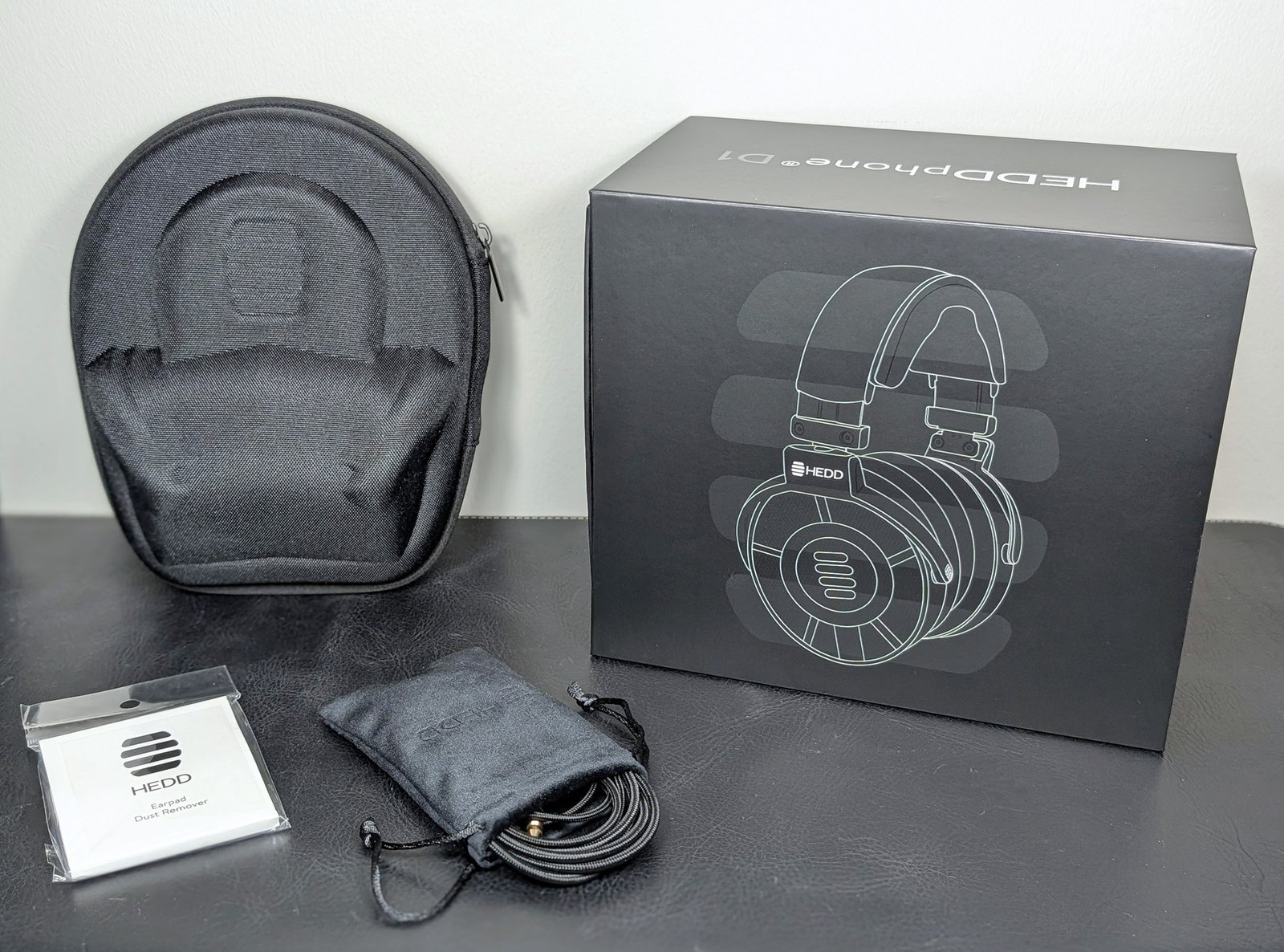
HEDDphone D1 arrives in a black cardboard box with a magnetic flap, packed in its carrying case. The equipment includes a 2.2-meter cable with fabric sleeving and metal connector housings. It fortunately does not suffer from excessive springiness or memory, like many other lightweight cables, which would cause it to try to return to a certain position during use. Apart from slight microphonics (rustling caused by rubbing against clothes), its flexibility earns it high marks from me for usability.
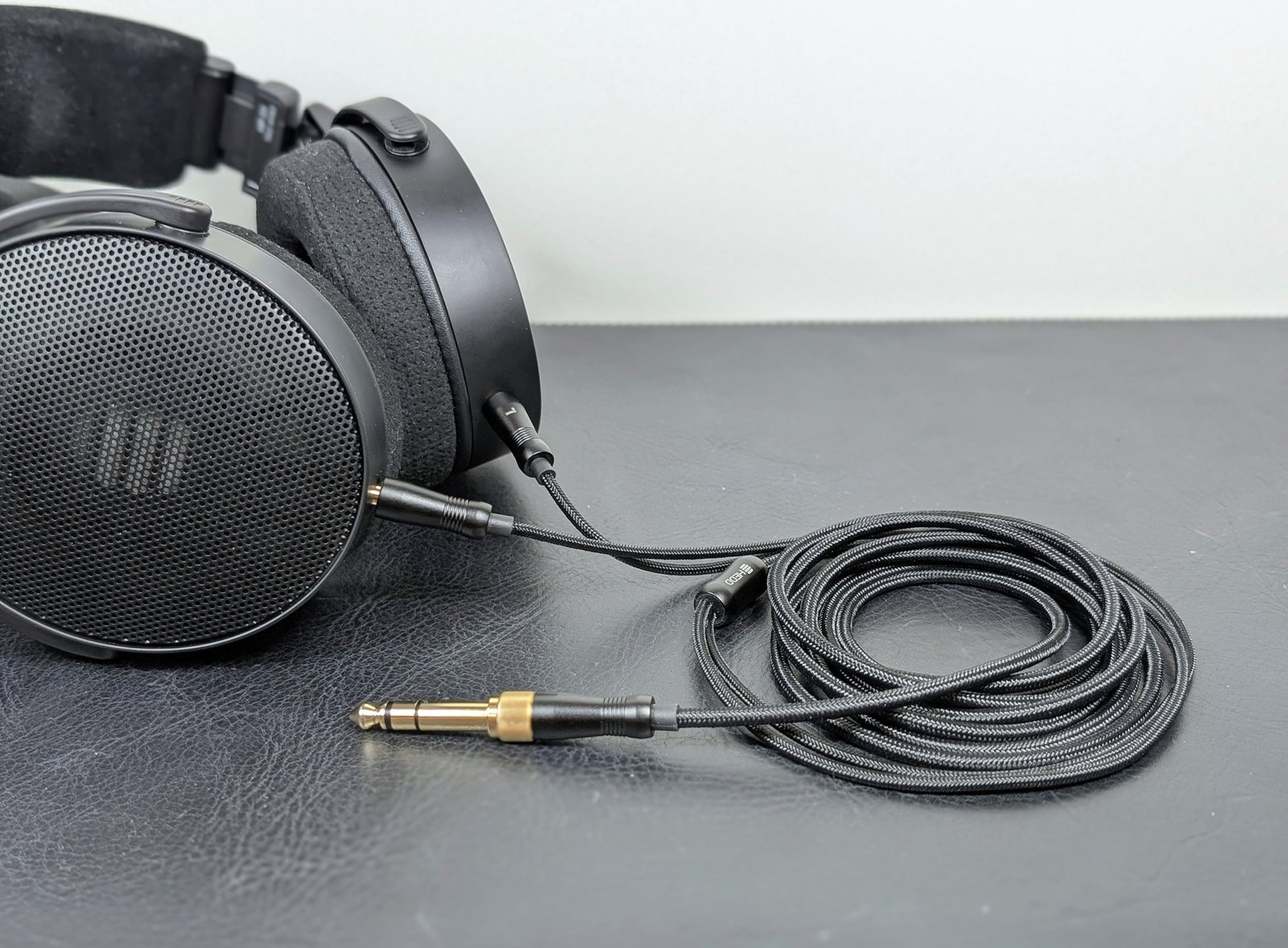
The cable connects to the audio source with its adapter, either a 3.5 or 6.35 millimeter plug, and to the earcups with two 3.5 millimeter connectors that snap in exceptionally tightly. Since the wiring follows a common standard, cables from Hifiman, FiiO, and Meze Audio, among others, also fit the HEDDphone D1. Likewise, acquiring a balanced cable would be effortless, and I already had some readily available.
As a surprising accessory, the headphones also come with a stack of Post-it-like notes, the adhesive surface of which the owner can use to clean dust from the earpads. This suggests that the manufacturer itself has realized how easily the HEDDphone D1's earpads absorb all lint. If the problem with Sennheiser headphones has been the rapid flattening of the earpads, HEDD Audio might similarly be remembered years from now for the D1's earpads' susceptibility to getting dirty.
Build and comfort
The structure of the HEDDphone D1 immediately feels familiar to anyone who has ever handled Sennheiser's HD 600 series headphones. HEDD Audio has clearly borrowed the basic design principles and partly the appearance from its competitor, which is by no means a bad starting point. However, the implementation has been taken further in certain aspects: the height adjustment works more smoothly, and the extra width of the headband should inherently help with weight distribution. The ear pads are also plumper than Sennheiser's.
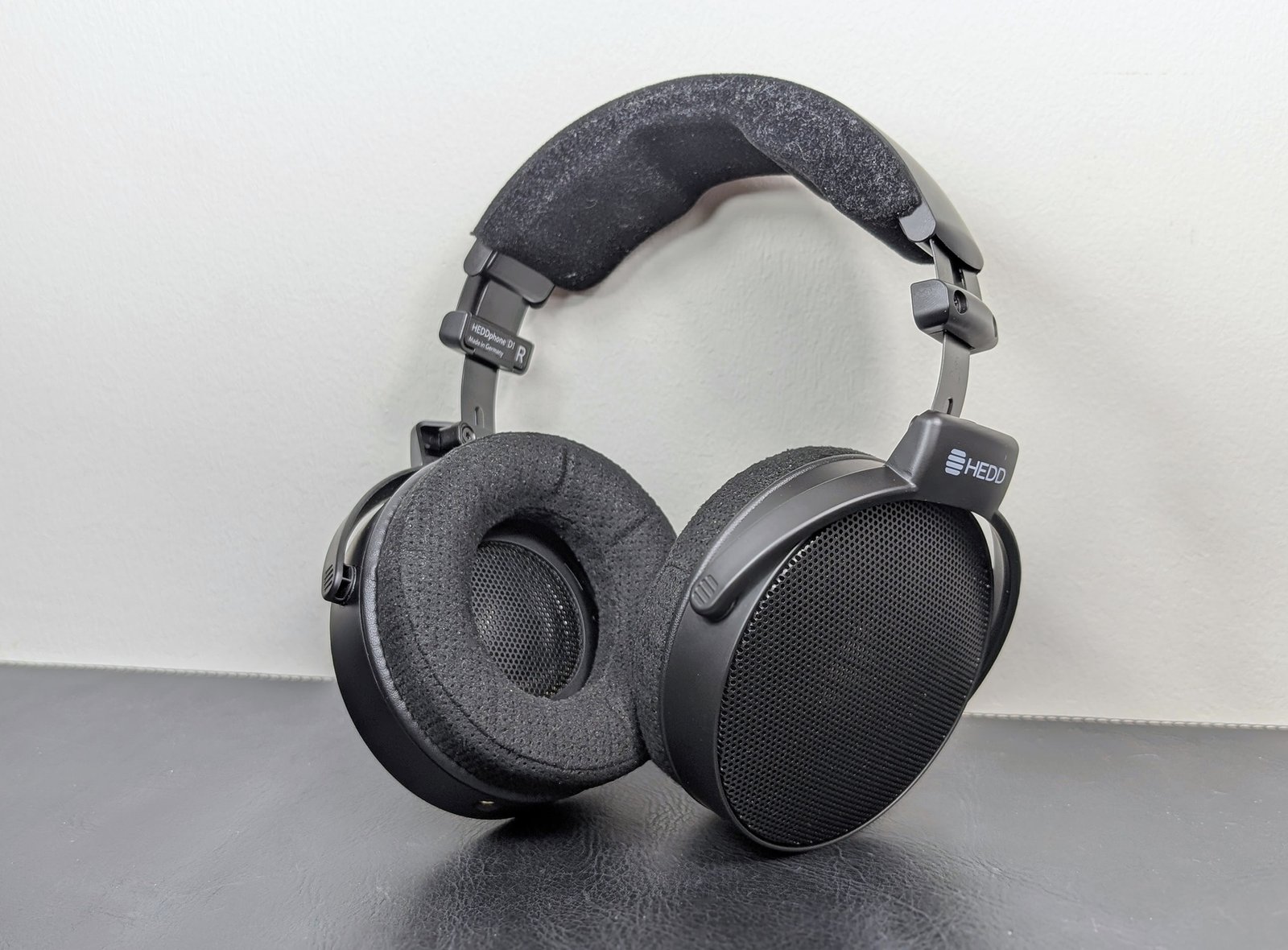
On the other hand, despite its plastic parts, it is no featherweight; its 350-gram weight places the HEDDphone D1 in the mid-range, below many planar headphones. The lightness of Sennheisers is still astonishing, as the HD 600 model, which is quite similar in overall quality impression, weighs only 260 grams. Still, I wouldn't call the D1 heavy either; perhaps a 700-euro headphone should feel a bit more robust and valuable.
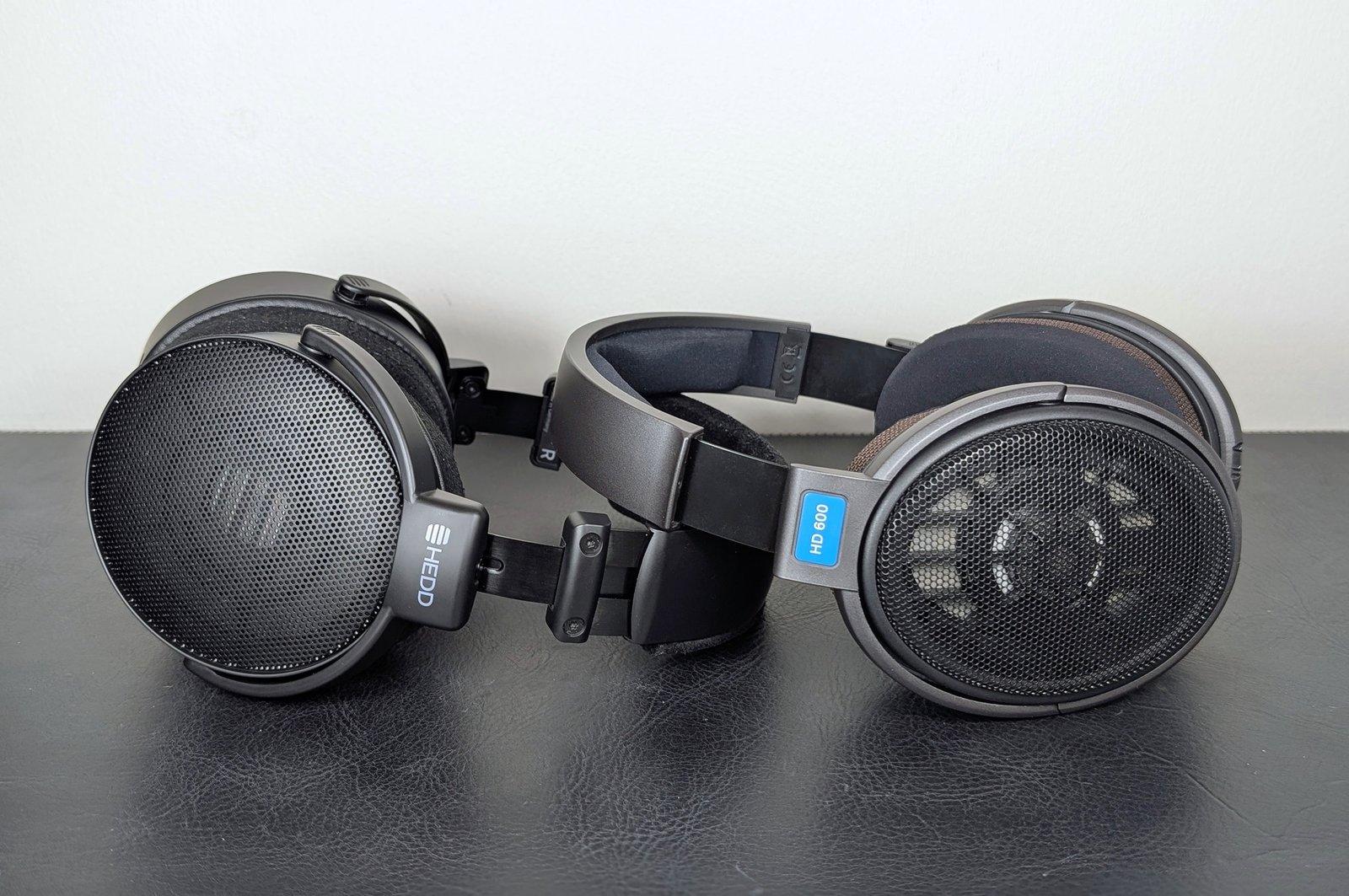
In appearance, the headphones are understated in their black coloring, but the recurring HEDD Audio logo (four horizontal stripes depicting the AMT driver) at various points nicely ties the whole together. This logo is even stylized on the back of the drivers to create associations with the manufacturer's other headphones.
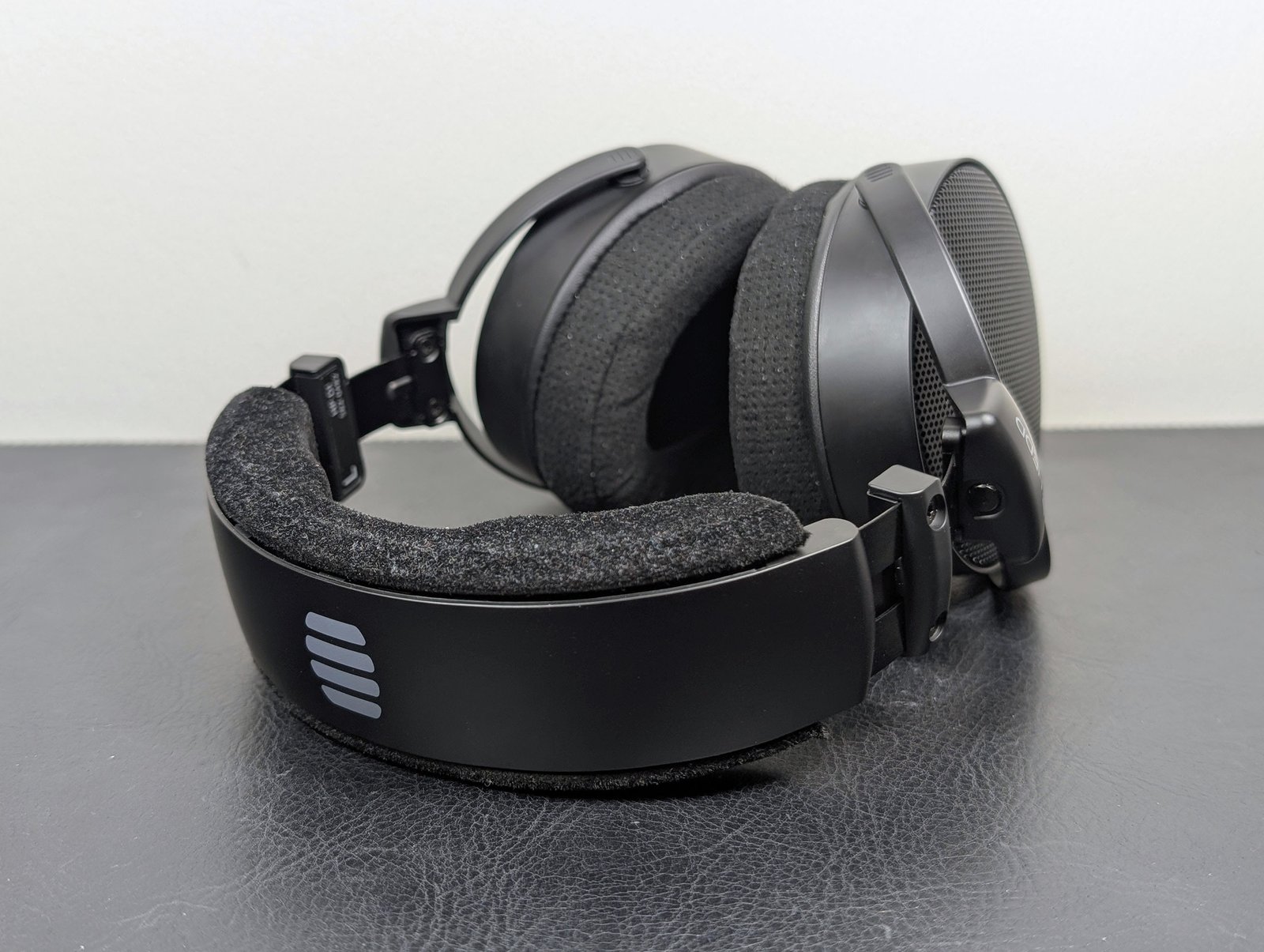
In terms of comfort, the D1 is a somewhat mixed experience. The headband clamps gently, and the earpads are soft and pleasant in their suede material. I am not even bothered by the slightly narrow ear opening (6 x 4 cm) or the fact that at a certain angle, my earlobes slightly brush against the metal grilles of the drivers. My biggest criticism, however, is directed at the head pad.
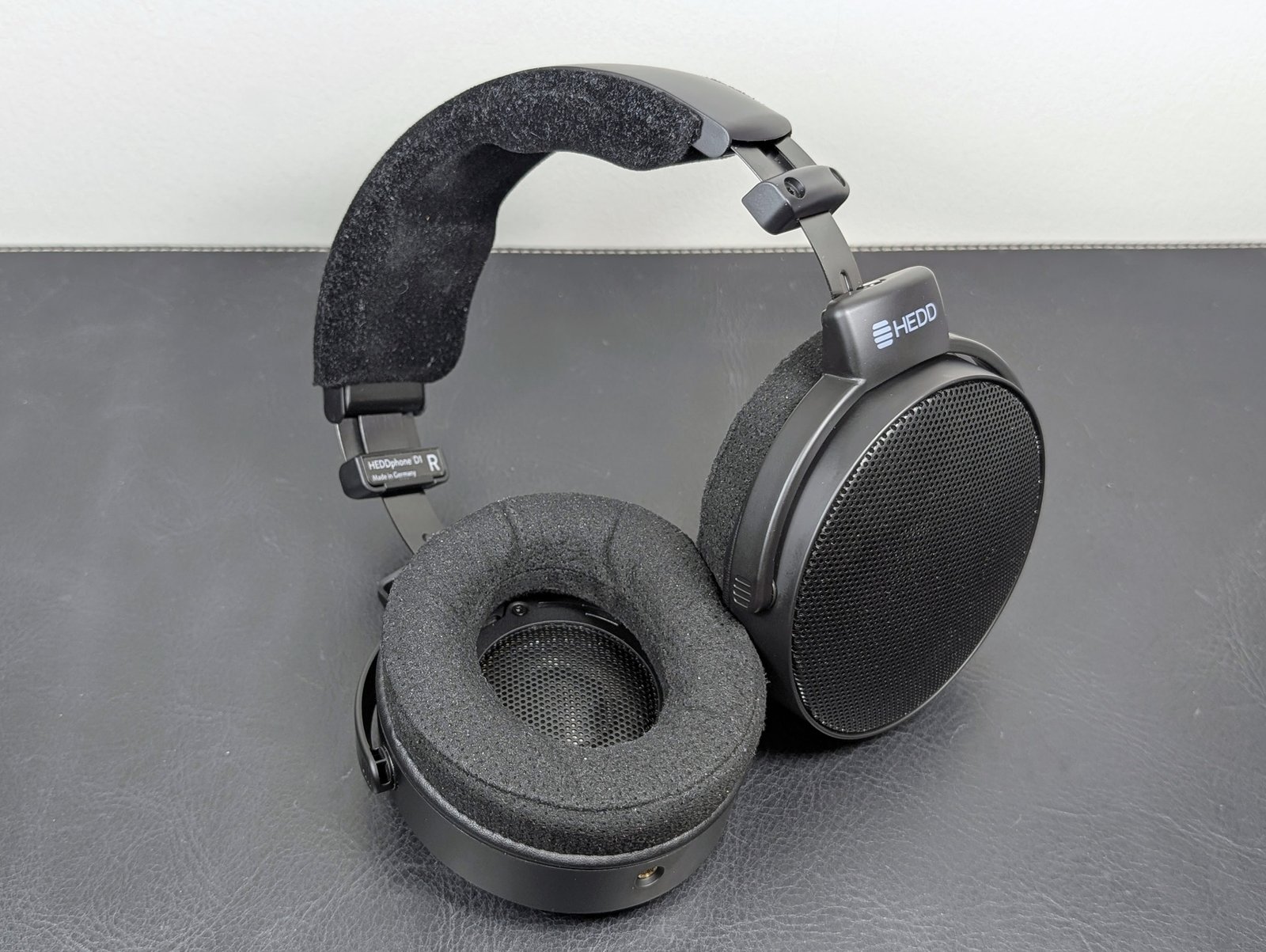
Although the headband pad is wide and its large notch alleviates pressure on the top of the head, the benefits are only partial due to the hard foam. Since the pad practically doesn't flex at all, it starts to cause a slight ache during longer listening sessions. I sometimes have to move the headphones to a different spot so that the top of my head can rest. This is a shame, as with a softer headband, it would be an excellently comfortable headphone; now it only remains at a basic good level. On the other hand, the pad is replaceable, so I hope HEDD Audio or another manufacturer will offer softer alternatives. Already, some have replaced the headphones with a 3D-printed Capra Strap.
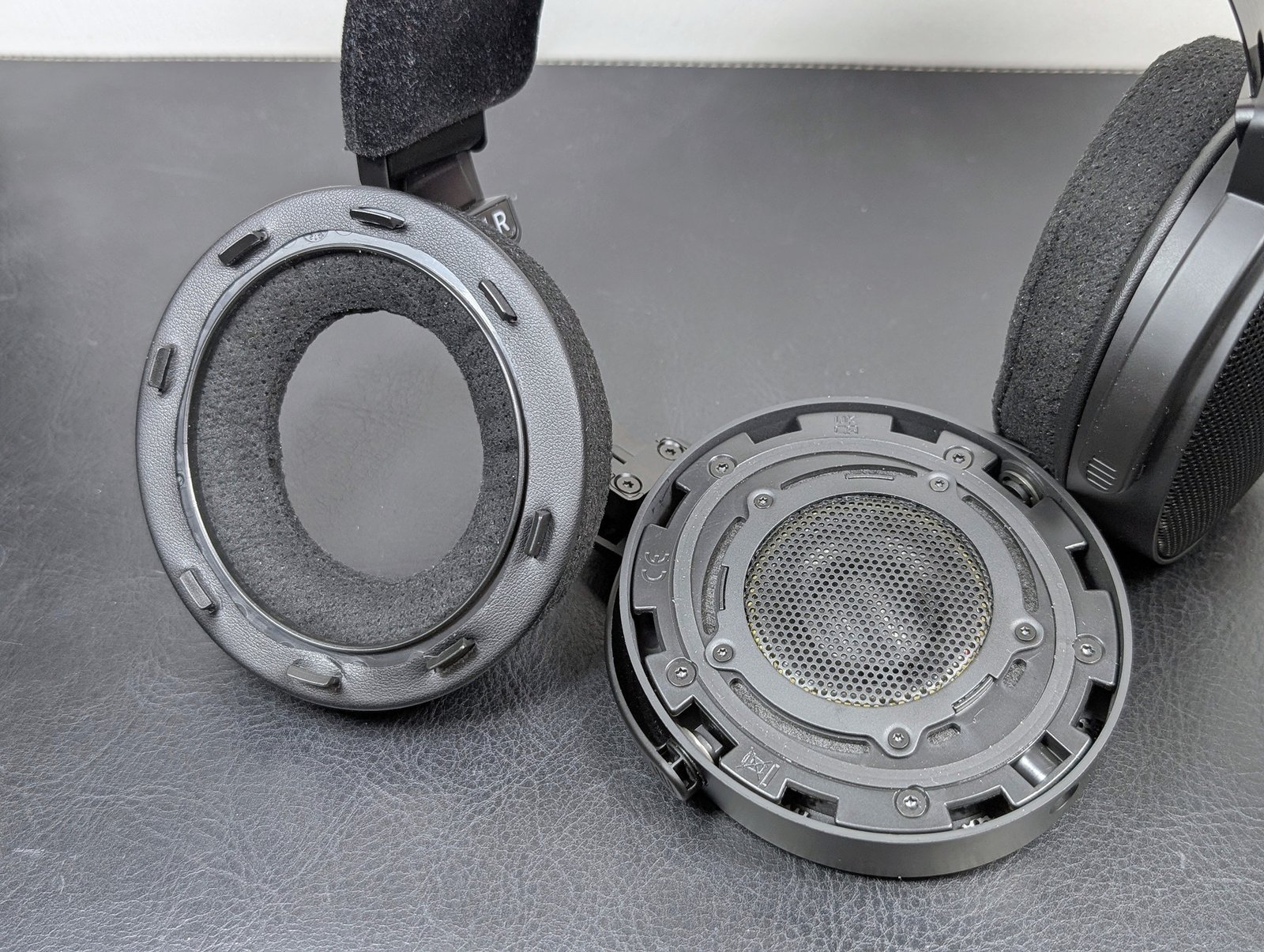
The advantage of such headphones should indeed be longevity, as the D1's structure is designed to be repairable, and wearable parts, such as the ear pads, are easily replaceable. The manufacturer's confidence in its craftsmanship is also reflected in the warranty terms: the headphones come with an exceptionally long 5-year warranty to provide peace of mind after purchase.
Sound quality
Thin-ply Carbon diaphragm (TPCD)
Although HEDD Audio has opted to use more conventional dynamic drivers in the D1 instead of AMT, their diaphragms are a new creation in material science and possibly even the most interesting single feature of the product. The diaphragms are made from Thin-Ply Carbon material (my own translation: thin-laminate carbon fiber) by the Swedish company Composite Sound, which originally developed the TPCD technology. To my knowledge, this has not been utilized in headphones before, so HEDD Audio has delightfully found a new collaboration partner in Europe.
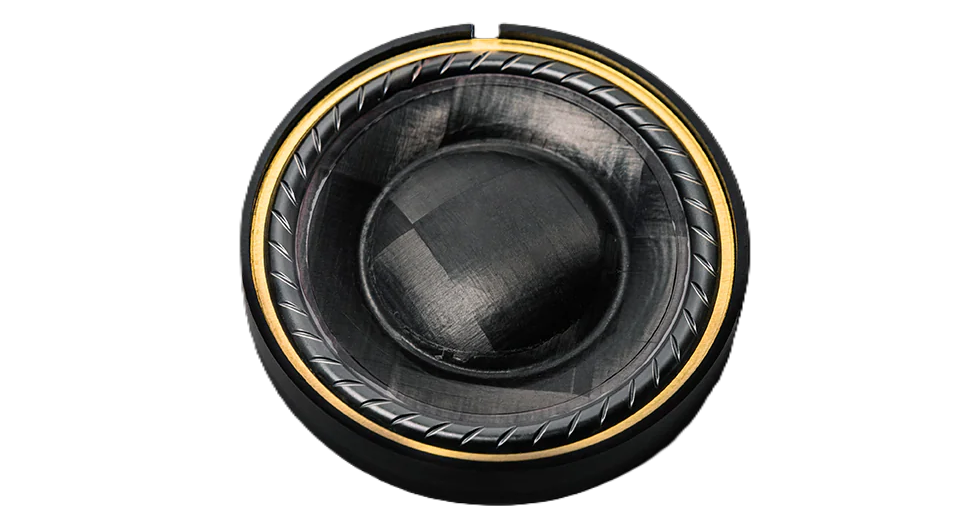
With the thin carbon fiber layers of TPCD drivers, unwanted resonances can be directly controlled, which would normally need to be damped with other structural solutions. These, in turn, can have negative side effects on sound quality, if the resonances are brought under control at all. HEDD Audio, of course, promises the D1's sound to be cleaner, more accurate, and more detailed, but I won't dispute this if the manufacturer wouldn't have been able to design equally good headphones with other types of drivers.
Impedance measurements and amping requirements
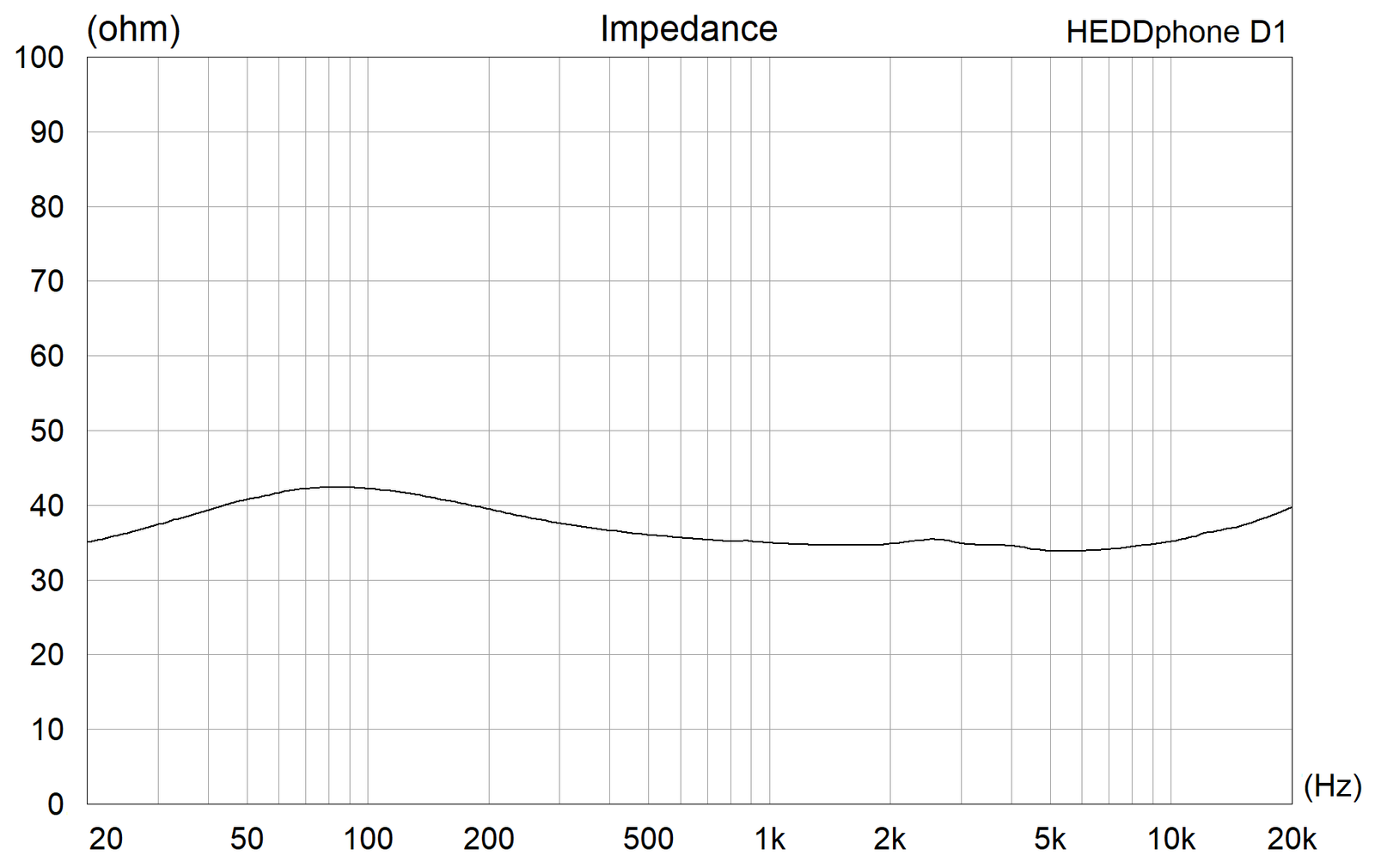
Contrary to the manufacturer's stated nominal impedance of 32 ohms, the HEDDphone D1's low frequencies rise slightly above this to just over 40 ohms. However, the variation remains relatively small, so amplifiers with a higher output impedance should not significantly boost the headphones' bass. If, however, a result faithful to HEDD Audio is desired, it is advisable to choose a modern transistor device for listening, whose specifications state an output impedance of less than 1 ohm.
In terms of sensitivity, the D1 is also an easily driven headphone, in line with current trends, as 100 dB/mW allows for use with almost any device. For comparison, the Sennheiser HD 600 is just as sensitive, but with its high nominal impedance of 300 ohms, it can behave quite differently depending on whether the amplifier is optimized for current or voltage delivery. The HD 600 would be slightly better suited for tube devices, whereas the HEDDphone D1 would be a more straightforward purchase for those who don't actually own a headphone amplifier. I personally generally prefer slightly less sensitive headphones, as they can be used more versatilely. For example, Gold Note HP-10my amplifier hisses with the D1, for which I naturally blame the device more than the headphones.
Headphone Measurements
Our frequency response measurements have been made with a clone IEC-60318-4 coupler and KB501X pinnae. The Harman target curve from 2018 is used as a reference point and generalization of the headphone response that would sound good to most people. For more information on the measurements and their accuracy, see Headphone Measurements-page. The HEDDphone D1's frequency response is also comparable with other measured headphones Squiglink .
Frequency response:
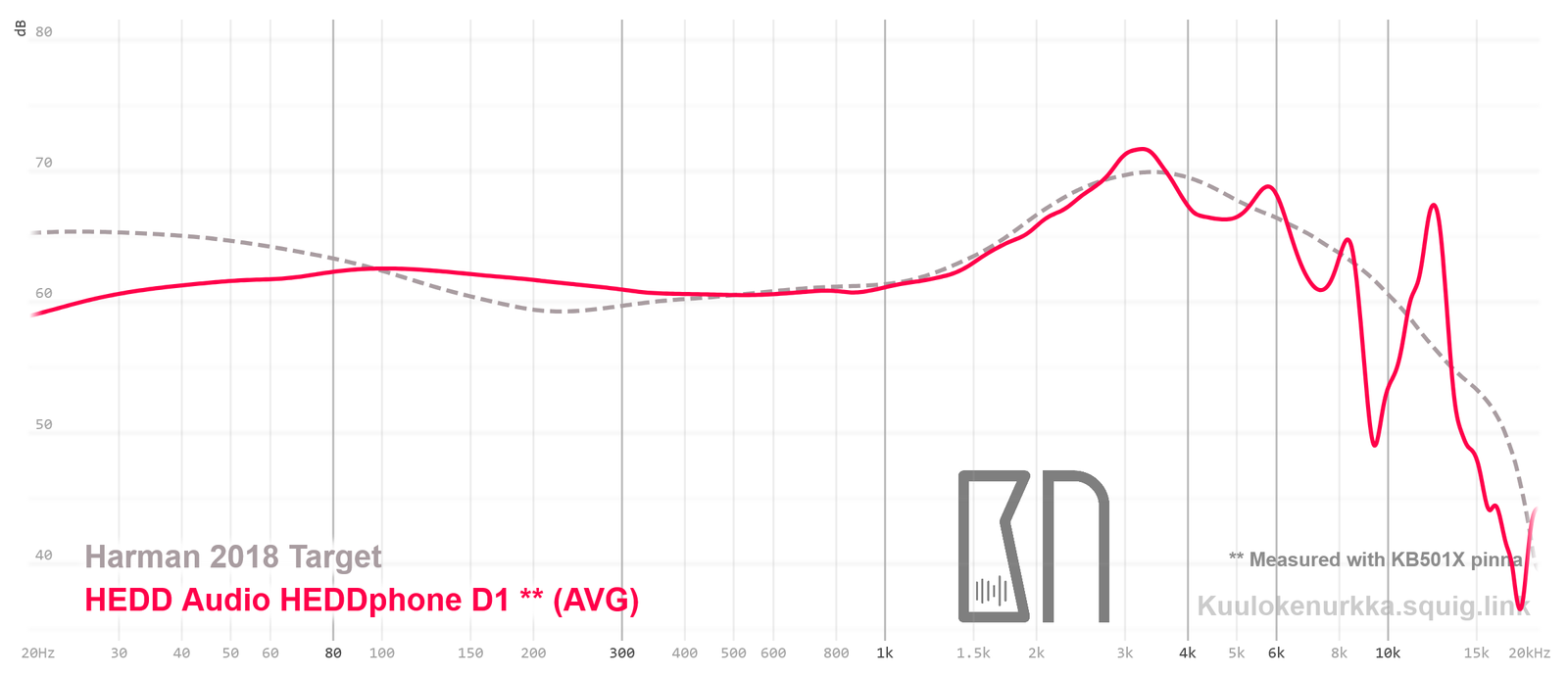
It's difficult to call the D1's frequency response anything other than very neutral and correct. Especially the upper midrange, which follows the Harman curve, distinguishes these headphones from most of their competitors, who nowadays aim to broaden the soundstage by attenuating the 2 kHz region. The D1, however, keeps these frequencies present.
In terms of bass, the D1 is quite as expected for an open-back dynamic headphone, meaning the sub-bass attenuates somewhat compared to the upper bass frequencies. On the other hand, a small boost in energy between 150–300 Hz should compensate for the situation quite successfully, or at least prevent an excessive feeling of lightness. Due to the same characteristic, the bass also reproduces slightly more robustly than with most open-back planar headphones.
The high frequencies do not measure most linearly, but the variation is small, and no sharper peaks or dips occur, considering that one is expected at 10 kilohertz, while frequencies above that always measure somewhat imprecisely. Perhaps one of the more peculiar features to highlight is the upper half above 15 kilohertz, which sharply drops downwards. The HEDDphone D1 may therefore sound slightly dark to those who can still hear such high frequencies or are accustomed to a more airy reproduction.
The acoustic impedance of the headphones appears to be relatively small, which should result in relatively little variation in frequency response between different wearing positions and users. This can generally be seen as an advantage of open-back headphones compared to closed-back variants, meaning the measured frequency response better corresponds to the final user experience.
HEDDphone D1 vs. Sennheiser HD 600:
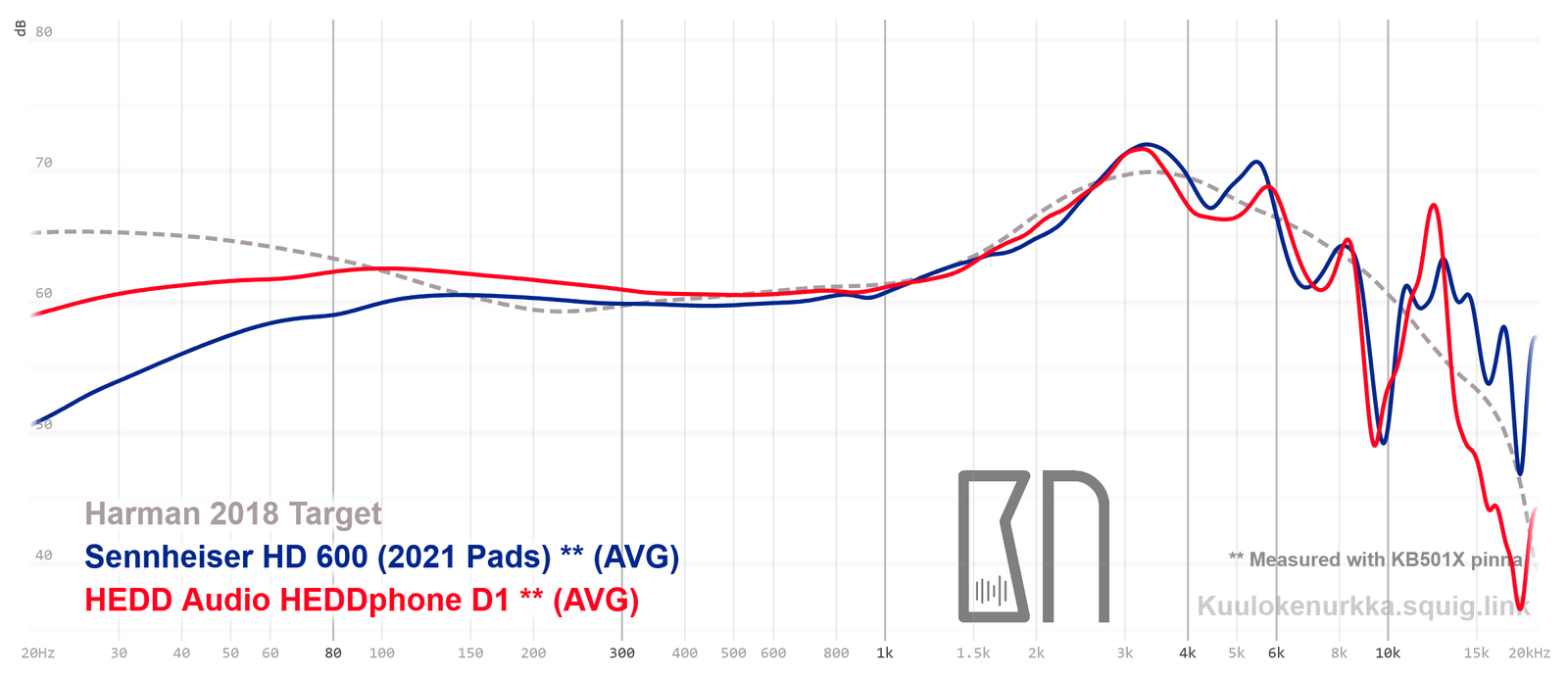
The Sennheiser HD 600, which also sounds neutral, is slightly more energetic and airy, but also significantly lighter in its low frequencies. Because of this, its presentation emphasizes high frequencies and their clarity, whereas the HEDDphone D1 balances the overall sound with its more robust bass and slightly calmer treble. However, it's easy to see that the HD 600 specifically served as a kind of inspiration for the D1's tuning, although nowadays the ear-gain region is also expected to reproduce this way based on the Harman curve. As a reminder, the HD 600 was released already in 1997, more than 15 years before the first Harman curve.
Sound observations
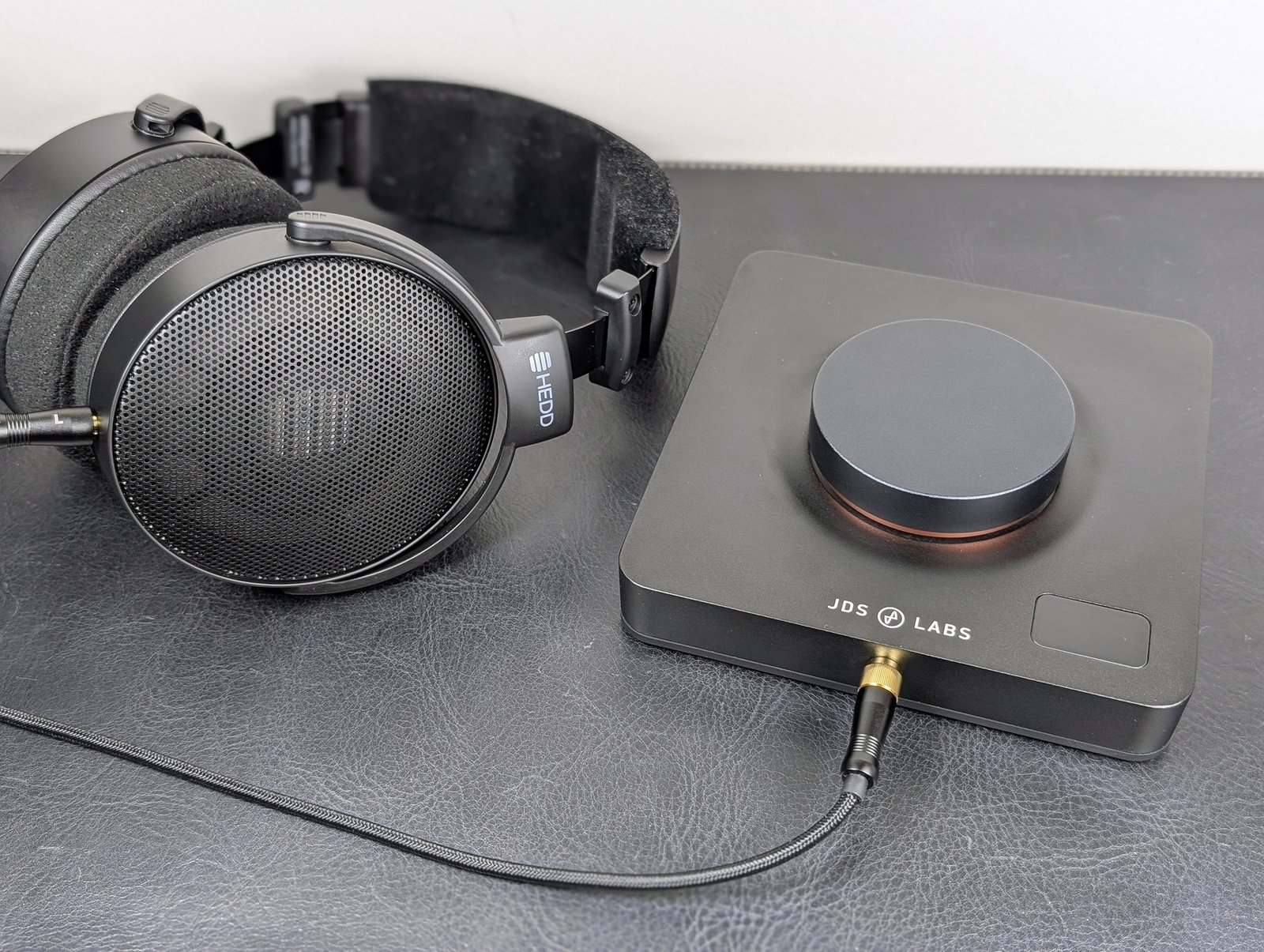
I evaluated the headphones with the JDS Labs Element 4 amplifier and its integrated D/A converter. The device is practically completely colorless in sound, so it illustrates what the HEDDphone D1 would sound like when connected to other neutral listening chains.
Since the Sennheiser HD 600 has served as a neutral reference headphone for as many as three decades, it would already be time for it to retire. With the HEDDphone D1, this moment is finally approaching, as it continues the same legacy while correcting the classic model's most well-known weaknesses: subdued bass and a narrow soundstage.
Firstly, the D1 sounds exceptionally ”ordinary,” but precisely in the best possible sense. Only a few headphones are capable of reproducing sound this honestly, without adding or removing anything. On this basis, it is therefore a very neutral presentation, where the recordings themselves take center stage, for better or worse. Neutrality is, of course, a fluid concept, so for example, those accustomed to planar headphones might also perceive it as a brighter and slightly clearer (could also be called thin) sound. In the D1, I instead sense a touch of pleasant warmth, and despite its energetic sound, it does not seek to sharpen the high frequencies in a way that would make them sound more detailed than they truly are.
Bass: If the HD 600 is still used as a benchmark, the D1 corrects its biggest weaknesses in the bass frequencies, namely the obvious lightness and missing impact. The reproduction has a surprisingly good amount of dynamic punch and the depth I expected – you know, when the rumble continues to frequencies that are felt more than heard. This is enough to excite, and the bass accuracy also impresses. On the other hand, a few other newer headphone models, such as Focal Hadenys and Austrian Audio The Arranger, manage to reproduce sub-bass more faithfully to the Harman curve, so compared to them, the HEDDphone D1 still feels a tad tame. Therefore, if your playlist mainly consists of electronic music that revels in sub-bass, the headphones might be left wanting more authority, for example, in the form of equalization. Coincidentally, equalization would be possible with the excellent web interface of my Element 4.
Midrange: The forward-reproducing and extremely natural midrange is the D1's best feature, distinguishing it from most of its competitors and creating the strongest associations with older Sennheisers. As a small spice, the richness emanating from the 150–300 Hz range in the reproduction is reminiscent of the HD 650, even though otherwise it is slightly closer to the HD 600. Every instrument sounds like itself, and the vocalist always pleasantly rises to the center of everything. It is difficult to improve upon this, unless one actively seeks an even more energetic presentation or soundstage spaciousness at the expense of the reproduction's presence. The absence of colorations makes the D1 sound very honest, so it is a pleasure to listen to almost anything with it without noticing the headphones at all, apart from the hard headband.
Treble: The treble also continues in the same vein, being predominantly natural in tone and balanced relative to other frequency ranges. The slight harshness I occasionally perceive is likely due to small peaks I located with a frequency sweep at 5 and 11 kilohertz (the location may vary per listener), but still, the end result is very smooth compared to, for example, average planar headphones. The D1 does not amplify sibilance, make drum cymbals sound odd, or draw attention to the high frequencies any more than to other areas, which further strengthens the impression of neutrality.
At its best, such a balanced presentation helps bring out new details in music, as the masking effect remains minimal. The reproduction never becomes muddy, and no single area overshadows another; instead, clarity is maintained in all situations. I have indeed discovered new things in familiar songs, such as almost hidden synths and so on. The D1 would be an excellent tool for evaluating colorations in recordings or other headphones without its listening being strenuous. However, if I consider the feeling of detail in the reproduction, I have heard more impressive headphones. This is because the HEDDphone D1 is ultimately not the most transparent in its presentation or the most spacious in its soundstage.
Soundstage: The headphones reproduce sound close and present, quite similarly to the Sennheiser HD 600 & HD 650. Many, I believe, like this, but for the rest of us, the D1 offers a slightly wider and, above all, more proportionate experience. The sound does not play narrowly entirely inside my head, but rather disperses more evenly around me. On the other hand, if someone is aiming for an even more out-of-head sensation, the D1 might not be the best option compared to, for example, Hifiman's large planar models. However, I myself would not overemphasize the soundstage in headphone selection, especially when reading reviews, because everyone experiences it differently. Let my own text primarily serve as a reflection of how I have experienced the other headphones I have tested.
The HEDDphone D1 thus provides me with an accurate and somewhat monitor-like listening experience, where the sound is always readily available. On the other hand, for some, such continuous presence could, in the long run, be somewhat fatiguing or at least lead to lowering the volume, if the intention during listening was to be able to concentrate on other things as well. I personally see the downside of the intimate presentation mainly in the fact that there isn't a huge amount of space available for sound separation, which makes headphones tuned for a more spacious and layered soundstage automatically feel a bit more interesting to me.
For example, XK-Audio Fluxion sounds very different with the D1 by subjective measures (more transparent, more meticulous, more open), even though the duo does not differ vastly in their frequency responses. However, I believe the difference arises from the fact that planars generally do not reproduce upper bass frequencies as fully as dynamic headphone models; instead, they combine a slightly brighter treble with their thinner sound. This is enough to make the presentation clarity-focused, whereas the HEDDphone D1 sounds a bit fuller and more relaxed.
Comparison: HEDDphone D1 vs. Austrian Audio The Arranger
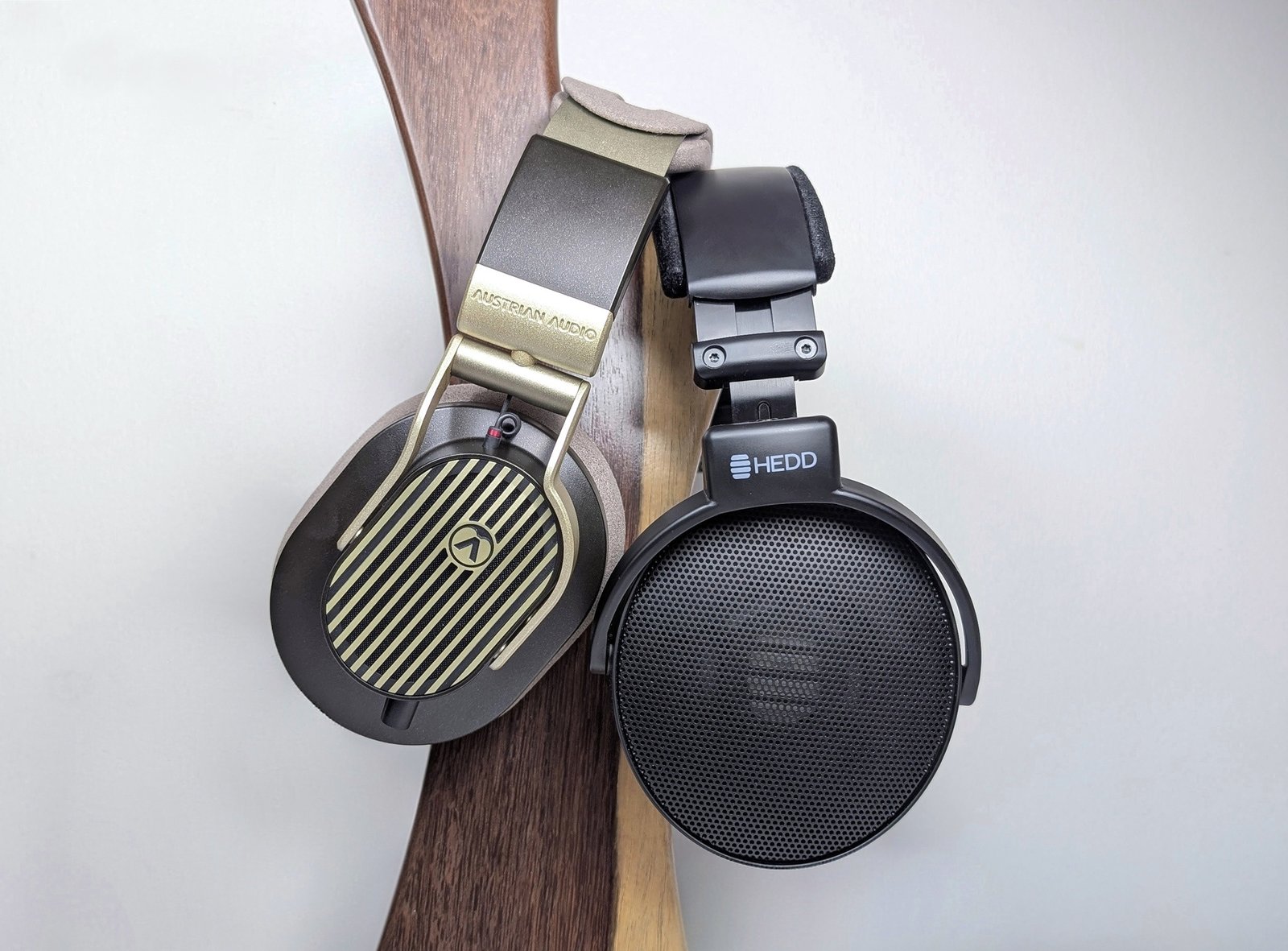
I compared the German HEDDphone D1 and the Austrian Audio Arranger earlier, so I will remind you of this in this context.
Comparison: HEDDphone D1 vs. Sennheiser HD 600
Prices: 700 € vs. 250–350 €
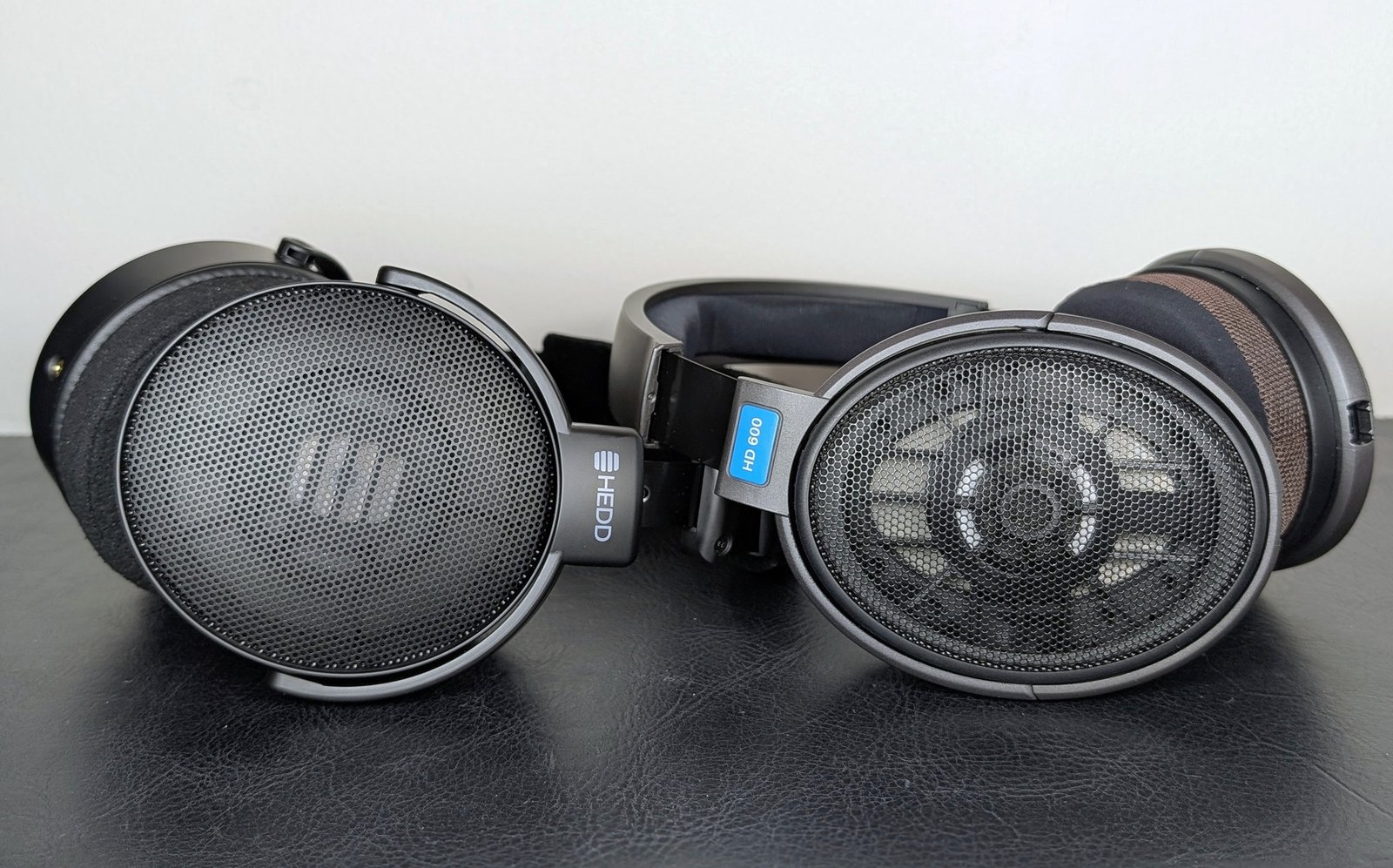
The similarity of HEDDphone D1 to Sennheiser HD 600 should no longer come as a surprise at this point, as I have so often spoken of the pair in the same sentence. However, let's consider in this context whether a German headphone nearly 30 years newer could displace the Sennheiser classic.
Most clearly, the duo differs in pricing, as while the D1 costs 700 euros new, the HD 600 can be had for as little as 250 euros. However, both feature the same manufacturing materials: carefully chosen metal and mostly plastic. Based on the feel, I would consider the D1 a slightly more premium headphone, but in truth, the HD 600 doesn't differ much from it.
Purely from this perspective, it is somewhat difficult to justify the D1's 2.5 times higher price. On the other hand, one must consider the higher quality cable and the included carrying case. Also, the new type of carbon fiber drivers, including product development, likely cost more than Sennheiser's drivers, and HEDD Audio, as a relatively small manufacturer, does not achieve the same production volumes. The manufacturing costs of the HD 600, released in 1997, have probably been optimized to be very low over the decades.
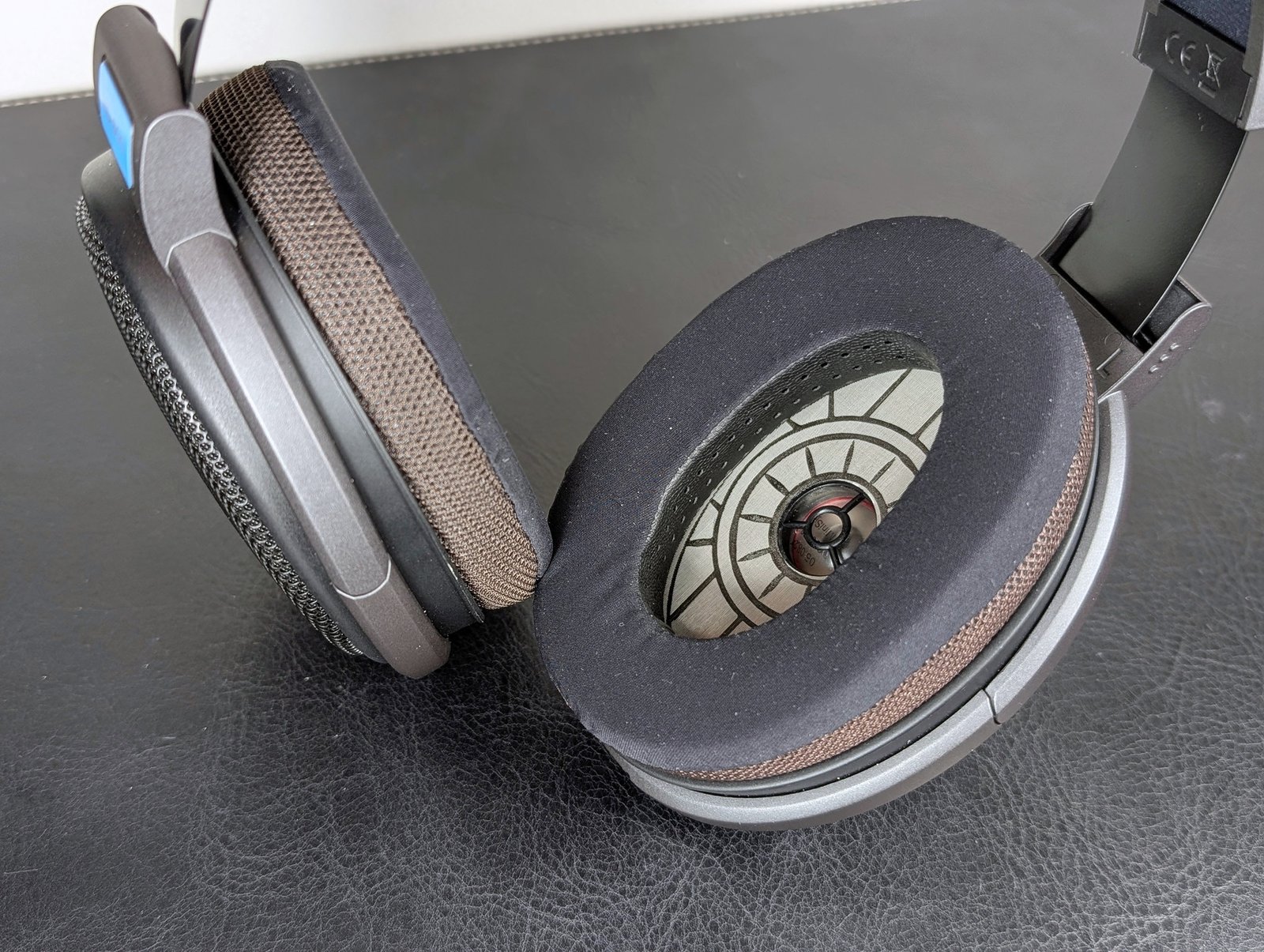
The earcups of neither headphone model turn horizontally or fold up, but perhaps there isn't a great need for that in home or studio use. Both, however, receive praise for their repairability and replaceable earpads, which extend their lifespan. It is still too early to say anything about the wear rate of the D1's earpads, but presumably, they will last longer than those of the HD 600. In terms of the cable, the D1 is also more practical, as its universal 3.5-millimeter connectors outperform Sennheiser's unnecessarily rare 2-pin connectors.
In terms of comfort, I prefer the D1's gentle clamp and pleasant ear pads, whereas the HD 600's headband is more comfortable despite its narrowness. On the other hand, I still barely notice the D1's 90-gram additional weight, so comfort ultimately evens out between the two. The first difference I notice is in the fit, which is looser for the D1 and very snug for the HD 600.
I already touched upon the duo's suitability for different amplifiers earlier, meaning the HEDDphone D1 is designed for modern needs to be listened to with low-power devices, whereas the HD 600's 300-ohm impedance harks back to a time when tube amplifiers were more common. Additionally, many in the 1990s still listened to headphones from stereo amplifier headphone outputs, which were susceptible to noise and had high output impedance. In such cases, the high impedance of the headphones protected the user from these side effects. Nowadays, a headphone like the HD 600 naturally sounds excellent with most devices, so the D1's lower impedance doesn't offer a huge advantage, at least with desktop-sized amplifiers.
Frequency responses:
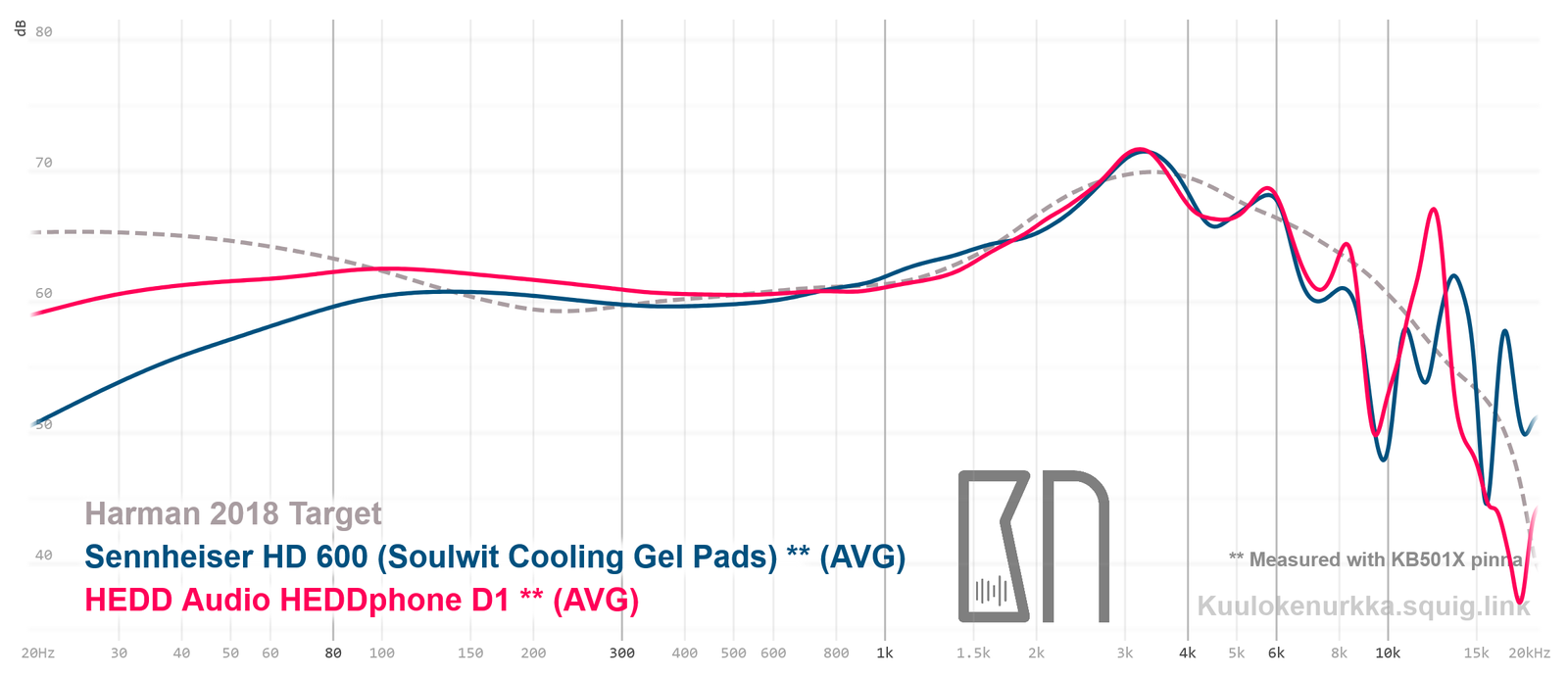
The Sennheiser HD 600 has stubbornly maintained its position as a neutral headphone, whose weaknesses are mainly weak bass and a narrow soundstage. For this reason, I myself would classify the headphones as rather boring in the long run, unless I happen to listen to a certain type of music where the bass is already relegated to a secondary role compared to the midrange. The Soulwit earpads I used during the comparison shape the HD 600's upper frequencies slightly closer to the HEDDphone D1, making these two models measure astonishingly identically in that regard, with the exception of the region above 10 kilohertz.
The HEDDphone D1 improves the sub-bass the most by reproducing it 5–10 decibels louder (the difference to the HD 650 would be about half as much). This is immediately felt as improved dynamics, and the sense of depth in the reproduction is also completely different compared to the Sennheiser model. Even if one were to get used to a certain lack of bass, the D1 sounds clearly more balanced and powerful. Thus, it is more versatile for different music genres, as well as for watching movies and gaming. The HD 600, on the other hand, feels inevitably outdated, and I wouldn't be able to listen to it for as long.
In the midrange, however, an interesting battle takes place, where only a Pyrrhic victory is available for the HEDDphone D1. Despite the duo's similarity, the HD 600's lighter low frequencies and slightly airier treble direct my attention even more strongly to vocal performances and their subtle nuances. The Sennheiser model still sounds downright magically authentic at its best, and it separates the vocalist a bit more clearly from other instruments. The result is in a way more transparent and effortless, whereas the D1 does not bring vocal performances as much to the forefront, but reproduces them a touch softer. My attention, however, is more evenly distributed between the low and mid frequencies, which I often prefer. Due to the warmth of its low frequencies, the D1 even resembles the HD 650 model a bit more.
In terms of soundstage, the D1 takes the win, but not necessarily by as large a margin as some might hope. My experience is slightly more spacious, but if I listen to the HD 600 Cayin HA-3A-with my tube amplifier, the difference becomes quite insignificant. The D1”s biggest improvement is the evenness of the soundstage compared to how Sennheiser headphones suffer from a ”three-point effect,” where sound is localized only directly to the right and left and completely in the center. Even tubes don't fully rectify this for me, so the presentational style when listening to the D1 bothers me less. On the other hand, otherwise, the Sennheiser model benefits more from tubes by becoming, as it were, more ”organic" than usual.
Overall, with its improvements, the HEDDphone D1 would be a fairly direct upgrade to the HD 600, as it brings a very similar neutral presentation to the modern day. Especially the more robust bass makes listening more enjoyable and the overall result more cohesive. On the other hand, when listening to a good vocalist, the Sennheiser classic can still, in my opinion, make a greater impression, so superiority is partly situational. Most often, the HD 600 remains somewhat boring outside of its own strengths, whereas the D1 is more widely suitable for different situations without significant compromises. This, of course, comes with an additional price, so the duo must ultimately be approached somewhat differently. The HD 600 will undoubtedly continue to sell well as a significantly cheaper headphone, but if money is no object, I would definitely recommend the HEDDphone D1 to those seeking a neutral sound.
Summary
The HEDDphone D1 is just as good as many have praised, so I understand its popularity. If someone wants the most neutral (but not boring) open-back headphones with better bass than the Sennheiser HD 600 series, the D1 would currently be my top recommendation. There aren't many such headphones in general, even though many manufacturers have tried the same with varying success. Sennheiser itself has not managed to update the HD 600 or HD 650 according to my expectations, but has settled for making different variations of them (HD 660S and HD 660S2) or focused on its more affordable HD 500 series.
The HEDDphone D1 is therefore an important headphone release, although the 700 euro price certainly feels somewhat high. For those who appreciate natural sound, however, I believe the investment is justified, especially since the headphones are otherwise cleverly designed, and the manufacturer grants them a 5-year warranty. The new type of carbon fiber drivers are also interesting. My only major complaint is the hard, lint-collecting, head cushion, for which I hope different alternatives will become available. Still, even that doesn't ultimately ruin the comfort for me, as the D1 feels like a practical product overall.
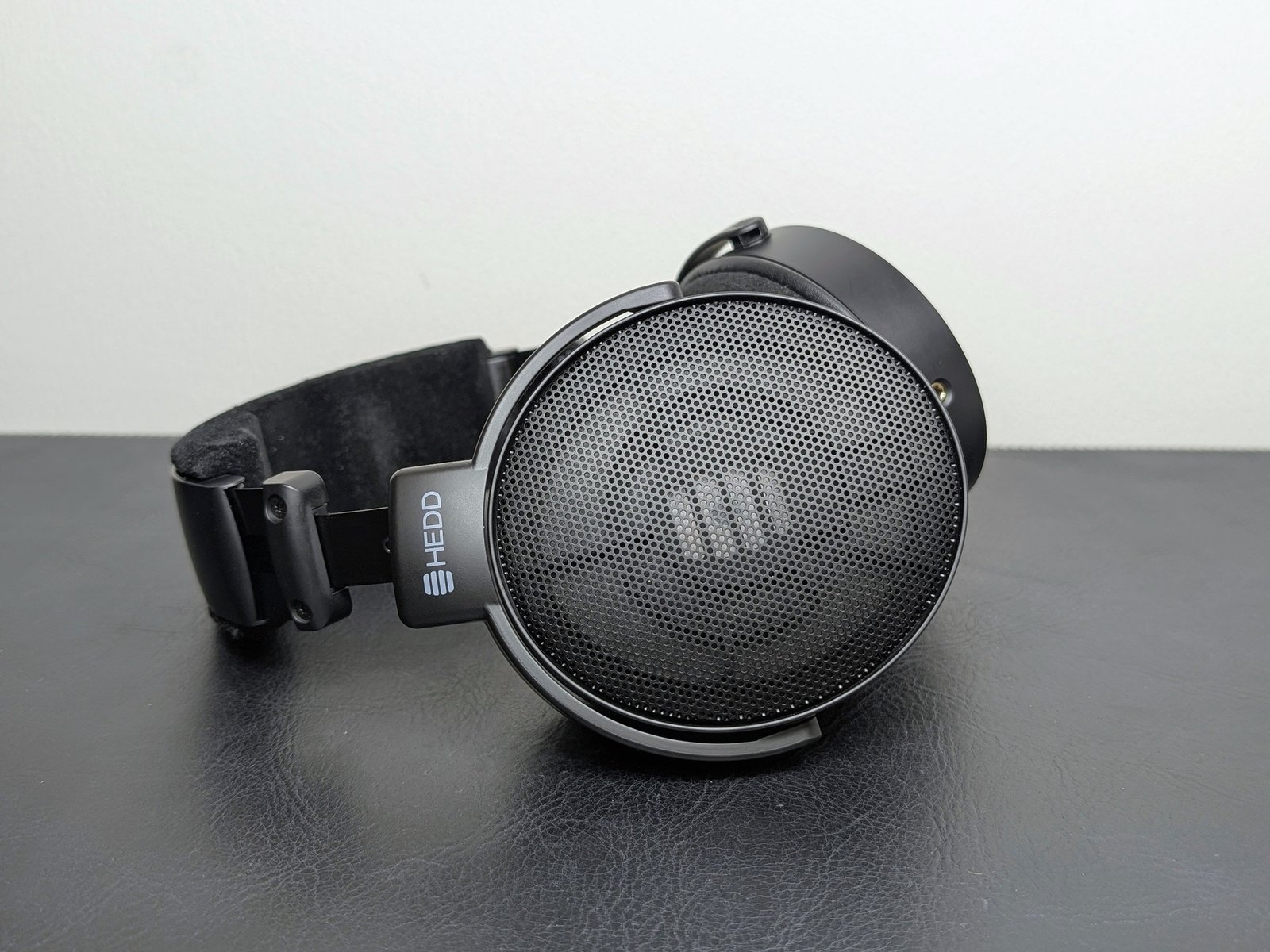
Finally, I give the headphones a special mention for sound quality. Since other aspects also reach the level I expected, a place on Kuulokenurkka's (Headphone Corner's) Wall of Fame is well-deserved. These are exactly the kind of headphones I can easily recommend without knowing the specific preferences of different people. What's mainly missing is powerful sub-bass, but there are other headphones for that.
Pros and cons:
+ Truly neutral and natural sound
+ Listening experience similar to the Sennheiser HD 600 series with more robust bass
+ More interesting dynamic drivers than usual
+ Clever mechanical design
+ Repairability of the structure
+ Long 5-year warranty
+ Does not require a powerful amplifier
– Somewhat small soundstage
– Hard head cushion
– The earpads collect a lot of lint
– Slight cable microphonics
 EN
EN  FI
FI
Tämä versus Hadenys HD600:n korvaajaksi, vaikea valinta.
Ei ole aivan helppo valinta. Näistä D1 muistuttaa mielestäni HD 600:aa enemmän, mutta omaa samalla lämpöisyyttä ja tietynlaista täyteläisyyttä HD 650:n tapaan. Hadenysta joku kuvasi hyvin, että se sopisi niille, jotka ei halua ääneen liiemmin lämpöä, mutta tykkää kuitenkin tukevasta bassosta.
Jos et halua lähteä liian eri suuntaan HD 600:sta, ota D1. 🙂