Author: Sword of Damocles

Table of Contents:
Information:
- Release year: 2024
- Country of manufacture: France
- Price: 699 €
- Type: open, over-ear
- 40 mm dynamic drivers (M-shaped aluminum-magnesium dome)
- Impedance: 26 Ohm
- Sensitivity: 105 dB/mW
- Weight: 294 g (without cable)
- Connector type: 1 x 3.5 mm
- Cable: Length 1.8 m / plug 3.5 mm + 6.35 mm adapter
- Accessories: Carrying case
Review sample: Self-purchased product
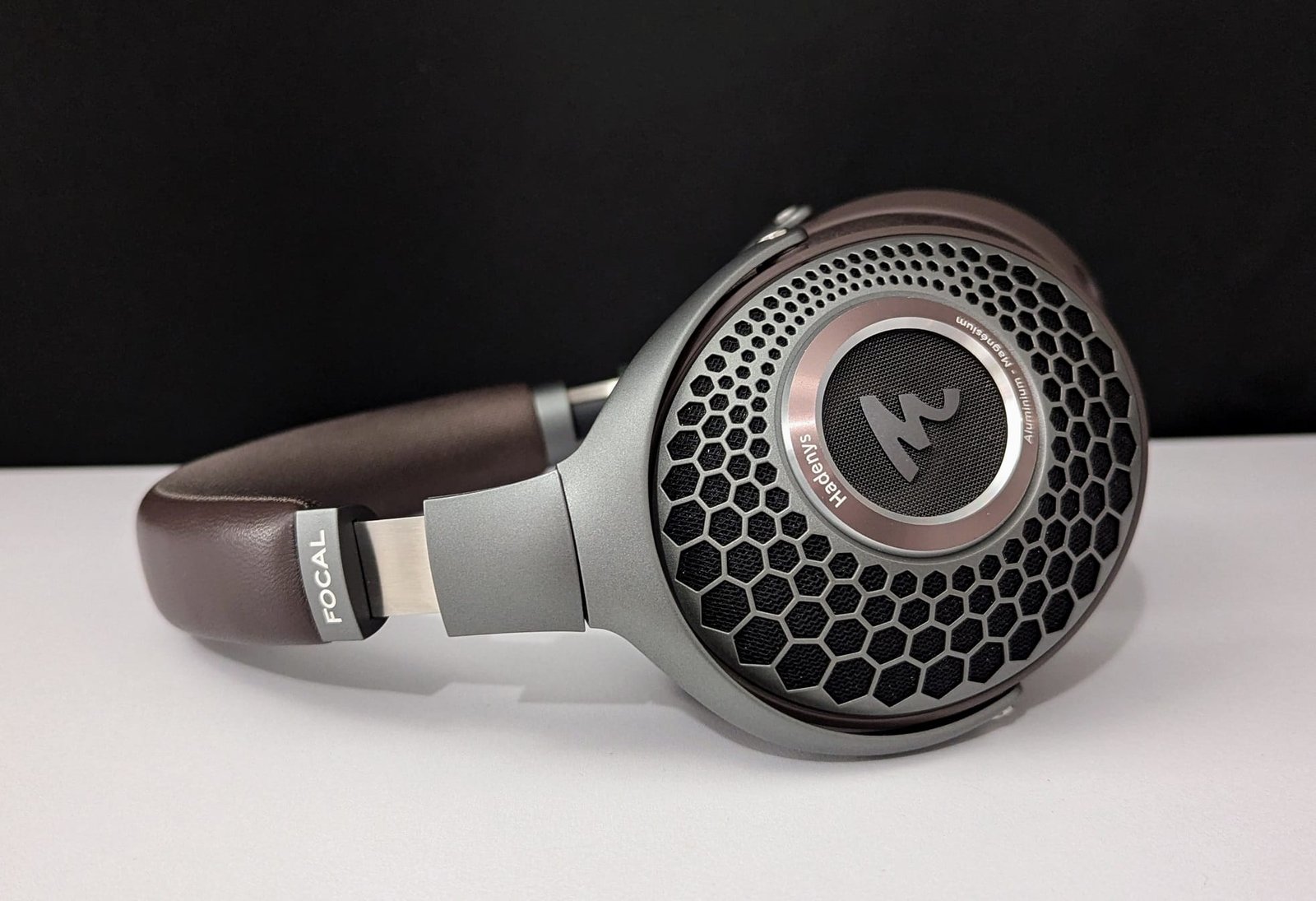
I really like the ones released by French Focal in 2022 Bathys-noise-cancelling headphones, even though I no longer own them. However, what stuck in my mind about the headphones, in addition to their good sound quality, was a new, slimmer structure by Focal's standards, which I had been waiting for the manufacturer to utilize in its other headphone models. This eventually happened when the open ones saw the light of day at the same time Hadenys-headphone model (price 700 €) and the closed Azurys (price 550 €). Both are traditional wired headphones and use the same basic frame and similar dynamic drivers as the Bathys model. Five months have already passed since the products' release date, but due to high demand (or small production volume), they are only now arriving in Finnish retailers' warehouses.
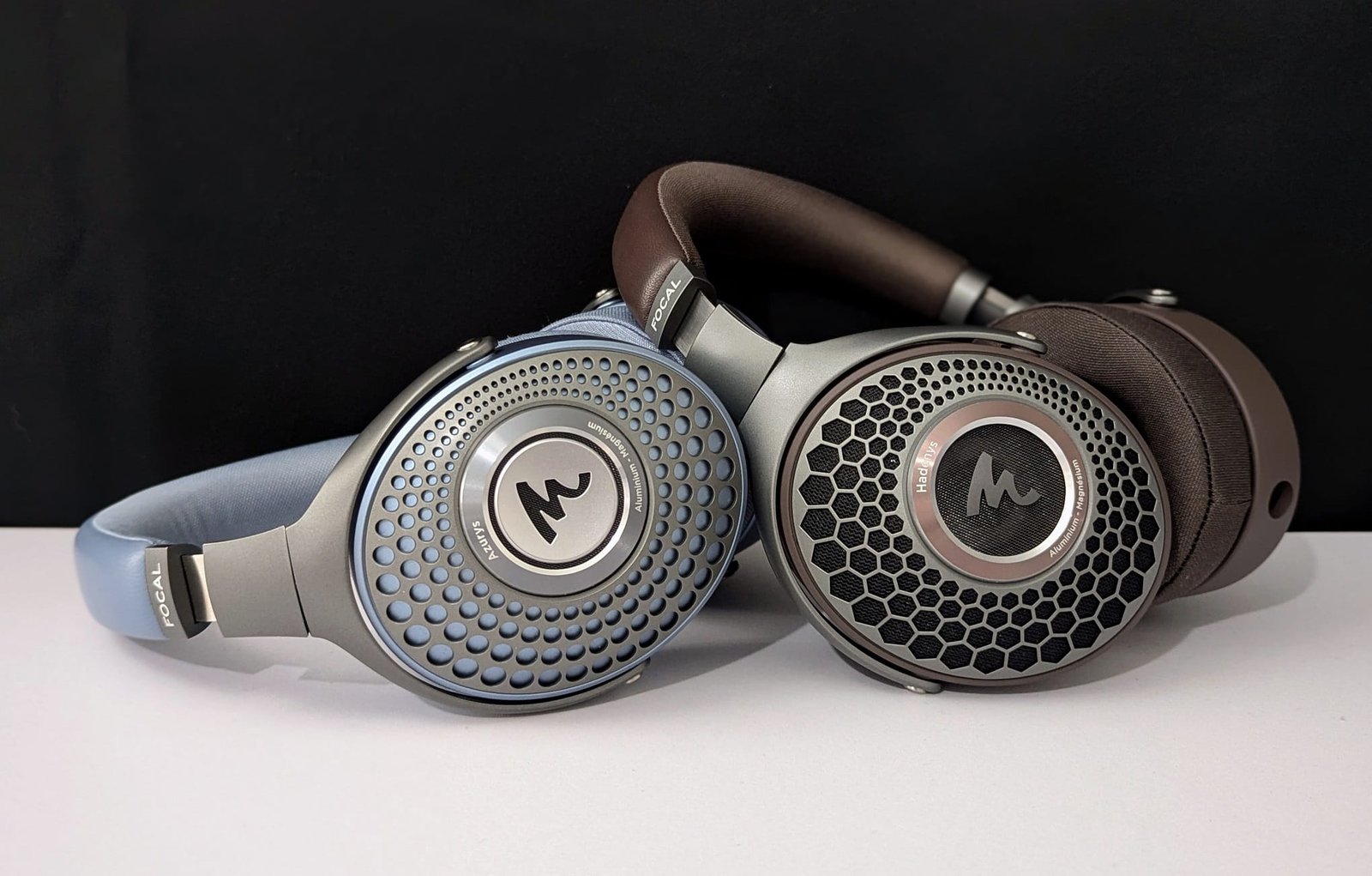
Both headphone models are already on my headphone shelf, so I have been able to evaluate them both together and separately. Since I am still looking for suitable comparisons for Azurys, this time we will focus on the open Hadenys model, which interestingly costs 150 euros more without me being able to find a clear reason for the price difference. Perhaps this reflects how Focal itself feels it has succeeded with both headphone models.
Packaging and accessories
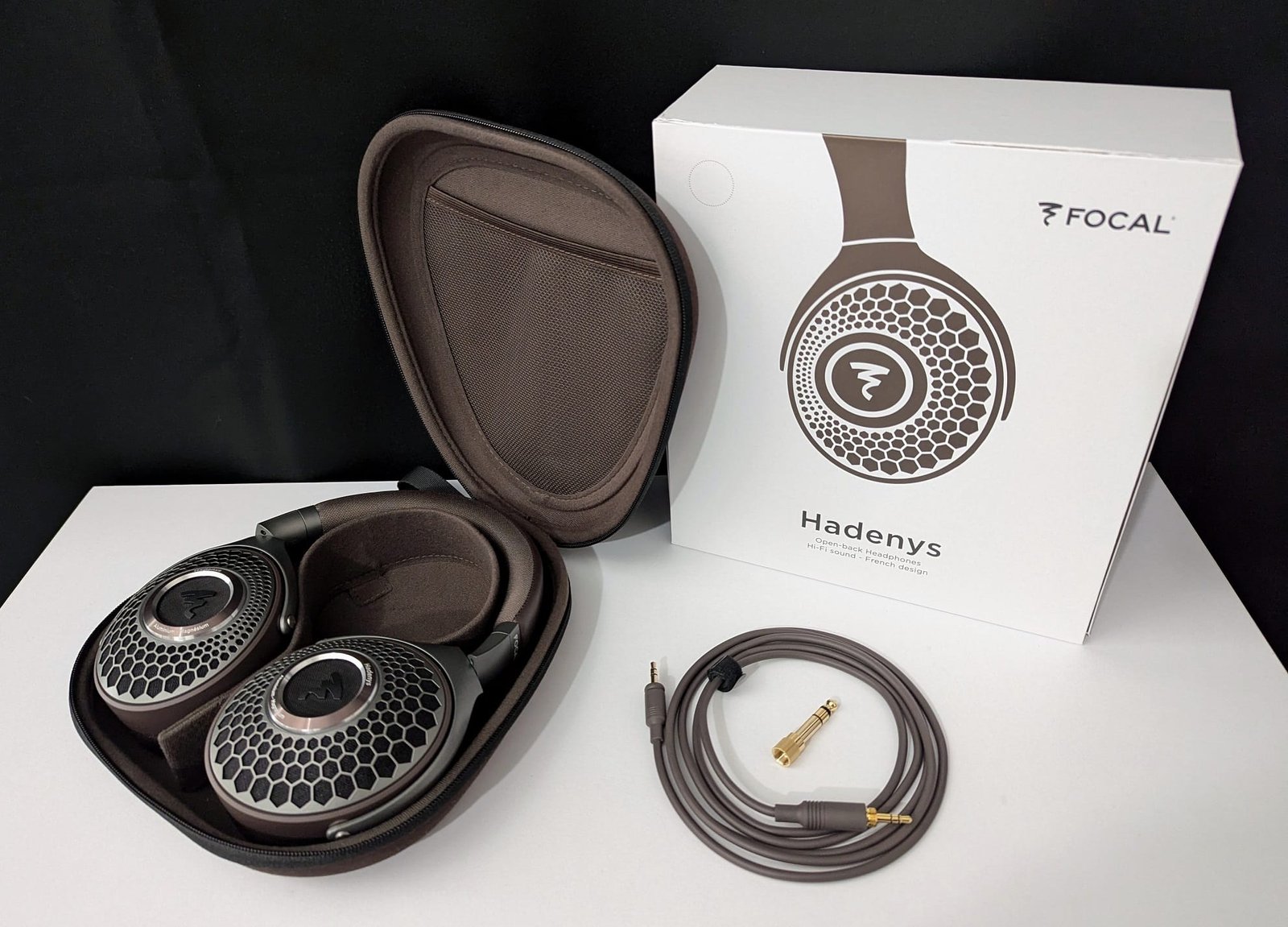
Hadenys arrives in a neat white package. In addition to the headphones and cable, the buyer receives a conveniently sized carrying case that could be used with many other headphone models. For example, Cambridge Audio's Melomania P100 slides easily into Focal's case and then weighs 100 grams less than when carried in its own case. Hadenys' brown cable is 1.8 meters long and attaches to the headphones with a single 3.5 millimeter connector. A 6.35 millimeter adapter is traditionally offered for the corresponding connector that attaches to the amplifier.
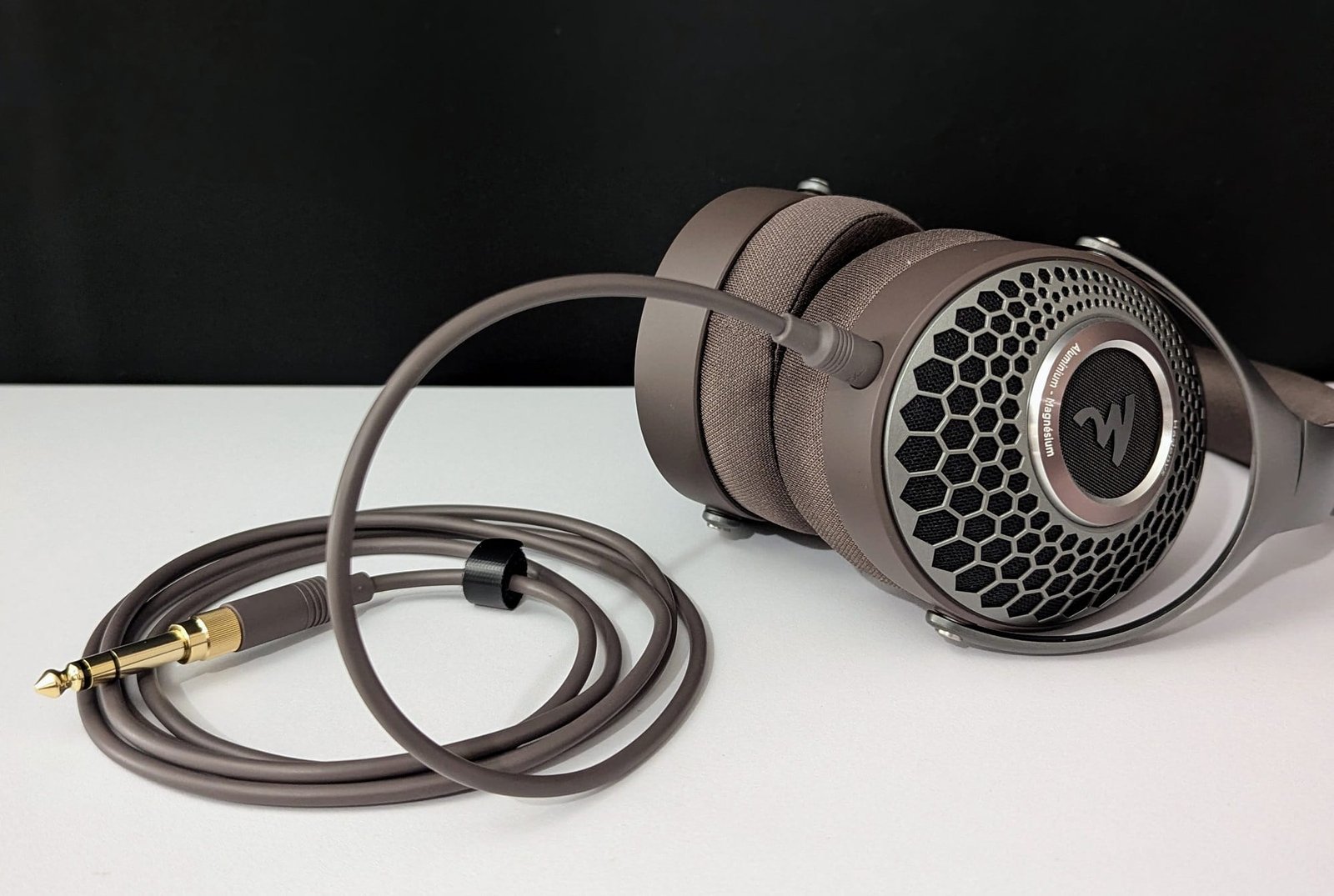
The cables of older Focal headphones are known for their iron-like stiffness, whereas nowadays the manufacturer's cables are rubber-coated, lightweight, and easily tangled due to their ”memory.” The Hadenys cable constantly tries to roll itself back onto the reel, making it difficult to keep straight during use. Listening is certainly possible, but the cable simultaneously feels impractical. I strongly recommend acquiring a better cable, especially since they are affordable.
Build and comfort
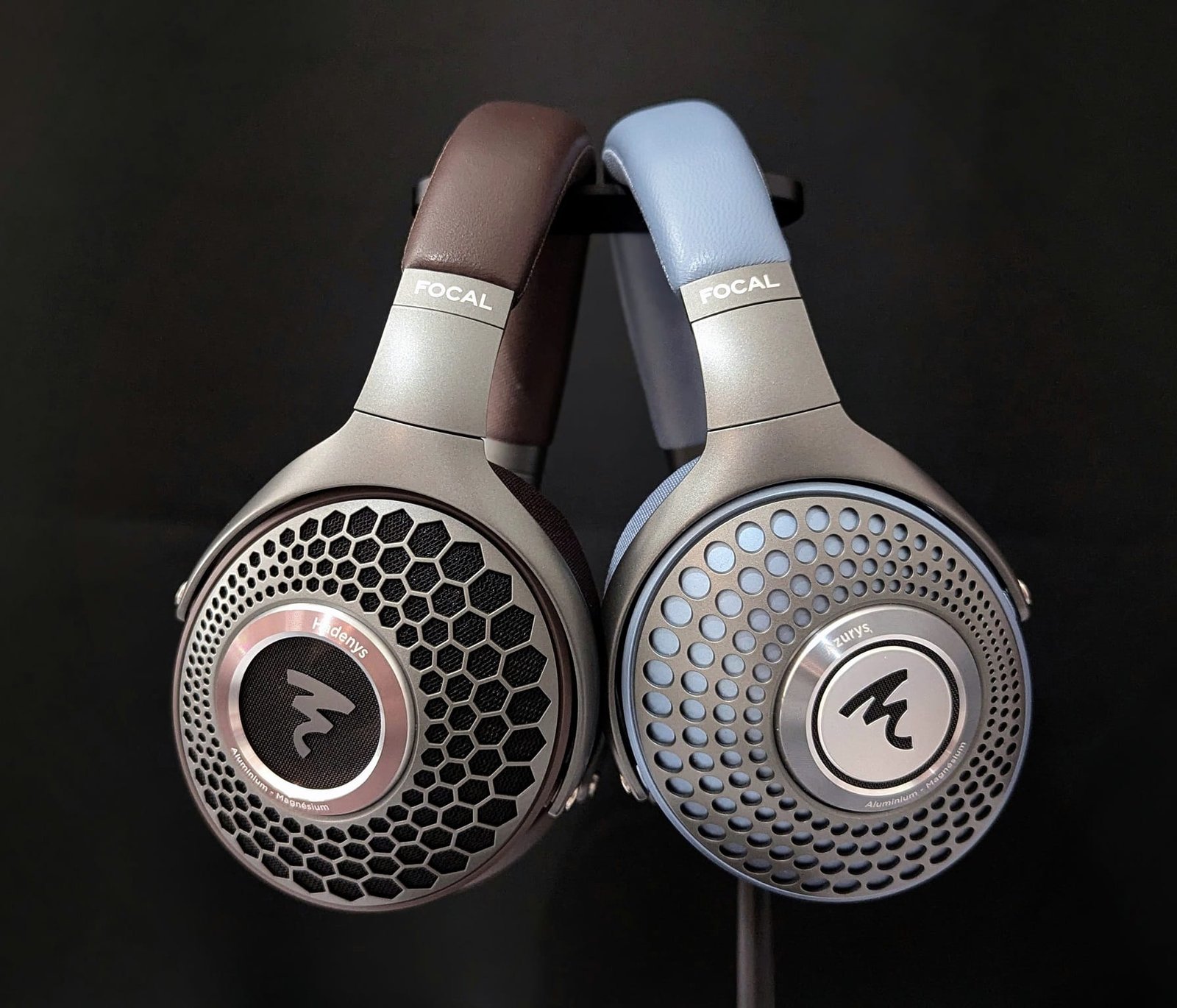
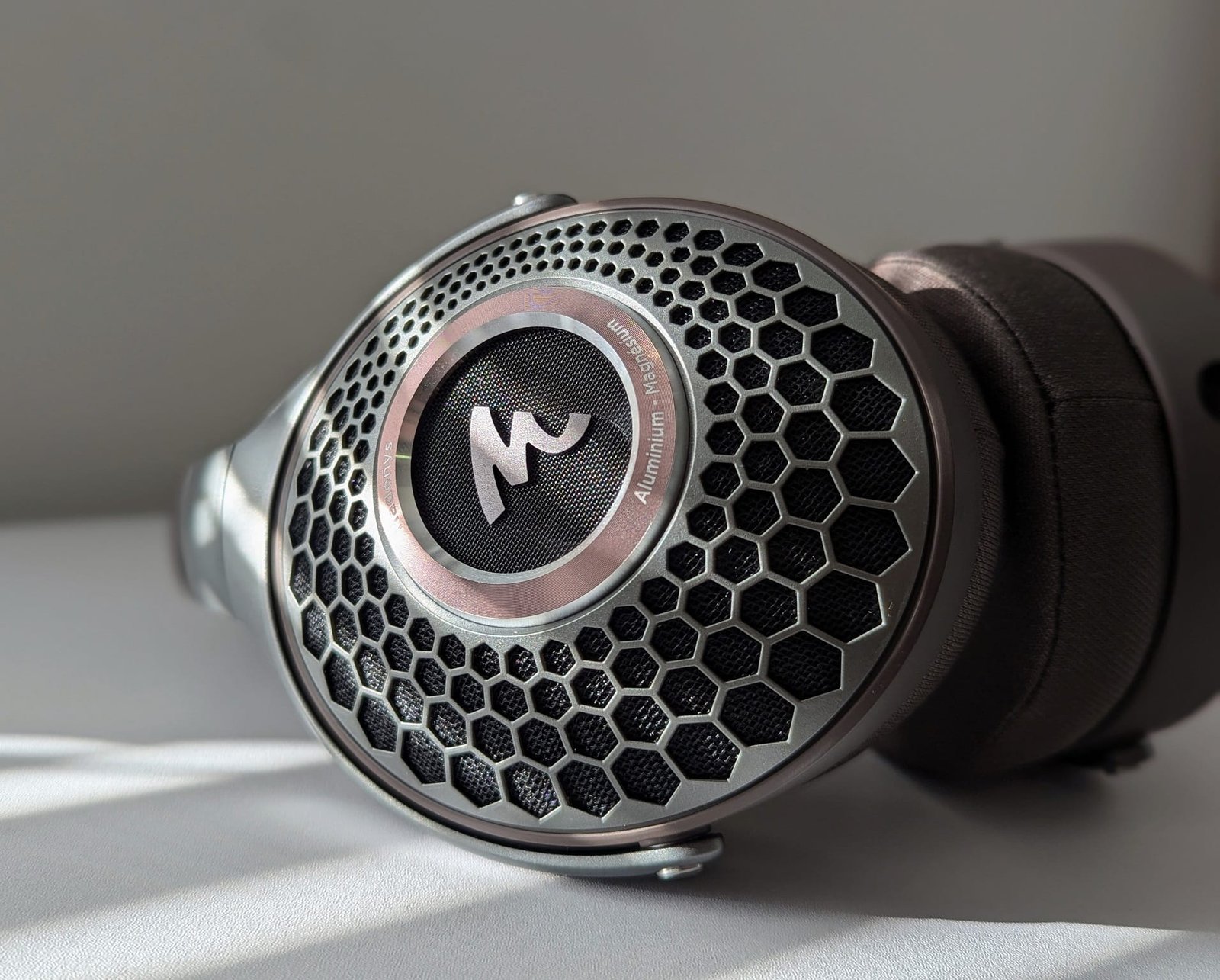
Hadenys looks sympathetically slender, as if it were a shrunken version of Focal's hi-fi headphone models released in recent years. The design and grey-brown coloring still exude elegance and value without resorting to tastelessness. The closed-back sister model Azurys, on the other hand, does not look as impressive to me due to its light blue base color, but fortunately still slightly better than in many product images.
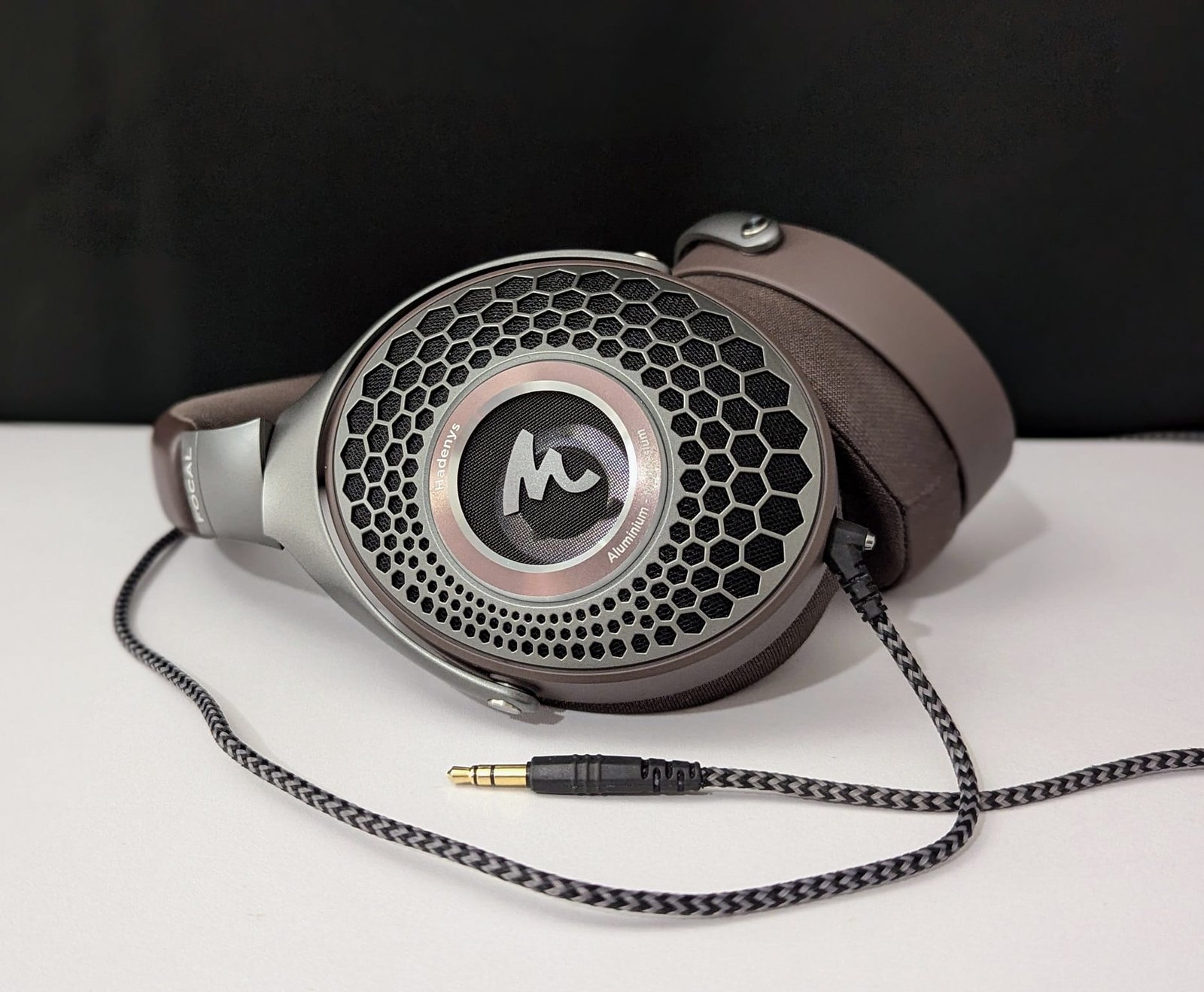
Like the Bathys, in both new models, the earcups are plastic and the headband parts are made of durable and lightweight magnesium combined with a steel arch. I'm not entirely sure about the material of the decorative grilles, but the disc placed in their center is made of aluminum. There's even genuine leather on the top part of the headband. In the case of Hadenys, opening the cup structure and removing the internals (electronics & battery) have reduced the weight to under 300 grams. This, if anything, brings a smile – headphones can indeed be high-quality and lightweight at the same time, and even reasonably priced. Hadenys also feels really good in the hands, making it pleasant to handle.
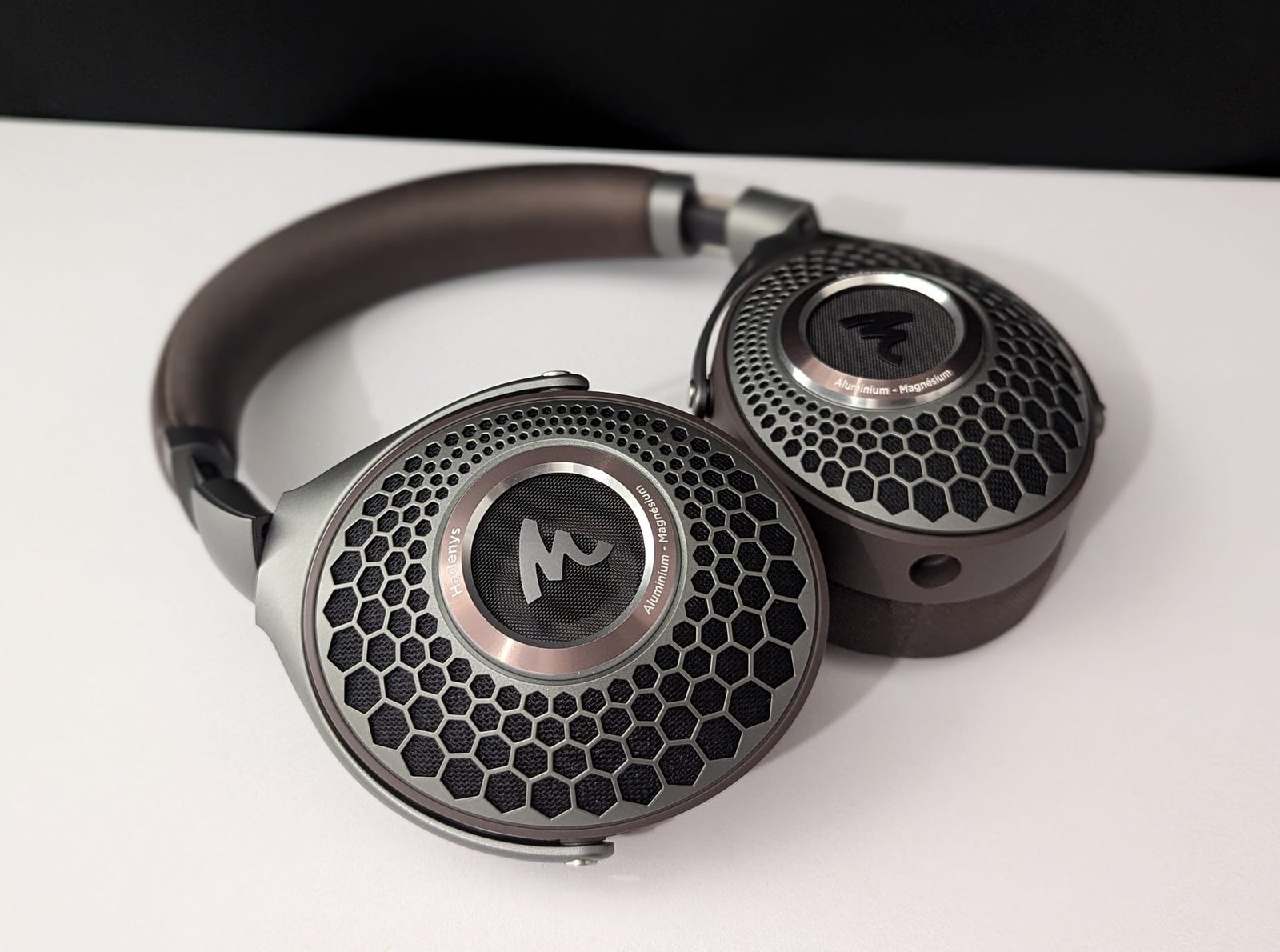
Unlike the Bathys assembled in China, Hadenys and Azurys are manufactured entirely in France. I complained about the sharp angles and loose fitting of the headband parts on the Bathys. The new models still have somewhat sharp angles, but the height-adjustable headband is finished more carefully, so there is no longer much looseness. It may well be that quality control works better locally in France than between two continents.
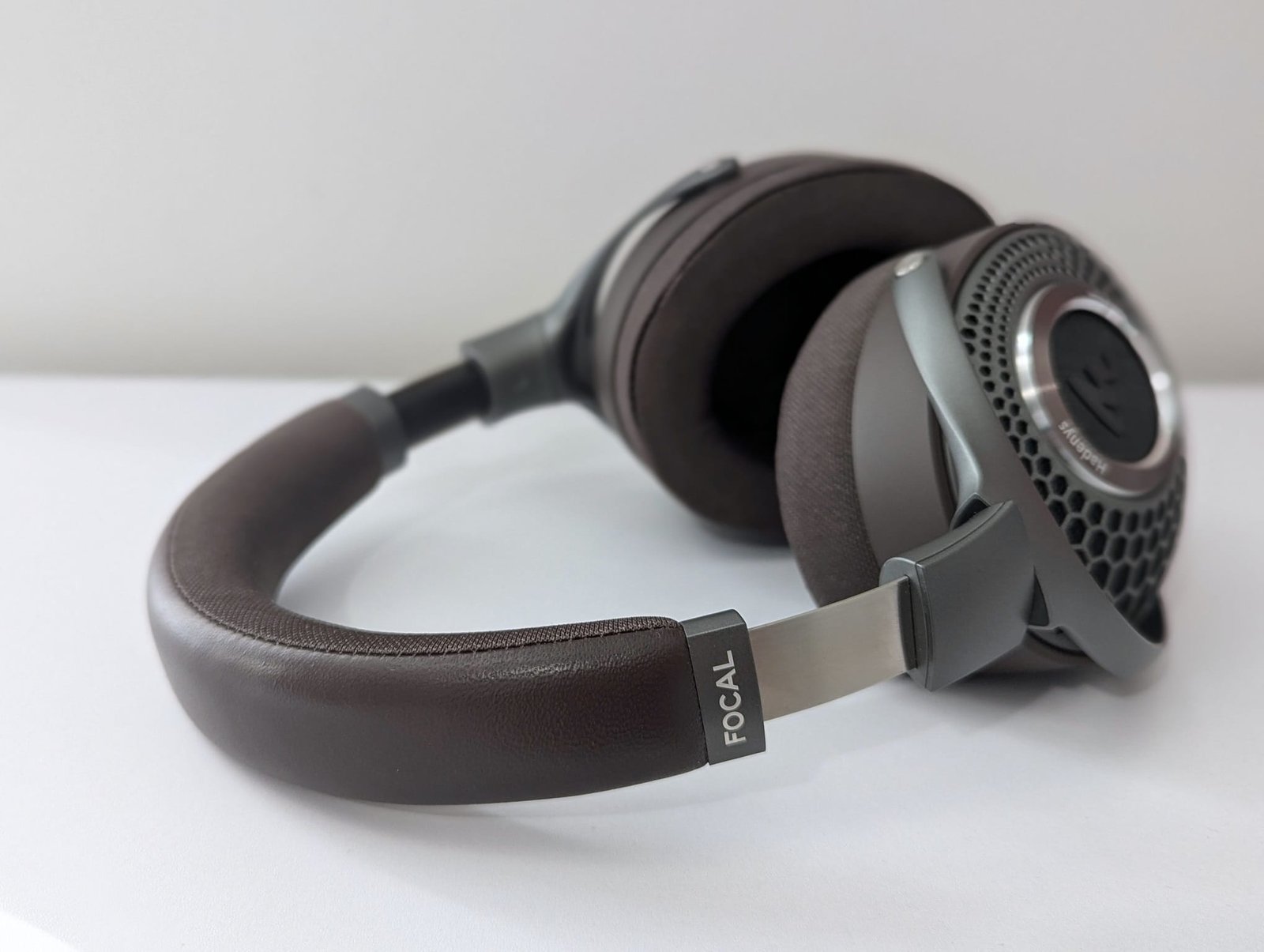
The lightweight Hadenys sits so evenly on my head that I find it difficult to imagine anything distinctly more comfortable. The fabric-covered earpads may not look particularly premium by Focal's standards, but their memory foam feels marshmallow-soft and thus luxurious. Furthermore, thanks to their softness, the ear pads flex well around eyeglass temples, so glasses interfere with use less than usual. When this is combined with a sufficiently padded headband and gentle clamping force, I can easily forget that the headphones are on my head. Hadenys therefore receives a perfect score from me for wearing comfort.
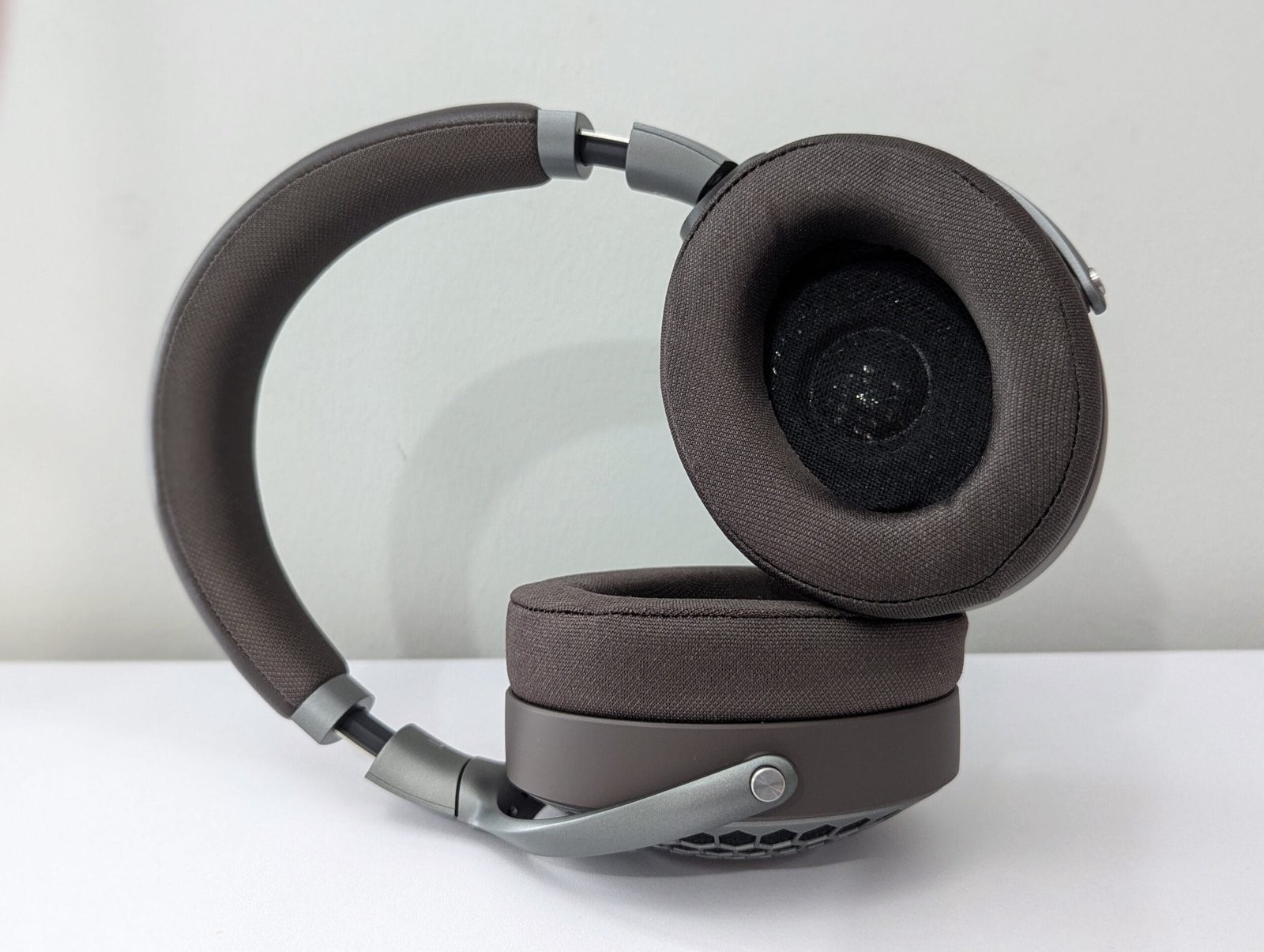
For some people, the limited height adjustment range may still pose a challenge, as I have to use all Focal models based on the same structure adjusted almost to their maximum position. I wouldn't be surprised if the headphones don't fit those with the largest heads. In my opinion, this is the only major weakness of the current design, which could only really be overcome by increasing the size of the headphones.
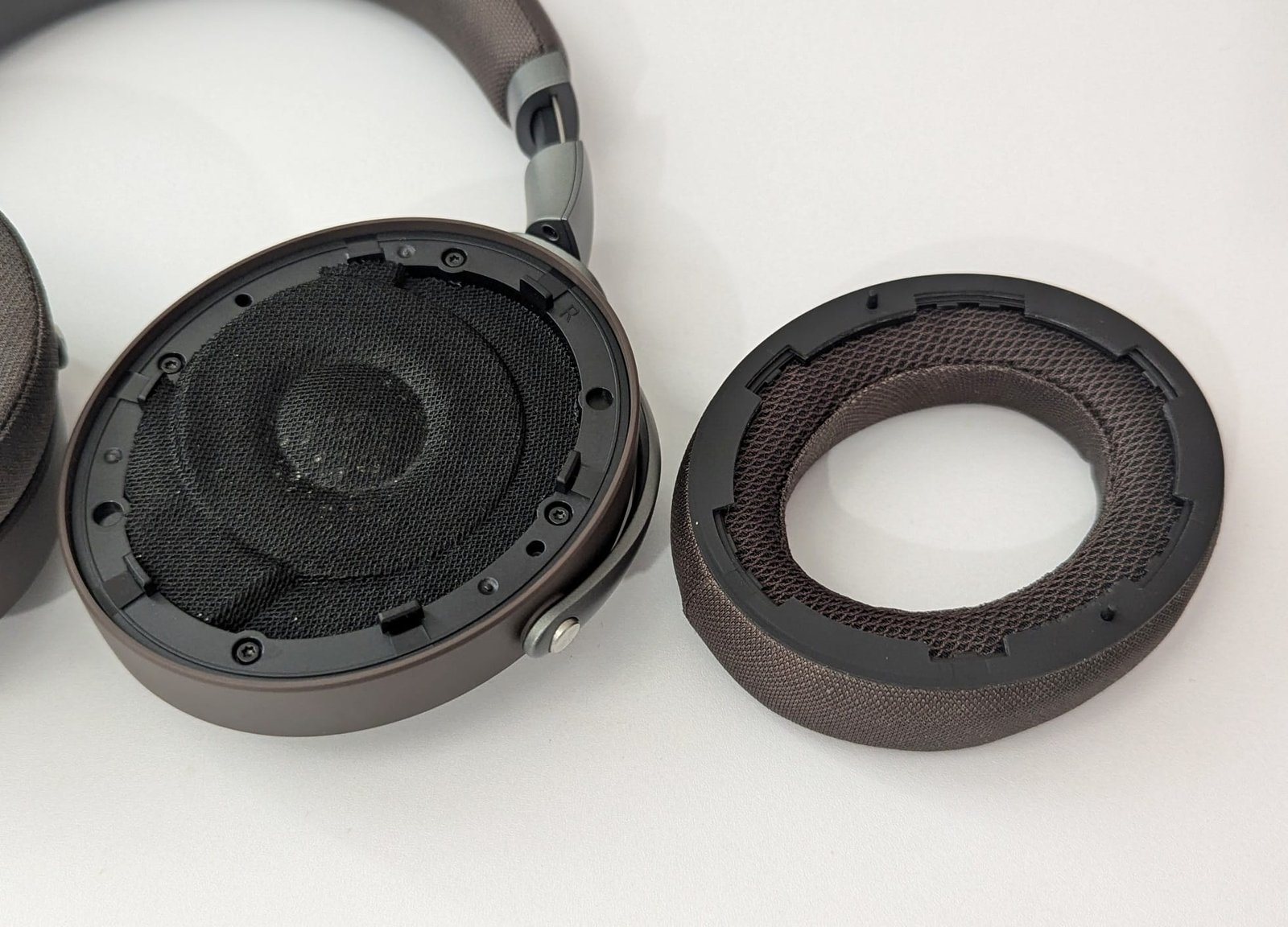
The Hadenys cable and ear pads are easily replaceable, which extends the lifespan of the headphones. Focal has opted for a solution where the cable attaches to the left cup with a 3.5-millimeter connector, and the signal is routed to the right cup via an interconnect cable running through the headband. This is likely also a remnant from the Bathys model, as its headband already has a pre-designed cable pass-through.
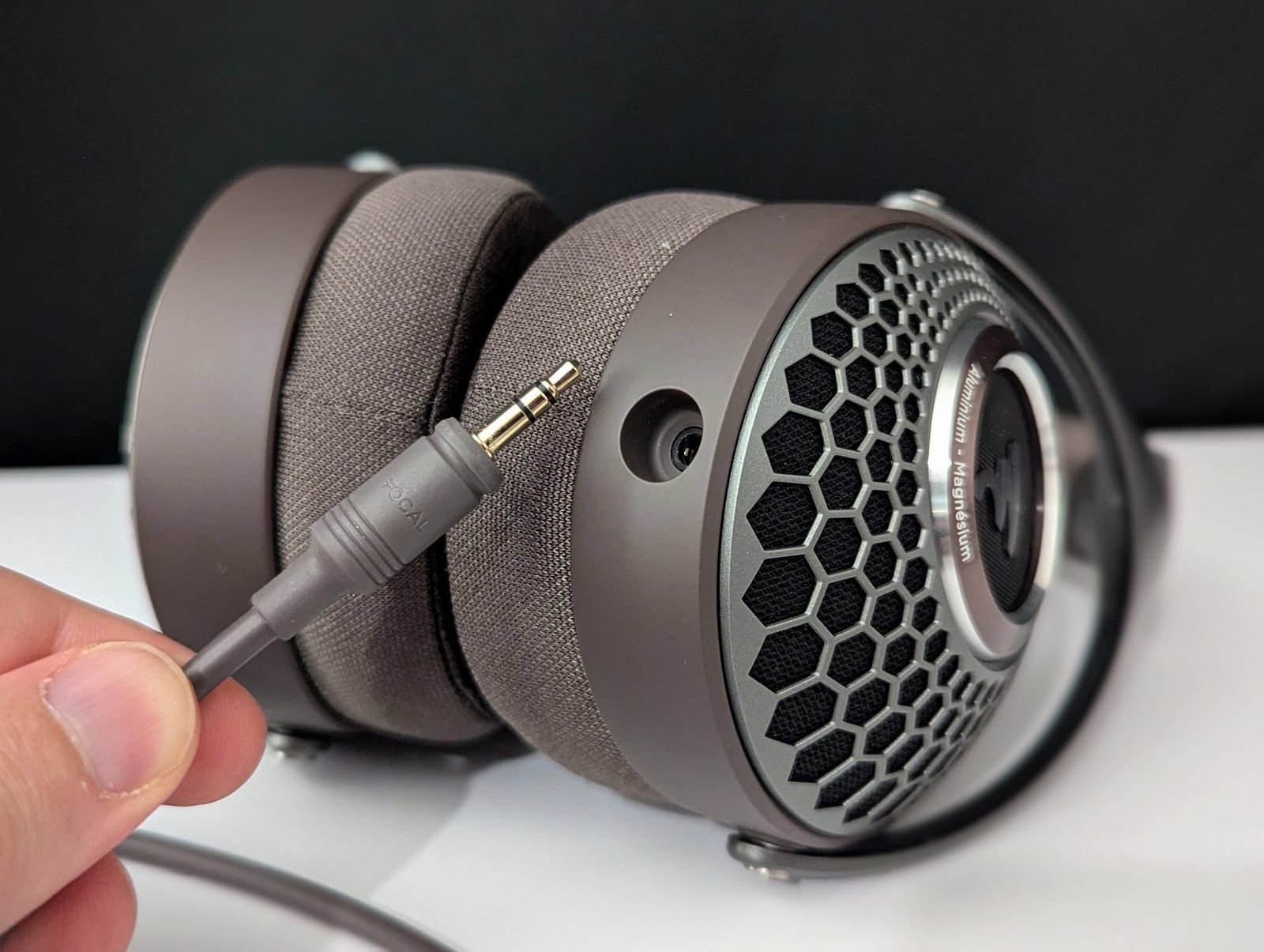
Hadenys and Azurys unfortunately only work unbalanced, as their 3.5-millimeter connection does not allow for the use of a balanced cable. I consider this somewhat unusual given the price range of the headphones, but with easy amplification, I wouldn't count it as a major drawback. On the contrary, an advantage is the affordable price and good availability of replacement cables, as the headphones could be listened to with any AUX cable. I myself have utilized a V-moda cable that cost 12 dollars at the time, which is completely unnoticeable during use. Using Hadenys feels downright luxurious alongside all headphone models requiring heavier cables and connectors. Thanks to this, it also gets listened to a lot.
Sound quality
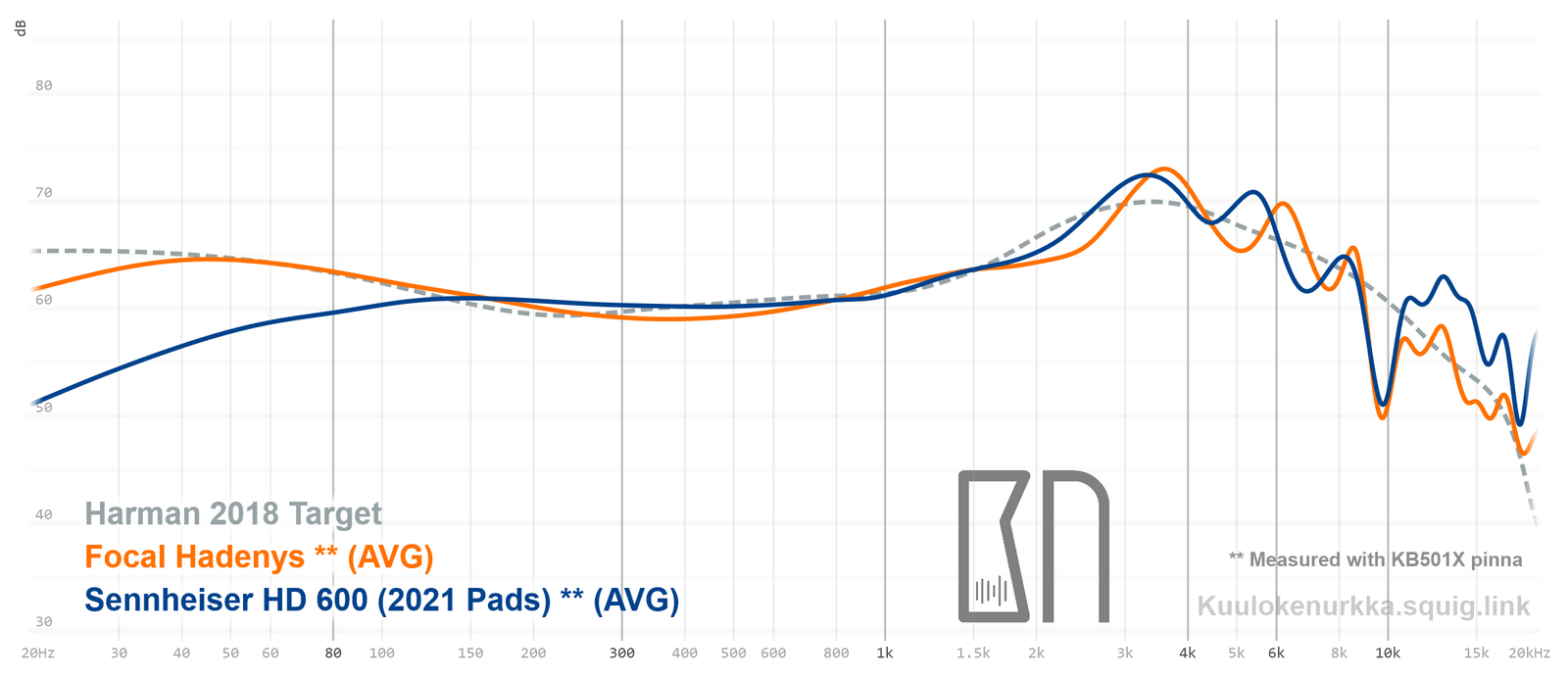
Our frequency response measurements have been made with a clone IEC-60318-4 coupler and KB501X pinnae. The Harman target curve from 2018 is used as a reference point and generalization of the headphone response that would sound good to most people. For more information on the measurements and their accuracy, see Headphone Measurements-page. Hadenys' frequency response is also comparable with other measured headphones Squiglink .
Impedance curve and amplification requirement:
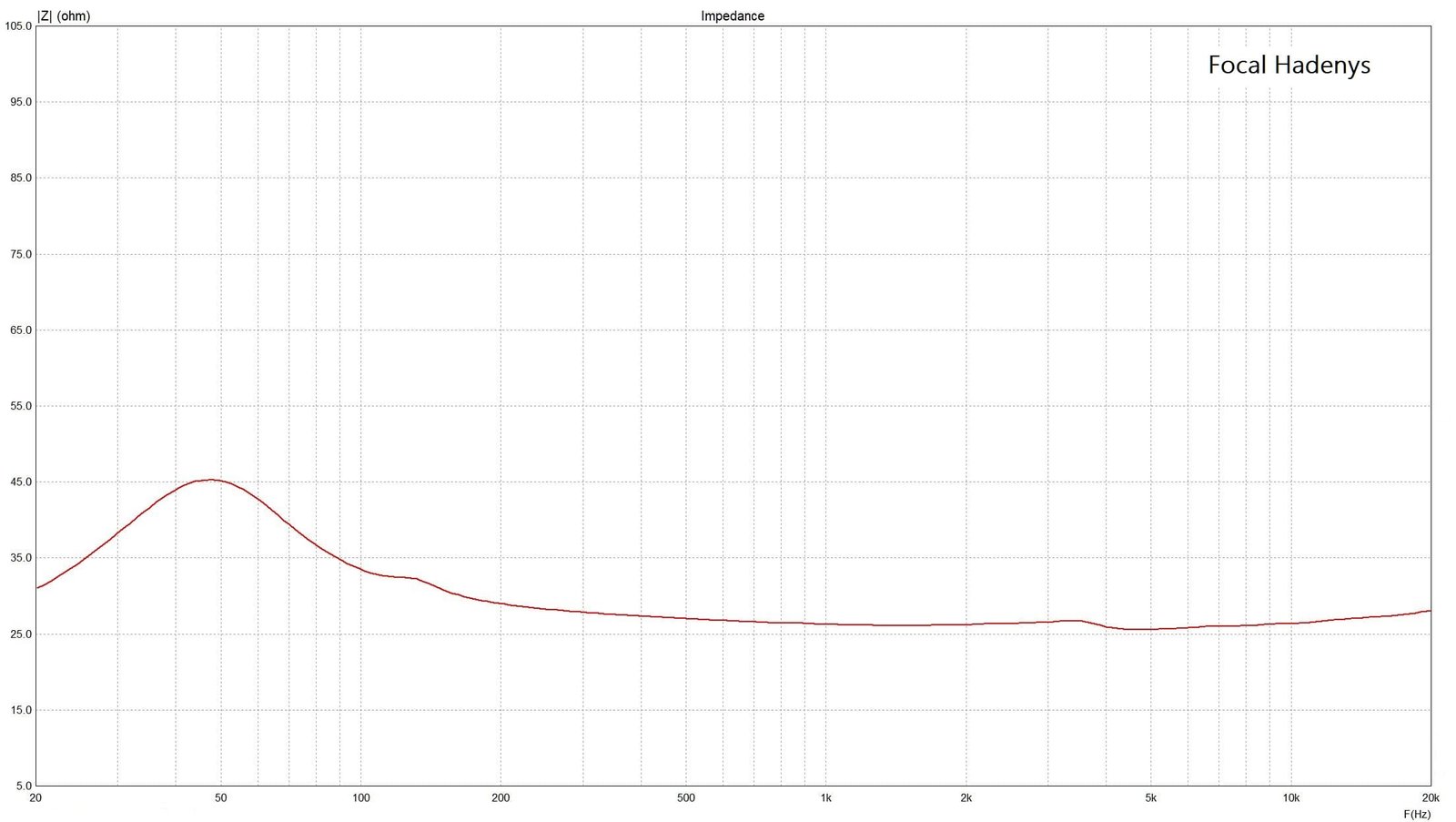
I can now measure the impedance curve of headphones, which reveals useful information about their amplification. The impedance of the Focal Hadenys generally follows the manufacturer's stated 26 ohms, but rises to 45 ohms at 50 hertz. The impedance is low overall, but this small unevenness means that the headphones should be listened to with an amplifier implemented with a low output impedance if the frequency response is to remain unchanged. With an amplifier that has a high output impedance, the 50 hertz region will be amplified more than other frequencies (the driver receives voltage unevenly), causing the frequency response to rise slightly in the bass frequencies. This is not automatically a negative thing, but it should be taken into account when making equipment choices.
Low impedance and high sensitivity (105 dB/mW) ensure that the Hadenys does not need a powerful amplifier to play loudly or sound good. The headphones would be perfectly suitable for listening with mobile devices, for example, making them easy to use in various situations. However, the closed Azurys would be a better choice of the two as a portable headphone model.
Frequency response:
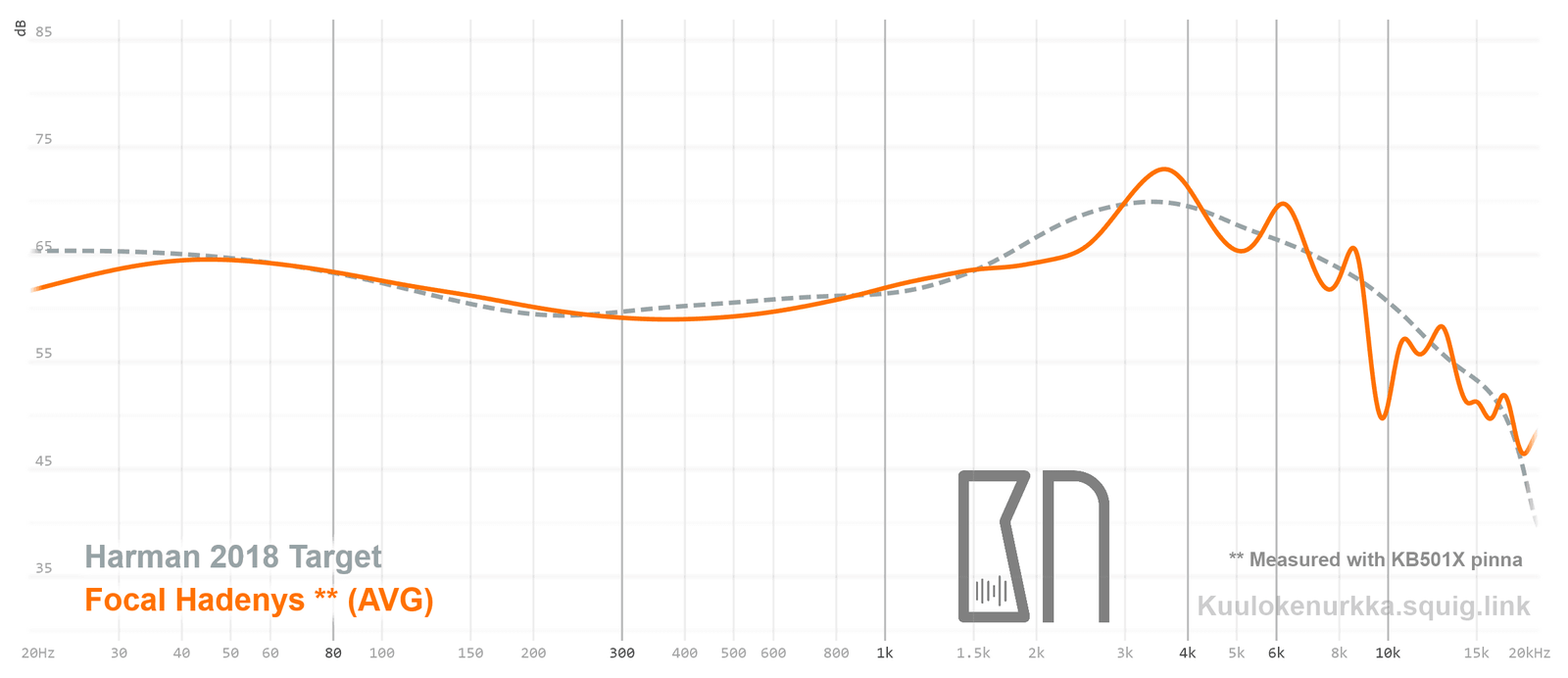
The Hadenys is a successful headphone in terms of sound quality, both when viewed with objective and subjective metrics. No major weaknesses jump out from the reproduction; instead, all kinds of music sounds consistently good right from the start. The presentation is balanced and clear, and in a typical Focal manner, also excitingly dynamic – though not quite as explosive as, for example, Clear models.. Among the strengths of the Hadenys compared to its competitors are its unaccentuated treble above 10 kHz and surprisingly robust sub-bass, considering its open-back design. Unless someone desires brighter treble or mid-frequencies reminiscent of the Sennheiser HD 600 series, aiming for the most natural sound, I believe it's difficult to find a significantly better open-back headphone than the Hadenys for 700 euros. Let's examine the different aspects in more detail next.
Bass:
The bass is reproduced robustly by the headphones and, by Harman's target curve standards, very correctly, only tapering off slightly towards the very lowest frequencies. This is not of major significance, but electronic music will lack some sound pressure compared to many closed-back headphone models. The Azurys would compensate for this, making it, in my opinion, an even better choice from the Focal duo for lovers of powerful bass. In a certain way, the Hadenys still impresses me more, because open-back headphones rarely offer such robust and enjoyable bass reproduction. The improvement compared to, for example, the Sennheiser HD 600 series is immense.
However, the Hadenys should be seen as a departure from previous Focal models, as it does not offer the tightest and most impactful bass possible; instead, the style is softer and less controlled. With the Hadenys, for example, the bass guitar growls robustly, and the low frequencies have a delightfully warm and organic tone, but the reproduction does not remain as clear as with headphones that reproduce bass more linearly. For instance, planar headphones achieve a slightly more distinct result. However, I find the Hadenys to sound more fun, so I would see it as offering the kind of bass reproduction expected from a modern headphone, referring to Harman's target curve.
Mid-frequencies:
In my opinion, the Hadenys sounds slightly light in its lower mid-frequencies, which, however, works well with the robust bass. Unlike many other dynamic headphone models, no extra thickness is formed in the body of the sound that would impair the clarity of the mid-frequencies. The Hadenys succeeds in sounding clear and energetic, being even slightly aggressive in its upper mid-frequencies. The human auditory sense would prefer the highest point of the frequency response to be at 3 kHz, but the Hadenys' energy level is at its peak slightly later at 3.5 kHz, and somewhat accentuated.
This changes the timbre to be less natural compared to, for example, the Sennheiser HD 600 series, but I quickly get used to it, as the Focal model sounds mainly a bit coarser, emphasizing certain sounds more than I expected in its reproduction. Fortunately, the coloration is ultimately quite subtle, so the mid-frequencies are still reproduced credibly and captivate me with their energy. Instruments have a pleasant bite, and the power of vocal performances is conveyed effortlessly. Earlier Focal models have been characterized as metallic in timbre due to their emphasis at 1.5 kHz, but the same is no longer noticeable in the Hadenys, even though it also slightly emphasizes the 1.2 kHz frequency range. However, the sufficient energy in this frequency range likely prevents the 3.5 kHz emphasis from standing out too much in the overall sound, because in the Azurys model, which is tuned a bit more calmly between 1–2 kHz, a similar emphasis draws more attention.
Treble:
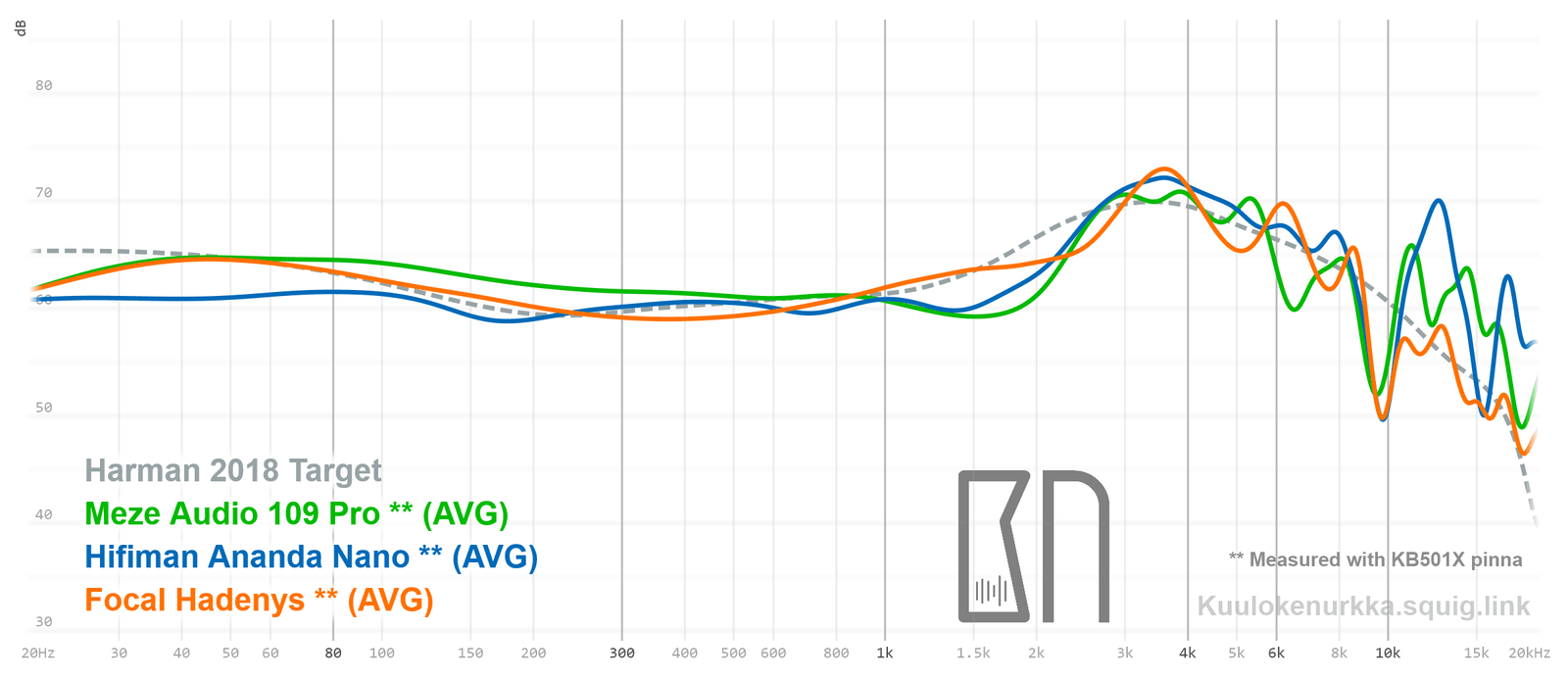
The Hadenys reproduces treble in an approachable and, above all, natural way. It is suitably bright, yet less fatiguing than many other headphones. This is largely explained by its 10–20 kHz tuning, which follows Harman's target curve. The headphones do not add any extra hiss or sibilance to the reproduction, but rather keep brighter recordings sounding normal. Thanks to this, it is indeed a very good all-rounder headphone that never sounds irritating. I believe many would appreciate this, but on the other hand, darker produced music could occasionally benefit from a more airy presentation. For example, fans of Hifiman headphones or Meze Audio 109 Prothose who like the forward-pushing edginess might find the Hadenys' treble a bit restrained, as there has always been a certain connection between hi-fi and treble airiness. However, if we consider ease of listening and average quality music instead of absolute detail, I believe the Hadenys outperforms headphone models that emphasize treble. You can blast, for example, gritty rock music completely worry-free, because the result is exciting but not too harsh.
Thanks to the controlled amount of highest frequencies, the Hadenys sounds more precise than, for example, Sennheiser HD 600, whose treble is more restless and fragile in style. The overemphasized airiness and sparkle of many Hifiman models, in turn, sometimes draw so much attention that details reproduced in the upper frequencies are actually harder to perceive than usual. The Hadenys' frequency response shows a couple of peaks at 6 kHz and 8.5 kHz, but these appear to be caused only by the measurement device's silicone ears, depending on how the ear pads compress. I myself do not detect anything particularly unusual in the vicinity of the same frequencies with a frequency sweep.
Other observations:
Focal headphones are not known for a particularly wide soundstage, and Hadenys does not make a significant exception to this. However, its mid-frequencies do not push as much to the foreground as with Sennheiser's HD 600 and HD 650, so the headphones do not create a cramped or restricted impression for me in any way; instead, the soundstage is well-proportioned despite its headphone-like presence. The size of the soundstage does not define my listening experience in any way.
One of Hadenys' strengths must be considered the precise separation and placement of sounds, as the headphones delineate the vocalist and different instruments to their true size in their own positions within the sound field. This could be assumed to be a given in the 500–1000 euro price range, but for example Moondrop Venus presents the locations of sounds somewhat vaguely in my opinion. I can therefore appreciate Hadenys' clarity and structure. It sounds detailed, even if the transparency of the reproduction doesn't necessarily surpass the best planar headphones, and small nuances are not emphasized by treble brightness.
Although Hadenys' dynamics do not reach the level of more expensive Focal models in my opinion, its reproduction still feels refreshingly lively. The sound has both delicate sensitivity and powerful punch when needed. Hadenys indeed appears to be a truly comprehensive and complete package given its slender physical size and relatively moderate price. When I put the headphones on, I know exactly that the listening experience will be good, regardless of the music I choose. Such consistency can only be appreciated.
Regarding the amplifier, we get off easy
Hadenys has not inspired me to seek out the best possible device pairing for it, because the result has been good regardless of where I have connected the headphones. Due to the unbalanced cable, most of the power reserve of my more expensive amplifiers would actually go unused. Since there is also no need for a more robust bass reproduction, I have skipped devices with high output impedance.
Despite everything I've said, the headphones bring out the characteristics of different devices, especially in their soundstage. For example, the 2000 euro Ferrum Audio OOR produces a more spacious and layered result compared to affordable devices, such as Topping DX1: and SMSL DL200, compared. However, the bass has been reproduced satisfactorily robustly and clearly with all amplifiers, and there has been no harshness in the treble. The headphones can probably be plugged into almost anything without them significantly disappointing their user. This kind of ease brings a nice change to the hobby.
Focal Hadenys vs. SASH Tres SE
Prices: 699 € vs. approx. 570 €
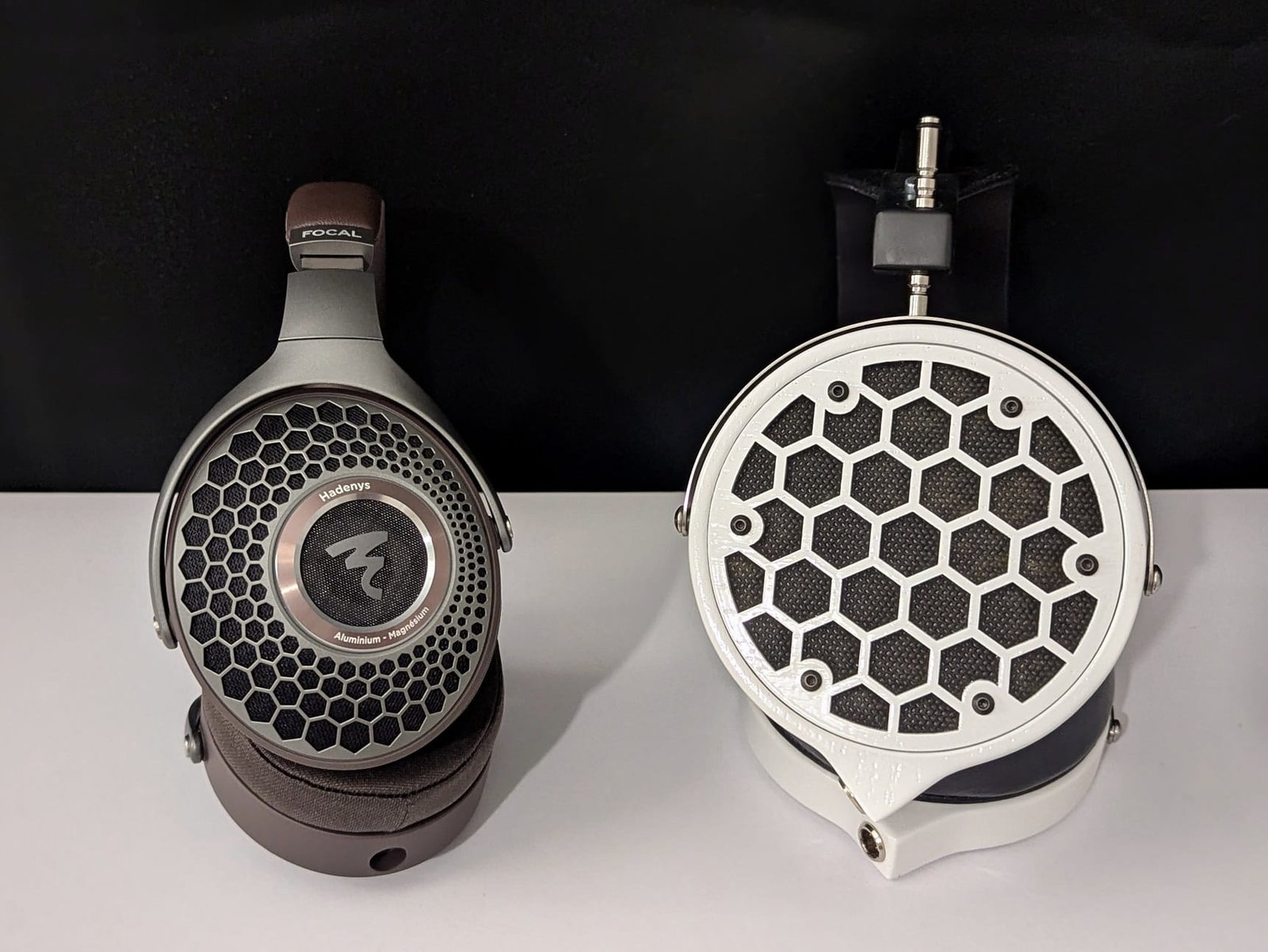
Handcrafted in Ukraine SASH Tres SE planar headphone model represents, according to Kuulokenurkka's collective view, the best in its price class or is at least close to it, so it gets the honor of serving as a comparison for the Hadenys, which is just over 100 euros more expensive. Other good comparators, due to their easy availability, would be for example Hifiman Ananda Nano (599 €) or Meze Audio 109 Pro (799 €), but I do not currently have them in my possession. Based on my previous experiences, Hadenys is more balanced than these, while the Hifiman and Meze models would offer brighter and airier treble, and possibly a slightly wider soundstage. Ananda Nano falls behind in build quality and comfort (clamps tightly), while the 109 Pro and Hadenys are quite comparable depending on the user and opinion. SASH Tres SE is a different story altogether, so let's compare it and Hadenys in more detail, starting with the build.
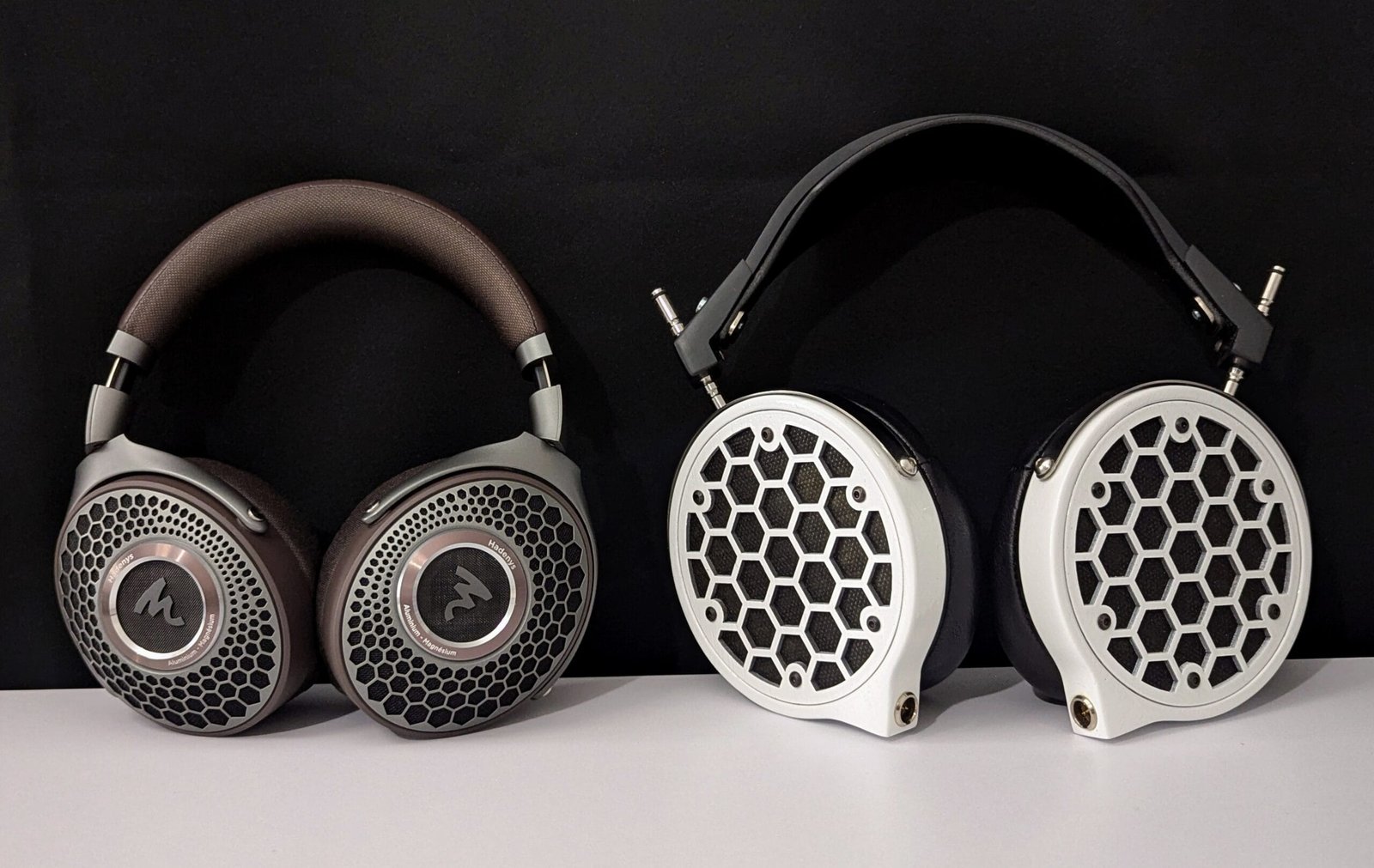
The Tres SE weighs approximately double (574 g vs. 294 g), and although it sits firmly on the head, Hadenys clearly wins in terms of comfort. SASH's headphones clamp very tightly on my head, creating a vacuum-like suction inside the leather pads, which I don't particularly care for. Adjusting the headband in some way would surely alleviate this, but the headphones are in any case less practical due to their large size. Thus, based on the build, I would choose Focal's headphones for my use almost 100 percent of the time. However, there is no major flaw in the design of the Tres SE, and its DIY, handcrafted nature with wooden cups feels quite personal. The headphones could also be extensively customized during the ordering phase, whereas Hadenys always looks and sounds the same.
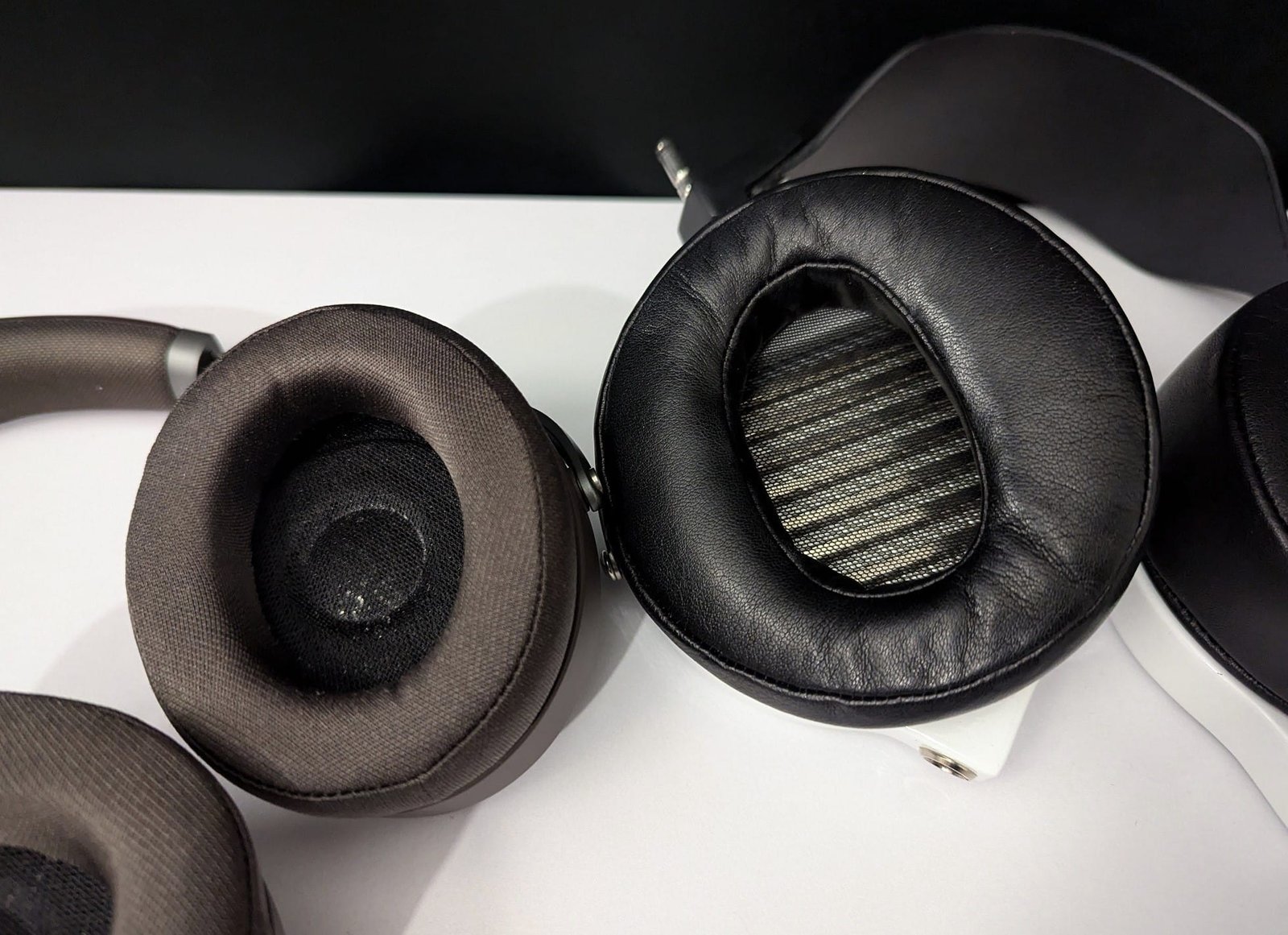
Tres SE does not require a particularly powerful amplifier by planar headphone standards, but due to its lower sensitivity (98 dB/mW vs. 105 dB/mW), it does require slightly more output power than Hadenys. Both, however, would seem to sound equally good regardless of the audio source they are listened with. Thanks to its flat impedance curve, the SASH model would be more versatile for various tube amplifiers, although its low 25 ohm impedance (which holds true based on my own measurements) does not make it the most optimal for them.
Frequency response:
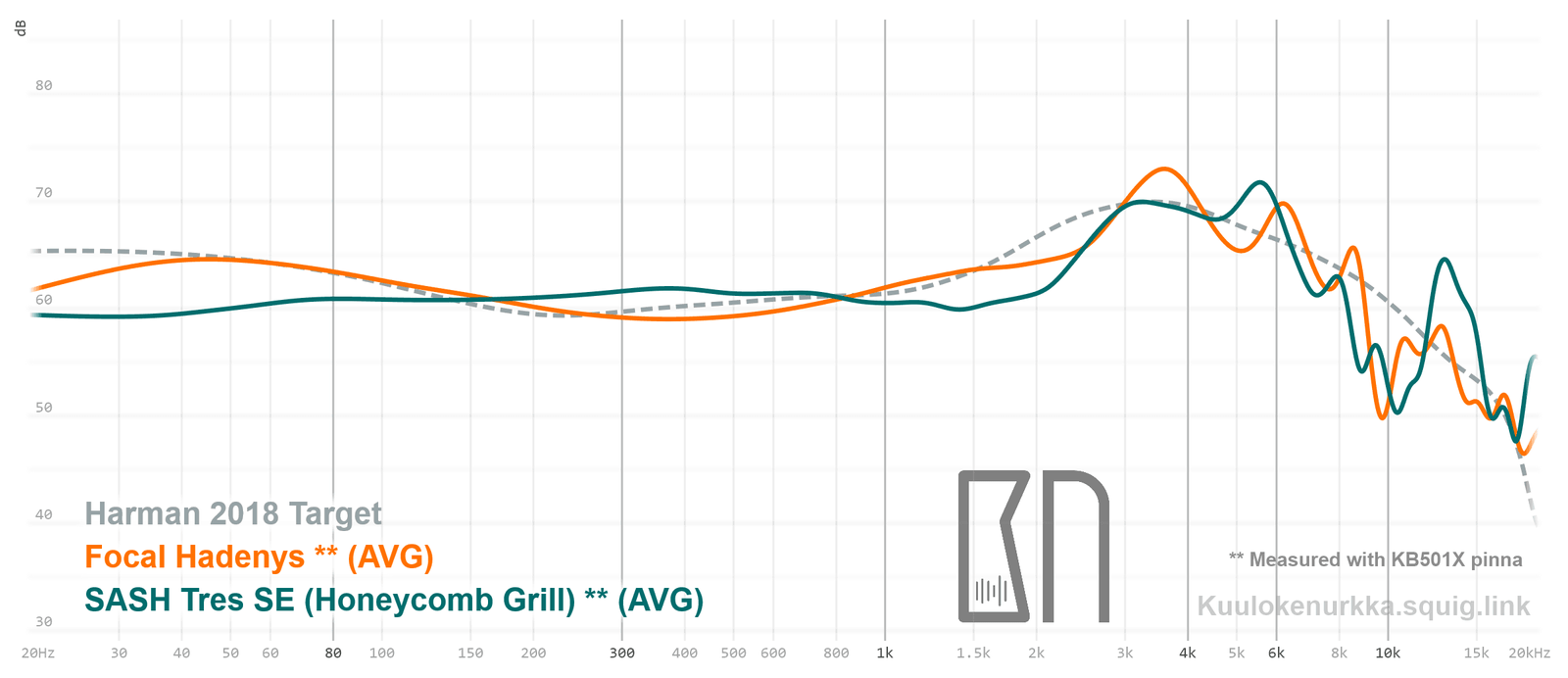
Hadenys and Tres SE are very different headphones in terms of tuning, but similar in the sense that they make listening exciting without overly fatiguing the ears. The Tres SE sounds more relaxed and spacious of the two, as it reproduces the 1–3 kHz frequency range in a subdued manner, similar to Hifiman and Sennheiser HD 800 series. The warmth of the lower mid-frequencies also adds richness to the sound, while Hadenys reproduces music more energetically and slightly thinner, emphasizing more the presence of the sound. Its presentation initially sounds even a bit aggressive compared to the Tres SE's relaxedness – this is largely due to a prominence at 3.5 kHz. However, Hadenys' bass kicks more robustly and enjoyably, so the sound also has a balancing force to its energy. The Tres SE's linear bass reproduction, on the other hand, never prominently stands out in the overall sound, but successfully complements the reproduction.
Differences are also found in the high frequencies, as the Tres SE's treble has more airiness, which is also visible in my frequency response measurements from 12 kHz upwards. Hadenys” couple of treble peaks are largely ”ghosts" created by my measurement equipment, whereas the Tres SE's emphasis at 6 kHz is real. As a result, for example, drum cymbals might be reproduced too strongly for some tastes, but the emphasis is also part of the headphones' charm. Combined with a spacious midrange, it first makes the Tres SE's sound feel expansive. Hadenys' soundstage is not as impressive in size; it reproduces sound closer. Secondly, the Tres SE's treble creates an exciting edginess in its sound, which pairs excellently with its partial relaxedness. The headphones are, in a way, simultaneously soft and refreshingly energetic, so listening to them is, in my opinion, pleasant. The presentation has a certain sensitivity and authenticity, which is also supported by a layered spatial impression. However, I am not entirely sure if everyone perceives the colorations in the Tres SE's frequency response in the same way.
Focal Hadenys is indeed the more easily generalizable of the two. Its energetic mid-frequencies and robust bass make the reproduction engaging and clear, such that I believe most people would experience it the same way. Although the Tres SE is a resolving headphone, Hadenys, with its more energetic mid-frequencies, brings out many instrument details more sharply and precisely. The Tres SE, in a way, paints a more atmospheric overall picture of the music, whereas Hadenys is more faithful to the information contained in recordings. Ultimately, both headphones have their own unique ability to captivate, making listening to them appealing.
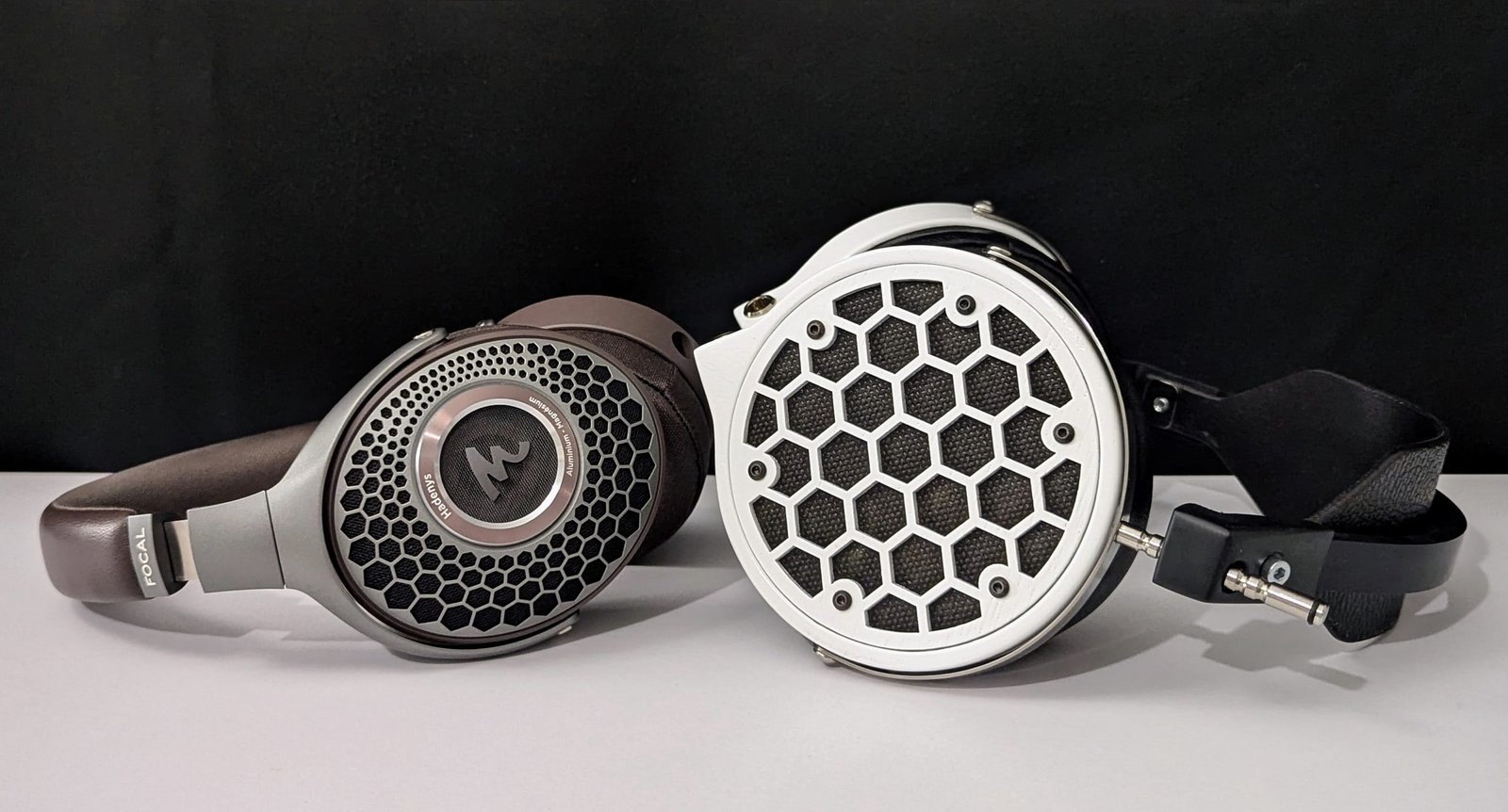
I can't really say which is ”officially” the better headphone. The Tres SE easily possesses subjective qualities that many enthusiasts seek in more expensive high-end headphones. Objectively, however, Hadenys should be considered better, as its tuning is more orthodox, albeit more ”consumer-oriented.” I believe many would prefer Hadenys' more robust bass reproduction and more energetic mid-frequencies, while the Tres SE would offer a more spacious and atmospheric sound, yet still sounding precise and clear. To put it differently, Hadenys is the more normal and neutral of the two, while the Tres SE can offer a more interesting listening experience. In my opinion, there is room in the market for both types of headphones. The pair is even so different that they would complement each other well in an enthusiast's headphone collection. In this case, the more practical and lighter Hadenys might end up being the so-called primary headphone for longer listening sessions.
Focal Hadenys vs. Hifiman
In my opinion, Hadenys offers overall somewhat higher quality sound than those sold for 250–350 euros Sennheiser HD 600 & HD 650, Aune AR5000 and Hifiman Sundara. It is likewise a more balanced listen than Fiio FT5 (500 €) Quad ERA-1 (700 €), Audeze MM-100 (500 €), Sennheiser HD 660S2 (450–550 €) and Meze Audio 109 Pro (800 €). However, the biggest challenge for Focal is Hifiman's strategy of saturating the market with several competitive headphone models. For example, the updated Sundara Silver version (410 €) does not significantly lag behind Hadenys, while Edition XS (360–450 €) and Ananda Nano (600 €) can even be seen as better, if someone prefers a spacious sound and bright treble, and doesn't care so much about robust bass reproduction.
Hifiman's own online store browsing reveals that the manufacturer has significantly lowered the price of many of its headphone models below Finnish retailers. As factory-refurbished or open box items, the headphones are even more affordable. The Edition XS is currently available delivered to Finland for around 250 euros at its cheapest, the Ananda Nano for under 400 euros, and the Arya Stealth, with an RRP of 1800 euros, for about 500 euros. As a slightly different option, the selection also includes the dynamically punchy HE6se V2 for under 400 euros (RRP also around 1800 euros). However, I find the pricing of the originally 3000 euro HE1000 V2and its Stealth version even more outrageous, because both cost only 300 euros more than Hadenys when factory-refurbished. No manufacturer can currently compete with Hifiman in terms of pricing or the number of options.
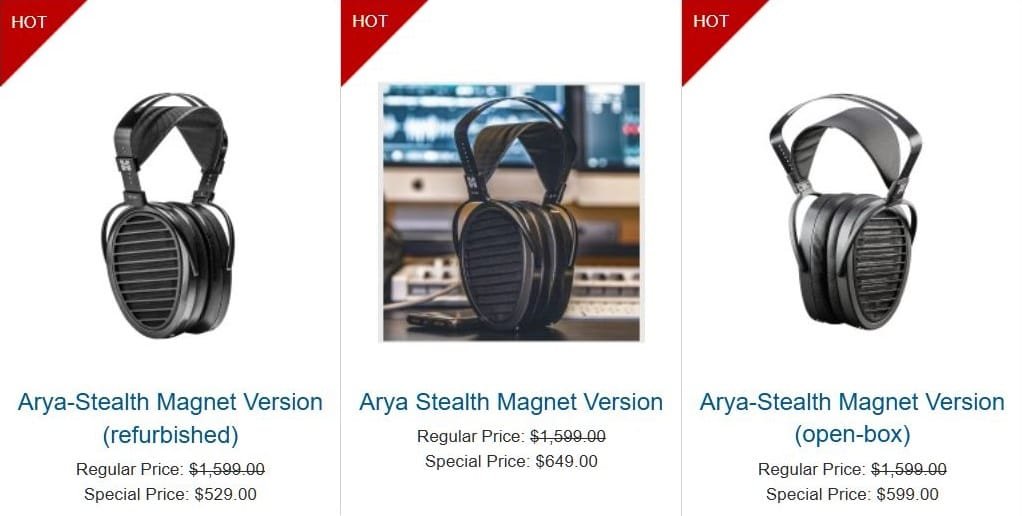
Buying factory-refurbished headphones always carries its own risks, even though Hifiman offers a one-year warranty for them and replaces faulty headphones with another pair if necessary. With bad luck, however, extra effort may be required. On the other hand, Hifiman also sells brand new headphones at low prices, thereby openly harming its own importers and retailers. A customer might reasonably wonder why buy, for example, the Arya Stealth from Finland for 1800 euros, if the same headphones can be shipped from Poland for a little over 600 euros? In the worst case, the customer might feel cheated by a domestic retailer. Such a large price difference between two official sales channels is indeed a very exceptional matter, so it would be interesting to know what Finnish retailers think about it.
Hifiman's own online store's permanent sales and continuous price drops also lead to a situation where a headphone purchase might not feel worth anything, even if significant savings are made compared to the RRP. A couple of weeks later, even a couple of hundred euros more in savings might accumulate. Headphones are often a long-term investment, but Hifiman makes theirs feel like disposable items from a bargain bin, especially when their build quality also exudes cheapness compared to headphones like the Focal Hadenys. While low prices are a good thing for consumers who take advantage of them, I'm starting to lose my taste for Hifiman's practices and, consequently, its headphones, even though they generally sound good. I don't consider other headphone manufacturers to be saints either, but I hope to provoke thought about the current market situation. Although Hifiman is difficult to beat, headphones as a product are much more than just good sound at the lowest possible price.
Summary
In my opinion, Focal has succeeded in creating attractive headphones from both a build and sound quality perspective. While enthusiasts are certainly used to heavier headphones and tolerate minor structural quirks, for most, 700 euros is a sum for which one would expect to get light, comfortable, and high-quality headphones with excellent sound quality. Hadenys is exactly this without major compromises, at least if its somewhat limited height adjustment is sufficient for one's needs. The headphones are even manufactured in France, meaning they are also suitable for those who are wary of Chinese products.
Focal has not entered into aggressive pricing competition with headphones already on the market in the 300–600 euro range, but Hadenys's higher price also does not feel unwarranted. The robust sub-bass alone makes these headphones more comprehensive than most of their competitors, and the amount of treble also remains better controlled than in planar models. If the absolute naturalness of the timbre is not the most important thing, Hadenys would, in my opinion, serve as a straightforward upgrade for, for example, the Sennheiser HD 600 series. This is one of the biggest praises I can give to headphones. 700 euros is still a lot of money, but I don't believe Hadenys yet exceeds the pain threshold of most people shopping for good headphones. It is easy for me to recommend Hadenys and also add it to Kuulokenurkka's wall of fame as the first open-back headphone model priced between 600–1000 euros. Before rushing to buy, however, I recommend waiting for my article on the closed-back Azurys model, as it offers a very similar listening experience with more robust bass reproduction and a 150 euro lower price tag.
Pros and cons:
+ Balanced, clear, and dynamic sound
+ Robust and enjoyable bass reproduction implemented with an open-back design
+ Suitably bright and smooth treble
+ Precise sound separation and placement
+ High-quality, compact and lightweight construction
+ Excellent user comfort and usability
+ Easy to drive
+ Handy carrying case
+ Good price-quality ratio
– There is slight harshness at 3.5 kHz, so the timbre is not perfectly natural
– The soundstage is not particularly wide
– Some might prefer a more airy treble
– The height adjustment range may not be sufficient for everyone
– The included cable is annoying
– Costs 150 euros more than Azurys
 EN
EN  FI
FI
Hi !
Where does Hadenys' superiority over Sundara Silver come from?
At least Silver's more cautious, but more precise bass probably suits
me better.
Although Hadenys has at most approx. 5 dB more bass than
in Silver, it too is probably only at a neutral level, or... ?
Hi!
I was on a work trip for a few days, so it took a moment to reply. Hadenys and Sundara Silver are surprisingly similar in their mid-frequencies, and there isn't a memorable difference in soundstage size, for example, in one direction or another. Listeners who prioritize reproduction accuracy and clarity might prefer Sundara Silver due to its more controlled bass and brighter treble. The sound is airy, clear, and precise. Hadenys doesn't really emphasize bass, but it adds some soft rumble to the sound. However, I ultimately find its punchier and more robust sound more enjoyable compared to the Hifiman model and many other planar headphones. Another improvement comes from Hadenys” more moderately reproduced high frequencies. Sundara Silver is not annoyingly bright, but its treble is more splashy and colder in tone. Hadenys is generally more pleasant in sound and, to my taste, a bit more natural. Its treble somehow blends more seamlessly with the rest of the sound, whereas Sundara Silver sometimes unnecessarily draws attention to its brightness. Such moderate differences and improvements are by no means worth 300 euros, which is why I mentioned that Sundara Silver doesn't fall far behind Hadenys. The 300-800 euro price range is very even, so a small price increase doesn't directly mean an improvement in sound quality. However, with Hadenys, Focal raises the bar for bass reproduction in open-back headphones and demonstrates that a treble quantity that follows Harman's target curve is actually quite suitable for versatile ”all-rounder headphones".