Author: Sword of Damocles
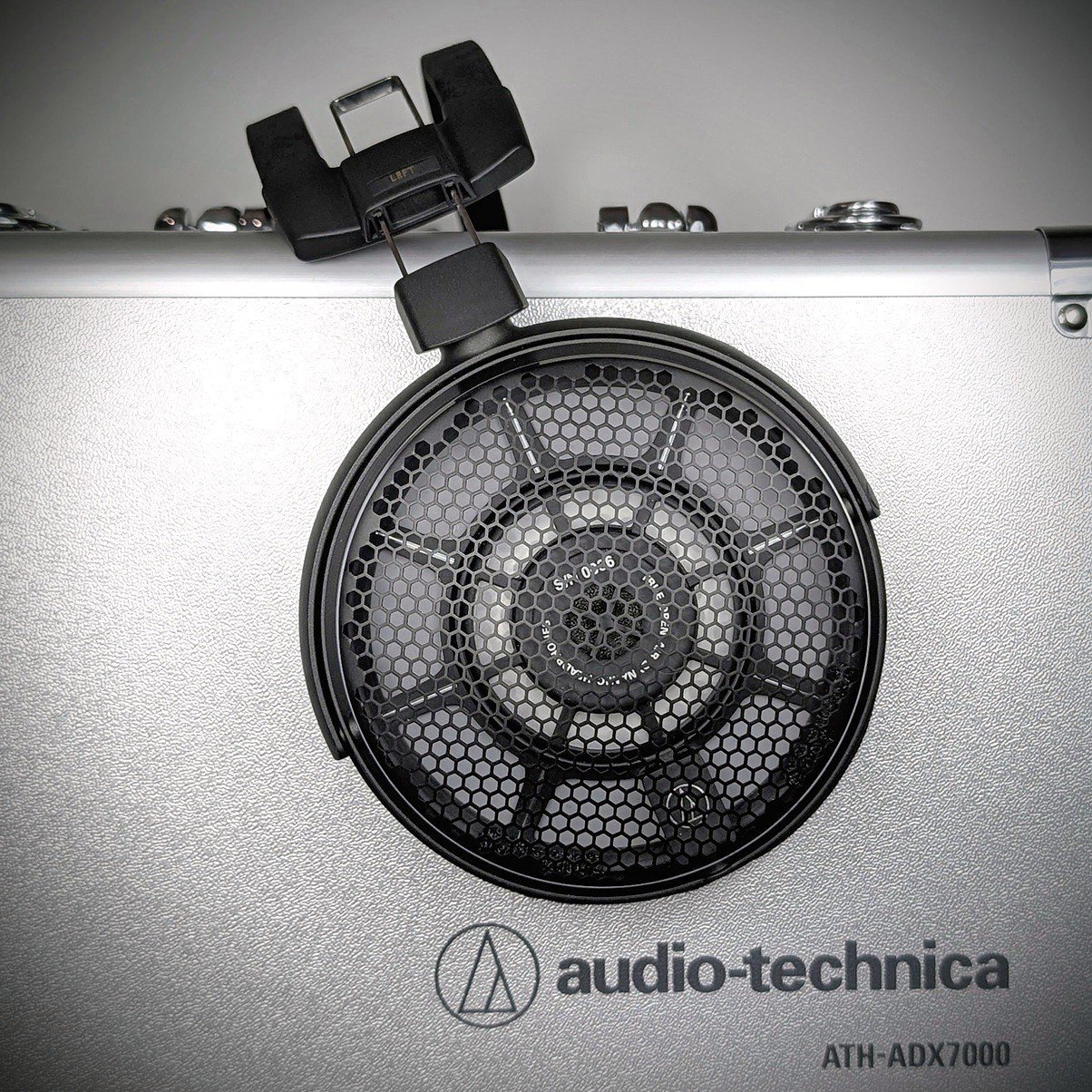
Table of Contents:
Information:
- Released: 2025
- Country of manufacture: Japan
- Price: 3659 €
- Available in Finland: Yes
- Type: open, over-ear
- 58 mm dynamic drivers (HXDT technology)
- Impedance: 490 Ohm
- Sensitivity: 100 dB/mW
- Weight: 265 / 275 g (depends on earpad model)
- Connector type: 2x A2DC
- 2 cables: Length 3 m | Connectors XLR and 6.35 mm
- Accessories: Aluminum case, cable bag and secondary earpads
- Warranty: 2 years
Review sample: Received on loan from importer/reseller
Audio-Technica is the chameleon of the headphone world, manufacturing almost everything a person can put on or in their ears. Although sales quantitatively focus on the everyday workhorses of the studio world and affordable noise-cancelling headphones, unlike many other traditional manufacturers, Audio-Technica has not abandoned the high-end segment either. The latest demonstration of this is the product released at the end of 2025 ATH-ADX7000, which, with its price of 3660 euros, registers among the top tier of open-back headphones. Until now, the flagship of the AD headphone series (Air Dynamic) was the ATH-ADX5000, which was 1500 euros cheaper, and about which we wrote and article when Kuulokenurkka was still in its infancy.
Although with the proliferation of frequency response measurements and increased consumer knowledge, the relevance and price-quality ratio of high-end headphones have begun to be questioned, the ADX7000 seems to have received a rather positive reception even in the hands of critical media. Audio-Technica must have done something right, and that's why I wanted to get to test the headphone model myself. Such exorbitantly expensive products have generally received little attention in Kuulokenurkka in the past couple of years.
The ADX7000 was kindly lent for testing by Audiokauppa, in whose Helsinki store the headphones are usually also available for auditioning.
Packaging and accessories
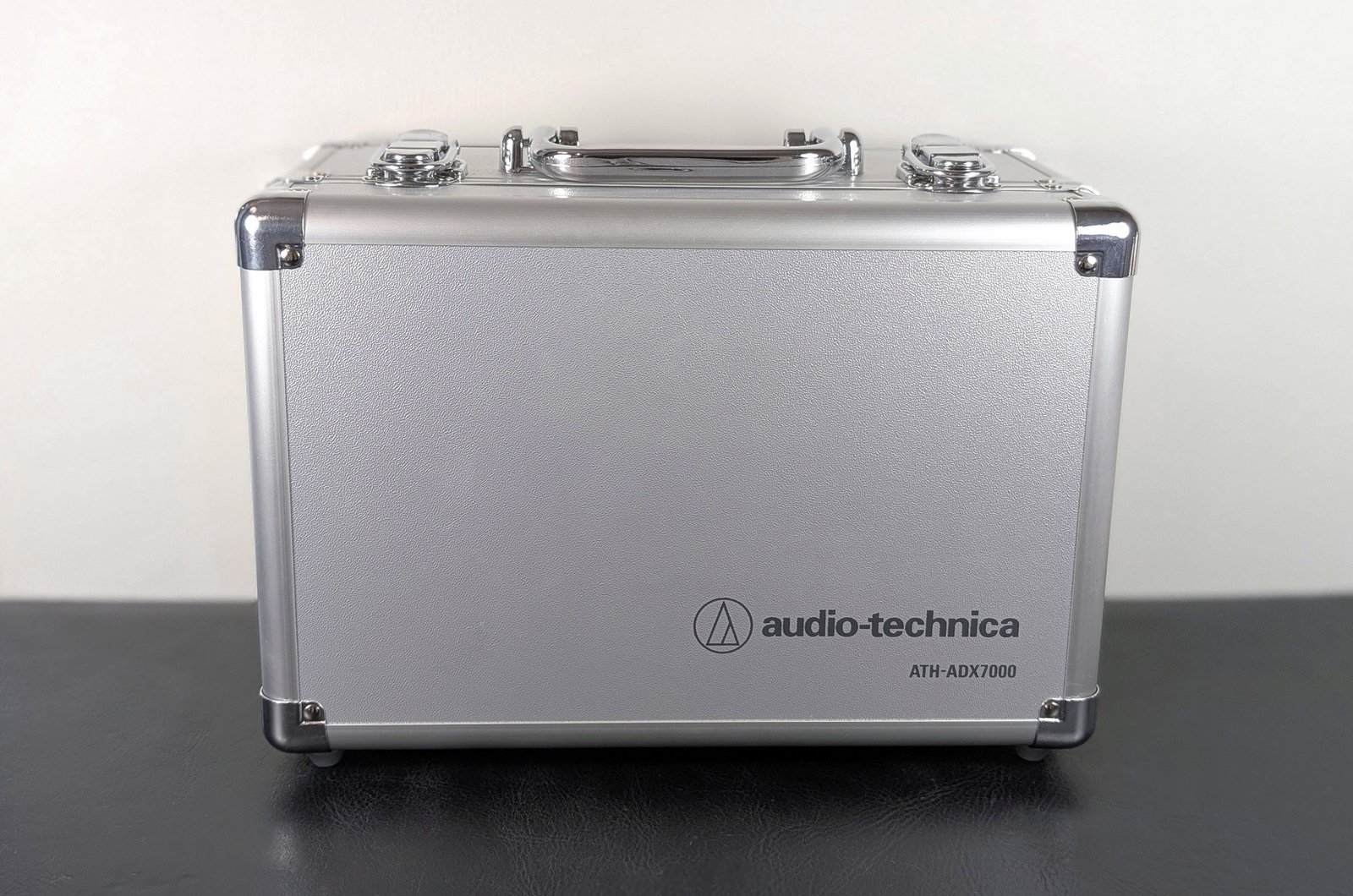
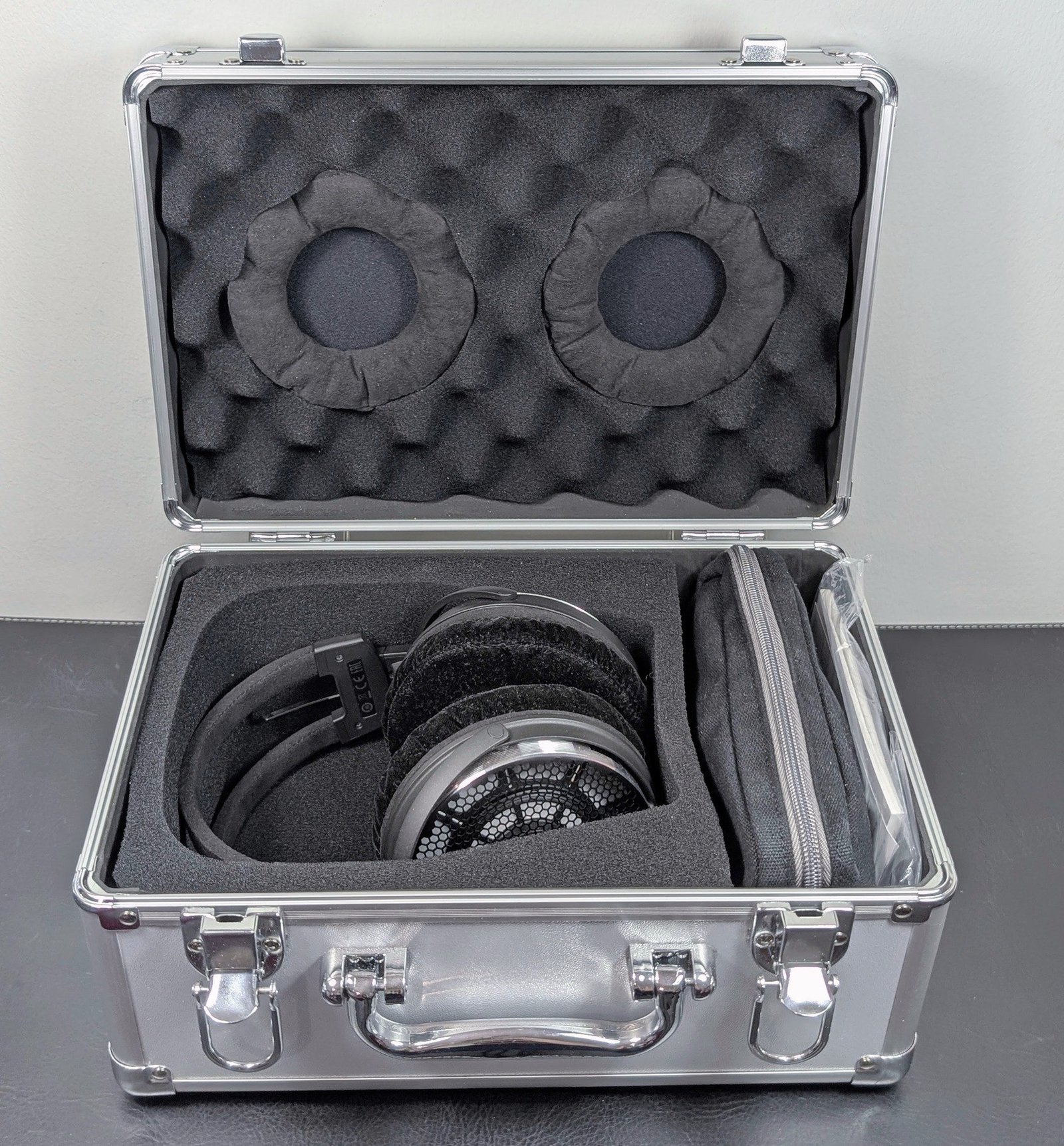
The case, which hides treasures within, makes the ADX7000 feel like an important and valuable product. The inner edge of the case lid can accommodate the second set of included ear pads, while two cables are protected by a separate high-quality fabric bag. The more comprehensive than usual equipment delights as much as the presentation.
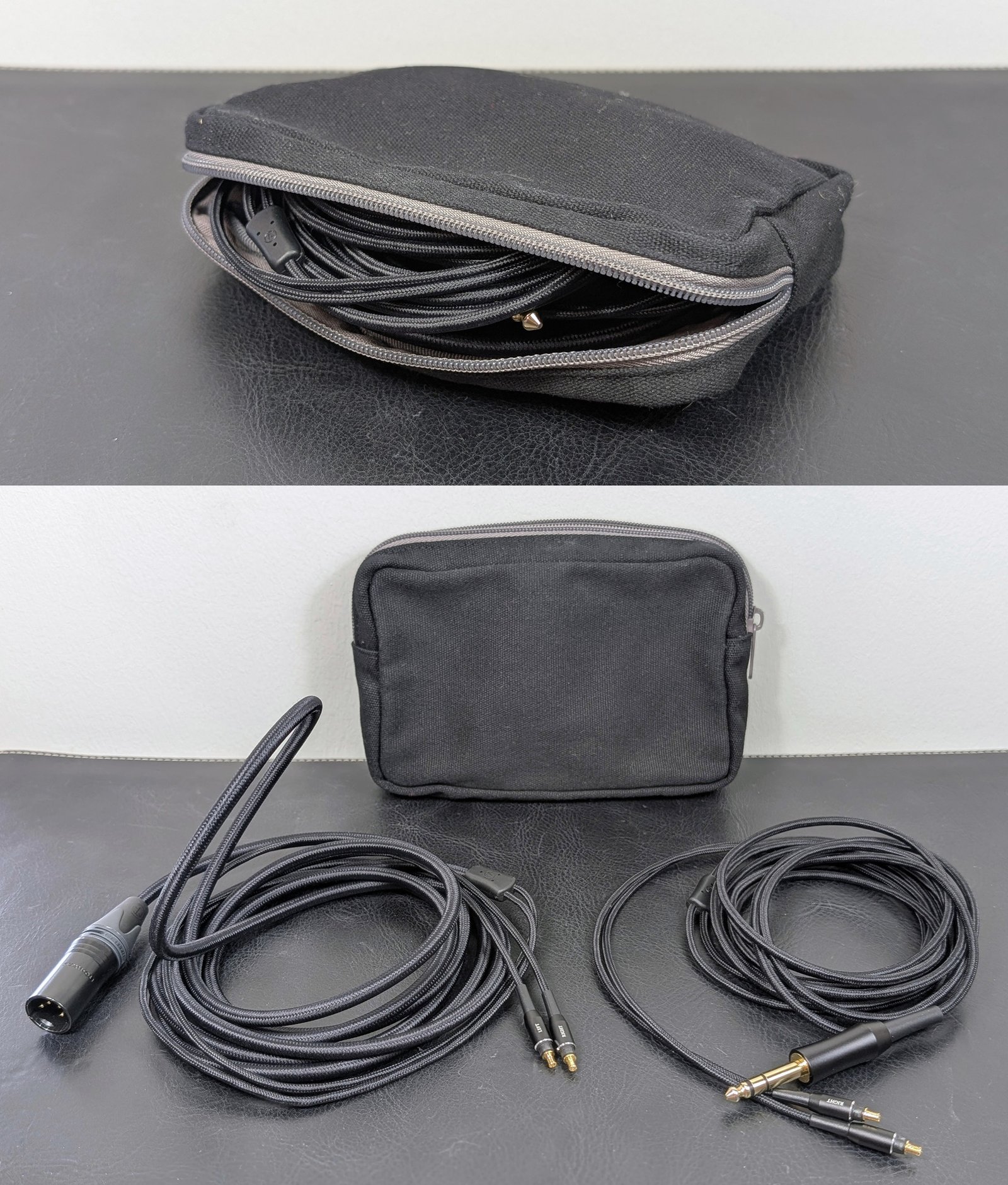
However, the biggest single weakness of the ADX7000 from a usability perspective are the cables chosen by Audio-Technica. The manufacturer's gift to the world are, firstly, brand-specific A2DC connectors, which borrow their operating principle from MMCX connectors designed for in-ear headphones. They certainly fit into a small space at the bottom of the cup, but at the same time feel unnecessarily flimsy in full-size headphones. On the other hand, Audio-Technica uses the same connectors in many of its other headphones, so in a way, I understand the continuity. For some reason, high-end headphones are specifically characterized by avoiding universal solutions, such as 3.5 millimeter connectors.
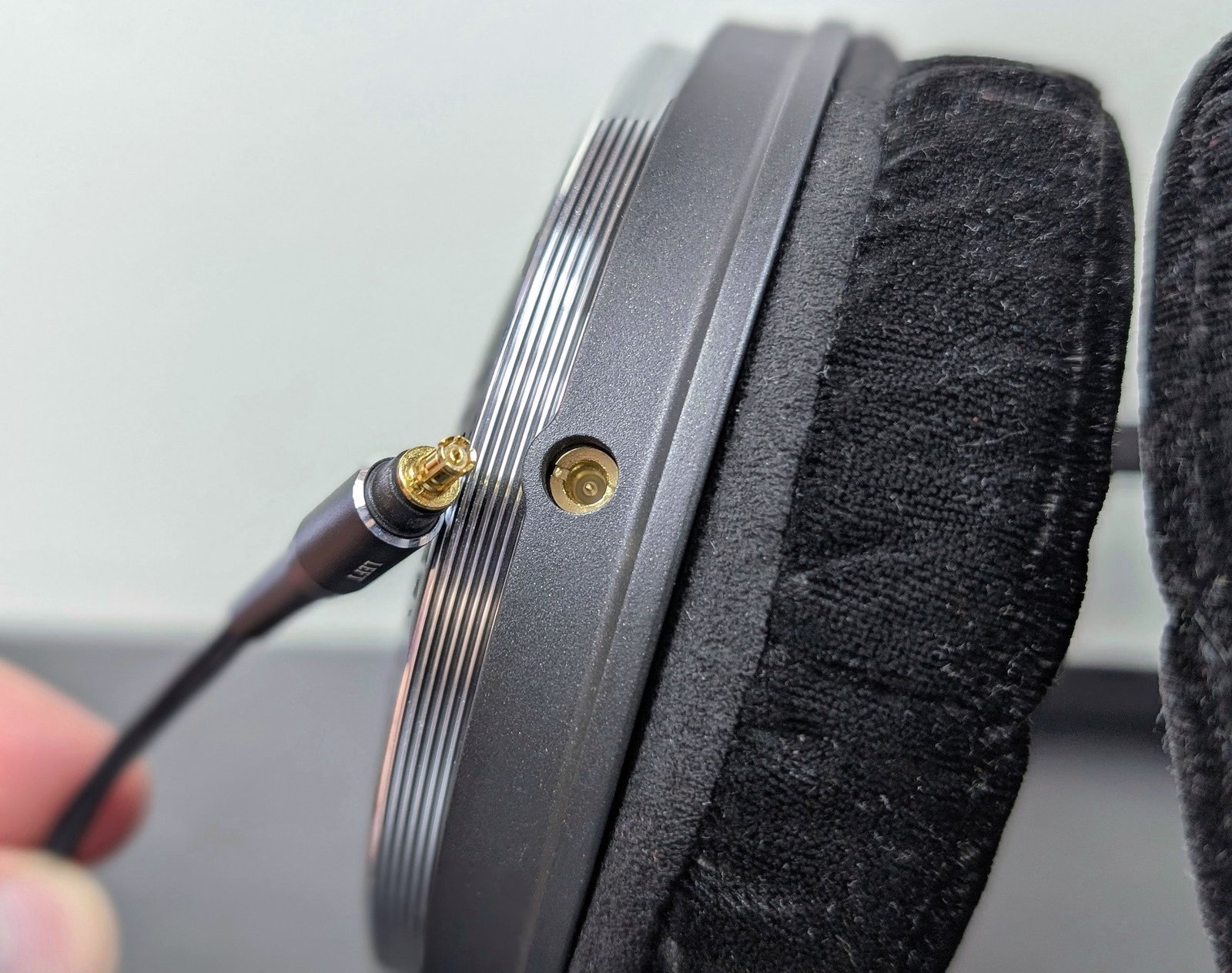
The female connectors embedded inside the cup make finding suitable replacement cables difficult, but Audio-Technica at least compensates for the situation by directly supplying both a balanced (XLR) and an unbalanced (6.35 mm) cable with the ADX7000. However, since both cables extend to three meters, many might also desire slightly shorter variations, especially since the manufacturer's own cables are downright infuriating in their stiffness and microphonics.
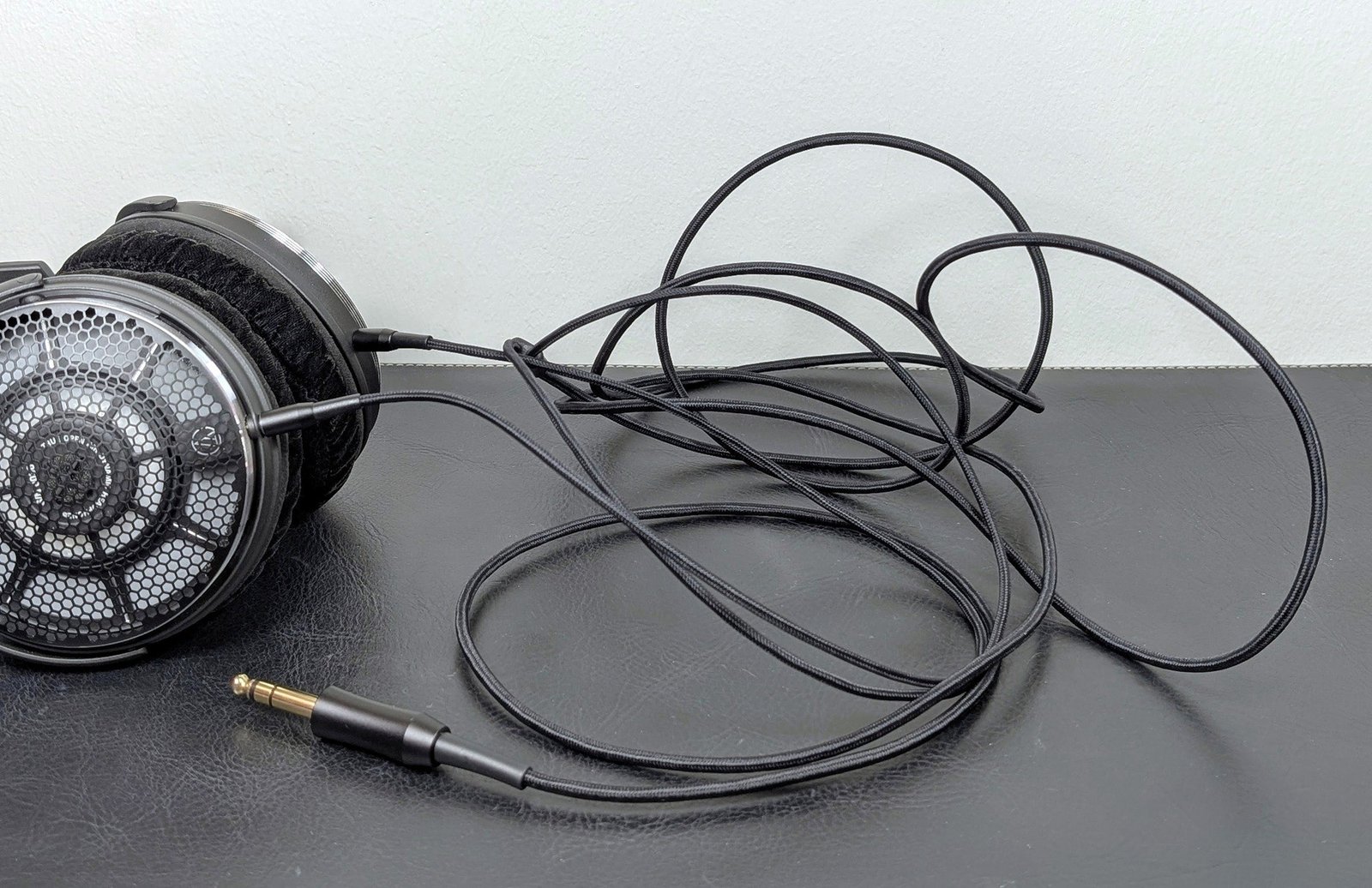
The unbalanced cable is the thinner of the two options, but the conductor slipped inside its fabric sheath is as stiff as iron wire, causing it to easily retain its bends. The balanced cable, on the other hand, resembles a jump rope in thickness, and it increases the total weight of the otherwise light headphones by as much as 50 percent. Neither cable is almost impossible to tame or use neatly. Additionally, when touching clothes, the cables rustle exceptionally loudly, which the headphone structure further amplifies. Since the user experience takes the owner back several decades in time, I believe it would be imperative to find a better cable for the ADX7000 to make one want to own it. Fortunately, otherwise, I have better things to say.
Build and comfort
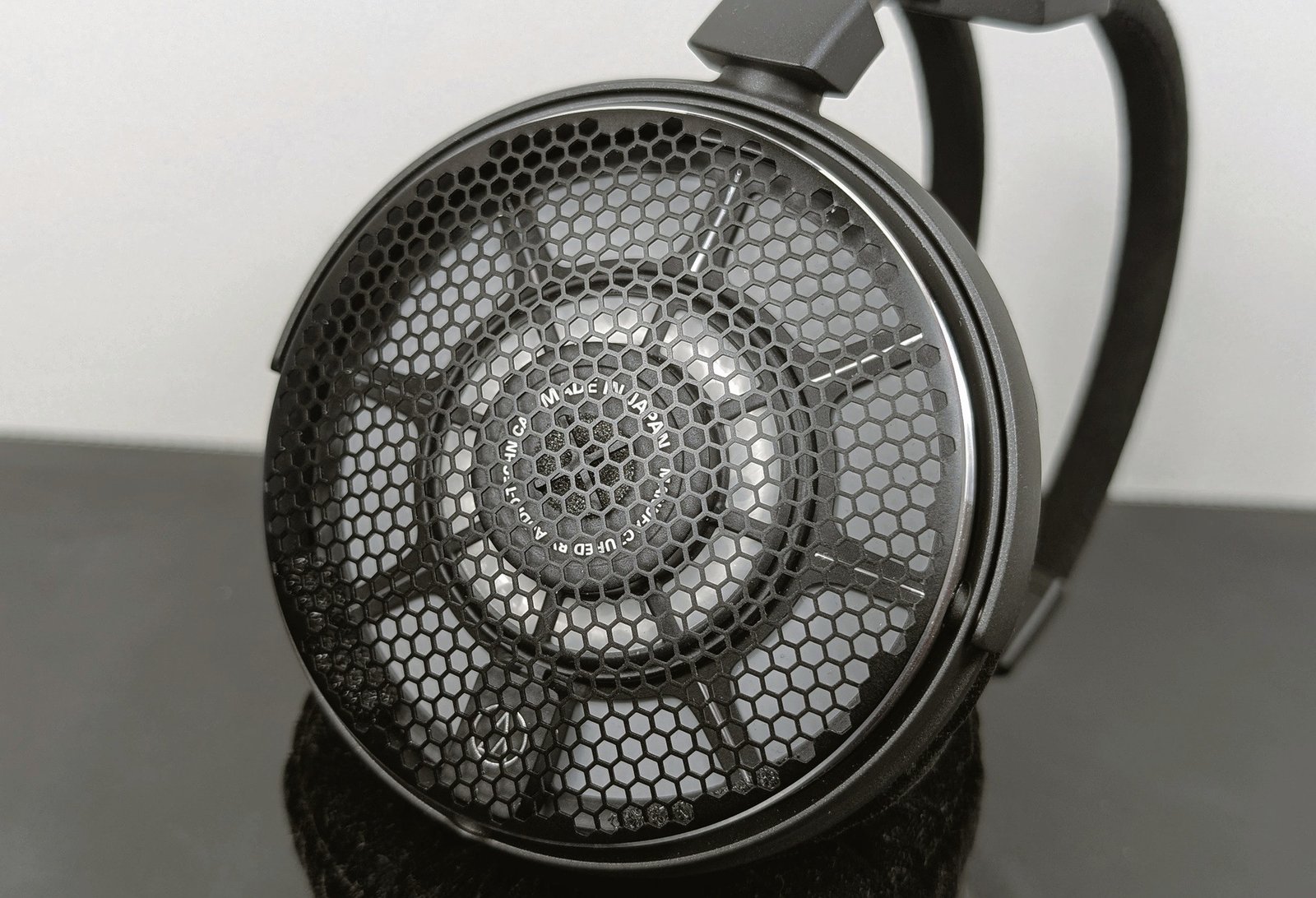
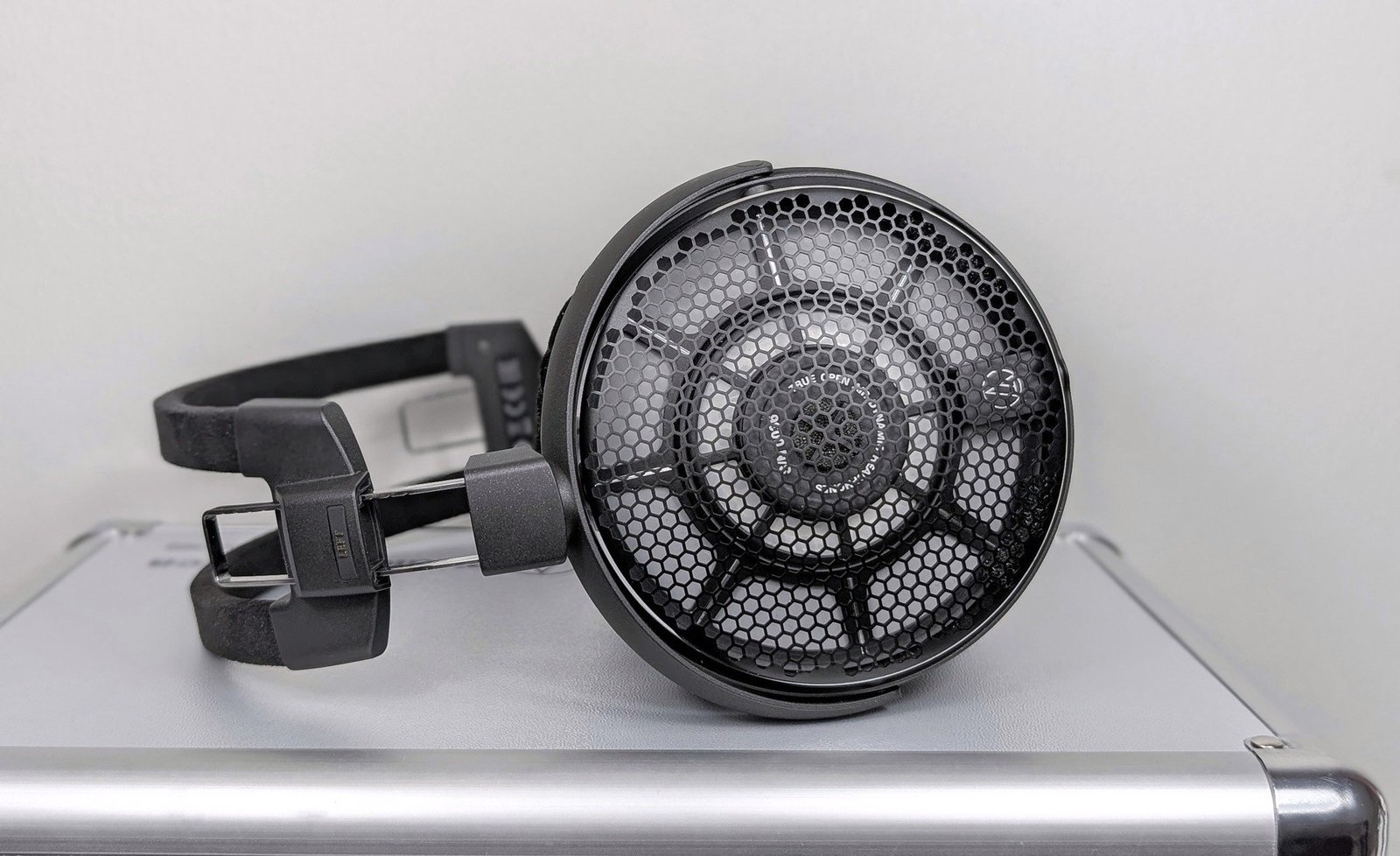
Excluding the cables, the headphones are structurally impressive with their high-quality materials as well as their lightness. Or how would a premium headphone feel to you as a reader, whose parts are made of magnesium and aluminum, and which, despite its large size, weighs only 275 grams (with other earpads 265 g). The minimalist appearance is also, in my opinion, more than appropriate. The bare back of the drivers visible through the grilles is simply captivating, being even more stylish than, for example, Sennheiser HD 600or XK-Audio Avalon Mk2. Eyes are drawn to the shiny support structures and the Audio-Technica logo. The back of the driver also reveals the headphones' serial number and country of manufacture, Japan.
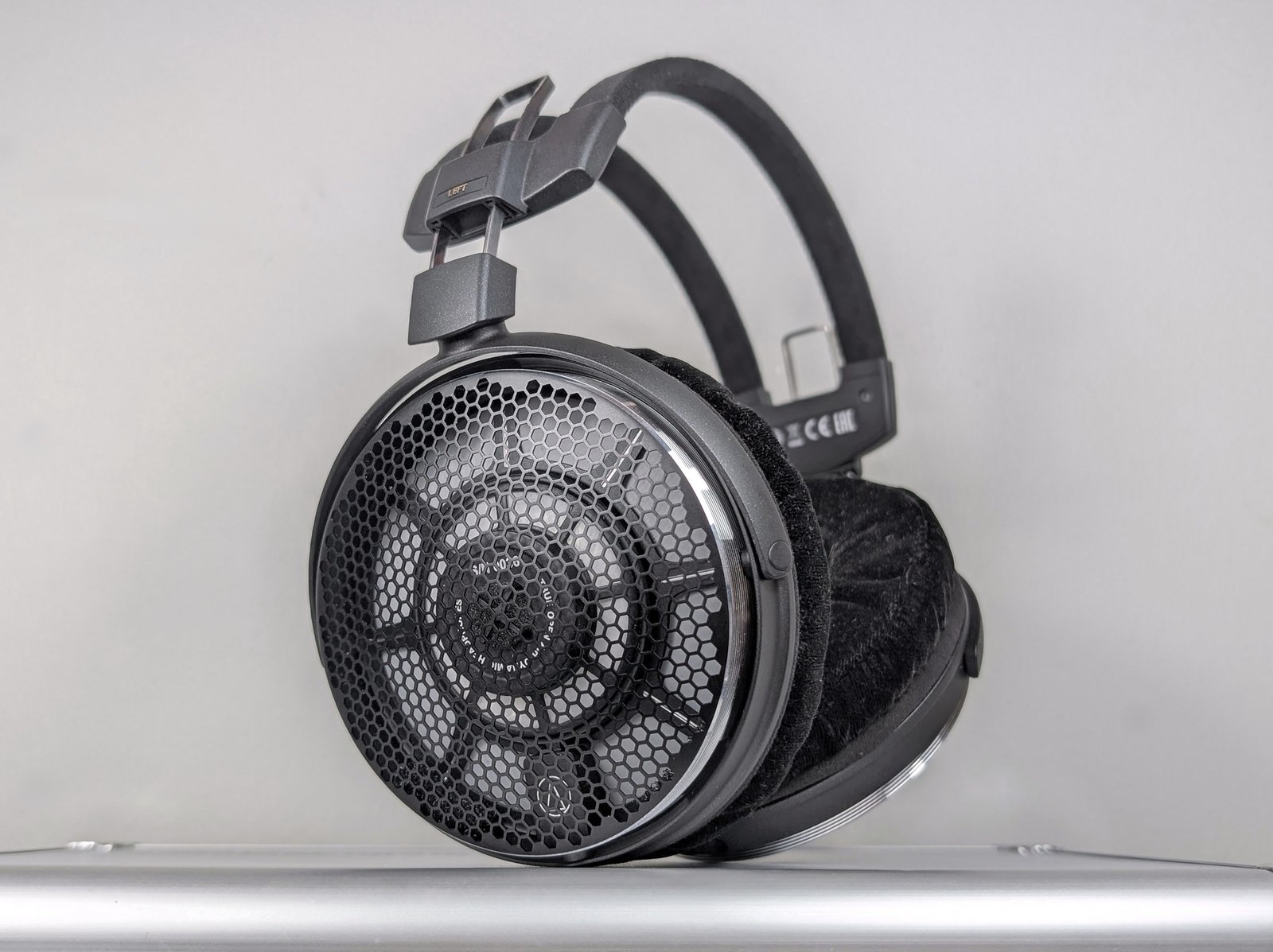
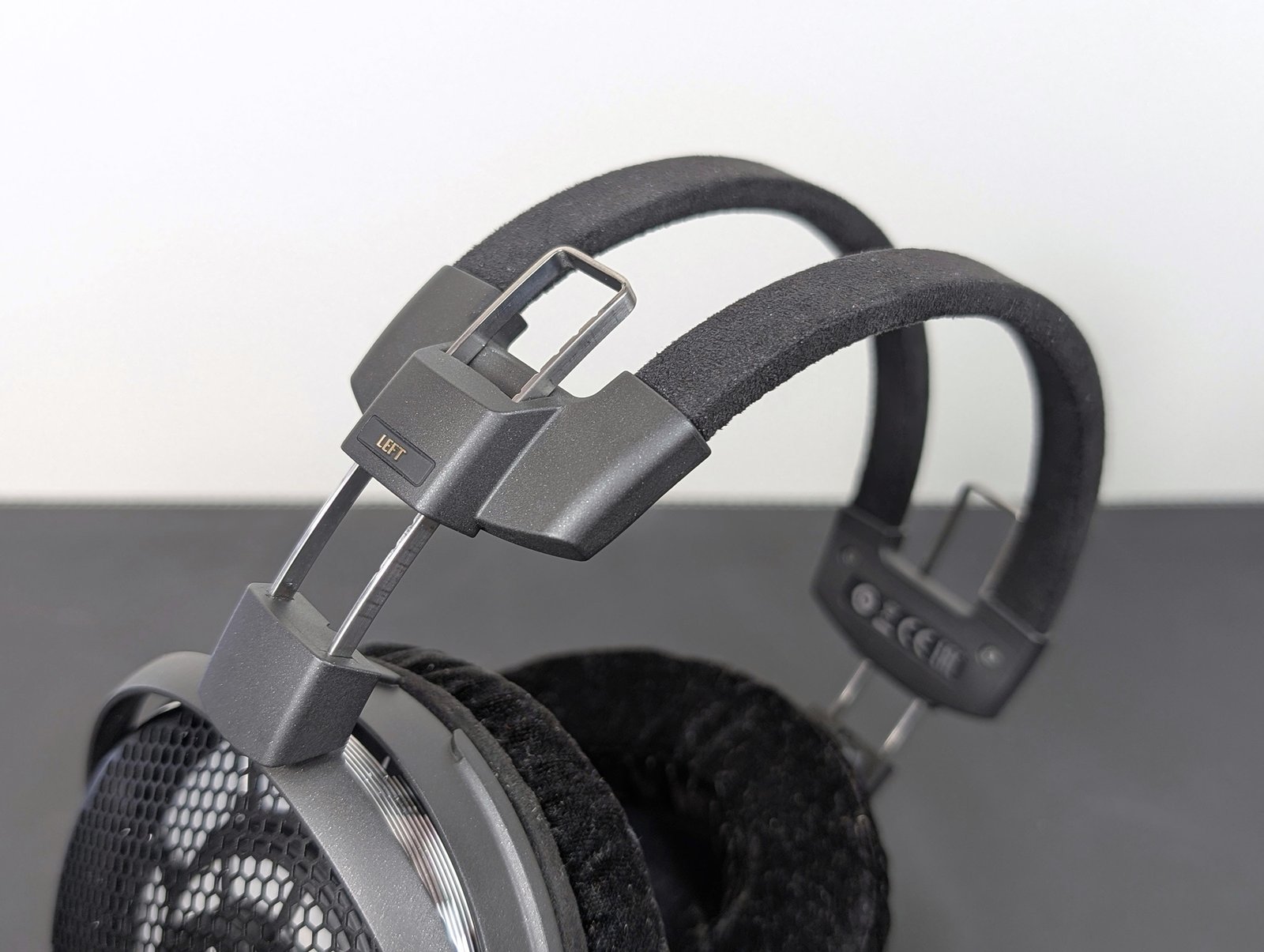
On the other hand, the manufacturer must be given a minus for how the structure clicks and rattles during handling at the connection points of the cups and the headband. This ultimately dilutes the premium feel or at least leaves Audio-Technica room for improvement in the headphones' finish. I also find it peculiar that the headband, formed by two narrow rods, is practically not padded at all. I do not count a couple of millimeters of hard foam strip as padding, because there would have been room for other solutions as well. Fortunately, the headband, however, conforms to the shape of my head, so the highest point of my crown settles between the two rods. The clamping force of the headband is also optimized so that the majority of the headphones' light weight is distributed to the sides of my head via the large ear pads.
Thanks to the good ergonomics of the structure, the fit is gentle despite its firmness. I cannot get the ADX7000 to fall off my head, and the fit does not lose its seal even when opening my mouth. Still, during use, the headphones feel only as if my ears were surrounded by two large and soft pillows. Although the opening of the round ear pads is not quite the height of my ears (58 mm) or particularly deep (just over 20 mm), the large surface area of the edges keeps the headphones somewhat away from my ears. Thanks to this, my ears do not even really sink into the pads, but the ADX7000 functions as if it were an on-ear headphone with massive and comfortable pads.
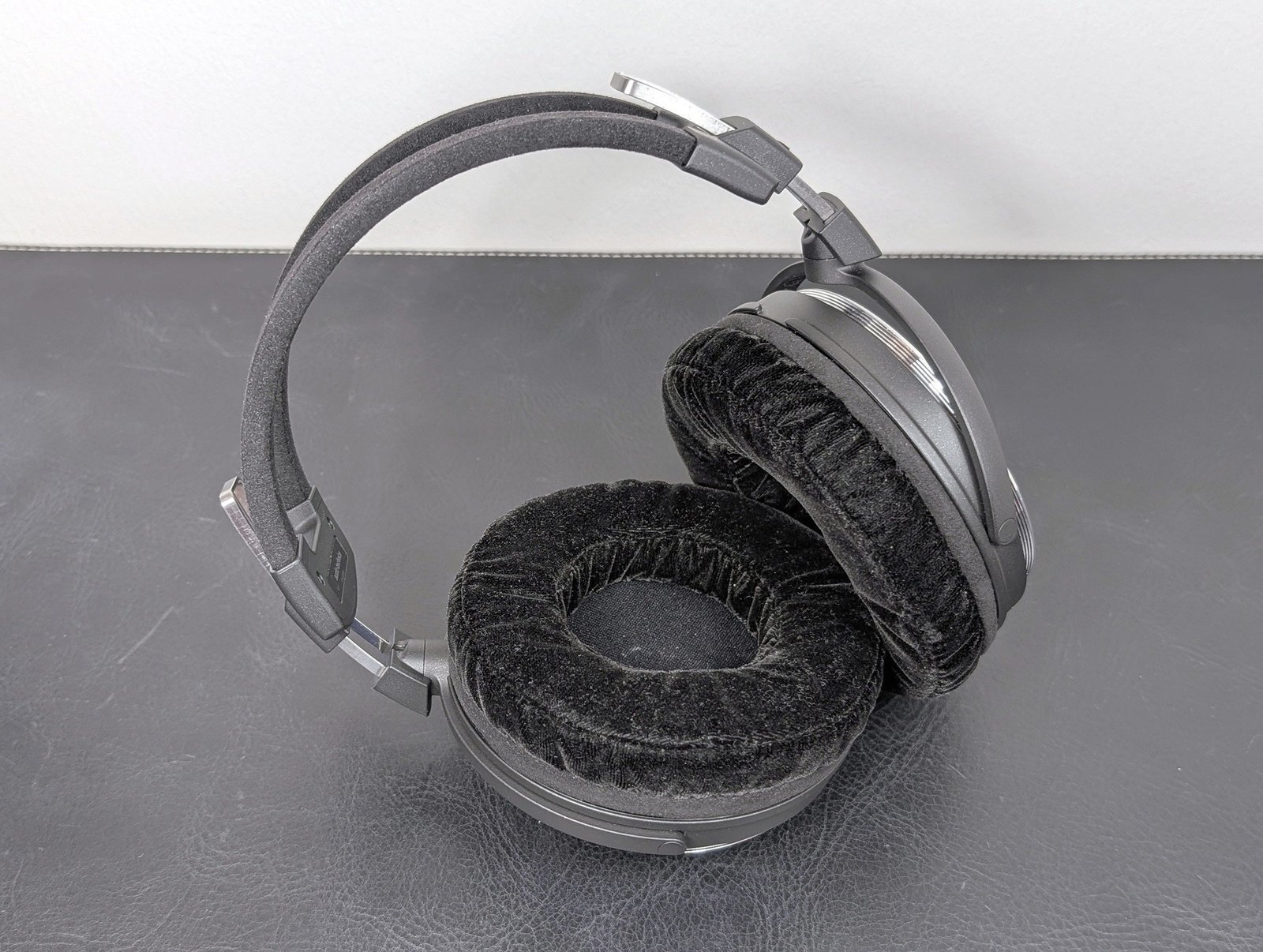
Despite the somewhat unusual design, I have found the headphones extremely comfortable even during longer use. They also cause less sweating than usual, keeping summer in mind. I could almost keep the ADX7000 on my head just for fun, even if I wasn't listening to anything with it. I also had similar thoughts about Yamaha's YH-5000SE, so the design philosophies of these two Japanese manufacturers resemble each other when it comes to high-end headphones. I also encourage you to note how streamlined the ADX7000 looks and feels on the head compared to, for example, Meze Audio's Empyrean series or different ZMF models.
The two pairs of ear pads differ in their surface material, but not significantly in their comfort of use. By default, the headphones have pads covered with rustling velvet fabric, which easily collect all kinds of dirt and lint. The other pads, in turn, are made of gray Alcantara, similar to the headband shell. Switching to these pads reduces the weight of the headphones by 10 grams.
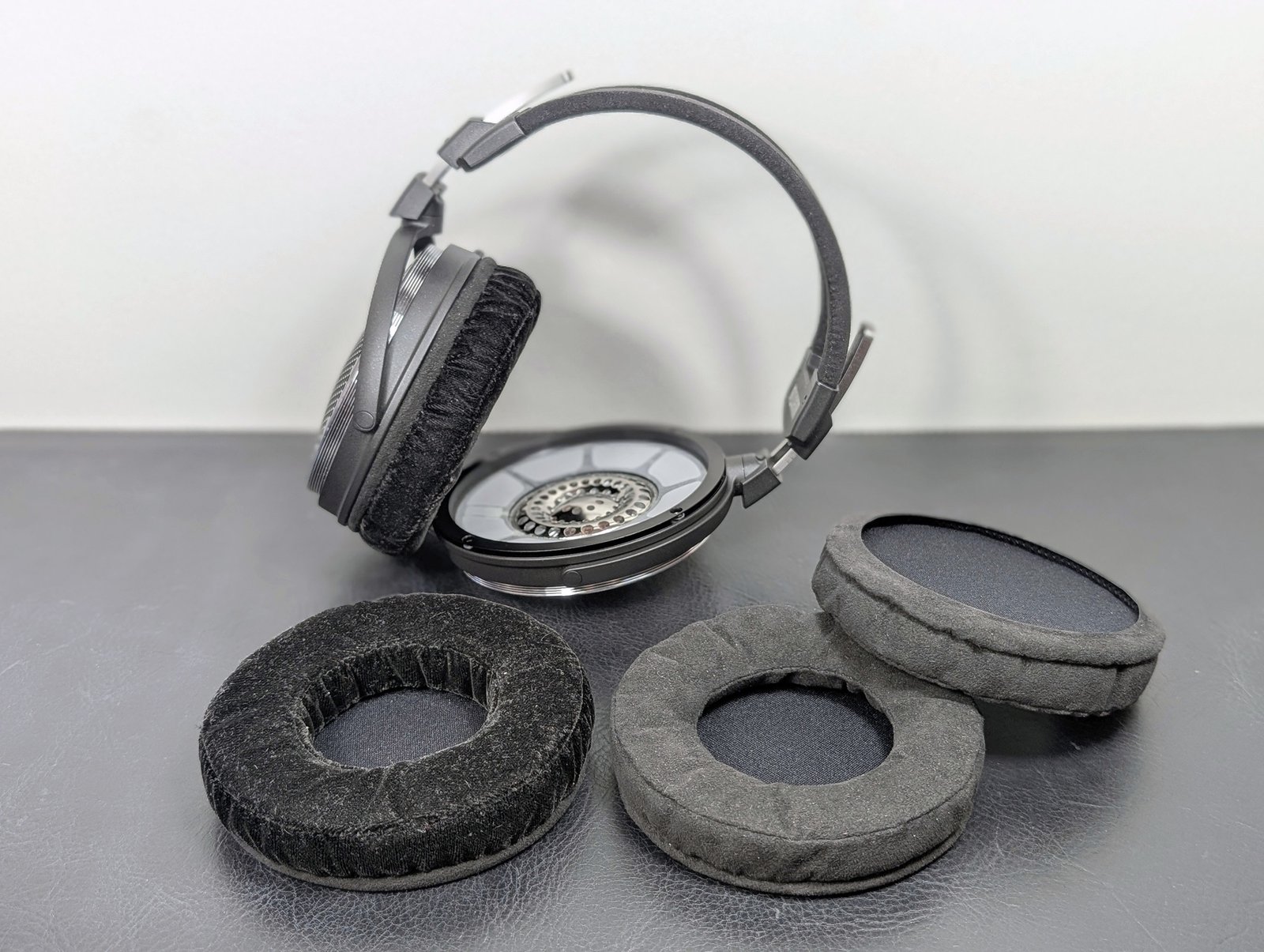
Changing the pads happens by stretching their rim around the driver baffle in the same way as, for example, with ZMF headphones. This old-fashioned solution requires considerable dexterity, unless one has previous experience in changing pads. Perhaps a magnetic attachment like Meze Audio's would have been better, because those interested in expensive headphones might expect the smoothest possible usability. On the other hand, many different pads now fit the ADX7000, which extends the product's lifespan. Enthusiasts can also, if they wish, try how pads from other manufacturers change the sound of the headphones.
Sound quality
Precision-fitted components
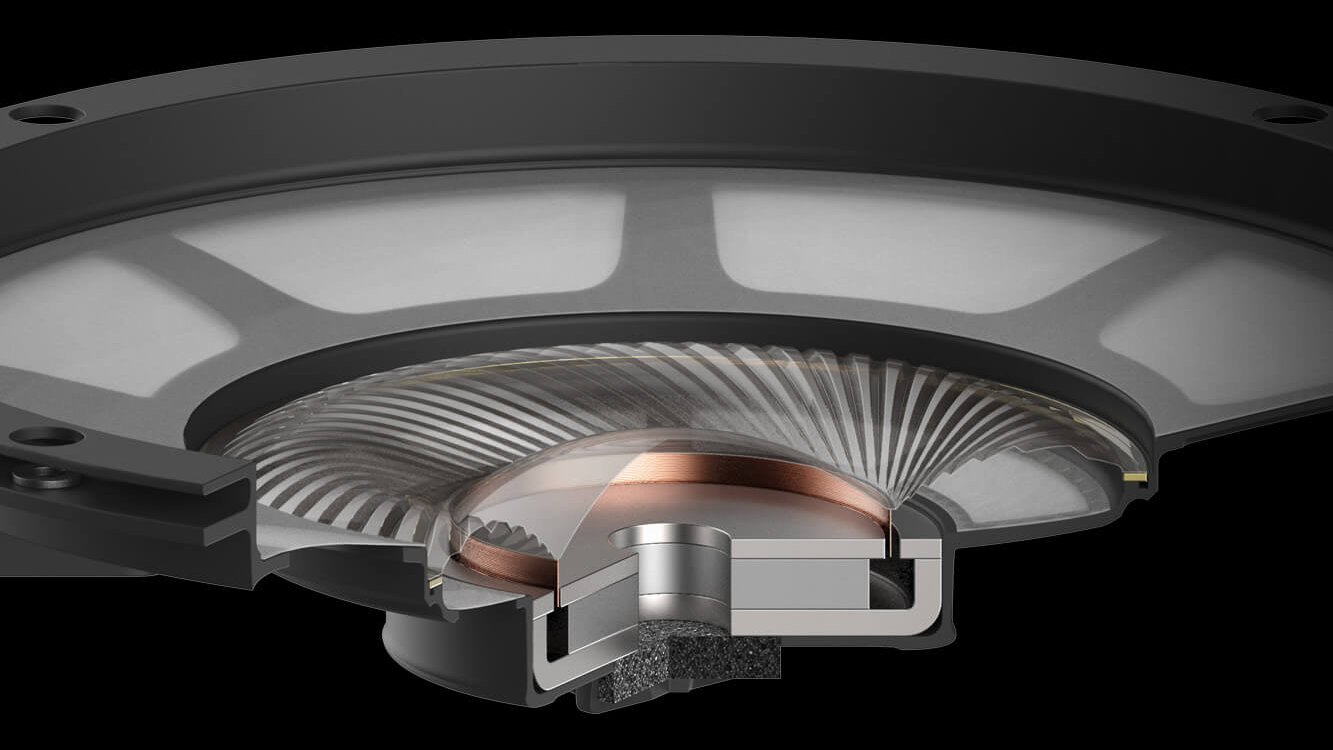
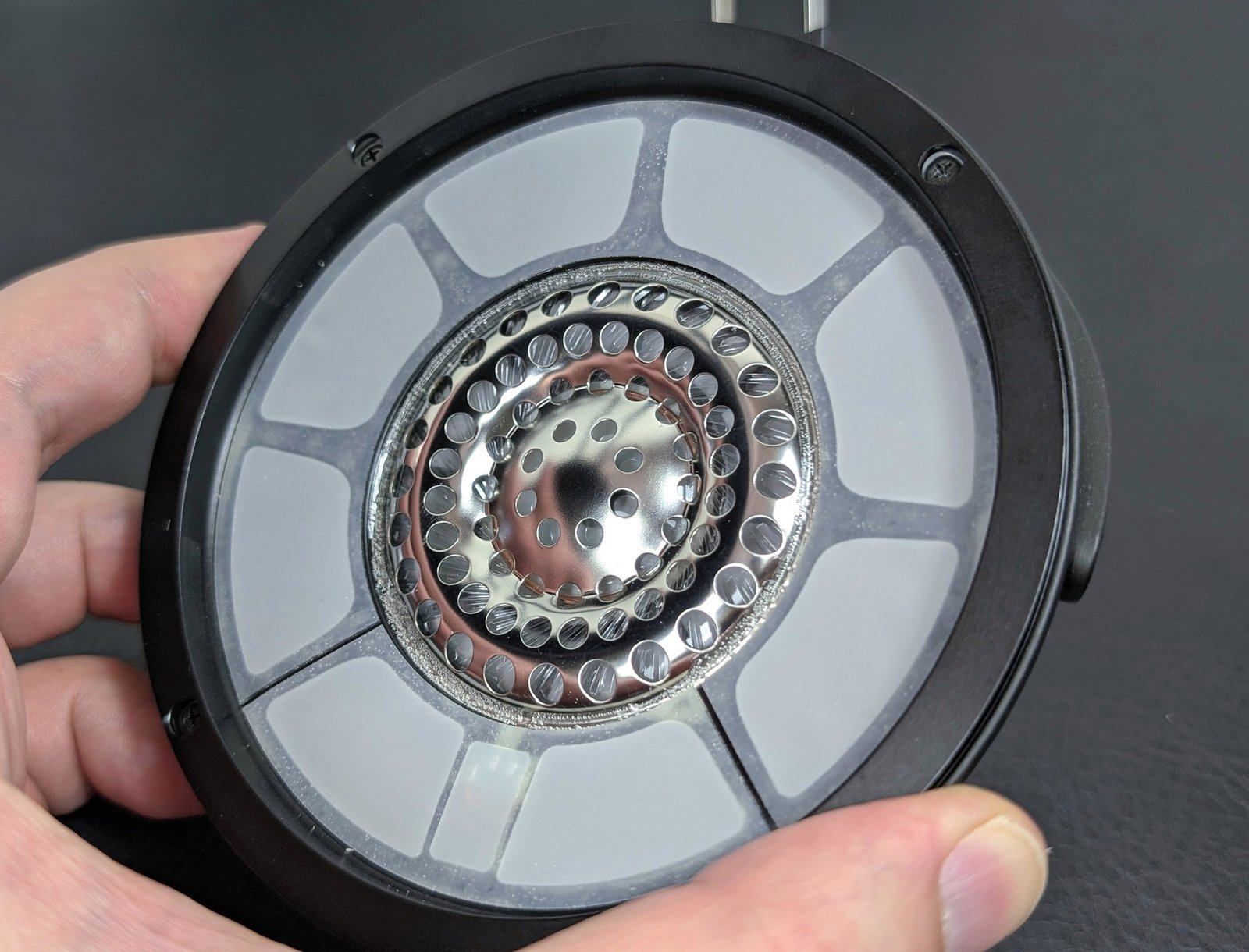
Often, headphone manufacturers boast about the exotic technologies and design solutions of their top products, which are primarily aimed at justifying the high price level. Audio-Technica also operates in the same way, but quite rationally: the most important feature of the ATH-ADX7000's acoustic design is described as the precision of component machining and matching. The structure of the drivers, along with the ear pads, indeed affects the resulting sound quality the most, because the frequency response has not been shaped with any separate damping materials.
A 58-millimeter diaphragm has been shaped as round as possible with the HXDT method, while the voice coil, magnet, and frame have also been fitted to it with extreme precision. When the cup structure is also as open as possible and the drivers are ”bolted” into an optimal position (Core Mount Technology), energy is transferred unimpeded to the correct place at the moment of sound reproduction.
Hardly anyone would dispute that minimizing structural inaccuracies, as well as additional reflections and resonances, would provide a sound quality advantage when the goal is to make the best possible headphones. I personally appreciate Audio-Technica's engineering-like approach, as many other manufacturers would only focus on what special material the diaphragm is coated with.
Impedance measurements and amping requirements
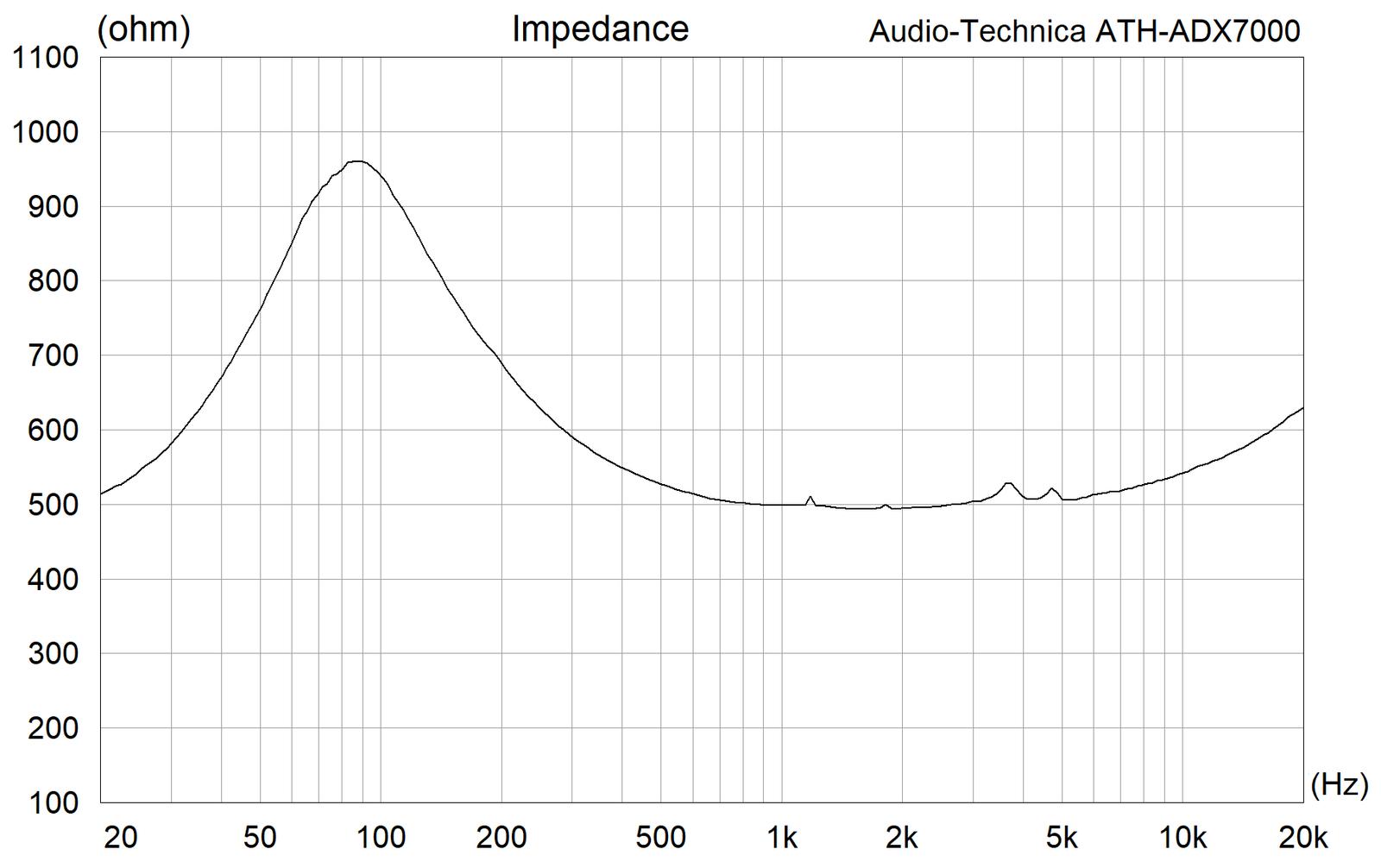
By today's standards, the ADX7000 is quite a rarity due to its high nominal impedance of 490 ohms. There are still some 300-ohm headphones on the market, but above that, it is quiet. Furthermore, my measurements show that the low frequencies of the ADX7000 rise to almost 1000 ohms, so I am quite sure that the smallest mobile devices will not amplify the headphones optimally, even though the drivers developed by Audio-Technica are sensitive at the same time (100 dB/mW).
With a high nominal impedance, the frequency response does not change much, even if the amplifier's output impedance were, for example, 120 ohms. I tested this with the Cayin iHA-6, whose 120-ohm connector boosted the bass by less than one decibel between 30–300 hertz. Initially, the ADX7000 could therefore be a good candidate for listening with various tube amplifiers, but at least with Cayin HA-3A, a problem arose with background noise at the highest impedance settings, which would initially suit the headphones best. Audio-Technica has therefore, in my opinion, made its headphones too sensitive, perhaps trying to please two types of target audiences equally.
To find out about the effect of high impedance on the listening experience, I connected the headphones not only to the HA-3A tube amplifier but also to many different transistor amplifiers. These included, among others, the relatively new Topping DX1 II, JDS Labs Element IV, Gold Note HP10 and Cayin iHA-6. To the delight of owners of more affordable devices, I can state that the Topping, costing just over 100 euros, did not produce a significantly worse result, but the ADX7000 sounded almost as good with it as with amplifiers several tens of times more expensive. To my taste, the iHA-6 produced the best result when I used the 6.35 mm headphone jack offering a 10-ohm output impedance. The DAC used at the time was the Topping Centaurus.
Headphone Measurements
The headphone frequency response measurements were performed with equipment compliant with the IEC711 standard and KB501X model silicone ears. The graphs use the Harman target curve (2018 version), optimized for this equipment, as a reference. This curve is a generalization, based on scientific research, of what kind of frequency response would sound good to most people and correspond to balanced loudspeakers in a well-acoustically treated room.
The Harman research was conducted with silicone ears that ”hear” sound slightly differently than the ear types sold today. For this reason, the target curve used by Kuulokenurkka is based on the diffuse field response according to the KB501X ears” own HRTF transfer function, to which, however, the core findings of the Harman research have been adapted using filters. In practice, the result still corresponds to the ideal frequency balance indicated by the Harman research, but as the equipment used by Kuulokenurkka would ”hear" it based on its characteristic acoustics. Thus, it is possible to make more precise observations of the headphones' frequency response between 2–20 kilohertz than when using the pure Harman 2018 curve as a reference.
More information about the measurement equipment can be found on the Headphone Measurementspage. The ATH-DX7000's frequency response is also comparable with other measured headphones on Squiglink .
Frequency response:
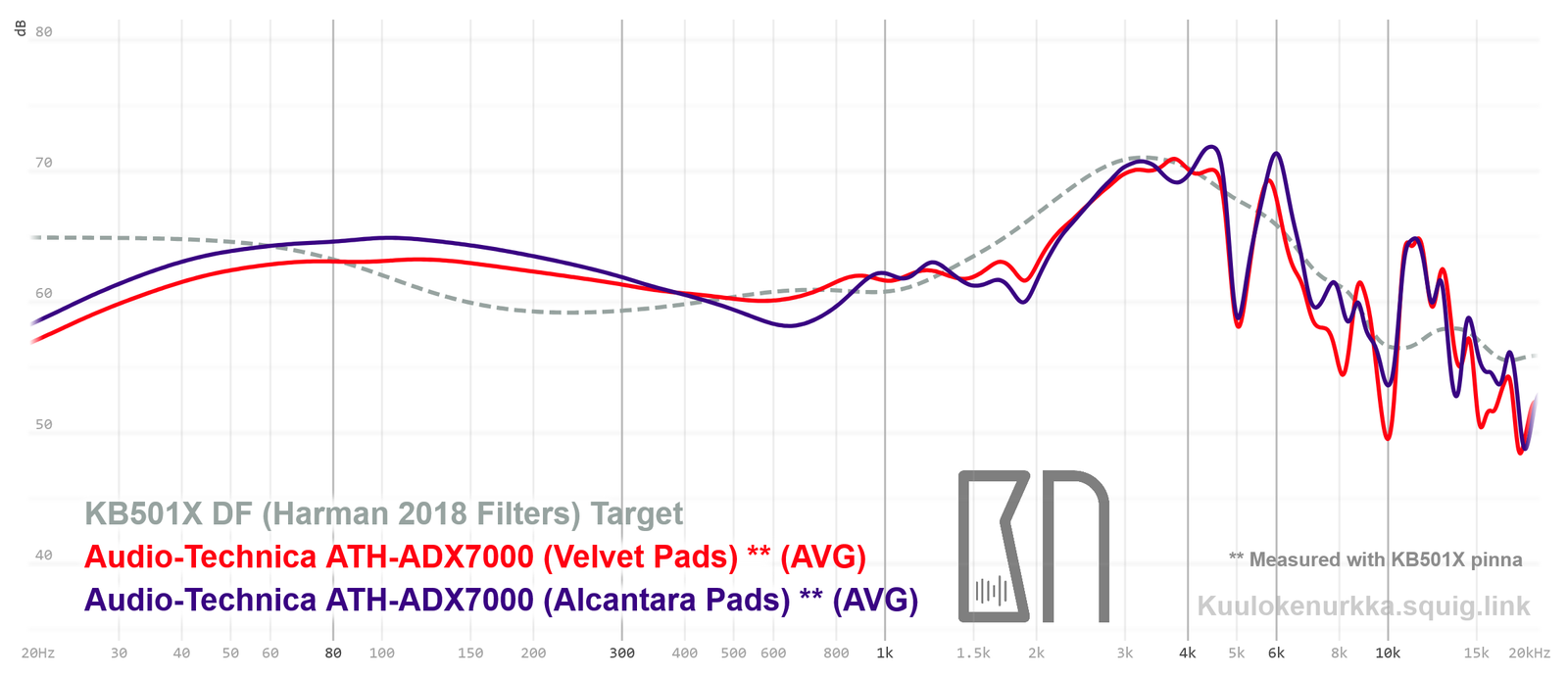
The velvet earpads attached to the headphones by default are the more balanced of the two options, because the Alcantara earpads boost both bass and treble, while simultaneously pushing part of the midrange slightly further back in the overall sound. Regardless of the chosen earpads, the ADX7000's frequency balance is relatively well-tuned, so the listening experience should not, in principle, startle with its peculiarity. Many other high-end headphones are tuned more wildly.
A key characteristic worth mentioning is the quantity of low frequencies, which are more robust than usual. The ADX7000 emphasizes the 100–300 Hz frequency range, which makes the bass sound thick.
Upper midrange frequencies between 1.5–3 kilohertz are reproduced, like with many planar headphones, with a slight softening, while the area around 1 kilohertz is even slightly boosted. Especially with velvet earpads, significant colorations are absent, so the reproduction should be quite natural and present. With Alcantara earpads, the midrange sounds more uneven, as a dip especially between 500–800 hertz is generally not an advantage for sound clarity.
The most unevenness in the ADX7000 still occurs in the treble frequencies, as a narrow dip at 5 kilohertz is followed by a few peaks, which are further amplified with Alcantara earpads. Based on different people's experiences, attention may focus on either the dips or the peaks, depending on how the headphones behave on each person's head. Even just the wearing position somewhat changes the experience between 7–15 kilohertz. However, this is not exceptional in any way, as at the highest frequencies, differences between people can be as large as 20 decibels, regardless of the headphone model. Therefore, I remind you that my own measurements or personal observations cannot fully correspond to how someone else might experience the ADX7000. This is, of course, frustrating, but at the same time, it is also part of the hobby's charm.
Sound observations
Tested mainly with the Gold Note HP-10 amplifier with its separate power supply and the Cayin iHA-6 (10 ohm connector). Topping Centaurus served as the DAC for both.
The ATH-ADX7000, in terms of its appearance and knowing Audio-Technica's history, leads one to expect something different from what it ultimately offers. The sound is not bright and absolutely precise hi-fi in style, but a surprisingly robust and dynamics-emphasizing pleasure. The ADX7000 enlivens the rhythm of the music and subtly emphasizes the most exciting features. There is indeed plenty of energy and light detail in the high frequencies, but robust low frequencies simultaneously ensure the pleasantness of the reproduction. Power and seemingly effortless sensitivity thus successfully meet, in my opinion.
When sticking with the velvet earpads, the presentation is sufficiently balanced for all kinds of use cases, so I personally prefer these earpads. With Alcantara earpads, the headphones, in turn, become quite consumer-like, with a stronger thumping bass and more splashy treble. As the presence of the midrange diminishes, the soundstage also expands slightly, which some will surely find an advantage compared to the velvet earpads. The boomy upper bass, however, often starts to slightly disturb the clarity of the reproduction, so critically evaluated, the disadvantages outweigh the benefits. The two different presentation styles achievable by changing earpads are in any case a nice bonus, which adds variety to the listening experience.
Bass: Thanks to a more abundant bass than average, the ADX7000 differs from many other open-back headphones, which usually sound somewhat light, especially to those accustomed to reproduction according to the Harman curve. Close counterparts to Audio-Technica's tuned full-bodied and upper-bass-emphasized presentation are, for example, ZMF Atrium or Meze Audio's Empyrean series (e.g. Empyrean 2). The ADX7000's bass feels big and thick, so it nicely adds punch and rhythm to the reproduction. The earpad choice further affects the situation as follows:
- With velvet earpads the bass is more controlled and tighter. Drum hits and bass lines are reproduced with dynamic precision, and the punch gains good followability.
- With Alcantara earpads the bass takes a step in a fuller direction, but at the same time begins to radiate lingering warmth around it. This causes a slight boominess, and occasionally, for example, the bass guitar becomes a bit muddy. However, the increased robustness, at its best, is more exciting compared to the velvet earpads.
Midrange: In the midrange, the earpads likewise present the enthusiast with a choice. Velvet earpads have the upper hand in naturalness and neutrality. With them, the sound is energetic and clear. Vocal performances are reproduced with presence, and instruments have just the right amount of bite for my taste. I do not detect any disturbing characteristics.
Alcantara earpads, in turn, shift the midrange slightly further away, making the presentation more veiled, but at the same time more spacious from the soundstage's perspective. Sometimes the softened style works excellently, but often I find myself wishing for a bit more energy in the midrange, so it doesn't start to be overshadowed by the robust, booming bass. On the other hand, the bass and treble emphasis works well at low volumes. However, since the midrange is an important part of audio reproduction for me, I primarily prefer velvet earpads.
Treble: In terms of sound quality, the ADX7000's biggest areas for improvement are in the high frequencies, which are a bit uneven with both earpad options. The brain does smooth out the peaks and dips into an easily digestible whole, but sometimes the emphasis of certain sounds varies depending on where they fall on the frequency scale.
With velvet earpads, I more easily notice the dips in the frequency response, which make detecting some details more difficult than usual. On the other hand, listening is simultaneously effortless and safe in terms of sharpness. With Alcantara earpads, the sound, in turn, splashes louder, which, however, is generally smoothed out by the robust bass. With velvet earpads, I would describe the treble as light and airy, whereas with Alcantara earpads, it sounds sharper and livelier. Sibilance, in my case, has not been an issue with either earpad model, nor do I otherwise find the treble disturbing compared to how some others have described it. I might be lucky with the anatomy of my ears, or perhaps the listening equipment also slightly influences the matter.
Subjectively, the ADX7000's greatest magic lies in its ability to sound detailed and exciting in its energy, yet relaxed at the same time. Although listening is easy and familiar, the headphones keep the mind alert with their own subtle emphases. In this price range, a completely neutral headphone might feel like a somewhat boring solution, so Audio-Technica has, in my opinion, added just the right amount of its own spices.
The designers of the ADX7000 may have peeked into Focal's textbook a bit. The presentation somewhat resembles Focal Utopia in how it emphasizes the precision of sound beginnings and the intensity of impacts. While the Utopia is even more energetic in its midrange and, for me, more stunning in its soundstage depth, Audio-Technica responds with a more robust bass, airier treble, and a slightly more natural tonal balance. The ADX7000's soundstage doesn't actually feel particularly large, but based on my recollections, the experience is nevertheless more open and spacious compared to the Utopia. It would have been nice to compare these two headphone models, as I wouldn't be able to choose my favorite offhand. Instead, I can compare the ADX7000 to another expensive dynamic headphone model.
Comparison: ATH-ADX7000 vs. ZMF Atrium
Prices: 3660 € vs. 3000 €
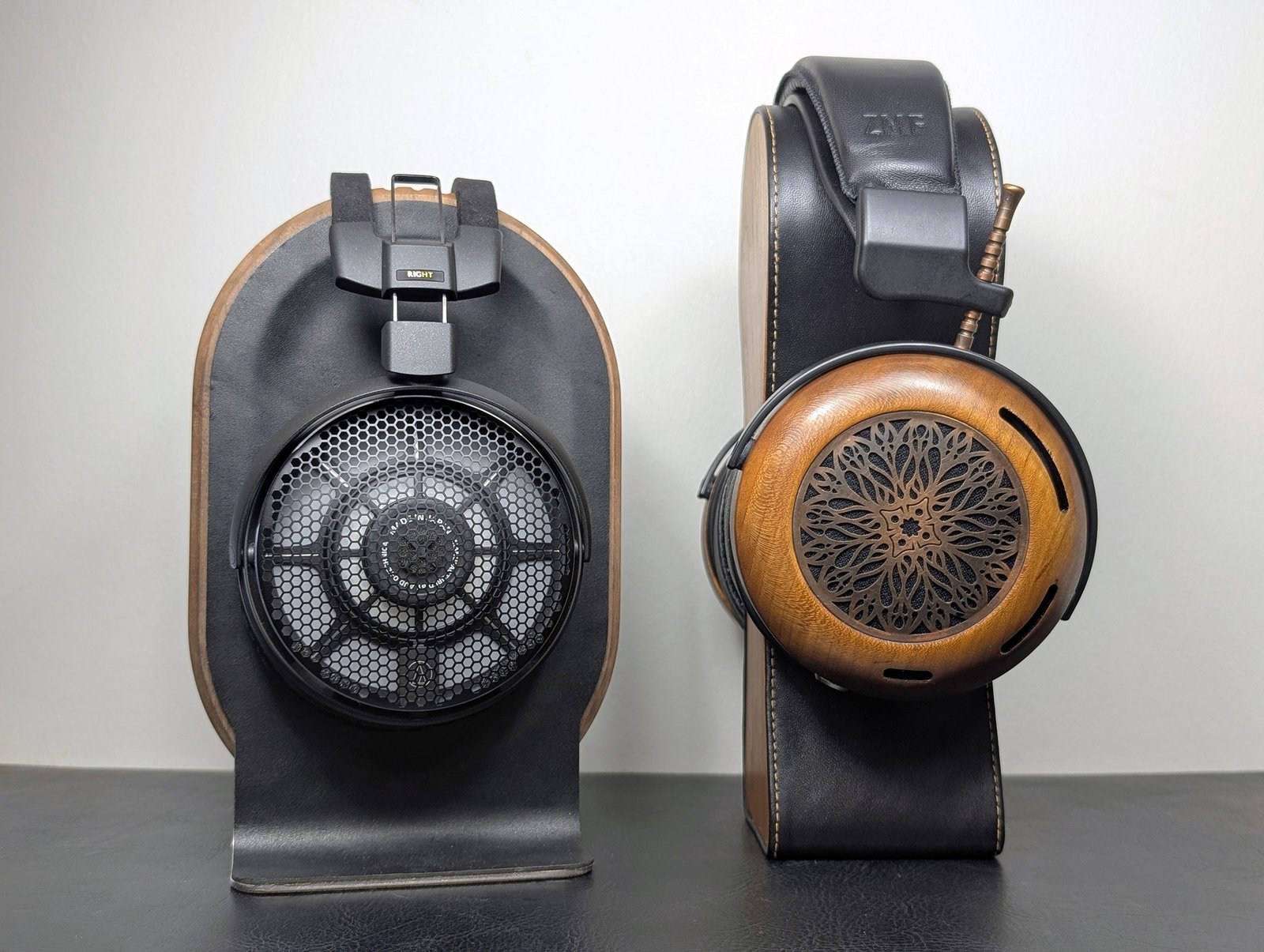
Dynamic drivers are currently a rarity in expensive flagship headphones, as in addition to the ATH-ADX7000, this group includes open-back headphones Focal Utopia (latest model 5000 €) and ZMF Atrium (3000 €) as well as Spirit Torino's products, such as the ultra-expensive Valkyria (12 000 €). ZMF Verite Open and Ultrasone Edition 15, instead, are mainly available used. Compared to these mentioned headphone models, the Sennheiser HD 800 S now feels almost cheap at a price of 1600 euros, even though I still consider it a kind of flagship model. Let's focus, however, from now on on the ZMF Atrium, which in my opinion could be an alternative to the ADX7000 both in terms of its price and sound quality.
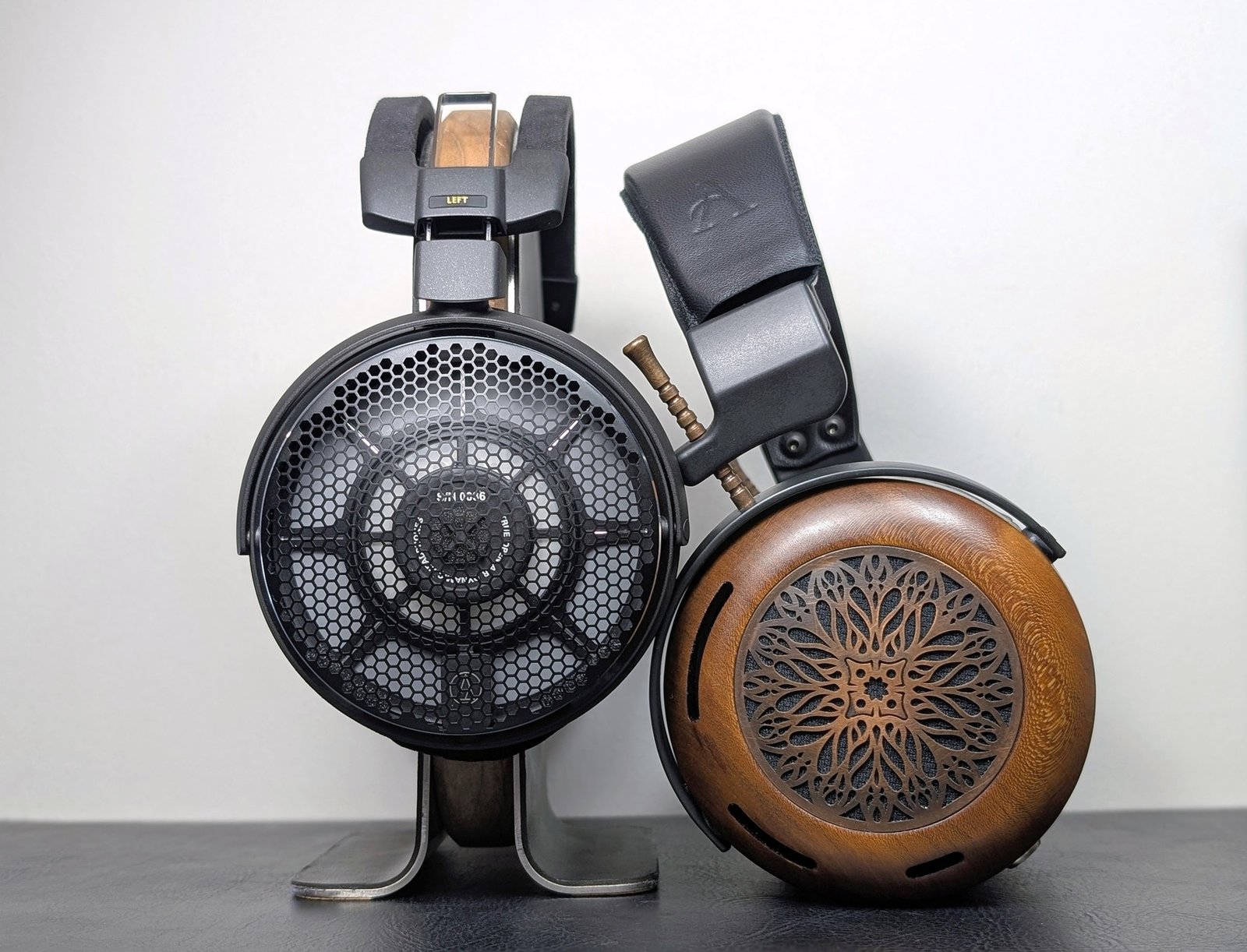
As the most obvious difference, ZMF's headphones weigh twice as much due to their wooden cups and heavier components, which makes the ADX7000 feel light as a feather. Although the Atrium feels comfortable in its own way, Audio-Technica's lightness is definitely an advantage. Aesthetically, the situation is pretty much 50:50, because for lovers of wood and craftsmanship, ZMF offers delicious combinations, while Audio-Technica relies on modern industrial design. I have heard that some downright hate ZMF's headphones precisely because of their appearance, so perhaps the more subdued and modern ADX7000 would appeal to them.
Apart from size and appearance, the duo offers similar advantages, such as the possibility of attaching different ear pads. ZMF's pads would actually fit on the ADX7000 thanks to a similar attachment method. In addition, the Atrium's impedance is similarly high, although 300 ohms is still quite a bit behind the ADX7000's 500–1000 ohms. In any case, both sound good to me with similar amplifiers, because they have even been tuned to some extent similarly.
Frequency responses:
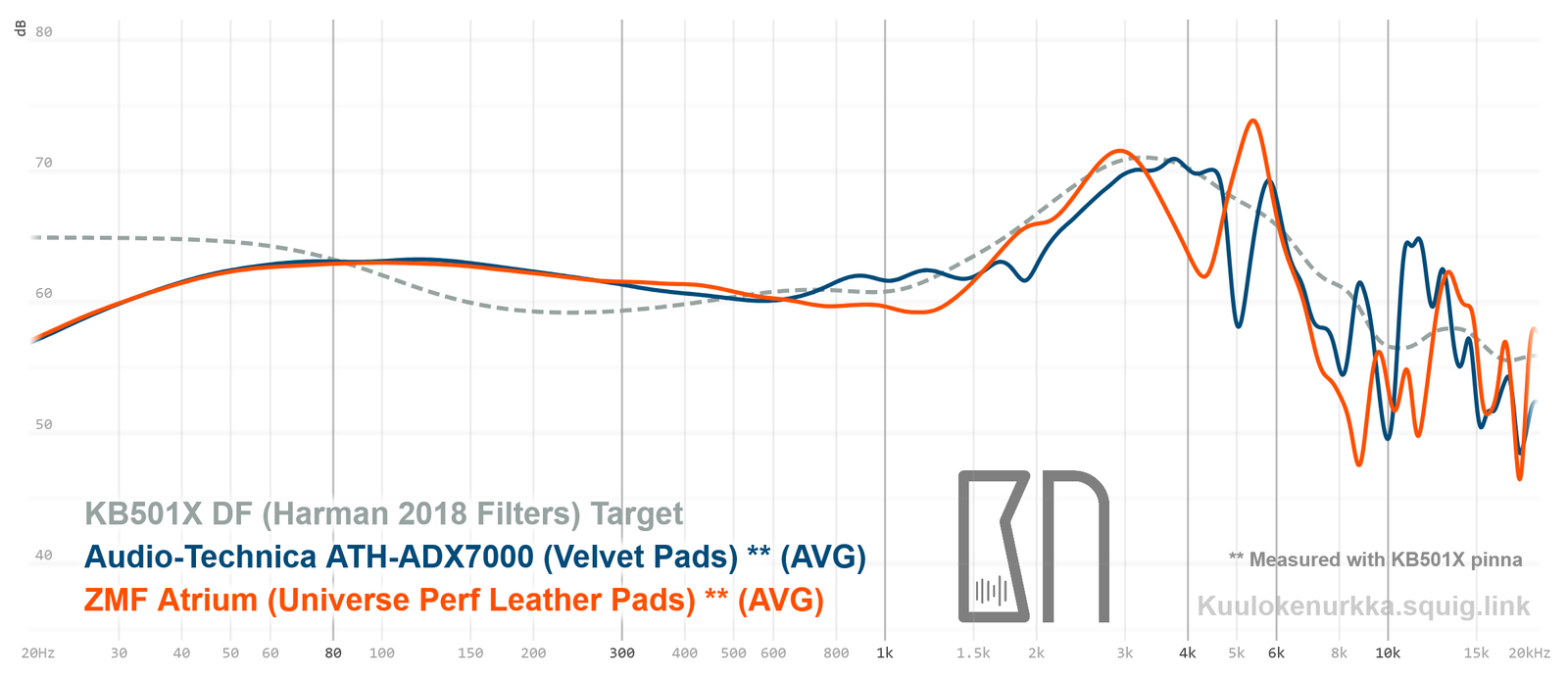
Both headphones reproduce the low frequencies almost identically in quantity when the so-called stock pads are in use. Thanks to the added robustness, the duo is excellently suited for music that would by default sound a bit light or thin. There is, however, a small difference in character: the ADX7000's bass kicks a bit tighter, while the Atrium generally sounds thicker and fuller because its high frequencies are reproduced more calmly. Although neither bass necessarily reproduces optimally from the perspective of sound clarity, the overall presentation is built to be functional precisely around such robust low frequencies.
With a similar bass, the biggest differences are observed in the upper frequencies. The ADX7000's extra energy around 1 and 4 kilohertz and otherwise brighter treble make it somewhat fresher and more neutral-sounding – as if happier. The Atrium, on the other hand, sounds more relaxed, softer, and darker by directing attention more strongly to the low frequencies. There is a certain drama in the presentation. I generally find a warm and mid-range-focused sound really pleasant, especially when even in terms of reproduction clarity, not too much of a step back is taken compared to Audio-Technica.
However, if one wants to hear the details of the music more distinctly, the ADX7000 has clear advantages in a comparative situation. Instruments have more edge, and the treble sounds airier and less rounded. The reproduction is overall sharper and thus a bit more exciting. I don't know if I would call the ADX7000 the more dynamic of the two, but it feels as if faster and more explosive in its movements, thus somewhat resembling Focal's headphones. The Atrium, on the other hand, feels like a kind of high-end version of the Sennheiser HD 650. Both styles will surely find their own fans. As a common feature, both headphones have such pleasant low frequencies and unfatiguing high frequencies that it is pleasant to listen to almost any music with them.
One interesting difference between the two headphones can be found in their soundstage. The Atrium’s presentation feels surprisingly intimate and layered. I think I put it in my own notes back then by saying that I can almost reach out and grab individual sounds. A certain kind of darkness admittedly makes the headphones sound slightly closed-in, but at the same time, interestingly intimate: I focus very precisely on what I’m listening to, even though the experience is relaxed at the same time. The Atrium draws attention to the different layers of the sound, perhaps because it feels like there is more time to observe, as the headphones present many details in a slightly more calmed-down and less forward manner.
The ADX7000's soundstage lacks this kind of "ZMF magic," but as a counterweight, it is clearly more open and airy. Details stand out from the whole with sharper definition, and in the traditional sense, I perceive its soundstage as larger. Either one can actually be better than the other in turn, depending on the music being listened to and your state of mind. Sometimes the Atrium’s soundstage is clearly more interesting and engaging, while at other times the ADX7000 sounds more cohesive and realistic due to its less dark tuning. Generally, the Atrium relaxes with its sort of honeyed character, immersing me into its own world, whereas the ADX7000 sounds even a bit more clearly like a flagship headphone, extracting subtle nuances from the music with greater precision.
In the end, however, the duo does not differ immensely from each other, as they could be made to swap styles just by using different earpads. With Alcantara pads, the ADX7000 would become thicker and fuller-sounding than the Atrium. Correspondingly, ZMF’s pad selection is massive, so with a monster of a name like "Caldera Suede Ultra Perforated," for example, the Atrium could be made to sound more energetic and brighter compared to its stock pads—even more neutral than the ADX7000. So, the baseline situation I've described doesn't have to be permanent. Of course, both headphone models could also be equalized one way or the other, but with products this expensive, I wouldn't make that the goal. Since it is precisely the Atrium that I like in ZMF’s lineup, it is easy for me to like the ADX7000 as well. Both are excellent, albeit wallet-straining, high-end headphones.
Summary
Audio-Technica ATH-ADX7000 is quite a refreshing case in the realm of high-end headphones, acting as a counterforce to many planar headphones, which competitors alternately price sky-high, with its dynamic drivers. Planars also weigh considerably more, whereas the ADX7000 is one of the lightest headphones on the market. On my own head, it feels really comfortable, even though at the same time I dislike the manufacturer's stiff and microphonic cables. Likewise, structural side noises slightly weaken the premium feel, but the materials are generally high-quality and the matter is in order in that regard.
The designers deserve special praise for not taking the tuning to a radical or strange extreme; instead, the ADX7000 works perfectly well as an all-rounder, or with its alternative earpads, satisfies the hunger for a thicker, fuller sound. When dynamic punch successfully meets effortless detail retrieval, I can't help but like what I'm hearing. Consequently, I view the ADX7000 as a highly competitive alternative to other headphone models in its price bracket. For instance, the latest Focal Utopia is annoyingly expensive at 5,000 euros, making the ADX7000 feel like a much more sensible choice.
Nowadays, I don't really know what to say anymore about whether expensive headphones are in any way worth their price tag in terms of sound quality. However, if the sound quality just clicks and I consider a product successful, I can't say that the high price wouldn't be justified. Perhaps manufacturers dedicate more development hours to engineering their flagship products, ensuring that the preferences of a specific target audience are better catered to. If someone cannot find an equally pleasing sound or user experience for less money, they could own a headphone like the ADX7000 with absolute satisfaction.
Generally, I only elevate headphones to the Kuulokenurkka Wall of Fame if I feel they are versatile enough from the perspective of a wider audience. The ADX7000 fits the bill as this kind of headphone, so it joins prestigious company. I highly recommend giving these headphones a listen if you ever get the chance. As for special mentions, the lightweight build, comfort, and sound quality are definite pluses. Critically speaking, however, structural microphonics/noises and poor cables prevent any further accolades, even though the high-quality materials are a plus. Overall, Audio-Technica has done an excellent job, and the ADX7000 will surely put them back on the map for enthusiasts as a top-tier headphone manufacturer.
Pros and cons:
+ The sound pleasantly combines dynamic power and delicate detail
+ Two pairs of earpads offer two different sound profiles
+ Light weight realized with quality materials
+ Good user comfort and a secure fit
+ Easy to drive despite high impedance
+ Comprehensive features
+/- Not among the most expensive as a top-tier headphone, even though it still costs a lot
+/- The headphones are well suited for tube amplifiers due to their high impedance, but background noise may occur due to high sensitivity
– The treble could be reproduced a little more evenly
– Why isn't the headband padded?
– Structural noises
– Impractical and microphonic cables
– Brand-specific A2DC connectors
 EN
EN  FI
FI