Author: Sword of Damocles
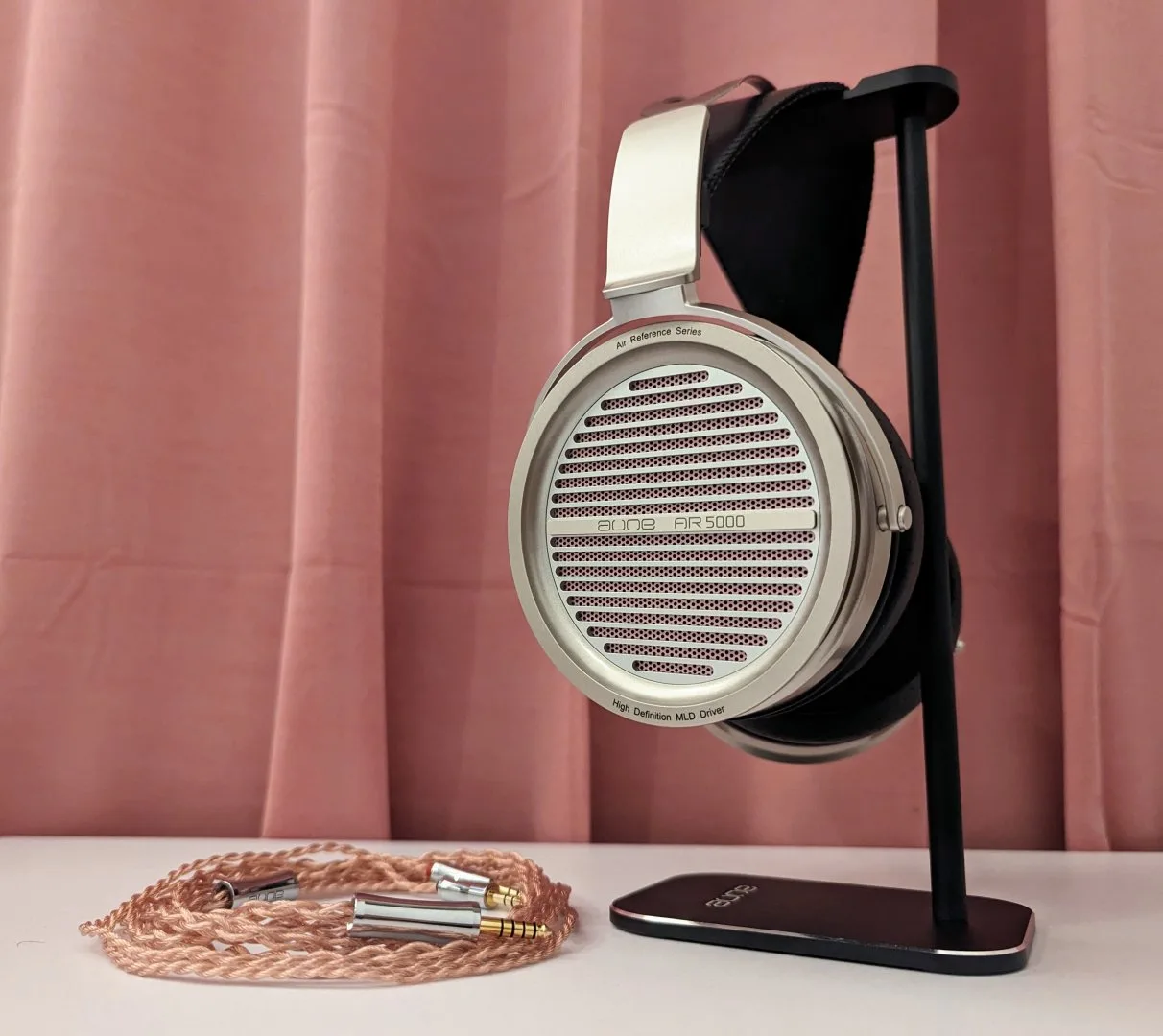
Table of Contents:
Information:
- Release year: 2023
- Country of Origin: China
- Price: 299 €
- Type: open, over-ear
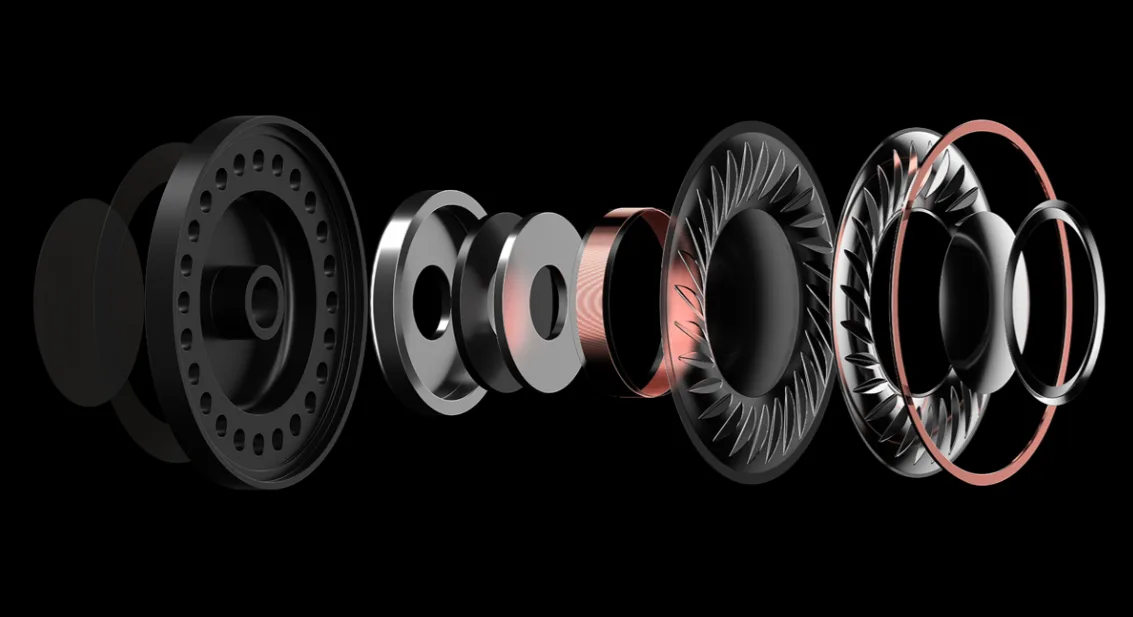
- 50 mm dynamic MLD drivers (Multi-Layer Distributed) with a steep tilt
- Impedance: 28 Ohm
- Sensitivity: 108 dB SPL @ 1 Vrms
- Weight: 350 g
- Connector type: 2 x 3.5 mm
- Cable: length 1.6 m / connector 3.5 mm
- Accessories: 6.35 mm adapter and quick guide
Review sample: Provided by the manufacturer
Aune Audio, primarily known as a device manufacturer, released its first over-ear headphones in the latter half of 2023, which are based entirely on their own design. AR5000The open model, named (AR = Air Reference), is priced at 300 euros, placing it in a highly competitive but attractive price range. What makes the headphone model particularly interesting is its appearance, which deviates from the norm, and the drivers strongly tilted towards the ear.
Since the pricing of the AR5000 can be considered reasonable compared to many other new products and experiences with the headphones have been generally positive, I wanted to try them myself. This was possible after the manufacturer sent their headphones for review as a continuation of my previous article S17 Pro about the headphone amplifier. Kuulokenurkka thanks for the cooperation again!
Same review can be found in English on Head-FI
Packaging and accessories
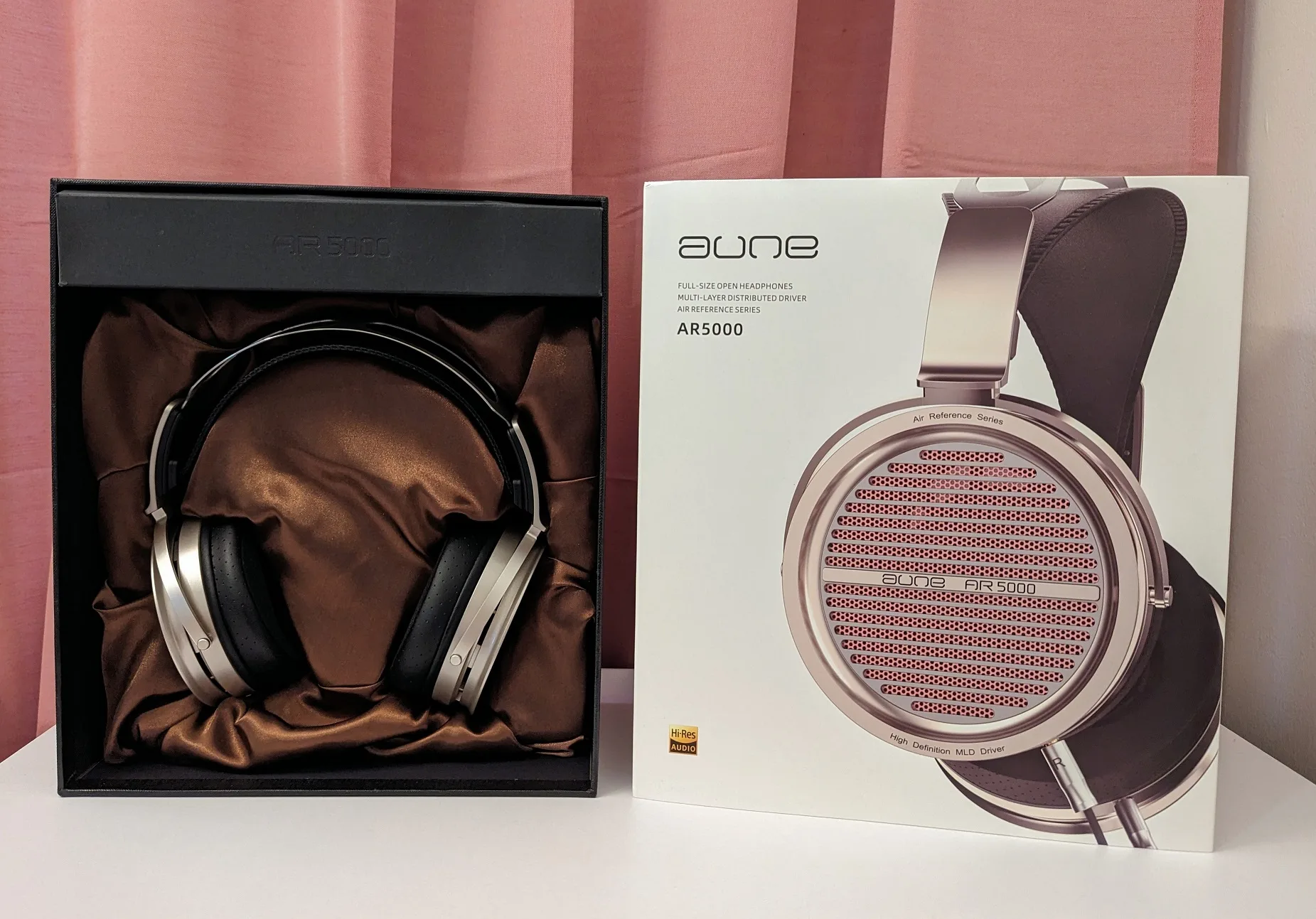
The AR5000 is packed in a large cardboard box, whose neat appearance would certainly catch my attention, for example, on a store shelf. The presentation of the headphones is also very stylish thanks to the box's velvet-style interior. The accessories, however, remain rather limited, because in addition to the cable, only a 6.35 millimeter adapter and a single-page user manual printed on thick cardboard have been included. Of course, using the headphones doesn't require anything else, but for example, FiiO offers a similarly priced FT3with its model a distinguishing amount of accessories.
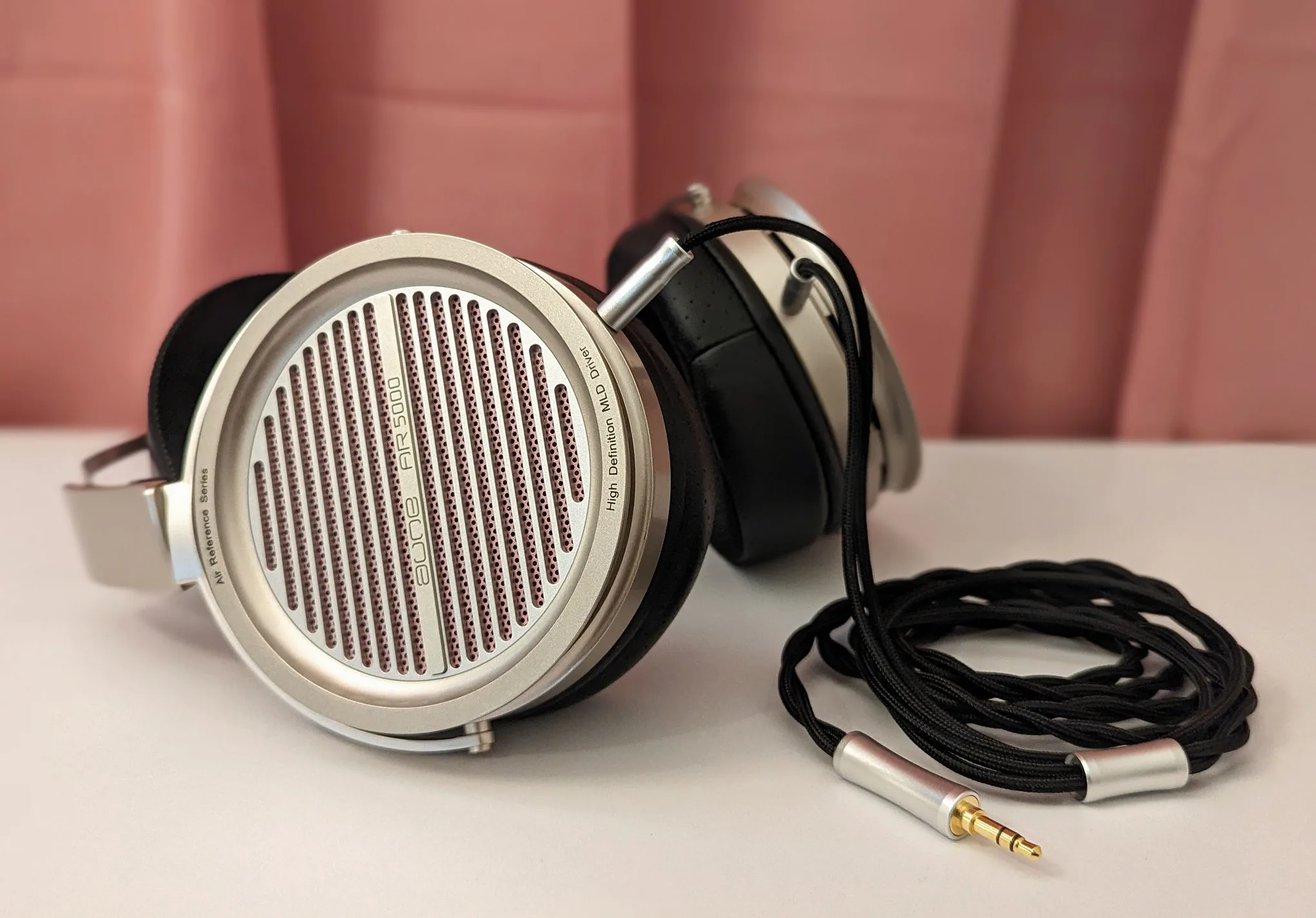
With the AR5000's braided and black fabric-sleeved cable, more emphasis has been placed on good usability than on fine appearance, even though the silver connectors match the headphone body perfectly. The cable is light and pleasantly flexible, and its durability should not be a problem, as the connections seem strong and the casings of the parts are made of metal. The cable is about 1.6 meters long, and it connects to both the earcups and the amplifier with a traditional 3.5 millimeter connector.
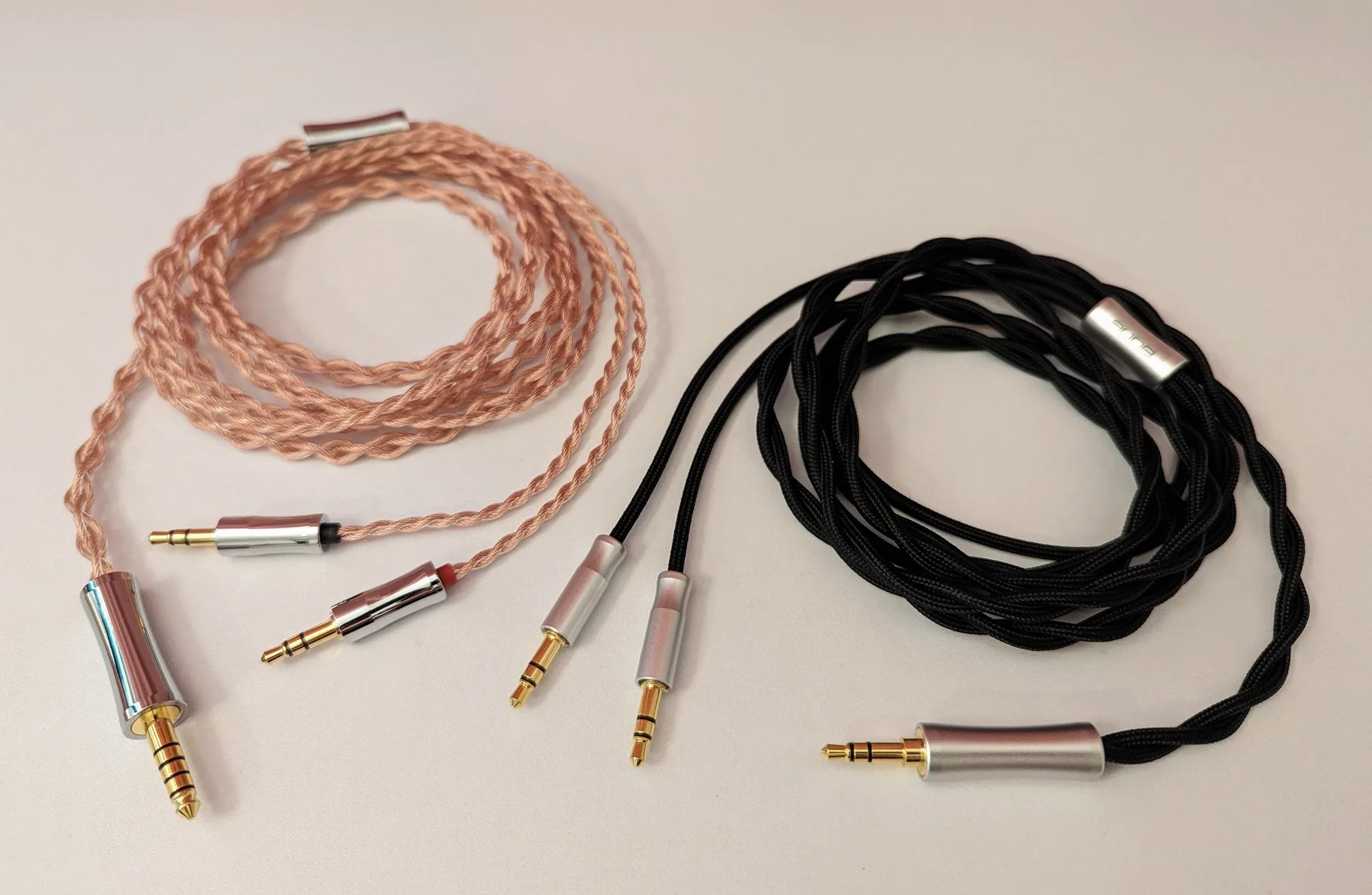
Aune also sells a balanced copper cable (AR3) for a reasonable price of 59 euros (45 € when purchased with the headphones), which I received for testing. The copper wire of this 4.4 millimeter connector cable is flexible like the standard cable, but due to the stickier plastic insulation, it tangles a bit more easily. On the other hand, when rubbing against clothes, the cable's material is less microphonic than rough fabric (though not a major problem with the standard cable either). I also find the shiny metal connectors nice, even though they are a bit difficult to grip due to their slippery surface. All in all, the copper cable further enhances the AR5000's impression of quality, but does not offer unambiguous improvements to the headphones' usability. In my opinion, the standard cable is perfectly sufficient, unless there is a need for a balanced connection.
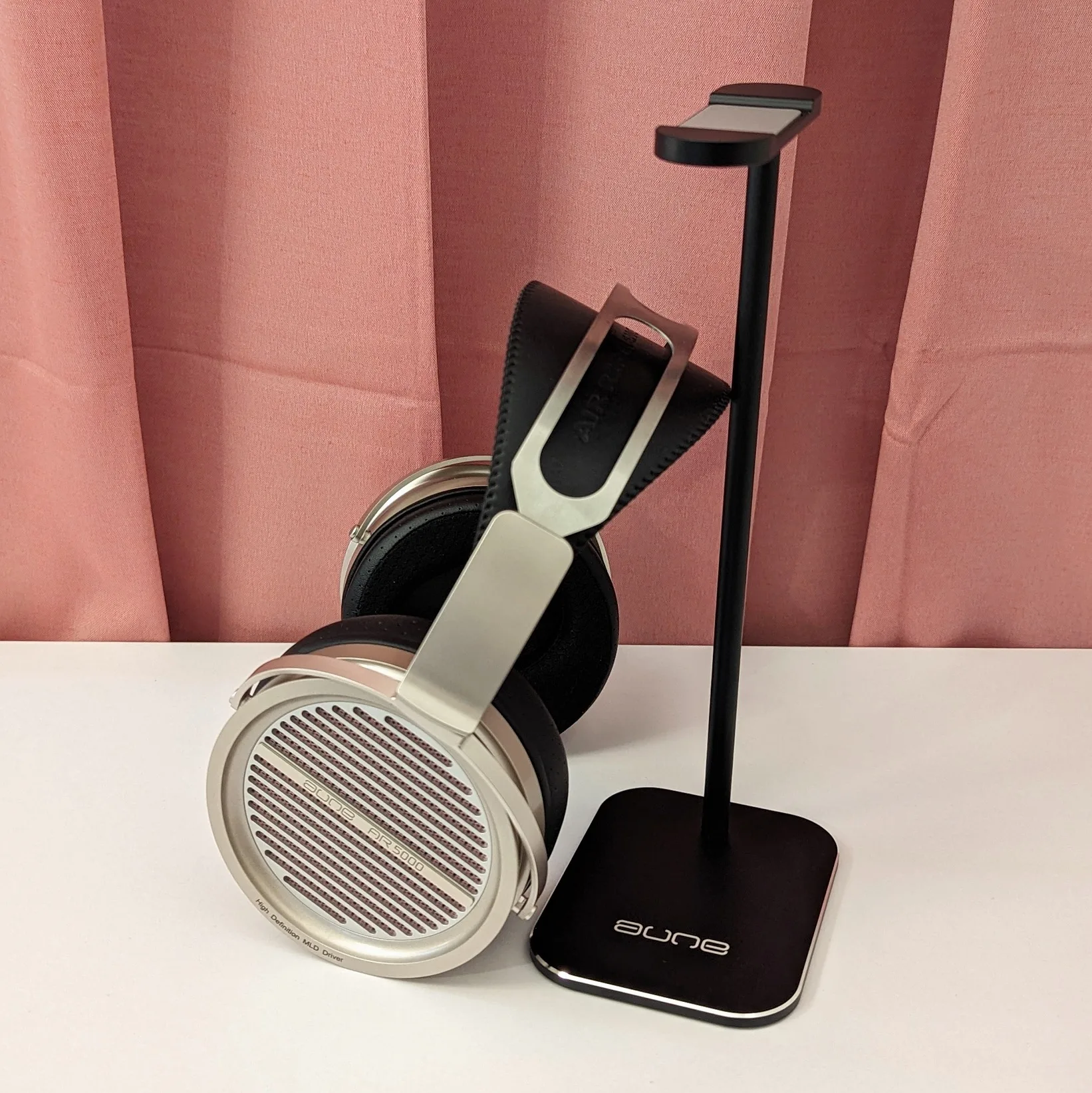
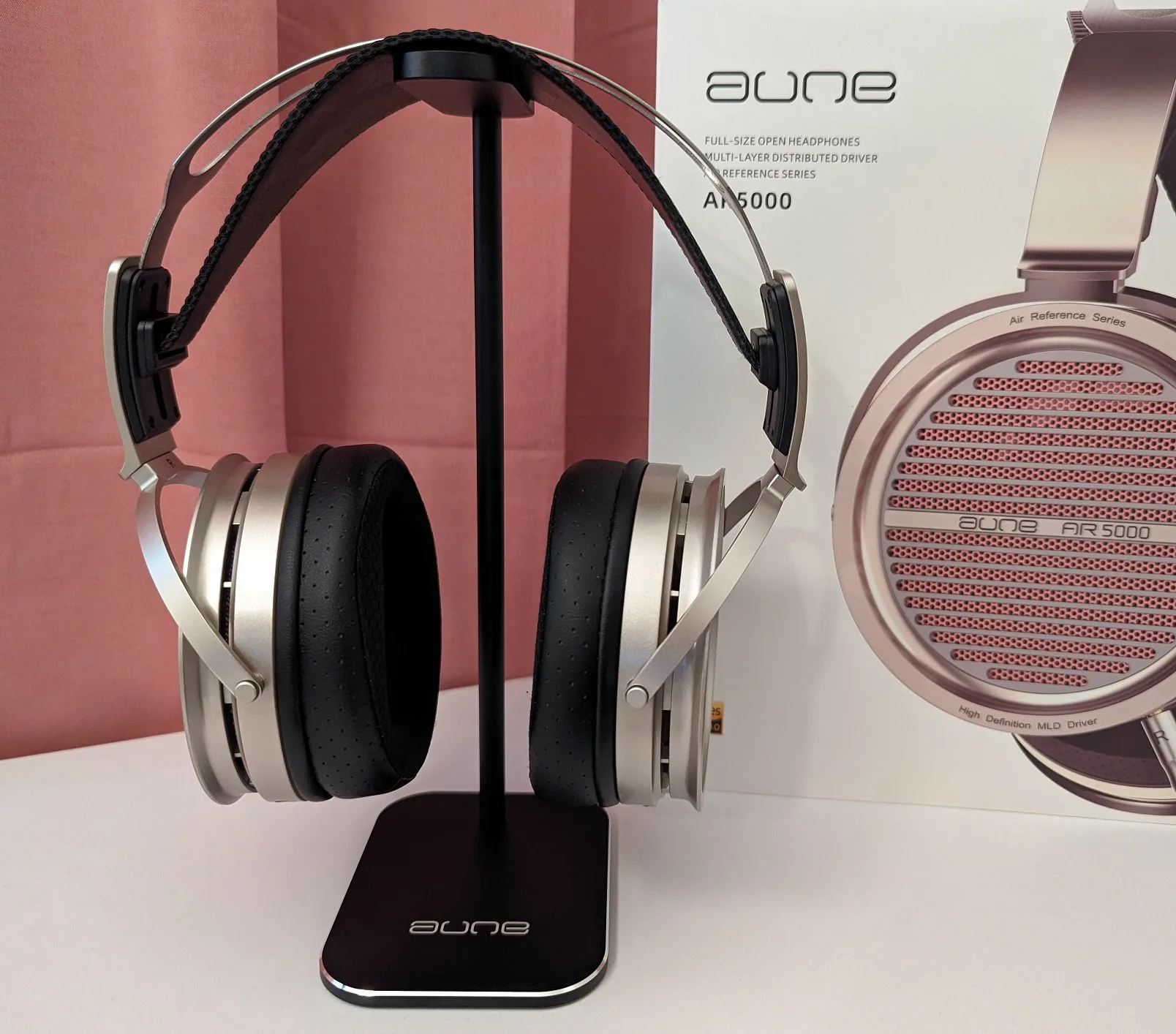
As other accessories for the AR5000, it would be possible to choose an aluminum headphone stand at the time of purchase for an additional price of 15 euros (when bought separately, 30 €). I also got one of these to try out, finding it sturdy and handy with small headphones. Also, for example, ZMF Bokeh fits the stand perfectly. The AR5000's headband cushion, however, is quite wide, so it doesn't quite surprisingly sit optimally on the stand. If someone, however, wants to assemble the most comprehensive headphone set possible from Aune's selection, the stand offers that possibility alongside amplifiers and D/A converters.
Build and comfort
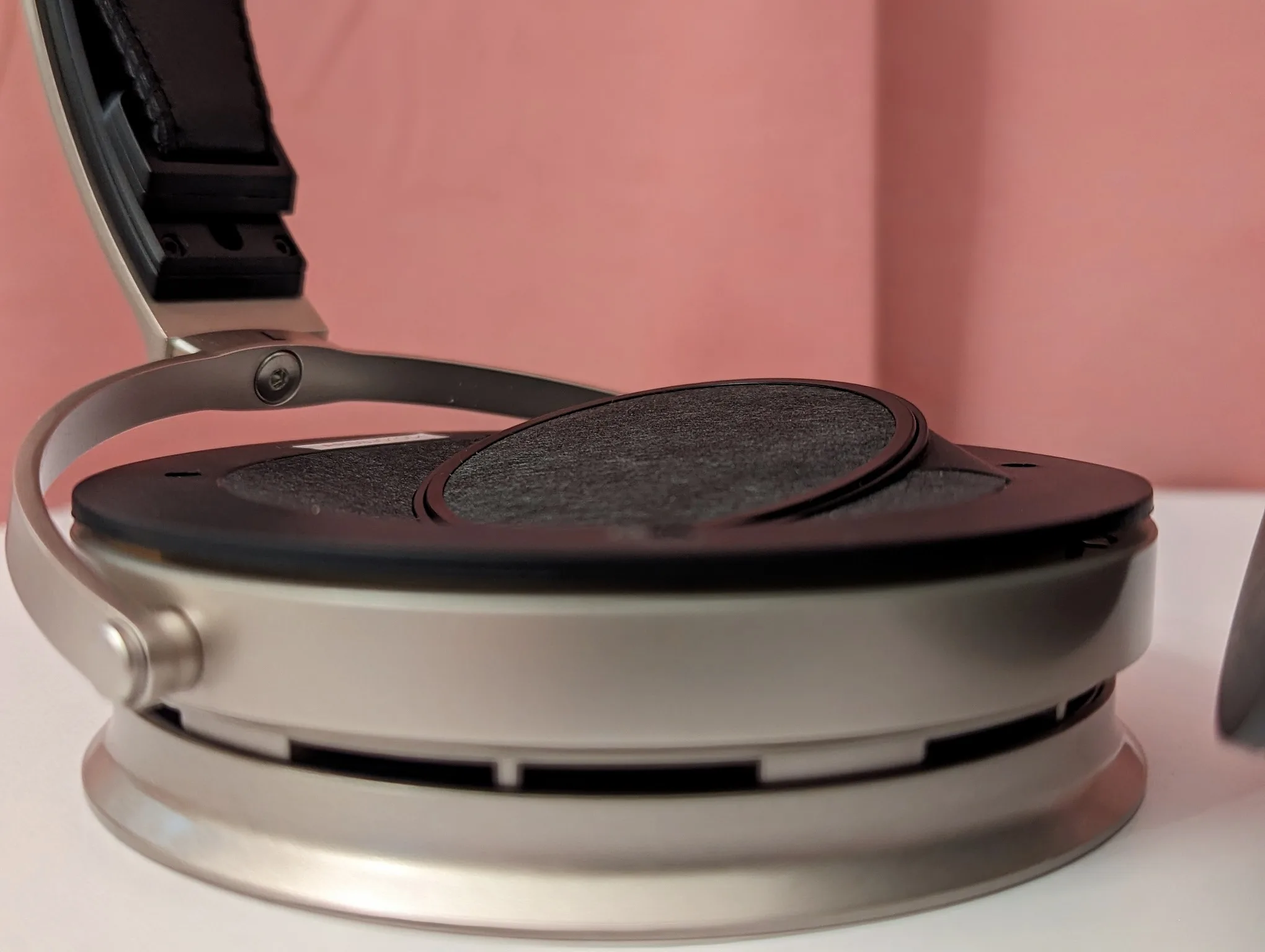
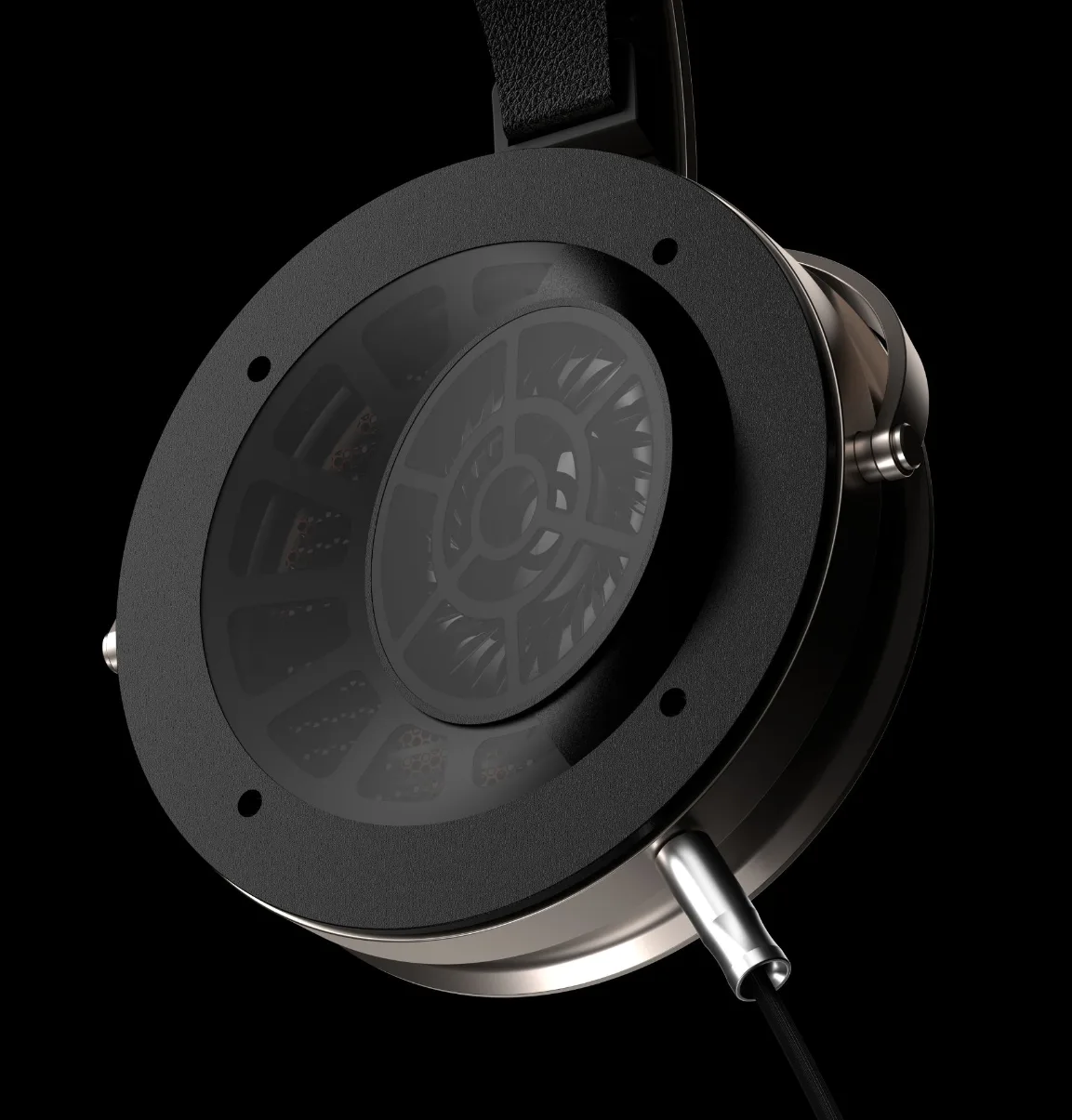
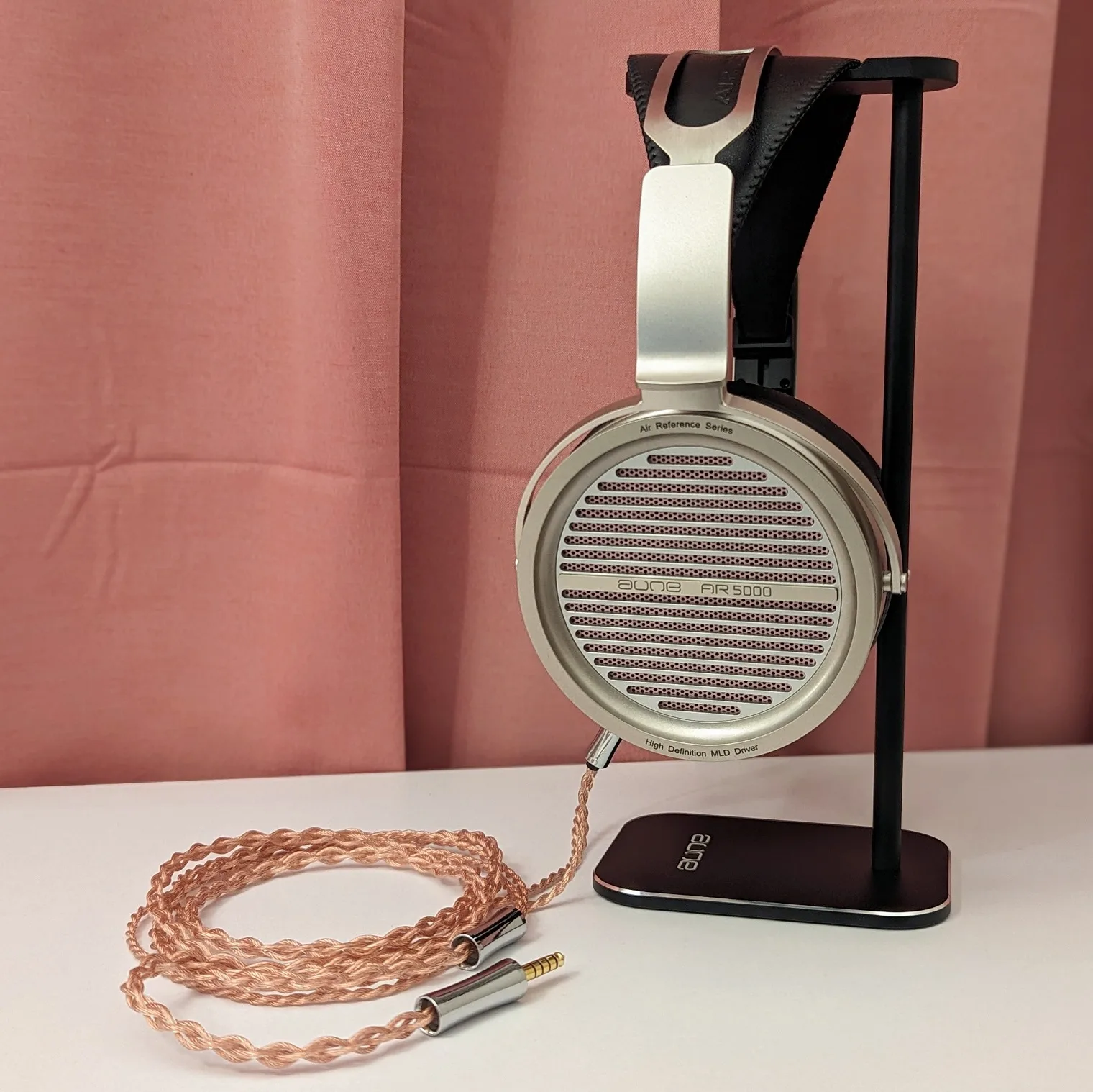
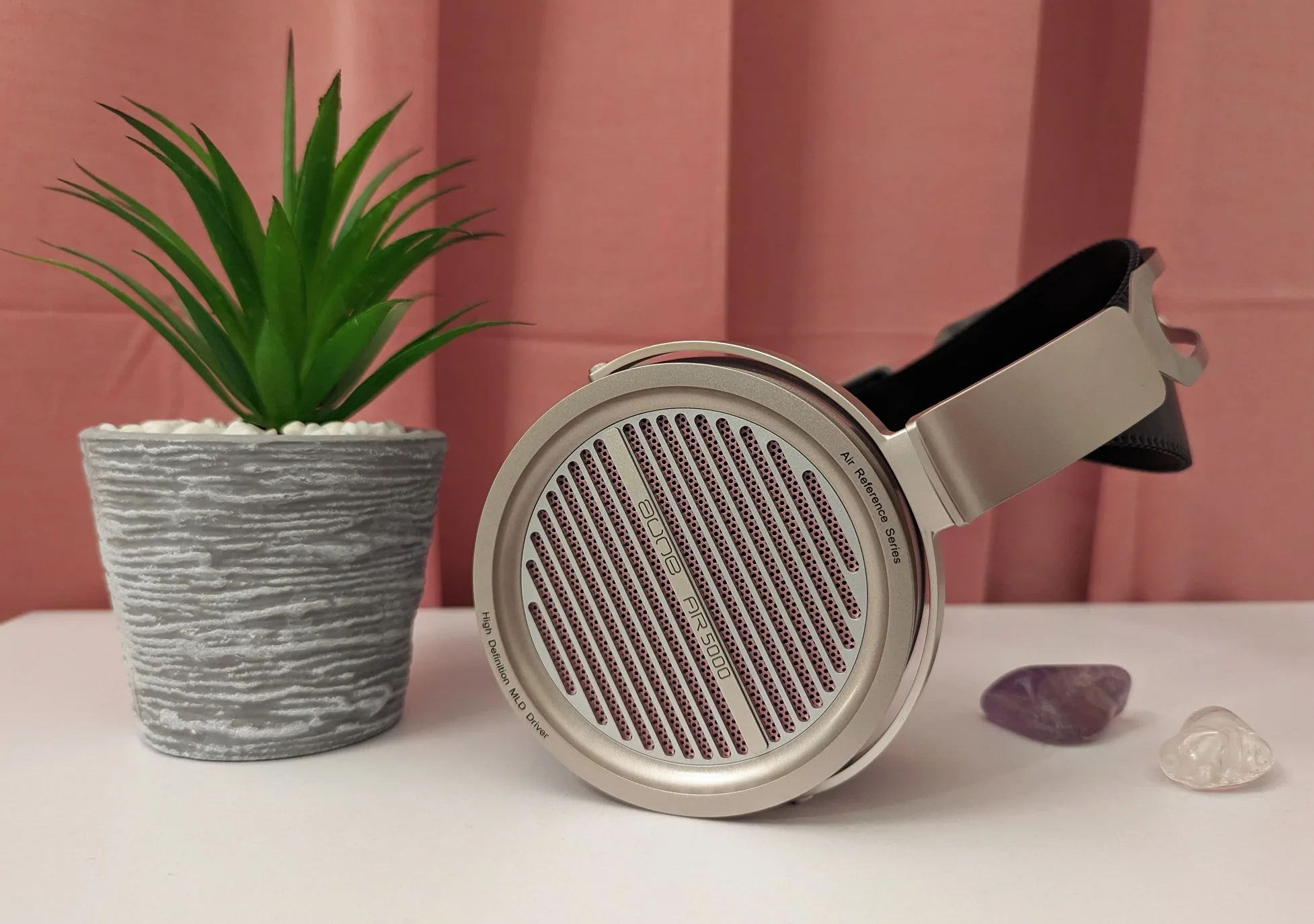
The manufacturer's own touch is visible in the AR5000, as the headphones do not resemble competitors' products much in appearance, but dare to be different. I find the silver coloring fresh and elegant, and the pink mesh peeking from under the cups' grille doesn't look bad in the end, even if it might not be everyone's favorite color. One would not believe the headphones to be the manufacturer's first over-ear model in terms of other design aspects either, because the implementation is almost perfect from both usability and comfort perspectives. I only miss the fact that the cups could be turned completely horizontally to make it easier to place the headphones on a table.
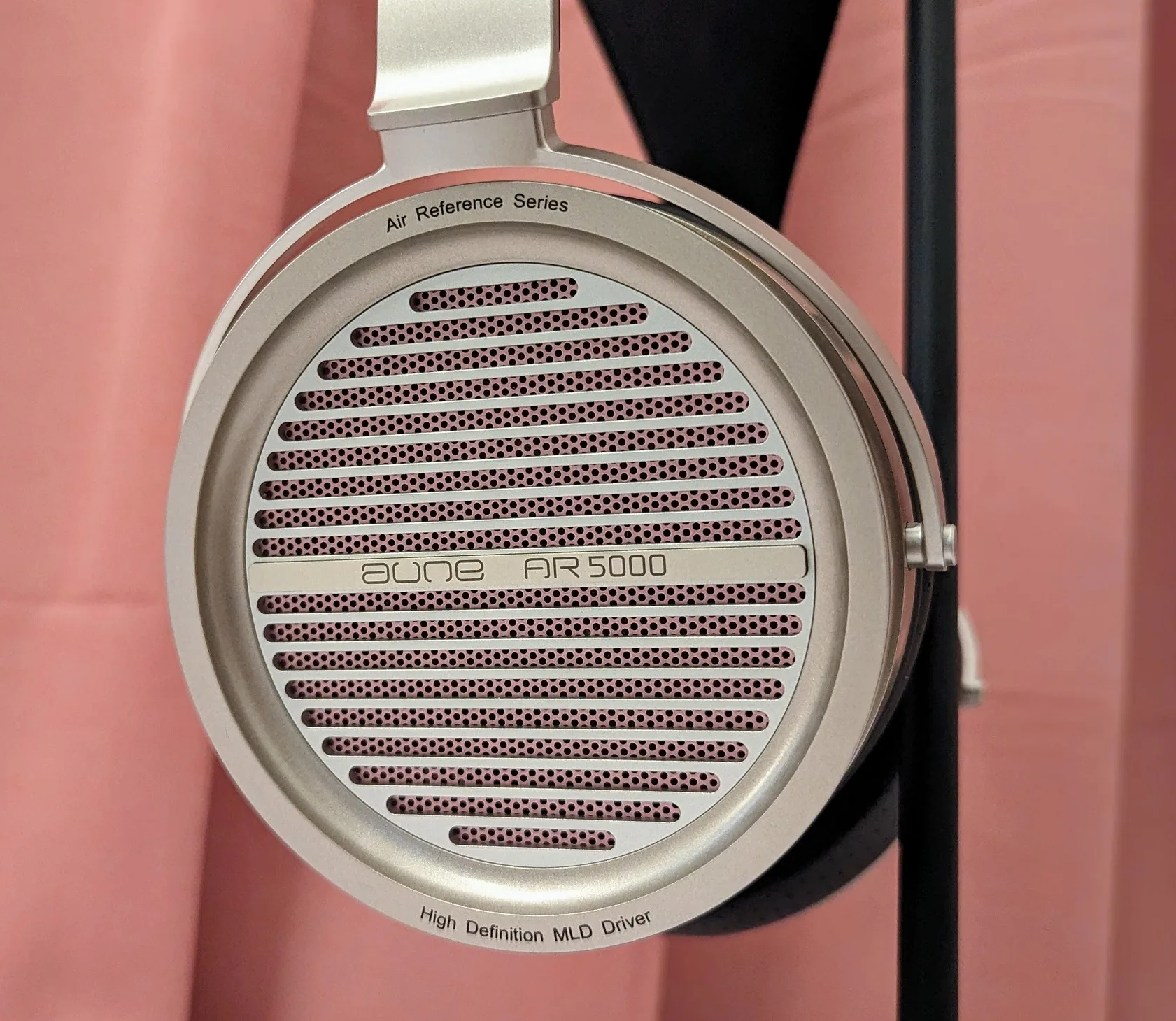
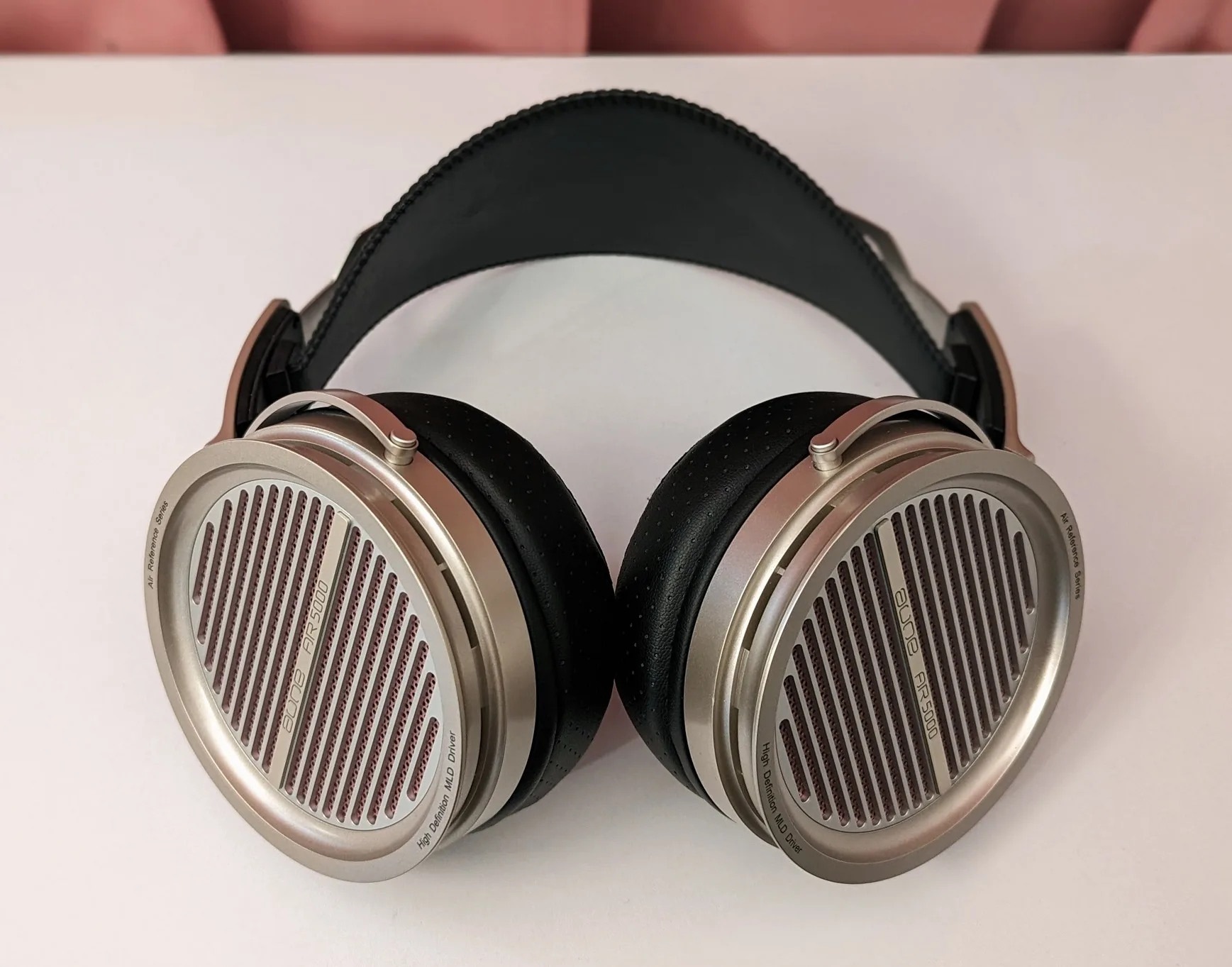
The AR5000 weighs a moderate 350 grams, of which a surprisingly large part consists of the drivers and their frames. Otherwise, the structure has been kept light by making the cups and the edge parts of the headband from plastic. This is not necessarily clearly evident from the photographs, and one might mistakenly consider the headphones to be entirely metallic due to their high-quality paint finish. Fortunately, the more critical parts for durability, the cup yokes and the headband arch, are indeed metal – the cup grilles are also made of metal, so they look stylish. The manufacturer actually states that they have utilized 10 different materials in the frame structure, so the overall design has clearly been carefully considered. The structure feels sturdy and high-quality overall. When twisting the headphones, no significant side noises are heard, although the hinge point does creak slightly when turning the cups horizontally due to tight tolerances.
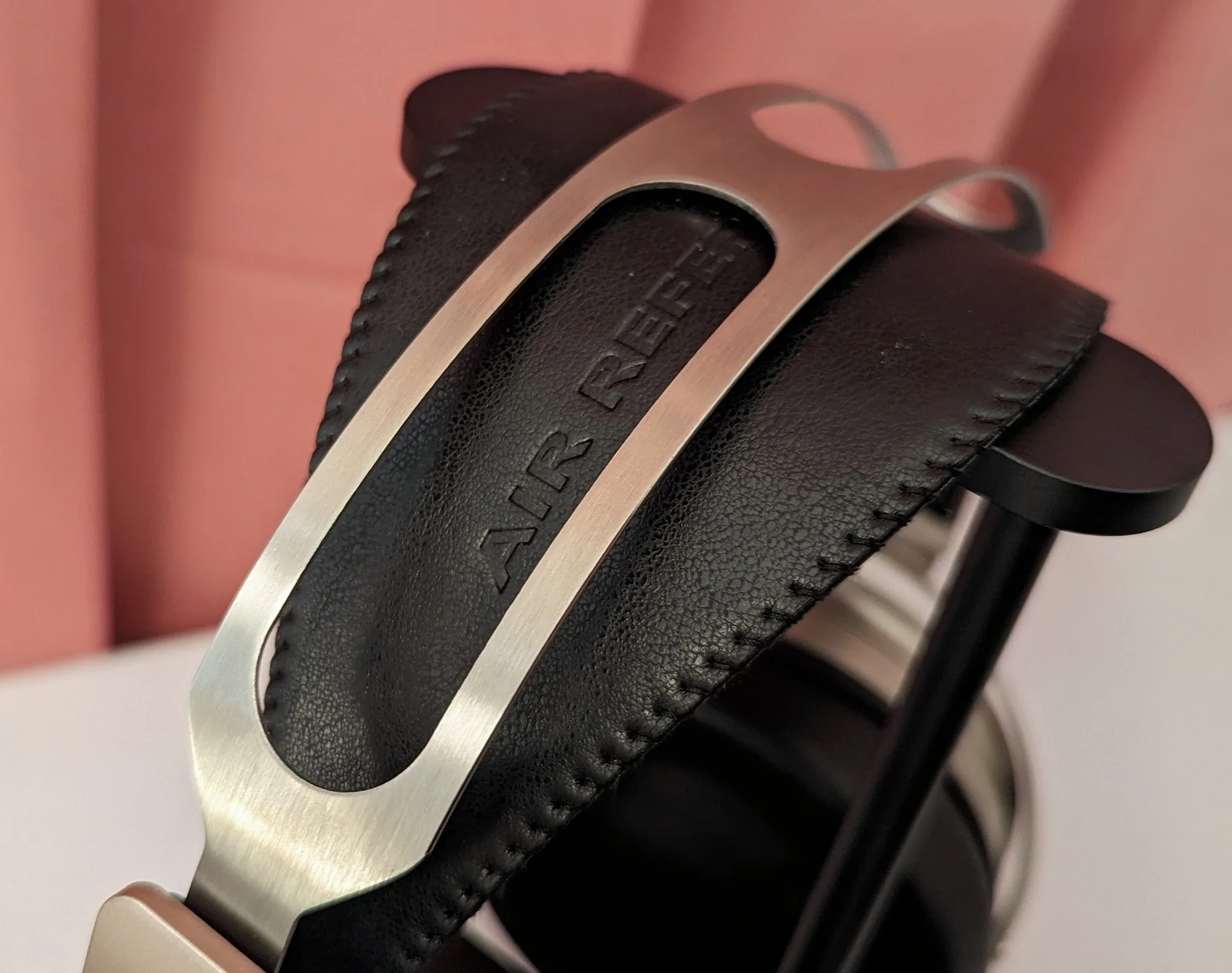
The stepped height adjustment is implemented quite uniquely, as moving the artificial leather head cushion upwards simultaneously pushes the headband arch outwards from within the frame structure. This way, the appearance always remains neat regardless of the position the band is adjusted to. For comparison, the cushion part adjusts in a similar way in STAX's SR-L700model, but in that one, the arch part is fixed and quite high. With the AR5000, it should be noted that its height adjustment range may not be sufficient for those who rely on the largest settings for most other headphones.
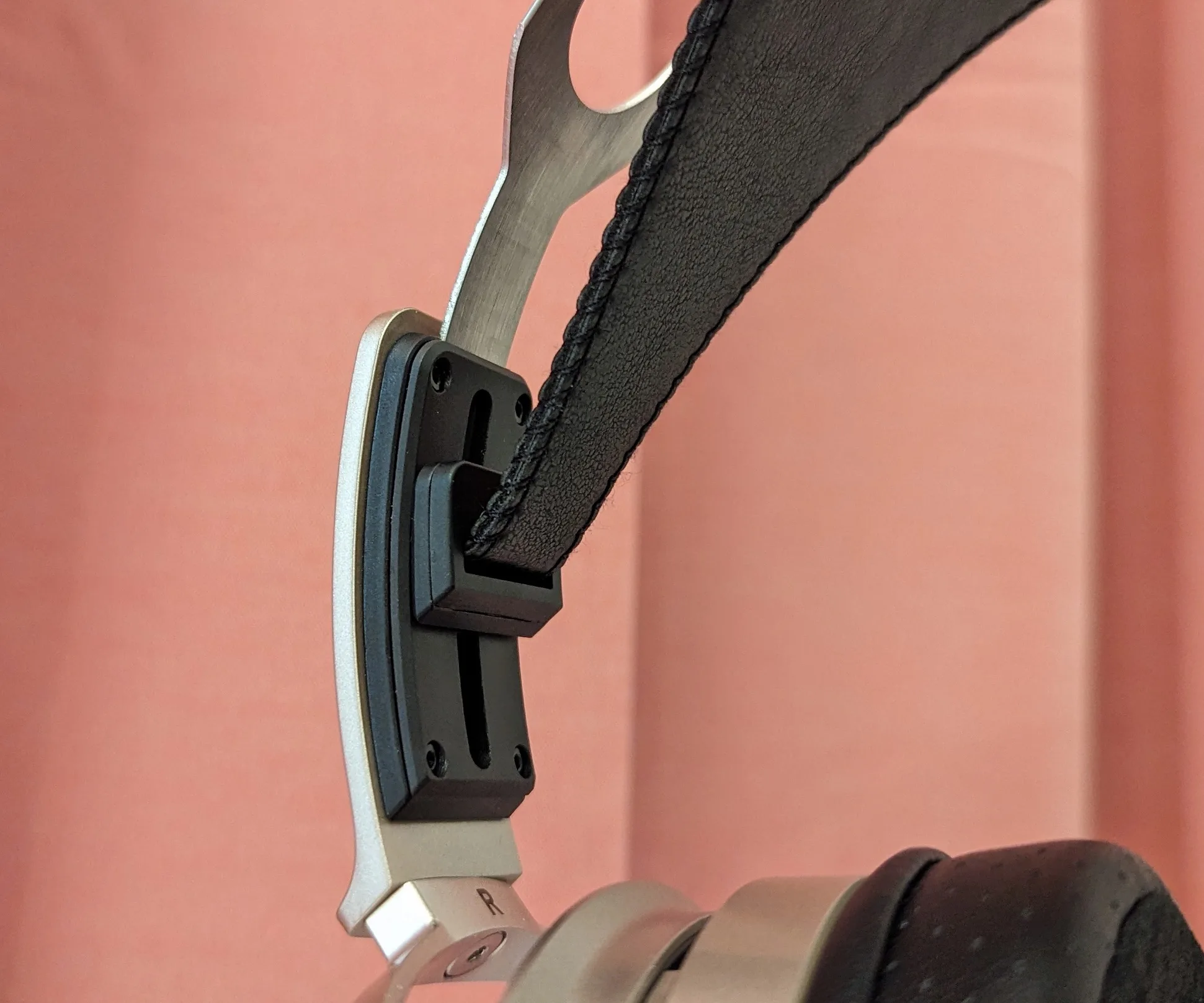
However, I find a suitable height around the middle of the adjustment range, and the headphones are extremely comfortable. The relatively light weight, head-conforming cushions, and the gentle clamping force of the headband make long-term use pleasant. For comparison, Sennheiser's HD 600series weighs less, but clamps significantly tighter. Hifiman's Sundara models, on the other hand, lack horizontal cup movement, so the cushions may press too much either in front of or behind the ear, depending on the user. Especially Sundara Silver clamps tightly to the head, whereas the black Sundara model weighs slightly more than the AR5000.
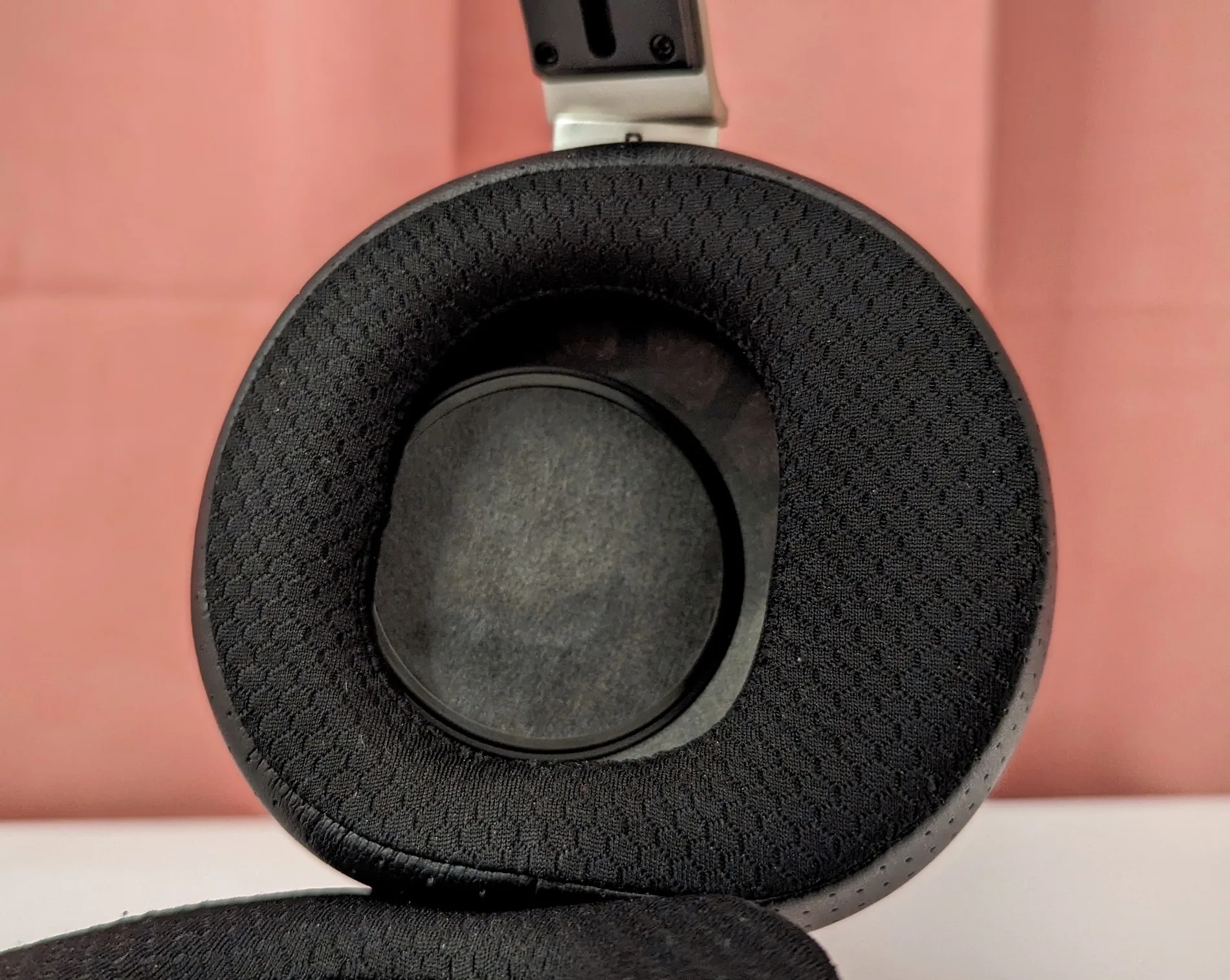
Aune's headphones feature hybrid-style ear pads where the outer edge is perforated synthetic leather, and the part resting against the head and the inner edge are made of a pantyhose-like fabric, resembling Hifiman's pads. The material choices, including the foam, feel high-quality, and the stitching is neat. Attaching the pads on the AR5000 is done by stretching them around the rim of the cup in the traditional manner. Experimenting with different pads would be easy, but likely somewhat ruled out, as only a few pad designs optimally match the placement of the AR5000's drivers. It's good that Aune sells replacement pads for their headphones for about 30 euros.
In addition to the strong angling, the AR5000's pads have a precisely designed ear opening, whose shape resembles Denon headphones (e.g.,. AH-D9200). In both of these, the front edge of the pad is thin, and the part behind the ear is clearly thicker. With Aune's headphones, the ear is intended to be positioned correctly relative to the angled driver, so the user isn't given a lot of room to move inside the pads. Fortunately, the ears fit well, so wearing comfort is also good in that respect. The AR5000's structure blocks some ambient noise coming from the front, so the acoustics with the headphones on somewhat resemble having your palms placed diagonally in front of your ears.
Sound quality
Our frequency response measurements have been made with a clone IEC-60318-4 coupler and KB501X pinnae. The Harman target curve from 2018 is used as a reference point and generalization of the headphone response that would sound good to most people. For more information on the measurements and their accuracy, see Headphone Measurements-page. The AR5000's frequency response can also be compared with other measured headphones Squiglink .
Frequency response:
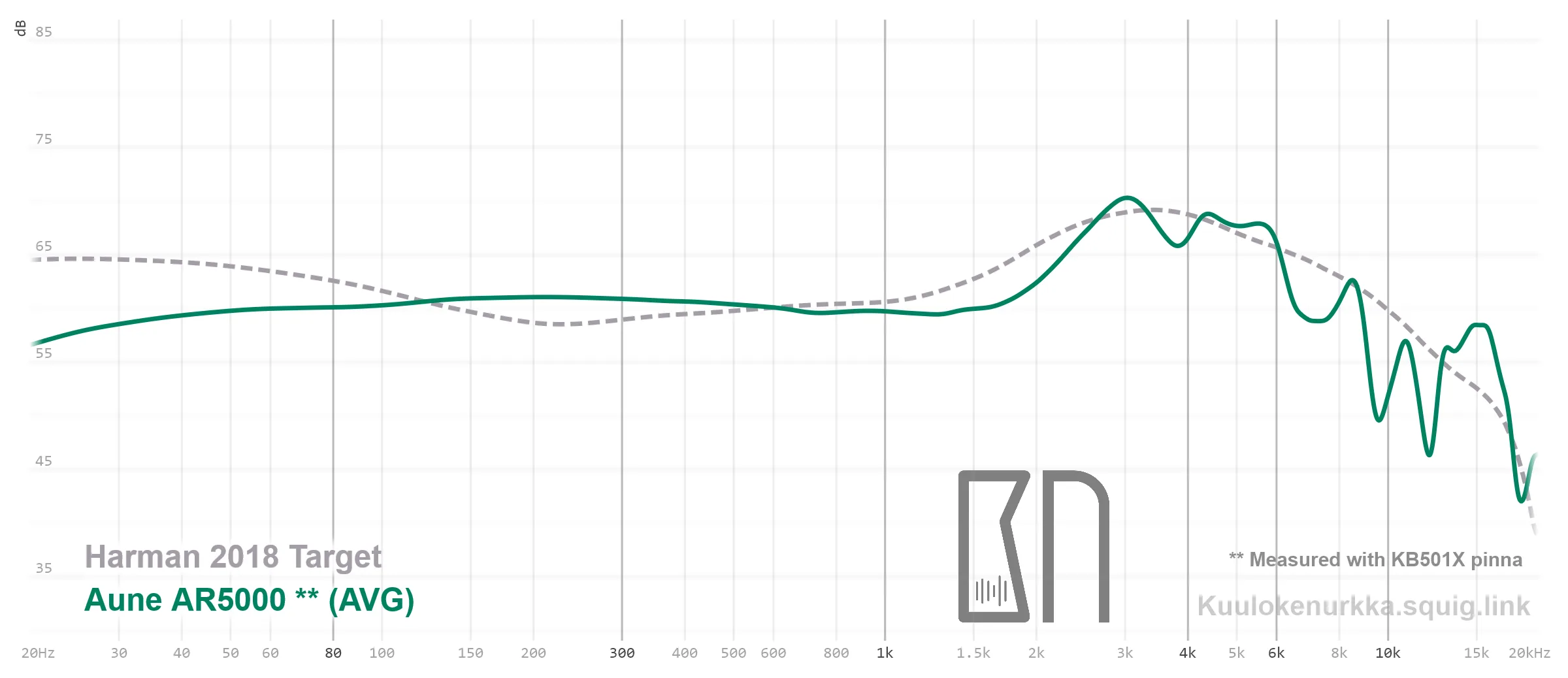
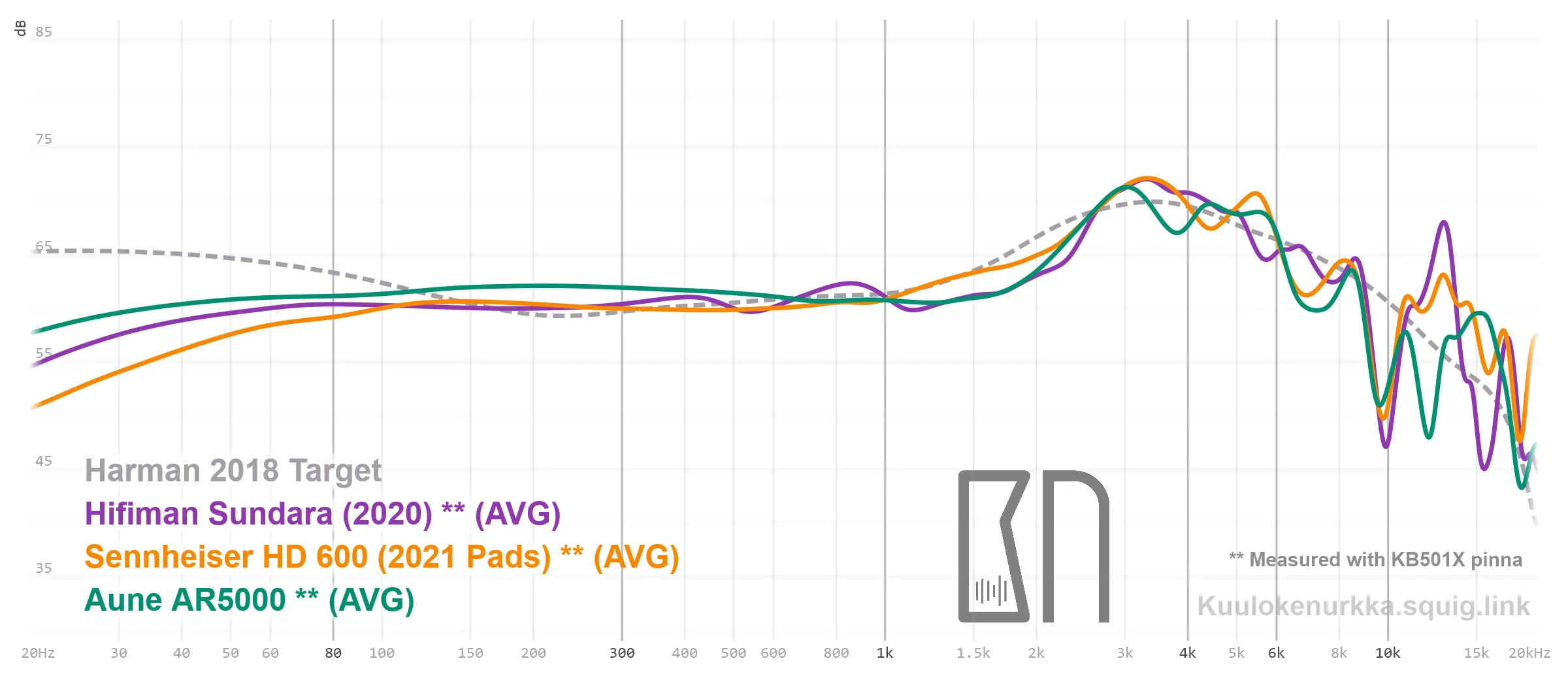
The positive comments about the AR5000 are easy to understand, as it sounds balanced and good in every way. The frequency response so closely mimics what is now considered orthodox sound reproduction that it wouldn't be entirely wrong to even speak of a neutral reference headphone. Compared to the Sennheiser HD 600 and Hifiman Sundara, which I also perceive as neutral, the AR5000's presentation is, however, somewhat warmer in the low frequencies and calmer in the treble. Thanks to this, listening is always pleasantly effortless and easy. I particularly like the robust body of the sound and the natural mid-frequencies, which are fuller in style than in Hifimans (150–500 Hz range slightly elevated) and more spacious than in the HD 600 series (1–2.5 kHz range slightly recessed).
Despite Aune's distinctive touch, the overall balance is very good, as I don't feel any frequency range rises too much above others or remains disturbingly lacking. It's ultimately difficult to find any major fault with the mature-feeling presentation, so I believe the manufacturer's first headphone model can be directly added to the best in its price range as an alternative to other perennial favorites. While the AR5000 may not offer anything completely unprecedented, a respectful reproduction of recordings, spiced with a slightly warmer and more relaxed touch, would surely appeal to many. One of the headphones' strengths is also its captivating soundstage.
Bass:
The AR5000's robust bass reproduction makes it sound more fun compared to most other open-back models in the 200–500 euro range. The slightly elevated 150–500 Hz frequency range brings a pleasant sense of weight to the reproduction. At the same time, the mid-frequencies also become pleasantly full without the sound being disturbingly thick or congested. In my opinion, warmth has been successfully added to the presentation, although a slightly lighter-reproducing mid-bass would, critically evaluated, have achieved a slightly clearer and more resolving end result. From the perspective of bass quality, the Hifiman Sundara still holds the upper hand, while the AR5000 kicks more firmly and excitingly. Of course, no bass monster should be expected, as due to the open design, a sub-bass emphasis according to Harman's target curve is not included without equalization.
Strictly speaking, there is nothing wrong with the AR5000's sub-bass; it also reproduces admirably strongly and linearly, considering the dynamic driver – for example, in the Sennheiser HD 600 series, Hifiman Sundara, and even Focal Utopia the sub-bass intensity drops more sharply downwards at 80 hertz. All kinds of electronic music sounds more fun with Aune's headphones than I expected, and the robust foundation of the reproduction brings a naturally deep feel to the music. Like FiiO's FT3, Aune has wanted to show that a headphone model with an open design and dynamic driver, priced at 300 euros today, can successfully reproduce sub-bass.
Mid-frequencies:
In its mid-range, the AR5000 is like a fuller and less bright Sundara, or alternatively, a more spacious and softer Sennheiser HD 600. The slightly recessed and sound-widening 1–2.5 kHz frequency range is taken almost directly from Hifiman's textbook, while the lower mid-frequencies are reproduced more robustly and most of the treble more calmly than in the aforementioned comparisons. The presentation is simultaneously warm and clear, and in my opinion, also relatively neutral. Vocals and speech, in particular, sound natural, and the details of instruments are softened just enough for my taste from the perspective of a pleasant listening experience.
In my opinion, the end result resembles in style ZMF Aeolus: with the difference that the AR5000 is closer to what I consider neutral reproduction, while the Aeolus is already clearly warm-sounding. Aune has succeeded in creating headphones whose smooth sound I could listen to almost endlessly. On the other hand, there's no particularly boisterous performance to be expected; rather, the headphones are safely refined. Even if not everyone would be fully enthusiastic about this, it would certainly be difficult not to appreciate the AR5000's balance. There are already enough brighter and thinner-sounding headphones on the market, so I find Aune's different approach a nice change.
Furthermore, the AR5000 features a notably deeper soundstage than usual. While the intimacy of the Sennheiser HD 600 series has its own merits, I appreciate that with Aune's headphones, the sound doesn't come entirely "in your face"; instead, there's a sense of empty space between different elements. The placement and separation of sounds are generally precise, but this also reveals one of the headphones' few weaknesses. For some reason, when listening to more aggressive and complex music, such as vibrant heavy metal, the separation weakens, and the overall presentation becomes somewhat unclear. In my opinion, heavy music enthusiasts might not necessarily benefit from acquiring the AR5000, but fortunately, I haven't observed similar issues with other music genres so far. Since the weakening of separation is concentrated in the upper frequencies, I believe it could be due to some kind of treble imbalance.
Treble:
Aune's engineers have tuned the treble to be relaxed and light. The tone can even be slightly dark in places, but at the same time, the very highest frequencies have a touch of added sparkle. Frequencies above 10 kHz often attract more attention than the 6–10 kHz range. Nevertheless, I would still call the result natural compared to, for example, Hifiman headphones or Moondrop Venus, which strongly emphasize the 11–13 kHz range – this adds extra hiss and sibilance to the sound. Similarly, FiiO's FT3 is somewhat uneven in its treble for my taste and even harsh in places, which is why I would prefer the calmer-sounding Aune headphones of the two.
On the other hand, the AR5000's treble is reproduced somewhat lightly and softly in style, which could well cause the weakening of separation I experienced with sounds emphasizing upper frequencies, such as drum cymbals. A little extra sharpness might be in order, but fortunately, the relaxed presentation works well most of the time. Aune, in my opinion, has played it safe with the treble, which leaves room for development in subsequent headphone models. The AR5000 is by no means the last word in terms of reproduction detail, but with a small boost to the treble, the situation would likely change.
Audio description:
The soundstage is ultimately the headphones' most unique feature, as the effect of the angled drivers is clearly audible – at least to me. Evaluating the soundstage is challenging because it can be experienced in many different ways, as the stereo image extending beyond the cups is largely an illusion and, in a way, a trick on the brain.
When listening to the AR5000, I personally experience the sound being positioned in front of me, while less of it is heard directly to the side and behind my ears. In other words, I focus more on the depth perception of the soundstage than on its width. For this reason, the soundstage doesn't feel particularly large in the traditional sense, so for example, Sennheiser HD 800:-like sense of spaciousness should not be expected, especially since the AR5000's treble is not as airy. However, the depth perception is so effective that with Aune's headphones, for example, game sounds feel truly immersive and captivating. The AR5000 has been in active gaming use for me, especially since it feels really comfortable on the head.
High-quality live recordings also work well with the headphones' soundstage, as closing one's eyes makes it easy to imagine the band playing in front of me. Good depth-wise separation and precise presentation of distances between sound sources bring to mind the Focal Utopia, even if the AR5000 doesn't quite reach the same level of accuracy, nor does clarity always remain at its best possible level in all situations. Nevertheless, when functioning correctly, the spatial impression created by the AR5000 is in any case more interesting than in many other headphones in its price range. A slight uncertainty in the situation is introduced by the fact that the end result changes depending on the position of the ears inside the earpads. For me, the optimal placement is found immediately, but for some, the benefits of the angled drivers might be smaller or even unrealized. Similar challenges are, of course, familiar with many other headphone models as well.
Easy decibels
Reproducing the 28-ohm AR5000 is extremely easy, even though the sensitivity stated as ”108 dB/V” more familiarly translates to 92.5 dB/mW, which is actually quite low. However, in my opinion, this does not correspond to the truth at all, which is also supported by AudioScienceReview's measurements: The AR5000 is one of the easiest over-ear headphones to drive on the market, even outperforming some in-ear models. As a side effect, it plays too loudly with powerful amplifiers, such as balanced Cayin iHA-6:lla, too loudly, leaving insufficient headroom for volume adjustment. The headphones also manage to dig out background noise from the iHA-6, which has so far only happened with in-ear headphones and FiiO's FT3. Even with amplifiers with lower power ratings and, for example, the Macbook Air's headphone jack, the volume of Aune's headphones quickly becomes high. It would almost be a miracle if some device couldn't drive these headphones.
In my opinion, most of the sound quality potential is already achieved with basic devices, but even better amplifiers offer some benefit. Especially the treble is reproduced with slightly higher quality on more expensive devices, and fast-paced music stays better in control, not becoming as muddled as usual. For this reason, for example, Topping DX1 and SMSL DL200 do not yet offer the very best listening experience, but there is nothing wrong with them considering their affordable price range. Aune's own S17 Pro amplifier (price 700 €) suits the AR5000 excellently despite its rather excessive power ratings, especially when there is enough headroom for volume adjustment, and I don't hear any noise. The sound quality of the device was largely the best during my test period. The S17 Pro is quite expensive compared to the headphones, so staying within Aune's range, a more affordable amplifier would suffice. The AR5000 seems to be too sensitive for tube amplifiers and devices implemented with high gain levels, so audible background noise may be more the rule than the exception.
Comparisons to other headphones
Aune AR5000 vs. Sennheiser HD 600
Prices: 300 € vs. 260–400 € (significant store-specific variation in price)
Structural and Technical Differences
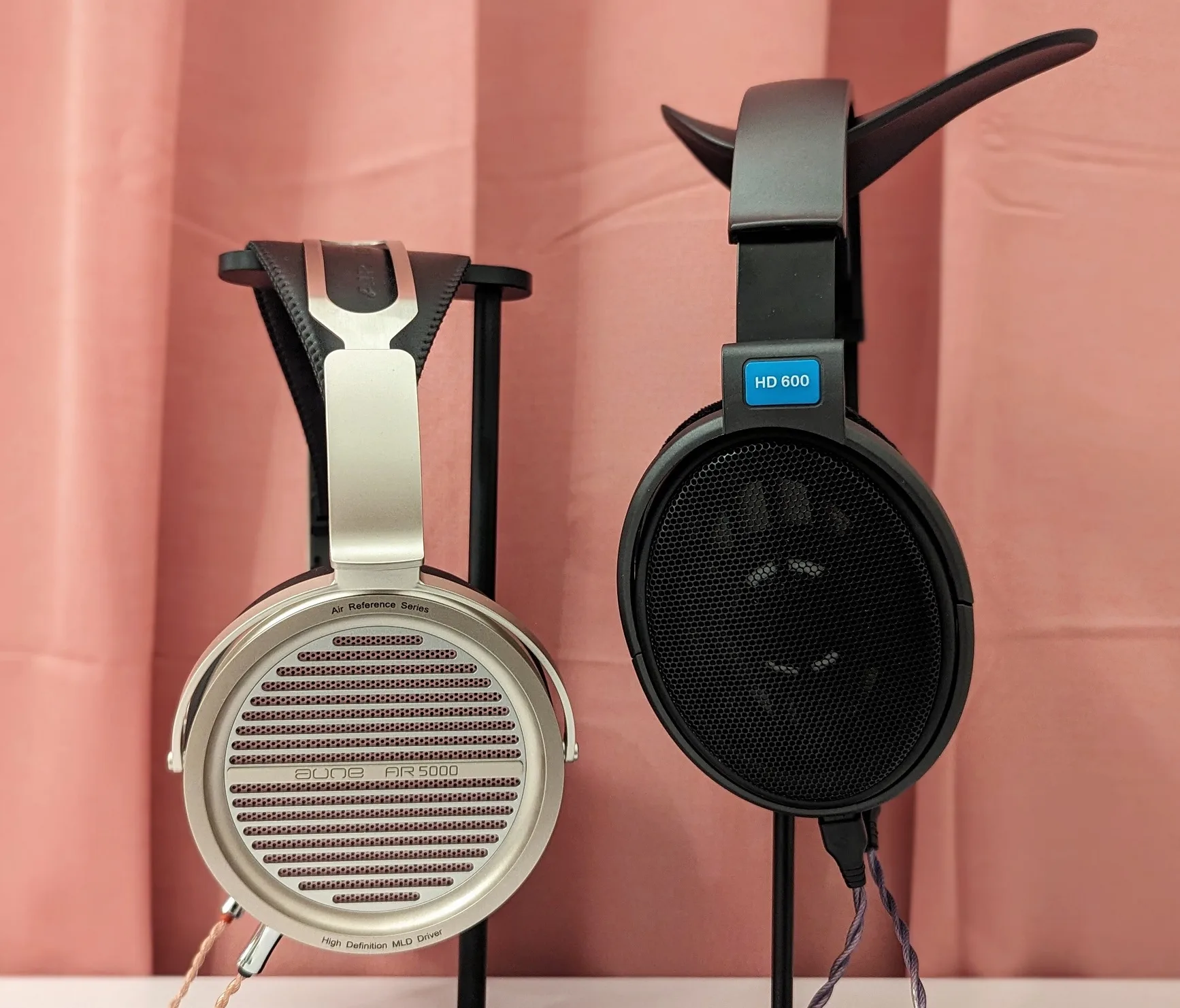
Sennheiser's old, but still competitive HD 600 model is a fully functional and durable headphone. Compared to the newer AR5000, its biggest advantages are more comprehensive serviceability and a weight that is about 100 grams lighter, which is a result of its rather plastic construction. Despite this, due to its strong clamping force and narrow ear pads, the HD 600 is not the most comfortable for me; using the AR5000 is considerably more relaxed and pleasant for me. With Sennheiser headphones, it must also be noted that their velour pads compress faster than usual with use, so they would need to be replaced fairly often if sound quality is to be maintained.
From an amplification perspective, the different design eras make the headphones opposites. The HD 600, with its high 300-ohm impedance, is suitable for tube amplifiers, for example, and generally for all kinds of older or more specialized devices with a relatively high output impedance. This also allows the sound of the headphones to be shaped more by device choices than the AR5000, which has a low 28-ohm impedance. Aune's headphones, in my opinion, reach their full potential relatively easily, whereas the HD 600 truly comes alive only with slightly better amplifiers.
Sonic Differences
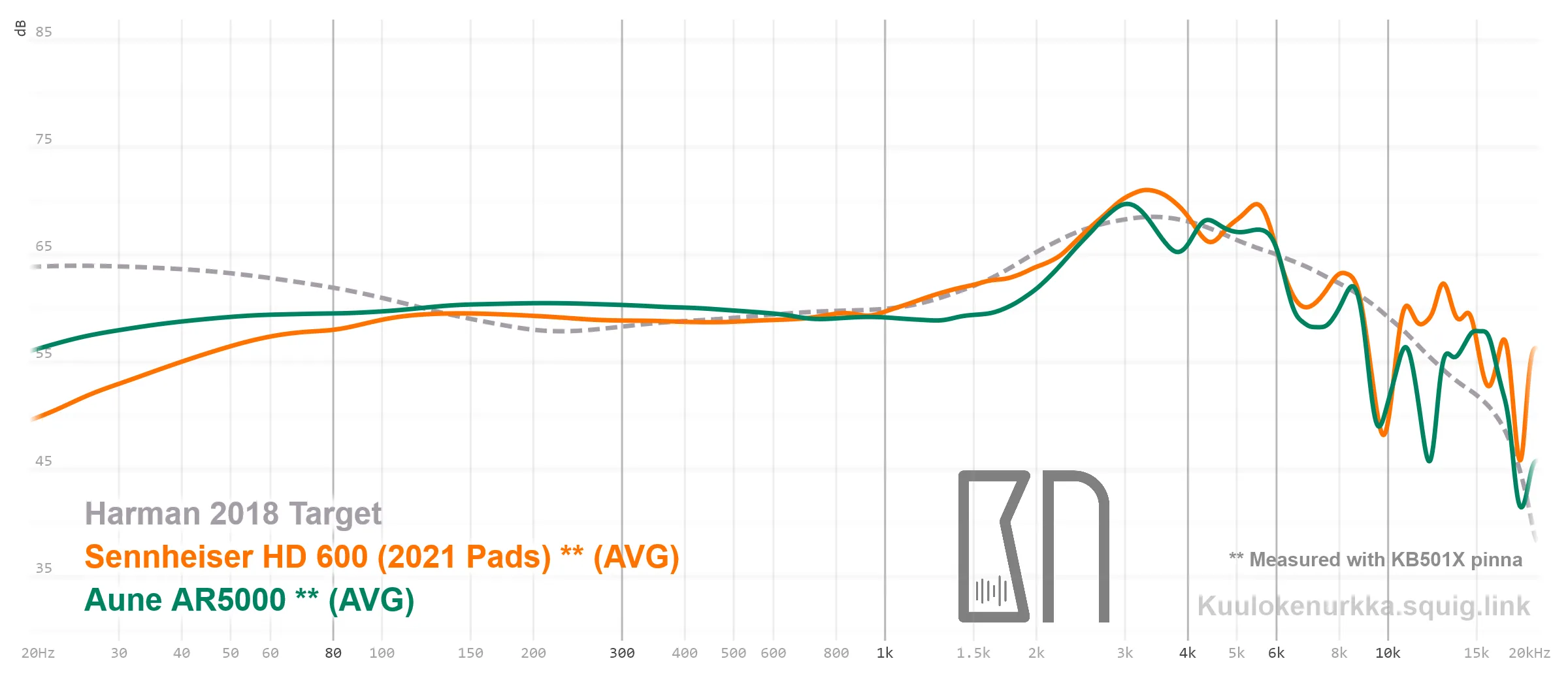
The AR5000 sounds above all more relaxed and warmer than the Sennheiser HD 600, whose mid and high frequencies are more energetic. Consequently, the HD 600's sound could be described as clearer and more present, but at the same time, the reproduction also comes intimately almost to the skin. The AR5000's presentation is more spacious, and its soundstage clearly has more depth. The sound also settles more evenly around me compared to the HD 600's cramped-feeling and largely in-head soundstage. The AR5000 pays more attention to the movement and placement of sounds, as if the music has more room to breathe. Sound separation is also clearer, even though the reproduction remains slightly softer next to the HD 600's edginess. When evaluating the overall picture, both sound natural in their own way.
Although the AR5000 doesn't fully challenge the HD 600 in terms of normalness and neutrality of reproduction, in addition to its more realistic soundstage, it also offers a clear improvement to another weakness of Sennheiser headphones: bass reproduction. The more robust and linearly reproduced sub-bass creates a firmer foundation for the reproduction, whereas the HD 600, despite its slight mid-bass emphasis, sounds rather anemic. All music containing the lowest frequencies automatically sounds better and more enjoyable with Aune's headphones, in my opinion.
The light bass reproduction is likely one reason why the listening experience with the HD 600 is somewhat analytical for me, whereas for enjoying listening, the AR5000 offers exclusively positive changes, in my opinion, without being too far from neutral reproduction. On the other hand, the lighter clamping force of the Aune model also contributes to this, making it more comfortable to use without listening feeling like a chore. Unless there is a need for the most neutral sound, for example, for music monitoring, the AR5000 is, in my opinion, the better purchase of the two nowadays. In this case, it should be noted, of course, that Sennheiser's HD 650 is similarly ”more musical” than the HD 600, so there are already other good alternatives in this price range for lovers of warmer sound than the AR5000.
Aune AR5000 vs. Hifiman Sundara Silver
Prices: 300 € vs. 415 €
Structural and Technical Differences
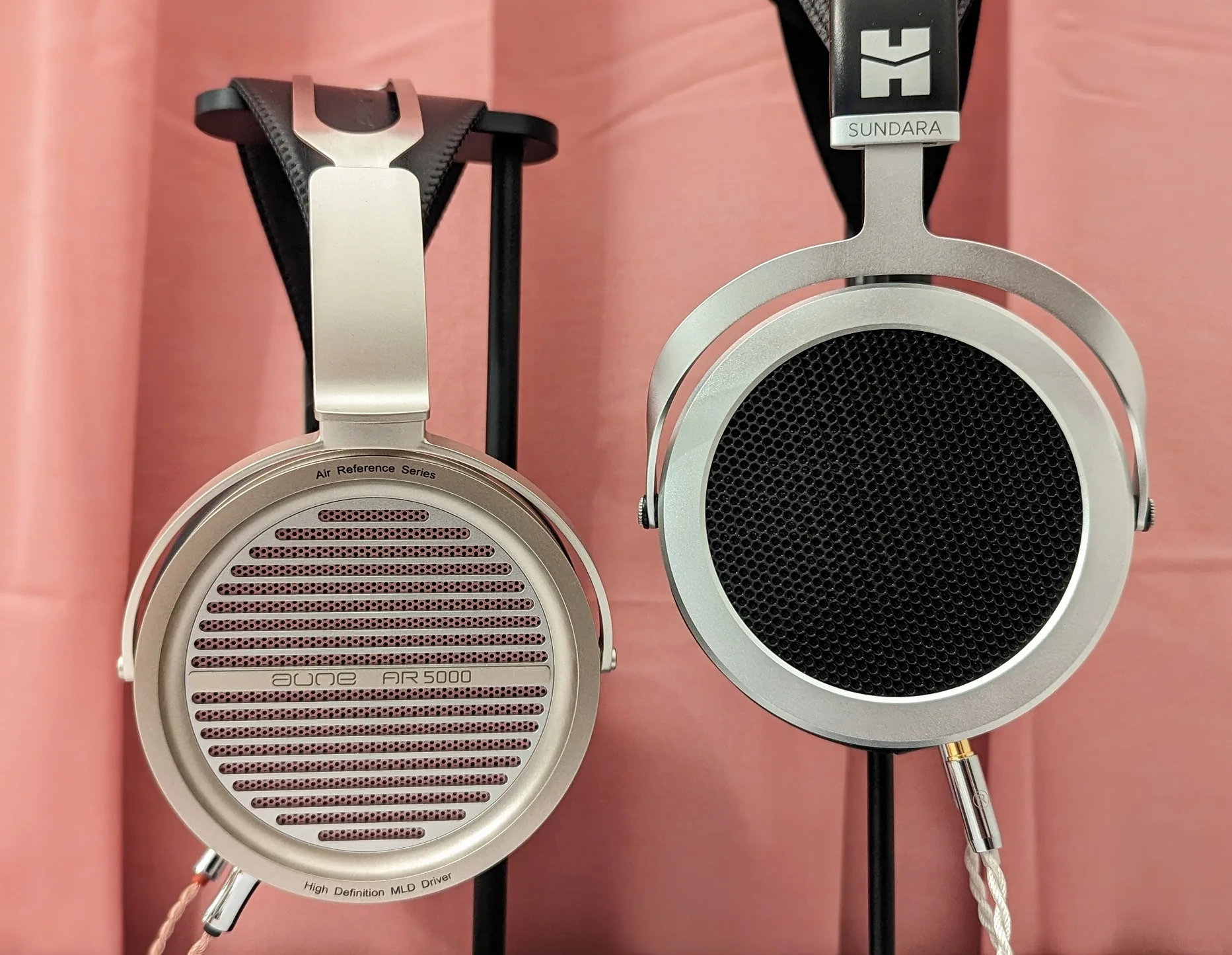
The Sundara Silver sold in Europe, thanks to its silver coloring, is a fresh breath of air among all the black headphone options, similar to the AR5000. Hifiman's headphones, however, look slightly more minimalistic due to the black metal mesh of their cups, whereas the AR5000 is, in my opinion, genuinely stylish.
Both headphones weigh approximately the same, about 350 grams, which is even slightly surprising considering the Sundara Silver's all-metal construction and planar drivers' magnets. The Sundara's construction is, of course, functionally simpler than Aune's headphones, as, for example, the horizontal range of motion of the cups is completely absent. Because of this, there can be greater user-specific variation in fit than with the AR5000. Although the Sundara's angled earpads fit my head quite well, its headband clamps a bit too tightly. This doesn't bother me too much, but the AR5000, which sits more gently on the head, is ultimately the more comfortable of the two, especially since my ears fit better inside its earpads.
In terms of numbers, the amplification needs of both headphones should be almost identical despite different drivers, as the sensitivity is practically the same and there's only a 4-ohm difference in impedance. In reality, however, the AR5000 is clearly an easier case, as with the Sundara, the volume needs to be turned up more aggressively. The Hifiman model is also, in my opinion, pickier about what devices it sounds good with. Aune's headphones are therefore more effortless in terms of amplification, as less attention needs to be paid to the matter with them.
Sonic Differences
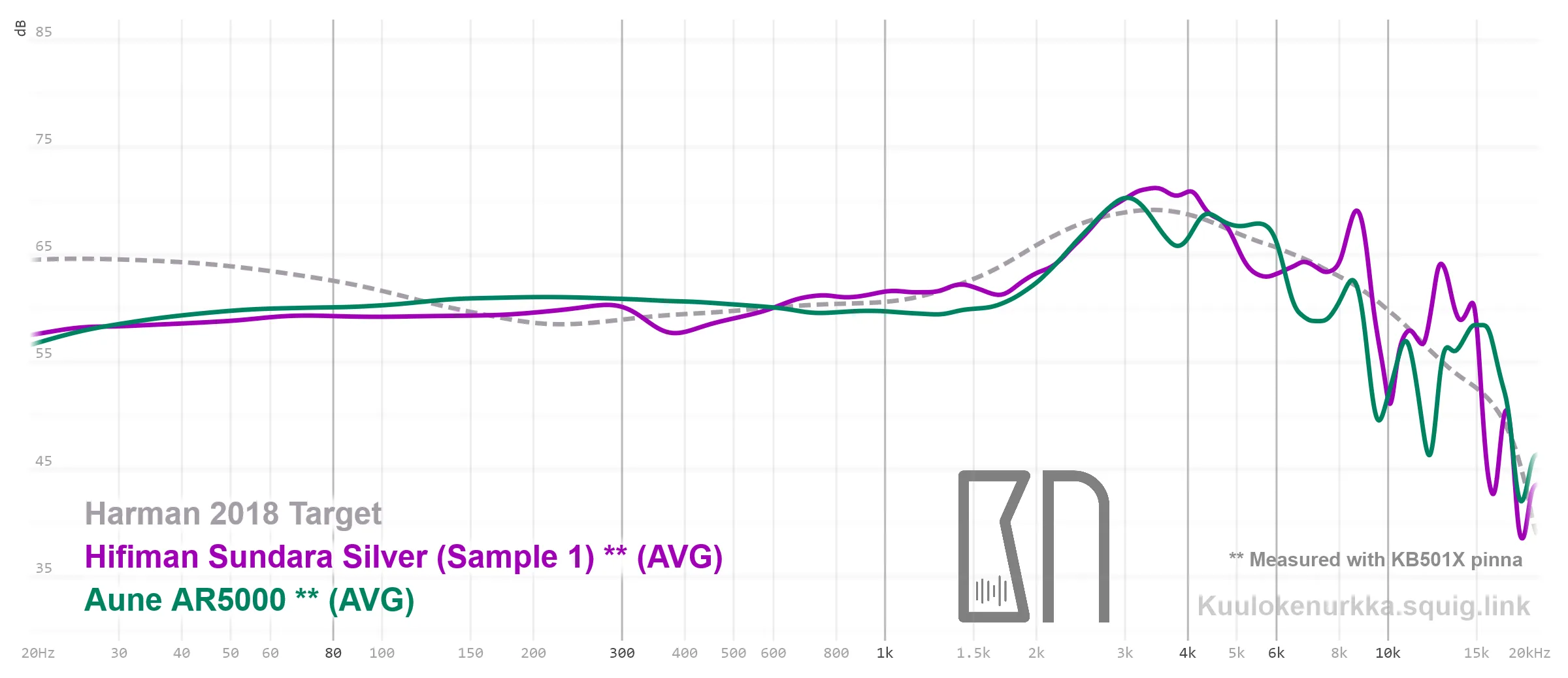
Sundara Silver is slightly more vibrant and energetic compared to the original Sundara (black version). Without the word ”slightly,” these differences also apply relative to the AR5000. Although the clearly reproduced mid-frequencies of both headphones are stylistically similar, the Sundara Silver sounds distinctly more energetic of the two, while the AR5000 is softer and more robust. The biggest single difference is in the treble, which the Hifiman model reproduces significantly brighter and more sparklingly.
The duo could thus be seen as designed for different people, as the Sundara Silver would suit lovers of bright and edgy sound, while the AR5000 would likely appeal more to those who prefer more relaxed headphones like the Sennheiser HD 650. The advantage of the Hifiman model is the clarity of reproduction and the sharpness of details in general. Most instruments have more bite. Aune's headphones, on the other hand, add a pleasant richness to the sound and reproduce treble admirably effortlessly when I want to listen to music for longer periods with slightly less attention. Surprisingly, however, despite its more relaxed presentation, the AR5000 is almost as resolving, unless the music listened to is particularly ”complex” or fast-paced.
The soundstage in both headphones is surprisingly similar in size, but the Sundara Silver brings the sound more energetically towards the listener, making the presentation feel more intimate, especially for the vocalist. The AR5000, on the other hand, keeps the reproduction slightly further away, making it easier to follow what's happening in the soundstage. The angled drivers also direct the sound to come from the front. On the other hand, I also perceive good depth in the Sundara's sound with a suitable amplifier, such as the Nitsch X Schiit Audio Magni Piety, so the benefit of the AR5000's angled drivers is not ultimately as great as one might assume. However, people experience soundstage in very different ways, so unfortunately, I cannot speak for anyone but myself.
In bass reproduction, however, there is a clear stylistic difference, as the Sundara Silver reproduces the low frequencies more tightly and distinctly, while the AR5000 sounds fuller and warmer. Such differences are very typical for two different driver types, as planar headphones usually reproduce bass more linearly. On the other hand, the more robust mid-bass of dynamic headphone models can lead to a more enjoyable listening experience, so both presentation styles have their own advantages. Both headphones reproduce sub-bass quite similarly, i.e., sufficiently, but not with the rumbling according to Harman's target curve.
Ultimately, it's difficult for me to choose my favorite of the two without it potentially changing in a couple of weeks. The AR5000 is a kind of relaxed and smooth take on neutral sound, while the Sundara Silver could be considered a livelier and slightly brighter version of an equally neutral sound. For me, the headphones are not too bright, but I would say the AR5000 is a slightly more balanced and safer choice. However, if a more relaxed enjoyment of music is not of interest, the Sundara Silver has a fun way of activating you to follow the reproduction and literally get your feet tapping. Looked at through hifi glasses, the precise and immediate-feeling planar sound would probably be worth the extra 100 euros, but the competitively priced AR5000 also feels like a successful product. The increase in sensible options is an excellent thing for consumers.
Summary
I consider the AR5000 to be an overall good 300-euro headphone that doesn't really need any changes. It is, in fact, somewhat rare for a manufacturer's first over-ear model to be so polished and successful right away: the balanced frequency response would practically be suitable as is for headphones of any price, and the construction is also truly functional both in terms of materials and wearing comfort. In addition, the power requirement is low, so a previously acquired amplifier or even the listening device's own headphone jack will most likely suffice for the headphones.
Although the AR5000's warmly neutral and smooth sound is not exactly a new invention, the headphones are a sufficiently different alternative to, for example, Sennheiser's and Hifiman's headphone models. One could justifiably speak of a kind of timeless product that does not attract short-term attention with its peculiarity, but it would be easy to praise it even years from now. I therefore see the AR5000 as a sensible purchase for which I can easily give my recommendation. It's a shame that the headphones cannot be bought in Finland, but fortunately, the manufacturer now has an online store in the EU area.
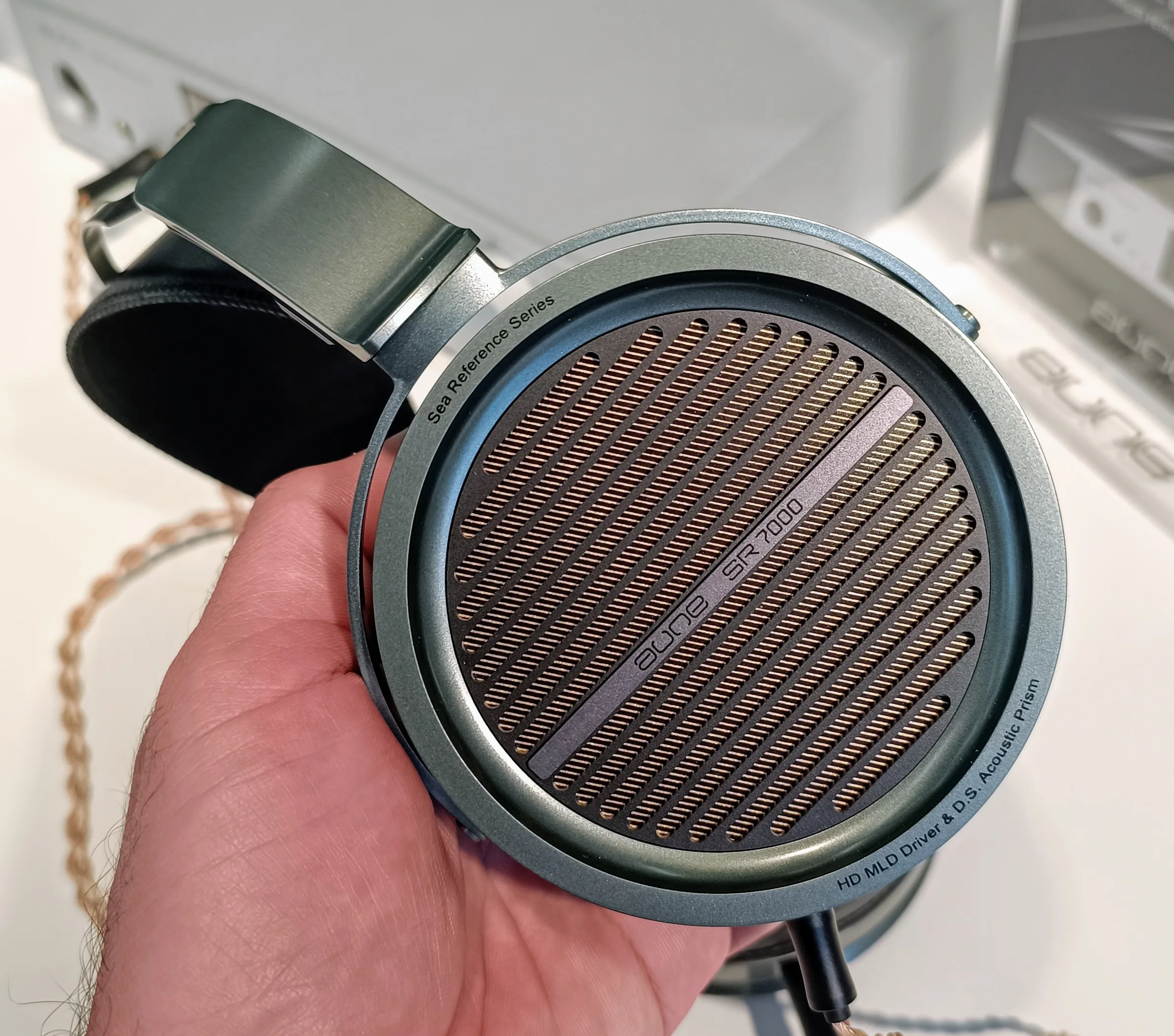
The price level of wired hifi headphones seems to be constantly rising, as new models are mostly released in higher price categories. Taking this into account, the AR5000 is a pleasant exception to the trend. If the headphones had been priced at, for example, 500 euros instead of 300 euros, they would face tougher competition and would, in my opinion, be less attractive. On the other hand, compared to many more unevenly tuned headphones, the AR5000 could justifiably cost even more than it currently does, especially if its construction had used a bit more metal instead of plastic. At its current price, however, the headphones will probably sell quite well and provide the manufacturer with good learning for the development of possible new and even better headphone models. I look forward with interest to what Aune has achieved with the soon-to-be-released closed SR7000 model.
Pros and cons:
+ Balanced and relatively neutral tuning
+ Warm low frequencies and effortless treble make listening pleasant
+ Bass reproduction is robust considering the open design and driver type
+ Interesting depth impression of the soundstage
+ Well-designed structure
+ Appearance that stands out from the crowd
+ Excellent comfort
+ Extremely easy to amplify
+ Good cable in terms of usability
+ Good price-quality ratio
– Resolution (especially high frequencies) deteriorates in fast-paced music
– With powerful amplifiers, the volume adjustment range may be limited
– Limited accessories
 EN
EN  FI
FI
Which do you prefer more, the iBasso SR2?
Unfortunately, I haven't heard the SR2 myself, but based on its frequency response, I would lean towards the more balanced AR5000. It also largely depends on whether I want more unique headphones to expand my previous collection or just one balanced all-rounder headphone.