Author: Sword of Damocles
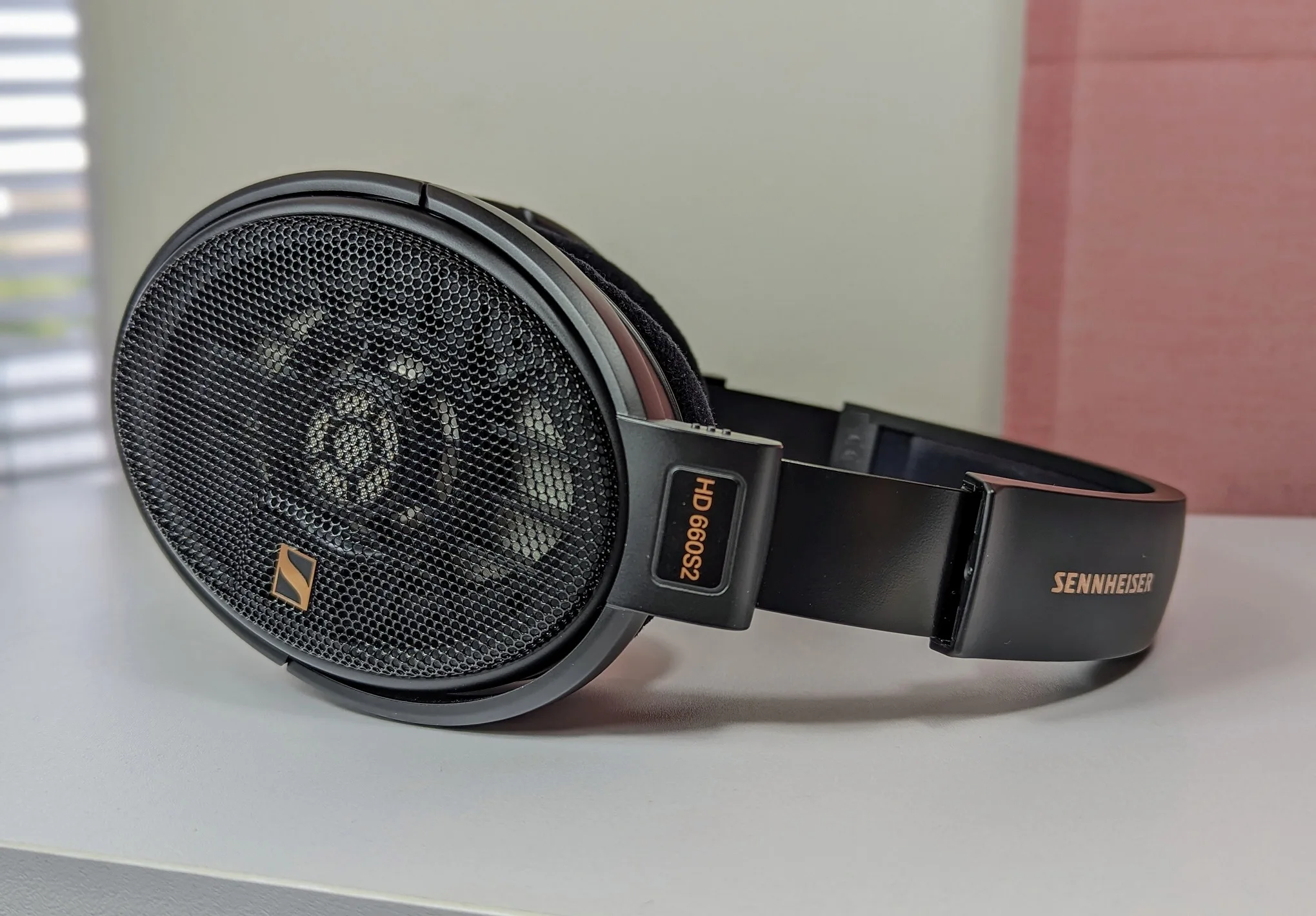
Table of Contents:
Information:
- Release year: 2023
- Country of manufacture: Ireland (designed in Germany)
- Price: 599 €
- Type: open, over-ear
- Driver type: Dynamic 38 mm
- Impedance: 300 ohm
- Sensitivity: 104 dB/mW
- Weight: 260 g without cable
- Connector type: 2 x 2-pin
- Cable: Two 1.8-meter long cables (connectors 4.4 mm balanced and 6.35 mm)
- Equipment: Protective pouch and 6.35 mm -> 3.5 mm adapter cable (length 25 cm)
Review unit acquisition method: Borrowed from a hobbyist
Background
German Sennheiser is known in hi-fi circles HD 600-, HD 650-, HD 6XX- and HD 800(S) headphones, of which the models starting with six date back about 25 years in design, while the HD800 is also already almost 15 years old. These still sell apparently well, so the manufacturer has not had much enthusiasm to develop and release new open-back headphone models alongside its noise-cancelling headphones. On the other hand, it has tried with varying success.
The more affordable HD 560S seems like a successful product, whereas the HD 660S, which I have not yet heard and which was planned as a renovator of the HD 600 series in 2017, is generally considered a peculiar release. At a price of 500 euros, it was more expensive than previous HD 600 series models, but in many places had a more uneven frequency response. The driver of the HD 660S resembles the unsuccessful HD 700 model in structure, and an attempt had been made to make the headphones more suitable for mobile use with a 150 ohm impedance.
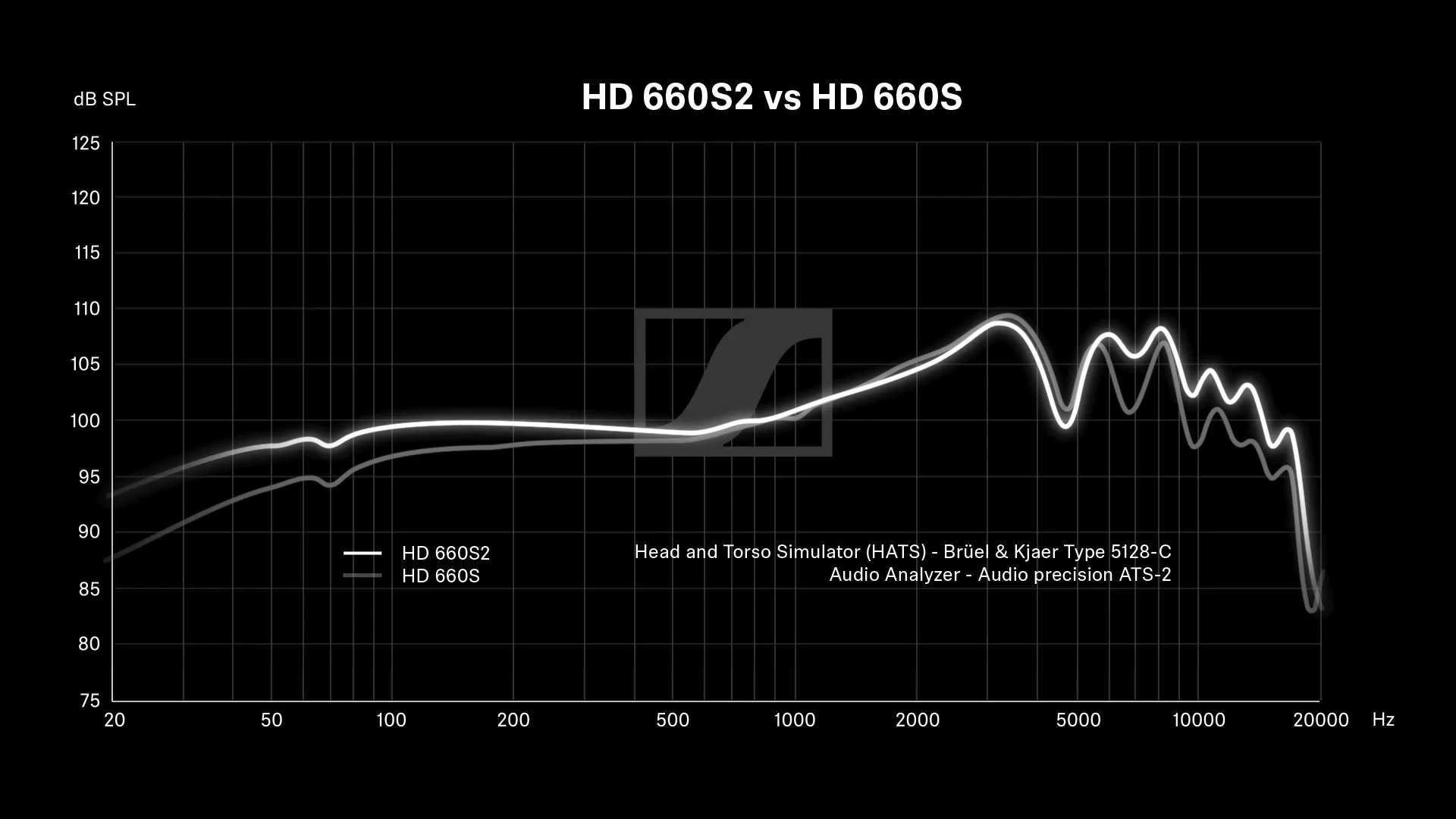
In early 2023, Sennheiser released an updated S2 model of the headphones, which primarily addresses the weaknesses of its predecessor. At the same time, the price has also risen from 500 euros to 600 euros, making it the most expensive HD 600 series headphone model to date. In the HD 660S2 (link to the manufacturer's product page) has a redesigned driver, and regarding impedance, it has returned to the more familiar 300 ohms. From a frequency response perspective, both bass and treble have been increased compared to its predecessor. In this regard, the marketing team has even gotten a bit too enthusiastic, as they boast that the new model has double the sub-bass. The reality, however, is a bit duller, as a doubling of sound pressure means a modest 3-decibel change at the lowest frequencies.
The changes made seem promising on paper anyway, so I've wanted to find out if the HD 660S2 would finally be an improvement over the aged Sennheiser models, and if it would bring the HD 600 series up to date in terms of bass reproduction. I borrowed the headphones I tested for a couple of weeks from a fellow enthusiast. Many thanks to him!
Product packaging
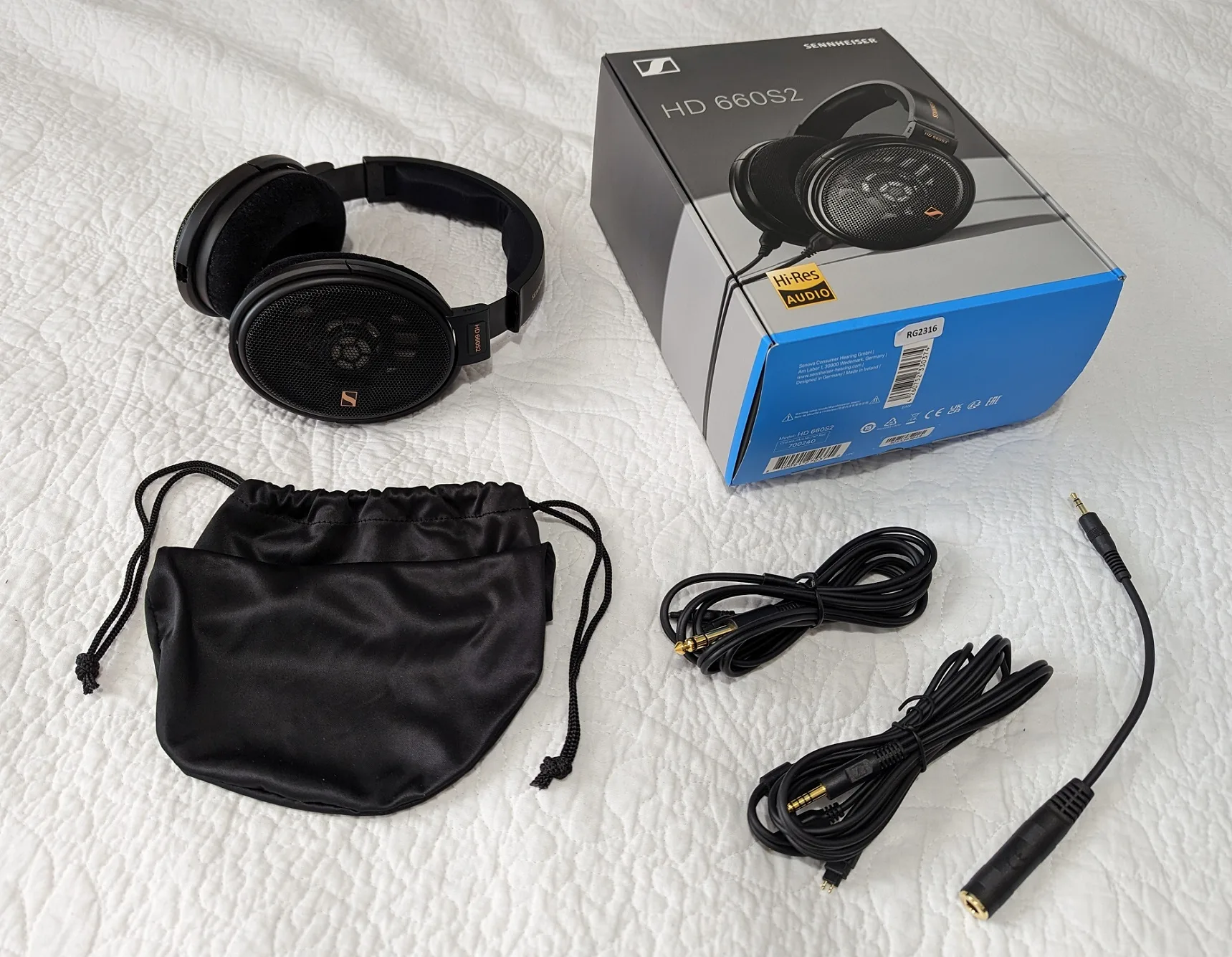
The HD 660S2 is delivered in a typical minimalist cardboard box from Sennheiser, which doesn't even have the product's technical specifications printed on it. However, nowadays there is a shift towards even more minimalist packaging and packaging materials, so in that respect, the manufacturer is well ahead in this matter.
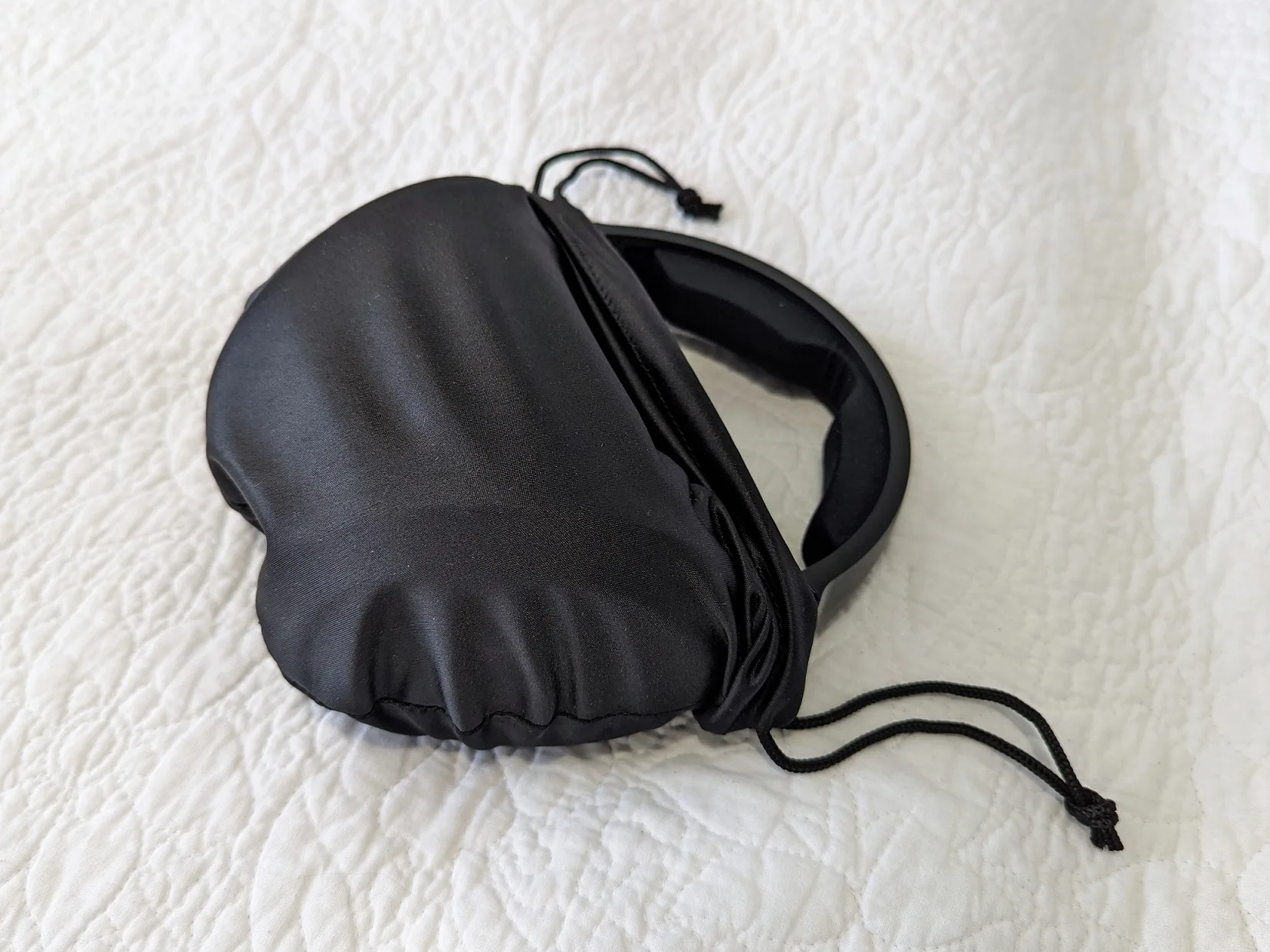
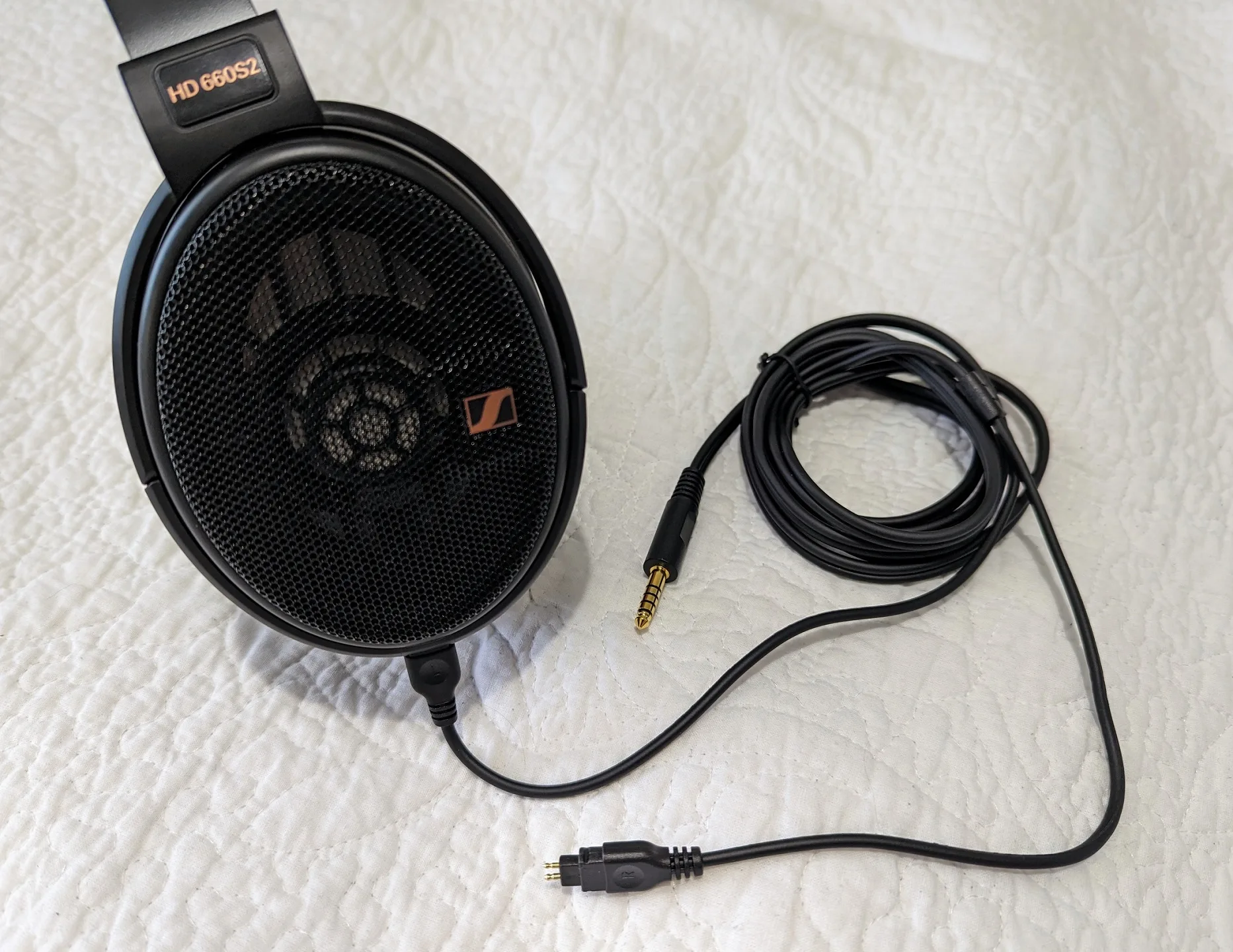
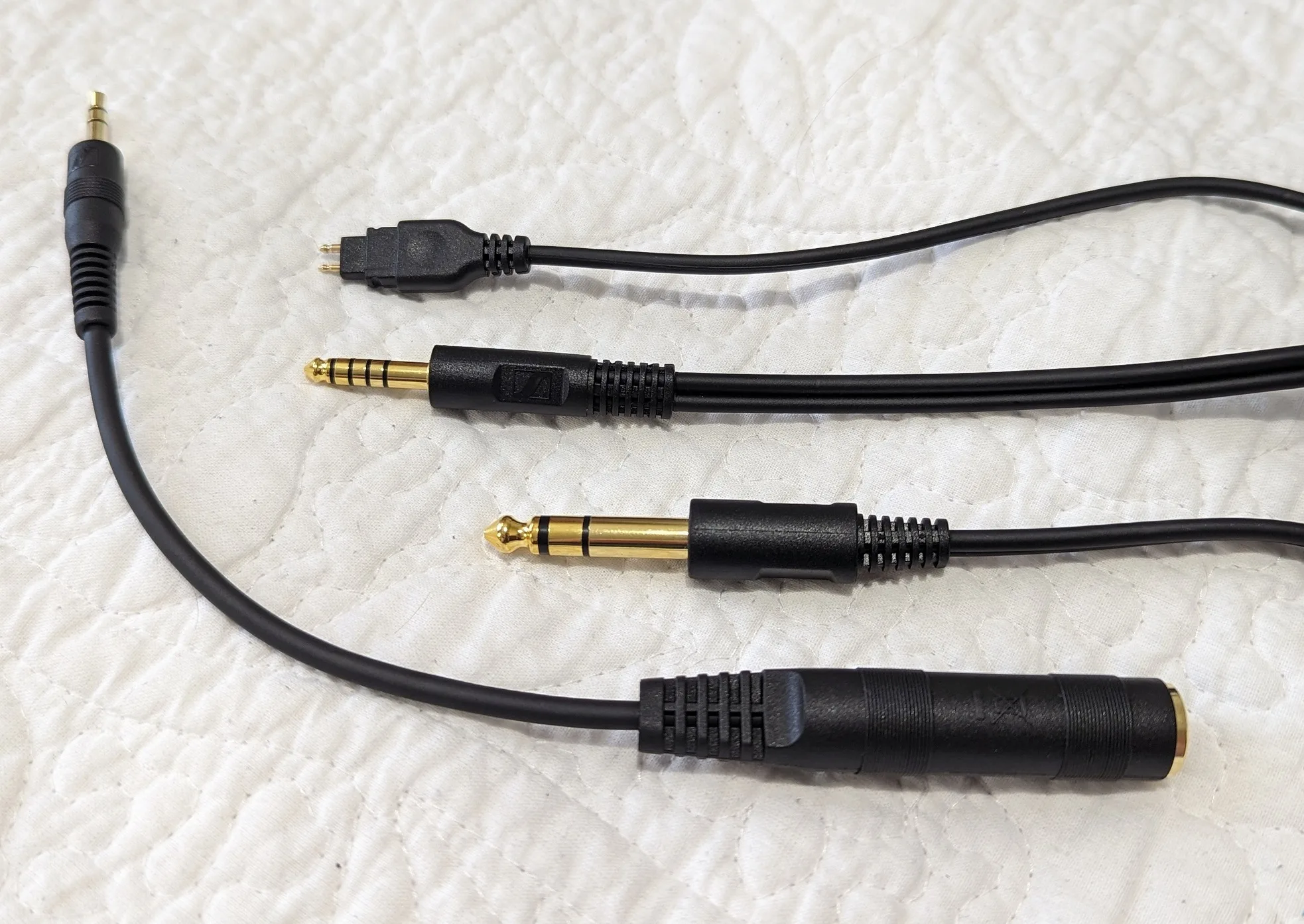
The headphones come with a positive surprise: both a balanced (4.4 millimeter connector) and an unbalanced (6.35 millimeter connector) cable. At 1.8 meters, these are not excessively long either. Accessories include a fabric protective pouch and a 25-centimeter long adapter cable, which converts the larger 6.35 millimeter connector into a traditional 3.5 millimeter connector.
Build and comfort
The HD 660S2 fits seamlessly into the manufacturer's HD 600 series, as its plastic and lightweight construction and adjustments are identical to the more angular HD 600 model sold today. The new model actually doesn't differ much from the 30-year-old HD 580 either. Many would surely expect to see some kind of premium feel in a 600-euro product compared to the series' more affordable products, but the HD 660S2 unfortunately does not offer that. However, I don't actually see the familiar construction as a bad thing, because it has proven to be extremely durable over decades, and the headphones are also easily serviceable with spare parts sold by the manufacturer.
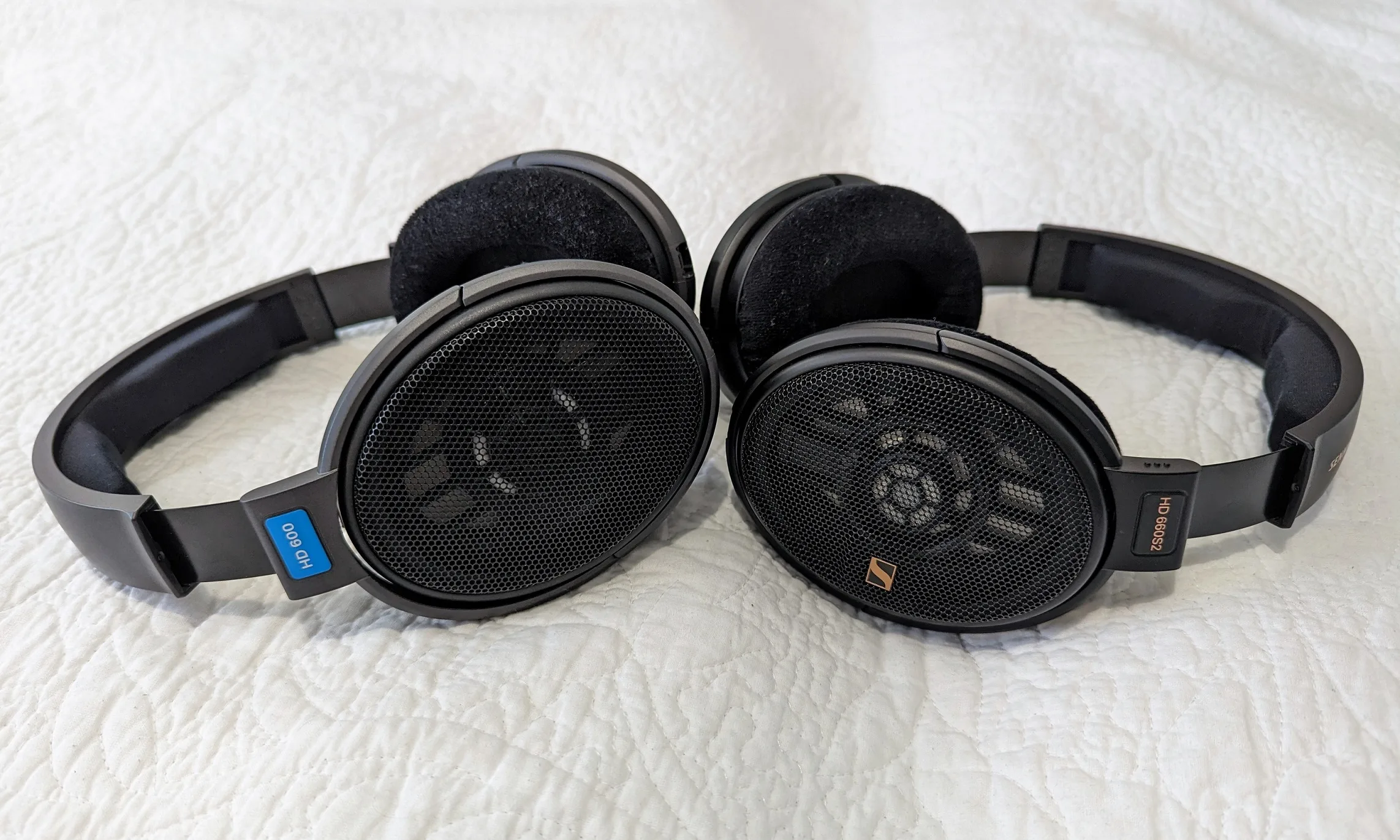
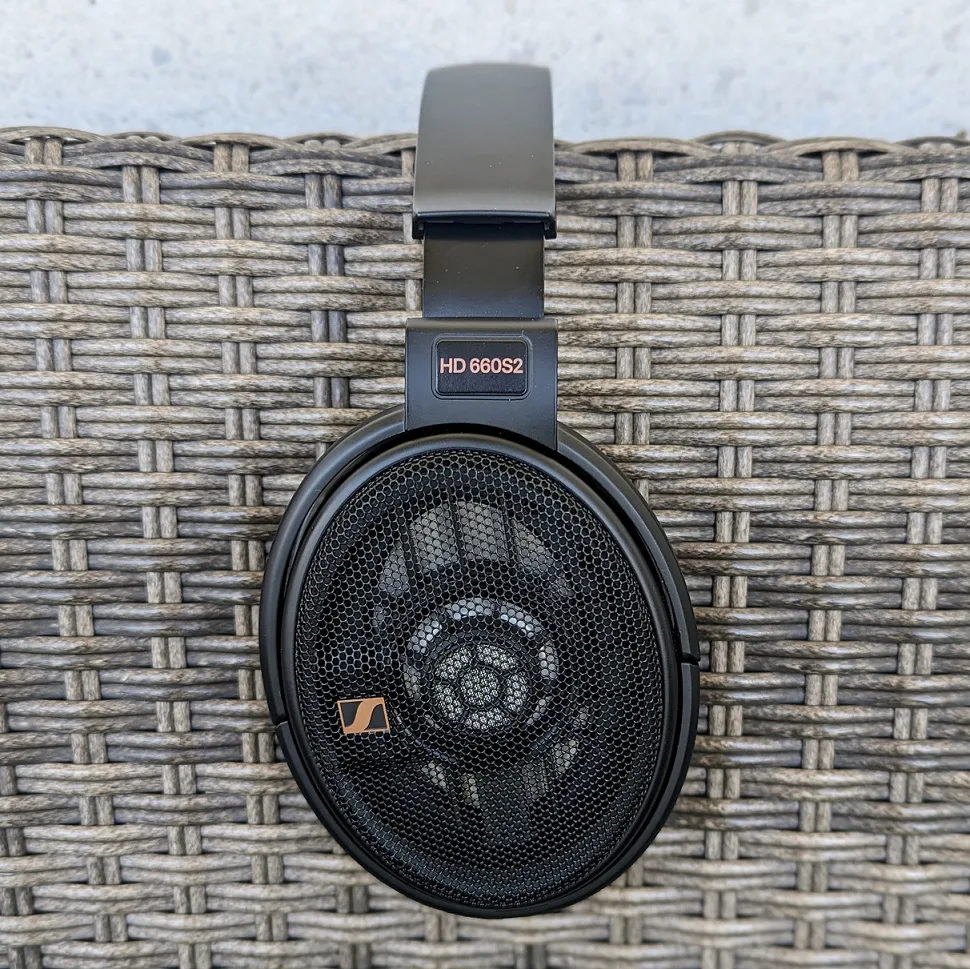
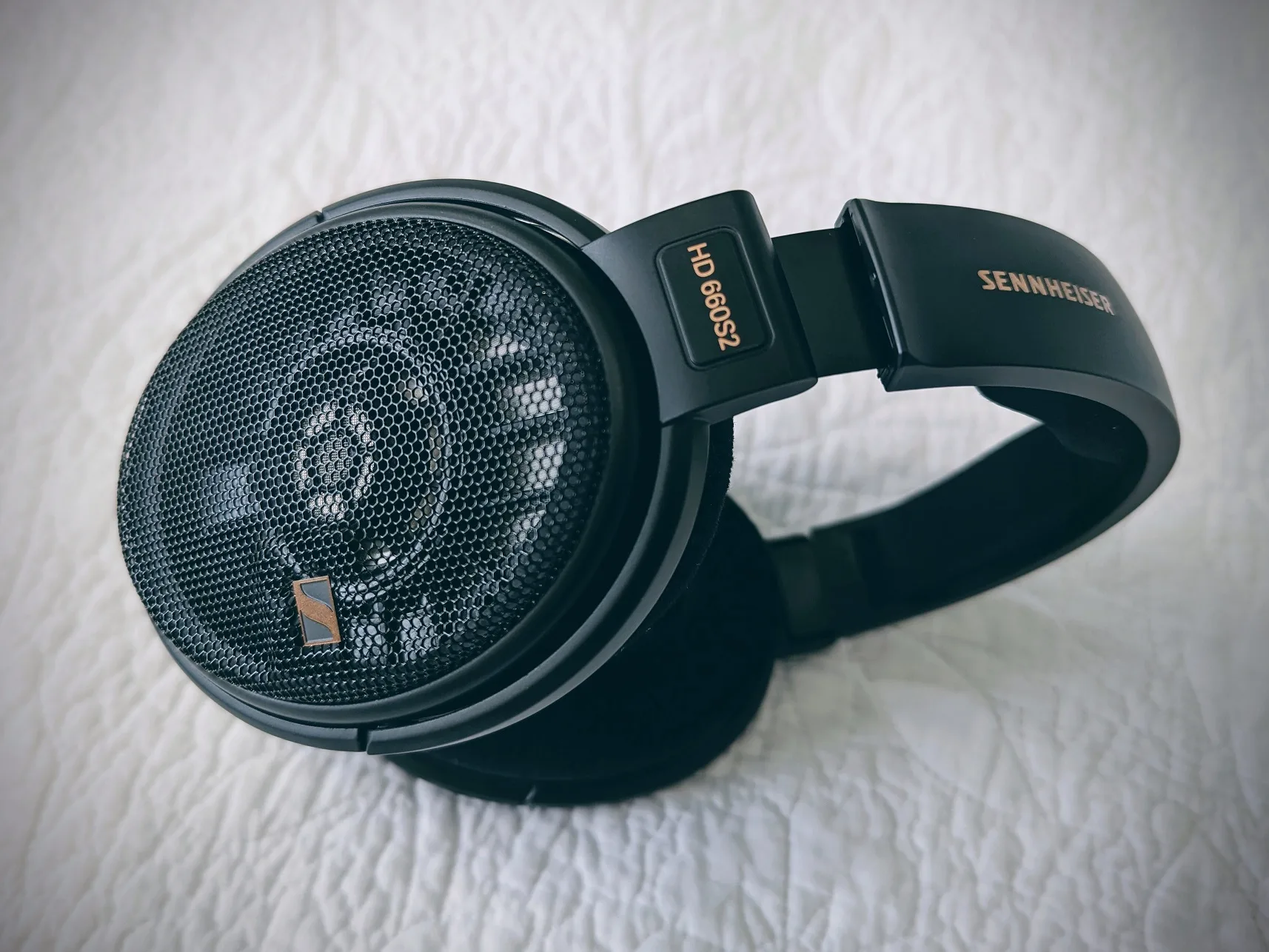
Despite its plastic construction, the HD 660S2, in my opinion, looks quite stylish and valuable thanks to its black coloring and bronze details (texts and manufacturer's logo on the cup grilles). At 260 grams, it is also extremely light compared to other headphones costing 500–1000 euros. However, wearing comfort is still a bit of a double-edged sword, as the horseshoe-like shape of the headband causes strong pressure below the ears. The headphones also clamp too tightly on the head when new. However, the headband loosens with use and the ear pads give way a bit, after which the presence of the HD 660S2 is hardly noticeable at all after a short period of getting used to it. It is possible to wear the headphones for example all day, which is hardly possible for example with the nearly 600-gram Moondrop Venus in the case of.
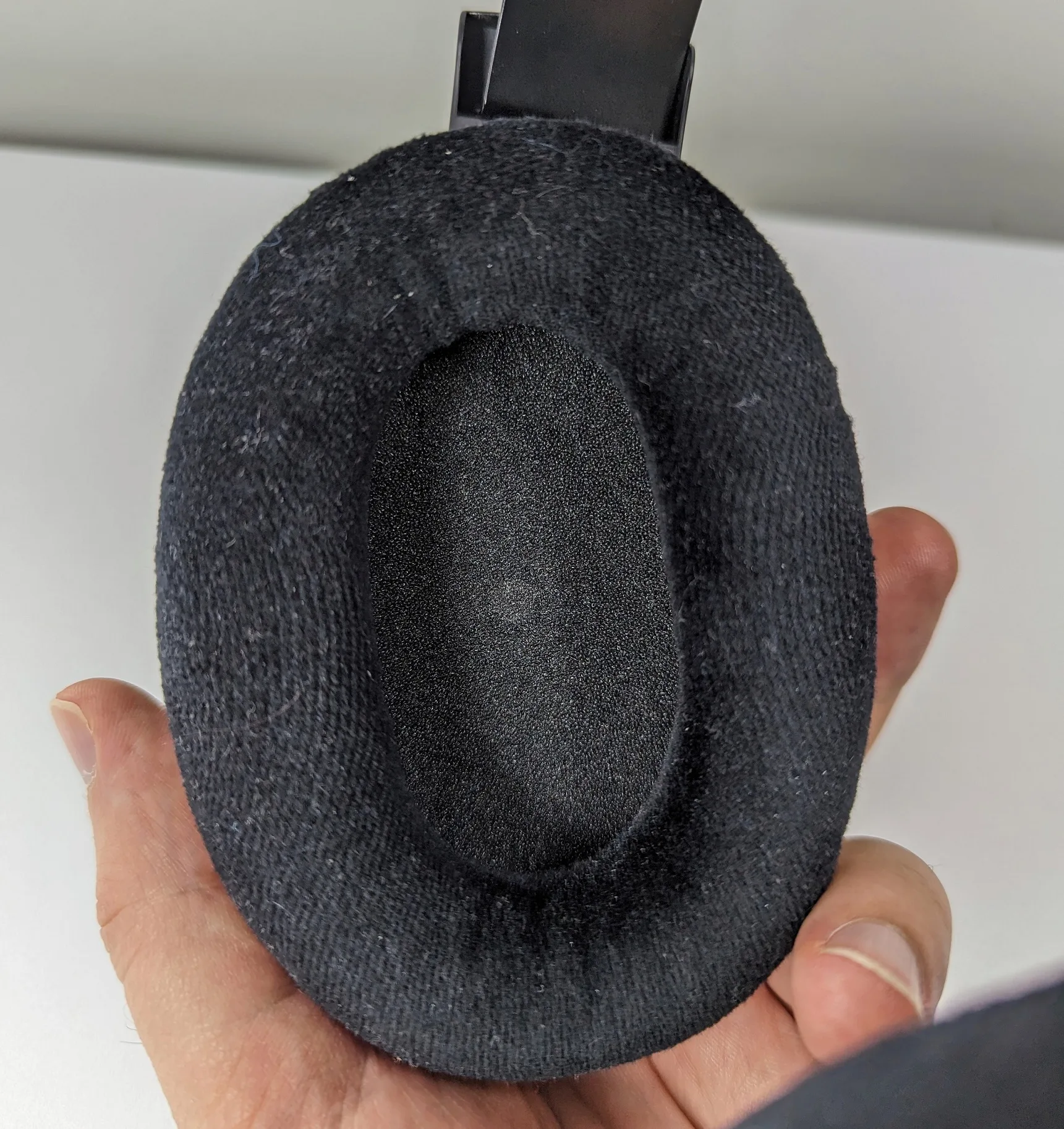
Sennheiser's new model uses fabric ear pads familiar from other models and a similarly shaped headband pad. These parts are soft and comfortable, but as usual, they wear out quite quickly with use, requiring replacement. The ear pads are not entirely optimal for me due to their narrow ear opening, as my ears easily touch the edges of the pad. With careful positioning, I can still get the headphones on my head so that wearing them is not bothersome. There is certainly enough height and depth in the pads for most people.
Sennheiser still relies on its own 2-pin connector for cable attachment, which is not used in a similar way by any other manufacturer's headphones. However, replacement cables can now be purchased for less than 20 euros at their cheapest, should someone need one, for example, with a different connector. Sennheiser's own rubber-coated cables are basically good, and two come with the HD 660S2. A modern 4.4 millimeter connector has been chosen for the balanced cable, which may still cause many headaches regarding device compatibility. A 4-pin XLR adapter could have been a useful addition in the product package.
Updates made to the driver:
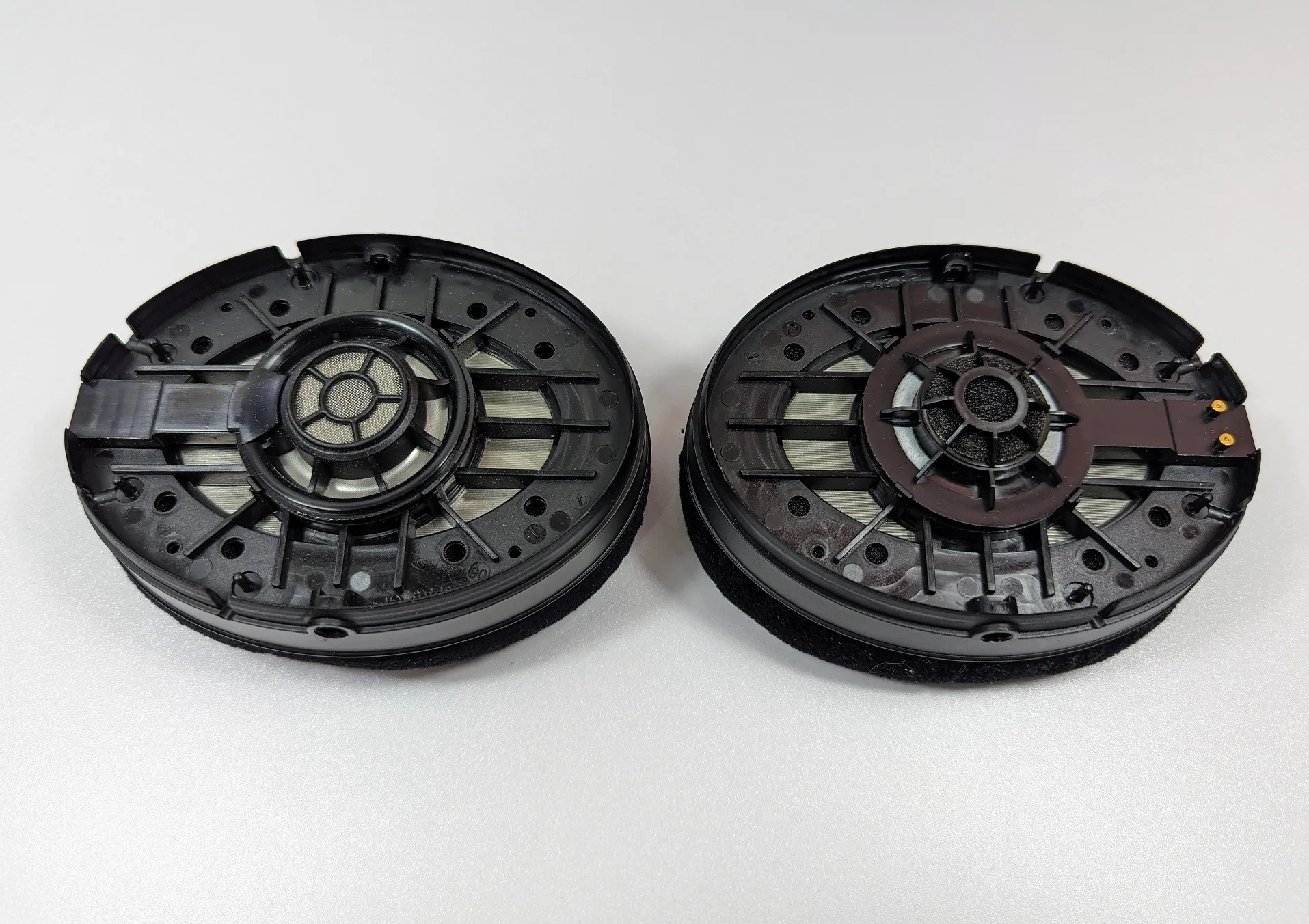
In the HD 660S2 model, Sennheiser has returned to a dynamic driver (38 millimeters in diameter) with a 300-ohm impedance. The manufacturer states that they have developed a new voice coil with more magnetic power and greater electrical damping compared to the driver used in the HD 660S model. In addition, the resonant frequency has been lowered to 70 hertz, which has a positive effect on the audibility of the sub-bass. A lot of time has also apparently been spent optimizing the driver's back structure and airflow.
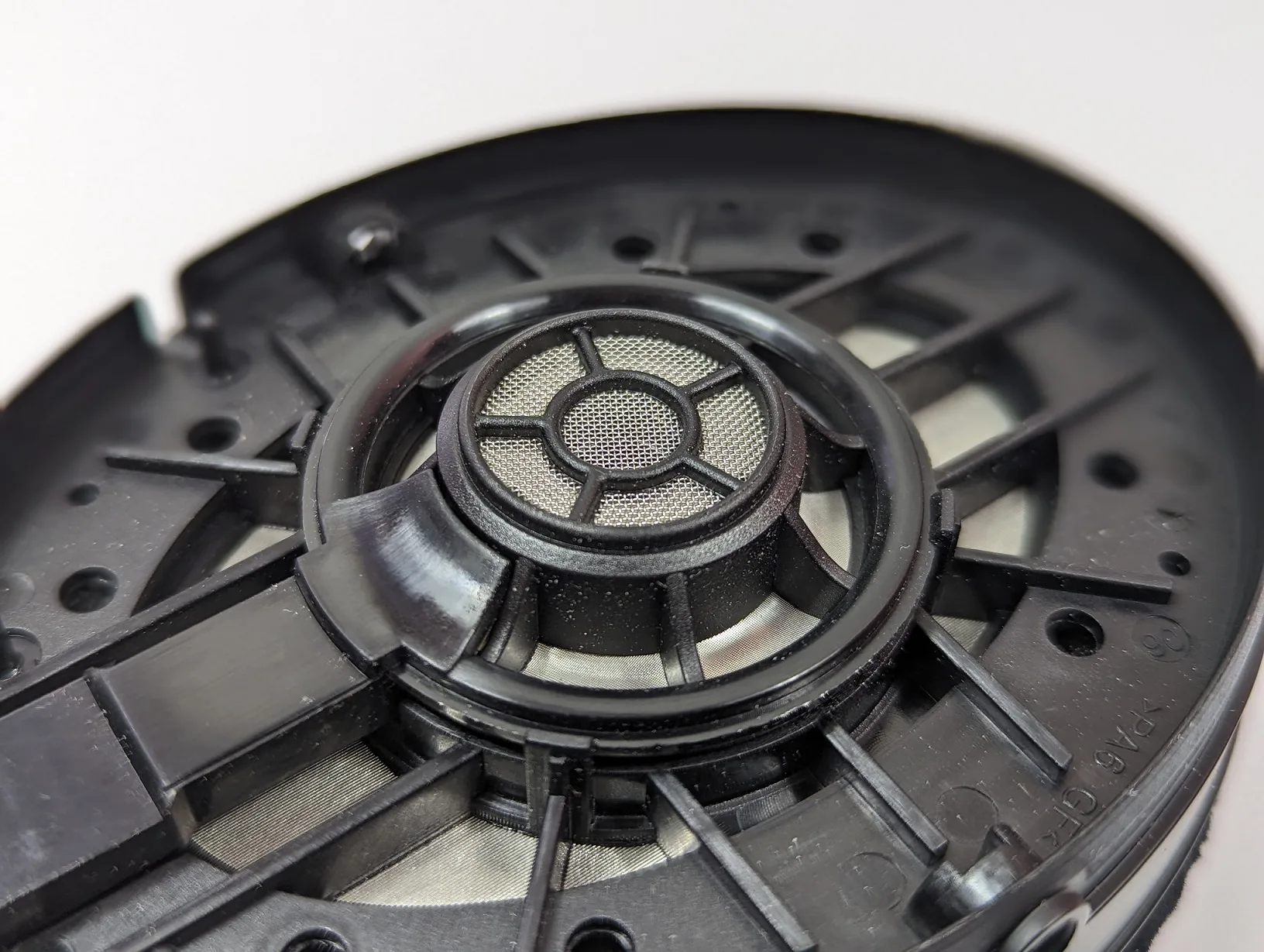
Due to structural changes, the headphone driver looks quite different when viewed from the back, for example, compared to the HD 600 model's driver. Part of the significantly higher launch price of the HD 660S2 may be explained by development costs. For comparison, the drivers of the HD 600 and HD 650 are very similar, with the difference that a thicker layer of airflow-restricting foam material has been added to the back of the latter.
Sound quality
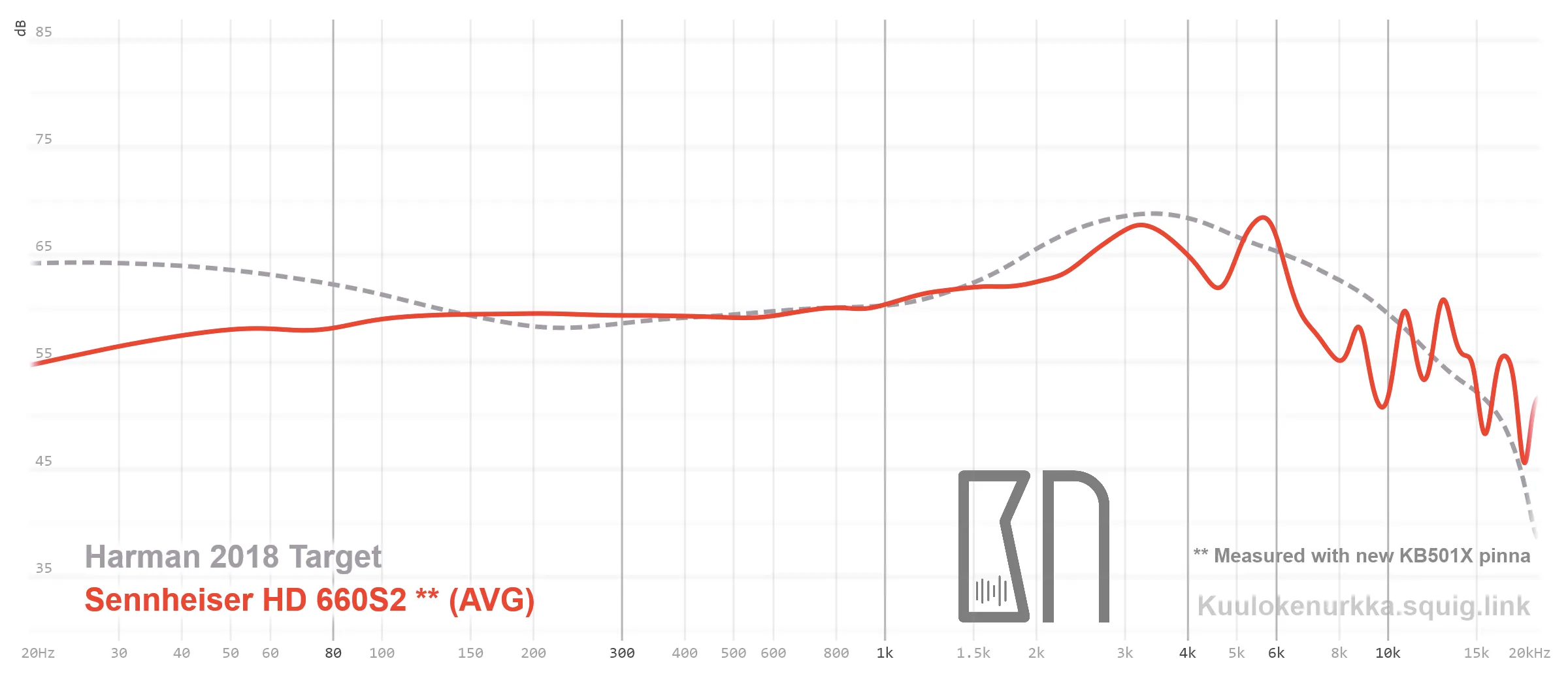
The headphone frequency response measurements were made using IEC711 standard equipment and new, more accurate silicone ears (KB501X). The graphs use the scientifically based Harman target curve (2018 version) as a reference, which is a generalisation of the frequency response that most people think would sound good. For more information on the measurements and their accuracy, see Headphone Measurements-page. The frequency response of the HD 660S2 can also be compared with other measured headphones comparison tool .
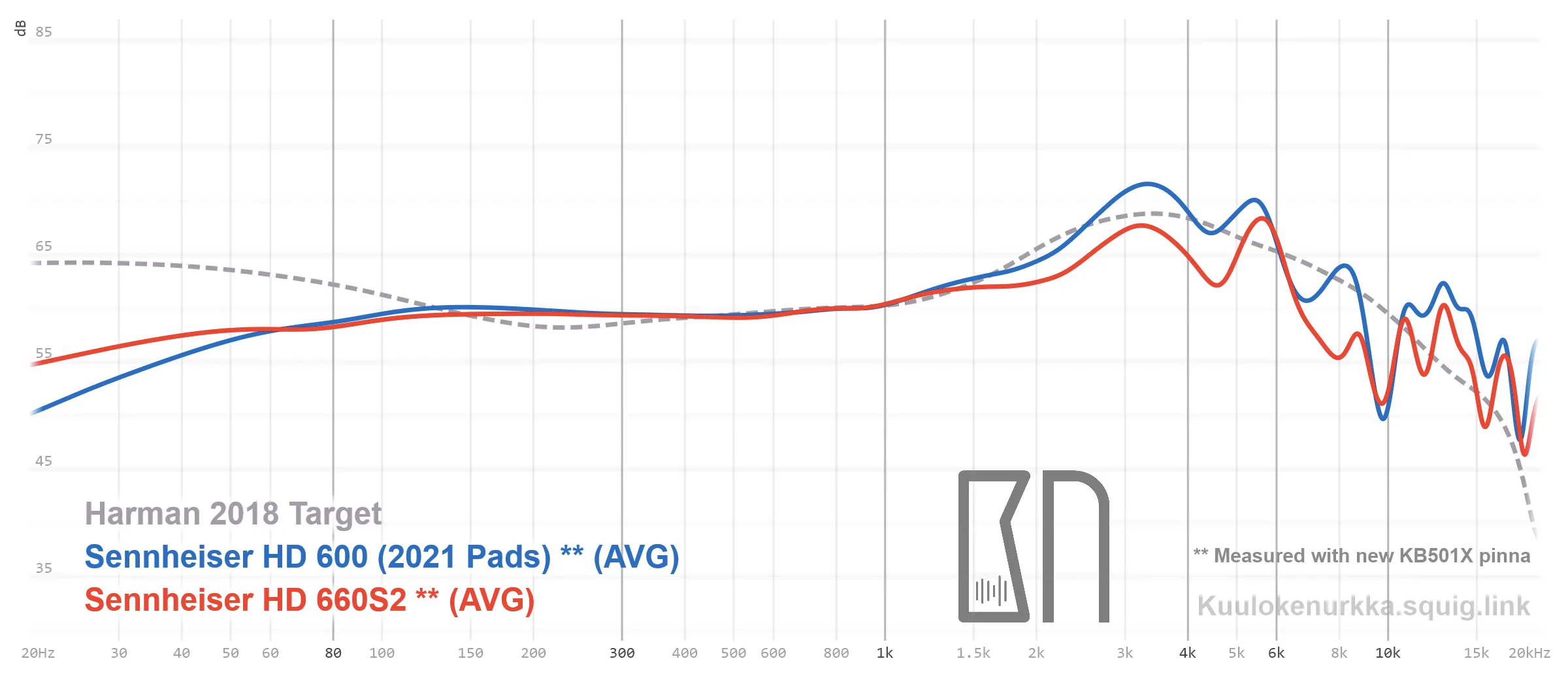
Since I assume the manufacturer's HD 600 model is already familiar to many and I have one available, I will compare the sound quality of the HD 660S2 to it throughout the review. My own HD 600 unit is the latest model in both its structure and ear pads, so older marble-patterned headphones may sound somewhat different. In general, there are units of these headphones with slightly different frequency responses, but they are likely still quite similar in overall sound. When I refer generally to the earlier HD 600 series from now on, I do not include the HD 660S model, which I have not heard to date.
HD 660S2 frequency response:
Frequency response compared to the HD 600 model:
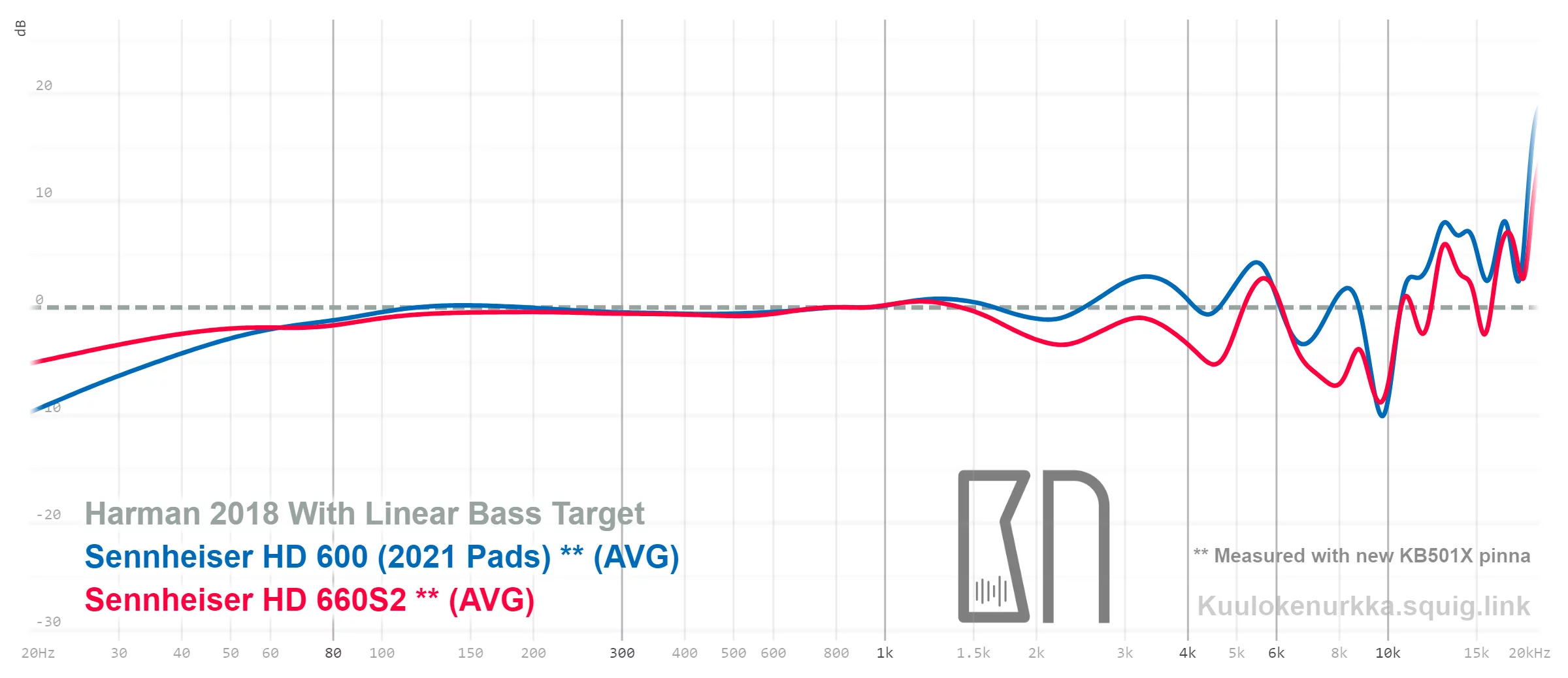
Two words come to mind regarding Sennheiser's new headphones: nice and tame. The HD 660S2 sounds balanced and warmly natural, meaning almost always good. However, its subdued reproduction in terms of energy level does not make a great impression on me, especially considering the 600 euro retail price. The presentation manages to be such that I would like a little more bass, mid-range, and treble. On the other hand, the headphones are well-suited for relaxed listening, and their sound is still sufficiently clear and detailed.
The HD 660S2 appears to be primarily designed for those who find the upper mid-range of the HD 600 and HD 650 too prominent and aggressive. Disregarding all other options on the market, I don't believe many others will be disappointed with Sennheiser's new model either. Ultimately, however, it is just a different and more expensively priced alternative in the HD 600 series, so the manufacturer's more affordable models offer it very stiff competition. In some respects, progress has been made, and in others, there has been a slight step backward.
Bass:
Sennheiser's mentioned development work in lowering the driver's resonant frequency and enhancing sub-bass audibility is evident in my frequency response measurements compared to the HD 600 model. The difference in bass quantity between the two is not huge in most listening situations, but the HD 660S2's sound has a more solid foundation and more depth. For example, the bass guitar rumbles more robustly, and electronic music even has a bit of punch. I also feel that the quality has improved, as the bass is now reasonably tight in style, and not as soft as in the HD 600. In fairness, it must still be mentioned that I expected even more linear reproduction, as compared to many other headphone models, the quantity of the lowest frequencies remains regrettably moderate by current standards.
For those who want more substantial bass, the HD 650 is likely still a better choice, as its mid-bass emphasis raises the bass level even around 100 Hz above the HD 660 S2. Interestingly, despite its unaccentuated bass, the new model sounds robust in its own way, because its low frequencies are quite well represented within the overall frequency range compared to the calmer high frequencies. This may ultimately be a more significant change in terms of bass reproduction than a small improvement in the very lowest frequencies.
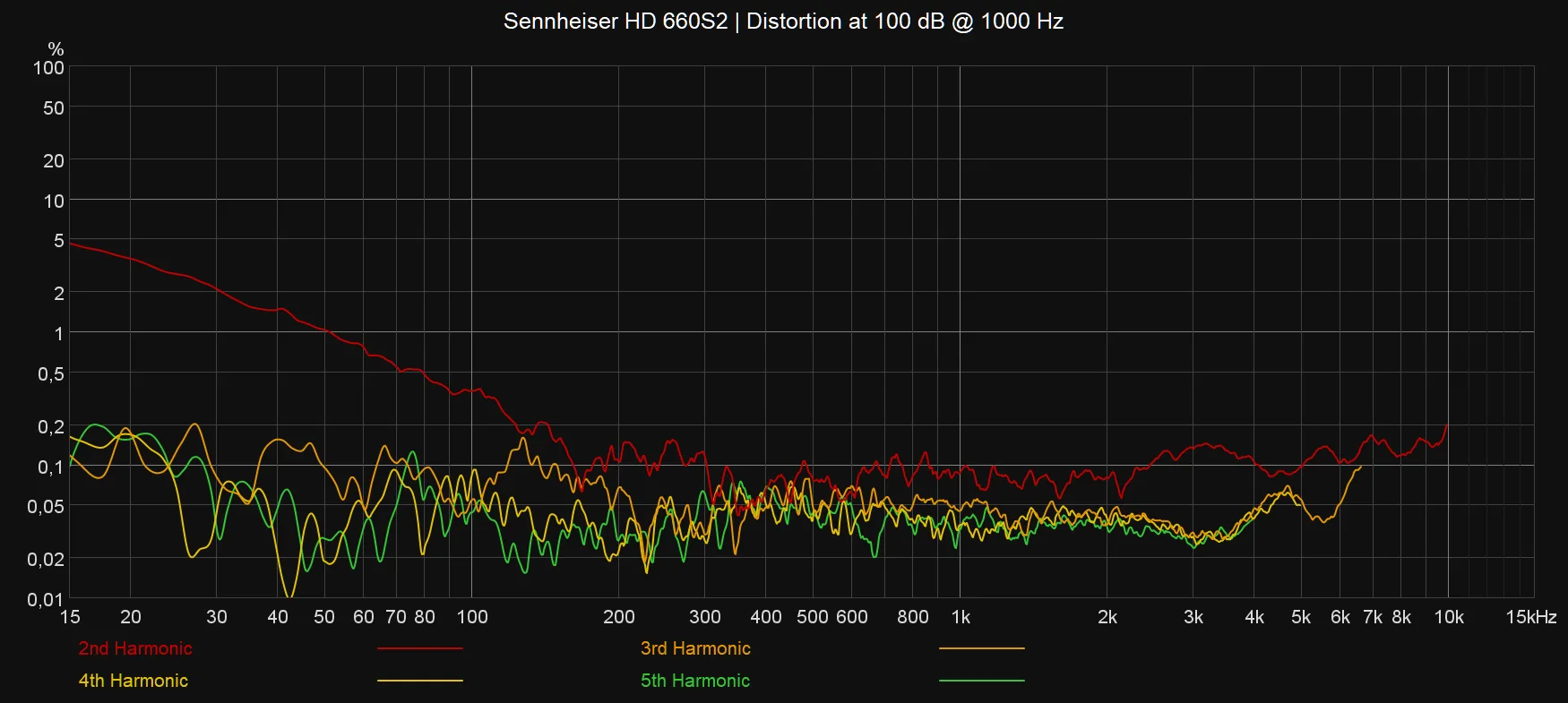
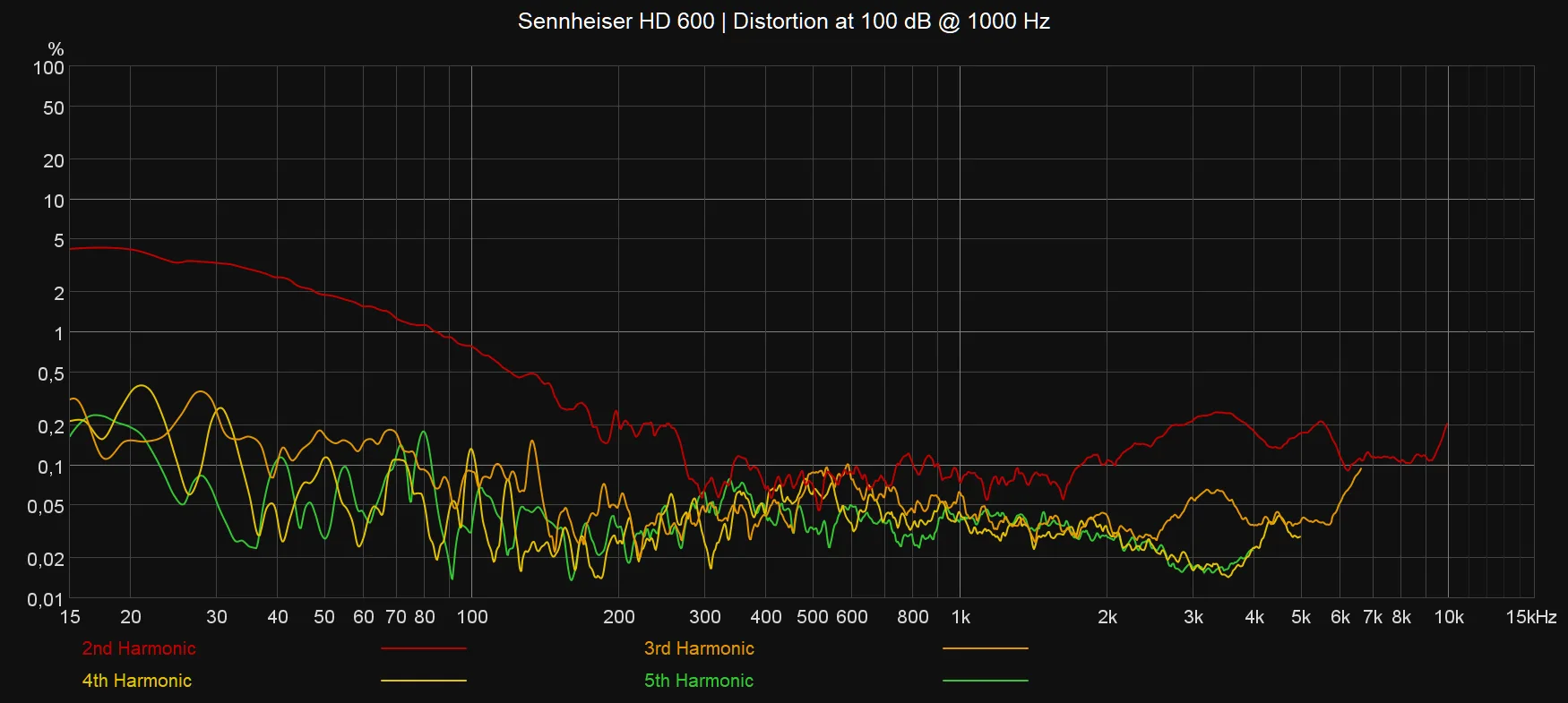
I generally do not publish headphone distortion measurements because the inexpensive microphone of my measuring equipment adds some of its own distortion to the results, and I am generally unsure about the accuracy of the results. This time, however, I measured the distortion values of both the HD 660S2 and the HD 600 to see if the new model has less distortion at bass frequencies.
Although there is still a significant amount of distortion at the lowest frequencies according to my measurements, the situation appears to have improved somewhat. For example, the 2nd Harmonic distortion at 50 Hz in the HD 660S2 is about 1 percent, while in the HD 600 it is 2 percent. Correspondingly, a smaller amount of distortion between 20–40 Hz is a welcome improvement, considering that the amount of sub-bass in the HD 660S2 is simultaneously greater than in the HD 600 model. A small improvement has also occurred at higher frequencies, which was repeatable with several consecutive measurements. I performed the measurements by setting the volume to 100 decibels at a frequency of 1000 Hz, so at lower volumes, there would be less distortion.
Mid-frequencies:
The HD 660S2 manages to be almost as natural in its mid-range style as other HD 600 series models, but its presentation is tamer and more distant in terms of energy level due to calmer upper-mids. The frequency response has a dip especially between 4–5 kHz, which is even more clearly visible in the manufacturer's own measurements made with the B&K 5128 device. The headphones don't sound particularly muffled, but the reproduction is softer and more relaxed than usual. This may suit those with sensitive hearing between 2–4 kHz. The HD 660S2 also sounds surprisingly warm and full-bodied, even though it lacks the mid-bass emphasis of the HD 650 model. The frequency response should always be perceived as a whole, so taking energy away from the upper frequencies brings out the lower frequencies better. The same can be heard, for example, in Audeze's traditional LCD series headphones.
The calm upper-mids of the HD 660S2 also affect the soundstage, as elements that usually come close, such as the vocalist and the details of most instruments, remain further away in the overall presentation compared to other HD 600 series models. The HD 660S2's reproduction has a sense of spaciousness, and the headphones give the listener more time to focus on smaller background sounds as well. On the other hand, these sounds are generally quieter than with the clearer and more energetic HD 600.
The changes in the new model can indeed divide opinions, especially as they simultaneously lose some of the intimacy for which other models are known. Unfortunately, the HD 660S2 leaves me a bit cold compared to the HD 600 model, as its reproduction lacks enthusiasm and grip. On the other hand, I cannot say that the HD 660S2's heavier-styled and more spacious soundstage presentation wouldn't also sound better some of the time. The headphones seem to be above all different, so they excel in different situations. For me, the HD 600 already sounds balanced and relatively relaxed despite its slight aggressiveness, so the HD 660S2 sometimes feels a bit too tame. However, the difference may appeal to many others, so I don't inherently see the increase in options in the model series as a bad thing.
Treble:
The headphones' upper frequencies between 6–9 kHz are quite dark, so most bright sounds are heard more quietly than usual, as if in the background of other elements. However, sufficient airiness above 10 kHz prevents the reproduction from being too congested. Listening to the HD 660S2 is easy because it is quite forgiving of musical flaws and excessive sharpness. Unfortunately, in my experience, the treble still sometimes has some unevenness, as for example, the shimmer of drum cymbals can have a slightly rustling nuance, and certain sounds feel somewhat sharpened. The sound doesn't grate on my ear, and there's no emphasized sibilance in vocal performances, but I have heard significantly more balanced treble reproduction.
Based on my memories, the similarly calm upper frequencies in the HD 650 manage to be more natural. Sennheiser has likely aimed for a different listening experience with the treble of the new model, which would be a kind of intermediate form between the HD 600 and HD 650. If someone doesn't like bright reproduction, the HD 660S2 is still a very safe choice in my opinion. For example, almost all Hifimans and Meze Audio 109 Pro are clearly more fatiguing to listen to during longer use. Sennheiser's own HD 600 also brings the upper frequencies much more to the forefront in the overall presentation, which I, however, perceive as a positive thing from the perspective of sound clarity.
Audio description:
The soundstage of the HD 660S2 does not actually spread wider than in other HD 600 series models, but the calmer upper-midrange reproduction I mentioned brings a sense of spaciousness to the presentation. I appreciate it as a change that the reproduction doesn't come completely in your face, but I can better observe the movements of sounds in space. I also find the soundstage quite precise and accurate, so the development work on the driver's structure may have brought a small improvement in that area, even though the more subdued upper frequencies somewhat reduce the feeling of openness and the overall clarity of the sound.
Despite the changes, the listening experience is still very headphone-like, meaning that the sound plays focused, as if inside the head and earcups. The reproduction is easy to follow, but the interesting spatial impression offered by many other headphones in the same price range is missing. All things considered, the HD 600 series' presentation style is clearly liked, as Sennheiser also knows how to utilize it in its marketing. In a way, such a presentation style can indeed be a way to stand out from the crowd.
Dynamics and resolution:
The sound of the HD 660S2 is always controlled, but never truly powerful or explosive. However, only a few headphones stand out in terms of dynamics, so I don't really find Sennheiser's new model exceptional in any way. In a certain sense, dynamics can also be perceived as a contrast between low and high frequencies, in which case V-shaped tuned headphones are automatically a bit more lively. A calmer sound like that of the HD 660S2 is rarely the most dynamic, but in my opinion, there's nothing wrong with it, just as there isn't with other HD 600 series models.
The HD 660S2 may initially seem somewhat more resolving than, for example, the HD 600, because the new model pays more attention to the bass and lower mid-frequencies, as well as the locations of sounds in the soundstage. The HD 600, on the other hand, brings out small details more sharply thanks to its more energetic upper frequencies, so there is likely no significant difference in inherent resolution between the models, apart from the frequency response. The HD 600 could probably be made quite similar by equalization, which makes the significantly higher selling price of the HD 660S2 difficult to fully understand.
For a similar amount of money, many more resolving planar headphones can be purchased, such as Hifiman Edition XS or SASH Tres. I would also argue half cheaper Hifiman Sundara more impressive sounding in its ability to bring out musical details, even though the HD 660S2's sound may still otherwise be more pleasant to many and thus worth the extra price. However, a significant improvement over the more affordable HD 600-series models should not be expected. On the other hand, there's no need to be disappointed, as the HD 660S2 is still a detailed hi-fi level headphone, whose strength is rather the effortless nature of its sound.
Confirmation
Regarding amplification needs, the HD 660S2 is not particularly demanding despite its 300-ohm impedance, as its sensitivity is higher than, for example, the HD 600 model (104 vs. 100 dB/mW). Sufficient volume is therefore easy to achieve even with affordable dongle devices, such as iFi's 60-euro GO Link. However, it should be noted with these headphones that their impedance response is not flat; instead, the impedance rises even manifold at low frequencies. For this reason, optimal amplification of low frequencies may not necessarily be achieved through, for example, a mobile device's or laptop's headphone jack.
The HD 660S2 sounds quite good, but somewhat lifeless with low-impedance transistor amplifiers, such as Topping DX1. With a tube amplifier, however, the headphones become more interesting and suitable when aiming for a pleasant listening experience. For example, with the Cayin HA-3A, vocal performances have more emotion, making their calmness work well. The bass also kicks a bit more robustly, which supports Sennheiser's desired warm-sounding presentation. The HD 660S2 also sounds pleasantly full with the warm-sounding Tor Audio Roger amplifier, but it softens the reproduction compared to the HA-3A.
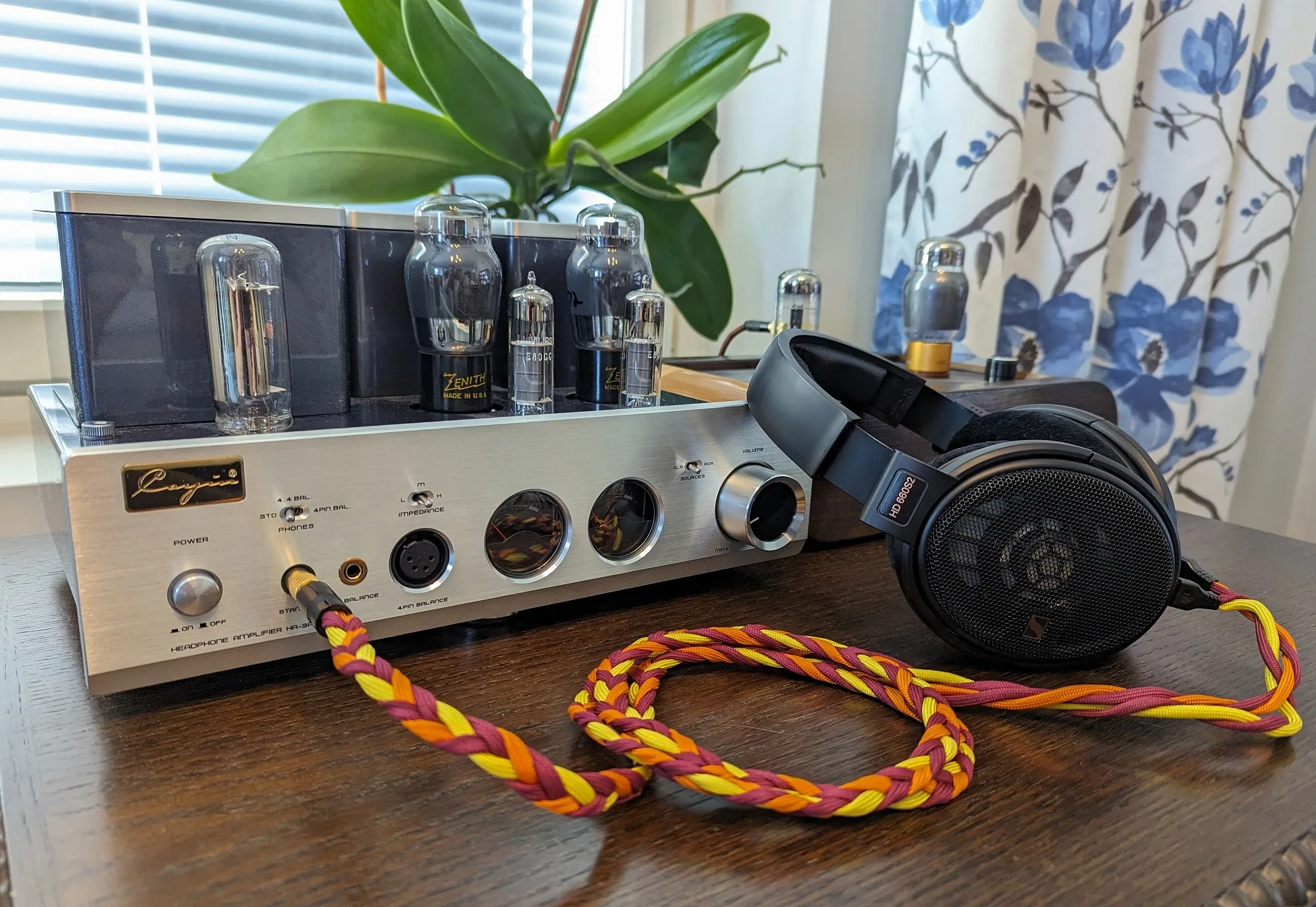
Among transistor devices, with the Cayin IHA-6 (10 and 35 ohm connectors), the sound remains somewhat subdued in terms of energy level, even though I like the spacious soundstage produced by the device. The more vibrant Nitsch X Schiit Audio Magni Piety, on the other hand, brings the drive and edginess I crave to the sound. In Sennheiser's lineup, the HD 600, in my opinion, needs a little relaxation and ”warming up” from a listening pleasure perspective, whereas the HD 660S2 seems to benefit from a more energetic listening chain in style. On the other hand, with a suitable tube amplifier, the new model can achieve a more intimate and full reproduction similar to the HD 650. The sound can indeed be fine-tuned quite versatilely with equipment choices, because thanks to the 300-ohm impedance, using different amplifiers is generally possible without major adverse effects.
Sennheiser HD 660S2 vs. other 500–1000 euro headphone models
In the price range of the HD 660S2, the planar models I've heard, Hifiman Edition XS, Hifiman HE6se V2, SASH Tres and Moondrop Venus, separate sounds more distinctly from each other and offer a more impressive soundstage that extends more outside the head. The Meze Audio 109 Pro, at 800 euros, also sounds both more fun (engaging) and more detailed. Nevertheless, the HD 660S2 ultimately does not significantly lag behind in any area; instead, it offers a balanced and relaxed listening experience, especially for those who like Sennheiser's HD 600 series. Many might never consider significantly heavier planar headphones, and most of them also have a brighter treble that can potentially cause more listening fatigue. The HD 660S2 is quite forgiving of musical flaws and overly energetic recordings.
A calmer upper-midrange reproduction may also be on many wish lists, both compared to other HD 600-series models and their competitors. However, if a more energetic reproduction is preferred and the treble can have some sparkle, Hifiman's Sundara is, in my opinion, a really tough competitor for the HD 660S2. This places Sennheiser's new product in a somewhat difficult price bracket. For example, at 400 euros, it would be a more viable option compared to its competitors. I still believe that the headphones will sell purely on Sennheiser's good reputation as a headphone manufacturer.
Summary
Sennheiser's HD 660S2 ultimately leaves me with a somewhat conflicting feeling. It is clearly intended to be a less mid-range-focused alternative to the more affordable HD 600-series models, which it succeeds at well. The low frequencies are more prominent in the overall sound, and there is a new sense of spaciousness in the soundstage. I consider these changes favorable when aiming for a relaxed listening experience, but at the same time, the result is already a bit too subdued for my taste. For me, an updated HD 600 model with stronger bass reproduction and, for example, a headband structure made of aluminum or magnesium would have been sufficient as a series refresh.
I would not call the new model a significant improvement over the more affordable alternatives in the HD 600 series, nor would I gladly pay 600 euros for its distinctiveness. Instead, 350–400 euros would, in my opinion, be a more suitable price considering competitors' products, at which price the HD 660S2 will likely be available once the post-release dust settles a bit. For example, in the United States, the headphones have already been sold at a discount for 400 dollars. At a suitable price, the HD 660S2's sound profile, in my opinion, fits well into the HD 600 series, as the headphones have familiar good characteristics, but are still sufficiently different from other models. The lightness of the construction and user comfort are still clear strengths compared to many competitors' products. The HD 660S2 will certainly find its own customer base.
Pros and cons:
+ Effortless and quite balanced sound
+ More spacious-feeling soundstage compared to other HD 600-series models
+ Rich and thus natural style of mid-frequencies
+ Sub-bass is more prominent than in other HD 600 series models
+ High impedance offers options for equipment choices
+ Light weight and good wearing comfort after burn-in
+ Comes with two headphone cables and a rarer adapter cable
+ Serviceability through spare parts
+/- The soundstage is still narrow and intimate compared to competitors' products
+/- Relaxed upper midrange frequencies are, depending on preferences, either a good thing or a clear degradation compared to HD 600 and HD 650
+/- Same construction and materials as in the manufacturer's more affordable headphone models
– The sound leaves one somewhat cold in terms of energy level
– – Bass reproduction is still moderate by modern standards
– Treble is slightly uneven and at times sounds too subdued
– Resolution does not compare to similarly priced planar headphones
– Earpads wear out quickly in use
– The launch price feels too high
 EN
EN  FI
FI
Thank you for the good and thorough review of the Sennheiser HD 660S2 headphones. Based on your writing, I will probably acquire these headphones. These could now be obtained new from here for approx. 460 euros including shipping costs: https://www.rde.fi/products/fi/203/340045/sort/1/filter/0_0_0_0/HD-660S2-kuulokkeet.html?gad_source=1&gclid=CjwKCAiA7t6sBhAiEiwAsaieYsdqLGV1mno4qwL9KUtjzAJtG9iZpzwJZ2aPG2y1WgojWGX5dmZD1xoCxBEQAvD_BwE
I have had Sennheiser HD650 headphones for the last 10 years and have been quite satisfied with them. However, I did not intend to give these up even if I acquire the 660S2 model. My other equipment for headphone listening is currently a Wadia 21 CD player and a Rega DAC and Rega Ear II headphone amplifier. By the way, what is the headphones” ”burn-in time" in hours, generally?
Thanks for the feedback! The HD 660S2 model is indeed starting to become available at a more reasonable price, but I would almost recommend avoiding ordering from RDE. It's an Estonian company whose stock levels show whatever, deliveries take several weeks or even months, they pack products poorly or deliver wrong products, there's practically no reasonable customer service, and hardly any support is available even in problem situations. This was the case at least a year or two ago.
In my opinion, headphones don't have a real ”burn-in” period, so you can and should listen to them straight away without worrying about it. Of course, if you've listened to HD 650s for 10 years, getting used to a new kind of sound would certainly take some time (a few hours, a few artists, a few albums, or perhaps a few different days and listening moods). Initially, you might find the sound a bit unfamiliar or, with good luck, directly refreshingly new. Sennheiser's ear pads also soften quickly with use, so the headphones would likely feel slightly different after some time than when completely new. The sound produced by conventional drivers has not been observed to change "physically" with use, so the headphones themselves don't develop differently, even if the experience of them changes slightly. Headphone manufacturers, of course, recommend a long burn-in period, hoping that the buyer gets acquainted with the product at their leisure and doesn't return it within the statutory return period.
Thanks! I followed your advice and didn't buy headphones from RDE. Instead, I happened to win an auction on eBay and got new Sennheiser HD 660s2 headphones from Germany for 409 euros, including shipping costs.
There are indeed differences between the Sennheiser HD 660s2 headphones and the Sennheiser HD 650 model. Having used the latter for over 10 years, the sound of the new headphones does indeed sound a bit unfamiliar at first, though by no means bad. Neither model causes listening fatigue, e.g., due to excessive treble. The sound feels more open in the Sennheiser HD 660s2 model, but I find the bass response tighter in the Sennheiser HD 650 model. The strengths of each headphone model become apparent somewhat depending on what music and album one happens to be listening to.
It took too long to reply to this too, but it was nice to hear as a continuation how your headphone purchase turned out. Glad to hear the tips were helpful! Happy listening moments!
I listen to the HD 660 S2 with a Lehmann Drachenfels headphone amplifier. My DAC is a Musical Fidelity V-90. In my opinion, the combination works really well, and I am very satisfied with the sound. I used to listen with an iFi Zen DAC and Zen CAN combination. The Lehmann Drachenfels, in my opinion, drives the headphones somehow better than the iFi Zen CAN. It's definitely worth trying. There's some magic in Lehmann.