Author: Sword of Damocles
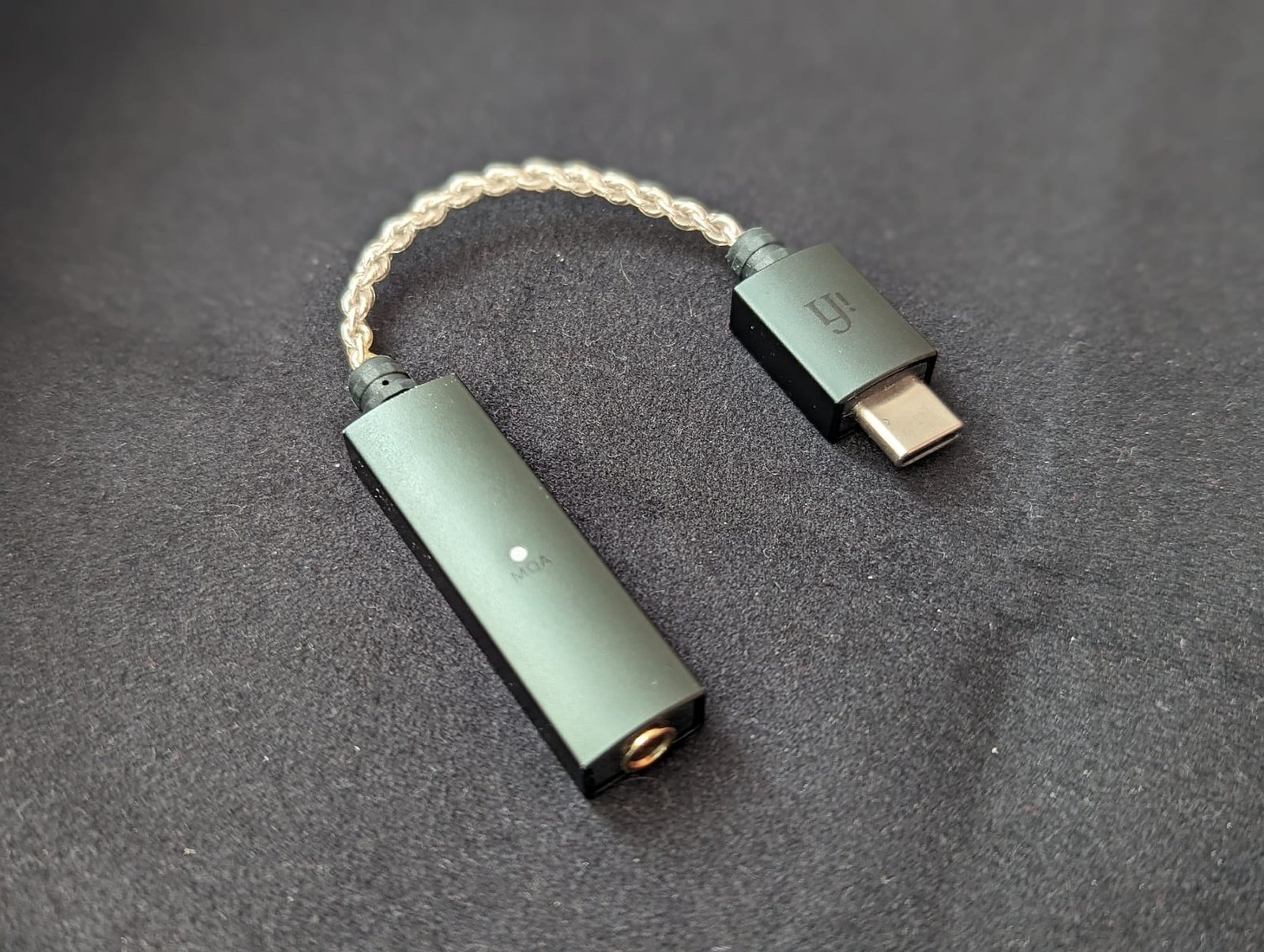
Table of Contents:
Information:
- Release year: 2023
- Country of Origin: China
- Price: 59 EUR
- Type: Mobile DAC & Headphone Amplifier
- DAC chip manufacturer: ESS Sabre ES9219MQ/Q
- MQA support
- Input connections: USB-C
- Output connections/headphone jacks: 3.5 mm
- Sampling rate PCM: 44.1–384 kHz (16–32 bit)
- Sampling rate DSD: DSD64–DSD256 (native)
- Sampling rate DXD: max 384 kHz
- Output impedance: < 0.4 ohm (does not alter headphone frequency response)
- Headphone amplifier output power: 70 mW (1.5 V) @ 32 ohm / 14 mW (2.0 V) @ 300 ohm
- Power consumption: approx. 1 W at full load
- External dimensions: 13.5 x 1.3 x 0.8 cm (interconnect cable length 6 cm)
- Weight: 11 g
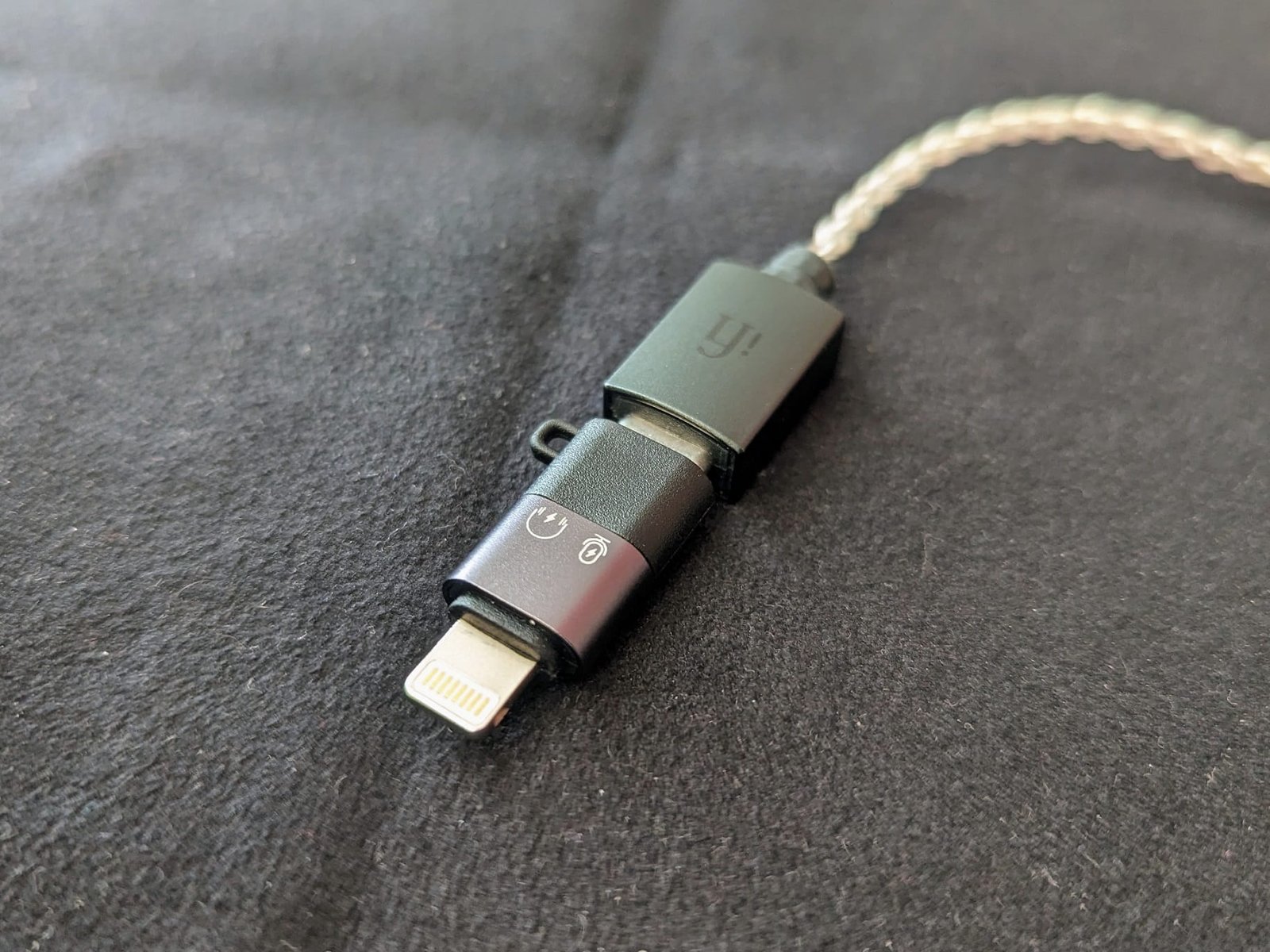
- Included: Apple Lightning adapter and USB-A adapter
Review unit acquisition method: Borrowed from a hobbyist
Although the majority of people nowadays acquire Bluetooth headphones for mobile use, some still want to listen to their wired headphones, for example, via their phone. However, mobile devices usually no longer have the traditional 3.5-millimeter headphone jack, which means some kind of adapter is needed to connect headphones to a USB port. As a result, small and relatively affordable USB audio adapters (dongles) have become common. They can also alternatively improve the sound quality of a laptop or any other device equipped with a mediocre D/A converter and headphone amplifier.
At their cheapest, such USB dongles cost a few euros or, for example, 10 euros, like the one that has become popular in hi-fi circles and whose measurement results are AudioScienceReview-site-proven excellent Apple dongle. Correspondingly, by paying a little more, higher quality products are available, which usually have a slightly better D/A converter and more amplification power for demanding headphones. The market offers numerous dongle devices, especially in the 50–150 euro price range.
I generally recommend the 130 euro priced Qudelix 5K:, because it also works with a Bluetooth connection and includes excellent software and an equalizer. However, some may be looking for a device that is simpler to use and slightly more affordable, in which case the 60 euro iFi GO Link (link to the manufacturer's product page) may seem like an interesting option. It straightforwardly converts a USB connector into a 3.5 millimeter headphone jack, while offering support for high sampling rates and the MQA audio format used until now in the Tidal streaming service.
I borrowed the Go Link for a couple of weeks from a fellow enthusiast, along with Sennheiser HD 660S2 headphones.
Structure
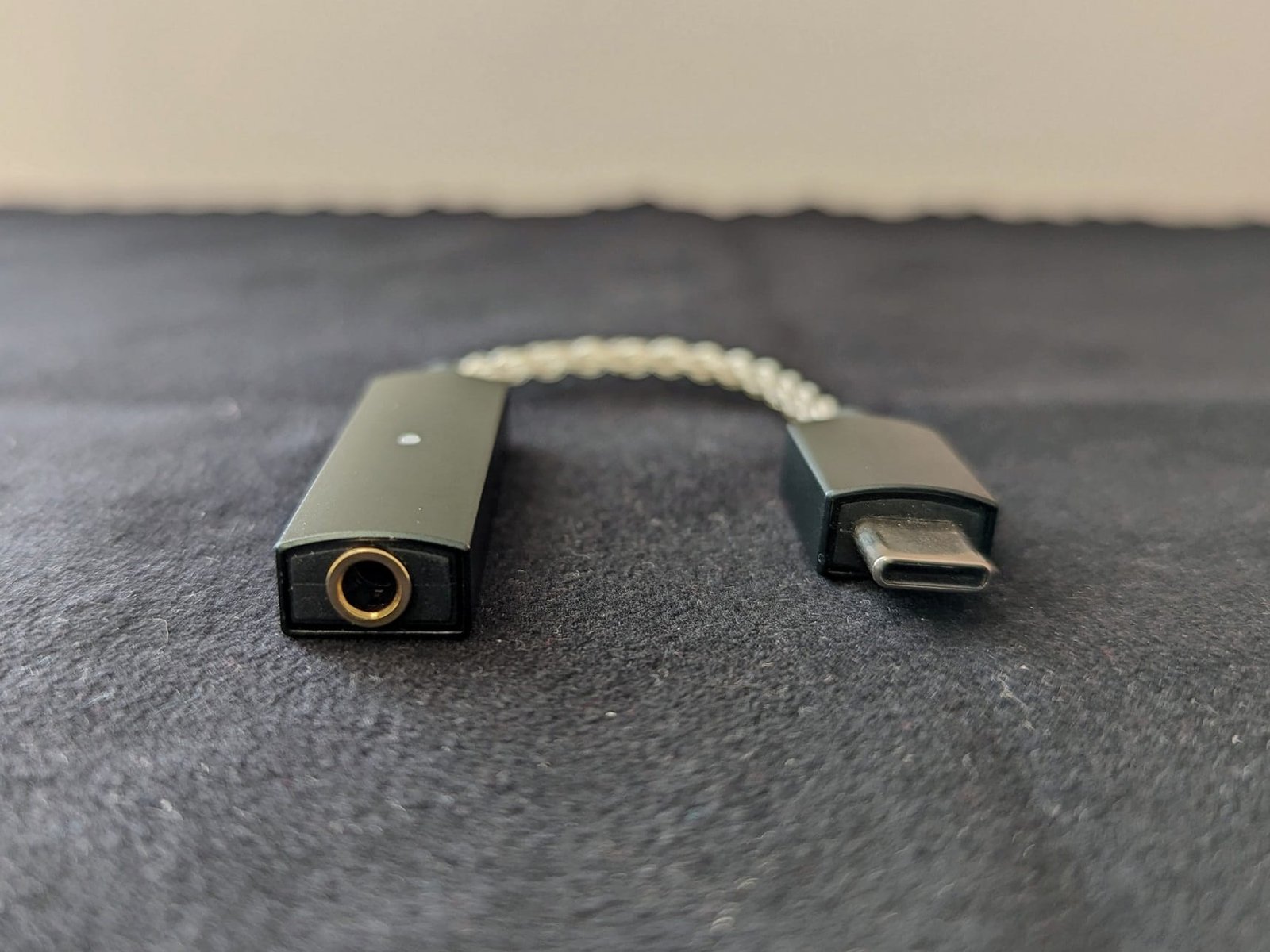
The GO Link is a compact device, whose USB-C connector and the DAC/amplifier section containing the 3.5 millimeter headphone jack are separated by a thin and flexible cable that is not detachable. Such a cable solution is common in similar devices to prevent excessive twisting and strain on the listening device's USB connector. The ability to turn the headphone jack in the desired direction during listening also adds flexibility to use.
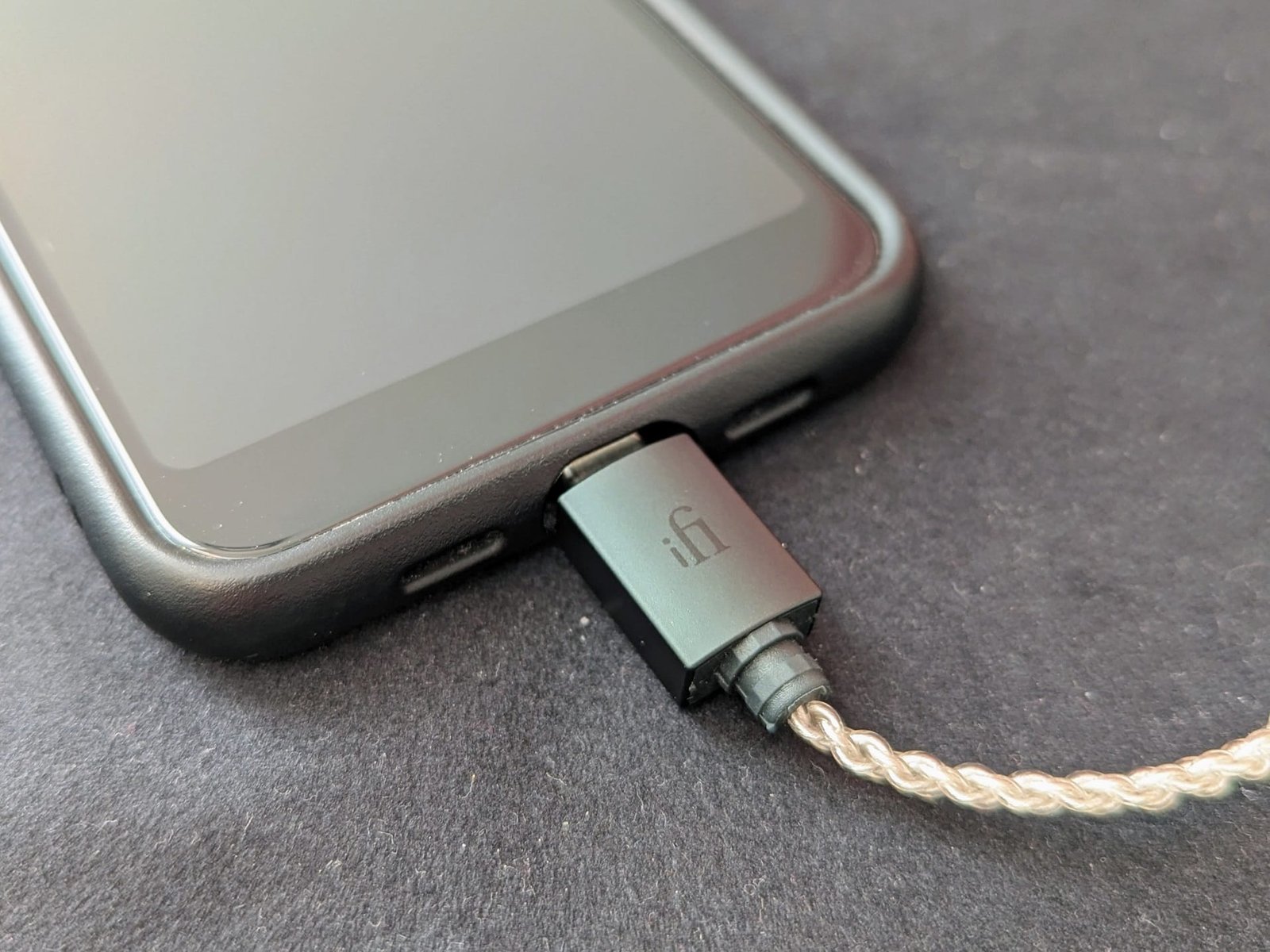
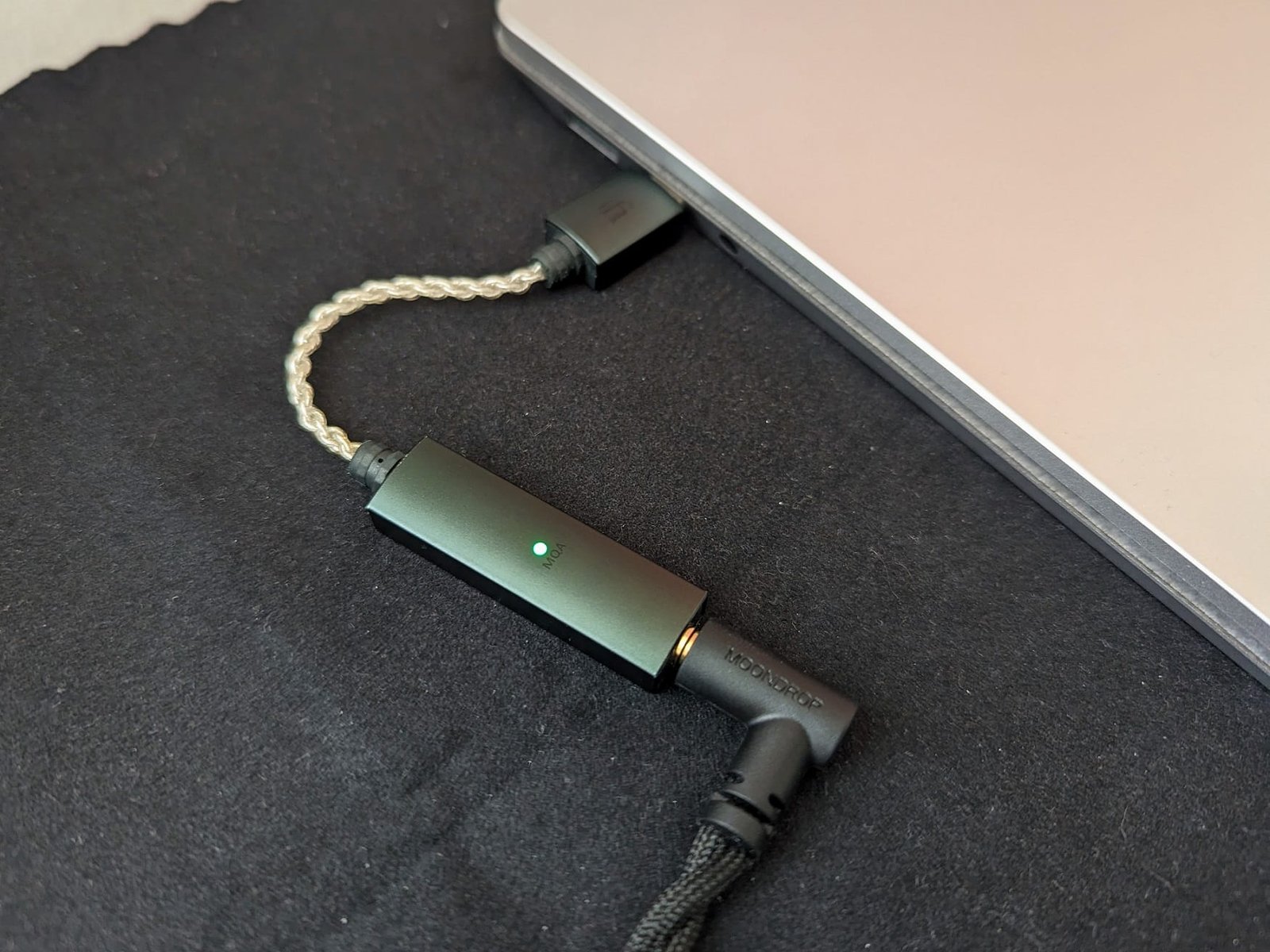
Both parts of the device are housed in stylish metal casings made of magnesium alloy, so the impression of quality is good in that regard. Unfortunately, the USB-C connector is exceptionally bulky, so it is not compatible with all phone cases. The connector barely fit into one of my phones, so its protective cases might follow some new standard regarding the cutout left for the USB connector. In the situation shown in the image below, however, the connector unfortunately did not fit.
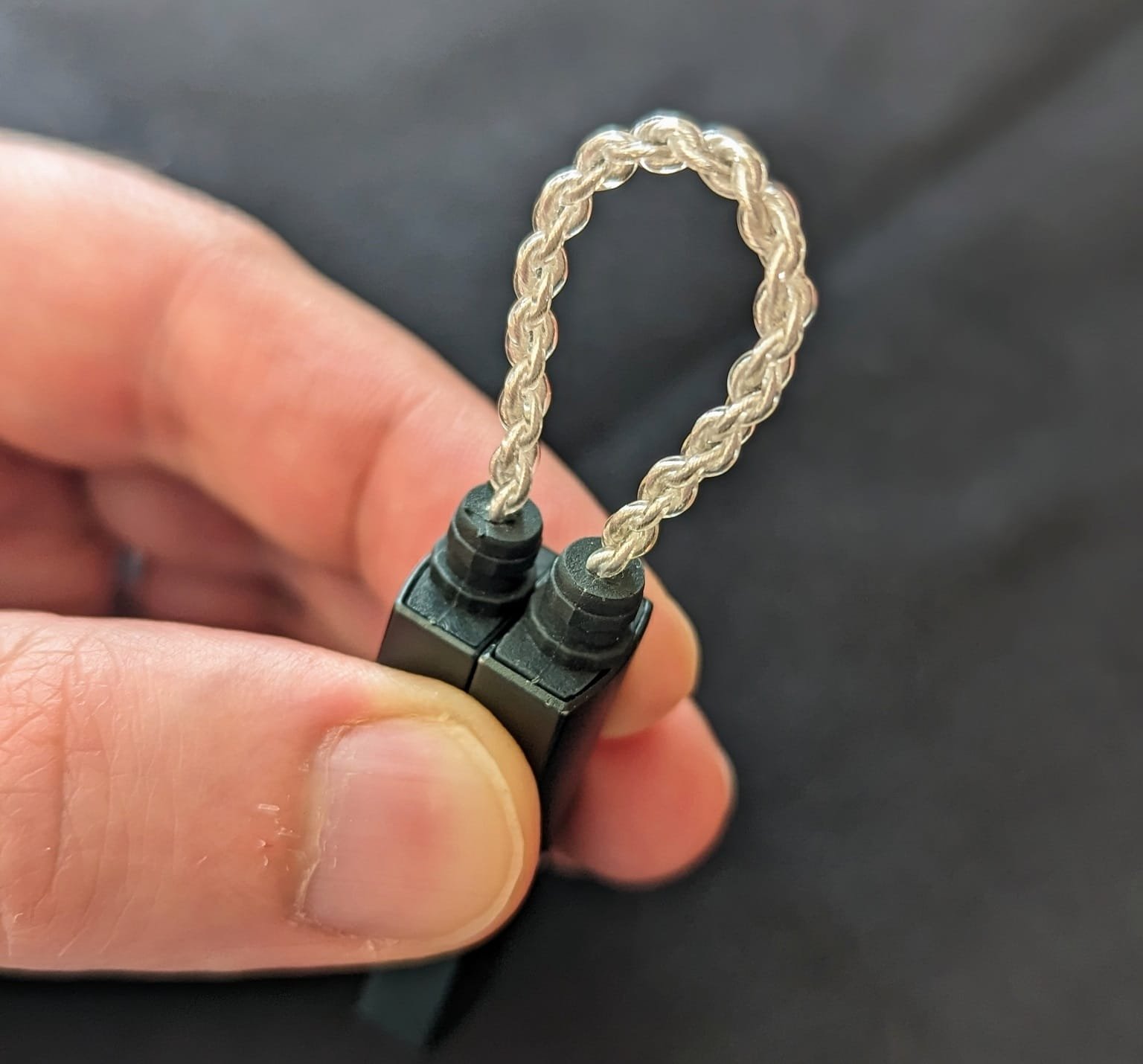
From the perspective of the GO Link's long-term durability, the fixed intermediate cable raises the most doubts, as it is really thin and flimsy. One must hope that the strain reliefs are strong enough so that neither end tears off when the cable is pulled more vigorously. In many competitors' products, the cable attaches to the device with a USB connector, allowing it to detach if pulled too hard. The GO Link would break in a similar situation.
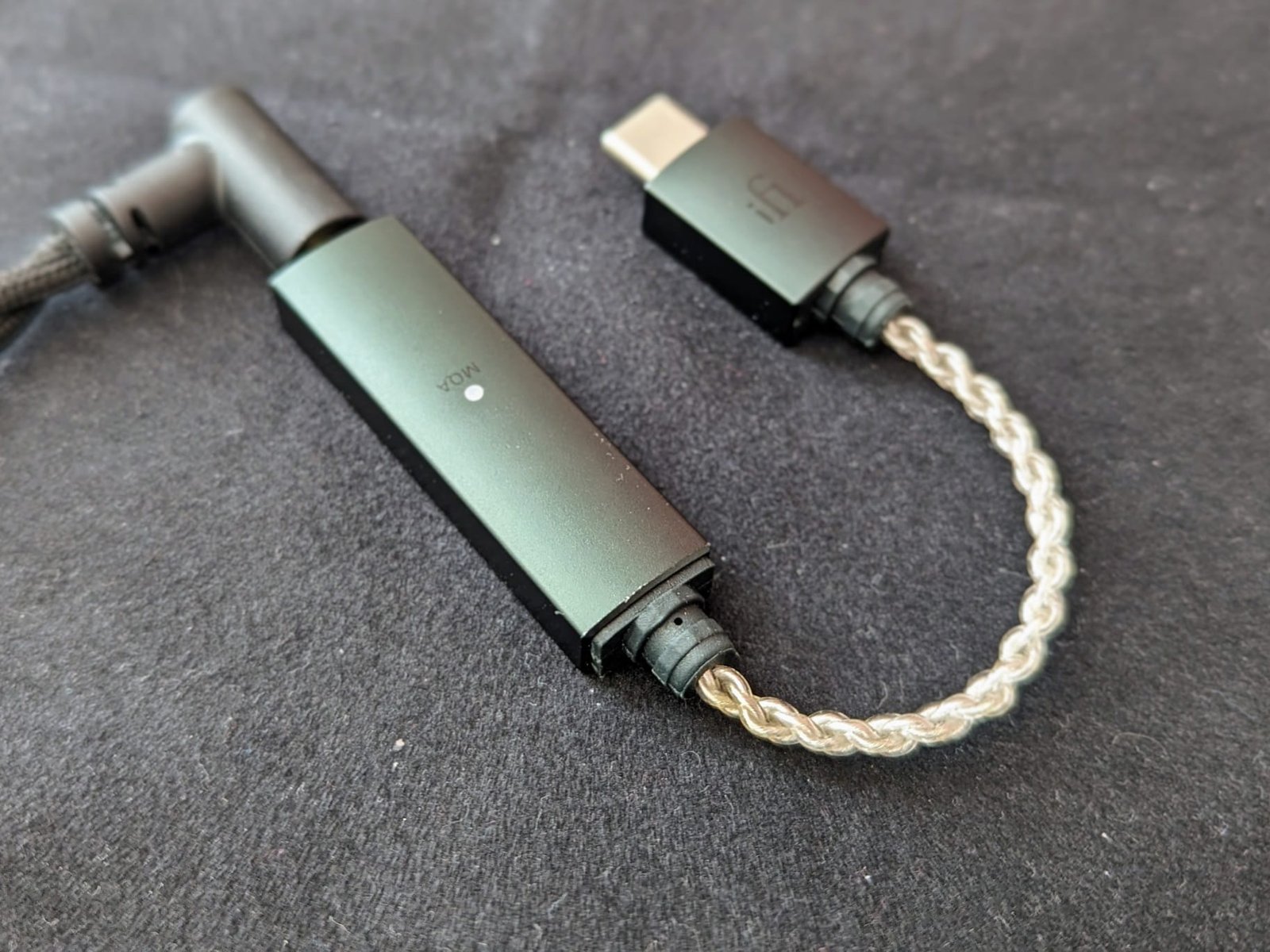
As a peculiar feature in my test unit, the parts also move about a millimeter backward inside the metal casings when attaching connectors. Because of this, for example, when pushing in a headphone cable, one feels like holding onto the other end of the device at the same time. I wouldn't want to see a situation where the parts pop out of their casings. It's not helped by the fact that the headphone jack is really tight, requiring the cable to be pushed in with force. My concern may, of course, be completely unfounded if the manufacturer has ensured the structural durability during the device's design phase. This characteristic may also not apply to all production batches.
Features
The device's D/A converter is implemented with an ESS Sabre ES9219MQ/Q chip, so this time iFi has not used a Burr Brown chip, as it usually has. Considering its affordable price, the GO Link supports a very wide range of sampling rates for both 32-bit audio and DSD. I see MQA support as an unnecessary addition in the current situation, as FLAC-quality music will soon be introduced to the Tidal streaming service. As a side note, I have never fully understood the pricing of MQA-supporting products, because in some desktop devices, an extra 100 euros had to be paid for the license behind the support, whereas iFi has managed to include it in a 60 euro dongle. In any case, the company that developed MQA filed for bankruptcy protection in the first half of 2023, so its days may be numbered.
The GO Link's 3.5-millimeter headphone jack outputs 70 milliwatts of power into a 32-ohm load and a moderate 14 milliwatts into a 300-ohm load. The amplification power is sufficient for most headphones and can even be a small improvement compared to laptop headphone jacks. For example, for in-ear headphones, more is not needed, whereas harder-to-drive over-ear planar headphones could benefit from additional power. On the positive side, however, the Go Link's amplifier outputs 2 volts of voltage, which is a clear improvement over the 1-volt amplification of the cheapest dongle devices. For example, the Apple Dongle sold in the EU region only operates in 0.5-volt mode with Android devices.
Another advantage of the GO Link compared to many other similar devices is hardware-level volume control. When the volume is changed, for example, from a phone or computer, it adjusts the volume of the GO Link's D/A converter instead of the device itself. This has, at least in theory, sound quality advantages compared to software-level volume control implemented in the listening device.
As a final note, the GO Link warms up somewhat during use, but not to a burning hot temperature.
Sound quality based on short testing
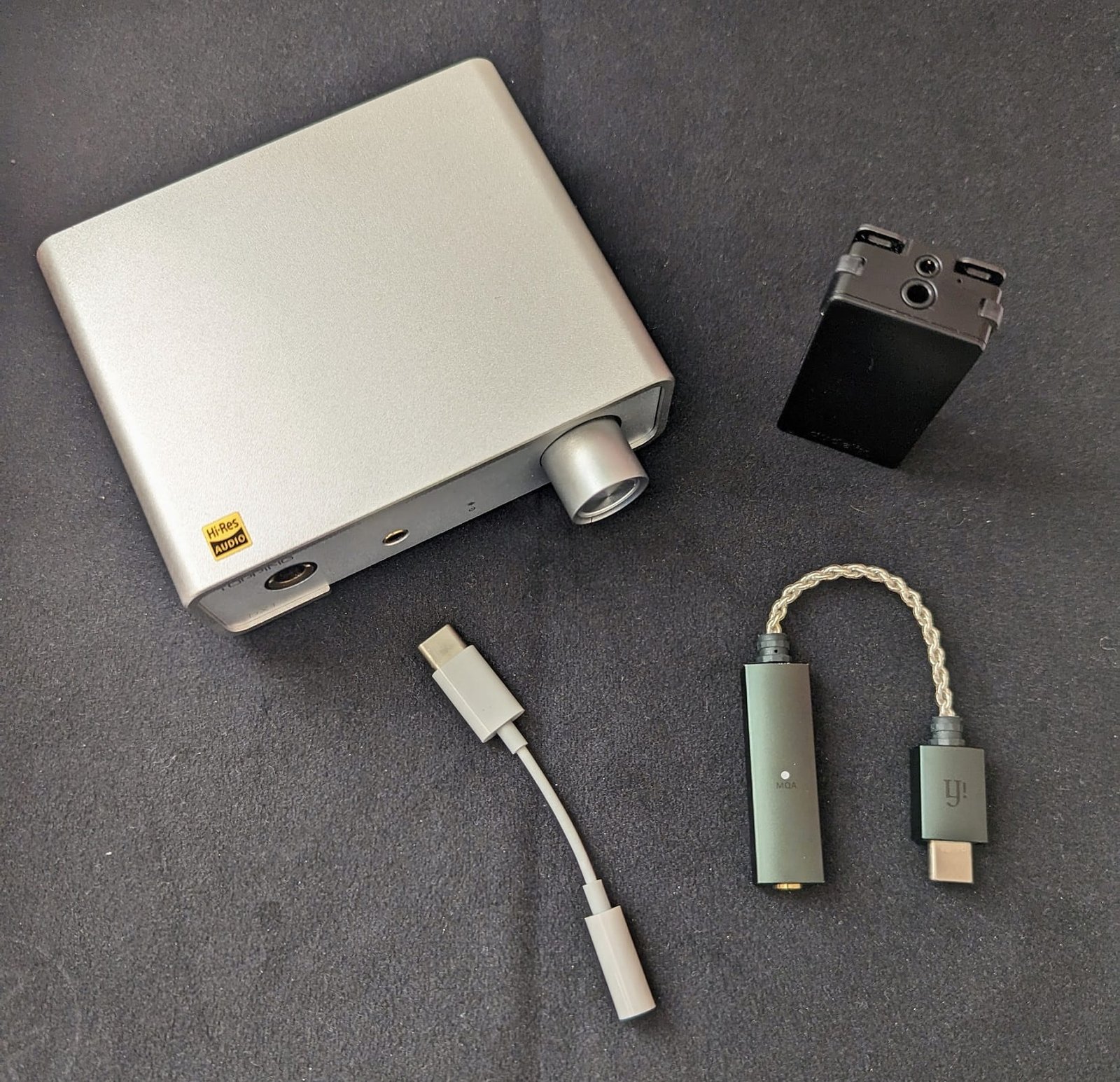
To find out about the GO Link's characteristic sound, I compared it to the devices shown in the image above. The Apple Dongle is the cheapest at 10 euros, while Topping DX1 costs 40 euros more and the Qudelix 5K 60 euros more than the GO Link. For headphones, I used the following models:
- ZMF Verite Closed
- ZMF Eikon
- Sennheiser HD 600
- Sennheiser HD 660S2
- Focal Utopia (2017)
- Moondrop Venus
- TinHifi C2
- Tangzu Wan’er S.G
The GO Link's sound is surprisingly similar to iFi's Zen series devices, such as Zen DACand Zen Air DAC. The presentation cannot be said to be particularly colored, but the device sounds slightly warmer (low frequencies attract more attention than high frequencies), more spacious (sound disperses more naturally around the head) and softer (the edges of the sounds are more rounded and less distinct). The end result is pleasant, especially during longer listening sessions.
Especially compared to other devices, the more natural soundstage and the vocalist jumping closer in an emotionally evocative way impress me. In the low frequencies and treble, I, on the other hand, perceive the most softness and a slight looseness, regardless of the headphones I choose. A slightly fuller-than-usual mid-bass reproduction and a gently calm treble make listening easy and relaxed, at the cost that my other reference devices reproduce sound a bit more clearly and transparently. Especially in terms of sound separation clarity, the iFi device slightly lags behind others, being blurrier and less emphasizing of instrument details.
The differences are ultimately by no means huge, but the GO Link is the most relaxed-sounding of the devices I tested. I perceive other devices as more neutral when critically evaluated, but the nuances of the GO Link would likely appeal to many. That's why it's genuinely interesting at a price of 60 euros. I can't really find anything to complain about with the device, as it makes listening appealing.
Regarding amplification power, it's difficult to conclude whether the GO Link's lower output power compared to Topping and Qudelix could lead to softer reproduction. From a volume perspective, however, the GO Link was easily sufficient for all the headphones I tried. Only with the Moondrop Venus did I feel that the headphones didn't reach anywhere near their best with the device. It might be advisable to consider a more powerful amplifier for planar headphones that require more power.
With dynamic headphone models, I didn't notice anything similar, even though 14 milliwatts is quite a small amount of power for several 300-ohm headphones I tried. However, the sufficient 2-volt voltage likely ensures functionality, as I don't listen to music at a particularly high volume. When quickly tested, sound would indeed be produced to such an extent if needed that listening would already become uncomfortable.
Summary
The iFi GO Link made an even surprisingly great impression on me, because music always sounds pleasant through it, and the device's amplification power is sufficient for most headphones. I consider it a good solution for its intended purpose. The GO Link is also affordable enough that I can recommend it as an alternative to the more versatile Qudelix 5K. Ultimately, only long-term durability raises some question marks, because the interconnect cable is thin and the parts can move inside the metal casings. I therefore recommend that everyone acquiring the device handle it as gently as possible, just in case.
Pros and cons:
+ Pleasant sound
+ Sufficient amplification power
+ Hardware volume control
+ Support for high sampling rates
+ USB-A and Lightning adapter included
+ Affordable price
+/– Tight headphone connector
– Thin interconnect cable raises durability concerns
– Parts move inside the metal casings (does not seem to affect all units/production batches)
– The large size of the USB-C connector can cause compatibility issues
 EN
EN  FI
FI