Author: Sword of Damocles
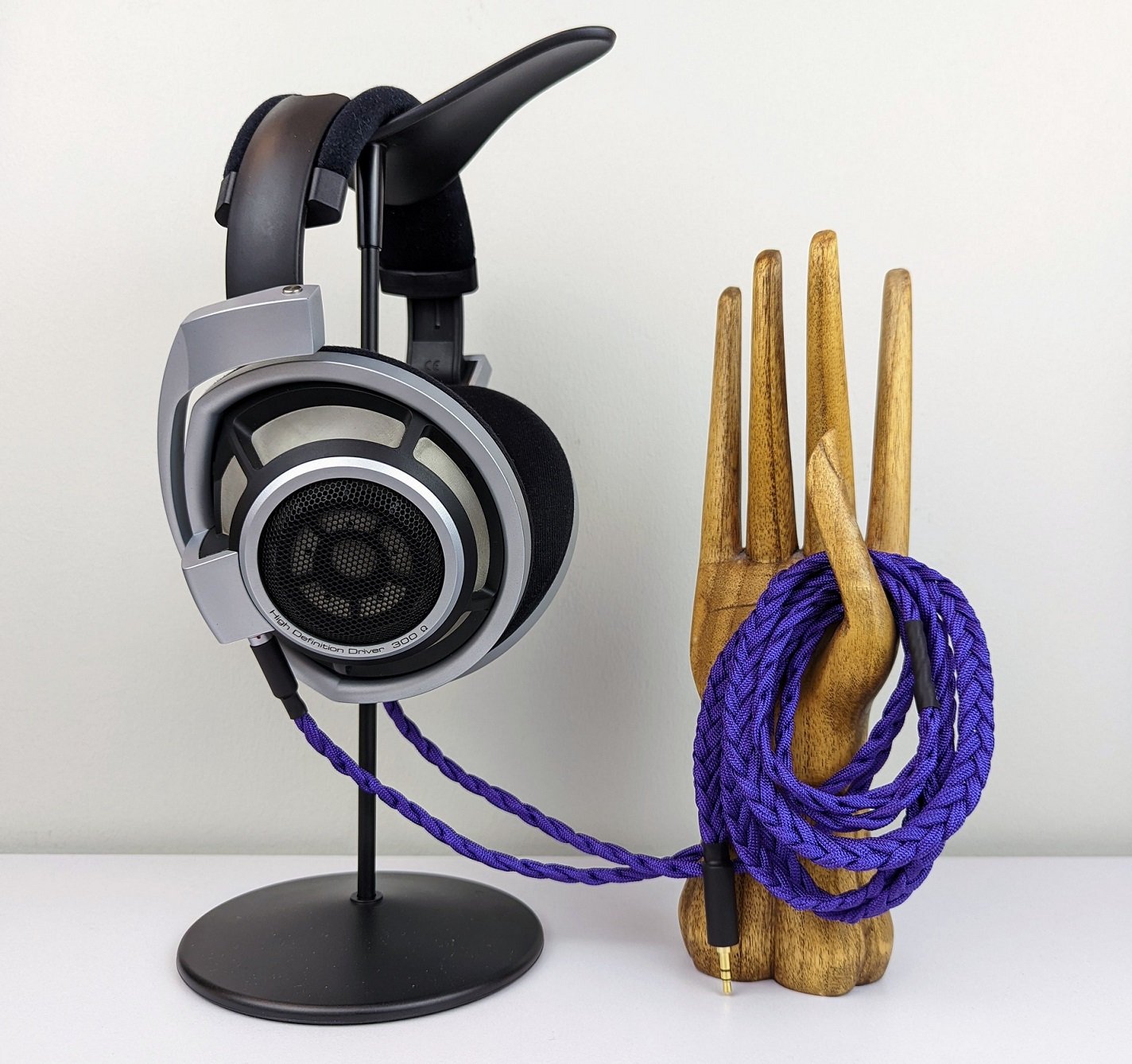
Table of Contents:
Information:
- Release year: 2009
- Price: 1300 € (production discontinued, price level for used headphones 500–700 €)
- Type: open, over-ear
- Dynamic driver: 56 mm ring driver
- Impedance: 300 ohm
- Sensitivity: 102 dB/mW
- Weight: 380 g without cable
- Connector type: 2 x ODU 2-pin-mini-snap
- Cable: 3-meter cable with 6.35 mm connector
Review sample: Self-purchased product
This time I'll share my thoughts on the Sennheiser HD 800, familiar to most headphone enthusiasts, which was released in 2009 when I had no idea what good headphones sounded like. Although it is an almost 13-year-old headphone model, I still consider it a relevant product in the used headphone market.
The HD 800 is known for its sharp treble peak, which is why the model was replaced in 2016 with the ”corrected” HD 800S model (link to manufacturer's page). Although the revision fine-tuned the treble reproduction, both models are still very similar in sound. For this reason, the older HD 800, priced at around 600 euros as a used headphone, offers a significantly more affordable alternative to the HD 800S, which still costs 1500 euros new, or 900–1000 euros used.
The Drop website recently released its own $1100 version of the headphones HD 8XX-version, which was hoped to be a kind of definitive improvement to some of the frequency response issues of the HD 800/HD 800S model. However, the HD 8XX seems to have failed in its goal, as it only made the bass muddy and the mid-frequencies distant (more information, for example, from Crinacle's review on). The original HD 800 has thus not yet been overshadowed by the updated versions; similar improvements can be made to it, for example, by equalizing or with the ”SuperDupont Resonator” mod (I will explore this in a separate article).
Structure and comfort
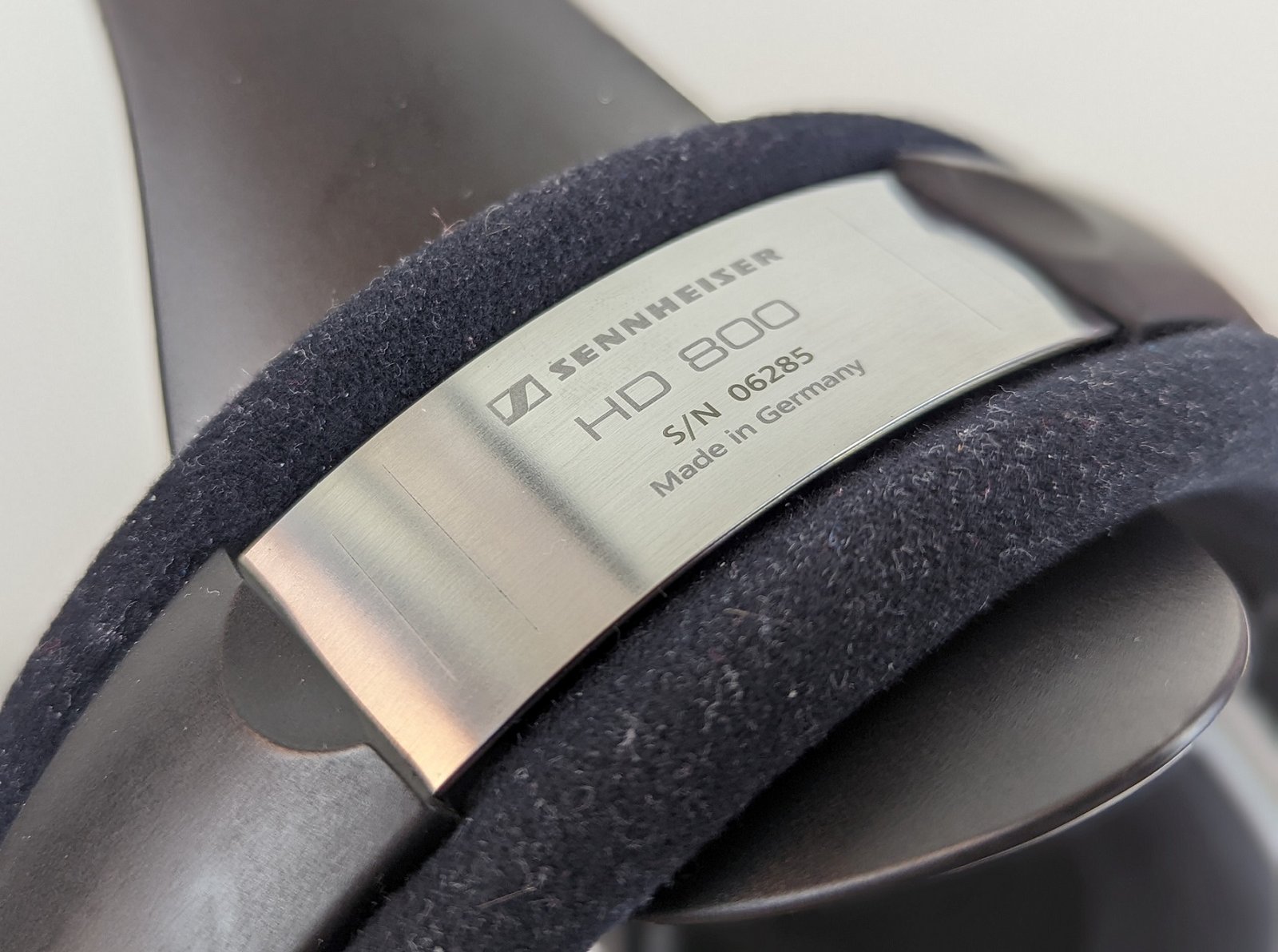
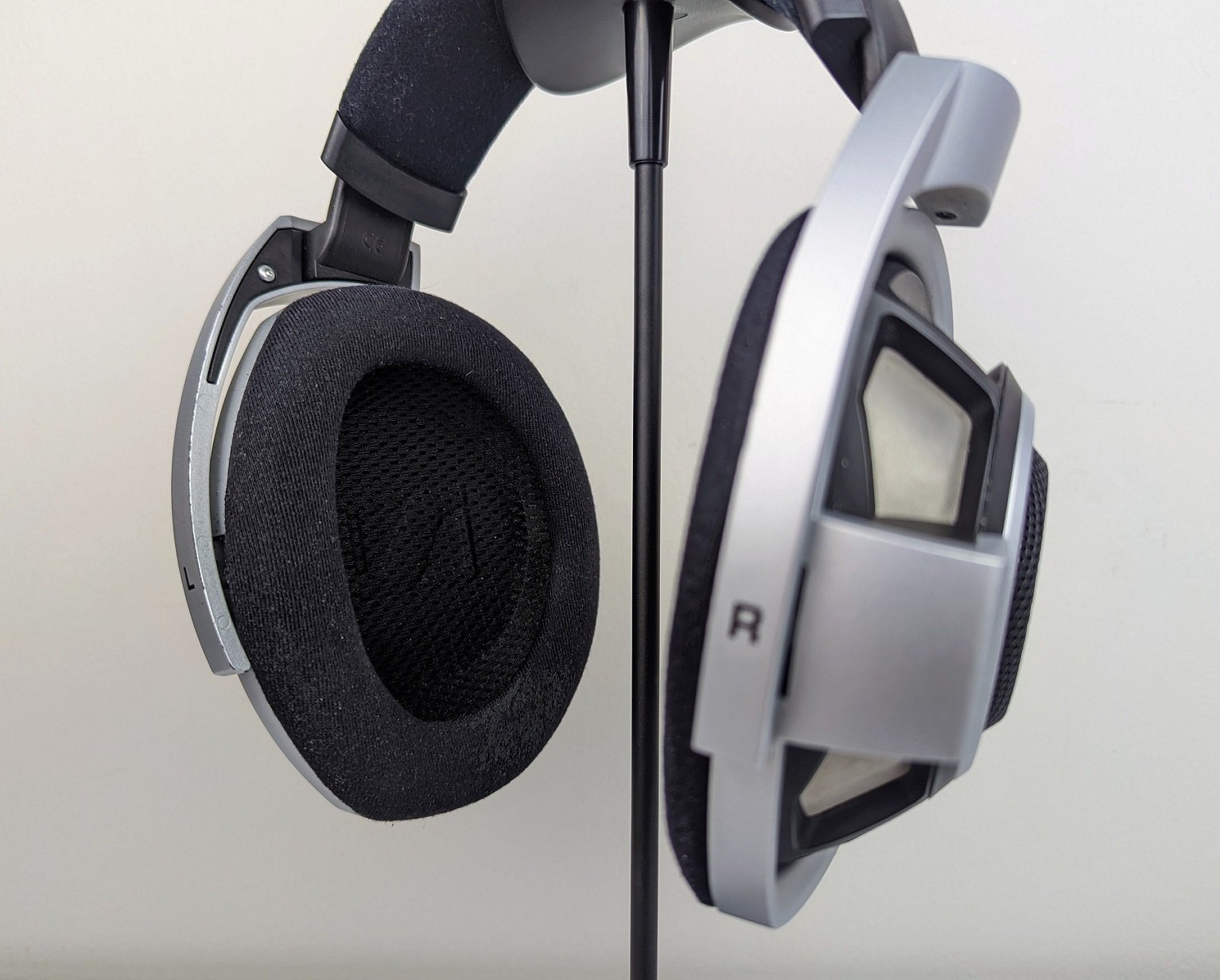
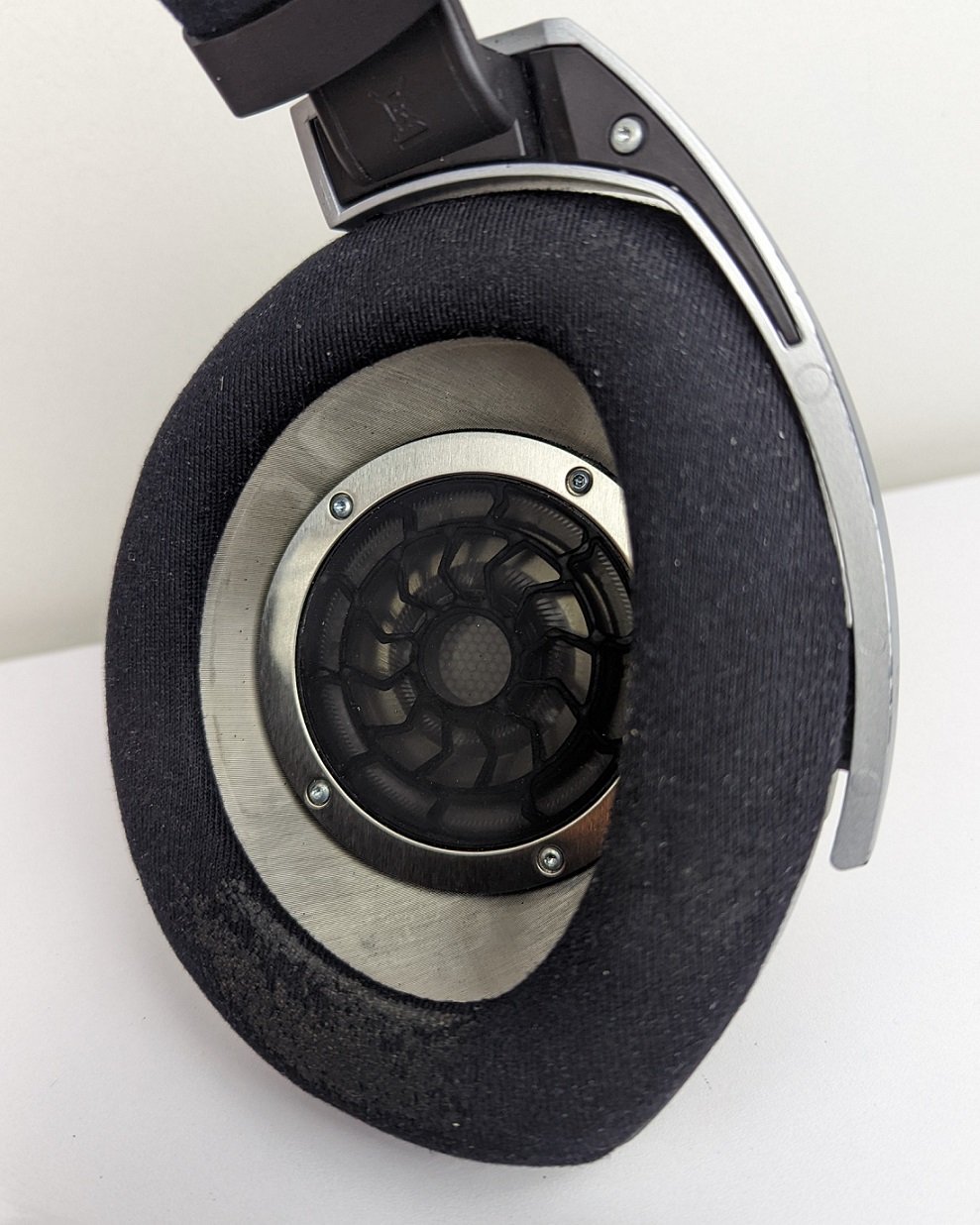
The futuristic appearance of the HD 800 is easily memorable, and it is almost impossible to confuse it with any other headphone model. The headphones are made almost entirely of plastic, with the exception of the headband, so the impression of quality is not great considering the original price of 1300 euros. However, the structure is sturdy and durable. Something also tells me that the serial number of my own pair is small, so the headphones have lasted over 10 years of use before they ended up with me. The silver paint finish of the headphones is quite prone to dents, but even that is still in neat condition for me.
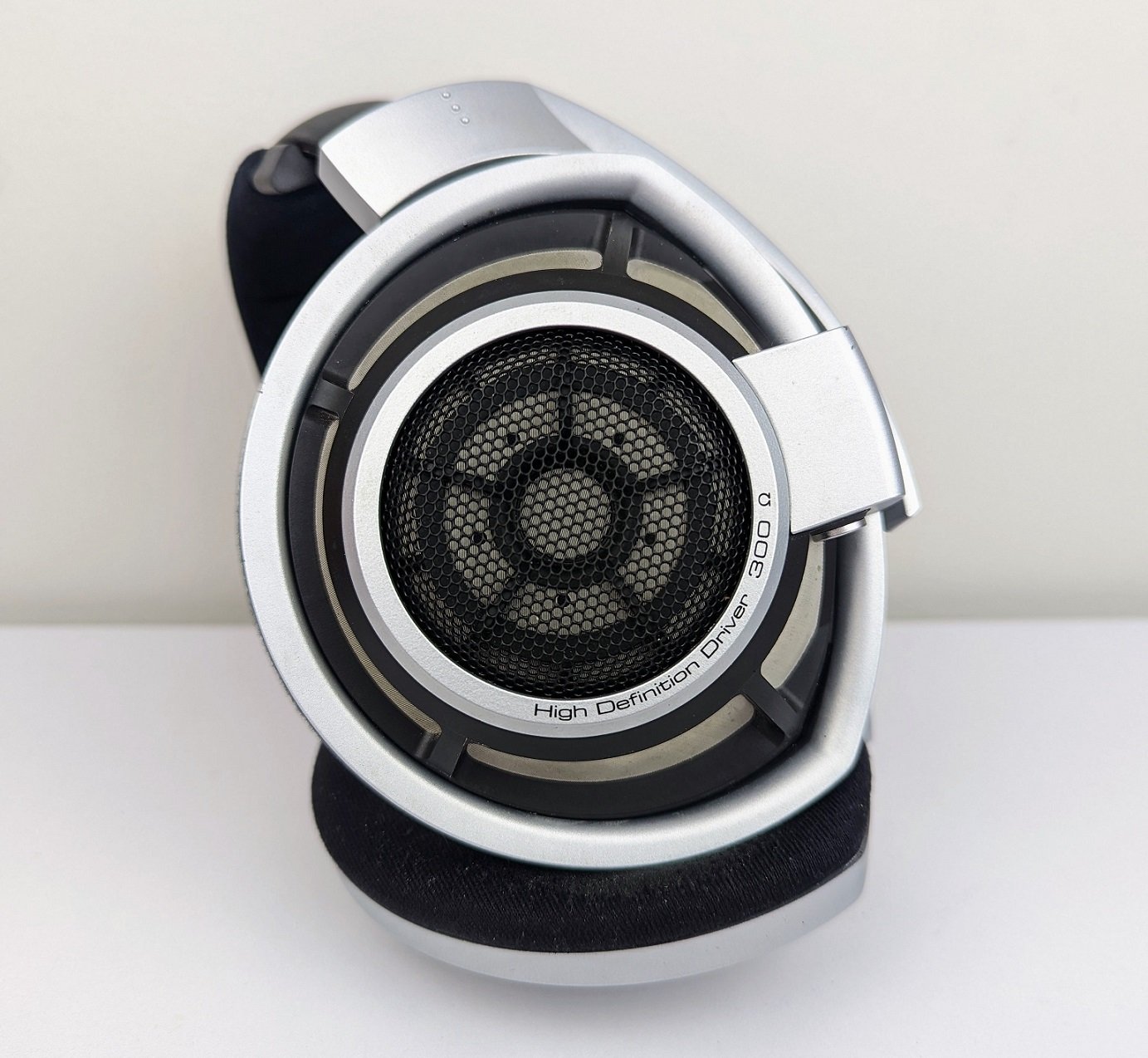
The large D-shaped cups of the headphones rotate sufficiently in both vertical and horizontal directions within the headband structure. Springs at the attachment point of the cups and headband turn the front edge of the cups towards the face, which I understand is intended to ensure the drivers are oriented slightly forward-angled towards the ears. In my own pair of headphones, the spring of the right cup had slipped out of place. However, it was easy to put back, as the headphones can be disassembled without complex tools.
The height of the headphones can be adjusted incrementally from the top of the headband. The HD 800 is quite large in size, but it looks streamlined on the head, as both the cups and the headband sit close to the head. This is also influenced by the fact that the ear pads and headband pad are really thin. Comfort is still good, and the headphones are almost unnoticeable on the head, provided that the edges of the cups sit reasonably against the listener's facial bone structure. The clamping force on the ears is light. The weight of 380 grams is also reasonable considering the large size of the HD 800, so I don't believe it's too much for anyone. I have mainly used the headphones with compressed pads that no longer have any foam left – despite this, the HD 800 is one of the most comfortable headphones I own.
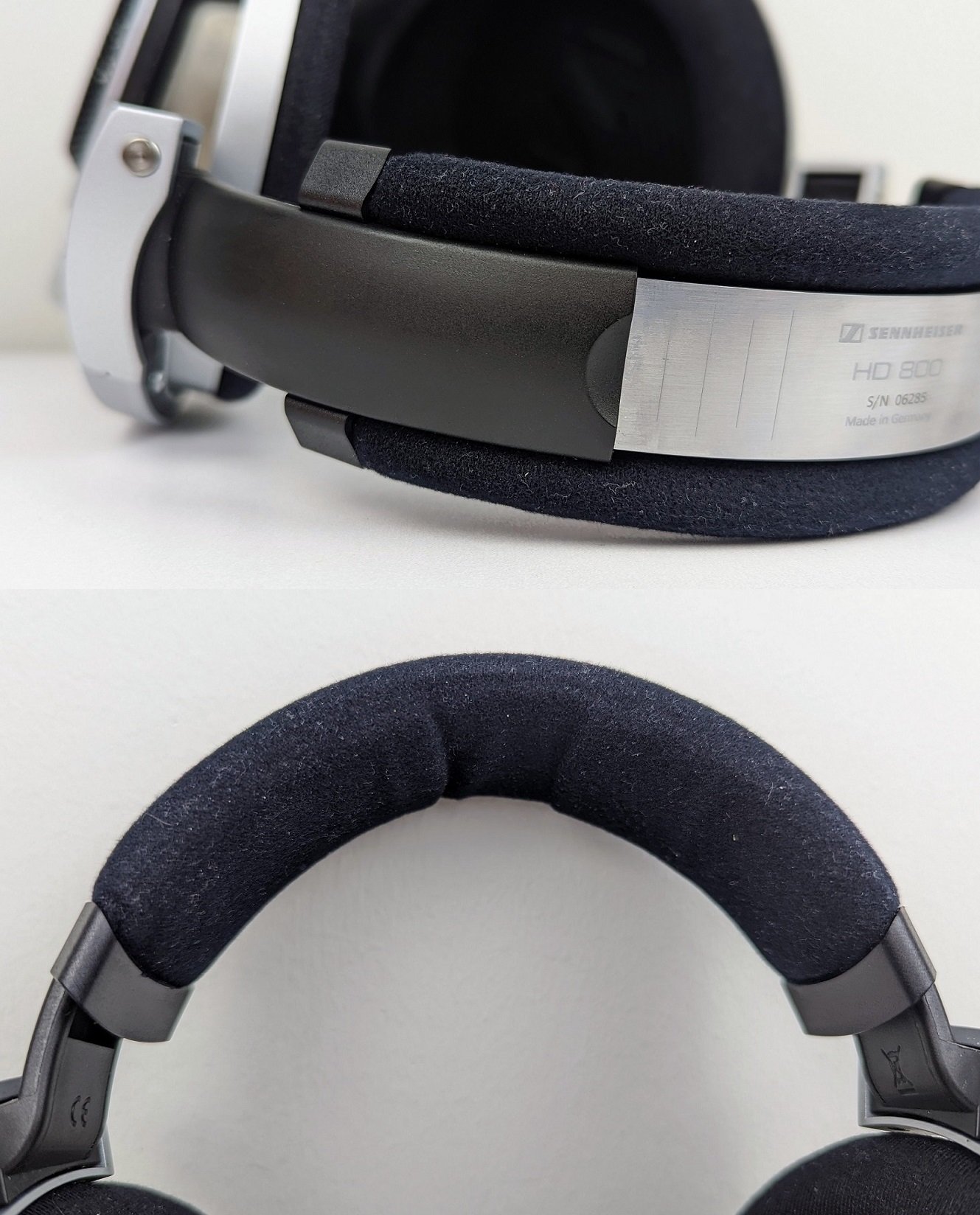
The absolute downside of the fabric pad parts is that they wear out quickly with regular use, requiring frequent replacement. Like its other headphone models, Sennheiser has sold replacement pads for the HD 800 (ear pads approximately 75–85 euros and headband pad 35 euros), but for one reason or another, spare parts have not been available since 2022. Their production has either been completely discontinued due to reorganizations following company acquisitions, or there are temporary manufacturing problems.
Since the same pads fit the HD 800 as the still-available HD 800S model, both are currently reliant on Chinese aftermarket parts. Fortunately, these can be found quite affordably for many needs. Especially with ear pads, however, it's worth noting that different materials or pad thicknesses will change the sound of the headphones.
Connectors and cable:
The only major negative aspect of the HD 800's design is Sennheiser's choice of awkward cable connectors (manufacturer ODU), which are difficult to remove. The cables attaching to the rear edge of the cups snap into place perhaps too securely, as pulling them off literally requires force. A connector suddenly jerking loose from a tight space almost inevitably hits the headphone structure, making it difficult to avoid scratching the cups. Furthermore, some headphone owners have experienced the connectors tearing off the cup structure as a result of pulling.
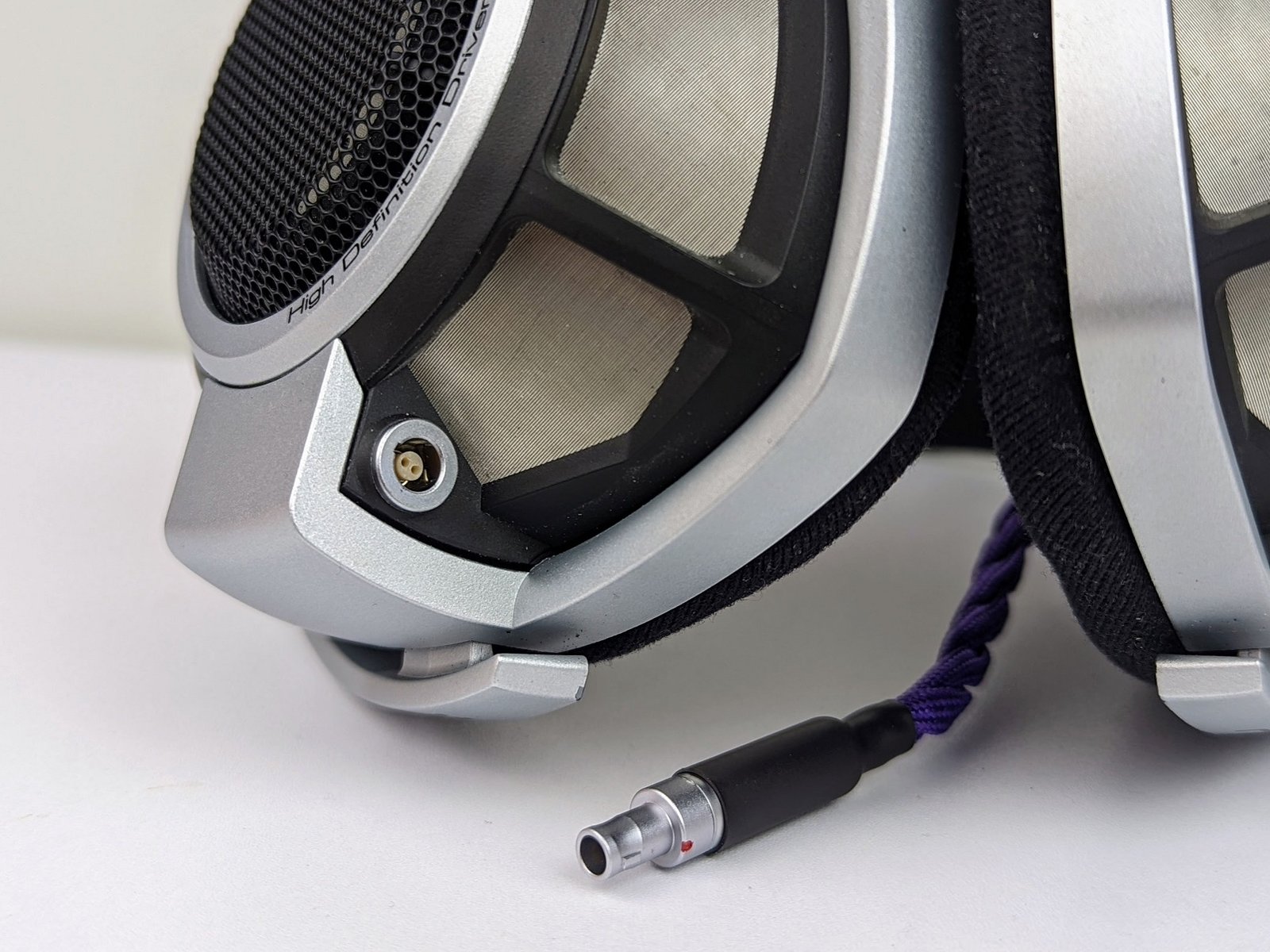
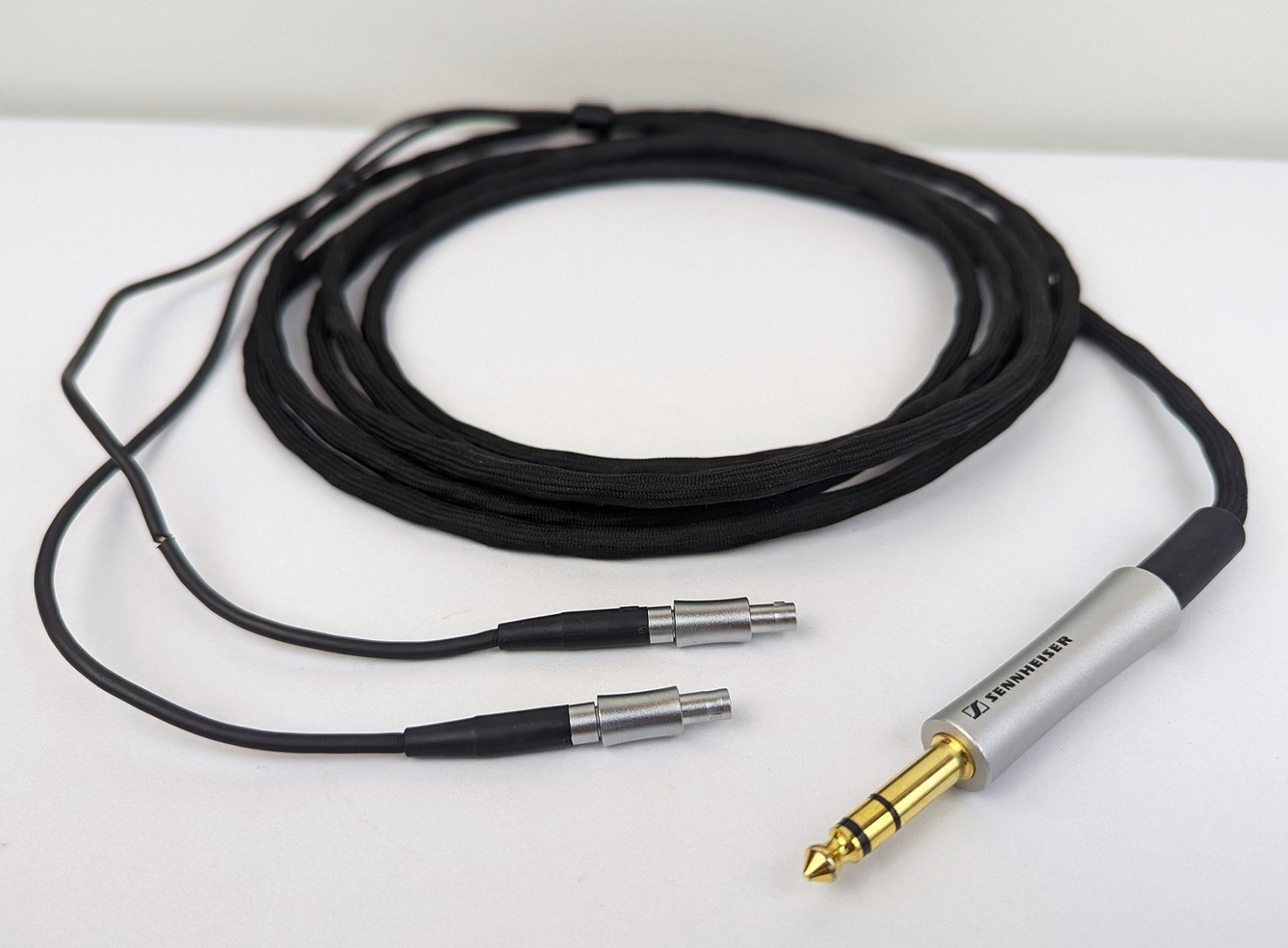
The unusual connector choice also increases the price of cables, but since Sennheiser's HD 800 series has been on the market for a long time, suitable cables are fortunately well available. I received Sennheiser's 3-meter standard cable with a 6.35 mm connector with the headphones. The cable is quite poor in usability, being heavy and too long. The braided thicker part is still acceptable, but the thinner rubber-coated parts branching off to the cups bend according to their own will. The aged rubber surface is also prone to cracking when bending the cable.
Sound quality
Things to note in sound quality evaluation:
- DAC: Schiit Audio Bifrost 2 (link to review)
- Headphone amplifier: Burson Audio Soloist 3X Performance (link to review)
- Very worn ear pads (still don't seem to significantly affect the sound)
- Tripowin GranVia cable (link to product page)
- The headphones have a low serial number, so they are brighter and lighter in bass than later production batches
The headphone frequency response measurements were made with a MiniDSP EARS device, about which you can read more in my recently published article.
Frequency response:
Summary of the sound:
The HD 800 has an airy, clear, and detailed sound. The result is quite bright and analytical, as the headphone's treble peaks constantly draw attention to themselves, simultaneously revealing both the smallest details and all errors in recordings. Due to the prominent treble, the headphones must also be listened to at a more moderate volume than usual to avoid listening fatigue. Fortunately, it is possible to make the overall experience significantly more pleasant with suitable equipment pairing.
With the Schiit Bifrost 2 & Burson Audio Soloist 3X Performance combination, the treble is rarely too irritating for my taste, but the thin and somewhat cool presentation still doesn't suit a wide variety of music genres. The headphones also have a subdued bass response, so they are not fun for bass-heavy music. However, the HD 800 shines due to its detail and excellent mid-frequencies, for example, in classical music and more broadly in the reproduction of acoustic instruments. All well-produced music generally sounds impressive and comes into its own with these headphones.
The HD 800 often reminds me that I am not enough of an audiophile in my music taste, even though I listen to a lot of music and test headphones as a hobby. Depending on the music listened to, the HD 800 sounds either absolutely perfect or quite mediocre. However, the best moments are so impressive that many significantly more expensive headphone models cannot achieve the same. Therefore, I would not ultimately change much in the HD 800, but rather appreciate its good qualities in situations where its presentation works well.
In my opinion, the best aspects of the headphones are the energetic and lively reproduction, the clarity of smaller details, and a truly spacious and accurate soundstage. The sound always appears outside the head, so the HD 800 is excellent for those who do not like an intimate, close-to-the-head sound when listening to headphones. The vastness of the soundstage combined with the detail of the reproduction is a magnificent experience at its best. Far too often, however, listening is too analytical, and the experience also falls short due to the light bass reproduction.
Bass:
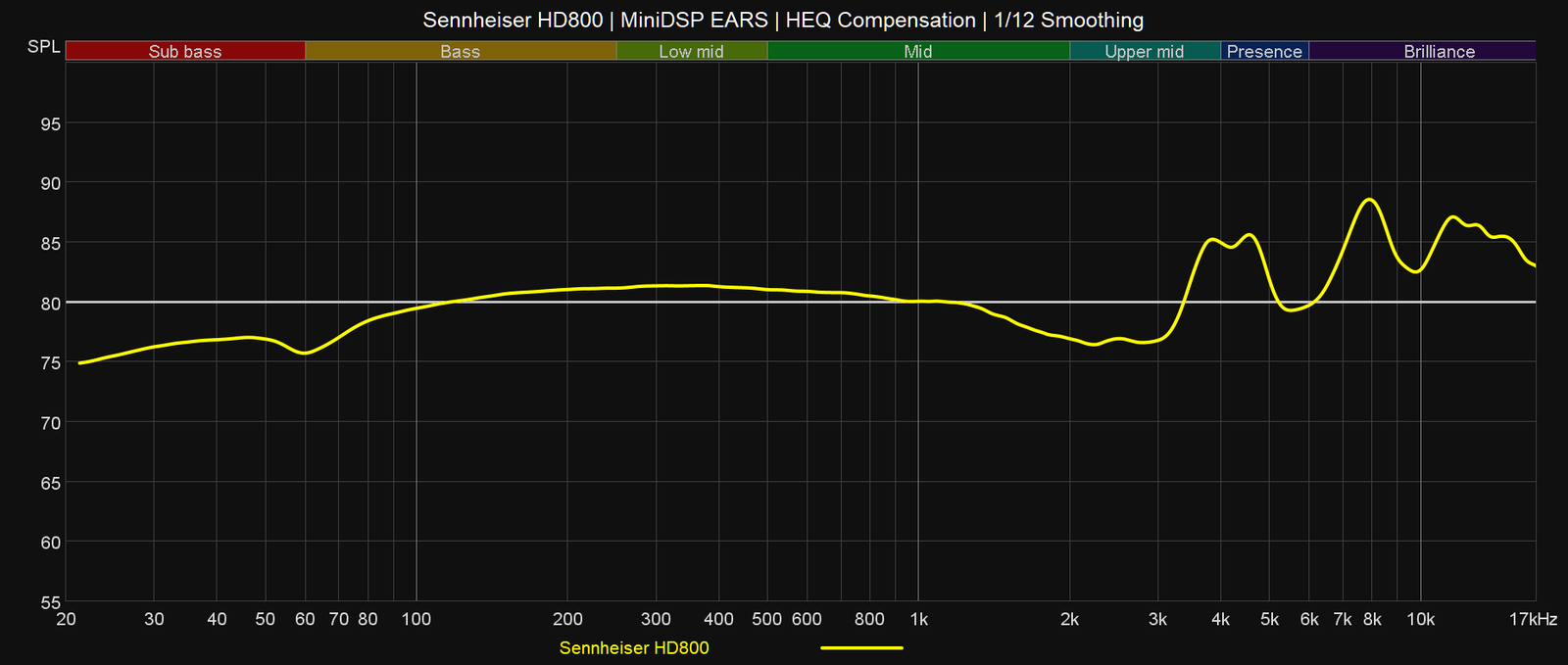
Bass reproduction is one of the HD 800's biggest weaknesses, especially in music genres that require sufficient lower bass frequencies to sound exciting. From a frequency response perspective, the bass begins to become fainter from 100 Hz downwards. The upper bass frequencies are still quite good for rock music and acoustic instruments, but even then, the bass remains light in body and impact for my taste. Electronic music, on the other hand, sounds too tame and thin to be enjoyable – though it's unlikely that listening to it was a priority for Sennheiser when designing the HD 800.
Yes, the headphones still have bass, but it plays too small a role in the overall sound. What bothers me most is that the lower frequencies do not provide more body and warmth to the cool and treble-heavy sound. In terms of quality, however, the bass is at a good level because it is reproduced clearly and with sufficient detail. A slightly slower and less controlled reproduction style would probably help in creating a fuller bass response.
The newer HD 800S model is described as having slightly fuller and warmer lower frequencies, which Sennheiser achieved by adding second-order harmonic distortion to the headphones. The same was apparently already done in later production batches of the HD 800 model, as they are described as sounding more robust. For this reason, the original HD 800 with a low serial number would be best suited for equalization due to its cleaner bass reproduction.
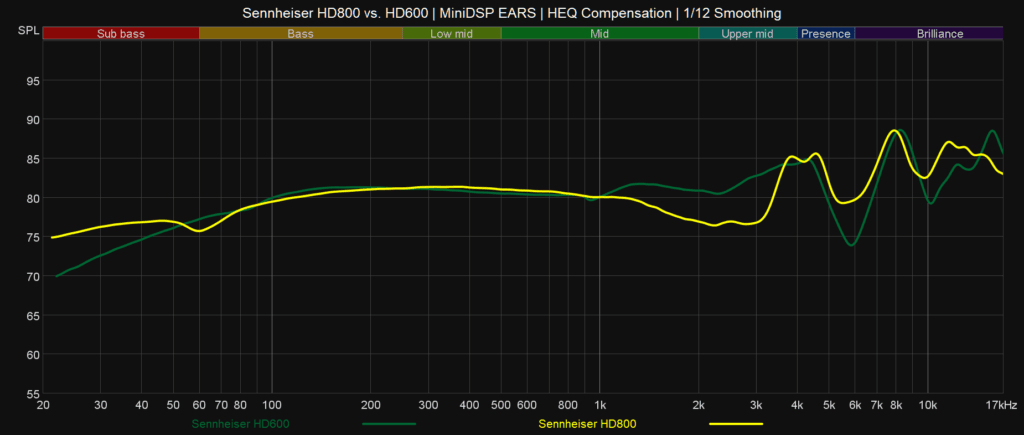
In Sennheiser's own lineup, the HD 800 is, in my opinion, a small improvement compared to the HD 600 model, as the very lowest frequencies are more clearly audible. The HD 650 model, on the other hand, has more mid-bass, making it the most engaging of the three in genres like rock and metal. Its bass also warms the mid-frequencies in a way that I find pleasing.
Bass and mid-frequency tuning compared to the HD 600 model:
Mid-frequencies:
The mid-frequencies of the HD 800 are stylistically similar to most Hifiman headphones, as there is a corresponding reproduction-calming dip between 1.5–3 kHz in the upper mid-frequencies. This pushes some of the mid-frequencies slightly further back in the overall sound, making the reproduction style somewhat thin. However, the sound is detailed and clear. Compared to the manufacturer's own HD 600 model, the less "in-your-face" reproduction also expands the soundstage of the HD 800.
Different presentation styles have their own strengths, so the mid-range tunings of the HD 800 and HD 600 seem like conscious choices. The HD 600's sound has more body, and it creates a stronger emotional connection, especially with vocal performances. The HD 800, on the other hand, emphasizes more clarity of detail in the mid-range, as well as a certain lightness and effortlessness.
Although I generally prefer a warmer mid-range presentation, the HD 800 sounds excellent in its own way. It brings out the details of all different instruments very energetically and effortlessly. The reproduction is also natural in timbre, considering that the body of the instruments remains light compared to the HD 650 model and many ZMF headphones, which I consider to sound very natural.
Treble:
The headphones' frequency response strongly rises from 3.5 kHz upwards, so the upper frequency ranges almost forcibly draw attention to themselves. The HD 800 transforms almost all music into airy and treble-heavy. This isn't always a problem, but when the treble starts to sound fatiguing, it's difficult to immerse oneself in listening to the whole. This unfortunately happens often, especially with brighter equipment pairings.
With a suitable equipment combination, however, the HD 800's treble is not a real problem for me; rather, I enjoy listening to it for its quality. In the same way that, for example, the ZMF Verite Closed colors music in a captivating way, making it fuller and heavier, the HD 800 makes it pleasantly clearer and airier. I personally happen to prefer a darker presentation, but I still sometimes enjoy how the HD 800 gets everything out of the treble, digging out even the smallest details.
The high amount of treble is one reason why the headphones are so detailed and analytical. On the other hand, the treble is also excellent in quality, so it doesn't turn into mere hiss and crackle, but details stand out clearly from each other. This, of course, requires that the music listened to is of high quality, and not played with pot lids in a garage.
The HD 800's treble makes the reproduction pleasantly snappy. I particularly like that all instruments have plenty of energy, so you feel the players are excited about playing. In my opinion, this is a welcome change from headphones tuned for a calmer sound, which lack a bit of bite and drive.
The infamous 6 kHz peak:
The biggest problem with the headphones' treble is generally considered to be a strong emphasis at 6 kHz (the newer HD 800S model was largely released to correct this). Unfortunately, this emphasis does not show up at all in my frequency response measurements, as the MiniDSP EARS device is inaccurate precisely in that frequency range. Although I do detect a treble peak when listening to the HD 800, my hearing does not seem to be particularly sensitive to it. On the other hand, I notice that I listen to these headphones at a significantly lower volume than my other more balanced headphone models.
I primarily perceive the treble emphasis as certain sounds and details being reproduced unnaturally present and attention-grabbing. The sound usually doesn't fatally grate on the ear at lower volumes, but the emphasis sometimes interferes with immersion in listening. When raising the volume more vigorously, the treble becomes unbearable, making it easier for me to agree with the views on the HD 800's excessive brightness.
What about sibilance, which many complain about?
Many describe the headphones as annoying due to strong sibilance, i.e., overly hissing 's' sounds. However, in my opinion, the headphones' sibilance is not particularly bothersome when listening to music, despite the treble emphasis. The 's' sounds are indeed slightly more emphasized than usual, but they are reproduced softly in style with my listening chain. If a recording already has sibilance, many other headphones will also reproduce it annoyingly. Nevertheless, I have noticed that the HD 800 reproduces speech quite aggressively, for example, when watching YouTube videos. On the other hand, speech is pleasant to listen to thanks to the spacious soundstage.
Soundstage and Separation:
In addition to detailed reproduction, one of the best aspects of the HD 800 is its large soundstage. Music is reproduced so spacious and airy with these headphones that the result resembles sound heard in a room more than a traditional headphone listening experience. Especially the width of the soundstage serves as a kind of reference for how large headphones can be made to sound. There is also more than enough depth, but in that regard, the HD 800 does not create as realistic an impression as many more expensive headphones. Hifiman headphones with large planar drivers, on the other hand, sound taller, making the reproduction more speaker-like in that respect.
Unfortunately, the size and spaciousness of the HD 800's soundstage also have their downsides. The sound always seems large, and the soundstage doesn't adapt well to different situations. The headphones cannot reproduce sounds very close, so for example, vocals intended to be heard up close remain more widely dispersed, sounding somewhat ghostly. The result is sometimes even a bit artificial, making me lose emotional connection to the music I'm listening to. The HD 800 may not be suitable for those who like sounds to be heard intimately and very close, similar to the HD 650 model, for example.
However, the HD 800's soundstage is excellent in terms of accuracy. Locating and tracking sounds moving in a large space is easy. Since transient reproduction is also fast, details are clear and sharp-edged. However, the reproduction is not as separating and layered as in good planar headphones or modern high-end headphones in general, which dissect the different elements of music even more clearly from each other. This does not, however, automatically make them more detailed, especially if the headphones' tuning is calmer than the HD 800.
The HD 800's slightly more moderate separation also makes it more forgiving of lower-quality recordings, as long as the over-emphasized treble does not become a problem. For example, Hifiman's HE1000 v2 sometimes dissects and separates music too much, making the overall sound strange. In my experience, the same does not happen as easily with the HD 800.
Dynamics:
The headphones don't exactly shine with their light and spacious reproduction during larger variations in music tempo and sound pressure, nor is power conveyed through the subdued bass reproduction. However, the end result is dynamic and fun enough, so the HD 800 never sounds flat or lifeless. This is largely due to the headphones' excellent microdynamics. In my interpretation, it fundamentally means the separation of small details from the whole. Although the term is in principle quite unnecessary, I want to emphasize with it that good headphones sound exceptionally clear and detailed.
In my opinion, good microdynamics requires headphones to have good resolution, fast reproduction, and a frequency response that brings out enough detail. Since these conditions are met in the HD 800, it reproduces the small nuances of all different instruments very clearly and, above all, pleasantly energetically. The feature is downright addictive, and I miss it a bit when listening to other headphones. At the same time, however, I become aware that the HD 800 could achieve a very similar result with a more moderate treble tuning and a slightly more balanced presentation.
Confirmation
Fortunately, the balance of reproduction can be fine-tuned to some extent with equipment choices. Reproducing sound with these headphones is easy due to their high sensitivity (102 dB/mW), while the 300-ohm impedance offers interesting possibilities regarding amplifier selection. Bright and sharp-sounding transistor amplifiers further enhance the experience of detailed reproduction and tight control, but in my opinion, listening easily becomes too analytical and fatiguing.
I prefer the HD 800 with a softer and warmer equipment pairing. For example, amplifiers with higher output impedance, such as tube amplifiers, suit the headphones well because they control the headphone driver less. In this case, the reproduction becomes, in a good way, slightly slower, rounder, and more relaxed. My warm-sounding Tor Audio Roger tube amplifier adds body to the HD 800's lower frequencies – bass drum hits are also more powerful, albeit less tight. At the same time, the somewhat sharp character of the headphones calms down enough that higher frequencies can be listened to more relaxed than before.

The Burson Audio Soloist 3X Performance, which I used for the review, is also a very suitable low-impedance transistor amplifier for the HD 800, as long as I use the warm-sounding Schiit Audio Bifrost 2 as the D/A converter. This combination makes the headphones just soft enough and more relaxed, while the sound remains fast and controlled. A brighter Soncoz SGD1 D/A converter (link to review) makes the upper treble too sparkly for my taste with the same amplifier, even though the sense of detail increases at the same time.
Of my transistor amplifiers, however, the most interesting for the HD 800 is the Project Polaris (link to review), whose output impedance can be set to 35 ohms. This is excellent for 300-ohm headphones, as it relaxes the sound without significantly altering the frequency response. In addition, the amplifier intentionally introduces distortion into the sound, making the HD 800's bass reproduction and mid-frequencies fuller. The vocalist moves closer in the soundstage, similar to the HD 600 series. The treble, in turn, becomes softer, and its emphasis can be further reduced by cutting a few decibels from the uppermost treble frequencies with the amplifier's bandwidth setting. Thicker lower frequencies, more intimate vocal performances, and gentler treble suit the headphones excellently in my opinion.
The sound of the HD 800 changes to such an extent depending on the equipment used that it's easy for me to see some people liking or disliking the headphones purely because the equipment pairing isn't quite right. This is also a kind of drawback of the headphones, as it would be desirable for them to sound good regardless of the equipment. Usually, I don't have to try to compensate for headphone flaws with equipment, but with the HD 800, it is somewhat beneficial. Of course, a very similar result could also be achieved by equalizing the headphones. The HD 800 seems to be a so-called ”endgame headphone” for many precisely when equalized.
Sennheiser vs. thicker wallet
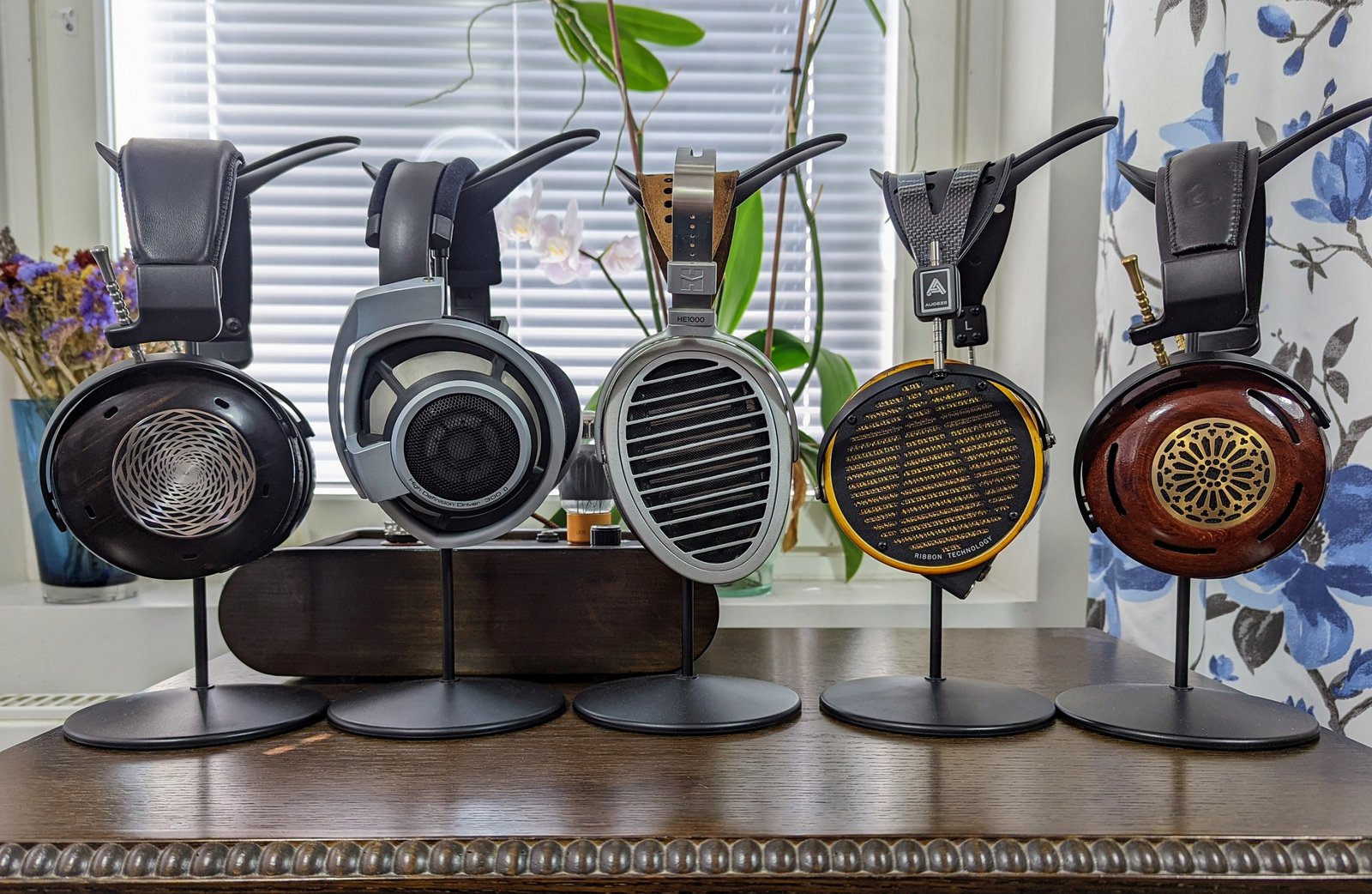
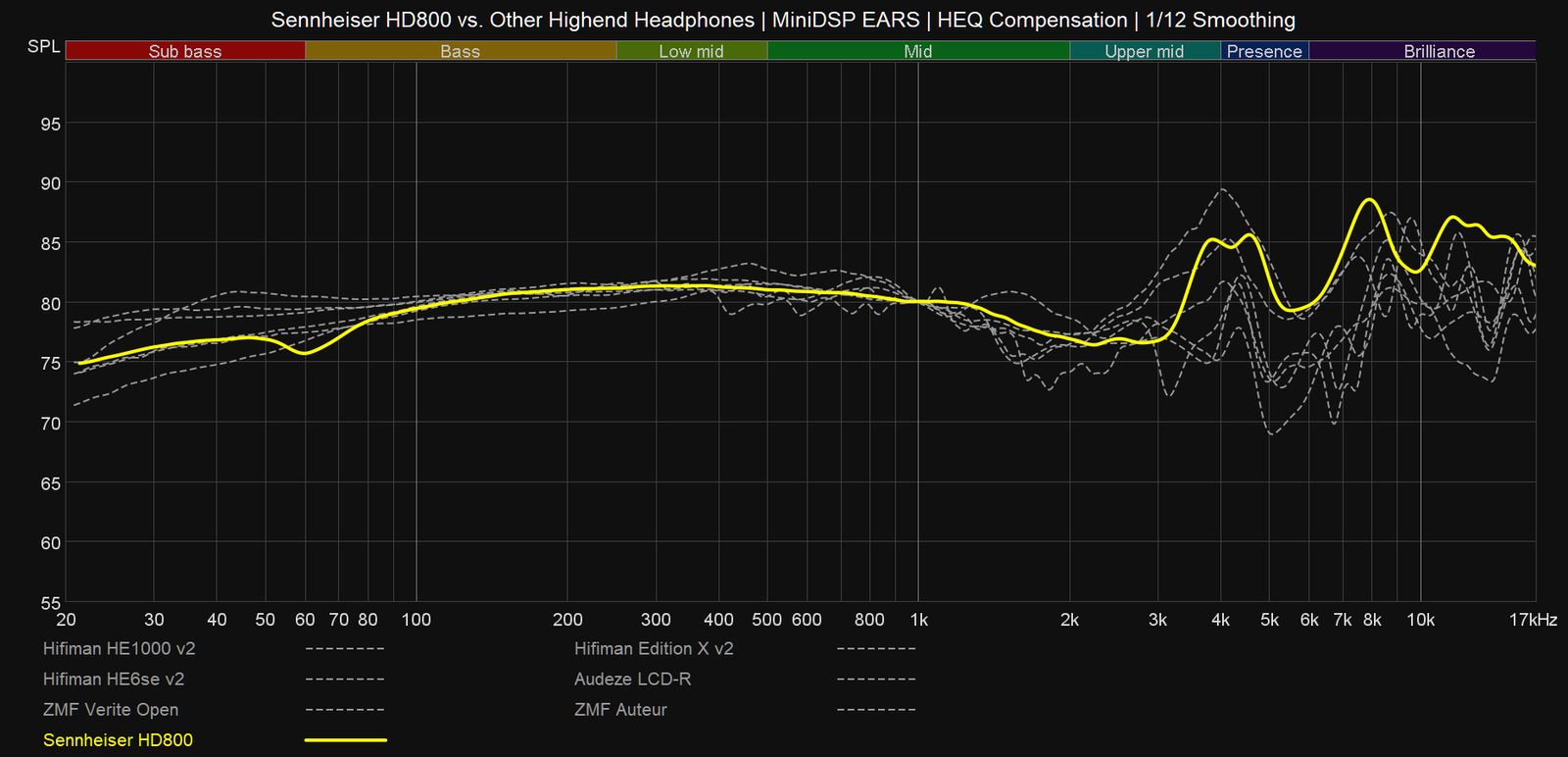
I have compared the headphones in my previous reviews to Hifiman's Edition X v2and HE6se v2 models. Each headphone in this trio has its own strengths. The HD 800 competes evenly with these Hifimans, especially due to its detail and large soundstage. These are, in general, such strengths and characteristics that make the aging Sennheiser model still very competitive against all newer headphones costing under 2000 euros – it is not completely humiliated even in the 2000–3000 euro price range.
However, the strong treble emphasis in the frequency response is a factor that, in my opinion, makes the HD 800 not a very balanced or versatile headphone. It is excellent for some, while others will likely not like its sound at all. Because of this, the headphones are quite contradictory and difficult to compare fairly with headphones from other manufacturers. My own conclusion is that for about 600 euros (the price of a used HD 800), you won't get another headphone as detailed and with as large a soundstage. However, considering the original price of 1300 euros or the newer HD 800S model, the competition is tougher.
Many headphones offer a more holistic and less analytical sound while still being sufficiently detailed compared to the HD 800. For example, I consider Hifiman HE6se v2, Audeze LCD-2(requires equalization) and ZMF Auteur to be better and more versatile headphones when evaluating the overall package. In terms of soundstage size, they don't compete with the HD 800, but the bass reproduction, on the other hand, is significantly better in every model. The planar headphone models I mentioned are also slightly better at layering different elements of music. Headphones costing over 2000 euros, such as ZMF Verite Open, Audeze LCD-R and Hifiman HE1000 v2, in turn, make the reproduction even more realistic. Especially the depth of the soundstage becomes more interesting with them.
The HD 800 still offers excellent value for money when bought used, especially for those who are comfortable with its thinner reproduction style and lighter bass. It is also light and comfortable on the head for a large headphone, which I can say about only a few high-end headphones.
Summary
In my opinion, the Sennheiser HD 800 has earned its place as a classic headphone, and I myself like it more than I initially expected. In a way, it is an important headphone that every headphone enthusiast should at least get to hear. As a reasonably priced headphone, the HD 800 excellently demonstrates how spacious and precise a soundstage can be achieved with headphones, and how detailed reproduction can be. These two features have, in a way, been taken too far, but liking or disliking the HD 800's sound nevertheless provides useful additional clues about what kind of sound each person is likely aiming for with their headphone purchases.
Since the presentation styles of the HD 600/HD 650 and HD 800 represent extremes in a certain way, Sennheiser succeeded long ago in creating two excellent reference headphones. In my opinion, no other manufacturer has succeeded as well in the same, nor has Sennheiser itself been able to improve its own models in recent years in a way that would have displaced the old classics. For me, for example, the optimal mid-frequencies are found somewhere between the HD 650 and HD 800, so I could use Sennheiser models as an aid in determining what kind of headphones I like.
By current standards, the HD 800 is no longer a very versatile headphone; instead, it excels in a few specific areas. With the right kind of music that leverages the headphones' strengths, the listening experience is so impressive that it's hard to imagine better headphones. However, my varied musical taste also includes a lot of rock/pop-style mainstream music, where the HD 800 unfortunately is not at its best. The headphones are often simply too treble-heavy and unforgiving, so they stay on the shelf when I choose to listen to some more pleasant headphones.
Furthermore, the bass intensity is essentially inferior to all headphones I have reviewed so far. This reduces the model's appeal for music that benefits from a more robust and less airy reproduction. However, if the sound of the headphones resonates with you and suits your musical taste more often than it does mine, the HD 800 is still, in my opinion, a top-tier headphone that can be included in the same discussion as headphone models costing several thousand euros.
Pros and cons:
+ Good resolution
+ Reproduction is very detailed and clear
+ Reproduction has a pleasant energy
+ Treble is high quality despite its abundance
+ Mid-frequencies are natural despite their thin style
+ A more spacious and wider soundstage is hard to find
+ Lightness and comfort of use
+ Durability (spare parts also previously available)
+ Distinctive appearance
+ Responds well to equipment changes thanks to its 300 ohm impedance
+ The price on the used headphone market is affordable relative to the sound quality
– Bass reproduction is really subdued despite its quality
– The sound is thin and light throughout, so it would benefit from more warmth
– The listening experience is too treble-heavy and analytical
– There is a strong emphasis at 6 kHz, which draws too much attention to itself
– The size of the soundstage is sometimes unrealistic, as sounds intended to be heard close by also sound distant
– All errors in recordings come to light, making listening to lower-quality music unforgiving
– There is occasional sibilance in the sound
– Earpads wear out quickly
– The headphones have a silly connector, which makes the cable difficult to detach
– Sennheiser's own cable is quite poor in terms of usability
 EN
EN  FI
FI