Author: Roderick

Table of Contents:
Information:
- Release year: 2015 (MK2 version 2019)
- Country of manufacture: Japan
- Price: 1690 €
- Type: open, over-ear
- Electrostatic driver
- Electrostatic capacitance: 110 pF (including cable)
- Impedance: 145 kΩ (including attached cable, 10 kHz)
- Sensitivity: 101 dB / input 100 Vr.m.s. / 1 kHz
- Maximum sound pressure level: 118 dB / 400 Hz
- Operating voltage: 580V DC
- Connector type: 5-pin Stax Pro Bias
- Cable: parallel-structure 6-conductor low-capacitance flat cable (length 2.5 m) with 6N-OFC silver plating. In the SR-L700 MK2 model, the cable is detachable.
- Weight: 508 grams with cable or 371 grams without cable
Review sample: Self-purchased product
Japanese STAX has been manufacturing electrostatic headphones since the 1960s, and no other manufacturer has become more renowned in this field over 60 years. The SR-L700 MK1 headphone model I am reviewing this time was released in 2015. After this, the headphones were updated in 2019 to the MK2 version (link to the manufacturer's product page), which features a stronger headband structure and a detachable cable. However, no other changes were made, so the MK1 and MK2 versions should sound the same. My own headphones are an older model, to which the MK2's metal headband has been retrofitted.
STAX divides its headphones into Lambda and Omega classes. The L700, costing around 1700 euros, is the most expensive headphone model in the Lambda series. The most expensive headphone in the Omega series, the X9000, costs over 7000 euros, so despite its high price, the L700 is actually one of the manufacturer's most affordable products in its current lineup.
What is an electrostatic headphone anyway?
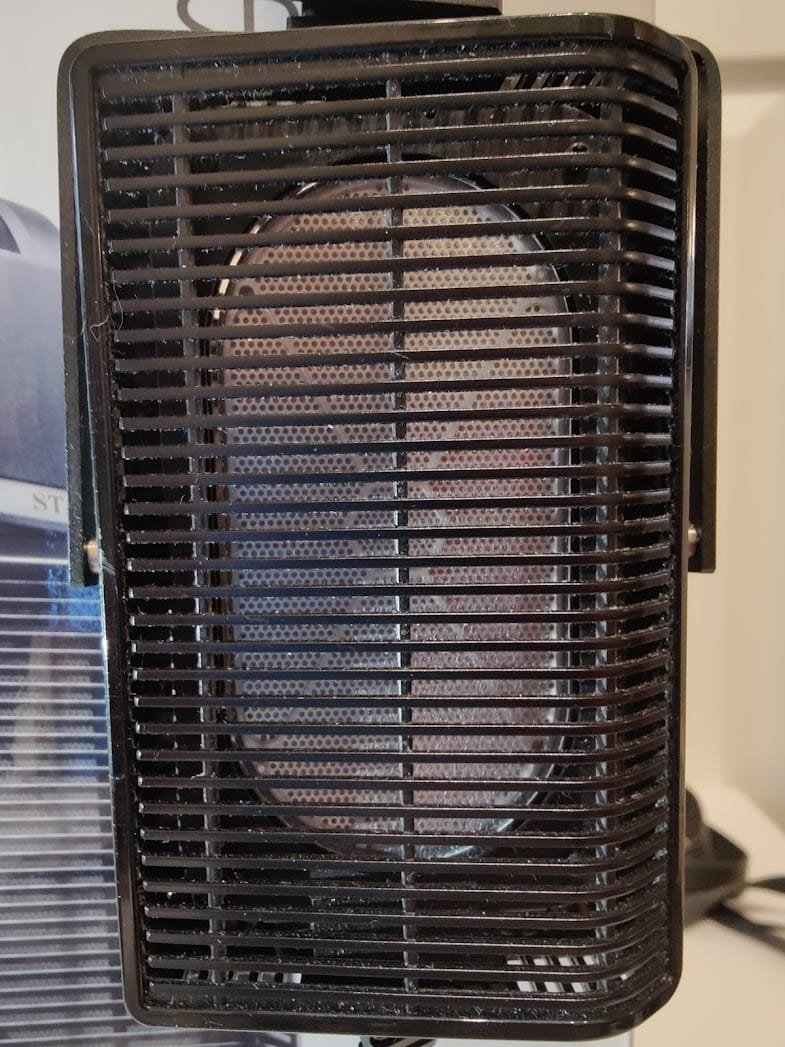
Electrostatic headphones have not been covered in the Headphone Corner before. The operation of planar magnetic drivers and traditional cone-shaped dynamic drivers is based on magnetism. Electrostatic drivers, however, have no magnets at all, because their driver consists of an electrically charged diaphragm placed between two ”stators.” Stators are perforated metal plates, one of which is negatively charged and the other positively charged. An alternating electric field pushes and pulls the diaphragm towards the stator, causing air to be expelled through the holes in the stator.
This technology enables excellent control of the diaphragm across its entire surface area, resulting in low distortion and the driver's ability to react very quickly to the signal. Generally, the sound quality of electrostatic headphones is considered excellent, but they are more complex than more conventional headphone types. At least for now, the world's most expensive headphones are electrostatics, and their price can rise to tens of thousands of euros.
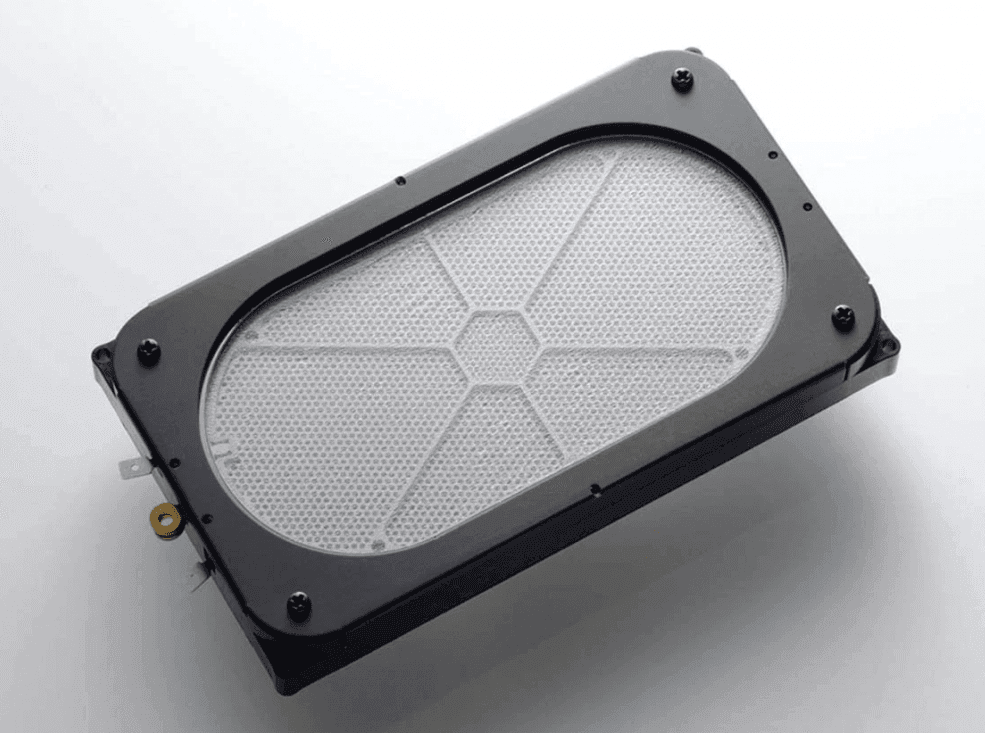
At their cheapest, electrostatic headphones cost around 500 euros, but they always require a separate headphone amplifier or an ”energizer” transformer, which is connected to the speaker outputs of a stereo amplifier. It is often said that affordable amplifiers designed for electrostats are not particularly good in terms of sound quality. Better amplifiers, unfortunately, are very expensive. An amplifier designed for electrostats also cannot be used with other types of headphones. The threshold to acquire one's first electrostats can therefore become quite high, especially if one has previously invested financially in ”regular” headphones and high-quality amplifiers designed for them. Partially for this reason, I myself have not been particularly enthusiastic about acquiring electrostats.
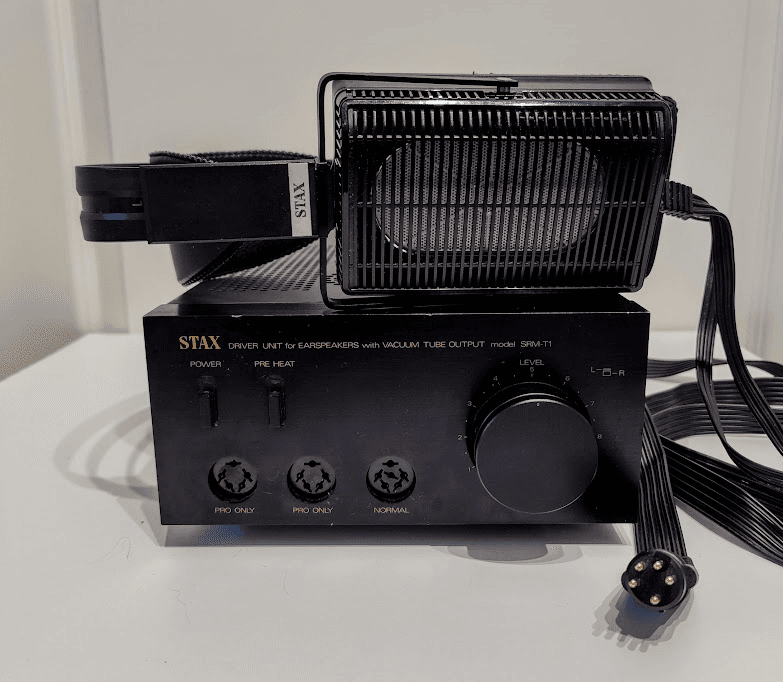
While conducting this review, I have used the STAX SRM-T1 tube amplifier. The device is already quite old, but quite respected among electrostatic enthusiasts. It should easily outperform new amplifiers costing a few hundred euros and even slightly more expensive ones. Although headphones always affect sound quality the most, it is certainly possible that my experience with the SR-L700 would be somewhat different with a different amplifier.
Build and comfort
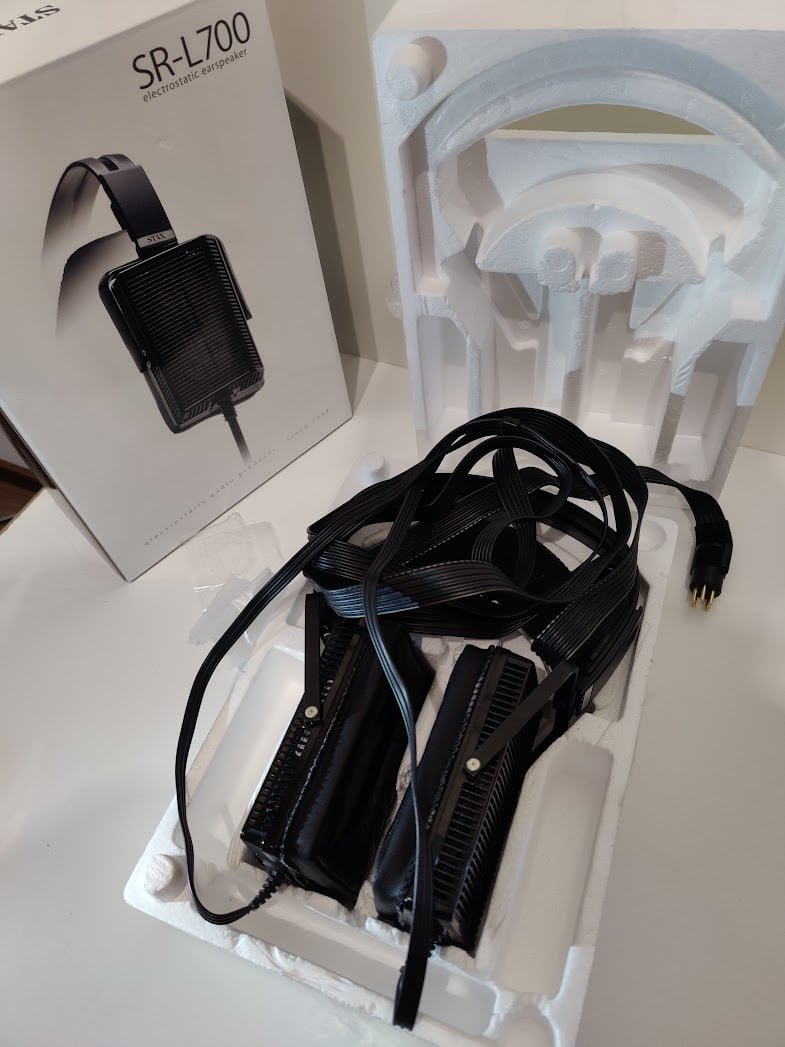
Considering the high price of the headphones, my initial impression is disappointing. A product made entirely of plastic is revealed from a dull styrofoam box. The L700 also comes with no accessories. I would have hoped to see at least a storage case, as many would surely want to keep their headphones protected from dust. The L700's cable is almost impossible to fold in a way that it could be crammed back into the styrofoam packaging. Even Hifiman, whom I often criticize, delivers its products in more presentable and practical packaging.
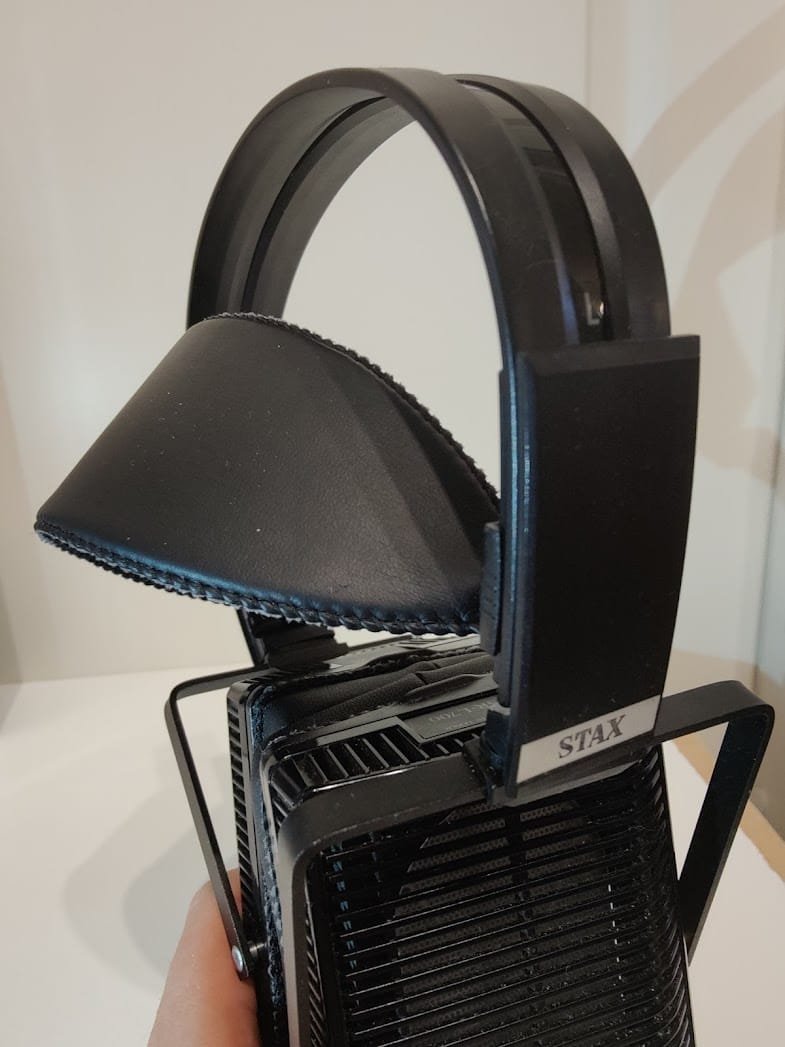
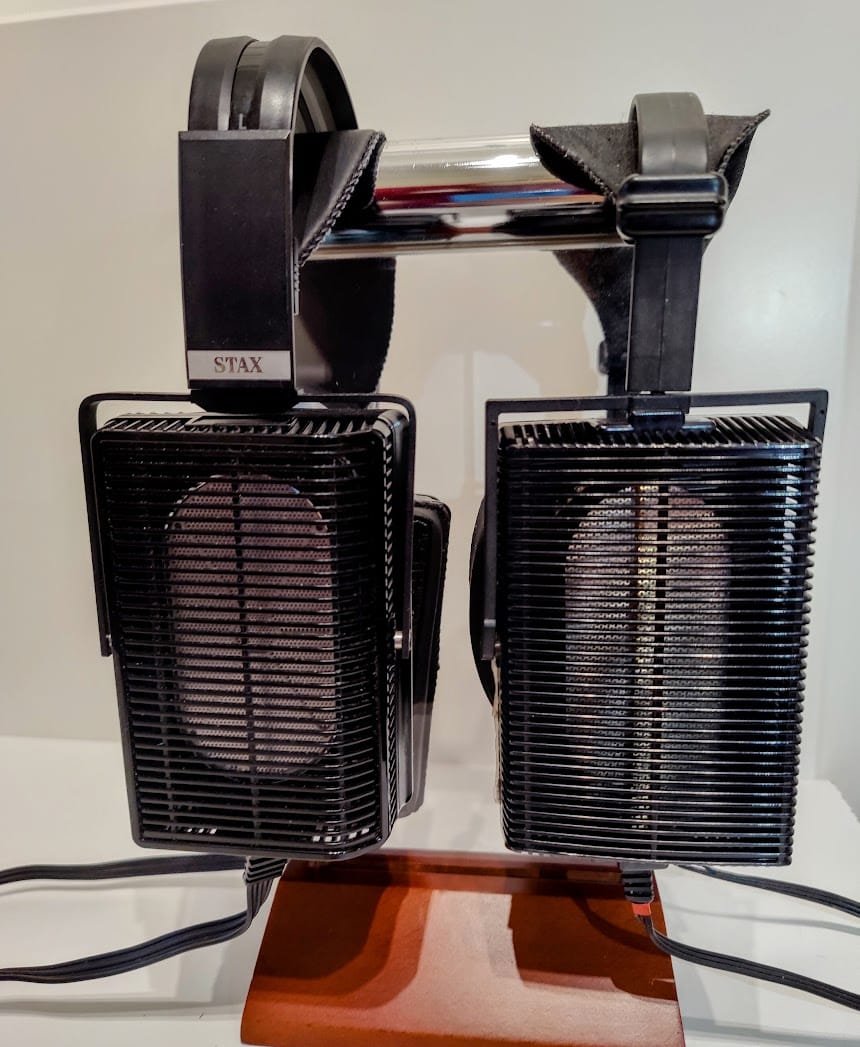
The L700's appearance strongly resembles the manufacturer's older headphone models, as the similarity to, for example, the Lambda-Pro model released in 1979 is striking. Despite the plastic construction, STAX headphones seem to last for decades. However, I am not entirely sure if this is actually due to the quality of the construction, or if it is because people generally tend to take better care of valuable items.
Despite everything, the L700 feels very cheap for its price, but fortunately, it is quite light for its size. A large part of its half-kilogram weight is actually explained by the robust cable, resembling licorice laces, which would be detachable in the MK2 version. Many find the cable annoying, but in my opinion, it is quite flexible, and it does not cause sound to be transmitted to the headphones when rubbing against clothes.

The headphone ear pads are spacious and feel pleasant against the skin. The pads attach to the cups with plastic pins, somewhat similar to, for example, Focal headphones. However, STAX's mechanism is implemented very poorly, as it is very difficult to get the pads into place so that they remain firmly attached on all sides. If the attachment and seal are incomplete, the L700's bass reproduction suffers. As spare parts, the pads cost 150 euros, which is a rather outrageous price considering the weakness of the attachment mechanism.

As for the rest of the construction, the plastic headband part seems quite durable. The clamping force of the headband is perfect for my head, with the headphones sitting securely without too much pressure. The wide leather headband also distributes the weight of the headphones evenly across the head. In terms of comfort, the L700 is therefore truly successful. In the end, only the cheap feel of the headphones remains bothersome.
Sound quality
The headphone frequency response measurements were made using IEC711 standard equipment and new, more accurate silicone ears (KB501X). The graphs use the scientifically based Harman target curve (2018 version) as a reference, which is a generalisation of the frequency response that most people think would sound good. For more information on the measurements and their accuracy, see Headphone Measurements-page. The SR-L700's frequency response is also comparable with other measured headphones comparison tool .
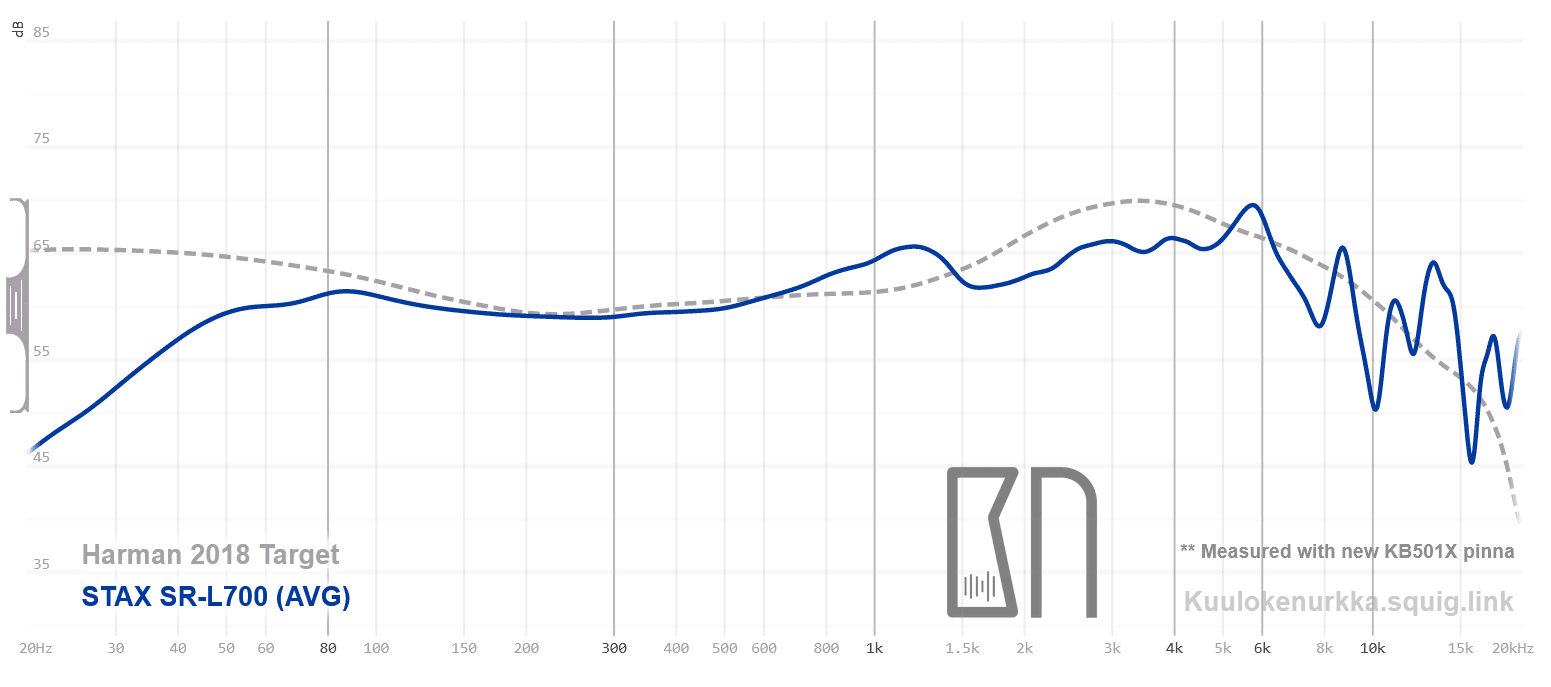
This time, I will evaluate the sound quality quite concisely and briefly, because in my opinion, the SR-L700 is a mediocre product for its price by current standards, or at least it's not my cup of tea. Like other electrostats, the headphones' sound has its own interesting characteristics, but also many clear weaknesses that STAX, unfortunately, has not been able to address over several decades.
Bass:
Objectively speaking, the biggest weakness of the L700's low frequencies is the insufficient sub-bass. More than the lack of bass, however, I am bothered by the lack of power and unnaturalness of the reproduction. The low frequencies sound hollow, undynamic, and utterly wrong. The bass frequencies do not reveal any layers or nuances; instead, the result sounds artificial, as if all sounds were produced by the same instrument. In its price range, the L700's bass reproduction is largely the most miserable I have heard.
Mid-frequencies:
In its mid-frequencies, the L700 is strangely distant yet aggressive. The emphasized 1 kHz region makes the reproduction aggressive, but due to the ghostly immateriality of the reproduction, it is difficult to get a grip on the music. Although the sound is very clear and uncolored, it is also unnaturally sounding and numbingly dull. Additionally, the 6 kHz emphasis adds occasional sibilance to vocal performances.
Treble:
The L700 is ultimately at its best when reproducing high frequencies. The headphones sound pleasantly airy and precise. Electrostatic drivers have their own advantages, and in my opinion, it is precisely in the high frequencies that even more affordable ”stats” often outperform more expensive planar headphones and headphones implemented with dynamic drivers.
Soundstage:
The soundstage of the L700 could be called peculiar. The immaterial sound creates a good sense of space, and the soundstage is quite large, especially in width. The placement of sounds in the sound field, however, is quite imprecise. There are empty spots in the soundstage where nothing ever seems to happen. The result somewhat resembles the ”three-blob” presentation of the Sennheiser HD 600 series, but of course, much more spacious.
Dynamics:
In the case of the L700, I don't think dynamics can really be discussed. The headphones sound flat and uninspiring throughout. Although the reproduction is fast in style, there is no punch or sharpness behind the transients. In terms of macrodynamics, the L700 is perhaps the weakest headphone I have heard in its price range.
Resolution and transparency of reproduction:
On the more positive side, STAX headphones sound uncolored, and distinguishing small details does not require effort. The sound feels truly effortless, as if it suddenly appears out of nowhere. In terms of sound separation, based on my recollections, the L700 stands up well against the best in its price range, such as Hifiman Arya, Focal Clear MG and Sennheiser HD 800. However, I have not achieved a very strong sense of presence in the reproduction with the L700. The immateriality of the reproduction ultimately prevents the presentation from being very realistic.
Summary
The STAX SR-L700 turned out to be a great disappointment for me. The headphones are precise and resolving in their reproduction, but undynamic and unnatural. In addition to mediocre sound quality, the construction of the headphones feels exceptionally cheap for their high price. It is difficult for me to come up with reasons why I could recommend the L700 to anyone. It's not really that the headphones are utterly terrible, but rather that, in my opinion, they are priced completely wrong. Many more affordable headphones offer better sound quality, a higher quality build, and similar comfort without the need for an exotic amplifier. If the L700 cost, for example, 500 euros and came with an amplifier, I could see STAX as an alternative to, say, Hifiman's Edition XSknown for its neutral sound.
In my opinion, the L700 is not necessarily a good purchase even for those who particularly like electrostatic headphones. The SR-Lambda Spirit, released in 1992, is indeed fuller in its mid-range and also has less sibilance. Although my owned Lambda Spirit is heavily modified, I still assumed that the L700, 30 years newer, would be cleaner in sound and more resolving. The newer model articulates high frequencies slightly more clearly, but otherwise, in my opinion, there is hardly any difference between the two. This indicates that STAX was decades ahead of its competitors in its time, but in the case of the L700 model, the traditional manufacturer has not managed to innovate and create a product that is competitive by today's standards. It has, of course, been 8 years since the L700 was released. Since the SR-X9000 flagship model was released in 2021, the time might be ripe for an update to the more affordable Lambda series as well.
Pros and cons:
+ Resolution and sound transparency
+ Effortlessness of reproduction
+ High frequencies are reproduced accurately
+ Comfort
– Really flat dynamics
– Inadequate bass reproduction
– Aggressive and hollow midrange
– Really cheap-feeling construction
– Terrible styrofoam packaging, into which it is difficult to put the headphones for protection
– Severely overpriced compared to competitors
 EN
EN  FI
FI