Author: Sword of Damocles
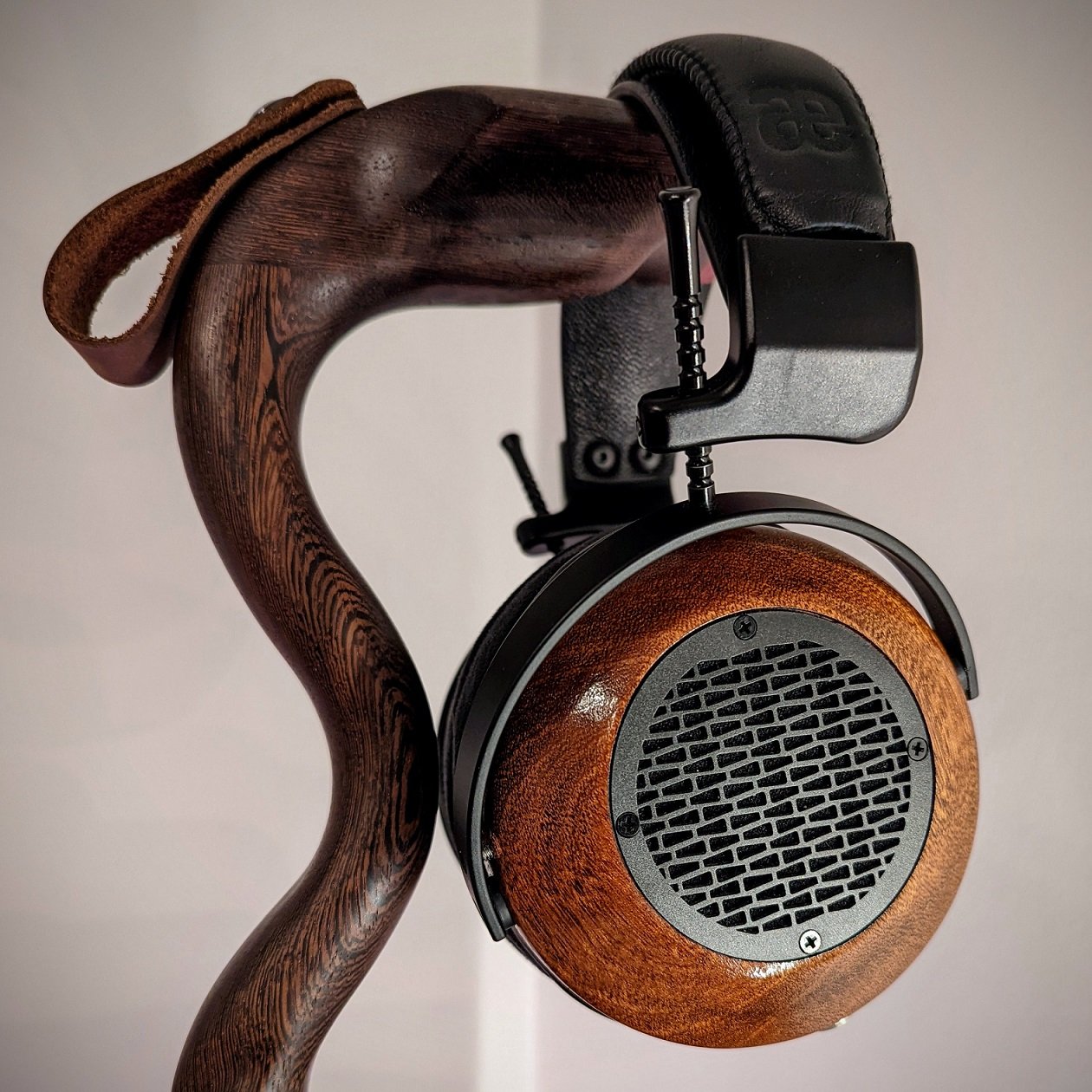
Table of Contents:
Information:
- Release year: 2018
- Country of origin: USA
- Price: starting from 1350 euros depending on wood type
- Dynamic driver: TPE (the same driver as in the Atticus model)
- Impedance: 300 ohm
- Sensitivity: 99 dB/mW
- Weight: 445 g (+-20 g) without cable (my own pair 446 g)
- Included: Seahorse case and cable with a connector of your choice
- Cable attachment to headphones: mini-XLR connectors
- Warranty: lifetime driver warranty and 2-year warranty for external parts
Review sample: Self-purchased product
ZMF Aeolus is an open sister version of the Atticus headphones released in 2018, two years after the original. Both use the same TPE driver, and the retail prices of the new headphones are also very close to each other, with the Aeolus being 100 euros more expensive than the Atticus (1350 vs. 1250 €) – both can, of course, also be ordered from time to time with more special and expensive wood types.
According to the manufacturer, the Aeolus offers a slightly more linear reproduction compared to the Atticus, thanks to its lower-reaching bass and higher-reaching treble. The biggest differences compared to the Atticus are mentioned as a less elevated mid-bass and a more forward-sounding vocalist. Atticus's review on I mentioned that I liked the headphones' fun and thick sound, but I regretted the mediocre, or at times even weak, technical performance. Given the right opportunity, I wanted to test the Aeolus model as well, to hear what the same dynamic driver sounds like with a more open cup structure.
Structure and comfort
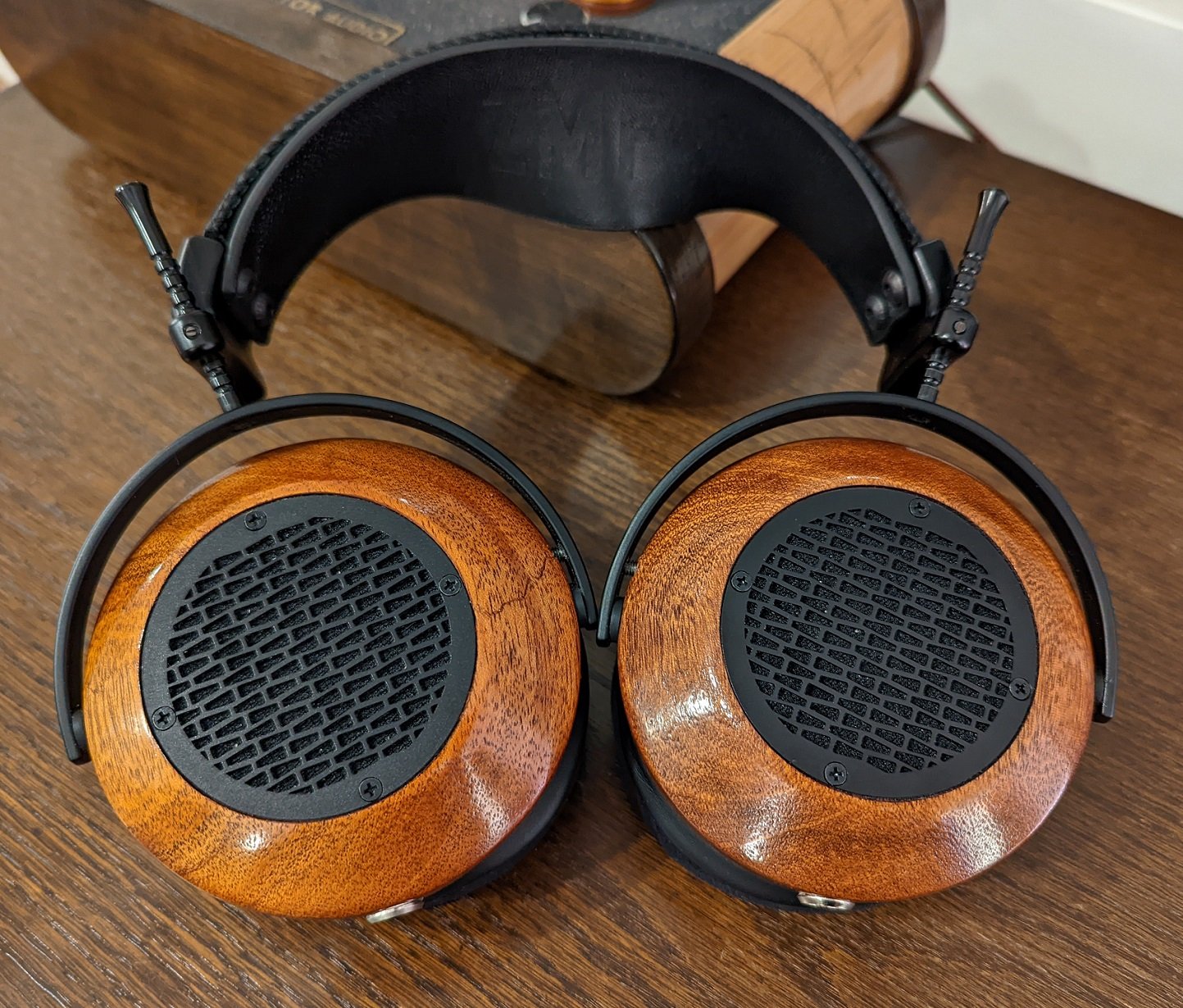
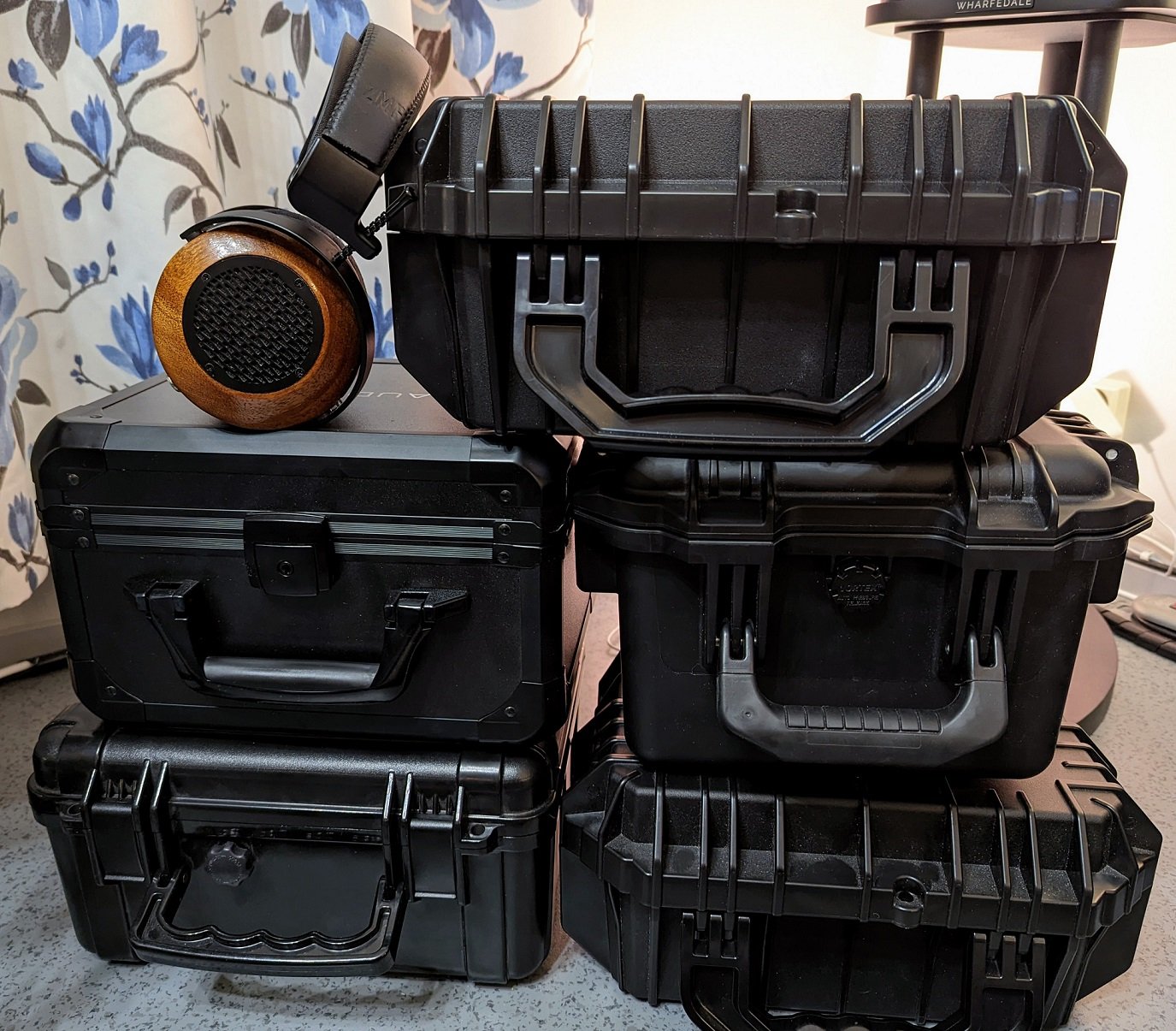
The used Aeolus I bought is made of reddish-orange Sapele wood. The keen-eyed might notice a crack on the edge of one of the wooden cups, which, however, blends quite well with the natural appearance of the wood. The headphones' first owner had accidentally bumped them, but fortunately, according to ZMF, the crack should not in any way impair the sound quality of the headphones.
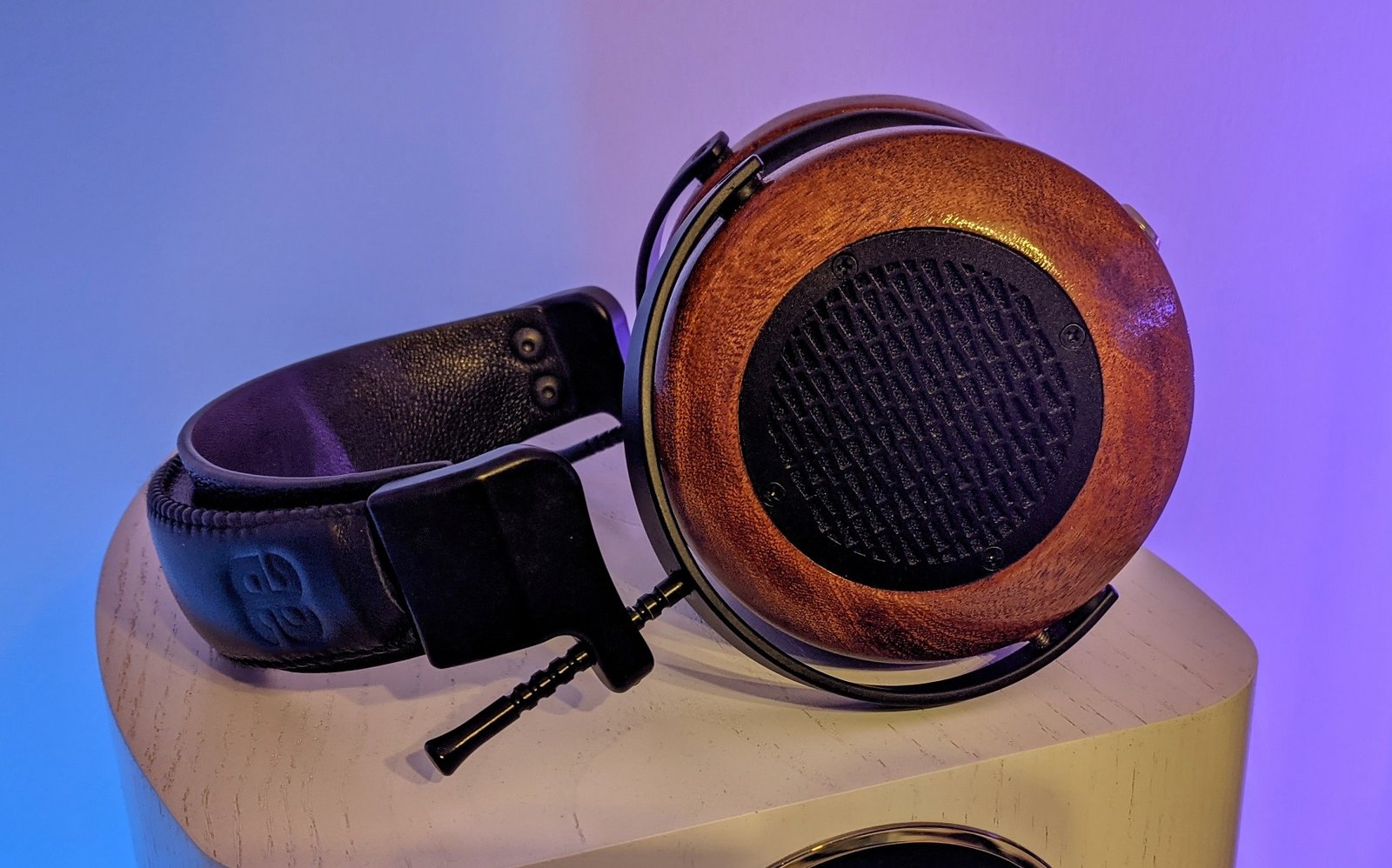
In the middle of the cups is a rather large and ordinary-looking metal grille, which is attached with screws. Compared to the Auteur model I previously reviewed, which is 500 euros more expensive (link to review), the appearance of the Aeolus does not evoke strong emotions; instead, it is modern and quite discreet.
Although the Aeolus's cups are more open than the Auteur's due to the larger grille, there are no other air vents in the cups. Because of the rather thick wooden cups, the driver remains quite far from the grille, so the sound has room to move inside the cups. This certainly contributes to the fact that the Aeolus does not sound very open, but rather like a semi-open headphone. The headphones also leak significantly less sound outwards than open headphones generally do. The sound of the Aeolus or Auteur hardly changes at all, even if you place your hands over the metal grilles of the cups while listening to them. If you do the same for open planar headphones, their sound changes strangely as soon as your hands approach the cups.
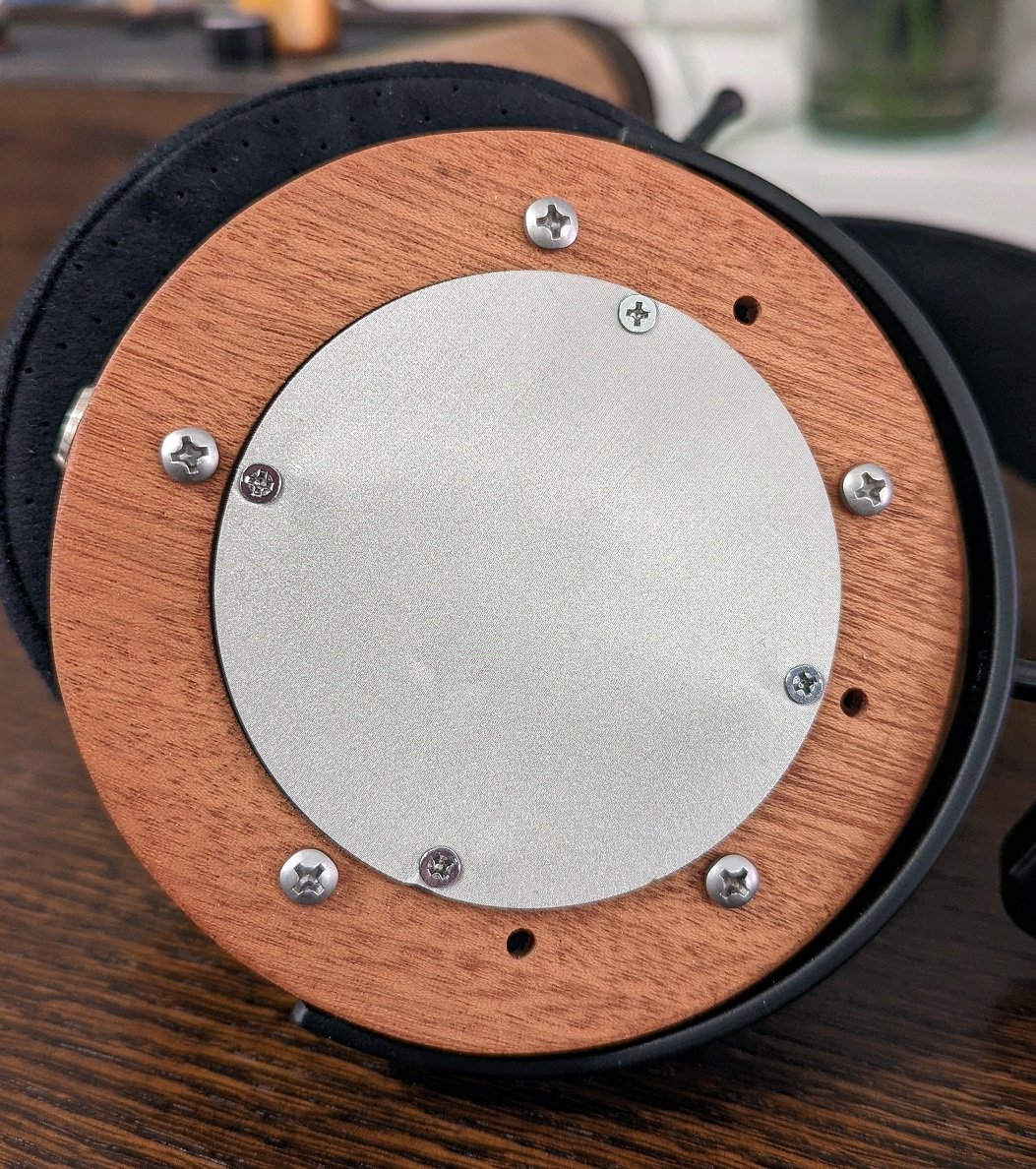
Like the Auteur, the Aeolus also has a pop filter over its driver, which controls the amount of treble reproduction. At first glance, one might think that nothing can be heard through the gray plate, but it is actually a fine metal mesh through which sound can pass. It would be possible to remove the pop filter, but based on what I've read, only a few have found the change in sound quality to be positive.
I have already covered the construction and features of ZMF headphones multiple times in my previous reviews. Since there is nothing new to tell about the Aeolus model, I will now move on to comfort. However, I will mention here that I did not receive ZMF's standard cable with the headphones, but rather a similar Audeze cable, which comes, for example, with the LCD-2 Classic headphones.
The Aeolus is the lightest of the ZMF models, weighing approximately 445 grams with its standard wood, Sapele. The used headphones I bought also did not come with the standard pads, which I understand would have been Universe-lambskin-perforated pads – instead, I received similar perforated suede pads, which are likely the Universe-suede-perforated model. Most people seem to prefer these pads over the leather pads.
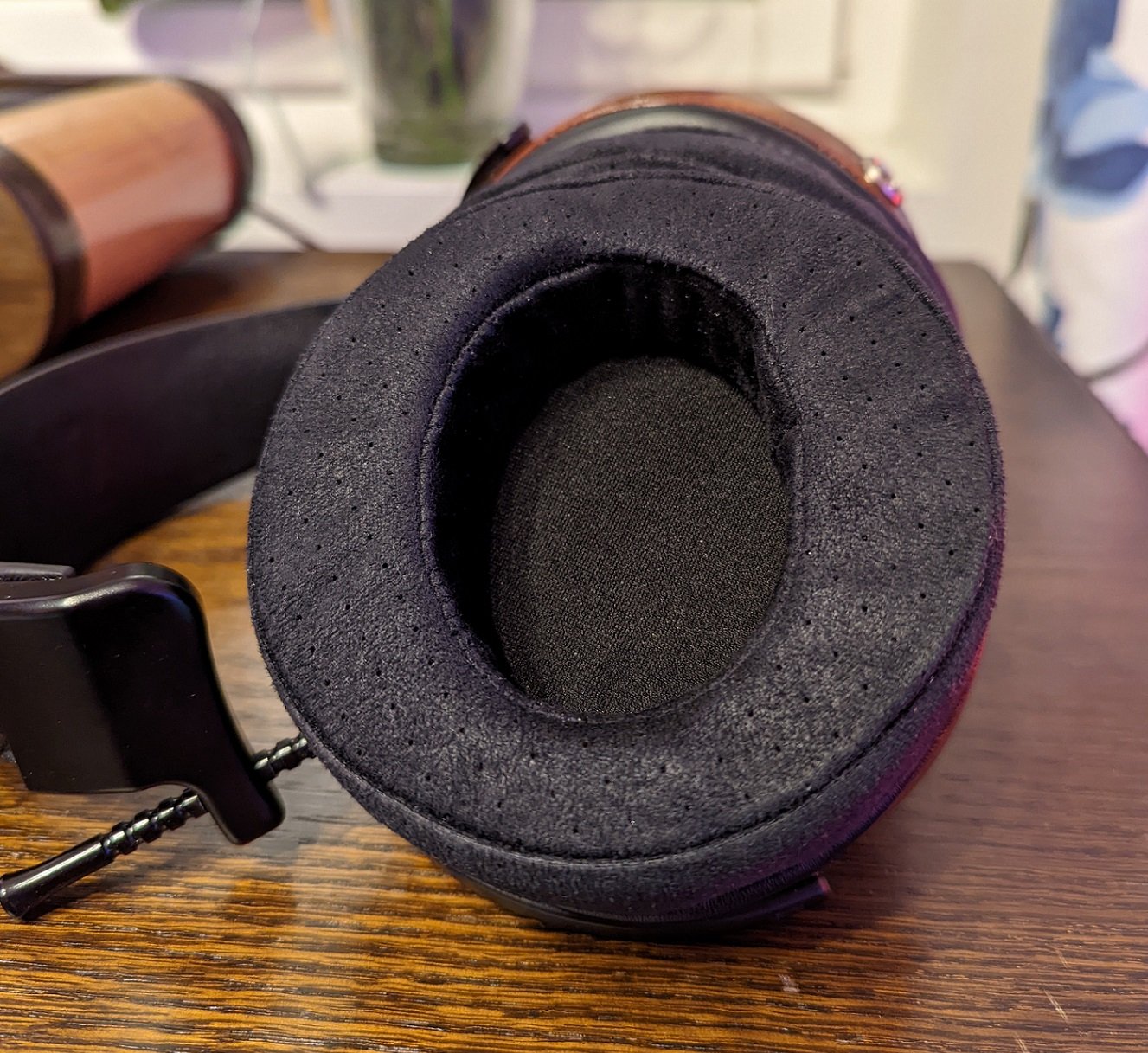
Thanks to a slightly lighter weight than other ZMF models and very comfortable suede pads, the Aeolus is the most comfortable of the ZMF models I've tested. When using other models, the comfort is good enough for me, but I genuinely want to keep the Aeolus on my head. Something in the combination of the headphones' weight, headband clamping force, and pad thickness hits so well that wearing the headphones is almost more comfortable than not wearing them.
Sound quality
Since the headphones did not come with standard pads, I evaluated their sound quality with suede pads. My following experiences were formed by listening with several headphone amplifiers as a general overview of the Aeolus' characteristics. To support my review, it's worth checking out Crinacle's frequency response measurements made with the same suede pads (link, the measurements can be found at the bottom of the page), as I find the headphones sound very much in line with the measurements, especially when compared to the Sennheiser HD6XX model.
The Aeolus is a kind of ”guilty pleasure” in terms of sound, as listening to and liking the headphones feels a bit wrong, similar to gorging on chocolate. With these headphones, everything sounds pleasant, intimate, and natural, and not at all like what detail-hunting audiophiles typically look for. Overall, the Aeolus is like a more balanced and linear version of the closed-back Atticus model, but both are warmly tuned headphones.
In my opinion, the Aeolus could also be called a warm and less bright version of the Auteur model. The Aeolus is still balanced in a similar way, and a commonality with the Auteur is also the emphasis on mid-frequencies. Where the Auteur emphasizes mid-frequencies only slightly, the Aeolus, with its suede earpads, brings the mid-frequencies and vocalist truly to the forefront. However, the tuning of the headphones is almost perfect for this presentation, without being at all fatiguing or too aggressive.
As Roderick already noted earlier when comparing the Aeolus to the Hifiman Arya (link to review), I also find the Aeolus to be the most natural-sounding headphone I've heard to date. The sound of the headphones is in a way truly honest and present, thanks to the prominent mid-frequencies. The headphones are easy to put on, as music immediately sounds from the first seconds exactly as one would expect it to sound when performed in one's own living room – yes, the Aeolus transforms all music into an intimate living room concert. Depending on the artist, this is either fun or annoying and strange.
The soundstage of the Aeolus is very small, and it strongly resembles the Sennheiser HD600 series, yet it extends more widely around the listener's head – this partly reinforces the feeling that music is being performed in one's own living room (of course, the gig could also be in the kitchen or bedroom). Such a small soundstage that is heard around the head is such a peculiar experience that one doesn't quite perceive it as a soundstage at all. The listener is constantly, as it were, inside the music.
Like the Atticus, the Aeolus is well-suited for heavier music and listening to acoustic instruments, yet it is less aggressive in style. In terms of tuning, the Aeolus is more balanced of the pair to such an extent that one can listen to a wide range of music with it, somewhat similarly to the ZMF Auteur. Despite the open-back design of the headphones, the weakness of the Aeolus is still that the sound lacks airiness and a sense of space. In summary, one could say that almost anything sounds pleasant with these headphones if one is willing to listen to music intimately in a small space. Music that requires a larger soundstage and more air around it does not get its due with these headphones. The more expensive Auteur model is a clear improvement over the Aeolus in both airiness and soundstage size.
Bass reproduction:
The bass reproduction of the Aeolus model feels appropriate in quantity and natural in style. If the bass were emphasized any more, the headphones might sound too dark and thick – as it is, the combination of Aeolus' low frequencies and slightly elevated lower mid-frequencies feels safely warm. The mid-bass of the headphones could be called neutral, similar to the Auteur model, but it lacks the same tightness and power as the Auteur.
Compared to the Atticus model, which emphasizes mid-bass more, the Aeolus completely lacks the same lush impact, especially with the suede pads I'm using. However, with the Aeolus, the lowest bass frequencies are heard better, so there is more low rumble in the reproduction, somewhat similar to planar headphones. However, the bass reproduction is not particularly detailed; rather, it complements the rest of the reproduction, blending somewhat with other elements of the music. This, in turn, adds to the naturalness of the headphones, as no frequency range sounds too detached from the overall sound.
Mid-frequencies:
As I mentioned, the mid-frequencies of the headphones are very prominent. They are a suitable blend of energy and calm effortlessness – the overall sound is, in my opinion, realistic and pleasant. Based on my previous testing of various ZMF earpads, I would guess that the prominent mid-frequencies are partly a characteristic of the suede pads. Compared to the more expensive Auteur model, which is tuned closer to the Harman target curve, the lower parts of the mid-frequencies are more prominent in the Aeolus, and the upper parts of the mid-frequencies in the Auteur. The Auteur's reproduction is more energetic, while the Aeolus leans more towards warm pleasantness.
Aeolus' mid-range tuning emphasizes the body of instruments and details emerging from lower frequencies. Thanks to the calmer upper-midrange tuning, the headphones' small soundstage does not become too fatiguing, as nothing ever sounds sharp or aggressive. At the same time, however, the reproduction lacks some energy that I would wish it had compared to the Auteur model. On the other hand, Aeolus is also meant to sound slightly different, so that it has a place in ZMF's headphone lineup.
Due to the elevated 1 kHz region visible in Crinacle's measurements I mentioned, vocal performances with Aeolus' suede pads sound somewhat Audeze-like in their shoutiness, but they are balanced by sufficiently loud upper-midrange frequencies, unlike Audeze headphones which have a deeper dip in that frequency range. However, this emphasis in the 1 kHz region is certainly one reason why the mid-range frequencies are the most intensely present and forward on the Aeolus among the ZMF headphones I've heard.
Treble:
Treble is a frequency range that I usually evaluate quite poorly, other than in terms of its balance, sharpness, and airiness. I don't usually focus primarily on listening to the treble, so I retain few memories of it when moving on to different headphones. However, I usually quickly notice if some headphones separate high-frequency details particularly well.
Airiness in reproduction usually comes from emphasizing frequencies above 10 kHz – this doesn't usually strain my ears, but too much airiness can sound unnatural. I find the excessive emphasis of the 7–9 kHz region more irritating, as it makes the reproduction too bright and sharp. In contrast, the emphasis of the presence region (4–6 kHz), which irritates many ears, doesn't usually bother me. ZMF headphones, including the Aeolus, have an emphasis precisely in the presence region, which I would guess is partly a tactical solution to make warmly tuned headphones sound engaging and interesting enough. For some tastes, the Aeolus model might have a few decibels too much energy, especially between 5–6 kHz, even though it doesn't bother me personally.
Otherwise, the Aeolus' treble falls squarely into the balanced and gentle category. When listening, the higher frequencies remain somewhat in the background of the mid-range. Compared to the treble reproduction of the ZMF Atticus and Auteur models, the Aeolus sounds calmer and less airy. There is enough treble, but its tuning ensures that it doesn't irritate even more sensitive listeners. The calm treble reproduction might also be partly a result of the suede pads, as a quick test with slightly thicker Eikon-lambskin-perforated pads clearly increased the headphones' brightness (the pads themselves did not bring the desired changes to the sound).
Device pairing
Many recommend a tube amplifier for the Aeolus, and I must agree with this recommendation after listening to the headphones with my Tor Audio Roger amplifier. The Aeolus performs even better with Psvane CV181-T MKII and Sylvania 6X5GT (rectifier) tubes than the Auteur model. I even go so far as to claim that the Aeolus' frequency response is almost perfectly suited for listening with tubes.
The Tor Audio Roger doesn't transform the Aeolus into a different headphone, but it somehow brings out the headphones' strengths even better. The Aeolus sounds truly natural and balanced with my Class A solid state amplifiers, the RebelAmp and Burson Audio Soloist 3XP, but the reproduction is at times too smooth and controlled. With a tube amplifier, this sense of control diminishes, making the Aeolus more interesting and fun: the bass hits harder, the mid-range has even more warmth, and the placement of sounds in the soundstage changes. With my own tubes, the headphones' sound becomes thicker, but at the same time, different sounds play more independently of each other, and the soundstage feels slightly larger for background sounds – this continues to surprise me the most with tube amplifiers.
The Aeolus also sounds really good with the Project Polaris I reviewed earlier (link to review), which adds a bit of Atticus-like punch to the bass reproduction, but balances the overall presentation by also adding energy to the treble. The end result is in the same league of fun as the Tor Audio Roger, but the Project Polaris brings little change to sound placement or soundstage size.
I don't currently own any bright-sounding solid-state amplifiers, but I would guess that the Aeolus wouldn't be intimidated by them either, because the headphones' treble is dark and balanced, and a small boost to this particular area wouldn't necessarily hurt. In terms of amplifier power, even moderate figures are sufficient, as despite the 300-ohm impedance, the 99 dB/mW sensitivity is so high that there will certainly be enough volume from all devices that can be called amplifiers.
Does Aeolus sound better than Atticus?
Prices: Aeolus 1350 € vs. Atticus 1250 €
The Aeolus model has exactly the same driver as the closed Atticus model, so comparing the headphones has been instructive for me in terms of how much different construction and tuning change my perception of the driver and headphone aspects often referred to as technical performance.
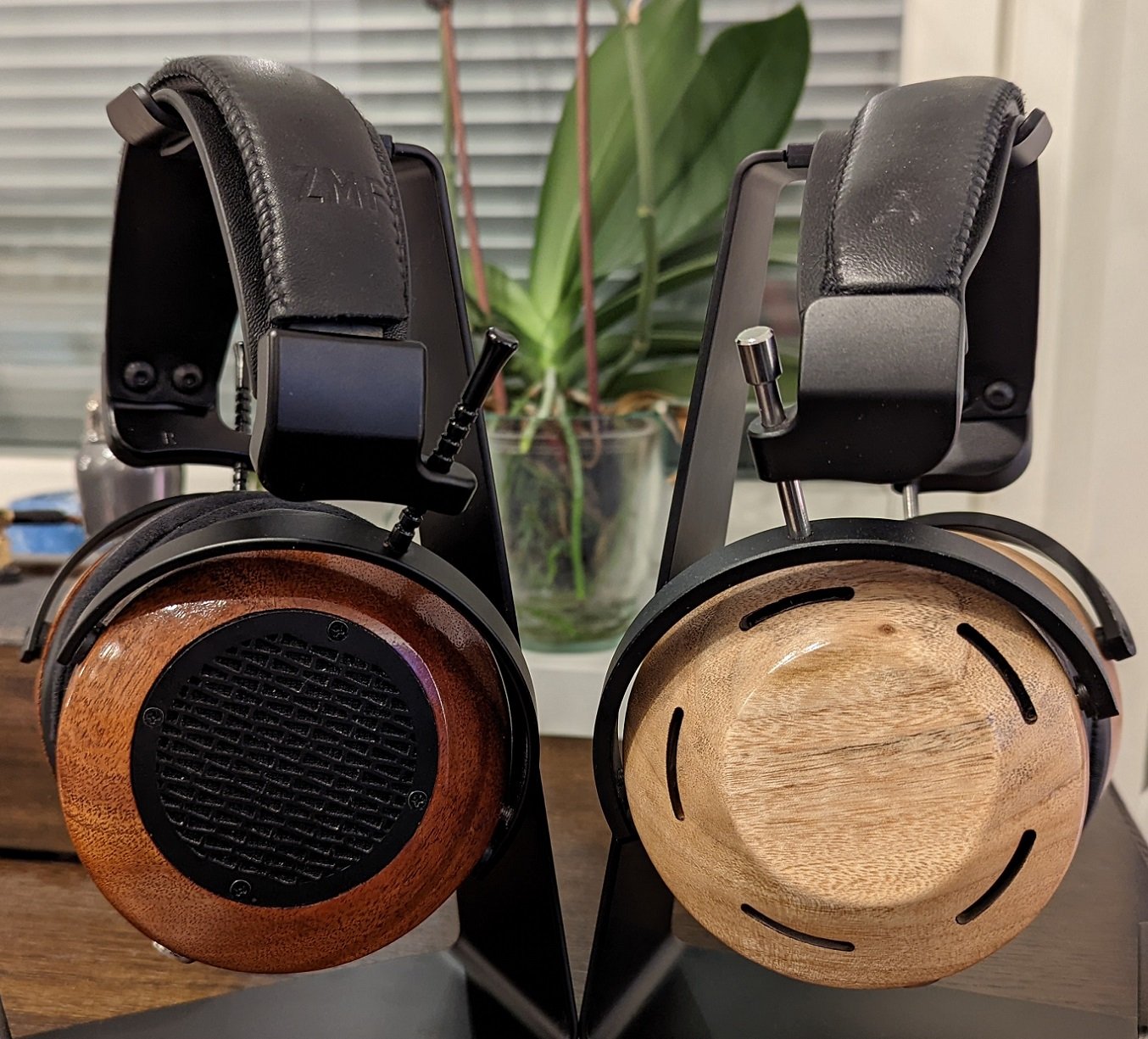
Both headphones, in my opinion, separate musical details rather mediocrely for their price, and they should not be acquired for music analysis – smaller details are easily missed unless they have been heard before with other headphones with better resolution. However, the Aeolus clearly offers better opportunities for distinguishing details in places, thanks to its less colored tuning. With the Aeolus, sounds are also placed more precisely in the soundstage, likely due to its open structure, which produces less reverberation than the Atticus. Sounds are heard close, yet easily locatable compared to the Atticus' more vague placement.
In terms of dynamics, the headphones' driver is identifiable as the same in both constructions. Despite the warm and rather hard-hitting tunings, the macrodynamics remain somewhat soft, and the headphones do not react very briskly to changes in sound pressure. I wouldn't call the dynamics bad in any way, but they don't stand out in the same positive sense as, for example, with Focal headphones.
Transients are also reproduced quite gently and relaxed on both the Aeolus and Atticus, which, however, suits the overall sound aimed for with these headphones. The Aeolus' more linear tuning makes it sound slightly faster compared to the Atticus. The Atticus' reproduction is slowed down not only by its thick tuning but also by the reverberation resonating from its closed wooden cups.
Regarding the soundstage, the situation is interesting, because Atticus, despite its closed structure, sounds larger and more spacious, even though ZMF suggests the situation is the other way around. Aeolus is certainly in a way more open-sounding, but the reproduction is so intimate in style that sometimes it already slightly diminishes the interestingness of the music. Atticus, on the other hand, offers the listener more stimuli in terms of soundstage, and listening is in a way easier on the ears because not everything is reproduced so close.
In terms of tuning, the headphones” reproduction has a lot in common, with Aeolus taking a slight step back from Atticus's thick and energetic tuning. The biggest differences between the headphones are found in bass reproduction and treble energy. Atticus strongly emphasizes the mid-bass, which makes the headphones” sound more fun than Aeolus – with Atticus, drums and bass guitar "hit" hard, but the lower bass frequencies remain slightly in their shadow. Aeolus has more rumble in the sub-bass, so the reproduction is pleasantly robust without being thick in the same way as Atticus.
I mentioned in the Atticus review that the headphones are not very bright with leather pads. However, listening to Aeolus has given me a different perspective on the matter – Atticus actually sounds surprisingly bright and sparkling. There is also more energy in the lower treble in places than with Aeolus, so Atticus's reproduction is overall more vibrant with standard pads. The difference in brightness is clearly noticeable, for example, in electric guitar distortion and drum cymbals.
I listen to a lot of rock music produced in the 2000s, which sounds more energetic and fun with Atticus – not even Verite Closed is better here, as electric guitars sound more biting with Atticus. However, Aeolus is more forgiving of poorly recorded albums and especially drum cymbals. Thanks to a more balanced tuning, instruments and details are also easier to distinguish from each other. For those who prefer a slightly calmer presentation style in rock music, Aeolus is a safer choice, as Atticus's treble occasionally grates on the ear, unless suede pads are swapped in.
In summary, Aeolus is the more balanced of the two and, summing all frequency ranges, more natural – evaluated even slightly more objectively, Aeolus's frequency response can be said to be better. Atticus's mid-frequencies are also very natural in timbre, but with a fuller bass reproduction and a slight treble emphasis, a more fun and interesting result than Aeolus has otherwise been achieved. With Atticus, however, everything depends on whether the overall package is considered too colored and heavy to listen to – Aeolus is a refined and easier to adopt, but more intimately sounding version of the same headphone.
Aeolus vs. Sennheiser HD6XX
Prices: 1350 € vs. 240 €
I also briefly compared Aeolus to the Sennheiser HD6XX model (which sound similar to the HD650 model). Especially in terms of soundstage, Aeolus is even closer to the HD6XX than the ZMF Auteur I reviewed earlier – thanks to similar, intimate soundstages, Aeolus and HD6XX were at least easier to compare stylistically.
The HD6XX's soundstage is more traditional in its presentation in the sense that the listener feels like they are in the audience close to the stage. With Aeolus, the soundstage forms more widely around the listener's head, so that the listener is rather in the middle of the music. However, the difference in soundstage is not huge; it is small and intimate in both.
Both headphones emphasize mid-frequencies – Aeolus more lower frequencies in the vicinity of 1 kHz and HD6XX slightly more the 2–3 kHz range. Thanks to the added energy in the upper mid-frequencies, the HD6XX is more energetic in its reproduction, but at the same time it sounds more veiled and congested compared to Aeolus (somewhat like having blocked ears). When listening to the HD6XX, I constantly have to strain to hear everything clearly. Aeolus brings a literally ”clear” improvement to this, but it may not please those who like the HD6XX's reproduction as it is.
Aeolus has quantitatively slightly more treble, so it sounds more balanced and airy, even if the difference compared to the HD6XX is not great. In terms of bass reproduction, the HD6XX's tuning emphasizes mid-bass more than Aeolus, but Aeolus's bass is still larger and more powerful thanks to the sub-bass extending lower. The HD6XX's bass settles in a small area in reproduction, while Aeolus's bass complements the reproduction better and less detached from other frequencies.
Aeolus is slightly ”wetter” in sound (different sounds blend more and more naturally together) and rounder (I could also call this softness, it feels like the edges of the sounds have been slightly rounded), even though the HD6XX has exactly the same characteristics. Both headphones are admirably natural in timbre.
The HD6XX's soundstage is in a way so small that when listening to the headphones, I can't help but think I'm listening to them. The biggest difference when switching to Aeolus is that when listening to it, I forget the headphones more easily, believing I am in the same room with the performer. On the other hand, Roderick stated in his Hifiman Arya review that he never reached a state when listening to Aeolus where he forgot he was listening to it. For this reason, achieving such a state is likely quite individual, so readers of our reviews should always critically evaluate which author's experience they identify with more.
In my opinion, when listening to Aeolus, the sound of the instruments spreads into the space (even if the space is small) very credibly and warmly, which is certainly at least partly due to the wooden earcups. The difference to the HD6XX cannot really be measured in money, as Aeolus offers the final touch in naturalness and evoking emotions in reproduction. In terms of detail, there is no clear difference between the headphones despite the large price difference, because neither model aims for analytical reproduction. It is unlikely that the prices of the headphone drivers themselves differ much, as a large part of Aeolus's price is explained by craftsmanship and small production volume.
If the goal is to get better bass reproduction, slightly more treble, and less in-your-face upper mid-frequencies compared to Sennheisers, Aeolus is an excellent leap in that direction. Compared to the ZMF Auteur, however, Aeolus does not evoke an immediate feeling alongside the HD6XX that enough improvement has been achieved in every area. On the other hand, buying Aeolus used for 700–800 euros makes it, in my opinion, a suitably priced upgrade for an HD600 series owner. However, a Sennheiser owner aiming for more detailed and airy reproduction should look elsewhere.
Aeolus vs. Audeze LCD-2F (2014)
Prices: 1350 € vs. 999 €
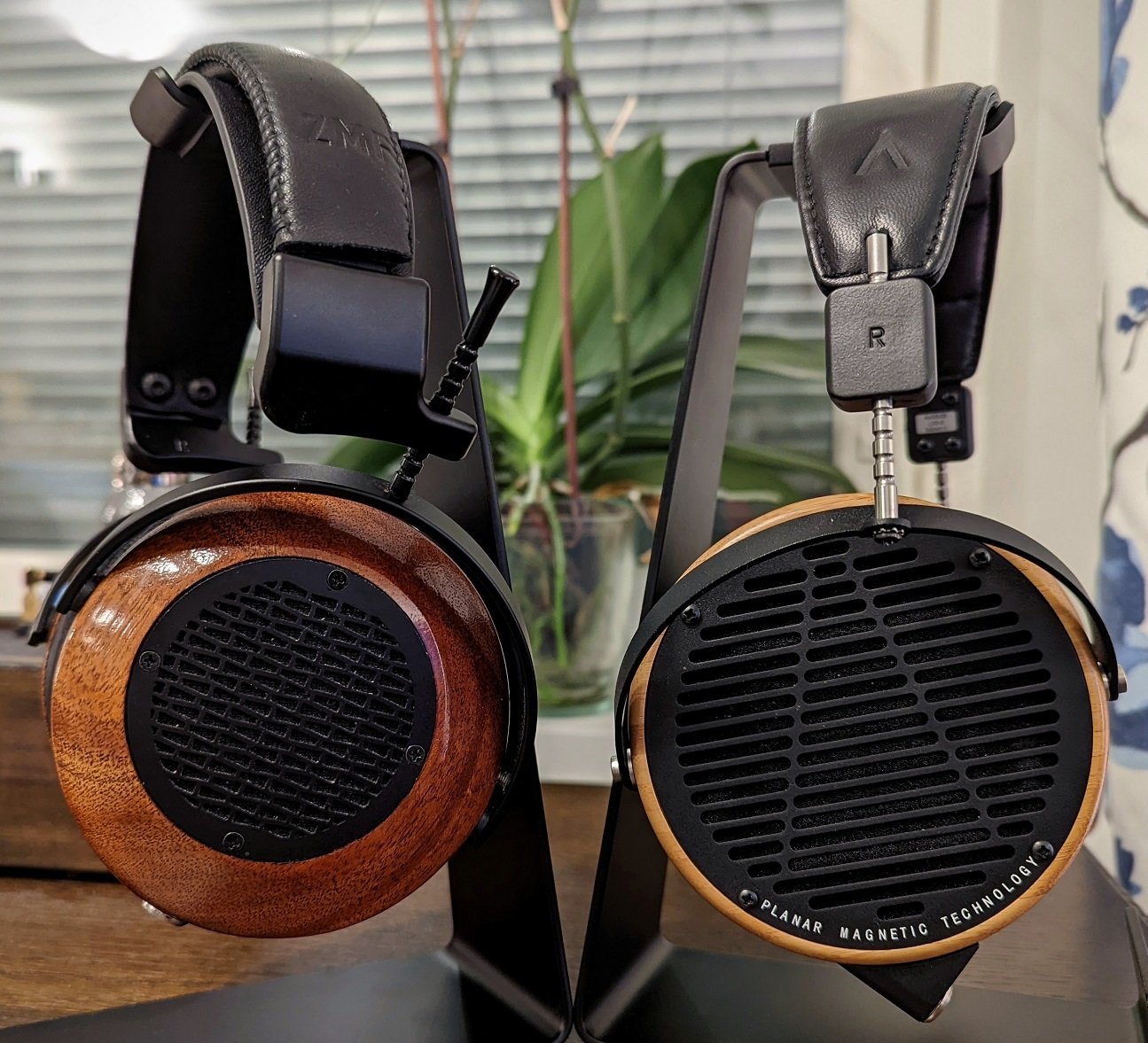
I recently acquired the 2014 version of Audeze LCD-2F (fazor) planar headphones specifically with the Aeolus review in mind. In the following comparison, it's worth noting that a newer LCD-2 purchased in 2021 is highly likely to be slightly better than my older model. Furthermore, my headphones are equipped with Dekoni Elite Hybrid earpads, so the sound of the headphones differs in places by a few decibels from the leather stock earpads. According to Dekoni's own frequency response measurements, the two biggest differences of these earpads compared to stock earpads are a less recessed, i.e., more normal upper midrange reproduction and a slightly brighter treble.
First, it must be mentioned that the LCD-2's frequency response sounds quite ridiculous when I switch to them after listening to the Aeolus – to put it bluntly, Audeze's upper midrange is pushed down to some deep-sea trench, even though the Dekoni earpads attached to the headphones actually compensate for the situation to the benefit of my own LCD-2 pair. Like other Audeze models, the LCD-2 is very relaxed in its midrange, as a large part of the energy is missing from the music – instruments and vocalists sound quite lifeless, and the overall presentation is unnatural compared to the Aeolus. However, the LCD-2 seems to come alive in the midrange when listening at higher volumes, after which it's possible to get used to the tuning as it is.
The LCD-2's treble is more emphasized than the Aeolus, so despite its lifelessness, the headphones cannot be described as dark. The treble is actually a bit too much for my taste. This might be due to the Dekoni earpads, but the headphones apparently have a slight treble emphasis even with stock earpads, which not everyone likes. This is also partly influenced by the fact that the treble sounds very separate from the midrange, and it's difficult not to focus on listening to it.
Both headphones have a quantitatively similar amount of bass. The Aeolus's bass hits softer and a bit fuller. The LCD-2's bass, on the other hand, is tighter, faster, and more technical. Although Audezes, like my previously owned LCD-2 Classic, are known for their robust reproduction, the 2014 LCD-2 with fazors and Dekoni earpads is, in my opinion, rather slightly light and bright. This becomes apparent when comparing it to both the Aeolus and the warm-neutral Auteur I previously reviewed.
The LCD-2 beats the Aeolus in terms of clarity of reproduction, detail retrieval, and soundstage size. The soundstage in both is actually a very similar bubble around the head, but in the LCD-2, this bubble is larger. With the LCD-2, the beginning and end of different sounds are heard significantly sharper and the sounds are more separate from each other, making it easier to perceive details than with the Aeolus. The LCD-2 is so much better that it also outperforms the Aeolus in midrange detail, even though the same sounds are clearly quieter on the Audeze. The treble also sounds more detailed and airy on the LCD-2 than on the Aeolus.
Despite the LCD-2's better technical performance, the Aeolus feels like a more comprehensive and refined package in terms of frequency response. In my view, Audeze aims for a fairly similar, easy-to-listen-to result with its LCD-2 models, but the upper midrange and lower treble remain too subdued and lifeless for my taste. In this respect, the tuning of the Aeolus, like other ZMF models I've reviewed, can be considered a kind of corrected version of Audeze headphones.
The Aeolus is significantly lighter (446 g vs. 582 g) and more comfortable than the LCD-2. This is no longer relevant today, but Audeze's old headband has almost no padding, and it constantly presses uncomfortably on the top of the head. In fact, the bare metal band feels almost as comfortable (read: uncomfortable) against the head as the leather padding.
After all I've described, the clear advantage of the LCD-2 compared to the Aeolus is still significantly better accuracy and separation, which cannot be fully enjoyed when listening to the Aeolus. I will cover the LCD-2 in more detail in a separate review, but I will mention at this point that, in my opinion, it is an excellent €1000 headphone in terms of resolution, despite being 7 years old. When equalized, the LCD-2 becomes a more balanced and thus a better purchase compared to the Aeolus, but I will delve into equalization more thoroughly when writing more about the Audeze model.
Summary
ZMF's specialty and in a way also its strength as a headphone manufacturer is that each headphone model genuinely sounds different, and the manufacturer has not started repeating the same headphone over and over again – nor have new, slightly modified versions been released every year, like Hifiman and Audeze. Thanks to this, ZMF headphones have a fairly good resale value, even though they are quite expensive when bought new. Many are willing to pay more for special editions of the headphones that use more exotic-looking wood types. Thus, even a more expensive special edition does not lose its value any faster than cheaper models with so-called basic wood types.
The manufacturer's headphones are clearly valued for other reasons than just being headphones. In my opinion, this is refreshing in today's consumer society, where goods have little other value beyond their use value.
Although the Aeolus is implemented with the same driver as the Atticus, the headphones are different enough in sound that it would be possible to own both simultaneously. For most considering purchasing a more affordable ZMF model, however, the headphones are in a way a matter of choice between the softer and more balanced Aeolus and the bass-heavy and slightly more fun Atticus. If the main goals are natural reproduction and present midranges for relaxed listening, the Aeolus is, in my opinion, better than the manufacturer's Verite Closed – on the other hand, in terms of detail retrieval, clarity, and dynamics, it falls significantly behind the Verite. The Auteur model, in turn, sounds more neutral and brighter than the Aeolus, meaning in a way, more like an audiophile headphone.
ZMF headphones are still quite difficult to compare directly to headphones from other manufacturers, because the situation is usually always the same: many similarly priced headphones win in detail and other technical aspects, but ZMF models win in naturalness of reproduction and, in my opinion, listening enjoyment. Neither approach can be called wrong from a subjective standpoint, so I usually cannot declare a winner one way or the other. It is generally difficult to choose a winner among different headphones, as long as they are successful overall packages – different headphones suit different people, even if a model that is as neutral and faithful to recordings as possible would be the safest choice.
With its suede earpads, the Aeolus is largely the most pleasant headphone I have ever heard, so it's easy for me to understand why so many like it. Especially with a suitable tube amplifier, the presentation of music is such that when listening, all of life's worries are forgotten, if there were any. If this kind of comforting presentation appeals more than anything else, the pursuit of better headphones and listening experiences could almost be stopped at that point.
I, however, am not yet at such a point of settling down, aiming solely for pleasant reproduction. Therefore, the Aeolus often feels too safe and tame as a whole, especially since it is not very detailed or otherwise interesting. In addition, I already own the more fun Atticus model.
Pros and cons:
+ Naturalness and realism of reproduction and timbre
+ Balanced and warm tuning, with appropriate amounts of all frequency ranges for the chosen style
+ Successful rendition of present mid-frequencies
+ Excellent comfort with suede pads (more comfortable than other ZMF models)
+ Laadukas rakenne ja hieno ulkonäkö
+ Lifetime driver warranty for the headphones' first owner
– Mediocre detail resolution in the over 1000 euro price range
– Small and intimate soundstage, which in a way is an important part of the headphones' allure
– Despite the open design, the reproduction is not very airy or open
– There could be a bit more energy in the upper mid-frequencies and treble, as the reproduction is at times too tame (may be partly a characteristic of suede pads)
– The headphones can still be heavy for many tastes
– The somewhat high price of new headphones, especially since the Atticus model costs 100 euros less
 EN
EN  FI
FI
When I owned the Aeolus, I preferred the stock pads more, even though many like the suede ones and the sound cannot be described as bad with them. With the stock pads, the reproduction has more bass, treble, so-called punch and energy, while with suede, the sound remains flatter. HD650 purists for whom all treble above that is boosted might like the Suede Aeolus 🙂
Thanks for the comment. 🙂
It would have been nice to hear the leather stock pads myself! Based on your description, it seems that the stock pads aim for more of a ZMF sound in a certain way. The Atticus also becomes smoother and softer with suede pads, so it's possible that the Aeolus would be slightly clearer and sharper with leather pads.