Author: Sword of Damocles
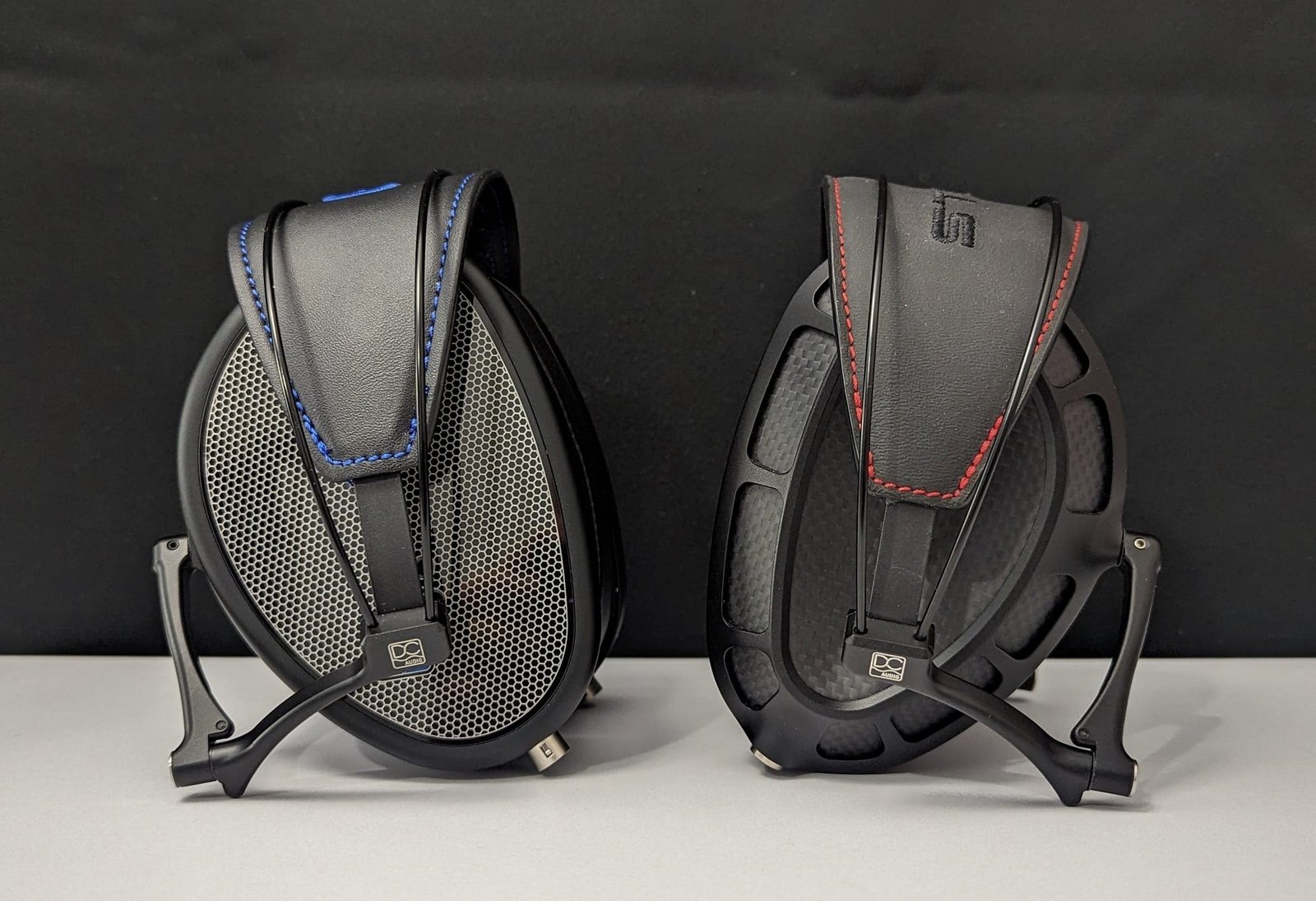
Table of Contents:

- Release year: 2023
- Country of origin: USA
- Price: 1999 USD / 2459 EUR
- Type: Closed, over-ear
- 5th generation planar driver: 72 x 45 mm (V-planar diaphragm and Acoustic Metamaterial Tuning System)
- Impedance: 27 Ohm
- Sensitivity: 90 dB/mW
- Weight: 455 g
- Connector type: 2 x Hirose
- VIVO cable: Length 2 m (3 m at extra cost) / connector XLR or 6.35 mm (more length and connector options when ordering from the manufacturer)
- Accessories: Carrying case, cable pouch, cleaning cloth, certificate of authenticity and user manual
- Warranty: 2 years

- Publication year: 2021
- Country of origin: USA
- Price: 4000 USD / 4800 EUR
- Type: Closed, over-ear
- 4th generation planar driver: 76 mm x 51 mm (V-planar diaphragm and Acoustic Metamaterial Tuning System)
- Impedance: 13 Ohm
- Sensitivity: 92 dB/mW
- Weight: 415 g
- Connector type: 2 x Hirose
- VIVO cable: Length 2 m (3 m at extra cost) / connector XLR or 6.35 mm (more length and connector options when ordering from the manufacturer)
- Accessories: Carrying case, cleaning cloth, certificate of authenticity and user manual
- Warranty: 2 years
Acquisition method for review units: E3 purchased personally and Stealth borrowed from the importer
In the Headphone Corner, we are once again dealing with a unique novelty, as this time we are reviewing the closed E3 planar headphones from the American company Dan Clark Audio, which are sold in Finland for approximately 2500 euros. Released in late 2023, this headphone model is interesting because its technology and structure are based on the manufacturer's 4800-euro flagship Stealth model from 2021. Since the tuning in both models also follows Harman's target curve with excellent precision, Dan Clark Audio can be seen as offering its best expertise in a more wallet-friendly way than before. To find out more about this, I also acquired the Stealth model for simultaneous testing. It was kindly arranged as a loan from Kruunuradio, which acts as the importer of Dan Clark Audio products in Finland. Headphone Corner thanks for the cooperation!

As background, I'll mention that I once tested Dan Clark Audio's more affordable model series, which includes Aeon 2 Closed -headphones, and I also owned the Ether CX, made in collaboration with the Drop website, for some time. Neither of these, however, made a huge impression on me, because their tuning is based on strong damping of the drivers, which I feel suppresses both the dynamics and detail of the reproduction. However, with the manufacturer's latest headphone models, the thick front damping has been replaced by an innovative AMTS structure, so I want to give the manufacturer a kind of new opportunity by reviewing its products after a break of a good couple of years.
Product packaging and equipment
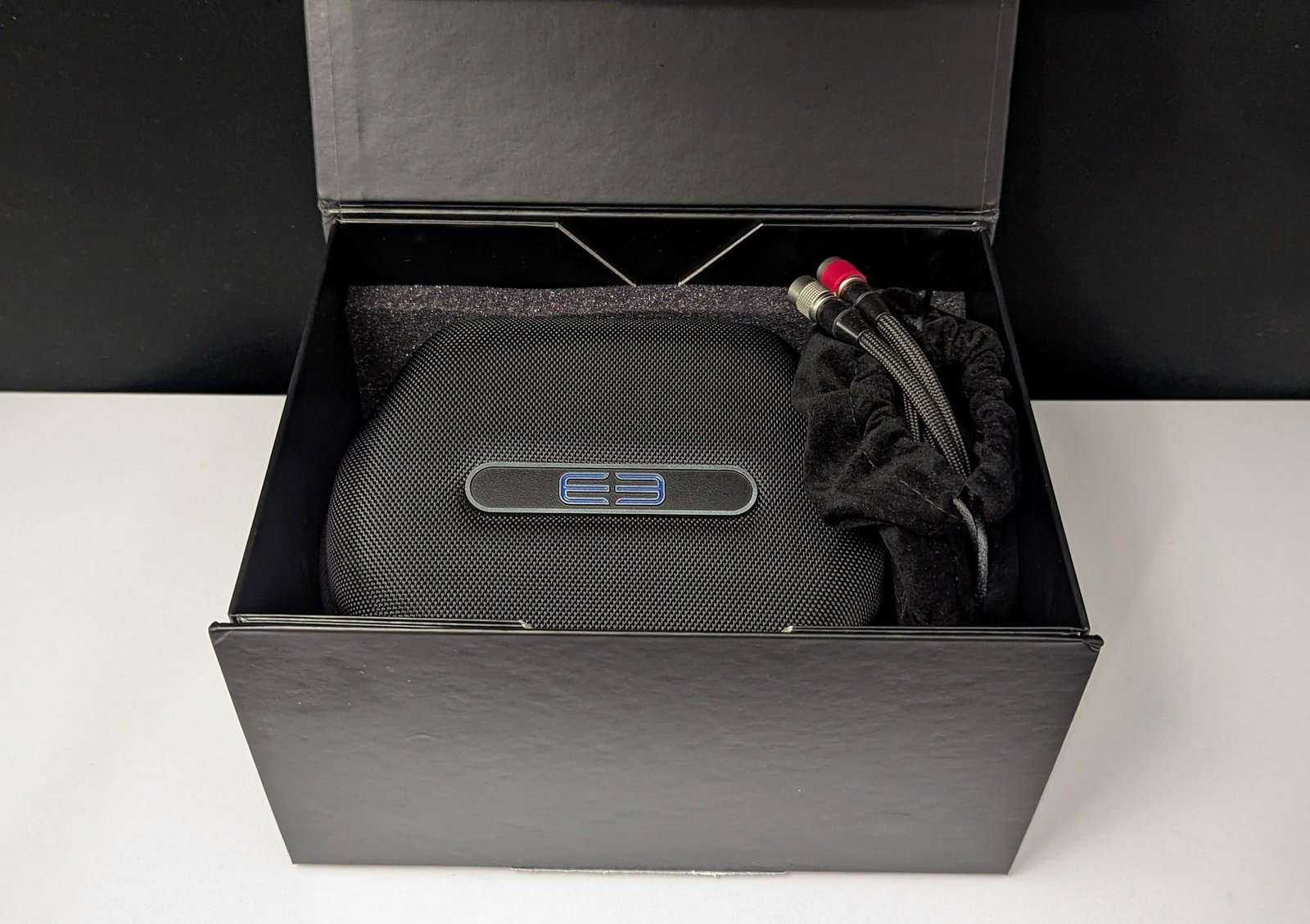
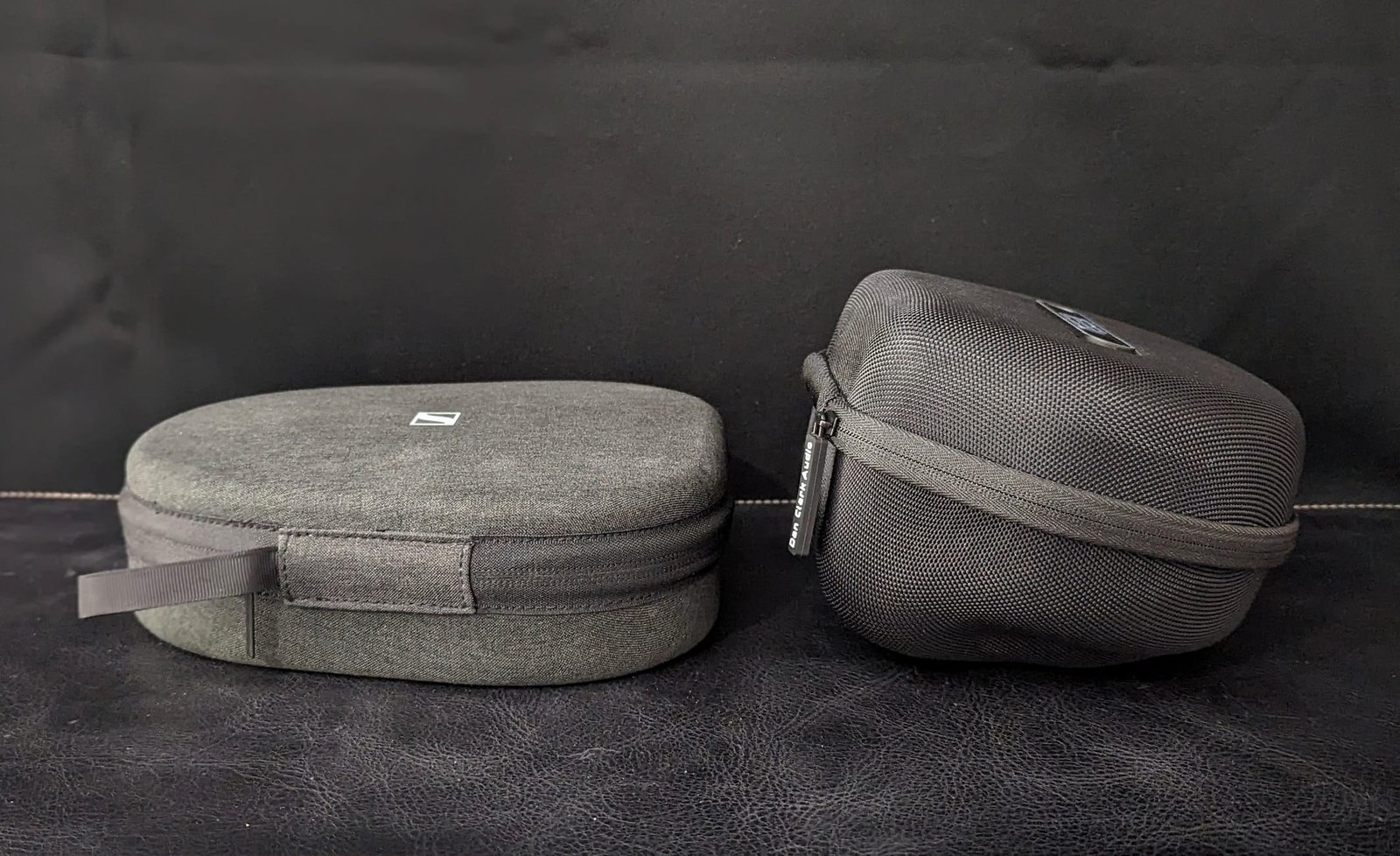
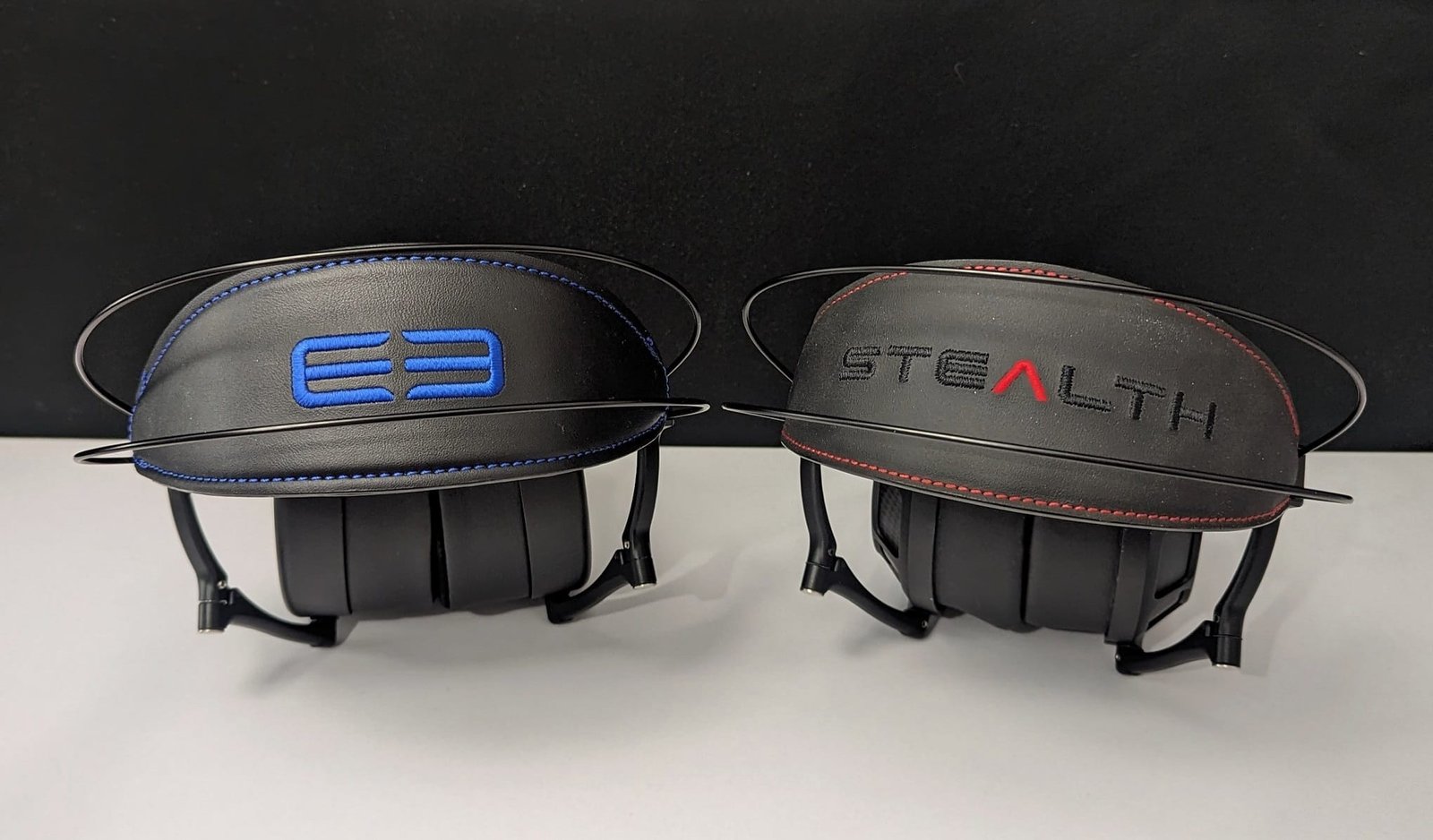
The E3 is packed in such a small cardboard box that one wouldn't believe full-size planar headphones, let alone a handy carrying case, could be found inside. For many headphone enthusiasts, however, this may already be familiar, as Dan Clark Audio launched a collapsible headband structure with its Aeon 2 series in 2019, which has since been utilized in other headphone models, including the Stealth. By pressing the headband around the cups, the headphones become quite easy to carry, with the caveat that the spherical case may not fit into the narrowest bags or backpacks. Both the E3 and Stealth cases are the same size, so only the added logo distinguishes them. As a change from the Aeon 2 case, there is no longer a dedicated compartment for the cable, but a separate storage solution must be devised for it.
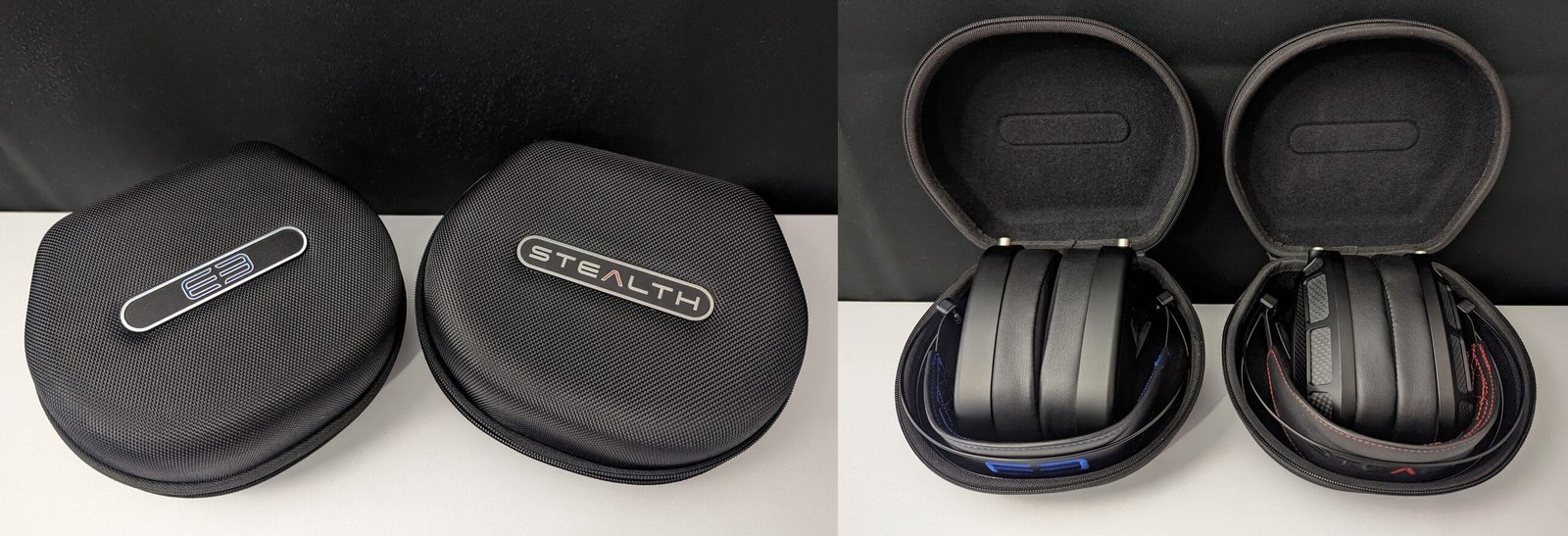
Neither headphone model comes with any significant accessories other than the carrying case and cable, unless a certificate of authenticity, user manual, and a small cleaning cloth are counted as such. With the E3, the buyer naturally gets a handy pouch for the cable, while the Stealth is delivered in a larger and finer box, as if to indicate a higher selling price.
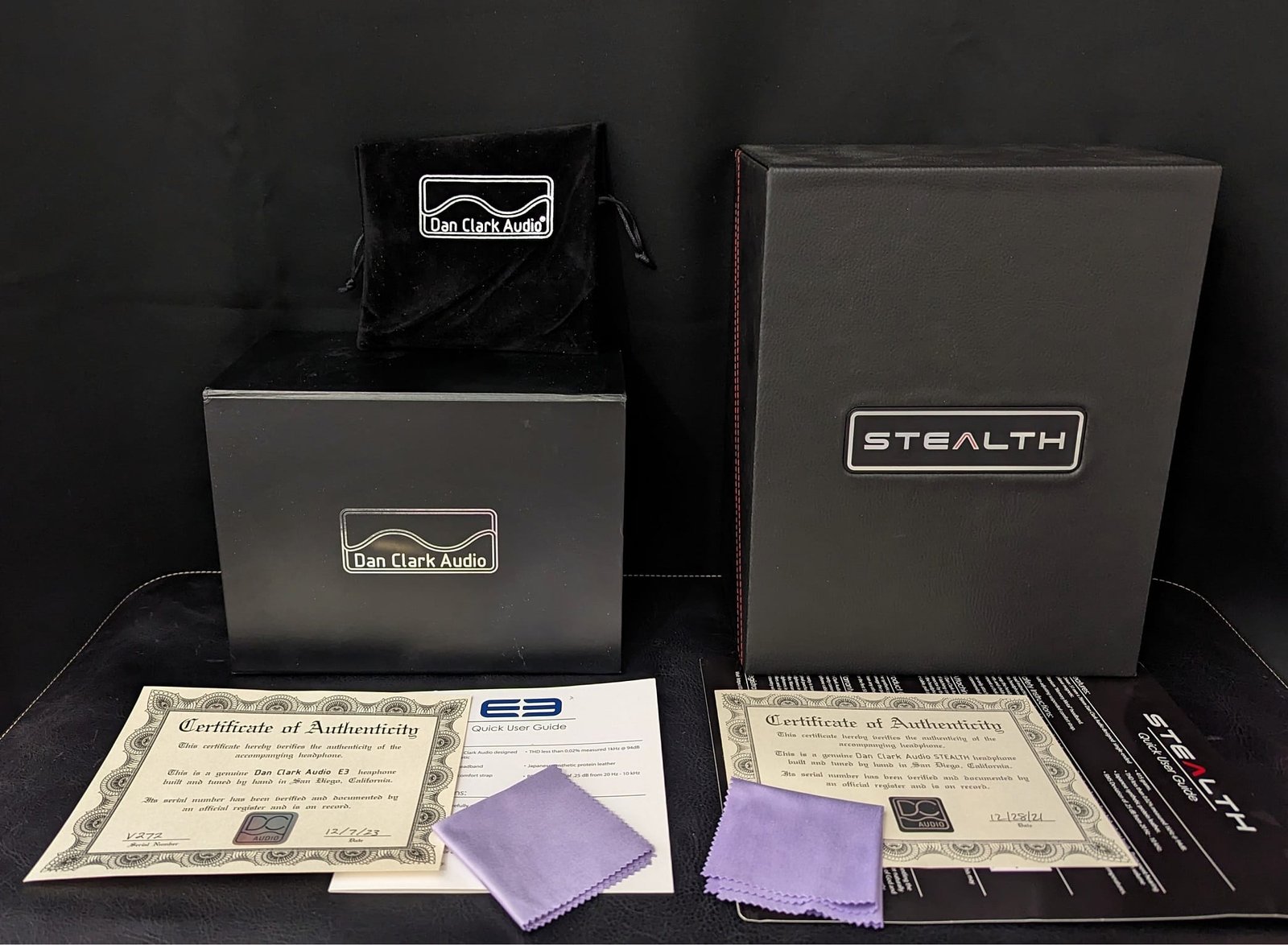
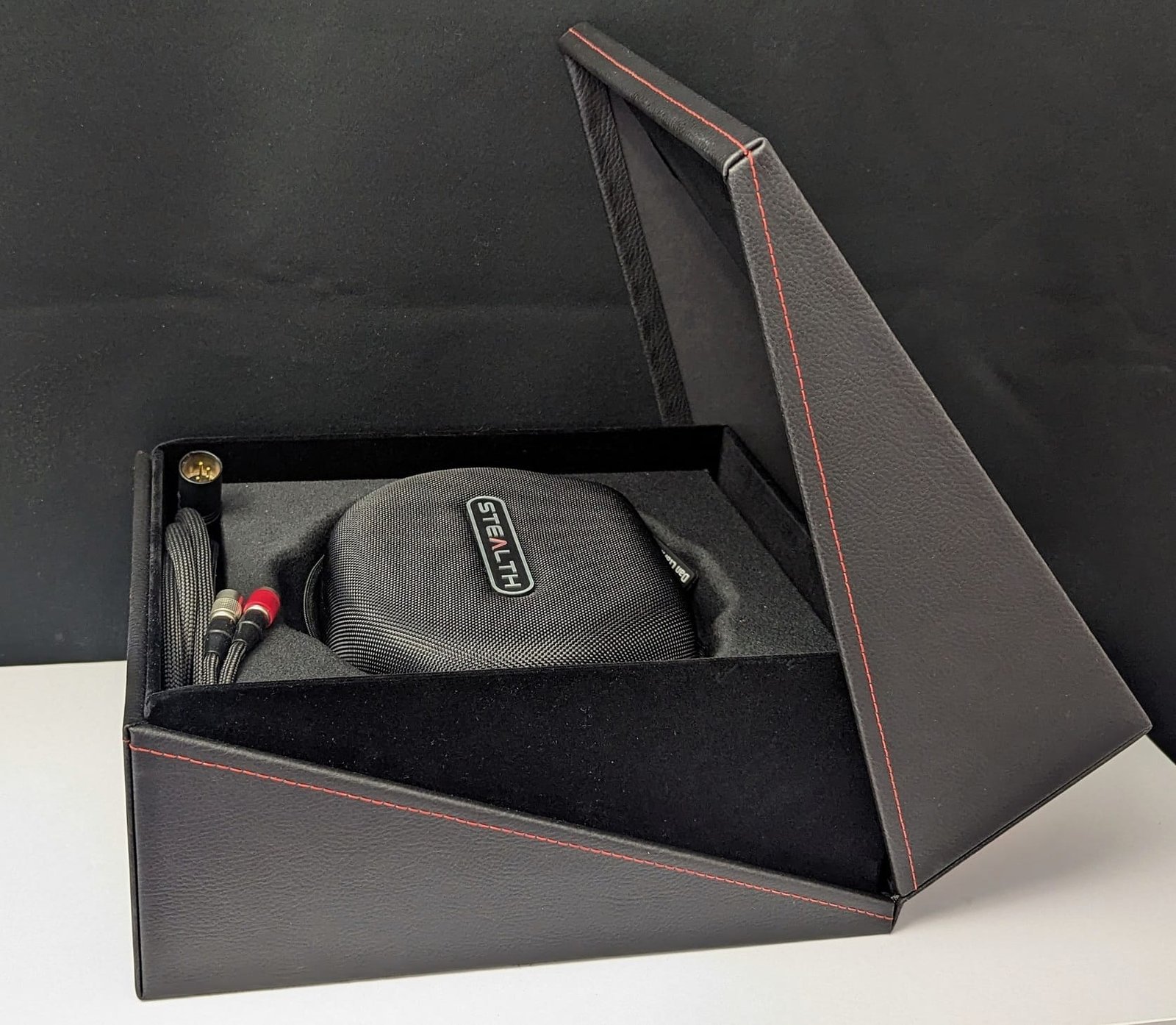
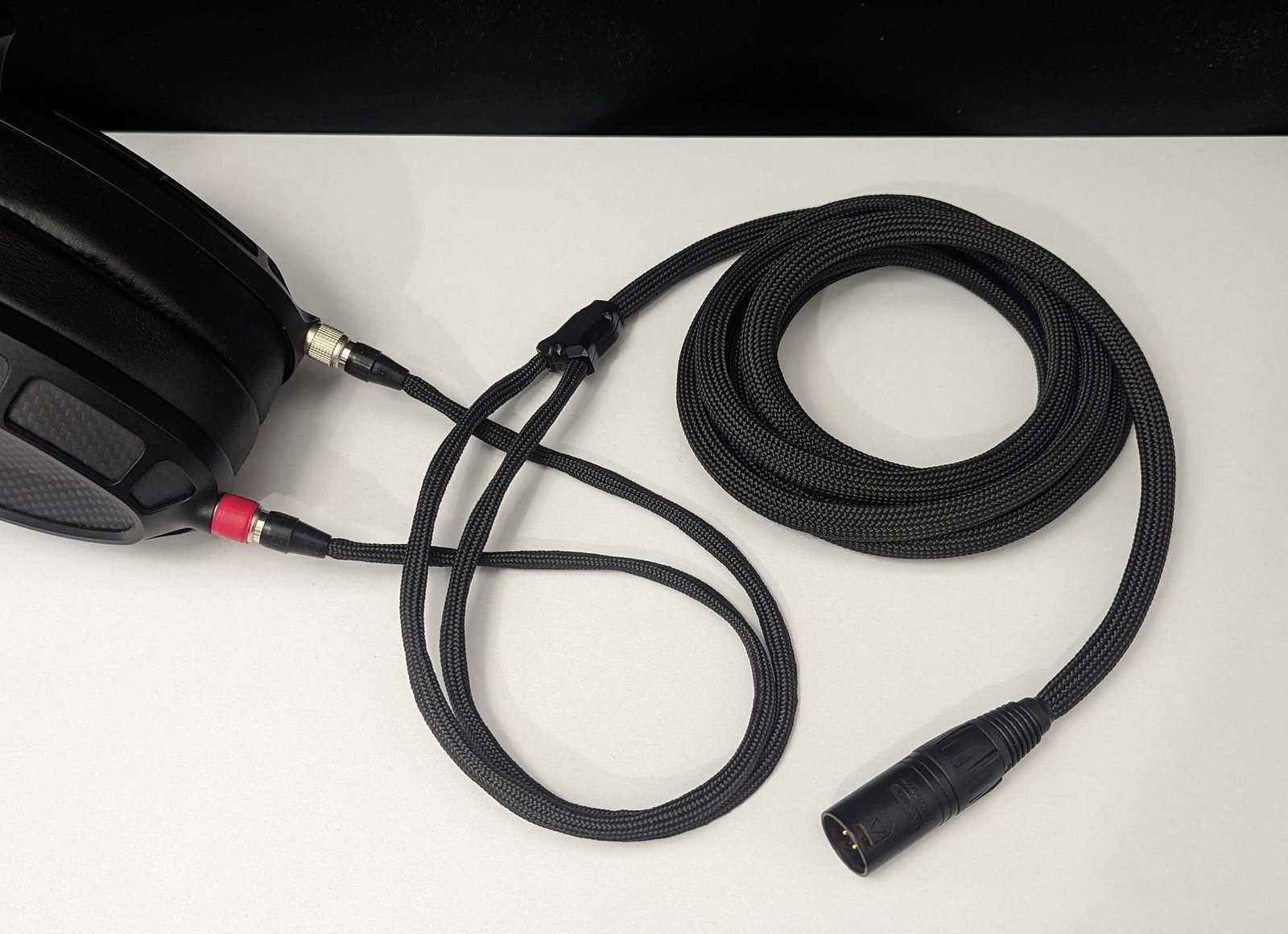
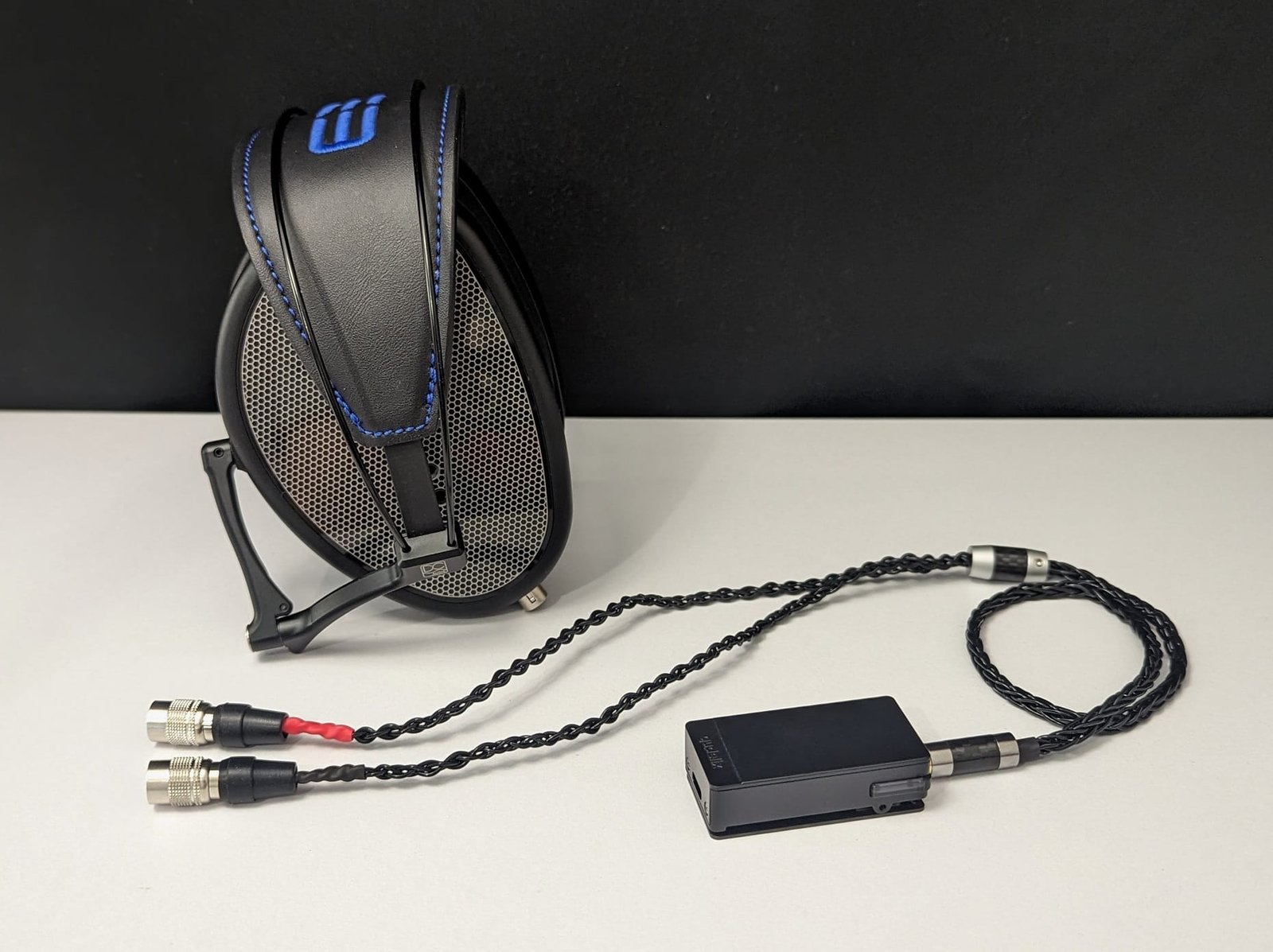
Buyers of the E3 and Stealth receive the manufacturer's highest quality VIVO cable, which would cost approximately 300 euros if purchased separately. The basic price of the E3 includes a 2-meter cable, but for a moderate additional price of 50 euros, it could be upgraded to a 3-meter one. The connector attaching to the amplifier can be chosen between a balanced XLR and a traditional 6.35 millimeter one. When ordering headphones from Dan Clark Audio's own online store, other connector options and a 1.1-meter cable better suited for mobile use would be available. The same cable options also apply to the Stealth model, but for example, when buying headphones from Kruunuradio, a 3-meter cable is already included in the price.
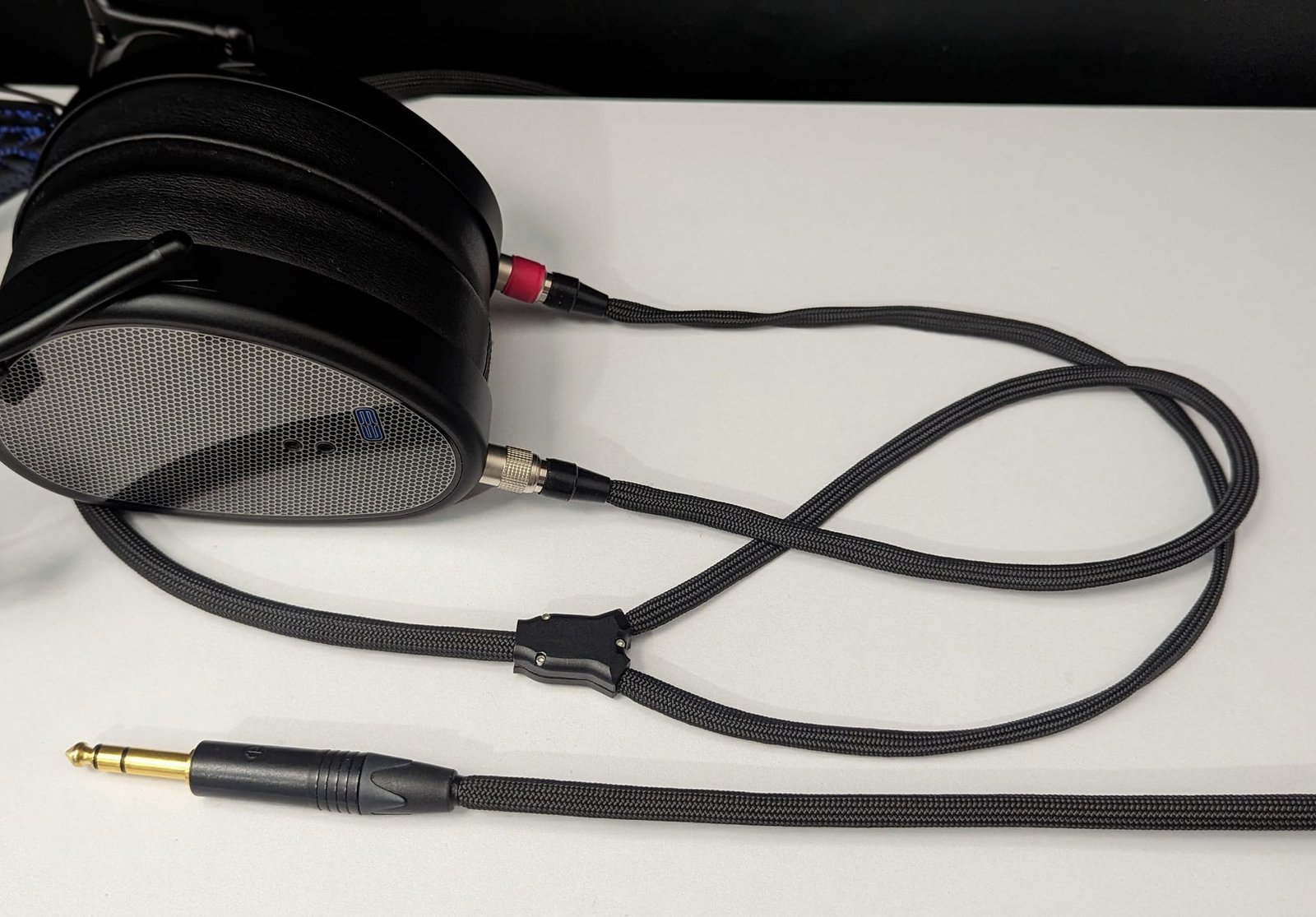
The VIVO cable, sleeved with soft fabric, might appear impractical due to its thickness, and one might assume it to be stiff like a jump rope. In reality, however, it is pleasantly flexible and also remains admirably straight or, alternatively, folded exactly in the position that is optimal for use. The cable also has a suitable weight, so in my opinion, Dan Clark Audio has succeeded excellently in its design. Of course, the thickness does not provide any actual sound quality benefit, but it makes using the headphones feel luxurious in a certain way.
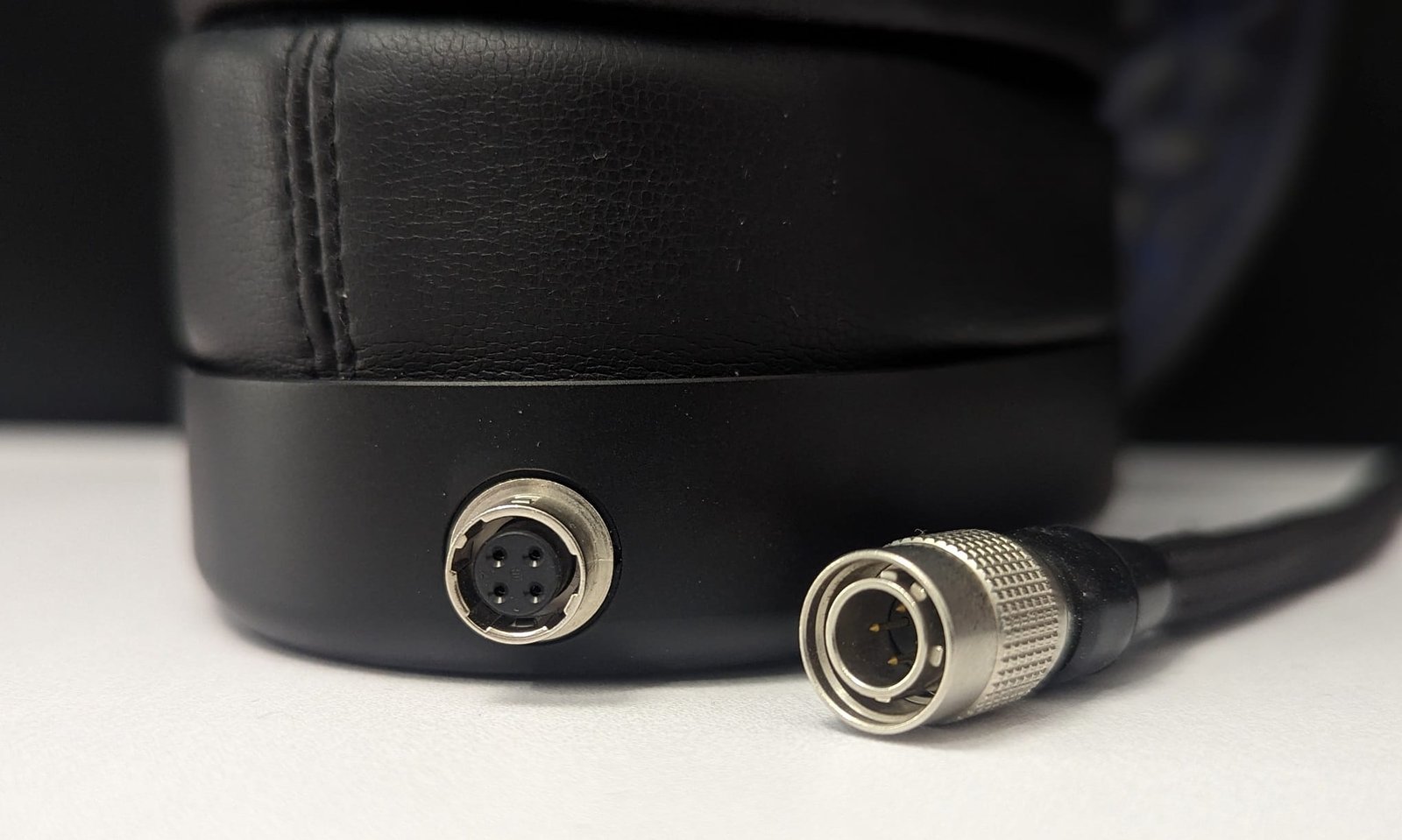
The cable attaches to the headphones in a manner characteristic of Dan Clark Audio, using highly durable Hirose connectors, which one might expect to see in, for example, hospital and military equipment. Snapping the cable in is satisfying, and detaching it is also easy. I would gladly see the same connectors in other manufacturers' high-end headphones as well, but for some reason, they have not yet become widespread. On the other hand, special connectors always complicate cable purchases, so it would also not be desirable for every manufacturer to resort to different connectors.
External structure
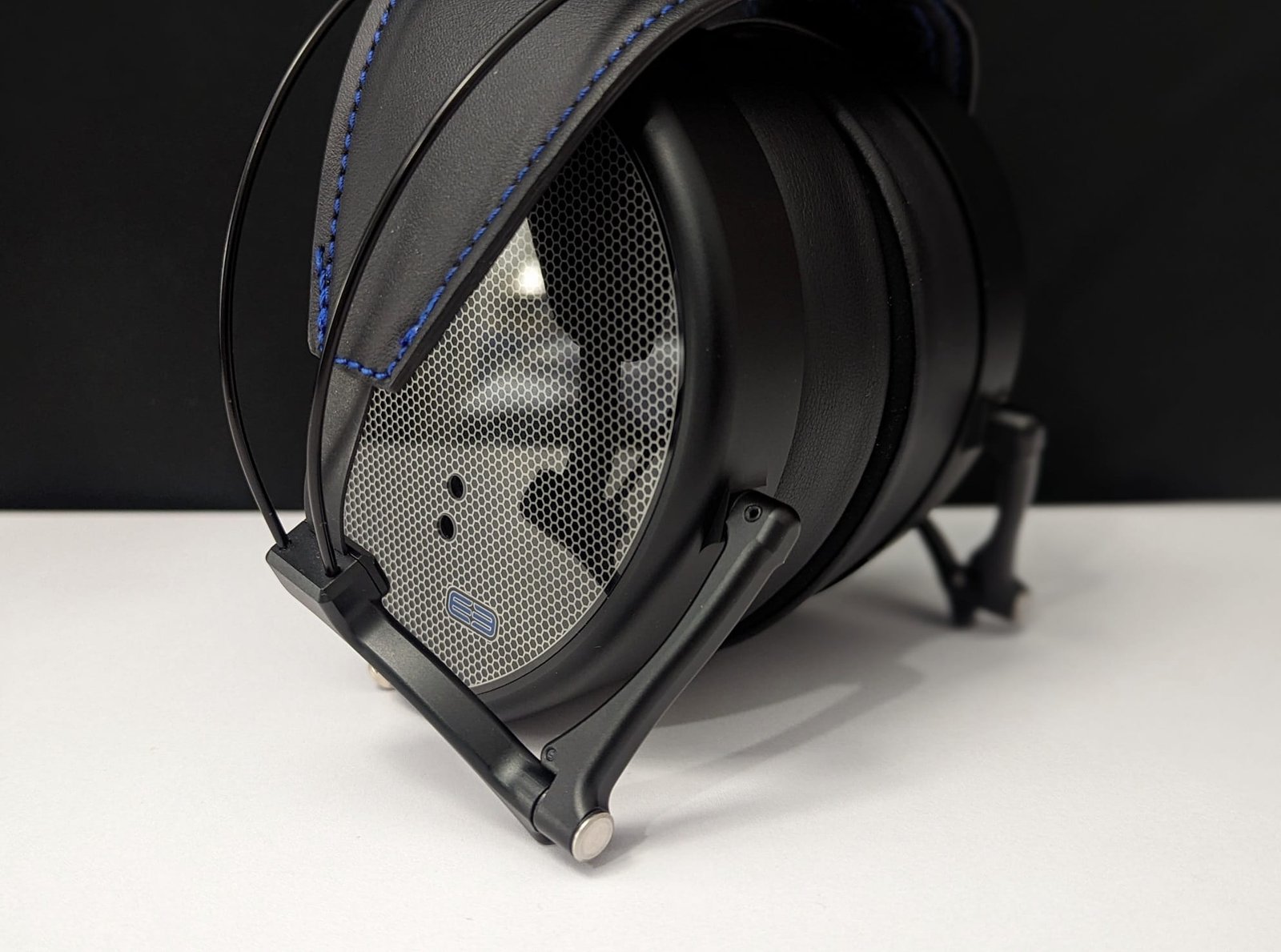
The E3 and the Stealth, released a couple of years earlier, are like enlarged versions of the manufacturer's more affordable Aeon headphone series. All of these feature a slender and high-quality aluminum headband, D-shaped earcups, and a headband arch bent from two nitinol rods. Strong nitinol, also used in dental braces, is an interesting metal because it retains its shape without heating, even if it is bent completely out of shape. Despite its flimsy appearance, it suits the headphones well.

Like the Aeon 2 models, the headbands of the E3 and Stealth can be folded around the cups, as two hinges have been added to the headband for this purpose. The manufacturer advises always pressing from the center of the headband to avoid uneven stress on the hinges. The Stealth demo model borrowed from Kruunuradio has clearly been pressed together with a somewhat rougher grip, as its headband no longer fully holds its position, but easily flops from side to side. Fortunately, this does not affect use, but it is advisable to handle one's own headphones according to the manufacturer's instructions.
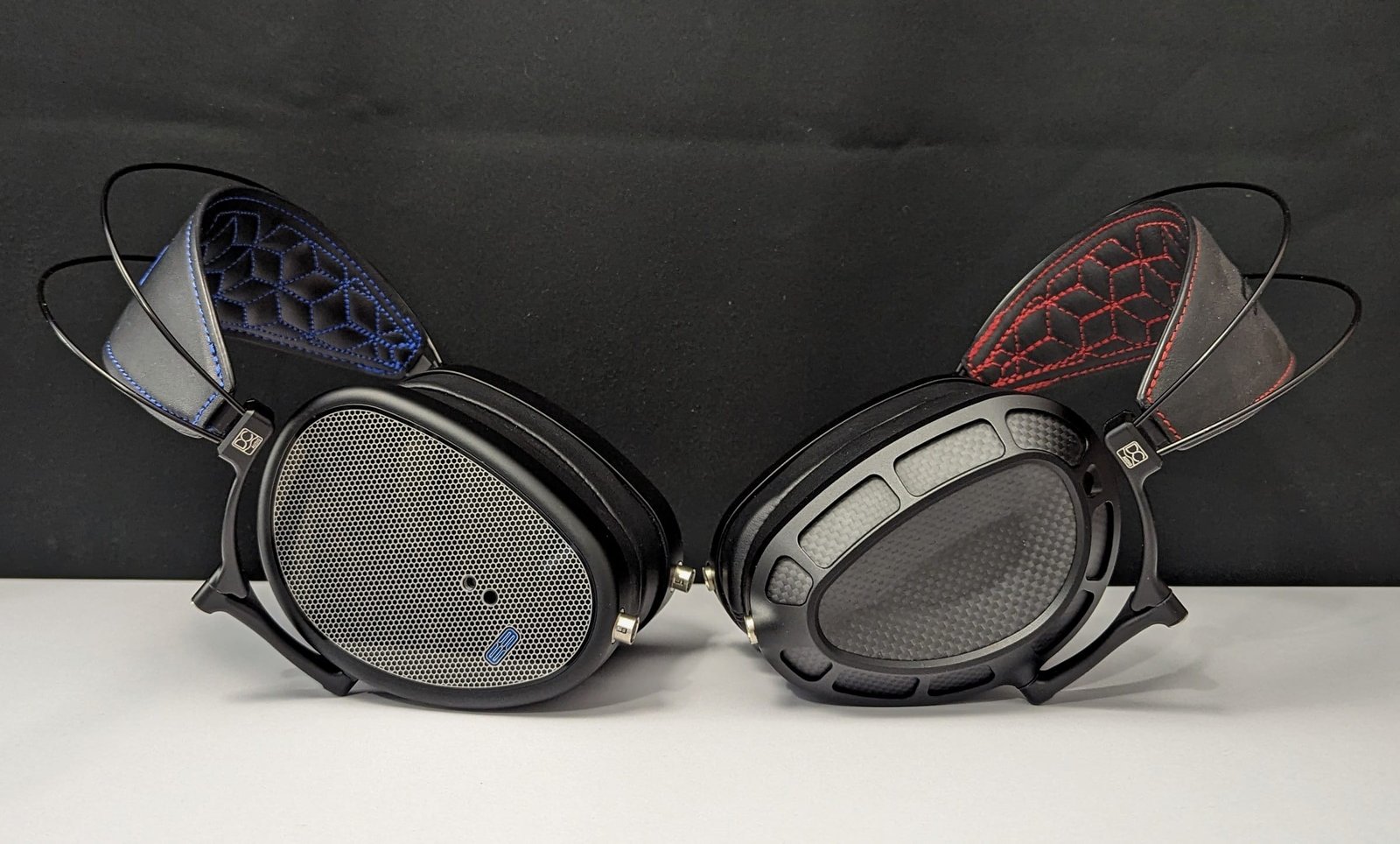
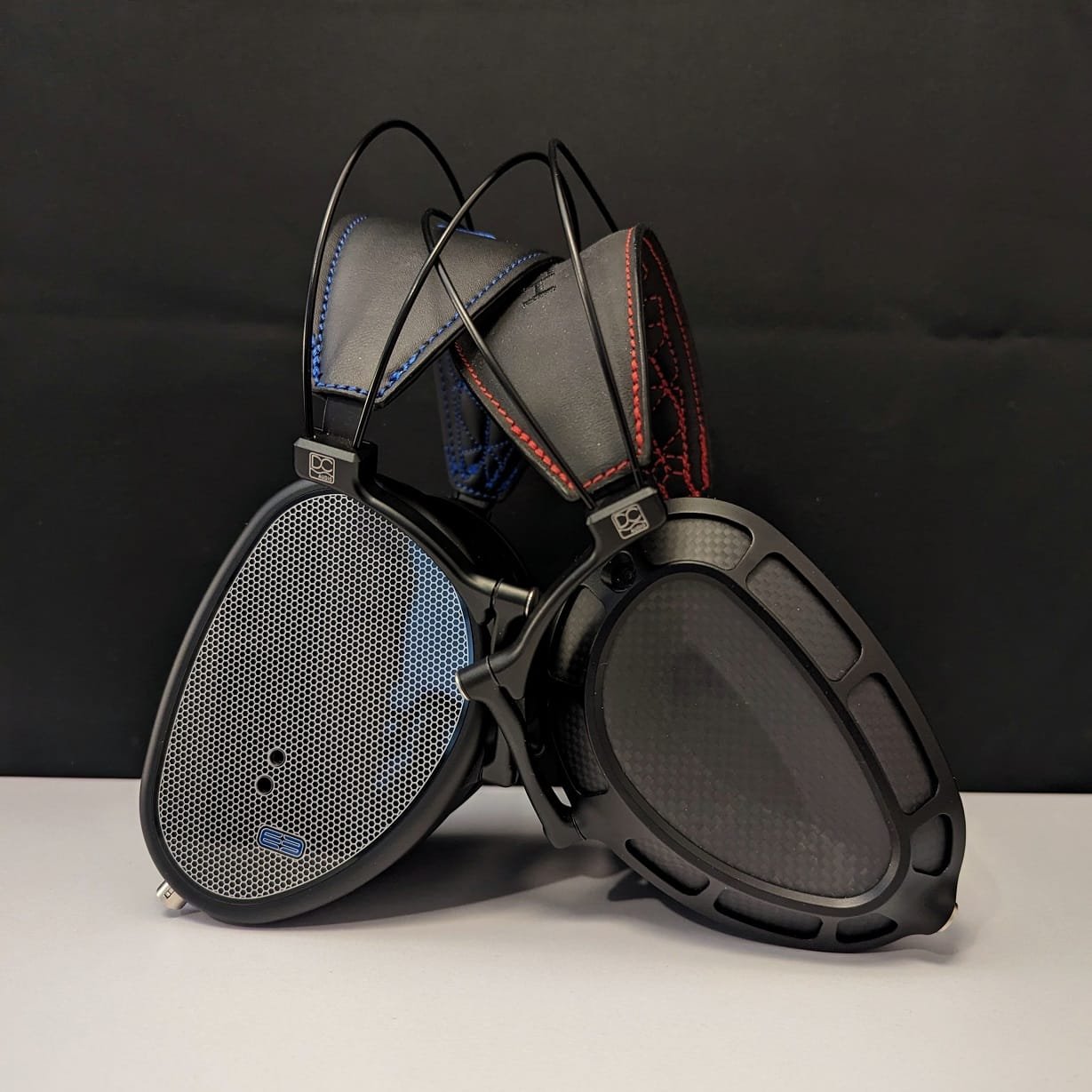
Since the headband structure and self-adjusting headband are similar in the E3 and Stealth, the duo ultimately differs most in the appearance and color theme of their cups. The more expensive Stealth model's cups use sculpted carbon fiber, bordered by an aluminum frame. The appearance has nuances of fighter jets and sports cars. On the other hand, the red stitching on the inner edge of the headband looks a bit tasteless to me, as it resembles cheap gaming headphones. The Hirose headphone connectors in the Stealth model are recessed inside the cups, so care must be taken not to scratch the aluminum surface when attaching the cable, unlike with the exposed connectors of the E3. In both models, the connectors point slightly forward and diagonally, so the cable does not poke the shoulders, but rests neatly on the chest.
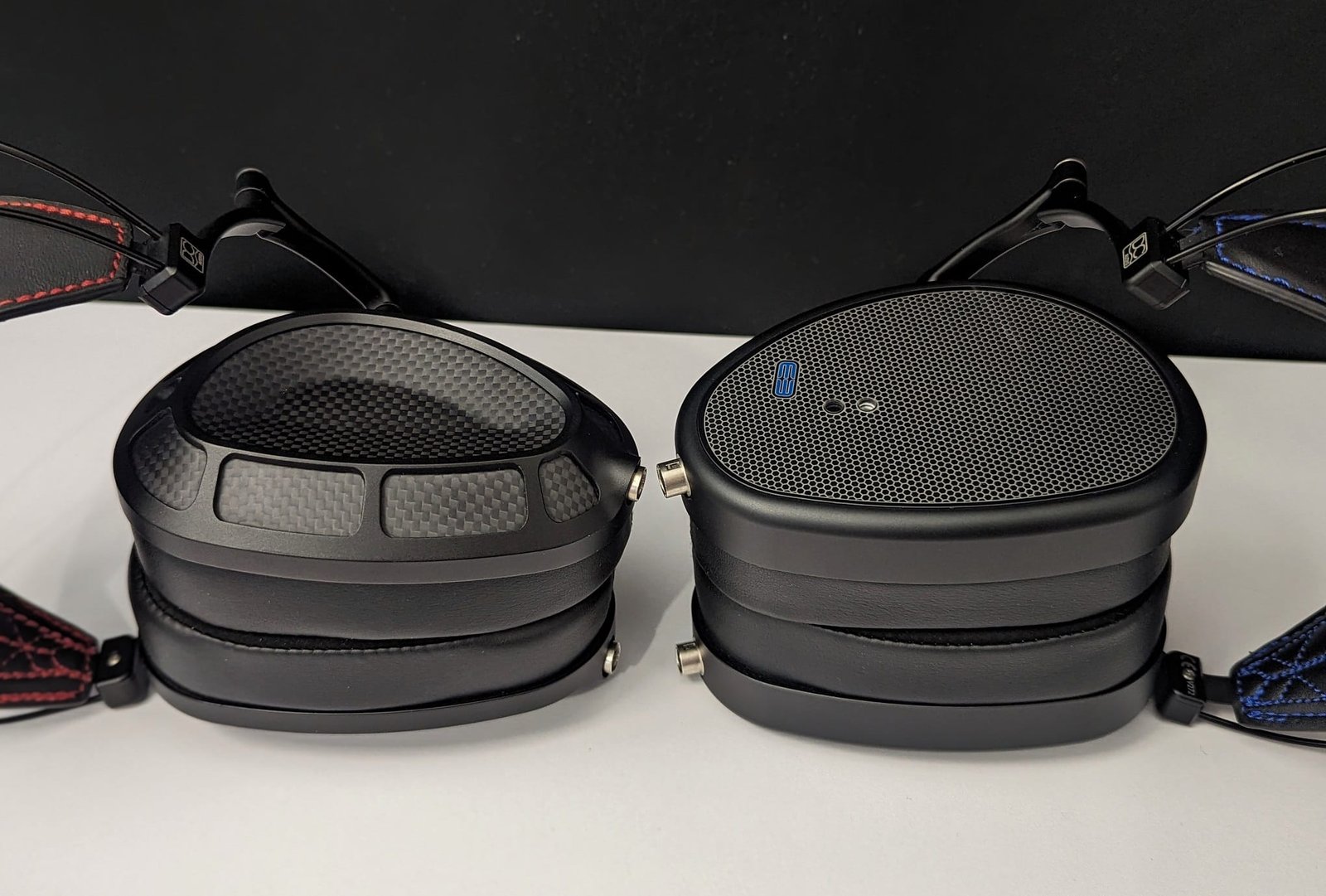
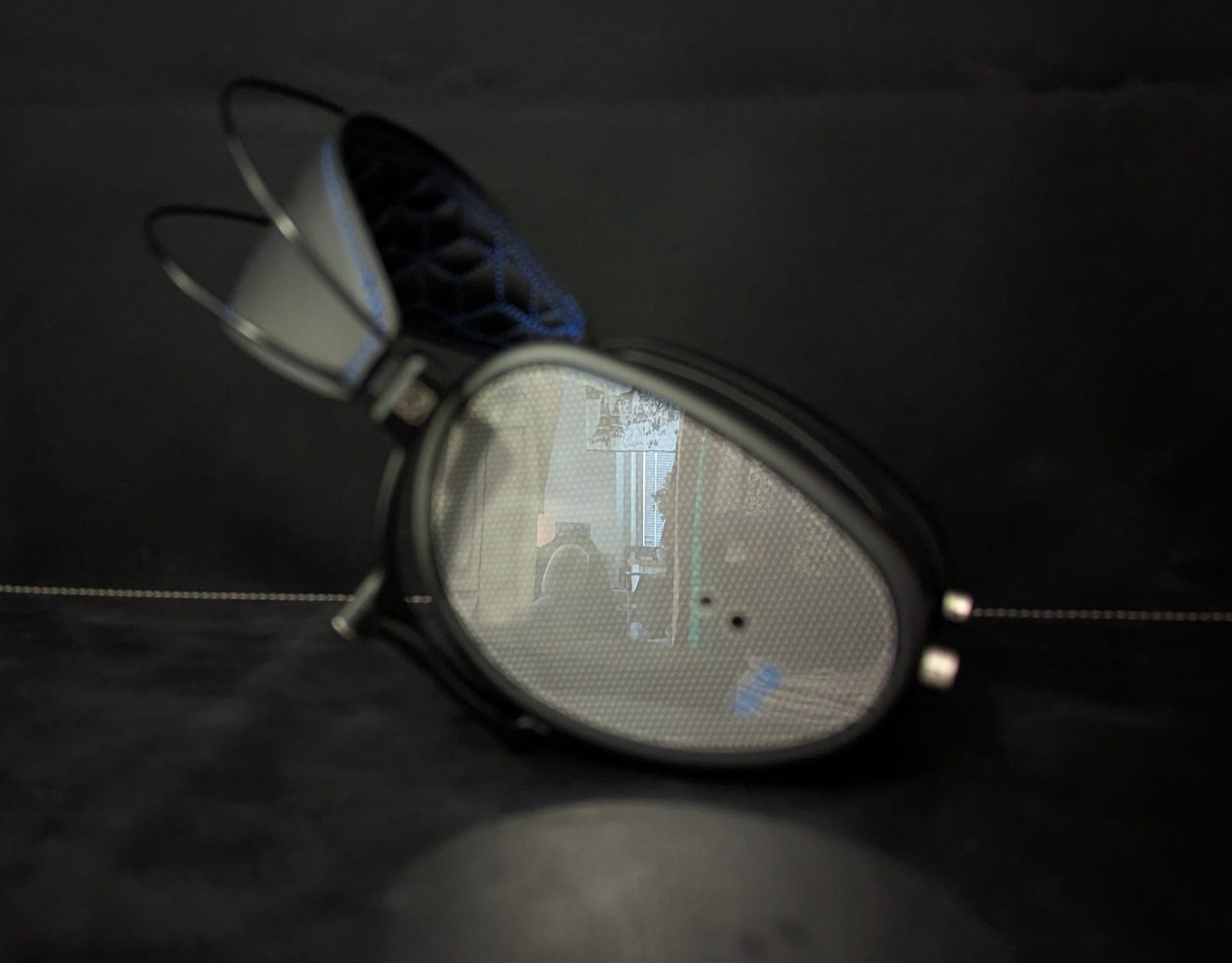
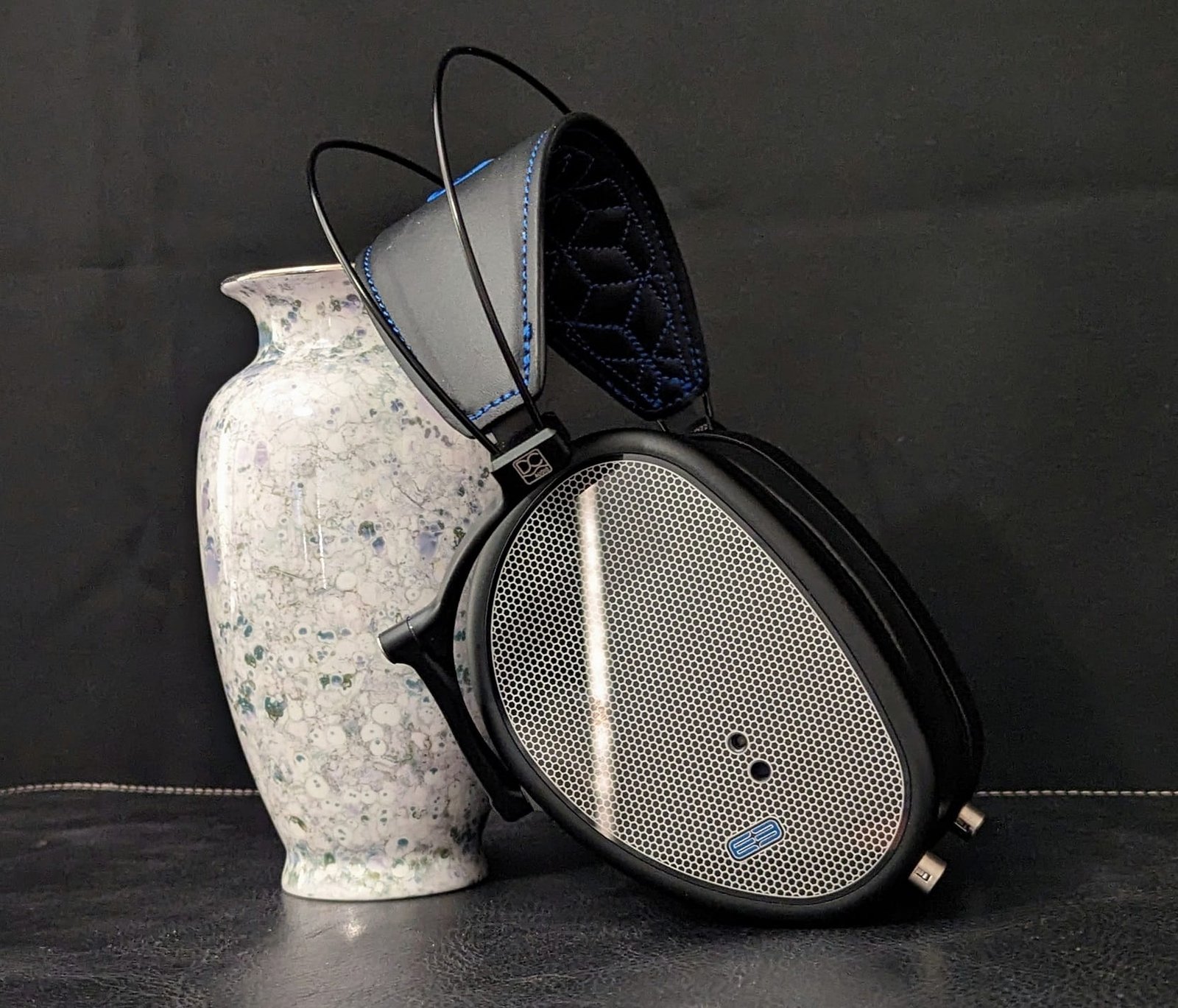
In the case of the E3, the design of the cups has been simplified and they are made entirely of aluminum. As an interesting stylistic detail, the outer edge is covered with Gorilla Glass, familiar from mobile phones, under which a honeycomb pattern resembling the grilles of open-back headphone models is printed. Dan Clark Audio mentions wanting to intentionally create the impression of an open-back headphone model, because according to them, the E3 sounds exceptionally open for a closed-back model.
The dullest possible shade of gray in the pattern and the constant need to wipe fingerprints might divide opinions, but the glass surface is nonetheless a unique solution. It should also withstand scratches and minor impacts quite well, so it will be interesting to see if other headphone manufacturers eventually get excited about the idea. The only regrettable side effect of using glass in the E3 is an approximately 40-gram higher total weight (455 g vs. 415 g) compared to the carbon fiber-containing Stealth model.
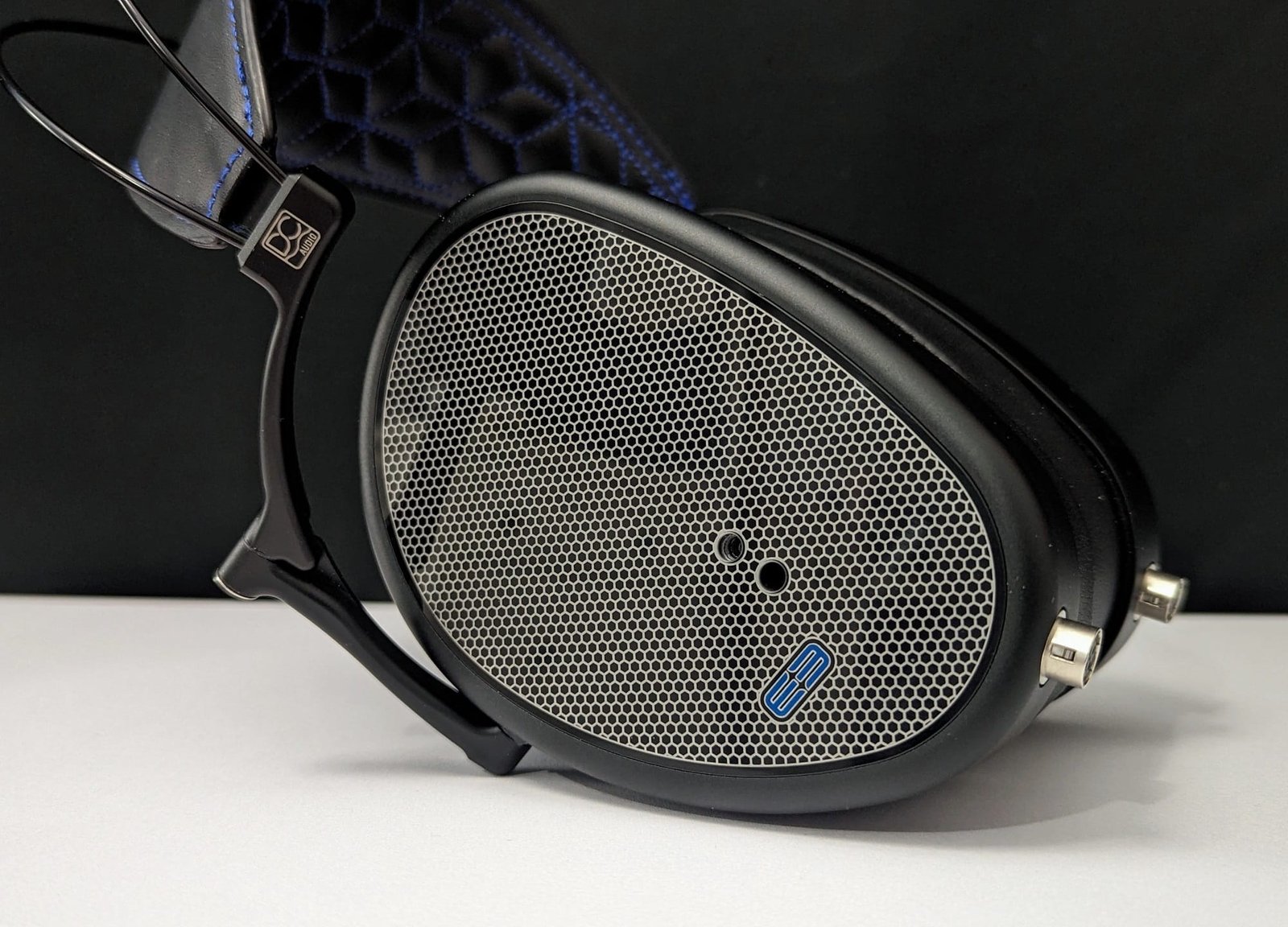
The two holes made in the E3's glass surface function as bass ports. The Stealth also has one such port located at the top edge of the cups. Because planar drivers produce sound strongly from the rear of the drivers as well, both headphones leak sound outwards through these holes to such an extent that someone within a few meters would be able to relatively easily discern vocals and treble. This should be noted if the goal is to find closed-back headphones whose listening does not disturb other people at all. Inward ambient noise, on the other hand, both headphones attenuate quite effectively in my opinion.
Fit and comfort
Despite their similar structure, the E3 and Stealth differ somewhat in terms of comfort. Common to both headphones is a self-adjusting headband, which can also be found, for example, in Meze Audio 109 Pro headphones. In Dan Clark Audio's headphones, the headband is made of a fairly hard material, probably so that it can withstand strong stretching when pressed around the cups. From a comfort perspective, I would wish the headband to be a bit softer, but I wouldn't ultimately call it particularly uncomfortable either. Fortunately, despite their large size and planar drivers, the headphones do not weigh too much even for longer use.
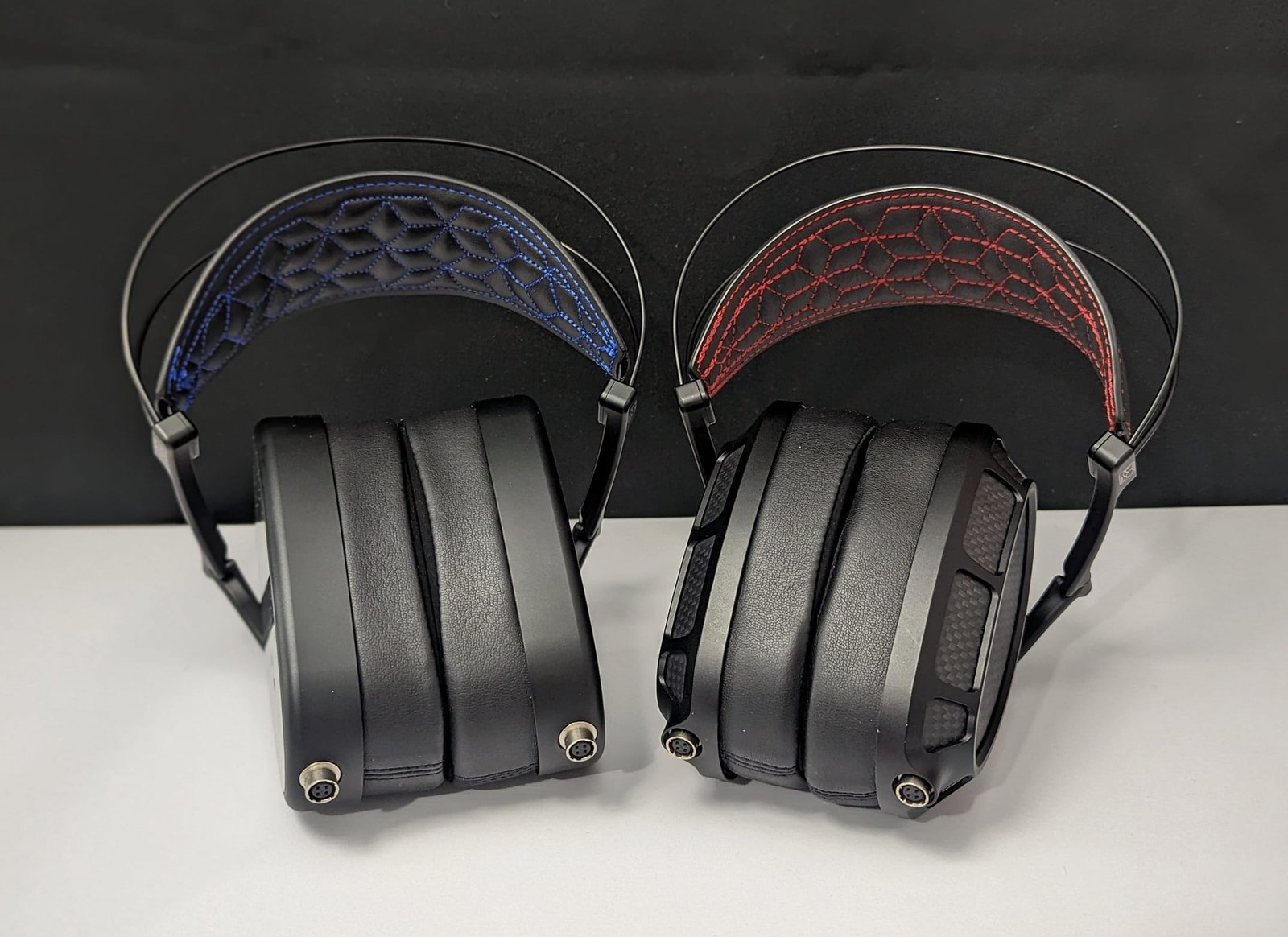
In terms of general fit, the headphones have their pros and cons. The Stealth's headband clamps more lightly, which, combined with its 40-gram lighter weight, makes the headphones more comfortable compared to the more firmly clamping and slightly heavier E3. However, the Stealth does not sit securely enough on my head; the seal of the earpads easily breaks at the front upper corner of my ears, roughly where eyeglass temples would rest. Because of this, the bass partially leaks out, even if I'm not wearing glasses at the same time. Although I can get the headphones to work fairly correctly with careful positioning, lightly pressing the earpads against my ears reveals that the bass is still somewhat lacking. Even a slight opening of the mouth or speaking during listening almost completely destroys the bass reproduction. The fit-related problems I observed also explain why I found the Stealth model to sound strangely light when quickly trying it out in a trade show environment.
Although the Stealth may work better for many with a different head shape than mine, I consider the manufacturer's decision to increase the clamping force on the E3's headband a positive solution. I would describe the fit of the more affordable model as suitably secure and even, and I don't have to worry about the seal of the earpads even when wearing glasses. On the other hand, the earpads are so large and high that I always have to spend a moment finding a natural position for them on my head. A headband that locks to a certain height would have sped up deployment, as then the appropriate height would not need to be searched for anew with each use. As a minor drawback, the E3's more firmly clamping earpads also start to feel a bit uncomfortable on the jawline after a couple of hours of use, where they extend because the sound is most balanced when the headphones are positioned low on the head. However, with occasional readjustment, this also resolves, so I can use the headphones happily for several hours.
The ear pads, combining Japanese protein leather and suede material, are slightly higher quality than what has been seen in the manufacturer's more affordable headphones in past years. Especially in the Aeon series, the foam always twisted unsightly sideways inside the pad, so it had to be nudged back into shape almost after every use. However, this no longer happens with the E3 or Stealth; their pads maintain their shape well. Dan Clark Audio states that they are now investing more than usual in the consistency of the pads to ensure the headphones' frequency response stays within tight tolerances. For this reason, protein leather made from eggshells has been chosen as the material for the outer edge, which is more uniform in composition compared to genuine leather. Protein leather should not be confused with plastic-based artificial leather (Pleather), which does not feel as genuine and does not withstand wear as well.
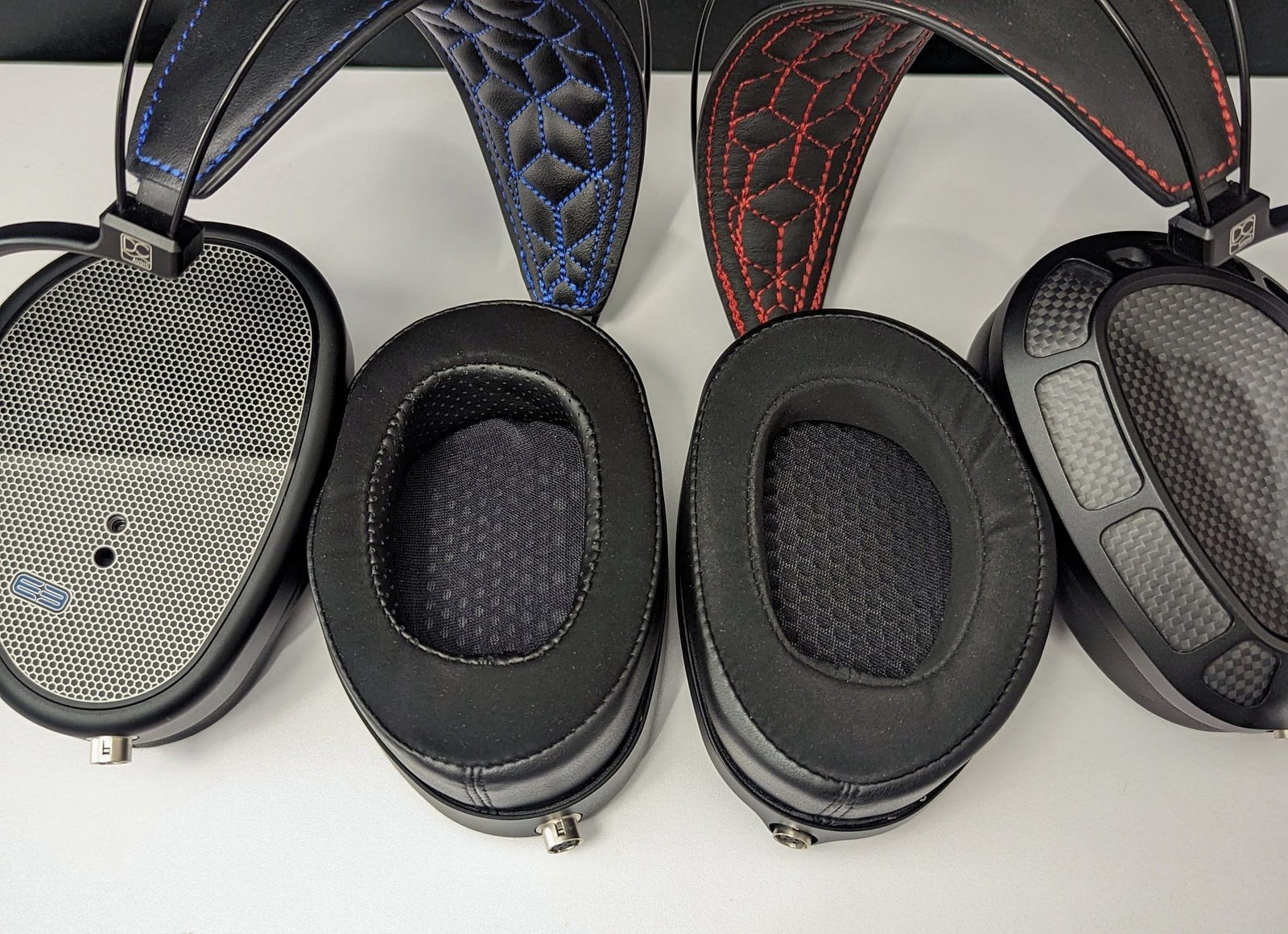
From a comfort perspective, the pads are functional as they feel pleasant and offer ample space for the ears. Some, however, might be bothered by the fact that in the manufacturer's top models, the pads are still attached with glue. This doesn't bother me much, as the chosen pads and the innovative front damping structure of the drivers form a cohesive sound quality entity. If necessary, the pads could still be torn off and replaced with new ones without major problems. The manufacturer also states that the adhesive surface would allow for a few removals and reattachments, should the need arise for some reason.
V-Planar elements and AMTS front damping
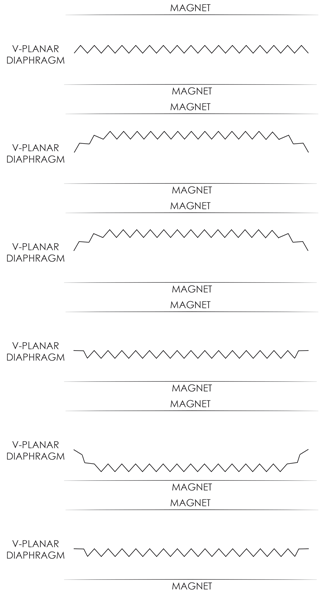
Dan Clark Audio manufactures its own patented drivers called V-Planar, whose most distinctive feature is a row-like pleating resembling the letter V on the diaphragm. Typically, the center of a planar driver moves more strongly compared to the attachment points located at the edges, whereas with V-Planar drivers, the range of motion of the edges has been increased, according to Dan Clark Audio. This should result in lower distortion values, and additionally, the manufacturer can use smaller drivers in its headphones compared to more conventional diaphragm options. Reportedly, the frequency response also becomes slightly smoother in terms of local variation compared to many other planar headphones, whose measurement results show a lot of local ”vibration.”.
Marketing claims and direct sound quality benefits should always be approached with a grain of salt, but at least the technical background related to V-planar drivers seems interesting. Dan Clark Audio generally appears to be an engineering-driven company, rather than one where the marketing team takes the reins with flashy slogans. The pair of headphones I tested is interesting because the more expensive Stealth model uses 4th generation drivers, while the more affordable E3 has newer, possibly slightly more advanced, 5th generation drivers. Thus, the manufacturer has genuinely invested in the design of the E3, instead of it being merely a ”downgraded” version of the flagship product.
The manufacturer illustrates the movement paths of different drivers as follows:

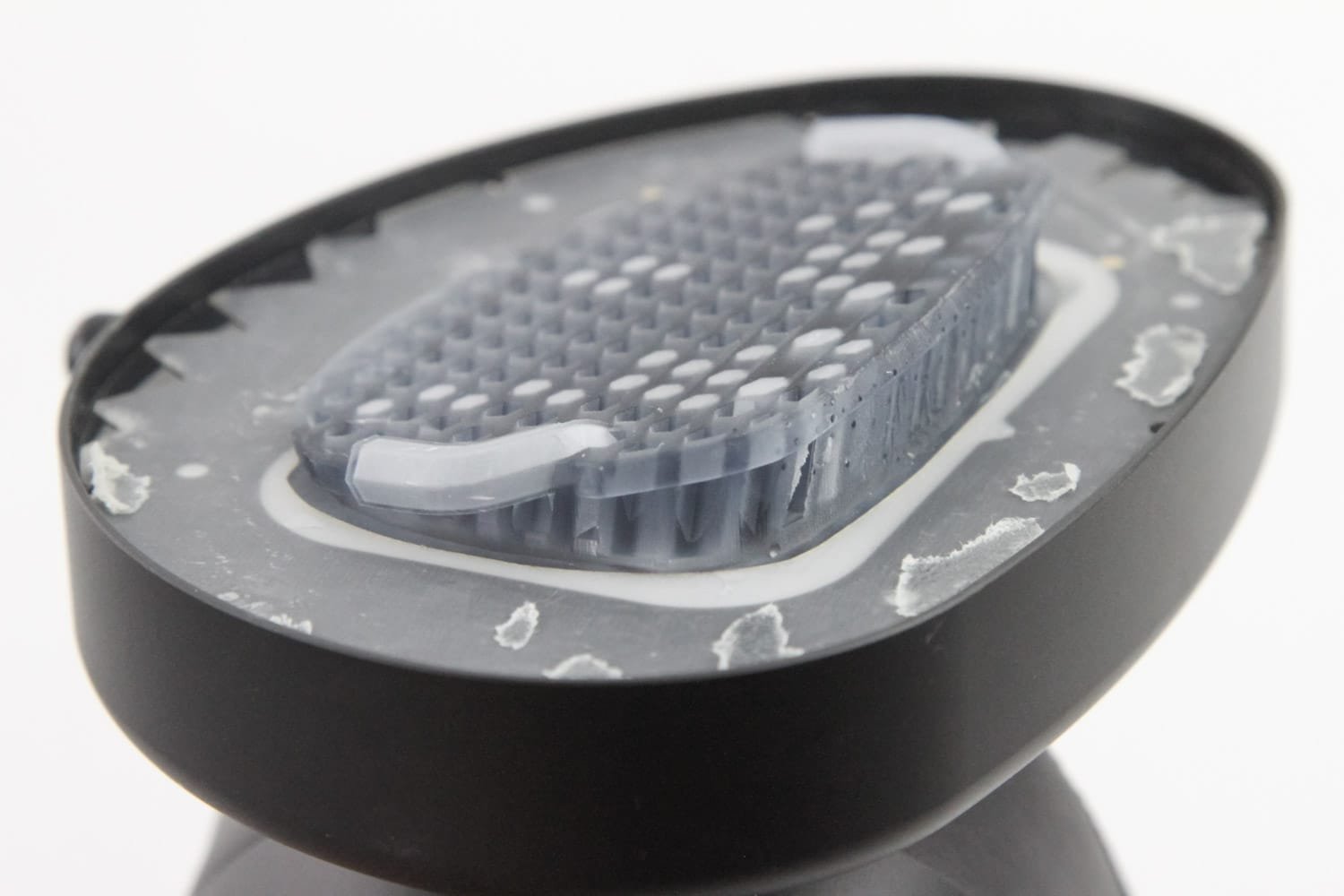
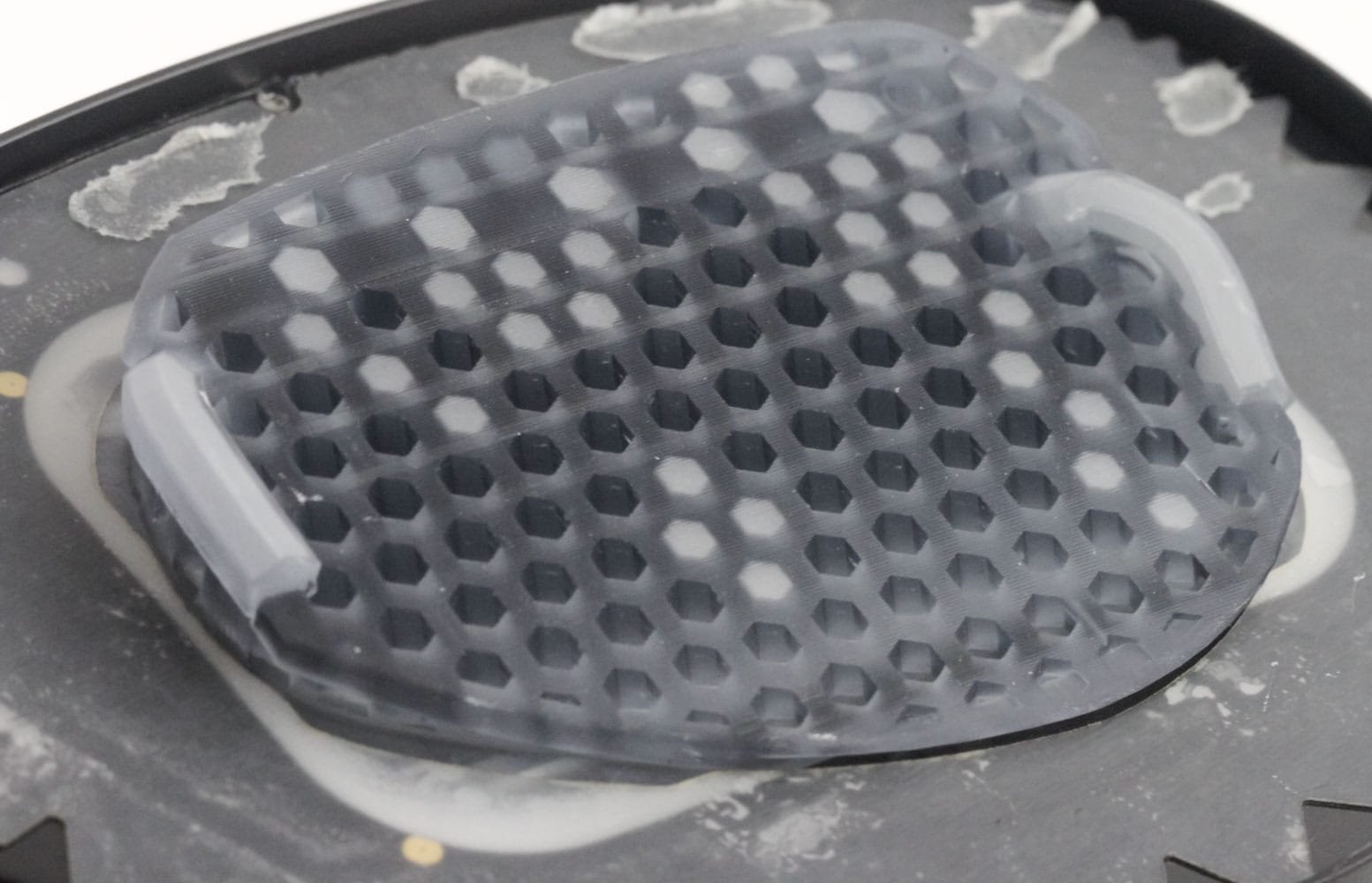
So far, the most unique solution in Dan Clark Audio headphones, however, is the honeycomb-like AMTS structure (Acoustic Metamaterial Tuning System) installed in front of the drivers, which has several functions. It acts as a waveguide, a controller of scattered radiation, and a damper of resonances. Additionally, it eliminates standing waves generated inside the ear pads. In other words, headphones containing the AMTS system, such as the Stealth and E3, are intended to sound as clean as possible despite their closed-back design, which would be a good goal for any other headphones as well. However, no one else has yet embarked on developing such a sophisticated computer-aided solution for ”purifying” the sound and front-damping the driver.
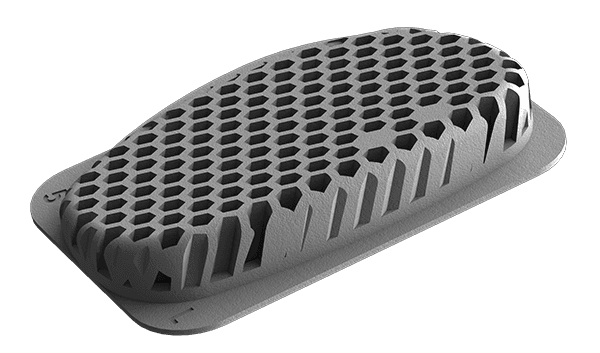
AMTS has also benefited Dan Clark Audio in fine-tuning the amount of high frequencies, as it has not had to resort to thick foam and felt pieces that would soften both sound detail and dynamics. The problems I experienced with the Aeon series have largely been overcome, and at the same time, the frequency response has become smoother than before. The manufacturer first utilized the AMTS structure in its Stealth model, after which it has also been designed for the Expanse and Corina headphones, in addition to the E3. At some point, the solution will certainly also be seen in the sub-1000 euro price range.
Sound quality
Our frequency response measurements have been made with a clone IEC-60318-4 coupler and KB501X pinnae. The Harman target curve from 2018 is used as a reference point and generalization of the headphone response that would sound good to most people. For more information on the measurements and their accuracy, see Headphone Measurements-page. The frequency responses of the E3 and Stealth are also comparable with other measured headphones Squiglink .
The headphones have been evaluated by listening to them mainly with the following devices:
- DAC: Matrix Audio X-Sabre 3
- Headphone amplifiers: Cayin iHA-6 (balanced connector), Aune Audio S17 Pro and Topping L90 (a stereo amplifier that can also be used to listen to headphones with a balanced adapter cable)
The frequency response of headphones always varies slightly depending on how they are positioned on the head and ears. Many open-back headphone models are fortunately relatively immune to this, but with closed-back headphones, the variation can sometimes be significant. In Dan Clark Audio's E3 and Stealth, the position of the ear inside the pad significantly affects the functionality of the AMTS front damping, especially since the large pads allow for several different wearing positions. This has both advantages and disadvantages, as changes in frequency response are more predictable than usual, but when positioned ”incorrectly” on the head, the headphones may not sound completely balanced.
I have aimed to measure the frequency response of both headphone models such that the position of the measurement device's ear inside the pads would be optimal. However, it should be noted that, for example, the E3 model sounds brighter when moved upwards on the head and calmer when the ears are placed at the upper edge of the pads. For me, the most balanced result is found according to the latter option, but when listening to darker produced music, raising the headphones upwards slightly livens up the presentation. For a more casual listener, however, such variation can unfortunately be quite confusing and make use difficult, and the comfort of the headphones may not be at its best precisely in the position where the sound quality would be most optimal.
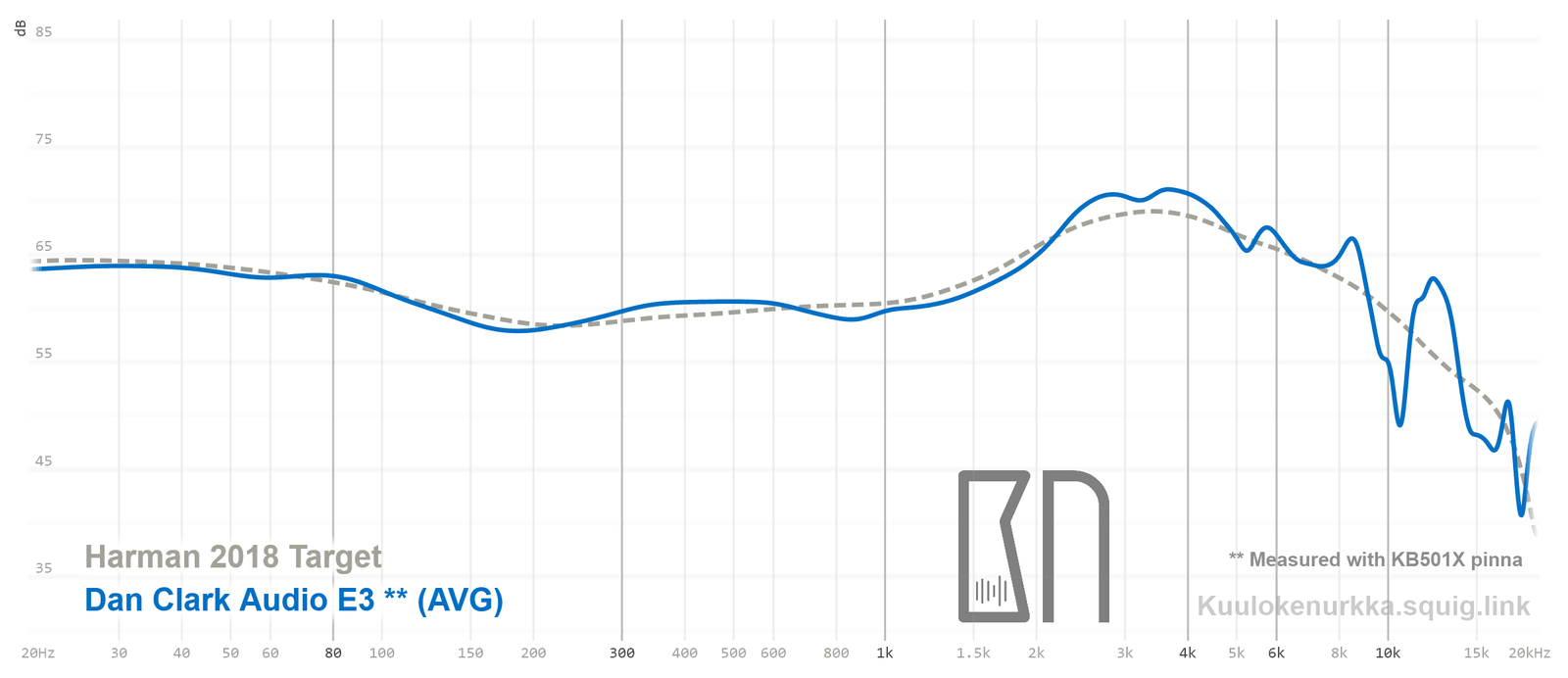
E3 frequency response:
Stealth frequency response:
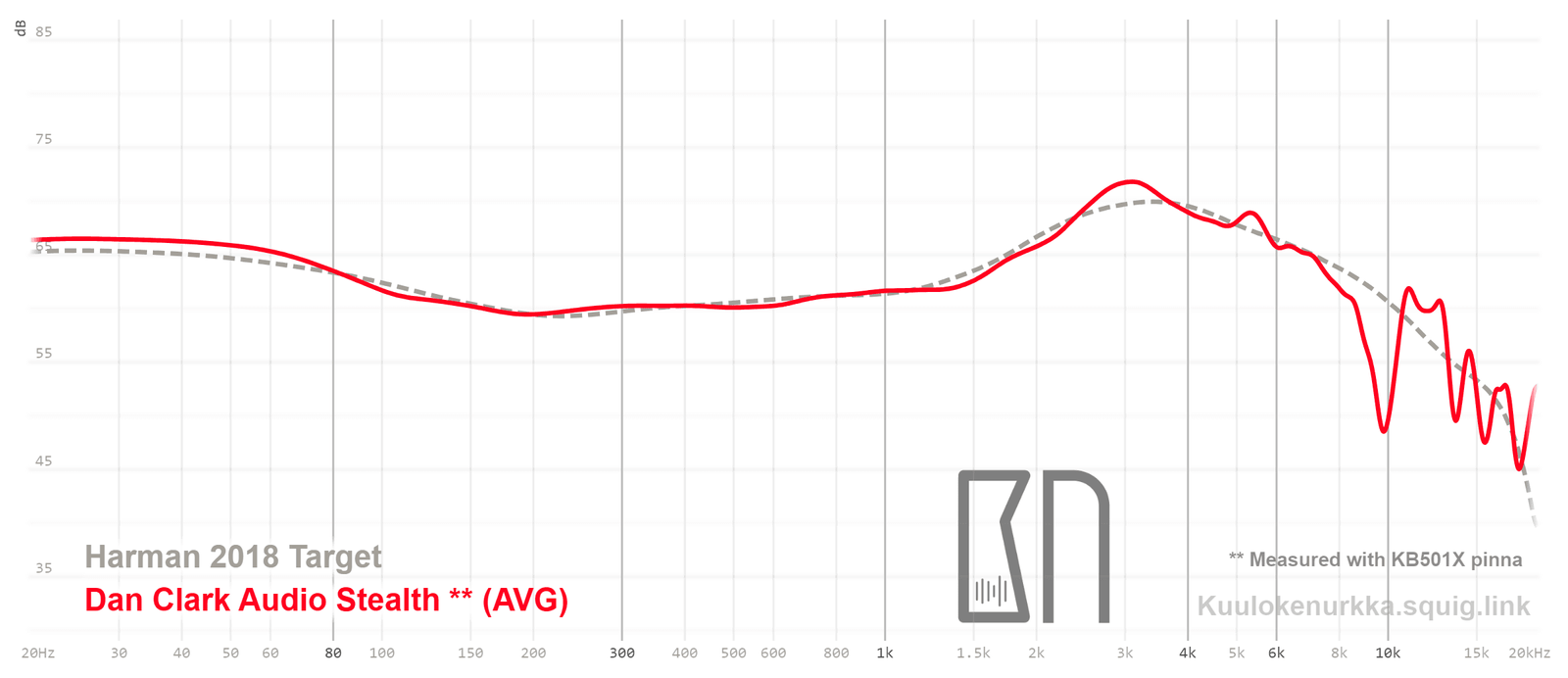
Dan Clark Audio has tuned both of its headphones according to Harman's target curve (2018 version), succeeding excellently. When examining the beautifully aligned frequency responses and low distortion values, we are practically talking about perfect headphone reproduction, from which it is difficult to find anything to criticize. Both models come closer to high-quality speaker reproduction than any other headphones I have tried before. Recordings are presented extremely clearly and honestly with all their strengths and weaknesses, without the headphones themselves adding anything to the reproduction. The sound is also so clean and even that one would not believe the headphones' structure to be closed.
Of the two, the more expensive Stealth model sounds reference-neutral and uncolored, making it effortless to listen to for extended periods. The E3 model, on the other hand, deviates slightly from this by adding a touch of energy and liveliness to the reproduction with its brighter high frequencies – this appears to have been a conscious choice by the manufacturer. I personally find myself preferring the more engaging and dynamic-sounding E3 of the two, but for more relaxed listening, the slightly more natural and fuller-sounding Stealth might be a better choice. Despite the significant price difference, I would largely place the sound quality of both on the same level, so in my opinion, the E3 has fully deserved the praise it has received, and it is easy to predict its sales success. The manufacturer has not hesitated to offer excellent sound quality at a more affordable price than before.
Bass:
Harman's target curve incorporates the idea of powerful bass reproduction because people find it enjoyable and it helps headphones imitate speakers. This is realized in both the E3 and Stealth, as their frequency response rises towards the sub-bass. Both headphones also have a small dip around 200 Hz, so the bass remains extremely clear and separate from the mid-frequencies. On the other hand, because of this, the low frequencies can sometimes sound a bit light compared to dynamic headphone models, where the same frequency range is often more elevated, bringing a thicker rumble and punch to the reproduction. However, the E3 or Stealth do not actually need this; their bass still reproduces impressively powerfully if the music listened to is intended to be so. In other words, the headphones do not actually add bass to the reproduction; for example, to reinforce light music, one would need to acquire headphones with more emphasized bass (or boost the bass with an equalizer).
Unlike the Aeon series, the bass reproduction of the E3 and Stealth is no longer plagued by weakness; their drivers finally move air in a way that satisfies me. Electronic music leaning on sub-bass rumbles physically, and the bass guitar thumps hard, with the power of drumming nicely popping out. Of the two, the Stealth sounds slightly fuller and richer in its low frequencies, which is partly due to the headphones' calmer high frequencies. The E3, on the other hand, excites me with its dynamism and tightness. It succeeds in presenting almost perfectly both the force of impacts and the buzzing texture of the bass guitar. The sound starts explosively and finishes with a weighty feel. At the same time, the low frequencies never become muddy; every nuance is clearly audible. I cannot immediately think of headphones with better bass quality, considering that in open-back models, the very lowest frequencies are reproduced significantly weaker.
In my opinion, the richness of the Stealth model is beneficial, for example, when listening to acoustic instruments, as they gain a more natural tone. Electronic music also sounds bigger in a way. Still, when switching to the E3, I cannot help but notice how the Stealth sounds a bit softer. However, there is no real harm in this, and in my case, the loose fit of the headphones might also affect my observations, as it is difficult to get sub-bass to reproduce correctly. The E3's tighter fit conveys the sound pressure of the low frequencies more enjoyably for me, so I ultimately prefer it of the two. The bass reproduction of both headphones would seem to benefit from a powerful transistor amplifier that tightly controls the drivers.
Mid-frequencies:
Both headphones reproduce mid-frequencies extremely naturally and faithfully to recordings. The Stealth sounds slightly more neutral and linear of the two, while the E3 emphasizes clarity even more by slightly thinning the 1–2 kHz frequency range and adding energy between 3–4 kHz. A similar tuning style is utilized, for example, in Hifiman's open-back planar headphones, but implemented more steeply.
I would call the E3 a suitably enlivened version of Harman's target curve. Compared to the Stealth, I particularly like how the vocalist always takes their place more clearly defined in the center of the reproduction, sounding intimate and sharply articulated – such a vocalist-focused presentation would surely please those accustomed to Sennheiser's HD 600 series. Also, instrument details emphasized in the high frequencies pop out more noticeably and effortlessly with the E3, positioning themselves precisely in the right spot within the spacious-feeling soundstage.
The Stealth sounds slightly calmer and warmer, and it does not emphasize certain aspects of the reproduction over others in the same way. However, the body of instruments is emphasized a bit more naturally compared to the thinner and brighter E3, so the timbre of the Stealth could be said to be more authentic. Its long-term listening is also less fatiguing, and the flaws in poorly produced music are not quite as noticeable as with the E3. On the other hand, the more energetic presentation of the more affordable model is also so smooth that it does not cause me listening fatigue, as long as I have positioned the headphones properly on my ears.
In my opinion, the superiority of the duo is ultimately a matter of taste, as both sound excellent and correct in their own way. It is difficult to find weaknesses in the headphones, but the Stealth model might be too even for some. For me, the headphones are ultimately a bit reserved, so I find listening to the E3 more enjoyable without it deviating too far from neutrality. On the other hand, the downside of brighter high frequencies is the occasional aggressiveness and harshness of the reproduction. For example, sharply produced female pop vocals and aggressive music can sound a bit unpleasant with the E3, so listening to such music is generally easier with the Stealth.
However, potential problems are largely due to the music itself and can be alleviated by moving the headphones downwards on the head, which calms the 3–5 kHz range by a couple of decibels closer to the Stealth model. Well-produced music, on the other hand, sounds very impressive and lively with the E3. I perceive the Stealth as generally more restrained of the two, which has both benefits and drawbacks. Recognizing one's own preferences is therefore important in this case, but I suspect that, like me, the E3 might offer a more exciting listening experience for many others. The Stealth model is even slightly more neutral and balanced for critical tastes, but it costs twice as much. Those who prefer a warmer and more relaxed mid-range reproduction, however, might prefer, for example, ZMF's closed-back headphone models.
Treble:
Despite their closed-back design, both headphones offer almost perfectly smooth and coherent treble reproduction, which many other manufacturers can only dream of. The absence of major peaks and dips is certainly due to the AMTS structure, as it is, in my understanding, the most effective way to adjust precisely the high frequencies. The E3 and Stealth sound correctly bright without harshness or sharpness.
The Stealth model, in particular, sounds admirably effortless and natural, as, unlike many other modern headphones, it practically does not emphasize frequencies above 10 kHz at all. For example, drum cymbals lack any excessive hiss and sizzle that might be present with a less even or more airy-emphasized treble. Thanks to this, I can easily focus on the music as a whole, and I do not get stuck analyzing individual things, even though the Stealth does not actually hide anything essential from the recordings.
Itse olen kuitenkin luultavasti tottunut hieman kirkkaampaan toistoon, koska sytyn lopulta enemmän E3:n energisemmälle esitystavalle. Ehkä Dan Clark Audio on todennut tämän itsekin, sillä se on onnistunut tekemään edullisemmasta mallistaan juuri sopivasti elävämmän ja raikkaamman. Kun siirryn Stealth-mallista E3:een, äänikuvasta tulee hieman ilmavamman ja avoimemman tuntuinen, ja musiikin yksityiskohtien havaitseminen on vaivattomampaa. E3:n esitystapa aktivoi enemmän, mutta tarjoaa myös tavallaan enemmän kuunneltavaa kuin Stealth. Äänet jatkuvat mielestäni vaivattomammin loppuun saakka ja tilavaikutelma muistuttaa enemmän avoimia kuulokkeita. Ero kaksikon välillä ei ole missään nimessä valtava, mutta Stealth on diskantiltaan omaan makuuni jopa turhankin kesy ja varovainen etenkin, kun en koe E3:a juuri koskaan liian kirkkaaksi. Toisaalta sen elävöitetty ääni kuulostaa joka tapauksessa hieman levottomammalta, joten diskantin säihkettä vieroksuvat saattaisivat aivan hyvin suosia Stealth:in tyyneyttä ja rentoutta.
E3:n kohdalla kannattaa huomioida, että sen asettelu korville vaikuttaa yläkeskitaajuuksien määrän ohella myös diskantin kirkkauteen: kuulokkeiden alaspäin siirtäminen rauhoittaa ääntä molempien taajuusalueiden osalta.
Other observations:
Tasapainoisten taajuusvasteiden lisäksi näkisin molempien kuulokkeiden vahvuutena äänen puhtauden. Suljetun rakenteen sudenkuopat vaikuttavat onnistuneesti eliminoiduilta, sillä ääni pysyy selkeänä kaikissa tilanteissa menemättä niin sanotusti tukkoon, vaikka musiikissa tapahtuisikin yhtäaikaisesti paljon kaikkea. Myös äänten tilallinen erottelu ja sijoittelu on erinomaisen tarkkaa E3:n tehdessä itseeni lisäkirkkautensa ansiosta vieläkin suuremman vaikutuksen kuin Stealth. Osittain tämä johtuu siitä, että E3 kiinnittää yksittäisiin ääniin enemmän huomiota ja kerrostaa niitä eri tavalla kuin tasaisemmalta kuulostava Stealth.
Avoimet kuulokemallit kykenevät edelleen parhaimmillaan kuulostamaan avarammalta, mutta äänikuva on Dan Clark Audion suljetussa kaksikossa niin tilavan tuntuinen, että niitä on jopa hieman hankalaa sijoittaa avoin-suljettu-akselille. Piirteitä on löydettävissä molemmista ääripäistä ilman, että asia jäisi häiritsemään musiikista nauttiessa. Tavallisesti kuulokkeet voivat tuntua suljetuilta jo puhtaasti siitä syystä, että ne vaimentavat ympäristöääniä. Toisaalta suljettu rakenne antaa myös yleensä äänikuvalle selkeämmät rajat. E3 ja Stealth kuulostavat mielestäni siinä mielessä avoimilta, että tällaiset rajat ovat suhteellisen hämärät eli ääni haipuu melko onnistuneesti ikään kuin äärettömyyteen luomatta laatikkomaista tunnetta. Äänikuvan syvyysvaikutelma on myös toimiva, joten ääni ei jää pääni sisään, vaan asettuu hieman etupuolelleni.
Dan Clark Audion kuulokkeissa on lisäksi huomionarvoista se, etten pystyisi äänenvärin tai muiden ominaispiirteiden perusteella suoraan sanomaan, millaiset elementit niistä löytyy. Taajuusvasteesta puuttuu monia planaarielementeille tyypillisiä piirteitä, kuten enemmän notkolla oleva 1–2 kHz:n alue ja korostunut diskantti. Myöskään dynamiikasta asia ei kunnolla selviä, sillä E3 ja Stealth eivät enää kärsi Aeon- ja Ether-sarjojen velttoudesta ja voimattomuudesta, johon vaikutti uskoakseni eniten elementtien vaimennustapa. Nyt kun elementit hengittävät vapaammin ilman paksuja huopakerroksia, toisto on hyvällä tavalla terävämpää ja täsmällisempää. Myös bassontoiston voima välittyy oikeaoppisesti, eikä alabasso pääse hyytymään. Itselläni ei olekaan dynamiikassa mitään pahaa sanottavaa, vaan kaksikosta räjähtävämpi E3-malli tekee itseeni jopa vaikutuksen.
Confirmation
Kaikki Dan Clark Audion planaarikuulokkeet vaativat vahvistimelta tavallista enemmän jerkkua matalahkon herkkyytensä vuoksi, eivätkä E3 (90 dB/mW) ja Stealth (92 dB/mW) tee tältä osin poikkeusta. Vaikka E3:n herkkyys onkin aavistuksen matalampi, näkisin sen itseasiassa vahvistuksen näkökulmasta kaksikosta helpompana 27 ohmin impedanssin myötä. Stealth:in erittäin matala 13 ohmin impedanssi voi muodostua ongelmaksi laitteilla, joiden virranantokyky on rajallinen. Tällöin puhutaan kuitenkin hieman vanhemmista vahvistimista ja pienemmistä mobiililaitteista. Moderneilla työpöytäkäyttöön suunnitelluilla transistorivahvistimilla ei pitäisi olla suurempia haasteita toistaa molempia Dan Clark Audion kuulokkeita. Esimerkiksi noin 180 euroa maksava SMSL DL200 riittää vahvistustehon näkökulmasta hyvin ja kuulostaa kaikin puolin tasapainoiselta ja rasittamattomalta.
Äkkiseltään voisikin tuntua, että eihän tässä sen kummoisempaa vahvistinta tarvita. Tilanne ei kuitenkaan ole aivan näin suoraviivainen, sillä erot hyvien ja edullisten laitteiden välillä kasvavat mielestäni kohtalaisen suuriksi äänikuvan laajuuden, erottelun selkeyden, dynamiikan ja bassontoiston tiukkuuden osalta. Vaikka kuulokkeiden tasapainoinen taajuusvaste varmistaakin sen, ettei niistä tule erikoisen kuuloisia edes värittyneemmällä laitteistolla, pienet erot laitteiden välillä tulevat selkeästi esille.
Omasta mielestäni kumpikaan kuulokkeista ei varsinaisesti kaipaa muutoksia, joten olenkin pitänyt niistä eniten suhteellisen neutraalilla laitteistolla, kuten Matrix Audio X-Sabre 3 & Cayin iHA-6 -yhdistelmällä. Kaiuttimille ensisijaisesti tarkoitettu Topping LA90 tuntuu parantavan entisestään bassontoiston tiukkuutta ja alabasson äänenpainetta, joten sillä kuulokkeet ovat olleet kaikkein hauskimmat. Kuulokevahvistimissa pysytellessä Cayin iHA-6 on tarjonnut dynaamisesti innostavaa toistoa, kun taas Aune Audio S17 Pro:n lisätukevuus, sulavuus ja äänikuvan syvyys ovat yhtälailla miellyttäviä piirteitä etenkin, jos haluan kuunnella musiikkia vähemmän aktiivisella otteella. Stealth-malli ei pahastu laisinkaan pienestä lisäkirkkaudesta, kun taas diskanttia lujempaa toistava E3 voisi olla parempi valinta tyyliltään rauhallisemmalle kuunteluketjulle. Totesin E3:n sopivan yllättävän hyvin Cayin HA-3A-putkivahvistimelle, joka lisää kuulokkeiden puhtaaseen ääneen oman mielenkiintoisen mausteensa.
Koska molemmat Dan Clark Audion kuulokemallit kulkisivat suhteellisen näppärästi mukana kotelossaan, osa saattaa kuunnella niitä myös mobiilikäyttöön suunnatuilla vahvistimilla. Esimerkiksi Chord Mojo 2 olisi luultavasti oikein sopiva tällaiseen käyttöön. Itse olen kuunnellut E3:a jonkin verran Qudelix 5K:lla Bluetooth-yhteyttä hyödyntäen. Laitteen balansoitu kuulokeliitin kykenee toistamaan kuulokkeita ilman suurempia heikkouksia, ellei bassosta ole tarkoitus tehdä kaikkein tiukinta tai äänikuvasta mahdollisimman vaikuttavaa. Tämän yhdistelmän rento ja aavistuksen pehmeä ääni sopii kuitenkin erinomaisesti esimerkiksi työskentelyn ohessa kuunneltavaksi. Tarvittaessa Qudelix:in taajuuskorjaimella voitaisiin myös esimerkiksi lisätä kuulokkeisiin keskibassoa tai rauhoittaa hieman yläkeskitaajuuksia. Äänenvoimakkuuteen jää taajuuskorjaustenkin jälkeen ihan hyvin pelivaraa Tidal-suoratoistopalvelua käyttäessä.
Comparisons to other headphones
Koska Stealth-mallille ei ole olemassa verrokiksi yhtä hintavia suljettuja kuulokkeita, keskityn tässä osiossa enemmän E3:een. Toisaalta molempia kuulokkeita olisi periaatteessa mahdollista verrata tasaväkisesti myös avoimiin kuulokemalleihin, koska en koe suljettua rakennetta selkeänä heikkoutena, vaan päinvastoin siinä on jopa omat etunsa tukevamman alabasson myötä.
Olisin toivonut pääseväni vertaamaan E3:a Meze Audion hiljattain julkaistuun Liric 2:een (hinta 2000 €), mutta se ei millään olisi aikataulullisesti ehtinyt mukaan juttuun. Pyrinkin vertailemaan näitä kuulokkeita mahdollisuuksien mukaan toisella kertaa. Muutoin paria ZMF-mallia (Verite Closed ja Atrium Closed) ja Focal Stelliaa lukuun ottamatta hintaluokasta ei juurikaan löydy varteenotettavia suljettuja malleja, vaan tarjonta painottuu avoimiin kuulokkeisiin.
Erikoisemmista vaihtoehdoista Hifiman myy omassa kaupassaan suljettua Audivina-mallia open box -tuotteena noin 950 eurolla, vaikka kuulokkeet maksavatkin meillä Suomessa peräti 2300 euroa. Itse olen tavallaan kieltäytynyt ottamasta Audivinaa arvosteltavaksi, koska sitä epäluonnollisempaa tuunausta ei löydy edes halvoista pelikuulokkeista. Sennheiserin suljetusta HD 820-mallista ei mielestäni myöskään kannata maksaa 2400 euroa, koska kuulokkeiden äänieristys on olematon äänenlaadullisiin kompromisseihin nähden. Pienen kohderyhmän mieltymyksiin nämäkin kuulokkeet saattavat toki sopia, mutta laajemmin niitä on mahdotonta suositella.
Hieman edullisempien suljettujen kuulokkeiden markkinatilannetta kävin jo pikaisesti läpi ZMF Bokeh:in review yhteydessä, joten en toista tässä jutussa itseäni. Yli 1000 euroa vähemmän maksava Bokeh voisi itseasiassa olla E3:lle varsin hyvä vaihtoehto, jos tukevammin potkiva, lämpimämpi ja rennompi toisto osuu omin mieltymyksiin. Vaikka E3 onkin kaksikosta selvästi neutraalimpi sekä etenkin keski- ja ylätaajuuksiltaan tasaisempi, tämä tieto ei silti jäisi Bokehia kuunnellessa häiritsemään suuremmin etenkään, jos olen säätänyt sen mahdollisimman neutraaliksi ja energiseksi tuunauskitin avulla.
Molempien kuulokkeiden ääni on suljettu rakenne huomioiden selkeää ja eroteltua E3:n vetäessä lopulta pidemmän korren molemmilla osa-alueilla. Tilavaikutelman osalta tilanne on melkolailla 50:50, koska molempien ääni tuntuu avaralta sillä erotuksella, että Bokeh:in äänikuva muistuttaa enemmän aitoa huonetta, kun taas E3 toistaa mielenkiintoisesti ikään kuin pelkkää äänitettä ilman lisättyä huone-efektiä. Bokeh:in käyttömukavuuden ja ulkonäön sen sijaan asettaisin E3:n edelle. Vaikka E3 onkin kokonaisuutena parempi kuuloke, pidän myös Bokeh:ia hyvänä hankintana omassa hintaluokassaan. E3:n korkea hinta rajaa sen kohderyhmän melko pieneksi, joten on hyvä, että markkinoilta löytyy myös edullisempia vaihtoehtoja.
Jos unohdetaan kuitenkin hetkeksi mahdollisimman oikeaoppinen kuuloketoisto, haluan tuoda esiin, miten omalaatuiset suljetut kuulokkeet E3:n hintaluokasta olisi vaihtoehtoisesti ostettavissa. Esimerkkinä toimii pitkään omistamani ZMF Verite Closed, joka on itseasiassa ainoa ennen Kuulokenurkan perustamista ostamani kuulokemalli, jota en ole myynyt eteenpäin.
Dan Clark Audio E3 vs. ZMF Verite Closed
Hinnat: 2460 € vs. 2900 € (erikoisversiot maksavat enemmän)
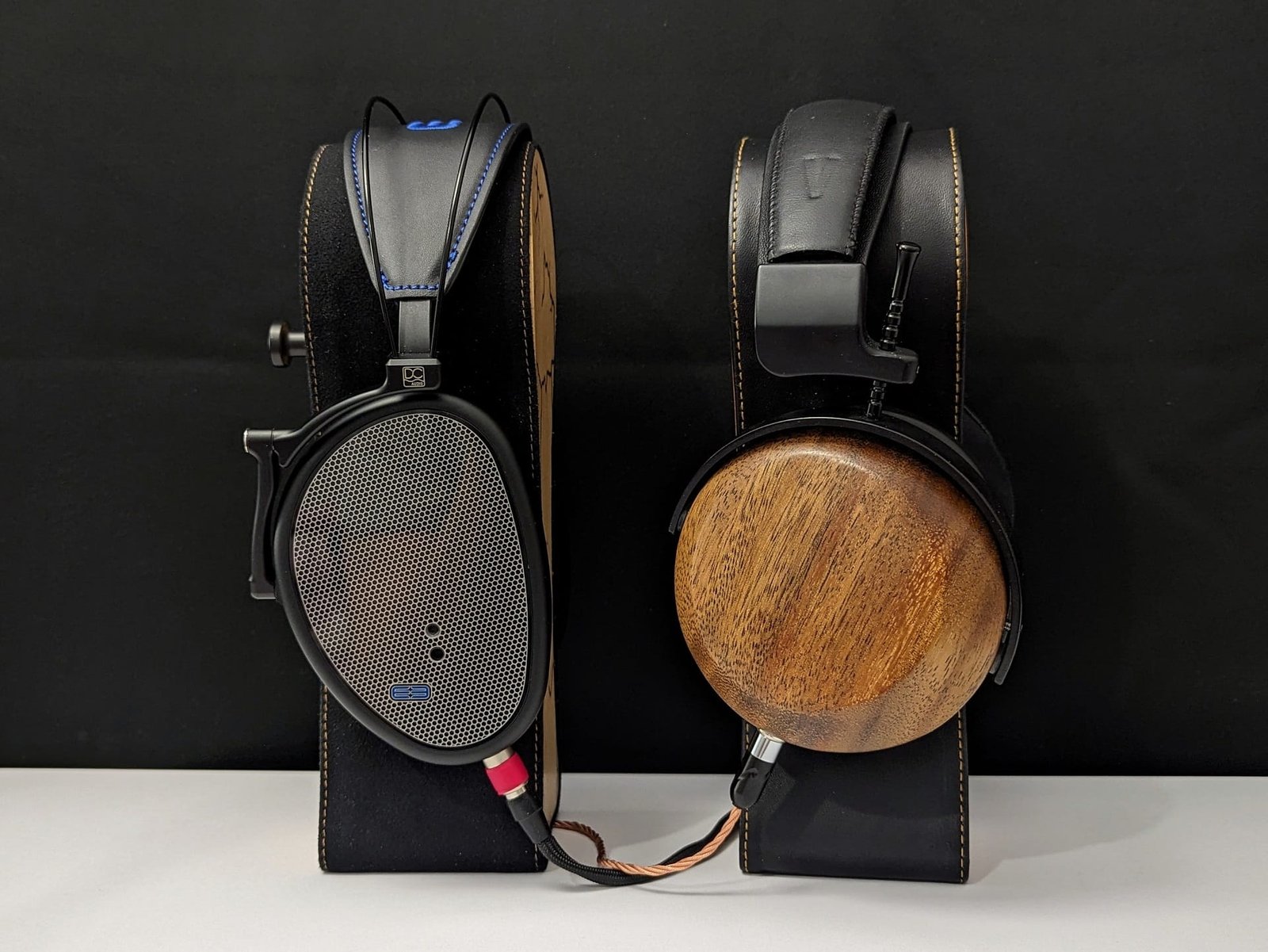
E3 ja Verite Closed eroavat ulkonäöllisesti selvästi toisistaan, koska ensin mainittu on tarkan insinöörityön taidonnäyte, kun taas toiseen sisältyy laadukasta käsityötä upeine puukuppeineen. Hämmästyttävää kyllä molemmat kuulokkeet painavat silti käytännössä saman verran (455 g ja 471 g), ja ovat myös hyvän suunnittelun ansiosta mukavia pidempäänkin käytettynä. E3:a olisi mahdollista kuljettaa kotelossaan paikasta toiseen, kun taas Verite Closed olisi muokattavissa ulkonäöllisesti eri puulaaduilla ja äänenlaadullisesti useilla erilaisilla korvapehmusteilla. ZMF-malli eristää kaksikosta lisäksi paremmin ääntä, eikä vuoda sitä juurikaan ulospäin edes lujemmalla äänenvoimakkuudella kuunneltuna.
Vahvistuksen osalta kannattaa huomioida, että Verite Closed on 300 ohmin impedanssilla toteutettu dynaaminen kuuloke, joten se sopisi hyvin esimerkiksi putkivahvistimille. E3 sen sijaan vaatii vahvistimelta selvästi enemmän virranantokykyä, joten sen kanssa olisi suositeltavinta käyttää jotakin modernia transistorivahvistinta.
Frequency responses:
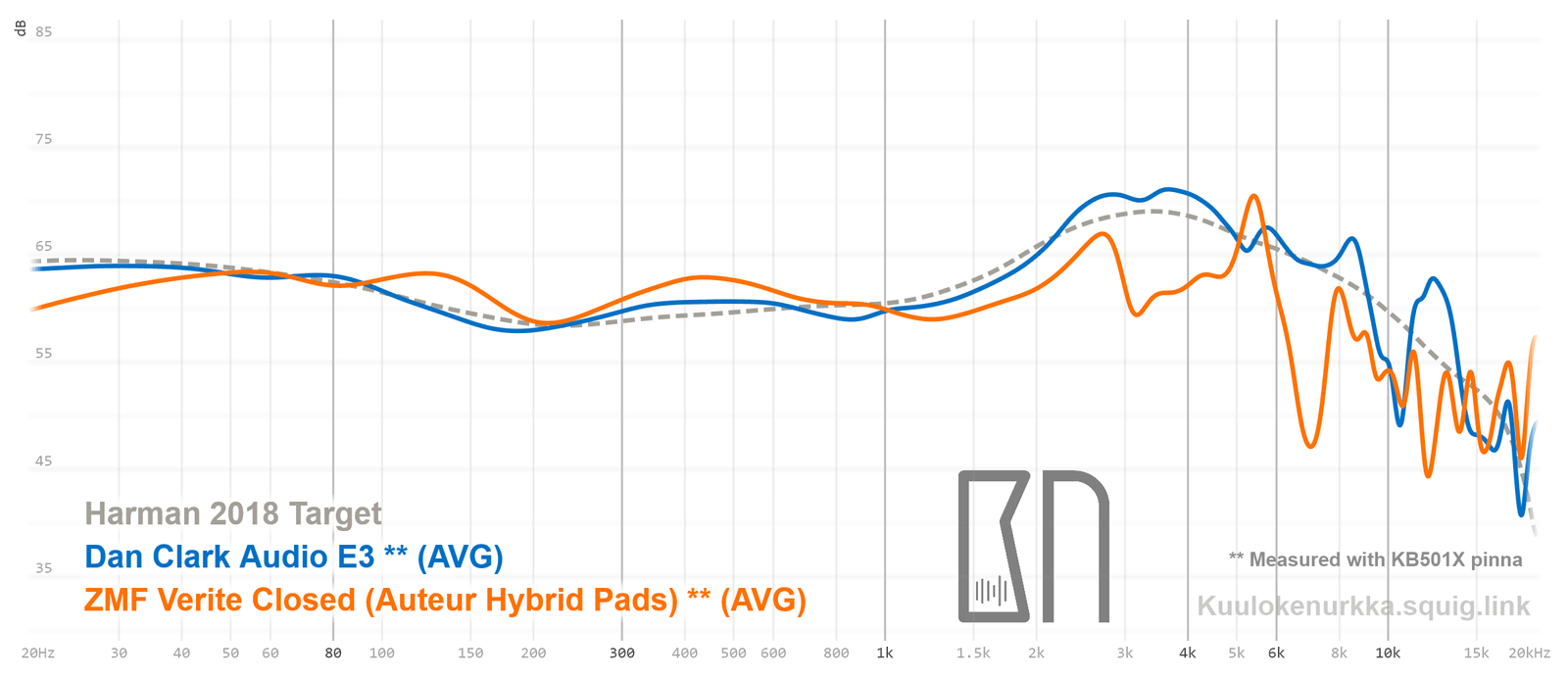
Valitsin ZMF-malliin vertailua varten Auteur Hybrid -pehmusteet, jotka elävöittävät sekä keskitaajuuksia että diskanttia kuulokkeiden vakipehmusteisiin nähden. Vaikkei Verite Closed luultavasti olekaan koskaan tuntunut yhtä värittyneeltä kuin heti E3:n kuuntelemisen jälkeen, pienellä totuttelulla löydän itseni niin syvältä musiikin sisältä, etten enää halua poistua sieltä. Tämä on aidosti välillä ongelma, koska en malttaisi lopettaa kuuntelua, vaikka minun tulisi tehdä jotakin tärkeämpää.
Siinä missä E3 pyrkii olemaan äänitteille uskollinen ja elävöittämään niitä hieman energisten ylätaajuuksiensa kautta, Verite Closed tekee periaatteessa päinvastoin. Se ei kuulosta neutraalilta ja raikkaalta, vaan luottaa täyteläisen rentoon ja läsnäolevaan charmiinsa. Kuulokkeiden toisto on rotevien alataajuuksien myötä hauskan painavan tuntuista ja äänten alkupuoli tulee suorastaan intensiivisellä voimalla kohti kuuntelijaa. Samalla äänten jälkimmäinen puolisko jää vaimeammin toistuvan 3–5 kHz:n välin myötä selvästi rennommaksi ikään kuin kauemmas äänikuvassa. Kuulokkeet kuulostavat äkkiseltään paksulta ja melko verhoutuneelta, mutta jotenkin nopeat ja erottelukykyiset elementit sekä pehmeistä puukupeista aiheutuva jälkikaiku onnistuvat yhdessä sitomaan kaiken toimivaksi kokonaisuudeksi.
Verite Closed luo musiikkiin orgaanisen vivahteen aivan kuin kuuntelu tapahtuisi aidossa, kaikuvassa, huoneessa, jossa olen paikalla – äänikuvasta muodostuu itselleni poikkeuksellisen tilavan tuntuinen ja 3D-tyylinen. Toisto on hunajaisen lämmintä ja rentoa, mutta kuitenkin läsnäolevaa. Auteur Hybrid -pehmusteilla vokalistiin syntyy intiimi tunneyhteys ilman, että laulu kuulostaisi missään tilanteessa hyökkäävältä tai terävältä. Tämä eroaa selvästi E3:n esitystavasta, jossa äänen energisintä osaa pusketaan hieman voimistetusti kuuntelijaa kohti. E3 toistaa kuitenkin loppujen lopuksi äänitteet melko lailla sellaisinaan ilman ylimääräisiä kaikuja tai heijastumia. Tämän vuoksi se onkin kaksikosta kiistatta oikeaoppisempi ja tällä mittarilla selvästi Veriteä parempi kuuloke.
Silti ZMF-mallin epätäydellistä ääntä kuunnellessani huomaan saavani jopa useammin kylmiä väristyksiä kuuntelukokemuksen voimakkuudesta. Veriten keskibasso potkii myös hauskemmin ja siinä on puumainen jälkikaiku, joka muistuttaa itsessään puurunkoista soitinta. Tämän ansiosta akustiset soittimet kuulostavat rungoltaan vieläkin miellyttävämmiltä kuin Dan Clark Audion Stealth-mallilla. Toisaalta kannattaa huomioida, että molemmat Dan Clark Audion kuulokkeet toistavat alabassoa hieman tukevammin kuin Verite eli elektroninen musiikki kuulostaa niillä vaikuttavammalta. Tilanne ei oikeastaan muutu, vaikka Veriteen vaihdettaisiin toisenlaiset korvapehmusteet.
Mitä tästä vertailusta lopulta jääkään käteen? Kun kuuntelen Veriteä, unohdan kaikki muut kuulokkeeni ja uppoudun useiksi tunneiksi musiikkiin nauttien omalaatuisesta esitystavasta. Toisaalta E3:n korvilleni asettamalla ja samat biisit kuuntelemalla tulen alitajuisesti nyökänneeksi merkkinä siitä, että juuri tällaisilta äänitteiden todennäköisesti tulisi pikemminkin kuulostaa, ja näin saan niistä kaiken irti. Ainoiksi kuulokkeiksi E3 olisikin selvästi järkevämpi ja suositellumpi valinta, mutta esimerkiksi jonkin avoimen kuulokemallin kaverina Verite Closed tarjoaisi erittäin uniikin kuuntelukokemuksen, jolle ei oikeastaan löydy vastinetta mistään hintaluokasta. Jokainen pystynee päättämään, kummasta kuulokkeesta olisi valmis maksamaan itse mieluummin pyydetyn korkean summan ottaen huomioon äänenlaadun lisäksi muutkin tekijät. Tietyllä tavalla puhutaan järjen (E3) ja tunteiden (Verite Closed) välisestä kamppailusta.
Summary
Testaamani Dan Clark Audion kuulokkeet ovat kalliita, mutta myös todella erinomaisia. Tarjolla ei ole erikoisia vivahteita pienelle kohderyhmälle, vaan rehellistä ja äänitteille uskollista toistoa tieteellisen tutkimuksen pohjalta oikeaoppiseksi räätälöitynä. Kaksikosta edullisempi E3 on hieman elävämmän ja menevämmän kuuloinen, kun taas hintavamman Stealth-mallin koen referenssimäisen neutraaliksi. Kummankaan äänenlaadusta ei ole helppoa löytää heikkouksia, ja nekin menevät usein musiikin sisältämien ”virheiden” piikkiin. Toisaalta myöskään täydellisiksi en voi tuotteita kutsua, koska istuvuus ja päähän asettelu vaikuttaa yllättävän paljon optimaalisen äänenlaadun toteutumiseen.
Lopulta pidän henkilökohtaisesti hieman enemmän E3:n rytmikkyydestä ja sen tavasta vetää huomiota vokalistiin. Stealth:in kuuntelu on rennompaa, mutta sen tapainen neutraalius ei innosta itseäni yhtä paljon. Toisaalta kriittisesti arvioituna se on kaksikosta hieman tasapainoisempi ja luonnollisempi, joten näillä mittareilla tarkasteltuna korkeampi myyntihinta tuntuu perustellulta ottaen huomioon, että myös hieman tyylikkäämpi ja kevyempi rakenne tukee asiaa. Koska paremmuus jää kuitenkin edelleen melko puhtaasti makuasiaksi, en yllättyisi myöskään sitä, jos molemmat kuulokkeet maksaisivat saman verran. Joku voisi ajatella tämän olevan kamala asia Stealth:in kannalta, mutta todellisuudessa sen omistajat ovat jo ehtineet nauttia erinomaisen tasapainoisesta äänestä parin vuoden ajan ennen E3:n julkaisua. Valmistajaa täytyy kehua siitä, että se on tuonut kaikki hintavampaa mallia varten kehitetyt innovatiiviset teknologiansa selvästi edullisempaan hintaluokkaan.
Jos saisin omistaa vain yhdet hyvät kuulokkeet, valintani saattaisi kohdistua tällä hetkellä E3:een etenkin, kun sen suljettu rakenne tuo joustoa eri käyttötilanteisiin, eikä käyttömukavuudessakaan ole valitettavaa. Tarvittaessa kuulokkeita olisi myös mahdollista kuljettaa mukana. Vaikka pidänkin erilaisista ja toisinaan melko värittyneistäkin kuulokkeista, E3 osoittaa, miksi optimaalista taajuusvastetta on lähdetty tutkimaan, ja miksi meillä on nykyään jokinlaisia perusodotuksia kuulokkeiden tuunausta kohtaan.
Vielä harrastukseni alussa olisin todennäköisesti pitänyt E3:a hieman tylsän kuuloisena, koska se ei lisää kuuntelemaani musiikkiin mitään erityisen mieleenpainuvaa. Nykyään ympyrä alkaa kuitenkin tietyllä tapaa sulkeutua ja alan olla sitä mieltä, että kuuntelemani musiikki on tärkeämpää kuin kuulokkeet, joilla sitä kuuntelen. Liian laskelmoitu neutraalius on mielestäni edelleen pitkästyttävää, mutta Dan Clark Audion E3 onnistuu välttämään tämän elävällä ja dynaamisella toistollaan. Ei Stealth-mallikaan kuulosta missään nimessä tylsältä, mutta omien mieltymysteni pohjalta E3 on lopulta paras tähän mennessä kokeilemani suljettu kuuloke – jollekulle toiselle se saattaisi olla Stealth.
Kaksikko ei loppujen lopuksi anna merkittävää tasoitusta myöskään hyville avoimille kuulokemalleille, minkä Dan Clark Audio vaikuttaa tietävän itsekin pyytäessään tuotteistaan harmilisen korkean rahasumman. Vielä jokin päivä yhtä hyvät kuulokkeet on mahdollista ostaa lompakkoystävällisempään hintaan, mutta tällä hetkellä niistä joutuu pulittamaan noin 2500 euroa. Tämä on silti jo merkittävä parannus Stealth-mallin 4800 euron hintaan nähden. Kannattaa toki muistaa, että oman makunsa tunteva harrastaja voi edelleen pitää enemmän mistä tahansa muustakin kuulokemallista, minkä vuoksi onkin hyvä, ettei jokainen tuote ole samanlainen kuin E3 ja Stealth. Jos kuitenkin oletetaan Harmanin tutkimuksen pitävän paikkansa, valtaosa harjaantuneista kuuntelijoista suosisi Dan Clark Audion tapaisia kuulokkeita useimpien muiden vaihtoehtojen joukosta.
Pros and cons:
+ Rehellisen neutraali tuunaus juuri sopivasti elävöitettynä
+ Avoimelta tuntuva tilavaikutelma
+ Hauskan dynaaminen bassontoisto
+ Erinomainen erottelukyky ja äänten tarkka sijoittelu äänikuvassa
+ Innovativiinen AMTS-systeemi tekee äänestä puhdasta
+ Good fit and comfort
+ High-quality build
+ Fits into a relatively small carrying case
+ Good cable in terms of usability
+ Kallis hinta tuntuu tavallista perustellummalta
+/- Näyttää periaatteessa tyylikkäältä, mutta lopulta aavistuksen tylsältä
+/- Lasista tehdyt kuppien kyljet ovat mielenkiintoinen ratkaisu, mutta ne kasvattavat kuulokkeiden painoa
-/+ Yläkeskitaajuudet voivat olla joidenkin makuun turhankin energiset, mutta asiaa voidaan lieventää siirtämällä kuulokkeita päässä alaspäin
– Basso voi tuntua rungoltaan aavistuksen kevyeltä dynaamisiin kuulokemalleihin verrattuna
– Diskantin sähäkkyys voi häiritä rauhallisempiin kuulokkeisiin tottuneita
– Kuulokkeiden asettelu päässä vaikuttaa tavallista enemmän ääneen
– Pääpanta saisi olla hieman pehmeämpi
– Ääntä vuotaa bassoporttien kautta jonkin verran ulospäin
– Hinta edelleen useimpien ulottumattomissa
+ Äärimmäisen neutraali ja oikeaoppinen tuunaus
+ Erinomainen erottelukyky ja äänten tarkka sijoittelu äänikuvassa
+ Hauska bassontoisto
+ Rasittamattomat ja luonnolliset ylätaajuudet
+ Innovativiinen AMTS-systeemi tekee äänestä puhdasta
+ Excellent comfort
+ High-quality build
+ Painaa vähemmän kuin E3
+ Fits into a relatively small carrying case
+ Good cable in terms of usability
+/- Näyttää hiilikuidun ansiosta tyylikkäältä, mutta pääpannan punaiset gamer-tyyliset tikkaukset ovat hieman mauttomat
+/- Osa varmasti arvostaa E3-mallia rauhallisempia ylätaajuuksia, mutta omaan makuuni diskantti kaipaisi hieman lisää energiaa elävöittääkseen toistoa
+/- Alataajuudet toistuvat tyyliltään täyteläisemmin kuin E3:ssa, mutta eivät kuulosta yhtä dynaamisilta ja räjähtäviltä
– Pääpanta saisi olla hieman pehmeämpi
– Kuulokkeiden asettelu päässä vaikuttaa tavallista enemmän ääneen
– Sanka on puristusvoimaltaan löysähkö, joten tukevaa istuvuutta voi olla vaikeaa löytää, eikä bassontoistokaan välttämättä toimi oikein
– Ääntä vuotaa bassoportin kautta jonkin verran ulospäin
– Erittäin korkea hinta
 EN
EN  FI
FI