Author: Roderick
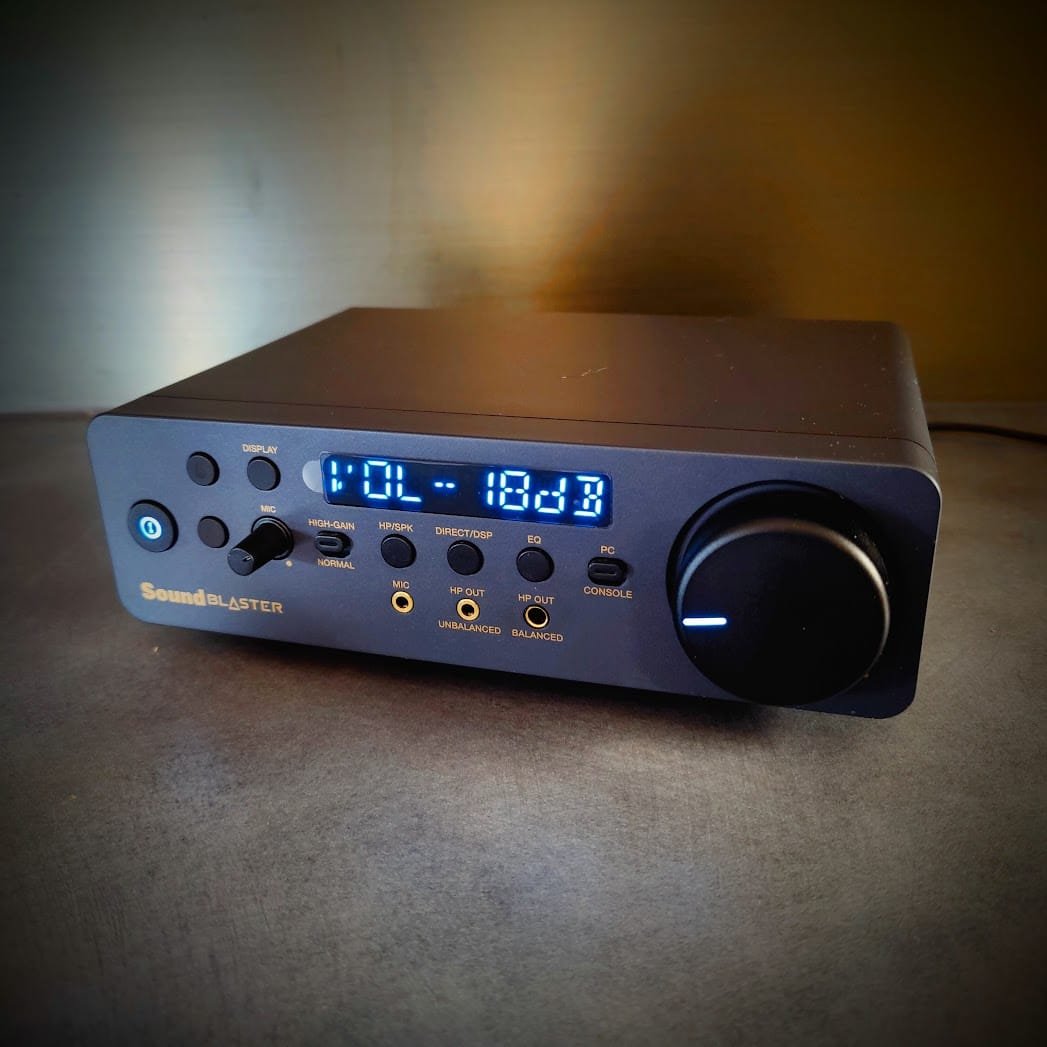
Table of Contents:
Information:
- Release year: 2023
- Country of Origin: China
- Price: 320 €
- Type: USB-DAC & headphone amplifier
- Audio chip: 2 x Cirrus Logic SC43198
- Input connections: USB, RCA, Toslink, Bluetooth
- Output connections: RCA, Toslink, microphone connection
- Headphone jacks: 3.5 mm and 4.4 mm
- Maximum sampling rate: PCM 384 kHz (32 bit) / DoP 128 / DSD 256
- Headphone amplifier output impedance: 1 ohm
- Headphone amplifier output power (unbalanced): 0.98 Vrms (60 mW) @ 16 ohm, 1.47 Vrms (65 mW) @ 33 ohm, 4.11 Vrms (112 mW) @ 150 ohm, 4.14 Vrms (52 mW) @ 330 ohm, 4.15 Vrms (29 mW) @ 600 ohm
- Headphone output power (balanced): 1.18 Vrms (86 mW) @ 16 ohm, 1.90 Vrms (109 mW) @ 33 ohm, 5.86 Vrms (313 mW) @ 150 ohm, 8.25 Vrms (206 mW) @ 330 ohm, 8.28 Vrms (114 mW) @ 600 ohm
- USB power supply: the same connection is also used as a data/audio connector
- Features: LED display, Gain switch, USB-A Host port and Creative application with virtual sound features, adjustable microphone functions and programmable EQ modes
- External dimensions: 21.6 x 17 x 7.3 cm
- Weight: ~900 g
- Included: Optical cable, USB-C -> USB-A cable and RCA cables
- More detailed device specifications including system requirements can be found from the manufacturer website
Review sample: Provided by the manufacturer
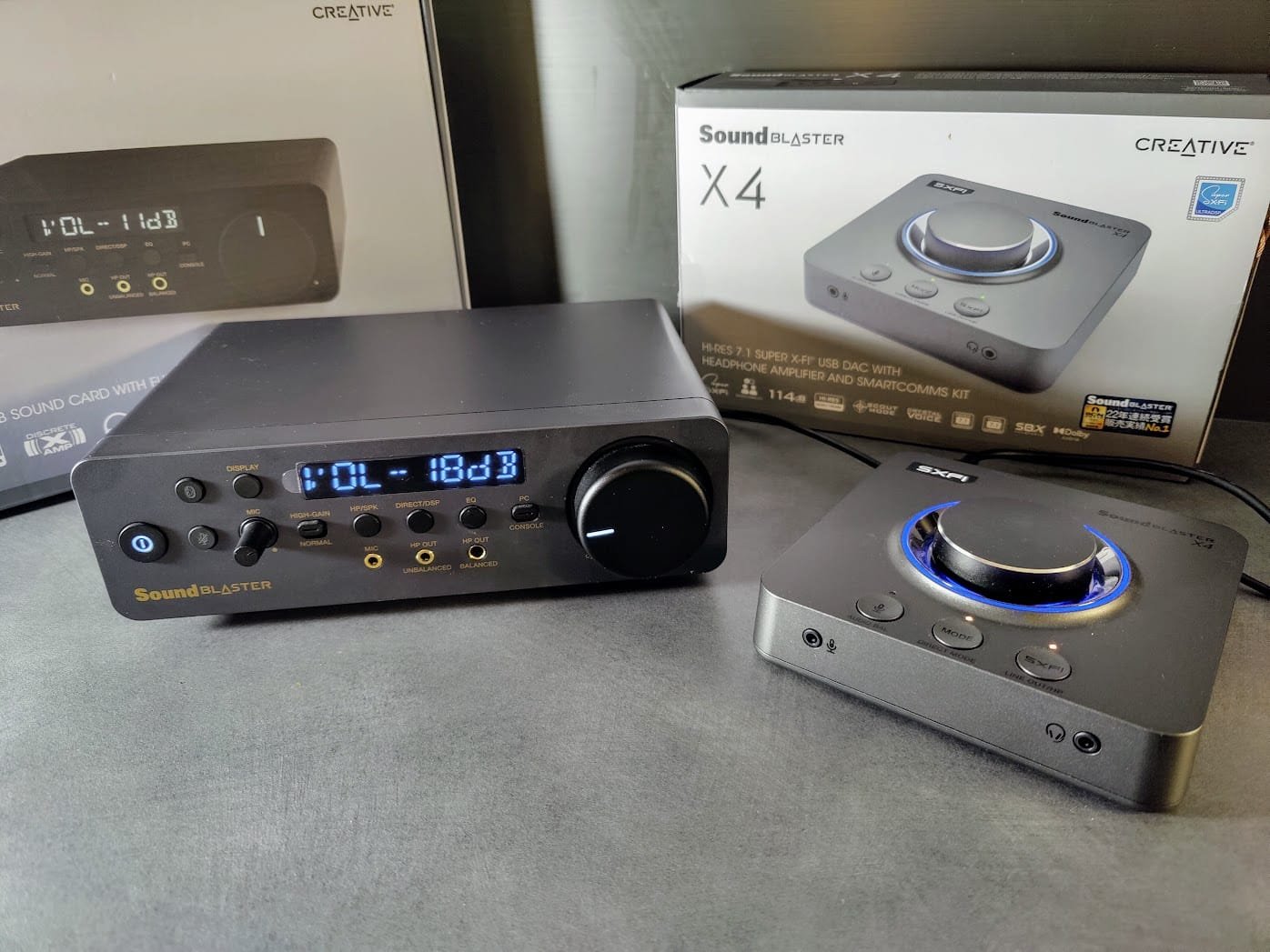
Sound Blaster X5 is an external sound card manufactured by Creative, which, unlike other devices from the manufacturer, is primarily designed for listening to music. However, PC and console gamers have not been forgotten, as the device has many features useful for gamers, even though the Super X-Fi feature is missing this time. For me, the absence of Super X-Fi is not a major problem, as I will, as usual, focus on dissecting the device's suitability for hi-fi use in my review. Creative's more affordable Sound Blaster X4 convinced me with its sound quality, making the X5 an exceptionally interesting product for me. We received the device for review at Kuulokenurkka directly from the manufacturer. I thank Creative, and especially Helle Jakobsen, whose contribution made this review possible.
Packaging and accessories
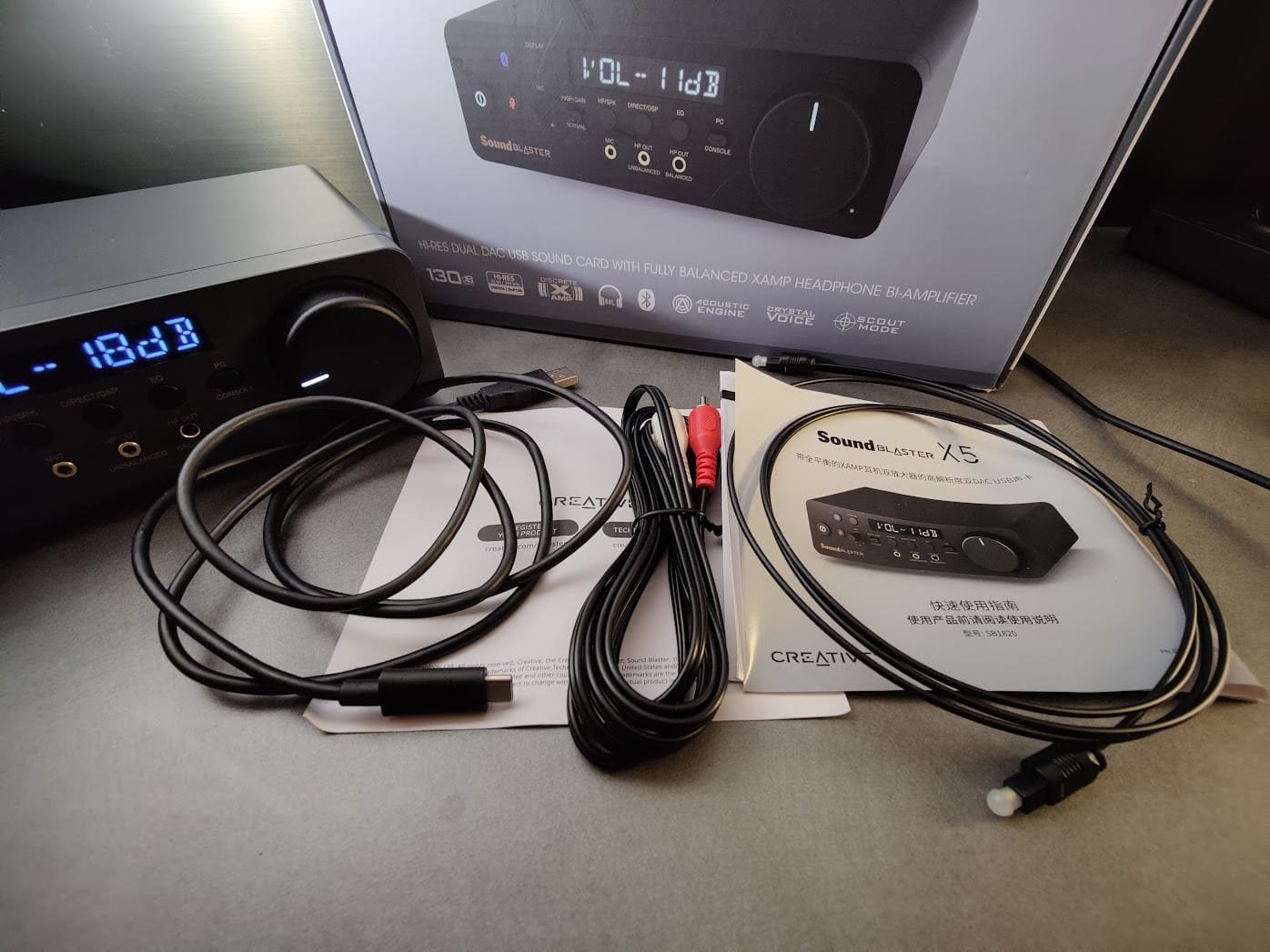
The Sound Blaster X5 comes with an optical cable, RCA cables, and a USB cable, through which the device receives power. Thus, a separate power cable is not needed; one and the same cable handles both the audio signal and power supply. The 1.5-meter USB cable is slightly shorter than in the X4 model, but still better in length than standard cables offered by many other manufacturers. According to some reviewers, it is also advisable to use the USB cable that came with the X5, as lower-quality cables from other manufacturers may cause problems with the device's power supply.
Construction and usability
The X5 is made entirely of plastic, which is somewhat surprising considering its price of over 300 euros. For comparison, with the 150-euro X4, the plastic construction was not a problem in my opinion. Hi-fi is not just about sound, but also aesthetics, so if Creative seriously wants to demonstrate its ability to manufacture respectable hi-fi devices, more attention should be paid to the external appearance of the products. However, I have nothing bad to say about the appearance of the Sound Blaster X5.
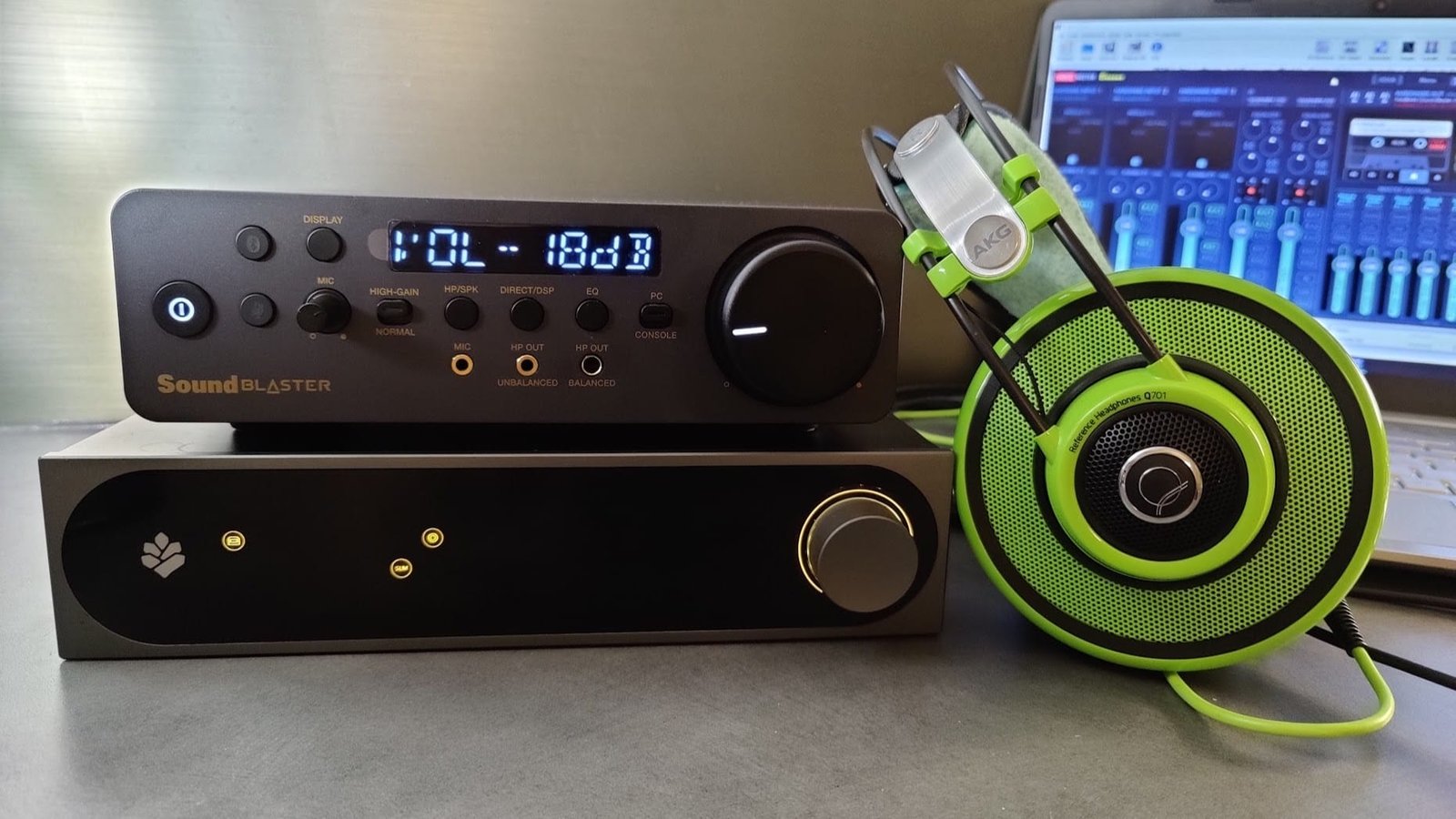
The device's front panel features no less than 11 different controls and buttons. Some prefer products with a minimalist appearance, but I personally like it when a device has many tactile buttons. This affects the appearance, but also the usability. Devices like those that give me gray hairs Topping DX3 Pro+where features can only be accessed through confusing menus. For some strange reason, many devices nowadays don't even have a power switch. Creative's X5 has one.
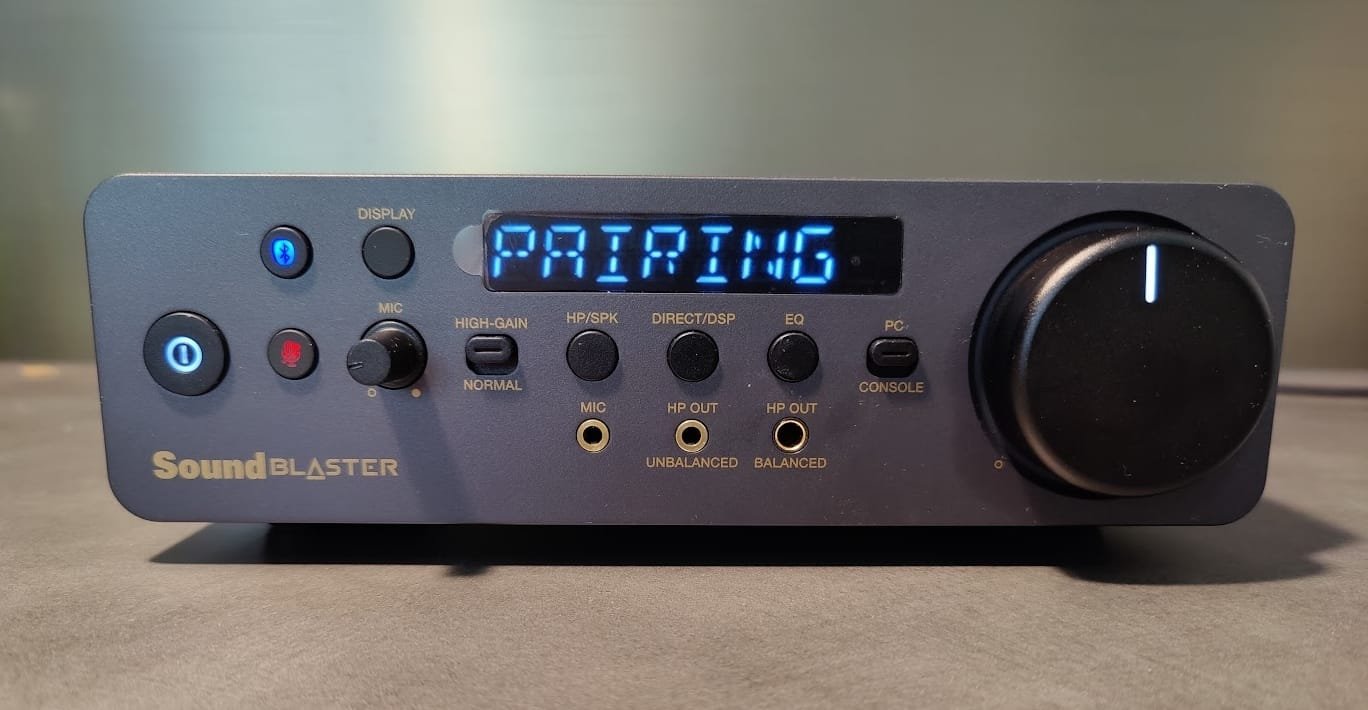
The Sound Blaster X5 is pleasantly clear in its general usability. However, a few things are slightly annoying. Firstly, the texts on the front panel are impossible to read except in bright daylight. This is, of course, a minor issue, as one learns the locations of the buttons over time. Secondly, the feel of the volume control is not the best possible, although I haven't noticed any actual problems with it either. Digital adjustment ensures perfect channel balance in all positions, but the somewhat loose-feeling control further emphasizes the device's plastic nature. Curiously, the feel of the small microphone control, on the other hand, is perfect – oh, if only the small controls on devices like Schiit Audio's felt as good.
The most peculiar feature of the X5 is the flashing LED light of the volume control when it is set to the 0 position. The flashing light is quite annoying, and I couldn't find a way to dim it. However, the display's features and visibility can be adjusted to some extent.
The device's volume can be adjusted via the Creative application and, for example, the Windows operating system. The volume control is limited in its rotation, meaning it does not spin endlessly. This can lead to a situation where, according to the physical control, the volume might appear to be low, but in reality, the knobs could be turned all the way up if the volume has been adjusted via software. Therefore, it's advisable to be careful with the volume, especially if the X5 has multiple users. At least speakers/line output and headphones have their own separate volumes, which the device remembers when switching from one output to another.
Connections
Headphone connections:
The Soundblaster X5 has two connections for headphone listening. The unbalanced 3.5 millimeter headphone jack is likely sufficient for most users, but for those who need more power, a balanced 4.4 millimeter connection is also available. In my opinion, the 6.35 millimeter connector is still a kind of standard, so its absence is at least a small problem for me. Due to their structure, 6.35 mm -> 3.5 mm adapters are somewhat impractical, and their availability may also be poor. It's great that Creative now offers a balanced connector in its device, even though an XLR connection might have served a wider audience than the still relatively little-used 4.4 millimeter connector.
A small minus for the X5 is that a slight static crackle can be heard when connecting headphones to the device. During use, however, everything works stably, except for situations where the X5 suddenly shuts down, for example, when the laptop powering it runs out of battery. In such cases, a small pop is heard from the headphones. According to some reviews, the sound would even be strong enough to damage hearing or break sensitive in-ear headphones, but I wouldn't be too concerned about it myself. It's possible that the problem is such that it has been fixed with a firmware update, or my device is an exceptional unit. In any case, the manufacturer releases updates regularly, and pretty much all the oddities found in the X5 half a year ago have now been fixed.
Other connections:
There are no balanced outputs on the back of the device. Considering the versatility of the X5, this is quite understandable, but on the other hand, a 300 euro DAC without balanced connections is becoming a rarity nowadays. There is one pair of RCA connections for output and another for input. Thus, the device can be used as a standalone D/A converter with a separate amplifier, as an amplifier with another DAC, or even as a companion for a turntable. The Sound Blaster itself, of course, does not include the necessary RIAA equalizer. The USB output allows the device to be connected to USB speakers, headphones, or a Bluetooth transmitter. The 7.1 speaker outputs familiar from the X4 device model are not present in the X5.
For users of optical connections, there is a Toslink connector, with which the X5 can be connected to a television, for example. However, I did not test its functionality. According to ASR's tests, the optical connection is not as high quality as the USB connection, but the problems are likely to remain below the audible threshold. The USB connection, on the other hand, worked excellently with my laptop and PS4. Reportedly, the X5 would also be PS5 compatible.
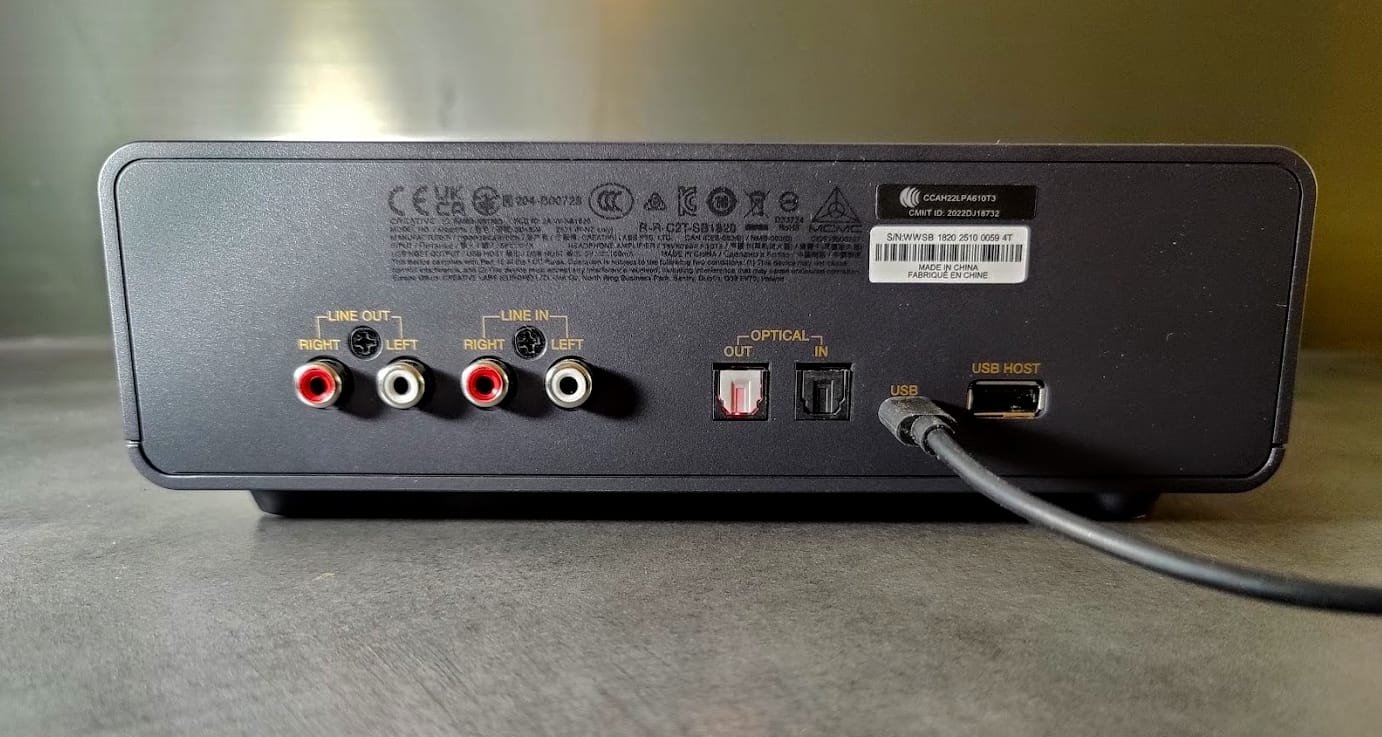
As with other Creative devices, the X5's USB input simultaneously functions as a power supply. I like that I can get the device immediately operational by connecting the USB cable to my laptop. However, it would be good if the user could also use an external power supply if desired, such as in the iFi Zen DAC V2. An external power supply would enable a more powerful headphone amplifier in the device. A full-sized DAC/Amp powered via USB is somewhat peculiarly like an oversized dongle.
Bluetooth:
The Sound Blaster X5's Bluetooth 5.0 connection only works with the SBC codec. This should be sufficient for most users, for example, for watching YouTube videos, but not for higher-quality audio reproduction. The X5 does not include a Bluetooth transmitter, so it cannot be used with wireless headphones. When playing PlayStation, I like to lounge on the couch far from the TV, so wired headphones are not the optimal solution for me. If the X5 were capable of transmitting a high-quality Bluetooth signal, it would immediately become my most used hi-fi device.
Those who desire better Bluetooth audio quality and a transmitter can connect an external Bluetooth receiver/transmitter to the USB port on the back of the X5. One cannot be sure about the compatibility of devices from different manufacturers without trying them, so it is probably wisest to stick to Creative's own offerings. The manufacturer's BT-W4 costs 55 euros, which I think is quite a lot in this case. On principle, I would not want to pay that much to get features that are self-evident in most D/A converters in the same price range.
Creative-app
The biggest selling point of the Sound Blaster X5 is undoubtedly Creative's application, which can be installed on Windows, Android, and iOS operating systems. According to unofficial sources, the application also works on at least some Linux systems. When the application is installed on a phone, it also conveniently becomes a remote control for the X5.
When fully utilizing the application, it is probably not an exaggeration to call the X5 (and X4) the most versatile D/A converter on the market. With the application, the user can modify microphone functionality and adjust various surround sound settings. For simply listening to music, the most useful feature is the graphical 10-band equalizer, which is slightly limited but serves its purpose excellently unless there is a need for particularly precise adjustment. The best thing about the equalizer is that the settings are saved to the device, making them available even when the application itself is not accessible. This is a great feature for those who want equalized sound from a game console or turntable. Of course, the same refinements are also found in the X4 model, so the X5 doesn't really offer anything new.
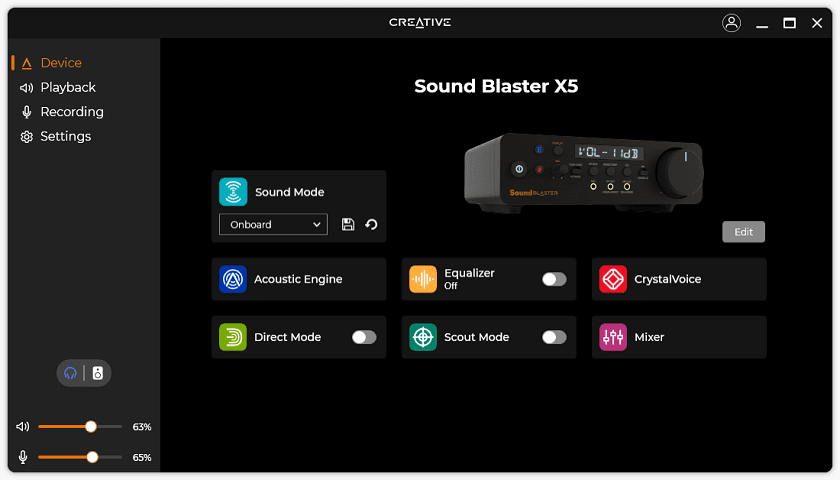
In addition to the equalizer, the Mixer feature is also interesting. With it, it is possible to play multiple different audio sources simultaneously and adjust their volumes and even channel balance. The received signal can also be forwarded, which is likely a useful feature for streamers and podcasters. A basic user like me benefits most from the ability to receive calls via Bluetooth without having to interrupt gaming or listening to music.

Although the X5 is easily perceived primarily as a gaming and hi-fi device, it can also be an excellent choice for those who spend their workday at the computer. I myself could not test the microphone's functionality through the device, but according to other reviewers, the microphone function's sound quality is excellent and it can be improved with the CrystalVoice feature. Although I do not belong to this target group myself, I could imagine that the Mixer function combined with CrystalVoice could streamline work if the job description includes many overlapping remote meetings and calls.
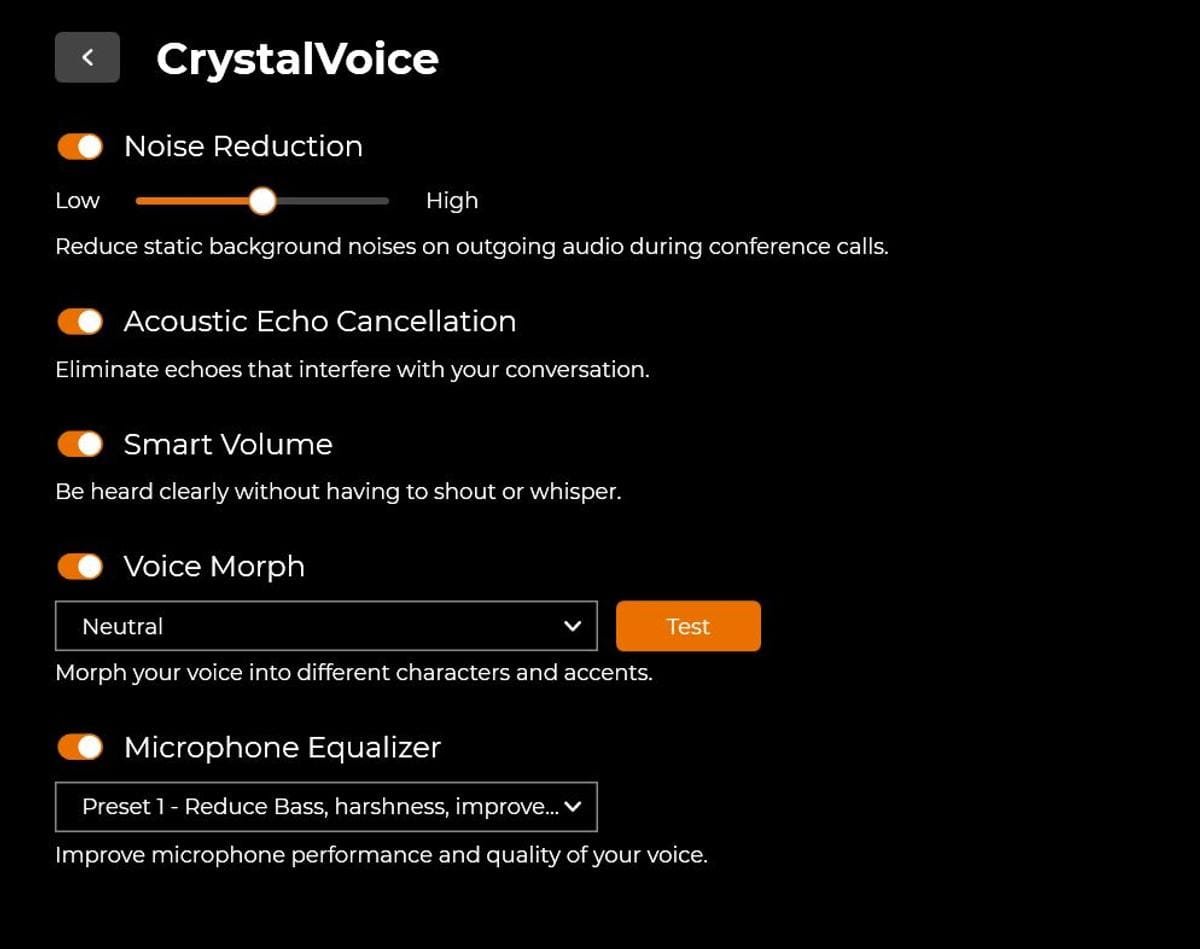


The Sound Blaster X5 has many other features and settings, which I will not go into more detail about this time due to a tight schedule. However, it is possible to learn more about the comprehensive range of features on the manufacturer's homepage.
Sound quality as a combination device
In my opinion, the sound produced by the Sound Blaster X5, when used as a combined device, sounds pleasant in every way. In other words, nothing disturbing emerges from the sound, nor do I really manage to detect any characteristics specific to the X5. The most interesting amplifiers certainly have their own ”sound,” but equally, a sign of a good device can also be neutrality and the fact that headphones reproduce exactly as they are.
If one thing were to be highlighted about the X5, I would say it reproduces the depth of the soundstage more convincingly than most other devices in the same price range. Inexpensive amplifiers and DACs often tend to shrink the spatial impression so that everything seems to be heard right in front of the nose or inside the head. The X5, on the other hand, has a spacious and airy sound without sounding too light or lacking in power.
I have mostly listened with the device to Sash Tres (45 ohm) headphones, which the X5 reproduces effortlessly, especially via the balanced headphone jack. Even at half power, the volume would be sufficient for most listeners. Although the power figures are somewhat modest on paper, there is practically enough punch. The unbalanced headphone jack also provides enough volume for the Sash Tres, but the sound becomes slightly thinner.
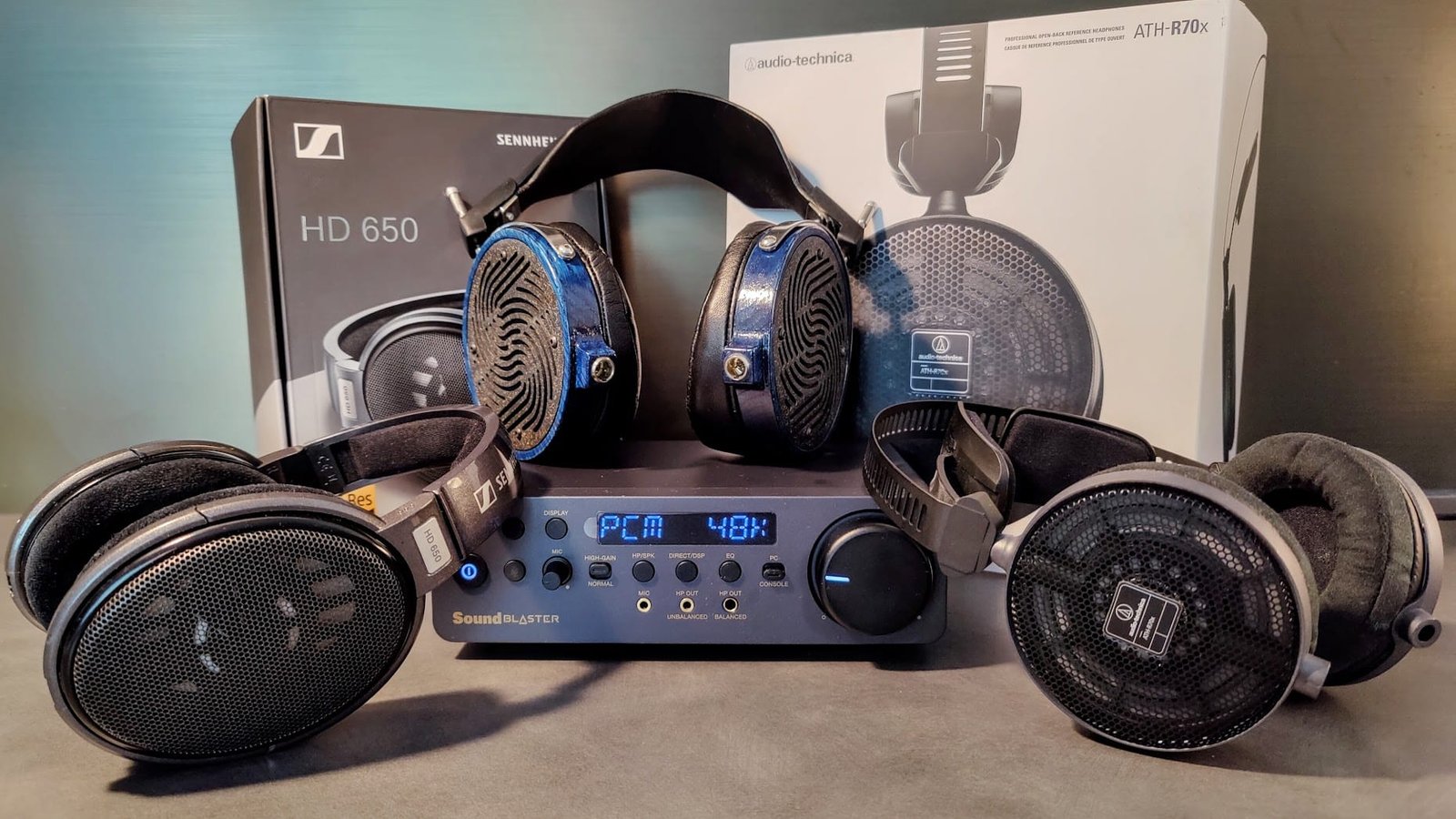
The X5 also effortlessly reproduces high-impedance headphones. The Sennheiser HD 650 and the 420-ohm Audio-Technica ATH-R70X sound excellent. One could even say that these types of headphones overperform with the Creative device. The Sound Blaster X5 is, alongside Ifi's Zen series, one of the best affordable transistor amplifiers I've heard for Sennheiser HD 600 series headphones, for which I find it difficult to find an amplifier with suitable synergy. Achieving an excellent result with the X5 does not even require using a balanced connector. A good tube amplifier remains my top choice for Sennheiser headphones, but the X5 is a very good and relatively affordable alternative if a tube amplifier is not an option for one reason or another.
As a significant improvement over the X4 model, it should be mentioned that the X5's output impedance is only 1 ohm, so the frequency response remains flat even with low-impedance headphones and in-ear monitors. With the in-ear monitors I tested, the X5 was also completely silent.
Sound quality as a D/A converter
To evaluate the X5's capability purely as a DAC, I needed a reference DAC and a headphone amplifier for listening to both devices. As a test amplifier, I used Topping L30 II:. For the reference DAC, I chose the approximately 500 euro Soncoz SGD1:. Soncoz uses the popular ESS9038Q2M DAC chip in its device. Most devices feature a chip manufactured by either ESS or AKM. To my knowledge, the Sound Blaster X5 is the first device I've tested that uses Cirrus Logic chips, specifically two SC43198 chips.
Since it's easy to deceive oneself and almost impossible to get rid of one's own preconceptions, I tried to arrange as objective a test situation as I possibly could. During testing, the DACs were connected to a Schiit Audio Sys splitter, from which the signal proceeded to the Topping amplifier. With Voicemeter banana software, I was able to play both DACs simultaneously, without having to change the active device from the computer's sound settings. Switching DACs was quick with a single button on the Sys splitter. I leveled the volumes with MiniDSP EARS to an accuracy of approximately 0.05 decibels across the entire frequency range. At the same time, it also became clear that there was no difference in the frequency responses of the devices when measuring with headphones.
Conclusion
It may be that I conditioned myself into a state where I didn't even want to hear differences between the devices, but in my opinion, the Soncoz SGD1 and Sound Blaster X5 sound exactly the same. It's possible, of course, that by listening to one device for, say, a week at a time, I would have noticed some differences between them. This time, however, the result is that no differences were found. What should be concluded from this then? Firstly, one could certainly ponder whether I should look for a new hobby if I can't distinguish between a 500-euro hi-fi device and a 300-euro ”gaming DAC” powered via a USB bus. However, assuming I haven't gone completely deaf, the outcome of my test is very positive for Creative. I have, after all, been quite satisfied with the Soncoz device. On the other hand, this suggests that affordable delta-sigma DACs sound almost identical regardless of who manufactured the DAC chip. Larger sound quality differences only emerge in higher price categories and when using better headphones. If the Sound Blaster X5 feels like an interesting device, I have no sound quality reasons not to acquire it.
Summary
The Sound Blaster X5 can be considered as good a D/A converter as other devices in the same price range. I also have nothing bad to say about the headphone amplifier, apart from possibly insufficient output power with the most challenging headphones. For pure music listening, the iFi Zen DAC V2 is, in my opinion, a better choice because it sounds at least as good and has roughly the same connections, a balanced line output, the option to use an external power supply, and a 100 euro lower price tag. The Topping DX3 Pro+, on the other hand, is not as versatile as the iFi device or the Sound Blaster X5, but it includes a more powerful headphone amplifier and a traditional remote control. The tiny and affordable Qudelix 5K is, in turn, a better choice for those who value portability, a versatile equalizer, and a high-quality Bluetooth connection. In addition, new products like the SMSL DL200 include many features that I missed in the X5. So, good alternatives to Creative's device would be available for every need.
Although the X5 has been marketed as a hi-fi device, its greatest strength, in my opinion, is still the versatility of the application offered by Creative. This is somewhat problematic because the same application is also found in the manufacturer's more affordable X4 device. For many gamers, the X4 might still be a better choice because it has the Super X-Fi feature that is missing from the X5. However, if this or the 7.1 speaker outputs are unnecessary, the X5 would be a viable upgrade for X4 owners who want slightly better sound quality. The X5 sounds more spacious and dynamic of the two. Despite the balanced headphone connector, the difference in sound quality is still not very large, as the performance of both devices is ultimately limited by USB power delivery. The double price of the Sound Blaster X5 is thus somewhat difficult to justify.
I hope that the X5 is just the manufacturer's first step from gaming devices towards more serious audio reproduction. If the device had external power supply, XLR outputs, a slightly more powerful headphone amplifier, and a standard remote control, I could pay up to 600 euros for it without complaint. If there were also a Bluetooth transmitter playing DSP-modified audio for my PlayStation moments, the X5 would form a really good centerpiece for an entertainment system, making some of my other devices unnecessary. Although you can't have everything, any of the aforementioned features would help the X5 stand out more clearly from the X4. The higher sampling rate and Cirrus Logic DAC chips are mainly curiosities that look good on paper but have little real impact on sound quality or usability.
Despite the shortcomings I mentioned, the Sound Blaster X5 has established its place as the device I first test all my new headphones with. Due to USB power delivery, the X5 is quick to set up for a quick listen, and based on both subjective listening and objective data, the device is good enough for reference use in situations that do not require extreme performance. Even when aiming for better sound quality, I might still use the X5 as a DAC with another headphone amplifier. As an active user of the device, I could therefore give it my cautious recommendation for hi-fi use. However, the best value for money is only achieved if the abundant features of the Sound Blaster X5 are sufficiently utilized.
Pros and cons:
+ Good sound quality
+ The headphone amplifier works particularly well with high-impedance dynamic headphones
+ The Creative app offers comprehensive and versatile features
+ Many functions also have physical switches
+ The manufacturer regularly releases software updates
+/- It's convenient that the device draws power directly from the computer's USB port, but a device at this price should also have the option to use an external power supply
– Bluetooth connection only supports the SBC codec
– Similarly sounding devices can be had for less
– The plasticky build
– Improvements over the cheaper X4 model are small, especially since the X5 does not have the Super X-fi feature or 7.1 speaker connections
 EN
EN  FI
FI
As a Gravis UltraSound (GUS) man, I am still of the opinion that all Sound Blasters can be moved directly to /dev/null (if you understand what I mean).
Opinions are allowed. 😀