Author: Sword of Damocles
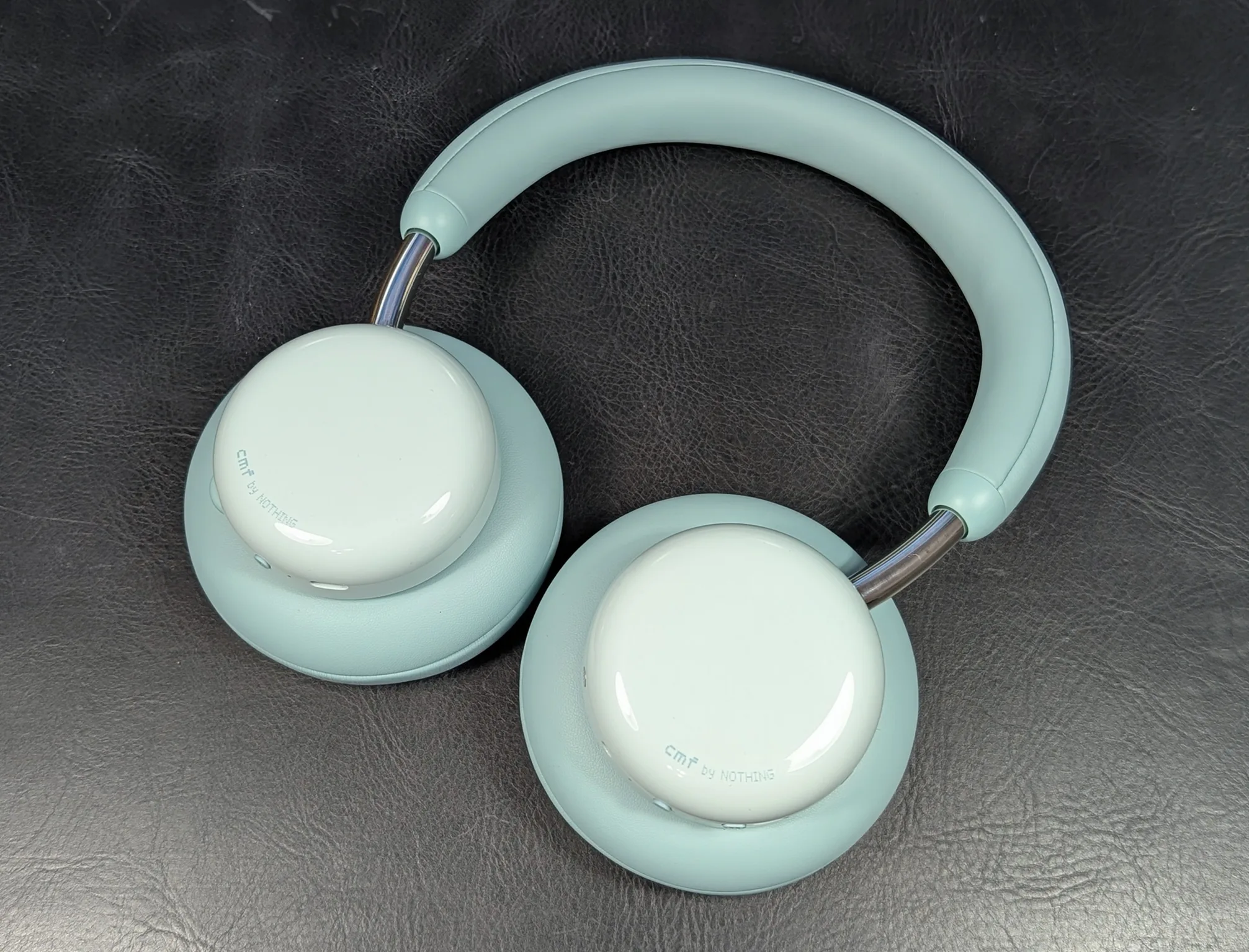
Table of Contents:
Information:
- Released: 2025
- Manufacturing country: Britain (design work) & China (assembly)
- Price: 119 €
- Color options: black, white and light green
- Type: Closed, over-ear
- 40 mm dynamic drivers (nickel-plated diaphragms)
- Audio connections: Bluetooth 5.4 and 3.5 mm
- Bluetooth codecs: LDAC, AAC and SBC
- Charging port: USB-C
- Battery size: 720 mAh
- Battery life AAC (ANC ON/OFF): 50 / 100 h
- Battery life LDAC (ANC ON/OFF): 38 / 70 h
- Talk time (ANC ON/OFF): 35 / 50 h
- Charging time: 2 h (Supports fast charging: 5 minutes for 4 hours (ANC ON) or 8 hours (ANC OFF) of usage time)
- Noise cancelling function: On / Off / Transparency mode
- Features: Multipoint, Google Fast Pair/Microsoft Swift Pair, voice assistant (Google Assistant/Siri/Alexa), IPX2 protection, physical bass/treble control and phone app
- Weight: 283 g
- Accessories: Carrying pouch and 3.5 mm headphone cable (length 1.2m)
Review sample: Self-purchased product
CMF (Color, Material and Finish) is a sub-brand of the British technology company Nothing, which focuses on offering design-driven products, such as phones, smartwatches, and headphones, at moderate prices. Whereas Nothing's first own over-ear noise-cancelling headphones, Headphone (1), costs 319 euros at the time of writing this article, the brand new CMF Headphone Procan be had for 119 euros. I, however, grabbed the fun-looking blue-green CMF headphones from Amazon Prime sales for 85 euros, so it's always worth keeping an eye on offers. Regardless of the final market price, these are surprisingly good wireless headphones, especially when slightly adjusted from the Nothing app. Also, a few unique details help the Headphone Pro stand out from its competitors.
Packaging and accessories
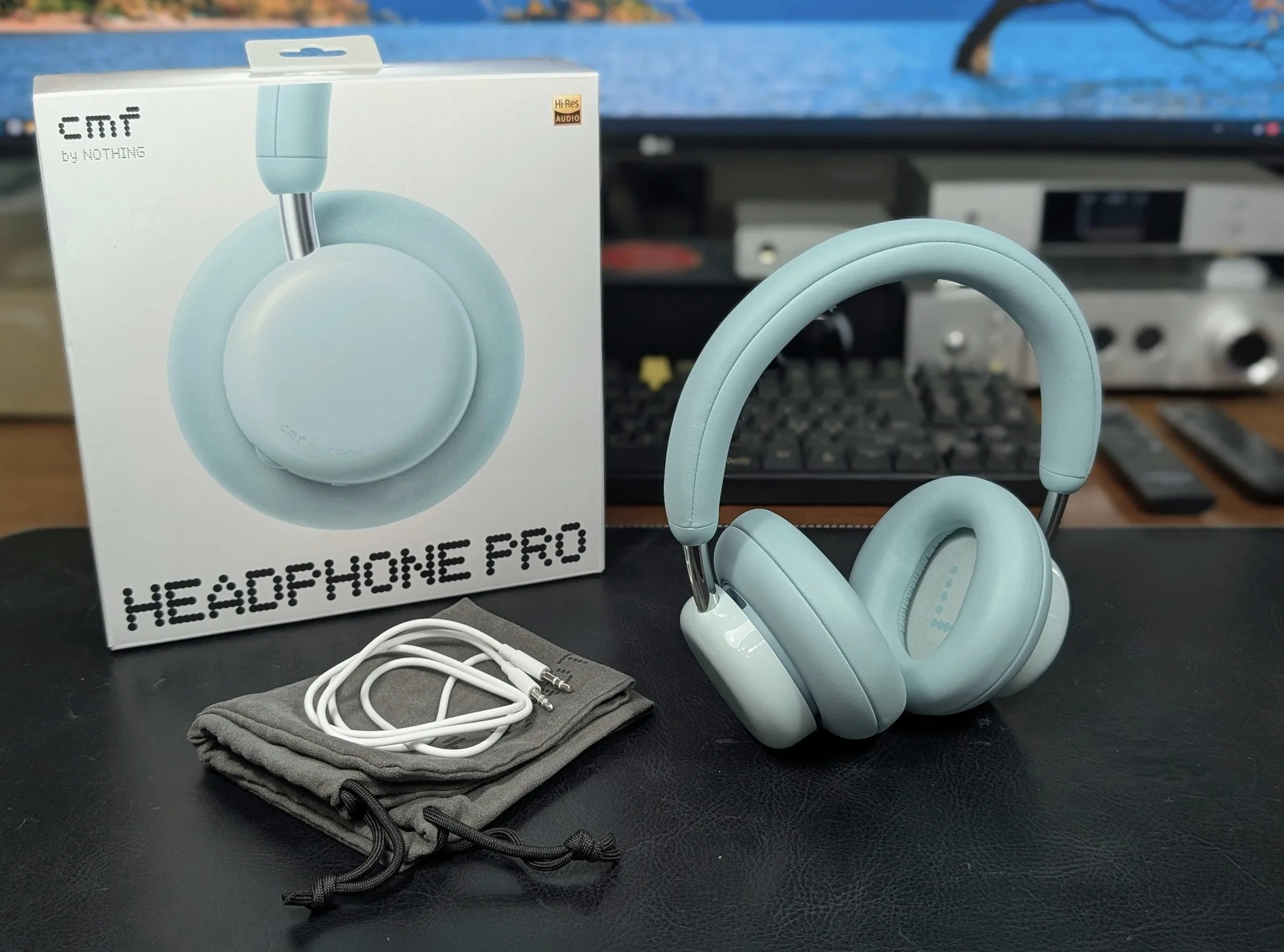
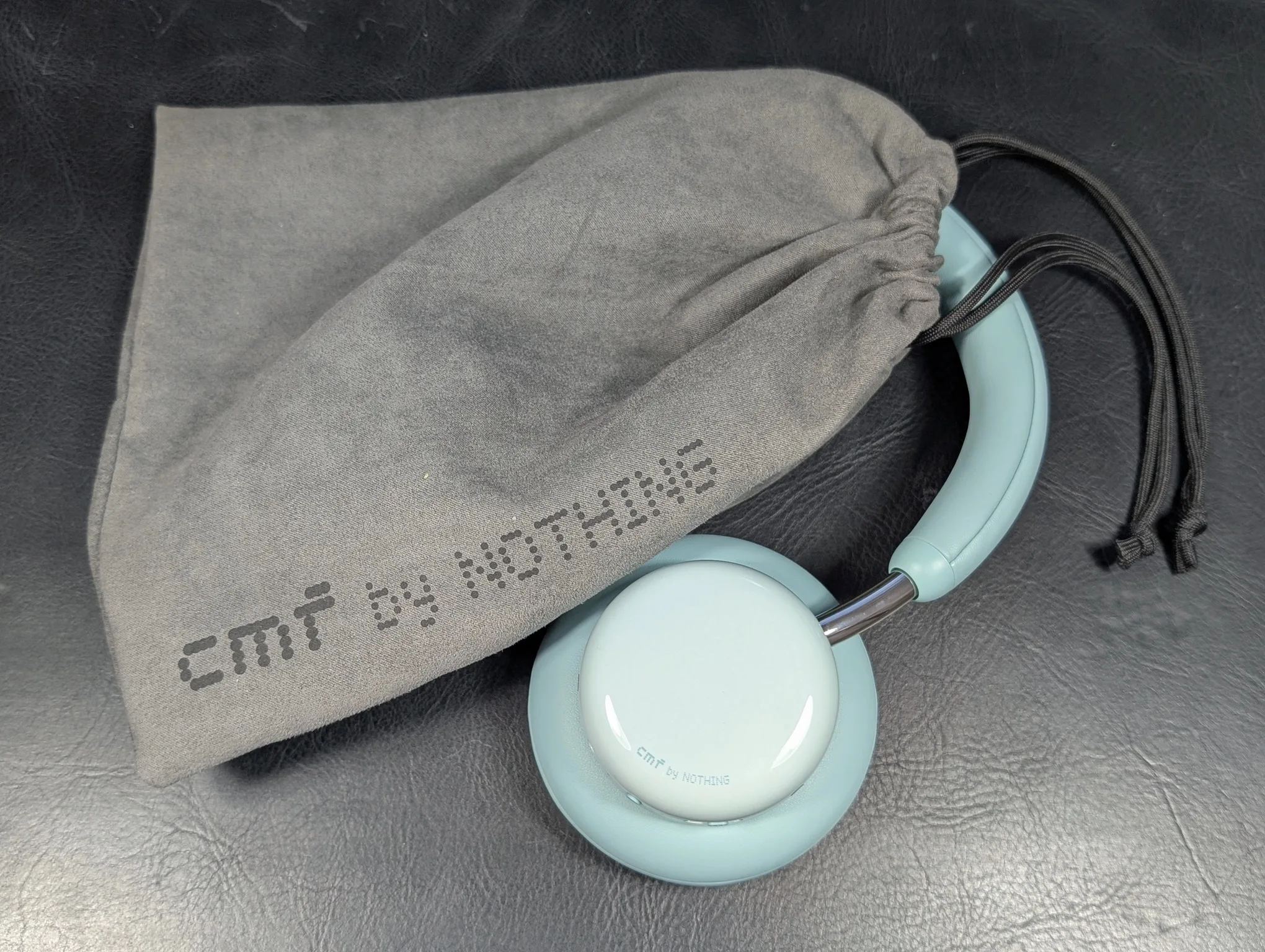
The affordable price of the Headphone Pro is evident when opening the product packaging, as no case is provided for the headphones' protection, only a soft fabric pouch. Oddly enough, a USB charging cable is also not included in the package; CMF assumes that buyers of its headphones already own one – though the manufacturer isn't exactly wrong about this. A traditional analog headphone cable, however, is included, although the headphones must be powered on when using it.
Build and comfort
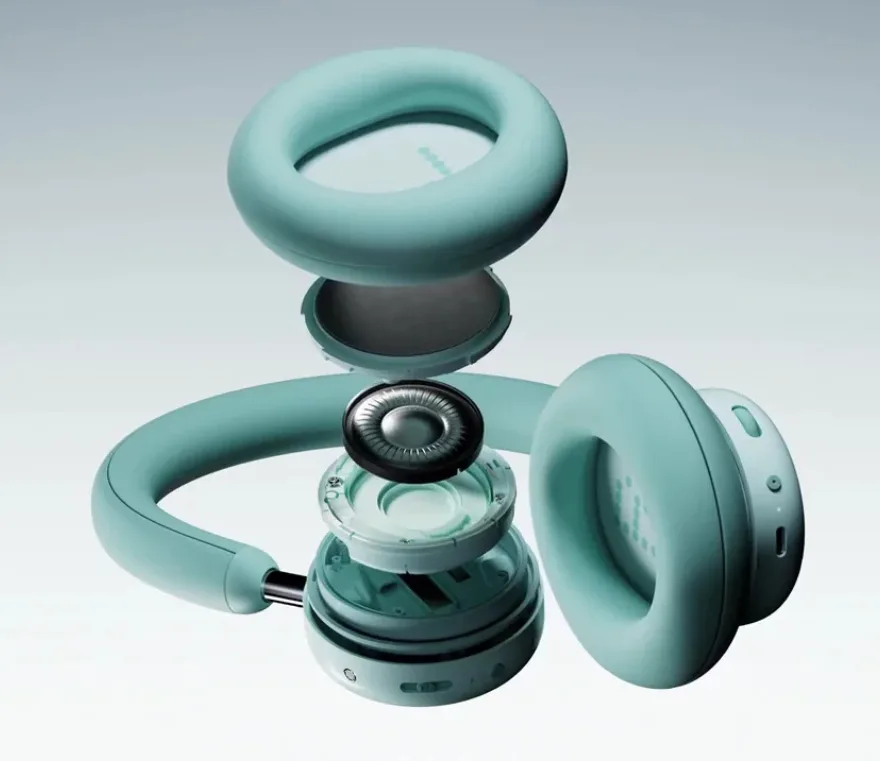
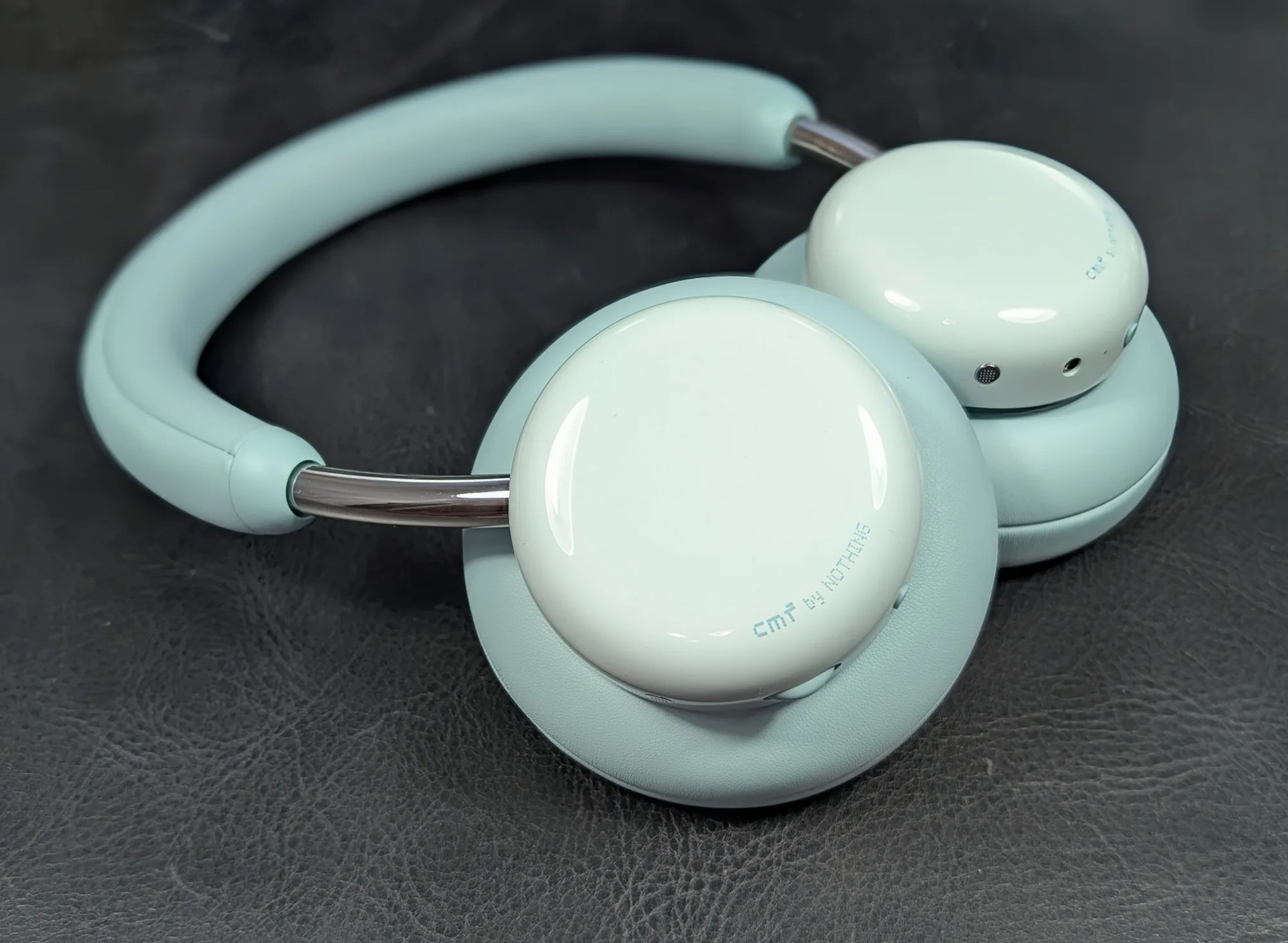
The Headphone Pro feels quite cheap due to its plastic construction, but CMF's design has, in my opinion, still hit the mark. The stepless height adjustment matches the smoothness of more expensive headphone models, while the manufacturer has managed to make the cups turn vertically by placing the drivers in hinged capsules. I have only seen a similar solution so far in DALI headphones, such as IO-6in. The design of the Headphone Pro is also interesting because when the large ear pads are twisted off, the cups are revealed to be very small, even though the headphone drivers are 40 millimeters in diameter. The back of the pads acts as an extension of the structure, and their faux leather surface forms a cohesive whole with the headband of the same color.
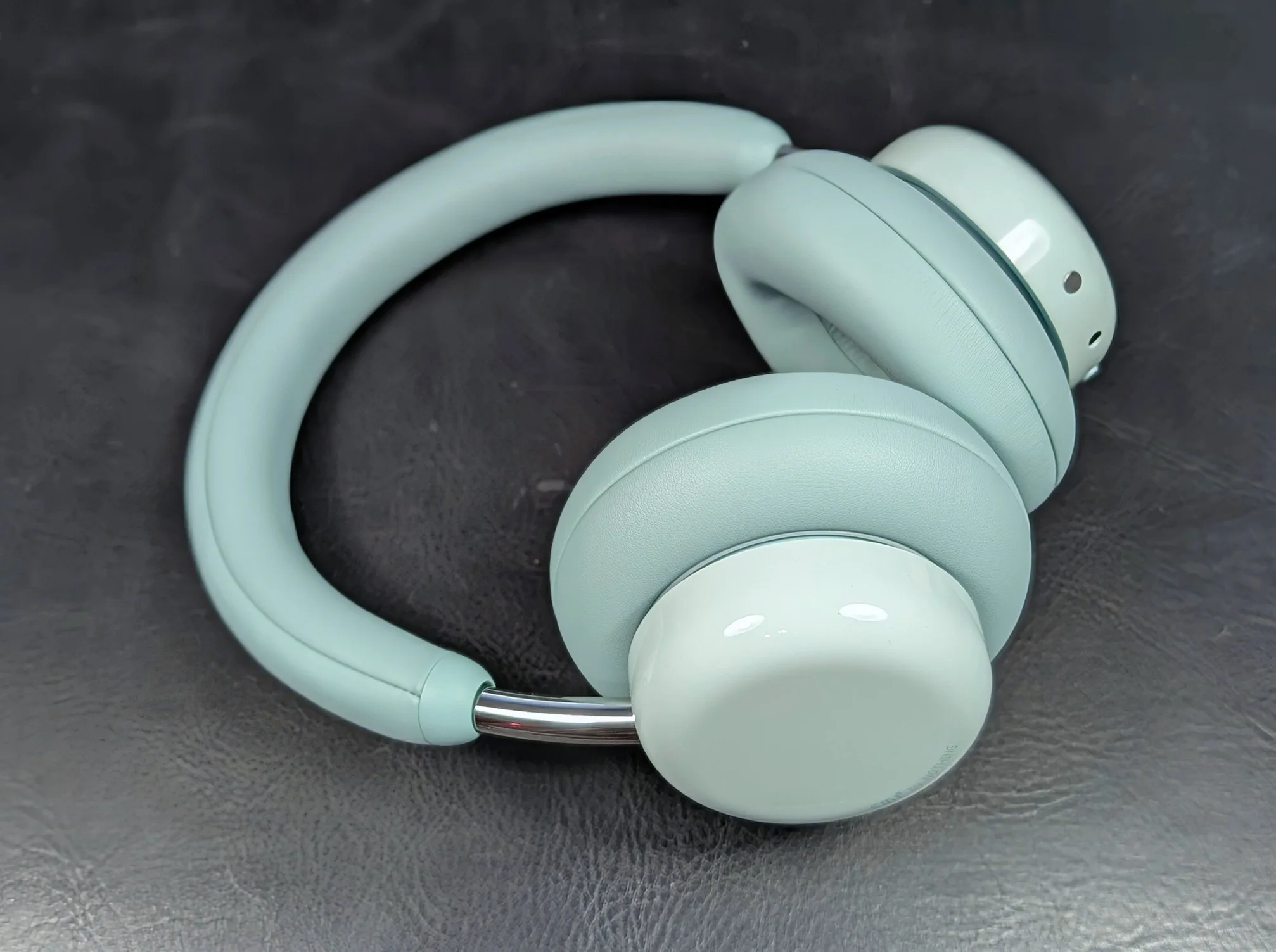
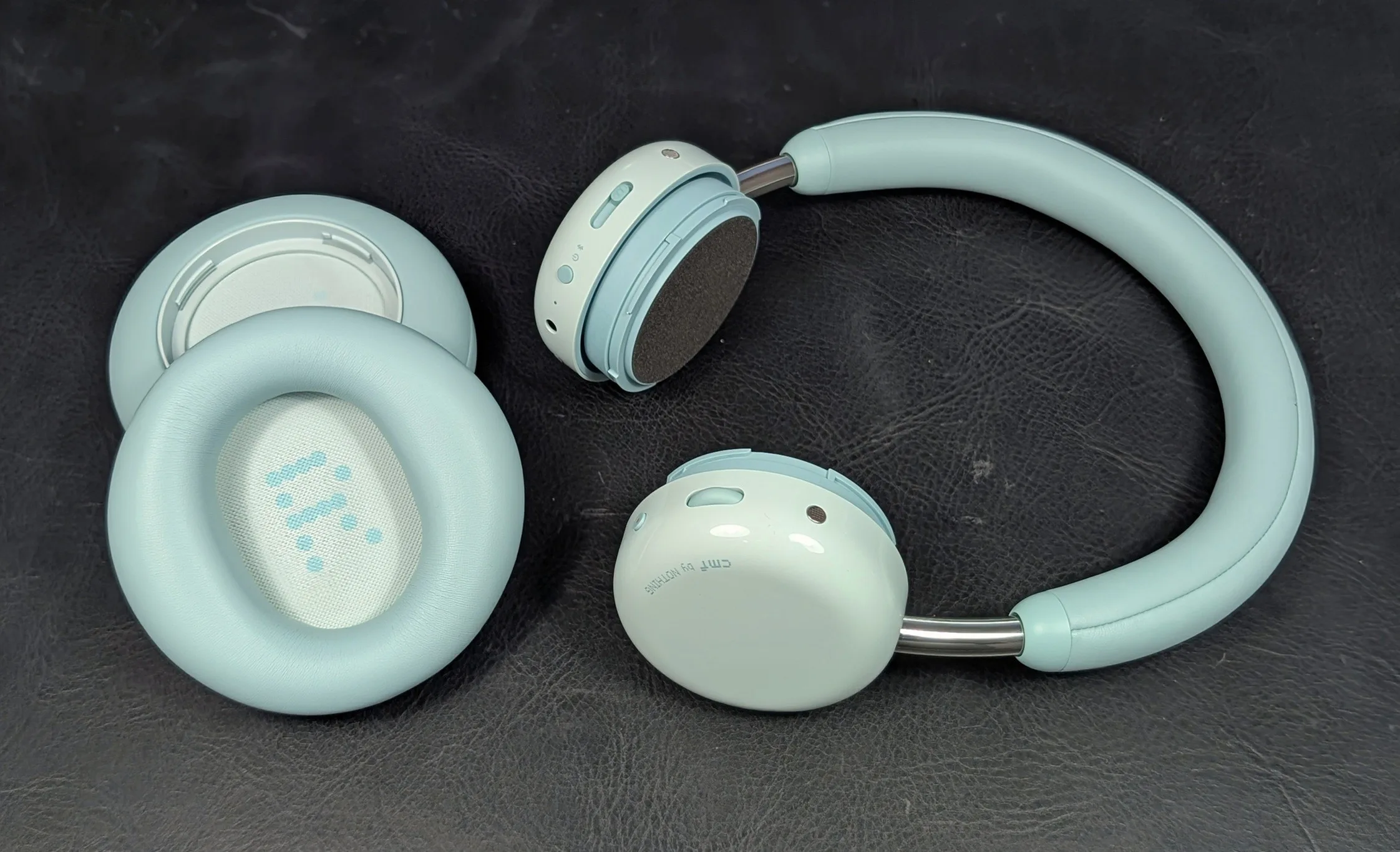
CMF encourages customization of its headphones by selling ear pads in different colors (pair price 25 €), although I wouldn't necessarily buy orange pads for the blue-green version. However, for the white or black headphone versions, such pads might offer a kind of refresh. In my opinion, the headphones could quite easily be made into on-ear models if the manufacturer had developed smaller pads for them and offered suitable sound settings in its app for changing the usage type. However, CMF has not pursued such a wild idea, nor do I see any need for it.
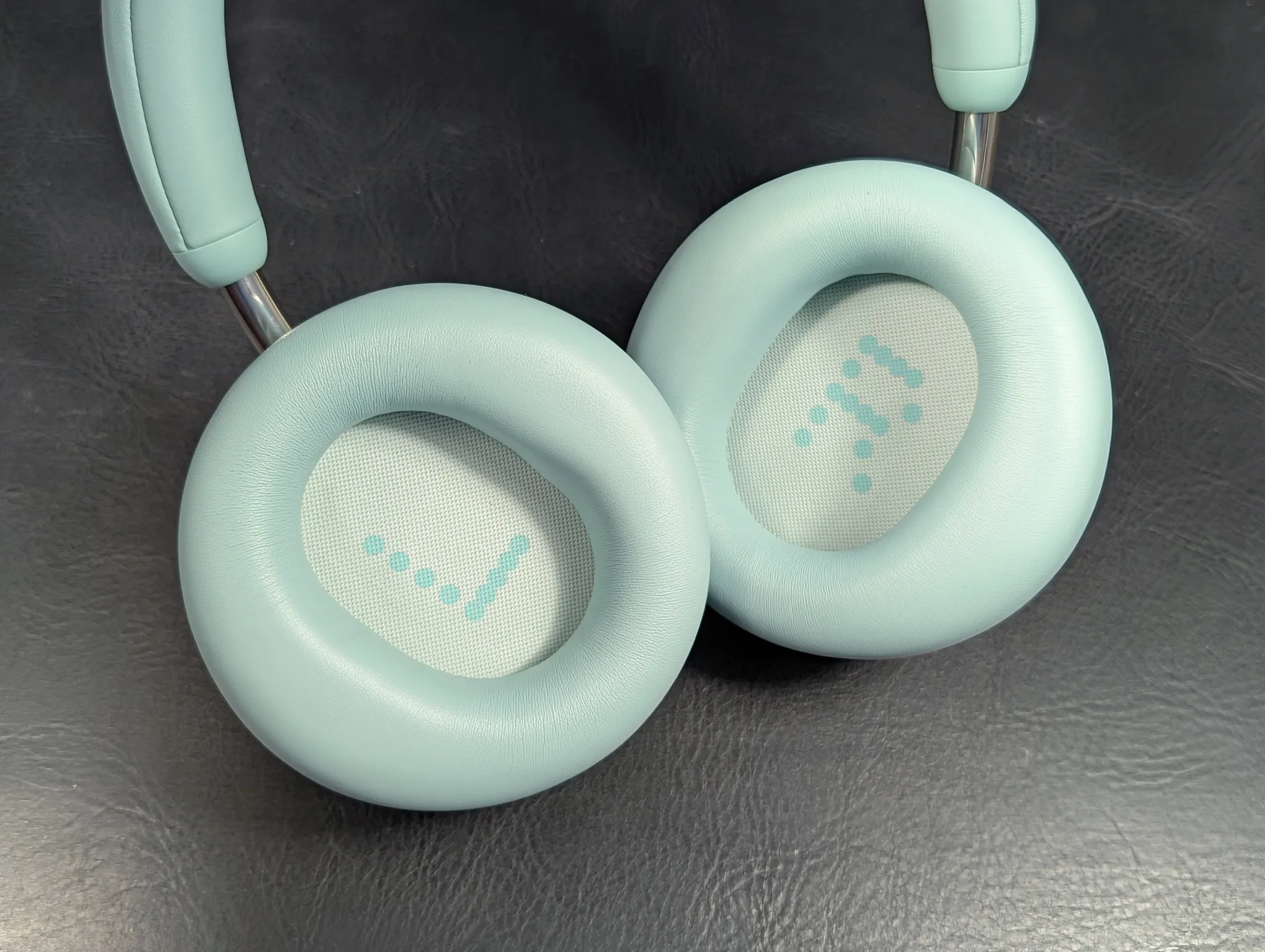
I am surprised by how comfortable the Headphone Pro is to use. This is largely due to the large (opening 58x43x24 mm) and high-quality memory foam ear pads, as well as the well-padded headband. The overall feel, for me, is almost as comfortable as the extremely comfortable Bose QuietComfort Ultra. Sony's, implemented with a narrow headband like the Headphone Pro, WH-1000XM5 and WH-1000XM6 fall far behind in terms of comfort, for example, and Nothing's own Headphone (1) is also not as comfortable due to its hardness. The Headphone Pro blends into my head and weighs only a moderate 283 grams. I also wouldn't be able to make it fall off my head by shaking or tilting it, so I would also call the fit successfully secure.
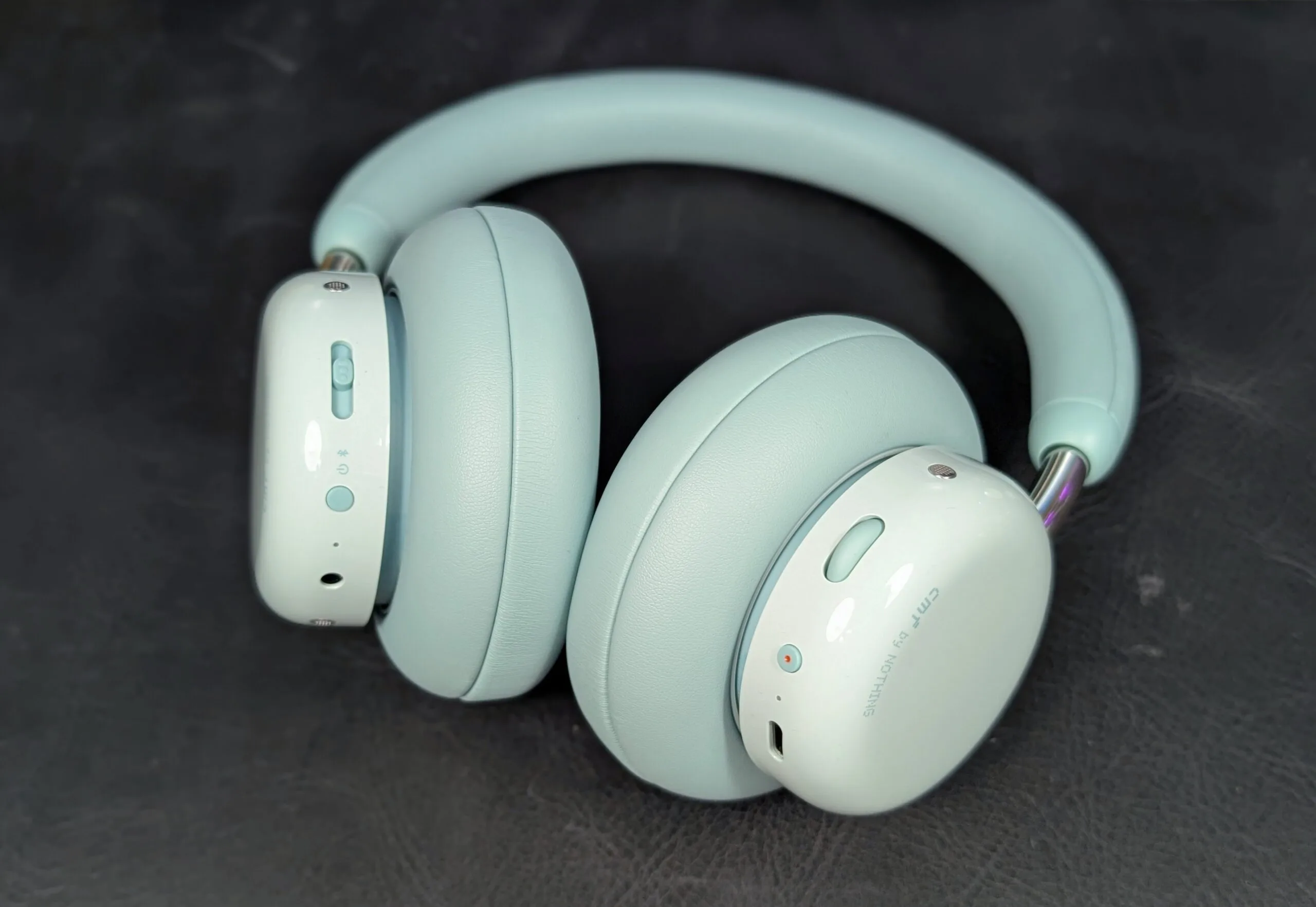
Controlling the headphones is also very intuitive thanks to sensible buttons. The volume is adjusted incrementally with a rotating scroll wheel, which, when pressed, handles media functions and switching from noise-cancelling mode to transparency mode. The functions of the round button located below the scroll wheel are customizable, while the corresponding button behind the left cup acts as a power/Bluetooth pairing button. As a small but user-friendly feature, the power turns on and off with a one-second press, so you don't have to annoyingly hold the button down for 3–5 seconds, as with many other headphones. One of the Headphone Pro's marketed additional special features is a physical slider that can be used to boost either bass or treble. Perhaps this is an equivalent to Sony ULT Wear the headphones' bass button?
Bluetooth technology and battery life
CMF has fortunately not skimped on Bluetooth technology in this price range; the Headphone Pro supports Bluetooth version 5.4 and the high-quality LDAC codec. Multipoint and Google Fast Pair also work flawlessly, and there have been no connection dropouts with my Google Pixel 9 phone, Windows PC, or Macbook.
The battery life of noise-cancelling headphones supporting the LDAC codec often doesn't reach the top of the market, but the Headphone Pro performs better than usual in this area. With the LDAC codec and noise cancellation on, it promises an impressive 38 hours of use, and without noise cancellation, a remarkable 70 hours. Similarly, with the AAC codec (e.g., Apple users), usage time increases to 50 hours with noise cancellation on and a magnificent 100 hours without it, so I feel I'm getting good value for money.
Mobile application and additional features
CMF's and its parent company Nothing's headphones can be controlled with the almost identical Nothing X app, with the difference that the more affordable Headphone Pro does not offer a parametric equalizer or head tracking for spatial audio. On the other hand, as a new feature, audio can be personalized with a hearing test, which, at least in theory, might feel more approachable to basic users than an equalizer.
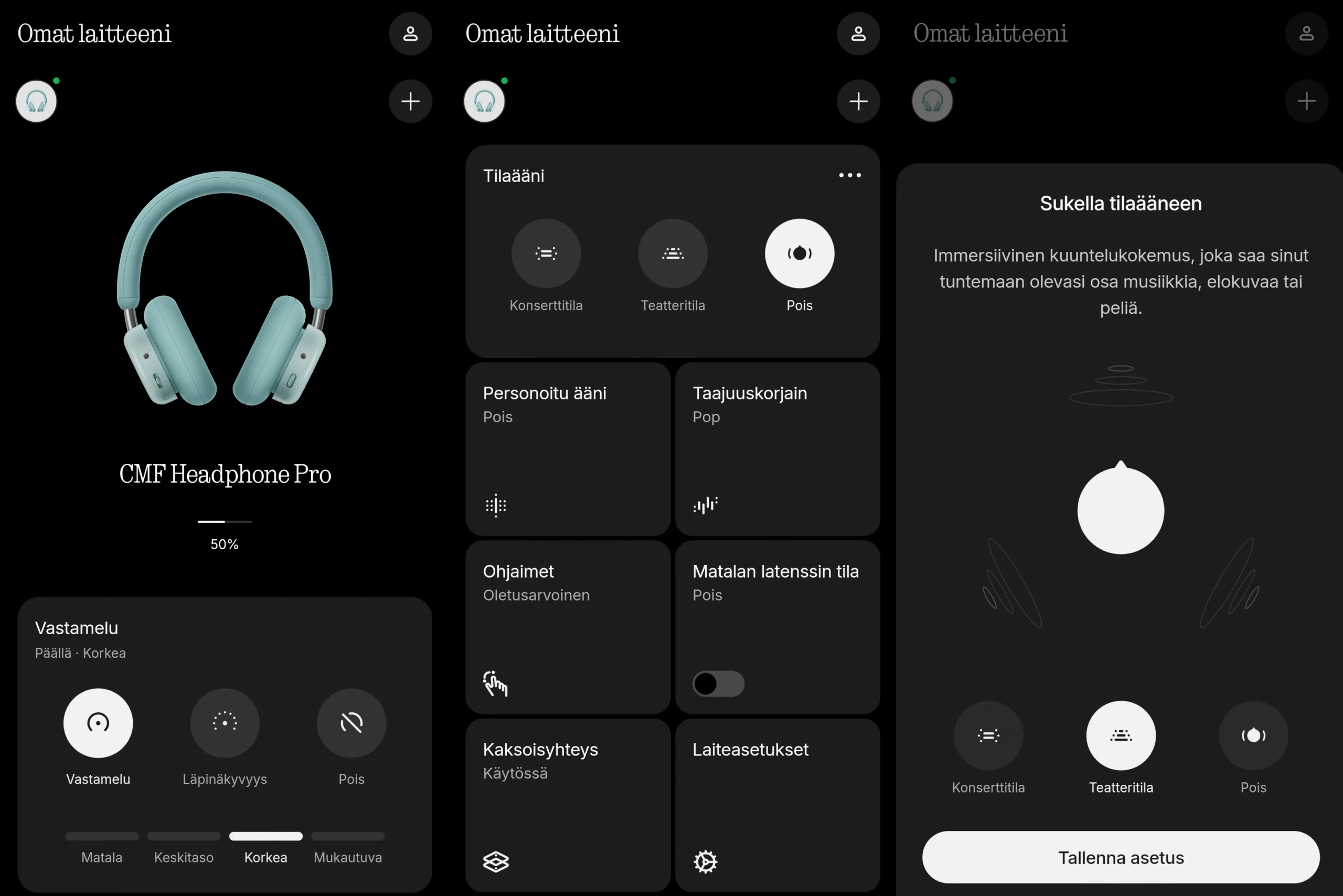
Three levels of noise cancellation effectiveness are offered, as well as an adaptive mode, which, at least in a quiet environment, seems to set the noise reduction to the lowest level. If your mobile device supports the LDAC codec, remember to activate it in the headphone app. Similarly, the Multipoint connection had to be manually enabled for some reason, so its potential non-functionality can be resolved this way. For extensive media consumption or gaming, the low-latency mode should provide relief. The slider I mentioned defaults to adjusting the bass level, but through the app, the operating mode can also be switched to treble tuning.
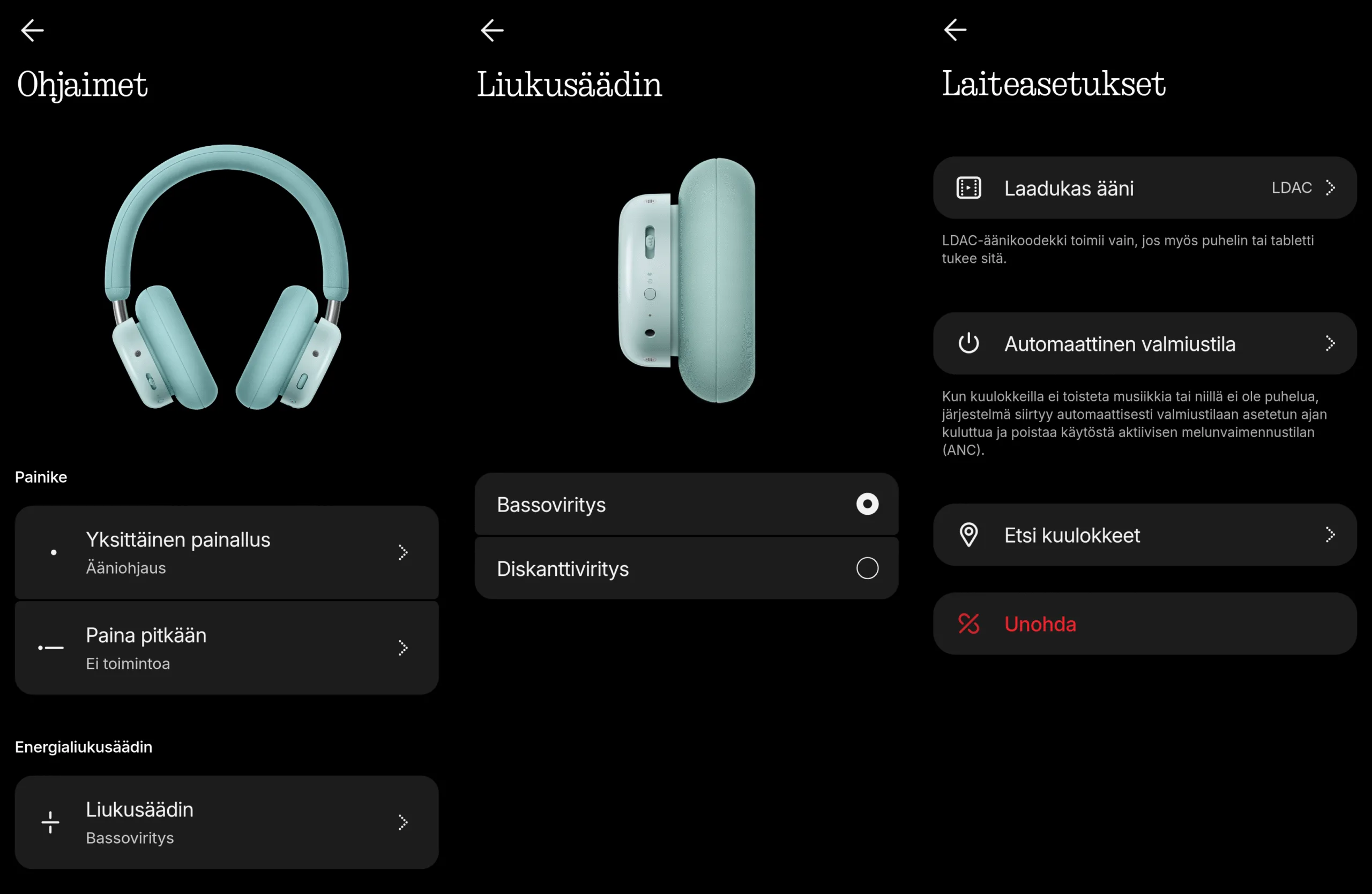
The spatial audio, which can be activated from the app, sounds as if I were in a gloomy cave where the sound echoes thinly along the stone walls. I would see this feature primarily as a ”check the box” type of solution in the product listing, as competitors also offer spatial audio.
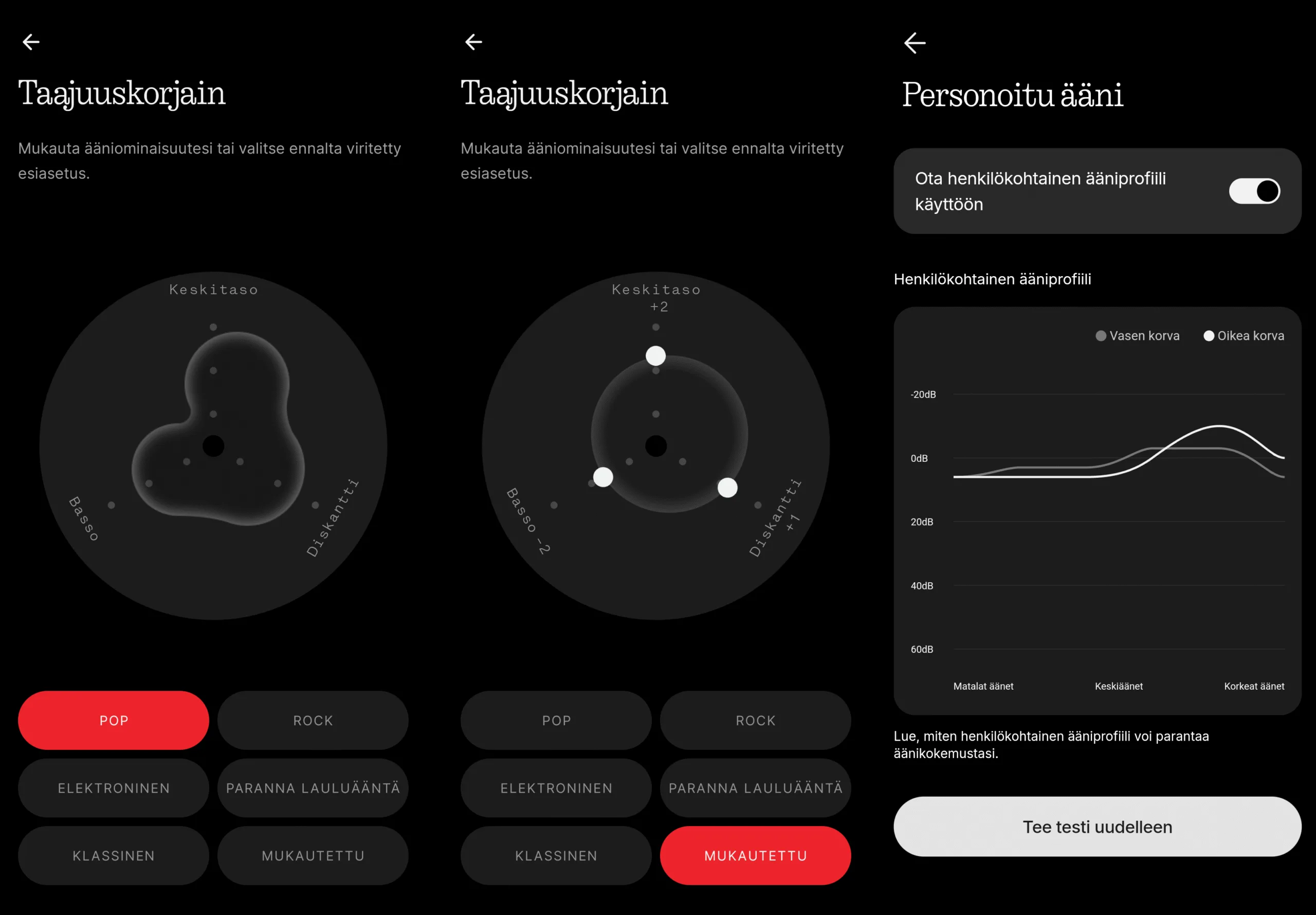
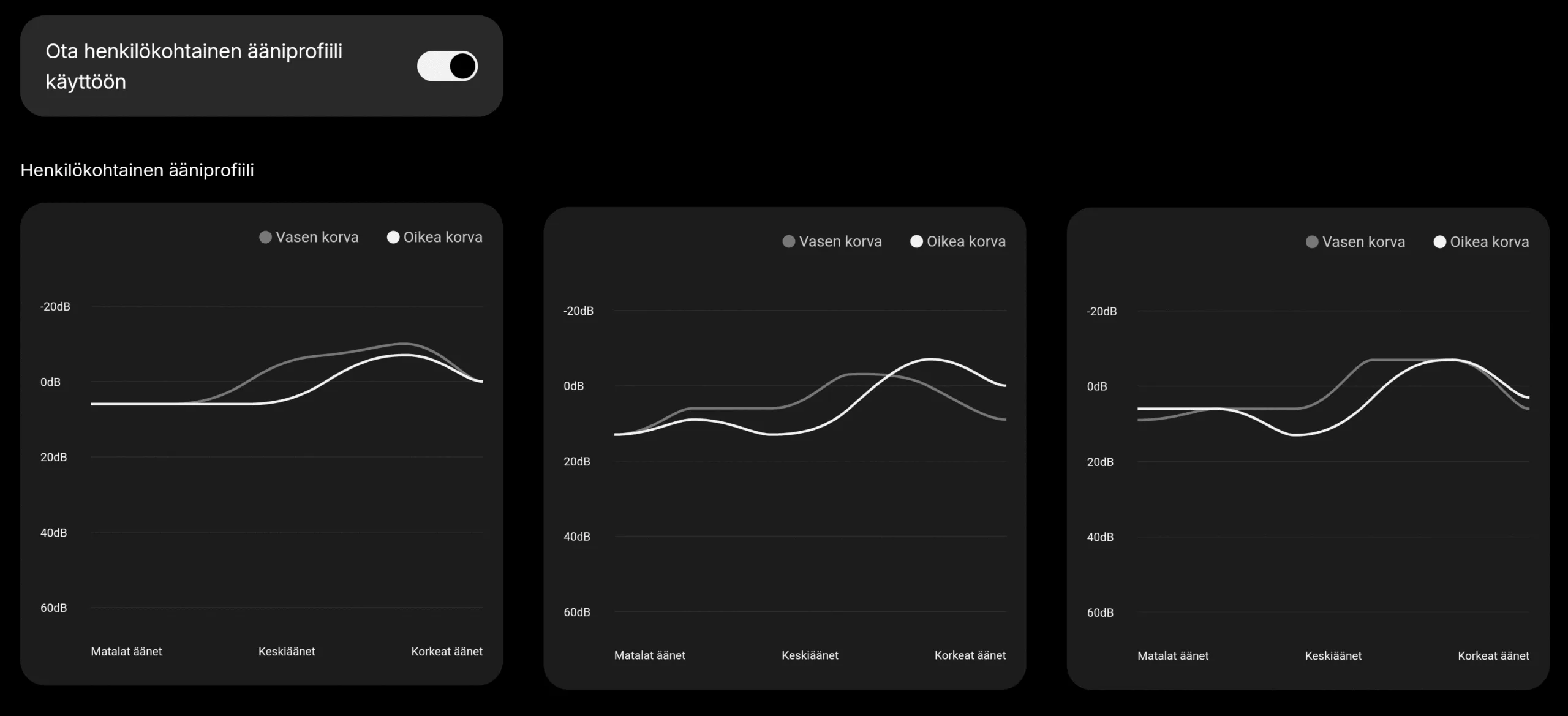
Otherwise, the sound quality of the headphones can be fine-tuned with various predefined sound profiles, of which Pop is set as the default. In my opinion, this is clearly the most balanced of the settings. The Custom mode, in turn, allows for changing the level of bass, mid-range, and treble in six steps up or down. The adjustments are therefore coarse, but fortunately, thanks to a very good starting point, there is less need for a better equalizer than with the Nothing Headphone (1). I also found audio personalization with the hearing test quite easy, although I ended up with a completely different result each time I tested it. The first time, I felt the sound improved slightly, while in the next three attempts, it went in various ways for the worse. Therefore, I would not blindly trust the results of the hearing test, but would focus on equalization done in Custom mode.
Active Noise Cancellation
Since the more expensive Nothing Headphone (1) from the same group did not particularly impress me with the effectiveness of its noise-cancelling function, my expectations for the 120-euro CMF Headphone Pro were naturally rather low. Perhaps because of this, I was not ultimately too disappointed, even when reading the manufacturer's wild claims of up to 99 percent noise reduction.
On the positive side, the Headphone Pro does not produce very disturbing background hiss, even though a faint hum can be heard in the background. The noise-cancelling microphones are also more successfully protected from wind than usual, so airflow causes almost no interference. Such a good situation is rare even in significantly more expensive headphones, so the Headphone Pro would be quite suitable for outdoor use. The light IPX-2 protection also helps with this.
The transparency mode also serves its purpose, especially when listening to other people, but in terms of noise reduction, the Headphone Pro is quite modest, regardless of whether noise cancellation is set to full or adaptive mode. I found the headphones to compete on par mainly with JBL's cheap headphone models, such as my owned Tune 770NCwithout being much better. Low frequencies are somewhat attenuated, but for example, one could easily watch TV with noise cancellation on, as speech still comes through clearly. For comparison, familiar to us Finns Valco VMK25 already suppresses noise significantly more effectively, so Headphone Pro does not perform better than its price range as a new product. Since JBL's noise-cancelling headphones are sold for as little as about 50 euros, I think Headphone Pro should permanently cost less than 100 euros to be more competitive in terms of its noise-cancelling function.
Microphone sound quality
I found the headphones' microphone to be very ordinary in terms of sound quality, meaning speech is clear in a quiet environment, but in a noisier environment, the other party might appreciate switching to the phone's own microphone. With such an affordable product, it's unlikely that a lot of effort can be put into the microphone implementation, but I didn't notice any obvious problems either.
Headphone sound quality
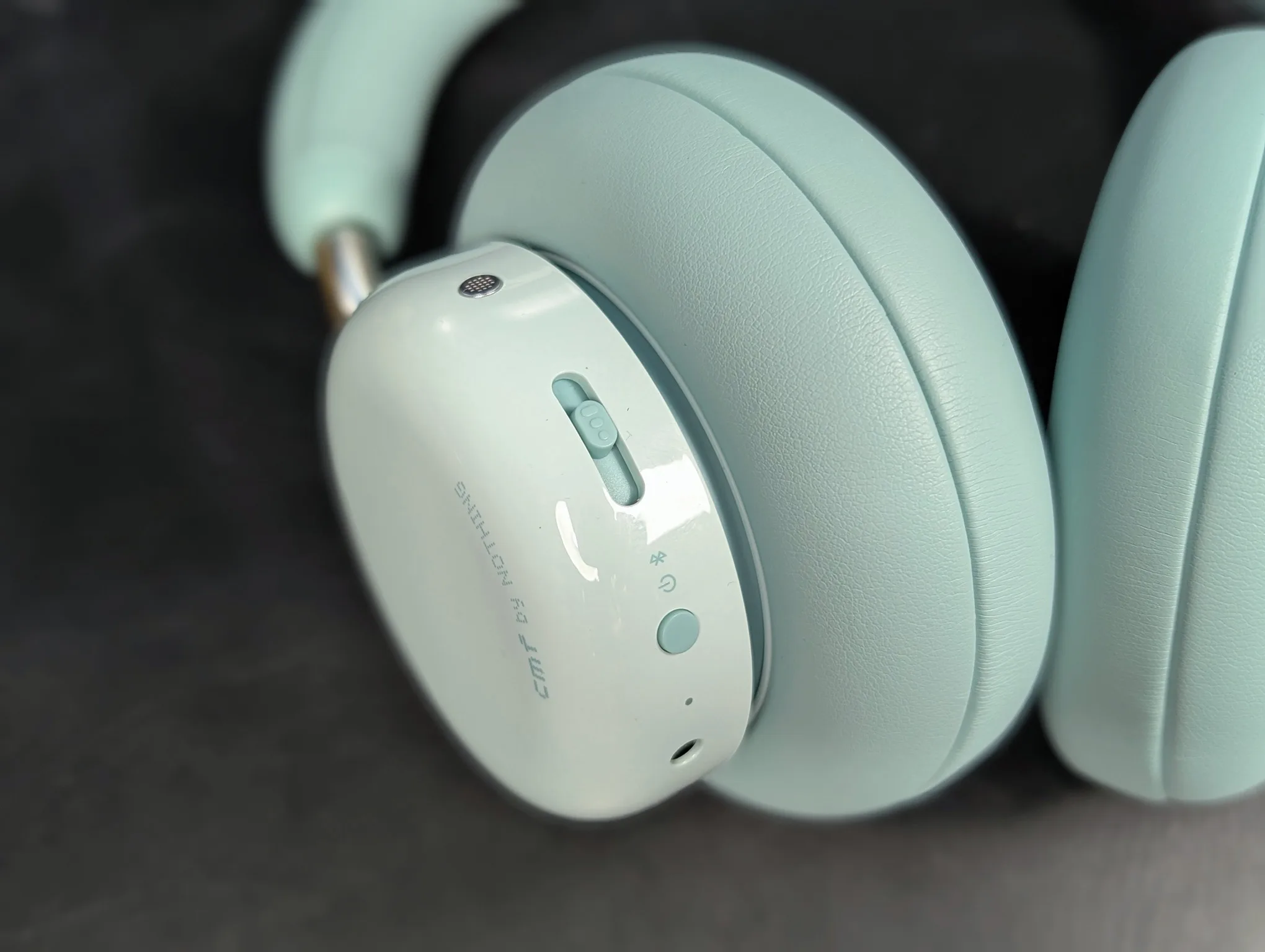
Headphone Pro can be listened to via Bluetooth connection and with a headphone cable, as long as the power is kept on in the latter case as well. Passive listening is therefore not possible when the battery runs out, but the advantage of this solution is that the frequency response remains unchanged when listening with a cable, thanks to DSP correction, compared to wireless listening. In such affordable headphones, the sound would often be quite poor without digital fine-tuning by manufacturers.
Here are other things to note about Headphone Pro:
- Headphones cannot be listened to with a USB cable
- Automatic loudness compensation increases bass and treble when the volume is low (note: this feature does not activate in Custom sound mode or when using a headphone cable)
- Both changing the noise cancellation intensity level and turning off noise cancellation change the frequency response in bass frequencies and between 1.5–3 kilohertz
- With the slider, bass can be boosted by a maximum of 10 decibels and treble by 5 decibels
Measurements
Our frequency response measurements have been made with a clone IEC-60318-4 coupler and KB501X pinnae. The Harman target curve from 2018 is used as a reference point and generalization of the headphone response that would sound good to most people. For more information on the measurements and their accuracy, see Headphone Measurementsfrom the page. Headphone Pro's frequency response can also be compared with other measured headphone models Squiglink .
Frequency response (different ANC settings):
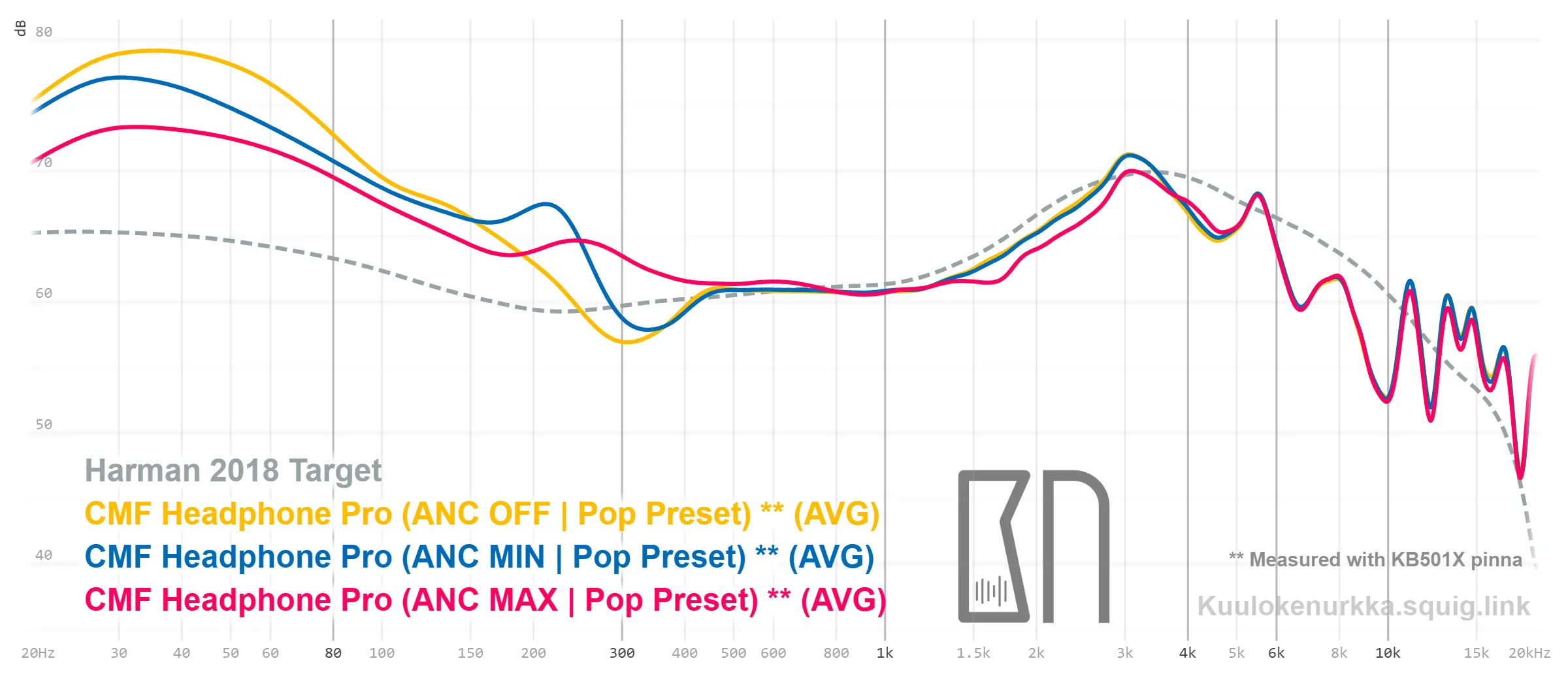
CMF has fallen into the original sin of noise-cancelling headphones, meaning bass has been significantly emphasized compared to other frequency ranges. The situation also varies quite a lot with different noise cancellation settings and when noise cancellation is turned off. At the maximum setting, the bass reproduces most appropriately when objectively evaluated, although the 300 Hz point, like other settings, should preferably be slightly recessed relative to the Harman curve rather than elevated as per the red line of the graph. From about 400 Hz onwards, Headphone Pro's frequency response is excellently flat. Even most more expensive noise-cancelling headphones are not tuned this well.
Effect of dynamic loudness compensation on frequency response:
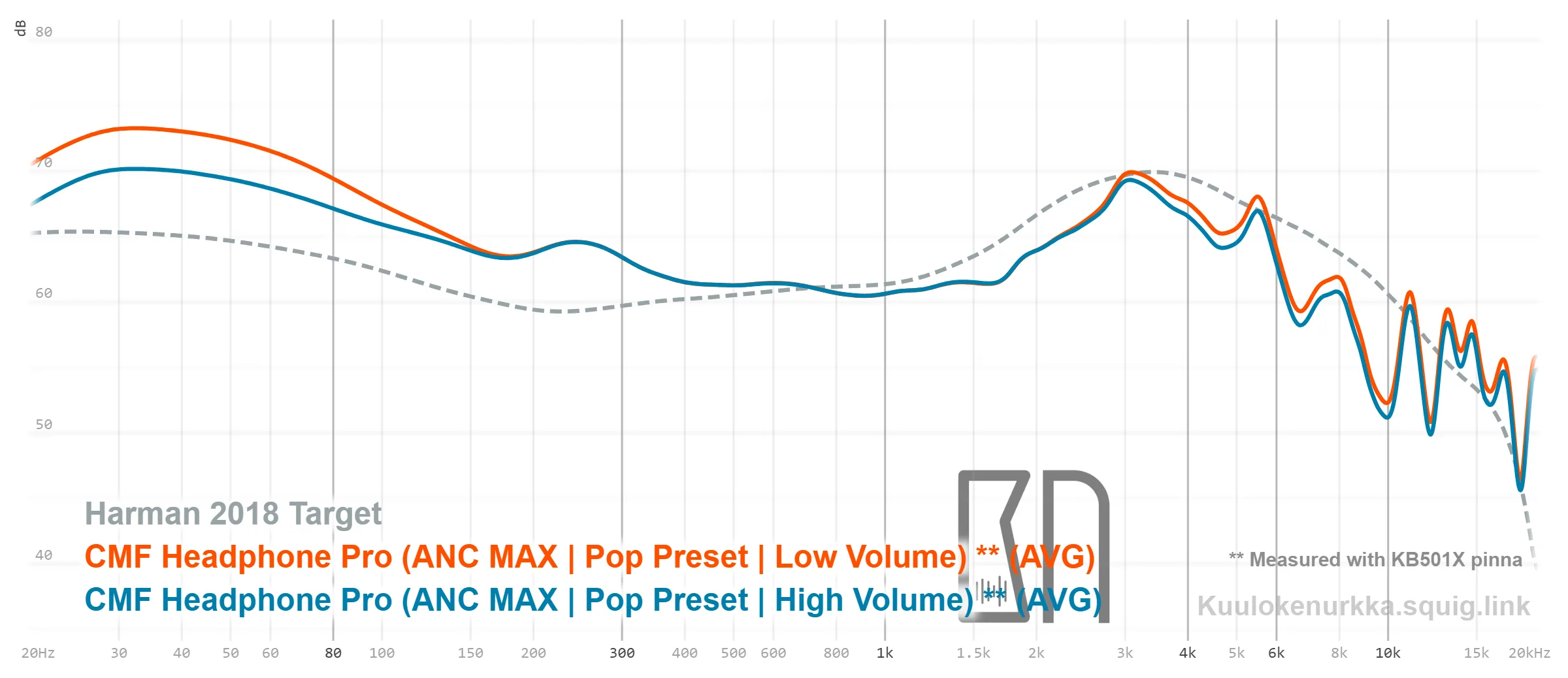
Headphone Pro's default settings include a function for Bluetooth listening that adjusts the bass and treble levels based on the listening volume. Since humans naturally perceive less bass and treble at low volumes, these are boosted in this use case for a more balanced listening experience. Conversely, as the volume increases, the bass level drops in three steps (my graph shows the minimum and maximum), while for treble, there are more moderately two options. However, I usually don't listen to headphones so loudly that the extremes of the frequency response drop, but the actual frequency response with the Pop sound profile is according to the orange line.
Instead, when using a headphone cable or by selecting the Custom mode (all controls at zero) from the app's equalizer, the frequency response corresponds to the situation of the blue line, because in these use cases, dynamic loudness compensation is no longer active. So, if someone wants to reduce the amount of bass but otherwise likes the Headphone Pro's default sound profile, I recommend choosing precisely the Custom sound mode. The blue line in the graph above also serves as the starting point for equalization, although the selected noise cancellation setting would introduce its own changes to the situation.
Adjusting bass and treble with the headphone slider:
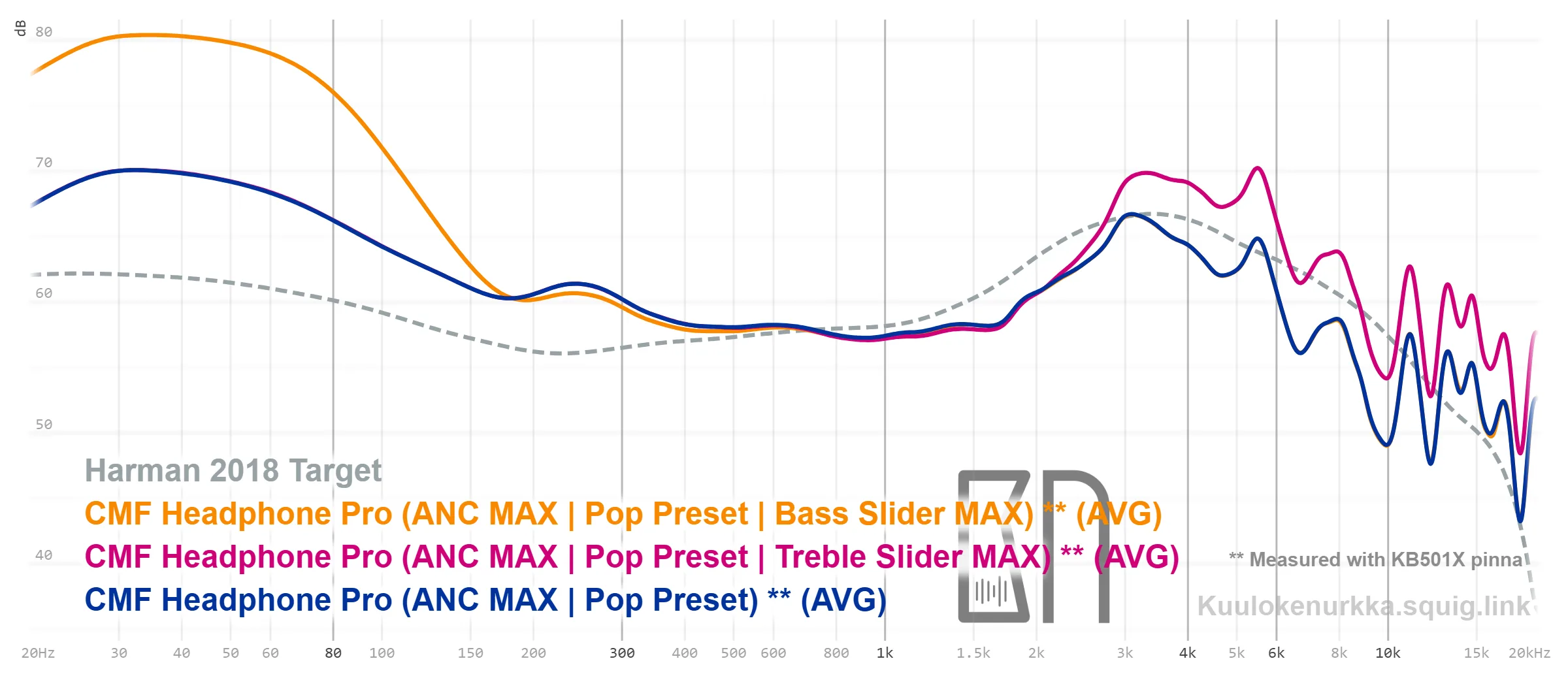
The amount of bass or treble (not both simultaneously) can also be adjusted with the headphone slider according to the graph shown above. Bass can be boosted by a maximum of 10 decibels from 150 hertz downwards, and treble by a maximum of 5 decibels from 2.5 kilohertz upwards. However, the adjustment is not stepless; the slider appears to have only three different activation points, the first of which activates at 1/4 of the slider's position, the second halfway, and the third at the maximum position.
Even these are still enough to make the sound very bass- or treble-heavy, so the practical benefits of the control should be approached with at least moderation. Especially the bass is already reproduced so prominently with standard settings that further boosting it borders on tomfoolery. On the other hand, this way Headphone Pro resembles Sony ULT Wear -headphones, so some will surely like the option to turn the bass completely over the top.
Equalization suggestion:
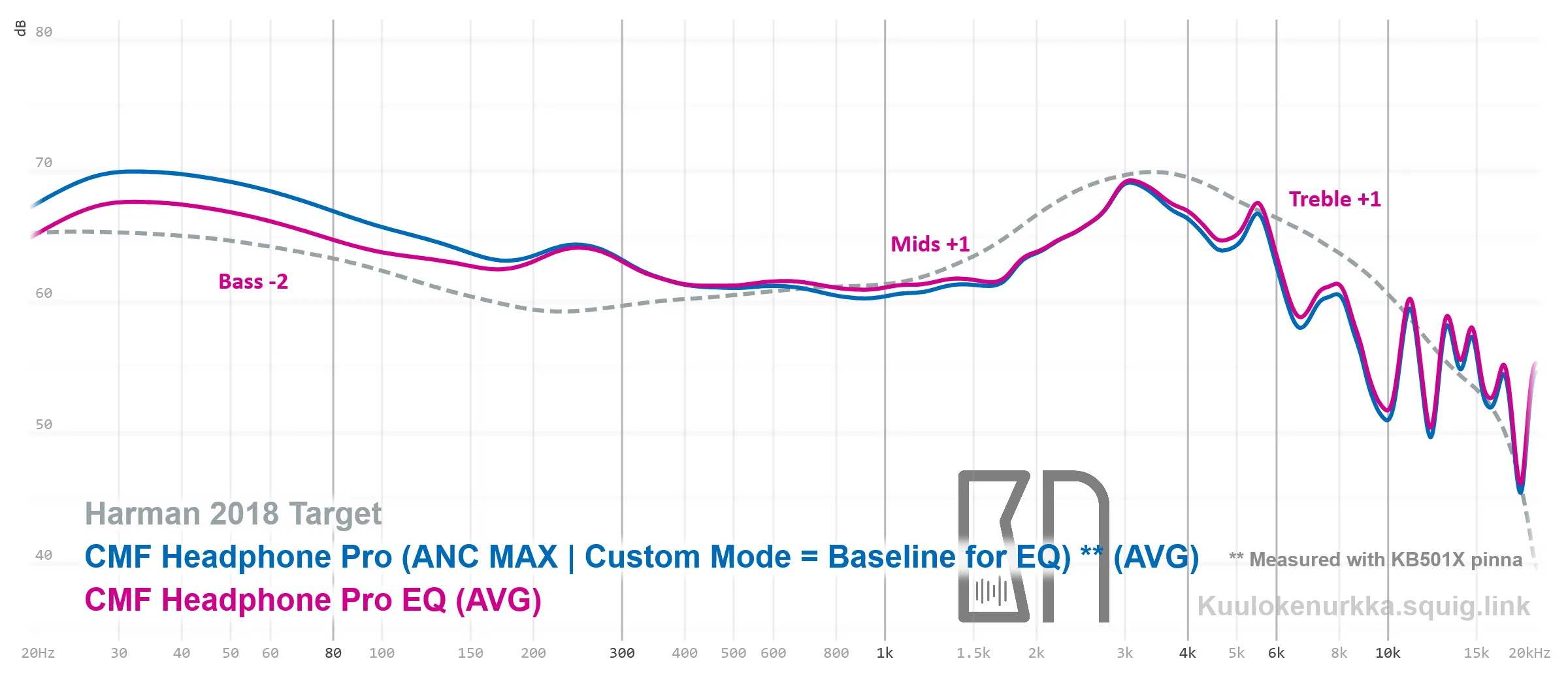
I myself have listened to the headphones most of the time with a small equalization, whereby the amount of bass better matches my preferences aimed at clarity and balance of reproduction. The frequency response according to the graph shown above and the following settings work best when listening with the LDAC codec, whereas with the AAC codec I do not achieve an equally high-quality result. Considering this fact, I recommend trying the following settings and proceeding from there in a direction that suits your own taste if necessary:
Bass -2
Mid-frequencies +1
Treble +1
After the changes, Headphone Pro reproduces sound very balanced, so in my opinion, only a few listeners who understand sound quality would find much to complain about. Since affordable noise-cancelling headphones can sound almost anything, the situation is genuinely worthy of cautious praise this time.
If someone wants to simulate the Custom mode settings with the help of, for example, AutoEQ or the Squiglink website's equalizer, the three controls of the Nothing X app work for Headphone Pro in the following way:
Bass: Low Shelf Filter | 135 Hz | Q 0.8
Mid-frequencies: Peak Filter | 1000 Hz | 0.7
Treble: High Shelf Filter | 3500 Hz | Q 1.0
The number set on the controls between -6 and +6 converts directly to decibels, meaning if, for example, the bass is reduced by 2 steps in my case, the change corresponds to the setting ”Low Shelf Filter | 135 Hz | -2 dB | Q 0.8”. It's important to remember to relate the changes to my measurement result, which states ”Custom Mode = Baseline for EQ”.
Sound observations
Straight out of the box, the Headphone Pro sounds bass-heavy and thus richly rumbling, according to my measured frequency response, but at the same time also clearer than I expected. For some reason, the bloated bass doesn't particularly mess up the midrange (especially with the LDAC codec), and I feel like I'm listening to good headphones with an extra bass thump. When listening to all kinds of energetic music, one would get used to this powerful bass presentation quite easily, because unlike many other noise-cancelling headphones, the rest of the sound reproduces naturally and even smaller details are clear. I occasionally notice a slight harshness in the treble, but CMF has in any case managed to keep the high frequencies at a reasonable level and quite even, so this is not a very V-shaped headphone in the traditional sense (which would emphasize both bass and treble). Especially with the LDAC codec, the high frequencies sound high-quality to me by noise-cancelling headphone standards, and the soundstage also feels reasonably spacious and accurate.
The main problem with Headphone Pro is therefore primarily a somewhat emphasized and monotonously thumping bass, which is why, for example, a version tuned closer to the Harman curve JBL Tune 770NC sounds slightly better with its default settings, with minor reservations. If, on the other hand, a couple of minutes are spent adjusting the Headphone Pro, it can become very comparable, if not even slightly more natural, when considering the smoother high frequencies. Since JBLs are better than their reputation suggests, Headphone Pro's performance against them should be interpreted solely as praise.
As the easiest fine-tuning, I would recommend setting the Headphone Pro to Custom sound mode while keeping all controls at zero. This reduces the amount of bass below 150 hertz by a few decibels, which is already enough to make the sound more balanced than the default settings. If noise cancellation is also set to something other than the high setting, the lower midrange frequencies become clearer, and the upper midrange frequencies reproduce even more accurately.
When aiming for even more neutral and clearer reproduction, it's worth trying the equalization I suggested. When activated, I find it difficult to find fault with the headphones given their affordable price, as there are no distortions in the sound that would distract from the music itself. The bass remains clear, the midrange is natural in a slightly calm style, and the high frequencies avoid sounding harsh or too subdued. I have found myself easily immersed in listening without thinking too much about the presence of the headphones. With such a more neutral amount of bass, the headphone's slider also offers more benefit if, for example, electronic music needs a slight boost in the lowest frequencies. All in all, the Headphone Pro is a positive surprise in terms of sound quality and minimal adjustment needs, especially after the Nothing Headphone (1), which required more correction. To be precise, many other 300–500 euro noise-cancelling headphones might not sound this good even after equalization.
Summary
The CMF Headphone Pro is thus an excellent addition to the approximately 100-euro price range. What it loses in the effectiveness of its noise-cancelling function and features, it gains in its well-designed structure and sound quality. Smooth usability, LDAC codec support, and long battery life also receive praise from me. When putting on the Headphone Pro and listening to it, I could imagine using a more expensive product, which tells me directly that success has been achieved. Therefore, I am pleased to add it to the Headphone Corner's Wall of Fame to represent a good and affordable wireless headphone. If the market price of the Headphone Pro settles below 100 euros, it would be very easy to recommend. However, if there is a primary need for more effective noise cancellation, paying a little more will get you better headphones from almost any other manufacturer.
Pros and cons:
+ Decent sound quality with default settings
+ Good balance can be found by equalizing
+ Supports LDAC codec
+ Excellent comfort
+ Long battery life
+ Easy-to-use buttons
+ Interesting design with customization possibilities
+ Noise cancellation is hardly disturbed by wind
+ Affordable price
– Too much bass with default settings
– Ineffective noise cancellation function
– Omission of parametric equalizer from the app
– Despite its clever design, the construction feels plasticky
– No case or USB cable included
 EN
EN  FI
FI
Hi, can you tell me, can you compare them in sound to the AKG N9? Is there a big difference in sound quality after equalization? Are they better than AKG in terms of comfort?
Hi, the AKG model is slightly better in most aspects and, above all, a more versatile headphone. Additionally, if one aims for the most balanced and accurate sound possible, the AKG can be adjusted to be better than the CMF Headphone Pro. If, on the other hand, the goal is powerful bass and clear high frequencies, both headphones are capable of this with their adjustment possibilities. In this case, the differences remain smaller. I tried both headphones today and noted that the CMF Headphone Pro's ear pads have more space for the ears. Its headband is also more thickly padded, but narrower, making the AKG model feel practically just as comfortable. I like using both, and I wouldn't particularly favor either in terms of comfort.
its sound quality is even better than the CMF Headphone Pro's after adjustments
Thanks for the answer. It will be interesting to compare the AKG H9 to the Sennheiser HDB 630; that will be a tough fight.