Author: Sword of Damocles
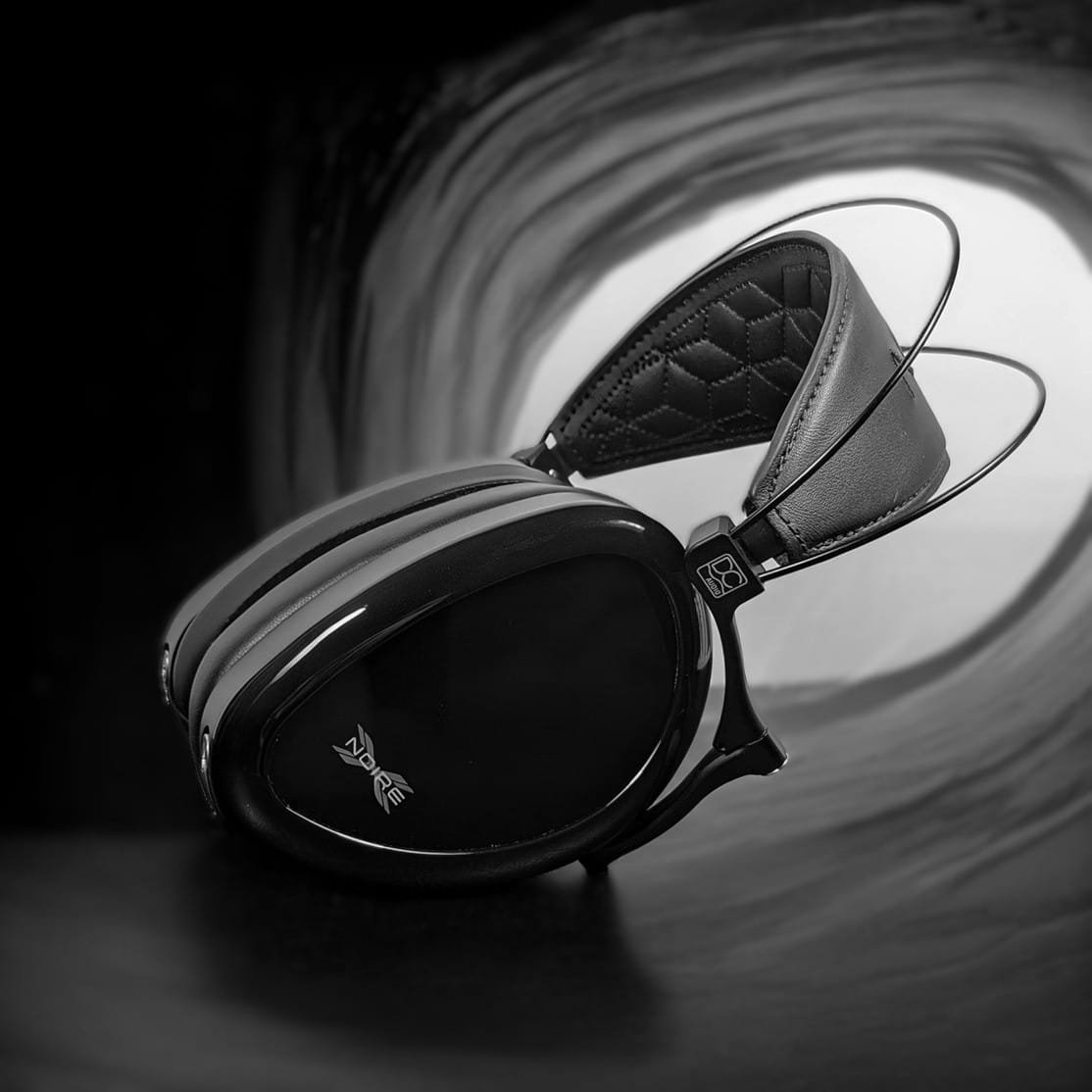
Table of Contents:
Information:
- Release year: 2024
- Country of origin: USA
- Price: 1099 €
- Type: Closed, over-ear
- 62 x 34 mm planar drivers (Acoustic Metamaterial Tuning System)
- Impedance: 13 Ohm
- Sensitivity: 94 dB/mW
- Weight: 385 g
- Connector type: 2x Hirose 4-pin
- Cable: Length 2 m / connector selectable at purchase (3.5+6.35mm/4.4mm/XLR)
- Accessories: Carrying case, cable pouch, cleaning cloth, certificate of authenticity and user manual
Review unit acquisition method: Borrowed from a hobbyist
At the time of its release, the Noire X headphone model was an anticipated continuation of Dan Clark Audio's trickle-down development strategy, where it brings its latest planar driver expertise and AMTS tuning system to increasingly affordable price points. As an example, the E3 headphone model released in 2023 costs only half of the STEALTH flagship model (2500 vs. 4800 €), while the now year-old Noire X's 1100 euro selling price is even more affordable relative to the E3. However, according to Dan Clark Audio, they do not intentionally make their more affordable products worse; instead, each headphone model is designed to be as good as possible within the constraints of the chosen budget. Such an approach deserves thanks from consumers.
The Noire X is essentially a closed-back headphone from the Aeon series, in which the AMTS technology, familiar from the manufacturer's flagship headphones, has replaced the foam and felt pads placed in front of the drivers – such pads still come with Aeon 2 models. In 2025, Dan Clark and his team also released the open-back Noire XO with a slightly higher price tag of 1500 euros. This might actually have been more interesting to test, but I couldn't refuse the opportunity to evaluate the closed-back Noire X when a local enthusiast offered to lend one. Many thanks for this!
Since E3 has maintained Kuulokenurkka's on the wall of fame its position as the best closed-back headphone, testing the more affordable and very similar Noire X is ultimately quite appropriate. How close does it get to the E3, and are there compromises associated with the lower price? We will set out to find answers to these questions.
Product packaging and accessories
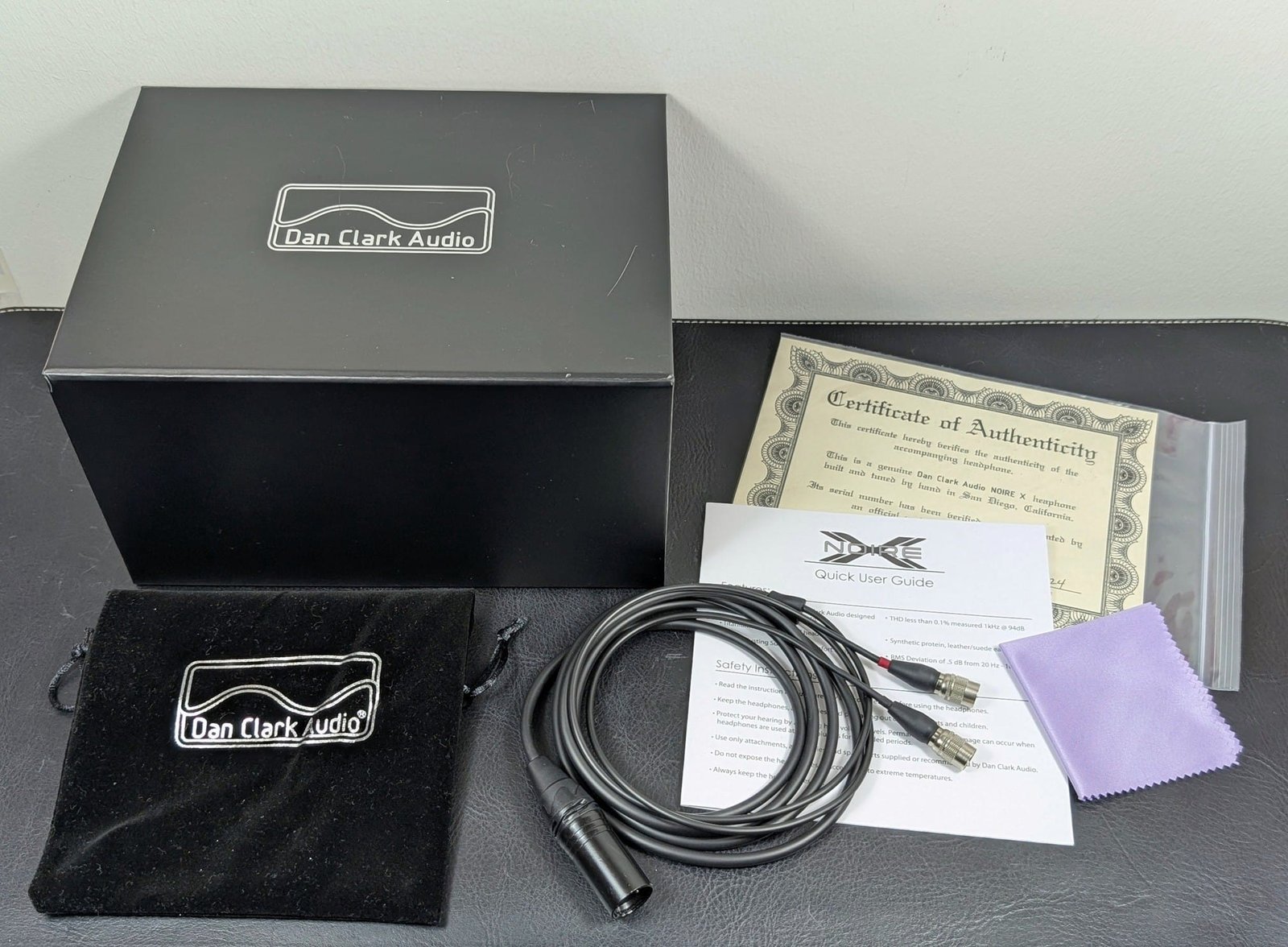
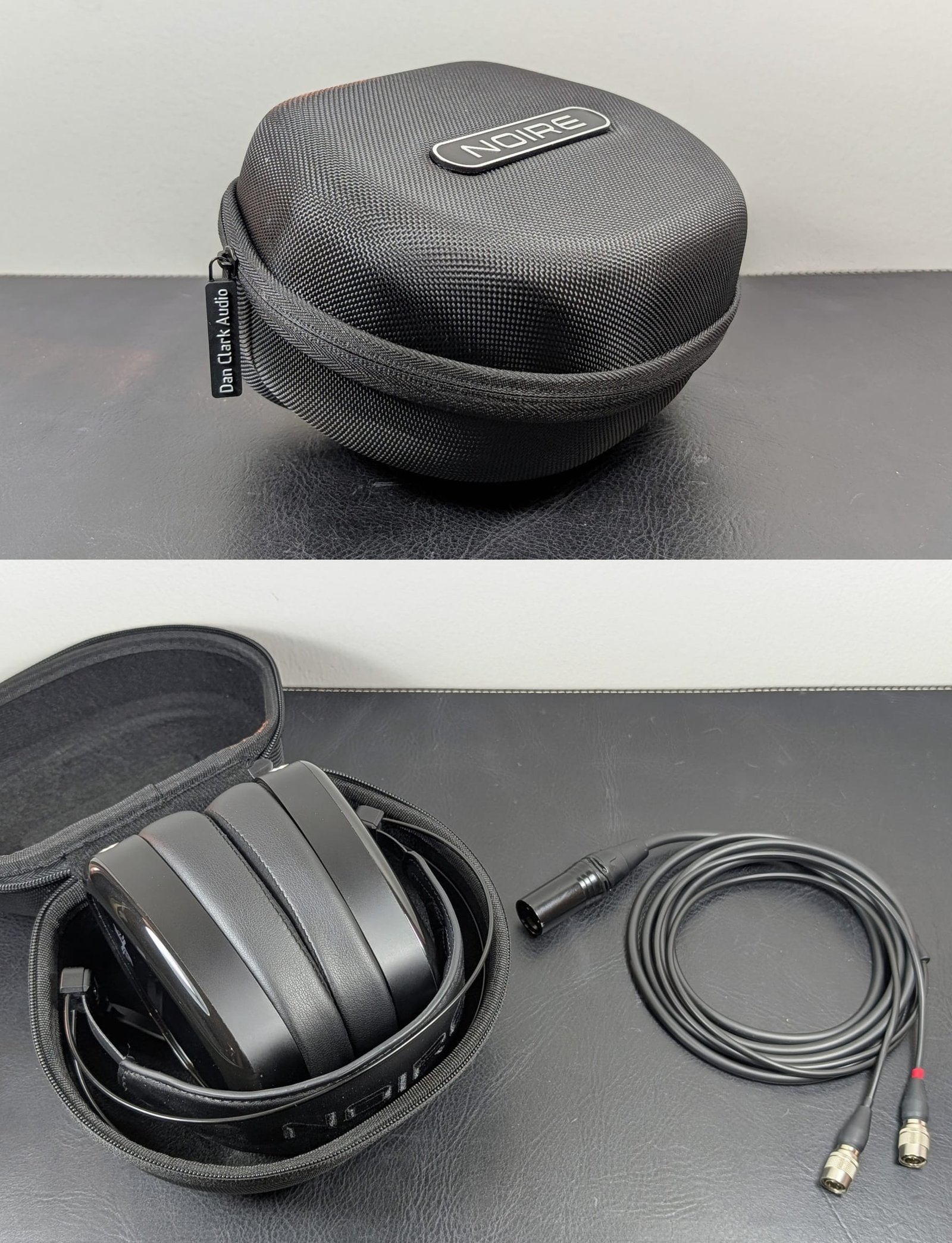
Since the Noire X's headband can be folded around the cups, the product package includes the familiar spherical carrying case. It is small relative to the size of the headphones, but it may not be as effortless to carry as the flatter cases of many noise-cancelling headphones. There is also no space for the cable inside the case, but a separate pouch is provided for it. In addition, the buyer receives a cleaning cloth, a certificate of authenticity, and, of course, a user manual.
A rubber-coated and two-meter cable is in the manufacturer's selection as model Dummer, while the E3 comes with a thicker fabric-covered VIVO cable. Pleasingly, even with the more affordable Noire X, the buyer can choose the connector that attaches to the amplifier from a few options according to their needs. My test headphones came with a cable with a balanced XLR connector.
The Dummer cable generally resembles Hifiman's current rubber cables, although there is empty space between the sheath and the conductors when squeezed. Although style points are not awarded this time, the flexible material and suitable weight make the cable quite practical. The VIVO would, of course, feel significantly more premium, but including it in the package would certainly raise the price of the Noire X by 100–200 euros, which ultimately wouldn't make sense.
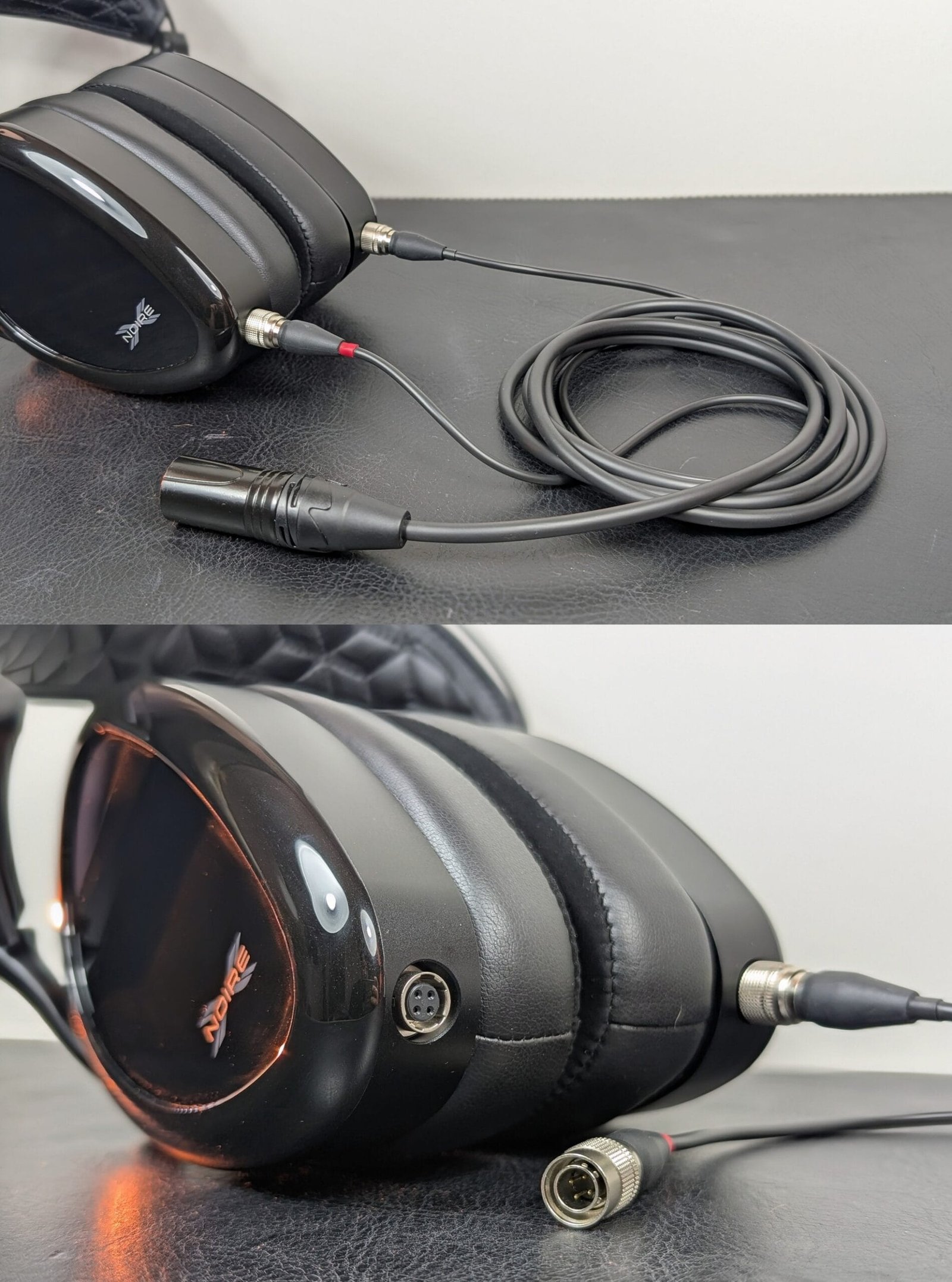
The cable attaches to the earcups in the usual way with locking Hirose connectors, which are still not found on headphones from other manufacturers. Dan Clark Audio has managed to remain unique for a long time, for better or worse. The connectors inspire confidence with their durability, but additional cables are not as widely available as, for example, those with 3.5-millimeter connectors. Interestingly, in the Noire X, the female connectors are again recessed inside the cups, whereas in the E3, they protrude more prominently.
Build and comfort
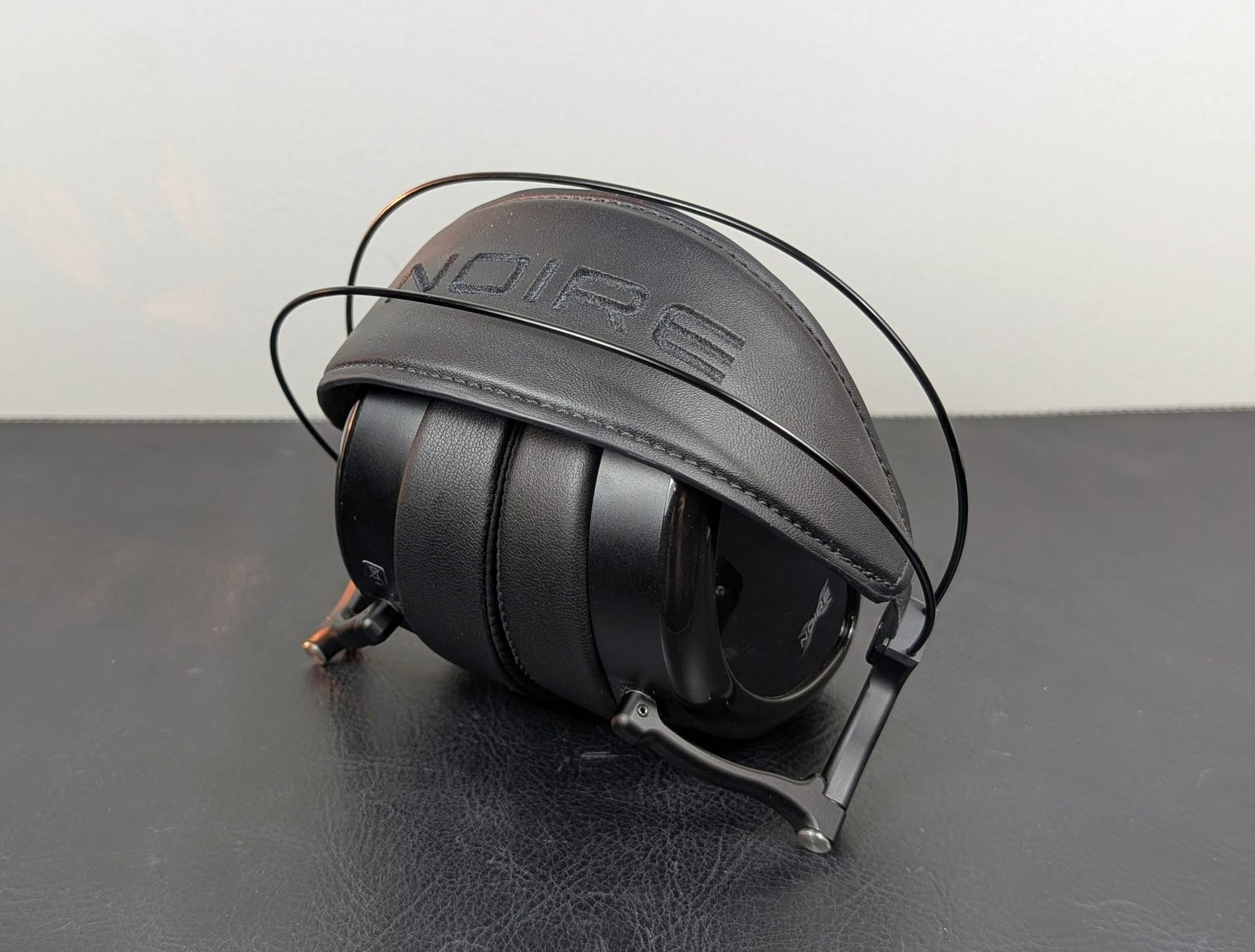
The all-black Noire X is very similar in basic structure to the E3, but the cups, ear pads, and drivers are slightly smaller, as is customary in the Aeon series. As a positive feature, the Noire X weighs a noticeable 70 grams less than the E3. Nevertheless, the aluminum headband with its hinges and the automatically adjusting head strap function identically between the two models. In terms of material choices, there is also much in common, as the basic structure of the cups in the Noire X, like the E3, is metal, and the outer side is Gorilla Glass, which I might have mistaken for plastic when tapping it. The mostly glossy painted structure looks more stylish than the grey-sided E3 in my opinion, but it quickly proves to be an impractical fingerprint gallery. Thus, the included cleaning cloth will be used regularly.
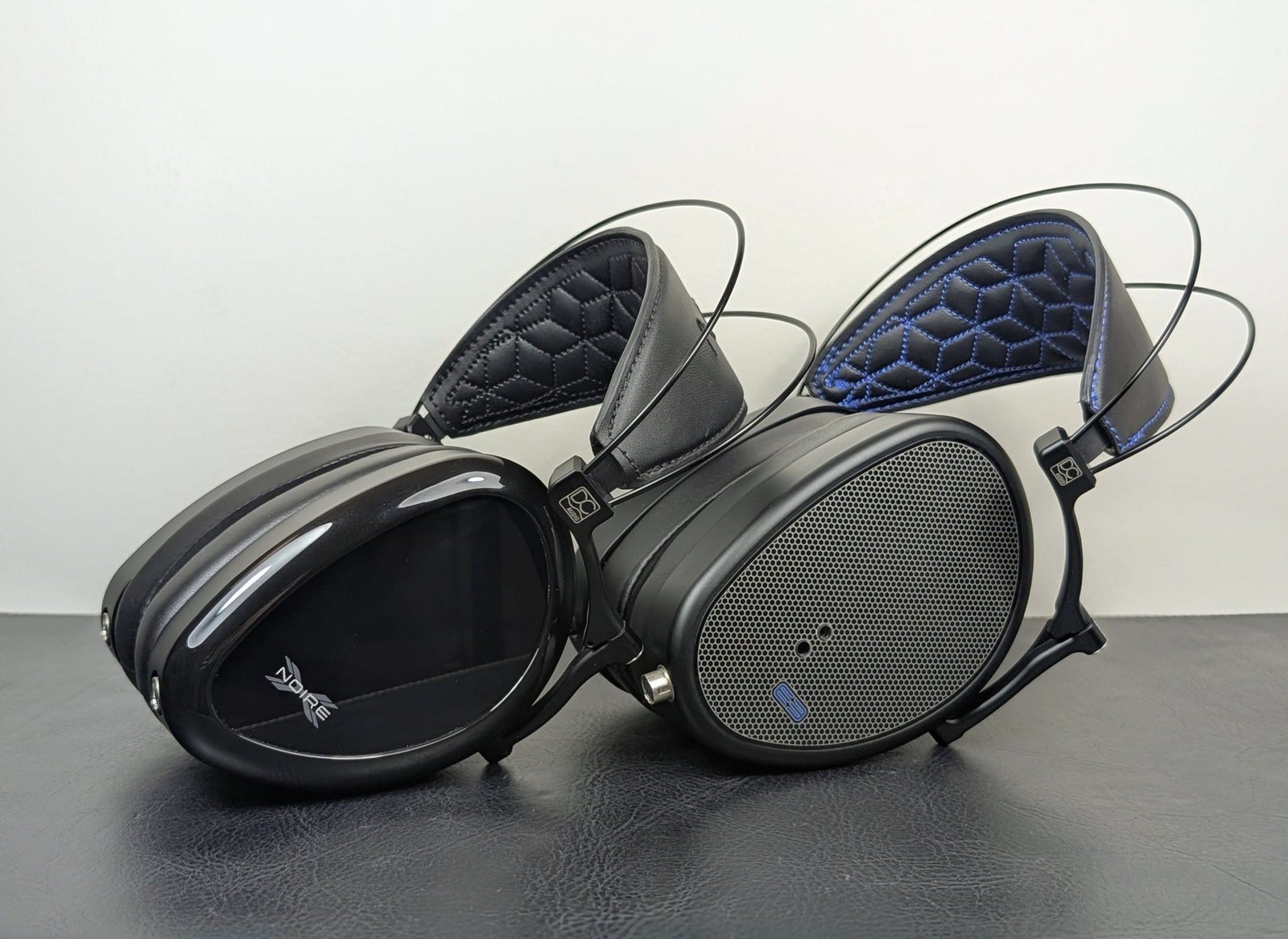
Thanks to the slightly smaller pads, I can get the Noire X to sit on my head more easily than the E3, because there is less extra room for my ears. The idea might seem a bit counterintuitive, but the desired wearing position is found faster with smaller pads, and the lower part also doesn't extend to press against my jawline like the E3. On the other hand, my earlobes touch the edges of the pads more easily, so for those with larger ears, the E3 and STEALTH would still be better options.
Dan Clark Audio's pads are covered with protein leather made from eggshells, which is more durable than plastic artificial leather and has a more even texture than real leather. The side that rests against the face, in turn, is made of pleasant Alcantara material. In older Aeon series headphones, the foam inside the pads easily shifted sideways, but fortunately, the Noire X's pads no longer suffer from this peculiar problem.
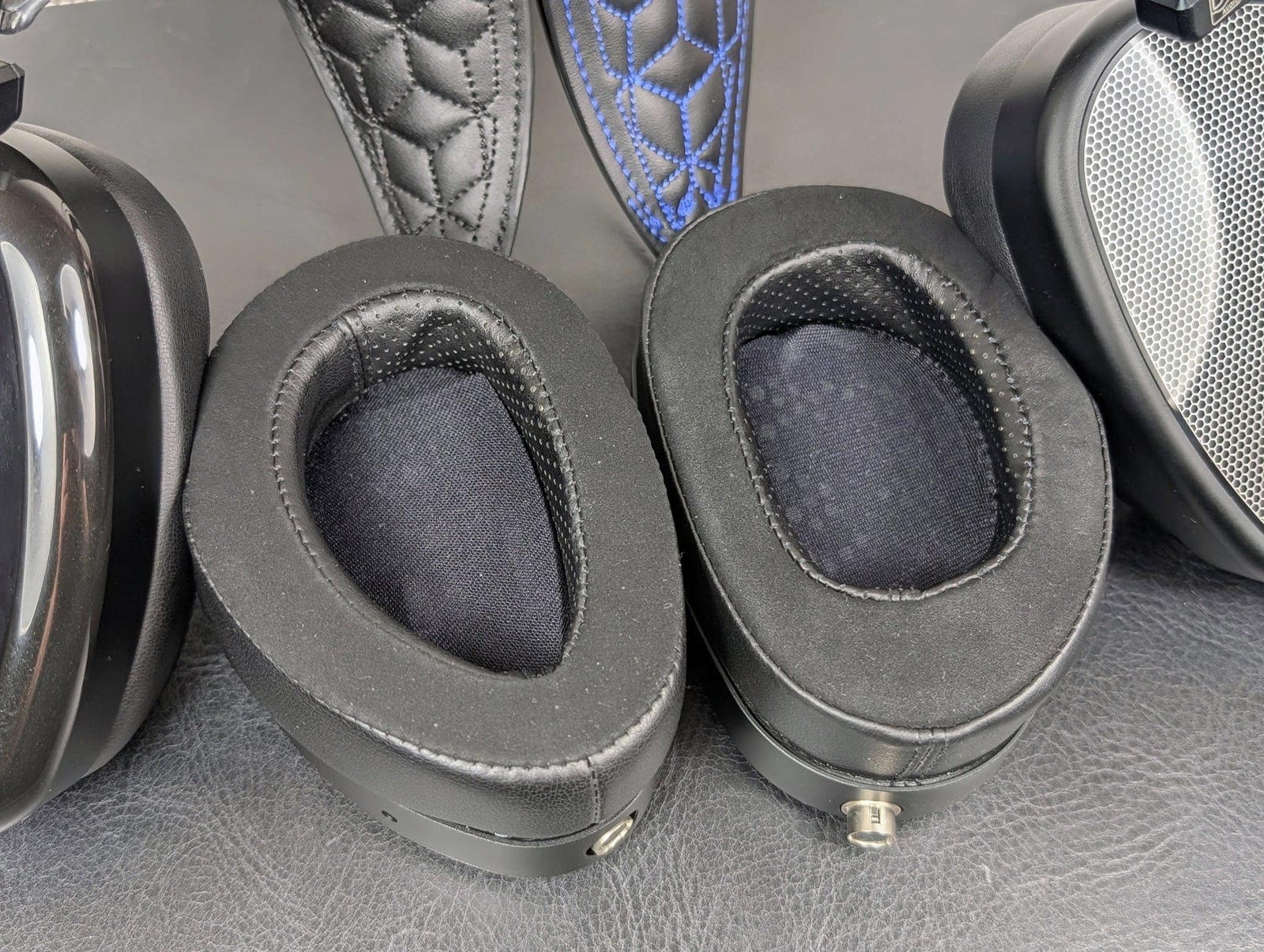
The acoustic design of the Noire X is based on a tight fit, so I consider the quite firm but evenly clamping headband a good thing compared to the looser STEALTH model. I struggled to get the bass response of the latter to work properly with glasses, whereas with the Noire X (and also the E3), the seal is maintained with relatively little effort. However, if I'm looking for the most comfortable headphones for, say, 2–3 hours of continuous use, the clamping force inevitably starts to feel a bit numbing without occasional breaks or fine-tuning the wearing position. In this regard, the Noire X and E3 behave quite similarly, although by my standards, their wearing comfort still reaches a good level. Reportedly, the clamping force could also be adjusted by turning certain screws.
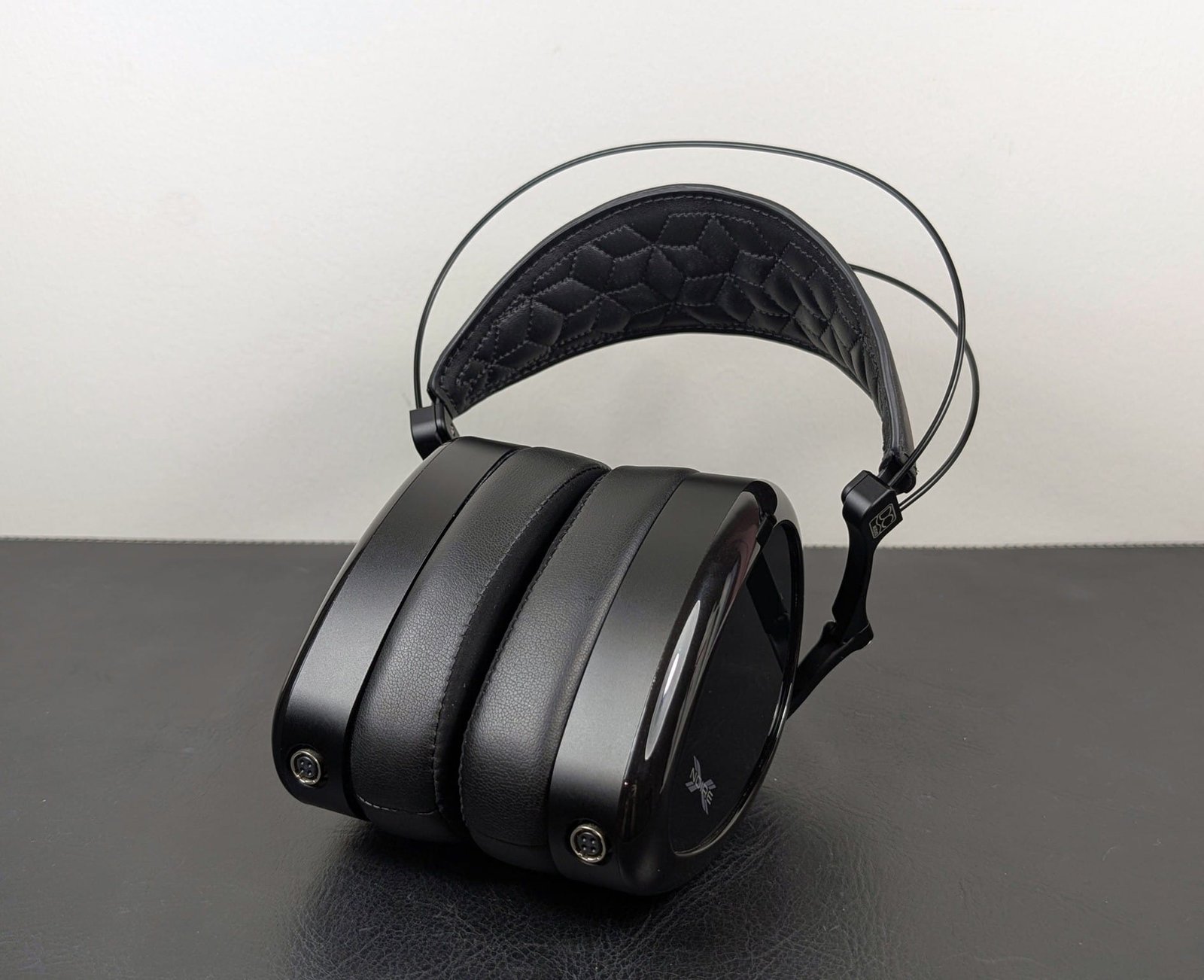
With my own 'magpie's nest' (referring to hair), I haven't found the hard material headband of Dan Clark Audio headphones particularly uncomfortable, but it's worth noting that those with less hair (is it correct to speak of bald people nowadays?) might disagree with me. The robust material certainly withstands wear well, but the amount of foam inside the stitched pad bumps has been kept to an absolute minimum. Some Dan Clark Audio headphone owners have even replaced the headband with a different one or added padding to it themselves. Speaking of the headband, two narrow nitinol rods start to ring loudly if accidentally poked – a silly feature in an expensive product.
Improved passive sound insulation
One of the advantages of the Noire X over the E3 model is clearly better passive sound isolation, both inwards and outwards. The acoustic design must therefore be somewhat tighter behind the drivers; one example of this is that the two bass ports visible on the side of the E3 have been replaced in the Noire X with a single port located at the rear edge of the cups. The Noire X blocks sound quite comparably with many other manufacturers' closed-back headphones, whereas the E3 feels somewhat inadequate in this regard and leaks a surprising amount of sound outwards.
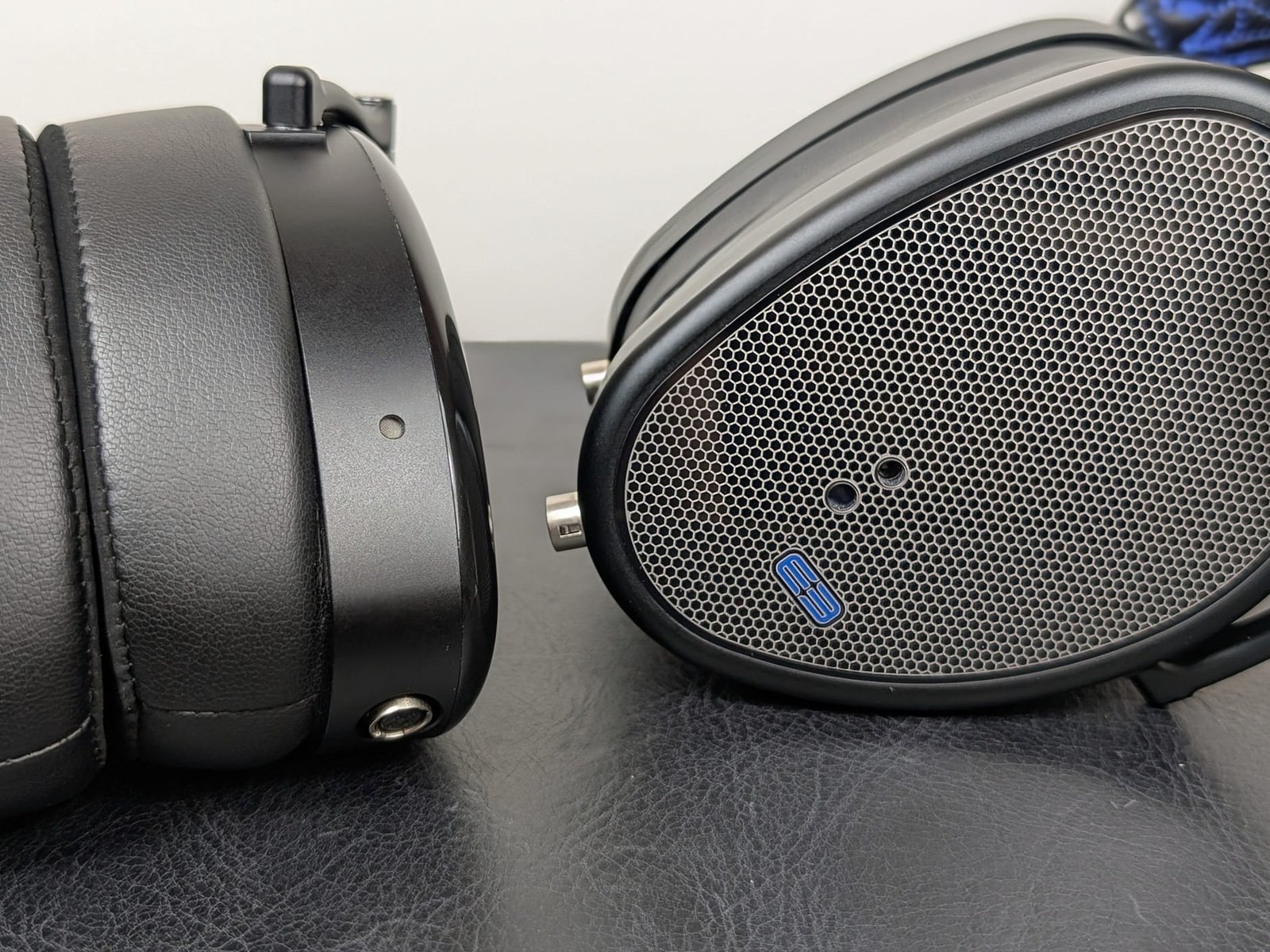
I compared the sound leakage from both, measured in decibels with pink noise and subjectively evaluated with played music. When both play pink noise at approximately 90 decibels, the E3 leaks sound outwards over 6 decibels louder. This means a 50 percent increase in volume and a threefold increase in sound pressure. The sound coming from Noire X is low and quite unnoticeable, whereas a rather loud hiss comes from the E3. Noire X thus retains high frequencies better.
When playing music, in my estimation, Noire X would have to be listened to loudly for the sound leaking outwards to become disturbing to others in the same room. Someone sitting nearby might faintly hear something remotely resembling music, but still, any other auditory stimulus would easily attract more attention. When listening to the E3 loudly, the music already becomes quite clear from a few meters away, and especially the treble hisses audibly even at lower volumes. If it matters, Noire X is a more traditional closed-back headphone, whereas I would consider the E3 almost semi-open.
Sound quality
AMTS-pre-attenuation
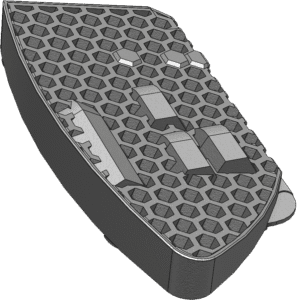
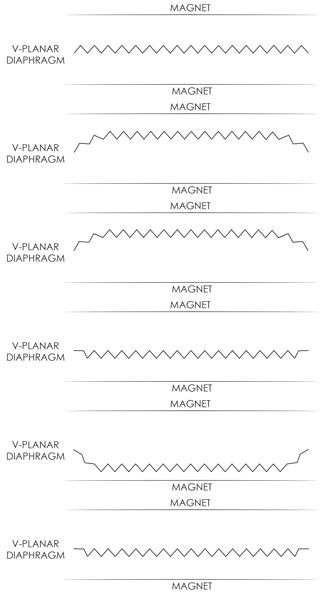
Dan Clark Audio has developed a honeycomb-like AMTS (Acoustic Metamaterial Tuning System) tuning system for its headphones, which has several functions. Designed separately for each headphone model and installed in front of the drivers, it acts as a waveguide, a controller of scattered radiation, and a resonance damper. In addition, it eliminates standing waves generated inside the ear pads. In other words, headphones with the AMTS system are intended to sound as pure as possible. The manufacturer also no longer needs to pre-dampen its closed-back headphones with various foam and felt layers, which would inevitably soften both sound detail and dynamics. Previously, Dan Clark Audio has utilized the AMTS structure only in its most expensive headphone models, but with the Noire X and Noire XO, its benefits can now be enjoyed in the 1000–1500 euro price range as well.
Impedance measurements and amping requirements
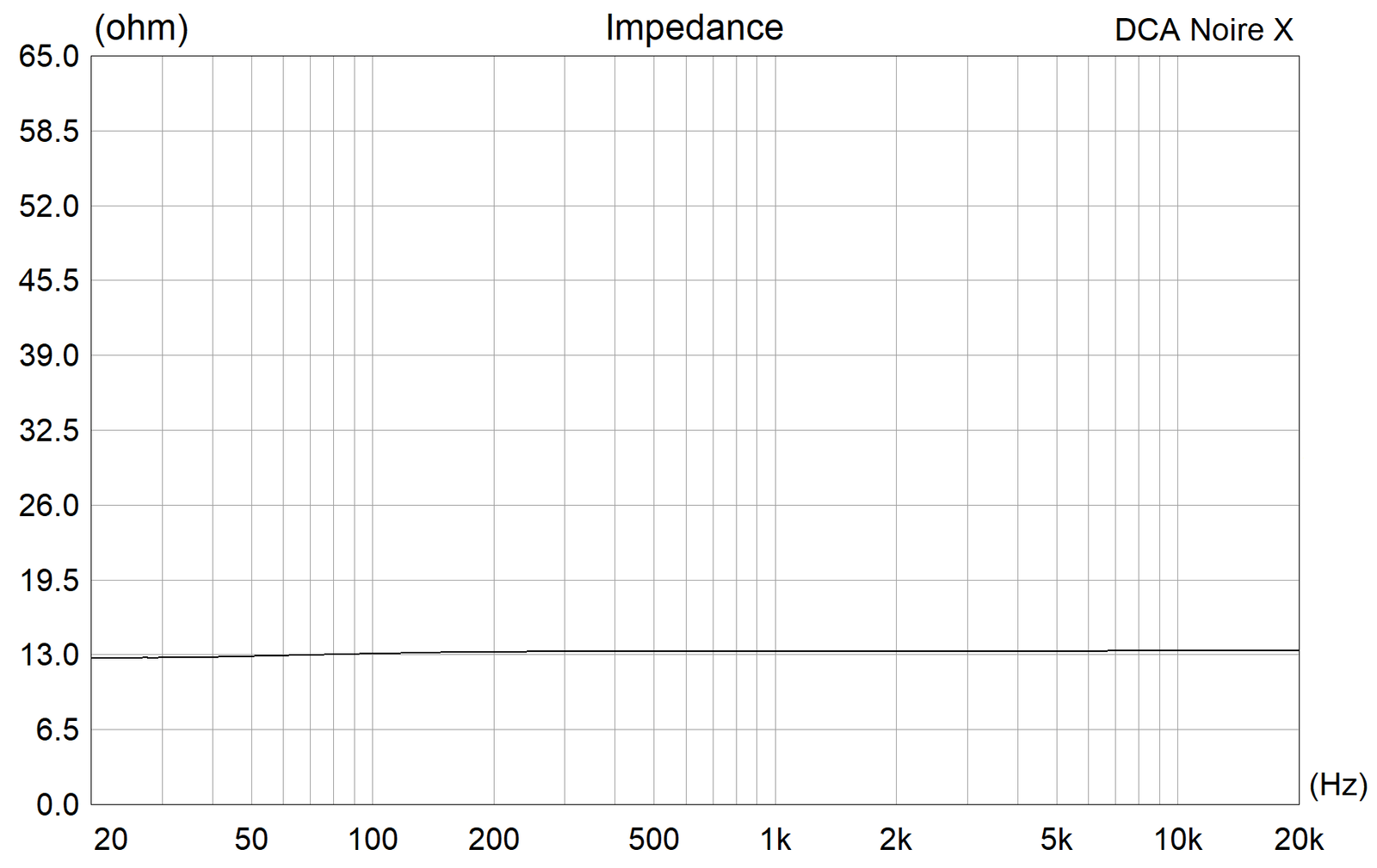
The impedance of Noire X is approximately 13 ohms across the entire frequency band, while in the E3 it is slightly higher at 27 ohms. At the same time, the sensitivity of the more affordable model has increased quite nicely compared to the E3 model (96 dB/mW vs. 90 dB/mW), so it plays louder with most transistor amplifiers. For example, with the Gold Note HP-10 amplifier, the E3 requires 5 adjustment steps, or a 2.5 decibel higher volume setting, for a similar sound level. Easier drivability is therefore an advantage of Noire X, especially if a low-power amplifier, such as a mobile device, is used. For example, a Macbook Air (M1) can drive the headphones through its own headphone jack, although in my opinion, the sound quality remains good only when keeping the volume at a moderate level.
Headphone Measurements
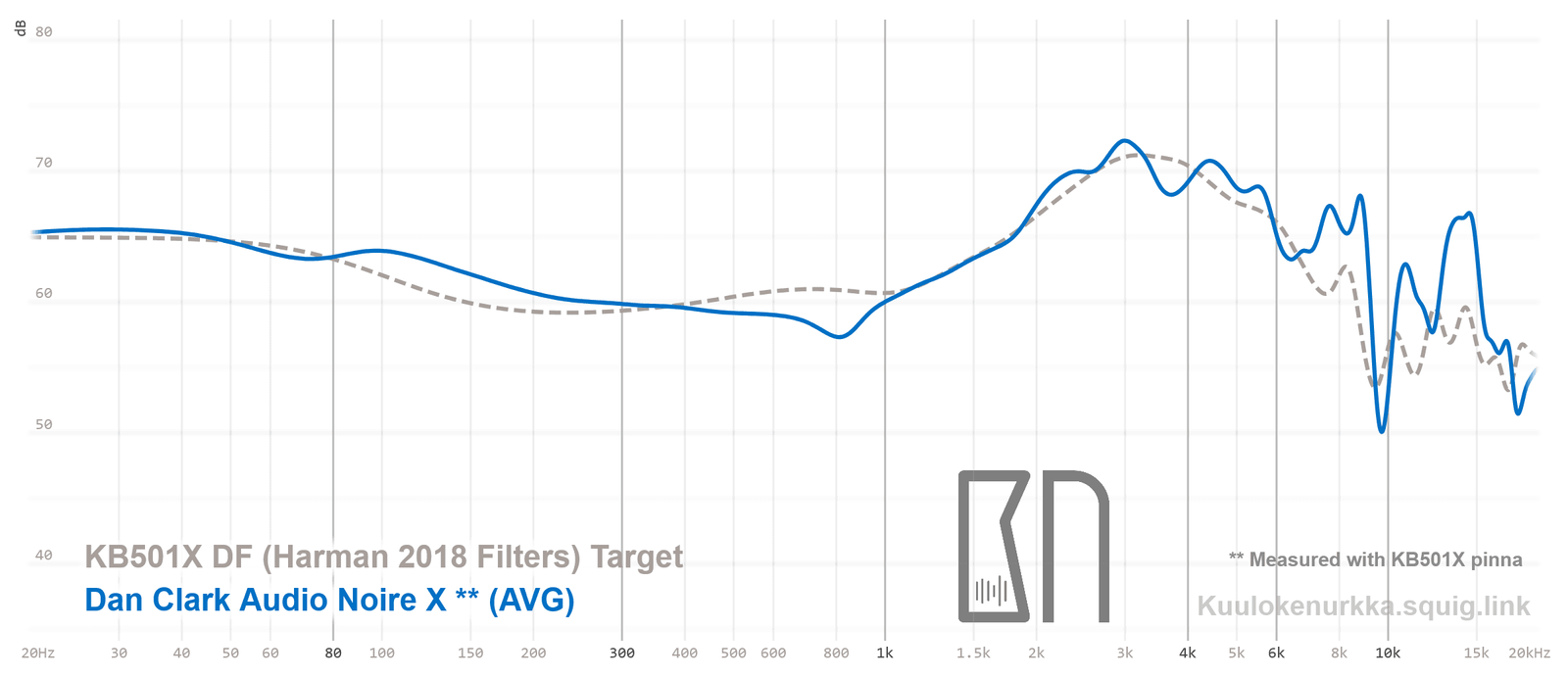
Our frequency response measurements have been made with a clone IEC-60318-4 coupler and KB501X pinnae. The Harman target curve from 2018 is used as a reference point and generalization of the headphone response that would sound good to most people. For more information on the measurements and their accuracy, see Headphone Measurements-page. The frequency response of Noire X is also comparable with other measured headphones Squiglink .
Frequency response:
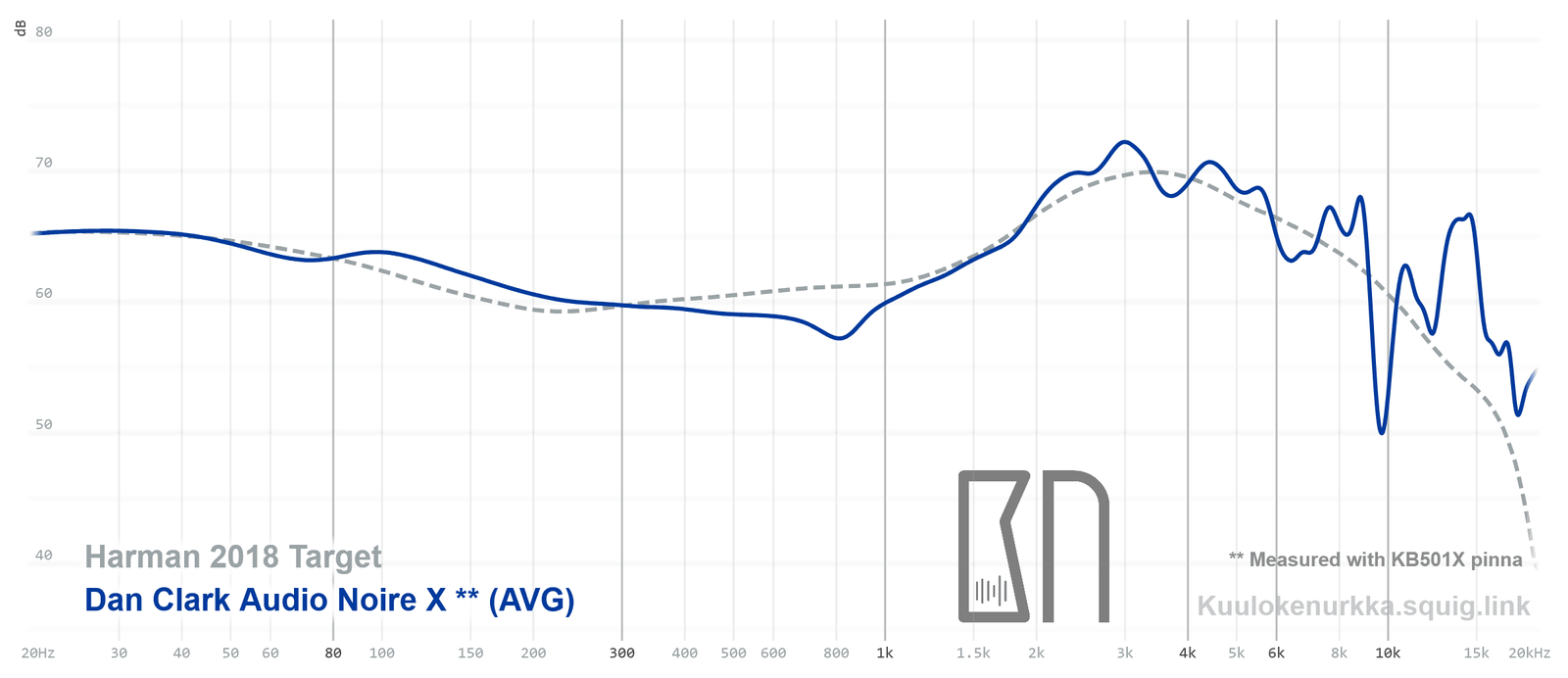
Dan Clark Audio states that they tuned the headphones with B&K 5128 measurement equipment, to which Harman's curve cannot be directly applied, but rather an adaptation derived from the Diffuse Field response. It should therefore be noted that the frequency response of Noire X should not, in principle, perfectly match the Harman 2018 curve when measured with my own equipment, even though the headphones are clearly Harman-inspired. To be precise, Harman's curve is otherwise a somewhat vague and fluid concept, as none of the current devices fully correspond to the setup used in Harman's research, especially regarding the silicone ears. Considering all this, the frequency balance of Noire X is very well in place, as can be expected from Dan Clark Audio nowadays.
The bass settles at a level generally considered appropriate, as do the high frequencies, although my own measurements show slight unevenness from 2 kilohertz upwards. The midrange, on the other hand, dips slightly around 800 hertz, while the amount of upper treble rises to the level of bright Hifiman headphones. Therefore, the sound should not be expected to be completely neutral, as Dan Clark Audio itself states that they aimed to make the Noire X an exciting listen.
I have seen some differences in measurement results, based on which my test headphones appear to be a rather extreme case between 400–1000 hertz. Some other Noire X units measure more linearly in this frequency range, so there seems to be more unit-to-unit variation in this model series than in the manufacturer's more expensive products. However, a couple of decibels here and there is not exceptional or a serious matter. Variation also arises on a user-specific basis in any case, because the AMTS system does not prevent the actual frequency response from still being very different for different people. Closed-back headphones, in general, are somewhat tricky cases because the sound changes more than usual based on fit, and a single frequency response cannot describe the entire range of variation.
For my own measurement equipment, a slightly more accurate Harman curve would, at least in theory, look like the dashed line in the following graph, meaning that my equipment would hear the sound according to the Harman curve approximately like this. In this case too, we see the Noire X closely following the generally well-regarded frequency response target, although there is somewhat more treble and mid-bass compared to it.
Noire X vs. E3:
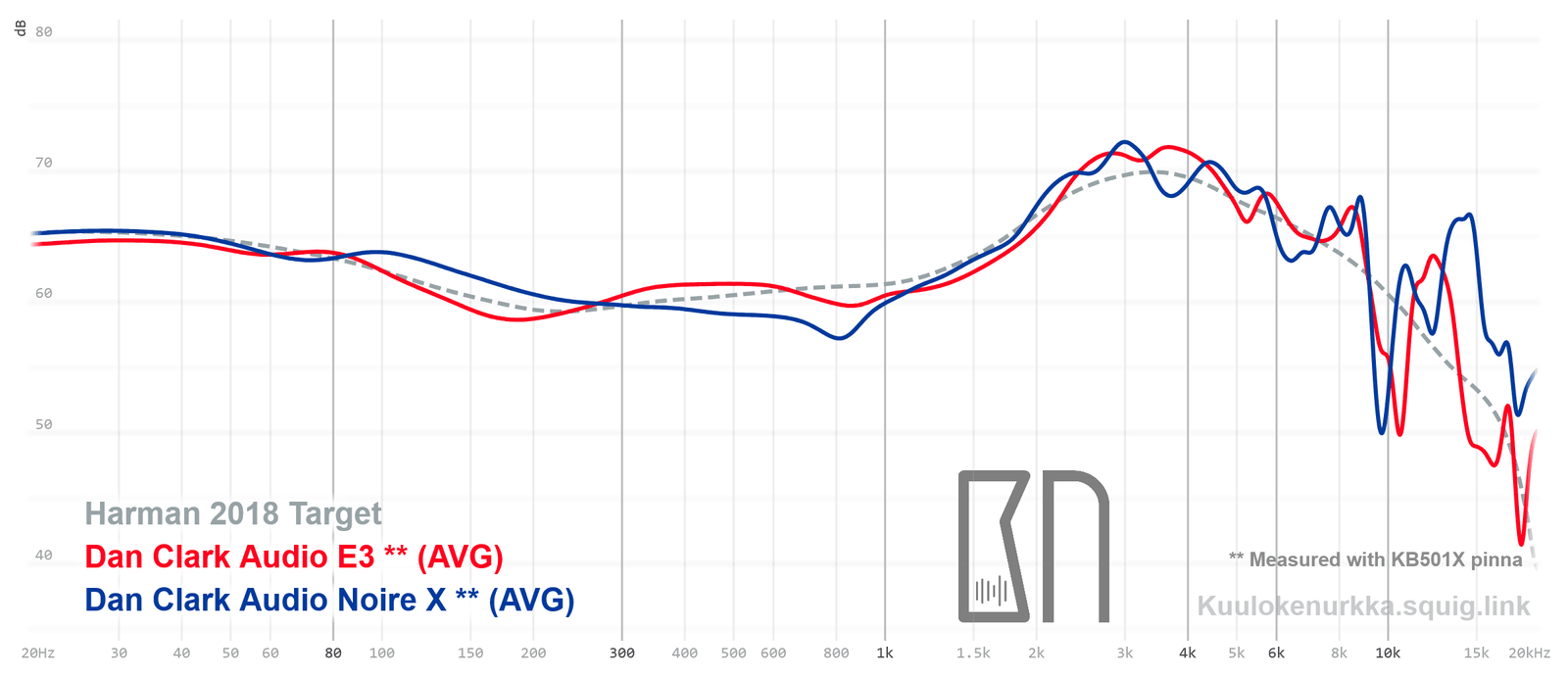
Based on my measurements, Noire X is a very similar headphone to E3, but there are also differences. Firstly, the E3's frequency response is slightly flatter and more closely follows the Harman curve when measured with my own equipment. If this is considered the optimal situation, Noire X, in comparison, reproduces bass more audibly between 100–200 hertz, midrange more calmly between 400–800 hertz, and significantly more treble from 13 kilohertz upwards. Most of us would likely notice the differences in the lower frequencies, while the perception of the upper treble depends somewhat on age and hearing. From this point on, it is worth noting that my own hearing extends up to about 15 kilohertz, so everything between 10–15 kilohertz still affects my listening experience.
Sound observations
Listening chain: PC -> Tidal -> Topping Centaurus -> Gold Note HP-10 & PSU-10 EVO
Dan Clark Audio has tuned the sound of the Noire X to be balanced, similar to their more expensive headphones, making it an excellent all-rounder. The most important characteristic of AMTS-tuned headphones is that the reproduction feels pleasantly smooth and clean, as there are no sharp frequency deviations or other harshness that would strain the ears. I haven't encountered any music that sounds bad or disturbingly colored with the Noire X, so at this point, it can be stated that the overall listening experience is excellent, much like the more expensive E3: I don't have to think about the headphones, but can focus on the music itself.
On the other hand, delving deeper into the Noire X's presentation, it ultimately differs quite significantly from the E3 due to its slight mid-bass emphasis and airier treble. If the E3 already feels like a "revitalized" version of the STEALTH headphones, the Noire X further enlivens the sound. It is fundamentally positive that when listening to the Noire X, I don't feel a strong temptation to switch to the E3. However, doing so, I immediately find reasons why I would pay more for the E3.
Of the two, the E3 sounds quite neutral by my standards, whereas the Noire X clearly enhances the initial attack and articulation of instruments. It thus adds enthusiasm and edginess to the sound, thereby activating my senses more. For example, guitar strings are plucked more sharply, drum hits snap harder, and cymbals shimmer more vividly and airily. Furthermore, details reproduced in the upper frequencies attract more attention than when listening to the E3. At the same time, the Noire X's bass, like many dynamic headphone models, is emphasized between 100–200 Hz, which creates a slightly greater sense of solidity in the reproduction compared to the E3.
For example, when listening to all kinds of rock and heavy-style music, I find the Noire X more fun and rhythmic, especially as it successfully avoids highlighting the worst production issues. The E3 doesn't ”tear it up” as much or kick as robustly. On the contrary, it reproduces the 3–4 kHz range a bit too "clarified," making me feel the sound thins out and needs more bass as compensation. Since the Noire X, with a very similar frequency response, does not suffer from this, the difference might also be due to how the AMTS system functions when the headphones are on my head.

So, in certain situations, the Noire X sounds even slightly better to me than the E3, but the more expensive model ultimately has clear advantages. Firstly, the E3 reveals the Noire X's upper mid-frequencies to be slightly aggressive around 2.5 kHz, which, of course, contributes to the sound's energy. Somewhat paradoxically, however, I perceive the midrange as slightly veiled, if not distant, because of this. The bright treble draws more attention away from the lower mid-frequencies and the body of the sound. Although the timbre is still classifiable as natural, the E3 wins on this metric, reproducing vocal performances especially more authentically and less aggressively. For example, fans of Sennheiser's HD 600 series would probably like the E3 more.
Secondly, despite its smoothness and lack of sibilance, the Noire X's uppermost treble is quite significantly boosted, which exacerbates my tinnitus during longer listening sessions, whereas it usually stays under control. The E3's upper frequencies are smoother and more relaxed, and thus ultimately more pleasant for me. Even the Noire X's bass, despite its punchiness, often doesn't sound as big and deep as in the E3, which emphasizes sub-bass more in its reproduction.
Other advantages of the more expensive Dan Clark Audio model include a more spacious and layered soundstage, as well as more precise sound separation. The Noire X itself sounds very precise, but still like a more conventional closed-back headphone. The sound is positioned quite close to me, whereas the E3 sounds surprisingly open and generally fresher than the Noire X. For some reason, I perceive the Noire X as both brighter and darker than the E3 at the same time, so the headphones do not create as refined an impression as its older sibling.
In fairness, however, the Noire X doesn't need to be as good as the E3 (though partly a matter of taste), but a more suitable comparison would be, for example, the older Aeon 2 Closed or Aeon 2 Noire. Compared to these, for a small additional price, one gains access to significantly improved dynamics and smoother upper frequency reproduction. I haven't heard the Aeon 2 series in a while, but I remember them as quite subdued headphones, where all the different sounds were reproduced as if at the same volume, as one flat surface. This is no longer the case with the Noire X; the difference between loud and quiet sounds is clear and captivating.
In summary, the Noire X thus justifies its price well, positioning itself in Dan Clark Audio's lineup closer to the E3 in sound quality than to the older Aeon series. Although I may have seemed a bit critical, when aiming for a balanced and, above all, energetic listening experience, the Noire X, in my opinion, outperforms good closed-back headphones, such as Focal Azurys and ZMF Bokeh. Based on its powerful DSP correction and internal electronics, the Audeze Maxwell's also doesn't sound quite as clear and precise. I wouldn't be surprised if, when listening to such a good 1100-euro headphone, many have been tempted to test the more expensive E3 model as well. The Noire X might even act as a kind of "gateway drug" in the headphone hobby, when good is no longer enough, and something even better is desired.

Peripheral device notes
During the intensive test period, I didn't have time to listen to the headphones for extended periods with different amplifiers, nor was there any real need, as the Topping Centaurus & Gold Note HP-10 combination seemed suitable. As a generalization, I would see such planar headphones benefiting from transistor amplifiers that tightly control the drivers, if the sound is desired to be as clear and dynamic as possible. On the other hand, it's probably not advisable to acquire a bright-sounding listening chain for the Noire X, as its upper frequencies are already quite attention-grabbing.
Keeping this in mind, I was surprised by the headphones' performance Cayin HA-3A -tube amplifier. Whether it was easier reproducibility than the E3 model or the tonal compatibility of my chosen tube mix, the amplifier suits the Noire X clearly better than the E3. The HA-3A particularly improves the depth perception of the soundstage and makes sound separation airier. I also sense a slight roundness compared to how precisely the headphones reproduce the attack of sounds with transistor amplifiers. However, the proportion of bass or treble in the overall sound does not actually change with the HA-3A, so I primarily get a soundstage that comes closer to the E3. Such a good result cannot necessarily be generalized to all tube amplifiers, but if I owned the Noire X, listening to it with the Cayin HA-3A would be the most tempting.
Summary
With their Noire X headphones, Dan Clark Audio brought its AMTS technology to a more affordable price range than before, where closed-back headphones rarely sound this refined and balanced. If someone likes headphones that follow the Harman curve, Dan Clark Audio currently produces them consistently. On the other hand, the Noire X was not specifically designed to achieve neutral headphone reproduction; instead, its livelier treble and more energetic presentation offer an alternative to, for example, the manufacturer's own E3 headphone model. Both, in my opinion, fit their respective price ranges well stylistically, as a consumer spending over 1000 euros on headphones for the first time is likely looking for an impressive and exciting listening experience, while a serious hi-fi enthusiast might aim for an even smoother and more mature sound, in which case they might also have the budget for the E3 model. You can't go far wrong choosing between these two if good closed-back headphones are of interest.
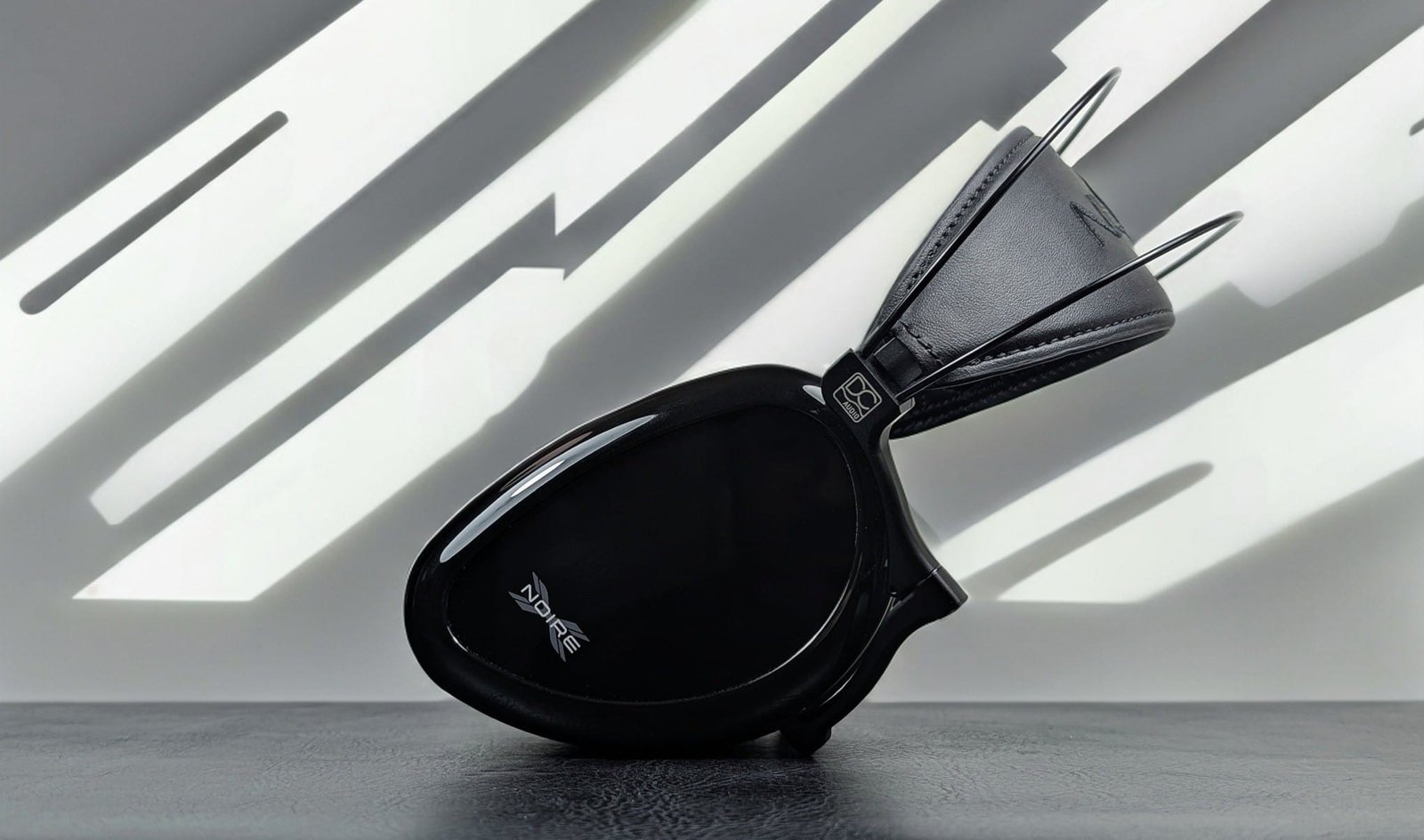
Compared to more expensive Dan Clark Audio headphones, the advantages of the Noire X include a slightly more compact size and lighter weight, as well as more effective passive sound isolation. The E3 and STEALTH also leak more sound outwards, so for use among other people, the Noire X would be my absolute choice among these options. The lower power requirement would also help it to be a mobile headphone, which I do not consider the E3 to be despite its collapsible design. The comfort of all Dan Clark Audio headphones has both strengths and minor weaknesses, but overall, they remain quite clearly on the positive side.
In the future, it remains to be seen whether the manufacturer will also update its headphone selection in the 500–1000 euro range with AMTS technology, or if it will be content with selling older Aeon series headphones, which in my opinion do not reach the level of the Noire X. For now, I would still see, for example, the Audeze Maxwell and Focal Azurys as good alternatives, as they are considerably more affordable than the Noire X. I might, however, remove ZMF's closed Bokeh model from Kuulokenurkka's wall of fame to make way for the in many ways more balanced Noire X. When aiming for wirelessness and noise-cancelling functionality Focal Bathys MG or T+A Solitaire T would be the closest sound quality equivalents, but they cost a bit more and ultimately don't sound as "correct". My partial dislike for Dan Clark Audio headphones in past years has indeed turned into admiration. Many other manufacturers do not take such developmental steps, but rather stagnate to some extent.
Pros and cons:
+ Balanced and lively sound
+ Punchy bass
+ Accurate soundstage
+ High-quality materials in the construction
+ Good passive sound isolation (also leaks less sound outwards than E3)
+ Smaller size and weight compared to E3
+ Requires less amplification power than E3
+ AMTS system at a more affordable price than before
+ Fits into a relatively small carrying case
+ Cable connector selectable at the time of purchase
+/- The all-black design is stylish, but it collects fingerprints very easily
+/- Overall good comfort, but not necessarily for several hours straight due to the strong clamping force and hard headband
+/- Hirose connectors are durable, but quite bulky in size for such smaller headphones
– The emphasis on the highest frequencies may not be to everyone's liking
– The midrange remains a bit distant and also exhibits slight aggressiveness
– The soundstage is a tad narrow compared to the E3 model
– Why can't the ear pads be attached other than with glue?
 EN
EN  FI
FI