Author: Sword of Damocles
Table of Contents:
In China, there are similar DIY-spirited small-scale headphone manufacturers as in Western countries, but they generally do not aim for sales or visibility outside their own country. Therefore, many interesting headphone models are completely unknown to us, and they cannot really be encountered anywhere other than in the depths of Chinese marketplaces behind a language barrier. One popular platform for selling such headphones is Taobao, where you can find both headphone models designed by small manufacturers themselves and exact copies of Western products. Especially ZMF, ABYSS, and T+A have been popular copying targets for the Chinese, as for about 1000 euros, one could get, for example, an astonishingly consistent ZMF Caldera, ABYSS AB-1266, or T+A Solitaire T. These are sometimes also sold on Aliexpress-site, but I do not want to encourage the acquisition of pirate products, even if they are not directly claimed to be genuine in the product descriptions.
I am more interested in the own headphone models of the same, apparently capable, manufacturers, which are listed, for example, on Taobao. However, the site does not deliver orders to Western countries, so a Chinese postal agent is needed in between. I decided to try how ordering to Finland works. Regarding agents, my options were SuperBuy and CSSBuy, from which I ultimately chose the latter due to a slightly more favorable currency exchange rate. Numerous other options would also be available for both, but people have more varied experiences with them.
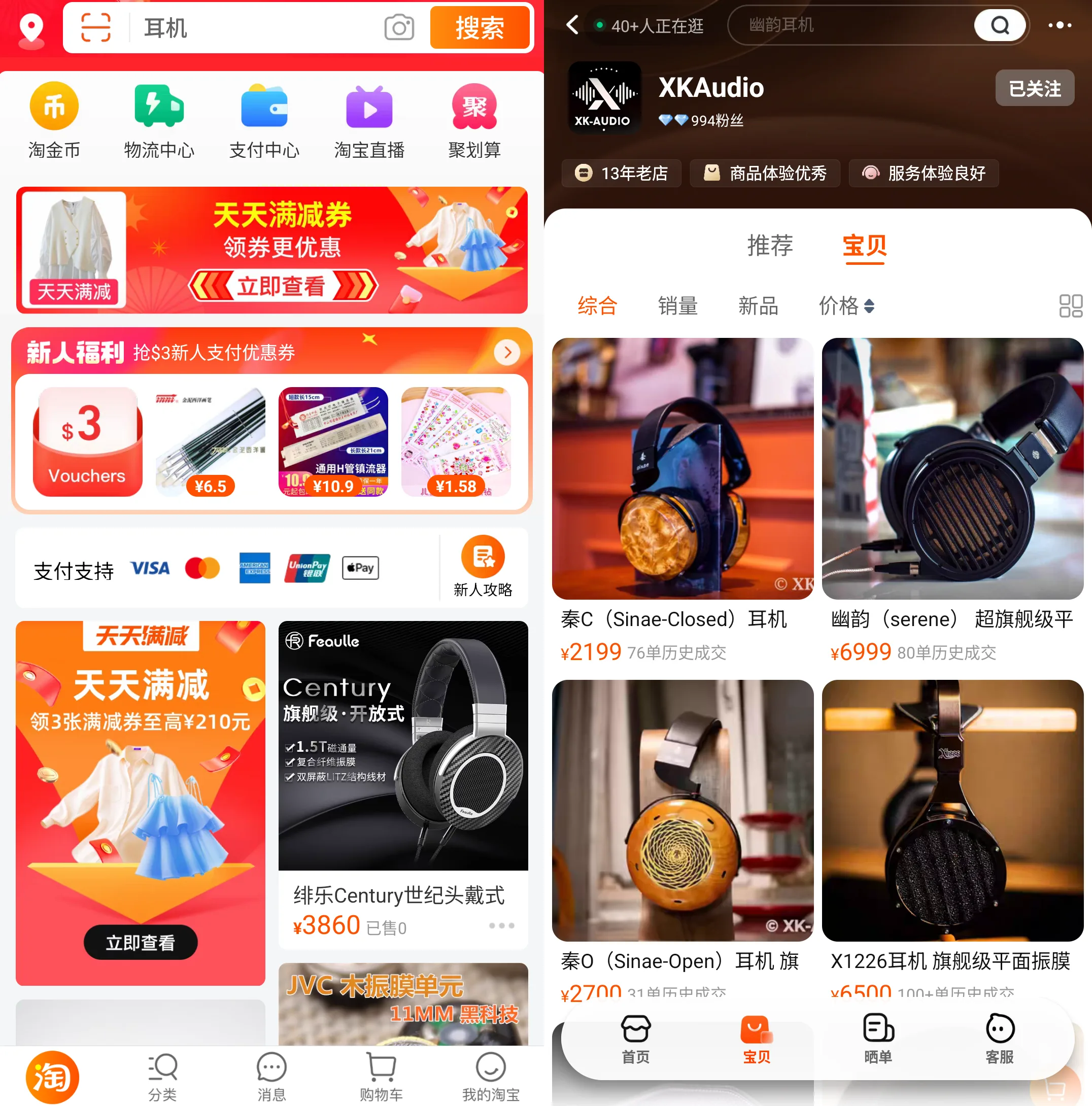
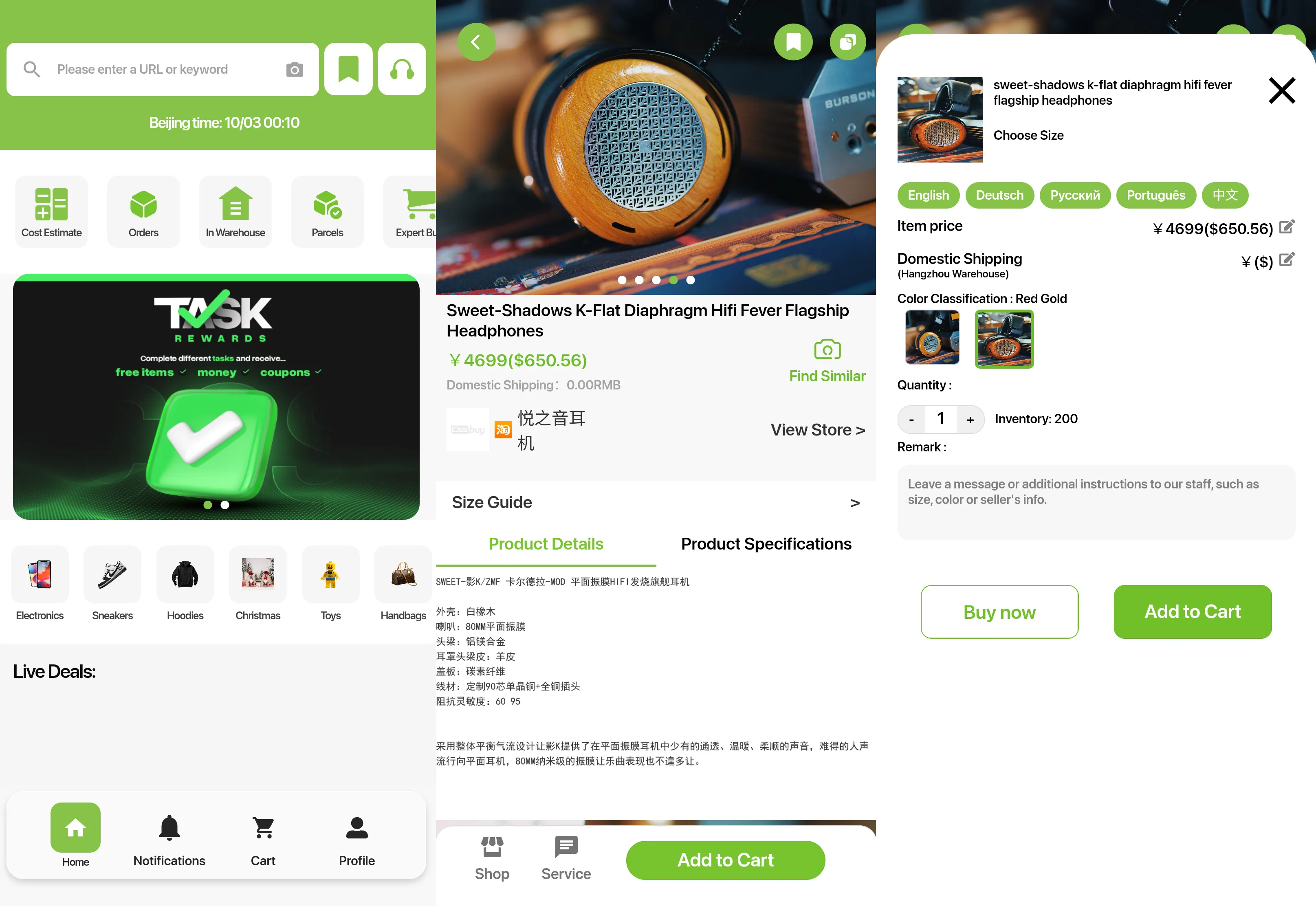
The ordering process proceeded as follows:
- I installed the Chinese-language Taobao app on my phone and struggled with logging in for a while. I eventually gave up on the verification codes arriving via SMS and used my Google account – surely the Chinese already know everything about me anyway.
- I started training Taobao's search algorithm towards headphone recommendations by trying to find at least some headphones in the store. This was not easy, as searches had to be done in Chinese and the entire user interface was in Chinese anyway. However, I found headphone models whose names I knew contained Western numbers. For example, ABYSS AB1266 was a good option for this, although its pirate version is named X1226. When Taobao's algorithm started working, I received recommendations for many different headphones, through whose product pages I was able to add interesting manufacturers/sellers to my favorites list. At this point, I had already learned, with the help of Google Translate, to understand what each button in the app's user interface did.
- I was most interested in the XK-Audio seller, who handcrafts many different types of headphones. From them, I also eventually wanted to order a pair of headphones.
- After this, I familiarized myself with agent companies that would deliver my order to Finland. CSSBuy has its own English-language phone application, for which a user account had to be created or, in this case too, a Google account utilized. The application makes it possible to search for products directly from Taobao's selection, so I searched for the headphones I wanted again through it. SuperBuy's application would have worked slightly better in this regard, in my opinion, because it can find Taobao's product page directly using a copied link from there. CSSBuy's application, for some reason, was not able to do the same, even though it apparently should.
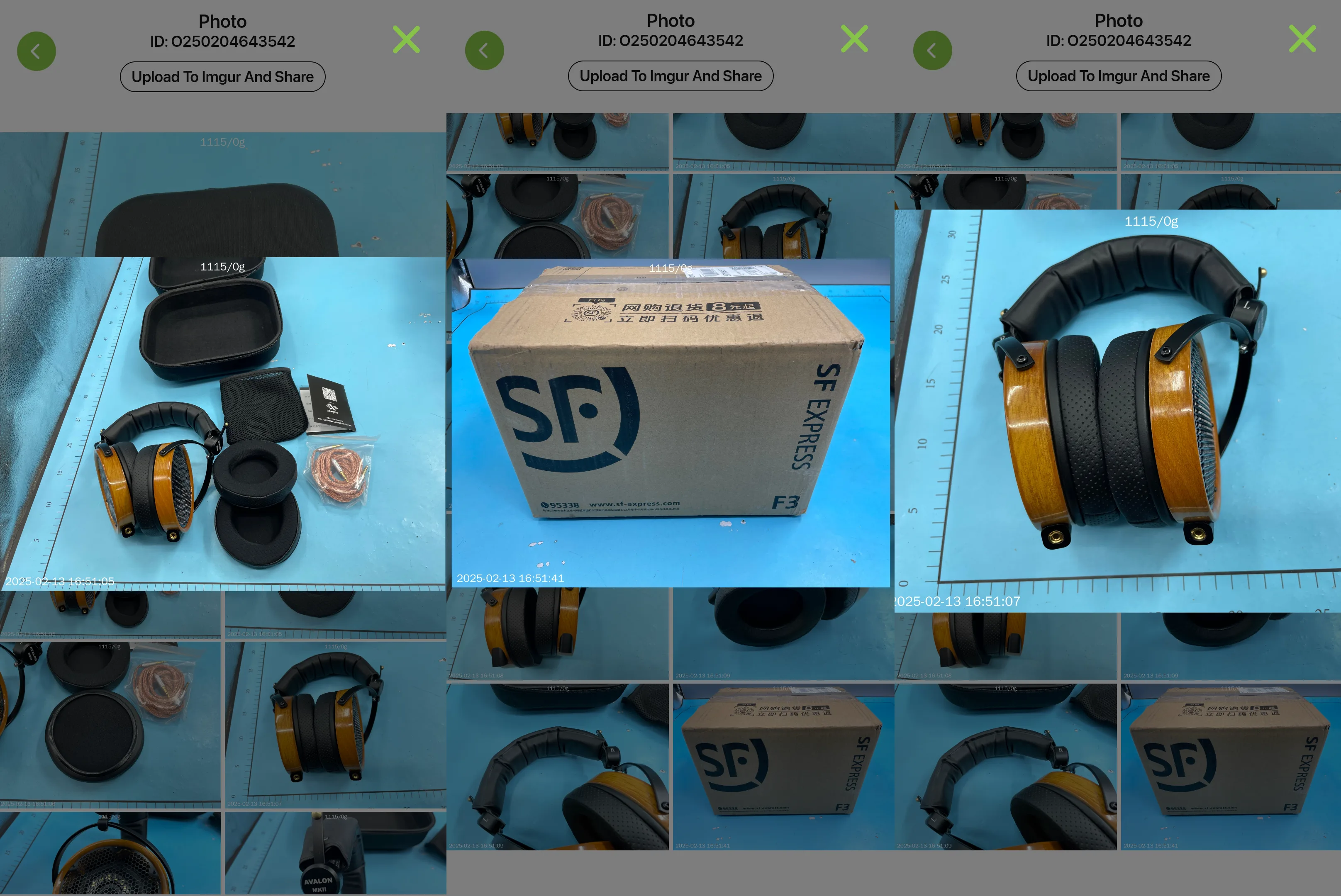
Once the headphones I had chosen were found anyway, ordering them was now easier thanks to the English user interface. For example, when adding to the shopping cart, the different cable options and other additional selections were clearer than on Taobao. The ordering process itself began with the headphones being paid for in advance to CSSBuy, either in US dollars or euros, which then placed the order from Taobao to its own warehouse. Shipping costs within China were free. - When the headphones arrived at CSSBuy after about 1.5 weeks of waiting, they photographed them very thoroughly for quality assurance. The choice of delivery option was left to me. I could either choose a courier/postal company directly and pay the shipping costs based on an estimate made according to the product's weight, or let CSSBuy pack the product first, in which case the final shipping costs would take into account the package dimensions in addition to the weight. Since both options required paying a service fee first, and because any price difference between estimated and actual shipping costs would have had to be paid afterwards anyway, I let CSSBuy pack the headphones in advance.
The service fee accumulated to about 25 euros, which presumably depends at least on the product's price. The cheapest available shipping costs (PostNL), in turn, were also about 25 euros, so the total delivery cost was about 50 euros. Not the cheapest, then, but CSSBuy has to make money somehow. Since I saw from the photos that the headphones were already well-packed, I chose to wrap the cardboard box in plastic instead of paying extra for another cardboard box.
The need to record information for the customs declaration caused a slight headache. However, I simply wrote ”headphones” as the product type and listed the materials used in them. In addition, I would have been given the option to choose the amount I wanted to be declared as the value of the headphones for customs. By leaving this field blank, CSSBuy filled in the information "to the best of its knowledge.".
The CSSBuy app did not send any email notifications about the package's movements, so I had to independently notice that it had arrived at the company's warehouse and required further action. Somewhat unusually, tracking and selecting the packaging option first occurred in the Orders section, but after pre-packaging, the final delivery had to be selected and paid for in the Parcels section. After that, tracking also took place there. So, it's worth being careful with the app. I also found it somewhat strange that other payments could be made by credit card, but postage had to be settled by first transferring money to the CSSBuy user account. Thus, a small amount of extra money inevitably remained in the account due to currency conversions. - PostNL promised a delivery time to Finland of 15–45 days, with it ultimately being 16 days or 11 business days. Exactly 4 weeks had passed from the time of order until I received the package, which I consider a quite reasonable waiting time. My order coincided with the Chinese New Year, which might have even slightly slowed down the package's movement within China.

My chosen headphones: XK-Audio Avalon mk2
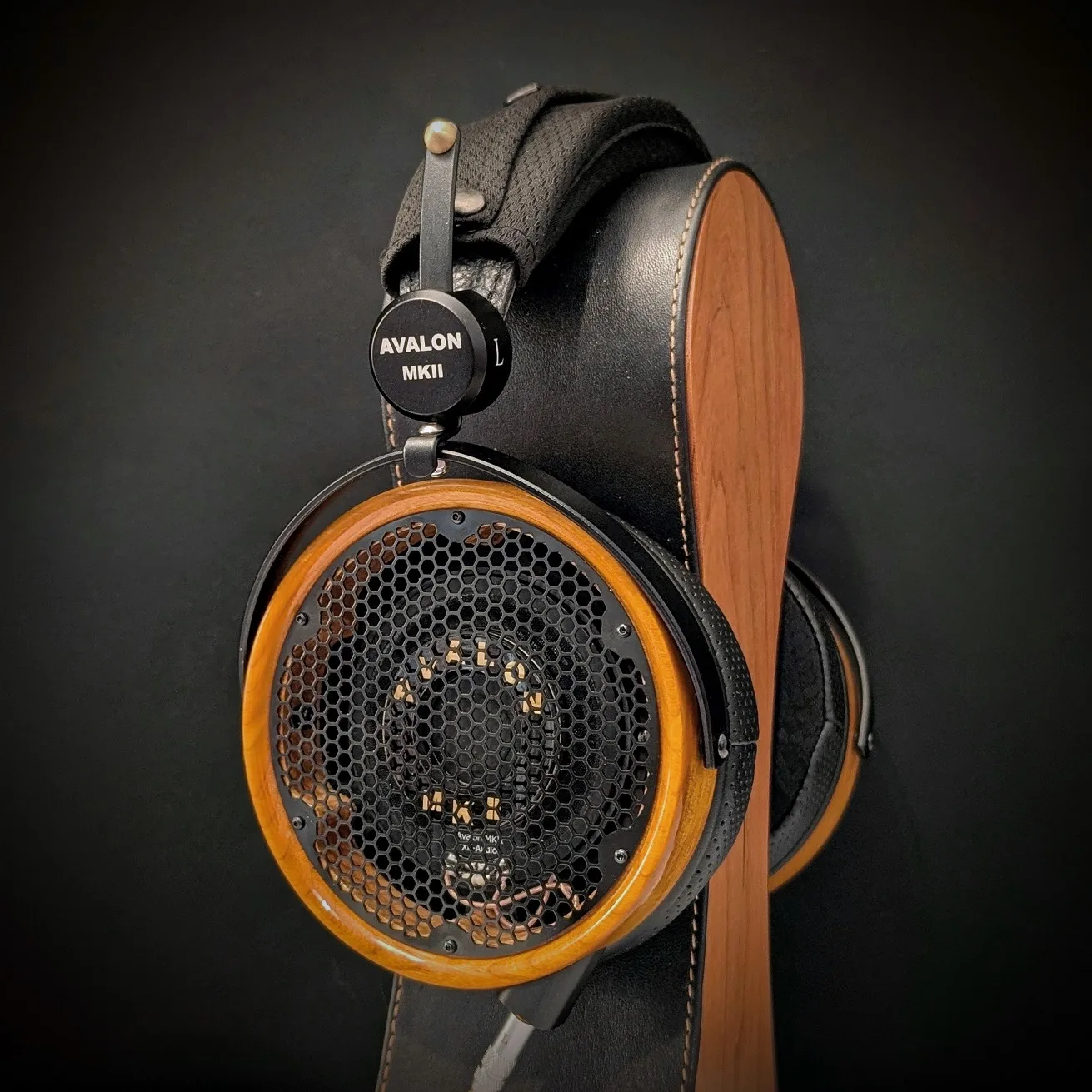
My attention was drawn to the Avalon mk2 headphone model in XK-Audio's selection, costing about 440 dollars, which features exceptionally large 70-millimeter biocellulose drivers with an impedance of 280 ohms, in addition to wooden cups. The magnets of the drivers are also larger than usual, so I expected dynamic sound. In advance, I also found out that the headphones' frequency response looked good in all respects without major weaknesses. Otherwise, I would have bought a pig in a poke, so to speak. However, I did not expect that the Avalon mk2 would be removed from sale soon after my order, as some new headphone model will apparently replace it. Now the usefulness of my review will be quite small, but let's still get acquainted with the headphones in the usual way as an example of what kind of headphones from small manufacturers can be found in China.
Information:
- Release year: 2024 ?
- Country of Origin: China
- Price: ~440 USD or about 550 €
- Type: open, over-ear
- 70 mm biocellulose drivers
- Impedance: 280 Ohm
- Sensitivity: 97 dB/mW
- Weight: 400 g (without cable and extra headband padding)
- Connector type: 2 x 3.5 mm
- Cable: Length 1.65 m / plug 4.4 mm (selectable at purchase)
- Accessories: Carrying case and a second pair of ear pads
Packaging and accessories
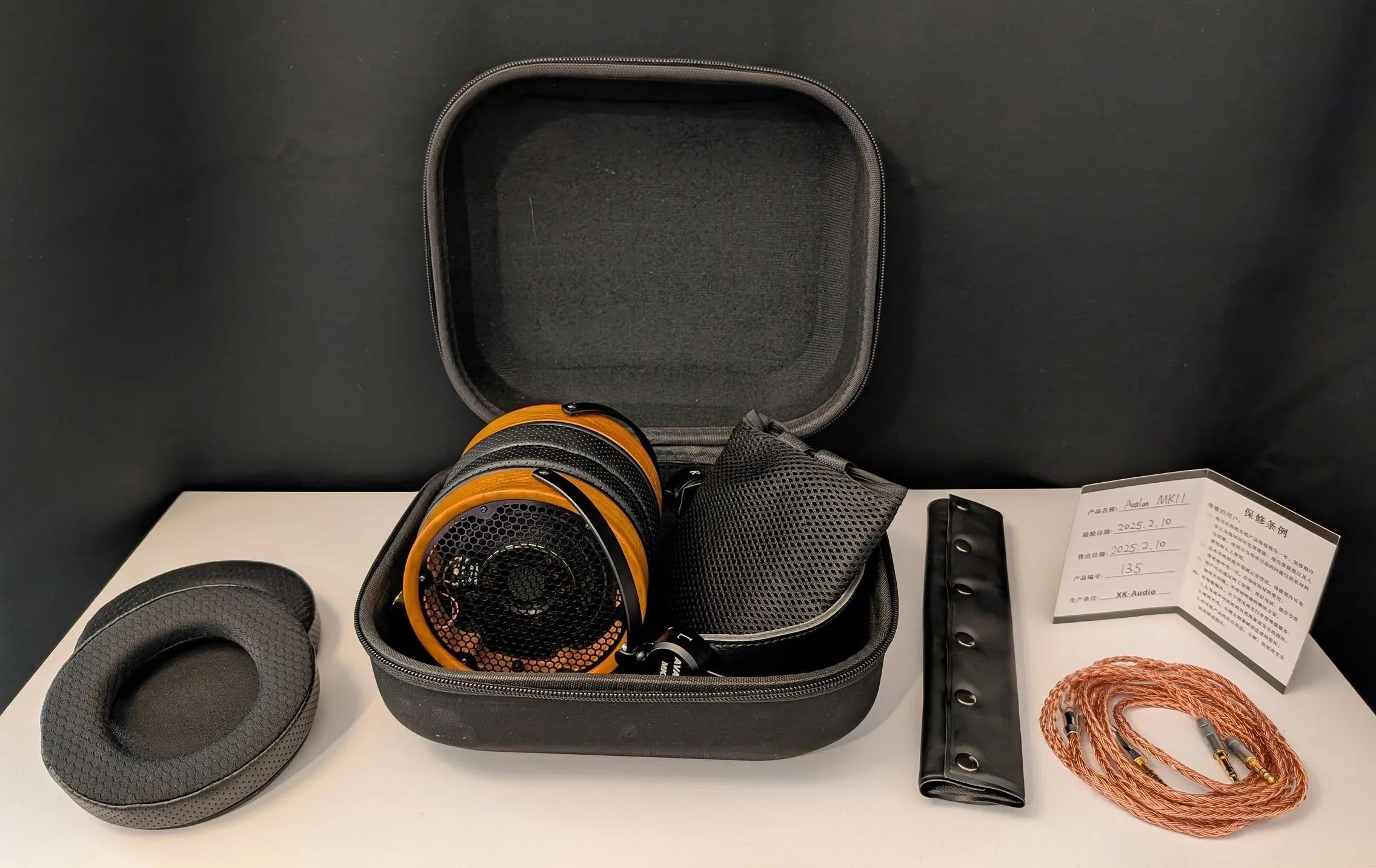
The Avalon mk2 arrives in a rather large carrying case with a cable and a second, slightly different pair of ear pads. The manufacturer has also noted the headphones' manufacturing date on a small cardboard card. The additional headband pad shown in the image above is attached to the headphones by default.
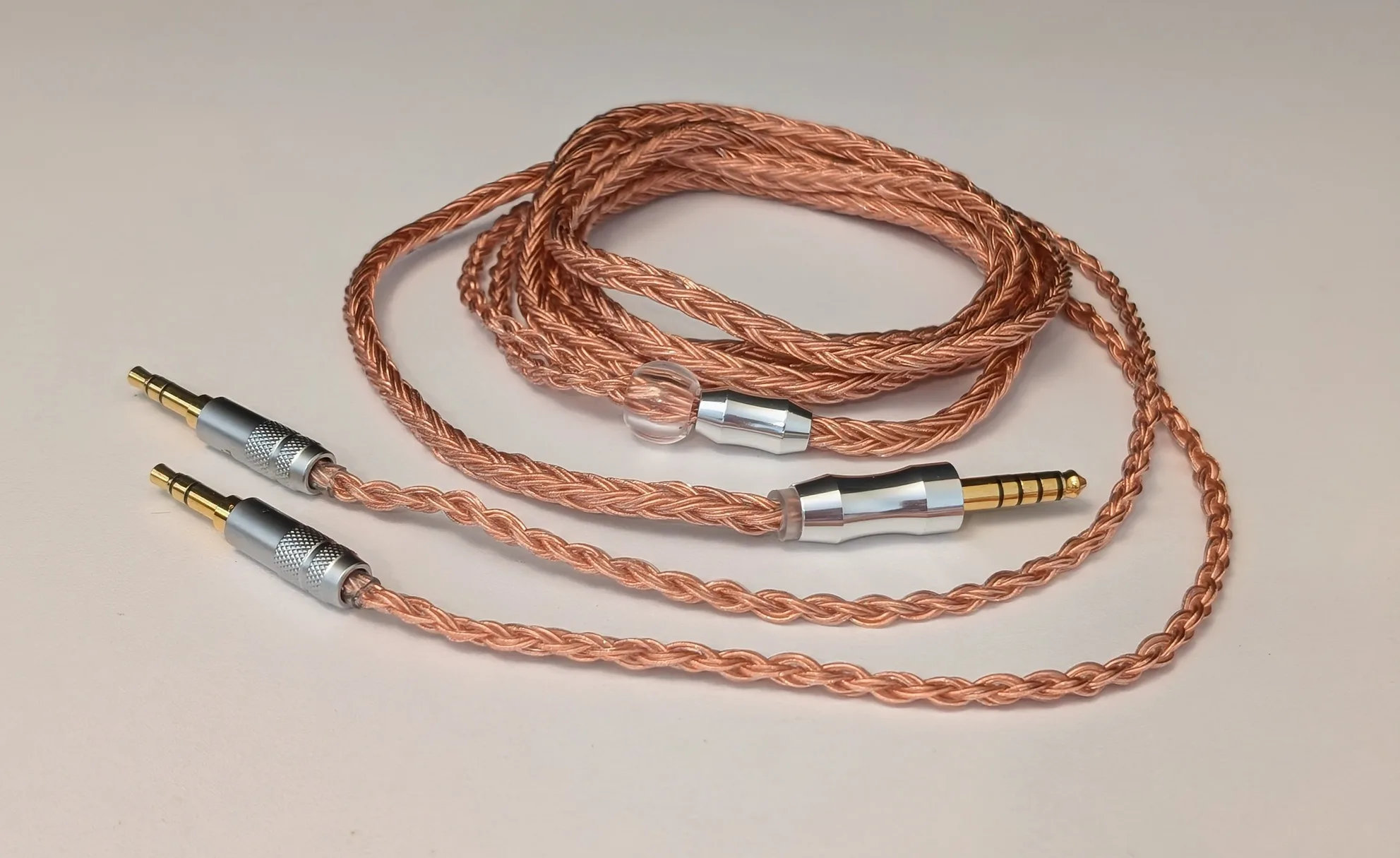
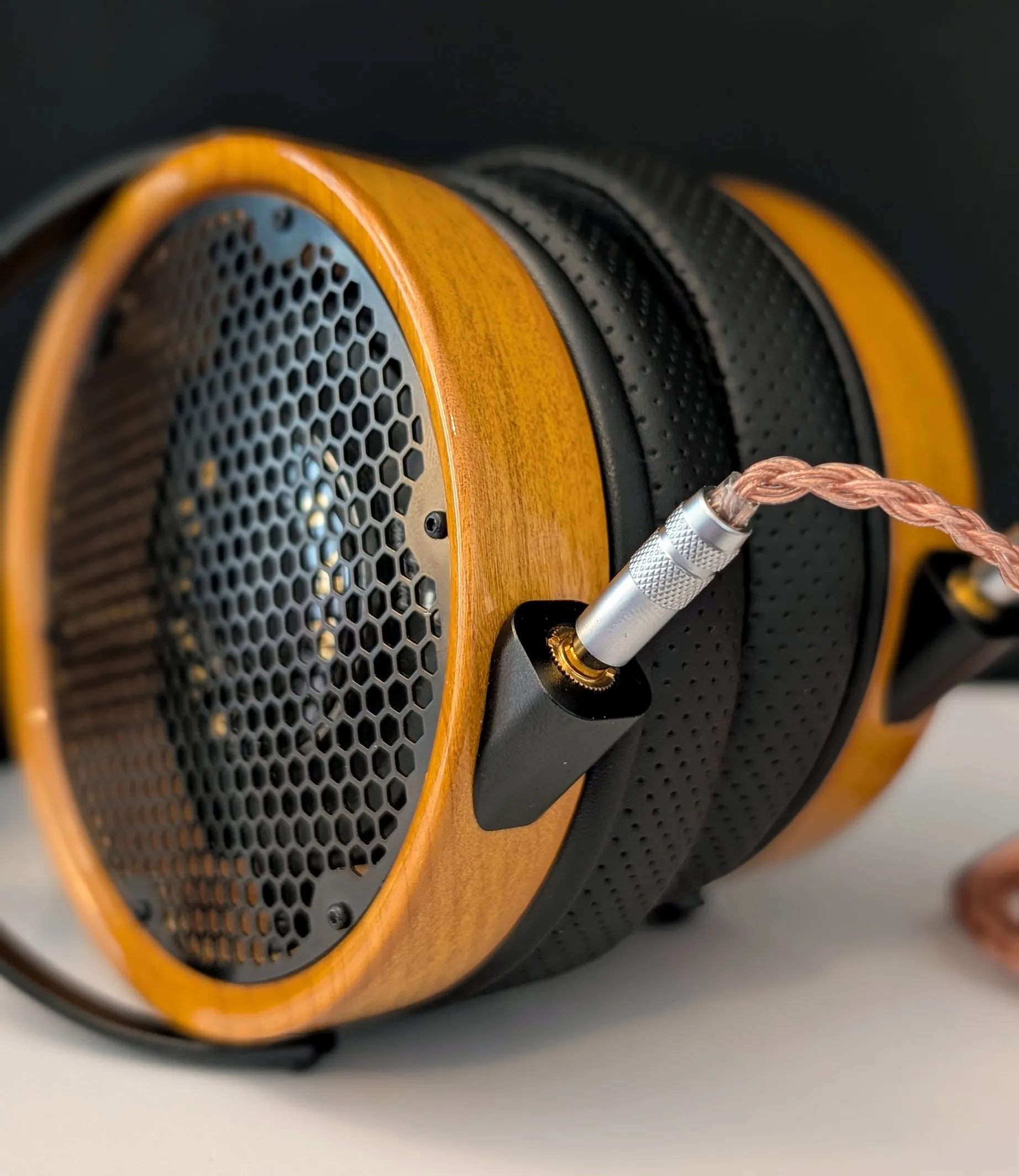
The copper cable braided from thin conductors is likely directly from some Chinese manufacturer's selection, as I believe I've seen similar ones, for example, when browsing Aliexpress. However, this doesn't matter, because the 1.65-meter cable supplied by XK-Audio is excellently flexible and practical – I wouldn't mind if such a cable came with all headphones. The connector attaching to the amplifier is selectable at the purchase stage, while the cable attaches to the headphones with two 3.5-millimeter connectors at the back of the cups. I like the placement of the connectors because it prevents the cable from rubbing against the shoulders during use.
Build and comfort
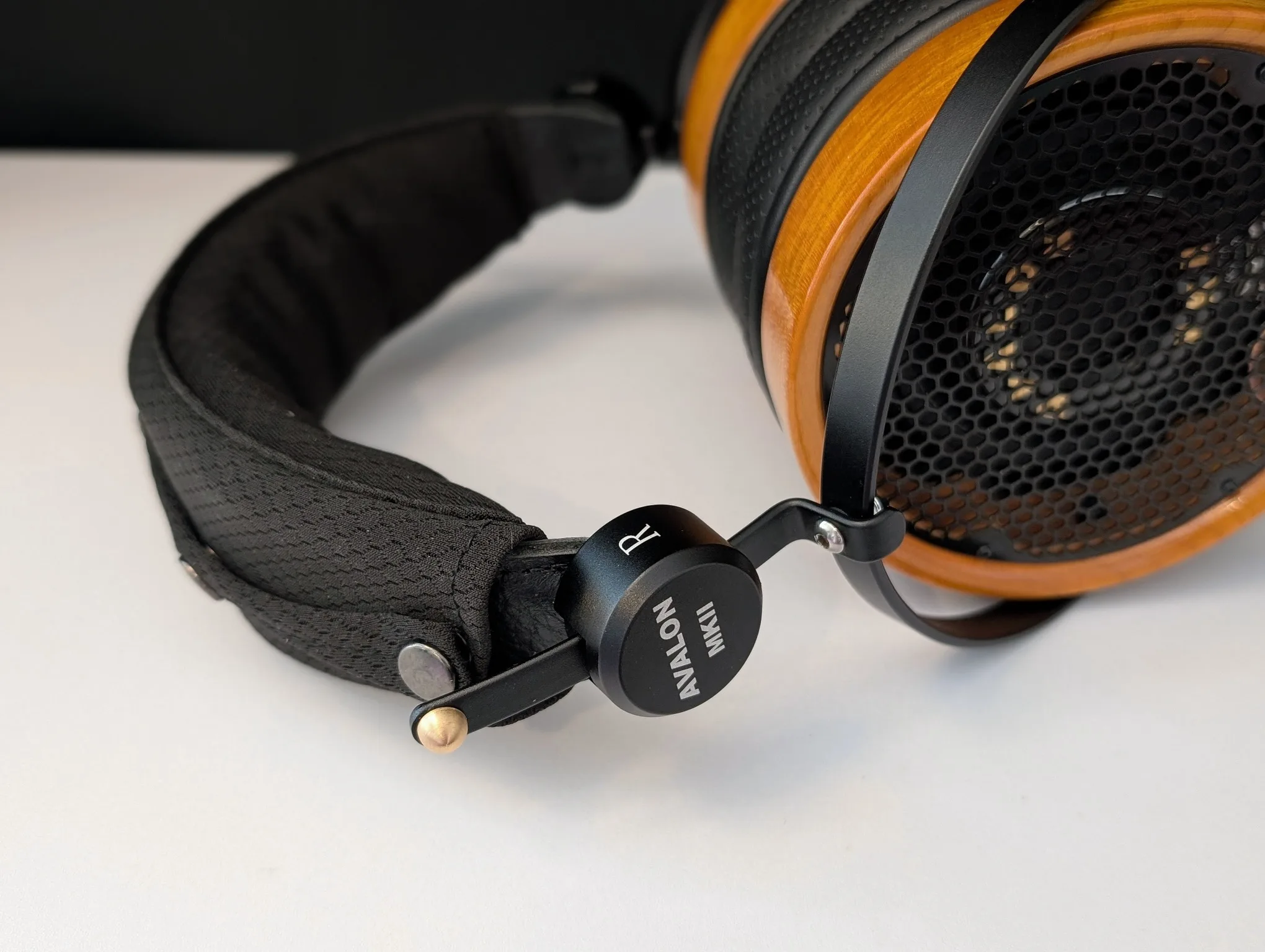
The Avalon mk2 is based on a headband and cup structure that is also sold separately in China. However, XK-Audio has opted for a structure reminiscent of old Hifiman models (e.g.,. HE-6) instead of the Audeze-style headband I most commonly see. Here, the headband attaches to the main band with two ”blocks” through which a metal part slides for height adjustment. In Hifiman headphones, these blocks were made of plastic, so they cracked as they became brittle. In the case of the Avalon mk2, durability also remains to be seen, but replacing the headband would be relatively inexpensive and easier than with Hifimans if needed.
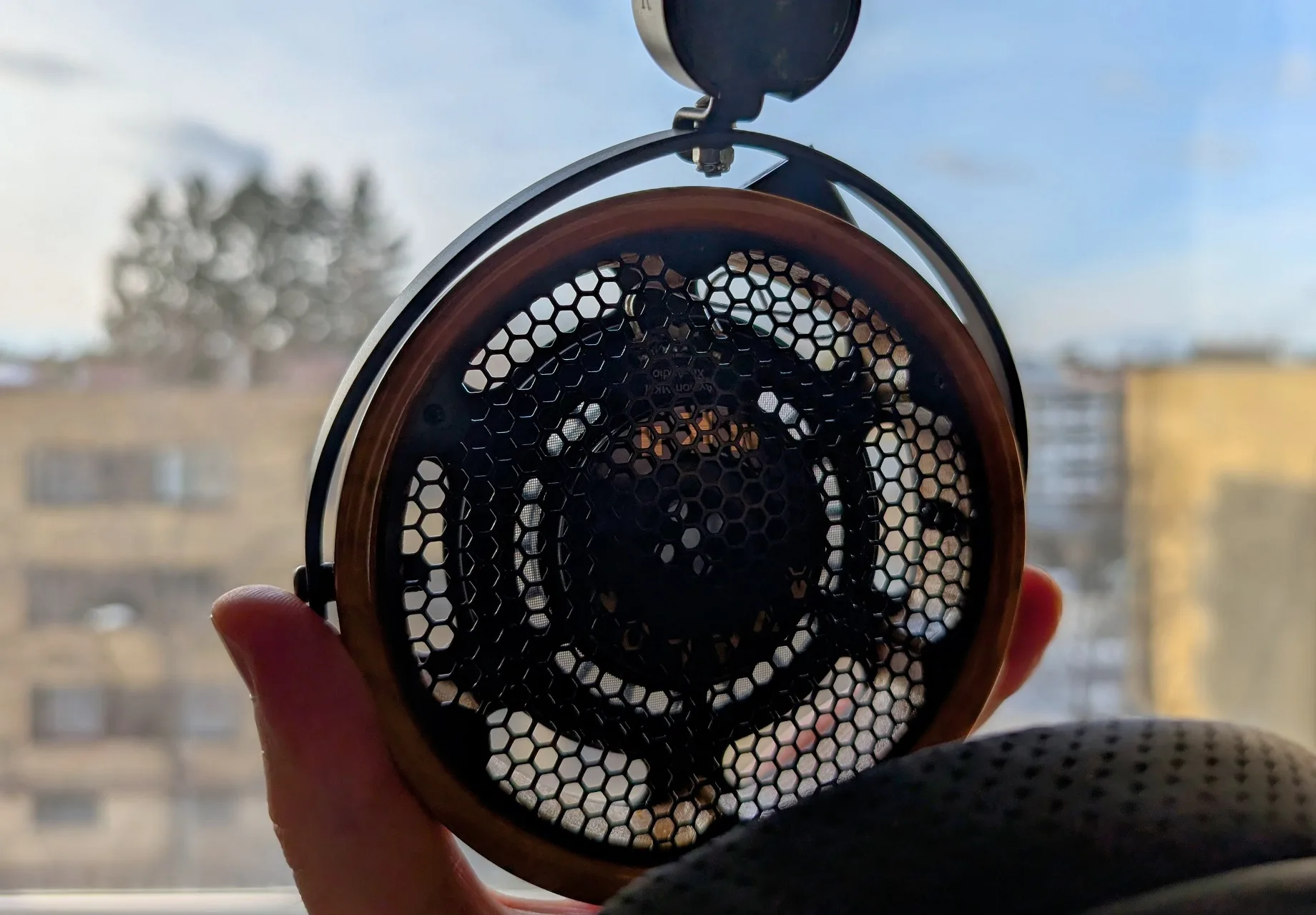
XK-Audio has had the name of their headphone model painted on the headband, so the part is not pure bulk material. As a minor drawback, the movement paths of the parts are quite stiff, meaning the bolts could have been tightened a little less. The 110-millimeter wooden cups, on the other hand, are fine and have also been excellently lacquered. The metal grilles conceal larger-than-usual 70-millimeter drivers, or rather, their magnetic structure. XK-Audio has added the name of their headphone model to the back of the drivers no less than twice: in a larger font on the magnetic structure and in small letters at the cable's soldering point.
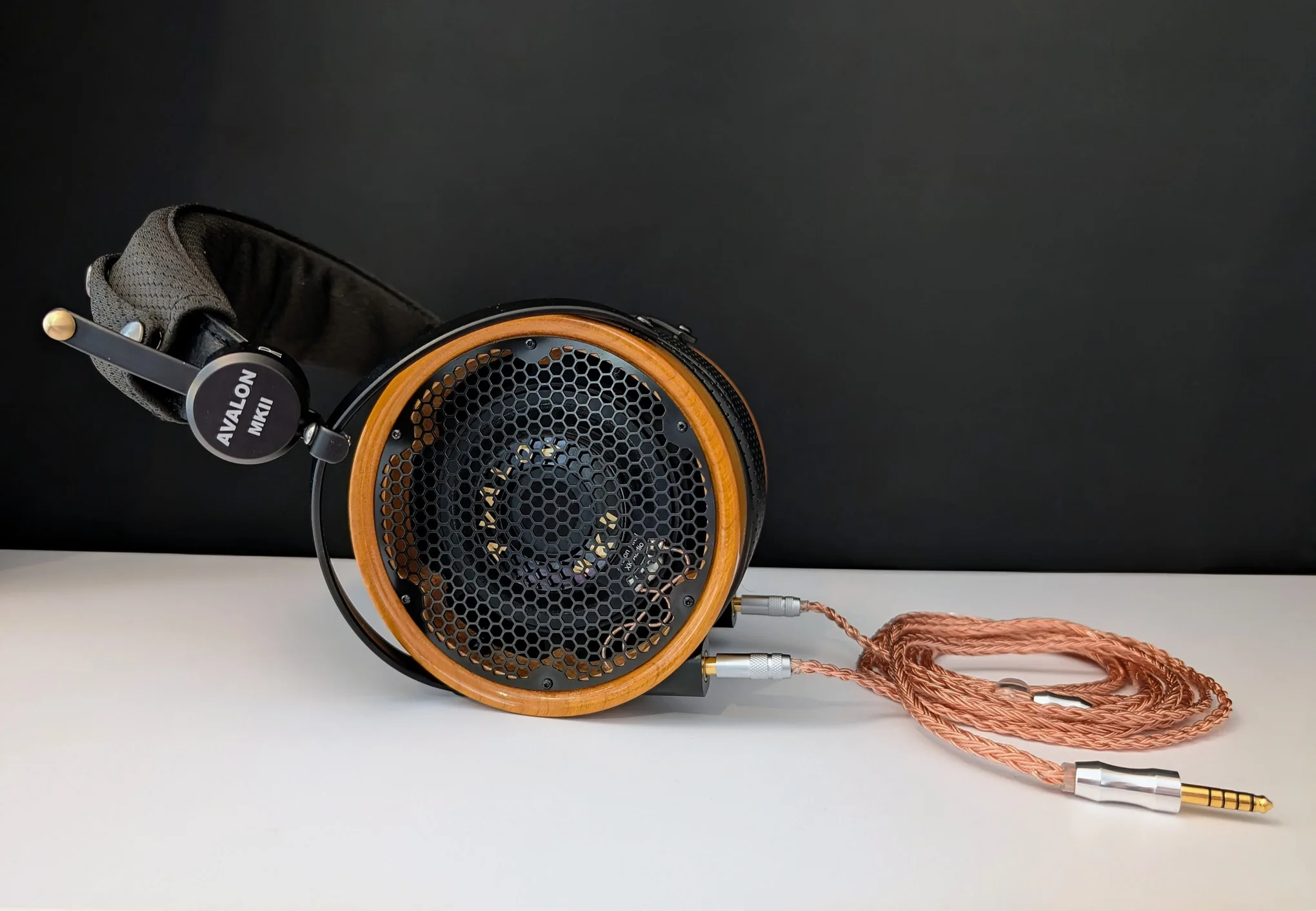
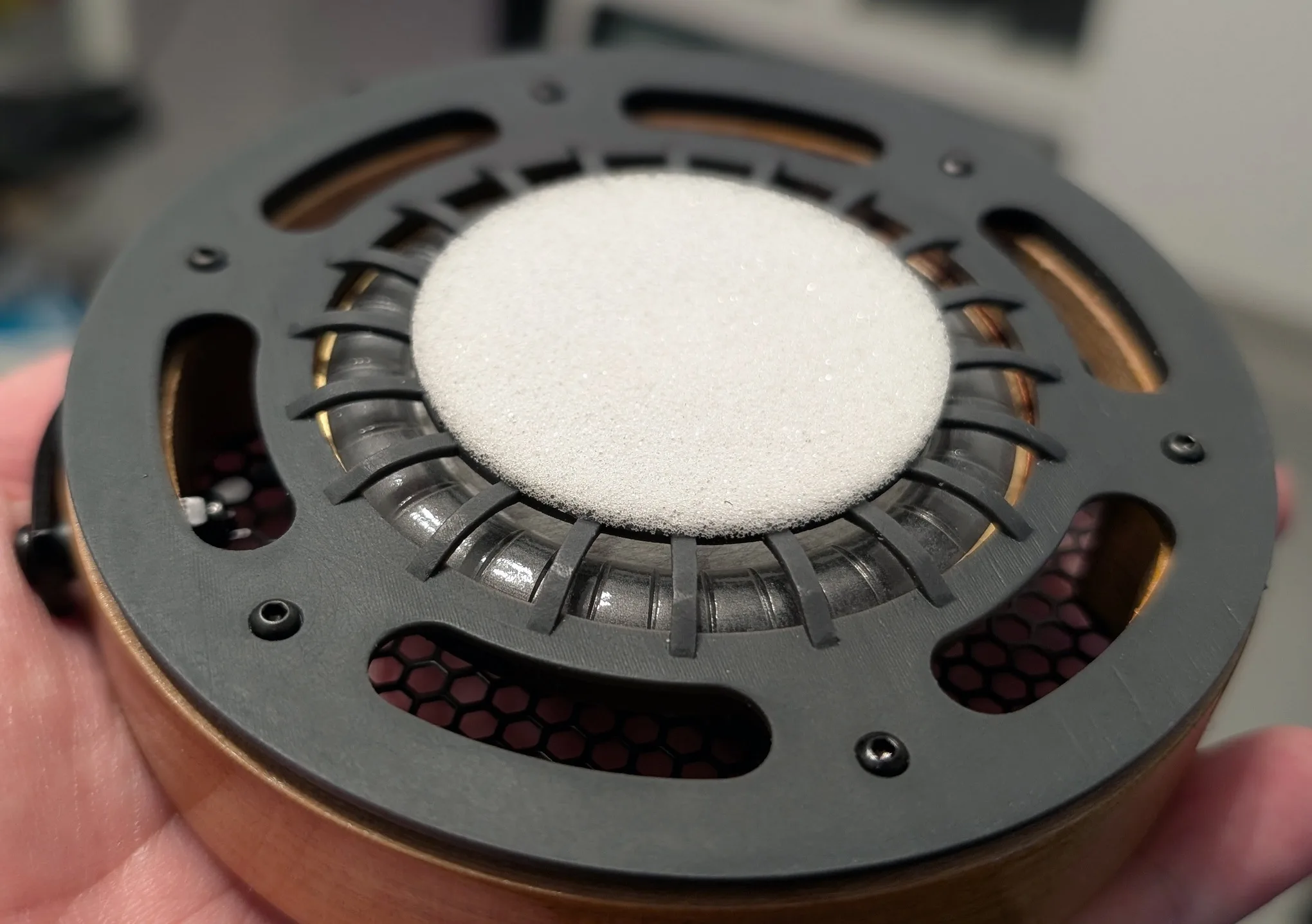
When removing the ear pad, it becomes clear that the driver's frame is also exceptionally open on its sides. Such an acoustic structure can be considered somewhat rare, as usually the amount of air flowing through the frame is restricted by some kind of paper or fabric layer. On the other hand, in the case of the Avalon mk2, the edge of the ear pad covers most of the openings, making the structure slightly more conventional during use.
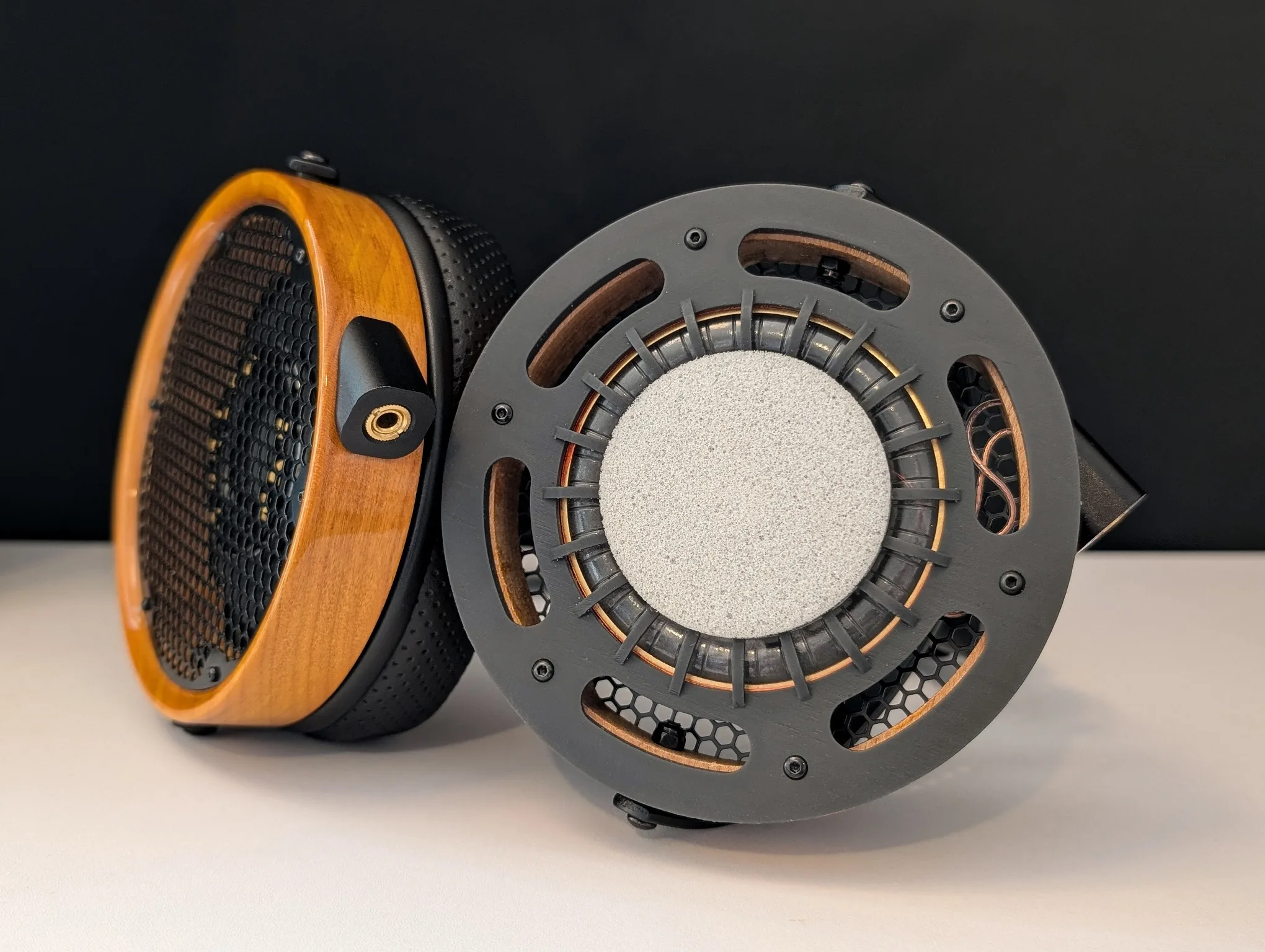
The driver itself also turns out to be interesting, because only the central part of the diaphragm is biosellulose and the gray edge part is some other material. A thin foam disc has been placed in the middle, which presumably dampens some treble. Similar drivers can be found, for example, in Aliexpress's selection implemented with 300-ohm impedance, but I haven't found any that simultaneously have this diaphragm and magnetic structure. XK-Audio certainly knows the local selection better than I do, or they have ordered the drivers customized according to their own wishes.
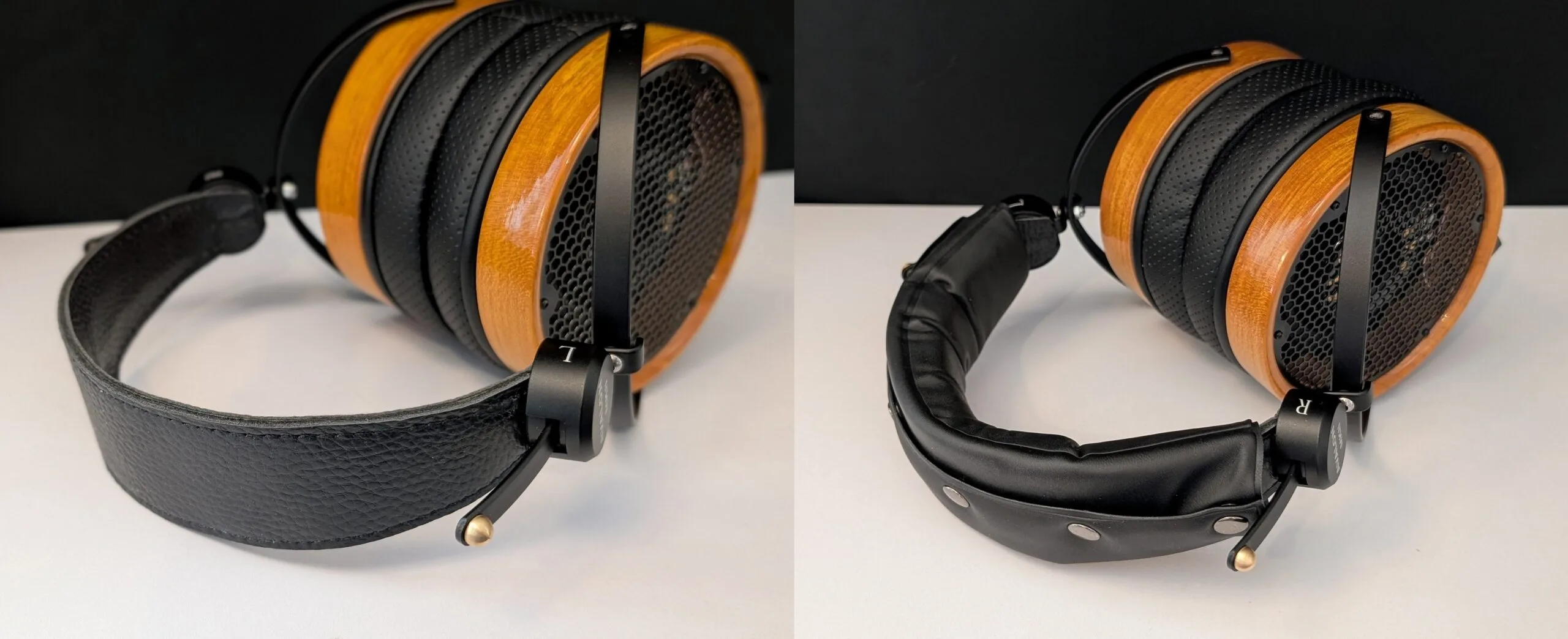
In terms of comfort, the Avalon mk2 is not the most optimal as it is, because the hard leather headband feels unpleasant on the top of the head. Fortunately, XK-Audio has included an additional, Beyerdynamic-style, head pad in the package, which alleviates the situation. The headphones are actually so large that without the additional pad, the height would already be too much for me even at the smallest setting, whereas with the pad, use is possible. I happened to already own various ZMF headband pads, of which both the Co-pilot Pad and the Crescent Snap visible in many of my photos further improve comfort, as I get rid of the ”hot spot” forming on the top of my head. With the Crescent Snap, the headphones also look a bit more stylish than with the artificial leather pad supplied by XK-Audio.
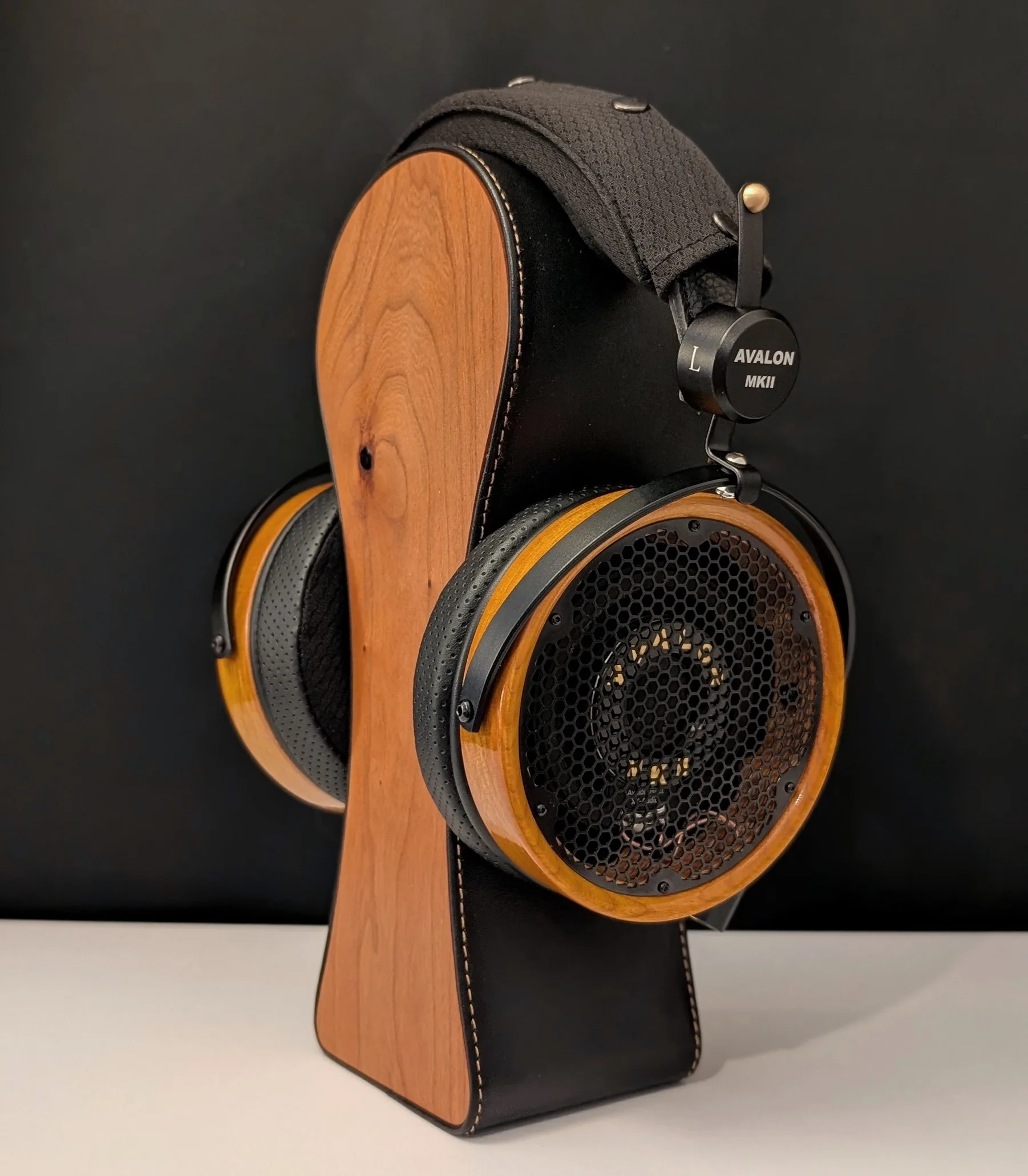
I eventually ended up modifying the clamping force of the Avalon mk2's headband, as by default it felt too loose, which also had an impact on sound quality. Fortunately, the steel arch of the headband was easy to bend steeper at its edges. After this, the headphones have been quite comfortable, and their 400-gram weight doesn't feel excessive either. Usually, however, I don't have to make such modifications, but the manufacturer has already fine-tuned the structure to be more functional.
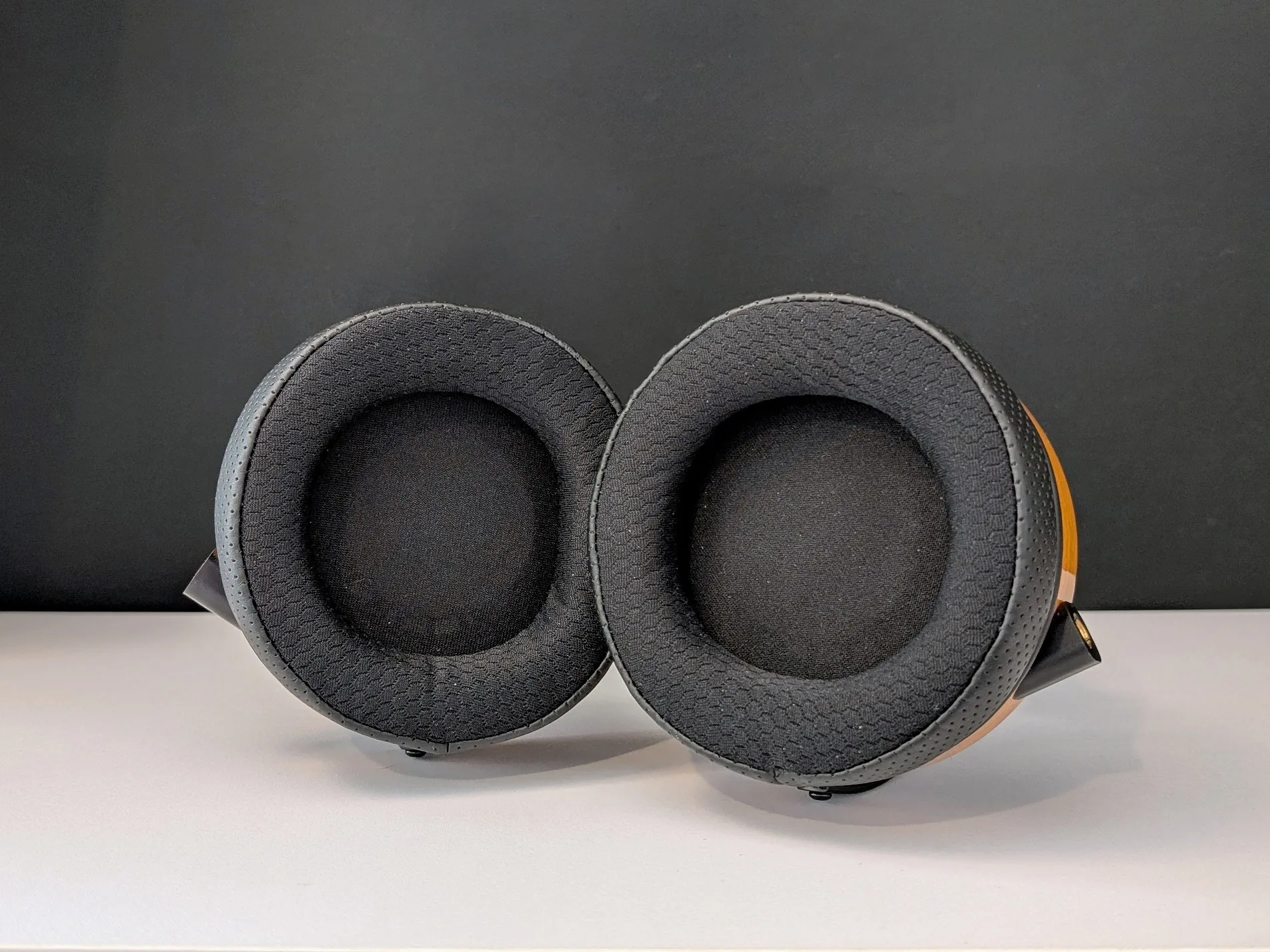
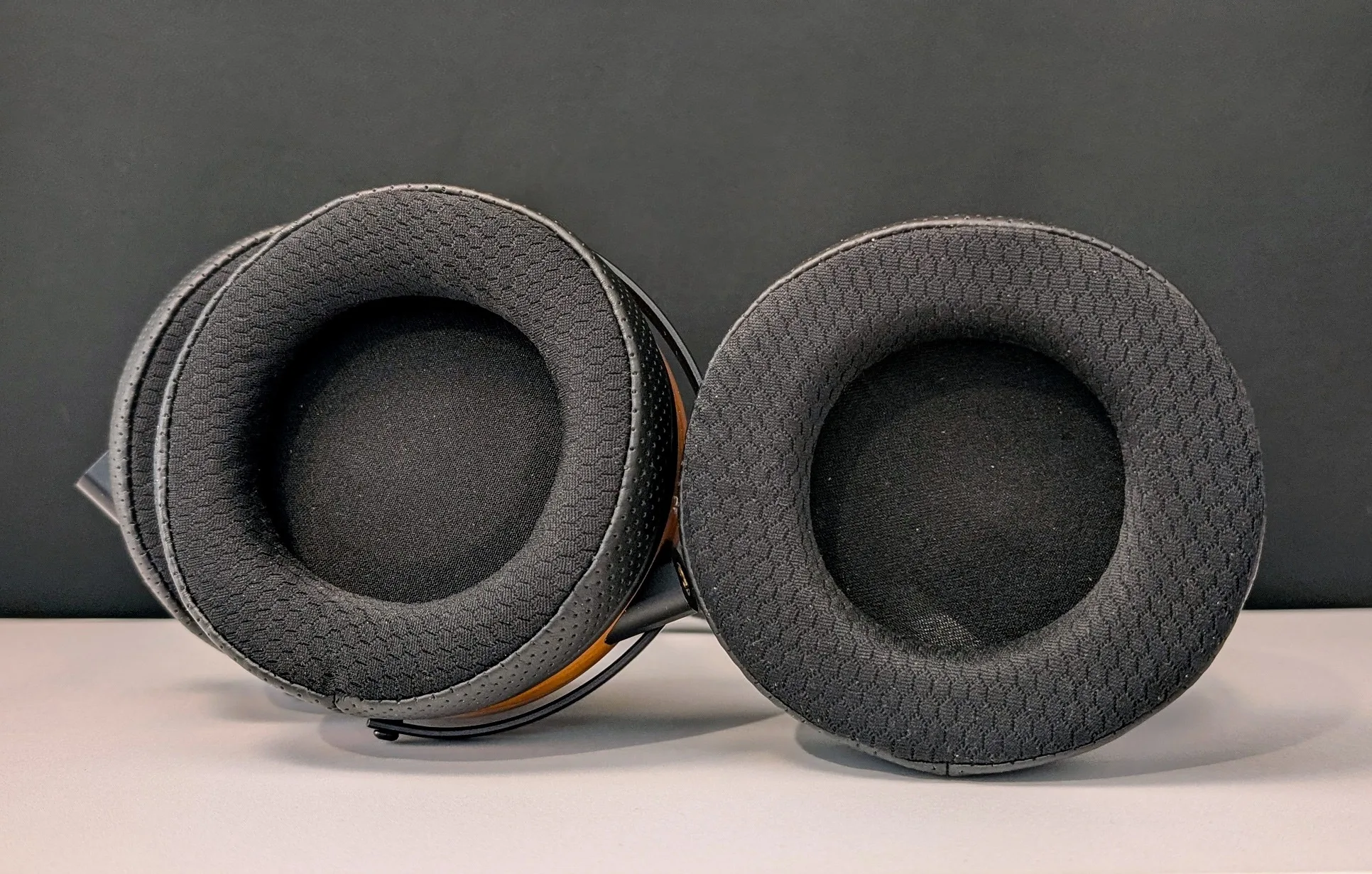
The hybrid-style ear pads resemble Hifiman's pads in terms of materials. The foam inserted inside the perforated artificial leather and sports fabric feels really soft. The ear opening of the pads is also exceptionally spacious, because otherwise part of the drivers' large diaphragm would remain hidden under the edge. For example, ZMF's pads could be swapped into the headphones, but due to the smaller ear opening, this should be forgotten from a sound quality perspective. Since it would generally be difficult to find a functional replacement for the standard pads, it is good that the buyer receives a second set of pads with the headphones. I thought these were identical, but the diameter of the ear opening is 5 millimeters smaller, meaning the rim of the pad is wider, in other words. This improves the fit of the headphones, and the wider edge also seals the air vents of the driver frame more tightly. Still, I wouldn't have believed how significant an impact such a small change has on the frequency response.
Sound quality
Our frequency response measurements have been made with a clone IEC-60318-4 coupler and KB501X pinnae. The Harman target curve from 2018 is used as a reference point and generalization of the headphone response that would sound good to most people. For more information on the measurements and their accuracy, see Headphone Measurementsfrom the page. The frequency response of the Avalon mk2 can also be compared with other measured headphones Squiglink .
Impedance measurements and amplification requirements:
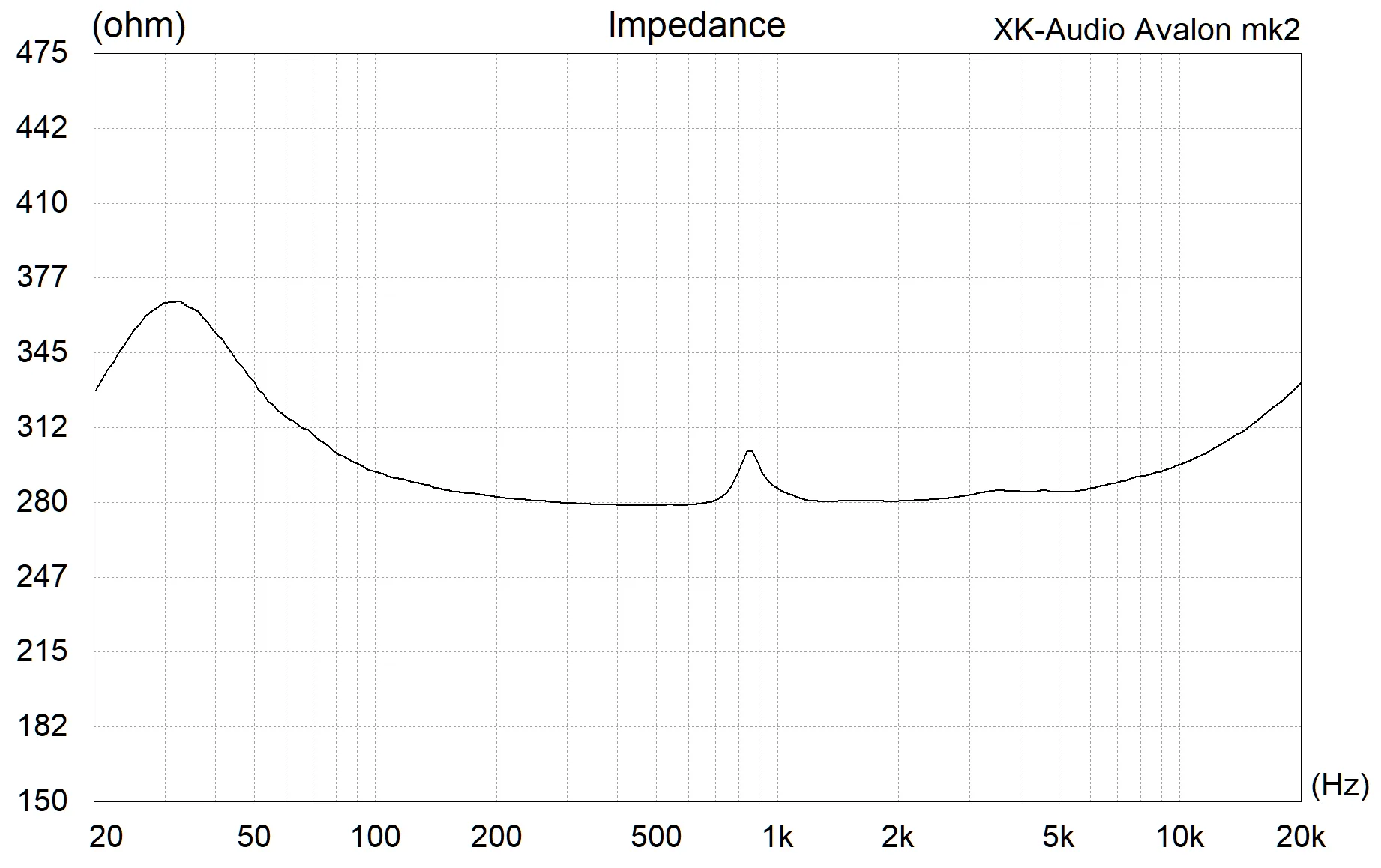
XK-Audio states the nominal impedance of the Avalon mk2 as 280 ohms and sensitivity as 97 dB/mW. The headphones thus correspond in their amplification requirements to many ZMF models and they would also be well suited for various tube amplifiers, even though they also work completely normally with, for example, slightly better USB audio adapters, such as iFi GO Linkwith, or battery-powered Qudelix 5Kwith. I myself have listened to the Avalon mk2 in this context mainly with the Topping Centaurus & Ferrum Audio OOR combination.
Based on my measurements, the impedance of the Avalon mk2 mainly settles around 280 ohms, but rises upwards at the extremes of the frequency band to a maximum of 360 ohms. However, the impedance is sufficiently high throughout so that, for example, an amplifier's 120-ohm output impedance practically does not change the frequency response at all compared to an output impedance of less than 1 ohm. The Avalon mk2 is thus almost immune to equipment impedance from a frequency response perspective.
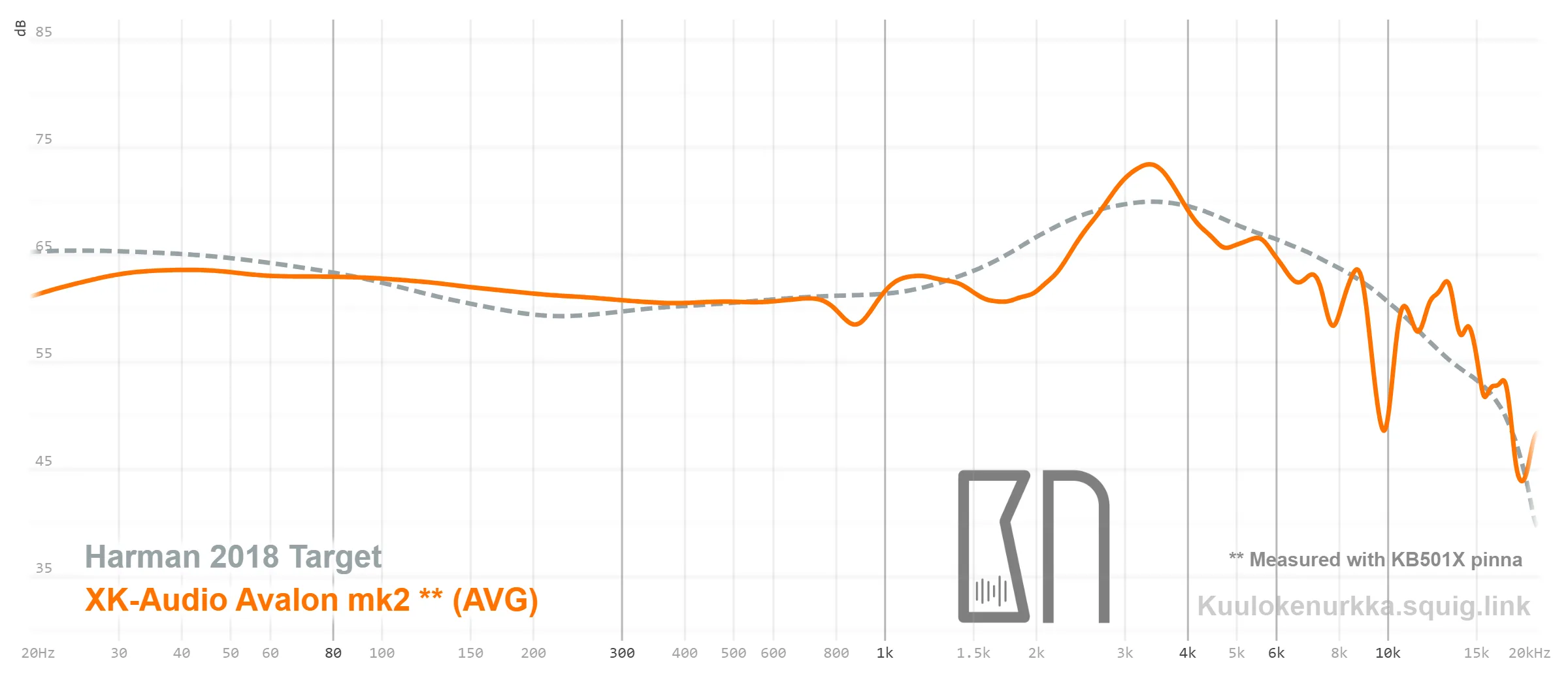
Frequency response with default pads:
Frequency response with wider-rimmed pads:
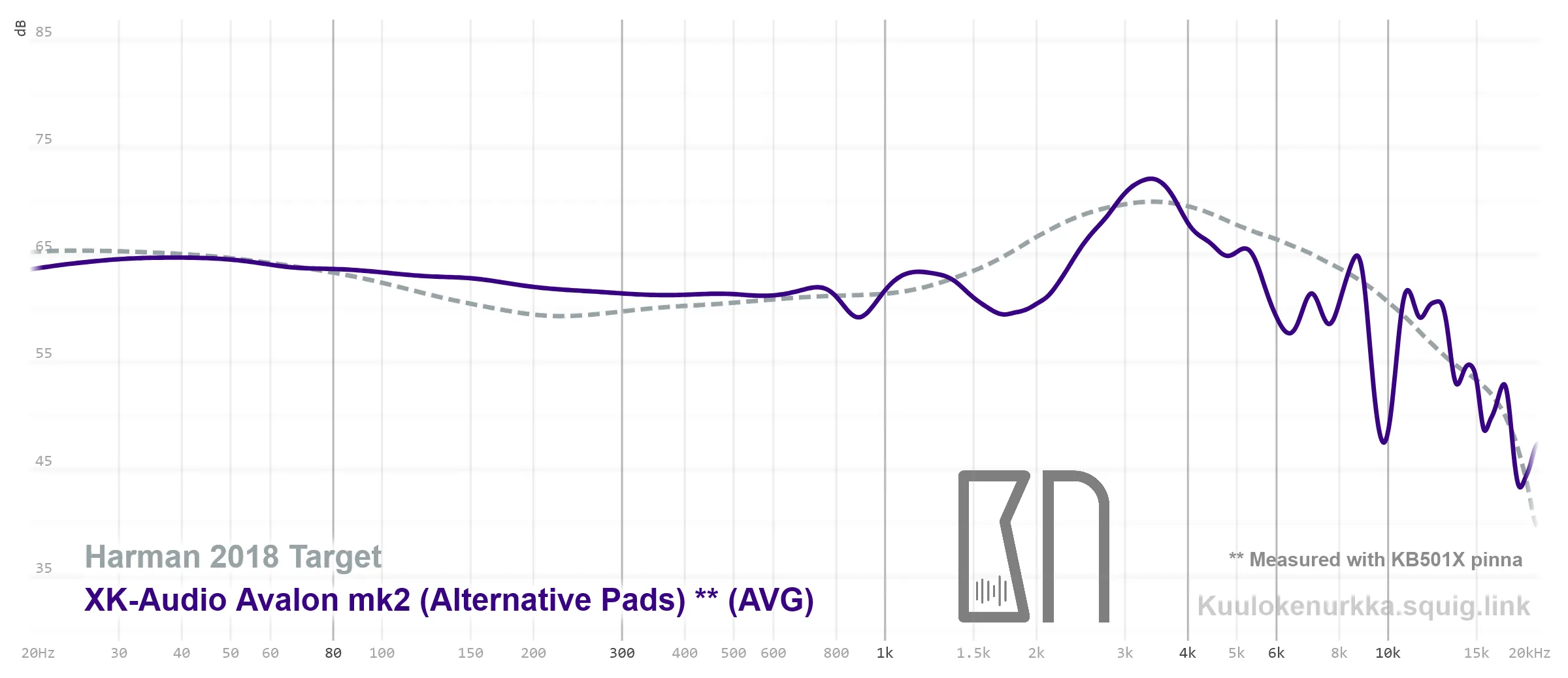
Based on its frequency response, the Avalon mk2 may not necessarily seem like an exceptional headphone, but that's better. The tuning sufficiently follows Harman's target curve, so the manufacturer clearly knows their stuff. The drivers must also be capable from the start, as they haven't really been radically adjusted with cup structure or damping materials. I find myself getting excited listening to the Avalon mk2 time and time again, so I dare say it's a really good headphone for its price.
Despite its open design, the Avalon mk2 reproduces bass with excellent solidity, as long as the earpads fit snugly around the ears. The steadily rising sub-bass is reminiscent in style of Fostex's semi-open headphone models, such as TR-X00 Purpleheartand TH-900:aa. The bass hits with exceptional looseness, dynamism, and physicality, which makes the Avalon mk2 a fun headphone for electronic music, for example. With wider-edged earpads, the sound is already really robust and warm, whereas the default earpads keep the upper bass more neutral and thus the mid-frequencies clearer. Although modern open-back headphones can at their best offer a similar amount of bass, they rarely sound as powerful as the Avalon mk2. Secretly, I hoped XK-Audio's headphones would be just like this, and they are!
Biocellulose drivers can be somewhat tricky treble reproducers, but XK-Audio has managed to tame the high frequencies into balance. I don't detect any major boosts or dips, which is also confirmed by the smooth-sounding frequency sweep. Even the very highest frequencies sound natural, bringing effortless airiness to the reproduction. For my taste, there's just the right amount of treble, but a slightly brighter presentation could, on the other hand, feel more detailed. With other earpads, the sound becomes darker, but I perceive a slight harshness and emphasis at 8 kilohertz. The default earpads are therefore the best choice for treble.
The mid-frequencies in the Avalon mk2 resemble Hifiman headphones, such as Edition XS:ää and Ananda with the difference that the 1–1.5 kilohertz range is reproduced more energetically, if not even slightly emphasized. Thanks to this, the mid-frequencies don't lose as much of their edge, even though the 2–2.5 kilohertz range is reproduced in a relaxed and soundstage-widening manner, similar to Hifiman. Hifiman headphones, in my opinion, sound a bit thinner and softer in their mid-frequencies. The Avalon mk2 doesn't offer the most present reproduction either, but listening to it is pleasantly easy given how clear the sound is. So, I can't really think of any major improvements.
If I had to point something out, the area around 3 kilohertz wouldn't need to be reproduced quite as energetically. At its best, this livens up the sound, while at times it adds a slightly coarse nuance to the reproduction. However, I consider a more peculiar characteristic to be how the Avalon mk2 reproduces the 's' sounds of some vocalists remarkably softly, as if attenuating them. There's no need to worry about emphasized sibilance when listening to these headphones, but it's not the most neutral presentation either. I would guess this is due to small boosts at 1 and 3 kilohertz in relation to how calmly the treble is reproduced. The headphones slightly amplify breaths and exhalations, making the softened sibilance frequencies come as a kind of surprise compared to what my brain expects. I don't find this particularly bothersome, but as a characteristic, it is interesting.

The large drivers and open design of the Avalon mk2, with its current tuning, create a realistic sense of space for me. The forward-projecting depth perception could certainly be made even better by tilting the drivers, but the sound is reproduced interestingly spacious in height – this is a more typical feature for large planar drivers. Furthermore, the positions and movements of sounds are distinctly and separately discernible with the Avalon mk2. When talking about dynamic headphone models, the Avalon mk2, in my opinion, manages to stand out from the crowd precisely in the impactfulness of its reproduction. In many planar headphones, the treble is brighter, so they draw more attention to the small nuances of music, for better or worse.
Since Peerless By Tymphany drivers, sold for about 10 euros each, are used to make headphones costing over 2000 euros (Palma Audio DHS-1), it would be even easier to make an expensive product from 70-millimeter drivers sold for 80–100 euros each. The Avalon mk2, costing about 550 euros, shows above all how much air there is in the price of many headphones nowadays. Of course, money can be spent on designing a higher-quality structure, and the profit margin sought by sellers is clearly larger than for many other electronics. Slightly more refined, the Avalon mk2 could, in my opinion, easily cost, for example, 1500 euros as a product sold in Western countries. On the other hand, despite the monetary savings, not all headphones from unknown small manufacturers are likely nearly as good, so the risk of a bad purchase is obvious.
Summary
Searching for and ordering headphones from Taobao brought a little excitement to life, and I also knew I would get a product that perhaps no one else in Finland has. In the future, this will be ensured by the fact that the XK-Audio Avalon mk2 I chose will apparently no longer be manufactured. Quite a coincidence, that.
I'm not entirely sure if I would yet recommend ordering from Taobao via a postal agent, but I didn't encounter any problems when using CSSBuy. Rather, there would ultimately be quite few other risks, as long as the postal agent manages to order the product and it functions normally upon arrival in Finland. Since warranty matters for headphones would be complicated, I would not necessarily buy anything hugely expensive, or I would, if possible, choose a product from a manufacturer that is somewhat known. XK-Audio would offer a one-year warranty for its headphones if the manufacturer can be reached, for example, via Taobao or We Chat. It would even repair a cracked wooden cup at its own expense for the first time.
I personally hope for a long life for the Avalon mk2, because it is a really good headphone. Perhaps precisely because of the different buying experience, I also consider it quite special, somewhat in the same way as, for example, ZMF's handmade headphones. I would even be tempted to say that this is what Chinese products could be at their best, if we weren't accustomed to cheap mass production, but could more often enjoy local ingenuity and more exotic solutions. On the other hand, XK-Audio also engages in copying Western manufacturers, making almost direct pirate products of ZMF, ABYSS, and T+A headphones. I do not support this, so I hope XK-Audio focuses instead on developing its own headphone models. Based on the Avalon mk2, it knows how to make those too.
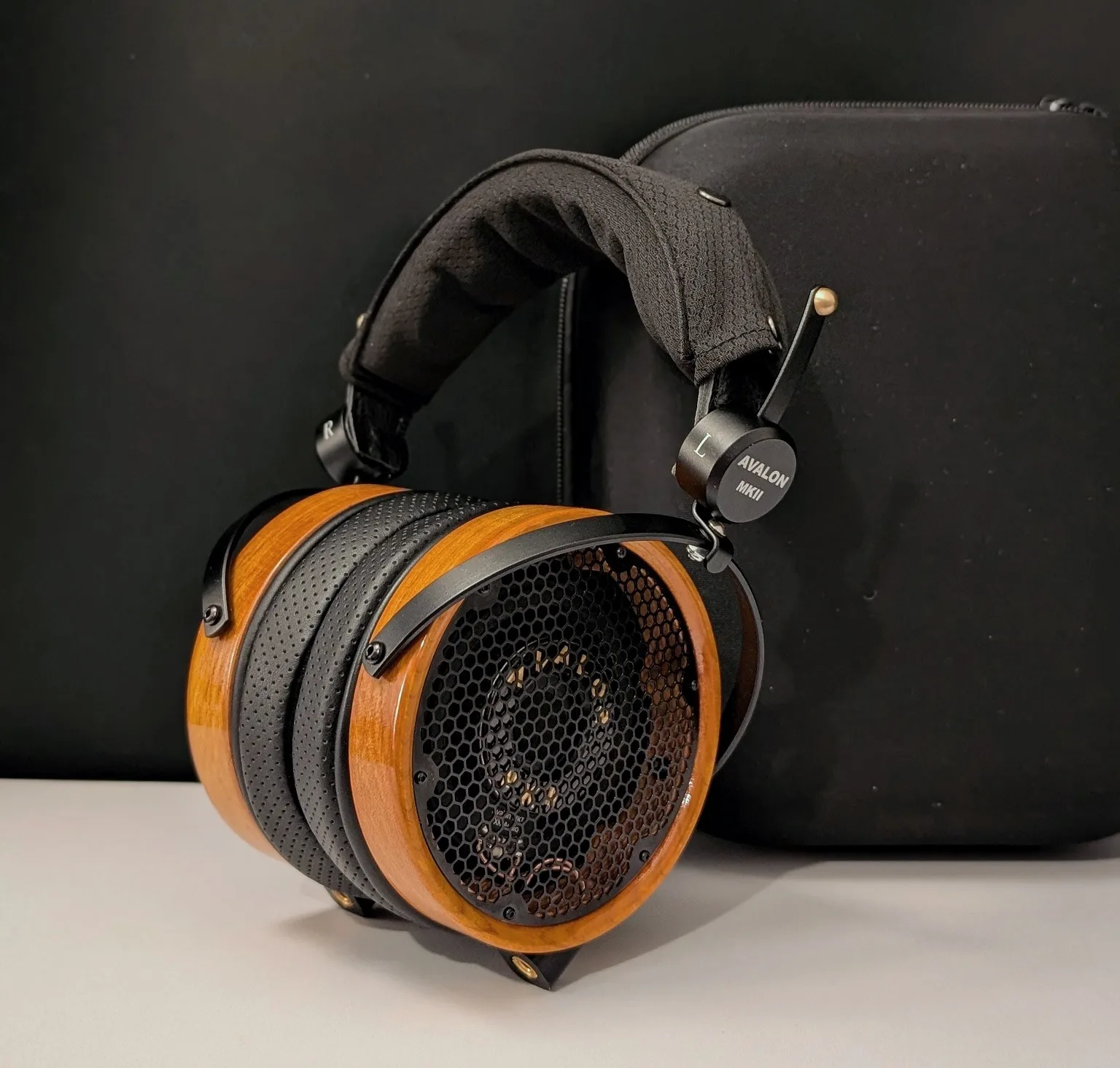
The Avalon mk2 does not fully convince with its headband structure or, without small modifications, with its comfort either, but the large drivers and sound quality make it an interesting headphone. Slightly more refined, similar headphones would have the potential to succeed internationally outside of China as well. I intend to follow XK-Audio's achievements on Taobao in the future. If it releases something interesting, I might even place a new order. The headphone market is somewhat stagnant, so products that stand out from the crowd interest me even more.
Pros and cons of the headphones:
+ Balanced and engaging sound
+ High-quality bass reproduction
+ Realistic soundstage
+ Unique drivers
+ Well-finished wooden cups
+ Good equipment
+ Competitive price
– Large size of the structure
– Comfort requires self-modification
– Only sold in China, and strictly speaking, not even there anymore
 EN
EN  FI
FI
In my opinion, Taobao's search works in English or even Finnish and does deliver to Western countries, such as the USA, Canada, and Australia.
It would indeed be a very interesting headphone, but the complexity of ordering doesn't really inspire me to try.
Came across JM Audio XTC2 headphones, which resemble these somewhat. Of course, this design isn't that unique in the headphone world.
The cups with their grilles are indeed similar in JM Audio's headphones, because JM seems to acquire ”building blocks” from China either directly as off-the-shelf items or slightly customized.
Okay, no wonder. 🙂 Will the headphones stay in the collection or will they ever go up for sale?
I won't claim that I wouldn't sell the headphones someday, but at least for now, I'm holding onto them firmly in my own collection. 🙂
Okay. 🙂 On Aliexpress, the Avalons with taxes would be a little over 600€. I'll have to see if I dare to order them at some point, if they don't disappear from there. They seem to be exactly to my taste sound-wise.