Author: Sword of Damocles
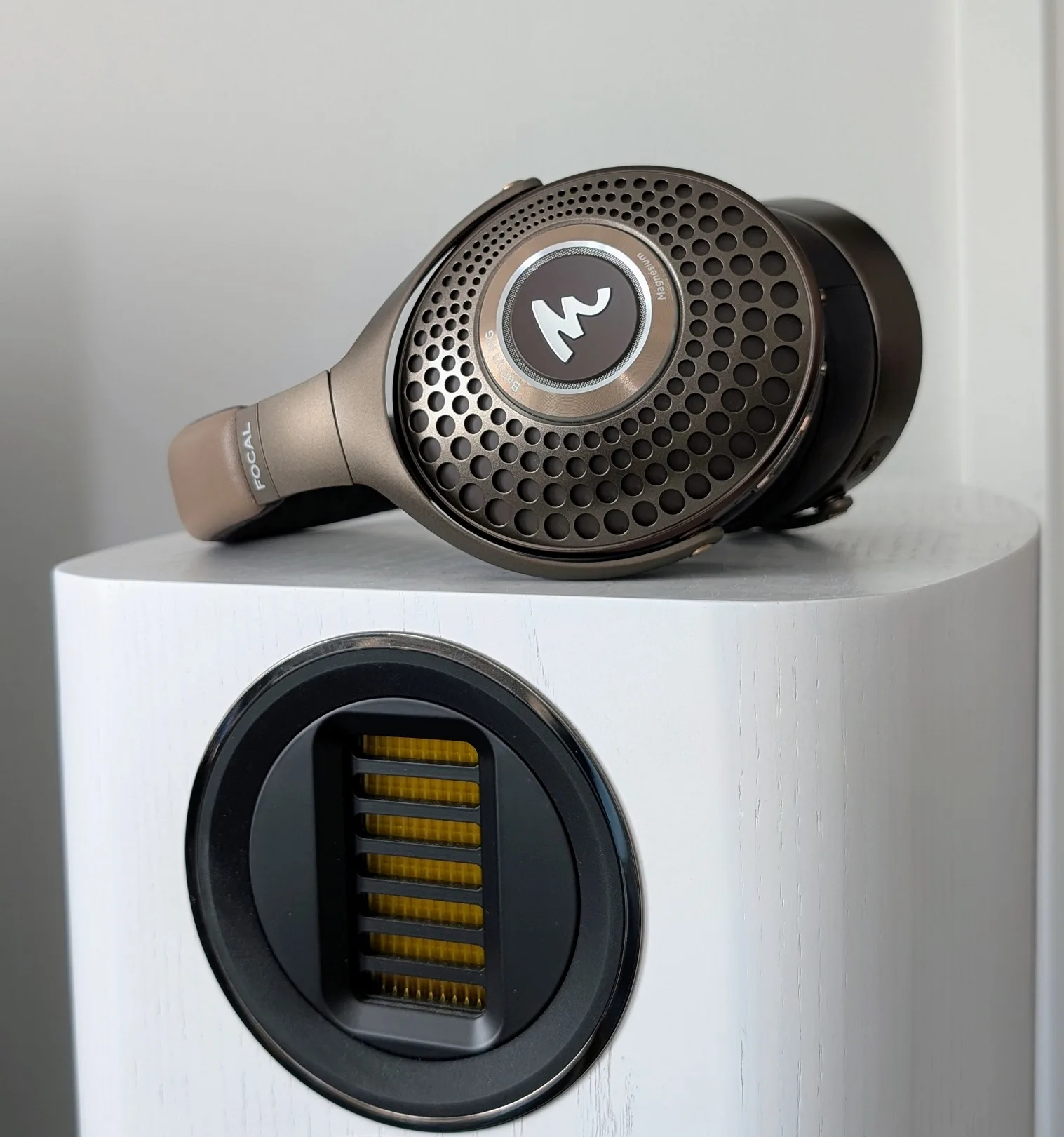
Table of Contents:
Information:
- Released: 2025
- Country of Origin: France (drivers) & China (electronics and assembly)
- Price: 1199 €
- Type: Closed, over-ear
- 40 mm dynamic drivers (magnesium diaphragm)
- Audio connections: Bluetooth 5.2, USB-C, and 3.5 mm
- Bluetooth codecs: AptX Adaptive, AptX, AAC and SBC
- Charging port: USB-C
- Battery capacity: 1060 mAh
- Battery life (Bluetooth/AUX/USB-DAC): 30 h / 35 h / 42 h
- Charging time: 1.5 hours (Supports fast charging: 15 minutes provides 5 hours of playback time)
- Active noise cancellation: On (Silent/Soft) / Transparency mode
- Features: Multipoint, Google Fast Pair, voice assistant (Google Assistant/Siri/Alexa), USB-DAC mode, Mimi hearing test, and a mobile app with an equalizer
- Weight: 350 g
- Accessories: Carrying case, USB charging/audio cable (length 1.2 m), and headphone cable (3.5 mm)
Review sample: Self-purchased product
Kuulokenurkka's diligent active noise-canceling headphone testing during the summer revealed new gems from the 300–500 euro price rangeAKG N9 Hybrid and Bose QuietComfort Ultra) as well as half-disappointments (Sony WH-1000XM6 and Bowers & Wilkins PX7 S3). Now, however, as a late bonus, we get to explore an active noise-canceling headphone from a completely different price tier, as Focal’s brand-new Bathys MG is on my ears (manufacturer's product page).
While the original Bathys already cost a whopping 800 euros by ANC headphone standards, the MSRP of the new model has risen by another half to 1200 euros. Considering that the current market price of the Bathys is 700 euros, you have to pay as much as 500 euros more for the MG version, even though the two seem very similar in terms of build and features. What, then, has changed, and does the price hike make any sense?
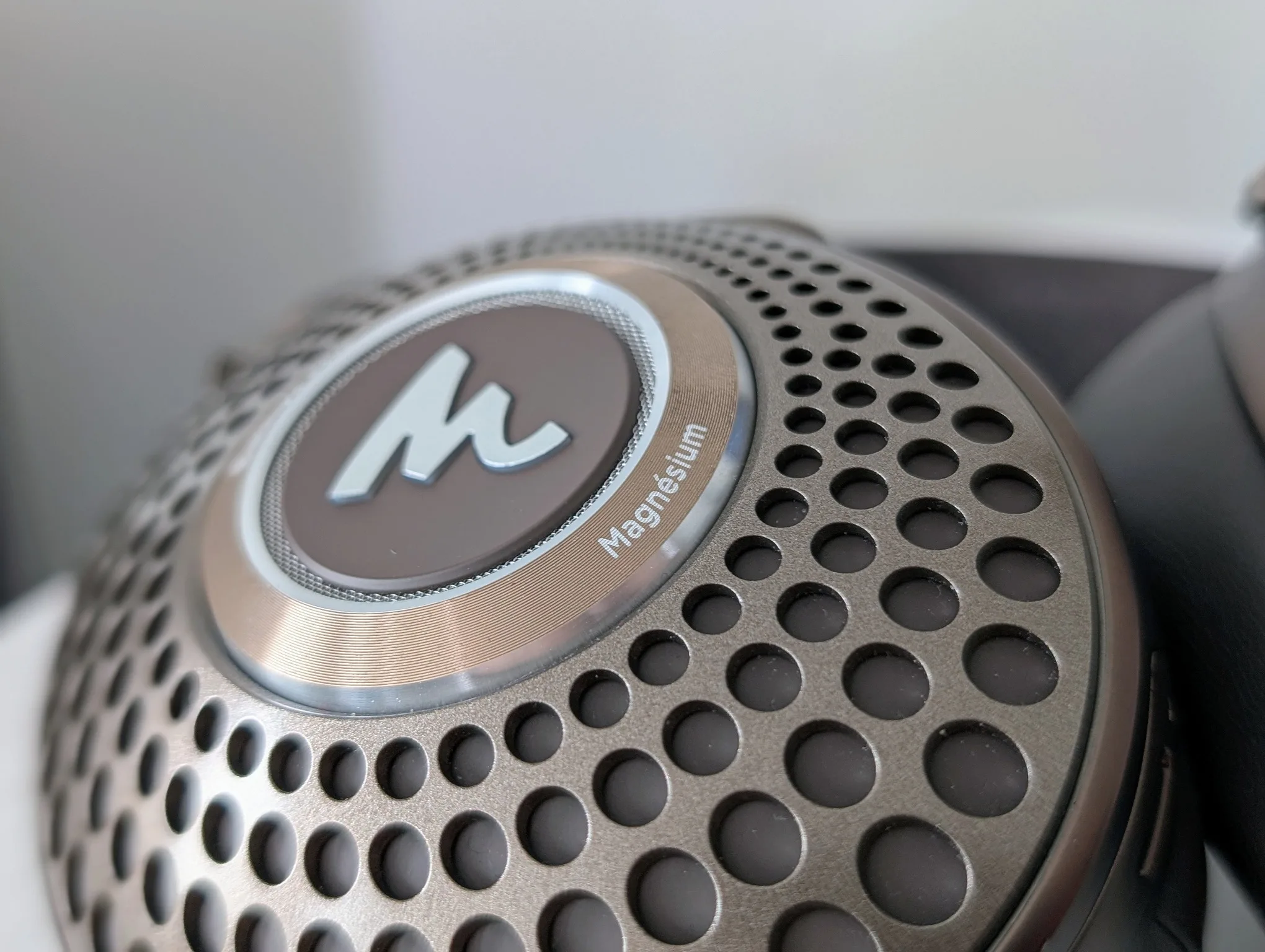
In addition to a more luxurious color theme, Focal justifies the higher price with slightly more effective active noise cancellation and redesigned dynamic drivers. The M-shaped diaphragms of the original Bathys are made of an aluminum-magnesium alloy, whereas the diaphragms of the Bathys MG are, as the name suggests, pure magnesium. A similar change took place back then between the Clear and Clear MGmodels, where the coloring also changed from grey to brown, much like in the Bathys series. The development trend feels consistent. At Kuulokenurkka, however, we don't get carried away by marketing slogans, but instead find out about the updates on a more concrete level. So let's get to work.
Packaging and accessories
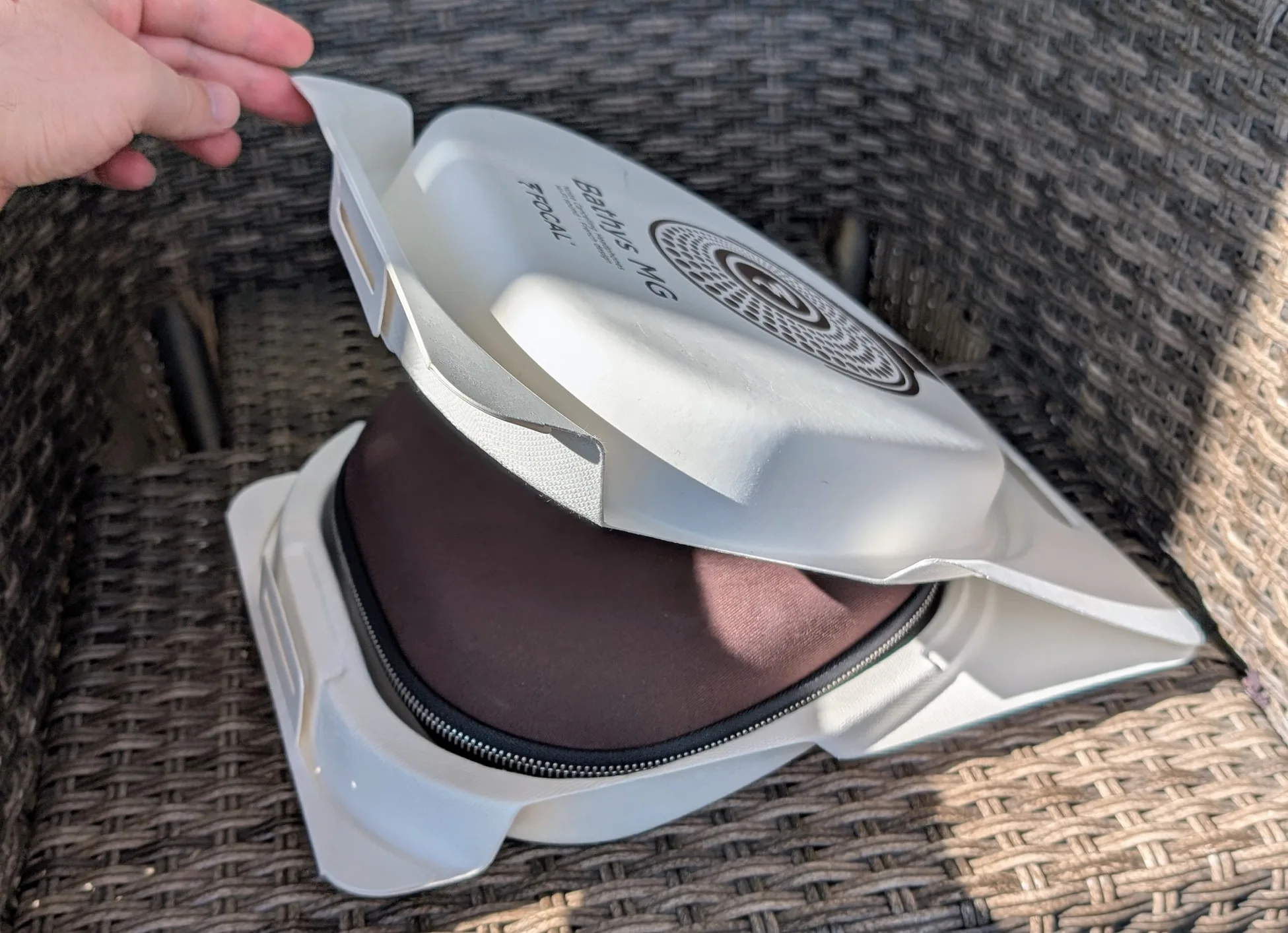
Focal has, in line with current trends, abandoned the traditional cardboard box and replaced it with cardboard sleeves shaped like the headphone case. This is quite sufficient for extra protection, but it would certainly be nice to have a 1200-euro flagship product packaged a bit more luxuriously.
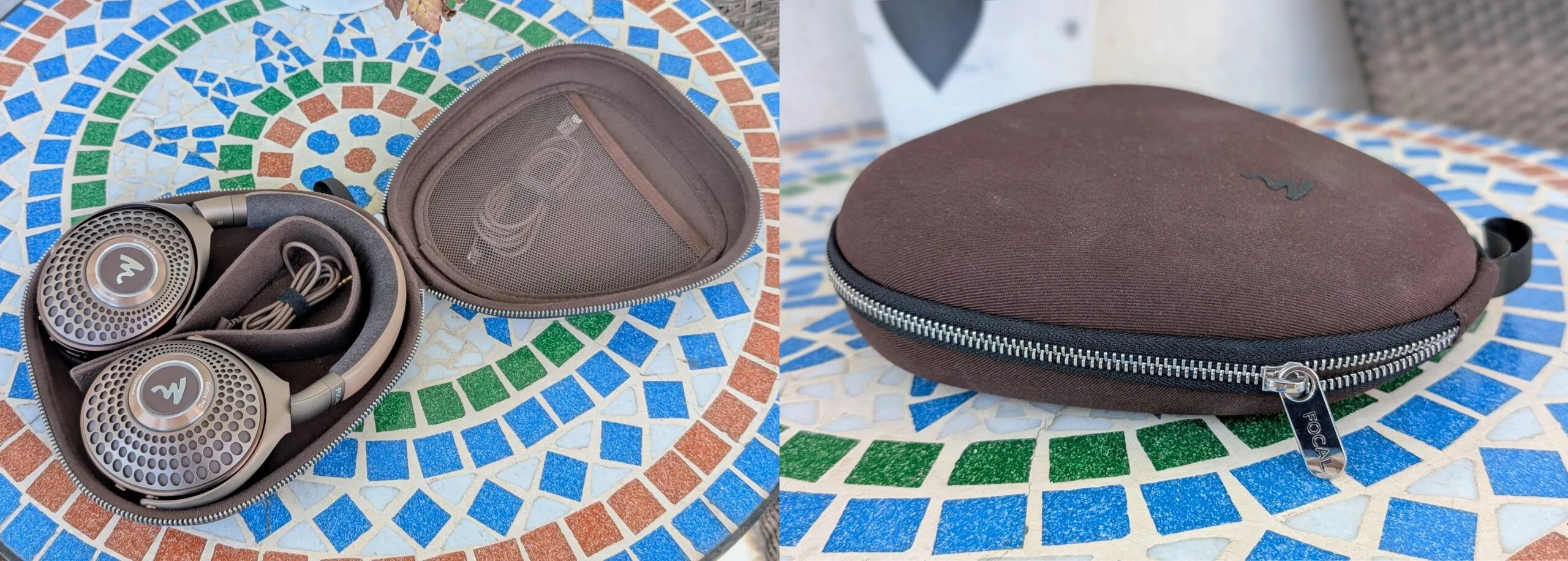
The brown carrying case is identical to the one included with the manufacturer's Hadenysheadphone model, with the exception that the zipper has been replaced with a larger and more durable one. Using it also feels smoother than before, so the change is a success. However, I am not particularly fond of the color choice for the case, because when the brown fabric rubs against something or is rubbed with fingers, for instance, light-colored patches form on the surface. These cannot be removed, so the case has turned scruffy and worn-looking almost by itself, even though it hasn't faced any actual wear and tear. From the perspective of carrying the headphones, however, the case is practical and of a handy size. For an ANC headphone that is larger than usual, the Bathys MG takes up hardly any more space in a backpack or bag compared to the slimmest products on the market.
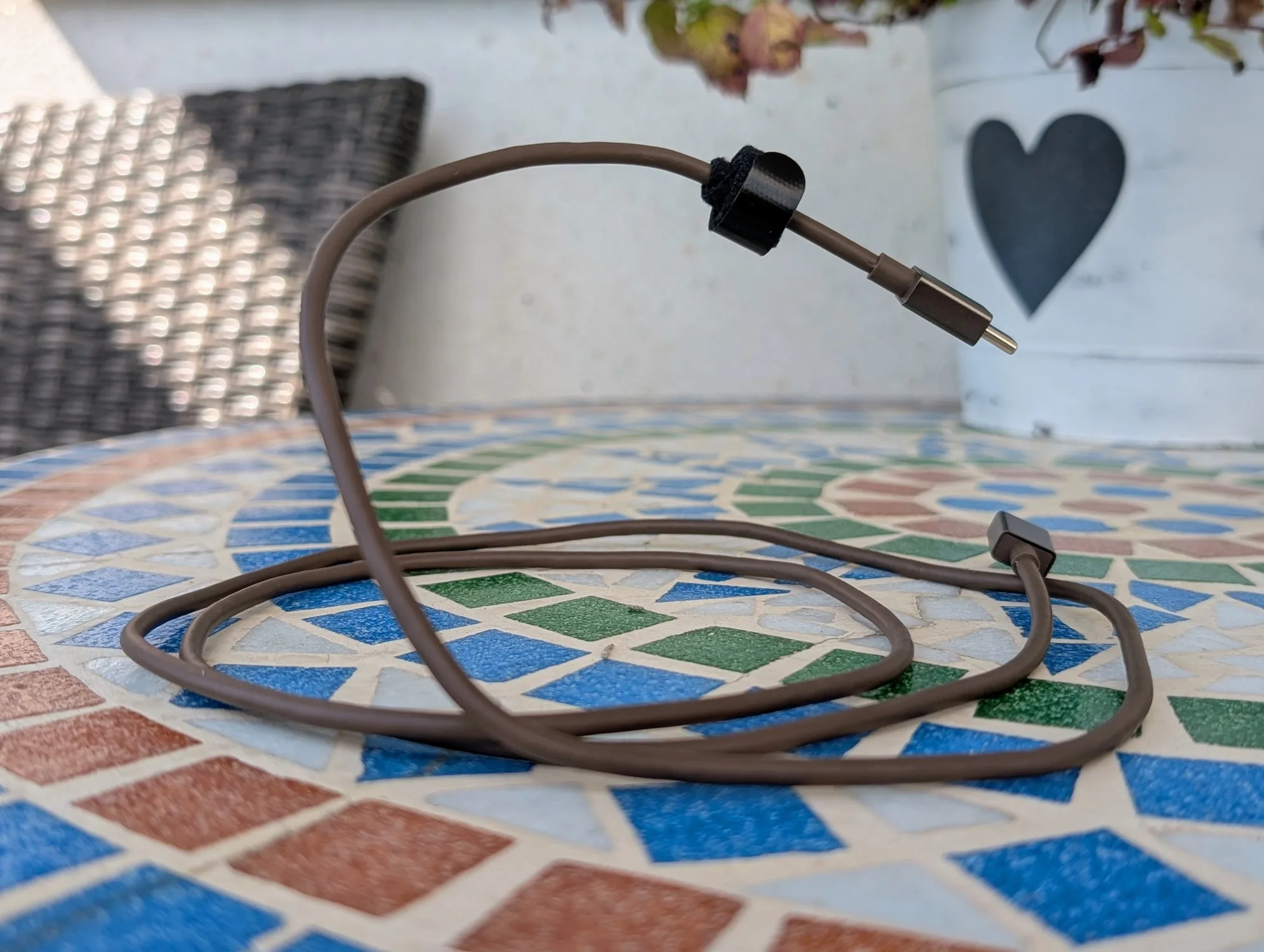
Accessories included in the package are a USB-C charging/audio cable and a headphone cable with 3.5 mm connectors. Both cables are 1.2 meters long and have a rubbery surface. I think the metallic connectors of the USB cable featuring the Focal logo are nice, but otherwise the cable feels quite stiff and unpleasantly sticky. The size of the USB-C connectors also differs slightly from the standard, making plugging them in a tad awkward. On the other hand, thanks to its tightness, the cable won't accidentally detach during use. I haven't used the headphone cable because it cannot be straightened out from the creases caused by packaging. Manufacturing practical or even normal cables seems to be nearly impossible for many companies.

Build and comfort
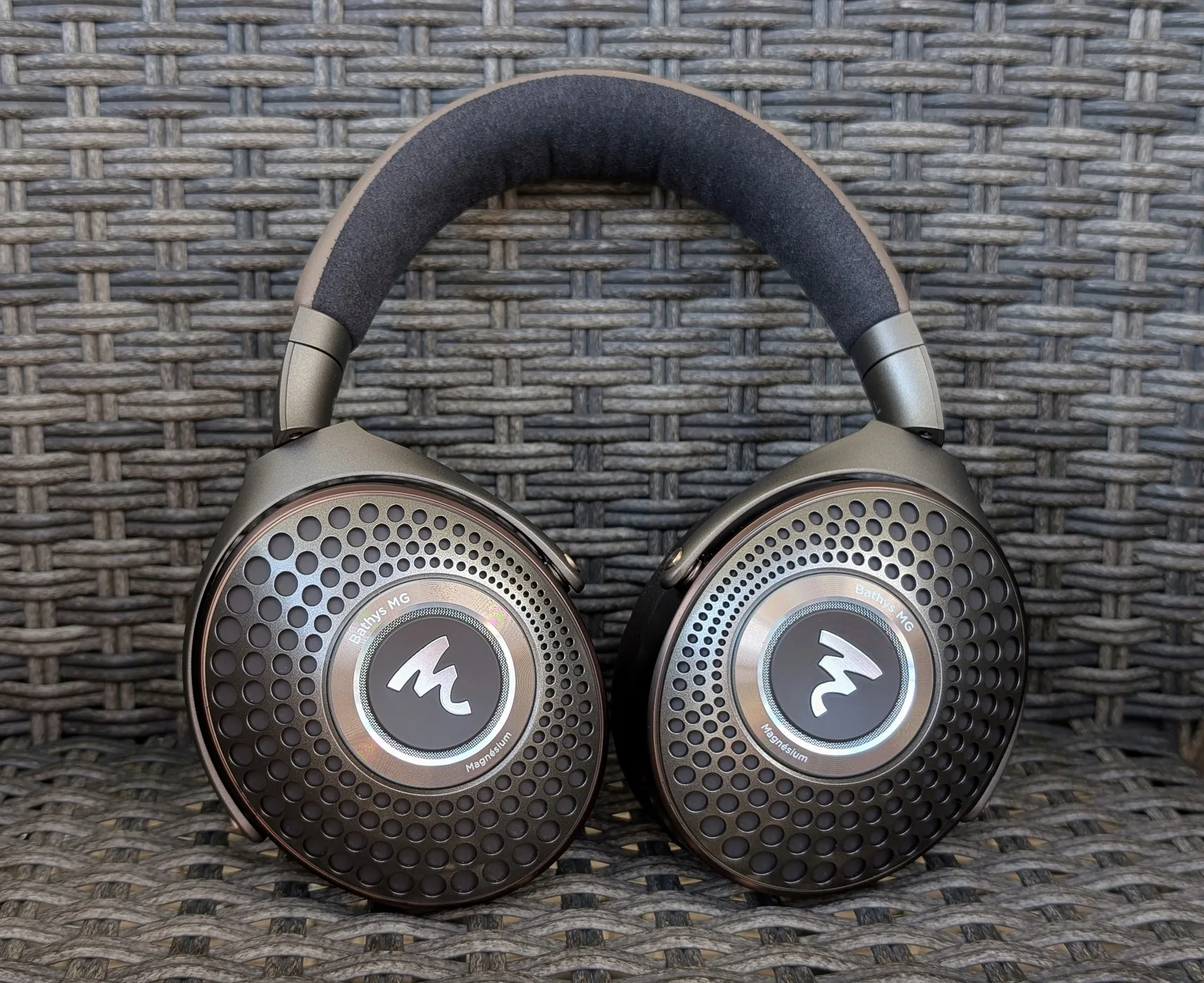
Apart from the new color scheme and ear cushions, nothing has changed externally in the Bathys MG compared to the original Bathys. Since the more affordable Hadenys, Azurys and Lensys Professional are also based on the same basic structure, the buyer of the Bathys MG gets no additional value in this regard for the 1,200-euro price tag. The perforated decorative grilles on the earcups shouldn't creak and crackle when touched with fingers, but they do. The Bathys MG definitely looks like an expensive luxury product, but unfortunately doesn't quite feel like it. To justify the steep price hike, Focal could, in my opinion, have invested even more in the construction or even assembled the headphones at their French factory.
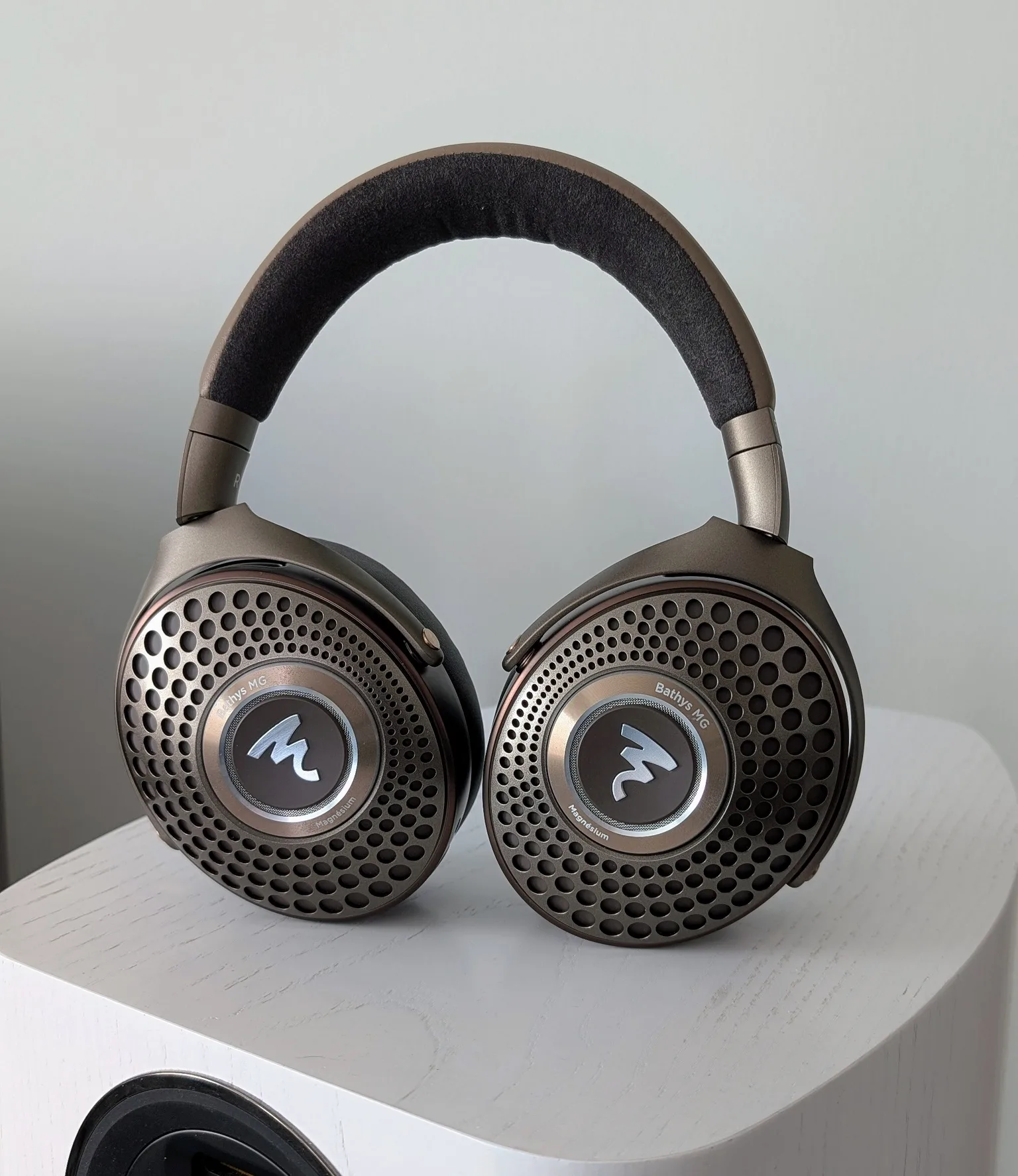
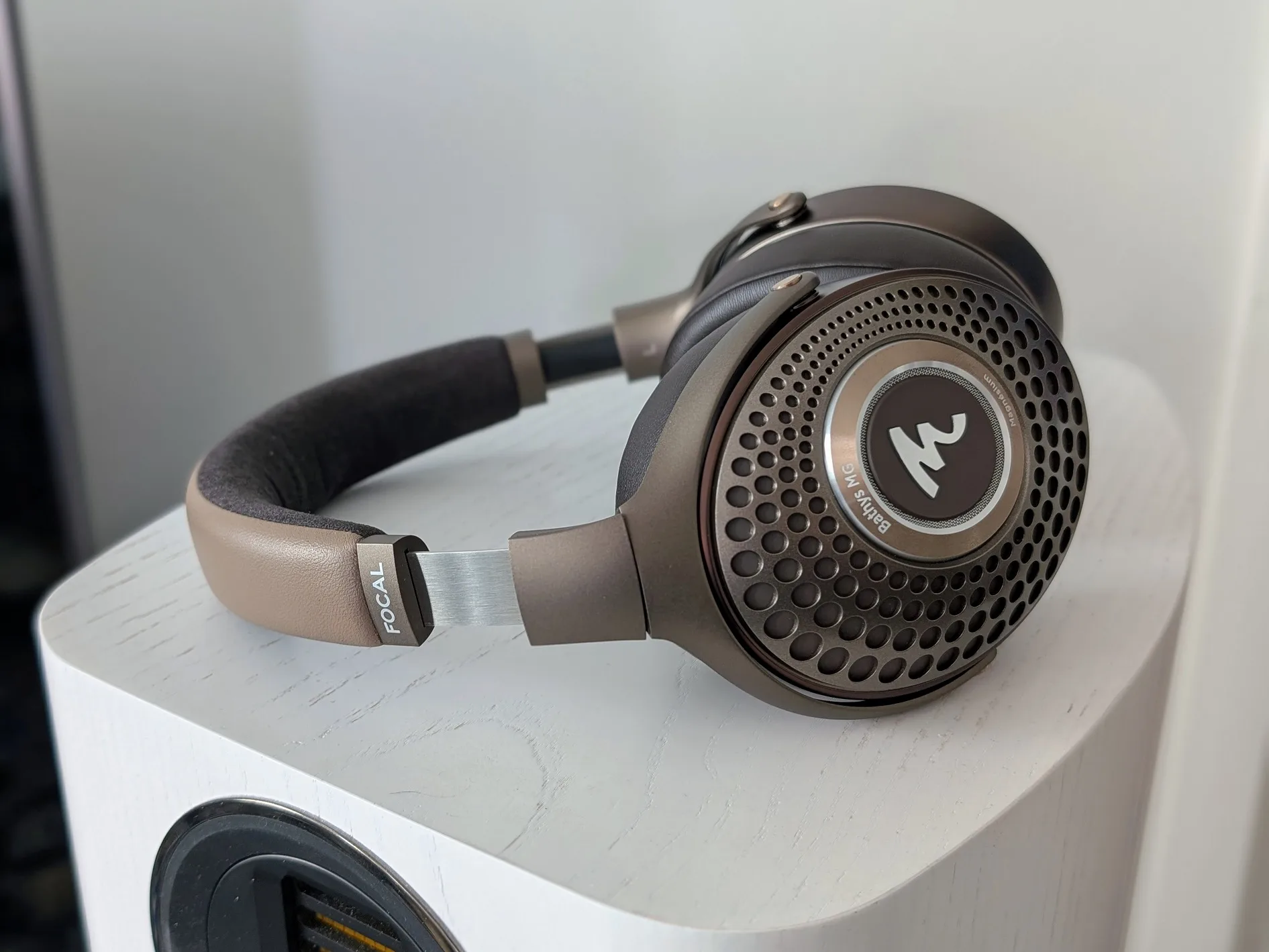
Compared to most other ANC headphones, the perceived quality of the Bathys MG still reaches a high level, especially in terms of materials. The headband, made of magnesium and aluminum, is durable, and plastic is absent from other stress-bearing parts as well. I also like the leather-wrapped top of the headband, which looks stylish. The earcups, on the other hand, are ordinary plastic except for the aluminum disc surrounding the Focal logos, but without it, the weight of the headphones might rise above the current 350 grams.
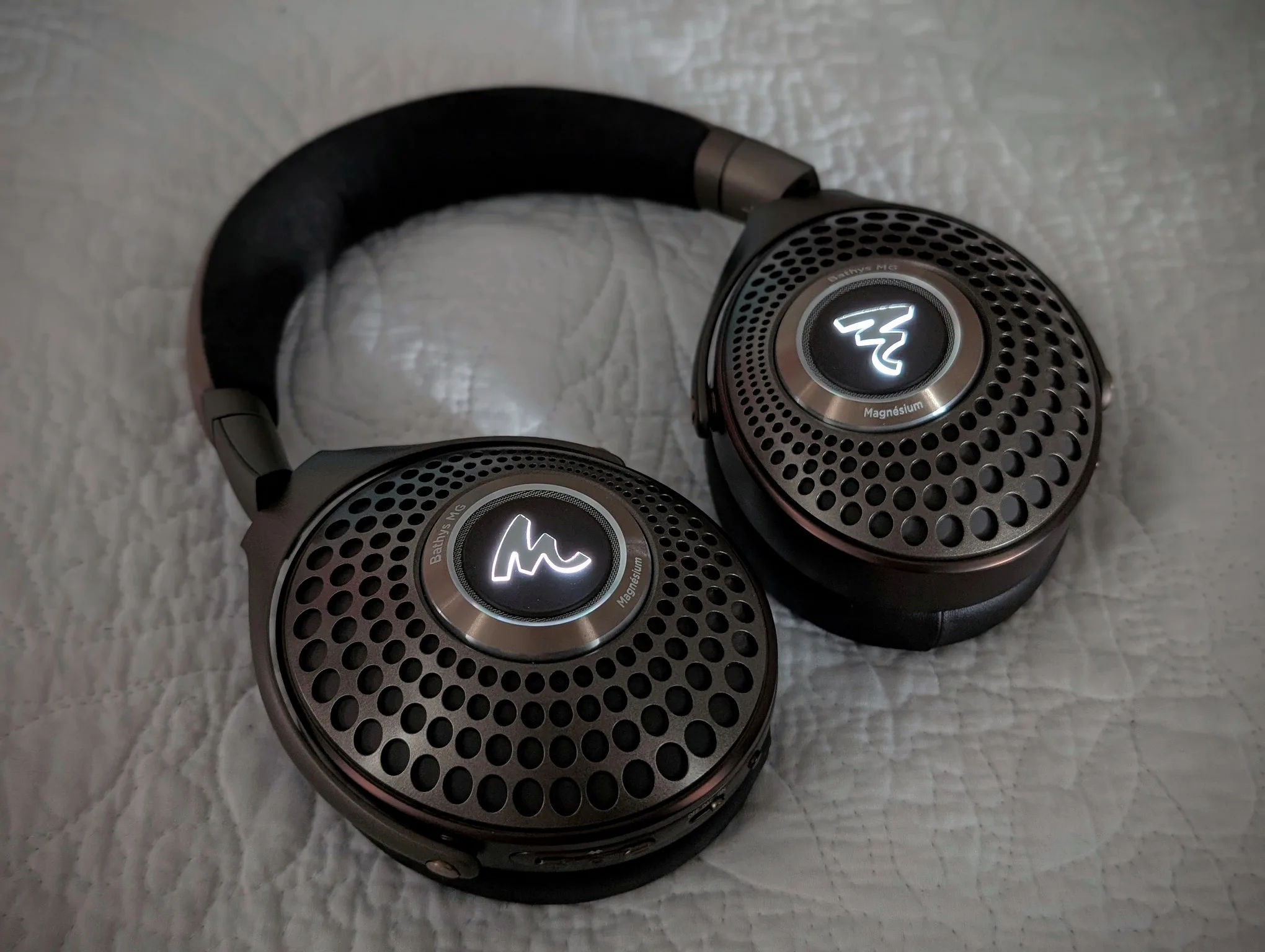
White LED lighting can still be found beneath the manufacturer's logos. In my opinion, this fit the black-and-grey theme of the original Bathys quite well, whereas with the brown Bathys MG, it might have crossed slightly into tastelessness. However, the owner can decide this for themselves, as the lighting can be turned off permanently via the mobile app or alternatively dimmed.
Like the standard Bathys, using the MG model is comfortable for me even over longer periods. The weight of the headphones and the clamping force against the head fall into the "moderate" category, and the headband is also padded well enough, not forgetting the luxurious Alcantara upholstery. Furthermore, my ears fit inside the cushions exceptionally spaciously, because the inner dimensions (62 x 48 x 25 mm) correspond more to full-sized headphones than small ANC headphones. In terms of the ear cushions, comfort has even improved slightly, as the firmer foam of the original Bathys has been replaced in the Bathys MG with the marshmallow-soft memory foam familiar from the Hadenys and Azurys models. This has a luxurious feel, although the surface is somewhat sweaty synthetic leather instead of genuine leather.
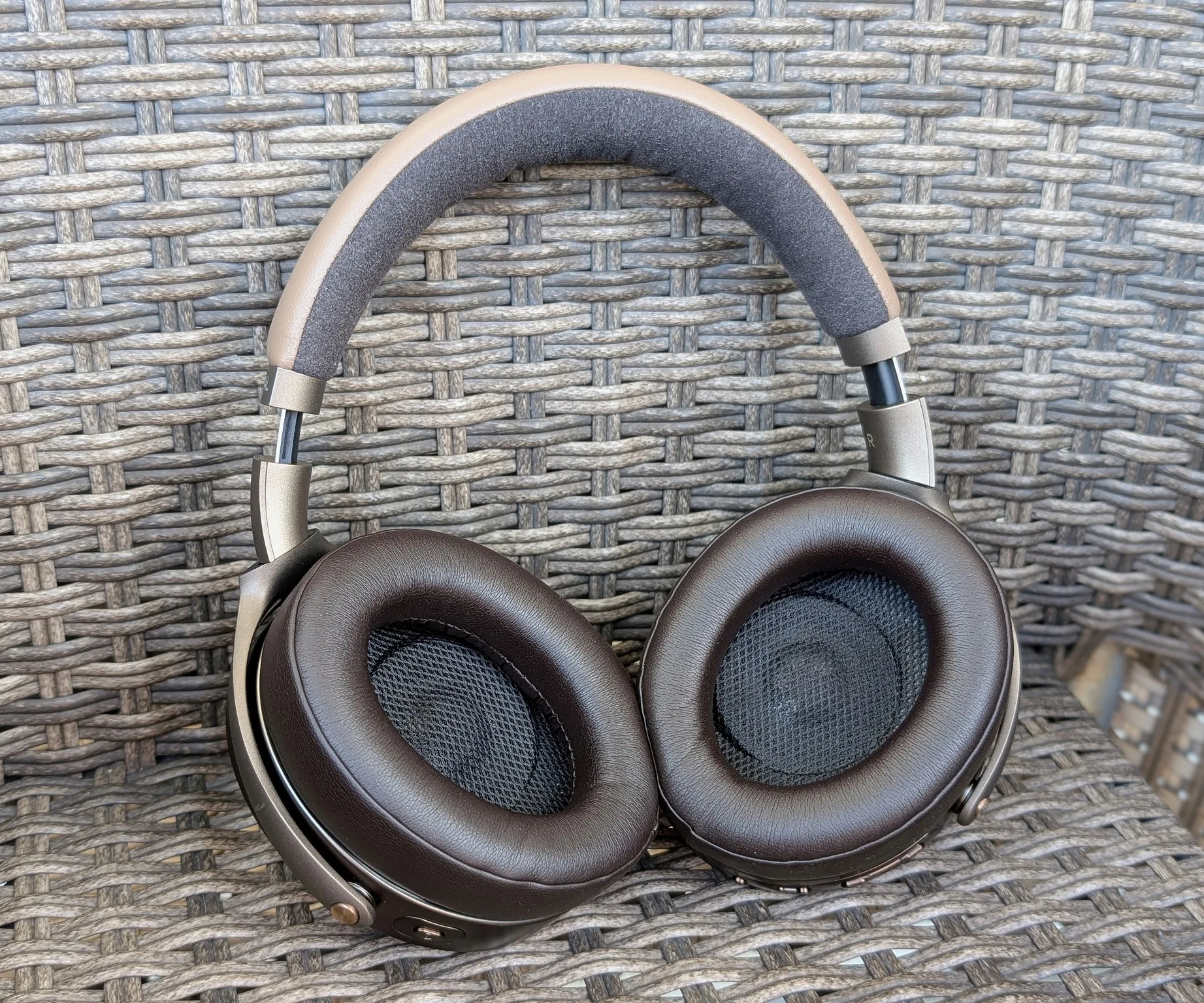
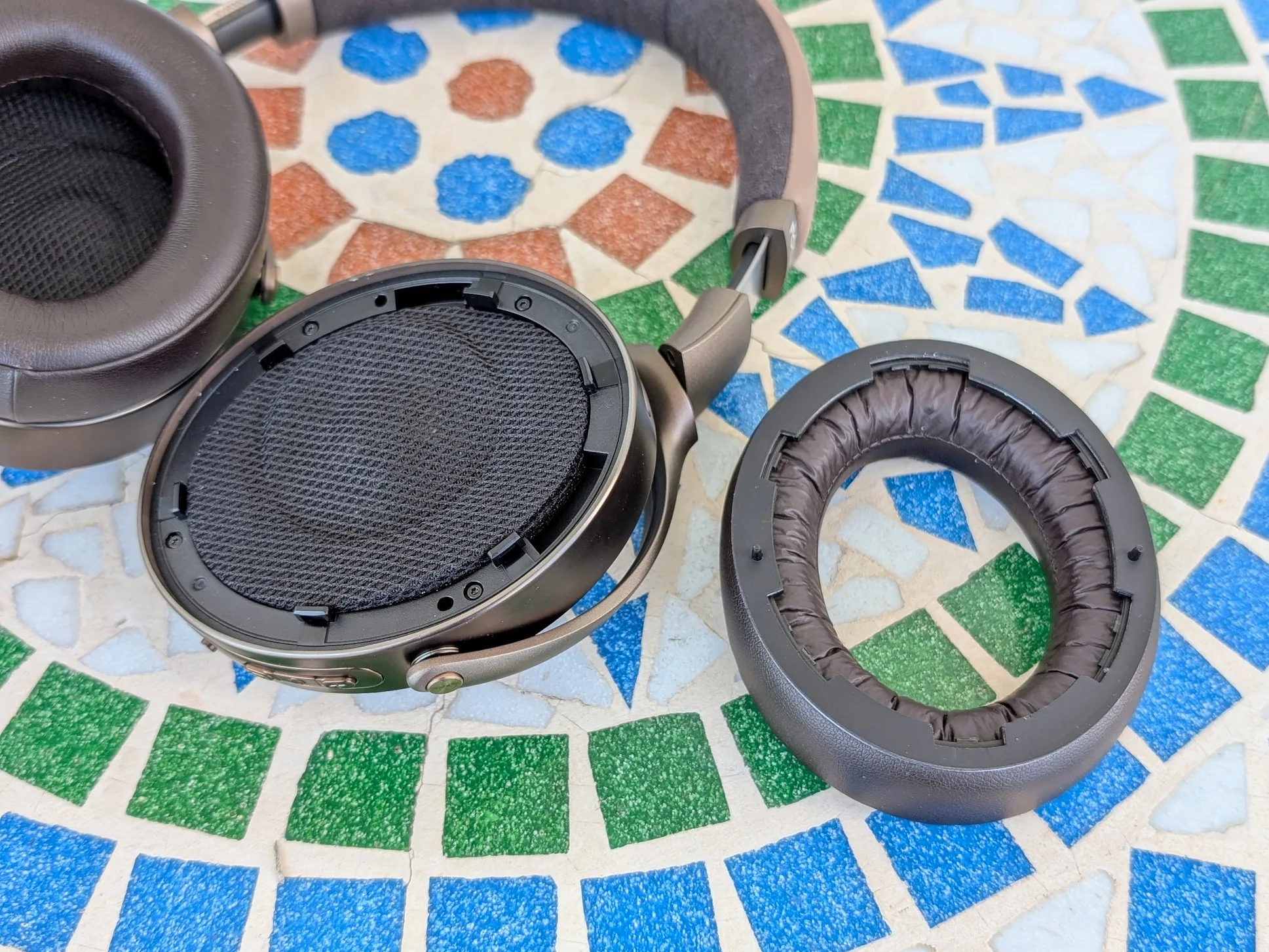
Despite the comfort, I cannot call the fit of the Bathys MG particularly secure, as the headphones tend to shift on the head during activities like walking or leaning back on the sofa. This somewhat limits their use, although to be honest, I wouldn't head to the gym or go for a run wearing 1,200-euro headphones anyway. Regarding the structure, it is also worth noting that due to the relatively slender headband, the height adjustment might not be sufficient for people with the largest heads. I personally use the headphones at settings 4–6/7 depending on whether I've bothered to visit the barber. So sometimes there isn't a huge amount of adjustment room left.
Controls and functions
Focal has kept the physical buttons of the headphones unchanged compared to the original Bathys model. The single button on the left earcup switches between noise cancellation and transparency mode, while the volume controls, media buttons, power switch, and the button that activates the voice assistant are located close to each other on the rear edge of the right earcup. The power switch tends to get confused with the voice assistant button, but I don't really actively need either during use. Although the buttons generally feel quite decent, in a price category above 1,000 euros it would have been nice to see some kind of new solutions for controlling the headphones.
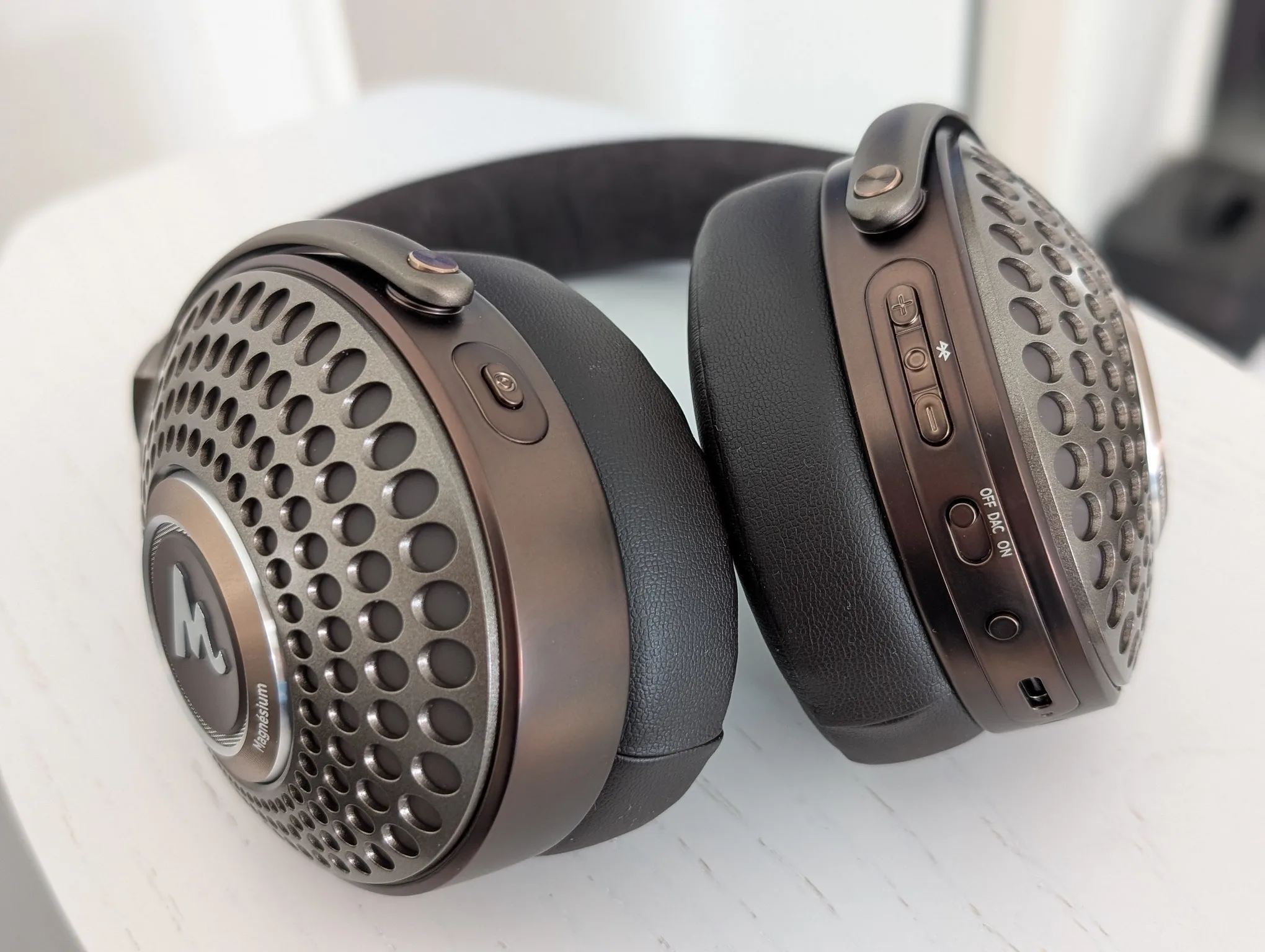
Instead, as a successful change, the volume adjustment now works more smoothly than before because, instead of 5-decibel jumps, the size of the changes is 3 decibels. This makes using the Bathys MG immediately more pleasant, as you are not as likely to have to listen at too high or too low a volume as with the original Bathys. On my Windows 10 computer using a Bluetooth connection, the Bathys MG is also the first pair of headphones whose volume adjusts completely linearly between 0 and 100. With many other headphones, for example, a 5-step change does not alter the volume at all, after which a larger jump upward might occur. Focal deserves praise for this improvement!
During use, I am personally bothered mainly by the loud and deliberately annoying notification sounds. For example, the Bathys MG cannot be used just for noise cancellation without pairing it to any device, because being unpaired causes a continuous "complaining sound." Similarly, when the battery runs low, you have to listen on a continuous loop to a similar warning sound, even if there is still plenty of usage time left. Sigh.
Bluetooth technology and battery life
Likewise, regarding Bluetooth codec support, I would have hoped for updates from the manufacturer, but Focal has merely ended up upgrading the Bluetooth version from 5.1 to 5.2. From a sound quality perspective, the best codec continues to be aptX Adaptive, which corresponds roughly to aptX HD in signal quality and to the rarer aptX Low Latency in latency. However, since only a few source devices support aptX Adaptive, listening with the Bathys MG in most cases happens via standard aptX or AAC.
The high price signals that the Bathys MG is a high-quality wireless headphone, but the Bluetooth connectivity in reality resembles sub-100-euro headphone models rather closely. Where is aptX HD, and why don't you get the LDAC codec or aptX Lossless for 1,200 euros for those few who can utilize it? In my own household, the Bathys MG only operates with aptX, AAC, and SBC codecs unless I resort to the approximately 50-euro Sennheiser BTD 700 USB dongle, with which I can access the slightly better aptX Adaptive. As some degree of defense, however, it should be mentioned that the sound quality is fortunately quite good even with inferior codecs, so this is partly a matter of principle in an expensive product. The built-in USB-DAC also mitigates the situation, because the Bathys MG sounds best anyway via a USB cable (or alternatively a headphone cable).
I have found the Bluetooth connection to be stable and normal in range, which is surely helped by the absence of codecs requiring more transmission power. Supported as ease-of-use features are Multipoint and Google Fast Pair, which likewise work according to my expectations.
The battery in the headphones lasts a commendable 42 hours in USB-DAC mode, whereas with a Bluetooth connection it remains at a fairly conventional 30 hours. Passive use is still not possible, meaning power must be on even when utilizing the analog headphone cable. However, the Bathys MG charges quickly (1.5h) and also supports fast charging in line with modern expectations: 5 hours of additional playtime is achieved in 15 minutes.
Mobile app and additional features
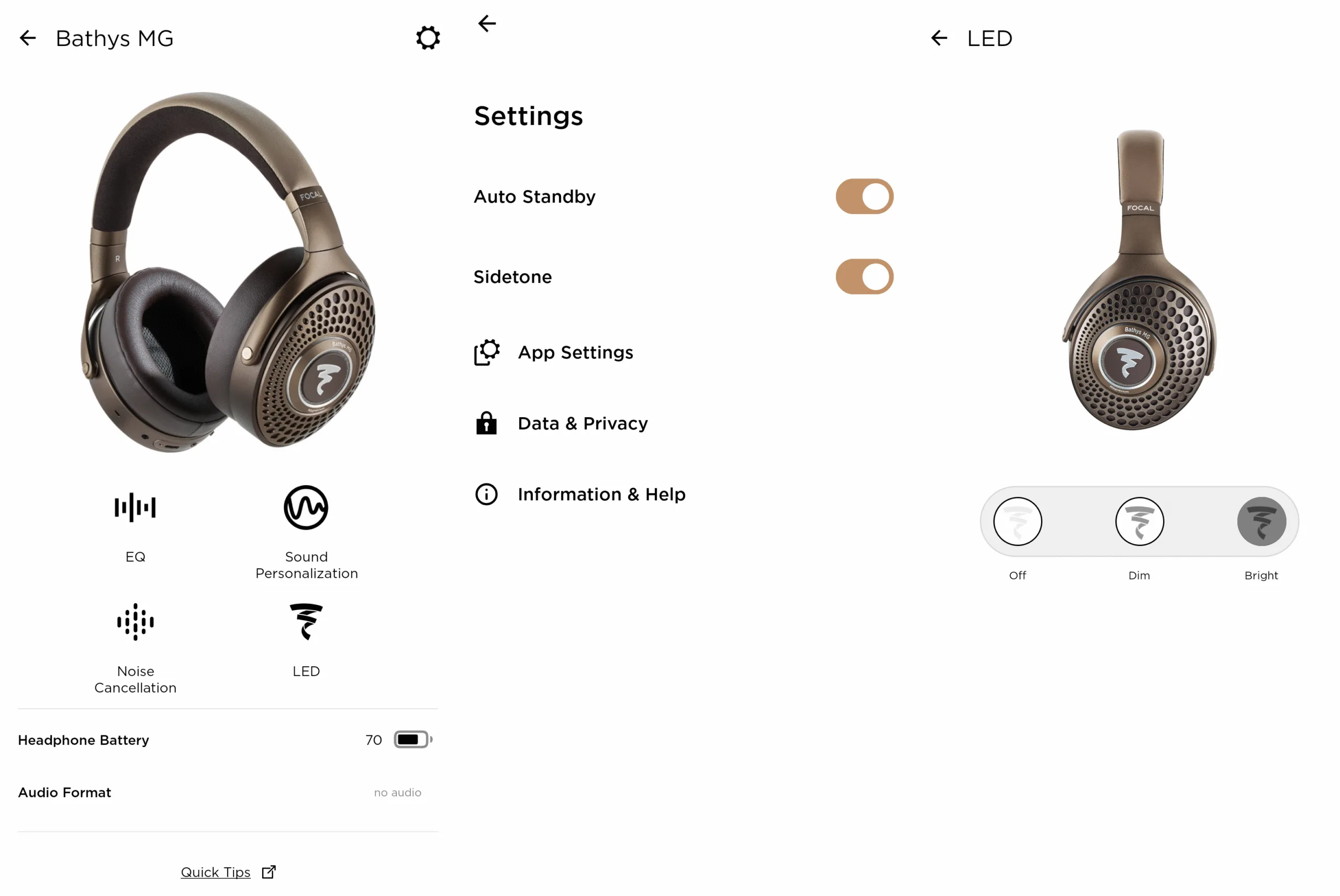
The headphones can be controlled using a simple smartphone app, which offers a few basic settings, an equalizer, and a Mimi hearing test that allows the sound to be fine-tuned even further after equalization. The LEDs placed on the outer edge of the cups were the first thing I turned off via the app.
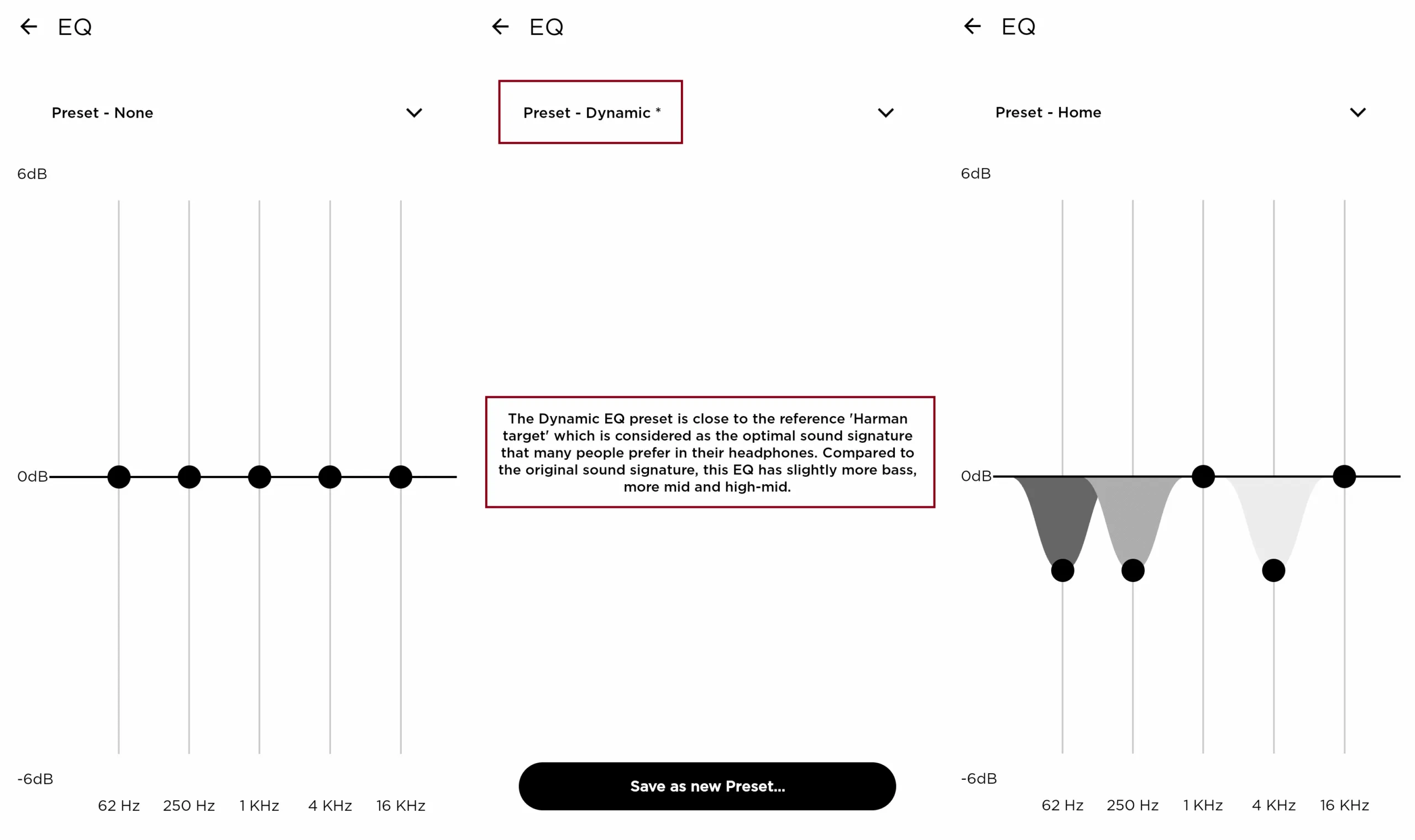
I consider the most important feature of the equalizer to be the Dynamic sound mode found in the list, which adjusts the frequency response quite close to the Harman target curve or at least makes it more balanced than the default settings. You might not even need manual equalization, but it can be used to make the sound slightly more neutral if necessary. Interestingly, the Dynamic sound mode can be saved as a new custom profile as a starting point, revealing how Focal has positioned its five sliders. After this, the user can fine-tune the sound further by moving the five sliders up or down by a maximum of six decibels. I measured the Q-value of the first four sliders as 1.0, while the 16k slider operates with a Q-value of 0.5, meaning its effect also extends below 10 kilohertz. Focal's equalizer must be considered rather rudimentary by modern standards, as, for example, Sony recently developed a more versatile 10-band equalizer for its WH-1000XM6.
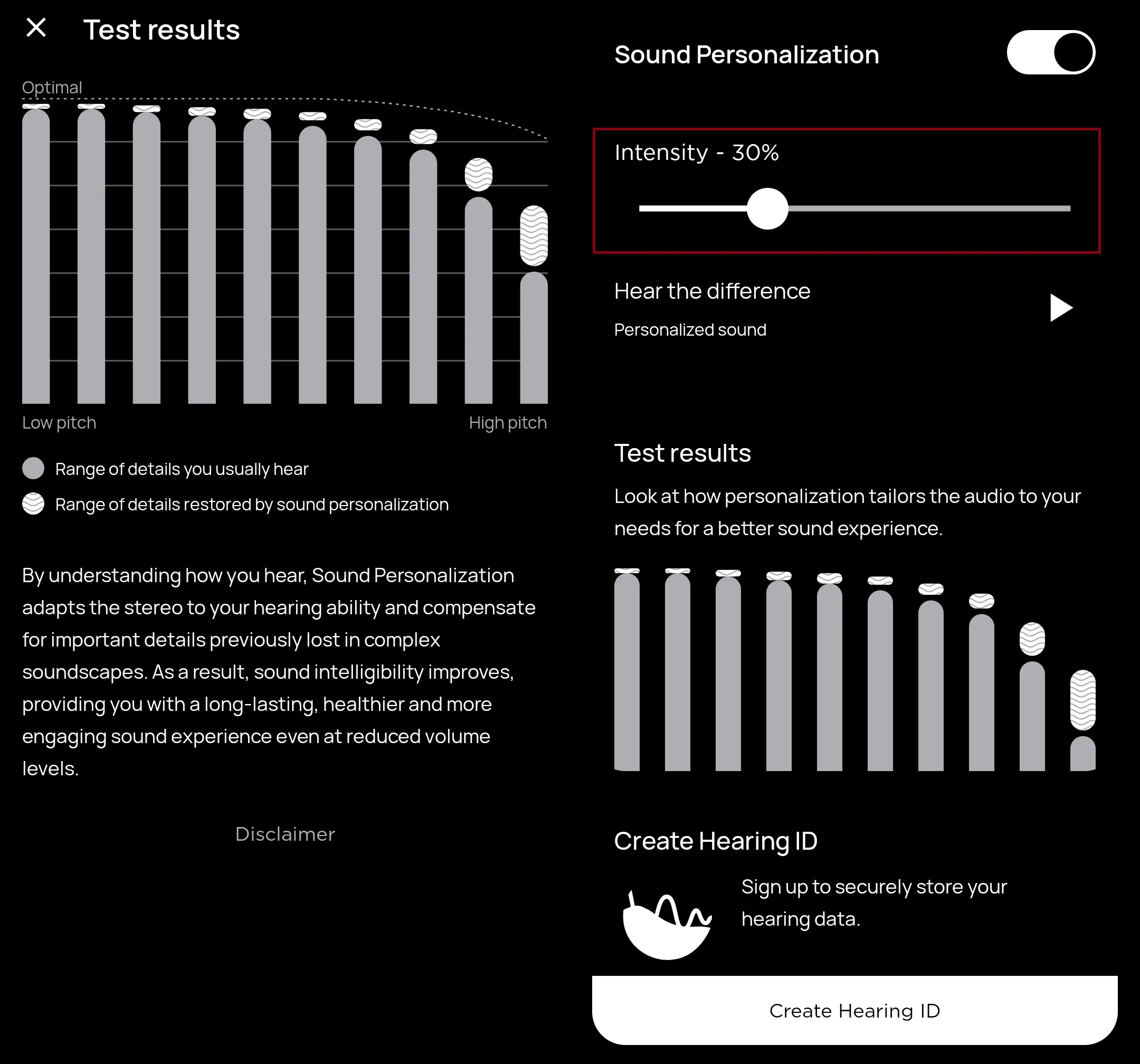
Acting as a secondary form of equalizer in Focal's headphones is the Mimi hearing test, which can fine-tune the sound based on the user's sense of hearing. Perhaps my 35-year-old hearing is starting to deteriorate, or the Bathys MG just reproduces treble smoothly, because based on the Mimi test, I need a boost precisely in the high frequencies. I was a bit skeptical at first, but since I find the sound of the headphones slightly dark with both the default settings and the Dynamic sound mode, I could liven it up quite appropriately using Mimi.
The brilliance of the feature lies in the slider that allows selecting the intensity of the hearing correction between 0 and 100 percent. I ended up around 15–25 percent myself, whereas a setting of 50–100 would make the treble far too bright. Alternatively, I could adjust the high frequencies using the conventional equalizer too, but thanks to its broader adjustment range, Mimi works more precisely, at least in theory. At the very least, it provides a handy additional tool for sound personalization, so I recommend everyone try out what kind of personal suggestions the hearing test gives.
Active Noise Cancellation
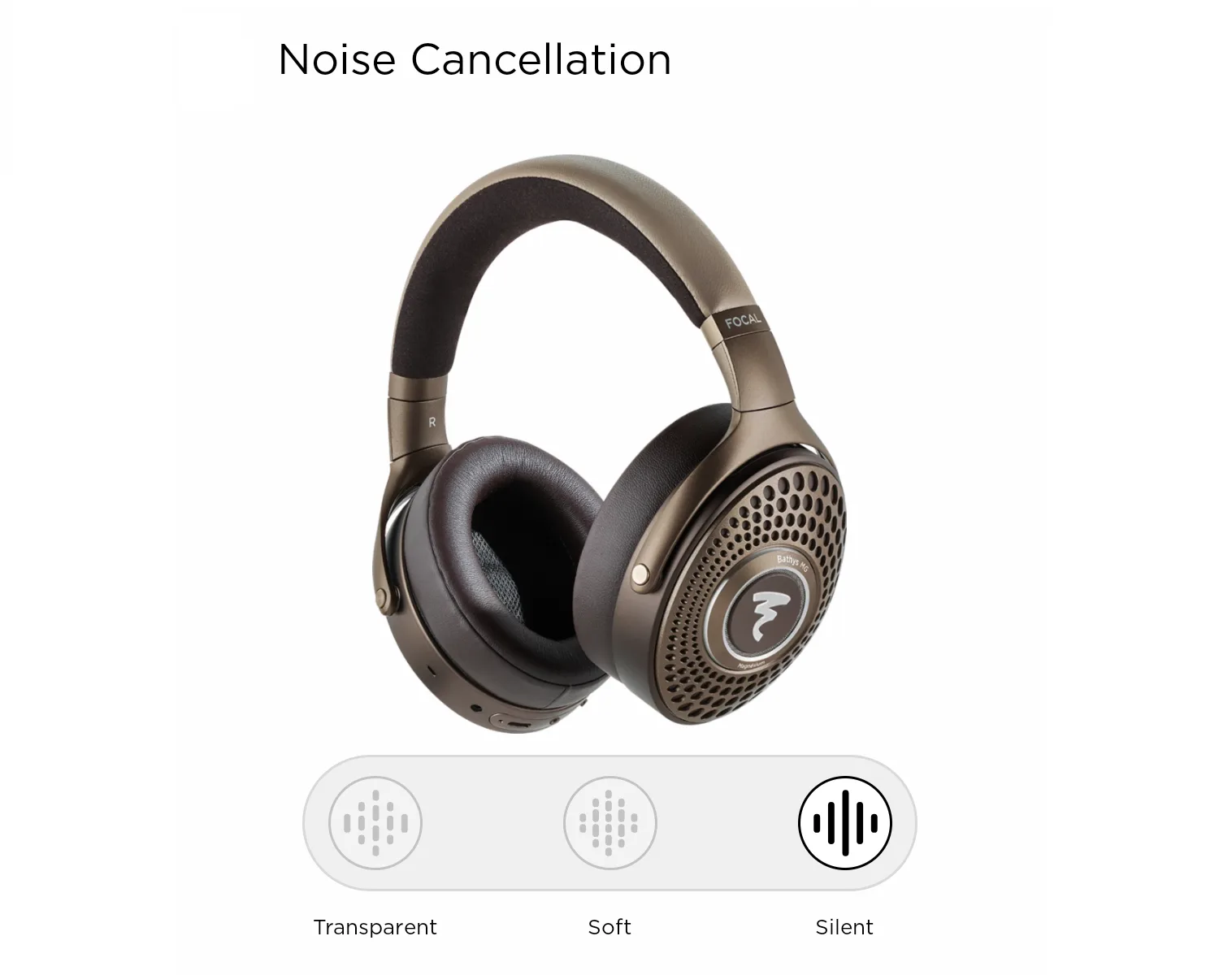
Focal mentions that the active noise cancellation of the Bathys MG is more effective than before, which appears to be true. Both the bass frequencies around 100 hertz and the lower part of the midrange are attenuated somewhat better. Through the app, you can choose between either the Silent or Soft setting, with the former attenuating noise the most, while the latter offers lighter attenuation for situations where it is important to be able to perceive the environment a bit more. The transparency mode intentionally picks up all ambient sounds inside the headphones, and for calls, you can activate Sidetone, which essentially serves the same purpose. The noise cancellation feature cannot be turned off, so the headphones must always be kept in either noise cancellation or transparency mode.
Focal still doesn't offer the most powerful noise cancellation on the market, but whereas the original Bathys matched or slightly lagged behind many ~200-euro headphone models, the Bathys MG now feels competitive against most of its rivals. Based on my tests, the relatively affordable Bose QuietComfort SE (which cost around €200 back in the day) and Cambridge Audio Melomania P100 (market price around €250) attenuate all types of noise more than the Focal model. In contrast, compared to the Bowers & Wilkins PX7 S2e, PX7 S3, and Valco VMK25, I would call the Bathys MG a slight improvement in attenuating airplane-type noise. However, differences remain quite negligible when taming café-style noise and suppressing human speech. AKG N9 Hybrid is also part of this even group, which cannot keep up with the Sony WH-1000XM6or Bose QuietComfort Ultra.
Although I haven't had the chance to compare Focal's new model to other high-end noise-canceling headphones, I have a gut feeling that its noise cancellation is among the best in its price class. Based on my recollections, Noble Audio Focus Apollo, T+A Solitaire T or the briefly tested Mark Levinson No 5909, DALI IO-12, and Bang & Olufsen H100 do not attenuate noise significantly better even in the best-case scenario. Thus, we can be quite satisfied with the performance of Focal's headphones. Their transparency mode also sounds usefully clear and doesn't distort my own voice one way or the other. Background hiss also remains moderate in all situations, so it doesn't bother me.
Instead, the somewhat light fit mentioned earlier causes problems when walking in the form of thumping from the active noise cancellation. The headphone cushions appear to vibrate from the force of the steps, causing continuous disturbance noise. Moving and touching the earpads also causes the noise cancellation to malfunction due to pressure changes. Unless the situation improves in the future with firmware updates, I unfortunately have to conclude that the Bathys MG is unsuited for walking. This is unfortunate, as the noise cancellation doesn't suffer much from wind or other airflow, so outdoor use could otherwise work out well.
Microphone sound quality
Based on my few trials, the microphone of the Bathys MG is quite mediocre in terms of both sound quality and background noise suppression. As I see it, however, the biggest challenge might be the unusually quiet volume level, because in the middle of noise, you would have to speak quite loudly so that the other party is sure to hear everything. On the other hand, the noise cancellation algorithm at least doesn't cut out words or syllables, so could this actually be an advantage when shouting in the middle of a storm? Generally speaking, having a phone close to your mouth still works most reliably, but you can also get by with the Bathys MG's microphone in a quieter environment.
Headphone sound quality
The headphones can, as usual, be listened to via a USB cable and a headphone cable in addition to a Bluetooth connection. Because power must always be kept on, the frequency response remains unchanged regardless of the listening method. In wired use, however, the Bathys MG is set to a separate USB-DAC mode, which allows utilizing both lossless data transfer (24-bit/192kHz) and potentially higher-quality electronics. From a sound quality perspective, the headphones indeed reach their best when listened to via a USB cable.
The magnesium diaphragm of the 40mm dynamic drivers automatically draws comparisons to the Focal Clear MG, especially since the Bathys MG also looks very similar in its color scheme. On the other hand, the Clear MG has a more robust magnetic structure, so despite the corresponding M-shaped diaphragm, the drivers are not completely identical.
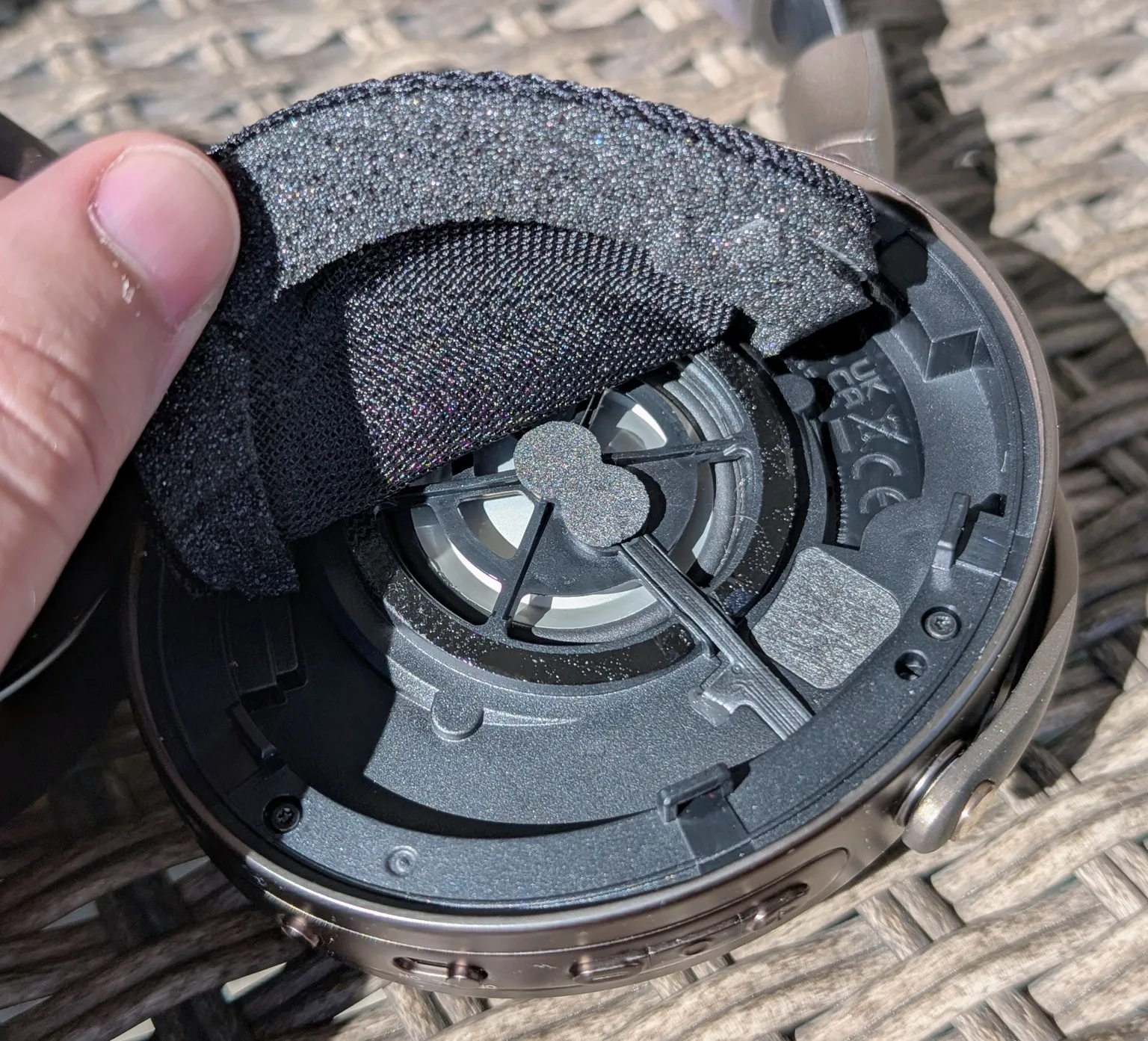
The manufacturer advertises that the change in diaphragm material improves the Bathys MG's sound quality compared to its predecessor in many ways, but it is worth remembering that in an active headphone model, similar changes could also be pursued by fine-tuning the DSP correction. Thus, I am not entirely sure whether the diaphragm material even matters much in this product category, let alone whether it is worth paying hundreds of euros extra for pure magnesium compared to an aluminum-magnesium alloy. The end result is what ultimately matters, so let's take a closer look at that next.
Measurements
Our frequency response measurements have been made with a clone IEC-60318-4 coupler and KB501X pinnae. The Harman target curve from 2018 is used as a reference point and generalization of the headphone response that would sound good to most people. For more information on the measurements and their accuracy, see Headphone Measurements. The frequency response of the Bathys MG can also be compared with other measured headphones on Squiglink .
Frequency response:
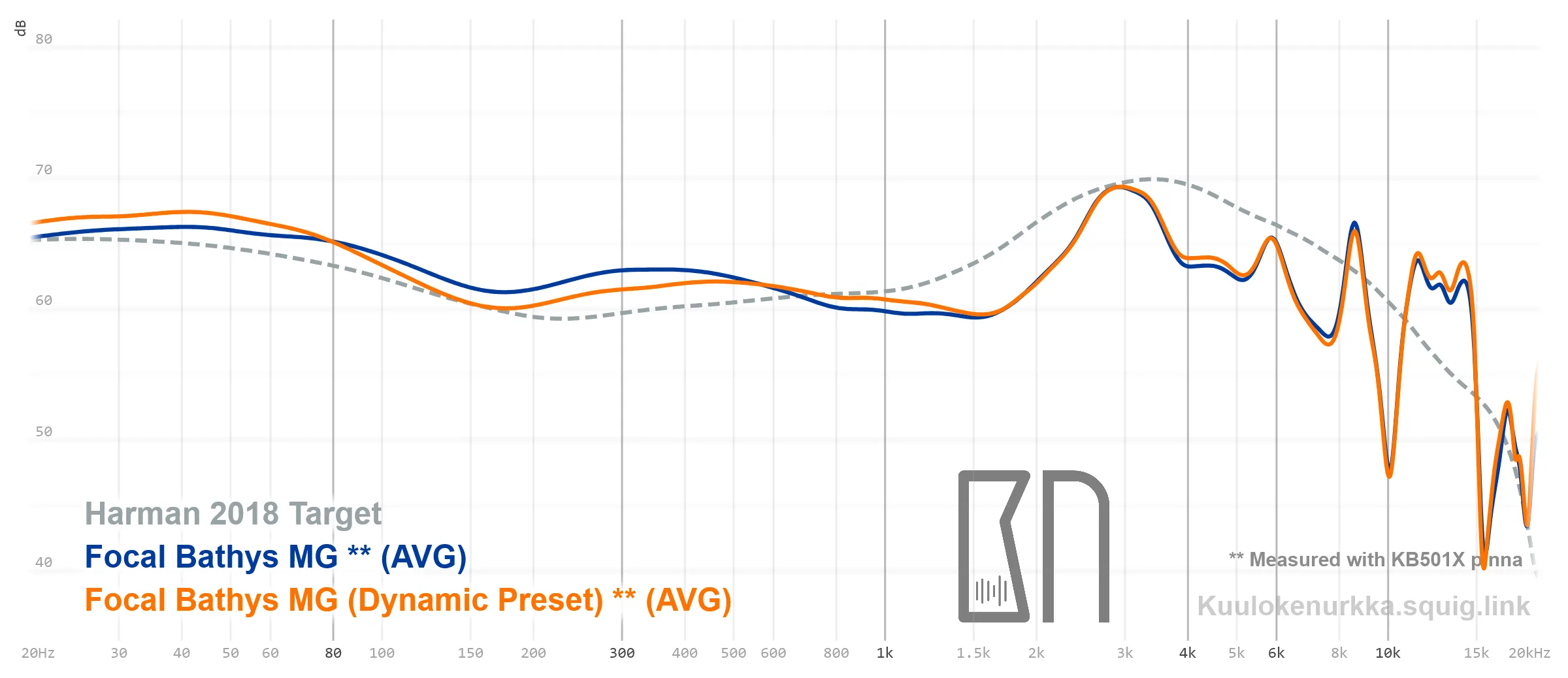
The frequency response measured with my own equipment does not fully match what I hear this time, because the sound of the Bathys MG changes depending on how much the earpads compress during use. On my head, the fit is tighter than on the measurement rig, so the upper midrange (1–3 kHz) and lower treble (4–7 kHz) appear to be reproduced with somewhat more energy compared to my measurements. In contrast, between 150 and 600 hertz, there is extra energy relative to the Harman target curve with default settings, as shown in the graph.
By selecting the Dynamic sound mode, the biggest change happens precisely in this frequency range, after which the Bathys MG represents a sort of relaxed take on the Harman target curve. The headphones actually sound more energetic and neutral the tighter they can be made to fit against the ears. With a looser fit, the proportion of low frequencies in the overall presentation increases, while the upper frequencies remain even more subdued.
Bathys MG vs. Bathys:
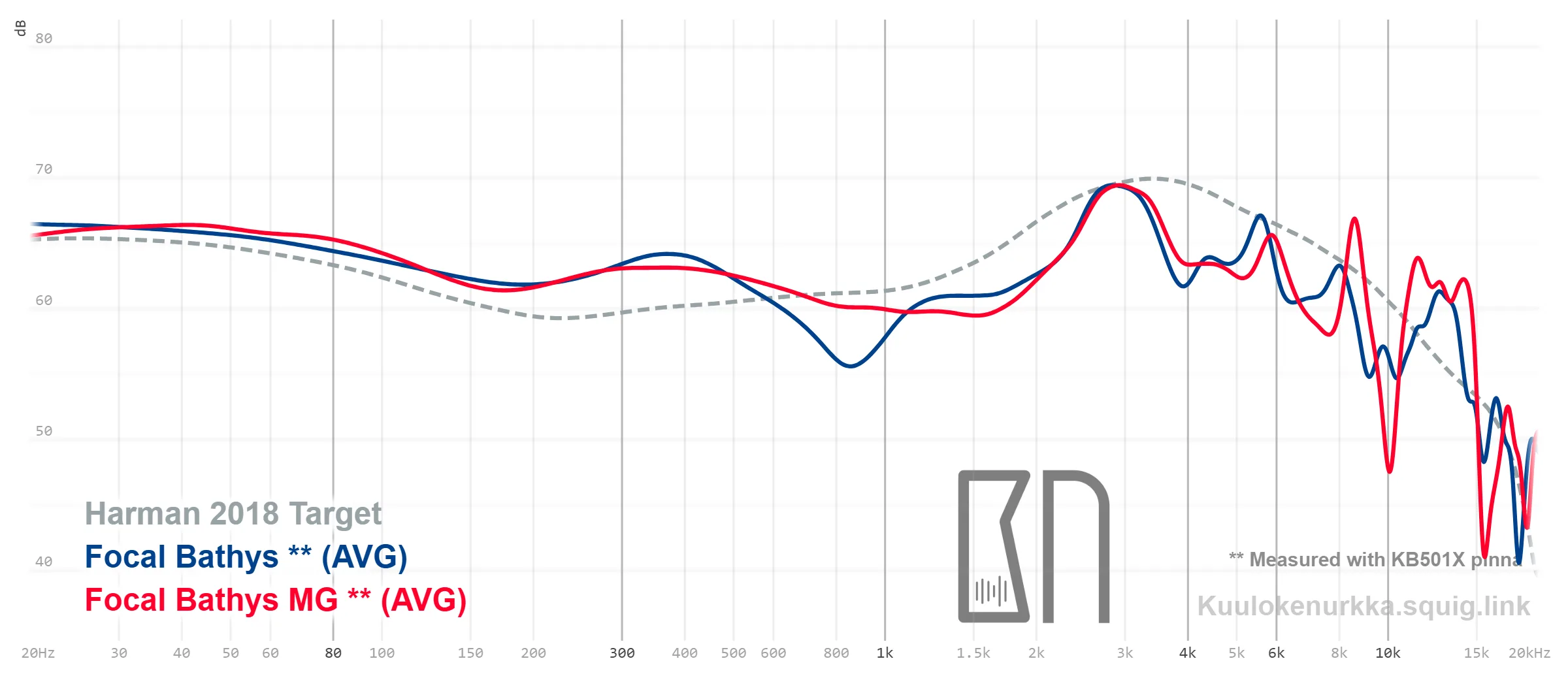
The Bathys MG corrects the dip present in the frequency response of the original model between 600 and 1,000 hertz. In certain wearing positions, the previously emphasized 1.5 kilohertz region is now also reproduced a bit more calmly, making the midrange more linear and natural as well. When talking about the default settings, no major stylistic changes have occurred in the bass frequencies or high frequencies, meaning that in broad strokes, the Bathys MG is essentially a fine-tuned version of its predecessor.
Equalization suggestion:
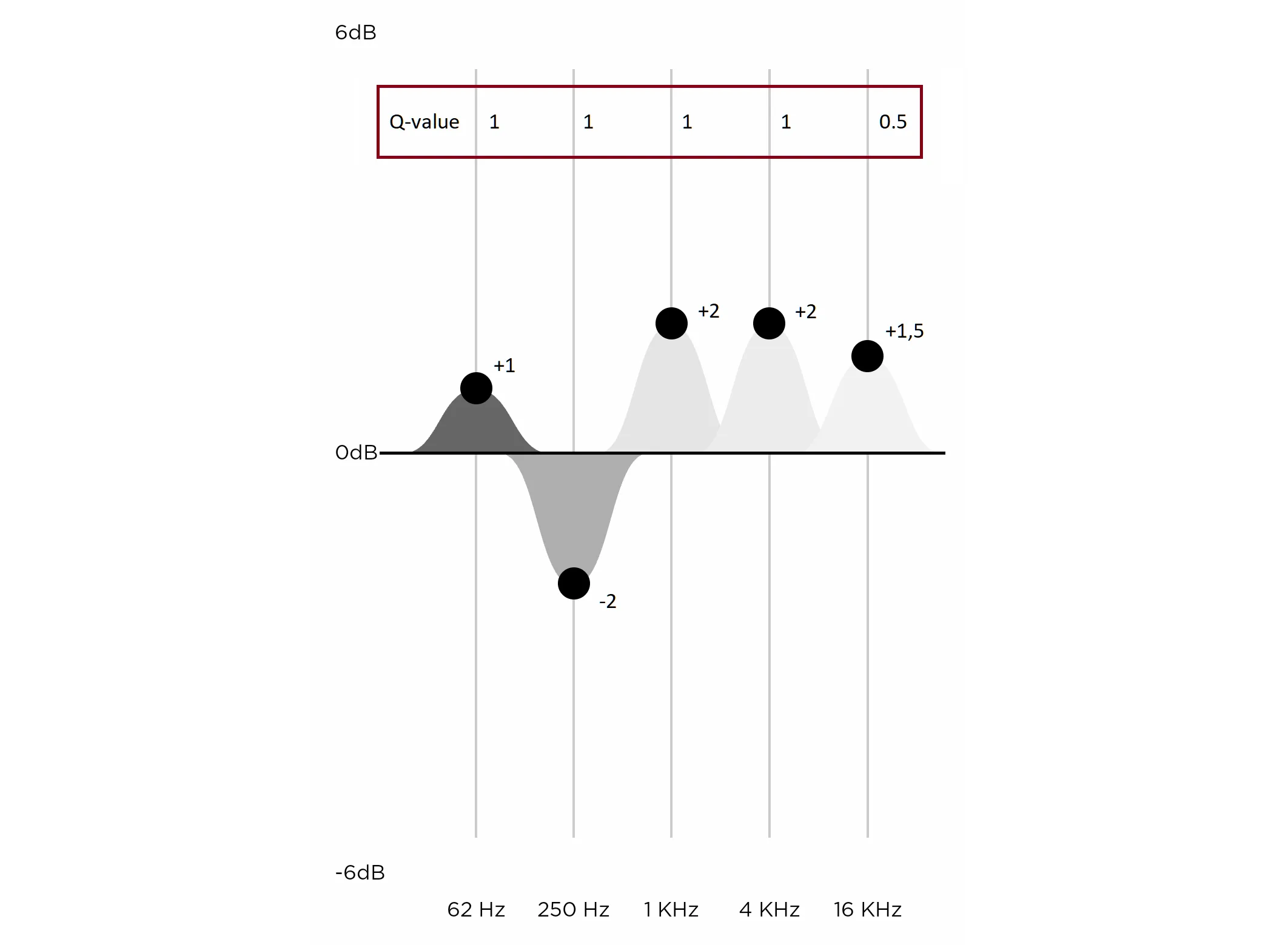
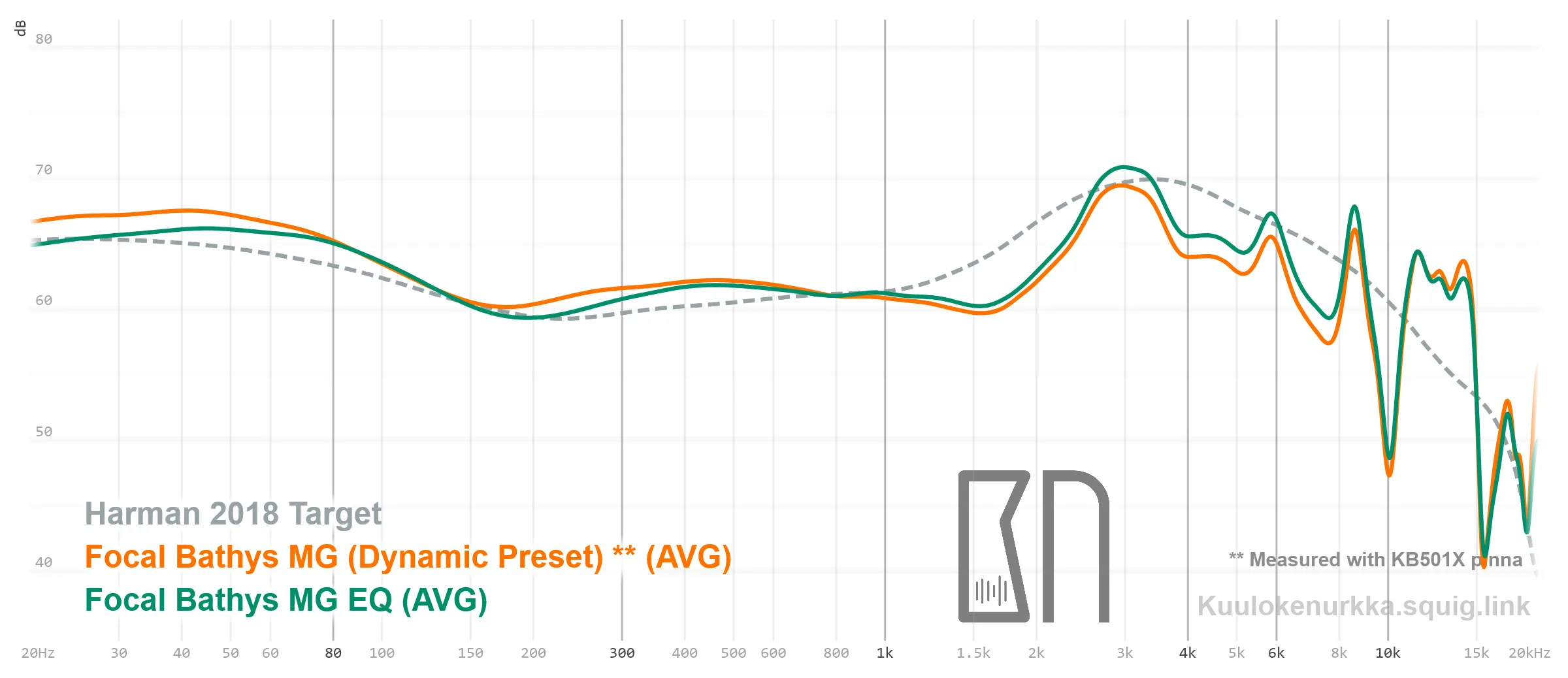
Since the frequency response remains bass-heavy even in the Dynamic mode, I have achieved an even more balanced result by EQing the headphones with the following settings:
Sound observations
Default settings:
The Bathys MG sounds warm and quite relaxed with its default settings, much like its predecessor, because the lower frequencies are reproduced more strongly than the upper frequencies. Especially between 200 and 500 hertz, there is extra energy compared to the generally accepted Harman target curve, while the presence region (4–6 kHz) lacks a bit of crispness and edge. As a result, a thick body for instruments and a slight softness in the sound are traits that most listeners will definitely notice with the Bathys MG. However, there is no obvious unnaturalness or muddiness in the sound, even though the lower midrange is reproduced somewhat bloatedly. For instance, in Sony’s WH-1000XM series headphones, the midrange is buried significantly worse under the low frequencies, whereas in the Bathys MG, a small dip around 150 hertz keeps the bass sufficiently separated from the rest of the presentation.
I like how forward the vocalist feels in the mix: vocal performances feel pleasantly intimate and calm. Furthermore, in line with Focal's tuning philosophy, the presentation has a powerful physical impact, which is actually the best aspect of the Bathys MG right out of the box. Above all, I would describe the delivery as fatigue-free in the upper frequencies and easy to like. On the other hand, considering the high retail price, I feel the sound could be a bit more edgy, as details are currently reproduced rather too smoothly, and instrument separation doesn't really hint at a price tag over 1,000 euros.
As the clearest improvements over the more affordable original Bathys model, Focal has smoothed out the midrange to be more natural and the treble a bit more refined, meaning the frequency response feels more polished and linear. I don't really sense any weird anomalies in the reproduction; rather, the thick and relaxed presentation feels quite functional in its own right, even if I find it a bit boring for such a "flagship headphone." Fortunately, the more even frequency response comes in handy when chasing better resolution and detail retrieval by tweaking the audio settings.
Dynamic mode:
The Dynamic sound mode reduces the bloat in the lower frequencies while slightly livening up the upper midrange. When compared back-to-back with the default settings, the change isn't massive, but it is undeniably positive from the perspective of clarity. As the sound lightens and the vocalist moves slightly further back in the soundstage, the presentation becomes more spacious and transparent in its separation. Spotting details is easier than before, and the bass kicks tighter thanks to the thinned lower midrange and boosted sub-bass.
This puts the frequency balance of the Bathys MG relatively close to the Harman target curve, though I still perceive a hint of softness in the treble and added heft in the lows. The tuning is quite safe, prioritizing listener enjoyment through dynamics and smoothing out the sharpest edges of the music rather than striving for absolute neutrality. I doubt many will mind this compromise, as the punchy bass, believable timbre in the mids, and balanced treble form a pleasing combination. There is also nothing wrong with the soundstage size or imaging precision.
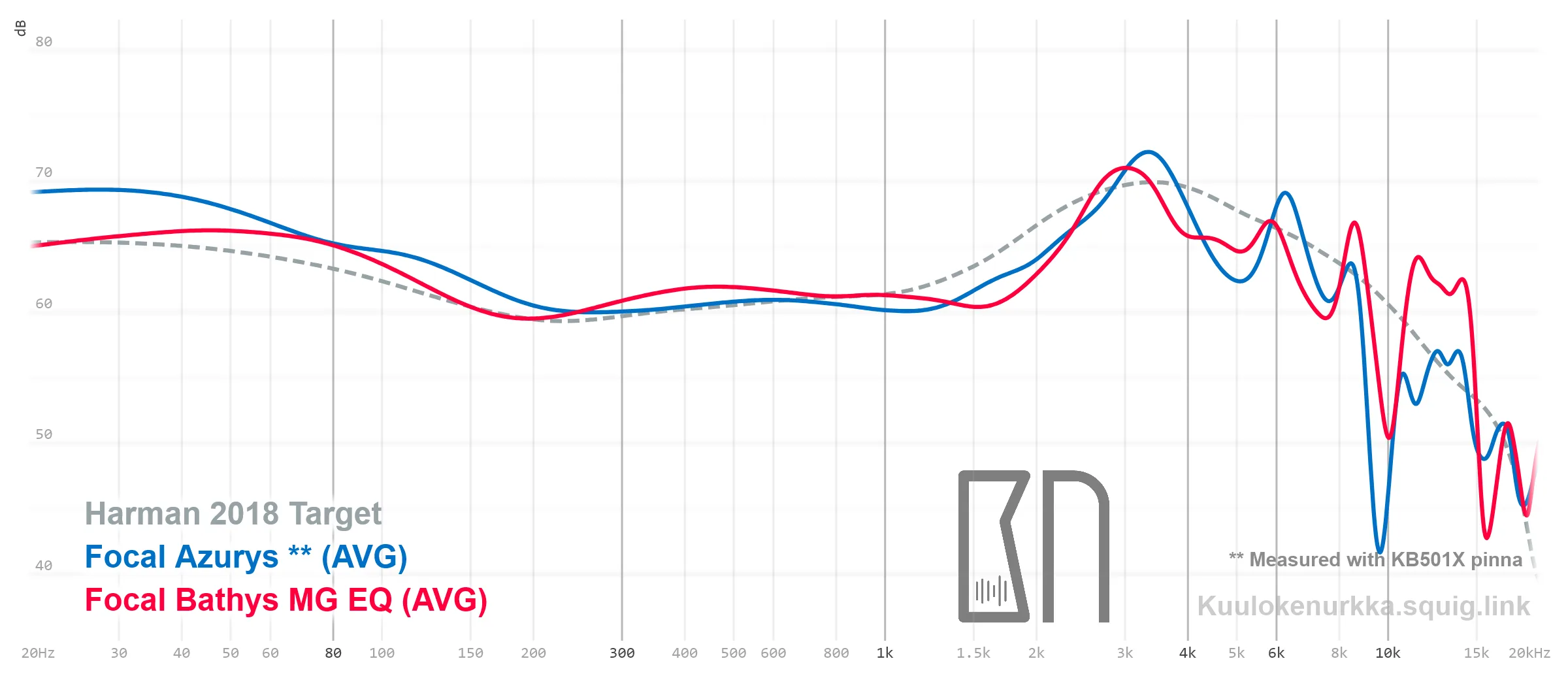
The T+A Solitaire T — which I also rate highly — focuses more on hi-fi-style clarity and airiness, but overall, the Bathys MG in its Dynamic mode is at least as good, if not a more balanced package. The Focal model has the ability to pull you right in because any remaining colorations and "flaws" are harmless for music enjoyment. On most other headphones, I notice greater local unnaturalness, whereas the Bathys MG becomes truly comfortable to listen to at the press of a button. For comparison, the roughly 50 percent cheaper Focal Azurys (wired model) doesn't sound quite as natural in the upper midrange or as airy in its soundstage due to its slightly dark treble, making the Bathys MG a slight step up despite being wireless. Given the price gap between the two, that is certainly how it should be.
Equalization:
From this point on, we are talking about very minor fine-tuning, but by further lowering the level of the upper bass frequencies (the 250 Hz control) and correspondingly boosting the 4 kilohertz region, I managed to make the Bathys MG sound even clearer compared to the Dynamic sound mode. After this, it is essentially a full-fledged hi-fi headphone that hardly holds back on the energy of the presentation, even though the 1.5–2 kilohertz range still plays somewhat subdued relative to the Harman curve.
My EQ does wonders particularly for the soundstage precision and detail retrieval. All kinds of music sounds overall so excellent and inspiring that I hardly miss wired headphones at all. A small additional improvement can still be achieved with the AptX Adaptive codec, which controls the bass better and opens up the presentation slightly compared to standard AptX. However, since no better codecs are supported, I found that when used wirelessly, the headphones also reach their best with the AAC codec, as long as the listening is done on an Apple device (in this case, a MacBook Air M1).
USB-DAC mode:
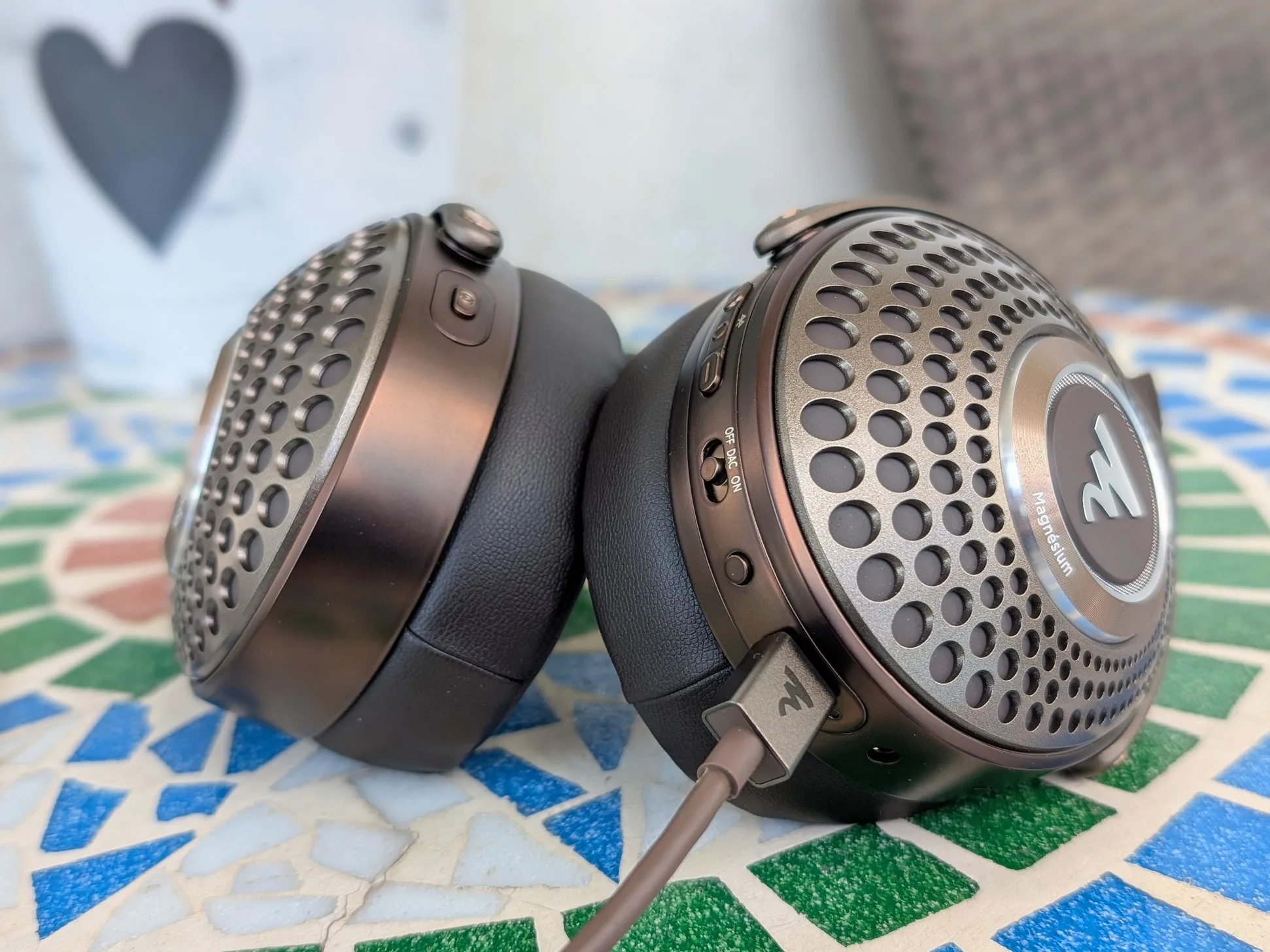
In USB-DAC mode, the audio signal becomes lossless, and you no longer have to worry about the potential weaknesses of a Bluetooth connection. In wired listening, I feel the biggest improvement is achieved with the headphone's default settings, because keeping the lower frequencies better under control clarifies the sound. In general, the soundstage also becomes more layered and transparent, something I likewise noticed with the original Bathys model.
During USB listening, the hefty lower midrange and relaxed treble of the Bathys MG no longer really bother me, so selecting the Dynamic sound mode is not quite as necessary anymore. I could also skip manual EQing, even though a small improvement is still achieved that way. For some reason, however, the EQ I presented occasionally leads to a slight aggressiveness in the upper frequencies, which I do not perceive in Bluetooth listening. In USB-DAC mode, I actually have the easiest time just choosing either the Dynamic sound mode or even the default settings.
I consider the Bathys MG to be somewhat better than the manufacturer's Azurys and Hadenys models, so it competes quite evenly against passive headphone models in the 500–1000 euro price range. For example, the Bathys MG would hardly keep up with the Dan Clark Audio Noire X, let alone open planar headphones, but for a noise-canceling headphone, the situation is surprisingly good nonetheless. Only a few closed-back headphones are clearly better than the Bathys MG in its USB-DAC mode anyway, so at this point, I can kind of understand the high retail price. The improvements compared to the original Bathys model are by no means massive, but they are welcome all the same.
What else for 700–1700 euros?
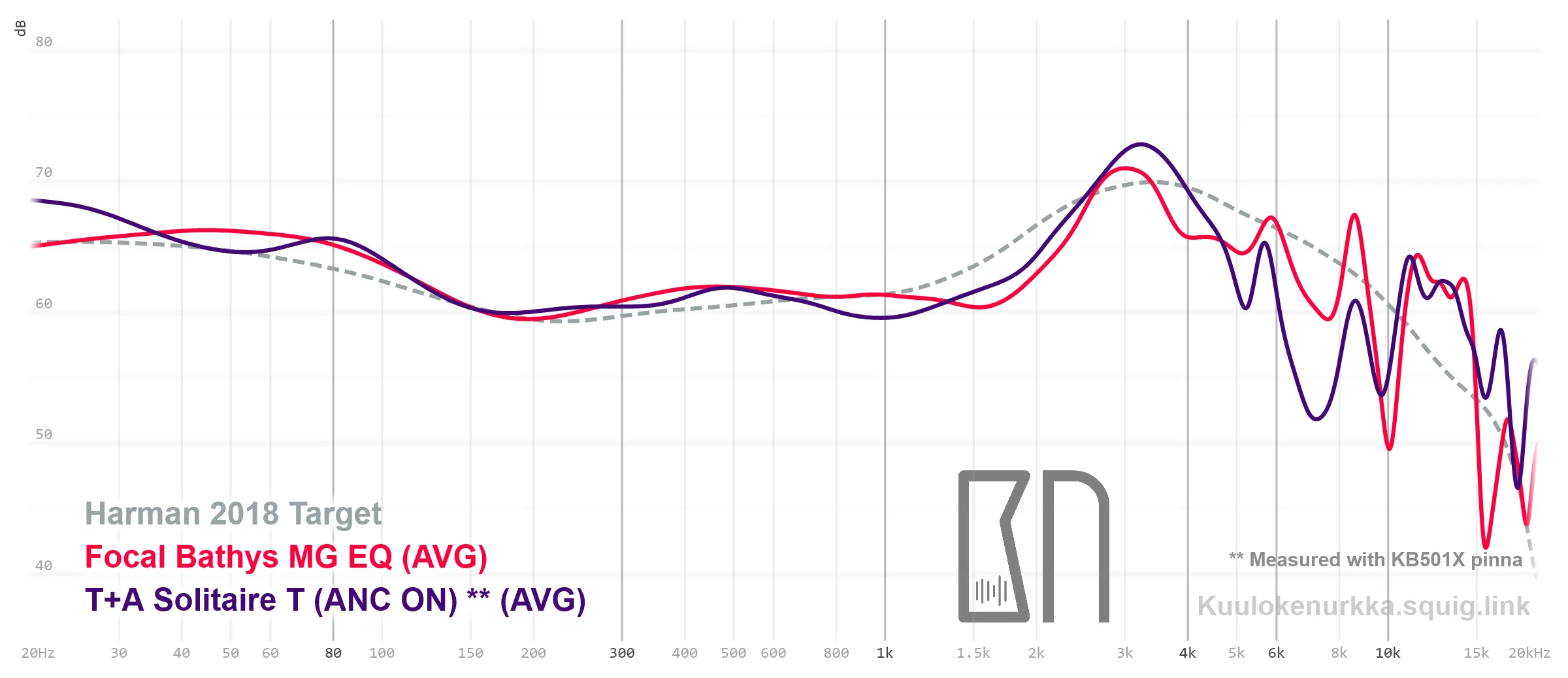
There aren't many noise-canceling headphones priced over 1,000 euros, so the main competitors for the Focal Bathys are likely the T+A Solitaire T and Bang & Olufsen H100. Slightly more affordable alternatives include the DALI IO-12 and Mark Levinson No. 5909. I have listened to all of these, but tested only the versatile Solitaire T more thoroughly. With its slightly more neutral and brighter tuning, it would be a fairly even match for the Bathys MG and also functions as an excellent passive headphone. However, based on my recollection, the Solitaire T's active noise cancellation is not quite as effective as the Bathys MG's, and the super-small earpads are not the most comfortable compared to the Focal model. Overall, I would therefore call the Bathys MG a better and more sensible noise-canceling product, especially since it costs 200 euros less.
The DALI IO-12 (and the more affordable IO-8) offers a more mid-bass-focused sound, so in my opinion, it doesn't quite reach the sound quality level of the Bathys MG and Solitaire T when asked of experienced listeners. DALI also does not provide a phone app for their headphones, making EQing a bit more cumbersome. The Mark Levinson No. 5909, on the other hand, features a narrow and powerful treble boost that cannot really be gotten rid of. The treble thus inevitably remains slightly unnatural in timbre—at least at times. Otherwise, everything is in order with the No. 5909, and the overall package is quite comparable to the Bathys MG. The Bang & Olufsen H100, by contrast, is the most confusing of all these headphones. It costs a whopping 1,700 euros, which you might guess based on its gorgeous build quality, but not at all based on its sound quality. I have probably never heard such an unnatural and distorted treble, which would at least prevent me from enjoying the listening experience.
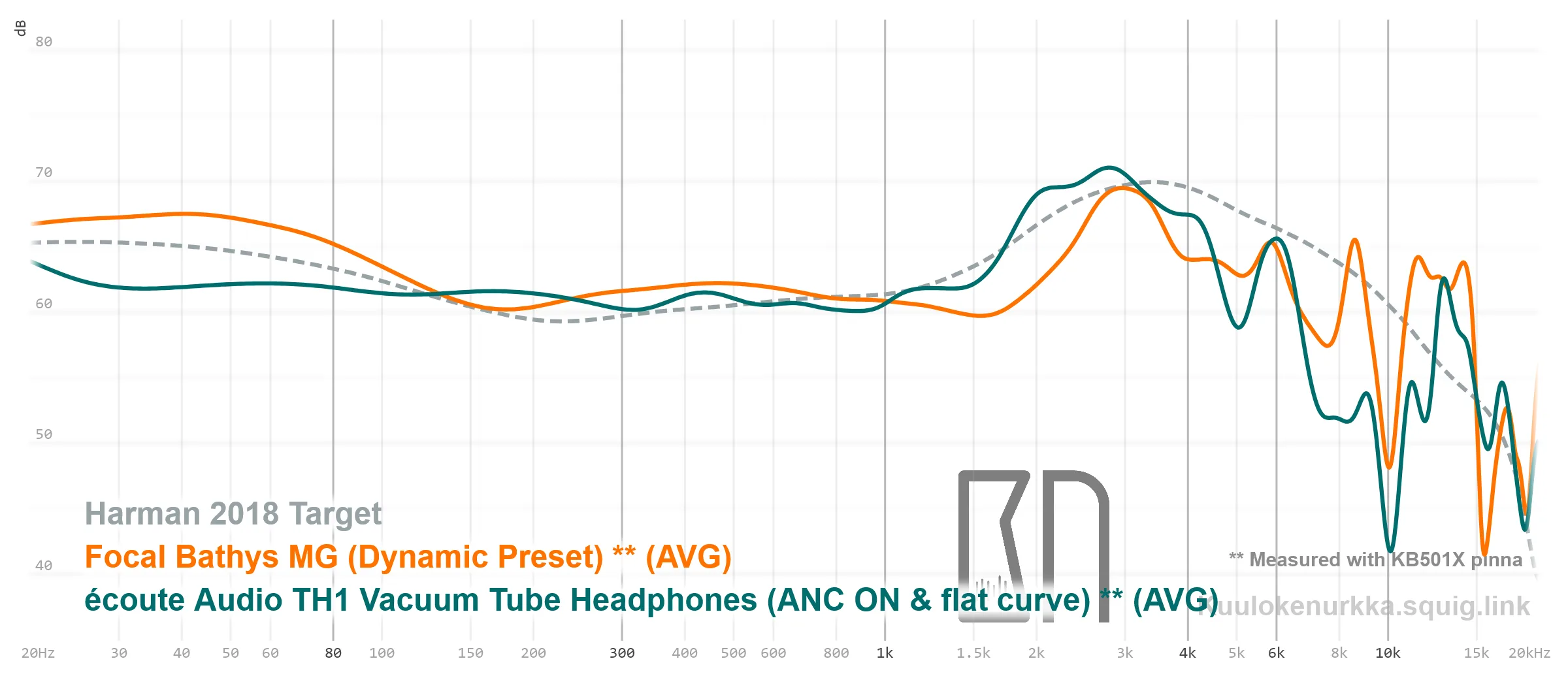
Among other alternatives, Noble Audio Focus Apollo unfortunately wasn't as good as I expected; instead, its frequency response is surprisingly uneven. Bowers & Wilkins' PX8, which originally cost 700 euros, can nowadays be found in clearance bins, and because of its muffled sound, I wouldn't recommend it even at half price. However, écoute Audio's TH1 tube headphones , costing around 750 euros including taxes, could be somewhat of an alternative to the Bathys MG. Especially with the Flat Curve sound setting, they offer an interesting midrange-focused presentation with neutral bass and dark treble (which can be EQ'd brighter). As a product, though, the TH1 is not yet quite as polished, falling behind Focal's headphones in both build quality and comfort. Its active noise cancellation is also not as effective, and on top of that, it suffers from background hiss.
Among models under 1,000 euros, the original Bathys is in a way one of the toughest competitors for the Bathys MG, since getting relatively similar headphones for 500 euros less is a deal that's hard to ignore. The new model is indeed better, but since most already consider the Bathys too expensive, the pool of potential buyers is expected to shrink significantly at the 1,200-euro price tag. However, it remains up to consumers to decide whether they want to pay the sum requested by Focal for these improvements or if the market price will drop at some point down the line.
Summary
The Focal Bathys MG proves to be a better headphone than the original Bathys model thanks to its fine-tuned sound quality, slightly more effective active noise cancellation, and smoother volume control. To be honest, however, I would have expected a clearly more modest price increase from the manufacturer, as this isn't a 50 percent improvement—even though the 400-euro higher MSRP hints in that direction. In my view, the new model's higher price isn't based so much on the scale of the improvements, but rather on the fact that most competitors simply don't offer a product that sounds this good. Consumers are essentially made to pay a heavy premium in the current market, though nobody is forced to do so. The situation is somewhat understandable yet quite peculiar, since the more affordable original Bathys now feels like an exceptional deal.
When chasing the best possible sound quality from noise-canceling headphones regardless of cost, I would still easily recommend the Bathys MG, especially in the Dynamic sound mode or with a bit of EQ. Those who prefer a warmer and more relaxed presentation might also enjoy the default settings, and the final result improves even further in the lossless USB-DAC mode. Furthermore, the headphones are solidly built and comfortable to use. On the downside, the Bluetooth codec support remains modest, and the microphone audio quality fails to impress either. You also don't feel like wearing the headphones while walking, because footsteps cause a thumping sound in the ANC system. For pure noise cancellation alone, options like the Bose QuietComfort Ultra or Sony WH-1000XM6 would be clearly better purchases while saving you quite a bit of money.
Right now, the Bathys MG is primarily suited for that small group of people who are willing to pay over 1,000 euros for noise-canceling headphones and want to enjoy exceptional sound quality. Structurally, I have encountered higher-quality products, considering that the Bathys MG doesn't differ from its predecessor apart from its coloring. Although the similarly pricey T+A Solitaire T is slightly more versatile as a product and sounds even more impressive than the Bathys MG on its default settings, Focal's headphones currently feel like the best option in their price class. Moving forward, they should be considered the benchmark for what can be expected from an expensive noise-canceling headphone, especially in terms of sound quality. The price might not make much sense, but it's not easy to do much better than the Bathys MG either.
Pros and cons:
+ Balanced and engaging sound in the Dynamic sound mode
+ Midrange unevenness corrected and treble smoothed out compared to the previous Bathys model
+ Sound quality improves in USB-DAC mode
+ Same frequency response and DSP correction regardless of the usage mode
+ Smoother volume control than previously
+ Enhanced and quite competitive ANC
+ Hardly any background noise
+ Good comfort
+ Stylish appearance (subjective opinion)
– Default settings are tuned a bit too heavily toward the lower frequencies
– Realized frequency response can feature quite significant user-dependent variation
– Build quality doesn't quite feel up to the premium price tier
– Limited Bluetooth codec support (best options missing)
– Mediocre microphone
– Annoying system sound prompts
– Walking causes strong thumping/thudding noises in the ANC mode
– Stiff cables
– Very large price increase compared to the original Bathys model
 EN
EN  FI
FI
Tulin jälkikäteen kiittämään tästä arvostelusta, sillä se sai pitkään jatkuneen premium luokan vastamelukuulokkeiden metsästyksen päätökseen.
Nämä ovat mukavat päässä ja vastamelu täysin riittävä junalla liikkumiseen. Ääni vakioasetuksilla ei ollut kaksinen, mutta Dynamic-tilan aktivointi ja Mimi-testin jälkeen korjauksen intensiteetiksi valittu 25% sai soinnin tasapainoiseksi.
Aiemmin testattua:
B&O H100: equtuskelvoton diskantti
ML 5909 :ikävä diskanttipiikki ja rimpula rakenne (Näissä oli oikeasti tosi paljon potentiaalia…)
M&D MW75: kuvottava yläbasso ja piikikäs diskantti
Sennheiser HDB 630: liian muovinen rakenne 500E kuulokkeeksi
T+A Solitaire T: epämukavat
Kiitos, että jaksat näitä tehdä harrastuksena!
Kiitos palautteesta ja mahtavaa kuulla, että sopivat kuulokkeet vihdoin löytyivät! Jos perusteellisesta tarjontaan tutustumisesta jotakin hyötyä on, niin nyt ei pääse mieli kehittelemään yhtä herkästi ideoita muihin kuulokkeisiin vaihtamisesta. 🙂 Mun on helppo allekirjoittaa noi mainitsemasi heikkoudet muissa malleissa, joskin MW75 on kokeilematta. B&O H100 on aika käsittämätön hintaansa nähden etenkin, kun jopa LDAC-tuki taisi jäädä täyttämättömäksi lupaukseksi. Osa kuulokkeista toki on lifestyle-tyyppisiä asusteita, joten voihan niitä ostella ja vaikka äänikirjoja kuunnella. 😀
Hi!
Onko sinun Bathys MG:ssä seuraava bugi?
Silent -tilasta Transparent tilaan siirryttäessä kuuluu hetkellinen rahiseva ääni? Takaisin siirtymässä tulee tilanvaihtoefekti.
Toistovaiheet
Aseta Bathys MG Silent tai Soft -tilaan.
Vaihda Transparent -tilaan jommalla kummalla tavalla:
painamalla Mode-painiketta, tai
käyttämällä Focal & Naim -sovellusta.
Havaitse, että ääniefekti korvautuu rahisevalla äänellä.
Vaihda takaisin (Transparent → Silent/Soft) → oikea ääniefekti toistuu.
Hi!
Sattui olemaan tänään Bathys MG töissä mukana, joten pääsin heti testaamaan. Kyllä se mullakin näin tekee, ettei Transparent-tilaan siirtyessä ole minkäänlaista ääniefektiä, vaan kuuluu tuollainen lyhyt rasahdus. En tosin muista, että koskaan olisi toiminut toisin eli arvelisin ihan suunnitelluksi jutuksi. Itse en oikeastaan tarvitsisi edes vastameluun siirtymisestä kuuluvaa ääniefektiä, koska erottaisin kyllä vastamelun ja läpikuuluvuuden toisistaan. 🙂
Hi,
Kiitos minultakin kun jaksat näitä kirjoitella! On tosiaankin ollut apua kun olen arponut uusien langattomien luurien hankinnassa.
Tulin hankkineeksi Bathys MG:t Black Friday tarjouksesta, ja sen kaveriksi niinikään BF-tarjouksesta Sennheiser BTD 700:sen. Hyvin toimivat yhteen, ja ei tarvitse tosiaan kuin paritaa kerran ja tämän jälkeen toimii eri laitteissa. BT-palikan ledi palaa pinkkinä joten AptX Adaptive olisi siten yhteyden tasona. Low latency modekin toimii, huomaa esim. Youtubesta, vaatii sen kanssa vihreän ledin että huulisynkka on OK videon kanssa.
Äänenlaadusta vielä, hyvältä on kuulostanut! Täytyy vaan kuunnella vielä lisää kaikenlaista että tulee oikeasti tutuksi.