Author: Sword of Damocles

Table of Contents:
Information:
- Release year: 2024
- Country of manufacture: France
- Price: 549 €
- Type: Closed, over-ear
- 40 mm dynamic drivers (M-shaped aluminum-magnesium dome)
- Impedance: 26 Ohm
- Sensitivity: 100 dB/mW
- Weight: 306 g (without cable)
- Connector type: 3.5 mm
- Cable: Length 1.25 m / plug 3.5 mm + 6.35 mm adapter
- Accessories: Carrying case
Review sample: Self-purchased product
I already wrote about Focal's new 700-euro Hadenys-headphone model, so this time it's the turn of the 150-euro cheaper Azurys model to be reviewed in Kuulokenurkka. Azurys (manufacturer's product page) is closed-back in design, making it better suited of the two for maintaining listening peace amidst ambient noise or other people. For such needs, the manufacturer's product range would, of course, offer an even better alternative with noise-cancelling functionality, the Bathys, on which both Azurys and Hadenys are structurally based.
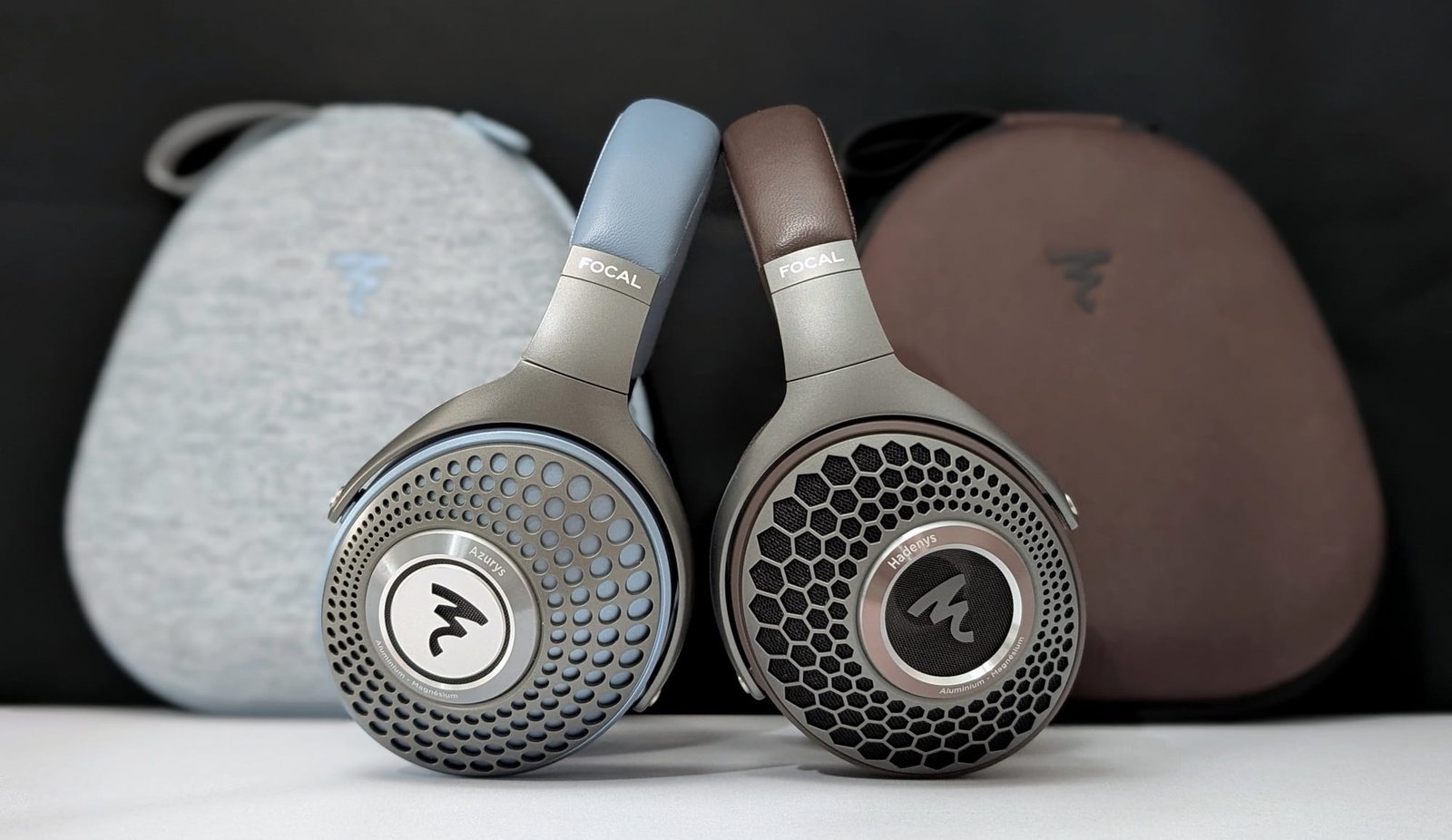
Azurys, in my opinion, is aimed at those looking for good closed-back headphones but who do not want them to be wireless or have noise-cancelling functionality. The price range of just over 500 euros in this product category is actually interesting because not much new has been seen in it in recent years, until now, following Focal's lead, Aune Audio also launched its 640-euro SR7000 headphones. Other new closed-back headphones, such as the Sennheiser HD 620S (350 €), Sony MDR-M1 (250 €), and Fiio FT1 (150 €), cost less, while at the other extreme, there are headphone models costing several thousands of euros.
In Focal's own headphone lineup, Azurys might receive relatively little attention unless it were priced 150 euros cheaper than the Hadenys and Bathys. Thus, I consider it sufficiently attractive, especially since the lower price is not reflected in the build quality, nor significantly in the sound quality. I intend to find out if Azurys would even be the most sensible purchase of the three, should someone be considering buying Focal headphones or a slightly more expensive closed-back headphone model in general. Recently, Focal also released professional-use Lensys Professional -headphones (price 700 €), which appear to be some kind of variation of the Azurys model. However, Lensys has not yet arrived for sale, so its potential review will be left for another time. To be precise, the Azurys model is also not yet available in the stock of Finnish retailers, so this is a good time to get acquainted with the headphones before they become available for purchase.
Packaging and accessories

Azurys is delivered in similar packaging to Hadenys – with a different cover image, of course. The light blue coloring of the carrying case matches Azurys's appearance, but I didn't expect any other changes compared to Hadenys's case. Somewhat surprisingly, however, Azurys's case is covered with a pleasant-feeling knitted fabric, similar to the Bathys model, whereas Hadenys's brown case is made of a denser and coarser material.

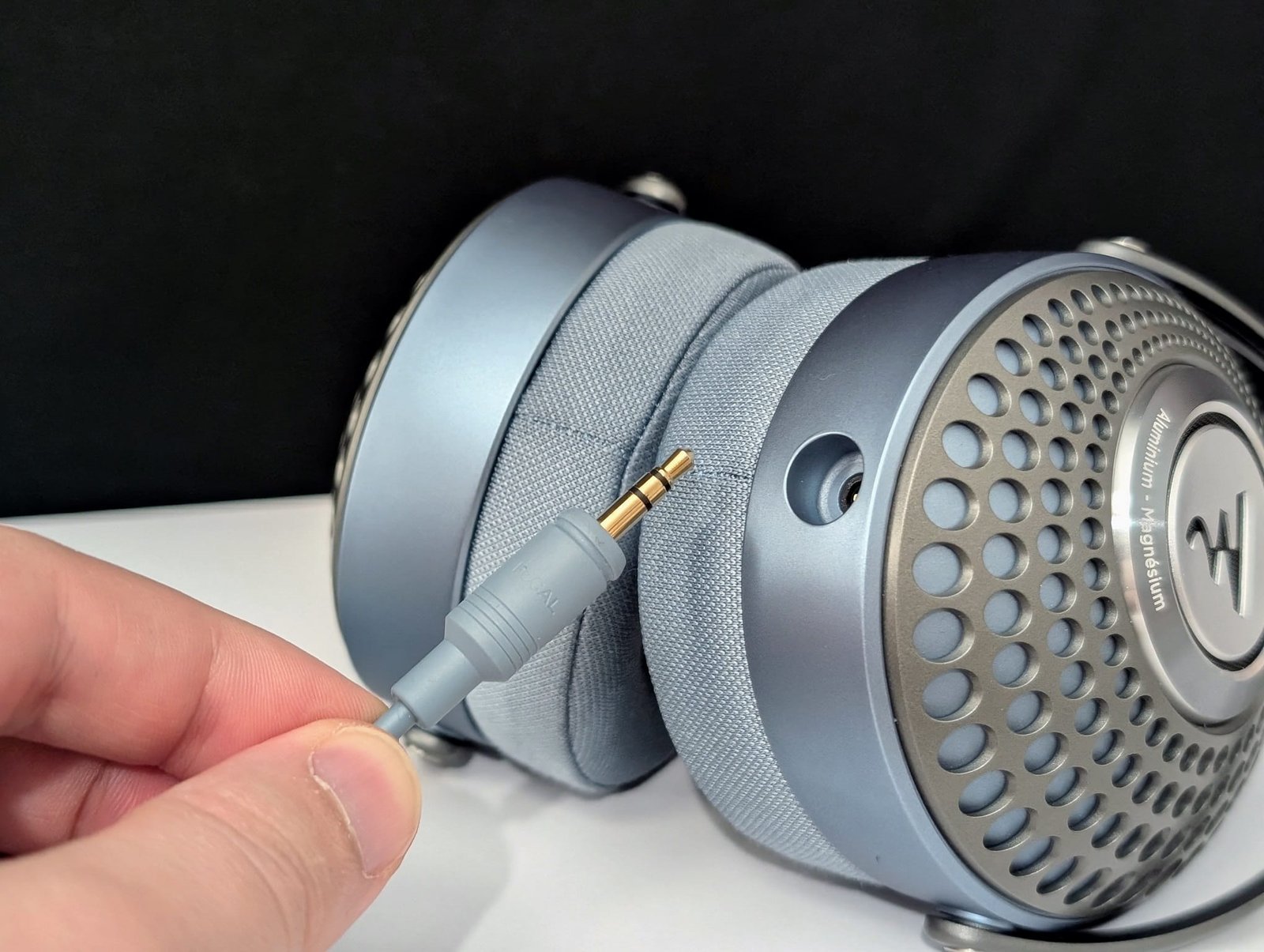
Hadenys comes with a 1.8-meter cable, while Azurys is clearly designed for mobile use with its 1.25-meter long and slightly thinner cable. It connects to both the headphones (left cup) and the amplifier with a 3.5-millimeter connector, and the equipment also includes a 6.35-millimeter adapter. As an additional feature, a generic microphone has been installed on the cable, which could be used, for example, for making calls. I have not personally tested the sound quality of the microphone, but based on the observations of a few people, it produces a rather muffled sound.
Azurys's rubber cable is not the most practical, so I have replaced it with a slightly longer V-moda cable. Practically any other AUX cable, which are sold affordably, would serve the same purpose. When acquiring a cable, it's worth remembering that the headphones only support an unbalanced signal.
Build and comfort
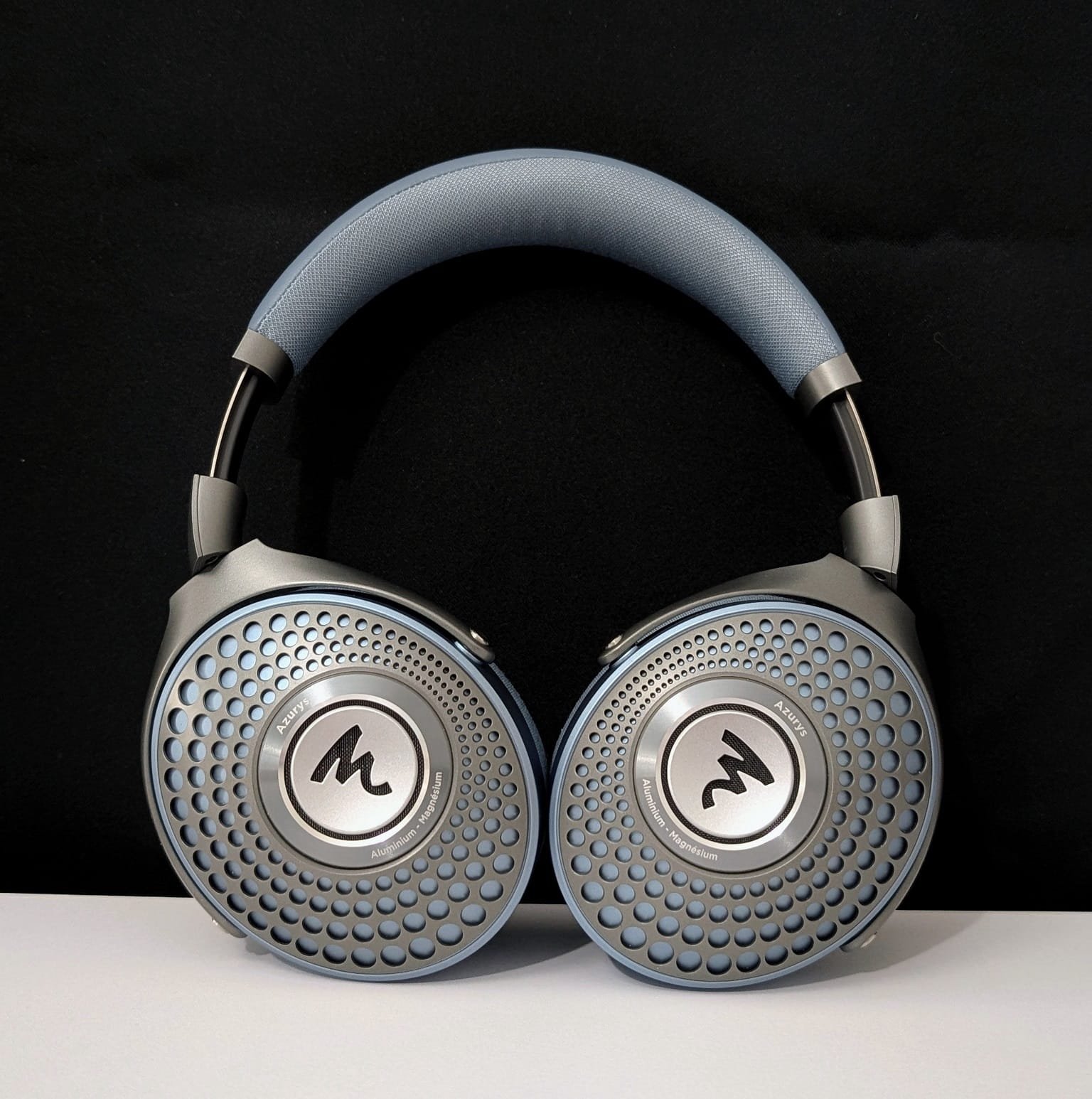
Manufactured in France, Azurys is a high-quality headphone, similar to Hadenys, with its structure containing magnesium, aluminum, steel, and plastic. However, the different coloring significantly changes its character. I find Hadenys stylish and in a certain way mature, whereas Azurys, with its light blue base color, feels as if it were aimed at children. This is probably because the coloring reminds me of babies and Disney movies. According to Focal, however, influences have been sought from the blue-toned azurite mineral, from which the headphones likely also get their name. I personally associate azurites with a darker blue, but be that as it may. I don't actually hate the coloring, but I'm not sure how many people's style the headphones would suit. Focal's boldness might somewhat hinder Azurys's sales, unless different versions become available later, similar to Bathys.
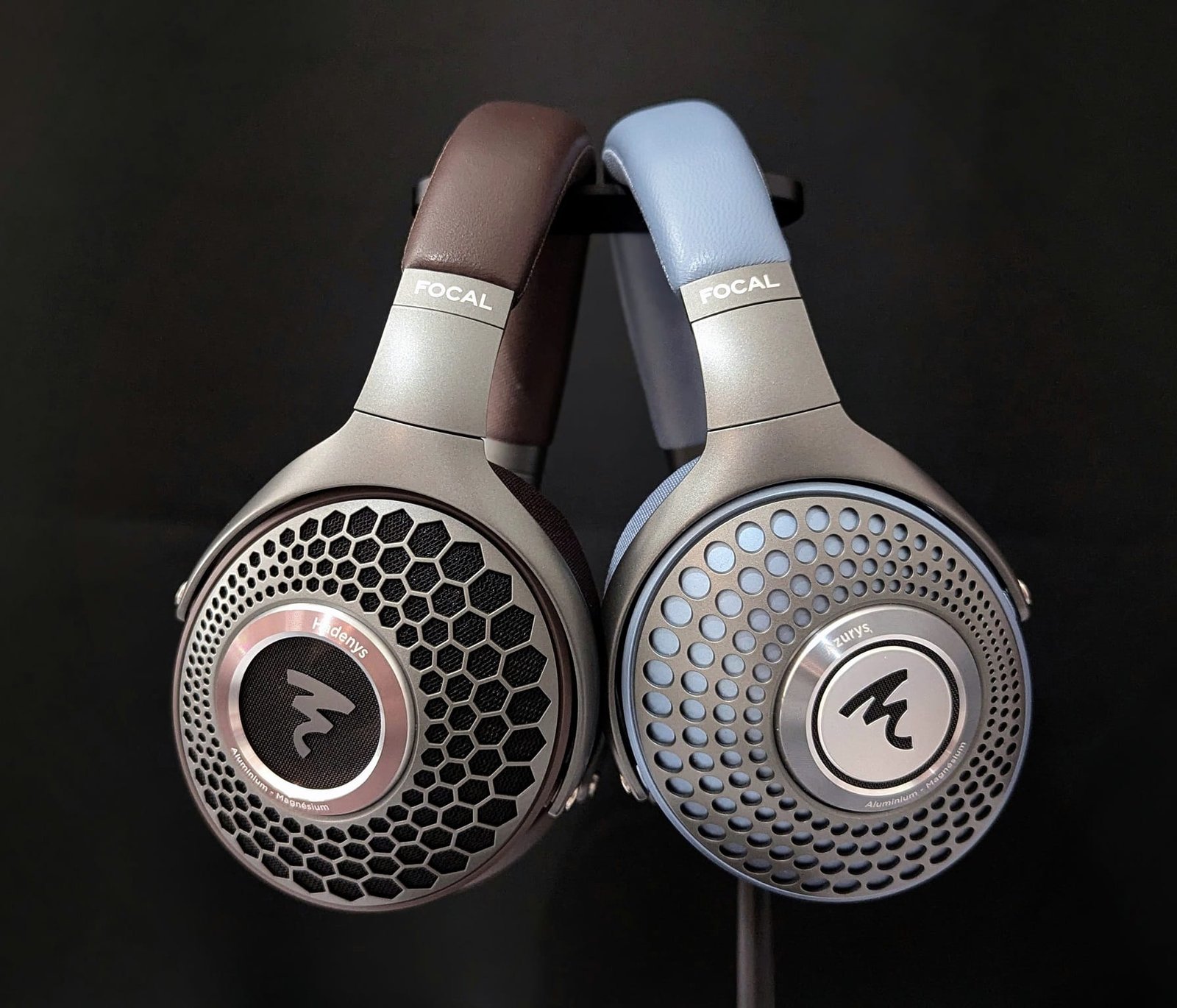
In addition to its coloring, Azurys differs from the Hadenys model in the grilles of its cups, which have round holes instead of hexagons, just like in the Bathys model. Focal has traditionally distinguished its open and closed models in this way. Azurys's closed cup structure increases the total weight of the headphones by only about 10 grams compared to Hadenys – the scale stops at 306 grams instead of 294 grams. So, we are still talking about really lightweight headphones, meaning comfort also reaches an excellent level, and I have no complaints about it. It should be noted, however, that due to the compact size of the headphones, the height adjustment range is somewhat limited, so it may not be sufficient for those with the largest heads.
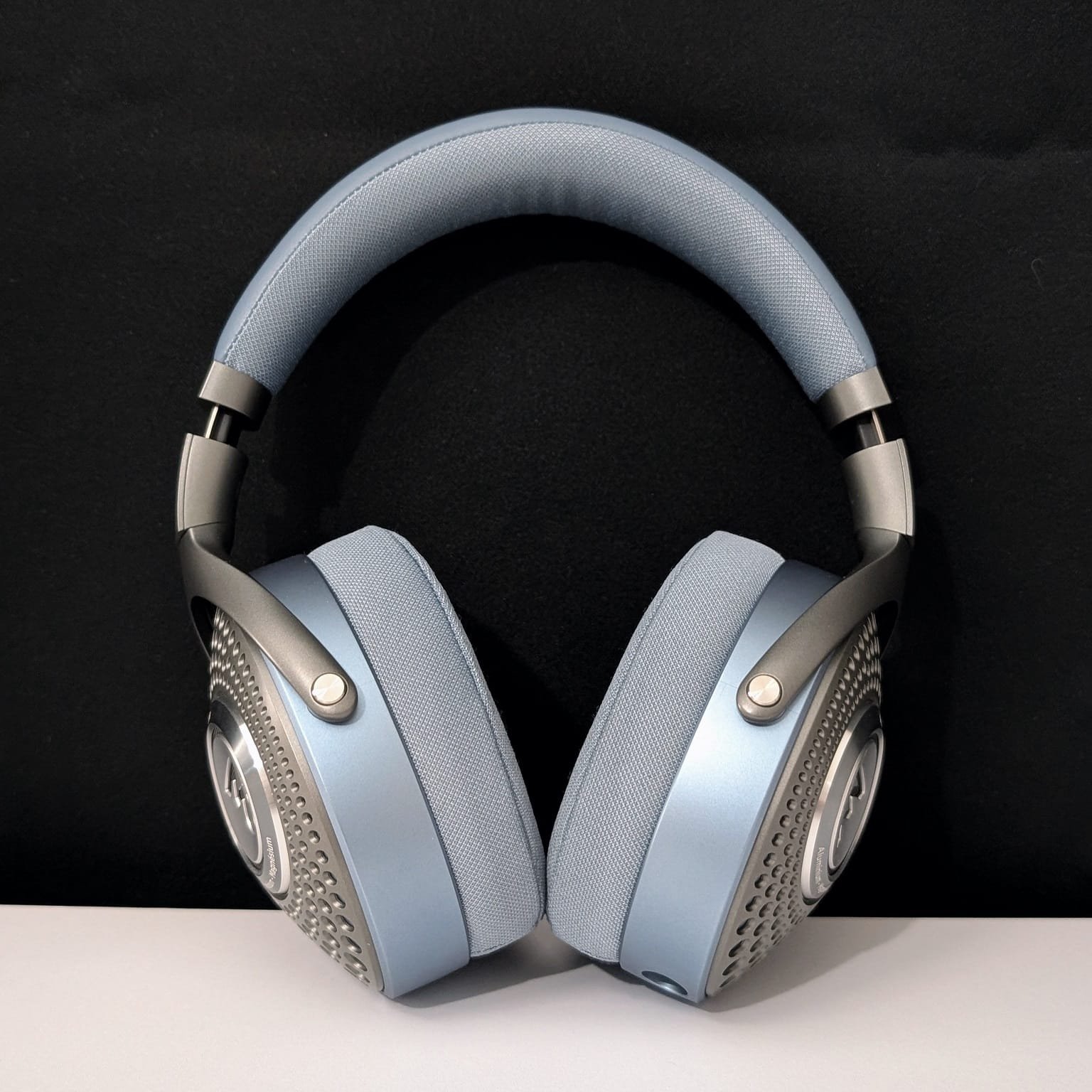
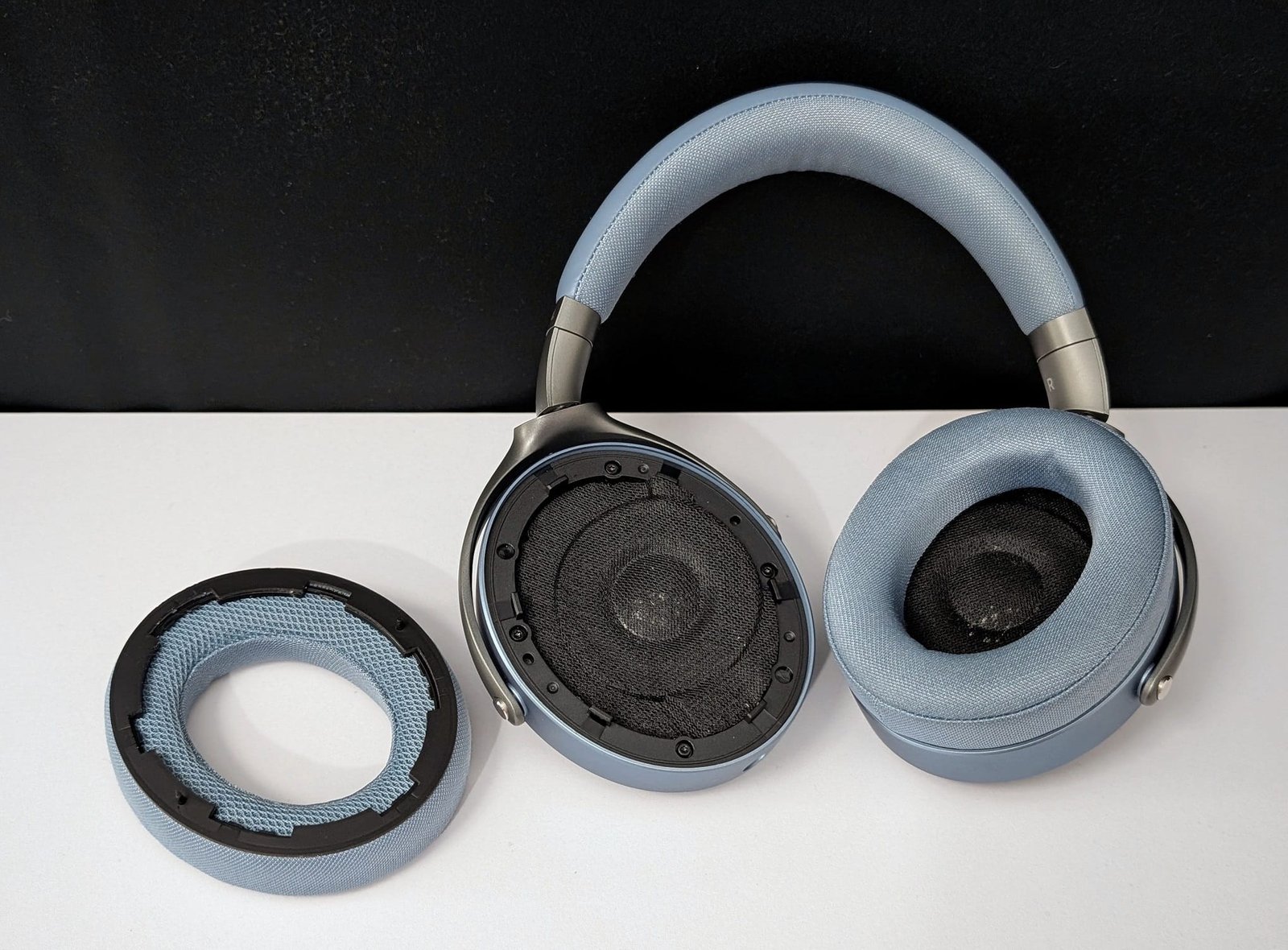
During use, Azurys and Hadenys differ from each other essentially only in their ear pads. In the Azurys model, they are also upholstered with fabric, which, however, feels thicker and coarser. For example, when rubbed with a finger, the pads of the closed model rustle more strongly. A sturdier fabric has presumably been used so that the pads would better retain their shape and thus ensure a tight fit and proper bass reproduction. I have easily found a tight fit even with narrow-framed glasses, so bass does not leak out of the headphones. At the same time, however, Azurys does not feel quite as comfortable on the head as Hadenys, which is equipped with luxuriously soft pads. I do, however, mostly perceive a little more pressure around my ears. The light blue ear pads detach from Azurys by pulling, as they attach to the headphones with plastic hooks. Replacement pads will certainly become available in due course.
Sound quality
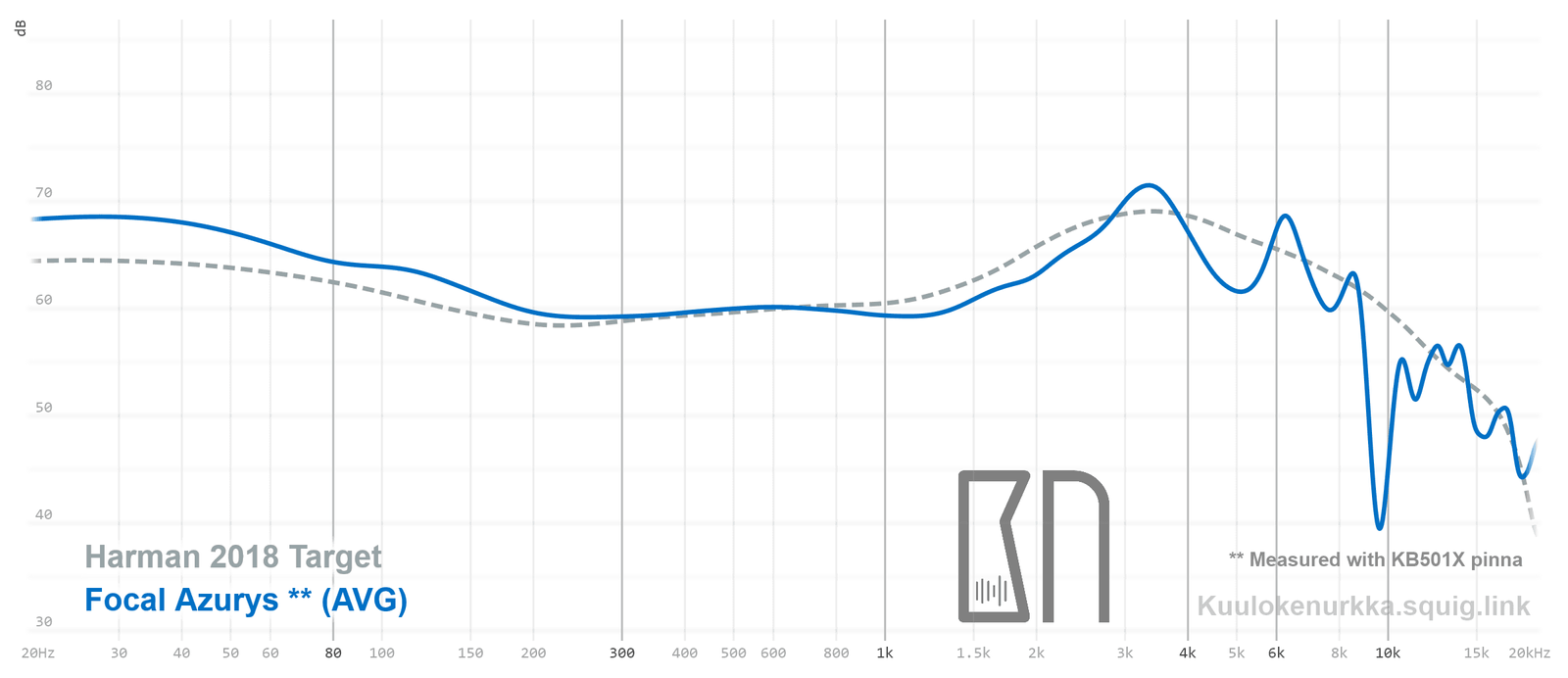
Our frequency response measurements have been made with a clone IEC-60318-4 coupler and KB501X pinnae. The Harman target curve from 2018 is used as a reference point and generalization of the headphone response that would sound good to most people. For more information on the measurements and their accuracy, see Headphone Measurements-page. Azurys's frequency response is also comparable with other measured headphones Squiglink .
Impedance curve and amplification requirement:
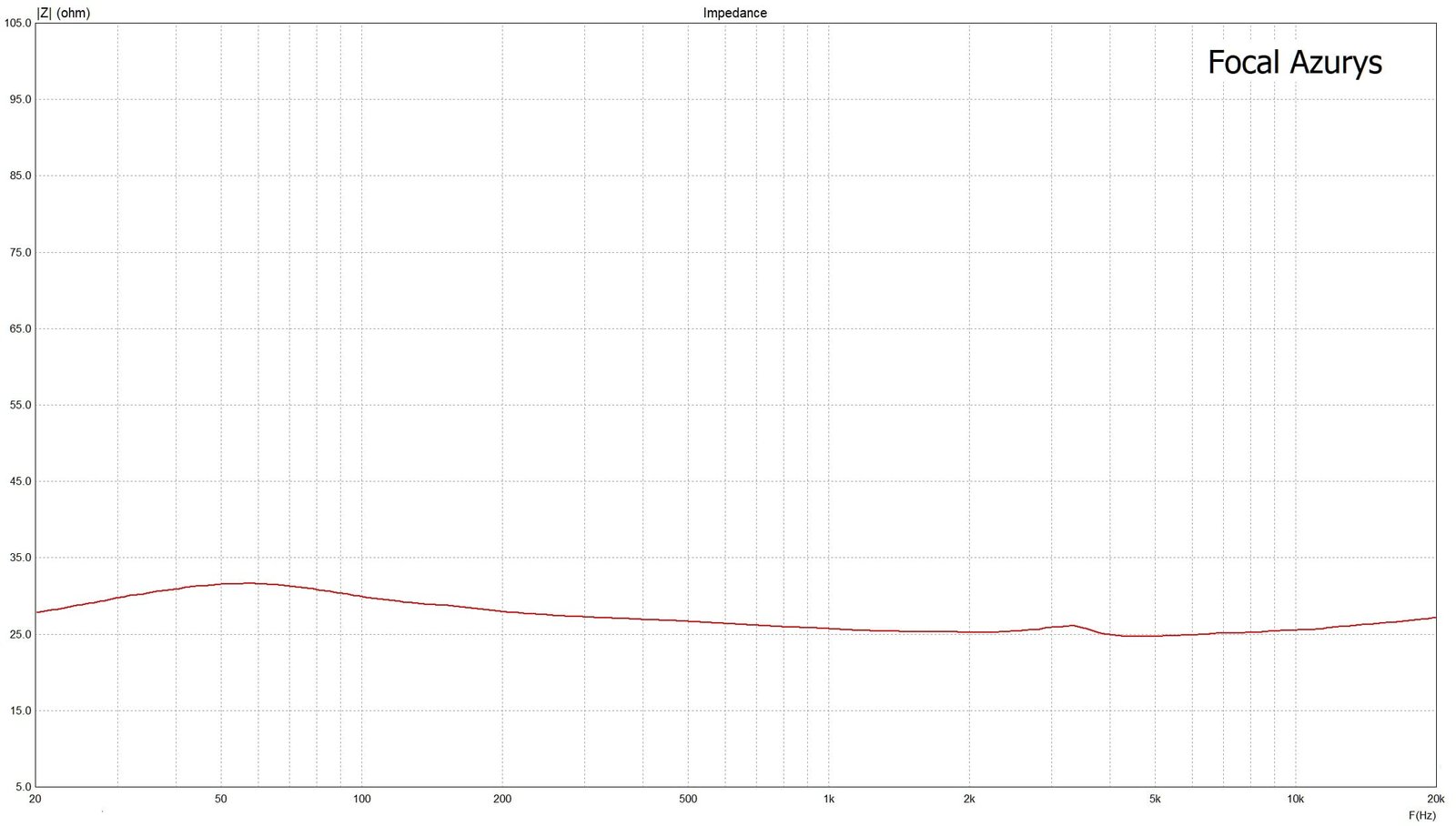
Focal states Azurys's impedance as a low 26 ohms, which is accurate. The impedance curve is also flatter than the Hadenys model, as at 50 hertz, Azurys only rises slightly above 30 ohms, not up to 45 ohms. Thus, the bass reproduction of the closed model does not change (intensify) as much with an amplifier that has a high output impedance (for example, 10–100 ohms). Therefore, many older devices can be used quite freely with these headphones without significantly affecting the resulting frequency response.
Azurys's stated sensitivity is 100 dB/mW. Although this figure is slightly lower compared to Hadenys, both can practically be driven well with a very moderate amplifier. The headphones also sound good with affordable devices. Azurys's closed design makes it suitable for portable use, for example, Qudelix 5Kas a companion to a device like a [missing word/link]. The practical carrying case also supports this use case, so approximately one-third of my listening for this review has taken place at the office while working.
Azurys frequency response:
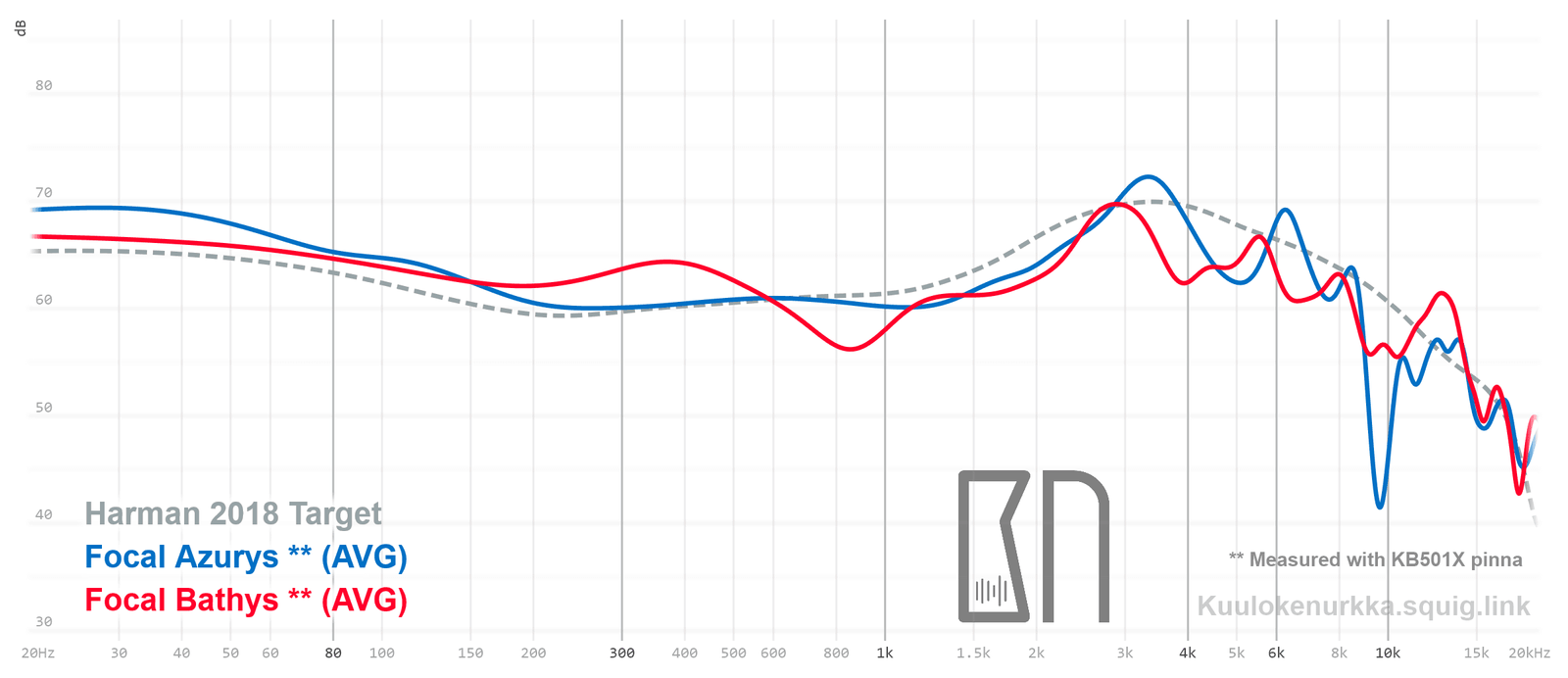
Differences compared to Bathys noise-cancelling headphones:
Differences compared to the open-back Hadenys model:
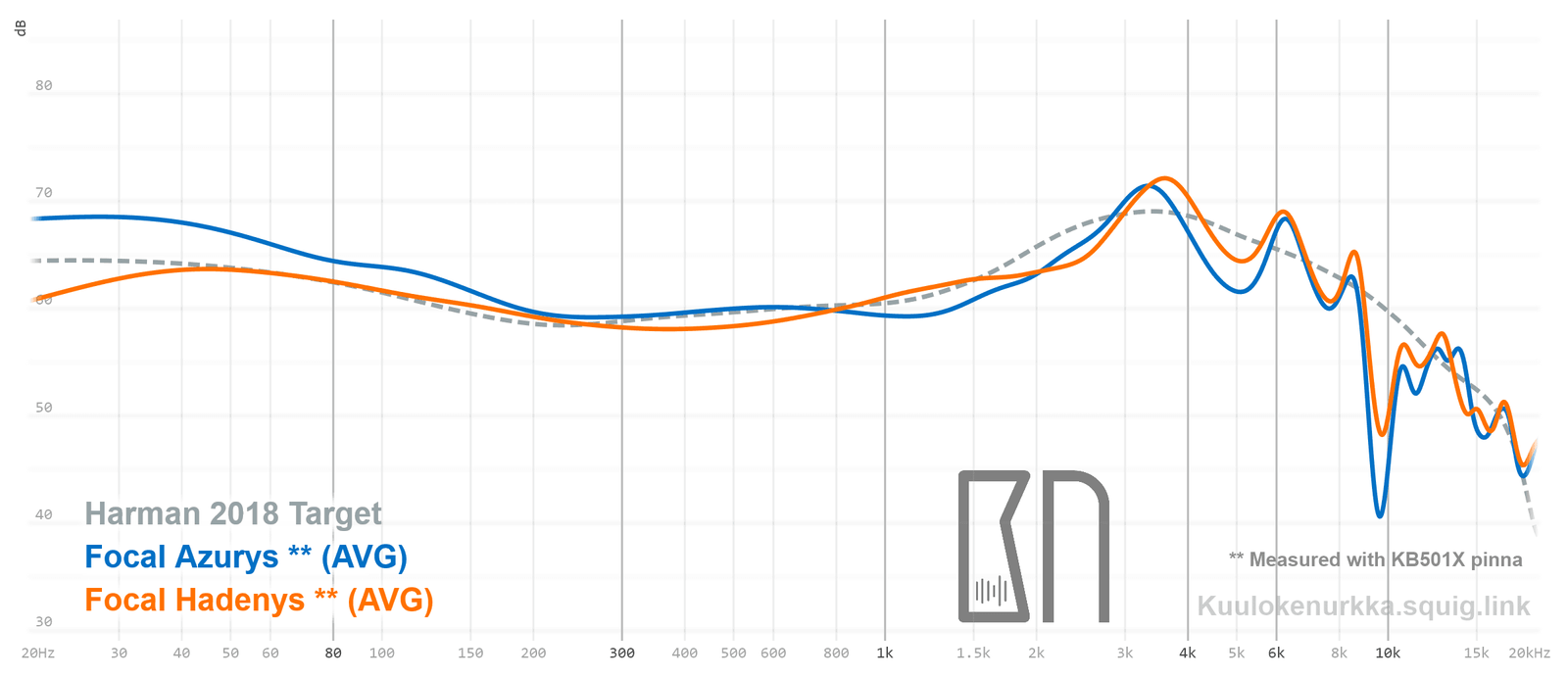
Azurys is tuned to be very similar in its main characteristics to the open-back Hadenys, meaning its sound is clear, precise, and dynamic. The soundstage also does not differ significantly in style or size between the two models. Azurys reproduces sound quite close, but not disturbingly so. The biggest advantage of the closed-back design compared to Hadenys is a stronger sub-bass, making Azurys sound slightly more fun and, in a way, more commercially tuned of the two. However, there is no bloated upper bass whatsoever, and the reproduction always remains pleasantly tight, with the midrange clear despite its richness. Bathys noise-cancelling headphones have a fuller and more relaxed sound, so Azurys offers a more neutral and hi-fi-style result. This duo is aimed at quite different target groups, even though I think the Bathys sounds really good for noise-cancelling headphones.
Like the Hadenys, Azurys feels like an excellent all-around headphone, for which it is difficult to find any major fault in any situation. The clarity of reproduction is sufficient for all kinds of music, and the brightness of the treble also remains well under control, so the sound never grates on the ear. However, one common weakness is found in the Focal duo, and it unfortunately draws more attention in the Azurys. The headphones' ear gain area peaks at around 3.5 kHz, which does not sound entirely natural. In the Hadenys, the same characteristic is probably better hidden because it reproduces the 1–1.5 kHz frequency range more energetically than the Azurys.
In the closed-back model, the emphasis at 3.5 kHz makes the sound rougher. In a vocalist's voice, the end part and the movement of air are emphasized somewhat unusually, as if the singer is trying to breathe themselves to be heard better. This draws attention away from the body of the sound, so the vocals paradoxically remain somewhat distant and thin-sounding, whereas the Hadenys is more present. Azurys also adds a sharpness to instruments that does not usually emerge as strongly. I have already gotten used to this characteristic, but it draws some attention away from the lower mid-frequencies and treble, which is ultimately more regrettable than the individual emphasis itself. For this reason, Azurys does not feel quite as balanced as its frequency response would suggest. However, EQing the 3.5 kHz slightly downwards makes the sound more natural, so the ”problem” would be easily correctable if necessary.
In my opinion, Hadenys is the better headphone of the two because of this single issue, but by the standards of closed-back headphones, Azurys is still a very successful product. Those who like strong bass and a more punchy sound might actually prefer it, so Hadenys's 150 euro higher price is, in my opinion, a bit on the high side compared to the improvements it offers. This makes Azurys an excellent alternative, especially if someone desires a closed-back design.
Bass:
I find Azurys's bass reproduction very suitable, as the bass is reproduced enjoyably robustly, but it still allows other frequency ranges to emerge normally. Frequency response measurements made with my own equipment actually give a slightly too bass-heavy and partly misleading picture of the headphones, because I feel that the upper bass frequencies remain more tightly controlled in Azurys than in the Hadenys model, whose lower frequencies create more warmth and rumble in the reproduction. Thanks to its stronger sub-bass, Azurys, in turn, kicks harder and creates more sound pressure.
However, I consider the best feature to be that the bass, considering the closed-back design, stays well within its own territory without creating the typical dip in the lower mid-frequencies that many other headphones have. Although the reproduction may not be the clearest due to its robustness, the bass does not exhibit slow thumping or excessive bloat that would make Azurys sound boxy and thus immediately like a closed-back headphone. For example, the kick drum thumps richly but stays excellently composed without swelling too much. The listening experience is fun, but despite that, I could choose not to focus on the bass if I wanted to, because it doesn't spill over other frequencies. This is modern bass reproduction done right. However, I would not declare Azurys the bass king of its price range, because an older Fostex TR-X00 Purpleheart reproduces sub-bass-heavy music somewhat more physically.

Mid-frequencies:
My attention in Azurys's mid-frequencies is drawn to the sharp nuance I mentioned between the upper mid-frequencies and the treble. There is nothing wrong with the headphones, so to speak, but they also do not sound entirely natural. Emphasizing an unusual point in the frequency response draws attention away from areas that are usually considered more important. For example, a vocalist might sound somewhat frail and distant with Azurys, and the treble also seems darker than its quantity suggests. On the other hand, the sound is still reproduced clearly, and the 1–3 kHz frequency range, appropriately calmed down relative to Harman's target curve, creates the desired spaciousness for a punchy presentation. Often, the 3.5 kHz emphasis also enlivens the reproduction in a rather fun way when combined with robust bass reproduction.
Although I personally prefer Hadenys's more authentic and present presentation, one gets used to Azurys's thinner and more aggressive sound quite easily. I like to use the headphones with a Qudelix 5K, whose equalizer can quickly correct the slight unnaturalness without needing to make other changes to the frequency response. Given the smallness of the problem, my criticism might even seem a bit exaggerated, considering that closed-back headphones often have clearly more serious problems and greater unevenness. Perhaps I would have hoped for Azurys to be even closer to Hadenys, which draws me in better. Nevertheless, the closed-back model is a very good headphone and, commensurate with its price, offers good resolution. No significant blending of sounds is noticeable; instead, their positions and movements are easy to discern.
Treble:
Focal has managed to tune Azurys's upper frequencies surprisingly similarly to the Hadenys model, so the sound in this regard is effortless and natural in style. However, the presence region between 4–5 kHz in the closed-back model is reproduced slightly more calmly, so the presentation is not quite as clear as in the Hadenys, in my opinion. Additionally, the area around 3.5 kHz is more emphasized in Azurys, so the frequencies above it remain somewhat hidden in the overall sound. Because the immediate punchiness draws attention away from the clarity and airiness of the sound, Azurys even sounds a touch dark. A small boost to the highest frequencies could do good, but similarly, lowering the 3.5 kHz emphasis would also balance the result. Even in the current situation, I don't have any real complaints, because on the positive side, Azurys's treble never grates on the ear, and for example, drum cymbals do not become irritatingly loud. Typically, the treble of closed-back headphones is clearly more uneven, so Focal has succeeded in balancing effortlessness and detail well.
Other observations:
The headphones offer dynamic and quite well-defined reproduction, which does not differ significantly in quality from the open Hadenys model. The closed design is not heard as reverberation or booming bass, but rather primarily prevents the soundstage from opening up to be as wide and open. However, the Azurys' mid-frequencies have been tuned so that the presentation sometimes feels even more spacious than the Hadenys model, although neither ultimately sounds particularly large. If the sense of openness is not important, the Azurys is not really a significant degradation compared to the Hadenys, but the differences are mainly explained by a slightly different tuning. I personally prefer the open model due to its slightly more natural presentation, but someone else might very well state otherwise.
The Azurys is easy and quite versatile to amplify
Listening to the Azurys has been straightforward, as I haven't really paid much attention to what amplifier the headphones have been connected to. The listening experience has been very similar with the Macbook Air's headphone jack (or Apple Dongle), Qudelix 5K, and Ferrum Audio OOR, and none of these devices would have significantly changed my perception of the headphones. This consistent performance speaks to the Azurys' balanced tuning, but also its easy reproducibility.

Thanks to a relatively flat impedance curve, listening would also be possible with a tube amplifier with a higher output impedance without the bass reproduction becoming overly muddy. With the one I tried Cayin HA-3A, the result was indeed very functional, as the tubes made the headphones' soundstage more interesting and the tone slightly more authentic and full-bodied. I no longer paid much attention to the unnaturalness emanating from around 3.5 kHz; instead, vocals in particular sounded more pleasant and electric guitars less sharp. The bass reproduction certainly thickened and softened somewhat, but for example, the bass guitar sounded more fun than before, and the reproduction was otherwise really punchy. Unlike the Hadenys model, I would see high-quality tube amplifiers as a very viable option for the Azurys, as long as background noise is kept in check. Due to the headphones' low impedance, all kinds of interference sounds are easily audible, so the HA-3A also hums a bit.
Comparison to other headphones
Focal Azurys vs. Sennheiser HD 620S
Prices: 550 € vs. 350 €
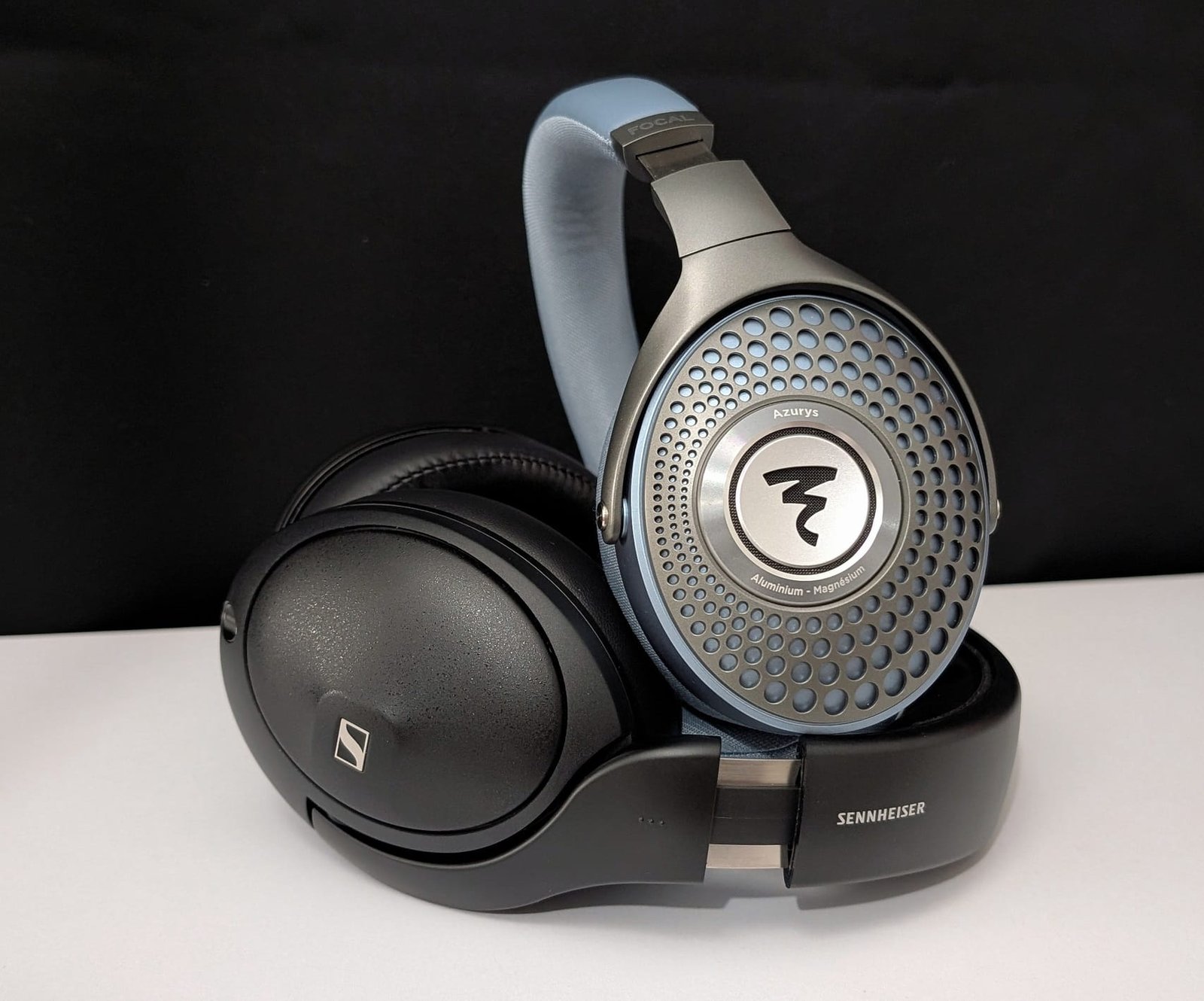
I will return to a more detailed comparison of the Focal and Sennheiser models in conjunction with the HD 620S review, once I have had more time to listen to the headphones. In this context, however, I will mention my preliminary observations as a taste. Structurally, I prefer the Azurys of the two, because it is made of higher quality materials and can be comfortably fitted to the head with less effort. However, the HD 620S is larger in size, so it would probably suit some better, and ears also fit better inside its spacious pads. Aesthetically, the two could not be more different from each other.
The Focal Azurys costs 200 euros more, but it is tuned more balanced and has fewer weaknesses. The biggest advantages of the HD 620S are a more spacious soundstage and slightly more natural-sounding mid-frequencies. Some might also like its airier treble, but it also comes with quite serious problems, such as occasional over-sharpness and sibilance. The Azurys' high frequencies never grate on my ears, whereas the HD 620S sounds annoyingly uneven at its worst. It also reproduces the upper bass prominently, so the low frequencies remain soft and boomy throughout. The Azurys, on the other hand, kicks clearly and powerfully, so the Sennheiser model is no match for it in terms of bass reproduction.
The HD 620S provisionally has its strong moments compared to the Azurys, as for example, acoustic music sounds better with it and skilled vocalists sound more natural. However, the Focal model seems more versatile and works better for mixed listening and especially with all kinds of more energetic music. Let's see what I think once I have compared the two a bit more.
Focal Azurys vs. competitors in the same price range
Although I don't have direct competitors from the Azurys' price range available this time, it's worth remembering that several other closed-back headphones could be purchased for the same price. Among the latest models, the Aune Audio SR7000, priced at 640 euros, and the Beyerdynamic DT 1770 Pro MK2, costing 550 euros, are worth mentioning. Denon also still sells its AH-D7200 model from 2016 for about 600 euros. From the USA, the Drop + Dan Clark Audio Aeon Closed X, priced at 500 dollars, would be available for order, and for those interested in studio headphones, there is also the Neumann NDH 20 for about 500 euros. I won't go into a detailed list of DIY creations sold by enthusiasts, but they would certainly also be found on the market.
Focal itself no longer seems to be manufacturing its Elegia, Celestee, or Radiance models, as they are rarely seen in any retailer's stock anymore. The Azurys thus fits into a niche where one would expect some demand, as long as wired closed-back headphones continue to sell alongside noise-cancelling models. Many would probably choose the Bathys from Focal's lineup if it costs, for example, 100 euros more than the Azurys. However, purely based on sound quality, I consider the Azurys to be a slightly better and more balanced headphone of the two.
Focal Azurys vs. ZMF Bokeh
Prices: 550 € vs. starting from 1250 €
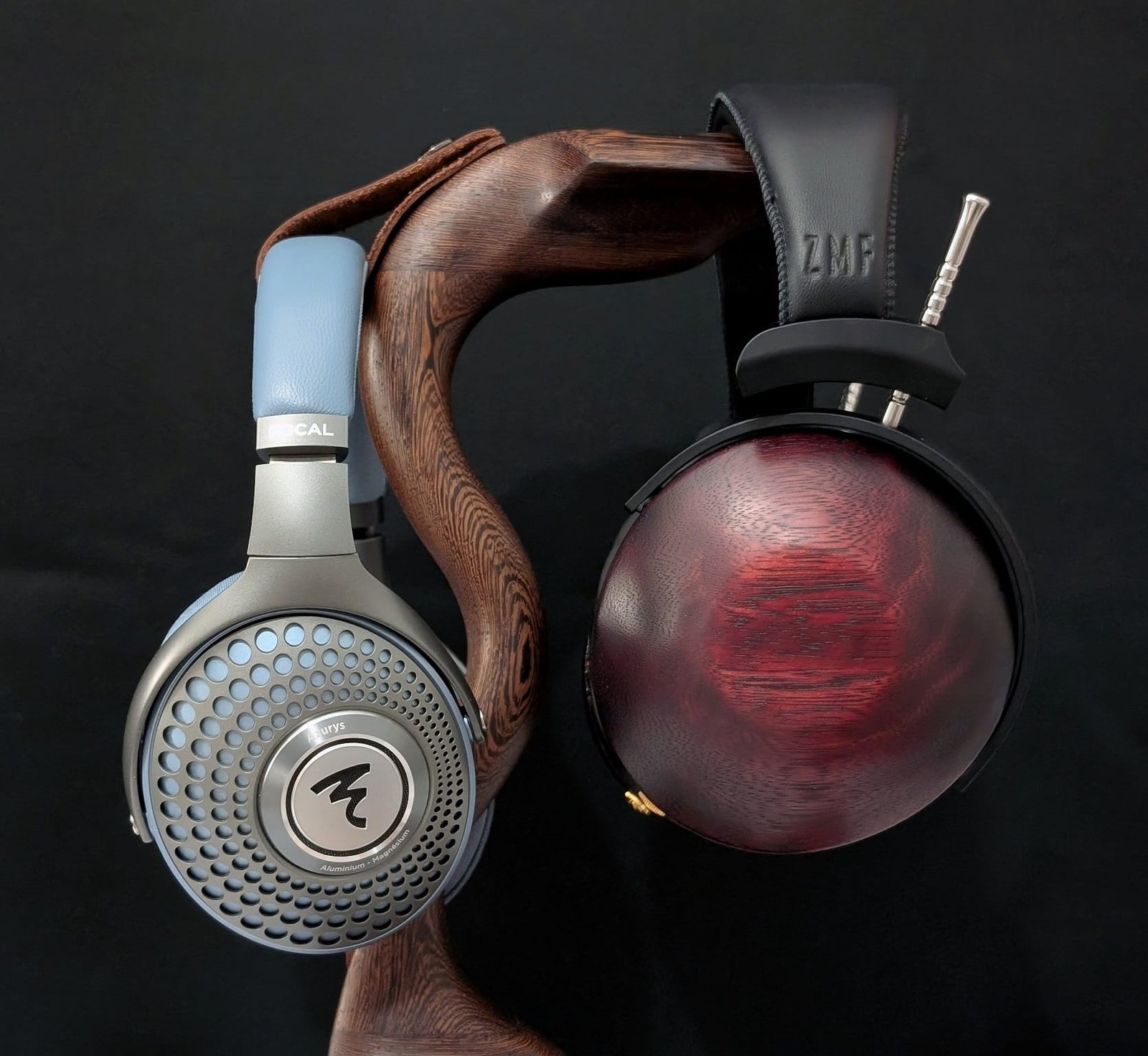
This time, a slightly more expensive comparison is ZMF Bokeh, which, despite its starting price of 1250 euros, is at the cheaper end of the manufacturer's headphone lineup. The Bokeh is marketed as semi-portable, but due to the large size of the headphones and their weight of over 500 grams, the Focal Azurys feels like a more sensible mobile headphone. It would be more practical to carry in its case, although those who wish can, of course, also slip the Bokeh into its designed case.
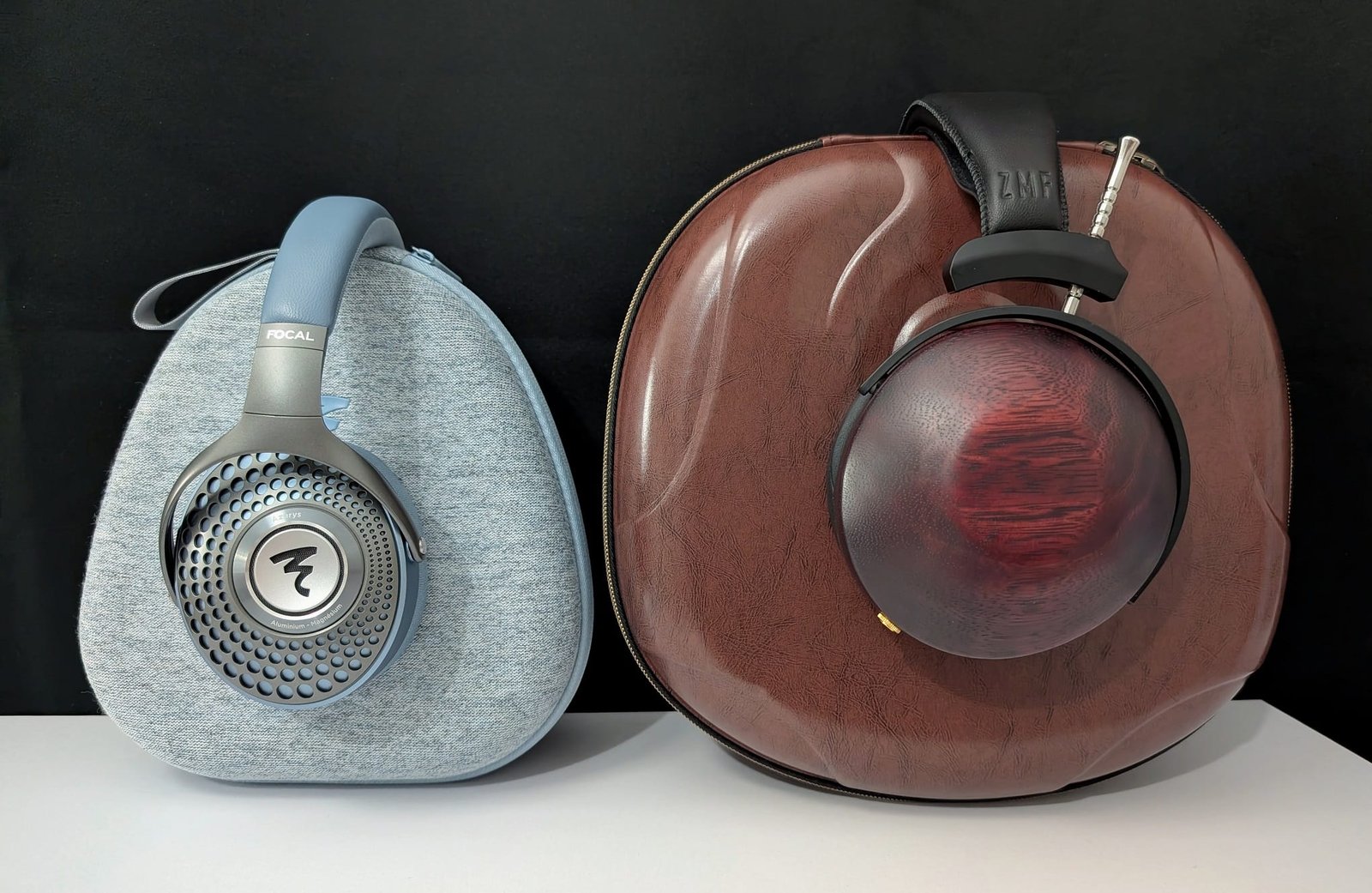
Both Azurys and Bokeh are comfortable for me even after prolonged use, but thanks to its 200-gram lighter weight, the Focal model automatically wins in this regard. However, the advantages of the Bokeh include more spacious ear pads and greater height adjustment. I also clearly prefer its appearance, which features red wood, black metal, and leather, as the light blue of the Azurys is not among my favorite colors. In addition, various versions of the Bokeh would be available for purchase, and its sound quality could be finely tuned quite versatilely by changing ear pads and modifying the front damping of the drivers. All this naturally comes at a price, so the Azurys is clearly more affordable of the two and thus accessible to a larger group of people.
Frequency responses:
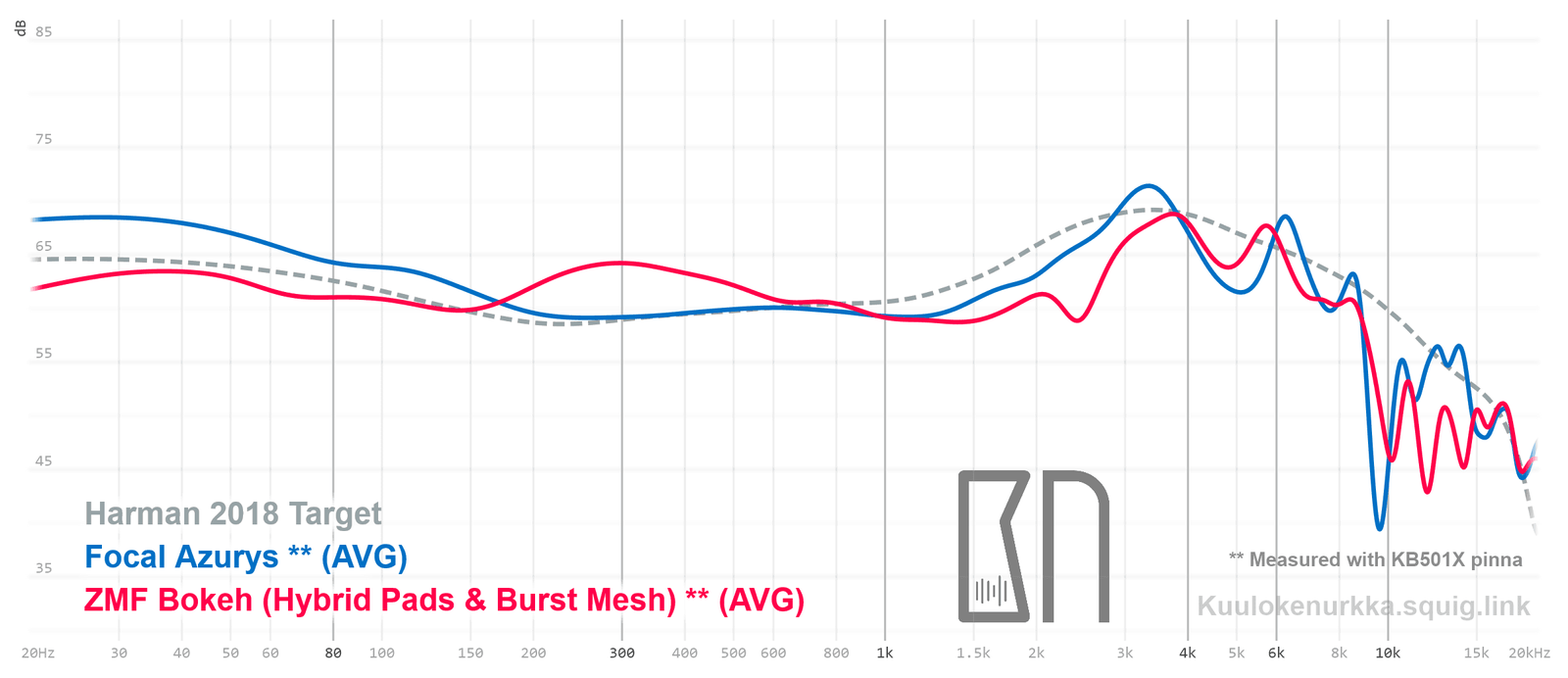
For some reason, every measuring device measures the Bokeh's frequency response slightly differently, so the results should not be taken entirely literally, even concerning the low frequencies. The special characteristics of the frequency response do exist at the same frequencies, but based on my own measurements, making equalization adjustments would lead to a somewhat inaccurate result. For example, the seemingly large emphasis in the lower midrange sounds half as small when listening to the headphones, and the 1–3 kHz level also does not actually remain as far from Harman's target curve. However, the most important thing for the comparison is that the graph still correctly shows the frequency ranges where Azurys and Bokeh differ from each other.
With its current default configuration, the Bokeh sounds more relaxed and warmer of the two. Its somewhat thick lower midrange adds body to the sound, and the upper midrange remains softer and more spacious compared to the Azurys. The treble of both is emphasized at slightly different frequencies, but the highest frequencies are reproduced even more calmly in the ZMF model than in the Azurys. The Bokeh is quite relaxed, but still clear enough to listen to. I consider its biggest advantage over the Azurys to be a more spacious and larger soundstage, where sounds, in a way, have more room to breathe.
The Azurys sounds smaller, but its midrange is energetic enough that its reproduction is more precise than the Bokeh's. Instrument details come out more clearly and sharply, while the Bokeh allows for more relaxed listening. The Azurys sounds a bit more natural overall to my taste, even though the 3.5 kHz emphasis pops out as a singular coloration. However, the Bokeh's frequency response has several special characteristics that make it somewhat unique and soft-sounding compared to the Azurys. The treble of the ZMF model also reproduces a bit more unevenly, so finding the optimal result for oneself may require experimenting with different ear pads and front damping discs. Thus, the sound could also be fine-tuned somewhat towards a more neutral direction, but the Azurys' midrange will always remain more energetic in style.
The Azurys reproduces bass more powerfully of the two, unless protein leather pads are installed on the Bokeh. In this case, however, the mid-bass of the ZMF model is emphasized too much relative to the midrange for my taste, so Focal has succeeded in making the bass reproduction of its headphones clearer and more accurate. The Bokeh ultimately has surprisingly few clear strengths compared to the Azurys, unless someone prefers its more spacious soundstage and more relaxed listening experience, and at the same time appreciates its wide customizability.
The higher price of the ZMF model is largely explained by the wooden cups, more time-consuming craftsmanship, and a lifetime driver warranty, which, however, do not actually improve sound quality. For this reason, the Bokeh and Azurys are closer to each other than the price difference would suggest. I still believe that the Bokeh should cost less than 1000 euros, which would make it a more attractive option. As a result of this comparison, I am impressed by how strongly the half-price Azurys manages to challenge ZMF's headphones. Depending on taste, both are excellent headphones, but more expensive is not automatically better in this case.
Summary
Like the Hadenys I tested earlier, Focal has, in my opinion, hit a gold mine or at least come close to it with the Azurys model as well. It is a sensible product that combines a high-quality and lightweight construction with accurate and balanced sound quality. The pricing does not feel like a terrible rip-off in the current market and global situation; rather, the Azurys performs well even against more expensive headphone models. It also offers a comparable result to the open Hadenys model, as both have their own sound quality advantages.
The Hadenys sounds slightly more natural and better of the two, but in addition to its more powerful bass reproduction, the Azurys is 150 euros cheaper, and its closed design makes it easier to use among other people. I could conclude that if someone likes the sound of either Focal model, price-conscious consumers can confidently choose the Azurys, regardless of whether they are looking for open or closed headphones. It is a bit silly that the Azurys has been decided to be colored a divisive light blue, which means it may not become a headphone ”for everyone.”.

Affordable closed headphones generally do not offer a completely optimal listening experience, so the Azurys stands out positively from the crowd in my opinion, even though it costs more than, for example, the Sennheiser HD 620S or Beyerdynamic DT 700 Pro X. Among good budget options for sound quality, AKG's K361 and K371, on the other hand, are so flimsy in construction that I hesitate to recommend them. I intend to place the Focal Azurys on Kuulokenurkka's wall of fame as a worthy alternative in the closed headphones category. Apart from a slight unnaturalness in the upper midrange, it is difficult to find major complaints about the headphones, especially when the construction and comfort are in order.
Pros and cons:
+ Clear and inspiring sound
+ Robust and well-controlled bass reproduction
+ Smooth treble
+ Precise sound separation
+ High-quality, compact and lightweight construction
+ Excellent user comfort and usability
+ Easy to drive
+ Handy carrying case
+ 150 euros cheaper than Hadenys
+/– The light blue color of the headphones is likely to strongly divide opinions
– The 3.5 kHz emphasis sounds more unnatural than in the open Hadenys model
– The soundstage is not particularly wide
– Some might prefer airier treble
– The height adjustment range may not be sufficient for everyone
– The included cable is short and quite impractical
 EN
EN  FI
FI