Author: Sword of Damocles
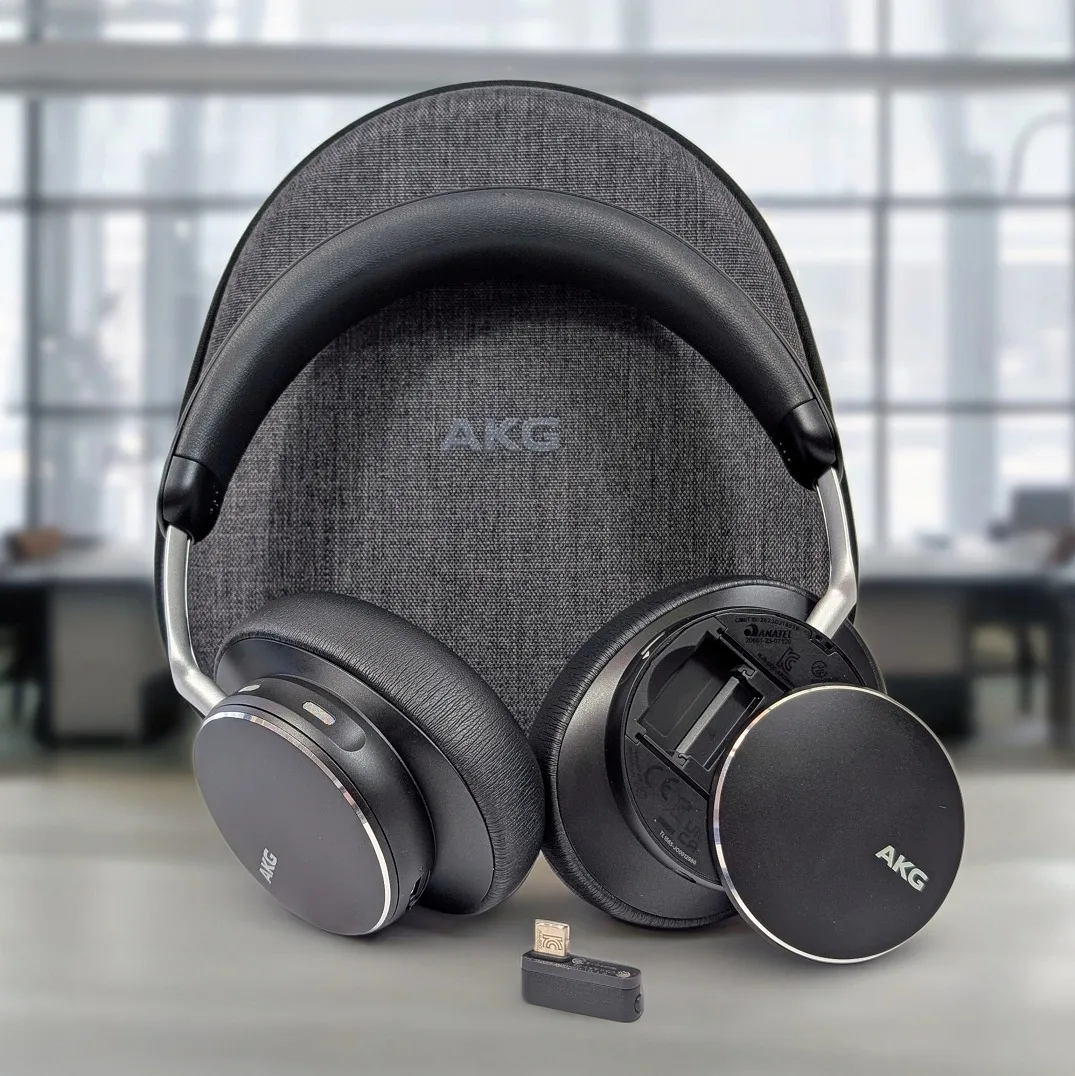
Table of Contents:
Information:
- Release year: 2024
- Country of Origin: China
- Colour options: Black and white
- Price: €399 (lowest market price to date €279)
- Type: Closed, over-ear
- 40 mm dynamic drivers (Liquid Crystal Polymer diaphragm)
- Audio connections: Bluetooth 5.3, wireless USB transmitter (2.4 GHz), and 3.5 mm
- Bluetooth codecs: LDAC, AAC and SBC
- Charging port: USB-C
- Battery size: 1050 mAh
- Battery life (2.4 GHz/Bluetooth): 45/55 h (ANC ON) and 85/100 h (ANC OFF)
- Charging time: 3 h (supports fast charging: 10 minutes for 6 hours of playback time)
- Adaptive Active Noise Cancellation: On / Off / Transparency mode
- Features: Multipoint, Google Fast Pair & Microsoft Swift Pair, voice assistant (Google Assistant/Siri), Spatial Audio, Zoom certification, and mobile companion app
- Weight: 281 g (my personal scale reads 287 g)
- Accessories: Carrying case, wireless USB-C transmitter (2.4 GHz), USB-C to USB-A adapter, USB-C to USB-A cable, headphone cable (3.5 mm), and airplane adapter
Review sample: Self-purchased product
South Korean Samsung now owns many well-known audio brands as well as Harman International, whose expertise is utilized in headphone development and sound tuning. Active noise-cancelling headphones have been an important product category for this corporate entity. While JBL's headphones are primarily aimed at younger age groups, the AKG name is used in connection with slightly more mature products. Such is also the AKG N9 Hybridreleased nearly a year ago, which, as a €400 noise-cancelling headphone, is fundamentally the best that has been brought to the market under the AKG brand in the Samsung era. Therefore, not much is left of the company's hi-fi history, but high expectations are nonetheless warranted for the N9 Hybrid—tuned by the Harman laboratories—especially regarding sound quality.
The word "hybrid" in the product name refers to the wireless USB transmitter included with the headphones, which enables wireless listening even on devices that do not support a Bluetooth connection. In addition, the latency over the 2.4 GHz connection should be low, and the audio signal quality potentially even higher than the LDAC Bluetooth codec supported by the headphones. Because the AKG headphones are also Zoom-certified and significant effort has been put into the microphone implementation, the product is clearly aimed at work use and arguably also gamers who benefit from the lag-free wireless connection and good microphone. Could the N9 Hybrid even be a game-changer for its product category?
Packaging and accessories
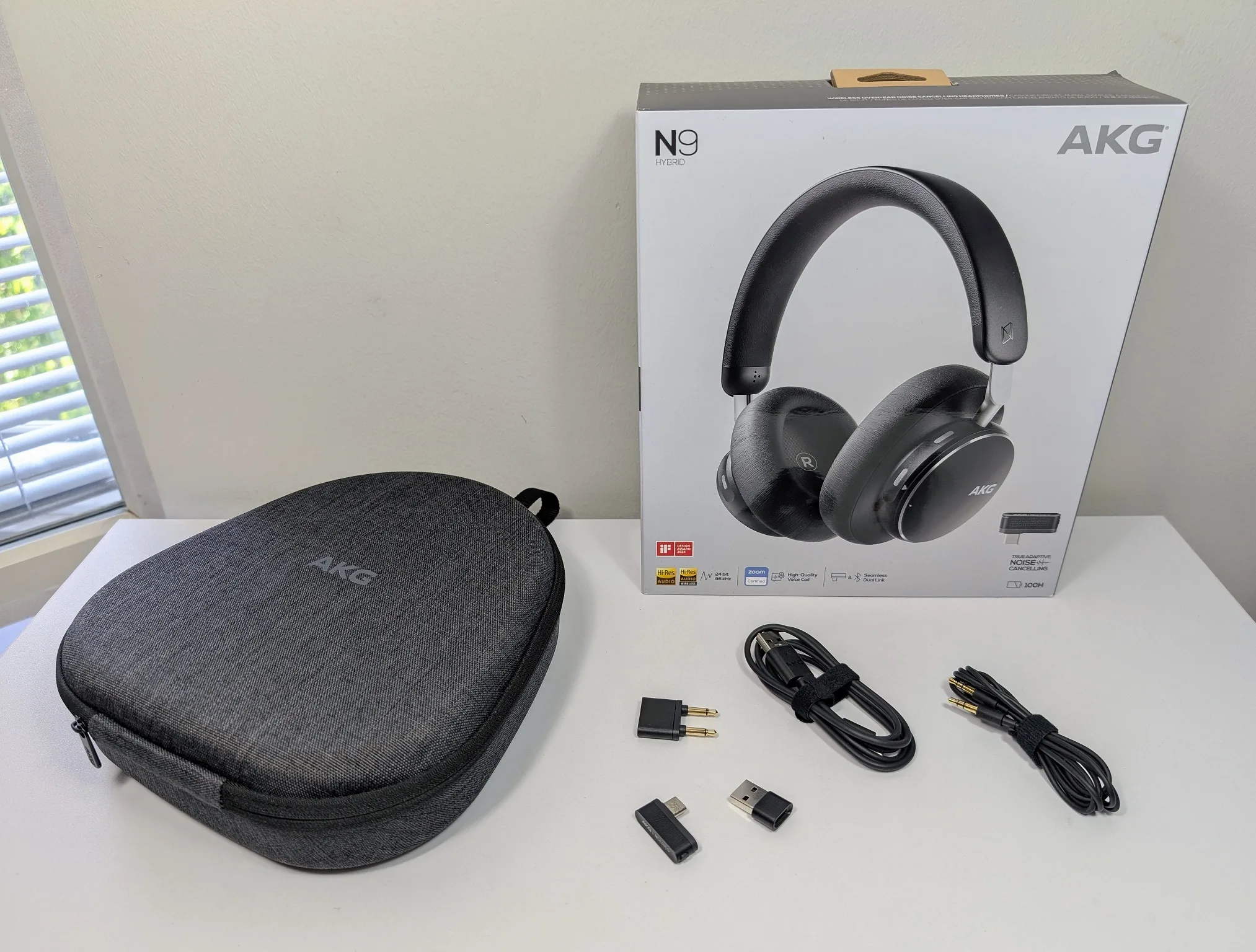
The headphones come with a delightfully comprehensive set of accessories, providing the buyer with a high-quality carrying case and two sufficiently long cables (USB and 3.5 mm) in addition to the aforementioned wireless USB-C transmitter. With the help of an adapter, this also fits older USB-A ports. The package even includes an increasingly rare airplane adapter.
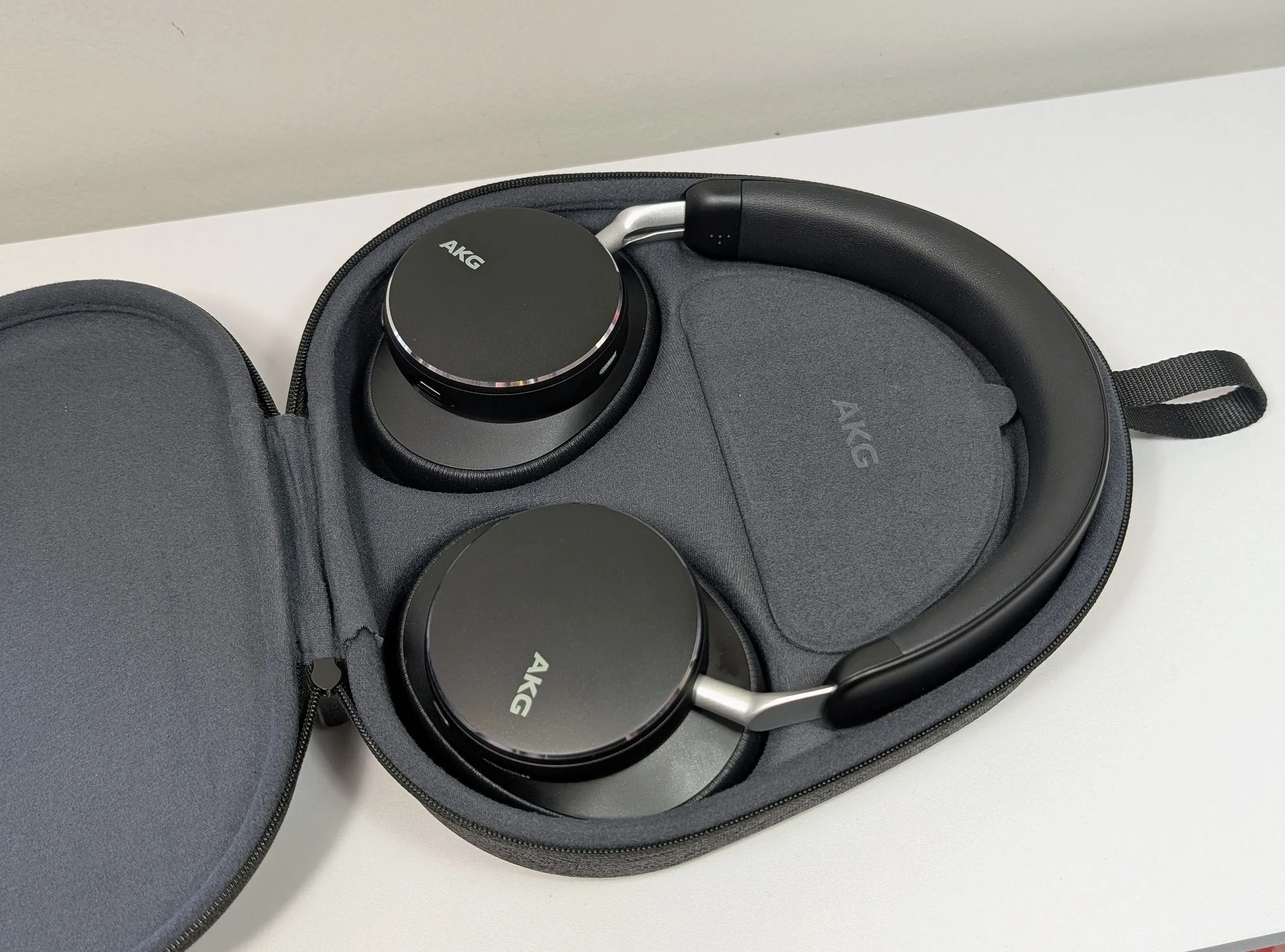
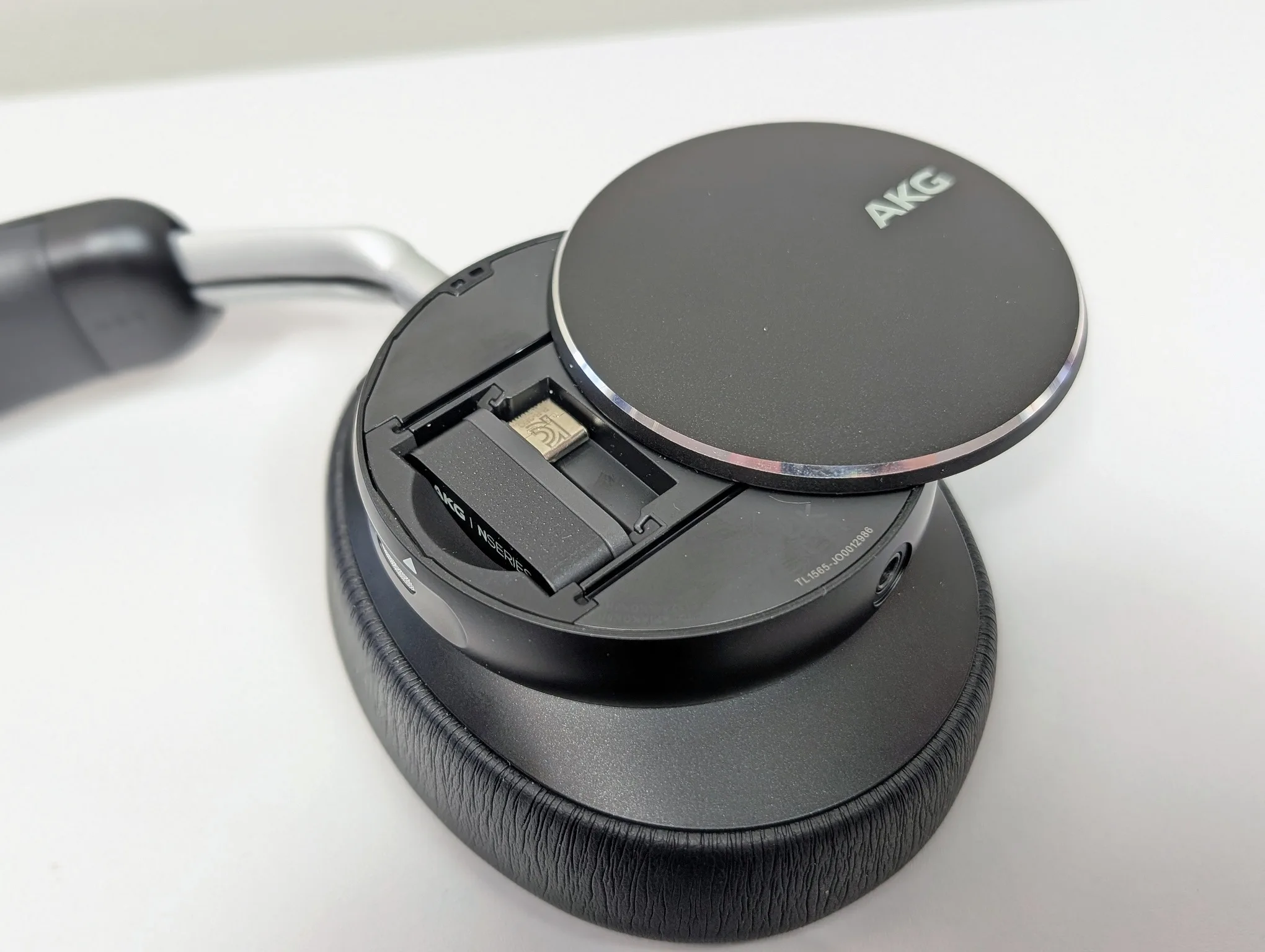
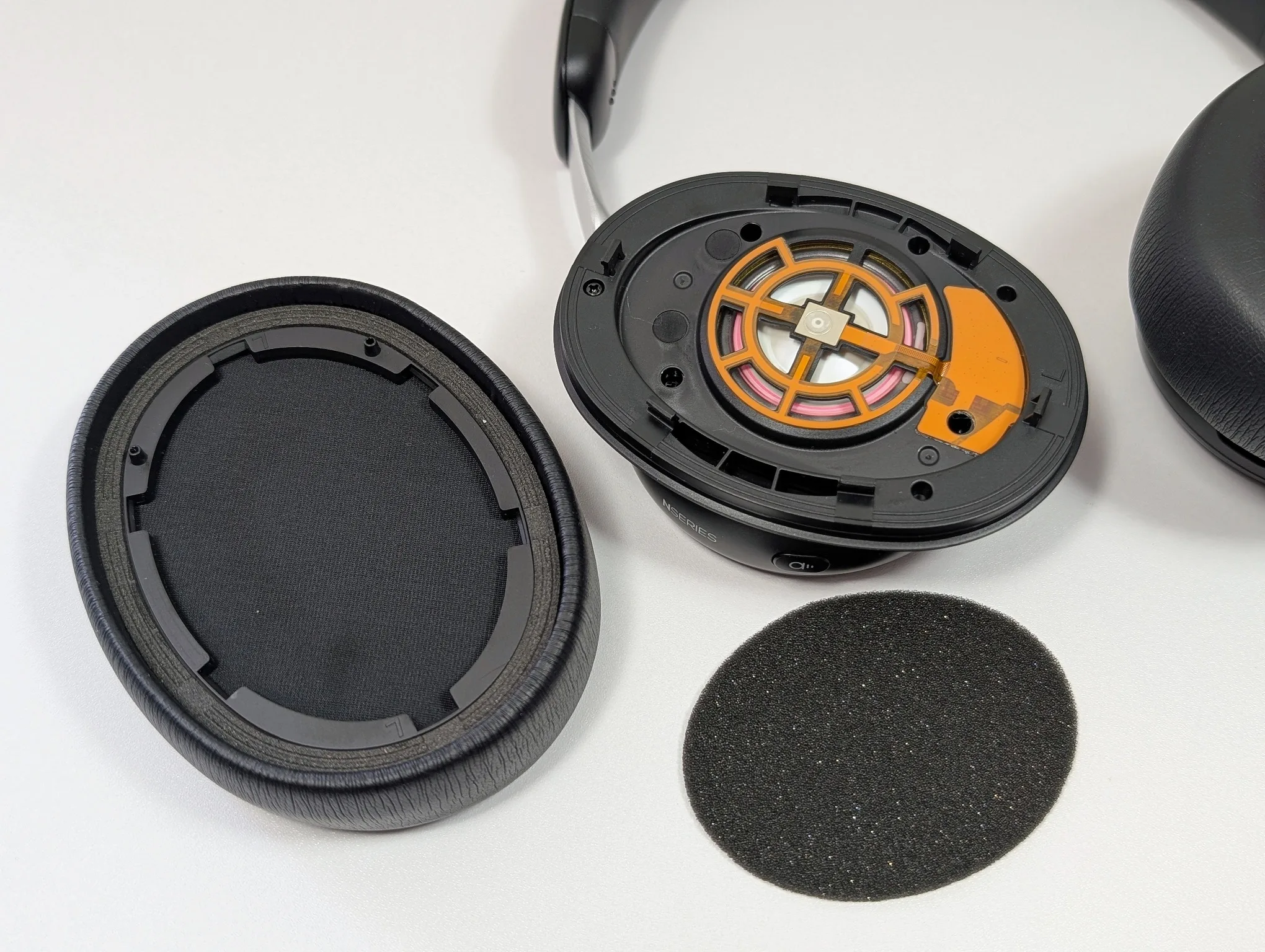
The N9 Hybrid's design does not fold up, but with the earcups turned flat, it fits into a relatively compact case, carrying which I see no major challenges. Cables and other accessories can be slipped into a compartment that closes with a velcro fastener. However, the small USB transmitter is better stored in the compartment built inside the left earcup. I give a big thumbs up to this design solution!
Build and comfort
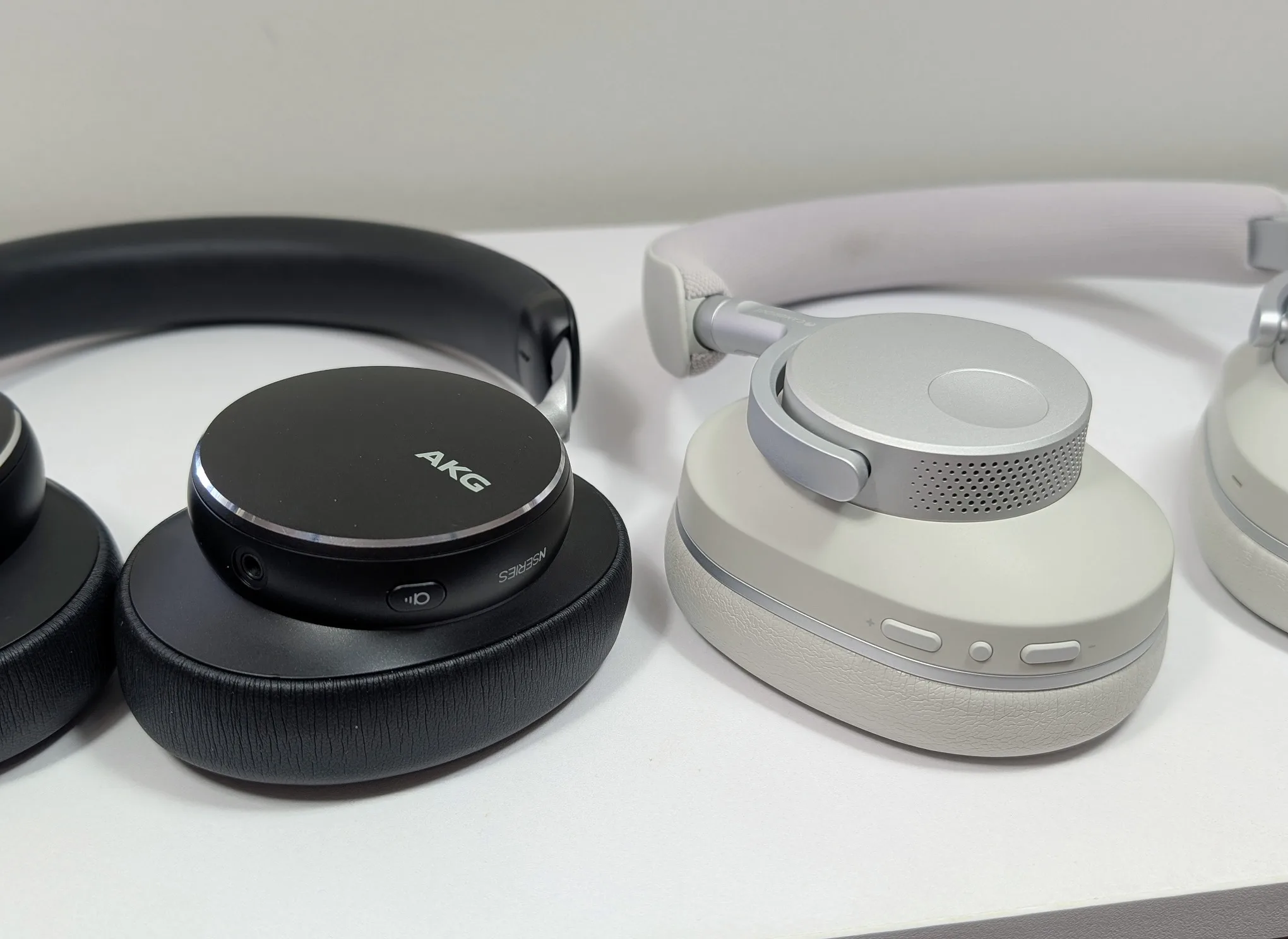
Sold in black and white, the N9 Hybrid looks good in my opinion, and its understated and sleek appearance wouldn't look out of place even in serious professional use. The overall vibe somewhat resembles Soundcore headphones, such as the Space Q45, especially regarding the earcup design. In fact, it is possible that both come from the same factory, since Soundcore's OEM manufacturer, Cosonic, also makes headphones for JBL.
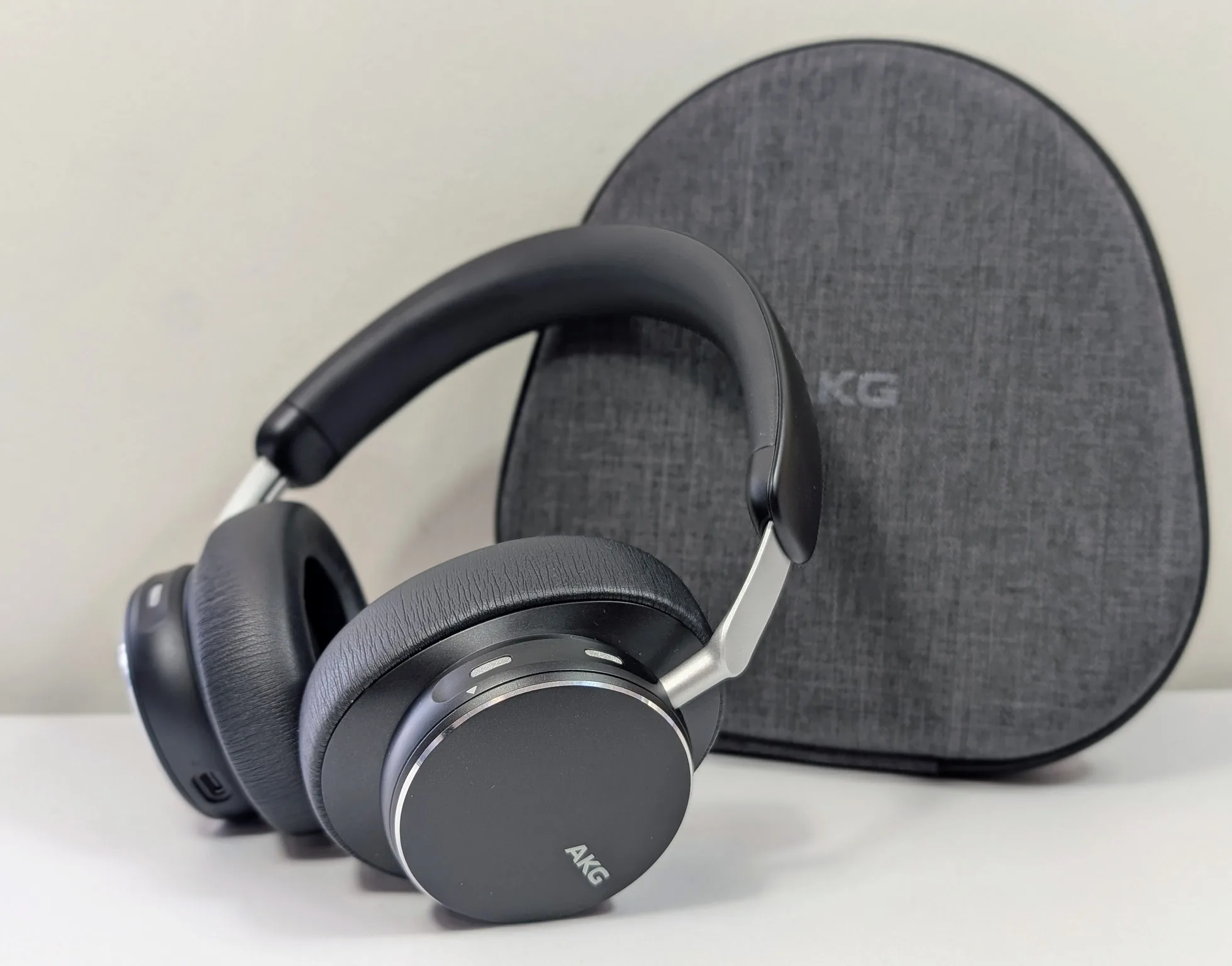
Due to a slightly loose fit of the parts and a somewhat sticky rotation movement of the earcups, the N9 Hybrid doesn't strictly feel like a top-tier product, though I don't find any obvious weaknesses in the build either. On the contrary, the material choices are high-quality, as the earcups are made of aluminum, as are the height adjustment extension parts (the height adjusts in steps). Furthermore, the plastic parts of the black headphone version do not easily retain fingerprints or oil smudges that would lower the quality impression. On the other hand, the plastic power switch wobbles annoyingly from side to side, causing a clicking sound when turning your head.
The headphones fit on my head comfortably and evenly, as the earcups rotate into just the right position for my ears thanks to the internal spring mechanism. Probably because of this, the fit is also exceptionally secure: I couldn't shake the headphones off my head even with vigorous head shaking. By contrast, the thinly padded headband worried me beforehand, but somewhat surprisingly it doesn't create any pressure sensation on the top of my head—perhaps my head is a perfect match for the headphone design? In any case, manufacturers should pad their headbands much better, as a couple of millimeters of foam layer feels downright like a joke in products meant to be comfortable for longer periods at a time.
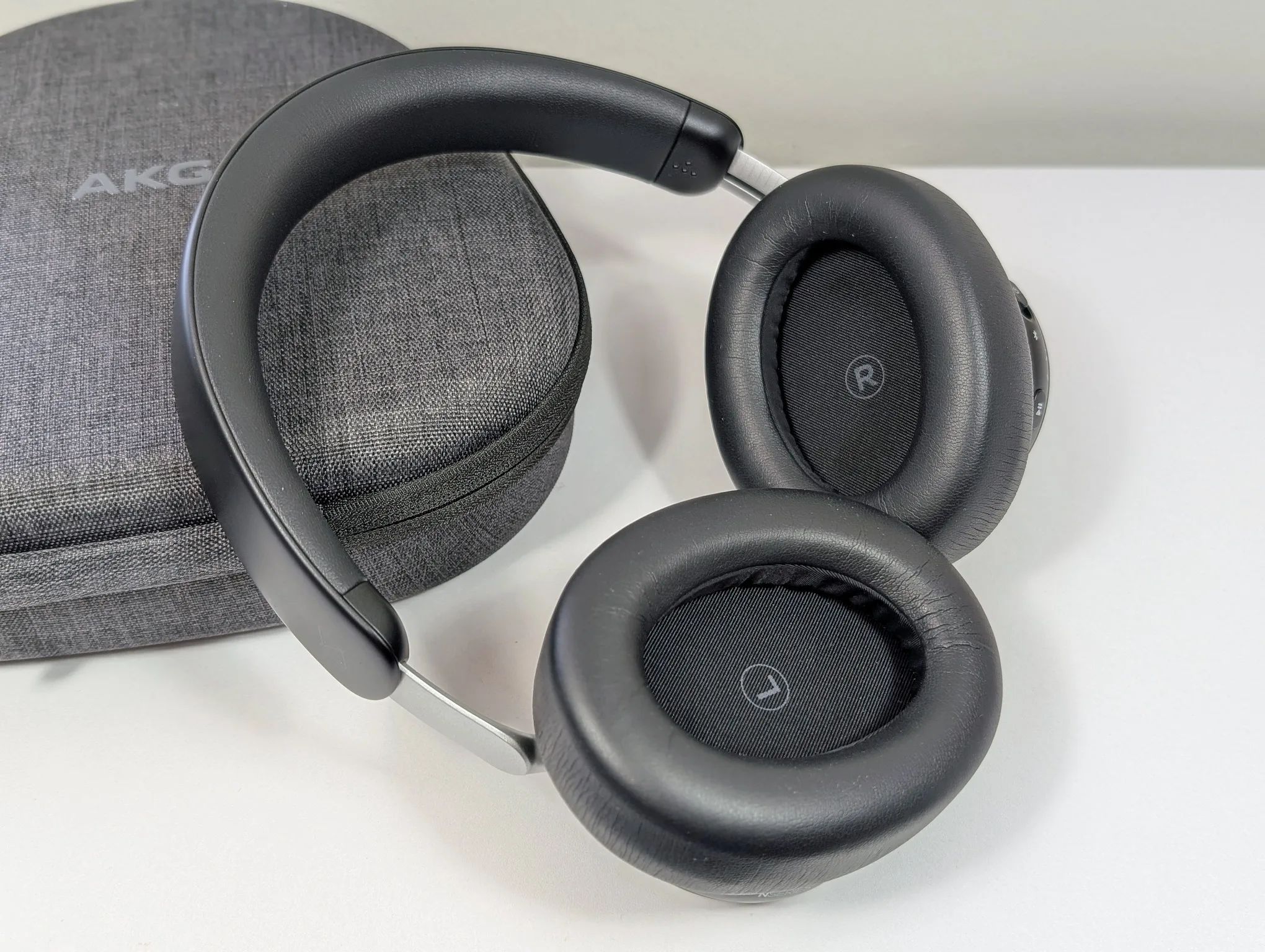
However, let's take nothing away from the N9 Hybrid, which feels like a thoroughly functional headphone. At around 285 grams it is also lightweight, and aside from the slight warmth and minor crampedness, there is not much to fault with the synthetic leather earpads either. The Focal Bathys is basically the only noise-cancelling headphone where my ears fit inside the pads with complete comfort, so in this area, most manufacturers still have plenty of room for improvement alongside headband design.
Functions
I haven't seen a volume control quite like this before, where the side of the right earcup is rotated a short distance clockwise and counterclockwise. When using the USB transmitter, this works well on Windows and Mac operating systems, as a quick twist raises or lowers the volume by 2 steps in the former and 1 step in the latter. With a Bluetooth connection, the adjustments are coarser and less precise. Especially on an Android phone, a multi-step jump easily changes the volume too much, forcing me to fine-tune it with the phone's own buttons. I wonder if there might be device-specific variation here?
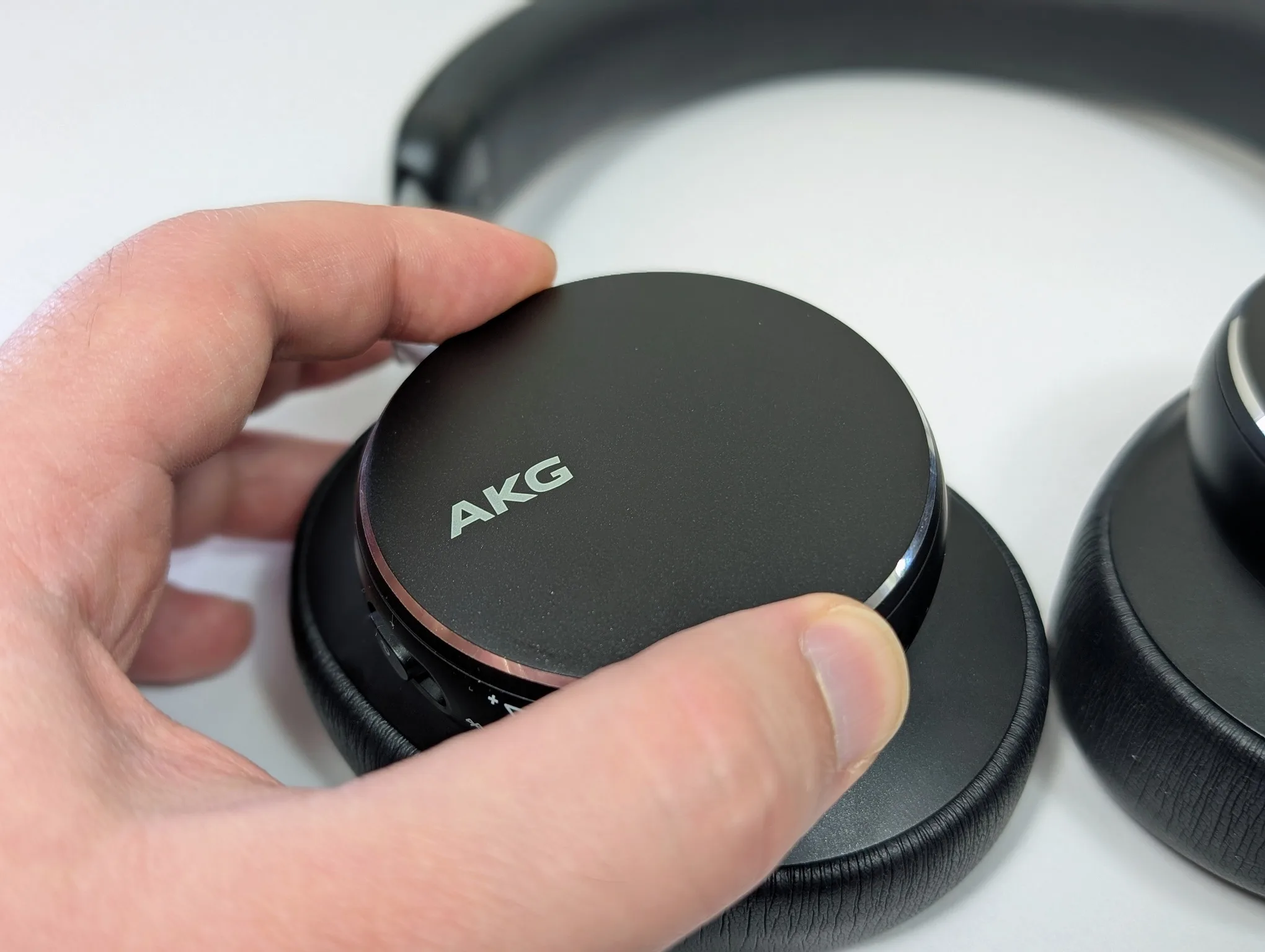
The other buttons on the N9 Hybrid are more traditional. A button for switching active modes (ANC/transparency/talkthru) can be found on the left earcup, while the media button and the power switch slider are located on the rear edge of the right earcup. Due to the small number of buttons, they are easy to distinguish from one another, and there's nothing to fault about the tactile feel. Usability borders on perfection, even though in my book the Sonos Acevolume control implemented via a smooth slider is still slightly better, because it can be operated with one finger, whereas operating the N9 Hybrid's dial requires two.
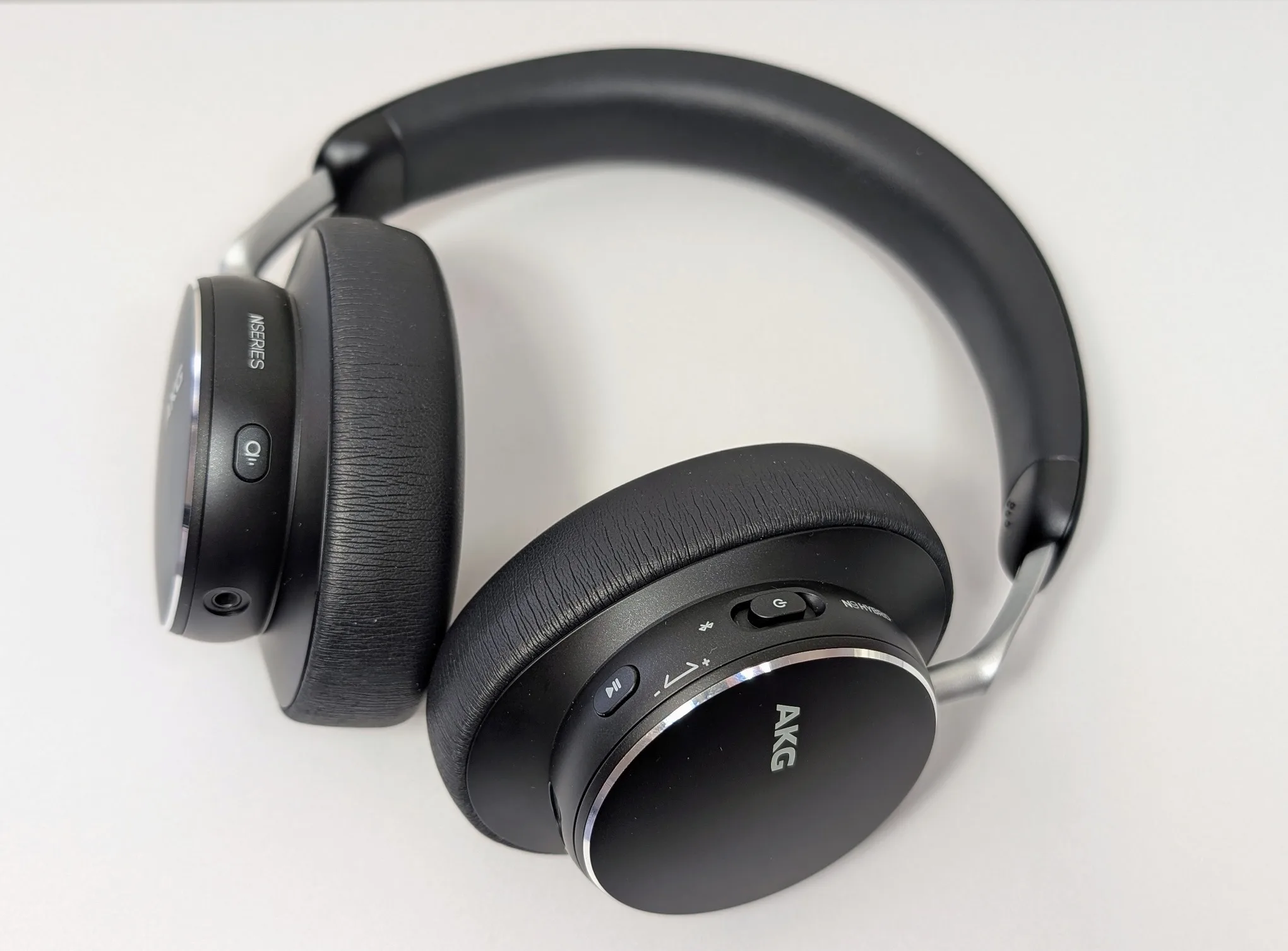
The headphones also feature an in-ear sensor that pauses playback when the cups are lifted off the ears. However, its functionality has its quirks. As a strange design choice, putting them on your head also repeatedly plays "Bluetooth connected" or "Dongle connected" unless spoken notifications are disabled via the app. Even then, a rather loud beep remains when using a Bluetooth connection, followed by a few-second delay before the headphones start playing audio again. Because playback actually continues immediately with the in-ear sensor active once the headphones are on your ears, as much as 7 seconds of audio content is missed. I wondered about this for a while until I realized it stems from the ANC feature's Auto Compensation function, which apparently optimizes noise cancellation before the headphones are allowed to do anything else. In my opinion, the N9 Hybrid shouldn't be used with both the in-ear sensor and Auto Compensation active, because it is quite annoying. Fortunately, both can be turned off if needed.
Wireless connections and battery life
The AKG headphones support Bluetooth version 5.3 and, regarding codecs, LDAC, AAC, and SBC. The wireless USB transmitter, meanwhile, operates on a 2.4 GHz connection and supports a maximum sample rate of 24-bit/96 kHz. When using the transmitter, there is a delay of under a second when starting playback, which must also be endured when jumping to a different point in a YouTube video, for example. Otherwise, I do not notice any lag between audio and video, even though it doesn't quite reach the level of fully wired headphones. This might not satisfy the most sensitive competitive gamers, but most users could also use the N9 Hybrid as a wireless gaming headset, especially since it works plug-and-play on a PlayStation 5 console, for instance. That said, I am relying on the experiences of others for this, as I do not own a PS5 myself.
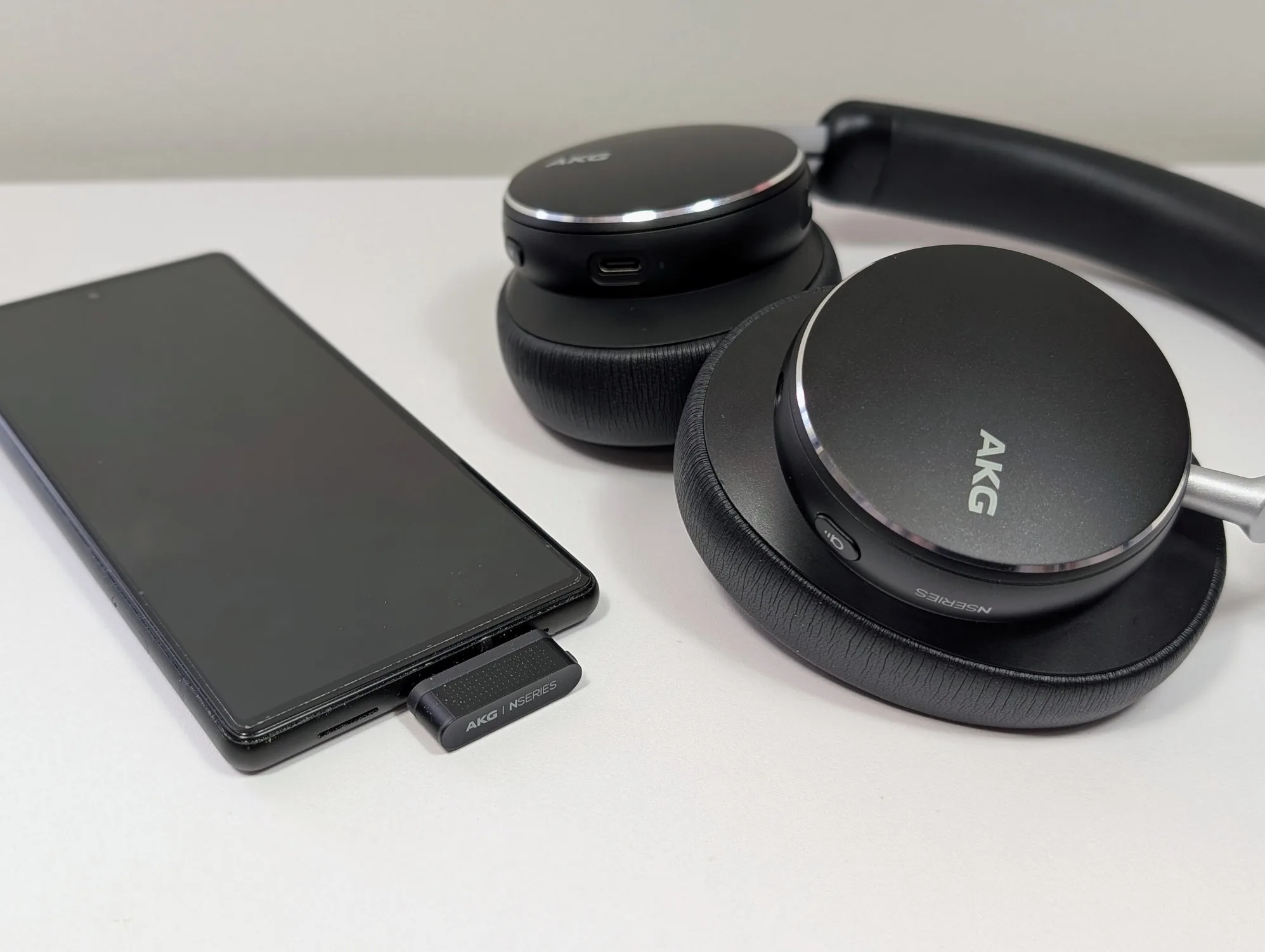
Thanks to its small size, the USB transmitter can also be attached to a mobile phone, in which case the N9 Hybrid is recognized as wired headphones on my Google Pixel 9. All functions are available, and even the mobile app can connect with a little trickery. If a phone does not support the LDAC codec, I therefore recommend using the USB transmitter for wireless listening instead of AAC and SBC. For example, the Audeze Maxwell'sUSB transmitter would also work with a phone, but its elongated shape makes it awkward for that type of use. AKG's little dongle, on the other hand, blends into the bottom of the phone quite unobtrusively. I found both the range of the LDAC codec and the USB transmitter to be good, and the connection hasn't dropped or stuttered on my devices otherwise either. The Multipoint feature also works correctly, and Google Fast Pair made setup on Android devices extremely easy.
The advantage of Bluetooth listening is a 10-hour longer battery life with active noise cancellation on compared to the USB transmitter (55 h vs. 45 h), but regardless of the audio signal transmission method, the headphones only need to be charged rarely thanks to their exceptionally long operating time. Even then, a mere 10-minute fast charge yields an additional 6 hours of use. With the noise-cancelling function turned off, the battery lasts an impressive 80 to 100 hours, and with a headphone cable, the N9 Hybrid can function passively without power if needed.
Mobile app and additional features
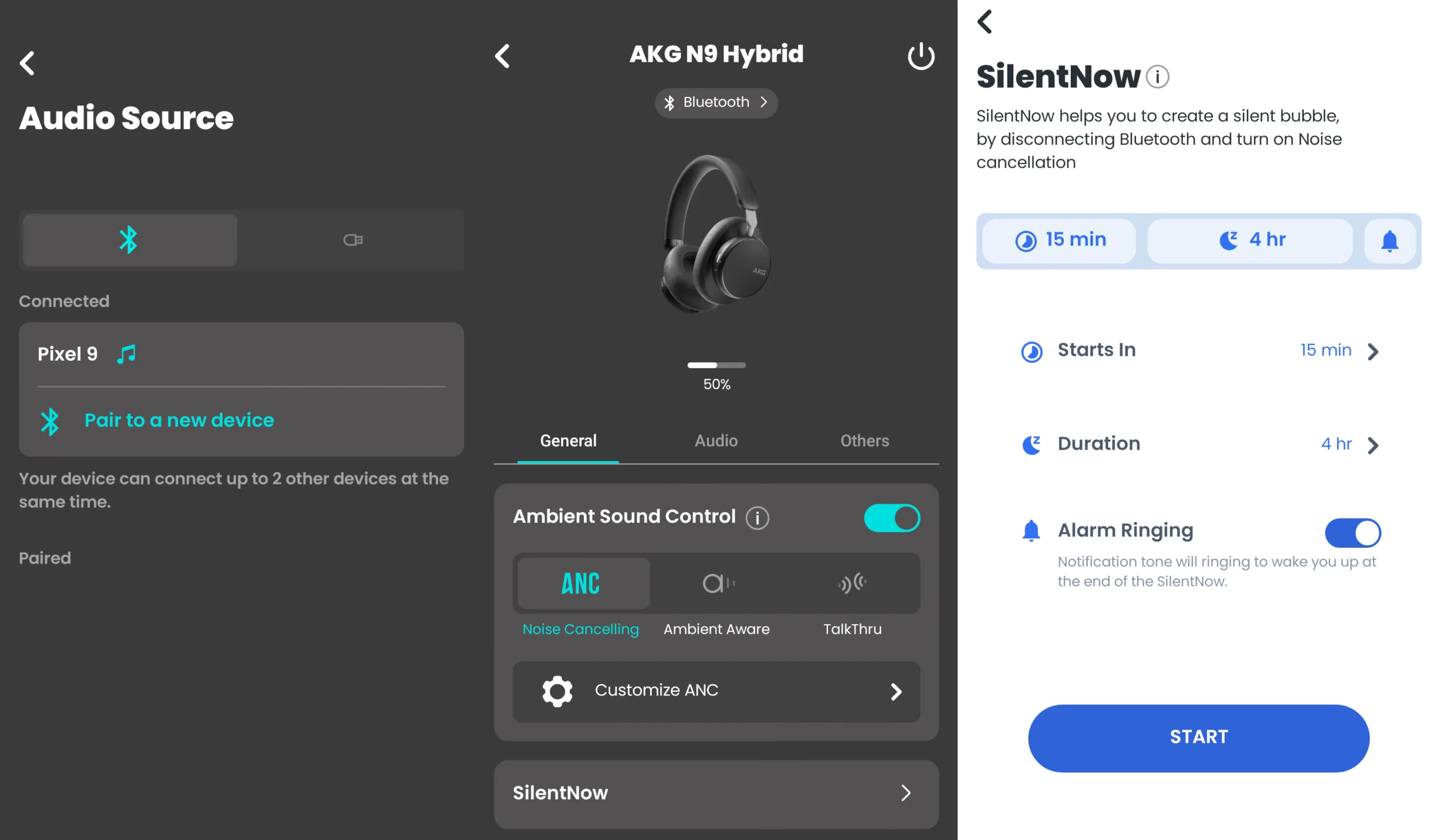
Featuring a clear user interface, the AKG Headphones app closely resembles the JBL Headphones app in appearance and features, so both were likely developed by the same company. The features and adjustment options are more versatile than usual, and the equalizer is also very useful. Furthermore, the app does not require any registration whatsoever, meaning the user experience outperforms the apps of many competitors.
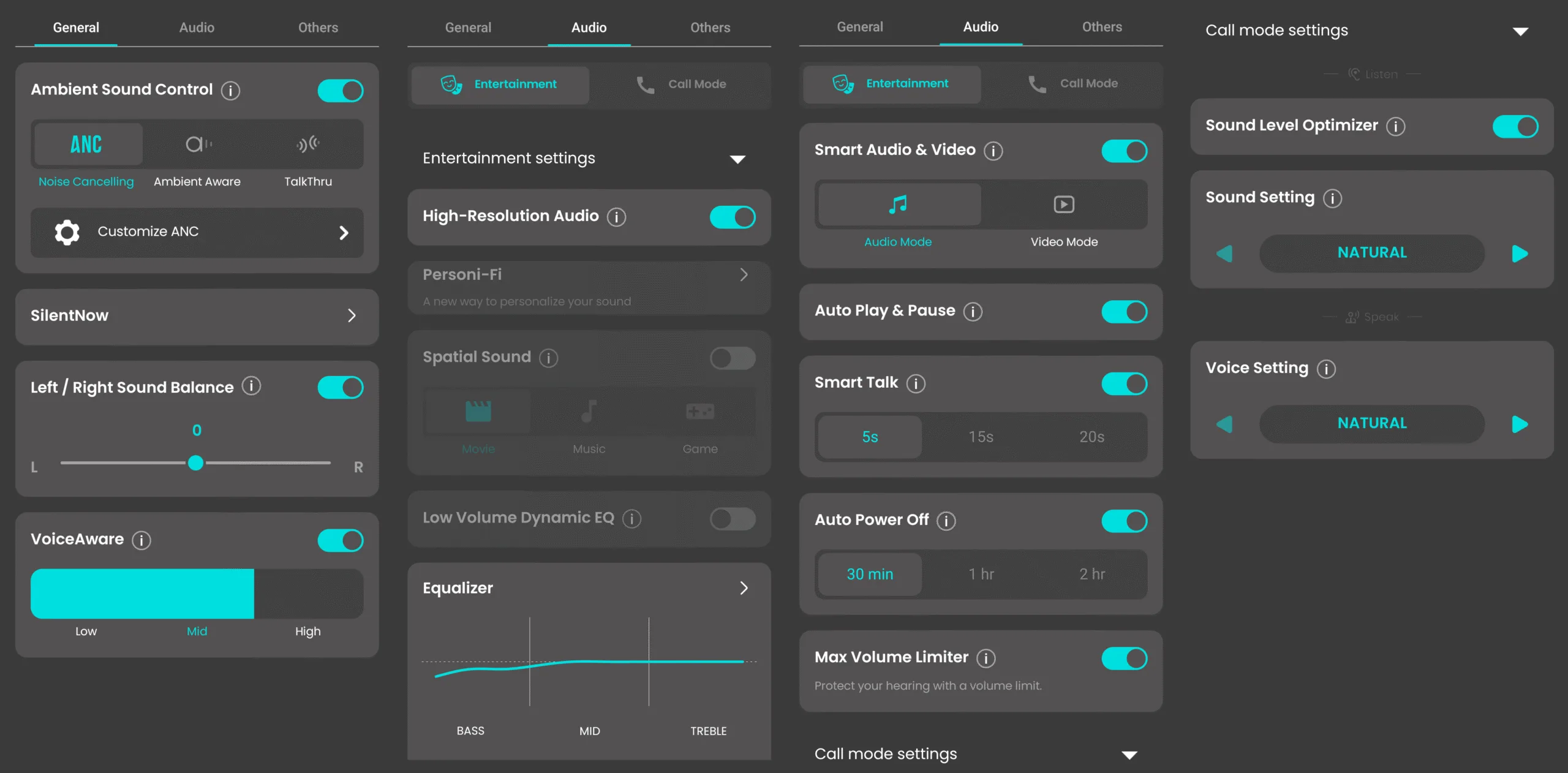
First of all, adjustments can be found for the noise cancellation and transparency mode, but call clarity and microphone tonal balance can also be adjusted. As a notable mention, the Smart Talk feature automatically pauses playback when the headphone user starts talking to someone else. Nevertheless, the most comprehensive settings are found for sound quality, although most extra features require turning off the LDAC codec, leaving you with the weaker AAC or alternatively the wireless USB transmitter. If you do go down this path, there is spatial audio available (which sounds quite dreadful with its reverb effects), Low Volume Dynamic EQ (boosting bass and treble at low listening volumes), and a personalized sound profile generated based on a hearing test. All of these can be used simultaneously with a 10-band equalizer or pre-defined sound profiles.
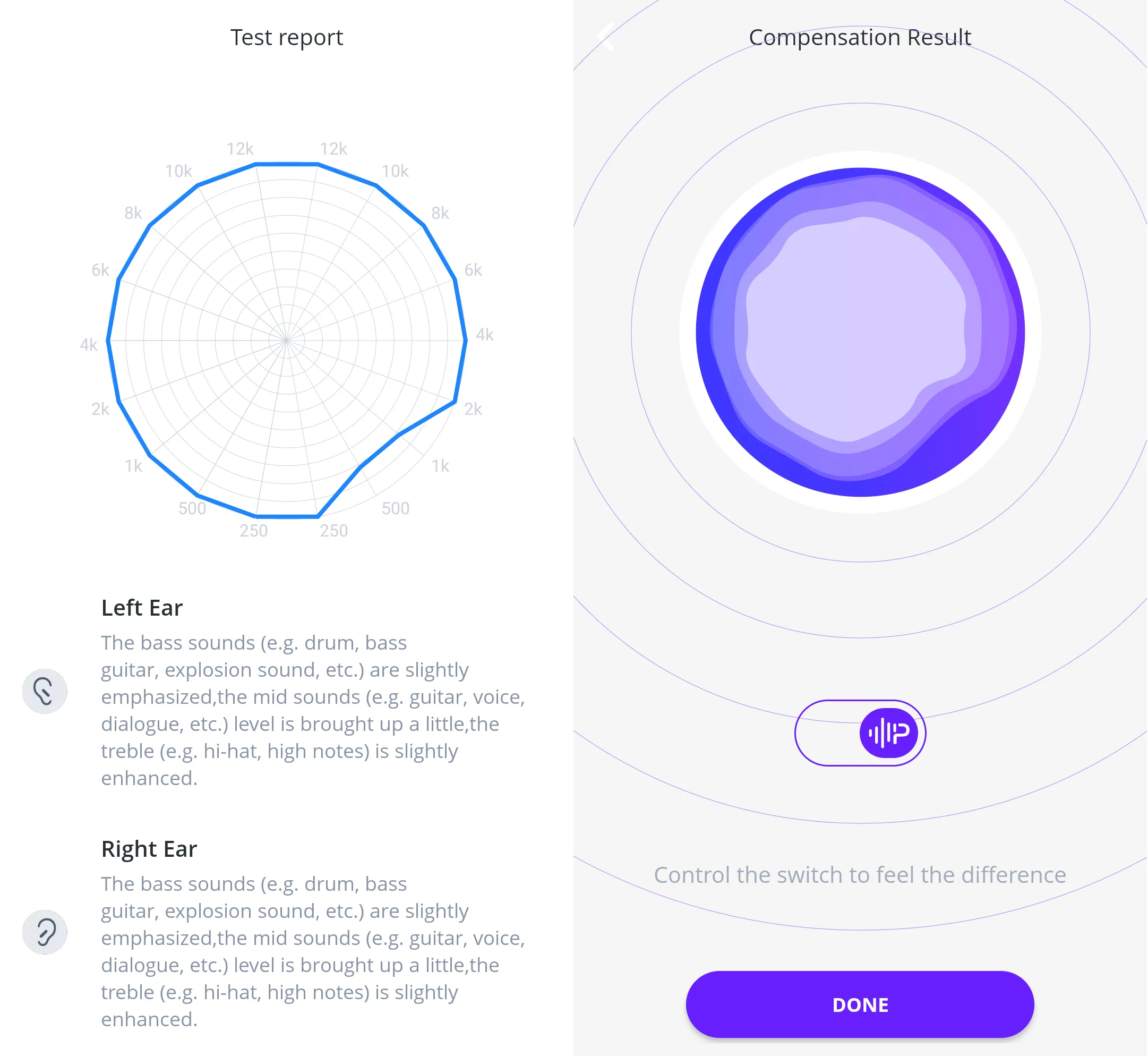
The hearing test called Personi-Fi fine-tunes the audibility of different frequencies per ear. Usually, in my case, such personalized sound profiles lead to an unnatural result, but in the case of the N9 Hybrid, the change is moderate enough and thus even a slight improvement over the default tuning. However, I am not sure if I would want to ditch the LDAC codec for this, especially since I can make adjustments to my own taste using the equalizer as well. For some, Personi-Fi will likely be very useful anyway, as it clearly does not try to crank various frequency ranges to the max, but rather primarily compensates for weaknesses in the user's hearing.
Familiar from Harman Group headphones, the graphic equalizer is in my view a functional compromise between range of adjustments and ease of use. Ten different frequency bands can be adjusted using the tool either 6 decibels up or down. The final result, however, rounds off slightly in the end, so extremely steep changes are not possible. Settings are saved in a flash as new profiles appended to the list. As expected, the N9 Hybrid also remembers the profile selection, so the adjustments are always activated automatically regardless of which device the headphones are connected to.
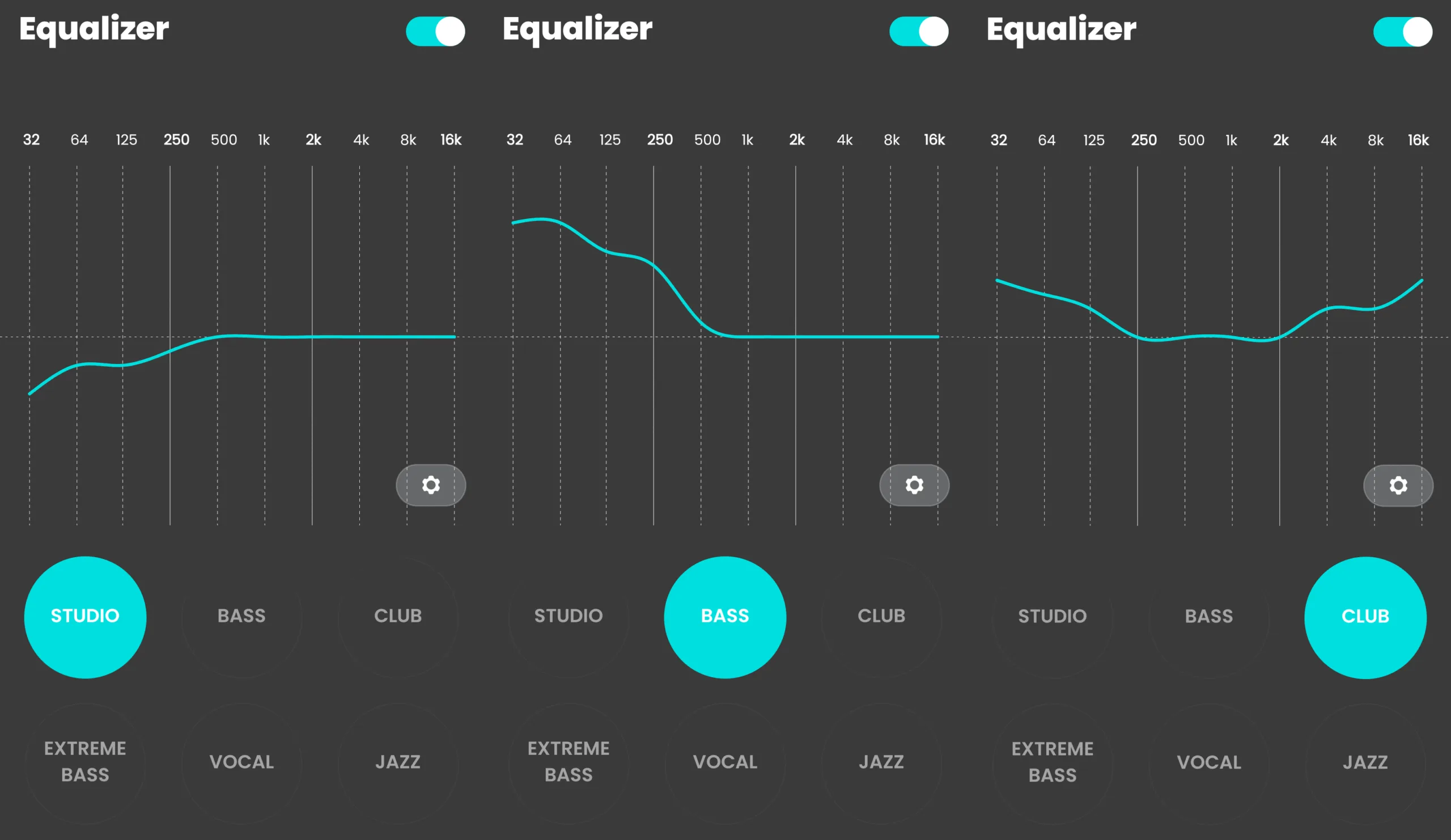
Among the pre-defined profiles offered, "Studio" is a fairly straightforward improvement for those who want to lower the bass level to better suit indoor listening. Conversely, the various bass-boosting profiles will certainly appeal to those who desire nightclub-like thumping for listening to electronic music.
If anyone is interested in creating their own EQ profile using, for example, the EQ tool on the Squiglink website, the Q values of the AKG app's sliders based on my measurements are as follows:
32 | Q 0.9
64 | Q 0.9
125 | Q 0.9
250 | Q 0.9
500 | Q 0.9
1k | Q 1.4
2k | Q 1.4
4k | Q 0.9
8k | Q 1.1
16k | Q 1.4
Active Noise Cancellation
I'm not sure which company develops the noise cancellation for AKG and JBL, but in terms of efficiency or reliability, by today's standards it's not quite top-tier A-class. On the other hand, aside from Sony and Bose, the N9 Hybrid holds its own quite competitively against most rivals in noise suppression, and there is hardly any background hiss or other artifacts. This also has a positive effect on sound quality, as the "quiet" parts of the music come through cleanly.
When powering on, the adaptive noise-cancelling mode activates by default, which the headphones then optimize (if Auto Compensation is enabled) for your current wearing position—this can also be done manually via the app. Optimization is definitely needed, because without it, the N9 Hybrid doesn't really know how to start cancelling noise. The success of the roughly 7-second Auto Compensation process and a tight fit of the headphones are also vital, otherwise the ANC feels like it lets some of the noise straight through. You also shouldn't fiddle with the earcups during the Auto Compensation process, or the noise cancellation might activate only on one side. In that case, you essentially have to take the headphones off and put them on your head again.
I haven't encountered such a peculiar noise cancellation feature before, so AKG has clearly tried something new. Hopefully, some sort of fine-tuning might still be possible via firmware updates to make the user experience smoother and optimal noise cancellation easier to achieve.
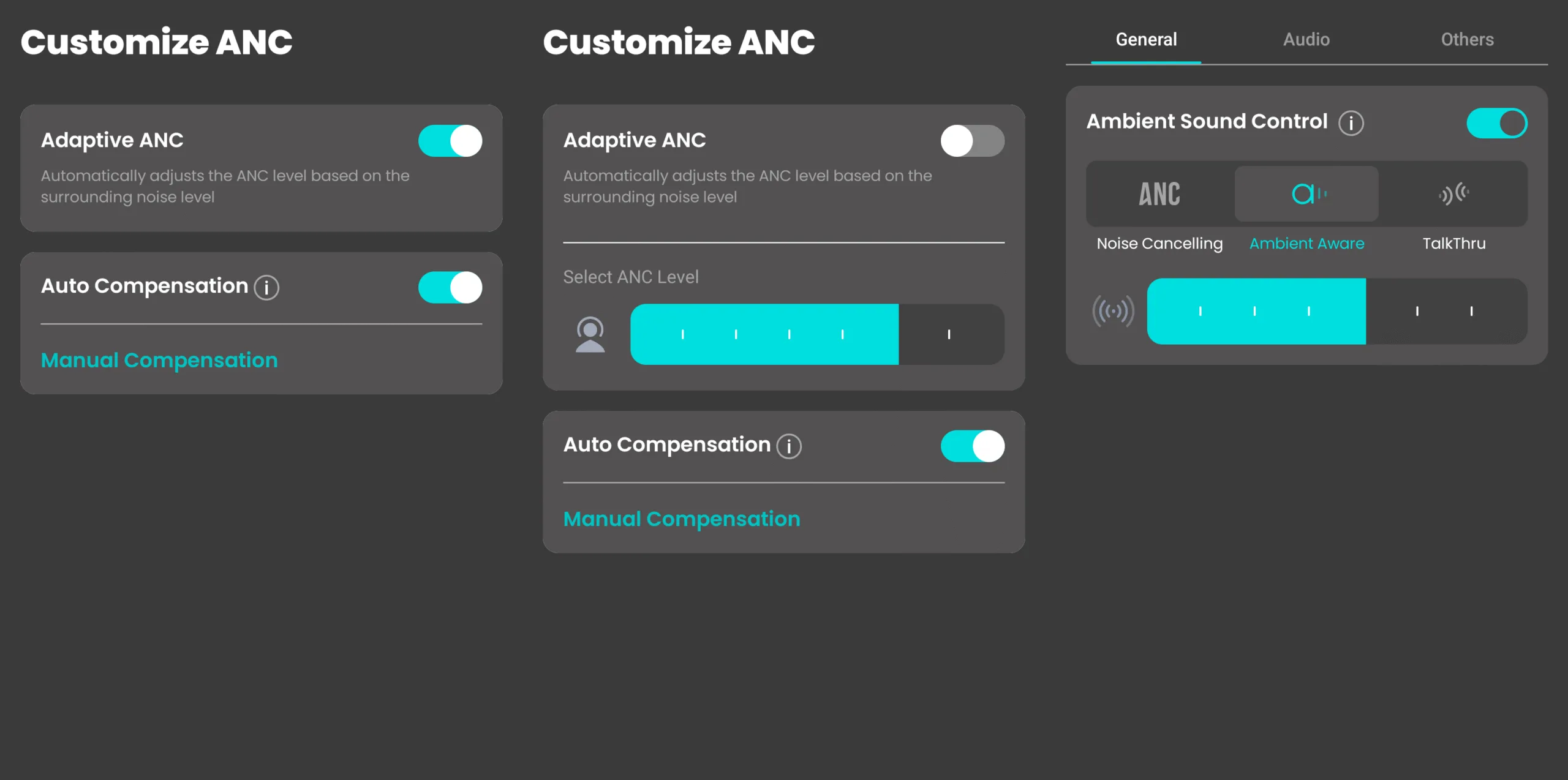
Alternatively, the efficiency of the noise cancellation can be selected manually on a scale of 1 to 7, but according to some, this can introduce its own unique artifacts and more background hiss. The adaptive mode presumably works best when combined with the Auto Compensation feature. In this mode, I found the N9 Hybrid to suppress airplane- and cafe-style simulated noise as well as human speech roughly on par with the Bowers & Wilkins PX7 S2e (the newer PX7 S3has weaker noise cancellation) or slightly more than the Valco VMK25. However, these two headphones felt easier to use because they achieved a fairly comparable suppression performance more reliably than the AKG model, albeit with more hiss.
Cambridge Audio Melomania P100noise cancellation was more effective in all situations compared to the trio mentioned above, though there was also plenty of background hiss or at least as much as in the VMK25. At the same time, Bose QuietComfort Ultra and Sony WH-1000XM6 tested alongside them beat out the other headphones by a clear margin. In fact, the QuietComfort SE — based on the four-year-old QuietComfort 45 model — also suppressed noise noticeably more than the N9 Hybrid, so frankly, AKG's headphones do not impress in this regard. The comforting part, however, is that the suppression power is easily sufficient for everyday needs anyway. The best noise-cancelling headphones simply always stand out from the crowd, and the N9 Hybrid is not among them.
On the other hand, the transparency mode sounds more natural than usual to me, especially if it is manually adjusted down by a notch on its scale of 1 to 7. This gets rid of the most prominent hissing and rustling, making your surroundings sound almost as if you aren't wearing headphones at all. Other people's speech and my own voice also sound quite natural with the right setting, so making calls with transparency mode on feels natural enough. On the other hand, a separate TalkThru mode has been developed for this, which activates directly when the microphone is in use. However, this mode emphasizes S-sounds and sharpens the audio unless set to its lowest setting.
One of the strengths of the N9 Hybrid's noise cancellation implementation is the effective elimination of wind-induced interference. At first, airflow causes crackling for a few seconds, but after a moment, the headphones adapt to the situation and eliminate the worst crackling almost entirely—at least most of the time. The headphones are thus better suited for use in windy weather than usual, and footsteps do not cause an unusually loud thumping sound while the noise cancellation is active.
Microphone sound quality
AKG seems to have invested heavily in the microphone implementation of the N9 Hybrid, as speech sounds clear by my standards and the background noise suppression is at a good, if not excellent, level based on my tests. Only in the middle of the worst gusty winds do syllables start clipping out more easily than with the Sony WH-1000XM6 I tested at the same time, but all kinds of humming, banging, and other background noise are suppressed comparably by both headphones. The person on the other end would certainly never guess how noisy a place the call is coming from. As a counter-example, the Bose QuietComfort Ultra's microphone gets completely overwhelmed by noise and wind.
If sound quality when speaking in a quiet environment is of the utmost importance, using the USB transmitter improves the situation just a bit further, because the higher bandwidth compared to a Bluetooth connection allows for higher-quality audio recording. The N9 Hybrid would thus be a great choice for those who use headphones at work for making calls and participating in remote meetings. The additional settings found in the app and the fairly natural-sounding transparency mode likewise support this kind of use.
Headphone sound quality
The N9 Hybrid functions passively without power in addition to its wireless connections, but it is also possible to turn the power on when using a headphone cable. In this case, DSP correction keeps the sound unchanged compared to wireless connections. Turning off the noise-cancelling function alters the acoustic impedance of the headphones, causing the bass reproduction to become stronger compared to listening with noise cancellation enabled. The selected noise-cancelling setting also appears to affect the frequency response somewhat between 20 and 1000 Hz, as in certain cases the bass and midrange are reproduced either 1–2 decibels calmer or louder. In contrast, passive listening relies entirely on mechanical tuning, so the result is predictably bass-heavy considering the N9 Hybrid's closed-cup design. Unfortunately, the headphones cannot be listened to via a USB cable because they do not include a USB DAC. On the other hand, the wireless USB transmitter makes up for this shortcoming.
Measurements
Our frequency response measurements have been made with a clone IEC-60318-4 coupler and KB501X pinnae. The Harman target curve from 2018 is used as a reference point and generalization of the headphone response that would sound good to most people. For more information on the measurements and their accuracy, see Headphone Measurements. You can compare the N9 Hybrid's frequency response against other measured headphones on Squiglink .
Frequency response in passive mode:
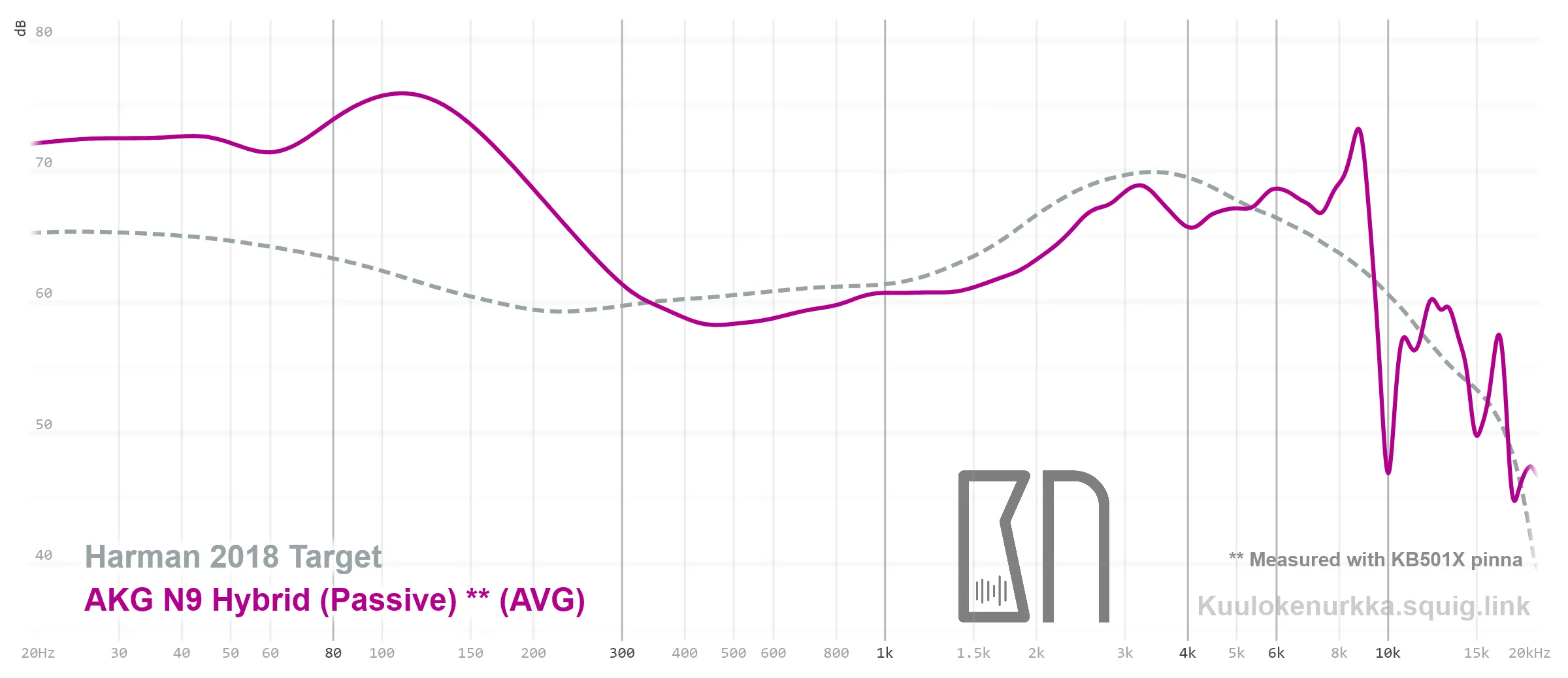
Listening in passive mode should generally be forgotten, as the overly heavy and muddy bass completely chokes the sound. This usage mode is suited mostly for emergencies or to be equalized using another device or application.
Frequency Response (ANC ON vs. OFF):
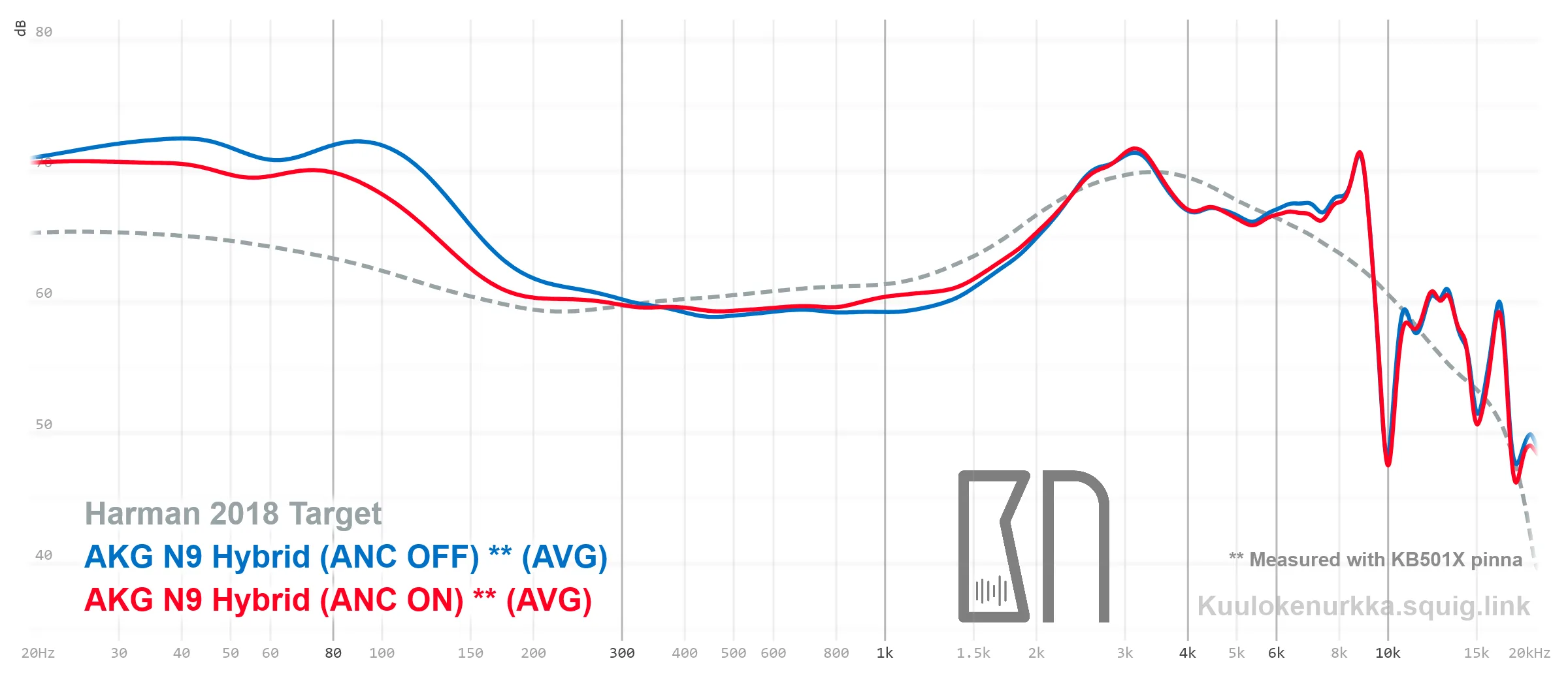
Turning off the noise-cancelling function boosts the bass, so the end result is not quite as balanced as with noise cancellation enabled. Thus, like many other noise-cancelling headphones, the N9 Hybrid sounds best with noise cancellation on.
Frequency response (ANC ON & Studio profile):
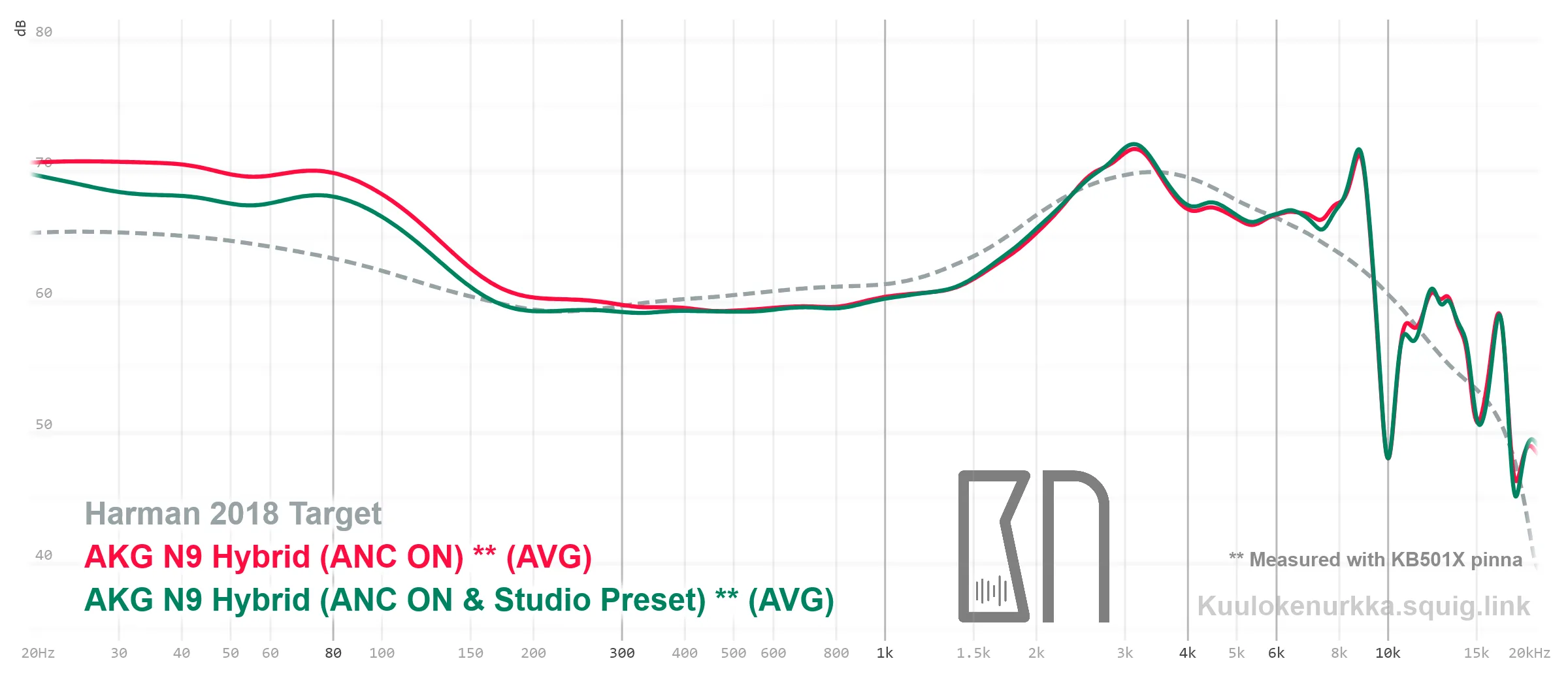
The pre-determined Studio sound profile in the app reduces the amount of bass, bringing the midrange forward in the overall presentation. The sound generally feels clearer at the expense of less lush sub-bass.
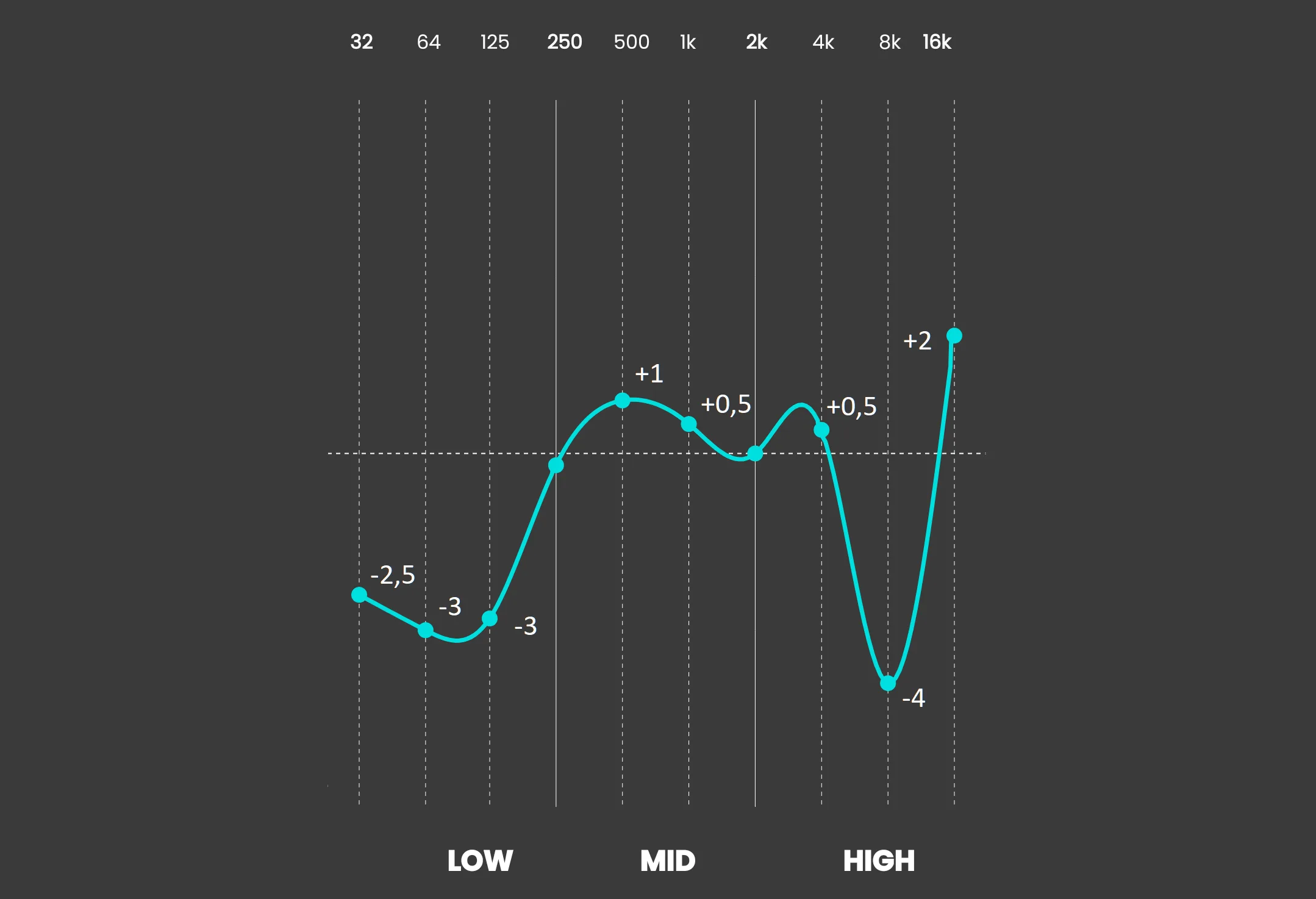
Recommended equalization settings (updated July 19, 2025):
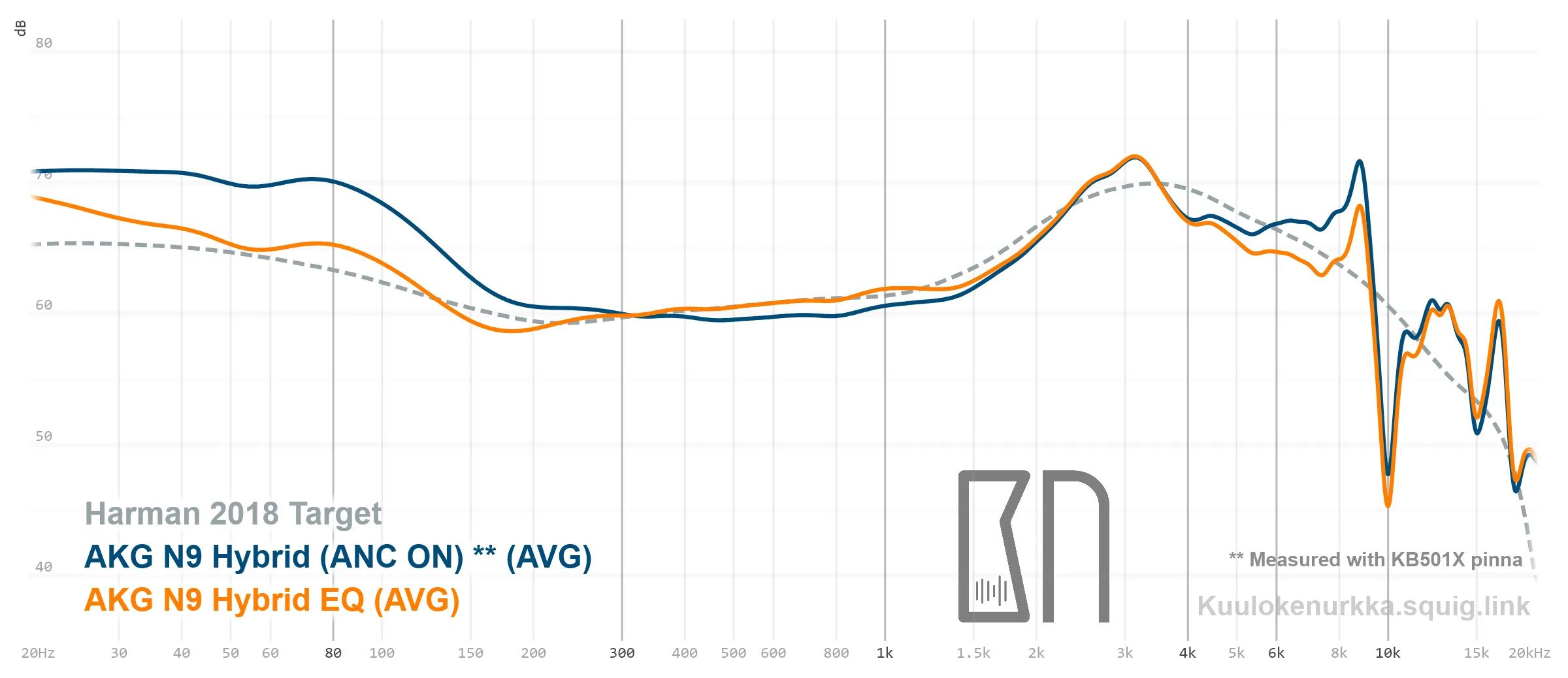
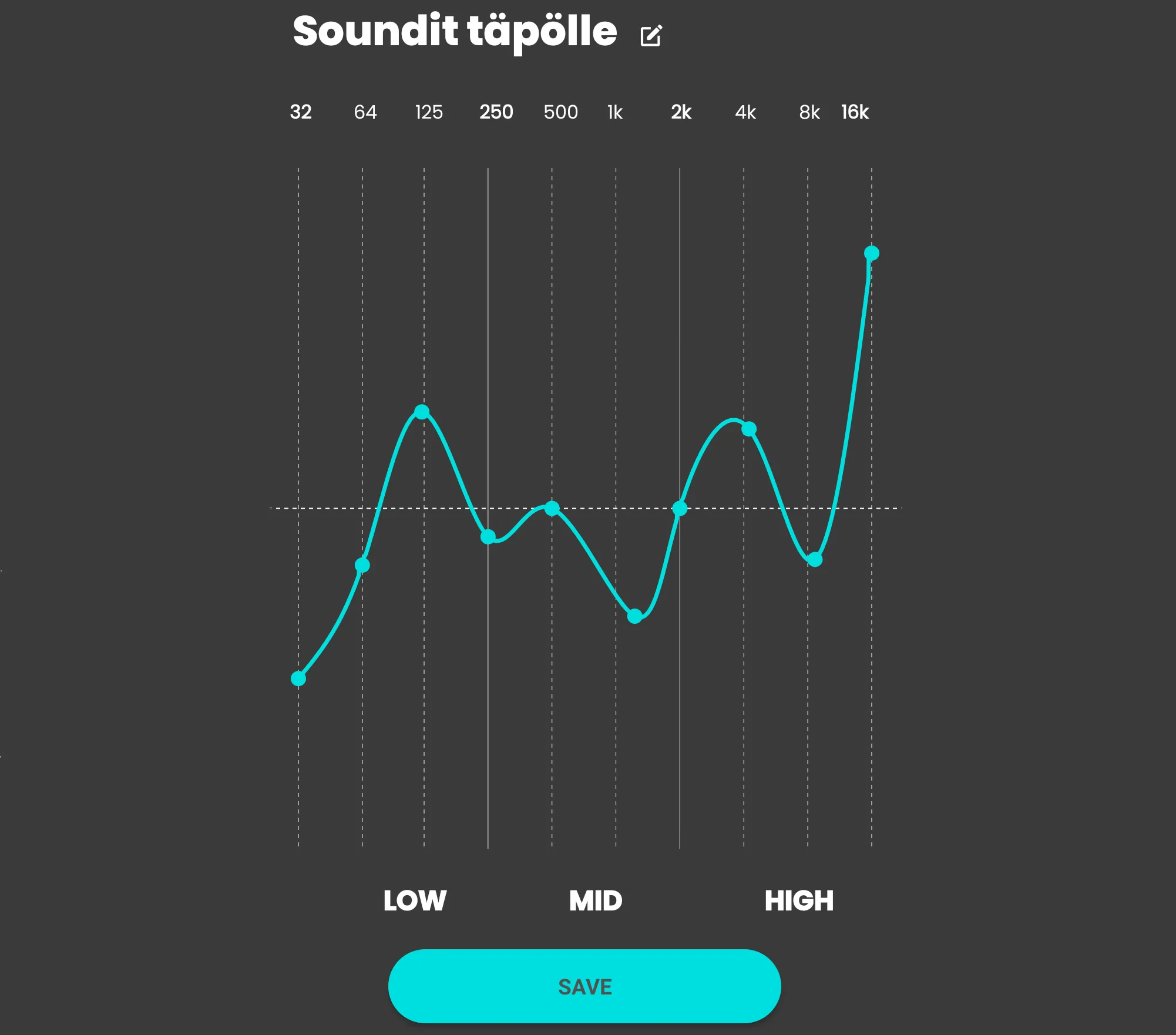
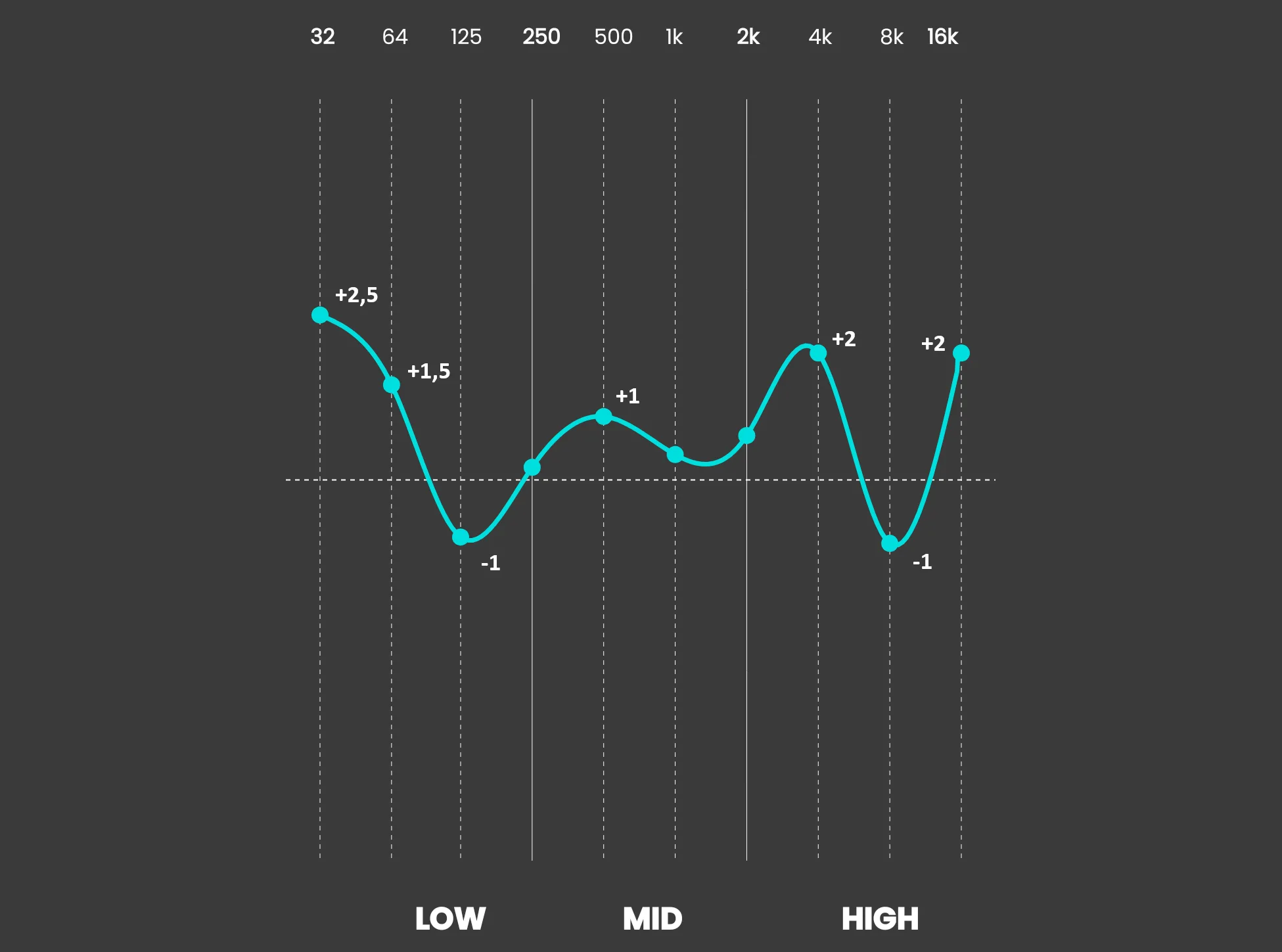
I have equalized the headphones to be even more balanced by calming the treble and further reducing the bass compared to the Studio profile. The midrange would already work well as it is, but I ultimately added a bit of energy there too between 400 and 1000 Hz. This gives me a pleasantly natural sound at my preferred listening volume. It is worth noting, however, that at lower listening volumes, the default sound profile or stronger bass and treble in general might be more engaging, whereas my own EQ remains a bit neutral and perhaps a bit tame for some tastes. A second profile I made based on my wife's wishes is very different, so I'll share that below as well. This one reportedly suits alternative metal music very well.
My personal settings (updated July 19, 2025):
My wife's preferred settings:
Sound observations
The AKG headphones deliver a V-shaped sound signature, meaning lush sub-bass and strikingly bright upper frequencies. The sound is primarily tuned to please mainstream consumer groups rather than targeting absolute audiophile neutrality. However, because the tuning largely follows the well-proven Harman target curve, the sonic colorations remain quite mild and easier to digest than usual. You do not get the absolute maximum amount of bass and treble found in, for example, Bowers & Wilkins' new PX7 S3.
With the N9 Hybrid's bass boost limited to frequencies below 150 Hz (with ANC enabled), the rumble stays relatively well-controlled and barely compromises midrange clarity. I cannot emphasize enough how much better and cleaner this kind of bass sounds compared to the muddy upper-bass (150–300 Hz) plaguing many other noise-cancelling headphones. In my experience, playback remains tightest using the LDAC codec and the 2.4 GHz connection (via the USB dongle), whereas AAC and SBC codecs let a softer mumble push more to the forefront.
Even midrange frequencies are another strength of the N9 Hybrid, as the sound lacks the weird anomalies between 500 and 3000 Hz that almost all other ANC headphones suffer from. Vocals and instruments sound downright unusually natural, albeit slightly distant because they take a back seat to the emphasized bass and treble. On the other hand, the sound feels pleasantly spacious since it doesn't shove right into your face. Listening to the N9 Hybrid is truly comfortable, and my ears don't have to go into defensive mode or strain to make sense of the sound. The headphones suit electronic music beat-thumping as well as more critical listening—versatility at its best!
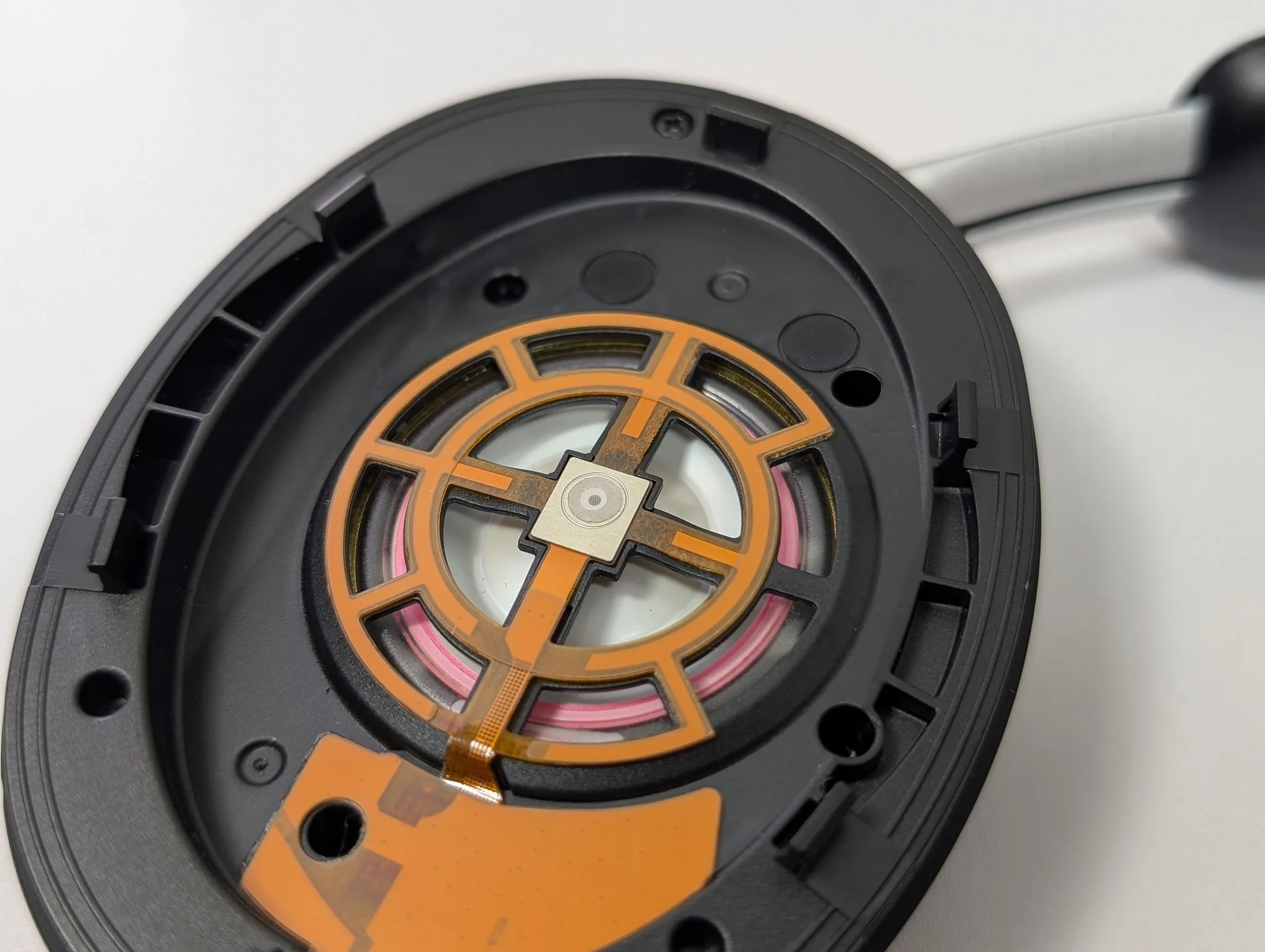
The benefits of tuning rooted in Harman's teachings are clear, but on the flip side, the V-shaped sound isn't the most balanced. At times, the bass still thumps a bit too much for my taste, making the presentation somewhat hard and dark, especially when turning up the volume. However, the Studio sound profile tones down the sound quite appropriately, bringing it closer to my preferences. Afterward, I find myself able to focus even better on the wonderfully successful midrange and discerning details in the music. In terms of precision and resolution, the N9 Hybrid exceeds my expectations brilliantly, which is surely partly thanks to above-average channel balance. Every element plays right where I expect it to in the soundstage.
For a compact closed-back model, the headphones manage to shed their physical presence quite well. By this I mean the sound emerges naturally as if out of nowhere, even if I wouldn't call it exceptionally spacious. It is a positive that shifting the headphones on your ears hardly alters the sound or introduces unevenness into the frequency response. Once the bass is adjusted appropriately, the only thing that continues to bother me about the N9 Hybrid is the accentuated treble between 7 and 9 kHz. This certainly enlivens the sound, especially when paired with the sturdy sub-bass, but at the same time, I have to tolerate amplified sibilance. Overall, the upper frequencies sound a bit overly present, giving the presentation a somewhat restless and splashy tint. One could get used to this, but the playback ultimately isn't completely natural without minor equalization. On the other hand, the inherently strong bass masks some of the excess brightness, meaning the need to tweak the treble becomes more apparent only when you mess with the bass quantity.
My manual EQ for the N9 Hybrid aims primarily to calm the treble and bring the midrange slightly closer in the overall presentation. This makes the reproduction feel more present and appealing to my taste. Meanwhile, the sub-bass of noise-cancelling headphones often measures more elevated on my rig than it actually sounds. Therefore, I don't feel a need to drop it any further on the N9 Hybrid, though that would be possible. When listening at lower volumes, you might even want to add a bit of sub-bass compared to my settings. Frequency responses in ANC headphones don't always tell the whole story, because various algorithms and dynamic EQs can alter the sound depending on the music being played and the selected listening volume.
I wouldn't necessarily recommend my EQ for outdoor listening, but used indoors, the profile I created would likely satisfy even certain audiophiles. AKG's headphones are versatile, and it's refreshing to write such positive things about a pair of noise-cancelling headphones for a change. With small tweaks, the N9 Hybrid sounds very much like the top product of its price class. Yet, this success isn't a massive surprise to me, as JBL products from the same corporate group are similarly good. Compared to them, the N9 Hybrid feels, above all, a bit more mature.
Comparisons in other reviews
In addition to the N9 Hybrid, Kuulokenurkka has other new noise-cancelling headphones under review, so I will carry out more detailed comparisons once the groundwork and comprehensive review for each model are completed. Links to the comparisons will be found below once I have published them.
AKG N9 Hybrid vs. Bowers & Wilkins PX7 S3 (Only brief mentions, as the N9 Hybrid is better)
AKG N9 Hybrid vs. Bose QuietComfort Ultra
AKG N9 Hybrid vs. Sony WH-1000XM6
In this context, I am bringing in the Cambridge Audio Melomania P100for comparison, which I consider in many respects to be a successful headphone.
AKG N9 Hybrid vs. Cambridge Audio Melomania P100
Prices: 400 € vs. 280 € (discounted prices at the time of review: 280 € vs. 250 €)
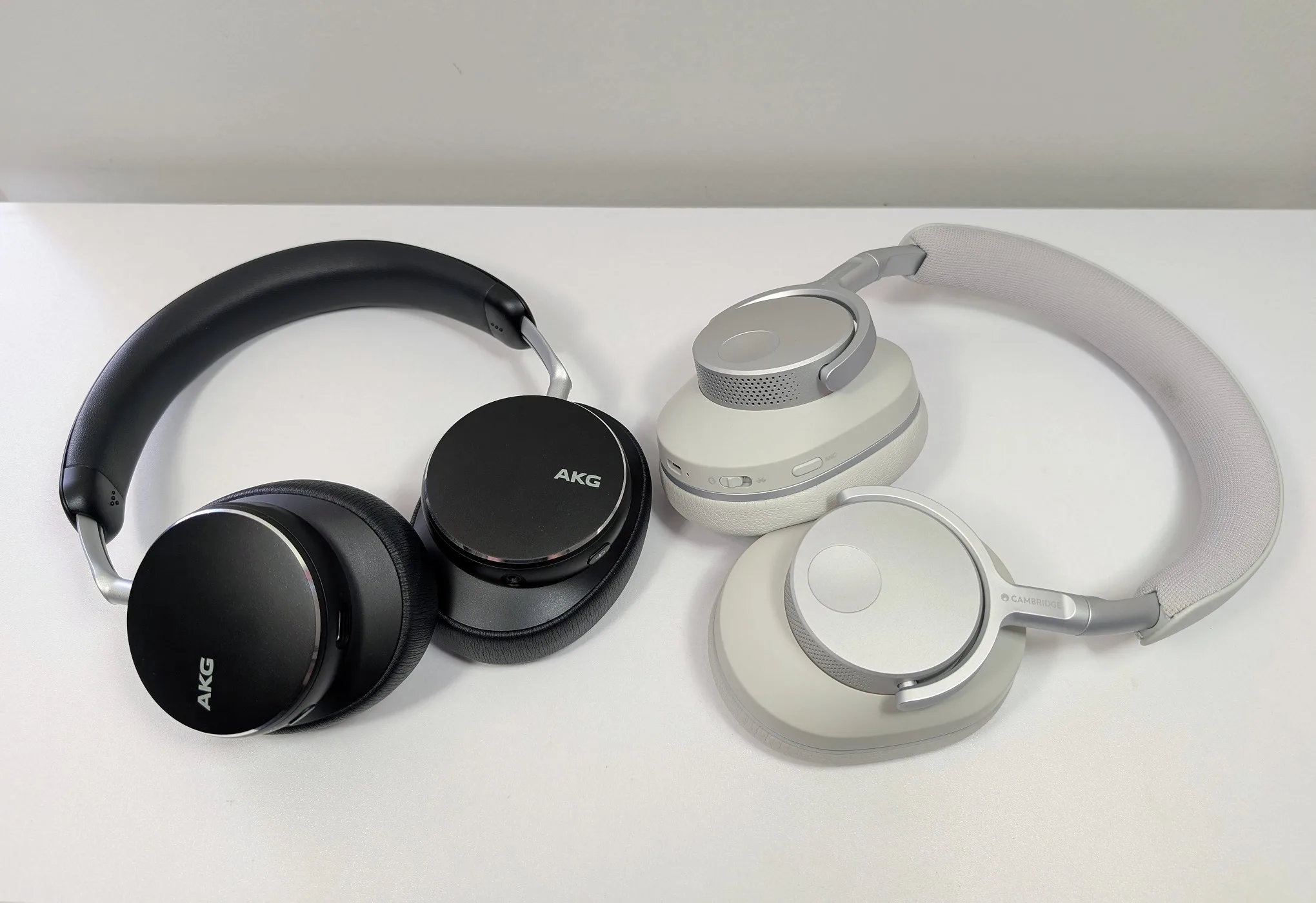
The Melomania P100 has a retail price that is 120 euros lower, but factoring in discounts at the time of writing, it costs only 30 euros less than the N9 Hybrid. When listing the advantages of the pair relative to each other, I quickly concluded that the N9 Hybrid is quite unambiguously the better purchase thanks to its versatility, unless someone places extra value on the Melomania P100's user-replaceable battery or Class A/B amplification. The headphones also feature a more effective noise-cancelling function, which, however, hisses more audibly and also causes more pressure in my ears than the N9 Hybrid.
Regarding comfort, experiences will certainly vary, but for me, the AKG headphones feel more comfortable especially on top of the head. They also fit more evenly and weigh less. The Melomania P100 thus takes second place in most areas, even though there is nothing specifically to fault it for. Thanks to the corporate group behind AKG, the N9 Hybrid's design budget was likely multiple times larger than Cambridge Audio's, so this is really how things should go. Below, I list the advantages of both headphones relative to each other so that we can move on to the sound quality comparison as quickly as possible.
Key Advantages:
- N9 Hybrid:
– Fits the head more evenly and looks sleeker
– Weighs approximately 50 grams less
– Feels more comfortable on top of the head
– Features more user-friendly buttons
– ANC hisses less and creates less pressure sensation
– Transparency mode produces slightly clearer and more natural sound
– Microphone sound quality and background noise suppression are superior
– Mobile app is more versatile
– Equalizer is more comprehensive
– Supports the LDAC codec
– Comes with a wireless USB transmitter
– Can be used passively without power - Melomania P100:
– Roomier ear pads with greater depth
– Slightly longer battery life
– User-replaceable battery
– More effective active noise cancellation (ANC)
– Built-in Class A/B amplifier
– Higher quality cables
– 120 € lower retail price (MSRP)
Frequency responses *:
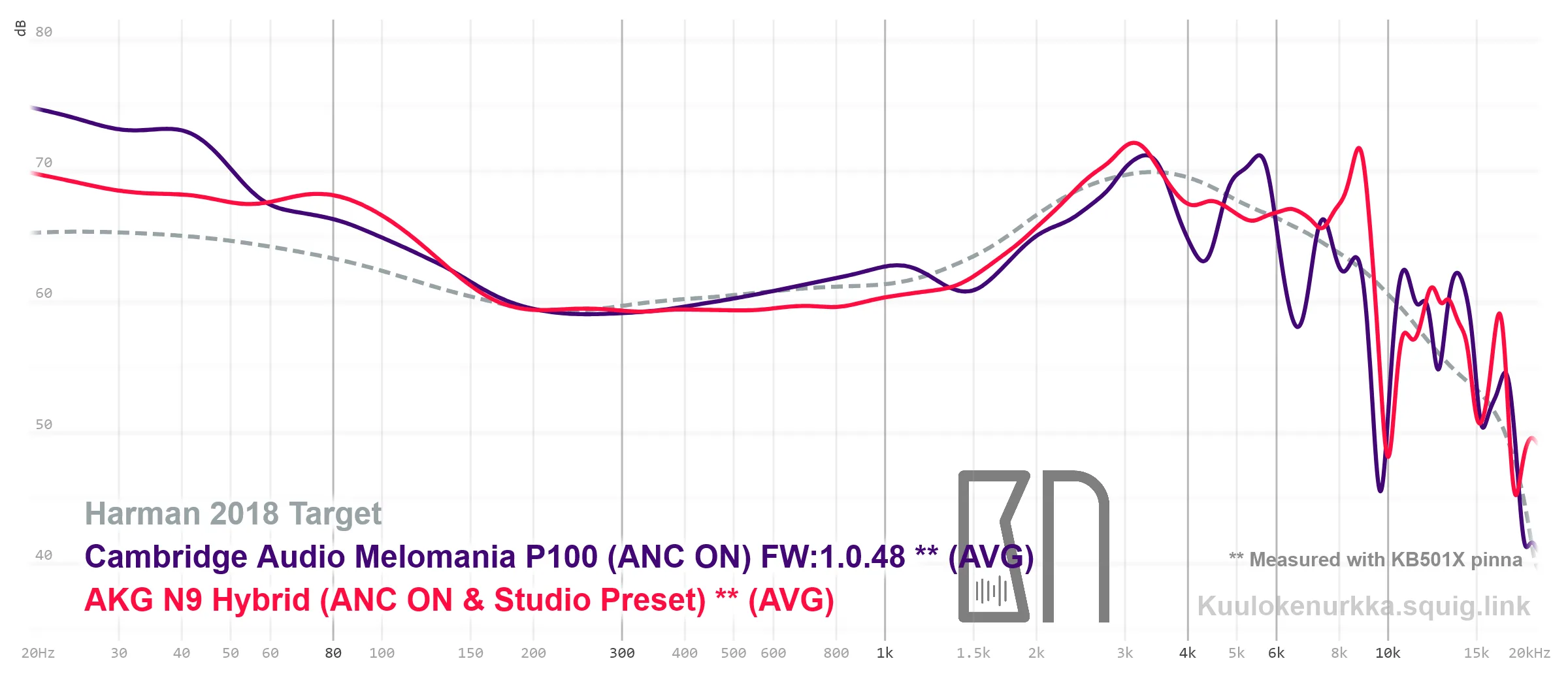
I have updated the Melomania P100's firmware to a newer version, but its frequency response on version 1.0.7 remains identical as before.
Since the Melomania P100 appears designed with sound quality as the top priority, I have used the N9 Hybrid in the comparison with its Studio profile, which objectively makes it sound a bit higher quality as well. Cambridge Audio does not offer equally good alternative sound profiles through its app, nor a proper equalizer, which means the N9 Hybrid would pull even further ahead if I factored in the custom EQ I made for it. However, let's stick to the manufacturers' out-of-the-box work rather than my own extra tweaks.
My measurements reveal that the N9 Hybrid's frequency response is flatter. The headphones lack all of the minor dips and peaks of the Melomania P100, thanks to which the sound is more natural and clearer. An even sound generally feels higher quality. Still, in terms of midrange, both headphone models are successful by my standards, because the reproduction does not contain disruptive colorations. If the Melomania P100's upper frequencies were slightly more even than they currently are, it would actually sound quite similar to the N9 Hybrid.
However, Cambridge Audio's headphones reproduce the treble more relaxed, which many might well like compared to the N9 Hybrid's flashier and brighter presentation. Still, I perceive the sound of Cambridge Audio's headphones as slightly dark alongside the fresher AKG model. Thanks to more versatile equalization capabilities, I can ultimately get the N9 Hybrid to be clearly better regarding the upper frequencies. The Melomania P100's frequency response, on the other hand, cannot be smoothed out using the tools provided by the manufacturer.
The same actually applies to the bass reproduction as well, which is quite overblown in the Cambridge Audio headphones between 10 and 50 hertz, and nothing can really be done about it. Such low bass does not strictly muddy the reproduction of other frequencies, but the bass hits and rumbles so hard regardless of the music genre that it sometimes sounds outright disruptive. The strong emphasis on the lowest frequencies also makes the soundstage feel slightly congested, because it sort of fills up with bass.
The N9 Hybrid's bass, on the other hand, can be adjusted to suit different preferences. With the Studio profile, the reproduction is both powerful and clear, even if not quite as physical as in the Melomania P100. However, this amount of bass suits my own preferences better, so in this regard too, I favor AKG's headphones. Just like with the other areas, the Melomania P100 performs well in terms of sound quality, but does not make as big an impression as the clearer and more balanced-sounding N9 Hybrid. My final recommendation therefore goes in AKG's direction.
Summary
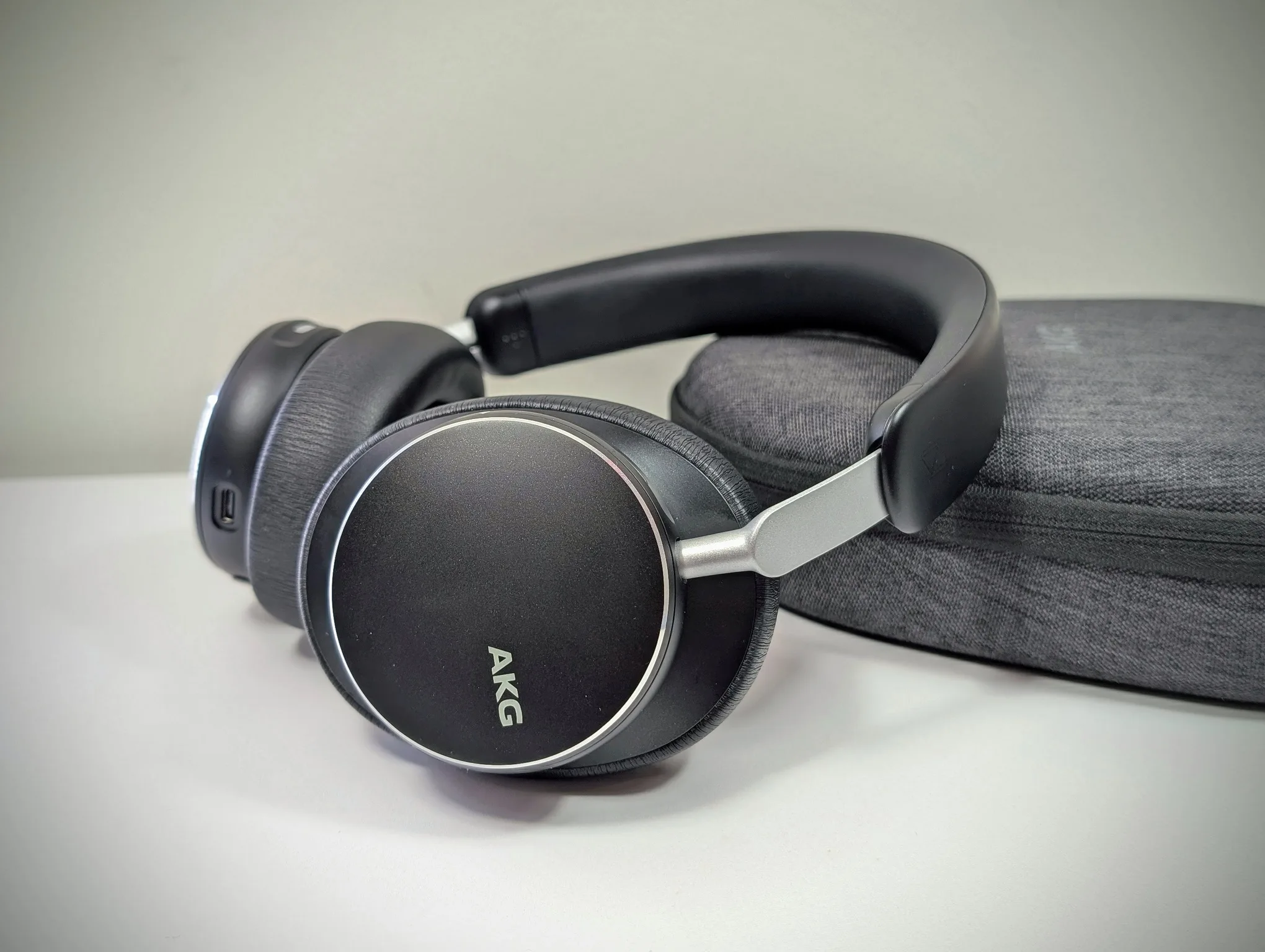
Overall, the AKG N9 Hybrid feels like a versatile and high-quality noise-cancelling headphone that is also comfortable for me to use. It offers a few features that set it apart from its competitors, most notably the wireless USB transmitter. Because the battery life is also good and the microphone implementation has been given attention, the headphones are well-suited for office work and gaming in addition to music listening. The N9 Hybrid is a bit of an all-rounder that even beats most of its competitors in sound quality—at the latest after a minor equalization. There is nothing quite as revolutionary in terms of build or active noise cancellation, but these areas are also at a fully competitive level in AKG's headphones.
The market still offers clearly more effective and reliable noise cancellation, but I would argue that no headphone model with stronger noise suppression than the N9 Hybrid sounds significantly better. Conversely, other headphones offering good sound quality akin to the AKG do not feature significantly better noise cancellation, making it difficult to either praise or criticize the situation. Good sound quality and noise cancellation still do not go hand in hand.
I personally find the N9 Hybrid a more attractive purchase than, for example, Cambridge Audio Melomania P100, Sennheiser Momentum 4, Bowers & Wilkins PX7 S2e, Dyson OnTracand Sonos AceI have tested so far. Unless someone specifically needs Bose- and Sony-level noise cancellation, I think the AKG headphones are currently among the very best. Especially at the 280-euro discounted price, I can definitely recommend them. The N9 Hybrid has flown somewhat under the radar so far, but it has the makings of becoming a minor hit product. Moving forward, these headphones will continue to remind everyone of their existence on Kuulokenurkka's wall of fame.
Pros and cons:
+ Clear sound and natural midrange
+ Powerful bass remains reasonably well-controlled
+ Good comfort and lightweight construction
+ Included wireless USB transmitter with a clever storage solution
+ Supports LDAC codec
+ Long battery life
+ Easy-to-use buttons
+ More natural transparency mode than usual
+ Good microphone sound quality and background noise suppression
+ ANC does not hiss or get bothered by wind
+ Versatile mobile app and good equalizer
+/- Offers great value for money, but the effectiveness of the ANC falls quite far short of the market leaders (Sony and Bose)
– Slightly too boomy sub-bass by default
– Treble boost that accentuates sibilance
– Wireless USB transmitter latency when starting playback
– ANC is not the most reliable
– Auto Compensation does not work sensibly together with the in-ear detection sensor
– Tolerances between parts are somewhat loose
– The headband could use a thicker padding just in case
– Clicking noise caused by the wobbling power switch
 EN
EN  FI
FI
Kiitos hyvästä arvostelusta, erittäin kiinnostavat kuulokkeet äänenlaadun, akunkeston ja mukavuuden osalta. Pystyykö mikrofonissa puhumaan ulkona esim. tuulessa ja voiko sovelluksesta ottaa pois talk-through tilan puheluissa?
Kiitos palautteesta! Sovelluksesta saa TalkThru-tilan pois päältä, kun Voice Aware -niminen asetus ei ole aktivoituna. Tällöin kuulokkeet eivät mene mikrofonia käyttäessään tähän tilaan, vaan käyttäjä voi itse valita painikkeella puheluiden/palaverien/nauhoitusten ajaksi vastamelutilan tai läpikuuluvuustilan, tai ottaa vaikkapa vastamelutilan pois päältä, jolloin jäljelle jää vain kuulokkeiden passiivinen vaimennus.
Mun täytyy testata vielä enemmän mikrofonin toimivuutta tuulessa, mutta sen tehtyäni päivitän tätä viestiä tämän viikon aikana. Yleensä tuulen kaltaiset voimakkaammat ”ärsykkeet” aiheuttaa kaikissa kuulokkeissa pientä äänen pätkimistä, mutta yritänpä saada selville, missä määrin sitä tapahtuu N9 Hybridissä vai olisiko jopa sille melko immuuni.
Päivitys tilanteeseen (muutin myös arvosteluni mikrofoni-osiota):
Testasin N9 Hybridiä jopa tuultakin haastavammassa olosuhteessa eli suurella tuulettimella ilmaa naamalle puhaltaen. Kun pääni oli lähes kiinni tuulettimessa, mikrofoni alkoi leikata puheesta pois yksittäisiä tavuja tai puolikkaita sanoja. Hiemankin kauemmas siirtyessä näin ei kuitenkaan enää käynyt ja taustamelunvaimennus osasi poistaa tuulen äänitteiltä erinomaisesti. Myös samaan aikaan kaiuttimista toistettu suurkaupungin katumelu vaimentui pois todella tehokkaasti moniin muihin kuulokkeisiin verrattuna. Sonyn uusi WH-1000XM6 on N9 Hybridin kanssa melko samaa tasoa, ellei naama kiinni tuulettimessa jopa hieman parempikin. Nämä kaksi erottuivat kuitenkin selvästi edukseen esimerkiksi Bose QuietComfort Ultraan, Bowers & Wilkins PX7 S3:een, Cambridge Audio Melomania P100:aan, Valco VMK25:een ja Focal Bathys MG:hen verrattuna. Sanoisin siis, että jos vältetään pahimmat myrskynsilmät, tuulessa puhuminen onnistuu AKG:n kuulokkeilla hyvin. Esimerkiksi Bose QuietComfort Ultran mikrofoni menee täysin sekaisin tuulesta, minkä jälkeen ääneni kuulosti puoliksi rikkonaiselta rutinalta.
Suuret kiitokset mikrofonin lisätesteistä ja sopivasti sattui xm6 testitkin päälle vertailuksi. Menee kyllä ostoslistalle.
Itselleni on ainakin deal breaker mikrofoni, jolla ei pysty puhumaan edes hieman meluisassa paikassa.
Kiitos erinomaisesta arvostelusta! Hankin nämä eilen ja tykkään kovasti. Pitkän linjan kuulokehifitaustaa myös itselläni.
Kiitokset tältäkin suunnalta, menivät tilaukseen ihan sivuston ylläpitäjän suosituksesta. Keep up the good work. 🙂
Could you post exact eq values or we have to set it by eye? 😉
Hey, it is very challenging to give you exact values, as the AKG app does not show them either. However, the plus and minus values I have marked to the EQ screenshots should still guide you close enough. I would call 0.1-0.2 dB differences unimportant. 🙂
Ok i’ve just found biggest issue with this headphones so far, u probably havent noticed it because testing indoors.. It seems they have permanent Wind Noise Supression enabled, if you are outside it constantly – keeps kicking in (making Ambient Aware mode pretty much useless) it also kicks in with normal ANC just slightly less prominent, and for now it’s impossible to turn this feature off..
Hankin nämä tämän arvostelun perusteella ja olen kuulokkeisiin muuten tyytyväinen, mutta yllätyin hieman huomatessani ettei näille ole saatavilla uusia pehmusteita?
AKG kuulemma myy vaihtopehmusteita, mutta eivät ole listattuna jälleenmyyjien valikoimassa.
hi! your suggestion of EQ is with ANC on or off?
Hi! It is with ANC ON. 🙂
tkssss! great review and EQ, the music sounds very natural and detailed.