Author: Sword of Damocles
Background
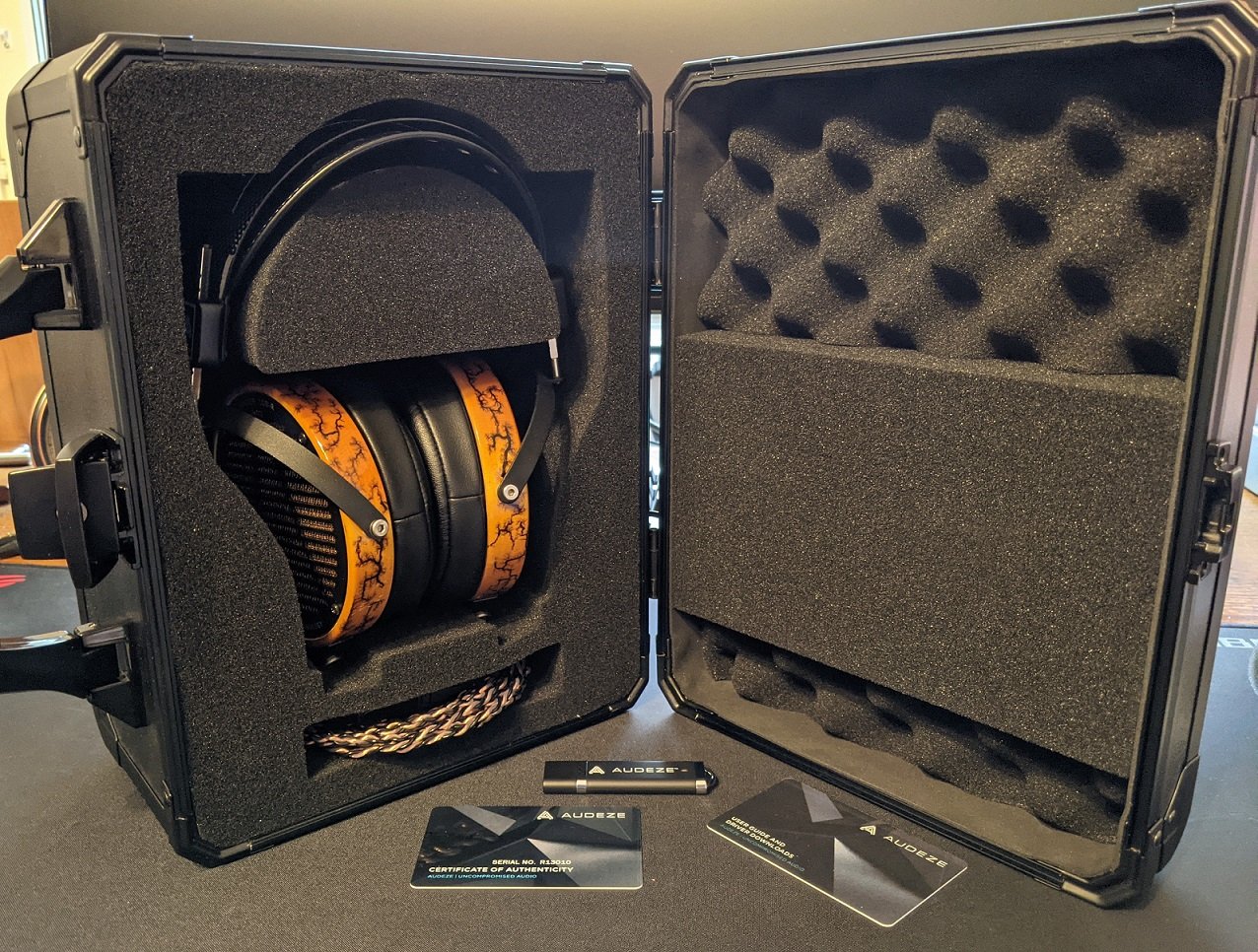
Audeze is an American headphone manufacturer known for its magnetostatic LCD series headphones (also called planar headphones). The California-based company at one time contributed to the growing popularity of planar headphones to such an extent that even today, the name Audeze is considered a kind of synonym for this technology.
In past years, the company has wanted to be perceived as a high-end brand by keeping the prices of the LCD series high (with a couple of exceptions, over 1000 euros) and only moderately updating its best-known headphones. Today, however, competition in the market for more expensive planar headphones is significantly tougher, for example with Chinese Hifiman, so Audeze also has to constantly try new things in its product development.
The LCD-R model, recently released on July 19, 2021, is Audeze's kind of "drawer idea" released as a finished product. According to the company, it has developed and experimented with many different headphone drivers and technologies over the years, but only a few of them end up in finished products. An exception was made for the LCD-R because another California-based company, Schiit Audio (yes, the company is named this and also sells toilet paper with its name), had an amplifier available that could be used with the headphones.
The headphones went on sale as a package priced at approximately 2100 euros (2500$), which included the LCD-R headphones and a Schiit Jotunheim-A amplifier. These packages were available in a very limited quantity of only 67 units (3 units were made for reviewers), and no more are expected to be released. The headphones sold out immediately, but I managed to buy a pair without knowing at this point what I was actually buying.
Ribbon technology
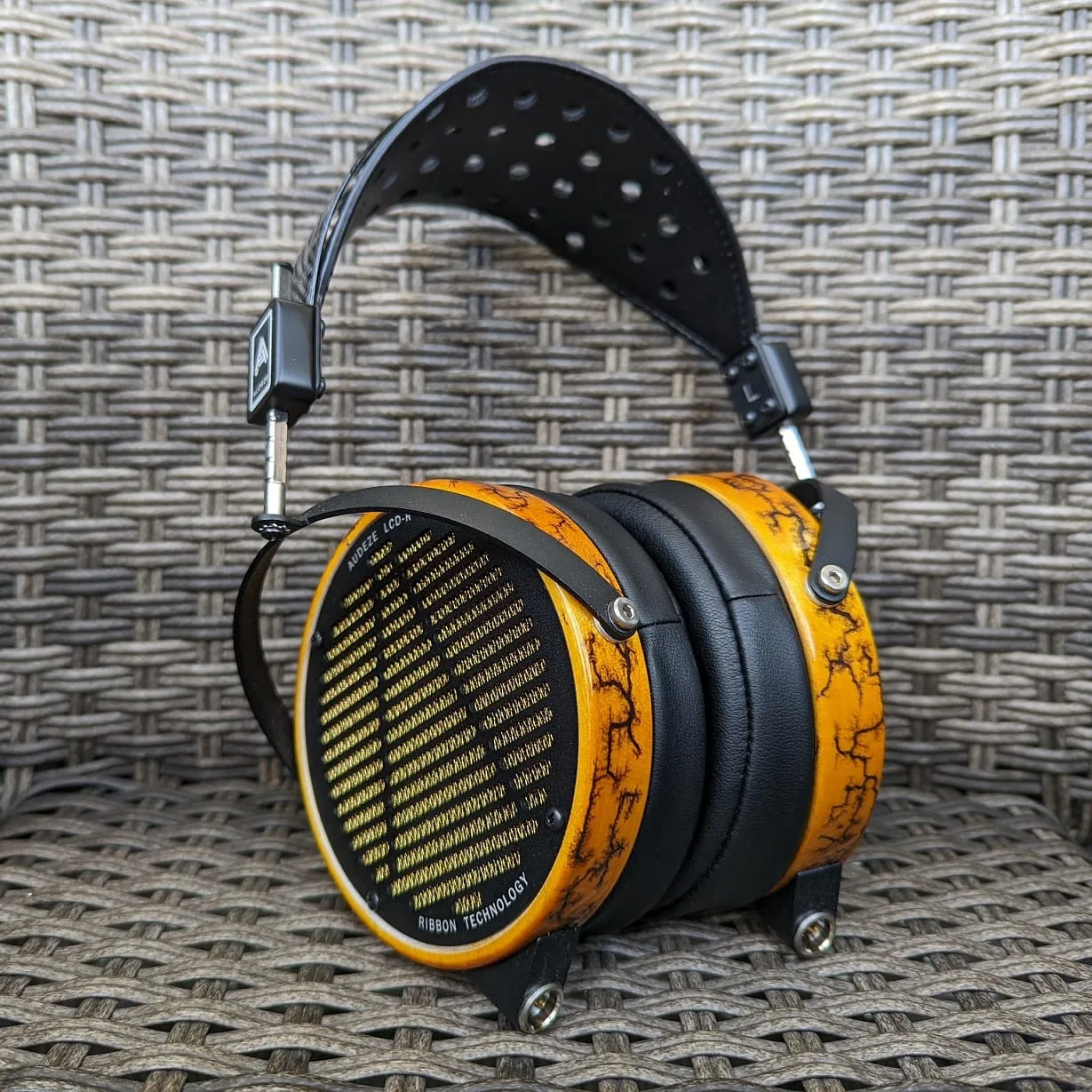
Audeze calls the LCD-R "ribbon headphones" because their impedance is a low 2 ohms and the structure of the driver's diaphragm conductors is denser than a normal planar diaphragm. However, they are still fundamentally planar headphones, which, thanks to these technical changes, should offer faster and more accurate reproduction compared to traditional planar headphones. Due to the low impedance, the headphones do not work with a normal headphone amplifier; they must be used with the included Jotunheim-A amplifier. Audeze even warns that using other amplifiers will void the headphones' 3-year warranty. At least this makes device pairing easy, as the owner does not have to consider using other amplifiers at all. The Jotunheim-A amplifier itself has a 5-year warranty, and since the device was developed specifically for the LCD-R headphones, the amplifier cannot currently be purchased separately.
Amplifier
The Jotunheim-A is a modification of the Jotunheim-R amplifier, which Schiit Audio previously developed for the Raal-Requisite SR1a Ribbon headphones. Externally, the amplifier resembles Schiit Audio's standard black Jotunheim amplifier, but an Audeze logo has been added to the top. The amplifier's outer casing is entirely metal and weighs over 2 kilograms. The power consumption is stated to be as high as 45 watts, so it's no wonder that the metal casing gets quite warm during use. For the device to work on the European electricity grid, the 230V model had to be selected at the time of purchase. This makes both the headphones and the amplifier extremely rare in Europe, as only a portion of the 67 units are suitable for use here.
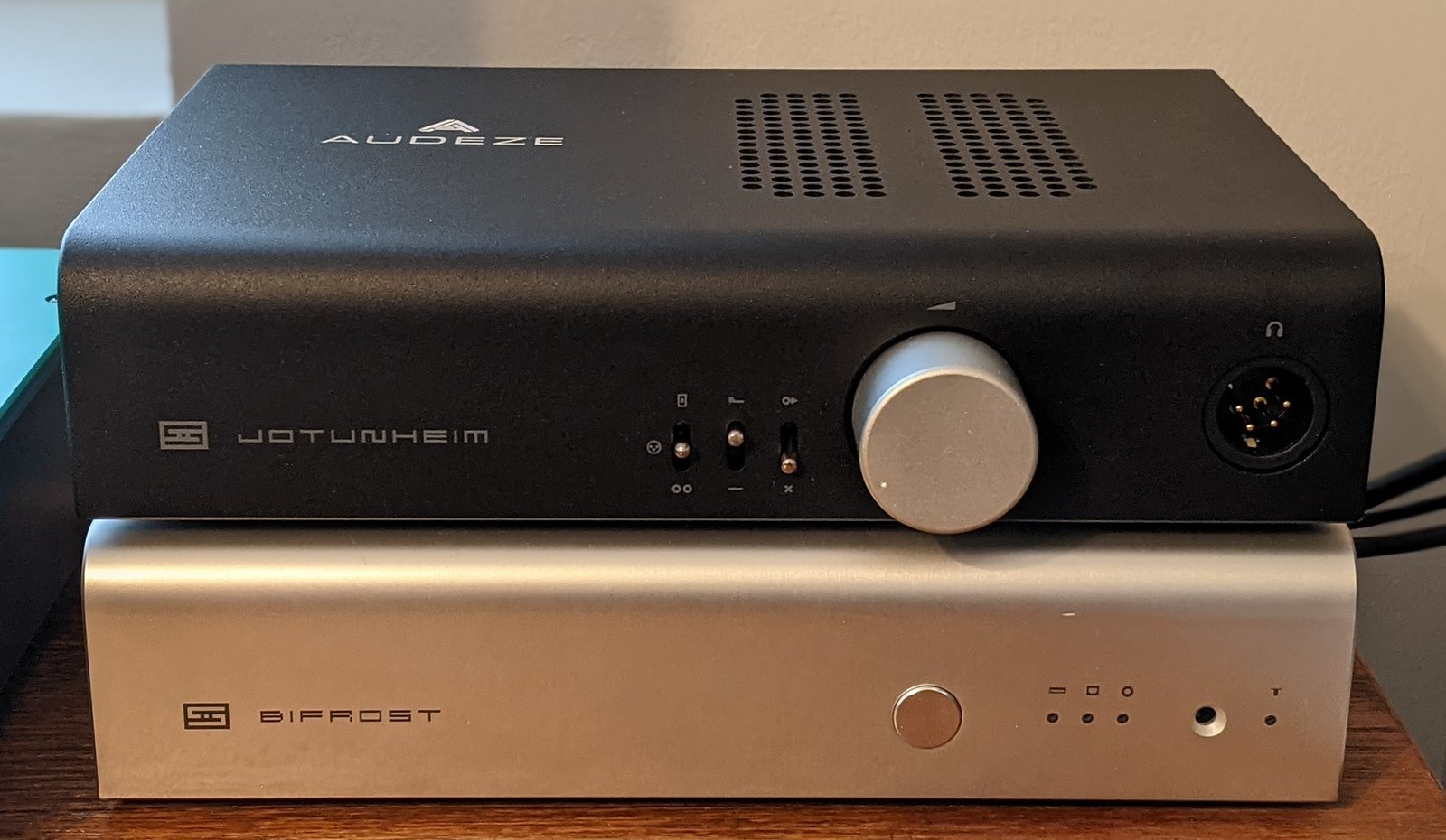
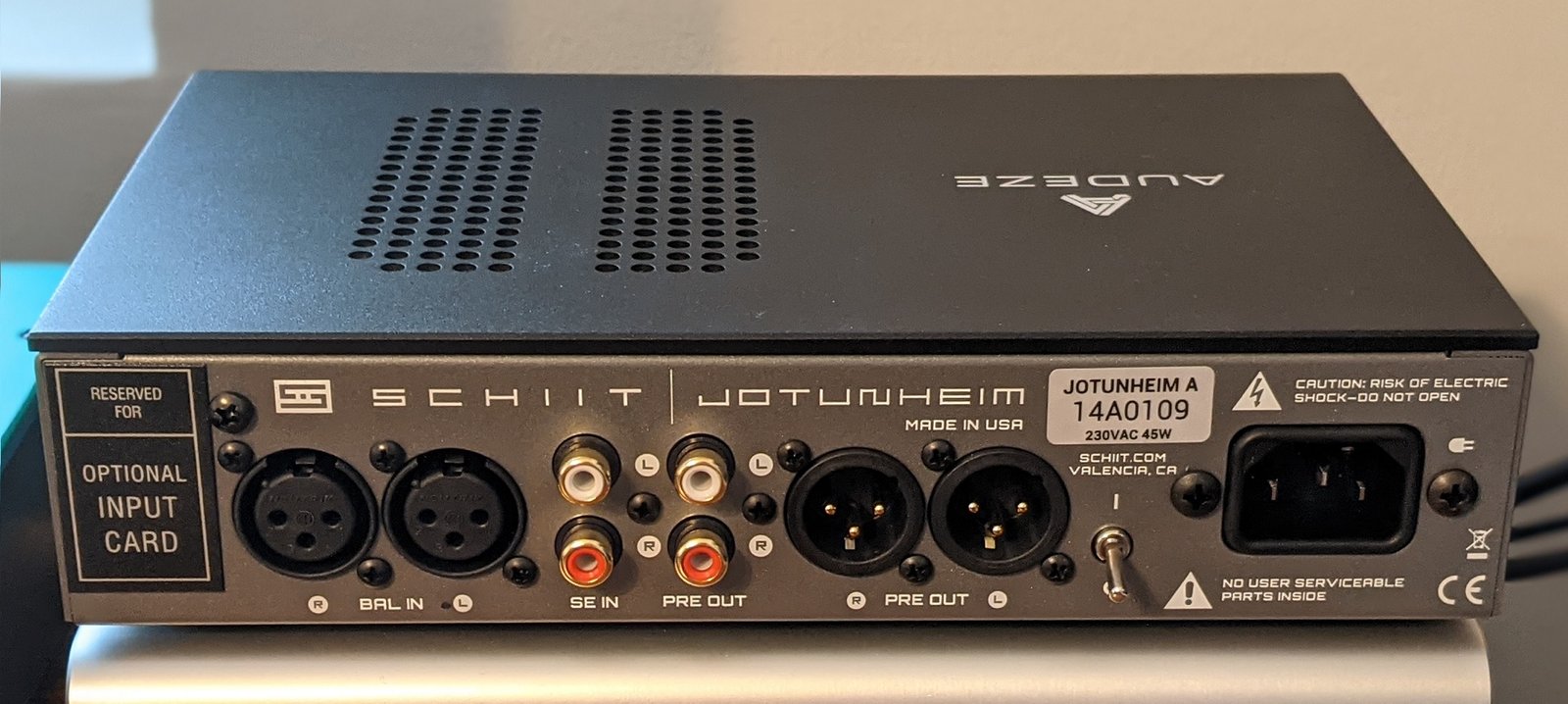
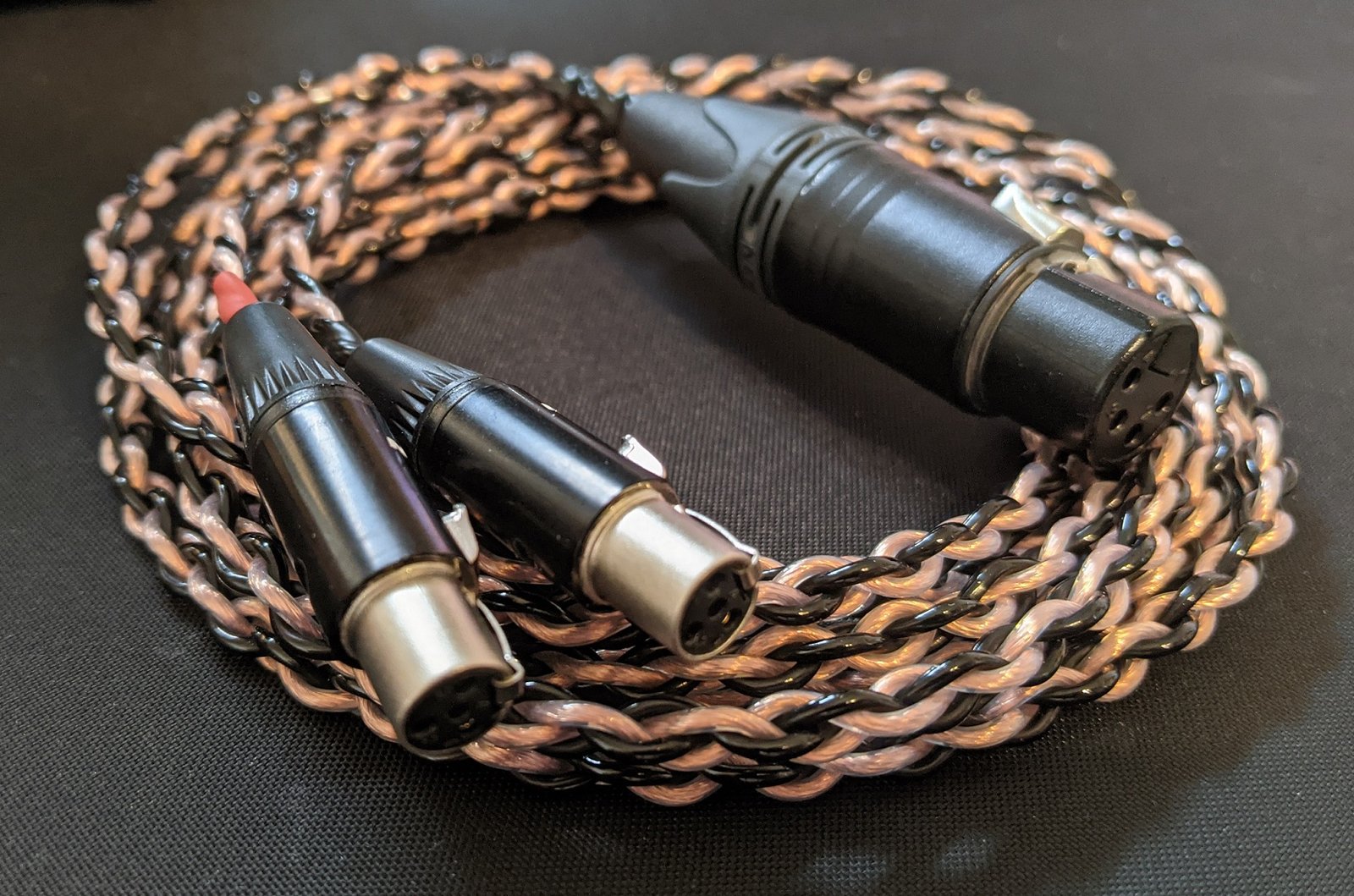
The headphones are connected to the amplifier's male-XLR connector, meaning the headphones themselves unusually have a female connector. This is a deliberate choice that prevents (or at least makes it difficult) any other headphones from being connected to the amplifier, or the headphones from being connected to any other amplifier's XLR connector. The only more interesting detail of the amplifier is a lever that can be used to emphasize bass reproduction. Activating the lever lowers other frequency ranges, bringing out the lower frequencies more. The amplifier is very powerful for the headphones, so this feature also acts as a kind of low gain setting, providing more adjustment range for the volume. By default, the headphones play very loudly with the volume knob at the 9 o'clock position (sound starts to be heard at the 7 o'clock position).
Structure and comfort
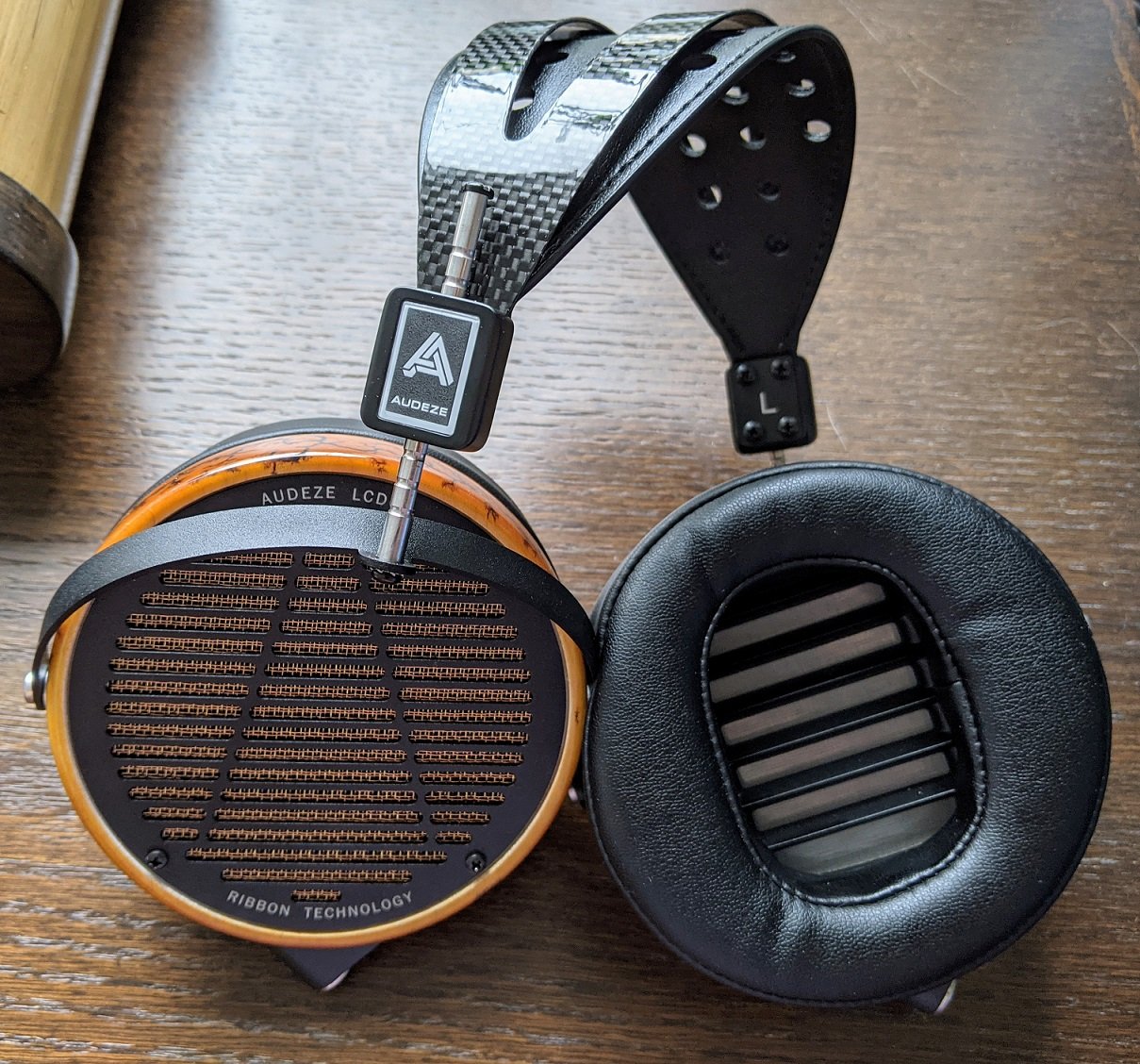
The appearance of headphones is always a matter of taste, but the LCD-R certainly doesn't leave anyone cold, whatever their opinion. The design follows the traditional LCD line, but otherwise, everything has been put into the R model. All moving parts related to the adjustment mechanisms are metal. The headband is carbon fiber, and the part resting against the head is leather. Behind the metal grilles of the cups is a gold-colored metal mesh, resembling fabric in appearance. The edges of the cups are orange-treated maple, into which Lichtenberg figures resembling wood/lightning have been burned with electricity. In addition, Audeze has modified its plastic-coated, braided standard cable so that half of the braid is transparent material, revealing the copper wire underneath with a slightly pinkish color. All in all, the headphones feel and look truly high-quality, as is usually the case with Audeze's LCD models.
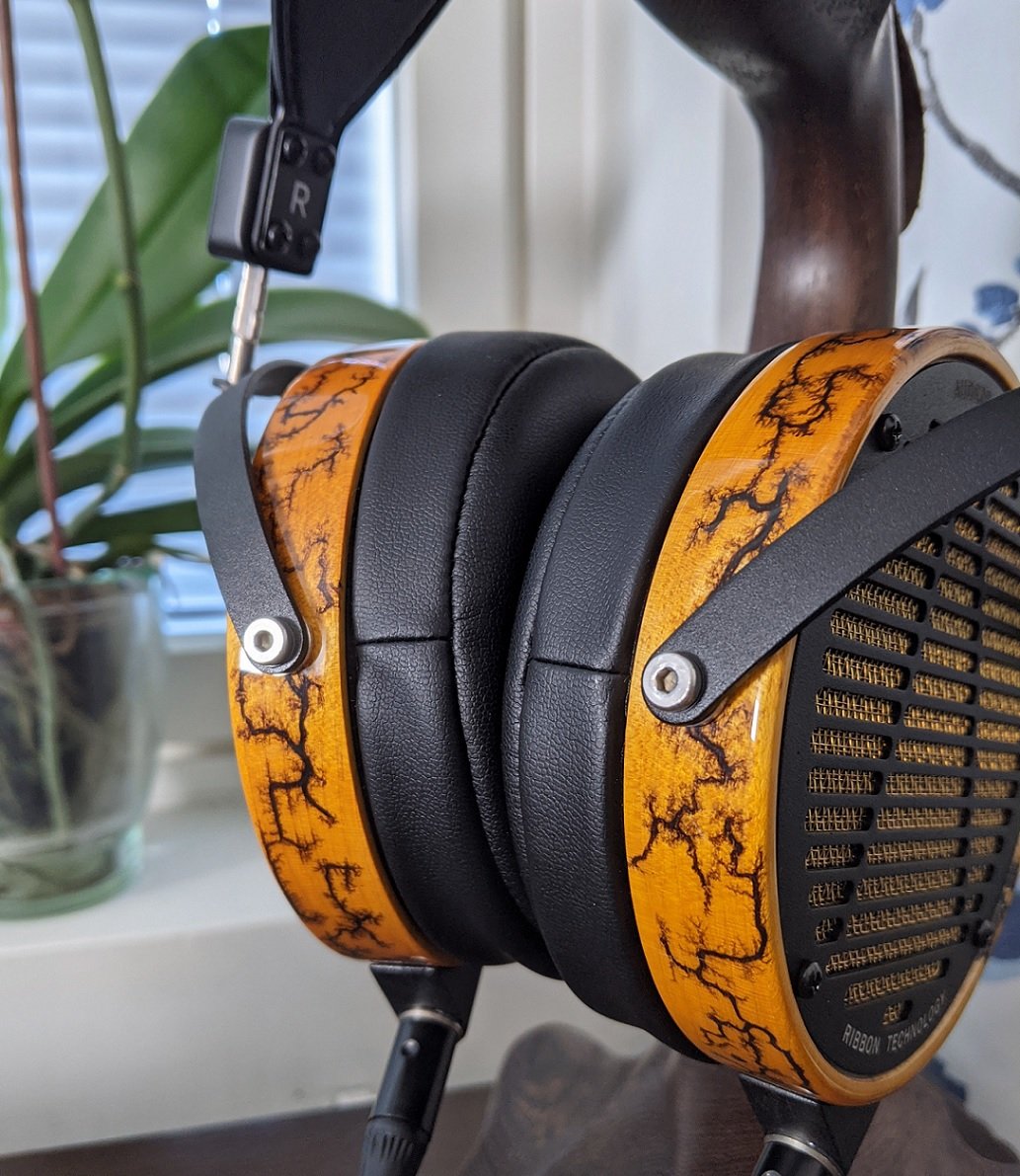
The headphones weigh 615 grams without the cable, which is a lot compared to other headphones, but typical for Audeze. The weight is evenly distributed on the head and, at least for me, does not become a problem during several hours of listening. Unfortunately, the situation is not as good with Audeze's latest ear pads – they are part of the 2021 tuning and, in my opinion, a clear downgrade compared to the previous memory foam pads.
The current pads are made of very soft basic foam that can be completely compressed with one finger. The material of the pads is artificial leather, and the surface feels slightly rough, almost like paper. The pads are thick and angled, and with them, the headphones feel quite good on the head. However, the pads compress so much on the head that there is little space left inside the cups for larger ears. At the same time, the ears easily touch the massive fazors inside the cups, located on top of the drivers (these direct sound waves and improve sound quality). My ears constantly touch these fazors, and fairly deep marks are pressed into my earlobes. However, I can live with the problem as long as I remember to occasionally adjust the headphones on my head.
Sound quality
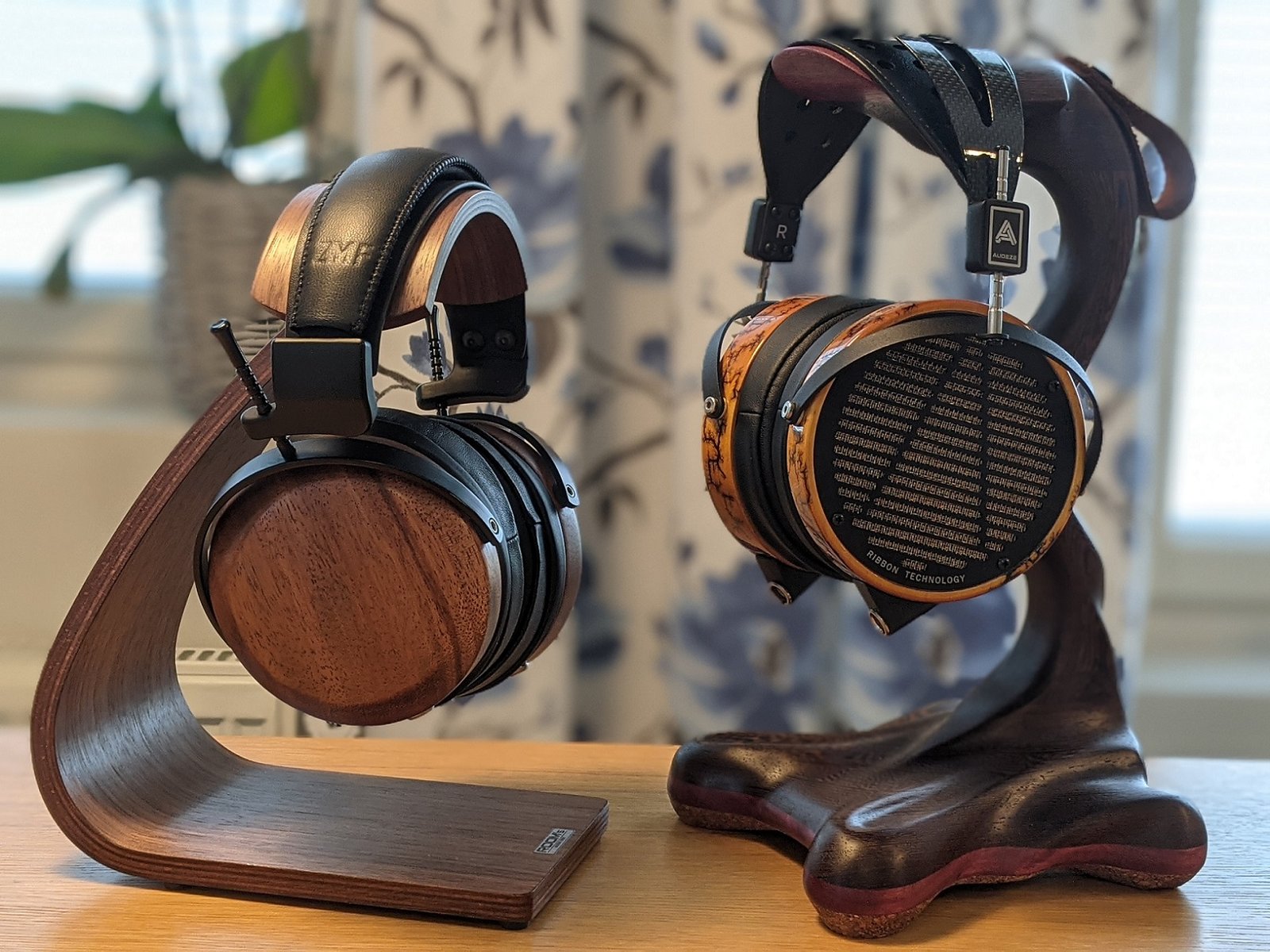
At this stage, I don't have other open-back headphones of a similar price as a comparison, so I'm comparing the Audezes to the closed-back ZMF Verite Closed headphones, which compete evenly with the LCD-R in terms of technical performance. I have only previously heard the most affordable LCD-2 Classic headphones from Audeze's LCD series, whose sound, however, matches the style of the more expensive LCD headphones. Based on this, I expected the LCD-R to have a tuning with a strong dip in the upper midrange, which is typical for Audeze. My assumption was somewhat correct, as the reproduction of the upper midrange is still tame and subdued in places. However, the LCD-R sounds significantly more balanced and ”normal” than the LCD-2 Classic.
Listening to the headphones for the first time, they immediately felt easy to assimilate in terms of sound, and everything largely sounded as I expected familiar songs to sound – no particular frequency range drew too much attention. Usually, when switching from one pair of headphones to another, everything sounds strange at first, but this time it wasn't the case. Accustomed to the slightly colored, but technically very high-level sound of the ZMF Verite Closed headphones, the LCD-R did not evoke immediate "wow" experiences, even though I noticed that the technical performance was at least on the same level. At this point, I was using the Soncoz SGD1 digital-to-analog converter (DAC). When I switched to the Schiit Bifrost 2 as the DAC, the listening experience became more musical (I was able to focus better on listening to the music itself), and at the same time, something clicked in my head, making me immediately realize what makes these headphones special. From this point onwards, my evaluation is based on listening with the Schiit Bifrost 2 + Jotunheim-A device combination.
Sound quality summarized
The LCD-R is a REALLY fast, detailed, and resolving headphone. All sounds have an immediate start and end, and the sounds do not blend together at all. The headphones succeed in separating every detail from each other in such a way that many better-produced tracks sound downright new and unfamiliar. At the same time, a kind of room forms around the listener's head, where different sounds can be placed with almost millimeter precision. The LCD-R does not sound very wide in the lateral direction, but the sound appears large in the vertical direction.
The headphones are quite bright, and for example, guitars and string instruments bite properly. At the same time, however, the reproduction has a pleasant softness and gentleness, which makes listening enjoyable and not fatiguing for the ears. Especially when paired with the Bifrost 2 DAC, the headphones bring out details from the music in such a way that I have never before felt so present with the music. Atmospheric songs, in particular, sound so magnificent that my hairs are constantly standing on end. Technical performance and listening pleasure meet in these in a truly magical way!
Technical performance vs. ZMF Verite Closed:
The technical performance of the headphones is excellent and at least on the level of the ZMF Verite. With both, even the smallest details of the music can be heard. However, due to a different, slightly more balanced tuning, I believe more can be extracted from the higher frequencies with the Audezes.
The Verite has emphasized low frequencies, and some of the upper midrange frequencies are reproduced somewhat aggressively, almost in-your-face, while the treble remains moderately in the background. This nicely colors the sound, but I feel that some of the technical potential of the higher frequencies remains unutilized. The excellent technical performance is certainly audible, but it does not manifest as clearly as in the LCD-R.
The reproduction of the LCD-R is really fast and tight. Music sounds faster in a way, without actually being any faster – it was very difficult for me to understand this until I got to hear faster headphones. I understand it as the sound-producing driver of the headphones reacting faster to new sounds to be reproduced, so that previous sounds do not get muddled with subsequent sounds. The reproduction becomes clearer and more immediate. The Verite is also very fast in its reproduction, but the LCD-R is still a notch faster.
With the LCD-R, even the smallest details of the music can be effortlessly heard across all frequency ranges. The resolution is simply fantastic, and especially concerning higher sounds, I hear details that I haven't heard before with the ZMF Verite. In my opinion, the extreme edges of the Verite's soundstage are further away from the listener, especially with Auteur ear pads, but with the LCD-R, the position of sounds between left and right is heard slightly more clearly. This is particularly noticeable with sounds moving from one extreme edge to the other – the Verite sounds like a wide open space, whereas with the LCD-R, a precise room seems to form, inside which the listener is. As an interesting detail, with the LCD-R, the sound appears larger vertically than with the Verite, but the ZMF has a fascinating 3D effect that makes sounds appear in the most unusual places around the listener.
Low frequencies:
The LCD-R is not a bass cannon by default; if I recall correctly, even the LCD-2 Classic headphones had quantitatively more low frequencies. To my ears, it sounds like frequencies below 100Hz are reproduced a bit too moderately. However, the bass switch of the Jotunheim-A amplifier and the emphasized impact of the Bifrost 2 DAC balance the situation to such an extent that I don't miss more from the low frequencies. By using the bass switch, the tuning of the low frequencies sounds as linear as one is accustomed to with Audeze's LCD models.
Due to the speed of reproduction, for example, drum hits are fast and tight. In comparison, with the ZMF Verite, the low frequencies are physically significantly more impactful and thicker, and they are also slightly intentionally emphasized. Technically, the low frequencies of both are excellent, and details can be heard in them in a way that only a few headphones can achieve. Audeze's strength lies particularly in the lowest frequencies, which are abundant in electronic music. These frequencies stand out more clearly with the LCD-R's ”ribbon element” than with the Verite, partly because ZMF emphasizes other sub-areas of the low frequencies in its headphones. Overall, the texture of the low frequencies is more pleasant and fun with the Verite, and following bass lines, in particular, is easier due to the emphasis on low frequencies than with the LCD-R.
Other frequency ranges:
The midrange frequencies are excellent on both the LCD-R and the Verite, but their style is different. Both headphones emphasize the lower midrange, which gives the sound a pleasant body. The Verite, in particular, sounds downright honeyed as a dynamic headphone, and the detail in the midrange is top-notch. Due to Audeze's faster reproduction, the midrange frequencies are not as warm and thick, but rather clearer and airier. Vocal performances are reproduced very clearly and in detail with both headphones.
The higher the frequencies, the more different the reproduction is between Audeze and ZMF. The sharpest part of guitars, string instruments, and piano often remains somewhat subdued with the Verite, and ZMF's tuning emphasizes more of the body of the sound in these instruments. With the LCD-R, these instruments bite harder and don't feel like the headphones are trying to restrain them. The cymbals of drums also sound significantly louder with the Audezes and draw more attention to themselves. The LCD-R indeed sounds quite bright and brings out the details of higher sounds more clearly than the Verite. Fortunately, Audeze has achieved a smooth tuning for the higher frequencies (in comparison, the LCD-2 Classic was quite a rollercoaster), and there are no unpleasant peaks in sharp sounds.
The gentleness of the reproduction I mentioned earlier also applies to these frequencies. I think it's due to the more subdued reproduction of the upper-midrange presence area (4–6kHz), where a dip usually makes the reproduction slightly more distant/less present. Listening to the headphones is easy and pleasant despite the large amount of detail. Usually, detailed headphones emphasize precisely the presence area, so it's somewhat exceptional that the LCD-R manages to be this detailed without doing the same. Although I personally like the headphones just as they are, I could see that some owners might increase the intensity of this frequency range's reproduction with EQ tools to get even more liveliness from the LCD-R's sound.
As open-back headphones, the LCD-R sounds pleasantly airy, which is excellent for string instruments, piano, and drum cymbals, for example. It is precisely in these aspects that the difference to the ZMF Verite is greatest, although certainly largely due to the fact that the headphones' structure and design principle are different.
Concluding remarks
The price of the Audeze LCD-R + Jotunheim-A package was $2500, from which the amplifier's price can be estimated at about $800. The value of the headphones alone without the amplifier is thus about $1700. Even with the amplifier, the headphones cost roughly the same as the ZMF Verite alone. This affects my final thoughts, but otherwise, it doesn't matter much, as the headphones can no longer be purchased.
In my opinion, the headphones are so good that selling such a small batch can only be explained by the fact that the technology in question is not yet ready for wider sale. The headphones require their own type of amplifier, so they cannot be sold without suitable amplifiers also being available. Introducing a new amplifier type to the market is not yet sensible for the sake of a single product. Selling a small batch at this stage increases people's interest in both the technology and Audeze, and at the same time, it is a way for the company to gather useful experiences for the future. It remains to be seen whether other headphones utilizing similar technology will be offered in the future. Audeze itself has announced that the LCD-R will no longer be produced.
Compared to the ZMF Verite, I roughly think of the situation as choosing the Verite for listening to lower frequencies and, correspondingly, the LCD-R for listening to higher frequencies. Both are almost perfect headphones in their own way. The Verite has a broader, more impactful, and more fun sound, and thanks to its slightly calmer reproduction, it is better suited for listening to lower-quality recordings. The LCD-R, on the other hand, is faster and separates the details of different frequency ranges more comprehensively, while also being even clearer than the Verite in terms of sound staging. The Audezes also evoke greater emotions and more often cause goosebumps thanks to their brighter reproduction.
Nowadays, high-end headphones are increasingly expensive, and reflecting on that, I wouldn't see it as a rip-off at all if the LCD-R were sold for 3000 euros even without an amplifier – that's how special the headphones sound, and it's truly a shame if they are no longer produced. Hopefully, at least a few readers of this article will get to hear the headphones someday.
 EN
EN  FI
FI