Author: Roderick

Table of Contents:
Information:
- Publication year: 2021
- Price: 399 €
- Type: open, over-ear
- Planar driver: NsD (Neo supernano Diaphragm) diaphragm and Stealth magnet structure
- Impedance: 18 ohm
- Sensitivity: 93.5 dB/mW
- Weight: 360 g
- Connections: 2x 3.5 mm (connector in both cups) / USB / Bluetooth
- Cable: 2-meter cable with 3.5 mm connector and 6.35 mm adapter
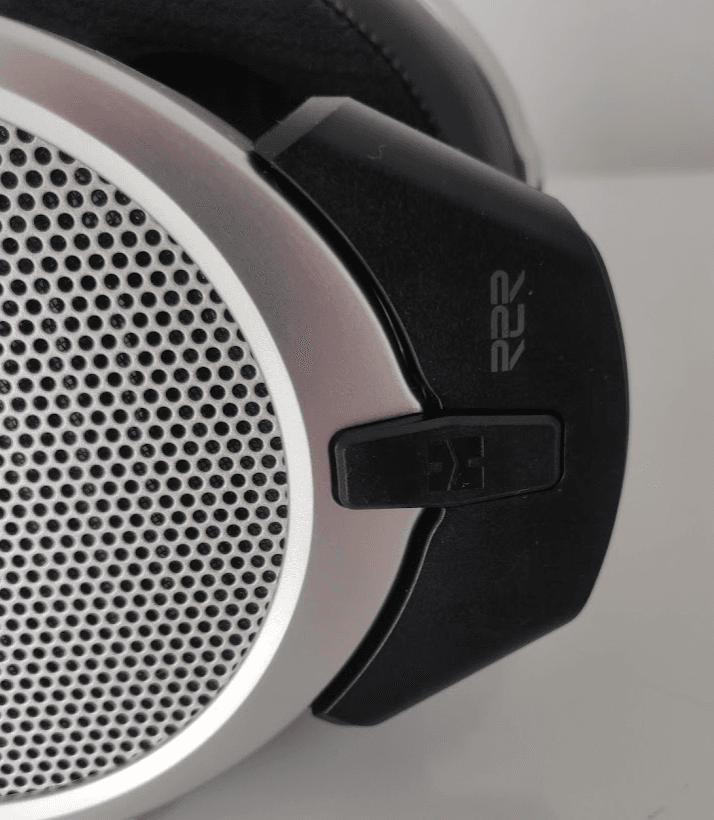
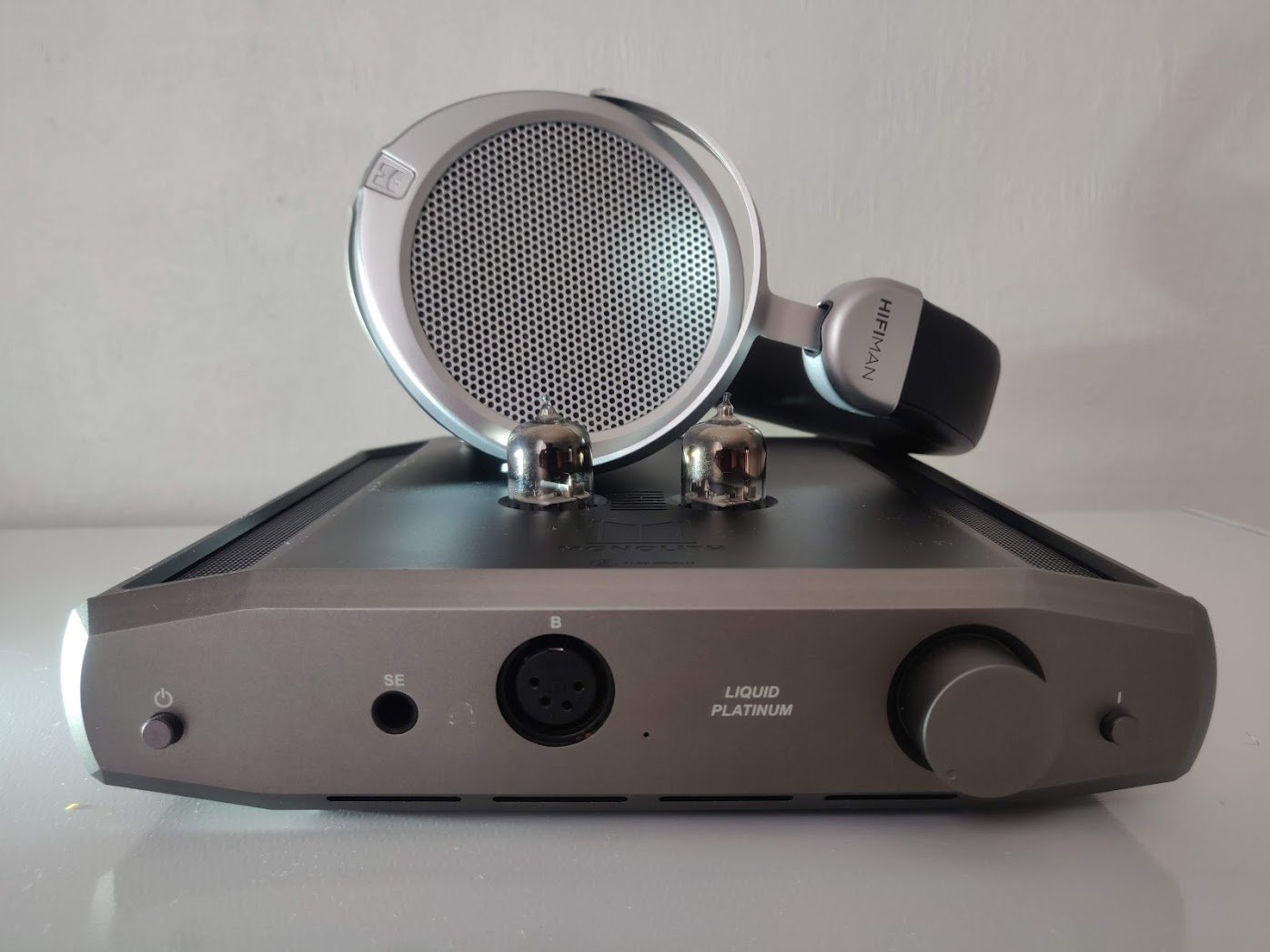
- Bluemini R2R Bluetooth module: attaches to headphones with a 3.5 mm connector. The module can also be used as a D/A converter and amplifier, in which case it is connected to an audio source with a USB cable.
- Bluetooth version: Bluetooth 5.0
- Bluetooth chip: Qualcomm QCC5124
- D/A converter: HIFIMAN HIMALAYA R2R
- THD: 0.006%
- Signal-to-noise ratio: 114 dB
- Battery life 8 hours
- Bluemini weight: 25 g
- Transmission codecs: LDAC, aptX-HD, aptX, AA
Review unit acquisition method: Loaned from a reseller
The Hifiman Deva Pro is a successor, priced at around 400 euros, to the Bluetooth headphone model named Deva, released in 2020, which became best known for its separate Bluetooth module that attached to the cup. According to Hifiman, the planar driver of the new Deva Pro has a diaphragm that is up to 80 percent thinner compared to the previous model. In addition, the driver has been updated with Stealth magnets, which were originally developed for the manufacturer's flagship Susvara model. Nowadays, the manufacturer has started using similar magnets in almost all of its other headphone models as well.
Changes have also been made to the Bluetooth module of the previous Deva model. The new module is named Bluemini R2R, and it includes Hifiman's self-developed Himalaya R2R D/A converter (DAC). The same DAC implementation can also be found in the manufacturer's recently released EF-400 combo device (DAC + headphone amplifier) and the HM901R mobile player. The Deva Pro was lent to us for an honest review by Joensuu's Kuva ja Ääni.
Structure and comfort

The Deva Pro's structure largely resembles its predecessor, as well as other Hifiman models, as the headband structure is similar across all newer headphone models. The metal headband is sturdy, and I don't believe it would break easily with normal use. The padding on the head strap feels a bit hard in material, but since the headphones weigh only 360 grams, it doesn't cause problems in the same way as HE6se V2 -model, which weighs over half a kilogram. The Deva Pro's clamping force is moderate, which isn't optimal for me, as headphones that clamp a bit tighter to the ears fit my rather small head better.
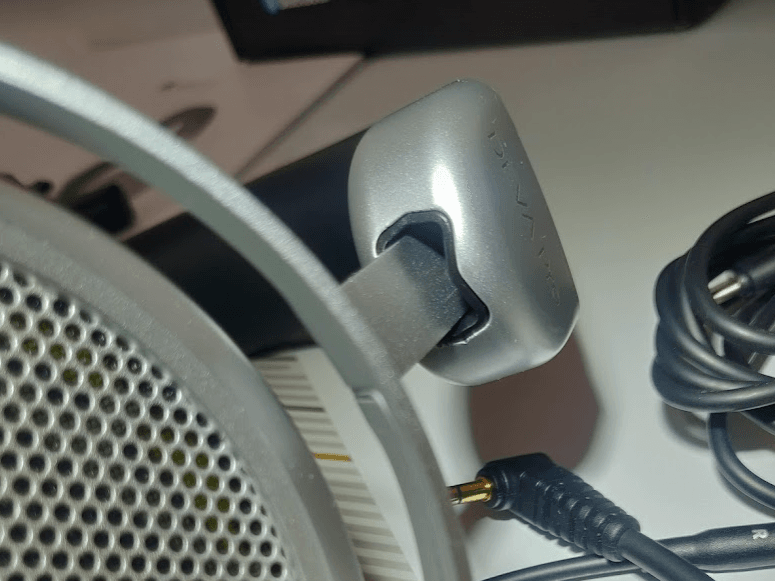
The headphone cups are slightly oval in shape, similar to, for example, the one I reviewed earlier in the HE5XX -model. The cups have a completely open design, so the Deva Pro does not attenuate external noise at all, nor does it contain the sound being listened to. The headphones are likely designed primarily for indoor listening in peace and quiet, even though the included Bluetooth module would make them easy to use outside the home as well.
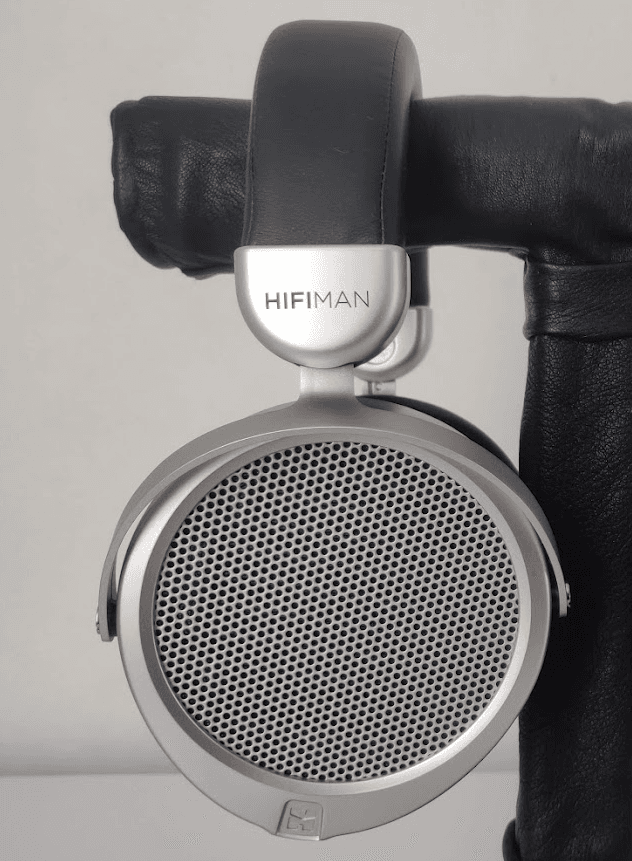
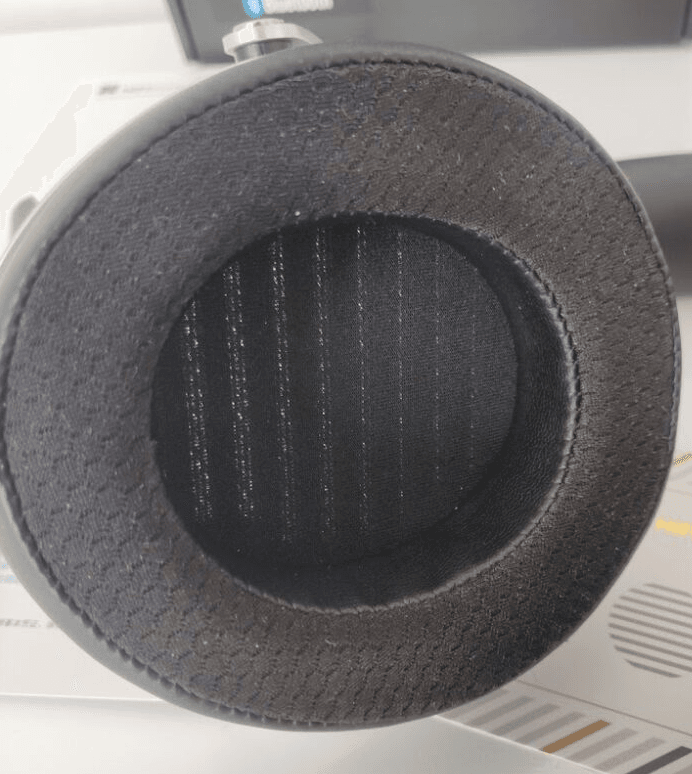
Overall, the headphones look and feel a bit cheap to me. For a price of 400 euros, I would hope for finer materials and a more distinctive appearance. On the other hand, the headphones' construction is sturdy, and comfort is also in order. For this reason, the Deva Pro cannot be greatly criticized, especially if a more minimalist appearance happens to appeal to the buyer.
Soundquality
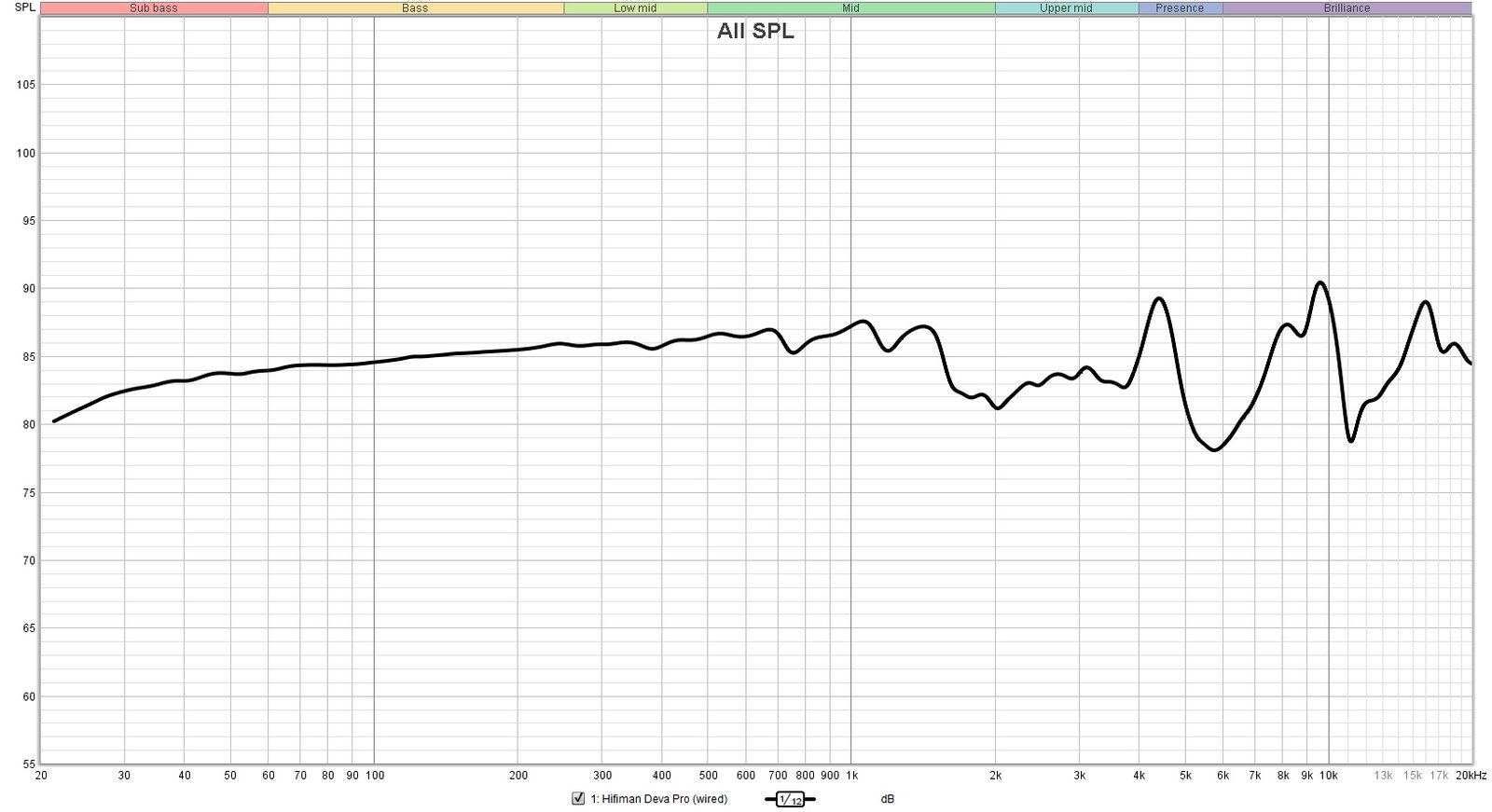
I first tested the headphones by connecting them with a headphone cable to a headphone amplifier. Having tested several other Hifiman headphones, I expected excellent sound quality, and the Deva Pro did not disappoint.
Bass:
Hifiman's entry-level headphone lineup generally doesn't excel in bass intensity. However, the Deva Pro's bass is firmer than in the manufacturer's cheapest HE400se-model. Hifiman has also succeeded in removing the excessive looseness and roundness from the bass reproduction that plagued the HE5XX and Ananda-model.
The Deva Pro's bass reproduces almost flawlessly down to the lowest frequencies. Impact sounds are crisp, and bass control does not falter in any situation. However, the bass is still somewhat dry in style, and it would benefit from more punch. On the other hand, it's not realistic to expect bass reproduction on par with more expensive headphones, such as the Hifiman HE6se or Audeze LCD-2 Classic. All in all, the Deva Pro positively surprised me, as I had anticipated a leaner and looser reproduction beforehand.
Central votes:
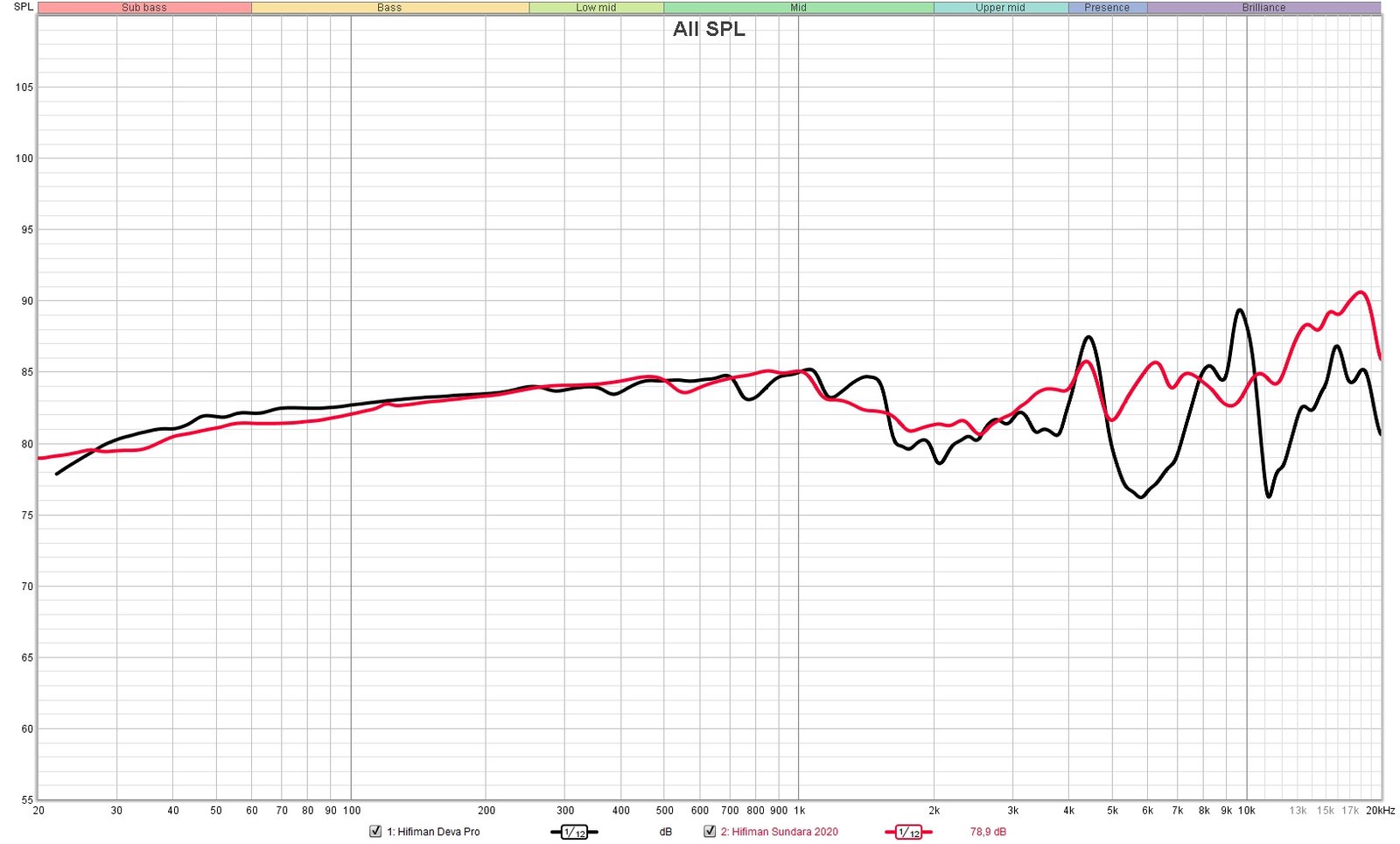
The headphones' mid-frequencies stand out from other Hifiman models with a more prominent 2 kHz region. Usually, in this region, the manufacturer's headphones have a slight dip, which makes the sound a bit more relaxed. However, this is almost entirely absent from the Deva Pro and Sundara, whose upper mid-frequencies are even flatter. It is largely a matter of taste whether the more present mid-range of the Deva Pro and Sundara is appreciated more than the relaxed and more expansive presentation style of the Ananda model. I personally prefer the more present style because the sound then seems less veiled.
The Deva Pro's mid-range is balanced, clean, and clear. The sound will likely not appeal to those who prefer a robust presentation, but rather to those who value clarity and separation. In my opinion, the only negative aspect of the mid-range is the slightly overemphasized 1–1.5 kHz region. Because of this, the headphones sometimes sound a touch aggressive, which can lead to listening fatigue in the long run.
The boost visible at 4.5 kHz in my frequency response measurements is real, but it doesn't bother me because my hearing is not particularly sensitive to boosts below 7 kHz. For someone else, however, the boost I mentioned might be more problematic. The dip between 5–6 kHz that follows this boost in the frequency response, on the other hand, is unrealistically exaggerated because MiniDSP EARS incorrectly measures it as too deep due to its inaccuracy.
Treble:
The Deva Pro is pleasant to listen to in terms of treble, as high frequencies are reproduced exceptionally smoothly for Hifiman headphones. The treble is more subdued than, for example, in the HE400se model, which sometimes sounds sibilant at the highest frequencies. In my opinion, the Deva Pro could have more energy in the lower treble frequencies, but on the other hand, the more subdued reproduction softens the headphones' somewhat dry presentation.
Soundstage, Dynamics and Resolution:
The headphones' soundstage has excellent width and depth. If I remember correctly, I would say the Deva Pro is larger in terms of soundstage than the HE400se and Sundara, but smaller than the HE5xx and Ananda. However, I cannot be 100% sure, as I last listened to the HE400se, HE5xx, and Ananda several months ago.
In terms of dynamics, the Deva Pro is exceptionally good for an affordable planar headphone. Its reproduction is punchy and engaging. Variations in music tempo and volume are reproduced clearly, even when the variations are quite small. In terms of macro-dynamics and punchiness, however, the headphones cannot challenge the best similarly priced headphone models equipped with dynamic drivers. Nevertheless, only a few of these dynamic headphones can delve as deeply into music as the Deva Pro, which, thanks to its fast transient reproduction and balanced frequency response, excellently brings out the small details in music.
Bluemini R2R

The sound quality of Bluetooth headphones is generally considered inferior to wired headphones. Headphones designed to be wireless also often sound better themselves when listened to via a cable. I assumed this would be the case with the Deva Pro as well, but to my surprise, I found that its sound quality hardly deteriorates at all when listened to via the Bluetooth connection provided by the Bluemini R2R module.
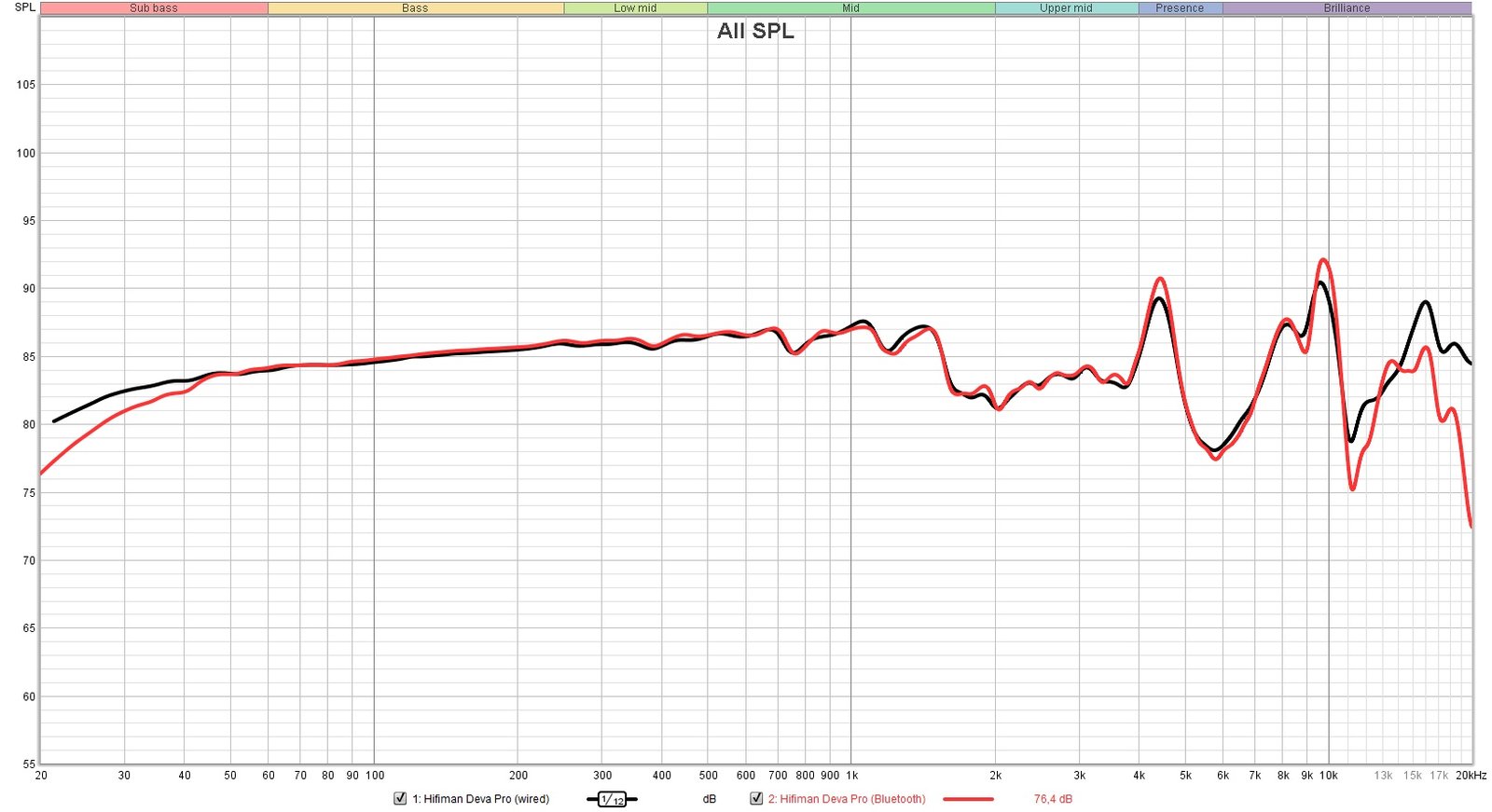
This is a very strong achievement considering that I also tested the headphones with quite high-quality D/A converters and amplifiers. Not all headphones scale significantly better with higher-quality equipment, of course, but the Bluemini R2R seems like a truly capable device to me in any case. The sound quality remains just as good even when the Bluemini module is used as a USB-DAC. Indeed, the Deva Pro's frequency response measured via the module's USB and Bluetooth connections is identical. However, the lowest bass frequencies and the highest treble are reproduced slightly more moderately in both ways compared to listening to the headphones via a cable with, for example, an SPL Phonitor 2 amplifier.
Usefulness of the USB-DAC feature:
One might think that the Bluemini's USB-DAC feature is just a nice addition, as the Deva Pro can also be connected to different audio sources with a traditional 3.5 mm connector. Indeed, the integrated headphone outputs of many devices are quite decent. The sound quality offered by many phones is also often quite good, but their headphone outputs provide little power, and newer phones no longer even have a headphone jack. The Bluemini module brings flexibility to such situations.
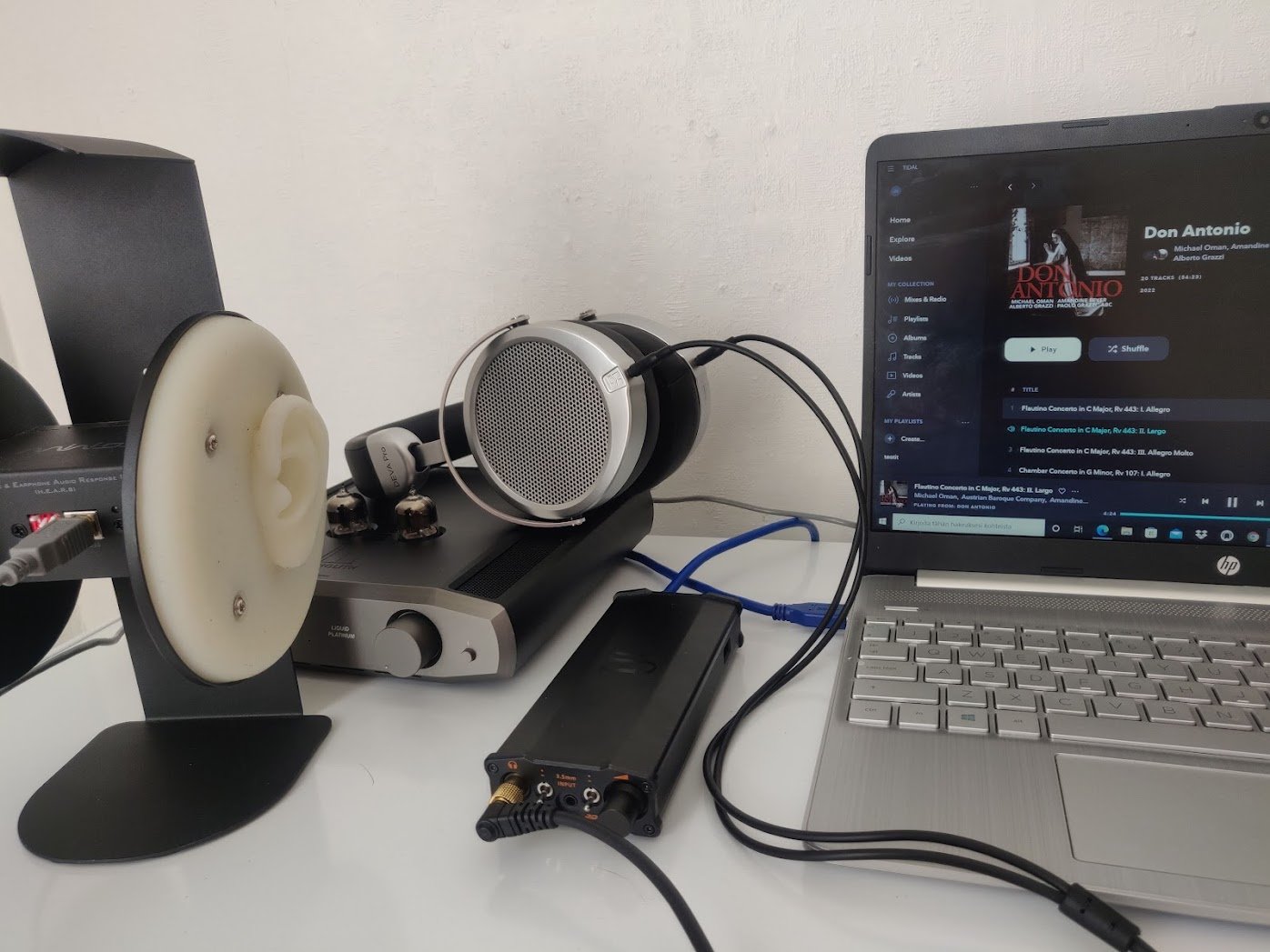
Many people listen to headphones directly from a laptop's headphone jack. In my experience, however, the sound quality is usually the worst in such machines that do not have a proper sound card. I decided to measure the Deva Pro's frequency response from the 3.5 mm headphone output of my 500-euro HP laptop. The sound quality was apparently not very high on the manufacturer's priority list when designing the machine…

My laptop's headphone output is absolutely abysmal, making the Deva Pro largely unlistenable. The situation is not a result of a lack of power, as connecting a Topping NX1 amplifier to the laptop's headphone output did not change the frequency response at all. Due to the peculiar measurement result, I was inspired to also measure the headphones from the headphone outputs of two different TVs. Through the first TV, the frequency response was moderate, except for the lower frequencies, but the second TV clearly distorted the frequency response, though not nearly as badly as my laptop.
It seems to be quite a gamble how high-quality components manufacturers use to assemble their devices. Peace of mind and better sound quality can be achieved by acquiring a decent DAC/amplifier, which are now available even affordably. In my opinion, anyone who takes headphone listening even slightly seriously should acquire one anyway. However, not everyone has the time or willingness to delve into the vast selection of D/A converters and headphone amplifiers and the jungle of technical terms. The Deva Pro and its versatile Bluemini module are an excellent all-in-one option in such a situation.
Notes on module usage:
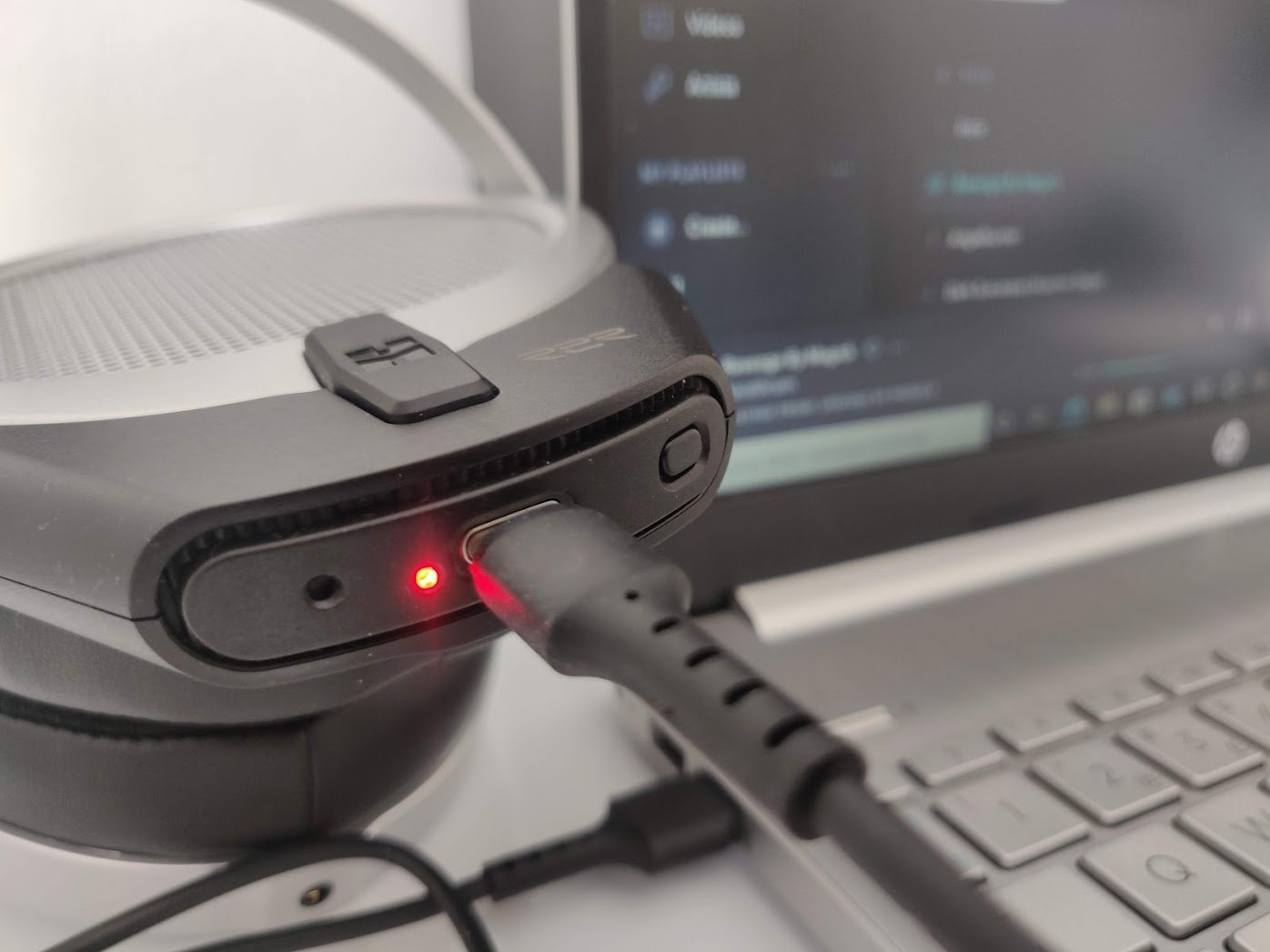
The Bluemini R2R module makes the Deva Pro sound excellent, but there are a few compromises to be made when using the module. Firstly, the headphones' 8-hour operating time on a single charge is only about a quarter of what more conventional Bluetooth headphones can achieve. In addition, according to some, using the LDAC codec halves the battery life to 4 hours. When the battery is low, a USB connection does not significantly increase usage time if a phone or some other device is used whose power is not sufficient for both charging and using the Bluemini simultaneously.
Fortunately, the situation is not as bad as one might imagine, as the Deva Pro's most likely place of use is home or a similar space where charging the headphones is easy. Due to their open-back design, the headphones are not suitable for outdoor use or public spaces where the user would be disturbed by external noise or disturb others with sound leaking from the headphones.
In addition to mediocre battery life, the Bluetooth range is exceptionally weak. To function without interruption, the device transmitting the Bluetooth signal should be in the same room where the headphones are being listened to. A quick trip from the living room to the kitchen, for example, causes the sound to cut out for me. In a small apartment, the range might just barely be sufficient if there are no closed doors in between. In a larger apartment, when listening to the Deva Pro, it is not possible to move freely in the same way as, for example, Valco VMK20 when using headphones.
The Bluemini's exceptionally loud notification sounds are also quite confusing. The female voice playing the notifications managed to startle me several times. Especially on the first use, it is advisable to establish the Deva Pro's Bluetooth connection before putting the headphones on your ears. Unfortunately, the low battery notification sound still manages to startle me from time to time. The low battery notification is also quite useless, as the headphones turn off almost immediately after the notification. If a USB cable is not nearby, there is no time to look for it before it's too late.
Sound quality comparison to Hifiman Sundara
Prices: Deva Pro 399 € and Sundara 349 €
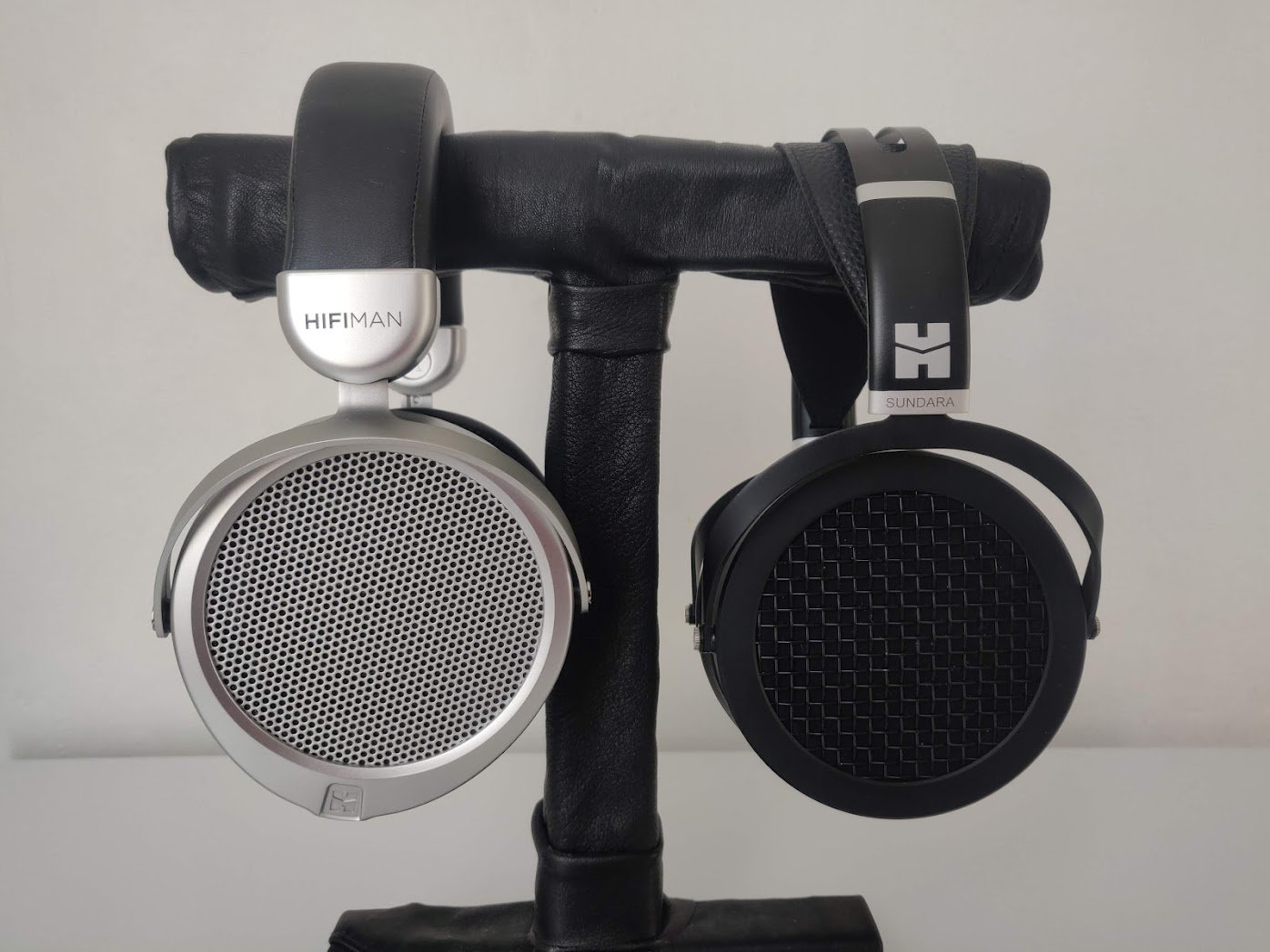
Bluetooth headphones are usually closed-back in design, so there are hardly any direct competitors for the fully open-back Deva Pro. However, a comparable sound quality offering and falling into the same price range Hifiman Sundara is, in my opinion, a suitable comparison. Since the headphones are so different in other features, I will only compare sound quality.
Frequency responses:
Bass:
The Deva Pro and Sundara are very similar in bass reproduction. Although there is about a one-decibel difference visible in the frequency responses, it is practically impossible to distinguish when listening to music. The bass reproduction in both models is also qualitatively so similar that I would not be able to tell the headphones apart based on it.
The bass reproduction of both is precise, and it is not too rounded and loose like some other affordable planar headphones. However, neither headphone model will satisfy fans of powerful and punchy bass.
Midrange and Treble:
The Hifiman duo largely matches each other in their midrange as well. The clearest difference is the Deva Pro's tendency to sometimes push female vocalists close to the point where the result becomes shouty. The Sundara is slightly more relaxed and natural-sounding. This difference might make the Sundara sound less fatiguing, especially during long listening sessions. On the other hand, some might find the Deva Pro's reproduction more pleasant in the long run, as the vocalist is positioned slightly further away from the listener in the overall presentation. The Sundara might feel too intrusive if the listener prefers a less intimate presentation.
There is some difference in treble resolution in favor of the Sundara, but some of it may also arise from differences in frequency responses. When listening to the Sundara, it feels as if I hear more things reproduced in the higher frequencies. Again, however, the difference is very small.
Audio description:
Sundara sounds physically larger and in a way ”fuller” of the two, but its soundstage is smaller in scope than the Deva Pro. With Sundara, the sound is reproduced quite close, whereas the Deva Pro places the listener slightly further away from the music.
Sundara is slightly more precise in instrument placement. In my opinion, this is explained by the fact that there is more clearly discernible empty space around the sound sources. With the Deva Pro, sounds are heard somewhat as if from within a fog, making it more difficult to perceive their exact location. My comparison might give the impression that there is a greater difference between the headphones – in reality, however, differences can only be observed by focusing on careful listening.
Concluding remarks:
It is really difficult to perceive major differences between the Deva Pro and Sundara. In my opinion, Sundara is slightly better headphones because it sounds more natural and a bit more resolving. However, if wireless connectivity is important, choosing the Deva Pro doesn't lose much, especially since the Bluemini module included with the headphones can also be conveniently used as a USB-DAC.
If I only owned the Deva Pro, I wouldn't necessarily miss the Sundara at all. For those seeking better resolution within Hifiman's lineup, it's worth jumping directly from the Deva model to the Ananda. On the other hand, moving to Ananda would sometimes be a compromise, as the Deva Pro pleases me more in terms of dynamics and bass reproduction. The new Hifiman Edition XS could also be a viable option, but I haven't had a chance to test it yet.
Summary
Before hearing the Deva Pro, I assumed its sound quality would fall somewhere between the HE400se and HE5XX in Hifiman's lineup. I was ultimately surprised when the headphones are closer to the Sundara, which I consider excellent – the situation is the same even when listening via Bluetooth.
Since the sound quality is almost as good as the Sundara and the Deva Pro is primarily a Bluetooth headphone, its 50 euro higher price than the Sundara is easily justifiable. The Bluemini module also functions as an amplifier for wired use if needed, making the headphones flexible to use.
The biggest weaknesses of the overall package are the Bluemini's short battery life and the weak range of the Bluetooth connection. However, thanks to the Deva Pro's excellent sound quality and versatile usability, I find it easy to forgive these flaws. In my opinion, with the Bluemini module, the headphones offer exceptionally good value for money, provided all features are utilized.
Pros and cons:
+ Balanced frequency response and clean sound
+ Resolving sound
+ Well-structured and reasonably large soundstage
+ Good comfort
+ Versatility: The headphones sound excellent wired, via Bluetooth, and also when the Bluemini R2R module is used as a USB-DACa
+ Exceptional value for money, provided all features are used and needed
+/- Hifiman has taken a step in the right direction by improving the impact of the headphones' bass reproduction. However, there would still be room for improvement, especially compared to more expensive planar headphones.
+/- Despite their versatility, the headphones are aimed at a rather limited user base:
1) The Bluemini's USB-DAC feature is quite redundant if the owner already has a good DAC and amplifier
2) Headphones do not replace closed Bluetooth headphones due to their open design if listening occurs in a noisy environment
– Bluemini R2R's battery life is significantly shorter than in conventional Bluetooth headphones
– Bluetooth range is short
– Notification sounds play at a far too high volume
– Although the headphones' construction feels quite sturdy, the appearance is mundane and cheap-feeling considering the 400 euro price

 EN
EN  FI
FI