Author: Sword of Damocles
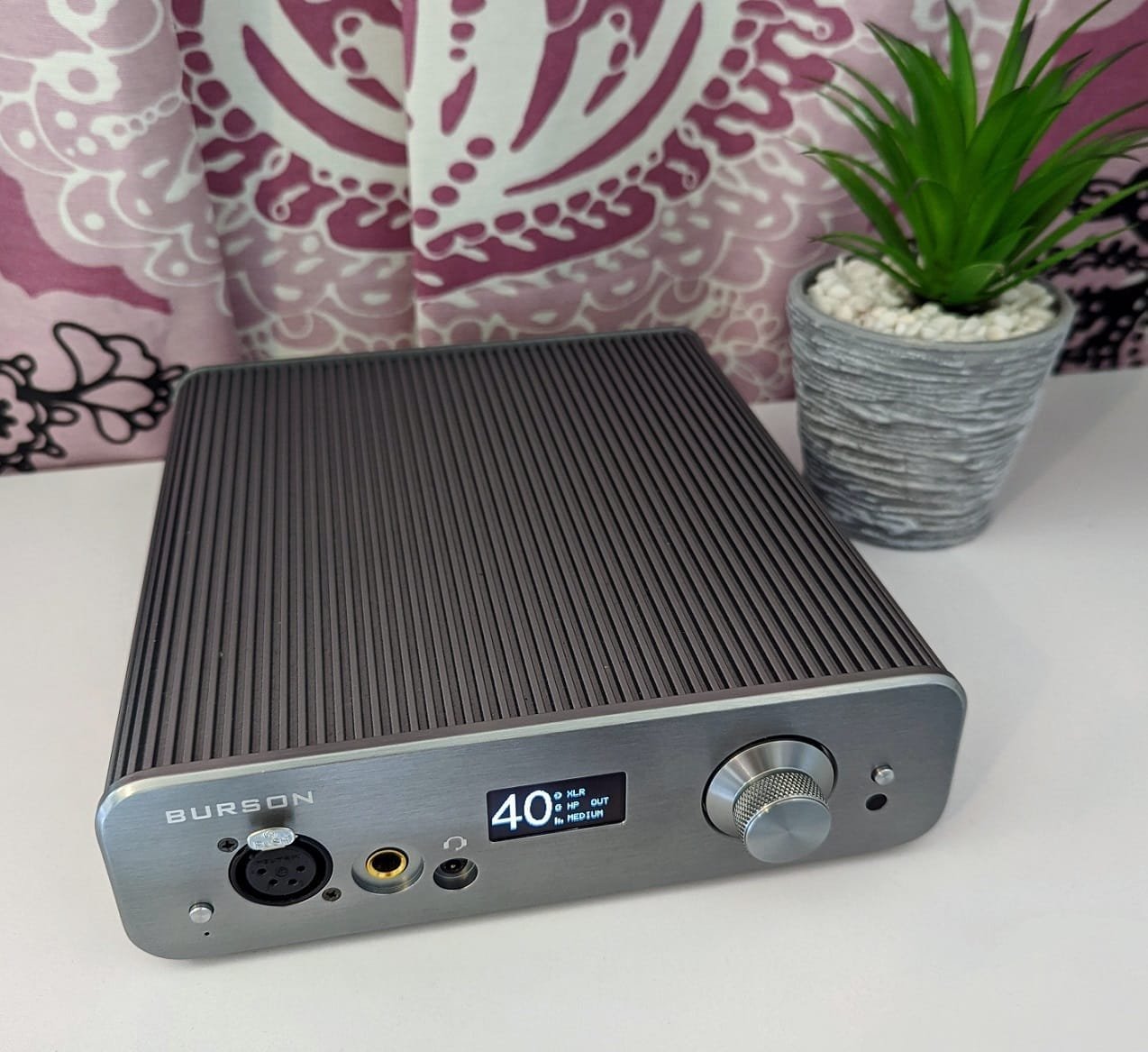
Table of Contents:
Information:
- Price: 1140 USD / 1440 €
- Type: Class A transistor amplifier
- Headphone connectors: 4-pin-XLR, 6.35 mm and 3.5 mm (headset microphone routing possibility to the back of the device and from there via the 3.5 mm connector to the computer)
- Gain settings: low/medium/high
- Included operational amplifiers (opamp): 4 x Burson Audio V6 Vivid (replaceable)
- Output impedance: 0.5 ohms
- THD: < 0.0015%
- External dimensions (L x W x H): 25 x 20 x 6 cm
- Weight: 1.75 kg
- Warranty: 2 + 1 years
Stated output power (balanced):
- 8 W @ 16 ohm
- 4 W @ 32 ohm
- 1 W @ 100 ohm
- 0.6 W @ 150 ohm
- 0.3 W @ 300 ohm
Stated output power (unbalanced):
- 4 W @ 16 ohm
- 2 W @ 32 ohm
- 0.5 W @ 100 ohm
- 0.3 W @ 150 ohm
- 0.15 W @ 300 ohm
Maximum output power according to AudioScienceReview tests (balanced):
- 5.4 W @ 32 ohm
- 2.3 W @ 300 ohm
Included accessories:
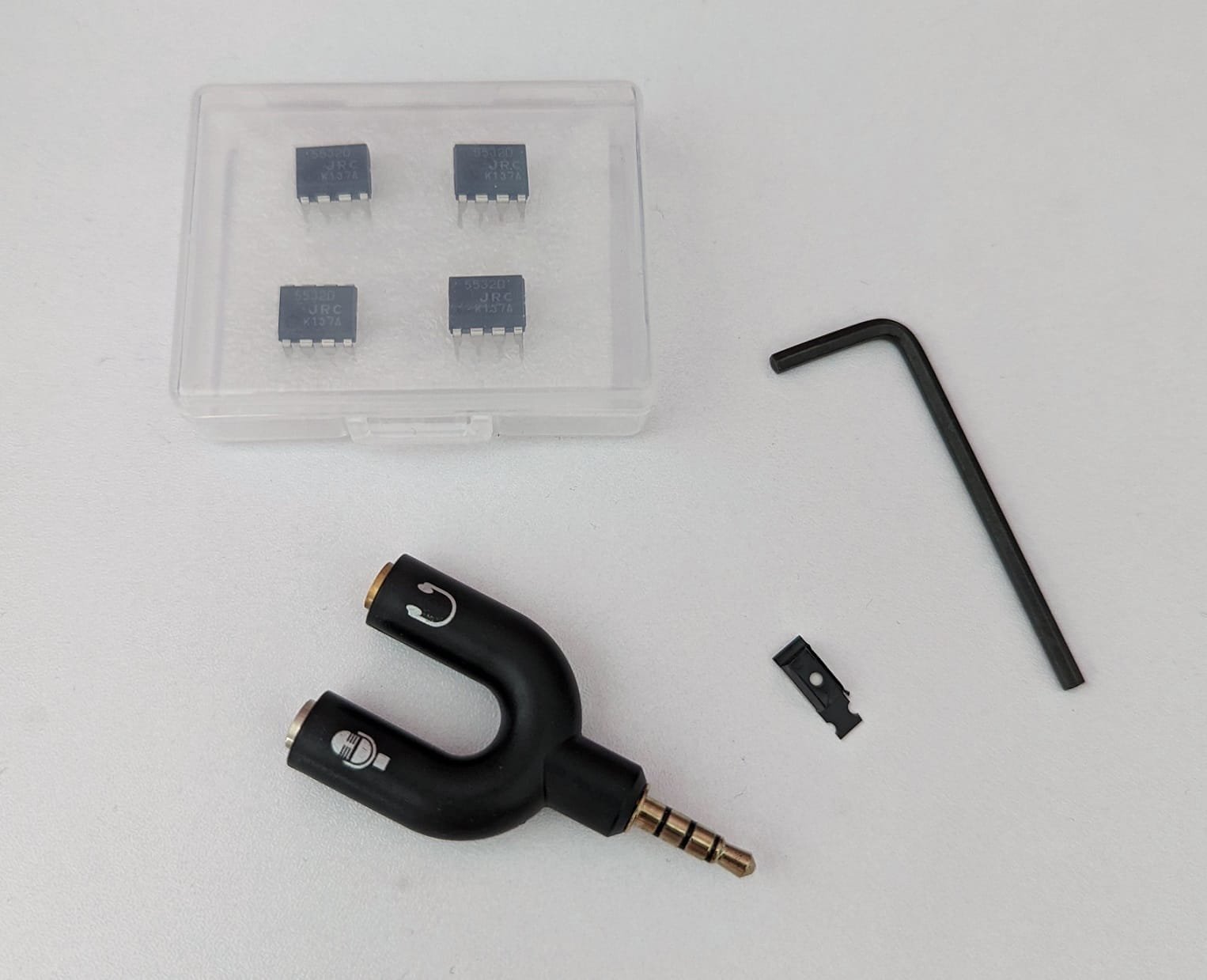
- 4 inexpensive operational amplifiers for troubleshooting potential issues
- Replacement fuse
- Hex key
- Headset adapter
Burson Audio
Burson Audio is an Australian device manufacturer whose product range mainly includes headphone amplifiers and D/A converters. The company is particularly known for its operational amplifiers (op-amps) built from discrete components, which are also sold separately for use in other manufacturers' devices. Burson Audio also utilizes its developed Max Current Power Supply (MCPS) power supply design, so its devices contain a lot of its own product development. The manufacturer does not market its products much, but rather relies more on positive perceptions among enthusiasts in the field. Even buying the devices is not entirely straightforward, as there are relatively few stores selling them.
I have experience with Burson Audio devices so far only from a Class A headphone amplifier called Soloist 3X Performance (link to product page), which I bought used at the end of 2021. At that time, I needed a powerful amplifier that I wanted to be sufficient for review use with all headphones on the market. The Soloist 3XP also met all my other needs, as I had grown fond of the sound of Class A amplifiers with the RebelAmp (link to review) and Class A amplifiers' sound.
The recommended price for the Burson Audio Soloist 3XP at the time of writing this article is 1140 dollars, but in Europe, it is priced at a hefty 1440 euros. I also use a Super Charger 3 power supply worth about 280 euros with the amplifier, so the total price of the device I am reviewing would be over 1700 euros new. Let's next find out what kind of monetary value this expensive device offers.
Amplifier Introduction and Features
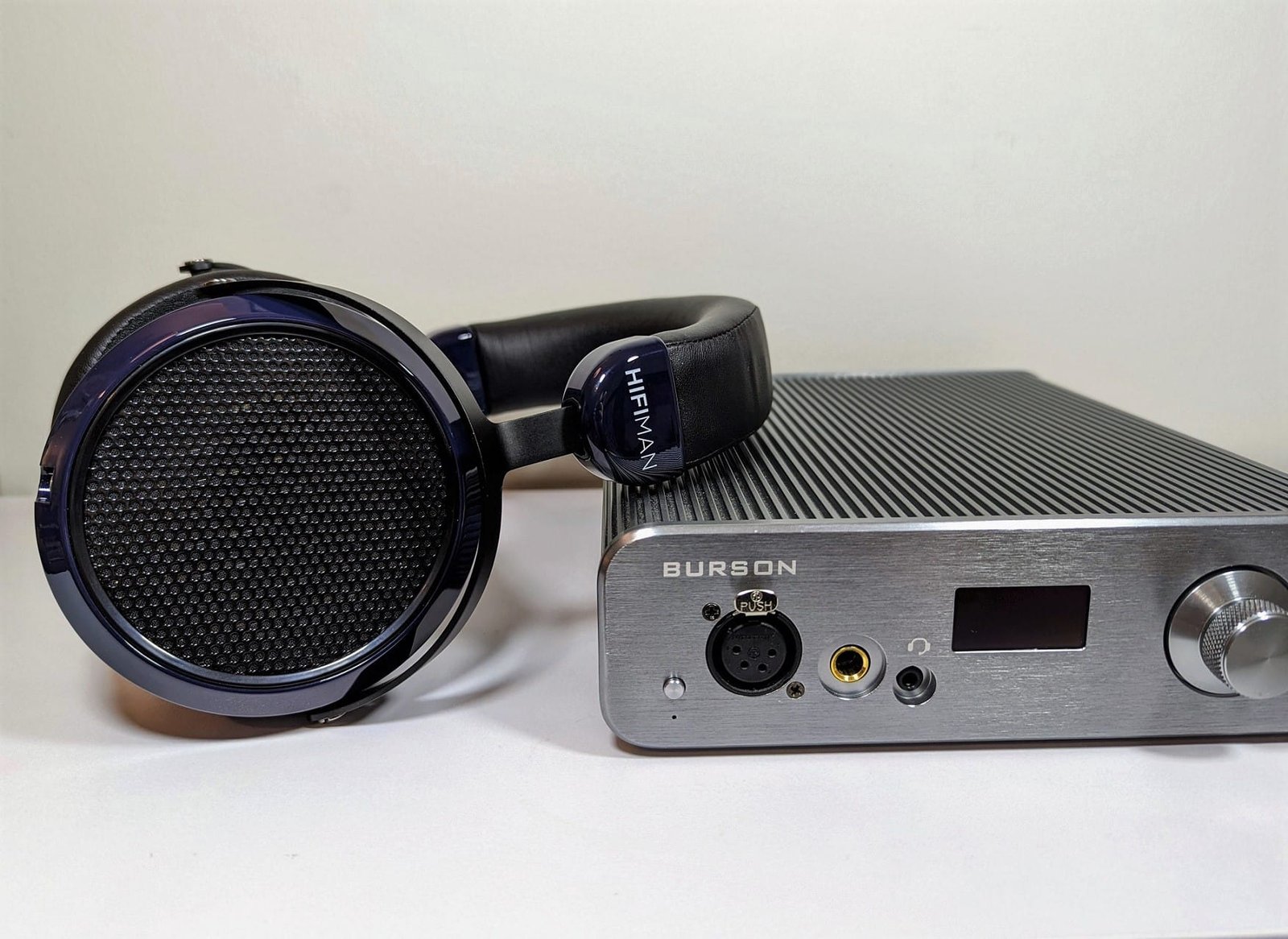
In my opinion, Burson Audio devices look like they were made by a DIY enthusiast in their own garage. The style is fine in its own original way, but not very refined considering the high price level of the devices. As a Class A amplifier, the Soloist 3XP gets really hot, so its entire aluminum chassis is utilized as a heatsink. It is possible to buy feet for the device to enhance cooling, which allows it to be turned on its side into a vertical position – however, in my opinion, there is no real need for this. The Soloist 3XP is even quite slender for a powerful amplifier, as it is not very wide or tall. The device weighs about 1.75 kilograms.
On the front edge of the amplifier, there are both balanced (XLR) and unbalanced (6.35 mm) connectors for headphones. Interestingly, a third option is a 4-pin headphone-microphone combo connector (3.5 mm), if someone wants to connect a headset to the device. In this case, the microphone can be routed through the device to a 3.5 mm connector on the back and from there to a computer. I have not seen a similar solution in any other headphone amplifier over 1000 euros, but it is probably a nice extra feature for gamers. Regular headphones can also be listened to normally from the 3.5 mm connector on the front edge, which adds flexibility to different use cases.
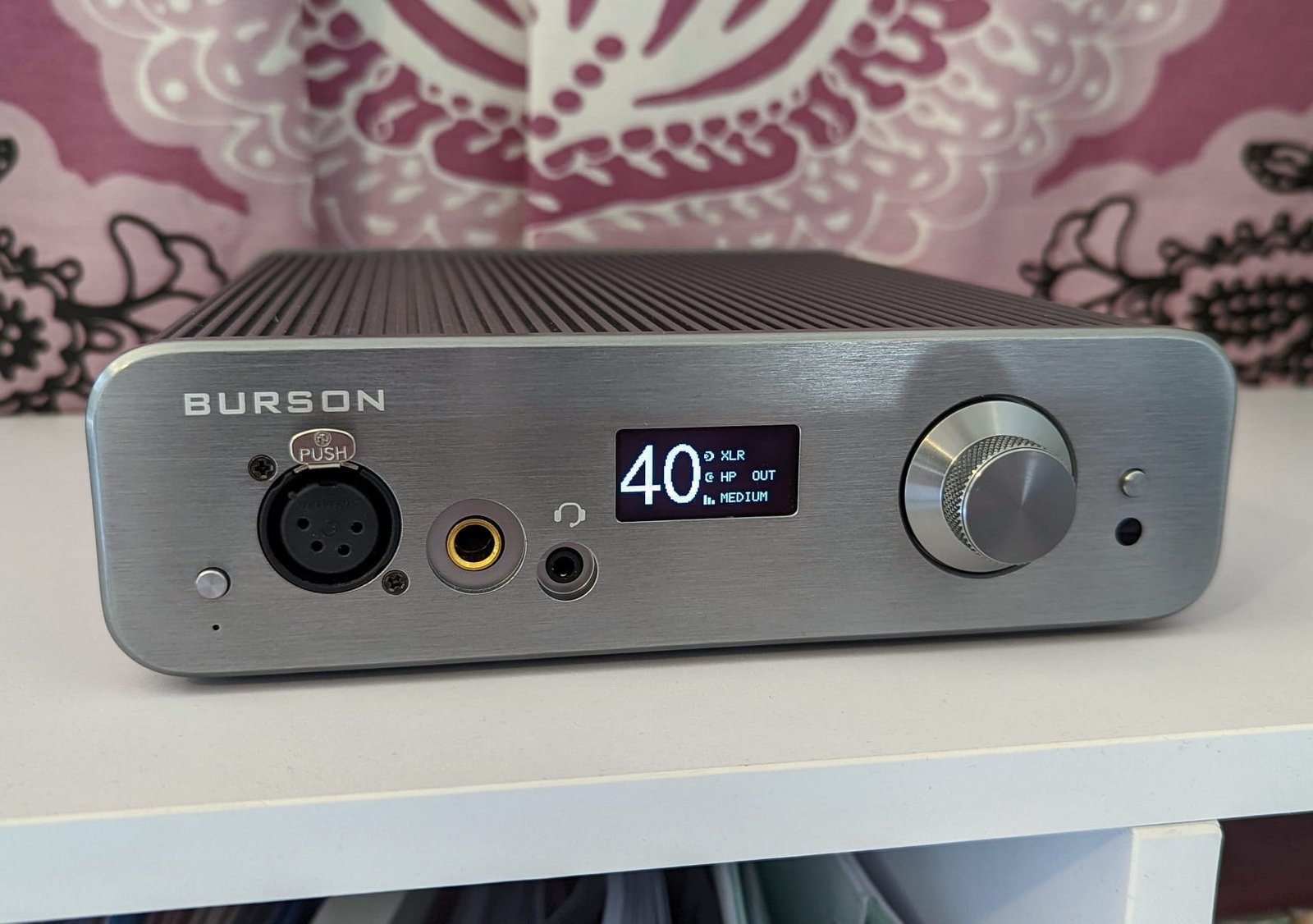
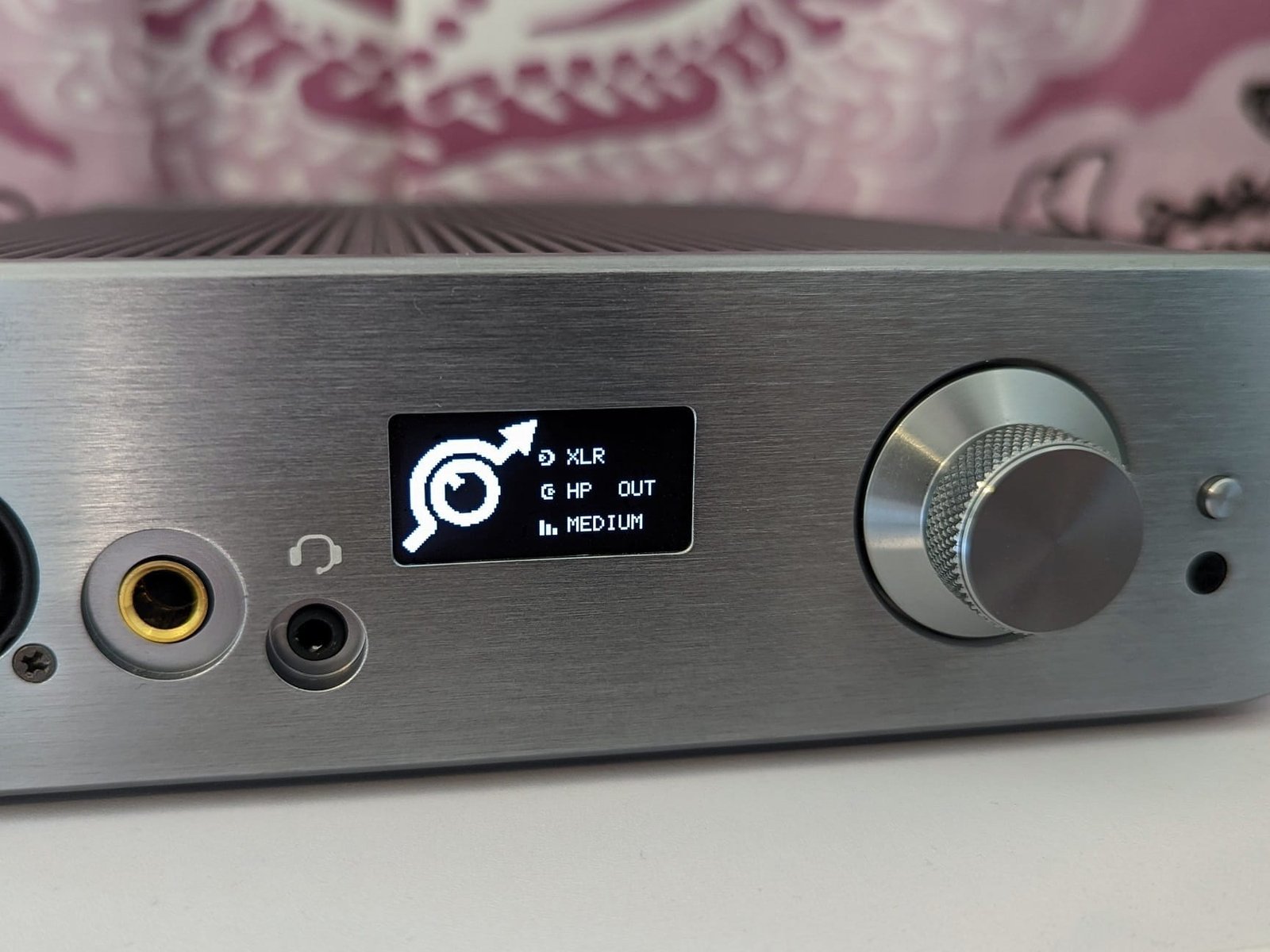
For several years now, I have been using amplifiers whose power button is awkwardly located at the back of the device. For this reason, the power button on the front edge of the Soloist 3XP feels like a luxury. The device also has a small OLED display, which is used for navigating the settings menu in addition to displaying volume and basic information. The menu can be opened using a separate button on the right side. After opening the menu, the volume control acts as the second button.
In the amplifier, the volume is controlled by the highly regarded MUSES72320 chip, which is apparently used in the world's best amplifiers (whatever those may be). The Soloist 3XP's volume control is thus implemented digitally using a stepped rotary encoder. The adjustment range is 0–99, where 1 step increases the volume by 0.5 decibels (at least it should). A positive aspect of digital control is that channel balance is perfect even at low listening volumes. However, the control has a few weaknesses, which I will elaborate on shortly.
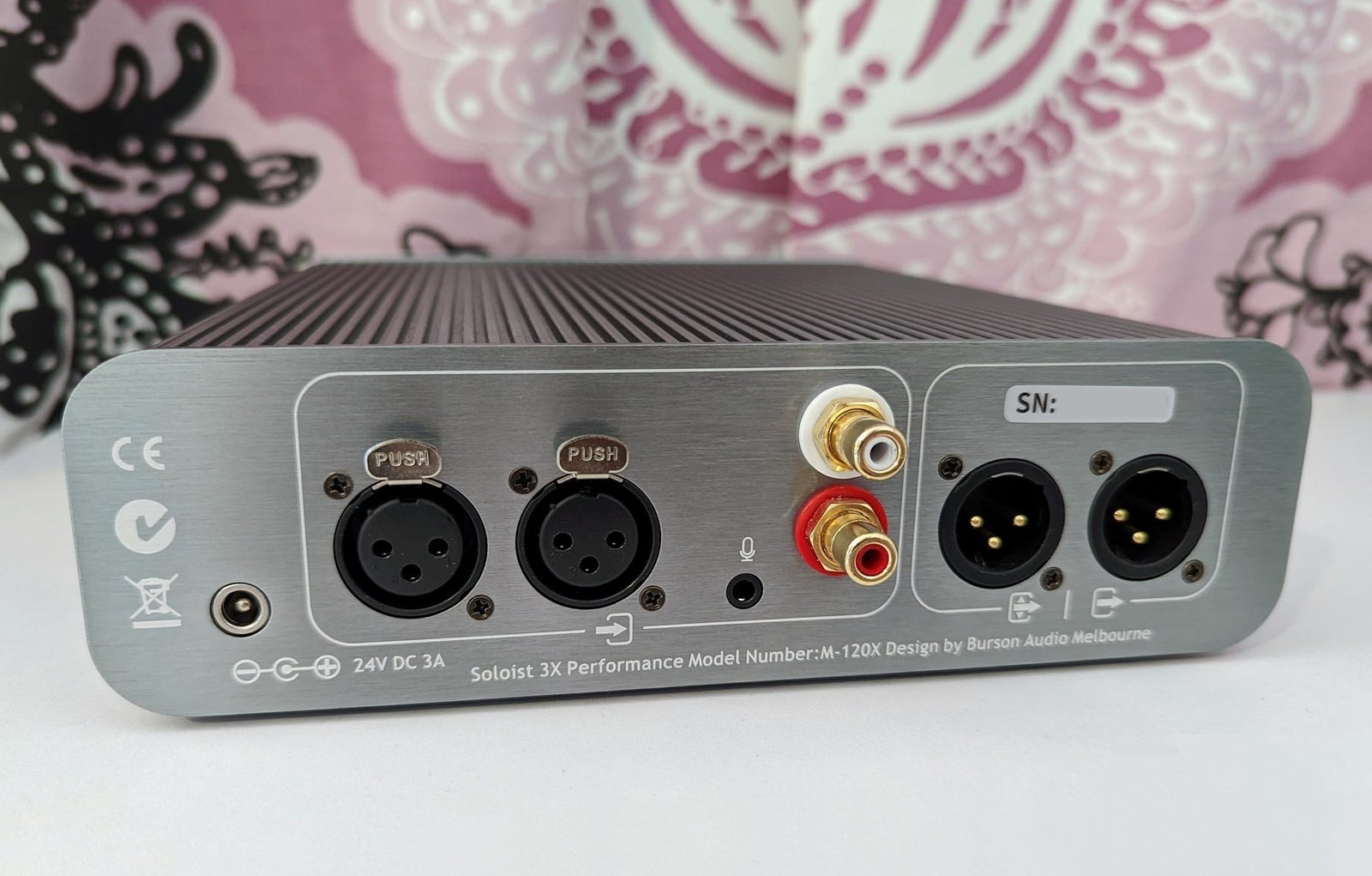
At the back of the amplifier, there are both balanced and unbalanced input connectors, as well as XLR connectors for preamplifier use. Although most of the MCPS power supply is located inside the device, an external 24-volt transformer still needs to be connected to it. This is quite regrettable, but not a real problem. The included transformer, however, is, based on my own experience, absolutely terrible (more on this shortly).
Internals:
If the Soloist 3XP looks quite minimalist from the outside, the view inside is completely different – even impressive. The amplifier is packed so full of components that no extra space is left. The number of components used probably explains part of the device's high price.
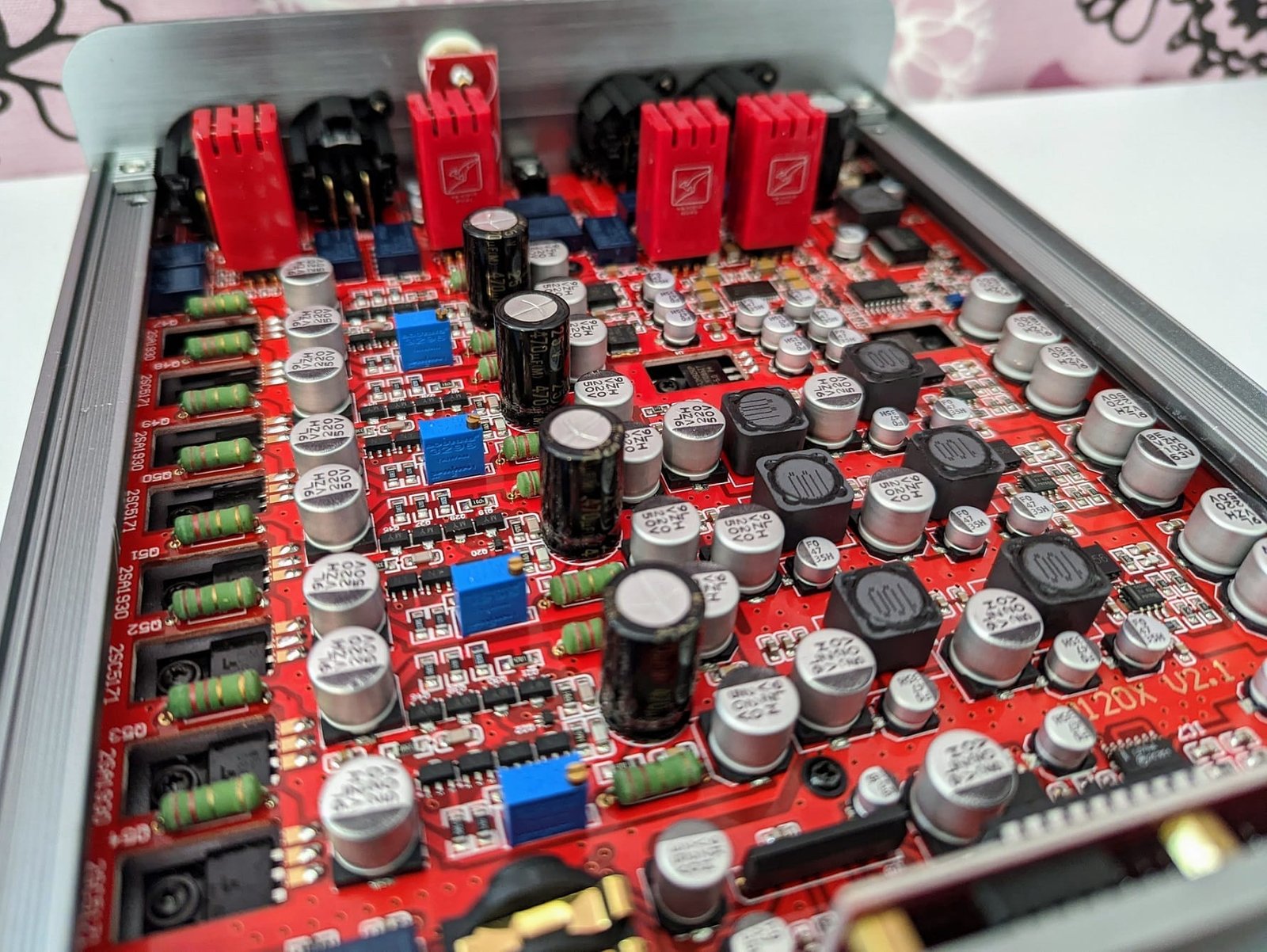
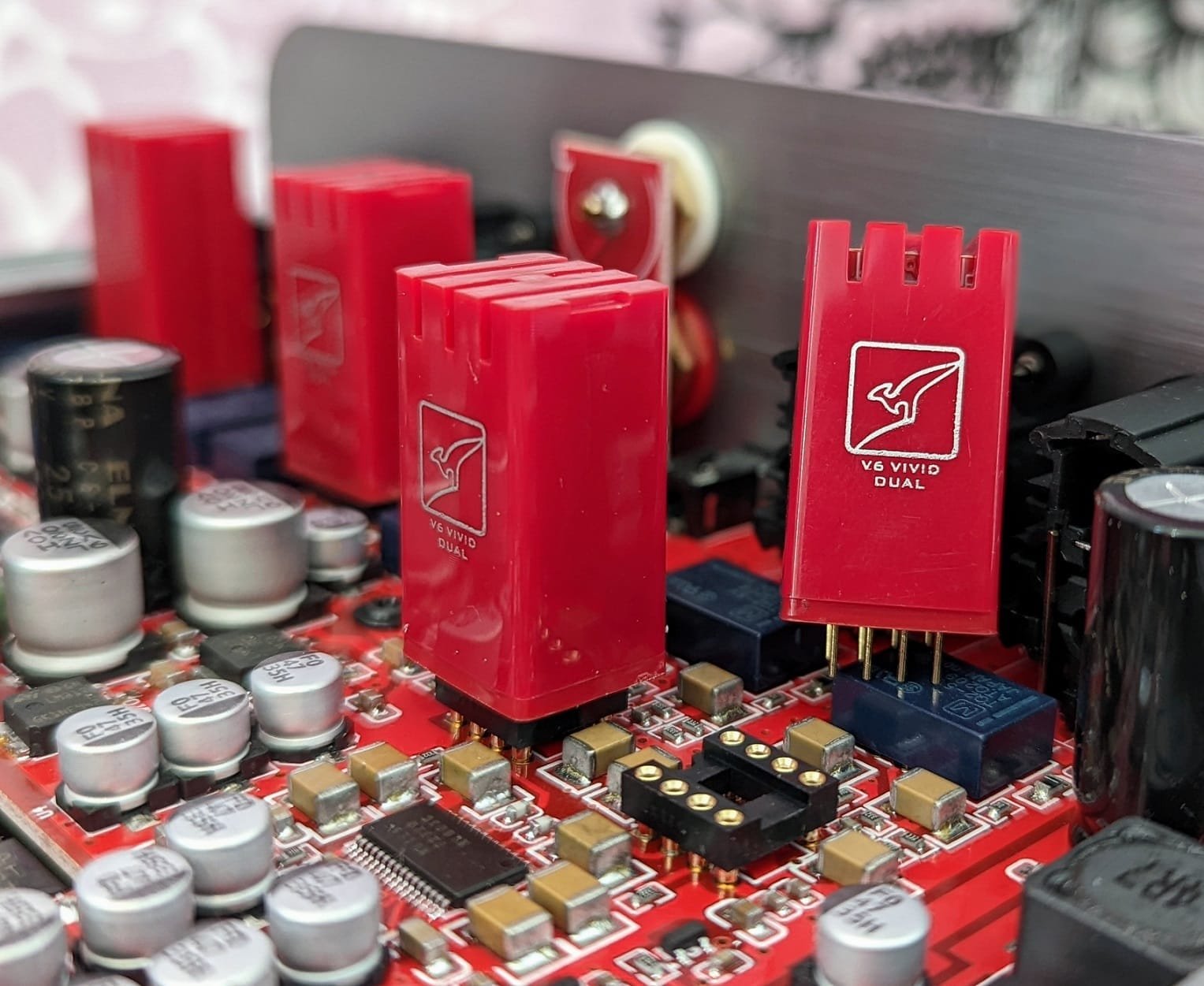
At the rear of the amplifier, there are four Burson Audio V6 Vivid operational amplifiers (op-amps). Two of these control the audio signal input, and the other two control the volume. The op-amps chosen by Burson quite directly affect the amplifier's sound, so it would be possible to modify the sound by replacing them with different ones. However, dual-model op-amps are quite expensive, as, for example, one pair of Burson Audio V6 Classic models costs 140–160 euros. Replacing all four already costs 300 euros. According to user experiences, the biggest change in sound is achieved by replacing the audio input op-amps. Many have also tried op-amps from other manufacturers, such as Sparkos Labs.
Settings found in the menu:
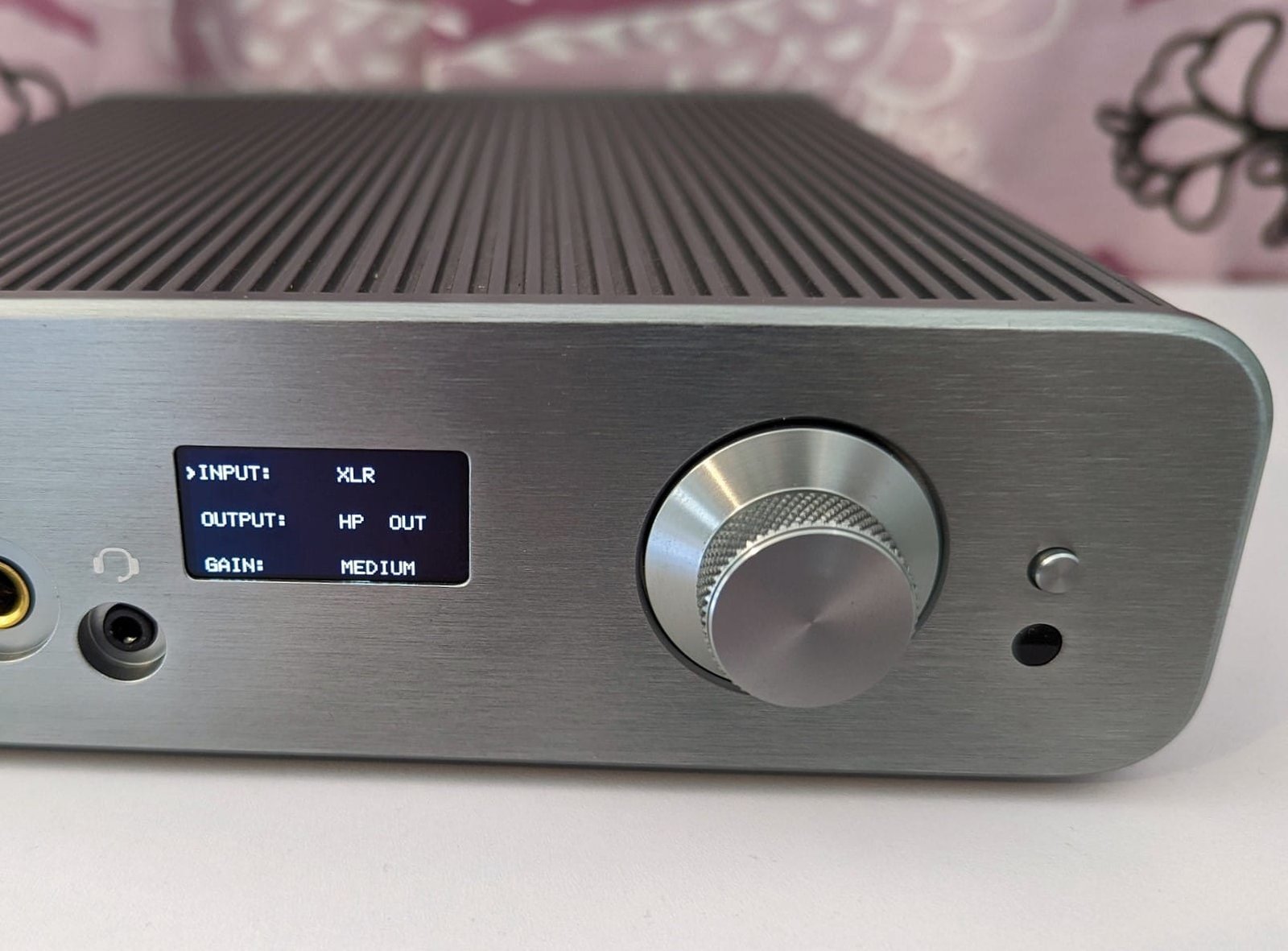
The Soloist 3XP has a simple built-in menu through which the audio input connector (XLR/RCA) and the output connector can be switched between headphone jacks and XLR-out connectors. The amplifier's gain setting also needs to be changed via the menu, which is a bit clumsy, as many other amplifiers have a separate gain button or lever. Furthermore, in the Soloist 3XP's menu, the gain options are illogically arranged as High-Medium-Low, which means that by rotating the volume control counter-clockwise, or backward, from medium-gain, high is selected instead of low, which I would consider most logical.
Since the amplifier is very powerful and high-gain is strong, extreme caution should be exercised with this setting. It is safest to change the gain only when the audio playback is paused from the source. While gain selection does require pressing the amplifier's volume control, the same function also controls the mute function while in the menu. This presents a potential hazard.
If the user has been listening to music, for example, at medium-gain with volume level 50, and then pressed the amplifier's volume button to mute in order to change the gain setting, confirming the new gain setting will also disable the mute function with the same press. In this case, audio playback will resume at the previously set volume level 50. If the user selected low-gain, this is not an issue. However, if high-gain was selected and sensitive headphones were being used, the situation could at least be startling. Medium-gain 50 corresponds to approximately setting 10–15 on high-gain, meaning setting 50 will play EXTREMELY loudly. The possibility of such a hazardous situation is poor design or a bug from Burson Audio, which hopefully has been corrected in new production batches.
Remote Control:
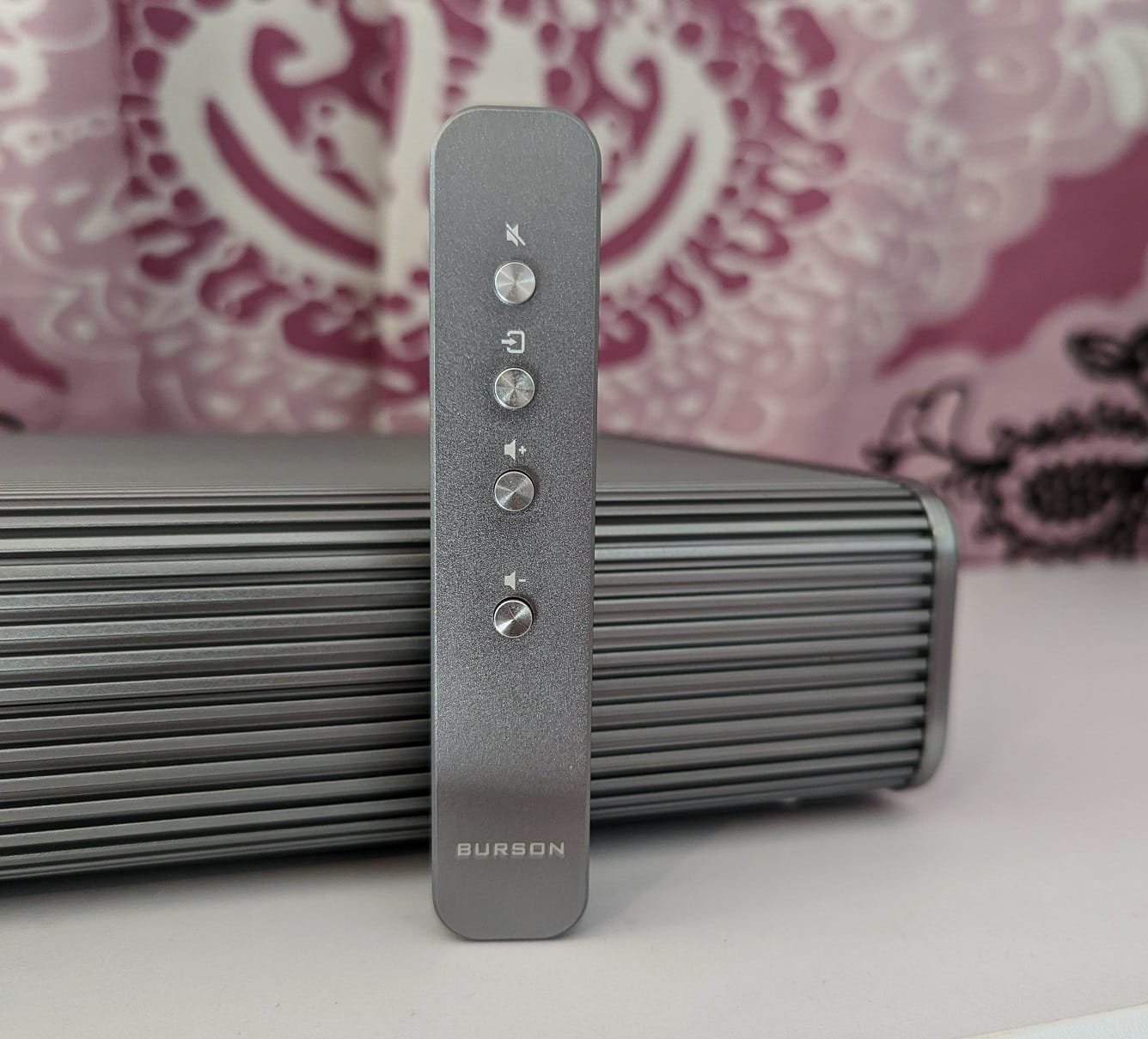
The amplifier also comes with a small metal infrared remote control, which can be used to change the audio input connector and volume. It also has a mute button. The remote control would probably be convenient if the amplifier were located in the living room and also used as a preamplifier. On the other hand, it's also nice to adjust the volume while sitting at a desk.
The positive aspects of the remote control are its sturdy and high-quality construction (the buttons are also metal), as by comparison, almost all Chinese devices come with a cheap plastic controller (a similar one can be seen with the Topping E30's review on). On the negative side, commands made with the Burson remote only register when it is pointed very precisely at the receiver on the front edge of the amplifier. This problem, however, seems to be common with other infrared remote controls as well. The first remote control I received with the amplifier was broken, but the manufacturer sent me a new one free of charge after a short wait.
Power Amplifier Mode:
Although the Soloist 3XP's digital volume control has been described as high-quality and includes two good operational amplifiers, this part of the circuit can also be completely bypassed by setting the amplifier to power amplifier mode. In this mode, only the gain setting is selectable, but otherwise, the device continuously amplifies the signal at full power. Volume control must then be handled, for example, via a D/A converter or a computer – however, I do not recommend relying on, for instance, Windows' volume control, as even one wrong move can cause hearing damage or headphone breakage. Fortunately, power amplifier mode cannot be entered accidentally, as to enter and exit it, the menu button must be pressed and held for 12 seconds. Depending on the headphones, this setting has both positive and negative effects on the sound, so I will discuss its sound quality separately later.
Power supply update
Standard Transformer Issues:
Burson Audio praises its products' Max Current Power Supply (MCPS) as exceptionally quiet because its operating frequency is 170 kHz instead of the traditional power supplies' 50–60 Hz, which the human ear cannot hear (human hearing upper limit 20 kHz). Thanks to this, Burson Audio devices should reveal small audio details better than usual, which might otherwise be buried under noise caused by the power supply. If I hadn't heard the Soloist 3XP or were blindly repeating marketing slogans, MCPS technology would seem excellent. In reality, however, it is unfortunately completely wasted by default in the Soloist 3XP.
The amplifier comes with a generic Chinese 24-volt transformer, which in my case happens to be incredibly noisy. It doesn't matter how quiet the device's internal power supply implementation is if the coils of the external transformer whine so loudly under the table that the sound can be heard across an apartment. The uneven whining also carries through the headphone jack to the headphones. When using open-back headphones, the whining under the table is so loud anyway that it disturbs listening. The sound is comparable to the worst coil whine I've heard from a computer graphics card when the frame rate is in the thousands.
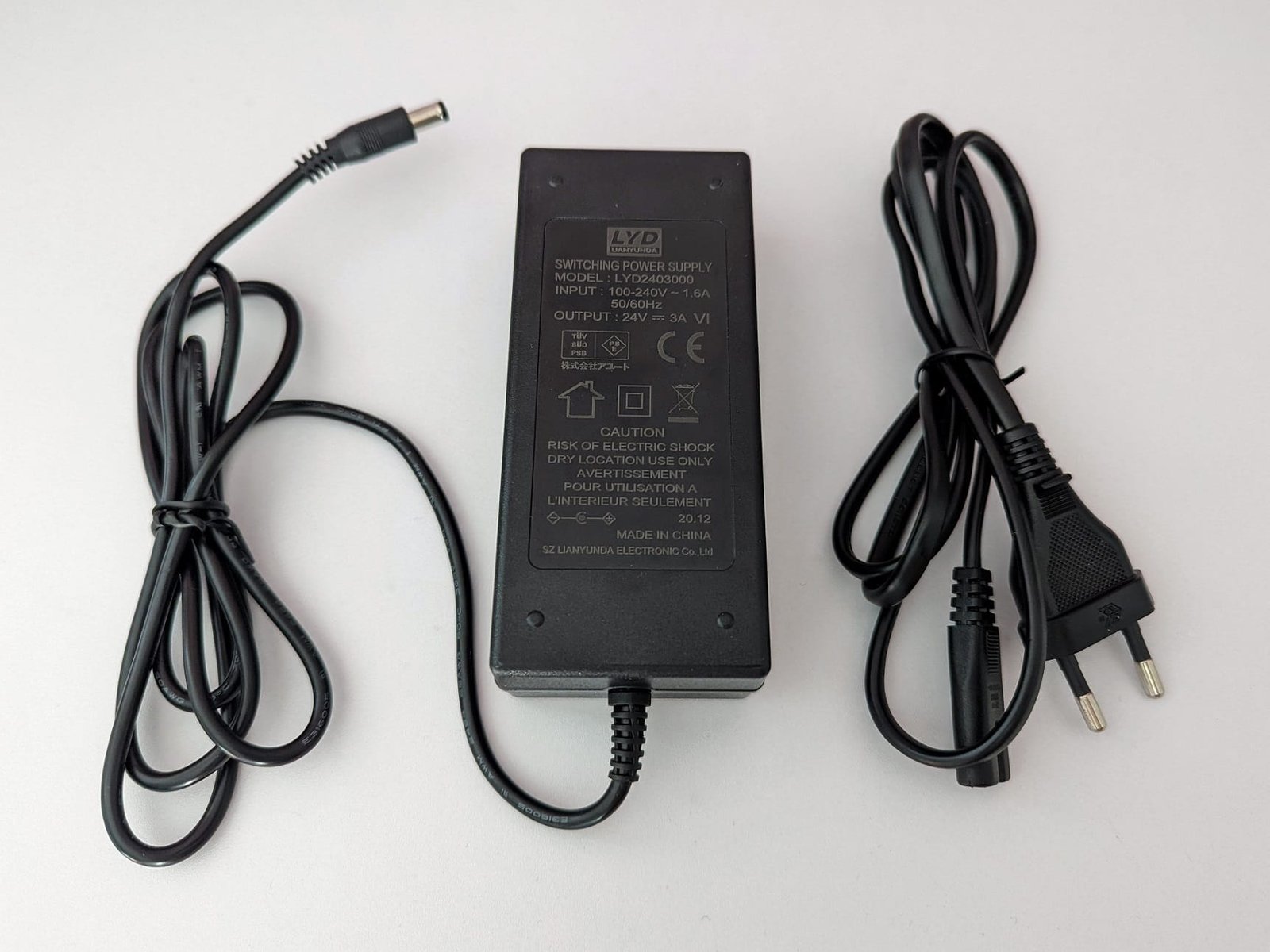
With the included transformer, when listening to music, the treble also sounds strangely harsh and piercingly sharp, so listening to the Soloist 3XP causes some listening fatigue for me. I found out that I am not entirely alone with my experiences, even though no one else has complained about the whining of the transformer coils. However, both the measurements made on the device and listening observations support the transformer's poor quality and noisiness, even if it doesn't whine as badly for everyone.
Super Charger 3:
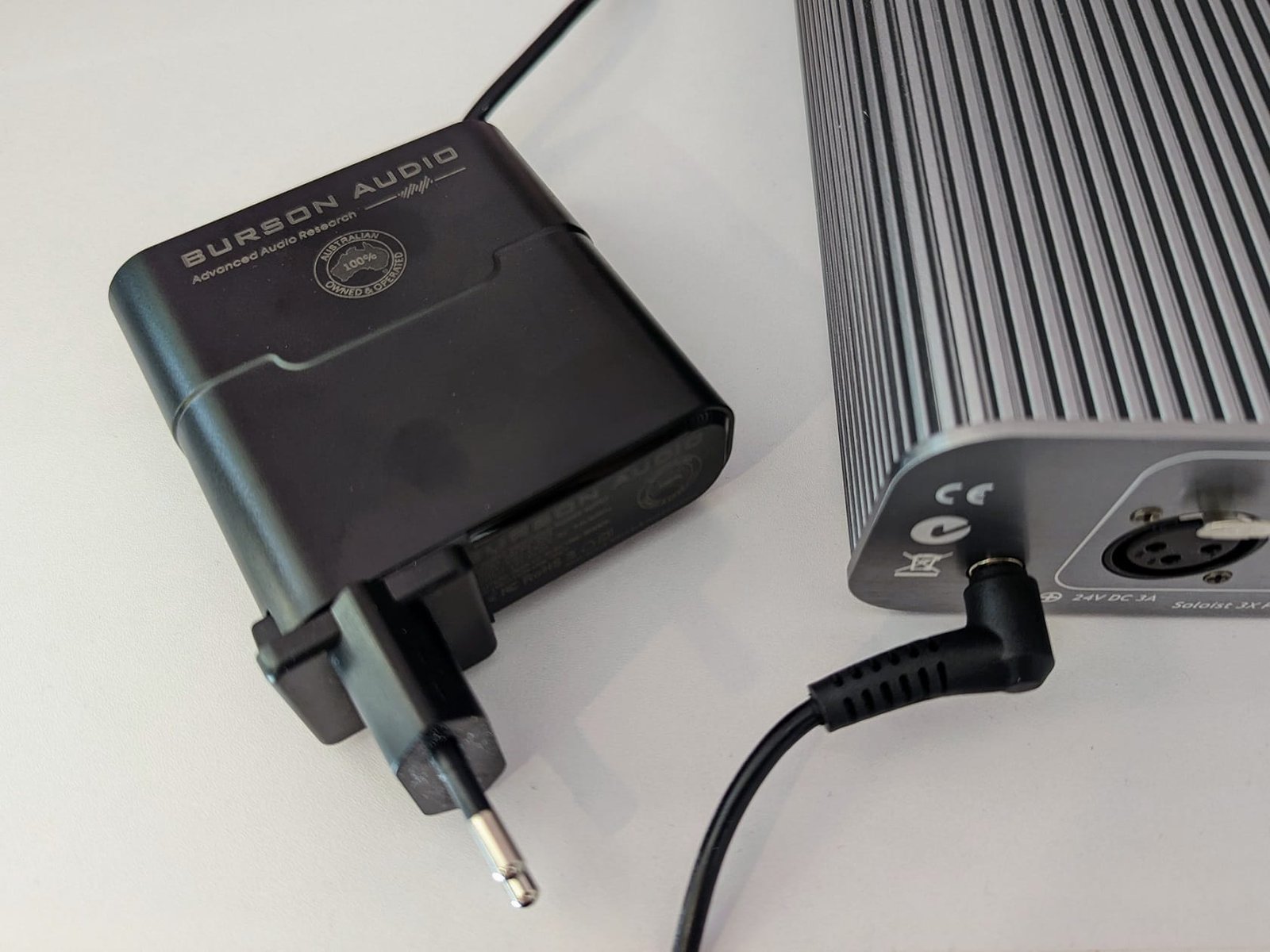
Burson Audio sells a Super Charger 3 transformer, priced at about 280 euros, separately for its MCPS-technology devices, which is promised, surprise surprise, to be even quieter and more detailed at the micro-level. With the standard transformer being poor, it frankly leaves a bad taste in the mouth. However, since I happened to acquire the amplifier around Black Friday, the Super Charger was conveniently 50 percent off. I felt the amplifier itself had enough potential, so I was willing to invest another 140 euros in it.
This was ultimately worthwhile, because the Super Charger is completely silent in use, and it also makes the treble sound ”normal” and un-fatiguing. In my opinion, a better transformer should be included in the sales package, because by default, the Soloist 3XP, at least in my case, is a very flawed device for its high price.
Other usage-related notes
Immense power:
The transformer I bought separately makes the amplifier generally usable, but there are still a few peculiarities associated with its use. On the positive side, almost endless power is available through the balanced connector, so the Soloist 3XP is excellently suited for difficult-to-drive headphones, such as Hifiman's HE-6 models and Susvara, as well as Abyss 1266. In my opinion, the amplifier was primarily designed for such use. On the other hand, for more moderate listening volumes, even lower power figures would suffice. The manufacturer states the maximum power output for the balanced output as, for example, 4 watts for 32-ohm headphones, while 0.3 watts are promised for 300-ohm headphones. However, in AudioScienceReview's test, the actual power figures were 5.4 watts for 32 ohms and a whopping 2.3 watts for 300 ohms (linkki testiin).
Background noise at different gain settings:
The same test reveals that the Soloist 3XP measures mediocrely, if not poorly. Especially the device's background noise is rather high. I actually knew this even without seeing the measurement results, as I have found the noise to be clearly audible if sensitive headphones are connected to the device. Low-gain usually gets rid of the worst noise, but the amplifier is still not suitable for in-ear headphones at all, in my opinion. Larger headphones can generally be listened to with medium-gain if their sensitivity is below 100 dB/mW. High-gain, on the other hand, is largely unusable due to strong hissing, except with more difficult-to-drive planar headphones. For example, the Hifiman HE6se V2 (link to review) benefited from the highest gain.
There is quite a large difference between the settings, as with low-gain, the volume often has to be adjusted almost to maximum (85–99) when listening. For the same volume, a setting of 35–55 is sufficient with medium-gain, while with high-gain, it usually stays between 5–15. I was able to listen to the HE6se V2 with high-gain at a loud volume beyond 40, so there is still plenty of headroom for it.
Volume control issues:
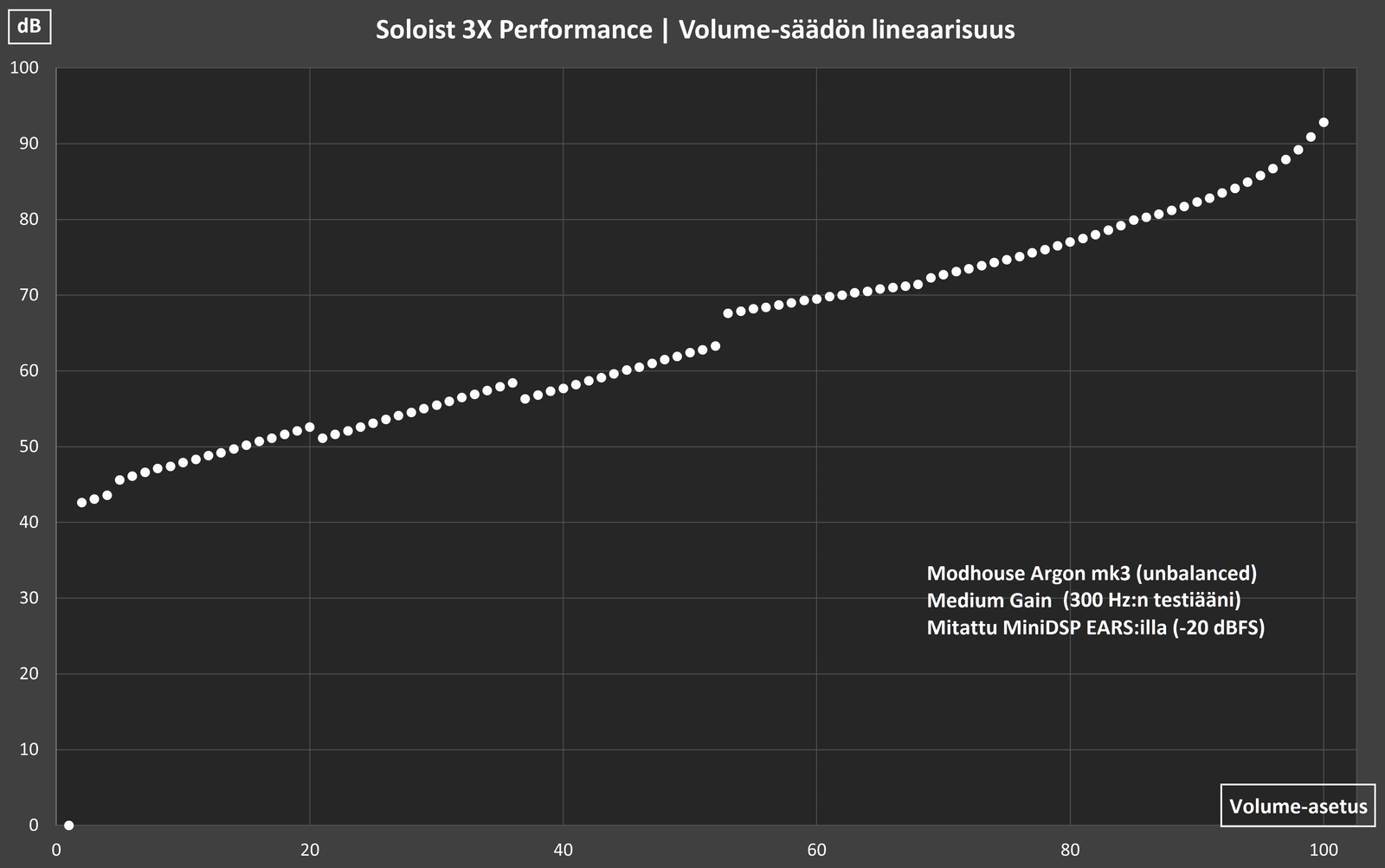
Although the device's volume control is excellent from the perspective of channel balance, using it is quite annoying. The volume changes very slowly, as the digital knob has to be rotated about 25 times to go from setting 0 to setting 99. With the remote control, holding the button down for the same takes about 11 seconds, so larger adjustments are very slow, for example, when changing the gain setting or headphones. Furthermore, the volume control is not entirely flawless in its accuracy, as some individual rotations change the volume by one step in the opposite direction.
The most annoying thing about the entire implementation, however, is that the volume does not change linearly, but the adjustment is divided into several sections with jumps between them. For example, when the section changes from 20 onwards, the volume at settings 21–24 is lower than at setting 20. The jump from 51 to 52, on the other hand, increases the volume by several decibels instead of 0.5 decibels.
The latter is problematic because, especially when listening through unbalanced connectors, the optimal volume for me would be precisely between settings 51 and 52. Thus, I have to listen to headphones at either a slightly too quiet or too loud volume. During listening, a jump of several decibels also sounds unpleasant and reminds me every time of a defect in the amplifier. Burson Audio has apparently fixed the bugs related to the control in newer production batches, but this should be taken into account when buying a used device.
High DC offset before the device warms up:
The Soloist 3XP has also been measured to have a significantly higher than usual DC offset during the first 10–15 minutes after the device is turned on (a small amount of direct current leaks into the audio signal). For this reason, the device should be on for at least 10 minutes before headphones are connected to it. Otherwise, a small pop might be heard from the headphones during the connection phase. I am not entirely sure about the problem's effect on sound quality, but according to Burson Audio, a relatively high DC offset should not break headphones. Be that as it may, there would be plenty of room for improvement in the design of the Soloist 3XP.
Sound quality
Notes on sound quality evaluation
- Headphones used: all reviewed so far
- Super Charger 3 transformer in use
- Listening chain: Tidal/FLAC files -> Schiit Audio Bifrost 2 -> Burson Audio Soloist 3X Performance
I only evaluate the device with a better transformer, as I never want to hear the included alternative again. The Soloist 3XP might be usable for some as is, but I still recommend that those considering purchasing the device include the Super Charger in their budget. So far, based on the review, most have probably formed a negative impression of the amplifier, so fortunately, I have more pleasant things to say about the sound quality.
Thoughts on sound quality
Many use a so-called reference amplifier that measures very well and is subjectively evaluated as being as uncolored and, in a certain way, soulless as possible. In my opinion, this is the correct solution when critically evaluated, but I wouldn't personally want to listen to my headphones all day with such a device or listening chain. For this reason, the Soloist 3XP has been a suitable device for me for both everyday listening and more detailed evaluation of headphones.
The amplifier's sound does not differ much from what is called neutral, meaning the device does not actually make headphones sound different from what they are. The amplifier's output impedance is also low, so it does not affect the headphones' frequency response. Most transistor amplifiers, in my opinion, sound clear, controlled, and somewhat sharp. Accuracy and separation are also found in the Soloist 3XP's sound, but it rounds and relaxes the reproduction just enough for my taste, so I find myself immersing in listening better than usual, and the device's existence can be forgotten even despite a slight background hiss.
Music flows forward very naturally, and the sound lacks the typical tightness of transistor amplifiers. Listening with the amplifier is simply inexplicably appealing because the result is very credible, especially with the Schiit Bifrost 2 DAC. Singers, in particular, sound very authentic, and the soundstage is pleasantly spacious and structured. The organic nature of the presentation resembles tube amplifiers, which is probably due, at least in part, to the Soloist 3XP's relatively high distortion values. Although I cannot hear the distortion, it likely softens the reproduction. Fortunately, this does not seem to significantly detract from the separation of sounds.
Many have described Burson Audio's V6 Vivid op-amps as somewhat V-shaped, meaning they emphasize bass and treble. The bass undeniably gains a nice body and sound pressure, and the treble is memorable for its airiness – in fact, in poorly recorded music, there might be too much sparkle for some tastes at times. Music always sounds energetic and easy to listen to. The overall presentation also remains clear because the mid-frequencies are not reproduced as particularly thick, but rather open. I like that the presentation is strongly evocative.
If someone misses a warmer and more colored sound from the Soloist 3XP, the manufacturer's separately sold V6 Classic op-amps apparently sound thicker. They might be a fun alternative to the V6 Vivids that come with the device. However, I like the presentation as it is, so I have no need to change the Soloist 3XP, especially since changing the op-amps would cost at least an additional 150 euros.
Headphone and device pairing
In my opinion, the best indicator of the amplifier's sufficiently balanced sound is that it has suited all the headphones I have tested so far. No headphones have sounded strange or bad because of the amplifier, so I have been able to focus on whatever I was listening to. Thus, I cannot really recommend the amplifier for any specific headphones; rather, it is truly versatile. Especially difficult-to-drive planar headphones have benefited most from the Soloist 3XP compared to my other amplifiers.
The device also highlights the differences between various D/A converters well, and it is not particularly picky about pairings, as the amplifier's own sound is not too biased in any direction. For example, both the brighter Soncoz SGD1 (link to review) that warmer Schiit Audio Bifrost 2 (link to review) have suited the Soloist 3XP well. The amplifier adapts well to various use cases, so its existence is easy to forget in that sense too.
Power amplifier mode changes
Using the Soloist 3XP in power amplifier mode offers both objective and subjective changes to the sound. Firstly, the amplifier's distortion values and background noise have been measured to decrease, so using this mode would be justified if the volume can be adjusted via a D/A converter or preamplifier. As a headphone power amplifier, the amplifier is so powerful that, for example, with medium gain, Windows volume usually has to be kept at a setting of 5–20. This leaves little room for adjustment, and use is not otherwise safe in this way if some sound-playing application suddenly decides to use 100 percent volume.
I'm not sure if it's due to lower distortion values, bypassing the volume circuit, or the amplifier's 100 percent gain power, but using the power amplifier mode eliminates the relaxed nature of the reproduction, if that bothers some. The sound becomes even more precise and controlled. The presentation style more closely resembles a traditional modern transistor amplifier in its sharpness. This is beneficial with some soft-sounding headphones, while slightly brighter headphone models, such as the Sennheiser HD800 (link to review), sound better in my opinion when using the amplifier normally. The end result is somewhat difficult to predict in advance, so it's definitely worth trying headphones with both methods.
The clearest change in favor of the power amplifier mode occurs in bass control. For example, the emphasized mid-bass of closed ZMF models remains tightly controlled, which clarifies the reproduction of mid-frequencies. Especially the Verite Closed with soft and resonant wooden cups (link to review) sounds slightly better in power amplifier mode. The same applies to the bass-heavy Modhouse Argon (link to review). Conversely, the clearer-sounding Verite Open (link to review) sounds too thin in my opinion, so I prefer it when listened to through the amplifier's own volume circuit.
Comparisons
Burson Audio Soloist 3X Performance vs. RebelAmp
Prices: 1700 € vs. 700 € (price increased and dollar exchange rate strengthened)
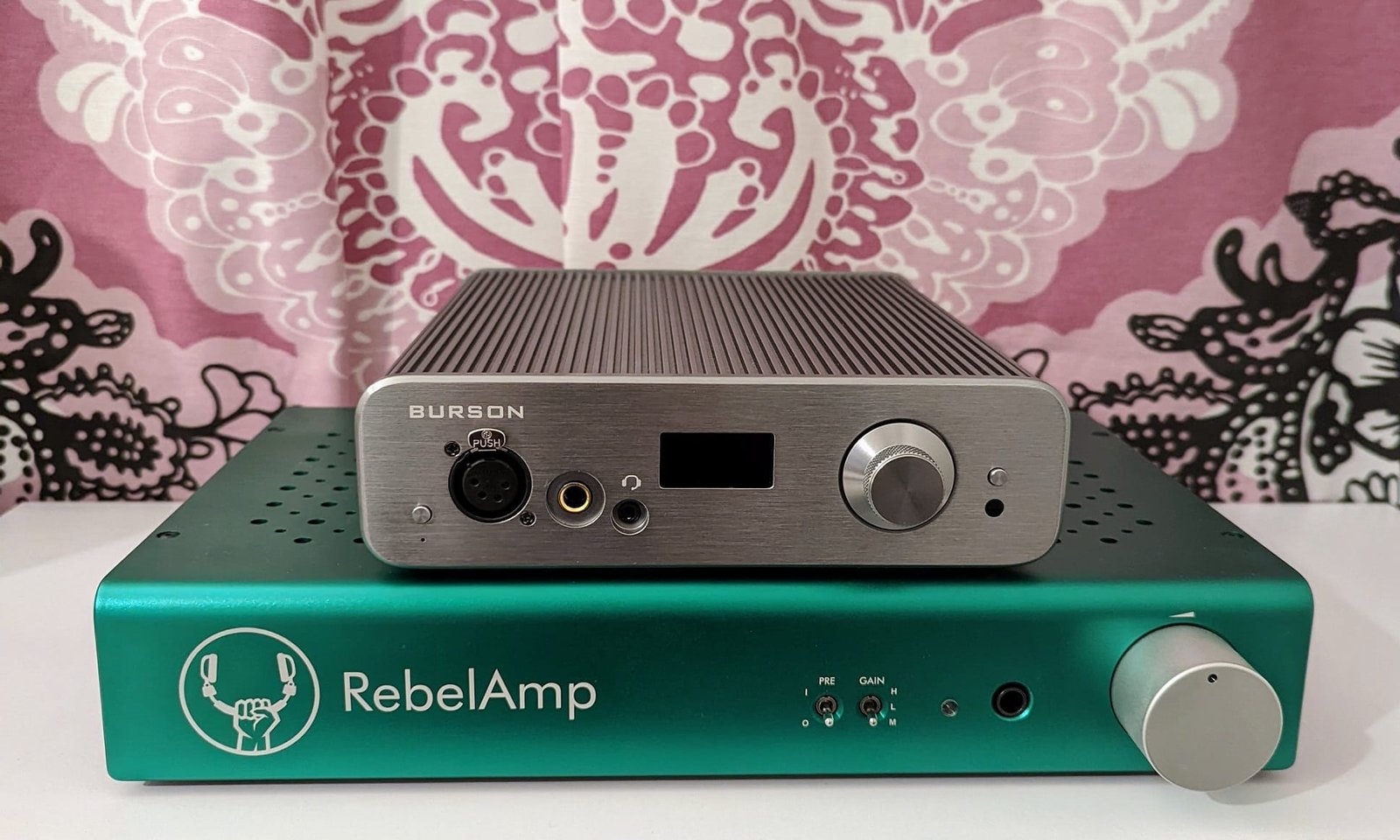
My previously written comparison can be found in RebelAmp's review.
Burson Audio Soloist 3X Performance vs. Cayin IHA-6
Prices: 1700 € vs. 850 €

I recently bought the Cayin IHA-6 amplifier on impulse, which, like the Soloist 3XP, is known for its high power output (balanced 7 W / 32 ohm). The IHA-6 does not have a digital volume control, remote control, or the option to swap op-amps, but it offers some interesting features, such as three different output impedances (0.3 / 10 / 120 ohms) and a high current mode (Class A).
In high current mode, the amplifier, as its name suggests, delivers more current, for example, to low-impedance planar headphones. However, activating this mode simultaneously reduces the maximum output power (balanced 5 W / 32 ohm). I will write about the IHA-6 in more detail another time, but at this stage, I will make a superficial sound quality comparison with the Soloist 3XP. I have only owned the IHA-6 for a short time, so my observations should be considered as initial impressions.
I evaluated both amplifiers only through balanced connections, as the IHA-6's output impedance is thus comparable (0.3 ohm vs. 0.5 ohm). I used a Schiit Bifrost 2 as the D/A converter, and I matched the volume levels of the devices using MiniDSP EARS.
Differences in sound
Both amplifiers sound excellent to me and have their own advantages. The Soloist 3XP is significantly more realistic of the two, which becomes immediately apparent, for example, when listening to a vocalist. The mid-frequencies on the IHA-6 remain more distant, and they do not evoke as strong emotions in me. The Soloist 3XP generally sounds quite relaxed, whereas the IHA-6's upper mid-frequencies and lower treble are reproduced more aggressively.
The IHA-6 directs attention more towards observing details during listening, while the Soloist 3XP gives the listener more space to immerse themselves in the overall experience. This extra space helps in sound separation, because the IHA-6's more aggressive presentation style makes its soundstage narrower, even though, for example, a vocalist is positioned further in the sound field than with the Soloist 3XP.
The advantage of the IHA-6 is a more controlled and tightly impactful bass reproduction. When combined with a more energetic reproduction of upper mid-frequencies, music sounds faster and more dynamic compared to the Soloist 3XP. Especially in upbeat music, there's a nice drive, whereas the Soloist 3XP sounds softer, albeit fuller. The reproduction of mid-frequencies is, in my opinion, always more credible with the Burson, especially when listening to ”real” instruments.
Regarding the treble, the situation is interesting because the IHA-6 has a brighter lower treble and the Soloist 3XP has a more shimmering upper treble. Both amplifiers thus have their own kind of brightness, but generally, the IHA-6 sounds sharper and the Soloist 3XP airier. This largely explains why the Burson's soundstage feels more spacious, even though its mid-frequency reproduction is more intimate. Although the background of the IHA-6's reproduction is darker due to the non-existent background noise, with the Soloist 3XP, there is more empty space around individual sounds and instruments. The amplifier also separates, for example, the ringing of drum cymbals more capably than the IHA-6.
Conclusions of a quick comparison
In my opinion, when comparing balanced connectors, the Soloist 3XP sounds like a better amplifier, but not 100 percent better, as the price difference between the two would suggest. The Burson Audio amplifier is above all more realistic and thus more engaging, but there is nothing to complain about the IHA-6 as a significantly more affordable device. Its slightly sharper and more controlled sound may even please many more than the Soloist 3XP's more rounded and relaxed presentation style.
The end result can also be adjusted in both devices to be more similar to each other. The Soloist 3XP can be made edgier by using it in power amplifier mode, while the IHA-6 can produce a more relaxed and rounded sound through unbalanced connectors. In addition, the high current mode, which switches the amplifier to Class A mode, seems to slightly warm up the sound, so I still have plenty to test with the IHA-6. In any case, the amplifier sounds a bit more ”normal” than the Soloist 3XP, so I will probably use it as one of the amplifiers in my headphone reviews in the future.
Summary
In my opinion, the Soloist 3X Performance, especially when bought used for around 1000 euros, is a good purchase for those who want a pleasant and realistic-sounding solid-state amplifier with high power output. The amplifier is also versatile and, despite its engaging presentation style, sounds normal enough not to color the end result too much. However, achieving a good result required, at least for me, buying a better power supply.
The Soloist 3XP is best suited for planar headphones, as they seem to be quite immune to background noise due to their lower-than-average sensitivity. If the headphone collection only contains sensitive dynamic headphones, the device's background noise can become a problem.
Although I am very satisfied with the amplifier's sound quality, I would not necessarily buy the device again due to several small flaws, as it feels like an unfinished product. Although the included power supply is probably not as terrible for everyone as it was for me, and the manufacturer has, based on what I've read, fine-tuned the volume control's operation, there is still plenty of room for improvement. One learns to live with most flaws quite painlessly, but the use of an expensive product should, in my opinion, be much smoother. Product development seems to have been left unfinished in a certain way, which is quite strange.
However, when listening to music with the Soloist 3XP, I can never be angry with it, which ultimately makes the situation quite contradictory. If a potential buyer candidate values sound quality and high power output the most, I can recommend the amplifier. If, on the other hand, the usability of the device and measurement results are equally important, recommending the Soloist 3XP is very difficult. The good thing, however, is that no one is forced to buy the device, as the market currently offers a wide variety of amplifier options in several different price ranges. In my opinion, Burson Audio is an interesting manufacturer in any case, because it does many things differently from its competitors.
Pros and cons:
+ Enormous power
+ The sound presentation is both energetic and relaxed
+ Pleasantly full bass reproduction
+ Separating and airy upper treble
+ Clear and emotionally evocative mid-frequencies
+ Perfect channel balance at all listening volumes
+ Remote control included
+ Sturdy construction
+ Possibility to change operational amplifiers
+ Interesting power amplifier mode
+/- By default, the bass reproduces a bit slowly, and not so tightly impactful. This may not suit all headphones, but fortunately, bass reproduction is more controlled in power amplifier mode
– The upper treble can sometimes be overly sparkling for some tastes
– Quite strong background noise
– Several minor issues that interfere with use
– Poorly functioning volume control
– Comes with a poor and noisy transformer
– Rather high DC offset
– XLR connectors are left unnamed
– Heats up hot and consumes a lot of electricity
– The price of the device is ridiculously high in Europe
 EN
EN  FI
FI
Hi Is there going to be an SPL Phonitor xe review?
Hi,
is not currently in sight, unless someone lends one for testing in the future. Devices move slower than headphones in the used product market, so buying a single more expensive amplifier for reviewing is unfortunately not yet possible nowadays.
Hello!
I might write something about the Phonitor 2 if only the schedules allow. In any case, it will go into next year. The Phonitor 2 does not have an XLR headphone connection but otherwise, to my understanding, it is exactly the same device as the Phonitor X, which in turn is the same as the XE, with the difference that the XE cannot be used as a preamplifier.