Author: Sword of Damocles
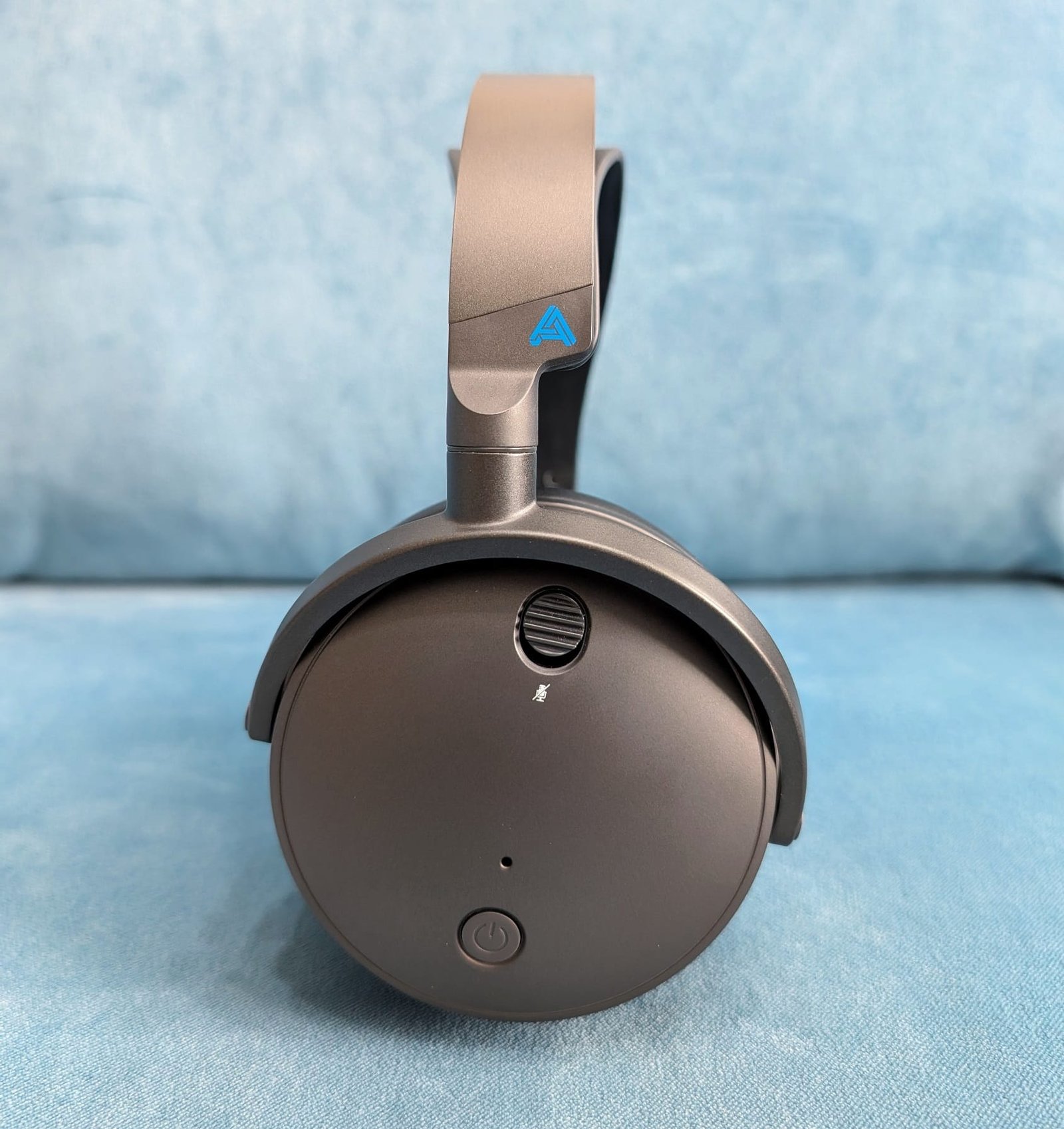
Table of Contents:
Information:
- Release year: 2023
- Manufacturing country: Elements in the USA / headphones in Vietnam
- Price: 399/429 € (Playstation version/Xbox version)
- Type: Closed, over-ear
- Planar drivers (Fluxor magnet array (N50), Ultra-Thin Uniforce diaphragm and Fazor technology)
- Audio connections: Ultra-Low Latency Wireless (24-bit/96kHz), Bluetooth 5.3, USB-C and 3.5 mm
- Bluetooth codecs: LC3, LC3plus, LDAC, AAC and SBC
- Compatibility: Windows/Mac, Xbox, Playstation, Switch, iOS and Android
- Charging port: USB-C
- Battery size: 1800 mAh
- Battery life: 80 h (wireless use)
- Charging time: 2 h (supports fast charging: 20 minutes for ~20 hours of use)
- Noise cancellation: No
- Features: Google Fast Pair, Multipoint, 3D audio, boom microphone with AI noise cancellation and app (for multiple platforms) with equalizer and other settings
- Weight: 490 g
- Accessories: USB-C cable, wireless USB transmitter, USB-C to USB-A adapter cable, headphone cable (3.5–3.5 mm) and Dolby Atmos license (Xbox version only)
Review sample: Self-purchased product
The title of the article will directly tell you what level of headphone model I am reviewing this time. I assume, however, that some will scoff when I reveal that the Audeze Maxwell (link to the manufacturer's product page) despite its versatility and excellent sound quality, is primarily a wireless gaming headset. It is even sold separately as Playstation- and Xbox-compatible versions, so nothing directly indicates that it would also be a good hi-fi headphone. However, if the Maxwell is approached with an open mind and one is willing to invest around 400 euros in it, it is practically impossible to get a better closed-back headphone for the same amount of money. This is what I intend to prove.
The Playstation and Xbox versions of the headphones function identically when used with, for example, a computer or mobile device. Without either of the aforementioned game consoles, it is advisable to buy the version that is currently sold cheaper. The Xbox version comes with a Dolby Atmos license (not needed with Playstation), so an extra 30 euros must be paid for it. Thus, the Playstation version is usually slightly cheaper. However, if the headphones are intended for wireless use with either game console, it is advisable to buy the correct version, even though Audeze states they are partially compatible with the other console as well.
Audeze, originally focused on hi-fi and studio headphones, has been striving for several years to build its reputation as a gaming headphone manufacturer, as evidenced by the company's acquisition by Sony and specifically its Interactive Entertainment division, responsible for the Playstation ecosystem, in 2023. However, the Maxwell was released in the same year before this acquisition, making it entirely Audeze's own product. The later released MM-100 studio headphone model (our review) is based on the same basic structure.
Packaging and accessories
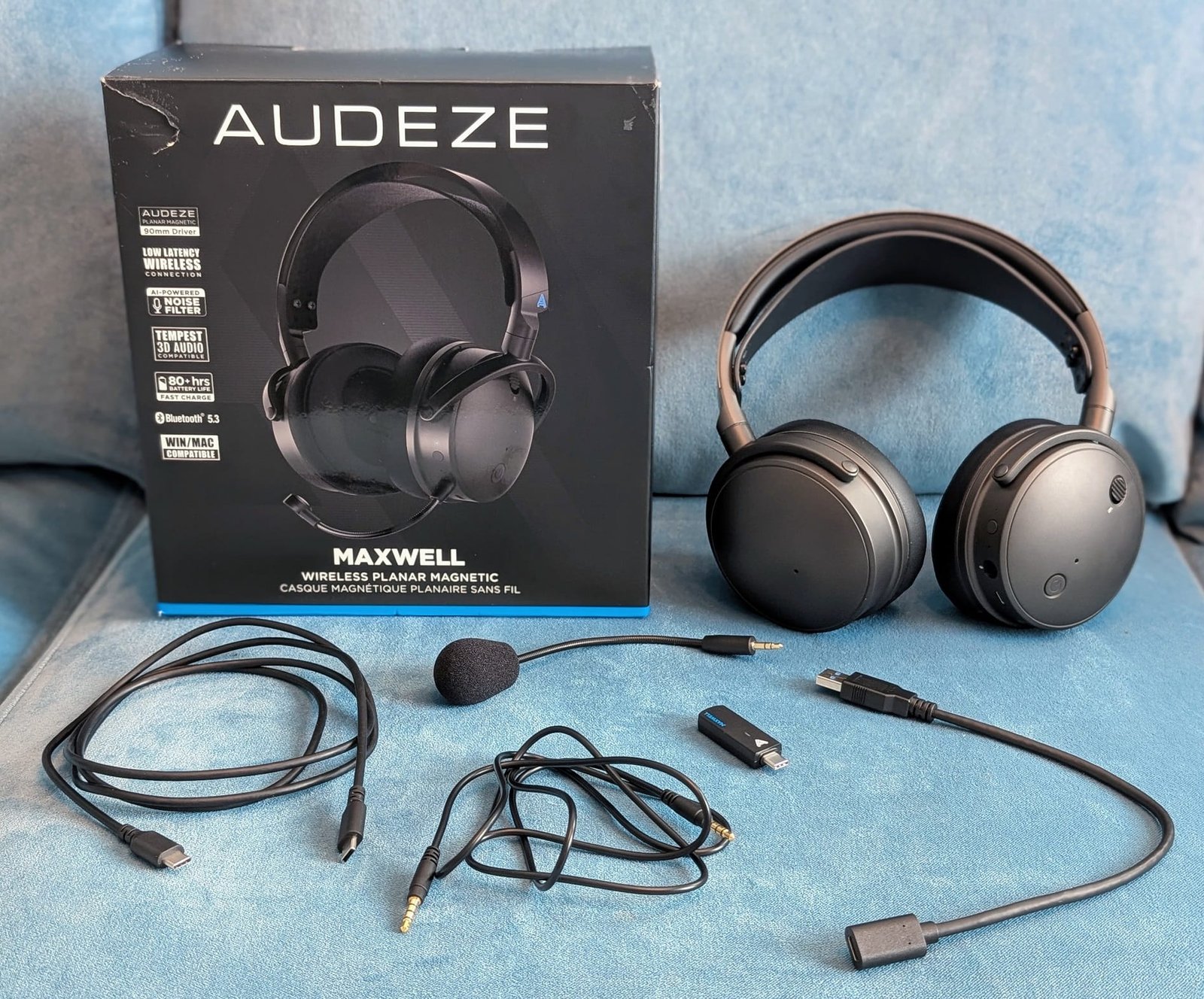
In addition to the necessary cables, the Maxwell comes with a USB-C dongle that enables a wireless connection and can be attached to a game console or computer – the device in use is selected with a slide switch. If the audio source does not have a USB-C connector, a short adapter cable can be inserted to convert the connector to USB-A type. The adapter cable is also useful with a longer USB-C charging cable (can also be used for listening with headphones). As another longer cable, the package includes a traditional AUX headphone cable with 3.5 mm connectors. This feels cheap and cannot be straightened due to the sharp folds caused by packaging. The USB cable, on the other hand, resembles mobile phone charging cables in terms of usability, meaning it is also not ideal for listening to Maxwell. On the other hand, I haven't seen a USB cable that matches the usability of the best headphone cables.
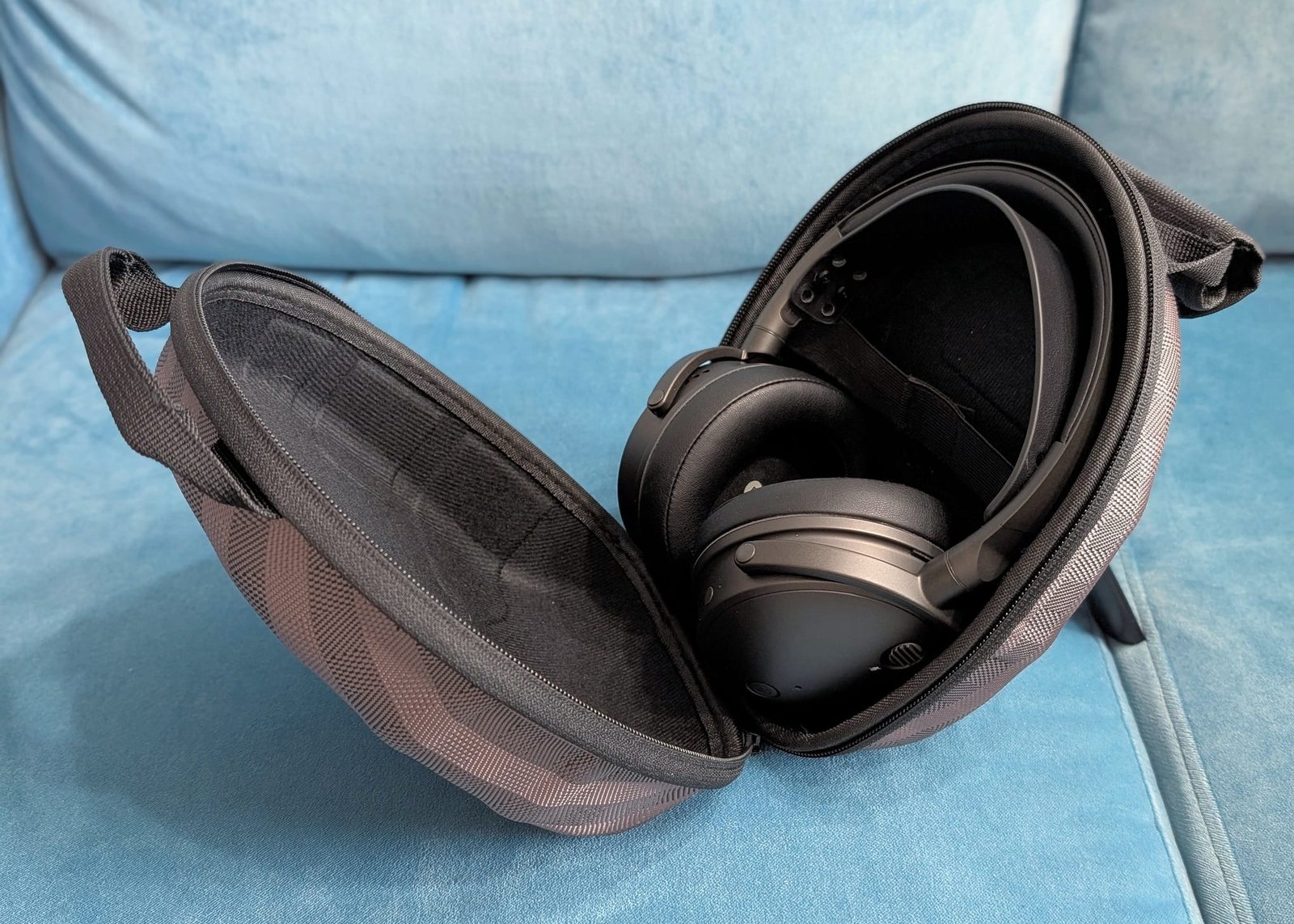
The boom microphone designed for the headphones is detachable, so it is technically an accessory, especially since the Maxwell's left earcup also has a separate built-in microphone. Unfortunately, the headphones do not come with a carrying case, but they fit well, for example, into Hifiman's large case. With the earcups turned horizontally, a flatter case would certainly do the job. For example, ZMF Bokeh the Maxwell barely fits into the large case designed for headphones.
Build and comfort
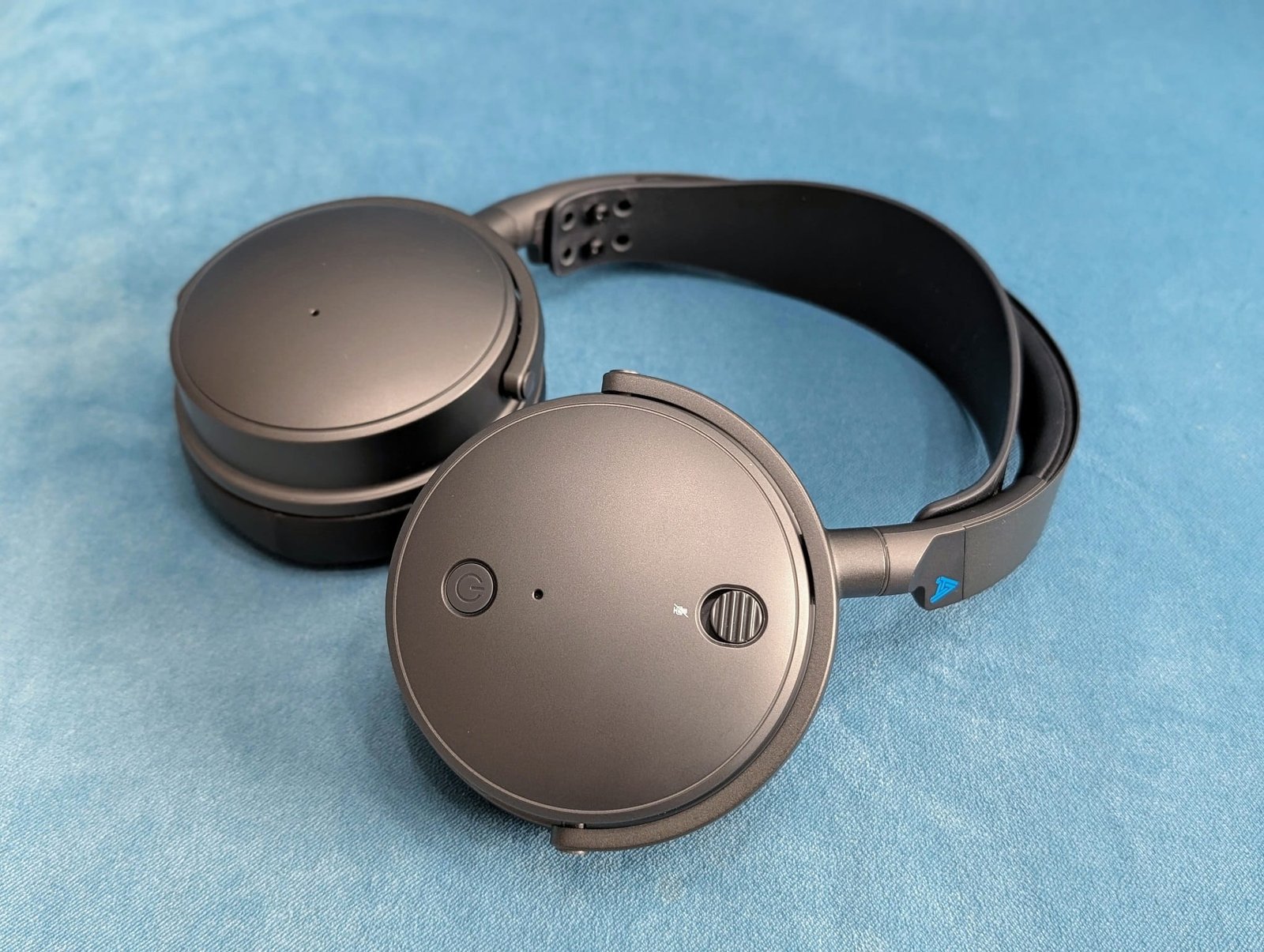
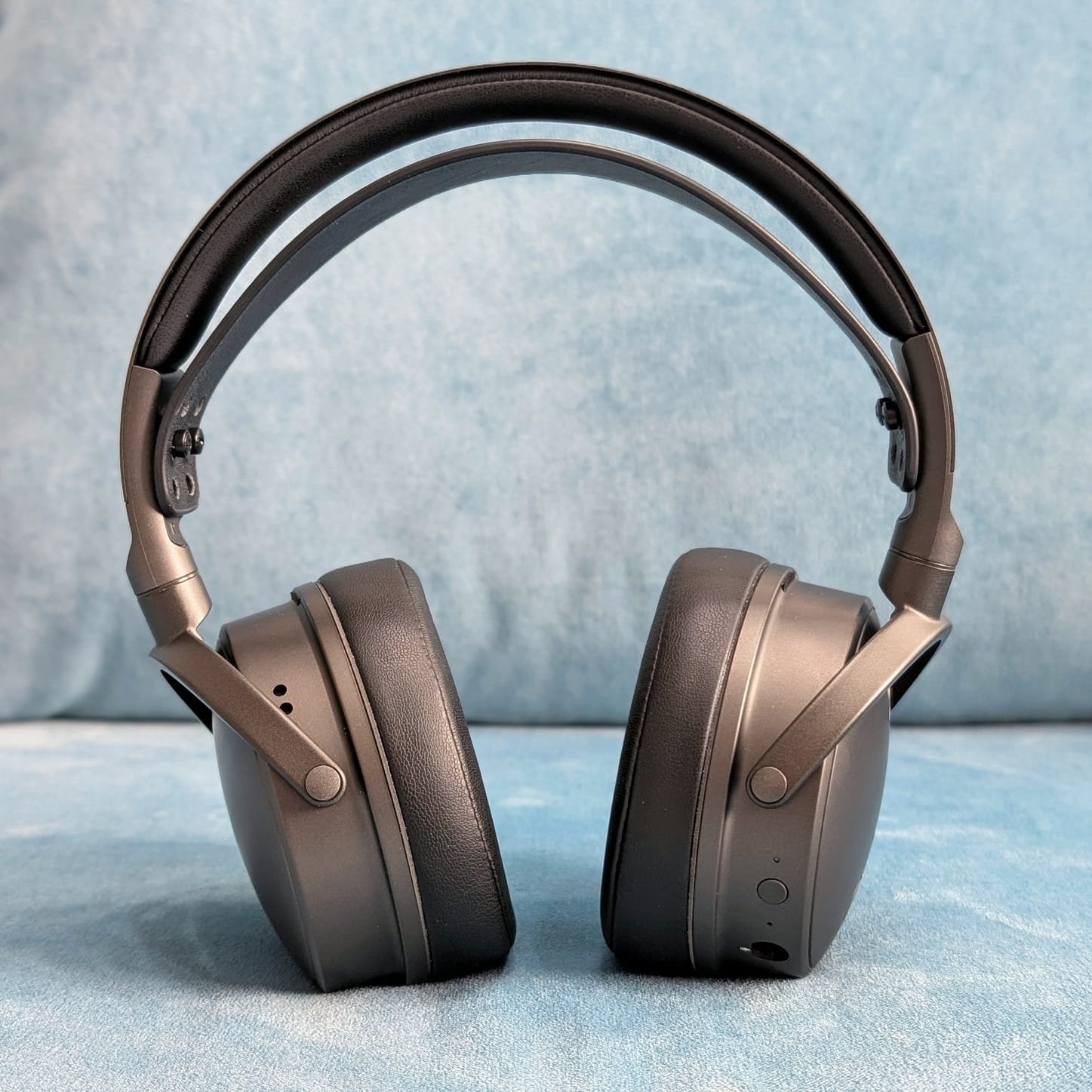
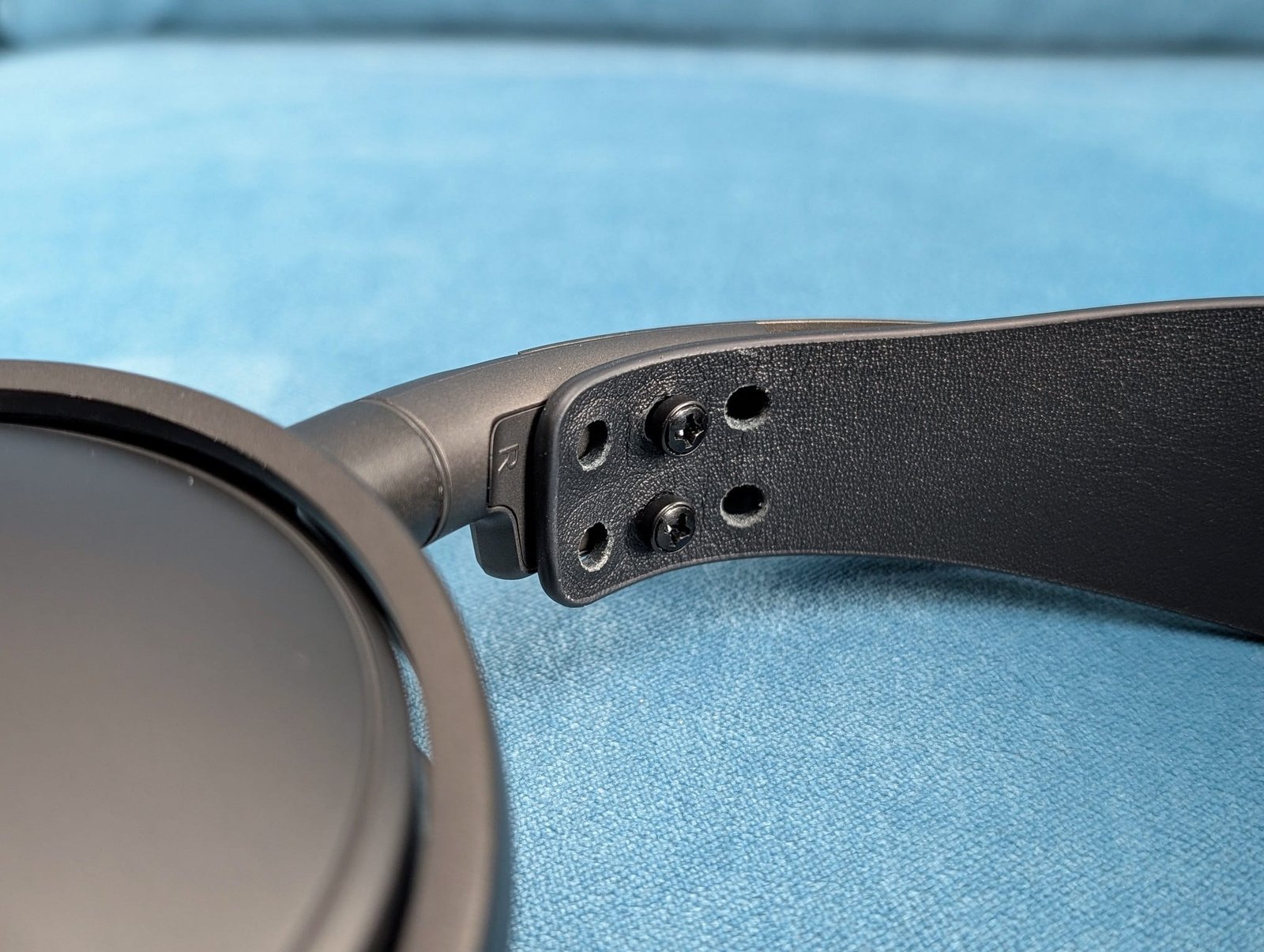
Audeze's previous gaming headphones, Mobius and Penrose, had a plastic construction, so their headbands broke for some users during prolonged use. The manufacturer seems to have ensured that the same does not happen with the Maxwell, as its headband is made of very thick metal parts. The headphones feel high-quality and tank-like sturdy in hand. Durability is also enhanced by the simplified height adjustment mechanism, or rather, its kind of absence. The faux leather strap can only be moved one notch up or down from both sides. Perhaps Audeze has deemed this sufficient, as the headphones fit my head well by default. The strap would also be easy to replace if needed, which is likely a good feature for gaming headphones that get a lot of use.
The most obvious drawback of the Maxwell's robust construction proves to be its high weight of 490 grams. Most gaming headphones seem to weigh half as much, so strong neck muscles might be needed in Audeze's case during longer gaming sessions. At this point, one must ask, couldn't the headphones really have been made lighter in any way? Fortunately, the weight does not pose a problem for me, as the Maxwell sits firmly and comfortably on my head. The just-right firm clamping force around the ears ensures for me that the headphones do not feel too heavy on my head. I can use the Maxwell, for example, throughout the entire workday, sitting in meetings and listening to music in between, which I would not have believed beforehand.
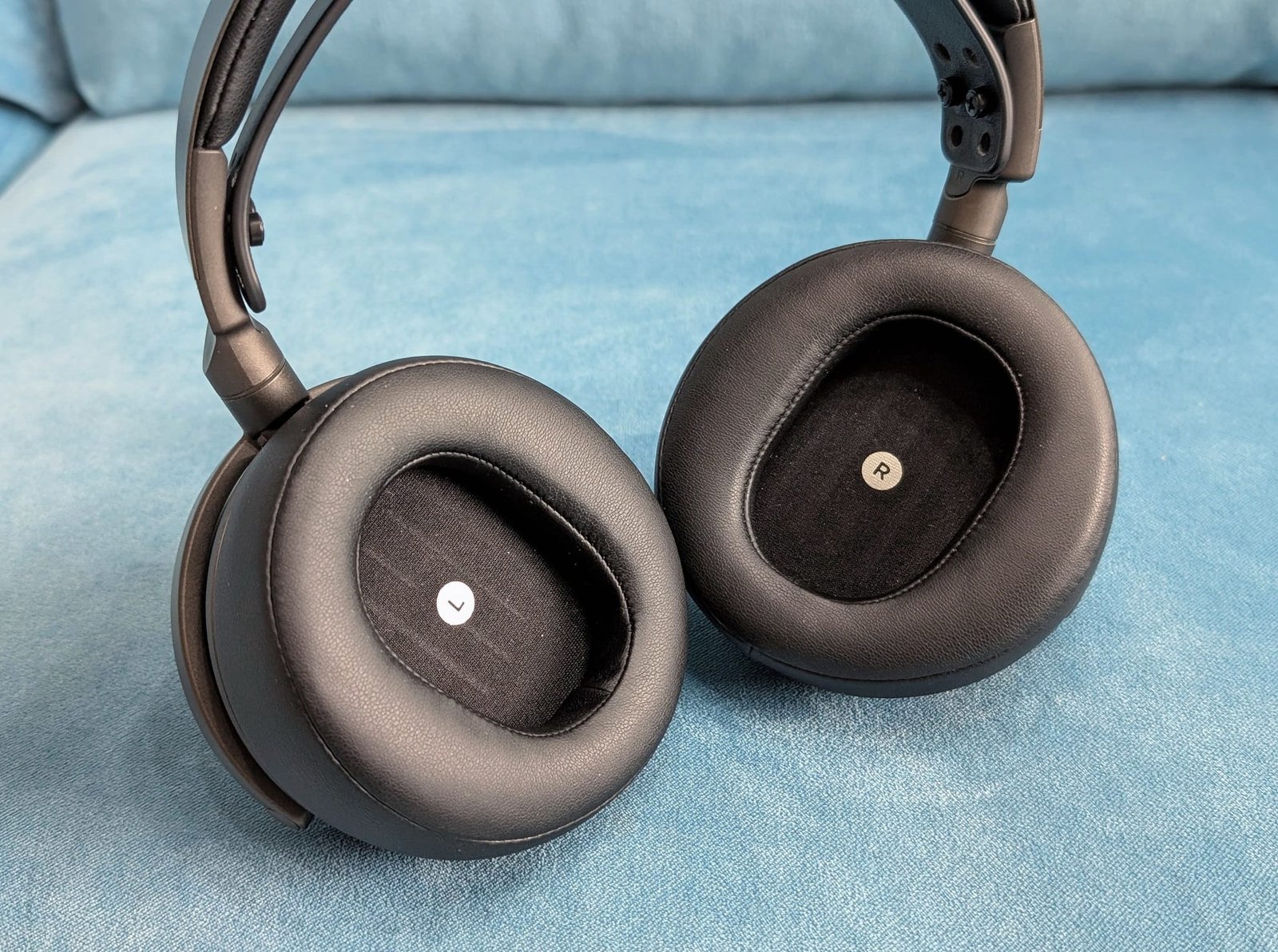
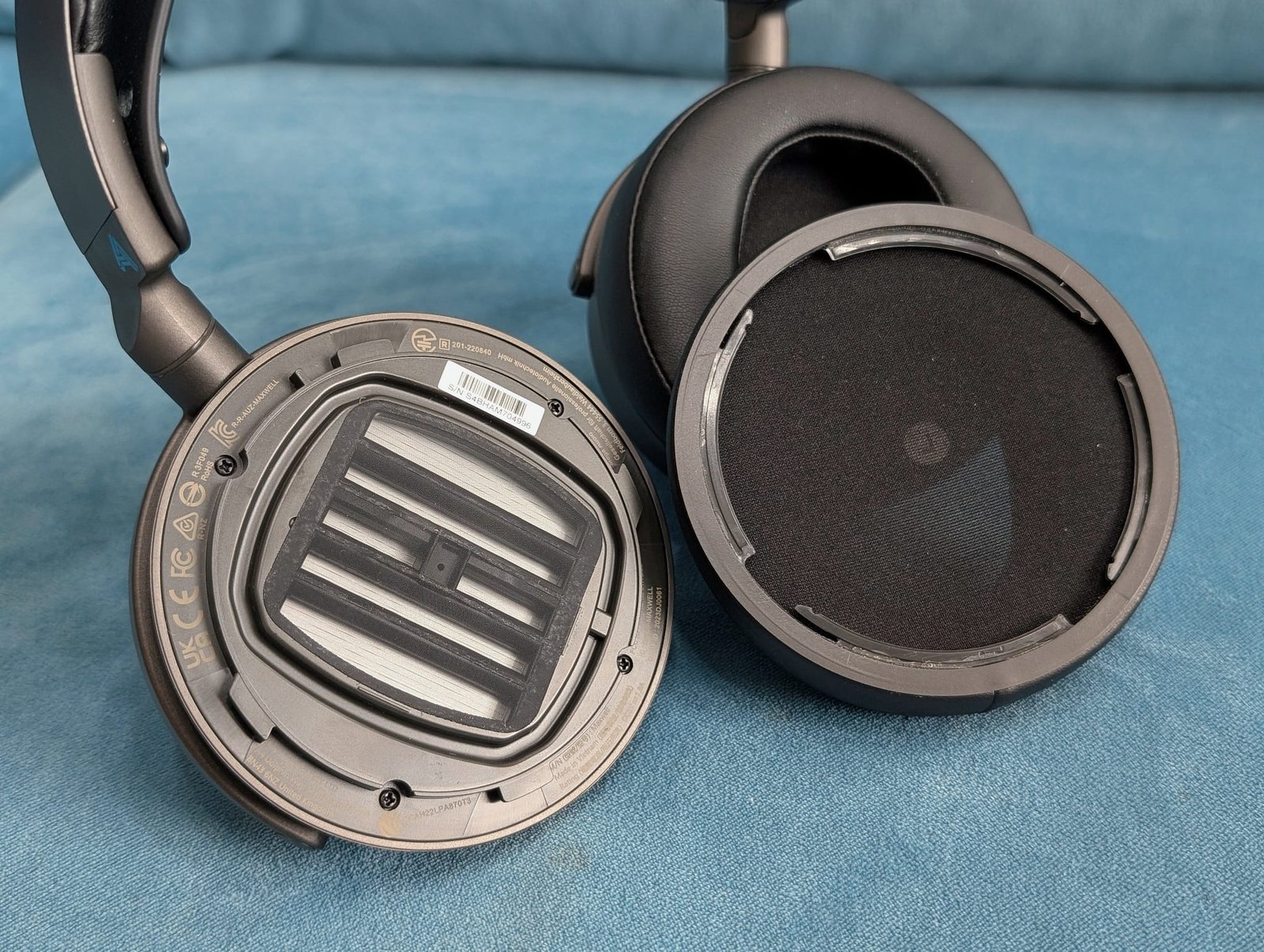
The faux leather-covered ear pads also feel good and are large enough for me (opening size 65 x 45 x 20–23.5 mm). The Fazor waveguides installed in front of the drivers are also not raised like in the MM-100 model, so my earlobes do not touch them during use. Another difference from the MM-100 is that the Maxwell's pads are not glued on, but are removable by twisting them sideways, similar to, for example, Valco VMK25:s or SASH Tres SE:s. Since it is a gaming headset, many manufacturers have come up with different pads aimed at even better comfort during gaming. Audeze's chosen faux leather makes one sweat a bit in the long run, so I myself might consider, for example, Dekoni pads, which are also relatively affordable.
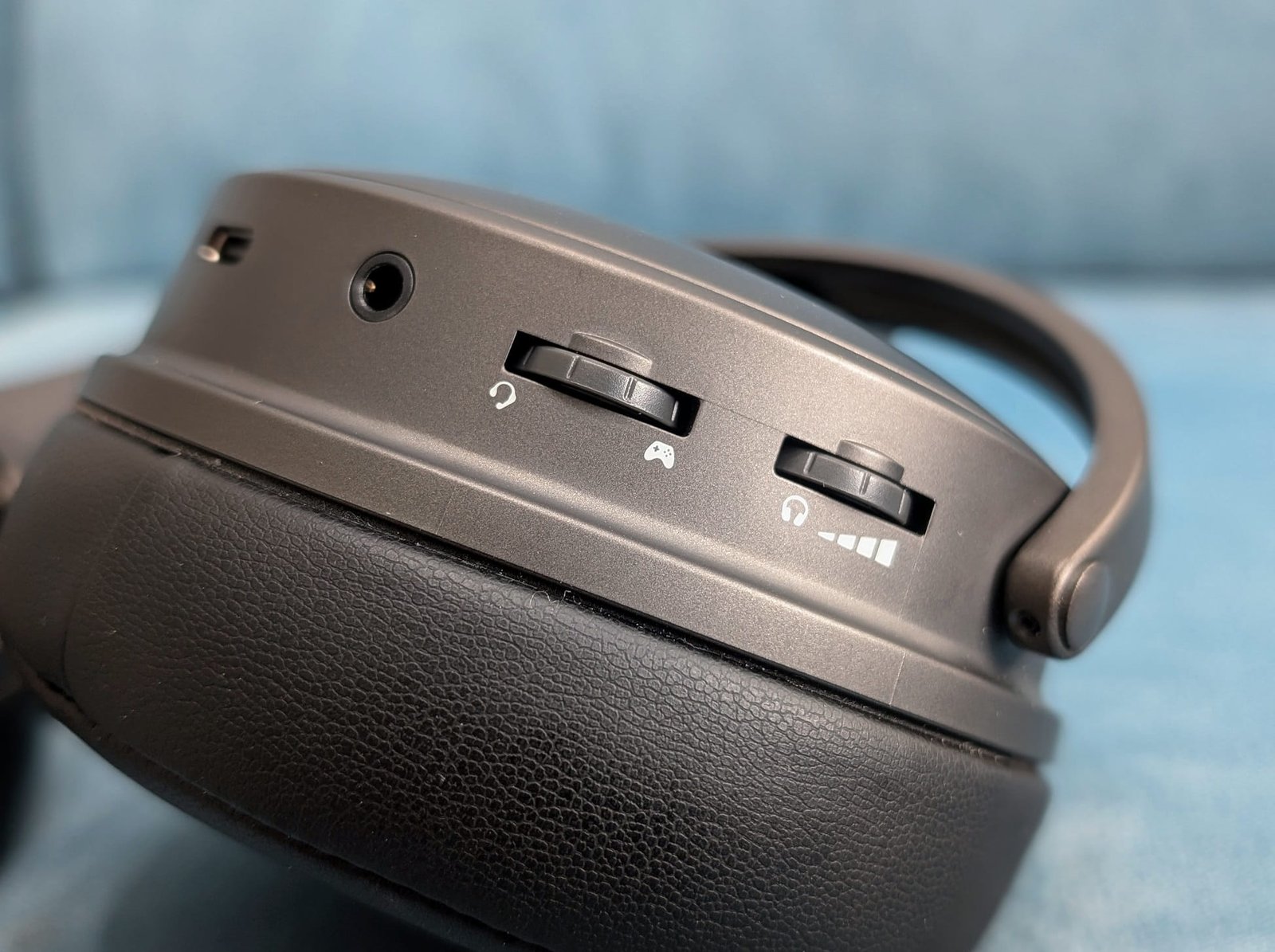
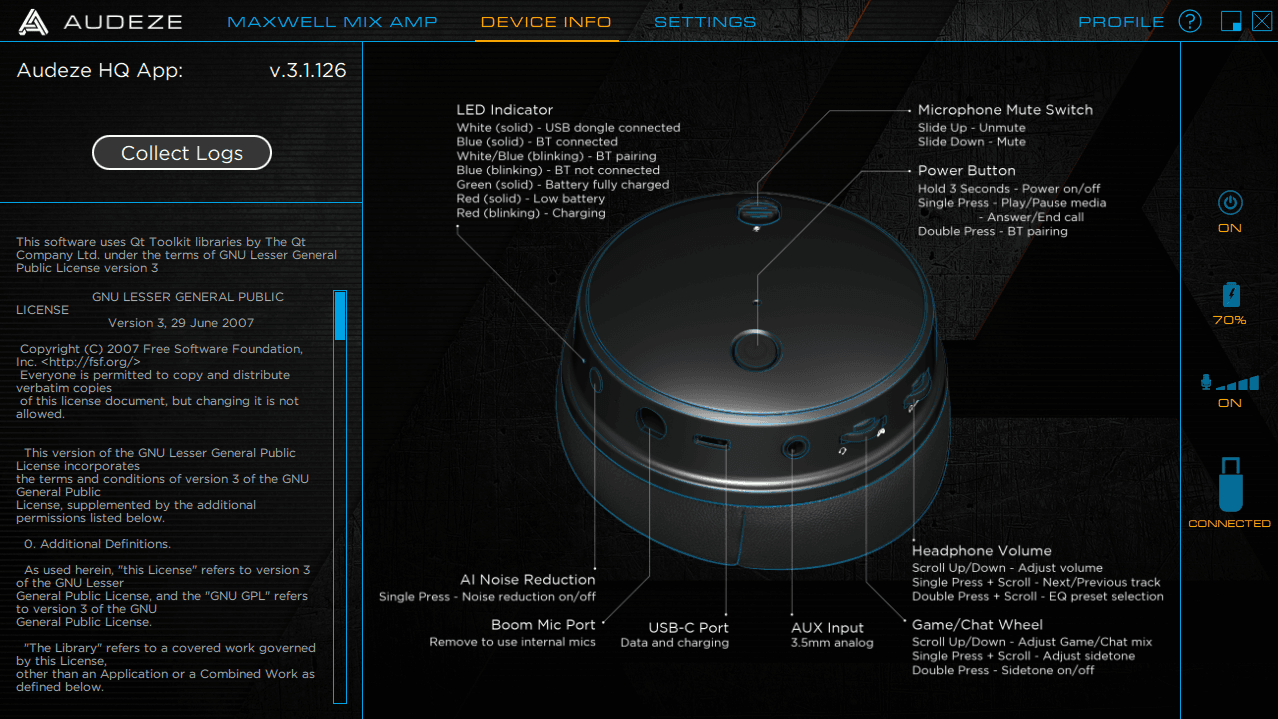
In addition to its robust construction and good comfort, the Maxwell is also easy to use because its buttons are large and quickly discoverable. Despite this, all functions have been fitted into the left earcup. The sideways-pointing power button is located at the bottom edge of the cup, and the microphone mute switch at the top edge. The forward-pointing button controls the microphones' AI-assisted background noise reduction between three settings (Off/Low/High). On the back edge of the cup, there is a rotatable wheel for adjusting both the volume and the Sidetone feature.
Headphone applications and their quirks
Maxwell is designed to be a versatile headset, as it can be listened to comparably both wired and wirelessly. However, without power, the headphones do not work; the audio signal always passes through the built-in DAC amplifier section. Thus, the DSP profile defined by Audeze maintains an identical frequency response regardless of whether the headphones are connected to an audio source with an analog headphone cable or if, for example, the included wireless USB transmitter (based on WLAN connection) is used for listening. Additionally, listening via a USB cable (max 24-bit/96kHz) or Bluetooth connection is an option, so the usage possibilities are almost limitless.
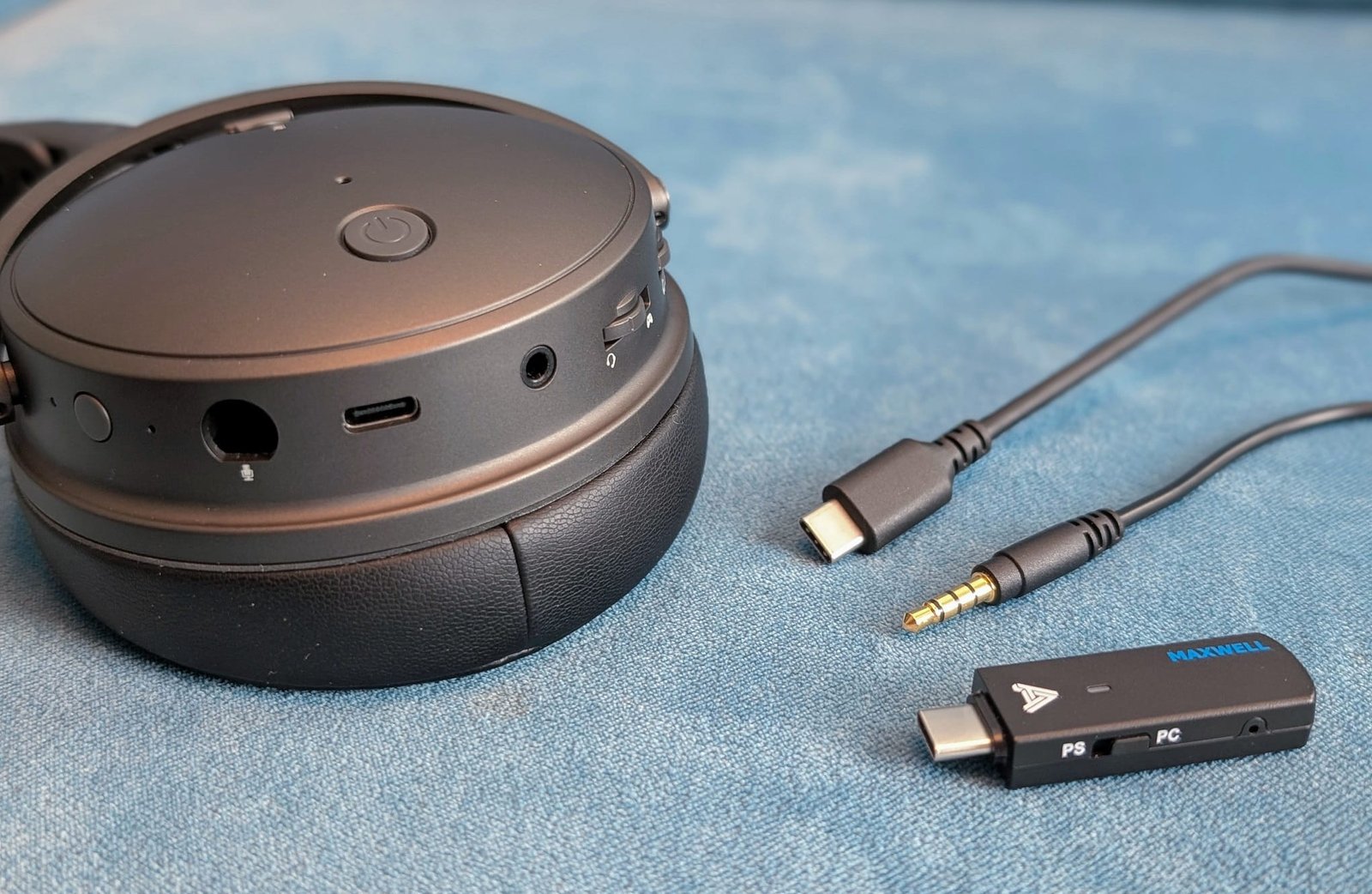
Among wireless connections, the USB transmitter is lossless in quality (max 24-bit/96kHz) and does not inherently cause signal delay (read this section to the end), whereas when using a Bluetooth 5.3 connection, LC3, LC3plus, LDAC, AAC, and SBC codecs are supported. Especially with the LDAC codec, audio quality does not significantly degrade compared to other connections, but from a gaming perspective, a Bluetooth connection is never optimal in terms of latency. Otherwise, there is nothing to complain about with Maxwell's Bluetooth connection; it would serve perfectly well as the primary way to use the headphones when listening to music. Google Fast Pair and Multipoint features are also supported, making Maxwell easy to pair with Android devices and connect to multiple devices simultaneously.
The wireless USB transmitter, however, works poorly on some computers depending on the motherboard's USB bus and other devices simultaneously connected to the computer. Playback doesn't actually cut out, but occasionally certain sounds distort or temporarily change their tempo and pitch as if stretching. The treble, in particular, suffers from this, sounding truly artificial at its worst. A more suitable USB port may need to be found for the transmitter, or other USB devices may need to be disconnected from the computer during listening.
Some have estimated that AMD-based computers would suffer from the problem more than Intel computers. This seems to be the case for me, as Maxwell works quite poorly with its transmitter on my high-quality AMD home computer, whereas I have not observed any practical problems on my Intel work laptop. This may, of course, be pure coincidence, but with bad luck, Maxwell may not work perfectly wirelessly on the computer it is intended to be used with. On the other hand, the problems mainly disturb music listening, as game sounds and speech come through more consistently. Similar audio problems are not encountered with other uses, so in some cases, a Bluetooth connection may be a better option for wireless listening.
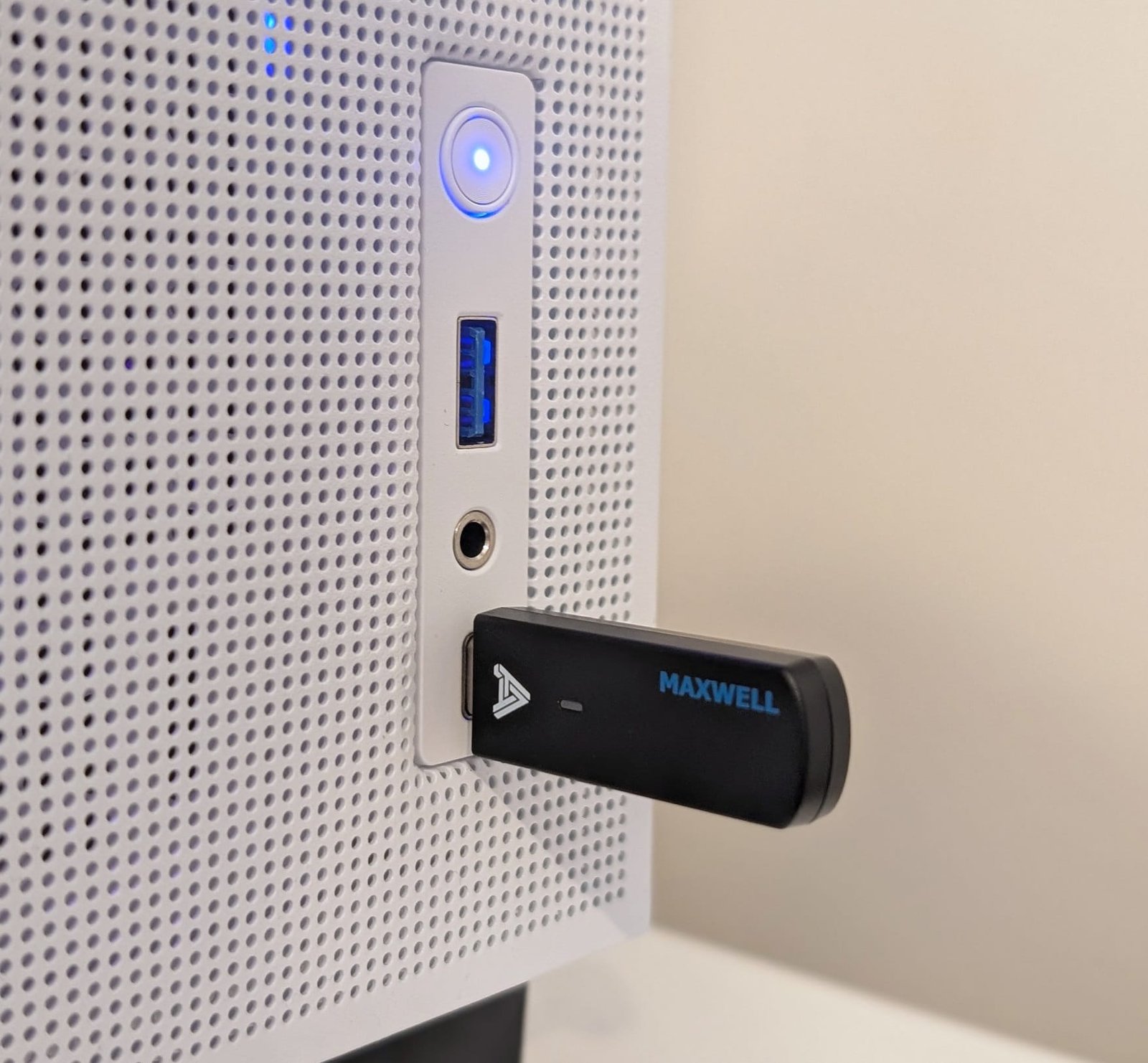
It must also be mentioned about the USB transmitter that the headphones connect to it lightning fast, but sometimes the connection starts to disconnect and reconnect in an eternal loop every couple of seconds. Usually, however, the issue is resolved by restarting the headphones. On my AMD computer, an unresolved issue has been the slow start of audio playback after a longer pause or, for example, when jumping to another point within a song. There is a huge 1.5-second delay, due to which notification sounds from some applications go unnoticed, as a short beep or other audio cue ends before the headphones play it. When using a USB cable, the delay drops to a small amount by selecting Maxwell Game as the Windows audio source. In Maxwell Chat mode, however, there is still a delay of less than half a second. With an AUX headphone cable, I finally get rid of the delay almost completely. The Intel computer I mentioned does not suffer from such a delay at all, so Maxwell's functionality is unfortunately very machine-specific.
Although I generally somewhat disapprove of headphones that cannot be used passively without power at all, considering Maxwell's purpose, it doesn't bother me too much in the end. It would most likely not be nearly as good a headphone without its DSP correction. Due to the planar drivers, the built-in electronics probably slow things down a bit, but other features compensate for the situation excellently.
Battery life
One of Maxwell's best features is its impressively long 80-hour battery life, which also applies to wireless use. The headphones also charge quickly, as a 20-minute charge, for example during a lunch break, adds about 20 hours of usage time. The battery practically never runs out, which is likely important for many gamers. I use Maxwell daily at work, and I only need to charge it for one lunch hour every couple of weeks. On the other hand, when I connect the headphones to the computer with a USB cable, they charge during use. I'm not sure what this does to battery durability, but modern batteries should withstand a large number of charging cycles. Especially in wireless use, thanks to the long battery life, these accumulate only a few times annually.
Application and additional features
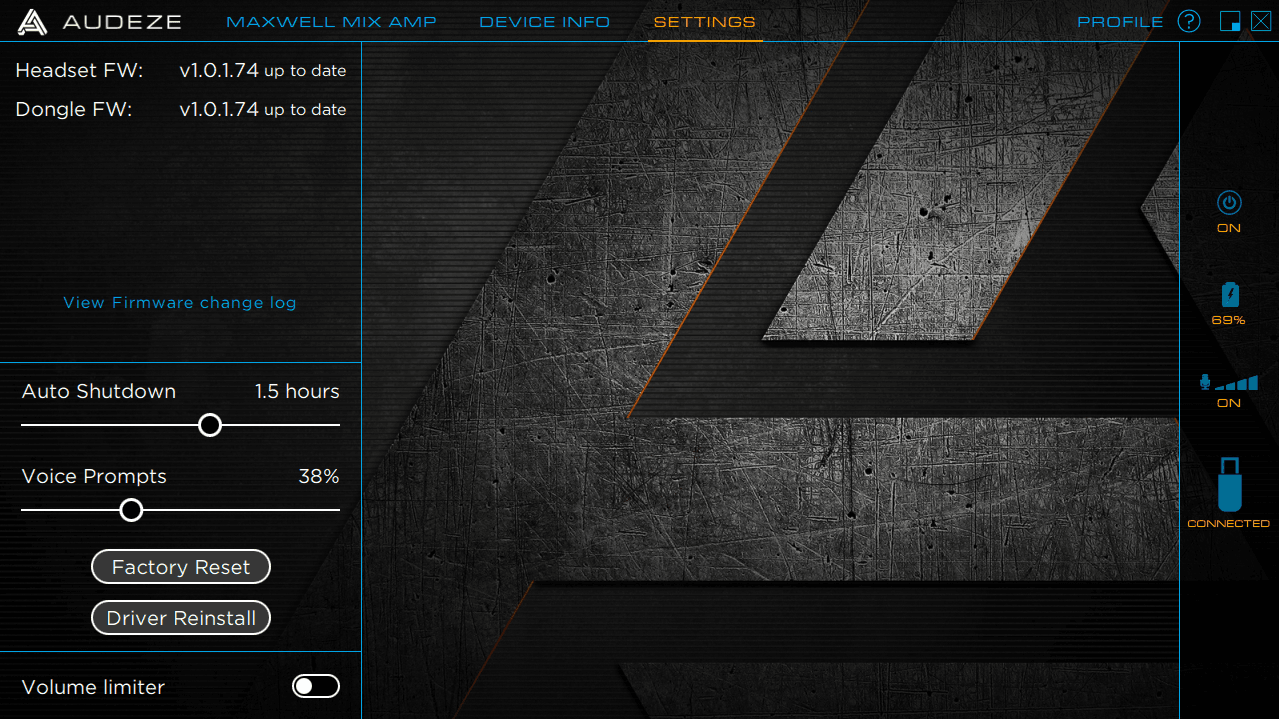
The Audeze HQ application for the headphones can be installed on both a computer and a mobile device, making settings easily accessible via USB and Bluetooth connections. The application includes several ready-made sound profiles and an equalizer that can be used to create four custom profiles. The settings are saved to the headphones, so they automatically appear on the screen when switching, for example, from the PC application to the Android application. In addition to the application, the sound profile can also be changed directly from the headphones by double-clicking the volume control and then scrolling between profiles.
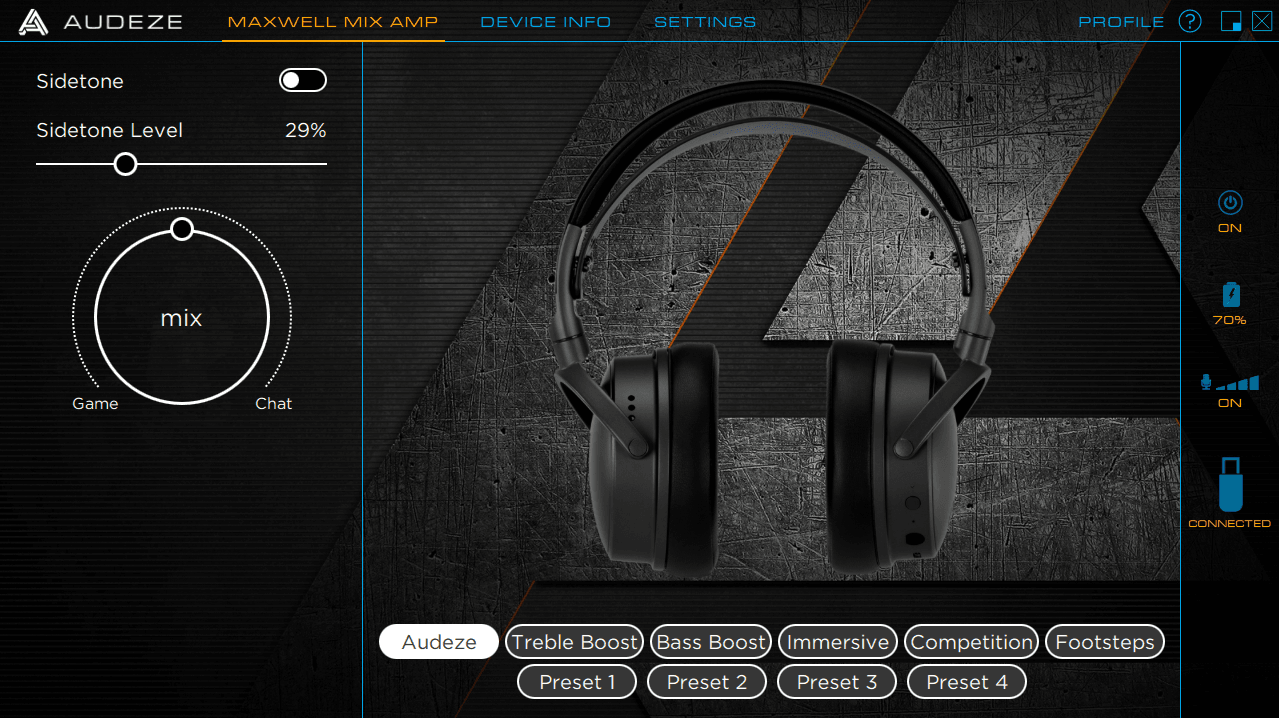
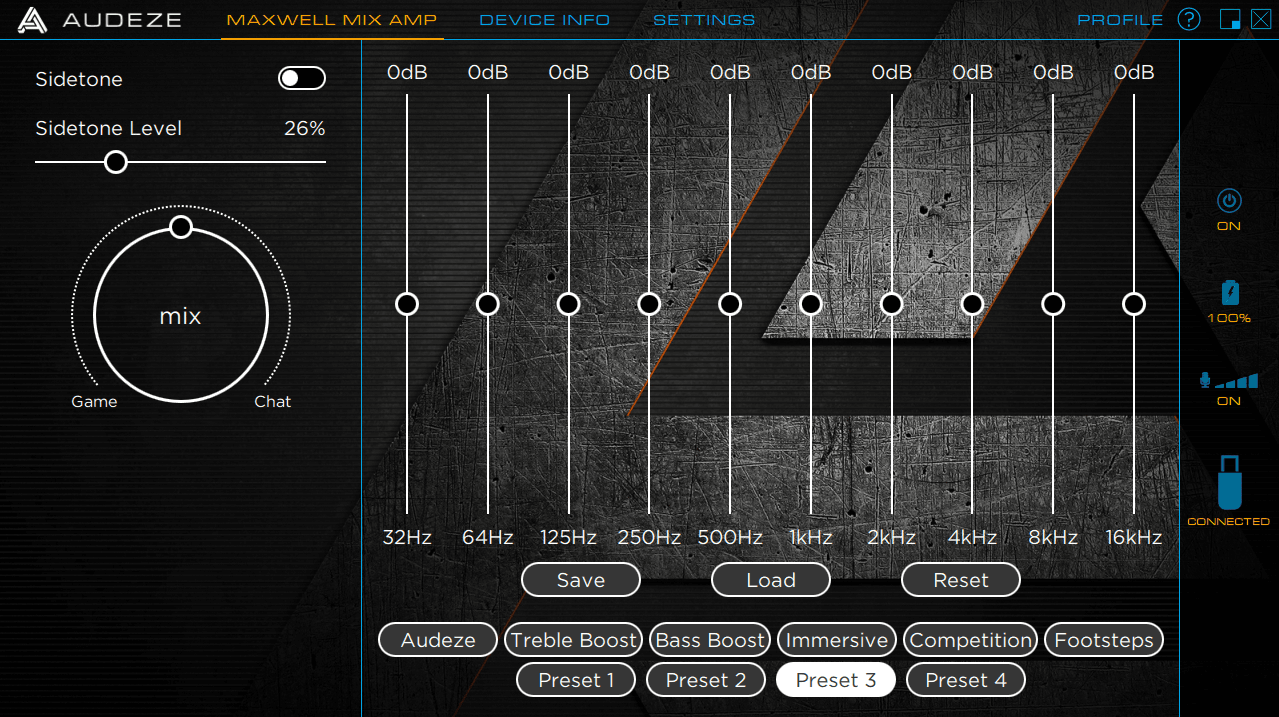
The Sidetone feature is also adjustable via both the application and the headphones. Sidetone is comparable to the transparency mode familiar from noise-canceling headphones, which allows ambient sounds picked up by the microphone to enter the headphones. In theory, this would make one's own speech sound more normal when speaking with closed cups over the ears. Unfortunately, Sidetone feels almost unusable because it reproduces hisses and sibilance, such as S-sounds and the rustling caused by rubbing fingers together, in an extremely exaggerated manner. Thus, I mainly hear disturbing hissing, which is only a nuisance. Even the speech of a person sitting a couple of meters away sounds as if it's coming from a tunnel 10 meters away. Audeze has apparently tried to improve Sidetone with firmware updates but without success.
I, on the other hand, have not used the Game/Chat-mix feature, as I mainly play single-player games nowadays. This slider would, however, apparently change the ratio at which game sounds are heard compared to chat sounds – certainly a useful setting in more competitive situations or, for example, when chatting with gaming friends, if I have understood correctly.
Observed quality issues
Despite their great popularity, Audeze headphones have not been a complete qualitative success story. Problems perceived by people include, among other things, side noises and bugs caused by electronics, the headband arch detaching from the yoke, and the crackling of planar diaphragms. For some, the elements have also been wrinkled at the time of purchase, for which Audeze does not seem to take responsibility.
Combining a closed-back cup structure with planar drivers is inherently a design challenge, as the thin diaphragm may crinkle when air pressure moves it, for example, when putting on the headphones or moving one's head during listening. Speaking into the microphone can also cause this as facial muscles move. Although Maxwell's cups do have pressure-equalizing vents, many have reported a disturbing crackling sound during use. Fortunately, the diaphragms in my own headphones do not crinkle, so the situation may be better now than before. In any case, I recommend monitoring this issue after purchasing the headphones.
Microphone implementation
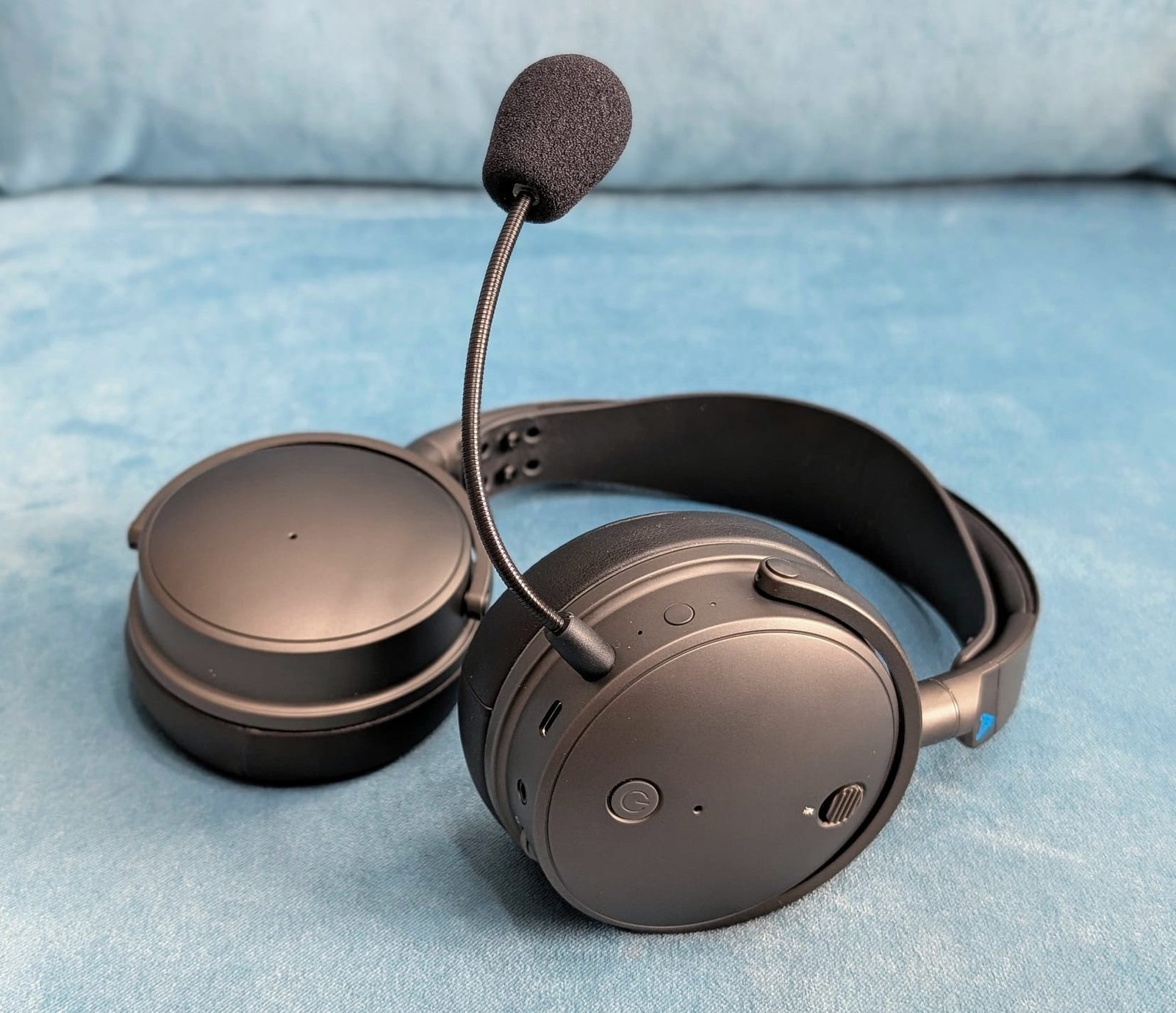
Maxwell's microphone implementation has also drawn some criticism, although many describe it as the best on the market. The situation may, of course, have changed between firmware updates, which would explain the variation in people's experiences. What is undeniable is the Maxwell microphones' ability to suppress background noise; with the headphones on, one could probably go and speak in the middle of a noisy construction site without the other party being disturbed. This is thanks to the AI noise cancellation borrowed from the Audeze FILTER conference speaker. In Maxwell, the cancellation can be set to either Low or High mode. Both degrade the microphone's sound quality compared to the Off mode due to sound processing, but excellent noise cancellation is available for those who need it.
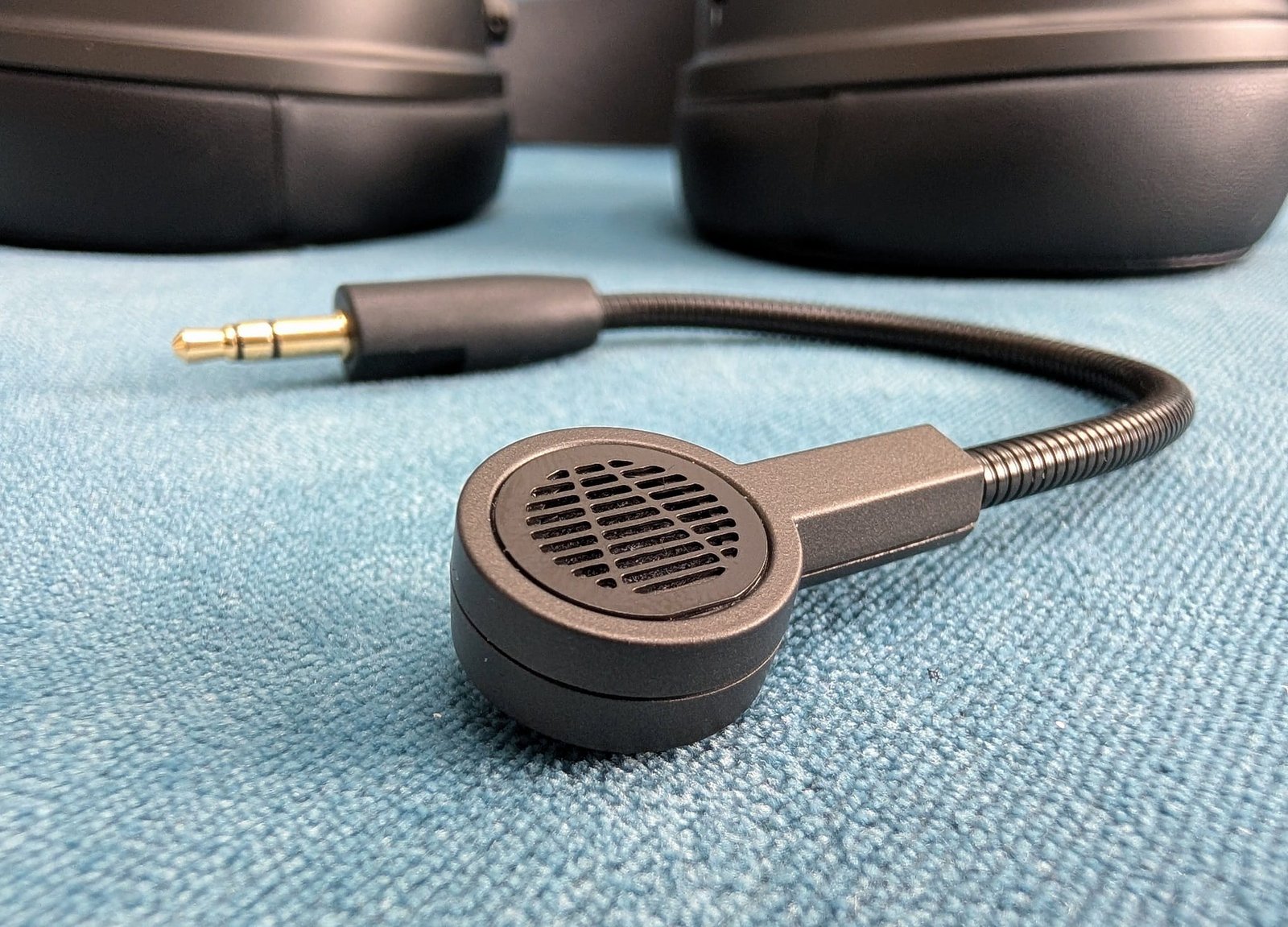
The left cup of the headphones features both a built-in basic microphone and a detachable boom microphone designed by Shure. Both respond to the large mute button mounted on the side of the cup. The boom microphone offers better sound quality, while the internal microphone is handier when the headphones are used, for example, with a Bluetooth connection in public places.
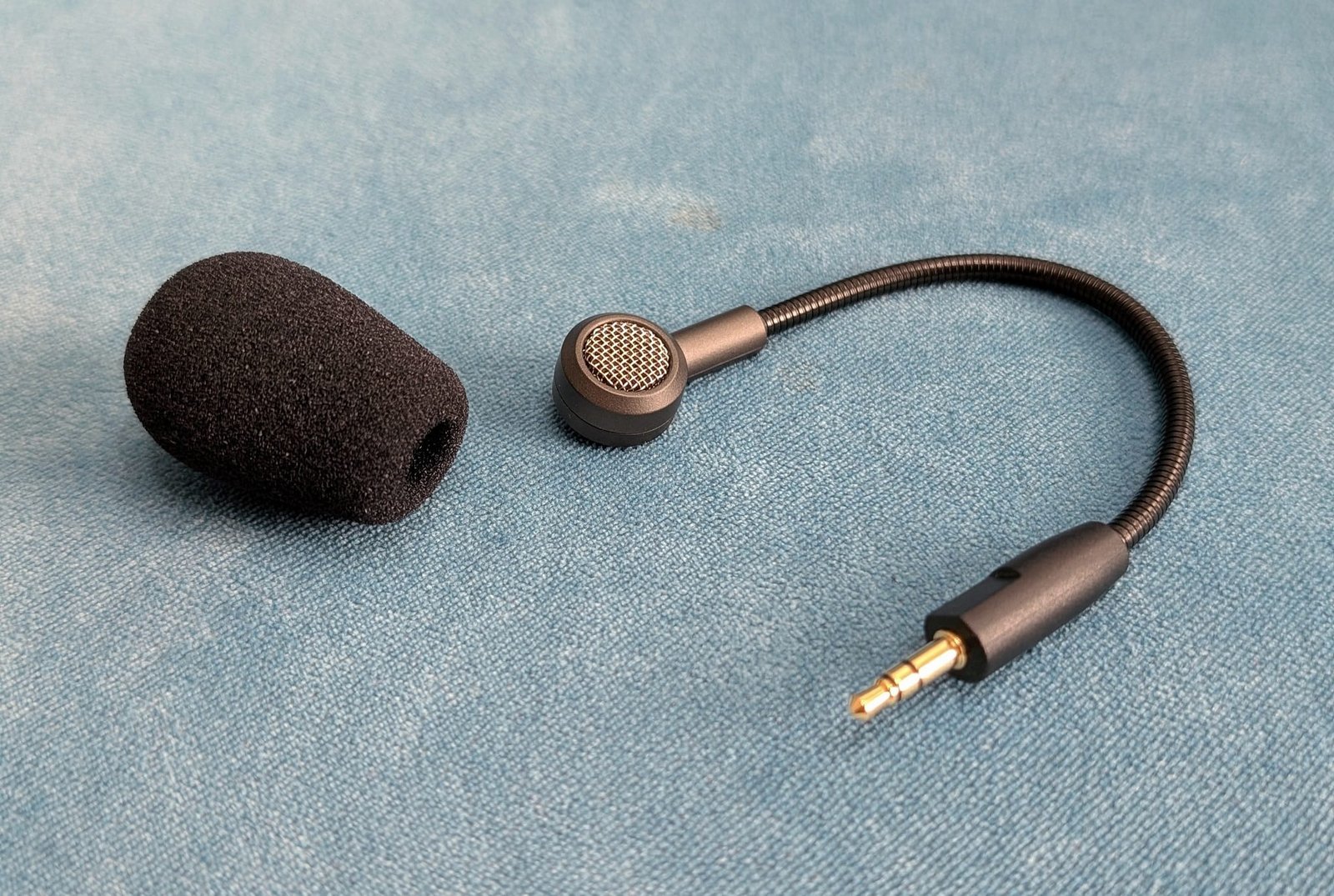
However, the microphones have been criticized precisely for their sound quality. Based on audio samples and comparisons uploaded to YouTube, they admittedly don't sound particularly impressive compared to some other gaming headsets, for example. Maxwell has also received somewhat conflicting feedback on its sound quality in applications like Discord and Teams. Some describe the sound quality as poor, while others have resolved the issue by positioning the microphone better in front of their mouth.
I myself have already received positive feedback many times in Teams meetings, along the lines of ”you don't seem to be using just any basic headphones, your voice sounds so good” and ”you sound just like a radio host.” I listened to a couple of hours of a Teams recording from a training session I held, and admittedly, my voice sounded really good and clear through the Maxwell microphone. The boom microphone picks up low frequencies nicely, so the voice has a pleasant tone and contrast. Some of the problems previously observed in the headphones may already have been fixed, unless they are related to the specific characteristics of different applications in relation to Audeze's noise cancellation. I personally keep the headphones' noise cancellation off when using Teams, because the application already blocks background sounds.
Sound quality
Our frequency response measurements have been made with a clone IEC-60318-4 coupler and KB501X pinnae. The Harman target curve from 2018 is used as a reference point and generalization of the headphone response that would sound good to most people. For more information on the measurements and their accuracy, see Headphone Measurements-page. Maxwell's frequency response can also be compared with other measured headphones Squiglink .
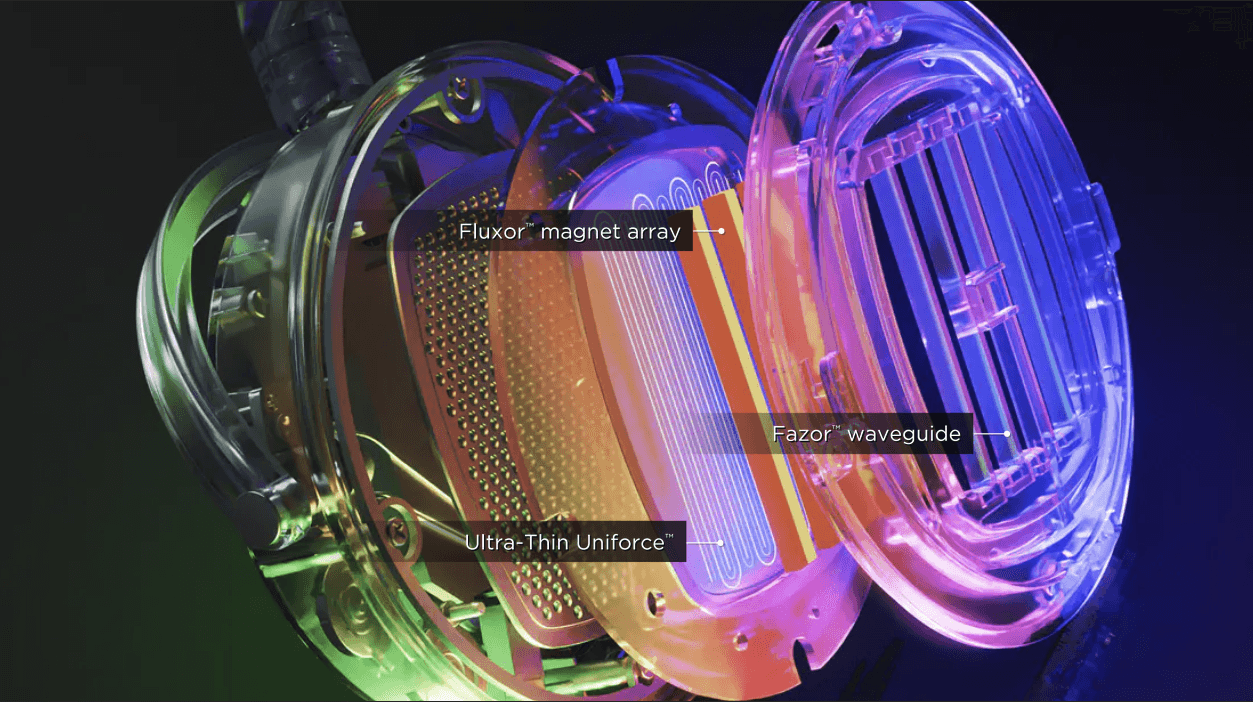
Planar drivers, which contain several different patents, are an important part of marketing as Audeze strives to differentiate itself from the vast mass of gaming headphones. The matter still has some novelty value, as there are very few closed-back headphones implemented with planar drivers on the market, especially in the sub-500 euro price range. The audio signal always passes through Maxwell's own DAC amplifier circuit and DSP processing, so a separate headphone amplifier is not needed. The frequency response is also the same for all usage modes.
Frequency response with Audeze sound profile:
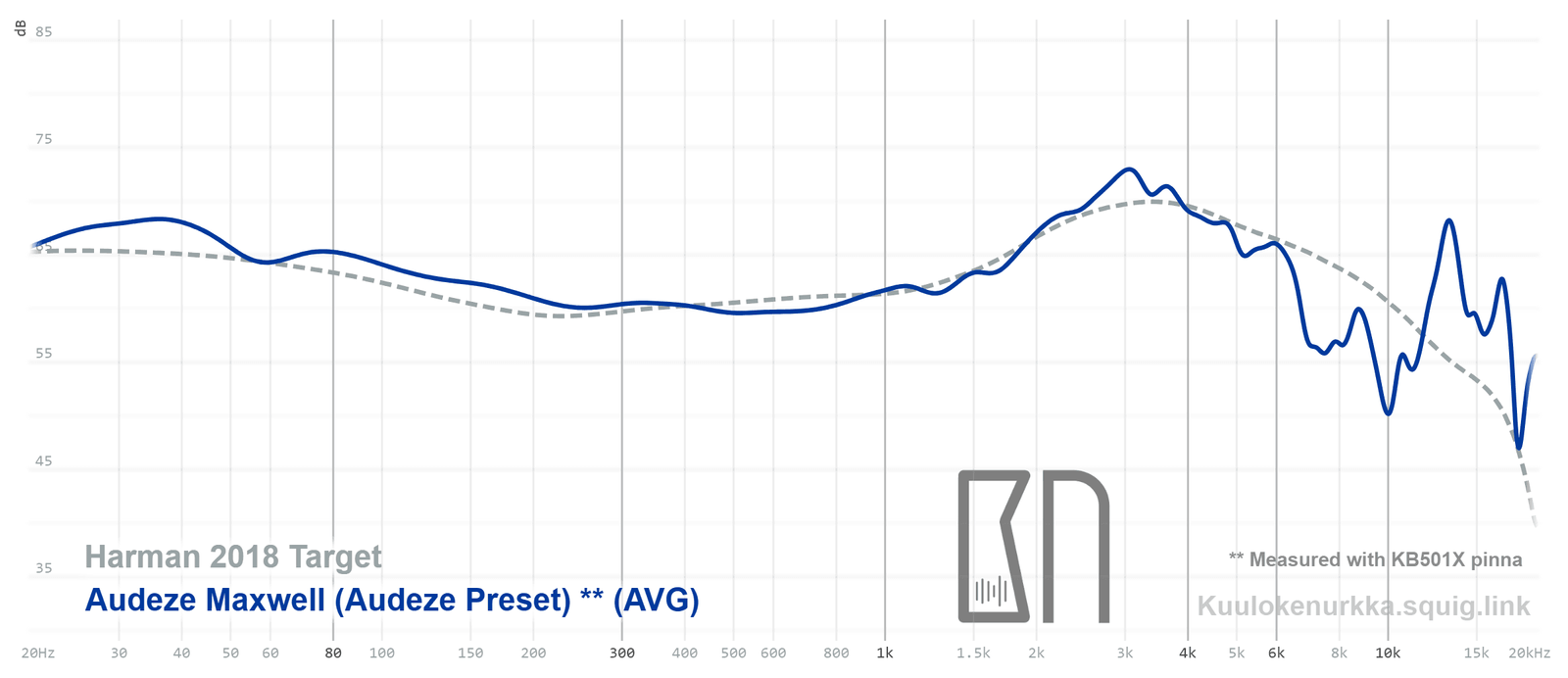
I don't know Audeze's goals, but Maxwell's frequency response successfully follows Harman's target curve, with the exception of the highest treble. Some might call the tuning a bit soulless, but this is precisely what headphone reproduction should be based on current knowledge when a balanced sound is desired. Maxwell achieves both satisfyingly robust bass reproduction and clarity in the mid-frequencies. As a dominant characteristic, vocals and instruments are reproduced energetically close in the soundstage. A slightly more relaxed presentation between 2–3 kilohertz wouldn't be bad either, but I don't detect any actual unnaturalness in it. The end result is also not too neutral; rather, the headphones make me excited. As for the bass, I wouldn't really change anything, unless I wanted to clarify the reproduction between 100–200 hertz a little more – nitpicking, I'd say. Other 400-euro closed-back headphones, let alone wireless noise-cancelling headphones, practically do not achieve such balanced reproduction, so Maxwell stands out favorably among them.
In Maxwell, the only slightly weaker area ultimately remains the treble, which is partly somewhat subdued and, at its highest frequencies, a tad rough and splashy. The latter characteristic may suit competitive gaming but sometimes interferes with concentrating on music. The lack of energy around 8 kilohertz, in turn, weakens the tail end of various sounds, so, for example, vocal performances don't sound quite as fresh as they could at their best. I also detect a slight stuffiness in the liveliness of drum cymbals, even though the 15 kilohertz emphasis gives them a strikingly shimmering nuance. However, my message should not be interpreted too harshly, as the unevenness of the high frequencies is quite harmless in the overall context. I would even say that I only notice it as an individual characteristic because the other frequency ranges are so excellently in place.
Maxwell's treble can be improved if necessary with the application's equalizer (more on this in the next section of the review). I myself have leaned towards making adjustments because they can be done effortlessly. In my case, boosting 8 kilohertz and attenuating 16 kilohertz makes Maxwell an almost perfectly balanced headphone, which allows me to fully concentrate on the music without noticing any oddities in the sound.
When Audeze's wireless USB transmitter operates smoothly, the Maxwell sounds essentially the same as when used with a cable. I'm not sure to what extent the built-in DAC and amplifier within the cups affect the resulting sound quality, but as a minor criticism, the Maxwell's reproduction is ultimately not quite as detailed and precise as I might expect from a passive headphone model with a similar frequency response. The acoustics of the cups, or rather their partial lack thereof, may also influence my experience, and even a small equalization improves the situation. In the sub-500 euro price range, I cannot consider the slight softness of the sound a real drawback, as I would be lying if I claimed it significantly disturbed my listening experience. It's quite a luxury to listen to such good wireless headphones that are suitable for gaming and simultaneously present music very naturally. What more could one want from headphones?
Alternative sound profiles and equalization
In addition to the pre-installed Audeze sound profile, the Maxwell features five other profiles, which I believe are implemented sensibly given how exaggerated similar settings are in many noise-cancelling headphones. The Immersive profile adds both bass and treble to the Maxwell, making the headphones' sound both more engaging and clearer. The improved clarity is due to the treble rising closer to Harman's target curve between 6–10 kilohertz. A similar change is also achieved alternatively with the Treble Boost profile, while Bass Boost handles only the bass addition, mimicking the Immersive profile. These three sound profiles are indeed very useful for listening to music. For example, the Maxwell is not a bass cannon with the Audeze profile, so I could imagine some people liking a small sub-bass boost.
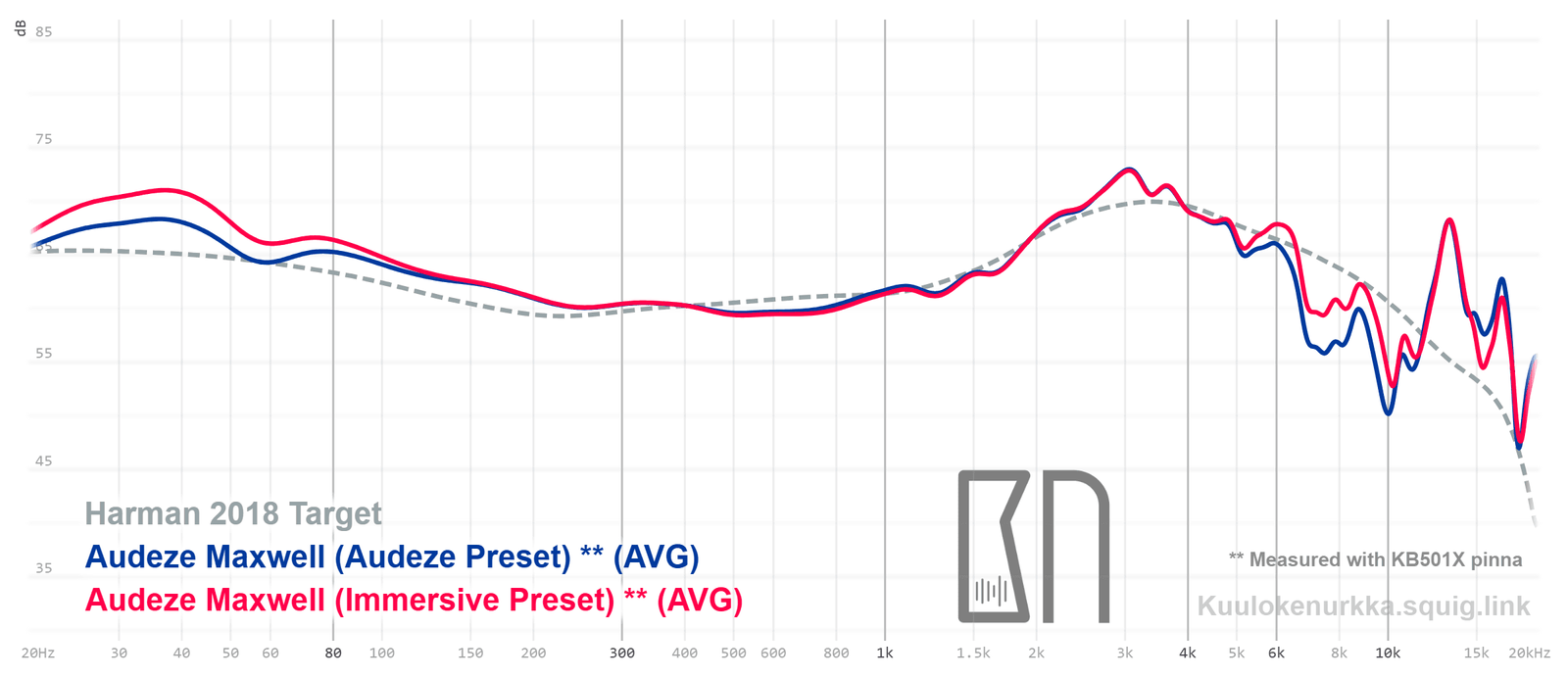
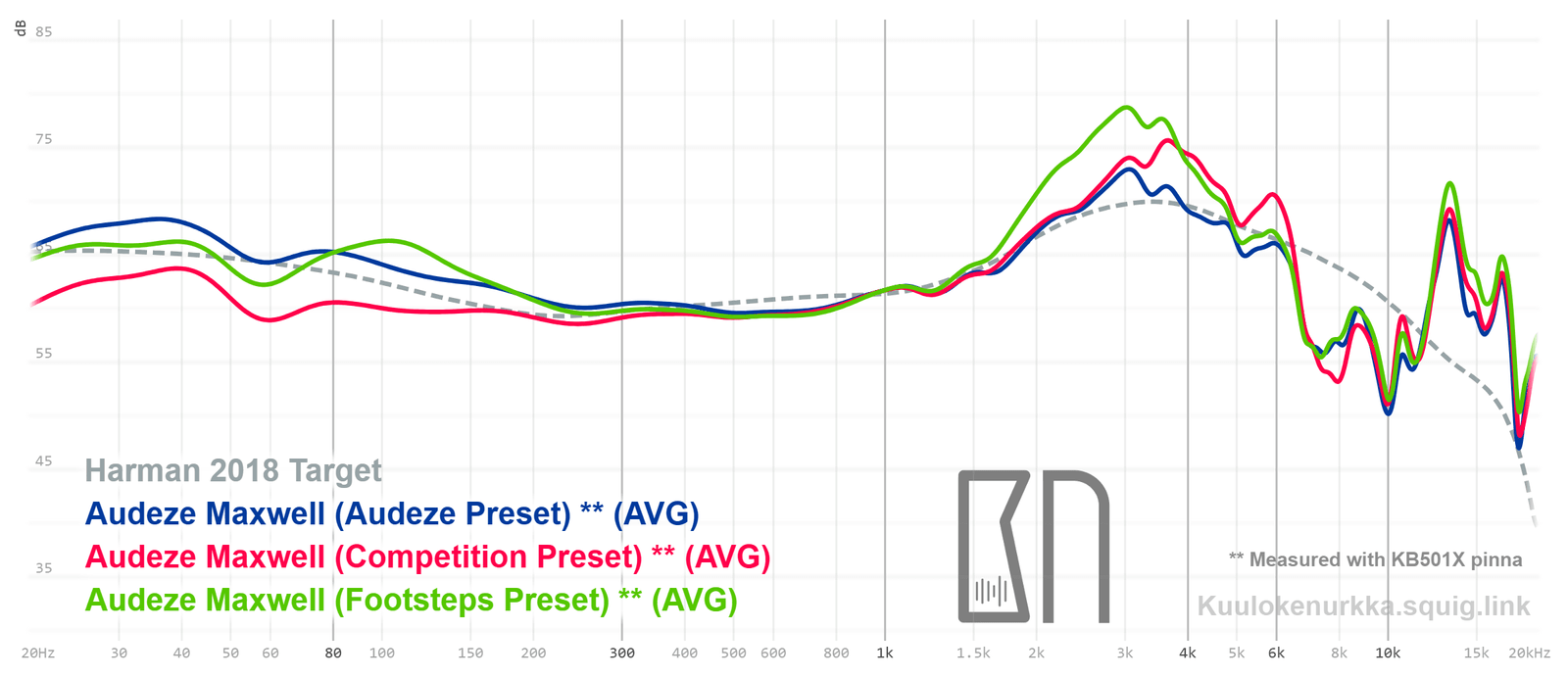
The Competition and Footsteps profiles, on the other hand, are designed for gaming. The former lowers the bass level to make important details easier to discern. At the same time, the 4–6 kilohertz range jumps upwards, enhancing in-game audio cues. If hearing other player characters' footsteps is most important in competitive gaming, the tailored Footsteps profile works surprisingly well. However, these sound profiles should not generally be used for listening to music, as their high frequencies are quite aggressive.
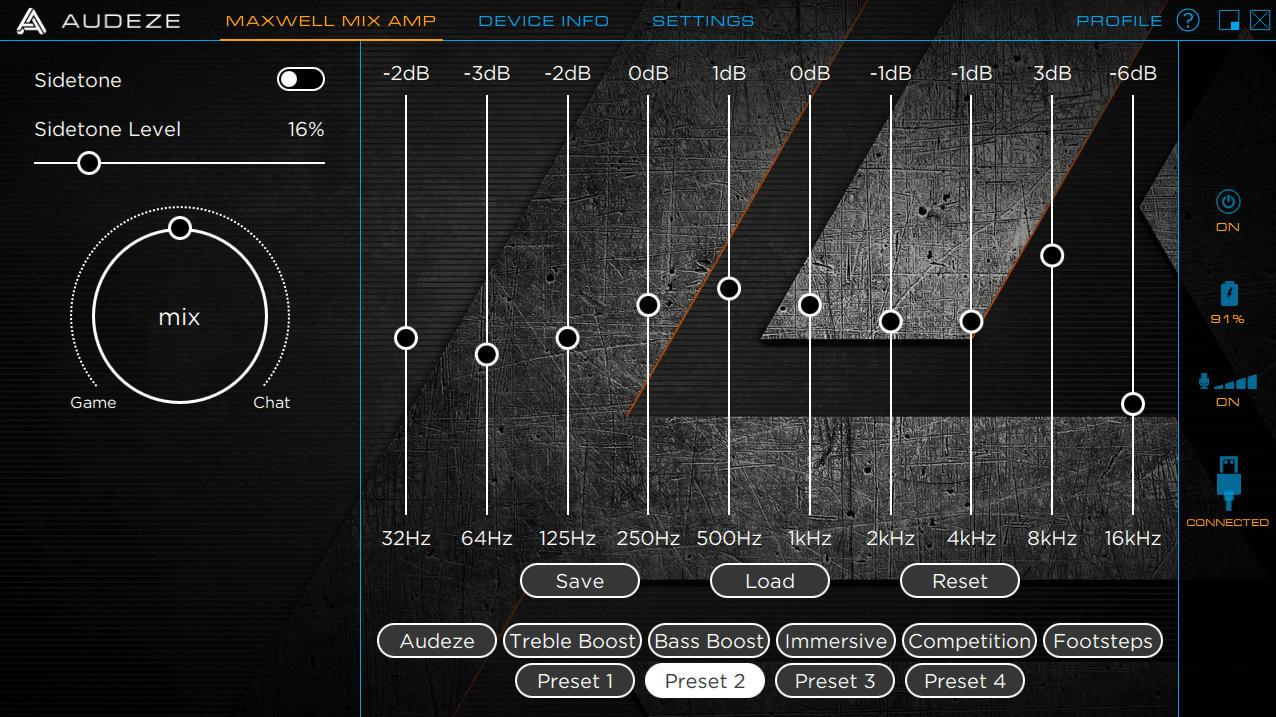
The owner can also save four custom sound profiles to the headphones using the equalization tool. In this regard, the starting situation is interesting, as with all adjustment channels set to zero, the frequency response is not identical to the Audeze profile, but rather to the Bass Boost profile (at least with Firmware version 1.0.1.74). Therefore, if the Maxwell's bass is not desired to be significantly boosted, it must be equalized downwards by setting the 32 hertz channel to -2 dB and the 64 hertz channel to -3 dB. Otherwise, the frequency response matches the Audeze profile, meaning adjustments can be made based on it.
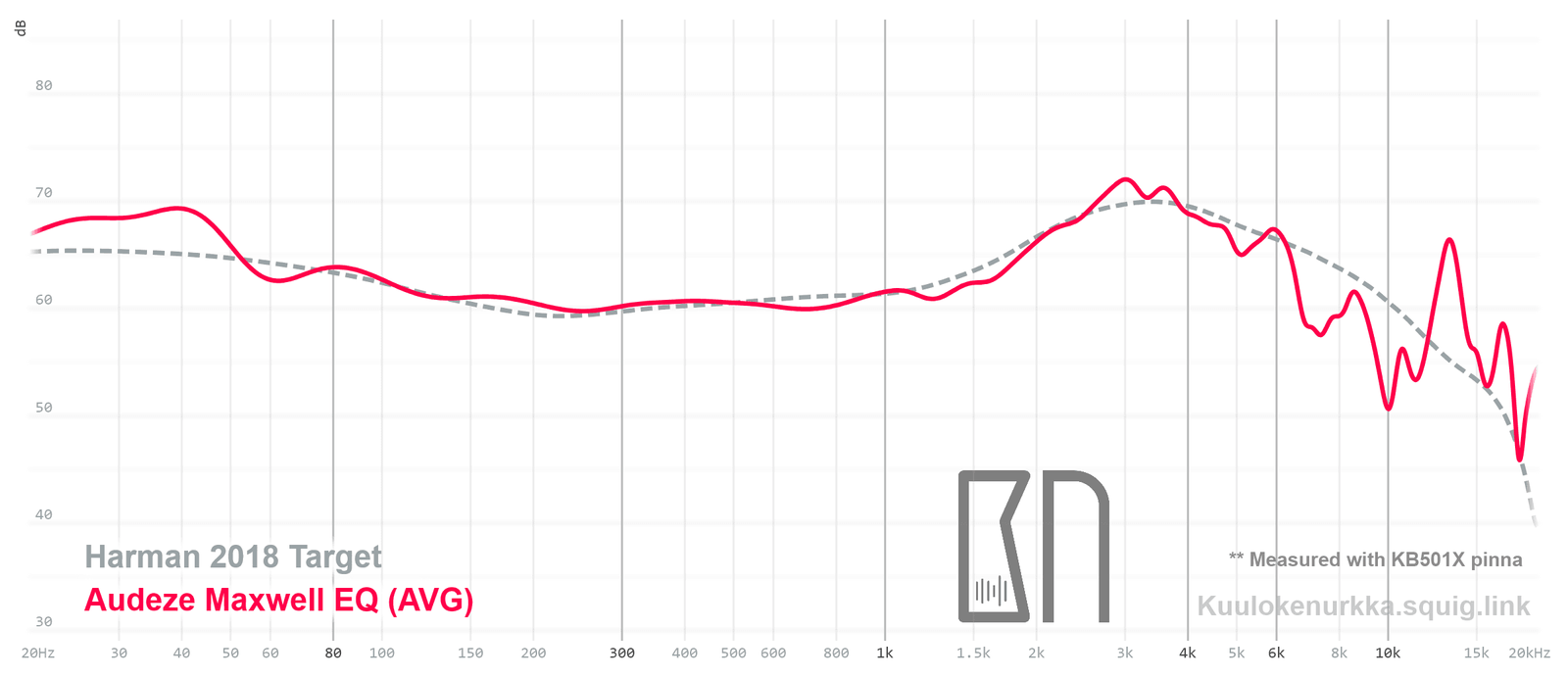
Equalizing the Maxwell is not at all necessary in my opinion, but I have made its sound slightly more detailed and clearer by lowering the mid-bass (125 hertz control) and boosting the treble at 8 kilohertz. The soundstage, in turn, can be made a bit wider and more relaxed by taking a decibel off at 2 and 4 kilohertz (these could just as well be left alone, as could the 500 hertz control). A more important change for me is reducing the harshness present in the uppermost treble by adjusting the 16 kilohertz channel downwards. I settled on -6 dB, which, together with the 8 kilohertz boost, makes the Maxwell's treble sound smoother and higher quality. Since the profile is saved to the headphones, I wouldn't really want to stop using it.
With the following settings, the Maxwell would serve as a kind of budget alternative to, for example, Dan Clark Audio's excellently tuned Noire X- and E3-headphones. Of course, the settings have been made for my own pair of headphones and my own hearing, so for many, the ready-made sound profiles may already be sufficiently balanced.
Comparison: Maxwell vs. Focal Azurys
Prices: 400 € vs. 550 €
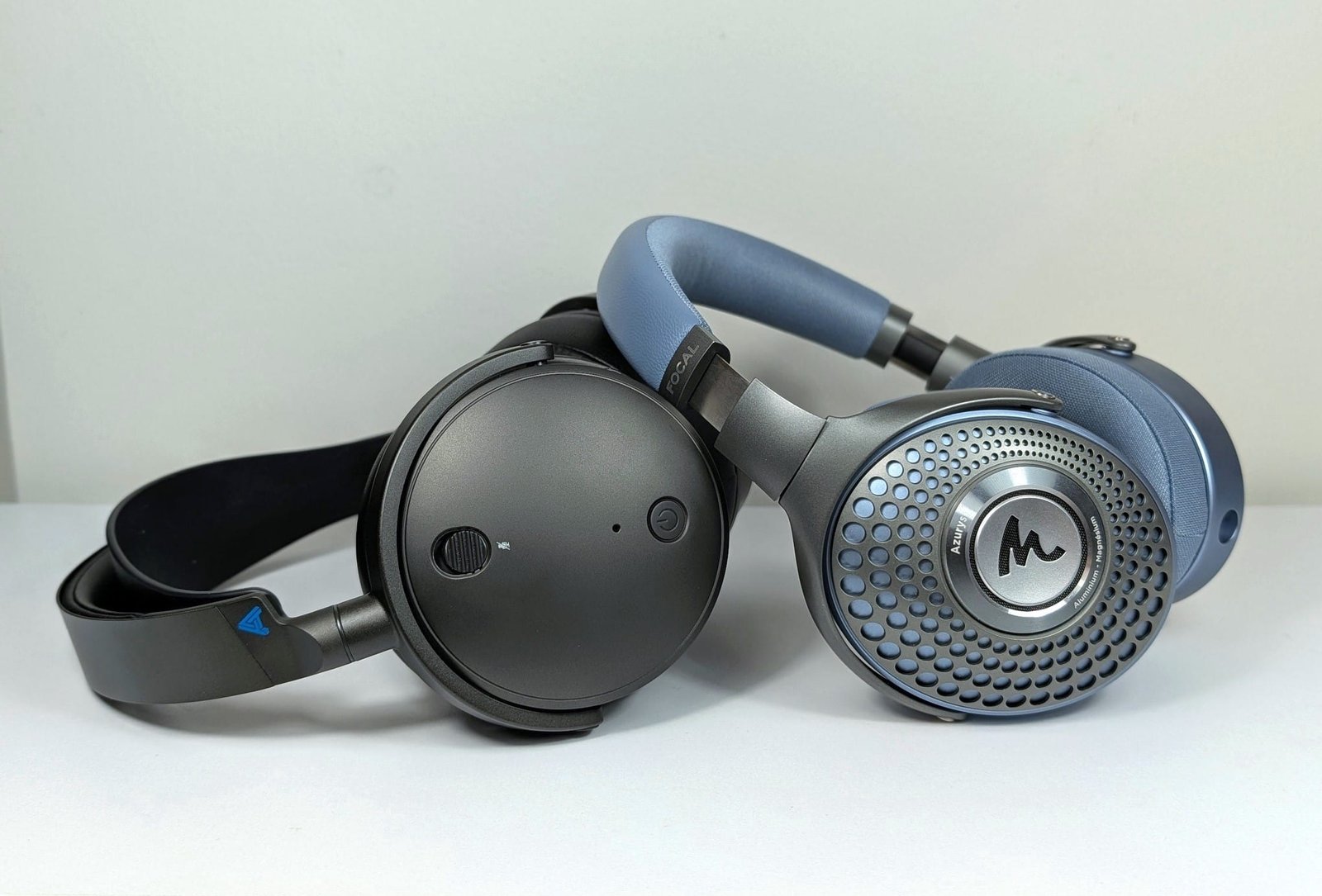
The Audeze Maxwell should certainly be compared primarily to other wireless headphones, but since I believe it surpasses virtually all noise-cancelling headphones under 500 euros in sound quality, let's take as a comparison one of the wired models I have found to be good, namely Focal Azurys. Could the Maxwell, being 150 euros cheaper, offer an alternative for those seeking high-quality closed-back headphones?
Starting with the basics, the Azurys weighs almost 200 grams less and is also significantly smaller. From a usability perspective, the large and heavy Maxwell feels noticeably clumsy next to such comparisons, even though its wearing comfort is quite good. With its comprehensive features, the Maxwell compensates for this, as the goodies it contains can only be dreamed of with the Azurys. For example, Focal's small microphone placed on the cable is downright comical next to Audeze's boom microphone, but then again, the Azurys is not intended to be a headset. It is a simple product for listening to music, whereas the Maxwell handles multiple roles simultaneously.
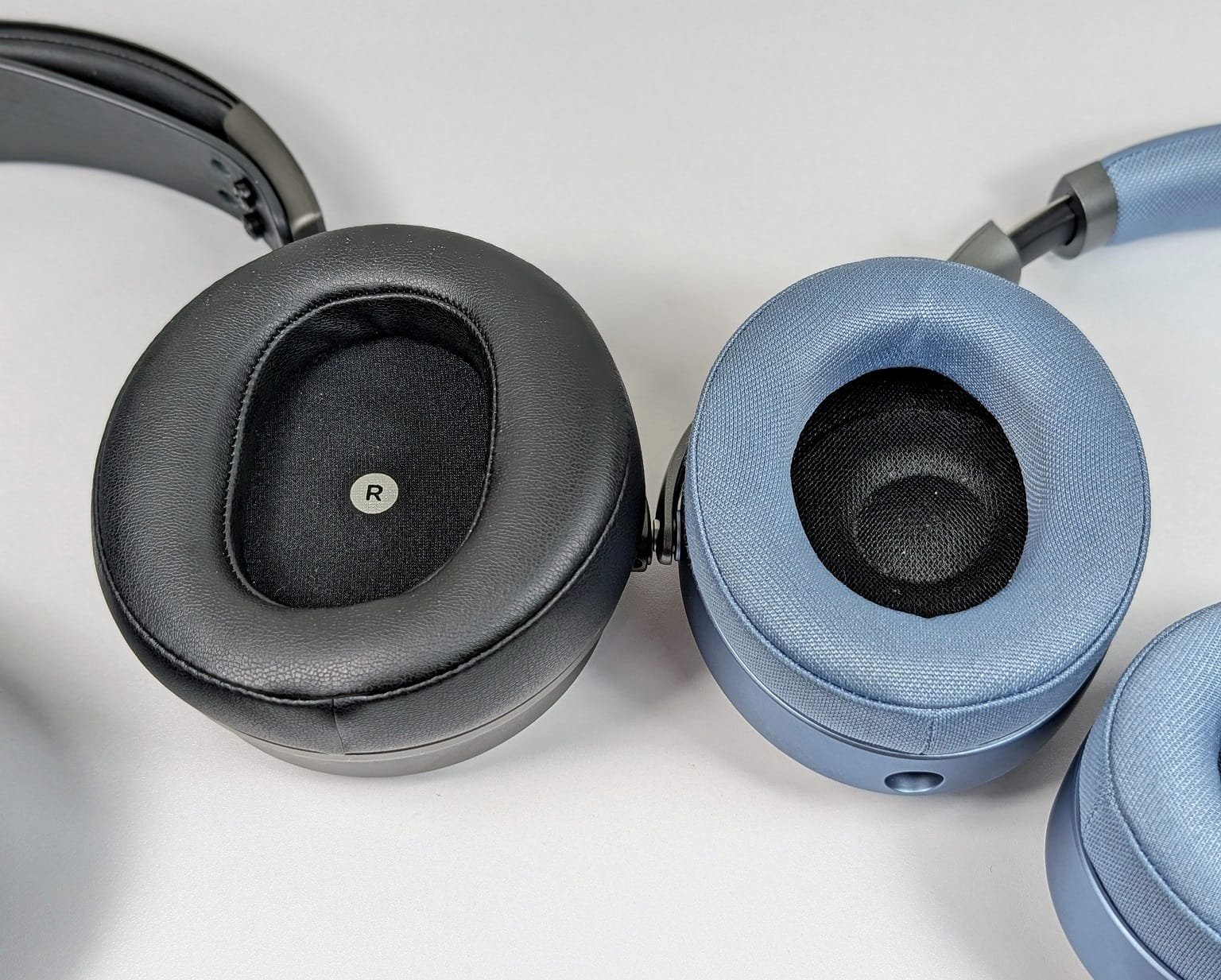
Azurys' sound quality is based on mechanical tuning, while Maxwell's sound is digitally adjusted with DSP. Advantages can be found in both approaches. Since the Focal model does not contain electronics, it is potentially a more long-lasting product. Its sound can also be influenced more by equipment choices, so an enthusiast gets more to tinker with, in a way. Maxwell, on the other hand, operates wirelessly. If its sound doesn't happen to please, it can be easily adjusted with built-in sound profiles or an equalizer.
When comparing sound quality, I have listened to Maxwell with its default settings and mainly wirelessly with its USB transmitter (on a normally functioning computer) to find out how Audeze's solutions compare to traditional headphones like Focal.
Frequency responses:
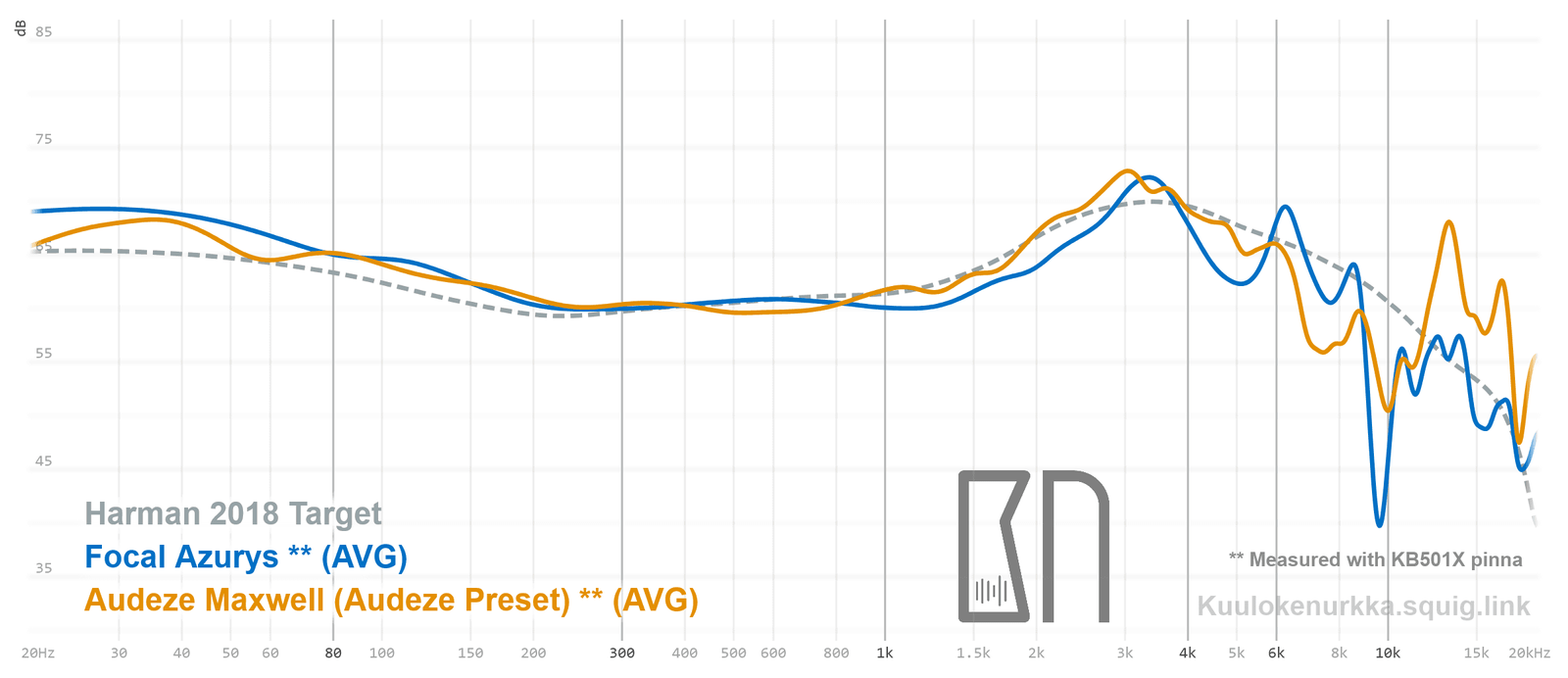
The duo is tuned quite similarly up to 3 kilohertz, except that Maxwell reproduces the sound (especially the vocalist) closer and slightly more energetic, while Azurys broadens and calms the presentation between 1–3 kilohertz. In my opinion, completely neutral mid-frequencies would fall between the two, but neither strays far from it. Perhaps Maxwell sometimes feels a bit too intimate and present for my taste, while Azurys” slight relaxation doesn't evoke equally strong feelings one way or another. However, the prominent 3.5 kilohertz region in the Focal model makes vocal performances slightly ”breathy" in style, so Maxwell sounds objectively a bit more normal and natural.
Regarding bass reproduction, Azurys is more dynamic and kicks tighter, while Maxwell's planar bass is a touch softer and spreads over a wider area in the soundstage. I personally prefer the clarity and a kind of pinpoint accuracy of Focal's low frequencies, but Maxwell's fullness and a certain grandeur also have their charm, so I find nothing to complain about there either.
Treble quality distinguishes the two, as Azurys sounds refined and controlled, while Maxwell, unfortunately, sounds somewhat rough. The highest frequencies of the Audeze model indeed shoot significantly upwards, whereas Azurys stays close to Harman's target curve. The Focal model thus doesn't really draw attention to frequencies above 10 kilohertz, unlike Maxwell, whose sound has emphasized sparkle. Someone might call Azurys” sound a bit dark, but younger listeners, in particular, might prefer the headphones” non-fatiguing nature. I am only talking about music listening in this context, as Audeze headphones' "more detailed" treble might be better suited for gaming instead. On the other hand, fans of airier and brighter treble than Azurys would probably generally prefer Maxwell, unless it starts to strain the auditory nerve too much. I personally crave a slight treble rebalancing in Audeze headphones by equalizing to make the sound more tonally pleasing.
Possibly due to Maxwell's airier treble, Azurys' soundstage feels smaller. Its reproduction is also quite focused, but with bright sounds kept in check, the listening experience is more relaxed than Maxwell's. I find myself able to follow different aspects of music with Azurys a bit more proportionately. Even somewhat surprisingly, the headphones also separate and position sounds a bit more precisely than Maxwell, whose reproduction I perceive as slightly hazy and soft. However, the differences remain quite small and are at least partly due to the quieter reproduction between 7–9 kilohertz in Maxwell. When I equalize the 8 kilohertz region upwards, the accuracy of the reproduction also increases closer to Focal's headphones.
My conclusion is as follows. If I don't equalize Audeze headphones, I slightly prefer the Focal model, especially due to its more enjoyable bass and more natural treble. However, after a small and relatively easy equalization, I lean towards considering Maxwell fresher in energy level and more impressive. On the other hand, it would also be possible to make its sound similar to Azurys, so considering equalization, it's always difficult to declare winners. In any case, the duo seems quite comparable in sound quality, so no significant improvement is to be expected by paying 150 euros more for Focal headphones. Azurys' biggest advantages are therefore other factors, such as its significantly lighter weight.
Comparison: Maxwell vs. Sennheiser HD 620S
Prices: 400 € vs. 360 €
In the same price range as Audeze headphones, there is also the 40 euro cheaper Sennheiser HD 620S, which I found in my review good, but nevertheless a somewhat mediocre closed-back headphone. One reason for this was actually Maxwell, which is competitively almost poison for Sennheiser. I want to quickly delve into this, especially regarding sound quality.
Structurally, the HD 620S is 170 grams lighter, but feels distinctly cheaper and more plasticky. It is also more difficult to get it to sit evenly on the head, and the earcups do not rotate horizontally like Maxwell's. However, the Sennheiser model, with its tight construction and stronger clamping force, isolates more sound, although I wouldn't actually wish the same for Maxwell, because I want to hear my own voice relatively normal when speaking into a microphone. I would still count this as an advantage for the HD 620S if good sound isolation is specifically desired from closed-back headphones. Correspondingly, there's hardly any need to mention more about the comprehensive features of Audeze headphones, so let's move on to sound quality.
Frequency responses:
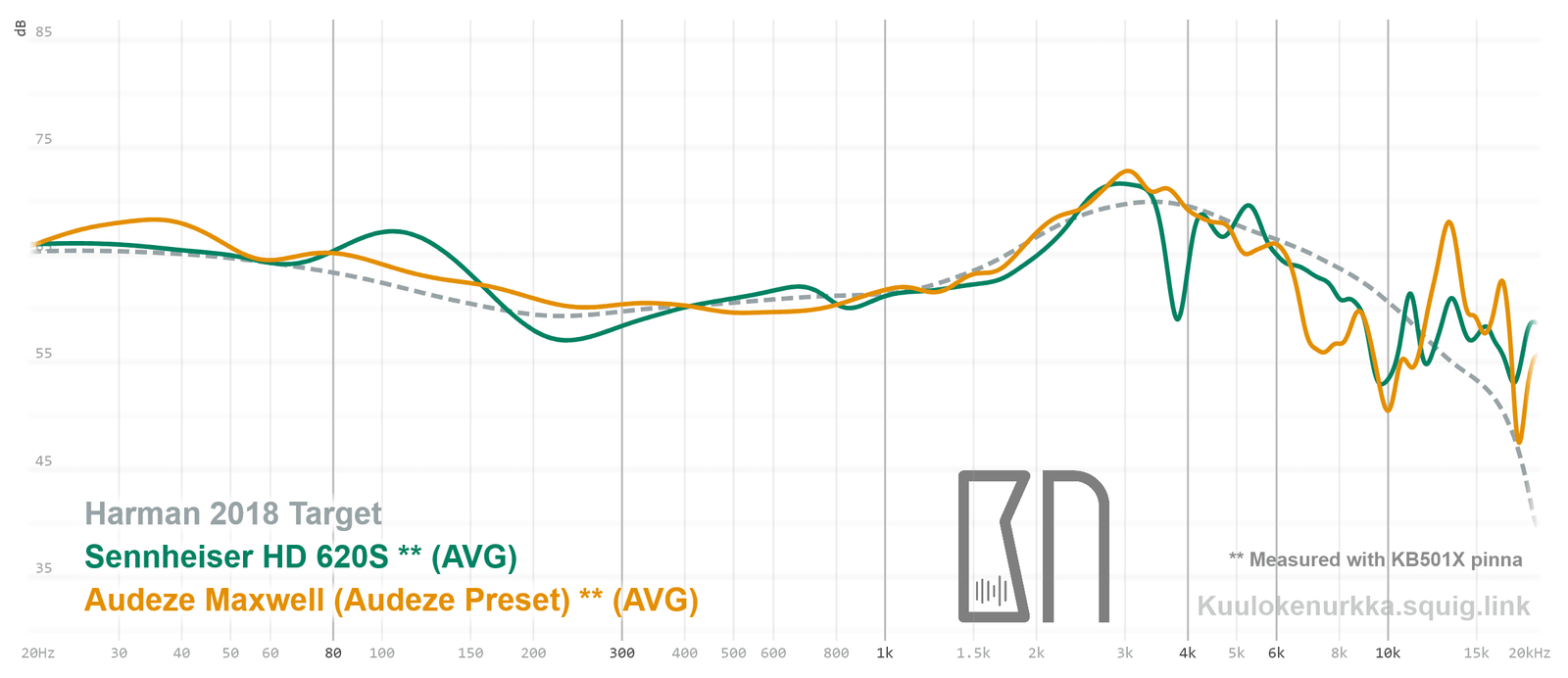
Maxwell reproduces the frequency band from 20 hertz to about 6000 hertz more linearly, avoiding all the irregularities of the HD 620S. Audeze headphones are simply better, despite the fact that the Sennheiser model's highest treble sounds slightly more balanced. On the other hand, I sometimes perceive an emphasized sibilance in the HD 620S' sound at 5.3 and 7 kilohertz, so Maxwell's high frequencies are ultimately closer in tone to what I consider natural reproduction.
The midrange also sounds more neutral with Audeze headphones, but certainly also prominently present. If someone desires a slightly more spacious and relaxed soundstage, the HD 620S offers just that. Otherwise, the unevenness makes the headphones feel somewhat unremarkable compared to Maxwell. In particular, the HD 620S' emphasized upper bass and the subsequent dip in the lower mid-frequencies are clearly audible, whereas Maxwell sweeps over this frequency range with higher quality, without adding boominess or hollowness to the sound. The low frequencies have a completely different level of power and punch compared to the soft HD 620S.
In summary, it should be noted that Maxwell, in my opinion, reproduces every frequency range with higher quality. I wouldn't find any use for the HD 620S other than when I need better sound isolation. Sennheiser's headphones should be cheaper. Closed-back headphones are generally becoming more sensible to implement partially digitally, unless the manufacturer hits a goldmine with mechanical tuning. Unfortunately, Sennheiser has not been able to do this, even though its headphones are still relatively successful compared to many other passive models.
Summary
Small quirks can be found here and there with the Audeze Maxwell, but thanks to the versatility of the headphones, I can use them while avoiding compatibility issues with the USB transmitter. Considering the high-quality build, long battery life, ease of use, and excellent sound quality, I can declare the Maxwell the best closed-back headphones I've tested in their price range – a place on the wall of fame is guaranteed. With a little EQ, the sound can easily be made even more balanced, leaving the high weight as the main question mark regarding recommending the headphones, which might be too much for some. The observed quality issues also dampen the mood a bit, but their prevalence is difficult to assess, as people tend to report negative experiences more often than positive ones. I wouldn't necessarily worry about it too much, as long as the warranty and return conditions of the place of purchase are in order, just in case.
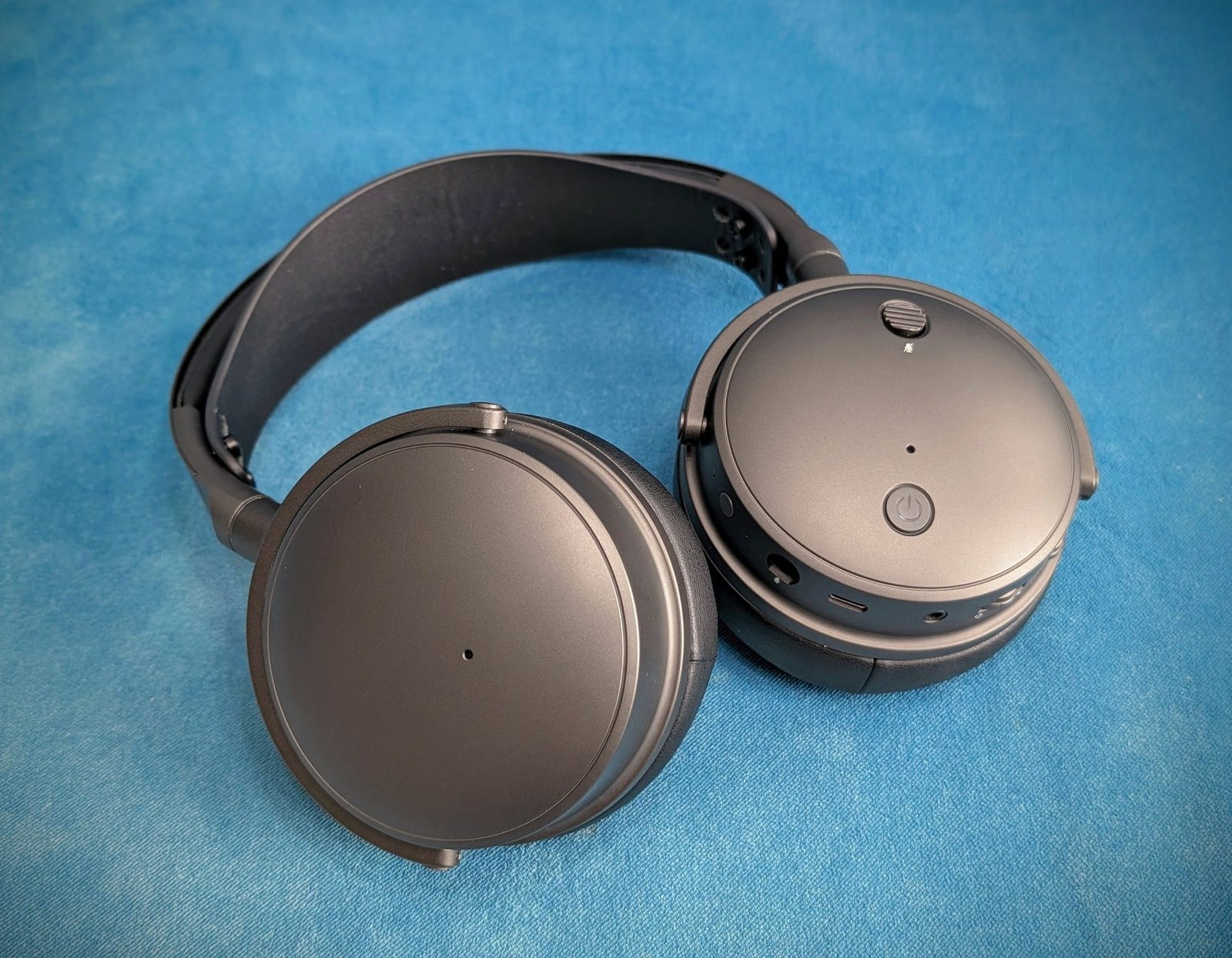
Although Audeze also sells significantly more expensive headphone models, the Maxwell is, in my opinion, the product that offers its most balanced sound. Thus, despite its gaming branding, it would even be suitable for professional use. When not talking about noise-cancelling headphones, I can't think of a situation where I wouldn't want to use the Maxwell. It doesn't surpass similarly priced open-back headphone models in resolution or soundstage impact, but the more robust bass reproduction and the flexibility of the closed-back design in various listening situations make the competition between these two product categories quite even. I recommend keeping the Maxwell in mind when choosing 400-euro headphones in the future, especially if a microphone is also needed. Sometimes the headphones are sold for around 300 euros, which makes them even more attractive.
Pros and cons:
+ Excellent, accurate, and balanced sound
+ Sensibly implemented sound profiles and equalizer
+ High-quality build
+ Good fit
+ Ease of use and versatility
+ Very long battery life
+ No need for a headphone amplifier
+ Suitable price for the features
+/- Microphones suppress background noise excellently, but the sound quality itself may not be the best possible in all situations
– The highest treble does not reproduce with the best quality by default
– Connection issues related to the USB transmitter with some devices
– Sidetone feature works poorly
– High weight
– Minimal height adjustment range
– Potential quality issues
– The equipment does not include a storage pouch or case
 EN
EN  FI
FI
Thank you for detailed overview. Maxwell interesting products, but maybe little bit situational.
What you think about Edifier Stax spirit S5? Also planar construction, but less specific design
Thanks!
Edifier Stax Spirit S5 is essentially like WH950NB with planar drivers and without ANC, so for me it feels a bit overpriced. I haven’t heard it though, so I cannot tell how I would like the sound. Based on the measurements Stax Spirit S3 should be more neutral, while S5 has a big hole in the mids (around 500 Hz). Thus, without EQ I might like S3 more than S5.
I bought these headphones partly based on this review. They are excellent headphones. The sound quality and microphone noise cancellation are incredible for gaming headphones.
I ordered different ear pads from Aliexpress for 11€, in case the standard ear pads start to feel sweaty. Additionally, I thought about 3D printing different headbands from TPU: www thingiverse com/search?q=audeze+maxwell&page=1
Thank you for the good and comprehensive review.
A battery saving function would be nice. That is, one that limits the battery charge to, for example, an 80% level. I don't know if this has already been taken into account, i.e., if a 100% charge would actually be, for example, 4.0 – 4.1V with a Lithium battery, but I would like to limit it even lower because these have such outrageous battery life that even half of the battery life would be enough.