Author: Sword of Damocles

Table of Contents:
Information:
- Release year: 2022
- Designed in Germany and manufactured in China
- Colour options: Black and white
- Price: 1399 €
- Type: Closed, over-ear
- Dynamic 42 millimeter cellulose drivers
- Impedance (passive mode): 64 ohm
- Audio connections: Bluetooth 5.1, USB-C and 2.5 mm
- Bluetooth codecs: AptX HD, AptX, AAC and SBC
- USB connection's maximum sampling rate: 24 bit / 96 kHz
- Charging port: USB-C
- Battery capacity: 1200 mAh
- Battery life: 70h noise cancellation off / 35h in HQ mode
- Charging time: 2h (fast charging: 1.5h usage time in 3 minutes)
- Noise cancellation function: On (3 intensity levels) / Off / Transparency mode
- Features: Multipoint support, voice assistant, touch controls, HQ audio mode, phone application for adjusting the noise cancellation function and changing the EQ profile
- Weight: 325 g
- Connector type: 2.5 mm (balanced)
- 1st cable: Length 3 m / connector 4.4 mm
- 2nd cable: Length 1.4 m / connector 3.5 mm + 6.35 mm adapter
- Accessories: Carrying case, USB-C cable (length 1.4 m) and airplane adapter
- Warranty: 3 years
Review unit acquisition method: Loaned from a reseller
German T+A's Solitaire T (manufacturer's product page) was for a couple of years the world's most expensive noise-cancelling headphone at its price of 1400 euros, but recently Bang & Olufsen's Beoplay H100 surpassed it, costing 1500 euros. Thus, this time I get to review the world's second most expensive noise-cancelling headphone, which in itself is a somewhat daunting task. Can T+A's first wireless headphone sound in any way worthy of its high price, when even many more experienced manufacturers have great challenges in making decent products? In the case of Solitaire T, however, hope is raised by T+A's hi-fi background and my previous positive experiences with Solitaire P -planar headphones.
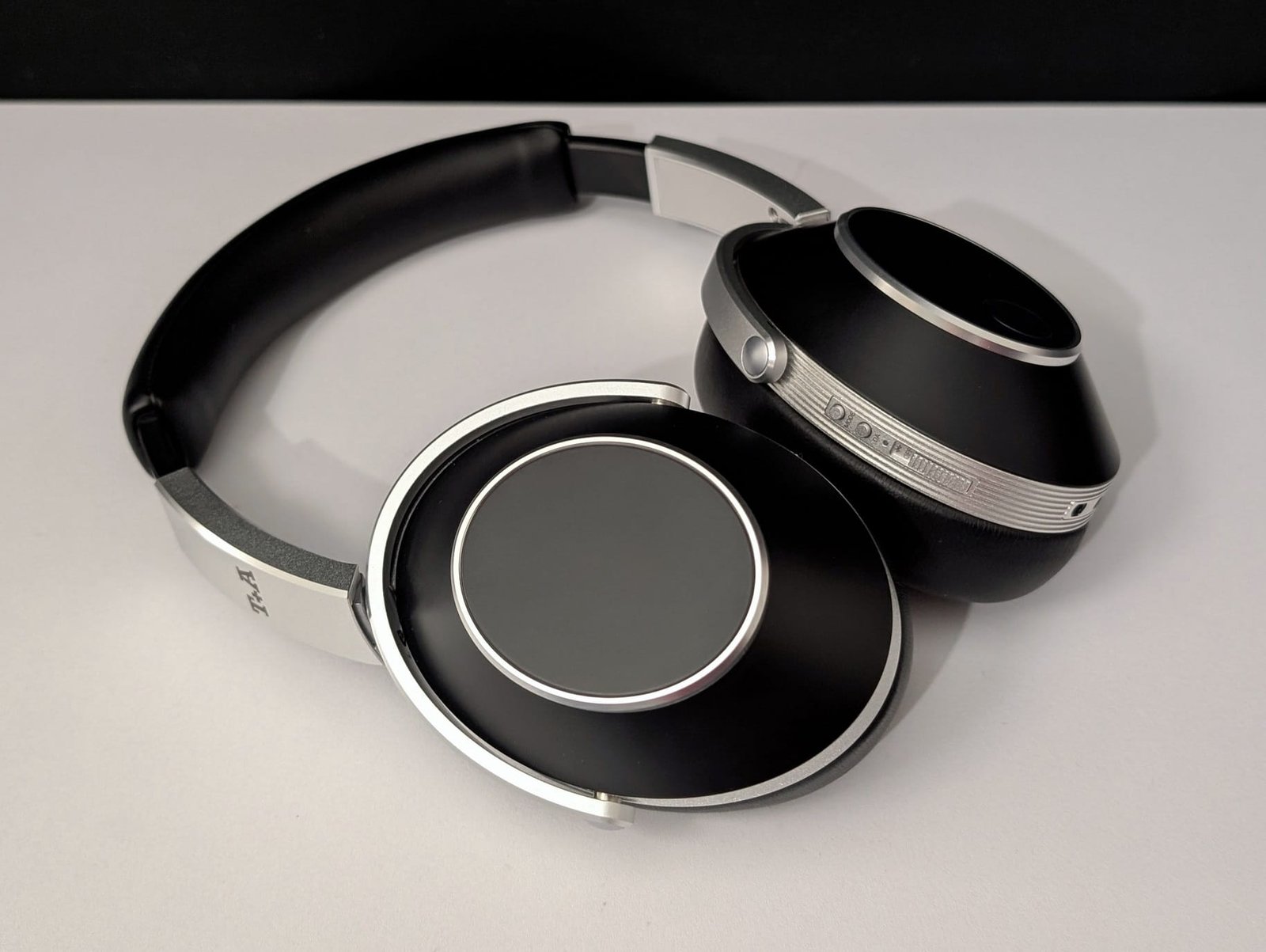
Solitaire T is designed to be interestingly versatile, as the headphones can be used in completely comparable ways: in passive mode with a headphone cable, and in active mode either via Bluetooth, a USB cable, or a headphone cable. Regardless of the audio signal transmission method, the noise-cancelling function can also be utilized, as long as the headphones are powered on. An alternative operating mode offered is High Quality (HQ) audio mode, which activates the headphones' higher-quality DAC section (ES9218 chip) while using more power to amplify the dynamic cellulose drivers. Thus, the product offers plenty to test.
Solitaire T was lent for review by the Finnish retailer of T+A products, Mareksound. Let's thank them together for this headphone content!
Packaging and accessories
The product packages of the Solitaire P and Solitaire P-SE I previously tested were downright gigantic, so I feared something similar for the Solitaire T as well. Fortunately, its packaging turned out to be a more reasonable size, although the outer cardboard box with its thick padding is still designed to protect the headphones from almost the end of the world.
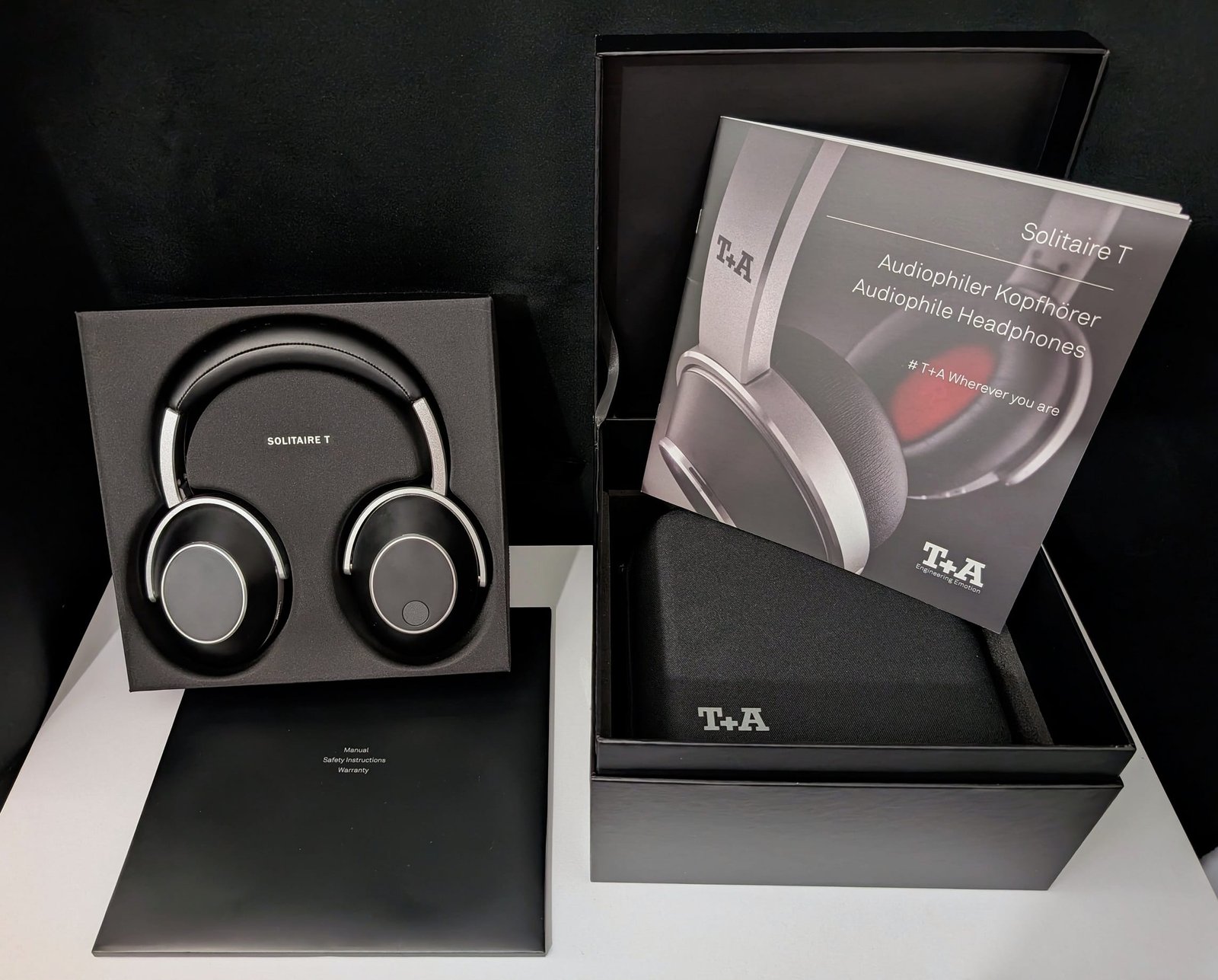
From the multi-layered product packaging, first the headphones themselves are revealed on a tray, below which is a cardboard envelope containing the user manual and a square carrying case, weighing almost half a kilo. One of the three included cables is packed separately, while the other two are placed inside a magnetic-closure compartment within the case. An airplane adapter is also found there for those who need one. Although the manufacturer could have halved the packaging size by packing the headphones directly into their case, it is pleasant to receive an expensive product presented with dignity.

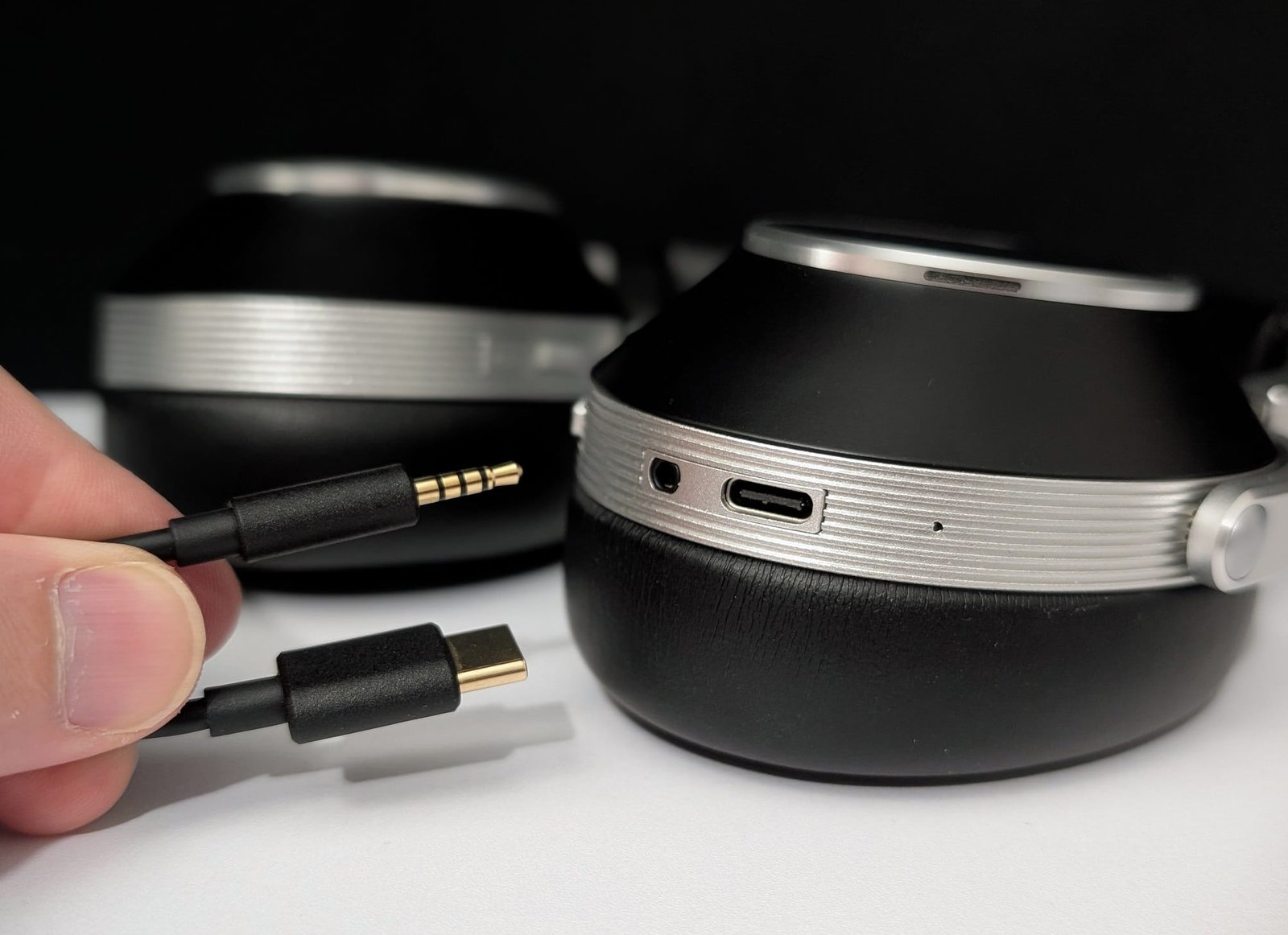
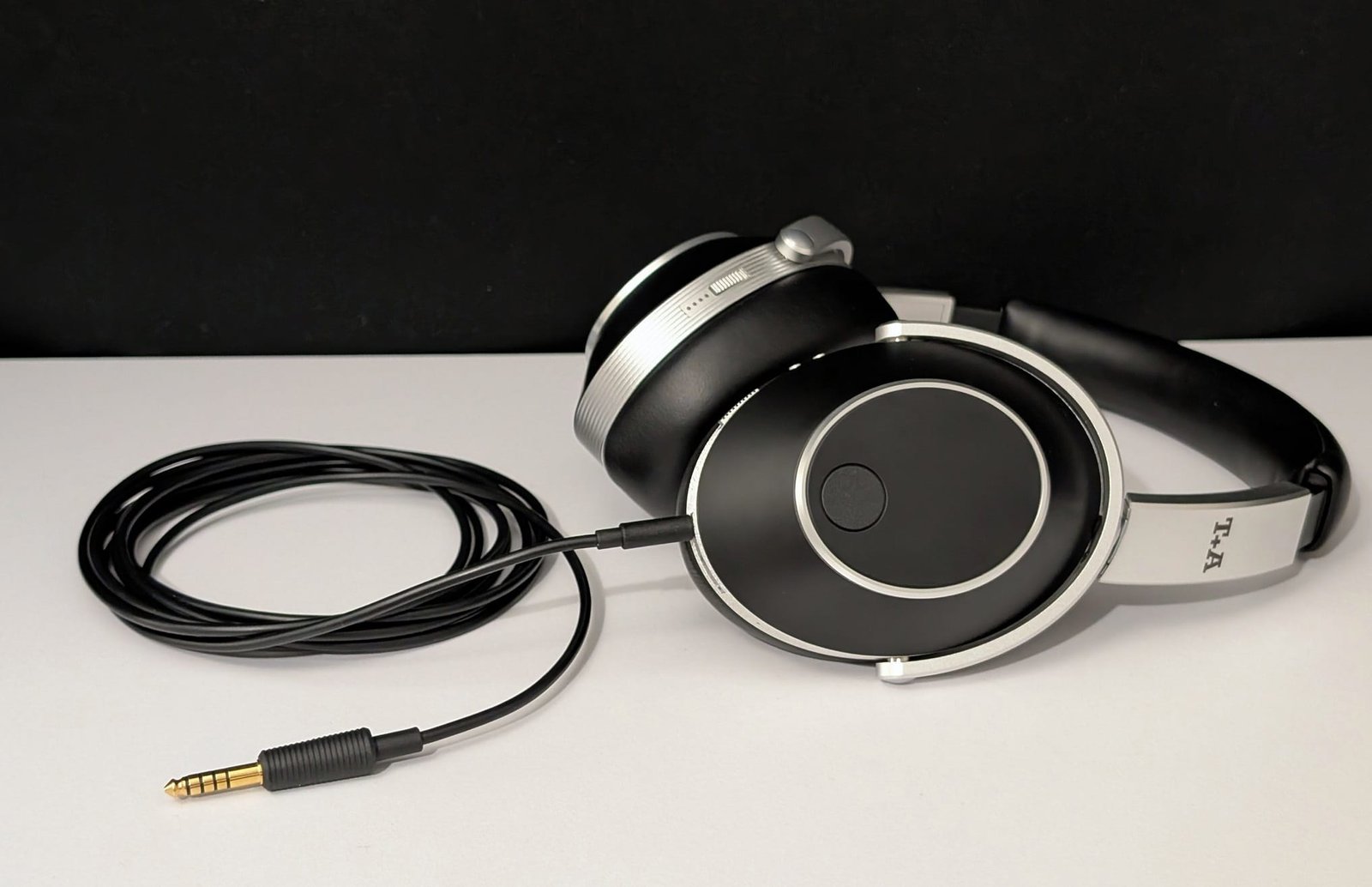
Solitaire T is the only Bluetooth noise-cancelling headphone I know of that can be listened to in passive mode in a balanced configuration. For this purpose, T+A offers a balanced cable with a 4.4 millimeter connector, which is a full 3 meters long. In addition, a 1.4 meter cable with a 3.5 millimeter connector (including a 6.35 mm adapter) is included, as well as a USB-C cable of the same length, which can be used for both charging and listening to the headphones. The cables are thin and quite stiff, with the exception of the shorter headphone cable, which stands out for its flexibility and usability. The other cables are manageable, but they leave a little to be desired considering the price range of the headphones. The analog cables attach to the Solitaire T with a single 2.5 millimeter connector, so finding suitable replacement cables might take some time.
Build and comfort
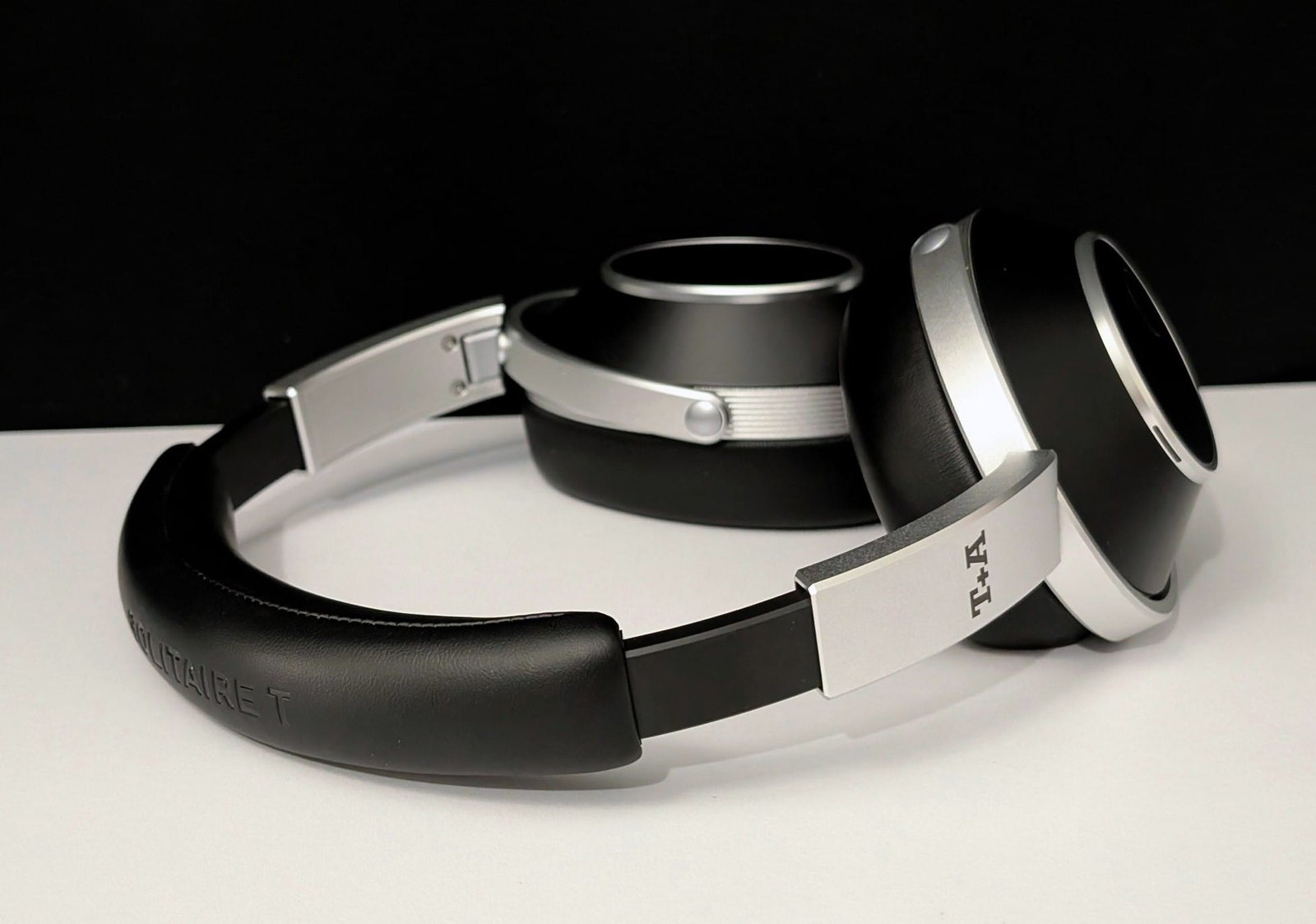
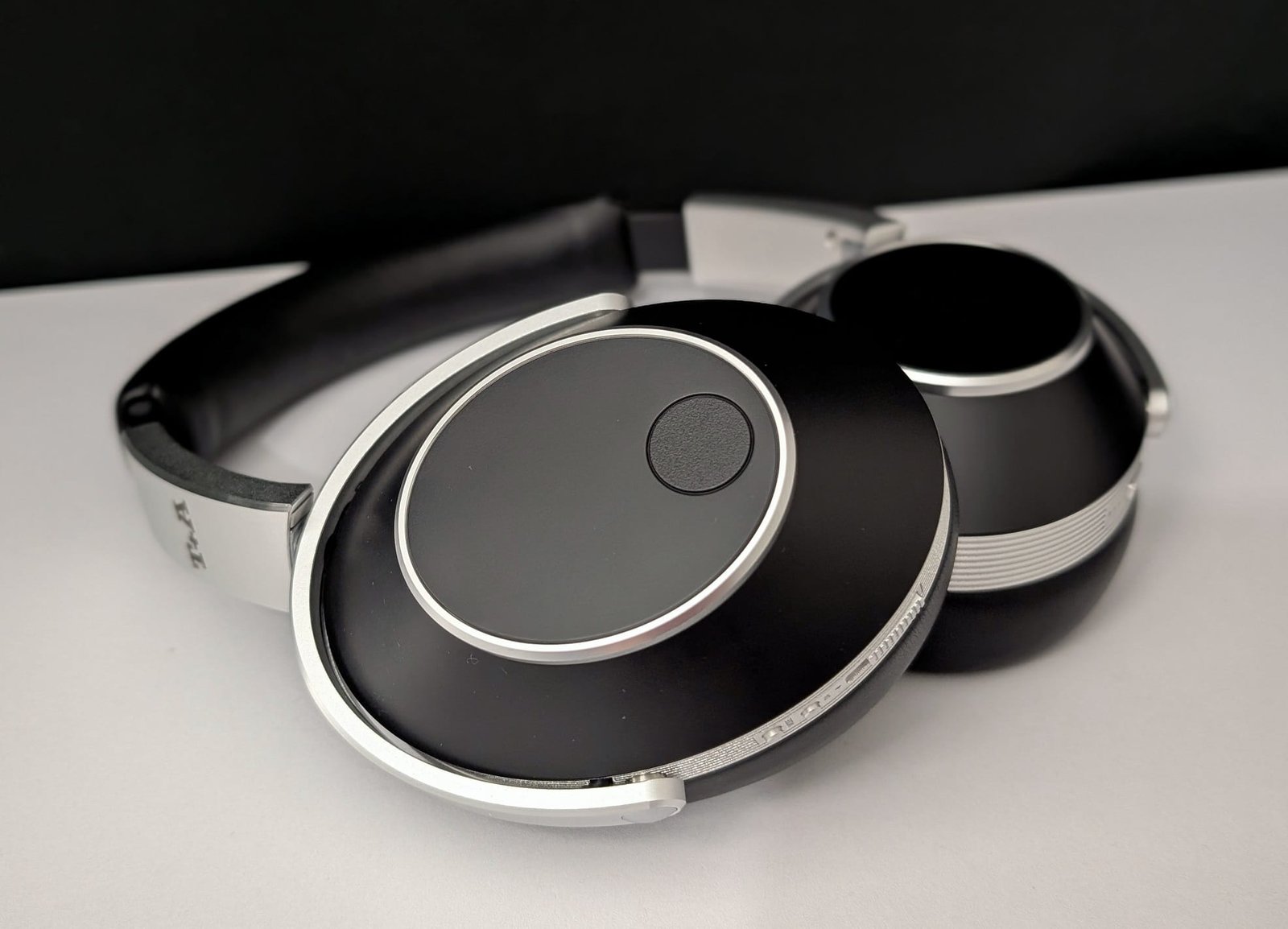
The design of Solitaire T shows influences from other headphones in the Solitaire series. T+A calls its style timeless, but I personally find it quite stripped-down and, with the grooves running along the sides of the cups, even retro. In my opinion, Solitaire T would fit, for example, into old James Bond movies, and I wouldn't necessarily guess that it was manufactured in this millennium. At the same time, the headphones are also so discreet that no one encountered on the street would surely guess them to be an expensive product. This is probably a good thing in a way, but should 1400 euro headphones still look a bit more interesting? In addition to the black headphone version, a white color option would, of course, also be available.
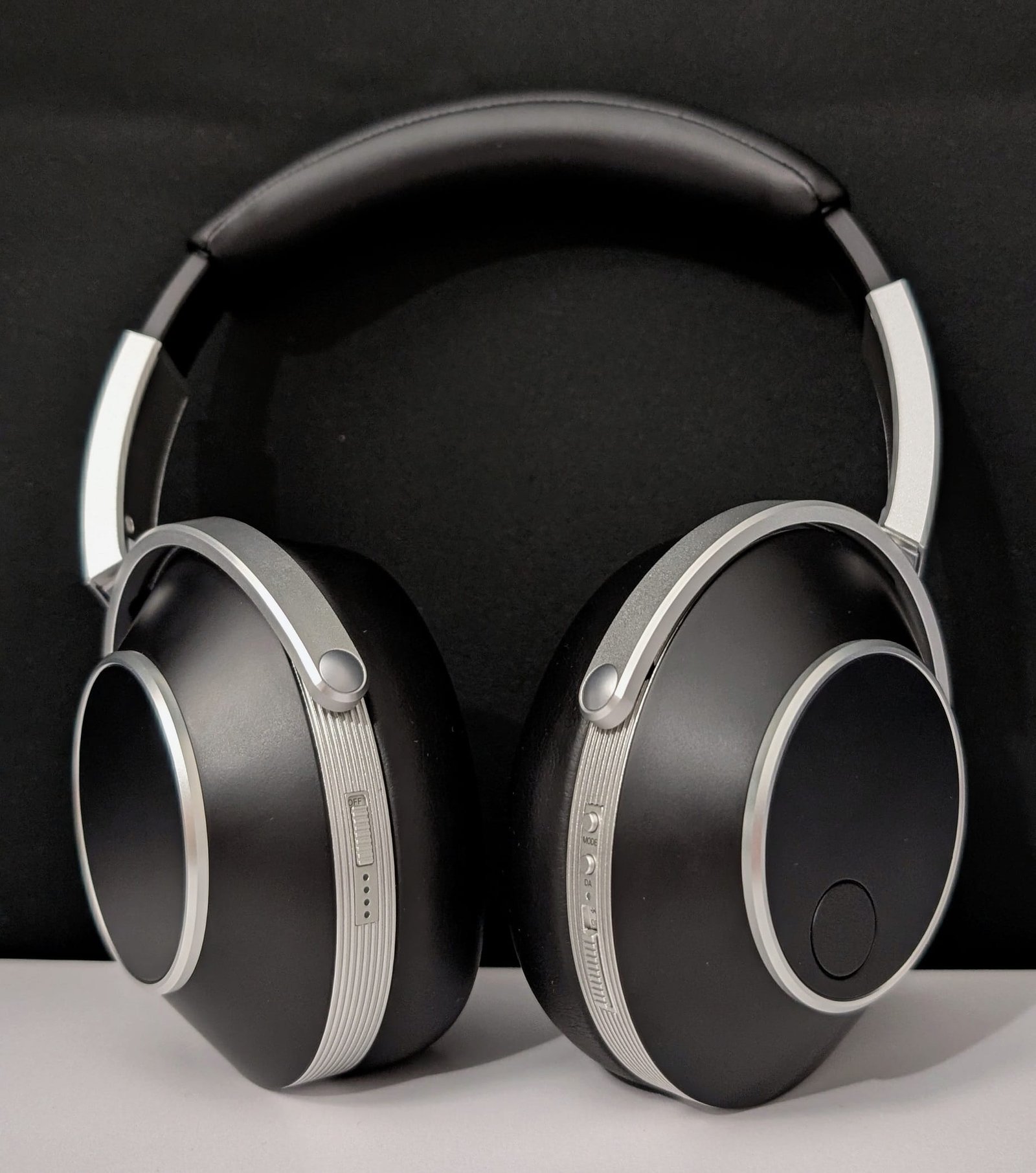
Qualitatively, I consider the result successful, as the structure contains more metal than plastic. All silver parts, including the buttons, are made of aluminum, while the black parts, specifically the sides of the cups and the extension parts of the height adjustment (or at least their shells), are plastic. The latter solution raises a slight concern, so I would not forcefully twist the narrow headband, especially if the headphones are adjusted to their maximum position. However, the overall feel is sturdy, and the parts move smoothly against each other. The cups can be rotated both horizontally and inwards with hinges, so that the Solitaire T fits into its carrying case arranged in the same way as, for example, the recently tested Sony ULT Wear.
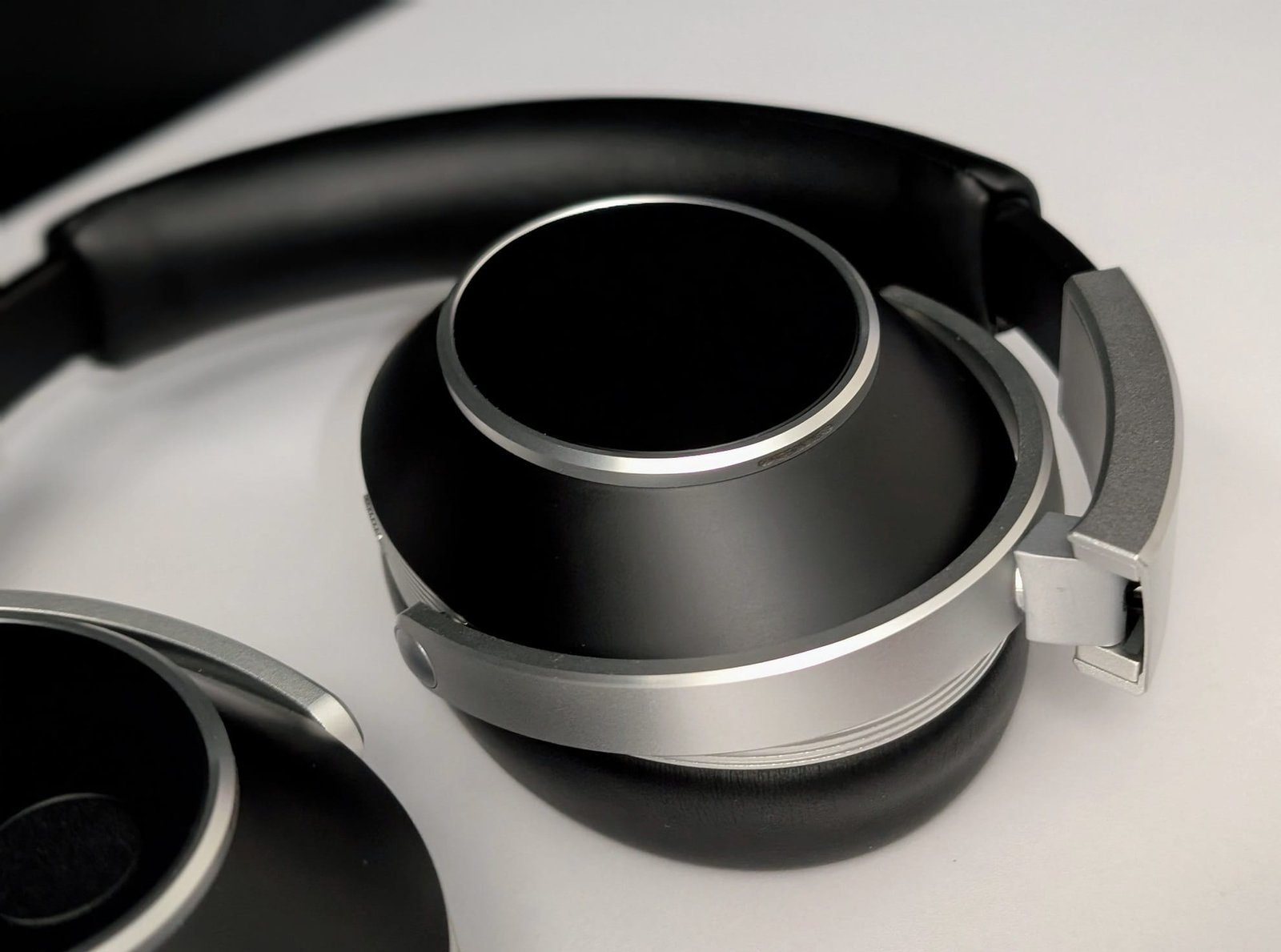
T+A has chosen soft synthetic leather as the surface material for the padding parts. The headband is quite narrow, but its padding is sufficient for the headphones' 325-gram weight. The ear pads are also comfortable in terms of their thickness and material, but their opening (3.3 x 5.8 cm) is unfortunately designed for small-eared people. For my own ears, the pads feel quite cramped. I also have to use the headphones Focal Bathys' with the height adjusted almost to the maximum position, so I'm afraid that Solitaire T would not be suitable for people with large heads or large ears.
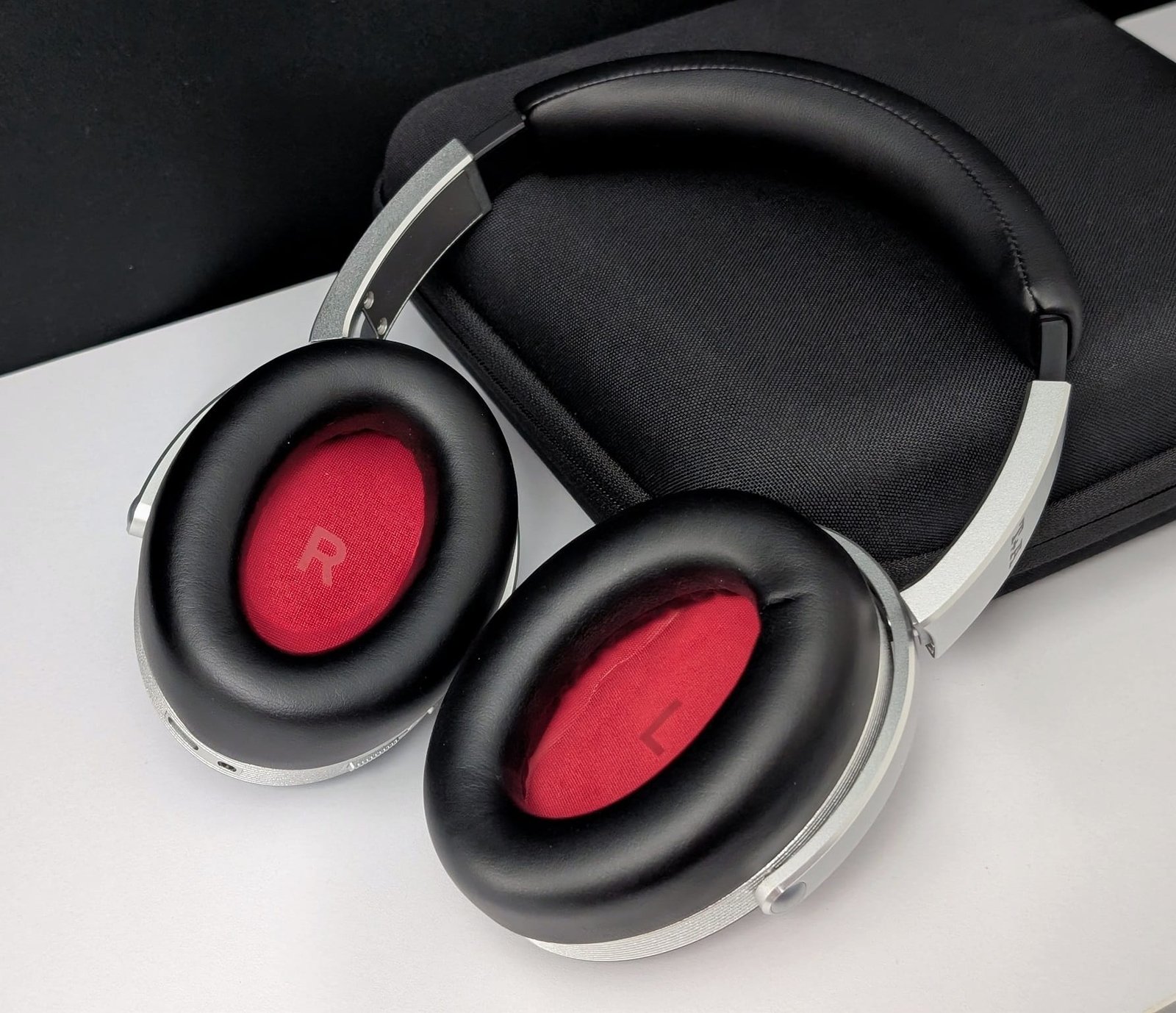
If the headphones fit the head, there should be no major complaints about comfort, as the fit is even, and the structure does not press my head too much from any direction. Even the weight of just over 300 grams does not feel excessive; many premium noise-cancelling headphones weigh the same or slightly more. In Solitaire T, springs have been added to the vertical movement path of the cups to press the lower edge of the pad more firmly against the head. I'm not sure about the usefulness of this solution, but it doesn't interfere with use, at least.
Putting the headphones on, however, is a somewhat peculiar experience, because when stretching the headband, the cups simultaneously stiffen almost into place at their hinge points, and no longer turn much in the front-to-back direction of the ear. Thus, the cups must be held by hand in the desired wearing position before the headphones are placed on the ears. Sometimes I have to make a couple of adjustments, but the good thing about the system is that the headphones eventually sit comfortably and securely on the head. Many other headphones with a narrow headband slide off the head more easily.
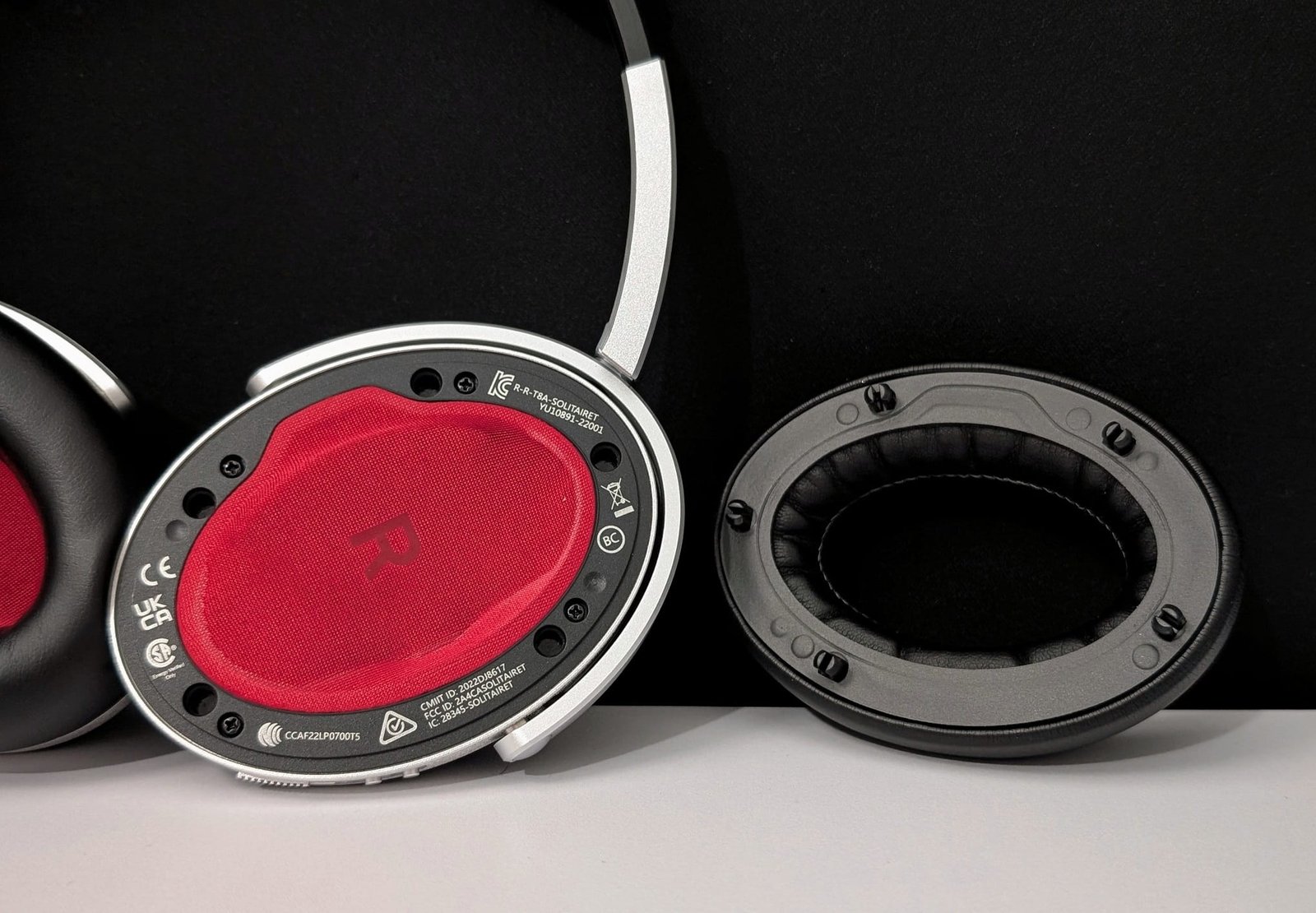
Solitaire T is controlled using both physical buttons and touch functions located on the edge of the right cup. The headphones feature separate slide switches for power and Bluetooth connection, so wireless functions can be kept off to save battery when listening to the headphones with a cable. This also prevents the headphones from accidentally connecting to a device pair with an active Bluetooth connection.
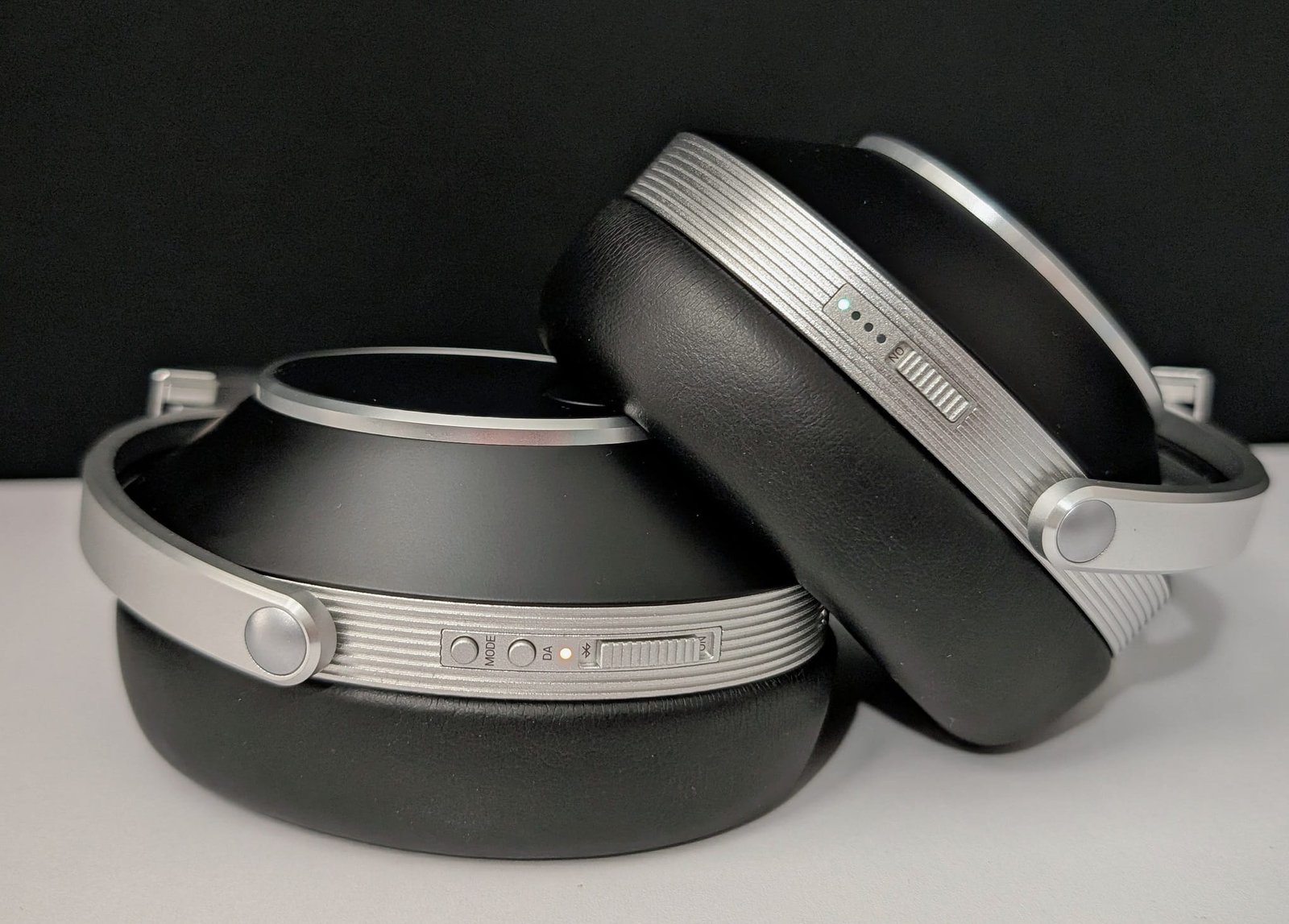
In addition to the slide switches, the right cup of Solitaire T features two round buttons: the lower one activates the voice assistant, and the upper one controls the noise-cancelling function, allowing it to be turned off or, alternatively, activating the HQ sound mode. Transparency mode can be activated temporarily by holding a finger on the rough circle on the side of the cup, or more permanently by tapping it twice. Media functions, answering calls, and adjusting volume are also handled by tapping the side of the cup in various ways.
Bluetooth technology and battery life
Although the approximately 5-year-old Bluetooth version 5.1 does not significantly limit Solitaire T's functionalities, I would expect to see the market's best features in a 1400 euro product. However, T+A can defend itself by saying that Solitaire T was not designed solely as a wireless headphone. The same is actually visible in the codec list, as the headphones support at best only the AptX HD codec (released in 2016). On the other hand, it should work quite widely on various mobile devices nowadays, unlike LDAC or the AptX Lossless option, not to mention more exotic codecs. The Bluetooth connection also works stably in Solitaire T, and its range is nothing exceptional.
For comparison, the 1500 euro B&O H100 currently operates with the worst AAC and SBC codecs from an audio quality perspective, because LDAC support will, for some reason, only arrive as a software update for the headphones during 2025 – if it arrives at all. Weak codec support thus seems to be a characteristic feature of expensive noise-cancelling headphones. It should, of course, be remembered that many other factors ultimately affect good sound quality.
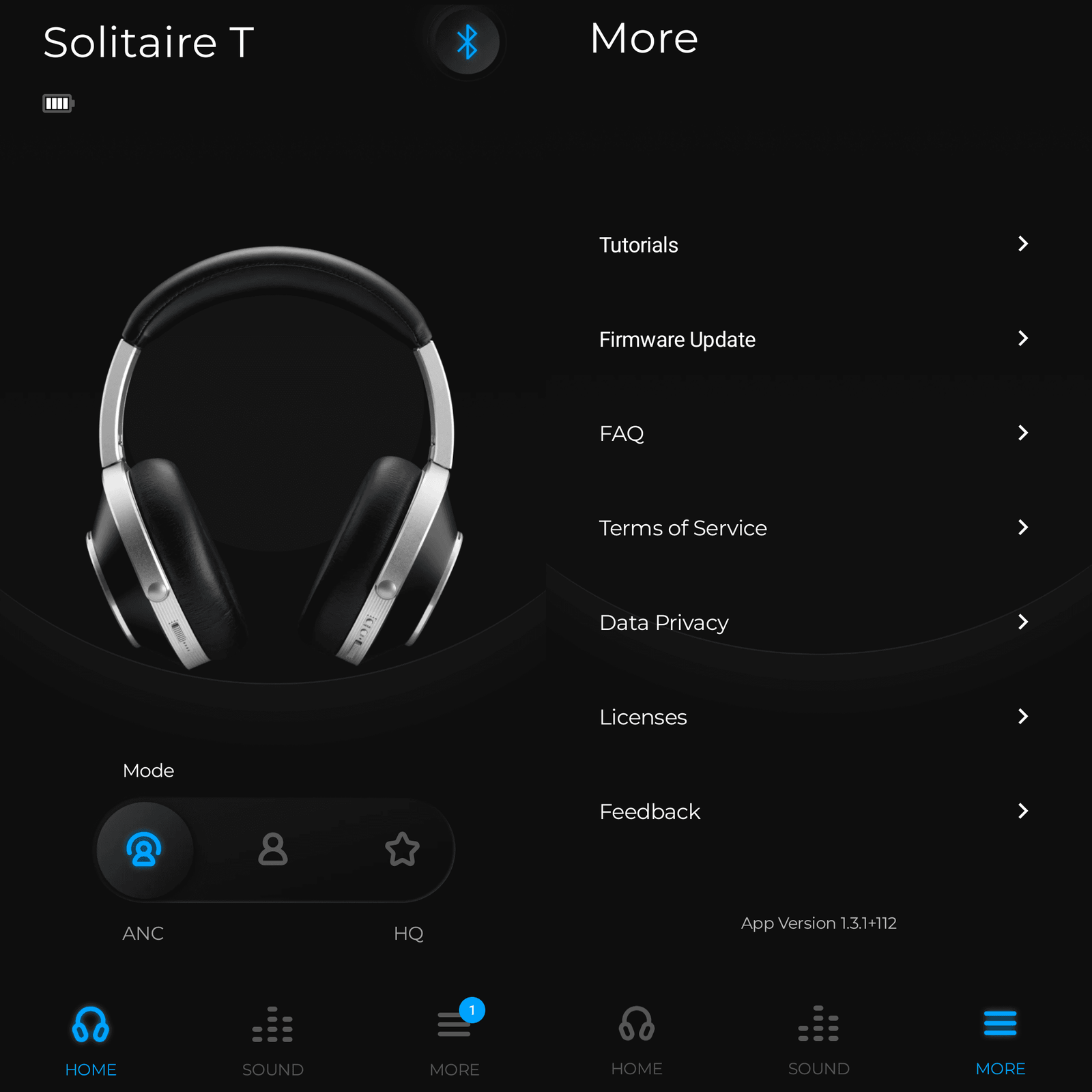
Regarding battery life, Solitaire T makes a greater impression by offering 35 hours of use in HQ sound mode (with noise-cancelling off) thanks to its rather large battery. Another reported battery life is 70 hours, which I assume is achieved with noise-cancelling and HQ mode off. The manufacturer, for some reason, conceals the battery life with the noise-cancelling function on, but it should still reach a good level in any case (my guess is 30–50 hours). The charging time is stated as 2 hours, and a 3-minute quick charge is said to provide an additional 1.5 hours of use. The battery charge level is indicated by a row of four LEDs located next to the power switch. A LED found on the other cup, interestingly, indicates the active Bluetooth codec.
Mobile app and additional features
T+A has developed a simple phone application for its headphones, from which the effectiveness of the noise-cancelling function can be adjusted between three settings, and the sound quality can be influenced through various predefined EQ profiles. Otherwise, the application mainly contains usage instructions and the possibility to update the firmware.
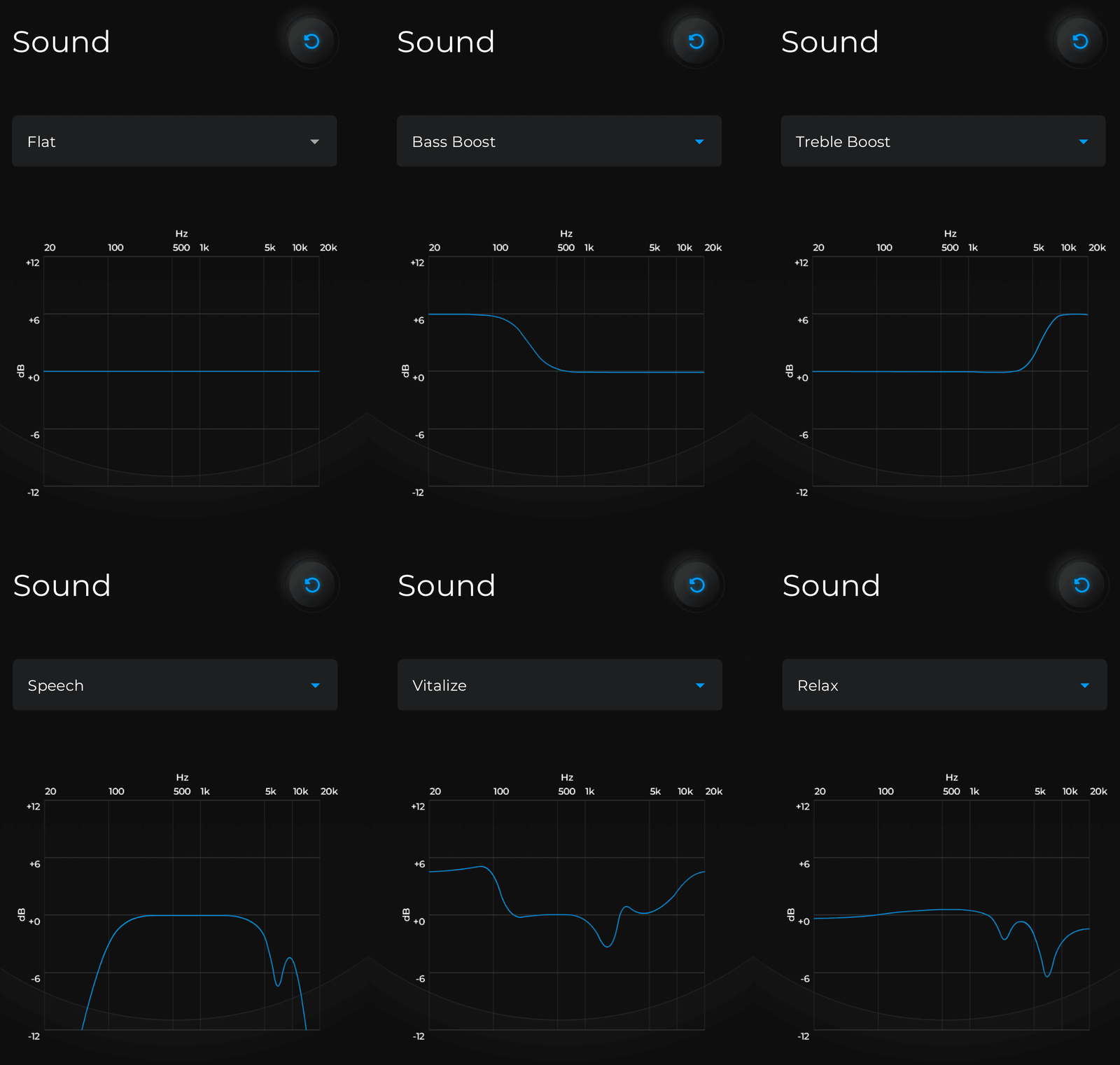
There are six EQ profiles available: Flat, Bass boost, Treble boost, Speech, Vitalize, and Relax. They can be utilized both when listening with noise cancellation on and in HQ audio mode. Since the frequency response already changes between these two use cases, EQ profiles achieve 12 different results. However, Bass Boost and Treble Boost are, in my opinion, quite over-the-top, Speech sounds like the cheap on-ear Jabras at my workplace, and Vitalize produces an overly V-shaped result. The default Flat setting offers the most balanced listening experience for my taste, and additionally, Relax, found at the bottom of the list, works quite well at a certain volume by bringing the mid-frequencies forward in the overall sound. However, when increasing the volume, it starts to sound unbalanced compared to the Flat option. I would have hoped to see a free-form parametric equalizer instead of EQ profiles, as many who buy expensive headphones would likely know how to use one. Of course, the Solitaire T could also be adjusted with other applications if needed.
Active Noise Cancellation
T+A utilizes an ANC chip acquired from Sony and four microphones in the Solitaire T's noise cancellation implementation. Since this product category is completely new to the manufacturer, I naturally approached the functionality of the noise cancellation with some skepticism beforehand. Fortunately, everything seems to be in order, as I have not noticed bugs or other peculiarities in the same way as, for example, with Cambridge Audio's Melomania P100:ssa. In the Solitaire T, noise cancellation also causes almost no hiss or static, which is important for headphones aiming for good sound quality.
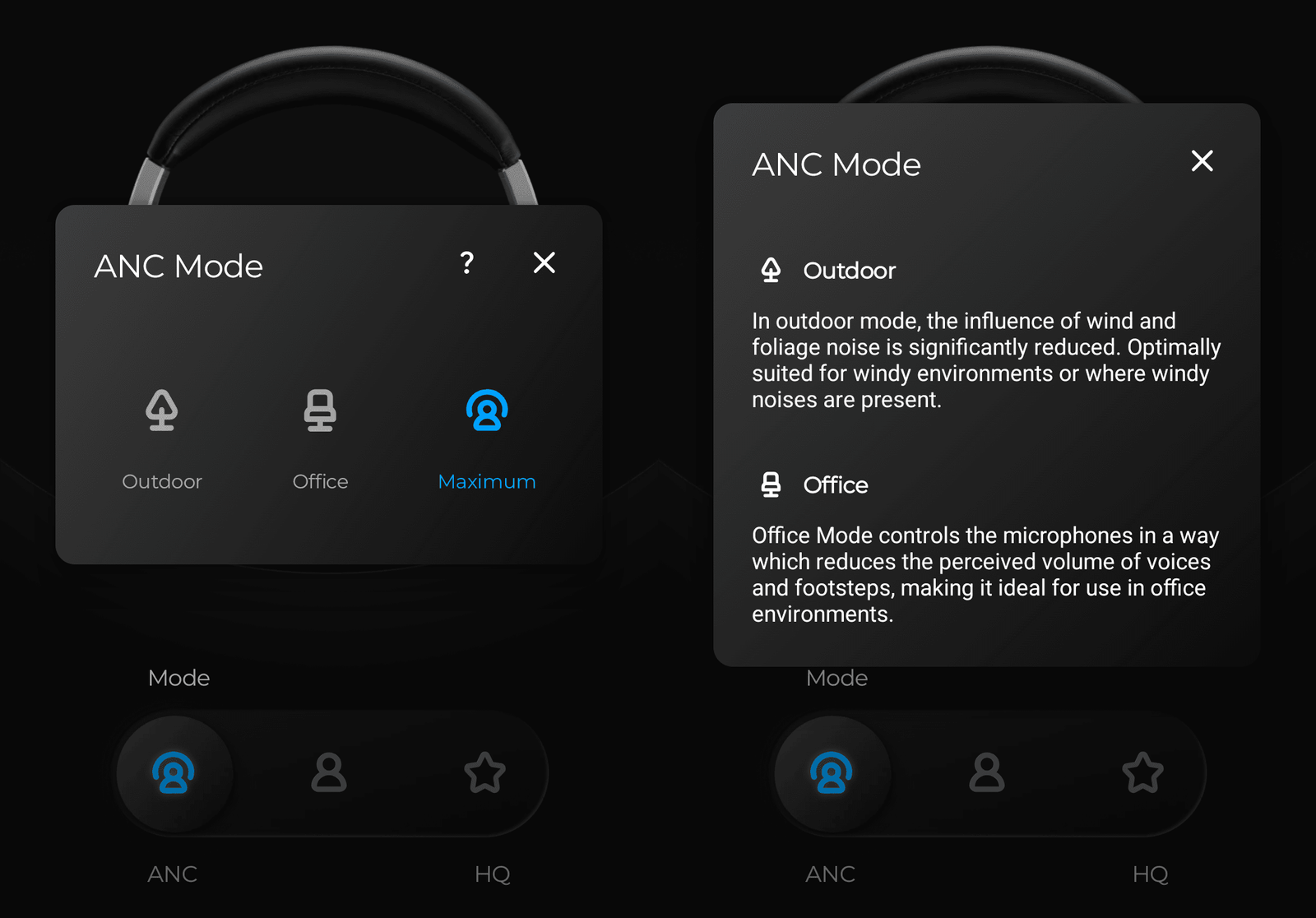
For noise reduction, there are three options available through the phone application, with the maximum setting selected by default. Additionally, there would be an Outdoor setting, which is said to reduce wind-induced interference, and an Office setting, which should focus on suppressing human speech and footsteps. I have found the maximum setting to be the most effective for suppressing all kinds of noise, but somewhat surprisingly, the Office setting almost completely eliminates wind-induced hum and rustling. With the Outdoor setting, wind paradoxically causes the most interference, so have the settings perhaps been accidentally named incorrectly?
I performed my other noise cancellation tests with the maximum setting, listening to noise imitating airplane travel and sitting in a noisy cafe, as usual, from my living room speakers. The Solitaire T unfortunately suppressed airplane noise mediocrely, losing to both the 200-euro priced Valco VMK25and the 280-euro Cambridge Audio Melomania P100. However, a cafe-like environment suited T+A's headphones a bit better, as they managed to create a calmer experience than the VMK25. Still, headphones like the Melomania P100 and Bose QuietComfort SE, suppressed noise more.
In truth, I expected slightly better noise cancellation from the Solitaire T, but it still competes evenly with, for example, Focal Bathys' . In the case of neither headphone does the high price mean more effective noise cancellation than competitors, but active noise cancellation is a great help in any case compared to not having the feature available at all. While listening to music, I think one can be quite satisfied with the Solitaire T's noise cancellation function, even if the market leaders are far ahead.
As a positive surprise, the transparency mode, on the other hand, works excellently and sounds above all natural. The Solitaire T does not sharpen ambient sounds but reproduces, for example, my own speech very much as I normally hear it. In this respect, the headphones are among the best models I have tested. Unfortunately, I don't find much use for the transparency mode myself, so its significance ultimately remains quite small. Still, kudos to T+A!
Observations related to use
The Solitaire T has functioned surprisingly smoothly and problem-free as the manufacturer's first noise-cancelling headphone, but a few things also cause annoyance. Firstly, in HQ audio mode, there is occasionally a slight crackle and click between song changes, which is likely due to changes in the DAC section's power supply or operating mode. T+A has stated that it cannot fix the problem, but fortunately, no extraneous noises occur during listening.
Secondly, the headphones' slowly spoken voice announcements and the volume attenuation that occurs during them quickly become annoying. A short beep or other indication that I have turned off the noise cancellation function or switched to HQ audio mode would be sufficient for me. The spoken announcement following the activation of transparency mode is the most unnecessary, as it practically prevents me from hearing what another person is trying to say to me at that moment. However, T+A plans to fix this in a future firmware update.
The Solitaire T also reinforces my dislike for touch functions, as their reliability remains low, unless we are talking about pausing playback or accidentally activating transparency mode, which happen all too easily while I am, for example, slightly adjusting the headphones on my head. Even a small touch to the side of the cup pauses playback and may simultaneously activate transparency mode for a fraction of a second, in other words, unnecessarily causing two consecutive voice announcements ”Transparent on & Transparent off”. Sometimes the headphones may also permanently switch on transparency mode or repeat voice announcements many times in a row, even if my hand is no longer near the ear cup.
In light of this, it's downright comical how difficult it is to intentionally turn on transparency mode. The operation requires two short swipes or some kind of tap within a small circle. However, T+A has forgotten that the headphone user cannot see where on the cup the finger should be placed. Most often, I have to try the operation 3-4 times and at the same time hit other touch functions outside the circle. Transparency mode would have deserved a physical button instead of this fooling around.
Microphone sound quality
I only had time to briefly test the sound quality of the headphones' microphone in a quiet environment, cautiously stating it to be quite good. My own voice sounds relatively normal and clear, but only a noisier operating environment would reveal whether the headphones can suppress excess noise. If microphone sound quality feels like an important feature, I recommend also checking out other reviews of the Solitaire T.
Headphone sound quality
Our frequency response measurements have been made with a clone IEC-60318-4 coupler and KB501X pinnae. The Harman target curve from 2018 is used as a reference point and generalization of the headphone response that would sound good to most people. For more information on the measurements and their accuracy, see Headphone Measurements-page. The Solitaire T's frequency response is also comparable with other measured headphones Squiglink .
Evaluating the Solitaire T was a more laborious process than usual, as it can be listened to comparably in many different ways. When the headphones are powered on, the frequency response, based on my observations, is similar regardless of whether the audio signal is transmitted via Bluetooth, USB cable, or headphone cable. HQ audio mode, on the other hand, appears to have an almost identical frequency response compared to listening with noise cancellation off. Turning on noise cancellation, in turn, slightly changes the frequency response compared to these two modes of use. Likewise, when used with the power off, the Solitaire T sounds different in its own way, because the frequency response is based entirely on mechanical tuning.
In addition to the frequency response, the final sound quality can be affected by a different DAC implementation when using HQ audio mode, as well as the data transfer method. Wired data transfer surpasses Bluetooth connection in quality, so for example, a higher quality signal can be fed from a mobile device to the headphones via a USB cable. In passive mode, the chosen peripheral equipment can, in turn, affect the sound quality. My concise test period was by no means sufficient for in-depth testing of all operating modes, but I aimed to focus on their primary differences. In my opinion, the order of preference for sound quality is as follows:
- Listening in passive mode
- HQ audio mode in wired listening (USB cable or headphone cable)
- HQ audio mode and Bluetooth connection with Aptx HD codec
- Noise cancellation on in wired listening
- Noise cancellation on and Bluetooth connection
Primarily a wired headphone
Despite its noise cancellation and other refinements, the Solitaire T is primarily designed for wired listening in passive mode, as it has been mechanically tuned by appropriately damping the drivers and fine-tuning the acoustics of the cups. T+A also states that they utilized some kind of mechanical system for bass adjustment, instead of needing to significantly manipulate the frequency response with DSP corrections. Thus, the sound does not actually become more uneven when the headphones' digital functions are turned off.
In passive mode, sound quality can be somewhat influenced by equipment choices. The Solitaire T does not require a particularly powerful amplifier, but its 60–70 ohm impedance provides flexibility in use. The headphones can be listened to, for example, with a tube amplifier, especially since a relatively flat impedance curve ensures that no major changes occur in the frequency response, even if the amplifier's output impedance is high.
Impedance curve:
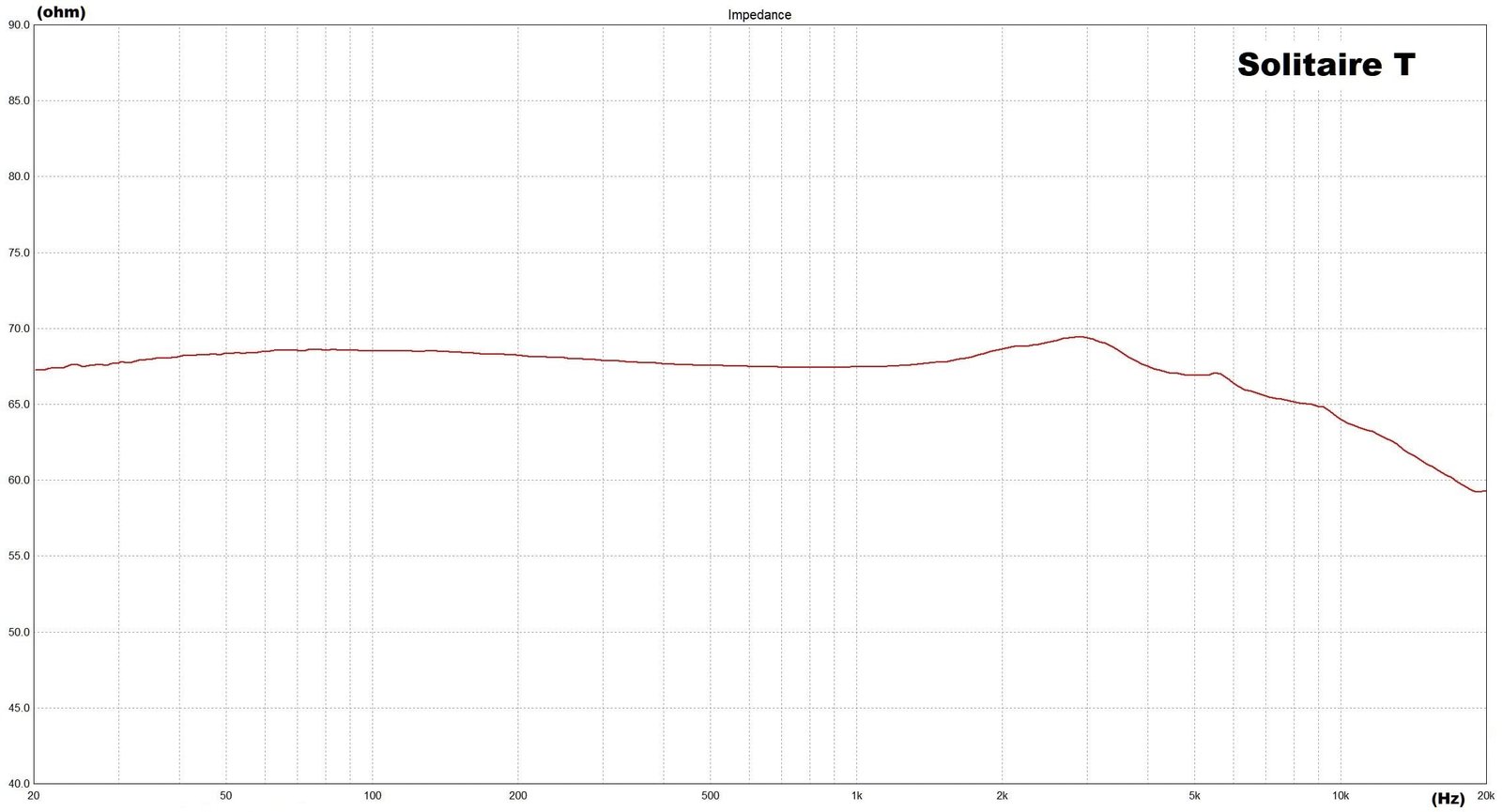
My own equipment measures the Solitaire T's impedance closer to 68 ohms, but it is still close to the manufacturer's stated 64 ohms. The only unevenness is that the impedance drops somewhat towards the highest treble, but a drop of less than 10 ohms should not have a practical effect on suitable equipment choices. With an amplifier having a very high output impedance, the amount of treble might drop slightly, but at the same time, the damping factor of the drivers would decrease to such an extent that it might ultimately affect the sound quality more.
Frequency response in passive mode:
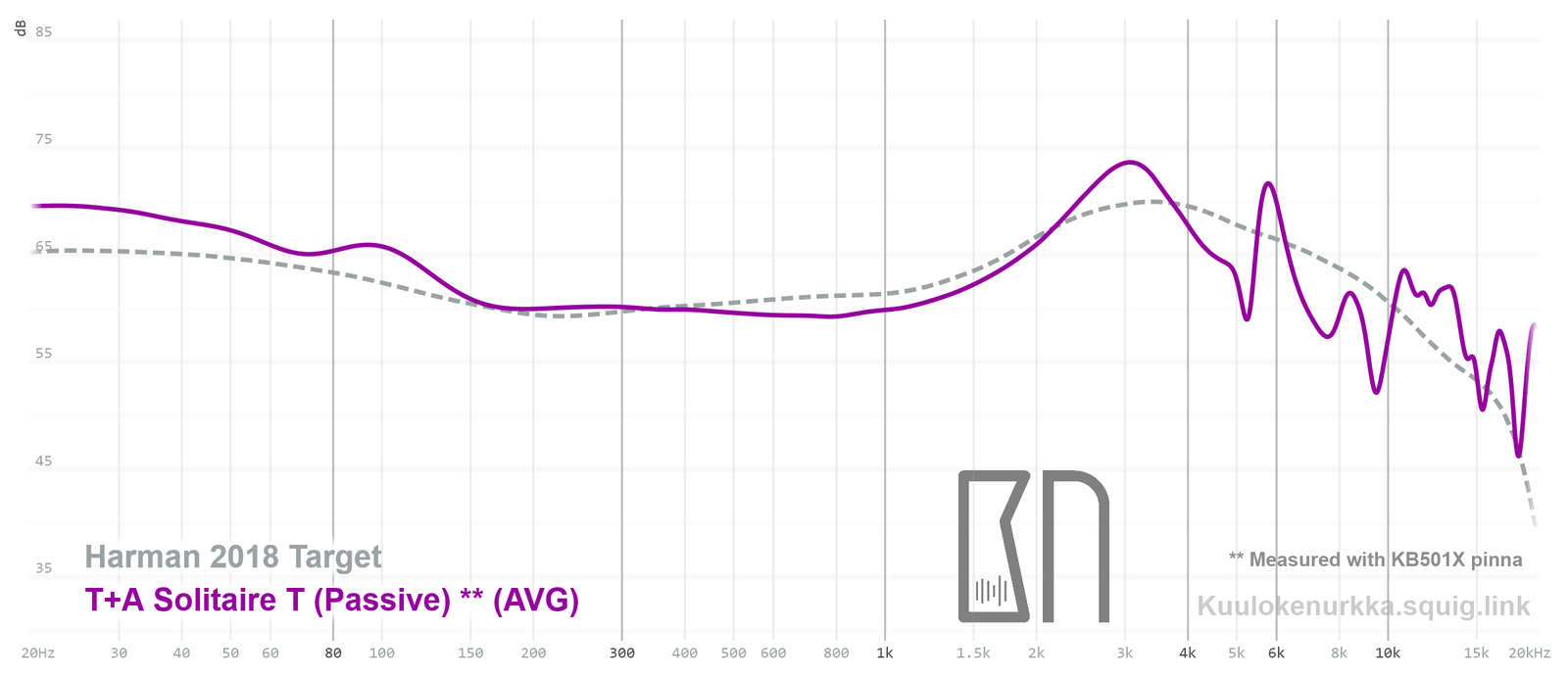
The tuning of the Solitaire T is almost perfect from the perspective of playback clarity. Music is reproduced with transparent energy thanks to linear mid-frequencies and a slightly elevated region around 3 kHz, but it does not cross the line after which I would consider the presentation too aggressive or in-your-face. A certain listening peace is likely ensured by a slightly subdued frequency range of 500–1500 Hz and the ”missing pieces” from the treble. Nevertheless, the sound is generally speaking somewhat thin and bright in style rather than completely neutral.
I would describe the presentation as very hi-fi-like, because high-quality recordings sound excellently nuanced, whereas lower-quality and brighter-recorded material can feel a bit rough. This is, however, a consequence of a few treble boosts that amplify sibilance present in music. If the information in the listened music is concentrated around 5.5 kHz and 10–12 kHz, the reproduction can be quite sharp at its worst. However, I consider this to be the Solitaire T's only major weakness, and even that is only occasionally bothersome.
Otherwise, when listening to the headphones, I often marvel at how realistic and layered a sense of space they manage to create with a closed-back cup structure and minimally small ear pads. With the Solitaire T, the vocalist pops out from the whole in a more authentic way than usual, and the separation of instruments and their details is admirably sharp. I can discern everything effortlessly without any strain. The soundstage is by no means particularly wide, but I somehow get to peek inside the music. The presence draws you in, which I have learned to appreciate even more nowadays, instead of certain points in the frequency response remaining distant and thus unnatural-sounding.
The headphones do not significantly color the music in any direction, but they manage to be exciting in the same way as, for example, Dan Clark Audio E3. In my opinion, the Solitaire T's sound has a fun dynamic contrast between softly and powerfully reproduced sounds. For example, even slightly more atmospheric moments within songs easily give me chills. The headphones also reproduce bass excellently. Firstly, the low frequencies stay strictly in their own territory without bloating the sound or causing a boomy and closed-in feeling. The reproduction also has plenty of power and punch without me ever feeling that the bass draws too much attention to itself.
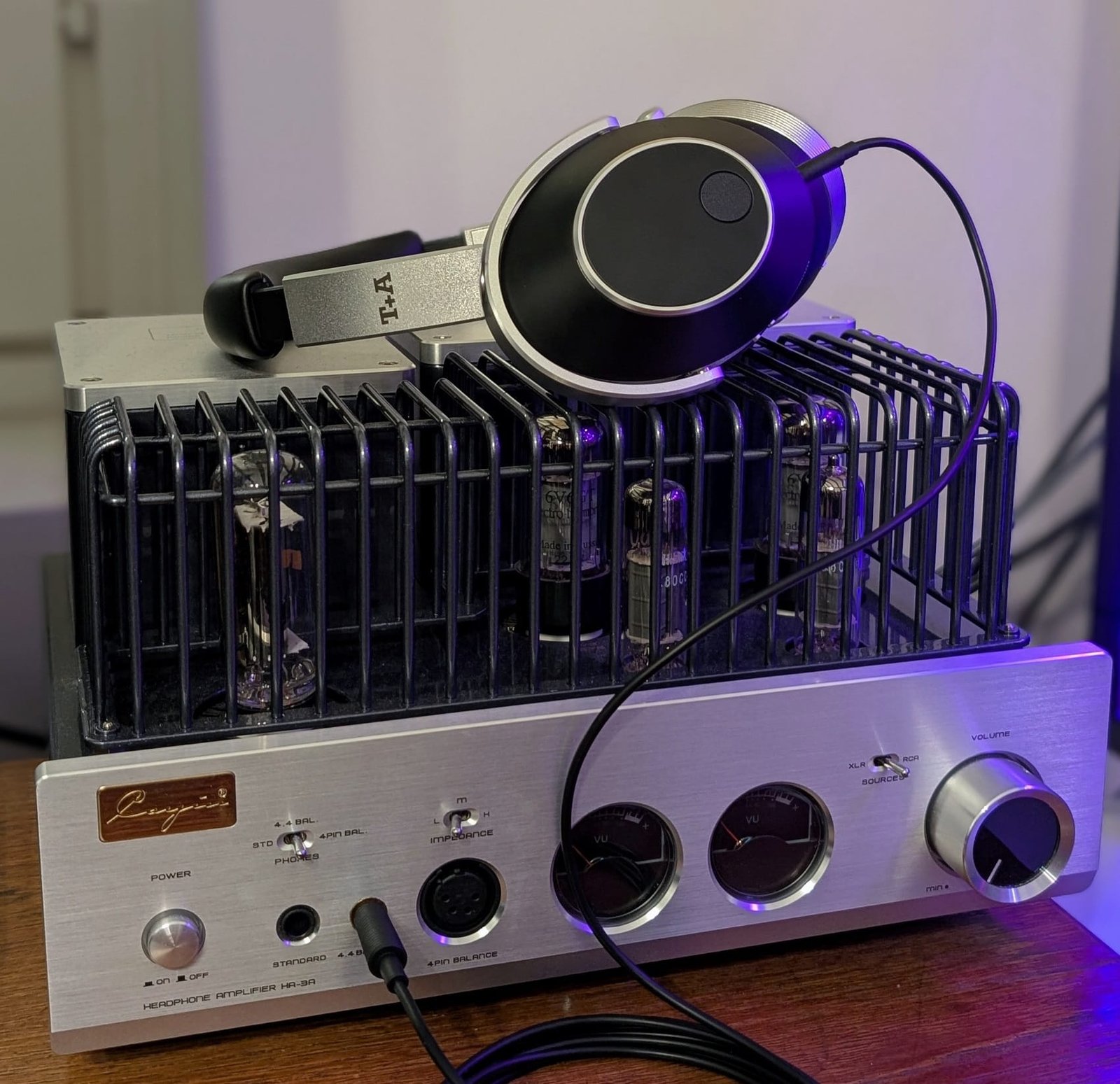
I wouldn't change anything in the headphones' bass reproduction or mid-frequencies; I could very well use the Solitaire T as a full-fledged analog hi-fi headphone, completely forgetting other use cases. For example, I like it more than Focal Azurysand ZMF Bokeh. For passive listening, however, I would recommend an amplifier that reproduces treble smoothly and preferably even slightly subdued. For example, the Ferrum Audio OOR would seem to alleviate the Solitaire T's sibilance tendency compared to more neutral amplifiers. Also, Cayin HA-3A-tube amplifier works excellently, softening the sharpest points of the treble and adding a bit of warmth to the mid-frequencies. When using the 4.4 millimeter connection, I also don't hear any background noise through the Solitaire T. I never thought I'd suggest a tube amplifier for noise-cancelling headphones (even though we're talking about passive mode here), but now that day has come.
The Solitaire T's other usage possibilities do not offer quite as impressive sound quality for me, but they also have certain advantages over passive listening. Next, let's explore the HQ sound mode, which calms the headphones' treble and thus may even sound better to some.
Good sound also in HQ sound mode
The Solitaire T can be set to HQ sound mode by turning on the power, regardless of whether a cable or Bluetooth connection is used to transmit the audio signal. The best result is achieved with either a headphone cable or a USB cable (max 24bit/96 kHz), but a Bluetooth connection with the AptX HD codec also produces surprisingly high-quality sound.
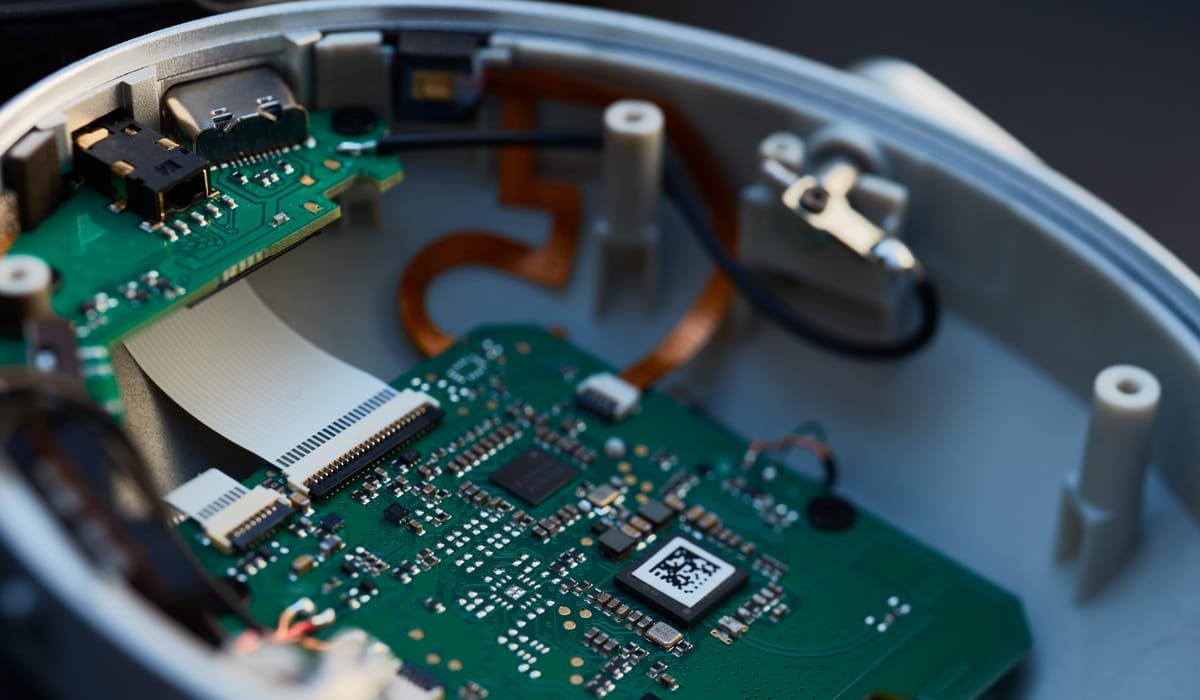
HQ sound mode activates the Solitaire T's better D/A converter and simultaneously bypasses Sony's ANC chip, through which the audio signal would normally pass when utilizing the noise-cancelling function. Thus, in HQ mode, the audio signal is transferred via cable or from Qualcomm's Bluetooth chip directly to the ESS Sabre DAC chip. The amplifier section is also allowed to use more power, and if listening occurs other than via Bluetooth, the headphones' volume control operates analogously, separate from the audio source – in this case, the final listening volume is affected by settings from both the audio source and the headphones.
HQ sound mode itself slightly increases the volume compared to ANC ON and ANC OFF modes, which should be noted in a comparison situation. When music gets louder, it automatically sounds different to us, and we easily perceive higher volume as an improvement in sound quality. A-B type comparison of HQ sound mode with other operating modes is indeed difficult, especially when the Solitaire T plays audio notifications at an annoyingly slow pace in between. Especially the ANC OFF mode sounds fundamentally very similar, as its frequency response is, based on my observations, identical to that of the HQ sound mode. Turning on the noise-cancelling function, however, changes the situation more, but let's explore that after this section.
Frequency response in HQ sound mode:
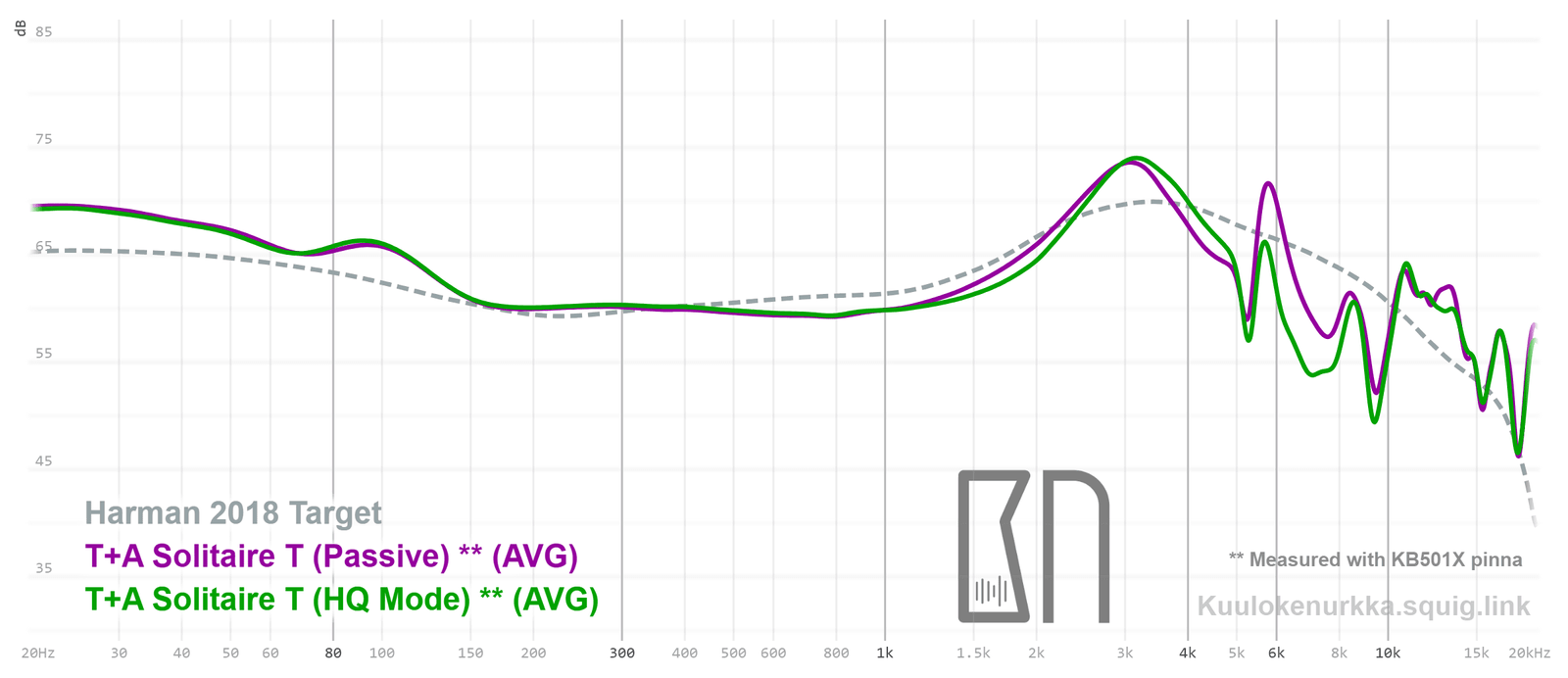
The frequency response in HQ sound mode closely follows the mechanical tuning of the headphones, but compared to passive mode, the treble has been DSP-corrected downwards between 5.5–8 kHz. A single emphasis around 5.5 kHz no longer makes much of itself known, but on the other hand, a considerable dip forms in the frequency response at 7 kHz. The high frequencies are now calmer in style and less present compared to passive mode. The upper midrange has also been fine-tuned in a couple of places, but this change would easily go unnoticed. The midrange still reproduces admirably clearly and distinctly, and the bass remains precise and controlled even when listening via Bluetooth.
Wherever possible, I still recommend utilizing, for example, a USB cable, which makes the presentation slightly more layered compared to a Bluetooth connection, and smaller sounds are more clearly separated from each other. The clarity of reproduction in a way increases, while the Bluetooth connection is slightly softer, and it packs the sounds closer together in the soundstage. However, when less focused on listening, the Bluetooth connection has no major weaknesses.
If someone finds the sound of the headphones in passive mode too bright, the HQ sound mode balances the situation while reducing sibilance. The treble is still uneven in places, but now less often noticeably so. I personally prefer passive mode because its added brightness (and possibly also the equipment I use) makes the presentation slightly more present and realistic in terms of energy level compared to HQ sound mode. However, passive mode does not lend itself to wireless listening, so from the perspective of the headphones' versatility, HQ sound mode is actually very necessary. I would even argue that I have not heard better wireless headphone reproduction, measured in hi-fi terms, than what the Solitaire T offers in its HQ sound mode. Of course, for example, the open-back Hifiman Ananda-BT R2R might surpass it, and I also haven't yet heard the Bang & Olufsen H100 or DALI IO-12.
Solitaire T as noise-cancelling headphones
Finally, we get to what the Solitaire T sounds like with the noise-cancelling function on. Noise cancellation can be utilized in virtually all situations, as it only requires turning on the headphones' power, similar to HQ sound mode. Listening with a cable again produces slightly higher quality sound, but most will surely use the noise-cancelling function primarily with a Bluetooth connection when moving outside the home.
Frequency response with noise-cancelling function activated:
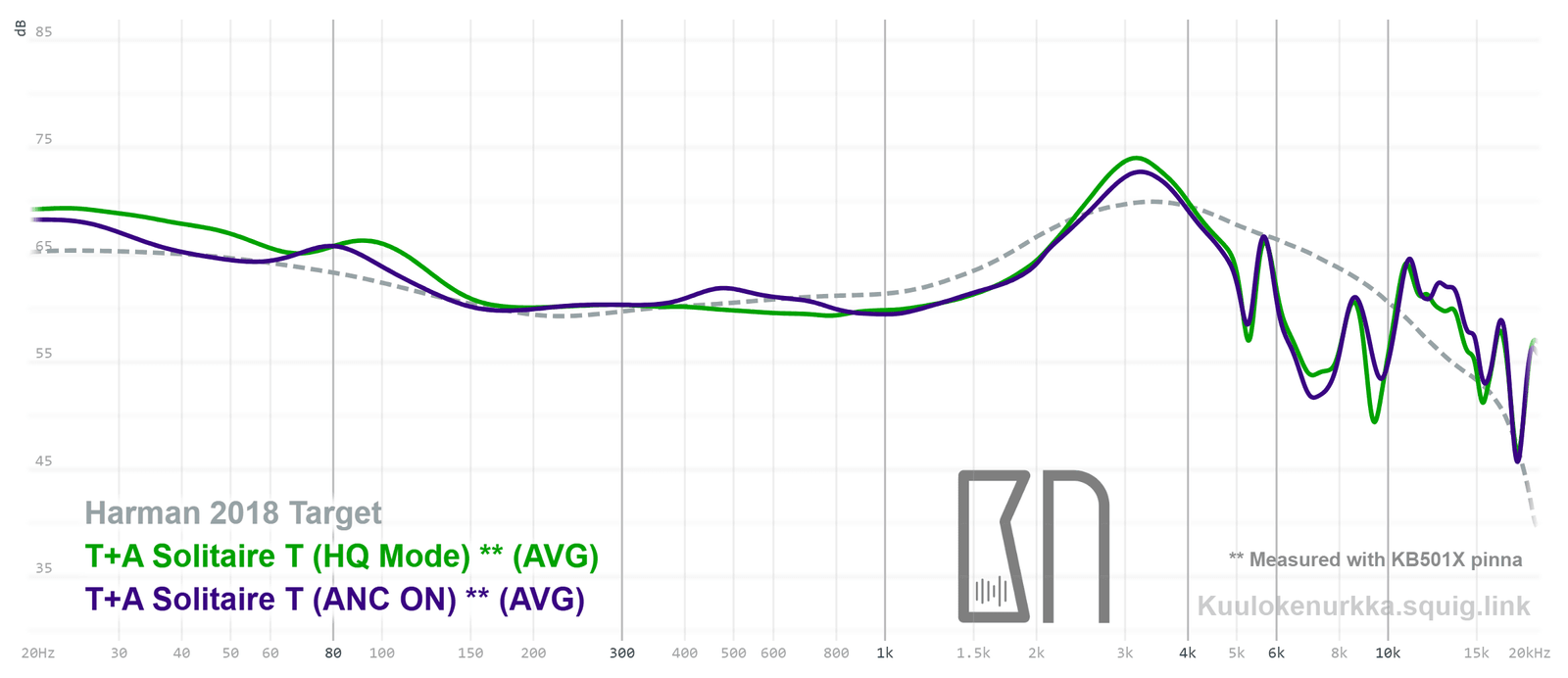
Activating the noise-cancelling function changes the Solitaire T's frequency response somewhat, but apart from the more strongly reproduced lower midrange frequencies, I cannot fully explain my listening experience based on the measurement results. With noise cancellation on, the reproduction becomes slightly more robust and less clear compared to HQ sound mode. The bass reproduces more full-bodied and softer, even though based on the frequency response, there should be less of it than in HQ sound mode. The midrange frequencies are also warmer in tone and less transparent. The treble also blends more, which in turn diminishes the clarity of the sound.
The added fullness has its advantages, for example, in combating sibilance and reducing listening fatigue, but compared to passive mode or HQ sound mode, the Solitaire T no longer truly sounds like expensive high-end headphones, but rather resembles more affordable noise-cancelling headphones. HQ sound mode keeps the reproduction better under control and layers the different aspects of the music into a more spacious whole. Adding noise cancellation to the overall experience, in turn, seems to collapse the soundstage so close that I was already startled during the first use, thinking that the Solitaire T had no soundstage at all. However, switching the Bluetooth connection to a USB cable would already provide some relief for this.
The Solitaire T still sounds good with the noise-cancelling function on, but I don't consider it a major improvement over its more affordable competitors. On the other hand, those who like robust bass would probably prefer a more growling result instead of the HQ sound mode's thinner and clearer sound. However, I personally consider the noise-cancelling function primarily a life-easing feature for situations where the best possible sound quality is not the top priority during headphone use. Since such moments occur surprisingly often nowadays, it's great that the Solitaire T, despite its sound-quality-first design, can also adequately fulfill the role of noise-cancelling headphones.
Alternative listening method: Qudelix 5K (or similar Bluetooth DAC)
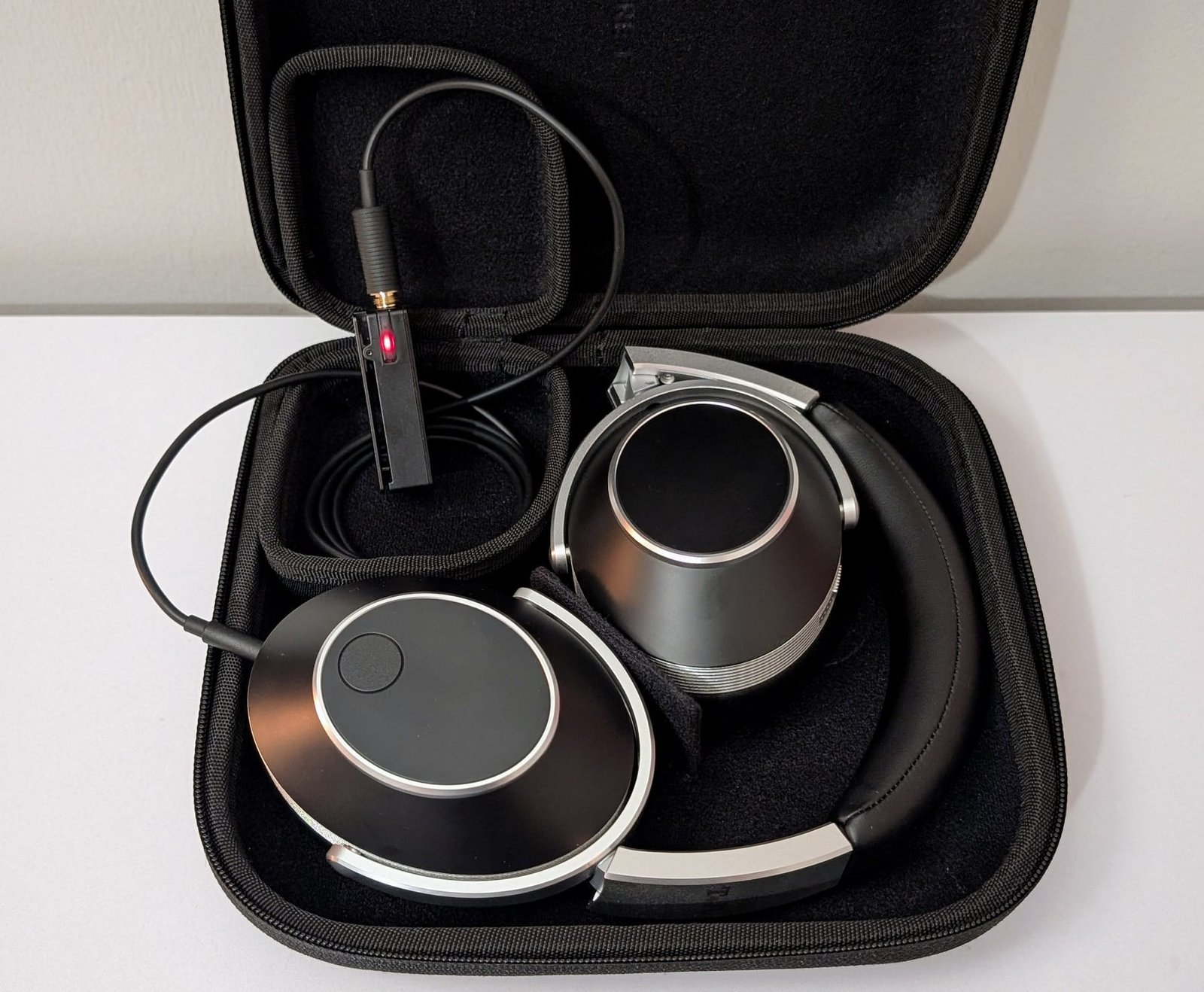
Since I noticed during the testing period that I preferred the headphones' frequency response and sound in passive mode, yet often found Bluetooth listening more practical, I finally came up with a way to combine these two use cases. When I use the Solitaire T Qudelix 5Kwith it, I can listen to the headphones in passive mode while utilizing the device's LDAC Bluetooth codec, which surpasses AptX HD in quality. The 1.4-meter cable supplied with the headphones is also perfectly suited for such use, as the device could easily be slipped into a pocket, for example. In addition, I would also be able to equalize the headphones completely freely with the Qudelix 5K's parametric equalizer, with which I have actually lowered the 5.5 kHz emphasis by a couple of decibels.
A similar arrangement would, of course, work with any other wired headphone model, but no closed-back headphone of the Solitaire T's caliber would, in my opinion, be carried around in such a compact package. For example, the Focal Azurys would be a good, cheaper alternative for this kind of use, but I think the Solitaire T sounds better. If someone is looking for excellent headphones to pair with a Qudelix 5K or a similar Bluetooth device, I give the Solitaire T my strong recommendation.
Summary
The most striking impression of the Solitaire T is its versatility. T+A, in my opinion, has aimed to create a new product category for hi-fi enthusiasts who traditionally haven't found wireless headphones good enough, but might still want them. At the same time, the Solitaire T would also serve as an excellent wired headphone, best justifying its high price. In this case, the sound quality, in my opinion, reaches the level required by a four-digit sum, and furthermore, the Solitaire T is also the best wireless headphone I have tried so far when listened to in HQ sound mode. The noise-cancelling function, on the other hand, is a nice additional feature, but with it on, the headphones offer little sound quality improvement compared to their competitors costing under 1000 euros. If this were my primary use case, I would rather choose, for example, the half-price Focal Bathys or a headphone model known for its powerful noise cancellation.
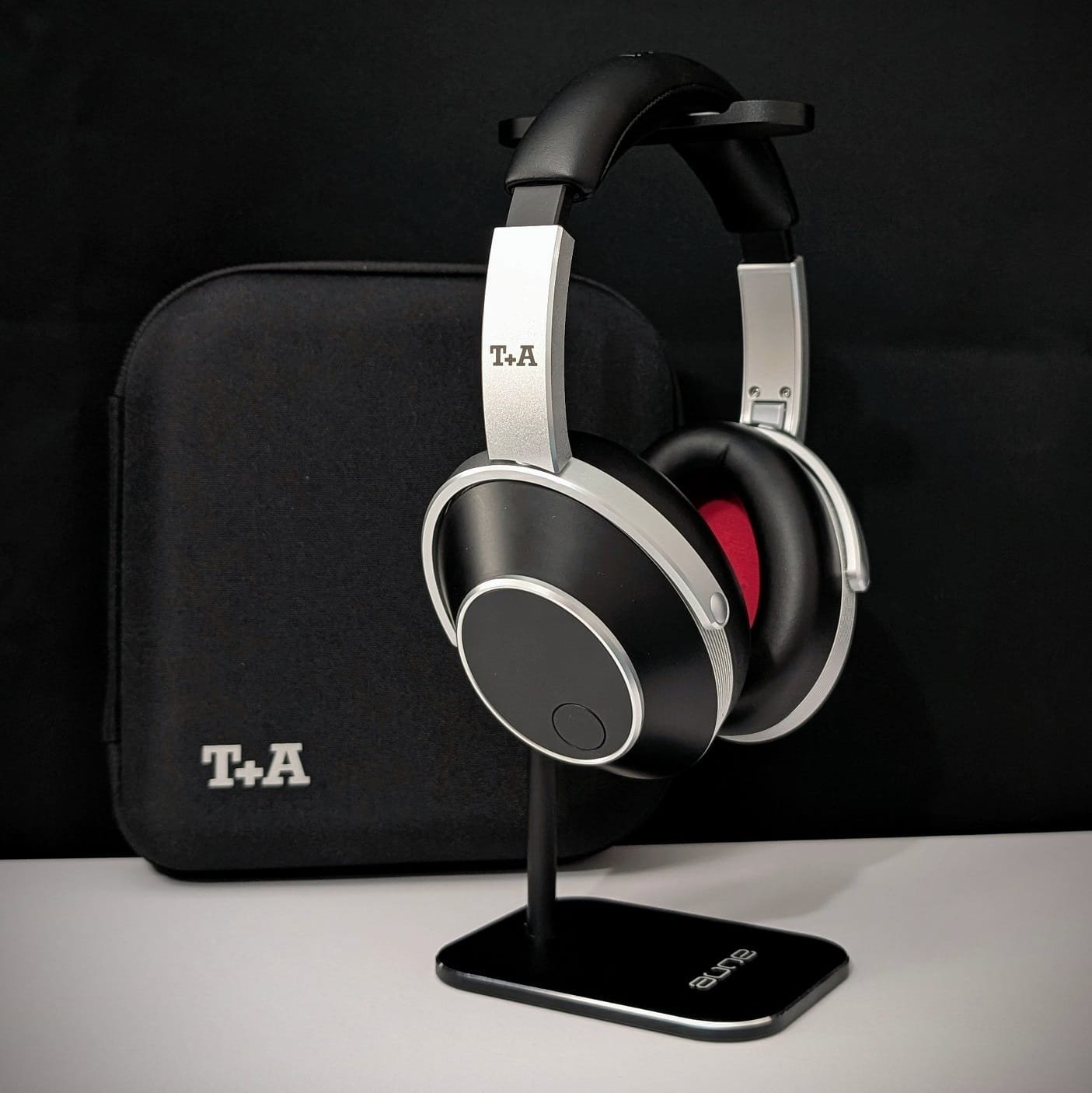
Beauty is always in the eye of the beholder, but I'm left wondering a bit about the appearance of the Solitaire T in relation to its high price of 1400 euros. The headphones are well-made, but they don't really look like a luxury product compared to, for example, the recently released B&O H100 or Bowers & Wilkins' PX series. In higher price categories, I think this starts to matter if the manufacturer wants to be noticed among its competitors. On the other hand, the Solitaire T would certainly appeal to those who want something more subdued and less attention-grabbing.
My final assessment of the headphones is twofold. In my opinion, the Solitaire T should not be acquired primarily as noise-cancelling headphones, as it is far too expensive for that, nor does it function optimally in all respects. Instead, as Bluetooth headphones aiming for good sound quality (HQ sound mode) and as one of the best wired headphones in its price range (closed-back models under 1500€), I want to mention the product on Kuulokenurkka's wall of fame in the future, once I first decide which category to place it in. This dilemma indicates that T+A has succeeded in developing something new and different. Perhaps one day, equally versatile headphones will also feature an effective noise-cancelling function.
Pros and cons:
+ Offers many usage possibilities, all with their own advantages
+ Clear, precise, and engaging sound in passive mode and HQ sound mode
+ Realistic-feeling soundstage in passive mode
+ Enjoyable bass reproduction that also stays well controlled
+ HQ sound mode maintains good sound quality in Bluetooth listening
+ Lots of metal in the construction
+ Natural-sounding transparency mode
+ Comprehensive features
+/- Comfort is good, but the headphones may not be suitable for people with large heads or large ears
+/- Discreteness can be an advantage when moving in public places, but the minimalist appearance pales in comparison to many other expensive headphones
– The treble has occasional sharpness and emphasized sibilance
– Best sound quality requires turning off the noise-cancelling function
– Touch functions and voice notifications cause frustration
– Mediocre noise-cancelling function in terms of effectiveness
– Somewhat outdated Bluetooth technology
– High price for noise-cancelling headphones
 EN
EN  FI
FI
How would it compare to the cheaper, but apparently most popular in its category, Apple Airpods Max, wirelessly or wired?
The current popularity of Airpods Max is a bit difficult to determine, as they are already quite outdated as headphones, especially for users outside the Apple ecosystem. I haven't actually heard the Airpods Max, so I can't properly compare it to the Solitaire P. However, Apple's headphones are designed incorrectly in that they completely lack the amount of energy expected by the human ear between 1-6 kHz. They would therefore sound very unclear and muffled compared to the Solitaire T, which in turn slightly emphasizes the 3 kHz range. Expressed the other way around, the sound of the Solitaire T might even sound aggressive after the Airpods Max. After getting used to them, however, the energy of the Solitaire T should feel more neutral and natural to most, if the headphones are desired to resemble speakers.
Having used Solitaire T headphones for two years, I would say that your assessment is spot on in all respects and gives a better picture of these versatile headphones than any other review I've seen, and also of their weaknesses. Thank you for this.
That versatility, in my opinion, is the key thing. I myself listen at home with a McIntosh MHA200 tube amplifier & Gold Note DS-10 DAC and on the go with an Ibasso DX320 DAP (with amp 14 amplifier card with Korg tubes) and a balanced connection. At work, it works with a Macbook Pro via a USB cable and in HQ mode, and when moving around town, directly via Bluetooth from the phone. I have mainly used the noise-cancelling function only on flights, and it's true that it doesn't compare to Sony or Bose, but it works well enough. I don't know any other headphones that could do this, considering the sound quality in passive mode without digital corrections. Of course, I have other headphones, but if I had to have only one, the only one that works well for all purposes is the Solitaire T.