Author: Sword of Damocles
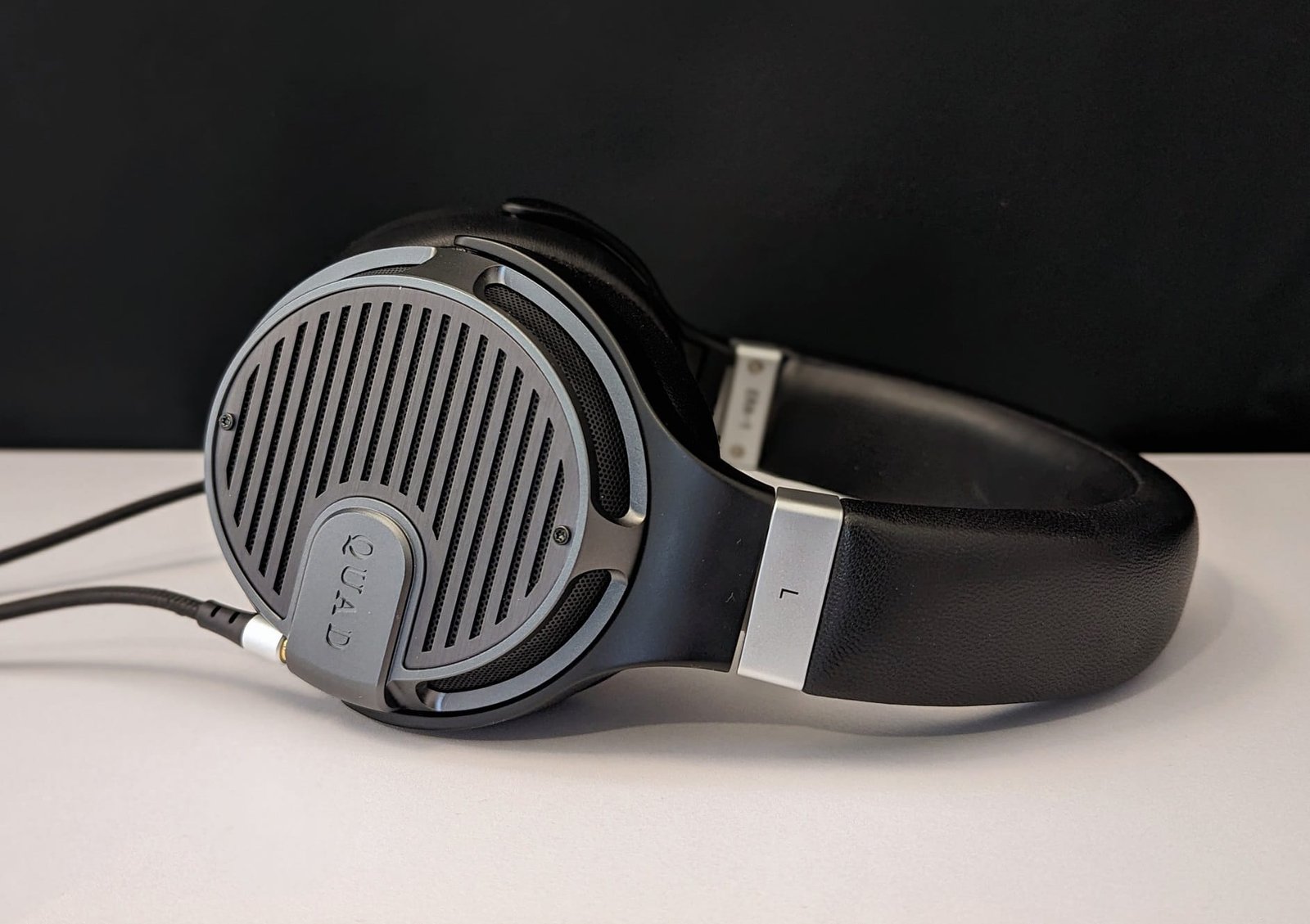
Table of Contents:
Information:
- Release year: 2018
- Designed in Britain and manufactured in China
- Price: 699 €
- Type: open, over-ear
- Planar drivers: 40×50 mm (self-measured)
- Impedance: 20 Ohm
- Sensitivity: 94 dB/mW
- Weight: 420 g (without cable)
- Connector type: 2 x 3.5 mm
- Cable: length 2 m / connector 3.5 mm
- Accessories: Carrying case, extra ear pads and 6.35 mm adapter
- Warranty: 3 years
Review sample: Self-purchased product
The obscure origin of headphones
British Quad Electroacoustics, with its history dating back to 1936, is likely familiar to many hi-fi enthusiasts for its amplifiers and loudspeakers. In 2018, it also decided to release planar headphones called ERA-1 (link to product page), which are still sold for 700 euros. Although no new headphone models have been seen from the manufacturer since then, and the ERA-1 no longer has much novelty value, I decided to find out what kind of product it is.
My background research for the review simultaneously revealed considerable ambiguities surrounding the headphones. Quad states that it designed the ERA-1 itself in Britain, even though it is manufactured in China. At the same time, however, several very similar headphone models have been found on the market, which have been sold at a more affordable price.

These clones, such as Brainwavz Alara (production discontinued / price 500 USD) and Zephone Tiger (price approximately 500 €), appear to be linked to the Taiwanese OEM manufacturer, Yogada (parent company Yoga Electronics), and its JPM-101 headphone model. The Simgot ET1000 (availability uncertain) is also a kind of relative to these, even though the cups look slightly different externally on all headphone models. However, the headband structure, ear pad attachment mechanism, and planar drivers have been found to be largely similar in these headphones, which cannot be mere coincidence. Likewise, the tuning between the ERA-1, Alara, and Tiger is similar, with differences likely arising from the different grilles of the cups and the varying degree of openness in the structure.
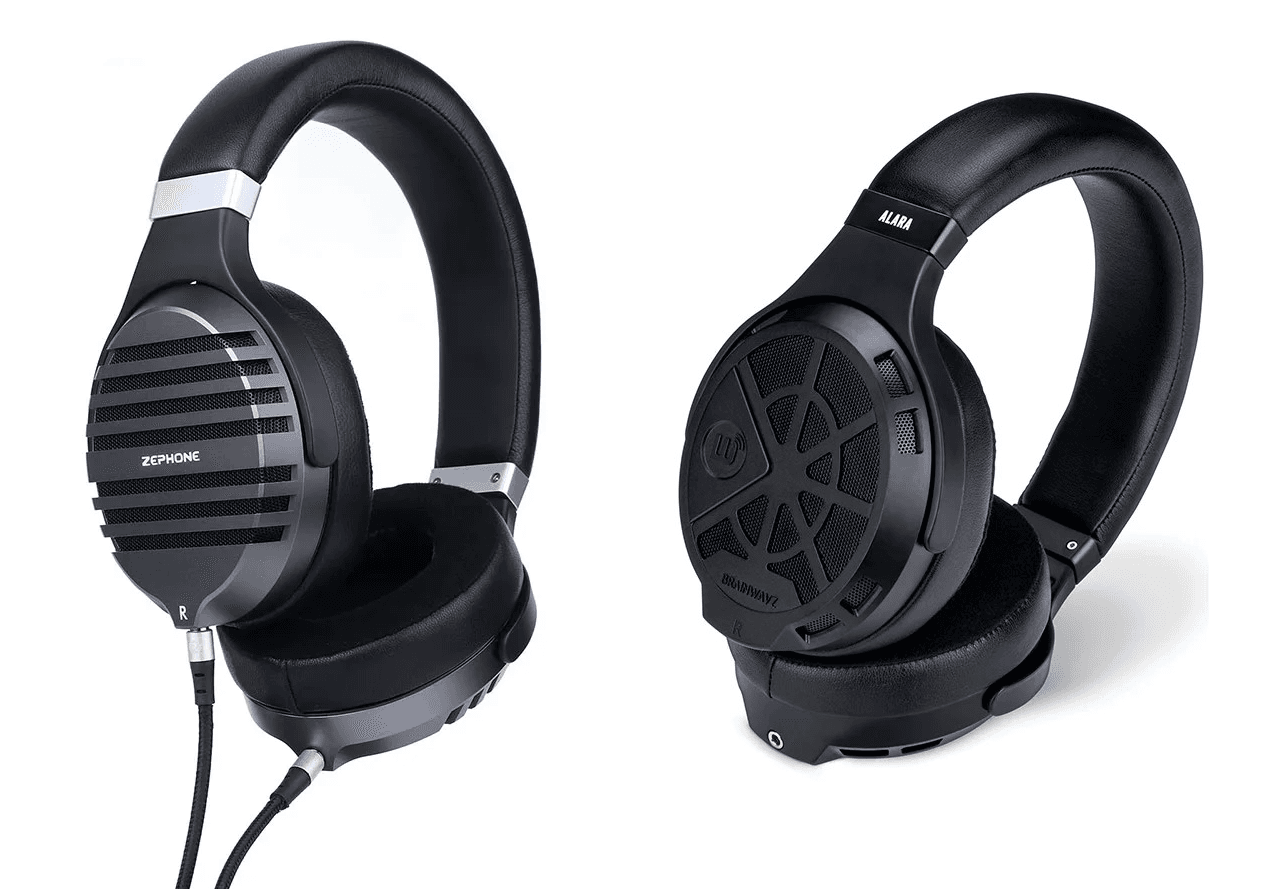
Those defending Quad seem to assume that the company has allowed others to make copies of the ERA-1 while retaining the best technical innovations for itself. However, I consider it more likely that the ERA-1 was also ordered from the same OEM manufacturer, with requests regarding appearance and tuning. In this case, Quad would not have been able to fully restrict the production of similar-looking headphones for other companies as well. It has been speculated, however, that Brainwavz had to discontinue the production of Alara headphones precisely because it failed to acquire some kind of license for them from Quad. Full certainty on the matter will probably never be obtained, but the unclear background has likely contributed to the ERA-1 not becoming a particularly great success. Quad's advantage, however, is still the good availability of the headphones today, as the production of many cheaper versions has been discontinued or they must be ordered from China with worse warranty conditions.
Packaging and accessories
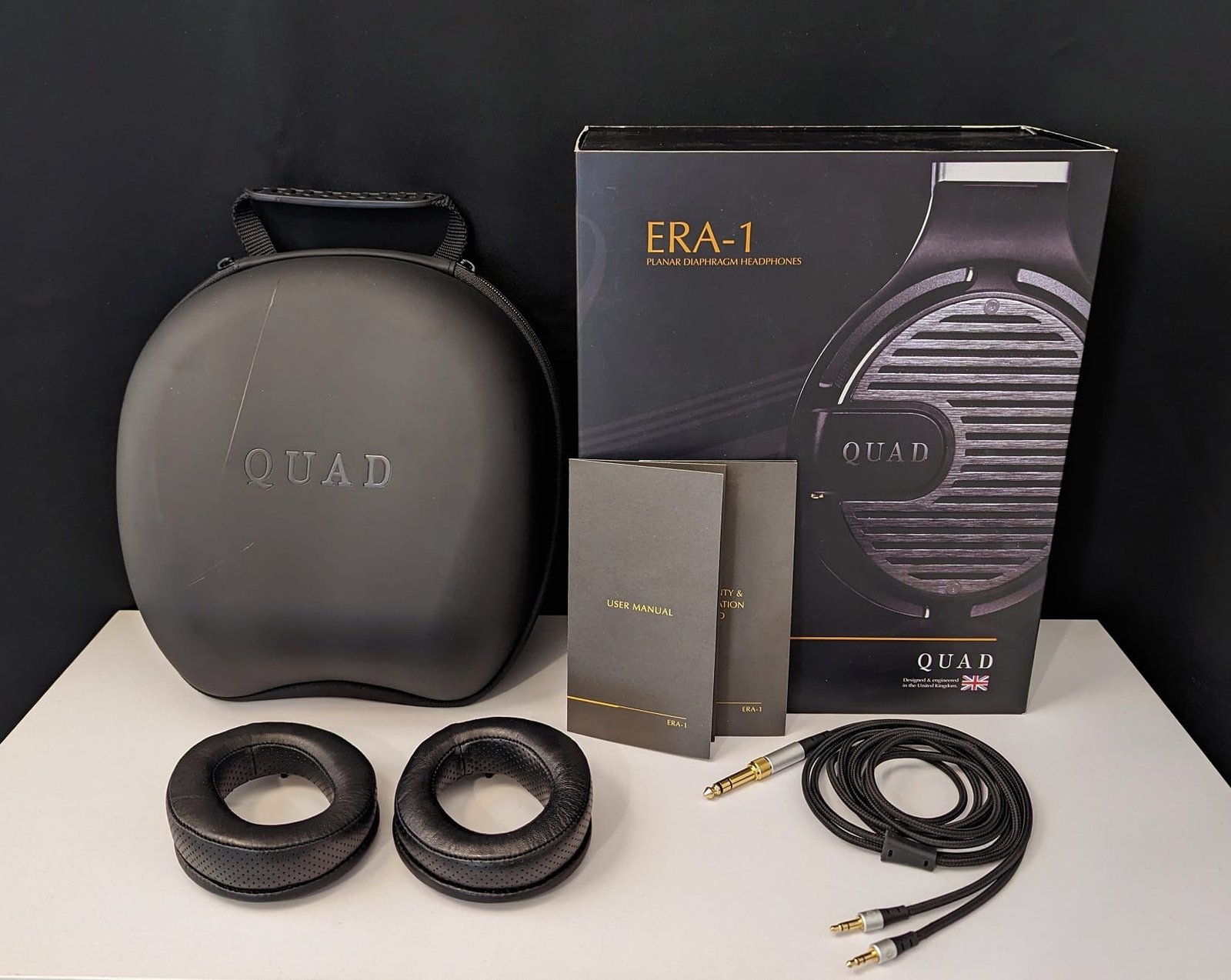
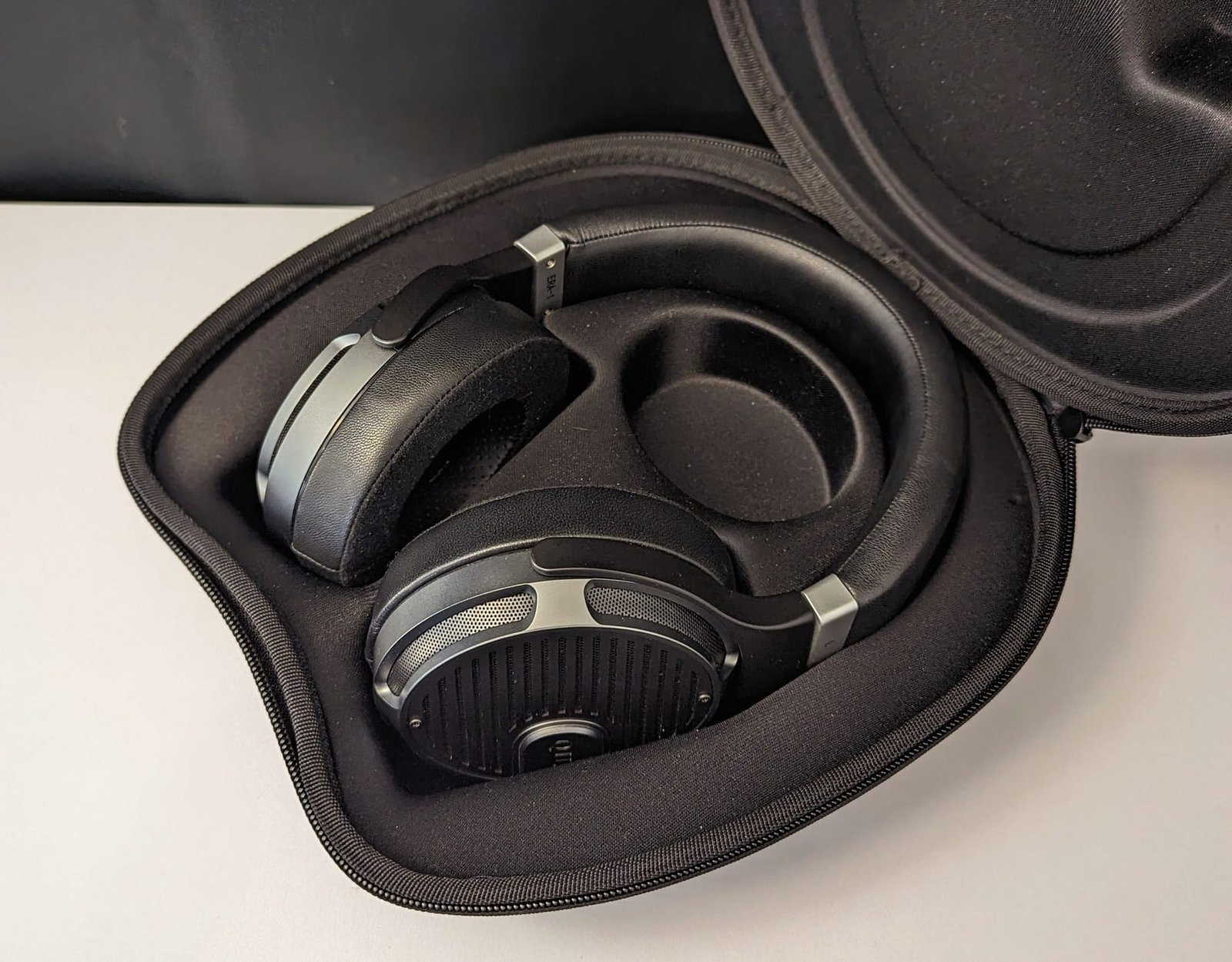
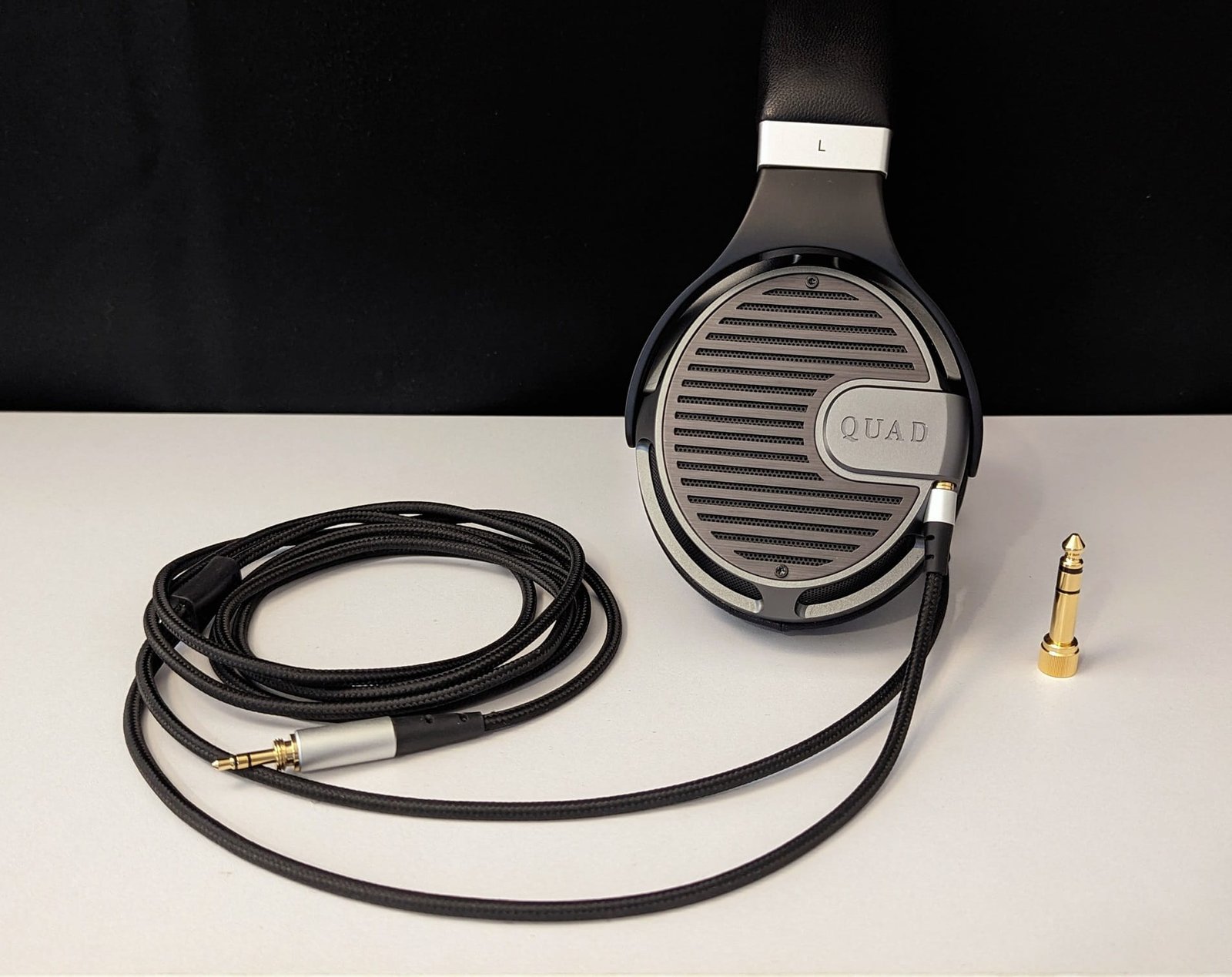
The ERA-1 is delivered in a large cardboard box for its size, because the headphones also come with an oversized carrying case. In my opinion, the ERA-1 could have been made to fit into a case half the size, in which case I might have even considered using it. As other accessories, the buyer receives extra ear pads and a 6.35 millimeter adapter.
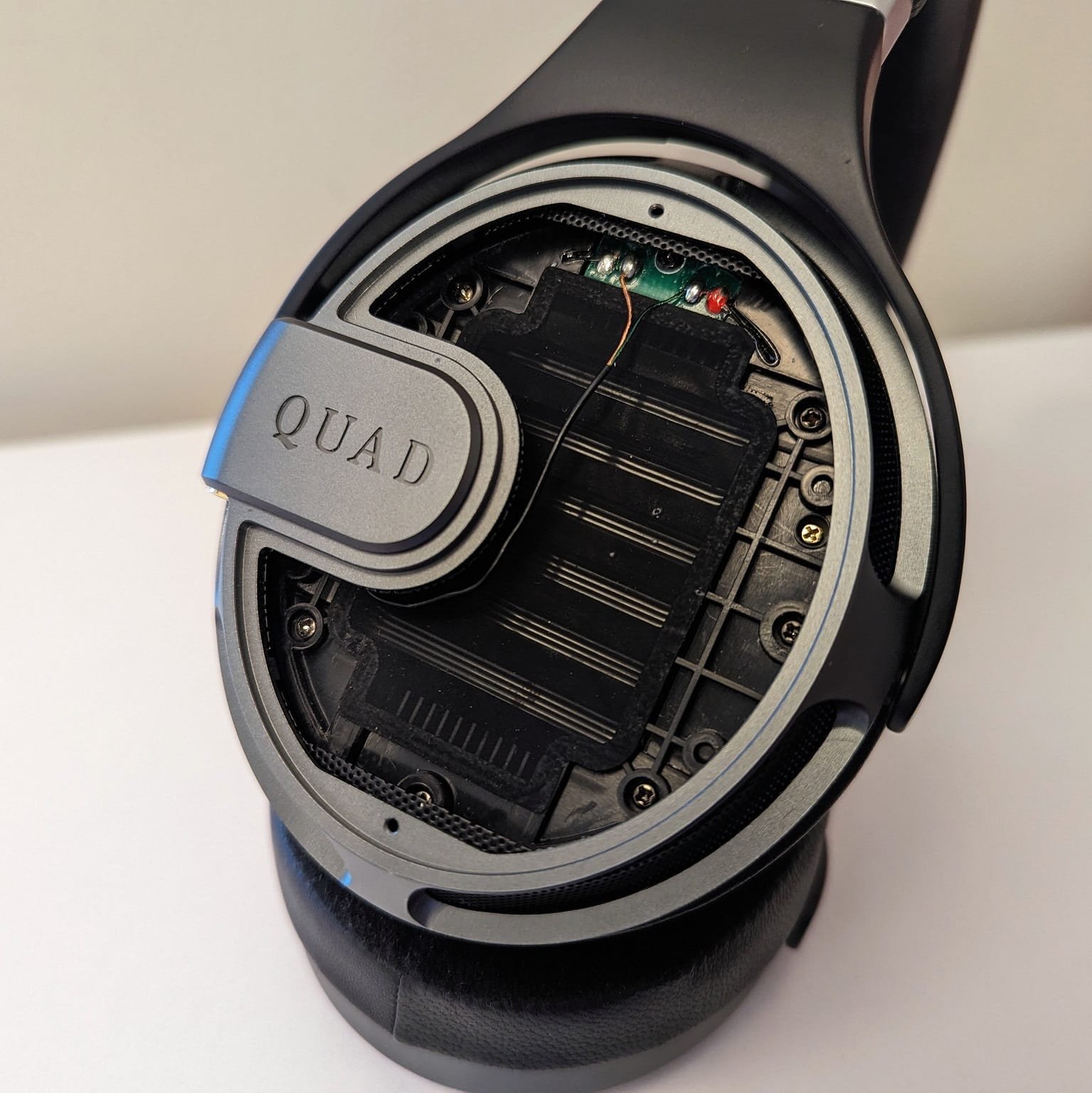
The fabric-covered cable has a 3.5 mm connector and attaches to the headphones with two 3.5 mm connectors as well. The cable is 2 meters long, which feels optimal in many use cases. Usability, thanks to the cable's lightness and flexibility, does not cause any grey hairs, but the overall feel is ultimately quite cheap. However, thanks to commonly used connectors, a finer cable could be acquired for the ERA-1, as options designed for Hifiman and Focal headphones, for example, are compatible. In this case, however, it is advisable to do your homework carefully, as Quad has placed the headphone connectors at the back of the cups in such a way that using connectors with thicker housings may not be possible. Conversely, thin connectors attach into such a tight gap that it is almost impossible to remove them without pulling on the cable. The manufacturer must be given a minus for this, even though I like the placement of the connectors.
Problem-ridden structure, but good usability
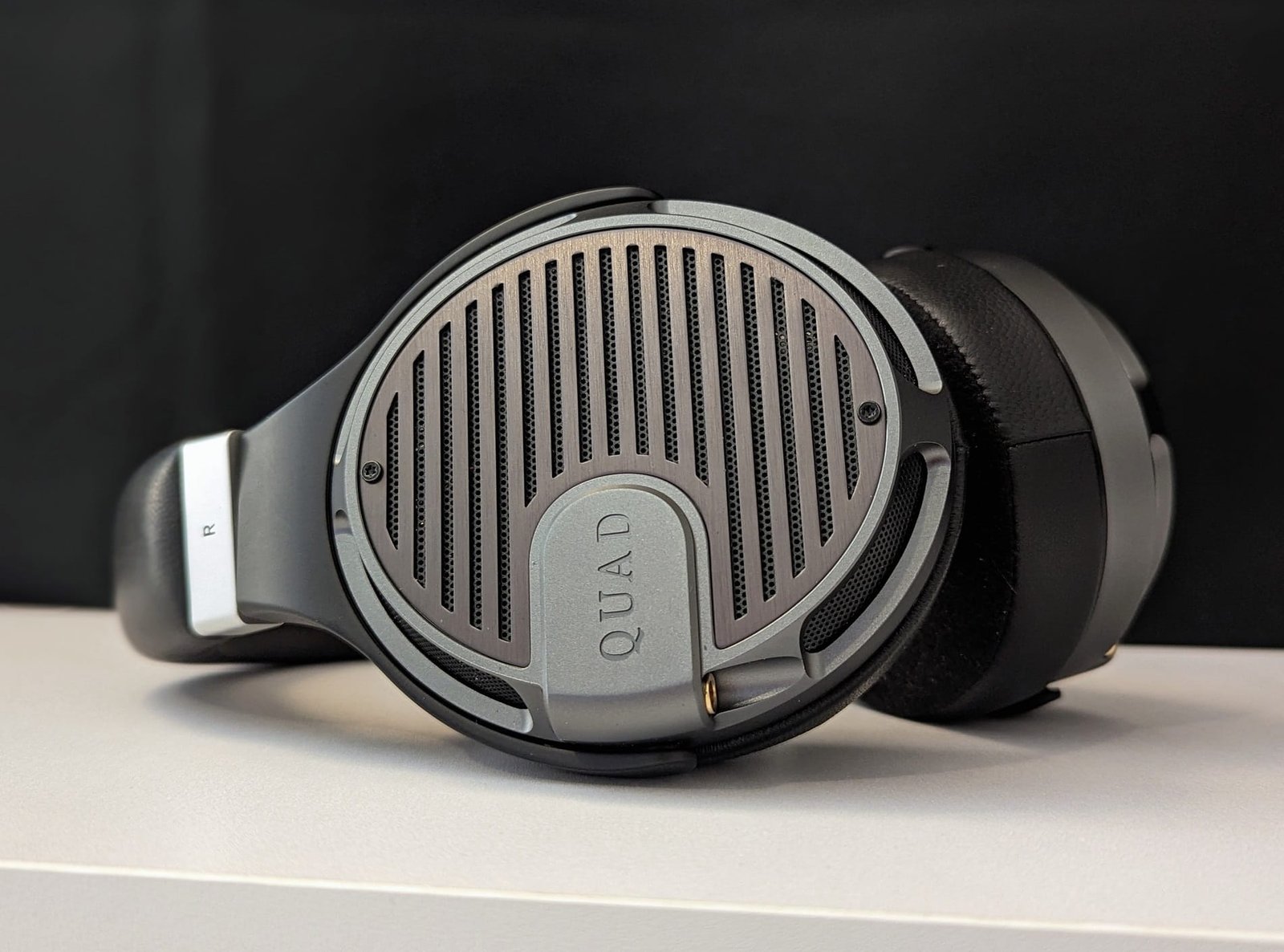
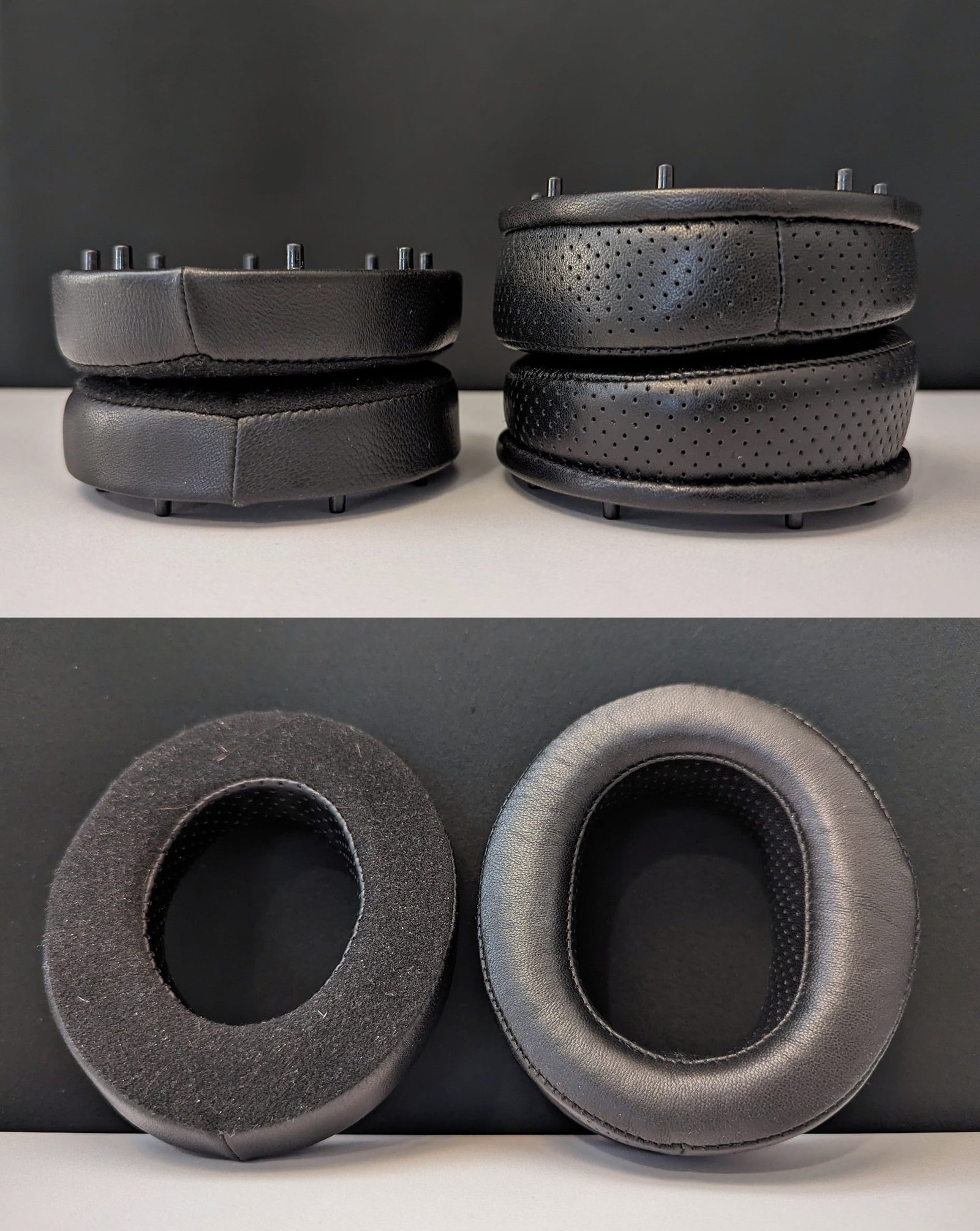
The ERA-1 is a contradictory case in terms of its construction, as in places it feels almost like a luxury product, but as a whole, very cheap. If we start with the positive aspects, the metal cups are really robust and exceptionally high quality. The drivers are certainly kept safe within them, and the overall impression is not as toy-like as, for example, with Hifiman's plastic cups. Plus points must also be given for the genuine leather used in the headband's upholstery, which stays clean considerably longer than artificial leather. I also consider the ear pads attached with plastic tabs to be a good solution, even though a more traditional attachment method would have allowed for a wider selection of pads for those who like to experiment. One set of the included pads is made of genuine leather and has a strong tilt. The other pads, in turn, are uniform in thickness and hybrid-style in material, meaning the part that rests against the head is velour fabric instead of leather.
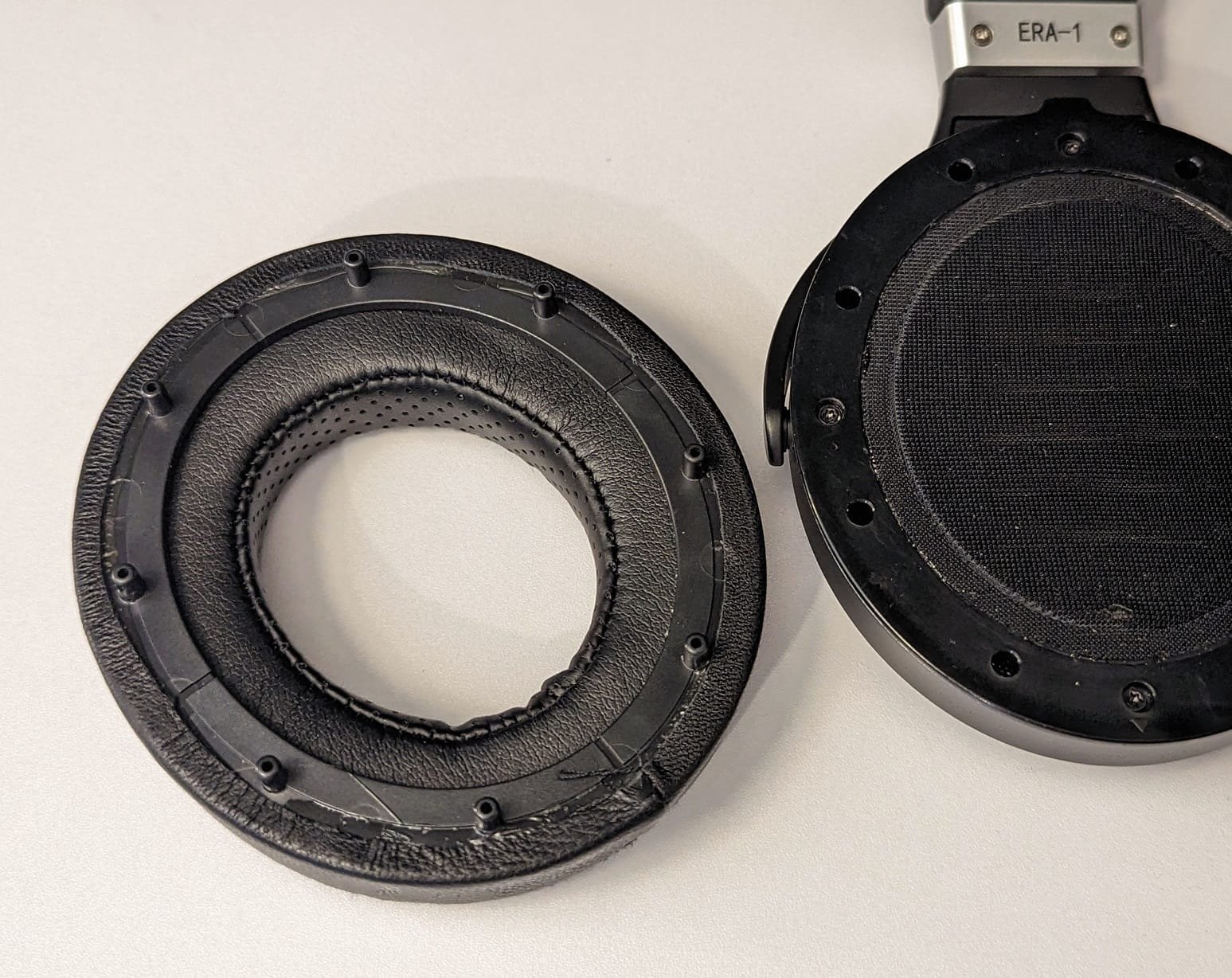
This is largely where the praise ends, as the headphone's headband structure, despite its neatness, is miserably flimsy. The forks of the cups are made of thin and cheap plastic. Even a small tap makes the structure sound hollow and it clangs like a tin bucket. The tolerances, especially around the extension parts related to height adjustment, are also so large that the cups wobble and creak loosely from side to side. The adjusted height also does not hold its position properly; the cups can slide down to the lowest position by simply shaking the headphones. The overall design has also gone a bit wrong in that the headband sits very high even in its default position, making the ERA-1 too large for those with smaller heads than the general population and may require modification to be usable at all. For me, the headphones fit well in their default position, so the height adjustment is largely unnecessary.
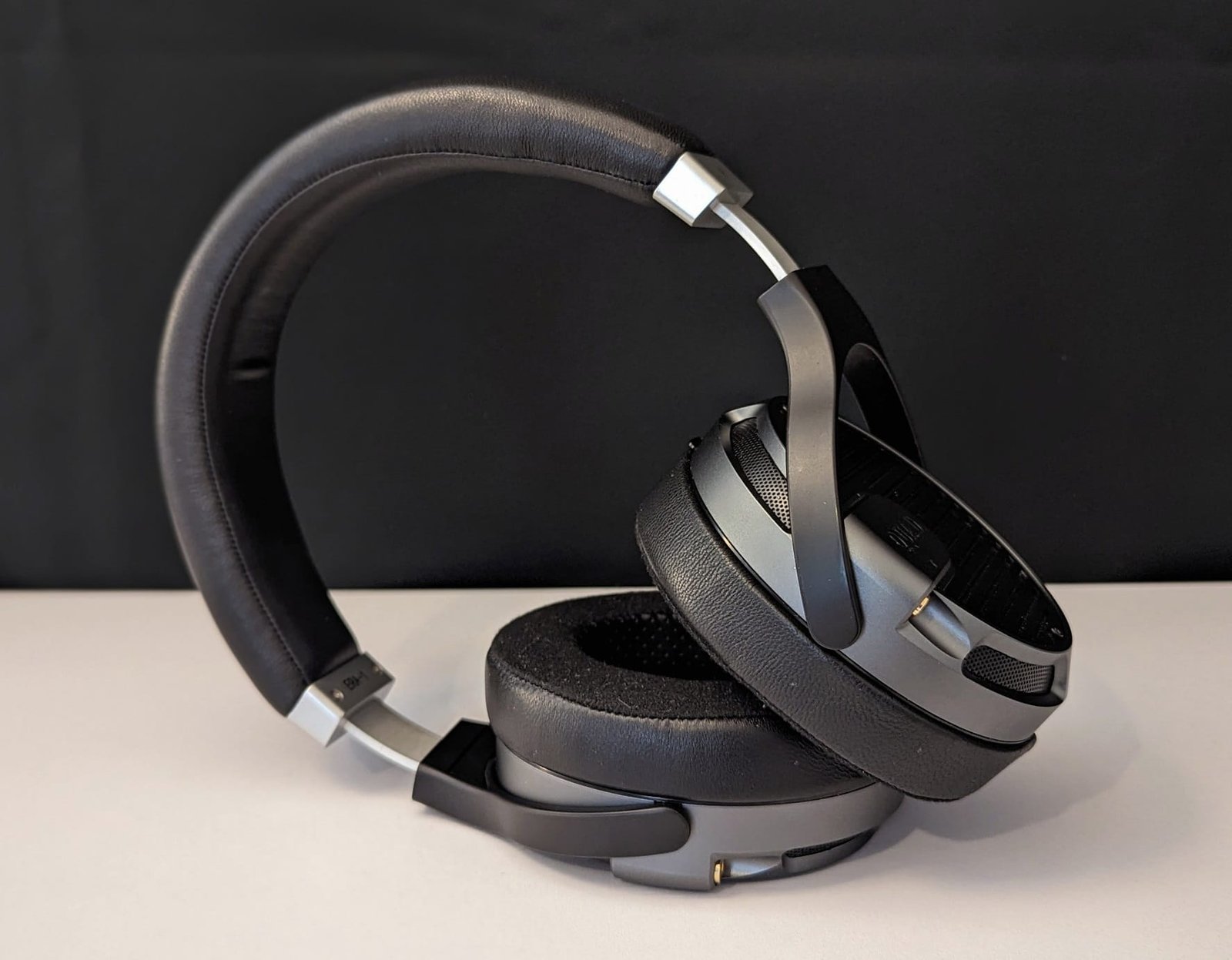
The ERA-1 also suffers from quality issues, as its headphone connectors have broken during normal use without prior warning. This has been found to be due purely to low-quality connectors, rather than any fault in the internal wiring of the cups. The design work allegedly done in Britain is unfortunately barely visible in the ERA-1; apart from the high-quality cups and fairly stylish appearance, it feels like a cheap Chinese product. This, if anything, gives reason to suspect that Quad's role in manufacturing and quality control may be quite small. Considering the rather high price of 700 euros, the overall package inevitably causes disappointment.
However, assuming the headphones fit the user's head without being too large, the overall comfort is very good, even for several hours. The ERA-1 does not weigh too much (420 g) for its simple (but well-padded) headband to cause immense pressure on the top of my head – though there is still some. The clamping force of the headband is also quite gentle, and the fit is generally acceptable, albeit so loose that it's not advisable to shake your head while listening. The hybrid ear pads I prefer could have a larger ear opening, but after a short period of getting used to them, they also feel comfortable. In the leather pads, the ear opening is clearly larger, but due to the strong tilt and harder material, uncomfortable pressure builds up on the back and top of my ears. Therefore, I prefer the hybrid pads of the two options.
Sound quality
Our frequency response measurements have been made with a clone IEC-60318-4 coupler and KB501X pinnae. The Harman target curve from 2018 is used as a reference point and generalization of the headphone response that would sound good to most people. For more information on the measurements and their accuracy, see Headphone Measurements-page. The ERA-1's frequency response is also comparable with other measured headphones Squiglink .
Frequency response with hybrid pads (red) and leather pads (blue):
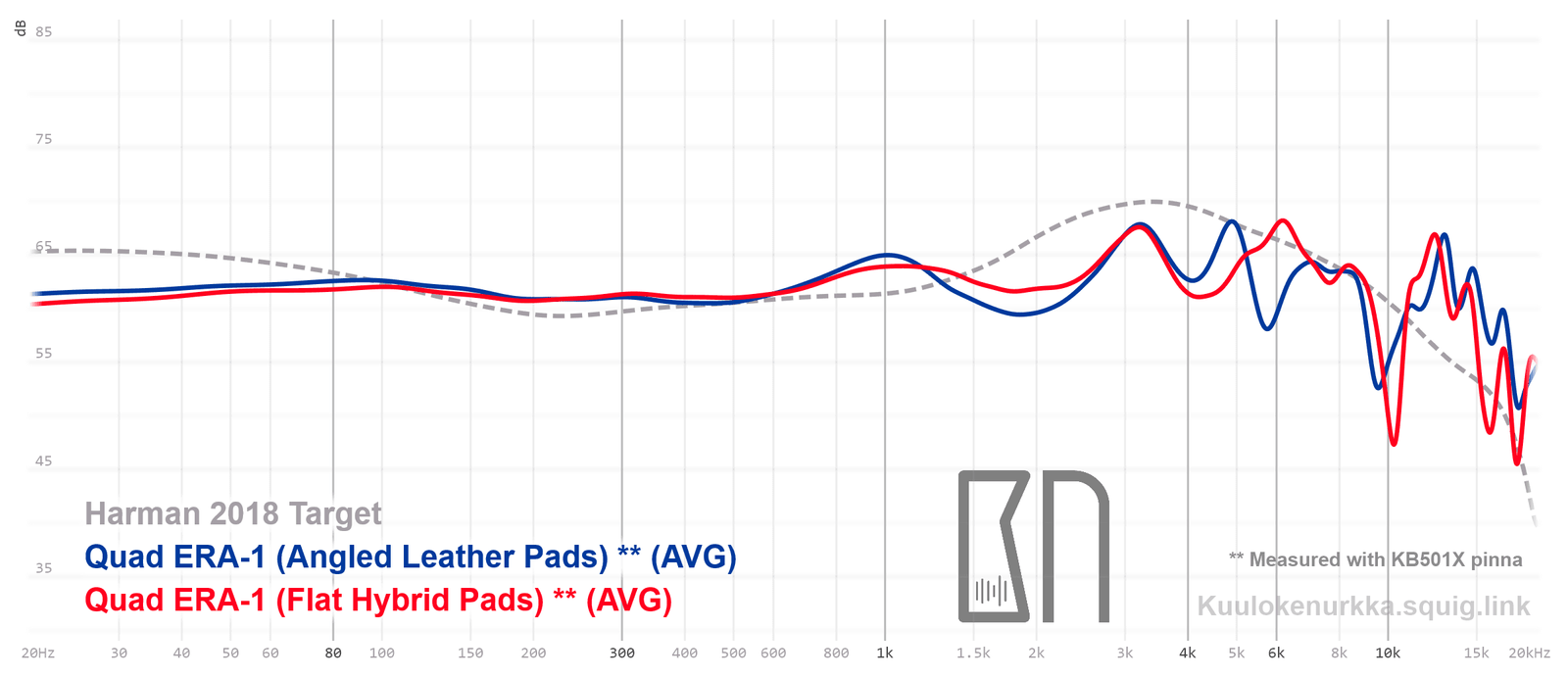
The ERA-1 is a unique headphone in terms of its W-shaped frequency response and thus its sound, offering a bit of everything without resembling almost any other headphone model I know. Stylistically, similarities can really only be found in Abyss AB1266-series, which similarly emphasizes the area around 1 kHz and then almost identically saws alternately up and down. Abyss models sound impressive, but rather thin and unnatural. The ERA-1, on the other hand, has a warmer sound, and its irregularities balance each other out surprisingly successfully, so the overall sound is in a way better than the sum of its parts. This, however, in my opinion, requires the use of hybrid pads, as the leather pads, despite some advantages, sound unnecessarily unnatural.
With more natural hybrid earpads, the reproduction reveals a lush and robust bass, clear and relaxed mid-frequencies, and an effortlessly airy treble. The presentation could be described as musical in the sense that it always makes you excited about the main points of the music, rather than focusing on smaller nuances. The sound is also suitably un-fatiguing for longer listening sessions. At the same time, however, the unevenness of the mid-frequencies harms the accuracy of the reproduction, as the separation of sounds remains unclear and the soundstage blurrier than in many headphones under 300 euros. Furthermore, considering the planar drivers, the low frequencies reproduce exceptionally slowly, as if the bass lingers, echoing and rumbling in the background. Partially due to this, the ERA-1 sounds fuller than its frequency response would suggest. However, I don't consider this a bad thing, as robustness often brings a smile to my face. Other weaknesses don't bother me much if I approach the ERA-1 as a fun and, above all, different pair of headphones. Especially all kinds of rock music sounds powerful and exciting with them.
Although the structural quality of the headphones doesn't match the 700-euro price, I could actually pay that much for the sound quality, as many other colored headphones also have a high price, and they don't perform as well overall as the ERA-1. However, I wouldn't make the purchase blindly; instead, I would try to ascertain how the unique tuning suits my own musical taste and whether the weaknesses related to reproduction accuracy are bothersome. Of course, the fit of the ERA-1 should also be confirmed to ensure it's even possible to use them.
Bass:
The bass of the ERA-1 reproduces very linearly, even rising slightly around 100 Hz. When you add the somewhat slow decay I mentioned, the bass sounds robust and fun, though also emphasized. Fortunately, the reproduction never truly becomes muddy, like with, for example, the Meze Audio Empyrean, but the warm rumble often grabs attention first, and the bass quality isn't anything to cheer about either. However, the charm of the ERA-1 lies in the fact that only a few open-back planar headphones offer such a physical listening experience – in the sub-1000 euro price range, mainly FiiO FT5 and perhaps with reservations, the Audeze LCD-2 Classic come to mind.
For example, bass guitar and drums reproduce pleasantly robustly with the ERA-1, and electric guitars also have a powerful grip. Electronic music also pounds more forcefully than usual, even though the headphones don't have a sub-bass shelf according to Harman's target curve. The punchy bass reproduction is definitely one of the ERA-1's most memorable and fun features. If someone desires a tighter and less thick-sounding result, the rumble stays slightly better controlled with leather earpads.
Mid-frequencies:

The mid-frequencies of the ERA-1 are quite a rollercoaster, or including the treble, a chain of three mountains. Both peaks and dips are audible, but they complement each other so that the end result doesn't sound as colored as I initially expected. On the other hand, the wavy-feeling presentation is difficult to describe in any sensible way. The ERA-1 sounds simultaneously punchy and clear, as well as calm and slightly veiled. Certain parts of the sound attract more attention, but most often, these manage to be precisely the ones that make me excited about listening. The ERA-1 has captivating energy and punchiness without being heavy to listen to. It also manages to be one of the few headphones where the 1 kHz ”shoutiness” doesn't bother me practically at all, but rather brings much-needed liveliness to the reproduction.
The emphasis in precisely this frequency range likely counteracts the partial dips, as by simply listening to the headphones, I wouldn't guess that equally large portions are missing from the frequency response between 1.5–2.5 kHz and 3.5–6 kHz. The area around 3 kHz also eventually becomes energetic enough so that my brain doesn't interpret the sound as too dull or have to strain to make sense of things. Of course, depending on the music listened to, the result is sometimes so congested that I remember why colored headphones are not the best all-rounders. Primarily, however, the ERA-1 sounds reasonably balanced, and it amusingly draws attention to the intensity of the reproduction, smoothing out some of the sharpness. One could say the headphones "rock out" in a suitably refined manner. At the same time, the bright high frequencies make the reproduction feel effortless and bring out smaller details sufficiently from the background.
What remains regrettable is really only the unclear separation, as different sounds easily blend together: instruments are not very clearly delineated from each other, and the positional accuracy of moving sounds is not remarkable by current standards. For example, Aune Audio's 300-euro AR5000 sounds more precise despite its dynamic driver, not to mention the Hifiman Sundara. In my opinion, the ERA-1 should therefore be bought purely expecting a fun sound, even though planar drivers are often associated with high-quality reproduction, quite the opposite. However, I experience this as a change and an important indication that the driver type does not directly define the style or sound quality of headphones.
Switching to the included leather earpads broadens the ERA-1”s soundstage and nicely clarifies instrument separation, making the headphones ”more technical" in a way. At the same time, however, the presentation becomes more unnatural because the decibel difference between the dips and peaks in the frequency response is greater than before: the 1 kHz peak emerges more aggressively, and the area around 2 kHz becomes more distant and congested. A new kind of zigzag and hiss also appears in the high frequencies, which occasionally sounds irritating. The end result could be called lively, but the hybrid earpads are ultimately more balanced for my taste.
Treble:
The ERA-1 is an interesting case in terms of its treble, as its hi-fi-like airiness and effortlessness are surprising features in otherwise colored headphones. The sound continues from 6 kHz onwards excellently smoothly up to the upper limit of my hearing, so despite its robustness, the reproduction is pleasantly fresh and comprehensive. I also like that, apart from occasional prominently popping sibilance, the headphones have hardly any extra sharpness or harshness; instead, the ERA-1 sounds natural for a planar headphone, and listening to it is completely relaxed even for longer periods. For example, in Hifiman's planar headphones, the high frequencies are clearly more splashy and emphasized, making the ERA-1 a real treat for the ears in its genre.
A certain kind of relaxation is largely due to the softly reproduced presence region (4–6 kHz), as the leather earpads, which offer a more hissing and sharper sound, amplify precisely this frequency range. On the other hand, this also leads to an improvement in resolution, so both earpads have their own advantages depending on what one is looking for and how the unevenness of the frequency response aligns with one's own hearing. For me, the treble is more natural with the hybrid earpads, at the cost of detail remaining blurrier.
The relaxed presence region also affects the presentation style of vocal performances. The vocalist's voice is not brought to full power and clarity, but this does not bother much, as long as a slightly calmer and warmer style suits one's preferences. In this respect, the ERA-1 somewhat resembles ZMF Verite, which also have a dip between the upper midrange and the presence region.
Other observations:
I already mentioned that the ERA-1 does not win awards for clarity of separation or soundstage accuracy. With hybrid earpads, the spatial impression is otherwise very conventional in all respects. However, the situation can be improved with angled leather earpads, which add both width and depth to the sound, in addition to more precise separation. In this case, some of the fun thickness and impact of the low frequencies are correspondingly lost. Especially with hybrid earpads, the ERA-1 sounds more dynamic than usual for a planar headphone, which encourages jamming and makes one forget the hunt for the smallest details.
Confirmation
From an amplification perspective, the ERA-1 is slightly more challenging than average, but ultimately a fairly conventional headphone. The low 20 ohm impedance requires good current delivery from the listening device, but modern transistor amplifiers are optimized for output power precisely between 16–32 ohms. The headphones' slightly lower than average sensitivity (94 dB/mW) also does not pose major challenges, unless a low-power mobile device is used. However, I believe many would acquire some kind of separate amplifier for 700 euro planar headphones. If, on the other hand, the headphones are intended to be listened to directly from a mobile phone, then in my opinion, money has been saved in the wrong place or the wrong type of headphones have been acquired.
I usually prefer my most powerful amplifiers with planar headphones, such as Cayin iHA-6and Aune S17 Pro. I ended up doing the same with the ERA-1, although it doesn't ultimately sound significantly worse with the more affordable SMSL DL200 either. The sound changes relatively little when switching amplifiers, except for the tightness of the bass reproduction and the smoothness of the treble, so I didn't feel the need to investigate the matter further. In any case, I had to use a separate balanced cable, because with the ERA-1's own cable, it is only possible to use the unbalanced connections of devices.
Comparisons to other headphones
The ERA-1 is unique in its tuning, so it sounds very different from any other headphone I've tested costing up to 1000 euros. For this reason, I didn't bother to dig out comparables from my shelf this time, especially since I don't own other open-back headphones in the same price range. However, the ERA-1 would have plenty of competitors between 500-800 euros, which could include at least Hifiman Ananda, Edition XS and HE6se V2 and Meze Audio 109 Pro, Moondrop Venus, Sennheiser HD 660S2, SASH Tres SE, Audeze MM-100, and FiiO FT5. The recently released Focal Hadenys also belongs to this group. Consumers therefore have plenty of choice, so standing out from the crowd is likely beneficial from a sales perspective. The Quad ERA-1's exceptional tuning and fun-oriented presentation could very well steer many people's choice towards it, even if the headphones are no longer necessarily attractive due to their novelty value, nor do they sound as precise as many of their more affordable competitors. On the other hand, the ERA-1 also appears quite often on the used market, in which case it could be a good acquisition to bring variety to other previously acquired headphone models.
Summary
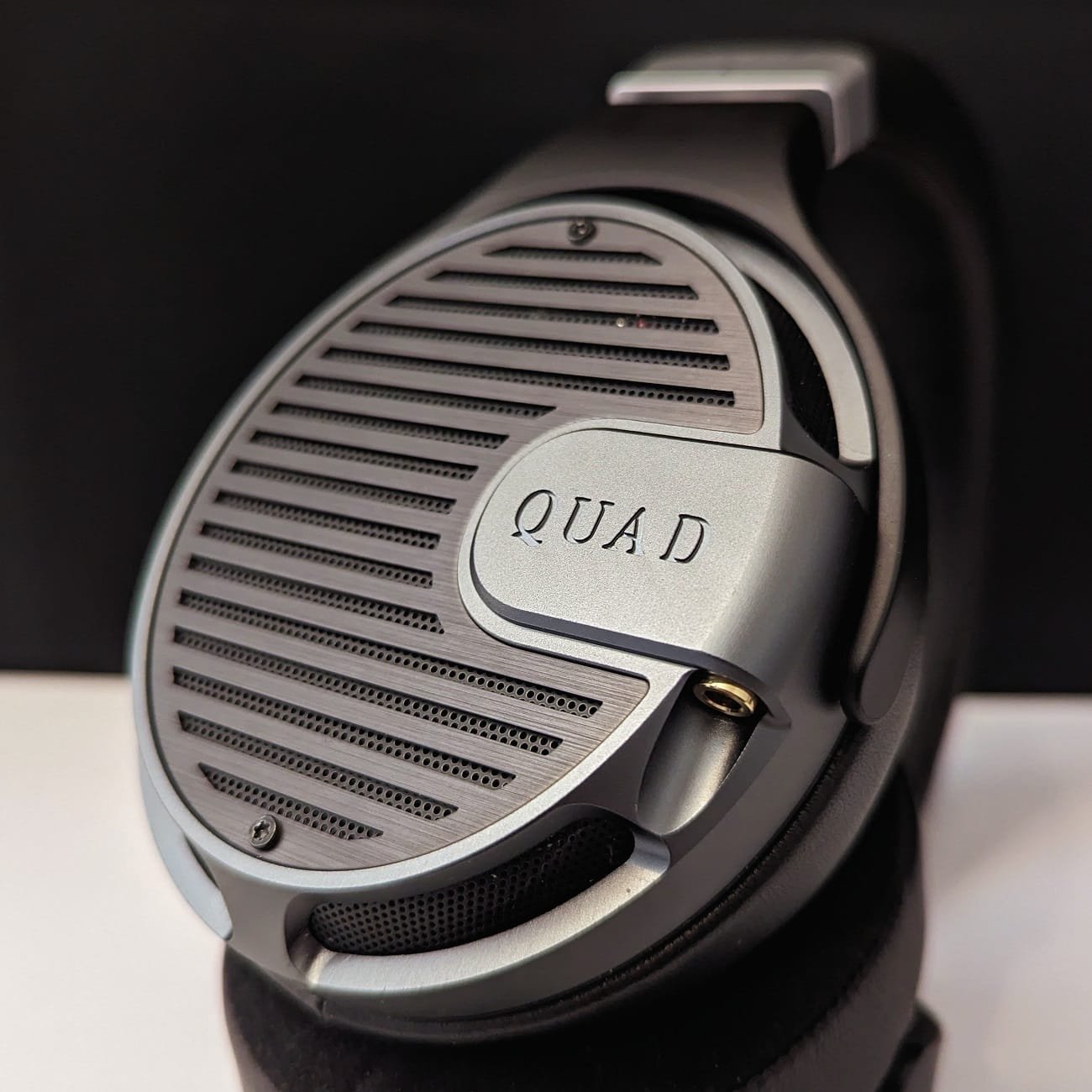
The Quad ERA-1 is quite an oddball, about which it is difficult to form a clear opinion. Firstly, due to their somewhat cheap headband structure, the headphones appear generic and do not truly evoke a sense of ownership joy. Even Quad's logo feels a bit glued on, as the same headphones are also sold under different brands with minor differences. Since there are also proven issues with fit and build quality, purchasing the ERA-1 at a price of 700 euros would be difficult to recommend nowadays.
On the other hand, I understand why many people like these headphones. They sound unique and charmingly old-fashioned, so there are no truly similar alternatives on the market. The ERA-1's fun sound can justifiably steer many purchasing decisions towards it, even if, for example, the accuracy of reproduction does not reach the level of more affordable competitors. Fortunately, clear weaknesses are quite easy to overlook, because listening is enjoyable and the experience differs from the usual. It is indeed an interesting headphone model precisely because of its distinctiveness, so it is worth trying boldly if the opportunity arises.
Pros and cons:
+ Fun-oriented tuning without too many compromises
+ Relaxed yet punchy mid-frequencies suit rock music surprisingly well
+ Rich and punchy bass reproduction
+ Airy and unfatiguing treble
+ Good wearing comfort, if the headphones fit the head
+ High-quality metal cups
+ Comes with a second set of ear pads
+ Longer than usual 3-year warranty
– Unevenness and coloration of mid-frequencies can divide opinions
– Bass rumble sometimes dominates the reproduction too much
– Blurry soundstage and separation (though slightly better with leather pads)
– Cheap and flimsy-feeling headband structure
– The smallest height adjustment setting is too large for some
– Quality issues, such as sudden breakage of connectors
– Detaching the cable is difficult and the connector design prevents the use of some cables
– Similar headphones have been sold more affordably under different brands
 EN
EN  FI
FI