Author: Roderick
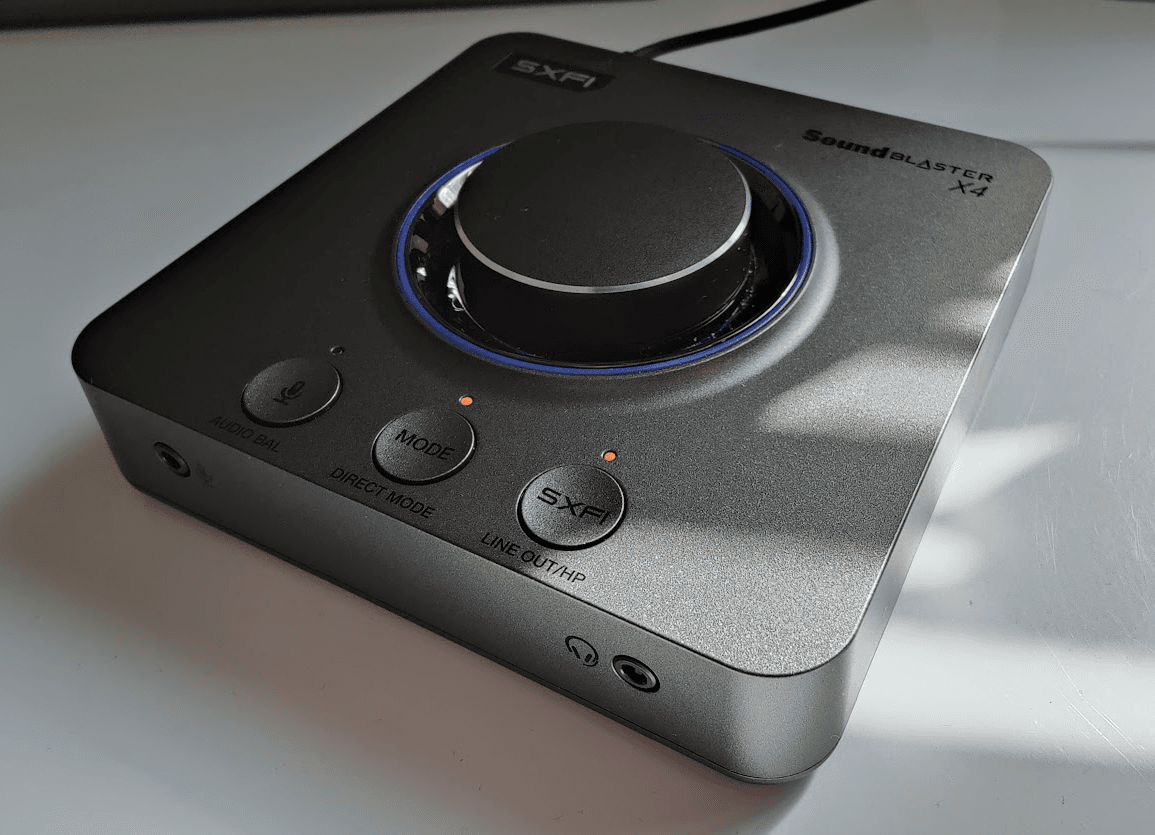
Table of Contents:
Information:
- Publication year: 2021
- Country of Origin: China
- Price: 150 €
- Type: 7.1 USB-DAC & headphone amplifier
- Audio processor: Sound Blaster Acoustic Engine, Super X-Fi (DAC chip manufacturer unknown)
- Input connections: USB-C, 3.5 mm optical/line-in combo jack and 3.5 mm jack for external microphone
- Output connections: Optical
- Speaker connections: 3.5 mm jacks for front speaker, side speaker, rear speaker and subwoofer/center speaker
- Headphone connectors: 3.5 mm
- Sampling rate PCM Stereo: 192 kHz (24 bit)
- Sampling rate PCM Surround 7.1: 96 kHz (24 bit)
- Sampling rate Dolby Digital Live: 48 kHz (16 bit)
- Headphone amplifier output impedance: 10 ohm
- Headphone amplifier has two gain levels: High gain 150–600 ohms (2.3 V RMS @ 150 ohm, 2.9 V RMS @ 600 ohm) and low gain 32–149 ohms (1.2 V RMS @ 32 ohm)
- USB power supply: the same connection is also used as a data/audio connector
- Features: Super X-Fi virtual audio for headphones, Dolby Digital Live, Creative app, which offers programmable EQ modes, among other things
- External dimensions: 130.5 x 130.5 x 40.6 mm
- Weight: 384 g
- Included: Optical cable and USB-C -> USB-A cable
- More detailed device specifications including system requirements can be found from the manufacturer website
Review sample: Provided by the manufacturer
The Sound Blaster X4 is an external sound card manufactured by Creative, primarily designed for the needs of PC and console gamers. In this review, however, we will find out if the X4 is good enough for more serious hi-fi use, or if a music lover who enjoys gaming should acquire separate equipment for both purposes. For example, I will not discuss how well the Sound Blaster X4's Super X-Fi Battle Mode works when playing Call Of Duty, but I am more interested in how the device sounds with 2700 euro ZMF Verite headphones. I will also find out if the Sound Blaster can challenge one of the most popular combination devices currently, Topping DX3 Pro+:.
The Sound Blaster X4 was provided by Creative for review, but I will write about it completely impartially, as usual. Both justified praise and potential criticism equally benefit consumers and the manufacturers themselves. Creative is clearly open to receiving feedback on its product, so I thank them for the opportunity to provide it.
Packaging and accessories
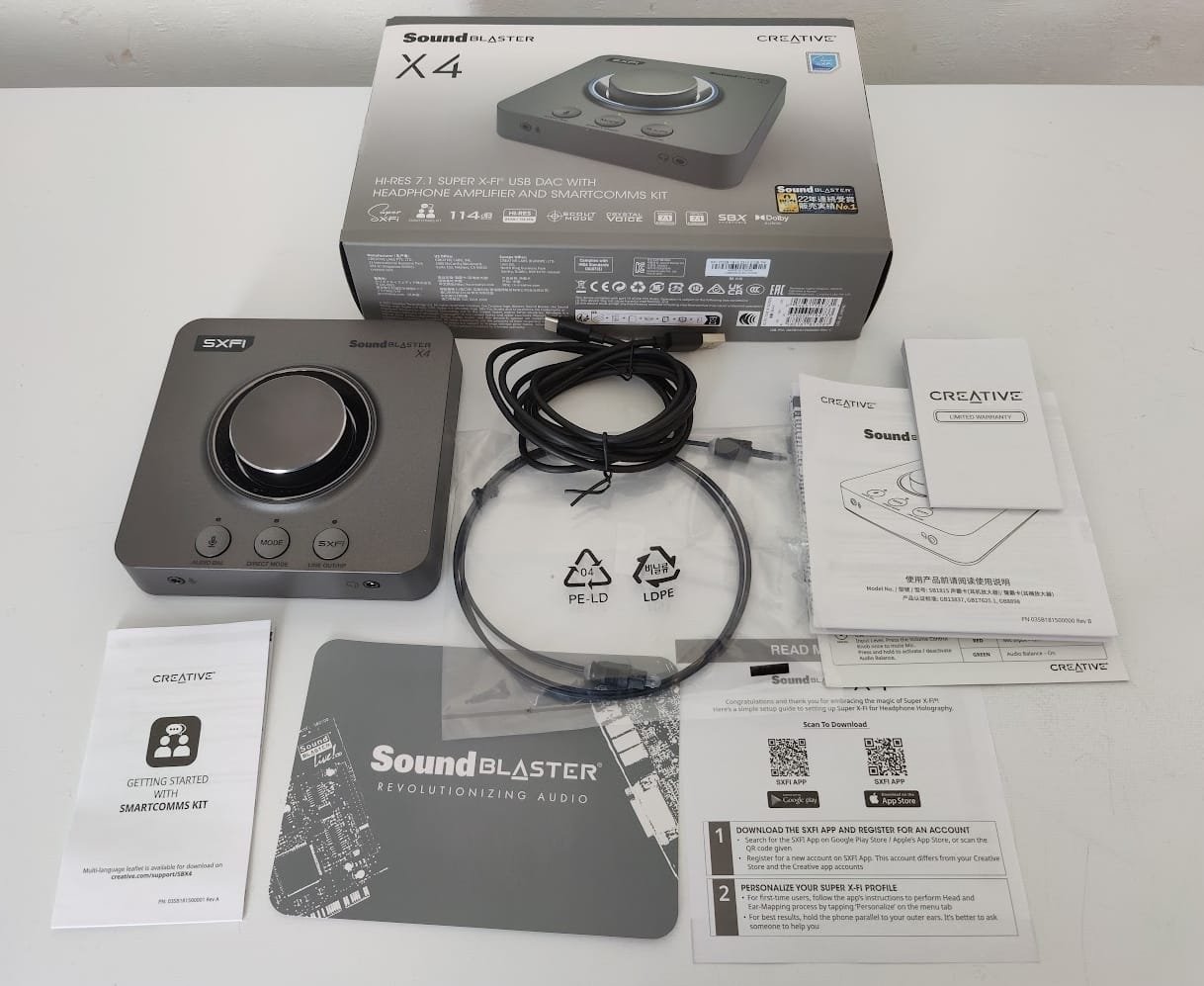
The Sound Blaster X4 is delivered in a standard cardboard package and comes with an optical cable and a USB cable, through which the device receives power. Thus, a separate power cable is not needed; one and the same cable handles both the audio signal and power delivery. The USB cable is pleasingly two meters long, which is a clear improvement over the short cable snippets from many other manufacturers, such as iFi. Creative has included the most essential accessories, but it would have been nice if the package had also included a 6.35 mm headphone adapter and a 3.5 mm -> RCA adapter cable, with which the device could be easily connected to another amplifier.
Structure and connections
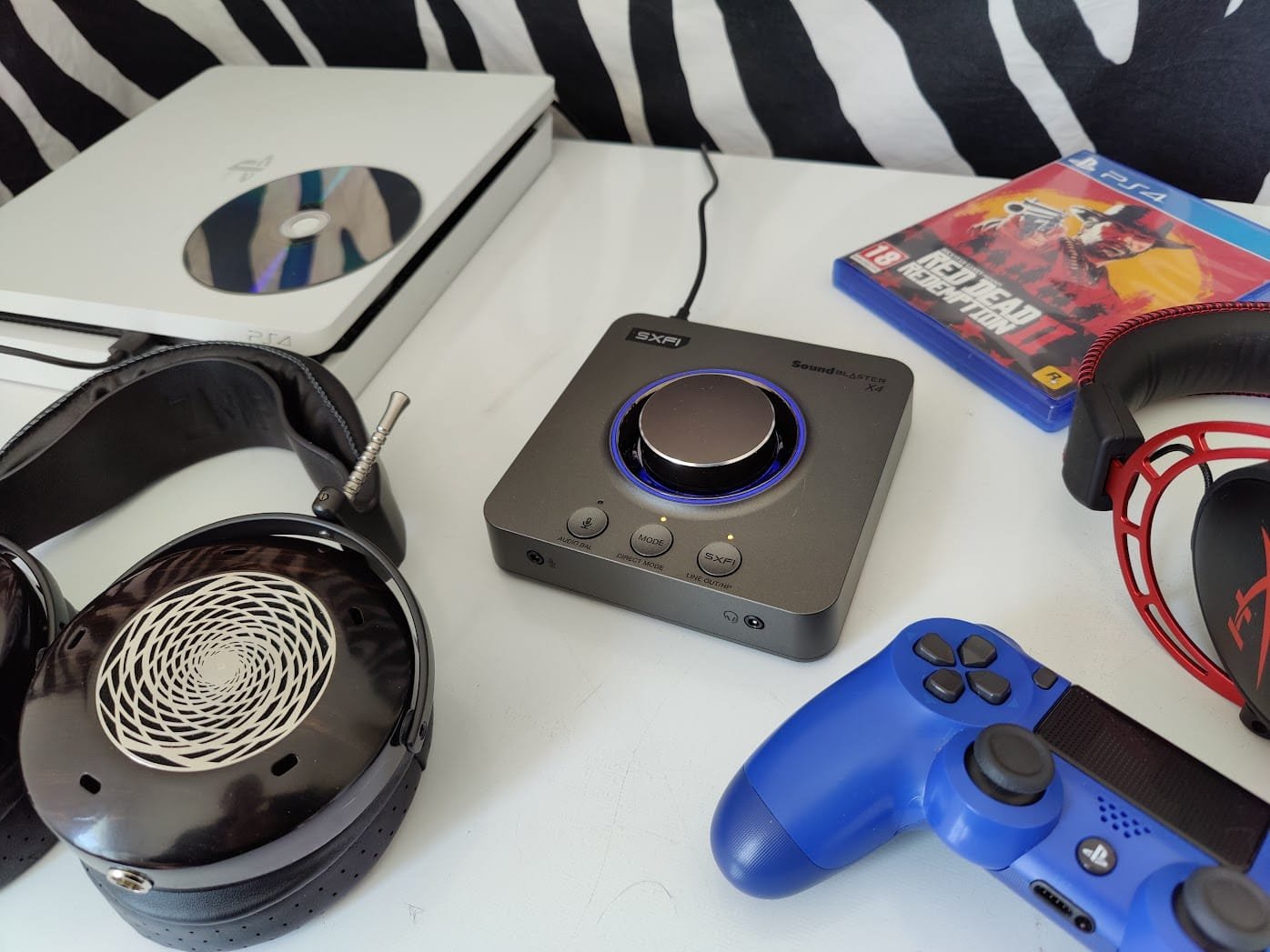
The X4 is a rather compact device with external dimensions of 130.5 x 130.5 x 40.6 mm. Its size does not differ significantly from other DAC/AMP combination devices in the same price range.
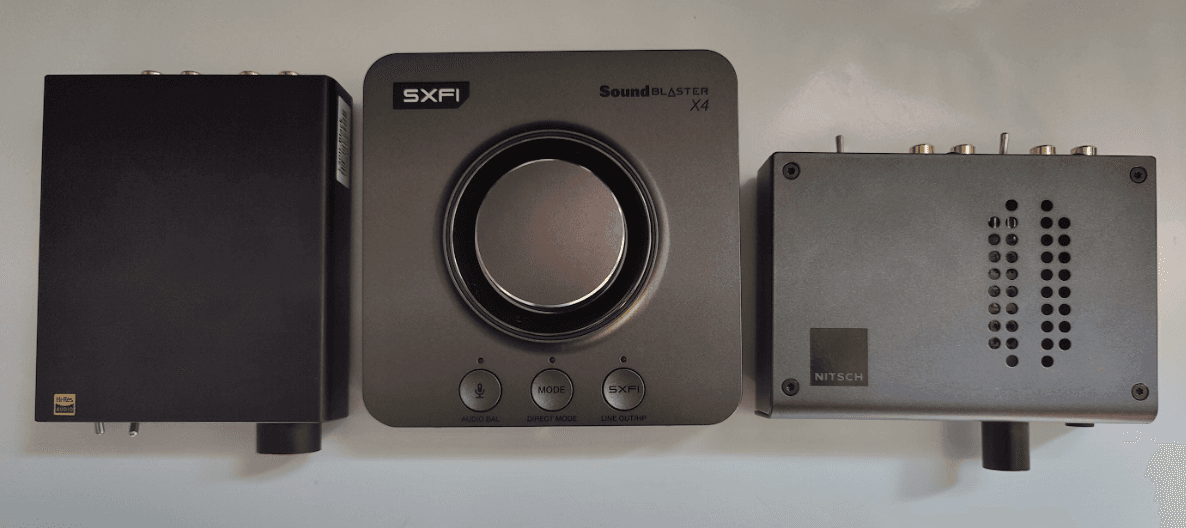
The outer casing is made entirely of plastic. The choice of material is a slight disappointment, as I cannot readily recall another headphone amplifier or D/A converter costing 150 euros that is not made of metal. On the other hand, the finish of the X4 is truly high quality. Its rounded corners and quality paint finish make the poorly finished metal casings of many other manufacturers feel like homemade contraptions. The X4 weighs almost 400 grams, so it also has a pleasant amount of mass to enhance the impression of quality. Additionally, the device's rubber feet deserve special mention, as they grip the table surface exceptionally firmly.
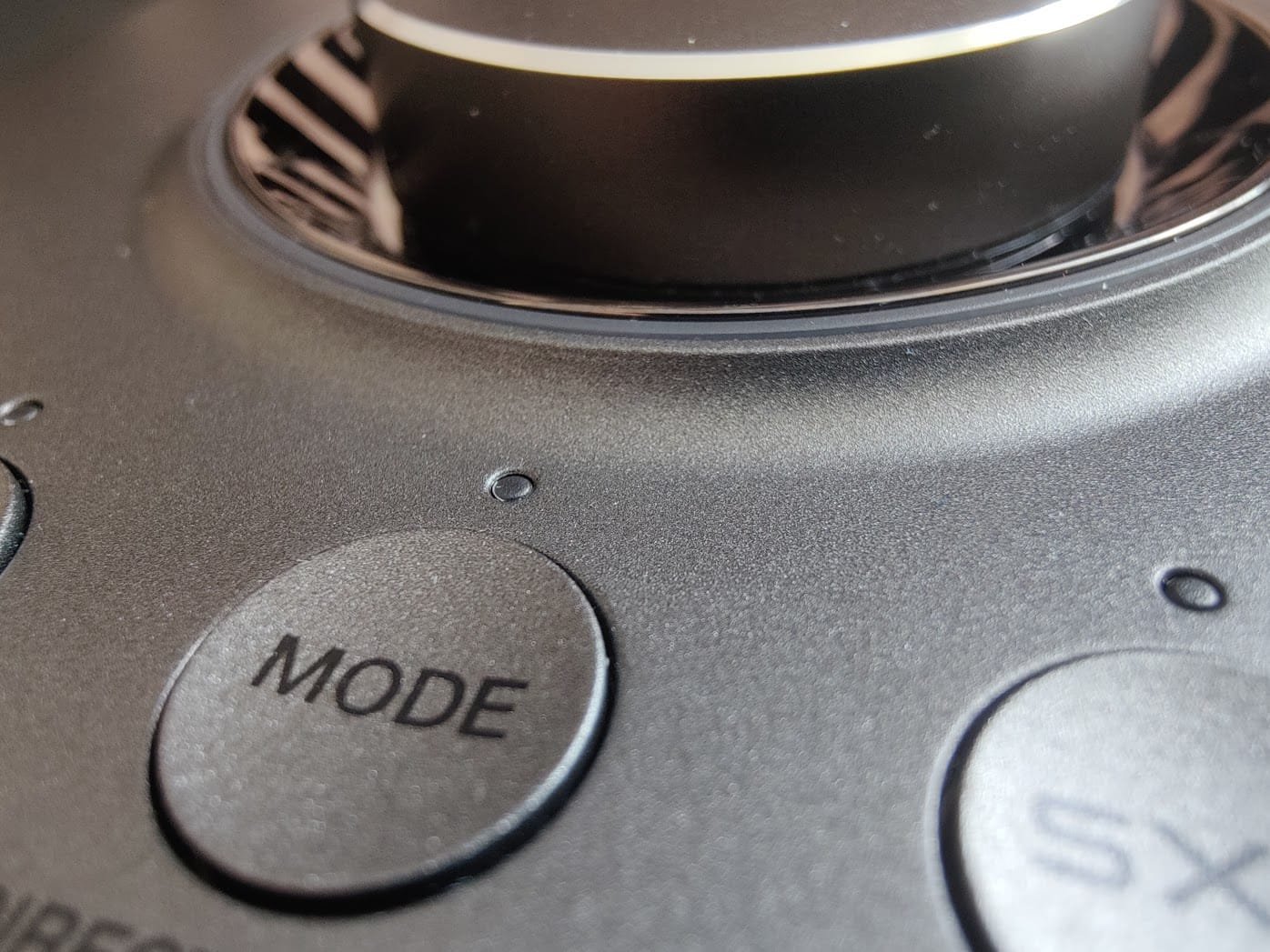
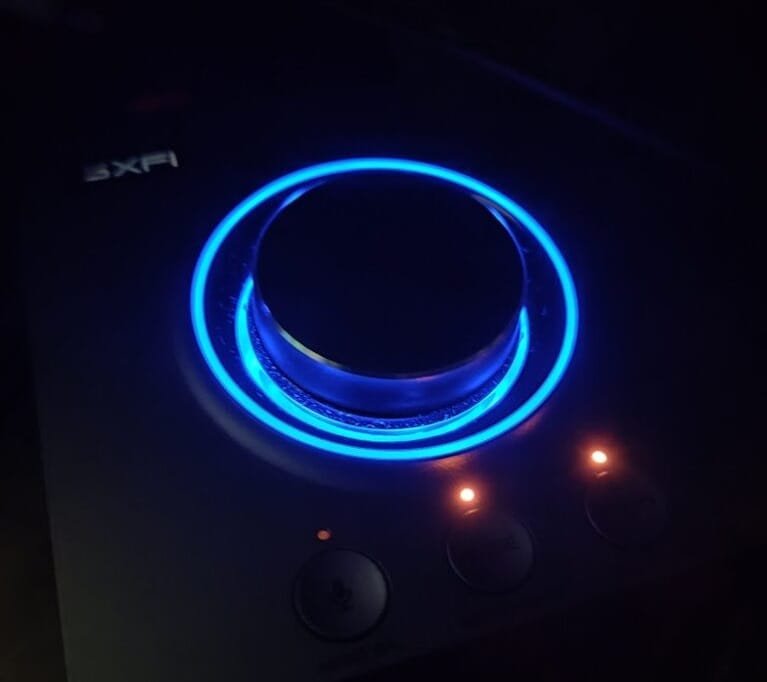
The volume control is located on top of the device, and its large size makes it pleasant to use. The somewhat loose and plastic feel of the touch also affects the overall impression of quality more than usability. The control reacts quickly, meaning you don't have to turn it ten times to lower the volume. Additionally, the sound can be muted by pressing the control.
The blue LED ring surrounding the device surprisingly does not indicate the set volume. Since the control also rotates freely, the volume cannot be determined by looking at the device from anywhere else. It was really difficult to get used to this, but at least the light flashes when the sound is muted.
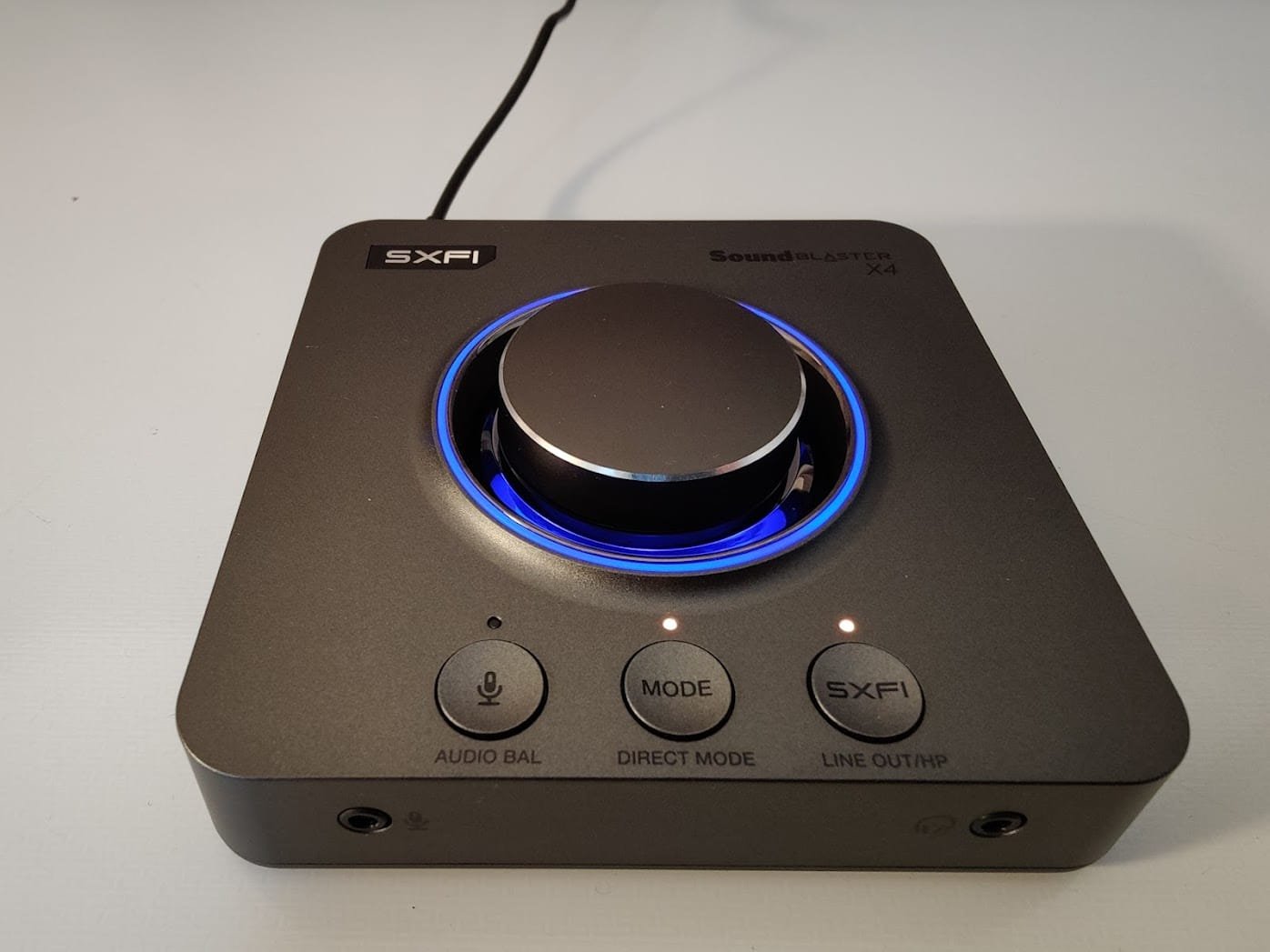
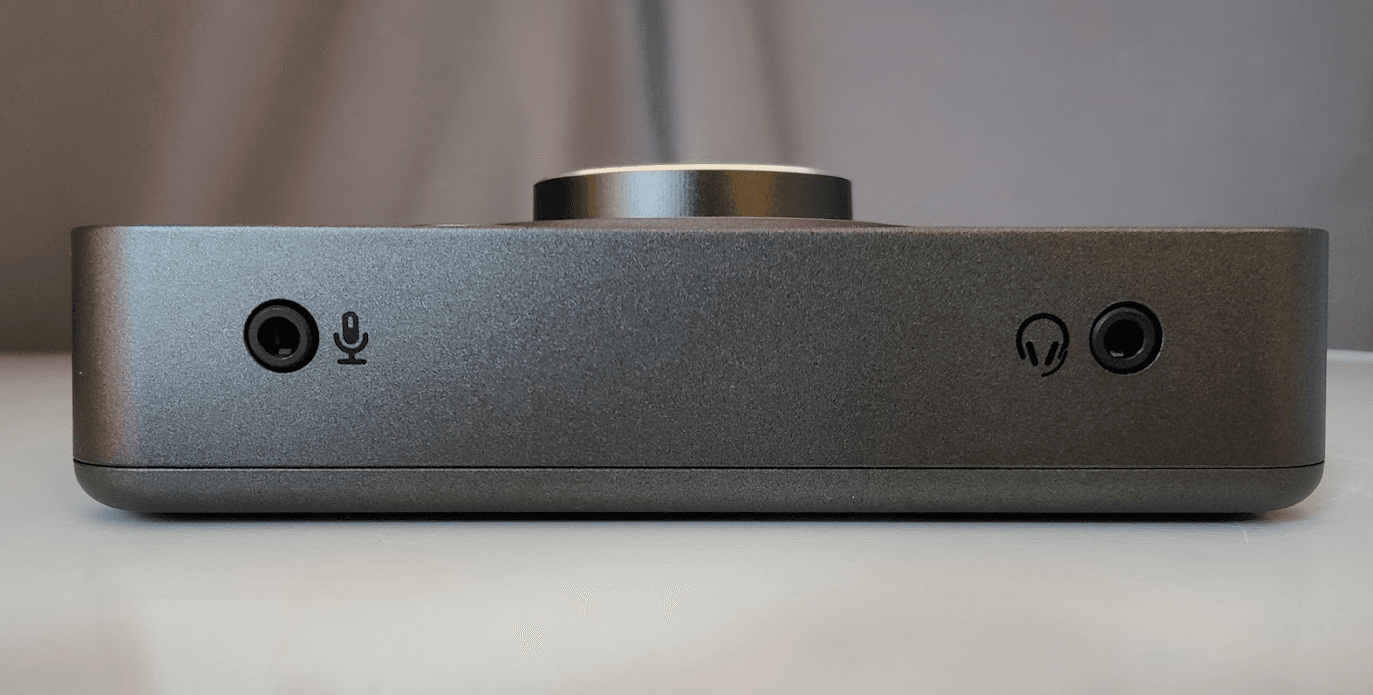
In terms of connectivity, the Sound Blaster X4 is either versatile or incomplete, depending on one's needs. The front panel has one 3.5 mm jack for headphones and another for a microphone. Considering the device's primary target audience, the chosen headphone jack makes sense, but I personally missed a 6.35 mm jack. Balanced connections cannot really be demanded given the affordable selling price. When connecting headphones to the device, there is always a slight crackle, but I have not noticed any interference sounds during use. I did not test the functionality of the microphone jack.
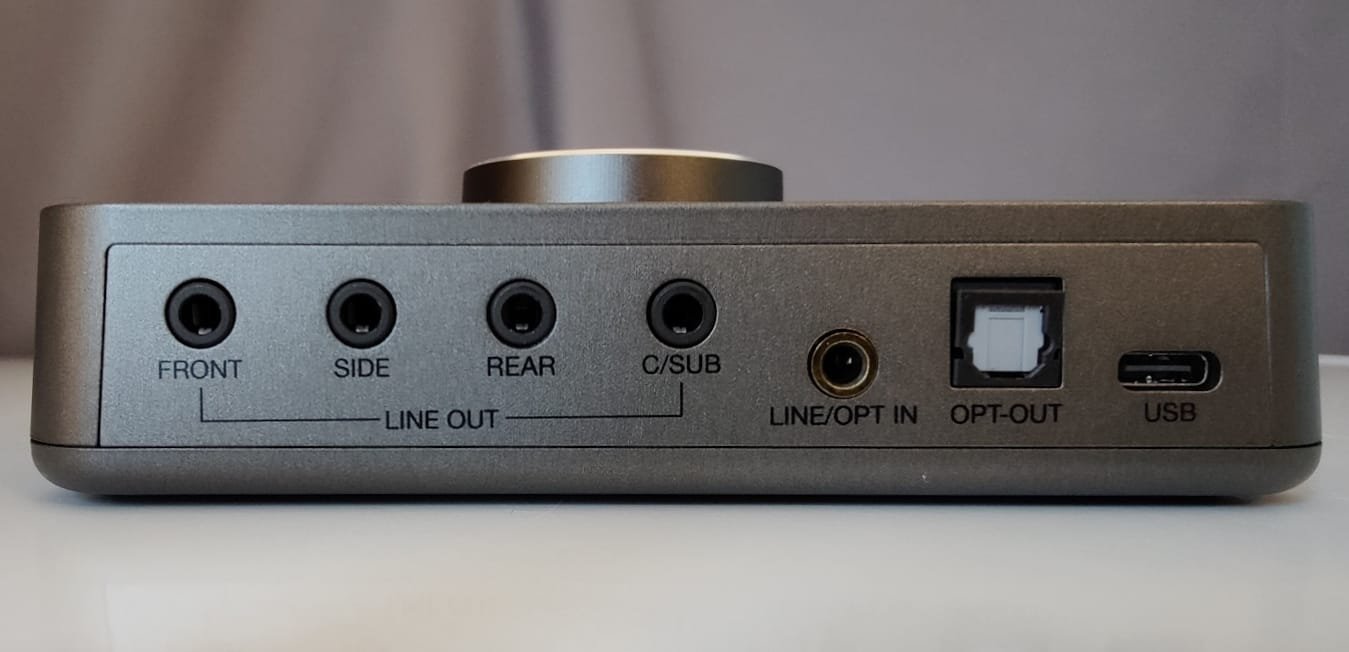
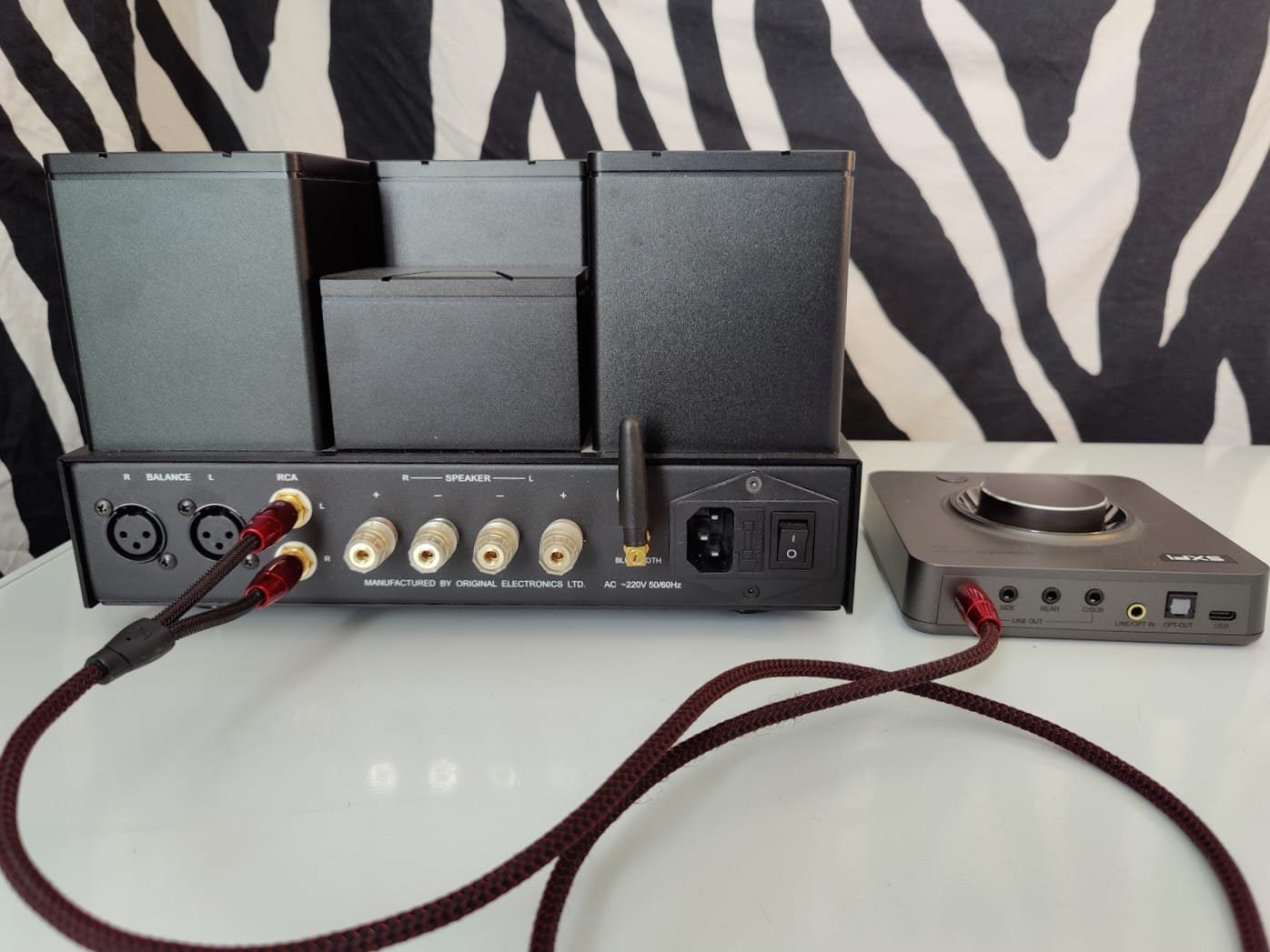
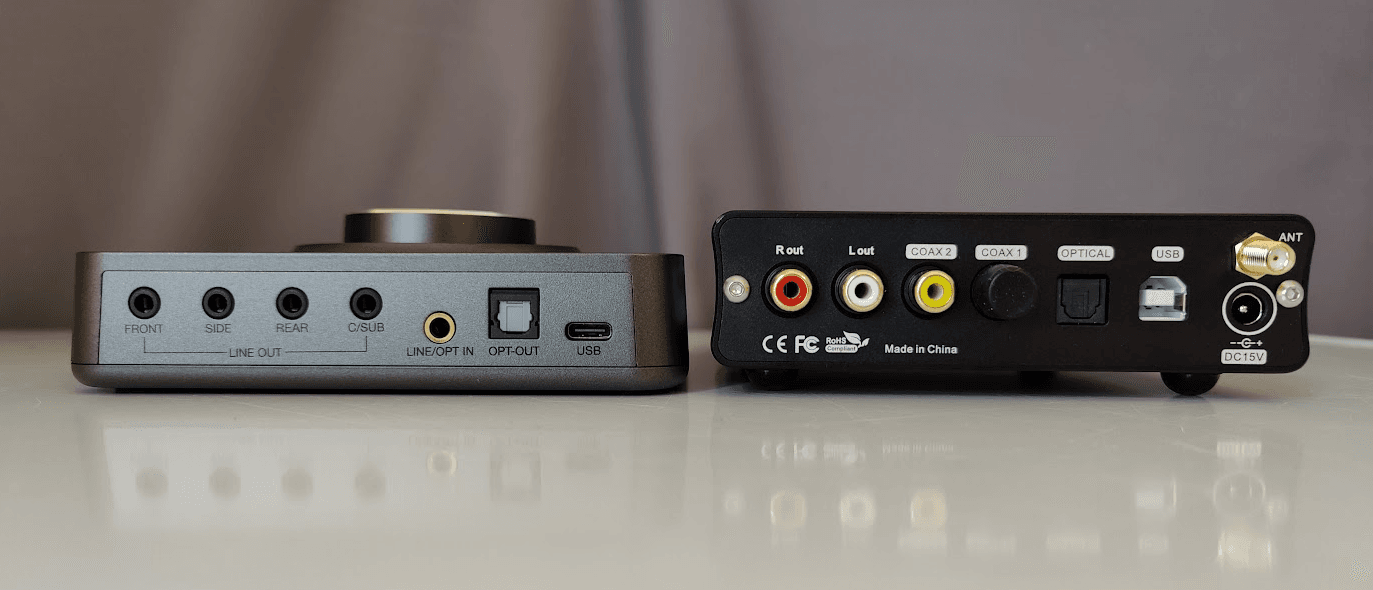
The device's rear panel features four 3.5 mm jacks for speakers and a subwoofer. Since I exclusively use headphones, these connectors are unnecessary for me. However, for owners of multi-channel speaker systems, they bring added value when comparing the Sound Blaster X4 to more conventional combo devices designed for headphones.
With the 3.5 mm combo jack (optical/line-in) next to the speaker connections, the device can be connected to, for example, a television. With an adapter between the HDMI connector and the optical connector (not included in the product package), the X4 could in turn be connected to a PS5 console, and the optical output could be used for, say, an AV receiver. With the USB-C connector, the X4 functions as a USB sound card, and the same connector is used for power supply in any case, even when using other connections. The device does not have traditional RCA connectors, but it can be connected as a D/A converter to, for example, another headphone amplifier using the 3.5 mm output intended for front speakers. This requires an adapter cable that converts the 3.5 mm jack to two RCA connectors.
Device setup
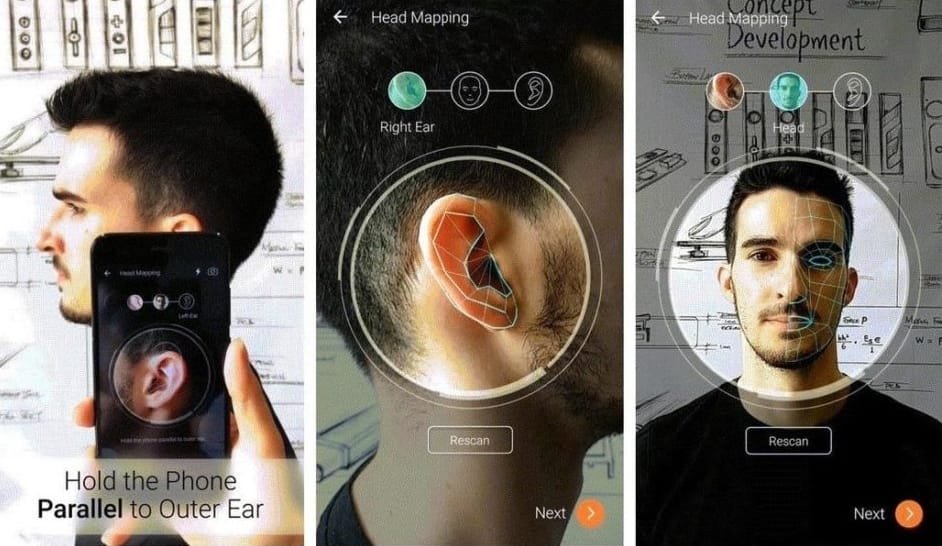
Setting up the Sound Blaster X4 went smoothly. My Windows 10 computer recognized the device without a hitch, and the necessary drivers installed themselves. However, if one wants to get the most out of the available features, the user must separately install two applications, one for the computer and one for the mobile phone. The mobile phone application is needed to use the Super X-Fi feature, along with a free Creative account. I found the installation and the associated ear mapping process quite straightforward and easy. The Creative application installed on the computer is the device's actual user interface, which controls numerous functions and settings. More on this next.
Features and settings
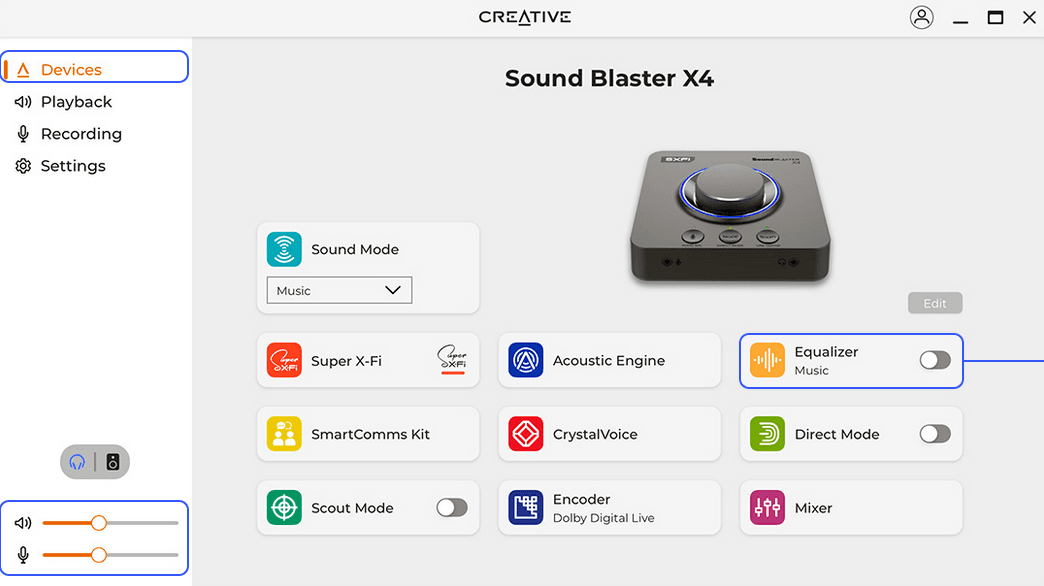
The device contains so many different features and settings that I won't even attempt to go through them all in this article. The customization possibilities for the functions are extensive, and most of them relate to gaming or microphone use. Although I will primarily focus on how well the Sound Blaster X4 is suited for listening to music, I do want to highlight a couple of interesting features.
Super X-Fi:
Creative's technology, named Super X-Fi, simulates a multi-speaker system using headphones. From a gamer's perspective, this is likely one of the device's most interesting features. Super X-Fi settings are individual for everyone, based on the shape of the user's ears and face. These are scanned initially using a phone camera. The application also includes pre-set equalizer settings for some popular headphone models.
I quickly tried the feature and found that it improved the sense of space. This was quite an impressive experience in its own way. However, for listening to music, the feature is useless, as vocal performances, in particular, sounded very unnatural. I went through a few different adjustments, but I couldn't fix the problem well enough. The unnaturalness of the human voice was also distracting in games, even though sound is listened to less critically then. It's possible that by redoing the ear scanning process, I could get better results if I didn't manage to photograph my ears optimally on the first attempt. A simpler virtual sound than Super X-Fi is offered by the Acoustic Engine feature, which does not require creating a Creative account or installing a phone application and photographing the ears.
Audio Balance:
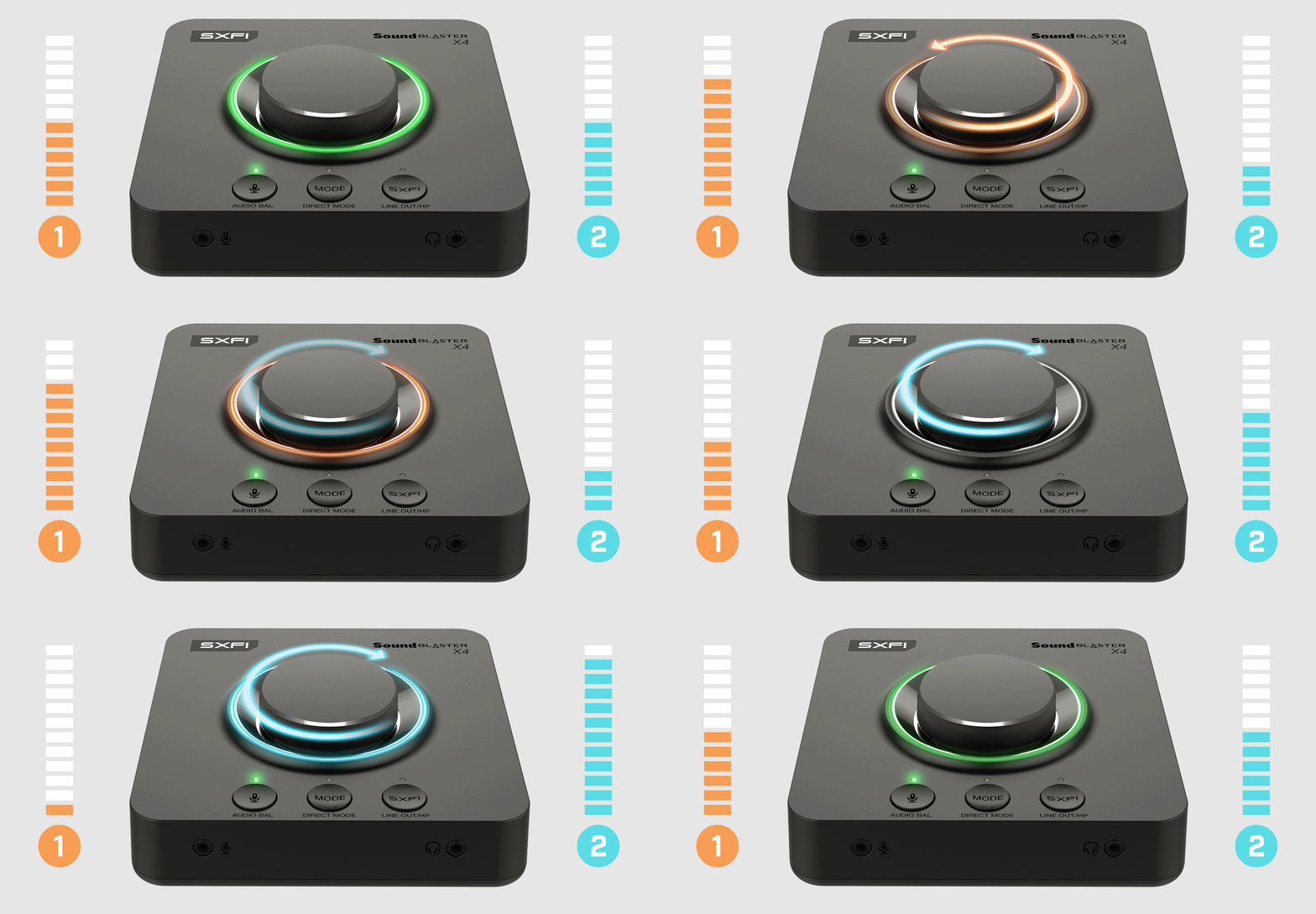
The Audio Balance feature allows for quick adjustment of the volume of different audio sources. For example, when gaming, turning the volume knob to the left could amplify the game's volume and quiet down teammates' chatter. Turning it to the right would reverse the situation. The feature could also be utilized in Teams meetings, for instance, as follows: background music could be amplified by turning the knob in a certain direction, and if a colleague seemed to have something important to say, the knob would be turned in the opposite direction. The feature seems like a very clever invention if it works just as well in practice.
”Features useful for ”Audiophiles"
Although most of the Sound Blaster X4's features are related to spatial audio playback, gaming, and microphone optimization, the device also has some useful features for listening to music.
Equalizer:
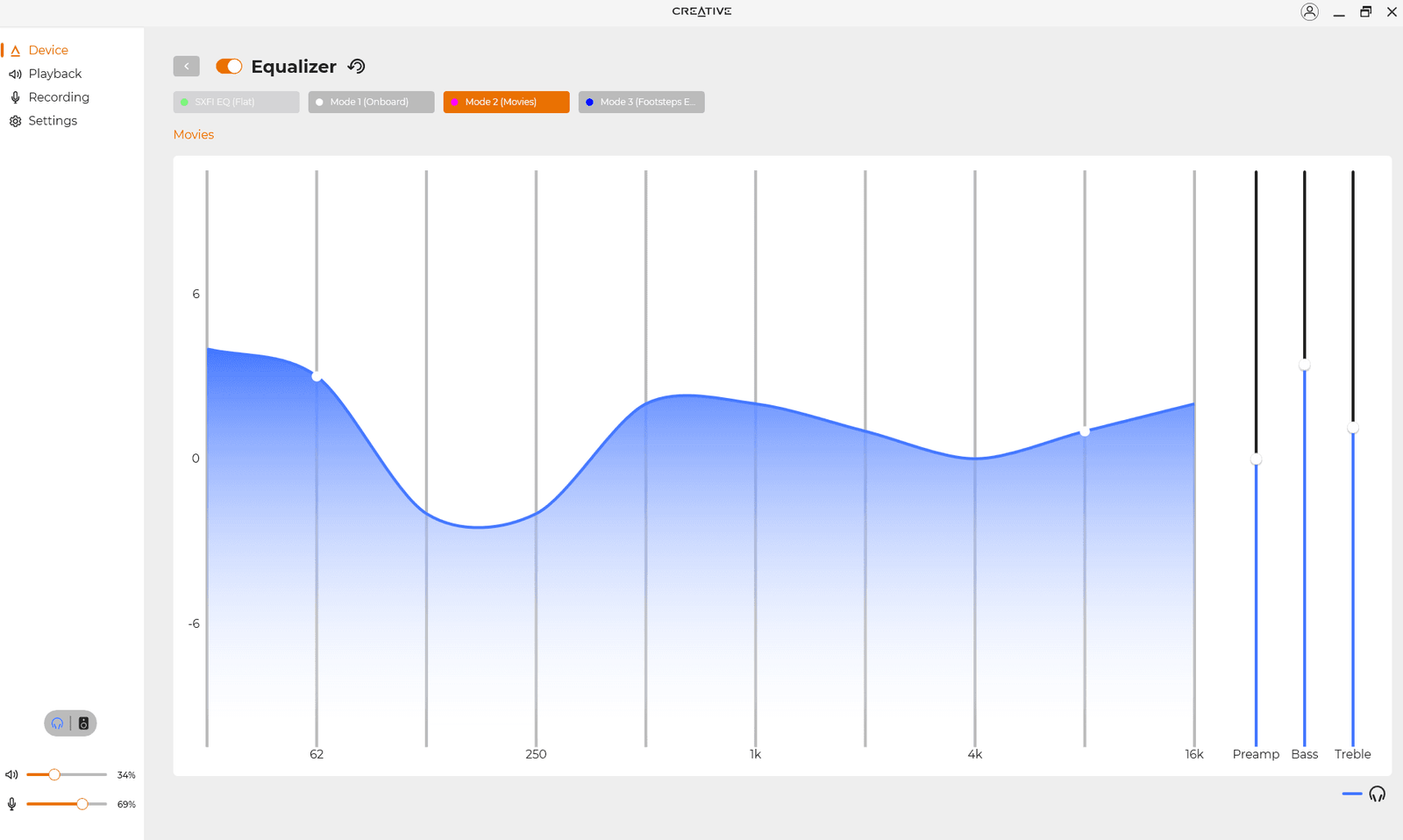
The Creative app's equalizer is not as versatile as Equalizer APO, which I usually use. Equalization is not very precise, but for example, boosting bass or calming broader treble peaks can be done conveniently.
The advantage of Creative's equalizer is its ease of use compared to, for example, the Equalizer APO software I mentioned. Settings are saved to the device, after which they can be easily selected and activated using buttons. The device offers default sound profiles for music, movies, and listening to footsteps in games. If I wanted, I could modify the setting intended for movies to be suitable for example Hifiman Sundara and the setting intended for footsteps Sennheiser HD600to/for. When I switch headphones, I could change the EQ profile on the fly by pressing the appropriate button. The best thing about Creative's equalizer, however, is that the settings truly remain in the device's internal memory, meaning the app does not need to be installed on the listening device. My saved settings are available when I connect the Sound Blaster X4 to, for example, a game console.
Gain settings:
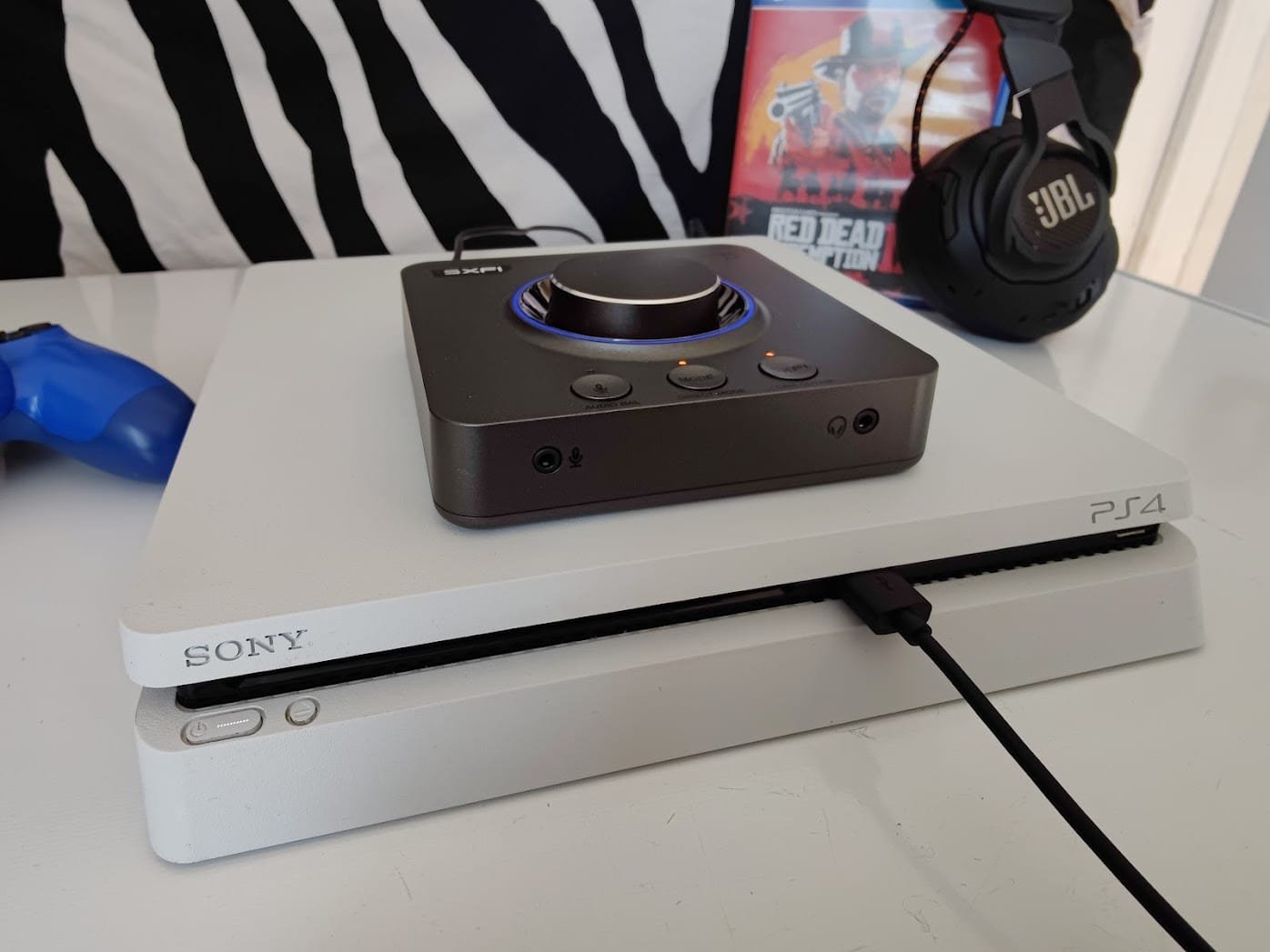
When listening to headphones that are harder to drive than usual or sensitive in-ear headphones, an adjustable gain level is almost a necessity. Most quality devices also have one. The Sound Blaster X4's gain level is adjusted in the app. Since I don't use in-ear headphones much, I always kept the amplifier at the highest gain level, even though the manufacturer recommends a lower setting for, for example, 32-ohm headphones.
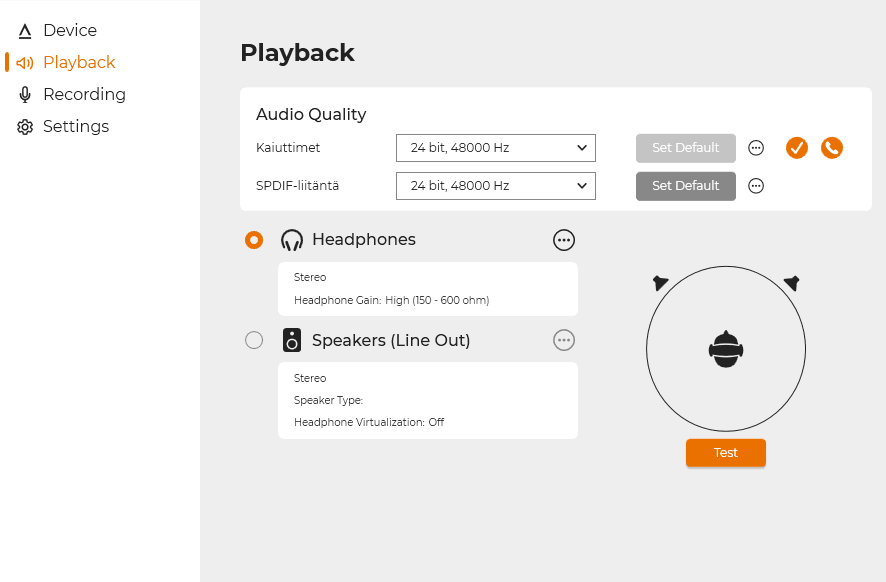
Direct Mode:
The device's Direct Mode bypasses all software-level sound modifications. No app is needed to use this feature, as it can be conveniently switched on and off directly from the device. For music listening, I would see Direct Mode as clearly the best option.
Sound quality
The device has plenty of features and also sounds quite excellent. It's difficult to highlight any single aspect of the sound. The reproduction is clean, detailed, and easy to listen to. Critically evaluated, I have certainly heard amplifiers that are more exciting in their dynamics or offer a wider soundstage. While there's nothing particularly striking about the Sound Blaster X4”s sound, there's also nothing that bothers me. The end result could probably be called neutral. However, the sound does have a bit of ”analog" softness, so the device doesn't sound overly clinical either. Such characteristics are, of course, just small nuances, as the device's frequency response is completely flat based on measurements, as is the case with almost all other amplifiers and D/A converters nowadays.
D/A converter:
I did not specifically try to find out about the sound quality of the Sound Blaster X4's D/A converter when connected to another headphone amplifier, because most people would, in my opinion, use it as a combined device, especially since the sound quality is quite acceptable that way.
The maximum stated sampling rate of the D/A converter is 192kHz/24bit, which looks quite poor on paper, as many devices nowadays support even 32-bit 768 kHz PCM. However, Creative's device is in reality sufficient for almost all users. I myself don't even know where I would start looking for music recorded at a higher quality than its supported sampling rate. I am also sure that I wouldn't even hear an improvement in sound quality. The same applies partly to DSD, which the Sound Blaster X4 also does not support. I think that DSD support in many devices is just for marketing, and not so much because very many people would even listen to DSD files. DSD certainly has its own small user base, but among users of affordable devices, they are likely marginal.
Headphone amplifier:
According to Creative, the X4 is capable of driving headphones with an impedance between 32–600 ohms. However, such a specification doesn't mean much, as the functionality of the headphones doesn't yet guarantee optimal compatibility. Impedance itself is a poor and somewhat outdated metric for describing how powerful an amplifier is needed for headphones. High-impedance headphones require higher voltage (Volts), while some low-impedance headphones may require a lot of power (Watts). For example, the 50-ohm Hifiman HE6 requires a significantly more powerful amplifier than the 300-ohm Sennheiser HD650. The stated sensitivity of the Hifiman model is 83.5 dB/mW, and Sennheiser's is significantly higher at 103 dB/mW.

Since I cannot measure the power output of the Sound Blaster X4, my observations are based on testing through listening. The device had no difficulty producing high volume with the Sennheiser HD650 (300 ohm), ZMF Verite Open (300 ohm), and Audio Technica R70x (420 ohm) that I tried. The sound quality was also, in my opinion, on a similar level as, for example, Topping L30 IIwhen listening with.
Many planar headphones require more power from an amplifier, but SASH Tres and Hifiman Edition XS worked well, however. I did not notice any signs of power running out. Especially the SASH Tres sounded really good in addition. I could imagine the power only running out when listening at extremely high volumes or when heavily equalizing the headphones.
I also tested the Sound Blaster X4 for fun with the Hifiman Susvara (60 ohm, 83 dB/mW), which is probably the most difficult headphone in the world to drive. It was clear that the X4 is not a suitable amplifier for it, but I wanted to test how badly the sound distorts when power runs out. To my surprise, distortion only occurred in the high frequencies – the bass reproduction was, of course, also quite anemic. With the amplifier at full volume, the Susvara played at a roughly acceptable volume, so Creative has, in my opinion, succeeded well in the design of the amplifier section.
Headphone amplifier output impedance:
The device's headphone amplifier's 10-ohm output impedance is high by current standards, as most other manufacturers prefer an impedance of less than one ohm. According to a general rule, the device's impedance should be 1/8 of the impedance of the headphones in use. Therefore, Creative's device should primarily be used with headphones that have an impedance of at least 80 ohms. However, the situation is not that simple.
The impedance response of dynamic headphone models is often uneven. If the impedance is elevated, for example, at 100 hertz, an emphasis will occur at that frequency if the amplifier's output impedance is high. I tested the Sound Blaster X4 with the 24-ohm Martin Logan Mikros 90, whose frequency response showed no deviations when measured. The impedance response of that particular headphone model must therefore be flat. In contrast, with the 35-ohm Focal Elegia, the bass was emphasized by a couple of decibels. Focal headphones are indeed known to have significant variations in their impedance responses at low frequencies.
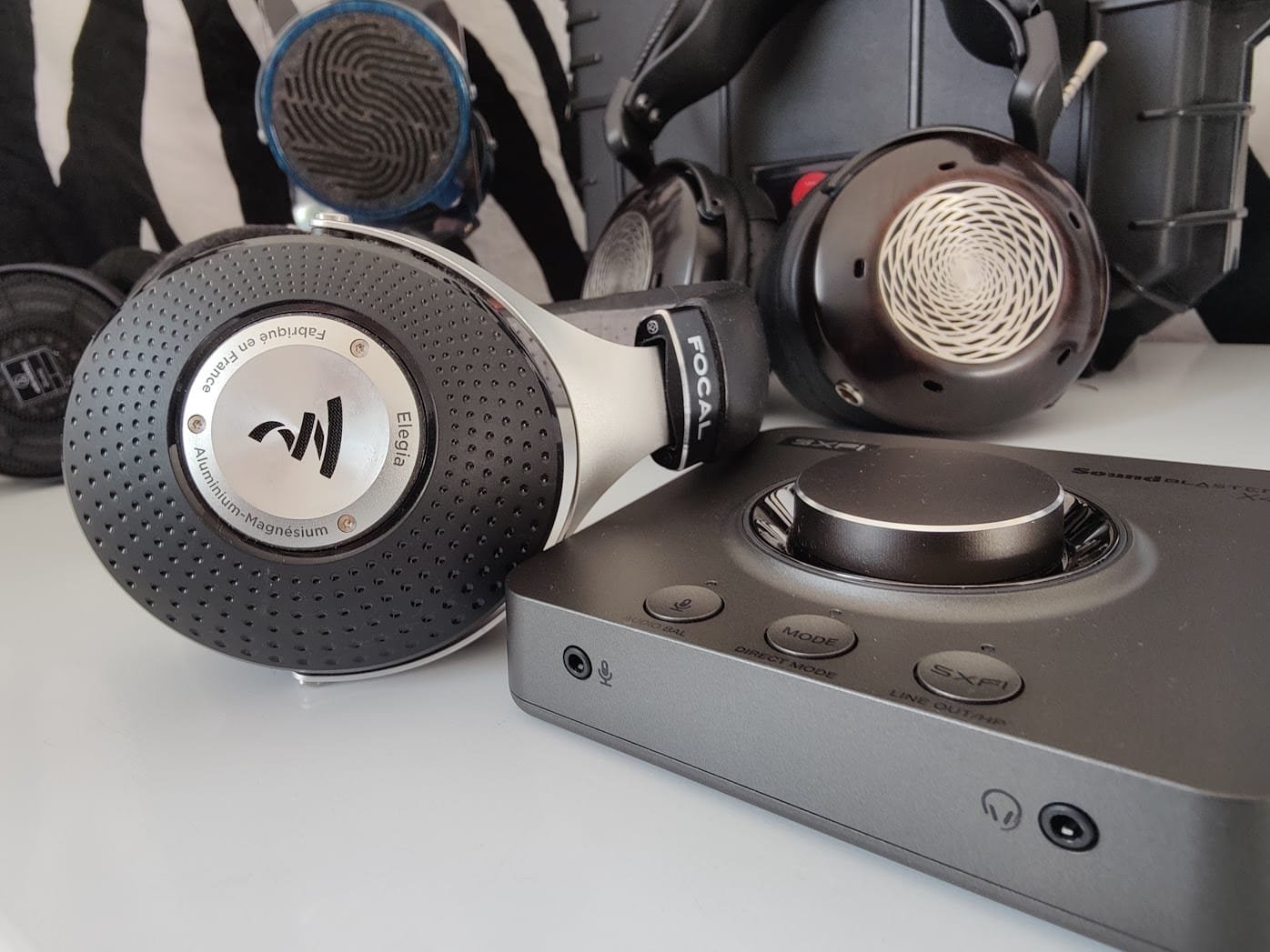
Apart from Focals, I don't believe the X4's rather high output impedance will be a problem with most low-impedance headphones. However, with in-ear headphones implemented with Balanced Armature drivers, strange things can happen, as their impedance response's rather large peaks are usually located in the mid-frequencies.
Even if no deviations occur in the frequency response, high output impedance affects the amplifier's damping factor, i.e., its ability to handle energy returning from the headphones to the amplifier. This is usually a greater challenge with loudspeakers, but objectively speaking, a 10-ohm output impedance is in any case a rather clear error in the X4's design. If a potential buyer of the device wants to play it safe, it's not advisable to acquire low-impedance dynamic headphones, and especially not in-ear headphones with Balanced Armature drivers, to go with it.
Sound Blaster X4 vs. Topping DX3 Pro+
Prices: 150 € vs. 200 €
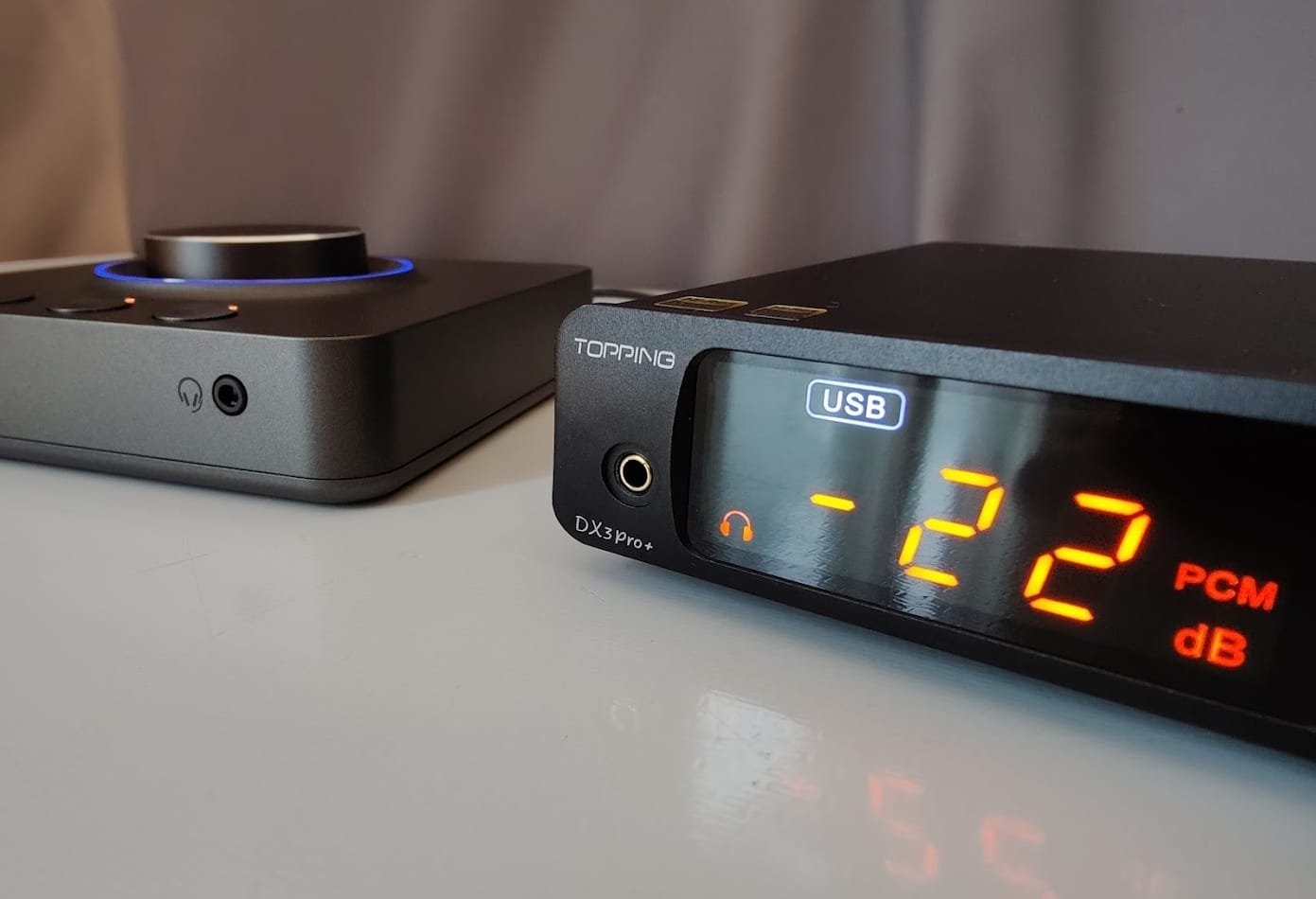
I compared Creative's device to the 50 euro more expensive Topping DX3 Pro+ combo device, which is primarily designed for music listening. Due to the different intended use, the duo's connections and features also differ:
- The DX3 Pro+ comes with a remote control
- The Topping model has a display and supports Bluetooth connectivity. The Sound Blaster X4 only utilizes Bluetooth during the application installation phase
- The Topping has RCA outputs, making it slightly easier to connect as a DAC to another headphone amplifier. With two coaxial connections, the Topping can also be connected to older devices that do not have a USB connection
- Topping's headphone amplifier is more powerful
- The Sound Blaster's headphone amplifier output impedance is significantly higher (10 vs. 0.1 ohms)
- The Sound Blaster has a connector for a microphone
- The DX3 Pro+ must be connected to mains power, whereas the Sound Blaster X4 is powered directly via a USB cable from the device it is connected to
- The Sound Blaster is much more versatile in terms of features. The equalizer, in particular, is useful, and the device is superior for gaming. Super X-Fi, which simulates a multi-speaker system for headphones, may also be worth trying when watching movies. The DX3 Pro+'s only additional feature is the various audio filters offered by the ESS chip manufacturer, but there is no practical difference between them.
- The Sound Blaster's four 3.5 mm speaker connectors support multi-channel audio, whereas only two active speakers can be connected to the DX3 Pro+'s RCA outputs
Sound quality comparison
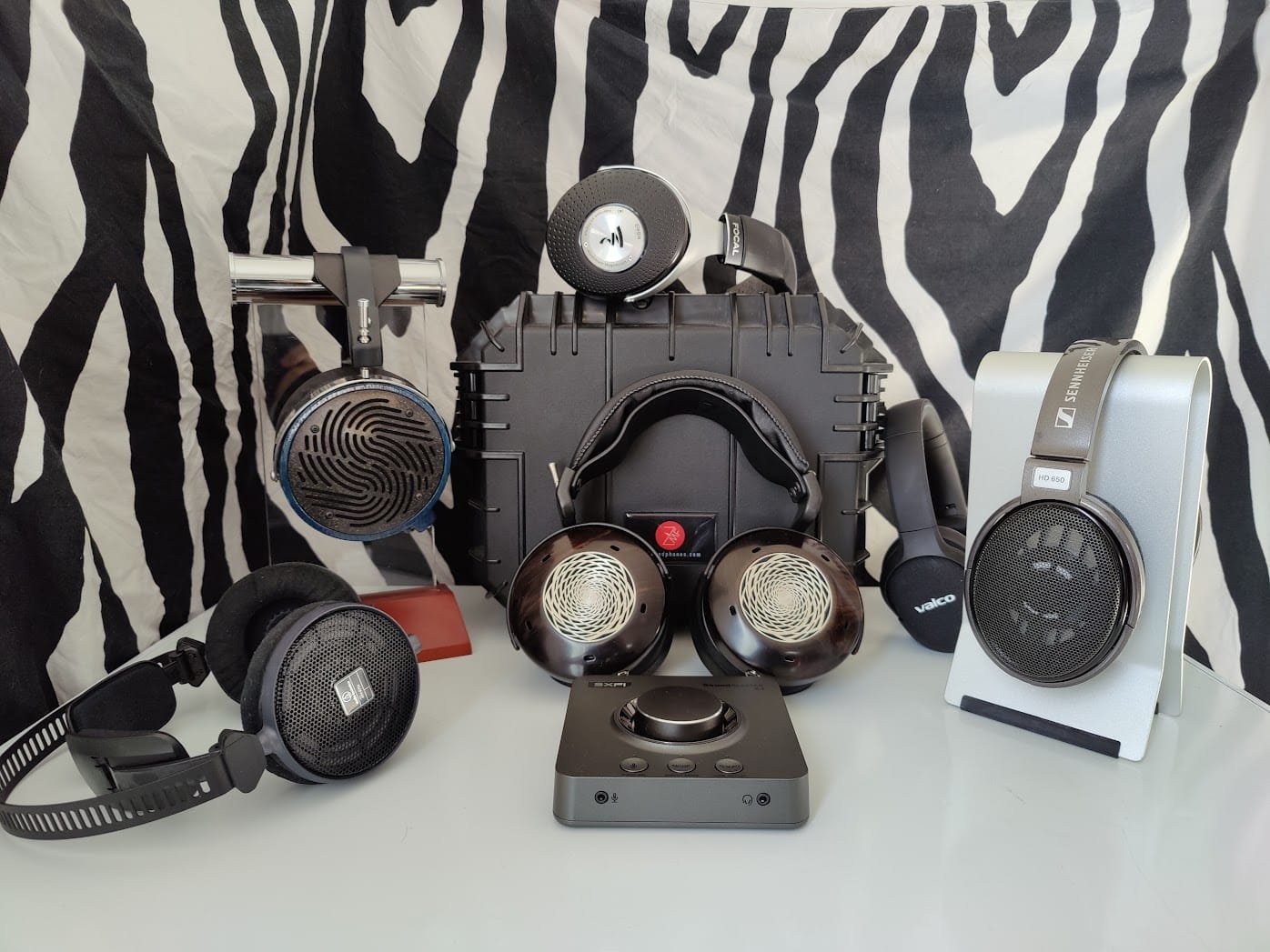
I listened to both devices with SASH Tres-, Sennheiser HD650- and Valco VMK25-headphones. I leveled the volumes using the MiniDSP EARS device. With the help of Voicemeeter Banana software, I was able to play audio from the computer simultaneously to both devices. Thus, I did not have to touch the Windows operating system's sound settings when switching audio sources. Of course, there was a slight delay when I switched the headphones from one device to another.
I didn't need to compare the devices for long, as in my opinion, they sound largely similar. Listening a bit longer, I found the Sound Blaster's sound slightly softer and the Topping DX3 Pro+ to emphasize playback accuracy more. However, I did not notice similar differences when switching quickly from one device to another. It's possible that after using one of the devices for, say, a week and then switching to the other, I might notice clearer differences that don't become apparent with short testing. However, even such an experiment would not reveal any huge difference. I believe that the devices sound distinctly different only if the Sound Blaster X4's high output impedance changes the sound, or if power-hungry planar headphones are used. The Topping model's headphone amplifier is significantly more powerful if needed.
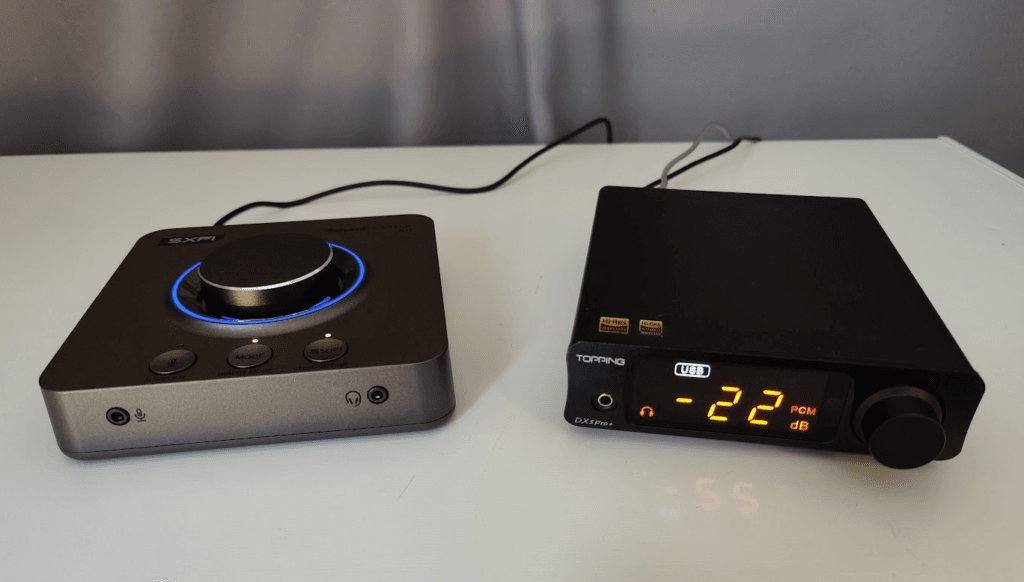
The outcome of my testing is a good reminder that amplifiers, and especially D/A converters, often sound very similar, especially within the same price range. I found the Sound Blaster's overall sound slightly more pleasant, but honestly, I don't think I could distinguish it from the Topping DX3 Pro+ in a blind test. Despite everything, I am a bit surprised by the result, as the DX3 Pro+ has a fairly good price-performance ratio. However, it would seem that the 50 euro cheaper Sound Blaster X4 is just as good in terms of sound.
If the use of a similar device includes occasional gaming and microphone use, the Sound Blaster X4 is a very justified choice even for users who primarily value good sound quality. However, if not all features of the Creative device are needed, the user might benefit more from the DX3 Pro+'s remote control and more powerful headphone amplifier. In terms of sound quality, in my opinion, you can't go wrong with either device.
Summary
I set out to find out if the Sound Blaster X4 is good enough for listening to music or if it should be left solely for gaming. The result is clear: the device sounds excellent. It would serve well as a D/A converter or a combined device for an aspiring headphone enthusiast. Of course, there are other good alternatives in the same price range. IFi Zen DAC V2 might sound slightly better and the Topping DX3 Pro+ has a more powerful headphone amplifier. However, no device primarily designed for hi-fi use can compete with the versatile features of the Sound Blaster X4. Even if there's no need for spatial audio and other special features, the equalizer alone increases the device's value. For 150 euros, the Sound Blaster X4 offers so much that one can only marvel.
Pros and cons:
+ Sound quality
+ Equalizer
+ Additional features, such as Super X-Fi, Audio Balance and 7.1 speaker support
+ The device draws power directly from the computer's USB port
+ Reasonably powerful headphone amplifier
+ For once, the USB cable has plenty of length!
+ Reasonable price
+/- The outer casing is made of plastic, but the device still feels higher quality than many competitors' metal-cased products
– The headphone amplifier's output impedance is high
– No RCA outputs
– No remote control.
– Does not play audio via Bluetooth connection
– Enabling features requires the installation of two applications
– The device has no indicator whatsoever for the selected volume
 EN
EN  FI
FI