Author: Sword of Damocles
Table of Contents:
Information:
- Release year: 2023
- Country of manufacture: Designed in Germany and manufactured in China
- Price: 279 USD (those who join the email list may receive a 40 dollar discount)
- Type: Closed, over-ear
- On both sides 4 dynamic drivers (2 for low and mid frequencies and 2 for high frequencies)
- Audio connections: Bluetooth 5.1, USB-C and headphone jack (2.5 mm)
- Bluetooth codecs: LHDC, AptX Adaptive, AAC and SBC
- Impedance: 42 ohm
- Weight: 410 g
- Battery life: 50 h (without noise cancellation) / 40 h (with noise cancellation on)
- Battery size: 880 mAh
- Charging port: USB-C
- Noise cancellation function: Hell Blocker ON/OFF and transparency mode
- Accessories: The basic price includes only a USB-C cable (length 1.4 meters), but by paying an additional 20 dollars, you also get a carrying case and a headphone cable
Review sample: Self-purchased product
Many older headphone enthusiasts may recognize German Axel Grell as an audio engineer who worked at Sennheiser for three decades, whom we can thank for, among other things, HD 600and HD 800the design of the -series headphones. However, few necessarily know what kind of headphone projects Mr. Grell is currently working on. In addition to his own headphone company called Grell Audio and the soon-to-be-released OAE1 headphone model he has also worked on Bluetooth headphones for a few lesser-known manufacturers, at least nominally.
Perhaps the most special project, however, is the one I am discussing this time Heavys H1H -noise-cancelling headphones (price 280 USD), which are designed down to every detail for listening to heavy metal music. In my opinion, the heavy metal theme has been made quite tasteless and childish, but the marketing tactic is clearly well thought out. According to the manufacturer, the design of the headphones takes into account the wishes of people who listen to heavy metal music, so heavy metal should sound better with H1H than with any other headphones and exactly as intended. These are truly bold claims, the veracity of which will ultimately largely determine the headphones' chances of success. Without yet taking a strong stance on the functionality of the end result, what makes these headphones special in any case is their multi-driver implementation, as the H1H contains no less than 8 dynamic drivers. This, if anything, distinguishes the product from other noise-cancelling headphones on the market.
Heavys H1H was funded by a crowdfunding campaign that began in January 2022, which ultimately did not go particularly smoothly. The company did raise a hefty sum of money, but customers did not receive the headphones in August 2022, as originally estimated. The release was ultimately delayed by almost a year, as headphone deliveries only really started rolling out in late summer 2023. Communication from the manufacturer was apparently quite lacking along the way, so the delay in release understandably caused frustration among those who participated in the crowdfunding campaign. However, since the headphones are now ready and in my hands, I'm going to find out if they revolutionize heavy metal listening.
Product package content
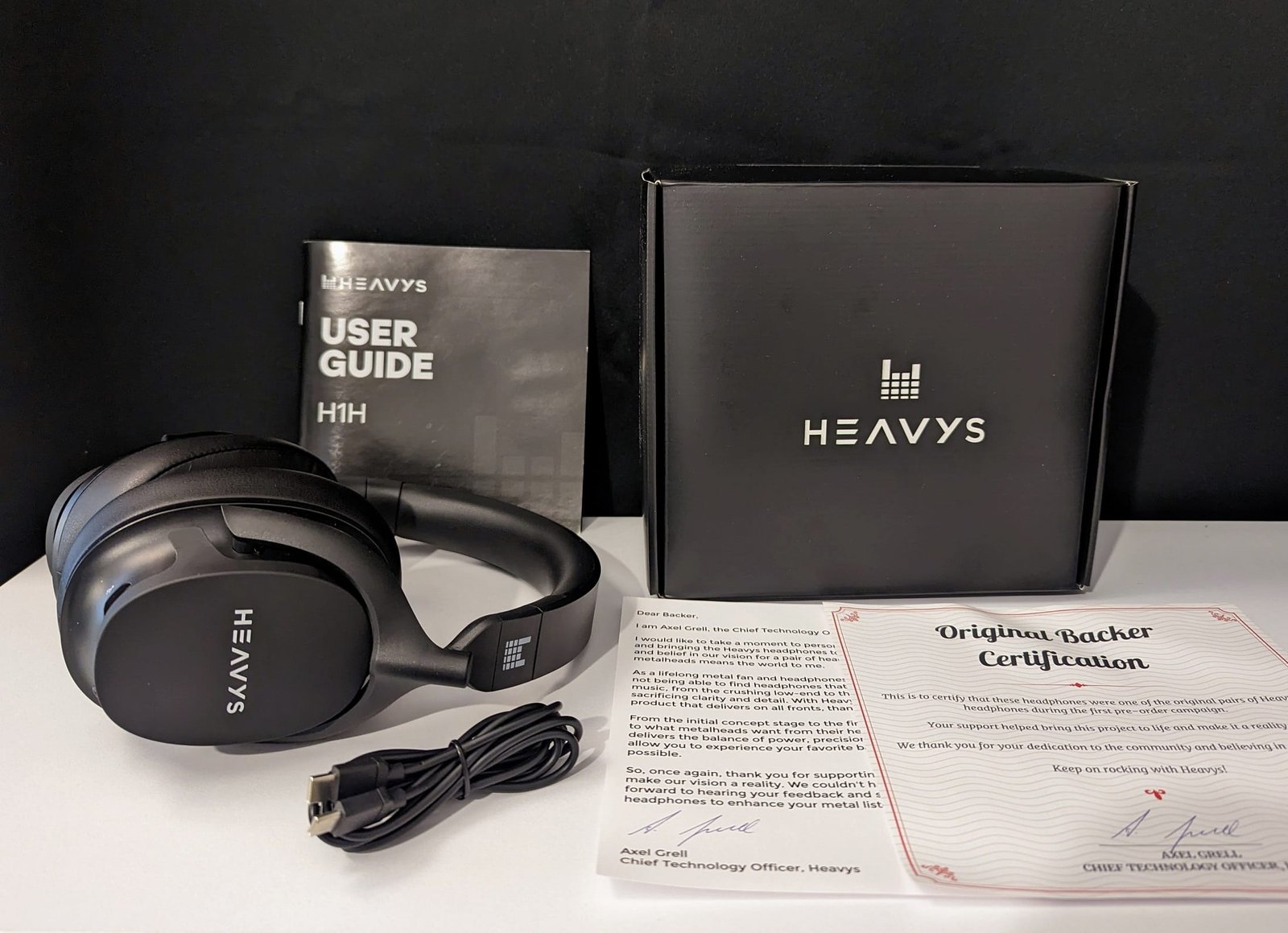
Heavys H1H is delivered in a small black cardboard box, adorned only with the manufacturer's name and logo. When purchasing the most affordable basic version, the product package includes only a 1.4-meter long USB-C charging cable and a user manual, in addition to the headphones. As additional documentation, there is also a thank you note signed by Axel Grell for purchasing Heavys H1H. Furthermore, those who participated in the Kickstarter campaign also receive an ”Original Backer” certificate with another thank you. These are likely useful post-marketing efforts, considering the significantly delayed release of the headphones.
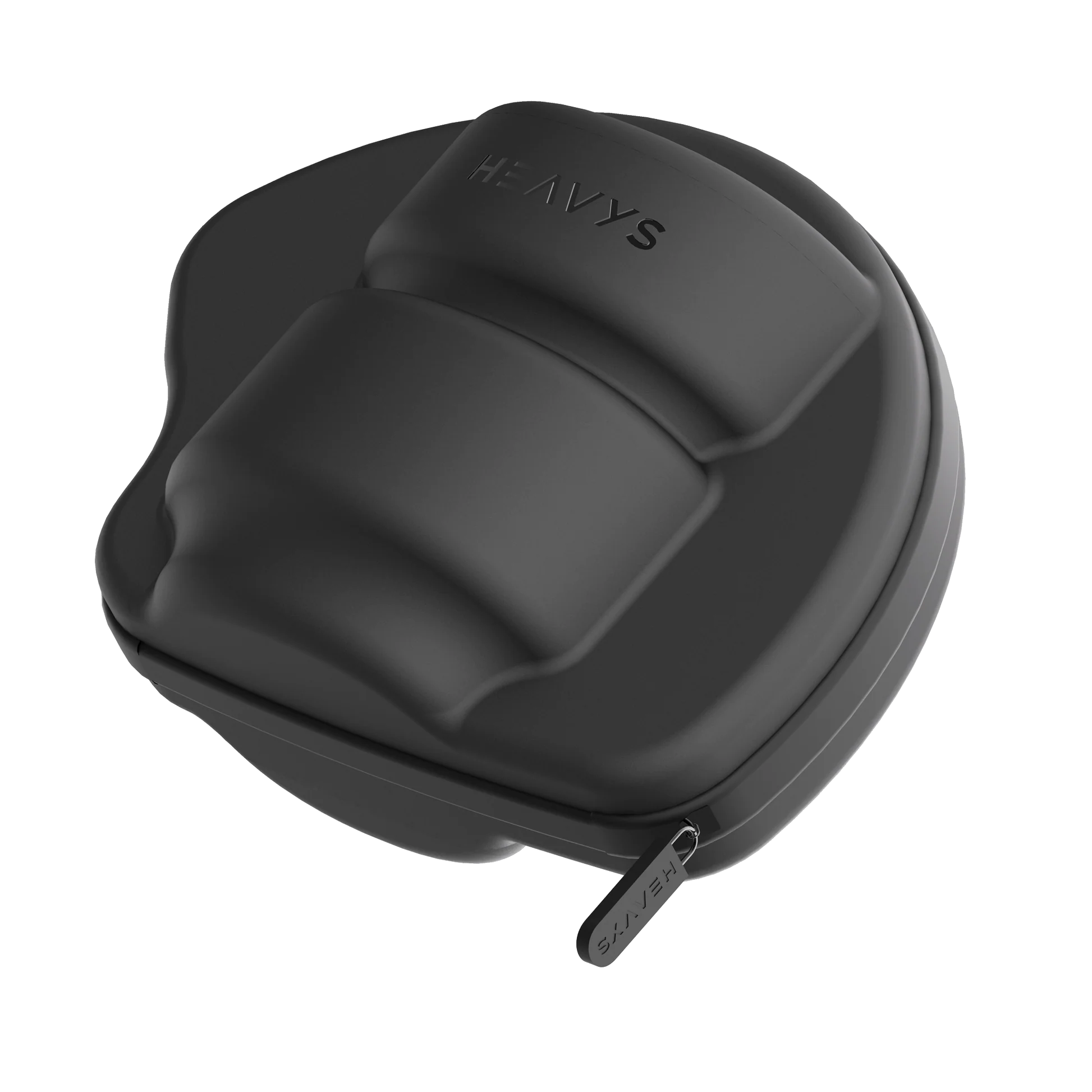
If the H1H is to be carried around, it would definitely be worth paying an extra 20 dollars, which would then include a carrying case in the product package. In this case, a headphone cable with a suitable 2.5 mm connector would also be included. It is quite peculiar that the headphone cable must be purchased separately, but on the other hand, the headphones can also be used with a USB cable. For most, the benefit of the headphone cable is limited to being able to listen to the H1H without power once the battery runs out.
Rare multi-element implementation
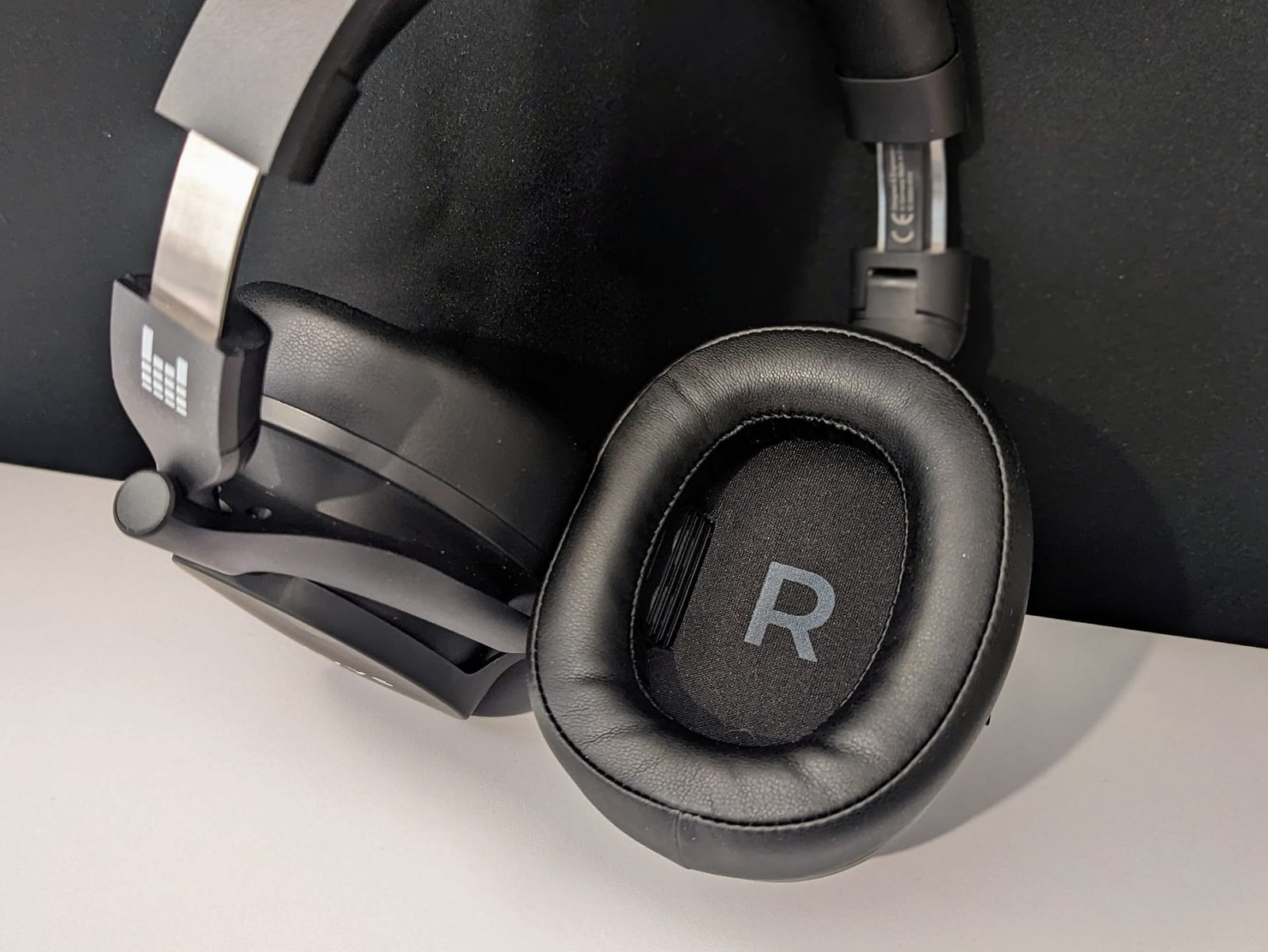
Heavys H1H is one of the few headphones implemented with multiple drivers, as it contains no less than 8 dynamic drivers instead of the traditional two, meaning 4 per side. Space for these is limited, so the drivers are smaller than usual. Unfortunately, the manufacturer does not specify the size or type of the drivers. Two drivers for bass and mid-frequencies are conventionally placed on the side of the ear, while two smaller drivers for high-frequencies are found in a separate frame at the front edge of the cup. This way, the user should, at least in theory, perceive high frequencies coming from the front of the ear.
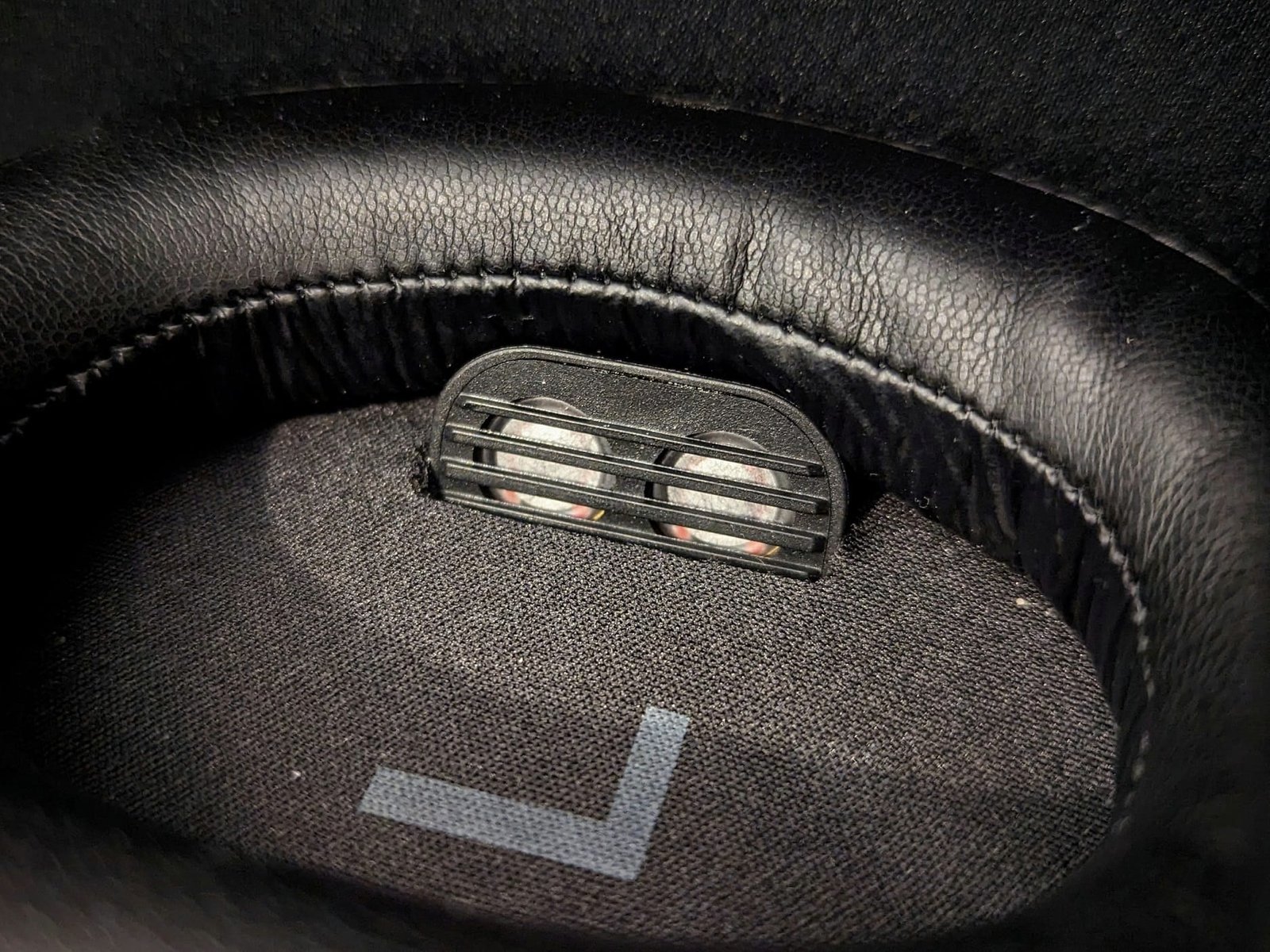
Aligning multiple drivers has certainly required precise adjustment of crossovers, and in addition, sound waves originating from different sides likely also cause numerous reflections inside the ear pads. Furthermore, four drivers take up so much space in the cup that the H1H's ear pads are among the most spacious I have ever seen. This has a positive effect on user comfort, but the headphones are exceptionally large for a wireless model.
Other structure and usability
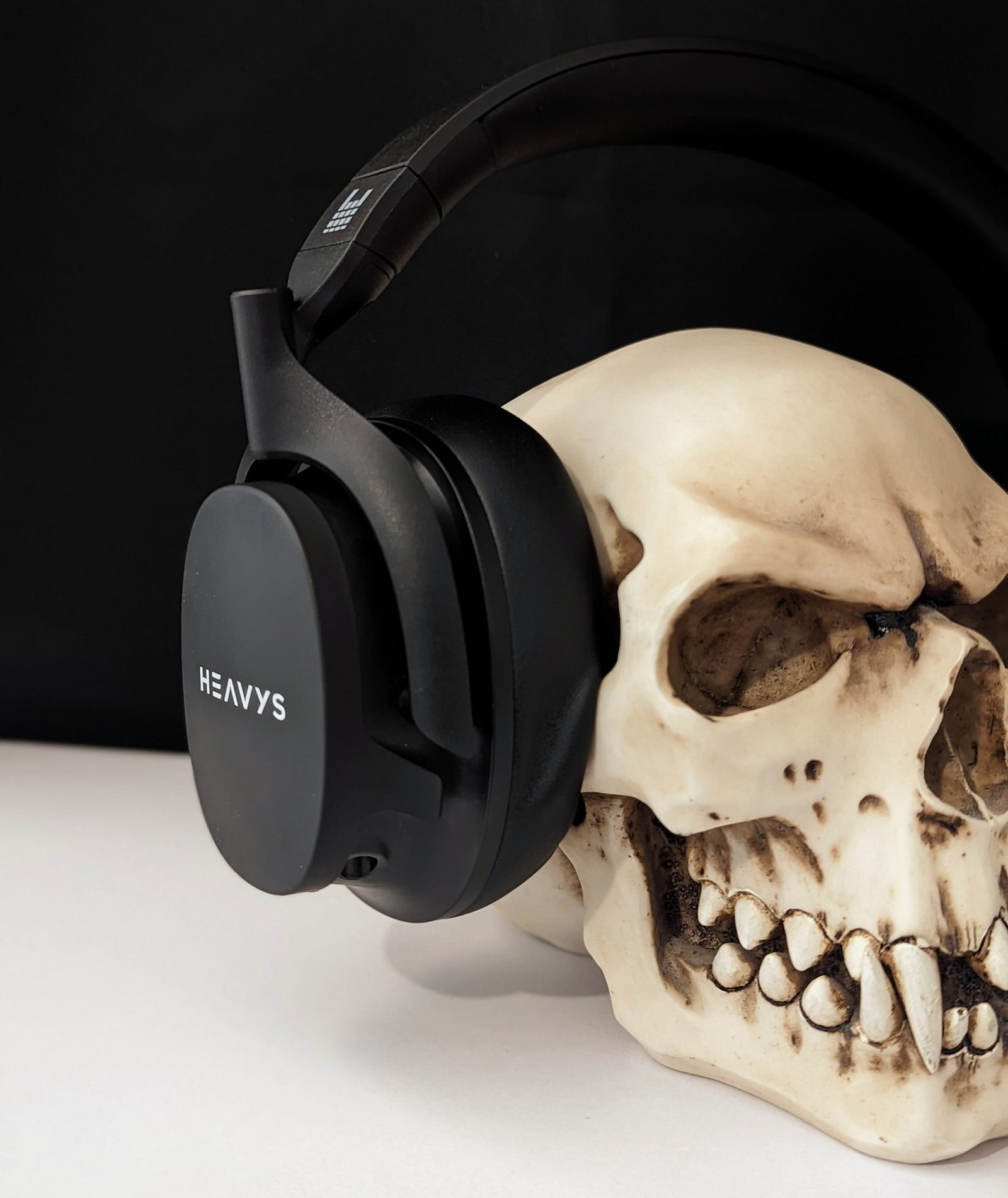
In addition to its large physical size, the Heavys H1H is also robustly angular and, at 410 grams, unfortunately heavy for most people considering long-term use. The manufacturer itself states that the headphones weigh only 255 grams, which is not true at all. The main manufacturing materials used are thick plastic and artificial leather. The headband arc is made of steel, or more precisely, Japanese steel. The impression of quality is surprisingly good for the price, thanks to the sturdy construction, although the edges of the plastic parts feel quite sharp and unfinished. However, I suspect the manufacturer intentionally aimed for an angular look and ”heavy metal attitude.” The headband has two sturdy-feeling hinges, so the headphones fold up for portability and fit into their separately sold case.
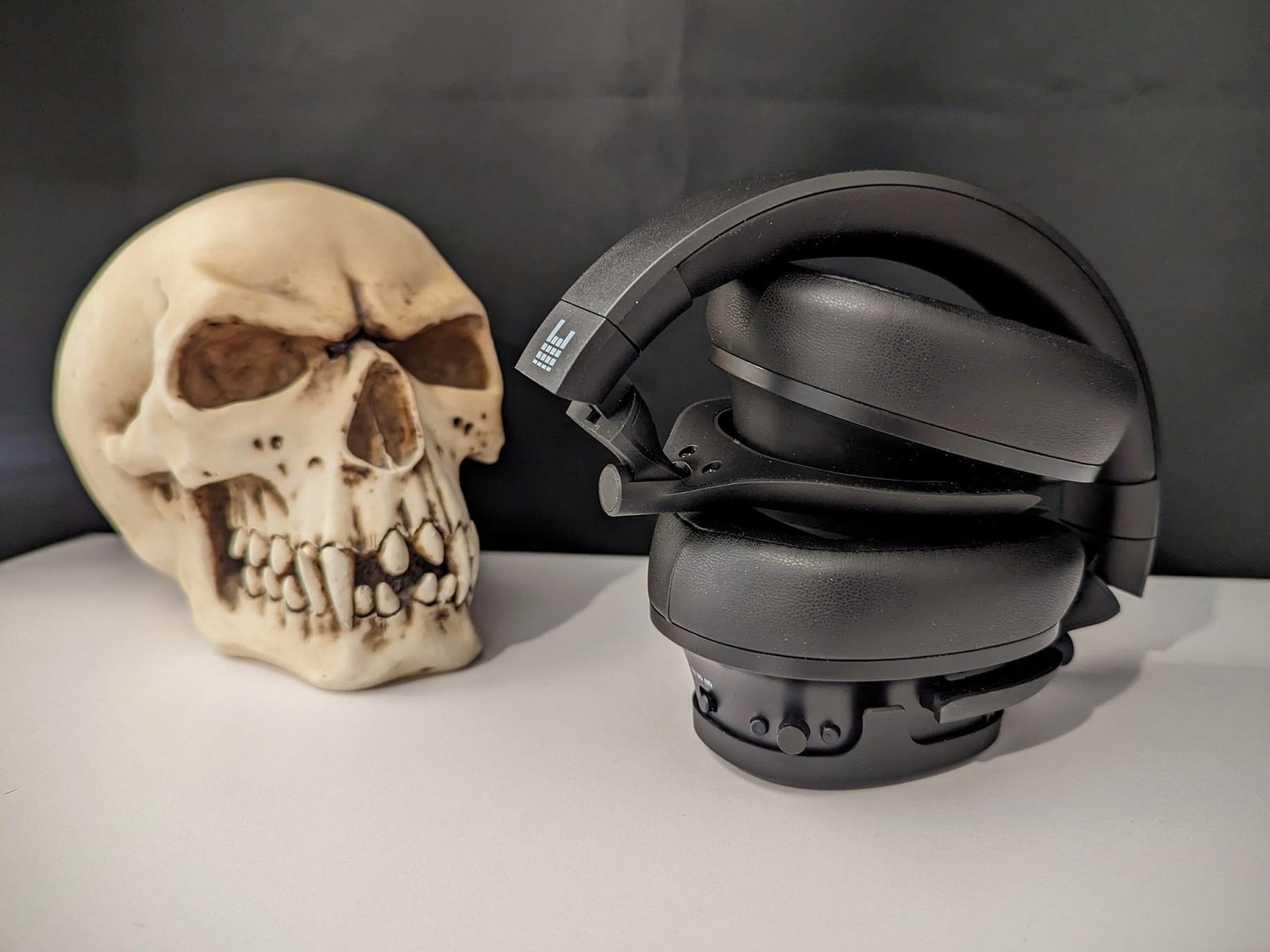
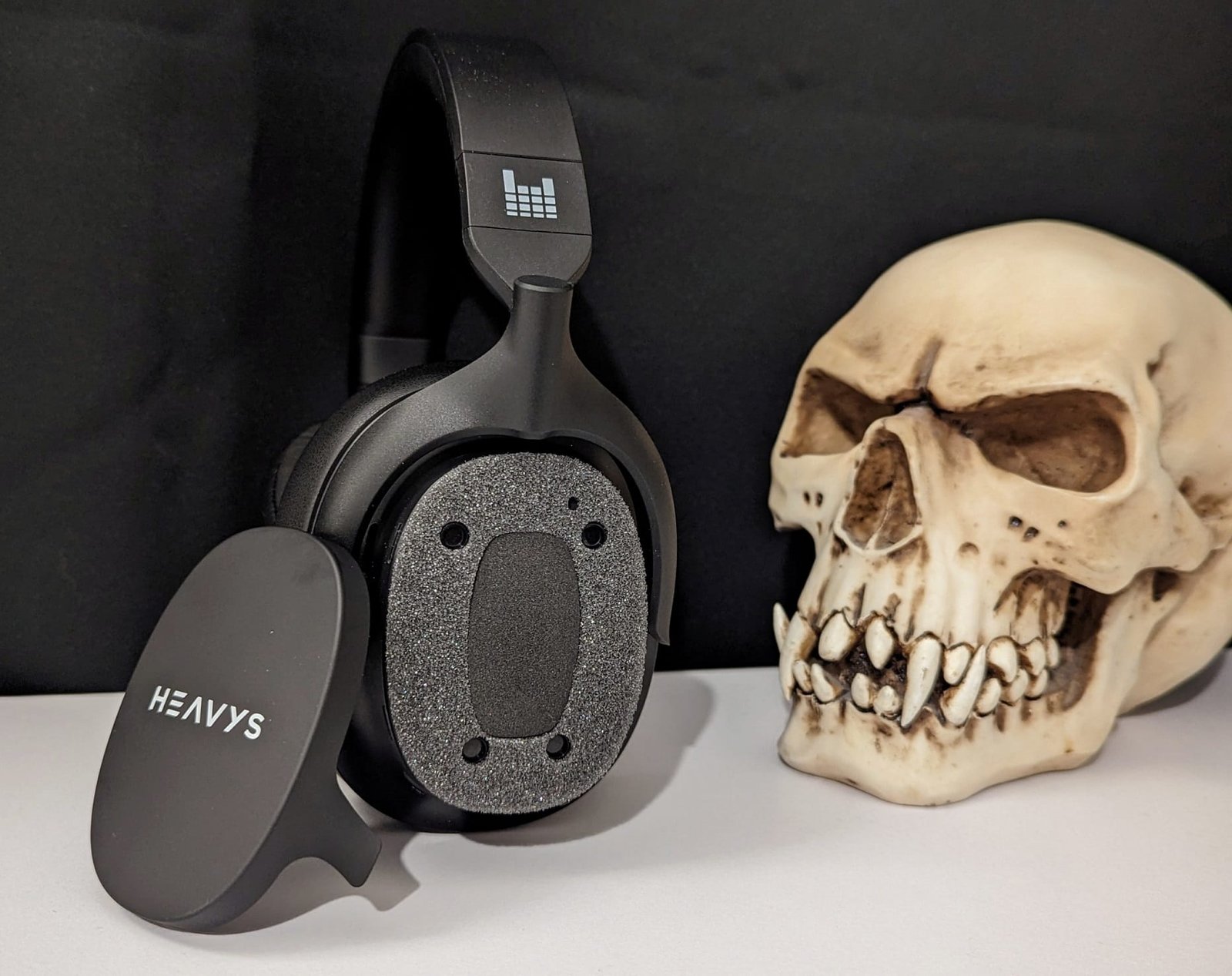
A common challenge with black matte finishes is the paint surface becoming oily and smudged with fingerprints. In the H1H, this applies to the side panels of the cups, which quickly become very oily and unsightly. However, like Valco headphones, the sides are removable, as they are intended to allow customization of the H1H's appearance to suit one's taste. The idea is good, although I'm not sure how many people would want, for example, their favorite band's logo on their headphones.
I believe the H1H's fit would be good for most, as the headband has sufficient height adjustment, and the headphone cups adapt to the shape of the head both horizontally and vertically. The clamping force of the headband is stronger than usual, but the large (11 x 9 cm) and soft ear pads (surface material artificial leather) prevent the headphones from feeling irritating to me. Most of the substantial 400-gram weight also rests on the sides of the head, so the thin padding of the headband is sufficient from a comfort perspective.
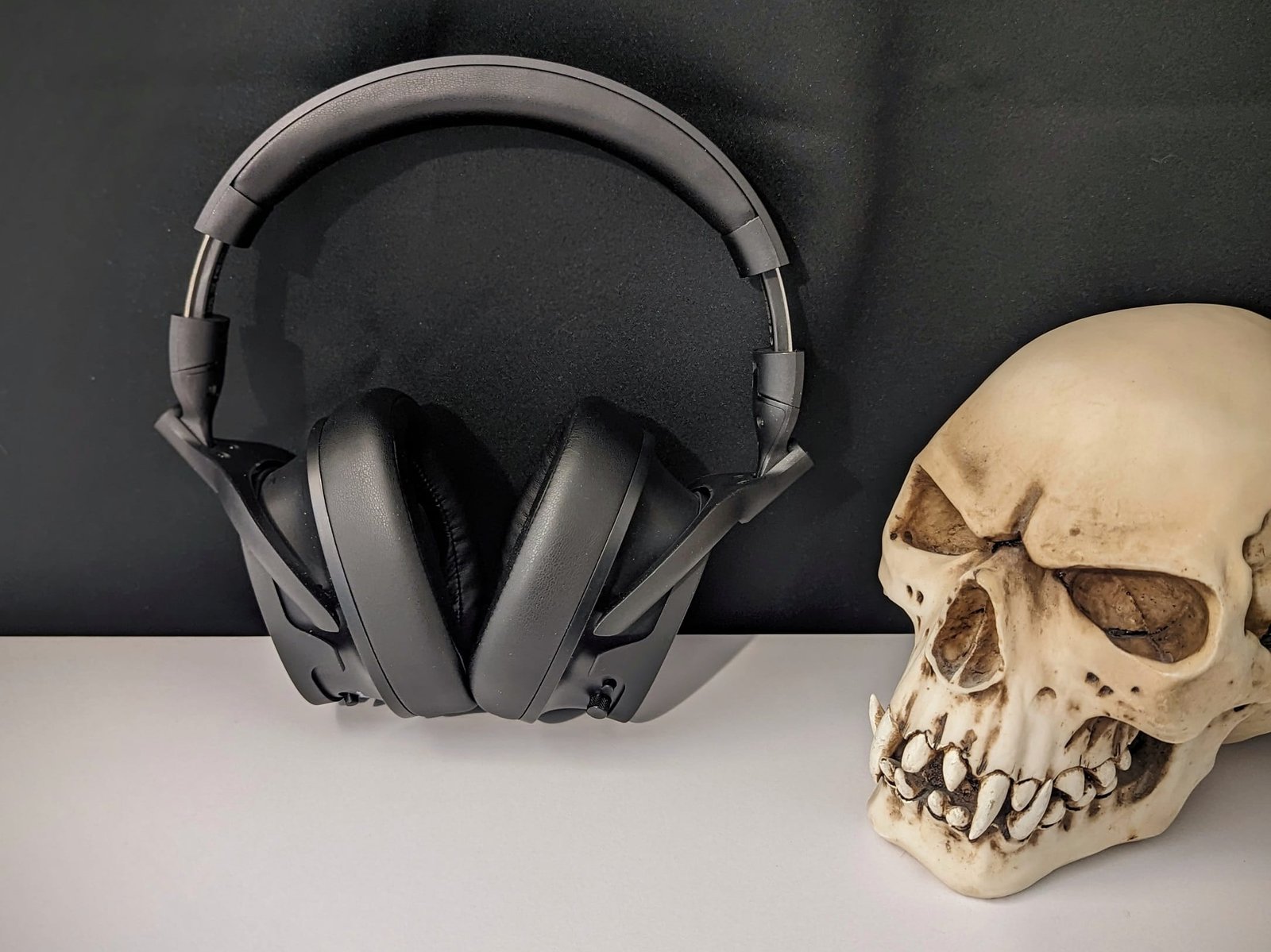
I would call the headphones basically comfortable with the caveat that the user can tolerate their high weight. However, I don't see the H1H being very suitable for more mobile use, as it is large and its cups, which protrude significantly from the head, are sure to attract attention. The headphones are generally impractically sized for carrying around, and their cups do not turn horizontally at all for wearing around the neck. In my opinion, the H1H's wirelessness is partly wasted because the physical structure has not been adequately adapted to this use case. On the other hand, wirelessness is also beneficial when using the headphones at home, for example.
Observations related to use
The headphone buttons and connections are located, as usual, at the bottom of the cups. On the left side, there is a USB-C charging/audio port and a switch that activates Bluetooth connection and pairing. The headphones must be specially started for wireless listening from two different switches, as the actual power switch is located in the right cup. On the other hand, the switch controlling the Bluetooth connection can always be left on, as there is no harm in doing so. In addition to the ON and OFF positions, the power switch includes a third mode for the noise-cancelling function, amusingly named Hell Blocker. I have to be careful with the power switch because due to its stiffness, I sometimes use too much force, accidentally turning off the headphones, even though I only intended to move the switch one notch to turn off the noise-cancelling function.
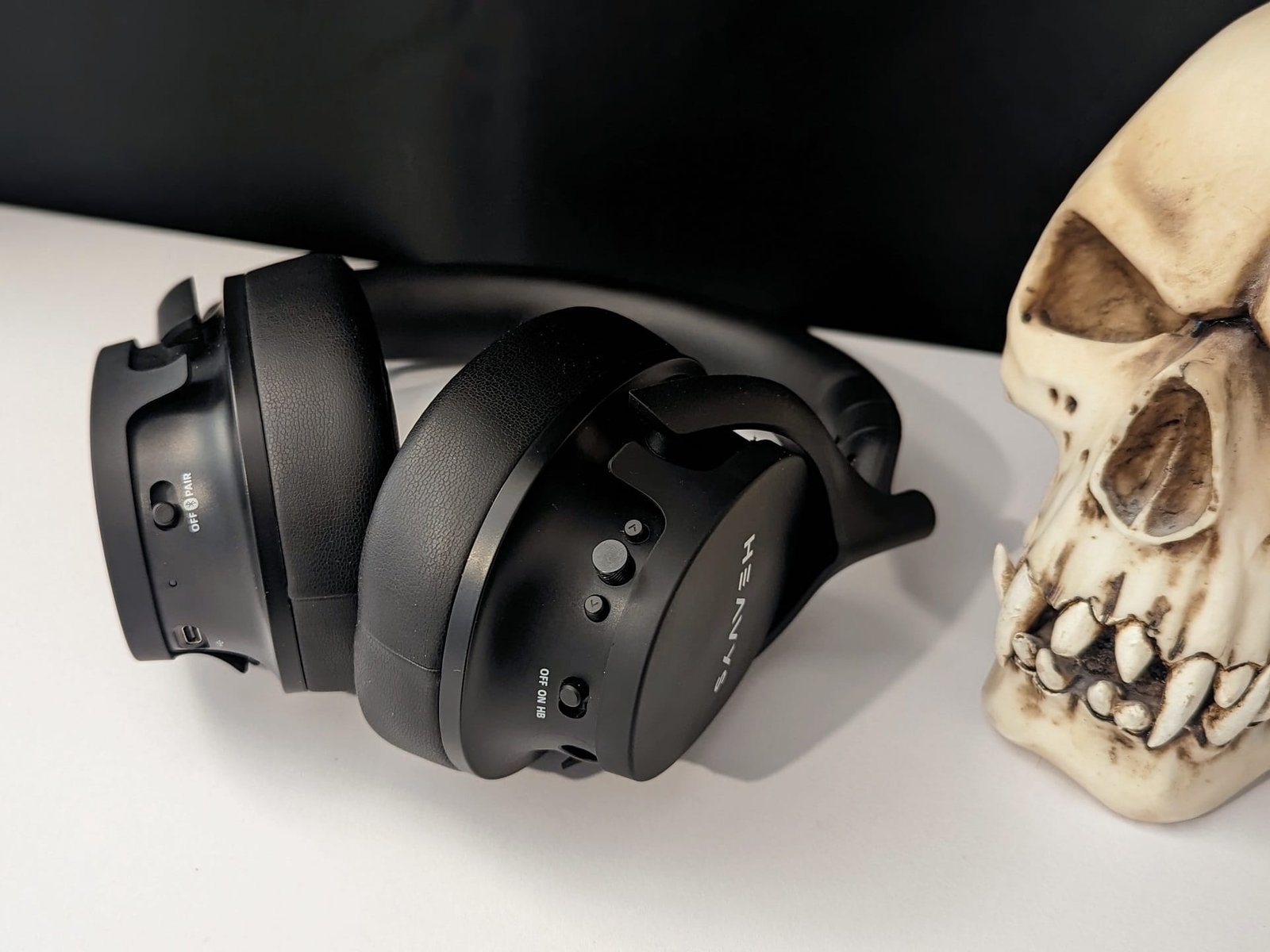
In addition to the power switch, the right cup contains a 2.5-millimeter headphone jack placed in a narrow and rather deep groove, as well as buttons controlling playback, volume, and calls. Volume adjustment is handled by a freely rotating scroll wheel, which is easy to find by feeling the back of the headphones. The other buttons also stand out well from each other, making their use smoother than usual. However, the volume scroll wheel is not optimally sensitive, as a single rotation adjusts the sound quite significantly up and down when using the headphones with both a phone and a computer. Often the jump is too large, so fine-tuning the volume is ultimately easier with the audio sources' own controls.
However, clearly the most annoying feature of the Heavys H1H are its excessively loud notification sounds, which genuinely make you wince. When turning on the headphones, a deep ”heavy metal voice” announces a long litany of commands: ”Power oon…connecting…Hell Blocker activated…Connected…” and when turning them off, ”Hell Blocker terminated…Power ooof…” is heard. I also got the fright of my life when the deep voice roared ”Battery is running low” without warning in the middle of listening. These sounds are unbearable to listen to after the first use, so I hope a future phone application will allow turning off notification sounds. Heavys competes with domestic Valco over which has more peculiar notification sounds, but Valco has at least managed to keep their volume tolerable.
At the time of writing this article, there is no dedicated phone application for the H1H yet, but Heavys has promised to release one by the end of 2023. However, I wouldn't hold my breath just yet, given how long the release of the headphones themselves was delayed. For example, an equalizer, firmware updates, and the ability to adjust notification sounds could further improve the user experience, so it's good that an application is under development.
Bluetooth
The headphones support Bluetooth version 5.1. In addition to the older SBC and AAC codecs, the higher-quality AptX Adaptive is also supported, as well as the relatively new LHDC (which competes with the LDAC codec in signal quality), which currently only works with Chinese phone brands such as Xiaomi, Oppo, OnePlus, and realme. In any case, the sound quality of the headphones is unlikely to be limited by the codecs, because even what I found to have excellent sound quality, Focal Bathys relies on the AptX Adaptive codec. There have also been no problems whatsoever with the Bluetooth connection of the Heavys H1H, and I have found the range to be good. So, everything is in order regarding wireless connections, as one would expect nowadays. However, with Bluetooth headphones, it's always worth remembering that there is some latency between picture and sound when watching videos. Phones handle the timing more seamlessly, whereas, for example, on a Windows computer, the delay is more easily noticeable. In this respect, however, Heavys does not differ from competitors' products.
Hell Blocker (noise-cancelling function)
The headphones feature both an active noise-cancelling function called Hell Blocker and a transparency mode that lets in ambient sounds, which I almost missed at first. Hell Blocker activates with the third position of the power switch, while transparency mode is turned on (and off, respectively) by simultaneously pressing the two small buttons surrounding the volume scroll wheel. There isn't even any indicator or notification sound for the transparency mode activating, so it seems like a feature added late in the headphones' development cycle. Indeed, the soundscape when using it is hissing and unnatural, sounding as if the sound were produced by a mediocre phone speaker.
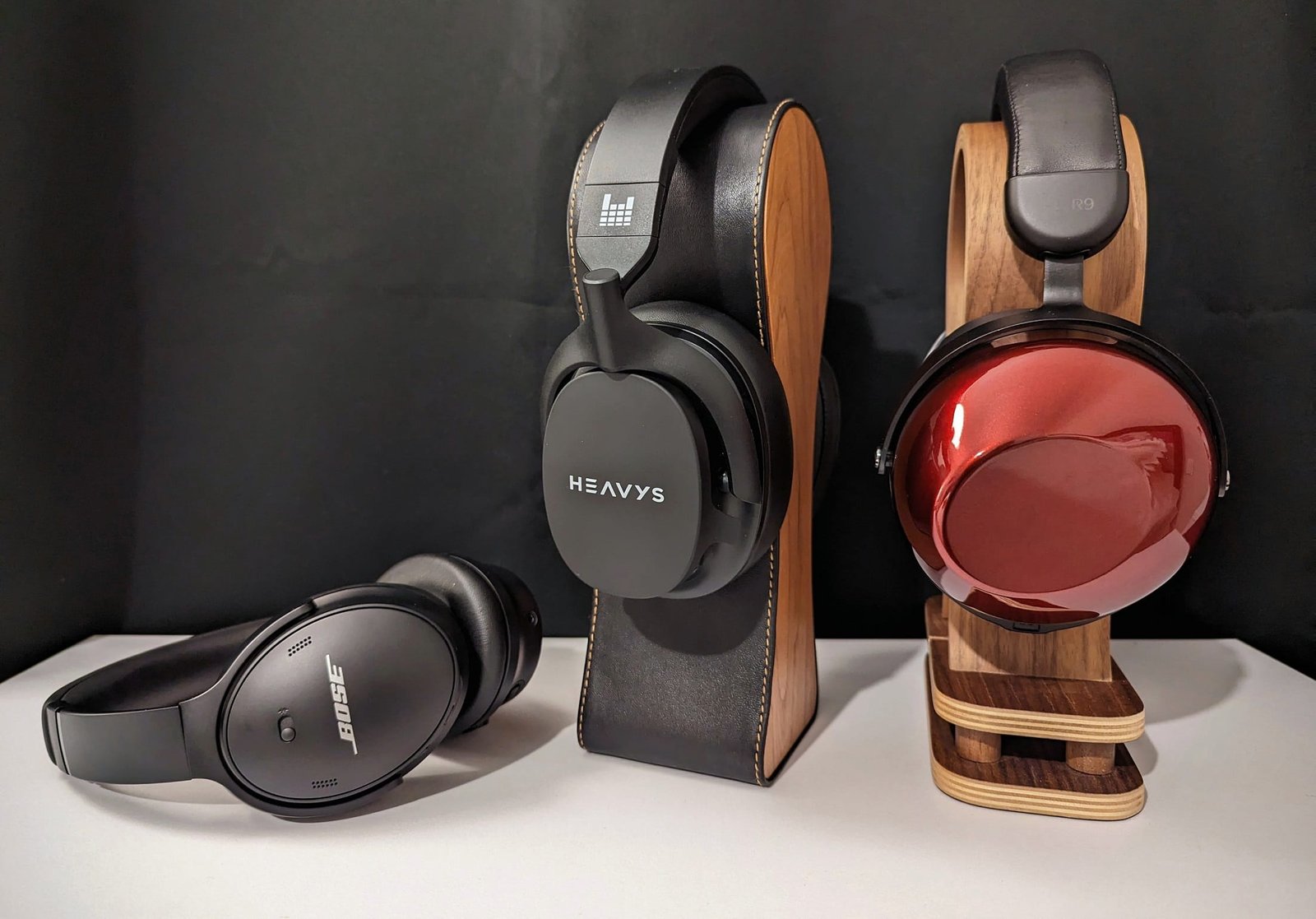
Hell Blocker is also not particularly capable as a noise-cancelling function; it attenuates the sound of an airplane cabin, cafe noise, and human speech, which I played at 85 decibels through speakers, less than, for example, the previously tested Edifier WH950NB and Soundcore Space Q45. Based on this, also Valco VMK25 would likely have better noise cancellation than the Heavys H1H. Compared to Sony headphones and, for example, those in my daily use, Bose QuietComfort SE, it falls quite short, but the H1H's noise-cancelling function does provide some help in noisy environments compared to having Hell Blocker turned off. Heavys itself mentions that the noise-cancelling function is primarily an addition to support passive attenuation. Thus, it is at least not advertised as more effective than it actually is. I have noticed that the noise cancellation causes a faint background hiss, which, however, by noise-cancelling headphone standards, is quite imperceptible and even pleasant in tone.
Battery life
One of the clear strengths of Heavys H1H is its long battery life, which reaches 40 hours with noise cancellation on and 50 hours with noise cancellation off. The figures are better than, for example, Sony's noise-cancelling headphones (e.g. WH-1000XM5) but fall slightly short of the Valco VMK25, which has a larger battery, and the Sennheiser Momentum 4, known for its 60-hour battery life. In any case, the H1H only needs to be charged rarely, and that is conveniently done with a modern USB-C connector. Charging time seems to correspond to competitors' products, but I'm not sure how much extra usage time is gained with, for example, a 10-minute quick charge. The manufacturer has omitted this information.
Microphone sound quality
Unfortunately, I haven't tried the headphones' microphone at all, because I very rarely make calls with headphones on, whereas for meeting use, I have more suitable headphones that don't look completely comical on my head. Based on the YouTube reviews I've browsed, Heavys seems to have a perfectly decent microphone, should anyone need this functionality. The microphones in the headphones are placed under the removable side panels of the cups, so they should be quite well protected from wind.
Headphone sound quality
The headphone frequency response measurements were made using IEC711 standard equipment and new, more accurate silicone ears (KB501X). The graphs use the scientifically based Harman target curve (2018 version) as a reference, which is a generalisation of the frequency response that most people think would sound good. For more information on the measurements and their accuracy, see Headphone Measurements-page. The frequency response of Heavys H1H is also comparable with other measured headphones comparison tool .
Like many other noise-cancelling headphones, the H1H's sound is slightly different depending on whether the noise cancellation is on or off. The headphones could also be listened to passively with a 2.5-millimeter headphone cable, but such a cable is not included in the product package by default. I tested the functionality with a cable that came with Bose headphones, but it either didn't reach the bottom of the narrow connector groove or didn't work correctly otherwise: sound was only heard from one side. The frequency response I quickly measured was, as expected, significantly more uneven than with power and DSP correction on.
Instead of a headphone cable, I could see many people using the headphones with a USB cable, for example, with a computer that doesn't support a Bluetooth connection. In this case, the frequency response is identical to a Bluetooth connection (+ the same differences between the ON and OFF positions of the noise cancellation function), because in both use cases, the sound travels through the H1H's internal DSP chip. With a USB connection, the headphones' sampling rate can be at best 16bit/48kHz, whereas the AptX Adaptive Bluetooth codec supports audio up to 24bit/96kHz. Thus, Heavys H1H might, at least in theory, sound better when used with a Bluetooth connection. When listening with a USB cable, the volume control also works strangely, because on my phone, the adjustment range runs out at the maximum setting, while on my computer, the headphones are already playing far too loudly with Windows' sound setting at 15/100.
I evaluated the headphones' sound with a Bluetooth connection and only with noise cancellation on, because without it, the headphones' bass is overemphasized, turning into a soft mush. The mid-frequencies also remain distant and unnatural when listened to with noise cancellation off. The high frequencies, however, are identical in both cases.
Frequency response without noise cancellation (blue) and with it on (red):
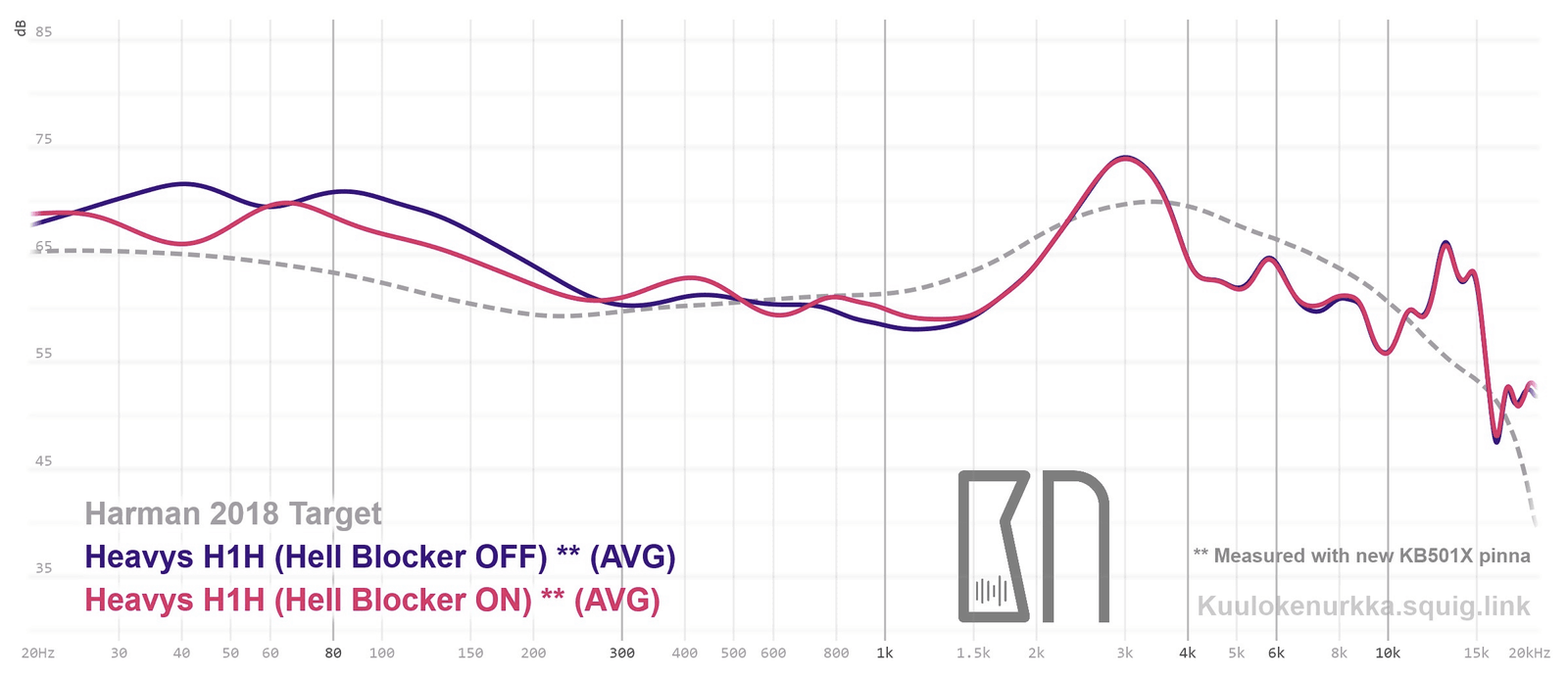
Right from the start, it must be stated that there is an idea behind the tuning of Heavys H1H when compared to most noise-cancelling headphones aimed at large consumer groups, whose sound often seems as if no one in the development team knew what they were aiming for. All kinds of heavy music sounds more fun and ”louder” with the H1H than I dared to expect beforehand. This has been achieved by emphasizing three frequency areas: the mid-bass that makes the reproduction fuller, the upper-mid frequencies that make electric guitars and vocals punchy, and the treble frequencies above 10 kHz that bring airiness to drum cymbals. The sound is robust and ruggedly energetic without being particularly fatiguing to listen to.
The more moderately reproduced 1–2 kHz frequency range and the relatively calm and balanced treble between 4–10 kHz soften and relax the overall result. Errors in poorly produced music are less apparent than usual, even though the aggression typical of heavy music is conveyed well to the listener. For example, older Metallica albums are unusually listenable and enjoyable – in addition, the band's latest album actually sounds quite fun and energetic. Heavy music produced to be thin and bright generally works excellently, as the H1H adds solidity to the bass and in places reduces the harshness and fatiguing nature of the high frequencies.
On the other hand, the three most emphasized frequency ranges strongly draw attention to themselves, so the frequencies in between are reproduced somewhat veiled and distant in more high-quality produced music. I would describe the sound as warm and dark. This often doesn't bother less critical listening, but in my opinion, the H1H is not a particularly versatile, clean-sounding, or detailed headphone. The presentation works when listening to certain types of music, but often leaves something to be desired. Heavy metal music cannot be categorized as a single genre, as it also varies widely. Therefore, Heavys H1H might be almost the best headphones in the world for some heavy metal fans, while others see no advantages in them compared to ordinary noise-cancelling headphones with boomy bass.
Protecting hearing with a loudness effect
According to the manufacturer, the headphones utilize some kind of hearing-protective implementation, which makes the H1H sound ”loud” without needing to be listened to at a high volume. My own guess is that this could be linked to the ”over-emphasis” of certain frequency ranges, which could be compared to the loudness buttons found on stereo amplifiers. Heavys indeed sounds sufficiently robust, clear, and fresh even at low volumes.
Somewhat surprisingly, it is also possible to listen to the headphones very loudly, at which point the frequency response emphases, however, start to become somewhat irritating. Especially the bass easily turns into a mediocrely boomy and soft sound with more modern music that already has plenty of bass. Although the energetic upper-mid frequencies manage to compensate for the situation, keeping the reproduction quite clear and punchy, sometimes the sound is already too coarse and aggressive. The airy and hissing treble can also feel like a somewhat detached element in the overall sound. Partially, this is also due to the small drivers placed in front of the ear reproducing the treble in such a way that it conspicuously penetrates through the robust low frequencies. Fortunately, however, there is no excessive sharpness in the high frequencies; in fact, they are quite pleasant and suitable for their intended purpose. Drum cymbals are reproduced vividly, and the high frequencies are otherwise pleasantly effortless-sounding, even if their lower parts remain slightly subdued.
A jump to a live gig
In my opinion, these headphones aim for a powerful, noisy, and raw live gig feel, which most heavy metal listeners would probably find fun. The sound feels big and loud, and I sense it coming towards me with force from both the sides and the front. This is certainly due to several elements. They also generally seem to work well together, as I don't perceive any oddities that I wouldn't attribute to the exceptional frequency response. For a more critical taste, however, the result doesn't quite fit in my opinion, as I would see heavy metal benefiting from controlled bass reproduction that remains clearer than H1H. I would guess, however, that by reducing the amount of bass, the upper midrange frequencies would also need to be calmed down so that they don't start to sound too aggressive. Ultimately, I would assume that H1H's presentation works excellently as a whole for those who want to let loose listening to aggressive heavy metal. However, it must be remembered that most heavy metal listeners are hardly critical headphone enthusiasts; instead, they want to get fully excited by the music they listen to.
For such an audience, many other music genres, such as EDM, pop, and rap, would certainly sound fun with H1H, especially if previous headphone experiences are limited to other bass-heavy noise-cancelling headphones. Heavys H1H doesn't actually differ vastly from other noise-cancelling headphones, except that it has more energetic upper midrange frequencies and a more forgiving treble. The optimizations feel quite justified with heavy metal in mind generally, and at their best, the headphones can even get me fully jamming, as long as I momentarily forget all kinds of Harman target curves and what the recordings I listen to would sound like on more neutral headphones.
Is it worth rushing to buy them?
If I wanted to sell as many headphones as possible for a similar use case, I honestly can't think of what I would change, apart from the overly emphasized and loosely soft-sounding bass. However, low frequencies like those in H1H are probably a certain requirement for headphones that are supposed to sound bass-heavy even in a noisy environment. At home, I would prefer to listen to heavy metal with some open-back and balanced headphones, such as Hifiman's new Sundara Silver or even the Sennheiser HD 650. Those who like strong bass, on the other hand, might find these boring, and they cannot be listened to in noisy environments or without disturbing others.
Heavys might therefore help maintain peace with others when living together and blasting heavy metal. So, I give these headphones my cautious recommendation, as long as they are not approached too critically or an audiophile-style heavy metal experience is expected. The quality of the result also varies by music genre, as the frequency response is strongly colored. I don't actually listen to an enormous amount of different heavy metal music myself, so unfortunately, I can't list all the genres for which Heavys H1H would be optimal. However, I hope that my description of the headphones' sound helps others consider what they would like their heavy metal to sound like.
Summary
Heavys H1H is ultimately a somewhat contradictory product. Due to its bulky construction, heavy weight, and ineffective noise-cancelling function, it is not particularly good as a traditional noise-cancelling headphone, but I must admit that heavier music often sounds genuinely fun and exciting with it. Because I understand what the headphones are aiming for, I couldn't disapprove of anyone who likes their sound – let this be my indirect approval for Heavys H1H. Without downplaying it at all, the headphones' loud and bass-heavy presentation would certainly appeal to those who have no experience with better and more tonally balanced headphones. Those who appreciate high-quality audio reproduction, on the other hand, would probably dislike H1H's colored sound.
For me, too, the problem is that the colored frequency balance and overly boomy mid-bass are not suitable for almost all kinds of music. However, this is probably inevitable when headphones are tailored for a specific use case and a specific target audience. Since the manufacturer and Axel Grell have presumably put more effort than usual into tuning H1H, equalizing it would seem like a foolish idea. However, this would likely make the headphones more suitable for general use, if there is a need for it. The upcoming phone application may open new doors for the use of the headphones.
Although Heavys H1H is surprisingly well-suited for heavy metal-style music, in my opinion, it doesn't generally offer anything in terms of sound quality that we haven't encountered before in the headphone market. For me, the most interesting aspect of these headphones is their exceptional multi-driver implementation. The potential of utilizing multiple drivers in over-ear headphones is certainly not yet fully understood, so Axel Grell is genuinely doing something new. Based on the OAE1 headphone model, which will soon be released in collaboration with the Drop website, it seems that Grell intends to invest more in such headphones. If he hasn't completely lost his skills over the decades, one of his future headphone models could very well be a huge success in terms of the spatial impression that can be achieved with headphones. In that case, Heavys H1H would also be remembered as a kind of test platform, even though it was conceived to be aimed at heavy metal fans.
Pros and cons:
+ Surprisingly well-suited for heavy metal-style music in general
+ Sounds big and powerful, quite successfully mimicking a loud live gig atmosphere
+ Treble is airy and forgiving of harshness and errors in music
+ Unique multi-driver implementation
+ Large and comfortable ear pads
+ Sturdy construction
+ Good battery life
– Colored sound is not suitable for all kinds of music or even all heavy metal genres
– Mid-bass is often overemphasized, sounding loose and soft
– Aggressive upper mid-frequencies make the reproduction unnecessarily harsh at times
– Annoyingly loud notification sounds
– Ineffective noise cancellation function
– Impractical size and weight for wireless headphones
– The plastic surface of the cups permanently looks dirty and oily
 EN
EN  FI
FI