Author: Sword of Damocles
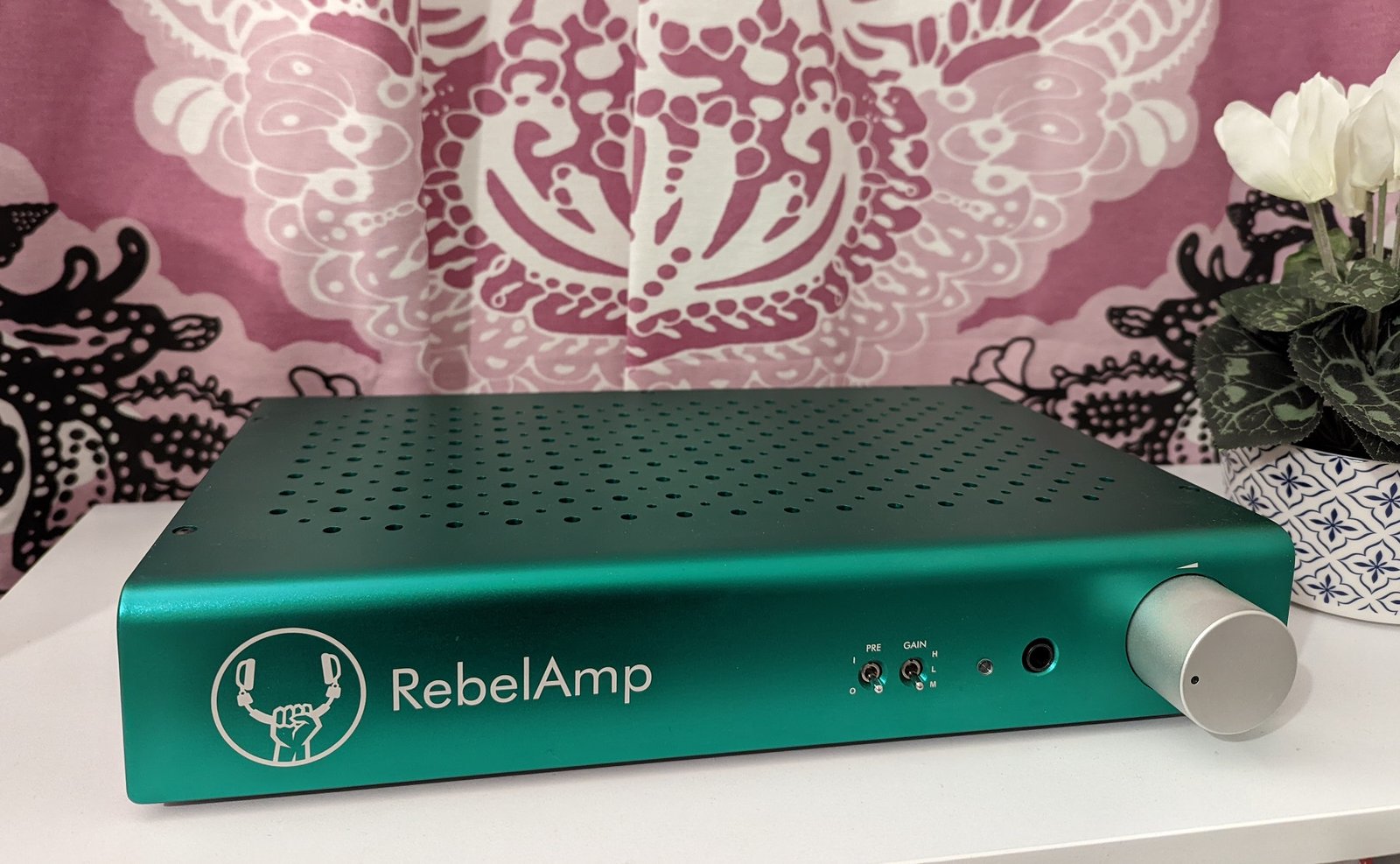
Table of Contents:
Ukrainian Rebel Audio is a one-man battle against expensive audio products. The company manufactures only one product: RebelAmpa transistor-based, Class A headphone amplifier named -, whose design goals have been an affordable price and high-quality components. The amplifier is not actually entirely Rebel Audio's own design, as it is based on technology published by AMB Laboratories and a person named Ti Kan, which apparently originated as a result of DIY construction.
The RebelAmp can now be purchased in either green or black, but for most, it has stuck in memory precisely because of its green color. The amplifier can only be ordered directly from the manufacturer in Ukraine and costs 500 dollars. After shipping costs and VAT, the final price when ordering to Finland is approximately 600 euros. Many amplifier owners have praised it profusely, so I decided to acquire the device myself to find out what a 600-euro amplifier sounds like compared to the 100–350 euro amplifiers I had previously heard – although my own amplifier cost only 500 euros because I bought a B-stock model.
In recent years, several interesting audio products have emerged from Ukraine, as in addition to Rebel Audio, Class A headphone amplifiers are manufactured by Flux Lab Acoustics, and tube amplifiers Tor Audio. Many who follow the headphone world more closely have also surely heard of Verum Audio One planar headphones. Similarly, a slightly less known manufacturer of planar headphones Sash (Studio Audio Sound Handmade) is also located in Ukraine.
Information:
- Price: 500 USD / 600 €
- Type: Class A
- Power consumption: 35 W
- Gain settings: 1x / 5.2x / 11x
- Maximum output power: 1 W / 32 ohm
- Output impedance: 0.1 ohms
- Crosstalk: -95 dB
- THD: < 0.001%
- IMD: < 0.006%
- SNR: > 110 dB
- External dimensions (L x W x H): 23.3 x 34 x 6.2 cm
- Weight: 3 kg
- Warranty: 2 years
Review sample: Self-purchased product
Structure and connections
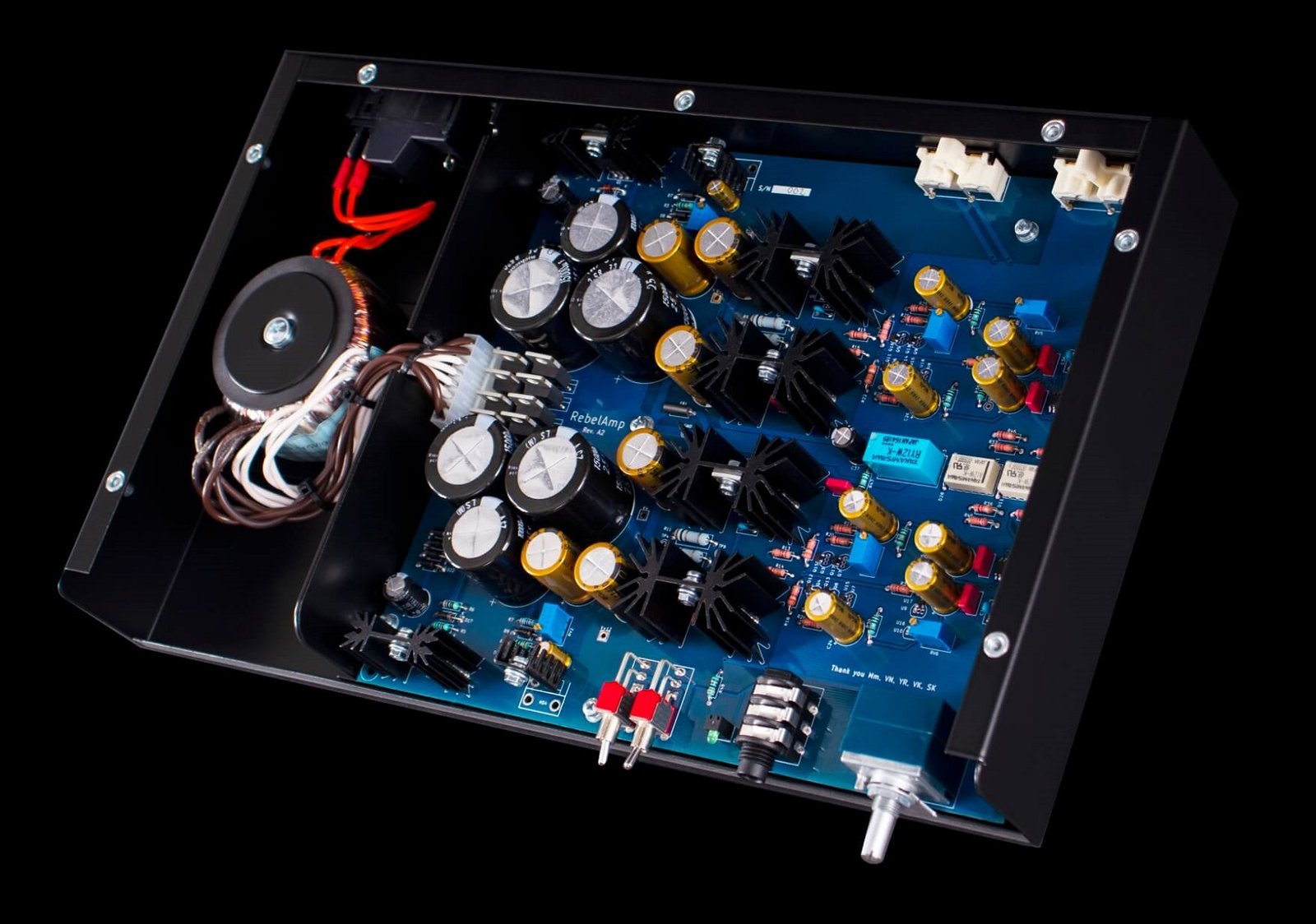
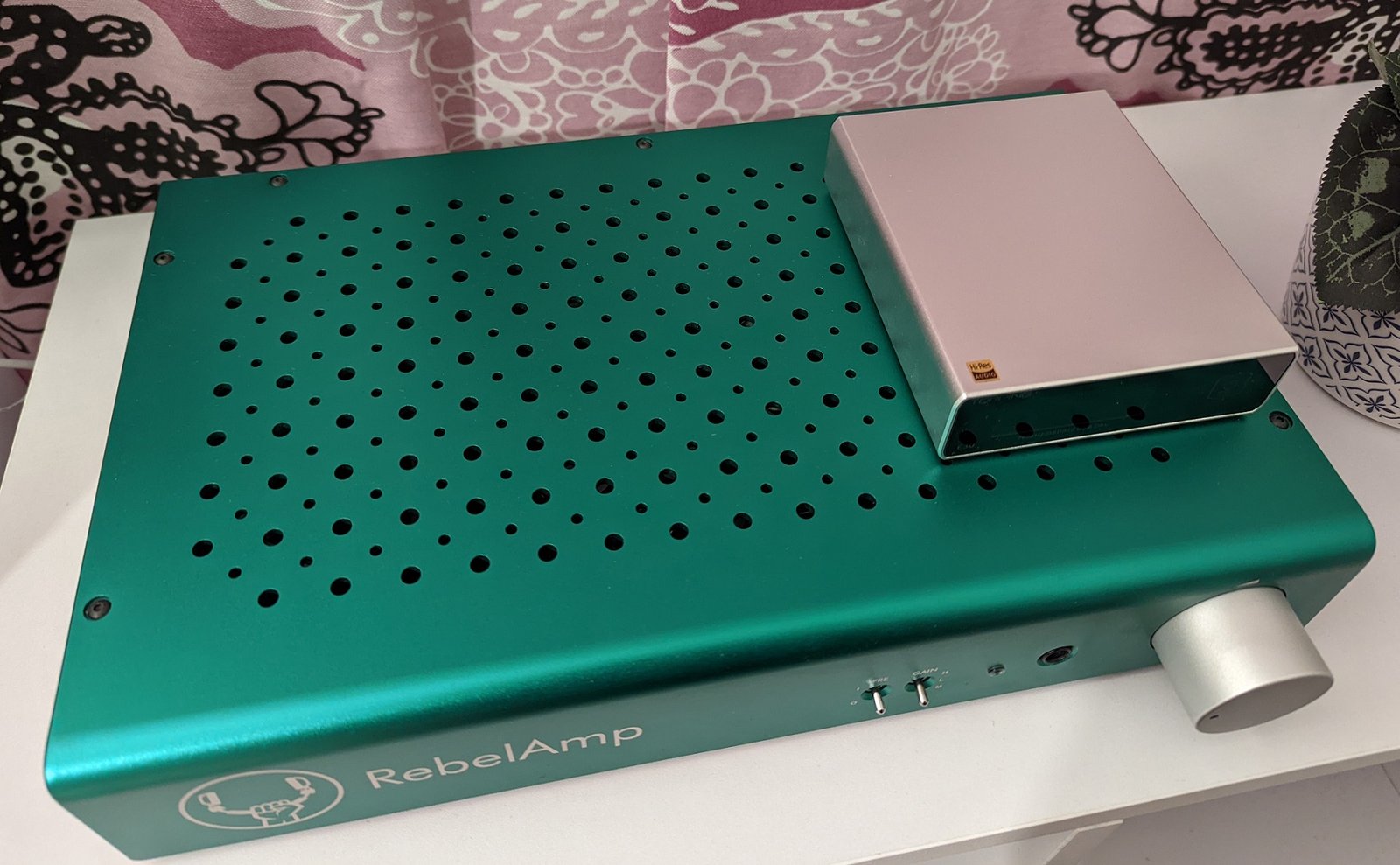
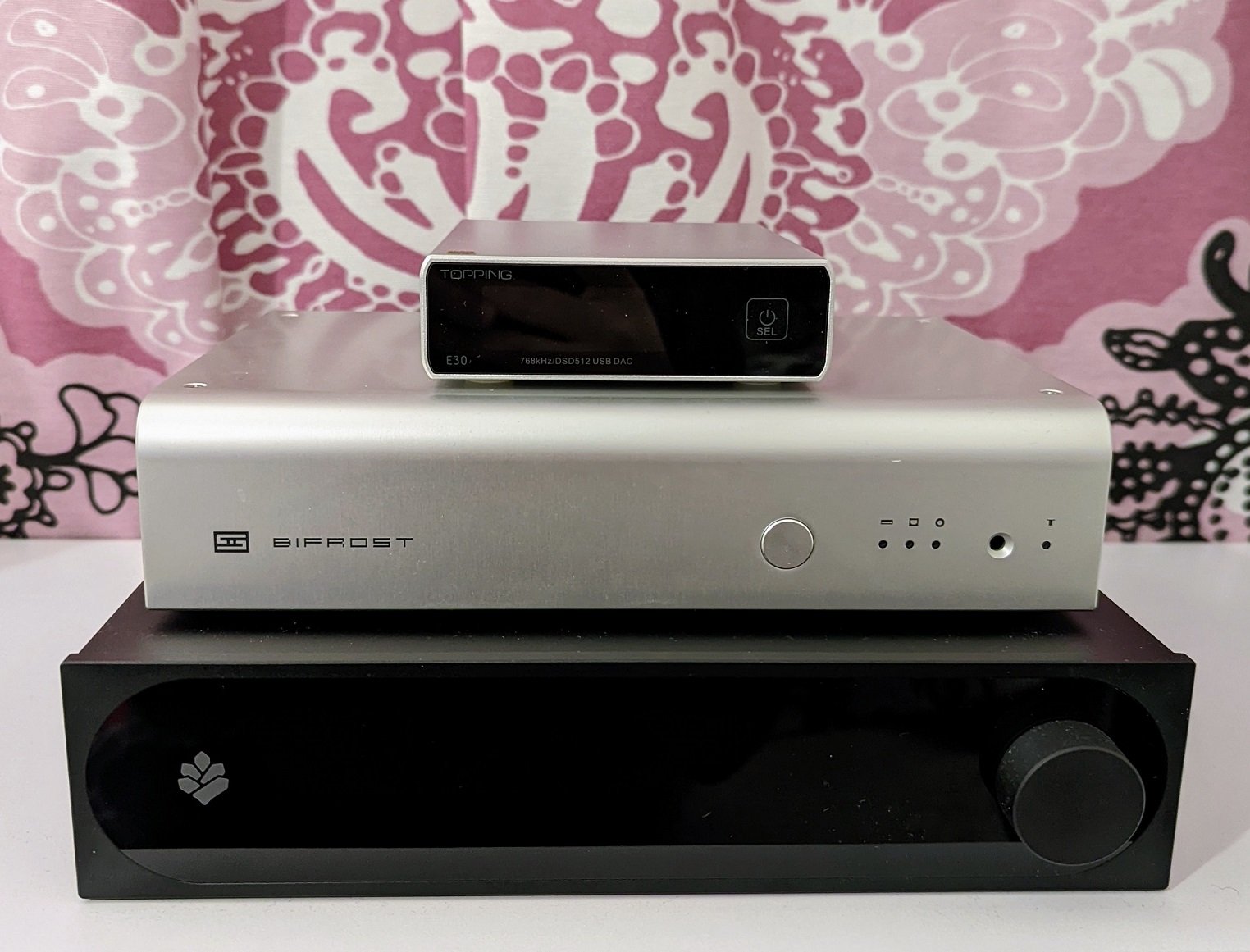
The RebelAmp is massive in size, making it difficult to neatly stack on top of any other device. Since the device only warms up moderately even during prolonged use, I have often kept a smaller device, such as a DAC, on one side of it. The RebelAmp's outer casing is anodized aluminum, and the structure is an almost identical copy of devices from the American company Schiit Audio. The green coloring will surely divide opinions, but fortunately, it looks better in reality than in pictures. There is no ambiguity about the device's name, as it is written on the left front edge in letters the size of a cat. The Rebel Audio logo either coincidentally or intentionally resembles an inverted HeadAmp logo.
The RebelAmp is a single-ended amplifier and does not have balanced connections. Headphones connect to the right edge of the amplifier with a 6.35 mm jack. The front edge also features sturdy-feeling switches for gain selection and activating the pre-out preamplifier feature. Interestingly, the lowest gain setting is in the middle. Between the switches and the headphone jack, there is a green power LED.
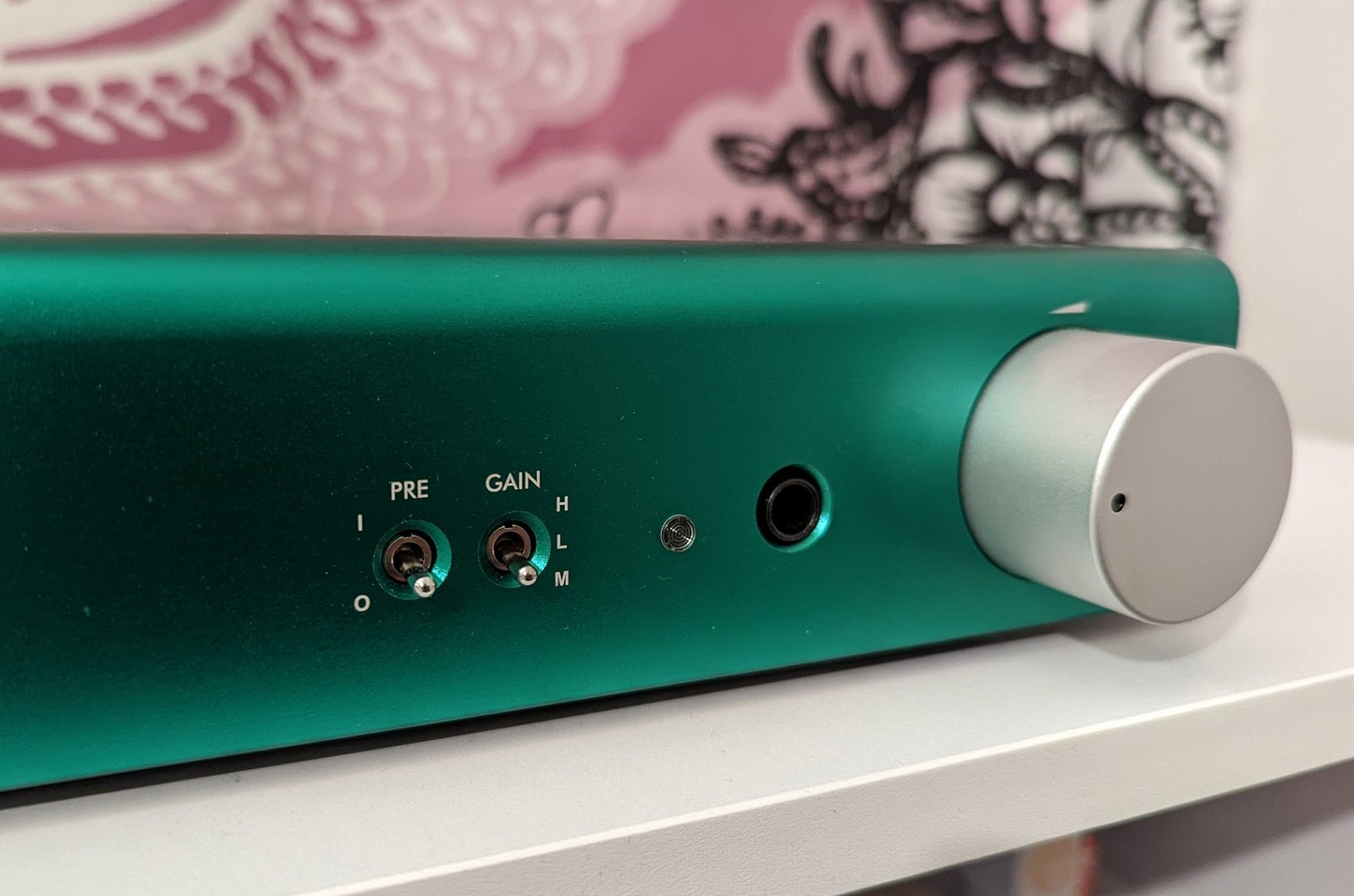
Unlike many amplifiers, the creator of RebelAmp has marked the position of the volume control sufficiently visibly with a black dot – the manufacturer even remembers to mention this detail as one of the important design principles. The volume control is implemented with a high-quality Alps potentiometer, and in my opinion, the control feels perfect. The knob rotates very smoothly and has just the right amount of resistance, with no looseness when gripping it.
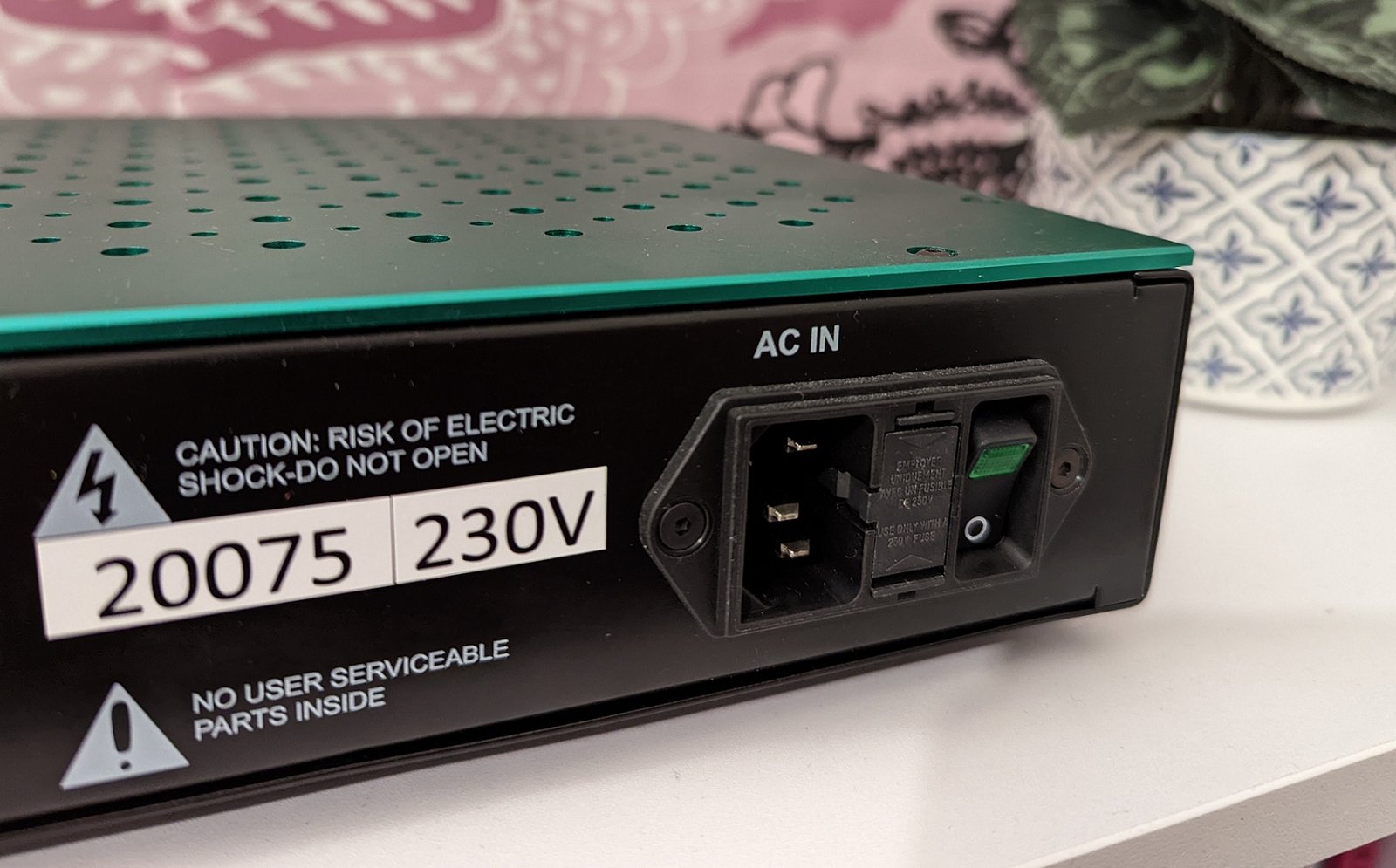
Regarding the RebelAmp's usability, the only regrettable thing is the power switch being located at the back of the amplifier. One always has to reach for the switch to access it, and it's not advisable to leave the amplifier permanently on without use due to its high power consumption. No cables are supplied with the amplifier, so the buyer will first have to purchase or find a suitable power cable – however, the same common power cable that fits computers and monitors, for example, also fits the amplifier.
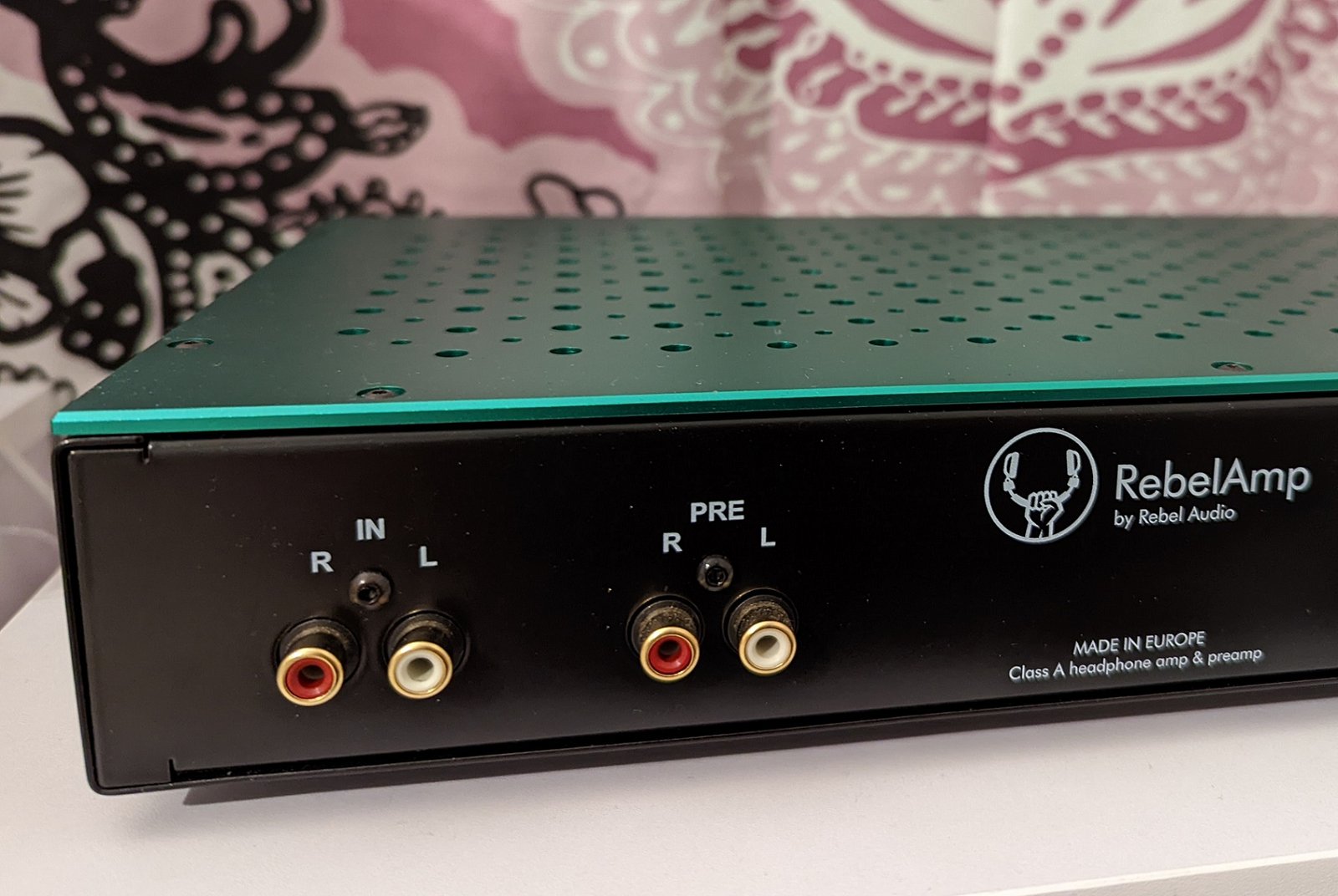
On the back of the amplifier, on the left side, there are RCA input connectors and another pair of RCA connectors for using the amplifier as a preamplifier. As an amusing detail, the manufacturer states that the amplifier is made in Europe. This is technically true, but very few other European countries would hide behind the term "Europe" without stating the product's actual country of manufacture. Ukraine also does not belong to the EU tax area, so VAT must be paid on the amplifier – this doesn't give me a very European feeling, but for Americans, for example, "Europe" might inspire more confidence than Ukraine.
Features
Rebel Audio states that they intentionally kept the amplifier's feature list short so that all efforts could be focused on maximizing sound quality. The amplifier has three gain settings and can also be used as a preamplifier. What else does such an amplifier ultimately need? A balanced design would have increased the amplifier's price, and it wouldn't offer significant additional benefit to many ordinary headphone listeners.
Notes on usage
The maximum output power of the RebelAmp is stated to be exactly 1 watt with a 32-ohm load, which is a fairly small figure compared to, for example, many cheaper Chinese Class D amplifiers, which can output several watts with the same load. However, this figure does not tell the whole truth, as most headphones do not need several watts, let alone several hundred milliwatts, from an amplifier. Even with more difficult-to-drive headphones, more power is only needed when the listening volume exceeds 100 decibels. In most situations and with most headphones, the RebelAmp's power is more than sufficient for listening. However, I would not buy it for more difficult-to-drive planar headphones.
At my normal or slightly louder listening volume, all my headphones played loud enough with the amplifier's medium-gain setting, with the volume knob between 9 and 12 o'clock (adjustment range would be available between 7 and 17 o'clock). The Dan Clark Audio Aeon 2 Closed, with its low impedance and sensitivity, benefited from high-gain, but otherwise, the medium gain setting is good for ZMF and Audeze, for example, as the volume knob has plenty of play and doesn't need to be turned with delicate movements. More sensitive headphones, such as Audio Technica's ATH-WP900 and in-ears, work best with low-gain.
Sound starts to be heard from the amplifier when the volume knob is at approximately 7:30 o'clock – at this point, the channel balance is immediately correct, so it is possible to listen to music even at a very low volume. This is also made possible by the fact that the RebelAmp is very quiet in terms of background noise. With normal headphones, no background noise is heard even on medium or high-gain, but with more sensitive in-ear headphones, noise is quite audibly noticeable on medium-gain and naturally also on high-gain. However, the amplifier's low-gain setting is cleverly 1x, so it completely or at least almost completely eliminates the noise.
I do not notice a difference in the amplifier's sound after it has warmed up, meaning in my opinion, it can be listened to happily straight from cold, even though many believe that the sound of Class A amplifiers improves during operation and warming up. I agree with this to the extent that my more expensive Class A amplifier, the Burson Audio Soloist 3X Performance, requires an initial 10–15 minute warm-up to function optimally in terms of power delivery.
Sound quality
A few words about my testing:
In evaluating the amplifier's sound quality, I focus on the largest and clearest differences I perceive, as smaller differences can easily be my own imagination or may only become apparent with individual headphones. I have listened to the RebelAmp simultaneously, especially with the more expensive Burson Audio Soloist 3XP, as both are transistor-based (solid state) Class A amplifiers, and I have been interested in thoroughly finding out how the RebelAmp compares to the significantly more expensive Burson amplifier (1400 € in Europe).
For comparison, I used the most detailed headphones I own, ZMF Verite Closed (Audeze LCD-R unfortunately does not work with normal amplifiers), but I have also confirmed the validity of my observations with more affordable ZMF headphones and the Audeze LCD-2F.
I mainly listened to the amplifiers with the 700 USD Schiit Audio Bifrost 2 R2R-DAC. The RebelAmp was connected to the Bifrost's RCA connectors and the Burson Soloist to the XLR connectors, so I could listen to both amplifiers simultaneously, switching headphones between them on the fly. I matched the volume of the amplifiers by ear as closely as possible, but I also occasionally turned one louder to find out if increasing the volume from one amplifier would negate the differences I found. I am aware that different DAC connectors could potentially introduce differences in sound, but since I have not previously observed a sound quality difference between the Bifrost's RCA and XLR connectors, I consider the final effect to be very small.
I also own delta-sigma DACs, such as the 150 euro Topping E30 and the approximately 500 euro Soncoz SGD1, so I decided to finally test and confirm to what extent the RebelAmp's characteristics are revealed with them. Not everyone believes that DACs affect the final sound transferred through the amplifier to the headphones in any way, but I myself have observed that some better devices more clearly highlight differences between both amplifiers and headphones. A DAC can also, for its part, emphasize certain aspects of the sound and thereby the amplifier's own characteristics. I will report on the differences between DACs later in the review.
What does the RebelAmp sound like?
The RebelAmp could be described as a musical amplifier because when listening to music with it, one focuses more on the overall picture than on observing details. Amplifiers like the Topping L30 and SMSL SP200 left me completely cold when listening, even though details, in a way, drew more attention to themselves. These amplifiers objectively reproduce sound correctly, but with them, music does not flow as naturally as with the RebelAmp, which, in my opinion, has a pleasant way of presenting music as a cohesive whole without being too colored or lacking in detail.
Based on my own experience, I cannot yet say where the naturalness or unnaturalness of sound in amplifiers originates – it is probably a very subjective feeling, but I usually quickly notice whether the sound as a whole draws me in or if it just sounds ”good.” This would be impossible to measure in advance for me. Headphones always have the greatest impact on the final result, but a suitable amplifier can be the final touch when aiming for a certain type of reproduction.
Class A amplifiers are often assumed to have a warm and soft sound. The RebelAmp also has some of these characteristics, especially regarding the softened reproduction of the highest treble frequencies. The amplifier is very detailed, but it takes just the right amount of a step back by slightly (I emphasize: only slightly) blending different sounds and instruments together. However, softness or warmth are not the first things that come to mind with this amplifier – overall, in my opinion, the RebelAmp's sound is not warm, but rather slightly bright. It is still easily recognizable as a solid-state amplifier.
The amplifier's sound is truly dynamic, and it brings music to life by reproducing loud sounds loudly and quieter sounds with admirable sensitivity. In addition, the background of the reproduction is very dark and calm. Immediately after receiving the amplifier, I was also amazed by its spacious and well-structured soundstage. Thanks to these features, the RebelAmp is both fun and easy to listen to. The opposite of such reproduction could be, for example, the SMSL SP200 THX amplifier, which sounds dynamically compressed and flat. In my opinion, even the inexpensive Topping L30 is an improvement compared to that amplifier.
Other emerging features
I have found that the RebelAmp differs most from other amplifiers in two frequency areas: the mid-bass and the upper midrange/lower treble. The amplifier creates a thicker body and texture for bass guitars and drums than usual – this makes you focus more on these instruments, and especially on drum hits. The low frequencies sound really dynamic compared to, for example, the SMSL SP200, where bass hits are very tight, and almost completely lack body. The only downside of RebelAmp's slight bass boost is that individual tracks with thicker bass can become muddy, especially with headphones that already have a more pronounced mid-bass boost. Nevertheless, the bass is one of the amplifier's best features and always brings a smile to my face when listening.
Sharper sounds, such as the most energetic part of vocal performances, electric guitar, violin, and cymbal crashes, sound slightly more aggressive than usual with the RebelAmp – they have a bit of added edge, so to speak. The amplifier is indeed a lot of fun for rock and pop music, as it keeps the listener constantly awake and slightly on their toes. Occasionally, some sounds can be reproduced a bit jarringly, because if the listened track has annoying sounds and the headphones also reproduce them faithfully to the recording, the RebelAmp can emphasize them even further. However, I will mention already here that this happened more often with the Bifrost 2 DAC compared to other DACs I tested. Most often, the emphasis goes unnoticed during listening, unless the amplifier is compared side-by-side with other amplifiers.
How does RebelAmp compare to Burson Soloist 3XP?
Prices: RebelAmp 600 € / Burson 1400 € (+ better power supply 280 €)

When comparing the RebelAmp side-by-side with the Burson, it immediately becomes clear that the more expensive Burson reproduces both the lowest bass frequencies and the highest treble more audibly. The Burson sounds more controlled, and it also systematically separates and layers details more clearly from each other. Especially details reproduced at high frequencies are less distinct with the RebelAmp. However, the difference in detail is easily forgotten during longer listening sessions, so with the RebelAmp, one doesn't really feel like missing out on anything.
The Burson's mid-bass is reproduced more softly, so when listening to it, I somewhat miss the RebelAmp's harder-hitting drums and tighter bass guitar. However, the Burson creates more sound pressure at the lowest bass frequencies, so the bass sounds slightly larger and fuller overall with it compared to the RebelAmp.
When comparing to the Burson, I have noticed that some aspects of music sound slightly stretched sideways with the RebelAmp. One such aspect is vocal performances, which sound large with the RebelAmp, but at the same time somewhat holographic/ghostly. The vocalist does not clearly separate from the rest of the soundstage when listening. This is not particularly unnatural or disturbing, but it is somewhat difficult to perceive the vocalist as a real person. The Burson, on the other hand, clearly defines the vocalist as human-sized, so vocal-heavy music evokes more emotions in me. However, such observations are very subjective, so it is difficult for me to assess whether someone else would identify similar differences.
Both the RebelAmp and the Burson have, in my opinion, a large and quite similar soundstage. This is either a characteristic of Class A amplifiers or pure coincidence in my amplifier purchases. I also haven't heard many different amplifiers, so my opinion on this will likely evolve in the future.
The RebelAmp sounds somewhat more damped in its sonic background – music plays on the amplifier as if in a void. The background and walls of the soundstage seem to absorb more of the instruments' energy than the Burson. The background sounds pleasantly dark and calm, but in my opinion, it slightly diminishes the natural airiness of the reproduction. For example, when listening to piano, it quickly becomes clear that the Burson's biggest advantage over the RebelAmp is the airiness of the reproduction. With the Burson, there is more air around each sound, which makes the music seem to play better and more effortlessly.
As I understand it, in this context, one could also speak of the layering of the reproduction, as with the Burson, sounds play more structured in several different layers. Since sounds reproduced at higher frequencies simultaneously separate more from each other with the Burson, the amplifier frankly sounds more expensive than the RebelAmp – which it is, so such differences are to be expected. I am quite harsh on the RebelAmp when comparing it to a significantly more expensive amplifier, but on the other hand, the RebelAmp doesn't fall far behind the Burson, considering the large price difference between the devices.
Does the choice of DAC matter?
Topping E30:
I first tried the cheaper AKM-chip-based Topping E30, which I consider an excellent basic DAC. I particularly like its feature of automatically turning itself off and on based on the received audio signal.
When listening to the RebelAmp and Burson with the Topping E30, I immediately noticed that the amplifiers sounded more similar to each other. I could still perceive the RebelAmp as being slightly sharper in some frequencies and having more impactful drum hits – however, the difference to the Burson was smaller this time. I observed the biggest difference in that the RebelAmp sounded darker and less airy.
The Burson also no longer sounded as clearly layered or detailed compared to the RebelAmp, as the Topping E30 brought the reproduction of both more one-dimensionally to the center of the soundstage. Thus, the Topping E30 does not fully bring out the potential of better amplifiers, and some of Burson's sonic improvements are lost with this DAC. This also means for the RebelAmp that with an affordable (though price doesn't always tell everything) DAC, such as the Topping E30, some of the amplifier's characteristics play a smaller role, and the amplifier may not stand out as clearly from devices cheaper than itself.
Soncoz SGD1:
Secondly, I listened to the Soncoz SGD1, based on the ESS Sabre chip, which I normally use in my living room. Costing around 500 euros, the Soncoz is closer in price to the Schiit Bifrost 2, so I expected it to highlight the differences between the amplifiers a bit more clearly than the Topping E30.
This was at least partially true, as with the controlled-sounding SGD1, the RebelAmp brought more energy to drum hits and electric guitars, among other things, compared to the Burson. Because the SGD1 sounds slightly more balanced and less dynamic compared to the Bifrost 2, it made the RebelAmp's emphases milder. I did not experience the sharper sounds I mentioned earlier as sharp with the SGD1 as with the Bifrost 2, which clearly emphasizes them more when listening to the RebelAmp. In this respect, the SGD1, when paired with the RebelAmp, is a slightly more forgiving option, and it does not further color the amplifier's reproduction.
With its airy soundstage, the Soncoz SGD1 clearly brought out the Burson's better resolution and airiness, especially in the upper treble frequencies, which blend more into each other with the RebelAmp. However, because the RebelAmp emphasizes the music's ”restless” air frequencies less, it is often calmer to listen to than the Burson.
In summary, I could state that the choice of DAC can either amplify or mitigate some of the RebelAmp's characteristics. The Schiit Bifrost 2 I used brings out both bass emphasis and an emphasis in the upper midrange and lower treble more clearly, while the Soncoz SGD1 leaves them in a smaller role overall. The Bifrost 2, being a slightly warm and dynamic DAC, is more fun when listening to rock or pop music, for example, but a more balanced DAC like the SGD1 ensures that the RebelAmp is not too bass-heavy or sharp-sounding to the ears.
What kind of headphones are suitable for RebelAmp?
Despite its characteristics, the RebelAmp is a ”normal”-sounding solid-state amplifier to such an extent that it should not be considered unsuitable for any headphones. None of my headphones have sounded bad with the amplifier, as the amplifier mainly makes the sound a bit more fun and less analytical. In addition, the RebelAmp's low 0.1 ohm output impedance ensures that no direct frequency response changes are to be expected in the headphones.
However, headphones that are already bright in the upper midrange and lower treble area may not be optimally suited for the amplifier, and may sometimes overemphasize certain "flaws" in the music. In terms of midrange, the situation was similar with the Focal Stellia. Nevertheless, I didn't pay more attention to the amplifier's emphasis, but usually attributed the more annoying sounds to the songs and headphones I was listening to. The amplifier's effect on the matter is rather small, and it doesn't conjure annoyingly sharp sounds out of nowhere.
The RebelAmp's mid-bass emphasis can slightly muddy headphones that are already bass-heavy, but usually, the emphasis is purely fun and positive. For example, Audeze headphones and the ZMF Auteur, which are more neutrally tuned in terms of bass, become suitably fuller in their reproduction with the RebelAmp – especially drum hits gain more power. The rather neutral, balanced, and calm ZMF Auteur, in my opinion, pairs excellently with the amplifier. Generally, all more neutral headphones sound more fun and engaging than usual thanks to the amplifier's excellent dynamics.
With the RebelAmp, it might be advisable to avoid mainly strongly V-shaped headphones, i.e., those that emphasize both bass and treble. On the other hand, it is also possible to influence the overall sound with the DAC choice, so it is impossible to say anything unequivocal about the matter.
Summary
In my opinion, the RebelAmp is a really good amplifier, and the praise it has received is justified. I would see the amplifier as being aimed at those who want to enjoy listening to music in a way that the reproduction is not too clinical and detail-emphasizing, but rather more fun and brings out the overall picture more naturally. Based on my observations, the amplifier strives to make music sound a bit ”better” instead of reproducing it completely objectively faithful to the recording. However, the end result is successful because the chosen sound profile is not taken too far in a colored direction.
I believe that many might not even notice the RebelAmp sounding exceptional in any way unless it is compared side-by-side with other amplifiers. The effect of a headphone amplifier on the listening experience is ultimately small compared to changing to different headphones. Not everyone considers the dynamics of headphones or devices to be an existing or important phenomenon, so with dynamics being one of the RebelAmp's strengths, it may not mean anything. In this case, the amplifier can be summarized as a solid-state amplifier that emphasizes details slightly less and is easy to listen to in the highest frequencies.
My chosen Burson Audio Soloist 3X Performance was a somewhat unfair, but still useful, comparison when clarifying the RebelAmp's characteristics. After this review, the differences that most clearly remain in my mind between the amplifiers are the RebelAmp's thicker mid-bass and the Burson's airier and more layered reproduction. Other differences play a smaller role when listening to music, but they do exist, at least based on my own observations.
In my opinion, the RebelAmp could be a viable next step for many who are at the beginning of their headphone hobby. Usually, at the beginning, it has been advisable to acquire proven headphones, such as the Sennheiser HD600 series or Hifiman Sundara, and an affordable, well-measuring device like Topping or SMSL has been sufficient as an amplifier. The RebelAmp, with its price of about 600 euros, falls into a reasonable price category when considering a possible amplifier upgrade, especially when aiming for a slightly more fun and dynamic reproduction. For comparison, the amplifier I reviewed earlier Project Polaris -amplifier would be considerably softer and warmer in sound.
With my somewhat limited experience, I will not yet take a stand on whether Class A technology offers any direct benefits compared to, for example, cheaper Chinese Class D amplifiers. I personally enjoy listening to music considerably more with the RebelAmp, but I cannot even fully justify it in all respects. The amplifier's price of about 600 euros, in my opinion, corresponds well to its sound quality, and jumping to devices costing over 1000 euros no longer offers nearly as much additional benefit for many. Also, it may not be possible to get everything out of amplifiers more expensive than the RebelAmp without acquiring a better DAC.
In terms of usability or operation, there is nothing else to note about the RebelAmp except for the power switch located at the back and, with reservations, the device's large physical size. From a 600-euro amplifier, one might expect a bit more output power and a balanced design nowadays, but I would assume that the ready-made borrowed technology would not have adapted to that as such. I would guess that the owner of Rebel Audio's goal was not to add their own design work or increase the price of the device. A Class A design requires significantly more components compared to Class D devices, so the RebelAmp's selling price can, in my opinion, be considered reasonable as it is, or even, given the small production volume and the device's sound quality, in a way too cheap.
Pros and cons:
+ Excellent dynamics
+ Fun and impactful bass reproduction
+ Guides the listener to focus more on the whole than on individual sounds
+ Still doesn't hide details or make detailed headphones sound worse
+ Presents music as grand and spacious
+ No noticeable background noise in normal use situations
+ The background of the reproduction is pleasantly dark and calm
+ High-quality metal construction and an excellent-feeling volume control
+/- The green color divides opinions, but the amplifier can also be bought in black
+/- Price: not exactly expensive, but not cheap either, especially considering its low output power
– The vocalist is reproduced slightly lightly and stretched in physical size
– Some sounds in the upper midrange and lower treble areas are sometimes emphasized more than with my other amplifiers
– Reproduction could be slightly airier at higher treble frequencies
– No balanced connections
– Low output power (on the other hand, a problem at most with some planars)
– The amplifier is large in size
– Does not come with a power cable or RCA cables
– The power switch is located on the rear edge of the device
– High power consumption
 EN
EN  FI
FI