Author: Sword of Damocles
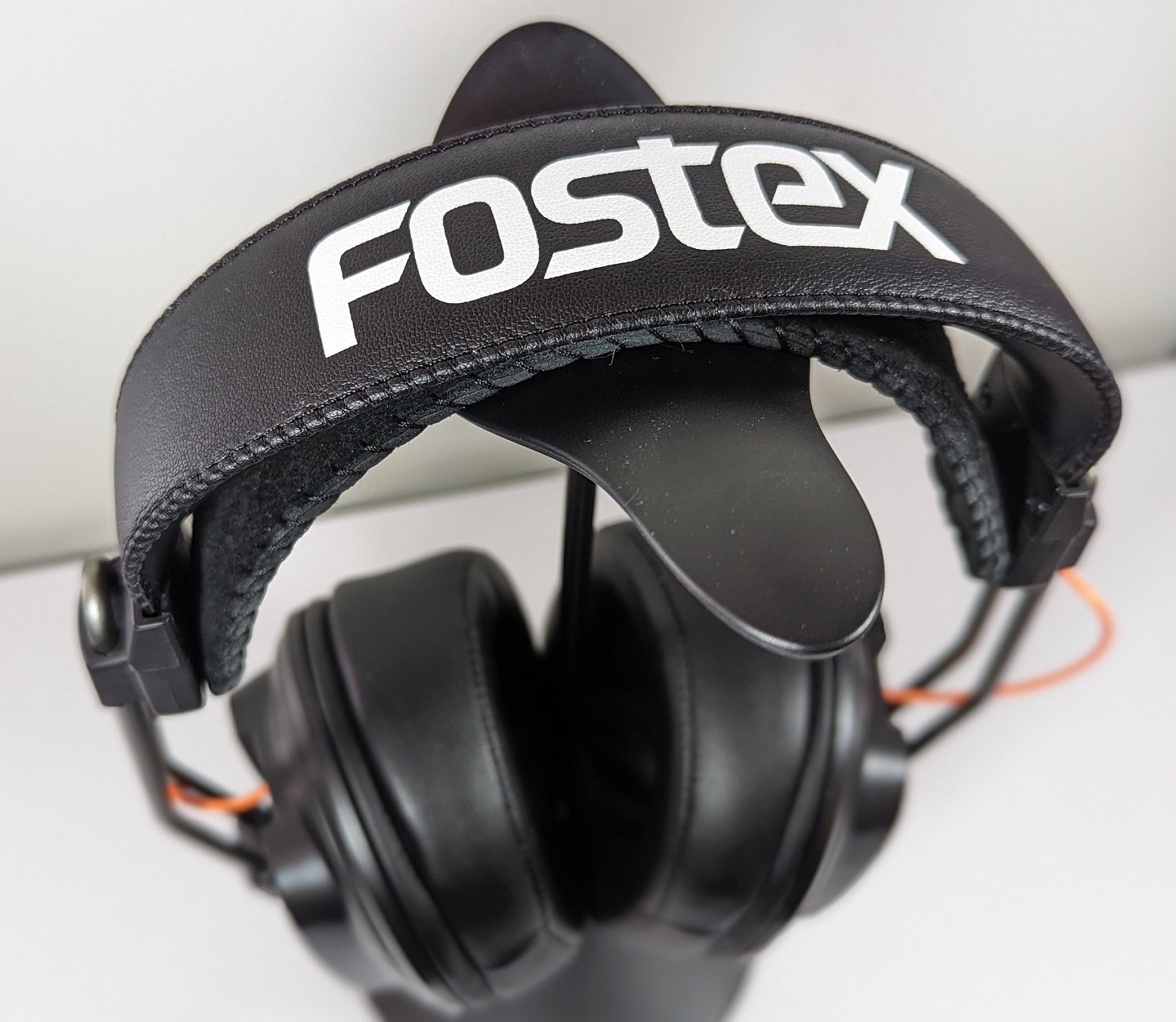
Table of Contents:
Information:
- Price: 400–500 € (VAT included)
- Structure: Semi-open, over-ear
- Planar driver: 40 x 40 mm
- Impedance: 50 ohm
- Sensitivity: 92 dB/mW
- Weight: 420 g
- Connector type: 3.5 mm
- Included: Fostex T20rp/T40rp/T50rp headphone ear pads, cables and accompanying materials, and depending on the buyer's choices (and price), a protective case, balanced cable, and/or ZMF's oval ear pads
Review sample: Self-purchased product
What the heck is Modhouse Argon?
The affordable Fostex T20rp, T40rp, and T50rp planar headphones (priced around 140–160 euros) are rarely discussed nowadays, as their design is quite outdated, and they have an uneven tuning. However, many have recognized the potential in Fostex's planar driver, making these headphones very popular modification targets over the past decade or so. Some headphone manufacturers, such as ZMF Headphones and Dan Clark Audio, actually got their start by modifying and selling Fostex T50rp headphones.
There have been many different implementations of this headphone model, among which the Modhouse Argon (link to product page) is considered one of the best, if not the best. Ryan, the American who runs Mod House Audio, still modifies all headphones himself, as far as I understand. Because of this, Argon headphones might have a waiting period of up to six months after ordering. The availability of the headphones also depends on the availability of Fostex models, so due to previous availability issues, Ryan modifies identical Argon headphones from the T20rp and T40rp models in addition to the Fostex T50rp model. The mk3 suffix in the Argon model means that the modified Fostex models are from the latest mk3 series.
During the purchase phase, Mod House Audio is paid for the Fostex headphones, their modification work, and selected accessories, such as better pads, a protective case, or a cable. The headphones cannot be played balanced by default, but the manufacturer can convert them to balanced for an additional fee of 35 dollars. In addition to the 340 dollar base price, it is highly recommended to also purchase ZMF's oval ear pads for the Argon model for 50 dollars, as the headphones are tuned for them.
Instead of paying Mod House Audio for Fostex headphones, the buyer can also provide their previously acquired headphones for modification, in which case only 120 dollars will be charged for the modification work. However, due to shipping costs, this is a sensible option only for those living in the United States.
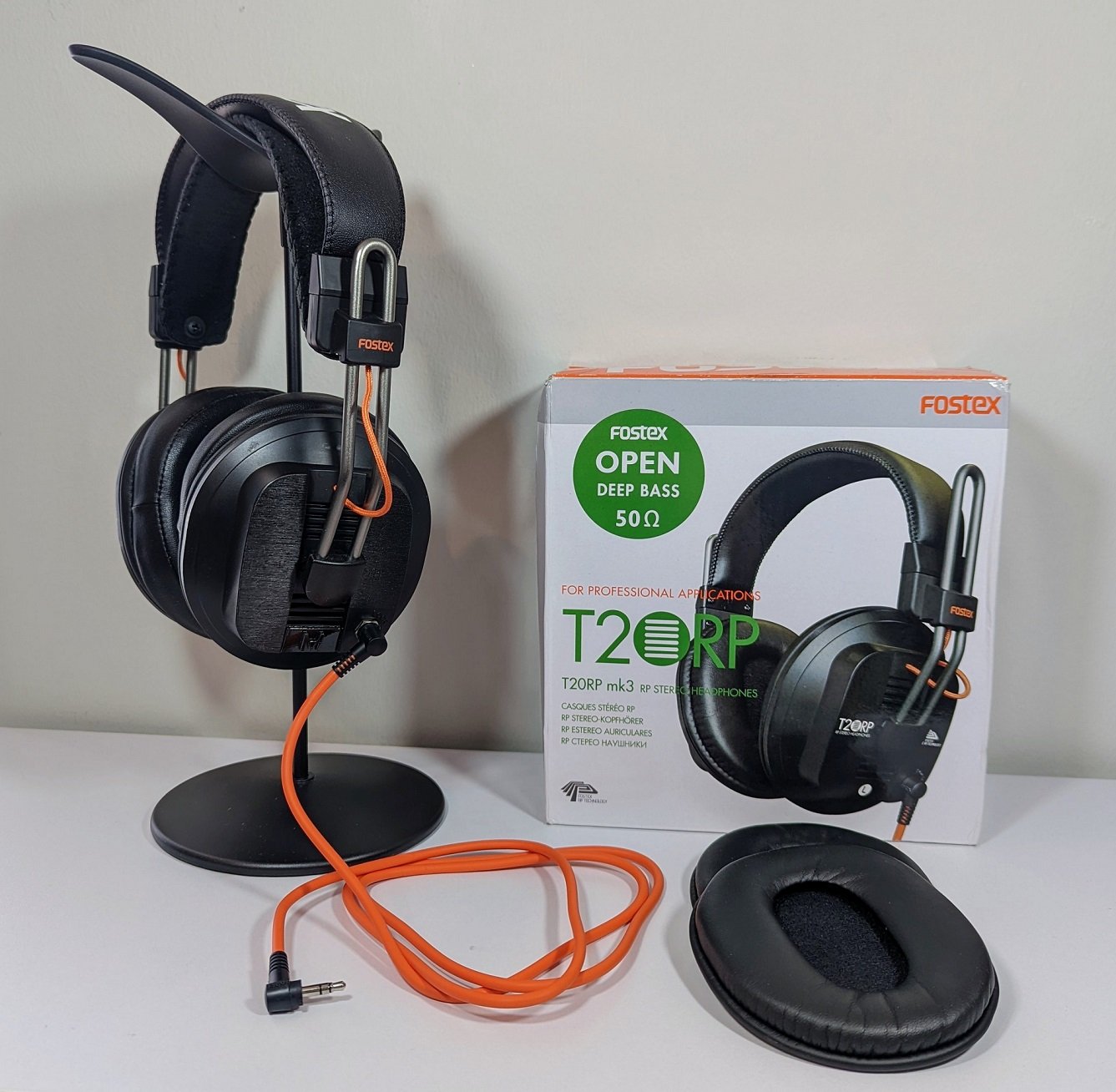
I purchased the Argon model I am reviewing used. It is made from the Fostex T20rp model and can only be played unbalanced. The headphones came with ZMF's protein leather ear pads recommended by Mod House Audio, so the headphones sound exactly as intended by their manufacturer.
Structure
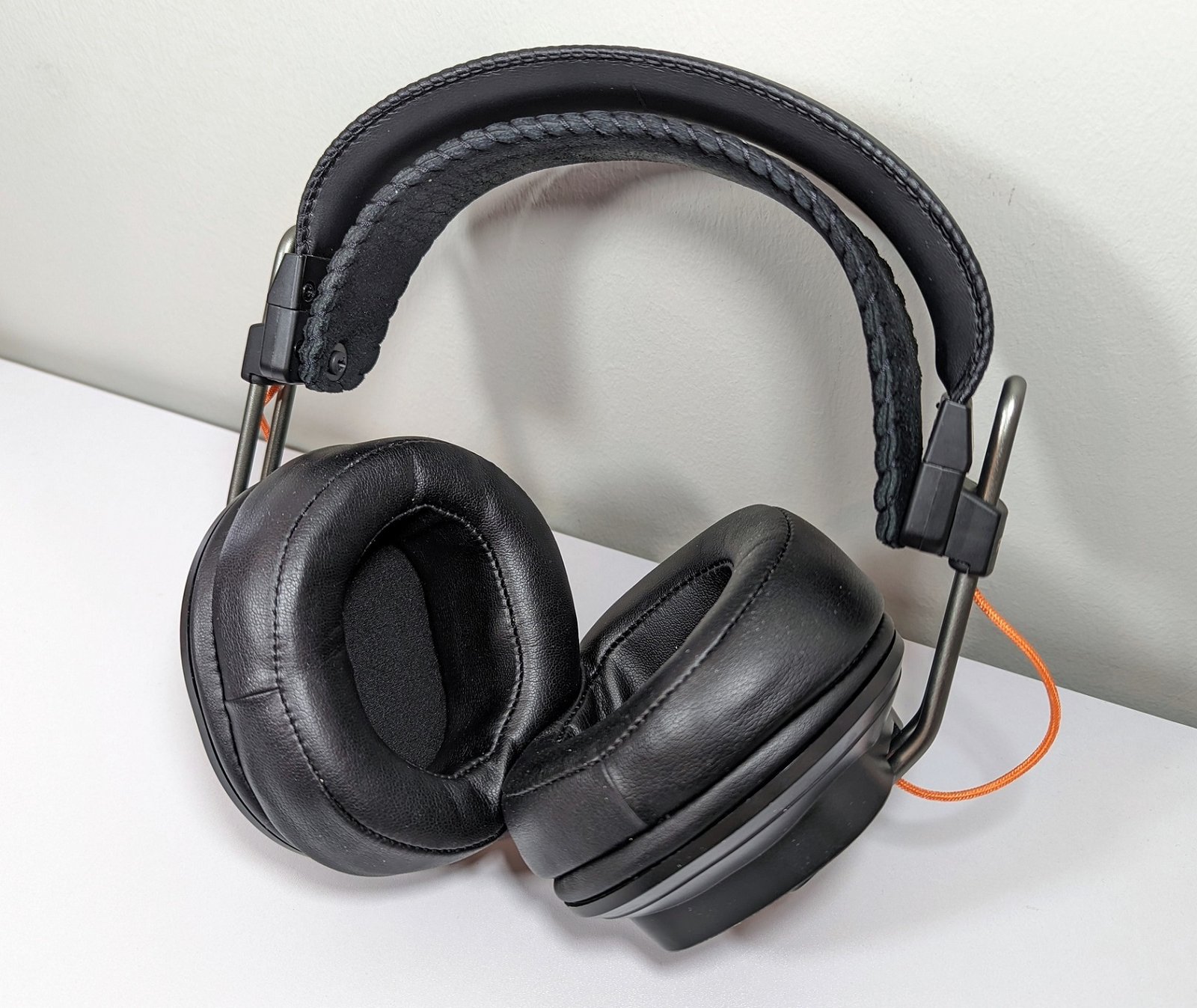
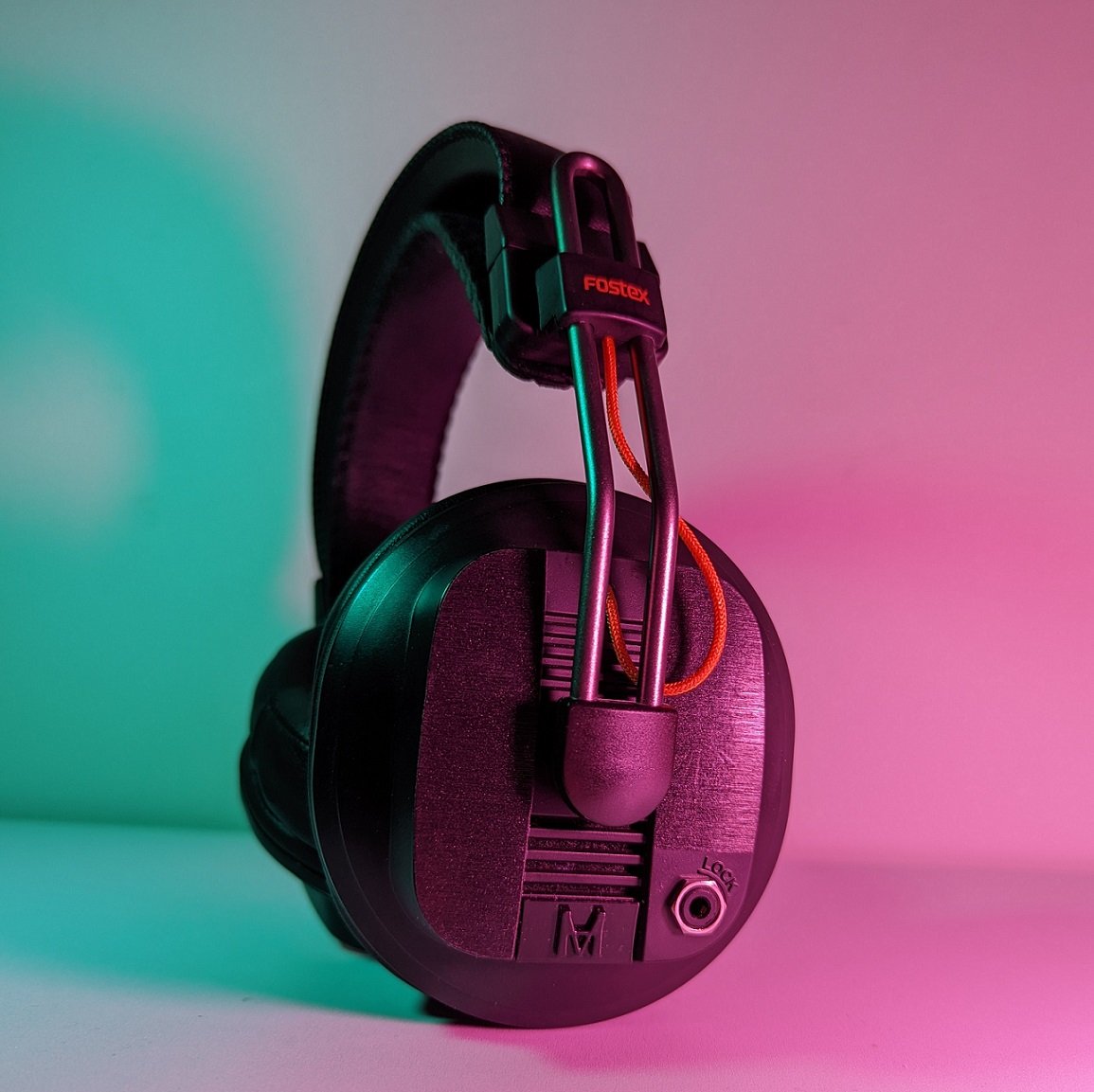
The Modhouse Argon externally looks largely like the Fostex T20/T40/T50rp headphones, but Mod House Audio has added an extra headband pad for increased comfort, a sticker imitating brushed metal surface, and a 3D-printed M-logo. In my opinion, these are sufficient enhancements considering they do not significantly increase the price of the headphones. For comparison, ZMF added, among other things, wooden cups to its modified models, which caused the price of the headphones to rise to almost 1000 euros at their highest. This is a considerable price increase for headphones that originally cost around 150 euros.
Fostex headphones are externally easily recognizable, as the shape of the cups and the headband structure are unique, and I have not seen similar ones from any other manufacturer. The plastic cups appear completely closed, but they have small air gaps below the headband attachment point, which allow some sound to escape outwards and enter inwards. Therefore, the headphones should be considered semi-open, even though, in my experience, they do not significantly leak sound outwards at moderate volumes.
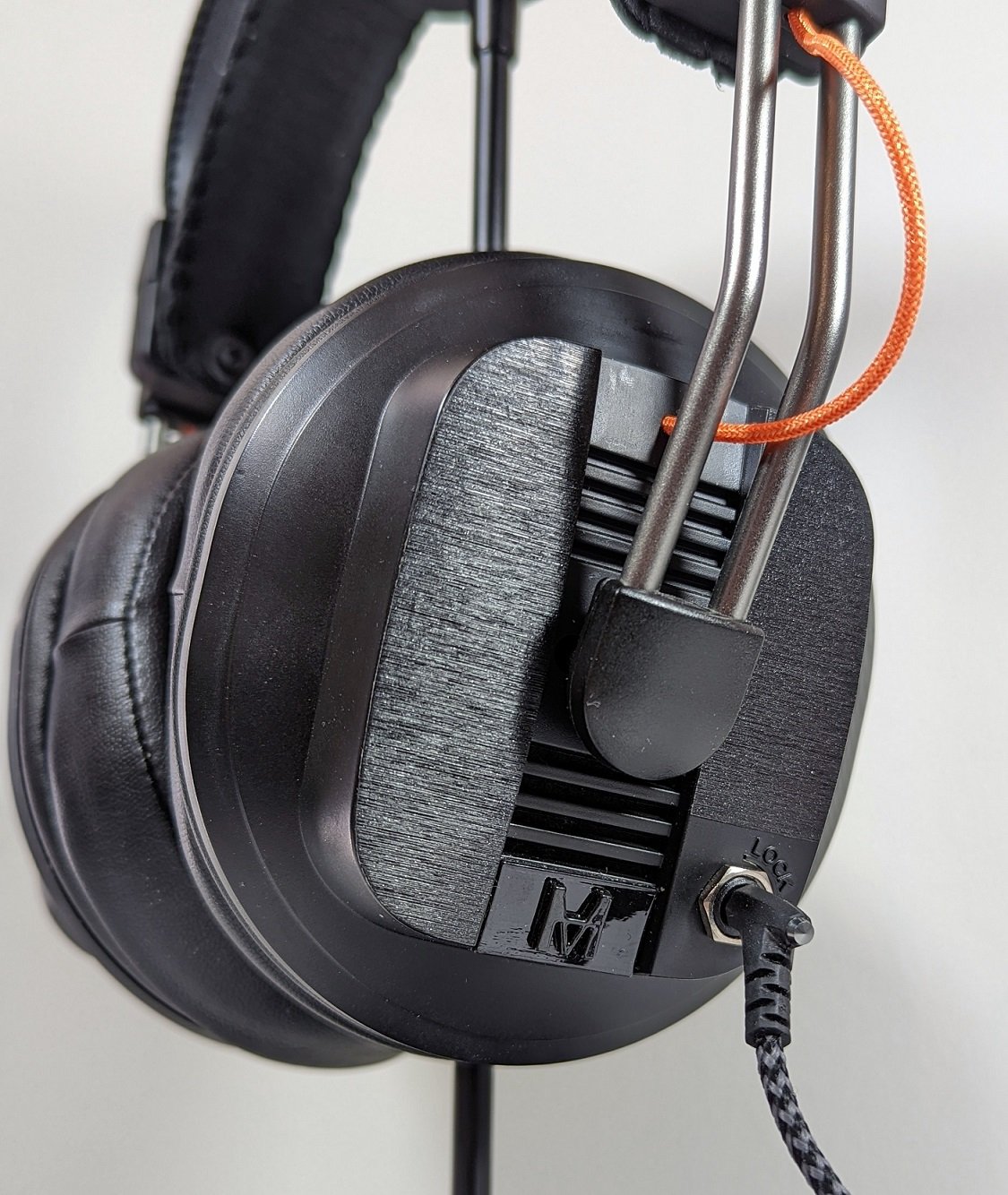
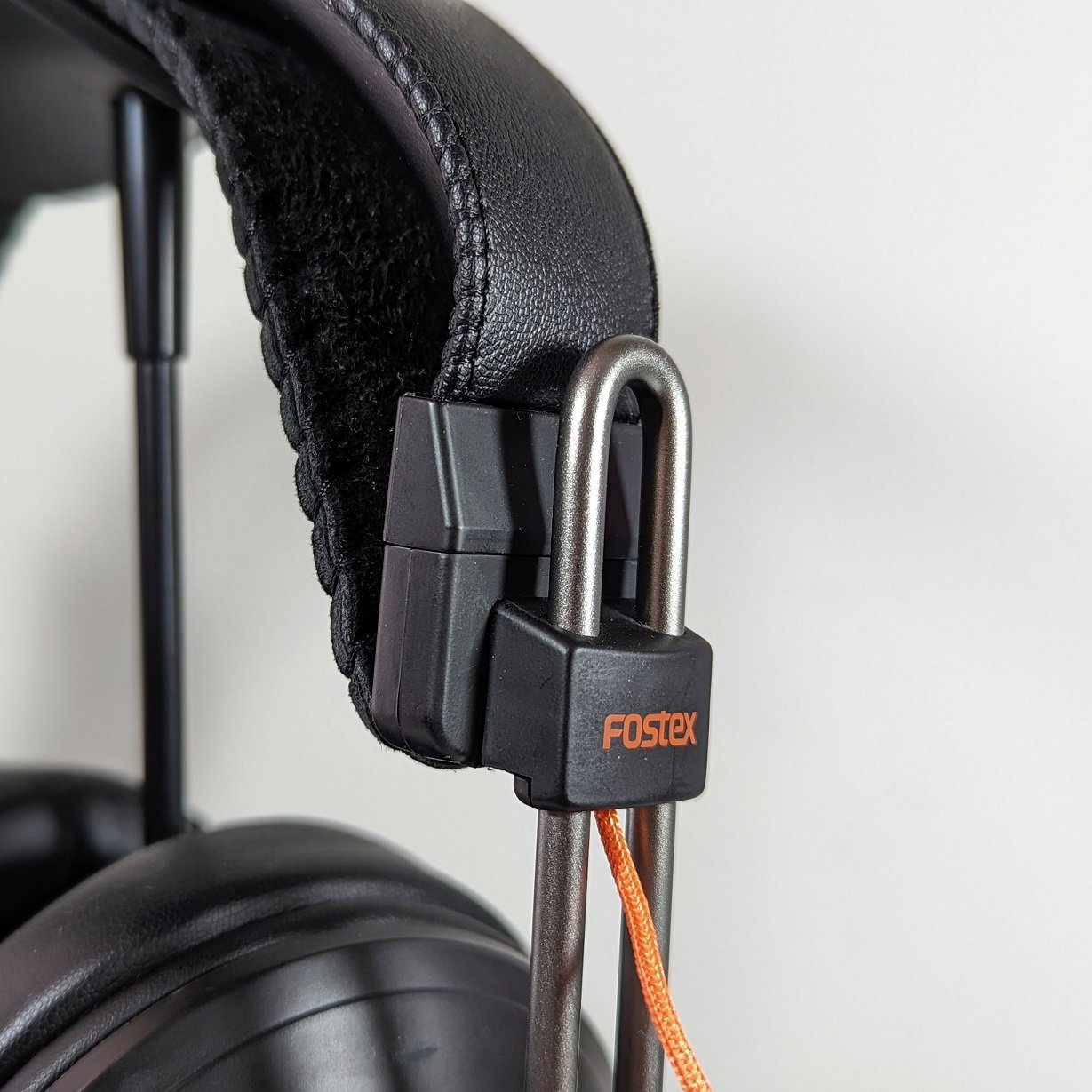
The headphone cups attach to the sides with a ball joint to metal rods, which slide through the plastic structure of the headband for height adjustment. The ball joint allows the cups to rotate both horizontally and vertically, but the range of motion is cleverly limited so that the cups cannot rotate 360 degrees.
Between the cups, an orange connecting cable also runs through the headband, as the actual headphone cable attaches to only one cup. Somewhat unusually, the 3.5 mm connector located on the side of the left cup is a locking type in Fostex headphones, but Mod House Audio has replaced it with a standard connector that fits any cable equipped with a 3.5 mm connector. The Argon model comes by default only with Fostex's original standard cables. I myself have used a V-Moda fabric-covered cable costing just over 10 euros (not necessarily still for sale) with the headphones.
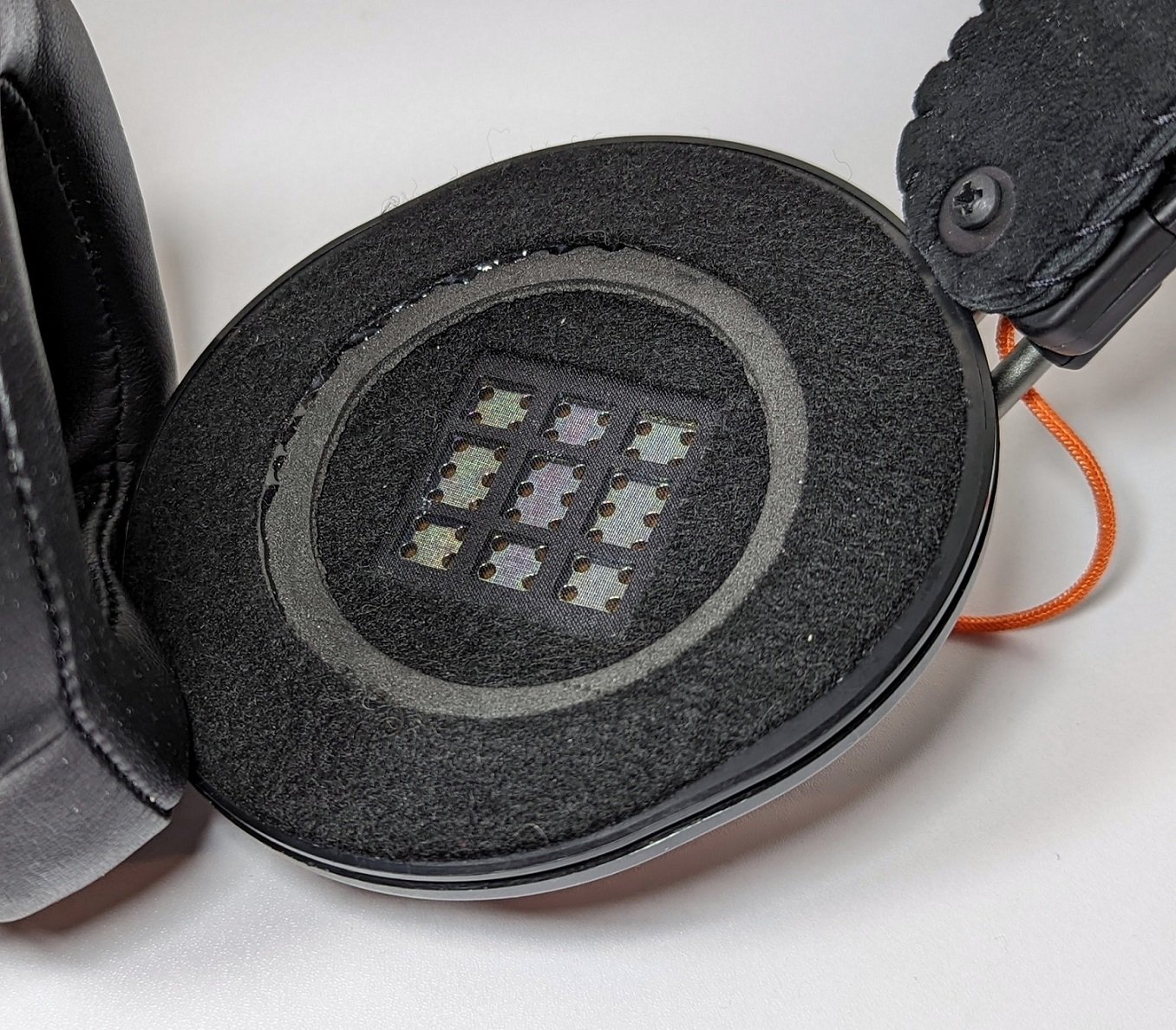
The Argon comes with Fostex's flat and uncomfortable standard pads, but the buyer is meant to purchase ZMF's thicker and more comfortable pads for an additional $50. These also make the headphones sound as intended. I personally have Mod House Audio's recommended protein leather ZMF pads, but for those seeking a different sound reproduction, options made of genuine leather or fabric material are also available. The pads attach to the groove between the headphone's faceplate and cup, so pads from other manufacturers can also be tried with the Argon.
Comfort
The Modhouse Argon weighs 420 grams, so it's not among the lightest headphones. The Fostex model is quite uncomfortable by default, as it has a poor, too straight in the middle, headband and non-existent ear pads. However, Mod House Audio's added deer leather comfort strap and ZMF's excellent ear pads make the Argon comfortable enough in my opinion.
The fit of the headphones was not originally optimized for thick and angled pads, so the cups always need to be adjusted on the ears for a while before they press evenly. In this respect, the headband structure feels outdated, even though comfort can be adjusted by moving the headphones into place. In my opinion, the Argon is well suited for longer use, but the ears will certainly sweat quite a bit inside the pads during summer heatwaves.
Sound quality
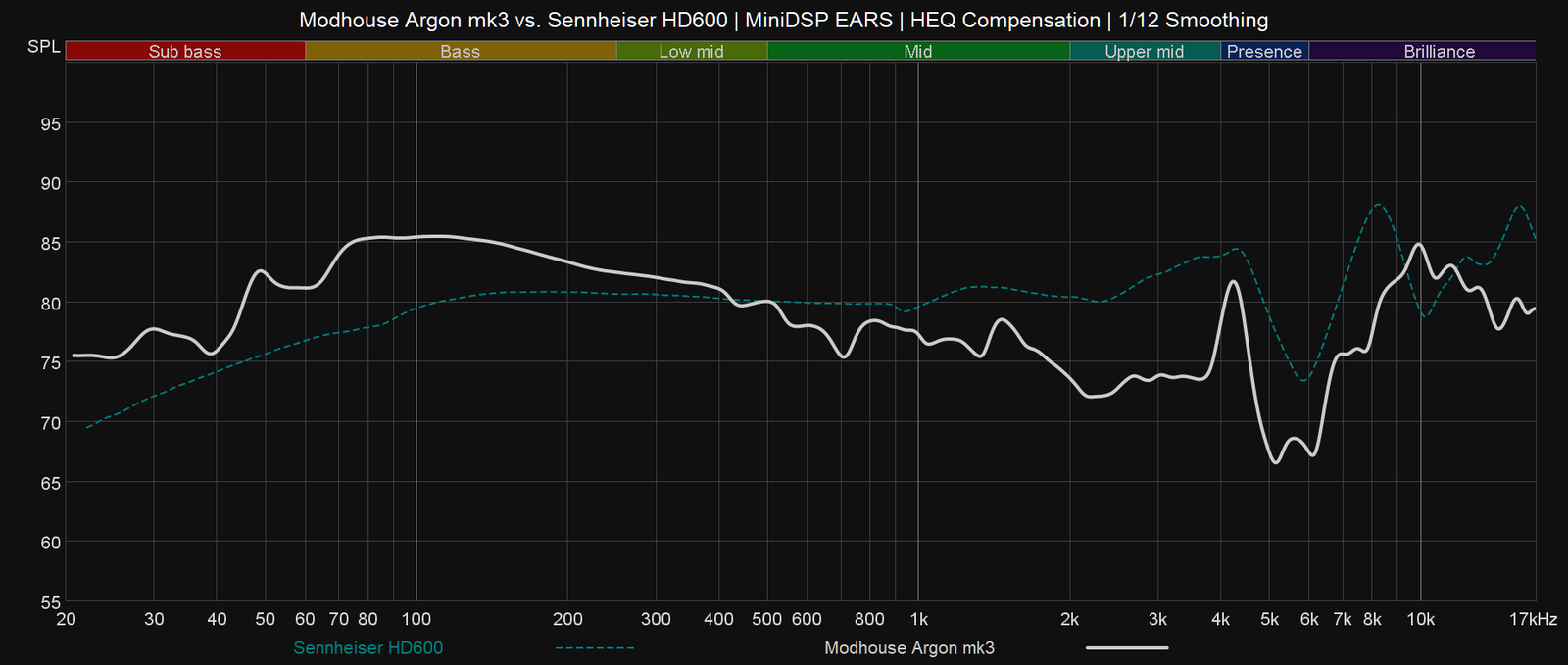
Frequency response compared to Sennheiser HD600 headphones:
Unique listening experience
The Modhouse Argon is an extremely dark-sounding and fun headphone, not aimed at serious listeners or those who approach music listening critically. The headphones' frequency response, which gently slopes downwards towards the mid-frequencies, looks quite peculiar, and that's how it practically sounds. The sound is dark, but also quite clear. The freshness of the upper treble, in turn, brings airiness to the reproduction. Two main characteristics immediately emerge from the Argon's sound: outrageously lush bass reproduction and a huge soundstage. The end result seems entirely intentional, achieving a unique listening experience.
Despite their unusual tuning, the headphones are not technically bad either, as Fostex's small planar driver is surprisingly capable of holding the package together. Many have described the Argon's sound as a dark night sky from which different sounds pop out like bright stars – this comparison is apt in my opinion. The headphones reproduce sound as if in a large black void. The sound is thick and bass-heavy, but smaller sounds nevertheless pop out from the overall presentation very clearly and distinctly.
The most fun thing about this, in my opinion, is that the sounds are positioned exceptionally widely around the head. Sometimes individual sounds are heard high above the head or low at chest height. Interesting things are constantly happening in the reproduction, so in a way, there's a lot to listen to in these headphones. At the same time, the thumping of drums and the growl of the bass guitar are so powerful that your teeth rattle. The listening experience is so addictive that I don't care one bit that every song I listen to sounds completely different from what it should. It's headphones like the Modhouse Argon that make the headphone hobby fun!
Bass:
The headphones have so much mid-bass, without reservation, as I believe is possible before the reproduction would become unbearably thick. The high amount of upper bass frequencies makes the reproduction truly dark and bass-heavy. The kick drum and bass guitar sound incredibly hefty and large in scale, making the headphones excellent for listening to heavier music. When combined with a large soundstage, the listening experience closely resembles being at a rock festival. No other headphones I've heard have come as close to this.
Incredibly, despite its large quantity, the bass is reasonably detailed and controlled, and not at all like in inexpensive headphones that heavily emphasize mid-bass. In the Argon, the bass tuning is quite successful for this type of presentation, as the bass level gently rises upwards from 400 Hz, and it is not yet too dominant in the lower mid-frequencies. Objectively evaluated, however, the bass significantly bleeds into the mid-frequencies, so the transition from bass to mid-frequencies remains unclear.
The Argon's bass reproduction immediately reminds me of the ZMF Atticus (link to previous review), as the bass of both headphones brings plenty of warmth and body to the reproduction. This is often not optimal in any way, but when it happens to work well with the music being listened to, the result brings a satisfied grin to one's face.
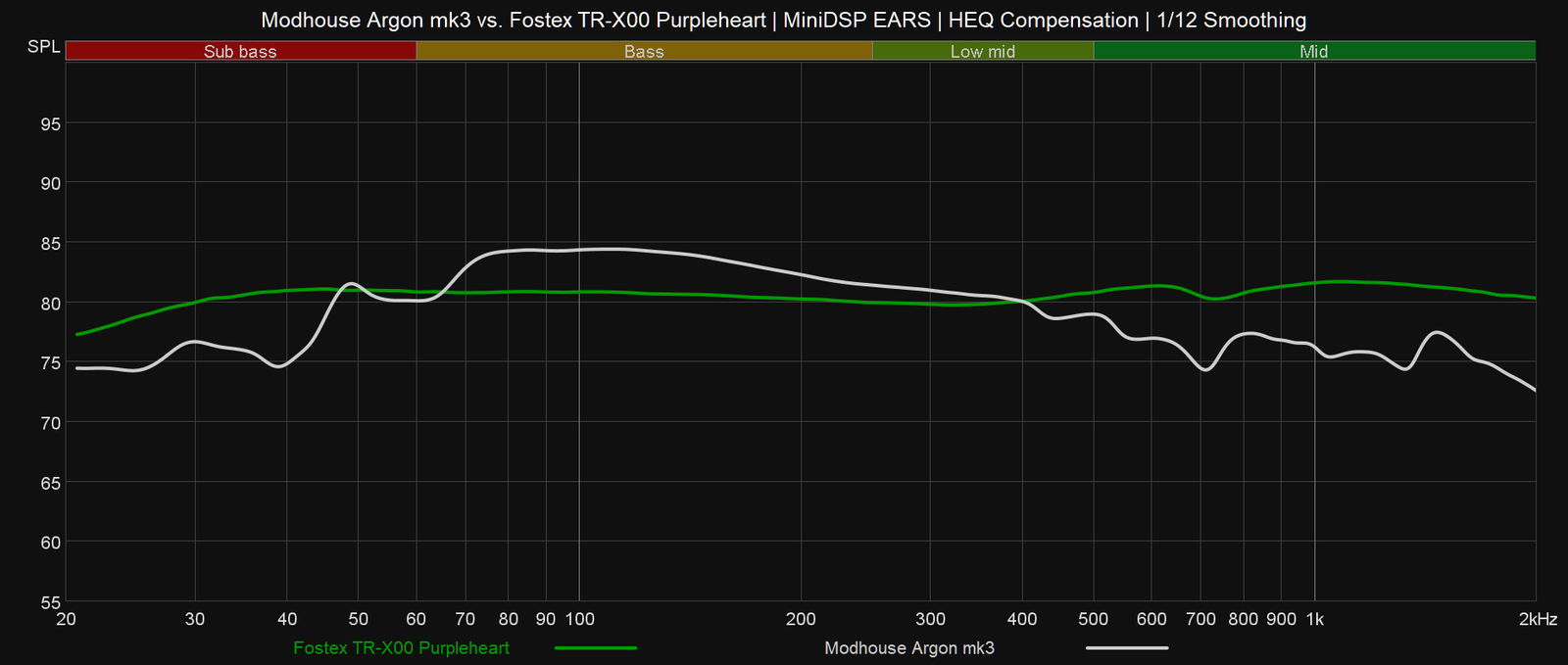
In both Atticus and Argon, the bass energy level in the sub-bass drops back to the level of the mid-frequencies. In Argon's case, based on what I've read, this is at least partly due to the headphone driver not being able to properly reproduce the lowest bass frequencies. Due to the weaker sub-bass (below 50 Hz), bass reproduction is not optimal for electronic music, as the emphasized mid-bass makes the reproduction hollow, boomy, and overly powerful. The bass also lacks a great deal of physicality, even though it sounds very loud and full.
For comparison, the Fostex TR-X00 Purpleheart model (link to previous review) is, in my opinion, significantly better suited for electronic music, as its more linear sub-bass and ”cleaner” mid-bass bring an effortlessness to bass reproduction compared to the Argon, whose bass intensity sounds a bit forced.
Mid-frequencies:
Due to the downward-sloping tuning, the headphones' mid-frequencies remain quite subdued, but there are no major boosts or dips that would make the sound strange or unrealistic. Apart from the lower mid-frequencies that blend with the bass reproduction, the rest of the mid-frequencies play as if in their own compartment. This makes the reproduction clear despite its darkness – for example, a vocalist is easily discernible. The singer is most often positioned a bit further away, as if on a stage, which further enhances the stadium concert feel. However, some low-voiced male singers are positioned closer, so the situation varies depending on the artist being listened to.
Argon's mid-frequencies are quite successfully adapted to the desired reproduction style. The headphones' tuning is not intended to be natural or realistic, so I can't really complain that the mid-frequencies don't compete with, for example, the Sennheiser HD600 series. However, in my opinion, anyone who appreciates good mid-frequencies should not acquire the Modhouse Argon, at least not as their only pair of headphones.
What bothers me most about the mid-frequencies is only occasional sibilance, which I believe is caused by the treble being strongest at 10 kHz – equalizing this emphasis seems to at least alleviate the problem. Regardless of the singer's gender, sibilance can sometimes be annoying in energetic vocal performances, whereas fortunately, most of the time it doesn't occur at all, even though several singers sound sharper than usual.
Treble:
The large amount of upper treble in the Argon has an important role, as it makes the reproduction airy and lively. Unlike many other V-shaped tuned headphones, such as Beyerdynamics, the treble does not have a single massive emphasis, but rather a lot of treble throughout the 8–14 kHz range. Thanks to this, the treble does not overemphasize any single frequency, but is admirably balanced and even surprisingly detailed – for example, poorly recorded cymbals are very clear, and they don't become an annoying hissing and sizzling mass.
Even if the listened song has a massive wall of bass and guitar, sounds reproduced at higher frequencies pop out from the whole as clearly as stars in the night sky. When listening with a good enough amplifier, the treble is only rarely too bright, so in my opinion, its only negative aspect is the sibilance I mentioned, which sometimes occurs in energetic vocal performances.
As I understand it, the Fostex model inherently has a significant emphasis at 10 kHz, which Ryan from Mod House Audio has tried to attenuate when creating the Argon – some of this emphasis still remains. No song has been unlistenable with the Argon so far, but lowering the 10 kHz region with equalization would make the sound less sharp if needed. However, the change must be made with a high Q-value so that the treble does not attenuate over too wide an area. Greater treble attenuation easily makes the Argon sound too dark, so the default amount seems like a carefully considered solution.
Audio description:
The Argon has such an incredibly wide soundstage that one wouldn't believe it's possible in small closed-back headphones. When I first heard the headphones, I literally thought I was dreaming, as only a few open-back headphones can achieve the same. The sound produced by the Argon is massive in size and is best heard far outside the cups – this alone is enough to give chills when listening.
In addition to its enormous width, the soundstage is deep, and best of all, exceptionally tall. Individual sounds can jump high above the head or sink down to chest level. I have only encountered a similar 3D-style soundstage before in the 2700 euro ZMF Verite Closed model (link to previous review), making the Modhouse Argon a truly unique and interesting headphone in the sub-500 euro price range. When listening to these headphones, one can jump and immerse themselves in a world that completely carries them away – the sound plays with a dark background in a vast emptiness all around the listener.
When listening to the headphones, it feels as if different frequency ranges and sounds never have to fight for space; instead, every detail has room to stand out from the whole. The reproduction also has natural reverberation and resonance, which create the impression that the music is being reproduced in a real space. Although I previously described the listening experience as being at a festival, I can't really precisely define where the listener ends up when listening to the Argon.
The placement of sounds in the sound field cannot be considered accurate or realistic in the traditional sense, as the sound is constantly very dynamic. Sounds play in layers, separate from each other, but their physical location is somewhere entirely different than when listening to most other headphones. Still, I can't find anything negative here, because the result is outrageously fun. In its intriguing nature, the Modhouse Argon is one of my best soundstage-related listening experiences, as it impresses me more than, for example, the Sennheiser HD800. I don't understand what magic Ryan from Mod House Audio has used to achieve such a result.
Resolution and detail:
Fostex's 40mm planar driver is one of the slowest I've heard, so the Argon almost resembles a headphone with a dynamic driver more. Although the headphones are not intended for critical detail listening, the contours of sounds remain surprisingly clear and sharp. The headphones have a fascinating way of layering and positioning sounds separately from each other, which is why I would even say the resolution is excellent in places. The Argon does things quite differently from other sub-500 euro headphones I've heard, so it doesn't traditionally rank among the best in its price class, but it's not the worst either.
However, the most important details are usually emphasized in the reproduction, so for more analytical listening, it's advisable to get other headphones designed to bring out smaller details more clearly. Among other bass-heavy headphones, for example, the Fostex TR-X00 Purpleheart is more detailed and feels more capable, which is not a big surprise considering it is based on the Fostex TH610 model costing over 600 euros, while the Modhouse Argon is based on the 150 euro Fostex T50rp.
Dynamics:
Due to the driver's slowness, the Argon is not a particularly dynamic or punchy-sounding headphone, but on the other hand, it always sounds powerful thanks to its bass-heavy tuning. The reproduction is lively and snappy in its own way, but when compared to, for example, the Fostex TR-X00 model I mentioned a couple of times, it quickly becomes clear that the Argon remains quite flat when there should be volume variations in the music. However, in my opinion, this is not particularly disturbing, as the headphones' reproduction style is otherwise anything but boring and flat.
Replacing ear cushions
I tried several different ZMF ear pads with the headphones (e.g., Universe lambskin, Universe Hybrid, Eikon Suede, and Eikon Lambskin Perforated), but unfortunately, I don't own the oval models designed specifically for use with the Argon. ZMF's larger round pads significantly reduce the amount of bass in the Argon (especially the sub-bass almost completely disappears) regardless of the material the pads are made from.
None of the pad models I own sounded better than the ”stock pads,” but the Eikon suede pads were quite usable, as they allow the Argon to sound quite normal and balanced, especially in the mid-range, if desired. However, this comes at the cost of almost completely losing the fun and rich bass reproduction.
Challenging confirmation
The age of the Fostex T50rp, used as the base for the Modhouse Argon, is also evident in that it requires a fairly powerful amplifier to sound good. The headphones' sensitivity is a somewhat low 92 dB / mW, and the impedance is a challenging 50 ohms. These figures are not a major problem for modern headphone amplifiers, but many more affordable basic devices will struggle with the Argon, especially when they should be able to convincingly reproduce a large soundstage and a massive amount of bass.
Like the Hifiman HE6se v2 I recently reviewed (link to previous review), the Argon can also be made to play loud enough with a less powerful amplifier – however, both headphones sound downright annoyingly bad then. The Argon is slightly more forgiving of the two in this regard, but due to its more peculiar tuning, the bass reproduction easily becomes poor or the 10 kHz treble emphasis is reproduced too piercingly (e.g., with IFI Zen DAC). In addition, the soundstage can also remain significantly smaller than what I described, and vocals can be really thin (again, e.g., IFI Zen DAC).
My description of the headphones' sound quality was based on listening to them with the Burson Audio Soloist 3X Performance amplifier. However, I could have arrived at a slightly different result if I had based my thoughts on listening with the Project Polaris amplifier (link to previous review). It might very well be one of the best amplifiers for the Argon in terms of reproduction style. However, the amplifier is rare enough that the Burson Soloist, in my opinion, better reflects how the headphones sound with most more common amplifiers.
With Project Polaris, the headphones' soundstage shrinks slightly, but the mid-range gains more energy and realism. With the Burson amplifier, vocal performances sound further away, as if separate from the rest of the whole. With Project Polaris, however, the vocalist moves just close enough, which I think is an excellent thing. At the same time, many instruments, such as the electric guitar, gain more body and bite. The bass, on the other hand, feels even more powerful, but its punchiness relaxes enough that the large amount of mid-bass no longer feels forced at all. The bass also interestingly moves further away in the sound field, giving more space to the mid-range.
The changes don't stop there, as the treble also softens just enough, making it easy to listen to in all situations. Sibilance is also completely absent. The overall experience is still just as fun as with the Burson amplifier, but the sound is easier to listen to. The improvement in the mid-range, in turn, makes the headphones more versatile and just normal enough sounding. The result is so fun and impressive that I'm quite sure most less critical music listeners wouldn't want to go back to other headphones after hearing the Argon.
Argon is difficult to compare to other headphones
However, I won't try to compare the Argon further to other headphones, because in my opinion, it is completely unique and does not compete for the same buyers as other more serious 300–500 euro headphone models. The Argon is worth buying precisely because it doesn't sound like any other headphone on the market.
I haven't encountered another headphone model that has both a huge amount of bass and an equally massive soundstage. The closest is probably the ZMF Atticus, whose mid-range, however, is stylistically more forward. Both the Atticus and the Argon go to the top of my list when aiming for a fun and engaging listening experience with heavy music. The Argon's stadium-style presentation is often even a bit more fun, so it has been my go-to stress-relieving, escapist headphone.
Modhouse Argon frequency response compared to ZMF Atticus headphones:

Summary
I declare the Modhouse Argon the most fun headphone I've ever heard, as the massive bass reproduction combined with a huge soundstage is, in my opinion, simply a combination that you can't dislike. The Argon is an excellent addition to a headphone collection, as it makes music sound truly different from any other headphone model. This brings a nice change of pace to situations where I start to get tired of headphones tuned more sensibly and faithfully to recordings. Although almost all my other headphones are objectively better than the Argon in terms of frequency response, I still very often choose the Argon from my desk when I want music listening to be fun.
The Argon doesn't really compete with better headphones; it has its own unique thing going on. On the other hand, the headphones are not widely available, and one might have to wait several months after ordering for them to be completed. This is actually one reason why used headphones might cost more than new ones. Only a few headphones end up in such a position, which adds to the Argon's uniqueness.
For a less critical listener, the headphones might be good enough for more general use, but for others, it's hard to see the Argon being the only headphone despite its fun factor. More seriously, the headphones are quite silly, and there's no rational reason to acquire them – however, sometimes purchases should also be made based on desires. Now that I've heard what the Argon sounds like, I would definitely buy it again. For me, these headphones redefined what a fun sound means.
Pros and cons:
+ A completely unique listening experience
+ Listening is outrageously fun thanks to the powerful bass reproduction and huge soundstage
+ The soundstage spreads fascinatingly around the head, and individual sounds clearly pop out from it
+ Makes rock and heavy metal music really energetic and powerful
+ Comfort improved compared to the original Fostex model
+ It's possible to change the sound by swapping ear pads
+ The modification work has a reasonable price, even though it's handmade
+ The headphones seem to retain their value in the used headphone market
– The mid-bass dominance and darkness of the reproduction might be too much for many
– Does not reproduce sub-bass properly
– The 10 kHz emphasis sometimes causes sibilance and makes the reproduction sharp
– Mid-frequencies remain quite subdued overall
– The headphone design is outdated, so a suitable fit always needs to be sought at the beginning of use
– Can be quite problematic regarding amplifier pairing and requires more power than average
– The headphones may have to be waited for a really long time after ordering
 EN
EN  FI
FI