Author: Sword of Damocles
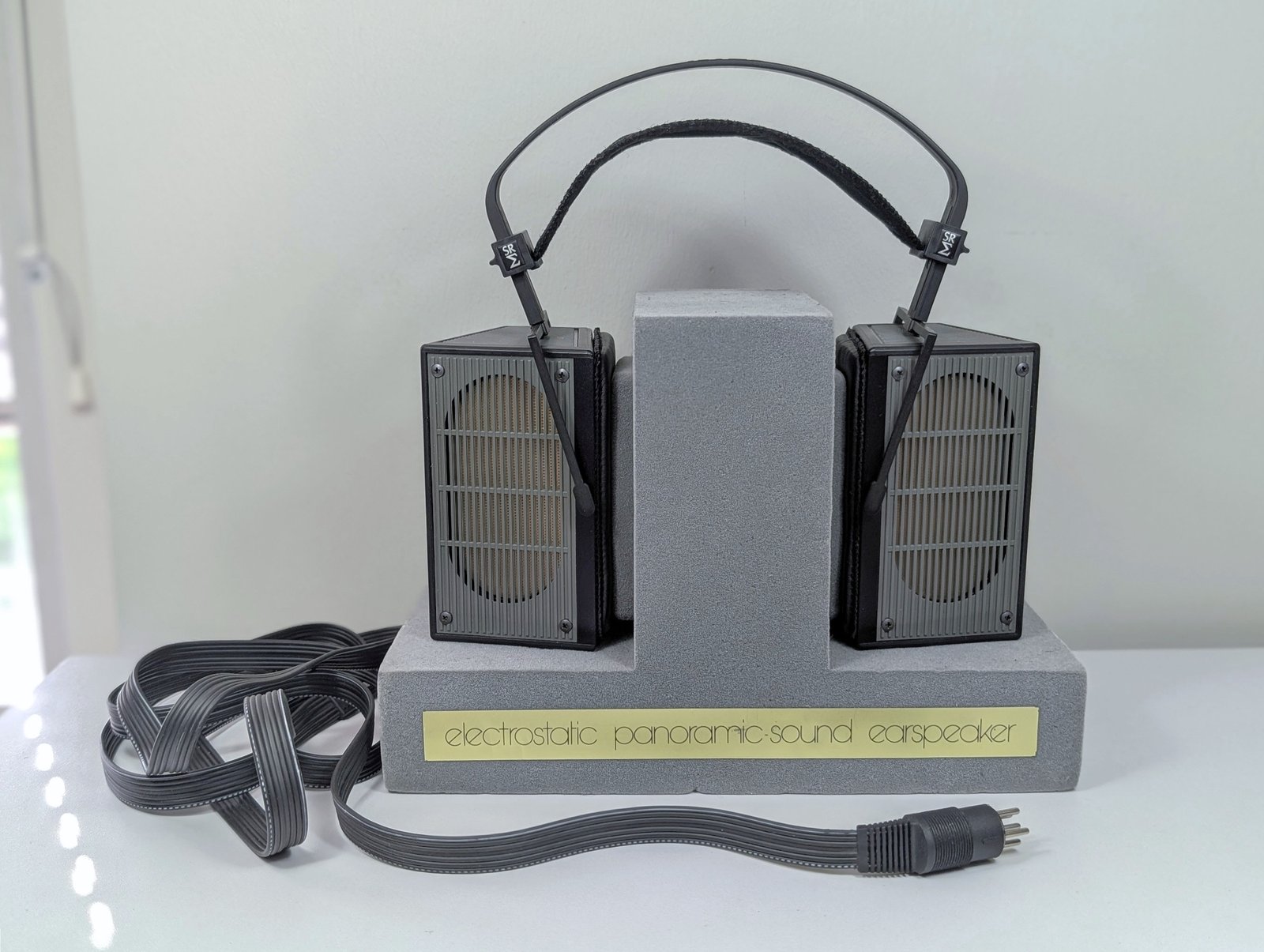
Table of Contents:
Information:
- Release year: 1979
- Country of manufacture: Japan
- Price: 45,000 yen / 400–500 USD (in today's money 1800–2000 €)
- Structure: Open panoramic sound ear speaker
- Electrostatic drivers (diaphragm thickness 2 microns)
- Capacitance: 130 pF (with cable)
- Impedance: 122 kΩ (10 kHz)
- Sensitivity: 94 dB / 100 Vrms / 1kHz
- Bias voltage: 230V DC
- Weight: 460 g (with cable)
- Connector type: Fixed flat cable
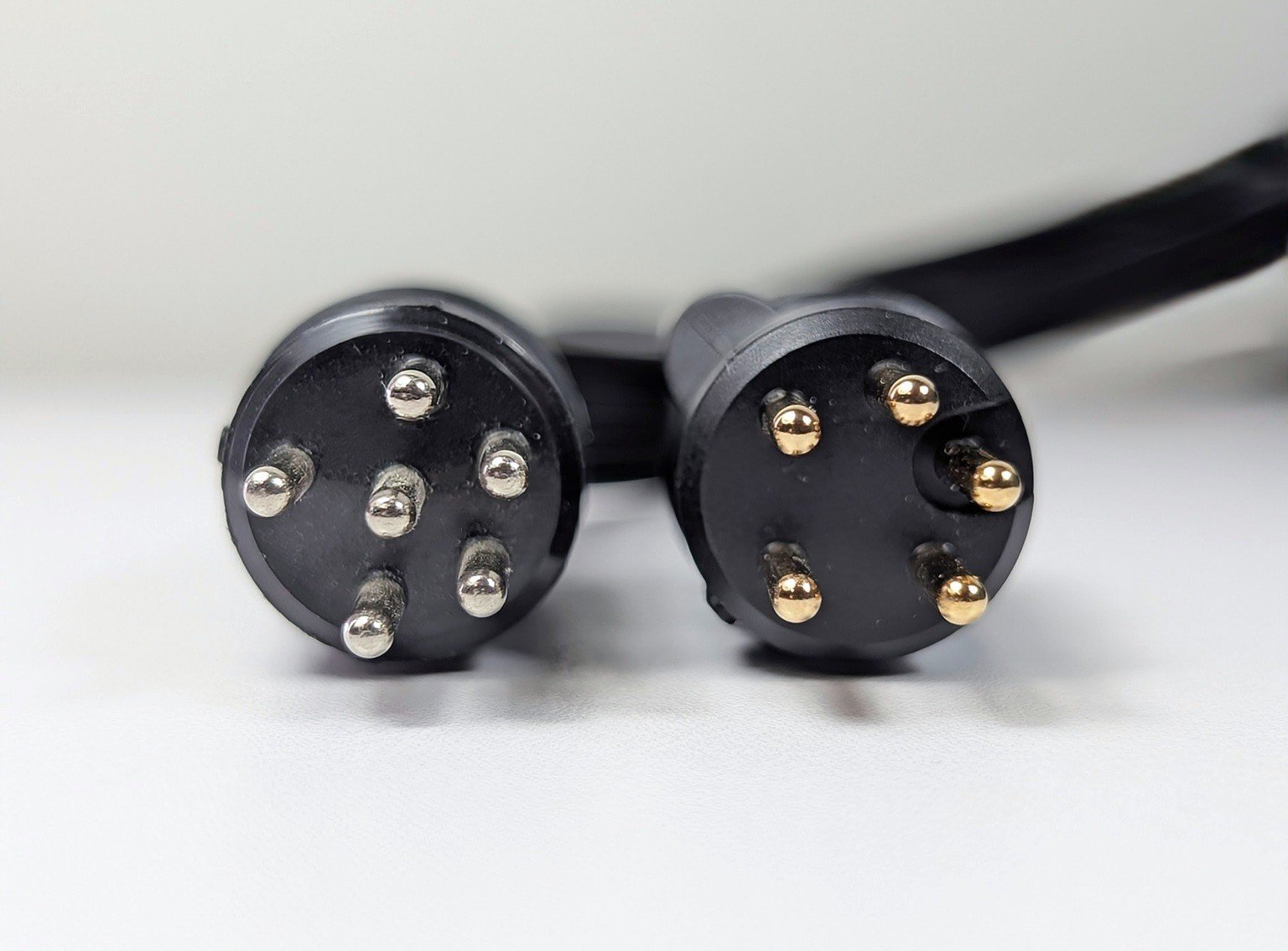
- Cable: Length 2.2 m | Connector 6-pin Stax Normal Bias
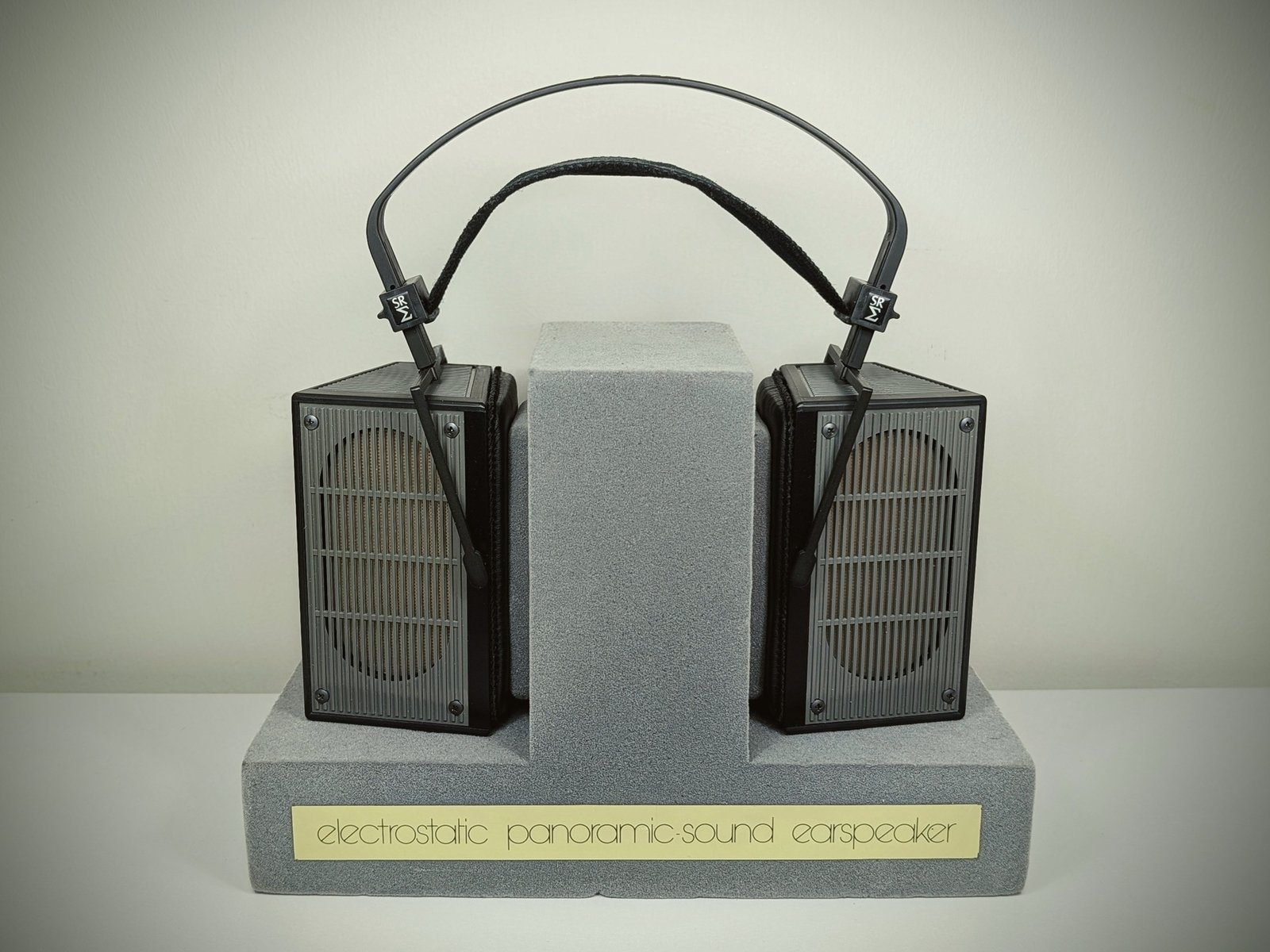
- Accessories: Stand, with which the headphones can be used as speakers
Review sample: Self-purchased product
A piece of headphone history
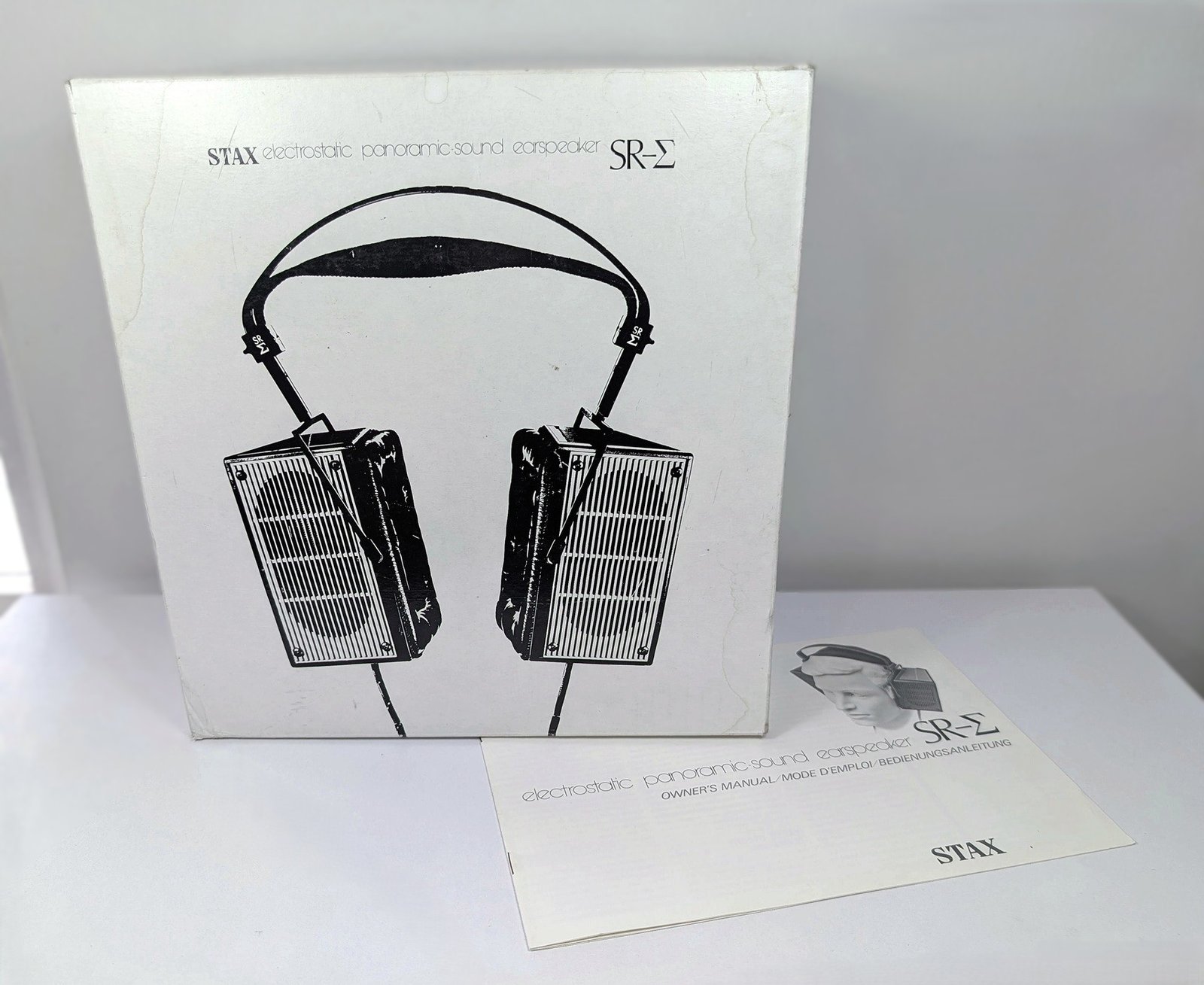
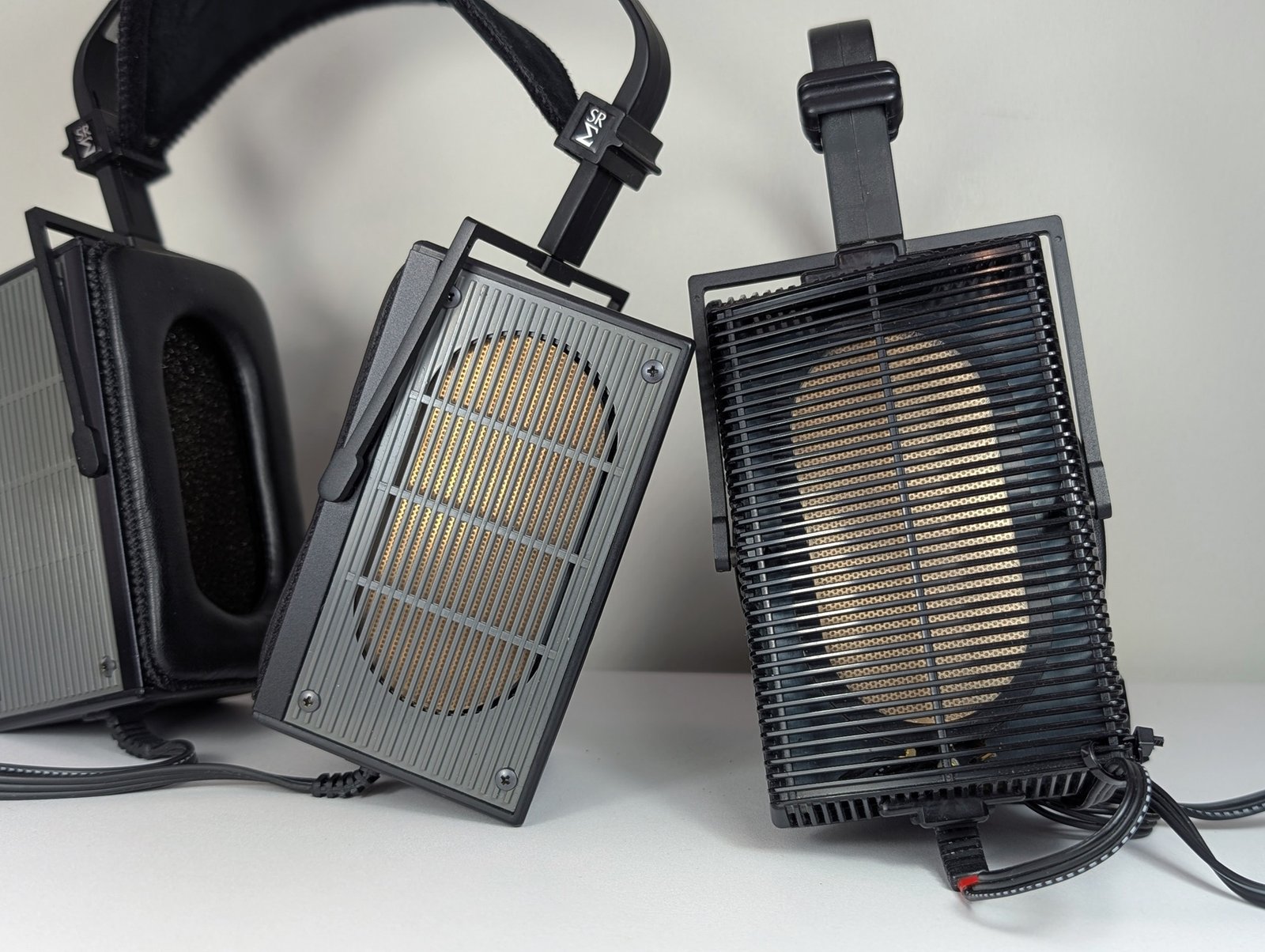
This time, we take a time jump all the way to the 1970s as we examine headphones that do not directly fall into any category we know today. Many of us do recognize STAX's most common electrostatic headphones from different decades, but the SR-Sigma series is structurally a case of its own. This is already indicated by STAX's designation ”panoramic ear speaker”, which means that the drivers are located at a 90-degree angle in front of the ears and almost at eye level. The large box-like cups, in turn, act as a kind of echo chambers imitating a listening room, which ultimately distinguishes the SR-Sigma from some open-air type headphones, such as Jecklin Float, AKG K1000, Mysphere 3, and RAAL-Requisite SR-1.
In all the headphones I mentioned, the exceptional placement of the drivers primarily aims for a soundstage resembling speaker listening. Because the SR-Sigma's cups form a closed air space around the ear, the operating principle most closely resembles, among current headphones, the one designed by Sennheiser legend Axel Grell's OAE1and its successor, the OAE2. The difference, however, remains that the acoustically open cups of the OAE headphone series do not aim to imitate a listening room, but with strongly tilted drivers, sound waves arrive at the ear at exactly the same angle as when listening to speakers. A perfect equivalent to the SR-Sigma cannot therefore be found in the headphone world.
The SR-Sigma I bought in good condition is an unofficial MK2 model, because in 1979, the original SR-Sigma released in 1977 had a different cable replaced – the fabric cable gave way to the flat cable we know today. Otherwise, the pair does not differ much from each other, but both operate with the older 230-volt Normal Bias voltage and their diaphragm thickness is 2 microns. The same drivers were also used in the first SR-Lambda model in 1979. I myself have listened to the SR-Sigma with STAX's own SRM-T1 tube amplifier, which supports Normal Bias voltage.
In 1987, STAX also released the SR-Sigma Pro model, which operates with a more modern 580-volt Pro Bias voltage and has 1-micron thick diaphragms. Manufacturing the drivers was reportedly difficult and expensive, so they were later replaced with drivers borrowed from the SR-404 Signature model, which the owner also received as a replacement when the SR-Sigma Pro ended up in service. Since SR-Lambda series drivers can generally be fitted into these headphones, some enthusiasts have certainly done so over the years.
It should also be mentioned at this point about the headphones that STAX developed them for about four years and they cost at the time, based on shaky sources, 45,000 yen, or roughly 400–500 USD. Measured in today's money in euros, we would probably be talking about headphones costing around two thousand, but times have certainly changed even regarding sound quality expectations.
Stand makes SR-Sigma small desktop speakers
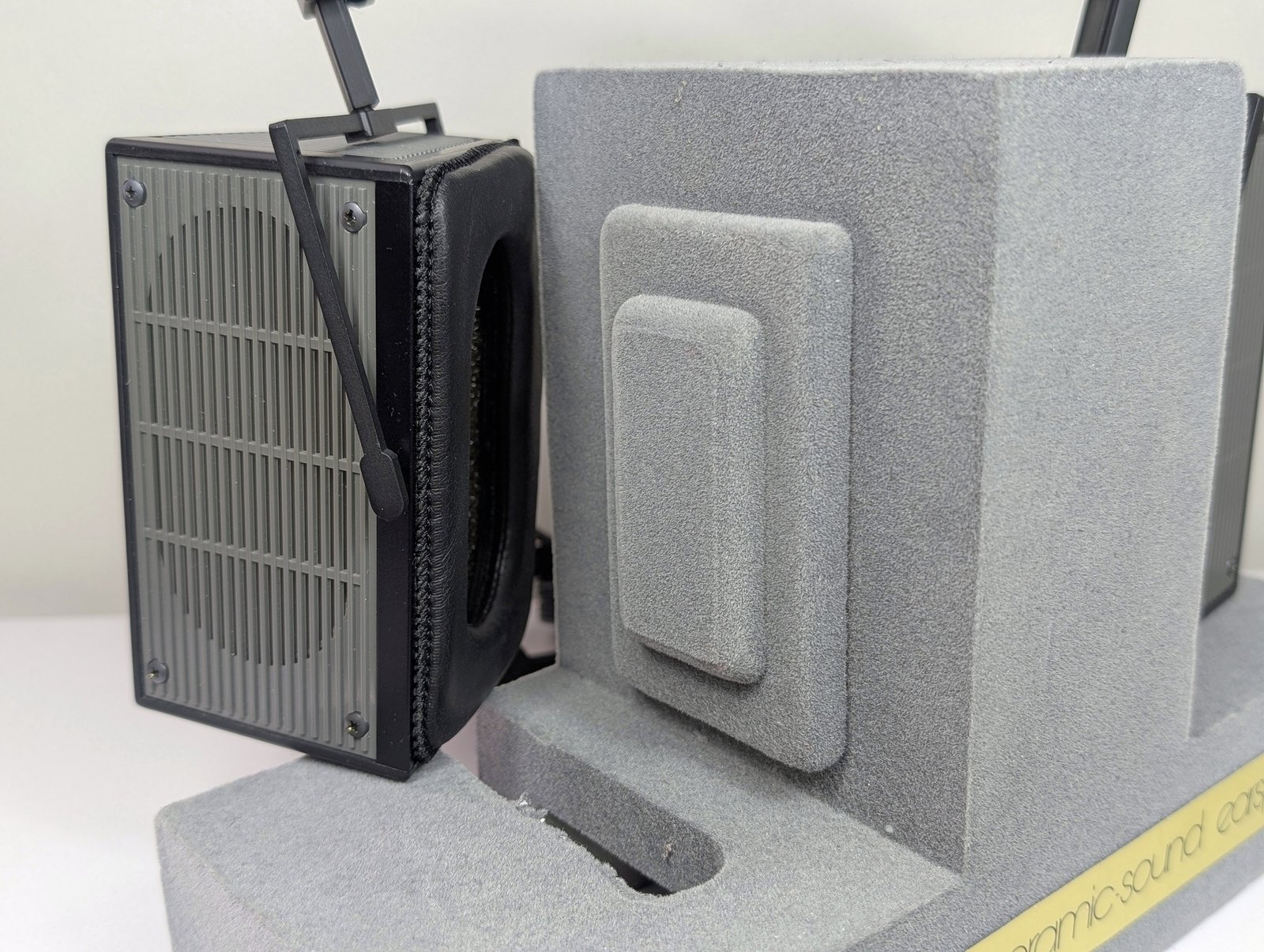
I was lucky to get along with the purchase the original styrofoam table stand, which, according to STAX, transforms the headphones into small desktop speakers. This is therefore a use case fully intended by the manufacturer, where the drivers should be aimed against the room wall from a distance of 20 centimeters. Bass could be boosted according to the instructions by carving into the stand with a knife a kind of additional echo chambers.
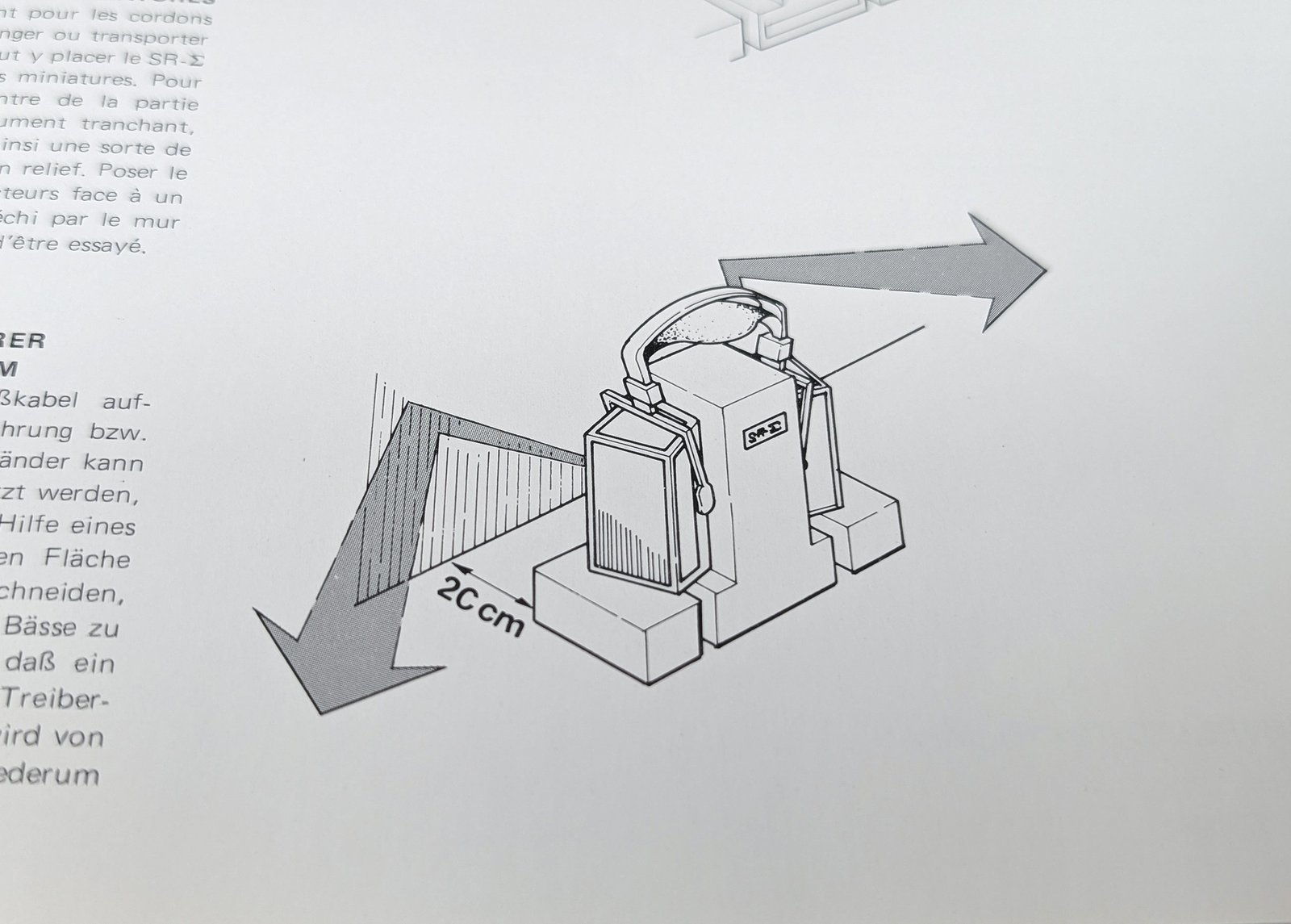
Speaker-type listening is possible precisely because of the drivers' orientation. Because they are installed at a 90-degree angle and the electrostatic panels radiate sound both forwards and backwards, in the stand they shoot directly outwards – even at a louder volume than the sound reaching the ear via a bend in normal headphone use.
When adding a little bass with an equalizer, the SR-Sigma can somewhat become small speakers, whose greatest strength is their high-frequency resolution. On the flip side, the headphones also naturally function as speakers for people around them during normal listening. For those who have previously owned electrostats, this will hardly come as a surprise, but for comparison, the sound leakage of open-back planar headphones is nothing compared to the SR-Sigma. Those in the same space hear everything all the time, which can disturb domestic peace.
Flimsy structure relative to large size
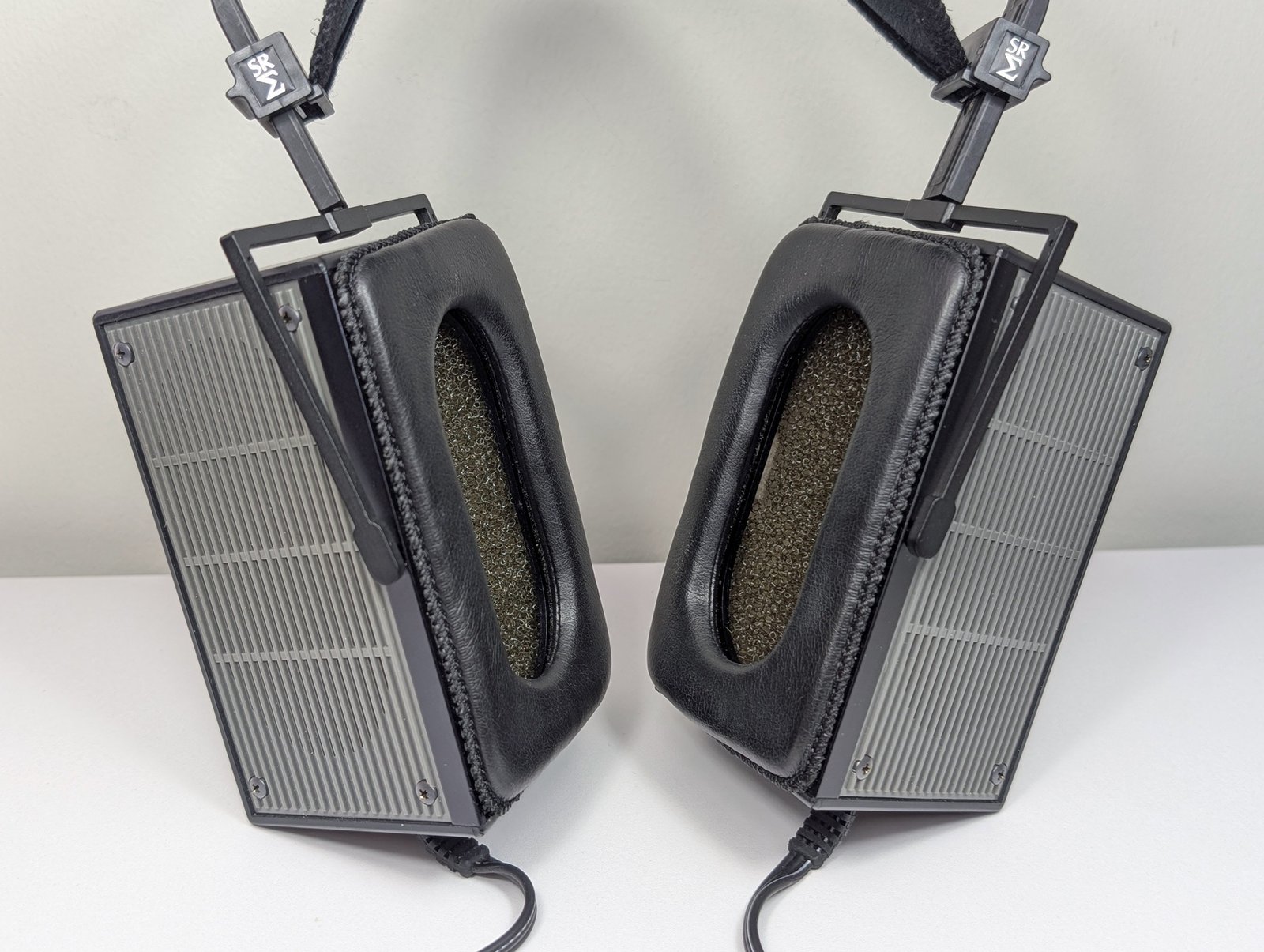
In the late 1970s, headphone ergonomics were still being learned with very different solutions, but interestingly, STAX's headphones found their current form already then. SR-Sigma's cups' grilles, oval ear pads, and the headband made of cheap plastic do not differ much from modern Lambda models, although the materials have gained a bit more strength over the decades – for this, we can partly thank the Chinese Edifier, which now owns STAX.
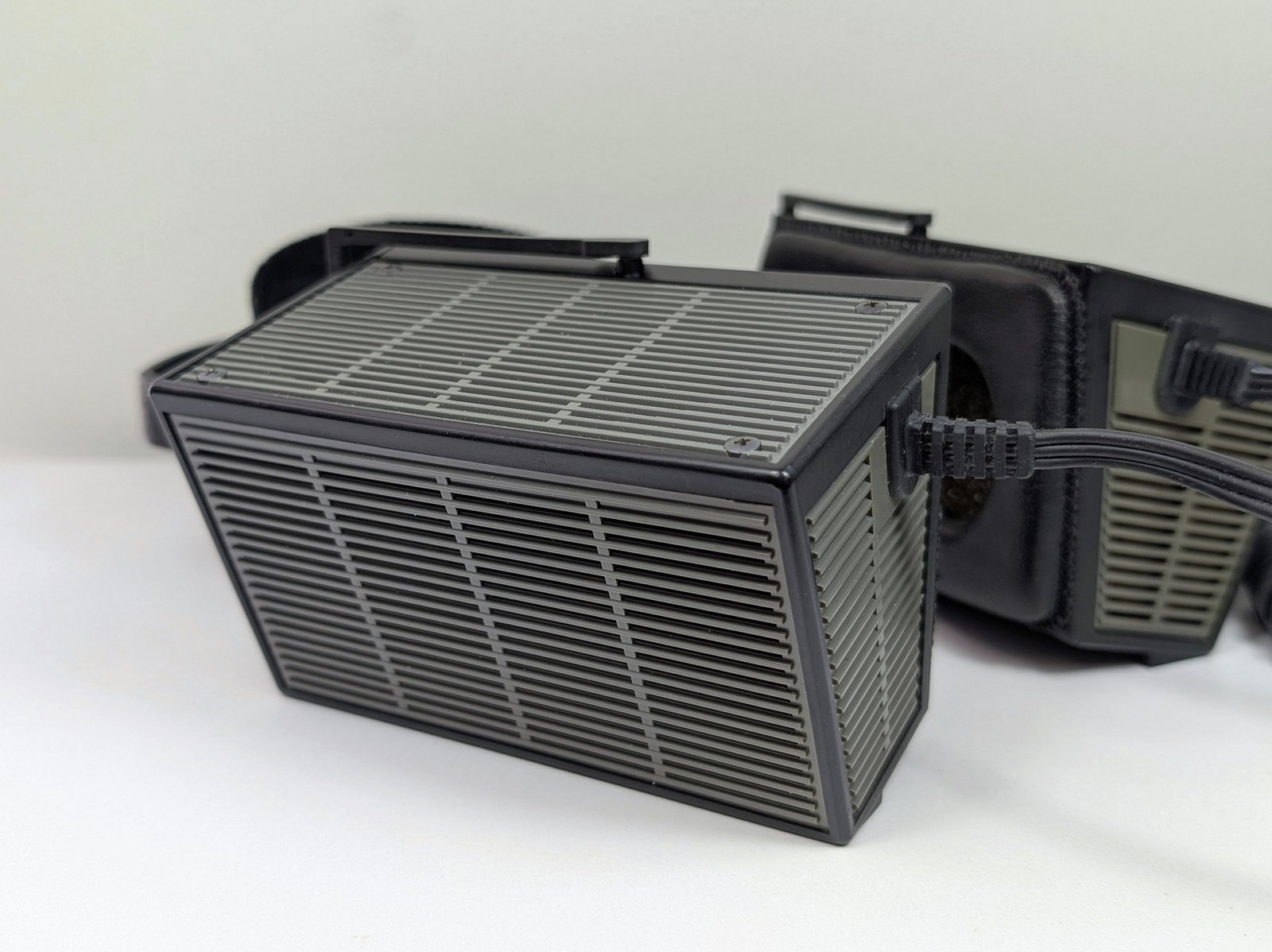
Because SR-Sigma's birdhouse-like cups are large and quite heavy (total headphone weight 460 g with cable), one would expect the structure to be compliant with requirements. In reality, however, the floppy, flexible headband with its thin forks feels almost toy-like, and I don't believe it was less flimsy even when new. There is no real harm in this, except from the perspective of fit stability: the cups rest on the ears so lightly that the headphones would fall off the head with even a slight movement. Surprisingly, the plastic parts in my headphones have still remained completely intact for over 45 years, and the height adjustment also works as designed. In newer STAX models, the head pad is floppier, whereas in SR-Sigma, the edge reinforcements keep it still firm – unless the previous owner has changed the pad to a new one.
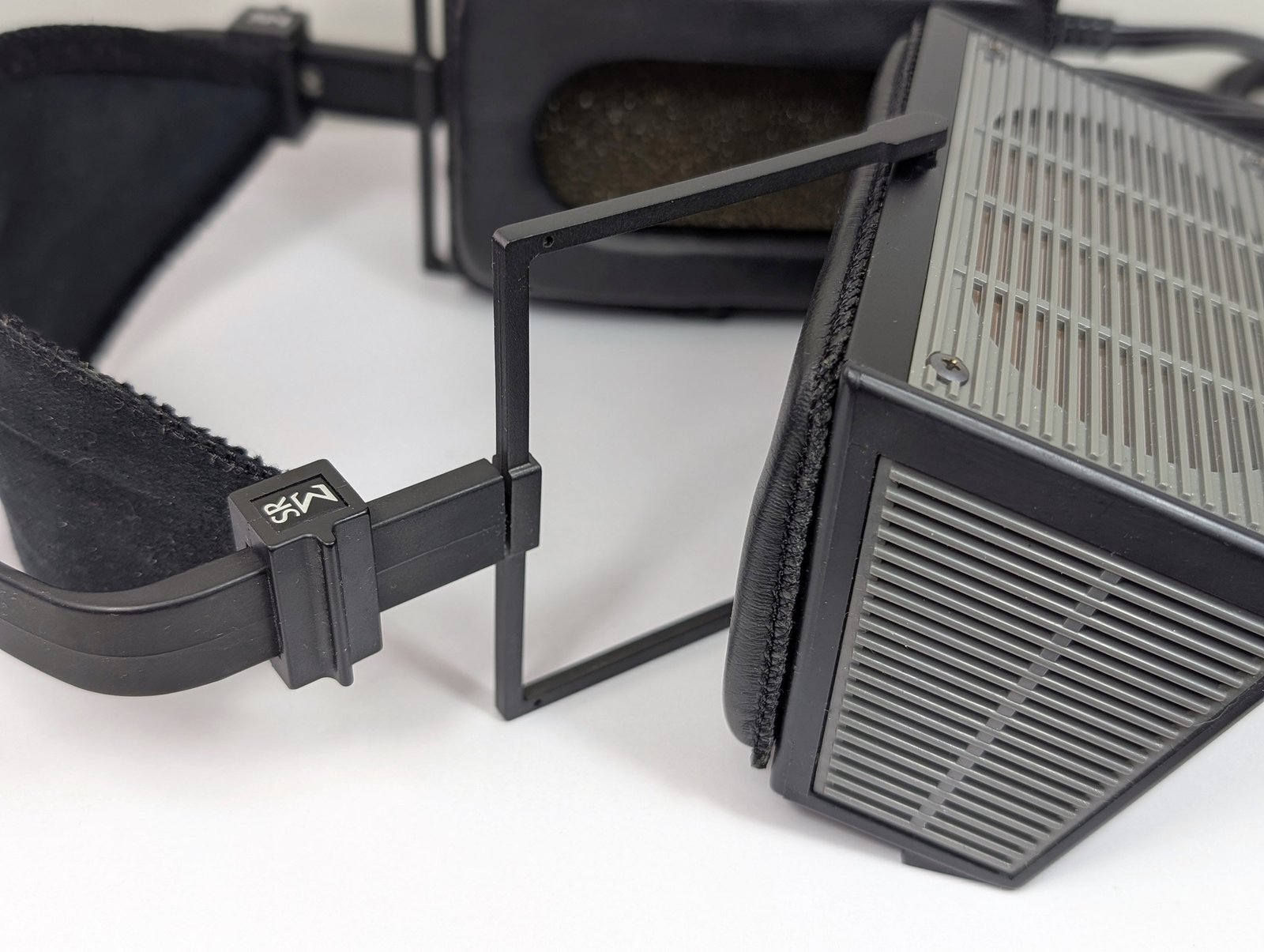
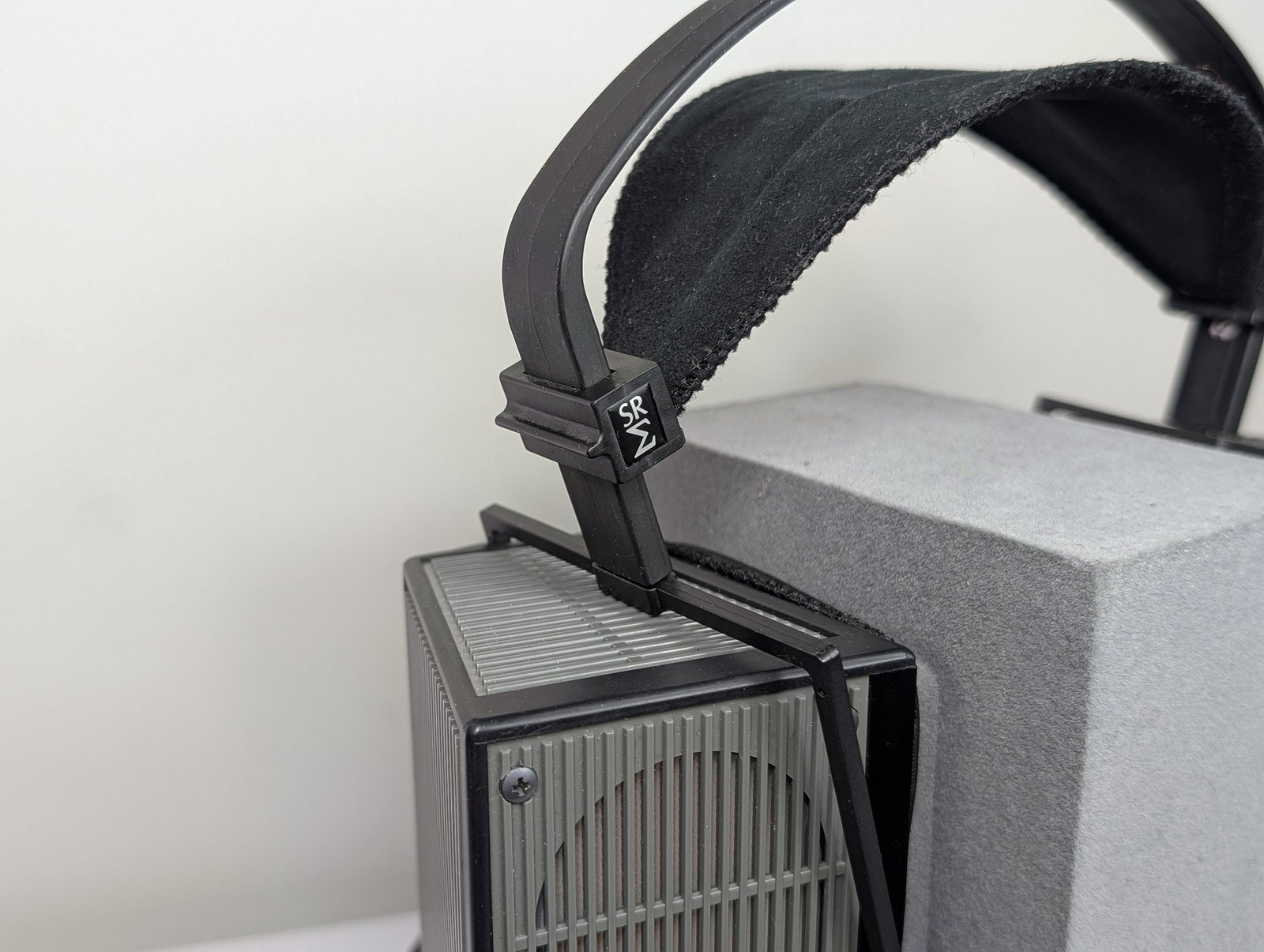
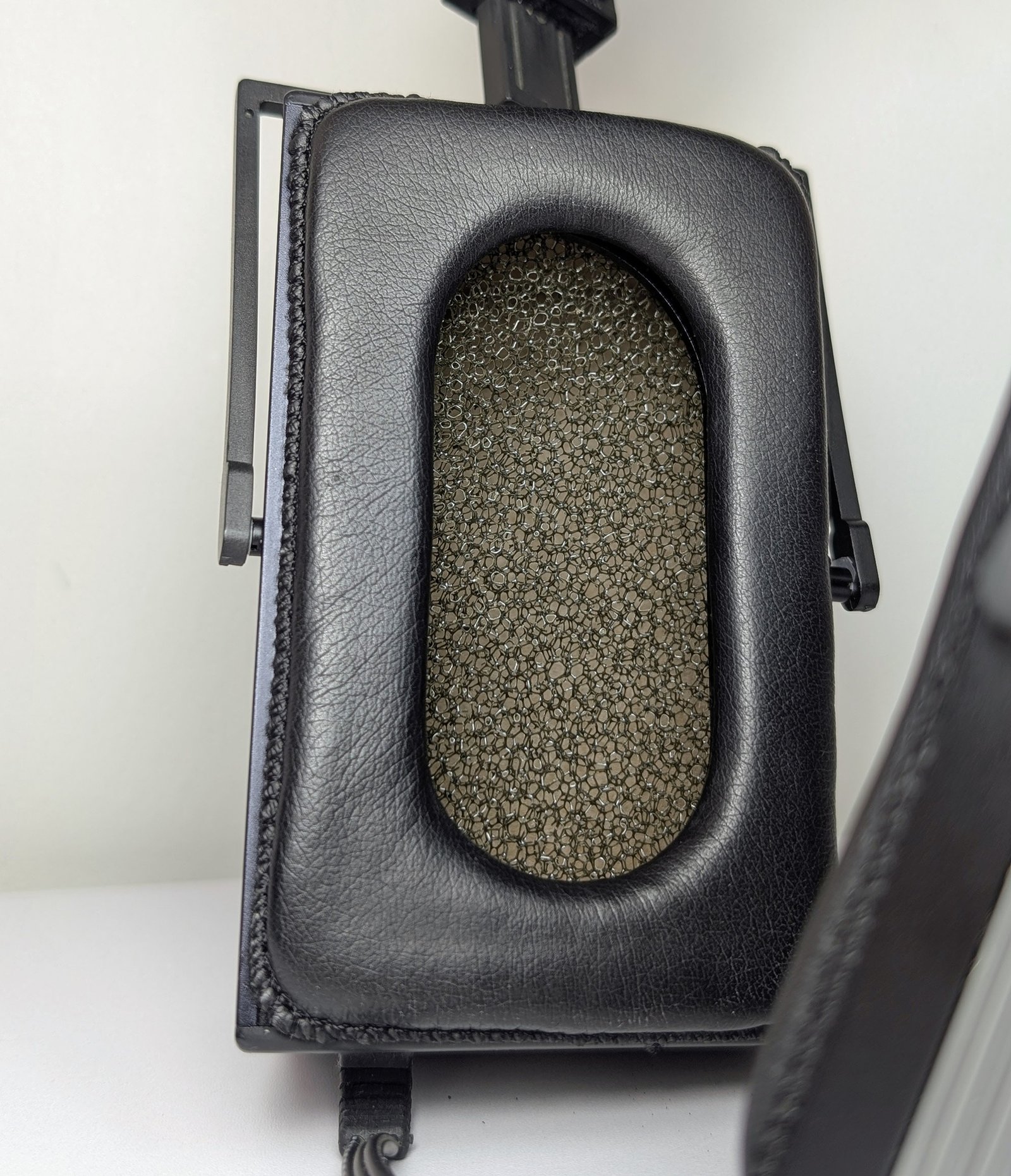
In terms of usability ergonomics, the headphones are basically good, but the large size and wobbly fit deduct from my points. The artificial leather-covered ear pads were probably a bit thicker when new, but they are still perfectly fine to use. Instead, the dust cover placed at the bottom of the pads is surprisingly coarse and feels quite irritating when it touches my earlobes. Perhaps this was softer in its time or just always like this. In most of the headphones I've seen, this cover has in any case crumbled or detached, so my test headphones appear to be clearly in better condition than usual.
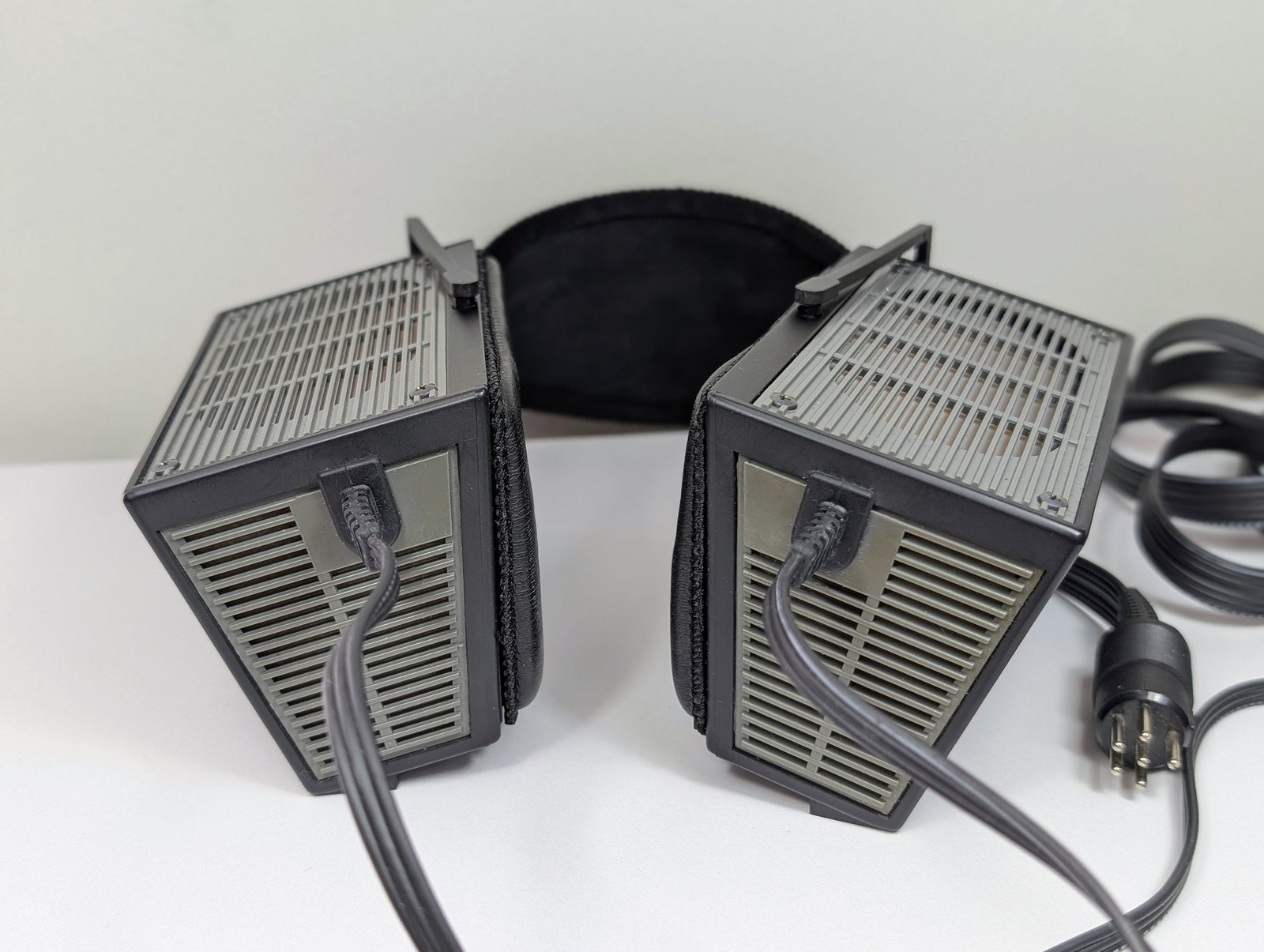
The cable in SR-Sigma is, as usual, long, fixed, and clumsy. However, I give credit to STAX for the fact that the material still feels and looks almost new. Many other cables coated with rubber or plastic would have already started to crack long ago. The cable connector is 6-pin due to the Normal Bias connection, and it cannot be physically attached to a 5-pin Pro Bias connection, even by accident. This is important, as Normal Bias operates at 230 volts, while Pro Bias raises the volts to 580.
Sound quality
Mineral wool-lined enclosures
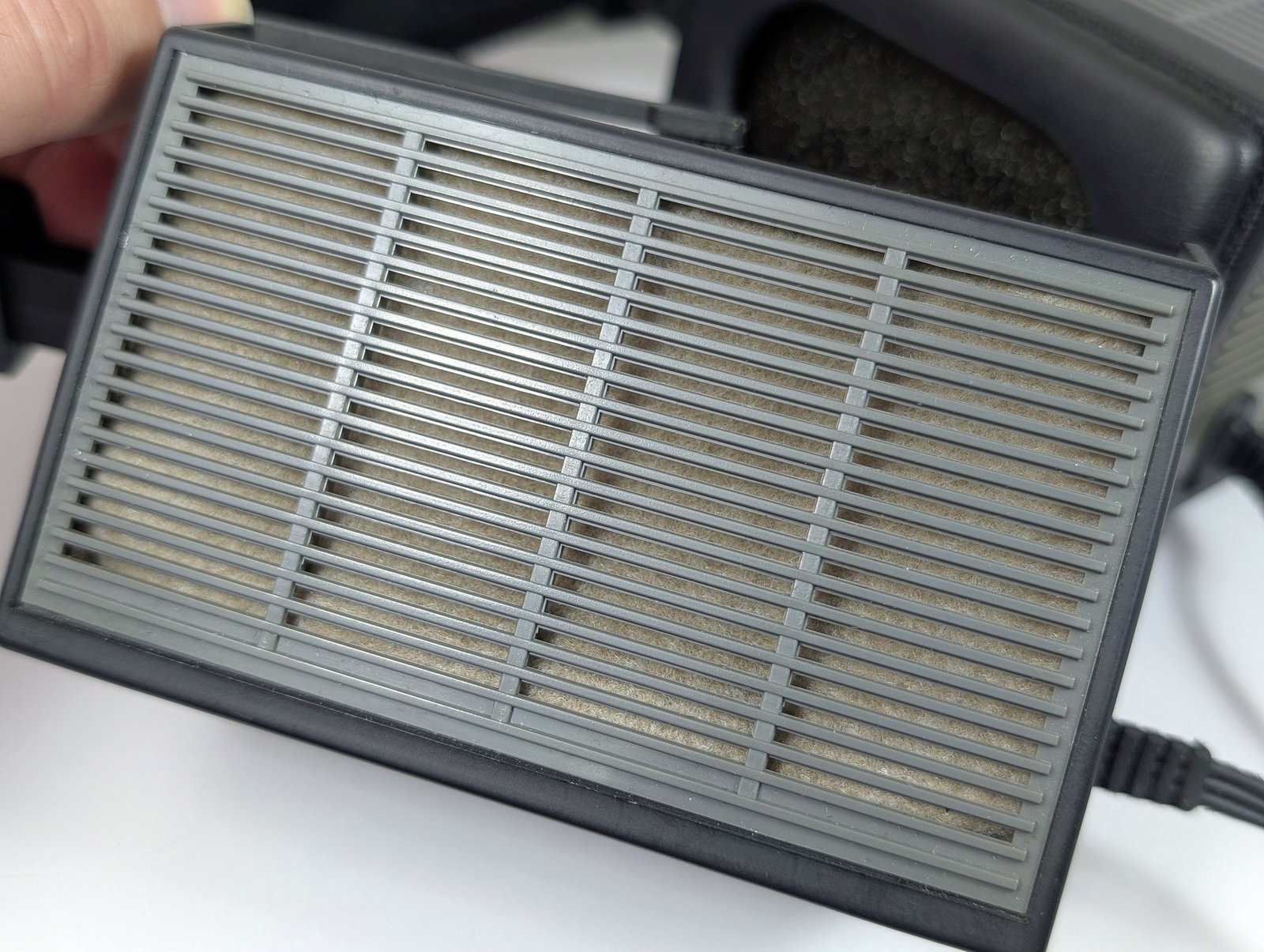
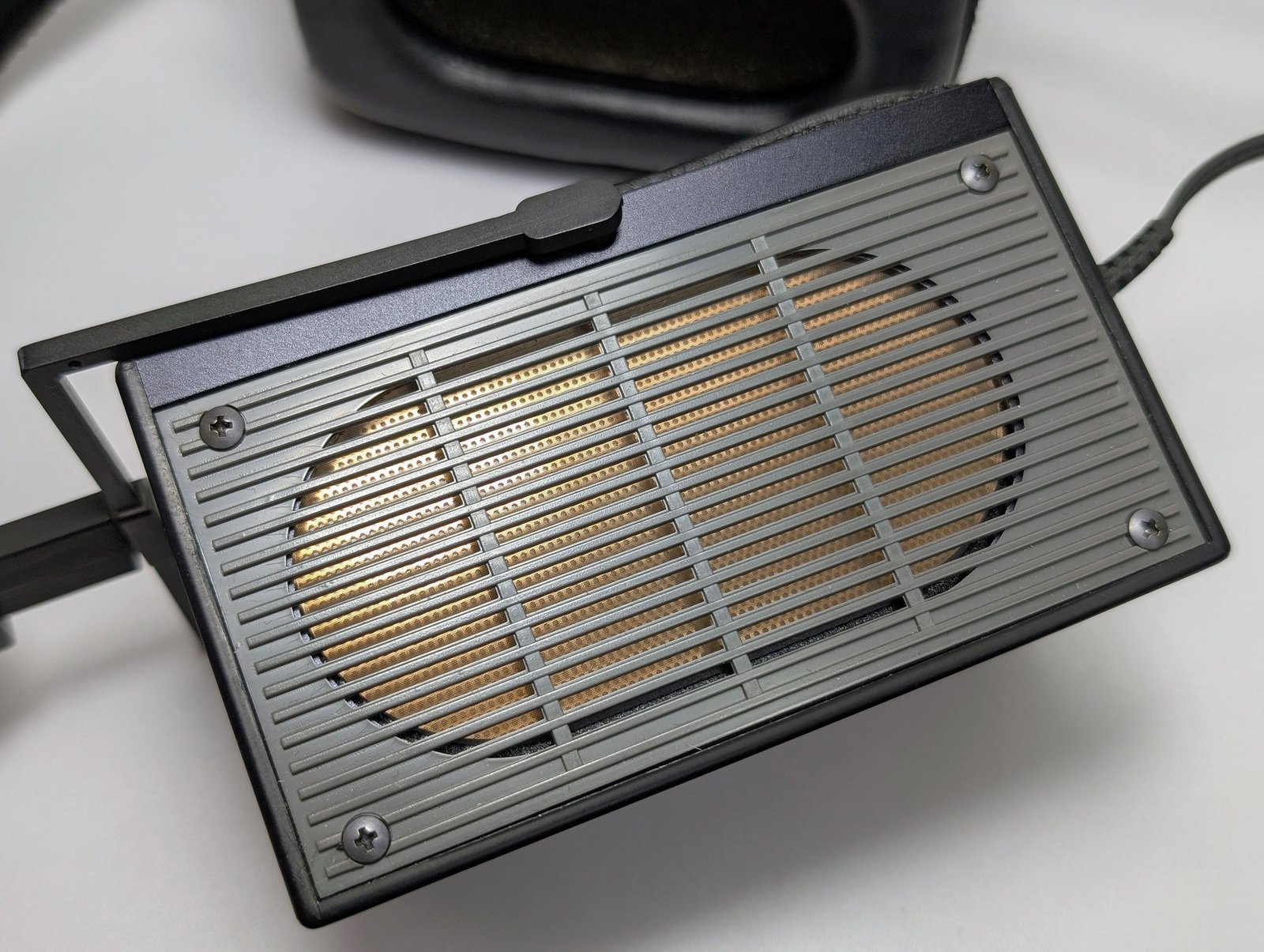
SR-Sigma is designed to sound the same as speakers in a partially reflective and damped room. For this reason, a small enclosure has been built around each ear, the walls of which are acoustically treated with mineral wool. With the drivers located at a 90-degree angle in the front part of the structure, sound waves thus arrive at the ear partly indirectly, reflecting from the walls. Perhaps STAX, however, concluded when developing the headphones that closed cups were too reflective or heavy, because SR-Sigma's cups ended up being open, with the exception of the mineral wool. With such a completely unique acoustic design, the listening experience differs considerably from traditional headphones that reproduce sound directly into the ear.
On the other hand, based on current teachings (more on these in the OAE1 review) we know that such headphones cannot achieve a soundstage resembling speakers, because both drivers operate in their own space, and our ears thus do not receive the positional cues they crave. Normally, in real life and when listening to speakers, our brains know how to place the sounds we hear around us based on, among other things, 1) which ear each sound arrives at first and 2) with what intensity each ear hears it. Without binaural recordings, a suitable crossfeed effect, or spatial audio with head tracking, the SR-Sigma therefore cannot sound like speakers, because there are limitations associated with sound perception.
However, let's not take anything away from STAX, which decided in the 1970s to try a new type of headphone structure. The SR-Sigma can be interesting in its own way, which also applies to the Grell OAE headphone series. Fundamentally, I would see open-air type headphone structures (e.g., RAAL-Requisite SR-1) coming closest to speaker listening, because the sound mixes more naturally between the left and right ears.
Headphone Measurements
The headphone frequency response measurements were performed with equipment compliant with the IEC711 standard and KB501X model silicone ears. The graphs use the Harman target curve (2018 version), optimized for this equipment, as a reference. This curve is a generalization, based on scientific research, of what kind of frequency response would sound good to most people and correspond to balanced loudspeakers in a well-acoustically treated room.
The Harman research was conducted with silicone ears that ”hear” sound slightly differently than the ear types sold today. For this reason, the target curve used by Kuulokenurkka is based on the diffuse field response according to the KB501X ears” own HRTF transfer function, to which, however, the core findings of the Harman research have been adapted using filters. In practice, the result still corresponds to the ideal frequency balance indicated by the Harman research, but as the equipment used by Kuulokenurkka would ”hear" it based on its characteristic acoustics. Thus, it is possible to make more precise observations of the headphones' frequency response between 2–20 kilohertz than when using the pure Harman 2018 curve as a reference.
More information about the measurement equipment can be found on the Headphone Measurementspage. The SR-Sigma's frequency response is also comparable with other measured headphones on Squiglink .
Frequency response:
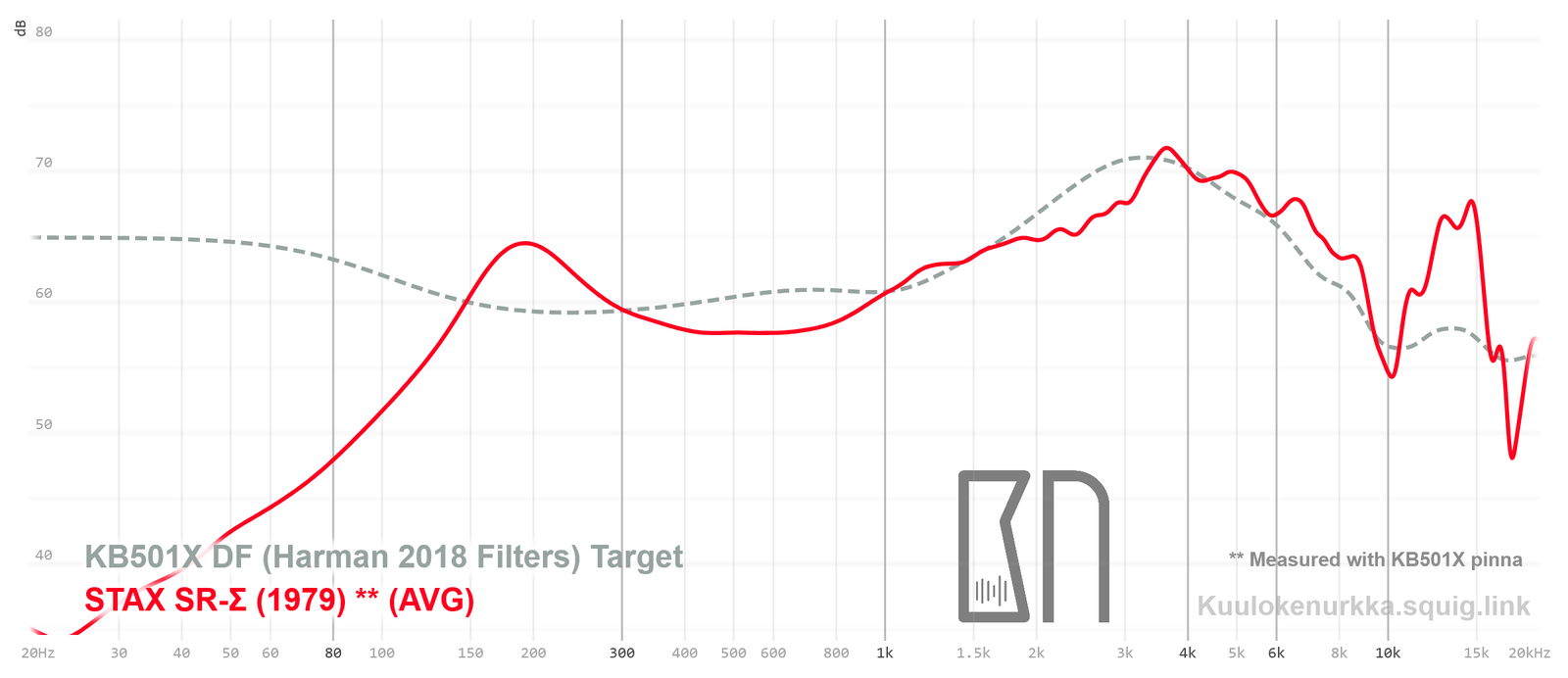
The condition of such old headphones and, consequently, their sound naturally raises small question marks, as we cannot possibly know what the frequency response was at the time of purchase. However, with the mineral wool still present in the cups, ear pads in acceptable condition, and a very good frequency balance, I would consider my test headphones to be quite representative. Taking this into account, the age and exceptional design solutions are evident in the SR-Sigma's tuning.
The headphones practically do not reproduce bass at all, unless the rising 200 Hz bump is counted as bass. Even pressing the pads more tightly against the measurement device's ears (or my own ears) does not strengthen the low frequencies, so it is reasonable to assume that pressure escapes through the mineral wool and the open walls of the cups. For most of us, listening to the SR-Sigma would be dull due to the missing bass, but the situation could be improved quite safely by equalizing up to at least 80 Hz.
Otherwise, the SR-Sigma proves to be a surprisingly orthodox STAX headphone, as it does not suffer from the 1 kHz emphasis common to the Lambda series, nor from uneven treble. However, the lower midrange between 400–800 Hz remains slightly subdued, and the highest treble plays a bit too loudly relative to the non-existent bass, meaning the presentation is not entirely balanced. The situation is not improved by the late-rising ear-gain region either. Typically, the most energetic point should be around 2.8–3 kHz, but in the SR-Sigma, the shift of attention to 4 kHz further emphasizes the high frequencies, thereby also further highlighting the thin midrange.
What about the most important aspect, the soundstage and speaker-like listening experience?
Sound observations
Listened with STAX's SRM-T1 tube amplifier.
Because the SR-Sigma lacks the resonance (this can also be called loudness) of the Lambda series from around 1 kilohertz, despite the hollowness of the lower midrange and the missing bass, I find the presentation quite natural. However, precisely because of the lightness of the sound, the headphones resemble a phone speaker and, in my opinion, unfortunately do not sound particularly enjoyable by modern standards. Perhaps in past decades, less was expected regarding bass, and a treble-heavy presentation was appreciated differently.
The SR-Sigma does try its best to reproduce bass, but it audibly emphasizes the very highest bass frequencies, which already extend halfway into the midrange. This brings warmth and richness to the reproduction, but because ”real bass” is completely missing from below, the sound becomes mostly soft and bloated. Without this upper bass hump, the midrange would also be reproduced more clearly. Now, the reproduction is unusually light, yet at the same time thick.
I find the treble a bit overemphasized, but by no means irritating or harsh. In light of this, it is difficult for me to understand how some enthusiasts have described this Normal Bias version as dark in its treble, as based on my own headphones, they are not. However, these old reviews may also reflect the expectations of past decades, as the treble in the products of contemporary competitors was certainly even brighter. By my own standards, the sound of the SR-Sigma is light, airy, and quite soft in character.
Regarding the soundstage, I somewhat understand the appeal of the headphones' structural design. The sound pleasantly appears in the ears as if from a small distance, and it doesn't feel like it's being reproduced by drivers bolted right next to the ears. With a slightly more balanced and modern tuning, such a design might even work, which is why I quickly turned to equalization. In its time, the owner of these headphones would likely have used at least some kind of bass and treble controls.
More modern sound with EQ?
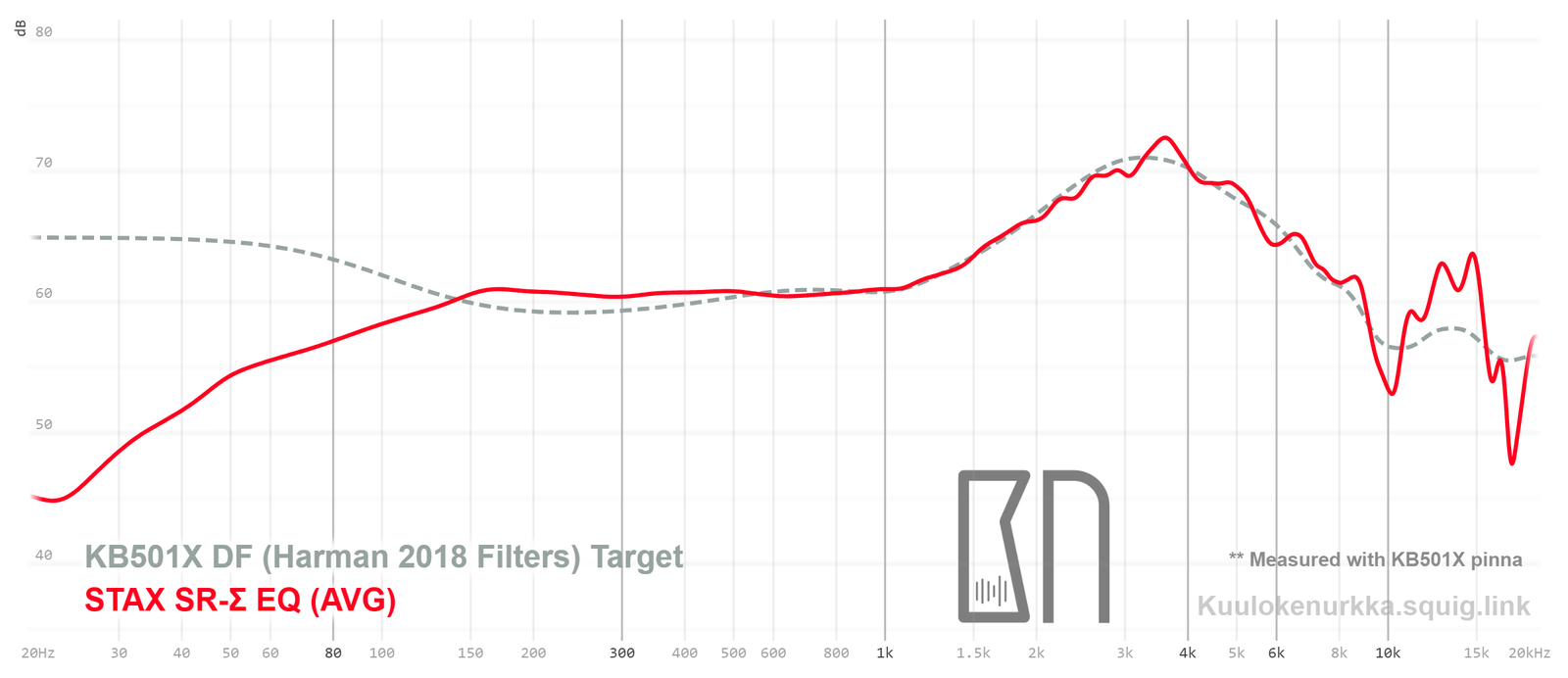
Someone might wonder why I didn't equalize more bass into the SR-Sigma, but the reason would be revealed by listening to the headphones. The distortion values of the drivers probably become an issue, because with a greater amount of bass, the sound becomes muddy throughout. The purity characteristic of electrostats disappears, and the reproduction seems to congeal in other frequency areas as well. It may well be that in reality, the bass is already reproduced a bit louder to my ears compared to my measurements. After equalization, however, I get some body to the sound, so the reproduction is not completely gutless. Calming the high frequencies also helps balance the overall presentation, even though otherwise, in my opinion, it wouldn't be at all necessary to tamper with them.
Equalized, the SR-Sigma sounds pleasantly natural and it offers a slightly different soundstage experience compared to many more traditional headphones – at least I constantly pay attention specifically to separation and space. Interestingly, placing the drivers in front of the ears does not significantly deepen the soundstage forward, but the sense of width is quite captivating. Furthermore, the acoustic structure based on partial reflection of the audio signal leads to sounds located behind the listener in the soundstage being easier to pinpoint than usual. Apparently for this very reason, some have even considered the SR-Sigma good gaming headphones, which the wobbly fit does not support in any way.
From this, perhaps we get a small confirmation that there is genuinely some kind of idea in STAX's acoustic design. In addition, we learn that Sennheiser HD 600 style balanced tuning simply works in any headphones, even though nowadays we often expect to hear stronger bass. The SR-Sigma was a product of its time, so nowadays it should not be treated too critically. The opportunity to listen to such a rarity nearly 50 years after its release is, after all, a wonderful moment for a headphone enthusiast.
Summary
Without STAX's willingness to experiment, a special headphone like the SR-Sigma would not exist. This is already an achievement in itself, although it certainly says something that no other manufacturer has since copied the same idea into their products. Overall, I don't fully endorse the benefits of the SR-Sigma's acoustic design myself, as they remain partially unrealized in light of the frequency response. On the other hand, we cannot be sure how the headphones sounded when they were new, so it is difficult to draw final conclusions. In any case, the captivating soundstage in the SR-Sigma is different from any other headphone model I have heard. In its time, using tone controls (bass and treble) with headphones was also not at all unusual, so frequency equalization should not be avoided even today.
For a headphone enthusiast, the SR-Sigma holds immense collectible value, and with a few minor fixes, it sounds quite decent — especially if the bass can be brought to life. Nowadays, using older STAX models is limited by the legacy Normal Bias voltage standard, which means the headphones require a matching amplifier from their own era. Fortunately, these vintage devices pop up fairly regularly on the used market, and they are also quite easy to service compared to newer, more complex electronics. As such, you could still build a fully functional retro setup around the SR-Sigma. The more advanced SR-Sigma Pro would, of course, work directly with modern amplifiers, but that particular model is rare and often commands astronomical prices. Even the older model I tested easily goes for 1,000–2,000 euros in good condition.
Structurally, the SR-Sigma, interestingly enough, doesn't feel as outdated a product as its release date would suggest. Partially, this is because STAX's Lambda series didn't offer any significant qualitative improvement for a long time, but felt just as flimsy and rickety. Yet, in the gentle handling of enthusiasts, these headphones seem to last from father to son, so it's fascinating to see if these older STAX units will eventually reach a hundred years of age. The SR-Sigma is already halfway through its journey.
Pros and cons:
+ Interesting soundstage (with minor reservations)
+ Completely unique acoustic design
+ The flimsy construction has withstood time surprisingly well
+ Collector's value
-/+ Leaks loud sound outwards, but thanks to this, the headphones can be utilized as desktop speakers
– Lacking bass
– Flimsy headband construction
– Unstable fit
– Requires an amplifier with a 230v Normal Bias connection
– Good condition headphones are difficult to find at a reasonable price nowadays
 EN
EN  FI
FI