Author: Roderick

Information:
- Price: 90€ including shipping and VAT (Aliexpress.com)
- Type: open, over-ear
- 40mm planar driver
- Impedance: 22 ohm
- Sensitivity: 94 dB / mW
- Weight: 160 g
- Cable: Detachable cable with 3.5 mm connectors
Review sample: Self-purchased product
The Chinese headphone manufacturer GoldPlanar specializes in manufacturing headphones on a custom basis for other companies and brands. GoldPlanar has manufactured at least some of Monoprice's planar headphones, and according to rumors, the Quad Era-1 would also originate from the manufacturer's factory. In the past couple of years, GoldPlanar has also started releasing headphones under its own brand. Although there are not yet many headphone models, the selection includes a versatile range of headphones, such as the GL850 implemented with an AMT driver, the GL1200 based on ribbon technology, and the company's most famous headphone, the GL2000, which is a traditional planar headphone.
The GL400, released in 2020, on the other hand, has received little attention. The GL400, costing around 90 euros, is reportedly the most affordable planar headphone on the market, and there is also a closed-back version available at the same price.
Structure and comfort
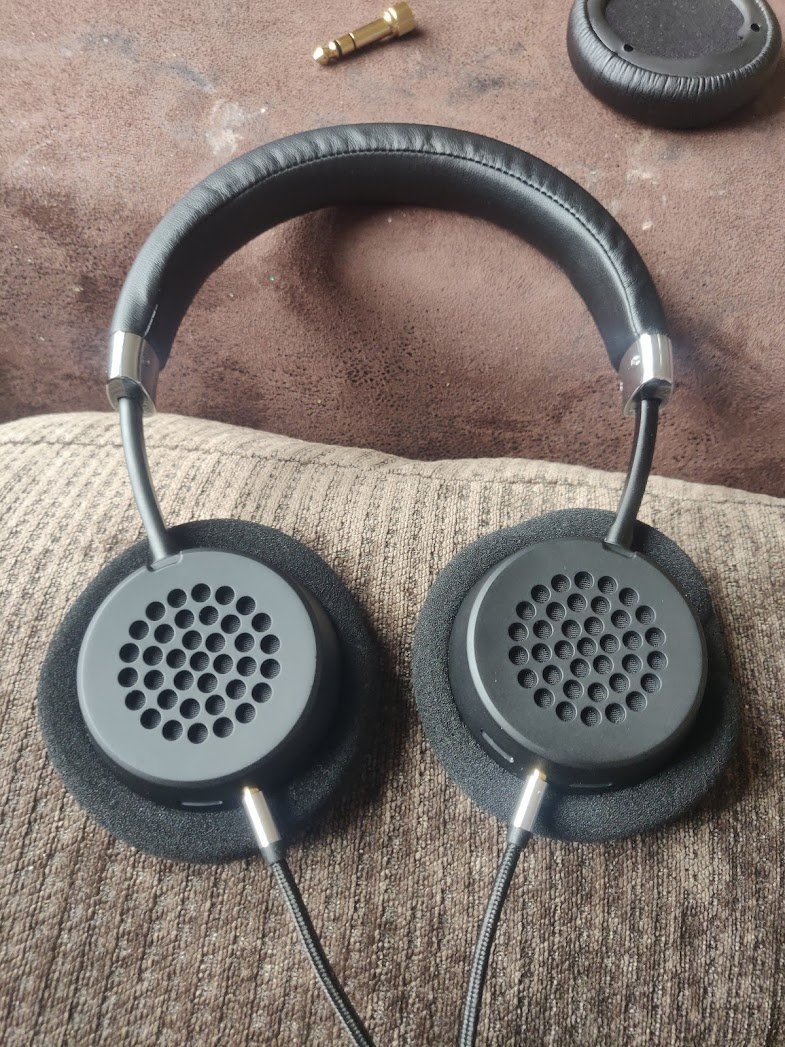
The headphones are delivered in a standard padded cardboard box. No special accessories are included, which is completely understandable considering the price of the headphones. The first impression of the headphones is promising, as they feel sturdy in hand, and the materials used seem decent. Detachable cables are also a positive surprise, as they are not a given in headphones costing less than 100 euros.
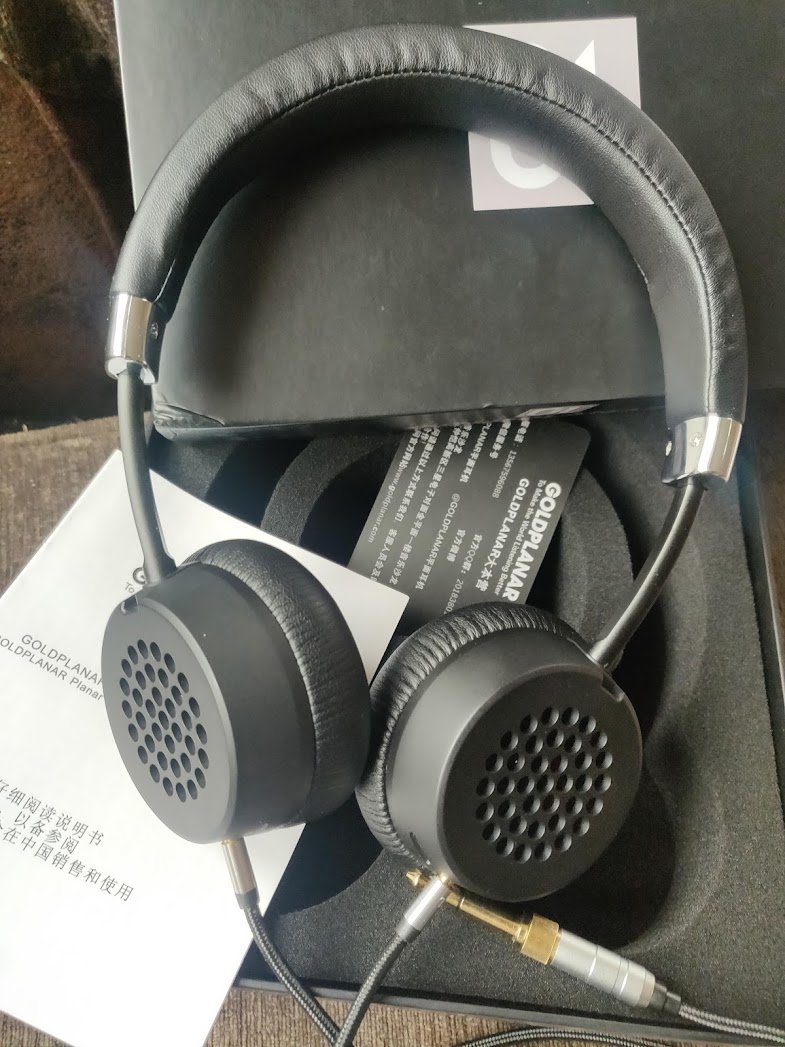
However, the initial enthusiasm quickly fades when the headphones are placed on the head for the first time – they strongly press against the upper edge of the earlobes. This is because the headphone cups do not rotate or move at all to adapt to the shape of the head. For a larger head, the GL400 might fit somewhat better, as the natural curvature of the headband guides the cups to a better angle, provided the headphones are adjusted to their extreme position.

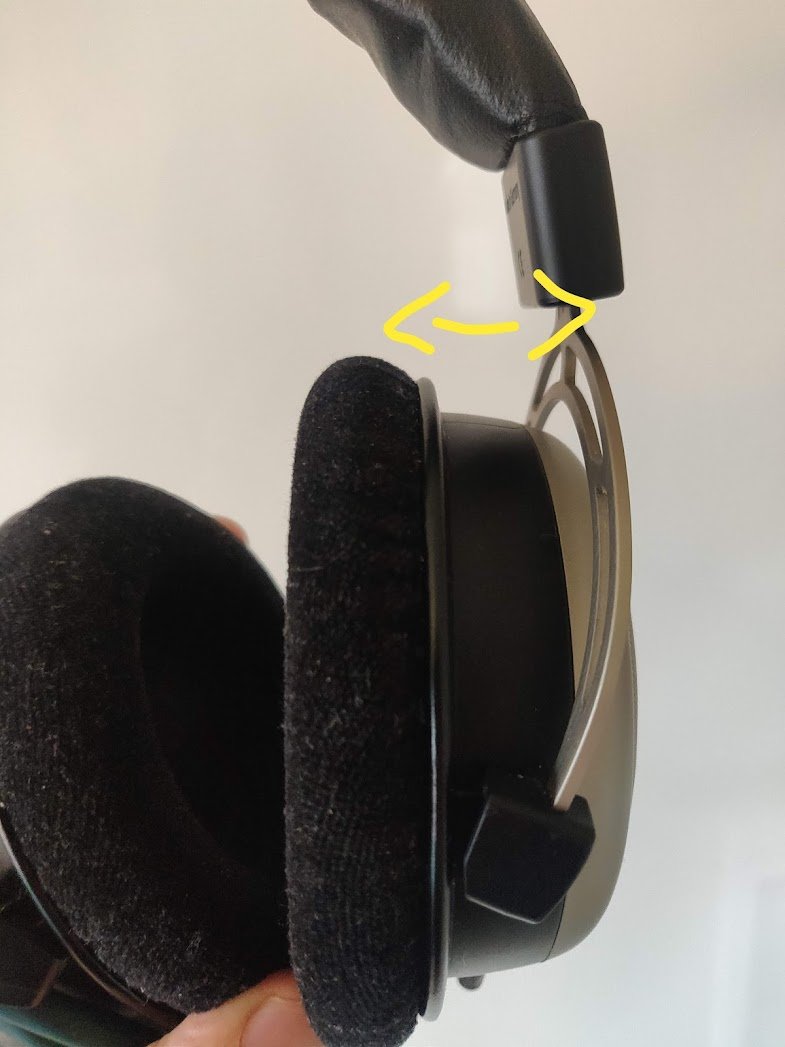
The lack of pivot movement in the cups is an amateurish design flaw, and no manufacturer with a basic understanding of headphone production would design their headphones this way. GoldPlanar has certainly understood this, but little attention has been paid to ergonomics. This absurd design reminds me of what I recently reviewed. Flare Audio Reference R1.
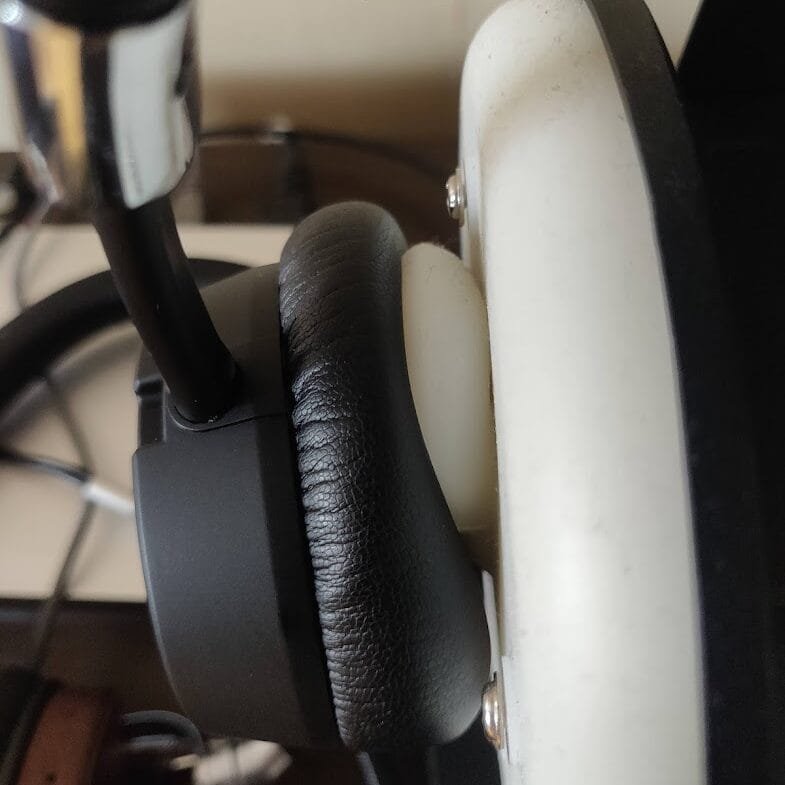
The headphone ear pads appear good and thick at first glance, but in reality, they are also quite uncomfortable because their padded part is actually only about half of what it would seem from the outside.
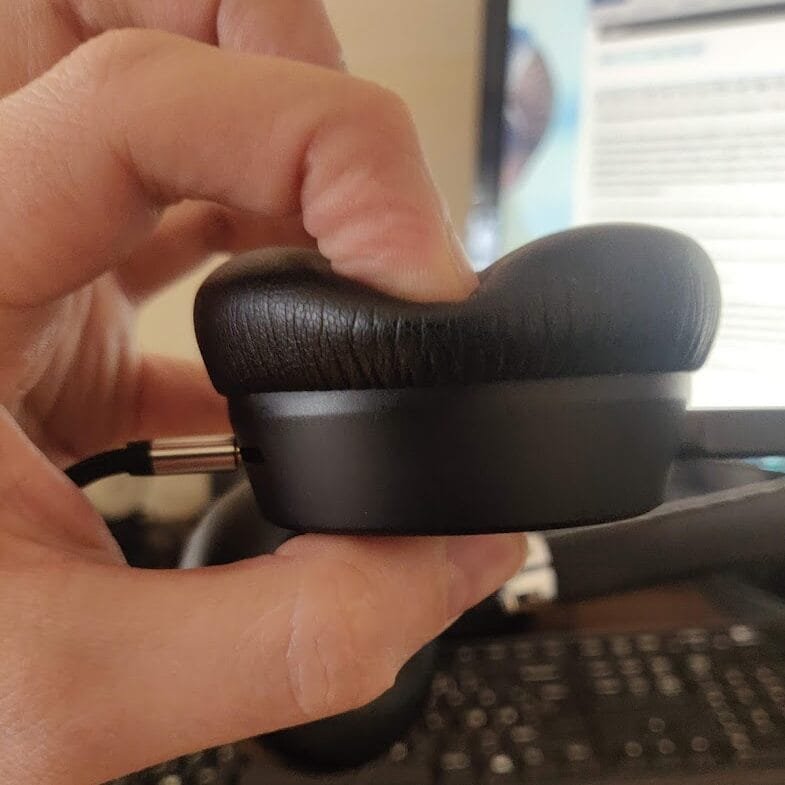
Fortunately, replacing the poor earpads is quite easy. The earpads attach to the cups with a removable ring, around which many other small earpads can be fitted. I did make the headphones more comfortable with different earpads, but I was not completely satisfied with any of the ones I tested. The GoldPlanar GL400 is definitely one of the most uncomfortable headphones I have ever tested.
Sound quality
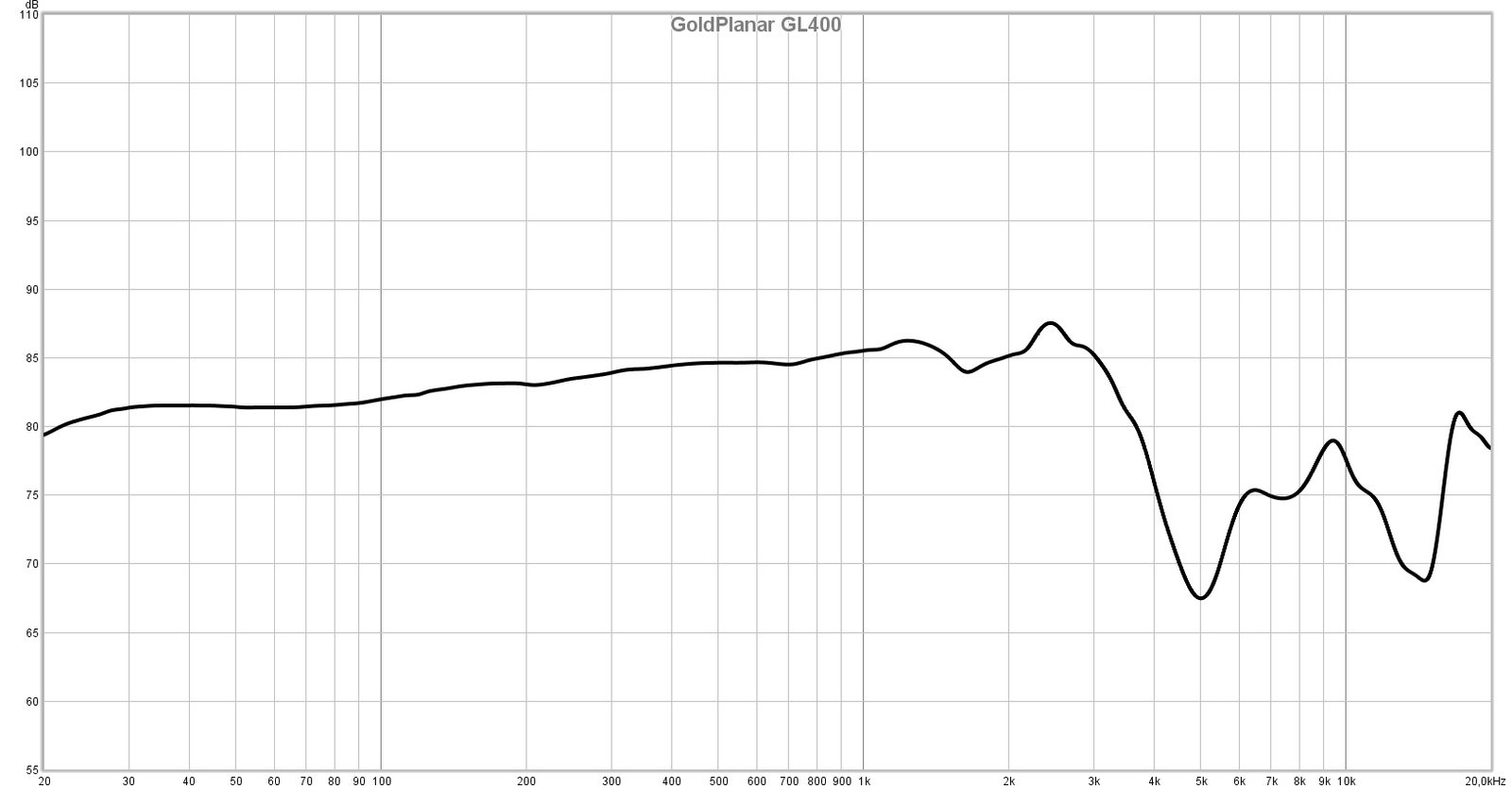
The measured frequency response of the headphones, in the case of the GL400, is better than how it sounds on the ears. I had to tape the headphones to the measurement device to get sufficient pressure. On my own head, the bottom edge of the earpads rests in the air, because all the pressure is on the top edge of the ear. Due to this, the headphones do not actually reproduce much bass at all. When measured, the bass reproduction of the headphones, however, is excellent in quantity, but this is only achieved by artificially ensuring sufficient seal.
If the GL400 played a few decibels more subdued between 1–3 kHz, the reproduction would be truly balanced from the bass to almost the highest parts of the midrange. Unfortunately, the headphones reproduce almost nothing after 3 kHz. This has not been achieved with a ”fake” measurement result, but in my opinion, the GL400 sounds exactly like that. The sound of the headphones is loudness-like and dark. The soundstage is small, and hardly any details can be discerned from the music due to the blaring midrange.
If the cups tilted correctly and the headphones had better earpads, the sound might also become more pleasant. The GL400's sound would have potential for much better, as there are no significant peaks or dips in the frequency response. As they are, however, the headphones are unfortunately almost unlistenable.
Summary
Despite promising starting points, the GoldPlanar GL400 does not impress with its comfort or sound. If properly implemented, the headphones could very well have been the best in their price range. With a budget of 90 euros, many better headphones are available, such as the Philips SHP9500 or Takstar Pro82. In terms of sound quality, I believe the GL400 falls below the 30-euro Koss PortaPro, but due to the miserable comfort, the GoldPlanars would not be competitive even if they cost only 20 euros.
Pros and cons:
+ Sturdy construction
+ Detachable cables
+ Do not need a powerful amplifier
+/- The planar driver of the headphones seems capable, even though GoldPlanar has completely wasted its technical potential
– Really uncomfortable on the head
– Treble reproduction is non-existent
– Due to structural problems, bass reproduction remains inadequate
– Microphonic cable
 EN
EN  FI
FI