Author: Sword of Damocles
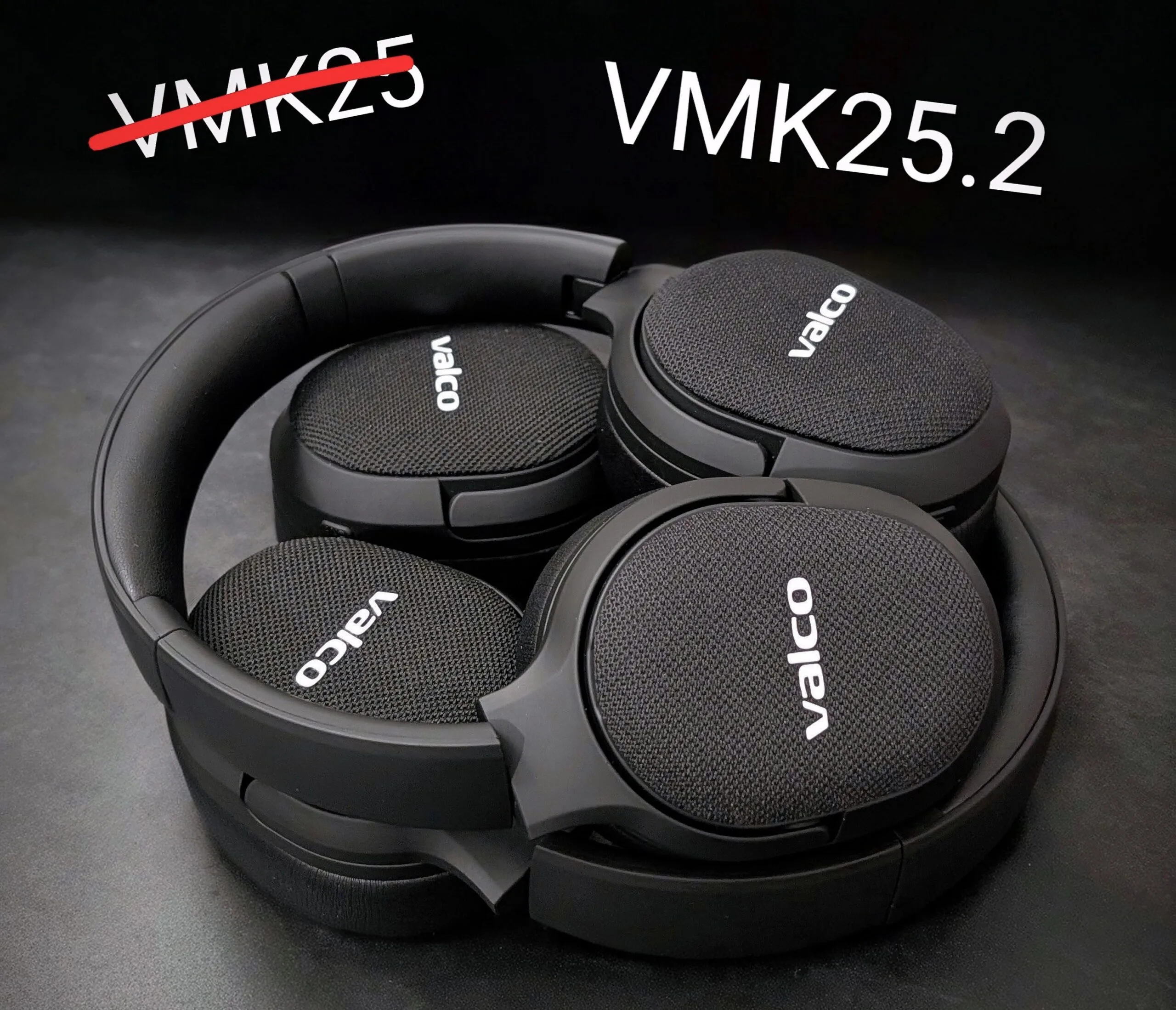
Table of Contents:
Information:
- Released: 2025
- Country of manufacture: Finland (design work) & China (assembly)
- Price: 199 €
- Colour options: Black and white
- Type: Closed, over-ear
- Dynamic 45 mm drivers
- Audio connections: Bluetooth 5.4 and 3.5 mm
- Bluetooth codecs: AptX Lossless, AptX Adaptive, AptX, LC3, AAC and SBC
- Charging port: USB-C
- Battery life (ANC ON): 55 h
- Talk time (ANC OFF): 95 h
- Charging time: 2 h
- Noise cancelling function: On / Off / Transparency mode
- Weight: 286 g
- Features: Multipoint and interchangeable decorative side plates (magnetic attachment)
- Accessories: Carrying case, USB charging cable, 3.5 mm headphone cable and airplane adapter
- Warranty: 24 months full warranty + reasonably priced repair service
Review sample: Provided by the manufacturer
Valco recently sent to Kuulokenurkka for review both the brand new VMK15-headphones and the VMK25.2, which is up for review this time (link to product page), which, as its name suggests, replaces the one released three years ago VMK25:n. According to the manufacturer, a minor version update and chipset renewal were now necessary, otherwise its more affordable VMK15 would have been technically more advanced than the flagship model. Externally, however, the VMK25.2 resembles its predecessor, so it can be distinguished from the VMK25 mainly by the type designation on the inner edge of the headband and the more deeply recessed USB-C connector. For consumers, the update is not reflected in the price tag either; instead, Valco playfully claims to have canceled inflation, allowing it to continue selling its headphones for 199 euros.
I had somewhat feared that reviewing the VMK25.2 would be boring in advance, as I assumed I would merely be repeating my observations about the VMK25 over the years. However, this was not ultimately the case, as the changes in sound quality proved to be significant. Otherwise, new things to report were, as expected, mostly found regarding Bluetooth connections. Let's also go through the remaining aspects, as Valco's headphones may not be familiar to everyone.
Packaging and accessories

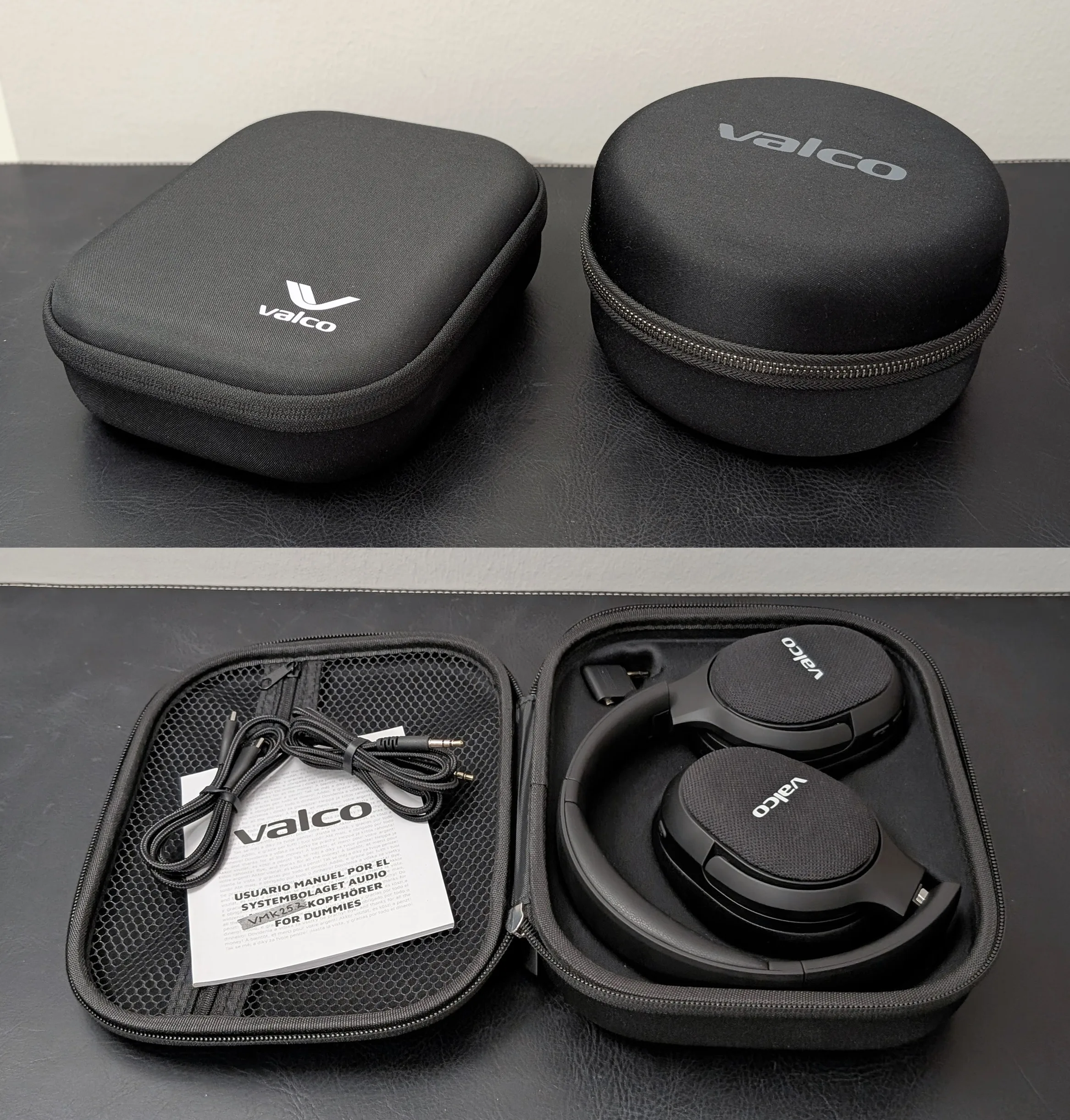
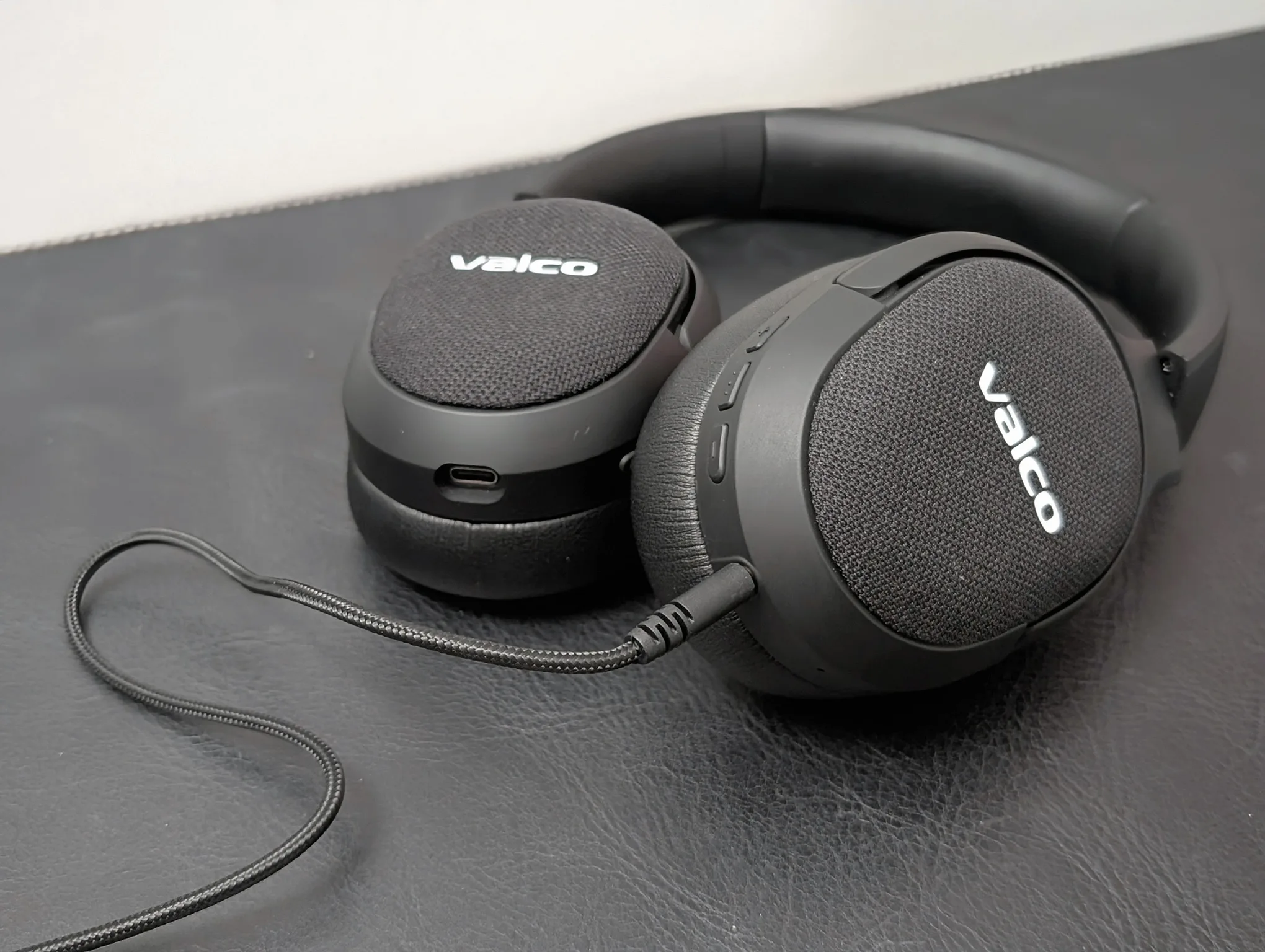
The VMK25.2 arrives in a new stylish cardboard package, and even the flat-ish carrying case included in the equipment is more practical than the thick chunk offered at the time of the VMK25's release. The buyer also receives a humorously spiced user manual and a pair of high-quality fabric-covered cables. Of these, the USB cable is suitable for charging the headphones and the 3.5 mm AUX cable for listening. Airplane adapters are becoming a thing of the past, but Valco still includes one in its product packaging. Thus, there is no complaint about the comprehensiveness of the equipment.
Build and comfort

In my opinion, the VMK25 was structurally a good 200-euro headphone, so the same statement applies to its successor. Weighing just under 300 grams, the VMK25.2 feels sturdy in hand despite its plastic construction, and metal has been used in just the right places, namely in the arch of the headband and the hinge joints. I haven't actually heard many stories of the VMK25 breaking, but it has proven to be a more durable headphone model than the VMK20. Therefore, I consider basing the new model on the same frame to be an entirely sensible solution. There's no need to change a proven good headphone, at least not just for its appearance.
Besides, the magnetically attached side panels of the cups still allow for appearance customization, as the fabric-surfaced standard panels could be swapped for different colors using Valco's selection of over 10 skin options (pair price €29.90). Alternatively, wooden or even 3D-printed dragon-patterned sides could be purchased from partners, making the VMK25.2 a pleasantly personalized life companion compared to its understated starting point.
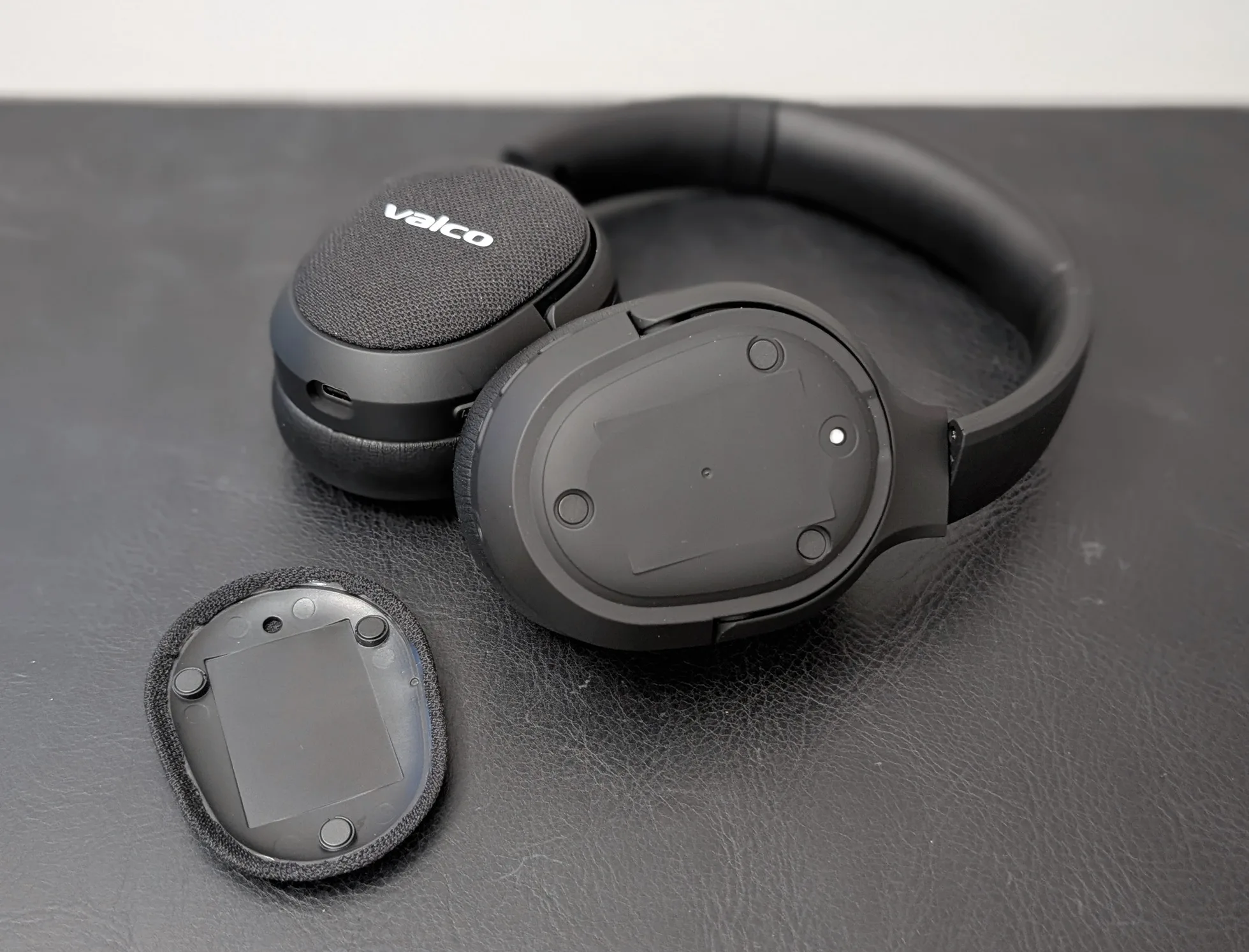
The headphones are currently sold in both black and white, and their plastic parts have a soft-touch coating that offers a pleasant tactile feel but is quite prone to scratching. Especially the black headphone version can look shabby after a year or two of use, but then again, black plastic has traditionally not been an easy material for other manufacturers either. So let's not be too critical.
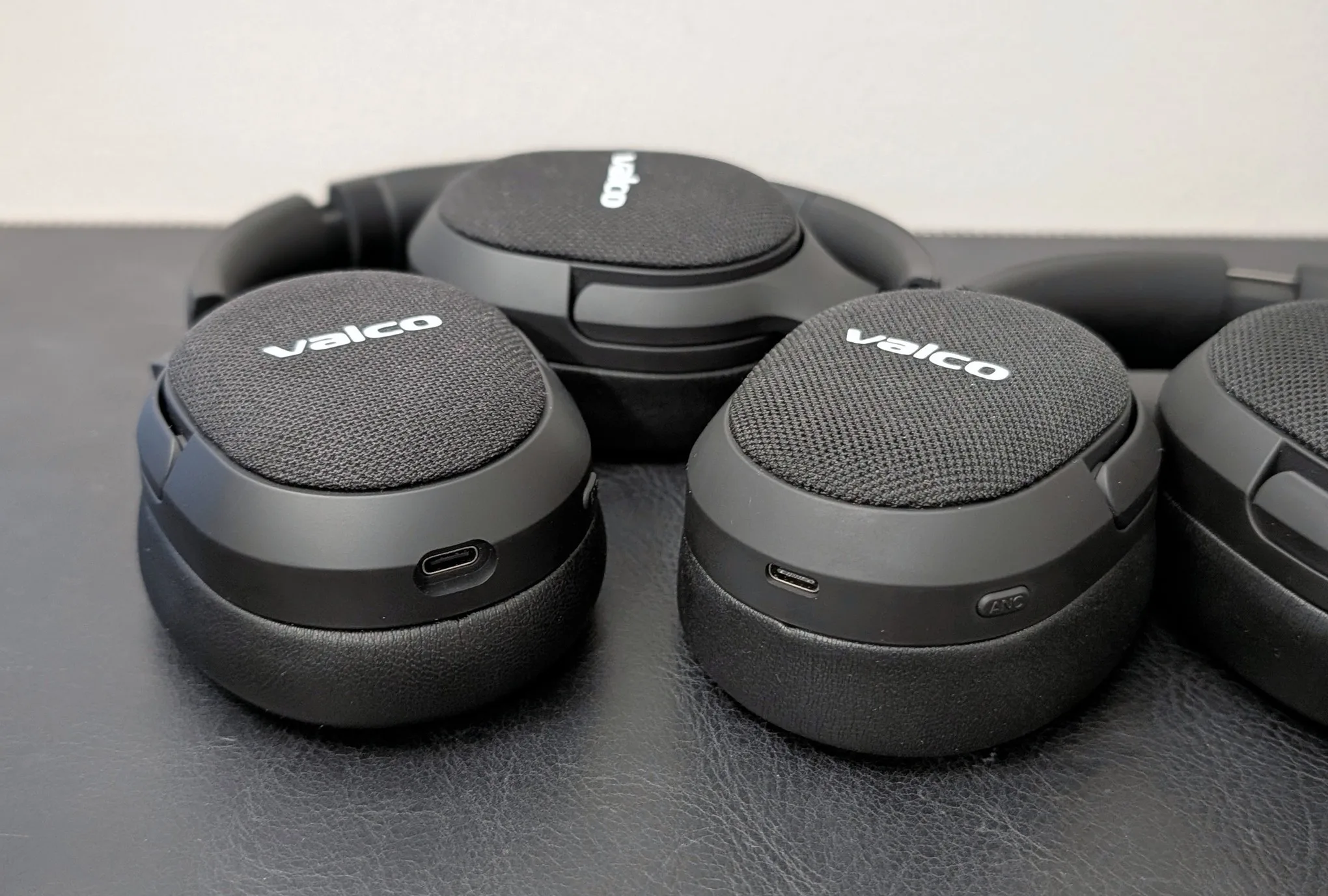
In terms of comfort, the VMK25.2 definitely belongs to the top quarter of noise-canceling headphones by my standards. It sits evenly on my head without creating excessive pressure on the crown or squeezing too much. My ears also fit quite well inside (opening size approximately 57.5 x 38 x 2 cm). On the other hand, the luxurious softness of Bose QuietComfort style is unfortunately not available, as Valco's ear pads are quite firm in their memory foam, if not even slightly hard.
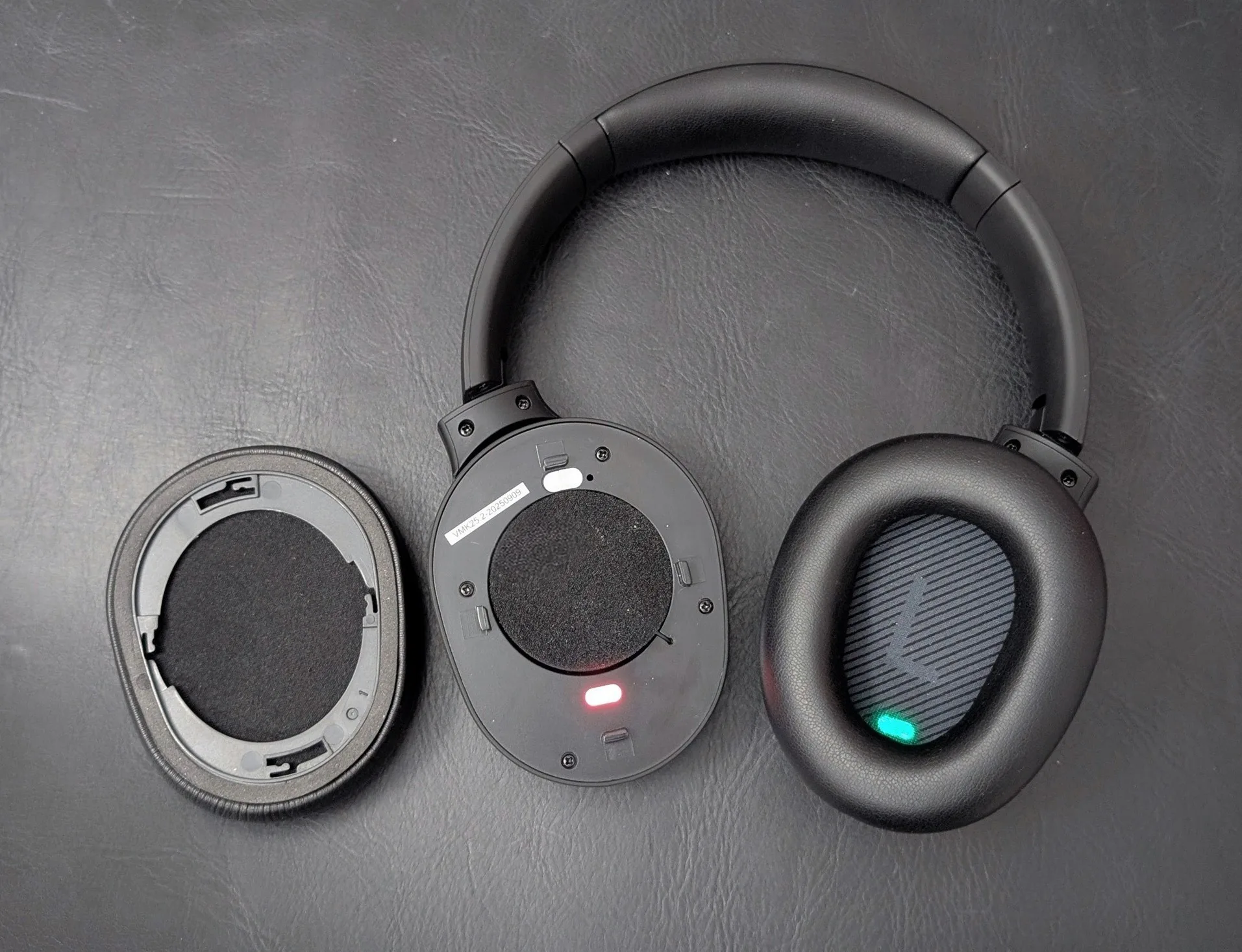
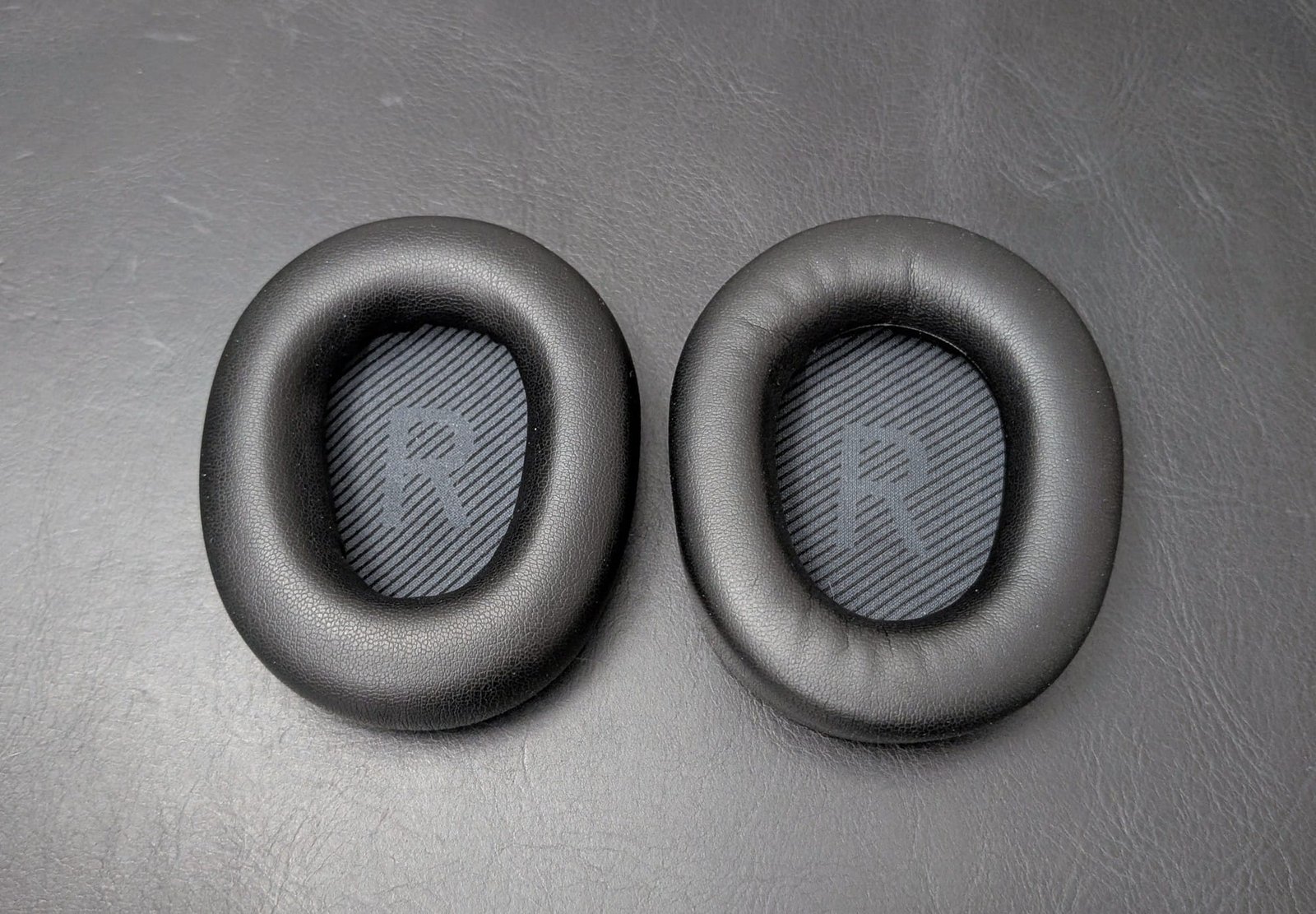
At its release, the VMK25 had similar pads, which, however, later changed to a softer and slightly more spacious model (opening size approximately 60 x 40 x 2 cm). With the VMK25.2, Valco thus returns, for one reason or another, to a harder pad variation, which I find less comfortable. Of course, this doesn't have great practical significance, and I still very gladly use the new headphone model for longer periods. It also stays securely on the head even during more vigorous activity.
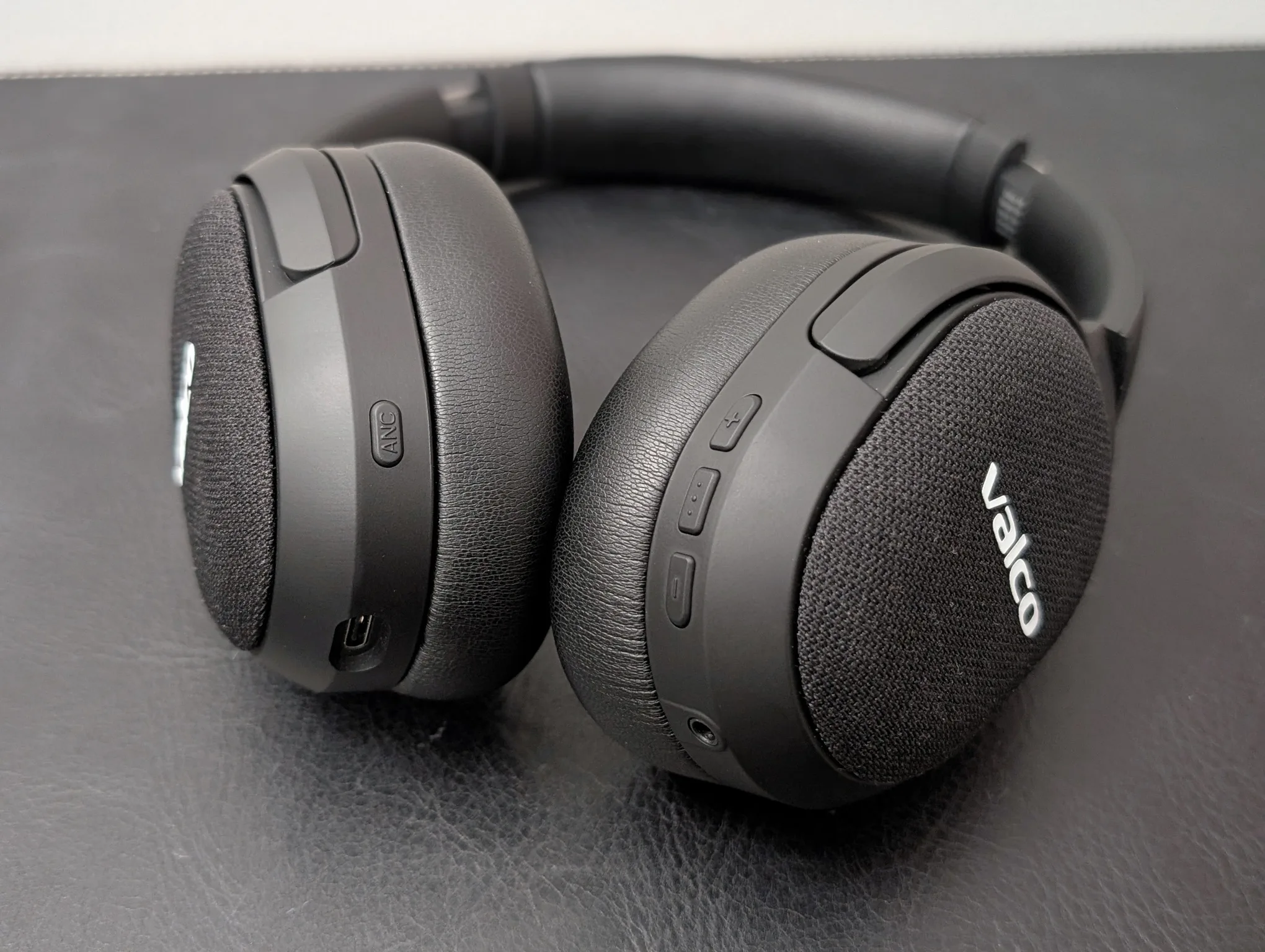
The headphones are still controlled by traditional buttons located on the rear edge of the cups, which are pleasingly quite large even for pressing with gloves on. However, I noticed that on my test headphones, the power button works less reliably than before. Simply pressing the button down and the resulting click are not enough; the power only turns on when I apply considerable force to the press. I initially thought my headphones were broken because I couldn't turn them on despite several attempts. The noise-cancelling button also only reacts every other press, unless extra force is applied to it. Hopefully, my headphones are just an isolated case, and there isn't a wider manufacturing defect in the buttons.
Since neither of the two VMK15 test units sent by Valco was perfect (the first had channel balance issues and the second had the manufacturer's name upside down), I received three slightly faulty headphones in a row. This, of course, pleasingly indicates that the manufacturer does not select better-than-average headphones to send to reviewers, but quality control could certainly be more precise than it currently is. I kindly urge Valco to pay more attention to this in the future, which I'm sure they will. Nor do I doubt at all that the manufacturer would handle individual problem cases with full integrity, as they have done so far.
Newer technology
As Bluetooth technology has evolved in three years, the VMK25 was at risk of being technically outpaced by the newer and more affordable VMK15. However, the VMK25.2 also updates the higher model series to support Qualcomm's latest AptX codecs and Bluetooth LE (LC3 codec). Both new models are also compatible with Valco's slowly developing mobile application, so they may gain some new features in the future. However, a specific release date for the app is not promised, and for now, the user experience remains very straightforward, as adjustment options and all kinds of additional features requiring familiarization are absent. The Multipoint feature is, of course, available and works as promised.
Based on its product information, the VMK25.2 should also support Qualcomm Snapdragon Sound technology and the lossless AptX Lossless codec. However, I was unable to get the headphones to work in this mode with the Sennheiser BTD 700 Bluetooth transmitter, but at best with the AptX Adaptive codec. This could be some kind of compatibility issue, or something might have gone wrong in the codec's configuration. Bluetooth LE and the LC3 codec, on the other hand, work as promised, so the VMK25.2 and VMK15 appear identical in terms of codec support and Bluetooth version (5.4). If the audio source does not support AptX Adaptive or LC3, the VMK25.2 operates with AptX, AAC, or SBC codecs. AptX HD has thus been dropped from the lineup. For owners of Apple devices, Valco's version update is irrelevant, as both VMK25 series models operate with the same AAC codec.
The battery life for the headphones with noise cancellation on is promised to be an excellent 55 hours, which is 5 hours more than the original VMK25. The change is largely due to the new, more power-efficient chipset. With noise cancellation off, the battery should last another 10–20 hours longer, which is also suggested by Valco's mentioned 95 hours of hands-free talk time in this mode. Charging should therefore not become a routine, as it is rarely needed. However, unlike its predecessor, the VMK25.2 no longer works without battery power; connecting the AUX headphone cable simultaneously turns on the headphones. The USB cable, on the other hand, is only for charging the battery, meaning the headphones unfortunately still do not offer USB listening capability. Operation is also not possible during charging, which some users might find annoying.
As one positive aspect of the chipset change, I noticed that the headphone volume adjusts more smoothly than the VMK25 model, especially at the lower end of the adjustment scale. Thus, the lowest possible volume is clearly lower than before, and jumps upwards occur more linearly. The VMK25.2 still plays loudly when needed, but it can also be listened to at an even quieter volume, for example, as background music during work or before falling asleep.
Active Noise Cancellation
The noise-cancelling function of the VMK25.2 is not stated to have changed compared to the VMK25, but I did notice small differences between the two. Firstly, the background hiss of the old model is stronger and more noticeable, so the VMK25.2 performs better in this regard. On the other hand, the new model does not suppress noise quite as effectively; with the VMK25, the soundscape is generally somewhat calmer. I also swapped the ear pads of the two headphone models, finding the difference to remain the same in favor of the VMK25. It seems that what happened was Bowers & Wilkins in a way that the noise-cancelling function of the newer headphone model is slightly less effective. Unless there are small differences between individual headphone units.
As a consolation, the VMK25.2 still suppresses noise quite decently for its 200-euro price. The market's best noise-cancelling headphones from Sony and Bose are certainly better, but based on my fairly large sample, most other competitors, regardless of price, are so close to Valco's product that the differences are not of great practical significance. A perfectly decent transparency mode is also still included in the headphones, and the noise-cancelling microphones are additionally better protected from wind than usual (located under the side panels). Thus, outdoor use is also possible with noise cancellation on without significant interference sounds.
Microphone sound quality
Talking works well with Valco's headphones, just like with the manufacturer's other products. I have personally found the VMK25 series to produce clear and sufficiently audible sound without overly aggressive speech-cutting algorithms. Valco also sells a separate boom microphone (”wired microphone thing”) that attaches to the 3.5-millimeter jack for its headphones, which might be useful for professional use, provided one is willing to compromise on wirelessness. Reportedly, the deeper recessed USB-C connector suggests that at some point, the manufacturer will also offer a separate microphone that attaches to this port. In this case, the recess holds the microphone more securely in place.
Headphone sound quality
Valco states that the VMK25.2”s sound quality contains the brutal truth, meaning the headphones should reveal nuances baked into the music in the studio, citing the bassist's garlic-scented breath as an example. Thus, based on marketing claims, the studio-like presentation of the original VMK25 has not been overly altered, and the reproduction should still be very detailed. This time too, Jasse ”Jazmanaut” Kesti is responsible for the sound quality tunings, and judging by their appearance, the same 45-millimeter composite drivers produce the sound as before.
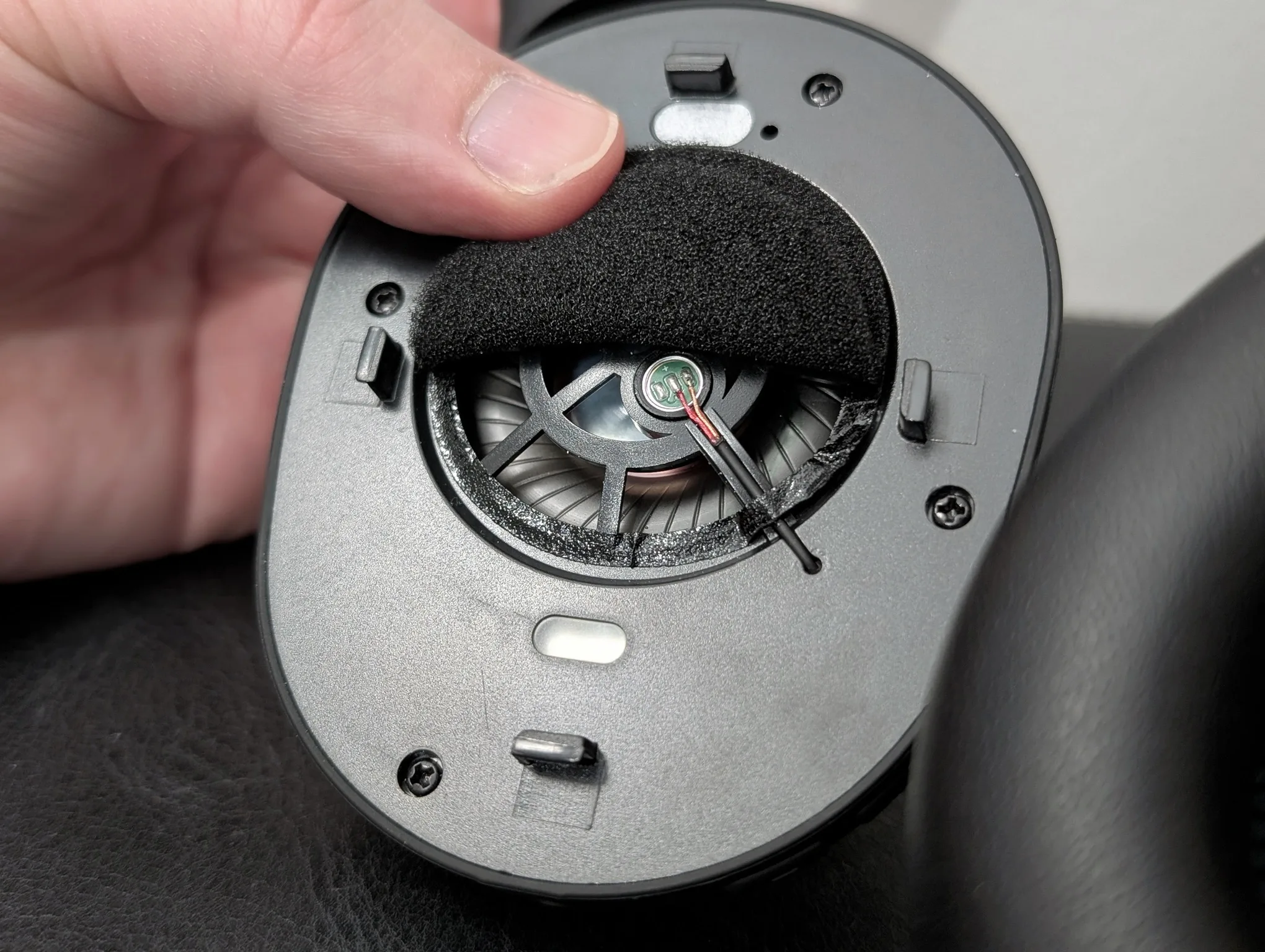
VMK25.2 is an active headphone in principle, meaning it only works when powered on. In addition to a Bluetooth connection, listening is possible with a headphone cable, but unfortunately still not with a USB cable. The frequency response, on the other hand, is entirely different depending on whether the headphones are used with noise cancellation on or off.
Measurements
Our frequency response measurements have been made with a clone IEC-60318-4 coupler and KB501X pinnae. The Harman target curve from 2018 is used as a reference point and generalization of the headphone response that would sound good to most people. For more information on the measurements and their accuracy, see Headphone Measurements-page. The frequency response of VMK25.2 is also comparable with other measured headphone models Squiglink .
Frequency Response (ANC ON vs. ANC OFF):
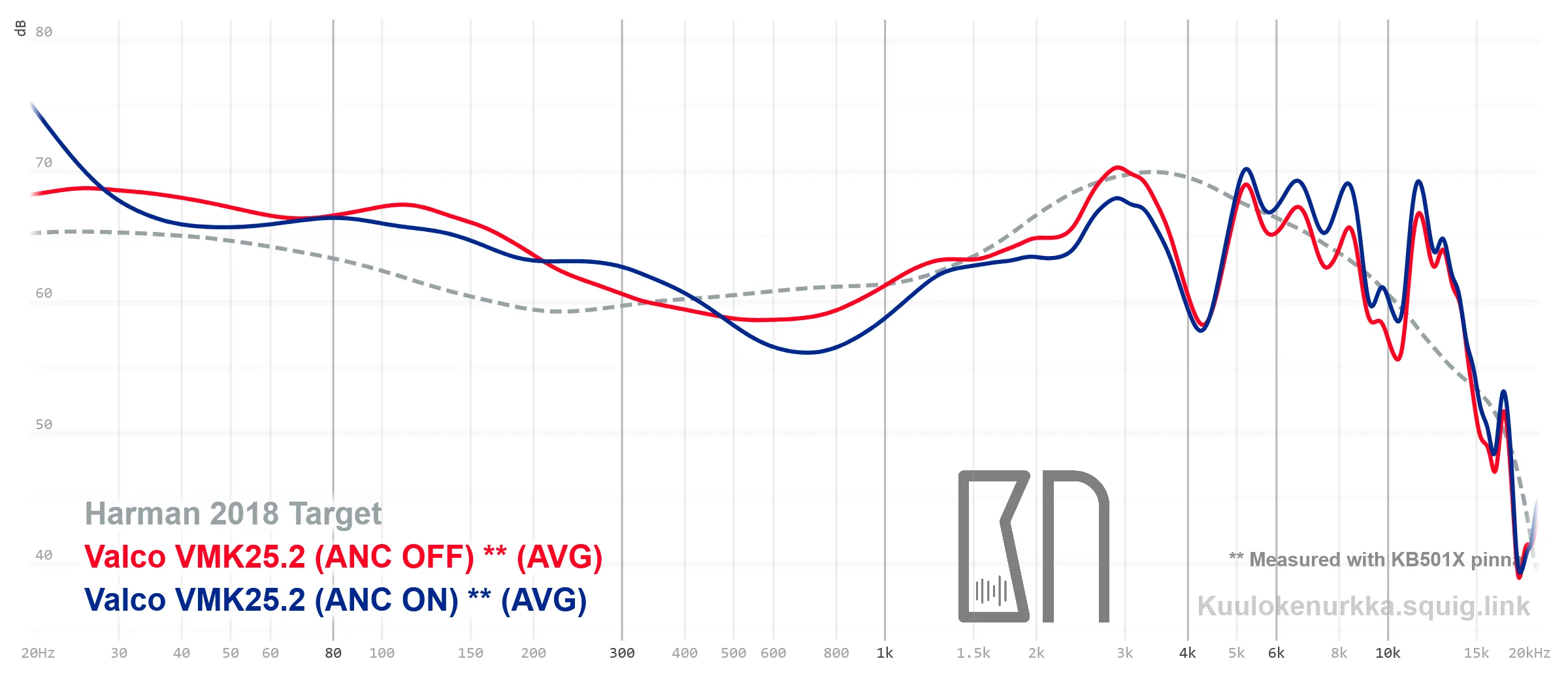
Although Harman's target response is not an absolute guarantee of good sound quality, most successful and universally acclaimed headphones follow it or a similar target, at least in broad strokes. However, the VMK25.2 deviates quite significantly from this baseline in every frequency range, especially if listened to with the noise cancellation function on. In this case, the headphones reproduce bass prominently up to 400 hertz, the midrange somewhat unevenly and attenuated between 500–3000 hertz, and the treble remarkably energetically from 5 kilohertz onwards. Information reproduced in the vicinity of 4 kilohertz, on the other hand, remains very much in the background due to the deep dip visible in the frequency response.
Without noise cancellation, the sound significantly evens out to a more normal state, with the exception of elevated bass (especially 100–200 Hz) and the 4 kilohertz dip. In this way, however, the midrange is reproduced quite linearly and in line with the energy level expected by the human ear. The treble also settles at a level considered more appropriate relative to other frequency ranges. Objectively evaluated, the headphones are therefore better in sound quality and more natural when listened to without noise cancellation. If, on the other hand, noise cancellation is activated, the presentation style becomes V-shaped and, in my assumption, appealing to larger consumer masses. This is not automatically a bad thing, even if coming from a critic's mouth, it might easily sound like one.
VMK25.2 vs. VMK25:

If the above description already seemed like a significant stylistic change compared to the original VMK25 model, the matter becomes even more concrete by comparing the frequency responses of these two models. The only major problem areas of the old model with noise cancellation activated were the calmly reproduced 2 kilohertz region and, to some extent, an overrepresented treble around 5–7 kilohertz. However, the 20–1500 hertz range in the headphones was reproduced very naturally, so the result was and still is exceptionally neutral by noise-cancelling headphone standards.
The newer VMK25.2, on the other hand, is a completely different headphone, which does smooth out the 2 kilohertz region, but reproduces everything else more unevenly (with noise cancellation on). The increased amount of bass can even be considered desirable in noise-cancelling headphones and a good thing among the general public, but the dips at 500–1000 hertz and 4 kilohertz are peculiar changes compared to the VMK25. When the treble is also emphasized even more relative to other frequency ranges, the end result is quite difficult to classify as neutral or very natural anymore. Of course, headphones are meant for listening rather than looking at curves, so let's continue from there.
Sound observations
When listening to the VMK25.2 with noise cancellation on (which I assume is the most common use case), it quickly becomes clear that it is not a headphone aiming for neutral sound like the VMK25, nor is it Sennheiser HDB 630:s style of balanced presentation. Despite my critical approach, I can tolerate quite well various sonic colorations, but in Valco's new headphones, there are a bit too many for me to be enthusiastic about what I hear.
Compared to the previous Valco model, the bass and upper treble now clearly come more to the forefront, meaning the VMK25.2's tuning is V-shaped (bass-heavy and bright). I find more robust low frequencies quite nice and useful specifically in noise-cancelling headphones, but the extra rumble between 200–400 hertz unfortunately masks part of the midrange. The reproduction is bloated and soft, meaning Valco is essentially doing exactly what it has previously criticized other headphone manufacturers for. On the other hand, the VMK25.2 still doesn't sound as muddy as Sony's older WH-1000XM series headphones (e.g.,. WH-1000XM5), so the robust bass is still, in my opinion, one of the new Valco's good points.
The high frequencies, on the other hand, sound too bright and boosted to my 35-year-old ears, which is most quickly noticed by irritatingly strong sibilance. Explosive sparkle and overly hissing S-sounds are thus more the rule than the exception. Perhaps Valco has aimed for detail and the "brutal truth" it mentioned? Yes, the headphones sound pleasantly airy like this, but sibilance prevents me from fully appreciating the feature. On the other hand, this V-shaped tuning is better suited for listening at low volumes, so I wouldn't be surprised if some people find the treble just right.
The headphones reproduce the midrange partly more linearly than the VMK25, but still so distant and subdued that I perceive most instruments and vocalists as sounding weak and unclear. At its worst, music sounds as if the sound is coming through a thick blanket, yet simultaneously sharp. The timbre is thus both warmly rich and starkly metallic, which I personally do not find appealing. On the other hand, the VMK25 also has its own problems in this area, as I find it sounds a bit too light and aggressively present. Interestingly, the new model corrects precisely these weaknesses, but replaces them with new kinds of noticeable colorations.
A noteworthy feature in this presentation, I find, is the undulation of the reproduction, because depending on the information contained in the music, certain sub-areas may sometimes unexpectedly diminish or intensify. This makes the music feel alive and brings out new dimensions in some songs. I don't know if this was intentional, but at least for this, I can cautiously praise the VMK25.2. Since large consumer groups like powerful bass and clear treble, once these wishes are met, not everyone would necessarily notice the weaknesses I mentioned as clearly. For example, Bowers & Wilkins headphones (especially PX7 S3 and PX8 S2) are somewhat similar, and consumers like them too. I am eagerly awaiting to hear what other, less critical people than myself will think of the VMK25.2. Hopefully, Valco's target audience will like the new style direction and prove my criticisms wrong.
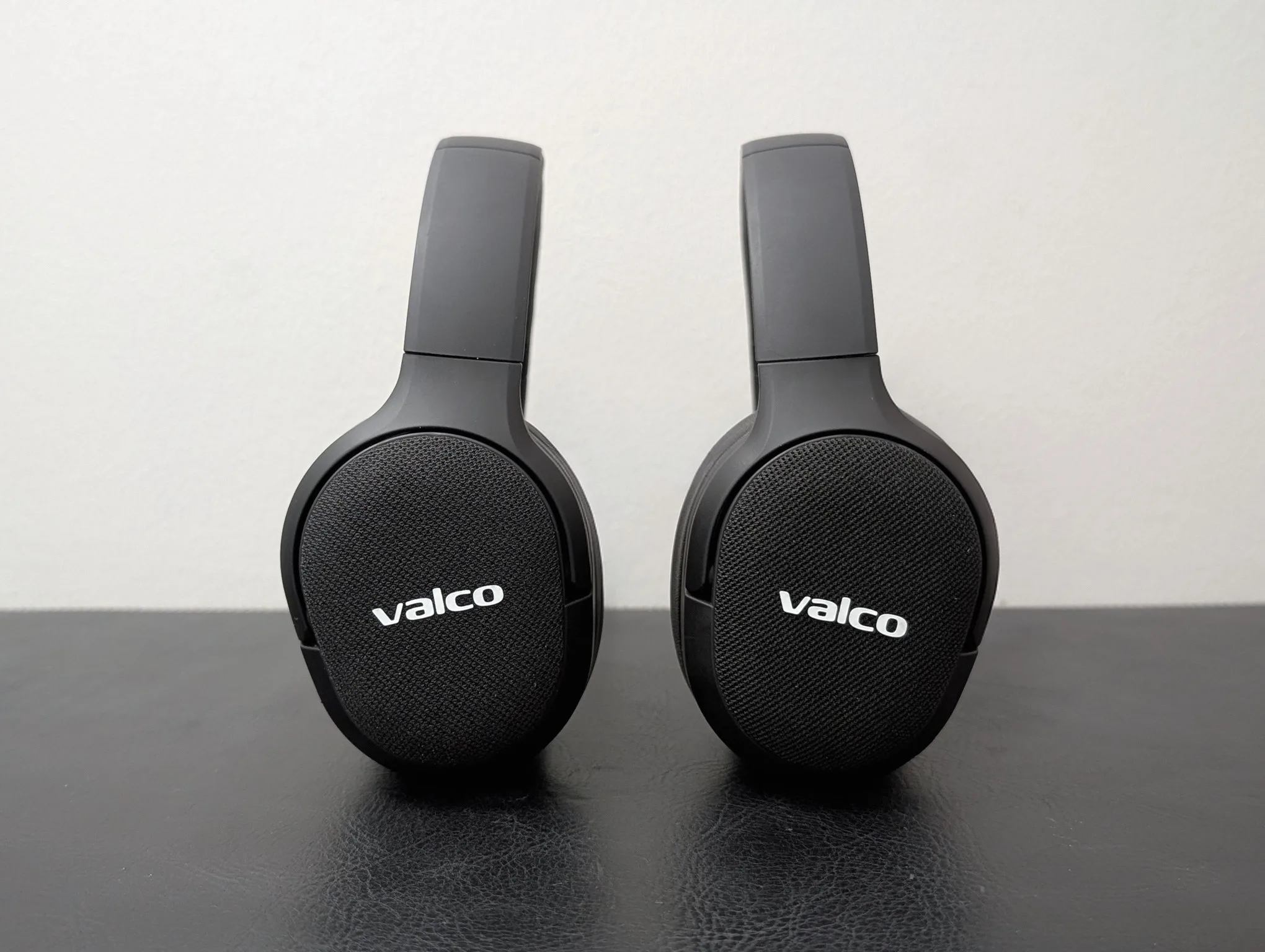
I personally like the VMK25.2 much more when I turn off the noise cancellation. In this case, the midrange becomes naturally audible, and the amount of treble also drops to a reasonable level. Singers and instruments immediately start to sound like themselves, and sibilance is no longer emphasized. Thus, even just speech (audiobooks, videos, etc.) sounds more pleasant this way than with noise cancellation on. When listening without noise cancellation, I consider the only weakness to be the overly robust mid-bass, which, however, stays better separated from the mid-frequencies than with noise cancellation on. Natural and rich reproduction therefore suits me well, and listened to this way, the VMK25.2 feels like a successful headphone.
I also tested the headphones on a train with the idea that the special tuning would work precisely in a noisy environment. Unfortunately, the result with noise cancellation on was still too unnatural for my taste, so the headphones sounded clearly better without noise cancellation, even though the noise slightly interfered with the experience. I would only use the VMK25.2 with noise cancellation if I could equalize the sound to be more normal. This is what I did with the parametric equalizer of the USB Audio Player Pro application, and then I started to like what I heard. If I may suggest, Valco should definitely add a proper equalizer to its app under development.
For now, when aiming for the best and most balanced sound quality, I would recommend listening to the VMK25.2 without the noise cancellation function, in which case the headphones are an improvement over their predecessor. If, on the other hand, noise cancellation is switched on, Valco's new headphones sound very different with their boosted bass and significantly brighter treble. The superiority between the new and old models thus remains a matter of taste. In both use cases, however, the VMK25.2's soundscape remains more robust amidst traffic noise than before, which I ultimately consider the most useful improvement specifically for noise-cancelling headphones. This is actually what I most expected from the version update, whereas otherwise, previous weaknesses have changed into different ones. So, in my opinion, there is still room for improvement.
Summary
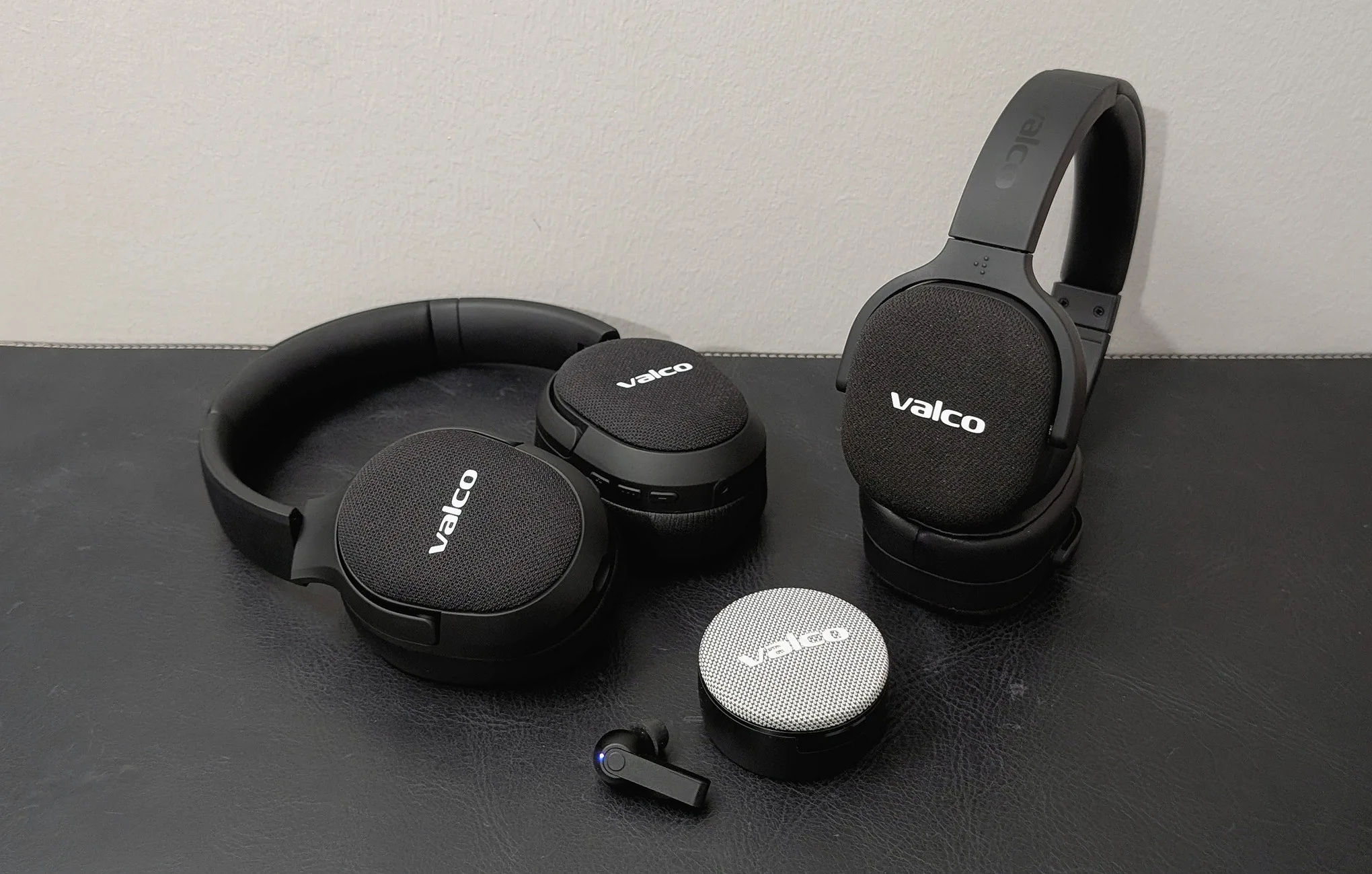
Valco's new VMK25.2 is still a functional, practical, and straightforward noise-cancelling headphone without unnecessary frills. Its battery lasts a long time, and the noise cancellation function and other basic features reach a competitive level in the 200-euro price range, as before. The biggest update compared to the previous VMK25 model is that the Bluetooth technology has now been updated to 2025, although the promised AptX Lossless codec unfortunately does not seem to work. However, the product will later be accompanied by some kind of mobile application, which we consumers are eagerly awaiting. Currently, competitors' headphones are more versatile.
In terms of sound quality, Valco's new product is ultimately quite a contradictory case, as the VMK25's neutral style direction has undergone a considerable change towards consumer-type, bass- and treble-heavy reproduction – at least if listening occurs with noise cancellation on. Without noise cancellation, I perceive the situation to have improved compared to the previous model to such an extent that the VMK25.2, in my opinion, offers the best and most universally applicable sound quality in Valco's headphone lineup to date. With noise cancellation, however, I would not call the headphones a perfect performance; rather, due to their uneven frequency response, they are, in my opinion, even a slight miss. Unfortunately. Now the headphones would need equalization, for which I saw less need with the VMK25.
Despite everything, the VMK25.2 could very well become an even greater success than before, if its buyers primarily like powerful bass and clear high frequencies without otherwise thinking too much about the naturalness of the reproduction. If, on the other hand, more critical audio enthusiasts end up buying the new headphone model based on the VMK25 model's neutral reputation, there might be some dissenting voices. On the other hand, without noise cancellation, the sound can easily be made more balanced. My assessment is also ultimately primarily subjective, so it should not determine whether someone else likes the headphones. Overall, the VMK25.2 could be seen as a more versatile headphone than before due to its two different presentation styles, in which case the version update, in my opinion, is slightly on the positive side. On the other hand, I would no longer dare to recommend the headphones as easily as their predecessor until I see how a potential mobile application changes the situation.
Commercial cooperation
Explore Valco's selection and support Kuulokenurkka at the same time
What does this mean?
If you are planning to acquire Valco headphones and decide to place your order by proceeding to the manufacturer's website via the link above, Kuulokenurkka will receive a small commission from this. You are thus simultaneously supporting the construction of both Valco's death star and our headphone empire. Which one will be completed first?
VMK25.2 pros and cons:
+ Balanced sound when noise cancelling is kept off
+ The wishes of those who wanted more bass in the VMK25 have been heard
+ Functional design
+ Consistent fit and good user comfort
+ Long battery life
+ Volume adjusts more smoothly than before
+ Less background noise from the noise cancelling function than before
+ Noise cancelling microphones protected from wind
+ Comprehensive features
+ Wallet-friendly pricing
+/- Modern Bluetooth codec selection, but AptX Lossless does not work despite promises, at least not with the Sennheiser BTD 700 transmitter
+/- The noise cancelling function performs quite well in the 200 euro price range, but the attenuation performance seems to have slightly decreased compared to the predecessor model
– Unnatural sound and strong sibilance when the noise cancelling function is on
– Less comfortable ear cushions than in the latest production batches of the VMK25 model
– The soft touch coating of the plastic parts gets oily and scratches quite easily
– No USB listening capability
– No more passive listening capability
– Cannot be used while charging
– The test headphones' buttons work poorly
 EN
EN  FI
FI