Author: Sword of Damocles
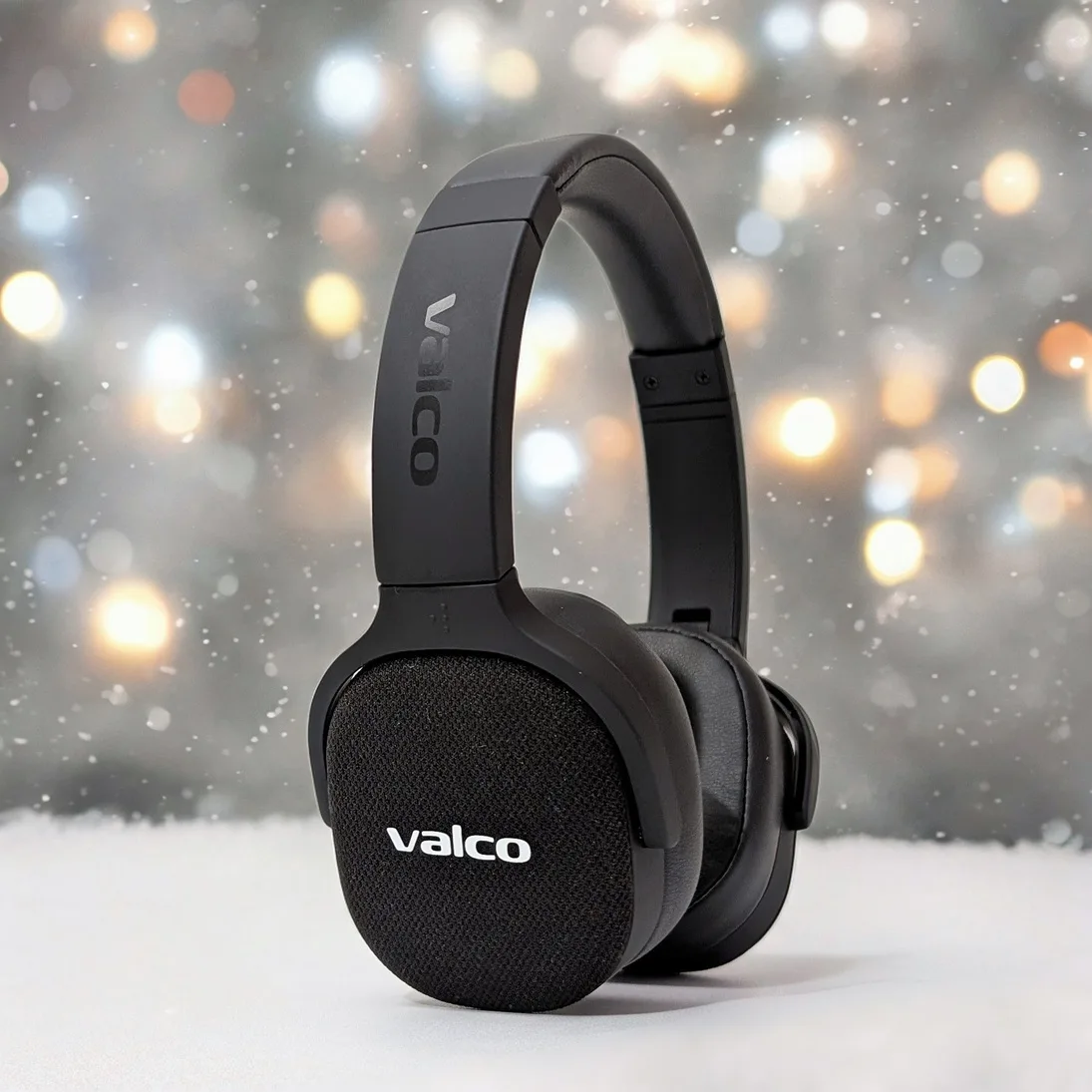
Table of Contents:
Information:
- Released: 2025
- Country of manufacture: Finland (design work) & China (assembly)
- Price: 139 €
- Design: Closed, on-ear
- Dynamic 40 mm drivers (”new type”)
- Audio connections: Bluetooth 5.4 and 3.5 mm
- Bluetooth codecs: AptX Adaptive, AptX, LC3, AAC and SBC
- Charging port: USB-C
- Battery life (ANC ON): 55 h
- Talk time (ANC OFF): 95 h
- Charging time: 2 h (supports fast charging)
- Noise cancellation: On / Off
- Weight: 208 g
- Accessories: Carrying case, USB charging cable, 3.5 mm headphone cable and airplane adapter
- Warranty: 24 months full warranty + reasonably priced repair service
Review sample: Provided by the manufacturer
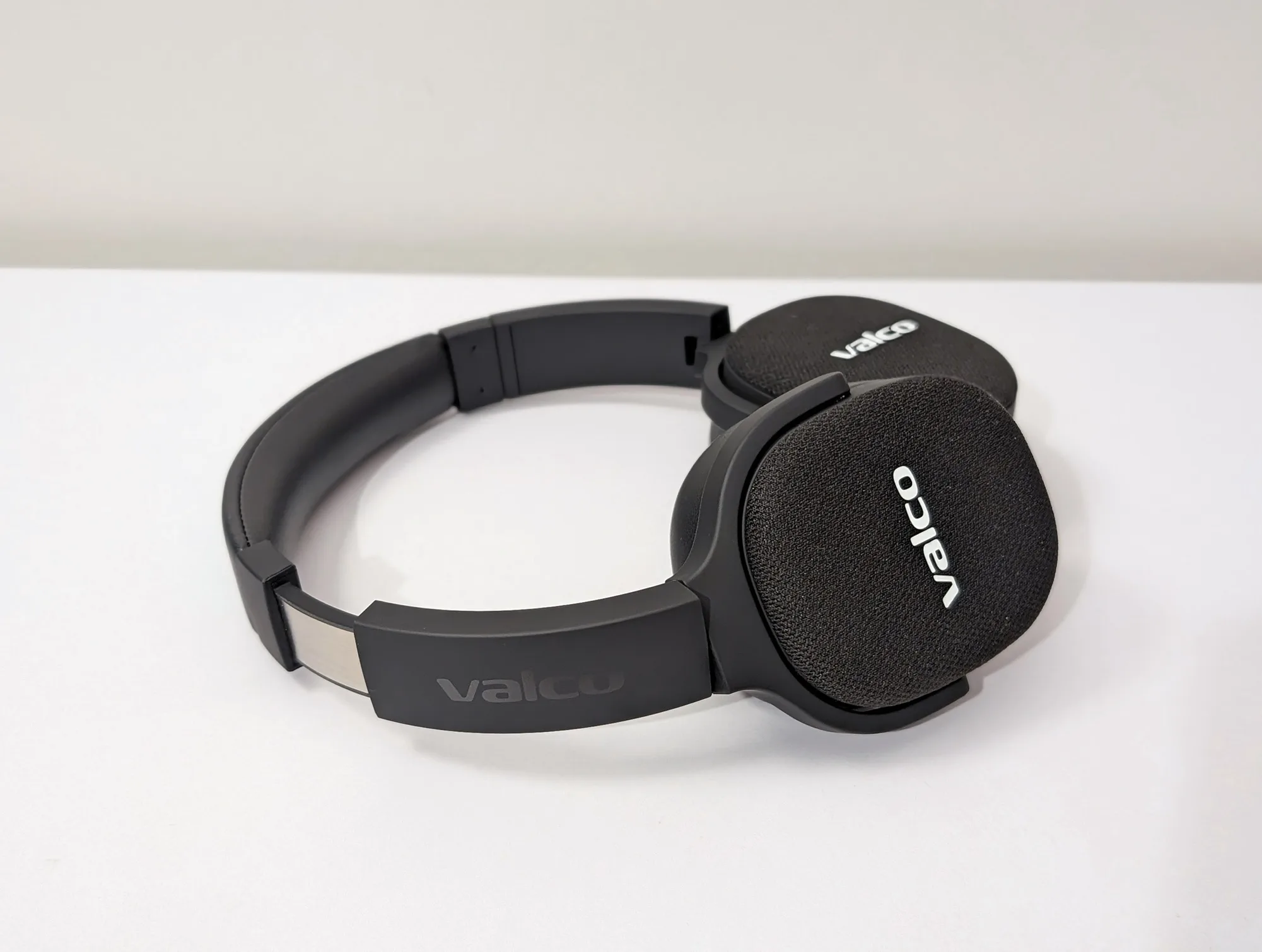
Domestic Valco is here to stay, or it seriously wants to accelerate its Death Star construction project, as the manufacturer managed to release no less than three new headphones for sale during 2025. Of these, I only recently had time to review NL25 in-ear headphones, until a Valco package was waiting again at the Post Office. This time, the very precisely named VMK25.2 arrived for my review, as well as the one that had risen above it on my review list, VMK15, with which Valco says it can collect money even from poorer and smaller-headed people. It is a slender on-ear type noise-cancelling headphone, and by purchasing it, one saves 60 euros compared to the VMK25 series. The RRP is 139 euros.
The VMK15 seems to have been born out of demand, as many have asked the manufacturer for a slightly more compact and lighter headphone model. Releasing such a model therefore shows good foresight, even though on-ear headphones can, at worst, feel like quite the ear-crushers on the head. Knowing Valco, however, I didn't expect a bad performance, but rather jumped into the test period with budding interest. Could I also use the headphones with a smile on my face, and how has Jasse Kesti tuned the sound this time?
Packaging and accessories
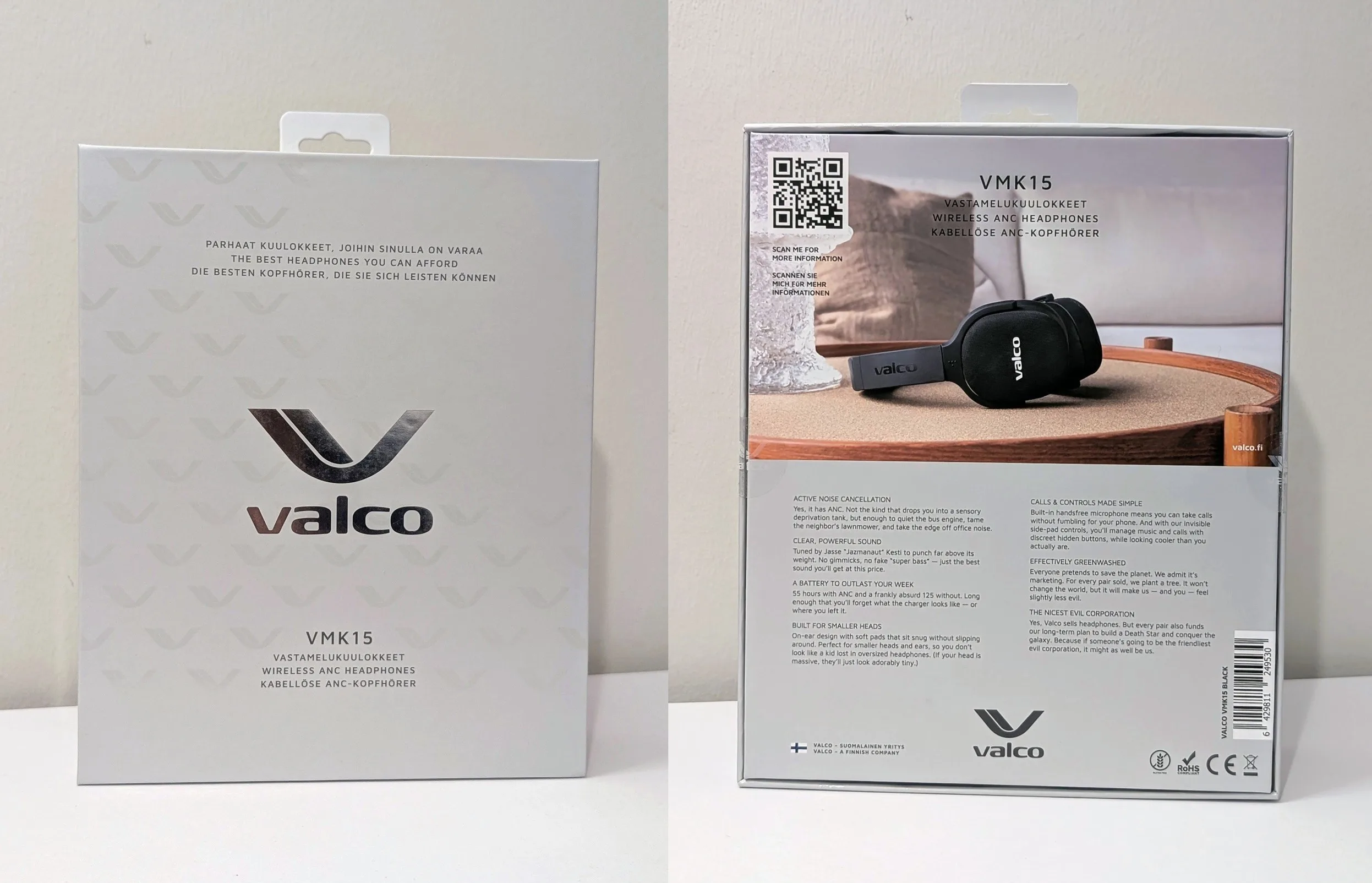
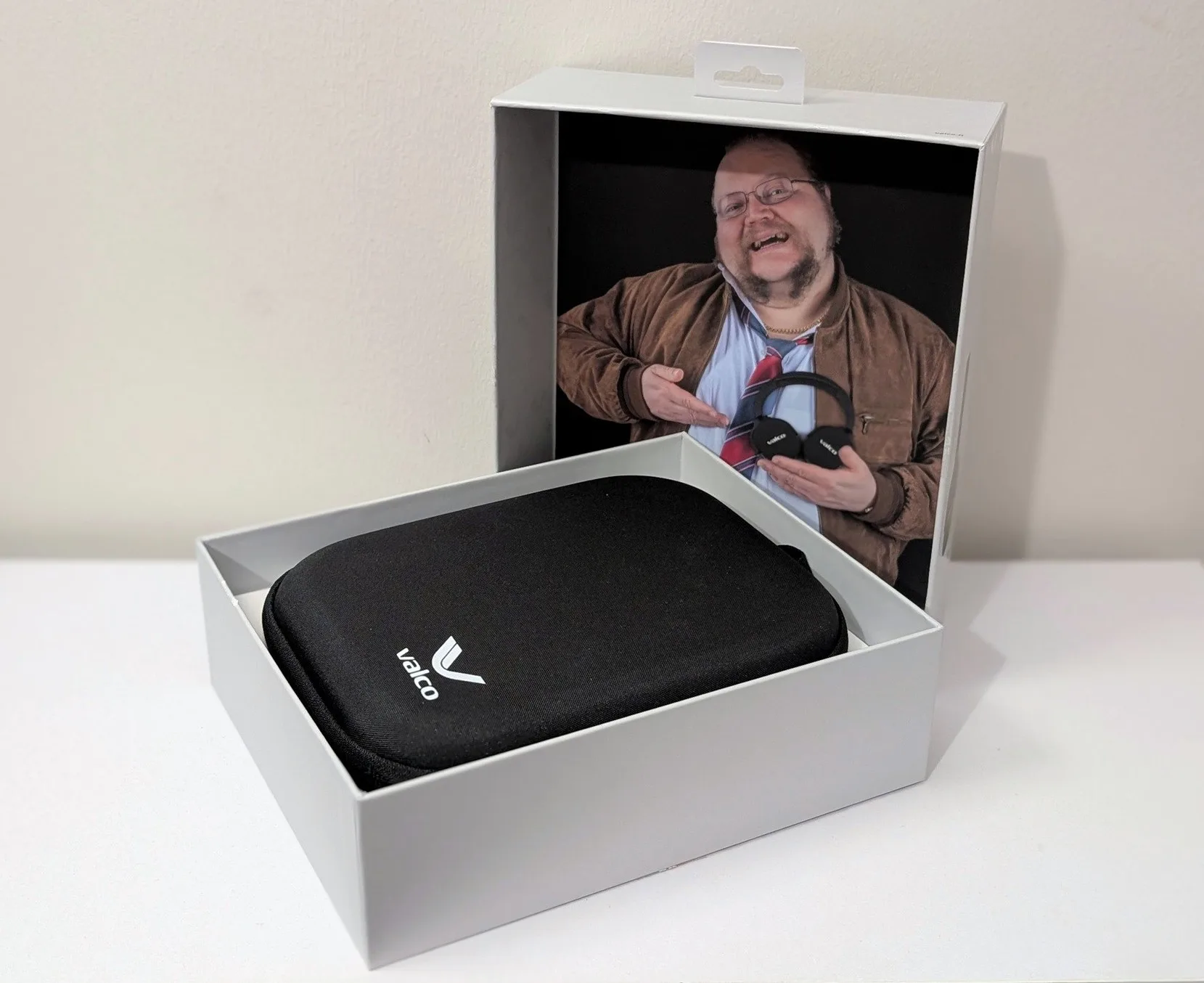
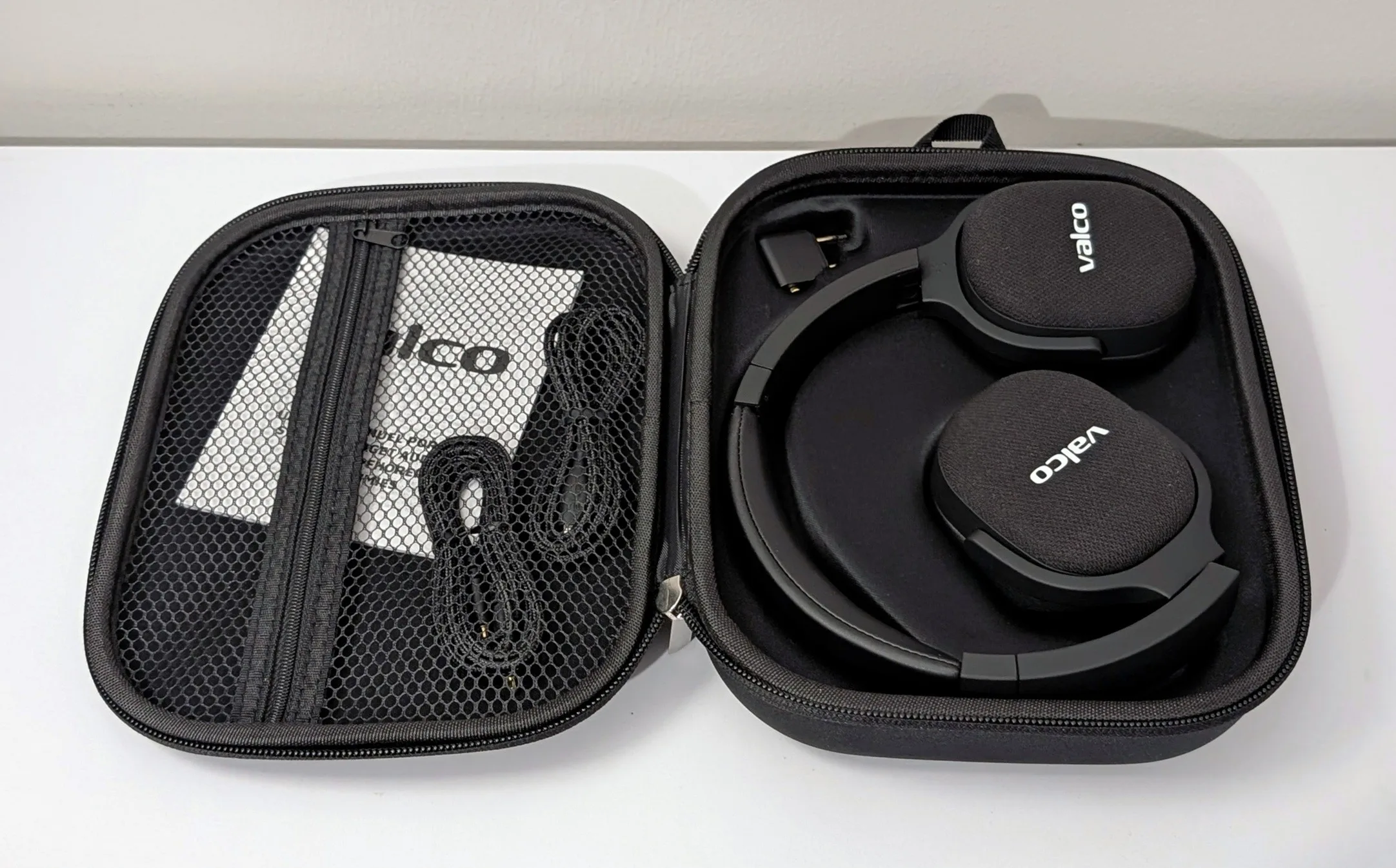
VMK25 arrived at least a year ago packed in its carrying case without a separate product package, so I was pleasantly surprised to see a stylish cardboard box accompanying the VMK15. Since it also comes with a handy carrying case, along with higher quality cables than usual and an airplane adapter that some might need, the overall package feels more valuable than its price. On the other hand, Raimo has not been forgotten either, and the manufacturer's typical humor still flourishes in the user manual.
Build and comfort
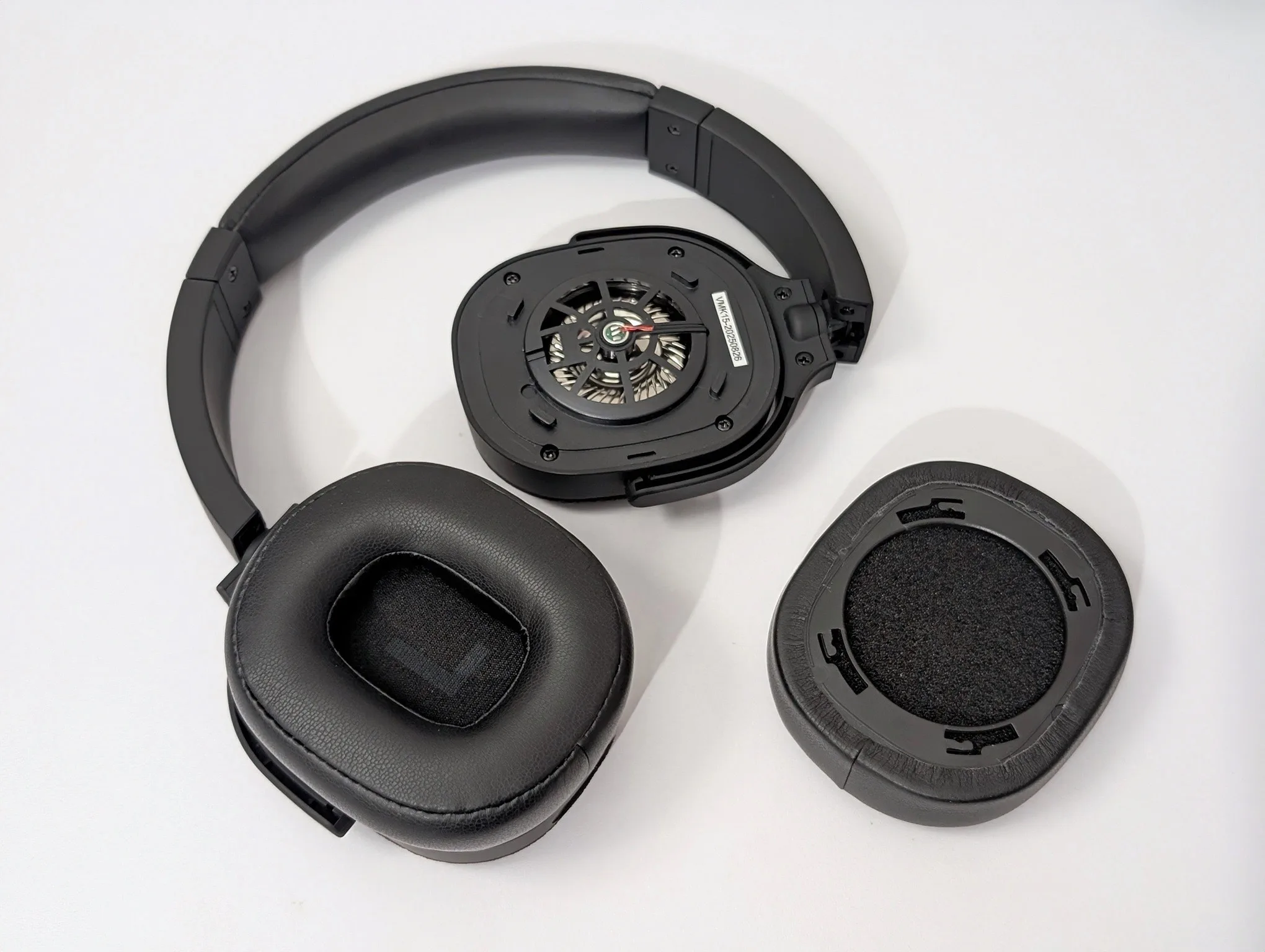
The headphones themselves feel cheaper than the VMK25 series due to their plastic material and slightly creaky hinges, but in terms of overall design and subdued appearance, they are very similar. As the clearest advantage of the more slender on-ear structure, the VMK15 weighs only 208 grams, which is about one-third less than the VMK25s. As a functional difference, unlike the manufacturer's over-ear models, the ear cushions, when the earcups are turned horizontally, rest against the chest rather than pointing towards the sky. Additionally, the fabric-covered side panels are no longer removable on the VMK15, which certainly simplifies the manufacturing process and partly enables a more affordable price point.
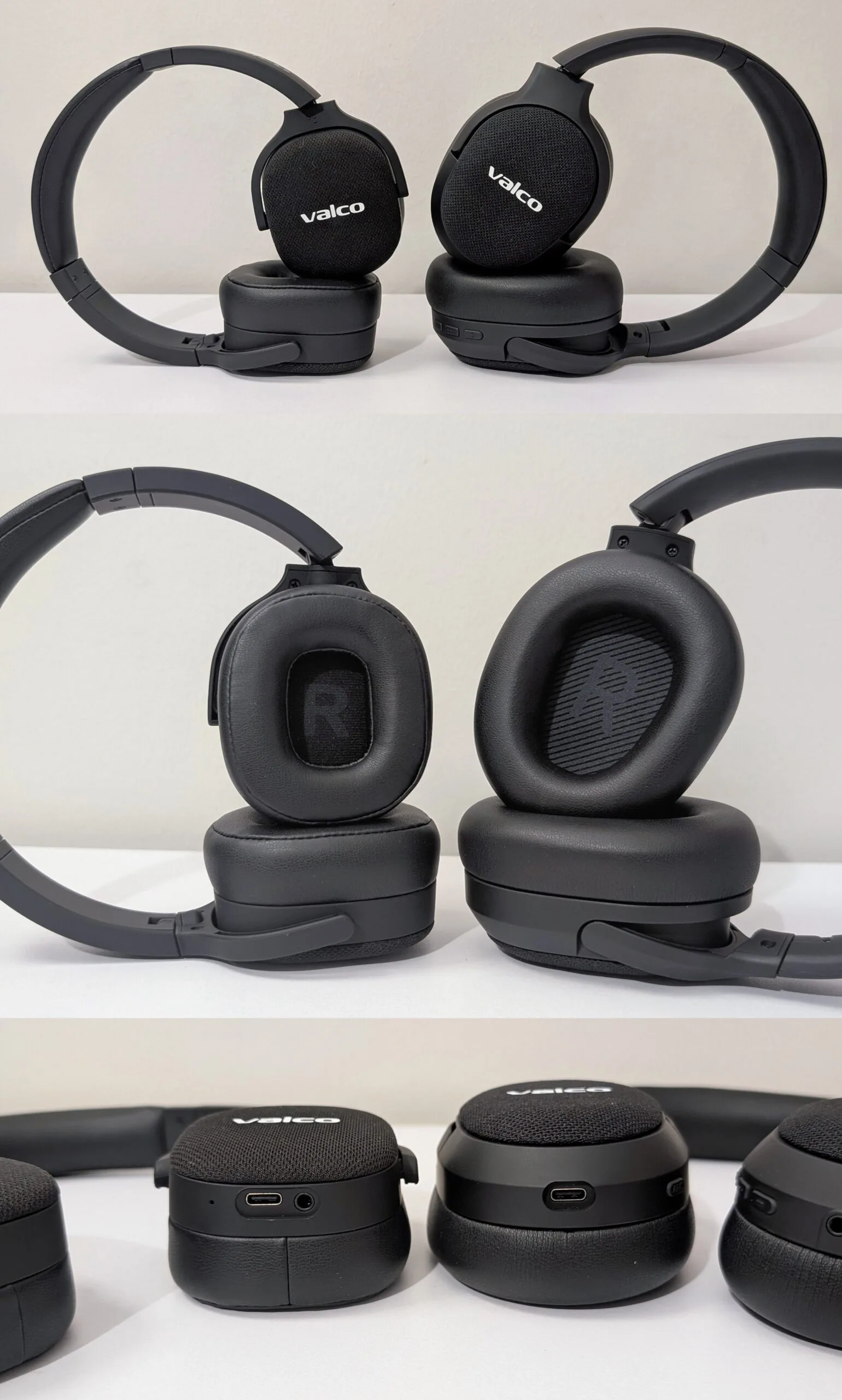
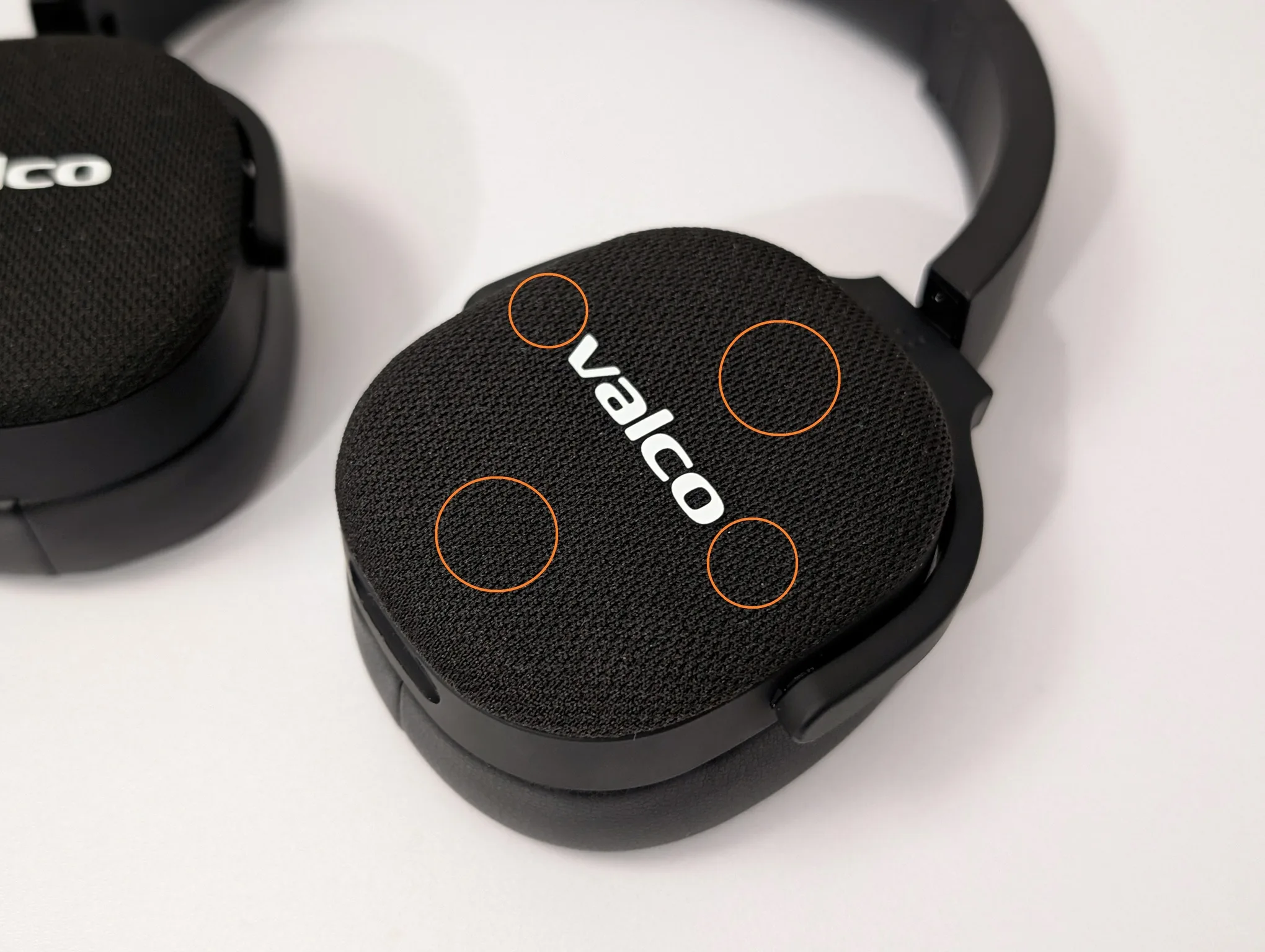
As one interesting feature, Valco has come up with placing the headphones' four buttons on the side of the left earcup, hidden under the fabric. The buttons are thus not visible, but they can just barely be felt when pressed. The side of the earcup is also so small that by orienting oneself from the Valco logo, fingers will eventually find the right spot. Here in the Nordics, physical buttons easily beat all kinds of touch functions if one goes outdoors with headphones on and needs to control them with gloves on.
So how do such on-ear headphones designed for small heads feel when placed around a normal-sized skull?
Thanks to sufficient height adjustment, a gently clamping headband, and soft ear pads, the VMK15 proved by a clear margin to be the most comfortable on-ear headphone I have tried. My earlobes are not completely crumpled, but I can turn the cups to a suitable angle, whereby they also maintain their position. In this case, the feeling is pillow-like and still sufficiently supportive from the perspective of noise cancellation functionality. The headband padding is also well-suited for such lightweight headphones, so Valco has successfully designed the VMK15 with user comfort in mind. This is not a children's headphone; in my opinion, most adults would also be able to use the VMK15 completely satisfied. For me, at least, it works easily for a couple of hours, and why not longer.
A peek under the hood
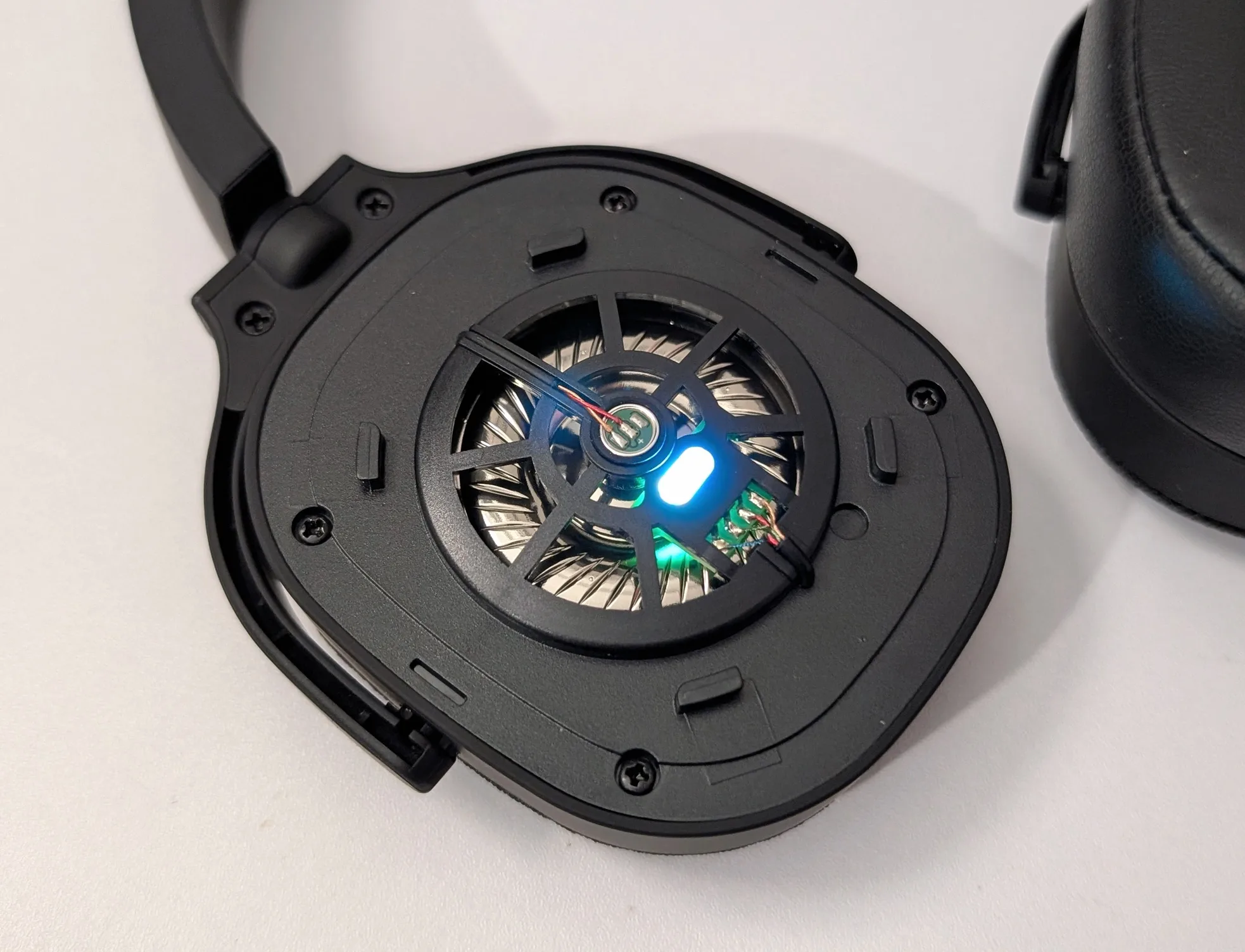
Valco rarely boasts about the technical implementation of its headphones, which is probably quite smart considering the target audience. For most people, for example, Bluetooth codecs don't matter much, as long as the headphones are well-tuned. This ultimately determines the sound quality or lack thereof.
However, the VMK15 is interesting in the sense that the Qualcomm chipset chosen for it surpasses the older one in terms of features VMK25-headphone model. It is precisely for this reason that the manufacturer decided to immediately release the VMK25.2, which also brings the over-ear model up to date. Development progresses and so on. Some of the new features, however, remain hidden for now, but both new models are compatible with a mobile application that Valco has hinted at developing at its own leisurely pace.
The VMK15's Bluetooth 5.4 connection (there's a difference in information between the user manual and the product page) supports AptX Adaptive, AptX, AAC, and SBC codecs, and with Bluetooth LE, also LC3, which is not even mentioned in the product specifications. Marketing has thus not kept up with all the goodies, but with the Sennheiser BTD 700 Bluetooth transmitter, I nevertheless verified the functionality of all these codecs.
I also found the VMK15's wireless connections to be reliable in general, and Multipoint works as expected. In addition, the headphones' battery lasts a very commendable 55 hours with noise cancellation on, and longer without it. For talk time, with noise cancellation off, 95 hours are promised. The headphones also support some kind of fast charging, but the specifications for this remain obscure. Headphones with such a long operating time rarely need to be charged.
One notable difference compared to Valco's older headphone models is that the VMK15 cannot be listened to passively with an AUX cable, even though the product information suggests otherwise. Plugging the cable into the bottom of the cup automatically turns on the power and, consequently, the noise cancellation function and DSP correction. The power cannot be turned off while the cable is connected. The USB cable, on the other hand, is only suitable for charging the headphones.
Active Noise Cancellation
Valco honestly states that the VMK15's noise cancellation function does not match the effectiveness of their over-ear headphone models, but it is still useful, for example, when traveling. This is exactly how I would describe the headphones myself. The noise doesn't diminish much, but the worst hum caused by vehicles disappears, and all kinds of buzzing also softens to a more tolerable level – for example, a train journey from Joensuu to Lahti was more tolerable with the VMK15's noise cancellation on. The headphones also do not exhibit significant background hiss or a feeling of pressure, as long as the pads are placed evenly on the ears.
For comparison, the Beyerdynamic Aventho 100's noise cancellation function is clearly more effective, but at the same time produces a pumping pressure in my ears. In a truly noisy environment, using the headphones would even be painful or at least quite unpleasant, which suggests that forcing powerful noise cancellation into on-ear headphones is not particularly sensible. Those who need such should in any case choose over-ear headphones with a tighter fit or, alternatively, in-ear headphones. For example, the older VMK25 is a significant improvement compared to the VMK15 and likewise the Aventho 100. I also found Valco's own NL25-in-ear headphones to attenuate noise more than the VMK15.
Due to cost reasons or some other realization, Valco has decided to remove the transparency mode from the VMK15's feature list, but noise cancellation can still be turned off if needed. Unlike many other headphones, wind causes hardly any interference to the VMK15's noise cancellation function, so noise reduction could be used when moving outdoors.
Microphone sound quality
The VMK15's microphone sound quality is roughly comparable to the more expensive VMK25 series, although the volume might be slightly lower. Based on my recordings, speech is quite clear even amidst a little noise, so in my opinion, there is nothing to complain about in this situation. In comparison, the microphone of the Beyerdynamic Aventho 100, which was at hand, did not record as clear sound.
Headphone sound quality
The sound quality of Valco's headphones is largely personified by Jasse ”Jazzmanaut” Kesti and his golden ears. While a culprit for potential blunders could easily be found, the transparency and personality of their operations have so far certainly inspired more trust among consumers compared to many faceless large corporations and their empty marketing rhetoric.
Regarding the VMK15, the manufacturer's sound quality description is rather broad, promising rich bass, natural mid-frequencies, and clear trebles. Perhaps this should be seen as a kind of joke, as these are often the very characteristics desired from audio reproduction. In principle, the VMK15 is an active headphone, meaning it only works when powered on. In addition to a Bluetooth connection, listening is possible with a headphone cable, but not with a USB cable. The frequency response, on the other hand, is very different between 50–2000 hertz depending on whether the headphones are used with active noise cancellation on or off.
Measurements
Our frequency response measurements have been made with a clone IEC-60318-4 coupler and KB501X pinnae. The Harman target curve from 2018 is used as a reference point and generalization of the headphone response that would sound good to most people. For more information on the measurements and their accuracy, see Headphone Measurements-page. The VMK15's frequency response can also be compared with other measured headphone models Squiglink .
Frequency Response (ANC ON vs. OFF):
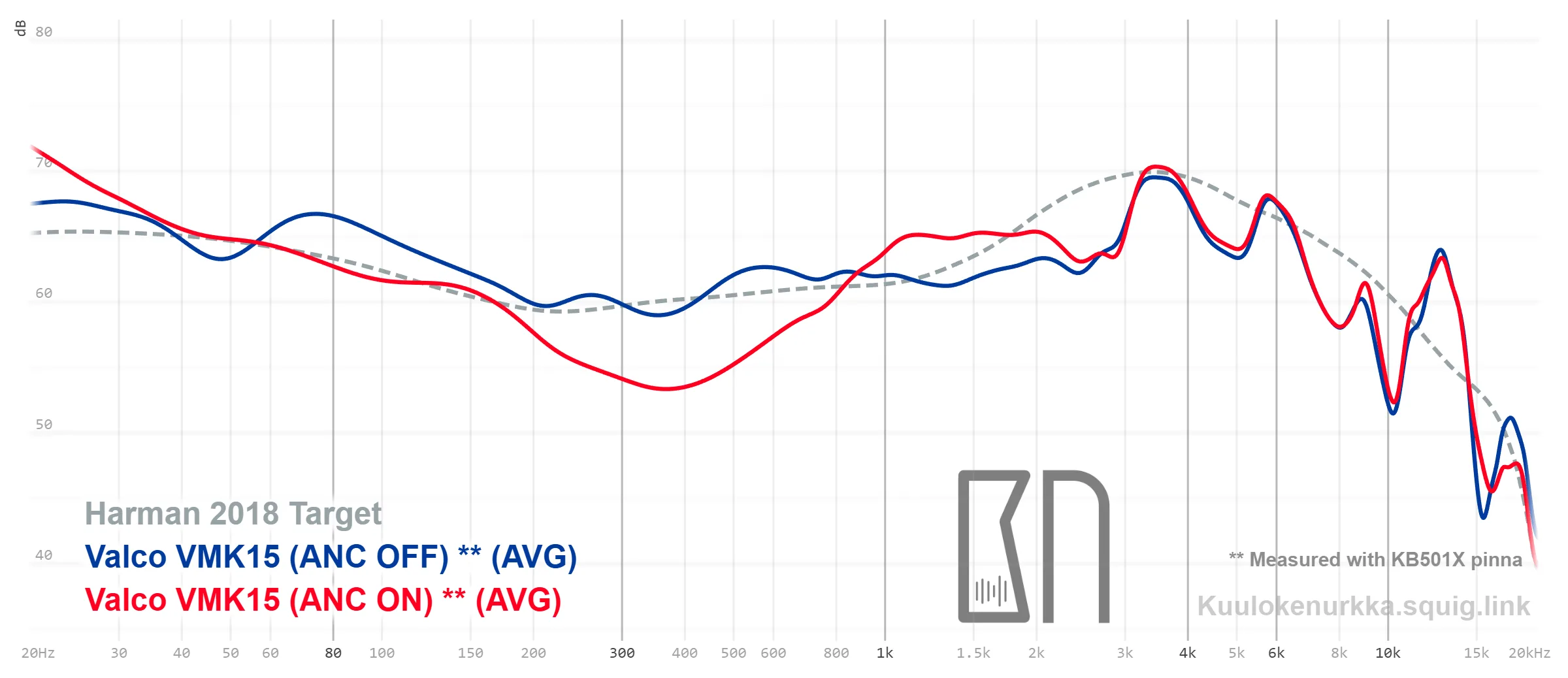
Without active noise cancellation, the VMK15's frequency response is more linear and, apart from the 1.5–3 kilohertz range, follows Harman's curve quite accurately, disregarding any other irregularities at this point. With active noise cancellation, a rather massive dip is created in the response from 200 hertz all the way to 800 hertz, after which the 1–2 kilohertz range is emphasized overall. The bass with active noise cancellation on is reproduced slightly lighter compared to the OFF mode and at the same time very optimally if it is desired to match Harman's curve. The upper frequencies also resemble other good headphones in quantity, and a small irregularity is not at all concerning given the measurement accuracy of my equipment.
There is likely some purpose to the unusual tuning of the midrange, which only Valco knows. However, after measuring over 150 headphone models, I have not seen other headphones quite like these, so Jasse Kesti has clearly set out to try something new. At least I assume it's not an accident.
Sound observations
During my test period, I listened to the VMK15 both in a quiet environment and on a train to find out if the exceptional tuning with active noise cancellation on would be best suited for mobile use. Let's start, however, with home listening, which provides perspective on the situation.
In the quiet of one's home, the VMK15 is somewhat colored and veiled in its mid-frequencies, regardless of how it is used. With active noise cancellation turned off, the presentation is warm due to the emphasis on lower frequencies and quite soft, if not slightly indistinct, due to the gently reproduced 1–3 kilohertz range. However, in this way, the VMK15 sounds pleasantly unfatiguing, and its sound has a nice robustness and sense of grandeur. So, no real complaints, but the biggest 'wow' moments remain unexperienced.
With active noise cancellation on, the midrange becomes thinner in style and thus, in my opinion, more unnatural, but the sound becomes clearer. Due to the unusual dip (200–800 Hz) and emphasis (1–2 kHz), the sound seems empty and hollow, but at the same time edgy and somewhat hissing. This combination might sound bad when described this way, but I believe the characteristics balance each other out such that by ear, I would claim the result is half as colored as the frequency response would suggest. So, we are not talking about a sound that one would not get used to quite easily. The VMK15 handles the bass and treble sides without complaint, as long as the listener's preferences follow the mainstream.
One cannot always escape a certain lifelessness in the reproduction and an overly shouting vocalist (it sounds as if palms were cupped in front of the mouth), but sometimes the 1–2 kilohertz boost makes the music, on the contrary, just lively enough if it was produced a bit tame. Similarly, the distantly reproduced lower mid-frequencies keep the powerful bass entirely in its own territory and prevent the sound from becoming excessively bloated. In a way, the emptiness of the midrange also brings a sense of spaciousness to the soundstage, even if the end result doesn't sound entirely natural. After a short period of getting used to them, I no longer consider the VMK15 particularly abnormal, although this kind of tuning seems to work best in noisy environments.
During the train journey, I quite quickly understood Jasse Kesti's intentions. If the VMK15 were equalized to match Harman's curve, it would not sound as clear as with its default settings. Especially the emphasis on the upper mid-frequencies keeps instruments pleasantly sharp and speech/vocals clear. The reproduction is engaging and activating. For some reason, the deficiency in the lower midrange also does not manifest as clearly as in home listening, so the VMK15 may very well be tuned primarily for mobile use. I did note that partially flattening the frequency response would lead to an even better result in this use case as well, but it wouldn't ultimately change my listening experience greatly. Since the VMK15 costs ”only” 140 euros, I won't be overly critical.
I really like the VMK15's bass because it is reproduced robustly and more tightly than many other noise-cancelling headphones. The quantity is well sufficient even for slightly noisier environments, so in my opinion, the VMK15 does not sound overly light like the VMK25 and NL25, for example, during a train journey. Even in home listening, the result is quite optimal because the amount of bass rises steadily towards the lowest frequencies. Thus, there is plenty of punch, especially when listening to sub-bass-driven electronic music, and modern rock productions relying on robust upper bass do not suffer from excessive muddiness.
Likewise, the treble is reproduced suitably for my taste. A small irregularity does not manifest as unnaturalness for me; instead, the sound is fresh and airy, yet in a way, safe. Sibilance is thus kept in check, and the reproduction does not otherwise pierce the ear. Ultimately, the most distinctive feature of the VMK15 is the midrange, which not everyone will certainly be a fan of, but which, in my opinion, one gets used to. The benefits of the tuning are revealed in noisier operating environments, whereas in pure home use, the VMK15 might sound a bit peculiar at first. In such cases, it is worth trying the headphones with the active noise cancellation function turned off.
Comparison: Valco VMK15 vs. Beyerdynamic Aventho 100
Prices: 139 € vs. 209 €
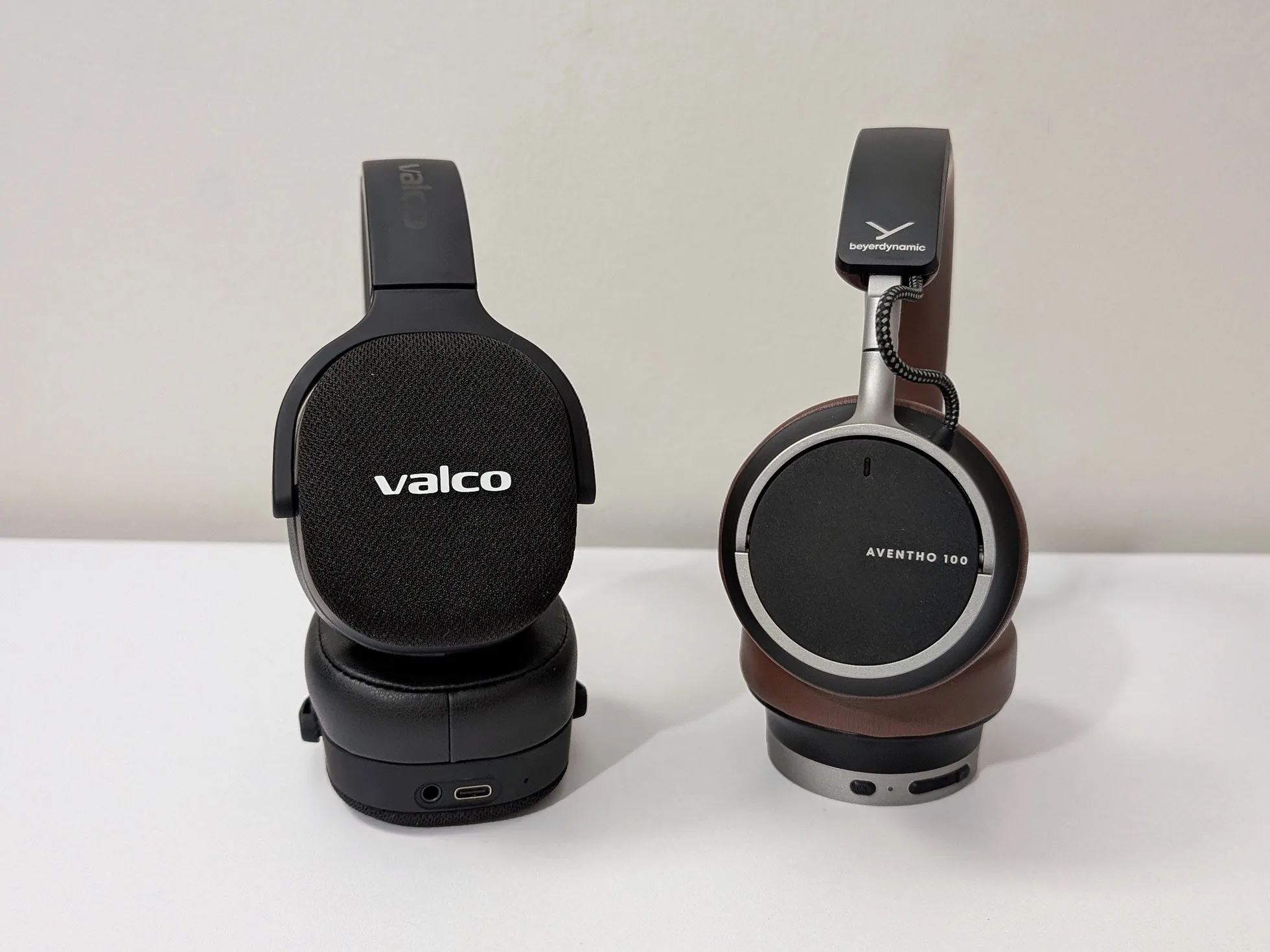
Proactively, I acquired Beyerdynamic's 209-euro Aventho 100 on-ear noise-cancelling headphones as a comparison for the VMK15. The 70-euro price difference between the two is most clearly visible in the structural quality, with the Aventho 100's headband being metal. The plastic parts also feel sturdier than the Valco model. Additionally, I find the retro-inspired look of the Beyerdynamic model more interesting compared to the all-black VMK15.
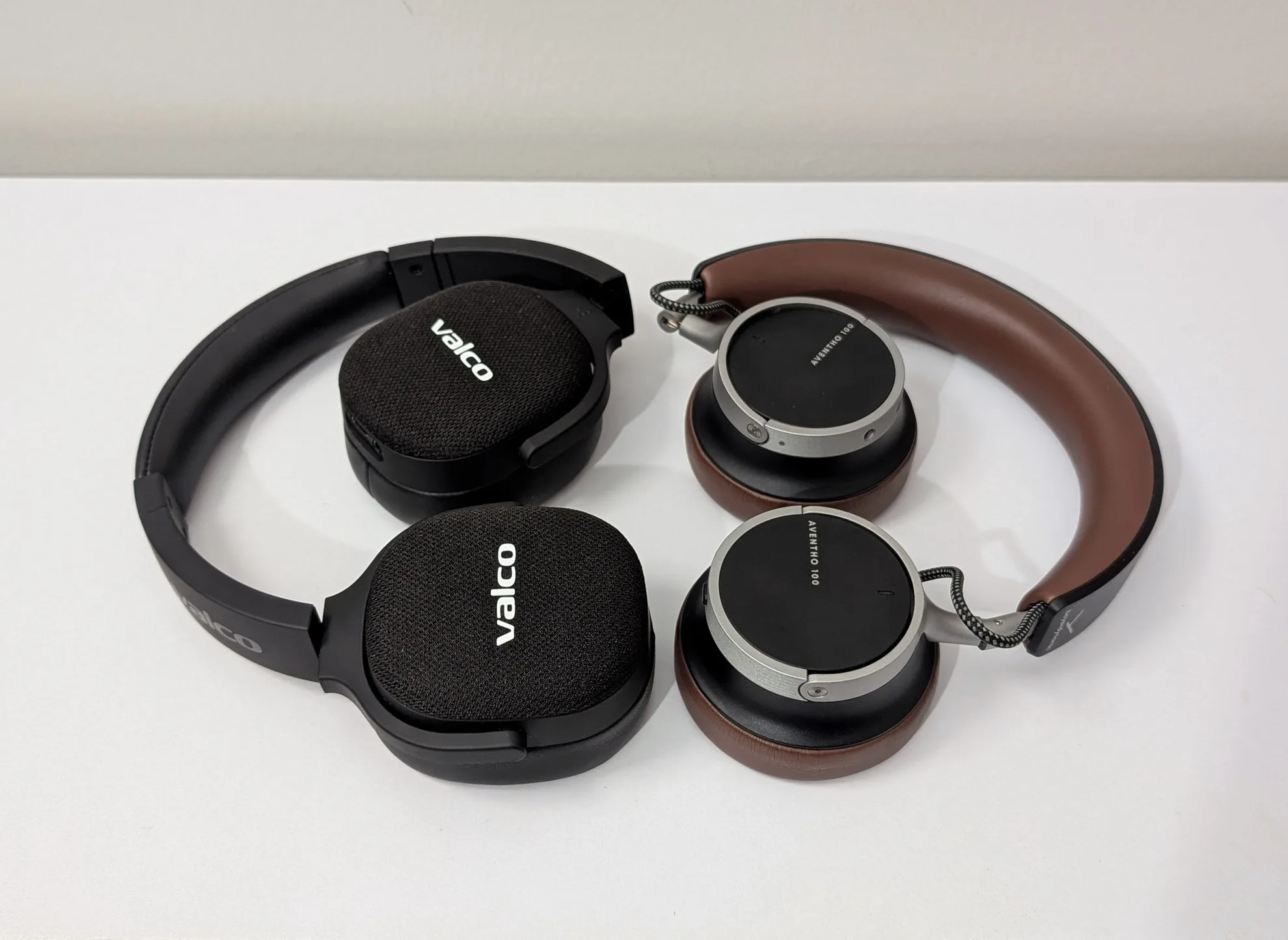
Unfortunately, due to its strong clamping force, the Aventho 100 is an uncomfortable headphone for me. I cannot fault its soft ear pads per se, but the absurd clamping simply makes the headphones feel like some kind of medical research device. I hear my own heartbeat incessantly, and the noise cancellation also easily causes a feeling of pressure in my ears. The VMK15 thus takes a 100–0 victory in comfort, as it feels gentle on my ears.
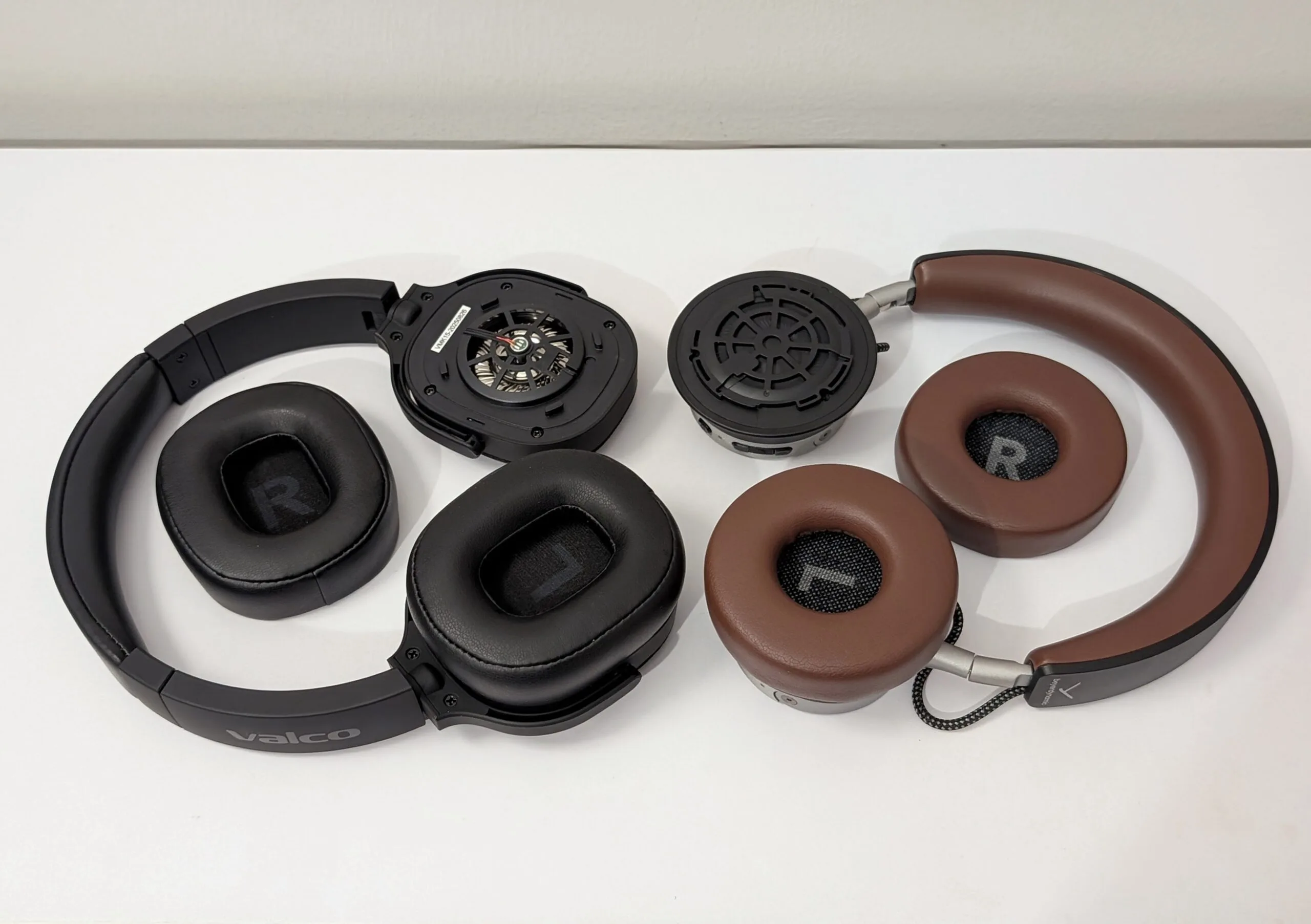
However, the noise cancellation in the Aventho 100 is significantly more effective, if someone can use it for extended periods. For mobile use, the headphones are only offered with a fabric pouch, whereas the VMK15 comes with a proper case despite its lower selling price. In practice, the difference remains small, however, because the Aventho 100's foldable metal structure can withstand even rougher handling when carried in a pouch.
On a technical level, the duo differs slightly in both battery life and Bluetooth implementation. The VMK15's operating time with noise cancellation on is about 15 hours longer, while the Aventho 100 can be listened to with the AptX Lossless codec, which I haven't been able to extract from the Valco model with the Sennheiser BTD 700 transmitter. On the other hand, the VMK15 is the only one of the two to support Bluetooth LE and the LC3 codec, which will likely be more beneficial in the long run than AptX Lossless support. Other differences include the Beyerdynamic model being listenable via a USB cable or alternatively passively with a headphone cable (though the sound is absolutely terrible), which is not possible with the VMK15. Beyerdynamic has also created an app for the headphones, through which noise cancellation and sound quality could be adjusted. Valco's app is still awaited, and its features are unknown.
Frequency responses (ANC ON):
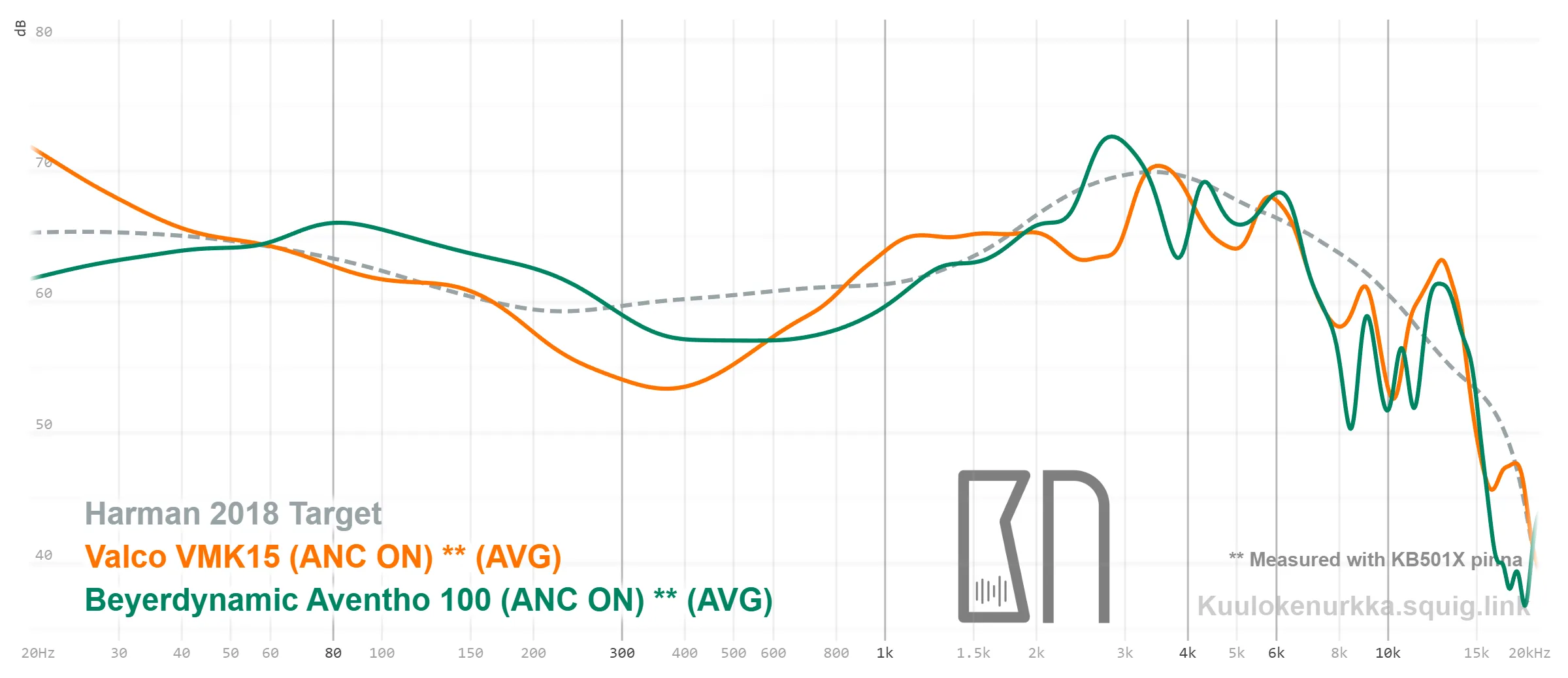
Both headphones have their own sound quality peculiarities with noise cancellation on, which, however, bother me more in the Aventho 100. It sounds very dull with its default settings because muddy bass leaks into the midrange, which is already attenuated between 300–1000 Hz. At the same time, the 3 kHz region reproduces roughly, standing out more in the overall sound than the treble. The reproduction is thus equally muddy and congested, distant in presence, and slightly irritating in sharpness. On the other hand, unlike other Beyerdynamic headphones, the treble is not overly bright, but very similar in style to the VMK15, which I classify as balanced.
Although the VMK15”s midrange reproduces partly more subdued and partly more energetic, it sounds like a more normal and better headphone overall. Valco has tuned the bass more sensibly, so it doesn't exacerbate the midrange ”problems" like the Aventho 100. To my knowledge, Beyerdynamic has not been able to make a single good wireless headphone, even though, at least in theory, adjusting the sound should be easier with DSP correction compared to traditional passive headphones. The final finishing is left to the headphone buyer.
In the case of the Aventho 100, however, the 5-band equalizer included in Beyerdynamic's app works better than usual, so it is possible to adjust the headphones' sound to be decent. I will return to this in more detail in a separate review, but disregarding the poorer comfort, the Aventho 100 could be made a slightly better headphone than the VMK15, especially if midrange naturalness is important. Perhaps I already mentioned in the same sentence why I ultimately prefer Valco's headphones. Beyerdynamic's headphones don't really make you want to use them, so they don't quite serve their purpose.
Summary
The VMK15 feels like a purposeful addition to Valco's headphone lineup. Based on my own experiences, despite its on-ear design, it is a comfortable headphone for people with larger heads as well, and its sound quality doesn't have such major issues that anyone would need to feel poor settling for it instead of the VMK25 series. Many other small headphones are almost unusable for me, so I cannot emphasize enough the VMK15's good comfort.
If, on the other hand, you want effective noise cancellation, the VMK15 does not offer it, and you should look towards over-ear models or in-ear headphones. The VMK15 also lacks a transparency mode, if that is important to some. On the other hand, the slightly peculiar mid-range tuning, in my opinion, quite successfully compensates for the lack of noise cancellation, making the VMK15 sound good precisely in a noisier environment. I recommend keeping this in mind, as those who have previously tested more natural-sounding headphones might pay more attention to the colorations in home conditions.
By technical metrics, Valco's new headphones are modern, as the battery lasts a long time and support is found for AptX Adaptive in addition to Bluetooth LE. If and when the manufacturer can someday offer an app for its headphones, it will truly begin to rise among the bigger players. I personally still find Valco's distinctive approach and small size charming, but from a business perspective, operations should be expanded. Otherwise, the Death Star will not be completed.
Since I always get annoyed first by poor comfort in on-ear headphones, and the VMK15 does not evoke such feelings, I can recommend it to those who desire slightly smaller noise-cancelling headphones. I myself currently like it more than the manufacturer's VMK25.2, but let's return to this more expensive new model right away in the next article.
Commercial cooperation
Explore Valco's selection and support Kuulokenurkka at the same time
What does this mean?
If you are planning to acquire Valco headphones and decide to place your order by proceeding to the manufacturer's website via the link above, Kuulokenurkka will receive a small commission from this. You are thus simultaneously supporting the construction of both Valco's death star and our headphone empire. Which one will be completed first?
VMK15 pros and cons:
+ Just the right amount of bass and treble
+ No noticeable background noise
+ Good comfort despite small ear pads
+ Lightweight
+ Long battery life
+ Modern Bluetooth technology
+ A carrying case has been included in the price
+/- The tuning is suitable for noisier environments and isn't irritating, but the sound isn't truly hi-fi due to the hollow and at times blaring mid-range
– Slightly flimsy and creaky construction
– Ineffective noise cancellation function
– No transparency mode
 EN
EN  FI
FI
The review is of the high quality I've come to expect from the headphone corner. Thank you for that.
As for my own conclusion about the headphones – I noticed that this model isn't really for me; I usually have a similar on-ear problem. The ear pads should extend over the earlobes to provide comfort. And that clamping force is almost required, especially in closed ANC headphones, so that extra sounds don't passively rush in to disturb the ear.
For what need might these headphones have been intended?
About those golden ears: Indeed, we have many examples of how the primary ear of headphones puts their name on the company's products, cf. Zack Mehrbach and ZMF, Dan Clark and DCA, Antonio Meze and Meze, or from older ones Fritz Sennheiser, Eugen Beyer, Joseph Grado… the trend probably already emerges with these examples.
So even though Valco was a great idea, perhaps soon at some point in the product lines, the designer should also be visible. Next, a JKV reference series? 😉
Thanks for the feedback!
I understand well that the VMK15 is not for everyone due to its on-ear design, and it probably isn't meant to be. By all accounts, a certain group of people has wished for such smaller headphones from Valco, so now they are available. Quite clear business in my opinion. When moving outdoors, one sees many JBL Tune 520BT and 660NC type on-ear headphones on people's heads (especially youth and those assumed to be women), so there are clearly users for these.
I didn't quite grasp whose Valco employee should be more visible in products and marketing. 😀 If I were designing products for larger masses of people, I would probably want peace to work and leave the public appearances to others who are willing. With boutique products, of course, I would try to maximize all benefits if I were known beforehand. In my opinion, Valco, as such a noise-cancelling headphone manufacturer, comes surprisingly close to consumers, and doesn't just spout empty slogans.