Author: Sword of Damocles
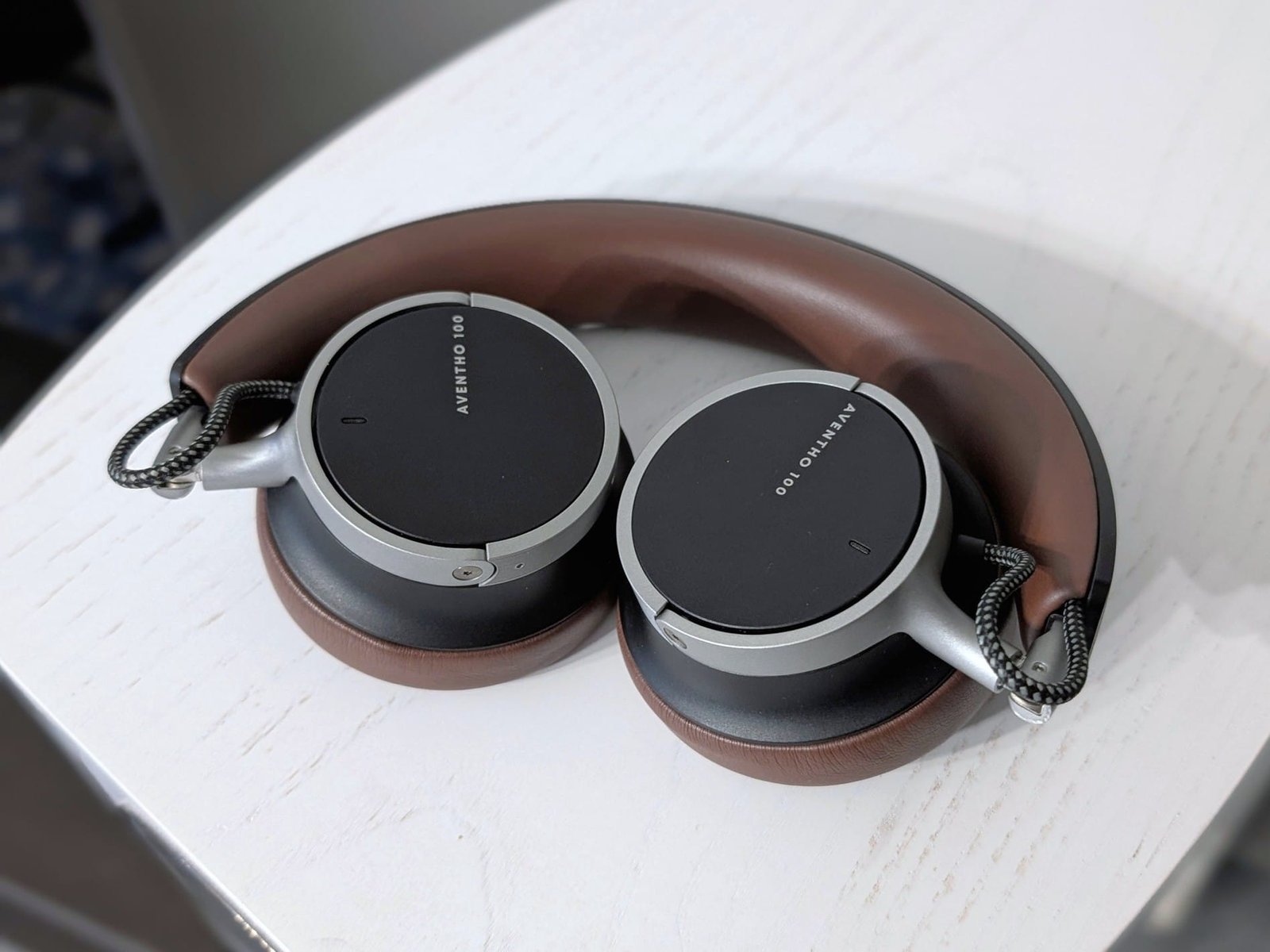
Table of Contents:
Information:
- Released: 2025
- Country of manufacture: Germany (design work) & China (assembly)
- Price: 209 €
- Color options: Black, white and brown/black
- Design: Closed, on-ear
- Dynamic 40 mm drivers
- Audio connections: Bluetooth 5.4, USB-C and 3.5 mm
- Bluetooth codecs: AptX Lossless, AptX Adaptive, AptX HD, AptX, AAC and SBC
- Charging port: USB-C
- Battery life (ANC ON/OFF): 40 / 60 h
- Charging time: ? (Supports fast charging: 15 minutes for 15 hours of use)
- Noise cancelling function: On / Off / Transparency mode
- Features: Multipoint, Google Fast Pair, voice assistant (Google Assistant/Siri/Alexa) and mobile app with equalizer
- Weight: 220 g
- Accessories: Carrying pouch, USB-C to USB-A charging cable and 3.5 mm headphone cable
Review sample: Self-purchased product
I just recently reviewed Valco VMK15 -on-ear noise-cancelling headphones, in connection with which I also touched upon Beyerdynamic's retro-styled Aventho 100 headphone model as a comparison (manufacturer's product page). This time I will write a bit more about these small headphones, reminiscent of an old-time radio operator's tool, which have an RRP of 209 euros. Competitors for the Aventho 100 can be considered, for example, the VMK15 and JBL Tune 680NC, both of which are clearly more affordable options. Generally speaking, on-ear type noise-cancelling headphones are quite rare, however, because noise reduction relying on a tight fit rarely works optimally with pads placed over the earlobes. What happens with the Aventho 100?
Packaging and accessories
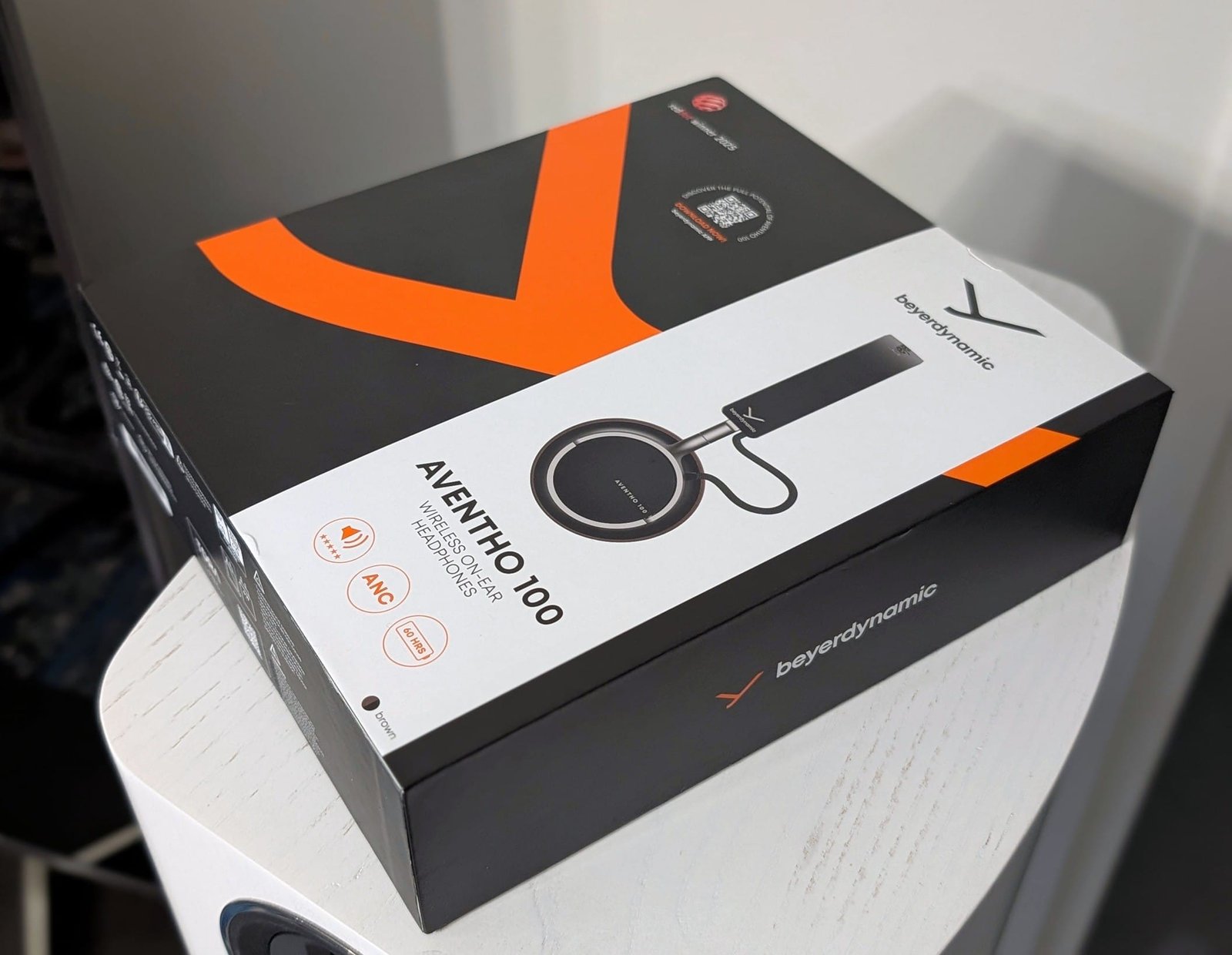
Beyerdynamic's headphones are not entirely convincing with their equipment, as for a relatively high price, only a soft fabric pouch has been included instead of a carrying case. On the other hand, the construction of the headphones is that famous German quality, so they will certainly remain intact when folded and transported from place to place.
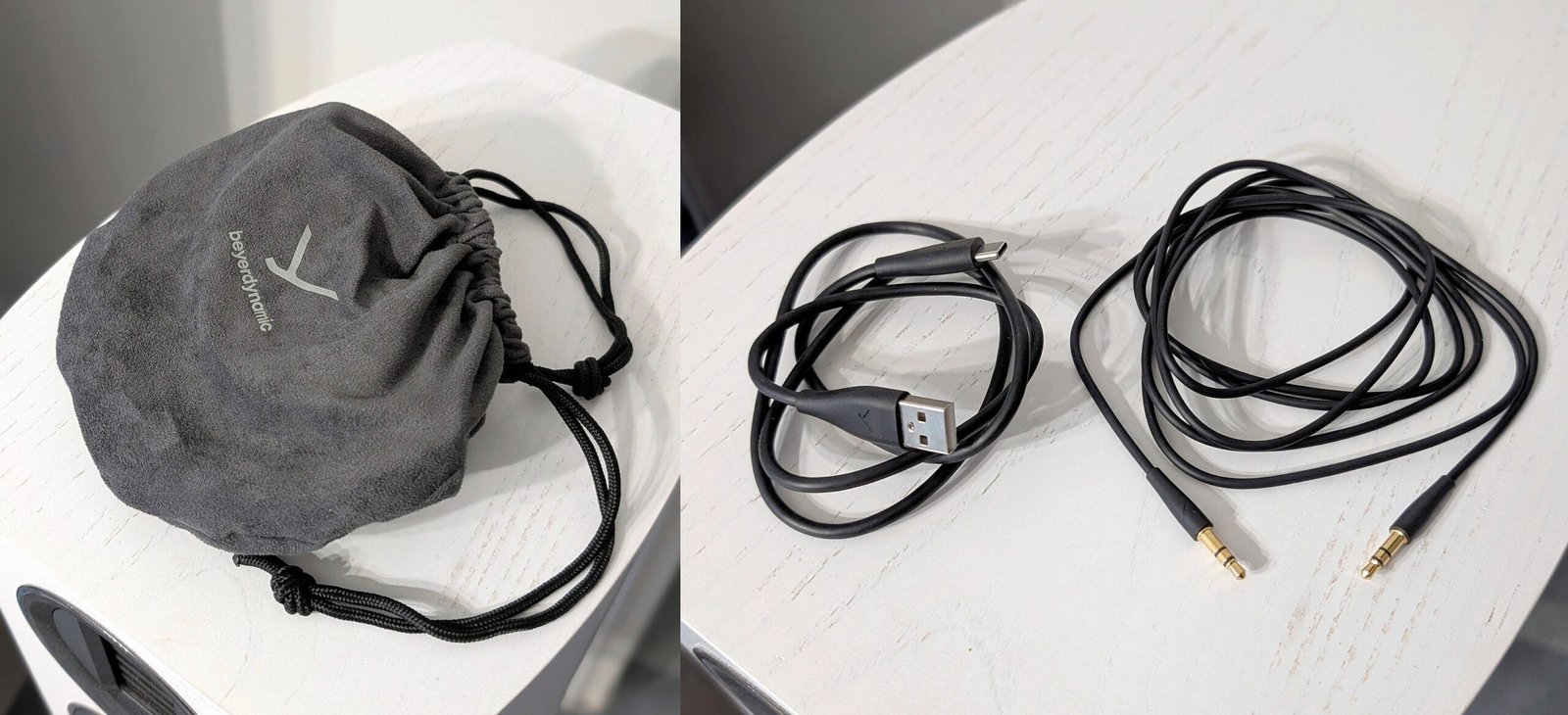
Other accessories include a USB charging cable and a headphone cable with 3.5-millimeter connectors. Both cable types could be used for listening with the Aventho 100, but Beyerdynamic has for some reason decided to omit the data bus from its USB cable, meaning it is only suitable for charging the battery. Thus, another USB cable should be used for listening, which I consider an odd additional requirement. We are not talking about 20-euro headphones here, after all.
Structure and ”comfort”
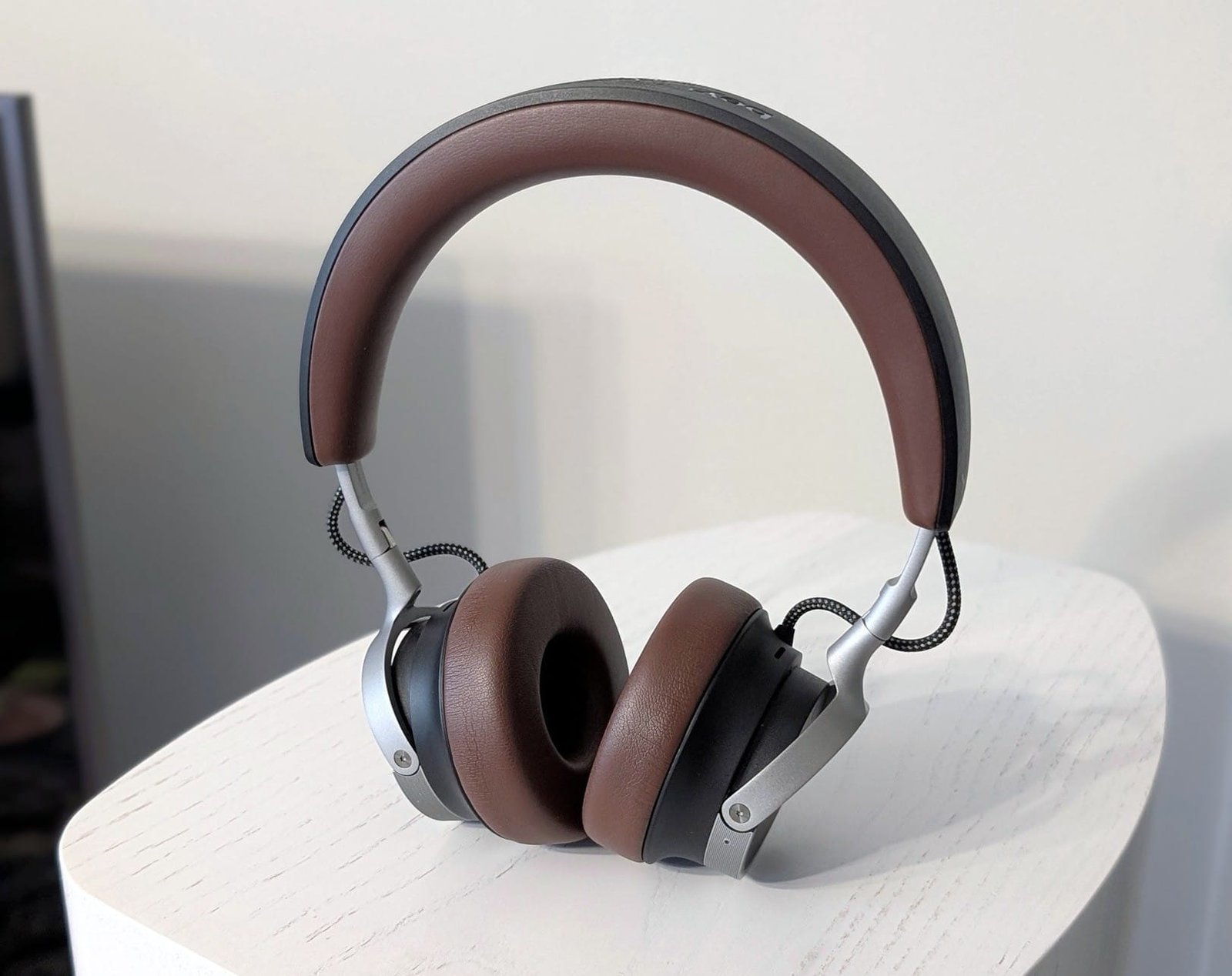
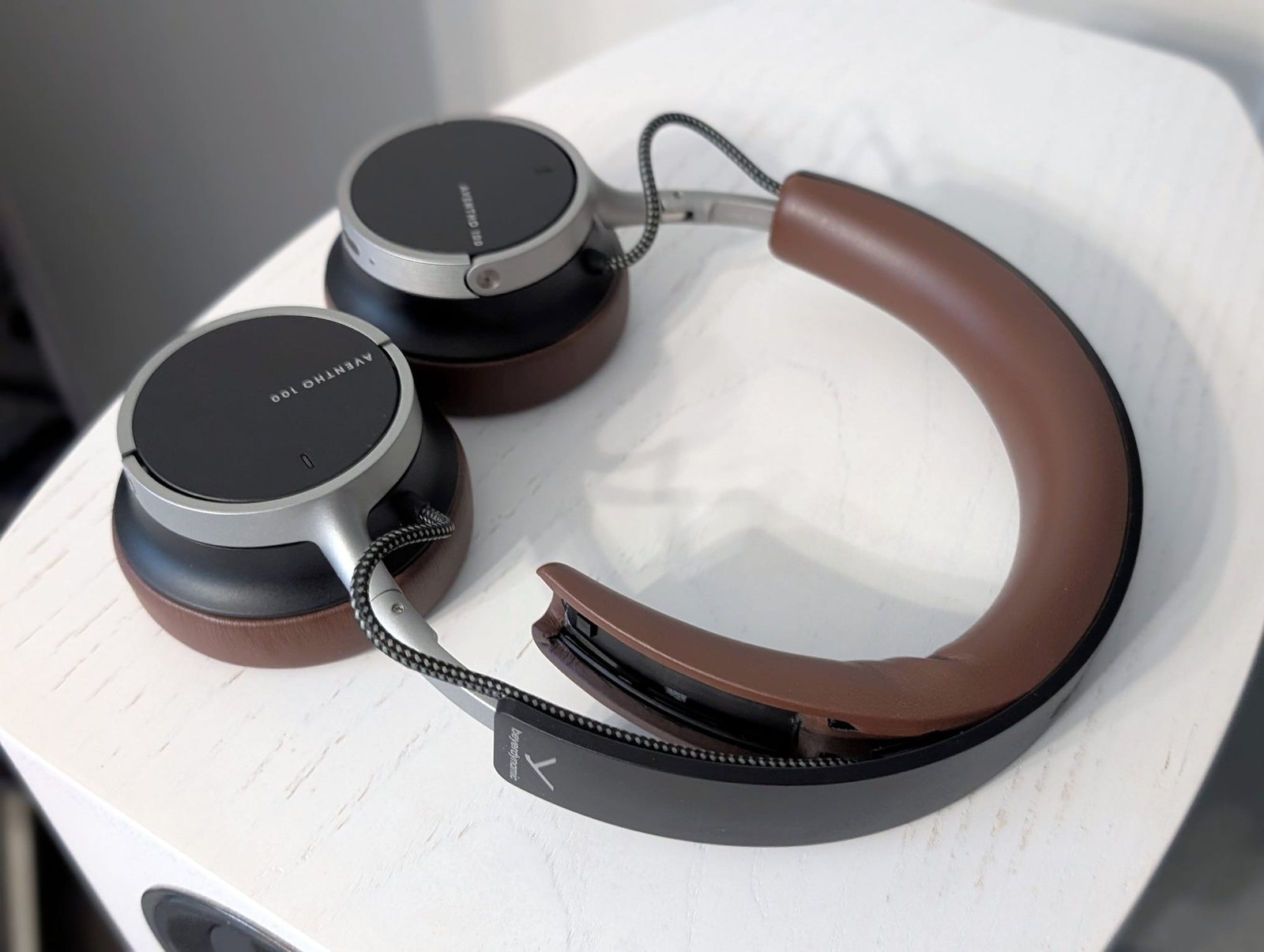
The Aventho 100 best justifies its higher price than many competitors with its high-quality and sturdy construction. The headband with its hinges is made of metal, and the plastic parts also feel thick and robust, typical of the German manufacturer. Despite their small size, the repairability of the headphones has not been forgotten, as both the faux leather ear pads and the headband pad could be easily replaced. Beyerdynamic has even published a repair guide for the Aventho 100, by following which the cups can be opened, for example, to replace the battery. Exemplary, I say.
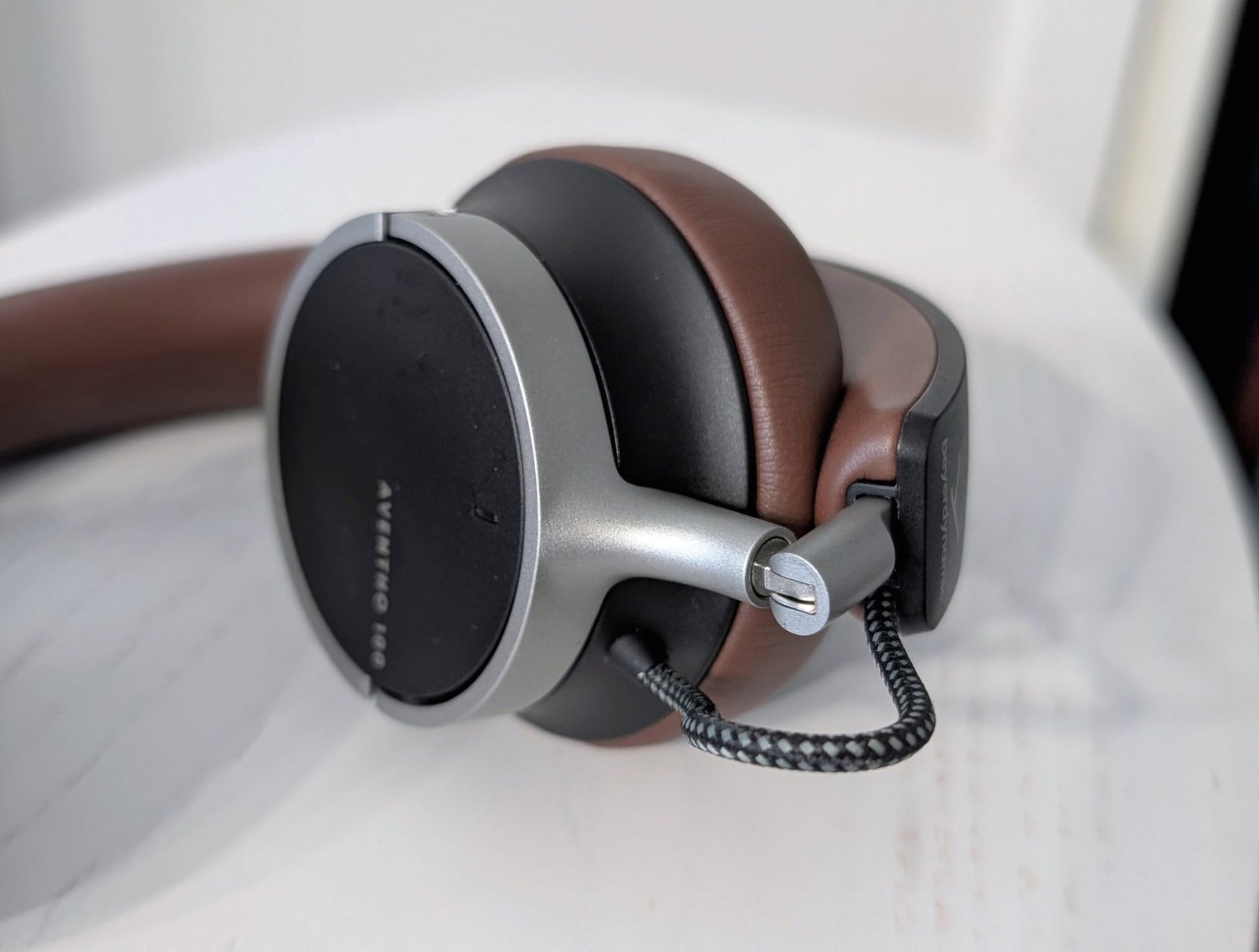
Although the structural choices aim for the product's longevity, the Aventho 100 still weighs only a moderate 220 grams thanks to its slender on-ear design, which I don't believe is too much for anyone. When handling the headphones, a small minus must be given only for the creaking caused by metal parts rubbing against each other. Some, however, might also criticize the cups turning in the ”wrong” direction when the headphones are lowered onto the neck. I, however, prefer to keep the Aventho 100's cups in their so-called basic position then, because turned horizontally they would choke me. So, everything is fundamentally fine.
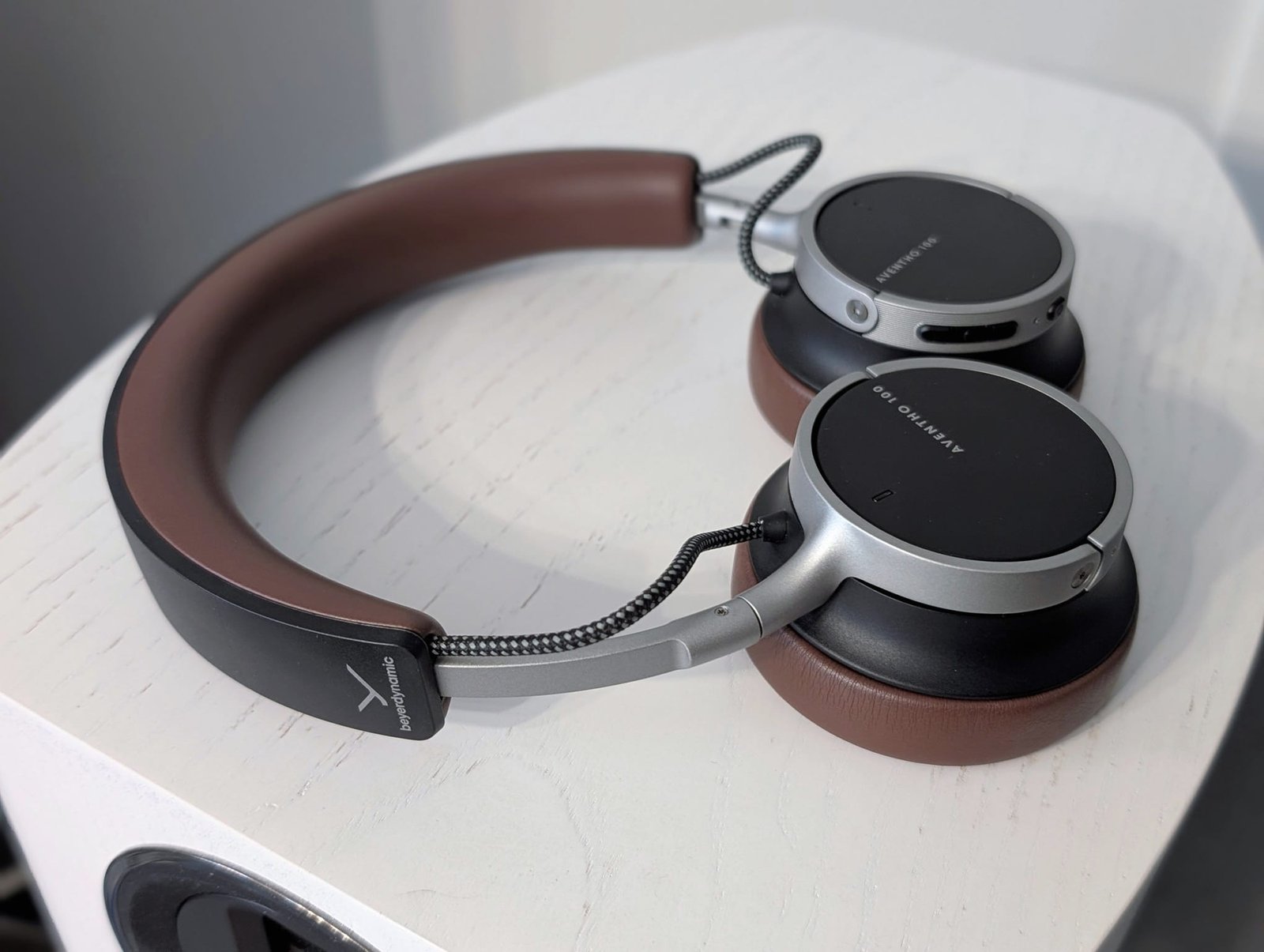
Aesthetically, the headphones appeal to me because they exude a bygone era and nostalgia, which is currently fashionable in other product categories as well. My test headphones are black-brown in color, but the Aventho 100 could also be purchased in all-black or white, with the metal parts, of course, being silver in all versions. Controlling wireless use happens from the back of the right earcup with fairly conventional, but clearly clicking buttons. For comparison, for example Focal Bathys' buttons are not this high quality, even though the row of three buttons matches the design of the Aventho 100. Fortunately, Beyerdynamic's headphones lack all kinds of touch functions this time, so the mechanical usability of the Aventho 100, in my opinion, surpasses the manufacturer's more expensive Aventho 300 -model.
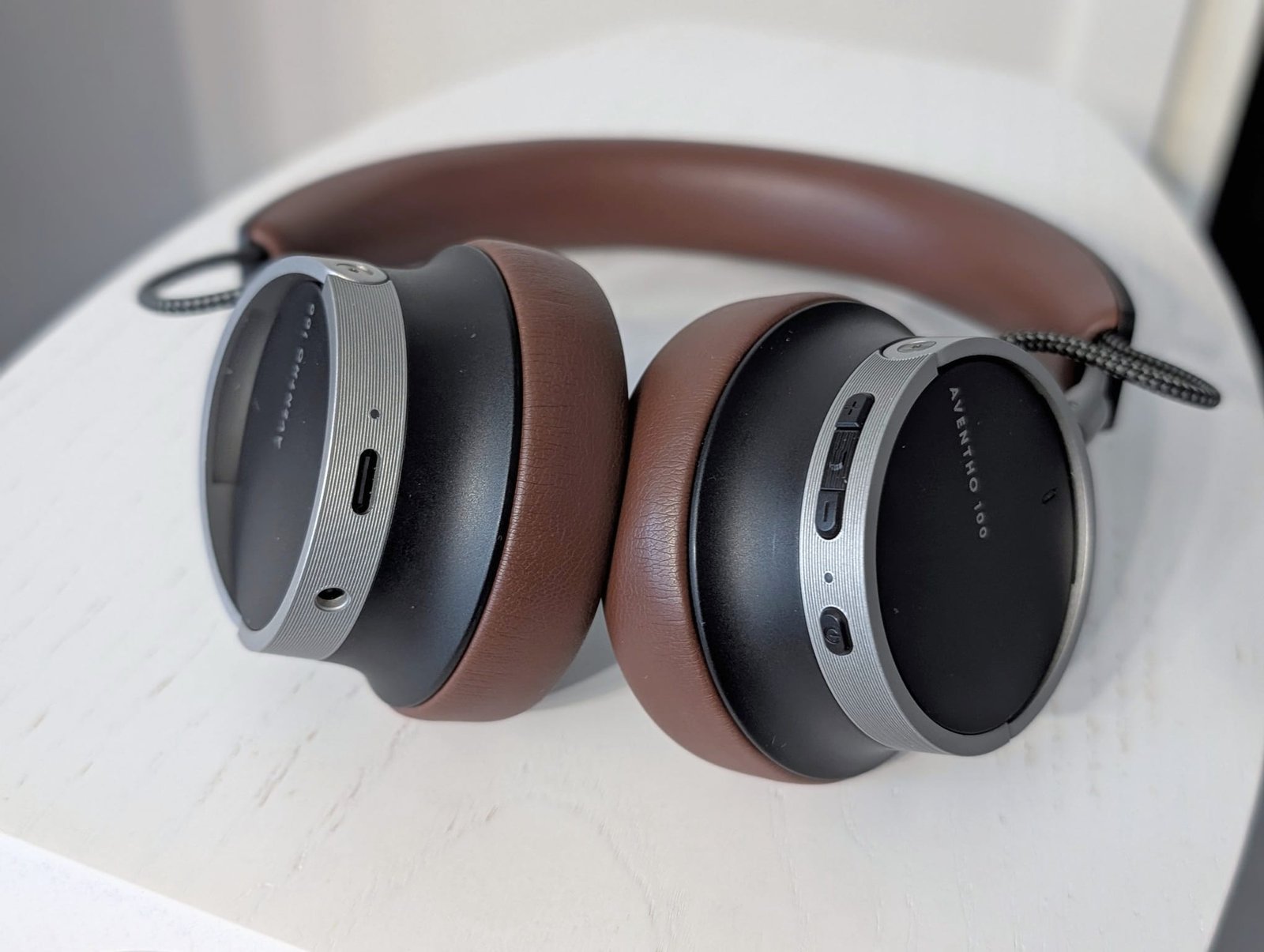
When it comes to comfort, things collapse. Or there is something good about the situation, because the main cushion is excellently thick and the memory foam of the round ear cushions feels pleasant. However, the Aventho 100 squeezes my head almost deadly tight, as not only my ears get crumpled, but the pressure is constantly felt all the way to my skull. Because of this, I constantly hear my own heartbeat without interruption during use, which quickly becomes unpleasant. The sensation is like wearing some kind of medical research device on my head. My ears also become sore almost immediately, so using the Aventho 100 is only possible in short bursts. For me, 15–30 minutes is already too much, and my head is not exceptionally large. I even considered bending the headband looser as a traditional fix, but unfortunately, being plastic, it does not allow for the procedure.
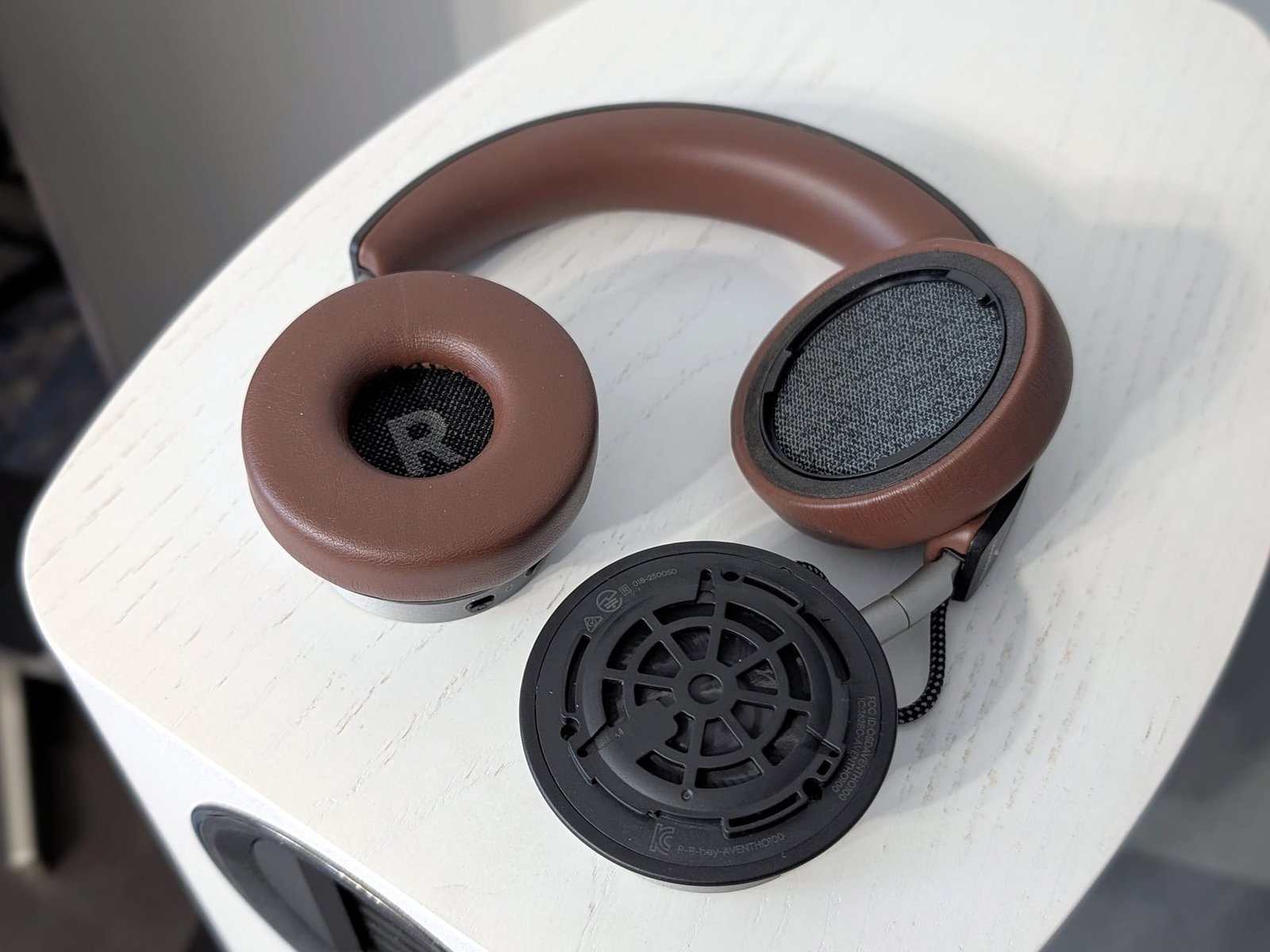
A few other reviewers praise the Aventho 100 as the most comfortable headphones they've tried, so experiences clearly vary. Perhaps it's worth approaching the situation by personally considering how other on-ear headphones have felt before. If you've gotten along well with them, and the small cushions don't feel miserable on your earlobes, the Aventho 100 might even be quite comfortable. However, I wouldn't necessarily recommend it "blindly," especially for adults with normal-sized heads or those who haven't tried on-ear headphones before. In my case, all the positive structural features are largely wasted because the Aventho 100 is not comfortable to use at all. For comparison, the Valco VMK15 clearly emphasizes better user comfort instead of the highest possible quality construction. I haven't tried JBL's on-ear headphones yet.
Technology
Beyerdynamic is quite reticent regarding the technical specifications of the Aventho 100, but the headphones nevertheless operate with Bluetooth version 5.4. In addition, the chipset is based on the Qualcomm Snapdragon sound platform, similar to the more expensive Aventho 300, supporting the AptX Adaptive codec and its AptX Lossless additional feature. Thus, with a suitable mobile device or, for example, the Sennheiser BTD 700 Bluetooth transmitter familiar to me, the Aventho 100 can be listened to wirelessly with lossless CD quality. On the positive side, the headphones also support the AptX HD codec, so if your devices don't support the latest AptX options, you won't have to drop all the way to the bottom for wireless listening. However, Bluetooth LE support is missing from Beyerdynamic's headphones.
With the BTD 700, the Aventho has worked stably with the AptX Lossless codec. Multipoint also works as expected, and there are no other connection issues, which I wouldn't expect from such a modern Bluetooth implementation anyway. Connecting to Android devices is handled neatly with the Google Fast Pair feature, which, for example, Valco headphones do not support.
According to Beyerdynamic's promises, the Aventho 100's battery lasts up to 40 hours with noise cancellation on and over 60 hours without noise cancellation. The manufacturer does not state the charging time, but it always depends to some extent on the charger's efficiency. However, a 15-minute quick charge should add as much as 15 hours of use time, making the Aventho 100 an excellent compact travel companion. It can also be used while charging, and passive listening is also possible if needed.
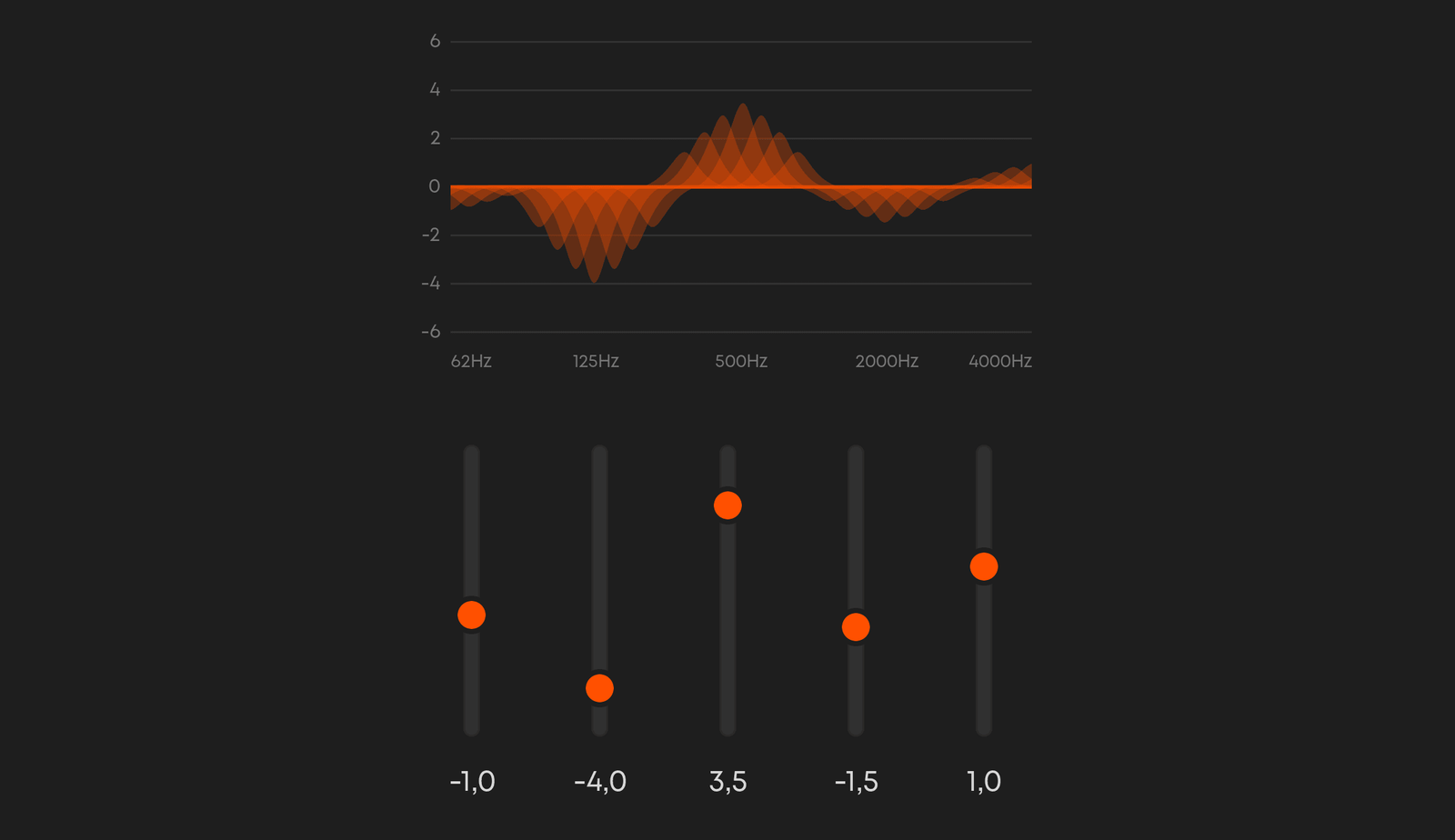
Beyerdynamic's mobile application doesn't offer much more interesting features this time, but by installing it, the effectiveness of the noise cancellation or transparency mode can be changed in three steps, while the sound can be adjusted with a 5-band equalizer.
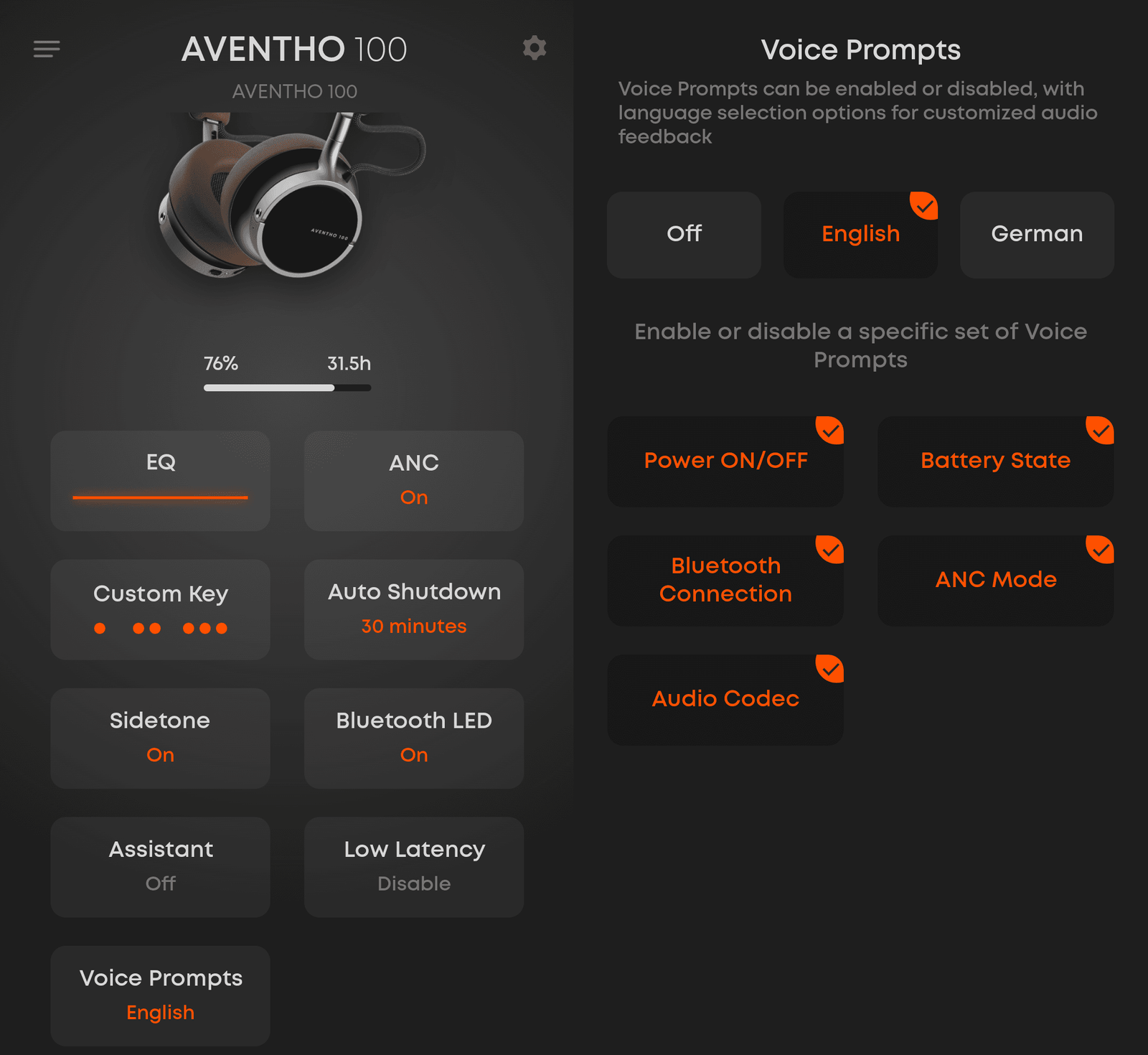
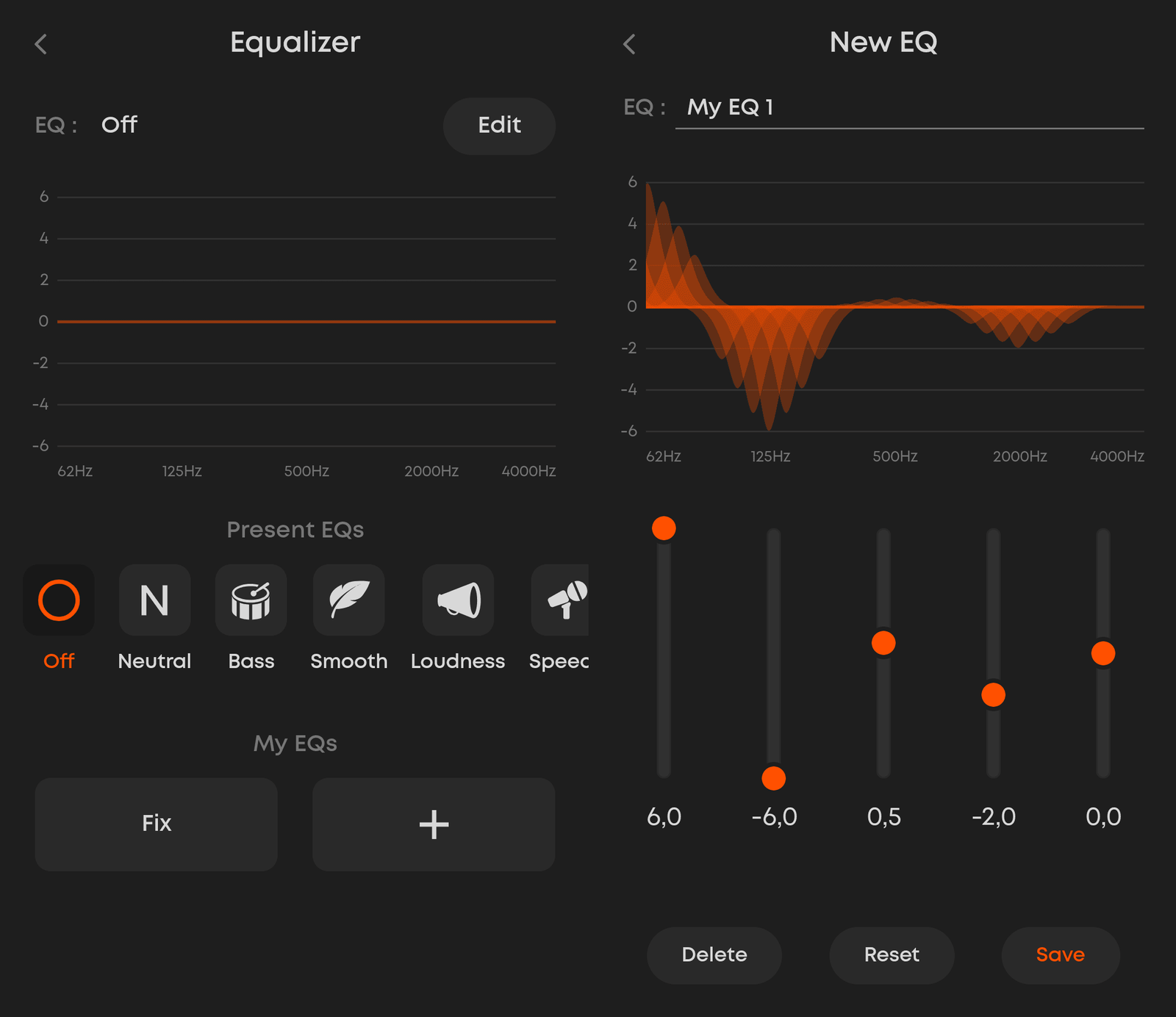
I quickly found the equalizer necessary because the manufacturer's DSP settings weren't quite spot on. As a pleasant surprise, the controls quite effectively command precisely the frequency ranges I wanted to change. For comparison, with the Aventho 300, the same equalizer was almost useless for saving the headphones, so the Aventho 100 seems like a more considered package.
Active Noise Cancellation
As I noted in the introduction to my article, with such small ear cushions, it's difficult to achieve a fit tight enough for noise cancellation to work optimally. Perhaps the strong clamping force of the Aventho 100's headband is precisely intended to ensure the functionality of the noise cancellation. When fitted correctly, the headphones actually attenuate noise significantly more effectively than the ones I was trying at the same time Valco VMK15. Even basic good over-ear headphones are not far off, as the Aventho 100 is genuinely surprisingly good. There is also no disturbing background hiss.
On the negative side, however, Beyerdynamic may have set the noise cancellation a bit too aggressively, as the noisier the environment, the more pressure the headphones create on the ears. For example, when playing simulated airplane noise from living room speakers, using the Aventho 100 becomes downright painful for me, even though the noise is well attenuated at the same time. This is unfortunate, and the situation does not significantly improve when reducing the noise cancellation effectiveness via the app. Thus, the headphones may not fit my ears perfectly tightly due to their small cushions. At least when moving my mouth even slightly, the seal breaks. However, I leave a small possibility that for some, the Aventho 100's noise cancellation works more smoothly than for me.
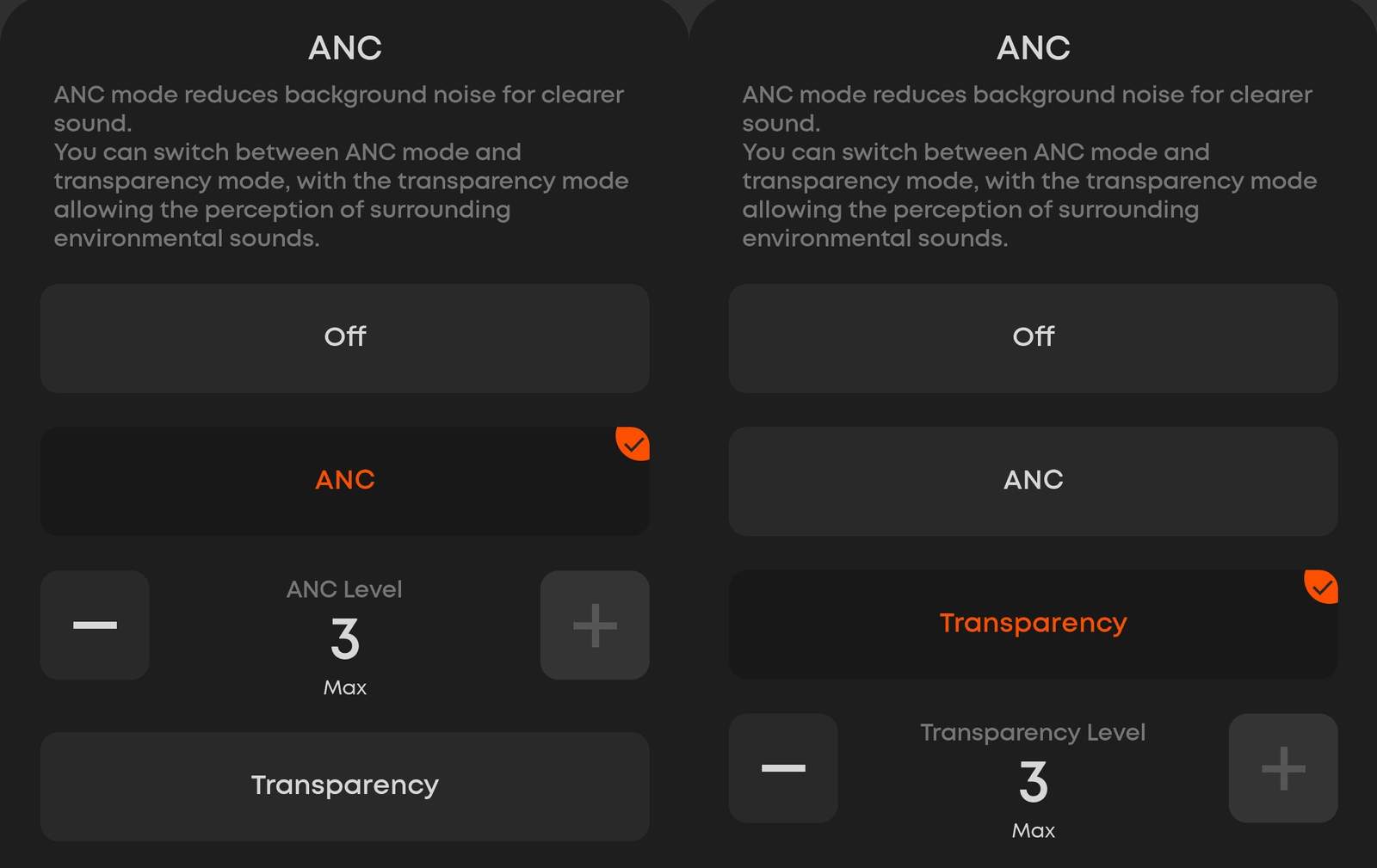
The transparency mode in the headphones desirably amplifies ambient sounds, but still leaves the soundscape quite muffled. My own speech also sounds stuffy, so I would keep expectations for this feature moderate. When moving outdoors, noise cancellation should be kept off, as wind causes crackling when hitting the microphones.
Microphone sound quality
I found the microphone sound quality of the Aventho 100 to be quite ordinary, although of the two on-ear headphones I tested at the same time, the Valco VMK15 recorded slightly clearer sound. Beyerdynamic thus does not seem to have invested particularly in this area, even though the microphone implementation should be based on the same Qualcomm cVc technology that competitors' products also utilize.
Headphone sound quality
In addition to a Bluetooth connection, Beyerdynamic headphones can be listened to with both a USB cable (not included in the package) and an analog headphone cable, so the usage possibilities are versatile. For comparison, for example, all Sony noise-cancelling headphones lack the USB listening option, even the 470 euro priced WH-1000XM6:model.
The Aventho 100 also works completely passively without battery power, but in this case, DSP correction (digital sound fine-tuning) is not available, and the sound resembles cheap conference headphones or a phone speaker. However, since the mid-range is reproduced clearly, I believe the headphones could be used this way, for example, for listening to audiobooks.
When listening with power on, activating the noise cancellation function does not really change the sound at all compared to the ANC OFF mode. I consider this a good thing from the perspective of both usage scenarios and equalization consistency. Since the noise cancellation function does not work as I would hope, I can use the headphones without it worry-free.
Measurements
Our frequency response measurements have been made with a clone IEC-60318-4 coupler and KB501X pinnae. The Harman target curve from 2018 is used as a reference point and generalization of the headphone response that would sound good to most people. For more information on the measurements and their accuracy, see Headphone Measurements-page. The frequency response of the Aventho 100 is also comparable with other measured headphone models Squiglink .
Frequency response with power off (headphone cable):
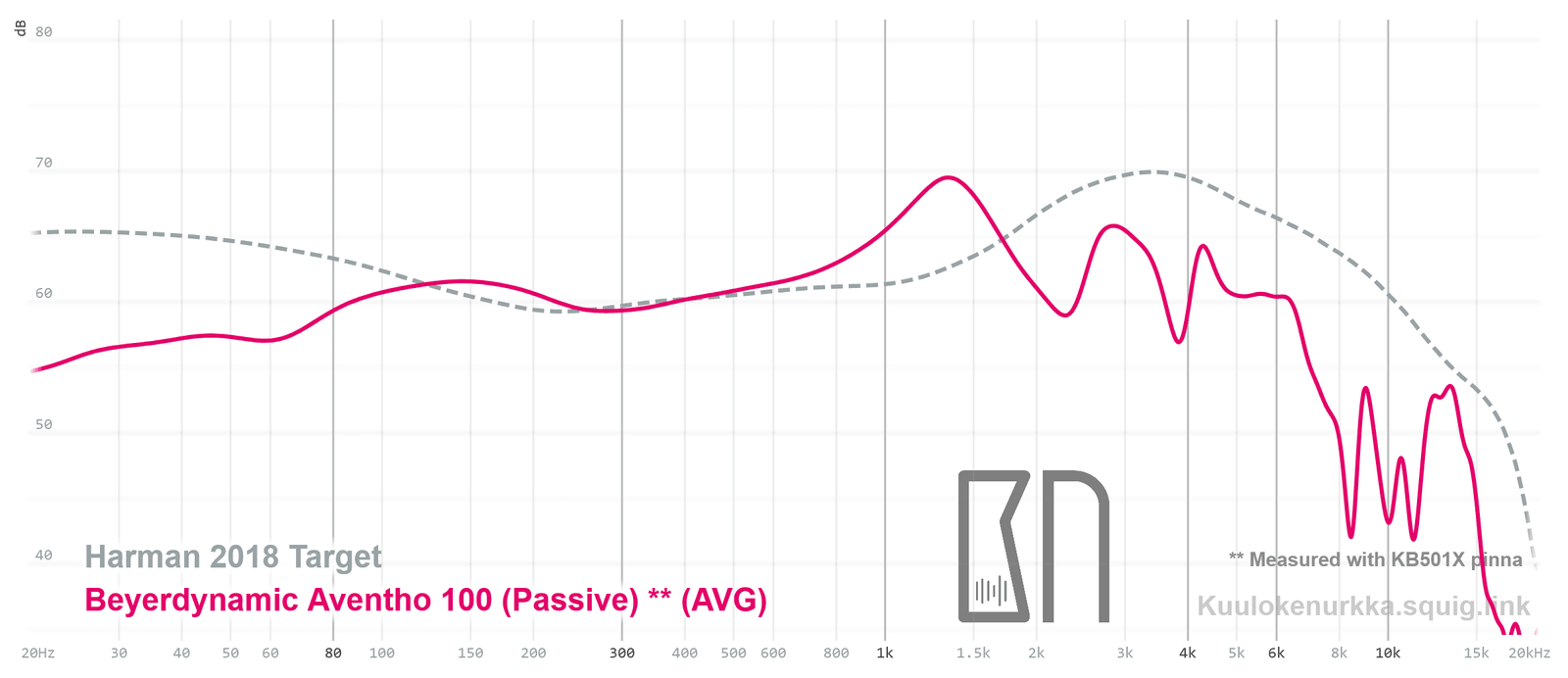
As passive headphones, the Aventho 100 does not produce a great sound; both bass and high frequencies remain subdued. In the middle of the mid-range, the frequency response, in turn, rises sharply, so the reproduction focuses almost entirely on this characteristic. A similar sound might still have been commonplace 50 years ago, but nowadays there is nothing positive to say about it. I therefore recommend listening to the Aventho 100 only with the power on.
Frequency response (ANC ON/OFF):
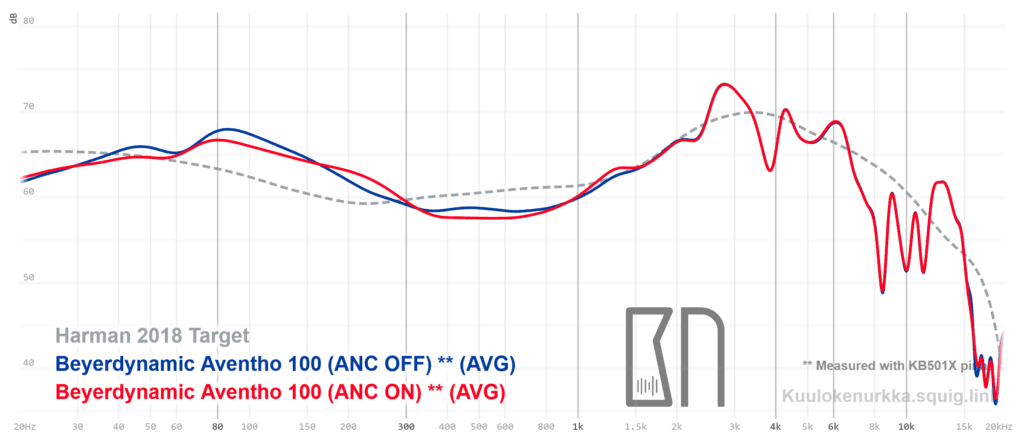
With power on, the Aventho reproduces surprisingly normal sound for Beyerdynamic wireless headphones, although some significant problems are also noticeable. Firstly, the bass reproduction suffers from the inherent flaws of a closed design, meaning it emphasizes the 80–250 Hz range instead of 20–100 Hz, and is also quite boosted compared to Harman's curve. The mid-range, in turn, remains quite recessed and subdued between 400–1000 Hz, which poorly aligns with the energy peak located at 3 kHz. In this respect, the headphones somewhat resemble the more expensive Aventho 300 model, which also reproduces sound in a thin and aggressive style. Otherwise, the treble in the Aventho 100 is quite well-proportioned and easy on the ears, at least based on measurements.
Equalization suggestion:
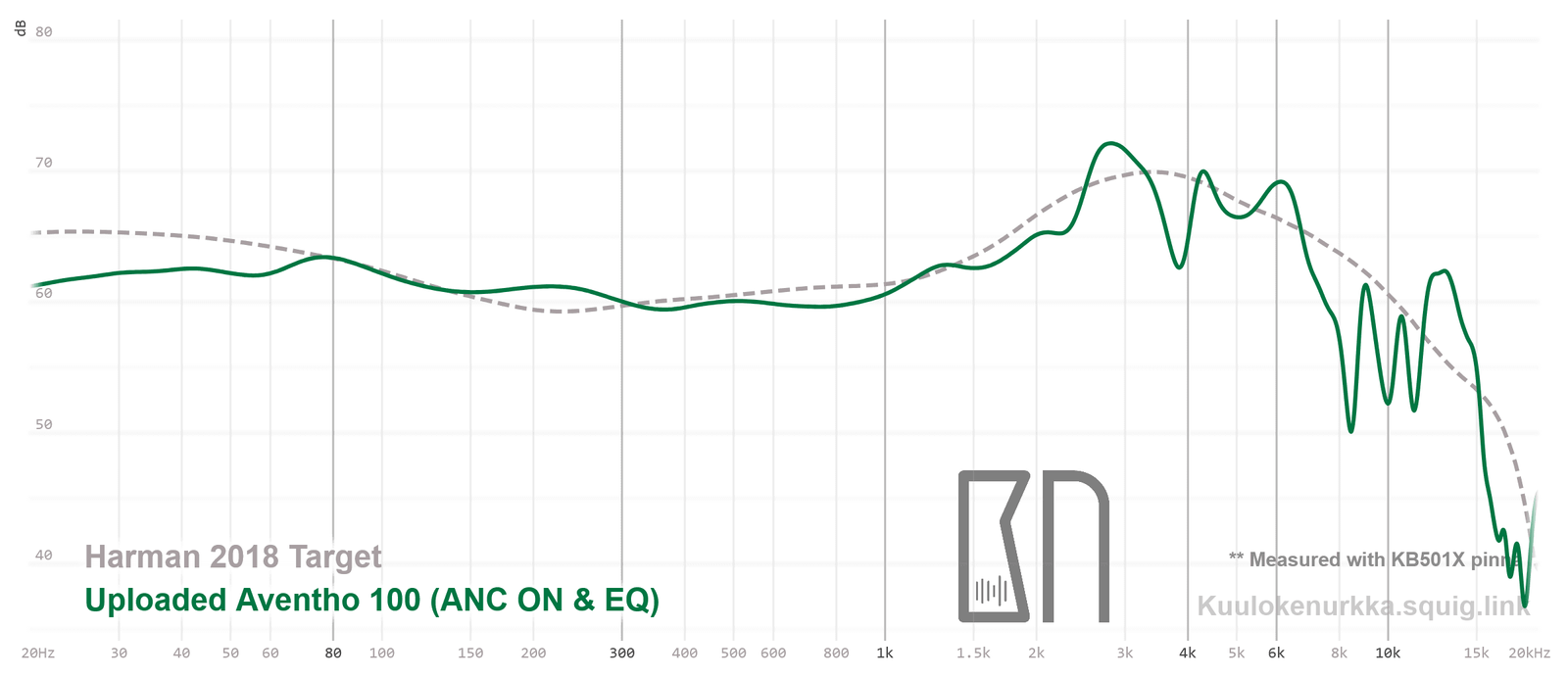
I quickly got tired of the Aventho 100's default sound, so I fixed the headphones through its app. There remains some slight unevenness in the high frequencies, but considering the overall picture, the sound can be made quite natural very easily. It would also be possible to fine-tune the energy level even further with the 2 and 4 kilohertz controls. Bass, on the other hand, could be increased with the lowest control. Fortunately, Beyerdynamic has already adjusted the highest treble quite well, because its level cannot be changed at all with the app's equalizer.
Sound observations
On a broad scale, the Aventho 100 doesn't do anything terribly wrong in terms of sound quality, but I still find it quite dull and stuffy with its default settings. The reproduction is simultaneously characterized by a soft bloatedness in the low frequencies, a lack of presence in the midrange, and a slight harshness in the upper frequencies (a 3 kHz characteristic). A casual listener would hardly be offended by the presentation, but in my opinion, the headphones also don't offer anything that could be classified as interesting. For example, the bass doesn't kick particularly hard, nor is the reproduction energetic enough for me to call it fun or exciting. The Aventho 100 thus feels like a regrettably mediocre and lifeless headphone.
As one factor diminishing my perception, I don't perceive any kind of soundstage with the frequency response defined by Beyerdynamic in these headphones; instead, the sound plays entirely inside my head. This is partly due to the fact that with on-ear sized earpads, the influence of the human outer ear in sound perception is bypassed, whereby a distorted frequency response produces an unnatural soundstage even more readily. Some relief can indeed be obtained for the situation with equalization.
However, if I were to say some more pleasant things about the Aventho 100 before that, its treble works well for me as is from 4 kilohertz upwards. Thus, the narrow peaks familiar from many other Beyerdynamic headphones do not jump out; instead, the clarity is even and safe. For this, I give credit to the manufacturer, especially since its equalizer's adjustment range ends around 5 kilohertz. However, it's a blessing in disguise, as the treble sounds quite suitable for my taste.
The equalizer helps in other areas of the sound, as the low frequencies can be straightened out to be normal and good-sounding, and after small fine-tunings, I no longer perceive the 3 kilohertz region as too aggressive either. The soundstage, however, I still find quite small and narrow, but this is likely a characteristic of closed on-ear headphones. Nevertheless, the reproduction already feels more spacious compared to the headphones' default settings. I consider the naturalness of the midrange to be the biggest improvement, where the Aventho 100 clearly surpasses, for example, the Valco VMK15 I previously reviewed.
The equalized Aventho 100 is, therefore, in my opinion, even a surprisingly good headphone, which I would gladly listen to, if only it weren't uncomfortable in terms of its construction. Comparing these headphones to other offerings in the 200–300 euro range is also quite unfavorable, because in my opinion, good over-ear alternatives, such as the AKG N9 Hybrid (at its cheapest even less expensive than the Aventho 100) are both more comfortable and sound even better. The Aventho 100 pipes sound into the ear through a small earpad opening, which could very well be the reason for the rather mediocre sound separation, especially if the music contains a lot of information simultaneously. For basic users, a decent frequency balance is certainly sufficient in headphones of this price, which, pleasingly, is achieved in the Aventho 100 after my equalizations.
Summary
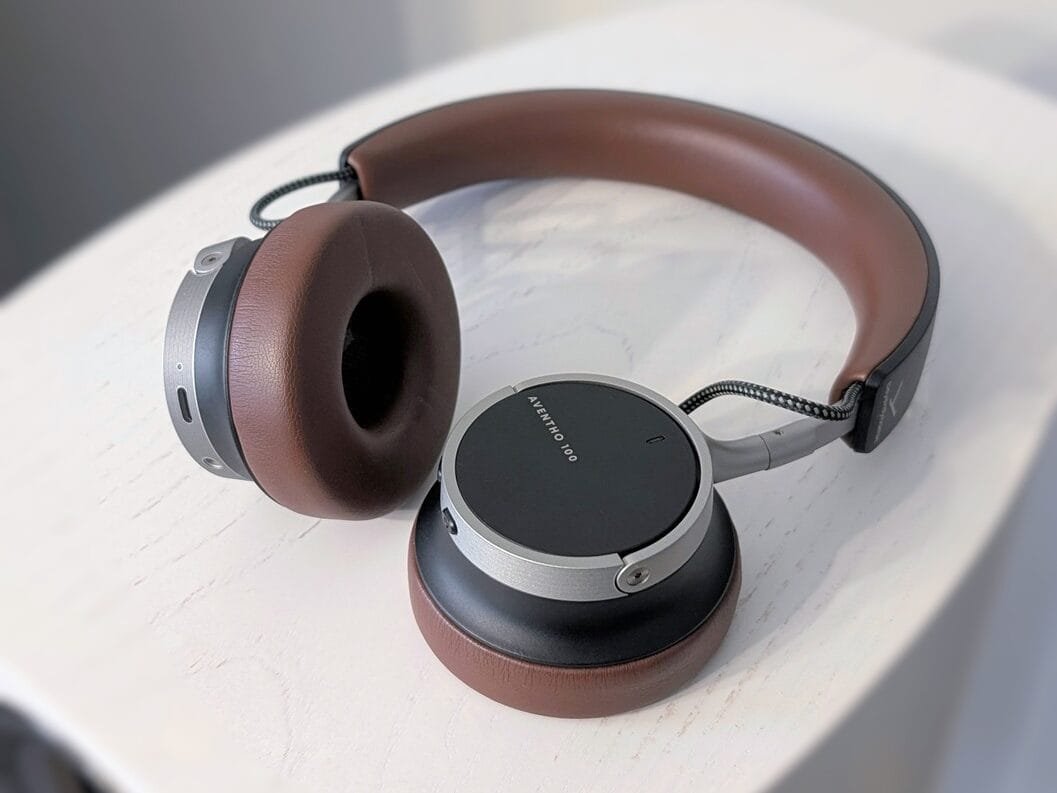
Beyerdynamic has made its Aventho 100 headphones extremely high-quality, but also, based on my own experiences, really uncomfortable. Everything really culminates in user comfort, because if it's as poor as it is for me, many of the Aventho 100's strengths are largely wasted. However, if your ears and head can withstand the use, the headphones immediately become better.
They are based on modern technology and a very effective noise-cancelling function, and battery life doesn't limit use in any way either. I disliked the manufacturer's Aventho 300 model, but I'm happy to say that the Aventho 100's sound quality can be brought into line with relatively minor adjustments. Overall, depending on the user, the Aventho 100 can be either an excellent headphone or even unusable. Such a dichotomy is rarely encountered with over-ear headphones, the smallest of which are not even significantly larger in size than the Aventho 100. I therefore hope that Beyerdynamic would have rather released similar headphones in an over-ear size.
However, the manufacturer must be given credit for successful design work and the courage to do something different compared to competitors. I am not fully familiar with the on-ear headphone market situation, but it is likely dominated by JBL with its many affordable headphone models. However, they feel very plasticky and flimsy, and hardly arouse interest with their appearance. The Aventho 100 might indeed hit a certain niche by offering retro-inspired fashionability with modern technology. The price of just over 200 euros feels quite high to me, but when handling the headphones, one fully understands it. Since Valco also recently released its VMK15 headphones, there is presumably demand for such sleek products. I therefore give the Aventho 100 my moderate recommendation, if someone considers this product category their own and prioritizes structural quality over user comfort in their purchase. In Valco's headphones, the situation is coincidentally the opposite.
Pros and cons:
+ Sound quality can be equalized to be good with the manufacturer's app
+ Sound remains quite identical regardless of whether noise cancellation is on
+ Very high-quality construction
+ Sleek size
+ Easily replaceable earpad parts
+ Good battery life
+ Supports all AptX codecs, including lossless AptX Lossless
+ USB listening capability
+/- Effectively dampens noise, but at the same time creates significant pressure in the ears
– Sound with default settings is muffled and rough
– Strong clamping force and poor comfort, at least for the undersigned
– Metal parts creak when rubbing against each other
– The USB cable included in the package is only suitable for charging the headphones
– No carrying case
 EN
EN  FI
FI
Onko Marshall Milton kuulokkeista tulossa arviota? Olisi mielenkiintoista kuulla miten ne pärjäävät muiden teidän arvostelemien on-ear kuulokkeiden joukossa.
Ei ole juttua Marshall-mallista ainakaan vielä suunniteltuna, mutta lisään toivelistalle, jahka jossakin välissä taas testaan enemmän vastamelukuulokkeita.