Author: Sword of Damocles
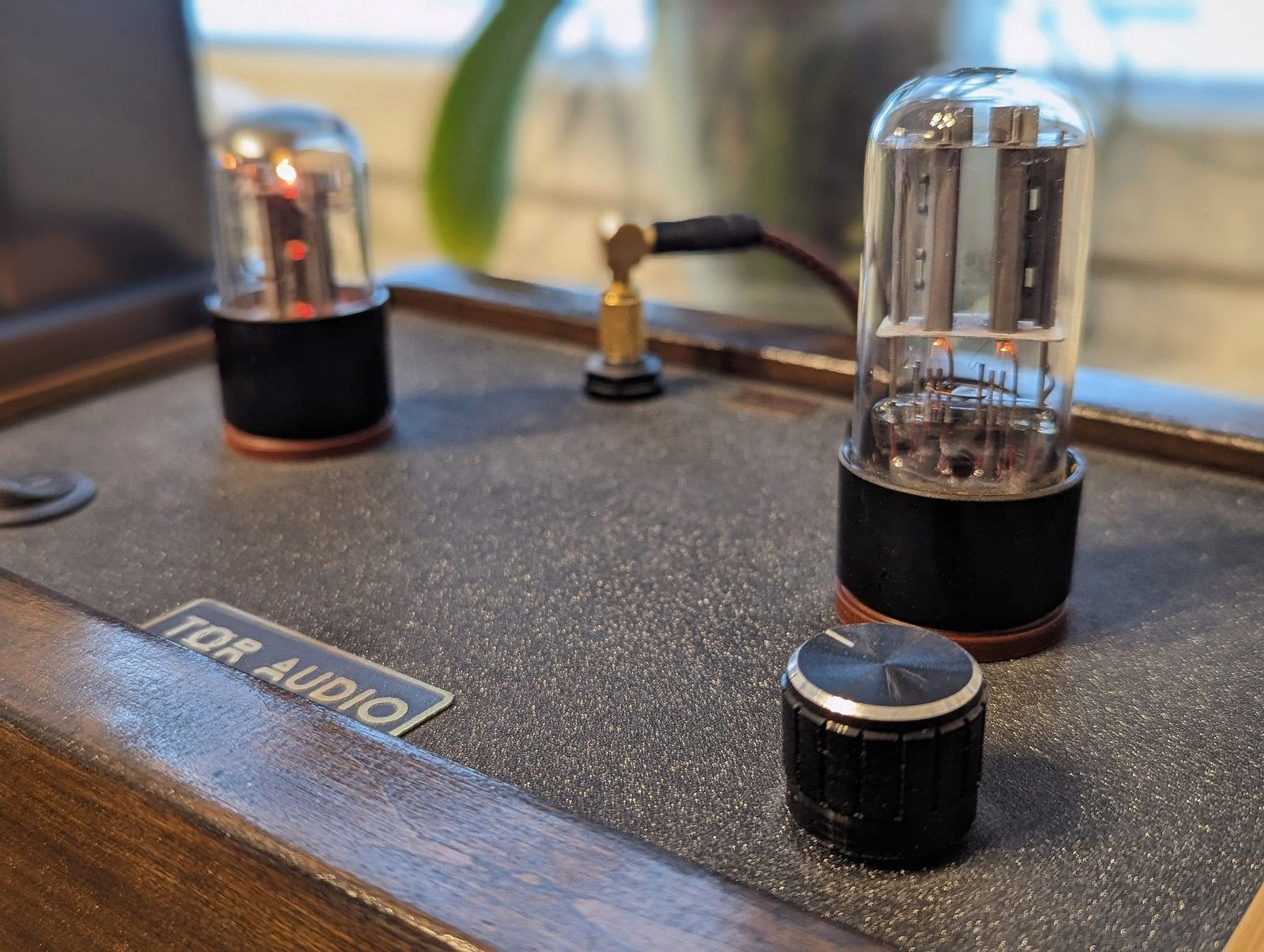
Table of Contents:
Information:
- Release year: 2016
- Country of manufacture: Ukraine
- Price: 580 USD
- Type: Class-A tube headphone amplifier (2 toroidal output transformers)
- Features: Point-to-point wiring
- Input connector: 6.35 mm (adapter must be used for RCA cables)
- Headphone connector: 6.35 mm
- Tubes: 1 x 6N8S (also suitable for 6SN7) and 1 x 6C5S-rectifier (also suitable for 6X5GT)
- Output power: max 450 mW
- Output impedance: Not specified
- Recommended headphone impedance: 25–600 ohm
- Weight: 2.65 kg
- Dimensions (W x D x H): 310 x 200 x 150 mm (tubes attached)
- Warranty: 3 years
Review sample: Self-purchased product
For a few years now, a rather rare handcrafted tube amplifier from Ukraine, the Tor Audio Roger, has been found on my living room table (manufacturer's homepage). The manufacturer's name, Tor Audio, comes from the toroidal transformers, which it states it manufactures itself. Winding the transformers apparently takes 80 percent of the working time required for a single amplifier, but according to the manufacturer, the sound quality is better than with ordinary transformers. The rest of the device's implementation is also designed by the Tor Audio team. I myself became interested in the $580 Roger amplifier primarily because of its interesting appearance.
I bought the device used from Ebay back then, so I can't say how smooth the ordering process from the manufacturer's website would be or how long one would have to wait for the amplifier to be completed. However, Tor Audio still seems to be manufacturing amplifiers despite the war in Ukraine, as the estimated delivery time has been updated regularly so far. In addition to the Roger amplifier, there are two other tube amplifiers for sale (Nick and Tor Audio Balanced) as well as two tube-powered D/A converters (Tube DAC and Tube DAC II). There is relatively little information or owner experiences available for all of these, so I finally decided to write about Roger after it had seen less use in the past couple of years. Luckily I did, because I had already forgotten how fun the traditional tube sound is.
External presentation tour
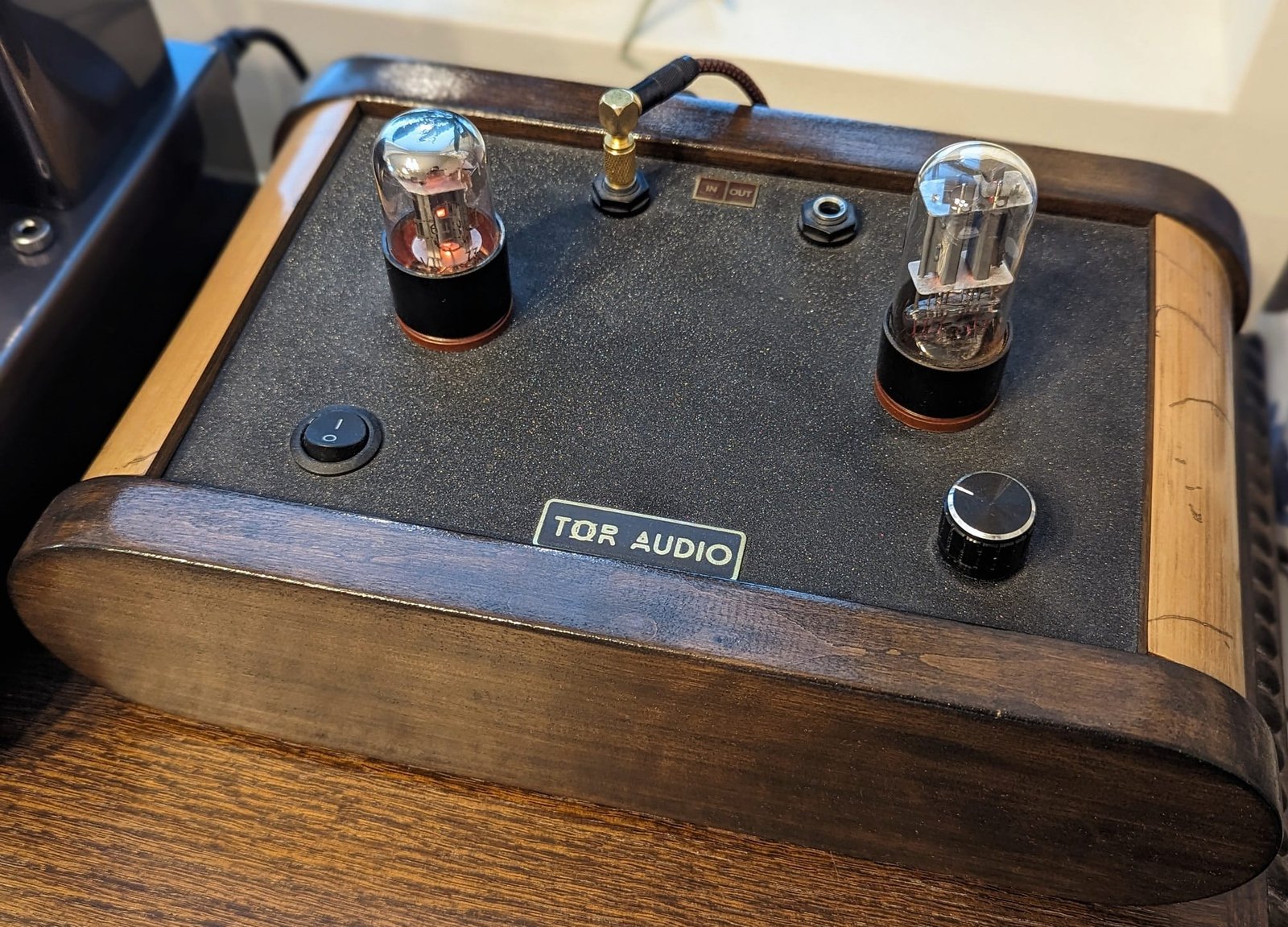
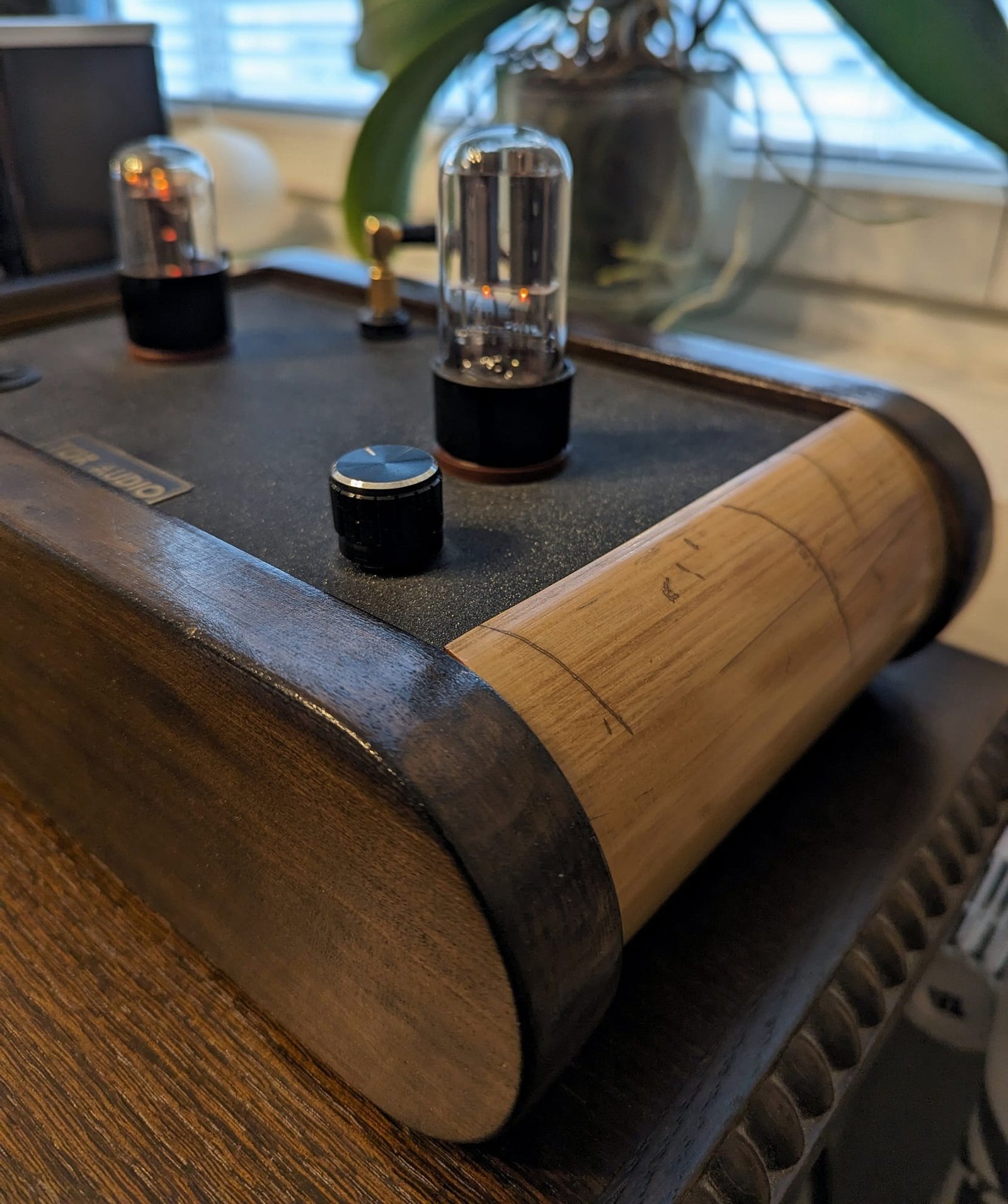
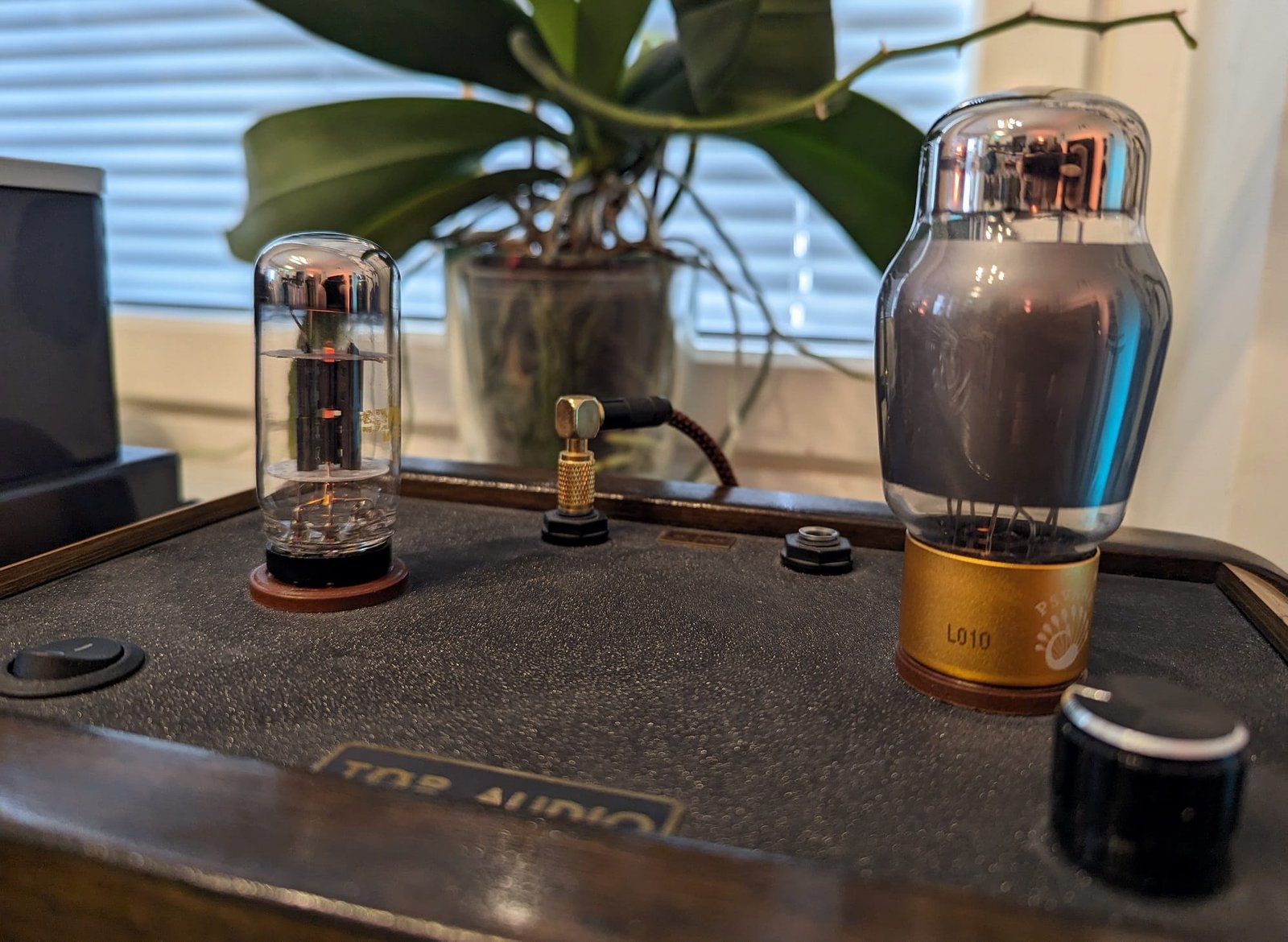
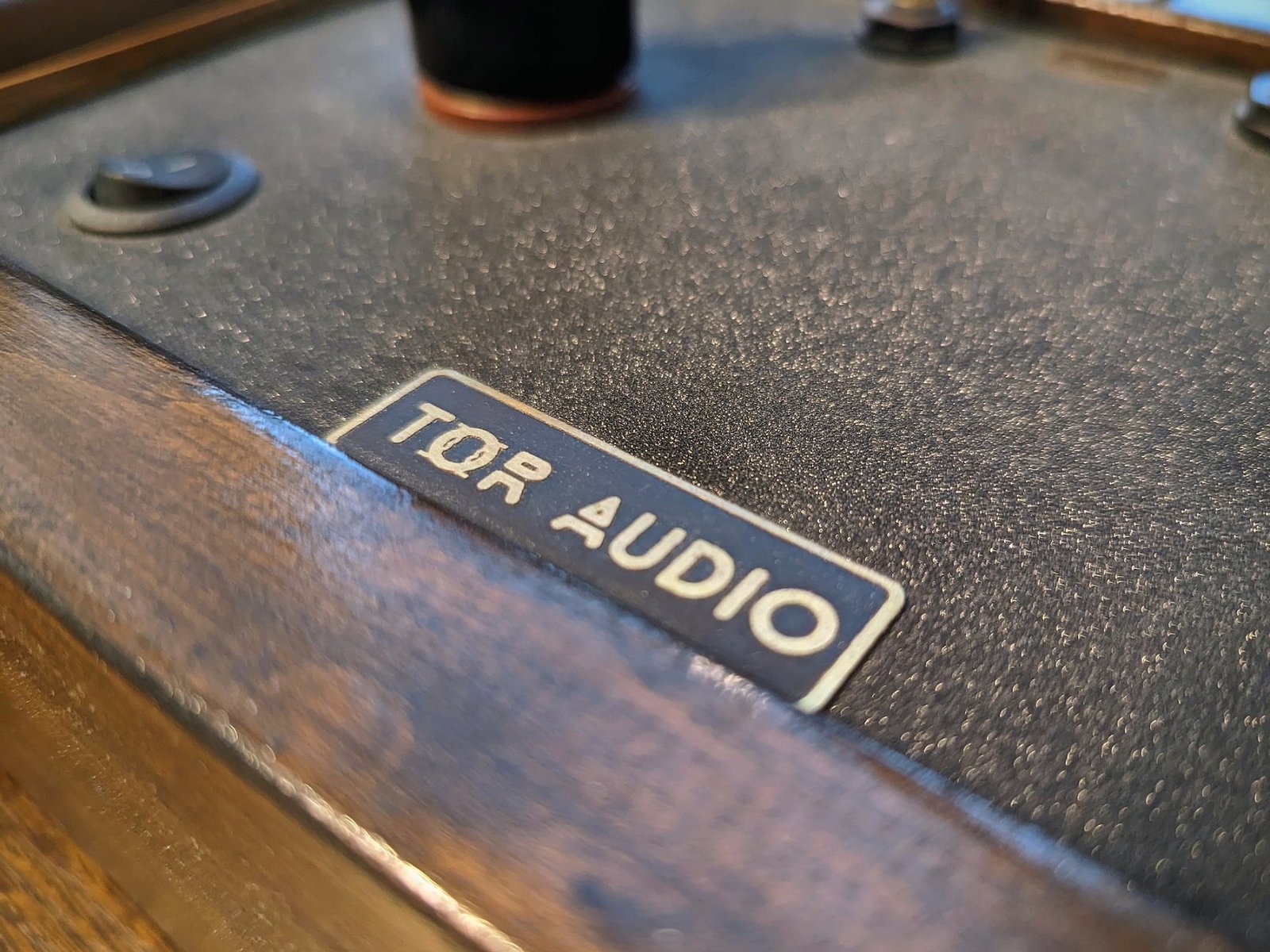
Built into brown wooden casings, the Roger looks almost 100 years old, making its age very difficult to guess. Thanks to this, the amplifier is also a fun decorative element, as it is sure to spark conversation. Ingeniously, halves of bamboo have been used as rounded side panels, and a steel plate serves as the top cover and base. The dark and slightly shimmering surface material of the cover, the metallic vintage-style info plates, and the brown tube sockets fit well with the old-fashioned appearance. The Roger doesn't take up much space on the desk, and it only weighs a modest 2.65 kilograms for a tube amplifier.
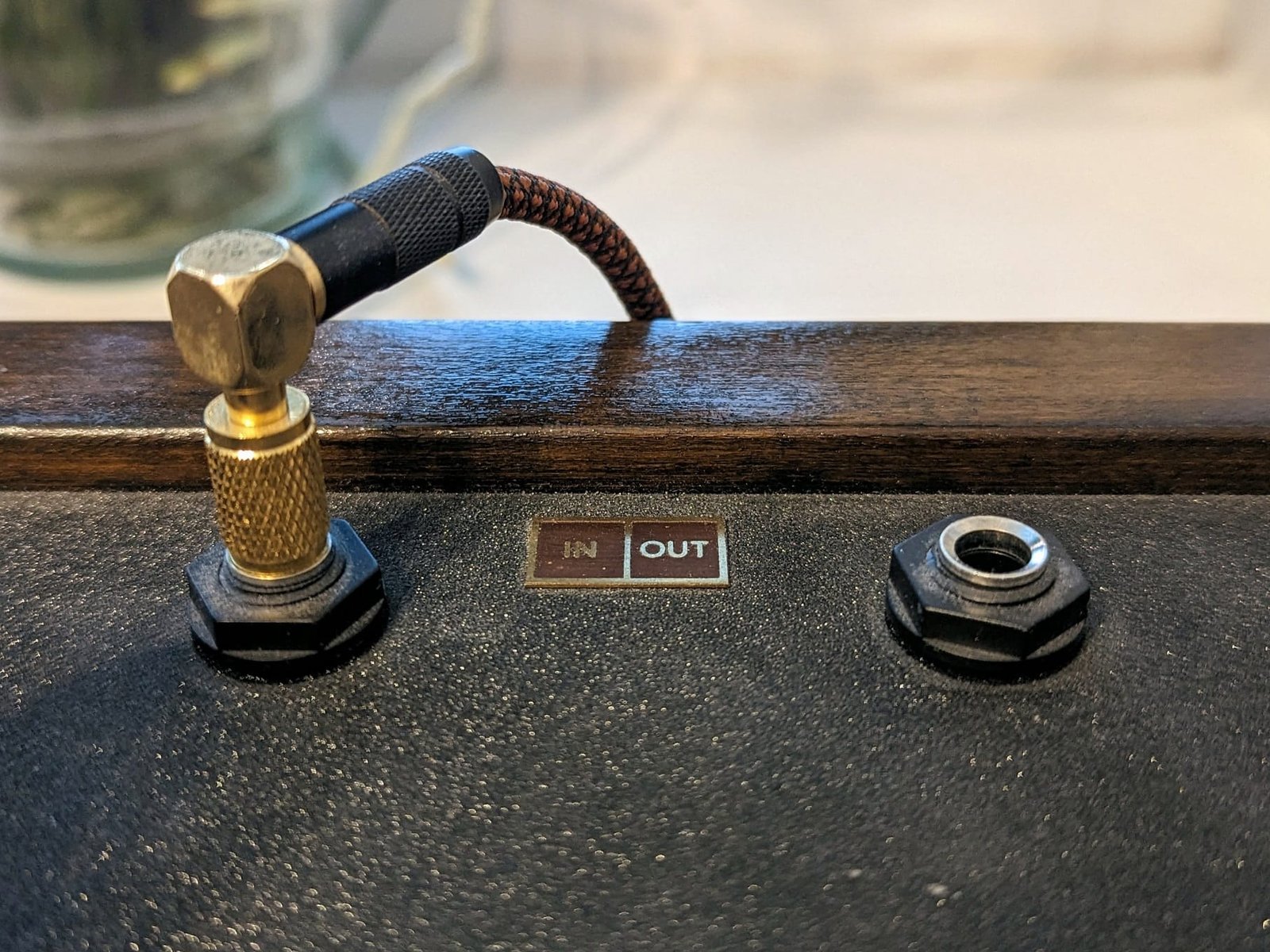
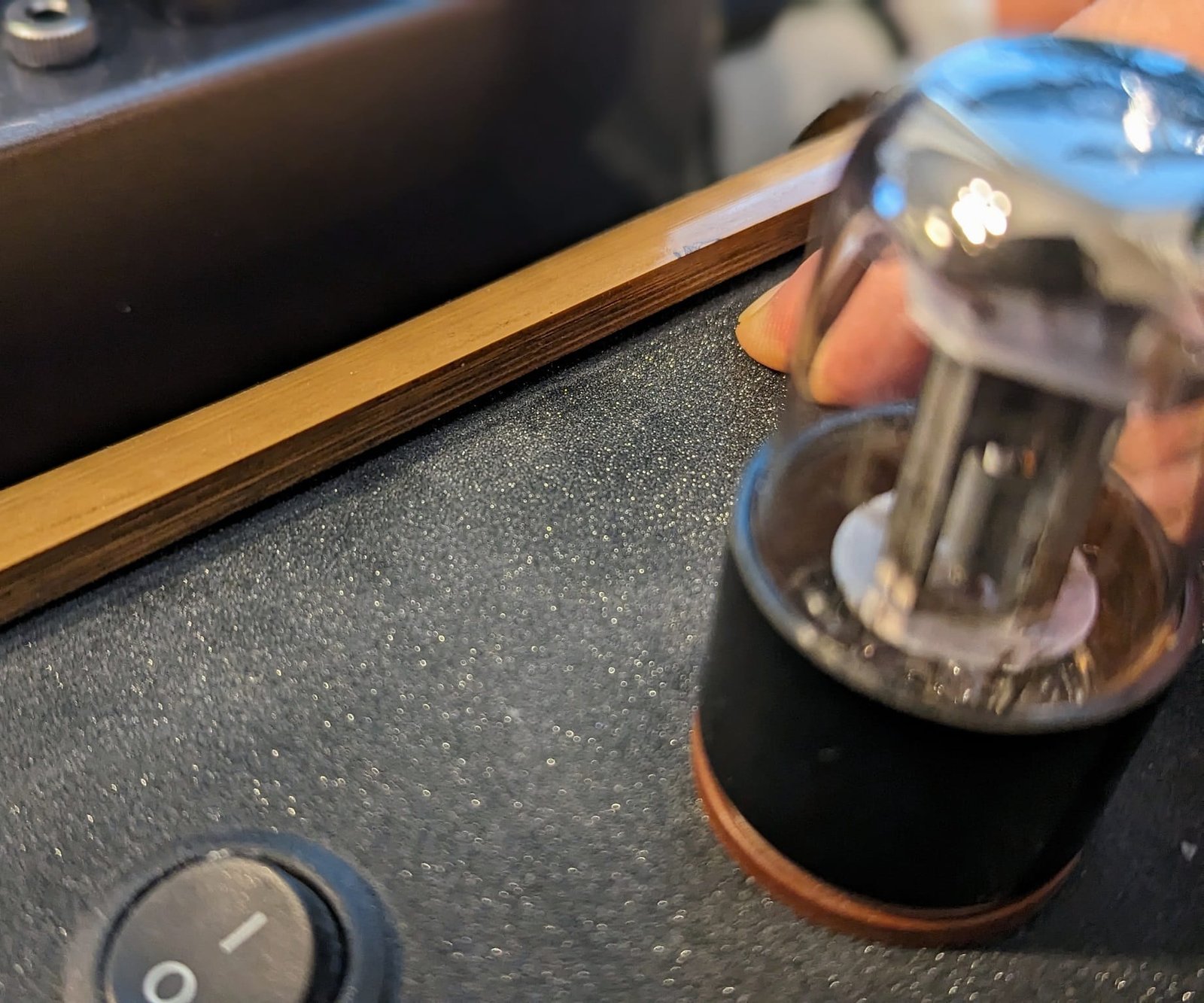
With the exception of the power connector located at the back, all essential features are found on the top cover, as in many other tube amplifiers. On the front left is the power button, and on the right edge is a smoothly rotating metallic volume control. The upward-pointing audio connectors are located somewhat awkwardly behind two tubes, so a headphone cable attached to a 6.35 millimeter connector should be routed so that it does not touch the burning hot tubes during use. This may require using a slightly longer than usual headphone cable.

Unusually, a 6.35 millimeter connector has also been chosen as the audio input connector, so with RCA cables, one must use, for example, a 3.5 millimeter adapter and then a 6.35 millimeter adapter. I myself ordered back then Hart Audio Cables: from a brown-sleeved RCA cable suitable for the theme, which has a 90-degree 3.5 millimeter connector at one end. The Roger itself only came with a 3-meter long power cable.
Pipes and operating principle
The Roger uses two tubes: a 6X5GT as a rectifier tube and a 6SN7 for amplification. Since the device comes from the East, the manufacturer has chosen as standard tubes the Soviet-made equivalents of the aforementioned types from the 70s, the 6C5S and 6N8S. These tubes are available for sale for just a few euros at their cheapest, and Tor Audio at least previously sent them as spare parts for the cost of postage when my previous tubes failed.
Tubes manufactured in the Soviet Union are generally quite pleasant in sound, but there seems to be great variation in their quality. I myself have several pieces of the device's standard tubes, some of which hiss strongly despite their NOS (new old stock) status. However, with tubes in good condition, there is no background noise; instead, the playback background is pleasantly black and silent. Western tubes also work well and can save nerves at the same time. Since the rectifier tube affects the sound less, the amplifier can be adjusted easily and quite affordably by changing a single 6SN7 tube. Many other tube amplifiers require a more expensive pair of tubes.
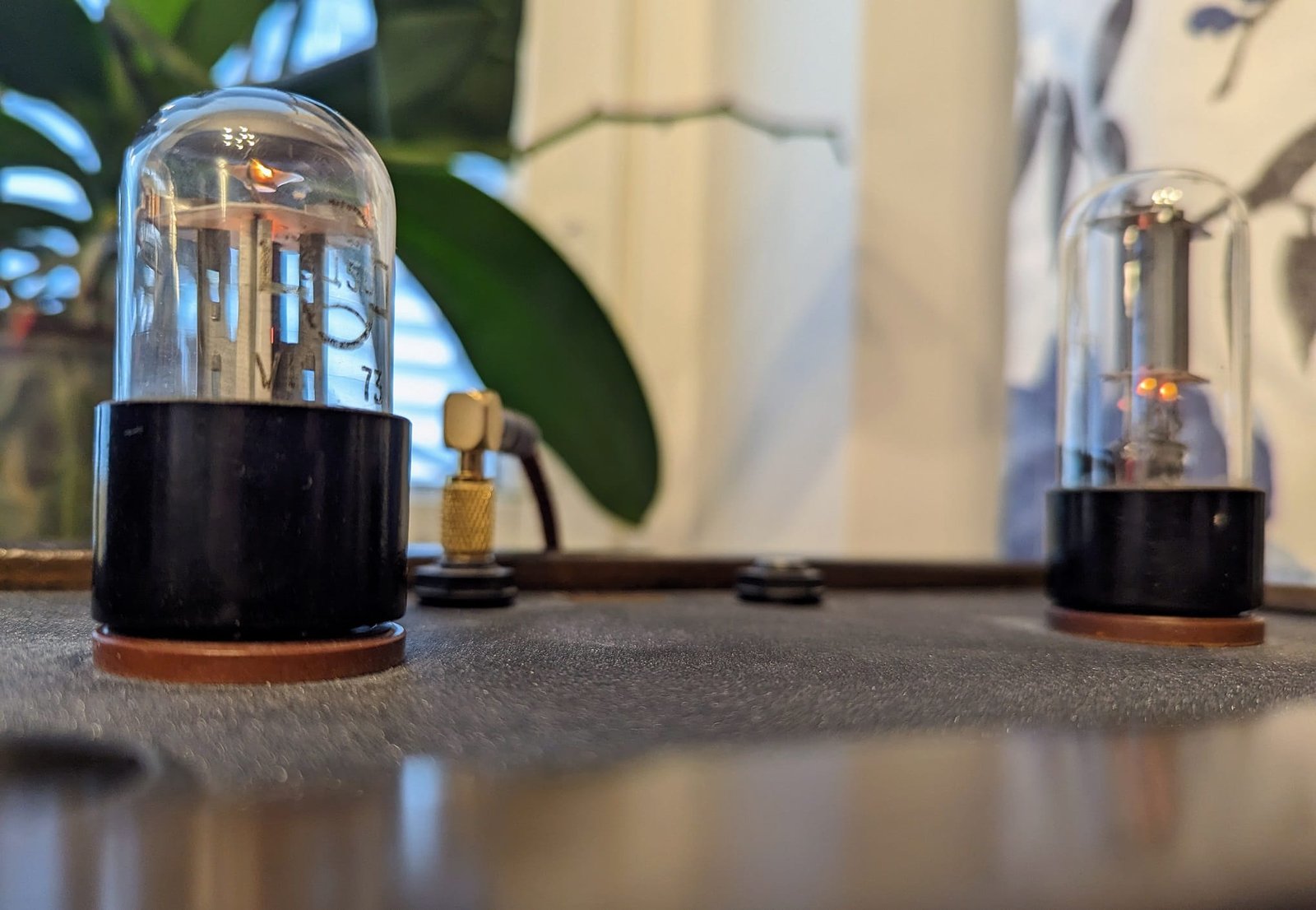
The Roger uses toroidal transformers built by the manufacturer itself – I would guess there are two of them, as the balanced version of the amplifier has four. The amplifier is said to operate in Class A mode, and all wiring inside it is point-to-point. The maximum output power is promised to be 450 milliwatts, which is a good figure for a tube amplifier. The biggest mystery with the Roger is electrical safety, as with many other DIY-inspired products. I myself would not dare to leave the device on for an extended period unless I am supervising it – although this is probably advisable with other tube amplifiers as well.
Notes on usage
I don't really have any complaints about the amplifier's functionality, as there have been no problems with it, apart from the varying quality of the standard tubes. With proper tubes, one wouldn't even guess the Roger is on, as its background noise is non-existent, and attaching headphones or turning the volume control does not cause any extraneous sounds. The relatively moderate output power may also contribute to the low noise, as more powerful tube amplifiers tend to hiss more with sensitive headphones. Generally speaking, the quietness of tube amplifiers is otherwise a pure gamble, as the placement of the device and other surrounding electrical equipment can also affect it.
Since I have owned the Roger for several years, I have had time to notice a few weak points in its construction. Firstly, the top cover, which sags slightly downwards at its edges, makes it difficult to attach the tubes, especially when the tube sockets are tight. Two wooden vertical pillars have been glued inside the amplifier to support the edges of the cover, but in my case, one of the pillars has come loose, as it moves and rattles when the device is shaken. The manufacturer should have used some other fastening method instead of glue. For some, the bamboo side panels have also come loose from their glue joints, but the owner can, of course, re-glue them. However, the impression of quality, with its minor flaws, is not breathtaking.
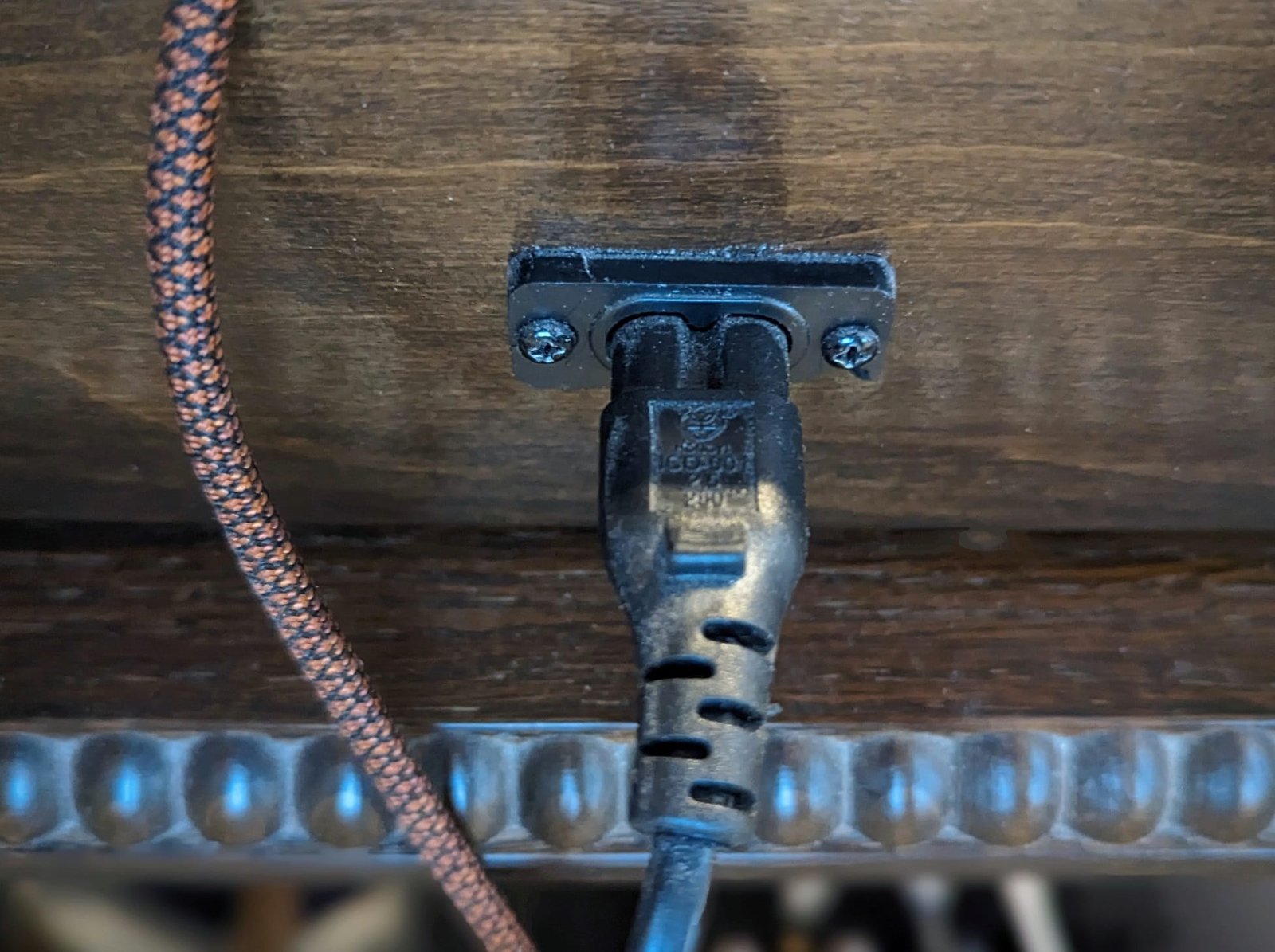
The same impression is also created by the power connector located at the back, whose plastic body has started to crumble, probably as a result of heat or the pressure of screws. I will probably have to replace the connector someday, once it breaks into several pieces. However, such details are probably part of the hobby when buying an exotic amplifier.
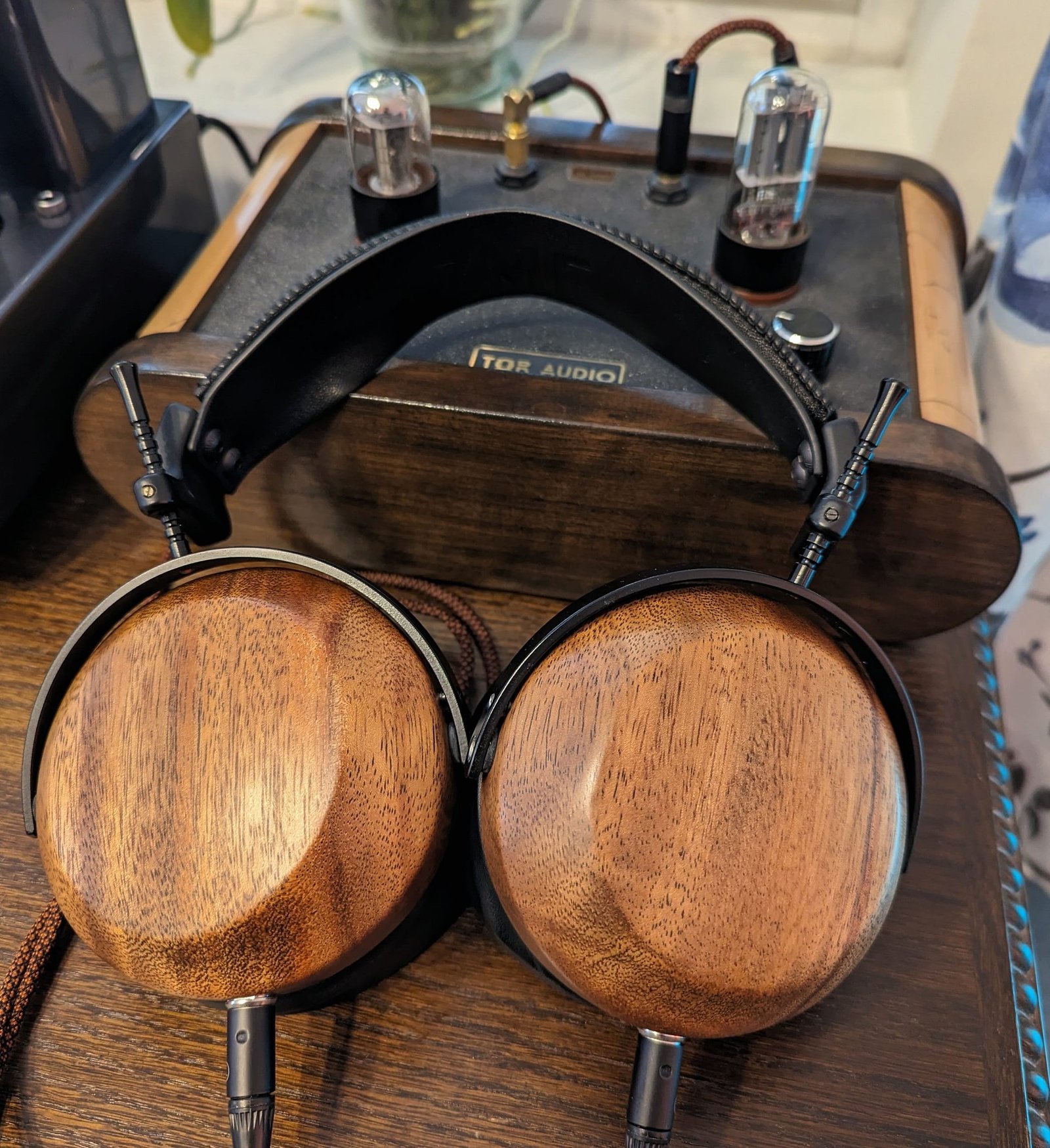
In my opinion, Roger should not be acquired for planar headphones, because, based on my own experiences, it cannot provide them with enough voltage. For example, low-impedance Dan Clark Audion Aeon 2 Closed was downright poison for the amplifier, because the volume remained low and the bass reproduction was really lacking. On the other hand, a planar headphone like the Audeze LCD-2 Classic, equipped with higher impedance, worked quite okay, even if the sound wasn't very clean. All dynamic headphones, however, played effortlessly very loudly with Roger without negative side effects. The amplifier is like made for 300-ohm Sennheisers and ZMFs.
The manufacturer does not state Roger's output impedance, but it is likely quite high. On the other hand, the sound produced by the amplifier is quite similar regardless of the headphones' impedance, so the reading is certainly closer to a few tens of ohms than 100 ohms. This leads to the conclusion that Roger, in any case, colors the sound of the headphones, which is certainly what is desired.
Sound quality
Roger has a fun sound and is actually a fairly traditional tube amplifier. It sounds richly warm and smooth: the mid-bass is clearly emphasized, and there is never any aggressiveness or sharpness in the high frequencies, which might otherwise sometimes occur in poorly recorded music or brighter headphones. Someone might at this point assume the amplifier's sound to be soft and unclear, but the presentation is, on the contrary, relatively controlled and very rhythmic.
The emphasized and powerfully impactful bass involuntarily pulls the corners of my mouth upwards. Despite the prominent low frequencies in the foreground, other frequencies are still well represented, as the sounds have plenty of empty space around them and smaller musical details clearly pop out in the overall picture, like stars in a dark night sky. The listening experience is very tube-like and addictive with suitable headphones. For example, Sennheiser's HD 600 and HD 800 get more warmth and organic quality to their sound with Roger.

Already quite dark ZMF Atticus and Verite Closed on the other hand, can sound too thick and gloomy in the long run, even though I admit I still find the presentation really fun. Roger's sound, in any case, lacks airiness; instead, the music always sounds quite hefty and intimate. In my opinion, this is a nice change from transistor amplifiers, but it is not suitable for more critical listening. Those looking for a neutral tube amplifier should either look for other options or change the included tubes to different ones.
The soundstage created by the amplifier is also quite intimate. I experience the sound reproducing present in front of my eyes, similar to having virtual reality glasses on my head. An emotional connection to the music is easily formed, as the performer is vividly present as if in one's own living room. The sound never spreads particularly wide laterally, but the empty space around the sounds still makes the presentation feel spacious. Overall, despite the hefty bass reproduction, the soundstage is often surprisingly transparent, making it easy to distinguish sounds from each other. On the other hand, if the listened music, headphones, and amplifier simultaneously emphasize the upper bass frequencies, the result inevitably becomes muddy. This has sometimes happened when listening to heavily produced rock and metal with ZMF headphones. For example, calmer acoustic music, on the other hand, sounds excellent when spiced with rich bass.
Other tubes I've tried:
Since Roger's hefty sound has offered a change from my more neutral-sounding amplifiers, I haven't been eager to try many different tubes in it. However, I once acquired a rather expensive Psvane CV181-T mk2 tube and a Sylvania 6X5GT as a rectifier tube for experimentation. With these tubes, the sound becomes more neutral and distinctly airier and more spacious. On the other hand, the bass reproduction is still heavier than usual, so the toroidal transformers used in the amplifier certainly play a part in that.
Sylvanian rectifier tube makes playback more controlled and less thick, while slightly increasing the amplifier's gain level. The Psvane CV181-T is not the most interesting or fun-sounding, but it is truly clean-sounding. Some other 6SN7 tube would probably offer a more tube-like result, but I have also liked the refined presentation. There would certainly be many interesting options among reasonably priced 6SN7 tubes to try with Roger. By default, Tor Audio has clearly wanted to make its amplifier sound warm and full.
Summary
Tor Audio Roger is a colored and fun tube amplifier, not intended for serious listeners or those seeking a neutral sound. The device makes me focus purely on enjoying music instead of analyzing headphones and the listening chain, which is an excellent achievement. There's something about the unapologetic tube sound that makes listening captivating. For example, I find music recorded in studio conditions to be less polished and calculated, which adds to its credibility. Roger is well-suited for relaxed listening, for example, after a heavy workday.
Overall, however, the amplifier is not among the best or most balanced tube amplifiers I have heard, nor is its price-quality ratio easy to assess. I bought Roger used for half price, so I can't say how I would feel about it at around 700 euros. For its uniqueness and interesting appearance, I might even pay a little extra, even though there are a few weak points in its construction. Fortunately, everything works correctly, and I have not noticed any background noise when using proper tubes. When buying the amplifier new from Tor Audio, it might be worth asking for a few extra spare tubes to be included in the package, as there seems to be variation in the quality of aged Soviet tubes.
Roger only has two tubes in total, so experimenting with different tubes doesn't cost an arm and a leg. This has its advantages, as ”tube rolling” in amplifiers with more tubes quickly eats a hole of several hundred euros in the wallet. Roger also falls in price between, for example, Eufonika amplifiers and Feliks Audio Echo mk2, so it could be an alternative to them. Tor Audio amplifiers are certainly not found on many tables, so acquiring one makes it possible to stand out from the crowd.
Pros and cons:
+ Warm, smooth, and intimate sound is pleasant to listen to
+ Fun, powerful, and rhythmic bass reproduction
+ Effortlessly reproduces dynamic headphone models
+ No background noise
+ Unique appearance
+ Does not take up much space on the table
+ Contains only two tubes, so experimenting with different ones is relatively inexpensive
– A robust sound can be too much for headphones that already sound full
– Does not properly reproduce low-impedance planar headphones
– The headphone jack is located in an awkward place
– There are a few weak points in the construction
– There is great variation in the quality of standard Soviet tubes
 EN
EN  FI
FI