Author: Sword of Damocles
The 2023 Hifi Fair came and went, so now that the dust has settled a bit, it's a good time to recall what kind of headphones were tested there. This year's fair did not seem particularly promising on the headphone front beforehand, but the situation turned out to be very positive in the end. Both MarekSound's and Kruunuradio's display stands offered an excellent and versatile selection of headphones and accessories. Both stands also had really nice people working there, with whom it was a pleasure to chat. The 9 hours I spent on the train on Saturday were definitely worth it, even though I was a bit tired on Sunday afterwards. Could someone move everything closer to Joensuu and could there be fairs more often than once a year?
After the fair, I realized that I hadn't remembered to take photos of the event itself, nor even of all the products I tested. However, I did remember to take notes on different headphones, so in this article, I will describe my first impressions of models I hadn't heard before. It's worth noting that especially at the headphone stand located in Mareksound's lobby, there was quite a lot of noise and hustle, so my opinion would likely change somewhat in a calmer environment. I also listened to most headphones for a maximum of 5 minutes at a time, varying different songs and music genres, so I was mainly able to gather information about the general frequency balance, sound excitement, and possible sibilance. However, I argue that my opinion of the headphone models I deemed good or slightly worse would not ultimately change significantly even with longer listening.
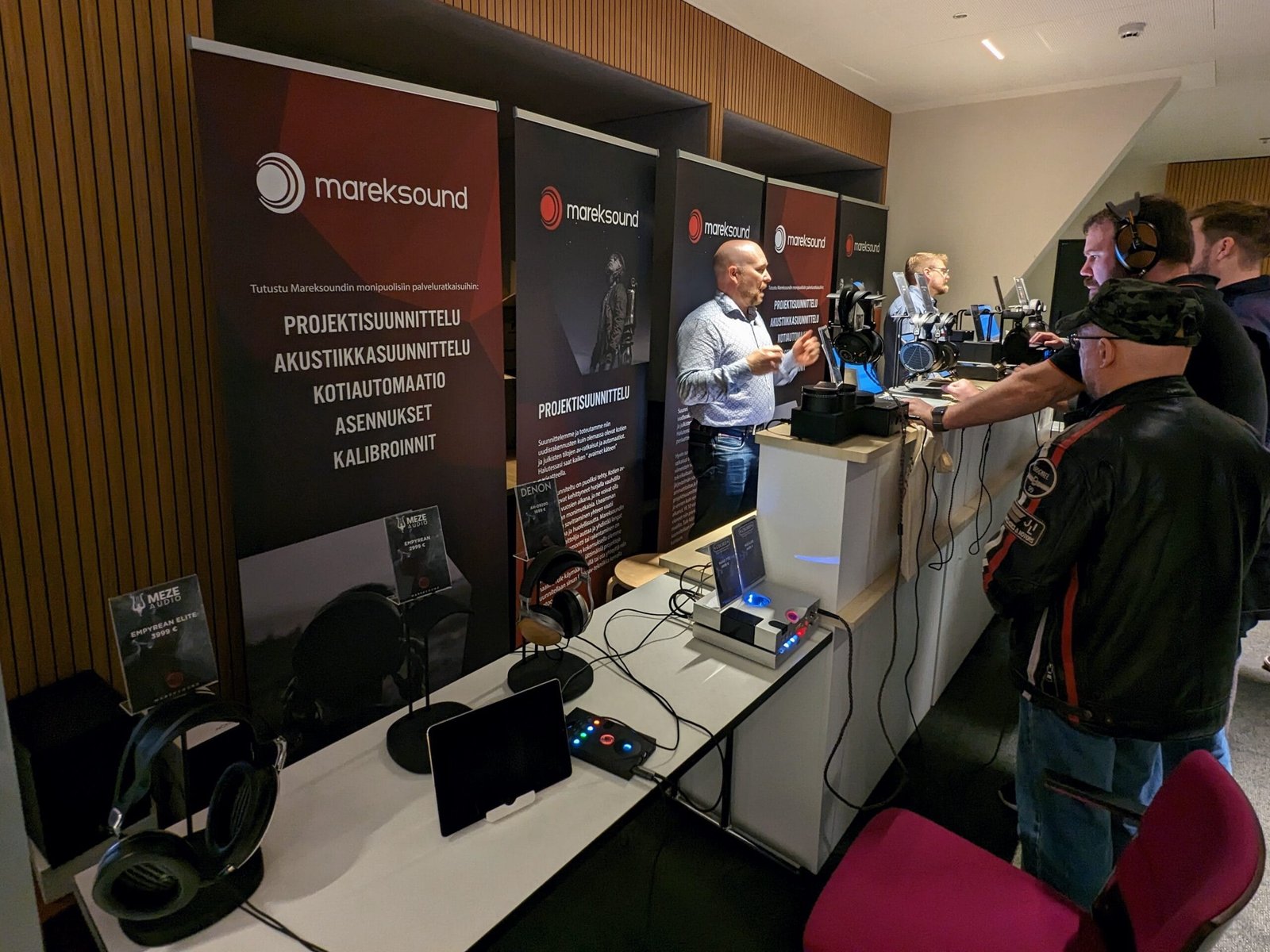
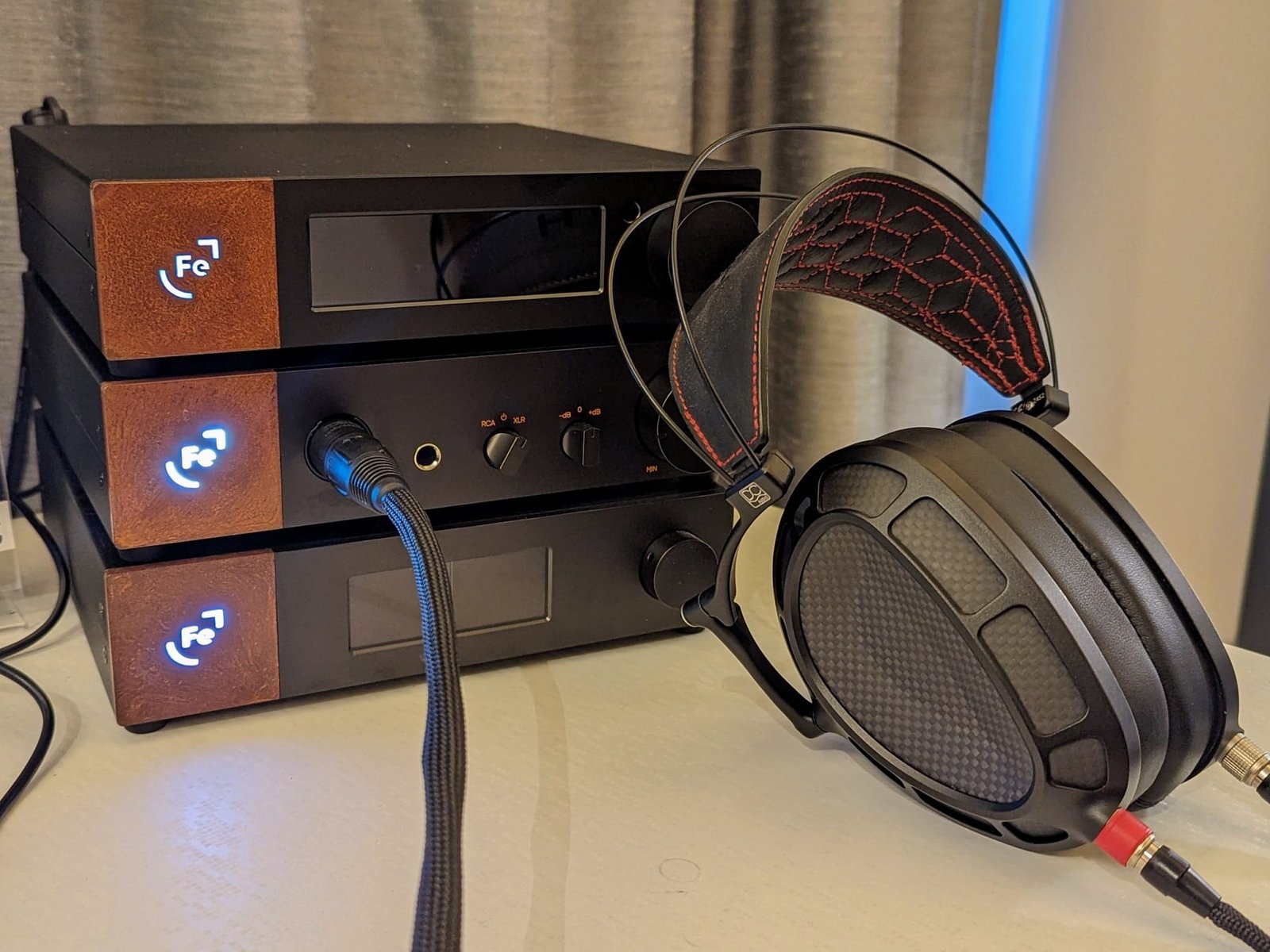
Kruunuradio's listening station was well implemented, as it was once again a suite bedroom that could be closed off with a separate door. This year, the bed had been removed from the bedroom, so three tables with chairs could fit there. Next time, Kruunuradio should advertise its ”headphone room” better, so that it doesn't go unnoticed by those circulating in the other room when the connecting door is closed. Speaking of the other room, it was almost a sauna, because alongside the speakers, there was an 800-watt tube amplifier drawing power from the wall. This might also have reduced the attractiveness of entering the room and, consequently, the likelihood of discovering, among other things, Dan Clark Audio headphones and Ferrum Audio devices.
Of the fair's preview article contrary to my astonishment expressed, both Meze Audio and Audeze headphones were indeed on display, although not the latest LCD-5 and MM-500 models. Despite the STAX marking that appeared on the fair's website, I did not find any electrostatics, but that did not diminish my overall satisfaction in any way.
At the fair, at least the following headphone models were available for testing:
- Hifiman Susvara
- Hifiman Arya Organic
- Hifiman Sundara Silver
- Focal Utopia 2022
- Focal Clear MG
- Focal Stellia
- Focal Bathys
- Audeze LCD-X
- Audeze LCD-2 Classic
- Meze Audio Empyrean
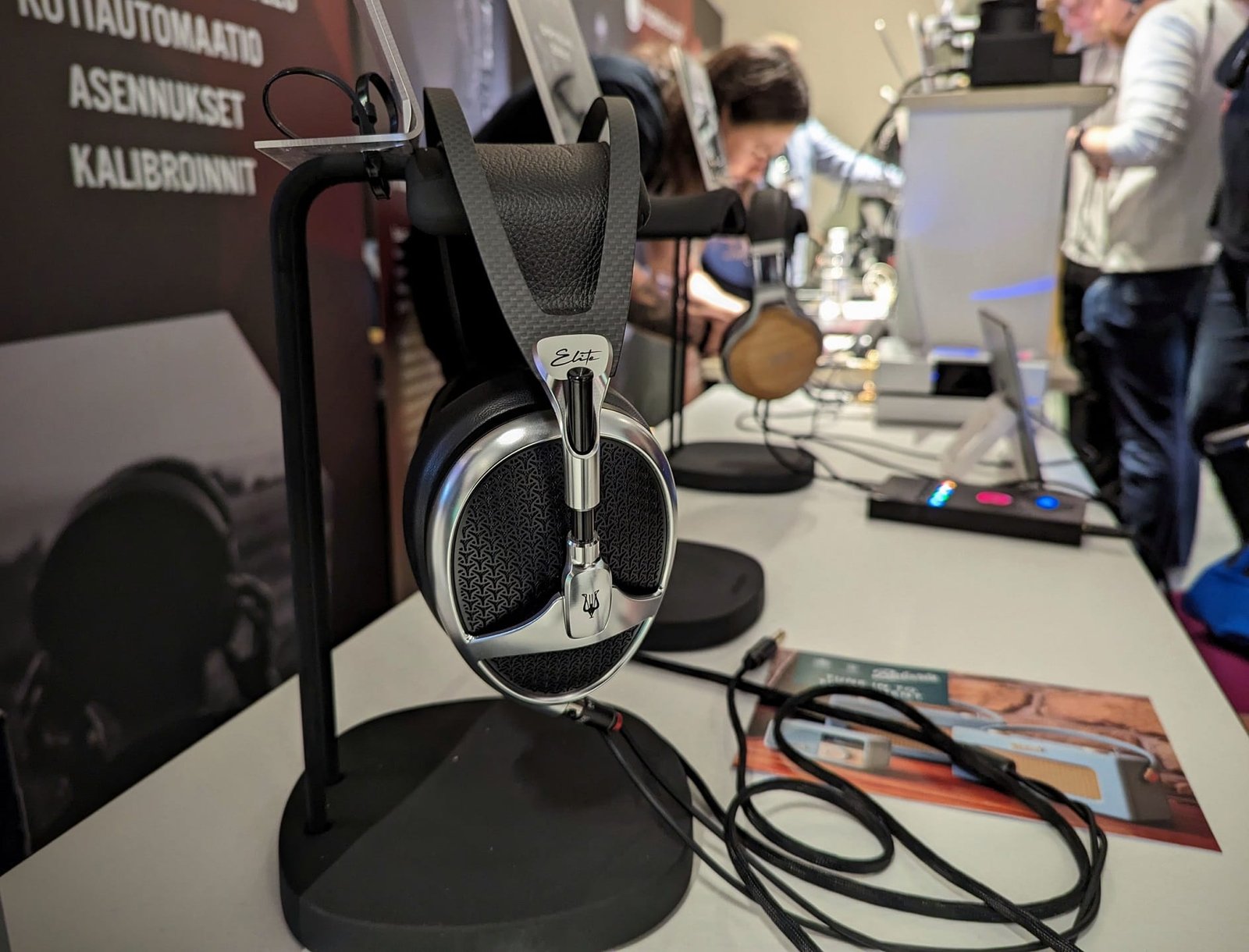
- Meze Audio Empyrean Elite
- Meze Audio 109 Pro (was missing on Saturday, but seemed to have been found for Sunday)
- Denon AH-D9200
- T+A Solitaire P-SE
- T+A Solitaire T
- Yamaha YH-5000SE
- Bowers & Wilkins PX8
- Bowers & Wilkins PX7 S2
- Mark Levinson No 5909
- Dan Clark Audio Expanse
- Dan Clark Audio Stealth
- Dan Clark Audio Aeon 2 Closed
- Dan Clark Audio Aeon 2 Open
- Dan Clark Audio Ether 2
- Dan Clark Audio Ether Closed
- Grado GS1000X
- Grado SR325X
Yamaha YH-5000SE & HA-L7A
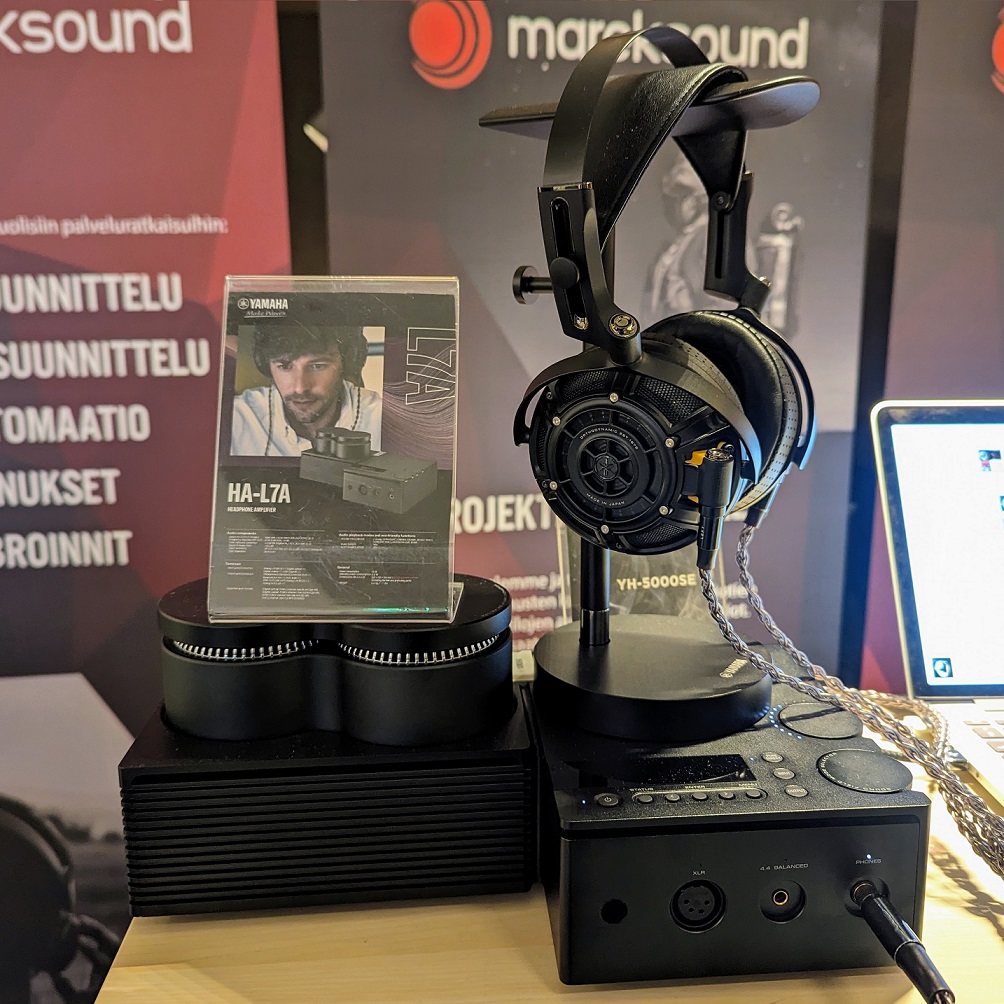
The fair's kind of main attraction this year was Yamaha's 5700 euro YH-5000SE planar headphone model (or more precisely, an orthodynamic headphone) and the HA-L7A transistor amplifier made for it, which I hear will cost 4000 euros. The total price of the set was thus almost 10,000 euros, for which one would expect to get quite an listening experience. Unfortunately, however, in my opinion, the YH-5000SE was the worst of the expensive headphone models on display due to its uneven and unrefined-sounding frequency response. The appearance and comfort of the headphones, on the other hand, are spot on. With its slender and futuristic structure, it weighs only 320 grams, so I started to wonder, can an expensive headphone be this light?
I can roughly understand what the YH-5000SE's sound aims for, but for me, a functional end result would require me not knowing beforehand what the songs I'm listening to should sound like. The headphones' kind of role models could be Audeze's traditional LCD series and Meze Audio's Empyrean, as all three have rich low frequencies and subdued upper-mid frequencies. However, in my opinion, the overall sound of the Yamaha headphones unfortunately sounds more like an unfinished prototype than a finished headphone.
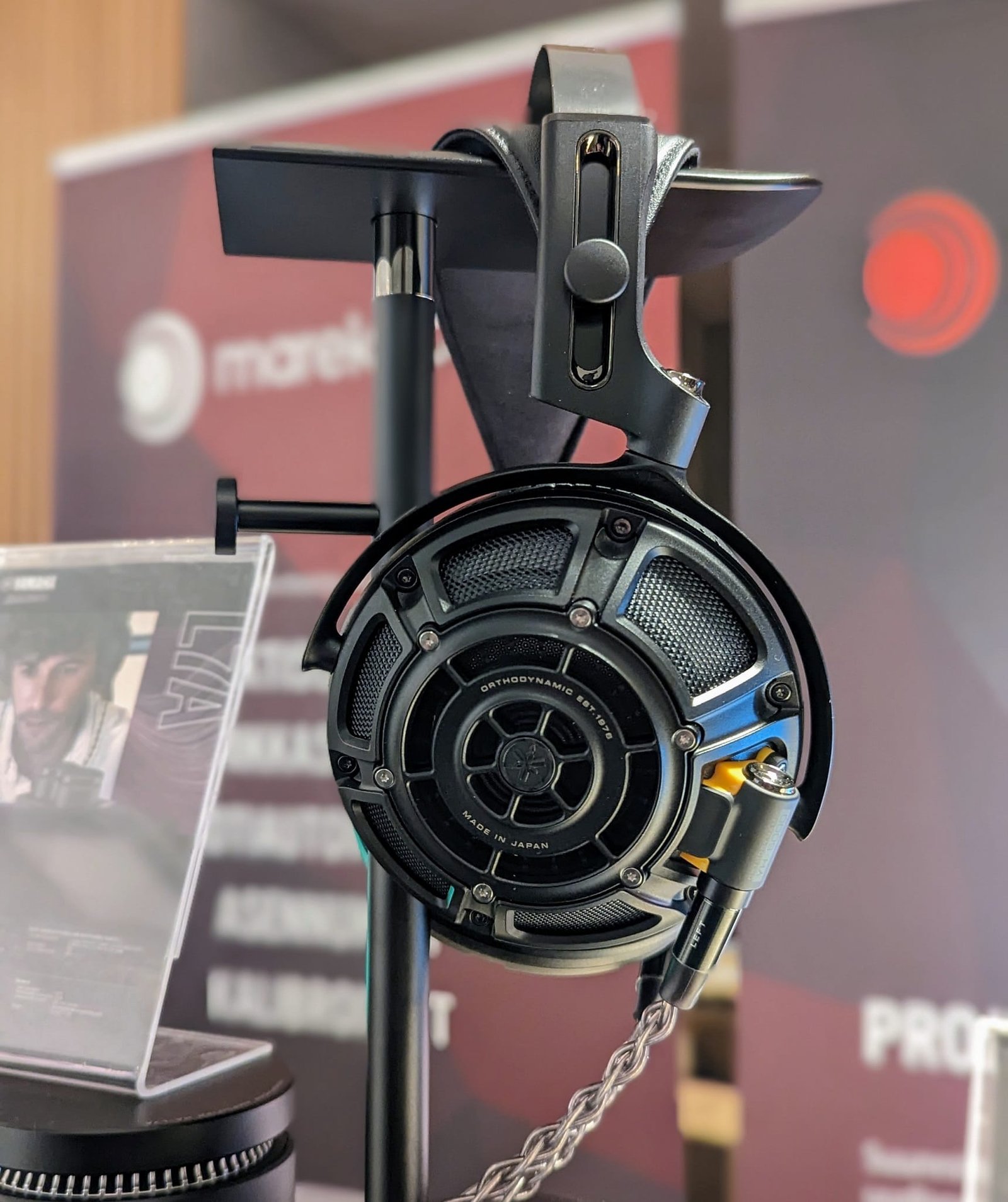
The bass boomed and rumbled somewhat slowly, as if it were a generic dynamic headphone model. The mid-frequencies, on the other hand, sounded simultaneously blaring and subdued, because the headphones have a strong narrow emphasis at 1 kHz, after which there is almost no energy in the upper-mid frequencies. Singers, in particular, sounded as if their voice was coming from underwater and had been attempted to be faded out in the same way as in karaoke versions of songs. The overall experience was finally ruined by the occasional sharpness and harshness of the high frequencies, which normally would be balanced out by more prominent upper-mid frequencies.
Many seem to be of the opinion that the YH-5000SE would require a tube amplifier that softens the sound. At their best, warm and somewhat analog-sounding low frequencies, along with an empty-sounding soundstage, would probably create a fun sense of space, for example, in classical music without a vocalist. In this case, a spacious soundstage would be artificially achieved, but the headphones might be salvageable. I'm not going to dismiss them completely yet, because I don't want to believe that Yamaha would have made such poor headphones without seeing potential in some kind of use case. For now, however, I cannot recommend the YH-5000SE as a nearly 6000 euro purchase, because for the same amount of money, significantly more balanced-sounding high-end headphones are available. On the other hand, if there's an endless balance in the bank account, Yamaha's headphones would probably be a fun acquisition to commemorate the history of planar headphones.
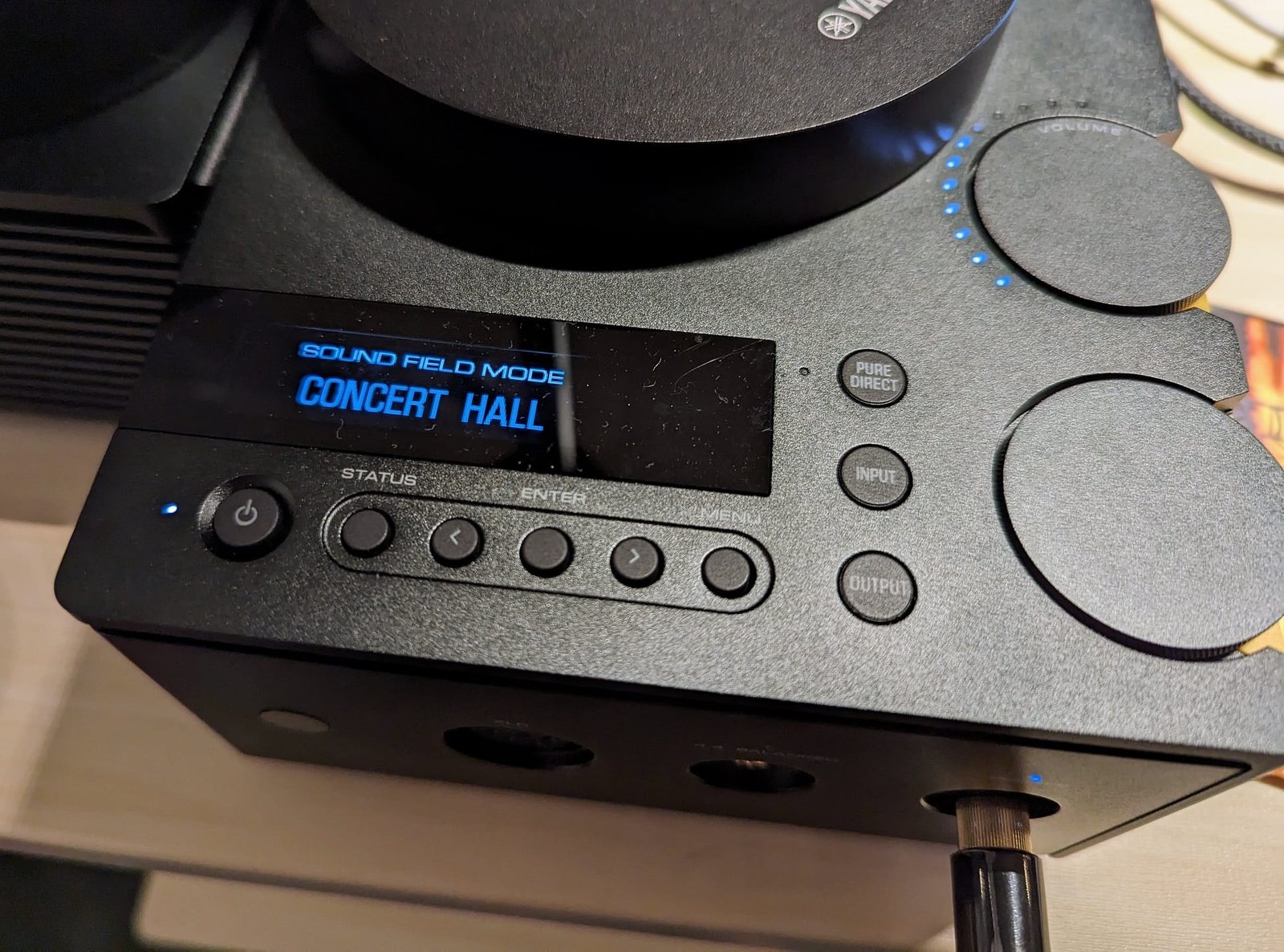
The amplifier made for the headphones was also peculiar due to both its appearance and features. Firstly, the device is quite underpowered for its probable 4000 euro price. It also features various sound modes familiar from the manufacturer's home theater amplifiers, such as concert hall, outdoor concert, music video, and drama processing. All of these color the sound in different ways, whereas achieving pure sound requires activating the ”Pure direct” button. I noticed the amplifier was sometimes on different settings at the fair, because people tried to adjust the volume by turning the wrong dial, which instead changed the sound mode. I am sure that some fair visitors tested the YH-5000SE with some special sound processing, instead of getting a realistic impression of the headphones. The result might even have been better that way. I myself wish I could try such peculiarities more often, even if the outcome isn't always good.
Focal Utopia 2022
For me, the clear best headphone at the fair was the new 5000 euro Focal Utopia, which Mareksound had placed surprisingly hidden compared to the planar headphones on display at the counter. This was a good thing, however, because I was able to listen to the Utopia quite peacefully with my own Qudelix 5K amplifier. Focal's headphones are an extremely easy load for an amplifier, so the small Qudelix made the Utopia sound excellent.
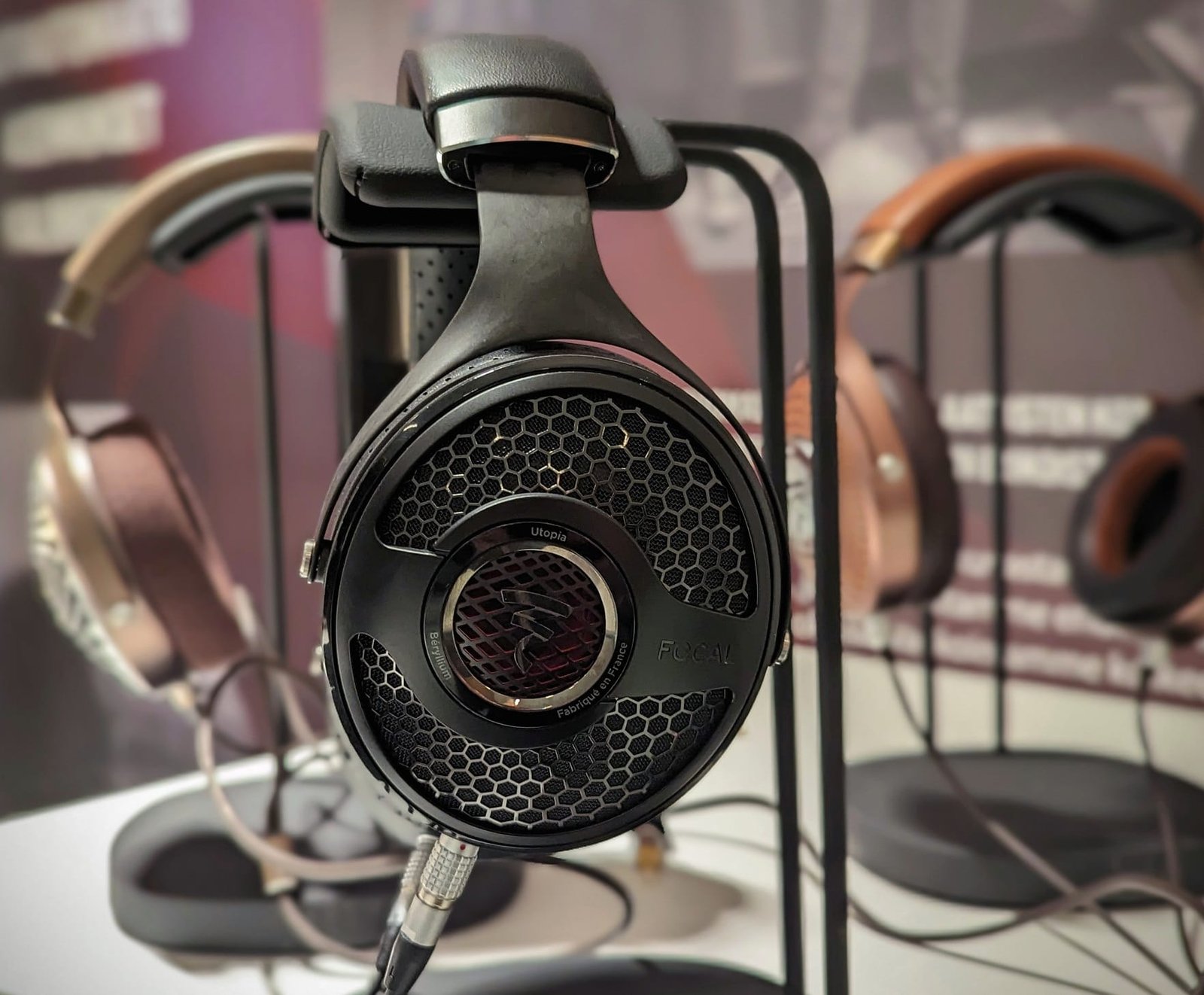
I couldn't really say anything negative about the sound; I was completely impressed. Compared to the original Utopia, the high frequencies were reproduced a bit more calmly and less conspicuously, which has probably contributed to the bass feeling even more robust and kicking with more weight. All kinds of music sounded truly dynamic and exciting without any harshness. The new darker presentation style suited the Utopia very well in my opinion, as it felt more natural than before. The soundstage still doesn't extend much beyond the ears in width, but in addition to precision, the depth impression was superb. I could literally see the music in front of my eyes. This is exactly what an expensive high-end headphone should sound like! I also really like the Utopia's revamped appearance.
Hifiman Arya Organic and Sundara Silver
Mareksound had gotten their hands on Hifiman's new Arya Organic headphones (price 1400 euros) just in time the day before the fair, so they were available for testing. The Arya Organic was probably the headphone model that interested people the most, as there was a constant queue in front of it. I also tried the headphones myself and found them to be very promising.
I haven't heard previous versions of Arya, but compared to, for example, Edition XS, Ananda, and HE1000 V2, the sound of Arya Organic felt pleasantly weighty and thus natural. However, the tuning did not differ much from other models from the manufacturer in terms of mid-frequencies and treble, as the reproduction was still spacious and quite bright. With a quick listen, the brightness of the highest frequencies did not bother me, but with longer use and different music, the situation could be different. Initially, the headphones sounded good and exciting, so they will likely be tested more thoroughly in the coming months.
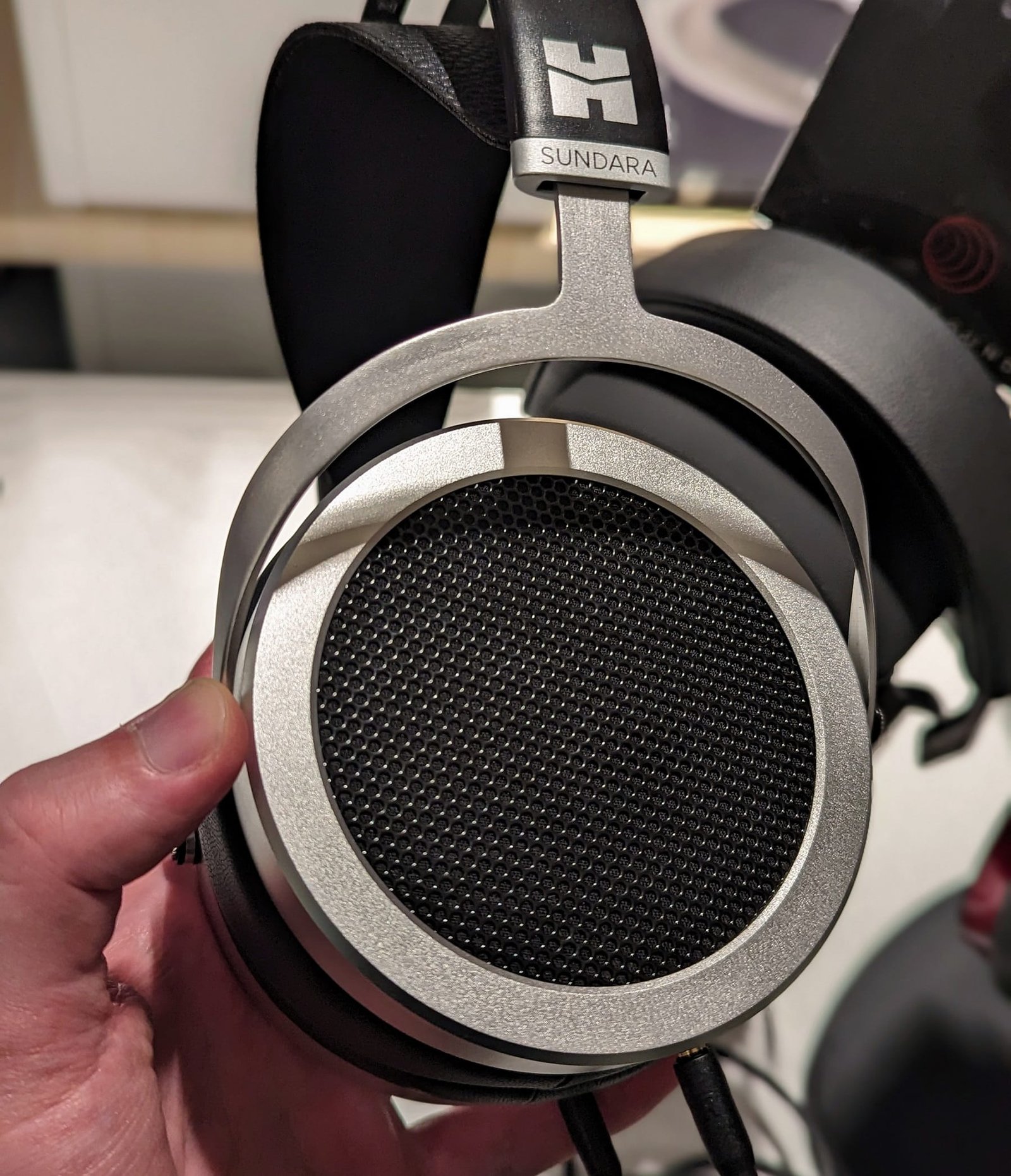
Hifiman also had on display the Sundara Silver (initial price 450 euros, but knowing the manufacturer, it will surely drop soon), which was quietly released to the European market and looks quite different from its black predecessor. The cups are still metal, but they are now silver, as are the yoke forks. The sparse metal grille, in turn, has been replaced with a more closed one, and behind it is thick damping material. Among other changes, the headphones now come with a cable that is a full 3 meters long.
Changes possibly made to the driver and its damping seem to have led to a slightly weightier and more natural sound, similar to the Arya Organic, as based on my memories of the previous Sundara, the low frequencies have not previously attracted as much attention, nor has the soundstage felt as deep. The Sundara Silver was still somewhat too bright in its high frequencies for my ears, as it emphasized all kinds of ”tsih tsih” sounds and occasionally threatened to grate on the ear. However, generally, the treble did not prevent focusing too much on other frequency ranges, so the new Sundara may very well be some kind of improvement compared to the previous model. However, this would only become clear with more thorough testing in a calmer environment.
T+A Solitaire P-SE and Solitaire T
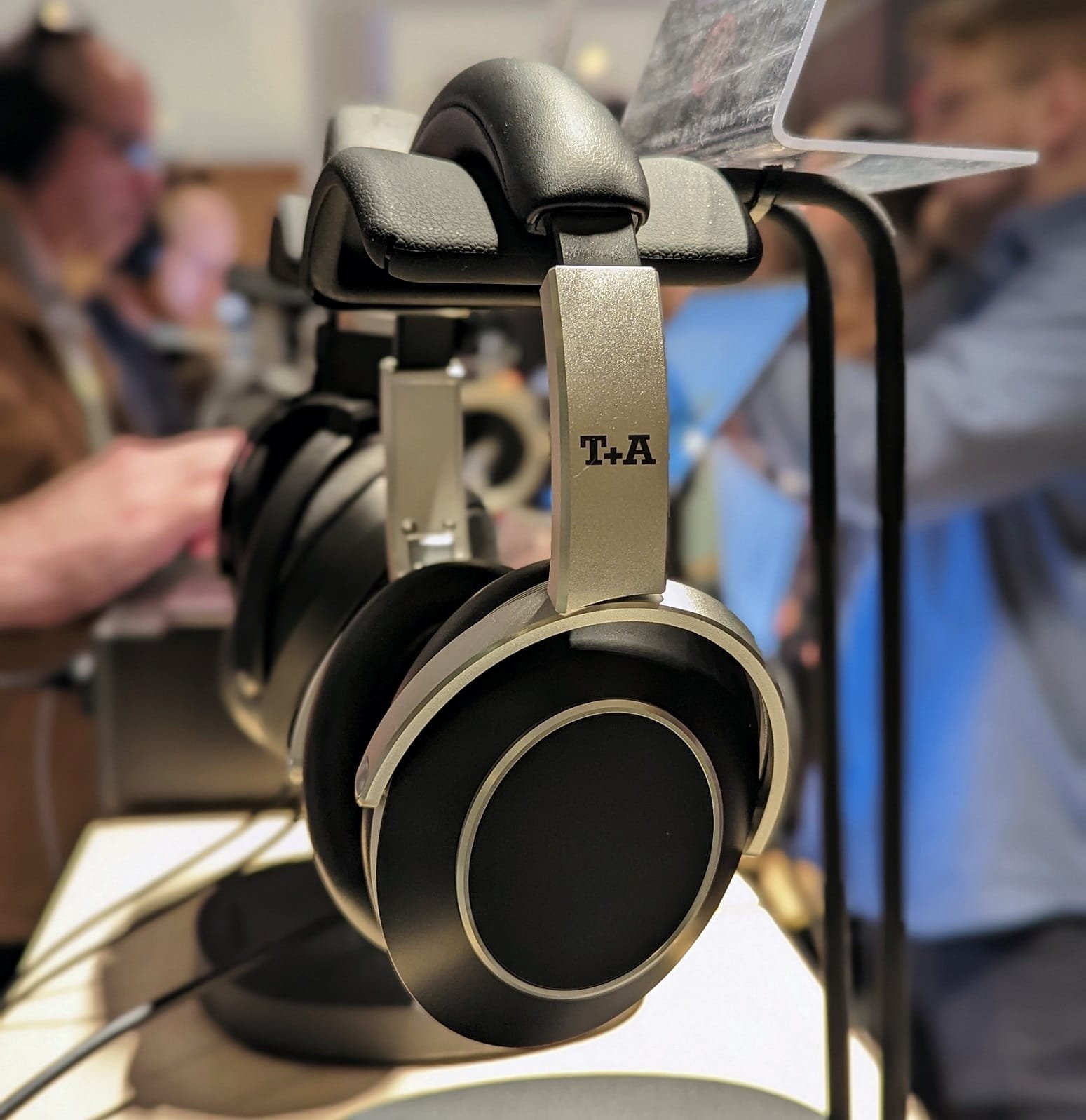
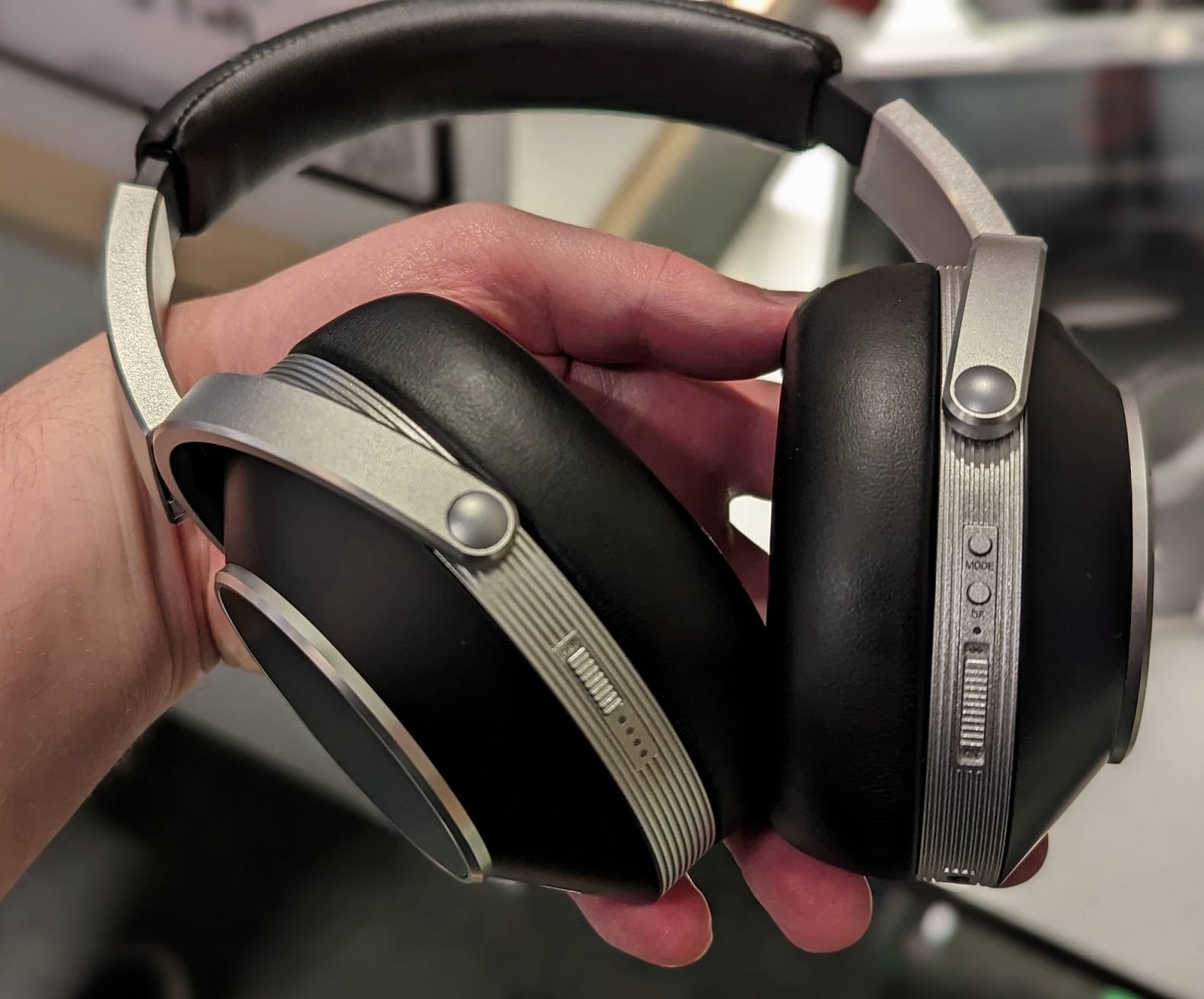
Mareksound will be selling German T+A products in the future, so they were, to my understanding, on display for the first time in Finland. At the counter, there was the Solitaire P-SE planar headphone model priced at 3100 euros, the Solitaire T noise-cancelling headphone costing an estimated 1300–1500 euros, and the HA 200 headphone amplifier costing about 7000 euros. I quickly tried both headphones.
Externally, the Solitaire P-SE was interesting because the outer edge of its cups was made entirely of metal mesh, and the headphone connector was placed very deep, which prevents the use of ordinary cables. The height adjustment of the headband, in turn, felt very flimsy, with the metal being almost thin sheet metal. The design of the headband also felt almost DIY-like. However, the wearing comfort for me was quite good, and the headphones did not weigh much more than, for example, Hifiman's Arya.
In terms of sound, the Solitaire P-SE was also quite good, but with a quick listen, I couldn't yet figure out what kind of sound or target audience T+A is precisely aiming for. The frequency balance was quite neutral, and the bass felt pleasantly solid to my taste without any actual emphasis. This could suggest that the upper mid-frequencies remain slightly in the background compared to the low frequencies. The treble in the headphones was airy and, unfortunately for my hearing, a bit uneven and unnatural. I actually noticed the same in the Solitaire T noise-cancelling headphone model, which uses a dynamic driver, so the manufacturer may have intentionally designed the high frequencies to be a certain way. I would like to test T+A's headphones more, especially with different amplifiers.

The Solitaire T headphone model has gained the most publicity because it is, at least for now, the world's most expensive noise-cancelling headphone. I'm not sure about the future Finnish price, but it is likely 300–400 euros higher than the second most expensive Mark Levinson no 5909, which costs exactly 1000 euros. The Solitaire T is apparently primarily designed as a wireless headphone and secondarily as a noise-cancelling headphone. It features a High Quality mode, which disables noise cancellation and changes the frequency response to be more hi-fi-like. I found the headphones, when used in this mode, to sound clear and quite good, with the exception of a slightly piercing treble. With noise cancellation on, there was more bass and slightly less clarity. The noise cancellation itself seemed basically functional, though by no means the most effective on the market. The metal construction of the headphones felt high-quality, and I had no complaints about the wearing comfort either. I wouldn't yet say the Solitaire T is better than the 800-euro Focal Bathys, but it could at least be a strong contender, unless its price, over 500 euros higher, becomes an obstacle for consumers.
Other expensive noise-cancelling headphones: Mark Levinson no 5909 and Bowers & Wilkins PX8
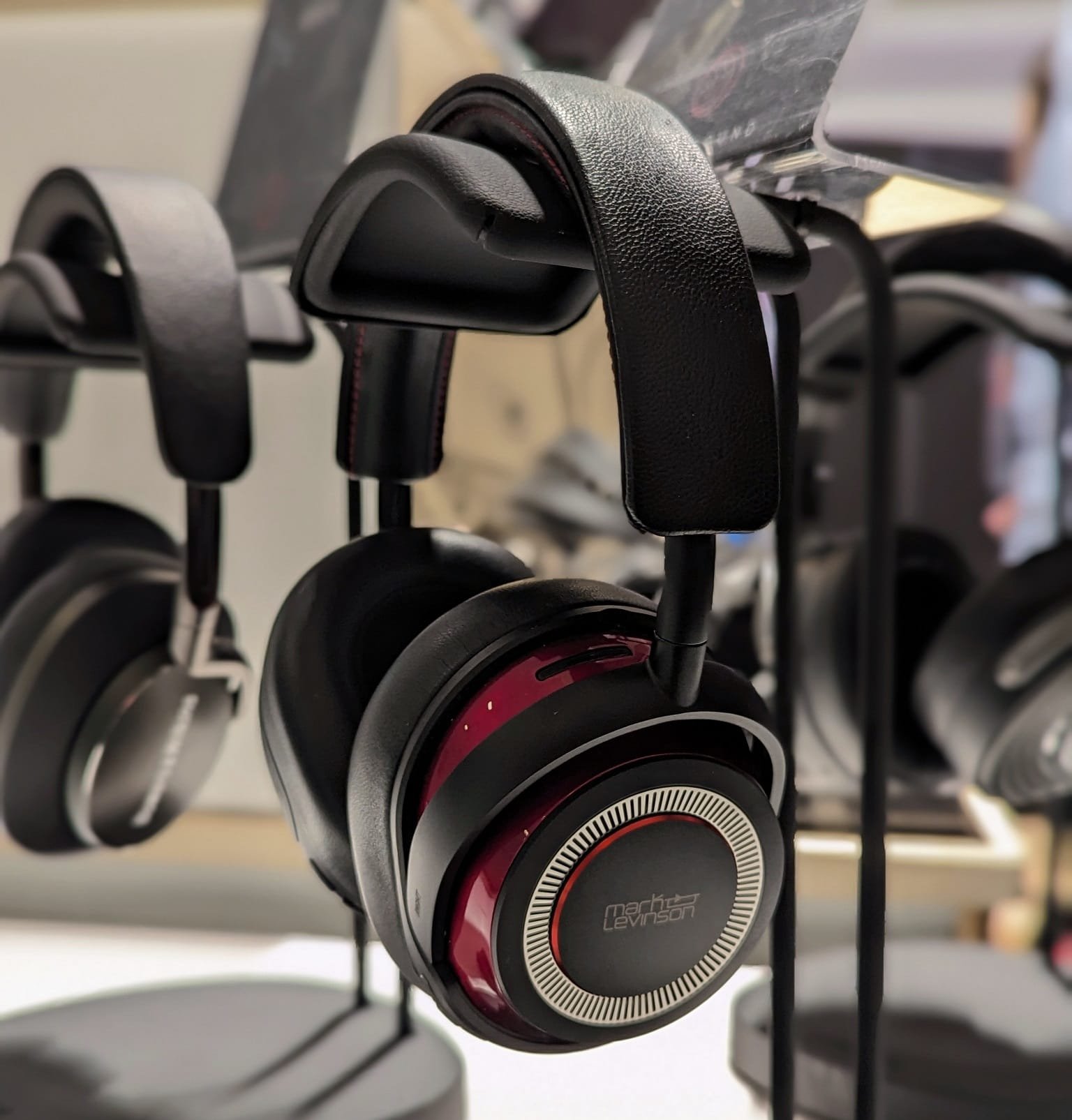
I also tried two other expensive noise-cancelling headphone models that I hadn't heard before. The Mark Levinson no 5909, costing about 1000 euros or 750 euros as a fair offer, was also on display at the 2022 fair, but back then it was not allowed to be listened to. This time, however, sound could be gotten out of the headphones, and it was indeed excellent. The headphones look quite plasticky and tasteless for their high price, but the frequency response, which follows Harman's target curve, makes the sound really clear and downright hi-fi-like. The No 5909 was actually a very positive surprise, despite the narrow emphasis remaining in its treble adding a sharp and unnatural nuance to the high frequencies. I'm not sure if it's possible to fix this with an equalizer, but I would probably learn to live with the emphasis. The noise-cancelling function also seemed slightly more effective than in the Focal Bathys. However, I wouldn't necessarily dare to buy the headphones, as they have apparently had serious durability issues. Perhaps some kind of version 2 will eventually be a success.
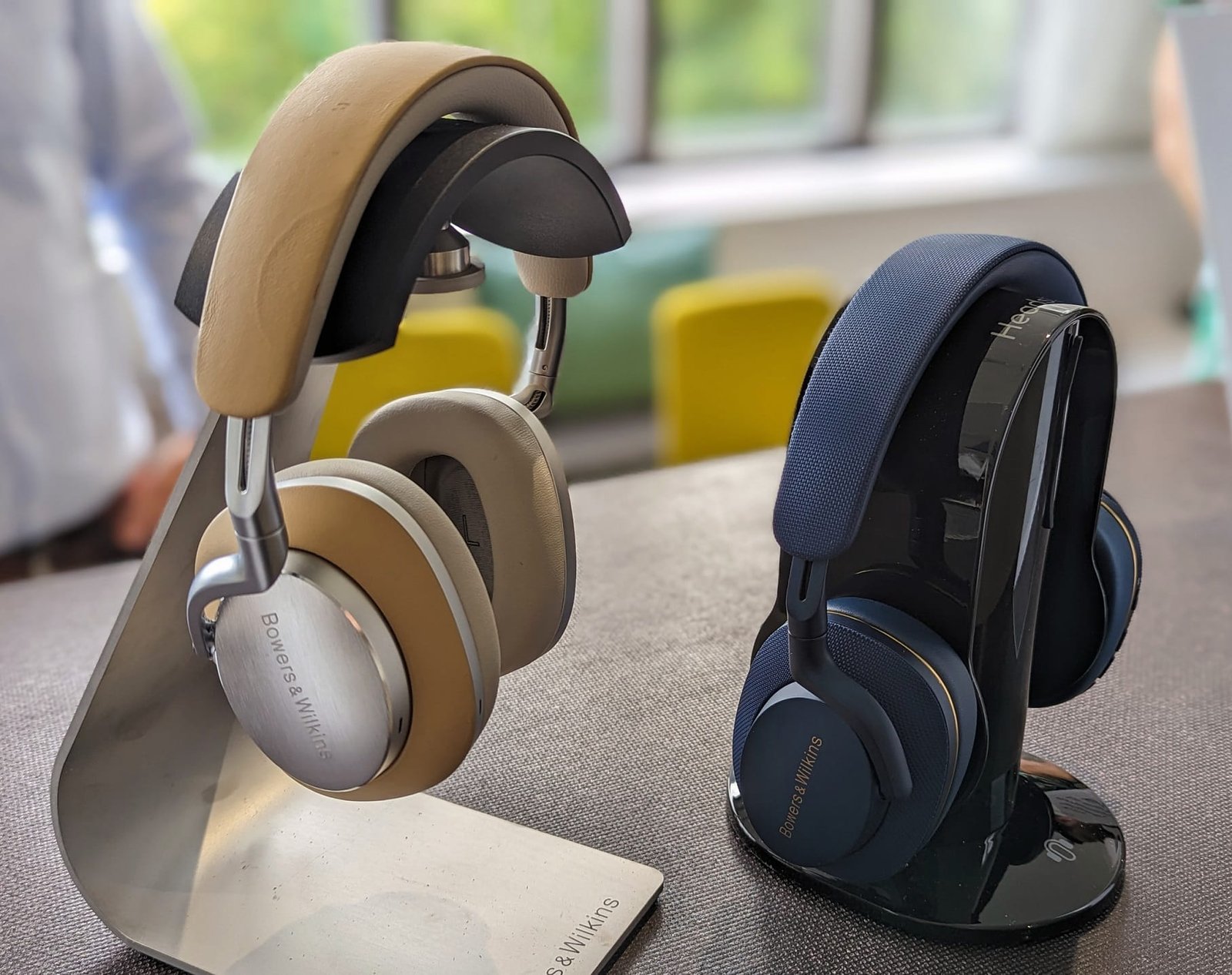
Bowers & Wilkins' PX8, costing 700 euros, would not, in my opinion, belong in its price class except for its high-quality construction. The headphones are fine and comfortable, and their noise-cancelling performance is on par with other expensive alternatives, but the consumer-type bass reproduction is poorly suited for a more critical listener like myself. The PX8's mid-bass rumbles and booms constantly over other frequencies, so the headphones are clearly designed for those who like Sony's noise-cancelling headphones, for example. Other frequency ranges or headphone characteristics are not really meaningful to evaluate until the extra bass has been equalized out. After that, the PX8 could even be quite good, so I will try to get it for more detailed testing at some point if possible.
Dan Clark Audio Expanse
All the headphones I have mentioned so far were found on the first floor of the exhibition, while headphones from the American Dan Clark Audio could be listened to in Kruunuradio's suite a few floors higher up. I had already heard the manufacturer's more affordable headphone models before, so I focused on comparing the Stealth and Expanse models, which cost 4800 euros. Of these, the Stealth is a closed-back headphone, while the Expanse, released afterwards, has an open-back cup structure – at least in theory. The cups do look open due to their mesh material, but there is still a thick layer of damping material behind the driver. The Expanse felt surprisingly closed on the head and also clearly attenuated my own speech.
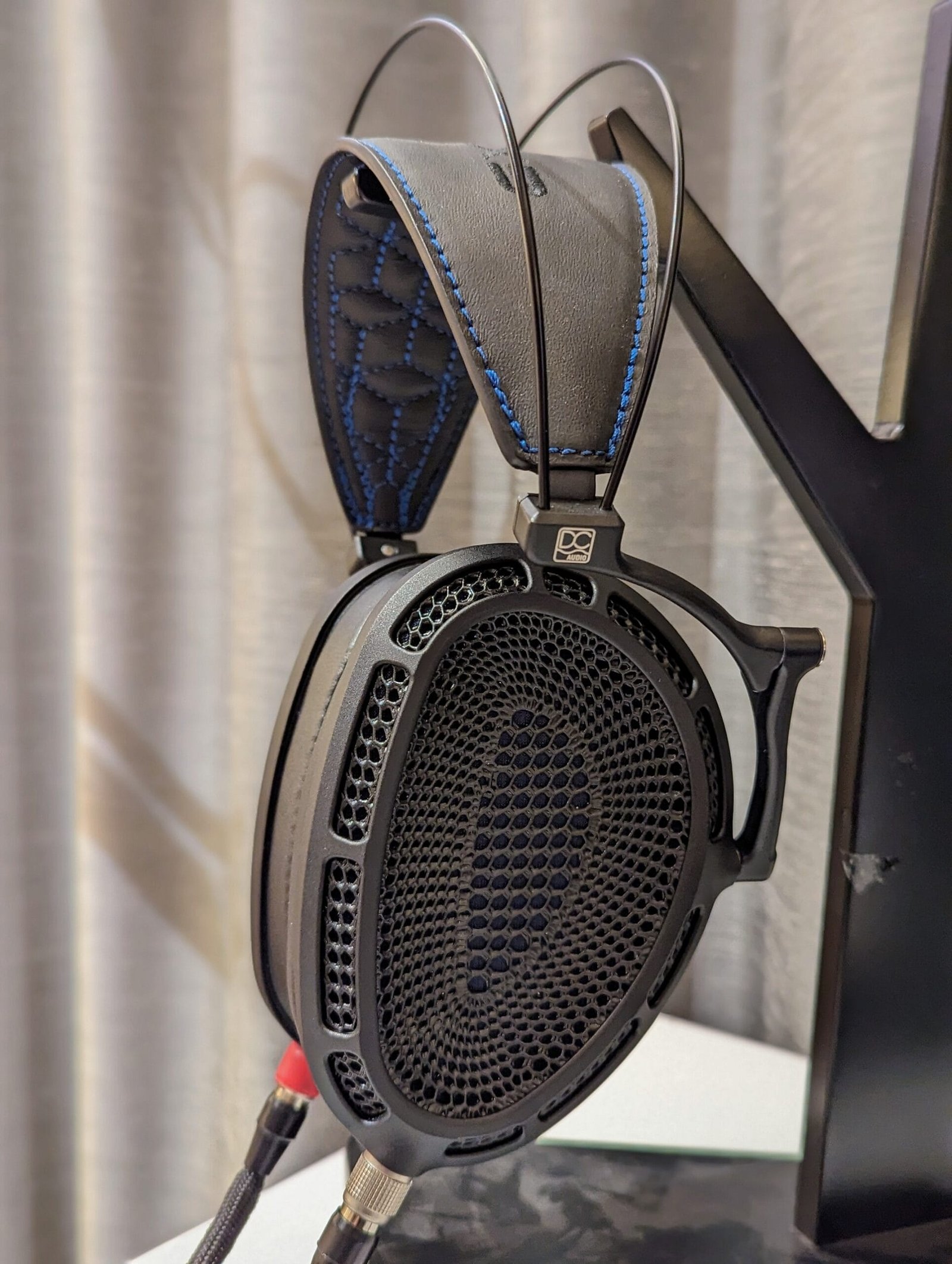
In terms of sound, both Stealth and Expanse follow the Harman target curve exceptionally accurately. However, the Expanse was intended to be slightly different, as a small mid-bass boost and energy in the upper-mid frequencies have been added to it. The treble, on the other hand, is calmer and darker than in the closed Stealth model. This makes the headphones more bass-heavy and uneven-sounding despite their open-back design. Since the bass reproduction of the Stealth model, with the exception of sub-bass, is thin and almost ethereal, I understand why the manufacturer wanted to boost the upper bass frequencies in the Expanse model. However, this did not work particularly well in my opinion; the Expanse's bass was quite soft and boomy. The sound also lacked airiness, and the mid-frequencies were even thinner in style.
The Expanse is by no means a bad headphone, but I find the closed-back Stealth model, somewhat surprisingly, more balanced and versatile. The Stealth, thanks to its closed design, doesn't really have a competitor in the same price range, especially since there are very few balanced-tuned closed planar headphones implemented with a lightweight structure in general. The Expanse, on the other hand, faces tougher competition as an open-back headphone, and unfortunately, I don't believe it will make as big an impression on most as, for example, the Focal Utopia, Hifiman Susvara, or ZMF Caldera.
The Expanse is still a high-quality headphone in lightweight and comfortable shells. On the front of its driver, there is metamaterial familiar from the Stealth model, which eliminates unwanted upper-frequency reflections. Thanks to this, the spatial impression interestingly resembles an anechoic chamber, which some might appreciate. The soundstage of the headphones also seemed slightly more expansive compared to the Stealth model, even though the Stealth has airier treble and thus sounds somewhat more open.
Grado GS1000X
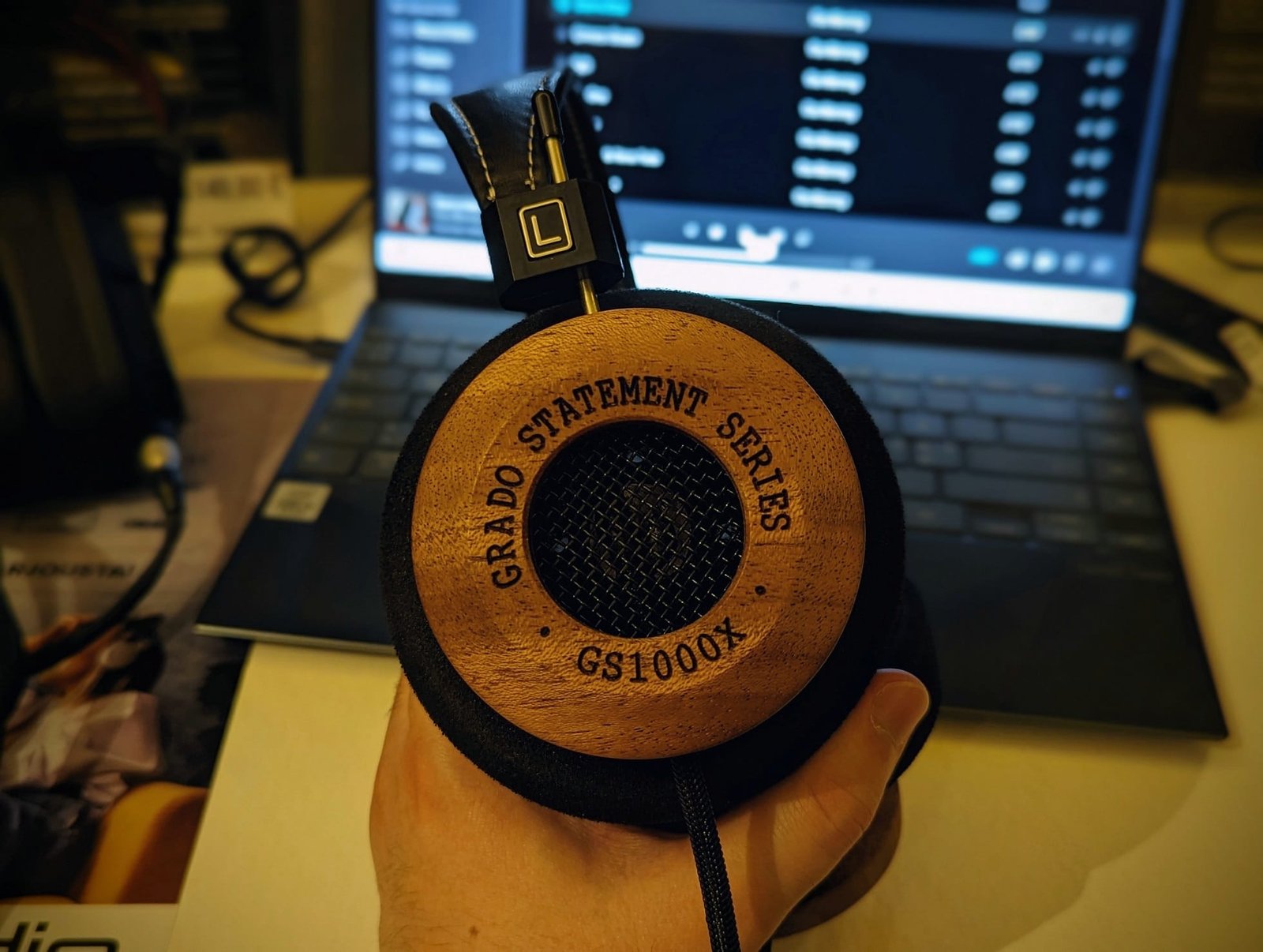
I ventured to place Grado's more expensive GS1000X headphone model on my ears at Kruunuradio's stand, which turned out to cost a hefty 1500 euros. I myself am not very familiar with Grado headphones because their uneven frequency response has not suited my own use. The Hemp model, in my opinion, sounds quite good with a small reservation, whereas the RS1X, exhibited at the 2022 fair, was really harsh and grating for me. Therefore, I didn't know what to expect from the top-of-the-line GS1000X. In the end, it didn't sound bad at all, as the excessive treble peaks had been kept in check, and the bass also came through in the overall presentation. On the other hand, after first listening to Dan Clark Audio's evenly tuned headphones, I sensed clear unevenness and thus unnaturalness in Grado's frequency response.
I'm not sure what Grado fans think of the manufacturer's latest headphone models, but being darker in style, they are starting to be listenable for me. However, I wouldn't be able to assess the price-quality ratio of the GS1000X, because the basic construction of the headphones and the fixed cable would, in my opinion, still only be acceptable for a product costing less than 100 euros. Grado will probably continue with its own style for this decade too.
Headphone amplifiers and D/A converters on display
In addition to headphones, many expensive and high-quality devices were on display at the fair, with which listening took place. Personally, however, I did not pay much attention to them, because in a noisy environment and using headphones unfamiliar to me, it would not have been possible to determine what each DAC or amplifier truly sounds like. However, it is always nice to handle fine devices, and headphone testers were probably able to be sure that they got, so to speak, everything out of them with the devices on display. On the other hand, nowadays even affordable devices are already so good that the experience would probably have been largely similar even using them. Mainly only expensive devices were on display, whose price-quality ratio is somewhat questionable. However, I understand that this is a Hi-Fi fair, and the majority of its visitors certainly want to get acquainted with the highest quality products possible.
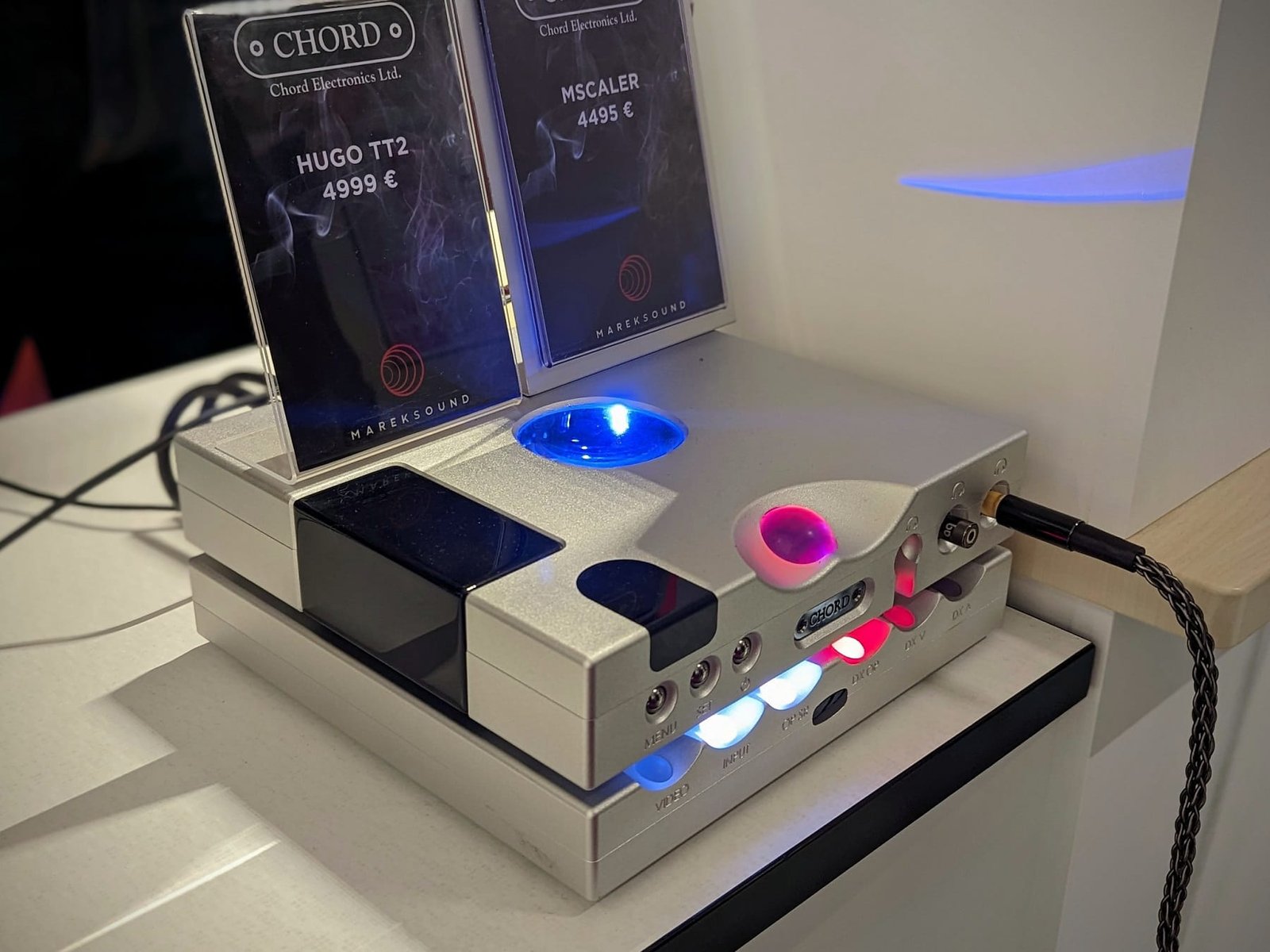
At Mareksound's demonstration stand, in addition to the previously mentioned Yamaha HA-L7A and T+A HA 200 headphone amplifiers, there was a McIntosh MHA200 tube amplifier (price 3200 euros) and a Chord Hugo 2 and TT2 & MSCALER combination (total price approximately 9500 euros).
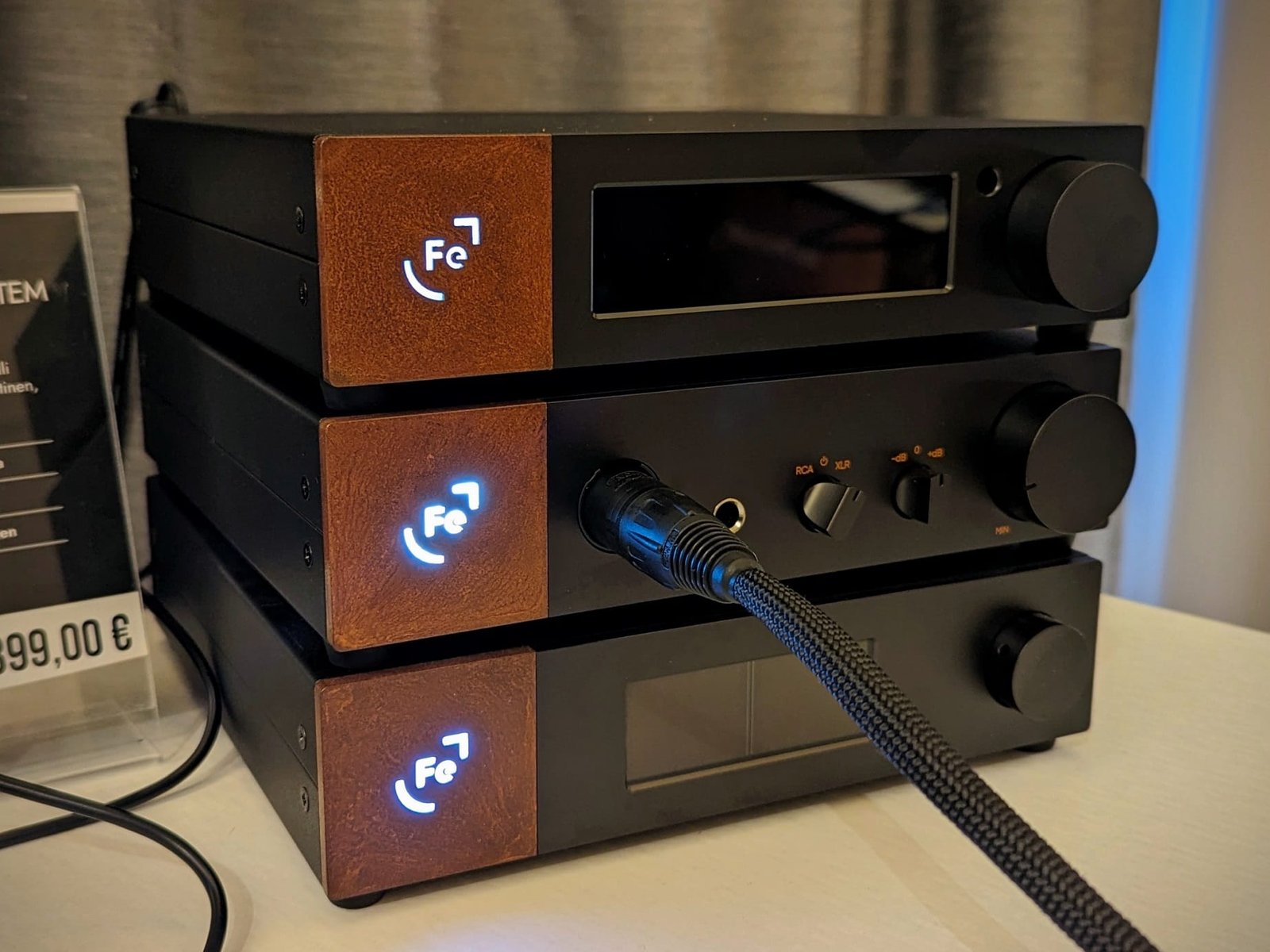
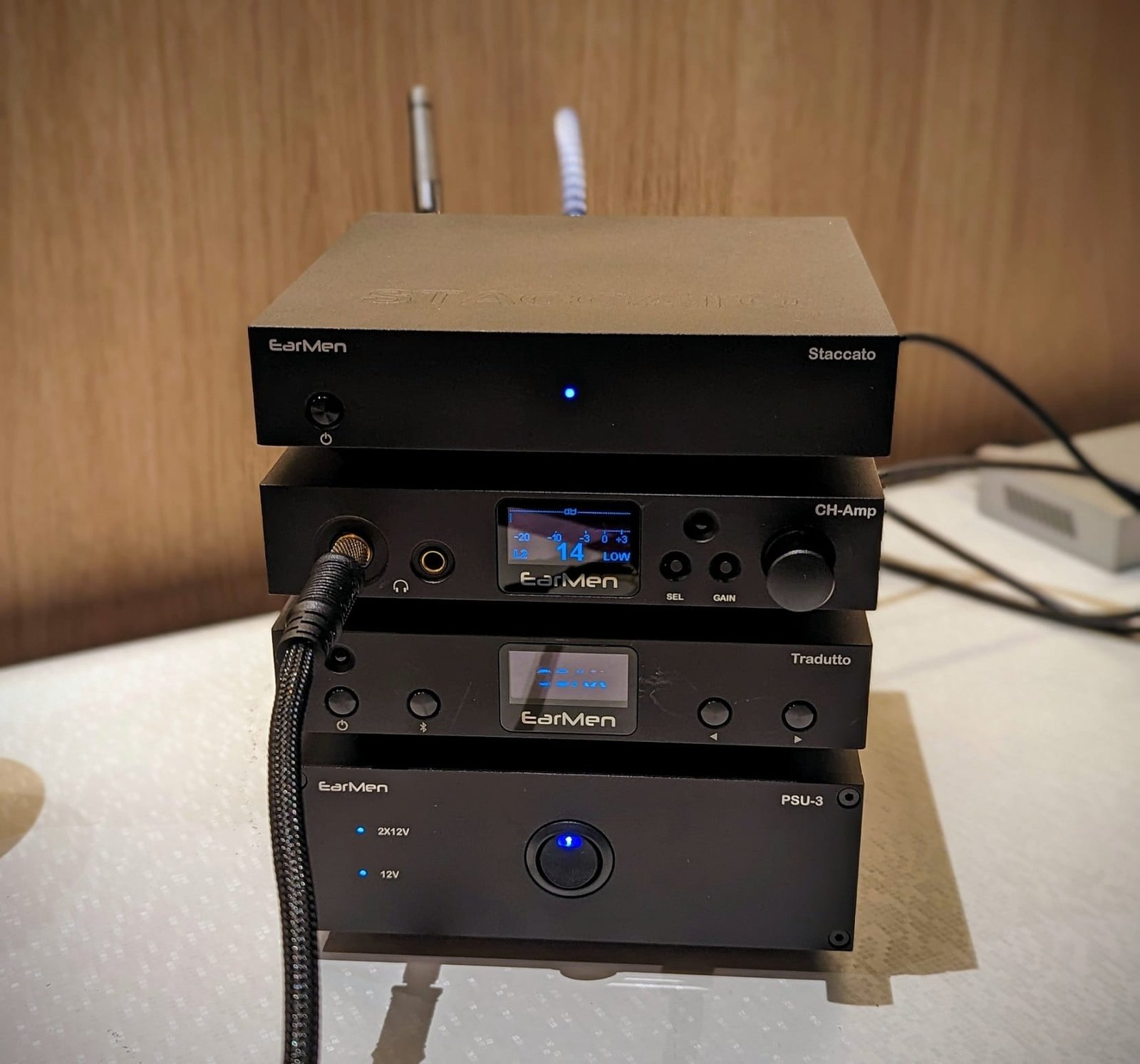
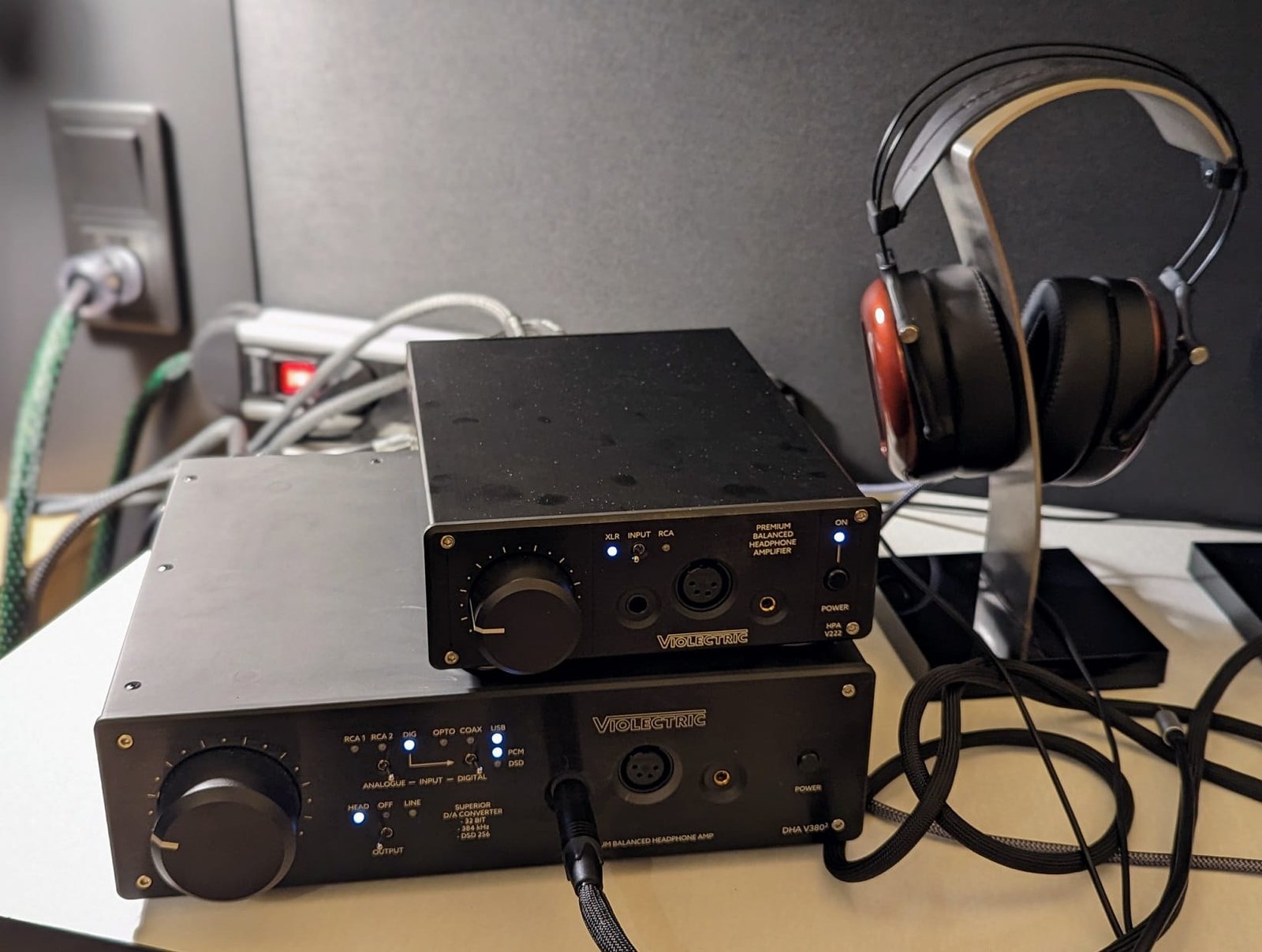
In Kruunuradio's suite, one could try out Ferrum Audio's ”stack” (total price about 6000 euros), a stack of small EarMen devices (total price at the time of writing this article, with discounts, about 2200 euros), as well as Violectric's HPA V222 (price 1200 euros) and the robustly sized DHA V380 (price 2400 euros).
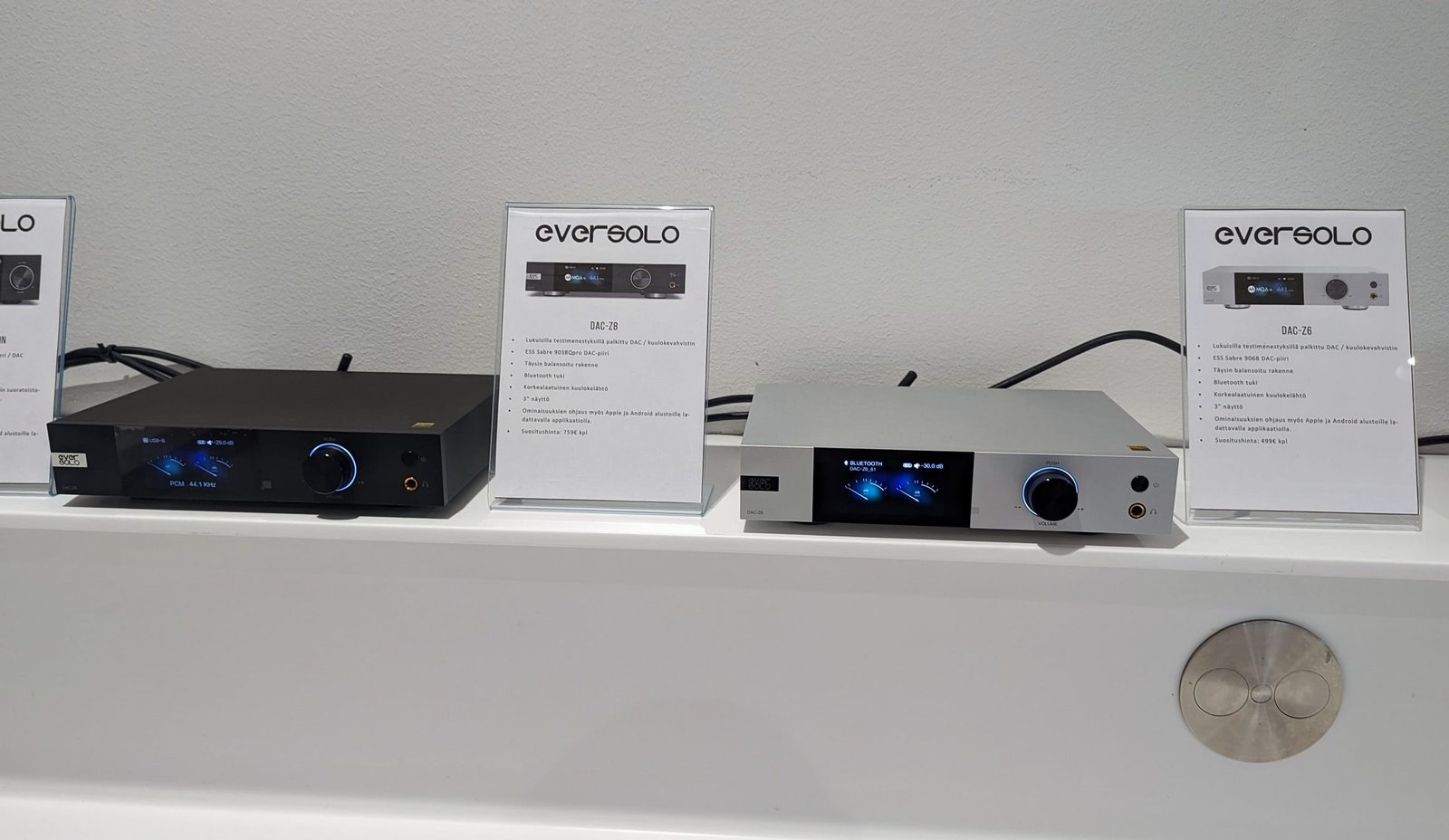
While walking around the fair, I also accidentally found the Eversolo DAC-Z6 and DAC-Z8, which are interesting in terms of features. Both of these include a balanced D/A converter, a headphone amplifier, and digital VU meters. The devices also support Bluetooth connectivity and can be controlled with a phone application. Considering all this, the 500 euro price of the Z6 model and the 760 euro price of the Z8 seem very competitive. In my opinion, the devices also look great.
In contrast to the more commercial devices, the Hifiharrastajat room featured a design by Risto Hölttä, which had also previously appeared in Kuulokenurkka RH Tube-FET hybrid amp as well as a smaller operational amplifier-based headphone amplifier. I didn't remember to take a photo of these, but I visited the room with the intention of meeting Risto. I wish him all the best if he ever decides to manufacture his amplifiers in larger quantities for sale.
What was the takeaway from the fair?
The Hifi Fair was a pleasant and interesting event this year too, even though there was sometimes a hectic atmosphere at the listening stations and in smaller rooms, and one didn't dare to stay and listen to individual headphones for extended periods. Although the exhibition area is not huge, thoroughly familiarizing oneself with everything would almost require a two-day visit. In that case, I believe I would already get a clear impression of the new headphones, and there would also be more time for listening to speakers. Additionally, time is spent chatting with nice people, so participating on both days would add flexibility to the schedule. It's possible that I will consider this for the next fair.
This year's fair was ultimately quite successful regarding headphones, as many top models and a few more affordable novelties were on display. Especially the new Focal Utopia and Hifiman's Arya Organic remained in my mind as headphone models I would hope to test more thoroughly. Some of the expensive headphones didn't make a big impression on me, but they are probably aimed at a specific target audience to which I do not belong. On the other hand, many of these headphones might be better when listened to in a calmer environment.
The ambient noise at the fair still makes testing open-back headphones difficult, but I remain hopeful that in some year, headphones will be placed more and more in smaller rooms, like at Kruunuradio, instead of in open lobby spaces. However, the Hifi Fair is a rewarding event for enthusiasts in general, so precise testing of new products may not be the most important thing. One should not take the fair too seriously in general, but rather enjoy the like-minded atmosphere, listening to good music and possibly getting excited about new products.
 EN
EN  FI
FI
I believe that the sound quality level of Yamaha has been affected by the headphone amplifier used, HAL7, which was an early prototype model and thus does not represent what the final product for sale will be. The actual, final product will go on sale in November 2023, and it would be interesting if you could test the entire setup again.
Thank you for your interesting articles and reviews. I have read many of them before. However, now I felt the need to comment, as I managed to acquire those T + A Solitaire T headphones for myself and have been testing them for a while now. I upgraded my wireless option from Beyerdynamic Amiron Wireless, which I gave to my son. My reference is the Hifiman HEK v2, which I listen to via the Gold Note ds-10. Understandably, the treble of the Solitaire T does not bother me, as my hearing is accustomed to treble thanks to Hifiman.
But to the point: The Solitaire T is designed as an acoustic headphone with sound first, and you notice it when you connect it with a cable to a headphone amplifier. In my opinion, the sound from them sounds authentic, the resolution is top-notch, the tonality is in the reference headphone class, and the soundstage is wide for a closed-back headphone, even if not in the Hifiman class. However, it is a dynamic driver and not planar like in Hifiman. When used wired, in my opinion, it is on the same level, if not better, compared to headphones in the same price range and scales with the headphone amplifier. It also works well with the iFi Gryphon on trips.
The added value comes from its wireless capability. It's surprising that the Solitaire T retains its characteristics and nature very well even wirelessly. However, Bluetooth is quite a significant limitation. Especially the HQ mode, which routes the sound through the built-in DAC and headphone amplifier inside the headphones, pleasantly surprises time and time again.
When you hopefully get a chance to try them out with more time, it's worth noting the hybrid nature of the Solitaire T. It works both with a good amplifier and wirelessly. And it's easy to take with you on a trip wherever you go. Could it represent a glimpse into the future of high-end headphones?
Kind audio regards
Antti