Author: Roderick
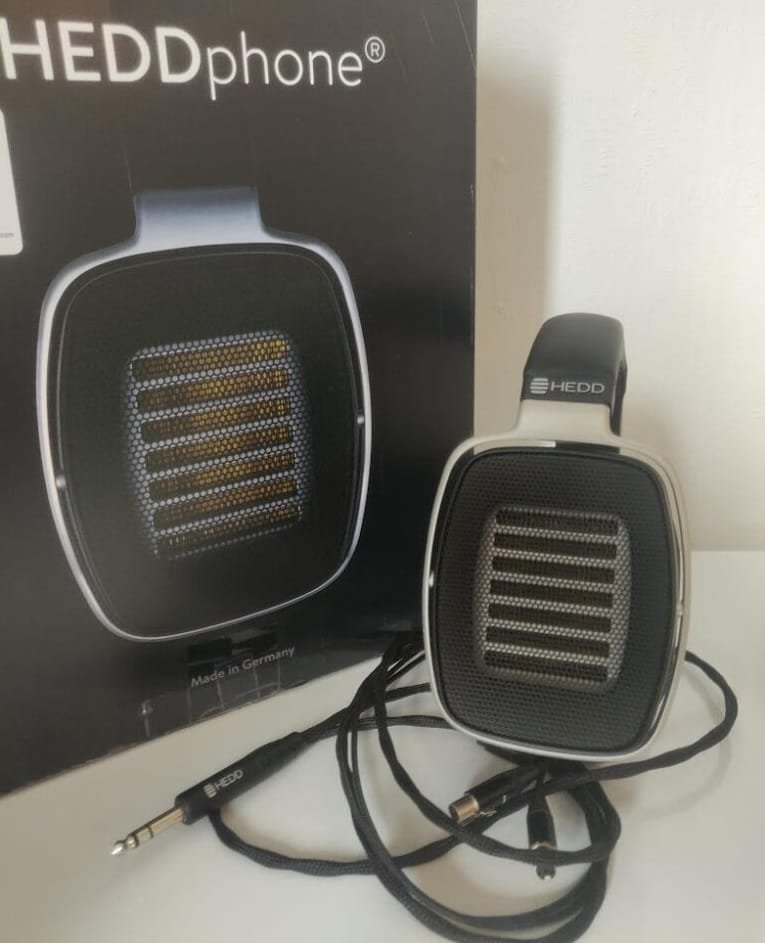
Table of Contents:
Information:
- Price: 1700 €
- Structure: open, over-ear
- Element: Air Motion Transformer (AMT)
- Sensitivity: 87 dB SPL @ 1 mW
- Impedance: 42 ohms
- Weight: 718 g without cable
- Connector type: 2 x 4-pin-mini-XLR
- Cable: 2.2 meter cable with 6.35 mm connector
Review sample: Self-purchased product
German manufacturer HEDD's (Heinz Electrodynamic Designs) first headphones, HEDDphones, were perhaps the most talked-about headphone release last year. HEDD has previously become known for its AMT-technology-based tweeter elements, which have found their way into many high-end loudspeakers – now the same technology was utilized in headphones as well.
Headphones based on AMT technology have been on the market from other manufacturers before, but they have either required a specially designed amplifier for them, or they have been hybrid implementations that have used a normal dynamic driver in addition to the AMT driver. The HEDDphones are thus the world's first headphones made with a full-range AMT driver.
According to marketing material, the AMT driver should be able to move air up to four times faster compared to typical dynamic headphones, as well as magnetoplanar and electrostatic headphones. This speed should translate to the listener as improved detail and clarity in reproduction.
Structure and comfort
The headphones are enormous in size – I would say they are even slightly larger than the ZMF Atticus (review), and also significantly heavier. The HEDDphones are probably the heaviest headphones currently manufactured, weighing 718 grams, which means they cannot become particularly comfortable. I personally had no problems with excessive clamping force, nor did I feel excessive pressure on the top of my head during short listening sessions. However, during longer listening sessions, I had to take breaks because the center of the headband started to press uncomfortably on my head, and I also began to feel strain in my neck.

The construction of the headphones themselves is acceptable. The headband is well-padded and feels high-quality. The cups are plastic, and the rings supporting them are metal. However, at least on my unit, the metal, or its paint finish, is poorly finished, which I would not want to see in headphones of this price range. When handling the headphones, they also creak quite a bit.
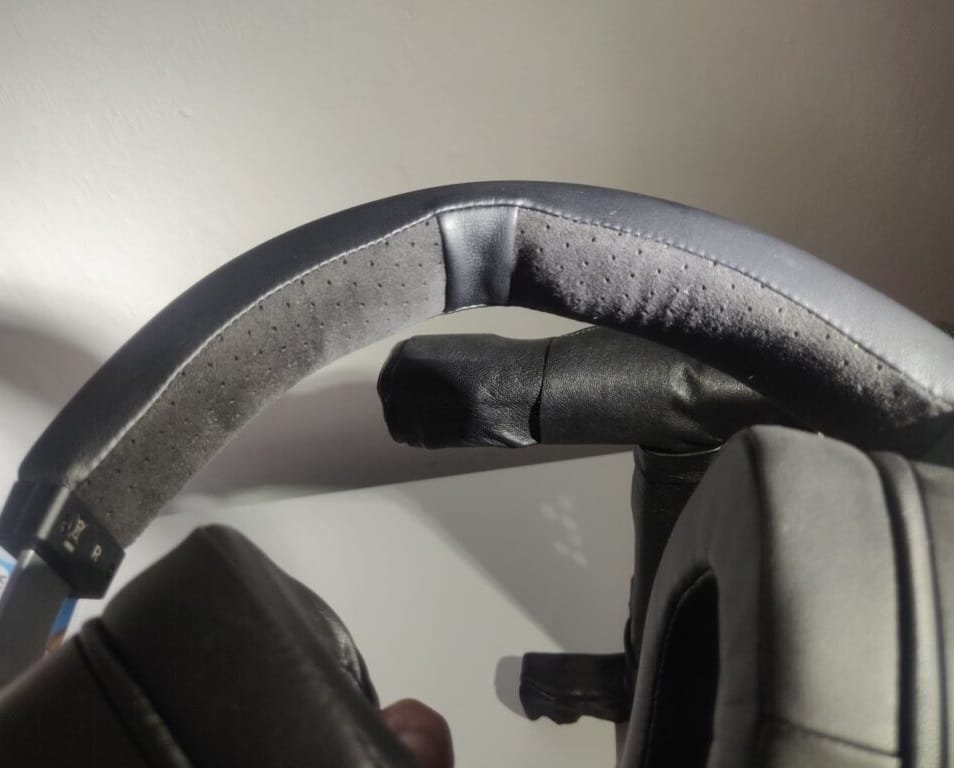
The height adjustment mechanism of the headphones is simple and functional, but according to several users, it starts to loosen over time, causing the adjustments to no longer stay in place. The adjustment mechanism of the headphones is also really short, which has fortunately been corrected in the latest version released by HEDD, which has more adjustment range. Anyone with a head larger than average should make sure they get the newer version before a blind purchase! I have an older version, and despite my rather small head, I use the headphones almost at their maximum setting.
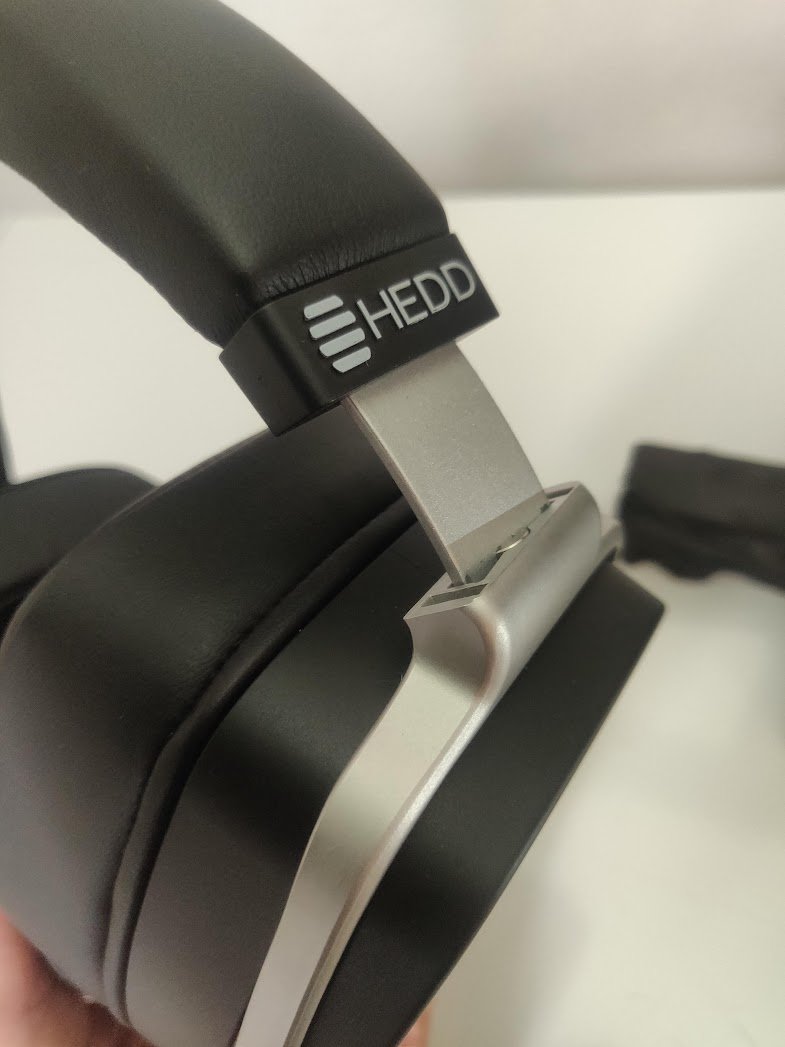
The headphones can be twisted sideways surprisingly easily. The entire structure suffers from a certain looseness, so I am a little concerned about its long-term durability. Even heavy headphones could be made in such a way that their mass remains under control – Audeze headphones are a good example of this.
The HEDDphone ear pads are comfortable and spacious. They appear to be made of synthetic leather, the durability of which usually varies with quality – time will tell how well they last in the HEDDphones. Fortunately, changing the pads is made easy if needed, as they attach at their edges to a groove around the cups. This traditional method is, in my opinion, the best way to attach pads to headphones. For example, Hifiman-style adapter rings and Audeze's glue-attached pads annoy me greatly.
Unfortunately, the HEDDphone is so enormous in size and unusually shaped as a rectangle that finding suitable replacement pads can be difficult. Replacement pads should be coming for sale from the manufacturer, but at least at the time of writing this review, they were not yet found on their website.
The HEDDphone cable is 2.2 meters long, stiff, and easily gets tangled. The cable reminds me of a lower-quality version of the Sennheiser HD800 headphone cable – its usability is not commendable. The cable attaches to the headphones with mini-XLR connectors, so it can be replaced with cables from, for example, Audeze or ZMF. In this case, however, it is worth mentioning that in HEDDphone connectors, pin1 is positive, whereas, for example, with Audeze, it is negative. However, the absolute phase remains the same, so Audeze or ZMF cables can be used without worry.
Some claim to be able to hear this kind of symmetrical phase shift, but such "golden ears" are rare, if any truly exist. I tested the HEDDphone with a cable intended for Audeze and did not notice any difference myself compared to the original cable. For those more interested in the topic, there is English-language discussion online, and if the phase shift remains a concern, HEDD sells its own balanced cable on its website for 159 euros. The price is still somewhat reasonable, but in my opinion, for headphones of this price, a balanced cable should already be included as standard equipment.
The headphone package does not include any accessories anyway; only a cardboard box and a one-page user manual come with the headphones and cable. Thus, in terms of equipment or construction, the HEDDphone is not very convincing, nor is the comfort particularly great due to its weight.
Sound quality
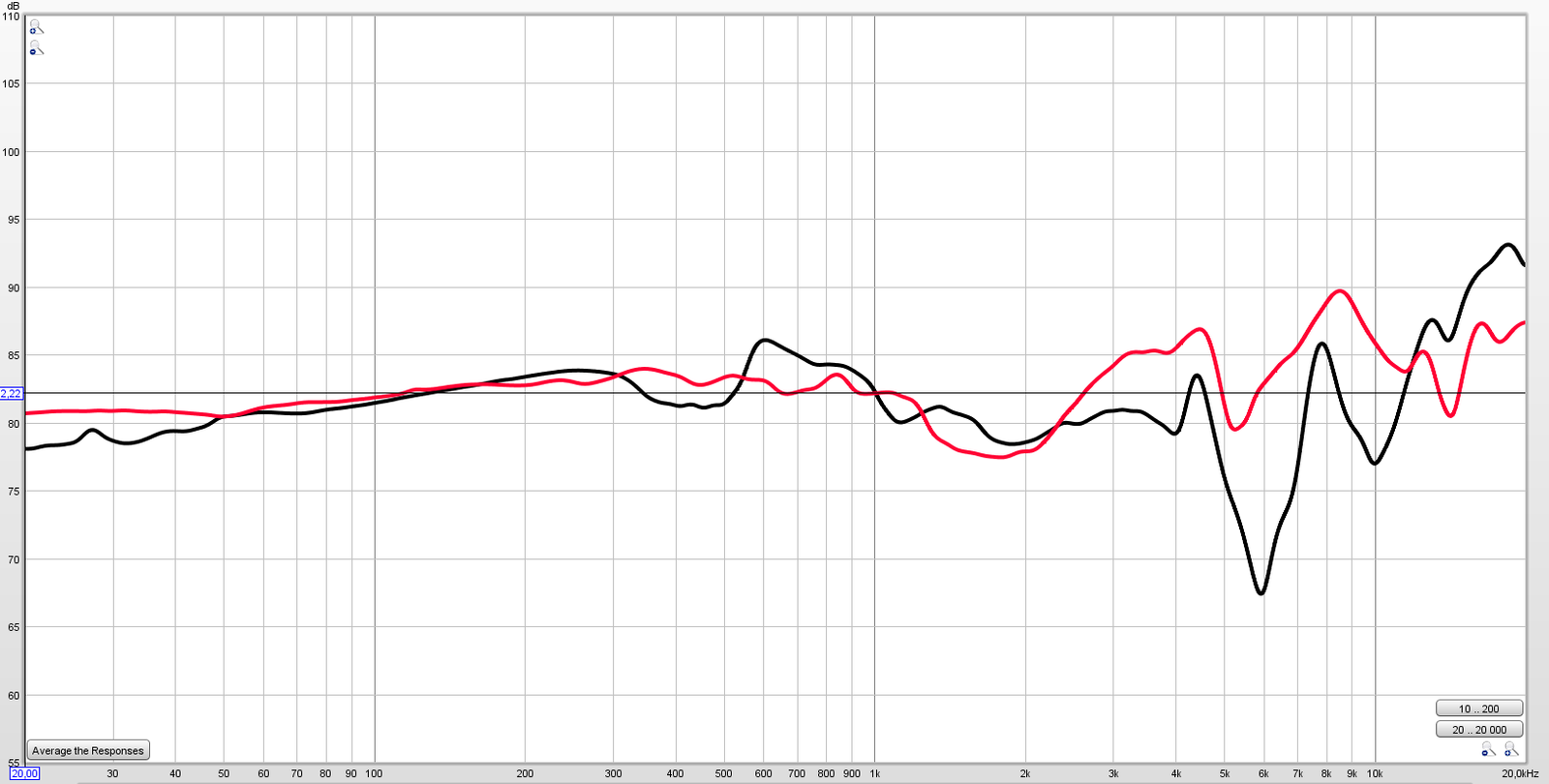
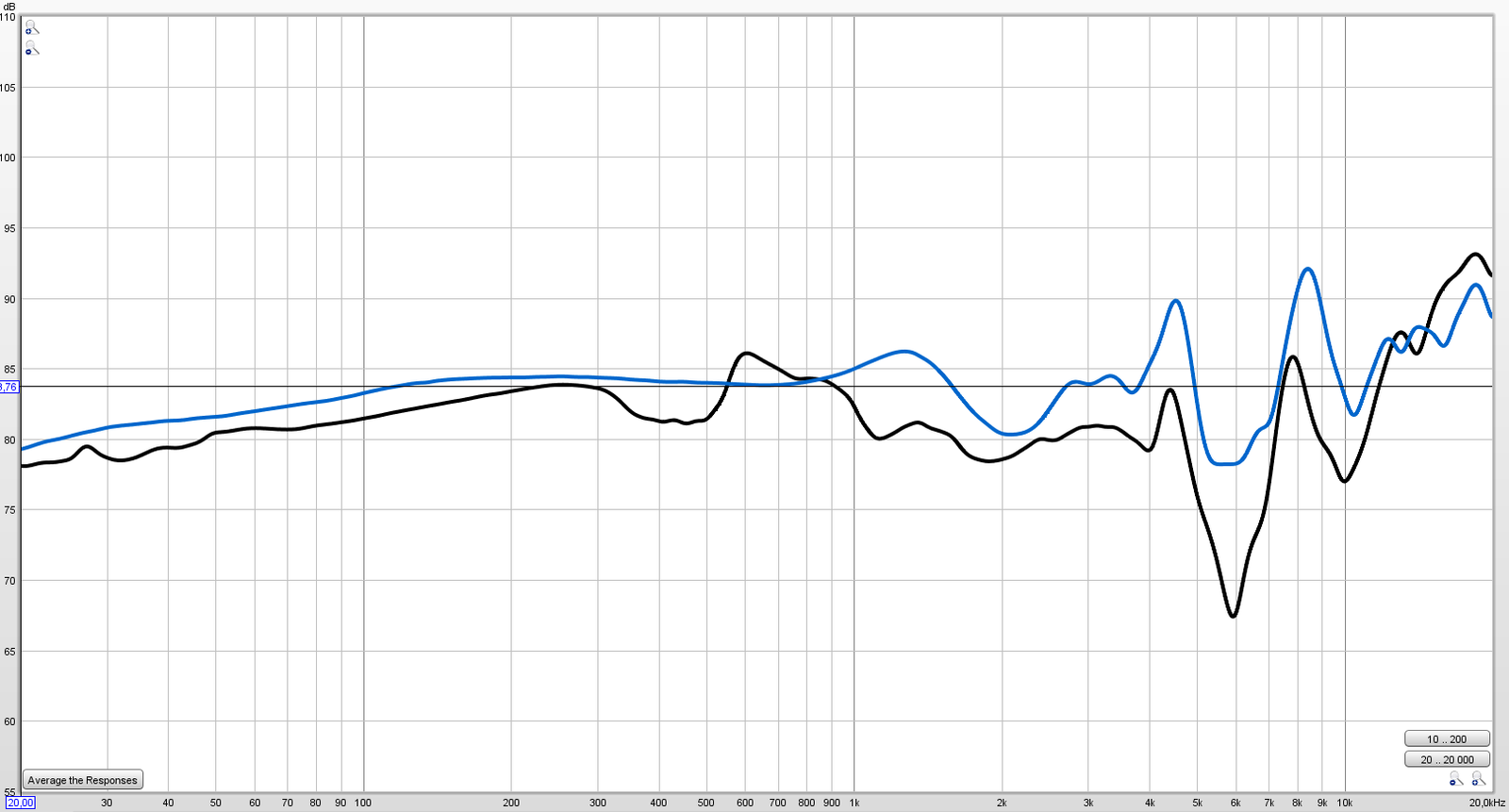
The slight disappointment caused by the initial external impression is quickly forgotten once the headphones are placed on the head and listening begins. The marketing claims about the AMT driver's characteristics are not entirely unfounded! I will begin discussing the sound quality by presenting the measured frequency response of the HEDDphone in relation to other well-known headphone models.
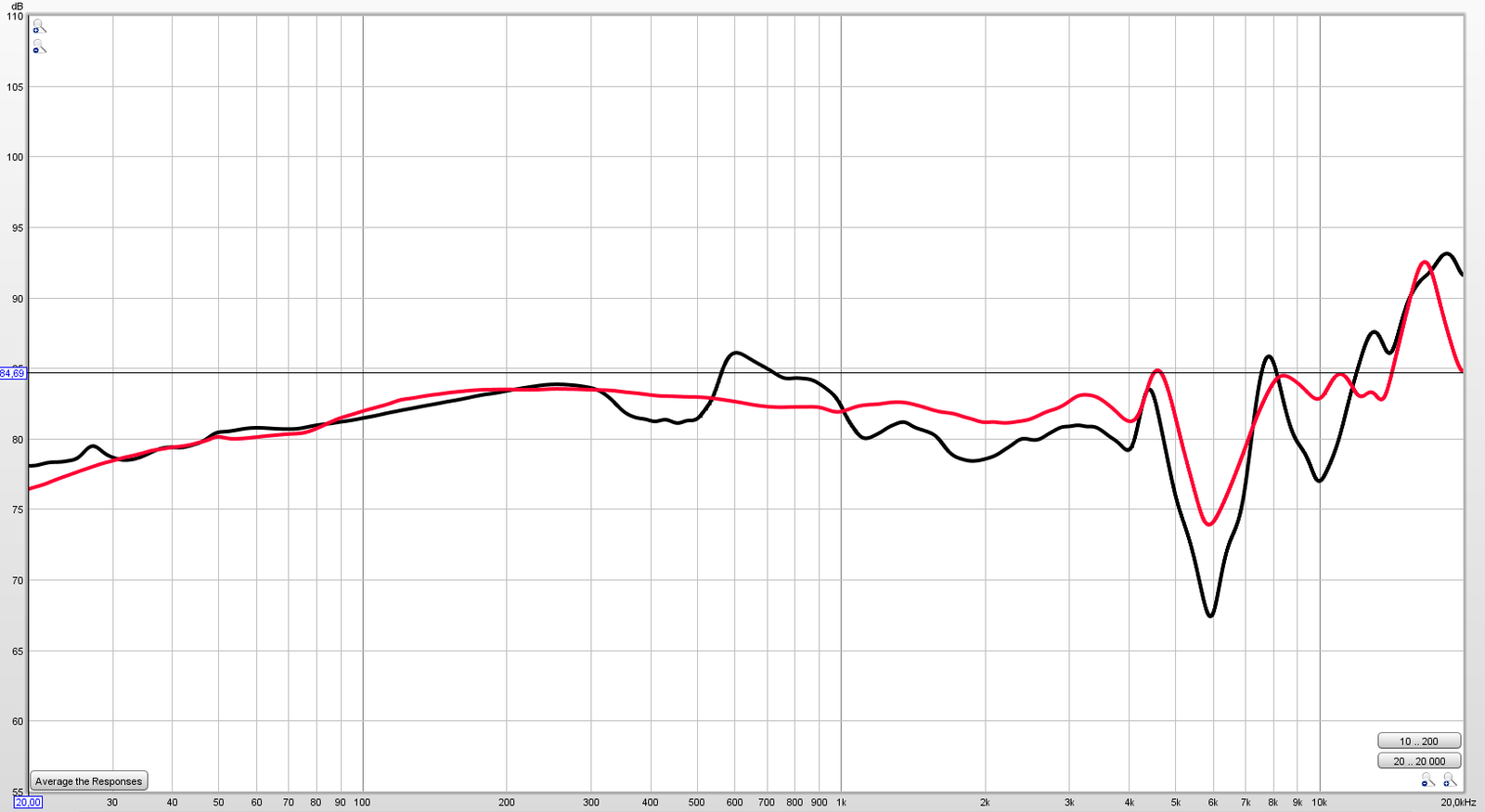
When comparing to the Sennheiser HD650, it should be noted that the HEQ compensation I used does not give enough weight to the mid-range bass boosts. For this reason, the mid-bass boost normally found in the HD650 is almost invisible, which makes it seem as if the headphones' bass descends more linearly than it actually does. In addition, in my opinion, HEQ incorrectly displays the reproduction of the lowest bass – for some reason, this happens especially with planar headphones and apparently also with AMT headphones.
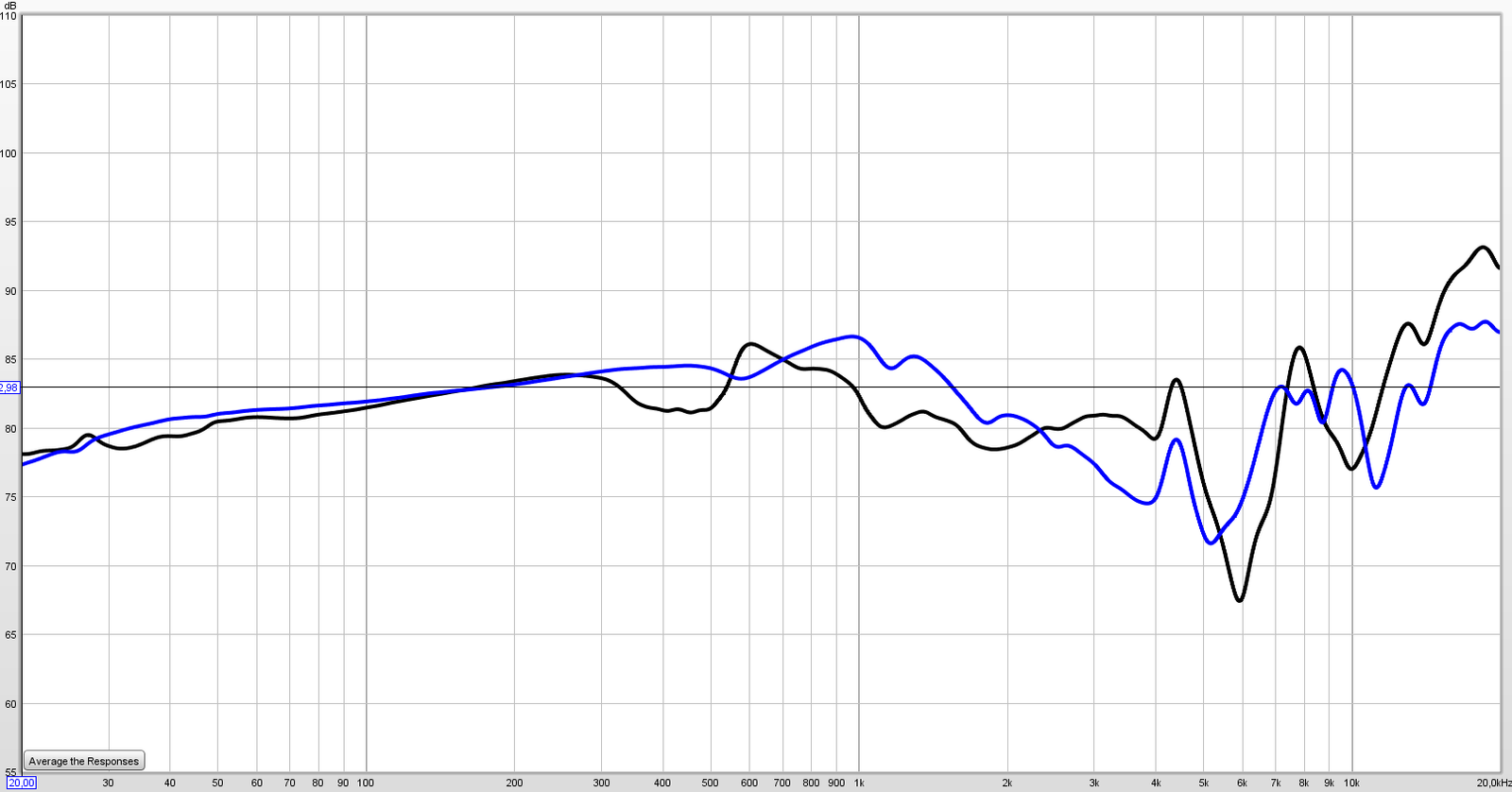
The following image shows the Audeze LCD-2 Classic as a reference, which is known for its balanced and very well-extended bass reproduction. As the image shows, the HEDDphone and Audeze are almost on par in terms of bass reproduction – differences are only noticeable at 50 Hz. From this point on, it is good to move on to a more detailed analysis of the bass reproduction.
Bass:
As already partially revealed by the frequency response measurements, the HEDDphone's bass is unaccentuated and extends quite low – in style, it is closer to planars than most dynamic headphones. I myself would like a bit more bass in the headphones, and if there were such a concept as ”neutral bass,” I believe the HEDDphone's bass is slightly below neutral in quantity.
This is a shame! The bass of the HEDDphone is perhaps the most impressive in quality I have ever heard from headphones. The bass reproduces very quickly and in that sense resembles good planars. However, the headphones lack a certain ”tightness” characteristic of planars. The impact of the bass, on the other hand, resembles dynamic headphones more than planars. I have not heard top-tier planars, such as the Audeze LCD-4, Final D8000, or T&A Solitaire, so I don't know if they have achieved a ”looser” bass – yet, at least the Audeze LCD-3f, which has excellent bass, is not as convincing as the HEDDphone based on my recollections.
AMT bass could be described as bass produced by a balanced armature driver familiar from in-ear monitors, with the timbre and naturalness of a dynamic driver. The only flaw is that there is slightly too little bass, and the reproduction doesn't fully reach the very lowest frequencies. I am truly surprised that an AMT driver, originally designed for treble reproduction, has been made to reproduce first-class bass. It should be mentioned in this context that for music requiring more emphasized bass reproduction, my favorite for years has been the absolutely excellent Fostex TH900.
Midrange, resolution, and dynamics:
Regarding the midrange, the tuning of the headphones quite well meets my personal preferences, and it roughly corresponds to my own idea of neutral. I particularly like that the headphone's response is flat up to 4 kHz. For comparison, many planar headphones, in particular, have a deficiency in the upper midrange, which in my opinion makes the sound veiled and too relaxed – this is, of course, a matter of taste. The HEDDphone could be a suitable headphone especially for those who like the Sennheiser HD600/HD650-style midrange reproduction.
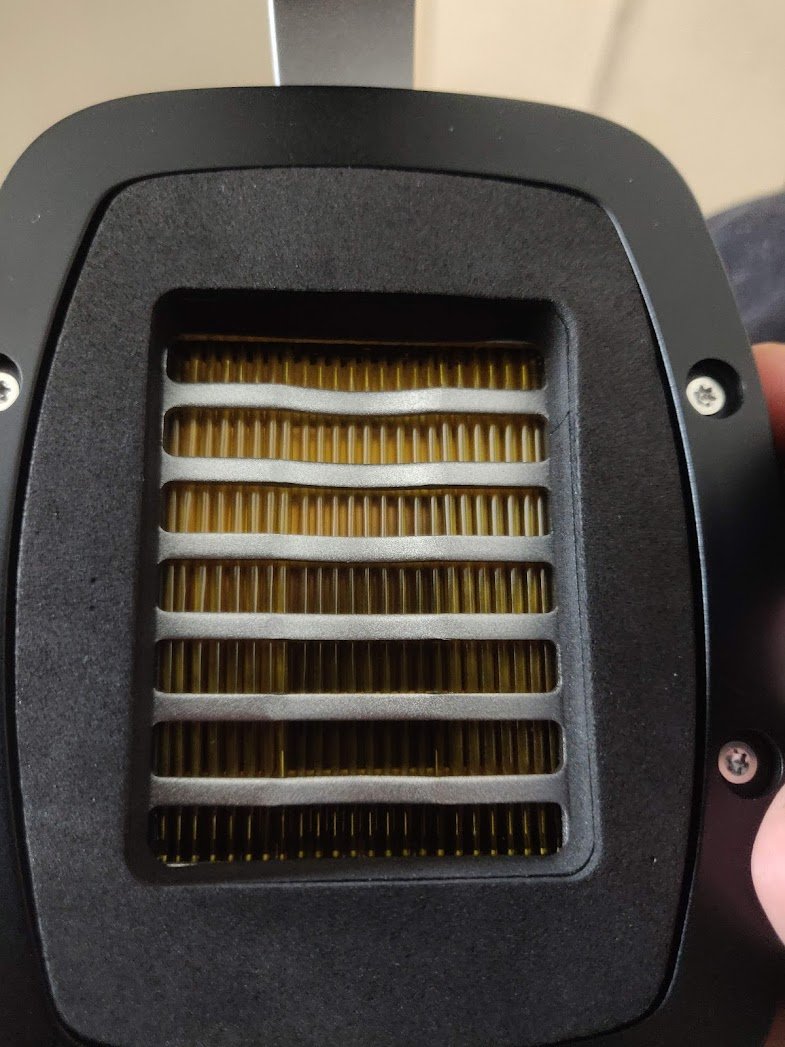
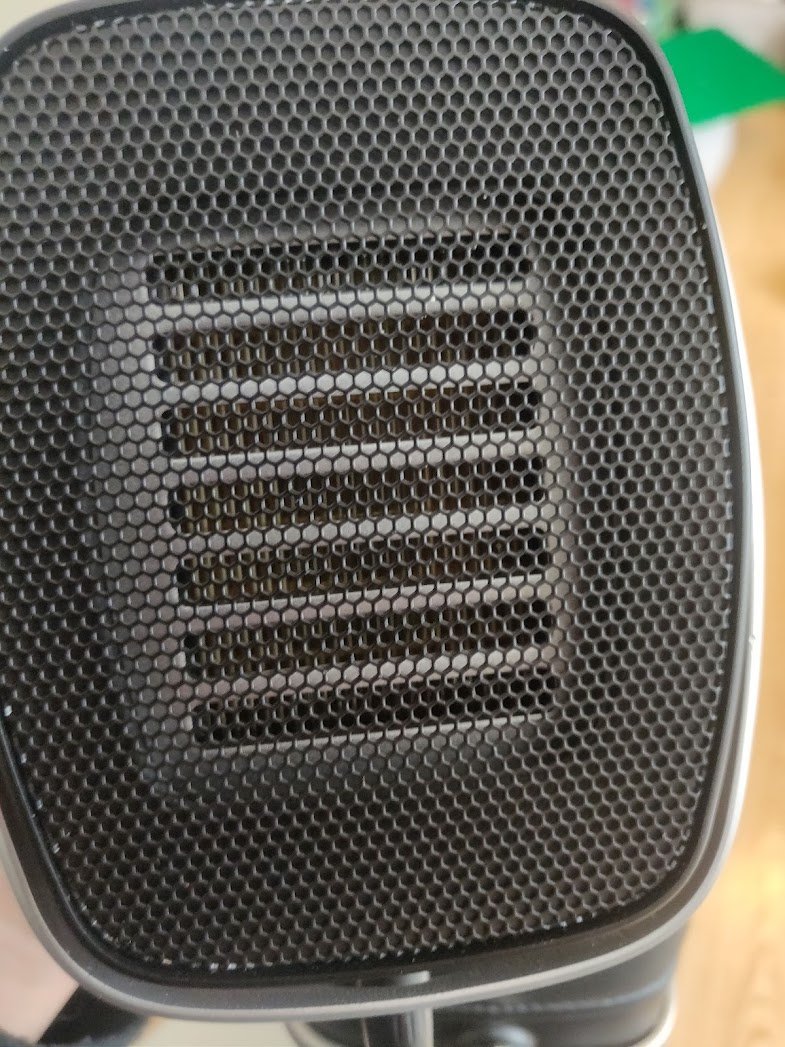
Despite the flat response, the HEDDphone's midrange sounds slightly veiled for some strange reason. This feels somewhat counterintuitive, as the frequency response and technical performance do not offer an explanation for this. Offhand, I can't think of any other reason than the headphone's rear grille, which doesn't look acoustically very transparent. It is entirely possible that it creates reflections that, as it were, veil the sound – fortunately, the effect is relatively moderate.
Unfortunately, there is also one more significant problem in the midrange reproduction. The hump visible in measurements in the 500–1000 Hz frequency range is a real phenomenon, not a measurement error. I have read several reviews of the headphones, so I was surprised that no one seemed to have paid attention to this. The hump I mentioned creates a slight echo-like loudness effect in the sound, which makes the timbre sound a bit unnatural.
At higher volumes, this emphasis can hit the face (ears) in a really unpleasant way. I personally like to listen loudly with enough headroom in the sound so that louder passages in dynamically strong songs don't become disturbing. However, such ”listening at the limits” is not possible with the HEDDphone, because there is a 6-decibel hump at 600 Hz. I am forced to listen to the headphones quieter than I would like.
Fortunately, the HEDDphone's technical features support quiet listening. The headphones sound really clean, and the microdynamics are the best I have heard in headphones under two thousand euros. The headphones constantly bring out details I haven't noticed before. The most impressive thing about this is how effortlessly the headphones do it.
With most headphones, previously unnoticed details somehow pop out from the background. For example, the Sennheiser HD800 and Audio Technica ADX5000 bring out such details largely through their skewed frequency response and excessive brightness. The HEDDphone, on the other hand, continuously digs out more information from the recording across the entire frequency response. At first glance, one doesn't even pay attention to it because it feels so natural. However, upon closer listening, one realizes that there is, as it were, an extra layer in the music that has previously remained unpeeled – with the HEDDphone, it is revealed all at once, not breaking down into small pieces here and there.
The HEDDphone also performs excellently in terms of macrodynamics / ”slam” / impact. The headphones do not reach the same level as the best dynamic headphones, but they effortlessly outperform all planar headphones I have heard costing 1000–2000 € (Ananda, Arya, LCD-X, LCD-3f). The HEDDphone is not dynamically explosive, like for example the Focal Clear (not to mention Utopia), but it is capable of conjuring ”dynamic layers” in an astonishing way.
I may have just invented the term ”dynamic layering,” so I will explain it a bit more precisely. In music, there are moments where an individual player starts playing more intensely while the rest of the band continues at the same tempo and volume. Most headphones cannot properly distinguish such a change in the dynamics of a single instrument from the group; instead, the entire mood of the performance changes completely. Conversely, the entire dynamic change may also go unreproduced. The HEDDphone, however, has the ability to separate sound sources into their own dynamic entities, as a result of which the music sounds truly lively and authentic.
Treble:
Some describe the HEDDphone as bright-sounding. To my taste, it is close to my idea of neutral – this also applies to the highest frequencies. Bright sounds are usually the frequency range that most strongly divides listeners into several camps. What is a bright headphone for one is dark for another. In this respect, the HEDDphone is an even more polarizing headphone than usual. I have come up with three alternative explanations for this:
- Part of the perceived brightness is due to the upper midrange and lower treble being perceived as excessive. So, the brightness is not actually due to the higher frequencies. For some, for example, the Sennheiser HD600 is far too bright-sounding, but the general consensus is that the experience is precisely due to the strongly present upper midrange. I could therefore state that if the HD600 is familiar and found to be too fatiguing, the HEDDphone should also be approached with caution.
- At 5 kHz there is a small emphasis, which is real kryptonite for some ears.
- The HEDDphone's treble is emphasized between 10-20 kHz, which has less musical content (few adults actually even hear above the 17 kHz range). However, at such high frequencies there are, for example, cymbal ”swishes”. Emphases above 10 kHz do not bother me at all, but I know several people who are greatly annoyed by them. I personally experience the emphasis in this area as a positive thing, because it adds airiness to the sound without causing me problems in listening.
Knowing your own hearing and preferences is really important when choosing headphones. You cannot get a completely certain answer just by looking at measurement results or reviews. If possible, headphones should always be tried before making a purchase decision. In my opinion, the HEDDphone performs excellently with higher frequencies. Nothing is overly emphasized, and the sound is really clean without any sign of graininess. It is also noteworthy that sibilance does not occur.
The HEDDphone's frequency response has a peculiar dip in the 6 kHz region, the existence of which I could not, however, confirm with certainty when listening to music. Usually, an emphasis in this area would be easily noticeable, but a deficiency, on the other hand, is more difficult to notice. After seeing this in my measurements, I automatically attributed it to a measurement error. Then I noticed that the same dip also appears in measurements made with professional equipment. After this, I tested the matter by listening to sine waves, and then I immediately found the dip. I am not sure how significant a deviation this is for music listening, but the dip is real.
Audio description:
In several reviews, the HEDDphone's soundstage has been characterized as speaker-like, spacious, and almost endless. It was quite a surprise for me how my first impression of the headphones' soundstage was completely the opposite. In my opinion, the soundstage was not just poor among expensive open-back headphones, but poor overall. The soundstage created by the HEDDphone was among the weakest in terms of depth of all the headphones I have heard (I really mean even the cheapest headphones costing a few euros). Changing amplifiers or cables did not help, nor did listening with a DAP.
I was already considering the possibility that the headphones might be faulty. However, this would have been strange, as they otherwise seemed to function as they should – my measurements were also in line with other measurements I had seen. I investigated the matter further and eventually found a user named Torq in the Headphones.com discussions, who experienced the HEDDphone's soundstage in a similar way to me.
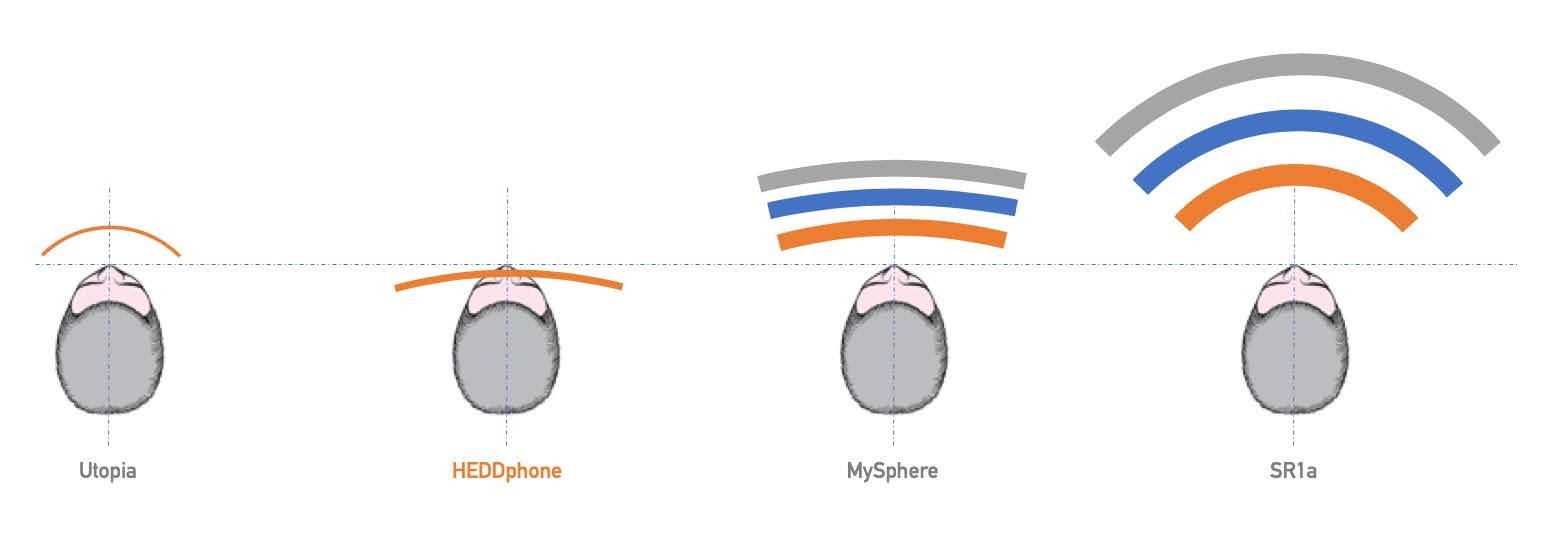
I experience it exactly as shown in the picture! The sound of the headphones reproduces right past the bridge of the nose with a negligible sense of depth. In the lateral direction, however, there is enough space, and in terms of height, the HEDDphone is excellent. For comparison, most headphones only reproduce height differences nominally.
With the HEDDphone, sounds are placed quite well in the sound field, although speaking of a ”field” feels wrong in this context. The headphones' sound field is rather a "sound line" from which there is hardly any deviation forward or backward. If you are familiar with the Focal Clear, known for its narrow soundstage, you can get close to the HEDDphone's soundstage by imagining the Clear's soundstage slightly expanded sideways and ¾ of its depth removed.
However, after listening to the HEDDphone for a couple of days, my perception of the soundstage changed radically. I don't know if my brain adapted to the headphones' soundstage, or if some physical change occurred in the headphones. The soundstage still didn't become as vast as many have praised, but it did become acceptable. In terms of size, I would say that after the change, it is comparable to, for example, the Audeze LCD-X's soundstage – it also became larger than the Focal Clear's. My initial impression of headphones has never changed so radically in any aspect before.
Perhaps there is something truly special in the AMT driver's reproduction that made my brain perceive spatial audio cues in a very unusual way. On the other hand, perhaps it is due to the advertised four times faster air movement or some other phenomenon that only the AMT driver produces. I recommend everyone who is initially disappointed with the HEDDphone's soundstage to calmly test the headphones for a couple of days – during this time, your mind might change.
Comparison to other headphones
HEDDphone vs. Hifiman Arya V2 (+Hifiman HE500)
Prices: 1700 € vs. 1800 €
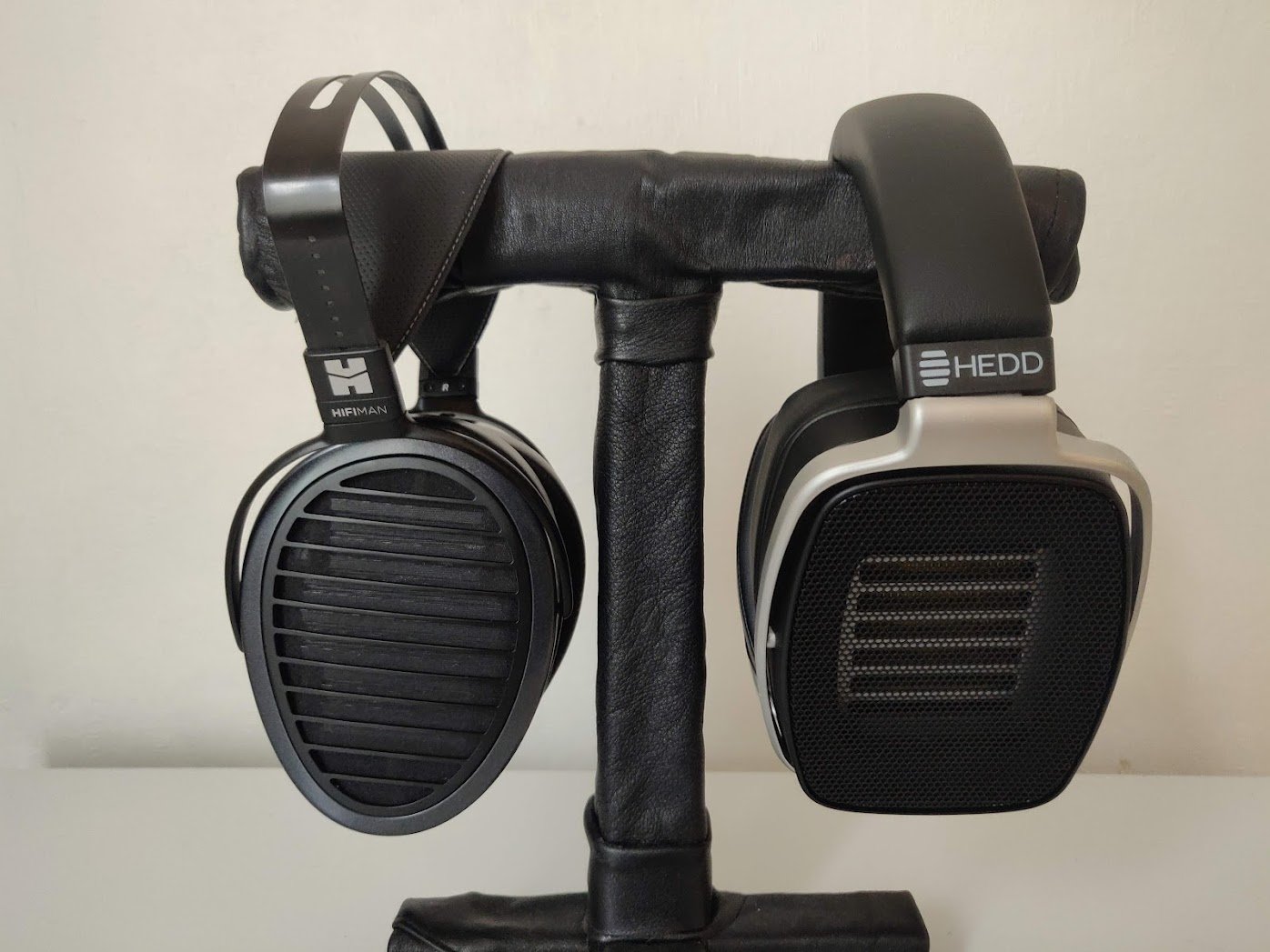
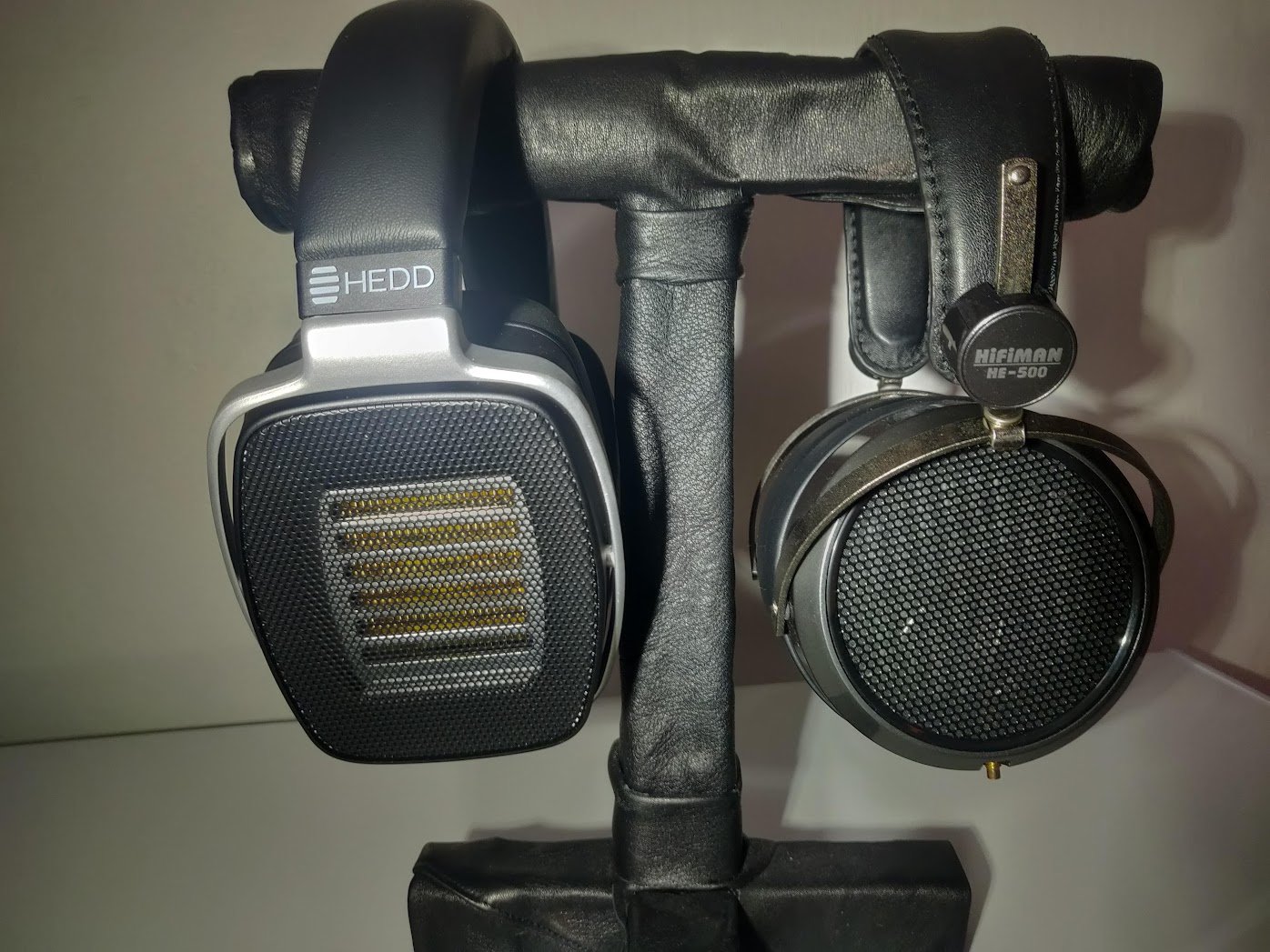
As open-back headphones costing 1799 euros, the Hifiman Arya is a direct competitor to the HEDDphone. Hifiman has a poor reputation among enthusiasts regarding durability, build quality, and accessories – the Arya is no exception. Like the HEDDphone, the Arya is delivered in a plain cardboard box and comes with only one cable. In terms of build, the Hifiman feels somewhat cheap for its price. The HEDDphone feels more worth its price, but I am not entirely convinced of the durability of its parts either. Neither manufacturer, therefore, deserves praise for their accessories or finish. However, the Arya gets points for being significantly more comfortable than the HEDDphone.
In terms of sound, the Arya is clearly brighter in treble than the HEDDphone. The HEDDphone generally sounds more resolving, but the resonances I assume are caused by the enclosure make the headphones sound less clean compared to the Arya. In terms of soundstage, the Arya is larger. The Arya has clearly more bass, but the HEDDphone's bass sounds higher quality and more impactful. The HEDDphone is generally more dynamic sounding compared to the somewhat bland Arya. Both headphones require a fairly robust headphone amplifier, with the HEDDphone being more demanding in terms of amplifiers.
HEDDphone vs. Audeze LCD-R
Prices: 1700 € vs. 2750 € (Price includes amplifier. Only 70 units of the headphones were manufactured and they sold out)
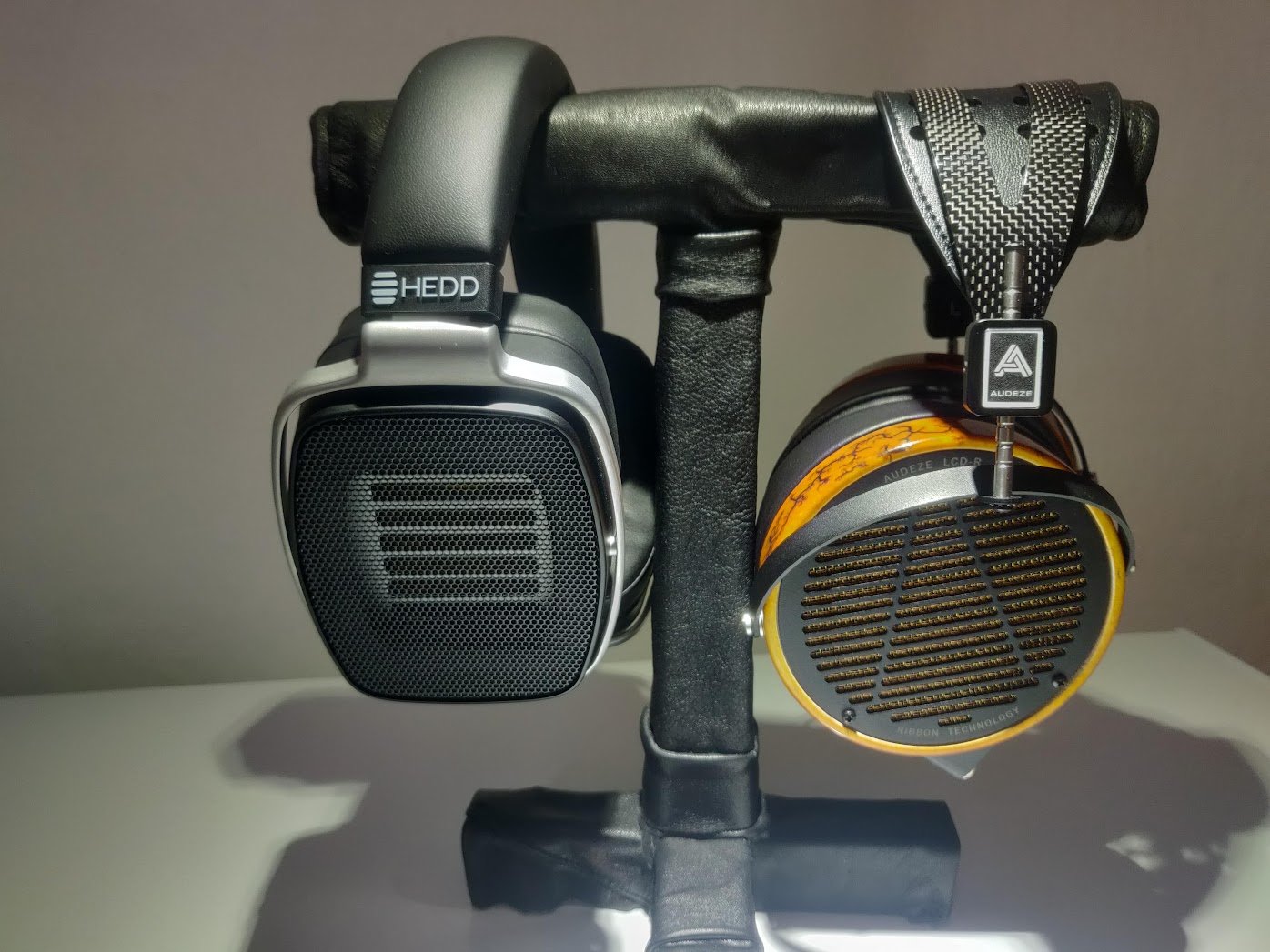
Although the Audeze LCD-R (review) is no longer available new (or even used), I thought it would be interesting to compare the HEDDphone, implemented with an AMT driver, to the Audeze. The LCD-R's impedance is lower than normal planars, and the driver is implemented with a denser trace. Audeze calls this ribbon technology, even though it's not a true ribbon driver. The LCD-R's wooden cups and carbon fiber headband make the Audeze a stunning appearance. The Audeze is also more comfortable and feels higher quality in every way compared to the HEDDphone.
The HEDDphone is an astonishingly capable headphone, but the Audeze still takes an easy win not only in appearance but also in sound quality. The LCD-R's sound is such that the headphones seemingly disappear entirely, leaving only the music (as well as the characteristics of the amplifier and DAC). Many believe that despite its ”affordability,” the LCD-R is comparable to, for example, the 6000 euro Hifiman Susvara – the Susvara is generally considered one of the world's best, if not the best, headphones. The LCD-R's sound is so pure that the HEDDphone sounds almost muddy and like a closed-back headphone in comparison.
However, the HEDDphone can challenge the Audeze in soundstage size, which is not the Audeze's strength. Additionally, the HEDDphone's bass is more pleasant to listen to. Even with the Jotunheim-R amplifier's bass boost switch on, the LCD-R's bass reproduction doesn't sound as natural. The headphones also sound a bit dry compared to the HEDDphone. Although the HEDDphone's sound is close to bright, it possesses a certain organic softness that I missed when listening to the Audeze.
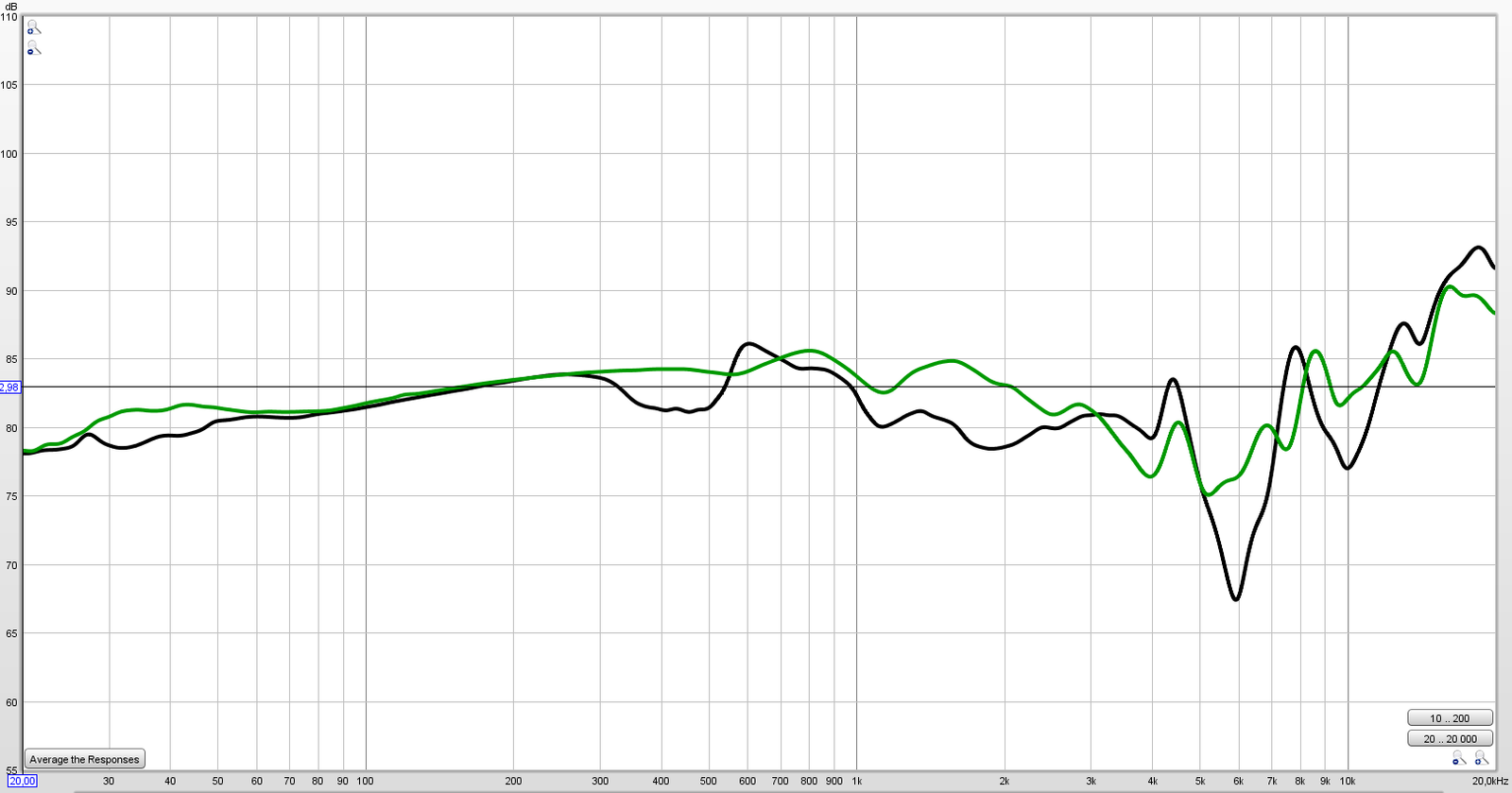
HEDDphone vs. Focal Utopia
Prices: 1700 € vs. 4000 €
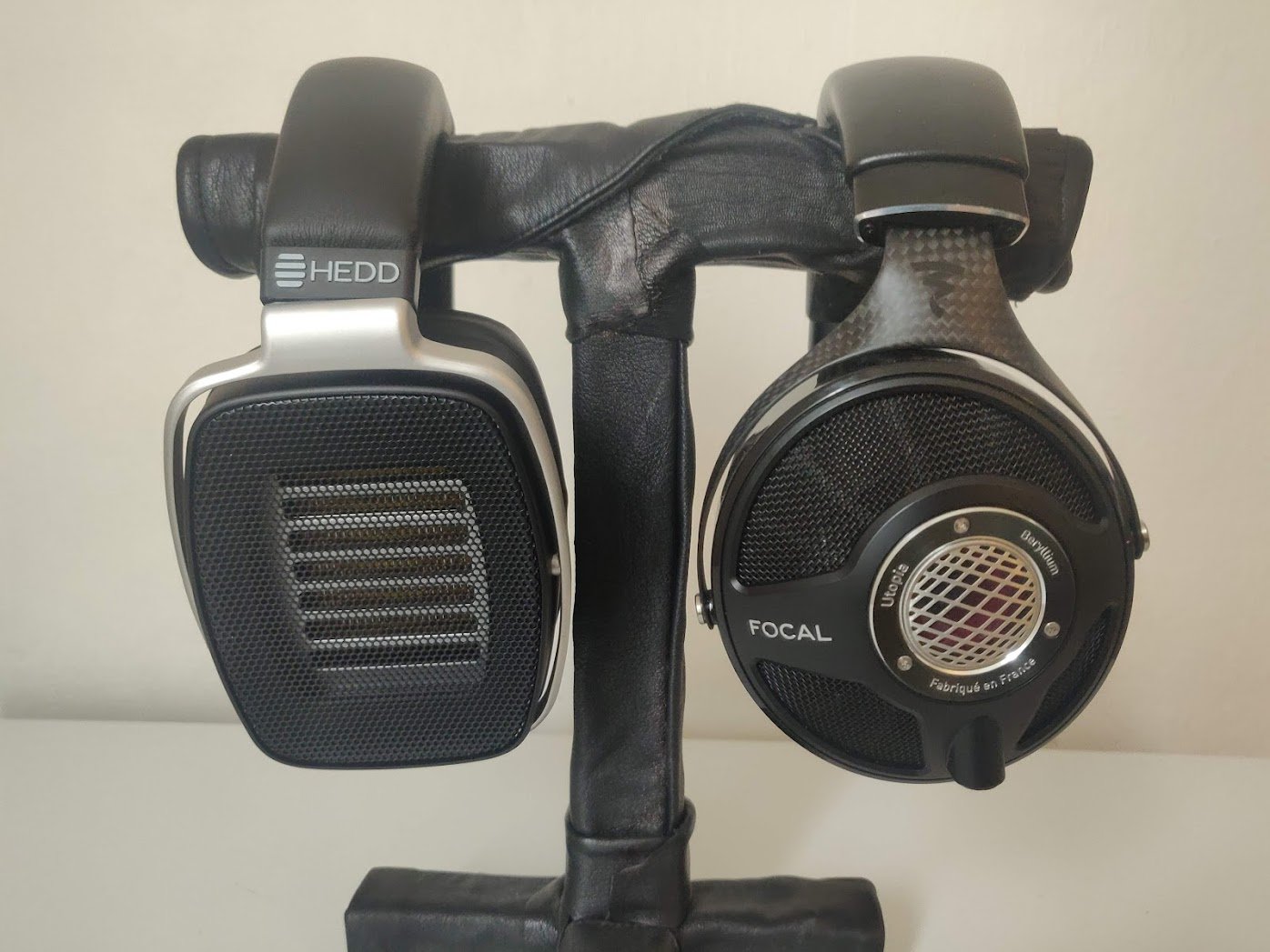
The HEDDphone is technically such an impressive headphone that it can be compared to even more expensive headphones, such as the Focal Utopia. In terms of build quality and comfort, the HEDDphone is no match for the Utopia. While no headphone can truly look worth a 4000 euro price tag externally, Focal does its best to try and justify such a price. I like the Utopia's understated elegant presence. Weighing around 500 grams, the headphones are not light, but compared to the HEDDphone, they still feel that way. Although the Utopia never completely disappears on my head, the difference compared to the HEDDphone is significant in the Utopia's favor.
In overall sound, the Utopia is brighter than the HEDDphone. The HEDDphone sounds more grounded, even though the Utopia has a slight emphasis in the mid-bass, which adds a nice extra kick to the sound. Although the Utopia is among the elite of dynamic headphones in bass quality, it is no match for the HEDDphone. As I stated earlier, the HEDDphone's bass is perhaps the best I have heard.
In terms of mid-range, the Utopia sounds lighter than the HEDDphone. The Utopia's sound has a certain agility, allowing the headphones to adapt well to very different music. One of the Utopia's most impressive features is that the reproduction can change lightning-fast from light, almost electrostatic-like, painting to solid bombardment. The HEDDphone, on the other hand, is more a prisoner of its own style and always sounds like itself.
Due to the emphasis between 500–1000 Hz, the HEDDphone's mid-range cannot be seriously compared to the Utopia. However, if this emphasis is not bothersome, the HEDDphone is a good alternative if the Focal-style, strongly prominent, 1–4 kHz region is perceived as problematic. The HEDDphone is not quite as relaxed as an average Audeze or ZMF, but still less aggressive than the Utopia.
Utopia's soundstage is smaller compared to the HEDDphone. Utopia still paints such an accurate picture of the music that the HEDDphone sounds a bit ”muddy”, and its sound placement doesn't reach Utopia's level. With the HEDDphone, the vocalist sounds a bit ”scattered”. With Utopia, it's easy to imagine clear outlines for the vocalist, whereas with the HEDDphone, the vocalist is more like a singing wall.
Utopia manages to extract more information from recordings than the HEDDphone. Despite this, the HEDDphone still gets astonishingly close, which is a great achievement for a headphone that is half the price and likely has acoustic issues with its cups. If even such a ”muddy” AMT headphone can challenge Utopia, I'd like to hear what a highly refined AMT headphone is capable of.
As it is, the HEDDphone is not a true competitor to Utopia, as alongside Focal, the HEDDphone feels, looks, and partly sounds more like a prototype than a finished product. However, the HEDDphone's capability in a few areas calls into question the value of the sky-high priced Utopia – a headphone that is 2300 euros more expensive should wipe the floor with its cheaper counterpart.
Summary
The HEDD HEDDphone has a unique sound, combining characteristics typical of planar and dynamic headphones. In my opinion, the HEDDphone is technically by far the best headphone in its price range that is currently in production – however, it stumbles on mid-range peculiarities and poor comfort. I hope that HEDD and other manufacturers continue to develop headphones based on AMT technology. I would not be surprised at all if, in a few years, the world's best headphones were implemented with an AMT driver. Even the current HEDDphone would only require minor improvements to compete on equal terms with top headphones like the Focal Utopia and Audeze LCD-R.
Pros and cons:
+ Technically dazzlingly good for their price
+ The most accurate bass reproduction I have ever heard
+ Insanely detailed across the entire frequency range
+ Non-fatiguing, yet clear treble
+ Flat frequency response, with a few exceptions, which aligns well with my understanding of neutral
– Mid-range emphasis distorts the tonal balance and makes listening difficult at high volumes
– Reproduction is a bit ”muddy”
– The headphones are very heavy, so comfort is poor
– In the original version, the headband adjustment range is only sufficient for a medium-sized head
– Build quality feels a bit questionable
– Non-existent accessories
– Headphones need a powerful amplifier
 EN
EN  FI
FI
The headphones are like a lead-lined bucket on your head. An unusable idea for audio work where headphones are on your head for 8 hours in no time. In addition, my test unit spontaneously fell apart into pieces from one end of the headband during the first use. Rating: 0/5. The sound itself was quite acceptable, though there was a somewhat overly harsh peak lurking in the ear-piercing region.
Thanks for the comment! I completely agree, you can't wear them for very long. I'm used to wearing a helmet on construction sites, and yet the HEDDphone was too much for my neck during longer sessions. Apparently, I was unfortunately right about the questionable build quality as well. Hopefully, you got rid of your broken headphones without financial losses! I must say, it's astonishing how HEDD released technically capable headphones with such a prototype-like construction. Hopefully, they will continue making headphones, because in my opinion, the headphones have immense potential even though this first attempt fell short.